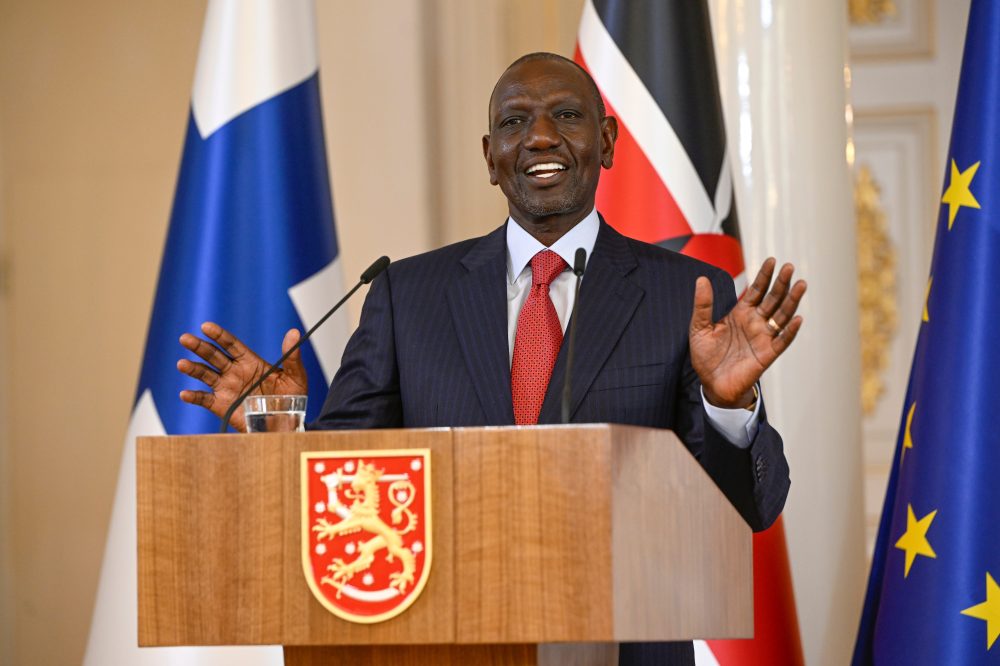

NAIROBI, Kenya — Kenyan President William Ruto announced Monday that his government will compensate nearly 2,000 people who suffered human rights abuses tied to violent protests, in what officials are calling an unusual national reparations effort conducted outside the court system.
Over the years, waves of violent unrest across the East African country have resulted in hundreds of deaths, injuries, and significant financial losses for business owners. Most recently, two separate demonstrations over a proposed Ebola quarantine facility intended for Americans ended with three people killed and dozens more hurt.
Victims are expected to start receiving payments as soon as next week, once they have been reviewed and approved by the country’s state-funded human rights commission. The total amount set aside for compensation is approximately $15 million.
Speaking at the release of a national Reparations Framework Report, Ruto described the payments as “a state acknowledgment that harm occurred,” while making clear it was not an “admission” of guilt on the part of the government.
Dozens of people lost their lives and hundreds more were wounded during anti-government demonstrations that took place in June 2024 and June 2025, both centered on opposition to higher taxes. The government has said those protests were taken advantage of by criminal elements, who caused millions of dollars in property damage.
Ruto was careful to frame the compensation in measured terms, saying it was not the “price of life, of pain or of loss” and should not be interpreted as a “reward for violence or criminality” — a concern in a country where large-scale protests occur regularly.
“A nation heals by tending to its wounds rather than pretending they does not exist,” he said.
Claris Ogangah, who leads Kenya’s National Commission on Human Rights, said the financial payments are a meaningful step toward national recovery.
“The stories captured in the Reparations Framework Report remind us that behind every statistic is a human being — a family and a community whose suffering has often remained unseen and unacknowledged,” she said.
“By giving voice to these experiences, the report contributes to a national process of healing founded on truth, recognition, and remembrance,” Ogangah added.