
More than 1,000 civilians have been killed by drone strikes in war-ravaged Sudan during the first five months of this year alone, according to a senior United Nations official who addressed the issue on Monday.
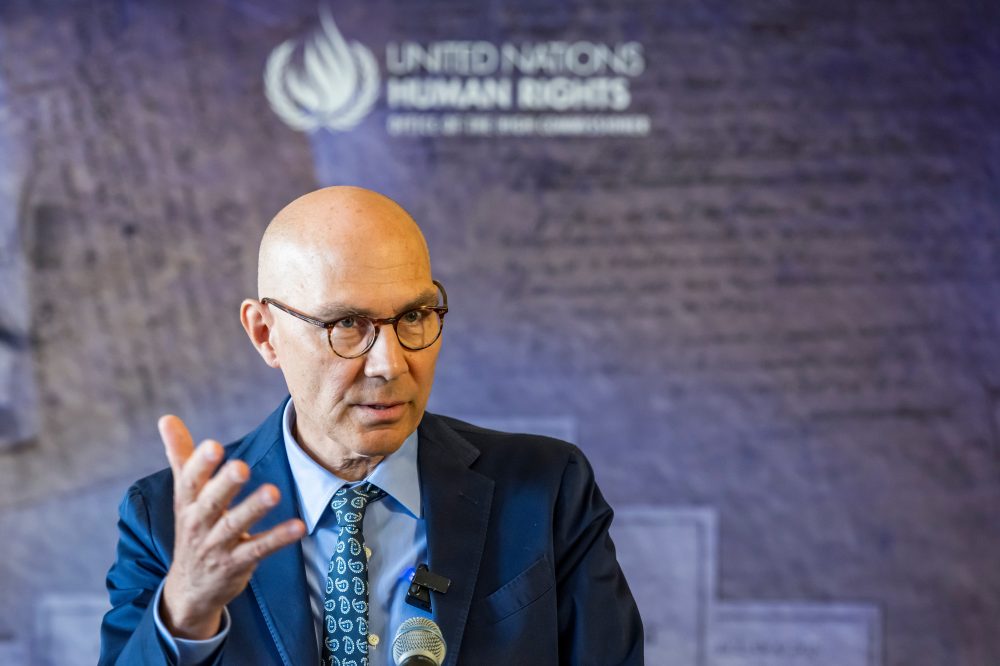
Volker Türk, the U.N. High Commissioner for Human Rights, told the Human Rights Council in Geneva that his office has recorded a dramatic surge in drone warfare as well as widespread rape and sexual violence throughout the ongoing conflict in Sudan, which has now stretched into its fourth year.
“In Sudan, the horrific conflict has expanded and escalated, marked by a sharp increase in the use of drone warfare,” Türk told the council.
The Sudanese war began on April 15, 2023, when a struggle for power between the country’s military and a paramilitary group known as the Rapid Support Forces erupted into open combat in the capital city of Khartoum and across the country.
According to the Armed Conflict Location and Event Data Project, commonly referred to as ACLED, the war has claimed at least 59,000 lives over three years — though the U.S.-based conflict monitoring organization cautioned that the true death toll is likely far greater due to challenges in gathering accurate data from the region.
ACLED also reported that at least 2,670 people — both fighters and civilians — died in drone-related incidents in 2025, representing a staggering 600% jump in drone-caused deaths and an 81% rise in drone attacks compared to the previous year.
Just last week, a drone strike attributed to the paramilitary group struck a cemetery and a gas station in the central city of el-Obeid, killing at least 15 people, according to local health officials.
Both sides in the conflict have increasingly deployed drones loaded with explosives, with attacks repeatedly hitting civilian targets such as hospitals, dams, schools, markets, and camps housing displaced people. Drone strikes have emerged as the single deadliest threat to civilians in the conflict.
The United Nations estimates that roughly 34 million people — nearly two out of every three people living in Sudan — are in need of humanitarian assistance, making it the largest such crisis in the world.
Beyond the physical destruction, the conflict has been defined by widespread atrocities. The U.N. and various international human rights organizations have characterized mass rape and killings motivated by ethnicity as war crimes and crimes against humanity.
“Rape and sexual violence are rampant,” Türk stated.