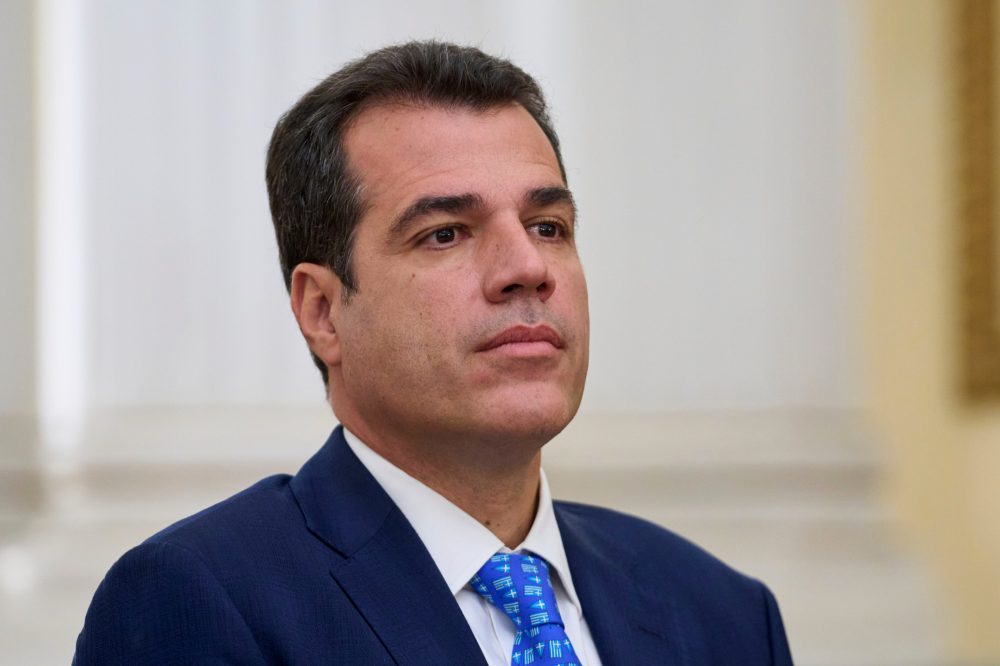

ATHENS, Greece — Greece’s migration minister is standing firmly behind his country’s immigration crackdown, telling a private television broadcaster on Monday that criticism from human rights organizations is something he wears proudly.
Minister Thanos Plevris, speaking on Action 24, described Greece’s current policies as “the toughest — if not the toughest — in Europe.” His remarks came as Greece’s conservative government works to deepen its relationship with authorities in eastern Libya, a region that has become a key departure point for migrants attempting to cross the Mediterranean Sea.
“Let me tell you something: the days when bureaucrats from Brussels or the United Nations could just show up and dictate how Greece handles the migration crisis are over,” Plevris declared during the broadcast.
The minister also pushed back against the influence of charities and rights organizations that assist migrants, arguing they have no place in determining Greek immigration policy.
“Every time U.N. envoys express concern over my legislation, it makes me proud of that legislation,” he said. “The more Amnesty International, the U.N. high commissioner for refugees or U.N. envoys are irritated by our migration policy, the more I view it as a badge of honor.”
Greece is currently in discussions with several African nations about setting up processing centers on their soil for migrants whose asylum applications have been denied within Europe — a proposal that has drawn sharp criticism from international human rights groups.
On Monday, Saddam Hifter, deputy commander of eastern Libya’s armed forces, visited Athens for meetings with Foreign Minister George Gerapetritis and Prime Minister Kyriakos Mitsotakis. Greece has offered eastern Libya’s authorities coast guard training along with support for employment programs and investment projects, all aimed at reducing the number of migrants setting out across the Mediterranean.
The surge in arrivals has been particularly pronounced on the island of Crete. Greek authorities reported Monday that arrivals and interceptions off Crete climbed more than 20% compared to the same period last year, reaching approximately 5,500 through May — with the pace accelerating since early June.
The European Union approved stricter migration measures last week, even as overall crossings from North Africa and the Middle East have declined in other areas.
Libya has long served as a major transit point for migrants from Africa and the Middle East hoping to reach European shores. More than a decade of political instability there has allowed human trafficking networks to thrive, with smugglers moving people across borders shared with Chad, Niger, Sudan, Egypt, Algeria, and Tunisia.
An analyst specializing in Libyan politics and security, Jalel Harchaoui, noted that eastern Libya is actively seeking stronger diplomatic relationships with European nations as well as financial support.