
TEL AVIV, Israel — Israel’s defense minister announced Monday that the country has no intention of pulling back from territory it has captured in Lebanon, a stance that could complicate an interim agreement reached just hours earlier between the United States and Iran.
The U.S.-Iran deal includes provisions to open the Strait of Hormuz and extend a fragile ceasefire, though full details were not immediately made public. Iran indicated it would not begin carrying out the agreement until a formal signing ceremony, which key mediator Pakistan said is scheduled to take place Friday in Switzerland.
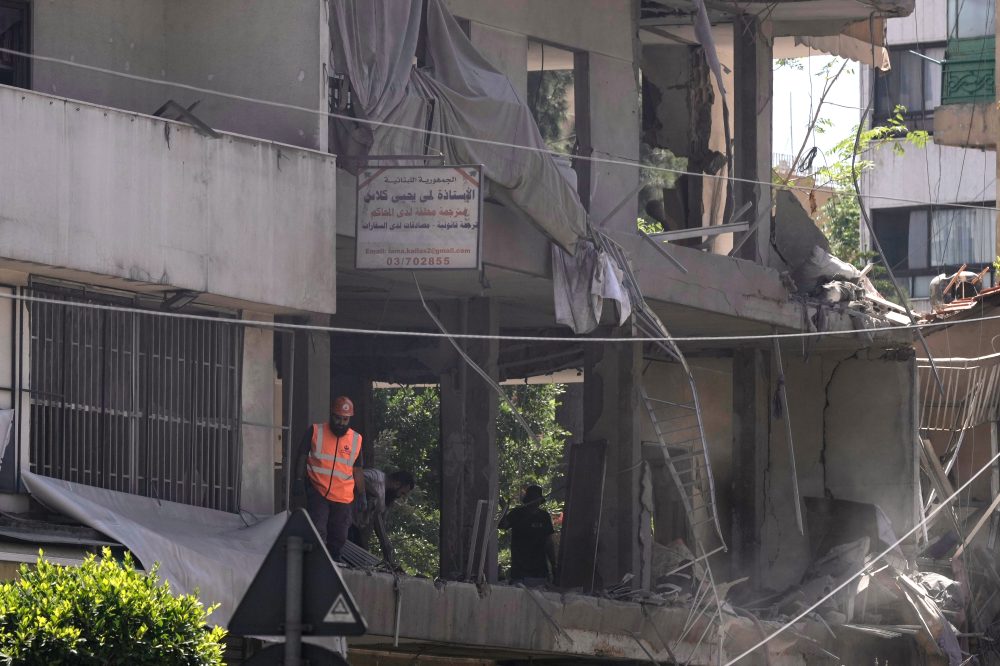
Even before the ink could dry, the agreement faced significant obstacles. Israel continued its military operations against the Iranian-backed militia Hezbollah in Lebanon — including airstrikes on Beirut’s southern suburbs on Sunday — nearly derailing the negotiations. Israel joined the United States in launching the war on February 28.
In Israel’s first official response following the deal’s announcement, Defense Minister Israel Katz stated that Israel intends to remain in the territories it controls in Lebanon, Syria, and the Gaza Strip “indefinitely.” Iran has made halting Israeli attacks on Hezbollah in Lebanon a condition tied to the interim agreement.
Katz went further, warning that if Iran retaliates against Israel for its strikes in Lebanon, Israel would respond with “great force.”
Over the past two and a half years, Israel has taken control of areas across Gaza, Lebanon, and Syria totaling roughly 1,000 square kilometers — approximately 386 square miles — a stretch of land slightly smaller than New York City.
The U.S.-Iran deal gives both sides just 60 days to reach an agreement on what to do with Iran’s stockpile of highly enriched uranium and its broader nuclear program. Resolving those same issues took years during Tehran’s 2015 nuclear agreement with world powers. U.S. President Donald Trump walked away from that deal during his first term in office, setting in motion the chain of events that eventually led to the current conflict.
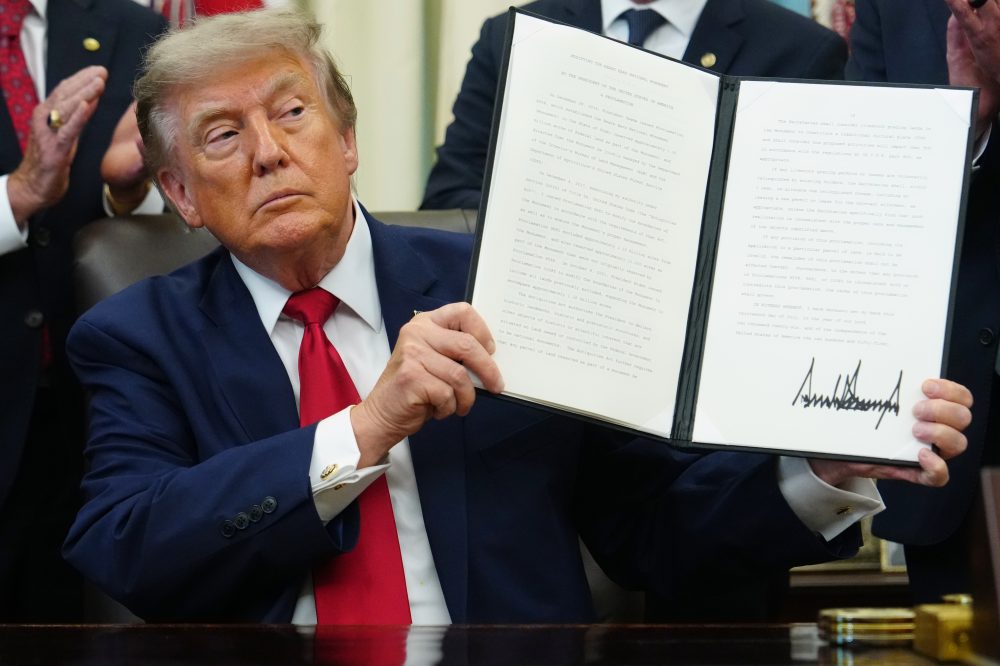
Trump took to social media to celebrate the agreement, writing “Congratulations to all!” as he marked his 80th birthday Sunday with a UFC cage match event at the White House. He also wrote that he was authorizing “the toll free opening of the Strait of Hormuz” and “the immediate removal of the United States Naval blockade,” which had been imposed in response to Iran’s control of the critical shipping route. He later clarified that the strait would not reopen until Friday’s signing.
Iran’s deputy foreign minister, Kazem Gharibabadi, confirmed the deal on state television but echoed that implementation would not begin until the formal signing on Friday. He noted the agreement came out of talks that also involved Qatar, another mediator in the negotiations.
Pakistan was the first country to publicly announce the deal. Prime Minister Shehbaz Sharif said “both sides have declared the immediate and permanent termination of military operations on all fronts, including in Lebanon,” and noted that mediators would facilitate meetings this week to “lay the foundation for the technical talks.”
Two senior Pakistani officials, speaking anonymously because they were not authorized to discuss the matter publicly, said broader negotiations on issues such as Iran’s nuclear program would continue over the following 60 days, with the possibility of extending that timeline if needed.
Iranian state television, citing the secretariat of the Supreme National Security Council, reported that hostilities on all fronts “will end immediately and permanently beginning tonight” and that the U.S. naval blockade “will be terminated immediately and in full.”
Qatari mediators departed Tehran after 17 hours of negotiations, according to an official familiar with the situation who spoke on condition of anonymity given the sensitivity of the talks. Separate preparatory meetings with each party are expected to take place in Doha this week.
It remained unclear who from Iran would sign the agreement on Friday. U.S. Vice President JD Vance told Fox News that the White House was still working out the details of who would attend, saying, “I certainly plan to be there, but it’s possible the president himself could be there.”
Concern was already surfacing among some Republicans. U.S. Sen. Lindsey Graham of South Carolina, who referred to Vance as “the architect of the deal,” posted online: “I am somewhat concerned that Iran’s view of the agreement seems different than what the American negotiating team is claiming.”