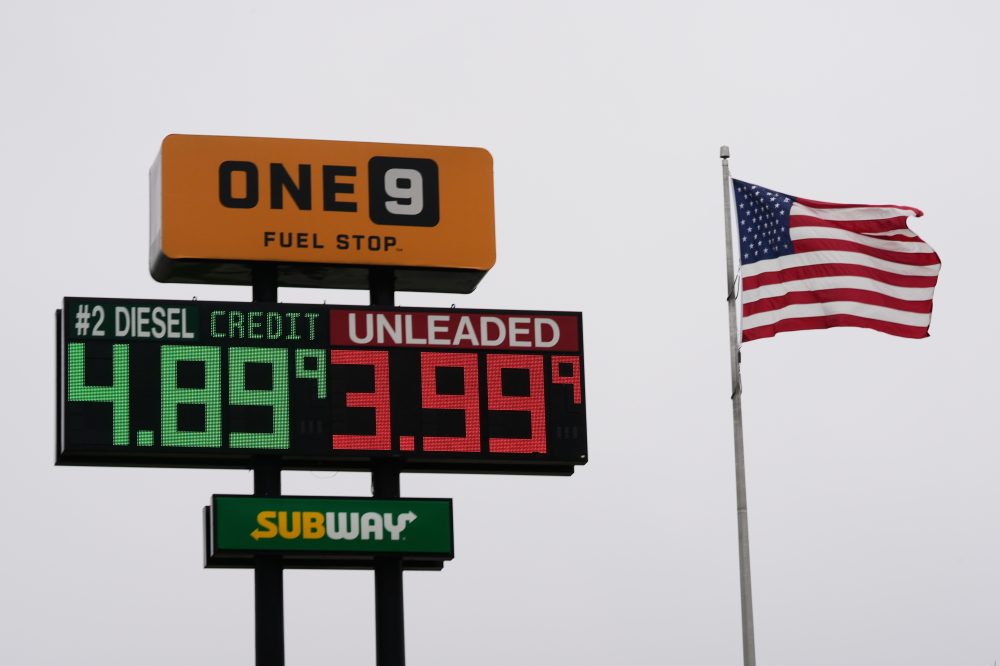

NEW YORK (AP) — Sunday’s announcement of a deal to end the Iran war and reopen the Strait of Hormuz is welcome news, but energy experts are cautioning that relief from high oil and gasoline prices won’t come quickly.
According to energy analysts, it could be many months before energy companies are able to ramp operations back up to a level that meets global demand. They point to the slow nature of oil shipping and refining, as well as lingering concerns about the safety of traveling through the strait, as reasons why the impact won’t be felt right away.
For over three months, tankers loaded with crude oil have been stuck in the Persian Gulf, unable to safely pass through the waterway. Before the war began, roughly one-fifth of the world’s oil and gasoline supply moved through that route.
Daniel Evans, global head of fuels and refining research at S&P Global Energy, said the recovery process requires patience. “It’s going to take time for people to feel comfortable and for insurance to be in place … particularly to get people on the ground to restart some of these assets,” he said.
Evans explained that stranded vessels must first clear the strait before new tankers can enter to take on cargo. “To bring a ship in, you need to be confident that you’ve got a big enough window of safety to bring it in, load it and move it out,” he added.
He also noted that oil tankers travel slowly, and the journey from the strait to distant destinations — including stops at refineries for processing — can span several months.
Another complicating factor is that some Middle Eastern producers halted oil extraction, a process called a shut-in, after running out of places to store the oil. Getting those operations going again is not a fast process.
Alan Gelder, senior vice president of refining, chemicals and oil markets at Wood Mackenzie, an analytics firm, said nations like Saudi Arabia and the United Arab Emirates may bounce back more quickly because they have alternate pipelines or routes that don’t rely solely on the Strait of Hormuz. However, he noted that other countries face steeper challenges. “But places like Iraq could be much more challenged because they’ve had a much bigger shut-in, their fields are more difficult … it may well take about a year before they get back,” he said.
Gelder also pointed out that investment in energy infrastructure — which can take years to show results — came to a standstill after the strait closed, meaning that restarting that financial commitment will also take time.
Daniel Sternoff, senior fellow at the Center on Global Energy Policy at Columbia University, said oil-producing nations that shut down operations won’t be eager to restart until they are confident the strait will remain stable and that any ceasefire will hold well beyond 30 to 60 days. “We don’t know what open means or what the speed of evacuation of trapped material is going to be,” he said.