
The United States and Iran have reached an interim agreement aimed at ending the war and reopening the Strait of Hormuz. A signing ceremony is scheduled for Friday in Switzerland, though previous announcements have collapsed before, and the precise contents of the deal were still being disputed as of Monday.
Below is a look at the long and complicated history of tensions surrounding Iran’s nuclear program:
1967 — Iran receives the Tehran Research Reactor, provided by the United States through the “Atoms for Peace” initiative.
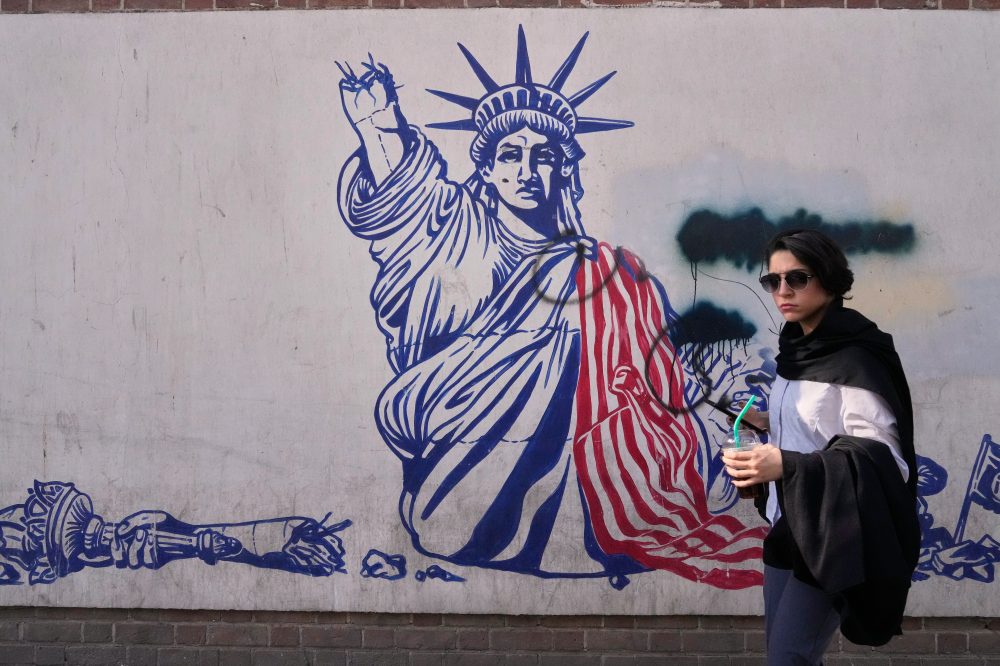
1979 — Shah Mohammad Reza Pahlavi, a U.S. ally who was gravely ill, flees Iran amid a wave of popular uprisings. Ayatollah Ruhollah Khomeini returns to Tehran, and the Islamic Revolution brings him to power. Student protesters storm the U.S. Embassy in Tehran, launching a hostage crisis that would last 444 days. Iran’s nuclear ambitions stall under pressure from the international community.
August 2002 — Western intelligence agencies and an Iranian opposition group expose Iran’s secret nuclear enrichment facility at Natanz.
June 2003 — Britain, France, and Germany begin diplomatic engagement with Iran on nuclear matters.
October 2003 — Facing international pressure, Iran halts its uranium enrichment activities.
February 2006 — Following the rise of hard-line President Mahmoud Ahmadinejad, Iran declares it will resume uranium enrichment. Britain, France, and Germany withdraw from the stalled negotiations.
June 2009 — Iran holds a contested presidential election in which Ahmadinejad is declared the winner despite widespread fraud allegations. The result sparks protests known as the Green Movement, which are met with a violent government crackdown.
October 2009 — Under President Barack Obama, the U.S. and Iran quietly establish a secret back-channel for communications through the sultanate of Oman.
July 2012 — American and Iranian officials hold secret, in-person meetings in Oman.
July 2015 — World powers and Iran announce a sweeping, long-term nuclear agreement that restricts Iran’s uranium enrichment in exchange for relief from economic sanctions.
May 8, 2018 — President Donald Trump pulls the U.S. out of the nuclear agreement on his own authority, calling it the “worst deal ever.” He promises to negotiate better terms that would also address Iran’s missile program and its backing of regional militias — but those talks never materialize during his first term.
May 8, 2019 — Iran announces it will begin stepping back from the nuclear accord. A string of regional attacks on land and at sea, attributed to Tehran, follows.
Jan. 3, 2020 — A U.S. drone strike in Baghdad kills Gen. Qassem Soleimani, the man widely credited with building Tehran’s network of proxy forces across the Middle East.
Jan. 8, 2020 — Iran retaliates for Soleimani’s death by firing a volley of missiles at military installations in Iraq housing thousands of American and Iraqi troops. More than 100 U.S. service members sustain traumatic brain injuries, according to the Pentagon. While Iran braced for a counterstrike, its Revolutionary Guard mistakenly shoots down a Ukrainian passenger aircraft shortly after it departs Tehran’s international airport, reportedly confusing it for a U.S. cruise missile. All 176 people aboard are killed.
July 2, 2020 — A mysterious blast destroys a centrifuge manufacturing plant at Iran’s Natanz nuclear site. Iran points the finger at Israel.
April 6, 2021 — Iran and the U.S., now under President Joe Biden, begin indirect talks in Vienna on how to revive the nuclear agreement. Those discussions, along with separate talks between Tehran and European countries, ultimately fail to produce a deal.
April 11, 2021 — Natanz is struck again in a second attack within a year, also believed to have been carried out by Israel.
April 16, 2021 — Iran begins enriching uranium to 60% purity — the highest level it has ever achieved and just one technical step below the 90% threshold considered weapons-grade.
Feb. 24, 2022 — Russia launches a full-scale military invasion of Ukraine. Over time, Moscow turns to Iran for bomb-carrying drones and missiles to use in the conflict.
July 17, 2022 — An adviser to Iran’s supreme leader, Kamal Kharrazi, publicly states that Iran has the technical ability to build a nuclear weapon but has not yet decided whether to do so.
Oct. 7, 2023 — Hamas militants from Gaza launch a devastating attack on Israel, killing approximately 1,200 people and taking 251 hostages, triggering the most intense fighting ever seen between Israel and Hamas. Iran, which has provided weapons to Hamas, backs the militants. Tensions across the region escalate sharply.
Nov. 19, 2023 — Yemen’s Houthi rebels, long backed by Iran, seize the vessel Galaxy Leader, kicking off months of attacks on ships moving through the Red Sea corridor. The U.S. Navy describes the campaign as the most intense combat it has faced since World War II — tactics that echo those previously used by Iran.
April 14, 2024 — Iran carries out an unprecedented direct assault on Israel, launching more than 300 missiles and attack drones. Israel, working alongside a U.S.-led coalition, intercepts the majority of the incoming fire.
April 19, 2024 — A suspected Israeli strike damages an air defense system near an airport in Isfahan, Iran.
July 31, 2024 — Hamas leader Ismail Haniyeh is killed in Tehran while attending the inauguration of reformist President Masoud Pezeshkian. Israel later claims responsibility for the assassination.
Sept. 27, 2024 — An Israeli airstrike in Lebanon kills Hezbollah leader Hassan Nasrallah.
Oct. 1, 2024 — Iran launches a second direct missile attack on Israel, though a U.S.-led coalition and Israeli forces shoot down most of the projectiles.
Oct. 16, 2024 — Israel kills Hamas leader Yahya Sinwar in the Gaza Strip.
Oct. 26, 2024 — Israel publicly strikes Iran for the first time, targeting air defense systems and locations tied to Iran’s missile program.
Jan. 20, 2025 — Trump is sworn in for his second term as president.
Feb. 7, 2025 — Iran’s Supreme Leader Ayatollah Ali Khamenei dismisses proposed talks with the U.S., calling them “not intelligent, wise or honorable.”
March 7, 2025 — Trump reveals he sent a letter directly to Khamenei proposing a new nuclear agreement.
March 15, 2025 — Trump orders heavy airstrikes against Houthi rebels in Yemen, the last remaining members of Iran’s self-described “Axis of Resistance” still capable of launching daily attacks.
April 7, 2025 — Trump announces that the U.S. and Iran will hold direct talks in Oman. Iran characterizes the planned discussions as indirect talks.
April 12, 2025 — The first round of U.S.-Iran talks takes place in Oman, wrapping up with a commitment to hold additional sessions after U.S. Mideast envoy Steve Witkoff and Iranian Foreign Minister Abbas Araghchi briefly spoke with one another.
April 19, 2025 — A second round of talks between the two countries is held in Rome.
April 26, 2025 — The U.S. and Iran meet in Oman for a third round of negotiations, this time including expert-level discussions for the first time.
May 11, 2025 — A fourth round of negotiations takes place in Oman, ahead of Trump’s planned trip to the Middle East.
May 23, 2025 — The two sides gather in Rome for a fifth round of talks. Oman says the session produced “some but not conclusive progress.”
June 9, 2025 — Iran signals it will not accept a U.S. proposal regarding its nuclear program.
June 12, 2025 — The Board of Governors at the International Atomic Energy Agency formally finds Iran in violation of its nuclear obligations. In response, Iran announces it has constructed and will activate a third nuclear enrichment facility.
June 13, 2025 — Israel launches a military campaign against Iran. Over the following 12 days, Israeli forces strike nuclear and military installations, as well as other government facilities.
June 22, 2025 — The United States enters the conflict, striking three Iranian nuclear sites.
June 23, 2025 — Iran responds to the U.S. strikes by attacking a military base in Qatar used by American forces, causing limited damage.
June 24, 2025 — Trump announces a ceasefire in the war.
July 25, 2025 — Iranian and European diplomats convene in Istanbul for talks on Iran’s nuclear program.
Aug. 8, 2025 — France, Germany, and the United Kingdom send Iran a formal letter warning that U.N. sanctions will be reimposed if there is no “satisfactory solution” to the nuclear standoff by August 31.
Aug. 28, 2025 — France, Germany, and the United Kingdom announce they have formally initiated the process to “snapback” U.N. sanctions against Iran.
Sept. 9, 2025 — Iran and the International Atomic Energy Agency reach an agreement on potentially beginning inspections, though questions about how it would be carried out remain unanswered.
Sept. 19, 2025 — The U.N. Security Council declines to block the “snapback” sanctions on Iran.
Sept. 26, 2025 — The U.N. Security Council rejects a last-ditch effort by China and Russia to halt the “snapback” process.
Sept. 28, 2025 — The United Nations reimplements “snapback” sanctions on Iran, barring any eleventh-hour diplomatic breakthrough.
Dec. 28, 2025 — Protests erupt in two major markets in central Tehran after the Iranian rial plummets to a record low of 1.42 million rials to one U.S. dollar, intensifying inflation and driving up the cost of food and everyday goods.
Jan. 3, 2026 — Khamenei declares that “rioters must be put in their place,” a statement widely interpreted as authorization for security forces to crack down more forcefully on the demonstrations.
Jan. 8, 2026 — After a call to action from Iran’s exiled crown prince, crowds take to the streets and shout from their windows in nationwide protests. The government shuts down the internet and blocks international phone calls to isolate the country. A subsequent security crackdown results in thousands of deaths and tens of thousands of arrests.
Jan. 13, 2026 — Trump announces he has canceled any planned meetings with Iranian officials and vows that unspecified “help is on its way.”
Jan. 26, 2026 — The aircraft carrier USS Abraham Lincoln and three accompanying warships arrive in the Middle East as Trump’s threats of military action intensify.
Feb. 3, 2026 — A U.S. Navy fighter jet shoots down an Iranian drone as it approaches the Lincoln in the Arabian Sea. Iranian fast-attack vessels attempt to intercept a U.S.-flagged ship in the Strait of Hormuz.
Feb. 6, 2026 — Iran and the U.S. hold indirect nuclear talks in Oman, with the head of the U.S. military’s Central Command also in attendance.
Feb. 17, 2026 — Iran and the U.S. hold discussions in Geneva while Tehran announces it has temporarily closed the Strait of Hormuz — the narrow passage at the mouth of the Persian Gulf through which one-fifth of all globally traded oil flows.
Feb. 26, 2026 — Another round of talks takes place in Geneva as the United States assembles the largest concentration of warplanes and aircraft in the Middle East in decades.
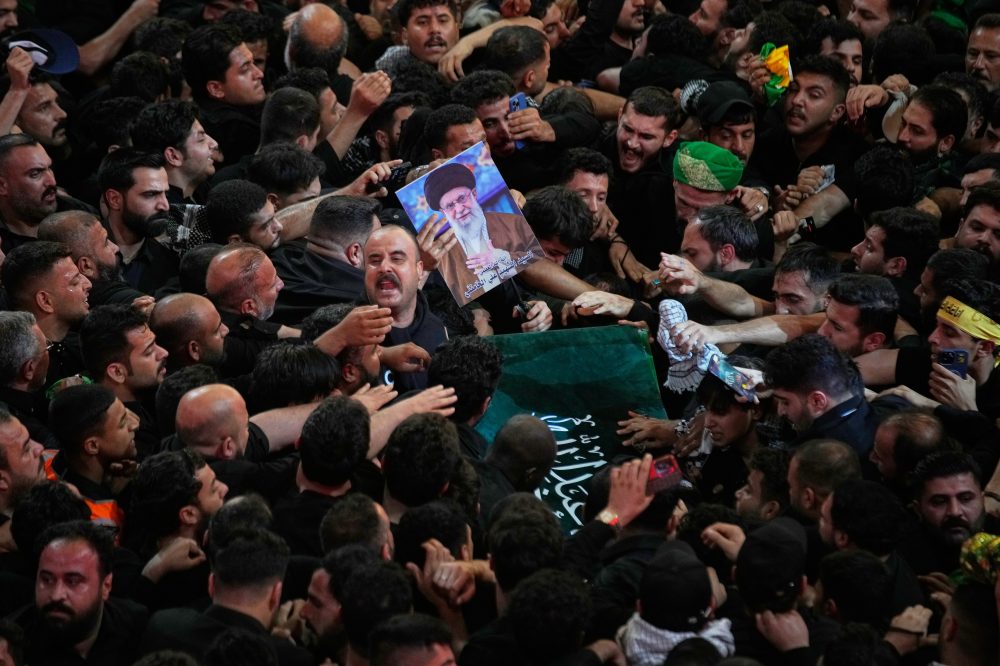
Feb. 28, 2026 — Israel and the United States launch a joint military campaign against Iran, with Khamenei killed in the opening moments of the conflict.
March 9, 2026 — Iran designates Ayatollah Mojtaba Khamenei, son of the late supreme leader, as the country’s new paramount ruler.
April 7, 2026 — A fragile ceasefire in the Iran war is announced, with negotiations set to continue. Israel is not part of the talks.
April 8, 2026 — Israel unleashes a massive bombardment on Beirut, Lebanon’s capital, killing more than 300 people in a 10-minute assault.
April 11, 2026 — U.S. Vice President JD Vance leads an American delegation to Islamabad, where he meets with an Iranian team headed by parliament speaker Mohammad Bagher Qalibaf. The session marks the highest-level direct contact between the two nations since the 1979 Islamic Revolution. After 21 hours of talks, the parties leave without a deal.
May 31, 2026 — Israel’s ground offensive in Lebanon pushes to its deepest point in more than 25 years.
June 15, 2026 — The United States and Iran reach an initial agreement to reopen the Strait of Hormuz and further extend the fragile ceasefire in the Iran war.