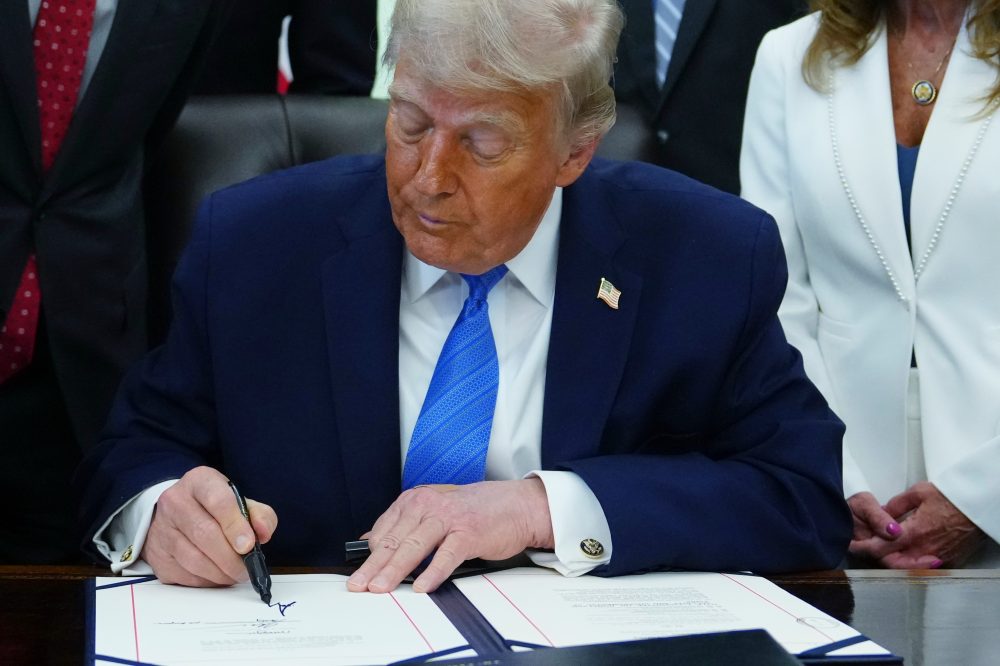
WASHINGTON – American and Iranian negotiators are nearing completion of an agreement to end their longstanding dispute, with a senior U.S. official indicating Friday that an initial accord could be finalized within days.
“The negotiating team has got us in a very good spot, but let’s see here, we’re not quite at the finish line yet, but we are very close,” the U.S. official told reporters while requesting anonymity.
According to the official, the proposed agreement fulfills U.S. President Donald Trump’s primary goals and “gets it in a very, very good place at the end of it.”
The proposed memorandum of understanding would require Iran to reopen the Strait of Hormuz while the United States would end its blockade of Iranian ports, the official explained to reporters.
Under the agreement’s provisions, Iran would dismantle its nuclear capabilities, with highly enriched uranium being destroyed locally before removal from Iranian territory, according to the official. The deal also establishes monitoring procedures to guarantee long-term compliance.
Should Iran meet its commitments, the country would receive economic relief through asset releases and reduced sanctions, the official noted.
“The Iranians don’t get anything upon the signing of the MOU or upon the negotiation itself,” the official stated.
“They get rewarded economically for complying with their obligations under the deal. So if they turn over the nuclear material as promised, they’ll get something. If they dismantle their nuclear program or their nuclear facilities, they’ll get something else,” the official explained.
BRUSSELS, June 12 – Representatives from all 27 European Union member countries voted Friday to begin formal membership negotiations with Ukraine and Moldova, with initial discussions scheduled to start Monday.
While Ukraine remains engaged in military conflict against Russia’s invasion, President Volodymyr Zelenskiy has prioritized EU membership as a central strategic objective to secure his nation’s position within Europe’s political framework.
European Union leadership approved opening membership discussions with both Ukraine and Moldova in December 2023, however formal negotiations were delayed due to Hungary’s previous government blocking Ukraine’s membership application.
A newly formed government in Budapest recently reached a deal with Kyiv regarding Hungarian minority rights within Ukraine, allowing Hungary to remove its objection to beginning the initial phase of membership negotiations.
During Friday’s meeting in Brussels, the representatives authorized both nations to start discussions on the first group of policy areas requiring legal reforms to align with EU requirements.
The membership process involves candidate nations negotiating various policy sections organized into six themed groups, addressing topics such as fundamental rights, internal market operations, and external relations.
“Today, the European Union took a major step forward,” European Council President Antonio Costa and European Commission President Ursula von der Leyen said in a joint statement.
“At the first Intergovernmental Conference on Monday, we will open the cluster on fundamentals; the backbone of the accession process,” they said.
European Union membership negotiations typically require extended timeframes and involve years of reform implementation and meeting European requirements.
Costa and von der Leyen described Friday’s decision as “a recognition of the determination, courage and hard work shown by both countries in advancing reforms, even in the face of immense challenges. And a signal that the EU’s offer of peace, stability and opportunity is unmatchable”.
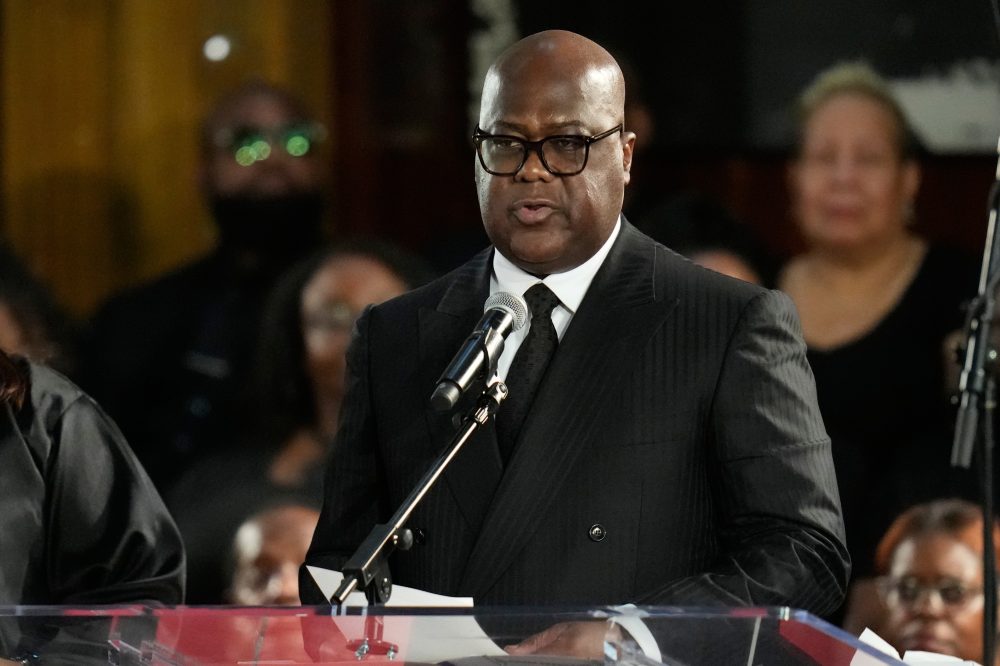
Violence broke out Friday in Kinshasa, Congo’s capital city, as opposition groups held a protest against proposed constitutional modifications that critics believe could enable President Félix Tshisekedi to run for a third term in office.
Law enforcement officers used tear gas to break up the gathering organized by opposition alliance C64 after confrontations erupted between demonstrators and government supporters near the Parliament building.
The nation faces numerous challenges, including an ongoing Ebola epidemic and intensifying violence from a long-running conflict involving Rwanda-supported M23 rebels, among more than 100 armed groups fighting for territory in eastern regions.
President Tshisekedi, age 62, assumed office in 2019 and is scheduled to finish his second five-year presidency in 2028. He has stated his openness to pursuing a third term if voters approve it through a referendum.
Current Congolese constitutional law prohibits any changes to presidential term restrictions. A proposed measure being reviewed by the National Assembly’s lower house would permit the president to modify these requirements during a “major dysfunction” that stops government operations from functioning, possibly after holding a referendum.
The nation’s primary opposition groups, which had been fragmented in previous years, united in May under C64, also known as Coalition Article 64, to fight what they characterize as Tshisekedi’s effort to extend his rule. The alliance has labeled the suggested modifications a “serious threat” to national stability.
Friday’s demonstration turned violent when opposition followers and pro-government activists fought before law enforcement stepped in.
Martin Fayulu, who finished second in the 2018 presidential race and ranks among Congo’s leading opposition politicians, was among those hurt. Footage shared on his official Facebook account displayed Fayulu with blood around his eyes and on his white shirt collar while supporters assisted him through the crowd.
NAIROBI, Kenya (AP) — African airlines are grappling with mounting financial pressure as the ongoing conflict in Iran drives jet fuel costs higher and creates supply chain disruptions across the continent’s aviation sector.
According to the African Airlines Association (AFRAA), the conflict has highlighted the continent’s overwhelming reliance on imported refined jet fuel, making carriers extremely susceptible to worldwide economic disruptions.
Even before the Iran conflict began, African airlines were already spending approximately 17% more on jet fuel compared to worldwide averages, AFRAA reports. The additional cost pressures are further squeezing profit margins that were already razor-thin throughout the industry.
“The impact is dire and a major shock for our members,” AFRAA Secretary-General Abderahmane Berthe told The Associated Press. “Fuel represents between 30% and 40% of airlines’ operating costs. Any increase directly affects their balance sheets.”
Industry observers are monitoring the Strait of Hormuz closely, a crucial international energy pathway that handled roughly one-fifth of global oil and fuel shipments before Iran essentially blocked shipping traffic there when the conflict started in February.
African airlines face magnified consequences due to structural challenges, such as elevated purchasing expenses and limited capacity to weather economic shocks.
According to Berthe, several airlines have implemented fuel surcharges, though most are unable to transfer the complete cost increase to travelers, forcing them to shoulder the financial burden.
“They cannot pass these costs to passengers as this will affect demand,” he said.
Supply interruptions have also created worries at key aviation centers like Nairobi, Kenya, and Addis Ababa, Ethiopia, where reliable jet fuel access is essential for both regional and international flight operations, Berthe explained.
Several airlines have already started modifying their networks, reducing flight frequencies and reassessing routes to handle increasing expenses and fuel supply uncertainty, he noted.
The situation has sparked renewed demands for Africa to build up local refining capabilities and decrease dependence on imported jet fuel.
“We need African solutions,” Berthe said. “Many African countries produce oil, but we still depend on non-African suppliers for refined jet fuel.”
Focus is growing on initiatives like Nigeria’s Dangote Refinery, which is anticipated to become increasingly important in providing refined fuel throughout the region, including to nations like Kenya, Ethiopia and South Africa.
“We have seen hubs like Addis (Ababa) turning to Dangote for supply,” Berthe said. “This is expected to ease pressure on fuel supply chains during this period.”
Even with these challenges, air travel demand across Africa continues to be robust. AFRAA forecasts passenger increases of approximately 6% each year, surpassing many international markets.
However, Berthe cautioned that ongoing disruptions could seriously impact profitability and connectivity.
“If this continues, the impact on African airlines will be very severe,” he said. “If Africa wants a resilient aviation sector, it must secure its own fuel future.”
A healthcare worker employed by Doctors Without Borders was detained during Afghanistan’s recent enforcement campaign targeting alleged violations of women’s clothing regulations, the humanitarian organization announced Friday.
The paramedic was taken into custody for failing to wear a face covering during her commute to a medical facility in Herat, a western Afghan city, and remained in detention for two days, stated Sarah Champion, who manages the aid group’s Afghanistan operations.
In a Thursday statement, the organization, which operates under the French initials MSF, expressed being “outraged by the arrest and detention of one of its employees as part of the enforcement of dress code requirements in the city.”
“This incident is not isolated. Women in Afghanistan already face very severe restrictions on movement and access to public life, which have direct consequences on the access to care and delivery of healthcare services across the country,” the statement continued.
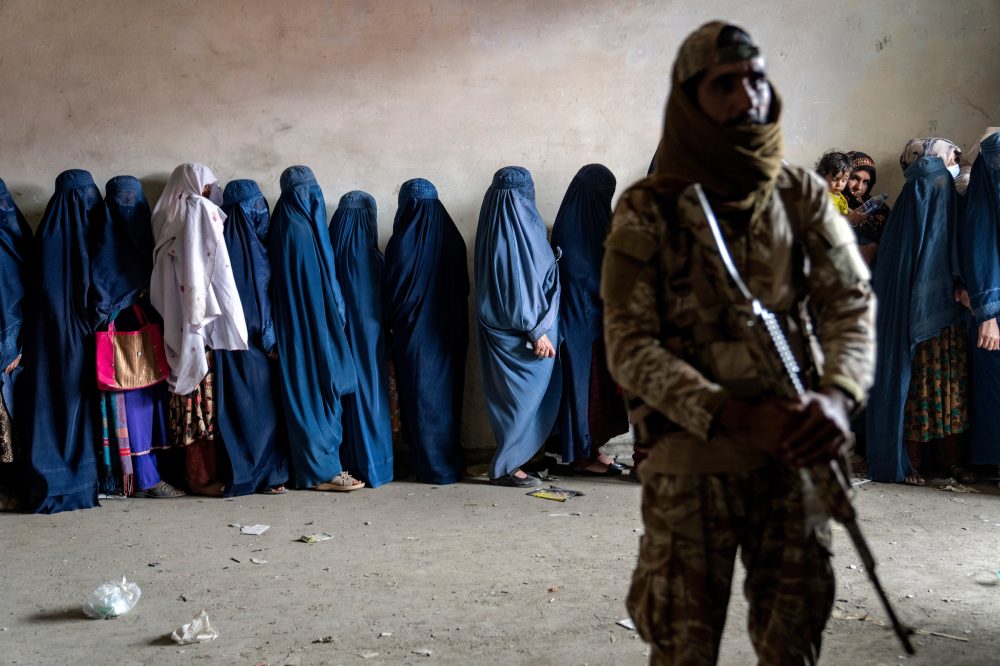
United Nations officials reported that no fewer than 30 women faced arrest in Herat during Saturday and Sunday for purported violations of Afghanistan’s harsh female dress requirements. These detentions triggered an uncommon demonstration in the city Monday, which Taliban authorities violently broke up.
The U.N. mission in Afghanistan reported that police response to the demonstration resulted in at least one death from gunshots and multiple injuries, including those caused by physical assault.
Such demonstrations occur infrequently in Afghanistan, where Taliban rule has been in place since 2021 following the disorderly departure of U.S.-led military forces. The current administration has established regulations based on a rigid understanding of Islamic law, or Shariah. Opposition is not permitted, and demonstrations challenging official policies are prohibited.
These regulations encompass severe limitations on women and girls, including prohibitions on schooling past elementary level and restrictions on numerous occupations. Women must have a male guardian present when leaving their homes, and rigid guidelines dictate women’s attire. Medical care remains among the limited fields where female employment continues.
The guidelines mandate that women may appear publicly only when dressed in complete hijab — including head covering and lengthy garment covering their entire body — plus a face covering that exposes only the eyes. These requirements are enforced by the Ministry for the Propagation of Virtue and the Prevention of Vice.
The MSF employee was traveling to her hospital job with her husband when authorities at a checkpoint established by the vice and virtue ministry stopped them, Champion explained Friday.
Officials informed the woman that her lack of face covering constituted a dress code violation. Nevertheless, she wore her approved work clothing, which Afghanistan’s Health Ministry has sanctioned for female hospital personnel, Champion informed The Associated Press.
Following her explanation about her hospital employment, the employee departed the checkpoint. However, both she and her husband faced arrest upon reaching the medical facility and spent two days in custody, Champion reported.
The imprisonment “is completely disproportionate,” Champion stated. “You don’t go to jail for that. You don’t get arrested and detained for not covering your face.”
Prior to their release, both spouses were required to sign written pledges that the woman would wear a niqab — clothing that covers the complete body, including head and face, showing only the eyes. The agreement specified that failure to comply could result in one month of imprisonment, Champion noted.
The woman’s father, brother and brother-in-law were additionally required to sign the agreement, ensuring the woman’s husband would guarantee his wife’s adherence to clothing rules.
MSF operates seven initiatives throughout Afghanistan providing maternity, pediatric, trauma and tuberculosis treatment. The organization reported that women comprise 45% of its nursing staff and over half of its maternity project workforce.
Citizens of Iran find themselves caught between uncertainty and weariness as their nation’s economy suffers under the strain of warfare and mounting domestic challenges.
U.S. President Donald Trump announced Thursday that he halted planned military strikes against Iran, stating that a peace agreement appeared close at hand. Earlier this week’s exchange of attacks brought a fragile ceasefire dangerously close to breaking down completely, which would cause additional damage to Iran’s already struggling economy.
Previous attacks targeting steel plants, petrochemical facilities, and power infrastructure have triggered widespread business shutdowns and unemployment across Iran, leaving citizens unable to purchase basic food items amid skyrocketing grocery prices that have increased by triple digits.
The combination of economic collapse and the threat of warfare has left many citizens desperately wanting an end to the chaos while feeling deeply worried about what lies ahead. Huraz Ahmadi, a 19-year-old street vendor in the capital of Tehran, expressed concern about the possibility of fighting resuming.
“I don’t think they will reach an agreement, given the way things are going. But I hope they make a deal. An agreement is much better than war,” Ahmadi said. “In wars, innocent and good people die. I personally lost a relative.”
Over the past year, Iranians have endured two separate conflicts – beginning with Israel’s 12-day war in 2025 against Iran followed by a joint assault with the U.S. that began on Feb. 28. Both attacks were launched in the middle of talks about Iran’s nuclear program.
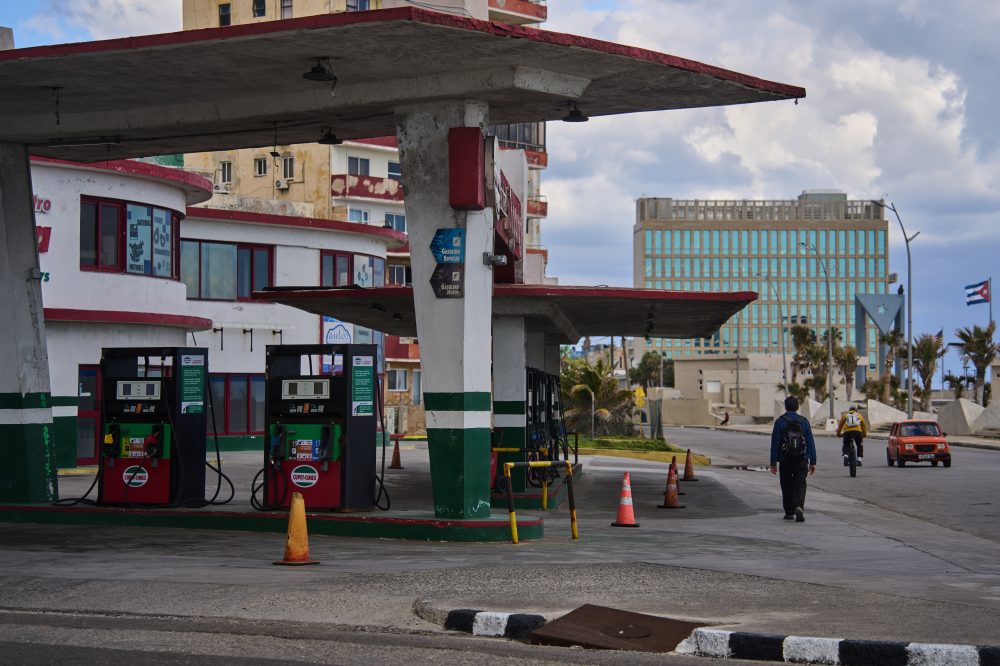
Monday’s renewed U.S. attacks created uncertainty in Iran’s capital after growing hope that Tehran and Washington were close to reaching an agreement. One Tehran resident in his late 20s described how the sound of explosions and air defenses in the capital caused “maybe a half hour of panic.” Extended lines appeared at gas stations, but citizens returned within hours to “living normally,” he said.
“War is also becoming normal. And that is very upsetting,” the resident said, speaking on the condition of anonymity out of security fears.
“Everybody is stressed out for a thousand reasons,” he added. “Our lives are constantly in this political game where we can’t plan anything or know what’s going to happen.”
A key requirement in negotiations for Iranian representatives is that the U.S. provide some form of sanctions or economic relief, in addition to removing a naval blockade that has severely restricted Iran’s oil exports as well as imports of raw materials and other goods.
Numerous business owners are fighting to keep their operations alive, according to a member of a council representing Iranian industrialists.
“The main concern of many industrialists and entrepreneurs is the survival of their businesses and production. The concern is about the disruption of the supply chain of raw materials, parts and machinery due to the cruel U.S. blockade,” Mehdi Bostanchi said.
Tehran-based Bostanchi, who owns a company that makes ventilation systems, is part of a trade group for factory owners across Iran. Its members include textile, food and metal producers and printing firms.
Bostanchi explained that the unclear status of any agreement to end the conflict is preventing businesses from making future plans and working toward recovery.
“Society is tired of instability and does not want a wider war to break out,” he added.
Iran’s rial currency has also lost over half its value in the past year. Exchange rates have crashed to around 1.8 million rials to the dollar, compared with 41,600 rials 10 years ago.
The worsening economic situation has sparked civil unrest in Iran. In January, security forces shot thousands of anti-government protesters in the streets. Arrests of protesters and those expressing support for them has continued through the war.
In addition to fearing their own government, Iranians who oppose the authorities also worry about a return to active warfare, according to a social media influencer and therapist who lives in central Tehran and has participated in past anti-government protests.
“The war isn’t anything but destruction for us. And in reality, the attacks that happened killed a number of ordinary people and destroyed a number of homes and residential buildings,” she said, speaking on the condition of anonymity out of fear of retribution.
Residents contacted by The Associated Press also expressed concerns that renewed conflict would lead Iranian authorities to cut internet service again. Repeated blackouts since the January protests have crippled what was a strong digital economy and stoked job losses. A partial restoration has seen a limited uptick in connectivity.
A few hours after threatening to launch further attacks, Trump posted on social media that significant points in the negotiations “have been brought to the highest level of Iranian leadership and approved.” But a spokesperson for the Iranian Foreign Ministry, Esmail Baghaei, said in a live phone call on state television that mediators were active and nothing had been finalized to end the conflict.
Iran’s ability to withstand U.S.-Israeli assaults and to close the globally strategic Strait of Hormuz has also rallied the Islamic Republic’s hard-liner base. Authorities have organized nightly rallies in past weeks as they try to project popular support for a tough stance in U.S. talks.
Hamid Reza Bani Ebrahimi, a 47-year-old merchant, said he opposed any agreement that would limit what he sees as Iran’s right to enrich uranium and develop nuclear technology. Israel and the U.S. have repeatedly struck sites and figures linked with the country’s atomic program.
“Our scientists worked so hard to acquire this technology, and then they came and martyred them,” Bani Ebrahimi said.
Abdullah Hosseini, a 45-year-old university professor in Tehran, said Iranian strikes on Gulf states and Jordan this past week were part of an effort to deter further attacks.
“I don’t like war. I am extremely worried about people and children being killed,” Hosseini said. “But sometimes war is necessary, and now is the time for Iran to stand against its enemy.”
But Tehran-based analyst Rahman Ghahremanpour said the back-and-forth strikes this week had deepened concerns in Iran that the conflict “could turn into a crisis without end and in reality make running the country more difficult” in the face of economic pressures.
“Both America and Iran are looking for a way out of this situation with honor and claiming victory so they can strengthen their own domestic situation,” he said.
ISLAMABAD (AP) — American and Iranian negotiators are reportedly nearing completion of a comprehensive agreement designed to halt their ongoing military conflict, according to three regional sources who spoke with The Associated Press on Friday. A high-ranking American official indicated the preliminary agreement contains provisions for eliminating and dismantling Iran’s nuclear materials.
Iran’s Foreign Minister Abbas Araghchi wrote on X Friday that such an agreement “has never been closer.” He provided no additional information, noting that a completed deal remained under discussion.
This potential diplomatic breakthrough follows a three-day period of military exchanges between Iran and both America and Israel this week, raising concerns about a broader Middle Eastern conflict.
President Donald Trump has repeatedly stated in recent weeks that both nations were approaching a potential agreement. The military action initiated by America and Israel on February 28 has destabilized the Middle East and effectively halted petroleum and natural gas transport from the Persian Gulf region. A temporary ceasefire has remained in effect since April 7.
The regional sources indicated the developing agreement is anticipated to facilitate reopening the Strait of Hormuz, gradual removal of Iranian sanctions, and release of Tehran’s frozen financial assets. These sources requested anonymity due to the delicate nature of ongoing negotiations and refused to elaborate on additional specifics.
A high-ranking American official stated that crucial elements in the developing deal involve eliminating and destroying Iran’s nuclear materials and dismantling Tehran’s atomic program. The provisions also require Iran to cease funding terrorist organizations, according to the official.
The American official requested anonymity as they lacked authorization to discuss details of the confidential negotiations.
Highlighting the delicate nature of these discussions, Trump criticized Iranian leadership on social media Friday, declaring: “They better get their act together, and FAST!”
Iran’s atomic program has remained a central source of disagreement. American and Israeli leadership worry it could result in nuclear weapons development — a primary justification their officials have given for military action. Tehran has maintained its nuclear activities serve peaceful objectives.
Equally important is Iran’s effective blocking of the Strait of Hormuz, a crucial waterway for petroleum and natural gas transportation. Interrupted passage through this strait has reduced worldwide energy availability, increased fuel costs and raised prices for food and other necessities far beyond the regional area.
America has implemented a naval embargo of Iranian harbors since mid-April to restrict Iran’s petroleum exports.
The regional sources anticipate a formal signing event for the agreement within days once officials in Washington and Tehran provide approval.
“This deal has the potential to remake the region and lead to lasting peace,” Vice President JD Vance posted on social media Friday, without providing specifics.
Trump claimed substantial negotiation progress Thursday, hours after threatening to intensify attacks and capture Iran’s petroleum sector. Esmail Baghaei, a spokesperson for Iran’s Foreign Ministry, told state television that mediators remained engaged and the agreement text was “mostly finalized.”
Pakistan’s Foreign Ministry, which has spearheaded mediation efforts between America and Iran, provided no immediate response Friday. Foreign Ministry spokesperson Tahir Andrabi stated Thursday that Pakistan continued participating in negotiations.
Israeli Prime Minister Benjamin Netanyahu has indicated Israel is not participating in the agreement under negotiation. He stated Friday that he and Trump maintained “full agreement” that Iran must not possess nuclear weapons.
Israeli Defense Minister Israel Katz stated separately that Israel also anticipates Trump will protect crucial Israeli interests, including weakening Iran’s missile capabilities and proxy networks.
Katz cautioned that Israel might still take independent action regarding Iran and would not withdraw from territories it occupies in Lebanon, Syria and Gaza, nor would it leave the northern refugee camps of the Israeli-occupied West Bank.
Iran has demanded that any conflict-ending agreement must also halt fighting in Lebanon between its allied militia Hezbollah and Israel. Netanyahu appears determined to pursue his objective of eliminating the militant organization, creating complications for Iranian-American negotiations.
The agreement was primarily facilitated by Pakistan, directed by its army chief Field Marshal Asim Munir, according to regional sources, with support from Saudi Arabia, Turkey, Egypt, and Qatar.
A British court sentenced a young man to more than six years behind bars Friday for pushing a vulnerable Louisiana resident to commit suicide during a live video conversation on the Discord messaging platform, according to prosecutors.
Dylan Phelan, 21, pleaded guilty to encouraging Travis Dyer to end his own life in October 2024 following months of communication through the Discord service, Britain’s Crown Prosecution Service announced.
Dyer, a Louisiana resident, died while participating in a live video conversation with Phelan and two other individuals located in the United States, during which participants pressured him to hurt himself, including using a shotgun to take his own life.
“This was a deeply disturbing case involving the sustained exploitation of a vulnerable young man,” prosecutor Alex Johnson said.
“Dylan Phelan did not simply witness these events – he deliberately and persistently encouraged Travis Dyer to take his own life, intending that he would do so. His actions were calculated, cruel, and had devastating consequences.”
According to prosecutors, the encouragement represented ongoing conduct by participants in an internet group who had singled out Dyer while being aware of his mental health struggles. Phelan subsequently informed authorities he had become involved with troubling online communities and acknowledged his responsibility in the death.
At Leeds Crown Court, Phelan received a sentence of six years and four months in prison after also entering guilty pleas to charges involving inappropriate images of minors and possession of extreme pornographic material.
Johnson stated that individuals who promote self-harm through the internet would face consequences and that online anonymity would not protect perpetrators from legal action.
The sentencing occurs as Britain intensifies its response to internet-based dangers, especially those impacting minors and young adults, including increased pressure on tech corporations to better prevent harmful material and abusive conduct on their services.
Discord has not yet provided a response to requests for comment.
BAKU, June 12 – An Azerbaijani court has handed down an eight-year prison sentence to a well-known rights activist following his conviction on charges of hooliganism and fraud, in what his attorney characterizes as a politically driven prosecution.
Rufat Safarov, the activist in question, previously worked as a prosecutor and currently leads the advocacy organization Defense Line. His background includes a three-year imprisonment for bribery charges before receiving a presidential pardon from Azerbaijani President Ilham Aliyev in 2019.
Attorney Rovshana Rahimova, representing Safarov, informed Reuters of her disagreement with the court’s decision and confirmed plans to file an appeal.
The oil-rich nation has faced mounting Western condemnation regarding its treatment of human rights following multiple detentions of independent media figures and political opposition members in recent times.
Azerbaijani officials dismiss such criticism and characterize Western diplomatic demands for prisoner releases as unwarranted meddling in their country’s legal proceedings.
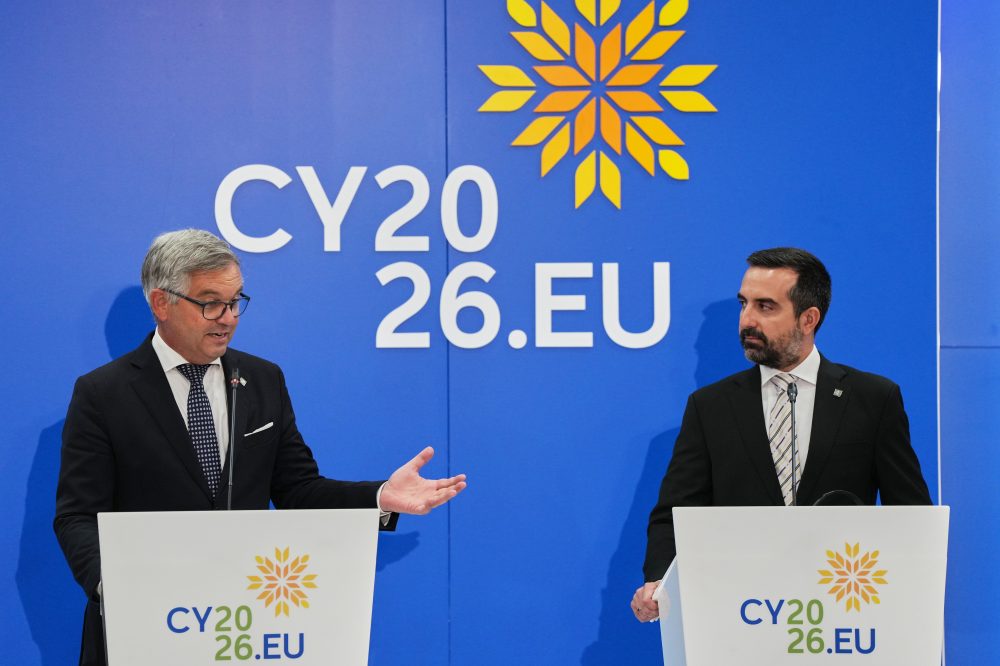
NICOSIA, Cyprus (AP) — European Union officials will oversee any agreements establishing return centers in countries outside the EU to ensure rejected asylum seekers transferred there maintain their legal protections, the bloc’s migration commissioner announced Friday.
Magnus Brunner stated that international organizations including the International Organization for Migration and the U.N. refugee agency will review any such agreements to guarantee adherence to legal protections.
“Human rights standards and international law is non-negotiable,” Brunner stated during a press briefing at a gathering of EU migration ministers marking the launch of the bloc’s updated migration and asylum framework.
This return center concept represents one element of the new framework that has drawn criticism from human rights organizations, who worry these facilities might become permanent detention sites filled with unsuccessful asylum applicants trapped in prolonged legal uncertainty.
On Friday, Greece confirmed it joins four other EU nations — Germany, Austria, Denmark and the Netherlands — in discussions with African nations about establishing these return facilities within their borders.
The Greek Migration Ministry reports that these five European countries plan to finalize agreements with the unidentified third nations this year, allowing the return centers to begin operations in 2027.
Brunner declined to identify which third countries are under consideration for hosting the return facilities, instead referring questions to the five nations conducting the discussions.
“We created the rules, we create the basis, but it’s up to the member state to negotiate agreements if they want to,” the EU commissioner stated. He noted that EU policy changes are showing results, with irregular migrant arrivals dropping 90% along the Western Balkan route during the past three years, plus a 67% decrease from Turkey to Greece’s Aegean islands during the first four months of this year.
Cypriot Deputy Minister for Migration Nicholas Ioannides announced the Mediterranean island country plans to participate in return hub discussions after its six-month EU leadership period concludes July 1.
Ioannides dismissed concerns from human rights organizations regarding the bloc’s updated migration and asylum framework, which critics claim might prevent legitimate asylum seekers from obtaining protection through accelerated evaluations.
He stated these organizations “disagree with the gist of this project, with the whole architecture,” noting that the EU’s focus was implementing updated regulations to avoid being unprepared for another large-scale migrant influx similar to 2015.
Brunner defended the updated framework as offering protection “to actually those in need” through “clearer and more effective rules” that target illegal migration pathways and human traffickers.
Additionally on Friday, Cyprus revealed an agreement with Lithuania regarding the relocation of migrants who received international protection to the Baltic nation.
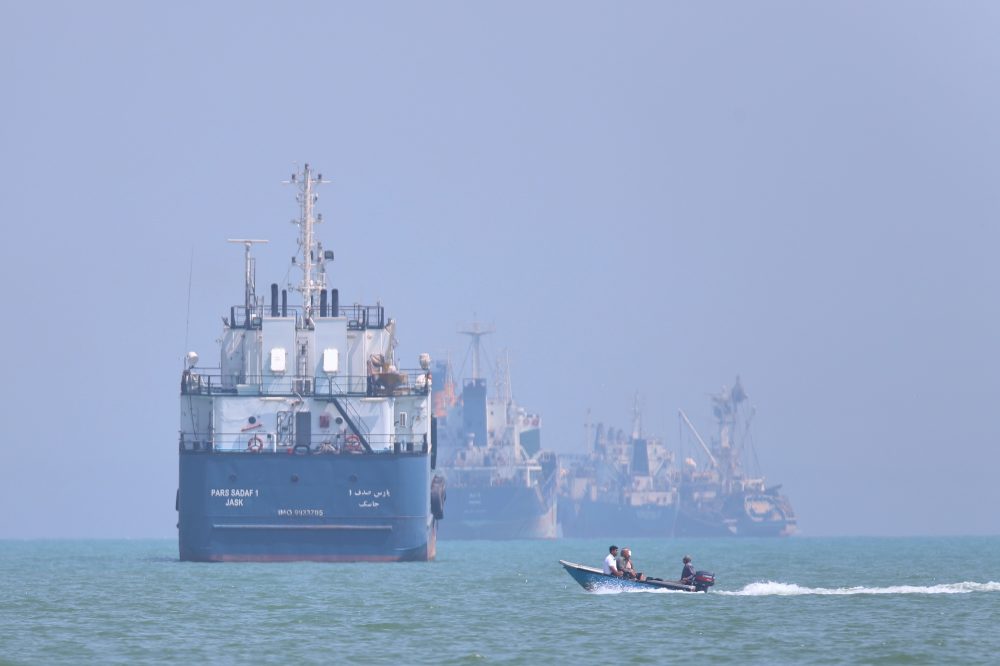
Iran’s control over the vital Strait of Hormuz waterway appears to be weakening as Gulf Arab nations find ways to transport oil to international markets despite ongoing conflicts.
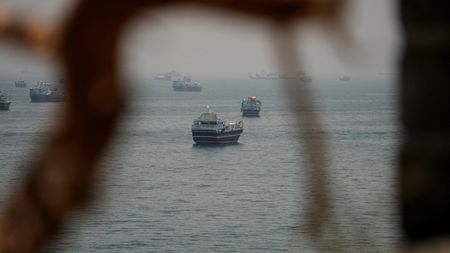
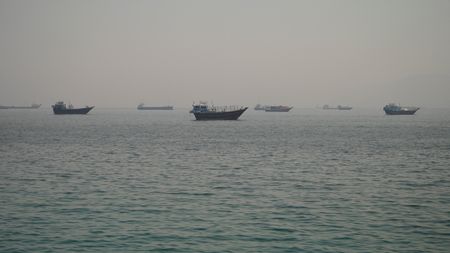
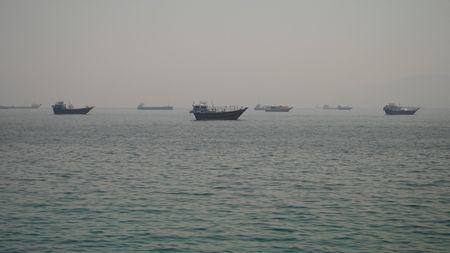
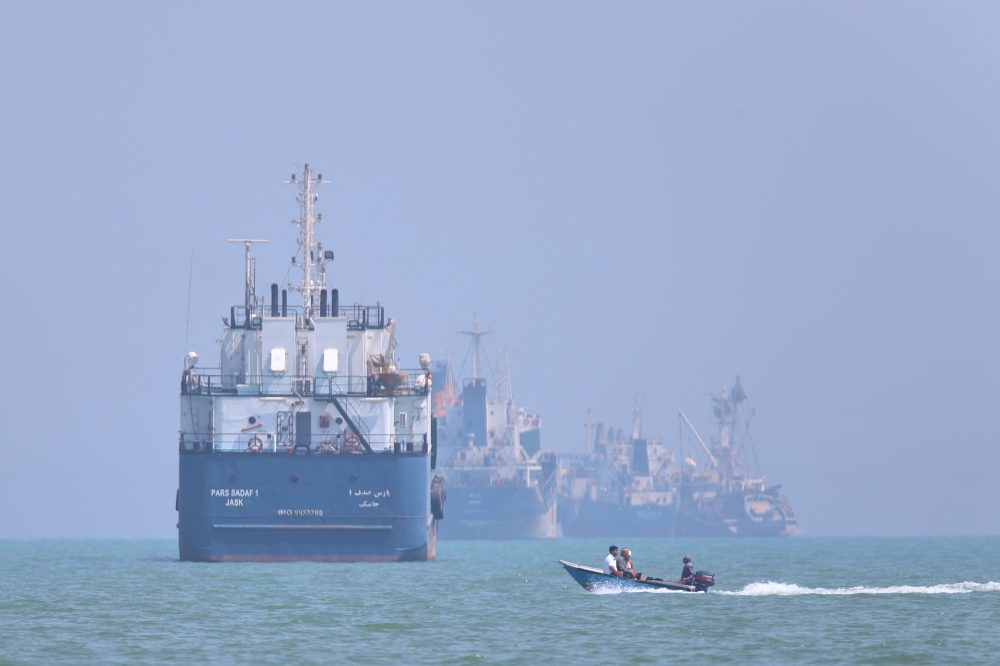
The strategic passage at the entrance to the Persian Gulf, which formerly handled one-fifth of global oil and natural gas shipments, has been largely blocked by Iranian assaults on commercial vessels since February when hostilities began. Despite significant losses to its naval fleet, Iran’s mere threat of attack has made shipping companies and insurance providers reluctant to send vessels through the waterway. This energy shortage has contributed to worldwide inflation, including price increases in the United States.
However, the dynamics appear to be changing. Experts indicate that increasing amounts of crude from Gulf Arab nations are reaching global markets with assistance from American military forces. President Donald Trump claims a “secret mission” providing protection for vessels has enabled more than 100 million barrels of oil to be exported. Simultaneously, U.S. forces enforcing a blockade have repeatedly fired upon or intercepted vessels linked to Iran’s sanctioned petroleum trade, hampering the nation’s ability to obtain essential foreign currency.
Oil movement through the strait remains below the previous level of 15 million barrels daily. This won’t fully satisfy global energy demands, particularly as countries deplete their strategic reserves that have helped offset worldwide supply disruptions.
Nevertheless, if this flow can be maintained or increased, it could alter the crisis dynamics. Iran’s capacity to damage the global economy through its control of the strait has been its primary leverage, providing confidence it can outlast the United States despite war damage and the American blockade severely impacting its economy.
Iran is increasingly experiencing pressure. “We are currently under sanctions, and our routes have been blocked. We face a difficult test,” President Masoud Pezeshkian stated during a live television broadcast Wednesday. “Governing the country is not an easy task under the current circumstances, given the shortages we face, the unrest we have experienced and the problems that remain.”
Still, the conflict’s trajectory remains highly unpredictable. This week featured days of intense combat between Iran, Israel and the United States. Trump threatened Thursday to capture Kharg Island’s oil export facility and intensify bombing of the Islamic Republic, then abruptly retreated and again claimed progress in negotiations to end the war.
Reopening the strait and restoring oil flow has been a primary objective for Trump, though he has appeared to struggle at times finding effective approaches. After initially advising allied countries that the strait wasn’t America’s responsibility and to “go get your own oil,” Trump shifted to threatening everything up to destroying “a whole civilization” to restore tanker passage through the waterway.
Recent weeks appear to have seen increased confidence in U.S. military backing and growing supply needs convince shipping companies to risk transit through the strait using covert methods.
Most likely, vessels have passed through by going “dark,” disabling their tracking systems. TankerTrackers.com, a maritime oil trade monitoring website, reported observing ship-to-ship transfers by Gulf Arab states last weekend, attempting to conceal their crude’s origin and pass through the strait undetected by Iran. This likely occurs with American military support.
Kpler, a commodities market monitoring firm, has tracked approximately 96 million barrels of non-Iranian crude exports leaving the region since early May, either through the strait or via Gulf of Oman export alternatives, according to Kpler analyst Amena Bakr.
Including shipments still loading, she indicated it would likely surpass 100 million barrels, “broadly consistent with Trump’s claim.”
Trump provided the 100 million barrel figure in Wednesday online posts, stating more than 200 vessels had traveled through the strait thanks to “a secret mission” supporting tankers and other ships.
“This wildly successful effort is because the UNITED STATES of AMERICA CONTROLS the Strait of Hormuz — NOT Iran,” Trump wrote.
U.S. forces are conducting a “limited overwatch operation using autonomous vehicles, aircraft and drone escorts to help ships through the southern part of the strait near the coast of Oman,” said Richard Meade, editor-in-chief at Lloyd’s List Intelligence maritime data company.
The U.S. Army AH-64 Apache attack helicopter that crashed this week off Oman after allegedly being struck by an Iranian drone “was probably part of that operation,” he said during an online webinar Thursday.
Iran has declared the strait closed following this week’s exchanges involving two days of American airstrikes on Iran and Iranian retaliatory attacks on Bahrain, Kuwait and Jordan — countries hosting American troops. Iranian Foreign Minister Abbas Araghchi insisted Wednesday the strait wasn’t an international waterway, despite global recognition as such.
While the U.S. assists Gulf Arab states’ tankers in exiting, it continues blocking Iranian vessels from entering or leaving the strait. This has included firing on ships to stop them, such as Wednesday’s attack that killed three Indian sailors.
Unable to export its oil, Iran is reaching maximum onshore storage capacity and using dozens of tankers near Kharg Island for crude storage. Iran also apparently has been forced to reduce or halt oil production at some wells, which experts warn can be dangerous since older wells like Iran’s may not restart after stopping.
Energy firm Wood Mackenzie estimates Iran’s output has declined by 800,000 barrels daily since the American blockade began. Meanwhile, onshore storage is estimated at 69 million barrels, the highest level since Trump’s “maximum pressure” campaign in 2020.
“The mounting economic cost of falling output, restricted exports and tightening storage capacity is increasing pressure on Tehran to seek a diplomatic solution,” Wood Mackenzie’s Alexandre Araman said. “For Iran, even a temporary diplomatic breakthrough could provide immediate relief.”
Oil prices have remained below $100 per barrel, partly due to Trump’s deal promises and other countries using reserves while reducing oil consumption. China, historically a major Iranian sanctioned oil buyer, saw seaborne crude imports drop to 6.8 million barrels daily in May, the lowest since October 2016, according to Kpler.
This has provided Trump and the global economy additional time, but a resolution would likely need to be reached soon to prevent the energy crisis from becoming severe in coming months.
BRUSSELS, June 12 – Technical problems struck the European Union’s primary asylum database on Friday, marking a rocky start to the implementation of the bloc’s new migration and asylum framework, according to Dutch immigration officials.
The Eurodac system, which houses biometric information and serves as a cornerstone of the updated migration rules, experienced failures while undergoing a system upgrade. Dutch Immigration and Naturalisation Service (IND) officials revealed the database wasn’t operating at full capacity even before the breakdown occurred, with multiple EU nations experiencing disruptions.
At the EU’s regular press conference, spokesperson Marcus Lammert minimized concerns about the technical problems.
“Any first day of a new system will have technical glitches. This is normal,” he stated, further noting, “the information that I’m getting is that member states are gradually linking in and that it’s going rather well.”
Reports indicate numerous member nations remain ill-equipped to carry out the migration pact’s mandates. Various countries are missing necessary infrastructure for implementing new screening protocols, while others like the Netherlands face technical challenges with the updated Eurodac system.
The EU’s migration agreement establishes new screening protocols requiring migrants who enter through unofficial routes to complete a compulsory process lasting as long as seven days, enabling officials to enter their information into the modernized Eurodac database.
The system gathers biometric and personal information, encompassing fingerprints, photographs of faces, and duplicates of identification documents. Certain minors are incorporated as well.
Authorities will subsequently evaluate vulnerabilities, citizenship status, and asylum goals before directing people into suitable processes, including expedited border procedures for candidates considered unlikely to receive protection, including individuals from nations deemed secure.
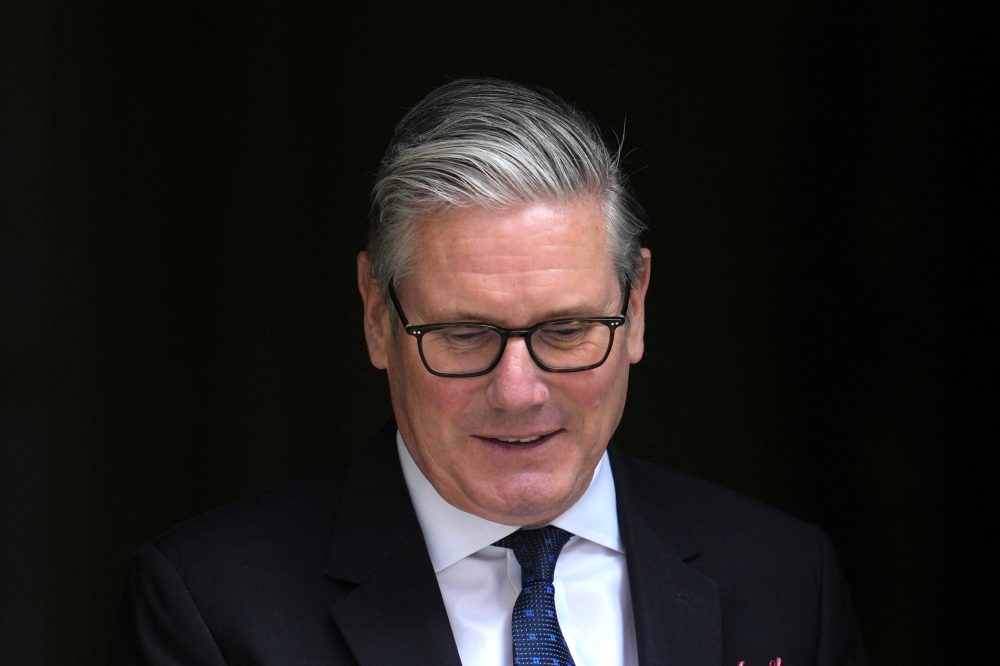
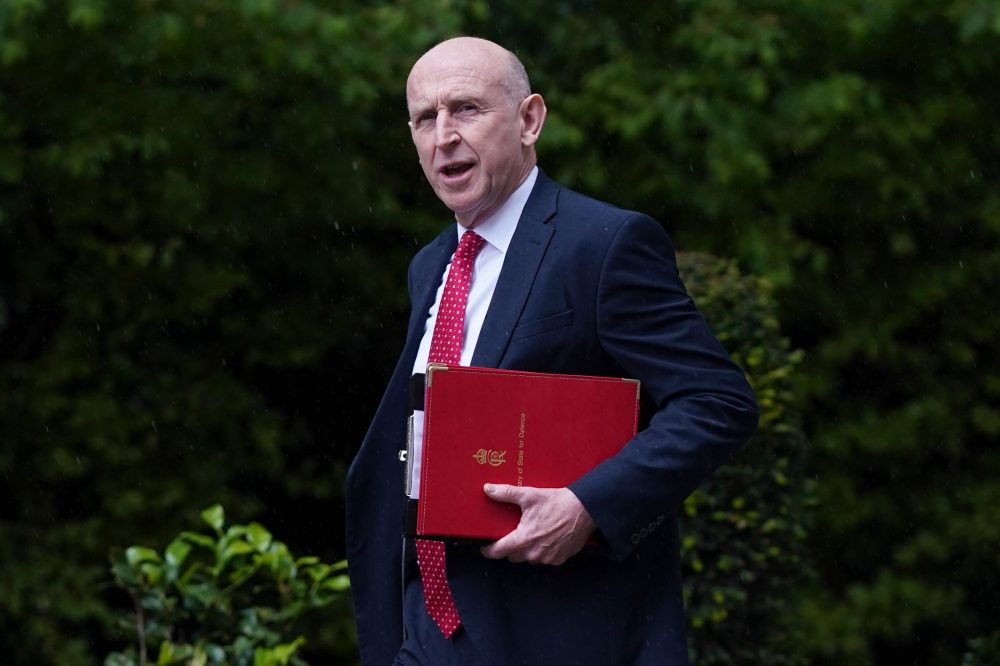
British Prime Minister Keir Starmer declared Friday he will battle to remain in power following the abrupt departure of his defense chief, which has further damaged his already fragile political standing.
The Labour Party leader has witnessed multiple junior and senior officials exit their posts in recent weeks amid growing rebellion from party members and plotting by political opponents, all frustrated by the administration’s persistent low approval ratings.
However, Defense Secretary John Healey’s unexpected resignation Thursday represents a particularly damaging setback. Healey stepped down while cautioning that the administration isn’t allocating sufficient funds to military forces to protect Britain’s security “at this time of rising threats.”
The resignation strikes Starmer where he has typically received praise: international affairs and foreign policy leadership.
Following his landslide electoral win in July 2024, Starmer has strengthened assistance for Ukraine, collaborating with French President Emmanuel Macron on an international “coalition of the willing” designed to help secure Ukraine’s safety should a ceasefire emerge.
The United Kingdom and France have also created a maritime security operation aimed at maintaining shipping access through the Strait of Hormuz when the Iran conflict concludes.
Additionally, Starmer has advocated forcefully that European countries must increase their defense funding in light of President Donald Trump’s criticism of America’s NATO partners.
“Starmer has been consistently staunch about warning of the security risk from Russia,” said Olivia O’Sullivan, head of the U.K. in the World program at the Chatham House think tank. “He’s been given quite a bit of credit by the public for having to deal with Trump and doing so with a level of steadiness and calm. And he has been, in line with previous U.K. governments, a close and consistent ally of Ukraine.”
The central dispute involves the administration’s anticipated Defense Investment Plan, which outlines Britain’s strategy to boost military expenditures to 3.5% of GDP by 2035. The British armed forces are working to overcome years of deterioration while facing an increasingly aggressive Russia, which launched its invasion of Ukraine in 2022 and continues challenging European defenses through both open and hidden operations.
Healey demands defense expenditures reach 3% of GDP by 2030. He resigned in frustration when Treasury chief Rachel Reeves declined to modify a proposal that doesn’t meet that target.
He referenced a British intelligence evaluation indicating Russia might assault a NATO member nation by 2030 and stated that insufficient spending plans “could make the country less safe.”
Opposition voices contend that military expenditures can become endless drains on resources, noting that acquisition programs frequently exceed deadlines and budgets.
Former Armed Forces Minister Al Carns, who also resigned Thursday hours following Healey’s departure, emphasized the issue extends beyond increased spending to smarter allocation. He described the investment proposal as insufficiently “transformative.”
“I want to see a higher percentage for uncrewed systems, AI, data — data is the new gunpowder — and we’ve got to move that forward if we are going to win the next war,” he told the BBC.
Healey joins other government officials who have departed. Last month, Starmer lost multiple junior ministers and Health Secretary Wes Streeting, who resigned to position himself for a potential party leadership campaign.
Greater Manchester Mayor Andy Burnham is anticipated to mount a leadership challenge against Starmer should he win election to Parliament in Thursday’s special election.
Yet Healey’s exit, given his reputation as a devoted minister without personal leadership aspirations, “suggests that Starmer’s credibility, even with his inner circle of ministers, is perhaps draining away,” O’Sullivan said.
Starmer maintained Friday he won’t step aside, describing his role as making “hard-edged decisions.”
He told the BBC that defense is “my number one priority. And I have taken the difficult decisions to make sure that we are safe as a country.”
“I’m not going to go away. I don’t think we should plunge the country into the chaos of a leadership election,” he said. “I don’t think it should happen, but if it does, then I will fight.”
BRUSSELS (AP) — The alliance’s supreme allied commander is developing backup defense strategies for Europe following Pentagon announcements that America will reduce the number of aircraft and naval vessels available during security emergencies.
The NATO Force Model serves as the primary blueprint for deploying forces from all 32 member countries during peacetime, crisis situations, or warfare. This framework outlines which military resources commanders can access during the initial six-month period of any potential conflict.
However, the Pentagon informed its alliance partners last month that it would reduce its European commitments to concentrate on other potential threats, particularly from China in the Indo-Pacific area.
Nations across Europe and Canada had been waiting for more than a year for the Trump administration to outline its strategy after warning that Europe would no longer be America’s primary security focus. While allies expected reductions, the scope, timeline, and nature of the cuts remained unclear.
U.S. Gen. Alex Grynkewich, NATO’s supreme allied commander, stated that “the United States is still committed to providing limited but critical capabilities to the alliance.”
“We need to focus on things that we can acquire quickly, that we can field quickly, and that we can scale rapidly and sustain over time, and that goes for long-range fires” as well as drones, Grynkewich said at the ILA Berlin Air Show on Thursday.
“Those sorts of things can help us mitigate the near-term risk should we find ourselves needing to deter and defend,” he added.
Following a June 2-3 meeting where allies evaluated shortfalls created by America’s decision, Grynkewich stated that European partners and Canada must address these gaps by providing both piloted and unmanned aircraft, plus naval ships. He emphasized this should occur “now and in the near term.”
While specific details about the reductions remain classified, German and American media outlets report that an aircraft carrier along with its accompanying warships and aircraft, plus a submarine, would be removed from European operations. Midair refueling aircraft and numerous fighter jets would also become unavailable.
Europe faces shortages in all these military assets, making rapid replacement challenging. Nevertheless, Washington seeks to understand how allies plan to compensate for these resources before President Donald Trump meets with NATO leaders at a summit in Turkey scheduled for July 7-8.
NATO military headquarters announced Friday that it will reduce its peacekeeping force in Kosovo by removing certain troops and equipment. KFOR initially deployed in 1999 to maintain peace between Kosovo and Serbia.
Originally consisting of 50,000 personnel, KFOR has undergone regular downsizing as regional tensions decreased, though 1,000 additional troops were sent in 2023 following renewed violence.
“The current conditions provide an opportunity to optimize KFOR’s size and posture further,” Grynkewich said. His staff refused to specify which forces might depart or whether Americans would be among those leaving.
“It’s not about numbers, it’s about optimization, and about ensuring the safety and security of all people living in Kosovo, and more broadly the region,” his spokesman said.
America currently maintains 590 troops with KFOR, ranking second among 31 contributing countries behind Italy’s 907 personnel. American Black Hawk helicopters operate from the extensive U.S. facility there, Camp Bondsteel.
Speaking in Berlin, Grynkewich noted that intelligence assessments and Russian military activity indicate “Russia is not looking for a conflict with NATO.” Russia remains heavily engaged in the Ukraine conflict while facing recruitment challenges.
European governments and intelligence agencies have cautioned that Russian President Vladimir Putin might be positioned to attack other parts of the continent within three to five years, particularly if he achieves victory in Ukraine.
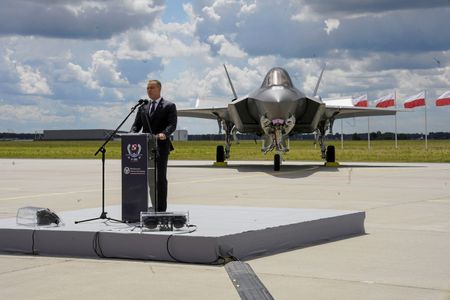
The United States announced a fresh $4 billion military financing loan for Poland on Friday, as the Eastern European nation celebrated the first flight of its newly acquired F-35 fighter aircraft.
U.S. Under Secretary for Arms Control and International Security Thomas DiNanno revealed the loan details to PAP news agency during Friday’s ceremonial flight. The financing comes through the Foreign Military Financing programme and increases Poland’s total available military funding to $20 billion.
The milestone flight marked Poland’s entry as the first nation on NATO’s eastern border to operate the advanced F-35 aircraft, as tensions with Russia continue to influence regional security concerns.
Poland committed to purchasing 32 of the advanced fifth-generation fighters in a $4.6 billion agreement signed in 2020. Three aircraft arrived last month, with the remaining deliveries expected to conclude by 2029.
According to Polish defense officials, the F-35 fleet will significantly enhance the nation’s military strength. The aircraft feature advanced stealth capabilities and sophisticated sensor systems that gather intelligence for pilots and coordinate with other military units.
Polish President Karol Nawrocki, Defence Minister Wladyslaw Kosiniak-Kamysz, and DiNanno representing the U.S. government attended Friday’s ceremony.
“In the armed forces development programme, we have included two additional squadrons of 5th-generation F-35 aircraft to strengthen the military,” Kosiniak-Kamysz stated during the event.
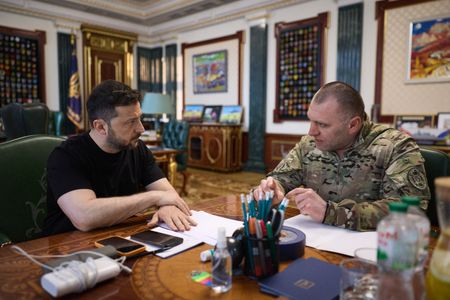
Ukrainian President Volodymyr Zelenskiy announced Friday that his country will boost military salaries and expand efforts to recruit international fighters as the nation’s armed forces struggle with personnel shortages following four years of conflict with Russia.
The announcement comes after Zelenskiy’s administration indicated in May it would examine potential strategies to strengthen military staffing levels following stalled negotiations regarding ending hostilities with Russia.
“We agreed on how to increase the financial resilience of our defence and further transformation of the Ukrainian army,” Zelenskiy stated during his nightly address following discussions with senior cabinet officials.
“The cabinet of ministers will approve a specific mechanism, and the government should start the first new payments as early as June,” he continued.
The salary increases are supported by a €90 billion European Union loan that enables Ukraine’s government to boost defense expenditures to an unprecedented 4.4 trillion hryvnias ($97 billion) for this year. These funds are expected to begin arriving this month.
Zelenskiy revealed Friday that officials will increase base military compensation by one-third, bringing it to 30,000 hryvnias ($700). Military analysts and economists note this adjustment aims to align with the nation’s average monthly earnings, which have consistently increased during wartime due to workforce shortages.
Frontline infantry personnel will see their average monthly compensation rise to 300,000 hryvnias (approximately $7,000), a significant jump from the current range of 100,000 to 150,000 hryvnias. These soldiers will also have access to new fixed-term service agreements lasting 10, 14, or 24 months for combat assignments.
Beyond salary improvements, Kyiv plans to expand international recruitment efforts.
“I have instructed to create significantly more opportunities to recruit foreign volunteers into the Ukrainian army, and there will be more recruitment channels in this regard,” Zelenskiy explained.
Ukrainian military publications estimate that approximately 10,000 international volunteers from over 70 nations have enlisted in Ukraine’s military since the conflict started.
A Spanish High Court judge has launched an additional investigation into former Prime Minister Jose Luis Rodriguez Zapatero following the discovery of jewelry during a search of his office, court officials announced Friday.
The former leader, who served as prime minister from 2004 to 2011, continues to hold significant influence within the main ruling Socialist Party. The corruption allegations, which he has rejected, have intensified pressure on the current government amid a string of corruption scandals.
Judge Jose Luis Calama stated that the jewelry pieces confiscated during the May 19 search, with a preliminary estimated value of approximately €1.3 million ($1.5 million), currently have no documented evidence of their source.
The judge explained that owning valuable assets without proper fiscal documentation could suggest potential tax evasion or smuggling violations, noting the lack of customs paperwork or proof that import taxes were satisfied.
The former prime minister’s legal representative did not respond immediately to requests for comment. However, his spokesperson, Luis Arroyo, posted on X earlier Friday that the former leader would discuss the jewelry issue with the judge.
The former prime minister is scheduled to provide testimony on June 17 and June 18 regarding the corruption case, which focuses on an alleged influence-peddling and money-laundering operation that he supposedly headed.
Authorities suspect the operation benefited from lobbying government officials for outside parties, particularly Spanish airline Plus Ultra, which obtained government financial assistance in 2021.
NIAMEY, Niger (AP) — The ruling military government in Niger has implemented a new criminal code that makes homosexuality illegal, according to an adviser to the justice minister who spoke Friday.
The West African country becomes the most recent nation to outlaw homosexuality, joining similar actions taken by Senegal earlier this year.
Under the new criminal code, anyone who “commits or attempts to commit an immodest or unnatural act or practices lesbian, gay, bisexual, trans-gender, Queer, intersex, Asexual (LGBTQIA+) acts” faces five to ten years behind bars plus financial penalties, based on the official text of the legislation.
“This same penalty is applicable to persons who officiated the marriage, to the witnesses of the alleged spouses, as well as to persons who have given their consent for the celebration of the marriage and to the organizers,” the new penal code said.
Hamidou Julien, an adviser to the justice minister, told The Associated Press on Friday that the legislation became effective Thursday.
While homosexuality had not been against the law in Niger before this change, it faced significant social stigma.
Anti-homosexuality legislation is widespread throughout Africa, with over 30 of the continent’s 54 nations making same-sex relationships illegal. Niger now stands alongside nations such as Senegal, Kenya, Sierra Leone and Tanzania, where punishments can reach 10 years or longer in prison. In Somalia, Uganda and Mauritania, such offenses may result in execution.
The International Labour Organization reached a historic milestone on Friday by approving the world’s first legally binding employment standards targeting gig economy platforms that provide ride-sharing, food delivery and online commerce services.
The measure received strong support during voting in Geneva, with 406 members backing the proposal while only eight opposed it and 36 chose to abstain. The U.N. agency’s membership includes representatives from governments, employers and workers who work together to advance international labor rights.
The newly adopted ILO convention aims to expand fundamental workplace rights and protections to cover gig economy workers, encompassing areas such as compensation, workplace safety and social benefits.
The protections outlined in the agreement vary depending on how workers are classified, creating distinctions between individuals categorized as independent contractors versus those recognized as formal employees.
Under the new convention, digital platforms will be required to reveal how their automated systems impact workers and must ensure human oversight in critical decisions such as suspending worker accounts.
A senior Hezbollah politician stated Friday that the organization believes Iran will demand Lebanon’s inclusion in any potential agreement with the United States, as expectations build for a possible deal between Tehran and Washington.
The Iran-backed group, which was established by Iran’s Revolutionary Guards in 1982, joined the regional confrontation supporting Tehran on March 2 by launching attacks against Israel, leading to Israeli military action that has resulted in thousands of Lebanese casualties.
Tehran’s officials have consistently demanded that any comprehensive agreement must include an end to hostilities in Lebanon.
“If the agreement happens, we have complete confidence in the Islamic Republic … we have confidence that it will insist on any agreement including the file of Lebanon,” Hassan Fadlallah, a Hezbollah politician, said in an excerpt of a speech broadcast by the group’s al-Manar TV.
Israeli military forces have taken control of large areas in southern Lebanon, where Lebanon’s National News Agency documented additional Israeli air attacks across multiple towns and villages on Friday.
According to a Western source, a memorandum between the United States and Iran aimed at stopping the Gulf war could be executed as early as Sunday. The source indicated that final language details are still being worked out and Iran continues to maintain its stance that any deal must encompass ending the conflict in Lebanon.
Last week, Mohsen Rezaei, an adviser to Iran’s supreme leader, said Hezbollah had “made great sacrifices” in the war and that Lebanon “will be an inseparable part of any agreement and any ceasefire”, in comments reported by the semi-official Mehr news agency.
Fighting in Lebanon has persisted despite multiple ceasefire declarations by the United States, which has served as an intermediary in discussions between Lebanese and Israeli officials.
Hezbollah is not participating in the negotiations and has called for the Lebanese government to withdraw from the diplomatic process.
Hezbollah turned down a U.S.-supported proposal announced last week that would require the organization to stop fighting and pull its forces back from southern Lebanon.
Kazakhstan’s dominant political organization Amanat declared Friday that it will combine with a political movement established this year by supporters of President Kassym-Jomart Tokayev, positioning for upcoming parliamentary voting scheduled for August.
During a party gathering in Astana, Amanat leadership announced their integration into the Adilet party, which translates to “Justice,” before the approaching elections. Amanat has consistently won commanding parliamentary control in all previous electoral contests.
This development occurs during Kazakhstan’s continuing restructuring of its strictly managed political system, as Tokayev plans to leave office at the conclusion of his current term in 2029.
The Central Asian region’s biggest economy and significant petroleum and natural gas producer ratified a revised constitution this past March, which some political observers interpret as groundwork for a future leadership transition.
Amanat has maintained governmental control since 1999, originally established under former President Nursultan Nazarbayev’s direction, who led Kazakhstan from 1991 through 2019.
The emerging Adilet party is viewed as having direct allegiance to Tokayev, whom Nazarbayev selected as his replacement in 2019, with senior presidential advisors holding key positions in its structure.
During 2022, Kazakhstan experienced widespread civil disorder that Tokayev and international analysts describe as an effort by Nazarbayev supporters to regain governmental authority.
The unrest caused hundreds of fatalities and led to deployment of a Russian-coordinated peacekeeping mission backing Tokayev’s administration.
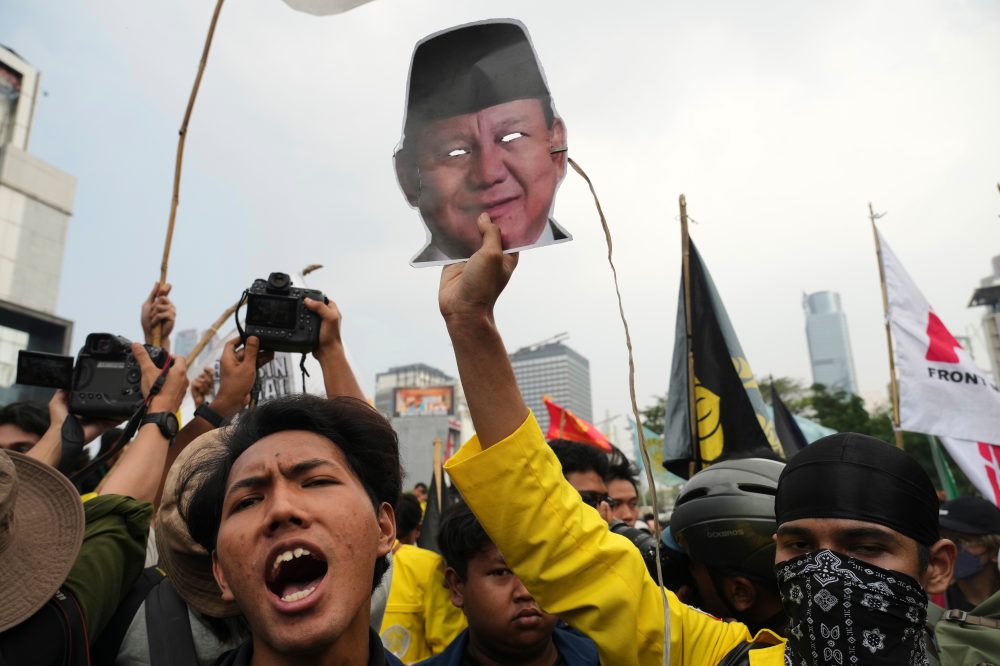
JAKARTA, Indonesia — Around 1,500 Indonesian students took to the streets of the nation’s capital on Friday, calling on President Prabowo Subianto to reduce expensive government programs while demanding relief from rising fuel and food costs amid growing economic challenges.
Following Friday prayers, demonstrators attempted to reach the Hotel Indonesia traffic circle, a prominent city landmark, but authorities intercepted many participants and barricaded routes to the presidential palace, a common destination for protests. Over 6,000 police officers and military personnel were stationed in the area.
Many demonstrators donned yellow university jackets as they expressed anger over increasing living expenses, which have climbed due to elevated fuel costs following the U.S. war against Iran. Indonesia’s rupiah has faced significant pressure, reaching a record low of 18,000 rupiah per U.S. dollar earlier this month.
The demonstrators presented five primary demands, including reductions in what they termed unnecessary government expenditures, decreased prices for fuel and essential goods, and suspension of major government initiatives like a free nutritious meal program and rural revitalization efforts.
The complimentary meals initiative, with a price tag of approximately 268 trillion rupiah ($15 billion) for this year, aims to combat poverty and malnutrition, though Prabowo recently dismissed the program’s leader during a major corruption investigation.
Students also demanded an end to what they characterized as the military’s expanding influence in civilian governance, which they consider a danger to the nation’s developing democracy.
“The government is in denial about the current situation,” said Yatalathof Ma’shum Imawan, who chairs the student organization that organized the rally. “We urge Prabowo to have the courage to acknowledge his mistake and stop denying it.”
Friday’s protest represents one of the most significant student mobilizations since widespread demonstrations broke out last August, when thousands gathered in the streets and confrontations with security personnel resulted in at least 13 fatalities.
Comparable demonstrations also occurred in Bandung city in West Java and in Pontianak, located on Borneo island.
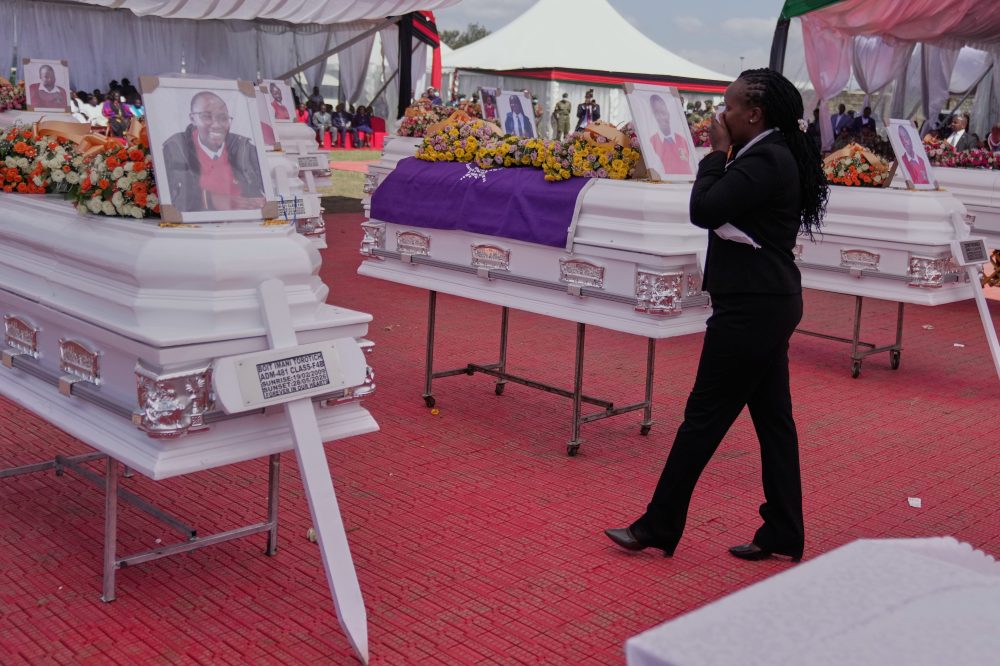
NAIROBI, Kenya (AP) — A solemn memorial service took place Friday in the central Kenyan town of Gilgil, where hundreds of people came together to remember 16 female students who lost their lives in a dormitory fire last month that law enforcement officials determined was deliberately set. Nine suspects are currently in custody.
The deceased girls from Utumishi Girls Academy were laid to rest in white caskets decorated with floral arrangements and topped with photographs of each victim. The caskets were arranged before their grieving families, fellow students, community members and area officials, all demanding accountability.
The nine students accused in the case, all from the same school, are being held by police. Investigators have determined that the May 28 fire was ignited by setting a mattress ablaze near the dormitory exit using matches and paraffin. Officials have not disclosed what motivated the attack.
At the memorial ceremony, hundreds of students from Utumishi Girls Academy performed a mournful hymn expressing hope that everything would be okay. One official conducting the service shared his experience as a survivor of Kenya’s most devastating school fire in 2001, which claimed 67 male students in a dormitory blaze in Machakos County in eastern Kenya.
Attendees demanded justice and accountability while dozens of educational institutions have shuttered recently due to student disturbances. The Kenya Red Cross reported responding to 37 school fires since January began.
Educational facility fires occur frequently throughout Kenya, with some resulting from deliberate acts by students opposing disciplinary actions or upcoming tests, while others stem from electrical problems.
Overcrowded sleeping quarters, inadequate emergency escape routes and limited firefighting resources have frequently led to fatalities and significant property destruction.
Last month, Kenya’s Education Ministry removed the principal of Utumishi Girls Academy for violating fire safety requirements. The ministry also announced it had shuttered more than 300 educational facilities after a 2024 fire incident that killed 21 male students in central Kenya.
At Friday’s memorial ceremony, which Kenyan first lady Rachel Ruto attended, the officiating bishop asked how much longer Kenyan children and families would endure such school fire tragedies.
The school captain, Abigael Wanjiku, remembered the deceased girls as “friends, study partners, teammates and companions.”
“The pain of losing them is one that we will carry for a long time,” she said.
A mother speaking for the parents became emotional and broke down during her remarks as she demanded accountability and justice, while assuring the surviving students that their safety remained the top concern.
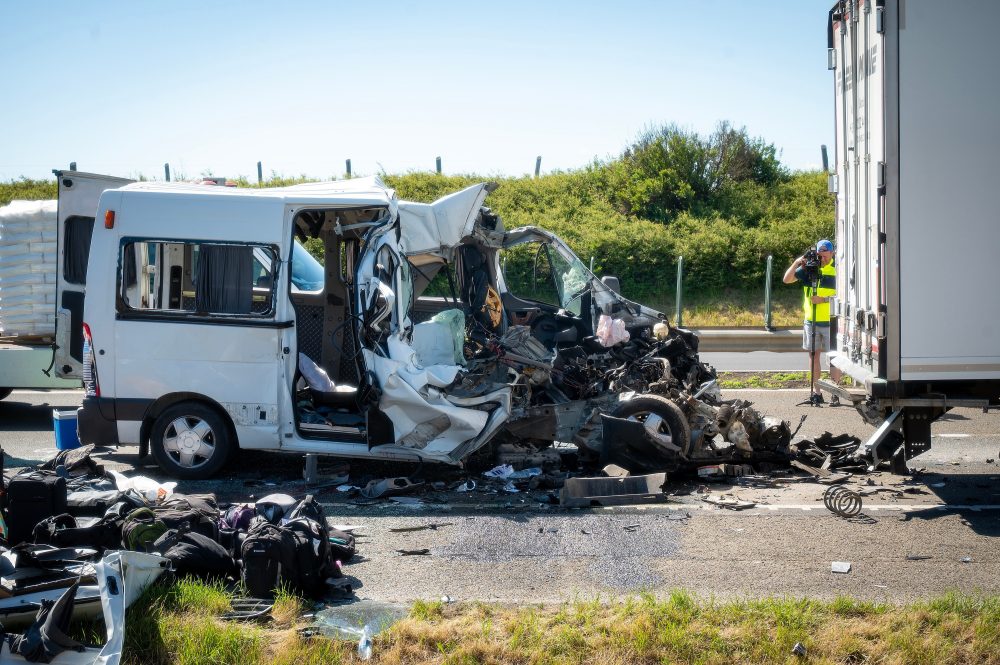
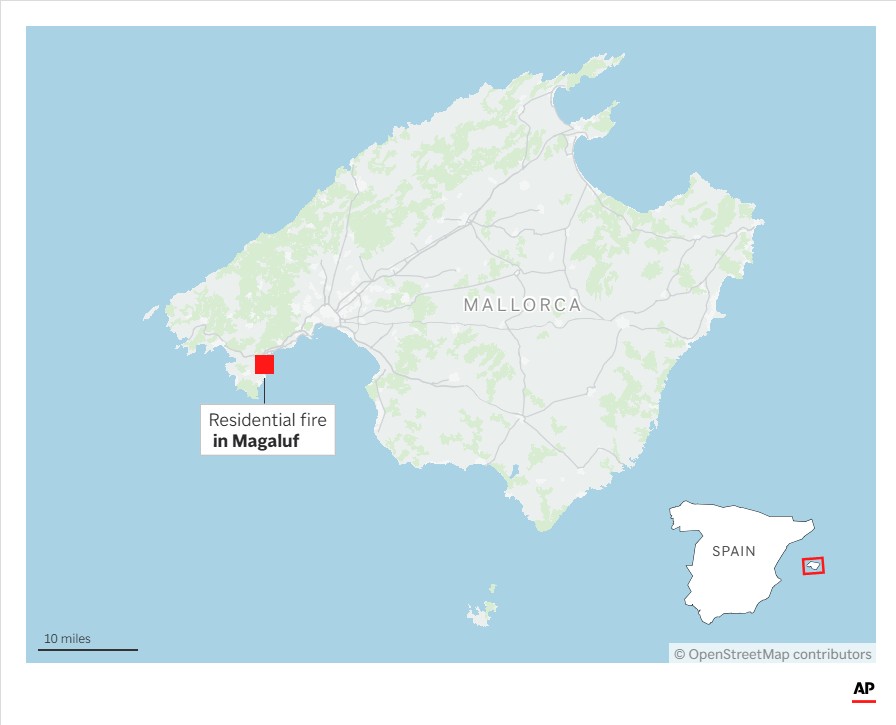
BUDAPEST, Hungary — A deadly sequence of highway accidents in western Hungary claimed eight lives during the early morning hours on Friday, according to law enforcement officials.
The first incident occurred around 4:30 a.m. when a truck crashed into construction equipment near Győr, resulting in one fatality and causing the truck to burst into flames. The accident created significant traffic delays on the roadway.
Approximately 30 minutes following the initial crash, a minibus bearing Moldovan license plates crashed into a truck that had come to a stop on the highway due to the earlier incident. This second collision resulted in seven deaths and left two people with severe injuries, authorities reported.
Officials shut down one lane of the M1 highway heading toward Austria following the accidents.
Hungarian Prime Minister Péter Magyar offered his sympathies to the families affected by the tragic incidents.
New Canadian legislation aimed at controlling AI chatbots has sparked concern among technology experts who question whether the proposed rules can actually work.
The bill was introduced this week following widespread public anger over a February school shooting in British Columbia that claimed nine lives. Controversy erupted when OpenAI admitted it had failed to notify police about disturbing ChatGPT conversations involving the shooting suspect.
Under the proposed legislation, Canada would establish a new digital oversight agency and implement a social media prohibition for users under 16, similar to Australia’s recent approach. The regulatory body would mandate that chatbots minimize risks when users search for dangerous material and implement emergency response protocols for discussions involving suicide and self-harm.
However, the proposal has faced sharp criticism from academics and legal professionals who point to vague language, potential enforcement gaps, and an extended implementation timeline.
“If this is the preview of a law, I do not have high hopes for something that will be useful in a practical sense,” said Evan Light, an associate professor at the University of Toronto who focuses on technology and privacy.
Light expressed surprise at the bill’s lack of development, noting that internet restrictions could be easily bypassed using VPNs – virtual private networks that mask users’ internet addresses – or other methods.
The office of Canada’s Identity and Culture Minister Marc Miller did not immediately respond to a request for comment on the issue.
During Wednesday’s announcement, Miller acknowledged the challenge of balancing privacy rights with social media and AI chatbot oversight. He clarified that the proposed legislation would not cover private messaging platforms like WhatsApp or Signal, and noted that companies meeting specific regulatory standards could receive exemptions from the social media restrictions.
Miller referenced the Tumbler Ridge shooting in British Columbia, explaining that the 18-year-old suspect’s ChatGPT account had been internally flagged for violent content but authorities were never contacted.
Miller said the company “made an egregious human error” and the government was now taking steps to make social media and AI chatbots “safer by design.”
OpenAI did not respond to a request for comment. The company previously apologized for not alerting Canadian authorities.
Multiple governments worldwide, including those in Europe, Brazil, and several U.S. states, are advancing new age verification requirements for social networks, AI chatbots, and adult content providers.
A Meta spokesperson said in an email that social media bans are “counterproductive” and that the company is assessing the implications of the proposed bill.
A spokesperson for Google, which owns YouTube, said the company is committed to working with the government to establish higher safety standards, so parents can choose safer online experiences for their children. A TikTok spokesperson said the platform already has more than 50 safety and privacy settings and parents can use “Family Pairing” to manage their teens’ experience.
Government officials have said it could take a year for the bill to pass and 18 months to set up the digital regulator once it does.
Florian Martin-Bariteau, director of the Centre for Law, Technology and Society at the University of Ottawa, warned that children would likely be able to circumvent the social media ban and AI chatbot restrictions.
Since Australia’s social media ban took effect, the regulatory agency enforcing it reported that a substantial number of children under 16 still retain accounts.
“The proposed framework will move them to riskier, smaller platforms,” he said, adding that while rules for major platforms could likely be enforced, it would be virtually impossible for Canada to block smaller websites that don’t comply. “By trying to protect kids, we may actually put them at greater risk.”
Water service has been disrupted across multiple cities in the Russian-occupied Donetsk region of Ukraine following a Ukrainian military strike on Friday, according to reports from the Interfax news agency citing local utility officials.
The attack targeted energy infrastructure, causing power outages at a water treatment facility and leaving residents in Donetsk, Yasynuvata, and portions of Makiivka without running water.
The affected Donetsk region represents one of four Ukrainian territories that Russia annexed in 2022 during its ongoing military campaign in Ukraine. Russian President Vladimir Putin has stated that Russian military forces now occupy more than 85% of the region.
Water access issues in Russian-occupied Ukrainian territories have emerged as an ongoing logistical problem for Moscow’s administration.
Emergency crews responded to a fire at New Zealand’s Wellington Airport on Friday, prompting evacuations and forcing incoming aircraft to be rerouted to other locations.
According to a spokesperson from Fire and Emergency New Zealand, firefighting teams worked alongside the airport’s internal fire department to combat the flames.
The spokesperson reported that five fire trucks, two ladder vehicles, and a command unit were deployed to handle the emergency, though officials declined to specify what materials were burning.
Airport officials confirmed in a public statement that both the main terminal facility and the southwest pier were cleared of people as a safety precaution, with no injuries documented from the incident.
“Flights into Wellington have been temporarily diverted and passengers are advised to check with their airlines for information on specific flights,” the airport stated.
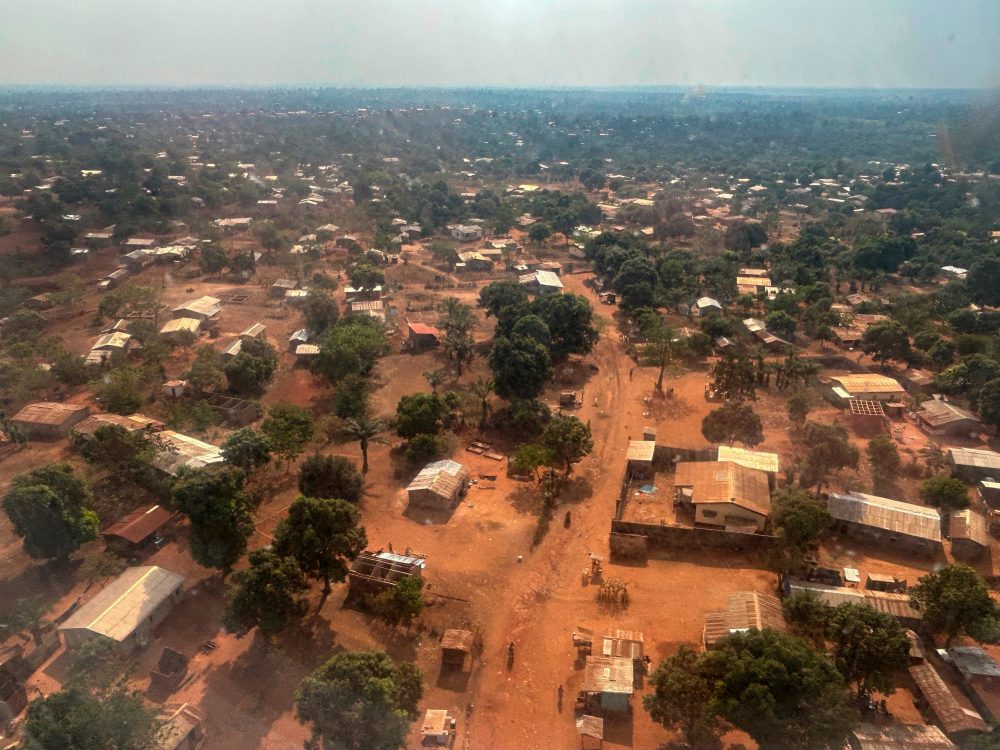
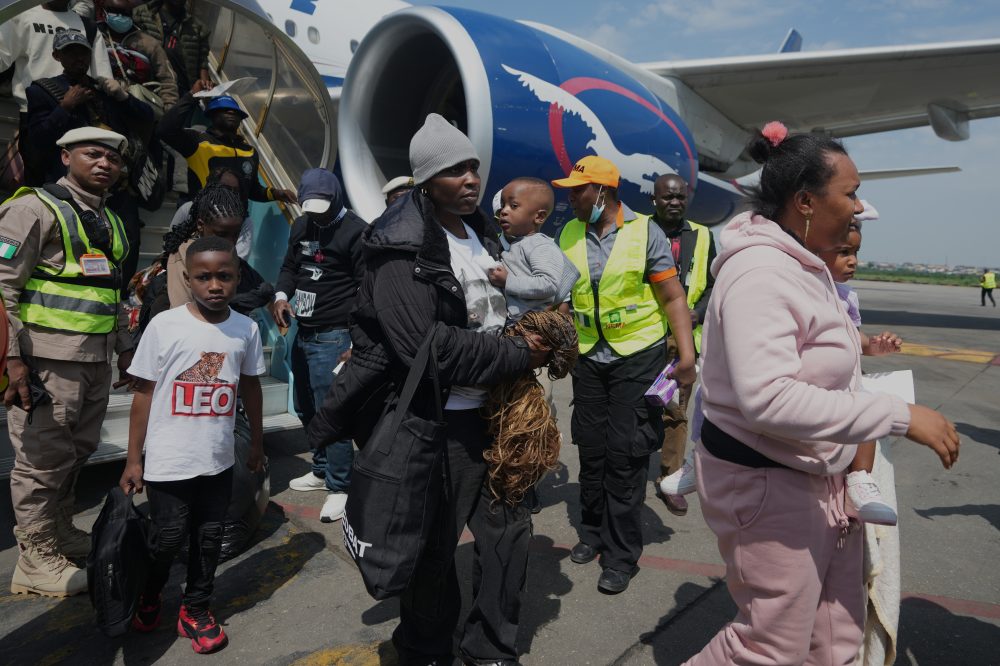
A woman from Iran was aboard a deportation flight that arrived Friday in the Central African Republic, carrying approximately two dozen migrants removed from the United States, according to legal advocates familiar with the case.
The flight represents another instance of controversial arrangements between the U.S. and various African and Latin American countries to accept deportees who are not citizens of those nations, lawyers say.
The Central African Republic joins at least nine other African countries that have entered into agreements to receive third-country nationals being removed by American immigration authorities.
These arrangements, many of which remain confidential, are components of broader immigration enforcement efforts that have resulted in thousands of deportations to nearly two dozen nations where the deportees are not from, according to advocacy groups.
Immigration attorneys describe these third-country deportations as a strategy to circumvent legal protections and pressure asylum seekers to return to their countries of origin.
The exact number of migrants on the flight that departed Louisiana late Thursday bound for Bangui, the Central African Republic’s capital, remained uncertain.
Ali Rahnama, who leads the Iranian American Legal Defense Fund and has maintained contact with some of the migrants, reported that Thursday’s deportees included individuals from Iran, Jordan, Armenia, Turkey, Georgia and Afghanistan.
Immigration attorney Sahar Jalili Pawelski revealed that three Iranian women were initially scheduled for deportation to the Central African Republic. However, two received emergency judicial orders temporarily halting their removal while courts examine the legality of the government’s actions.
According to both Jalili Pawelski and Rahnama, all three women had previously received court protection against deportation to Iran after judges determined they faced legitimate threats of persecution based on political or religious grounds.
An elderly man from Syria was also slated for deportation to the Central African Republic but obtained an emergency temporary order preventing his removal, according to his attorney Margaret Stock.
The U.S. Department of Homeland Security declined to discuss the specific case Thursday, stating it does not confirm upcoming removal operations for security purposes. U.S. Immigration and Customs Enforcement did not provide immediate responses to comment requests.
The Central African Republic has endured years of violence between government-aligned forces and rebel groups and ranks among the world’s most impoverished nations. Despite significant gold deposits, one-third of the population survives on less than $2 daily.
The country also served as an early location for Wagner, a Russian mercenary organization active across Africa. This group has provided security for President Faustin-Archange Touadéra and engaged rebel forces in combat.
The nation maintains one of Russia’s strongest alliances in Africa, though recent friction has emerged between Touadéra and Russia following Moscow’s demands to replace Wagner with the government-operated Africa Corps.
Rahnama from the Iranian American Legal Defense Fund voiced alarm about sending an Iranian asylum seeker to the Central African Republic, citing Russia’s significant influence there and Moscow’s close security relationship with Iran.
DAKAR, June 12 – A terrorist organization linked to al Qaeda operating in Mali has announced substantial financial rewards for details about the location of the nation’s president and senior military leadership, calling the current government illegitimate.
The militant group Jama’at Nusrat al-Islam wal-Muslimin (JNIM) made the announcement Thursday, responding to similar bounty offers previously made by Mali’s government targeting JNIM’s leadership, including leader Iyad Ag Ghaly and other extremist commanders.
The SITE Intelligence Group, an organization that monitors jihadist communications globally, distributed the insurgents’ statement.
Recent al Qaeda-affiliated attacks in April resulted in the death of Mali’s defense minister, sparking widespread violence throughout the nation’s expansive northern desert regions and potentially allowing militant organizations to expand their territorial control.
The terrorist organization is offering €2 million for intelligence that leads to Assimi Goita, who heads the government from the capital city Bamako and assumed control through military takeovers in 2020 and 2021.
Additionally, the bounty announcement includes €1 million rewards each for details about Colonel Lassina Diallo and General Malik Dicko.
According to the statement, payments would be made to individuals providing location information or anyone taking direct steps to “neutralise” these officials.
Ukrainian officials are preparing to request $20 billion in additional military assistance from allied nations during a scheduled meeting next week, according to a Ukrainian defense source speaking from Kyiv on June 12.
The funding appeal will take place next Thursday during a gathering of the Ukraine Defense Contact Group, a coalition of more than 50 nations also referred to as the Ramstein group, which coordinates financial and military support for Kyiv.
“We have a six- to nine-month window of opportunity on the battlefield that requires an urgent acceleration of funding,” the source said.
Russian military progress on the battlefield has decelerated significantly this year, coming to an effective standstill last month, as Ukrainian mid-range drone attacks have disrupted Russian supply lines and logistics operations supporting front-line forces. Additionally, Ukraine’s long-range drone operations are causing significant damage to Russia’s energy infrastructure.
Putin stated last week that Russian military units continue making daily advances on the battlefield and that Russia’s economy faces no threat, although he admitted that Ukrainian attacks are causing damage.
Individual allied nations will be requested to provide contributions ranging from $2 billion to $6 billion toward achieving the $20 billion goal, which could be structured as either direct aid or loans, according to the source. Politico initially reported this funding request.
Chinese officials have officially acknowledged the detention of an American citizen on Friday, confirming that U Min Zin faces allegations of espionage and posing threats to the nation’s security.
A ministry spokesperson, Lin Jian, revealed during a routine press briefing that Chinese authorities have informed the U.S. consulate general located in Guangzhou about the detention. This confirmation came in response to inquiries regarding a New York Times report indicating that Min Zin had vanished in Kunming, located in southwestern China, during the previous week.
Officials in the Philippines announced Friday that extensive emergency preparedness training helped minimize casualties when a massive earthquake – among the most powerful in five decades – devastated the southern region, resulting in 55 fatalities and 31 people still unaccounted for.
The offshore earthquake measuring 7.8 on the Richter scale occurred Monday near Sarangani province, causing injuries to approximately 1,120 individuals and forcing more than 45,000 residents from their homes. About half of those displaced remain in temporary emergency housing after the tremor destroyed over 12,600 residential structures throughout agricultural communities and urban areas.
Authorities reported that numerous residents remain reluctant to return to their homes due to ongoing aftershocks and psychological trauma from the event.
In the aftermath of the seismic event, additional footage has emerged on social media platforms capturing the terrifying moments as people watched smaller structures crumble and witnessed morning flag ceremonies at schools descend into chaos when the earth began trembling on students’ first day back from summer vacation.
The recordings show pupils crying out in fear while remaining in their positions outside educational facilities, with some shielding their heads as educators urged them to stay calm.
A particularly striking video that has gained widespread attention on Facebook, accumulating millions of views, captured dozens of elementary students wailing and weeping as they remained seated on school grounds surrounded by trees, with the earth visibly moving them back and forth. When a nearby metal-roofed structure crashed down with a thunderous sound, many children attempted to flee but were instructed by their teachers to return to their designated spots.
The elementary school located in the coastal community of Malita in Davao Occidental province sustained no injuries during the earthquake.
“This incident serves as a reminder of the importance of earthquake preparedness and the value of regular disaster response drills,” the Mahayahay elementary school said in a statement.
According to Teresito Bacolcol, director of the Philippine Institute of Volcanology and Seismology, extensive disaster readiness training enabled residents to prepare for and respond to catastrophic events like Monday’s earthquake, ranking among the most severe to impact the island nation in fifty years.
Bacolcol noted the fortunate timing of the earthquake, which occurred at 7:37 a.m., just moments before employees and students would have been inside buildings for work and classes.
“It’s good that our efforts to educate people on what to do when earthquakes hit somehow paid off,” Bacolcol told The Associated Press.
However, he voiced concerns about certain building collapses, stating these structures should have survived the intense shaking if proper construction standards outlined in national building regulations had been implemented.
Ednar Dayanghirang, director of the Office of Civil Defense in the affected region housing approximately 5 million residents, explained that consistent emergency preparedness exercises helped minimize casualties through various means, including preventing fatal crowd rushes.
“We required all school principals to take one-day courses on incident management, then they appointed disaster-response teams among teachers to deal with earthquakes, tsunamis,” Dayanghirang said. “They listened and they learned.”
The Philippines ranks among the globe’s most disaster-vulnerable nations, frequently experiencing seismic activity and volcanic activity due to its position along the Pacific “Ring of Fire,” a curved zone of geological fault lines surrounding the ocean.
Authorities in Hungary report that eight people died in a series of connected highway accidents that occurred Friday morning on a major roadway west of the capital.
The deadly sequence began when a truck collided with a construction vehicle on the M1 highway near Gyor, located approximately 122 kilometers west of Budapest. This initial crash resulted in one fatality and created a traffic backup.
Shortly afterward, a minibus with nine occupants slammed into a truck that had stopped due to the traffic congestion from the first accident. Seven people in the minibus were killed and two others sustained injuries, according to police reports.
Hungarian Prime Minister Peter Magyar confirmed through a Facebook statement that those who died were foreign nationals. “I express my sincere condolences to the families,” he said.
The prime minister did not identify the specific countries the victims were from, and law enforcement officials have not yet responded to media inquiries seeking additional details.
Police informed the news outlet 24.hu that all fatalities were male and that both the minibus and the truck from the initial crash displayed Moldovan license plates.
BRUSSELS, June 12 – The North Atlantic Treaty Organization announced Friday it plans to scale back its peacekeeping force in Kosovo during the coming year, citing improved security conditions in the region where troops have been stationed since 1999.
“NATO and KFOR are fully committed to safety and security in Kosovo,” said U.S. Air Force General Alexus G. Grynkewich, Supreme Allied Commander Europe (SACEUR) in a statement.
“It is this commitment that has led to increased stability as the security organisations in Kosovo have become more capable. The current conditions provide an opportunity to optimise KFOR’s size and posture further,” he added.
The alliance indicated that measured force reductions will align with regular troop rotation schedules between now and next year.
Officials emphasized the modifications will happen incrementally based on local circumstances and can be undone if security conditions deteriorate.
OTTAWA, Ontario (AP) — Canada’s Prime Minister Mark Carney, who gained international recognition as a voice against powerful nations bullying smaller ones, is anticipated to dial back his criticism of President Donald Trump during the forthcoming European summit.
Following his January address at the World Economic Forum in Davos, Switzerland, Carney gained global political prominence when he proclaimed the end of the international rules-based system and criticized major powers for intimidating smaller nations. His comments earned him widespread acclaim and overshadowed Trump at the event.
However, the Group of Seven meeting of developed democratic nations starting Monday in France precedes the July 1 evaluation of the U.S.-Mexico-Canada Agreement, or USMCA, the current version of the North American trade deal that has linked the economies of the United States, Mexico and Canada since the early 1990s. This represents a pivotal point in trade negotiations, with Trump indicating this week he might choose not to extend the agreement.
Given that over 70% of Canada’s exports are destined for the U.S., maintaining this agreement is vital for Canada’s economic interests.
Canadian historian Robert Bothwell noted that Trump poses a greater challenge for Carney “than anybody else because we are more exposed to the United States than anybody else.”
Trump departs for the G7 immediately following his hosting of UFC matches at the White House on Sunday for his 80th birthday celebration.
The gathering occurs amid escalating friction between Trump and Canada. One of the globe’s most enduring and friendly partnerships — forged through geography, shared history and centuries of mutual interests — has deteriorated, evidenced by multiple recent instances of leadership discord.
Ontario Premier Doug Ford, who leads Canada’s largest province, saw his scheduled reception with the U.S. Chamber of Commerce in Washington abruptly cancelled Monday. Vic Fedeli, one of Ford’s ministers, commented that if Trump compelled the chamber to cancel, “Ford should be wearing that as a badge of honor.”
Trump reiterated this week that the U.S. has no need for Canadian products. Carney has established an objective for Canada to increase its non-U.S. exports by 100% over the coming decade, stating that Trump’s trade conflict is creating investment uncertainty.
Additionally, the launch of a significant Canadian bridge spanning the Detroit River that Trump had previously threatened to obstruct was postponed Thursday due to outstanding concerns.
Trump’s behavior, including initiating a trade conflict and proposing Canada join as the 51st U.S. state, has angered Canadians and established the political conditions for Carney to secure the prime minister position after pledging to challenge Trump.
Trump administration representatives continue emphasizing that only two nations, China and Canada, struck back against America during the trade dispute. U.S. Trade Representative Jamieson Greer identifies Canada’s counter-measures as a significant concern in negotiations.
Daniel Béland, a political science professor at McGill University in Montreal, observed that Carney appears to have tempered his approach toward the Trump administration to prevent further deterioration in relations.
“There is a clear tension between what Prime Minister Carney said in his Davos speech about middle powers standing up to hegemons and his attempt to nudge the U.S. administration ‘in the right direction’ with regard to the USMCA review and trade policy more generally,” Béland said.
Carney has minimized the significance of Trump’s latest statements regarding Canada becoming the 51st state.
Both Canada and Mexico seek USMCA renewal for an additional 16 years. Trump has considered withdrawing from the pact. More probably, it will face yearly evaluations over the next decade.
Carney is scheduled to meet with French President Emmanuel Macron on Friday in Paris before the summit in Évian-les-Bains, France.
The prime minister will also visit Ireland this weekend for discussions with the Irish prime minister as part of efforts to expand trade beyond the U.S.
This marks Carney’s ninth European visit in the 15 months since assuming the prime minister role in March 2025.
The U.S. “will clearly remain Canada’s largest trading partner for the predictable future,” Béland stated, describing it as an unavoidable reality that Carney “must keep front of mind even as he seeks to make Canada somewhat less dependent on trade with the U.S.”
Following a four-day conference in New Delhi, Bangladesh and India announced plans to strengthen border security cooperation through enhanced intelligence sharing and joint patrol operations, according to a joint statement issued Friday. The agreement addresses mounting tensions over disputed migration activities along their shared frontier.
Bangladeshi officials have alleged that Indian authorities are attempting to push migrants across the border without proper procedures, creating complications in diplomatic relations following Sheikh Hasina’s removal from power in 2024 and India’s broader campaign to identify and remove undocumented migrants.
The Border Guard Bangladesh (BGB) and India’s Border Security Force (BSF) characterized their discussions as “cordial, positive and forward-looking” in the statement issued after their New Delhi meetings.
The routine discussions also addressed “illegal, inadvertent and forcible crossing at border areas,” which has become an increasingly disputed matter in recent months.
The two nations maintain a frontier stretching more than 4,000 kilometers (2,500 miles), ranking among the world’s most extensive borders. India’s ruling Bharatiya Janata Party, which controls important border states such as Tripura, West Bengal and Assam, has prioritized addressing alleged undocumented migration and has worked to relocate Bengali-speaking Muslims labeled “illegal infiltrators” to Bangladesh since last year.
Bangladeshi officials report sending more than a dozen correspondence to New Delhi requesting cessation of these practices.
The BGB has documented preventing multiple alleged attempts in recent weeks and has increased personnel deployments, intelligence activities and drone monitoring in frontier regions.
This week, Bangladesh’s State Minister for Foreign Affairs Shama Obaed Islam declared that any forced relocations without proper procedures were “absolutely unacceptable,” cautioning they could damage efforts to strengthen bilateral relationships.
Bangladesh reported increasing patrol activities and initiating public awareness programs along sections of the border to address the alleged forced crossings, while India announced in May it had requested Dhaka to confirm the citizenship of over 2,860 suspected Bangladeshi individuals residing in India without proper documentation.
The joint declaration stated both nations also examined human trafficking, border fatalities, smuggling activities, infrastructure development and execution of the Coordinated Border Management Plan.
“Both sides reaffirmed their commitment to maintaining peace, tranquility and stability along the India-Bangladesh border,” the statement declared, noting they would enhance coordinated patrol operations, increase surveillance, improve immediate information exchange and strengthen collaborative efforts against cross-border criminal organizations.
The senior border officials plan to reconvene in Dhaka in November, according to the statement.
Vietnamese law enforcement officials successfully disrupted a criminal organization that was working to create a major online fraud operation within the country’s borders, according to authorities who announced the bust on Friday.
The Ministry of Public Security reported that officers in Phu Tho province identified and stopped an international group with ties to online scam networks based in Cambodia before they could establish what officials called a significant fraud center in Vietnam.
Authorities took four individuals into custody, including one Chinese citizen and three Vietnamese nationals, the ministry’s statement revealed.
According to investigators, the organization had secured rental agreements for numerous resorts, farmstays and villas across Hanoi, Lao Cai and Phu Tho provinces to accommodate dozens of workers as they prepared their operation. Officials noted that many of these individuals had prior experience working at scam facilities in Cambodia.
Law enforcement officers confiscated dozens of computers, hundreds of mobile phones and internet equipment that authorities believe was intended for online fraud activities. Officials indicated the operation was nearly ready to begin functioning.
The successful operation “prevented the formation of a large-scale transnational high-tech fraud centre within Vietnam,” while also helping protect national security and citizens’ financial assets, according to the ministry’s announcement.
During a virtual press conference on Wednesday, FBI Co-Deputy Director Andrew Bailey characterized scam compounds as being among “the most significant threats facing the world today,” cautioning that their influence throughout Southeast Asia was “growing at an exponential rate.”
Bailey explained that these operations are managed by complex international networks that transport people, funds and technology across national boundaries, taking advantage of governance weaknesses and new technologies to expand their reach worldwide.
A report released Monday by Amnesty International indicated that dozens of suspected international scam facilities in Cambodia continue operating despite ongoing enforcement efforts by local authorities lasting several months.
VINNYTSIA, Ukraine — Two strong men sit facing forward, their hands joined together on a potter’s wheel, fingers pressed deep into the wet clay. They communicate only through touch, sensing each other’s movements.
One man is a combat veteran who became blind during battle and now instructs other veterans who have lost their sight. Gradually, a shape that looks like a cup begins to emerge.
The teacher, Ivan Shostak, 37, explained he has created over 1,000 pottery pieces yet has never laid eyes on any of them. This artistic skill entered his world only after losing his vision during one of Ukraine’s most devastating and prolonged military engagements.
Creating dishes, cups, mugs, candlesticks and various items helped him discover fresh purpose in a life turned upside down by injury. What started as therapy has transformed into both a commercial venture and a way to guide other veterans and people in similar situations.
“I have two kids I have to help through life and show by my own example that you have to fight for your life,” Shostak said.
Shostak returned to military service during the initial phase of Russia’s comprehensive invasion, though he delayed joining immediately because he wanted to be present for his second child’s birth. He had previously served in eastern Ukraine when fighting erupted in 2014.
His second deployment lasted several months. During combat in the battle of Bakhmut in March 2023, an explosive grenade detonated directly overhead. The explosion destroyed his vision.
Along with losing his sight, he suffered a head injury, brain trauma and neck vertebrae damage.
He explained the true struggle started once he returned home. His spouse at that time couldn’t cope with the situation. She abandoned him to face his new difficulties alone.
“There was a family, and after the injury there was no family,” Shostak said. However, his parents remained by his side, providing support.
He remained confined to bed for six months, using medication to manage his physical pain. The emotional anguish proved more difficult to handle. No medicine could address that suffering.
A military comrade visiting during leave offered assistance, bringing him to a local rehabilitation facility for people who had become blind. Within four weeks, the staff taught him to operate a phone and walking stick and manage everyday tasks.
“It turned out you could live even in total darkness,” Shostak said.
During one visit, he and other center participants were invited to tour a ceramics studio, where he crafted his initial plate. “And after that came the thrill that I could still do something,” he recalled.
He started participating in sessions consistently and eventually began selling his creations. He became a teacher following the initial “Pottery in the Dark” initiative, funded by Sweden and the U.N. Development Program, in Vinnytsia in central Ukraine. The program assists veterans who became blind, including during the current conflict.
Subsequently, he established his own enterprise.
Shostak works with three team members who assist in marketing his ceramics, primarily through his Instagram account. He maintains a flexible schedule, creating pieces based on his emotional state in a studio that his elder brother, also a military member, established in his home.
“Clay is that kind of material, and pottery is that kind of work, where if you feel bad, there’s nothing to do here. It won’t come out at all. Everything breaks, comes out crooked,” he said. “Only when you feel good, you sit down, you work, and it all turns out great.”
The finishing processes occur at a different studio, where he receives assistance with heating and glazing. However, he selects each color personally, relying on his creative vision.
Every item displays the symbol of the air assault unit he served with — a dome, wings and a sword — along with the phrase “Nobody but us” and his signature on the side.
Roman Shtohryn, director of the Podillia rehabilitation center in Vinnytsia, reported that six of the 11 program participants who finished the ceramics training now generate income from their work. All except one are military veterans.
“We planned all this so it would turn into a business,” Shtohryn said.
Ceramics work serves several purposes, he explained. Initially, it provides psychological benefits: A person focuses on the task, stops dwelling on difficulties and enters a state of concentration, staying present. Additionally, working with clay produces tangible results quickly.
At the rehabilitation facility, Shostak instructs fellow veteran Viacheslav Sadovskyi, 47.
“All good? Hands working?” Shostak asked, laughing, before reaching for Sadovskyi’s hands. He positioned them toward the spinning wheel.
“There, I can feel it,” said Sadovskyi, who had been in military service since Russia’s invasion began. In 2024, an explosive drone detonated nearby, injuring the left portion of his face and requiring five surgical procedures.
Shostak provided guidance, instructing him on clay pressure techniques and positioning, keeping his hands in contact with Sadovskyi’s throughout.
“It matters that a veteran teaches a veteran,” the director Shtohryn said. “We’re equals. We understand and support each other.”
BRUSSELS (AP) — Starting Friday, the European Union begins rolling out comprehensive new regulations that will reshape how its 27 member nations handle irregular migration and people seeking asylum.
The European Migration and Asylum Pact represents the end result of lengthy and difficult negotiations that completely restructured the previous framework, which had been widely viewed as ineffective and provided far-right political movements with a powerful campaign tool.
Every EU member nation was expected to be ready for Friday’s launch by updating their laws, preparing personnel and strengthening border infrastructure. However, even the European Commission acknowledges that no member country is fully prepared.
Human rights organizations caution that the pact may increase challenges for asylum seekers attempting to secure safety within the EU.
The updated regulations require foreigners to undergo screening at EU borders for as long as seven days before gaining entry.
People seeking asylum from nations classified as “safe” by the EU or who present a “security threat” will undergo expedited asylum procedures lasting three months rather than six. Certain applicants may remain at the border during case processing. They will receive only one opportunity to challenge a denied application.
The European Commission notes that some member states must still establish a new biometric database called Eurodac that will record and maintain information on adults and children starting at age 6.
Numerous additional countries must establish border facilities for handling screening, asylum processing and detentions. Additional work is required to guarantee independent rights monitoring at borders, the commission stated.
A key component of the new pact involves accelerating voluntary and forced deportations of rejected asylum seekers through automatic return orders when applications are denied. This represents a clear political goal of center and far-right politicians who gained power across the EU in 2024, with deportees scheduled for countries considered safe like Syria and Bangladesh.
The European Agency for Asylum reported approximately 802,000 pending first-time asylum applications in March.
Member states are also collaborating with EU lawmakers to enable the establishment of “return hubs” in third countries where they can send migrants who cannot be repatriated. Questions regarding deportation centers are being discretely negotiated between a group of five nations and potential international partners.
One of the most divisive issues separating EU countries involved sharing responsibility for asylum seekers, particularly during crisis periods. Since migrants must seek asylum in their first EU entry country, frontline Mediterranean nations like Greece and Italy have consistently argued they shoulder the burden of irregular arrivals.
Claiming their systems cannot handle the pressure, these countries permitted many migrants to travel to northern and western Europe without authorization. This transferred some burden to northern countries like Germany and Sweden that experienced record asylum applications, pushing their migration systems near collapse.
The new pact establishes a solidarity mechanism ensuring border countries receive support. Other EU members will either accept a portion of asylum seekers or provide financial compensation. Countries can also reduce their share if they receive migrants through secondary movements, meaning when a migrant arrives in one country and relocates to another.
However, not every member state supported this approach. Poland, for instance, suspended asylum rights since early 2025 citing the weaponization of migration on its border with Belarus. Initially a temporary measure, it has continued extending the suspension.
Hungary’s new prime minister Péter Magyar continues many hardline immigration policies of his predecessor, Viktor Orbán, including refusing to accept migrants. But Magyar has indicated he would realign Hungary’s asylum procedures to avoid being fined 1 million euros daily for Orban’s policy that violated the bloc’s asylum rules.
The commission has acknowledged that implementation work will continue beyond June 12 since no country is completely ready.
“It won’t be a like a light switch turning on on June 12,” said Susan Fratzke, a senior policy analyst with the Migration Policy Institute. “Some of these things will take time.”
The absence of clarity and consistency is concerning, said Susanna Zanfrini, director of the International Rescue Committee’s Italy office.
That ambiguity “creates uncertainty for both people seeking protection and the organizations supporting them at the very moment they most need clear information about their rights, options, and access to support to survive, recover and rebuild their lives,” she said.
Human rights advocates have condemned the new regulations, claiming they compromise the right to seek asylum by hastening assessments.
They argue accelerated procedures introduce racial profiling while refusing international protection to applicants with valid claims, while also predicting an anticipated increase in extended detentions at EU borders.
Judith Sunderland, senior refugee and migrant rights adviser at Human Rights Watch, said the new pact “slams the door in the face of people who deserve to be treated with dignity and to have a fair hearing of their claims for protection.”
Lukas Gehrke, the Brussels chief for the International Organization For Migration, said regardless of how many people are removed from the EU, many migrants will remain while losing integration funding under the new budget for the pact.
“If we under focus on this, the failure of integration becomes a self-fulfilling prophecy,” he said.
When Yoomi Lee arrived at her polling location to vote in South Korea’s local elections, she expected a quick visit. Instead, she found herself waiting for hours after the station ran out of ballot papers, leading to heated disputes with election workers.
“They should have prepared the right amount,” Lee said. “They know the number of the voters (expected).”
The ballot paper crisis at over 90 voting locations last week has sparked South Korea’s largest political demonstrations since the country’s martial law emergency in 2024.
The situation escalated with voters clashing with law enforcement, widespread conspiracy theories about election manipulation, and the eventual resignation of the election authority’s leader. President Lee Jae Myung Lee has launched an investigation and promised to reform voting procedures.
Interviews conducted by Reuters with six affected voters and more than a dozen demonstrators reveal how what should have been a clear victory for Lee’s ruling party instead turned into a damaging controversy.
The crisis also highlights how decisions made by the independent National Election Commission resulted in printing fewer ballots compared to previous election cycles.
THREAT TO DEMOCRATIC TRUST
Just two days after the voting problems, massive crowds sometimes reaching 40,000 people started assembling daily near a Seoul stadium, calling for new elections.
A rerun could jeopardize important victories for both Lee’s left-leaning Democratic Party (DP) and the conservative People Power Party (PPP), despite calls for investigation.
“If the response is perceived as inadequate or defensive, it could become a source of criticism and weaken public confidence,” said Joan Cho, a professor at Wesleyan University who studies the Korean democracy movement.
However, if the Lee administration responds transparently and provides a clear account of what happened, it could reinforce public confidence, she added.
The controversy appears to have helped the opposition, with the first Realmeter poll following the election showing the gap in support narrowed to under 1% compared to the DP’s nearly 25% advantage in late March.
Realmeter attributed this shift partly to perceptions of “administrative responsibility for the ballot shortage.”
Opposition leader Jang Dong-hyeok of the PPP noted that ballot shortages were particularly acute in conservative-leaning areas.
FIRST-TIME PROTESTERS EMERGE
Many demonstrators said this marked their initial involvement in political protests, as the election commission’s explanations failed to satisfy them and they viewed the situation as an attack on their basic voting rights.
“At first it was concern about the ballot shortage,” said one newcomer to protesting, 41-year-old office worker Cha Ye-rin.
“But after coming here and talking to people, I am more certain about how democracy is under threat by the people in power.”
The demonstrations have continued throughout the week, with participation typically increasing during evening hours and attracting far-right YouTube personalities along with PPP officials.
South Koreans have fought hard for their democratic freedoms, making them particularly sensitive to any perceived threats, including the 2024 martial law attempt.
Democracy Day on June 10 commemorates the citizen-led nationwide demonstrations of 1987 that successfully ended decades of military control and forced the government to conduct direct presidential elections.
RESIGNATION DOESN’T CALM PROTESTERS
Even the Thursday resignation of Rho Tae-ak, a former Supreme Court justice who had led the NEC since April 2022 before Lee assumed power last year, did not satisfy the protesters.
Tensions escalated on election day in Seoul’s southeastern Songpa district, where ballot shortages extended voting by four hours until 10 p.m., according to voters at a polling station located in a senior citizens’ center. Even with the extension, few people could cast their votes.
Cho Eun-kyung, 67, said she joined the protests before a confrontation with polling station workers as more people arrived to prevent officials from removing ballot boxes for counting.
Police dispersed human chains around the polling station on Friday, she said, while videos from other residents showed officers removing several dozen protesters who were blocking entrances.
Seoul police declined to provide additional comment regarding the confrontations with protesters at the voting location.
People traveled from across the capital to join crowds outside the stadium where ballot boxes were collected for counting, as social media and students from prestigious universities warned of democratic threats.
Young families with infants in strollers, gig economy workers, and university students were among those carrying handwritten signs demanding “Election Rerun,” a phrase they chanted while raising their fists.
Some expressed growing frustration as vote counting began at 6 p.m. on election day while others remained unable to cast ballots.
The possibility of election manipulation features in conspiracy theories circulating on social media, with even the conservative mayor of the port city of Incheon questioning some results.
REDUCED BALLOT PRINTING
When asked about the number of people unable to vote, an NEC official said the commission lacked that information, as it was uncertain whether complete records were maintained of those who departed without voting due to shortages.
The official requested anonymity, citing that allegations of election fraud and related issues represented sensitive topics.
For Wednesday’s election, the NEC established a minimum ballot printing guideline of 50% of eligible voters, the official explained.
This differs from the traditional minimum of 70% printed for presidential elections and 60% for local elections, which typically see lower participation, the official noted.
The 50% guideline received support from a task force created last year to enhance procedures, following a similar 2022 study that examined ballot quantities.
Increased early voting and accusations of “concealing evidence of election fraud” stemming from large numbers of unused ballots in previous years also played a role, the official added.
“These various factors combined and led to the result we have today.”
GROWING RERUN DEMANDS
Lee’s Democratic Party won most positions in the elections for mayors, provincial governors, county officials, and local assembly members, but lost the important Seoul mayoral position to the opposition incumbent.
The only solution would be “to hold a nationwide re-election,” the PPP’s Jang stated, though some party members oppose this approach, including Seoul’s re-elected mayor, Oh Se-hoon.
The NEC official said the relevant legislation, the Public Official Election Act, did not list ballot shortages among conditions warranting an election rerun, making it challenging for the commission to initiate one independently.
“At the very least, our basic rights must be protected,” said Gu Young-gwang, 33, a protester outside the stadium who said he was participating in a political demonstration for the first time.
“The goal is not revenge,” said another protester, Lee Hee-won, 25, calling for a fair and transparent rerun. “The goal is to restore trust in democracy.”
America is preparing to substantially decrease the military aircraft and naval vessels it provides for NATO missions across Europe, according to a Friday report from the New York Times that cited two high-ranking European officials.
These reductions would hamper NATO’s capacity to execute long-distance strikes and carry out surveillance operations, according to the reporting.
The American proposal involves decreasing F-16 and F-15E fighter aircraft numbers from approximately 150 down to 100, while also cutting maritime reconnaissance planes from 26 to 15 and eliminating all eight aerial refueling tanker aircraft previously allocated to Europe, the report indicated.
The plan also seeks to reassign a submarine capable of launching missiles and an aircraft carrier, together with multiple warships and numerous jets that participate in the carrier’s operations, the New York Times reported, noting that one of two bomber groups formerly designated for European defense might also be relocated.
Reuters was unable to immediately confirm the reporting. Both NATO and the U.S. Department of Defense did not provide immediate responses to comment requests.
The U.S. Eastern Command released a statement last week indicating it would “rightsize” its NATO Force Model contributions, though no additional specifics were provided.
Reuters had previously reported in May that America intended to reduce the military resources it would offer to alliance partners during significant crises.
U.S. President Donald Trump’s administration has consistently criticized European nations for insufficient military investment and excessive dependence on American defense, while pushing both European and Asian partners to increase defense expenditures to 3.5% of GDP.
The period from June 5-11, 2026 marked significant events across Latin America and the Caribbean.
Tournament co-host Mexico launched the biggest World Cup tournament ever held with an enthusiastic 2-0 victory against South Africa in the competition’s first game. The match drew 80,824 spectators to the legendary Azteca Stadium.
In Peru, the margin between the two remaining presidential hopefuls became smaller as 96% of votes were tallied following the runoff election. Whoever emerges victorious will become the ninth president for the South American nation within a decade.
São Paulo’s famous Paulista Avenue was packed with hundreds of thousands of participants celebrating the city’s annual LGBTQ+ Pride Parade.
Buenos Aires-based photojournalist Natacha Pisarenko assembled this photo collection.
The bond between President Donald Trump and French President Emmanuel Macron began with an extended handshake almost ten years ago, but their connection has evolved into a series of public disputes that may take center stage at next week’s G7 gathering in France.
Their initial meeting in 2017 revealed early tension signs that could become prominent during the upcoming summit. Trump, then a bold businessman newly elected to the nation’s highest office, met Macron, an emerging politician who had secured a decisive electoral victory. During a NATO meeting in Brussels, their handshake lasted unusually long, with neither leader willing to release their grip first, creating such pressure that their knuckles turned white.
Despite this, a partnership developed. Initially, Macron appeared uniquely skilled at handling his unpredictable counterpart, who was three decades his senior.
The French leader extended an invitation to the Republican president for Bastille Day festivities in July 2017, featuring an Eiffel Tower dinner with their spouses. Trump returned the gesture by hosting Macron as the honored guest at his inaugural White House state dinner the next year, representing America’s most prestigious diplomatic recognition for an ally.
However, by Trump’s first term’s conclusion, their close relationship had deteriorated. During his second term, the leaders now exchange public criticisms, clashing over tariffs, Ukraine policy, and the Iran conflict. This tension will face examination next week when Trump joins leaders from Britain, Canada, Germany, Italy, and Japan alongside Macron at the French lakeside location of Evian-les-Bains for the G7 summit.
Uncomfortable exchanges between Trump and Macron may occur, along with friction between Trump and other G7 leaders he has criticized for refusing to support him regarding Iran.
“But I also think European leaders are quite professionals when it comes to politics, and in some ways diplomacy at this point, and will maybe see it as an opportunity as well,” Max Bergmann, director of the Europe, Russia, and Eurasia Program at the Center for Strategic and International Studies, said in an interview.
Kurt Volker, a former U.S. ambassador to NATO, explained that the Trump-Macron dynamic has become more complex due to the Iran conflict and Trump’s grievances “that Europeans weren’t helping, when they hadn’t been consulted, and their interests are very much affected by this.”
“I think that was a negative for Macron,” Volker said.
Trump entered a conflict alongside Israel against Iran concerning its nuclear activities in February without seeking input from other U.S. partners. He subsequently criticized European nations publicly when they rejected his appeals for assistance.
Declining American support for Ukraine’s conflict with Russia under the Trump administration “has really irritated the French,” Volker noted. “They feel this is important and we’re not paying attention to it.” Macron has invited Ukrainian President Volodymyr Zelenskyy to participate in Tuesday’s leadership discussions.
During Trump’s initial presidency, Macron seemed assured he could sway and guide the American leader, but their association has increasingly become characterized by their conflicts.
Macron now describes himself as “careful” regarding Trump’s declarations, indicating he no longer accepts them without question. Their connection remains polite as both refer to each other as “my friend.” However, their relationship has experienced various fluctuations.
As president-elect, Trump accepted Macron’s invitation to attend Notre Dame Cathedral’s reopening ceremony in Paris during late 2024. Following Trump’s second-term inauguration in 2025, Macron became an early White House visitor. The president posted on social media expressing his pleasure at welcoming Macron back and described the French relationship as “very special.”
During their meeting, however, the French president publicly corrected Trump after he incorrectly implied that Europe would recover funds it had contributed for Ukraine support. Smiling while touching Trump’s arm, Macron responded, “We provided real money.”
Macron also criticized as “brutal and unfounded” additional tariffs Trump imposed on steel, aluminum, and various European products in early 2025.
Yet some lighthearted instances have occurred amid the strain.
French television broadcast a documentary last year showing Macron informing Trump during a phone conversation that Zelenskyy had accepted a U.S.-supported ceasefire agreement. Trump responded, “You’re the greatest.”
Macron frequently claims he can contact Trump directly when necessary — demonstrating this during last year’s U.N. General Assembly in New York. When police prevented the French leader from crossing a street due to traffic being stopped for Trump’s motorcade, Macron retrieved his phone and called the American president.
“How are you?” Macron said. “Guess what? I’m waiting in the street because everything is frozen for you!”
Macron has contended that Trump’s “America first” approach strengthened his argument for enhanced European defense capabilities that would reduce dependence on the United States.
This April, as Trump sent conflicting messages about Washington’s NATO dedication following the Iran war’s beginning, Macron delivered some of his harshest criticism of the American president.
“There is too much talk, and it’s going in all directions,” Macron said. “We all need stability, calm and a return to peace. This is not a show.”
“You have to be serious, and when you want to be serious, you don’t say the opposite every day of what you said the day before,” he said.
Trump has recently begun imitating a French accent while recreating a discussion he claims occurred with Macron about drug prices and tariffs. Trump also targeted Macron by telling a private April luncheon that his wife, Brigitte Macron, treats her husband poorly. These remarks appeared in a White House YouTube video before access was restricted.
Macron found no amusement in Trump’s statements. “The remarks I heard were neither elegant nor appropriate,” he said. “They do not deserve a response.”
Still, Macron has attempted to work around Trump’s schedule to guarantee his summit attendance in Evian-les-Bains, understanding his tendency to depart such events prematurely.
Macron initially scheduled Sunday, Trump’s 80th birthday, as the summit’s opening day, but delayed the start by one day because Trump is marking the milestone with a UFC event held on White House grounds.
WASHINGTON — President Donald Trump is anticipating what could be a pivotal weekend for his administration.
The World Cup begins in the United States on Friday, marking the tournament’s return after 32 years, following Trump’s successful effort to secure co-hosting rights during his initial presidency. His 80th birthday celebration is planned for Sunday during a UFC event expected to bring thousands to the White House lawn. Following the fights, he’s set to travel to the G7 gathering in the French Alps for discussions with multiple world leaders amid ongoing disputes over conflicts and trade policies.
However, Trump elevated expectations further when he declared Thursday that America and Iran might reach an accord this weekend establishing a framework to conclude the three-month conflict that has proven widely unpopular domestically and disrupted international oil markets. He indicated plans to send Vice President JD Vance to witness the agreement’s signing.
In recent weeks, Trump has repeatedly suggested an imminent breakthrough without results materializing. Following Trump’s statements, an Iranian Foreign Ministry representative told state media that while mediators remain engaged, no final resolution has been reached to stop the fighting.
Nevertheless, Trump maintains this occasion could prove different.
This development follows his warnings to intensify the conflict through heavier bombing campaigns against Iran and seizing Iran’s petroleum infrastructure, including taking control of Iran’s crucial Kharg Island oil terminal. These presidential threats came after reciprocal attacks this week that essentially nullified a temporary ceasefire established in early April.
“They’ve taken a pounding like very few people could take,” Trump stated during an Oval Office media session while explaining his confidence that an agreement would materialize this time. “And they want to make the deal a lot more than I do.”
Trump provided limited information about the emerging settlement but informed reporters he believes Iran’s supreme leader, Ayatollah Mojtaba Khamenei, who reportedly sustained injuries on the conflict’s opening day and hasn’t appeared publicly since, is prepared to approve the agreement.
Trump describes the deal as “very strong,” although he acknowledges it remains “a little conceptual,” and claims it would prevent Iran from ever acquiring nuclear weapons.
As the conflict has escalated recently, Trump’s warnings about increased U.S. military involvement appeared partially designed to show his political base’s hawkish elements that he would take a tough stance with Iran if they didn’t agree soon, according to Ali Vaez, Iran director at the International Crisis Group.
In March, Trump had threatened to strike Iranian infrastructure and deploy American forces to Kharg Island before eventually retreating, leading both nations to accept the temporary ceasefire.
Shortly after raising the concept again on social media Thursday, Trump seemed to step back. During a Fox News Channel morning program call-in, he questioned whether Americans possessed the “stomach” for an approach requiring U.S. military personnel in dangerous situations.
Later that day, Trump announced he had canceled orders for “very hard” attacks on Iran and stated a deal was imminent.
Vaez noted that even while Trump posted about escalating strikes Thursday, negotiators from Pakistan, Turkey and Qatar had been advancing in their Iranian discussions.
Simultaneously, Iran may have altered Trump’s calculations through its weekend decision to directly strike Israel for the first time since the ceasefire, following Israeli military operations against Iranian-supported Hezbollah forces in Lebanon.
Through this action, Iran demonstrated that Israel could no longer attack Lebanon without facing significant retaliation, while also increasing costs for U.S. commitments to protect Israel.
“It really does appear to me that Trump wants to bring this to an end, but his real challenge is that he’s looking for a victory lap and an exit ramp and those two things are not necessarily compatible,” Vaez said.
Since the conflict’s early stages, Trump has claimed victory — noting that much of the Islamic Republic’s leadership has died in bombings and Iran’s naval and air capabilities have suffered severe damage.
Yet Iran continues successfully blocking the Strait of Hormuz, restricting a passage that previously carried approximately 20% of global oil supplies before the war, and hasn’t agreed to resume nuclear program discussions with the U.S., the primary justification Trump and Israeli Prime Minister Benjamin Netanyahu provided for initiating the conflict.
However, Trump complained Thursday that the main issue was essentially about public perception.
“They could wave the white flag of surrender. They could say: ‘We surrender, we surrender, we’re finished, we’ve had it. The United States is the greatest power, praise be to Allah,’” Trump said on Fox News. “They could say it loud and clear. And the fake news would say it was a great victory for Iran.”
Rep. Michael McCaul, R-Texas, a former chairman of the House Foreign Affairs Committee, said Trump has grown impatient with Iran and the renewed strikes and threats on Kharg Island and Iran’s energy sector were intended to get the negotiations back to the “right place.”
Polling indicates the conflict remains largely unpopular among Americans. McCaul suggested Iranians want to “try to drag this out as long as they can,” approaching November’s midterm elections, viewing prolonged conflict as advantageous.
Regardless of agreement outcomes, the war will feature prominently during next week’s Group of Seven summit discussions in scenic Évian-les-Bains, France.
Trump has repeatedly criticized several group leaders — British Prime Minister Keir Starmer, French President Emmanuel Macron, Italian Prime Minister Giorgia Meloni and German Chancellor Friedrich Merz — for refusing his requests to support the U.S. and Israeli military campaign.
These four leaders have also frustrated Trump by condemning his war execution methods and his failure to consult allies before entering a conflict that has damaged the global economy through rising oil costs.
Despite these tensions, Trump expressed optimism about reaching an agreement before his French leadership meetings.
“The strait will officially open as soon as we sign, which could be soon, very soon — maybe over the weekend in Europe,” Trump said.
Civil society organizations from Israel and Palestine convened in France on Friday to encourage the international community to maintain support for a two-state solution, as Paris works to keep the diplomatic option viable during the ongoing Middle East conflict.
The conference brought together foreign ministers and top officials from numerous nations, commemorating the first anniversary of the U.N.-supported New York Declaration. That declaration outlined a pathway to Palestinian statehood and led approximately twelve nations, including France, Britain and Canada, to formally recognize a Palestinian state.
A spokesperson for France’s Foreign Ministry addressed reporters on Thursday, stating: “Given the current situation in the region, marked by seemingly endless conflicts, too many civilian casualties and a cycle of violence, and in light of the stalled implementation of the Gaza ceasefire … we believe this conference is now more essential and urgent than ever.”
Participants will conclude the conference by presenting an eight-point “Call for Action” that advocates for a lasting ceasefire, ending settlement construction, rebuilding Gaza, implementing governance changes, and increasing international support for civil society organizations.
The action plan will be presented to G7 leaders during their upcoming meeting in the French Alps starting Monday.
According to the action plan obtained by Reuters: “The region continues to fracture. Gaza is devastated, Israel remains under threat. Settler terrorism, settlement expansion, and de facto annexation and threats to the Palestinian Authority continue to undermine the viability of a future Palestinian state.”
The document continues: “Israelis and Palestinians alike remain trapped in fear, insecurity, and trauma. We return because, as the G7 convenes in Évian, this conflict risks once again being set aside. The window for a solution remains open; but it is narrowing.”
The conference takes place as Israeli settler violence in the occupied West Bank intensifies, highlighting growing frustration among Western nations with Prime Minister Benjamin Netanyahu’s administration, which has increased settlement activity.
According to diplomatic sources, this expansion strategy aims to weaken the possibility of establishing a Palestinian state.
Officials are particularly worried about Israel’s proposed settlement construction east of Jerusalem, called the E1 project, which would divide the West Bank and separate it from East Jerusalem, breaking up territory that Palestinians want for their future nation.
On Tuesday, Britain, Canada, France and Norway implemented new coordinated sanctions targeting Israeli networks that finance, support and execute violence in the Israeli-occupied West Bank.
Both Israel and the United States chose not to participate in the conference.
The Israeli embassy released a statement saying: “The ambassador was invited but will not attend the conference, as it has nothing to do with promoting peace. France cannot act as a mediator between Israel and the Palestinians. Regarding the two-state solution, the ambassador recalls that the Palestinians have rejected proposals to establish a Palestinian state on five occasions.”
Chinese officials issued urgent warnings Friday for communities across northwestern regions to brace for severe flooding this summer, as record-breaking temperatures and accelerated glacier melting create dangerous conditions in typically arid areas.
The nation’s largest desert region in Xinjiang experienced unprecedented flooding in early June, marking the earliest such event on record, according to state media reports that showed water cascading through normally dry sand dunes.
These desert flooding events have been documented since 2021, but they traditionally don’t occur until August during peak summer heat. This year’s dramatically different timeline reflects how temperatures have soared far earlier than normal.
Temperature readings on June 12 showed the region running 7.3 degrees above typical levels for this period, climbing to 38 degrees Celsius (100 degrees Fahrenheit), based on climate monitoring data.
Rainfall patterns have also shifted dramatically across western and southern portions of Xinjiang. Some locations recorded precipitation levels reaching two to three times the historical averages for early June, state television reported.
The dangerous combination of extreme heat and increased rainfall has accelerated melting across vast glacier fields and snow accumulations in the Tianshan and Kunlun mountain ranges. This runoff has overwhelmed the Tarim River, the nation’s longest inland waterway, causing it to overflow into low-elevation desert areas.
While these seasonal floods can briefly transform desert landscapes into temporary green spaces, climate experts note these changes won’t persist due to the region’s inland location, surrounding mountain barriers, minimal humidity levels, and rapid evaporation rates.
Although the water provides essential irrigation for regional forests, authorities emphasized serious threats to critical infrastructure systems.
“Extreme floods can destroy roads, railways, and oil and gas facilities, posing a significant disaster risk,” Sun Qianqian, an analyst at the China Meteorological Administration, told state media.
“During the flood season, residents and travellers in these regions should monitor official warnings closely, adjust their travel plans, and prioritise safety,” Sun added.
SEOUL, South Korea — A court in South Korea handed down 30-year prison sentences Friday to the nation’s former president Yoon Suk Yeol and his ex-defense minister for allegedly directing unmanned aircraft missions over North Korea’s capital during 2024 to escalate regional conflicts and create grounds for implementing emergency military rule domestically.
The complete text of the Seoul Central District Court’s decision was not readily accessible. This same judicial body had previously issued a life imprisonment sentence to Yoon for insurrection charges related to his brief implementation of emergency military control in December 2024.
Pyongyang claimed that Seoul conducted three separate drone operations over its territory in October 2024, dropping political materials. Kim Yong Hyun, who served as South Korea’s defense minister during that period, provided an ambiguous response to the accusations before the Defense Ministry stated it was unable to either verify or refute the claims. Regional hostilities escalated significantly but resulted in no armed confrontations.
Legal representatives for Yoon condemned the recent court decision, contending that the aerial missions were conducted in retaliation for North Korea’s earlier deployment of thousands of debris-laden balloons into South Korean territory in 2024. The defense team maintained that convicting their client would compromise South Korea’s national security objectives, though they have not yet announced plans for an appeal.
Prosecutors under the leadership of special prosecutor Cho Eun-suk had requested the 30-year sentence for Yoon, claiming he attempted to establish a conflict scenario between the two Korean nations while orchestrating an authoritarian campaign to eliminate political rivals and consolidate control. They had requested a 25-year term for Kim Yong Hyun, described as a close ally of Yoon who assisted in organizing and deploying forces during the martial law implementation.
Yoon moved forward with his emergency declaration during the late evening hours of December 3, 2024, broadcasting a televised statement where he characterized opposition legislators as North Korea-supporting forces working against the state. He referenced multiple complaints, focusing particularly on the opposition party’s impeachment efforts against senior government figures and reductions to his administration’s proposed budget.
The emergency military rule remained in effect for approximately six hours before legislators managed to bypass military and police barriers at the National Assembly building and voted to reverse the declaration, compelling Yoon’s administration to withdraw the measure.
Yoon faced immediate suspension from his position, underwent impeachment proceedings, and was officially dismissed by the Constitutional Court. His arrest occurred in July 2025, with multiple criminal proceedings currently underway.
The decision in the most severe case involving rebellion charges has been challenged by both Yoon’s team and prosecutors, who had originally requested capital punishment.
SEOUL – Former South Korean President Yoon Suk Yeol received a 30-year prison sentence Friday after a court convicted him on charges related to military drone flights over North Korea that allegedly helped lay the groundwork for his unsuccessful martial law declaration in December 2024, according to Yonhap news agency.
The Seoul Central District Court convicted Yoon on charges of abuse of power and aiding the enemy, determining he was involved in planning the October 2024 drone operation from the beginning, the news agency reported.
Yoon maintained his innocence throughout the proceedings. His legal team argued he neither commanded nor gave subsequent approval for the drone mission, claiming it was unconnected to martial law efforts and was actually a reaction to ongoing North Korean balloon launches carrying debris across the border.
Back in April, prosecutors had requested the 30-year sentence that the court ultimately imposed.
This latest conviction represents another legal blow for the disgraced former conservative leader, who previously served as South Korea’s chief prosecutor before his presidency led one of Asia’s major economies into severe political chaos.
Earlier this year in February, another South Korean court handed Yoon a life sentence after convicting him of orchestrating an insurrection connected to his martial law effort.
The Constitutional Court removed him from the presidency last year by confirming his impeachment, which led to an emergency election won by liberal President Lee Jae Myung.
Currently behind bars, Yoon has the option to challenge Friday’s lower court decision through an appeal.
Cross-border violence between Russia and Ukraine escalated Thursday night, with attacks on both sides leaving multiple casualties, according to regional authorities.
Acting Regional Governor Yegor Kovalchuk reported via Telegram that Ukrainian forces struck Russia’s Bryansk border region, resulting in two fatalities and ten people wounded. The casualties occurred across multiple locations, with two deaths and two injuries from bombardment in the Suzemka area near the border. Seven additional people were hurt during strikes on fuel stations in Starodub, located approximately 110 kilometers (68 miles) from the border. A young child, age five, also sustained injuries in a separate drone strike, Kovalchuk stated.
Ukrainian territory also came under attack, with regional governor Oleh Hryhorov confirming on Telegram early Friday that Russian drone strikes in northern Sumy region killed a 44-year-old woman and left a 33-year-old woman with serious injuries.
Additional casualties were reported in Ukraine’s southern Mykolaiv city, where local officials said three people were wounded in another drone assault.
The reported incidents could not be verified independently by Reuters.
Coordinated Ukrainian attacks on fuel infrastructure have created the most severe gasoline shortage in Russian-occupied Crimea since Moscow’s 2014 takeover of the peninsula. The strategic strikes target refineries, storage facilities, pipelines, and transport routes supplying the Black Sea region.
The fuel shortage represents a significant setback to Moscow’s claims of success in the nearly four-year conflict with Ukraine. Ukrainian forces have systematically attacked supply lines to Crimea, creating widespread disruptions that Russian authorities have struggled to address effectively.
These ongoing assaults demonstrate Ukraine’s increasing capability and precision in drone warfare, catching Russian forces unprepared and without adequate countermeasures.
The timing coincides with Russia Day celebrations on Friday, traditionally marking the beginning of summer tourist season. The gasoline crisis threatens to severely impact the peninsula’s tourism-dependent economy, which relies heavily on its coastal attractions and resort destinations.
In an unusual public statement, the Kremlin has admitted the severity of the situation and pledged swift action to resolve the fuel shortage.
Ukraine’s tactical successes underscore its capacity to deliver significant strategic damage to Russian operations and alter the trajectory of the war, even as Moscow’s recent territorial gains have largely stalled. Thursday marked the 1,569th day of Russia’s comprehensive invasion of Ukraine, now exceeding the length of World War I.
The peninsula has held strategic importance for Russia since its conquest from Turkic-speaking Tatars during the 18th century following Moscow’s victory over the Ottoman Empire.
In 1954, Soviet leader Nikita Khrushchev relocated Crimea from Russian to Ukrainian administrative control while both regions remained within the USSR. Following the Soviet collapse in 1991, the diamond-shaped territory became part of independent Ukraine.
Moscow maintained naval facilities in Sevastopol, and after a popular revolution removed a pro-Russian Ukrainian leader in February 2014, Russian President Vladimir Putin deployed military forces to occupy Crimea. Moscow subsequently annexed the peninsula through a referendum widely rejected by the international community.
This annexation sparked a Moscow-supported separatist conflict in eastern Ukraine that continued with fluctuating intensity until the February 2022 full-scale invasion. Russian forces based in Crimea rapidly captured extensive areas of southern Ukraine early in the war, establishing overland access to the peninsula.
Throughout the conflict, Ukraine has employed missiles and drones attempting to break Russian control of the territory. Ukrainian forces have destroyed multiple Russian naval vessels in the Black Sea and at Crimean ports, severely damaging Moscow’s maritime capabilities and forcing fleet relocation to Novorossiysk.
Ukraine has systematically attacked ammunition storage sites, military airfields, and Putin’s signature project, the Kerch Bridge connecting Crimea to Russia. A truck bombing in October 2022 killed five people, destroyed two bridge sections, and required extensive reconstruction. Additional bridge attacks occurred in 2023 and 2025.
Following the Kerch Bridge incidents, Russia redirected most fuel and supply shipments through highway and rail routes via occupied territories along the Sea of Azov coastline. These deliveries faced disruption last month when Ukrainian drones struck fuel transport vehicles on roads Moscow considered secure, leaving numerous burning trucks.
Additional persistent Ukrainian attacks have targeted refineries, petroleum storage facilities, and pipelines throughout Russia, damaging oil export capabilities and creating domestic fuel shortages.
The Washington-based Institute for the Study of War highlighted the coordination between long-distance strikes and attacks disrupting supplies to Crimea and other occupied areas.
“The long-range strike campaign is therefore reducing Russia’s production capacity, while the midrange strike campaign is hurting Russia’s ability to transport the gasoline Russia is still able to produce,” it said in an analysis.
Compounding the situation, Ukrainian drones repeatedly targeted the Chonhar Bridge this week, which connects mainland Ukraine and Crimea across a narrow waterway. Officials have installed temporary pontoon crossings.
The Ukrainian military said it struck the bridge to disrupt movement of troops, ammunition and fuel from Crimea.
While the immediate impact on Russian military operations remains unclear, civilians in Crimea and other occupied regions are experiencing significant hardship.
The current crisis surpasses all previous fuel shortages caused by Ukrainian strikes since the 2014 annexation.
By late May, officials implemented rationing limiting gasoline purchases to 20 liters per vehicle owner weekly through prepaid vouchers. These vouchers sold out immediately upon release through official messaging channels, forcing motorists to wait hours in refueling lines.
Social media platforms overflow with fuel location requests and tips, while authorities established a helpline for stranded tourists.
Although fuel transport across the Kerch Bridge ceased for security reasons following Ukrainian attacks, ferry deliveries continue and are expected to expand.
Some drivers transport personal fuel supplies across the bridge from mainland Russia, though regulations limit individual vehicles to 100 liters. Black market dealers sell gasoline at twice the standard price.
Crimea hosted nearly 7 million visitors last year and projected higher numbers for this season. The business publication Kommersant reported nearly 80% of hotel reservations were cancelled in late May and early June.
Several hotels began offering complimentary gasoline with new bookings, promotions that were immediately claimed.
Tourist concerns increased following a Ukrainian drone attack earlier this week on a passenger train traveling from Moscow to Crimea, wounding the operator and killing his assistant. Service was temporarily halted while passengers were transported by bus.
A previous attack on a regional train in Crimea resulted in one death and three injuries, prompting authorities to modify schedules and restrict daytime operations.
Kremlin spokesman Dmitry Peskov acknowledged the Crimean fuel shortages earlier this week and promised that “measures were being taken” to deal with them.
The Russian Defense Ministry has remained silent regarding Ukrainian attacks on the overland corridor, while some military commentators have sharply criticized the armed forces for inadequate preparation and delayed responses.
Some proposed military protection for fuel convoys while others advocated increased strikes on Ukrainian bridges, fuel storage locations, and infrastructure.
During the fuel crisis and blame allocation, Ukraine delivered another symbolic strike against Russia, hitting a historic Sevastopol structure housing a massive panoramic artwork depicting the city’s defense during the 19th century Crimean War. The painting was effectively destroyed by fire during the attack, according to Mikhail Razvozhayev, the Kremlin-appointed head of Crimea’s largest city.
Considering Putin’s emphasis on Crimea, military blogger Valery Shiryayev suggested the attack would particularly infuriate the Russian leader.
“It’s hard to find another work of art, another part of national heritage, whose destruction would be as painful for Putin,” he said.
Thailand’s Princess Bajrakitiyabha Mahidol, an attorney and the oldest child of King Maha Vajiralongkorn, passed away at age 47, the Bureau of the Royal Household announced.
The princess died Thursday night at a Bangkok medical facility where she had received treatment since losing consciousness from an illness three years earlier, Friday’s official statement revealed.
The royal was deeply involved in judicial reform initiatives and gained recognition primarily through her “Inspire” or Kamlangjai program, which focused on preparing imprisoned Thai women for successful reintegration into society.
Medical staff admitted the princess in December 2022 after she collapsed during a canine training session for a military demonstration. Palace officials reported she suffered from a mycoplasma infection, a bacterial condition typically linked to pneumonia.
The king’s 2023 New Year greeting featured King Maha Vajiralongkorn and Queen Suthida dressed in dark mourning attire, which many Thai citizens interpreted as evidence of her serious medical state. Sparse updates released over the following years suggested her health was declining.
Born December 7, 1978, she was the daughter of Vajiralongkorn, then serving as crown prince, and his former spouse Princess Soamsawali. The king fathered seven children with three of his four consecutive marriages. The princess also carried the formal royal title Bajrakitiyabha Narendira Debyavati for official ceremonies.
Prince Dipangkorn Rasmijoti, the king’s youngest child, stands as the expected successor since male heirs receive priority under Thailand’s succession laws. However, the princess’s extensive public service background sparked discussion that she might assume a significant position in future transitions, potentially serving as regent for a young ruler.
She completed legal studies at Thammasat University before attending Cornell University in New York, earning her master’s in law during 2002. Cornell awarded her a doctoral degree in 2005 following her dissertation on protecting defendants’ rights. The university later created Cornell Law School scholarships and a Thailand-Cornell legal scholar exchange program bearing her name.
Following a short tenure at Thailand’s United Nations mission in New York, she returned home to serve as a prosecutor. She resumed international service as Thailand’s representative to Austria between 2012 and 2014, then came back to focus on criminal justice reform. The United Nations Office on Drugs and Crime named her a goodwill ambassador in 2017.
Beyond her work rehabilitating female inmates, she championed various causes including improving prison conditions for women and combating gender-based violence as an honorary UN goodwill ambassador for women. Her advocacy resulted in the UN General Assembly passing the “Bangkok Rules” governing treatment and conditions for female prisoners.
“Society cannot grow if there is instability and injustice,” the princess stated during a 2013 Associated Press interview.
“Without the rule of law, without a good justice system, it’s always chaos,” she continued. “I think the rule of law is a very important pillar to development, to economic growth, and of course to human rights.”
Officials in the Philippines condemned China’s decision Friday to impose sanctions on Defense Secretary Gilberto Teodoro Jr., calling Beijing’s actions “an unfriendly act” that threatens to worsen diplomatic ties between the nations, while Teodoro pledged to keep protecting Manila’s interests against Chinese aggression.
Beijing’s Ministry of Foreign Affairs revealed Thursday that Teodoro and his relatives are now prohibited from traveling to China, Hong Kong, and Macao due to what officials characterized as “irresponsible remarks” that damaged China’s interests.
China’s government additionally barred any Chinese individuals or organizations from conducting business with Teodoro and his family members “to uphold China’s sovereignty, security and development interests.”
Since Philippine President Ferdinand Marcos Jr. named him defense chief in June 2023, Teodoro has emerged as a prominent opponent of China’s conduct in the contested South China Sea region and toward Taiwan.
Manila’s Department of Foreign Affairs acknowledged that while China has the right to impose such penalties, the Philippines considers the move “as an unfriendly act that further complicates the bilateral relations.”
“Such measures do not contribute to building mutual trust, managing differences responsibly or creating the conditions necessary for constructive engagement between our two countries,” the foreign affairs department said.
Teodoro pledged to maintain his responsibilities to the Philippines and stated that China’s penalties highlighted “what they do to those who speak the truth against their deception.”
Beijing has previously targeted a former Philippine senator with sanctions, along with American and European leaders, for activities China considered contrary to its objectives, including human rights issues.
The former Philippine senator, Francis Tolentino, authored legislation that confirmed the Philippines’ maritime boundaries and resource rights, including areas in the South China Sea. China asserts control over nearly the entire disputed region.
In previous statements, Teodoro described China’s broad South China Sea claims as “the biggest fiction and lie” and specifically criticized Chinese President Xi Jinping and his Chinese Communist Party allies for Beijing’s hostile and unlawful strategies.
“It’s caused by Xi Jinping and his abusive ways … that would possibly destroy his leadership of his party in China and the goodwill that was nurtured by his predecessors,” Teodoro told reporters.
Teodoro has spearheaded initiatives to strengthen Manila’s military and security partnerships with the United States, the Philippines’ long-standing treaty partner, including expanding yearly military training exercises with U.S. forces that now feature joint maritime patrols and operations in the South China Sea.
He has also worked to establish military cooperation agreements with allied nations such as Japan, France, Canada and New Zealand, which he believes will help counter China’s aggressive behavior.
Thailand’s royal family is mourning the loss of Princess Bajrakitiyabha Narendira Debyavati, who passed away Thursday evening at the age of 47 after spending nearly four years in a coma, according to an announcement from the royal palace on Friday.
The princess, who was the eldest daughter of Thai King Maha Vajiralongkorn, had been hospitalized since December 2022 when she suddenly lost consciousness due to a heart condition during a visit to the northeastern province of Nakhon Ratchasima. Medical teams transported her by helicopter to Bangkok for emergency care.
According to the palace statement, her death Thursday evening came after her medical situation deteriorated due to complications including an intra-abdominal infection, colitis, low blood pressure, arrhythmias, and blood clotting disorders.
Born December 7, 1978, to the then Crown Prince Vajiralongkorn and his first wife, Princess Soamsawali, the princess was widely known by the nickname Princess Pa among the Thai people.
Throughout her life, she made significant contributions to Thai society through her public service work, particularly her advocacy for improving conditions for female prisoners and her distinguished diplomatic service.
Her educational background included advanced legal studies at Cornell University, where she earned both a Master’s degree and a Doctorate. She put this education to use working as an attorney in the Thai Office of the Attorney-General from 2006 to 2011.
Her diplomatic career included serving as Thailand’s ambassador to Austria, Slovenia and Slovakia from 2012 to 2014, after which she returned to work at the attorney-general’s office in Bangkok.
The princess established a charitable organization focused on advocating for the rights of female inmates, with special attention to pregnant women in jail.
In 2017, the United Nations Commission on Crime Prevention and Criminal Justice recognized her work by naming her as the goodwill ambassador for the rule of law in Southeast Asia.
More recently, she transitioned to military service in 2021, receiving the rank of general and taking on duties as chief of staff in the Royal Security Command.
As one of King Vajiralongkorn’s three children holding formal titles, the princess was constitutionally eligible for succession to the throne.
This loss comes less than a year after Thailand’s Queen Mother died at age 93 in October.
Officials expect the palace to conduct royal funeral ceremonies, while the government is anticipated to announce a period of national mourning.
Israeli officials announced Thursday evening that US President Donald Trump contacted Prime Minister Benjamin Netanyahu about a developing agreement with Iran prior to formal talks, as Iran’s Fars news agency indicated strong chances of accepting the proposed deal.
According to a statement from the Prime Minister’s Office, while Israel is not participating in the memorandum of understanding negotiations, Netanyahu praised assurances given by President Trump about the objectives of any final accord.
“Although Israel is not a party to the memorandum of understanding, the Prime Minister expressed his appreciation for President Trump’s commitment that the final agreement at the conclusion of negotiations will include the removal of enriched material, the dismantling of enrichment infrastructure, restrictions on missile production, and an end to Iran’s support for its terror proxies in the region.”
Earlier that evening, a high-ranking Israeli official informed Channel 12 News that Israel had not been given prior notice of a completed US-Iran deal. The official stated, “To the best of our knowledge, Mojtaba Khamenei has not yet approved the agreement, and we are not aware of any finalized framework document.”
Channel 12 News reported that Netanyahu’s security briefing was cut short due to a “diplomatic call.”
Later Thursday, Iran’s Fars news agency announced there was “a high probability that the regime will approve that proposal.” Fars indicated a preliminary memorandum of understanding was awaiting final authorization in Tehran and Washington.
The news outlet reported that President Trump had previously requested modifications to the draft following frustration over delays from Mojtaba Khamenei in providing final consent.
Iran has demanded the conflict cease “on all fronts,” especially in Lebanon, while the suggested framework would also reopen the Strait of Hormuz and allow for gradual lifting of the US blockade on Iranian ports plus certain sanctions relief.
The memorandum would not settle disagreements regarding Iran’s nuclear program. Rather, it would initiate separate negotiations on future limitations. Earlier reports suggested those discussions would span 60 days.
These developments came after President Trump posted on Truth Social declaring that scheduled US military action against Iran had been called off and that talks toward an agreement were progressing.
“Based on the fact that discussions with the Islamic Republic of Iran have been brought to the highest level of Iranian leadership and approved, I have, as President of the United States of America, cancelled the scheduled strikes and bombings against Iran this evening,” President Trump wrote.
He further declared that “Discussions and final points have been, in both concept and great detail, approved by all parties involved, including the United States, Israel, Saudi Arabia, UAE, Qatar, Turkey, Pakistan, Bahrain, Kuwait, Jordan, Egypt, and others.”
President Trump continued: “The Naval Blockade will remain in full force and effect until this Transaction is finalized—Time and place of the signing to be announced shortly.”
The announcement halted what would have been a third straight night of military strikes against Iran. The United States conducted two days of retaliatory attacks on Iranian military and radar installations after Tehran shot down an American Apache helicopter. Iran subsequently launched ballistic missiles and drones at US facilities in Bahrain, Kuwait, and Jordan.
MANILA, June 12 – The defense secretary of the Philippines responded with defiance on Friday after Beijing targeted him with sanctions, stating that China punishes “those who speak the truth against their deception.”
Defense Secretary Gilberto Teodoro declared he would persist in carrying out his responsibilities and “uphold our nation in the face of the wickedness” occurring in Philippine territory and surrounding waters.
Beijing’s foreign ministry revealed the sanctions against Teodoro and his family members on Thursday, claiming the defense official had “repeatedly made erroneous remarks concerning China” that damaged China’s “legitimate interests” and relations between the two countries.
North Korean leader Kim Jong Un delivered a congratulatory message to Russian President Vladimir Putin for Russia’s National Day, expressing complete backing for Moscow’s domestic and international policies, according to state media KCNA reports released Friday.
In his message, Kim Jong Un described the relationship between North Korea and Russia as evolving into an alliance built on their comprehensive strategic partnership agreement, promising to “always be with” Russia, as reported by KCNA.
Meanwhile, officials from both Russia and North Korea paid respects at a monument and burial site honoring deceased Soviet Army soldiers in observance of Russia’s National Day, with Russia’s embassy also hosting a reception for high-ranking North Korean officials, according to KCNA.
The relationship between the two nations has grown stronger as North Korea has sent thousands of military personnel to assist Russia’s conflict in Ukraine.
U.S. and South Korean officials have alleged that Pyongyang has provided artillery rounds, missiles and additional military equipment for Ukraine operations, although both Moscow and Pyongyang have denied any weapons transfers.
The nations formalized their strategic partnership agreement when Putin traveled to Pyongyang in June 2024, and also reached an agreement to establish an important land bridge connecting both countries.
The bridge project, scheduled for completion on June 19, may enhance trade opportunities and offer North Korea another avenue to avoid international sanctions related to its nuclear and missile development programs, according to analysts.
Economic figures released Thursday revealed that Argentina experienced its second consecutive month of declining inflation in May, offering positive developments for President Javier Milei following nearly a year of persistent rising prices that posed challenges to the libertarian leader’s key policy accomplishments.
The government statistics agency INDEC announced that consumer prices increased by 2.1% in May when compared to April — a figure that Economy Minister Luis Caputo described as the smallest monthly increase seen in eight months.
However, yearly inflation climbed slightly to 33.2% this May due to the fact that monthly inflation in May 2025 reached a seven-year minimum of 1.5%. Following that period, costs have risen and remained elevated, creating financial pressure on families and increasing public dissatisfaction with Milei’s administration as it deals with multiple corruption scandals and attempts to address declining economic performance in retail and manufacturing sectors that rely heavily on workers.
During the previous month, communications services experienced the largest cost jumps at 3.4% due to increased telephone and internet charges, with educational expenses following close behind. Grocery costs rose by 2.5%.
President Milei expressed support for Minister Caputo, who goes by the nickname Toto, through social media by sharing the INDEC data along with the message, “Let’s goooooo Toto!”
Both Milei and Caputo also welcomed news that S&P Global, a prominent credit rating company, had improved Argentina’s sovereign credit rating late Wednesday to a stable B- from the CCC classification, which represents the highest default risk, recognizing the government’s ability to meet its debt obligations.
While this improvement still places Argentina well below investment-grade status, the positive assessment supports Milei’s objective of returning the financially troubled economy to international capital markets six years following Argentina’s ninth foreign debt default.
When Milei assumed office in late 2023, he promised to end Argentina’s extremely high price increases and address its ongoing budget shortfalls.
After more than two years, his extensive deregulation and spending reduction policies have created an unusual budget surplus, attracted investors, and reduced inflation — the yearly rate, currently at 33%, exceeded 200% when he began his presidency.
However, the inflation that makes living costs in Buenos Aires similar to those in European capitals continues to outstrip actual wages. Joblessness has increased as thousands of employees lose their positions from domestic industries unable to compete with an influx of inexpensive foreign goods.
Corruption scandals that Milei promised to eliminate when he took office have particularly upset the public given his simultaneous efforts to reduce funding for education, healthcare, and social programs.
Most recently, Milei’s trusted advisor and cabinet chief, Manuel Adorni, became the subject of an investigation for suspected illegal wealth accumulation through expensive travel — including a cash-only trip to Aruba — and property acquisitions despite his modest government income. On Wednesday, he acknowledged concealing $500,000 in unreported savings and cryptocurrency holdings.
President Donald Trump announced Thursday that he has canceled planned military action against Iran, claiming that diplomatic negotiations have achieved meaningful progress just hours after threatening to escalate military action by taking control of Iran’s petroleum sector.
In a social media statement, Trump indicated he made this decision following a diplomatic breakthrough, noting that key negotiating points “have been brought to the highest level of Iranian leadership and approved.”
This development follows two days of military exchanges between the United States and Iran that brought the Middle East dangerously close to renewed large-scale warfare.
Earlier Thursday, Trump had warned of further military escalation, declaring on social media that America would strike Iran “VERY HARD TONIGHT” and assume “total control” of its petroleum and natural gas sectors.
Hours later, Trump posted that “discussions and final points have been, in both concept and great detail,” approved by the United States, Israel, and other regional partners. He provided no additional specifics.
In recent weeks, Trump has repeatedly suggested that warring nations were close to reaching an agreement, though no deals have materialized. Iranian officials and mediators have not yet responded to Trump’s latest claims about negotiating progress.
Diplomatic efforts remain stalled over Iran’s nuclear development program, which Washington and Israel worry could produce nuclear weapons, though Tehran maintains it serves peaceful purposes. Another significant dispute involves Iran’s control over the Strait of Hormuz, a vital shipping corridor for petroleum and natural gas transport.
President’s Pattern: From Threats to Diplomacy
Trump’s swift Thursday transition from severe military threats to promoting peaceful negotiations highlighted his unpredictable approach to the conflict. Earlier this week, he suggested a peace agreement could be finalized within days.
However, military strikes then shook the Middle East throughout the week. Initial exchanges occurred between Iran and Israel, followed by two rounds of attacks between America and Iran, targeting nations hosting U.S. military personnel. American strikes commenced after Trump accused Iran of shooting down an American attack helicopter near the Strait of Hormuz. Both crew members were successfully rescued.
U.S. forces said they struck Iran’s military monitoring systems, communication networks and air defense installations. Iran’s paramilitary Revolutionary Guard reported hits on a manufacturing facility, military barracks and a Guard installation near Tehran.
Tehran responded by launching strikes at Kuwait, Jordan and Bahrain, with Bahrain reporting an 11-year-old girl injured and property damage from debris of intercepted Iranian missiles.
Iran’s Foreign Ministry declared that American attacks had “effectively rendered the ceasefire … meaningless,” while stopping short of formally abandoning it.
Following Trump’s Thursday threats of additional attacks, Iran’s parliamentary speaker, Mohammad Bagher Qalibaf, warned on social media that “wrong strategies and impulsive decisions” would devastate energy markets and “create an endless quagmire that you will be stuck in for years.”
This mirrors Trump’s previous pattern from April, when he warned Iran that “a whole civilization will die tonight, never to be brought back again” unless it accepted his conditions, before subsequently extending a ceasefire.
Oil Terminal Seizure Threats
Iran’s extended disruption of Strait of Hormuz shipping has restricted global energy supplies, increased fuel costs and made food and essential goods more expensive far beyond the region.
Trump had threatened Thursday to capture Kharg Island, Iran’s petroleum industry hub, which handles 90% of the country’s oil exports.
However, Trump quickly expressed uncertainty about seizing the oil facility, telling Fox News: “I don’t know that America has the stomach for it, to be honest.”
Treasury Secretary Scott Bessent announced on social media that America would use frozen Iranian assets to cover damage costs to American allies and any fees Iran charges for ships passing through the Strait of Hormuz.
Beyond disputes over the strait and Iran’s nuclear program, Tehran demands that any war-ending agreement must also halt fighting in Lebanon between its allied militia Hezbollah and Israel.
But Israeli Prime Minister Benjamin Netanyahu appears determined to pursue his objective of eliminating the militant organization, further complicating Tehran negotiations.
International Criticism Over Sailor Deaths
America faced international condemnation Thursday following a U.S. military strike that killed three Indian sailors aboard an oil tanker near the Strait of Hormuz.
U.S. forces said they fired Tuesday to disable the Palau-flagged vessel M/T Settebello as it tried to break through an American blockade of Iranian ports while transporting Iranian petroleum. Three Indian crew members died, India’s ports and shipping minister confirmed Thursday on X.
The International Maritime Organization leader, a United Nations agency, denounced the attack. India’s foreign ministry called in a senior American diplomat to express its “deepest concerns” and formally protest the strike, spokesperson Randhir Jaiswal said.
The State Department confirmed it was “in direct contact” with India’s government about the strike, but provided no additional information.
U.S. Central Command stated American forces issued warnings before attacking the vessel. This marks one of nine commercial ships the U.S. military has disabled while enforcing the blockade.
Iranian Citizens Fear Escalating Crisis
A 25-year-old student in northern Iran reports that Iranians fear “chaos” amid ongoing warfare and mounting domestic problems.
The student from Babol said many Iranians cannot afford basic groceries due to widespread unemployment and triple-digit food price increases. He requested anonymity for security reasons.
“Everything is going wrong and there is no hope among the people,” the student said.
The student previously spoke to The Associated Press before the war during widespread anti-government demonstrations. He now says his primary concern is that Iran “maintain territorial integrity and deterrence” against attacks from the U.S. and Israel.
A deadly blast at a military facility in Yemen has claimed the lives of 12 soldiers and left multiple others wounded, according to local sources who spoke with Xinhua news agency.
The devastating explosion occurred Thursday morning at a Giants Brigades military installation located in Aden’s Al-Mimdarah district. The Giants Brigades are forces aligned with Yemen’s pro-government coalition.
Local residents reported hearing the powerful detonations echo throughout large portions of the southern port city.
An unnamed security official indicated that preliminary investigations suggest the tragedy began as an accidental incident within the facility’s weapons storage facility. The official believes a malfunction in the electrical system may have ignited a blaze that eventually reached the stored ammunition supplies.
According to the official’s account, the fire led to a series of detonations throughout the military compound.
People living in the area reported observing thick smoke and fire billowing from the location before a series of blasts rocked surrounding communities.
While the Giants Brigades facility suffered damage from the incident, officials have not yet disclosed details about how extensive the destruction was.
Sources confirmed that at least 12 military personnel lost their lives in the explosion. Additional service members sustained injuries, though their current medical status has not been made public.
The tragedy took place at a military base run by pro-government troops in Aden, which serves as an important strategic location in southern Yemen.
The security official emphasized that the conclusion about an electrical failure causing the catastrophe is still under review.
Area residents described hearing multiple secondary explosions following the original blast, with smoke continuing to rise from the military compound.
As of Thursday, government authorities had not released any official statements about the incident, and additional information about injuries or property damage was not immediately accessible.
Officials conducting the investigation have not yet made public any definitive findings about what caused the explosion.
The tragedy focused on a munitions storage facility within the base, where investigators believe the fire started before spreading throughout the weapons depot and causing the series of explosions, based on early information from the security official.
The initial blast and following detonations were felt throughout Aden, capturing the attention of people living in various parts of the city.
The UN Security Council has issued strong condemnation following the death of a Serbian peacekeeper who was fatally wounded while serving with the United Nations Interim Force in Lebanon, demanding swift justice and a thorough investigation into the deadly attack.
According to a Security Council press release, the Serbian peacekeeper succumbed to severe injuries after mortar rounds hit his location on June 4. The same bombardment also left two fellow peacekeepers wounded.
Security Council representatives offered their sympathies to the fallen peacekeeper’s family and loved ones, showed support for Serbia, and expressed solidarity with the United Nations. They also expressed hopes for the complete and speedy healing of the injured personnel.
The council’s statement honored UN peacekeeping forces operating in dangerous areas worldwide and expressed gratitude to nations providing military personnel to the Lebanon mission.
Security Council representatives pointed out that seven peacekeepers with the Lebanon force have lost their lives while performing their mission in the country’s southern region since Hezbollah started launching rockets and unmanned aircraft on March 2. Multiple other peacekeepers have suffered injuries as well.
The statement indicated these fatalities are connected to a wider pattern of harassment, threats, and attempts to disrupt the peacekeeping operation’s authorized work in southern Lebanon.
The Security Council reaffirmed its backing for the Lebanon peacekeeping mission and demanded that all involved parties guarantee peacekeeper safety and security, safeguard UN installations, and maintain the operation’s ability to move freely under international law.
Council representatives emphasized that peacekeeping personnel must remain off-limits to attacks and called on all parties to fully honor their responsibilities under international humanitarian law.
The Security Council requested the United Nations to launch an immediate investigation through the Lebanon peacekeeping force and maintain communication with contributing nations about progress and results, in line with Security Council resolutions 2518 (2020) and 2589 (2021). It also demanded prompt accountability for those behind the assault.
The statement pushed for greater international assistance to the Lebanese Armed Forces, including gear, supplies, and funding, to support their positioning south of the Litani River and enhance compliance with Security Council resolution 1701 (2006).
Council members additionally voiced alarm about the recent increase in fighting, called on all sides to honor the June 3 ceasefire agreement, and reaffirmed their dedication to Lebanon’s sovereignty, independence, territorial boundaries, and national unity.
WASHINGTON, June 11 – U.S. President Donald Trump announced Thursday that the Strait of Hormuz will reopen once a major peace agreement with Iran is finalized, which he expects could happen within days.
“We just made a great settlement of the war with Iran,” Trump informed reporters during an Oval Office briefing.
“The strait will officially open as soon as we sign, which could be soon, very soon, maybe over the weekend in Europe,” the president stated.
Trump revealed he had recently conducted phone conversations with Israel’s Prime Minister Benjamin Netanyahu, along with leadership from Qatar, United Arab Emirates, Saudi Arabia, Bahrain, Kuwait and other regional allies. He indicated plans to speak with Turkey’s President Tayyip Erdogan in the near future.
According to the president, the agreement addresses concerns about Iran’s nuclear weapons development program.
“Most importantly we have a deal that Iran will never have a nuclear weapon, which was the whole purpose of what we had to go through to get this. So it was a very big thing,” Trump explained.
Earlier Thursday, Trump halted planned military strikes against Iran, stating that “final points” of a preliminary peace agreement had received approval and that details regarding a signing ceremony would be revealed soon.
Iran’s semi-official Fars news agency indicated Tehran appears likely to accept the terms, though no official response has been provided. The strike cancellation occurred just hours after the president had announced U.S. forces would conduct a third straight night of attacks on Iran.
Throughout recent weeks since mid-March, Trump has consistently indicated that a resolution to end the Iranian conflict was approaching. Both nations have exchanged military strikes this week, putting pressure on a ceasefire that was declared in April.
Two accomplished female writers have been recognized with the prestigious Women’s Prize book awards, each receiving $40,000 for their literary achievements.
American author Virginia Evans took home the Women’s Prize for Fiction for her novel “The Correspondent,” a story that gained popularity through word-of-mouth recommendations. The book tells its tale through correspondence written by the main character.
The nonfiction award went to Canadian journalist Lyse Doucet for “The Finest Hotel in Kabul: A People’s History of Afghanistan.”
These annual awards honor female writers who publish in English, regardless of their nationality.
Evans had completed seven novels that never saw publication before penning “The Correspondent” while the COVID-19 pandemic was ongoing. The book received a quiet release in 2025 but slowly gained momentum on bestseller charts and became popular with reading groups. The story unfolds through multiple years of correspondence from a former attorney named Sybil Van Antwerp to various recipients including relatives, friends, and well-known authors. A movie version featuring Jane Fonda is currently being developed.
The fiction award panel was led by former Australian Prime Minister Julia Gillard, who praised the winning novel for its emotional impact.
“It is no mean feat to write a life in letters, but Evans makes this feel effortless, asking the reader to consider the choices we make, whilst elevating an ordinary life in the most heartfelt of ways,” she said.
Doucet serves as the BBC’s chief international correspondent and used her book to examine the lives of workers and visitors at Kabul’s historic Inter-Continental Hotel. Though damaged over time, the once-elegant hotel remains operational and serves as a lens through which to view Afghanistan’s recent tumultuous past.
Labour Party politician Thangam Debbonaire led the nonfiction judging committee and described the winning work as “a perfect work of narrative non-fiction” that is “informed by decades of excellent reporting.”
The fiction prize has been awarded since 1996, with past recipients including Zadie Smith, Tayari Jones and Barbara Kingsolver.
The companion nonfiction award launched in 2024 as part of efforts to address gender disparities in the publishing world. Statistics from 2022 showed that women authored just 26.5% of nonfiction books that received newspaper reviews in Britain, and male authors dominated established nonfiction literary prizes.
British physician Rachel Clarke won last year’s inaugural nonfiction prize for “The Story of a Heart,” her account of organ transplantation.
The United States government imposed sanctions Thursday on Cuba’s government-owned petroleum company, a decision anticipated to worsen already strained relations between the two nations.
U.S. Secretary of State Marco Rubio claimed that major assets belonging to the company, called Cupet, were “unlawfully expropriated from American owners years ago.”
Rubio also charged Cuba’s government with weaponizing energy resources.
“While the Cuban people have suffered fuel shortages and blackouts because of decades of under-investment in critical infrastructure, Cuba’s Communist leaders have diverted energy resources to line their own pockets,” Rubio said in a statement.
Without offering proof, he additionally claimed that Cuban officials “resell countless barrels of scarce energy on the secondary market, hoarding energy supplies for its military, intelligence and repressive forces, and rationing energy as a tool of social control.”
Cuban authorities did not immediately provide a response to requests for comment. The government has previously stated that sanctions harm all Cubans and are designed to cripple the economy in order to destabilize both leadership and citizens.
Public fuel sales by Cupet are nearly nonexistent and currently subject to rationing.
Ricardo Herrero, a Cuban economist based in the U.S. and executive director of the Cuba Study Group, a nonpartisan organization based in Washington, D.C., said he was “genuinely vexed” by the move.
“How are private importers supposed to store diesel and get it into vehicles without using CUPET facilities?,” he wrote on X. “This undermines what, until this morning, had been a humanitarian priority for the US. Either something much bigger is afoot, or we’ve entered the ‘indiscriminate cruelty’ phase of this policy.”
The sanctions announcement occurred nearly one week following U.S. government sanctions against Cuban President Miguel Díaz-Canel and other officials, along with multiple institutions.
According to Rubio’s statement, any property or interests belonging to Cupet that are located in the U.S. or under the possession or control of U.S. individuals are now blocked.
” President Trump wants a new future for the Cuban people with greater economic and political freedom and opportunity,” Rubio wrote on X. “Until then, we will continue to target the Communist regime’s ability to leverage its energy trade to further its corrupt agenda and violently repress the Cuban people.”
The island nation continues to face difficulties under a longstanding embargo and petroleum shortages as the U.S. maintains pressure for changes to Cuba’s economic and political systems.
Electrical blackouts — already frequent due to the economic and energy crisis affecting the island over the past five years — have worsened since U.S. President Donald Trump threatened tariffs in late January against any nation that sells or supplies oil to Cuba.
Officials from both nations have confirmed they have conducted discussions, though the extent of these conversations remains unclear.
Trump has been making threats of military intervention in Cuba following the U.S. military’s invasion of Venezuela and arrest of former President Nicolás Maduro.
Last Thursday, Trump described Cuba as having “sort of collapsed” and stated “we’re going to handle that as soon as we’ve finished” military operations in Iran.
French intelligence officials revealed Thursday that an Israeli company accused of election interference in France also allegedly meddled in voting processes in New York City and Scotland, along with operations in Angola and Togo.
The Israeli firm BlackCore came under scrutiny after French authorities suspected it orchestrated digital attacks against three mayoral hopefuls from the hard-left, pro-Palestine France Unbowed party during March local elections, according to previous reporting.
Marc-Antoine Brillant, head of France’s disinformation detection service Viginum, announced the findings during a Thursday news conference with French Prime Minister Sebastien Lecornu. Technical analysis pointed investigators toward BlackCore, leading to a comprehensive report on the company’s suspected worldwide activities.
“This modus operandi was not limited to municipal elections in France,” Brillant stated. “It also appears to have been used to carry out foreign digital interference operations in other countries or regions, such as Angola, Togo, the elections in Scotland, and the 2025 municipal election in New York.”
Despite the investigation’s progress, Brillant acknowledged significant gaps remain in understanding who hired BlackCore for the French operation.
“Our investigations did not make it possible to identify the sponsor or sponsors, if indeed they exist, behind this foreign digital interference,” he explained.
Lecornu disclosed that French officials have reached out to Israel seeking both explanations about BlackCore’s conduct and assistance in identifying those responsible for the smear efforts.
“It goes without saying that obviously we asked them for assistance and explanations,” Lecornu said. “I do not doubt for a single instant that if a French private group, from French soil moreover, had engaged in foreign digital interference in Israel, they would have done the same to its ambassador on site.”
Israeli embassy representatives in Paris have not yet responded to requests for comment.
Regarding the New York situation, Brillant did not specify which candidates faced targeting in last year’s city election, which saw Zohran Mamdani emerge victorious. Mamdani’s win energized younger Jewish progressive voters while concerning more traditional pro-Israel New Yorkers due to his vocal Palestinian advocacy.
Mamdani’s campaign team has not responded to comment requests, nor have New York City or state officials. The New York Police Department and federal cyber defense agency CISA also did not return inquiries, while the FBI declined to comment.
Viginum’s report identified BlackCore-connected accounts that appeared to target John Swinney, Scotland’s First Minister. Swinney has characterized Gaza’s situation as a “man-made humanitarian catastrophe,” suggesting possible genocide based on civilian casualties, extensive destruction, and statements from Israeli officials.
Neither Swinney nor his Scottish National Party have responded to comment requests. Scottish election officials also have not returned inquiries.
Officials from Angola and Togo governments have similarly not responded to requests for comment.
Before eliminating its web presence following media inquiries, BlackCore promoted itself as “an elite influence, cyber, and technology company built for the modern sera of information warfare.” The company claimed to offer governments and political campaigns “cutting-edge strategies, advanced tools, and robust security to shape narratives.”
BlackCore has not responded to multiple requests for comment.
Nigerian authorities announced Thursday that a federal court has imposed $6 million in fines against 11 Indian sailors and their merchant vessel following a cocaine trafficking conviction, according to the National Drug Law Enforcement Agency.
The Federal High Court in Lagos delivered guilty verdicts for the crew of the merchant ship MV Aruna Hulya after law enforcement officials uncovered 31.5 kilograms of cocaine hidden on the vessel at Apapa port during the early months of this year.
This conviction represents part of Nigeria’s expanded efforts to combat drug smuggling through major commercial ports like Lagos.
Nigerian officials have been strengthening their fight against international drug trafficking operations, which frequently utilize the nation as a pathway for moving illegal drugs to European destinations and other international markets.
The sailors, led by captain Sharma Shashi Bhushan along with 10 additional Indian citizens, were taken into custody on January 2 following the discovery of narcotics concealed within a ship storage area by drug enforcement operatives.
The court’s decision found all 12 defendants guilty under Nigerian drug laws, including the vessel itself as a defendant. A drug enforcement agency representative explained that the defendants had accepted the conviction terms, which were then submitted to the judge for official court approval.
Individual crew members received orders to pay 100,000 naira in fines, while the ship faces a $5.3 million restitution payment to Nigeria’s government. Ship owners bear responsibility for these penalties, with vessel auction as the consequence for non-payment.
Three senior ship officers also received $100,000 fines each, while other crew members must pay $50,000 individually, creating approximately $6 million in combined financial penalties.
NDLEA Chairman Mohamed Buba Marwa stated the court’s decision delivers a clear message to international drug smuggling operations.
Ukrainian forces launched attacks on Thursday targeting an oil refinery in Russia’s Krasnodar region along with facilities connected to drone manufacturing, according to military officials.
The General Staff of Ukraine’s military reported that a blaze erupted following the overnight assault on the Afipsky oil refinery. Regional authorities in Krasnodar stated that a fire resulting from debris from downed drones had been put out at the facility.
Ukrainian military officials also reported conducting strikes against locations in Russian-occupied Crimea that are connected to manufacturing drones and naval vessels.
LJUBLJANA, Slovenia (AP) — Slovenia’s recently installed conservative administration announced Thursday it was reversing an entry prohibition targeting Israeli Prime Minister Benjamin Netanyahu along with two cabinet members, signaling a dramatic policy reversal from the previous center-left administration’s approach to Israel.
The administration led by populist Prime Minister Janez Jansa additionally removed restrictions on goods from Jewish settlements and terminated prohibitions on military weapons and equipment exports and transit to and from Israel, according to the official STA news agency.
Jansa’s administration assumed power this month after a March parliamentary election. Jansa has indicated his intention to enhance relations with Israel, contrasting sharply with the approach taken by his predecessor, Robert Golob.
During Golob’s tenure, Slovenia emerged as among the European Union’s harshest critics of Israel. The small Alpine country acknowledged a Palestinian state in 2024, subsequently implementing entry prohibitions in 2025 targeting National Security Minister Itamar Ben-Gvir, Finance Minister Bezalel Smotrich and Netanyahu.
Ben-Gvir was banned also by France last month. He has sparked global outrage after promoting a video of himself taunting the activists from a flotilla to Gaza who were detained by Israeli police.
The new Slovenian government said in its statement that it was scrapping the punitive measures to open political communication, the official STA news agency reported. The Defense Ministry said that weapons trading is already sufficiently regulated by existing national defense laws and the EU arms export criteria, the same report said.
Political dialogue and quiet diplomacy will help “strengthen the role of the Republic of Slovenia in the efforts to achieve a lasting peace in the Middle East,” the government said. It cited “active cooperation” over “actions that limit and close off channels for direct communication.”
Last year, Slovenia linked the entry ban for Netanyahu to an arrest warrant issued by the International Criminal Court.
Shortly after taking office, Jansa’s government removed a Palestinian flag from the government building, also symbolically marking the policy shift. Slovenia’s liberal president, Natasa Pirc Musar, then raised the flag on the presidency building.
Also this month, Israel announced that it would open an embassy in Slovenia. The country’s embassy in Austrian capital Vienna has previously covered Israel’s diplomatic interests in neighboring Slovenia.
Jansa is serving his fourth term in office. The political veteran is an admirer of U.S. President Donald Trump and was a close ally of former populist Hungarian Prime Minister Viktor Orbán, who was defeated in a landslide election in April.
The March 22 election was marred by allegations of foreign influence and corruption. The population of around 2 million in the Alpine nation are deeply divided between liberals and conservatives.
Members of Belfast’s ethnic minority communities report they’re too frightened to venture outside after witnessing masked gangs attacking neighborhoods and targeting homes and businesses owned by immigrants.
“Women and kids are terrified and in shock,” said Twasul Mohammed, who arrived in Northern Ireland from Sudan as a refugee in 2016. “We are keeping our kids at home, I haven’t sent my kids to school since this has happened.”
The unrest began Tuesday in the wake of a stabbing incident that led to attempted murder charges against a Sudanese man. That same night, masked groups swept through Belfast neighborhoods, igniting homes and vehicles while focusing their attacks on ethnic minorities. Additional smaller incidents occurred Wednesday, with concerns that more violence may follow.
Britain’s minister for Northern Ireland condemned the anti-migrant violence as “racist thuggery.”
The chaos has reawakened painful memories for many who sought refuge in Belfast after fleeing conflict in their homelands.
“You have to remember we are talking about communities where people have fled war in their own country and people have experienced this kind of thing again and again,” Mohammed explained to Reuters.
“Immigrants are not the problem, we are not causing the housing crisis or the health service. Every one of us wants to be a part of this community and help build it.”
Northern Ireland experienced three decades of violence between primarily Catholic Irish nationalists and mainly Protestant pro-British loyalists. Community leaders note that in recent times, traditional sectarian divisions have increasingly given way to animosity toward ethnic minorities.
“This is a deeply divided society already,” explained Patricia McKeown, regional secretary for the public sector union Unison. “This is a society that is not yet post conflict, and…the most base instincts of ordinary people is being appealed to by some very dark and sinister forces.”
Union volunteers assisted in moving at least 15 families from their residences Tuesday and another 15 Wednesday due to safety concerns, McKeown reported.
Healthcare and other essential workers have also encountered vigilante groups conducting street patrols, particularly around medical facilities, she noted.
“We have workers being stopped by vigilante patrols in the streets of Belfast, particularly outside hospitals, … checking their ethnicity, videoing their registration numbers,” she explained.
“We have workers being followed to and from work. And last night we had a nurse chased by four masked men in one of the large hospitals in the east of the city … This is hatred that is putting lives at risk.”
Despite the targeting of ethnic minorities in a region that is 97% white according to 2021 census data, McKeown noted the crisis has also inspired community solidarity.
Ruchira Rangaprasad, who relocated to Northern Ireland from India three years ago, described being overwhelmed with assistance offers after announcing on social media her plan to prepare meals for affected families.
More than 30 volunteers, mostly people she’d never met, came forward to help deliver dozens of food packages Wednesday, she said.
“People are scared to step out of their home, and food is like a basic need, and especially like nutritious home-cooked food … so that’s why I thought, let me cook and help feed people,” she explained.
Kashif Akram, a member of the executive committee at the Belfast Islamic Centre, said the community response revealed another aspect of the city.
“It’s heartbreaking. At the same time Belfast is full of a lot of decent people,” said Akram, 44, who was born in Northern Ireland and has lived there his entire life. “The people who are spreading the hate at the moment, they are a minority, there are very few.”
A strategic Iranian island that serves as the nation’s primary oil export facility has become a central battleground in the conflict that began in late February between Iran and a coalition of the United States and Israel.
Any military action against the oil facilities on Kharg Island — whether through airstrikes or ground operations — would dramatically reduce Iran’s ability to export oil, cutting off a crucial revenue stream for the Islamic Republic. Such an attack would represent a significant escalation that might trigger more extensive retaliatory strikes against Gulf Arab energy infrastructure and push global oil costs even higher. Rising fuel expenses are already posing threats to the global economy.
U.S. President Donald Trump reported that mid-March strikes completely destroyed the island’s military facilities while leaving the oil infrastructure untouched. He cautioned that continued Iranian interference with shipping through the Strait of Hormuz might lead him to reconsider protecting the island’s energy facilities.
On Thursday, Trump announced through social media that America would take complete control of Iran’s petroleum and natural gas sectors, including the Kharg Island facility, in the near future.
The president’s statement came as intensifying hostilities between the nations brought the Middle East nearer to renewed full-scale warfare. His recent warnings surfaced while diplomatic efforts to end the conflict appear stalled.
Located across the Persian Gulf from American military installations in Kuwait and Saudi Arabia, the island sits just 33 kilometers (21 miles) from Iran’s mainland. Any U.S. occupation would place American forces in a fixed location easily reached by Iranian missiles and drones, assuming the Islamic Republic would accept damaging its own land.
This small coral formation holds particular significance because Iran’s shoreline lacks the depth needed for large tanker vessels to approach. American naval forces have established a blockade of Iranian harbors, hampering the country’s oil shipments primarily destined for China through the Strait of Hormuz, while Iranian military actions have shut down the critical waterway to most maritime traffic.
Losing control of or destroying the island would eliminate a major government income source while simultaneously removing additional oil supplies from global markets during a period of rising prices. Destroying the terminal would further harm Iran’s already struggling economy and complicate any future reconstruction efforts.
Iran maintains its grip on the strait, previously handling one-fifth of global oil trade before the conflict began. The United States has deployed thousands of military personnel to the region in response.
The island features large storage facilities and accommodations for thousands of employees. Wildlife including gazelles wander near the industrial facilities and storage areas. Historical sites include a medieval Portuguese fort and remnants of an ancient Christian monastery among the Persian Gulf’s oldest.
OTTAWA, Ontario (AP) — A member of the Toronto police force was fatally shot Thursday while investigating the March shooting incident that caused damage to the U.S. Consulate building in the Canadian city, authorities announced.
Police Chief Myron Demkiw confirmed during a press briefing that one 19-year-old suspect remains hospitalized in critical condition, while law enforcement continues searching for a second suspect, 19-year-old Zara Jabbi, who is believed to be armed and dangerous. “I urge you to turn yourself in,” Demkiw stated.
The fallen officer, Marc Pinizotto, age 43 with 18 years of service, succumbed to his injuries at a medical facility, according to Demkiw.
Authorities had reported in March that two people exited a white Honda RV SUV around 4:30 a.m. and discharged several rounds at the consulate structure before escaping. The March incident caused exterior damage to the building without harming anyone inside.
The consulate incident occurred amid rising tensions following the conflict initiated by the U.S. and Israel against Iran in late February, and came after shooting incidents at two synagogues in the Toronto area during the prior weekend.
The probe that resulted in Pinizotto’s death “concerned a number of shootings, including the shooting at the United States consulate on University Avenue. There were several search warrants executed this morning,” Demkiw explained.
Toronto Mayor Olivia Chow revealed she has maintained a friendship with the fallen officer’s mother for two decades. “Their grief is shared across this city,” Chow stated.
The shooting occurred during early morning hours inside an apartment, according to Monica Hudon from Ontario’s Special Investigations Unit, which examines police-involved incidents resulting in death. The suspect fired first, Hudon confirmed.
Iran’s military leadership delivered a stark warning Thursday that America would face an escalated retaliation if it launches future strikes against the Islamic Republic, following Trump’s declaration that the US would attack Iran once more.
The Khatam al-Anbiya Central Headquarters, Iran’s highest joint military command, issued the threat through official state media channels.
“Considering recent U.S. threats against Iran’s oil infrastructure, either oil and gas exports are for everyone or they will be available for no one,” the command declared in their official statement. The military leaders warned that any conflict would expand significantly, creating widespread regional instability.
Brazilian government officials revealed on Thursday that Amazon rainforest destruction has plummeted dramatically, directly challenging recent justifications from the Trump administration for imposing new trade penalties on the South American nation.
Data from the National Institute for Space Research, or INPE, and the Ministry of Environment shows May’s Amazon deforestation dropped by 61.4% compared to the same month in 2025.
However, 370 square kilometers (nearly 143 square miles) of rainforest were still destroyed. The Cerrado, a central Brazilian savanna facing pressure from agribusiness interests, saw deforestation decline by 12% during the same timeframe.
Environment Minister João Paulo Capobianco stated the May figure represents the lowest on record for that month, with Brazil positioned to achieve its lowest yearly totals when final data becomes available next semester.
Capobianco noted May typically experiences increased deforestation as the Amazon’s dry season begins. From August 2025 through May 2026, Amazon deforestation has already decreased by 37.5% compared to the prior ten-month period.
The Trump administration announced proposed 25% tariffs on Brazilian imports on June 2, claiming the world’s tenth-largest economy uses trade practices that are “unreasonable” and “burden or restrict U.S. commerce.” This followed a U.S. Trade Representative investigation alleging illegal deforestation and unfair Brazilian tariffs.
Capobianco declared the deforestation statistics “debunk the unfair and unfounded accusation by the United States, which cited deforestation to justify imposing tariffs.” President Luiz Inácio Lula da Silva acknowledged these comments with approval.
Lula accused the Trump administration of dishonesty regarding earlier tariff impositions, claiming false trade deficit concerns.
“And now they raised questions about deforestation. They don’t understand the work we are doing to bring deforestation down to zero by 2030. This is not a decision by any COP or by the United Nations. It is a decision of our government,” the Brazilian president stated, referencing U.N. climate conferences.
“It’s a matter of justice, of Brazil’s contribution to the planet, fulfilling our obligation to avoid deforestation as much as possible. Preventing deforestation benefits Brazil, benefits the Amazon and benefits the world,” he added.
Forest destruction remains Brazil’s primary source of greenhouse gas emissions, contributing to global climate change.
The Amazon rainforest, Earth’s largest, serves a vital function in climate regulation extending well beyond South America. Scientists caution that continued forest loss could accelerate global warming and disrupt agricultural systems reaching the U.S. Midwest and European regions.
Following peak deforestation in the 1990s and 2000s, forest destruction decreased until former President Jair Bolsonaro’s 2019-2022 administration, which faced widespread criticism for reducing environmental safeguards. Deforestation has declined under Lula’s current leadership, hitting decade-low levels last year.
Despite progress in forest preservation, numerous challenges including climate change and potential future legislation continue threatening the ecosystem.
Forest degradation from wildfires, logging operations, and drought conditions impacts approximately 40% of the Amazon, surpassing clear-cutting activities in recent years. A strong El Niño weather pattern could worsen these conditions this year, bringing higher temperatures and reduced rainfall that intensify wildfire risks.
NEW DELHI (AP) — A viral youth organization called the Cockroach Janta Party kicked off a nationwide demonstration effort Thursday, drawing hundreds of students and young activists to the western city of Pune in their latest display of political momentum.
The demonstration at Savitribai Phule Pune University came after the organization held its first significant street rally in New Delhi the previous week. Protesters are calling for Education Minister Dharmendra Pradhan to resign due to accusations of testing misconduct and ongoing exam paper breaches.
Organization creator Abhijeet Dipke, who works in political communications strategy and studies at Boston University, spoke to the crowd and declared Thursday the beginning of a wider national effort. He revealed intentions for demonstrations in additional cities and warned that activists would head back to New Delhi this month if the education minister refuses to resign.
“The government cannot ignore the youth,” Dipke, who recently came back from the United States to spearhead the effort, stated to news media.
The organization started in May following Supreme Court judge Surya Kant’s comments that likened some jobless young people to “cockroaches,” sparking widespread anger. Activists adopted the label as a representation of strength, leading the organization to gain more than 22 million Instagram followers.
The organization’s platform has grown to encompass issues like joblessness, increasing cost of living, and holding government officials responsible.
The CJP combines self-mocking comedy with governmental critique. Members humorously describe themselves as jobless and constantly online, while their videos and internet content ridiculing unemployment, corruption, and political failures have garnered millions of views. Numerous copycat CJP profiles have similarly used the cockroach as a comedic political emblem.
LAGOS, Nigeria — Nigerian citizens began their journey home from South Africa on Thursday following government-mandated evacuations in response to deadly immigration demonstrations that have rocked the region.
The departure included 262 passengers along with three government representatives who boarded the aircraft bound for Lagos, Nigeria’s Ministry of Foreign Affairs confirmed. Ministry officials previously announced that more than 1,000 Nigerian nationals have signed up for voluntary departure.
South African authorities stated the departing individuals were residing in the country without proper documentation, disputing Nigerian government claims that citizens were escaping xenophobic violence.
Nigerian government representatives did not provide immediate responses to Associated Press inquiries for additional information.
Nigeria joins other African countries in arranging emergency flights to bring citizens home from South Africa. Beginning in April, multiple immigration demonstrations have resulted in violence against foreign residents. These demonstrations reflect growing friction between immigrant workers and local residents who believe foreigners are claiming employment opportunities. South African leadership has denounced these incidents as xenophobic violence.
Nigerian Foreign Minister Bianca Odumegwu-Ojukwu explained the president directed the “evacuation of imperiled Nigerian citizens who consider their lives at risk by continued stay in South Africa.”
“The price of your peace, and the safety of your children is worth any sacrifices you have to make, or any assets you have to leave behind when fleeing a conflict zone or hate-infested environment,” the minister stated in her message to departing citizens.
Nigeria’s evacuation operation comes after Ghana brought home approximately 1,000 of its citizens from South Africa. South African officials reported that most returning Ghanaians lacked proper documentation.
Liberia has similarly raised alarm about citizen safety in South Africa. News outlets have reported President Joseph Boakai stating the government will pursue all required actions, including organizing comparable return flights to Liberia.
South Africa’s Home Affairs Department reported processing 586 Nigerians for departure after discovering they were undocumented. Officials indicated the following group will depart on Monday.
Home Affairs Minister Leon Schreiber confirmed they received emergency travel documentation from the Nigerian High Commission.
He additionally noted they were labeled “undesirable persons” and banned from returning to South Africa for five years. “Foreign nationals must ensure that their immigration status remains compliant with South African immigration laws at all times and to regularize their stay,” he stated.
Health officials reported Thursday that overnight drone attacks by paramilitary forces in central Sudan resulted in at least 15 deaths and dozens of injuries, highlighting the growing use of unmanned aircraft in the nation’s ongoing conflict that has stretched beyond three years.
The strikes began late Wednesday and hit multiple locations throughout el-Obeid, including areas close to military installations, according to two health officials from el-Obed Hospital who treated the casualties. The officials, who requested anonymity due to lack of authorization to speak publicly, confirmed that more than 10 individuals sustained injuries, with several in critical condition.
Sudan’s conflict began in April 2023 following escalating tensions between government military forces and the paramilitary Rapid Support Forces, known as RSF. The ongoing violence has resulted in no fewer than 59,000 deaths, forced approximately 13 million people from their homes, and created famine conditions across large areas of the nation. Humanitarian aid is desperately needed by over 30 million residents.
Dr. Mohamed Elsheikh, representing Sudan Doctors Network which monitors casualty figures, informed The Associated Press that RSF drones struck a cemetery during a funeral service in el-Obeid, killing four attendees, and also hit a fuel station. He was unable to immediately verify whether those killed and injured were civilians or military personnel.
A Mercy Corps aid worker speaking anonymously due to safety concerns told the AP that drone bombardments have escalated throughout el-Obeid recently, with attacks focusing on areas where people gather. The worker reported that educational institutions have halted operations and commercial markets are operating with limited capacity due to the ongoing strikes.
Emergency Lawyers, a local organization monitoring aid efforts, stated Thursday that casualty numbers will likely rise as unmanned aircraft continued flying above the city.
The organization reported that residential areas near the 5th Infantry Division’s military headquarters in el-Obeid were struck, along with a supply truck bringing food into the city, killing the driver.
“This series of attacks indicates a widespread pattern of targeting civilian gatherings, neighborhoods and infrastructure, including during rescue operations and funerals,” the group stated, raising alarm about the indiscriminate nature of the bombardments.
The conflict, now entering its fourth year, has resulted in Sudan’s military maintaining control over northern, eastern and central territories, including the nation’s Red Sea shipping facilities and petroleum infrastructure. The RSF and allied forces hold Darfur and portions of Kordofan near the South Sudan border, both areas containing valuable oil reserves and gold mining operations.
According to experts, unmanned aircraft warfare has emerged as the most lethal danger facing civilians in Sudan’s war, with both military factions receiving drone supplies from various Middle Eastern and international sources. Humanitarian organizations report that increased drone activity in Kordofan has severely disrupted relief efforts in the region.
A 63-year-old former political leader from Northern Ireland took the witness stand Thursday to firmly reject allegations that he sexually assaulted two children over two decades ago.
Jeffrey Donaldson appeared at Newry Crown Court where he entered not guilty pleas two weeks earlier to 18 total charges – including one rape count, four gross indecency counts, and 13 indecent assault counts. The alleged incidents span from 1985 through 2008 and involve two accusers.
Both individuals who brought forward the accusations testified during the proceedings that they experienced abuse during their childhood years. According to their statements to law enforcement, Donaldson inappropriately touched them when they were elementary school-aged children. The older accuser, identified in court documents as Complainant B, also alleged rape occurred.
During his Thursday testimony, Donaldson categorically rejected all allegations against him. Addressing the rape accusation directly, he stated: “It just didn’t happen, I am absolutely crystal clear about that.”
“It is not something I would ever have done, it is just simply not true,” he added.
At the time of his 2024 arrest, Donaldson held the top position in the Democratic Unionist Party, a conservative political organization committed to preserving Northern Ireland’s connection to the United Kingdom.
The defendant showed visible emotion during portions of his court appearance, describing how his mind was “in a spin” following his arrest. His legal troubles prompted him to step down from his party leadership role and abandon his position in the U.K. Parliament.
Eleanor Donaldson, the defendant’s 60-year-old spouse, faces her own legal challenges related to allegations she assisted her husband’s purported criminal conduct. However, she will participate in a fact-finding proceeding rather than a full criminal trial due to mental health considerations.
The defendant rejected any implication that his wife observed abuse taking place but failed to stop it.
“She would have been very angry, she would have intervened immediately,” he testified. “I am absolutely clear, there is no situation where that happened.”
From 2021 through 2023, Donaldson held the most influential position within Northern Ireland’s unionist political movement as head of the DUP.
Court proceedings are anticipated to continue for approximately two more weeks.
Israel’s highest court is deliberating whether to continue holding a Palestinian medical professional who was captured by Israeli troops more than a year ago in Gaza and participated in a video hearing Wednesday to contest his confinement.
As of Thursday evening, the Supreme Court had not announced its ruling, according to Naji Abbas, who oversees prisoner affairs at Physicians for Human Rights — Israel, a nonprofit organization.
Hussam Abu Safiya, who directed operations at the Kamal Adwan Hospital in northern Gaza, emerged as a symbol of medical personnel working under extreme conditions during the Israel-Hamas conflict. He managed the medical center during an 85-day military blockade, producing video appeals asking for assistance. According to PHRI, fourteen medical professionals from Gaza remain in Israeli custody.
Video footage from his Wednesday court appearance showed Abu Safiya, age 53, restrained in handcuffs while wearing white detention clothing. His appearance was noticeably thin and pale, with what appeared to be whip-like injuries visible on both arms.
PHRI reports he was recently moved to isolation, a decision his son, Elias Abu Safiya, claimed in a social media video occurred soon after filing his legal challenge. Israeli authorities have not filed criminal charges against Abu Safiya.
Israel’s Justice Ministry had not provided comment by Thursday when contacted. The Israeli Prison Service rejected allegations of prisoner mistreatment. In their response, officials stated that all detainees receive appropriate medical attention and any misconduct accusations submitted through proper procedures undergo review.
Israeli military officials stated Abu Safiya is under investigation for allegedly collaborating with or supporting Hamas, the organization controlling Gaza. Healthcare workers and international relief organizations who have worked alongside Abu Safiya have rejected these accusations.
Following Wednesday’s proceedings, Abu Safiya’s legal representative, Nasser Odeh, shared a statement from his client.
“I am a pediatrician who provides medical care to patients, the wounded, and the most vulnerable in the Strip,” Odeh said, conveying the doctor’s message. “I carried out my work in accordance with international law and humanitarian standards. My detention is unjust and arbitrary.”
The conflict between Israel and Hamas started on Oct. 7, 2023, following an assault by the Gaza-based organization on southern Israel that resulted in approximately 1,200 deaths and 251 hostages taken. The subsequent Israeli military campaign in Gaza has resulted in nearly 73,000 fatalities, based on figures from the territory’s Health Ministry, which does not separate civilian and military casualties. The ministry employs healthcare professionals, and the United Nations along with other independent observers consider its statistics the most credible casualty data available.
Chinese Vice Premier Zhang Guoqing participated in a video conference Thursday hosted by French President Emmanuel Macron focused on worldwide economic imbalances, occurring just days before G7 countries convene in France to address concerns about inexpensive Chinese exports flooding their markets.
The French leader, who will host the Group of Seven summit next week in Evian-les-Bains, has attempted to work with Beijing in a final effort at cooperation before the European Union determines whether to strengthen its trade policies regarding China, according to French officials.
“Our common goal should be clear. It is to put the global economy back on a stronger growth path. I think we all share this objective. In order to deliver, we need obviously some domestic policies and effective international co-operation,” Macron stated as the video conference began.
“Co-ordination is key, and if they (global imbalances) are not addressed through a co-ordinated approach among the world’s major economies, these imbalances risk unwinding in a disorderly manner, leading to abrupt economic and financial adjustments,” he continued.
European Union leaders will convene directly following the June 15 to 17 G7 meeting, with China expected to be a major topic of discussion.
Zhang’s participation in the video conference titled “Global Convergence for Growth,” which was confirmed by a Chinese foreign ministry spokesperson, represents an uncommon example of China working with the G7 nations of France, Britain, Canada, Germany, Italy, Japan and the United States, along with the EU.
Beijing has consistently criticized the organization as illegitimate for addressing global issues and for failing to represent the world order properly.
European concerns are mounting over China’s record trade surplus and advancement in higher-value industries, as its exports of electric vehicles, lithium-ion batteries and other advanced technology products pose threats to European manufacturers, in what experts call a “second China shock” after its control of lower-value sectors in the 2000s.
China has stood by its industrial policies and dismissed claims that Chinese exporters receive unfair advantages from government subsidies. It maintains that other nations are violating international trade regulations by implementing unilateral tariffs.
Since December, the Chinese capital has welcomed leaders from five G7 countries in a series of high-level diplomatic meetings. Macron met with Chinese President Xi Jinping in Beijing during that period, urging him that China should assist in rebalancing economic relationships through cooperation, or Europe would face limited options beyond implementing more protective trade measures.
Nevertheless, EU countries remain split on their approach to China. Germany, Europe’s biggest trading economy, has traditionally resisted imposing tariffs on one of its primary export destinations. However, as Chinese automobile manufacturers compete more aggressively with German companies, some German legislators have started advocating for a firmer position toward Beijing.
Operating from a heavily fortified underground command center near the front lines, Ukraine’s top drone warfare official is orchestrating an ambitious strategy to completely sever Crimea’s connections to Russia through targeted unmanned aircraft attacks.
The intensifying drone campaign across Russian-held territories has severely disrupted military supply chains and fuel deliveries, forcing officials to implement fuel restrictions in Crimea last month.
Robert Brovdi, who leads Ukraine’s Unmanned Systems Forces, reported that the operations have slashed traffic along the Novorossiya highway by over two-thirds in recent weeks. This critical roadway serves as Russia’s primary military supply line through occupied southern Ukraine into Crimea.
Brovdi, widely recognized by his military nickname “Madyar” in reference to his Hungarian heritage, predicted complete Ukrainian dominance over the route within 30 days.
“We will isolate Crimea in the near future,” Brovdi stated during an interview from his compact workspace within the bunker, while drinking black tea and chain-smoking cigarettes.
Russia took control of the Crimean peninsula along with large portions of eastern Ukraine in 2014.
Brovdi compared targeting vehicles on the vulnerable highway to being “as easy as shooting partridges in an open field.”
Russia’s defense ministry declined to provide comment on the story. President Vladimir Putin admitted last week that Ukraine’s drone strikes were inflicting damage but maintained they presented no danger to Russia’s economic stability.
Defense experts indicate Ukraine’s campaign of medium-range attacks within Russian-controlled areas has disrupted supply lines to the front – bringing Russian advances nearly to a halt last month – and compromised air defense systems, creating opportunities for longer-distance strikes that have damaged oil facilities and weapons manufacturing deep within Russia.
Brovdi explained that one of his key objectives was compelling Moscow to withdraw forces rather than advance them.
“We will create conditions that will make it extremely difficult for any military personnel or those working in the defence industry to remain in Crimea, in the temporarily occupied territories, or use the access routes to them.”
During more than four years of conflict, Brovdi has reinvented himself from a prosperous grain merchant into one of Ukraine’s most successful military leaders. Since assuming control of Ukraine’s drone operations last June, the 50-year-old has dramatically expanded their scope.
Medium-range combat missions grew 28 times over the past year, while deep penetration strikes into Russian territory increased nearly four times during the same timeframe, according to the drone forces leader.
During the first five months of this year, his units eliminated 174 Russian air defense systems valued at approximately $5.4 billion, Brovdi reported, opening pathways to additional targets.
Through systematic attacks on Russia’s military personnel, petroleum infrastructure, and arms manufacturing, Brovdi aims to cause losses severe enough to damage Moscow’s capacity and determination to continue the conflict.
“We’re opening the door to vast spaces where the pain of the war, which is felt in nearly every Ukrainian town, should be felt, including in the consciousness of residents,” said Brovdi, wearing a black cap and black T-shirt.
He emphasized that Ukraine has not and will not target civilians or civilian infrastructure directly. Russia has recently alleged that Kyiv killed dozens of civilians in occupied Ukraine.
Michael Kofman, senior fellow in the Russia and Eurasia program at the Carnegie Endowment, said improvements in drone technology made Ukraine’s goal of isolating Crimea achievable over time. However, accomplishing the larger strategic objective of pushing back Russian forces would still need a coordinated ground campaign.
Kofman noted that Russia’s own specialized drone unit, called Rubicon, was actively working to counter Ukraine’s current superiority in medium-range drones.
Found guilty in absentia by Russia on terrorism charges in March, Brovdi ranks among Moscow’s top priority targets. His aerial warfare operations are directed from a deep underground facility near the battle zone. The Reuters journalists were transported to meet Brovdi in a vehicle with darkened windows and escorted underground.
Lines of sleeping quarters border a hallway leading to a room packed with numerous monitors showing live battlefield intelligence. Vibrant artwork by prominent Ukrainian artists – some from Brovdi’s personal collection – decorates the walls alongside captured Russian drones.
Brovdi, originally from western Ukraine, enlisted as a volunteer when Russia’s invasion began in 2022. He built his “Madyar’s Birds” unit, now Ukraine’s most formidable drone brigade, from the ground up.
Each attack is recorded, confirmed and documented. Wall-mounted displays show a comprehensive scoreboard, continuously updated. Between 10 and 12 terabytes of data are stored daily for future artificial intelligence applications.
Brovdi, who mixed dark humor throughout his remarks, described the conflict in commercial language.
“This is our accounting from previous business projects, which we adapted just for military purposes: changed grain carriers, wagons and grain to types of weapons, ammunition, and our clientele is a little different,” he explained.
Through data analysis, Brovdi seeks to eliminate “the human factor” from combat: “a person can be tired, can be biased, can make mistakes.”
After his unit achieved one of the military’s highest elimination rates, Brovdi became central to Kyiv’s approach of directing drone capabilities against individual Russian troops to offset Ukraine’s personnel limitations.
In the first five months of 2026, drone forces eliminated more than 50,900 Russian military personnel and struck over 176,500 enemy objectives. The daily average elimination rate was 337 Russian soldiers and 1,169 enemy targets, according to data Brovdi provided.
Brovdi’s statistics also calculated the average expense of eliminating one Russian soldier at roughly $918 over the previous year.
Reuters was unable to independently confirm these numbers.
Drone units, representing 2.5% of Ukraine’s military, were responsible for approximately one-third of Russian casualties over the last 12 months, their data indicated.
The goal is to expand drone forces to 5% of the military, Brovdi stated.
“By scaling up the use of unmanned aerial vehicles — not just within the drone units, but across the army as a whole — we are significantly increasing the number of targets destroyed.”
WASHINGTON – U.S. President Donald Trump announced Thursday that America plans to strike Iran and assume control of the Middle Eastern nation’s energy sector.
Speaking through his Truth Social platform, Trump declared the United States will hit Iran and eventually seize command of the country’s petroleum infrastructure and energy markets.
“At some point in the not too distant future, we will be taking Kharg Island, and other oil infrastructure points, and assume total control of their Oil and Gas Markets, much like we have with Venezuela,” Trump stated in his social media post.
The announcement was made from Washington on Thursday, with Trump indicating the action against Iran would happen in the immediate future.
On Thursday, the European Central Bank became the first major financial institution to increase interest rates as a direct response to the Iran war, while policymakers including new U.S. Federal Reserve Chair Kevin Warsh grapple with addressing inflation driven by soaring oil costs.
The ECB’s governing council increased its key rate from 2% to 2.25%, ending a year-long period at the previous level. This decision precedes upcoming rate-setting sessions next week involving the Fed, the Bank of Japan, and the Bank of England.
Crude oil costs have surged dramatically as Iran has blocked oil flow through the Strait of Hormuz, a critical waterway that typically handles one-fifth of global oil and fuel transportation. The rate increase is designed to combat consumer price inflation driven by higher expenses for petroleum-based products including gasoline, diesel fuel, cooking gas and heating oil.
International benchmark Bent crude traded near $92 per barrel Thursday, climbing from approximately $73 before the conflict began. This surge has driven inflation to 3.2% in May across the 21 nations using the euro currency, exceeding the ECB’s 2% goal.
However, ECB officials must balance higher borrowing costs against an economy experiencing modest growth. This consideration has led analysts to believe Thursday’s increase will be isolated, primarily intended to demonstrate to financial markets that the bank won’t fall behind if inflation continues climbing.
Australia and the Philippines have implemented rate increases since the conflict started, with focus now turning to decisions in major economies. The U.S. Federal Reserve is anticipated to maintain its current key rate when it convenes next week under new chair Warsh, who was appointed this year by President Donald Trump.
Warsh previously supported rate reductions last year, while Trump frequently criticized Warsh’s predecessor, Jerome Powell, for insufficient borrowing cost cuts. However, with inflation reaching a three-year peak as fuel prices have jumped following the Iran war, even Trump and his administration have begun shifting toward maintaining current rates.
The Fed will likely modify its post-meeting statement by eliminating language suggesting its next action would be a reduction. This change would create possibilities for future rate increases. Multiple Fed officials have cautioned that if inflation doesn’t start declining soon, a rate hike might be required before year’s end.
Increasing benchmark rates affects lending costs across the economy, making borrowing more expensive and reducing demand for goods. Higher central bank rates can increase interest expenses for home purchases, factory investments, and government borrowing.
The ECB might manage with just one or two increases because the inflation surge could be less severe than anticipated, according to Carsten Brzeski, global chief of macro at ING bank.
This is because consumers affected by post-pandemic inflation increases are reluctant to accept higher prices, forcing businesses to absorb elevated energy costs themselves. “The pass-through of higher energy and input prices to final consumption will be limited due to a lack of ability and willingness of consumers to actually pay for these higher prices,” he wrote in an emailed comment.
LONDON (AP) — Britain’s Defense Secretary John Healey stepped down unexpectedly Thursday, criticizing the government for inadequate military funding during a period of escalating global threats.
In his resignation letter to Prime Minister Keir Starmer, Healey stated the government’s Defense Investment Plan falls “well short of what is required at this dangerous time.”
The plan’s release has been postponed following reported disputes between the defense ministry and the Treasury over spending levels.
While Starmer has promised to increase U.K. defense expenditures to 2.5% of gross domestic product by 2027 and 3% by 2034, military officials argue this timeline is insufficient.
“You have been unable, and the Treasury has been unwilling, to commit the resources that the nation needs to defend the country at this time of rising threats,” Healey stated in his departure letter.
The defense secretary pointed to growing military obligations and security challenges, including the Iran war, Ukraine’s ongoing conflict, and Russian threats.
“I am now left with no other option than to submit my resignation as your Defence Secretary,” he wrote.
Since the Labour Party took power in July 2024, Healey has served as Britain’s defense leader and earned recognition as a competent and dedicated official.
During his tenure, he played a crucial part in strengthening international backing for Ukraine and building a multinational alliance to ensure security following any potential ceasefire. Healey also helped lead efforts to create a maritime security force aimed at maintaining shipping access through the Strait of Hormuz after the Iran conflict concludes.
This departure creates additional challenges for the struggling prime minister, who is already confronting pressure from Labour Party members calling for his resignation.
KABUL, Afghanistan — The United Nations mission in Afghanistan announced Thursday that it has verified the deaths of 13 civilians, primarily women and children, resulting from Pakistani military strikes on eastern Afghanistan the day before, backing up casualty figures provided by Afghan officials.
Pakistan had rejected as false propaganda a Wednesday statement from Afghan government spokesperson Zabihullah Mujahid claiming the military strikes in Khost, Kunar and Paktika provinces resulted in 13 civilian deaths — including 11 children, one woman and one man.
The military action ended a month-long peaceful period after what Pakistan had earlier characterized as “open war” between the two nations. The ongoing dispute has resisted international attempts to establish lasting peace.
UNAMA, the UN mission’s official designation, stated on X that it had “documented 13 civilian deaths and 10 injuries, mainly children and women, from airstrikes” during the overnight hours between Tuesday and Wednesday.
“UNAMA reiterates its call for de-escalation, a durable ceasefire, protection of civilians, reopening of border crossings particularly for humanitarian assistance, and dialogue to resolve differences,” the organization stated. The border closure has lasted for months, hampering commerce and travel while leaving thousands stranded.
Since February, when Afghanistan launched retaliatory strikes against Pakistan following Pakistani airstrikes within Afghan territory, hundreds have died in the cross-border violence. Multiple rounds of internationally brokered peace negotiations have been unsuccessful in achieving a permanent ceasefire.
Pakistan maintains that Afghanistan provides sanctuary to militants responsible for deadly attacks within Pakistani territory, particularly the Pakistani Taliban, identified as Tehrik-e-Taliban Pakistan, or TTP. This organization operates independently from but maintains ties with the Afghan Taliban, which has controlled Afghanistan since taking power in 2021 following the disorganized departure of U.S.-led forces. Afghan authorities reject these allegations.
Pakistan stated it conducted border strikes with Afghanistan on Wednesday to eliminate militant training facilities and safe houses.
During Thursday’s regular press briefing in Islamabad, Foreign Ministry spokesperson Tahir Andrabi explained that the strikes responded to numerous recent militant attacks within Pakistan.
“We carried out these strikes to target safe havens, masterminds and planners belonging to Fitna al-Khawarij,” Andrabi stated, referencing the government’s designation for the Pakistani Taliban and similar militant organizations. “We acted on credible intelligence, and there was selective targeting of their hideouts.”
He emphasized that protecting Pakistani citizens remains the government’s primary concern and that anti-militant operations will persist. “We continue to undertake military strikes with precision and accuracy, eliminating terrorist hideouts,” he stated.
Andrabi refused to address the UN casualty report directly, indicating officials would need to examine its findings. Nevertheless, he challenged the UN’s casualty documentation methods.
“What is their methodology for measuring that?” he questioned. “Our strikes were precise and targeted at the hideouts and camps of these terrorists.”
Following increased militant attacks against Pakistani civilians and security personnel, Pakistan announced in February it was engaged in open warfare with Afghanistan. The combat has focused primarily along border regions, though Pakistan has also launched airstrikes against Afghanistan’s capital, Kabul.
In March, an airstrike targeted a drug rehabilitation facility in the city, with Afghan officials reporting over 400 fatalities. Pakistan contested the casualty count and denied civilian targeting, claiming it had struck an arms storage facility.
Wednesday’s military action occurred months following China’s hosting of peace negotiations between Pakistan and Afghanistan. Beijing subsequently reported both nations had committed to avoiding conflict escalation and pursuing resolution.
Pakistani officials have indicated that China and other allied nations continue encouraging both parties to reach a sustainable peace agreement.
Military exchanges between the United States and Iran continued for a consecutive day, bringing the Middle East dangerously close to renewed full-scale warfare.
This marks the third instance this week of retaliatory military action that has destabilized the Middle East. Initial exchanges occurred between Iran and Israel, followed by two separate rounds of military strikes between America and Iran, impacting regional nations that house U.S. military installations.
In other developments, President Donald Trump responded to news that May’s consumer price index rose 4.2% annually by expressing an unexpected perspective on inflation. Rather than dismissing rising costs as a Democratic “hoax” as he has done before, or claiming progress on reducing living expenses, Trump took a different approach.
A federal judge Wednesday denied a government oversight organization’s petition for an emergency court order that would have temporarily halted the Trump administration’s progress on establishing a new $1.776 billion compensation fund for individuals claiming to be victims of government weaponization.
However, the judge concluded the proceedings with a stern caution to Trump’s team: “Don’t play possum with this court,” U.S. District Judge Richard Leon warned a government lawyer.
Leon delivered his ruling from the bench supporting the administration, which contended that the oversight group’s legal challenge has become irrelevant since acting Attorney General Todd Blanche informed Congress this month that the government is abandoning its fund plans. Leon, appointed by Republican President George W. Bush, stated he currently accepts Blanche’s assurance.
The judge’s decision against issuing emergency relief does not finalize the government’s “Anti-Weaponization Fund” fate. Leon indicated he will review a separate petition from the plaintiffs — Citizens for Responsibility and Ethics in Washington — seeking a preliminary injunction for more lasting prevention of fund distributions.
A potential gap in legislation permitting U.S. overseas intelligence collection becomes increasingly probable as Trump rejected bipartisan Congressional pressure to quickly appoint a permanent intelligence agency leader.
Trump has reinforced his temporary selection for director of national intelligence, Federal Housing Finance Regulator Bill Pulte, despite his limited relevant background. Democrats indicate they will oppose renewing Section 702 of the Foreign Intelligence Surveillance Act, called FISA, unless the president removes Pulte’s nomination and selects a permanent successor.
Thursday morning will see House attempts to pass temporary FISA extension legislation, though success appears doubtful. The Senate may pursue similar action, hoping to avoid an unprecedented gap in this surveillance capability.
This deadlock could soon restrict U.S. government overseas intelligence gathering just as World Cup matches commence in cities nationwide and before celebrations marking the nation’s 250th anniversary. The legislation expires Friday at midnight.
Trump’s proposed UFC event on the White House South Lawn has demanded extensive coordination from over seven federal departments, hundreds of daily on-site personnel and a minimum $60 million investment, according to court documents revealing preparation details.
The event celebrates America’s 250th founding anniversary, scheduled for this weekend with the primary feature — seven mixed martial arts competitions — planned for Sunday.
However, proceedings could be stopped by judicial intervention, as requested by two Virginia residents in their federal case against the National Park Service, which manages the South Lawn.
The agency submitted its opposition to the request Tuesday, outlining event operations in the filing.
“Well over $60 million and tens of thousands of hours of labor have been expended,” the document stated, noting that UFC and its associated organizations provided the funding.
Trump Wednesday demonstrated his evolved approach to inflation concerns, expressing what he described as affection for rising prices.
When questioned about the latest consumer price index report showing May’s 4.2% annual increase, the president adopted an unexpectedly positive stance regarding the difficult economic news. Trump avoided characterizing affordability challenges as a Democratic “hoax” as he previously has done, and refrained from asserting progress in reducing living costs.
Following government reports that inflation reached its highest point since April 2023, Trump commended the figures.
“You know what I really love?” Trump stated. “I love the inflation.”
This represented an unusual position considering voters approaching November midterm elections have identified the economy as a primary concern — and have given Trump poor ratings on economic issues. Democrats immediately began promoting his televised remarks across social media platforms within minutes.
The United States and Iran continued military exchanges for a second consecutive day, pushing the Middle East toward renewed full-scale conflict.
The American military action, extending into Thursday morning Iranian time, seemed more comprehensive and intense than the previous day’s operations, though Tehran provided minimal information regarding damage assessment. An Indian official reported that a U.S. strike on an oil vessel allegedly attempting to breach Washington’s Iranian port blockade resulted in three Indian sailor deaths, highlighting maritime personnel dangers.
This represented the third weekly instance of reciprocal strikes destabilizing the Middle East. Initial exchanges involved Iran and Israel, followed by two U.S.-Iran military rounds affecting regional countries hosting American military facilities.
These renewed hostilities occurred while war-ending negotiations appeared stalled, with Trump cautioning that Tehran would “pay the price” for negotiation delays.
A high-ranking Russian foreign ministry official criticized Western nations’ involvement in the Ukraine conflict during a Thursday meeting with diplomatic representatives from three European countries in Moscow.
Mikhail Galuzin, who serves as Russian Deputy Foreign Minister, hosted ambassadors from France, Germany and Britain at the foreign ministry, where he accused their governments of pursuing what he called a “destructive policy” regarding the ongoing war.
Following the diplomatic session, French ambassador Nicolas de Riviere spoke with media outside the ministry headquarters, describing the exchange as a “good discussion” and indicating the three nations would issue a joint statement at a later time.
Thursday’s Moscow gathering occurred days after leaders from the three European nations held talks with Ukrainian President Volodymyr Zelenskiy in London this past Sunday. The three countries form an informal security partnership known as the E3, which has become a significant source of international backing for Ukraine, and during the London meeting they endorsed Zelenskiy’s appeal for a ceasefire.
According to an official statement from Russia’s Foreign Ministry, Galuzin provided the visiting diplomats with what the ministry termed “an objective assessment of the destructive policy pursued by their countries’ leaderships regarding the Ukrainian crisis, which is aimed at maximally encouraging the Kyiv regime to continue the war against Russia on behalf of, at the expense of, and with the direct assistance of the Western ‘coalition of the willing’.”
The ministry’s statement added that “The Russian side’s fundamental approaches to seeking a political and diplomatic settlement of the conflict based on addressing its root causes were explained” during Galuzin’s presentation.
During Sunday’s discussions at Downing Street, the European officials and Zelenskiy reached agreement on several key points: establishing the present contact line between Russian and Ukrainian military forces as a foundation for future negotiations; providing Ukraine with legally enforceable security assurances that would include deploying an international peacekeeping force; and keeping seized Russian financial resources frozen until Russia provides compensation to Ukraine for war-related damages.
Russian President Vladimir Putin has maintained his firm position regarding the conflict, though he indicated last week that peace proposals from U.S. President Donald Trump might offer a path toward ending hostilities.
Speaking to international journalists in St Petersburg, Putin expressed openness to discussions with European political figures while questioning their suitability as peace negotiators.
“What kind of mediator can the European Union or individual EU countries be when they directly assist a country with which we are in armed conflict?” he said.
Britain’s defense minister John Healey stepped down from his position Thursday following disagreements about military funding, claiming Prime Minister Keir Starmer has not allocated sufficient government resources to protect the nation during a period of increased security concerns.
The surprise departure, paired with a harsh public resignation letter, adds to mounting challenges facing Starmer as he confronts a potential leadership contest and highlights the government’s central dilemma of boosting defense expenditures while operating with limited financial resources.
For several months, Britain’s defense and finance departments have engaged in ongoing discussions about addressing growing demands for increased military investment, causing delays to Britain’s Defence Investment Plan that was originally scheduled for release last year.
Senior military officials have emphasized the necessity of this plan to address escalating security risks, particularly with frequent Russian naval activities in British territorial waters, while the government simultaneously works to lower national debt amid record-high taxation levels.
This prominent resignation occurs as Starmer faces political instability, following Wes Streeting’s departure as health minister in May and Andy Burnham’s efforts to re-enter prominent political roles for a potential leadership campaign.
“You have been unable, and the Treasury has been unwilling, to commit the resources that the nation needs to defend the country at this time of rising threats,” Healey stated in his resignation letter to Starmer.
The defense sector has expressed frustration over the plan’s postponement, arguing that uncertainty prevents investment in extended military programs.
Britain faces challenges as the United States reduces its European protection role, while the U.S.-Israeli conflict with Iran revealed Britain’s military preparedness gaps when its navy couldn’t rapidly send an advanced vessel to the area.
The defense strategy aims to outline funding for military hardware and services to bring armed forces to “warfighting readiness” status, with Starmer announcing Wednesday that publication would occur before the NATO summit starting July 7.
“Your DIP financial settlement – which I was first given in full on Monday afternoon this week – falls well short of what is required for defence and the country at this dangerous time,” Healey wrote.
“I am being forced to make decisions that would reduce the readiness of our forces and increase the risk to personnel on operations, and could make the country less safe.”
LONDON (AP) — The time-traveling protagonist of ‘Doctor Who’ has weathered countless close calls and transformations throughout more than 60 years on television.
However, could this be the end for the BBC’s iconic science fiction program that has captivated multiple generations of viewers?
The British network has pulled a holiday special that was previously scheduled for this year, while showrunner Russell T. Davies has announced his departure from the series.
Davies was set to pen the holiday episode, which was revealed when the most recent season concluded in May 2025.
On Wednesday, the BBC announced that the network, Davies, and production partner Bad Wolf ‘have collectively decided not to go ahead’ with the holiday installment. The broadcaster stated it remains committed ‘to push forward to invest in the long-term future of the show.’
The network revealed plans to seek bids from production companies interested in working on the program. A partnership between the BBC and Disney+ for co-production and distribution concluded in 2025 following two seasons.
Debuting in 1963, ‘Doctor Who’ chronicles the journeys of a Time Lord from Gallifrey who explores time and space in the Tardis, a vessel that appears externally as a vintage British police call box from the mid-1900s.
The show’s endurance stems partly from its concept: the main character can transform into a new form when the previous one expires, allowing the series to continue beyond any single performer. Over a dozen actors have portrayed the character, with Ncuti Gatwa being the most recent.
Davies, who brought the series back in 2005 following a 16-year break and resumed leadership in 2022, revealed that the holiday episode remained unwritten and no performer had been contacted about taking on the Doctor’s role.
Davies, whose credits include ‘Queer as Folk,’ ‘It’s a Sin’ and the recent ‘Tip Toe,’ described the program’s prospects as ‘unpredictable’ in a social media message.
‘You’ll have to wait a bit longer for new Doctor Who … but you’ll be waiting for MORE Doctor Who than a one-off. So it’s worth it!’ Davies posted. ‘It’s all up for grabs, which is so Doctor Who — exciting and unpredictable and new! Here comes the future.’
Two people lost their lives and multiple others sustained injuries when flames engulfed an apartment building in a popular tourist section of Spain’s Mallorca island during the early morning hours Thursday, according to official reports.
The blaze ignited around 5 a.m. on the building’s third level in the Magaluf district, according to a Civil Guard statement.
Building occupants attempted without success to extinguish the flames, which then consumed other parts of the structure, particularly climbing to higher levels, officials reported. Emergency crews evacuated more than 12 individuals from the premises. Firefighters managed to control the flames approximately two hours after they started.
Medical teams transported nine individuals to hospitals for smoke inhalation treatment, according to a Civil Guard spokesperson. The official requested anonymity in accordance with departmental guidelines.
Among those who perished was a 58-year-old citizen of Argentina, while the second victim was a woman whose identity remains unknown, the Civil Guard reported. Both fatalities occurred in different units within the building.
Investigators with the Civil Guard are working to determine what sparked the deadly fire.
The Magaluf area serves as a favored coastal and entertainment hub for young visitors from Britain and Germany, situated along Calvià’s shoreline, approximately 22 kilometers (13.7 miles) west of Palma de Mallorca, the Mediterranean island chain’s capital city.
Following the tragic incident, local government officials announced a two-day period of mourning.
A woman from Thailand made her first court appearance Thursday in Myanmar, where she’s facing murder charges in connection with the death of an American diplomat, two lawyers with knowledge of the proceedings confirmed.
The woman, whose name authorities have not disclosed, faces both murder charges and violations of Myanmar’s immigration laws that target foreign nationals who commit crimes within the country’s borders, one attorney said.
Details about whether the defendant entered any plea or secured legal counsel during Thursday’s proceedings at Kamayut Township Court remain unclear. A murder conviction could result in a prison sentence anywhere from 10 years to execution.
Both legal sources requested anonymity due to concerns about potential retaliation from Myanmar’s military leadership.
The American diplomat was discovered deceased on May 11 inside the Sakura Residence & Hotel, a lodging establishment frequented by diplomatic personnel, business travelers and other international guests located approximately 1.5 kilometers from the U.S. Embassy, one attorney revealed. The victim had sustained multiple stab wounds to his head and neck area.
While the U.S. State Department has acknowledged the diplomat’s death, officials have declined to release additional details, including the victim’s identity.
Myanmar’s military leadership took control from the democratically elected government of Aung San Suu Kyi in 2021, sparking widespread demonstrations that have since evolved into ongoing armed conflict throughout the nation, also called Burma.
Media access remains severely limited, with law enforcement handling the investigation, detention facilities housing the accused, and court officials all declining to provide statements.
When asked Thursday whether American representatives attended the court hearing, State Department officials with the Asia Pacific Media Hub directed inquiries to the U.S. Embassy in Myanmar. Embassy personnel reiterated previous official statements regarding the death and referred additional questions to Myanmar’s local authorities.
Thailand’s Foreign Ministry confirmed it is offering consular support to the detained woman but said it lacked immediate details about any legal assistance provided during Thursday’s hearing.
The ministry directed further inquiries to its Myanmar embassy, which declined phone interviews and did not respond to email requests.
Gas stations throughout the Russian-occupied Crimean peninsula were without fuel Thursday, according to Reuters witnesses on the ground, as Ukraine continues its campaign of attacking supply routes to the region.
A Reuters reporter in Sevastopol, the peninsula’s main city, observed that most local gas stations had no fuel available, with supplies failing to meet demand even under the rationing system put in place in recent weeks.
In the resort community of Yevpatoriya, another witness reported seeing a lengthy line at the only functioning gas station in the area.
Ukraine has been stepping up drone attacks on supply corridors to the peninsula, which Russia took control of from Ukraine in 2014. Regional officials have put fuel rationing measures in place, and some food items are also becoming scarce.
Reuters data shows fuel shortages have been documented in traditional and social media across 13 regions. Just three regions – Crimea and two Siberian areas – have officially acknowledged the shortages.
Most other regions have stated the situation remains manageable and attributed some disruptions to panic purchasing. Moscow has rejected claims of fuel supply issues.
State-owned bank Sberbank has indicated that increasing fuel costs pose an additional inflation threat to Russia’s economy.
DELIVERY TRUCKS BLOCKED FROM REACHING CITY
Wednesday saw Russian-backed Sevastopol governor Mikhail Razvozhaev announce that plans to distribute rationed gasoline had been postponed because delivery trucks could not reach the city following recent Ukrainian attacks on supply corridors.
Crimea receives most of its fuel through road and rail transport via Russian-controlled territories to the north, areas Moscow captured in 2022. These transportation routes have faced increasing disruption from drone strikes.
Previously, fuel reached Crimea through barge deliveries to an oil facility in Feodosia, but those shipments stopped after Ukraine attacked the terminal in April.
In Sevastopol, the Moscow-appointed governor reported that Ukrainian drones caused minor damage during overnight attacks, with 33 drones shot down. The Russian-backed governor of the Moscow-controlled section of Kherson region, which sits north of Crimea, said Ukraine had targeted regional bridges, resulting in some damage.
Ukrainian forces also conducted strikes in southern Russia overnight, officials reported, causing damage including a fire at the Afipsky oil refinery that was later put out.
The governor of nearby Adygea also confirmed damage to civilian infrastructure throughout the region.
MUZAFFARABAD, Pakistan — Recovery teams have retrieved the bodies of all 22 military personnel who perished when their helicopter went down in Pakistan-administered Kashmir on Wednesday, authorities confirmed Thursday. Officials stated no one survived the crash as senior government and military leaders gathered for a mass funeral service.
The aircraft went down Wednesday in Muzaffarabad, the area’s regional capital, with Pakistan’s military stating the incident appears to have resulted from a technical malfunction. Military officials have launched an investigation to pinpoint the precise cause of the crash.
A reporter with The Associated Press observed 22 flag-draped coffins bearing Pakistan’s colors during the funeral proceedings.
Local witnesses and regional authorities reported that soldiers’ remains were retrieved from severely damaged and burned debris. The casualties included one colonel and two army majors, two security officials confirmed while requesting anonymity since they lacked authorization for public statements.
Regional Prime Minister Faisal Mumtaz Rathore was among the dignitaries who attended the funeral services.
Security officials revealed the military personnel were en route to perform security operations following calls for a demonstration in Muzaffarabad by the Joint Awami Action Committee, a coalition of organizations that has recently been prohibited.
Officials have made no suggestion of any link between the planned demonstration and the aircraft accident.
Pakistan has increased security personnel deployment throughout the area, where unrest has escalated since the weekend following attacks by members of a banned organization against law enforcement and security forces, resulting in four officer deaths.
Aircraft accidents involving military helicopters occur regularly in Pakistan.
This past September, a military helicopter conducting standard operations crashed in Pakistan’s northern region, resulting in the deaths of two pilots and three technical personnel.
The United Nations refugee agency announced that worldwide forced displacement decreased in 2025 for the first time in ten years, though officials emphasized that the 118 million people who had to abandon their homes or countries remains dangerously elevated.
The agency released its annual Global Trends Report on Thursday, revealing key statistics about refugees and displaced populations worldwide:
At the close of 2025, 117.8 million individuals were forcibly displaced due to conflict, violence, or persecution. This figure encompasses refugees, asylum seekers, internally displaced persons, and other groups requiring international protection. According to Tarek Abou Chabake, the UN agency’s chief statistician, the decrease resulted from both more people returning home and many refugees obtaining citizenship in their host nations, among other factors. The UN High Commissioner for Refugees emphasized that the global displacement numbers, primarily driven by conflict, remain unacceptably elevated.
Children comprised a significant portion of the 41.6 million refugees recorded last year. While Colombia, Germany, and Turkey each sheltered over 2 million refugees, most refugees reside in low- to middle-income nations. Despite a 3% decrease from the prior year, 5.4 million individuals crossed international boundaries seeking safety in 2025.
Seven in ten refugees have remained in exile for five years or longer, frequently confined to expansive camps in impoverished countries. “Humanitarian assistance has saved lives,” stated High Commissioner for Refugees Barham Salih, but added that “it was never intended to sustain generations of people indefinitely.” The organization seeks to reduce by half the number of refugees in prolonged displacement who rely on humanitarian aid by 2035.
The figure represents internally displaced individuals. Sudan’s continuing conflict generated the world’s largest displacement, with 9.1 million people forced from their homes. Colombia, Syria, Yemen, and Afghanistan also contain substantial displaced populations.
Forecasts for 2026 appeared equally concerning. Following the Iran war’s outbreak in February, 3.2 million people were displaced within Iran by March, and by mid-May, 1 million were displaced inside Lebanon. “This is truly unacceptable and we must make sure this doesn’t become a new normal,” Salih stated.
Three nations — Syria, Afghanistan, and Sudan — accounted for 90% of the 4.4 million refugees who returned home in 2025. This represented the second-highest total since the UNHCR started maintaining records sixty years ago. Additionally, 10.3 million internally displaced individuals returned to their original areas last year. However, Salih cautioned that many returnees faced pressure and lacked basic infrastructure and conditions for dignified living. “Voluntary returns to post-conflict Syria and returns under pressure to Afghanistan are not the same thing,” Salih explained.
This represents the count of stateless individuals, with Myanmar’s Rohingya population forming the largest group. Most stateless people reside in Bangladesh, Ivory Coast, Thailand, and Myanmar. Only 46,000 obtained citizenship in 2025.
The number of resettled refugees dropped dramatically from 188,000 in 2024. Salih noted this represents only a small fraction of those requiring assistance and urged governments to expand legal relocation pathways for refugees. “Every dangerous sea crossing and every death in the desert represents a failure of the international community,” Salih said. “The human cost of the failure is measured not with statistics but with lives.”
ANKARA, June 11 – Leadership allies of Turkey’s removed opposition chief Ozgur Ozel have stepped down from the party’s governing body, according to his office on Thursday, stating this action should legally require an emergency party convention to choose a new chairman.
Last month, a Turkish court invalidated the Republican People’s Party’s (CHP) 2023 convention that put Ozel in the chairman position, pointing to procedural violations. The ruling also restored Kemal Kilicdaroglu to leadership, the CHP’s controversial former head who was defeated by President Tayyip Erdogan in the 2023 presidential race.
Critics have characterized the court’s ruling as having political motivations during an extraordinary legal assault on the CHP, which has shaken financial markets and raised alarm about democratic institutions and legal standards in Turkey.
Before the court’s intervention, the CHP was polling at similar levels to Erdogan’s Islamic-influenced and conservative governing AK Party.
This opposition turmoil may strengthen Erdogan’s chances of continuing his over twenty-year leadership of NATO member Turkey in elections set for 2028 or earlier, which political experts suggest could happen sooner if the administration attempts to capitalize on the CHP’s internal conflict.
TENSION BETWEEN REINSTATED AND REMOVED LEADERS
Kilicdaroglu has stated his intention to cleanse the CHP of corrupt practices, referencing investigations involving CHP-controlled local governments. The removed leadership rejects these corruption claims, calling them a politically driven and undemocratic “coup”.
These departures occurred one day after Kilicidaroglu requested the removal of nine CHP members who support Ozel, including four from the governing body. He will lead a party assembly session on Thursday.
According to a statement from Ozel’s office, 28 members from the 57-person assembly have quit, representing the collapse of the party’s governing structure and legally requiring a convention within 45 days.
Zeynel Emre, a spokesperson for Ozel, stated it would now be illegal to avoid calling the convention, since the party assembly and central leadership committee no longer meet minimum membership requirements.
Indian aviation authorities will miss the one-year deadline for releasing their final investigation report into a fatal Air India Boeing 787 accident, according to a source familiar with the probe. Officials say they need additional time to complete their analysis of the aircraft’s engines.
Audio recordings from the cockpit appear to show conversations between the flight crew that support the theory that the captain stopped fuel flow to the aircraft’s engines, based on an initial evaluation by U.S. authorities reported previously. However, Indian crash investigators cautioned that it was “too early to reach any definite conclusions.”
Investigation documents and news coverage have revealed details about both flight crew members aboard the doomed aircraft.
CAPTAIN SUMEET SABHARWAL
The 56-year-old captain held a valid airline transport pilot certificate through May 14, 2026. His qualifications included authorization to serve as pilot-in-command on multiple aircraft types, including the Boeing 787 and 777 as well as the Airbus A310.
Sabharwal’s flight experience totaled 15,638 hours, with 8,596 of those hours logged on Boeing 787 aircraft. According to the Times of India, he contacted his family from the terminal before departure, promising to call them again once the flight reached London. A fellow pilot who spoke with him described Sabharwal as a “gentleman” to Reuters.
Following the accident, Sabharwal’s father petitioned India’s Supreme Court requesting an independent probe that would examine potential causes beyond pilot error. He stated that two representatives from India’s Aircraft Accident Investigation Bureau who met with him following the crash suggested his son had deliberately cut off fuel to the engines after takeoff.
FIRST OFFICER CLIVE KUNDER
The 32-year-old first officer possessed a commercial pilot certificate issued in 2020, remaining valid through September 26, 2025. His certifications covered pilot-in-command duties on Cessna 172 and Piper PA-34 Seneca aircraft, plus co-pilot responsibilities on Airbus A320 and Boeing 787 jets.
Kunder had accumulated 3,403 total flight hours, including 1,128 hours as a 787 co-pilot. Indian media reports, citing family members, indicated he had been interested in aviation since his student years and began his pilot career in 2012.
According to Wall Street Journal reporting, Kunder traveled to Florida for flight training. Air India hired him in 2017, initially assigning him to Airbus A320 operations before transferring him to the 787 fleet. Family and friends remembered him as someone who enjoyed superhero films, taught himself computer building skills, and nearly pursued competitive gaming professionally during college.
Indian aviation authorities will postpone releasing their final investigation report into a fatal Air India Boeing 787 crash past the one-year anniversary this Friday, as they continue analyzing the aircraft’s engines, according to a source familiar with the investigation.
The following timeline details the tragic sequence of events on June 12, 2025, as documented by Indian investigators in their report released July 12 last year:
05:47 GMT (11:17 a.m. local time) – Air India Dreamliner VT-ANB touched down in Ahmedabad after flying from New Delhi on flight AI423.
07:48:38 GMT – The plane was seen leaving Bay 34 at the airport.
07:55:15 GMT – The aircraft requested permission to taxi, receiving approval from air traffic control. One minute later, the plane moved from the bay to Runway 23 using Taxiway R4, then backtracked and positioned for departure.
08:02:03 GMT – Control was transferred from ground to tower personnel.
08:07:33 GMT – Tower cleared the aircraft for takeoff.
08:07:37 GMT – The plane began its takeoff roll.
08:08:39 GMT – The aircraft became airborne. “The aircraft air/ground sensors transitioned to air mode, consistent with liftoff,” investigators noted.
08:08:42 GMT – The plane hit its maximum speed of 180 knots. “Immediately thereafter, the Engine 1 and Engine 2 fuel cutoff switches transitioned from RUN to CUTOFF position one after another with a time gap of 01 sec.”
“The Engine N1 and N2 began to decrease from their take-off values as the fuel supply to the engines was cut off.
“In the cockpit voice recording, one of the pilots is heard asking the other why did he cutoff.
“The other pilot responded that he did not do so.
“The CCTV footage obtained from the airport showed Ram Air Turbine (RAT) getting deployed during the initial climb immediately after lift-off.
“The aircraft started to lose altitude before crossing the airport perimeter wall.”
08:08:47 GMT – Both engines dropped “below minimum idle speed,” and the RAT hydraulic pump started providing hydraulic power.
08:08:52 GMT – Engine 1’s fuel cutoff switch moved from CUTOFF back to RUN.
08:08:56 GMT – Engine 2’s fuel cutoff switch also returned from CUTOFF to RUN.
“When fuel control switches are moved from CUTOFF to RUN while the aircraft is inflight, each engines full authority dual engine control (FADEC) automatically manages a relight and thrust recovery sequence of ignition and fuel introduction.”
“Engine 1’s core deceleration stopped, reversed and started to progress to recovery. Engine 2 was able to relight but could not arrest core speed deceleration and re-introduced fuel repeatedly to increase core speed acceleration and recovery.”
08:09:05 GMT – A pilot broadcast “MAYDAY MAYDAY MAYDAY.”
08:09:11 GMT – Data recording ceased.
08:14:44 GMT – Emergency fire and rescue vehicles departed the airport for the crash site.
A prominent French entertainer has been formally charged with multiple serious sexual crimes spanning over a decade, according to prosecutors in France.
Patrick Bruel, a 67-year-old singer and actor, received preliminary charges Thursday for rape, attempted rape, sexual assault, and sexual harassment involving multiple women from 2008 through 2019. The performer maintains his innocence regarding all accusations.
Following two days in police detention, Bruel appeared Wednesday before four investigative judges at a court in Nanterre, located in the western suburbs of Paris.
According to the Nanterre prosecutor’s office, the formal investigation encompasses rape allegations from 2008 in Neuilly-sur-Seine, west of Paris, attempted rape charges from 2010 in Brussels, plus sexual assault and harassment accusations from Perpignan in southern France and Ajaccio, Corsica, both occurring in 2019.
The judicial probe also extends to additional allegations of rape, attempted rape, and sexual harassment spanning 2010 to 2019 across three French cities and in Nyon, Switzerland, prosecutors stated.
Authorities noted that certain allegations previously dismissed without action have been reopened and incorporated into the current case.
While released from custody, Bruel faces significant restrictions under judicial supervision. He cannot leave France and must surrender his passport, complete psychological treatment, and provide bail totaling 500,000 euros ($576,760). Additional conditions prohibit contact with his accusers or their family members and ban him from entering massage parlors, where some alleged incidents reportedly occurred.
Legal representatives for Bruel issued a statement indicating the singer will fully cooperate with the investigation and remains accessible to judicial authorities.
Recent media coverage, particularly by French investigative outlet Mediapart, has highlighted accusations from multiple women spanning several decades, leading to additional complaints being filed.
Prosecutors explained that accusations from other women potentially barred by statute of limitations have been included in the case file to provide investigating judges with comprehensive context. Additional complaints from other jurisdictions may later be incorporated into the Nanterre investigation.
Bruel achieved massive fame throughout the French-speaking world during the late 1980s and 1990s. His popularity reached such heights that French media created the term “Bruelmania,” comparing it to Beatlemania.
Popular tracks from his 1989 second album became embedded in French cultural consciousness, exploring themes of love, heartbreak, nostalgia, and childhood while appealing to multiple generations. He subsequently developed a successful acting career, participating in numerous film and television projects.
The performer cancelled all scheduled summer performances last month across France, Canada, Switzerland, and Belgium, as well as year-end shows in Canada.
Two men from China’s Uyghur minority received death sentences Thursday from a Thai court for their involvement in a deadly 2015 bombing at a Bangkok tourist site that claimed 20 lives and wounded over 120 people.
Yusufu Mieraili and Bilal Mohammad were taken into custody following the August 17, 2015 attack at the Erawan shrine, a destination favored by tourists, especially those visiting from China.
The defendants faced multiple charges including murder, attempted murder and unlawful possession of explosive devices. Video footage, fingerprint analysis and additional evidence allegedly connected them to the deadly incident.
A panel of four judges delivered the verdict at Bangkok South Criminal Court. The court determined guilt based on substantial evidence presented against the defendants, who failed to offer convincing proof of their innocence.
Following the judges’ departure from the courtroom, Mieraili declared his innocence in limited Thai, rejecting the court’s decision.
“I mourn for Thailand,” he said. “I did not receive justice … I ask Thai people to help me.”
During his time in custody, Mieraili acquired Thai language skills, his attorney noted. He is also fluent in English and on Thursday served as a translator for Bilal, converting the court proceedings into Uyghur since only an English interpreter was present. The trial faced numerous postponements due to challenges in securing appropriate translation services.
Defense attorney Chuchart Kanpai announced plans to file an appeal, stating that multiple elements of the case remained unaddressed.
While the defendants reportedly admitted guilt during early interrogations, they entered not guilty pleas when proceedings commenced in 2016. The case initially went before a military tribunal before moving to the civilian Bangkok South Criminal Court in 2019.
Both men claimed they endured abuse and torture while incarcerated following their arrests. However, the judges stated Thursday that no evidence supported torture allegations and that investigators appeared not to have forced the confessions.
Multiple human rights organizations have condemned the legal procedures and extended trial duration. In 2023, the International Federation for Human Rights based in France filed a petition with the United Nations citing various human rights and due process violations, including questionable arrest justification and discriminatory conduct.
Law enforcement identified 17 individuals suspected in the bombing but captured only three. A Thai woman’s charges were dismissed in 2024 for insufficient evidence.
Investigators believe Mieraili triggered the explosive device moments after Bilal, also called Adem Karadag, allegedly placed a backpack containing the bomb at the shrine location.
Thai officials have stated the attack was retaliation by a human trafficking organization whose operations had been disrupted by law enforcement. Thailand intensified efforts against human smugglers in early 2015 after discovering abandoned camps housing Rohingyas fleeing Myanmar persecution and economic migrants from Bangladesh in border jungle areas near Malaysia.
Some experts theorize the bombing was carried out by Uyghur separatists angered by Thailand’s forced return of numerous Uyghurs to China in July 2015. Many Uyghurs attempt to flee persecution and strict oversight in China using professional smuggling networks.
Thailand sent 40 Uyghur asylum seekers back to China in 2025, prompting international condemnation.
The shrine’s appeal to Chinese visitors supported theories that the bombing contained political motivations.
Sweden’s center-right administration announced Thursday it will abandon its disputed proposal to reduce the criminal responsibility age to 13 years old, citing lack of parliamentary backing for the measure.
Justice Minister Gunnar Strommer explained that without adequate legislative support, the government will instead pursue new laws establishing 14 as the minimum age for criminal responsibility, down from the existing threshold of 15.
“We are going to propose that the age of criminal responsibility should be cut to 14 instead of 13-years-old,” Strommer told reporters.
The Nordic nation has experienced a dramatic increase in organized criminal activity over the past two decades, with shooting incidents now ranking among Europe’s highest rates.
While the administration has reformed the justice system by expanding police authority and implementing harsher penalties, efforts to prevent criminal organizations from recruiting increasingly younger participants for violent offenses have proven challenging.
According to Strommer, more than 50 children under 15 appeared in court last year facing charges related to murder or attempted murder.
Currently, minors who commit violent offenses are placed in youth facilities, but this approach is broadly considered ineffective.
The original proposal would have placed children as young as 13 in specialized detention facilities.
The United Nations Committee on the Rights of the Child advocates for a minimum criminal responsibility age of 14, which represents the European Union average.
Diplomatic negotiations between Iran and the United States are gaining momentum as both countries work toward a preliminary agreement, according to three Iranian sources and a European official who spoke to Reuters on Thursday. The discussions continue despite ongoing tensions and recent military actions by both nations, with talks centered on creating a system for unfreezing Iranian assets.
According to the sources, Iran and the United States continue to communicate through intermediaries about the specifics of a potential memorandum of understanding, even as confrontations persist between the two governments.
The Iranian sources indicated that while a basic political agreement has been established, several details still require further negotiation. Chief among these is developing a process for releasing tens of billions of dollars in Iranian oil revenues that have been frozen in international banking institutions.
“Iran wants $6 billion to $12 billion of its frozen funds to be released to Tehran, while Washington wants to release funds in stages for humanitarian goods and rejects returning funds to Iran outright,” said one of the Iranian sources.
According to the Iranian sources, the clerical establishment’s main concern for its continued existence is not achieving a complete resolution but rather establishing a structure that would provide essential relief by accessing frozen resources and bringing an end to current hostilities.
Conflicts in the Middle East and Ukraine will take center stage at next week’s Group of Seven summit, with host nation France designing an agenda focused on maintaining unity while avoiding potential clashes with U.S. President Donald Trump.
The June 15-17 meeting in Evian-les-Bains, located along Lake Geneva’s shoreline, will bring together leaders from France, Britain, Canada, Germany, Italy, Japan and the United States, along with European Union representatives.
Diplomatic sources indicate that crisis management will be the primary focus, as Trump works to resolve a conflict that has disrupted global economic stability while expressing frustration with European partners he believes have disappointed him in the Gulf region and become too dependent on American security support.
Major breakthrough decisions are not anticipated on key matters, which include addressing global economic imbalances and securing critical mineral sources outside of China.
The organization, established fifty years ago, has historically tackled economic and geopolitical challenges through broad agreement. However, this unity has deteriorated since Trump’s return to the White House in 2025.
French officials have already adjusted the summit dates to work around Trump’s birthday plans for cage fighting on the White House lawn, and like other recent host countries, they have set modest expectations, suggesting success would simply mean Trump remaining for the entire event, given his early departure from the 2025 gathering.
“Macron has gone out of his way to have an agenda that is designed to appeal to the sort of things President Trump wants,” said Josh Lipsky, chair of international economics at the Atlantic Council.
The summit’s pace may be influenced by Middle Eastern developments. A delicate ceasefire between the U.S. and Iran faces pressure, and achieving even a temporary agreement that postpones addressing more complex issues like Iran’s nuclear program remains challenging.
Trump seeks Iran’s reopening of the Strait of Hormuz, a critical passage for global oil and gas transport. Tehran demands the U.S. lift its blockade on Iranian ports and unfreeze Iranian assets, while also requiring Israel to halt its offensive against the Iranian-supported Hezbollah militia in Lebanon.
Diplomatic sources suggest Trump’s disposition may depend on securing an agreement before the summit begins. Recently, he has criticized some of America’s closest NATO partners for refusing to support his Gulf operations.
A senior diplomat from a G7 nation indicated that reaching an accord could help the group move past months of U.S. tensions.
France has extended invitations to Saudi Arabia, the United Arab Emirates and Qatar, all nations directly affected by the conflict, along with Egypt, which plays a crucial mediation role.
Ukrainian President Volodymyr Zelenskiy has also received an invitation.
Talks to end Russia’s invasion of Ukraine have reached an impasse, and Zelenskiy seeks renewed momentum while advocating for Europe to assume greater responsibility.
Zelenskiy worries that the Iranian conflict has shifted American focus away from Ukraine. Meanwhile, battlefield conditions have evolved, with Ukrainian drones penetrating deeper into Russian territory to disrupt supply chains and damage energy facilities.
European diplomatic representatives view the summit as a chance to persuade Trump that American proposals for a resolution have been overly generous to Moscow. European countries also aim to demonstrate their readiness to engage with Moscow while strengthening sanctions and increasing military aid to Ukraine, stressing their belief that Russia, rather than Kyiv, is preventing progress.
“What we are increasingly seeing is Europeans beginning to think about a life with less America,” said Victor Cha, head of geopolitics and foreign policy at Washington’s Center for Strategic and International Studies.
French officials have abandoned plans for a comprehensive final statement, choosing instead to focus on specific joint declarations covering areas like critical minerals, migration and drug trafficking.
Asuka Tatebayashi, senior analyst at Mizuho Bank in Tokyo, noted that the Japanese government and major corporations have spent over ten years building critical mineral reserves and demonstrating resilience against supply disruptions.
“It’s one of the few fields that the U.S. actually comes to Japan for advice on,” Tatebayashi said.
She encouraged the G7 to establish meaningful critical mineral initiatives such as minimum pricing, stockpile sharing or collaborative development projects, though acknowledged significant differences remain among member nations.
Paris has leveraged its leadership role to advocate for addressing global macroeconomic imbalances, a persistent American concern, before Washington assumes G20 leadership this year and G7 leadership next year.
France has characterized the issue as shared accountability, with China overproducing, the United States consuming excessively, and Europe investing inadequately.
Brazil, India, Kenya and South Korea have been invited to participate in G7 discussions, while Macron has encouraged China to increase domestic consumption.
“None of that solves the problem, but the first step is recognising that you have one,” Lipsky said. “This has been discussed for years, but not collectively within the G7.”