
LONDON — The United Kingdom is preparing to announce major new restrictions on social media use for children under the age of 16, a move that could result in banning popular platforms and features considered too addictive for young users’ wellbeing.
Over recent years, Britain has steadily increased pressure on technology companies, pushing them to implement age verification systems, modify their recommendation algorithms, and — most recently — stop children from sharing nude images captured on mobile devices.
Now, amid rising concern about the mental health effects of excessive screen time on young people, Prime Minister Keir Starmer has decided to take things a step further. His decision came after conversations with parents and a review of evidence from Australia, which became the first nation to ban social media for under-16s last year.
Starmer, who is widely expected to face a leadership challenge in the weeks ahead, said the public rightfully demands action on this issue.
“That’s why we will call time on a system that’s failing our kids and take bold action to give every child the best possible start in life,” he said ahead of the Monday morning announcement.
According to The Guardian newspaper, Starmer is set to announce a full ban on all major social media platforms for anyone under 16. Digital products not covered by the ban — such as gaming apps — would face their own set of restrictions, including prohibitions on children communicating with strangers.
Australia led the way on this issue, becoming the first country in the world to block children under 16 from social media platforms. Starting in December, Australian users under that age were cut off from services including TikTok, Alphabet’s YouTube, and Meta’s Instagram and Facebook.
In the wake of Australia’s action, a number of other countries have signaled their own intentions to regulate children’s access to social media, driven by growing alarm over the effects on young people’s health and safety.
Britain’s government conducted a broad public consultation on potential new rules, gathering input from teachers, parents, and young people themselves. Options considered included an outright ban for under-16s, as well as curfews, limits on app usage time, and restrictions on what officials have called addictive design features built into these platforms.
The consultation attracted more than 116,000 responses. Among parents who participated, over 83% said they believed the dangers of social media outweighed the advantages, and 90% expressed support for setting the minimum age for social media access at 16.
Lisa Nandy, the minister for culture and media, pointed to Australia’s experience as evidence that even an imperfect ban can shift the broader culture around children’s online habits.
“It changes the presumption, so that at the age of eight, nine, 10, 11, children aren’t presuming that they’re going to be in these spaces because all of their friends are, and that quite significantly changes the culture,” she said in an interview with BBC television.
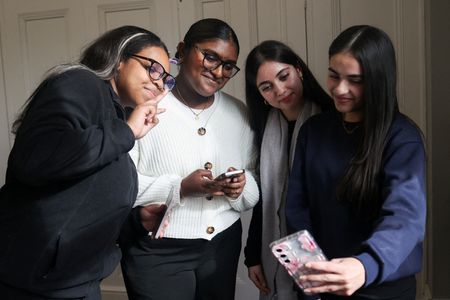
While many parents and elected officials support a ban, some psychologists and researchers have cautioned that there is no solid evidence proving such a measure would be effective. Meanwhile, a group of school-aged children in London told reporters they had a complicated and conflicted relationship with social media technology.