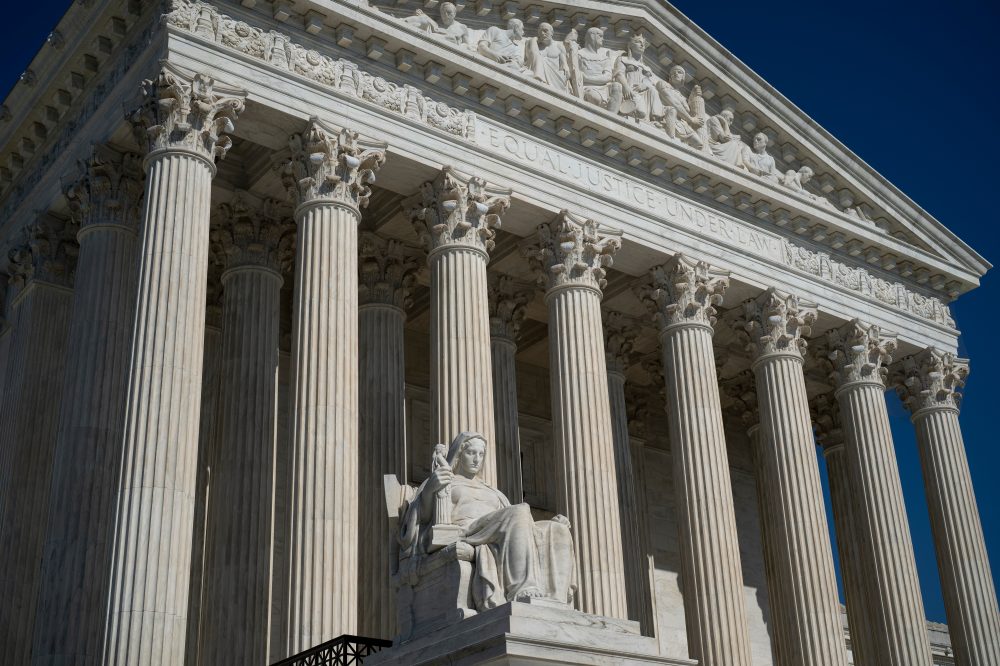
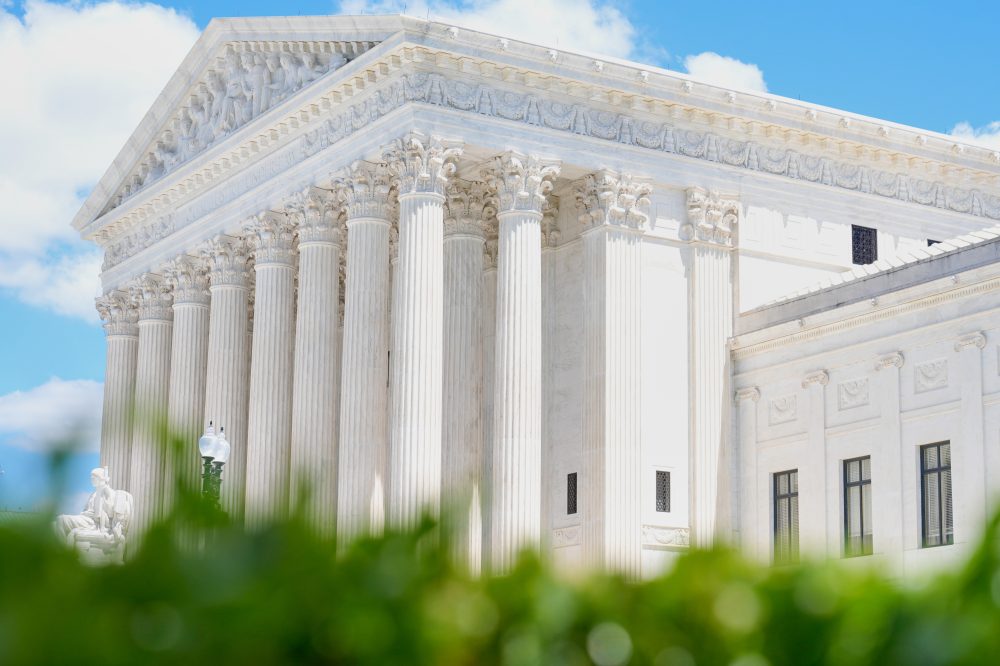
WASHINGTON (AP) — During a Monday address, Justice Ketanji Brown Jackson warned that the Supreme Court could appear politically motivated following a significant voting rights ruling.
Her comments came after she penned a lone dissenting opinion regarding the court’s decision to permit Louisiana to rapidly implement new electoral maps. The court had previously eliminated a majority-Black district and diminished the Voting Rights Act’s strength.
“Public confidence is really all the judiciary has,” she remarked during her presentation to the American Law Institute in Washington, D.C.
“Everyone believes the court system is outside the political sphere. I think that means it’s incumbent on us to do things, to act in ways that shore up public confidence,” she stated.
Recent polling indicates that public faith in the Supreme Court has reached historically low levels, while Chief Justice John Roberts has previously expressed concern about perceptions of justices as “political actors.”
Jackson has frequently dissented from rulings made by the court’s conservative majority, including her solitary opposition to an order permitting Louisiana to utilize new maps despite early voting already being underway. She argued the court had “spawned chaos” during an intense national redistricting conflict.
Three conservative justices on the court strongly disagreed with her position, describing her remarks as “baseless” and arguing that claims of partisanship lack merit. They contended that the only other option would have been allowing an election to proceed under maps deemed unconstitutional.
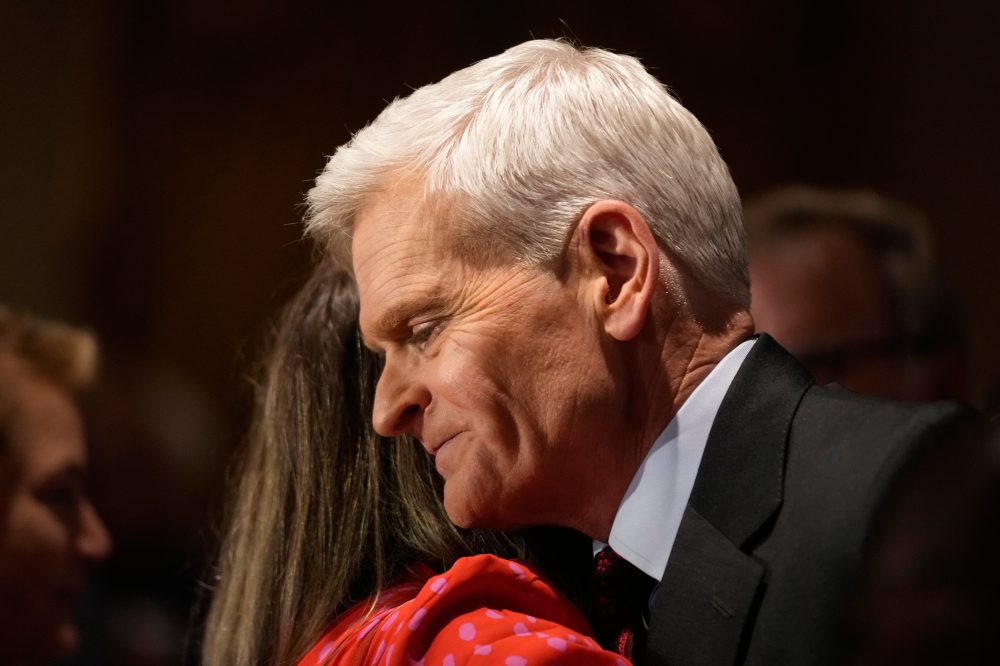
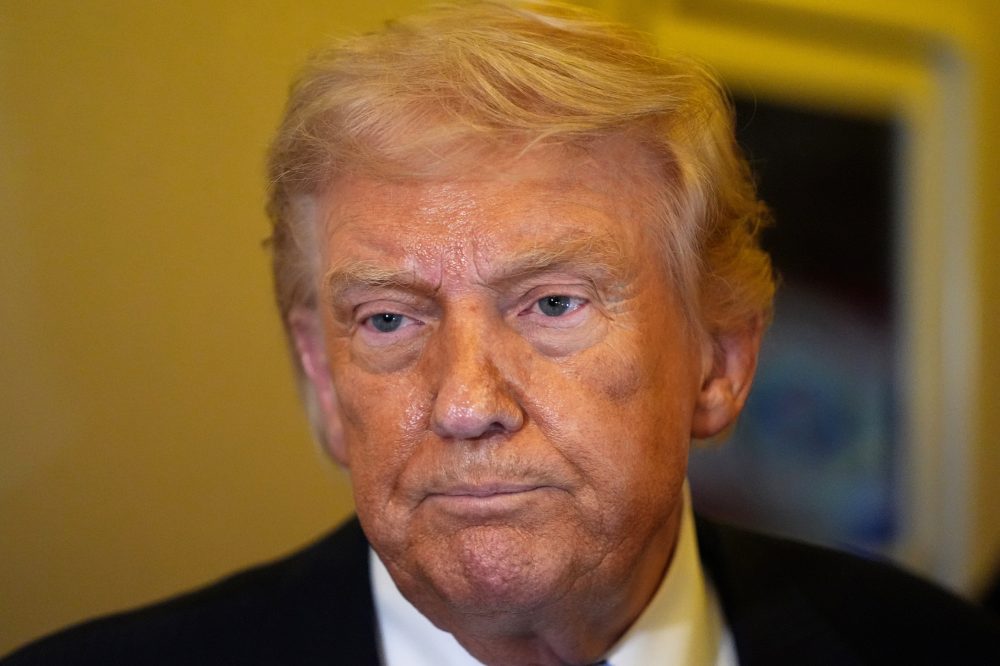
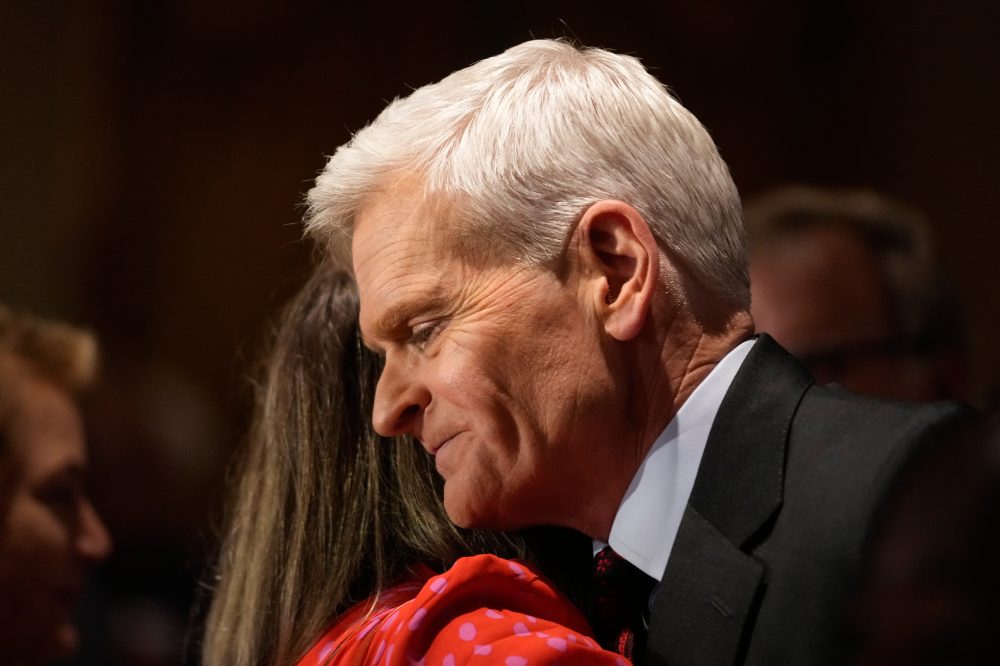
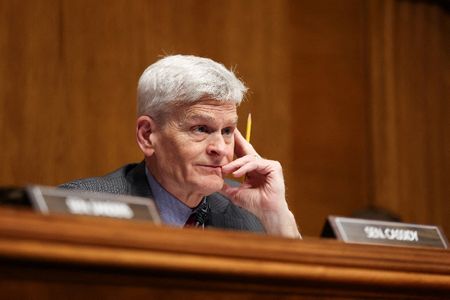
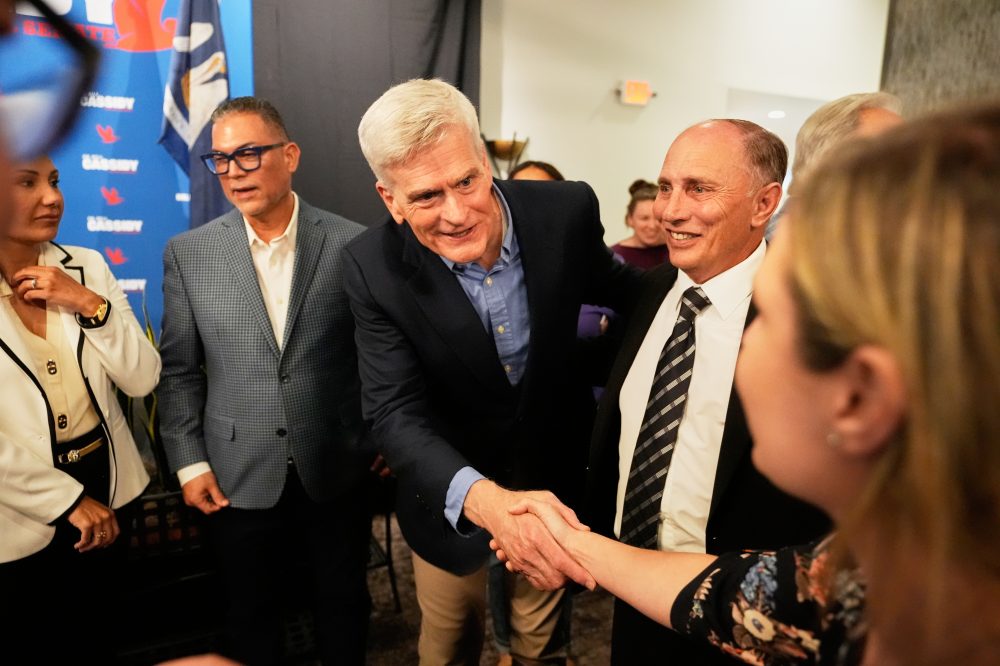
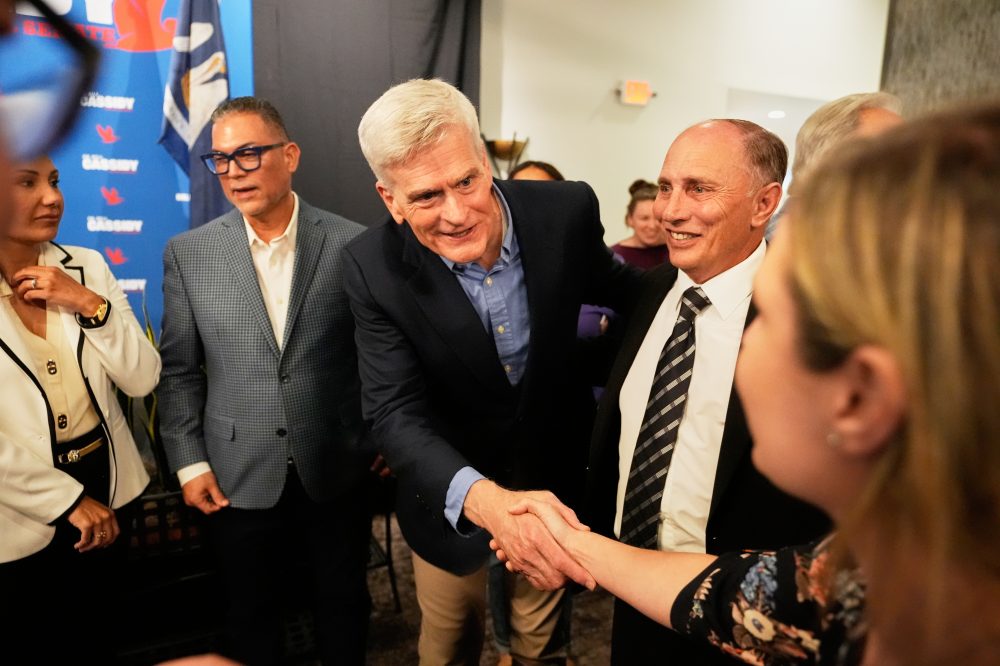
WASHINGTON (AP) — Following his decisive primary election defeat, Louisiana Republican Sen. Bill Cassidy expressed unwavering confidence Monday night about his decision to vote for former President Donald Trump’s conviction during impeachment proceedings five years earlier.
“I cast my ballot to defend the Constitution. Perhaps it led to losing my position, but that doesn’t matter,” Cassidy stated to members of the press at the Capitol. “I had the honor of casting a vote that defended the Constitution, and isn’t that something remarkable?”
The senator’s political career ended Saturday during his state’s Republican primary following Trump’s endorsement of a rival candidate. For years, Cassidy had attempted to demonstrate continued support for the former president despite his conviction vote following the January 6, 2021, Capitol incident.
After years of avoiding questions about his impeachment decision — frequently remaining silent when approached by reporters in Capitol corridors — Cassidy now expresses feeling “great.”
“You see before you someone who cherishes this nation, who feels extremely positive about my service to this country, the Constitution, and my fellow citizens,” Cassidy declared. “Shouldn’t we all desire to declare that we supported the Constitution during a significant moment? That describes my feelings exactly. I take great satisfaction in it.”
Cassidy becomes another member of the group of Republican officials who opposed Trump and faced electoral consequences. Whether he will follow the path of colleagues like North Carolina Sen. Thom Tillis, who became more vocal after announcing retirement last year, remains uncertain. On Monday evening, Cassidy avoided direct criticism of Trump, noting that “individuals expect me to make negative statements, but I’m focusing on positive remarks.”
However, he suggested he might speak out more, telling journalists he remains undecided about supporting the upcoming Democratic proposal to end the Iran conflict and expressing criticism of a new approximately $1.8 billion compensation fund for Trump supporters who claim unjust investigation and persecution — potentially including individuals prosecuted and subsequently pardoned for January 6 Capitol incident involvement.
While Cassidy contemplated his Senate tenure spanning two terms, his Republican colleagues who remain Trump supporters offered subdued or detached responses to his defeat.
“Bill’s defeat was foreseeable, and Bill understood this,” stated his Louisiana colleague, Republican Sen. John Kennedy.
Kennedy explained that Cassidy chose to campaign regardless, “and I admire that decision, and I appreciate his public service. We’re proceeding to a runoff situation now and we have two excellent candidates in the runoff.”
Cassidy’s Trump conviction vote from five years ago “created challenges, without doubt,” Kennedy acknowledged.
South Carolina Sen. Lindsey Graham, among Trump’s strongest supporters, declared on NBC’s “Meet the Press” Sunday that “individuals who attempt to politically undermine Trump, who obstruct his priorities, will face defeat.”
Trump concurred, writing on social media over the weekend that “it’s satisfying to observe that his political career has ENDED!”
Alaska Sen. Lisa Murkowski, among six other Republicans who supported Trump’s conviction in his second impeachment trial, alone expressed disappointment that Cassidy won’t return to the Senate.
His loss “definitely affects our work here,” she noted. “I valued collaborating with him and his guidance.”
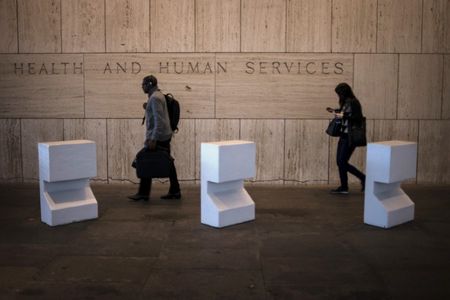
Before Saturday, Cassidy remained quiet on most Trump-related controversies. He made significant efforts to demonstrate presidential support, notably by ultimately backing Health and Human Services Secretary Robert F. Kennedy Jr.’s nomination despite initially questioning Kennedy’s vaccine skepticism. As both a physician and chairman of the Senate Health, Education, Labor and Pensions Committee, Cassidy’s support proved essential.
Monday, Cassidy declined to discuss any regrets about that decision. He likened the vote to an unsuccessful high school date and remarked that “life moves forward.”
He spoke more directly about Trump’s new “anti-weaponization fund,” established through a settlement resolving the president’s Internal Revenue Service lawsuit regarding his tax return disclosure.
While other Republicans avoided fund-related questions upon returning to Washington Monday evening, claiming insufficient knowledge or declining comment, Cassidy said he sees no legal basis for it.
“We operate under rule of law,” Cassidy emphasized. “You cannot simply create arbitrary policies.”
Congressional oversight is necessary, he argued, adding that campaign trail constituents “worry about meeting their basic needs, not about establishing unauthorized funds without legal foundation.”
Cassidy’s February 2021 impeachment trial support for Trump’s conviction surprised many, given the reserved doctor’s generally supportive stance — or reluctance to challenge — Trump throughout his initial presidency. He deliberated for days beforehand and refused trial commentary before voting.
Seven Republicans total voted for conviction as the Senate ultimately acquitted Trump. Only two others remain in the Senate: Murkowski and Maine Sen. Susan Collins, who also faces reelection in her considerably more moderate state.
Following his 2021 vote, Cassidy declared feeling “at peace” with his choice. The decision haunted him throughout the entire five-year period, becoming increasingly problematic when Trump won reelection and Cassidy campaigned again.
Asked Monday about future political aspirations, Cassidy made an indirect reference to Trump’s attempts to reverse his 2020 presidential election defeat and his unfounded assertions that prompted the January 6 Capitol attack by supporters.
The United States Senate approved President Donald Trump’s nominee to head the federal agency responsible for overseeing 250 million acres of public land on Monday, amid ongoing efforts by the administration to expand drilling and mining operations while rolling back environmental protections.
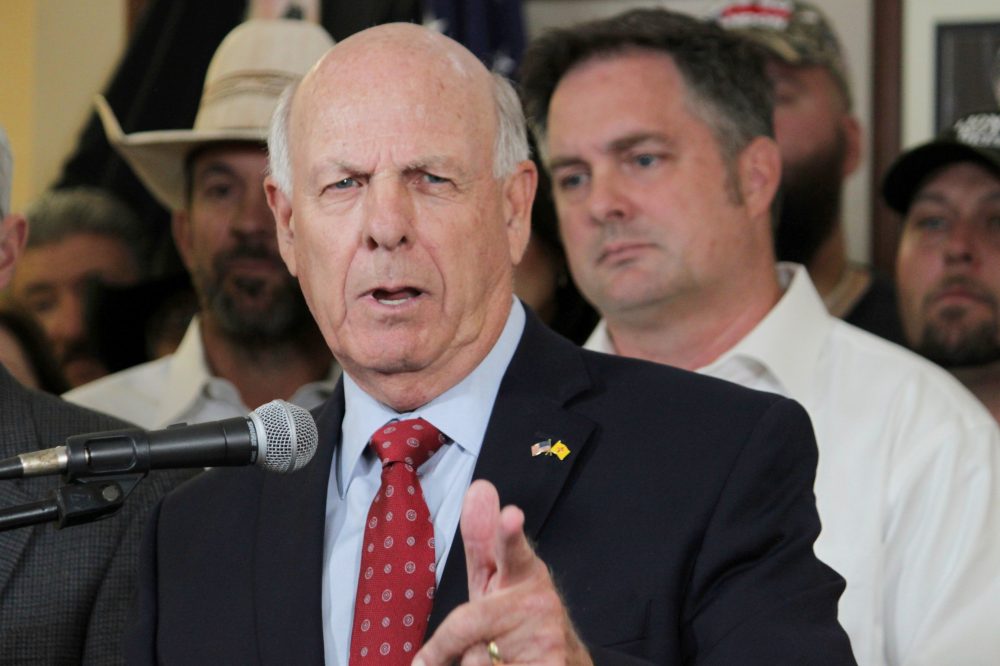
Former congressman Steve Pearce secured confirmation to direct the Interior Department’s Bureau of Land Management after Monday’s 46-43 Senate vote. His nomination sparked controversy due to his Republican Party leadership role in New Mexico and his history of supporting land leasing agreements with industry, drawing fierce opposition from Democrats and environmental advocates.
During his February confirmation hearing, Pearce sought to calm concerns by referencing his upbringing on a family farm where land and water conservation was essential.
“The security and economic health of the country, especially the western states, rests squarely with the BLM,” he testified. “We can and must balance the different uses of public land. Local economies and future generations depend on us doing our job right.”
The Bureau of Land Management employs approximately 10,000 workers who oversee roughly 10% of U.S. territory. The agency also manages 700 million acres of subsurface mineral rights, encompassing significant oil, natural gas and coal deposits.
Trump and congressional Republicans have been dismantling regulations implemented during former President Joe Biden’s tenure that they consider harmful to business interests. The administration has made millions of acres of federal land available for mining and drilling operations and eliminated land use plans and conservation initiatives developed under Biden.
New Mexico’s Democratic Party previously labeled Pearce “an outright enemy of public lands,” claiming he serves the interests of the oil and gas sector.
The Center for Western Priorities characterized Pearce’s confirmation as part of a comprehensive attack on public lands by Trump and Republicans, citing recent cancellations of grazing regulations and other policy shifts.
Pearce, who served as a fighter pilot and Vietnam War veteran, represented seven terms in the U.S. House for a district covering oil production areas, including sections of the Permian Basin and extensive public land holdings.
His congressional record reflected conservative positions, and he championed ranchers’ interests when portions of Lincoln National Forest were restricted to safeguard the threatened New Mexico meadow jumping mouse.
Pearce has stated that his congressional experience and constituent meetings revealed that the federal government had become what he described as an absentee landlord. Rather than collaborating with states and local communities on land management decisions, he argued the government was imposing its will upon them.
In his new role, he promised to incorporate local perspectives into his decision-making approach.
During his House tenure, Pearce pressed the U.S. Interior Department to shrink the Organ Mountains-Desert Peaks National Monument near Las Cruces, New Mexico, as part of a nationwide monument review during Trump’s initial presidency. He argued that reducing the monument’s size would protect established business operations on public lands. This stance generated enduring criticism from environmentalists who opposed his nomination.
The New York Times filed a second federal lawsuit against the Defense Department on Monday, challenging an escort requirement for journalists working inside Pentagon facilities that the newspaper claims violates constitutional protections.
This marks the second legal action the publication has taken against the military in five months over media access restrictions.
A Times spokesman, Charlie Stadtlander, told The Associated Press in an email that the escort policy represents “an unconstitutional attempt by the Pentagon to prevent independent reporting on military affairs.”
“As we have said before: Americans deserve visibility into how their government is being run, and the actions the military is taking in their name and with their tax dollars,” Stadtlander stated.
Defense Department spokesperson Sean Parnell responded on X, characterizing the Times’ newest legal challenge as “nothing more than an attempt to remove the barriers to them getting their hands on classified information.”
The legal battle represents another chapter in growing friction between news organizations and the second Trump administration, with disputes increasingly moving from public discourse into courtrooms.
According to the Times, this additional lawsuit was necessary after their December legal action against the Pentagon challenged new regulations implemented by Defense Secretary Pete Hegseth. The newspaper is now targeting what it calls an interim policy “that the Pentagon hastily put into place after a federal judge ruled in The Times’s favor in its original lawsuit.” This interim measure mandates that journalists must have escorts accompanying them throughout their time inside the Pentagon.
The escort requirement took effect in March after U.S. District Court Judge Paul L. Friedman struck down previous media access limitations, determining they infringed upon the rights of Times reporter Julian E. Barnes and the publication.
In April, the same judge determined that the interim policy violated his March decision. However, the escort requirement continues to operate after an appeals court temporarily blocked portions of Friedman’s ruling while the government pursues its appeal. That appeals process remains active.
The latest legal filing, submitted by both the newspaper and reporter Barnes to the District of Columbia district court, seeks to have the judiciary directly examine the escort rule’s constitutional validity.
In their court documents, the publication argues the rule shares the same objective as other Pentagon media limitations — “closing the Pentagon to any journalist or news organization unwilling to report only what Department officials approve.”
The Times maintains this approach is “patently unconstitutional.”
The December lawsuit targeted new regulations from Hegseth that the Times claimed violated constitutional guarantees of free speech and due process. News organizations including the Times departed the Pentagon rather than accept these rules as conditions for press credentials. They now report on military matters from outside the facility, while a newly approved press corps selected by the department currently uses the Pentagon press space.
In his Monday X post, Parnell stated that the Times and its reporters “want to roam the halls of the Pentagon freely and without an escort — a privilege that they do not have in any other federal building.”
He continued: “The Department’s policy is completely lawful and narrowly designed to protect national security information from unlawful criminal disclosure.”
WASHINGTON — A massive $1.7 billion compensation program has been established by the Justice Department to provide financial relief to supporters of President Donald Trump who claim they faced unfair prosecution during the previous administration, officials announced Monday. Democratic leaders are condemning the initiative as both unconstitutional and corrupt.
In a statement, Acting Attorney General Todd Blanche described the program — called the “Anti-Weaponization Fund” — as providing “a lawful process for victims of lawfare and weaponization to be heard and seek redress.” Blanche’s announcement did not address how investigations and prosecutions of Trump’s political opponents under his oversight have subjected the Justice Department to identical accusations of politically motivated law enforcement that he claims to oppose.
The compensation program emerged from an agreement to settle Trump’s $10 billion legal action against the Internal Revenue Service concerning the disclosure of his tax documents.
This initiative aligns with Trump’s persistent assertions that the Justice Department under the Biden administration was used as a weapon against him, despite the fact that then-President Joe Biden himself faced scrutiny during that period. The program represents both an extremely unusual settlement approach and another example of the Trump administration’s willingness to compensate supporters who faced investigations and, in some instances, charges and convictions prior to Trump assuming office.
Democratic legislators, who are preparing a court challenge to this action, contend it will become a taxpayer-funded “slush fund” for Trump supporters and allies claiming political persecution. They also raise concerns about whether the president should have authority to allocate funds for this program without explicit congressional authorization.
Here’s what you need to understand about this compensation program:
The program was revealed after Trump and his sons, Eric Trump and Donald Trump Jr., along with the Trump Organization agreed to withdraw their legal action against the IRS and the Treasury Department. Their lawsuit claimed that confidential tax record disclosures caused them reputational and financial damage and harmed their public image, among other claims.
Based on the Justice Department’s announcement, the program aims to establish a formal procedure for individuals or organizations claiming they were inappropriately targeted by the government for political, ideological or personal motivations.
“The use of government power to target individuals or entities for improper and unlawful political, personal, or ideological reasons should not be tolerated by any administration,” Justice Department official Trent McCotter stated in the announcement.
The funding will originate from the federal judgment fund, which covers court judgments and settlement agreements in lawsuits against the government.
According to the Justice Department, the program will evaluate claims of alleged government political targeting, provide formal apologies and distribute monetary compensation to qualifying applicants.
The allegations of a weaponized Justice Department during the Biden administration ignore the reality that President Joe Biden himself faced investigation for potentially mishandling classified information, while his son Hunter faced charges for gun and tax violations.
The Justice Department has not specified by name who might theoretically qualify for the program, but numerous investigations of Trump supporters during the Biden administration created potential beneficiaries seeking compensation.
Law enforcement officials, for example, filed charges against approximately 1,500 individuals related to the Jan. 6, 2021 riot at the U.S. Capitol. On his first day of his second term, Trump either pardoned these individuals, reduced their prison terms or dismissed their cases.
Whether compensation eligibility would extend to Jan. 6 defendants convicted of assaulting officers with improvised weapons including flagpoles, a hockey stick and crutch remains uncertain. Over 250 individuals received assault convictions, with the attacks often documented on surveillance or body camera recordings.
Additional prominent Trump supporters who faced investigation and charges include Steve Bannon, who completed a prison term for defying a congressional subpoena, and Peter Navarro, who received a similar contempt conviction and later received a pardon.
The Justice Department states the program will obtain $1.776 billion from the federal judgment fund, operating until Dec. 15, 2028, under supervision of a five-member commission selected by Blanche, with one member chosen after consulting with congressional leadership. The Justice Department notes the president maintains removal authority over any member.
The commission’s methodology for determining compensation awards remains unclear.
The Justice Department references previous settlement cases as authorization for this program — including litigation involving Keepseagle v. Vilsack — a significant 1999 class-action lawsuit filed against the USDA by Native American farmers alleging that the USDA discriminated against Native American farmworkers by refusing them farm loans while approving comparable loans for white applicants.
“The Obama Administration settled the case by establishing an administrative claims process funded by $680,000,000 paid from the judgment fund, which was deposited into a bank account to fund the claims received,” the Justice Department stated.
Democratic legislators and ethics monitors strongly criticized the program’s creation — describing it as corrupt, lacking transparency and potentially becoming a “slush fund” for the president and his supporters.
Nearly 100 congressional members filed a brief initiating a legal challenge to the case.
“This case is nothing but a racket designed to take $1.7 billion of taxpayer dollars out of the Treasury and pour it into a huge slush fund for Trump at DOJ to hand out to his private militia of insurrectionists, rioters, and white supremacists, including those who brutally beat police officers on January 6, 2021, and sycophant accomplices to his election stealing schemes,” Rep. Jamie Raskin, the top Democrat on the House Judiciary Committee, stated.
Sen. Elizabeth Warren, D-Mass., described the program as “corruption on steroids.”
Last month, she and other Democratic legislators introduced the Ban Presidential Plunder of Taxpayer Funds Act, which would prohibit the sitting president and vice president from receiving settlement payments from the U.S., among other provisions.
President Donald Trump plans to expand the selection of medications offered through his administration’s TrumpRx discount drug website, a White House official confirmed Monday while speaking anonymously to preview the upcoming announcement.
The additional drug options will be revealed during a White House healthcare affordability event scheduled for Monday afternoon, potentially strengthening a government platform that the Republican administration has promoted as assistance for Americans facing escalating medical expenses.
Critics from the Democratic Party have dismissed TrumpRx as a publicity stunt, pointing out that numerous medications featured on the site are already affordable for insured individuals or available as less expensive generic alternatives through other retailers. Democratic Sen. Elizabeth Warren of Massachusetts recently described it as a “conduit for Big Pharma to steer consumers to expensive brand-name drugs when cheaper generics are available.”
The government-operated website does not function as a direct medication purchasing platform. Rather, it serves as a connecting service that directs Americans to pharmaceutical companies’ consumer websites for actual purchases. The site also offers pharmacy discount coupons. TrumpRx debuted in February featuring more than 40 medications, including weight-loss treatments like Ozempic and Wegovy.
This Monday announcement, initially covered by Bloomberg News, arrives as healthcare costs have become a primary voter issue leading up to the November midterm elections. Medical expenses remain a significant concern for numerous Americans, a problem worsened by recent Medicaid reductions and the end of enhanced Affordable Care Act subsidies this year that caused dramatic premium increases for some individuals.
Beyond TrumpRx, the administration has highlighted additional initiatives aimed at reducing medication costs, including agreements between the president and 17 major pharmaceutical companies to provide drugs at prices matching or below those found in other developed nations.
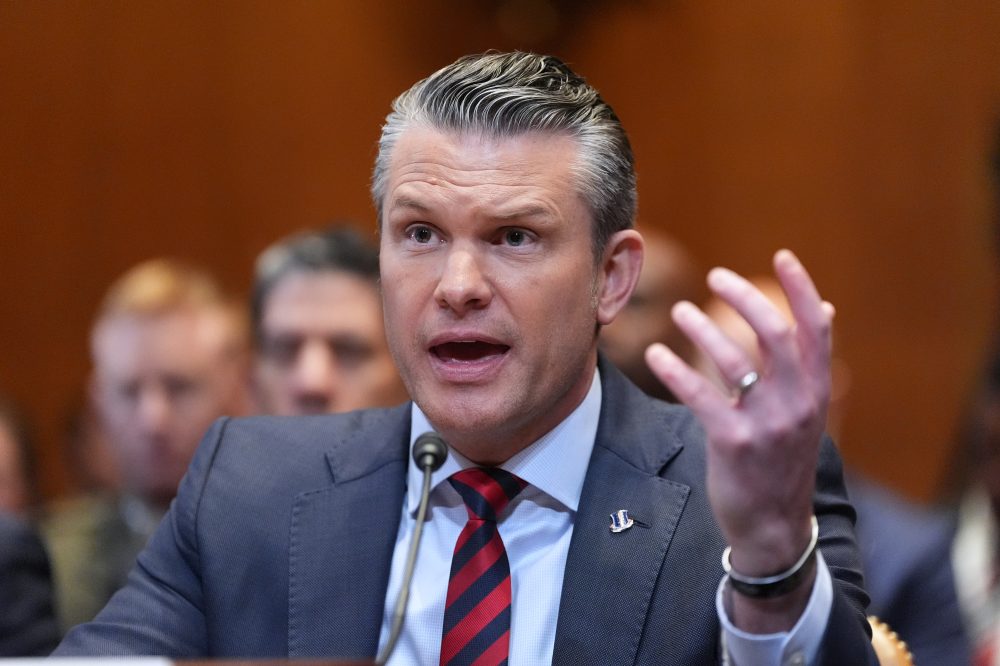
Pentagon chief Pete Hegseth made an unusual foray into electoral politics Monday, launching verbal attacks against one of President Donald Trump’s most vocal Republican opponents in Congress while inserting himself into a Kentucky House race that serves as a measure of the president’s influence.
Hegseth made the trip to Kentucky to deliver criticisms aimed at weakening Rep. Thomas Massie before Tuesday’s primary contest in Kentucky’s 4th Congressional District. The defense secretary claimed he was appearing “as a private citizen” rather than in his official Cabinet role.
However, Hegseth repeatedly invoked Trump’s name while endorsing Massie’s challenger, former Navy SEAL Ed Gallrein.
“President Trump needs reinforcements, and that’s what war fighters do. They stand behind leaders and have their back,” Hegseth said. “Too often, Thomas Massie has acted like his job is to stand apart from the movement that President Trump leads, instead of strengthening it. When President Trump needs backup, Massie wants to debate process.”
The defense secretary’s campaign involvement marks an unusual departure from standard practice while the country remains engaged in warfare, occurring as Trump seeks to showcase his ongoing control over the Republican Party amid growing economic worries and Iran war concerns fewer than six months from midterm voting.
Massie’s primary contest stands out this midterm cycle as a significant test of Trump’s influence. Presidential supporters have invested tens of millions into efforts to defeat Massie, creating what has become the costliest congressional primary battle in American history.
Massie, among the few Republican House members to publicly oppose Trump, has spoken against the Iran conflict and strongly advocated for making the Jeffrey Epstein files public.
“They’re desperate. That’s why they’re sending the secretary of war to my district,” Massie said Sunday on ABC’s “This Week.” “That’s why the president’s losing sleep and tweeting about this.”
Before Hegseth’s Kentucky visit, the Pentagon released a statement addressing accusations that the defense secretary violated regulations by using government funds for campaign activities.
“Secretary Hegseth is attending this event in his personal capacity. No taxpayer dollars will be used to facilitate his visit,” said Chief Pentagon Spokesman Sean Parnell. “His participation has been thoroughly vetted and cleared by lawyers, including the Department of War Office of General Counsel, and does not violate the Hatch Act or any other applicable federal statute.”
WASHINGTON — On Monday, Treasury Secretary Scott Bessent announced the United States will provide an additional 30-day window allowing nations to import Russian oil currently aboard vessels at sea, a decision aimed at addressing supply shortfalls triggered by conflict involving Iran.
This announcement represents an ongoing shift in policy from an administration that had previously indicated Russian oil sanctions would be reinstated. The temporary sanctions waiver was initially declared in early March and first extended in April, occurring just two days after Bessent stated at the White House he had no intentions of prolonging the sanctions relief.
This most recent 30-day extension follows Bessent’s previous statements to The Associated Press that the Russian oil sanctions waiver would expire, reflecting persistent global economic difficulties stemming from the Iran conflict as supply shortages drive up prices and hinder economic growth.
According to Bessent, the extension will benefit poorer countries requiring oil access because China will lose some of its capacity to “stockpile discounted oil” from Russia. However, the temporary suspension of sanctions carries risks by potentially helping Russia fund its military operations in Ukraine.
“This extension will provide additional flexibility, and we will work with these nations to provide specific licenses as needed,” Bessent stated on social media.
Congressional representatives have introduced bipartisan legislation that would impose annual charges on electric vehicle owners to help fund highway maintenance across the country.
The proposed measure would require electric vehicle drivers to pay $130 each year, while owners of certain plug-in hybrid models would face a $35 annual charge. These fees are designed to address the funding gap created as more drivers switch to vehicles that don’t contribute to gas tax revenues traditionally used for road repairs.
The legislation is part of a comprehensive five-year highway funding package worth $580 billion, which lawmakers must pass before the current authorization expires on September 30. Currently, most federal road repair funding comes from taxes on diesel fuel and gasoline, which electric vehicles don’t use.
Under the proposal, these annual charges would increase by $5 yearly beginning in 2029, eventually reaching $150 for electric vehicles and $50 for plug-in models.
The transportation committee is scheduled to consider the bill on Thursday. The legislation was jointly introduced by the committee’s Republican chair, Sam Graves, and top Democratic member, Rick Larsen.
Several states have already implemented similar fee structures for electric vehicles to ensure these drivers contribute to road maintenance costs. Federal lawmakers have avoided raising fuel taxes for three decades despite increasing infrastructure repair expenses. Earlier this year, some Republican senators proposed a much higher $1,000 charge on electric vehicles for highway funding.
The Sierra Club has voiced opposition to the legislation, stating it would reduce funding for electric vehicle charging infrastructure and “includes an irresponsible tax for EV and plug-in hybrid drivers.”
The bill also addresses autonomous vehicle regulations, directing federal transportation officials to create performance-based safety standards for self-driving buses, trucks, and commercial vehicles within two years. These rules would not cover passenger cars and would override state regulations.
Additionally, the legislation would mandate that autonomous school buses transporting children must have a human operator present.
An electric vehicle advocacy organization, the Electrification Coalition, previously argued that a $250 fee for electric vehicles would be excessive, noting that typical gas-powered vehicles contribute only $88 annually through federal fuel taxes.
Since 2008, more than $275 billion has been transferred from general government funds to cover road repairs, including $118 billion from the 2021 infrastructure legislation.
With congressional elections approaching in November, some lawmakers express concern about reaching an agreement on highway funding before the September 30 deadline.
WASHINGTON, May 18 – President Trump is set to reveal a major expansion of the government’s prescription drug discount platform, TrumpRx.gov, during a Monday announcement, a White House official confirmed.
Bloomberg News reports that the administration plans to incorporate generic medications into the platform, with billionaire Mark Cuban expected to participate in the White House ceremony.
Cuban operates Cost Plus Drugs, an online pharmacy that provides discounted medications directly to customers.
The TrumpRx platform, which debuted in January, represents part of Trump’s most-favored-nation agreements with pharmaceutical companies designed to reduce prescription drug costs to match prices found in other developed countries.
Despite Trump’s promise to deliver prescription drug prices cheaper than anywhere else globally for Americans, a Reuters analysis of publicly available pricing data shows the website’s costs do not undercut those found in the United Kingdom.
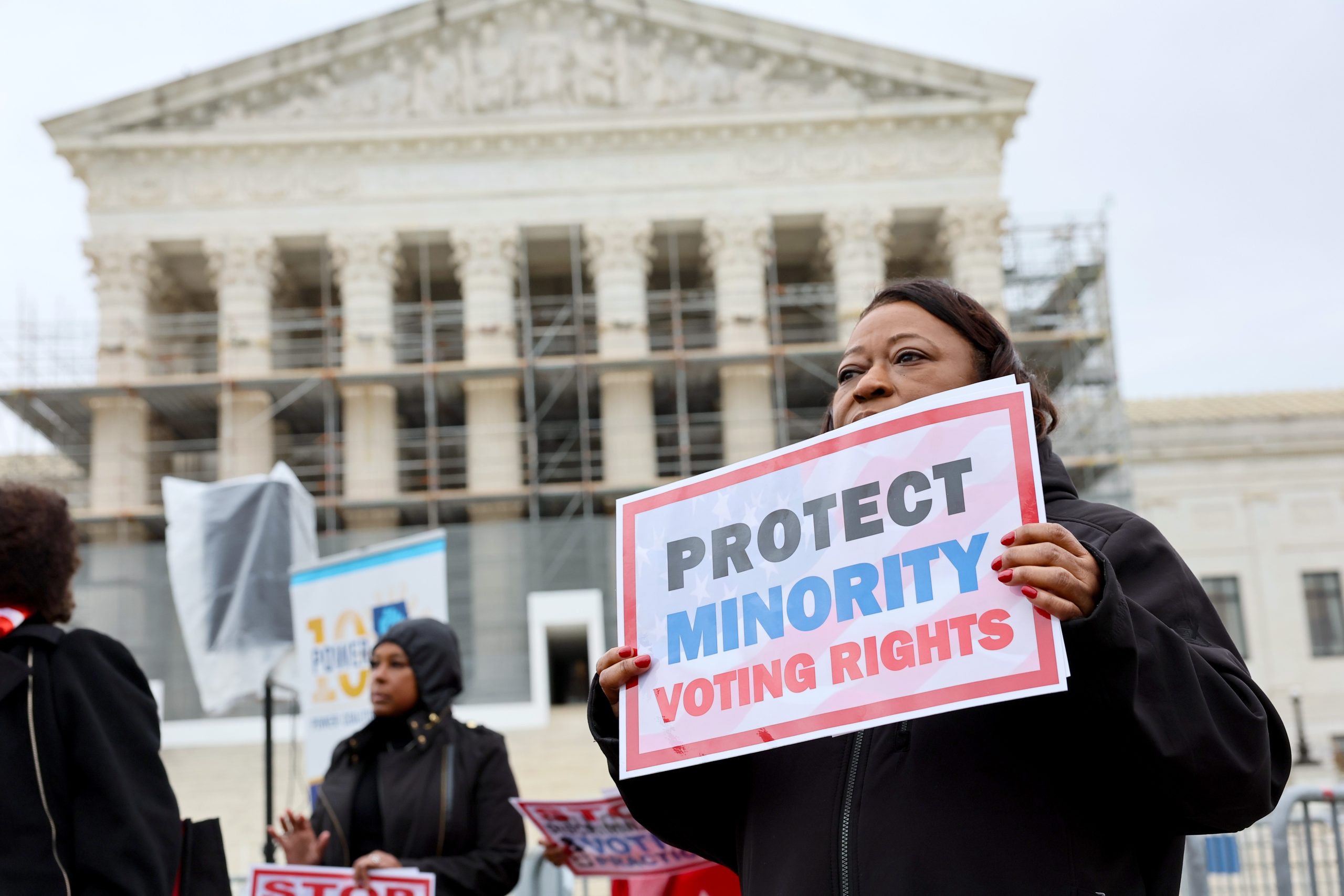
The nation’s highest court has decided to postpone addressing a legal matter that could dramatically restrict how the remaining sections of voting rights legislation are implemented.
This decision comes following recent actions by the court that have already reduced the strength of the law designed to protect minority voters’ rights.
The legal question at hand could potentially impose severe limitations on enforcement mechanisms for the law’s existing safeguards for minority voting access.
The president has withdrawn his legal action against the IRS and Treasury Department, clearing the path for a potential settlement agreement.
The lawsuit, filed in January, sought $10 billion in damages stemming from the unauthorized release of his tax documents that occurred years earlier.
By dropping the legal challenge, the administration appears to be moving toward resolving the dispute outside of court rather than pursuing the matter through lengthy litigation.
The future of the White House Correspondents’ Association dinner remains uncertain more than three weeks after a shooting incident threw the prestigious event into turmoil at the Washington Hilton.
A gunman stormed the hotel lobby and fired shots in what authorities describe as an assassination attempt on President Donald Trump. The incident has left organizers struggling to determine whether and how to reschedule the gathering.
Association president Weijia Jiang of CBS News, speaking from China where she was covering Trump, stated the organization “continues to weigh options for rescheduling the event.” Jiang was present during the shooting and took cover alongside the president when gunfire erupted.
“We will do this again,” Jiang declared at the time. Trump subsequently posted on social media that the dinner would be rescheduled within 30 days, though the decision doesn’t rest with him. That timeline would place the event later this month.
Such timing appears unlikely for an event typically hosting nearly 3,000 attendees. Sources indicate WHCA board members are exploring smaller venues, recognizing that any rescheduled event would need significant downsizing due to financial and security considerations. Officials don’t anticipate returning to the Washington Hilton or hosting a full-scale dinner anywhere.
Beyond logistical challenges, some critics are questioning whether the event should proceed at all. Those already uncomfortable with media figures socializing with the officials they cover are increasingly suggesting the dinner be permanently canceled.
Kelly McBride, an ethics specialist at the Poynter Institute journalism think tank, has long criticized the event as presenting a “bad look.” Despite supporters’ arguments that the dinner raises scholarship funds and celebrates First Amendment freedoms, McBride maintains her opposition.
“It undermines the public faith in how the press does its work, and it makes it looks like we are pals with the people we cover,” McBride explained.
McBride called the attack “deeply unfortunate,” noting that a Secret Service officer was wounded and is recovering. She emphasized that managing public perception now presents additional challenges, particularly with heightened security requirements.
“You’d have to make the Secret Service happy,” she observed. “I don’t know you do that unless it is in a government facility. But it can’t be in a government facility.” Such a venue would appear to compromise the WHCA’s independence.
McBride believes the situation highlights fundamental problems with an event whose original mission has been overshadowed by presidential attendance.
“I can’t imagine how they can possibly redo this event this year in a way that would accomplish everything they need,” she stated. “It sure would be easier just to call the whole thing off.”
However, some security professionals dispute concerns about the event’s safety.
“Can it be done safely? I would argue that it was done safely the first time,” said Jeff James, a former Secret Service officer who now operates a security company.
James pointed out that the attacker “never even got to the same floor as the president. He was stopped within about 30 feet of reaching the middle perimeter.” He emphasized the gunman “never came close to being within handgun range, let alone shotgun range,” calling the response a clear Secret Service success.
Anthony Cangelosi, a former Secret Service agent and instructor at the John Jay College of Criminal Justice, also praised the response and noted agents were prepared for such a “lone wolf” scenario. The suspect, Cole Tomas Allen of Torrance, California, was staying at the hotel during the incident.
“Obviously the optimal venue is one where there is nobody (else) there, like an arena, where the only people are the attendees and the protectees,” Cangelosi explained. “But you have to work with what you have, and they did a very good job.”
Jodie Ginsberg, chief executive officer of the Committee to Protect Journalists, attended the dinner to highlight press freedom issues but has grown concerned about the event’s priorities.
“It’s a big, extremely expensive social event at a time when journalists are being laid off in continuing high numbers,” Ginsberg observed.
She expressed frustration that during a time when “journalists are under threat like never before — last year was the deadliest year ever in CPJ’s history for journalists — more journalists being harassed online, more journalists are in jail than ever before, journalists in the U.S. are being raided by the FBI, arrested covering protests, knocked to the ground by ICE,” these issues receive little attention during “those four days of parties.”
Ginsberg worries that “we’re still sort of raising a toast to press freedom, yet often without having the courage to stand up in its defense when it actually gets threatened.”
Former CBS News executive Marcy McGinnis opposes rescheduling for practical reasons, noting the scholarship funds had already been collected.
“I am troubled by the optics, for sure,” McGinnis, co-founder of Exact Communication, acknowledged. “But I believe journalists who believe in true journalism, and holding power to account, will and are able to do their job when they have to cover someone — even if they hobnobbed at the dinner.”
One venue Trump suggested is definitively off the table: his unfinished White House ballroom.
“We need the ballroom,” the president stated, with his Justice Department using the issue to pressure preservationists to abandon their lawsuit over the $400 million project on the former East Wing site.
This option remains impossible for multiple reasons beyond its incomplete status. “It can never be in the ballroom,” McBride emphasized, for the WHCA to preserve any credibility.
Regardless of whether and where the event might be rescheduled, at least one attendee has made her decision.
“I’m never going to another,” declared Ginsberg of the CPJ. “I’ve had this conversation with a few colleagues from different organizations. I think the time has come to think about how we spotlight the importance of the First Amendment, of a free press, of the importance of journalism in a different way. I don’t think that this is it.”
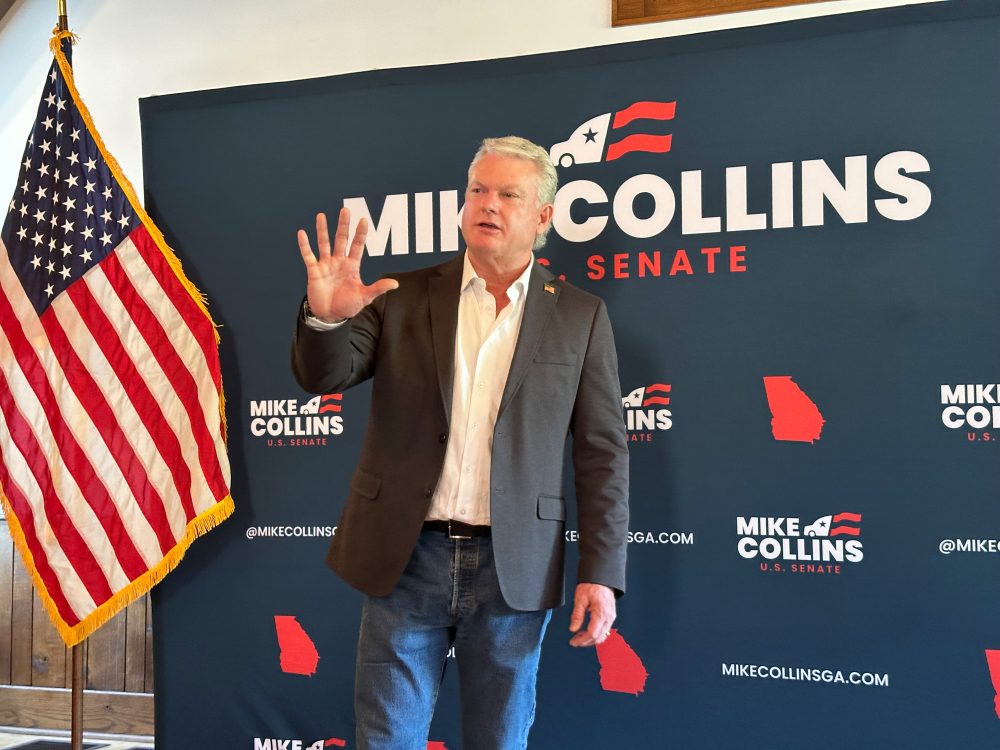
ACWORTH, Ga. — Georgia Representative Mike Collins, seeking to challenge Democratic Senator Jon Ossoff this November, proudly describes himself as a champion for President Donald Trump and his “Make America Great Again” agenda.
While this message typically resonates with Republican primary voters, some supporters express reservations before Tuesday’s primary election.
During a recent campaign event, Gary Waldrep, a local party committee chairman, questioned Collins about his strategy to attract “middle-of-the-road” voters who might be alienated by Trump.
This concern highlights Republican worries about their prospects in Georgia, where Democrats have shown electoral success in recent Senate races and Ossoff is no longer viewed as the vulnerable target he once appeared to be.
“I watch the polls just like everybody else,” Waldrep said. “I know it’s going to be close.”
Collins faces competition from Representative Buddy Carter and Derek Dooley, an attorney and former college football coach endorsed by outgoing Georgia Governor Brian Kemp. With Trump remaining neutral in the race, a June 16 runoff appears likely, which would consume additional time and resources before Republicans can concentrate on challenging Ossoff.
Should Ossoff be defeated, Democrats would have virtually no path to a Senate majority. He represents the only Democratic senator seeking reelection in a state Trump captured two years earlier.
While Trump has won Georgia in two of his three presidential campaigns and Republicans maintain control of the Atlanta statehouse, Ossoff and Senator Raphael Warnock have claimed three combined Senate victories over the past six years, each defeating Trump-aligned Republican opponents.
For this election cycle, Kemp declined Senate Republican leadership’s requests to challenge Ossoff and refused to support either Collins or Carter. Instead, he recruited Dooley, a longtime family friend and son of legendary coach Vince Dooley, encouraging Georgia Republicans to consider the newcomer candidate.
“My goal is here is to win our Senate seat back,” Kemp said Friday as he introduced Dooley at a gun store in Douglasville. “We need a political outsider to do that.”
Dooley, 57, stated in a recent interview that minimal policy differences exist among the candidates, “and so electability is everything.” His television advertisements attempt to appeal to both Trump’s base and moderate voters.
“I’m gonna work with President Trump, but for you,” he tells voters in one spot.
Collins, 58, serves his second House term while operating a trucking business and claims to have a “grassroots operation out there pounding the pavement across this state.”
The House member benefits from representing a district east of Atlanta, placing him within the state’s primary media market. He authored the Lakin Riley Act, named for a Georgia nursing student killed by a man also charged for being in the U.S. illegally. Trump signed the legislation last year, requiring immigrants accused of certain crimes to be detained without bond.
“I have proven that I can deliver for the state of Georgia,” Collins said in Acworth. “I can even do it with bipartisan legislation. And I never compromise my conservative values.”
Collins maintains an aggressive social media presence that has enhanced his reputation as a Trump-style provocateur while generating controversy. Among his most disputed posts was sharing a 2024 video showing University of Mississippi students, predominantly white males, harassing a Black woman.
“Ole Miss taking care of business,” Collins wrote.
Carter, serving his sixth term, represents a Savannah-area district in a less populated region of Georgia that rarely serves as a foundation for statewide campaigns. He has reduced advertising spending in recent weeks before the primary, indicating potential financial constraints.
The 68-year-old pharmacist has focused on a House ethics investigation examining whether Collins misused taxpayer funds by employing his former chief of staff’s girlfriend — now his campaign adviser — for work she allegedly never performed.
“If taxpayers can’t trust you to properly steward their money, how can they trust you to be a U.S. senator?” Carter asked Collins in a recent debate.
“Buddy,” Collins shot back, “I can tell through the voice that you know how the polling is going out there.”
Meanwhile, Dooley attempts to leapfrog his more seasoned opponents.
“I come from a whole different world than they come from,” he said. “Both of those guys represent everything that I’m running against. I want to change how Washington does its business, and I want people up there for the right reasons.”
Kemp cited several first-term Republican senators who lacked prior elected experience, including Ohio’s Bernie Moreno, Montana’s Tim Sheehy and Pennsylvania’s Dave McCormick.
“If you look around the country where Republicans have been successful beating Democratic incumbents, it has been political outsiders that have been victorious,” Kemp said.
The advantage, Dooley explained, is that “you’ve got to have somebody that’s going to stay on offense” without having a record to defend.
“It comes down to who can beat Jon Ossoff,” he said.
However, Trump has not provided a primary endorsement and Collins has struggled to match Ossoff’s fundraising success. Through April 29, Collins had collected $3 million from donors and contributed $650,000 of his personal funds. Ossoff has raised over $57 million and maintained $31 million in available cash as of April.
This situation has created opportunities for other candidates, with Carter and Dooley hoping to push Collins into a June 16 runoff.
WASHINGTON — The nation’s highest court took action Monday in a voting rights case involving Native American tribes, directing that a significant ruling be reviewed again following the Supreme Court’s recent weakening of the landmark civil rights legislation.
The justices instructed lower courts to reexamine the decision that ruled against the tribes and diminished an important enforcement tool: legal challenges brought by voters and civil rights organizations.
Civil rights organizations play a crucial role as they initiate the majority of legal challenges filed under Section 2 of the Voting Rights Act.
However, in a case from North Dakota involving two Native American tribes, the 8th U.S. Circuit Court of Appeals determined that only federal authorities have the power to file lawsuits to enforce the legislation.
This ruling contradicted established legal precedent spanning several decades. The Supreme Court halted the decision in July, permitting the tribes’ preferred district maps to remain in effect temporarily.
Despite this, the appeals court’s conclusion has been referenced in other cases, including Mississippi’s similar argument in a separate challenge regarding its state legislative boundaries. The court also returned that case for renewed consideration Monday.
Justice Ketanji Brown Jackson disagreed with the decision, stating in her dissent that both rulings deserved to be overturned.
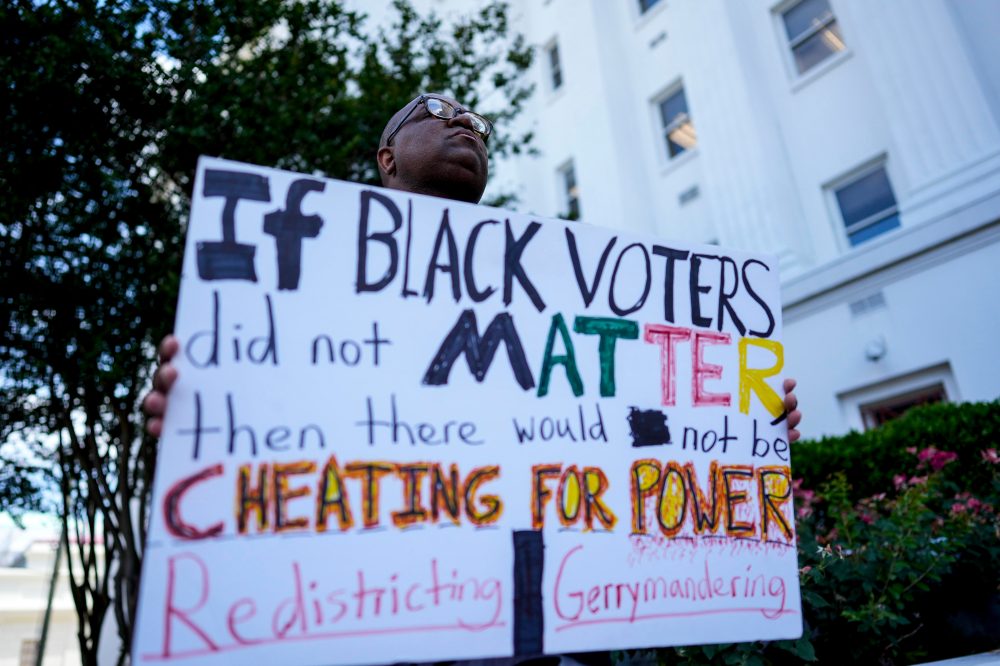
The conservative majority has already weakened enforcement capabilities through their April ruling that eliminated a majority Black congressional district in Louisiana and significantly raised the bar for future successful cases.
In that ruling, the high court’s conservative majority determined that the map placed excessive emphasis on race by creating a district intended to provide Black voters an opportunity to choose their preferred candidate. This decision essentially restricted Voting Rights claims to maps that deliberately discriminate, establishing an extremely difficult standard to meet.
The nation’s highest court on Monday declined to hear legal challenges from drug companies opposing a federal program that allows Medicare to negotiate prescription medication costs.
The justices offered no explanation for their decision to let stand previous rulings from a Philadelphia-based federal appeals court that had thrown out the pharmaceutical manufacturers’ legal arguments.
This price negotiation initiative emerged from the 2022 Inflation Reduction Act, ending years of political battles over whether federal officials should have direct bargaining power with drug companies regarding Medicare medication costs.
Under the legislation, federal officials must negotiate pricing for select expensive medications within the government insurance program serving seniors each year, with initial agreements taking effect in 2026.
The measure received zero support from Republican lawmakers when Democratic President Joe Biden signed it into law. Republicans have strongly criticized various provisions of the legislation, and Republican President Donald Trump has reversed programs supporting alternative energy initiatives.
However, the current administration has welcomed the power to bring pharmaceutical companies into price discussions.
To date, federal negotiators have secured pricing agreements for 25 Medicare-covered prescription medications, including widely-used GLP-1 treatments for weight loss and diabetes such as Ozempic, Rybelsus and Wegovy. This past January, the Trump administration identified additional medications for a third negotiation cycle, which will increase the total number of discounted drugs available to Medicare beneficiaries to 40.
Drug manufacturers have vigorously opposed this initiative, contending that officials seeking cost reductions should focus instead on controlling insurers and third-party pharmacy benefit managers.
Without judicial intervention, ending this program would likely require congressional action. The law establishing the initiative contains no expiration provision.
WASHINGTON (AP) — Tuesday’s primary elections in Oregon will feature Democratic Gov. Tina Kotek facing nearly two dozen opponents as candidates compete for their party nominations across state and federal races. Additionally, voters will weigh in on a statewide ballot proposal to increase gas taxes for funding state road and bridge upgrades.
The primary elections are taking place within the broader context of national political trends, which typically influence midterm election years when voters often express dissatisfaction with the sitting president’s party through their ballots. Kotek has positioned President Donald Trump as a central opponent in her campaign messaging, while the vote on Measure 120 regarding increased vehicle fees and gas taxes for transportation infrastructure occurs amid rising fuel costs that have continued climbing since the Iran war began.
In her pursuit of a second term, Kotek confronts nine Democratic primary opponents. On the Republican side, 14 candidates are vying for the nomination, including Marion County Commissioner Danielle Bethell, state Rep. Ed Diehl, state Sen. Christine Drazan and financial planner and former NBA player Chris Dudley. Dudley previously sought the governor’s office in 2010, earning approximately 48% of votes in that year’s general election.
Current officeholders are also seeking reelection for U.S. Senate and all six U.S. House positions, with just one congressional member running unopposed for renomination.
Critical voting areas for both Democratic and Republican primaries include Multnomah, Washington and Clackamas counties surrounding Portland, plus Lane County where Eugene is located. Salem-based Marion County, Jackson County and Deschutes County also provide substantial vote totals in both parties’ primary contests.
In the 2010 gubernatorial primary, Dudley secured victory with 39% of votes against eight opponents. Among the most populated counties, he won Multnomah, Washington, Clackamas and Washington counties while finishing second in Lane County.
Key election details and data points that the AP Decision Team will track during vote counting include:
Oregon’s elections operate primarily through mail-in voting. Ballots submitted to drop boxes or county election offices must arrive by 8 p.m. local time, equivalent to 10 p.m. ET and 11 p.m. ET. Counties may extend their operating hours if desired. Nearly the entire state follows Pacific time, making the cutoff 11 p.m. ET in those regions. Areas observing Mountain time have a 10 p.m. ET deadline. Mailed ballots require an 8 p.m. local time postmark and must arrive by May 26 for counting.
The AP will report vote tallies and announce winners in competitive primaries for U.S. Senate, U.S. House, governor, state Senate and state House races, plus Measure 120 and the nonpartisan state labor commissioner contest.
Primary participation requires party registration matching the desired ballot. Democrats cannot vote in Republican primaries and vice versa. Independent or unaffiliated voters are excluded from both party primaries.
Oregon had approximately 3.1 million registered voters as of May 4, with roughly 988,000 registered Democrats and about 737,000 registered Republicans.
During the 2024 primaries, registered Democrats submitted between 420,000 and 456,000 votes across different races, while registered Republicans cast just under 300,000 votes.
The 2022 midterm primaries saw higher participation, with Democrats casting between 478,000 and 492,000 votes and Republicans submitting between 347,000 and 370,000 votes.
Mail-in voting has been Oregon’s standard practice since the 1990s. Voters can also use drop boxes and county election offices for ballot submission.
By Friday, nearly 513,000 ballots had been submitted for Tuesday’s election.
Given Oregon’s mail-in voting system, results arrive throughout election night and subsequent days. Several smaller counties report all or most Election Day voting results in their initial tallies.
During the 2024 presidential and state primary, the AP began reporting results at 11 p.m. ET when final polling locations closed. The night’s final update occurred at 5:11 a.m. ET with approximately 74% of total votes tallied.
The Associated Press avoids making projections and only declares winners when no possible scenario exists for trailing candidates to overcome their deficit. For uncalled races, the AP continues covering significant developments like candidate concessions or victory claims while clearly stating no winner has been declared and explaining the reasoning.
Oregon mandates automatic recounts for tied votes or margins of 0.2% or less of total votes. The AP may declare winners in recount-eligible races when determining the lead is too substantial for recounts or legal challenges to alter the outcome.
As of Tuesday, 168 days remain until the 2026 midterm elections.
WASHINGTON — President Donald Trump filed paperwork on Monday seeking to dismiss his $10 billion legal action against the Internal Revenue Service concerning the unauthorized release of his tax documents, following recent reports suggesting a settlement was imminent.
The information was revealed through documentation submitted to a federal courthouse in Florida, the location where the legal action was originally initiated.
Last week, ABC News initially reported that Trump was ready to abandon his legal case as part of an agreement that would establish a $1.7 billion compensation fund for presidential allies who claim they faced improper investigation and criminal charges.
The federal court documents did not include details regarding any possible settlement terms.
A prominent LGBT advocacy organization has announced plans to invest a record amount of money in the upcoming midterm elections, targeting Republican candidates across multiple competitive races.
The Human Rights Campaign revealed it will allocate $15 million toward opposing Republicans in key battleground districts. According to the organization, this financial commitment represents the largest sum it has ever dedicated to a midterm election cycle.
The substantial investment follows what the group describes as a series of setbacks for the Gay Rights movement, including defeats in electoral contests and unfavorable court decisions in recent years.
The organization’s strategy includes involvement in eight House contests, while also providing support to Democratic Senate candidates across six different states.
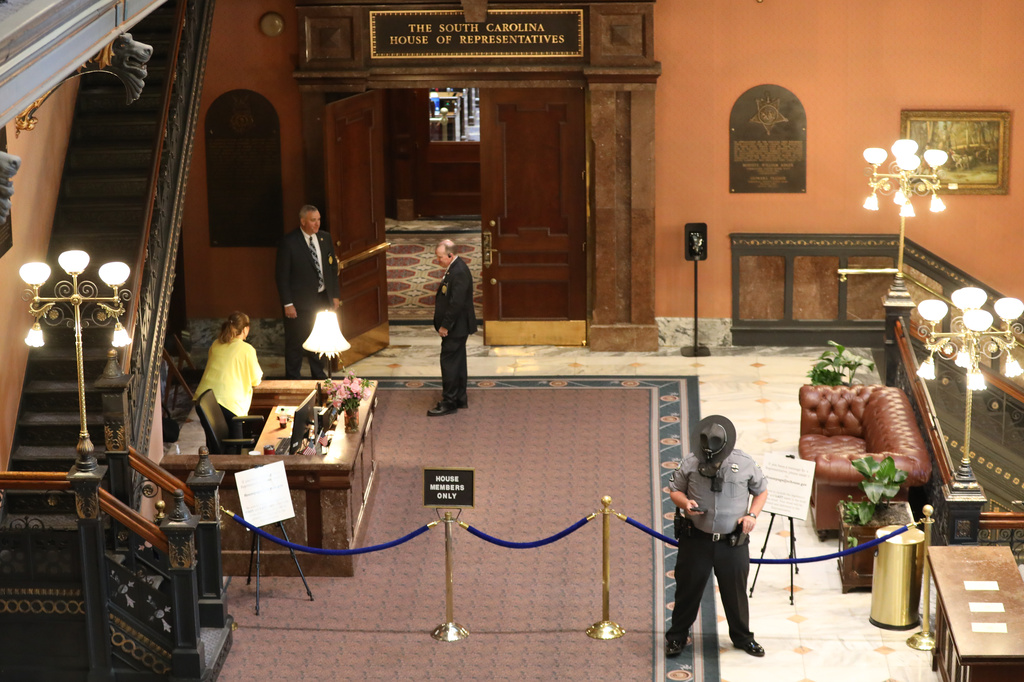
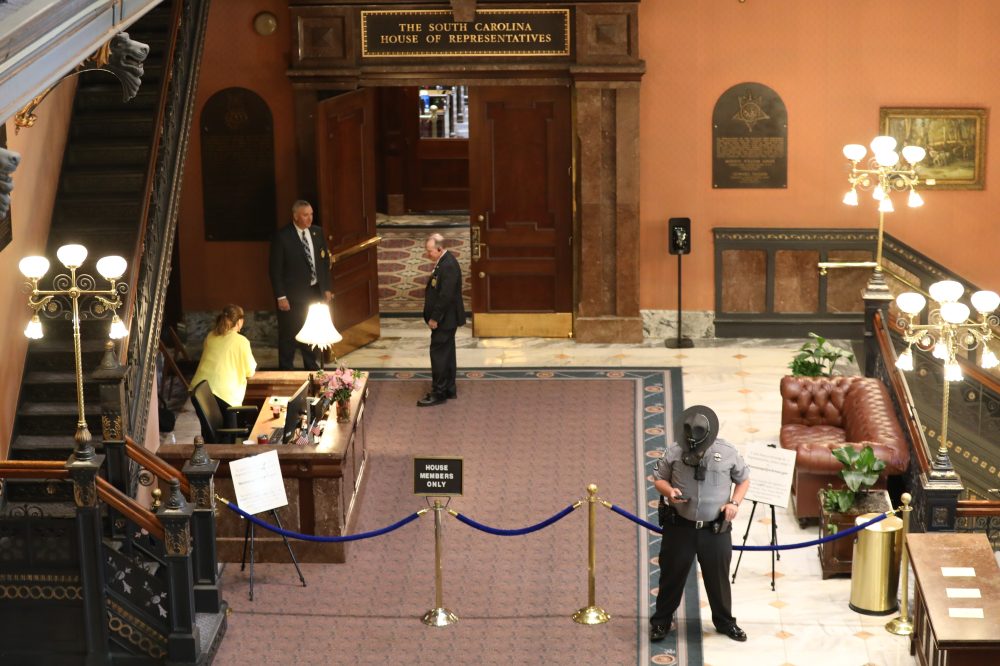
COLUMBIA, S.C. (AP) — South Carolina state House members will begin comprehensive discussions Monday about redrawing the state’s congressional boundaries, launching what could be a contentious debate over whether to fulfill President Donald Trump’s request for a U.S. House map that might deliver all seats to Republicans.
Similar heated discussions have already occurred in Tennessee, Alabama and Louisiana as the GOP works aggressively to capitalize on a recent U.S. Supreme Court decision regarding race-based gerrymandering. This court decision has created opportunities for Republicans to restructure districts containing significant Black voter populations that opponents argue were originally crafted to ensure Democratic victories.
For South Carolina, this strategy involves going after the district currently represented by U.S. Rep. Jim Clyburn, who stands as the sole Democrat within the state’s seven-member House delegation.
Clyburn has stated he plans to continue serving regardless of any district modifications. During a recent meeting with reporters in Washington, he mentioned having residences in Columbia, Charleston and Santee, stating: “I live in three districts. I’ll decide which one to run in.”
Early voting for South Carolina’s statewide primary elections is set to start May 26, with the main primaries occurring June 9. Beyond congressional redistricting, proposed House legislation would shift U.S. House primaries to August. This bill requires Senate approval after passing the House.
Republican Gov. Henry McMaster, who convened the special legislative session for redistricting purposes, emphasized South Carolina’s need to send maximum Republican representation to Washington to help block potential Democratic House control and Trump impeachment efforts.
Nationally, Republicans currently lead the redistricting fight. Following Trump’s endorsement of Texas Republican redistricting efforts last year, the GOP believes it could secure up to 15 additional seats through new House maps across Texas, Missouri, North Carolina, Ohio, Florida, Tennessee and Alabama. Democrats project gaining six seats from revised maps in California and Utah. However, legal challenges continue in several states, with voters ultimately determining election outcomes.
Additionally, courts have overturned Virginia’s redistricting attempt, a decision that likely preserved 4 Republican districts from elimination.
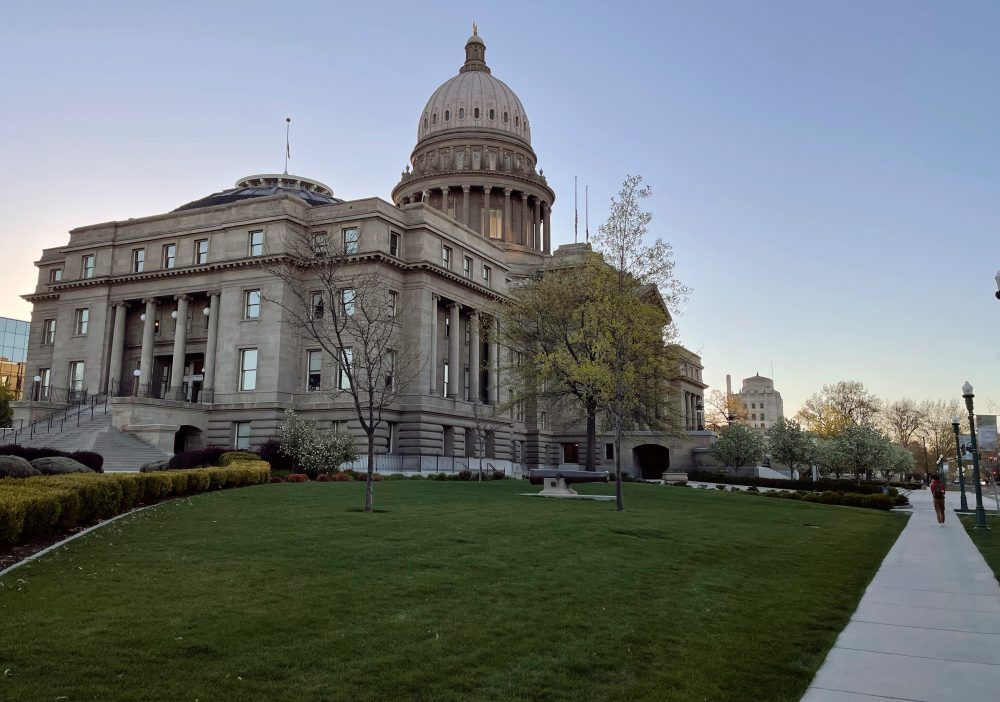
Idaho residents will select nominees for federal, state and local positions during Tuesday’s primary elections.
These races will determine the candidates for November’s general election, where Republicans are counting on strong Idaho performance to help maintain control of both chambers of Congress.
In the U.S. Senate race, Republican incumbent Jim Risch seeks a fourth term while facing three primary opponents. Risch has significantly outpaced his challengers Joe Evans, Denny LaVe and Josh Roy in campaign fundraising as the primary campaign enters its final stretch.
Three Democrats are competing for their party’s Senate nomination: David Roth, Nickolas “007” Bonds and Brad Moore. Campaign finance records show only Roth has raised funds for his campaign, collecting approximately $7,500, though his campaign had no money remaining as of March 31. Roth previously ran as the Democratic nominee for the 2nd Congressional District in 2024 and sought the U.S. Senate seat in 2022.
For governor, Republican Brad Little is pursuing a third term against seven primary opponents, though he maintains a substantial fundraising lead. Little’s campaign had collected roughly $1.9 million and retained about $1.2 million by mid-May. His closest fundraising competitor was Mark Fitzpatrick, a bar owner and former police officer, who raised approximately $185,000 and had roughly $35,000 remaining. The other candidates lagged considerably behind in fundraising.
On the Democratic side for governor, attorney Terri Pickens leads in campaign fundraising. She ran unopposed for the party’s lieutenant governor nomination in 2022 and now faces three opponents in 2026.
Primary contests for lieutenant governor, secretary of state, state controller, state treasurer, state attorney general and state schools superintendent will also appear on ballots, though both Democratic and Republican candidates for these positions face no primary opposition.
Idaho ranks among the nation’s most consistently Republican states. In the 2024 presidential race, President Donald Trump captured approximately 67% of the vote, marking his fourth-strongest state performance after Wyoming, West Virginia and North Dakota.
The state’s last Democratic victories came in 2008 for U.S. House, 1990 for governor and 1974 for U.S. Senate.
Voting concludes at 8 p.m. local time, translating to 10 p.m. and 11 p.m. Eastern Time. Most of the state follows Mountain time with polls closing at 10 p.m. ET, while Pacific time zone areas close at 11 p.m. ET.
The Associated Press will report vote totals and announce winners in competitive primaries for U.S. Senate, U.S. House, governor, state Senate and state House positions.
Democratic primary participation is open to any registered voter regardless of party affiliation. Republican primaries are restricted to registered Republicans only. Voters can register in-person during early voting or on Election Day, and unaffiliated voters may join a party on Election Day.
Registration data from February 2 showed slightly over 1 million registered Idaho voters. Republicans comprised about 628,000, Democrats roughly 120,000, and approximately 259,000 claimed no party affiliation.
During 2022’s state primaries, Republican primary participation ranged from about 265,000 to 282,000 votes, representing roughly 27% of registered voters then. Democratic primary turnout that year spanned from about 25,000 to 33,000 votes, approximately 3% of registered voters.
Early voting comprised about 14% of Republican primary votes and roughly 29% of Democratic primary votes in 2022.
By May 12, approximately 38,000 ballots had been submitted for Tuesday’s election, including about 27,000 in the Republican primary and roughly 9,600 in the Democratic primary.
Most of Idaho’s 44 counties typically report all or nearly all early and absentee voting results in their initial evening update. About half of all counties release complete vote totals in their first report regardless of voting method.
During Idaho’s 2024 general election, the Associated Press initially reported results at 11:13 p.m. ET, just 13 minutes after final poll closure. The evening’s final update came at 6:23 a.m. ET with roughly 90% of total votes tallied.
The Associated Press does not make projections and only declares winners when no possible scenario exists for a trailing candidate to overcome the deficit. For uncalled races, the AP will report significant developments like candidate concessions or victory claims while clearly stating no winner has been declared and explaining the reasoning.
Idaho law provides no automatic recount procedures, but candidates may request and fund recounts regardless of vote margins. The state or county covers recount costs if the margin is 0.1% or less of total votes, or if the recount alters the outcome. The AP may declare winners in races subject to potential recounts if the lead appears too substantial for recounts or legal challenges to change results.
Tuesday marks 168 days until the 2026 midterm elections.
WASHINGTON (AP) — Kentucky’s primary elections on Tuesday feature a high-stakes Republican showdown where Congressman Thomas Massie, a prominent critic of President Donald Trump within the GOP, confronts a primary challenger backed by the former president. The contest represents another chapter in Trump’s ongoing effort to remove Republicans he views as unfaithful from the party.
Voters across Kentucky will select candidates for the U.S. Senate, six House seats, and state legislative positions. Louisville residents will narrow down multiple mayoral candidates.
The spotlight race occurs in Kentucky’s 4th Congressional District, where Massie campaigns for the Republican nomination to serve his eighth complete term. His challenger is Ed Gallrein, who farms and previously served as a Navy SEAL, launching his campaign after Trump encouraged him to run.
Among Washington Republicans, Massie stands out for opposing Trump’s major domestic and international policy proposals, voting against the former president’s landmark tax legislation and his approach to Iran policy. He has also spearheaded congressional efforts to make public documents related to Jeffrey Epstein, the convicted sex offender.
While Massie holds a fundraising edge, Gallrein has maintained competitiveness throughout the race. The sitting congressman spent more than twice what his challenger did during the campaign, though both candidates entered the final month with similar cash reserves.
Northern Kentucky’s 4th Congressional District runs along the Ohio River and borders both Indiana and Ohio. Trump captured approximately 67% of district votes in the 2024 general election, winning every one of its 21 counties with at least 59% support. Massie faced no opposition in 2024 and earned 65% of votes in his 2022 reelection. While Massie won every county in 2022, Trump’s 2024 performance exceeded his in all counties except two.
The U.S. Senate primaries feature nearly 20 candidates vying to replace longtime GOP Senate Majority Leader Mitch McConnell, who is stepping down after seven terms. The 11 Republican candidates include Congressman Andy Barr, who has received Trump’s backing, and former state Attorney General Daniel Cameron, a onetime McConnell aide who has criticized his former boss during campaigning.
Seven Democrats are seeking their party’s nomination, including former state Representative Charles Booker, military veteran and 2020 Senate candidate Amy McGrath, and state House Minority Leader Pamela Stevenson.
Louisville’s mayoral race features incumbent Craig Greenberg seeking a second term against 10 challengers. The nonpartisan primary will send the top two vote recipients to the general election.
Key election details and metrics the AP Decision Team will track during vote counting include:
Voting ends at 6 p.m. local time, translating to 6 p.m. ET and 7 p.m. ET. Most Kentucky polling locations operate on Eastern time and close at 6 p.m. ET, while Central Time Zone locations close at 7 p.m. ET.
The AP will report vote totals and announce winners in competitive primaries for U.S. Senate, U.S. House, and Louisville mayor.
Primary participation is limited to voters registered with each respective political party. Democrats cannot vote in Republican primaries and Republicans cannot vote in Democratic primaries. Independent and unaffiliated voters are excluded from both primaries.
Kentucky had approximately 3.4 million registered voters as of April 24, with roughly 1.6 million Republicans and 1.4 million Democrats.
The 2022 U.S. Senate primaries drew about 386,000 Republican votes and approximately 292,000 Democratic votes.
Early voting accounted for roughly 21% of Democratic votes and 17% of Republican votes in the 2023 state primaries.
By Wednesday, about 27,000 ballots had been submitted for Tuesday’s election, with approximately 14,000 from Republicans and 12,000 from Democrats.
Counties follow different vote reporting procedures. Early and absentee ballot results from medium and large counties typically appear in initial updates, usually before Election Day in-person voting results.
During the 2024 primary, the AP released first results at 6:06 p.m. ET, six minutes after most state polls closed. The final update came at 9:47 p.m. ET with over 99.9% of votes tallied.
The Associated Press avoids making projections and only declares winners when no possible scenario exists for trailing candidates to overcome their deficit. For uncalled races, the AP will report significant developments like candidate concessions or victory claims while clarifying that no winner has been declared and explaining the reasoning.
Kentucky mandates automatic recounts for U.S. Senate, U.S. House, state General Assembly, and most statewide races when the margin is 0.5% or less of total votes. The AP may call winners in recount-eligible races if the lead is too substantial for recounts or legal challenges to alter the outcome.
Tuesday marks 168 days remaining until the 2026 midterm elections.
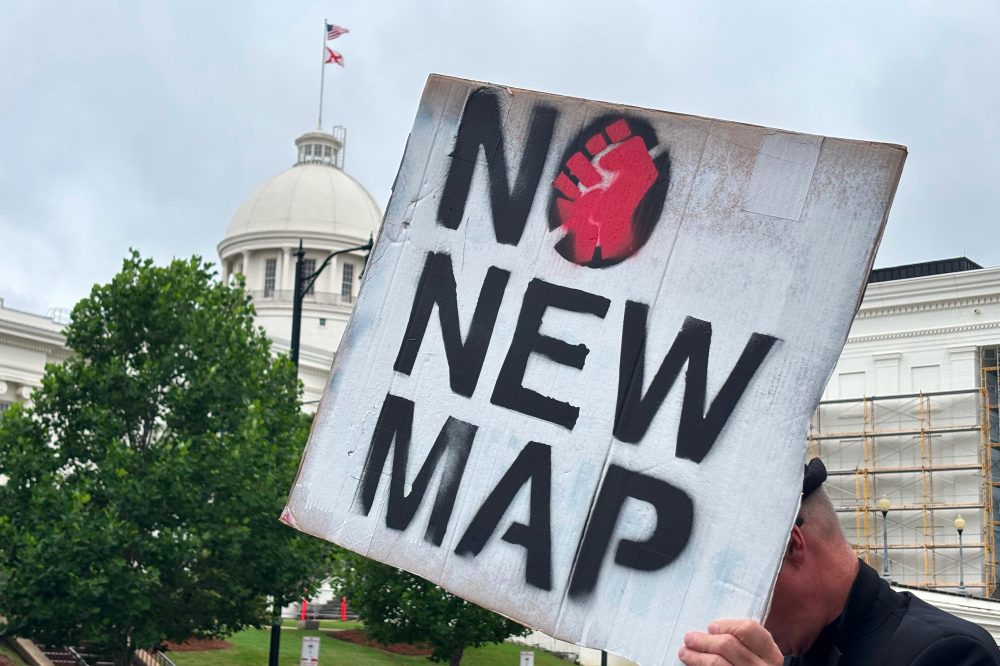
WASHINGTON (AP) — Alabama’s primary elections Tuesday will be incomplete, with just three of the state’s seven congressional districts conducting their races following a Supreme Court ruling that forced GOP officials across several southern states to abandon their congressional maps.
Voting in Alabama’s remaining four districts has been delayed until a special primary on Aug. 11 as state leaders reinstate previously drawn Republican district lines that remove one of two majority-Black U.S. House districts currently represented by Democrats.
These court-mandated changes in Alabama, Louisiana and Tennessee, combined with earlier legislative redistricting efforts in other states during the middle of the decade, represent a broader Republican strategy endorsed by President Donald Trump to enhance the party’s odds of retaining its U.S. House control in the 2026 midterm contests.
The August postponement affects only the 1st, 2nd, 6th and 7th Congressional District primaries. Alabama residents will select candidates Tuesday for the 3rd, 4th and 5th Congressional Districts as originally scheduled, along with U.S. Senate and numerous state and local positions.
For the gubernatorial contest, U.S. Sen. Tommy Tuberville joins two other candidates seeking the Republican nomination to succeed term-limited GOP Gov. Kay Ivey. The Democratic field includes former U.S. Sen. Doug Jones among its hopefuls.
U.S. Rep. Barry Moore pursues the Republican Senate nomination to take Tuberville’s place, competing against six other GOP contenders while four Democrats vie for their party’s nod.
Moore currently serves the 1st Congressional District, which will conduct its primary in August. Former Republican U.S. Rep. Jerry Carl is among those seeking that position.
Trump has backed Tuberville for governor, Moore for Senate and Carl for the 1st Congressional District. The former president’s support should prove influential in a state where he achieved his sixth-strongest showing in the 2024 race. Republican primary victors in most Tuesday races will enjoy considerable advantages in November’s general election.
Alabama mandates that primary contenders secure majority support to prevent a June 16 runoff.
Key details about the election and metrics the AP Decision Team will track during vote counting:
Voting ends at 7 p.m. CT, equivalent to 8 p.m. ET.
The AP will deliver vote tallies and announce winners in competitive primaries for U.S. Senate, U.S. House Districts 3, 4 and 5, governor, lieutenant governor, attorney general, secretary of state, treasurer, auditor, agriculture commissioner, Public Service Commission, state school board, state Senate and state House, plus two constitutional amendments.
All registered voters may participate in either party’s primary. While Alabama doesn’t register voters by party affiliation, participants must declare party preference when choosing their primary ballot.
Approximately 3.8 million voters were registered in Alabama as of Thursday.
During 2022 and 2024, Democratic primaries for U.S. Senate, governor and president each drew under 190,000 votes, while Republican primaries for the same offices attracted 600,000 or more votes.
Most Alabama voters cast ballots on Election Day rather than beforehand. The state remains among the few nationwide without some form of early in-person voting. During 2024 primaries, roughly 4% of Democratic primary participants and about 1% of Republican primary voters used mail ballots.
County-by-county vote reporting methods differ. Most counties typically publish absentee results in their initial update, sometimes combined with Election Day in-person voting data.
During the 2024 primary, the AP initially released results at 8:03 p.m. ET, three minutes after polls closed. The final vote update occurred at 1:50 a.m. ET with over 99% of votes tallied.
The Associated Press avoids making projections and declares winners only when no possible scenario exists for trailing candidates to overcome their deficits. When races remain undecided, the AP continues reporting significant developments like candidate concessions or victory claims while clarifying it hasn’t declared a winner and explaining the reasoning.
Alabama automatically triggers recounts for ballot measures when victory margins equal 0.5% or less of total votes. A 2010 Alabama Attorney General opinion determined the state’s automatic recount statute doesn’t cover primaries. The AP may declare winners in recount-eligible races if it determines leads are too substantial for recounts or legal challenges to alter outcomes.
Beginning Tuesday, 28 days remain until the June 16 primary runoff, 84 days until the Aug. 11 special U.S. House primaries and 168 days until the 2026 midterm elections.
WASHINGTON (AP) — Georgia wraps up primary voting Tuesday in what promises to be heated contests for both the governor’s mansion and a critical U.S. Senate position that may determine which party controls the narrowly split upper chamber.
These primary battles will establish the framework for two high-profile November elections with political consequences extending well past Georgia’s state lines.
Voters across Georgia will select candidates for numerous positions including U.S. House seats, state legislative posts, and various statewide roles like lieutenant governor, secretary of state, and attorney general. Ballot measures also include nonpartisan judicial elections, featuring two contested state Supreme Court races.
Eight Republican candidates are competing for the chance to replace term-limited GOP Governor Brian Kemp. The field features state Attorney General Chris Carr, healthcare business leader Rick Jackson, Lieutenant Governor Burt Jones, and Georgia Secretary of State Brad Raffensperger.
While Jones has secured President Donald Trump’s backing, Jackson is challenging the worth of that presidential support by investing over $83 million of his own money into his campaign.
Democratic contenders include former Atlanta Mayor Keisha Lance Bottoms, former Republican Lieutenant Governor Geoff Duncan, former state Senator Jason Esteves, state Representative Derrick Jackson, and former state labor commissioner and former DeKalb County CEO Mike Thurmond.
Should no candidate capture a majority in the primary election, the leading two vote recipients will compete in a June 16 runoff.
The eventual successor to Kemp will serve during 2028 and may become a significant player in the upcoming presidential race if Georgia maintains its competitive status from 2020 and 2024. Trump previously criticized Kemp for declining to assist in overturning his 2020 Georgia defeat to Democrat Joe Biden, though the two politicians reconciled in 2024 before Trump’s successful reelection bid.
For the U.S. Senate contest, five Republicans are campaigning to face first-term Democratic Senator Jon Ossoff, who faces no primary opposition. Candidates include Representatives Buddy Carter and Mike Collins, plus former University of Tennessee football coach Derek Dooley, who has received Kemp’s support.
Carter has collected and spent more funds than his GOP competitors, though he, Collins and Dooley entered the month with similar financial resources of approximately $1.7 million in their campaign accounts.
A successful Ossoff reelection campaign in November would be essential for Democratic ambitions to regain chamber control.
The Atlanta metropolitan counties of Fulton, Gwinnett, Cobb and DeKalb represent the state’s largest population centers and hold significant influence in both parties’ statewide primary elections. Fulton and DeKalb typically carry more weight in Democratic primaries, while Cobb and Gwinnett generally provide larger vote shares in Republican races. Cherokee and Forsyth counties, also part of the greater Atlanta region, tend to play bigger roles in Republican rather than Democratic primaries. Both counties delivered strong support for Trump across his three presidential campaigns.
Key election details and data points the AP Decision Team will track during vote counting include:
Polling locations close at 7 p.m. Eastern Time.
The Associated Press will deliver vote tallies and announce winners in competitive primaries for U.S. Senate, U.S. House, governor, lieutenant governor, secretary of state, attorney general, agriculture commissioner, insurance commissioner, state school superintendent, labor commissioner, Public Service Commission, state Senate and state House, plus nonpartisan state Supreme Court and Court of Appeals elections.
All registered voters may vote in either primary since Georgia doesn’t require party registration.
Thursday’s count showed approximately 8.1 million registered Georgia voters.
During 2022, around 1.2 million ballots were submitted in Republican governor and U.S. Senate primaries, compared to roughly 730,000 votes in Democratic primaries.
Early voting accounted for about 51% of the 2022 Democratic primary turnout and approximately 41% of Republican primary participation.
By Thursday, around 696,000 votes had already been submitted for Tuesday’s election, with about 381,000 in the Democratic primary and roughly 305,000 in the Republican primary.
Counties typically report mail-in and early in-person voting results at the beginning of election night. More than half of all counties usually release their complete or near-complete mail and early voting tallies in their initial update.
During the 2022 primary, the Associated Press published initial results at 7:13 p.m. Eastern Time, just 13 minutes after polls closed. The final vote update occurred at 3:29 a.m. Eastern Time with approximately 99% of votes tallied.
The Associated Press avoids making projections and only declares winners when determining no possible scenario exists for a trailing candidate to overcome the deficit. For uncalled races, the AP continues reporting significant developments like candidate concessions or victory claims while clearly stating no winner has been declared and explaining the reasoning.
Georgia lacks automatic recount procedures, but candidates may request recounts when margins equal 0.5% or less of total votes. The Associated Press may declare winners in recount-eligible races if determining the lead is too substantial for recounts or legal challenges to alter results.
As of Tuesday, 28 days remain until the June 16 primary runoff and 168 days until the 2026 midterm elections.
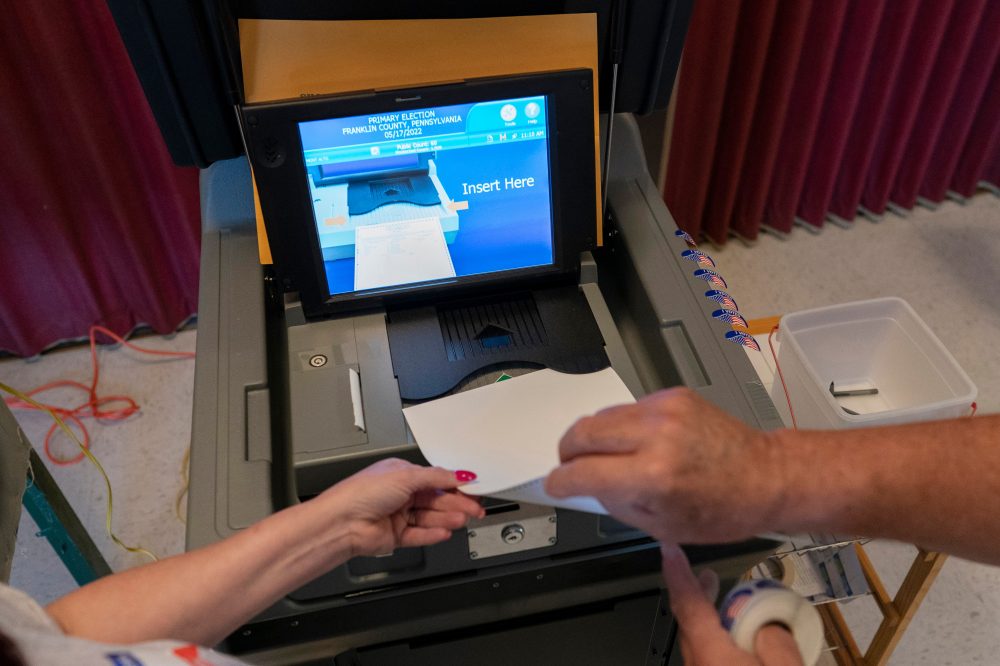
Pennsylvania voters will head to polling stations Tuesday to select Democratic candidates for four congressional seats that party leaders view as essential to regaining control of the U.S. House this November.
The Republican Party currently maintains a narrow House majority, with only a small number of districts potentially determining which party controls the chamber in the coming term. Democratic strategists have identified four GOP-held Pennsylvania districts as prime opportunities for gains.
Four Republican incumbents face no opposition in their party’s primaries: U.S. Reps. Brian Fitzpatrick in the 1st Congressional District, Ryan Mackenzie in the 7th Congressional District, Rob Bresnahan in the 8th Congressional District and Scott Perry in the 10th Congressional District.
Former Democratic Vice President Kamala Harris won the 1st District by a small margin in 2024, while Republican President Donald Trump secured victories by wider margins in the 7th, 8th and 10th Districts.
Commonwealth voters will simultaneously choose nominees for lieutenant governor and candidates for both legislative chambers.
Twenty-five of Pennsylvania’s 50 state Senate positions and all 203 state House positions will be contested in November’s general election. Democrats currently control the state House by a narrow margin, while Republicans maintain an advantage in the state Senate.
Democratic Gov. Josh Shapiro faces no primary challengers in his reelection campaign and has used his campaign activities to support his preferred congressional candidates.
Shapiro has endorsed Bucks County Commissioner Bob Harvie over former congressional aide Lucia Simonelli for the chance to face Fitzpatrick in the 1st District. For Mackenzie’s 7th District position, he supports retired firefighter and union leader Bob Brooks in a four-candidate primary that also includes military veteran and former prosecutor Ryan Crosswell. His choice to challenge Perry in the 10th District is former TV news anchor Janelle Stelson, who previously sought the seat in 2024. Scranton Mayor Paige Cognetti runs uncontested for the Democratic nomination to face Bresnahan in the 8th District, and she also has Shapiro’s backing.
State Treasurer Stacy Garrity will be the governor’s Republican challenger in November, as she faces no primary opposition.
Voting locations close at 8 p.m. ET.
The AP will report vote tallies and announce winners in competitive primaries for U.S. House, lieutenant governor, state Senate and state House positions, plus a special election in state House District 196.
Participation in party primaries is restricted to voters registered with that specific party. Democratic voters cannot cast ballots in Republican contests and vice versa. Voters registered as independent or unaffiliated cannot participate in either party’s primary.
Pennsylvania had nearly 9 million registered voters as of May 11. Democratic registrations exceeded Republican registrations, 3.8 million to 3.6 million. Approximately 1.2 million voters were unaffiliated with any party.
About 1.1 million Democratic primary ballots and roughly 953,000 Republican primary ballots were submitted in the 2024 presidential primaries, which occurred well after Trump and President Joe Biden had secured their nominations.
During the more contested U.S. Senate primaries in 2022, both Republican and Democratic voters each submitted approximately 1.3 million ballots.
Early voting accounted for roughly 45% of the 2024 Democratic presidential primary turnout and 17% of the Republican primary participation.
Through Thursday, approximately 385,000 Democratic primary ballots and about 129,000 Republican primary ballots had been submitted for Tuesday’s election.
Counties follow different procedures for releasing vote counts, though most report absentee ballot results alongside Election Day in-person voting throughout the evening. About one-third of counties publish all or nearly all early and absentee vote totals in their initial evening report.
During the 2024 primary, the AP published initial results at 8:01 p.m. ET, roughly one minute after polls closed. The final vote update occurred at 2 a.m. ET with approximately 91% of total votes tallied.
The Associated Press does not issue projections and will only declare a winner when determining that no possible scenario exists for a trailing candidate to overcome the deficit. When races remain undecided, the AP will report significant developments, including candidate concessions or victory claims, while clearly stating that no winner has been declared and explaining the reasoning.
Pennsylvania law mandates automatic recounts for statewide contests with victory margins of 0.5 percentage points or smaller. For other races, voters may request recounts from county election boards or through court petitions. The AP may announce a winner in races subject to recounts if the margin is determined to be too large for a recount or legal challenge to alter the outcome.
As of Tuesday, 168 days remain until the 2026 midterm elections.
Organizers in Alabama held a civil rights demonstration over the weekend designed to launch a season-long campaign of voter engagement and community organizing throughout the Southern United States.
The weekend march represents the beginning of what activists are planning as an extensive summer of civic activities and voter mobilization efforts across the region.
A recent decision by the Supreme Court may significantly diminish the electoral influence of racial-minority communities in legal challenges involving the Voting Rights Act, according to new analysis.
The high court’s ruling has implications that extend beyond congressional representation, potentially affecting at least 17 state and local governments nationwide, research reveals.
The decision comes as communities across the country continue to commemorate the 60th anniversary of the historic Bloody Sunday march in Selma, Alabama, which was instrumental in advancing the passage of the original Voting Rights Act.
Legal experts suggest the ruling could reshape how voting rights cases are argued and decided at multiple levels of government, from state legislatures to city councils and county commissions.
Georgia’s primary election on Tuesday highlighted a tale of two parties, with Republicans pouring significant financial resources into heated gubernatorial and U.S. Senate races while Democrats mobilized unprecedented voter participation.
The GOP dominated campaign spending across the competitive primary contests, particularly in the high-stakes races for governor and U.S. Senate. These Republican matchups have drawn considerable attention and financial investment as candidates vie for their party’s nomination.
On the Democratic side, party officials are counting on a surge in voter enthusiasm to carry them to victory in two crucial state supreme court contests. The increased Democratic turnout represents a record-breaking level of participation for the party in this primary cycle.
The contrasting strategies reflect each party’s approach to the election season, with Republicans focusing on financial firepower while Democrats emphasize grassroots mobilization and voter engagement to achieve their electoral goals.
In a Fortune magazine interview released Monday, President Donald Trump expressed regret over not securing a larger government ownership position in Intel for the United States.
“Should have asked for more” was Trump’s response when discussing the government’s stake in the technology company during the conversation with Fortune.
A national radio program recently featured a discussion about how the Trump administration approaches the relationship between religious institutions and government. The conversation took place on a prominent public radio network.
The interview included Robert Jones, who serves as president and founder of the Public Religion Research Institute. Jones provided analysis on the current administration’s stance regarding the separation of church and state.
The discussion aimed to put the Trump administration’s policies in historical context by examining how previous presidential administrations have handled similar church-state issues.
Ten municipal leaders across the United States have become members of an international alliance originally formed in Eastern Europe, aimed at sharing tactics to safeguard democratic institutions and combat authoritarian threats.
The coalition, known as the Pact of Free Cities, allows participating city leaders to collaborate and share effective strategies for defending democracy within their communities.
COLUMBIA, S.C. — South Carolina state lawmakers will begin comprehensive discussions Monday regarding a proposal to reconfigure the state’s congressional boundaries, launching what could be an extended and contentious debate over whether to fulfill President Donald Trump’s vision for a House map delivering complete Republican control.
Similar heated discussions have already unfolded in Tennessee, Alabama and Louisiana as the GOP moves decisively to capitalize on a recent U.S. Supreme Court decision that diminished Voting Rights Act safeguards for minority-majority districts. This court decision has created opportunities for Republicans to redesign districts containing substantial Black voter populations that traditionally elect Democratic candidates.
Within South Carolina, this strategy focuses on the district currently represented by U.S. Rep. Jim Clyburn, who stands as the sole Democratic member among the state’s seven House representatives.
Clyburn has declared he will not step down from office, regardless of any district modifications. Speaking to reporters in Washington last week, he noted his residences in Columbia, Charleston and Santee, stating: “I live in three districts. I’ll decide which one to run in.”
“It ain’t about Jim Clyburn’s district,” he said. “This isn’t about voting. This is about turning the clock back to Jim Crow 2.0.”
Early voting begins May 26 for South Carolina’s statewide primary elections scheduled for June 9. Beyond congressional redistricting, proposed House legislation would postpone U.S. House primaries until August. The measure requires Senate approval if it passes the House.
Republican Gov. Henry McMaster, who convened the special legislative session on redistricting, emphasized the importance of maximizing South Carolina’s Republican representation in Washington to help prevent Democratic House control and potential Trump impeachment efforts.
However, certain Republicans worry that attempting to create a 7-0 Republican House delegation might dilute GOP voter strength too broadly, potentially making currently safe Republican districts vulnerable to Democratic challenges.
Republicans currently lead in nationwide redistricting efforts. Following Trump’s call for Texas Republicans to redistrict last year, the GOP believes it could secure up to 15 additional seats through new maps in Texas, Missouri, North Carolina, Ohio, Florida, Tennessee and Alabama. Democrats anticipate gaining six seats from revised maps in California and Utah. Legal challenges continue in several states, with voters ultimately determining electoral outcomes.
A Louisiana voter’s harsh assessment of Senator Bill Cassidy following this weekend’s Republican primary painted a vivid picture of political desperation. Charles Wandfluh, 57, from a New Orleans suburb, compared the incumbent’s campaign efforts to a frantic animal.
“He’s just a squirrel running around the tree, chasing nuts to find whatever he can get to benefit him,” Wandfluh explained after casting his ballot.
Cassidy’s political maneuvering ultimately failed on Saturday, as his third-place primary finish highlighted how difficult it has become for Republicans to survive politically without Trump’s blessing. Despite having more campaign funds than his competitors, Cassidy couldn’t even secure a spot in the runoff election.
The senator’s political journey during the Trump era was marked by notable contradictions. Though trained as a physician, he chose to support Robert F. Kennedy Jr.’s nomination for health secretary despite Kennedy’s well-known opposition to vaccines, leading to inevitable conflicts once Kennedy assumed the role.
Most significantly, Cassidy never recovered from his decision to vote for Trump’s conviction during the impeachment proceedings related to the January 6th Capitol attack five years ago. His subsequent efforts to demonstrate loyalty to Trump’s policy priorities failed to win back Republican voters’ trust.
“He was trying to portray himself side by side with Trump, like he has worked with Trump on this and that,” Wandfluh said. “I’m like, ‘You voted to impeach the guy!’”
The June 27th runoff will feature U.S. Representative Julia Letlow, who received Trump’s endorsement, against state Treasurer John Fleming, a former Trump administration member. Letlow led Saturday’s voting.
“There is no greater endorsement than the endorsement of President Trump,” Letlow declared. “We’ll always be singing that from the mountaintops.”
Trump celebrated the results on social media, calling it a “great victory speech tonight by Julia!!!” He also delivered a final blow to Cassidy’s political career, criticizing the senator’s lack of appreciation for past support.
“His disloyalty to the man who got him elected is now a part of legend, and it’s nice to see that his political career is OVER!” Trump posted.
South Carolina Senator Lindsey Graham, who previously clashed with Trump but has since become a loyal supporter, offered no sympathy for Cassidy’s defeat.
“What’s the headline? Trump’s strong. Those who try to destroy Trump politically, stand in the way of his agenda, are going to lose,” Graham stated Sunday on NBC’s “Meet the Press.” “You can disagree with President Trump, but if you try to destroy him, you’re going to lose. Because this is the party of Donald Trump.”
Graham’s own history with Trump includes calling him a “kook” who was “unfit for office” and initially saying “enough is enough” after January 6th. However, unlike Cassidy and six other Republican senators, Graham didn’t vote to convict during the impeachment trial.
Of the seven Republicans who voted for conviction, four chose not to seek reelection: Richard Burr of North Carolina, Mitt Romney of Utah, Ben Sasse of Nebraska and Pat Toomey of Pennsylvania.
Alaska’s Lisa Murkowski successfully won reelection in 2022 while Trump was out of office, and she continues to criticize him. Maine’s Susan Collins faces Trump’s criticism but hasn’t encountered a primary challenger as she seeks a sixth term this November. Her position remains important for Republican congressional control, representing a state that Democratic candidate Kamala Harris won in the recent presidential election.
Trump’s continued influence over the party is remarkable considering his lame-duck status—constitutional limits prevent a third term despite his occasional suggestions otherwise—and challenging poll numbers. He faces ongoing inflation concerns, economic dissatisfaction, and an unpopular conflict with Iran, yet Republicans largely remain aligned with his leadership.
As Trump moves through the second half of his current term, he appears to be completing a comprehensive party transformation that began ten years ago, with his desire for political revenge showing no signs of diminishing.
This month, he successfully removed five Indiana state senators who opposed his redistricting proposal. Tuesday’s Kentucky primary features his support for a challenger against U.S. Representative Thomas Massie, who angered Trump by opposing his major tax legislation due to national debt concerns, advocating for Jeffrey Epstein file releases, and opposing the Iran military action.
Trump even suggested targeting U.S. Representative Lauren Boebert of Colorado over her Massie support during the weekend.
“Even though I long ago endorsed Boebert, if the right person came along, it would be my Honor to withdraw that Endorsement, and endorse a good and proper alternative,” Trump stated, though Colorado’s candidate filing deadline passed months ago.
Following his loss, Cassidy spoke to supporters in Baton Rouge about Trump’s influence without directly naming him.
“Our country is not about one individual. It is about the welfare of all Americans, and it is about our Constitution,” the senator said. “And it is the welfare of my people, and my state, and my country, and our Constitution to which I am loyal.”
However, Trump’s role remained central for many Republican voters.
Mark Schulingkanp, 46, who works in shipping, supported Letlow specifically to avoid the tensions that characterized Cassidy’s Trump relationship.
“Getting federal dollars into the state is the most important thing to me, to help people with jobs,” he explained. “Clearly having a senator that the president doesn’t like could cause a challenge or impede federal dollars coming to the state for roads, bridges, so many different programs.”
Jeanelle Chachere, a 66-year-old nurse, called Cassidy a “phony” and voted for Letlow based solely on Trump’s endorsement.
“I’m going by what he says because I like what he does,” she said.
Cassidy’s political predicament was further complicated by losing support from some quarters for accommodating Trump’s wishes.
Mark Workman, a 75-year-old retired physician, voted for Fleming to protest Cassidy’s support for Kennedy’s confirmation.
“If Cassidy had stood up and blocked RFK, I would definitely have supported him because that would have been a strong, ballsy move,” Workman said. “He had the ability to stop him and he was too weak to do that.”
President Donald Trump is scheduled to convene with his senior national security team on Tuesday in the Situation Room to review potential military responses concerning Iran, according to a weekend report from Axios.
The meeting details were provided by two U.S. officials to the news outlet on Sunday, though the information has not been independently confirmed by other sources.
The reported gathering would bring together the president’s top national security advisers to examine military options related to the ongoing Iran situation.
WASHINGTON, May 17 – Former President Donald Trump issued a stern warning directed at Iran through his social media platform on Sunday, cautioning of serious repercussions if the nation’s leadership fails to take swift action.
In his Truth Social message, Trump stated: “For Iran, the Clock is Ticking, and they better get moving, FAST, or there won’t be anything left of them. TIME IS OF THE ESSENCE!”
The warning comes as tensions continue between the United States and Iran over various international issues.
Thousands of demonstrators gathered Saturday in Montgomery, Alabama, for a major rally opposing conservative efforts to eliminate congressional districts that were created to protect Black political representation.
The demonstration took place in Alabama’s capital city, where participants voiced their opposition to attempts by conservative states to dismantle voting districts that have helped ensure African American communities maintain political influence in Congress.
The event drew large crowds to Montgomery, a city with deep historical significance in the civil rights movement, as activists work to preserve electoral representation that took decades to establish.
A Kentucky congressman who has frequently opposed U.S. President Donald Trump described the president’s weekend social media offensive as a “desperate” strategy to boost his primary opponent ahead of Tuesday’s election.
Representative Thomas Massie, a Republican who has challenged Trump on significant congressional votes including Iran war measures and has spearheaded efforts within his party to make public government documents related to deceased financier and sex crime convict Jeffrey Epstein, faces Trump-endorsed challenger Ed Gallrein in the primary race.
Gallrein, a former U.S. Navy SEAL personally selected by the president, is running against Massie in a contest where polling data shows mixed results – some surveys indicate Massie maintains an advantage while others suggest Gallrein leads.
The president launched at least four social media assaults against Massie over the weekend, culminating Sunday with Trump labeling Massie “The Worst Republican Congressman in History” and calling him “a true negative force!!!”
Trump also targeted Representative Lauren Boebert, a Colorado Republican, on Saturday for backing Massie, stating he would support a primary opponent against her.
The president’s strategy of targeting Republicans who oppose him has proven effective in recent contests. Two-term Republican U.S. Senator Bill Cassidy was defeated in Louisiana’s primary election on Saturday.
However, Massie represents a fresh challenge to Trump’s influence within the Republican Party. During a Sunday interview on ABC’s This Week, Massie revealed that his campaign receives increased donations whenever Trump references him on social media, and suggested the president appears “desperate” to eliminate him from office.
MONTGOMERY, Ala. — Nearly six decades after civil rights demonstrators faced violent opposition from Alabama law enforcement before completing their historic march under federal escort, a new generation of activists has walked those same final steps in Montgomery.
Keith Odom, now 62, was just a toddler when the original 1965 voting rights demonstration took place. The union worker and grandfather traveled from Aiken, South Carolina, to Atlanta on Saturday, where he boarded one of two buses carrying several dozen activists to Alabama’s capital city.
“The history here — being a part of it, seeing it, feeling it,” Odom, who is Black, said as he stepped onto Dexter Avenue where the original march ended.
Standing near the Alabama Capitol, Odom gazed at a stage positioned close to where the Rev. Martin Luther King Jr. delivered his speech at the conclusion of the 1965 demonstration.
However, Odom noted with regret that Saturday’s participants weren’t merely honoring that pivotal moment in civil rights history. They had come to restart the battle. The 1965 demonstration helped convince Congress to pass the Voting Rights Act, which Democratic President Lyndon B. Johnson signed into law, strengthening political representation for Black and other minority voters for over fifty years.
The “All Roads Lead to the South” gathering marked the first large-scale organizing effort following a U.S. Supreme Court decision that significantly weakened the historic voting law. In a 6-3 decision that eliminated a majority Black congressional district in Louisiana, the court determined that using race as a factor in drawing electoral boundaries constitutes discrimination. This ruling has prompted several states, including Alabama, to redraw U.S. House districts in ways that reduce Black voters’ ability to elect their preferred candidates, as Black voters predominantly support Democratic candidates.
“I’m not trying to live a life that’s going backwards,” Odom stated. “I want to go forward, for my grandchildren to be able to go forward.”
The bus passengers and the atmosphere upon their arrival in Montgomery created connections between past and present struggles.
“I talked to my grandmother before I came, and she was so excited,” said Justice Washington, a Kennesaw State University student whose name reflects her family’s confidence in America’s democratic ideals. “My grandmother told me she did her part, and now it’s time for me to do mine.”
None of the Atlanta bus passengers had been old enough to vote when the Voting Rights Act was enacted. The youngest participant was born during Democrat Barack Obama’s historic 2008 election as the nation’s first Black president.
Kobe Chernushin, an 18-year-old white recent high school graduate from Atlanta’s northern suburbs, works as an organizer with the Georgia Youth Justice Coalition. He spent the day recording Khayla Doby, a 29-year-old organization executive, creating social media content for their supporters.
“I believe in the power of showing up,” he stated.
The buses departed from the Georgia congressional district formerly represented by John Lewis, who suffered injuries on Selma’s Edmund Pettus Bridge at age 25. Though Lewis passed away in 2020, Saturday’s participants celebrated that proposed federal election reform legislation bears his name. If some Democrats succeed, the measure would counter the U.S. Supreme Court’s ruling, strengthen the Voting Rights Act, and prohibit the type of redistricting manipulation that Republican President Donald Trump has encouraged.
“I’m here because of the same forces that pulled on John Lewis when he was a student,” said Darrin Owens, 27, who previously worked for former Vice President Kamala Harris and currently trains Democratic candidates.
“Political activism is personal,” Owens explained, clarifying that he attended Saturday as a private citizen rather than in his professional capacity. “Sometimes those lines are blurred, and as a Black person in America, a Black person living in a Southern state, I’m committed to action that stops what I consider to be un-American, this possibility that the person who represents me is someone who is not from my community and does not understand me or my community.”
Upon arrival, Owens observed no federal authorities patrolling Montgomery’s streets, unlike the second march in 1965 when a wounded, recovering Lewis witnessed federal protection. This time, many of the Alabama state troopers and local police officers working the area were Black.
Fair Fight Action, an organization stemming from Georgia Democrat Stacey Abrams’ political network, organized the buses and provided lunch. Abrams gained national recognition through her unsuccessful 2018 and 2022 campaigns to become the first Black woman elected governor in U.S. history, a milestone that remains unachieved.
Montgomery has historically marketed itself as both the birthplace of the Confederacy and the birthplace of the modern Civil Rights Movement.
“It feels like our country is stuck in this pattern of making progress, then there’s a huge backlash, and then people have to go through the same battle again just to get to where we were,” observed Phi Nguyen, a 41-year-old civil rights attorney from Atlanta whose parents were Vietnamese refugees.
She stood near the church where a young King organized the Montgomery Bus Boycott in 1955, not far from where Jefferson Davis was sworn in as Confederate president in 1861.
While walking, Phi Nguyen and her sister Bee, a 44-year-old former Georgia General Assembly member who sought statewide office, encountered two other women. Carole Burton and Tondalaire Ashford, both 72-year-old Montgomery residents, have maintained their friendship since attending segregated junior high and the newly desegregated Sidney Lanier High School.
“I don’t call it ‘integration,’” Ashford said, gesturing to her dark skin. “It was never real integration, and it’s not like we can ever just blend in.”
Burton characterized them as part of “the second wave” of Black students. “It wasn’t easy,” she recalled. “And we had to support each other.”
They remembered their parents being denied voting rights during the era of poll taxes, literacy tests, and other discriminatory barriers that the Voting Rights Act eventually prohibited. Despite this history, they smiled while sharing family stories with the Nguyens.
Burton explained that immigrants, descendants of enslaved people, and Native Americans follow different but connected journeys. “We just want to be treated like people with the same rights and opportunities the country has promised us,” she said. “They’ve never fully lived up to it.”
For Odom, who started his Saturday journey in South Carolina, the current U.S. Supreme Court’s actions reflect this ongoing struggle by rejecting race-conscious electoral policies designed to guarantee fair representation rather than merely the “technical right to vote.”
He remembers spending decades represented by Strom Thurmond, a segregationist Democratic governor who became a “Dixiecrat” presidential candidate and later a Republican U.S. senator well into the 21st century. Odom expressed concern that his state might lose U.S. Rep. Jim Clyburn, a senior Congressional Black Caucus member, through redistricting.
“They want to take away that legacy when we’re still living with Strom’s?” Odom questioned.
Odom also worried that Saturday’s young participants might be exceptional rather than representative of their generation.
“I was talking to a 20-year-old co-worker about this trip,” he shared. “She told me she supported me but didn’t want to do it or work for anybody” seeking office. “She wondered what any of them are going to do for her.”
Despite this concern, he said that upon returning home, “I’m still going to tell her what I saw and what I heard.”
The current administration has processed over 67 million voter registrations through federal databases to verify eligibility, sparking concerns from critics who worry the system could mistakenly remove legitimate voters before upcoming elections.
More than 67 million registrations, mostly from states with Republican leadership, have been run through an enhanced verification system at the U.S. Department of Homeland Security. Thousands of these records have been marked as potentially belonging to non-citizens or deceased individuals. Some states give people only 30 days to verify their eligibility, while others immediately suspend voting privileges.
This nationwide review of state voter databases represents part of a larger initiative by Republican President Donald Trump to bring certain election oversight functions under federal control and support his claims that non-citizen voting undermines elections, despite such cases being uncommon. Civil rights and voting advocates contend the DHS database contains flaws and may incorrectly identify eligible voters.
“If a voter is wrongly removed, by the time they learn about it and correct it, they may miss their opportunity to vote in that election,” said Freda Levenson, a lawyer with the American Civil Liberties Union of Ohio. The group is challenging an Ohio law requiring monthly checks with the DHS system.
Individuals like 29-year-old Anthony Nel have found themselves affected by these reviews.
Nel, originally from South Africa who gained citizenship over ten years ago, was identified as a possible non-citizen when Texas submitted its voter database through the DHS verification program. Election officials in Denton, located north of Dallas, temporarily suspended his registration last autumn while he awaited a replacement for his expired passport.
“I’m like, ‘You should know that I’m a citizen, that the passport exists,’” he said in an interview.
The president has pursued changes to U.S. election systems, including advocating for a national registry of confirmed voters, while his Department of Justice has pressured states to provide complete voter data for comprehensive reviews through the DHS program called SAVE.
The Justice Department has filed lawsuits against states that decline to cooperate, claiming the federal government seeks to ensure compliance with federal regulations and maintain accurate voter databases. States already implement various measures to keep their voter records current.
SAVE, which stands for Systematic Alien Verification for Entitlements, originated from immigration legislation requiring DHS to assist federal, state and local agencies in preventing government benefits from reaching non-citizens. U.S. Citizenship and Immigration Services, a DHS division, reported that over 1,300 agencies utilize the system.
A minimum of 25 states have employed SAVE to review their voter databases since April 2025, following significant expansion of the Trump administration’s search capabilities, with 60 million registrations examined within one year, according to Citizenship and Immigration Services. This total excludes an additional 7.4 million registrations from North Carolina, where Republicans lead the state election board, that were recently processed through the system.
Citizenship and Immigration Services stated in an email that it remains “committed to helping eliminate voter fraud” to restore Americans’ confidence in their elections.
“SAVE is one of the most important tools states have to verify voter information,” Kansas Secretary of State Scott Schwab, a Republican, recently told a U.S. House committee examining how states keep voter rolls clean.
Schwab’s support is significant given his previous public doubts about whether non-citizens posed a substantial voter fraud risk.
Citizenship and Immigration Services reported that the 60 million voter registration reviews identified approximately 24,000 potential non-citizens. U.S. Assistant Attorney General Harmeet Dhillon, who leads the Justice Department’s Civil Rights Division, mentioned during a recent Fox News interview that these reviews also found roughly 350,000 people who appear to have died.
North Carolina’s State Board of Elections said its review identified another 34,000 registered voters who are potentially deceased.
Even if all flagged individuals were confirmed as ineligible, they would constitute small portions of total registered voters. The non-citizen figure would equal about 400 per million registrations. Some 384,000 people marked as potentially deceased among approximately 67 million registrations represents less than 1%.
Some voters have been incorrectly flagged.
In Dallas, election officials recently cancelled the registration of Domingo Garcia, a 68-year-old lawyer and voting rights activist, without providing reasons. He has voted consistently for 50 years, including in the state’s March 3 primary, and believes officials mistakenly concluded he was deceased.
“I should not have been on any lists,” he said.
Voting rights advocates have initiated at least six federal lawsuits regarding SAVE reviews, targeting either the Trump administration or states implementing the program.
Nel, a 29-year-old college administrator, serves as a plaintiff in one lawsuit filed recently in the District of Columbia against the Justice Department. It claims an “illegal and unprecedented quest” by the administration for “millions of Americans’ confidential voter data.”
Legal representatives also contend that eligible voters will lose their voting rights due to outdated or incomplete database information.
Nel arrived in the United States from South Africa with his family at age 8. When his parents gained citizenship at age 16, he automatically became a citizen as well. He reports voting regularly since turning 18.
However, he received a letter in October in a white envelope that resembled junk mail. The notice informed him he had been identified as a potential non-citizen through a SAVE review of Texas’ 18 million voter registrations. He had 30 days to provide proof otherwise — a deadline he missed due to the time required to obtain a new passport.
“It’s clear that this process that they’ve put into place for this doesn’t work,” he said.
Republican officials noted the administration does not present SAVE searches as perfect. Rather, it identifies registrations requiring additional investigation, they explained.
In Kansas, Schwab’s office continues investigating its list of flagged registrations and has not yet revealed the number of potentially ineligible voters identified from a SAVE review of the state’s 2 million registrations.
After his office sends flagged names to county officials, a state law passed this year mandates they classify the registrations as “in suspense” or “pending” until cases are resolved. A flagged individual can still vote, but the ballot is separated for additional review and might not be counted.
Texas is expected to provide people with flagged registrations 30 days to demonstrate proper registration. North Carolina will require county elections boards to conduct hearings for people whose registrations are challenged before cancellation.
A new Ohio law mandates local election boards to “promptly” cancel registrations of people the secretary of state identifies as non-citizens during registration reviews that the official must conduct at least monthly.
Ohio Secretary of State Frank LaRose, a Republican, said in an email that people’s voting rights remain protected because “all they need to do to immediately restore their registration status is show proof of citizenship.”
But Levenson, the ACLU lawyer, characterized the approach differently.
The nation’s highest court has once again stepped in to overturn a ruling from a Southern appeals court that legal experts say has pushed conservative judicial decisions beyond what even the Supreme Court’s conservative majority will tolerate.
On Thursday, the Supreme Court blocked a May 1 decision from the 5th U.S. Circuit Court of Appeals in New Orleans that would have restricted access to the abortion medication mifepristone. The appeals court ruling would have prevented the drug from being prescribed via telemedicine and sent through the mail.
This latest intervention highlights a pattern where the Supreme Court, despite its own 6-3 conservative makeup that has shifted American law significantly rightward, has repeatedly had to rein in the even more aggressive conservative stance of the 5th Circuit.
“The 5th Circuit has been willing in the past decade to push the jurisprudential envelope on social issues pretty heavily towards the political conservative side,” explained law professor Sally Brown Richardson of Tulane University Law School in New Orleans.
Richardson noted that this aggressive approach is evident in how frequently the Supreme Court chooses to review 5th Circuit decisions on appeal.
The 5th Circuit serves as one of 12 regional appeals courts nationwide, handling cases from Louisiana, Texas and Mississippi – three states with deeply conservative political leanings. Republican presidents have appointed 12 of the court’s 17 judges, with six nominations coming from Donald Trump.
Conservative activists and Republican officials have increasingly turned to the 5th Circuit as their preferred venue for advancing policy goals. The court has issued significant rulings on abortion access, firearms regulations and religious freedom issues, while dealing setbacks to Democratic President Joe Biden’s administration on immigration and other policies.
In Thursday’s action, the Supreme Court issued a brief, unsigned order without explaining its reasoning for halting the 5th Circuit’s abortion pill decision while a lawsuit by Republican-led Louisiana continues. Only two conservative justices, Clarence Thomas and Samuel Alito, publicly disagreed with the decision.
Liberal organizations frequently appeal 5th Circuit decisions to the Supreme Court. These appeals have comprised an unusually large portion of the Supreme Court’s caseload in recent years.
During the current 2025-2026 term, the Supreme Court has reviewed 10 cases originating from the 5th Circuit, exceeding the number from any other federal appeals court.
The same pattern occurred in the 2024-2025 term, with 13 cases from the 5th Circuit reaching the Supreme Court. According to SCOTUSblog data, the Supreme Court reversed the 5th Circuit in 10 of those instances.
“You have several examples of cases where the Supreme Court uses the 5th Circuit to pass itself off as maybe more balanced or moderate,” said University of Oklahoma law professor Michael Smith.
So far this term, the Supreme Court has upheld only one of four 5th Circuit decisions it has reviewed. Two significant pending cases involve 5th Circuit rulings that struck down a federal prohibition on gun ownership for illegal drug users and imposed restrictions on mail-in voting procedures.
In the current abortion medication dispute, the 5th Circuit had blocked a 2023 regulation from the Biden administration’s Food and Drug Administration allowing telemedicine prescriptions and mail delivery of the drug.
Trump-appointed Circuit Judge Kyle Duncan authored that decision, arguing the FDA’s approach likely lacked scientific justification and undermined Louisiana’s abortion restrictions enacted after the Supreme Court eliminated the constitutional right to abortion in 2022.
“Once lost, that sovereign prerogative of protecting unborn life cannot be regained by legal remedy,” Duncan wrote in his opinion.
Drug manufacturers quickly filed an emergency appeal with the Supreme Court, which promptly suspended the 5th Circuit’s ruling.
In 2024, the Supreme Court unanimously overturned another 5th Circuit decision restricting mifepristone access, determining that the anti-abortion groups and physicians challenging the medication lacked proper legal standing to bring their case.
The Supreme Court also reversed a 2023 5th Circuit ruling that declared unconstitutional a federal law prohibiting gun ownership for individuals subject to domestic violence restraining orders. That decision was authored by Trump-appointed Circuit Judge Cory Wilson.
In 2024, the Supreme Court overturned another Wilson opinion that had declared the funding structure for the Consumer Financial Protection Bureau unconstitutional.
Additional major cases from the 5th Circuit appear destined for Supreme Court review.
The American Civil Liberties Union has pledged to appeal the 5th Circuit’s April decision upholding a Texas law mandating public school displays of the biblical Ten Commandments, a case that tests constitutional separation of church and state principles.
That 9-7 ruling was also written by Duncan and supported by all Trump appointees on the 5th Circuit, including Circuit Judges James Ho and Andrew Oldham. All three are viewed as potential Supreme Court candidates if Trump gains another appointment opportunity.
Speaking in April, Ho defended judges who embrace originalism, a conservative legal philosophy that interprets the Constitution based on its original meaning at the time of writing.
Ho argued that originalist judges face unfair criticism when they issue decisions unpopular with “cultural elites.” He also stated “that it is too often, for too many of us, easier to do what is popular than to do what is right.”
“Judges must not be afraid of being booed,” Ho declared.
Fire management experts emphasize that deliberately igniting controlled burns represents one of the most successful strategies for preventing devastating wildfire outbreaks in the future. Despite this proven approach, the Trump administration has implemented prohibitions and delays affecting preventative fire management programs nationwide.
The administration’s actions are creating obstacles for fire prevention efforts that have traditionally been used to reduce the risk of larger, more destructive blazes. These controlled burning techniques have long been recognized by firefighting professionals as essential tools in wildfire management and forest protection strategies.
The new restrictions are affecting fire prevention operations across multiple regions, potentially leaving communities more vulnerable to severe wildfire threats during peak fire seasons.
WASHINGTON (AP) — Republican efforts to secure $1 billion for White House security improvements hit a major roadblock when the Senate parliamentarian determined the proposal violates procedural requirements, preventing its inclusion in a three-year immigration enforcement funding measure.
Senate Democrats announced the parliamentarian’s decision late Saturday, explaining that funding for such an extensive and complicated project as President Donald Trump’s large-scale East Wing renovation exceeds the scope allowed in the narrow GOP budget legislation, which bypasses filibuster rules and requires only a simple majority for approval.
Republicans face uncertainty about whether they can quickly recover any portion of the billion-dollar Secret Service funding request, which was designed to cover security for Trump’s ballroom alongside other White House improvements, including a new visitor screening facility, enhanced agent training and additional support for major events. Republican leaders indicated Saturday evening they are modifying the legislation following the parliamentarian’s guidance.
Ryan Wrasse, a spokesman for Senate Majority Leader John Thune, posted on X that such developments are standard during the intricate budget process Republicans are employing to advance immigration enforcement and White House security funding without bipartisan support.
“Redraft. Refine. Resubmit,” Wrasse said in the post.
Democratic leaders have criticized the security funding request, claiming Republicans are allocating valuable federal money toward the ballroom project rather than addressing Americans’ concerns about increasing living expenses. Republican officials maintain that private contributions will finance the ballroom construction while federal funds target essential security improvements.
Senate Minority Leader Chuck Schumer, D-N.Y., claimed responsibility for the ruling after Democrats challenged the parliamentarian about whether the security funding belonged in the legislation.
“Republicans tried to make taxpayers foot the bill for Trump’s billion-dollar ballroom,” Schumer said Saturday evening. “Senate Democrats fought back — and blew up their first attempt.”
Schumer stated that Democrats “will be ready to stop them again” as Republicans announce plans to revise the bill.
While the Senate parliamentarian’s decision serves as guidance rather than a binding mandate, lawmakers almost never disregard such rulings when crafting legislation eligible for simple majority passage. Standard bills face filibuster procedures requiring 60 votes for approval — forcing Republicans to secure Democratic backing in the 53-47 Senate.
Republicans aim to pass approximately $72 billion in funding for Immigration and Customs Enforcement and Customs and Border Protection through Trump’s term conclusion after Democrats have prevented the funding for several months.
Within that package, Republicans incorporated $1 billion for White House security upgrades, partially linked to Trump’s new ballroom. The Secret Service had sought the funding following charges against a man for attempting to assassinate Trump at the White House Correspondents’ Association dinner last month.
The broader budget package provides additional support for Trump’s immigration and deportation initiatives, maintaining operations through September 2029. This supplements ICE and Border Patrol funding Congress approved last year in the comprehensive tax reduction legislation Trump enacted.
The parliamentarian preserved most immigration-related portions of the legislation, though several minor elements were rejected, including Customs and Border Patrol funds for hiring, training and compensating Border Patrol agents. Republicans characterized these as technical adjustments only.
Oregon Sen. Jeff Merkley, the top Democrat on the Senate Budget Committee, said Saturday evening that “Democrats are prepared to challenge any change to this bill.”
Americans shouldn’t spend “a single dime” on Trump’s “Louis XIV-style ballroom and throw tens of billions more at two lawless agencies,” Merkley said.
Senator Bill Cassidy has been defeated in Louisiana’s Republican primary election and will not move forward to a runoff, ending his bid for reelection.
Cassidy stands among the small group of remaining Republican senators who supported President Trump’s impeachment following the January 6th attack on the Capitol. In this primary race, Trump threw his support behind Cassidy’s challenger, Representative Julia Letlow.
The primary defeat marks the end of Cassidy’s current Senate term, as he failed to secure enough votes to advance to the next round of voting in Louisiana’s electoral process.
A Senate parliamentarian has struck down security funding for President Donald Trump’s proposed $400 million White House ballroom from a major spending bill, according to Democratic lawmakers on Saturday. The ruling threatens Republican efforts to secure taxpayer dollars for the controversial construction project.
Elizabeth MacDonough, who serves as the Senate’s parliamentarian, made the decision that represents a significant setback for Trump and his administration’s push to obtain funding for ballroom-related security measures.
While Trump has stated that private donors will finance the ballroom’s construction, Senate Republicans have been pursuing $1 billion in taxpayer money for the Secret Service to cover security enhancements, including those for the ballroom.
The parliamentarian’s role involves interpreting Senate regulations, including determining which legislative elements are allowable. Although Republicans maintain control of the Senate, they retain the option to modify the legislation in an attempt to secure the parliamentarian’s endorsement.
Should their efforts fail, Republicans may find themselves unable to incorporate the ballroom-related funding into a $72 billion spending measure they intend to vote on, with approval anticipated along party lines as Democrats remain opposed. The majority of the legislation focuses on immigration enforcement.
Republicans are utilizing complicated budget procedures in an effort to achieve passage without Democratic backing. Democrats have resisted funding Trump’s signature immigration enforcement initiatives without reforms they have demanded following incidents where federal immigration agents killed U.S. citizens in Minnesota in January.
With a 53-47 Senate majority, Republicans lack the 60 votes typically required to advance most legislation under chamber regulations.
Democratic critics have denounced the ballroom as a costly and unnecessary project by Trump during a period when Americans are grappling with increased expenses like higher fuel costs. Trump, who transitioned from real estate development to politics, has posted on social media that the facility will be “the finest Building of its kind anywhere in the World.”
Republican supporters argue the ballroom-related expenditures they’re advocating are essential for presidential security, pointing to an April event where a gunman attempted to breach a formal media event in Washington that Trump was attending.
Administration officials have stated the ballroom will update infrastructure, strengthen security, and reduce pressure on the White House, which frequently depends on temporary outdoor installations for large gatherings. Trump has indicated the ballroom will be finished around September 2028, close to the conclusion of his second presidential term.
Democrats, who hope to gain congressional control in November’s midterm elections, are using Republican ballroom support to characterize Trump’s party as disconnected from Americans’ cost-of-living struggles amid rising energy prices caused by the Iran war he initiated in February.
Trump previously directed the destruction of the White House’s East Wing — initially built in 1902 during Teddy Roosevelt’s administration and enlarged four decades later under Franklin Roosevelt’s presidency — to create space for his ballroom.
The National Trust for Historic Preservation, a nonprofit organization, subsequently filed legal action against the project, contending that neither the president nor the National Park Service, which oversees White House grounds, had authority to demolish the historic building or construct a major new facility without explicit congressional authorization.
A U.S. appeals court in April permitted construction to proceed after the judge overseeing the National Trust case issued a stop-work order for the project.
Former President Donald Trump issued a warning Saturday that he would back a primary opponent against Representative Lauren Boebert, a previously loyal supporter, following her decision to campaign for Representative Thomas Massie in his Kentucky race.
Writing on Truth Social, Trump criticized Boebert’s choice, stating: “Boebert is campaigning for the Worst ‘Republican’ Congressman in the History of our Country, Thomas Massie, of the Great Commonwealth of Kentucky, and anybody who can be that dumb deserves a good Primary fight!”
The Colorado representative fired back on X, writing: “Yes, I saw the President’s post. No, I’m not mad or offended. I knew the risks when I agreed to stand by my friend Thomas Massie. I was, and will be, America First, America Always, and MAGA.”
Trump has made removing Massie from office a priority, targeting the Republican lawmaker who has opposed the president on significant legislation and matters related to Iran war policy, while also spearheading efforts within his party to make public government documents concerning deceased financier and sex crime convict Jeffrey Epstein.
The former president’s campaign to remove Massie represents a challenge to his influence within the Republican Party.
Trump’s online statement followed Boebert’s campaign events supporting Massie, who is competing against Trump-backed candidate Ed Gallrein, a former Navy SEAL, in Tuesday’s Republican primary election in Kentucky.
In a follow-up post, Trump asked: “Is anyone interested in running against Weak Minded Lauren Boebert in Colorado’s Fourth Congressional District? Just let me know, or announce your Candidacy, and I will be there for you!”
A Kansas state court has issued a temporary injunction preventing enforcement of legislation that would have prohibited gender-transition medical care for minors throughout the state.
State District Judge Carl Folsom III approved the injunction following a request from parents of two teenagers seeking to maintain their children’s gender-transition medical care. The court order suspends implementation of the recently enacted state legislation that would have banned these treatments.
In Friday’s court decision, the judge agreed with the parents who filed the lawsuit to stop the law’s implementation, determining they possessed the authority to make healthcare choices for their children, based on legal documents and a statement from the American Civil Liberties Union representing the families.
“This is an enormous relief to our clients and families across the state of Kansas,” ACLU attorney Harper Seldin said in a statement.
Kansas Attorney General Kris W. Kobach plans to appeal the decision, according to local media reports. If Folsom’s injunction is upheld, it would last for the duration of the lawsuit.
Kobach, a Republican, called the ruling “a stark example of judicial activism,” according to The New York Times.
The Kansas law, which the Republican-controlled state legislature passed in January over Democratic Governor Laura Kelly’s veto, prohibits gender-affirming medical treatments such as hormone therapies and pubertal suppressants for transgender youth diagnosed with gender dysphoria.
Although the U.S. Supreme Court last year ruled that states can ban gender-affirming care for minors, the lawsuit that prompted Friday’s injunction argues that the Kansas law violates the state constitution.
Folsom, a Kelly appointee, sees a “substantial likelihood” that the lawsuit will succeed.
“Specifically, the Court concludes that Plaintiffs are likely to prevail … based on the right to personal autonomy set out in Section 1 of the Kansas Constitution Bill of Rights and a parent’s fundamental right to make medical decisions for their children,” Folsom wrote.
The federal government on Saturday chose not to extend a sanctions exemption that had permitted nations including India to purchase Russian oil transported by sea vessels, following a one-month extension designed to address oil supply concerns and elevated prices caused by Iran’s blockade of the Strait of Hormuz.
Treasury Secretary Scott Bessent had indicated earlier that he would not extend the general license permitting the acquisition of Russian oil held on tanker ships.
By Saturday afternoon in Washington, no extension announcement had appeared on the Treasury Department’s website. A department representative refused to provide additional comments.
On Friday, two leading Democratic senators, Jeanne Shaheen and Elizabeth Warren, called on the administration to reject renewing the exemption, contending that it was generating funds for Russia to support its military operations in Ukraine, while showing no signs of reducing fuel expenses for American citizens.
The previous extension was among the administration’s strategies to manage worldwide energy costs that have risen significantly during the Iran conflict, including releases from the Strategic Petroleum Reserve and a temporary suspension of a maritime regulation called the Jones Act. Furthermore, President Donald Trump has expressed support for temporarily halting the 18.4-cent-per-gallon federal gasoline tax.
These actions have had minimal impact on American gasoline costs, which currently stand at approximately $4.50 per gallon, representing the highest levels since 2022. Both national and global oil prices have remained near or above $100 per barrel since hostilities commenced on February 28.
On Friday, while returning from Beijing, Trump informed reporters that he had spoken with Chinese President Xi Jinping about potentially removing sanctions on Chinese firms that purchase Iranian oil and would reach a decision shortly.
India represents the largest buyer of Russian seaborne crude oil, with its acquisitions reaching near-record levels during April and May due to earlier sanctions exemptions.
President Donald Trump came back from his diplomatic trip to China facing mounting economic challenges at home, as annual consumer price increases have climbed to 3.8% in April. The ceremonial pageantry and meetings with Chinese officials contrast sharply with growing domestic concerns about the cost of living.
The current inflation rate exceeds what Trump encountered when he assumed office, driven partly by ongoing conflict with Iran and the administration’s trade policies. Price increases are now outstripping income growth, effectively reducing workers’ purchasing power. Economic forecasters at the Cleveland Federal Reserve project inflation could hit 4.2% in May, as the conflict continues to drive up energy costs.
Trump’s diplomatic meetings with Chinese leader Xi Jinping seem unlikely to provide significant economic relief for Americans, regardless of the president’s optimistic statements about potential trade agreements. The visit happened while voters participate in primary elections ahead of November’s general election, all while dealing with higher costs for fuel, food, utilities, clothing, air travel and shipping services. Democratic leaders view this economic situation as a political advantage.
“He’s returning to a dumpster fire,” said Lindsay Owens, executive director of Groundwork Collaborative, a liberal think tank focused on economic issues. “The president will not have the faith and confidence of the American people — the economy is their top issue and the president is saying, ‘You’re on your own.’”
The president’s overseas travel and recent statements that appeared disconnected from voters’ economic worries have indicated his attention may not be centered on domestic concerns, potentially hurting Republican candidates who planned to highlight last year’s tax legislation as beneficial to families.
Trump characterized his China trip as successful, posting on social media that Xi “congratulated me on so many tremendous successes,” while the president has emphasized their positive working relationship.
Trump informed reporters that Boeing would be selling 200 aircraft — and possibly 750 “if they do a good job” — to the Chinese. He predicted American farmers would be “very happy” because China would be “buying billions of dollars of soybeans.”
“We had an amazing time,” Trump said as he flew home on Air Force One, and told Fox News’ Bret Baier in an interview that gasoline prices were just some “short-term pain” and would “drop like a rock” once the war ends.
Before leaving for China, Trump stated that negotiations regarding the Iran conflict centered on preventing Tehran from acquiring nuclear capabilities. “I don’t think about Americans’ financial situation. I don’t think about anybody. I think about one thing: We cannot let Iran have a nuclear weapon,” Trump said.
Those comments sparked criticism for appearing to prioritize foreign policy over domestic economic concerns. Trump stood by his statement, telling Fox News: “That’s a perfect statement. I’d make it again.”
The White House has subsequently emphasized that Trump remains committed to addressing inflation.
When questioned about the president’s remarks, Vice President JD Vance claimed there had been a “misrepresentation” of the comments. White House spokesman Kush Desai said the “administration remains laser-focused on delivering growth and affordability on the homefront” while suggesting measures would be implemented regarding grocery costs.
While Trump met with Xi, new economic data from the United States revealed continued business inflation and rising borrowing costs for government debt.
His announcement about Boeing’s aircraft sales to China led to a decline in the company’s stock value because investors had anticipated larger orders. Few specific details emerged about concrete trade deals from the summit, including Chinese commitments to purchase American exports like liquefied natural gas and beef.
“Foreign policy wins can matter politically, but only if voters feel stability and affordability in their daily lives,” said Brittany Martinez, a former Republican congressional aide who is the executive director of Principles First, a center-right advocacy group focused on democracy issues.
“Midterms are almost always a referendum on cost of living and public frustration, and Republicans are not immune from the same inflation and affordability pressures that hurt Democrats in recent cycles,” she added.
Democratic lawmakers are highlighting Trump’s pre-trip statements as evidence of his lack of concern for reducing costs. His remarks could have lasting political impact as Americans prepare for Memorial Day weekend while facing higher prices for barbecue staples.
“What Americans do not see is any sympathy, any support, or any plan from Trump and congressional Republicans to lower costs – in fact, they see the opposite,” Senate Democratic leader Chuck Schumer of New York said Thursday.
Vance blamed the Biden administration for current inflation issues, despite the rate being higher now than when Trump returned to office in January 2025 with a specific commitment to address the problem.
“The inflation number last month was not great,” Vance said Wednesday, but he then stressed, “We’re not seeing anything like what we saw under the Biden administration.”
Inflation reached its peak at 9.1% in June 2022 during Biden’s presidency. When Trump was sworn in, the rate stood at a much lower 3%.
Current economic indicators show a different pattern, with rising inflation affecting government borrowing costs.
During the past week, interest rates on 10-year government bonds increased from 4.36% to 4.6%, suggesting higher costs for car loans and home mortgages.
“My fear is that the layers of supply shocks that are affecting the U.S. economy will only further feed into inflationary pressures,” said Gregory Daco, chief economist at EY-Parthenon.
Daco observed that previous tariff increases are now contributing to higher clothing costs. Following a Supreme Court decision limiting Trump’s authority to impose tariffs through emergency declarations, his administration is developing new import taxes for summer implementation.
Daco highlighted multiple supply disruptions affecting the economy. Tariffs have reduced import availability, immigration enforcement has decreased foreign worker numbers, and the closure of the Strait of Hormuz has blocked a crucial shipping route for 20% of global oil supplies.
Standing at the counter of Stubs liquor store, Amy Van Duyn watched the gas station sign across the street display $4.34 per gallon – a 50% jump from prices when President Donald Trump took office again last year.
“I used to fill my tank for $36,” the 42-year-old said. “Now $36 gets me half a tank.”
Her colleague Tonyah Bruyette described the grocery store struggle: “We’re putting it in the tank rather than on our table.”
Despite the financial strain, both women continue backing the president in Wiggins, a Colorado farming community of 1,400 residents. Trump carried the surrounding Morgan County by 49 percentage points in 2024.
While the president faces declining support nationwide due to his Iran conflict pushing gas prices above $4.50 per gallon, a recent Reuters/Ipsos survey showed nearly 8 out of 10 Americans blame Trump for higher fuel costs.
When questioned about whether economic hardships might push him toward a Tehran agreement, Trump replied: “I don’t think about Americans’ financial situation. The only thing that matters when I’m talking about Iran, they can’t have a nuclear weapon.”
Democrats criticized these remarks as showing an administration disconnected from public concerns. A May Reuters/Ipsos poll revealed only 30% of adults approve of Trump’s economic management, previously one of his strongest political assets.
However, interviews with two dozen residents along Colorado’s Highway 52 – a rural route dotted with grain elevators, feedlots and oil pumps – revealed Trump supporters sharing the president’s perspective.
Throughout Morgan and Weld counties, areas that haven’t supported a Democratic presidential candidate since 1964, voters expressed willingness to pay higher gas prices to eliminate Iran’s nuclear threat. Many noted energy costs had also risen under President Joe Biden.
Some reluctantly supported Trump due to opposition to Democrats, while others believed the president had a cost-reduction strategy. This loyalty demonstrated Trump’s strong connection with his base throughout multiple challenges across his two terms.
“It feels like he hears us,” Bruyette said, “that he is fighting for us.”
About 25 miles southwest in Prospect Valley, Jim Miller worked on his broken Dodge pickup truck engine.
The 65-year-old former commodities broker, who moved from liberal Boulder and describes himself as “half-hippie, half-cowboy,” said temporary gas price pain was worthwhile to stop Iran’s nuclear program.
Miller referenced World War II American sacrifice, when rationing forced households to live with less.
“I struggle, like everybody else does, but I’m willing to sacrifice a little,” Miller explained. “That’s been totally lost in this country, people’s willingness to sacrifice.”
In Roggen, Mike Urbanowicz, a 66-year-old trader whose farming cooperative handles 150 daily grain truck shipments, voted for Trump three times but considers himself politically independent, distrusting both major parties.
While acknowledging gas prices hurt his industry and calling Trump “naive” about quick solutions, he expected high prices through fall even with potential U.S.-Iran peace breakthrough.
Still, he preferred current conditions over Democrats, whom he viewed as embracing “full-blown socialism.”
“I voted for Trump because the alternative is so bad,” he stated.
At Fort Morgan’s Bad Medicine Inkporium tattoo parlor, 22-year-old Lexys Siebrands smiled through pain as Western-themed designs were added to her left calf.
The gay woman who recently embraced Christianity once identified as Democratic but shifted Republican around 2022, citing what she called liberal hypocrisy on identity politics before voting for Trump.
She viewed Iran conflict as unavoidable: “Something was going to happen eventually, whether it was Iran doing something to us or us doing it to them.”
Her mother, 49-year-old Jyl Siebrands, grew up independent but later favored Republicans.
Despite hating high gas prices, she feared nuclear-armed Tehran more. “It’s just where we are with this war,” she said. “People just have to give it time.”
Asked about any limits to her Trump support regarding war or economic handling, she responded: “No. I’m all on board.”
Louisiana Senator Bill Cassidy faces a critical test of his political career on Saturday as voters decide whether the Republican moderate can overcome President Donald Trump’s efforts to unseat him in the state’s primary election.
The physician-turned-senator, who drew Trump’s wrath by supporting his conviction during the 2021 Senate impeachment proceedings, trails in polling behind two challengers: Trump-endorsed U.S. Representative Julia Letlow and Louisiana Treasurer John Fleming, a former congressman who worked in Trump’s initial administration. Data from RealClearPolitics.com shows Cassidy running third in the race.
Should Cassidy lose, he would mark the first elected Senate incumbent to fail at renomination in more than ten years. However, the tight three-candidate contest will likely result in a June 27 runoff, and Trump faces potential embarrassment if Letlow loses to Fleming, whom state Republican leaders strongly support.
“Dr John Fleming is the only conservative candidate in the race,” stated Christy Haik, a member of the powerful Republican State Central Committee and president of the conservative group, Louisiana State Republican Assembly.
This Louisiana contest represents the newest chapter in Trump’s ongoing revenge campaign. Earlier this month, the president successfully targeted at least 5 of 7 Republican state legislators in Indiana who had opposed his congressional redistricting efforts designed to preserve the Republican House majority.
Trump’s retribution tour continues next week in Kentucky, where he supports primary challenger Ed Gallrein against Republican U.S. Representative Thomas Massie, a Trump critic who has championed releasing government documents related to convicted sex offender Jeffrey Epstein, once associated with the president.
Letlow, age 45, received Trump’s Senate backing before formally declaring her candidacy. She won her House seat in a special election following her husband Luke’s death from COVID after his 2020 election victory, also with Trump’s support. Cassidy has criticized her previous support for diversity, equity and inclusion programs during her tenure at the University of Louisiana at Monroe. Letlow has countered with advertisements labeling both Cassidy and Fleming “Never Trumpers” while highlighting her presidential endorsement.
The 68-year-old Cassidy, who specialized in liver disease treatment and co-founded a Baton Rouge clinic serving low-income patients, previously served in both the Louisiana Senate and U.S. House. He captured his current seat in 2014 by defeating former Democratic U.S. Senator Mary Landrieu, becoming the first Republican to hold the position since 1883. Currently chairing the Senate Health, Education, Labor and Pensions Committee, he secured reelection in 2020 with nearly 60% support.
Despite endorsements from Senate Majority Leader John Thune and the National Republican Senatorial Committee, plus a significant financial advantage of $5.5 million in campaign funds compared to Letlow’s $1.6 million and Fleming’s nearly $1.4 million according to Federal Election Commission filings, Cassidy’s monetary strength hasn’t translated into polling success.
His troubles began with his position as one of seven Republicans supporting Trump’s impeachment following the January 6 Capitol attack by Trump supporters in 2021. Only three of those senators remain in office today.
Cassidy subsequently urged Trump to withdraw from the 2024 presidential race after his indictment for allegedly mishandling classified documents and refused to endorse Trump after he secured the Republican nomination.
Following Trump’s White House return, Cassidy attempted reconciliation by backing Robert F. Kennedy Jr.’s nomination for U.S. health secretary.
However, Cassidy’s alignment with Trump health policies proved temporary, as he voiced doubts about Kennedy’s vaccine policy overhaul plans and joined Republican Senators Susan Collins and Lisa Murkowski in slowing the health secretary’s congressional agenda.
The latest friction occurred last month when Trump blamed Cassidy for blocking Casey Means’ nomination as U.S. surgeon general, compelling the president to select radiologist and Fox News contributor Nicole Saphier as his third choice for the position.
Independent political observers suggest Cassidy could still advance from Saturday’s primary to face either Letlow or Fleming in a runoff election. Regardless of the ultimate winner, analysts expect the seat to remain under Republican control.
The last elected incumbent to lose renomination was former Republican Senator Richard Lugar in 2012.
NEW ORLEANS (AP) — Louisiana’s Republican primary on Saturday has become a crucial test for U.S. Sen. Bill Cassidy, who faces a formidable challenge from a candidate endorsed by President Donald Trump in what represents Trump’s latest effort to remove lawmakers he considers disloyal from the party.
Trump has thrown his support behind U.S. Rep. Julia Letlow in her bid to unseat Cassidy, marking an uncommon move by the president to target a sitting senator. Cassidy’s decision to vote for Trump’s conviction during his second impeachment proceeding, which arose from the January 6, 2021 Capitol attack, has put him at odds with the former president. The senator, who has a medical background, has also disagreed with Health Secretary Robert F. Kennedy Jr. regarding vaccination policies, despite providing key backing for Kennedy’s confirmation.
State Treasurer John Fleming rounds out the field as the third contender. Should no candidate secure at least 50% of the vote, a runoff election will take place on June 27.
Given Louisiana’s strong Republican tendencies, the primary winner is virtually guaranteed to prevail in November’s general election.
Recent complications arose from a U.S. Supreme Court ruling that weakened portions of the Voting Rights Act affecting congressional redistricting. While the Senate primary proceeds as scheduled, state officials chose to postpone House primaries to allow time for redrawing district boundaries, potentially creating voter confusion on Saturday.
Cassidy has mounted an intensive effort to persuade voters not to dismiss his candidacy.
“Four months ago I would have told you it’s impossible for Cassidy to win this,” said Mary-Patricia Wray, who has consulted for Republican and Democratic candidates in Louisiana. “I still think it’s statistically unlikely, but no longer impossible.”
Paul Begue, a 41-year-old New Orleans resident working in agriculture, indicated his intention to support Cassidy. He expressed concern about a video showing Trump describing Letlow as “as loyal as can be,” which Begue called “the final nail in the coffin.”
“I don’t care about her loyalty to President Trump,” he said, adding, “I like elected officials that seem to make their own decisions.”
Campaign spending figures show Cassidy’s team investing approximately $9.6 million in advertising through May 16, according to AdImpact, an advertising tracking company. Louisiana Freedom Fund, a super PAC supporting his candidacy, is projected to spend $12.3 million.
In contrast, Letlow’s campaign, which began January 20, has invested roughly $3.9 million, while the Accountability Project, a super PAC backing her candidacy, has spent about $6 million during the same period.
Fleming’s campaign has allocated approximately $1.5 million for advertising.
Shortly after Letlow announced her candidacy, Cassidy and Louisiana Freedom Fund launched advertisements criticizing her past support for diversity, equity and inclusion programs, which Trump has sought to eliminate from federal operations.
Before her House election, Letlow worked as a college administrator and expressed support for DEI during her 2020 interview for the University of Louisiana-Monroe presidency.
These advertisements represent Cassidy’s strategy to portray Letlow as a liberal disguised as a conservative, attempting to change the narrative in a race where Trump opposes him.
Cassidy’s impeachment vote regarding the January 6 Capitol incident has remained a significant issue throughout his second Senate term.
John Martin, a 68-year-old retired engineer from south Louisiana, plans to vote for Letlow due to lingering anger over Cassidy’s impeachment decision. He displayed a campaign flyer showing Letlow with the president.
“I know a lot more about Cassidy than I do about her,” Martin said. “But if she’s endorsed by Trump, I’m going to believe that.”
Last year, Cassidy avoided Trump’s criticism by supporting Kennedy’s nomination to lead the Department of Health and Human Services, despite publicly questioning the nominee’s anti-vaccination positions.
Mark Workman, a 75-year-old retired infectious disease physician from the New Orleans area, supports Fleming. He stated that if Cassidy had “stood up and blocked RFK,” he would have backed the senator for taking a principled position.
“He had the ability to stop him,” Workman said, “and he was too weak to do that.”
In his role as Senate health committee chairman, Cassidy has been more openly critical of Kennedy, particularly regarding proposed reductions in vaccine development funding.
Trump held Cassidy responsible for derailing his second surgeon general nominee, Casey Means, who questioned the practice of vaccinating newborns against hepatitis B, a procedure Cassidy endorses.
After withdrawing the Means nomination, Trump criticized Cassidy harshly.
“Hopefully all of the Great Republican People of Louisiana, which I won, BIG, three times, will be voting Bill Cassidy OUT OF OFFICE in the upcoming Republican Primary!” Trump posted on social media.
Republican Gov. Jeff Landry’s decision to delay congressional primaries may hurt Cassidy’s chances. Wray suggested this could reduce turnout among voters who are less enthusiastically pro-Trump, particularly if scheduling confusion occurs.
“Suspending the congressional primaries hurts Cassidy,” she said. “Some people believe the Senate primary is canceled.”
On Friday, Cassidy criticized the new primary system implemented last year for confusing voters by requiring them to request partisan ballots instead of using the previous all-party primary format. He reported receiving calls from constituents unable to vote for him.
“The process that was set up was destined to be confusing,” Cassidy told reporters.
Letlow contemplated running last year but only entered after Trump announced his January endorsement.
By then, Fleming, a former House member and Trump administration official elected state treasurer in 2023, was already campaigning as a Trump supporter. However, Landry sought a more recognizable challenger and recommended Letlow to the president.
Letlow’s political career began under tragic and unusual circumstances.
In 2020, while working as a college administrator, her husband Luke won election to the U.S. House but died from COVID-19 before taking office. Letlow successfully ran for and won the seat in a March 2021 special election, earning reelection in 2022 and 2024.
Thousands gathered Saturday in Montgomery, Alabama — the historic center of the Civil Rights Movement — to launch a new push for voting rights as conservative states eliminate congressional districts that ensured Black political representation.
“The bottom line is we are seeing a full-fledged, coordinated attack on Black political power that can actually reshape the entire political landscape, not just on the South but throughout the nation,” said LaTosha Brown, co-founder of Black Voters Matter.
The demonstration started in Selma, site of the brutal 1965 confrontation between police and civil rights marchers that sparked passage of the Voting Rights Act. Participants then traveled to the state Capitol, where the Rev. Martin Luther King Jr. delivered his “How Long, Not Long” address that same year.
“We’re picking up where it was left because we still have unfinished business,” Brown said. “There will not be a new Jim Crow.”
A recent Supreme Court decision involving Louisiana further eroded voting rights protections that had already been damaged by a 2013 ruling and subsequent court decisions. These changes opened the door for tougher voter ID requirements, registration barriers, and restrictions on early voting and polling locations — including in states previously required to get federal approval before changing election laws due to their history of discriminating against Black voters.
Civil rights veterans express shock at how quickly these protections are disappearing, pointing out that rights earned through decades of struggle have been undermined in just over ten years.
Kirk Carrington, 75, was a teenager in 1965 when police attacked demonstrators in Selma during what became known as “Bloody Sunday.” A white man on horseback carrying a club pursued Carrington through the streets.
“It’s really just appalling to me and all the young people that marched during the ’60s, fought hard to get voting rights, equal rights and civil rights,” Carrington said. “It’s sad that it’s continuing after 60-plus-odd years that we are still fighting for the same thing we fought for back then.”
Montgomery sits within one of the congressional districts now being modified following the Supreme Court decision.
A federal judge in 2023 redesigned Alabama’s 2nd Congressional District after determining the state deliberately weakened Black voters’ influence, though they comprise roughly 27% of the population. The judge ruled there should be a district where Black residents form a majority or near-majority and can elect their preferred candidate.
However, the Supreme Court allowed a different map that could help the GOP regain the seat. While legal challenges continue, the state has scheduled special primaries for Aug. 11 using the new boundaries.
Democratic Rep. Shomari Figures, who won the district in 2024, said the fight isn’t about his position but about people’s right to representation.
“When Republicans are literally turning back the clock on what representation, what the faces of representation, look like, what the opportunities, legitimate opportunities for representation look like across this country, then I think it starts to resonate with people in a little bit of a different way,” Figures said.
Alabama House Speaker Nathaniel Ledbetter, a Republican, said the Louisiana decision created a chance to reconsider a map imposed by federal courts.
“People tend to forget what happened. When this thing went to court, the Republican Party had that seat, congressional seat two,” Ledbetter said last week. “There’s been a push through the courts to try to overtake some of these red state seats, and that’s certainly what happened in that one.”
Evan Milligan, the primary plaintiff in the Alabama redistricting lawsuit, said while there’s sadness over the collapse of voting rights protections, people must renew their commitment to the struggle.
“We have to accept that this is the new reality, whether we like it or not,” Milligan said. “We don’t have to accept that this will be the reality for the next 10 years or two years or forever.”
Worcester County commissioners have scheduled their regular meeting for Tuesday, May 19th at 10:00 a.m. at the Worcester County Government Center.
The meeting will be held in the Commissioners Meeting Room, located at 1 West Market Street in Snow Hill, Maryland 21863.
An agenda for the May 19th session is available on the county’s website for residents who want to review the items that will be discussed during the meeting.
WASHINGTON — The nation’s highest court declined on Friday to restore Virginia’s congressional district boundaries that could have provided Democrats with opportunities to gain four additional seats in the narrowly split House of Representatives.
The justices issued their decision without recording any opposition, marking another chapter in the country’s ongoing redistricting battles that began when former President Donald Trump encouraged GOP-led states to redraw their electoral maps and intensified following a recent high court decision that significantly limited the Voting Rights Act.
Recently, the justices have supported Republican efforts in Alabama and Louisiana seeking to redesign their congressional boundaries to create more districts favorable to GOP candidates after the voting rights ruling.
However, Virginia’s circumstances differed, originating from a 4-3 decision by Virginia’s highest state court that overturned a constitutional amendment that voters approved by a narrow margin just last month.
The state court determined that the legislature, controlled by Democrats, incorrectly initiated the process to place the amendment on the ballot after early voting had already commenced in Virginia’s general election last fall.
The Supreme Court generally avoids interfering in state court matters unless they involve federal law questions. Virginia Democrats attempted to convince the justices that the state court misinterpreted federal law and Supreme Court precedent establishing that elections occur on Election Day itself, regardless of whether early voting is in progress.
Virginia’s proposed amendment was designed to counter Republican victories in Texas, Missouri, North Carolina and Ohio, and to offset new mapping in Florida that recently became effective. When Virginia’s amendment initially passed, it temporarily balanced the national redistricting competition between both parties.
The Virginia Supreme Court’s ruling disrupted that balance.
Democrats may potentially incorporate the high court’s denial of their request, alongside its approval of Republican initiatives in Alabama and Louisiana, into campaign messaging about partisan Supreme Court decisions.
Leading state Democrats disagreed on whether seeking Supreme Court assistance was premature. “Time grows short, but it is not yet too late,” attorneys representing Democratic legislative leaders and the state argued to the justices in Friday’s filing.
One day prior, the office of Democratic Gov. Abigail Spanberger had already announced that this year’s elections would proceed using existing districts created in 2021. Virginia Commissioner of Elections Steve Koski stated last month that district boundaries needed court approval by this past Tuesday for primary elections scheduled for Aug. 4.
The state Republican party leader praised the justices’ decision. “Wisely, the Supreme Court of the United States has confirmed the judgment of the Supreme Court of Virginia,” state party chairman Jeff Ryer stated. “This should once and for all put to rest the Democrats’ effort to disenfranchise half of Virginia.”
The nation’s highest court on Friday turned down an appeal from Virginia Democrats who sought to implement a congressional voting map that would have benefited their party in November’s midterm elections.
In a brief unsigned order without explanation, the justices chose not to intervene in a Virginia Supreme Court decision that prevented the implementation of a voter-approved redistricting plan. No justice publicly disagreed with the decision.
The proposed electoral boundaries were designed to convert four Republican-controlled House seats to Democratic ones, representing part of a broader national redistricting battle that began last year under President Donald Trump’s direction to redraw district lines for political advantage.
This decision by the conservative-majority court follows their Monday action that allowed Alabama Republicans to move forward with a congressional map more advantageous to their party before the midterms.
November’s elections will determine congressional control, with Republicans currently maintaining narrow majorities in both chambers. Virginia sends 11 representatives to the 435-member House.
On May 8, Virginia’s highest court voted 4-3 to invalidate the state’s voter-approved redistricting plan, siding with Republican challengers. The court determined that Democratic legislators failed to follow correct procedures when they hurried to pass the referendum through the state legislature to place it before voters ahead of the midterms.
Don Scott, the speaker of the Virginia House of Delegates, along with other Democratic lawmakers, petitioned the U.S. Supreme Court on Monday to block the state court’s decision, arguing it had “deprived voters, candidates and the Commonwealth (Virginia) of their right to the lawfully enacted congressional districts.”
They referenced a 2023 Supreme Court decision stating that state courts “may not transgress the ordinary bounds of judicial review such that they arrogate to themselves the power vested in state legislatures to regulate federal elections.”
The Virginia ballot measure represented the concluding phase of an intricate legislative strategy to bypass a state constitutional amendment approved by voters in 2020 that transferred redistricting authority to a bipartisan commission.
Virginia Senate Republican Leader Ryan McDougle, among the case plaintiffs, praised Friday’s court decision.
“The Supreme Court of the United States has affirmed what we always knew: you cannot violate the Constitution to change the Constitution,” McDougle said.
Virginia voters endorsed the Democratic-supported electoral map in an April 21 special election by a margin of 51.7% to 48.3%, with approximately 3.1 million ballots cast.
Through a process known as redistricting, legislative district boundaries nationwide are redrawn to account for population shifts documented by the national census every decade. State legislatures have traditionally handled redistricting at each decade’s beginning.
In this unusual mid-decade redistricting battle currently developing, Republicans maintain a distinct advantage.
Following Trump’s encouragement, Republican-controlled Texas redrafted its electoral boundaries last year attempting to capture five Democratic-held House seats, leading Democratic-controlled California to restructure its congressional map targeting five Republican-held seats. Several additional states have entered this competition.
Democrats experienced a setback when the Supreme Court’s 6-3 conservative majority in April weakened a crucial section of the 1965 Voting Rights Act, enabling Republican-led Southern states to eliminate Democratic-held majority-Black and majority-Latino districts before November’s elections. Black and Latino voters typically favor Democratic candidates.
Highlighting the significance of Virginia’s redistricting effort, Democratic and Republican organizations invested nearly $100 million in the referendum campaign.
The ballot initiative has encountered numerous legal challenges. Beyond the Supreme Court dispute, a judge in a separate case on April 22 also halted the pro-Democratic map, responding to a lawsuit filed by the Republican National Committee.
Virginia’s congressional district boundaries that favored Democratic candidates have been invalidated by the state’s highest court, dealing a significant blow to redistricting efforts in the commonwealth.
The state Supreme Court ruled that the congressional maps were invalid, determining that the referendum approving them was “null and void.” According to the court’s decision, state lawmakers failed to follow the required procedural steps to properly place the redistricting question before voters.
The congressional boundaries in question had been crafted by Democratic legislators and subsequently received approval from Virginia voters through a ballot referendum. However, the court’s ruling focuses on procedural violations rather than the substance of the maps themselves.
The decision effectively eliminates the Democrat-friendly district lines, though it remains unclear what maps will replace them or how the ruling will impact future congressional elections in Virginia.
Colorado’s governor reduced the prison sentence of a former county clerk on Friday following sustained pressure from President Donald Trump, marking another instance where the president has intervened on behalf of individuals who supported his unfounded allegations of widespread voting fraud in the 2020 election.
Trump had actively supported the case of Peters, a 70-year-old former county election official who received a nine-year prison sentence after her conviction in a plot to illegally duplicate her county’s voting computer system. She is scheduled for release on June 1.
A Colorado appeals court confirmed her conviction in April but mandated a new sentencing hearing, ruling that the original judge improperly penalized her for publicly discussing election fraud claims – a ruling the governor had supported.
In his letter to Peters, Polis acknowledged that Peters had committed serious offenses and warranted incarceration. “However, this is an extremely unusual and lengthy sentence for a first time offender who committed nonviolent crimes,” the governor stated.
He noted that Peters’ application “demonstrates taking responsibility for your crimes, and a commitment to follow the law going forward.”
President Donald Trump posted around the time of the announcement on his Truth Social platform: “FREE TINA!”
Colorado Secretary of State Jena Griswold, a Democrat, said “it was a dark day for democracy” and “selling out our state’s justice system for Trump is an affront to the rule of law.”
“A clear message is being sent to those willing to break the law and attack democracy for the president — they will likely not face consequences for their actions,” Griswold said at a news conference.
Peters had been incarcerated at a facility in Pueblo following her 2024 conviction by jurors in Mesa County, a Republican stronghold that backed Trump.
Peters secretly brought in an external computer specialist, connected to MyPillow CEO Mike Lindell, to duplicate her county’s Dominion Voting Systems election server during a state-mandated update in 2021. Following Peters’ appearance with Lindell at a “cybersymposium” that claimed to expose election manipulation evidence, footage and images from the system upgrade, including security passwords, appeared online.
Sen Michael Bennet, a Democrat who is running for Colorado governor, said he vehemently disagreed with the commutation and that Peters knowingly broke the law, undermined elections and was convicted by a jury.
“Lawlessness only breeds more lawlessness,” Bennet said. “With President Trump continuing to attack Colorado, we must do everything we can to stand strong for our institutions and the rule of law.”
Since Peters faced state rather than federal charges, she remained outside Trump’s presidential pardon authority, which he exercised to free those convicted for their roles in the January 6, 2021, Capitol attacks. Nevertheless, the president continued advocating for her release.
Trump has harshly criticized both Polis, labeling him a “Scumbag Governor,” and the Republican prosecutor Daniel Rubinstein who handled her case, for maintaining Peters’ imprisonment. He has described Peters as “elderly” and “sick.” Trump excluded Polis from a White House governors’ meeting earlier this year due to this issue.
The president claimed Colorado was “suffering a big price” for refusing her release. His administration has been restricting funding, terminating federal programs and withholding disaster assistance. It also announced plans to dismantle the National Center for Atmospheric Research in Colorado and moved the U.S. Space Command to Alabama.
Matt Crane, executive director of the Colorado County Clerks Association, said the commutation “signals that it is open season on our election and election officials.”
“Gov. Polis is bending the knee to the same political voices and conspiracy theories that are undermining belief in our democratic institutions,” Crane said. “This is now Gov. Polis’ legacy. He will not be able to run from it.”
Peters’ legal team reported her health had deteriorated during imprisonment. Peters, who underwent partial lung removal in 2017, began experiencing persistent coughing when the prison activated its heating system for winter and struggled with sleep due to chronic fibromyalgia pain on her prison mattress.
Peters was involved in an altercation with another prisoner in January but was cleared of assault charges in a prison disciplinary proceeding, according to Colorado Department of Corrections spokesperson Alondra Gonzalez-Garcia. She was found guilty of unauthorized location access.
Federal prison officials attempted unsuccessfully to transfer Peters to a federal facility. However, in January, Polis indicated he was weighing clemency for Peters, describing her sentence as “unusual and harsh” for a first-time, non-violent criminal. He reiterated these points in a detailed March post on social media platform X.
“Justice in Colorado and America needs to be applied evenly,” Polis wrote.
Following criticism from other prominent Democratic state leaders, including the attorney general and Colorado’s chief elections official, Polis informed a Denver television outlet that Peters would need to demonstrate “appropriate contrition, apology” for clemency consideration.
Unlike many other Democratic governors, Polis, who considers himself a political independent, has occasionally adopted a cooperative approach toward Trump. Though he opposed Trump’s tariff and immigration policies, Polis endorsed certain presidential initiatives including the Department of Government Efficiency, led by billionaire Elon Musk, and the selection of vaccine skeptic Robert F. Kennedy, Jr. to head the Department of Health and Human Services.
The Trump administration has implemented a policy that removes civil service job protections from workers at the U.S. Department of Health and Human Services, according to internal communications obtained by Reuters.
Staff members at multiple agencies within HHS received notification via email that their colleagues would lose these protections through a reclassification process called Schedule P/C, previously known as Schedule F.
The internal message indicated that the policy change would initially impact workers “on the order of hundreds, not thousands,” with the possibility of additional groups being affected later.
A department official verified the email was genuine and stated it “reflects the finalization of previously announced RIFs,” which stands for reductions in force or mass layoffs. The same official indicated that no additional RIFs were being planned at this time.
A Democratic governor in Colorado has made the controversial decision to commute the prison sentence of Tina Peters, allowing the Trump supporter to be released early from custody.
Peters, who previously served as a county clerk in Mesa County, Colorado, was behind bars after being convicted on charges related to tampering with election equipment.
The early release decision by Gov. Jared Polis comes following efforts by the Trump administration to push for Peters’ freedom from prison.
The commutation has sparked debate given Peters’ conviction for interfering with voting equipment while she held her position as an election official.
America’s biggest pediatric medical center has reached a settlement deal with Texas officials and the Trump administration concerning transgender youth treatment that involves a $10 million payment to the state, according to an announcement made Friday by the administration and Texas Attorney General Ken Paxton.
Texas Children’s Hospital, located in Houston, released a statement saying it agreed to the settlement “to protect our resources from endless and costly litigation.” The medical facility, which treats over 1 million patients each year, stated that Paxton’s office and the U.S. Department of Justice had been investigating its treatment practices for three years, forcing the hospital to “navigate an unconscionable campaign of mistruths and mischaracterizations.”
The medical center declared in 2022 that it would cease providing gender-affirming hormone treatments to minors following Paxton’s legal opinion labeling such treatment as “child abuse” and Gov. Greg Abbott’s directive for the state’s child welfare department to investigate such care reports as abuse. Texas became the largest state by population to prohibit gender-affirming treatment for minors in 2023 — with at least 27 states banning or limiting it — and the U.S. Supreme Court decided in June 2025 that states have the authority to implement such bans.
According to Paxton, the settlement will mandate that Texas Children’s establish a “detransition clinic” offering free treatment to transgender patients for five years to “reverse the damage” from gender-affirming treatment. He characterized it as the nation’s first “detransition clinic” of this type, though this claim could not be immediately verified.
“This historic settlement reflects an institutional and fundamental shift away from radical ‘gender’ ideology,” Paxton stated when announcing the settlement.
Paxton’s office did not make the agreement document public, and Texas Children’s statement did not address the settlement’s specific provisions.
The head of the LGBTQ rights organization Equality Texas stated that Texas Children’s “has lost its integrity and put politics over patients” and described the settlement as “embarrassing.”
“Paxton is blackmailing a hospital system into creating a resource that no one is asking for,” CEO Brad Pritchett said in a statement. “It ignores the actual science and years of data about the overwhelming benefits of gender-affirming care.”
During the Trump administration, the U.S. Department of Health and Human Services has begun using its regulatory authority to prevent gender-affirming treatment for minors, while the DOJ has demanded access to healthcare providers’ records. Acting U.S. Attorney General Todd Blanche stated Friday that the DOJ would “use every weapon at its disposal” to halt gender-affirming treatment for children.
Paxton is campaigning for the U.S. Senate and revealed the settlement fewer than two weeks before a May 26 runoff election where he faces a close contest to defeat GOP incumbent Sen. John Cornyn. President Donald Trump — who has actively worked to restrict transgender rights — has not publicly backed a candidate in this race.
Leading medical organizations consider access to gender-affirming treatment essential for individuals with gender dysphoria. Transgender young people, families and healthcare providers have characterized it as life-saving for youth experiencing depression or suicidal thoughts because their gender identities differ from their assigned sex at birth.
Gender-affirming treatment can involve counseling, puberty-blocking medications, hormone therapy for physical changes or surgical procedures to alter chests and genitals, though surgeries are uncommon for minors.
The hospital stated it fully collaborated with Paxton’s office and the DOJ, providing over 5 million documents and conducting its own internal reviews. All investigations demonstrated that it never broke the law, according to the hospital.
“These efforts have required significant staff time and financial resources to defend ourselves,” the hospital’s statement read. “This settlement will allow us to redirect those precious resources to focus on the life-saving care and groundbreaking discoveries of our exceptional clinicians and scientists.”
Paxton announced the agreement also mandates that Texas Children’s dismiss — “and never again hire” — five physicians who delivered gender-affirming treatment, commit to never providing such care again and modify its bylaws so any doctor violating state law automatically forfeits hospital privileges.
The $10 million payment will be directed to the state’s Medicaid program. Paxton had claimed the hospital submitted fraudulent billings, which the facility denied.
Leaders of major social media companies are facing another round of congressional testimony as lawmakers intensify pressure on platforms to safeguard young users.
Executives from Meta, Alphabet, TikTok and Snap have received invitations to appear before the Senate Judiciary Committee next month, according to a committee spokesperson who confirmed the news Friday.
This upcoming testimony arrives during a pivotal moment for social media platforms, as legal battles, proposed laws and growing advocacy efforts are forcing tech companies to face increased scrutiny over protecting children and teenagers who use their services.
“Americans are realizing more and more every day that they cannot trust the CEOs at the helms of these companies because they do not put our safety first,” said Sacha Haworth, executive director of watchdog group The Tech Oversight Project. “If it feels like the pace is accelerating, it’s because it is.”
These same committee members previously questioned executives from Meta, TikTok, X and other platforms in January 2024, pressing them about child exploitation issues and how social media impacts young people’s wellbeing.
Scheduled for June 23, the hearing bears the title “Examining Tech Industry Practices and the Implications for Users and Families: Is This Social Media’s Big Tobacco Moment?” Iowa Sen. Chuck Grassley, a Republican and the chairman of the Senate Judiciary Committee, extended the invitations.
Mark Zuckerberg of Meta, Sundar Pichai of Alphabet and Google, which owns YouTube, Shou Zi Chew of TikTok and Evan Spiegel of Snap received the invitations for the upcoming hearing. Meta declined to comment. Representatives from the other companies did not immediately respond to requests for comment.
During a Wednesday session held by the Subcommittee on Privacy, Technology, and the Law, senators listened to testimony from child advocacy groups and experts, including parents whose children died from social media-related incidents.
Sen. Dick Durbin, D-Ill. said at the hearing, “I think it’s time for us, on a bipartisan basis, to call these CEOs back and to ask them what’s happened in two years, to talk to them about the losses that have occurred and ask them what they’re doing.”
The platforms have challenged claims that they deliberately harm children’s mental health by creating addictive features and failing to shield them from predators and harmful material. Multiple state and federal lawsuits are moving toward trial this year, with varying specifics but similar goals of holding companies liable for platform activities.
Two significant court decisions in March found social media companies, particularly Meta, responsible for harming children using their services. A California jury concluded that both Meta and YouTube created platforms designed to engage young users without regard for their safety. TikTok and Snap were also named defendants in that case, but they settled before the trial began.
One day before the California ruling, a New Mexico jury found that Meta deliberately damaged children’s mental health while hiding its knowledge of child sexual exploitation occurring on its platforms.
The hearing date holds special meaning for advocacy groups. In 2024, Senators Amy Klobuchar, D-Minn., and Marsha Blackburn, R-Tenn., introduced a resolution to designate June 23 as Social Media Harms Victim Remembrance Day. The resolution encouraged the “government, industry and community stakeholders to take action to prevent social media-related harm.”
Families who attribute their children’s deaths to social media dangers proposed the remembrance day. The mothers of Carson Bride and Alexander Neville, who both died on June 23, lead the initiative. Carson died by suicide at age 16 after severe cyberbullying and Alex was 14 when a drug dealer connected with him on Snapchat and sold him the pill that killed him.
The City of Rehoboth Beach published a post on their official website with the title ‘Lines in the Sand’ and dated May 15, 2026. However, the actual content of this municipal communication is not available at this time.
The post appears on the city’s government website but without any accompanying text or details about what the message contained.
Virginia’s governor has enacted sweeping legislation that prohibits the sale and manufacturing of specific semi-automatic weapons, immediately triggering legal challenges from gun rights organizations.
The restrictions on what the legislation calls “assault firearms” represent part of approximately two dozen new gun control measures that the Democratic governor has implemented during her initial months in office. This represents a dramatic policy shift from her Republican predecessor, who had rejected many comparable proposals.
“Firearms designed to inflict maximum casualties do not belong on our streets,” Spanberger said in a statement Friday. “We are taking this step to protect families and support the law enforcement officers who work every day to keep our communities safe.”
These new gun control measures align Virginia more closely with states like California, Illinois and New York, where Democrats maintain complete control of both legislative chambers and the governor’s mansion. The legislation also underscores the ongoing national split over gun policy, as numerous Republican-controlled states have moved to loosen firearm regulations they characterize as violations of Second Amendment protections.
Starting July 1, Virginia’s new statute will classify purchasing, selling, transferring, importing or manufacturing an “assault firearm” as a misdemeanor offense, carrying penalties of up to one year imprisonment and a $2,500 fine.
The legislation defines this category to encompass semi-automatic rifles or pistols equipped with magazine capacity exceeding 15 rounds. Additional covered firearms include weapons with specific features, such as rifles that accept detachable magazines and possess a secondary handgrip or collapsible stock. The ban extends to magazines holding more than 15 rounds. Most individuals face no penalties for simply owning such weapons.
Eleven additional states plus Washington, D.C., currently maintain laws banning the sale and manufacturing of specific semi-automatic firearms, although the specifics differ. Hawaii, for instance, bans certain semi-automatic pistols and high-capacity magazines while allowing semi-automatic rifles.
Legal challenges emerged immediately after the governor signed the legislation Thursday. The National Rifle Association, alongside other organizations, filed suits in both federal and state courts, claiming violations of Second Amendment rights.
“The firearms and magazines banned in this law aren’t bizarre and unusual outliers, they’re among the most commonly owned guns and magazines in the country,” said Adam Kraut, executive director of the Second Amendment Foundation, which joined the NRA in the federal lawsuit. “They’re owned in the tens of millions by peaceable Americans who use them overwhelmingly lawfully.”
The U.S. Department of Justice has also pledged to file suit challenging Virginia’s law.
The Virginia measure would “infringe on the Second Amendment rights of law-abiding citizens to enjoy and use AR-15 rifles for lawful purposes by making it a crime to purchase and sell them,” Harmeet Dhillon, assistant attorney general for the department’s civil rights division, wrote in an April letter to Spanberger.
To date, legislation restricting specific semi-automatic firearms has generally survived legal challenges, including rulings by the 4th Circuit Court of Appeals, which has jurisdiction over Virginia, Maryland and several other states.
This appellate court has twice sustained a Maryland statute banning numerous semi-automatic weapon types, characterizing them in a 2024 decision as “military-style weapons” unsuitable for self-defense. The court determined that “the Maryland law fits comfortably within our nation’s tradition of firearms regulation.”
The U.S. Supreme Court declined last year to review a challenge to that Maryland case. However, gun rights supporters remain optimistic about different outcomes in future litigation, pointing out that three conservative justices on the nine-member court opposed the decision while a fourth expressed doubts about the constitutionality of such firearm prohibitions.
Former Republican Virginia Gov. Glenn Youngkin vetoed legislation during each of the previous two years that would have banned the sale of specific semi-automatic firearms.
However, Youngkin’s term concluded in January, with Spanberger taking office. This transition created a significant opportunity for gun control advocates, who already enjoyed backing within the Democratic-controlled Legislature.
Spanberger, a former CIA officer and U.S. House member, had previously volunteered with Moms Demand Action, an organization established following a shooting at Sandy Hook Elementary School in Connecticut that killed 26 people in 2012. The group reports that 20% of Democrats in the Virginia House are former volunteers.
“The fact that a former Moms Demand Action volunteer just signed an assault weapons ban in the home state of the NRA speaks volumes about how dramatically the political calculus around gun safety has shifted,” said John Feinblatt, president of Everytown for Gun Safety, the umbrella organization for Moms Demand Action.
As Virginia implements stricter gun regulations, numerous Republican-controlled states have been expanding firearm rights.
On the identical day Spanberger signed the semi-automatic firearm restrictions, Missouri’s Republican-controlled Legislature gave final approval to legislation establishing a school ranger program that could authorize trained volunteers to carry firearms in schools.
Legislation signed by Spanberger last month increased the minimum age for handgun purchases in Virginia from 18 to 21. In contrast, Republican West Virginia Gov. Patrick Morrisey signed legislation last month reducing the age from 21 to 18 for carrying concealed weapons without state permits.
Another measure signed by Spanberger last month creates new opportunities for lawsuits against the firearms industry. This followed Republican Utah Gov. Spencer Cox signing legislation that restricts liability lawsuits against the firearms industry.
WASHINGTON (AP) — A Tennessee Democratic congressman announced Friday he is withdrawing from his reelection campaign, becoming a casualty of redistricting fights occurring nationwide following a recent Supreme Court ruling.
Republican lawmakers in Tennessee recently approved a new congressional map that splits up the representative’s majority-Black district, reconfiguring it to favor the GOP as part of efforts to maintain a narrow majority in upcoming midterm elections.
“I don’t want to quit. I’m not a quitter. But these districts were drawn to beat me,” the congressman told reporters from his Washington, D.C. office.
The representative is fighting the state’s redistricting process in court and indicated he would rejoin the campaign if his legal challenge successfully restores his original congressional boundaries.
He expressed concern that Tennessee would probably become an all-Republican congressional delegation following the next election, cautioning this could isolate the state when Democrats eventually regain control of the presidency.
Tennessee became the first state to approve new congressional boundaries following a Supreme Court decision that substantially reduced federal Voting Rights Act safeguards for minority communities. Additional Southern states may follow suit, with Republican officials in Louisiana, Alabama and South Carolina also moving toward redistricting.
The congressman has served his Memphis-area district for approximately twenty years, representing one of the final white Democrats from the South. He has served extensively on the House Judiciary Committee, concentrating on expanding voting rights and civil rights protections.
He’s recognized for his frequently dramatic moments during congressional proceedings and hearings. In 2019, during the previous administration, he brought fried chicken to a House Judiciary Committee session when the then-Attorney General failed to appear.
“The message is Attorney General Bill Barr is not brave enough to answer questions from a staff attorney and members of the Judiciary Committee,” he stated at that time.
AUSTIN, Texas — Texas’s highest civil court declined Friday to rule that Democratic state representatives who temporarily left Texas in 2025 to prevent a vote on new congressional district maps supported by President Donald Trump had abandoned their positions.
The Republican-dominated court delivered a setback to the governor and state GOP leaders who wanted to impose harsh penalties on the more than 50 Democrats who traveled to New York, Illinois and Massachusetts to prevent the maps from being voted on during a special legislative session. Republican state officials had pursued their arrest and imposed financial penalties to force their return to the state Capitol.
The governor had contended in legal papers filed directly with the state’s top civil court that state Rep. Gene Wu, who heads the House Democratic caucus, along with other legislators had effectively quit their positions.
Wu had maintained that he wasn’t abandoning his role during the quorum break, but was using his right to oppose the legislation.
When rejecting the governor’s petition, the court’s decision authored by Justice James Blacklock observed that the Republican-controlled Legislature had sufficiently addressed the situation through actions like imposing financial penalties on the absent legislators, and that they came back voluntarily after several weeks.
“In the end, a quorum was restored in two weeks’ time, without judicial intervention, by the interplay of political and practical forces,” Blacklock wrote.
“Courts have uniformly recognized that it is not their role to resolve disputes between the other two branches that those branches can resolve for themselves,” the opinion said.
Should the situation occur again and the Legislature proves unable to effectively force lawmakers to return, the court might eventually decide whether judicial intervention is appropriate, the decision stated.
“When Greg Abbott threatened to arrest and expel us for denying him a quorum, we told him he should ‘come and take it.’ He tried!” Wu said in a statement Friday. “Abbott was wrong, weak, and after all his bluster, he couldn’t come and take a damn thing.”
Wu and his colleagues ultimately came back to Texas, and the redistricting plan was approved and became law after the governor signed it.
Wu had contended that since he had returned to the Capitol and the redistricting plan was ultimately enacted, there was no longer any basis for the court to intervene.
“Their return is robust proof that they never intended to abandon their offices,” Wu argued in legal briefs. “Despite the overheated rhetoric, this quorum break was always understood to be temporary.”
The Texas departure escalated into a major national political showdown as Trump pushed Texas and other Republican-led states to redraw their congressional boundaries to help Republicans keep control of the U.S. House. The Texas redistricting push triggered comparable initiatives in multiple states as governors from both parties committed to redrawing maps designed to benefit their political candidates in the 2026 midterm elections.
WASHINGTON — President Donald Trump announced plans to construct a statue display honoring notable Americans in a heavily regulated park beside the Potomac River, potentially setting up another legal battle over his administration’s approach to bypassing traditional approval procedures as he pushes forward with major changes to the nation’s capital.
Through a Friday morning social media announcement, Trump revealed the National Garden of American Heroes would be constructed in West Potomac Park, an area adjacent to the National Mall that houses the Korean War Veterans Memorial, the Jefferson Memorial, the Franklin Delano Roosevelt Memorial and the Martin Luther King Jr. Memorial. The location also contains multiple fields and volleyball courts that local athletic groups use regularly.
In his announcement, Trump characterized the location as a “totally BARREN field of Prime Waterfront Real Estate along our Mighty Potomac River.”
The president indicated the garden would mark America’s 250th anniversary through sculptures honoring 250 notable Americans who contributed significantly to the nation’s cultural, political and historical development. He initially proposed this concept during 2020’s Fourth of July festivities and has positioned it as his answer to demonstrations that led to removing disputed monuments, particularly those celebrating slave owners and Confederate figures.
During his first term’s closing days, Trump, a Republican, issued an executive order identifying 244 individuals including Ronald Reagan and Jackie Robinson for statue recognition in the garden. The concept stalled during President Joe Biden’s administration, but Congress allocated $40 million through Trump’s major tax and spending legislation last year to acquire the statues specified in his executive orders.
However, this funding may not satisfy the approval requirements typically necessary for significant National Mall area projects. Federal regulations mandate that projects and memorials receive authorization from various design and planning committees.
The White House has not yet responded to inquiries about whether it plans to pursue such approvals or if statue contracts have been finalized.
Washington’s monumental center ranks among the country’s most strictly controlled areas, designed to preserve viewing corridors and block new development that might compromise the region’s historical significance. Given approval procedures, design disagreements and funding obstacles, area modifications can require years or decades to complete. The Dwight D. Eisenhower Memorial, among the National Mall’s most recent additions, required 21 years to finish after Congress initially authorized it in 1999.
Trump and his allies have demonstrated minimal commitment to adhering to established protocols. He rapidly ordered the draining and repainting of the Lincoln Memorial Reflecting Pool this month. He abruptly demolished the White House East Wing last year to construct a ballroom. Trump’s name now appears on the Kennedy Center’s exterior, which he intends to close this summer for a two-year renovation project.
This week alone, crews started initial surveys and site testing for a proposed triumphal arch Trump wants constructed between the Lincoln Memorial and Arlington National Cemetery. Workers fenced portions of the area and placed pink survey markers in the grass.
Additionally, the Trump administration continues advancing plans to convert East Potomac Park from its current public golf course into what Trump calls a “U.S. Open-caliber course.” Interior Secretary Doug Burgum released a design proposal Thursday for the upgraded course, stating it would offer “championship-quality golf at affordable, highly discounted rates.”
The proposal offered limited information about public access to the park, which runners and cyclists frequently use.
Nearly all these projects face ongoing legal challenges.
ATLANTA (AP) — The aftermath of the 2020 presidential contest — when President Donald Trump declined to acknowledge his defeat to Democrat Joe Biden — continues to influence Georgia politics and creates a major dividing line in the Republican contest for the state’s chief election administrator.
Brad Raffensperger, Georgia’s sitting secretary of state, gained national recognition after he stood by the state’s voting outcomes despite Trump’s unsubstantiated allegations of massive election fraud and declined the president’s request to help “find” sufficient votes to change the outcome.
With Raffensperger now leaving his post to seek the governor’s office, election administration has become a central topic in the campaign to succeed him. Several Republican contenders are promoting the same misleading narratives that Trump advanced six years earlier. The president has filled federal positions with individuals who support his unfounded theories, and election skepticism has also infiltrated state-level offices.
This contest occurs as state legislators have created conflicting provisions in election law regarding vote tabulation procedures. Gov. Brian Kemp announced Wednesday that he’s convening lawmakers for a special session on June 17 to handle redistricting matters and address an approaching voting deadline.
Georgia’s electronic voting equipment produces paper ballots containing both a readable summary of voter choices and a QR code that scanners use for vote tallying. Two years ago, legislators enacted a measure prohibiting QR codes from being used in official vote counting after July 1 of this year.
Yet they haven’t reached consensus on a replacement approach since that time, creating confusion and potential legal challenges for Georgia elections until the matter is resolved.
Although the special session might temporarily address the issue, the incoming secretary of state will probably play a role in establishing a new voting framework by 2028.
Gabriel Sterling, who served as one of Raffensperger’s senior staff members, stands as the sole Republican secretary of state hopeful who actively supports the state’s 2020 election outcomes.
He gained national attention by urging Trump to help prevent violent threats against election personnel, and during a recent Atlanta Press Club forum, he declared that the state conducts “the best and safest elections in America.”
However, other candidates persist in repeating Trump’s assertions.
Vernon Jones, who previously won office as a state representative and DeKalb County CEO while a Democrat before changing parties to become a Republican and strong Trump ally, offers perhaps the strongest criticism.
“I believe there were many irregularities. I believe violations have taken place,” Jones stated, continuing, “I stand with those who believe there was election fraud.”
Kelvin King, a general contractor who previously sought a U.S. Senate seat and is married to State Election Board member and conservative commentator Janelle King, takes a slightly more cautious approach.
“I think 2020 is still in question to be frank with you,” King stated.
State Rep. Tim Fleming indicated he thinks there were some “irregularities” in 2020 and that “great strides” have been made to address the issues. He emphasized he’s “not running on conspiracy theories” and is focused on the future.
Fleming expressed his belief that he and his legislative colleagues need to find a “temporary fix” during the special session to eliminate the QR code from ballots in a manner that is “least disruptive for the county elections officials.” However, he said he ultimately wants the state to adopt hand-marked paper ballots, a stance favored by many other Republicans.
Fleming worked previously for the secretary of state’s office during the tenure of Brian Kemp, now the outgoing Republican governor. He headed a study committee examining Georgia’s election system last summer, though the committee issued only a minimal report.
Jones and King and Ted Metz, who has previously sought governor and secretary of state as a Libertarian, have attacked Raffensperger’s performance as secretary of state. They have denounced what they characterize as incompetence, which he disputes, and insufficient transparency while advocating for replacing touch-screen voting equipment with hand-marked paper ballots. They have directed similar criticism toward Sterling, who supervised the deployment of the state’s current voting technology and continues to support it.
Sterling, meanwhile, has maintained he is best equipped to defeat a Democrat in the general election. He consistently emphasizes that he has protected Georgia’s election laws and procedures against criticism from “Stacey Abrams, Joe Biden’s Justice Department and the woke world.”
Cole Muzio, president of Frontline Policy, a Christian conservative group, said he thinks Jones has “traction” in the race’s final days, but believes that in any runoff, grassroots Republicans would likely unite behind whoever opposes Jones. Muzio noted that despite Jones’ vocal pro-MAGA stance, concerns about his party change could become more prominent in a runoff, especially regarding Jones’ shift from strongly supporting legal abortion to opposing it.
Among Democratic candidates, the focus has been on safeguarding voting rights and countering challenges to the state’s elections.
The Democratic secretary of state candidates include certified financial planner and political organizer Cam Ashling; Fulton County Commissioner Dana Barrett; nonprofit founder Adrian Consonery Jr; and former Fulton County State Court Judge Penny Brown Reynolds.
Four major technology company executives have been requested to appear before lawmakers on Capitol Hill for a comprehensive oversight hearing scheduled for next month, a Senate staff member confirmed.
The chief executives of Meta, Alphabet, TikTok and Snap received invitations from Senate Judiciary Chairman Chuck Grassley, a Republican, according to Hannah Akey, a spokeswoman for Grassley.
The invited executives include Mark Zuckerberg from Meta, Sundar Pichai from Alphabet, Shou Zi Chew from TikTok, and Evan Spiegel from Snap.
The hearing represents another instance of Congress calling upon technology industry leaders to address various concerns through the oversight process.
NEW YORK (AP) — Facing difficulties competing in traditionally Republican territories where their party image struggles, Democratic officials are adopting an unconventional midterm election approach: supporting candidates outside their own party.
Across states including Nebraska and Alaska, Democratic leadership is bypassing their party’s nominees while quietly endorsing — or actively championing — independent contenders they believe can perform better than candidates carrying the Democratic brand. The Democratic National Committee along with Washington allies are discreetly backing this unconventional approach.
Several independent candidates are coordinating through group messaging as they develop strategies that could disrupt Congress, currently paralyzed by partisan divisions.
This week in Nebraska, Democrats selected a Senate nominee, Cindy Burbank, who stated her main campaign goal was preventing a Democrat from appearing on the November ballot to avoid splitting votes away from independent Dan Osborn. Following the primary election, Burbank confirmed her intention to withdraw from the race within weeks during a private discussion with a party representative, according to state Democratic chair Jane Kleeb.
Democratic officials believe Osborn, who narrowly lost a Senate race by 7 percentage points in 2024, offers the strongest opportunity to unseat Republican Sen. Pete Ricketts.
The Democratic shift toward independent candidates represents a deliberate plan in certain areas — while resembling subtle encouragement elsewhere — spanning multiple prominent Senate, House, and state legislative competitions. Independent Senate contenders are also campaigning in states including Idaho, South Dakota and Montana, where Democratic leadership has remained hesitant to fully support the independents, though many consider them the party’s strongest hope against Republicans this election cycle.
“For some states, and Nebraska is one of them, where Democrats are 32% of the electorate, this is a long-term strategy for us,” said Kleeb, who also serves as a vice chair to the Democratic National Committee.
Kleeb explained her state party is supporting independents in no fewer than four state legislative races beyond the U.S. Senate contest: “We have to build a coalition with independents in order to win elections so we can do good work for the people. Period.”
Elements of the Democratic Party’s national political infrastructure appear supportive of this approach.
The party’s fundraising platform, ActBlue, assists several independent candidates, along with well-known Democratic-affiliated website development services. Simultaneously, some party campaign organizations in Washington discretely offer logistical assistance in certain situations, while refraining from publicly criticizing independent candidates even in races featuring Democratic nominees.
Several Democratic contributors, strategists and party officials from other states have privately objected, arguing Democrats should not abandon their own candidates for temporary political advantages. They prefer Democratic leadership, both in Washington and locally in red states, to focus harder on improving the Democratic brand’s appeal — even if achieving competitiveness requires several additional years.
In Alaska, some Democrats think commercial fisherman Bill Hill, a retired school superintendent, may offer their strongest possibility for defeating first-term Republican Rep. Nick Begich in the state’s sole House seat.
Federal employees have filed legal action against the Secretary of Agriculture following an Easter message distributed to the Department of Agriculture’s 90,000 workers by Brooke Rollins. The legal challenge centers on claims that the message crossed constitutional boundaries.
The lawsuit is being backed by Americans United for Separation of Church and State, with the workers alleging they were subjected to “government-sponsored religious coercion” through the Easter communication.
When asked about the pending legal action, a USDA spokesman responded to Politico saying, “While we do not comment on pending litigation, we will keep the plaintiffs in our prayers during this process.”
Louisiana residents will cast ballots Saturday in a restructured primary election that will determine the future of a Republican U.S. senator who faces opposition from President Donald Trump.
Sen. Bill Cassidy seeks a third term but must first navigate a Republican primary that features state Treasurer John Fleming and U.S. Rep. Julia Letlow, whom Trump backed in January.
This primary represents another chance for the president to settle scores with perceived political adversaries, including Republicans he views as unfaithful. Cassidy has ranked high on that list ever since his decision more than five years ago to vote for Trump’s conviction during his second impeachment trial after the Jan. 6, 2021 attack on the U.S. Capitol by Trump supporters. Trump was cleared of charges.
Democrats are not focusing on Louisiana in their campaign to regain control of the U.S. Senate. Should Cassidy lose in the primary, it would likely create a Senate Republican caucus with even stronger Trump loyalty and further showcase the president’s control over the party.
Voters will also select candidates for state Supreme Court, Public Service Commission and state school board positions, plus weigh five proposed amendments to the state constitution.
Louisiana postponed its U.S. House primaries following a U.S. Supreme Court ruling that invalidated the state’s current congressional districts, which feature a majority Black district that benefits Democrats. While U.S. House races appear on ballots, votes in those competitions will not be tallied.
Saturday’s elections mark a significant change from past Louisiana primaries, as candidates will compete in separate party primaries instead of the traditional jungle primary where all contenders shared one ballot. State legislators implemented this new format for specific offices in 2024, though the law didn’t take effect until 2026.
U.S. House races were initially scheduled to use the new primary format under the 2024 legislation, but state Republicans passed new rules Thursday to restore the jungle primary for U.S. House contests, pointing to time constraints following the Supreme Court ruling. The jungle primary will occur Nov. 3 alongside the general election, matching previous election cycles.
While East Baton Rouge Parish, which includes Baton Rouge, and Jefferson and Orleans Parishes in the New Orleans region have the largest populations statewide, St. Tammany Parish north of New Orleans along the Mississippi border delivered the highest vote totals in both the 2016 and 2024 Republican presidential primaries.
Caddo Parish in the northwest, which encompasses Shreveport, and Lafayette Parish typically carry more weight in Republican primaries compared to Democratic contests.
Trump achieved a narrow victory in a four-candidate primary in 2016, driven partly by strong support in Jefferson Parish and overcoming defeats to Texas U.S. Sen. Ted Cruz in East Baton Rouge and Caddo Parishes. He dominated the state eight years later in the 2024 primary against former United Nations Ambassador Nikki Haley, who had exited the race before the primary but continued showing unexpected strength in other states.
Cassidy’s earlier wins in 2014 and 2020 occurred under the previous primary format, where his primary competition came from Democrats.
Voting concludes at 8 p.m. local time (CT), or 9 p.m. ET.
The Associated Press will report vote totals and announce winners in competitive primaries for U.S. Senate, state Supreme Court, state Public Service Commission and state school board, plus five statewide ballot questions.
Only registered party members can participate in their party’s primary. Democrats cannot vote in Republican primaries and Republicans cannot vote in Democratic primaries. Independent or unaffiliated voters can choose either primary. Voters registered with other parties can only participate in nonpartisan races.
Louisiana had approximately 3 million registered voters as of May 1. Registered Democrats and Republicans each numbered around 1.1 million, with Democrats holding a small edge. About 813,000 voters had no party registration, while the rest belonged to other parties.
Louisiana’s updated primary format resembles the 2024 presidential primaries more than previous state primaries. Roughly 192,000 votes were recorded in the Republican primary and approximately 167,000 in the Democratic race. Each primary represented about 6% of registered voters.
Around 41% of Republican primary votes and roughly 45% of Democratic primary votes in 2024 were submitted before primary day.
Through Thursday, about 255,000 ballots had been cast for Saturday’s election, with approximately 44% from Democrats and about 41% from Republicans.
Early and absentee voting results typically appear in each parish’s first vote report, listed separately from Election Day in-person voting totals.
During the 2024 general election, the AP released initial results at 9:32 p.m. ET, 32 minutes after polls closed. The final vote update occurred at 11:56 p.m. ET, with over 99% of votes tallied.
The AP does not issue projections and only declares winners when no possible scenario exists for a trailing candidate to overcome the deficit. If a race remains undecided, the AP will report any significant developments, including candidate concessions or victory claims, while clarifying that no winner has been declared and explaining the reasoning.
Louisiana has no automatic recount provisions, but candidates may request and fund recounts of absentee and early votes. The AP may announce a winner in races eligible for recounts if the margin is too wide for a recount or legal challenge to alter the result.
Saturday marks 42 days until the June 27 primary runoff if necessary, 171 days until the Nov. 3 general election and rescheduled U.S. House jungle primaries, and 210 days until the Dec. 12 runoff.
WASHINGTON – Jerome Powell’s eight-year run as Federal Reserve Chair comes to an end Friday, and while he navigated major economic crises, his most lasting contribution may be how he rebuilt the central bank’s ties with lawmakers on Capitol Hill.
During his tenure, the former lawyer and private equity investor had to master the same crisis management skills as his predecessors – cutting interest rates to near zero and purchasing bonds at unprecedented levels during the COVID-19 pandemic, then raising rates at the steepest pace in 40 years to combat subsequent inflation. He also revised the Fed’s policy framework twice and communicated with the public more frequently than any previous central bank leader.
However, what distinguished Powell from past chairs was his systematic effort to strengthen relationships with elected officials in Congress. As someone with a background in Washington dealmaking, Treasury work, and think tank analysis before joining the Fed, building these connections may have come more naturally to Powell than to predecessors like Janet Yellen and Ben Bernanke, despite their advanced academic credentials.
Powell’s approach went beyond simple networking. He viewed Congress as the Fed’s primary source of oversight and accountability. After clashing with President Donald Trump early in his chairmanship, he also saw lawmakers as the main defense against attempts to compromise the Fed’s independence in making economic and interest rate decisions.
Research conducted by University of Maryland assistant economics professor Thomas Drechsel, analyzing publicly available meeting schedules, revealed that Powell engaged with Hill members much more aggressively than Yellen and Bernanke. The frequency of meetings with House and Senate members from both parties peaked during Trump’s presidency.
Kevin Warsh, the incoming Fed Chair who also has a legal background, is similarly praised for his diplomatic abilities and may adopt a comparable strategy, especially as protection should Democrats gain congressional control and assume leadership of key Fed oversight committees.
Not everyone became Powell’s ally through this approach. Ohio Republican Bernie Moreno remained a harsh critic after appearing before the Senate Banking Committee in 2025, stating that his two meetings with Powell last year didn’t change his opinion that Powell “is hyperpolitical … and it hurt the Fed in a gigantic way,” echoing sentiments common among Trump supporters.
Nevertheless, Drechsel argues the data tells a compelling story, particularly regarding recent events when important senators supported Powell during his conflict with the Trump administration over a criminal investigation that was ultimately dropped.
Specifically, Powell met 11 times with North Carolina Republican Senator Thom Tillis during his tenure, according to Drechsel’s analysis. When pressure intensified on Powell, Tillis blocked Warsh’s nomination until the administration abandoned the probe.
“It was systematic,” Drechsel explained regarding Powell’s legislative outreach. “Maybe it was just natural given Powell’s background. Bernanke and Yellen were academics…But given the political environment it was noteworthy that he interacted so much…One interpretation is that Powell actively worked with Congress perhaps to protect the Fed.”
During this week’s events in the nation’s capital, senators gave their approval to Kevin Warsh for his appointment as Federal Reserve chair, prompting quiz writers to craft a question centered around his name. That question joins nine others in this week’s current events quiz.
Democratic Party leadership, struggling to remain competitive in conservative states where their political brand faces challenges, are trying an unconventional approach this election cycle: supporting candidates who aren’t Democrats.
Across states including Nebraska, Idaho and Alaska, Democratic officials are looking beyond their own party’s nominees while quietly encouraging — and sometimes openly endorsing — independent candidates they believe can perform better than those carrying the Democratic label. The Democratic National Committee and Washington allies are quietly backing this new approach.
Some of these independent candidates are coordinating through group messaging as they work on strategies that could disrupt Congress, which remains stuck in partisan deadlock.
Nebraska Democrats this week selected a nominee for U.S. Senate, Cindy Burbank, who stated that a key campaign goal was ensuring no Democrat would appear on the November ballot to split votes away from independent Dan Osborn. After voting ended, Burbank confirmed her intention to withdraw in the coming weeks during a private discussion with a party official, according to state Democratic chair Jane Kleeb.
Democratic leadership believes Osborn, who lost by just 7 points in his 2024 Senate race, represents the strongest opportunity to unseat Republican Sen. Pete Ricketts.
The Democratic shift toward independents represents a deliberate strategy in certain areas — and a more subtle understanding elsewhere — spanning multiple high-profile Senate and House races plus statehouse competitions. Independent Senate candidates are also campaigning in states like Idaho, South Dakota and Montana, where Democratic leadership has been reluctant to fully endorse the independents, though many consider them the party’s best option to block Republicans this election season.
“For some states, and Nebraska is one of them, where Democrats are 32% of the electorate, this is a long-term strategy for us,” said Kleeb, who also serves as a vice chair to the Democratic National Committee.
Kleeb explained her state party is supporting independents in at least four state legislative races beyond the U.S. Senate: “We have to build a coalition with independents in order to win elections so we can do good work for the people. Period.”
Parts of the Democratic Party’s national political infrastructure appear supportive.
The Democrats’ fundraising platform, ActBlue, works with some of the independent candidates, along with popular Democratic-allied website builders. Meanwhile, some of the party’s campaign committees in Washington quietly offer logistical assistance in certain cases, while avoiding public attacks on the independent candidates even in races where a Democratic nominee exists.
“The Democratic Party’s brand is awful right now,” said Democratic strategist Josh Schwerin. “The combination of the brand problem and the existential nature of the threat that our country is facing requires us to have a big tent and look for candidates who can win.”
Some Democratic donors, strategists and party leaders from other states have privately objected, arguing Democrats should not abandon their own nominees for short-term political advantages. They want Democratic officials, both in Washington and locally in conservative states, to work harder to improve the Democratic brand’s appeal — even if becoming competitive takes several more years.
“What’s the independent going to do for the Democratic Party if they win?” asked Democratic strategist Mike Ceraso, who views the shift toward independents as an effort to disguise Democrats in some instances. “We’re the party of truth and honesty and integrity, but we’re playing these stupid political games?”
Additionally, there’s no assurance that independent candidates, if elected, would back all Democratic policy priorities or even Democratic leadership in Congress.
In Idaho, independent Senate candidate Todd Achilles, an Army veteran and former Democratic state legislator, said he won’t be caucusing with either party if elected. He described his politics as “straight down the middle,” and said he believes in individual liberties.
“Idahoans should be able to live how they want,” he said. But the Democratic Party was a bad fit because it “has given up on little red states like Idaho.”
Among his criticisms of Democrats is that the party made a significant error by initially running Joe Biden again for president in 2024. However, he also said “the shine is coming off” the former president, whom Idaho voters supported by 36 points in 2024.
Achilles said he and other military veterans running for Senate as independents communicate in the text chain and are “very much on the same page.” He says the group wants to establish “guardrails,” including term and age limits and campaign finance reform.
“The priority is to get Congress functioning again,” he said. “We gotta break the grip of the two-party system.”
In South Dakota, Navy and Air Force veteran Brian Bengs has started an independent campaign to defeat Republican incumbent Sen. Mike Rounds, who’s seeking a third term this fall.
Bengs campaigned as a Democrat against Senate Majority Leader John Thune four years ago and lost by 43 points.
A lifelong independent, he said he was rejected by the party this time when he requested to run with its organizational support but without the label. Nevertheless, he maintains he can win without the party’s formal endorsement.
One important lesson from his 2022 campaign, he says, was how difficult it was to connect with voters while carrying the Democratic Party label.
Voters would immediately ask, “What are you?” he recalled.
“When you say, ‘I’m a lifelong independent running as a Democrat,’” Bengs said, the response was swift. “‘I’ll never vote for a Democrat.’ And that was it,” he said.
“So that takeaway soured me on running again in any party system, because it was just a soul-sucking experience.”
In Alaska, some Democrats believe that commercial fisherman Bill Hill, a retired school superintendent, may represent their strongest chance at defeating first-term Republican Rep. Nick Begich for the state’s only House seat.
Hill, a lifelong independent, raised more than $780,000 in the first three months of the year, surpassing Democrat Matt Schultz, a pastor, who raised $578,000.
The state Democratic Party chose not to endorse Schultz at its recent convention, which Hill also attended. The House Democrats’ campaign committee in Washington has also declined so far to promote Schultz’s candidacy. Hill, meanwhile, is collecting local union endorsements.
Hill’s message to voters, he said, is the same for Republicans, Democrats and independents: “You need to be pragmatic about who you choose to support in this election cycle, because at the end of the day, we need a change in the House seat in Alaska.”
A spokeswoman for the National Republican Senatorial Committee criticized independents like Osborn, Bengs, Achilles and Seth Bodnar, who is running in Montana, as “fake Independents who would push liberal Democratic policies in the Senate.”
Currently, there are two independents in the Senate: Maine Sen. Angus King and Vermont Sen. Bernie Sanders. Both caucus with Democrats.
In an interview, Hill said he’s unlikely to caucus with Republicans in Washington if elected, but he’s not committing to joining Democrats either. He was hesitant to criticize the Democratic Party or the former president.
Hill acknowledged the challenge of running for Congress as an independent, but said there are benefits, too.
“There’s freedom,” he said. “I can truly represent the working people of Alaska.”
LEXINGTON, Ky. (AP) — Senator Mitch McConnell holds such prominence in Kentucky that state legislators approved placing his statue next to Abraham Lincoln in the state Capitol. The 84-year-old politician, who conquered polio in childhood, went on to become the Senate’s longest-tenured leader and played a key role in establishing a conservative Supreme Court majority.
However, those seeking to succeed the departing senator aren’t offering glowing praise of McConnell as they campaign for his seat.
Congressman Andy Barr and former state Attorney General Daniel Cameron, both vying for the Republican nomination in Tuesday’s primary election, have strategically positioned themselves at a measured distance from the man they previously called a mentor.
This represents the final phase of a generational transformation within the Republican Party, as veteran leaders like McConnell exit the political arena while President Donald Trump continues reshaping the organization. Though many recognize that McConnell no longer aligns with contemporary “Make America Great Again” ideology, the senator retains significant influence and devoted supporters throughout Kentucky.
The contenders are navigating a “razor’s edge” between an establishment still faithful to the senator and “voters’ unhappiness with Mitch McConnell’s old-school Reagan-Bush era Republicans,” explained Stephen Voss, a political scientist at the University of Kentucky.
McConnell distanced himself from the president following the Jan. 6 Capitol attack, stating he contributed to inciting the violence. Recently, he has resisted several of Trump’s appointments, including Pete Hegseth for defense secretary and Robert F. Kennedy Jr. for health secretary. He also pushed for ongoing military aid to Ukraine amid the Russian conflict.
Numerous Kentucky Republican officials acknowledge McConnell’s influence on their political trajectories. They reference the more than $65 billion his office claims he delivered to Kentucky, along with his efforts establishing GOP control in the state.
Some Republicans took offense when Nate Morris, a third primary contender, aired a commercial featuring a cardboard McConnell figure being discarded. Morris labeled Barr and Cameron as “McConnell’s boys.”
Appearing disconnected from Trump can prove damaging with Republican primary voters. However, the approach didn’t resonate with Shawnee State University student Landon Shaw, 21.
“He’s talking about how much he opposes McConnell,” Shaw observed, “he’s not talking about himself.”
The strategy seemingly failed with other voters as well. Morris trailed Cameron and Barr despite receiving $10 million in backing from Elon Musk. Two weeks prior, Trump offered him an unspecified diplomatic position and Morris withdrew from the contest.
While some goodwill exists toward McConnell, many Republicans desire new leadership.
“He did a great service for the United States, for Kentucky, but times are changing and we need to finally move on and thank him for his service,” stated Tony Quillen, 61, the property valuation administrator in Greenup County.
Cameron, who formerly served as McConnell’s legal counsel, tapped into voter dissatisfaction last year. He declared the senator was “flat out wrong” for opposing Hegseth, Kennedy and Tulsi Gabbard for director of national intelligence in a social media video that essentially launched his candidacy.
He adopted a more moderate tone while speaking in a nearly empty banquet room following a recent Lincoln Day Dinner in Covington, Kentucky.
“If you talk to people, they acknowledge this is a change election and are ready for someone else to serve in that seat,” Cameron noted, “but they also don’t want you to kick a man when he’s on the way out. Call it the kindness or courteous nature of Kentuckians.”
Barr, who previously interned with McConnell, has indicated he wants an inclusive approach that welcomes McConnell-style Republicans, though he maintains a consistent campaign message regarding the senator.
“People have asked me,” Barr told attendees at a recent public library event, “are you a Mitch McConnell Republican or are you a Rand Paul Republican?” referring to Kentucky’s other senator.
“I am neither, I am an Andy Barr Republican,” he declared.
Trump endorsed Barr earlier this month. A Cameron campaign advisor responded with a statement highlighting Barr’s connection to the senator.
“Congrats to Mitch McConnell for getting his guy,” he commented.
Nevertheless, during one of their final pre-primary forums, both Cameron and Barr spoke positively about McConnell, based on reporting from The Paducah Sun, a local publication.
“A lot of dollars in resources have been secured here because of Sen. McConnell and we need somebody in Washington that’s going to maintain the responsibility,” Cameron stated.
Barr mentioned the state’s advancement under McConnell’s guidance. “It’s really important that Kentucky continues to do as Sen. McConnell said, to punch above its weight,” he remarked, emphasizing that he was his “own man.”
Voss, the politics professor, noted that the senator’s supporters understand the candidates’ challenging position.
“McConnell’s people are realistic enough to understand that the candidates need to distance themselves from McConnell,” he explained, “but that’s different than openly disrespecting or attacking him.”
Civil rights organizations nationwide are mobilizing for what leaders describe as a new chapter in the ongoing battle for voting rights, following a recent Supreme Court decision that has significantly diminished protections for minority voters.
The movement’s leaders say they’re facing the same fundamental struggle as previous generations, but with fresh urgency after the nation’s highest court ruled two weeks ago to eliminate racial considerations in the drawing of congressional and legislative districts.
“We have to respond as quickly as possible,” said NAACP President Derrick Johnson during a recent interview. Johnson asked The Associated Press, “The real question is how do we as a country really address the effort to shrink us backwards into a 1950s reality?”
Johnson’s organization, which has championed Black political rights for 117 years, joins dozens of other groups gathering this Saturday in Alabama for demonstrations and ceremonies honoring the Civil Rights Movement that led to the 1965 Voting Rights Act. Activities are planned for both Selma, the site where voting rights marchers faced violent attacks from white police on Bloody Sunday, and Montgomery, where a postponed march ended two weeks afterward.
However, unlike the events of 61 years past, this weekend’s Alabama gatherings aren’t the culmination of an extended campaign. Civil rights advocates instead hope these events will spark a revitalized movement following the Supreme Court’s recent decision to further erode the VRA by prohibiting racial factors in district mapping.
Activists recognize the challenge of opposing a predominantly white conservative network that has gained control across the White House, Congress, federal judiciary, and numerous state governments throughout the former Confederacy, where most Black Americans continue to reside.
Jared Evans from the Louisiana-based Power Coalition for Equity and Justice described the VRA as “the foundational nucleus of the Civil Rights Movement.” Evans stated, “They’ve taken that from us,” referencing both the recent Louisiana v. Callais ruling on congressional boundaries and the 2013 Shelby v. Holder decision that eliminated federal supervision of election procedures in areas with histories of discrimination.
Georgia Sen. Raphael Warnock, who serves as senior pastor at Atlanta’s Ebenezer Baptist Church where the Rev. Martin Luther King Jr. once delivered sermons, characterized the situation from his pulpit as “Jim Crow in new clothes.”
Drawing inspiration from King and earlier voting rights campaigns, Warnock declared, “We need political power. We need economic power. We need personal power.” He reassured his congregation that “your adversaries know that your voice matters” because they’re “bending over backwards” to diminish it.
Evans looked to historical precedent when describing the path forward.
“Our response must be and will be a second Reconstruction period,” Evans declared.
According to organizers, their ultimate objective involves winning additional elections, influencing policy debates, and safeguarding diverse political representation across all governmental levels.
U.S. Rep. Terri Sewell, a Black congresswoman representing Selma, Alabama, identified an immediate priority to “reform and reintroduce” the Democrats’ primary voting legislation, the John R. Lewis Voting Rights Act.
Sewell, whose own congressional seat could face threats under redistricting changes, said Democrats aim to “completely” eliminate partisan gerrymandering.
The legislation would also “bring back pre-clearance,” she explained, referring to the federal approval requirements that the court eliminated in Shelby.
“We need to come up with a modern-day formula for showing just how egregious the behavior of these state actors is,” Sewell stated.
The Supreme Court determined in Callais that states aren’t required to create majority nonwhite districts under the Voting Rights Act and should actually avoid considering race entirely when establishing boundaries. By contending that the law’s anti-discrimination measures had themselves become discriminatory, the ruling permits states to redraw predominantly Black districts that historically elected Democrats while claiming the designs reflect partisan rather than racial motivations.
President Donald Trump celebrated the decision as “a BIG WIN for Equal Protection under the Law, as it returns the Voting Rights Act to its Original Intent, which was to protect against intentional Racial Discrimination.”
Many organizations planning to participate in Saturday’s Alabama events have already visited Southern state capitols, where white Republican legislators quickly moved to redraw congressional maps following Callais.
Lawmakers in Alabama and Louisiana returned to single majority-Black districts, abandoning second districts that lower federal courts had mandated under now-overturned VRA interpretations. Tennessee legislators dismantled a majority Black district by dividing greater Memphis across three separate sprawling districts — creating what Evans called an obvious racial gerrymander that courts had previously prohibited.
Expecting the Callais decision, Florida and Texas completed their redistricting before the ruling. Georgia Gov. Brian Kemp, a term-limited Republican, has scheduled a June session to redraw congressional boundaries for the 2028 election cycle. Mississippi and South Carolina have postponed action for now.
South Carolina state Senate Majority Leader Shane Massey stood among the few white Republicans opposing GOP redistricting proposals. He said that even pressure from Trump couldn’t convince him to disenfranchise Black South Carolinians rather than pursuing what’s best for his state.
Other white conservatives continue discussing plans to target Reps. Jim Clyburn and Bennie Thompson, the sole Black U.S. House representatives from South Carolina and Mississippi, respectively.
Evans, the Louisiana organizer, predicted the coming battle won’t focus solely on congressional representation.
“Look for them to go after state house and state senate seats — and then it will be the local level,” he warned, adding that “it’s going to be an entire erasure of Black representation.”
Predominantly minority districts created under the VRA before Callais consistently elected Democrats. Black Americans have overwhelmingly supported the party since President Lyndon B. Johnson signed the Civil Rights Act and Voting Rights Act, triggering a decades-long shift of most white Southern politicians to the Republicans. Latino and Hispanic voters also tend to favor Democrats in most regions.
The immediate conflict influences the midterm election battle for U.S. House control during Trump’s presidency’s final years. Trump initially urged Republican-controlled states to redistrict in ways that would preserve the party’s narrow House majority.
However, Johnson, the NAACP leader, argued that all voters should recognize more than partisan conflict or regional racial disputes.
Beyond party loyalty, Johnson contended, white conservatives seek to restrict various rights “depending on how you pray, depending on who you love,” while also promoting economic policies that harm workers across racial and ethnic boundaries. From legislation to federal judge confirmations that determine constitutional issues, these policy results begin with election outcomes.
“It’s not a Black problem,” Johnson emphasized. “That’s an American problem.”
Evans, Johnson and others acknowledged the complexity of uniting diverse organizations and energizing voters around issues like redistricting and gerrymandering. But they maintain that the bold nature of Republicans’ actions has increased participation.
Johnson reported participating in a Mississippi organizing call this week with 8,000 attendees. Evans noted crowded corridors in the state capitols of Baton Rouge and Nashville, respectively.
The NAACP and partner organizations have contested new maps in multiple states, despite Callais. Many groups aim to boost midterm participation among Black voters and others frustrated with white conservatives’ tactics in racially diverse communities.
Johnson emphasized the importance of persistence.
The 1954 Brown v. Board of Education ruling was transformative, with a unanimous court declaring segregated public schools unconstitutional and overturning 19th-century precedents that denied Black Americans’ basic rights.
Yet implementation required 17 years — and numerous additional court cases — before most Southern school districts complied. Disputes over mandatory student busing extended beyond the South. A full decade passed after Brown before Congress and Johnson enacted the movement’s landmark legislation.
No clear leader has emerged for a contemporary movement.
Johnson noted that even with King leading before his assassination, “there was tension around strategy” during the 1950s and 1960s.
But even “through that tension, through many episodes, we were able to get directly in the right place.”
A Florida judge will hear arguments Friday on whether recently approved congressional districts violate the state’s constitutional prohibition against partisan gerrymandering, in a case that could significantly impact November’s midterm elections.
Legal challenges filed by voter advocacy groups seek to prevent the new districts from being implemented for the upcoming elections. The outcome could complicate President Donald Trump’s efforts to maintain a slim House majority through strategic redistricting that benefits the GOP.
The Republican Party currently controls 20 of Florida’s 28 House seats. The revised congressional map, enacted by Republican Gov. Ron DeSantis following a rapid two-day special legislative session, may boost GOP prospects to capture four more seats in November.
State lawmakers passed the new House boundaries on April 29 — the identical date the U.S. Supreme Court diminished federal Voting Rights Act safeguards for minorities by overturning a majority-Black congressional district in Louisiana. Following that decision, multiple Southern states have moved to dismantle minority districts that typically elect Democrats.
Congressional boundaries are normally redrawn every ten years following the census to adjust for population changes. However, since Trump advocated for mid-decade redistricting last year, Republicans believe they could secure up to 15 additional seats through new House maps across Texas, Missouri, North Carolina, Ohio, Florida, Tennessee and Alabama. Democrats expect to gain six seats through revised maps in California and Utah.
Democrats had anticipated winning up to four extra seats in Virginia. However, the Virginia Supreme Court recently invalidated a Democratic redistricting proposal approved by voters, determining the legislature failed to follow proper procedures when placing it on the ballot.
The U.S. Supreme Court determined in 2019 that federal courts lack jurisdiction over partisan gerrymandering disputes. The court noted that such claims could still be addressed in state courts under their respective constitutions and statutes.
Florida residents passed a state constitutional amendment in 2010 that forbids drawing U.S. House districts with the purpose of benefiting or harming a political party or sitting representative. The amendment prevents districts from reducing racial or language minorities’ capacity to choose their preferred representatives. It additionally mandates districts be geographically compact and utilize existing political and geographic boundaries when possible.
Legal action filed by voter representatives requests emergency relief blocking the new U.S. House map for violating that amendment. The litigation emphasizes allegations of political bias.
“The plan takes the state’s partisan skew to an unprecedented extreme,” stated one of three lawsuits filed in Leon County.
A court filing submitted on behalf of the Florida Senate contends that partisan motivation has not been established and emergency relief against the new districts is inappropriate before a complete trial.
While DeSantis convened lawmakers before the Supreme Court’s decision in the Louisiana case, he expected an eventual ruling that would weaken Voting Rights Act protections for minority districts. Among various modifications, Florida’s new map alters a southeastern Florida district that DeSantis’ office stated was designed to help elect a Black representative to satisfy federal Voting Rights Act requirements.
DeSantis’ office reported that no racial information was considered when creating the new map he submitted to the Legislature. In a communication to lawmakers, DeSantis’ General Counsel David Axelman claimed that Florida’s constitutional language regarding racial redistricting conflicts with the U.S. Constitution. If one component is invalid, Axelman argued, then the complete 2010 amendment becomes null, including sections prohibiting partisan gerrymandering.
PORT ISABEL, Texas — Children who once played on sunny lawns outside their subsidized housing units have disappeared, replaced by abandoned furniture lining the streets waiting for pickup. A thriving residential community has transformed into an eerily quiet neighborhood with empty playgrounds.
The dramatic change occurred after the housing authority in Port Isabel, a Gulf Coast community of 5,000 residents — many immigrants employed at hotels and restaurants on nearby South Padre Island beaches — sent a confusing notice about proposed Trump administration housing policies. The housing authority mistakenly suggested that new regulations barring housing assistance to families containing undocumented members were immediately taking effect. The resulting chaos offers a preview of potential consequences if the proposed federal rule becomes reality.
“The impact was not limited to undocumented immigrants, but really to immigrants who are here legally as well as people within their families who are citizens,” Marie Claire Tran-Leung, senior staff attorney at National Housing Law Project, said.
Current federal policy has permitted mixed-status families to reside in subsidized housing for many years, requiring undocumented or ineligible members to pay full, unsubsidized rent portions. The U.S. Department of Housing and Urban Development seeks to eliminate this arrangement.
Housing advocates project that approximately 80,000 individuals nationwide could lose their homes under the proposed policy, which forms part of President Donald Trump’s broader immigration enforcement strategy. Many affected residents would be U.S. citizens, particularly American-born children with undocumented parents.
The Port Isabel Housing Authority distributed a notice on Feb. 3 demanding all household members demonstrate legal status within 30 days or face removal. Three weeks later, officials issued a “clarification” stating no such documentation was necessary.
The damage was already done.
Fifty percent of Port Isabel public housing residents departed within one month of receiving the initial notice. Occupancy dropped from 91% in January to 43% in May, dramatically below the 94% national average.
The HUD proposal remains pending.
Housing authority officials provided no explanation for their initial error and ignored multiple comment requests from The Associated Press.
Concerns about potential removal and speculation that U.S. Immigration and Customs Enforcement might become involved created widespread alarm among residents.
“My kids and I spoke and wondered what we were going to do, but then we said it’s better to leave and avoid any retaliation,” a single mother from Mexico raising two teenagers who are U.S. citizens told The Associated Press. She, like other former residents, spoke on condition of anonymity due to fears of being deported.
She consulted legal aid organizations that assured her and others they could remain in public housing. However, she and her children determined the risk was too great and abandoned their home of almost ten years, securing an apartment in the same school district that costs approximately $500 more monthly.
The relocation also extended their commute to the island, where both mother and daughter are employed, by roughly 10 minutes. The 18-year-old arrives home from school at 4:30 p.m. and eats quickly before her mother drives her to work starting at 5 p.m. The daughter excels academically as a senior and plans college attendance in the fall with scholarship assistance, but worries about her family’s financial stability. Her brother lost his job, and their mother received cancer treatment last year, reducing her energy and creating financial hardship.
Additional families confront even more severe difficulties.
One mother of three relocated her family to a one-bedroom trailer illegally positioned between two other trailers. Her eldest son sleeps in the living area.
Another three-person family sold beds and furniture to fit into a small trailer, only to discover the landlord prohibited use of the mailing address, complicating their children’s schooling and health coverage.
“Since we got the letter, everything changed from one day to the next. It wasn’t the same anymore. Before the letter, the kids were happy, playing outside,” the mother of two said.
The Trump administration introduced the proposal in February targeting any household containing one ineligible resident, disqualifying entire families. Officials estimated 24,000 recipients were ineligible across 20,000 households.
“We have zero tolerance for pushing aside hardworking U.S. citizens while enabling others to exploit decades-old loopholes,” HUD Secretary Scott Turner said at the time.
The Center on Budget and Policy Priorities, which advocates for low-income families, estimates that 79,600 people could be forced to leave their homes, with a disproportionate impact on children and Latinos.
The regulation generated over 16,000 public comments, predominantly critical responses, including opposition from municipal leaders nationwide.
The New York City Council informed HUD that approximately 12% of city households include at least one member lacking legal status. About 240,000 children live in those homes.
“This proposed rule will unequivocally lead to increased displacement, homelessness, poverty, and decreased educational and health outcomes,” the council wrote.
HUD is anticipated to release a final rule version after reviewing public feedback.
HONOLULU (AP) — Hawaii’s Democratic governor enacted groundbreaking legislation Thursday designed to curtail corporate political influence and anonymous “dark money” organizations that have poured unlimited funds into elections following a landmark 2010 Supreme Court decision.
The legislation, set to become effective July 1, 2027, changes how corporations are classified to prevent their involvement in election spending. Meanwhile, volunteers in Montana are collecting petition signatures to potentially place a comparable measure before voters this November.
The Supreme Court’s decision in Citizens United v. Federal Election Commission eliminated restrictions on corporate and union political expenditures, provided they avoid direct campaign contributions. The case originated when Citizens United, a conservative organization, sought to air television advertisements for its anti-Hillary Clinton documentary during her 2008 presidential campaign.
Both major political parties have benefited from this decision. According to campaign finance monitoring organization OpenSecrets, outside political spending in 2024 federal elections exceeded $4 billion — nearly twelve times the amount spent in 2008.
A portion of these funds originated from dark money organizations that face no donor disclosure requirements, with the Brennan Center for Justice recording an unprecedented $1.9 billion in such spending during 2024. This type of funding has also influenced various state-level contests.
Hawaii Attorney General Anne Lopez’s office, led by the Democratic official, expressed opposition to the state’s new measure, contending it would prove challenging and expensive to defend through litigation.
“Hawaii is taking a brave and bold step to get corporate and dark money out of America’s politics,” stated Tom Moore, senior fellow at the Center for American Progress, the organization that developed the legal framework underlying the legislation. “It will send a powerful message that will be heard loud and clear across the Pacific and across the mainland.”
A federal court has temporarily halted enforcement of major components of Texas legislation that would have granted state authorities the ability to detain and remove individuals suspected of unauthorized border crossings.
On Thursday, U.S. District Judge David Ezra in Austin granted a temporary restraining order requested by the American Civil Liberties Union and allied organizations representing thousands of individuals who would have fallen under the law’s scope.
Judge Ezra, a Reagan appointee, determined that the state legislation violated federal supremacy and inappropriately encroached upon the federal government’s established authority over immigration matters and deportation procedures.
“At the broadest level, SB 4 conflicts with federal immigration law because it provides state officials the power to enforce federal law without federal supervision,” Ezra wrote.
Representatives for Republican Attorney General Ken Paxton, whose office is defending the law, did not respond to requests for comment.
The legal challenge was initiated last week to stop portions of the 2023 legislation from becoming active, following an April decision by a federal appeals court that reversed a previous injunction from the Democratic President Joe Biden’s administration that had blocked the Republican-supported measure known as SB 4.
Republican President Donald Trump’s administration had abandoned a legal challenge that the Biden administration had brought against the law. Immigration advocacy groups that had also filed suit continued their efforts, but the 5th U.S. Circuit Court of Appeals determined the organizations did not have proper legal standing for their case.
The new ACLU-supported legal action aimed to resolve that problem by filing on behalf of noncitizens who would face the law’s four primary requirements, scheduled to become effective Friday.
These requirements include provisions that would criminalize under state law someone’s reentry to the U.S. following deportation, even with federal authorization or after obtaining permanent resident status, and would authorize Texas magistrate judges to issue removal orders.
Legal representatives for the challengers celebrated Ezra’s decision in a collective statement.
“Texas cannot override the U.S. Constitution and should stop wasting time attempting to do so,” they said.
MIAMI (AP) — At a judicial conference near Miami, Supreme Court Justice Clarence Thomas called on Americans to mark the upcoming 250th anniversary of independence by defending their core values, emphasizing that the Constitution provides shared ground for a nation facing significant divisions.
“We can disagree on all sorts of things, but we’ve got to have something in common or we don’t have a country,” Thomas stated during the conference. “These documents, our founding documents, our founding history, whether we think it’s perfect or it shouldn’t be amended, or we might disagree about how far it goes, but we can say this is something that we all treasure.”
The justice made these comments during an interview conducted by Kasdin Mitchell, a former clerk who received a nomination from President Donald Trump this month for a federal judgeship in Dallas.
Thomas, who has now achieved the distinction of being the second longest-serving justice in the Supreme Court’s history, reflected on growing up in the segregated South and his more than thirty years serving on the nation’s highest court.
However, the 77-year-old justice showed no signs of considering retirement in the near future, which would provide President Trump with a chance to strengthen his impact on the Supreme Court by appointing a fourth justice—more than any president has named in nearly a century.
“Justice Marshall said you take a job for life, you do it for life,” he noted, referencing Thurgood Marshall, the first African American to serve on the Supreme Court, whom Thomas succeeded.
Thomas explained that his extended time on the court has provided him with a distinctive view of the widespread cynicism affecting society and fueling Americans’ lack of confidence in their government.
Drawing on his grandfather’s example—a man whose father had been enslaved and who had minimal formal schooling yet maintained faith in America’s potential for improvement—Thomas outlined his philosophy favoring limited government.
“One of the rods in this society versus so many of the others where the rights are parceled down by a government is that we were taught from the cradle that we were equal in God’s eyes, that was self-evident,” Thomas explained. “If you look at Frederick Douglass, Martin Luther King or Abraham Lincoln, they all speak in terms of these transcendent rights beyond the ability of man to take away even though man had the power to infringe upon them.”
WASHINGTON — Federal lawmakers are advancing measures to extend the working years for U.S. Capitol Police officers as security threats targeting Congress members surge and the department faces critical staffing challenges.
The Senate unanimously approved legislation Thursday that would permit Capitol Police officers to continue working until age 62, while the House passed separate legislation earlier this year allowing service until age 65. Currently, officers can request waivers to work past the mandatory retirement at age 57 or after two decades of service, but only until age 60.
The proposed changes could help address personnel shortages that Chief Michael Sullivan described to Congress as affecting “all operational units” throughout the force.
“We have 300 officers right now that could say I’m done, I’m ready to walk away,” Sullivan warned House appropriators in March, referring to officers reaching age limits or 20-year service marks. “That would be catastrophic for us.”
The bipartisan Senate measure was crafted by California Sen. Alex Padilla, the leading Democrat on the Senate Rules Committee, working alongside Senate Rules Committee Chairman Mitch McConnell, R-Ky. Padilla described the proposal as a modest response to escalating security concerns.
Retaining veteran officers provides significant value, Padilla explained, noting “we’re talking about officers who have served for a long, long time and have a tremendous amount of institutional memory, experience and expertise.”
“After bicameral and bipartisan discussions, I hope to see this measure signed into law,” Padilla stated.
Currently, nearly 60 sworn officers are working under retirement waivers, according to the House Administration Committee — more than twice the typical size of a Capitol Police recruiting class.
“No officer should be forced to retire when they can still do the job,” said Republican Rep. Bryan Steil of Wisconsin, who chairs the administration panel.
The Capitol Police force has implemented numerous improvements following the security breakdowns of Jan. 6, 2021, when thousands of President Donald Trump’s supporters overwhelmed officers, stormed the Capitol grounds and violently entered the building while protesting his electoral loss. Many officers departed afterward, leaving ongoing retention and budget challenges.
For the first time, the department’s budget request exceeded $1 billion this year as leadership seeks to expand the force and enhance member protection. Sullivan informed lawmakers the department currently employs approximately 1,250 uniformed officers but requires 150 additional personnel to fully staff all positions without relying on overtime pay.
“I’m concerned with the overtime that we put on our folks every single day,” Sullivan testified during March oversight proceedings. “There’s drafts on a consistent basis and it pushes the men and women that we have to the limit.”
Sullivan characterized funding for the department’s protective intelligence operations, which safeguard members, as “very slim.”
Multiple officers have departed for other federal agencies offering superior benefits, Sullivan noted.
“There’s nothing keeping folks here,” he said.
Staffing shortages stem partly from increased member protection demands. Congressional threat levels have more than doubled over five years.
Department data shows almost 15,000 threats against Congress members were investigated in 2025, representing a 58 percent jump from 2024. Sullivan indicated 2026 threat numbers are projected to climb even higher.
The department has restructured member security protocols, expanding protection for lawmakers and families in home districts nationwide while partnering with local police departments it reimburses. A January analysis noted increased threat reporting following the launch of a specialized center two years ago for receiving and processing threat reports.
The report indicated lawmakers from both parties face a “wide range of threats.”
These expanded responsibilities demand additional personnel and expertise, Sullivan emphasized.
“While we focus on those individuals at the beginning of their career, we also need to focus on that experience that’s at the end of their career,” he told lawmakers.
Federal authorities are moving forward with plans to bring criminal charges against Cuba’s Raul Castro, according to a Department of Justice official who spoke Thursday evening.
The proposed charges against the 94-year-old former Cuban leader, who is the brother of Fidel, would require approval from a grand jury, though officials have not specified when that process might occur.
According to the Justice Department official, the anticipated charges will center on incidents involving the destruction of aircraft.
Earlier reporting by CBS indicated the case stems from Cuba’s fatal attack on aircraft in 1996 that were being flown by the humanitarian organization Brothers to the Rescue.
Federal prosecutors with the U.S. Attorney’s Office for the Southern District of Florida have been leading efforts to investigate possible criminal violations by high-ranking Cuban government leaders.
Muslim American organizations are speaking out against congressional hearings led by Republican lawmakers, arguing these sessions are being used as weapons to target Muslim communities across the nation by promoting fear and hostility.
The Republican majority in Congress organized a Wednesday hearing through a House Judiciary Subcommittee with the title “Sharia-Free America: Why Political Islam and Sharia Law are Incompatible with the U.S. Constitution.” This followed a similar hearing conducted in February.
During the proceedings, Republican Representative Chip Roy stated: “The radicals pushing political Islam do not want to coexist with America’s culture and political order. They want to replace it.”
Opponents of these hearings argue they unfairly target Muslims for mockery, resurrect harmful stereotypes and conspiracy theories, and serve no real purpose since American law already takes precedence throughout the United States.
Sharia represents a collection of legal and moral guidelines that different Muslim communities interpret in various ways. The concept of implementing sharia in America lacks widespread backing among American Muslims and their leadership. No evidence exists showing that any major Muslim organization in the U.S. has pushed for sharia to be imposed across the country.
The organization representing more than 50 Muslim groups, the U.S. Council of Muslim Organizations, criticized what it described as the “weaponization of government against American Muslims” and accused the hearings of engaging in “the politics of fear.”
Zainab Chaudry, who serves as the Maryland director for the Council on American Islamic Relations, stated: “Anti-Sharia hearings are not about protecting the Constitution. They are about demonizing Islam and portraying Muslim Americans as perpetual outsiders.”
Democratic Representative Jamie Raskin, who holds a ranking position on the House Judiciary Committee, characterized the hearings as a diversion that undermines religious freedom.
Civil rights advocates have documented increasing anti-Muslim sentiment over the years, linking it to the September 11, 2001 terrorist attacks and more recently to anti-immigration policies, white supremacist movements, and tensions related to Israel’s conflict in Gaza.
According to data from CAIR, the organization documented 8,683 complaints involving anti-Muslim and anti-Arab incidents across the United States in 2025, marking the highest number since the group started collecting this information in 1996.
Research published in April by the Center for the Study of Organized Hate think tank indicates that anti-Muslim prejudice expressed by Republican elected officials has increased significantly since early 2025, pointing to more than 1,100 online posts from Republican congressional members and governors.
Republican governors in Florida and Texas have labeled CAIR as a “terrorist” organization, targeting the group that has opposed Republican President Donald Trump’s immigration enforcement measures and pro-Palestinian demonstrations. CAIR and other civil rights organizations have rejected these accusations.
Attorneys representing Democratic groups and civil rights organizations argued before a federal judge Thursday that the president overstepped constitutional boundaries with an executive order aimed at restricting mail-in voting access.
Federal Judge Carl Nichols did not issue an immediate ruling on the request to halt implementation of the March 31 executive order, which marks the second election-related directive since the president began his second term. Multiple legal challenges have been filed arguing that only state governments and Congress hold constitutional authority over election procedures, not the executive branch.
An earlier executive order from last year requiring documentary citizenship proof for voting was mostly blocked by federal courts on similar constitutional grounds. The latest directive was issued after a voting reform bill supported by the administration failed to advance in Congress. The legal battle unfolds as primary elections are underway and election administrators prepare for upcoming midterm contests.
“I understand the time pressure here,” Nichols stated, questioning attorneys from both sides without indicating his position.
Legal representatives for the challengers contended that the president cannot alter election procedures to benefit himself and the Republican Party. They maintained the order’s provisions violate the law and are intended to pressure states into restricting voter registration and ballot availability.
“It is harming our clients every day in the middle of an election season,” stated Orion Nevers, representing the NAACP.
Mail-in voting tends to favor Democratic voters. The president has consistently made unfounded allegations about widespread fraud in mail voting, continuing efforts to restrict the practice that began before his 2020 defeat. These unsubstantiated claims contributed to the January 6, 2021 Capitol attack and have been thoroughly discredited through numerous audits and investigations, including Republican-led reviews.
Since taking office again, the president has expressed intentions for Republicans to assume control of elections in Democratic strongholds and has initiated probes into the 2020 election results.
The current executive order directs the Department of Homeland Security to compile voter eligibility rolls for each state and aims to prevent the Postal Service from delivering absentee ballots to individuals not appearing on state-approved lists.
Government lawyers are seeking dismissal of the legal challenge. Justice Department attorney Stephen Pezzi argued Thursday that the lawsuit is premature, describing it as “shadowboxing” since the voter list referenced in the complaint does not yet exist.
“It’s a little hard to address these questions in the abstract,” Pezzi commented.
Nichols, who received his judicial appointment from the current president, questioned Pezzi about the legality of distributing the proposed list to states.
“I think it would be the plaintiffs’ burden to explain why it’s unlawful,” Pezzi responded. “I don’t mean to be cute with that answer.”
The executive order mandates federal agencies create a registry of adults the government claims to have “confirmed” as U.S. citizens and distribute it to states no later than 60 days prior to federal elections.
“There isn’t a way to lawfully compile it,” argued Lalitha Madduri, representing Democratic Party plaintiffs.
Danielle Lang, counsel for the League of United Latin American Citizens, characterized the executive order as designed to generate “the maximum amount of chaos and confusion” for local election administrators.
WASHINGTON — House ethics officials announced Thursday they are examining allegations against Republican Rep. Chuck Edwards of North Carolina concerning claims he fostered a hostile workplace atmosphere and committed sexual harassment.
Edwards, who is currently in his second congressional term, stated he welcomes the review and intends to cooperate completely with committee members.
“I am confident the investigation will expose the facts, not politically motivated fiction,” Edwards said.
The ethics review stems from an Axios news report indicating three individuals informed the outlet they observed Edwards behaving inappropriately toward two female employees in their twenties. These witnesses characterized Edwards’ actions as crossing professional lines and making the workplace uncomfortable. Axios reported granting the sources anonymity to prevent potential retaliation.
In announcing the probe, the Ethics Committee stated it would provide no additional public statements regarding the matter and emphasized that launching an investigation does not automatically suggest wrongdoing has occurred.
This committee action occurs during increased attention on how lawmakers treat female staff members, following recent resignations by Democratic Rep. Eric Swalwell and Republican Rep. Tony Gonzales. Both faced potential expulsion before choosing to resign.
COLUMBUS, Ohio — A contentious divorce between an Ohio representative and his former spouse, who is the daughter of a U.S. senator, has intensified with new court proceedings.
Republican Representative Max Miller initiated a defamation case against Emily Moreno, his former wife, on Wednesday in Cleveland, alleging “the considerable reputational and financial harm” she has inflicted through her claims that he was “a violent and abusive husband and father.”
Miller, currently serving his second term and seeking reelection this November, claims that Moreno, along with her legal counsel Andrew Zashin and his practice, have conducted a defamatory effort against him by distributing deliberately false statements to news organizations such as The Daily Mail, a British publication, and the New York Post. The lawsuit argues that the resulting reputation damage threatens his reelection prospects.
These publications have “circulation measured in the tens of millions of print and online readership,” according to the legal filing, and their coverage has reached Miller’s voters, fellow members of Congress, “his political supporters and donors, the media, and the general public.”
The legal action demands compensatory damages exceeding $25,000, punitive damages adequate to prevent similar future behavior, and legal expenses.
“Congressman Miller is seeking to hold those responsible accountable and to obtain damages for the significant personal, professional, and political harm that he has suffered,” his spokesman said in a statement.
Zashin declined comment.
This situation recalls a comparable circumstance that unfolded when Miller, who served as a White House aide to President Donald Trump during the Republican’s first administration, launched his initial congressional campaign in 2021.
Miller’s previous romantic partner, former White House press secretary Stephanie Grisham, made accusations in her published work and in a Washington Post editorial piece claiming that a former White House employee later revealed to be Miller had physically harmed her during their relationship. Miller responded by pursuing a defamation case against her. He voluntarily dropped the lawsuit with prejudice in August 2023, shortly before trial proceedings were scheduled to begin.
Moreno’s spokesperson, Stefan Mychajliw, referenced the previous lawsuit in a Thursday statement.
“Mr. Miller is upset because he’s tried to silence Emily Moreno the same way he silenced Stephanie Grisham — and Emily won’t let him,” he said, suggesting Miller is “running the same playbook against a woman with photographs of her bruises and burns.” He added, “Mr. Miller will not silence Ms. Moreno.”
Miller wed Emily Moreno in 2022. They welcomed a daughter in 2023.
He initiated divorce proceedings in August 2024, while her father, Bernie, was conducting a successful Senate campaign with Trump’s endorsement. The abuse claims — including Moreno’s recent allegation that Miller threw boiling water at her, which he disputes — have emerged during a contentious custody dispute that has involved Miller pursuing a restraining order against his former wife and issuing a subpoena for the senator’s testimony. The divorce reached completion last June.
Miller’s spokesperson supplied documentation showing that multiple allegations regarding his abuse of his daughter were examined by the Cuyahoga County Division of Children and Family Services and found to be unsubstantiated.
During this ongoing controversy, Democrat Brian Poindexter, a five-term local councilman and union ironworker, is attempting to defeat Miller and turn Ohio’s 7th Congressional District in November.
The nation’s highest court issued a ruling Thursday that maintains current access to a medication used in most abortion procedures, blocking lower court limitations while legal proceedings continue.
The court’s decision enables women seeking abortions to keep receiving mifepristone through pharmacies and mail delivery, without requiring face-to-face doctor consultations. Current access patterns will likely continue uninterrupted through next year as litigation proceeds, potentially including another high court appeal.
The justices approved urgent petitions from mifepristone manufacturers, who are challenging a federal appeals court decision that would mandate in-person physician visits and end mail-based mifepristone distribution. The federal Food and Drug Administration, which initially authorized mifepristone for abortion procedures in 2000, eliminated the in-person visit requirement five years ago.
Justices Clarence Thomas and Samuel Alito opposed the decision, with Thomas stating that the two manufacturers, Danco Laboratories and GenBioPro, do not deserve the court’s intervention to protect them from “lost profits from their criminal enterprise.”
Anti-abortion organizations, expressing frustration with President Donald Trump’s administration, are urging the FDA to accelerate a review they hope will impose mifepristone restrictions, including preventing prescriptions through telehealth services. The Republican administration maintains the review process requires time.
This week, FDA Commissioner Marty Makary stepped down following months of criticism from Trump’s political supporters, including abortion opponents.
Susan B. Anthony Pro-Life America and similar organizations had urged Trump to dismiss Makary due to the delayed mifepristone review.
The court is addressing its most recent abortion dispute four years after its conservative majority reversed Roe v. Wade and permitted over a dozen states to essentially prohibit abortion completely.
The current case originates from litigation Louisiana initiated to reverse the Food and Drug Administration’s regulations governing mifepristone prescription methods. The state argues that the policy undermines their prohibition there, and questions the medication’s safety, which FDA scientists have consistently validated as safe and effective.
Alito, who authored the Roe reversal opinion, acknowledged that the state’s efforts have been hindered by medical providers and private organizations that ship the pills to Louisiana women, despite the abortion prohibition. Danco and GenBioPro “are obviously aware of what is going on yet nevertheless supply the drug and reap profits from its felonious use in Louisiana,” he stated.
Thomas indicated that those mailing the pills violate the Comstock Act, a 19th-century statute that has remained largely unenforced and prohibits mailing any “article, instrument, substance, drug, medicine, or thing which is advertised or described in a manner calculated to lead another to use or apply it for producing abortion.”
Lower courts determined that Louisiana will likely succeed, and a three-judge panel from the 5th U.S. Circuit Court of Appeals decided that mail access and telehealth consultations should be halted during litigation.
The medication is typically combined with another drug, misoprostol, for abortion procedures. Medication abortions represented nearly two-thirds of all U.S. abortions in 2023, the most recent year with available data.
Telehealth prescribers had prepared to transition to providing abortion patients with a treatment protocol using only misoprostol.
Although Thursday’s decision maintains current conditions temporarily, abortion-rights supporters caution that the matter remains unresolved permanently.
“We are relieved that access to mifepristone remains protected for now, but this should never have been on the table in the first place,” Serra Sippel, executive director of The Brigid Alliance, which helps coordinate and fund travel and other logistics to assist women traveling for abortion, said in a statement. “Patients and providers should not be forced to wait on court rulings to know whether people can access critical health care.”
The ruling is “extremely disappointing” but not a defeat, said Gavin Oxley, a spokesperson for the anti-abortion advocacy group Americans United for Life. “The Supreme Court still has the opportunity to hear the case in full and bring justice to Louisiana,” he said.
The present conflict resembles one that reached the court three years earlier, when the justices prevented a 5th Circuit decision in litigation filed by anti-abortion physicians and maintained widespread mifepristone availability, despite objections from Alito and Thomas.
Subsequently, in 2024, the high court unanimously rejected the doctors’ lawsuit, concluding they lacked the legal authority, or standing, to file suit.
In the ongoing dispute, mainstream medical organizations, the pharmaceutical industry and Democratic congressional members have intervened, warning the court against restricting drug access. Pharmaceutical companies indicated that a ruling favoring abortion opponents would disrupt the drug approval system.
Discussion regarding mifepristone’s safety has continued for over 25 years. The FDA has relaxed numerous initial restrictions on the medication, including prescriber qualifications, dispensing methods and required safety complication reporting.
Despite these determinations, anti-abortion groups have submitted multiple petitions and lawsuits against the agency, typically claiming it violated federal law by ignoring safety concerns with the pill.
Trump’s administration has remained notably silent at the high court. It chose not to submit a written brief recommending the court’s action, despite federal regulations being involved.
The case creates a challenging position for the administration. Trump has depended on anti-abortion groups’ political support but has also witnessed ballot measures and polling results showing Americans generally favor abortion rights.
Both sides interpreted the administration’s silence as implicit support for the appellate decision.
WASHINGTON — The nation’s highest court ruled Thursday to maintain current access to mifepristone, an abortion medication, while rejecting restrictions imposed by lower courts as legal challenges move forward.
The ruling enables women to continue receiving mifepristone from pharmacies or via mail delivery without mandatory in-person physician consultations. This access is expected to continue uninterrupted through at least next year as the legal proceedings advance, potentially reaching the high court again.
The justices approved urgent petitions from mifepristone manufacturers who are challenging a federal appeals court decision that would mandate face-to-face doctor appointments and end mail-order delivery of the medication. The Food and Drug Administration initially authorized mifepristone for abortion procedures in 2000 and eliminated the in-person consultation requirement five years ago.
Two justices, Clarence Thomas and Samuel Alito, opposed the decision. Thomas stated in his dissent that the two manufacturers, Danco Laboratories and GenBioPro, should not receive court protection to avoid “lost profits from their criminal enterprise.”
Anti-abortion organizations, expressing dissatisfaction with President Donald Trump’s administration, are urging the FDA to accelerate a review process they anticipate will lead to mifepristone limitations, including prohibiting prescriptions through telehealth services. The Republican administration maintains the review process requires adequate time.
This week, FDA Commissioner Marty Makary stepped down following sustained criticism from Trump’s political supporters, particularly abortion opponents.
Susan B. Anthony Pro-Life America and allied organizations had urged Trump to dismiss Makary due to delays in the mifepristone review process.
This represents the court’s most recent abortion-related decision, coming four years after its conservative majority reversed Roe v. Wade, enabling over a dozen states to implement near-total abortion prohibitions.
The current case originates from Louisiana’s legal action seeking to reverse Food and Drug Administration regulations governing mifepristone prescriptions. The state argues these policies undermine its abortion prohibition and raises safety concerns about the medication, despite repeated FDA scientific assessments confirming its safety and effectiveness.
Alito, who authored the Roe reversal opinion, acknowledged that the state’s enforcement efforts have been hindered by healthcare providers and private organizations shipping the pills to Louisiana women despite the abortion ban. He wrote that Danco and GenBioPro “are obviously aware of what is going on yet nevertheless supply the drug and reap profits from its felonious use in Louisiana.”
Thomas referenced the Comstock Act, an 1800s-era statute that remains largely unenforced, which prohibits mailing any “article, instrument, substance, drug, medicine, or thing which is advertised or described in a manner calculated to lead another to use or apply it for producing abortion.”
Lower court judges determined Louisiana would likely succeed in its case, and a three-member panel from the 5th U.S. Circuit Court of Appeals decided mail delivery and telehealth appointments should halt during litigation.
The medication typically works alongside another drug, misoprostol, for abortion procedures. Medication-based abortions represented nearly two-thirds of all U.S. abortions in 2023, according to the most recent available data.
This legal battle resembles a previous case that reached the court three years earlier.
At that time, lower courts similarly attempted to limit mifepristone access in litigation initiated by anti-abortion physicians who filed suit following the Roe reversal.
The Supreme Court prevented the 5th Circuit decision from being implemented, with Alito and Thomas again dissenting. Subsequently, in 2024, the high court unanimously rejected the physicians’ lawsuit, determining they lacked proper legal standing to bring the case.
Federal officials on Thursday filed allegations against Yale University’s medical school, claiming the institution illegally factors race into its student admission decisions — marking the second medical school to face such accusations from federal authorities this month.
In correspondence sent to Yale’s legal counsel, assistant attorney general for civil rights Harmeet Dhillon stated that a federal investigation discovered Black and Hispanic applicants receive significantly better odds of acceptance to the medical program compared to white or Asian candidates, even when the latter groups present superior academic records and test performance.
“Yale has continued its race-based admissions program despite the Supreme Court and the public’s clear mandate for reform,” Dhillon stated. “This Department will continue to shed light on these illegal practices, and demand that institutions of higher education comply with federal law.”
University representatives and Peter Spivack, the attorney identified in the federal correspondence, did not respond to requests for comment.
Following President Donald Trump’s return to the presidency last year, his administration has intensified efforts to pressure colleges and universities to eliminate race-based admission practices, which conservative groups consider unlawful discrimination. A 2023 Supreme Court ruling prohibited affirmative action programs in higher education admissions, stemming from cases involving Harvard and the University of North Carolina.
Federal authorities notified the University of California, Los Angeles last week that its medical school also violated laws by incorporating race into admission decisions.
In the correspondence to Yale, Dhillon claimed the New Haven, Connecticut institution violated Title VI of the Civil Rights Act of 1964, which prohibits discrimination, and indicated federal officials seek to establish a voluntary compliance agreement with the university. The letter also mentioned the agency’s authority to pursue court action to enforce Title VI if voluntary cooperation cannot be achieved.
Federal investigators pointed to disparities in academic performance and standardized test results as proof of racial preferences in the incoming classes of 2023, 2024 and 2025. Among Yale’s most recent incoming class, Black students showed a median GPA of 3.88 and median MCAT scores in the 95th percentile, while Asian students achieved a median GPA of 3.98 and white students recorded a 3.97 median GPA. Both Asian and white students in that class earned median MCAT scores in the 100th percentile.
“Based on our preliminary review of the applicant-level data, Yale’s use of race resulted in a Black applicant being as much as 29 times higher odds of getting an interview for admission than an equally strong Asian applicant with similar academic credentials,” Dhillon’s letter said.
Federal authorities also characterized Yale’s holistic admissions approach as a method for the institution to incorporate racial considerations.
The correspondence referenced Yale’s supporting brief in the Student for Fair Admissions case that resulted in the 2023 Supreme Court affirmative action decision, where the institution argued it could not sustain diverse student populations without explicitly considering race. Officials cited the university’s ability to maintain comparable diversity levels despite that brief as proof the school practiced racial discrimination.
Dhillon noted that Yale’s unchanged admission patterns following the Supreme Court decision demonstrated “a willful failure to comply with that decision.”
In March, a group of 17 Democratic state attorneys general challenged a Trump administration requirement mandating that higher education institutions gather data proving they do not factor race into admissions decisions.
A specialized division within the Justice Department has been formed to examine potential infringements on firearm rights, with the unit actively pursuing legal challenges against local and state governments whose weapon regulations could be constitutionally problematic following recent high court decisions.
The newly created team is targeting municipalities and state governments that have enacted firearm control measures that may now be legally questionable in light of recent Supreme Court precedents.
Education Secretary Linda McMahon appeared before Congress Thursday to address lawmakers’ concerns about proposed changes to her department’s structure and responsibilities.
During the hearing, McMahon fielded inquiries from congressional members regarding plans to reduce the size of her agency and transfer some of its current functions. The education secretary also responded to questions about proposed restrictions on federal student loan borrowing programs.
Lawmakers additionally pressed McMahon about how the department would maintain proper oversight of educational services for students with disabilities under the proposed restructuring plans.
The hearing highlighted ongoing debates about the federal government’s role in education policy and funding at the national level.
Delaware legislators are moving forward with legislation designed to help human trafficking victims clear their criminal records more easily.
House Bill 201 would modify existing state law to remove several obstacles that currently make it difficult for trafficking victims to have convictions overturned and records expunged when those charges stemmed from their exploitation.
The proposed changes would lower the legal standard required to prove a connection between criminal activity and trafficking victimization. Instead of requiring proof that crimes occurred “as a direct result” of trafficking, the new language would only require showing they happened “as a result” of the exploitation.
The bill also includes privacy protections by keeping court proceedings confidential unless a judge finds compelling reasons to make them public. This would allow victims to seek legal relief without risking additional harm or embarrassment.
Another significant change would eliminate mandatory court hearings for uncontested cases. Currently, all requests to vacate convictions require formal hearings, but under the new law, victims could obtain relief through paperwork alone if prosecutors don’t object. This would spare victims from having to testify about traumatic experiences in court.
The legislation would also clarify that judges should use a “preponderance of evidence” standard when deciding whether to grant these requests, and it would allow courts to immediately expunge records once convictions are overturned.
Additionally, the bill would establish specific timeframes for prosecutors to respond to vacation requests and would align the legal standards for trafficking-related defenses to prostitution charges with the new conviction vacation rules.
The measure also includes technical language updates to match current legislative drafting standards.
Delaware’s legislature has passed new legislation modifying background check procedures for workers at long-term care facilities and home-care agencies across the state.
The measure, which serves as a replacement for Senate Bill No. 67, establishes that criminal history reports obtained through the Background Check Center will remain valid for one year rather than the previously proposed three-year timeframe. This shortened validity period will apply to both long-term care facility applicants and those seeking positions with home-care agencies.
Under the new law, existing employees at long-term care facilities or home-care agencies will no longer be required to undergo additional criminal background screenings when pursuing promotional opportunities within their current workplace.
The legislation also standardizes the timeframe for criminal background check requirements, eliminating the previous authority given to the Department of Health and Social Services to make discretionary decisions about how often fingerprinting must be completed.
HARRISBURG, Pa. (AP) — Federal environmental regulators announced Thursday their intention to ease restrictions that currently mandate coal-burning power facilities prevent toxic heavy metals from entering waterways, citing excessive costs to the energy sector during a period of surging electricity demand.
The move represents another action by President Donald Trump’s administration to roll back regulations affecting coal mining and coal-powered electricity generation while promoting fossil fuels as a key energy source for the expanding artificial intelligence data center industry.
The EPA’s proposed regulation stated that a 2024 rule implemented under President Joe Biden incorrectly assessed both the effectiveness and expense of the requirements, resulting in coal plant closures during a time of increasing energy needs.
EPA Administrator Lee Zeldin stated that modifying these regulations is essential for ensuring more affordable and dependable electricity while boosting economic growth.
“The AI and data center revolution is creating an electricity and baseload power demand that cannot be met under the overly restrictive policies of past administrations,” Zeldin said. “The Trump EPA will continue doing its part to address these burdensome regulations on the coal-fired power plant sector that hold American communities back from the new opportunities presented by this new 21st century energy reality.”
The wastewater regulations were created to mandate that power facility operators remove coal ash and dangerous heavy metals including mercury, arsenic and selenium from plant wastewater prior to discharge into waterways.
During 2024, the EPA enhanced oversight of multiple categories of plant wastewater, significantly decreasing the volume of contaminants that power facility operators could release into water systems. The EPA had established a deadline of Dec. 31, 2029, for power plant operators to comply with these updated restrictions.
According to the EPA, Thursday’s proposed rule could lower electricity costs by up to $1.1 billion annually if implemented. Coal and power industry organizations praised the EPA’s action. Environmental advocates condemned it as a threat to public health and a benefit to the coal power sector.
Earthjustice, an environmental advocacy group, said the lakes, rivers and other waterways that will see more pollution as a result of the EPA’s proposal are often sources of drinking water. Coal-fired power plants are by far one of the largest sources of toxic pollutants in America’s rivers, lakes and streams, Earthjustice said.
According to Earthjustice, the proposal would exempt contaminated groundwater seeping into waterways from mandatory treatment requirements. Power plant owners would only be required to treat the contaminated groundwater if they first decide to pump it to the surface as part of a groundwater cleanup, the group added.
“This is another example of the Trump administration endangering the health of Americans as a favor to corporate polluters,” Earthjustice attorney Thom Cmar said in a statement. “This plan would eliminate safeguards on hundreds of millions of pounds of wastewater with neurotoxins and cancer-causing contaminants. It would allow coal power plants to avoid cleaning up contamination that threatens our drinking water sources.”
The EPA indicated it maintains its dedication to water protection through “common-sense and workable limits” on wastewater releases from power facilities and stated its new regulation would “rescind certain one-size-fits-all limits” in favor of “case-by-case, data-driven discharge limits.”
In 2024, the EPA estimated that its new rule that year would reduce pollutant discharges by 660 to 672 million pounds per year, provide $3.2 billion in public health benefits each year and especially benefit “low-income communities and communities of color that are disproportionately impacted by pollution from coal-fired power plants.”
The agency had predicted that electricity bills for the average residential household would increase by less than $3.50 per year.
Accomack County residents have an opportunity to influence their community’s future direction as officials work to revise the county’s comprehensive planning document.
County leaders are encouraging citizens to participate in a community survey as part of the comprehensive plan revision process. The survey allows residents to share their thoughts on how the county should approach future development, funding decisions, and key priorities moving forward.
The planning update process is currently in progress, and officials emphasize that community feedback will play an important role in shaping the county’s direction for years to come.
SACRAMENTO, Calif. — A former high-ranking California Democratic operative has accepted a plea agreement on Thursday for charges that include conspiracy to commit bank fraud in connection with a plot to steal campaign money from Xavier Becerra during his tenure as federal health secretary.
The charges have brought scrutiny to Becerra as he campaigns for California governor, with election voting currently taking place and ending on June 2.
Dana Williamson’s plea agreement covers three of the original 23 charges she faced. Williamson previously worked as a senior aide to both Becerra and Gov. Gavin Newsom, though neither official has been accused of wrongdoing.
Court records show that if found guilty on all charges, which include filing false tax returns and making fraudulent statements, Williamson could receive up to 30 years behind bars and fines reaching $1 million.
Federal prosecutors allege that Williamson orchestrated the plan alongside accomplices, including Sean McCluskie, who had worked for Becerra for many years. Their goal was to divert funds from one of Becerra’s inactive state campaign accounts to boost McCluskie’s compensation after he took a position as chief of staff in Washington.
Court records indicate that McCluskie entered his own plea agreement on October 30, acknowledging guilt to one count of conspiracy involving bank fraud and wire fraud. He has committed to repaying the $225,000 taken from the campaign account.
Becerra previously served in Congress before being named California attorney general in 2017 to fill an open position, winning reelection in 2018 with Williamson managing his campaign. Former President Joe Biden subsequently selected him to lead the Department of Health and Human Services.
Becerra has not issued any statement regarding Williamson’s plea agreement. Last November, he described the “accusations of impropriety by a long-serving trusted advisor are a gut punch.”
Williamson has been a prominent Democratic operative in Sacramento, recognized for her strategic skills and confrontational approach, frequently willing to engage in public and private disputes with opponents. She previously held a Cabinet position under former Gov. Jerry Brown, later established her own political consulting business, and eventually returned to government service as Newsom’s chief of staff.
The federal charges accuse Williamson of submitting fraudulent business tax documents between 2021 and 2023, claiming over $1 million in business write-offs for personal purchases including high-end purses and jewelry, private aircraft flights, Mexican vacations, home heating and cooling system installation, and several hundred thousand dollars in payments to family members for non-existent positions.
WASHINGTON — Government correspondence obtained by The Associated Press reveals that FBI Director Kash Patel participated in an exclusive underwater tour around the USS Arizona memorial during his Hawaii visit last August, an activity the bureau did not mention in its public statements about the trip.
While the FBI emphasized Patel’s official duties during his Hawaiian stopover — including his tour of the Honolulu field office and meetings with area law enforcement — the agency omitted details about what military officials termed a “VIP snorkel” experience around the sunken warship that serves as the final resting place for more than 900 service members at Pearl Harbor.
This underwater excursion, disclosed through government emails acquired by the AP, adds to ongoing questions about Patel’s use of FBI aircraft and international travel that has mixed official duties with recreational pursuits. The bureau failed to reveal either the swimming activity or that Patel had extended his Hawaiian stay by two additional days following his original visit.
“It fits a pattern of Director Patel getting tangled up in unseemly distractions — this time at a site commemorating the second deadliest attack in U.S. history — instead of staying laser-focused on keeping Americans safe,” said Stacey Young, who founded Justice Connection, a network of former federal prosecutors and agents who advocate for the Department of Justice’s independence.
Swimming and diving activities are generally prohibited around the USS Arizona. The warship, transformed into a military cemetery accessible solely by watercraft, has remained among America’s most sacred locations since Japanese forces attacked and destroyed it in 1941. Marine researchers and National Park Service teams occasionally conduct underwater surveys to assess the wreckage’s condition. Additional dives have taken place to lay to rest the remains of Arizona veterans who chose to join their former crewmates permanently.
However, dating back to at least the Obama presidency, the Navy and park service have discretely permitted a small number of high-ranking officials, including military and government leaders responsible for memorial oversight, to swim at the location. Neither the Navy nor park service would share specifics about who receives permission for such activities.
Previous FBI directors have traveled to Pearl Harbor for official purposes, but none dating back to at least 1993 has participated in snorkeling at the memorial, according to individuals familiar with their activities and a former government diver who spoke to AP anonymously due to concerns about retaliation. The diver noted it was uncommon for a director or anyone not affiliated with the memorial to receive such permission because these swims involve physical dangers and create security, safety and operational complications.
Patel has encountered criticism regarding his leadership throughout the past year, with his utilization of government resources becoming a repeated theme during his time in office. The matter intensified in February when footage emerged of Patel celebrating in the locker room with members of the U.S. men’s hockey team following their gold medal victory at the Winter Olympics in Milan. Patel justified the trip as recently as this week as “purposely planned” in relation to a cybercrime investigation involving Italian authorities.
Patel’s underwater adventure occurred in August as he remained two days in Hawaii while returning to the United States from official trips to Australia and New Zealand. During his journey to those nations, he made a stop in Hawaii to tour the Honolulu field office. An FBI representative did not respond to inquiries about the snorkeling activity.
The FBI stated that senior regional commanders welcomed Patel at Joint Base Harbor-Hickam “as they commonly do with US government officials on official travel.” The Pearl Harbor visit, the spokesman said, “was part of the Director’s public national security engagements last August with counterparts in New Zealand, Australia, our Honolulu Field Office, and the Department of War.”
The arrangements for Patel’s snorkeling activity remain unclear. A Navy representative, Capt. Jodie Cornell, acknowledged the outing but stated the service could not determine who organized it.
Those who joined Patel’s swim received instructions “not to touch/come into contact with” the sunken vessel in any manner, Cornell explained. She noted that the snorkelers also received briefings about “the historic significance of the Memorial as the final resting place/tomb for hundreds of service members.”
Government correspondence acquired by the AP through a public records request reveals military officials arranged logistics and staffing for the “VIP Snorkel.”
The National Park Service, which manages the site alongside the Navy, informed AP it did not participate in Patel’s swim and refused to discuss the excursion. It also would not answer questions regarding any other similar outings.
Those who have received invitations to snorkel include Navy admirals, secretaries of defense and interior, according to the former government diver. The diver explained that the swims aimed to give officials understanding of the memorial and its functions.
The Navy would not share examples or statistics showing how often it arranges such excursions. It characterized Patel’s outing as “not an anomaly.”
Hack Albertson, a Marine veteran, belongs to a specialized group from the Paralyzed Veterans of America trained to dive on the Arizona each year to monitor the wreck’s condition. He stated it was unsuitable for Patel and other political leaders to snorkel or dive at the memorial.
“It’s like having a bachelor party at a church. It’s hallowed ground,” he said. “It needs to be treated with the solemnity it deserves.”
Some relatives of Pearl Harbor survivors indicated they were not troubled by such official excursions, though some voiced interest in also being allowed to snorkel at the location. They reported they have been denied such permission.
“I have not heard of anyone who would object to these visits as they are very rare and there aren’t any survivors of the Arizona left alive,” Deidre Kelley, national president of the Sons and Daughters of Pearl Harbor Survivors, wrote in an email. “Their children might have some objections but I haven’t heard any.”
Patel toured Pearl Harbor several years earlier during a Hawaiian trip he took while working as chief of staff to Christopher Miller, then the acting secretary of defense, according to the former government diver.
Miller confirmed he snorkeled above the Arizona during an official base visit, but Patel was not present for that activity. Miller said regional military officials invited him to snorkel and told him such a tour was for “special occasions and for special visitors, of which you’re one.” He described it as a “meaningful” experience.
“It was a very somber and meaningful event,” Miller said in an interview. “It was a historical tour. It wasn’t a recreational thing.”
Apart from the snorkeling activity, Patel’s other activities during his second Hawaiian visit remain unknown.
Flight monitoring information for the Gulfstream G550 commonly used by the FBI director indicates the aircraft stayed on the island two nights during that visit before continuing to Las Vegas, Patel’s adopted hometown. The jet has a published range of approximately 7,700 miles (12,391 kilometers), indicating the aircraft would have required refueling somewhere between New Zealand and Washington.
The snorkeling activity occurred one day following Patel’s stop in Wellington to establish the FBI’s first independent office in New Zealand. The visit generated controversy after the AP disclosed that Patel had presented that country’s police and intelligence leaders with non-functional 3D-printed replica pistols that were illegal to possess under local gun laws.
WASHINGTON — Lawyers representing several prominent legal firms argued before federal appeals judges Thursday that President Donald Trump’s sanctions against their companies violate fundamental constitutional principles and should continue to be blocked by the courts.
The three-judge panel of the U.S. Court of Appeals for the District of Columbia Circuit heard arguments from both sides during a two-hour session, though they did not indicate when or how they plan to issue their decision. The government is seeking to overturn lower court rulings that favored four targeted law firms.
Paul Clement, representing the legal firms, argued that Trump inappropriately retaliated against the companies due to their connections with clients and lawyers who “raised the president’s ire.”
“The executive orders here strike at the heart of the First Amendment and the ability of lawyers to zealously represent their clients,” he said. “Lawyers cannot zealously represent their clients while walking on eggshells for fear of reprisals.”
Deputy Associate Attorney General Abhishek Kambli countered that lower court judges acted too hastily and exceeded their jurisdiction because they “clearly didn’t like the content” of Trump’s executive orders.
“President Trump is not beneath the law,” Kambli said. “He is entitled to the benefit of the Supreme Court and this court’s precedent on his authority to decide matters such as security clearance determinations and investigating anti-discrimination.”
Federal judges in Washington, D.C., have repeatedly determined that the White House cannot implement Trump’s executive orders targeting Perkins Coie, Jenner & Block, Susman Godfrey and WilmerHale. Trump imposed penalties on firms employing lawyers who had performed work opposing his agenda or who had connections to prosecutors investigating the Republican president.
The president’s orders called for revoking security clearances for lawyers at these firms, ending federal contracts and preventing staff from entering federal facilities. Additional major firms avoided similar orders by reaching preemptive agreements requiring them to provide hundreds of millions of dollars worth of pro bono legal work supporting Trump administration priorities.
SACRAMENTO, Calif. — California’s governor presented a massive $350 billion spending blueprint Thursday that eliminates budget deficits for his remaining time in office and the following year, offering a financial plan that maintains current programs without major reductions.
The governor aims to protect initiatives that have characterized his leadership of America’s largest state by population and one of the globe’s biggest economies. With potential presidential ambitions for 2028, he’s marketing the budget as financially sound because it shields California’s liberal programs while strengthening the state’s emergency reserves, responding to those who claim the state overspends. Legislative budget analysts report state expenditures have increased by over $100 billion since 2020.
“We’re cutting deficits. But we’re not cutting corners,” the governor stated.
Term limits prevent the governor from seeking reelection, and he will step down in January.
Income sources, primarily from strong stock market performance and the artificial intelligence sector, exceeded January estimates by $16.5 billion, his office reported. This windfall will help California eliminate the $2.9 billion shortfall predicted in January, ensure no budget gap next year, and reduce the subsequent year’s deficit by half, according to his administration.
This represents a positive shift for the state where income hasn’t matched expenditures. California confronted massive budget deficits for multiple consecutive years, requiring difficult reductions last year including reversing a commitment to offer free healthcare to undocumented low-income immigrants. Independent budget experts forecast the state will face shortfalls exceeding $20 billion annually in coming years.
Nevertheless, Democrats are preparing for potential federal healthcare funding reductions and the effects of rising costs for gasoline and energy due to the conflict in Iran. State officials have repeatedly emphasized California cannot replace all federal funding.
During his presentation, the governor criticized President Donald Trump and his agenda. Trump “doesn’t particularly give a damn about the financial situation of the average American,” the governor declared.
The May budget presentation will formally begin the final phase of discussions between the governor and legislative Democrats, who must approve a spending package by June’s end.
State legislators this session have introduced multiple proposals to raise corporate taxes to address budget challenges, but the governor has mostly rejected these ideas, contending such measures might drive away businesses and wealthy residents. He has instead suggested reducing fees for new small enterprises and restricting certain tax credits beginning in 2027. He opposes a ballot measure for a one-time billionaire tax likely to appear before voters in November.
California operates a progressive tax structure dependent on wealthy individuals, collecting roughly half its revenue from just 1% of residents. During economic growth, affluent taxpayers contribute more and revenues can surge rapidly. During downturns, they pay less and revenues can plummet equally fast.
The state might also benefit from anticipated initial public offerings by major AI companies, expected to be history’s largest IPOs. However, legislative budget specialists cautioned last year about a possible AI market bubble that could damage state finances.
Thursday’s proposal also features a $300 million initiative to offset lost government health subsidies, a $5 billion education program for instructor training, and $100 million to assist Los Angeles-area property owners in rebuilding following last year’s catastrophic wildfires.