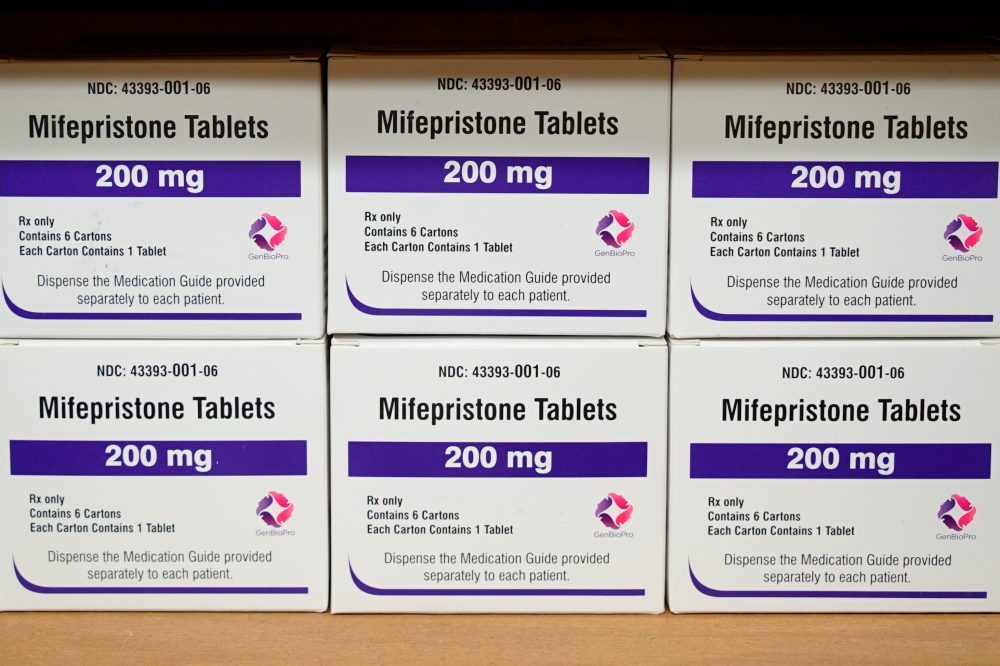

The nation’s highest court issued a ruling Thursday that maintains current access to a medication used in most abortion procedures, blocking lower court limitations while legal proceedings continue.
The court’s decision enables women seeking abortions to keep receiving mifepristone through pharmacies and mail delivery, without requiring face-to-face doctor consultations. Current access patterns will likely continue uninterrupted through next year as litigation proceeds, potentially including another high court appeal.
The justices approved urgent petitions from mifepristone manufacturers, who are challenging a federal appeals court decision that would mandate in-person physician visits and end mail-based mifepristone distribution. The federal Food and Drug Administration, which initially authorized mifepristone for abortion procedures in 2000, eliminated the in-person visit requirement five years ago.
Justices Clarence Thomas and Samuel Alito opposed the decision, with Thomas stating that the two manufacturers, Danco Laboratories and GenBioPro, do not deserve the court’s intervention to protect them from “lost profits from their criminal enterprise.”
Anti-abortion organizations, expressing frustration with President Donald Trump’s administration, are urging the FDA to accelerate a review they hope will impose mifepristone restrictions, including preventing prescriptions through telehealth services. The Republican administration maintains the review process requires time.
This week, FDA Commissioner Marty Makary stepped down following months of criticism from Trump’s political supporters, including abortion opponents.
Susan B. Anthony Pro-Life America and similar organizations had urged Trump to dismiss Makary due to the delayed mifepristone review.
The court is addressing its most recent abortion dispute four years after its conservative majority reversed Roe v. Wade and permitted over a dozen states to essentially prohibit abortion completely.
The current case originates from litigation Louisiana initiated to reverse the Food and Drug Administration’s regulations governing mifepristone prescription methods. The state argues that the policy undermines their prohibition there, and questions the medication’s safety, which FDA scientists have consistently validated as safe and effective.
Alito, who authored the Roe reversal opinion, acknowledged that the state’s efforts have been hindered by medical providers and private organizations that ship the pills to Louisiana women, despite the abortion prohibition. Danco and GenBioPro “are obviously aware of what is going on yet nevertheless supply the drug and reap profits from its felonious use in Louisiana,” he stated.
Thomas indicated that those mailing the pills violate the Comstock Act, a 19th-century statute that has remained largely unenforced and prohibits mailing any “article, instrument, substance, drug, medicine, or thing which is advertised or described in a manner calculated to lead another to use or apply it for producing abortion.”
Lower courts determined that Louisiana will likely succeed, and a three-judge panel from the 5th U.S. Circuit Court of Appeals decided that mail access and telehealth consultations should be halted during litigation.
The medication is typically combined with another drug, misoprostol, for abortion procedures. Medication abortions represented nearly two-thirds of all U.S. abortions in 2023, the most recent year with available data.
Telehealth prescribers had prepared to transition to providing abortion patients with a treatment protocol using only misoprostol.
Although Thursday’s decision maintains current conditions temporarily, abortion-rights supporters caution that the matter remains unresolved permanently.
“We are relieved that access to mifepristone remains protected for now, but this should never have been on the table in the first place,” Serra Sippel, executive director of The Brigid Alliance, which helps coordinate and fund travel and other logistics to assist women traveling for abortion, said in a statement. “Patients and providers should not be forced to wait on court rulings to know whether people can access critical health care.”
The ruling is “extremely disappointing” but not a defeat, said Gavin Oxley, a spokesperson for the anti-abortion advocacy group Americans United for Life. “The Supreme Court still has the opportunity to hear the case in full and bring justice to Louisiana,” he said.
The present conflict resembles one that reached the court three years earlier, when the justices prevented a 5th Circuit decision in litigation filed by anti-abortion physicians and maintained widespread mifepristone availability, despite objections from Alito and Thomas.
Subsequently, in 2024, the high court unanimously rejected the doctors’ lawsuit, concluding they lacked the legal authority, or standing, to file suit.
In the ongoing dispute, mainstream medical organizations, the pharmaceutical industry and Democratic congressional members have intervened, warning the court against restricting drug access. Pharmaceutical companies indicated that a ruling favoring abortion opponents would disrupt the drug approval system.
Discussion regarding mifepristone’s safety has continued for over 25 years. The FDA has relaxed numerous initial restrictions on the medication, including prescriber qualifications, dispensing methods and required safety complication reporting.
Despite these determinations, anti-abortion groups have submitted multiple petitions and lawsuits against the agency, typically claiming it violated federal law by ignoring safety concerns with the pill.
Trump’s administration has remained notably silent at the high court. It chose not to submit a written brief recommending the court’s action, despite federal regulations being involved.
The case creates a challenging position for the administration. Trump has depended on anti-abortion groups’ political support but has also witnessed ballot measures and polling results showing Americans generally favor abortion rights.
Both sides interpreted the administration’s silence as implicit support for the appellate decision.