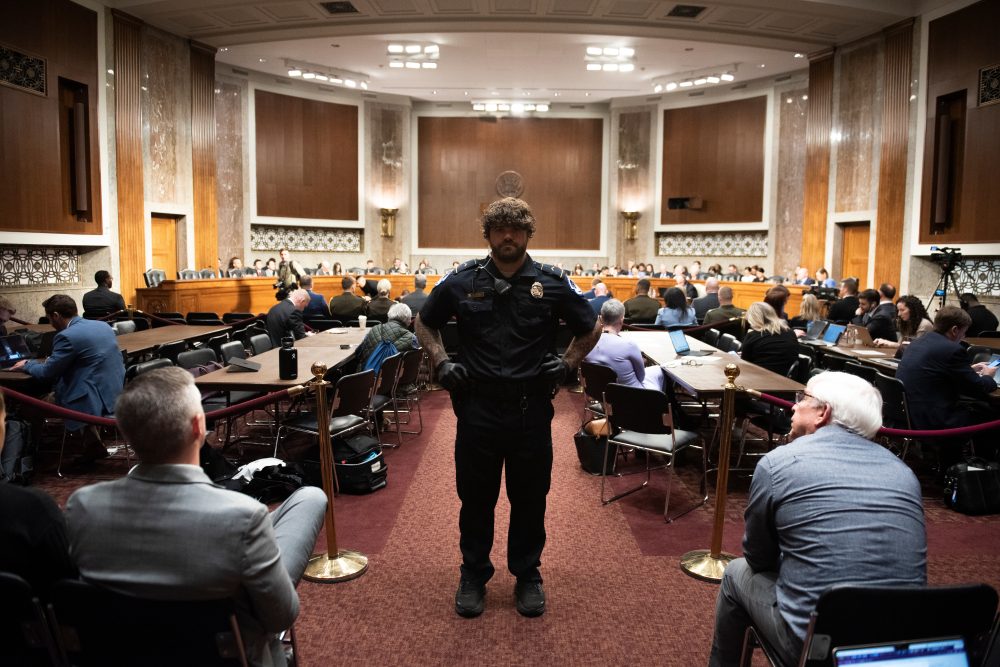

WASHINGTON — Federal lawmakers are advancing measures to extend the working years for U.S. Capitol Police officers as security threats targeting Congress members surge and the department faces critical staffing challenges.
The Senate unanimously approved legislation Thursday that would permit Capitol Police officers to continue working until age 62, while the House passed separate legislation earlier this year allowing service until age 65. Currently, officers can request waivers to work past the mandatory retirement at age 57 or after two decades of service, but only until age 60.
The proposed changes could help address personnel shortages that Chief Michael Sullivan described to Congress as affecting “all operational units” throughout the force.
“We have 300 officers right now that could say I’m done, I’m ready to walk away,” Sullivan warned House appropriators in March, referring to officers reaching age limits or 20-year service marks. “That would be catastrophic for us.”
The bipartisan Senate measure was crafted by California Sen. Alex Padilla, the leading Democrat on the Senate Rules Committee, working alongside Senate Rules Committee Chairman Mitch McConnell, R-Ky. Padilla described the proposal as a modest response to escalating security concerns.
Retaining veteran officers provides significant value, Padilla explained, noting “we’re talking about officers who have served for a long, long time and have a tremendous amount of institutional memory, experience and expertise.”
“After bicameral and bipartisan discussions, I hope to see this measure signed into law,” Padilla stated.
Currently, nearly 60 sworn officers are working under retirement waivers, according to the House Administration Committee — more than twice the typical size of a Capitol Police recruiting class.
“No officer should be forced to retire when they can still do the job,” said Republican Rep. Bryan Steil of Wisconsin, who chairs the administration panel.
The Capitol Police force has implemented numerous improvements following the security breakdowns of Jan. 6, 2021, when thousands of President Donald Trump’s supporters overwhelmed officers, stormed the Capitol grounds and violently entered the building while protesting his electoral loss. Many officers departed afterward, leaving ongoing retention and budget challenges.
For the first time, the department’s budget request exceeded $1 billion this year as leadership seeks to expand the force and enhance member protection. Sullivan informed lawmakers the department currently employs approximately 1,250 uniformed officers but requires 150 additional personnel to fully staff all positions without relying on overtime pay.
“I’m concerned with the overtime that we put on our folks every single day,” Sullivan testified during March oversight proceedings. “There’s drafts on a consistent basis and it pushes the men and women that we have to the limit.”
Sullivan characterized funding for the department’s protective intelligence operations, which safeguard members, as “very slim.”
Multiple officers have departed for other federal agencies offering superior benefits, Sullivan noted.
“There’s nothing keeping folks here,” he said.
Staffing shortages stem partly from increased member protection demands. Congressional threat levels have more than doubled over five years.
Department data shows almost 15,000 threats against Congress members were investigated in 2025, representing a 58 percent jump from 2024. Sullivan indicated 2026 threat numbers are projected to climb even higher.
The department has restructured member security protocols, expanding protection for lawmakers and families in home districts nationwide while partnering with local police departments it reimburses. A January analysis noted increased threat reporting following the launch of a specialized center two years ago for receiving and processing threat reports.
The report indicated lawmakers from both parties face a “wide range of threats.”
These expanded responsibilities demand additional personnel and expertise, Sullivan emphasized.
“While we focus on those individuals at the beginning of their career, we also need to focus on that experience that’s at the end of their career,” he told lawmakers.