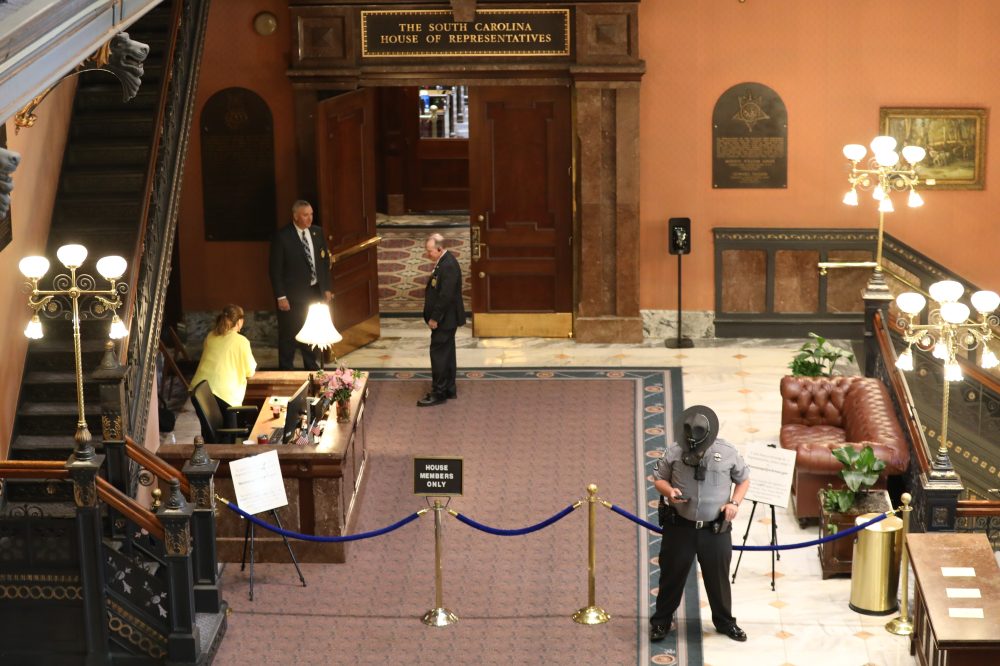

COLUMBIA, S.C. — South Carolina state lawmakers will begin comprehensive discussions Monday regarding a proposal to reconfigure the state’s congressional boundaries, launching what could be an extended and contentious debate over whether to fulfill President Donald Trump’s vision for a House map delivering complete Republican control.
Similar heated discussions have already unfolded in Tennessee, Alabama and Louisiana as the GOP moves decisively to capitalize on a recent U.S. Supreme Court decision that diminished Voting Rights Act safeguards for minority-majority districts. This court decision has created opportunities for Republicans to redesign districts containing substantial Black voter populations that traditionally elect Democratic candidates.
Within South Carolina, this strategy focuses on the district currently represented by U.S. Rep. Jim Clyburn, who stands as the sole Democratic member among the state’s seven House representatives.
Clyburn has declared he will not step down from office, regardless of any district modifications. Speaking to reporters in Washington last week, he noted his residences in Columbia, Charleston and Santee, stating: “I live in three districts. I’ll decide which one to run in.”
“It ain’t about Jim Clyburn’s district,” he said. “This isn’t about voting. This is about turning the clock back to Jim Crow 2.0.”
Early voting begins May 26 for South Carolina’s statewide primary elections scheduled for June 9. Beyond congressional redistricting, proposed House legislation would postpone U.S. House primaries until August. The measure requires Senate approval if it passes the House.
Republican Gov. Henry McMaster, who convened the special legislative session on redistricting, emphasized the importance of maximizing South Carolina’s Republican representation in Washington to help prevent Democratic House control and potential Trump impeachment efforts.
However, certain Republicans worry that attempting to create a 7-0 Republican House delegation might dilute GOP voter strength too broadly, potentially making currently safe Republican districts vulnerable to Democratic challenges.
Republicans currently lead in nationwide redistricting efforts. Following Trump’s call for Texas Republicans to redistrict last year, the GOP believes it could secure up to 15 additional seats through new maps in Texas, Missouri, North Carolina, Ohio, Florida, Tennessee and Alabama. Democrats anticipate gaining six seats from revised maps in California and Utah. Legal challenges continue in several states, with voters ultimately determining electoral outcomes.