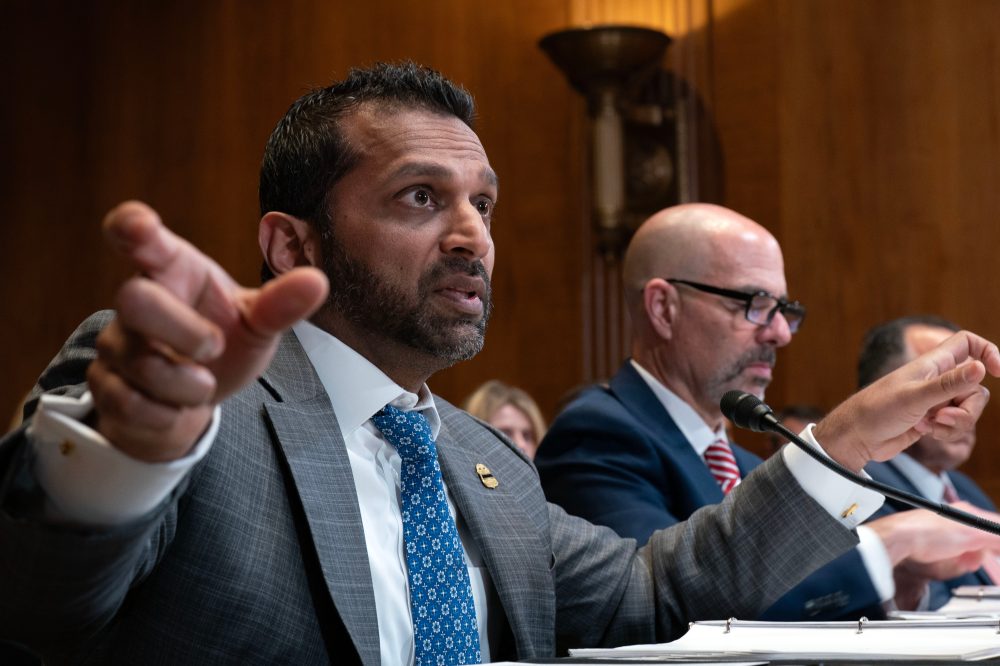

WASHINGTON — Government correspondence obtained by The Associated Press reveals that FBI Director Kash Patel participated in an exclusive underwater tour around the USS Arizona memorial during his Hawaii visit last August, an activity the bureau did not mention in its public statements about the trip.
While the FBI emphasized Patel’s official duties during his Hawaiian stopover — including his tour of the Honolulu field office and meetings with area law enforcement — the agency omitted details about what military officials termed a “VIP snorkel” experience around the sunken warship that serves as the final resting place for more than 900 service members at Pearl Harbor.
This underwater excursion, disclosed through government emails acquired by the AP, adds to ongoing questions about Patel’s use of FBI aircraft and international travel that has mixed official duties with recreational pursuits. The bureau failed to reveal either the swimming activity or that Patel had extended his Hawaiian stay by two additional days following his original visit.
“It fits a pattern of Director Patel getting tangled up in unseemly distractions — this time at a site commemorating the second deadliest attack in U.S. history — instead of staying laser-focused on keeping Americans safe,” said Stacey Young, who founded Justice Connection, a network of former federal prosecutors and agents who advocate for the Department of Justice’s independence.
Swimming and diving activities are generally prohibited around the USS Arizona. The warship, transformed into a military cemetery accessible solely by watercraft, has remained among America’s most sacred locations since Japanese forces attacked and destroyed it in 1941. Marine researchers and National Park Service teams occasionally conduct underwater surveys to assess the wreckage’s condition. Additional dives have taken place to lay to rest the remains of Arizona veterans who chose to join their former crewmates permanently.
However, dating back to at least the Obama presidency, the Navy and park service have discretely permitted a small number of high-ranking officials, including military and government leaders responsible for memorial oversight, to swim at the location. Neither the Navy nor park service would share specifics about who receives permission for such activities.
Previous FBI directors have traveled to Pearl Harbor for official purposes, but none dating back to at least 1993 has participated in snorkeling at the memorial, according to individuals familiar with their activities and a former government diver who spoke to AP anonymously due to concerns about retaliation. The diver noted it was uncommon for a director or anyone not affiliated with the memorial to receive such permission because these swims involve physical dangers and create security, safety and operational complications.
Patel has encountered criticism regarding his leadership throughout the past year, with his utilization of government resources becoming a repeated theme during his time in office. The matter intensified in February when footage emerged of Patel celebrating in the locker room with members of the U.S. men’s hockey team following their gold medal victory at the Winter Olympics in Milan. Patel justified the trip as recently as this week as “purposely planned” in relation to a cybercrime investigation involving Italian authorities.
Patel’s underwater adventure occurred in August as he remained two days in Hawaii while returning to the United States from official trips to Australia and New Zealand. During his journey to those nations, he made a stop in Hawaii to tour the Honolulu field office. An FBI representative did not respond to inquiries about the snorkeling activity.
The FBI stated that senior regional commanders welcomed Patel at Joint Base Harbor-Hickam “as they commonly do with US government officials on official travel.” The Pearl Harbor visit, the spokesman said, “was part of the Director’s public national security engagements last August with counterparts in New Zealand, Australia, our Honolulu Field Office, and the Department of War.”
The arrangements for Patel’s snorkeling activity remain unclear. A Navy representative, Capt. Jodie Cornell, acknowledged the outing but stated the service could not determine who organized it.
Those who joined Patel’s swim received instructions “not to touch/come into contact with” the sunken vessel in any manner, Cornell explained. She noted that the snorkelers also received briefings about “the historic significance of the Memorial as the final resting place/tomb for hundreds of service members.”
Government correspondence acquired by the AP through a public records request reveals military officials arranged logistics and staffing for the “VIP Snorkel.”
The National Park Service, which manages the site alongside the Navy, informed AP it did not participate in Patel’s swim and refused to discuss the excursion. It also would not answer questions regarding any other similar outings.
Those who have received invitations to snorkel include Navy admirals, secretaries of defense and interior, according to the former government diver. The diver explained that the swims aimed to give officials understanding of the memorial and its functions.
The Navy would not share examples or statistics showing how often it arranges such excursions. It characterized Patel’s outing as “not an anomaly.”
Hack Albertson, a Marine veteran, belongs to a specialized group from the Paralyzed Veterans of America trained to dive on the Arizona each year to monitor the wreck’s condition. He stated it was unsuitable for Patel and other political leaders to snorkel or dive at the memorial.
“It’s like having a bachelor party at a church. It’s hallowed ground,” he said. “It needs to be treated with the solemnity it deserves.”
Some relatives of Pearl Harbor survivors indicated they were not troubled by such official excursions, though some voiced interest in also being allowed to snorkel at the location. They reported they have been denied such permission.
“I have not heard of anyone who would object to these visits as they are very rare and there aren’t any survivors of the Arizona left alive,” Deidre Kelley, national president of the Sons and Daughters of Pearl Harbor Survivors, wrote in an email. “Their children might have some objections but I haven’t heard any.”
Patel toured Pearl Harbor several years earlier during a Hawaiian trip he took while working as chief of staff to Christopher Miller, then the acting secretary of defense, according to the former government diver.
Miller confirmed he snorkeled above the Arizona during an official base visit, but Patel was not present for that activity. Miller said regional military officials invited him to snorkel and told him such a tour was for “special occasions and for special visitors, of which you’re one.” He described it as a “meaningful” experience.
“It was a very somber and meaningful event,” Miller said in an interview. “It was a historical tour. It wasn’t a recreational thing.”
Apart from the snorkeling activity, Patel’s other activities during his second Hawaiian visit remain unknown.
Flight monitoring information for the Gulfstream G550 commonly used by the FBI director indicates the aircraft stayed on the island two nights during that visit before continuing to Las Vegas, Patel’s adopted hometown. The jet has a published range of approximately 7,700 miles (12,391 kilometers), indicating the aircraft would have required refueling somewhere between New Zealand and Washington.
The snorkeling activity occurred one day following Patel’s stop in Wellington to establish the FBI’s first independent office in New Zealand. The visit generated controversy after the AP disclosed that Patel had presented that country’s police and intelligence leaders with non-functional 3D-printed replica pistols that were illegal to possess under local gun laws.