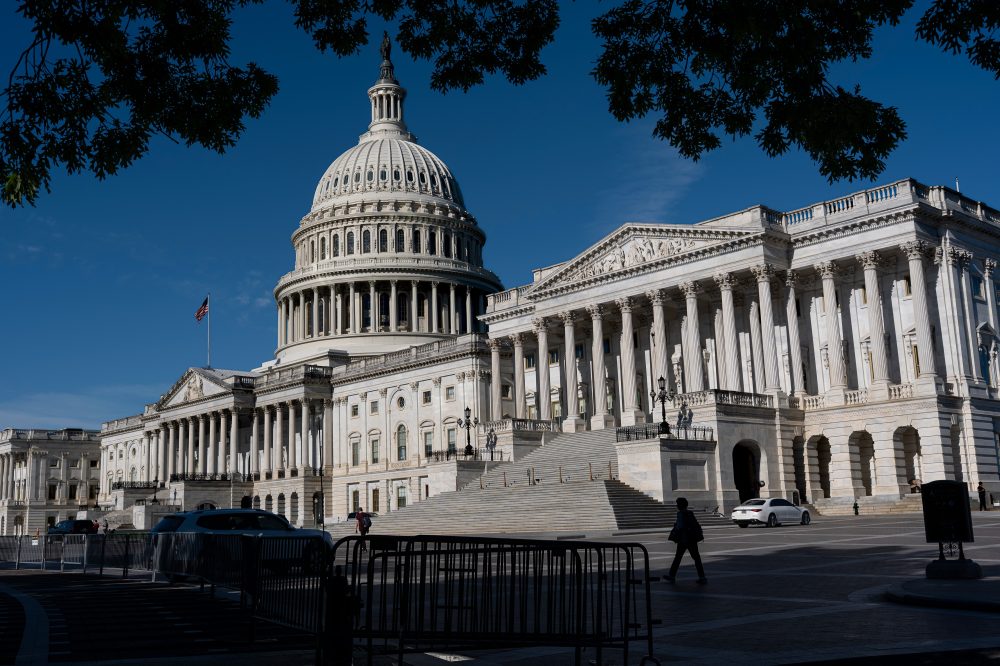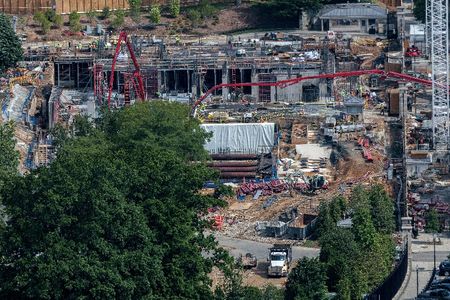

A Senate parliamentarian has struck down security funding for President Donald Trump’s proposed $400 million White House ballroom from a major spending bill, according to Democratic lawmakers on Saturday. The ruling threatens Republican efforts to secure taxpayer dollars for the controversial construction project.
Elizabeth MacDonough, who serves as the Senate’s parliamentarian, made the decision that represents a significant setback for Trump and his administration’s push to obtain funding for ballroom-related security measures.
While Trump has stated that private donors will finance the ballroom’s construction, Senate Republicans have been pursuing $1 billion in taxpayer money for the Secret Service to cover security enhancements, including those for the ballroom.
The parliamentarian’s role involves interpreting Senate regulations, including determining which legislative elements are allowable. Although Republicans maintain control of the Senate, they retain the option to modify the legislation in an attempt to secure the parliamentarian’s endorsement.
Should their efforts fail, Republicans may find themselves unable to incorporate the ballroom-related funding into a $72 billion spending measure they intend to vote on, with approval anticipated along party lines as Democrats remain opposed. The majority of the legislation focuses on immigration enforcement.
Republicans are utilizing complicated budget procedures in an effort to achieve passage without Democratic backing. Democrats have resisted funding Trump’s signature immigration enforcement initiatives without reforms they have demanded following incidents where federal immigration agents killed U.S. citizens in Minnesota in January.
With a 53-47 Senate majority, Republicans lack the 60 votes typically required to advance most legislation under chamber regulations.
Democratic critics have denounced the ballroom as a costly and unnecessary project by Trump during a period when Americans are grappling with increased expenses like higher fuel costs. Trump, who transitioned from real estate development to politics, has posted on social media that the facility will be “the finest Building of its kind anywhere in the World.”
Republican supporters argue the ballroom-related expenditures they’re advocating are essential for presidential security, pointing to an April event where a gunman attempted to breach a formal media event in Washington that Trump was attending.
Administration officials have stated the ballroom will update infrastructure, strengthen security, and reduce pressure on the White House, which frequently depends on temporary outdoor installations for large gatherings. Trump has indicated the ballroom will be finished around September 2028, close to the conclusion of his second presidential term.
Democrats, who hope to gain congressional control in November’s midterm elections, are using Republican ballroom support to characterize Trump’s party as disconnected from Americans’ cost-of-living struggles amid rising energy prices caused by the Iran war he initiated in February.
Trump previously directed the destruction of the White House’s East Wing — initially built in 1902 during Teddy Roosevelt’s administration and enlarged four decades later under Franklin Roosevelt’s presidency — to create space for his ballroom.
The National Trust for Historic Preservation, a nonprofit organization, subsequently filed legal action against the project, contending that neither the president nor the National Park Service, which oversees White House grounds, had authority to demolish the historic building or construct a major new facility without explicit congressional authorization.
A U.S. appeals court in April permitted construction to proceed after the judge overseeing the National Trust case issued a stop-work order for the project.