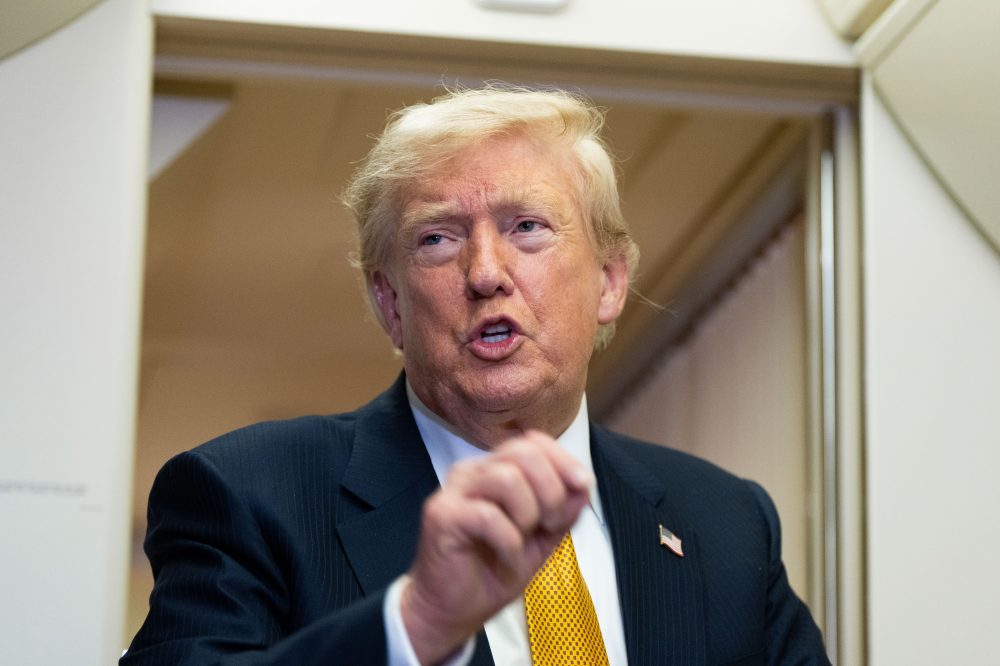
Words like “dangerous,” “brazen,” and “unprecedented” are echoing across the media world after five New York Times journalists were served with federal subpoenas — a move critics say represents a dramatic escalation in the Trump administration’s campaign to control and intimidate independent news outlets.
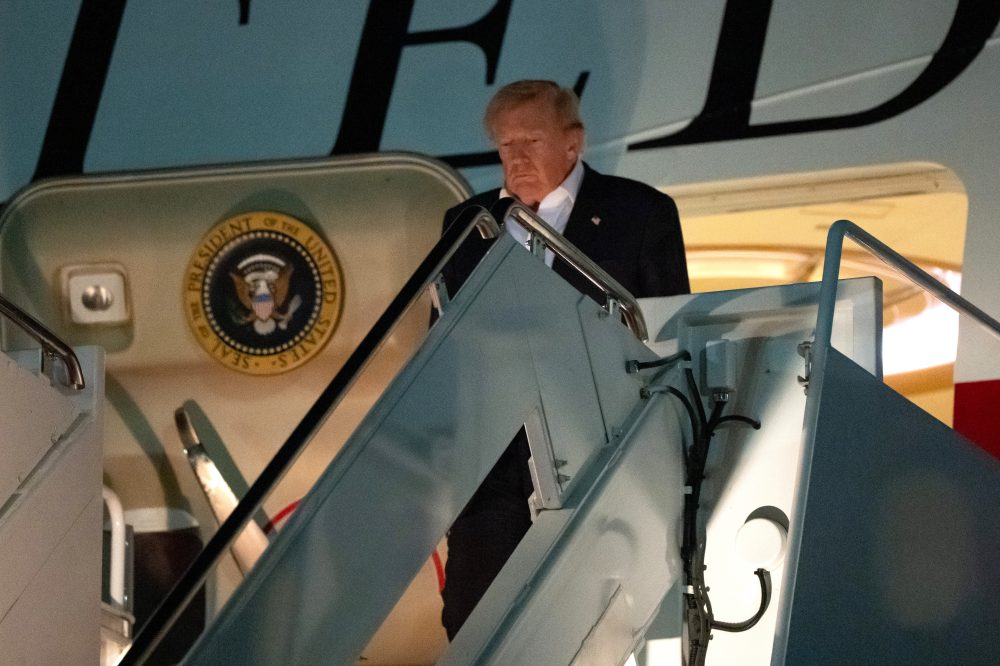
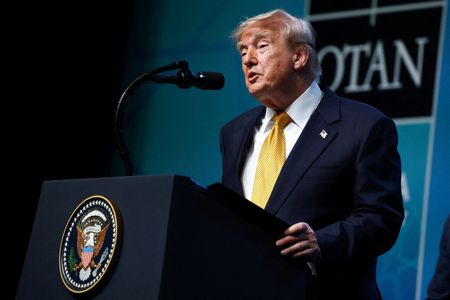
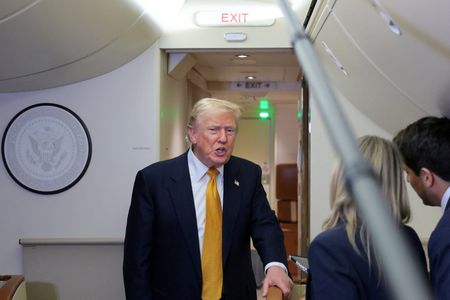
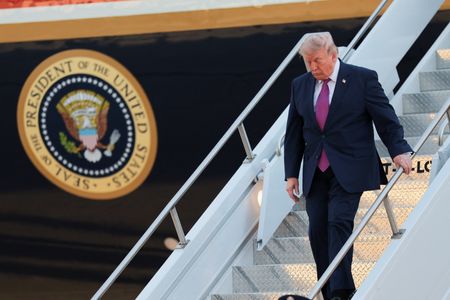
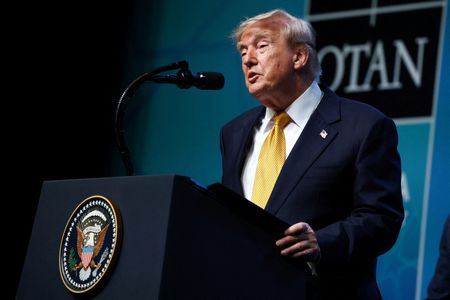
The subpoenas stem from the reporters’ coverage of security questions surrounding a new Air Force One jet, gifted to the U.S. by Qatar, that the administration spent $400 million to retrofit and upgrade. The plane entered service last week, but President Trump used an older model to depart a NATO summit in Turkey.
The Times, relying on anonymous sources, had reported that the Secret Service pushed for the switch because the newer aircraft lacked certain advanced security features of the older jet — including antimissile systems. Trump denied those security concerns on social media.
“The subpoenas are an extraordinary escalation in President Trump’s efforts to threaten and intimidate independent news organizations, and have a chilling effect on the work of journalists across the country,” said Jodie Ginsberg of the Committee to Protect Journalists.
Some of the subpoenas were delivered directly to reporters at their homes. They were sought by Jay Clayton, the U.S. Attorney in Manhattan, and would compel the journalists to testify before a federal grand jury in Manhattan this week.
According to a person familiar with the matter who spoke on condition of anonymity, the subpoenas were issued after FBI Director Kash Patel and other Justice Department officials met at the White House on Friday to discuss the situation — a meeting the Times says lasted roughly eight hours.
That White House coordination drew sharp criticism from media analysts. Frank Sesno, a former CNN White House bureau chief who now teaches media and public affairs at George Washington University, called the subpoenas “dangerous and uncharted territory, but merely an extension of what we have seen from this administration and president.”
“They have used the levers of power to intimidate and demonize professional journalists who report stories that are unfavorable to the administration’s desired narrative,” Sesno said.
He went on to describe a pattern of retaliation: “Don’t like a poll? Sue the Des Moines Register. Don’t like the way an interview is edited? Sue ’60 Minutes.’ Don’t like the coverage of the gifted Air Force One? Order the FBI to investigate and subpoena the journalists for what is, by the way, a story that is in the public interest.”
The National Press Club called on the Justice Department to immediately pull back the subpoenas and reaffirm the principle of a free press. Club president Mark Schoeff Jr. issued a stark warning: “Every American should understand what is at stake. When federal agents arrive at the homes of journalists with subpoenas, it is not ordinary law enforcement. It is an extraordinary assault on the freedom of the press that strikes at the heart of the First Amendment.”
This is not the first time the current administration has clashed with news organizations. Last month, the Justice Department issued — and then withdrew — subpoenas targeting reporters at The Washington Post and The Wall Street Journal. Earlier this year, the FBI searched the home of a Washington Post reporter and seized her electronic devices. The media world was stunned by the search of reporter Hannah Natanson, who had been covering the Trump administration’s transformation of the federal government.
The administration has also battled with The Associated Press over its refusal to adopt Trump’s executive order renaming the Gulf of Mexico, and with The Wall Street Journal over reporting about Jeffrey Epstein and his connections to the president — including an article describing a sexually suggestive letter the newspaper said bore Trump’s signature.
Other confrontations include an escalating dispute over reporters’ access to the Pentagon, with the Times filing two lawsuits over a policy requiring journalists to be escorted inside the military complex. The president has also threatened to revoke broadcast licenses and directed his FCC chairman to explore revoking an equal-time exemption for ABC’s “The View.”
The Times is now preparing to fight back. In an internal memo obtained by the AP, executive editor Joseph Kahn called the subpoenas a “brazen act” and expressed confidence in the paper’s legal position: “We expect to prevail. We have the best legal team in the business. … The law protects news gatherers from this sort of retaliatory abuse of prosecutorial power. It is essential that the courts reaffirm that protection and quash this overreach. We are confident they will in this case.”
Kahn also praised the five reporters named in the subpoenas — Tyler Pager, Eric Schmitt, Eric Lipton, Adam Goldman, and Julian Barnes — telling them that “all of us as their colleagues, and the full resources of The Times, are behind them and that we will fight this legal abuse together.”
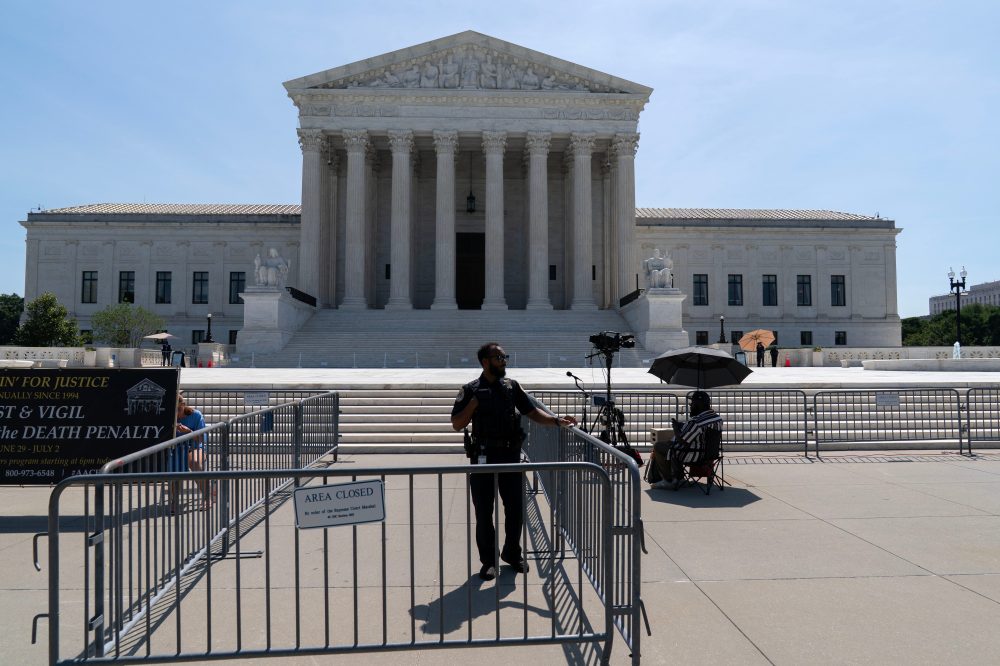
WASHINGTON — Two Supreme Court justices are heading to Capitol Hill Tuesday in what is considered a rare move — testifying directly before members of Congress in a push for more security funding.
Justices Elena Kagan and Amy Coney Barrett are set to appear before a House appropriations subcommittee as the nation’s highest court makes the case for significantly more money to protect its members amid a growing wave of threats against judges.
Federal judges across the country have experienced an alarming rise in threats and intimidation. Barrett herself was targeted in May when someone placed a fake emergency call — known as swatting — to police about her home. The incident was quickly resolved by her security detail working alongside local law enforcement.
The congressional hearing comes just two weeks after the Supreme Court’s conservative majority wrapped up a landmark term that included a ruling expanding President Donald Trump’s authority over federal regulatory agencies, as well as a separate decision striking down his sweeping tariffs — both of which generated fierce personal backlash.
This marks the first time justices have appeared before Congress to testify since 2019. While the two justices are expected to keep the conversation focused on the court’s budget needs, lawmakers may use the opportunity to raise a broader range of issues.
The Supreme Court is requesting $228 million for the upcoming fiscal year — roughly a 10% jump compared to the previous year. Of that total, nearly $15 million would be directed toward expanding personal protection for justices, including six additional security agents assigned to each justice.
An additional $2 million is earmarked for an off-site residential security post designed to speed up emergency response times, along with an increase in the number of Supreme Court police officers on staff.
The U.S. Marshals Service, which is charged with protecting federal judges, recorded 564 threats during the government fiscal year that ended this past September — a rise from the previous year’s total. Those figures cover threats made against the hundreds of federal judges nationwide, and the nine-member Supreme Court has not been spared.
Beyond the swatting incident at Barrett’s home in May, her sister was the target of a bomb threat last year in Charleston, South Carolina, according to police. No explosive device was found. Back in 2022, following the leak of a draft opinion that would ultimately overturn Roe v. Wade, a man was taken into custody near the home of Justice Brett Kavanaugh carrying weapons and zip ties.
Chief Justice John Roberts has spoken out strongly against the escalating threats facing judges across the country. During a speech in March, he acknowledged that disagreeing with court rulings is a normal part of public discourse, but drew a firm line at personal attacks — calling hostility directed at individual judges “dangerous, and it’s got to stop.”
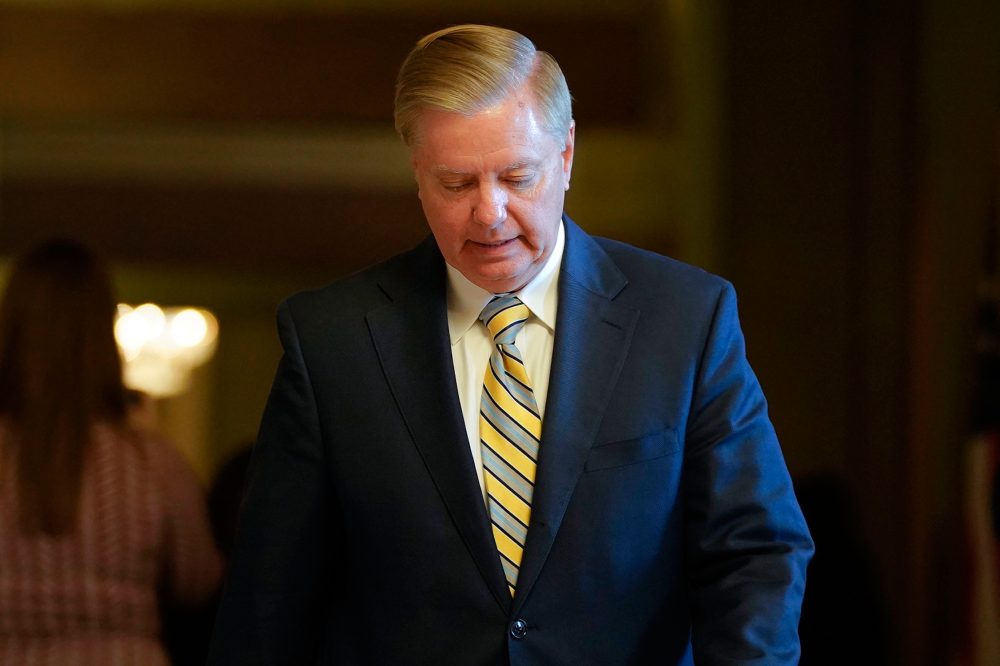
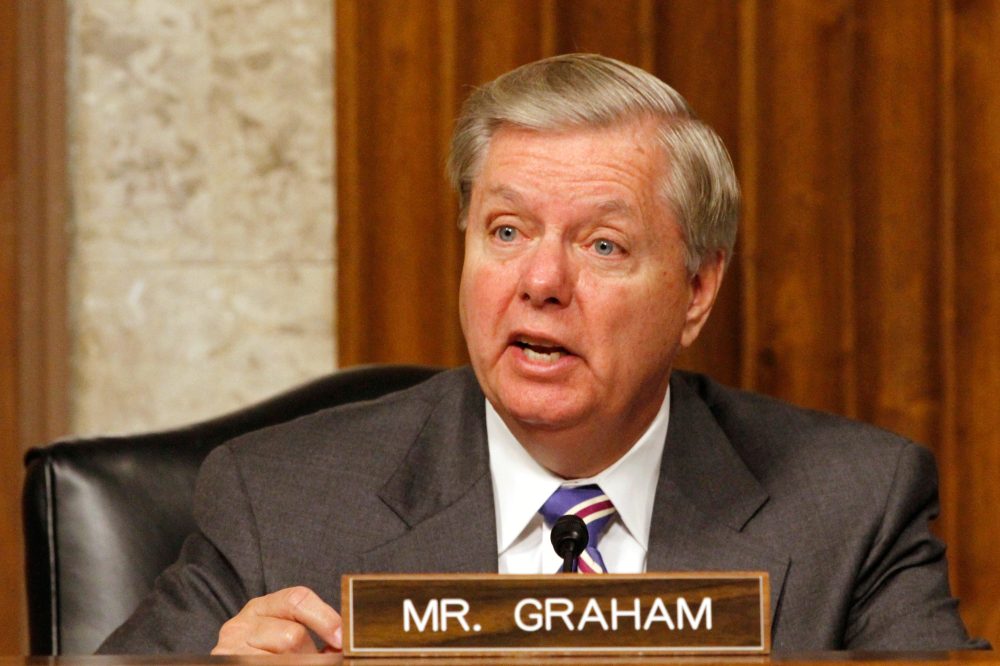
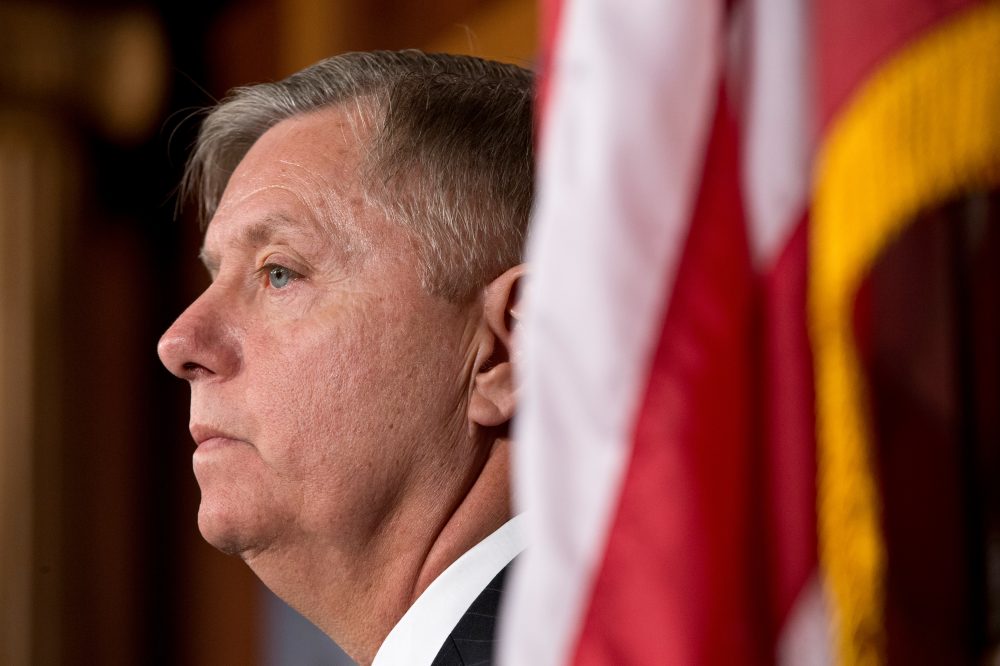
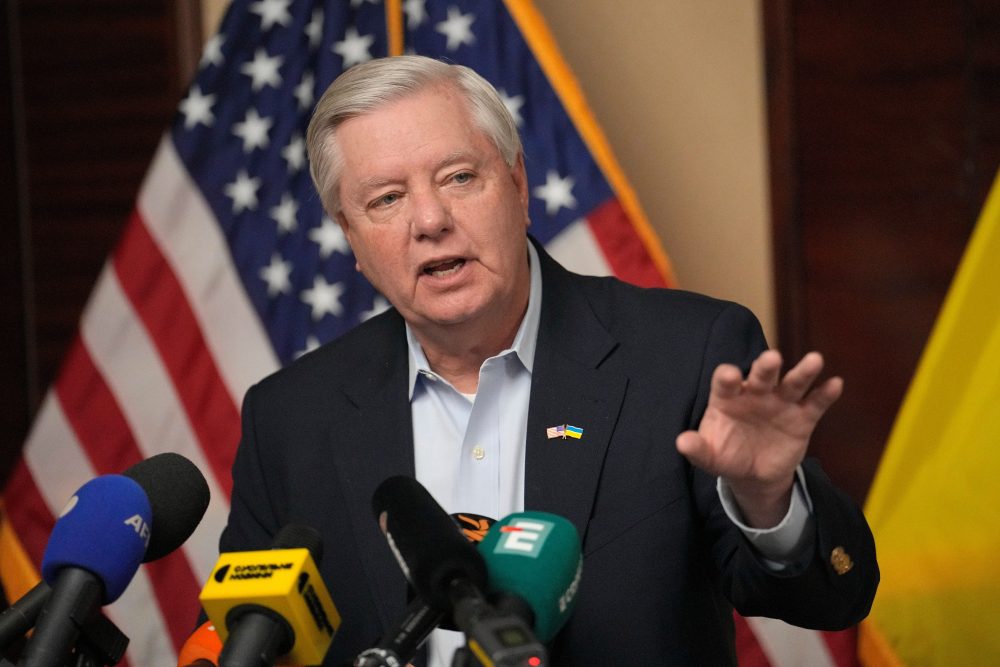
NEW YORK (AP) — The unexpected death of Sen. Lindsey Graham, a prominent ally of President Donald Trump and one of the most recognizable figures in Washington, has put fresh attention on the nation’s growing number of elderly lawmakers.
Graham had celebrated his 71st birthday just two days before he died on Saturday night — making him considerably younger than many of his Senate colleagues. He had appeared to be in good health prior to his death. A preliminary report from the medical examiner determined he suffered a tear in his aorta.
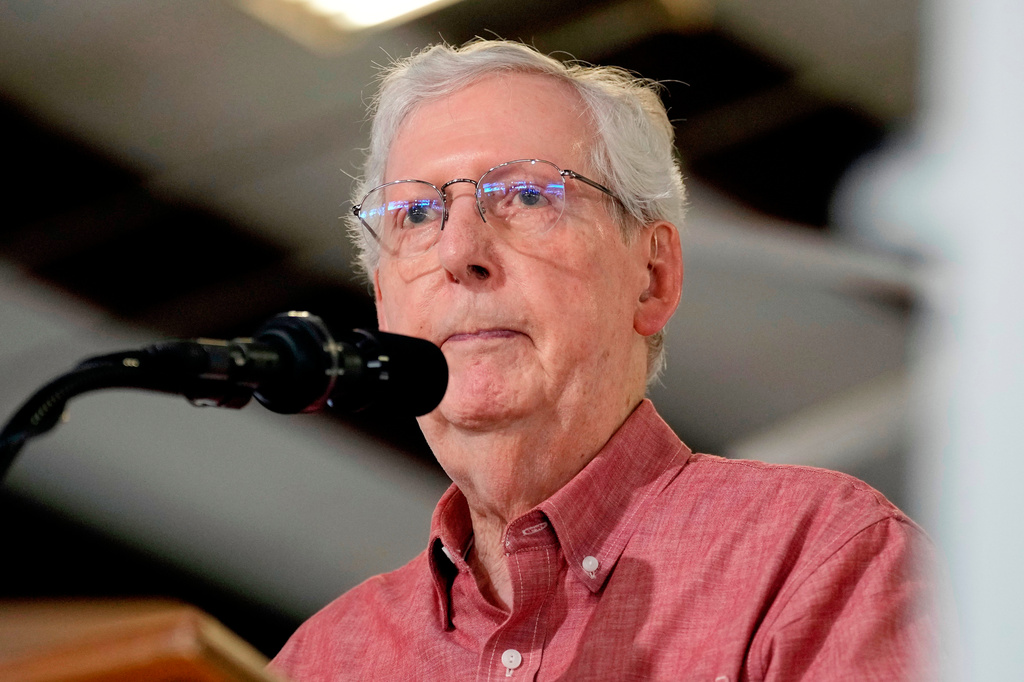
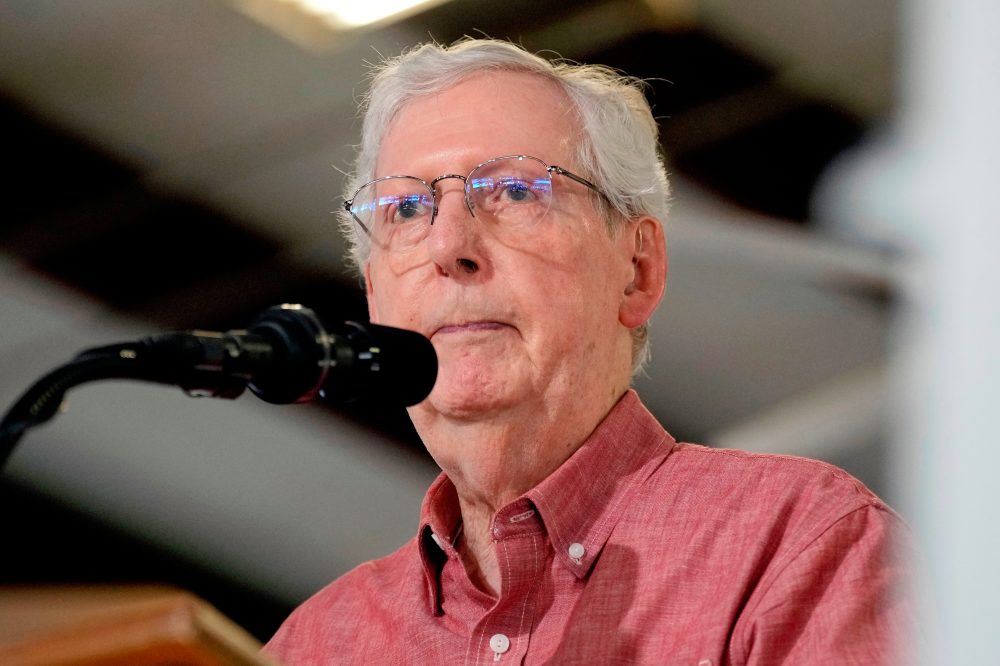
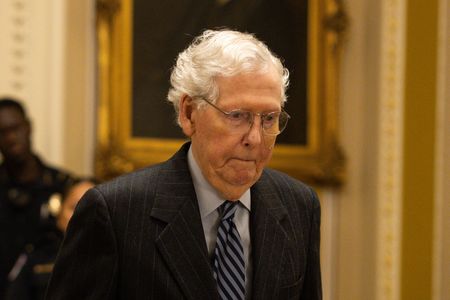
His passing marks the second time in less than a month that emergency responders were called to the home of a sitting U.S. senator. In early June, former Republican Senate leader Mitch McConnell was hospitalized, though the reason was not initially disclosed.
After weeks of mounting speculation about his condition, McConnell revealed on Sunday that he had fallen and developed mild pneumonia. He released a photograph of himself holding a copy of that day’s newspaper to confirm his status.
Both events have intensified an ongoing national debate about the age and fitness of the country’s top leaders — a conversation that began in earnest two years ago when a presidential debate raised widespread alarm about then-President Joe Biden’s mental sharpness and triggered accusations of a deliberate cover-up.
Some politicians have chosen to keep their health struggles private despite holding positions of public trust, a practice that has helped fuel conspiracy theories.
“I think we need some transparency,” Sen. John Cornyn of Texas said Monday. “I wish Sen. McConnell and his team would have done that earlier, I think it would have resolved a lot of questions.”
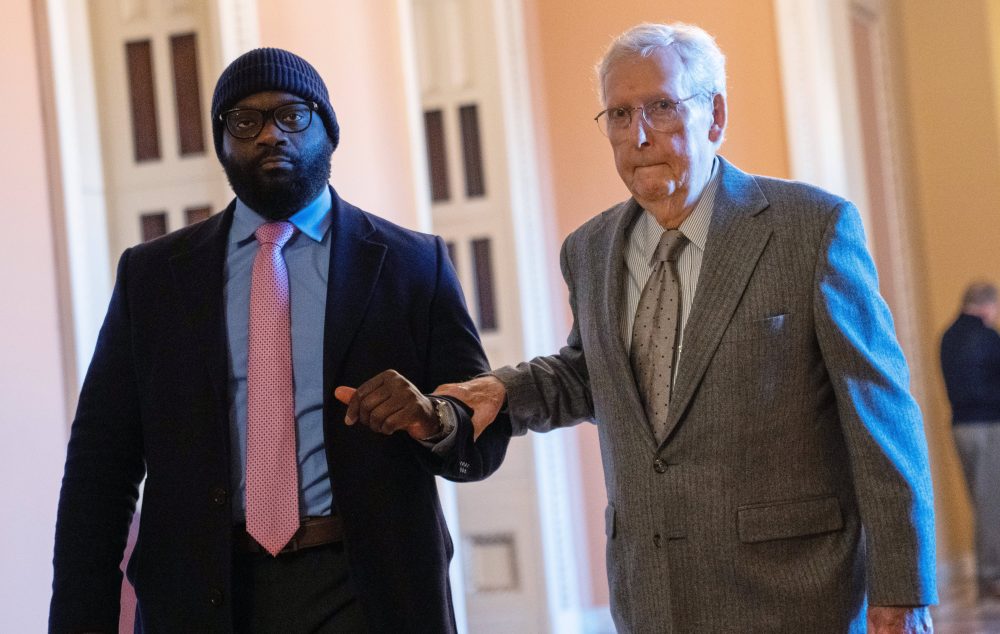
McConnell, who at 84 is only the third-oldest member of the Senate, was admitted to the hospital on June 14 with almost no explanation. His staff said he was “receiving excellent care” but gave no further details about what was wrong.
The lack of information quickly gave rise to wild speculation. Trump ally and conspiracy theorist Laura Loomer claimed on social media that a “high level source close to the White House” had told her McConnell was “officially brain dead.”
McConnell — who is set to leave Congress at the end of January after serving as the longest-tenured Senate leader in history — pushed back in a statement, saying he is recovering. He explained that a fall had led to his hospital stay, that he was “briefly unconscious,” and that he was treated for mild pneumonia.
“You all know how folks of my generation often hesitate to share the vulnerability that comes with growing older,” he said. “Even in the public eye, I feel that same instinct – I can’t help it.”
Even so, skeptics on social media refused to accept the photo his office released as proof — particularly because it showed the front page of the “Sports” section of The Washington Post rather than the full front page.
Sen. Rand Paul, who represents McConnell’s home state of Kentucky, called the conspiracy theories surrounding his colleague’s health “a symptom of our times” and urged people to “give him a break.”
“People think they have a right to know everyone’s medical problems,” Paul said, “but I don’t know, where does it begin and where does it end?”
The oldest person ever elected president has consistently offered only the most optimistic assessments of his own health. After his most recent physical in May, he boasted that “Everything checked out PERFECTLY” and claimed he had taken repeated cognitive tests designed to detect early dementia, saying he has “aced them all.”
His medical reports have drawn criticism for being short on detail, and some health professionals have questioned certain statistics included in them. When he first ran for president in 2016, he broke with longstanding tradition by refusing to release his health records, instead providing a four-paragraph letter from his physician declaring he would be “the healthiest individual ever elected to the presidency.” Rep. Ronny Jackson, who served as White House doctor during Trump’s first term, later made headlines by praising the president’s “incredibly good genes.”
When Trump contracted COVID-19 during his 2020 reelection campaign, his medical team and aides withheld key details about his treatment and attempted to minimize how serious his illness was. And following an assassination attempt at a Pennsylvania campaign rally, his team kept the public in the dark for days, refusing to discuss the extent of his injuries or release any medical documentation even while insisting he was “fine.”
The pattern of concealment is not limited to older politicians. New Jersey Republican Rep. Tom Kean Jr. was absent from Congress for four months without any explanation before finally disclosing late last month that he had been undergoing treatment for depression. In a brief speech on the House floor after returning, he said he had stayed quiet because he is a “private person by nature.”
Despite missing more than 100 House votes during his absence, Kean won an uncontested primary and is seeking reelection.
His approach was notably different from that of Sen. John Fetterman, a Pennsylvania Democrat, who publicly announced his hospitalization for clinical depression the day after he was admitted to Walter Reed National Military Medical Center. Fetterman had also suffered a stroke while campaigning for his Senate seat.
Biden’s visible physical decline — including a halting walk, frail appearance, and repeated verbal stumbles — ultimately derailed his 2024 reelection bid. After a debate in which he repeatedly lost his train of thought, he withdrew from the race, triggering an unprecedented reshuffling at the top of the Democratic ticket that ultimately helped clear the path for Trump’s return to the White House.
Other lawmakers have declined to step aside despite serious health concerns. California Democratic Sen. Dianne Feinstein died in office in 2023 at the age of 90 following years of declining health, including a bout of shingles. Though she came back to the Senate after her illness, she appeared disoriented and physically weakened at times. It later came out that her office had not disclosed in real time that she had also contracted encephalitis while recovering.
Longtime Republican Rep. Kay Granger of Texas spent the final months of her more than two decades in Congress dealing with “unforeseen health challenges” that made it difficult for her to travel to Washington. And Eleanor Holmes Norton, 88, the longtime House delegate for the District of Columbia, announced earlier this year that she would not seek reelection amid growing questions about her ability to serve.
The Trump administration’s Department of Health and Human Services has backed down from a $10 billion freeze on child care subsidies and social services funding that had been imposed on five states led by Democratic governors, according to court records made public Monday.
Federal officials notified California, Illinois, Colorado, New York, and Minnesota that letters sent on January 5 and January 6 — along with all data requests and information requirements tied to those letters — were being rescinded.
A legal filing released Monday included the official communication, which stated that the enforcement mechanism used to impose the temporary funding restrictions had been shut down.
The reversal follows a federal judge’s earlier decision to block the freeze while a lawsuit brought by the affected states worked its way through the courts.
The funding freeze was part of a broader pattern of the Trump administration threatening to withhold federal money from universities, research institutions, and states over a variety of issues. Those issues have included allegations of fraud, climate-related programs, diversity initiatives, transgender policies, and demonstrations in support of Palestinians amid Israel’s military campaign in Gaza.
Civil rights advocates have argued that such funding threats infringe on free speech and due process protections.
President Donald Trump said Monday that Gulf nations should pay the United States back for the military protection it provides over the Strait of Hormuz, one of the world’s most critical waterways for oil shipments.
Trump made the comments while speaking with reporters at the White House, in the Oval Office, indicating he believes countries in the region should share the financial burden of keeping the strait secure.
HAVANA (AP) — Four Democratic U.S. lawmakers wrapped up a weekend trip to Cuba, speaking out strongly against the energy embargo placed on the island by President Donald Trump, with one comparing conditions there to a “silent Gaza.”
The energy embargo took effect in January, following the capture of Venezuela’s then-President Nicolás Maduro. The Trump administration also threatened tariffs against any nation that continues selling fuel to Cuba. These measures have deepened a crisis that has already been building for five years, worsened by earlier sanctions and failed economic policies on the island, including a troubled monetary unification effort.
Reps. Mark Pocan of Wisconsin, Teresa Leger-Fernández of New Mexico, Maxine Dexter of Oregon, and Delia Catalina Ramírez of Illinois arrived in Cuba on Thursday. During their stay, they sat down with Cuban President Miguel Díaz-Canel, as well as government ministers, healthcare workers, and business figures. They also walked the streets of Havana before departing Monday. This marked the second congressional visit to the island in the past three months.
When reporters asked whether any progress had been made toward lifting the embargo through diplomatic talks, the lawmakers were clear: there are no current negotiations between Washington and Havana.
“I think (Secretary of State) Marco Rubio is making this personal and not professional,” said Rep. Pocan.
Rubio, whose parents emigrated from Cuba, grew up in Miami and built his political career in part under the influence of anti-Castro exile communities there.
Both governments have acknowledged that some level of contact between officials has occurred, though neither side has provided specifics about when or where those conversations last took place. Adding to the diplomatic backdrop, the grandson of 95-year-old socialist leader Raúl Castro — Col. Raúl Guillermo Rodríguez Castro — recently offered to serve as a go-between with the Trump administration. He held a private meeting with Rubio on the sidelines of a Caribbean Community summit in St. Kitts back in February.
Trump and Rubio have both signaled that they view the embargo as a tool to pressure Cuba’s government, which they describe as inefficient. Cuban officials, meanwhile, have called the embargo collective punishment against the Cuban people.
The effects are visible across daily life in Cuba: power outages stretching beyond 20 hours a day, crippled public transit, canceled flights, declining tourism, shortened work schedules, and a broad slowdown in everyday routines.
Rep. Pocan said someone he spoke with during the visit described the situation as a “silent Gaza” — a comparison he called an “apt description.”
“There may not be bombings, but there are certainly conditions that prevent people from going about their daily lives. They can’t go to work, they can’t preserve their food, they can’t access medical supplies, or live as they did before,” Pocan said.
Rep. Leger-Fernández stated it “doesn’t make any sense at all to force a country to suffer.”
Rep. Dexter, who is also a licensed physician, and Rep. Ramírez announced plans to push for amendments in Congress aimed at reducing the health consequences of the embargo. They also said they would work to block any further unilateral action by Trump — including the military operations he has repeatedly threatened — without first obtaining congressional approval.
SALT LAKE CITY — President Donald Trump announced Monday that he intends to reduce the size of two major national monuments in Utah — Bears Ears and Grand Staircase-Escalante — marking a return to similar actions he took during his first term in office.
Trump’s move reverses decisions made by previous presidents who determined these areas deserved protection under the Antiquities Act, a law dating back to 1906 that grants presidents the authority to safeguard lands of cultural, historical, or scientific significance.
Trump took comparable steps during his first term, but those reductions were later undone by his successor, President Joe Biden. The ongoing back-and-forth highlights how national monuments have become a deeply contested issue in the broader debate over the management of public lands. Trump is not the first president to scale back a monument’s boundaries.
During his first term, Trump made only a limited number of Antiquities Act designations, including the two that cut the size of the Utah monuments. Those sprawling sites contain natural wonders and locations considered sacred by some Native American tribes. Trump also used the act to establish the 340-acre Camp Nelson National Monument in Kentucky, which served as a Union Army hospital, supply depot, and recruitment center for African American soldiers during the Civil War.
When Biden took office, one of his first uses of the Antiquities Act was to restore Bears Ears and Grand Staircase-Escalante to their previous sizes, pointing to their spiritual, cultural, and prehistoric significance. Biden went on to create 10 new monuments during his presidency, including one at the location of a 1908 race riot in Springfield, Illinois, and another honoring Mamie Till-Mobley and her son Emmett — a Black teenager from Chicago who was tortured and killed in 1955 after being accused of whistling at a white woman in Mississippi. Additional monuments were established in the mountains of California and on a sacred Native American site near the Grand Canyon.
Environmental advocates have long argued that the Antiquities Act only allows presidents to create monuments, not shrink or eliminate them. However, history tells a more complicated story. According to a National Park Service database, presidents have issued more than a dozen proclamations reducing monument size since 1912.
Woodrow Wilson cut the acreage of what is now Olympic National Park in Washington state by roughly half. Harry Truman did the same with Santa Rosa Island National Monument. Dwight Eisenhower was the most active in reversing his predecessors’ monument designations, reducing six in total — including Arches in Utah, Great Sand Dunes in Colorado, and Glacier Bay in Alaska, all of which have since been elevated to national park status.
Unlike national parks, which require an act of Congress to establish, most of the more than 100 national monuments were created through presidential action. They are managed by agencies such as the National Park Service, the Bureau of Land Management, or the National Oceanic and Atmospheric Administration.
A monument designation provides broad protections for geological features, artifacts, and the surrounding landscape, prohibiting drilling, mining, and new construction. Supporters of reducing the Utah monuments have argued that the protected boundaries were drawn too wide and were blocking access to critical mineral resources.
The U.S. Forest Service, established in 1905, oversees roughly 300,000 square miles of land across 43 states, including 154 national forests and 20 national grasslands. These lands are managed for renewable uses such as timber, clean water, wildlife habitat, livestock grazing, and recreation — though they can also be leased for extraction of nonrenewable resources like oil, gas, and coal. Some forest areas include specially designated wilderness zones where even bicycles and hang gliders are prohibited because they are considered mechanical.
National parks operate under some of the strictest development rules in the country, governed by a 1916 law called the Organic Act. That law states that the fundamental mission of the parks is to protect their scenery, nature, history, and wildlife and to preserve them for the enjoyment of future generations.
The Antiquities Act itself was signed by President Theodore Roosevelt following years of advocacy by educators and scientists who wanted to stop commercial looting and unregulated collection of artifacts from federal lands. It was the first U.S. law to establish legal protections for cultural and natural resources on federal property.
On September 24, 1906, Roosevelt used the act to designate Devils Tower in eastern Wyoming — a massive rock butte later featured in the film “Close Encounters of the Third Kind” — as the nation’s first national monument. Scientists have long studied how cooled lava formed the tower’s distinctive columns, and Native American tribes, who still hold ceremonies there, have their own accounts of its origins.
All but three U.S. presidents have used the Antiquities Act at some point to protect significant landscapes or cultural resources.
WASHINGTON — President Donald Trump has formally notified Congress that military hostilities with Iran resumed on July 7, in a letter his administration argues starts a fresh 60-day window during which he can conduct military operations in the region without lawmakers’ sign-off.
“I directed this military action consistent with my responsibility to protect Americans and United States’ national security and foreign policy interests,” Trump wrote in the letter, which is dated July 10 and was reviewed by Reuters on Monday.
The letter walks through a series of events, including Trump’s order of a two-week ceasefire on April 7 — which was later extended — and his administration’s push for a diplomatic resolution to the conflict. The United States first began military strikes against Iran on February 28, acting alongside Israel.
Trump also referenced a memorandum of understanding he signed with Iran on June 17, saying that Iran broke that agreement by launching attacks on commercial ships passing through the Strait of Hormuz. That violation, Trump said, led him to order a new round of strikes against the country.
As the fighting escalated, Trump announced Monday that the U.S. would reinstate its blockade of Iranian shipping in the Gulf and would work to keep the Strait of Hormuz open for international traffic.
Under the U.S. Constitution, the power to formally declare war belongs to Congress, not the president. Even so, presidents have long argued they can order shorter military operations on their own authority when national security demands it.
The War Powers Act requires the president to notify Congress within 48 hours of beginning military action, and mandates that any military engagement launched without congressional approval must end within 60 days. In this case, the first 60-day deadline fell on May 1. However, Trump argued that deadline did not apply because he had declared hostilities over when the ceasefire went into effect — even as attacks continued and U.S. forces maintained a blockade of Iranian ports.
Critics from both parties pushed back on that interpretation. “The president can’t just wish away months of war he said would last only four to six weeks,” said a senior House Democratic aide, who spoke on condition of anonymity.
Last month, both the Senate and the House passed a resolution calling on Trump to pull U.S. forces out of the conflict with Iran. The measure passed despite Republicans holding narrow majorities in both chambers, reflecting widespread unease over the prolonged military engagement.
Trump responded angrily to the votes, accusing those who supported the resolution of giving “comfort” to Iran and making his job “more difficult.”
President Donald Trump on Monday signed proclamations shrinking two national monuments in Utah, stripping away protections that previous presidents had placed on lands considered sacred by many Native American tribes.
Bears Ears and Grand Staircase-Escalante national monuments, both located in southern Utah, feature ancient cliff dwellings, petroglyphs, and dramatic canyon landscapes. They also sit atop coal and uranium deposits that Utah state officials have long wanted opened up for commercial development.
Trump used authority granted under the Antiquities Act to reduce the footprint of both monuments. He pursued the same course of action during his first term in office, but President Joe Biden, a Democrat, reversed those changes after taking office.
The decision is part of a broader effort by Trump and fellow Republicans to overhaul how the federal government manages vast stretches of publicly owned land, most of it concentrated in Western states. The administration and Republican lawmakers have pushed to expand oil drilling, mining, and logging on federal land, while scaling back protections for endangered species and loosening conservation regulations.
Speaking at a White House signing event Monday, Trump defended the move. “They took the land from the people quite honestly,” he said. “We’re giving it back.”
Grand Staircase-Escalante was established in 1996 by President Bill Clinton, a Democrat, while President Barack Obama, also a Democrat, created Bears Ears in 2016. Both were designated under the Antiquities Act, a 1906 law that gives presidents the power to protect lands deemed historically, archaeologically, or culturally significant.
Davina Smith-Idjesa, a citizen of the Navajo Nation and co-chair of the Bears Ears Inter-Tribal Coalition, said tribal leaders had anticipated a reduction ever since Trump won a second term. She described Monday’s announcement as “heartbreaking” and accused federal officials of bypassing their legal duty to consult with the tribal nations that would be affected.
“From a Navajo perspective, Bears Ears is not simply a piece of federal public land,” Smith-Idjesa said. “This is a living cultural site that holds our histories, our ceremonies, our traditional foods and medicines and our ancestors’ footprints.”
Utah officials have opposed the monument designations for years, arguing that the state should control its own land. During his first term, Trump called the original designations a “massive land grab.” Together, the two monuments cover more than 3.2 million acres — an area roughly the size of Connecticut.
Utah Gov. Spencer Cox stood beside Trump at the White House and praised the action. “This is a big day for Utah,” he said. “These monument designations are supposed to be the smallest area as possible to protect the antiquities.”
Bears Ears holds a unique distinction as the first national monument protected at the formal request of tribal nations. The area contains ancestral villages, burial grounds, and ceremonial sites, and figures prominently in the creation and migration stories of several tribes. Its original designation recognized five tribes — the Navajo, Hopi, Zuni, Ute Mountain Ute, and Uintah-Ouray Ute. The monument is jointly managed through an agreement between those tribal nations and federal agencies and is home to hundreds of thousands of culturally and scientifically significant objects.
Grand Staircase-Escalante features a dramatic landscape of cliffs, canyons, natural arches, and archaeological sites including rock paintings. It holds significant coal reserves, while the Bears Ears region contains uranium deposits.
National monument status provides broad protections for both the notable geological features and artifacts within a monument and the surrounding landscape, prohibiting drilling, mining, and new construction. Supporters of the reduction argue the protected boundaries extend too far and block access to critical minerals.
During his time in office, Biden designated or expanded more than a dozen national monuments and set a goal of conserving at least 30% of U.S. lands and waters by 2030. Trump’s approach is essentially the opposite — he wants to unlock the natural resource potential of more than 100,000 square miles of federally controlled land, as well as offshore areas such as the Gulf of Mexico and waters off Alaska.
That stance has drawn fierce criticism from Democrats and environmental groups, who warn that treasured landscapes are being sacrificed for commercial interests.
Trump’s Interior Secretary Doug Burgum had previously signaled that the administration would review and potentially redraw monument boundaries as part of its push to increase domestic energy production.
Trump has also used proclamations in his current term to lift commercial fishing restrictions within large marine monuments in the Pacific and Atlantic oceans — areas protected under both Democratic and Republican administrations. That move, which has been challenged in court, represents a major shift in federal policy by putting commercial fishing interests ahead of efforts to allow fish populations to recover.
While the Supreme Court has upheld the president’s authority to establish national monuments, the question of whether a president can shrink or alter existing monument boundaries remains legally contested.
Some Republican lawmakers have pushed to sell or transfer federal lands to states or private entities, but those efforts have largely stalled. A House GOP proposal to sell public lands faced bipartisan resistance, and a separate proposal by a Utah senator to sell more than 3,200 square miles of federal land was stripped from Republicans’ major tax and spending legislation. The U.S. Supreme Court also rejected a lawsuit last year in which Utah officials sought to take control of large swaths of federal land within the state.
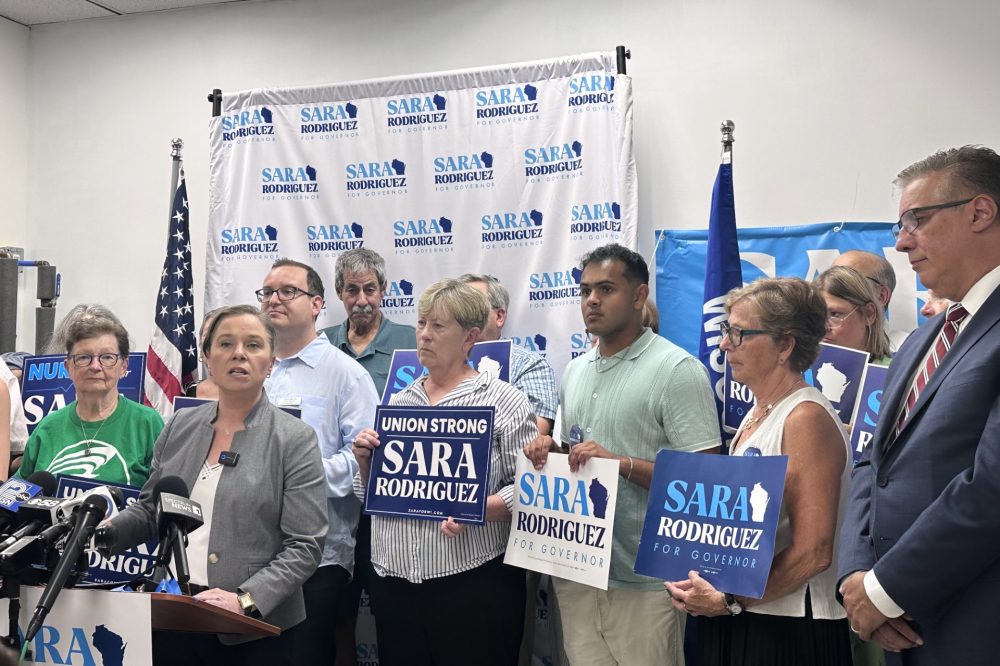
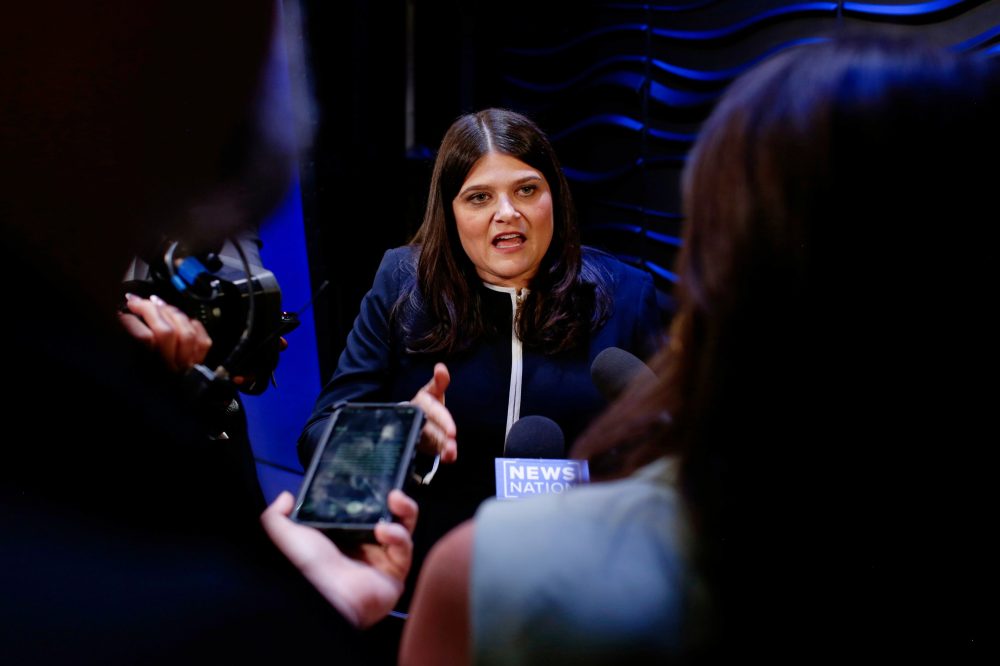
MADISON, Wis. — Wisconsin Democratic gubernatorial candidate Sara Rodriguez announced Monday that her campaign is holding far less money than she had believed, a discovery triggered when a planned television ad campaign failed to launch due to unpaid invoices.
Rodriguez, who currently serves as lieutenant governor, made the announcement late Sunday night that she had terminated her campaign manager, Kara Spencer, roughly one month before the August 11 primary election. The firing came after an internal review revealed that campaign contributions had been counted twice while expenses were underreported, leaving the campaign in a much weaker financial position than previously understood.
Standing alongside supporters at her campaign headquarters during a news conference Monday, Rodriguez made clear she has no intention of stepping aside.
“This campaign is going to move forward,” she declared at the event.
Rodriguez is locked in a competitive Democratic primary for Wisconsin’s open governor’s seat. Her opponents include democratic socialist Francesca Hong, former Lt. Gov. Mandela Barnes, and three other candidates. The primary winner will face Republican Rep. Tom Tiffany in the general election. Tiffany has only minimal opposition in his own primary.
The financial problems came to light after Rodriguez announced a $1 million television advertising buy last week. When those ads failed to appear on air as scheduled, she began asking questions — and that’s when the accounting discrepancies surfaced.
Rodriguez expressed deep frustration over the situation, directing her remarks at her now-former campaign manager. “I am hurt, angry and deeply disappointed by someone I trusted to run my campaign,” she said. “I was continually getting inaccurate reports from my campaign manager.” Spencer did not respond to a request for comment.
Rodriguez said her campaign immediately contacted the Wisconsin Ethics Commission on Monday and is cooperating with the agency to correct a financial report filed in January covering last year’s donations and expenditures. Her next campaign finance report, covering the first six months of this year, is due Wednesday.
The $650,000 Rodriguez reported raising in 2025 was the second-highest total among Democratic candidates in the race, trailing only Milwaukee County Executive David Crowley, who raised approximately $800,000. Crowley exited the race last week and endorsed Rodriguez — notably after she announced her $1 million ad buy. Former Democratic candidate and ex-state economic development director Missy Hughes also endorsed Rodriguez after ending her own campaign last month.
Rodriguez said the television ads that were supposed to begin running last week will now start airing next week. She declined to give a precise figure for how far off the campaign’s financial reports were, saying the reconciliation process is still underway. However, she disclosed that her campaign has raised approximately $1 million overall and currently has about $200,000 cash on hand.
Democratic rival Joel Brennan, a former top aide to Gov. Tony Evers, called the campaign’s financial errors “disqualifying.” Gov. Evers has not backed any candidate in the primary.
Rodriguez pushed back against any suggestion she was trying to conceal the problems. “If I were trying to hide something I would not be here today telling you about it,” she said. “Most people are not going to stand in front of this many cameras and microphones to talk about fixing an error.”
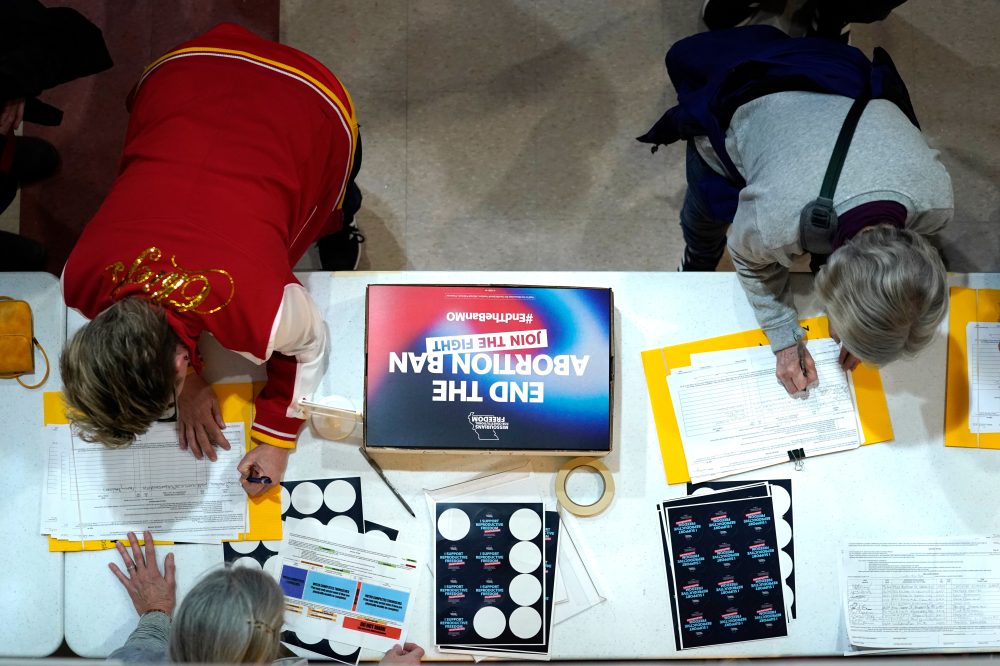
Four states will put abortion directly before voters this November, with Idaho joining Missouri, Virginia, and Nevada on the list after election officials confirmed an initiative qualified for the ballot.
Idaho’s secretary of state notified the group behind the effort in a letter Monday that the measure had met the requirements to appear on the November 3 ballot. The campaign, led by Idahoans United for Women and Families, shared that letter with The Associated Press.
If passed, the Idaho measure would permit abortion up until fetal viability — generally considered to occur sometime after 21 weeks of pregnancy, though no fixed point is established. The change would bring Idaho’s law closer to what existed before the Supreme Court’s 2022 decision overturning Roe v. Wade. Currently, Idaho is one of six states with a complete abortion ban that includes no exceptions for the health of the pregnant woman or girl. The ban does allow abortion to save a woman’s life or in cases of rape or incest. Idaho also made history in 2023 as the first state to criminalize helping a minor obtain an abortion without parental consent, a law that has largely held up in court despite legal challenges.
David Ripley, CEO of the anti-abortion organization Idaho Chooses Life, is gearing up to fight the measure. “This is going to have a profound impact on Idaho,” he said, “and will basically invalidate virtually every pro-life law that the legislature has enacted over the last 30 to 40 years.”
Missouri has its own unique history on the issue. It was the first state to begin enforcing a total abortion ban after Roe fell, and then in 2024, it became the first state to use a ballot measure to undo that ban. Even so, abortion access remained heavily restricted due to state regulations until a court ruling this past June blocked enforcement of many of those rules.
Now, in a state where Republicans hold dominant political power, voters are being asked to reverse the 2024 amendment and restore an abortion ban. The proposed ban would include exceptions for medical emergencies, fetal anomalies, and pregnancies resulting from rape or incest. Legal disputes over the ballot language have also played out in the state’s courts.
In Virginia and Nevada, voters are not deciding whether abortion will remain legal — it already is, through at least 24 weeks of pregnancy in both states. Instead, residents are being asked to enshrine abortion rights in their state constitutions. Supporters say the amendments could help drive voter turnout in competitive states where both parties have won statewide races in recent years.
Nevada voters already backed the amendment in 2024 by nearly a 2-to-1 margin, but the state constitution requires amendments to pass in two separate public votes before taking effect, which is why it appears on the ballot again.
Some abortion-rights advocates are pushing for laws that go further than Roe v. Wade by removing restrictions throughout pregnancy. In June, the National Abortion Federation — an organization of abortion providers — stated its opposition to “rigid legal cutoffs that ban or restrict abortion care at viability or arbitrary gestational lines.” The group does not fund political campaigns, but its stance may reflect the thinking of other organizations in the movement.
In 2024, South Dakota voters rejected a measure that would have banned third-trimester abortions, allowed some restrictions in the second trimester, and protected abortion rights in the first trimester. Most national abortion-rights organizations also declined to support it.
Since Roe was overturned, abortion-rights advocates have lost four statewide votes on reproductive rights and won 14 others.
Melanie Folwell, executive director of Idahoans United for Women and Families, had pointed words for national groups that choose to sit out certain ballot fights. “I would encourage them to get out of their bubbles of activism and actually begin to engage with the public on where folks are at,” she said.
WASHINGTON — When Sen. Chuck Schumer saw Sen. Lindsey Graham’s name appear on his phone, he said his heart skipped a beat.
It was shortly after the 2012 presidential election, a rough one for Republicans who had lost decisively to President Barack Obama. Graham was on the line with a bold idea — “getting the band back together” — pitching a bipartisan push for immigration reform.
That kind of move was pure Graham.
Over the years, colleagues gave him many labels: the “bridge,” the “dealmaker,” the senator always at the center of the action. Most recently, he earned the title of “the Trump whisperer.”
Graham brought a kind of energy to the Senate that kept the institution moving — talking, debating, even laughing — through his relentless drive to make things happen when gridlock seemed inevitable.
Following Graham’s sudden death over the weekend, senators on both sides of the aisle are left wondering who will step into that role — if anyone can.
Sen. Chris Coons, the Democrat representing Delaware, was among those paying tribute. He had celebrated Graham’s birthday over dinner following the NATO summit in Turkey just days before the South Carolina senator passed away.
“Few have been able to frustrate and anger, amuse and engage me in a single conversation the way Lindsey could,” Coons said. “I will miss having him as a partner in the Senate.”
While many lawmakers imagine themselves as central players, Graham was one of the rare few who truly was. His ability to adapt to shifting political winds allowed him to champion causes at home and overseas, and he made a habit of pulling others into the conversation.
There was hardly a bipartisan congressional group that didn’t include Graham — from the Gang of Eight he formed alongside Schumer and Sen. John McCain, which pushed immigration reform through the Senate in 2013, to a more recent effort to impose sanctions on Russia over its ongoing war against Ukraine.
At a moment when Congress struggles to carry out even its most basic functions — let alone maintain basic civility — Graham stood out as someone who worked to bring the two sides together.
The outpouring of tributes following his death, from prominent senators to lesser-known House members, spoke to just how wide his network of partnerships had grown.
Sen. Richard Blumenthal of Connecticut, who teamed up with Graham on the Russian sanctions legislation, reflected on the bond they shared. “We talked at all hours of the day or night, and traveled through all kinds of weather, meeting dictators and democracy defenders,” Blumenthal said.
Though their views often diverged, Blumenthal noted that Graham “listened to me and sought to bridge our differences.”
Graham wasn’t always successful, of course. There were plenty of moments when fellow Republican senators walked out of private party lunches simply shaking their heads at his latest attempt to break a legislative logjam.
His political flexibility drew critics, as did his strong support for military action abroad. His bipartisan immigration efforts with Schumer and Democrats left him largely shunned by the anti-immigration wing of his own party.
Perhaps most damaging to his reputation with some potential allies was his decision to reconcile with former President Trump — even after previously declaring their relationship over following Trump’s role in the January 6, 2021 Capitol attack.
Even so, Graham’s close relationship with Trump during the president’s second term kept him at the center of the action. Senators from both parties leaned on him to get a read on the White House’s thinking.
“Many of us consider him the Trump whisperer,” said Sen. Adam Schiff of California, who served as a manager during Trump’s first impeachment trial — a trial that ended in Trump’s acquittal by the Senate. “If we wanted to know what the president’s thinking was, or how he might be moved on something, you would go to Lindsey to discuss it,” Schiff said.
In a chamber filled with large personalities and even larger egos, Graham’s self-deprecating sense of humor helped ease tensions and soften divisions. He had “a wonderful sense of humor that he used to cut through the tension,” Schiff said.
Sen. Amy Klobuchar of Minnesota shared a personal story about seeking Graham’s support for legislation to secure visas for Afghan refugees. “I remember standing outside of a little phone booth in the Republican cloakroom last year as he spoke with the Vice President, holding up a sign that said ‘Save the Afghans’ and he put the phone on hold and said ‘OK OK I will go on your bill even if it gets me in trouble,’” she recalled. “I will miss him.”
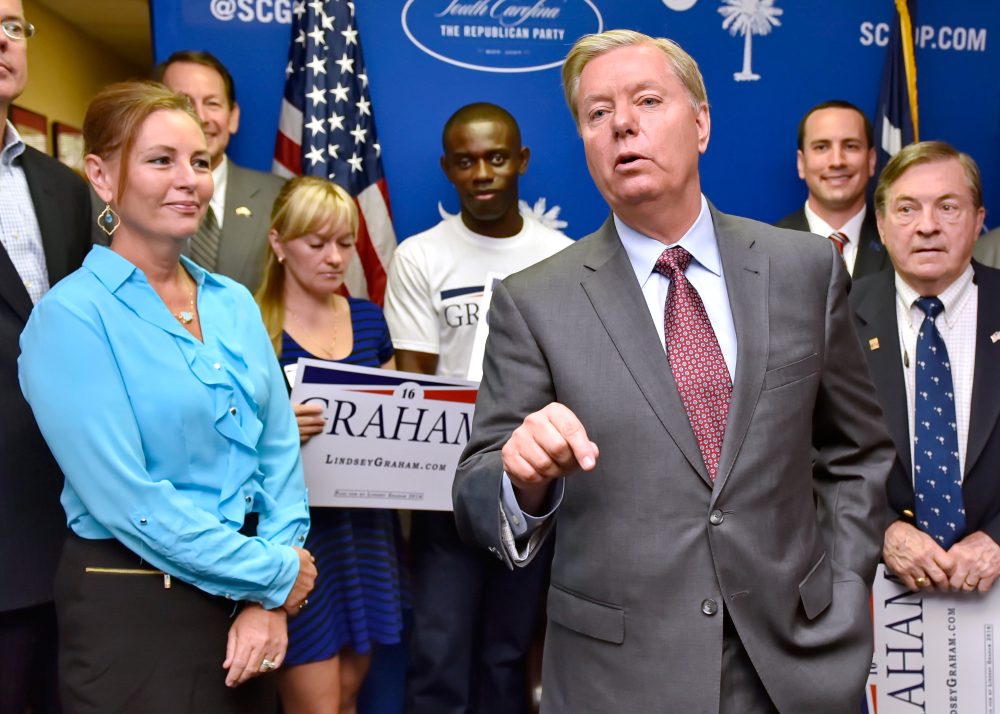
CHARLESTON, S.C. — Darline Graham Nordone has never held political office, but she has spent decades standing beside her brother, the late Sen. Lindsey Graham, through speeches, campaign appearances, and even television ads.
Now, following South Carolina Gov. Henry McMaster’s decision to appoint her to fill the Senate seat her brother left vacant when he died over the weekend, Nordone is heading to Washington to serve out the remaining months of his term through January.
A special primary scheduled for next month will determine which Republican candidate advances to face Democrat Annie Andrews in the general election in November.
The story of how these two siblings came to be so deeply connected begins with tragedy. Their mother passed away in 1976 after a battle with Hodgkin’s lymphoma. Just fifteen months later, a then-13-year-old Darline discovered her father after he died of a heart attack in his sleep.
At the time, Lindsey Graham was a young man just starting law school at the University of South Carolina. Faced with the loss of both parents, he redirected his focus toward making sure his sister was taken care of, making regular trips from Columbia to Seneca, where relatives were looking after her, and eventually becoming her legal guardian.
“I can remember the day my father passed away, standing in the living room of that house, absolutely scared to death,” Nordone told NPR in 2015. “Lindsey wrapped his arms around me and promised me he would always be there for me and always take care of me.”
After Graham became a military lawyer in the Air Force, he went a step further and formally adopted his sister so she could receive his military benefits. Graham never married or had children of his own, and during his 2016 presidential run, he once joked that his sister could be part of a “rotating” group of women serving as White House hostess in the role of first lady.
Their close relationship was on full display in March of this year when Nordone stood beside her brother as he filed his candidacy paperwork for re-election, surrounded by her children and grandchildren.
“What have I learned in this life I’ve led? I take nothing for granted. I count every blessing, every day,” Graham said at that event, reflecting on the journey he and his sister had shared. “I understand what a blessing my life has been and the only way I can pay you back for the blessings I’ve received is to be the most thoughtful, relevant, aggressive senator.”
Nordone went on to marry, raise children, and become a grandmother. She has also worked with people with disabilities. Speaking to C-SPAN in 2015, Graham described his sister’s success as “the highlight of it, by far” when reflecting on his own life.
Bob McAlister, a former campaign consultant to Graham, said the hardships the siblings endured growing up shaped who Graham was at his core.
“He grew up with nothing,” McAlister said. “The back of the bar where he and his sister grew up was always kind of top of mind to him. … And I think the way he and Darline grew up just had an indelible impact on him, and for some reason, it gave him the drive that he had to do what he did.”
McAlister added: “A lot of people have different ideas about Lindsey from what they’ve seen on TV and all that, but everything about him can be traced back to his boyhood, the way he grew up, the way he took care of his sister.”
Nordone appeared in a 2014 campaign ad as Graham sought a third Senate term, speaking to the promise he made her after their parents died.
“He never let me down. Never. I don’t see how he did it, to take on the responsibility of raising a little sister,” Nordone said in the ad. “That came from within for Lindsey.”
Hours before Gov. McMaster made his official announcement, President Donald Trump posted on social media that he had personally recommended Nordone for the appointment, describing it as “a fabulous tribute to Lindsey, who loved her dearly!”
A community of Black residents in historic North Nashville, Tennessee, is pushing back against a redistricting plan enacted by state lawmakers — one they say echoes a painful chapter from their past.
The new district boundaries carve up the neighborhood along the very same line where a highway divided the community roughly 60 years ago. Residents argue that just as that road fractured their neighborhood decades ago, the redrawn political map is now doing the same thing — and with the same effect of reducing their power at the ballot box.
For many in the community, the parallel is impossible to ignore. The redistricting, they say, is not simply a matter of political geography — it feels like a deliberate effort to once again dilute the influence of Black voters in the area.
The sudden passing of Sen. Lindsey Graham on Saturday night triggered a wave of unfounded conspiracy theories on social media, with many users falsely claiming that his death was the result of criminal activity.
Online posts pointed fingers at several foreign governments — including Russia, Iran, Ukraine, and Israel — accusing them of orchestrating Graham’s death. Other claims suggested his travel schedule made it physically impossible for him to have died in Washington, while some pointed to FBI involvement with local authorities as supposed proof that something sinister had occurred.
However, early findings from a medical examiner tell a very different story.
CLAIM: Sen. Lindsey Graham was killed as the result of criminal actions.
THE FACTS: This claim has no basis in evidence. Graham, who was 71 years old, died from a tear in his aorta, according to a preliminary medical examiner’s finding released by his office. A final, official cause of death will be determined after toxicological and microscopic testing is completed.
The tear — known medically as an aortic dissection — occurred in the inner wall of his aorta and was connected to arterial hardening. Graham’s office had initially described the cause as a “brief and sudden illness.”
Numerous posts on social media blamed foreign nations for his death. One widely shared post on X read: “Graham inspected a drone factory in Ukraine yesterday. Russia blew up that facility today. Then, tonight, it is announced that Graham is dead of a ‘sudden illness.’ No more details. I’d say there is a decent chance that Russia blew up Lindsey Graham.”
Another post on the same platform claimed, referencing Israel’s national intelligence agency: “Most realistic it was Mossad job in order to push Trump to renew full scale war with Iran. It clearly means ‘you are the next’. Lindsey Graham was the shadow of Trump, his black self.”
Graham had been a prominent voice on foreign policy in Washington. On Friday, during a visit to Ukraine, he announced an agreement with the Trump administration to advance a package of Russia sanctions. He was also among the strongest supporters of Trump’s military posture toward Iran, having long advocated for direct confrontation between the U.S. and Tehran. Graham was a staunch ally of Israel, and his stance on the war in Gaza drew criticism from many in the Middle East, including some U.S. allies who favored a diplomatic approach.
Additional social media posts questioned whether Graham could have traveled back from Ukraine quickly enough to have died in Washington, and suggested that FBI activity near his home pointed to a cover-up.
FBI Director Kash Patel addressed the bureau’s involvement in a Sunday morning post on X, writing that “the FBI is assisting local authorities and has made every necessary resource available.” When asked for further clarification on Monday, the FBI responded that it had “nothing to add.”
Misinformation experts say it is not unusual for false narratives to gain traction following major news events. Callie Kalny, an assistant professor of communication at the University of Kentucky, explained why Graham’s death was particularly vulnerable to conspiracy theories: “The sudden death of a high-profile, polarizing figure like Lindsey Graham is especially fertile ground for conspiracy theories in part because it generates intense emotional reactions — shock, grief, anger, even relief or schadenfreude — depending on where someone stands politically. Under these circumstances, a dramatic explanation about Graham’s death — for instance, that a foreign adversary was involved — might simply feel more compelling or more emotionally satisfying than the reality of an aortic dissection.”
WILMINGTON — Governor Matt Meyer has ordered United States and Delaware flags at state-owned buildings and facilities to be flown at half-staff in memory of U.S. Senator Lindsey Graham.
The directive, which took effect immediately, was issued in alignment with a proclamation from President Trump following the senator’s passing. Flags will remain lowered until Saturday, July 18 at 6:00 p.m. Eastern Time.
WASHINGTON — A federal judge delivered a blistering rebuke Monday of President Donald Trump’s lawsuit against the Internal Revenue Service, declaring that the case was brought for an “improper purpose” and calling for attorney sanctions and disciplinary proceedings.
U.S. District Judge Kathleen Williams issued the strongly worded ruling, describing the lawsuit — which centered on Trump’s leaked tax returns — as a form of self-dealing, since the president effectively controls the very agency he sued.
The legal battle wrapped up in May with a settlement that established a $1.776 billion fund intended to compensate individuals and groups aligned with the president. The settlement also included protections shielding those parties from tax audits, though the fund has since been abandoned.
In her ruling, Judge Williams wrote: “The nature of the suit itself and the conduct of the Parties and counsel from its filing make plain that this was an attempt to use the Court to provide some legitimacy to an agreement to confer immunity to people and entities affiliated with the President and to earmark billions of dollars from American taxpayers to redress grievances not defined in the law.”
A federal judge has struck down a settlement between President Donald Trump and the Internal Revenue Service, according to a court filing made public on Monday.
In addition to voiding the agreement, the judge referred the president’s lawyer as well as senior officials from the Justice Department to state bar authorities — the bodies responsible for overseeing attorney conduct and professional licensing.
WASHINGTON — The Trump administration is moving to further restrict access to the U.S. banking system for people living in the country without legal authorization, this time by targeting financial institutions that extend loans to undocumented borrowers.
A coalition of federal banking regulators is scheduled to release new guidance on Monday, reminding banks and other lending institutions of their know-your-customer obligations — particularly when it comes to managing credit risk involving borrowers who are not legally permitted to work in the United States.
The announcement is expected to come jointly from three federal agencies: the Office of the Comptroller of the Currency, the Federal Deposit Insurance Corporation, and the National Credit Union Association. Together, they are warning that undocumented individuals may be unable to repay loans if they are deported, and that lending to such borrowers represents a broader risk to the financial system.
This latest move is part of a broader pattern. Over the past nine months, the Trump administration has rolled out a series of measures designed to strongly discourage banks from doing business with undocumented individuals — stopping short of an outright mandate, but sending a clear signal to financial institutions.
The effort traces back to an executive order signed by President Donald Trump in May, which directed banks and financial regulators to scrutinize the citizenship status of their customers. That order set off the current wave of banking policy changes, instructing regulators and government agencies to look for signs of undocumented individuals opening accounts, obtaining loans, or applying for credit cards.
According to a news release, Monday’s guidance advises banks to “identify, measure, monitor, and control these risks through safe and sound underwriting practices that assess a borrower’s willingness and capacity to repay according to the terms of the credit obligation.”
Also in May, the Treasury Department’s financial crimes unit — commonly referred to as FinCEN — sent an advisory to banks urging them to be on alert for identity theft, payroll tax fraud, and money laundering connected to the employment of unauthorized workers. That advisory listed more than a dozen warning signs that may indicate a customer is in the country illegally.
The White House has pursued additional financial restrictions as well. Last November, the Treasury Department announced plans to reclassify certain refundable tax credits as “federal public benefits,” a move that would bar some immigrant taxpayers from receiving those credits — even if they file and pay taxes and would otherwise be eligible.
Tax policy experts noted that recipients of Deferred Action for Childhood Arrivals — commonly known as DACA — as well as immigrants holding Temporary Protected Status, would likely be impacted by that planned change.
There is currently limited data available on how many undocumented individuals hold bank accounts or carry loans through U.S. financial institutions.
WASHINGTON — President Donald Trump announced Monday that he has put forward Lindsey Graham’s sister to temporarily fill the South Carolina Senate seat left vacant by the late senator’s passing.
Trump made the recommendation public through a post on Truth Social, addressing it directly to Governor Henry McMaster. “I recommended, to Governor Henry McMaster, Lindsey Graham’s wonderful sister, Darline, to serve as interim Senator from the Great State of South Carolina. This would be a fabulous tribute to Lindsey, who loved her dearly!” the president wrote.
The passing of Republican Sen. Lindsey Graham has left South Carolina with only one sitting senator, trimmed the Republican Party’s working majority in the U.S. Senate, and set in motion two separate political processes: the appointment of a temporary replacement and the selection of a new GOP candidate for the November election.
Graham, who was 71 years old, died on Saturday after returning from a trip to Ukraine. A preliminary finding from the Office of the Chief Medical Examiner in Washington determined that he suffered an aortic dissection — a tear in the wall of the body’s main artery — linked to arteriosclerotic cardiovascular disease. That finding is still considered preliminary while additional testing is completed.
The day before he died, Graham had met with Ukrainian President Volodymyr Zelenskyy in Kyiv to discuss Ukraine’s air-defense needs and potential sanctions against Russia. His death removes one of Washington’s most vocal Republican advocates for both Ukraine and Israel, and leaves unfinished a sanctions bill targeting Moscow that he had been developing alongside Democratic Sen. Richard Blumenthal.
Graham had been on the ballot for reelection on November 3. His current six-year term was set to end on January 3, 2027, and he had already secured the Republican nomination for a fifth term after winning South Carolina’s June 9 primary. He had been scheduled to face Democratic nominee Dr. Annie Andrews in the fall.
South Carolina now faces two distinct decisions: who will serve out the remaining months of Graham’s current term, and who will replace him on the Republican ballot for the next six-year term.
Who Names Graham’s Temporary Replacement?
Under the 17th Amendment to the U.S. Constitution, states may allow their governors to make temporary Senate appointments when a seat becomes vacant due to death, resignation, or expulsion. Not all states use this system — some do not permit standard gubernatorial appointments at all.
South Carolina does give its governor that authority. Republican Gov. Henry McMaster is therefore expected to name someone to fill the seat through January 3, 2027. That appointee may choose to run for the full term, but simply being appointed does not hand them the Republican nomination.
As of Monday morning, no announcement had been made. McMaster could choose someone who plans to compete in the upcoming primary — giving that person both incumbency status and immediate Senate access — or he could pick a caretaker who agrees not to seek the seat long-term.
South Carolina Republicans are expected to hold a special primary on August 11. Candidate filing is set to open July 21, and if no candidate receives a majority, a runoff would follow on August 25. The winner would then face Andrews and any other qualifying candidates in November.
South Carolina has become a reliably Republican state, meaning the eventual GOP nominee would enter the general election as the frontrunner. However, Graham’s death introduces more uncertainty than would exist with an established incumbent on the ballot.
The tight timeline could also create logistical headaches. Federal law generally requires states to send ballots to military and overseas voters at least 45 days before a federal election, leaving officials very little time to prepare ballots following a potential August 25 runoff.
Do All States Handle Senate Vacancies the Same Way?
No. The rules governing Senate vacancies vary widely from state to state.
The 17th Amendment leaves it to each state legislature to decide whether its governor can make a temporary appointment. In most states, the governor can appoint someone who serves until a special or regularly scheduled election fills the seat. Some states require the appointee to belong to the same party as the senator who left, while others require the governor to choose from a list submitted by that party. A smaller number of states simply leave the seat empty until voters elect a successor.
South Carolina does not appear to have a same-party requirement, though there is virtually no possibility that McMaster — a committed Republican — would appoint a Democrat or independent.
What Happens When a House Member Dies?
House vacancies work differently. The Constitution requires that every vacant House seat be filled through an election. A governor cannot appoint a temporary representative, even if a congressional district goes without a voting member for several months.
Instead, the governor calls a special election under state law. Until the winner is sworn in, the former representative’s office typically continues offering limited constituent services under the oversight of the House clerk.
This difference reflects the original design of the Constitution: senators were once chosen by state legislatures and serve six-year terms, while House members have always been directly elected and serve two-year terms.
Who Is Gov. Henry McMaster?
Henry McMaster, 79, is a traditional Southern conservative and a close ally of President Donald Trump. He previously served as South Carolina’s attorney general and lieutenant governor before becoming governor in 2017, when then-Gov. Nikki Haley joined the Trump administration.
During the 2016 Republican primary, McMaster was among the earliest prominent elected officials to endorse Trump. He has generally aligned with Trump on immigration, taxes, abortion, judicial appointments, and disputes between the federal government and states.
McMaster is not typically associated with the party’s libertarian wing or with anti-establishment conservatives who built careers by challenging Republican leadership from the right. He is better described as a conventional establishment conservative who aligned himself early and firmly with Trump.
The governor is term-limited, and South Carolina Attorney General Alan Wilson recently won the Republican nomination to succeed him.
McMaster was also a personal ally of Graham and had agreed, along with Sen. Tim Scott, to co-chair his reelection campaign. That relationship could lead him toward appointing someone who broadly shares Graham’s national-security outlook rather than someone who rose to prominence by attacking Graham from the right. That said, this remains an inference — the governor has not publicly stated any criteria for the appointment.
Who Might McMaster Appoint?
As of Monday, McMaster had not announced his pick, and any firm prediction would be premature.
Names being discussed include Lt. Gov. Pamela Evette and Republican Reps. Russell Fry, Nancy Mace, and Ralph Norman. The vacancy comes just weeks after a competitive Republican gubernatorial primary left several prominent conservatives with statewide campaign organizations and unmet political ambitions.
Mace, who lost that primary, is reportedly weighing a run for the Senate seat. Norman has also been mentioned but would need to consider the impact of leaving his House seat while Republicans hold a narrow majority. Rep. Joe Wilson has indicated he is not interested in either the appointment or the nomination.
Fry represents a safely Republican district and has close ties to Trump’s political network. Evette has already run statewide and would allow McMaster to appoint the first woman to represent South Carolina in the Senate, though her recent primary loss could work against her.
McMaster could opt for a neutral caretaker, allowing primary voters to pick the long-term nominee without any candidate having an incumbency advantage. Alternatively, he could appoint the person he and Trump would prefer to see win in August.
A Republican appointment is considered a near-certainty. Trump has suggested he has a preferred candidate in mind but has not publicly named that person.
Does Graham’s Death Change Who Controls the Senate?
Not by itself.
Before Graham’s death, Republicans held 53 Senate seats. Democrats held 45, and two independents caucused with them. The vacancy drops formal Republican membership to 52, while the Democratic-aligned bloc remains at 47. McMaster’s appointment will likely restore the split to 53-47.
The party’s practical voting margin is narrower, however, because Kentucky Republican Sen. Mitch McConnell is also absent from Washington while recovering from a serious fall and hospitalization. With Graham’s seat empty and McConnell unavailable, Republicans may have only 51 members able to vote against 47 in the Democratic-aligned bloc.
That is still enough to win on party-line votes, but it gives Senate leaders less room for defections. The tighter margin could affect confirmation votes, budget negotiations, defense spending, and efforts to advance the Russia-sanctions legislation Graham had championed.
Partisan control would only change if McMaster did something politically unthinkable and appointed a non-Republican.
What Do We Know About McConnell’s Condition?
McConnell, 84, was hospitalized after falling at his Washington home on June 14 and briefly losing consciousness. His office and physician reported that testing found no concussion, fracture, stroke, or heart attack. Doctors later identified mild pneumonia, which responded to antibiotics.
After several weeks of public silence, McConnell released a statement Sunday along with a photograph of himself with his wife, Elaine Chao. He acknowledged that longstanding mobility issues had contributed to several falls over the past year.
A childhood case of polio left McConnell with a permanent impairment in his left leg. He has experienced multiple falls in recent years, including one in 2023 that resulted in a concussion and a fractured rib.
McConnell has since left the hospital for an inpatient rehabilitation facility, where he is undergoing intensive physical therapy to rebuild strength and lower the risk of another fall. He says he is “regaining” strength but is not yet able to return to Washington or cast votes. No timeline has been given for his return.
He has not been seen publicly since his June hospitalization but says he remains engaged in Senate and Kentucky matters through his staff and conversations with colleagues.
Claims that McConnell is in a coma, brain-dead, or secretly deceased are not supported by any available evidence. Early emergency dispatch reports referencing an unconscious person or a possible cardiac arrest helped fuel speculation, but such reports do not constitute medical diagnoses. No independently released medical record allows the public to verify every detail provided by his office.
McConnell has said he intends to complete his term, which ends January 3, 2027, and had previously announced he would not seek reelection. The available evidence points to serious physical frailty and an uncertain recovery — not any publicly established cognitive incapacity.
Why Can’t McConnell Simply Be Declared Incapacitated?
Congress has no equivalent of the 25th Amendment.
That amendment provides a process for transferring presidential authority when a president is unable to carry out the duties of the office. No comparable constitutional mechanism exists for senators or House members. A physician, governor, party leader, or group of colleagues cannot declare a senator incapacitated and install a replacement.
McConnell’s seat remains legally occupied unless he resigns, dies, or is expelled. His inability to attend votes — even over an extended period — does not by itself create a vacancy.
The Senate can expel a member by a two-thirds vote. In theory, that power could be used against someone permanently unable to serve. In practice, expulsion has historically been used as punishment for serious misconduct or disloyalty, not as a response to illness, and it has never been invoked solely because of incapacity.
The chamber could theoretically try to address an extraordinary case through its constitutional rulemaking and disciplinary authority, but no established procedure, medical standard, or neutral body exists to determine that a senator can no longer serve. Attempting to create such a process for one member would almost certainly trigger major constitutional and partisan battles.
One unusual precedent from the House dates to 1981, when that chamber declared the seat of Maryland Rep. Gladys Noon Spellman vacant after she suffered a heart attack, fell into a coma, and was unable to take the oath of office for a new term. Spellman never regained consciousness and died in 1988, nearly eight years after the heart attack. That episode remains the only time the House has vacated a seat due to a member’s physical or mental inability to serve, and it does not establish a clear procedure for the Senate.
McConnell could choose to resign voluntarily, which would trigger Kentucky’s vacancy law. But neither the governor nor Senate Republican leaders can force him to step aside simply because another senator would be more reliably present for votes.
The constitutional system is well-suited to replacing lawmakers who have died but poorly equipped to handle living members who can no longer carry out their duties. McConnell’s condition may prevent him from returning to regular Senate work, but the information made public so far provides no legal basis for declaring his seat vacant.
WASHINGTON — The Trump administration has begun a coordinated push to neutralize what it views as a threat posed by the International Criminal Court to American sovereignty, according to a State Department official who spoke Monday.
The United States has long opposed the ICC’s authority to investigate or prosecute American citizens, especially military members. Both President Donald Trump and former President George W. Bush have historically argued that the court should have no jurisdiction over Americans. A Reuters investigation earlier this year revealed that the Trump administration had supported sanctions against ICC officials, partly as a way to shield Trump and members of his administration from potential accountability for U.S. military operations abroad.
The State Department official, who requested anonymity, said the administration is weighing a broad set of measures against the court. Those options include travel restrictions, visa revocations, expanded sanctions targeting the ICC and organizations connected to it, and diplomatic efforts to convince other countries to leave the court entirely.
The ICC was created in 2002 through an international agreement to prosecute individuals accused of war crimes, genocide, and crimes against humanity. The court only steps in when a member nation is either unable or unwilling to pursue prosecution on its own. The United States has never joined the court as a member.
Trump’s opposition to the ICC is not new — it dates back to his first term in office. Tensions flared again after his re-election in November 2024, when the ICC issued an indictment against Israeli Prime Minister Benjamin Netanyahu, a close Trump ally. The administration subsequently moved to impose sanctions on ICC judges.
Last month, three ICC judges filed a lawsuit against Trump and his administration, challenging those sanctions as unlawful.
The State Department official confirmed Monday that Secretary of State Marco Rubio and other senior U.S. officials are actively pressuring foreign governments as part of a broader strategy “to diplomatically isolate the International Criminal Court and ensure it cannot target Americans.”
In March 2020, ICC prosecutors launched an investigation into events in Afghanistan that included scrutiny of possible crimes committed by U.S. military personnel. However, since 2021, the court has shifted its focus away from American actions and toward alleged crimes by the Afghan government and Taliban forces.
Countries that rely on U.S. law enforcement partnerships, host American military forces, or fall under the U.S. security umbrella are being asked to formally reject the ICC’s claimed authority to prosecute American officials and service members, the official said.
Nations that continue to support the ICC while depending on U.S. assistance could face increased scrutiny, the official warned.
“We will watch with interest which nations join ranks with us against this threat to Americans who are willing to risk their lives to protect others,” the official said.
A push to add abortion rights to Delaware’s state constitution has hit a major roadblock. The state legislature wrapped up its session and went into recess without ever bringing the proposed amendment to a vote, leaving supporters empty-handed for now.
The setback does not permanently kill the effort, but it does mean those backing the measure will have to wait until the next legislative session before they can try again.
Adding anything to Delaware’s constitution is no simple task. Any proposed amendment must be approved by a super-majority of the legislature — and that has to happen in two consecutive general election cycles. Because lawmakers adjourned without acting on this measure, the process is back at square one.
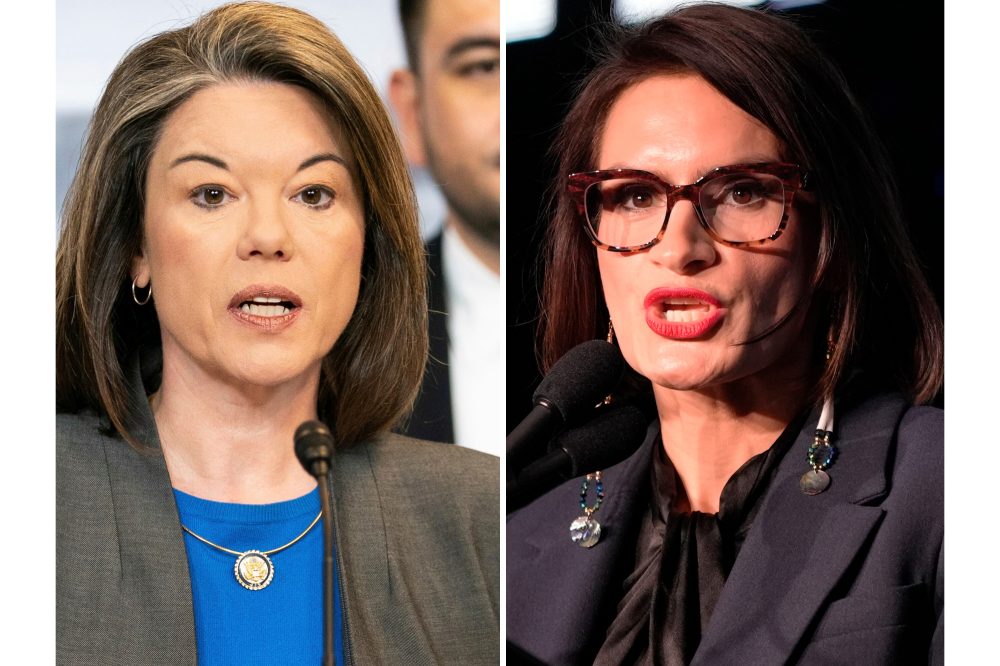
ST. PAUL, Minn. (AP) — Minnesota may have a reputation for friendliness, but that spirit is nowhere to be found in the state’s Democratic U.S. Senate primary contest.
The two frontrunners — U.S. Rep. Angie Craig and Lt. Gov. Peggy Flanagan — have been at each other’s throats over questions of electability, connections to corporate money, and how aggressively each would challenge President Donald Trump’s administration in Washington. The race has drawn millions of dollars in political advertising and has come to symbolize a much larger fault line running through the Democratic Party.
This increasingly contentious matchup is one of several upcoming contests pitting progressive Democrats against more centrist opponents. August primaries in Minnesota, Michigan, and Wisconsin will serve as another barometer of how fed up Democratic voters are with the party establishment. The results across the Upper Midwest could also test whether hard-left candidates can win outside of their traditional strongholds.
Following a string of notable progressive wins earlier this year, Democratic Party leaders are expressing concern that insurgent candidates could hurt the party’s image and jeopardize its chances of winning back either chamber of Congress this fall — or holding onto a governor’s seat in a key battleground state before the 2028 presidential race. Progressive advocates, meanwhile, insist that recent election results validate their approach as the party’s best way forward.
Flanagan, who has earned the backing of progressive Sens. Bernie Sanders of Vermont and Elizabeth Warren of Massachusetts, held a press conference last week to call out what she described as “secretive dark money groups and special interests” that she claims are operating in the Minnesota race to benefit Craig, a more traditional Democrat who has the support of House Minority Leader Hakeem Jeffries of New York and other senior party figures.
“What we are facing right now in our party,” Flanagan told The Associated Press, “is the very folks who are standing in the way of the things that people need to be able to afford their lives, who are Democrats, are funded by these corporate special interests. That is the choice I think that we have, and people are onto it.”
Craig has fired back, pointing out that Flanagan raised campaign money from major corporations while she was chair of the Democratic Lieutenant Governors Association. Craig also argues that if Flanagan wins the nomination, Republicans would hammer her over her connection to an active fraud investigation into the state’s Medicaid programs.
“The coalition we’re building is people in Minnesota who understand that in order to stop Donald Trump, we’ve got to win elections,” Craig told the AP. She cautioned that Minnesota is frequently underestimated as “the very definition of a swing state, and we simply can’t take this U.S. Senate seat for granted.”
Craig defended accepting corporate donations, arguing that Democrats cannot unilaterally disarm while Republicans continue drawing heavily from wealthy contributors. She said she supports sweeping campaign finance reform to limit the influence of money in politics — but added a caveat.
“But until we get to that day, it’s naive to think that we’re not going to need resources,” Craig said.
The Minnesota primary, where both Craig and Flanagan are competing for the seat being vacated by Democratic Sen. Tina Smith, is scheduled for Aug. 11. Wisconsin will also hold its primary that same day, one week after Michigan voters pick their nominees on Aug. 4.
In Michigan, Rep. Haley Stevens is squaring off against progressive Abdul El-Sayed for the Democratic Senate nomination in a race the party must win to keep the seat held by retiring Sen. Gary Peters, who has thrown his support behind Stevens. Meanwhile in Wisconsin, democratic socialist state Rep. Francesca Hong has gained significant momentum in the Democratic gubernatorial primary, challenging more conventional candidates including former Lt. Gov. Mandela Barnes and current Lt. Gov. Sara Rodriguez.
In each contest, progressive forces are hoping to demonstrate that an economically populist message can resonate with voters beyond the deeply liberal urban areas where they’ve recently found success, such as New York City and Denver. Democratic leaders, however, fear that these insurgent candidates risk throwing away winnable races with messages that many voters may see as too extreme.
Craig also took aim at progressives for what she called reckless gambles with Democrats’ Senate prospects due to weak candidate vetting. She pointed to the recent collapse of Graham Platner’s campaign — Platner had easily captured the Democratic Senate nomination in Maine in June but stepped away from the race last week following a sexual assault allegation, which he denies.
“We just saw one of our best Senate opportunities go down in flames in Maine, potentially, with that same coalition,” Craig said.
“And many of the same people are working on the lieutenant governor’s campaign as Graham Platner’s campaign,” Craig continued. “My coalition is statewide. I’m going everywhere. I’m talking to everyone. I’m working to bring people back to the (Democratic Party).”
In the wake of the Platner fallout, progressives are treating the Upper Midwest Senate races as a critical opportunity to influence the makeup of the Democrats’ Senate caucus and validate their electoral strategy heading into the midterms.
“Abdul El-Sayed was already the most important primary candidate in the nation, and this underscores the importance of that race, both in the primary and the general,” said Adam Green, co-founder of the Progressive Change Campaign Committee, a political action committee supporting both Flanagan and El-Sayed.
The organization sees this year’s Senate contests in Michigan and Maine as crucial tests of whether progressive messaging and organizing can hold up in genuinely competitive races — a key question as the party looks ahead to its 2028 presidential primary.
“Our hope is to not have an outlier but a pattern of shake-up-the-system economic fighters who win tough swing state elections,” Green said.
The Upper Midwest has a long tradition of populism stretching back decades, having produced both progressive and conservative populist figures, according to Steven Schier, a political science professor at Carleton College in Northfield, Minnesota. The region was historically a model for reform-minded policies during the Progressive Era, but it also sent some of the most fiercely conservative Cold War voices to Washington, including Sen. Joseph McCarthy of Wisconsin.
“What’s interesting about the Upper Midwest is that you get well-developed and articulated left populism, and well-developed and articulated right populism in competition and combat. It produces some very lively election seasons,” Schier said.
In more recent years, the Great Lakes region has emerged as the nation’s premier political battleground, with state legislatures and presidential outcomes alternating between the two parties over the past decade. Regardless of who ultimately wins, the results of these midterm primaries will send shockwaves through national politics.
“This culture will take broad concerns that populists bring up and trumpet them throughout the electoral system, and that’s true on both the right and the left up here,” Schier said.
President Donald Trump’s latest financial disclosures reveal a striking contrast: while he and his two eldest sons were publicly urging investors to put their money into cryptocurrency projects, his own financial managers were quietly shifting a large portion of those earnings into more conservative investments.
According to filings submitted to the U.S. Office of Government Ethics, Trump took in more than $1.4 billion last year from his family’s crypto ventures, including World Liberty Financial and the Trump meme coin.
A Reuters review of his financial holdings over the past two years found that his stock and bond portfolios grew at least fourfold during the same period that crypto revenues were pouring in. By the end of 2025, Trump held between $703 million and $2.6 billion in traditional financial assets — a dramatic jump from the $225 million to $608 million he reported at the close of 2024. The filings use value ranges rather than exact numbers, so a precise breakdown of how the crypto earnings were redistributed could not be determined.
Nine digital asset experts who reviewed the Reuters analysis concluded that Trump’s personal financial behavior suggests he does not view cryptocurrency as a reliable long-term place to store his wealth. Notably, he did not report purchasing shares in two publicly traded crypto companies backed by his sons Eric Trump and Donald Trump Jr.
Timothy Massad, director of the Digital Assets Policy Project at the John F. Kennedy School of Government at Harvard University — and a former chairman of the Commodity Futures Trading Commission under President Barack Obama — offered a pointed assessment. “Although the President talks about digital assets as the frontier of finance and making the United States the crypto capital of the world, the disclosure form suggests his personal strategy is to make a quick buck from crypto — through the sale of his meme coin and World Liberty tokens — but then invest his profits in traditional assets like stocks and bonds,” Massad said.
A Reuters report published last month found that retail investors who put money into the four main Trump-endorsed crypto projects had collectively lost $2.3 billion as of April.
Trump’s filings do show he still holds a substantial amount of digital tokens. As of the end of last year, he held 15.75 billion World Liberty crypto governance tokens valued at more than $50 million — tokens he received in exchange for his role in the company. As a co-founder, he faces a longer waiting period before he can sell those holdings compared to the general public.
The companies managing Trump’s stakes in World Liberty Financial and the Trump meme coin project held at least $160 million in bitcoin and ether — the two most widely used cryptocurrencies — along with up to $6 million in other tokens at the end of 2025. That represents a significant increase from the $1 million to $5 million in ether he reported holding at the end of 2024.
A spokesperson for the family business said in a statement that the president’s financial disclosure “demonstrates that The Trump Organization continues to maintain a strong financial position, supported by world class, valuable assets, substantial liquidity and a conservative balance sheet.” The spokesperson did not address why crypto proceeds were being moved into traditional financial instruments.
The White House told Reuters that the president’s assets are held in “fully discretionary accounts managed by independent third-party financial institutions.”
A World Liberty spokesman, David Wachsman, stated: “World Liberty has been built for the long-term and we strongly believe the future of financial services will be architected with digital asset technology.”
Trump’s children oversee the trust that holds the president’s assets and have been among the loudest champions of his crypto projects. Since November 2024, Eric Trump — who heads the Trump Organization — has repeatedly told media outlets and conference audiences that bitcoin is “the greatest asset” of the modern era and predicted it would eventually reach $1 million in value, compared to roughly $64,000 at current prices. Eric Trump also said last year that his father “believed in digital assets in a big way.”
Neither Eric Trump nor Donald Trump Jr. responded to requests for comment regarding the president’s investment decisions.
The White House is preparing to gather electric utility companies and data center developers for a voluntary commitment aimed at preventing the rapid rise in electricity demand from artificial intelligence from driving up power bills for everyday consumers and businesses, according to three people with knowledge of the plans.
An announcement event is expected within the next few weeks, with multiple companies set to participate and pledge that existing ratepayers will not be left footing the bill for AI-driven infrastructure expansion. The list of attendees is still being put together, sources said.
The White House did not respond when asked for comment.
Data centers require enormous amounts of electricity, and their surging power needs have led regulators, consumer advocates, and state lawmakers across the country to raise alarms that ordinary households could end up covering the cost of grid upgrades that primarily benefit some of the world’s biggest technology companies. That backdrop has fueled skepticism about whether any voluntary pledge will result in meaningful action or amount to little more than a public relations gesture.
President Donald Trump’s administration has been pushing hard to speed up the buildout of AI infrastructure and is eager to sidestep any political fallout that could come from higher electricity bills hitting American families.
Earlier this year, Amazon, Google, Meta, Microsoft, OpenAI, Oracle, and xAI signed a voluntary “Ratepayer Protection Pledge” at a White House ceremony. Through that agreement, the companies committed to paying for the electricity infrastructure their AI operations require rather than shifting those expenses onto existing utility customers. That included contributions toward new power generation, grid upgrades, and costs related to reserved but unused capacity.
The upcoming event is expected to expand on those earlier commitments by pulling in electric utilities, companies that construct and run data centers on behalf of major tech firms, and governors from states that are at the forefront of building out the power infrastructure needed to handle the anticipated surge in electricity demand.
Administration officials have maintained that the United States can only win the global competition in artificial intelligence by rapidly growing its electricity generation and transmission capacity — but that consumers should not be made to pay for that growth. The White House has framed the initiative as a way to reassure the public that expanding AI investment does not have to mean higher energy costs.
Outgoing Michigan Sen. Gary Peters announced Monday that he is endorsing U.S. Rep. Haley Stevens in the Democratic primary race to fill his Senate seat, joining a broader push by party leaders to boost her chances against progressive challenger Abdul El-Sayed ahead of next month’s vote.
Peters, who is stepping down after serving 12 years in the Senate, said Stevens “will be ready on day one to fight for Michigan.” The announcement marks a notable shift from his position in late May, when he told The Associated Press he planned to remain neutral in the contest.
Since then, Democratic leadership has increasingly lined up behind Stevens as the August 4th primary draws closer, with growing concern among party insiders that El-Sayed’s more progressive positions could hurt the party’s chances in the November general election. Winning the Michigan Senate seat is seen as essential to Democrats’ efforts to regain control of the Senate.
Stevens, a four-term congresswoman, has positioned herself as a moderate Democrat with a focus on manufacturing issues in the key swing state. El-Sayed, who has never previously held elected office, is running on a more left-leaning platform that includes Medicare for All and campaign finance reform. He has also been a vocal critic of the war in Gaza, an issue that has created divisions within the party.
Democratic anxieties about Michigan have deepened following turmoil in Maine, where the party’s Senate nominee Graham Platner withdrew from the race last week after a sexual assault allegation. Democrats in Maine now face the task of selecting a new candidate to run against Republican Sen. Susan Collins.
Peters’ endorsement also follows the earlier exit of state Sen. Mallory McMorrow from the Michigan Democratic primary this month, which turned the contest into a direct matchup between Stevens and El-Sayed.
Stevens welcomed the endorsement, saying in a statement: “Senator Peters knows what it takes to win in Michigan, and he knows what Michigan needs from our next U.S. Senator: grit, effectiveness, hard work, and Michigan common sense. I am honored to have his support.”
Peters previously won two Senate campaigns in Michigan and led the Senate Democrats’ campaign organization during both the 2022 and 2024 election cycles.
The backing from Peters adds to an already substantial list of establishment Democratic supporters for Stevens. Senate Democratic leader Chuck Schumer of New York, Sen. Ruben Gallego of Arizona, and Sen. Catherine Cortez Masto of Nevada have all endorsed her. El-Sayed, meanwhile, has earned the support of Sen. Bernie Sanders of Vermont and, more recently, Sen. Chris Van Hollen of Maryland.
The race has become increasingly heated in recent weeks. El-Sayed has taken aim at tens of millions of dollars in outside spending flowing into Stevens’ campaign, including money from the American Israel Public Affairs Committee. Stevens, in turn, has criticized El-Sayed for failing to release his personal financial records.
At a July 7th debate, both candidates accused each other of running a negative campaign. “Abdul has spent this entire campaign attacking me,” Stevens said.
The Democratic nominee will likely face Republican Mike Rogers, a former U.S. House member who is running unopposed in his party’s primary, in what is expected to be one of the most expensive and closely followed Senate races in the country this election cycle.
CHARLESTON, S.C. — The passing of Sen. Lindsey Graham over the weekend has thrown South Carolina politics into uncharted territory, coming in a year that has already seen significant political turbulence. Graham had been seeking a fifth Senate term at the time of his death.
As one of the state’s most senior and influential conservative voices and a close ally of President Donald Trump, Graham had been widely expected to cruise to another victory in November.
Now, Gov. Henry McMaster faces the task of naming a temporary replacement to fill the seat through January, while the state simultaneously gears up for a special primary election to let voters choose a new Republican nominee for the general election.
The sudden availability of the Senate seat has sparked intense interest among South Carolina’s ambitious conservatives, many of whom have been looking for an opportunity to advance their political careers.
The state’s Republicans had just wrapped up a hard-fought primary battle to determine who would succeed McMaster, who is finishing his second term as governor. State Attorney General Alan Wilson emerged victorious, defeating a field that included Lt. Gov. Pamela Evette, Rep. Nancy Mace, and Ralph Norman — all of whom are now reportedly considering a run for Graham’s seat.
Under South Carolina law, a one-week filing window for the special primary opens on the second Tuesday following a candidate’s death — in this case, July 21. The special primary itself would then be held on the second Tuesday after that filing period ends, landing on Aug. 11. If a runoff is needed, it would take place two weeks later on Aug. 25.
That would leave the eventual Republican nominee just over two months to campaign before the general election on Nov. 3.
The compressed timeline raises concerns under federal law, which mandates that military and overseas ballots be sent out at least 45 days before any federal election. For the general election primary, that deadline would have fallen on June 27. Officials at the Federal Election Commission had not responded to requests for clarification about how the process would proceed.
Graham died Saturday night. A preliminary report from the medical examiner indicated he suffered an aortic dissection — a tear in the body’s main artery.
Within hours of the announcement of his death, speculation was already swirling within South Carolina Republican circles about who might step into the role. Given how close the November election is, political observers believe McMaster’s appointee could have a significant advantage in the special primary, though it’s also possible the governor may opt to name someone who serves only as a short-term placeholder.
Evette, who spent nearly eight years serving alongside McMaster and had his backing in the governor’s race before losing the June 23 runoff to Wilson, is considered a leading candidate for the appointment. A source familiar with her thinking, who was not authorized to speak publicly, said she has been receiving encouragement from across the state and believes she would be competitive in the special primary.
It is considered unlikely that McMaster would appoint a sitting House member to complete Graham’s current term, given how narrow the Republican majority in the chamber currently is.
U.S. Rep. Joe Wilson, who had been mentioned as a potential replacement, said he told Trump on Sunday that “my goal is to remain in the House to keep his two-vote majority for the American people!!!”
That said, House members may still enter the race for the next full Senate term. A source familiar with Rep. Nancy Mace’s thinking, speaking anonymously, said she is weighing a run. Mace is not seeking reelection to her current House seat.
Another House Republican, Rep. Russell Fry, is also seen as a potential contender. The two-term congressman represents the fast-growing area around Myrtle Beach and has been a strong supporter of Trump.
A spokesman for businessman Mark Lynch, who was defeated by Graham in the primary, did not respond to a message left Sunday.
Treasury Secretary Scott Bessent, who previously lived in South Carolina before joining the Trump administration, has received calls about potentially taking Graham’s seat. However, a source who requested anonymity to discuss private conversations said Bessent has no interest in the position and is content in his current role serving the president.
No Democrat has captured a Senate seat in South Carolina in several decades, and Republican candidates have typically won statewide races by wide margins. When Graham last ran in 2020, he defeated Democratic challenger Jaime Harrison by 10 percentage points.
Despite that history, Republican leaders are keeping a close eye on the political landscape. Charleston pediatrician Annie Andrews, who secured the Democratic nomination last month, has raised more than $8 million in the race and had just under $3 million in cash on hand as of the end of May, according to federal filings. Graham had raised $6 million, with just over $4 million available.
In a statement Sunday, Andrews called on South Carolinians to join her “in setting partisanship aside and offering gratitude” to Graham for his years of service.
Harrison, Graham’s 2020 opponent, reflected on their relationship in a social media post, writing that even though he and Graham “had our share of political disagreements,” he “always appreciated that even in our fiercest political battles, we could still share a conversation, a laugh, and a mutual respect for South Carolina and the institutions we were both privileged to serve.”
Graham’s death leaves a significant gap in the Senate, where seniority carries real weight in terms of influence and committee leadership. He spent more than two decades in the chamber, building up enough standing to chair committees and help shape the legislative agenda.
South Carolina’s junior senator, Sen. Tim Scott, has served since 2012 — a relatively short tenure by the state’s historical standards. Former Sen. Fritz Hollings served 38 years, and Sen. Strom Thurmond held his seat for 47.
Scott, who had co-chaired Graham’s reelection campaign, said his former colleague was “irreplaceable.”
“America lost a statesman, but I lost a friend,” Scott said in an appearance on ABC’s “This Week.”
WASHINGTON — Senate Republicans are heading back to the nation’s capital this Monday facing a deeply uncertain road ahead, following the unexpected death of South Carolina Republican Sen. Lindsey Graham — a committee chairman and one of President Donald Trump’s closest allies in the chamber.
Graham, 71, passed away Saturday evening after suffering a tear in his aorta, his office confirmed in a statement released Sunday. The news sent shockwaves through Washington, coming at a time when another high-profile Republican senator, former Republican leader Mitch McConnell, has been hospitalized for nearly a month. McConnell broke his extended public silence on Sunday evening, revealing that he had been recovering from pneumonia and a fall at his home.
The combination of McConnell’s ongoing absence and Graham’s sudden passing has rattled Republican ranks at an already turbulent moment. Senators are returning from a two-week recess already divided internally and behind on several key priorities. With Republicans holding a 53-47 majority, the loss of even one or two members adds significant complications to what was already expected to be a chaotic stretch leading into the November midterm elections.
Even with control of the Senate, House, and White House, Republicans have struggled to advance their agenda. Disagreements between the chambers and the administration have caused repeated stalls, and Trump has publicly criticized Senate Republicans — particularly for their failure to pass legislation requiring proof of citizenship for voters. Graham had frequently served as a go-between, helping smooth tensions between Trump and his Senate colleagues.
Trump spoke about Graham on NBC’s “Meet the Press” Sunday morning, saying he had spoken with him just the day before. “He was a great — like a gauge, a temperature gauge of the Senate,” Trump said. “He could go in and get something approved. He would just get people on his side.”
The Senate had already departed Washington after a difficult stretch. Trump blocked confirmation of one of his own nominees, pushed senators to fund portions of a White House ballroom renovation despite opposition, and put them in the uncomfortable position of defending military action against Iran while many privately questioned the strategy.
Trump also declined to sign a bipartisan housing bill that had strong support in both chambers, insisting Congress should instead pass his voter citizenship bill — known as the SAVE America Act. That bill became law at midnight Friday after Trump neither signed nor vetoed it.
Tensions between Trump and Senate Republicans have also been strained after the president endorsed primary challengers against two sitting Republican senators who had been reliable supporters — Texas Sen. John Cornyn and Louisiana Sen. Bill Cassidy. Cassidy had directly confronted Trump over the Iran conflict during a Capitol meeting shortly before the recess, which sources described as going poorly.
Senators are returning to a packed agenda, including the confirmation of Trump’s attorney general pick, Todd Blanche, and the nomination of Jay Clayton to serve as director of national intelligence — a pick Trump had temporarily blocked himself. They must also navigate Democratic opposition and Trump’s frustration to avoid yet another government shutdown. Graham held a senior seat on the Senate Appropriations Committee, as does McConnell, making both absences particularly significant for spending negotiations.
Graham also served on the Judiciary Committee, which will take up Blanche’s nomination, and chaired the Senate Budget Committee, which has been under pressure to advance a defense spending package tied to the Iran situation.
Additionally, a bipartisan Russia sanctions bill that Graham and Democratic Sen. Richard Blumenthal of Connecticut had unveiled on Friday now faces an uncertain future. The two senators had announced the package after months of negotiations with the Trump administration.
Blumenthal told The Associated Press on Sunday that Graham had been “absolutely focused on this moment” when they made the announcement. He expressed hope that Graham’s legacy would push the Senate to move the legislation forward.
“We’ve really reached this moment where all of the stars are aligned and we will be lacking Lindsey’s spectacular advocacy,” Blumenthal said.
Senate leadership has not yet announced plans to formally honor Graham, who died from what his office described as an aortic dissection — a tear in the inner wall of the aorta — connected to hardening of his arteries. A final cause of death will be released pending toxicological and microscopic testing, according to his office.
Graham had served in Congress for more than three decades and was a former Air Force lawyer. He had just returned from a trip to Ukraine before his death.
Several Republican names have already surfaced as potential replacements to serve out the remainder of Graham’s term, including Rep. Nancy Mace, Rep. Ralph Norman, and Lt. Gov. Pamela Evette — all of whom fell short in this year’s gubernatorial primary. Rep. Russell Fry, elected to the House in 2022, has also been mentioned as a possible contender.
As for McConnell, his Sunday statement was the first public acknowledgment of the circumstances surrounding his hospitalization. The Kentucky Republican, who is set to retire in January, said he was “briefly unconscious” around the time he was first admitted to the hospital in June. He has since undergone numerous tests to determine the cause of his fall and has been treated for mild pneumonia before being moved to a rehabilitation facility.
“My doctors have confirmed that I didn’t break any bones or suffer a concussion. I didn’t have a heart attack or a stroke. I don’t have any tumors or hemorrhages,” McConnell said, adding that he is now “regaining my strength.”
He acknowledged he cannot return to the Senate “quite yet” and explained his four weeks of silence by noting that “folks of my generation often hesitate to share the vulnerability that comes with growing older.” “Even in the public eye, I feel that same instinct — I can’t help it,” he said.
WASHINGTON — After weeks of mounting public curiosity and speculation, Sen. Mitch McConnell has come forward to explain that a fall was behind his recent hospitalization. The 84-year-old Kentucky Republican broke his silence Sunday in a written statement, saying he was “briefly unconscious” around the time he was first admitted to the hospital.
McConnell said he underwent extensive testing to determine what caused the fall and disclosed that he was also treated for mild pneumonia during his hospital stay. He has since been transferred to a rehabilitation facility to continue his recovery.
“My doctors have confirmed that I didn’t break any bones or suffer a concussion. I didn’t have a heart attack or a stroke. I don’t have any tumors or hemorrhages,” McConnell said, noting that he is now “regaining my strength.”
When asked why he waited nearly four weeks to share details about his condition, McConnell offered a personal explanation: “Folks of my generation often hesitate to share the vulnerability that comes with growing older.” He added, “Even in the public eye, I feel that same instinct — I can’t help it.”
The senator said he has not yet returned to the Senate chamber but is continuing to work with his staff on legislative matters. His statement was accompanied by a photo showing him smiling alongside his wife, Elaine Chao — an apparent response to online rumors suggesting he had died or was severely incapacitated.
Disclosure Came Under Growing Pressure
Since McConnell was first hospitalized on June 14, his office had offered little beyond saying he was “receiving excellent care” and getting better. As weeks passed without further detail, public pressure intensified. Kentucky’s Democratic Gov. Andy Beshear took the unusual step last week of sending an open letter urging McConnell to update the public in a “transparent manner.”
McConnell is set to retire at the end of January, capping one of the most significant careers in modern American politics. Republicans have nominated U.S. Rep. Andy Barr to succeed him, while Democrats have put forward former state lawmaker Charles Booker. Despite his health struggles, McConnell made clear he plans to see out the remainder of his term.
“I still have unfinished business to complete on your behalf,” McConnell wrote, addressing Kentuckians directly, “and I have every intention of finishing the job you elected me to do.”
A Long History of Health Challenges
McConnell contracted polio as a young child and has long acknowledged that it has made walking and climbing stairs more difficult as an adult. The physician’s office for Congress confirmed Sunday that McConnell has “experienced several falls through the year” as a result of his “post-polio condition” and said his physical therapy is focused on lowering the risk of future falls.
“A comprehensive evaluation by a multidisciplinary team determined that he had no fractures, cardiac abnormalities, stroke, tumor, or hemorrhage,” the congressional physician’s office stated.
McConnell was first elected to the Senate in 1984 and served as the Republican leader from 2007 until last year, holding both the majority and minority leader roles during that stretch. He has continued showing up for Senate sessions as a rank-and-file member, frequently using a wheelchair to move around the chamber.
His physical health has noticeably deteriorated in recent years. In March 2023, he suffered a concussion after falling at a Washington hotel and missed several weeks of work. After returning, he twice appeared to freeze during press conferences, staring blankly while colleagues and staff looked on. A year after that, he fell and sprained his wrist while leaving a Republican luncheon.
WASHINGTON — After weeks of mounting public speculation, Sen. Mitch McConnell has finally opened up about his health, disclosing Sunday that a fall was responsible for sending him to the hospital.
The 84-year-old Kentucky Republican said in a written statement that in addition to the fall, he also came down with a mild case of pneumonia. Doctors have put him through an extensive round of tests to figure out what triggered the fall in the first place.
McConnell addressed why he had stayed quiet about his condition for nearly a month, saying that people of his generation tend to guard their vulnerabilities when it comes to aging. “Even in the public eye, I feel that same instinct — I can’t help it,” he said.
The senator confirmed he is currently recovering at a rehabilitation facility and is not ready to return to the Senate floor just yet. He said he has continued to stay engaged with his staff on Senate matters during his absence.
Alongside his statement, McConnell’s office released a photo showing him smiling alongside his wife, Elaine Chao — widely seen as a direct response to online rumors that he had died or was severely incapacitated.
McConnell had been hospitalized on June 14, with his office offering only minimal updates, saying he was “receiving excellent care” and getting better. Concern grew so widespread that Kentucky’s Democratic Gov. Andy Beshear took the rare step of writing a public letter urging McConnell to update the public in a “transparent manner.”
McConnell is set to retire when his current term ends in January, closing out one of the most influential careers in modern American politics. Republicans have tapped U.S. Rep. Andy Barr to run for his seat, while Democrats have nominated former state lawmaker Charles Booker.
The senator contracted polio as a young child and has long acknowledged that walking and climbing stairs has been a challenge for him as an adult.
The congressional physician’s office stated Sunday that McConnell has “experienced several falls through the year” connected to his “post-polio condition.” The physical therapy he is undergoing is designed to lower his risk of falling again.
“A comprehensive evaluation by a multidisciplinary team determined that he had no fractures, cardiac abnormalities, stroke, tumor, or hemorrhage,” the physician’s office said.
McConnell first won his Senate seat in 1984 and led Senate Republicans from 2007 until last year, serving at various times as both majority and minority leader. Since stepping down from leadership, he has continued showing up for Senate sessions, frequently using a wheelchair to get around.
His physical health has noticeably deteriorated over recent years. In March 2023, he suffered a concussion after falling at a Washington hotel and missed several weeks of work. After returning, he twice froze during public news conferences, staring blankly ahead while colleagues and staff looked on. A year after that episode, he fell again and sprained his wrist while walking out of a Republican luncheon.
New York City Mayor Zohran Mamdani has committed to updating the city’s official “Immigrant Enclaves” map — including adding Little Italy — after a wave of criticism from ethnic communities who say the map fails to honor their place in the city’s history.
The map currently highlights 30 neighborhood enclaves and is being featured as part of the city’s Neighborhood Passport campaign, a promotional effort connected to the 2026 FIFA World Cup.
Mayor Mamdani explained that the map was originally created in 2023 by the previous administration and was never designed to represent all of New York City’s more than 200 ethnic communities. He noted that his administration had already added several neighborhoods to the map and intended to keep making updates.
“When we inherited it, we added a few additional neighborhoods. It’s clearly not an exhaustive list of the more than 200 ethnic communities that call our city home. We are going to be making additional changes in the future to reflect that,” Mamdani said. He added that those future changes would include Little Italy.
The mayor’s announcement came one day after the City Council’s Italian Caucus — whose members are all Republicans — accused the Democratic mayor’s administration of “erasing” Italian Americans. The caucus called the map “incomplete at best and insulting at worst,” according to the New York Post.
Staten Island Borough President Vito Fossella broadened the criticism, pointing out that the map also failed to include Jewish American communities in Brooklyn and Sri Lankan communities on Staten Island, among other groups.
“Ignorance is not a good ingredient for highlighting the sacrifices of so many who built this City and gave so much,” Fossella said in a written statement.
A spokesperson for former Mayor Eric Adams pushed back on Mamdani’s claim that the prior administration was to blame for the omissions, according to ABC New York.
The New York Post also reported that the Adams administration had previously recognized 27 immigrant communities through separate illustrated projects that spotlighted neighborhood businesses, religious sites, and cultural landmarks. The newspaper reported that the Mamdani administration replaced those detailed projects with a simplified citywide map that added three communities but stripped away much of the neighborhood-specific content. The new map was also reported to contain errors in its public transit information.
U.S. Senator Mitch McConnell issued a statement on Sunday indicating that he is not yet ready to resume his duties in the Senate chamber.
The senator has been away from the Senate following a hospitalization, and his Sunday statement makes clear that his return remains on hold for the time being.
U.S. Senator Lindsey Graham, the South Carolina Republican who spent 30 years in Congress becoming one of the nation’s most prominent voices on national security, judicial matters, and foreign policy — and a fierce advocate for Israel — passed away Saturday following what his office described as a brief and sudden illness. He was 71 years old. His family has asked for privacy and said details about funeral arrangements would be shared at a later time.
Graham had a distinguished background before entering politics, having served as a lawyer and Air Force officer. He retired from the Air Force Reserve at the rank of colonel after 33 years of service. He was first elected to the U.S. House of Representatives in 1994 and then won a Senate seat in 2002. Over the following two decades, he rose to become a top Republican voice on defense and intelligence issues, serving on the Senate Judiciary, Appropriations, and Budget committees. He led the Senate Judiciary Committee from 2019 to 2021 and, more recently, chaired the Senate Budget Committee.
Throughout his career, Graham was known for his sharp wit, his occasional willingness to reach across the aisle, and his later close partnership with President Donald Trump. He played a central role in major national debates over Supreme Court nominations, military policy, immigration, and U.S. foreign relations. Earlier in his congressional tenure, he served as one of the House managers during President Bill Clinton’s impeachment trial. As Judiciary Committee chairman, he oversaw the confirmation of Justice Amy Coney Barrett and was heavily involved in other Supreme Court nomination fights. He also made an unsuccessful bid for the Republican presidential nomination in 2016.
Graham’s impact was perhaps most visible in the Middle East. He approached the region through a national security perspective, consistently arguing that the United States had a strategic duty to support its allies, push back against Iran, and fight extremist groups. He became one of the most frequent congressional visitors to Israel over the course of his career, holding repeated meetings with Israeli prime ministers, military commanders, and security officials.
In the wake of Hamas’s October 7, 2023 attack on Israel, Graham became one of the Senate’s loudest advocates for expanding U.S. military support, imposing tougher sanctions on Iran, and taking stronger action against Tehran’s regional allies. He repeatedly made the case that Israel’s security and America’s own strategic interests were fundamentally linked.
His backing of Israel went beyond military assistance. Graham championed the Abraham Accords and pushed for normalization between Israel and Saudi Arabia, believing that broader Arab-Israeli cooperation could transform the region and undercut Iranian influence. He also cultivated strong ties with Gulf leaders, making frequent trips to the region and calling for deeper U.S. partnerships with Arab allies.
Graham’s aggressive foreign policy stance earned him both admirers and critics. He supported U.S. military involvement in Afghanistan and Iraq, backed ongoing American efforts against the Islamic State, and repeatedly contended that diplomacy on its own could not stop Iran from developing nuclear weapons. Supporters credited him with consistency and a willingness to confront threats head-on, while detractors saw him as one of Washington’s leading proponents of military intervention.
On the domestic front, Graham was seen as a skilled lawmaker who could sometimes bridge divides within his own party. Though firmly conservative, he occasionally broke from Republican positions on issues like immigration reform and criminal justice, especially earlier in his Senate career. His political journey — from close ally of Sen. John McCain to one of Trump’s most dependable congressional supporters — made him one of the defining Republican figures of his era.
Even in the final year of his life, Graham remained actively engaged in Middle East diplomacy, describing the region as standing “on the verge of previously unimaginable change” and calling for sustained U.S. leadership.
Whether viewed as a principled defender of American allies or criticized as an unapologetic champion of military intervention, Lindsey Graham left a lasting imprint on the U.S. Senate and on American foreign policy. Few members of Congress shaped the national conversation about the Middle East as persistently — or as powerfully — as he did.
Lindsey Graham, the talkative son of South Carolina pool hall owners, climbed his way to the center of global affairs and became one of the U.S. Senate’s most outspoken champions of American military strength.
A former military attorney who achieved the rank of colonel in the Air Force, Graham was recognized for his Southern drawl, his willingness to shift political positions, and his consistently hawkish approach to foreign affairs. He challenged Donald Trump for the Republican presidential nomination in 2016 as a firm opponent, only to later emerge as one of the new president’s most loyal supporters.
In keeping with his high-energy style, Graham had just come back to Washington after a trip to Ukraine, where he announced a new sanctions package against Russia worked out with the Trump administration. He had been scheduled to appear on NBC’s “Meet the Press” on Sunday to talk about it. Trump appeared in his place instead.
“I just can’t believe it,” Trump said. “He was like a member of the family.”
Graham passed away Saturday night following what his office described as “a brief and sudden illness.” He was 71 years old.
His death drew praise from leaders around the world and, at home, from both Republicans and Democrats — a testament to his influence and his talent for building friendships across political lines. In an outpouring of tributes, fellow lawmakers expressed disbelief and remembered his humor, warmth, and passion for public life.
“He is the quintessential boy makes good story,” said Bob McAlister, a communications consultant who worked with Graham for many years. “I don’t know of anybody who, or know very few people who, started out with less and gained as much from life as he did. I guess that may be my epitaph for him.”
Graham was part of the “Never Trump” movement during the 2016 race and clashed sharply with his reality television rival throughout the campaign. He was particularly angered by Trump’s attacks on his close friend and political ally, Sen. John McCain of Arizona. “You know, run for president, but don’t be the world’s biggest jackass,” Graham said at the time.
Trump responded by reading Graham’s personal cellphone number aloud at a campaign rally, prompting Graham to joke publicly about whether he should replace it with an Android or an iPhone.
After eventually coming around to Trump — particularly in the years following McCain’s death in 2018 — Graham built considerable influence as a go-between with the White House. The two became close and were frequent golf partners, though their bond fractured for a period following the January 6, 2021, attack on the U.S. Capitol.
Even so, just a year later Graham was urging fellow Republicans to get back behind Trump rather than join those calling for his political removal.
“Can I just say to my Republican colleagues — can we move forward without President Trump?” Graham said on Fox News in 2022. “The answer is no,” he continued, adding “we can’t grow without him.”
Graham was born to Millie and Florence James Graham in Central, South Carolina, on July 19, 1955. His parents ran a restaurant, bar, and pool hall in town. Graham, his parents, and his younger sister all shared a single room at the back of the building.
“It was one room, where we all slept, we all ate, we watched TV, the sofa, everything was in one room,” his sister Darline recalled in 2015.
Growing up, Graham had the run of the family’s Sanitary Cafe, where he occasionally sneaked a sip of beer or a puff from a customer’s cigarette, according to his autobiography. The regulars, who took him hunting and fishing as though he were their own child, gave him the nickname “Stinkball.”
“It was a good life,” Graham once told The Post and Courier of Charleston, South Carolina. “I could go grab a Coke any time I wanted to. In my world, I was as rich as I could be.”
Like many establishments of that era, the Sanitary Cafe was racially segregated, Graham wrote. Black customers were required to take their drinks outside until the 1970s. However, Graham said his father — known to everyone as “Dude” — would not allow white customers to use racial slurs against Black people.
Only a C student in high school, Graham nonetheless became the first person in his family to go to college, enrolling at the University of South Carolina. While he was there, his mother died of Hodgkin lymphoma. Months later, his father was diagnosed with prostate cancer and died of a heart attack just as Graham began his first semester of law school.
Graham, who never married and had no children, took on guardianship of his younger sister after his parents died. Later in life, he frequently spoke about how Social Security benefits helped keep the two of them financially stable during those years.
After finishing law school, Graham served as a judge advocate general in the Air Force, beginning as a defense attorney for service members and eventually rising to serve as the Air Force’s chief prosecutor in Europe, stationed in Germany. He returned to South Carolina in 1989 but continued serving in the reserves or National Guard for decades.
Even while serving in the Senate, Graham briefly returned to active duty to help advise the Air Force during the Iraq War. He received the Bronze Star medal for his service in 2014 and formally retired as a colonel in 2015.
Back in South Carolina, Graham quickly turned to politics. He won a seat in the state legislature in 1992, followed by a U.S. House seat in 1994. He became part of a group of aggressive young Republican lawmakers who pushed to remove then-House Speaker Newt Gingrich, accusing him of making too many concessions to Democratic President Bill Clinton.
Graham played a visible role in Clinton’s impeachment over an affair with a White House intern. “Is this Watergate or Peyton Place?” he asked during one House hearing. After the Republican-controlled House voted to impeach Clinton, Graham served as one of the managers presenting the case to the Senate, which ultimately voted to acquit the president.
In 2002, when South Carolina’s senior senator, Strom Thurmond, opted to retire at the age of 99, Graham ran for his seat and won. He took naturally to the Senate’s emphasis on personal relationships, sometimes starting his mornings eating alone in the Senate dining room before diving into the day’s political battles.
Vice President JD Vance recalled getting a firsthand look at Graham’s approach to politics when Vance was a newly elected senator.
“I remember getting into a shouting match with Lindsey about a Ukraine funding bill at lunch and then learning the very next day that he was pushing rail legislation I really cared about behind the scenes,” Vance said. “That was Lindsey Graham. He fought like hell for the things he believed in, and he was just as willing to go to bat for you when it counted.”
A significant portion of Graham’s career was shaped by his deep friendship with McCain and Joe Lieberman, a Connecticut Democrat who later became an independent. Calling themselves “The Three Amigos,” the three senators traveled the world together and pushed for U.S. involvement in several international conflicts, particularly in the Middle East following the September 11 attacks.
When McCain died in 2018, Graham wept on the Senate floor as he paid tribute to his friend.
“He failed a lot, but he never quit,” Graham said. “And the reason we’re talking about him today and the reason I’m crying is because he was successful in spite of his failures.”
In the later years of his career, Graham drew on his legal background to play a central role in judicial confirmations, especially to the U.S. Supreme Court. In 2018, when Trump’s nominee Brett Kavanaugh faced allegations of sexual misconduct, Graham helped shift the momentum with a passionate defense of the federal judge.
“Boy, y’all want power. Boy, I hope you never get it,” Graham said, accusing Democrats of orchestrating a smear campaign against Kavanaugh and undermining the nomination process. “I hope the American people can see through this sham.”
Despite those fiery moments, Graham typically kept his partisan instincts in check as he cultivated his image as a dealmaker. He was a fixture in nearly every bipartisan Senate coalition.
“He was a fierce Republican partisan one day and a key bipartisan ally the next,” said Democratic Sen. Dick Durbin of Illinois, who collaborated with Graham on immigration legislation.
Kevin Bishop, who worked for Graham for 27 years before running for Congress himself, said the senator commanded deep loyalty from his staff.
“He was incredibly fun to be around,” Bishop said. People would walk into Graham’s office with “pitchforks” and leave with a different outlook, he noted.
“He was willing to accept a lot of criticism to move the ball forward,” Bishop said.
WASHINGTON — Sen. Lindsey Graham had what seemed like a defining moment of separation from President Donald Trump on the night of January 6, 2021, after a mob of rioters stormed the U.S. Capitol. Standing in the Senate chamber once order had been restored, a visibly shaken Graham delivered what sounded like a farewell to their political partnership.
“Trump and I, we’ve had a hell of a journey. I hate it to end this way. Oh my God, I hate it. From my point of view, he’s been a consequential president,” Graham said that evening. “All I can say is count me out. Enough is enough.”
But it was not the end — not even close.
Graham, the South Carolina Republican who passed away unexpectedly Saturday night at the age of 71, quickly concluded that the future of his party was bound up with Trump, and he pivoted back to being one of the president’s most reliable defenders. That reversal transformed what had looked like a permanent falling-out into just one more unpredictable chapter in a relationship that defined much of his later career.
By May 2021, only four months after the Capitol attack, Graham had made his position clear: “Can we move forward without President Trump? The answer is no. I’ve determined we can’t grow without him.”
Trump, who referred to Graham as a “true American Patriot” in a social media post the day after his death, said he was stunned by the sudden loss.
“I just can’t believe it,” Trump told NBC’s ‘Meet the Press.’ “He was like a member of the family.”
Graham had been a trusted voice in Trump’s ear on foreign policy, especially regarding Israel, Ukraine, and Iran, and was a regular presence at the White House. Trump recalled their last conversation fondly, saying he told Graham, “We’ll see you soon, come over anytime you want.”
The two men’s relationship had a rocky start. They first collided during the race for the 2016 Republican presidential nomination, when Graham called Trump “unfit for office” and grew furious after Trump mocked the military service of Graham’s close friend, Sen. John McCain of Arizona. Trump’s comment — “I like people that weren’t captured” — referred to McCain’s years as a prisoner of war in Vietnam.
Trump retaliated by publicly releasing Graham’s personal cell phone number. Graham responded with a now-famous video in which he destroyed a string of flip phones in increasingly dramatic fashion — using a meat cleaver, a golf club, lighter fluid, a blender, and a toaster oven, before throwing one off a rooftop.
Graham ultimately compared Trump winning the nomination to “being shot in the head” and declined to vote for him in November 2016. Yet the two men later found common ground over golf outings and what Graham described as a shared, irreverent sense of humor.
Their time on the golf course became frequent enough that Graham leaned into it as a political strategy, lavishing Trump with the kind of praise the president openly enjoyed. In 2017, Graham joked that Trump had beaten him “like a drum” on the course — an even bigger defeat, he said, than losing to him in the primary.
Sen. Tim Scott of South Carolina reflected on the bond between the two men on ABC’s ‘This Week,’ saying, “Their true friendship could only be seen behind the curtain.” Scott noted the relationship began as one between political rivals but deepened through more than 100 hours spent golfing together.
Throughout Trump’s first term, Graham played a significant role in shepherding Trump’s Supreme Court nominees through the confirmation process, lent his credibility to the administration’s legislative goals, and at times operated as part of the president’s inner circle. He frequently described Trump as someone who was maturing and growing in the role.
Graham’s divergence from his longtime friend McCain became most apparent in 2017, when McCain cast the decisive vote against a Trump-backed effort to repeal the health care law signed by former President Barack Obama — a bill that Graham himself had co-sponsored.
In the aftermath of January 6, Graham said he had “never been so humiliated and embarrassed for the country.” But the rupture with Trump did not last. Within weeks, Trump extended an invitation to Graham for golf and dinner at his Mar-a-Lago estate in Florida, and their alliance was back on track. During the 2024 campaign, Graham frequently appeared on television as a Trump surrogate, promoting a vision of American military strength tied to “America First” priorities.
Graham never abandoned his more traditional Republican positions on foreign policy. He was a vocal supporter of Ukraine following Russia’s invasion and consistently pushed the White House to stand firmly behind Israeli Prime Minister Benjamin Netanyahu while taking a harder stance toward Iran.
After the U.S. and Israel launched strikes against Iran in February, Graham defended the action forcefully, pushing back against voices within the “Make America Great Again” movement who believed “America First” meant staying out of such conflicts.
“To those who say Iran is stronger now than before, that is an insult to the American military and it is delusional thinking because the Iranian economy is in shambles,” Graham wrote on social media on June 19.
His admiration for Trump extended well beyond policy. When Graham secured victory in the South Carolina Republican primary last month, he offered remarks that drew laughter from the crowd — placing Trump just below the Almighty in his personal rankings.
“I want to start with a bunch of thank yous. I want to thank the big guy, God. Trump comes later,” Graham said with a laugh. “Mr. President, you’re not far behind God, but we’re gonna start with him.”
If you have been receiving text messages from political campaigns lately, there is a chance the conversation on the other end is not coming from a human at all.
Ahead of the midterm elections, political campaigns are increasingly using artificial intelligence bots to reach out to voters through personalized text messages. These bots are trained to mimic the voice and style of actual candidates, making the exchanges feel like a genuine one-on-one conversation.
AI-generated texting has emerged as one of the latest strategies campaigns are deploying to engage with voters on a more personal level — without requiring a human staffer to be behind every message.
The technology allows campaigns to carry on what appear to be individualized conversations at a scale that would be impossible for human volunteers or staff to manage alone.
Israeli Prime Minister Benjamin Netanyahu and other senior Israeli officials extended their condolences Sunday in the wake of the death of U.S. Senator Lindsey Graham, with many describing him as one of Israel’s most devoted supporters.
“Lindsey understood that the security of Israel and America are inseparable,” Netanyahu said in an official statement.
“Israel has lost one of its greatest friends. America has lost a great patriot. I have lost a beloved friend,” Netanyahu added.
Israeli President Isaac Herzog, Defense Minister Israel Katz, Foreign Minister Gideon Saar, and former Prime Minister Naftali Bennett each took to the social platform X to share their own tributes, with all of them describing Graham as a genuine friend and one of the strongest advocates Israel had in the United States.
U.S. Senator Lindsey Graham passed away Saturday evening following what his office described as a “brief and sudden illness,” according to an announcement from his office.
No additional details regarding the nature of his illness or the circumstances surrounding his death have been made public at this time.
WASHINGTON — U.S. Senator Lindsey Graham, one of President Donald Trump’s most trusted allies on Capitol Hill, died Saturday night following what his office described as a “brief and sudden illness.” His office shared the news in a statement posted to social media.
Graham was 71 years old. His office, which represents the South Carolina Republican, offered no further explanation about the circumstances of his death.
“Senator Graham’s family appreciates prayers at this time and asks for privacy during this incredibly difficult period,” the statement read.
Graham was first elected to the U.S. Senate in 2002 and had been in the middle of a campaign for a fifth term. He made a brief bid for the presidency in 2016, during which he clashed with Trump and called him “unfit for office.”
Despite that early friction, Graham went on to become one of Trump’s most visible supporters, frequently speaking with the president and regularly joining him on the golf course.
Graham played a significant role in advising Trump on foreign policy, particularly regarding Iran and Russia. Just one day before his death, on Friday, he had announced an agreement with the Trump administration to move forward on a package of Russia sanctions.
He had recently been in Ukraine, where he met with Ukrainian President Volodymyr Zelenskyy. It was Graham’s tenth visit to the country, and Zelenskyy acknowledged the trip, thanking him for “recognizing our warriors.”
Graham’s interest in Iran policy stretched back decades. As a member of the U.S. House in the 1990s, he championed efforts to isolate Iran and restrict its missile and nuclear programs. He publicly supported Trump’s decision to strike nuclear sites last year and backed the more recent conflict that began a few months ago.
At the time of his death, Graham was serving as chairman of the Senate Budget Committee, a position that placed him at the center of major legislative efforts during Trump’s second term. Republicans used a Senate process called reconciliation — which his committee oversaw — to pass significant legislation, including last year’s tax law, without facing a Democratic filibuster.
Graham had previously chaired the Senate Judiciary Committee during the 2020 confirmation of Supreme Court Justice Amy Coney Barrett. He was also in position to potentially reclaim that role if Republicans retained Senate control following this year’s midterm elections.
The brief and unexplained nature of Graham’s office statement has drawn attention at a time when there is growing concern about transparency surrounding the health of elected officials. Rep. Tom Kean Jr., a New Jersey Republican, was absent from Congress for several months without explanation before returning and revealing he had been diagnosed with depression. Separately, Sen. Mitch McConnell, a Kentucky Republican, was recently hospitalized for undisclosed health reasons.
U.S. Senator Lindsey Graham died Saturday evening after falling suddenly and briefly ill, according to a post made early Sunday morning on X by his office’s communications director.
Graham was 71 years old and had represented South Carolina in the U.S. Senate as a Republican. Over the course of his political career, he went from being a sharp critic of President Donald Trump to becoming one of the president’s most dependable supporters in Congress.
His office released a statement on behalf of his family: “Senator Graham’s family appreciates prayers at this time and asks for privacy during this incredibly difficult period.”
Graham first won election to the U.S. House of Representatives in 1994, representing South Carolina’s third congressional district. He later moved to the upper chamber, winning a Senate seat in 2002, according to his official website.
Known as a strong advocate for national defense, his website noted that he had “consistently pushed for outcomes in the War on Terror that protect our long-term national security interests.”
At the time of his death, Graham was serving as chairman of the Senate Budget Committee. He also held seats on the Senate Appropriations Committee, the Senate Judiciary Committee, and the Senate Committee on Environment and Public Works.
Graham was unmarried and made his home in Seneca, South Carolina.
A Democratic senator is accusing the Kennedy Center of cutting corners on construction projects rushed to please President Donald Trump, after whistleblowers came forward with detailed accounts of what they describe as serious building problems.
Sheldon Whitehouse of Rhode Island announced Saturday that he received a whistleblower disclosure from the Government Accountability Project, a nonprofit organization focused on protecting whistleblowers. The disclosure alleged that “the Center rushed a series of renovations driven by the President’s aesthetic whims and his desire to star in a series of televised events in December.”
Whitehouse went on to describe the fallout from those alleged shortcuts. “The Center’s subservience to the President’s desires and its corner-cutting contracting practices have resulted in steel columns that are rusting through fresh paint, a reflecting pool that may have to be torn out and rebuilt, and a brand-new bathroom floor torn out over an offending tile color,” he said. “This is waste, and it treats a national memorial to President Kennedy as if it were a private renovation project.”
The Kennedy Center did not respond to a request for comment on the allegations.
Trump moved to take control of the arts venue — named in honor of former President John F. Kennedy — at the start of his second term. He removed the center’s existing leadership and installed a new Board of Trustees, which named him chairman and added his name to the building.
Democrats filed a lawsuit to have his name removed, and a federal judge ruled in their favor, ordering Trump’s name off the venue. The center had also been hit with boycotts from artists during the upheaval. Trump attempted to shut the center down for two years, but a court blocked that effort, ruling that only Congress has the authority to change its name.
Whitehouse sent a letter to the center’s executive director, Matt Floca, demanding responses to his questions by July 23. He said the whistleblower report contained “firsthand accounts of multiple former Center project managers, supported by contemporaneous documents and photographs.” The senator also attached an 83-page appendix packed with internal documents, emails, and photographs allegedly showing poor construction work.
Among the specific allegations: the center pushed ahead with construction before receiving congressional authorization, reportedly so the work would be finished in time for Trump to accept the FIFA Peace Prize at the venue. According to the letter, the center bypassed required contracting procedures in the process, wasted money ripping out a bathroom because Trump disliked the color, and awarded no-bid contracts. One contract worth $8 million to replace the concert hall’s floor went to a company with no prior experience working in concert halls, Whitehouse alleged.
U.S. Representative Ro Khanna, a progressive California Democrat, says he was stopped and held against his will by armed settlers and Israeli military personnel during a visit to the occupied West Bank — and was only freed after his team reached out to the American Embassy in Jerusalem. The Israeli Defense Forces pushed back on that characterization, saying their troops did not detain anyone during the incident.
A spokesperson for Khanna said the confrontation took place on Wednesday, midway through a three-day trip through the West Bank. While the congressman was visiting a Palestinian village that had been abandoned following settler attacks, a group of masked, armed men surrounded his party and refused to let them leave.
The New York Times reported that one of its photographers witnessed the incident firsthand. Khanna’s office identified the location as the town of Khirbet Zanuta.
According to Khanna, when Israeli soldiers showed up, he was troubled to see them behaving in a friendly way toward the men who had stopped his group — and then joining in blocking the exit. It wasn’t until both the U.S. Embassy and Israeli police were contacted that his group was permitted to continue on their way.
“If this can happen to an American member of Congress, imagine what life is like for Palestinians who have no smartphones, no security, and no national platform,” Khanna wrote in a fundraising email sent out shortly after he posted about the incident Saturday. Khanna is said to be exploring a run for president in 2028.
In its official response, the IDF said it had received a report of Israeli civilians blocking foreign nationals and members of the media in Khirbet Zanuta. “Upon receiving the report, IDF troops were dispatched to the scene, quickly dispersed the Israeli civilians, and reopened the blocked road,” the military stated. “The IDF soldiers operating in the area did not take part in blocking the road.”
The episode comes amid growing friction between U.S. Democratic politicians and Israel, as the party’s voters have increasingly turned against the country. This past week, former Chicago Mayor Rahm Emanuel — whose father was born in Jerusalem and served in Israel’s war of independence — delivered a pointed speech in Tel Aviv calling Israel a “territorial pariah.” Emanuel is also considered a potential presidential contender.
A recent poll conducted by The Associated Press-NORC Center for Public Affairs Research found that roughly 58% of Democrats feel the United States is “too supportive” of Israelis.
In a separate incident also on Saturday, the Israeli military announced it had detained four individuals who attacked foreign journalists traveling to Sinjil, another West Bank community. The military said the attackers blocked and damaged the journalists’ vehicle and were carrying clubs and knives.
CNN reported that one of its crews was among the journalists targeted in that attack. The network said its team had traveled to the area to cover the one-year anniversary of the death of a Palestinian-American man who was beaten to death by Israeli settlers.
WASHINGTON — A federal judge has thrown out what remained of the government’s landmark prosecution against far-right Proud Boys members who were found guilty of seditious conspiracy for their roles in a plot to attack the U.S. Capitol and prevent the transfer of presidential power more than five years ago.
The case’s end on Friday was widely anticipated after Trump used his pardon authority last year to wipe out every prosecution stemming from the January 6, 2021 riot, when a crowd of his supporters stormed the Capitol building. The judge who oversaw the Proud Boys leaders’ trial found no legal grounds to uphold the convictions in the wake of Trump’s sweeping clemency action.
U.S. District Judge Timothy Kelly — who was appointed to the bench by Trump during his first term in office — wrote that there is “little mystery” as to why the second Trump administration chose to abandon this case along with all other January 6-related prosecutions.
“President Trump’s views about the prosecution of those who attacked the U.S. Capitol on January 6 — whether those views are based on fact or fiction — are well known, as is his intention to extend clemency to them,” Judge Kelly wrote in his ruling.
Kelly was careful to note that his order dismissing the case should not be interpreted as support for the Justice Department’s choice to drop the charges. He described the Capitol riot as “a perilous event” and characterized it as an assault on the constitutional requirement that power be transferred peacefully between presidential administrations.
“Moving forward, if this Nation’s experiment in self-government is to last another 250 years, the American people — no matter their partisan preferences — will have to act together to preserve, protect and defend that miracle through our constitutional framework,” Kelly wrote.
Separate juries in Washington, D.C., had convicted leaders of both the Proud Boys and another extremist organization, the antigovernment Oath Keepers, of coordinating violent efforts to keep Trump, a Republican, in power following his loss of the 2020 presidential election to Democrat Joe Biden.
A separate judge has yet to rule on the Justice Department’s request to also dismiss the seditious conspiracy convictions against Oath Keepers members.
Friday’s dismissal covered four of the five Proud Boys members convicted at trial: Ethan Nordean, Joseph Biggs, Zachary Rehl, and Dominic Pezzola. Trump had commuted their prison sentences, but they were not included in the president’s broader mass pardon.
Former Proud Boys national chairman Enrique Tarrio, who was convicted at the same trial, did receive a full pardon from Trump. Kelly had originally sentenced Tarrio to 22 years in prison — the longest sentence handed down in any Capitol riot case.
WASHINGTON — President Donald Trump is claiming he has left standing military orders to strike Iran at unprecedented levels if Tehran acts on its longstanding threats to kill him. But national security experts say no such automatic trigger mechanism actually exists within the U.S. government.
In reality, if Trump were to be killed, the transfer of presidential power would be governed by the 25th Amendment and the Presidential Succession Act of 1947. That means Vice President JD Vance would instantly become commander in chief and hold sole authority over any military response.
Under that scenario, Vance could choose to carry out exactly what Trump has called for — but he would also have the option to ignore his predecessor’s orders or respond in an entirely different manner.
Author Garrett M. Graff, who wrote “Raven Rock: The Story of the U.S. Government’s Secret Plan to Save Itself — While the Rest of Us Die,” explained the situation plainly: “The U.S. has, for a whole variety of reasons, never utilized a technical ‘dead man’s switch.’”
The United States does maintain detailed contingency plans for keeping the government functioning in the event of a nuclear strike or catastrophic attack on Washington. However, those plans do not allow for automatic retaliatory strikes to be launched upon a president’s death, even if that president had previously ordered the military to be prepared to do so.
Despite this, Trump posted on his social media platform Saturday that Iran had made threats “to assassinate, or attempt to assassinate” him, and he declared that 1,000 “missiles are Locked and Loaded and aimed at the Islamic Republic of Iran, with thousands more to immediately follow, should the Iranian Government act on its threat.”
Hours after Trump’s post, Iran’s supreme leader Mojtaba Khamenei said Iranians would continue seeking revenge for the death of his father, Ayatollah Ali Khamenei, who died during the initial U.S. and Israeli strikes that began the war in late February. Funeral ceremonies for the elder Khamenei were held throughout Iran this week. The son declared that retaliation “is the will of our nation and must certainly be carried out.”
“We pledge to take revenge for the pure blood of you and all the martyrs of these two wars from the criminal and disgraceful killers,” Mojtaba Khamenei said in remarks broadcast on state television. “This revenge is the will of our nation and must certainly be carried out.”
The White House did not respond Saturday to questions about what would happen to Trump’s military directives if he were killed.
During the recent funeral proceedings in Iran, mourners were seen holding signs and banners calling for the deaths of both Trump and Israeli Prime Minister Benjamin Netanyahu.
The Wall Street Journal reported this week that Israel had alerted U.S. officials to new Iranian plots targeting Trump’s life. The White House declined to comment on the report, but Trump appeared to reference those threats during this week’s NATO summit in Turkey, telling reporters, “They want to take out the U.S. leader — me.”
Sabrina Singh, who served as deputy Pentagon press secretary under the Biden administration, said “Iran wanting to target senior American leaders is something that we know is happening.” She added, “You have to take these as credible threats.”
Trump has already survived two domestic assassination attempts during the 2024 presidential campaign and was present when a gunman stormed the White House Correspondents’ Association dinner he attended in April.
Adding to security concerns, Trump flew part of the return trip from Turkey this week aboard an older Air Force One aircraft rather than the newer Qatari-gifted plane. Images of the newer jet — which was retrofitted at an estimated cost of $400 million — show it lacks some of the missile detection and countermeasure systems found on earlier versions of the aircraft.
The travel decision came as the U.S. and Iran resumed trading military strikes, threatening the fragile deal reached last month to end the conflict. When asked about Iranian threats aboard Air Force One, Trump told reporters, “I’m No. 1 on their list.”
Graff noted that the U.S. spent decades developing plans for how nuclear launch authority would transfer in the event of a surprise attack, including keeping airborne command posts flying around the clock during 30 years of the Cold War, with a general aboard capable of authorizing nuclear strikes if Washington were destroyed.
“What I believe Trump is saying is that he’s left standing orders to attack if he’s killed, e.g., that the Pentagon should proceed with standard launch protocols,” Graff said. “There’s a lot of reason to doubt the legality of such standing orders, since in the event of a president’s death, the nuclear launch authority would immediately pass to the vice president or designated successor — and ultimately it would be up to him or her to determine whether to proceed.”
It should be noted that Trump’s social media post referred only to firing conventional missiles at Iran — something the U.S. has done many times since the conflict began. He did not explicitly mention nuclear weapons.
Graff added that Trump could also simply instruct Vance directly — saying something like “If I’m killed, nuke Iran” — which Graff said “would make more sense and would be absolutely legal.”
While U.S. officials regularly receive classified briefings about threats against the president and senior leaders from Iran and other adversaries, it is far less common for a sitting president to publicly declare that he personally has been targeted.
This is not, however, the first time Washington has issued warnings to Iran over threats against Trump. In 2022, the Biden administration warned Iran against attacking U.S. citizens after the Justice Department revealed that a member of Iran’s Islamic Revolutionary Guard Corps had plotted to assassinate John Bolton, Trump’s first-term national security adviser. Bolton, now a Trump critic, pleaded guilty last month to illegally retaining classified documents in a case pursued by Trump’s Justice Department.
Then-national security adviser Jake Sullivan said in 2022 that “should Iran attack any of our citizens, to include those who continue to serve the United States or those who formerly served, Iran will face severe consequences.”
Two years later, amid Trump’s 2024 presidential campaign against Democrat Kamala Harris, the Biden administration again quietly warned Iran — this time making clear that any attack on Trump would be treated as an act of war.
President Donald Trump took to social media Saturday to announce that he had completed a physical examination at Walter Reed National Military Medical Center, though he did not specify exactly when the checkup took place.
Questions remain about whether Trump was referring to a brand-new physical or the one he underwent in late May, after which he told the public that “everything checked out perfectly.”
In a post on Truth Social, Trump — who celebrated his 80th birthday in June — wrote: “I just finished a perfect physical at Walter Reed, I do it every six months, and I requested another Cognitive Test, the only President to do so, three times, and I aced them all — Got every question right.”
The announcement did not include any additional details about the results of the examination or when it was conducted.
The New York Times says federal agents showed up at the homes of several of its journalists Friday night in an effort to force them to appear before a grand jury next week.
The subpoenas are connected to the reporters’ coverage of an Air Force One aircraft that was gifted to Trump by Qatar — a story that has drawn significant national attention.
The Justice Department’s move to compel testimony from journalists is being seen as a major press freedom issue, as reporters are being targeted for their newsgathering work.
The New York Times announced Saturday that the U.S. Department of Justice has issued subpoenas to several of its journalists, compelling them to testify before a federal grand jury. The action follows the newspaper’s reporting on security concerns related to President Donald Trump’s new Air Force One aircraft, which was donated by Qatar.
According to the Times, the subpoenas were handed down on Friday and require the journalists to appear before the grand jury on Wednesday to testify, in the paper’s words, “in regard to an alleged violation of federal criminal law.”
The subpoenas were issued by Jay Clayton, the U.S. Attorney in Manhattan. In some cases, federal agents personally delivered the legal documents to reporters at their homes, the newspaper reported.
The Times characterized the government’s actions as “an extraordinary escalation in President Trump’s efforts to threaten and intimidate independent news organizations.”
When Reuters reached out for comment, a Department of Justice spokesperson neither confirmed nor denied that the subpoenas had been issued. The spokesperson stated that the administration’s concern was not with reporters themselves but with individuals who may have leaked classified information. The White House directed all inquiries to the Justice Department.
Earlier in the week, on Wednesday, Trump announced he would fly aboard the older Air Force One aircraft “for old time’s sake” for a leg of his trip from Ankara to a Royal Air Force base in Mildenhall, Britain. The newly acquired Qatari-gifted plane made the same stop so that U.S. military personnel stationed there could walk through and see the aircraft.
Video footage from late Wednesday showed President Trump boarding the new Qatar-gifted Air Force One at the British base as it prepared to return to the United States.
PETERSBURG, Alaska (AP) — While Republican incumbent Dan Sullivan and Democratic rival Mary Peltola were front and center at Fourth of July parades across Alaska, a third candidate sharing the senator’s name was content to enjoy the holiday quietly in the small fishing community he has called home for decades.
He fit right in — which is easy to do in a place where nearly everyone knows each other. He kept a low profile and stayed away from campaigning. “I didn’t want to turn it into something that was about me rather than about the celebration,” he said.
This candidate — Dan J. Sullivan — has been anything but a typical political contender. From the moment he entered the race, he faced fierce criticism for sharing both the name and party affiliation of the sitting senator — Dan S. Sullivan — in a contest that could determine which party controls the U.S. Senate come November. The incumbent and his Republican allies have claimed the same-named challenger in the August 18th primary is a phony candidate operating in concert with Democrats to create confusion and benefit Peltola. Both Dan J. Sullivan and the Peltola campaign have flatly rejected those claims.
A senior state elections official removed Dan J. Sullivan from the ballot, but the Alaska Supreme Court later stepped in and ruled he must be included.
In Alaska, all candidates — regardless of party — compete together in a single primary. The four candidates who receive the most votes move on to the ranked-choice general election in November. Top races can feature more than a dozen contenders. Dan J. Sullivan is one of 16 people vying for the Senate seat. The incumbent and Peltola are the most prominent candidates and the only ones who have publicly reported raising campaign funds.
Petersburg, where the challenger has spent decades of his life, is an island community of roughly 3,000 residents in southeast Alaska, reachable only by air or water. Many people who have known him for years find it nearly impossible to believe that their Dan Sullivan — a retired elementary and middle school teacher — could be involved in political trickery.
“You really have to do a lot of mental gymnastics to suddenly not respect Dan Sullivan, because he’s honestly a very stand-up human being,” said Orin Pierson, publisher of the Petersburg Pilot newspaper.
Even residents who were undecided about their vote, or who declined to share their preference, took issue with the state’s effort to block him from running, pointing out that he met all the age, residency, and citizenship requirements outlined in the U.S. Constitution.
“To say somebody can’t run — that he’s fake — that’s fear,” said Linda Bunge, who was attending a community potluck at a park where yellowish seaweed blanketed the beach at low tide. Bunge said she is leaning toward voting for Peltola, a former congresswoman, but would give Dan J. Sullivan some consideration.
Jeigh Stanton Gregor, a borough Assembly member who worked alongside Sullivan at the local elementary school years ago, said he was a bit surprised to see him running, noting that people had previously tried to get Sullivan to run for local offices. He described Sullivan’s character as “unimpeachable.”
Stanton Gregor said he wants to watch how the race develops before committing to a candidate. He finds Dan J. Sullivan’s concerns about rising healthcare costs compelling, but he also has had a positive working relationship with the senator and holds Peltola in high regard. A registered Democrat, Stanton Gregor said he typically votes based on the individual rather than the party.
“Being a good human carries a lot of weight with me,” he said.
Last month, Republican Lt. Gov. Nancy Dahlstrom, who has authority over elections, announced a formal investigation into Dan J. Sullivan’s candidacy. She pointed to what she called “credible allegations” that he ran in coordination with another candidate and campaign in an effort to “manipulate voters.” The announcement followed claims by a lawyer for the National Republican Senatorial Committee, who argued that Dan J. Sullivan’s use of a consultant who had previously worked with Democrats was proof of an attempt to mislead voters and “rig the election” for Peltola — a position the Republican Senate campaign organization has continued to push.
Dan J. Sullivan maintained the state had no legal grounds to remove him from the race. He called the allegation of coordination with Peltola “entirely false” and said a consultant’s past clients were no reason to investigate him. The state Democratic Party and affiliated campaign groups also denied having any role in recruiting him or any connection to his campaign. The director of the state Division of Elections, Carol Beecher, in her decision to disqualify him, did not cite any evidence of actual coordination.
Instead, she concluded he had not filed a “good-faith candidacy,” pointing to factors such as his lack of prior Republican Party affiliation and a campaign website that resembled the senator’s.
A state court judge threw out her ruling, finding it lacked constitutional or legal grounding and that there was insufficient evidence to conclude Dan J. Sullivan intended to confuse voters. The state Supreme Court upheld his placement on the ballot, leaving the Division of Elections to sort out the logistics.
While Dan J. Sullivan sought to appear on the ballot as Republican Dan J. Sullivan, he is instead listed as Daniel J. Sullivan Jr. with no party affiliation. The senator appears as Republican Dan S. Sullivan and carries the label “incumbent” — a designation not given to other candidates seeking reelection.
Dan J. Sullivan said he doesn’t think that arrangement is fair, but acknowledged that if the agency’s real concern “is truly that I’m going to confuse people, then this certainly will be a way that people should not be confused.”
He openly acknowledges that his name gives him a leg up over the 13 other candidates who have little to no public recognition or campaign backing. He is now working out how to capitalize on the attention while handling the added scrutiny. He plans to pursue fundraising, may visit other communities, and could take part in candidate forums. He currently maintains a Facebook page and a basic campaign website.
“I want something to change, and it’s my right to do that,” he said. “I could put up a yard sign; I could write letters. In this case, I thought, wow, this would reach a lot more people.”
No single issue drove the Petersburg Sullivan to enter the race, but he said he had grown increasingly frustrated with a senator he views as unresponsive to the people he represents. He also wanted the incumbent to join Alaska’s senior senator, Republican Lisa Murkowski, in speaking out against a compensation fund proposed by the Trump administration that could potentially benefit individuals who took part in the storming of the U.S. Capitol on January 6, 2021.
Dan J. Sullivan said he is concerned that President Donald Trump’s tariff policies and the conflict with Iran are pushing costs higher for Alaskans. He does not believe the rural healthcare funding passed by Congress last year — and touted as a major win by the senator — is doing enough to address people’s immediate needs.
Petersburg, like many small Alaskan communities, has limited access to healthcare. Those needing specialized medical attention must travel to larger cities. Residents often make the most of trips to Juneau, the nearest sizable city, by loading their vehicles onto the state ferry and stocking up on groceries and supplies at lower prices.
Resident Grace Wolf said she values what the senator has accomplished, citing his fiscal responsibility and military background. The senator served as a Marine for many years and retired as a colonel in the Marine Corps Reserve. Still, “I feel like this time around, grassroots might be the way to go,” she said.
She plans to cast her vote for Dan J. Sullivan — the man she knows simply as Mr. Sullivan.
Wolf said she worries about whether people can afford to remain in or relocate to the area, and about protecting the local fishing industry that drives the regional economy. Having elected officials who truly understand those challenges matters deeply, she said.
“I think we stand a better chance with having them at the helm and protecting our interests. It doesn’t matter if they’ve got a ‘D’ or an ‘R’ by their names. They’re our neighbors and they know what we’re going through.”
U.S. Democratic Congressman Ro Khanna says he was detained by armed Israeli settlers while visiting the West Bank this week, describing the encounter as a firsthand look at the consequences of Israeli occupation as he considers running for president in 2028.
Speaking to reporters on Thursday in a Palestinian village, Khanna recounted how a van carrying his group was surrounded the previous day by settlers holding M4 rifles in a part of the southern West Bank where Palestinian residents regularly face settler violence.
“We were at a village that Israeli settlers had destroyed, they had destroyed the school, they had destroyed that village, and we were just looking at it,” said Khanna, a progressive lawmaker from California in the U.S. House of Representatives.
“And these hoodlums come in with machine guns — M4, an American-made machine gun — and they detain us. They block off the road. And then they call the IDF and the IDF is on their side, not on the side of the Americans,” Khanna said, referring to the Israeli military.
Cameron Kasky, an aide to Khanna who was present during the incident, said the group was held for over an hour and reached out to the U.S. Embassy in Jerusalem for assistance. He said a group of officers who appeared to be police eventually stepped in and secured their release.
The Israeli military confirmed that troops and police responded after receiving a report of settlers blocking vehicles near Khirbet Zanuta, a small Palestinian hamlet whose residents were forcibly displaced following violent settler raids after the 2023 Hamas attacks on Israel. “Upon their arrival, the troops dispersed the Israeli civilians and allowed the vehicles to continue on their way,” the military stated.
Israel’s police did not respond to a request for comment, and neither did the U.S. Embassy in Jerusalem.
Khanna is the second Democrat considering a White House bid to visit the region this week. In Tel Aviv on Wednesday, Rahm Emanuel — who served as chief of staff to former President Barack Obama — said Israeli policies toward Palestinians were weakening support for the U.S.-Israeli alliance.
When asked whether he plans to run for president, Khanna responded: “I’m strongly considering it and I’m more resolved to consider it after this trip.”
Israel’s treatment of Palestinians has become a divisive issue within the Democratic Party ahead of November’s U.S. midterm elections, contributing to primary losses for some sitting lawmakers who were challenged by left-leaning opponents accusing them of backing Israel’s right-wing government.
A Reuters/Ipsos poll found that Israel’s favorability among Democrats dropped sharply, falling from 59% in 2018 to just 22% as of May.
While Israel has historically enjoyed broad bipartisan backing in the U.S., a growing number of congressional Democrats are now pushing to cut military aid, which totals $3.8 billion annually and covers items such as M4 rifles and missile interceptors that Israel used during the Iran war.
Standing near Turmus Ayya — a village home to thousands of Palestinian American dual nationals — and overlooking a valley with settler outposts visible in the distance, Khanna said he felt his party’s leadership was “clueless about how much of a moral test Palestine, Gaza and Israel have become.”
He explained that he deliberately structured his visit around the West Bank only, with Palestinian-led programming, to gain an unfiltered perspective on territory Israel captured during the 1967 Middle East war.
“If you’re unwilling to speak up for Palestinian human rights, if you’re unwilling to speak up against the genocide in Gaza, the apartheid in the West Bank, then you are morally compromised,” Khanna said.
Israel rejects claims that it has carried out a genocide in Gaza or operates an apartheid system in the West Bank, which has a population of roughly 3 million Palestinians and approximately 500,000 Jewish settlers.
The majority of countries and the United Nations consider Israeli settlements in the West Bank to be illegal under international law, based on the Fourth Geneva Convention’s prohibition against moving a civilian population into occupied territory. Israel disputes this, arguing the West Bank is contested land with a Jewish presence spanning thousands of years. Palestinians consider the West Bank, along with Gaza and East Jerusalem, to be part of a future Palestinian state.
Republican support for Israel remains strong, though some factions within the broader conservative coalition have also called for ending U.S. aid.
WASHINGTON — The Trump administration served subpoenas Friday to multiple journalists at The New York Times in response to the newspaper’s recent coverage of security questions surrounding the new Air Force One aircraft, according to the paper.
The new presidential jet, which President Donald Trump received as a gift from Qatar, only entered service last week. Federal agents personally delivered some of the subpoenas to the reporters at their residences.
The subpoenas are demanding that the reporters appear before a federal grand jury in Manhattan on Wednesday, the Times reported. The White House and the Department of Justice had not responded to requests for comment at the time of publication, and the Times’ account could not be independently verified.
The newspaper’s attorney, David McCraw, issued a sharp response Friday, stating: “The appearance of federal law enforcement agents on the doorstep of news reporters should shock the conscience of any American who believes in the Constitution and the press freedom it protects.”
The situation unfolded after Trump flew aboard the new Air Force One to a NATO summit held in Turkey. However, when he departed Wednesday for Mildenhall — a Royal Air Force installation in Suffolk, England — he boarded one of the older presidential aircraft instead. Both jets made the trip to Mildenhall, and Trump then switched back to the newer plane for the return flight to Joint Base Andrews.
The sudden change in aircraft raised eyebrows, particularly given that a fragile cease-fire with Iran had fallen apart around the same time, with the U.S. carrying out airstrikes on Iran and Tehran striking three Gulf Arab nations. Because Iran and Turkey share a border, observers speculated that the Qatar-donated jet — which received a $400 million retrofit — may be missing certain advanced security and defensive systems.
The Times had reported Wednesday that the Secret Service pushed for the plane switch. A follow-up report Thursday said the newer aircraft lacked some protective capabilities found on the older jets, including systems designed to counter missiles. Both stories relied on unnamed sources.
President Trump dismissed any suggestion of security concerns at the time, posting on social media that the stop in England was simply to let military personnel stationed there get a look at the new aircraft. While flying home, Trump told reporters on board that Iranian threats played no role in the decision to fly two planes back. When asked whether he knew of any specific Iranian threats against Air Force One, Trump downplayed the question.
“I have a threat all the time. I’m No. 1 on their list,” Trump said.
The White House subsequently pushed back on any claims of security deficiencies with the new plane. Spokesman Steven Cheung released a statement saying: “The new Air Force One is a state-of-the-art aircraft that has been fitted with high-level security protocols that ensure the safety of the President and his staff. As the President has said recently, there are many enemies of America who have their sights on him, and we use every tool at our disposal — including distraction and misdirection — to address those threats.”
The Times identified the journalists who received subpoenas as Julian E. Barnes, Eric Lipton, Tyler Pager, and Eric Schmitt.
This is not the first time the Justice Department has taken this approach in recent months. Earlier this year, the DOJ issued subpoenas targeting reporters at The Washington Post and The Wall Street Journal, though in both of those instances, the subpoenas were eventually withdrawn.
WASHINGTON — Before President Trump dismissed the leaders of a key federal election agency last Thursday, White House officials had spent months quietly searching for ways to work around it entirely, four people with knowledge of the matter told Reuters.
Those officials grew frustrated with what they viewed as the Election Assistance Commission moving too slowly to update guidelines for states on voting machines, the sources said. Some also wanted the agency to add a proof-of-citizenship requirement to its national mail voter registration form and take action on other election-related priorities of the administration.
Trump dismissed the bipartisan agency’s two Democratic commissioners and allowed its sole Republican commissioner to step down. A fourth commissioner had already left the agency back in April.
With no quorum remaining, the agency cannot take up any new business — including changes to voting procedures or the national voter registration form. However, remaining staff can still test and certify equipment, publish research and reports, and distribute federal grant funding.
It remains unclear why Trump chose to act now, or whether replacements will be named.
When asked about discussions regarding sidestepping the commission, the White House issued a statement Friday saying: “The administration from the start has been working across all agencies and local partners to safeguard elections from fraud and abuse, and investing in a strong infrastructure to sustain that mission especially in the midterm elections.”
In a separate statement confirming the dismissals Thursday, the White House pointed to a Supreme Court ruling from June that expanded presidential authority to remove members of independent agencies. “(The president) reserves the right to remove individuals that may not be totally aligned with the important task of securing America’s elections,” the statement read.
Democratic lawmakers pushed back sharply. Senate Minority Leader Chuck Schumer, a Democrat from New York, called the firings a “brazen attempt to seize control of our elections before a single vote is cast” in the upcoming midterms. “He is gutting the independent agency that certifies voting systems and helps election officials run secure elections,” Schumer said.
According to the four sources, White House officials reviewed a proposal as far back as last fall from the Office of the Director of National Intelligence to declare a national emergency and establish a federal task force. That task force would have had the power to compel states to address vulnerabilities in voting systems — bypassing the elections commission altogether. The ODNI did not respond to a request for comment, and the recommendation was never acted upon.
At the time, the agency was wrapping up an investigation into voting machines it had seized from Puerto Rico. ODNI officials concluded those machines had flaws they believed might exist elsewhere, two of the sources said. Election experts noted that Puerto Rico, which does not participate in presidential elections, has lagged behind the states in adopting the latest voting system standards.
During the same period, officials from the Department of Homeland Security, ODNI, and the White House met with commission leadership to voice concerns — including claims that flaws in voting systems may have contributed to irregularities in the 2020 election. Those claims have been widely debunked.
Trump and his allies have continued to push Congress for nationwide voting changes and have argued that some voting systems need upgrades. Trump has repeatedly and falsely claimed the 2020 election was stolen from him.
Election administration experts say the commission’s pace is deliberate, not negligent. “The voting system guidelines haven’t been updated too frequently because the process takes a long time,” said Matt Weil, vice president of governance at the Bipartisan Policy Center and a former commission staffer. “So yes, there is slowness, but that is not a bug, that’s a feature of the system.”
Congress approved $45 million for the commission in fiscal year 2026 to provide grants to states for improving election systems. Since 2018, the commission has distributed more than $1.4 billion for election administration, according to the Congressional Research Service.
Maine’s Democratic nominee for U.S. Senate, Graham Platner, has officially pulled out of the state’s Senate race, the Secretary of State’s office announced in a statement on Friday.
Because of his withdrawal, Platner’s name will not be listed on the November 3 ballot. His political party now has a deadline of July 27 to put forward a new candidate to take his place in the race.
Graham Platner has made his exit from Maine’s U.S. Senate race official, submitting the necessary paperwork to formally withdraw his candidacy on July 10.
The withdrawal comes in the wake of rape allegations leveled against Platner by a former romantic partner — accusations that he has denied.
In his written withdrawal notice, Platner reflected on what drove voters to support him in the first place. “People are desperate for change,” he wrote, pointing to that sentiment as the reason he secured the Democratic nomination.
With Platner now out of the race, Maine’s Democratic Party is under the clock to find a replacement. Party officials have until July 27 to select a new candidate to carry the Democratic banner in the Senate contest.
WASHINGTON (AP) — In the days following the shooting deaths of two American citizens in Minneapolis earlier this year, then-Homeland Security Secretary Kristi Noem pledged that the department would move quickly to put body cameras on officers across the nation.
Nearly six months later, that commitment remains unfulfilled — and a new deadly shooting involving federal immigration officers has reignited anger from critics who argue body cameras are essential for holding officers accountable during the ongoing immigration enforcement push.
The ICE officers who were present during the fatal shooting of Lorenzo Salgado Araujo — a Mexican national who had lived in the United States for more than 35 years — were not equipped with body cameras, according to Homeland Security.
No evidence has surfaced to back up the department’s account of what happened, which claims an officer fired after Salgado Araujo used his van to ram an ICE vehicle that was pursuing him. Eyewitnesses dispute that version of events. Body camera footage could have provided crucial clarity about what actually occurred.
The incident has brought renewed attention to ICE’s enforcement methods at a time when arrests are increasing and the department has received a significant influx of congressional funding — a portion of which was specifically set aside to equip officers with body cameras.
“Even after we’ve given ICE specifically $20 million for body cameras and Kristi Noem promised in February of this year that she was going to purchase them and get them in the field, that here we were in Houston that the agents didn’t have them,” said Rep. Sylvia Garcia, a Democrat from Houston, at a news conference on Friday.
Shortly after Alex Pretti was killed while protesting ICE activity in Minneapolis in January, Noem announced that every Homeland Security officer deployed there would receive a body-worn camera, calling it the start of a nationwide rollout as funding became available.
“We will rapidly acquire and deploy body cameras to DHS law enforcement across the country,” Noem — who has since been replaced by Markwayne Mullin — wrote in a social media post.
Homeland Security stated Thursday that body cameras have now been distributed to more than half of ICE field offices nationwide, with the remaining offices expected to receive them within the next 60 days.
Garcia said she expressed her frustration directly to acting ICE director David Venturella during a phone call, and that Venturella acknowledged fewer than one-third of officers nationwide currently have body cameras. He reportedly told her all officers would be equipped by the end of July.
“Trust me, I will hold him to it, and I will make sure that all my colleagues in Congress and the Democratic caucus hold him to it,” Garcia said.
Michelle Gross, president of the Minnesota-based advocacy group Communities United Against Police Brutality, argued that ICE should halt enforcement operations until every officer has a camera.
“If they’re going to be running around with guns and stopping people, you damn well better have some body cameras,” she said. “This is an agency that’s soaking up an incredible amount of tax dollars and we can’t have any accountability?”
During the Pretti shooting, Homeland Security confirmed that four Border Patrol agents on the scene were wearing cameras. Investigators from Customs and Border Protection used that footage, along with other video sources, to determine that more than one officer fired shots during that incident.
The department has not confirmed whether any ICE officers present at the January killing of Renee Good — a 37-year-old mother of three — were wearing body cameras. Bystander video from both Minneapolis shootings drew intense public scrutiny and fueled widespread outrage.
The former acting head of ICE, Todd Lyons, testified before Congress following the Minneapolis shootings and said body camera footage would eventually be made public — but that footage has not yet been released. Lyons has since retired.
Lyons and his counterpart at CBP, Rodney Scott, told Congress at the time that thousands of their officers were already outfitted with body cameras, with more deployments planned.
“That’s one thing that I’m committed to is full transparency. And I fully welcome body cameras all across the spectrum in all of our law enforcement activities,” Lyons said.
A January court filing revealed that a senior ICE officer, Samuel J. Olson — head of the St. Paul field office — stated in a deposition that body-worn cameras had not been issued to deportation officers working out of that office at a time when roughly 2,000 ICE officers were deployed in Minnesota. Olson estimated the agency would need about six months to complete the equipment and training needed for a full statewide rollout.
The body camera question has surfaced repeatedly during the current administration as growing numbers of ICE and CBP officers carry out the president’s mass deportation agenda. In Chicago, during an operation called “Operation Midway Blitz,” a judge ordered federal immigration officers to wear body cameras, citing the need for evidence in cases involving confrontations with protesters.
Homeland Security officials have pointed the finger at Democrats, saying the officers in Houston lacked cameras because of “back-to-back Democrat shutdowns” — government shutdowns driven by Democratic opposition to the administration’s immigration policies and demands for reforms at the department.
In the aftermath of the Pretti and Good shootings, body cameras represented one of the few areas where both parties expressed agreement. In April, Congress approved $20 million for Homeland Security specifically for “the procurement, deployment, and operations of body-worn cameras” for officers involved in immigration enforcement.
Garcia dismissed the claim that Democrats bear responsibility for the officers’ lack of cameras as “ludicrous.”
“That’s just a freaking excuse, because the bottom line is they made a commitment,” Garcia said.
Graham Platner made his exit from Maine’s U.S. Senate contest official on Friday, submitting formal withdrawal paperwork to the Maine secretary of state’s office — a move that sets off an urgent search by Democrats for a replacement candidate.
The secretary of state’s office received Platner’s paperwork, which was reflected in the office’s online withdrawal list shortly afterward.
In a letter addressed to the secretary of state’s office — which Platner also shared on social media — he wrote that the voters who nominated him “voted for a new kind of politics” that is “representative of people down here in the real world — not billionaires, oligarchs, or the political establishment.” That anti-establishment message had defined his campaign throughout, during which he earned support from progressive figures including Vermont Sen. Bernie Sanders and U.S. Rep. Ro Khanna of California.
“I seek to further the movement we have built together and the future we believe in,” Platner added, offering no specifics about his next steps.
Maine is viewed as a critical battleground for control of the narrowly split U.S. Senate, and Democrats had been eager to field a strong contender capable of unseating Republican Sen. Susan Collins.
The official withdrawal came two days after Platner announced he was stepping aside following a sexual assault allegation, which he has denied. State law allows Democrats to name a replacement before the general election, but that selection must be made no later than July 27.
Just before Platner’s Wednesday announcement, over 100 members of the state Democratic Party committee had already signed on to hold a nominating convention to select a new candidate if he stepped down. The state party has yet to publicly announce when that convention will take place.
A number of Democrats have already declared their interest in the nomination this week. Among them are three candidates who fell short in June’s Democratic gubernatorial primary: former Maine Center for Disease Control and Prevention director Nirav Shah, Secretary of State Shenna Bellows, and former Maine Senate President Troy Jackson.
Additional contenders who have announced their candidacies include Maine Beer Company co-founder Dan Kleban; former 2nd Congressional District candidates Jordan Wood and Paige Loud; state Rep. Valli Geiger; and former Maine Senate candidates David Costello and Andrea LaFlamme.
A $4.7-billion international bridge connecting Detroit, Michigan, and Windsor, Ontario, is expected to open in the near future following an agreement on how toll revenues will be divided between the United States and Canada, according to a Michigan Republican speaking Friday.
Michigan Republican Senate candidate Mike Rogers announced on WJR radio that he had spoken with U.S. Commerce Secretary Howard Lutnick, who informed him that the administration had finalized a deal. Rogers said the agreement would be formally announced within the coming days and would allow the Gordie Howe International Bridge to open shortly thereafter.
A source confirmed the deal had been struck, with the U.S. set to receive 50% of all toll revenue collected at the crossing. The agreement also gives the U.S. the power to veto any toll increase that exceeds 10% above current rates.
The bridge had originally been scheduled for a ribbon-cutting ceremony in early June, but Canadian Prime Minister Mark Carney revealed last month that Canada agreed to push back the opening at the request of the Trump administration.
“We agreed to delay the opening and take the necessary time to resolve outstanding issues,” Carney said.
President Trump had raised objections to the bridge in February, pointing to Canada’s refusal to carry certain U.S. alcoholic beverages in Canadian stores, Canada’s dairy tariffs, and its trade discussions with China as reasons he might block the crossing from opening.
The owner of the competing Ambassador Bridge — which also connects Detroit and Windsor — Matthew Moroun, met with Commerce Secretary Lutnick in February. Weeks before that meeting, Moroun had contributed $1 million to a political action committee aligned with Trump.
Construction on the new bridge began in 2018 and was funded entirely by Canada after the U.S. declined to contribute financially. The construction costs were intended to be recovered through toll collections over a 30-year period, though it remains unclear how the newly agreed revenue split will affect that repayment plan.
The new crossing is expected to relieve congestion on the Ambassador Bridge, which serves as the largest freight port along the U.S.-Canada border. In 2023 alone, the Ambassador Bridge handled $126 billion worth of goods transported by commercial trucks.
According to a University of Windsor study, the new bridge will shave 20 minutes off crossing times, saving truckers an estimated $2.3 billion over the next 30 years.
The bridge announcement comes amid ongoing trade tensions between the two countries. Trump has repeatedly threatened Canada during his second term and has significantly raised tariffs on the northern neighbor. Last month, Trump also suggested he might not renew the existing free trade agreement with Canada and Mexico.
A federal judge in Washington agreed Friday to temporarily halt a union lawsuit that had been trying to prevent the Trump administration from effectively shutting down the nation’s top consumer financial watchdog agency.
U.S. District Judge Amy Berman Jackson issued the pause, with both sides agreeing to revisit the case after the Senate decides whether to confirm Brian Johnson — a Capital One senior executive — as the new director of the U.S. Consumer Financial Protection Bureau, according to court records.
Current agency leadership had argued that Johnson should be given the opportunity to weigh in on a proposed mass layoff plan that the administration has spent more than a year fighting to implement. That plan, unveiled in April, would shrink the CFPB workforce to just 556 employees — fewer than one-third of the staff the agency had when President Donald Trump first took office. The proposal would eliminate 80% of positions in the enforcement division and 85% in the supervision division.
In her Friday order, Judge Jackson directed both parties to notify her within two days if the Senate votes to confirm Johnson as director.
Johnson, a Republican who previously held a senior role at the CFPB, is expected to take over from Russell Vought, Trump’s budget director who has been serving as acting CFPB head. Vought had publicly stated his intention to abolish the agency entirely and is legally required to step down at the beginning of August.
A federal appeals court last month cleared the way for Judge Jackson to consider lifting a preliminary injunction she had previously put in place, which barred the administration from carrying out mass firings at the CFPB while courts determine whether such action is legal. Friday’s order puts that process on hold for now.
In a joint court filing, both sides stated that if Johnson is confirmed, he should be allowed to review the layoff plan and, in their words, “decide whether he would like to pursue it.”
The CFPB was established by Congress in the aftermath of the 2008 financial crisis, with a mission to crack down on predatory lending and oversee consumer financial industries that played a central role in that economic collapse.
Trump and other administration officials have called for the agency to be eliminated altogether, arguing it engages in politically motivated enforcement and places excessive burdens on businesses. Consumer advocates have pushed back strongly against that position, calling it an unlawful benefit to politically connected corporations that puts ordinary Americans at risk.
Patriotic art and music are stepping into the spotlight this year, as the Trump Administration steers federal arts funding in a new direction — away from diversity, equity, and inclusion initiatives and toward works that celebrate American heritage.
The shift in priorities at the National Endowment for the Arts is reshaping which organizations and projects are likely to receive support. Among those who stand to benefit are groups whose missions already align with patriotic themes.
One example is the Reagan Presidential Library, which is highlighting a new orchestral and video work centered on episodes from the life of the 40th president. The project, which includes what is being called “The Ronald Reagan Overture,” fits squarely within the administration’s new vision for federally supported arts programming.
For institutions like the Reagan Library, the changing funding environment is not a challenge — it is an opportunity to bring work they have long championed to a wider audience.
SAWYER, Mich. — A newly completed bridge linking Detroit to Canada is on track to open by the end of this month, after officials from both the United States and Canada worked out an agreement to settle the dispute that had been holding things up. Two people directly involved in the negotiations confirmed the deal, though they were not authorized to speak publicly ahead of a formal announcement.
Commercial traffic across the bridge is anticipated to begin before August 1st, according to two officials with knowledge of the situation. A date for the official ribbon-cutting ceremony has not yet been determined.
The opening had originally been planned for June 12th, but the Windsor-Detroit Bridge Authority announced a postponement, saying both nations still needed time to work through “outstanding issues.” The delay came after President Donald Trump had previously threatened to block the bridge from opening.
Republican U.S. Senate candidate Mike Rogers indicated during a Friday interview that a resolution was imminent. “I had a conversation with the secretary yesterday, Secretary of Commerce Lutnick, and the deal will be announced in the next few days,” Rogers said on WJR radio. “This is getting wrapped up. That bridge is going to get open.”
The stalled opening of the Gordie Howe International Bridge became a flashpoint in one of the nation’s most closely watched Senate contests. Democratic candidate Mallory McMorrow, who has since withdrawn from the race, attempted to use the controversy to put Trump and Republicans on the defensive.
Back in February, Trump took to social media to demand that Canada hand over at least half of the bridge’s ownership to the U.S. government, along with other unspecified conditions — part of his wider trade tensions with Canada.
Canada funded the bridge’s construction. The project was originally negotiated by Rick Snyder, the former Republican governor of Michigan, with construction underway since 2018 at a total cost of nearly $4.4 billion.
The 1.5-mile-long span crosses the Detroit River, connecting Detroit with Windsor, Ontario. It is named in honor of the late Canadian hockey legend Gordie Howe, who played 25 seasons with the Detroit Red Wings. The bridge is expected to serve as a major economic link between the U.S. and Canada.
Jointly owned by Canada and the state of Michigan, the toll bridge is designed to help relieve traffic congestion at the existing Ambassador Bridge and the Detroit-Windsor tunnel.
Detroit and Windsor have shared close community ties for generations, with residents on both sides of the border regularly crossing for shopping and entertainment. Windsor had a population of roughly 230,000 as of 2021, and like Detroit, its economy is heavily rooted in manufacturing and the auto industry.
Most commercial trade between the two cities has historically moved across the Ambassador Bridge, a nearly century-old, privately owned crossing that sits closer to downtown Detroit than the Gordie Howe Bridge. The Moroun family owns the Ambassador Bridge, and federal campaign finance records show that Matthew Moroun donated $1 million to Trump’s super PAC earlier this year.
The Trump administration officially finalized a sweeping change Friday to how federal agencies handle threatened species protections, stripping out regulatory language designed to shield wildlife habitats from damage.
The revision narrows the scope of the Endangered Species Act, a law now five decades old that has been widely credited with pulling species such as the bald eagle and California condor back from the brink of extinction, along with many other animals and plants.
The departments of Interior and Commerce announced the finalized rule, saying it will lower permitting and compliance costs for a range of industries including energy producers, agricultural operations, and fishing interests. The change aligns with President Donald Trump’s broader push to roll back regulations he argues place unnecessary burdens on American businesses.
Interior Secretary Doug Burgum defended the move in a statement, saying: “This action restores common sense, respects private property, provides much-needed certainty for landowners and follows the statute Congress actually passed.”
The Endangered Species Act plays a central role in federal decision-making when agencies review permit applications for oil and gas extraction, mining, electric transmission lines, and other projects on federal lands and waterways. Under the law, agencies are required to assess how proposed projects might affect species listed as threatened or endangered.
The newly finalized rule removes habitat destruction from the legal definition of “harm” under the act. In practical terms, this means project developers would be permitted to degrade or destroy areas where threatened species live, as long as no animals are directly injured or killed in the process.
The rule was first proposed in April of last year.
WASHINGTON — Workers have begun draining the Lincoln Memorial Reflecting Pool for a second time, as President Donald Trump’s renovation effort continues to face a string of problems that have pushed the project far beyond its original July 4th completion target — a date tied to the nation’s 250th birthday celebration.
Trump initially suggested the renovations would last for a century. However, within weeks of the first round of work wrapping up last month, the pool developed an algae bloom and sections of the newly applied coating appeared to be lifting off the bottom of the pool.
The president has attributed the peeling to vandals, while critics argue the damage is the result of poor workmanship.
Interior Secretary Doug Burgum, who oversees the National Park Service through his agency, addressed the new round of draining during an interview with conservative podcaster Katie Miller that was released earlier this week. Burgum said the draining was part of a planned effort and noted that the water may still contain debris left over from a major Independence Day fireworks show held over the National Mall.
“Drain the water, clean up the fireworks stuff,” Burgum told Miller, who is married to deputy White House chief of staff Stephen Miller. “Repair the vandalism that was done. Fill it back up again.”
The Reflecting Pool project is one of several initiatives Trump has launched across Washington, D.C. Among the most prominent is the demolition of the White House’s East Wing to make way for a $400 million ballroom, along with plans for a large arch to be built between the Lincoln Memorial and Arlington National Cemetery.
Trump announced his plans to upgrade the Reflecting Pool this past spring, with the stated goal of completing the work before the country’s 250th birthday festivities. The pool was drained, and Trump directed crews to paint the bottom what he called “American flag blue.” In May, he posted on his social media platform saying the project was on track: “The goal is to have it done, at this higher level, prior to July 4th — We are ahead of schedule!”
Trouble surfaced quickly once the initial work was done. Trump pointed to vandals as the cause, and court documents later revealed that the National Park Service reported a June 9 incident to U.S. Park Police in which someone used a sharp knife or razor to cut the pool’s new liner.
On Thursday, former Olympic canoe racer David Hearn entered a not guilty plea in D.C. Superior Court on charges of intentionally damaging the Reflecting Pool. Hearn has maintained that he only reached into the pool to look at the peeled sealant and released a piece of it when a park employee told him to do so.
Hearn’s legal team and other critics of the Trump administration have called the prosecution an overreach and contend that Hearn is being made a scapegoat for the poor quality of the renovation work.
Court records show that at least three other individuals have been charged in the same court with misdemeanors for allegedly removing pieces of paint from the pool. All three entered not guilty pleas during their initial appearances in court on Wednesday.
The pool had been closed during the Independence Day celebration, which Trump described as the largest fireworks display in the world. The president had previously acknowledged that another round of draining would be necessary as part of the ongoing repairs.
Burgum has indicated that the administration does not plan to seek competitive bids for the new repair work. Speaking on CNN’s “State of the Union” last weekend, he said: “We’ll use the same company because they did a fantastic job.”
Ohio-based Green Water Solutions, also known as Greenwater Services, received a $1.7 million contract to install a water-purification system in the pool. Virginia-based Atlantic Industrial Coatings was awarded a separate $14.7 million contract to repaint and waterproof the concrete floor.
Democratic members of both the Senate and House are now investigating the project, including raising questions about the total amount of taxpayer money being spent.
Delaware Governor Matt Meyer has released an official statement addressing a traffic stop and arrest involving a Delaware woman that took place in Dover.
The governor’s office issued the statement on Friday, July 10, 2026, with media contact listed as Jonah Anderson at [email protected].
In the statement, Governor Meyer acknowledged that his administration has taken notice of a video that has been spreading online in connection with the incident, saying: “My administration is aware of the recent video circulating on” — with the full statement to follow from the governor’s office.
Governor Meyer has pledged that a full investigation will be conducted into the circumstances surrounding the traffic stop and the subsequent arrest of the woman involved.
WASHINGTON — President Donald Trump announced Friday that he will allow a major bipartisan housing bill to become law without putting his signature on it, saying he is doing so as a protest against the Senate’s inability to pass strict voter ID legislation he has been championing.
“I will not sign the Housing Bill, which has been fully approved by Congress and sent to the White House, in PROTEST over the fact that the United States Senate is not capable of passing THE SAVE AMERICA ACT,” Trump wrote on social media.
The president had a 10-day window ending Friday to either sign the legislation, veto it, or allow it to take effect without his approval. By choosing the third option, Trump has undermined his own administration’s stated position that addressing inflation is a top priority.
Trump’s move deepens a rift with members of his own party during a midterm election year and cuts short congressional Republicans’ efforts to tackle one of voters’ top concerns — the rising cost of living. His announcement came more than a week after he abruptly canceled a planned signing ceremony, declaring he would use the housing bill as a bargaining chip to push through his preferred voting legislation.
The 21st Century ROAD to Housing Act is designed to bring down housing costs and encourage more home construction. It represents the most significant federal push in decades to tackle the nation’s housing affordability crisis, which has been worsened by state and local regulations that have made building new homes difficult in many areas with strong job markets. White House economists estimated earlier this year that the country is short roughly 10 million homes, and this legislation could help narrow that gap.
Despite the bill’s scope, Trump dismissed it as “a yawn” and “so unimportant” when compared to legislation that would require all voters to provide proof of citizenship.
Trump caught Republican lawmakers off guard on June 24, when he announced — just before a scheduled signing event at the Capitol — that he would withhold his approval until Congress first passed the voting bill.
That measure, known as the SAVE America Act, currently lacks enough Republican support to clear the Senate.
The housing bill had passed the Senate by an 85-5 margin and cleared the House with a 358-32 vote, reflecting broad support across party lines.
Among its key provisions, the housing legislation would cut federal red tape, streamline environmental reviews, speed up the home-building process, and restrict corporations from purchasing single-family homes.
The bill does not, however, address every factor contributing to the housing shortage — including a lack of construction workers, rising insurance premiums, and wages that have not kept pace with the cost of renting or buying a home.
Still, the measure has earned backing from the real estate industry and housing advocacy groups alike.
The broader U.S. housing market has been a major source of affordability strain in recent years, with soaring prices locking many would-be buyers out of the market. The National Association of Realtors reported Thursday that the median home sale price climbed 1.8% in June compared to a year ago, reaching $440,600 — an all-time high in data stretching back to 1999.
President Donald J. Trump has announced he will allow a bipartisan housing affordability bill — already passed by Congress and delivered to the White House — to become law without his signature. The President says his refusal to sign is a deliberate act of protest aimed at the Senate’s failure to pass what he calls the “Save America Act.”
According to Trump, the Save America Act is polling at 97% support among Republicans and “very high” among what he describes as “non-politician” Democrats. He frames the legislation as straightforward: anyone wishing to vote must present a photo ID and proof of citizenship. The President also stated the bill would eliminate what he called “crooked, corrupt, destabilizing” mail-in ballots, with exceptions carved out for military personnel, people with disabilities, those who are ill, and travelers.
Trump called the Senate’s failure to advance the measure “crazy,” and issued a warning that any politician who votes against it faces serious political consequences. He is also pressing Republican lawmakers to eliminate the filibuster, arguing that doing so would allow the Save America Act — along with other legislation he describes as “true Republican” priorities — to move forward.
The President closed with a call for urgency and accountability, insisting the country must continue moving toward greatness — signing off with his signature phrase: “Make America Great Again — President Donald J. Trump.”
President Donald Trump has removed key members of a bipartisan federal election oversight body after the commission pushed back on his efforts to require proof of U.S. citizenship for voter registration.
The White House confirmed Friday that it took executive action against members of the Election Assistance Commission — a federal agency responsible for distributing grants to state election offices, overseeing the testing of voting equipment, and maintaining the national voter registration form.
The move is the latest step in Trump’s ongoing effort to expand presidential influence over how elections are run in the United States. It follows a recent U.S. Supreme Court ruling that granted the president new authority to dismiss members of independent agency boards.
In a statement to the Associated Press, the White House said: “The President, and head of the Executive Branch, reserves the right to remove individuals that may not be totally aligned with the important task of securing America’s elections and ensuring every legal vote is counted. The Slaughter decision gives the President precedence to do so.”
Trump removed the commission’s two Democratic members, Thomas Hicks and Benjamin Hovland. Republican member Christy McCormick stepped down through resignation, while former Republican commissioner Donald Palmer had already departed voluntarily earlier this year.
The story was first reported by VoteBeat, a news organization focused on elections and voting issues across the country.
Although the White House did not provide a specific reason for the removals, the commission had previously refused to update the national voter registration form to include citizenship documentation requirements — a change Trump called for in a sweeping executive order on elections issued in March 2025. A federal judge struck down that order, ruling it overstepped presidential authority since the U.S. Constitution places control over elections with Congress and the states. The administration has signaled it will appeal that ruling.
It remains uncertain whether Trump intends to quickly nominate replacements or allow the seats to remain vacant. With midterm elections approaching, leaving the agency without a full board could block it from issuing new grants to state and local election offices and could complicate its role in certifying and testing voting systems nationwide.
“The Administration from the start has been working across all agencies and local partners to safeguard elections from fraud and abuse, and investing in a strong infrastructure to sustain that mission especially in the midterm elections,” the White House added.
Congress established the four-member commission through the Help America Vote Act, a bipartisan law signed by Republican President George W. Bush in 2002. The law requires the panel to include two Democrats and two Republicans, each nominated by the president and confirmed by the Senate. Hicks and McCormick were originally appointed by President Barack Obama, while Trump named Hovland during his first term in office.
According to VoteBeat, Hicks and Hovland learned of their dismissals through an email signed by Morgan DeWitt Snow, the deputy director of presidential personnel in the Executive Office of the President.
A key federal planning body has moved ahead with early approval of plans for a proposed arch backed by President Trump, even after hours of criticism from the public.
The National Capital Planning Commission voted to advance preliminary site and building plans for the project, though commissioners made clear they are not finished with their review. The panel indicated it wants additional details addressed before what could be its final evaluation, currently anticipated to take place in September.
The decision came despite considerable pushback during the public comment period, which stretched on for hours before the commission reached its decision.
The Interior Department is taking a bold and controversial stance: Washington, D.C.’s well-known height restrictions, which have shaped the city’s skyline for generations, simply do not apply to federal projects.
The argument is being made as part of the review process surrounding a proposed arch championed by President Trump. By challenging what has been accepted practice for about a century, the department is setting up a potentially landmark decision.
Experts say the stakes are high. If the panel currently reviewing the arch proposal agrees with the Interior Department’s position, the consequences for Washington, D.C. could be far-reaching — potentially opening the door to federal construction that towers above the city’s traditionally low-rise landscape.
A coalition of Republican-led states is taking steps to create a brand-new agency to accredit colleges and universities, framing the move as a way to bring greater “intellectual diversity” to higher education.
Accreditation agencies play a key role in higher education, as colleges and universities must be accredited for their students to qualify for federal financial aid. Creating a new accrediting body would give these states an alternative to existing agencies, which some conservatives have criticized as ideologically one-sided.
The push reflects a broader effort by Republican-led governments to reshape the landscape of higher education in the United States.
Thousands of immigrants from Haiti and Syria who hold Temporary Protected Status could soon find themselves unable to legally work in the United States, following a recent decision handed down by the Supreme Court.
The ruling has placed TPS holders — a group that includes many Haitian and Syrian nationals — on the verge of losing the work permits that have allowed them to remain employed while living in the U.S. under the humanitarian protection program.
A bus loaded with retired judges rolled through the American Rust Belt this week, stopping in small towns and major cities alike to deliver an urgent message: the rule of law in the United States is in serious jeopardy.
The four-day tour — called “Justice in Motion” — wrapped up Friday with a stop at a library in Grosse Pointe, a well-to-do suburb just outside Detroit. It marked the final destination of an unusual journey that took the judges through corn fields, coal towns, and urban centers across Ohio and Pennsylvania.
The timing was deliberate. Organizers chose the nation’s 250th anniversary as the backdrop for what they described as a dire warning about American democracy and the independence of its courts.
“Looking back in history, we have teetered,” said former Ohio Supreme Court Justice Michael Donnelly. “This is a moment where we can decide to reinstill those beliefs that we are a country of laws and not of men.”
The tour represents a significant break from the traditionally quiet and guarded nature of the judicial branch. Federal judges, in particular, typically confine their public remarks to the courtroom and their written rulings. But that long-standing restraint has been eroding.
President Donald Trump has repeatedly questioned the fairness of the judicial system and called a district judge who ruled against one of his immigration policies “crooked.” He has also suggested, without providing any evidence, that Supreme Court justices who struck down his tariffs were acting in the interests of foreign powers. Meanwhile, the administration has openly defied orders from U.S. district courts and pushed an expansive interpretation of executive authority.
More federal judges have recently come forward to report receiving death threats and offensive messages, though they have stopped short of blaming Trump or any specific officials. U.S. Supreme Court Chief Justice John Roberts addressed the situation in March, warning that personal attacks on federal judges were dangerous and needed to stop. That rare public statement came just two days after Trump’s “crooked” judge comment, though Roberts did not name anyone directly.
According to the U.S. Marshals Service, threats against federal judges reached 564 during the government fiscal year ending in September — up from 509 the previous year.
“I don’t want to say we have moved into an era of lawlessness, but it sometimes feels that way,” said former U.S. District Court Judge Victoria Roberts, who joined the tour at its Michigan stop.
Former federal judge Timothy Lewis, also on the tour, said his worries about the politicization of the courts reached a breaking point about a decade ago, when Senate Republicans blocked President Barack Obama’s nomination of Merrick Garland to the Supreme Court. Lewis, who served seven years on the 3rd U.S. Circuit Court of Appeals, now believes the rule of law faces an “existential threat” from the steady erosion of democratic norms.
“I have fundamental concerns about where we are headed as a nation,” Lewis said.
The tour kicked off Tuesday in Greensburg, a western Pennsylvania town that was once a center of the coal industry. Judges chatted with patrons at a local coffee shop before speaking at the historic Westmoreland County Courthouse. The group then traveled to Washington, Pennsylvania — a town of about 13,000 people where roughly 15% of the population is Black, and which served as both a stop on the Underground Railroad and a regional hub for the Civil Rights Movement.
On Wednesday, the bus headed west to Columbus, Ohio, and then to Wooster in Amish country, with a stop at a Cracker Barrel along the way. Thursday brought events in Cleveland before the group circled north around Lake Erie into Michigan.
The tour was organized by two nonpartisan advocacy groups — the Democracy Rising Collaborative and Keep Our Republic — who drew inspiration from a similar effort in Poland in 2021. After that country’s ruling party seized control of key judicial institutions, independent Polish judges traveled to towns across the country to educate citizens about the constitution and the rule of law.
About 30 judges are participating in the U.S. tour, including two former federal judges and one current federal judge. Of the federal judges, one was nominated by a Democrat and the other two by Republicans. The state judges, some still serving on the bench, come from both parties. They have been joined by former Pennsylvania Gov. Tom Corbett, former Ohio attorneys general, and several lawyers.
Former Ohio Supreme Court Chief Justice Maureen O’Connor said judges who stay silent risk allowing “voices of misinformation” to define the public’s understanding of the judiciary. She pointed to a letter she still keeps from years ago, in which the writer accused her — a Republican — of betraying her party when she repeatedly struck down Republican-drawn legislative maps as illegal gerrymanders.
“There was just a basic misunderstanding of what my role was as a judge,” O’Connor said.
Donnelly put it plainly when describing what is ultimately at stake: “The lifeblood of the judiciary is public confidence. If you lose that, it’s very difficult to get it back.”
The U.S. Department of Justice took legal action against Maryland on Thursday, with the Trump administration arguing that the state’s sanctuary-style policies are standing in the way of its ongoing immigration enforcement push.
The lawsuit was filed in the U.S. District Court for the District of Maryland Northern Division. Acting U.S. Attorney General Todd Blanche had previously directed the DOJ’s civil division to identify state and local laws, policies, and practices that, in the department’s words, “facilitate violations of federal laws or impede lawful federal operations.”
Maryland Attorney General Anthony Brown’s office declined to offer any comment on the lawsuit.
This legal action is part of a wider effort by the Republican administration to challenge laws passed by Democratic-led governments that restrict how much local and state agencies cooperate with federal Immigration and Customs Enforcement, known as ICE. The Trump administration has labeled these jurisdictions “sanctuary” areas and contends their policies are blocking the president’s mass deportation agenda.
ICE, which operates under the Department of Homeland Security, has been at the center of the administration’s immigration crackdown.
The term “sanctuary” has roots going back to the 1980s, when American churches began sheltering Central American migrants who had escaped civil conflict and were afraid of being deported from the United States.
Civil rights organizations have pushed back against the crackdown, arguing it violates due process and free speech rights and fosters an unsafe climate — particularly for ethnic minorities, who have voiced concerns about racial profiling.
While immigration enforcement has been a cornerstone of Trump’s agenda since his 2024 campaign, the administration has also moved to make legal immigration harder — including by adding costly new fees for applicants seeking certain work visas. Trump has maintained that these actions are intended to strengthen national security and preserve jobs for American citizens.
A federal appeals court on Thursday gave its stamp of approval to Illinois’ ban on semiautomatic weapons, keeping the controversial law intact after a lower court had previously thrown it out.
The U.S. Court of Appeals for the Seventh Circuit issued a 2-1 ruling finding that the Illinois law is consistent with the Second Amendment. The court wrote that the law’s restrictions align with what it described as “the principles that underpin our Nation’s tradition of firearm regulation.”
“Whether to adopt them is thus a decision reposed in our elected representatives, and we reverse,” the appeals court stated in its ruling.
The majority opinion also took aim at arguments from those challenging the law who claimed semiautomatic weapons are not responsible for mass shootings. The court countered that “the undisputed record evidence undercuts that claim, showing that the presence of assault weapons and large-capacity magazines is strongly correlated with the severity of the societal problem.”
Democratic Gov. JB Pritzker celebrated the ruling on social media, calling it “a victory in the fight to end gun violence that helps keep our communities safe.”
The National Shooting Sports Foundation, the firearms industry trade group that had been fighting to block the ban, expressed disappointment with the outcome and announced it intends to petition the U.S. Supreme Court to take up the case.
The organization said it sides with Chief Judge Michael Brennan, who wrote a dissenting opinion arguing that the Constitution prohibits governments from banning “firearms commonly owned for self-defense.” The dissent went on to say that “because the people have overwhelmingly chosen the AR-15 rifle and its magazine as their weapon of choice, they are protected by the Second Amendment.”
The law at the center of the dispute, known as the Protect Illinois Communities Act, was signed in 2023. It bans AR-15 rifles and comparable firearms, large-capacity magazines, and a range of weapon attachments.
The legislation came about six months after a gunman climbed onto a rooftop in Highland Park — a suburb of Chicago — and opened fire on a Fourth of July parade in 2022, killing seven people and wounding more than three dozen others.
The law was met with swift resistance after it passed. Several county sheriffs declared they would not enforce it, calling it unconstitutional, while gun owners and advocacy groups filed lawsuits against it.
In 2024, a federal judge sided with those challengers and struck down the ban, relying on recent U.S. Supreme Court decisions that have taken a strict reading of Second Amendment rights. The ruling was set to go into effect 30 days later, but Illinois Attorney General Kwame Raoul filed an appeal the same day, which placed the ruling on hold.
Raoul said Thursday’s decision is a win for public safety. “We have seen the damage that assault weapons and large-capacity magazines can inflict, and these weapons of war have no place in our communities,” he said.
The issue is expected to reach the nation’s highest court regardless. Last month, the Supreme Court announced it would take up the question of whether bans on semiautomatic rifles violate the Second Amendment. This fall, the justices are expected to hear challenges to a similar ban in the Chicago area that predates the statewide law.
Advocates for people with disabilities have spent considerable time worrying about what a transfer of special education oversight away from the Education Department might look like in practice — and those concerns are now becoming harder to dismiss.
The Education Department recently held a private phone call in an attempt to ease the fears of disability rights advocates, but the effort did not appear to succeed in calming those concerns.
The prospect of shifting oversight of special education to another federal agency has alarmed many in the disability rights community, who view the Education Department as the appropriate home for programs that serve students with disabilities.
Despite the outreach effort, advocates came away from the call without the reassurance they were looking for, as the possibility of such a transition continues to grow more concrete.
WASHINGTON — President Donald Trump moved Thursday to remove all remaining members of the Election Assistance Commission, the independent federal agency responsible for supporting election officials throughout the United States, according to three people with knowledge of the action.
The four-member, bipartisan commission had three sitting members at the time of the removals. The sole Republican appointee stepped down voluntarily, while the two Democratic appointees were informed of their dismissal through an email sent by the White House Presidential Personnel Office.
The termination email, reviewed by Reuters, read: “On behalf of President Donald J. Trump, I am writing to inform you that your position as Commissioner of the Election Assistance Commission is terminated, effective immediately. Thank you for your service.”
The White House had not responded to requests for comment as of the time of this report.
According to its own website, the Election Assistance Commission functions as a national resource for information on how elections are run. It also accredits laboratories that test voting equipment, certifies voting systems, and oversees the national mail voter registration form created under the National Voter Registration Act of 1993.
The firings come as Trump and members of his administration have pushed to overhaul mail-in voting rules and continued to pursue investigations into the results of the 2020 presidential election, which Trump lost to Democrat Joe Biden.
Arizona Secretary of State Adrian Fontes issued a statement Thursday condemning the action. “It is irresponsible and dangerous that this Administration remains dead set on causing chaos for our election officials across this country,” Fontes said. “This move undermines the integrity of nonpartisan election administration.”
The Help America Vote Act, the 2002 legislation that created the commission, does give the president authority to appoint new members. However, it remains unclear what Trump’s next steps will be regarding the future of the commission.
A proposed monumental arch championed by President Trump has advanced through another round of review, but a significant legal and planning dispute is on the horizon over whether Washington D.C.’s long-standing height restrictions apply to the structure at all.
The Interior Department has taken the position that federal construction projects are not subject to the District’s height limits — a stance that runs counter to more than a hundred years of accepted practice in the city.
If the panel currently reviewing the arch project agrees with that interpretation, experts say the impact on Washington D.C. could be profound, potentially opening the door to taller federal structures throughout the city going forward.
The debate adds a new layer of controversy to the already high-profile project, which has drawn attention both for its scale and for the broader questions it raises about federal authority over the nation’s capital.
Marine Corps veteran Victor Marx has claimed victory in the Republican primary race for Colorado governor, emerging as the GOP’s nominee after a tight contest that took days to resolve.
Marx edged out state Sen. Barbara Kirkmeyer, who was considered his toughest challenger in the June 30 election. The race was too close to call on election night due to a large number of outstanding ballots, but most counties — including the state’s largest — have since reported their final tallies.
A third contender, state Rep. Scott Bottoms, finished behind both Marx and Kirkmeyer in the final results.
Marx is set to take on Democrat Phil Weiser, who currently serves as the state attorney general, in the November general election.
Republicans face an uphill battle in Colorado, where no GOP candidate has won the governorship in more than 20 years. The state also voted for Democrat Kamala Harris over Donald Trump by more than 10 percentage points in the 2024 presidential race.
Marx is considered an unconventional candidate with a colorful and controversial background. Among the bold claims he has made about his life is that his abusive stepfather forced him, at just 7 years old, to kill a man.
On the fundraising front, Marx led the entire Republican field, bringing in roughly $2.8 million in contributions and entering the final 20-day stretch of the campaign with around $200,000 cash on hand. Those figures more than doubled the combined fundraising totals of both Kirkmeyer and Bottoms.
Current Gov. Jared Polis, a Democrat, cannot seek another term due to term limits.
The U.S. House of Representatives is expected to take up a vote next week on legislation that would permanently establish daylight saving time, according to a notice released Thursday.
The bill, called the Sunshine Protection Act, cleared the House Energy and Commerce Committee in May by an overwhelming 48-1 margin. A similar version of the legislation passed the U.S. Senate without opposition back in March 2022, but the House failed to act on it at that time due to pushback from opponents. The version the House will now consider includes a provision that would allow individual states to choose not to participate.
Daylight saving time — the practice of moving clocks forward one hour during the warmer months of the year — has been observed in nearly all parts of the United States since the 1960s.
Those in favor of the bill argue that the current system of switching clocks twice a year leads to disrupted sleep, higher rates of workplace injuries, and an increase in traffic accidents. Supporters also contend that having lighter evenings in the winter months would encourage more spending and economic activity.
President Donald Trump has voiced his support for ending the biannual clock change. In May, he stated it was “time that people can stop worrying about the ‘Clock,’ not to mention all of the work and money that is spent on this ridiculous, twice yearly production.”
Should the bill clear the House, it would then head back to the Senate, where it faces opposition from Senator Tom Cotton, an Arkansas Republican, among others. Cotton has argued that making daylight saving time permanent would result in extremely late winter sunrises, leaving children across much of the country heading to school before the sun comes up.
Representative Vern Buchanan, a Florida Republican, has introduced this legislation repeatedly since 2018 and brought it forward again this year. The measure is especially popular in his home state, where extended evening daylight would mean more hours for activities like golf and outdoor sports.
Representative Frank Pallone, a New Jersey Democrat, voiced his support, saying permanent daylight saving time is “better for safety and will boost New Jersey’s tourism industry. Let’s stop changing the clocks twice a year.”
The United States has tried year-round daylight saving time before — once during World War Two and again in 1974 as a way to conserve energy. However, the 1974 experiment was widely unpopular, and Congress reversed course before the year was out.
New Mexico’s top law enforcement official is pointing the finger at the U.S. Department of Justice, accusing the federal agency of standing in the way of the state’s investigation into the late sex offender Jeffrey Epstein.
The state, under Democratic leadership, reopened its investigation in February into Epstein’s former ranch located south of the state capital, Santa Fe. Epstein is accused of abusing women and girls at that property for close to 30 years.
Despite nearly five months passing since the investigation was relaunched, New Mexico Attorney General Raul Torrez has not yet announced any findings or results.
The push to make U.S. Department of Justice files on Epstein public has been a recurring issue for President Donald Trump during his second term in office. Trump has indicated he believes the country should move past the investigation into the deceased financier’s alleged crimes.
In a letter dated June 30 and addressed to Acting U.S. Attorney Todd Blanche, Torrez stated that the Justice Department had not responded to a February request from New Mexico for unredacted documents. Those files reportedly contain the names of Epstein survivors, witnesses, co-conspirators, and other individuals considered critical to the state’s investigation.
Torrez followed up with a public statement on Thursday, calling the 130-day delay “unreasonable under any rule of reason.”
The Justice Department pushed back, with a spokesperson stating that the agency did respond to New Mexico’s request back in June.
“The DOJ reiterates that it welcomes New Mexico undertaking additional investigation of the Zorro Ranch and stands ready to provide necessary assistance with New Mexico’s investigation,” the spokesperson said. The agency also indicated it was prepared to investigate and potentially prosecute any federal crimes uncovered through the New Mexico probe.
Earlier in March, Torrez had acknowledged that investigators were running into major roadblocks. He pointed to the significant amount of time that had passed since Epstein’s alleged crimes took place, the potential loss or degradation of evidence at the ranch — which was sold in 2023 — and possible legal jurisdiction complications that could affect any future prosecutions.
Across the country, lawmakers are grappling with a difficult question: when does an AI-generated campaign parody stop being political satire and start becoming something more troubling?
States including Michigan have attempted to put guardrails on how artificial intelligence can be used in political campaigns, but those regulations may not be enough to prevent misleading or manipulative content from reaching voters.
The rapid advancement of AI technology has outpaced many of the laws designed to govern it, leaving a gap between what regulators intended and what the public actually encounters online and in political advertising.
The debate centers on whether AI-created parodies of candidates and campaigns should be treated as protected political expression — a long-standing tradition in American democracy — or whether they pose a new kind of threat to the integrity of elections.
As the 2026 election cycle moves forward, the tension between free speech protections and the potential for AI-generated content to mislead voters shows no signs of being resolved quickly.
Palm Beach International Airport in Florida is officially getting a new name Thursday — one that pays tribute to the current president.
The airport’s renaming in honor of President Trump marks a historic moment: he becomes the first president in the nation’s history to have an airport bear his name while still serving in office.
The U.S. Senate is scheduled to return to work Monday, kicking off a four-week session that is expected to include votes on defense spending and national security legislation. However, one of the most influential voices on those topics — Republican Senator Mitch McConnell — will not be there, as he remains hospitalized with health problems his office has declined to explain publicly.
McConnell, who is 84 years old and has spent more than four decades in Congress, currently chairs both the Senate Rules Committee and a defense appropriations subcommittee. He was taken from his home to a hospital in the Washington area in mid-June, and his office has offered little explanation for nearly a month.
The Senate had been on a July 4 recess since June 24. On Tuesday, McConnell’s office released a brief statement: “Senator McConnell appreciates the outpouring of support he’s receiving while he continues his recovery in the hospital. The senator continues to improve, and is working closely with his staff on Kentucky and Senate matters while the Senate is out of session.”
His absence is expected to have the greatest impact on the Senate Appropriations Committee, where Republicans and Democrats have been unable to agree on annual funding for the Pentagon and other federal agencies. Republicans hold a narrow 15-to-14 majority on that committee. With current federal funding set to run out when fiscal year 2027 begins on October 1, party leaders have begun hinting that a temporary spending measure — known as a continuing resolution — may be necessary to keep government agencies operating.
McConnell, a Kentucky Republican, has frequently clashed with President Donald Trump and his allies. He has spoken out against Trump’s tariff policies, opposed some of the president’s cabinet nominations, and resisted Trump’s push to eliminate the Senate filibuster and pass the voter identification legislation known as the SAVE America Act.
Senate Republicans are also hoping to revive a lapsed Foreign Intelligence Surveillance Act, even as lawmakers raise concerns about Trump’s decision to name Bill Pulte — a political ally with no background in intelligence — as acting director of national intelligence.
McConnell holds the record as the longest-serving party leader in Senate history, but his health has been a growing concern in recent years. He was seen freezing mid-sentence while speaking to reporters in 2023, and he spent eight days in the hospital in February after experiencing flu-like symptoms.
His current, unexplained absence has drawn comparisons to that of U.S. Representative Thomas Kean, a New Jersey Republican, who was away from Congress for nearly four months before revealing he had been treated for depression.
Kentucky Governor Andy Beshear, a Democrat, has publicly urged McConnell to give constituents an update, saying that the ongoing silence was unfair to both the senator and the people he represents.
The absence of clear information has sparked online rumors about McConnell’s condition. Some conservatives have pushed back against the speculation, including commentator Mark Levin, who urged people not to mock the senator. “I was highly critical of Mitch McConnell over the years. But I hope he is getting better and hanging in there. I wish him well as he moves into retirement,” Levin wrote on X.
WEST PALM BEACH, Fla. — A South Florida airport officially adopted a new name Thursday, now operating as the President Donald J. Trump International Airport, replacing the long-standing Palm Beach International Airport identity.
Old signage has been taken down as crews work to install new branding throughout the facility. Airport officials acknowledged the transition will take time, noting in a Facebook post: “Because an entire airport transformation doesn’t happen overnight, you’ll notice a combination of both our classic look and our new brand elements coexisting while traveling through the terminal over the next several weeks.”
The first aircraft to touch down at the newly named airport was “Trump Force One,” a Boeing 757 belonging to The Trump Organization, arriving just after 5 a.m. Among those on board was Eric Trump, the president’s son. The Trump family frequently uses the West Palm Beach airport when visiting President Donald Trump’s Mar-a-Lago estate in nearby Palm Beach. A road connecting the airport to that property was already renamed Donald J. Trump Boulevard earlier this year.
Eric Trump celebrated the occasion on X, writing: “There is no person who has done more for Florida and our country, and no one more deserving of this incredible honor. As a son, and someone who flies out of this airport nearly every day, I will forever be proud to see the initials ‘DJT’ on my boarding pass.”
Although the name officially changed Thursday, the airport’s three-letter code will not switch from PBI to DJT until August 18.
Florida Gov. Ron DeSantis signed the legislation earlier this year that cleared the way for the renaming. Officials estimate the full cost of new signage, rebranding, and related updates could reach as much as $5.5 million.
Not everyone at the airport was enthusiastic about the change. Traveler Keegan Collett, who was heading to Cincinnati Thursday morning, said he was caught off guard by the new name. While he doesn’t believe Trump deserves the honor, he said he isn’t particularly worked up about it either.
“At the end of the day, it’s just the name of an airport,” Collett said. “There’s bigger things. I feel like it’s just more of a distraction. Why even worry about it?”
The airport renaming was not the only Trump-related ceremony Thursday. In Dandridge, Tennessee, Treasury Secretary Scott Bessent, U.S. Senators Marsha Blackburn and Bill Hagerty, and Representative Tim Burchett gathered to rename the I-40 Bridge in East Tennessee the Donald J. Trump Bridge.
Bessent said ahead of the event that “no one is more deserving” of having the bridge named in Trump’s honor.
Trump carried 82% of the vote in Jefferson County, where Dandridge is located, during the 2024 general election.
PORTLAND, Maine — The race to fill a critical U.S. Senate seat in Maine shifted into high gear Thursday as Democrats began competing to replace progressive nominee Graham Platner, who announced he will exit the race following a sexual assault allegation that he denies.
Under Maine state law, the Democratic Party has until July 27 to name a replacement candidate. That person will have fewer than four months to mount a campaign against longtime Republican Sen. Susan Collins in the general election. Even before Platner formally announced his intention to withdraw, potential candidates had been signaling their interest — and by Thursday, several had made it official.
The Maine Democratic Party plans to hold a nominating convention to select the new candidate, a process that will involve hundreds of delegates from around the state. The specific details of how and when the convention will take place have not yet been announced.
Maine is viewed as a critical battleground in the fight for control of the closely divided U.S. Senate. With President Donald Trump facing widespread unpopularity, Democrats are eager to find a strong challenger to Collins.
Here is a look at those who have expressed interest in the race:
Maine’s former state Senate president, Jackson, ran unsuccessfully for the Democratic gubernatorial nomination earlier this year with the support of Platner and U.S. Sen. Bernie Sanders. Shortly after Platner’s withdrawal announcement, Jackson launched his Senate campaign, saying Mainers are looking for “a progressive fighter.” Our Revolution, the organization founded by Sanders, has announced it will support Jackson, who is 58 years old.
Shah, who previously served as director of Maine’s Center for Disease Control and Prevention, announced Thursday that he is seeking the Democratic Senate nomination. He finished second in this year’s Democratic governor’s primary and was widely viewed as a more moderate voice in that race compared to Jackson. “To the movement that supported Graham Platner, my message is this: you have a place in this campaign,” Shah, 49, said in a statement.
Kleban, co-founder of Maine Beer Company, confirmed his candidacy Wednesday following Platner’s announcement. He had briefly entered the Senate race the previous year before stepping aside when Gov. Janet Mills announced her own candidacy. Kleban, 49, had endorsed Mills, who later withdrew from the Democratic primary. “I’m ready to fight for Mainers and bring a new generation of leadership to Washington,” he said.
Bellows, Maine’s secretary of state, has not formally declared her candidacy but has indicated interest in the seat. She is no stranger to statewide races — the 51-year-old finished fourth in the state’s Democratic governor’s primary in June. Back in 2014, she ran against Collins as the Democratic Senate nominee and lost by a wide margin.
Wood, 36, initially tried to enter the Maine Democratic Senate primary last year but stepped out to run in the state’s 2nd Congressional District instead, where he came in third behind state Auditor Matt Dunlap. He has since expressed renewed interest in a Senate run and formally announced his candidacy Thursday. “To beat Susan Collins, we need a candidate who can provide a true contrast and run an unapologetically progressive campaign: Passing Medicare for All. Stopping ICE terrorizing our streets,” Wood wrote on social media Tuesday.
Loud, a 29-year-old social worker, filed paperwork earlier this week to enter the Senate race. She also ran in the 2nd District Democratic primary but was eliminated in the first round of the state’s ranked choice voting process.
Geiger, a state Democratic lawmaker and former Platner supporter, is also being mentioned as a potential candidate. She has not officially announced a run, but in a Wednesday interview with MS NOW, the 70-year-old said she would bring on Platner’s campaign staff, describing them as “deeply impassioned and confident young people.”
WASHINGTON — A former Olympic canoe racer who represented the United States in three Summer Games has entered a not guilty plea in a politically charged case involving alleged damage to the Lincoln Memorial Reflecting Pool.
David Hearn, 67, of Bethesda, Maryland, made his initial appearance in D.C. Superior Court on Thursday, where one of his attorneys entered the plea on his behalf. Hearn was indicted last Thursday on one felony count of property destruction.
The courtroom was packed for the hearing, where D.C. Superior Court Judge Carmen McLean declined to impose any supervision requirements on Hearn while he remains free ahead of trial. A status hearing has been set for August 5.
Prosecutor Kevin Reddington told the court that the government was not seeking supervision but did request a “stay-away order,” though he did not specify in court which location Hearn would be required to avoid.
Defense attorney Mary Dohrmann argued against any conditions being placed on her client, describing Hearn as an “upstanding citizen and member of the community.” She also took aim at the prosecution’s case, stating plainly, “The government’s evidence is weak.”
After the hearing concluded, dozens of Hearn’s supporters — many holding handmade signs — gathered outside the courthouse to greet him.
The case stems from ongoing problems surrounding the Reflecting Pool, which underwent a multimillion-dollar renovation ordered by President Donald Trump ahead of the nation’s 250th anniversary celebration this month. The project has faced repeated setbacks, including an algae outbreak that required chemical treatment. Trump has also said the pool will likely need to be drained again to repair its liner after pieces of blue coating were spotted floating on the surface.
Trump has claimed, without providing supporting evidence, that vandals poured fertilizer into the pool and used a box cutter to slash the coating. U.S. Attorney Jeanine Pirro, the top federal prosecutor for the District of Columbia, announced last week that six additional individuals had been arrested on misdemeanor charges tied to the $16 million pool project.
Hearn’s legal team has pushed back hard against the prosecution, calling the charges a “concocted narrative” and warning that the case “should be alarming to every American.” In a written statement, the attorneys said, “This indictment reflects the administration’s effort to shift blame for their own failures. The justice system exists to determine facts, not to provide political cover.”
Hearn previously told The Associated Press that he was held by National Guard troops and U.S. Park Police for five hours after stopping at the pool during a 64-mile bike ride on June 19. He said he reached into the water to look at peeling coating and briefly touched a loose piece attached to the side of the pool, but immediately released it when a park worker instructed him to do so.
Pirro, however, accused Hearn of causing more than $1,000 in damage by tearing up newly installed sealant and acting aggressively toward a pool employee who told him to stop.
A former U.S. Olympic canoeist stood before a Washington, D.C. Superior Court judge on Thursday and entered a not guilty plea in connection with alleged vandalism at the Lincoln Memorial Reflecting Pool.
David “Davey” Hearn, 67, is charged with felony destruction of property after federal prosecutors claimed he intentionally damaged the lining material at the bottom of the famous pool on June 19.
The 2,000-foot-long pool, a landmark feature of Washington’s National Mall, was recently refurbished with an “American flag blue” liner at President Donald Trump’s request, part of the celebrations marking the 250th anniversary of American independence.
Shortly after the renovation was completed, the pool began showing significant problems — algae blooms turned the water green, and sections of the blue liner began peeling away. With criticism mounting over the $14.7 million project, Trump blamed the issues on deliberate sabotage by vandals.
Jeanine Pirro, the Trump-appointed U.S. Attorney for the District of Columbia, announced criminal charges against Hearn earlier this month, framing the prosecution as part of a broader effort to defend American monuments.
According to Pirro, Hearn deliberately pulled at the liner, tearing a 2-square-foot section and causing more than $1,000 in damage. If convicted, Hearn could face a maximum sentence of 10 years behind bars.
Hearn’s legal team has pushed back strongly, maintaining his innocence and arguing that the Trump administration filed charges to shift public focus away from what they described as a poorly executed renovation.
Hearn himself has acknowledged that he reached into the pool while riding his bicycle nearby and touched a piece of liner that was already coming loose — but he has firmly denied pulling any material out of the pool.
In the days after the renovation was unveiled, Trump alleged that individuals had poured chemicals into the pool to encourage algae growth and cut a 300-foot gash into the liner. To date, no one — including Hearn — has been formally accused of those specific actions.
The Department of the Interior reported that at least six people were arrested on suspicion of vandalizing the pool in the weeks that followed. National Guard troops and U.S. Park Police were deployed to monitor the site, and the pool was surrounded by fencing during the July 4th holiday festivities.
Trump has indicated the pool will need to be partially drained again so repairs can be made.
MADISON, Wis. — Democratic socialists have been racking up wins recently in liberal strongholds like New York City, Washington, D.C., and Denver. Now the movement is setting its sights on Wisconsin — a very different kind of political battlefield.
Francesca Hong, a 37-year-old single mother who has worked as a dishwasher and line cook, is running for governor in Wisconsin, a swing state where elections are frequently decided by razor-thin margins and moderate, independent voters carry enormous weight.
Her candidacy has transformed the Democratic primary on August 11 into a real-world test of how far to the left voters are willing to move heading into the November general election.
“We do this in Wisconsin, we’re going to change politics across the country,” Hong said as she entered the final month of her campaign. “People who are frustrated and have a lot more to lose — and I’m one of those people — are ready to coalesce around someone they can believe in.”
At a retirement home where he lives, undecided independent voter John Ravdabaugh heard Hong speak and came away with a positive impression. Despite having reservations about the democratic socialist label, he said he would consider casting a vote for her.
“Every system reaches a point where change is necessary,” Ravdabaugh said.
The winner of the Democratic primary will almost certainly go on to face Republican U.S. Rep. Tom Tiffany in November. Tiffany, considered one of the most conservative members of the House and backed by President Donald Trump, faces only minimal opposition in his own primary.
The governor’s race matters enormously for Democrats, who are hoping to gain full control of Wisconsin state government for the first time since 2010. The outcome could also send a broader signal about the direction of American politics in a state that plays a pivotal role in presidential elections.
Tiffany has directed much of his criticism at Hong and fellow Democratic candidate and former Lt. Gov. Mandela Barnes. “This November, the choice is common sense or crazy,” Tiffany wrote on social media in June, sharing screenshots of Barnes expressing support for cutting prison populations in half and Hong’s posts calling for defunding and abolishing the police.
Hong has not walked back those positions. She also supports raising taxes on wealthy individuals, establishing a state-owned bank to help fund free health care and child care, setting a $20 minimum wage, and placing a moratorium on data center construction.
She pushes back against the idea that her politics are too extreme to attract independent voters in a state Trump carried twice and narrowly lost a third time.
“I worry that’s a miscalculation of where voters are at in our state, that we’re underestimating what people want,” Hong said.
Recent democratic socialist victories have been encouraging for the movement. Last month, Janeese Lewis George won the Democratic primary for mayor of Washington, D.C., positioning herself to win the office in November. Three congressional candidates supported by New York Mayor Zohran Mamdani, also a democratic socialist, defeated establishment-backed opponents. And just last week, Melat Kiros — a 29-year-old first-time candidate — pulled off a stunning upset over U.S. Rep. Diana DeGette in the Colorado primary, defeating an incumbent who had been in office longer than Kiros has been alive.
But those wins came in congressional or mayoral contests in major urban areas — a very different environment from Wisconsin’s statewide political landscape.
Wisconsin actually has deep historical ties to socialist politics. In 1910, during the height of socialism’s influence in the United States, Milwaukee sent the nation’s first socialist to Congress and became the first major American city to elect a socialist mayor. The city went on to elect two more socialist mayors before 1960.
Vermont Sen. Bernie Sanders, arguably the most prominent democratic socialist in the country, carried all but one county in Wisconsin during the 2016 Democratic primary. In 2023, two state lawmakers from Milwaukee revived the Legislature’s socialist caucus, which had been inactive since 1935. Hong — the first Asian American elected to the state Assembly, in 2020 — is among the four members of that caucus.
Also running in the Democratic primary is Mandela Barnes, 39, who spent four years in the state Assembly before serving four years as lieutenant governor under Democratic Gov. Tony Evers. In 2022, Barnes came within 27,000 votes of defeating Republican U.S. Sen. Ron Johnson. Barnes, who grew up in Milwaukee, is seeking to become Wisconsin’s first Black governor.
“I’ve been around longer than anybody fighting these fights,” Barnes said. He downplayed the idea of a democratic socialist surge, adding: “People aren’t looking for labels, necessarily. People are looking for bold solutions.”
Veteran Democratic strategist Joe Zepecki, who is not affiliated with any of the campaigns this cycle, sees Barnes as the frontrunner. “I have believed from the day since Mandela Barnes got into the race, he’s the favorite,” Zepecki said. “It is his race to lose.”
Lt. Gov. Sara Rodriguez, a former nurse and health care executive also seeking the Democratic nomination, argues she would have the broadest appeal in a general election. She points to her private sector background, her success flipping a state Assembly seat in a conservative Milwaukee suburb, and her focus on reducing costs for working families.
“I’m not worried about other candidates in this race,” Rodriguez said. “What I’m worried about is making my argument to Wisconsinites about why I’m the best person to lead the state, how I am going to fight for them.” She launched a $1 million television ad campaign this week showing her in nursing scrubs and focusing on taking on Tiffany and lowering health care costs.
Other Democrats in the race include state Sen. Kelda Roys, who has the backing of the statewide teachers union, and Joel Brennan, a former senior aide to Evers. Missy Hughes, the state’s former economic development director, exited the race in June and threw her support behind Rodriguez. David Crowley, the top elected official in Milwaukee County, dropped out this week without endorsing anyone.
Some moderate Democrats are concerned that nominating Hong could backfire in November, particularly given Wisconsin’s history of tight statewide races where independent voters are decisive.
Neera Tanden, who leads the Center for American Progress, said “it’s especially important in the age of Trump” to field candidates who can actually win. “In Wisconsin, whoever wins the general election will be the person overseeing elections in 2028 and whether people are seated in 2029,” she said.
The numbers underscore just how competitive Wisconsin is: Evers won his two gubernatorial races by just over one percentage point in 2018 and just over three points in 2022. Trump carried the state by less than a point in 2024 and lost it by less than a point in 2020.
Dave Smith, a 72-year-old retired doctor from Madison who attended a Hong event Tuesday, said the democratic socialist label will be a hard sell for voters of his generation. “The platform, much of that resonates well,” said Smith, who remains undecided in the primary. “My vote will likely go to who is the most electable in the fall.”
A Florida airport has officially been renamed after President Trump, a historic first — no sitting U.S. president has ever had an airport named after them while still in office.
While the renaming is largely ceremonial in nature, questions are already being raised about what the president might stand to gain from having his name attached to a major public airport. The Trump Organization has stated that Trump will not receive any royalty payments as a result of the name change.
However, legal experts are not entirely satisfied with that answer. They point to potential loopholes that could still allow the president to benefit financially or in terms of brand recognition, even without a direct royalty arrangement.
The renaming has sparked a broader conversation about the ethics of a sitting president having his personal brand tied to public infrastructure, and whether existing rules are sufficient to address such a situation.
NEW YORK (AP) — Yahm Levin is a lifelong Democrat living in one of America’s most left-leaning cities. But the 39-year-old Jewish woman from Los Angeles has started hiding her identity — even from fellow progressives.
After repeated uncomfortable experiences, Levin has learned that revealing she is Jewish, particularly one with ties to Israel, can provoke unwelcome reactions from people who share her political views. She now goes by her middle name, Shelly, because it feels less risky.
“I don’t really feel comfortable in leftist circles anymore,” said Levin, a former librarian. “I just want to be a Jewish American who has a connection to Israel. But I feel like I can’t do that. And it’s very frustrating. And sometimes a little scary.”
Almost three years since the war in Gaza erupted following Hamas’ October 7, 2023 attack, growing criticism of Israel within the Democratic Party has left Levin describing herself as “politically homeless.”
A newly released survey from The Associated Press-NORC Center for Public Affairs Research shows that most Jewish adults feel poorly represented by political leaders at a deeply unsettling time for their community. Sixty-three percent of Jewish Americans say prejudice against Jewish people is an “extremely” or “very” serious problem in the United States — yet few believe either political party is doing an adequate job of standing up for the Jewish community.
The poll, which surveyed 1,022 Jewish adults — including those who identify as Jewish by religion as well as those who identify through culture, ethnicity, or family background — provides a rare in-depth look at a demographic that finds itself at the heart of some of the country’s most divisive political arguments.
Results indicate that many Jewish adults feel cut off at a time when antisemitism is rising across the political spectrum and support for Israel has become a flashpoint in both parties. The survey found that 36% of Jewish adults say supporting Israel is “extremely” or “very” important to their Jewish identity, while another 26% say it is “somewhat” important.
Only 15% of Jewish adults say the Democratic Party supports Jewish people in the U.S. “extremely” or “very” well, while 33% say it does so somewhat well. About 41% say the Democratic Party supports the Jewish community “not very well” or “not well at all.”
Feelings toward President Donald Trump and the Republican Party are even more negative — though not by a wide margin. That’s a notable finding given that Jewish Americans overwhelmingly identify as Democrats. About half of Jewish adults say Trump and Republicans do not support Jewish people in the U.S. well.
The poll also highlights a sense of disconnect between Jewish Americans and the broader public. While antisemitism is a major concern within the Jewish community, only 38% of U.S. adults overall consider prejudice against Jewish people an “extremely” or “very” serious problem.
The political soul-searching isn’t limited to Jewish Democrats. Max Sacher, a 27-year-old Jewish Republican from Austin, Texas, said he was largely satisfied with Trump’s stance toward the Jewish community — until he saw the president’s recent diplomatic effort to resolve the conflict with Iran, which Trump launched alongside Israeli Prime Minister Benjamin Netanyahu.
“It’s one of the most embarrassing documents I’ve read. It basically cedes everything to Iran,” said Sacher, a graduate student in finance. “I feel very lost politically. I used to have a home. Now I feel like I’m on an island in modern-day politics.”
According to AP VoteCast, Jewish voters made up 3% of the 2024 electorate. They voted heavily Democratic, with 66% supporting Vice President Kamala Harris and 33% backing Trump.
On several key questions, Jewish adults see things differently than the general American population. About 3 in 10 U.S. adults overall say Trump is highly supportive of Jewish people, compared to roughly 2 in 10 Jewish adults who feel the same way.
A large majority of Jewish adults — 77% — say antisemitism has worsened compared to three years ago, before the Hamas attack.
Ellen Kuberski, a 72-year-old Jewish Democrat from Chicago, dismissed Trump outright, describing a “general disgust and hatred” for the Republican president. But she is also frustrated with the Democratic Party, which she believes has shifted its support heavily toward Palestinians at the expense of Israel and American Jews. She was particularly troubled when progressive activists were protesting against Israel while Israeli hostages were still being held in Gaza.
“I tend to be more in line with the far left in just about everything else. But now the far left is attacking the Jewish community,” she said. “There’s enough antisemitism in the world that we don’t need politicians on what’s supposed to be on our side coming out with that crap.”
The Jewish community is divided over prominent figures in the Israel debate. New York City Mayor Zohran Mamdani, a democratic socialist and vocal critic of Israel, actually polls better among Jewish adults than either Netanyahu or Trump, who once pledged to be “the best friend Jewish Americans have ever had in the White House.”
About 44% of Jewish adults view Mamdani “somewhat” or “very” favorably, while 39% view him “somewhat” or “very” unfavorably. Around 2 in 10 said they don’t know enough about him to form an opinion.
Kylle Epstein, a 24-year-old Jewish Democrat from Clearwater, Florida, expressed enthusiasm for Mamdani and similar Democrats who have recently won congressional primary races in New York.
“I think Mamdani is absolutely phenomenal. He makes Democrats think,” Epstein said, calling for “new blood in the party.”
Netanyahu fares poorly among Jewish adults, with only about one-third viewing him “somewhat” or “very” favorably. About 6 in 10 hold a “somewhat” or “very” unfavorable view of the Israeli prime minister, including 42% who view him “very” unfavorably. About 1 in 10 say they don’t know enough to offer an opinion.
Trump’s favorability among Jewish adults is slightly lower than Netanyahu’s, with just 29% viewing the president favorably.
Pennsylvania Gov. Josh Shapiro, one of the country’s most prominent Jewish Democratic officeholders, remains largely unknown within the broader Jewish community. About 4 in 10 Jewish adults view him favorably, about 2 in 10 view him unfavorably, and roughly 4 in 10 say they don’t know enough about him to say.
In conversations, many Jewish adults made clear that their heritage doesn’t mean they want the United States to give Israel unconditional backing. About 4 in 10 Jewish adults say the U.S. is “too supportive” of Israel — a figure similar to U.S. adults overall — while about 3 in 10 Jewish adults say the U.S. is “not supportive enough” of Israel, compared to about 2 in 10 Americans overall.
Meanwhile, about 4 in 10 Jewish adults also say the U.S. is “not supportive enough” of the Palestinians, a figure similar to U.S. adults overall.
The issue carries far more personal weight for Jewish adults than for the general public. About 6 in 10 Jewish adults say Israel is an “extremely” or “very” important issue to them personally, compared to just 35% of U.S. adults overall.
“Jews and Israel are connected, but they’re not synonyms,” said Levin, the former librarian from Los Angeles.
She said that misunderstanding on both sides of the political divide has helped fuel a surge in antisemitism, even in a city dominated by Democrats. Last month, while walking along Los Angeles’ historic Olvera Street with her husband, she came across a spray-painted message on the sidewalk reading “Death to Zionists,” accompanied by an upside-down triangle associated with Hamas.
Levin said it is becoming increasingly difficult to remain a loyal Democrat, even though she doesn’t see herself voting Republican.
“I mostly shake my head a lot and try to breathe,” she said.
The AP-NORC poll of 3,040 adults was conducted June 11-17 using a sample drawn from NORC’s probability-based AmeriSpeak Panel, designed to represent the U.S. population. The poll included 1,022 Jewish adults. The margin of sampling error is plus or minus 2.8 percentage points for adults overall and plus or minus 5.0 percentage points for Jewish adults.
President Trump made a surprise change in travel plans on his way home from a NATO summit, boarding an older version of Air Force One rather than the newer Qatar-gifted aircraft that had recently drawn widespread attention.
The switch was unexpected and came at a notable moment — the United States and Iran had once again begun exchanging military strikes as the president was in the air.
A key federal agency is once again reviewing President Donald Trump’s proposal to construct a massive arch that would dramatically alter the Washington, D.C. skyline — but the agency’s own staff is calling for design changes before the project gets the green light.
The National Capital Planning Commission held a meeting Thursday, with Trump’s proposed 250-foot (76-meter) arch listed as one of the agenda items.
In a detailed report, the commission’s staff recommended that the preliminary site and building plans receive approval — but with a significant condition. The staff also called for the design to be adjusted to comply with a federal law that restricts building heights in downtown Washington, a rule intended to protect the city’s iconic skyline. The planning commission enforces that law as part of its approval process.
“Staff suggests the Commission request the applicant revise the project design to comply with the Height of Buildings Act and return to NCPC for final approval,” the 185-page report stated.
Applying the law “would require design revisions to redistribute the height between the main structure, habitable roof structure and statuary,” according to the report. Even so, the report noted that the arch, a public observation deck, and three gilded topper statues would still reach Trump’s desired 250-foot height after the recommended changes are made.
Staff members are also urging commissioners to request more details about vehicle traffic surrounding the arch, the proposed granite exterior, and other elements of the project before the Interior Department — which oversees the park service — comes back for a final decision. Trump’s vision calls for the arch to be built on a traffic circle on the Virginia side of the Memorial Bridge, across from the District of Columbia.
A separate federal body, the U.S. Commission of Fine Arts, gave its approval to the arch’s design back in May. The National Capital Planning Commission, which has authority over construction on federal land in the city, began its own review of the project in June.
Critics of the arch argue it is far too large for the surrounding landscape and would interfere with carefully planned views connecting the Lincoln Memorial and Arlington National Cemetery — sightlines that were deliberately designed to represent the reunification of the country following the Civil War.
Despite that opposition, neither commission has shown much responsiveness to the critics. Both bodies include some of Trump’s closest allies, and Trump himself appointed a top White House aide, Will Scharf, to head the planning commission.
A coalition of veterans and a historian have taken the matter to federal court, filing a lawsuit against the Trump administration in an effort to halt construction over concerns about the impact on that historic sightline.
To put the arch’s scale in perspective, it would stand more than double the height of the Lincoln Memorial, which rises 99 feet (30 meters). It would also be close to half the height of the Washington Monument, which stands approximately 555 feet (169 meters) tall.
Trump previously indicated that the arch could be funded using leftover money from the hundreds of millions of dollars he said he raised from corporations, donors, and other wealthy individuals to finance a new $400 million ballroom at the White House. However, it has since come to light that some public funds will go toward both the ballroom and the arch. The White House has not released any cost estimate for the arch project.
SOUTH HAVEN, Mich. (AP) — As Michigan’s Democratic Senate primary enters its final stretch, U.S. Rep. Haley Stevens is making one central argument to voters: she knows how to beat Republicans.
Stevens captured a Republican-held House seat in suburban Detroit back in 2018 and has won every race since — including a hard-fought primary against a fellow Democratic incumbent following redistricting in 2022. She says that record is what separates her from progressive challenger Abdul El-Sayed ahead of the August 4th primary.
“It is not a hypothetical that I beat Republicans,” Stevens told the Associated Press following a campaign stop in West Michigan. “I win tough races. I have had Republicans throw everything at me and still managed to win.”
Keeping Michigan’s Senate seat in Democratic hands is considered critical to the party’s chances of reclaiming a Senate majority this fall. That urgency intensified this week after Democrats’ nominee in Maine, Graham Platner, announced plans to withdraw from his race following sexual assault allegations — threatening yet another seat the party had hoped to keep competitive. While no Republican has claimed a Michigan U.S. Senate seat since 1994, former U.S. Rep. Mike Rogers came within 20,000 votes of breaking that streak in 2024.
Those stakes have prompted Senate Democratic leader Chuck Schumer and prominent Michigan Democrats — including former Sen. Debbie Stabenow — to throw their support behind Stevens, arguing she represents the party’s best shot at defeating Rogers, who is running again.
But whether Democratic primary voters share that electability-first mentality remains an open question.
“Democratic leadership should think more in terms of what we want to accomplish, and less about, ‘We’ve got to make it appeal to everybody,’” said Dave Burdick, 71, of Douglas, Michigan, who is supporting El-Sayed. The progressive challenger has gained momentum by arguing that Democrats can win without moving toward the political center.
El-Sayed has built his campaign on sweeping policy proposals, refusing corporate PAC money and positioning himself as a challenge to the Democratic Party’s current direction.
“People don’t want a moderate. They want somebody who’s going to come in and effect change,” Burdick added.
On a recent summer afternoon in the Lake Michigan community of South Haven, Stevens moved through a pet supply store with the confidence of a veteran politician. She quickly struck up conversations with the store’s owner, greeted reporters by name, and chatted easily with shoppers — shifting smoothly between casual conversation and campaign talk, weaving in mentions of legislation she’s supported and asking for votes.
“I thought she was great fun,” said store owner Roxanne Leder. “She was energetic and had a positive outlook.”
Stevens’ supporters say that kind of personal, ground-level campaigning has been the hallmark of her political career. They concede she hasn’t produced the viral progressive moments that have powered El-Sayed’s momentum, but argue she excels in the settings where elections are actually decided — small gatherings, union halls, and local businesses.
Stevens has drawn that contrast herself, including during a recent debate.
“Unlike my opponent, I’m not running at the first mic or camera I see,” she said. “We do not need a celebrity senator. We need a workhorse.”
That approach echoes a familiar pattern among successful Michigan Democrats. Both former Gov. Jennifer Granholm and current Gov. Gretchen Whitmer paired upbeat, approachable campaign styles with pragmatic, economy-focused messaging.
However, Stevens has not yet generated the kind of widespread grassroots enthusiasm that characterized those statewide campaigns. El-Sayed, by contrast, has drawn large crowds of progressive supporters and secured high-profile endorsements.
Stevens has instead relied heavily on outside spending — a factor that could become a significant vulnerability in the primary. Outside groups have poured more than $30 million into supporting her campaign, vastly outpacing spending on El-Sayed’s behalf. The biggest contributor, United Democracy Project — the super PAC connected to the American Israel Public Affairs Committee, known as AIPAC — has spent more than $13 million supporting Stevens and reserved an additional $7 million ahead of the primary.
For Burdick, that AIPAC backing is a dealbreaker. He said he would not cast a vote for Stevens even in the general election because of that support.
Leder, on the other hand, said she expects to vote for Stevens in August, largely because she knows the congresswoman far better than she knows El-Sayed — though she said she still plans to do more research before deciding.
“I’m just a Democrat,” Leder said. “Please, please no Mike Rogers.”
El-Sayed’s platform includes Medicare for All, campaign finance reform, abolishing U.S. Immigration and Customs Enforcement, and ending all U.S. weapons sales to Israel. He is also a Muslim who has never held elected office — factors that, to many Washington Democrats, make him a risky candidate in a battleground state long associated with manufacturing and moderate politics.
Yet Michigan has a history of rewarding candidates who position themselves as outsiders taking on the political establishment. In 2016, Sen. Bernie Sanders defeated Hillary Clinton in the state’s Democratic presidential primary by running against party leadership. Donald Trump later assembled his own anti-establishment coalition, winning Michigan in both 2016 and 2024.
Burdick, who describes himself as “an old white guy living in rural Michigan” and a democratic socialist, said both Trump and Sanders connected with voters because people were angry.
“Well, you know what? They’re still mad,” he said. “They portray people like Abdul as unrealistic, but I think it’s unrealistic to think that we can continue the way that we’re heading.”
The race shifted on Sunday when state Sen. Mallory McMorrow suspended her campaign, prompting several establishment Democrats to publicly back Stevens — including the Democratic group EMILY’s List and Attorney General Dana Nessel.
“Haley is wicked smart, has won multiple highly competitive races, and she connects with people on a level so sincere and genuine that everyone who meets her feels truly seen and heard,” Nessel said in a statement.
El-Sayed has also earned backing from influential labor organizations, including an endorsement from the United Auto Workers.
Fems for Dems, a prominent Democratic grassroots organization in Michigan, is not taking sides in the primary. But its founder, Lori Goldman, told the AP she personally plans to vote for El-Sayed.
“I personally am not going to have business as usual when I go to the ballot box. I want to vote for people, candidates that are going to go there and fight on our behalf,” she said.
Goldman, who launched the group a decade ago in politically significant Oakland County, acknowledged that the dynamics of Democratic primaries are shifting.
“Who would the natural choice be 10 years ago? Haley Stevens, right? Because we just followed the party line,” she said. “People are breaking away from the party line. People want change.”
The leader of the Smithsonian Institution is pushing back against a White House report that took sharp aim at the National Museum of American History, saying the document does not fairly represent what the museum does.
Smithsonian Secretary Lonnie Bunch addressed the controversy in a memo sent to staff on Tuesday. “While there will always be room for improvement, this report is not a fair characterization of the work and totality of the National Museum of American History,” Bunch wrote. The Smithsonian confirmed the memo to Reuters on Wednesday, after the Washington Post first reported on it that same day.
The 162-page report, released on July 4 by the White House’s Domestic Policy Council, is titled “SAVING AMERICA’S STORY: How Ideological Capture at the Smithsonian Institution’s National Museum of American History Erases Our Heritage.” It accused the museum of harboring a belief that America has been “a fundamentally oppressive nation” since Columbus arrived in the New World, calling that attitude “thinly veiled anti-Americanism.” The report also claimed the museum had drifted toward “extreme political activism.”
Bunch said the institution is still going through the document. “We continue to review the report and its findings carefully,” he said.
Earlier this week, the Organization of American Historians — the largest group of U.S. history scholars in the country — came out against the report’s conclusions. The group said the White House was attempting to pressure Smithsonian leadership into presenting American history in a way that benefits the current administration. “In another example of executive branch overreach, the White House is seeking to coerce Smithsonian leadership to shape its presentation of U.S. history so that it serves the administration’s political agenda — part of an ongoing and multi-pronged assault by the Trump administration against accurate and evidence-based history in American public life,” the organization said in a statement.
President Donald Trump has made reshaping how U.S. cultural and historical institutions tell America’s story a central focus, targeting museums, monuments, and national parks in an effort he says is aimed at eliminating what he calls “anti-American” ideology. His executive orders and declarations have led to the removal of slavery exhibits, the return of Confederate statues, and other changes that civil rights advocates warn could roll back decades of social progress and diminish recognition of significant chapters in American history.
Trump signed an executive order last year specifically targeting the Smithsonian, calling for the removal of “anti-American ideology” from the sprawling museum and research complex. The White House also launched an internal review of several Smithsonian museums last year, and Trump indicated the institution could face the same scrutiny as universities whose federal funding was threatened over policies his administration opposed.
The Smithsonian, which has been in existence for 180 years and encompasses 21 museums and galleries as well as the National Zoo, receives the bulk of its funding from Congress but operates independently when it comes to decision-making.
Maine Democratic Senate candidate Graham Platner announced Wednesday that he intends to drop out of the race after a woman accused him of sexual assault, collapsing a once-promising insurgent campaign that had survived months of controversy before unraveling at a critical moment for the Democratic Party.
Platner’s departure is expected to widen the rift between moderate and progressive wings of the Democratic Party as the party works to present a unified front heading into this year’s midterm elections.
Maine has been identified as a pivotal state in the battle for control of the narrowly divided Senate, and Democrats were counting on finding a candidate who could unseat Republican Sen. Susan Collins at a time when President Donald Trump’s approval ratings are low.
Platner posted an 11-minute video to social media in which he called for the process of replacing him to be “open, transparent and democratic” and said it should reflect the values of those who supported his campaign. He also directed sharp criticism at Democratic leadership in Washington.
“People in D.C. need to stay in D.C.,” Platner said. “Decisions should not be made by people in places of political power.”
In the video, Platner appeared emotional at times, sitting on what looked like a wooden deck with the sound of passing traffic in the background. He occasionally scratched his beard and glanced away from the camera. He also emphasized that stepping aside was not an admission of guilt.
Despite never having held elected office, Platner drew strong support from progressive leaders over Gov. Janet Mills, who was the preferred choice of the Democratic establishment. Mills exited the race in late April as Platner — a military veteran and oyster farmer — built momentum among primary voters looking for a more aggressive candidate. Many of those voters were willing to set aside his troubled background, which included a tattoo associated with a Nazi symbol and online posts that dismissed sexual assault.
Even before Platner secured the Democratic nomination in the June 9 primary, reports surfaced that he had sent sexually explicit messages to other women while married and had become physical with a former girlfriend during a dispute.
However, his support held until Monday, when Politico published a report in which a woman said Platner drunkenly forced her to have sex after she told him to stop.
Jenny Racicot, a Maine resident, told Politico she had been in an on-and-off relationship with Platner but cut off all contact after that night in 2021, having told him the encounter was not consensual. In a subsequent CNN interview, she said she had been raped “by definition.”
After Politico published the story, Platner released a video denying the allegation as “categorically false” but said he would be “taking the time to reflect on the best path forward” for his campaign. Key supporters quickly withdrew their backing, including Vermont Sen. Bernie Sanders, who said he spoke with Platner and that “in light of these very serious allegations, I have recommended that he step aside.”
Maine state law provides a mechanism for Democrats to replace Platner before the general election. The state Democratic Party held an emergency meeting Wednesday, where more than 100 state committee members voted to hold a nominating convention in the event of Platner’s withdrawal.
Less than an hour later, Platner made his announcement.
Under state law, party officials can name a new nominee if the primary winner withdraws by 5 p.m. on July 13. A replacement candidate must be chosen by July 27.
Democrats need to flip four Senate seats to take control of the 100-member chamber, and party leaders have identified Maine as a key target alongside Alaska, Ohio, and North Carolina.
Questions about Platner’s background emerged almost as soon as he launched his campaign last year. News organizations uncovered old Reddit comments that appeared to endorse political violence, dismiss rape in the military, criticize rural Americans, and use anti-gay slurs.
There was also significant controversy surrounding a skull-and-crossbones tattoo on his chest, which is widely recognized as a Nazi symbol. Platner said he had no knowledge of the tattoo’s history and got it while drunk and on military leave with fellow Marines in Croatia. He covered the tattoo after entering the race and said in an October 21 interview on the Pod Save America podcast that he was “not a secret Nazi.”
“Skulls and crossbones are a pretty standard military thing,” Platner added.
However, a former girlfriend told The New York Times that Platner used to joke about the tattoo being a Nazi symbol, calling it “my Totenkopf.”
The tattoo and the online comments raised alarms among Democrats who felt Platner had not been properly vetted and showed poor judgment. Some party leaders had already begun to doubt his electability before the allegations about his past relationships emerged.
Prior to Politico’s report, Platner had canceled several town hall events planned across the state — a signature element of his campaign, which had prided itself on reaching voters everywhere. Campaign volunteers had organized happy hours and trivia nights to build enthusiasm for Platner, 41, as a generational alternative to Collins, who is 73.
At a moment when many Democrats are frustrated with the party establishment, Platner had positioned himself as a compelling outsider. His commanding presence and populist focus on economic inequality resonated with voters who were also willing to give him the benefit of the doubt on past controversies, as he framed himself as someone who had made mistakes but was working to improve.
He sometimes spoke openly about his struggles with post-traumatic stress disorder and emphasized the importance of redemption. Before the sexual assault allegation became public, some supporters said they wouldn’t want to be judged solely on their own worst moments.
Among Platner’s progressive backers was Rep. Ro Khanna of California, whose support evaporated quickly after Racicot came forward.
“I’ve been very clear that sexual assault or violence against women is a red line,” Khanna said Monday. “These allegations are very serious and credible. Graham Platner should drop out from the race. I am withdrawing my endorsement.”
Sonja Birthisel, a Democrat and data analyst from Orono, Maine, voted for Platner in the primary but said he made the right call by withdrawing.
“My hope for the future of our democracy is that we can hold all of our elected officials to higher standards,” she said.
The 38-year-old also pushed back on the notion that the Maine race is simply a stand-in for a broader national fight between moderates and progressives.
“Maine is a big small town,” she said. “I’d really love to see out-of-state influence and out-of-state money keep out of our beeswax as much as possible.”
Maine Democratic Senate nominee Graham Platner announced on Wednesday that he is stepping back from his bid for office, suspending his campaign operations.
In a video shared on the social media platform X, Platner addressed his supporters directly, saying: “We believe that for the movement to continue, it can’t be me and for that reason, we are suspending campaign operations.”
The announcement came after Platner faced mounting pressure to drop out of the race following sexual assault allegations made against him. In that same video, he pushed back against those allegations, denying them outright.
NEW YORK (AP) — While Maine Democrats struggle to manage a deepening political crisis, Republicans working to preserve their U.S. Senate majority are feeling a wave of relief wash over them.
Throughout much of this year, GOP operatives had privately acknowledged the real possibility that they could lose control of the Senate. That concern is fading fast.
Although a lot can still change before November, Republicans have begun reshaping their national strategy to capitalize on a political landscape that has shifted dramatically in their favor — thanks largely to the mounting controversy surrounding Maine Democrat Graham Platner. Platner now faces a sexual assault allegation that even his closest allies have called credible.
Platner denies the accusation but is facing enormous pressure to drop out of the race. The list of potential candidates to replace him has done little to worry Republicans who are rallying behind incumbent Sen. Susan Collins, who is running for a sixth term this fall.
The extraordinary turmoil within Maine’s Democratic Party has flipped what many considered the party’s top Senate pickup opportunity into a chaotic situation where Democrats are divided and uncertain about who their nominee will be — just four months before Election Day.
“Obviously, expectations are that this certainly will be helpful overall,” said Joanna Rodriguez of the National Republican Senatorial Committee. She added that without Maine, “Democrats have no path to a majority.”
The numbers appear to back her up.
Democrats would need to flip four Senate seats to take control of the chamber for the final two years of President Donald Trump’s time in office.
Maine is the only 2026 Senate battleground where a Republican senator is up for reelection in a state that Democrat Kamala Harris carried in 2024. North Carolina — where Democrats have united behind popular former Gov. Roy Cooper — is likely the party’s next-best pickup chance. Democrats are also working to stay competitive in the Republican-leaning states of Iowa, Alaska, Ohio and Texas, while defending their own seats in Georgia, Michigan and New Hampshire.
Without a win in Maine, Democrats would need to hold every seat they currently have and capture four of five seats in states where Trump won by an average of more than 10 percentage points.
“I’m convinced Republicans are holding the Senate,” said New York-based Republican donor Eric Levine, who has hosted fundraising events for Collins and other at-risk GOP senators. He added that the situation in Maine “makes it easier.”
It’s difficult to overstate just how much attention Republicans have poured into protecting Collins, who is the last Republican senator representing any New England state.
During this election cycle alone, Republicans have already spent $108 million on her race — more than nearly every other Senate contest in the country, though just behind Texas’s record-setting Republican primary, according to data compiled by AdImpact.
And the party had been prepared to spend significantly more in Maine, according to Republican strategist Chris Hartline.
“Republicans were in a situation where we were going to have to go all in on Maine,” he said.
Hartline noted that Platner’s implosion doesn’t make Maine an automatic Republican win, but it does give the national party some “breathing room” to move money to other races.
On Wednesday, for instance, the Republican super PAC One Nation announced it would spend a combined $45 million across three Senate races in Ohio, Iowa and New Hampshire. Maine was left off that list — even though One Nation has already put $23.5 million into the state, according to AdImpact.
That said, Republicans are not pulling all of their Maine funding in the near term.
Working under the assumption that Platner will exit the race within days, Republicans are preparing a negative advertising campaign aimed at quickly defining whoever emerges as Collins’ next opponent.
“The candidate we’re running against is largely undefined,” Rodriguez said. “So there will have to be spending and a campaign on behalf of Collins to be sure that that person is defined early.”
Collins, who had already been gearing up for a tough reelection fight, had nearly $10 million in her campaign account as of late May.
“Fundraising continues on at a strong clip and we are heartened to see support from Mainers and Americans across the nation continue to grow,” said Collins’ campaign spokesperson Blake Kernen. “Our cash position remains very strong.”
Maine Democratic Party leaders are rushing to put together a contingency plan for if and when Platner announces his withdrawal from the race.
Nearly all of his prominent supporters this week called on Platner to step aside, including Vermont Sen. Bernie Sanders — who had previously stood by the oyster farmer even after reports surfaced about a tattoo recognized as a Nazi symbol, extramarital sexting, and controversial social media posts that would have derailed most political campaigns.
Everything shifted this week when a former girlfriend told reporters that Platner drunkenly entered her home and sexually assaulted her in 2021 — an allegation Platner has denied.
Under Maine law, Platner must voluntarily withdraw by 5 p.m. on July 13 in order for another candidate to take his place on the ballot. As of now, Platner has only said he is pausing his campaign.
If he does withdraw, Maine law gives the state Democratic Party the authority to select a replacement candidate — a decision that must be made by July 27, leaving just 99 days until Election Day.
“Democrats have taken their No. 1 pickup opportunity and completely fumbled it,” Rodriguez of the NRSC said. “This is the strongest Susan Collins has ever been.”
Actor Patrick Dempsey announced Wednesday that he has no intention of seeking a Maine U.S. Senate seat, putting an end to rumors that the “Grey’s Anatomy” star — and former People magazine Sexiest Man Alive — was being considered as a potential replacement for Democratic nominee Graham Platner.
Platner has temporarily suspended his campaign while he considers whether to withdraw from the competitive Senate race. A former girlfriend has accused him of sexual assault, an allegation he denies. The oyster farmer and Marine veteran earned the Democratic nomination in June to challenge longtime Republican Sen. Susan Collins in the November election.
Writing in an op-ed published in the Portland Press Herald, Dempsey acknowledged that Maine residents are confronting serious issues such as housing, healthcare, and education. He argued that whoever wins the Senate seat must be committed to delivering real, meaningful change for the state.
“As I reflected on all of this, I kept coming back to one question: Do I truly want to serve in Congress?” Dempsey wrote. “After a lot of thought, I realized the answer is no. Not because public service isn’t honorable — it absolutely is. But because I believe I can contribute more effectively through the life I’ve already built.”
Dempsey stopped short of throwing his support behind any of the individuals who have signaled interest in stepping into Platner’s place, and he did not mention Platner by name. He did say that the right candidate should bring “a new approach to how we govern ourselves.”
“Most of all, I want integrity. That may sound idealistic today, but it shouldn’t,” he added.
Dempsey was raised in the Lewiston-Auburn area of Maine and founded The Dempsey Center, a nonprofit that offers free services to individuals and families affected by cancer.
WASHINGTON — A key U.S. Senate committee is set to hold a vote on July 15 on bipartisan legislation aimed at strengthening the American government’s ban on Chinese automakers entering the U.S. vehicle market.
A Republican senator from Ohio, Bernie Moreno, and a Democratic senator from Michigan, Elissa Slotkin, jointly introduced the bill back in April. The legislation is designed to formally write into law a regulation that was put in place by the Biden administration — one that effectively prevents all Chinese automakers from selling passenger cars in the United States.
Beyond locking in that existing ban, the bill would also take additional measures to keep Chinese manufacturers out of the broader U.S. light-duty vehicle market. The Senate Commerce Committee is scheduled to take up the measure on July 15.
WASHINGTON — President Donald Trump announced Wednesday that he plans to ask the U.S. Supreme Court to take another look at a case involving birthright citizenship, expressing sharp frustration over the court’s recent decision to reject one of his key policy goals.
Last month, the high court — which carries a 6-3 conservative majority that includes three justices appointed by Trump himself — turned down his bid to limit birthright citizenship in the United States.
Trump lashed out at the 6-3 decision, which was written by conservative Chief Justice John Roberts, labeling it a “miscarriage of justice.”
Taking to Truth Social, Trump wrote: “AMERICAN CITIZENSHIP IS NOT FOR SALE! In fact, that is a crime, and therefore, the Supreme Court’s ruling is wrong.”
He added: “I will be asking for a Rehearing by the United States Supreme Court, IMMEDIATELY.”
The president signed an executive order on his first day back in office last year, seeking to end birthright citizenship as part of a broader set of measures aimed at tightening restrictions on both legal and illegal immigration. Trump has repeatedly pushed the boundaries of presidential authority across both domestic and foreign policy matters.
President Donald Trump returned home from a NATO summit in Turkey aboard one of the older, baby blue Air Force One aircraft rather than the gleaming red, white, and navy blue jet donated by Qatar — a last-minute switch that caught many by surprise and came just as the United States and Iran were exchanging military strikes.
Trump gave little explanation for the change, telling reporters he wanted to ride the older plane “for old time’s sake.” He also said both aircraft would make an unplanned stop at Royal Air Force Mildenhall, a base in the United Kingdom used by American military personnel, before heading back to the United States.
The sudden aircraft swap sparked new questions about the security readiness of the Qatari-gifted jet, which the U.S. spent $400 million to modify. Photos of the aircraft taken since its public debut show it is missing some of the missile detection and countermeasure systems found on the older presidential planes.
The timing added to the intrigue — the switch was announced less than a day after the U.S. military launched a series of major strikes against Iran in response to Iranian attacks on commercial shipping in the region. Iran shares a border with Turkey, where the summit was held.
Trump initially broke the news on social media, saying the new jet would stop at the UK air base so that military personnel could get a look at the plane. He said he would fly home separately on an older aircraft that had previously served as Air Force One.
At a news conference, when a reporter asked whether security concerns drove the decision, Trump didn’t give a direct answer. He did note, however, that regarding Iran, he was “No. 1 on the list for killing.” When pressed further, he said he would be “going home by normal methods” while the new plane was shown off to troops.
When reporters asked the U.S. Air Force whether the missing countermeasure systems factored into the swap, officials there referred questions to the White House. The White House did not respond to a request for comment.
Trump left Turkey on one of the older Boeing VC-25A aircraft that have transported U.S. presidents for more than three decades. Consumer flight tracking services lost the plane’s signal shortly after takeoff, indicating the crew had switched off its transponder — a security protocol typically used when flying the president through high-risk areas such as active war zones, not routine trips departing from a NATO ally hosting a pre-scheduled summit.
By contrast, flights carrying other world leaders — including those from Germany and the United Kingdom — departed with their transponders active and visible to trackers.
The Qatari-donated Boeing 747-800, which was customized for Trump’s use, left Turkey earlier that Wednesday and touched down at RAF Mildenhall that same afternoon, according to flight tracking data.
Iran has missiles and drones with enough range to cover the roughly 800-mile distance from its borders to Turkey, including certain Shahed drones and Shahab ballistic missiles. However, according to the Center for Strategic and International Studies, Iran does not have weapons capable of effectively reaching England, which sits approximately 2,500 miles away.
The U.S. Air Force, which manages the fleet of presidential aircraft, had previously acknowledged that not all necessary upgrades were completed on the Qatari jet in order to get it into service more quickly. While officials stated the conversion was done “without accepting any risk regarding security, safety, or secure communications,” they also admitted that “several highly complex engineering modifications required for the final Air Force One aircraft were intentionally excluded from the Bridge aircraft.”
A senior analyst at Teal Group, an aviation and defense consulting firm, previously told The Associated Press that the absence of countermeasure systems — along with what appeared to be fewer communications antennas — indicated the Qatari jet was more appropriate for domestic flights only.
Trump’s first trip aboard the new Qatari plane took place last week, when he flew to North Dakota.
The original Air Force One jets were constructed near the close of the Cold War and were designed to withstand the effects of a nuclear blast. They include a variety of security features such as anti-missile countermeasures and an onboard operating room. The planes are also capable of mid-air refueling, though that capability has never been used with a president aboard.
Two Boeing jets currently being built as permanent replacements for the aging Air Force One fleet have faced delays and are now expected to be delivered in 2028.