
The current administration has processed over 67 million voter registrations through federal databases to verify eligibility, sparking concerns from critics who worry the system could mistakenly remove legitimate voters before upcoming elections.
More than 67 million registrations, mostly from states with Republican leadership, have been run through an enhanced verification system at the U.S. Department of Homeland Security. Thousands of these records have been marked as potentially belonging to non-citizens or deceased individuals. Some states give people only 30 days to verify their eligibility, while others immediately suspend voting privileges.
This nationwide review of state voter databases represents part of a larger initiative by Republican President Donald Trump to bring certain election oversight functions under federal control and support his claims that non-citizen voting undermines elections, despite such cases being uncommon. Civil rights and voting advocates contend the DHS database contains flaws and may incorrectly identify eligible voters.
“If a voter is wrongly removed, by the time they learn about it and correct it, they may miss their opportunity to vote in that election,” said Freda Levenson, a lawyer with the American Civil Liberties Union of Ohio. The group is challenging an Ohio law requiring monthly checks with the DHS system.
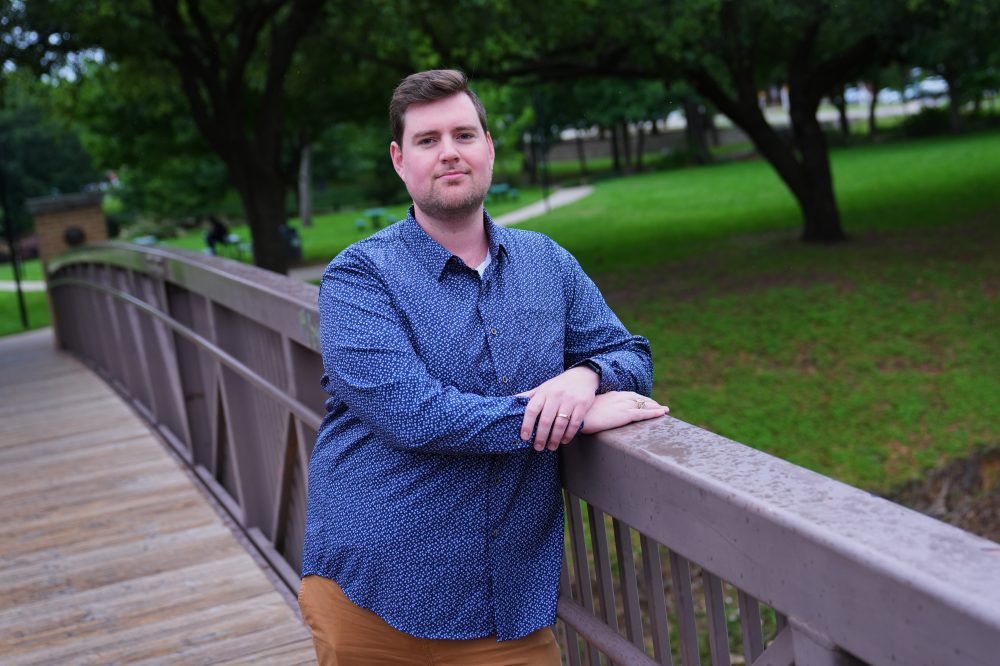
Individuals like 29-year-old Anthony Nel have found themselves affected by these reviews.
Nel, originally from South Africa who gained citizenship over ten years ago, was identified as a possible non-citizen when Texas submitted its voter database through the DHS verification program. Election officials in Denton, located north of Dallas, temporarily suspended his registration last autumn while he awaited a replacement for his expired passport.
“I’m like, ‘You should know that I’m a citizen, that the passport exists,’” he said in an interview.
The president has pursued changes to U.S. election systems, including advocating for a national registry of confirmed voters, while his Department of Justice has pressured states to provide complete voter data for comprehensive reviews through the DHS program called SAVE.
The Justice Department has filed lawsuits against states that decline to cooperate, claiming the federal government seeks to ensure compliance with federal regulations and maintain accurate voter databases. States already implement various measures to keep their voter records current.
SAVE, which stands for Systematic Alien Verification for Entitlements, originated from immigration legislation requiring DHS to assist federal, state and local agencies in preventing government benefits from reaching non-citizens. U.S. Citizenship and Immigration Services, a DHS division, reported that over 1,300 agencies utilize the system.
A minimum of 25 states have employed SAVE to review their voter databases since April 2025, following significant expansion of the Trump administration’s search capabilities, with 60 million registrations examined within one year, according to Citizenship and Immigration Services. This total excludes an additional 7.4 million registrations from North Carolina, where Republicans lead the state election board, that were recently processed through the system.
Citizenship and Immigration Services stated in an email that it remains “committed to helping eliminate voter fraud” to restore Americans’ confidence in their elections.
“SAVE is one of the most important tools states have to verify voter information,” Kansas Secretary of State Scott Schwab, a Republican, recently told a U.S. House committee examining how states keep voter rolls clean.
Schwab’s support is significant given his previous public doubts about whether non-citizens posed a substantial voter fraud risk.
Citizenship and Immigration Services reported that the 60 million voter registration reviews identified approximately 24,000 potential non-citizens. U.S. Assistant Attorney General Harmeet Dhillon, who leads the Justice Department’s Civil Rights Division, mentioned during a recent Fox News interview that these reviews also found roughly 350,000 people who appear to have died.
North Carolina’s State Board of Elections said its review identified another 34,000 registered voters who are potentially deceased.
Even if all flagged individuals were confirmed as ineligible, they would constitute small portions of total registered voters. The non-citizen figure would equal about 400 per million registrations. Some 384,000 people marked as potentially deceased among approximately 67 million registrations represents less than 1%.
Some voters have been incorrectly flagged.
In Dallas, election officials recently cancelled the registration of Domingo Garcia, a 68-year-old lawyer and voting rights activist, without providing reasons. He has voted consistently for 50 years, including in the state’s March 3 primary, and believes officials mistakenly concluded he was deceased.
“I should not have been on any lists,” he said.
Voting rights advocates have initiated at least six federal lawsuits regarding SAVE reviews, targeting either the Trump administration or states implementing the program.
Nel, a 29-year-old college administrator, serves as a plaintiff in one lawsuit filed recently in the District of Columbia against the Justice Department. It claims an “illegal and unprecedented quest” by the administration for “millions of Americans’ confidential voter data.”
Legal representatives also contend that eligible voters will lose their voting rights due to outdated or incomplete database information.
Nel arrived in the United States from South Africa with his family at age 8. When his parents gained citizenship at age 16, he automatically became a citizen as well. He reports voting regularly since turning 18.
However, he received a letter in October in a white envelope that resembled junk mail. The notice informed him he had been identified as a potential non-citizen through a SAVE review of Texas’ 18 million voter registrations. He had 30 days to provide proof otherwise — a deadline he missed due to the time required to obtain a new passport.
“It’s clear that this process that they’ve put into place for this doesn’t work,” he said.
Republican officials noted the administration does not present SAVE searches as perfect. Rather, it identifies registrations requiring additional investigation, they explained.
In Kansas, Schwab’s office continues investigating its list of flagged registrations and has not yet revealed the number of potentially ineligible voters identified from a SAVE review of the state’s 2 million registrations.
After his office sends flagged names to county officials, a state law passed this year mandates they classify the registrations as “in suspense” or “pending” until cases are resolved. A flagged individual can still vote, but the ballot is separated for additional review and might not be counted.
Texas is expected to provide people with flagged registrations 30 days to demonstrate proper registration. North Carolina will require county elections boards to conduct hearings for people whose registrations are challenged before cancellation.
A new Ohio law mandates local election boards to “promptly” cancel registrations of people the secretary of state identifies as non-citizens during registration reviews that the official must conduct at least monthly.
Ohio Secretary of State Frank LaRose, a Republican, said in an email that people’s voting rights remain protected because “all they need to do to immediately restore their registration status is show proof of citizenship.”
But Levenson, the ACLU lawyer, characterized the approach differently.
“Shoot first and ask questions later,” she said.