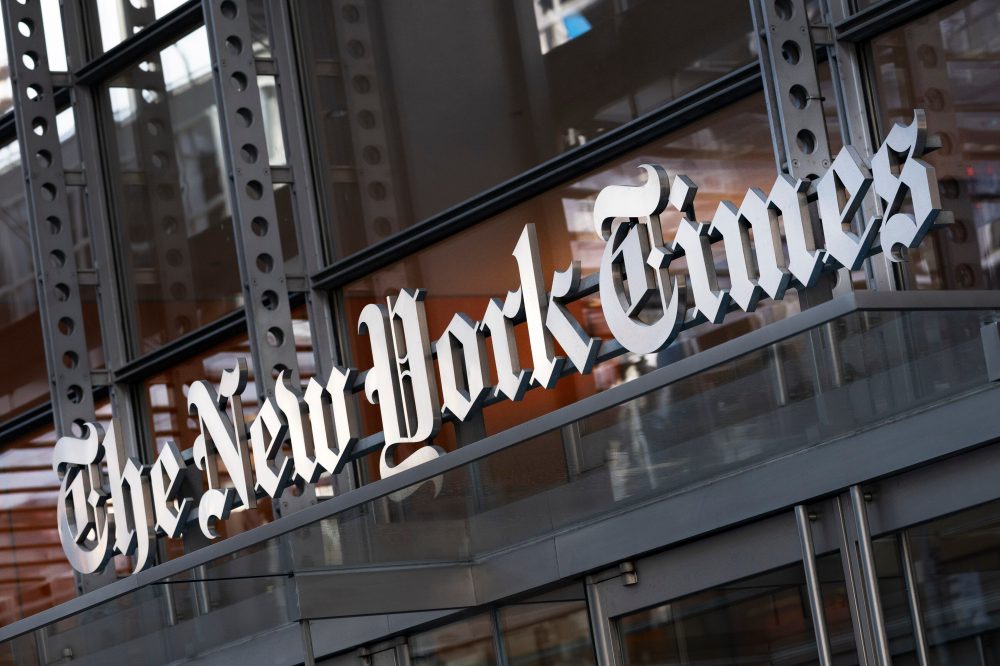

The New York Times filed a second federal lawsuit against the Defense Department on Monday, challenging an escort requirement for journalists working inside Pentagon facilities that the newspaper claims violates constitutional protections.
This marks the second legal action the publication has taken against the military in five months over media access restrictions.
A Times spokesman, Charlie Stadtlander, told The Associated Press in an email that the escort policy represents “an unconstitutional attempt by the Pentagon to prevent independent reporting on military affairs.”
“As we have said before: Americans deserve visibility into how their government is being run, and the actions the military is taking in their name and with their tax dollars,” Stadtlander stated.
Defense Department spokesperson Sean Parnell responded on X, characterizing the Times’ newest legal challenge as “nothing more than an attempt to remove the barriers to them getting their hands on classified information.”
The legal battle represents another chapter in growing friction between news organizations and the second Trump administration, with disputes increasingly moving from public discourse into courtrooms.
According to the Times, this additional lawsuit was necessary after their December legal action against the Pentagon challenged new regulations implemented by Defense Secretary Pete Hegseth. The newspaper is now targeting what it calls an interim policy “that the Pentagon hastily put into place after a federal judge ruled in The Times’s favor in its original lawsuit.” This interim measure mandates that journalists must have escorts accompanying them throughout their time inside the Pentagon.
The escort requirement took effect in March after U.S. District Court Judge Paul L. Friedman struck down previous media access limitations, determining they infringed upon the rights of Times reporter Julian E. Barnes and the publication.
In April, the same judge determined that the interim policy violated his March decision. However, the escort requirement continues to operate after an appeals court temporarily blocked portions of Friedman’s ruling while the government pursues its appeal. That appeals process remains active.
The latest legal filing, submitted by both the newspaper and reporter Barnes to the District of Columbia district court, seeks to have the judiciary directly examine the escort rule’s constitutional validity.
In their court documents, the publication argues the rule shares the same objective as other Pentagon media limitations — “closing the Pentagon to any journalist or news organization unwilling to report only what Department officials approve.”
The Times maintains this approach is “patently unconstitutional.”
The December lawsuit targeted new regulations from Hegseth that the Times claimed violated constitutional guarantees of free speech and due process. News organizations including the Times departed the Pentagon rather than accept these rules as conditions for press credentials. They now report on military matters from outside the facility, while a newly approved press corps selected by the department currently uses the Pentagon press space.
In his Monday X post, Parnell stated that the Times and its reporters “want to roam the halls of the Pentagon freely and without an escort — a privilege that they do not have in any other federal building.”
He continued: “The Department’s policy is completely lawful and narrowly designed to protect national security information from unlawful criminal disclosure.”