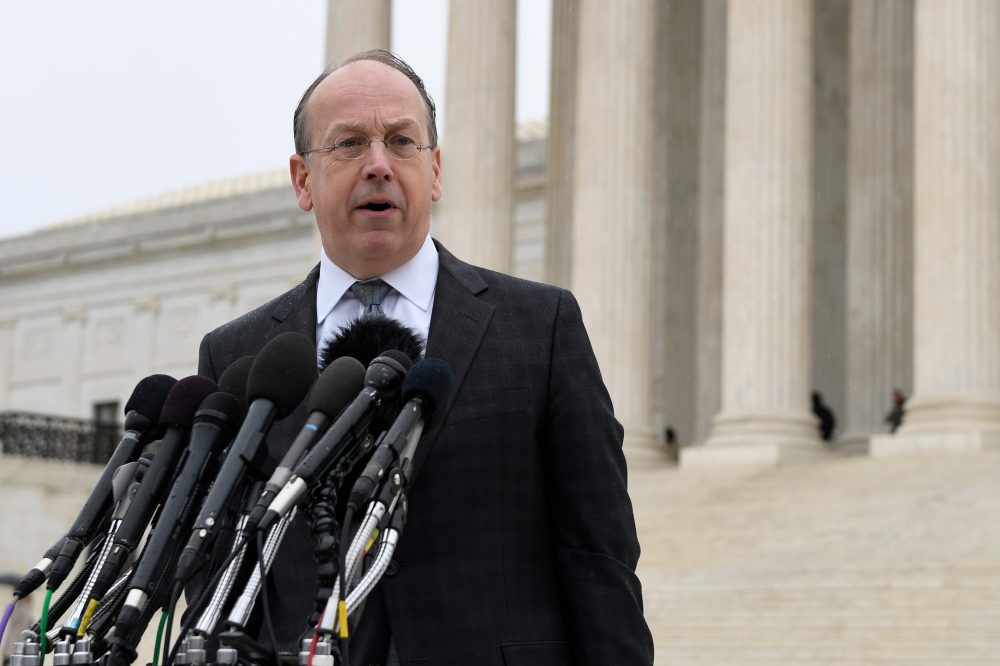
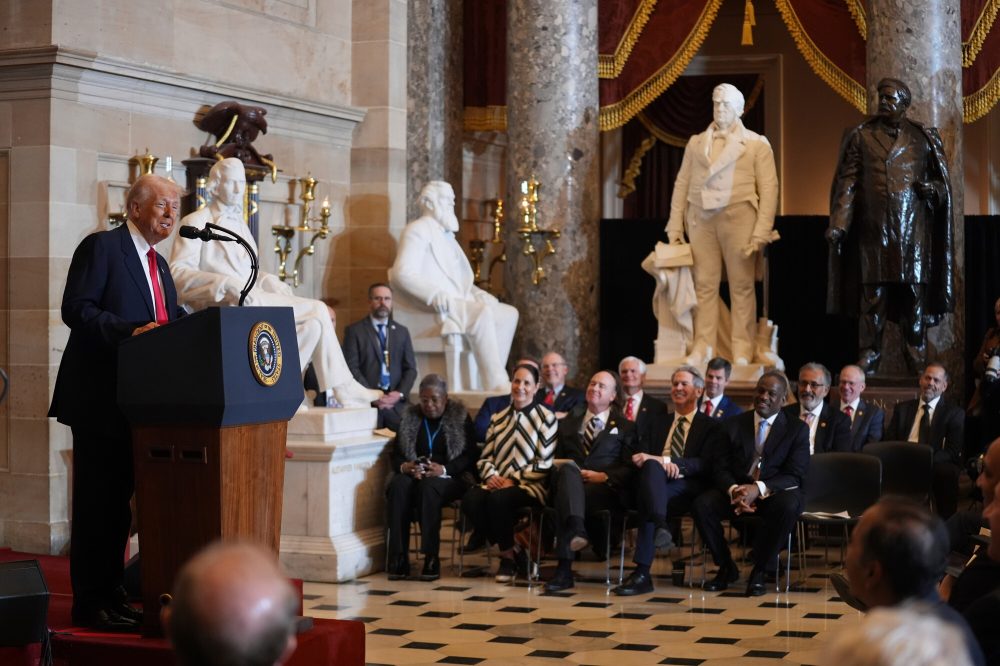
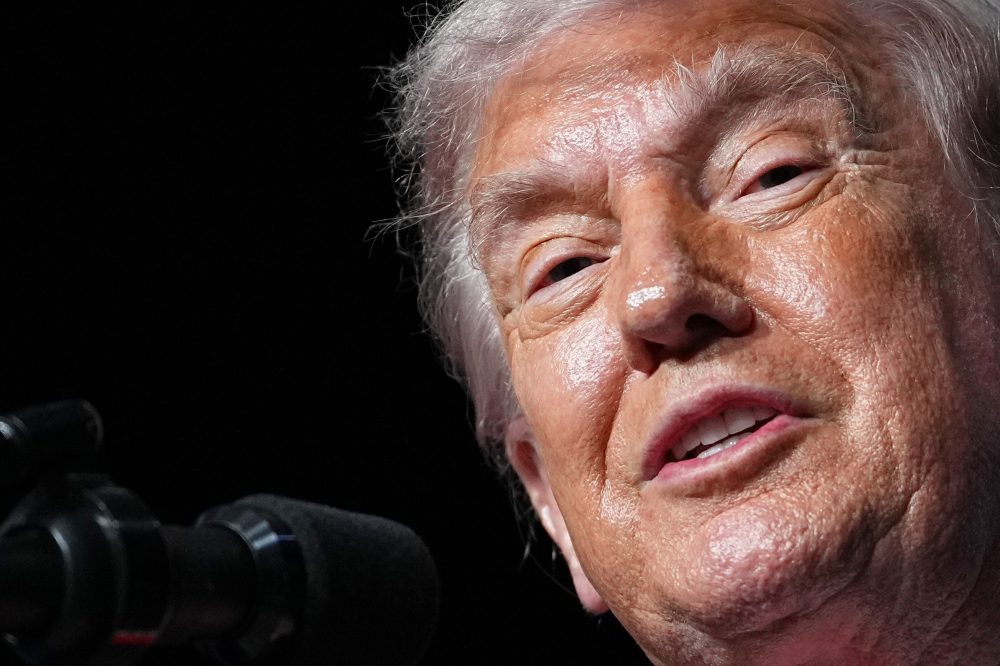
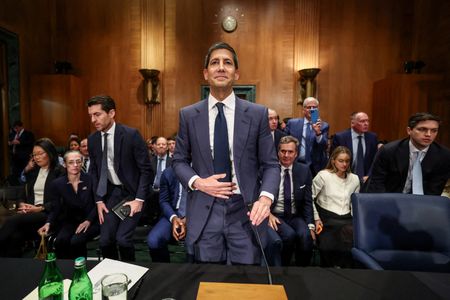
WASHINGTON — Lawyers representing several prominent legal firms argued before federal appeals judges Thursday that President Donald Trump’s sanctions against their companies violate fundamental constitutional principles and should continue to be blocked by the courts.
The three-judge panel of the U.S. Court of Appeals for the District of Columbia Circuit heard arguments from both sides during a two-hour session, though they did not indicate when or how they plan to issue their decision. The government is seeking to overturn lower court rulings that favored four targeted law firms.
Paul Clement, representing the legal firms, argued that Trump inappropriately retaliated against the companies due to their connections with clients and lawyers who “raised the president’s ire.”
“The executive orders here strike at the heart of the First Amendment and the ability of lawyers to zealously represent their clients,” he said. “Lawyers cannot zealously represent their clients while walking on eggshells for fear of reprisals.”
Deputy Associate Attorney General Abhishek Kambli countered that lower court judges acted too hastily and exceeded their jurisdiction because they “clearly didn’t like the content” of Trump’s executive orders.
“President Trump is not beneath the law,” Kambli said. “He is entitled to the benefit of the Supreme Court and this court’s precedent on his authority to decide matters such as security clearance determinations and investigating anti-discrimination.”
Federal judges in Washington, D.C., have repeatedly determined that the White House cannot implement Trump’s executive orders targeting Perkins Coie, Jenner & Block, Susman Godfrey and WilmerHale. Trump imposed penalties on firms employing lawyers who had performed work opposing his agenda or who had connections to prosecutors investigating the Republican president.
The president’s orders called for revoking security clearances for lawyers at these firms, ending federal contracts and preventing staff from entering federal facilities. Additional major firms avoided similar orders by reaching preemptive agreements requiring them to provide hundreds of millions of dollars worth of pro bono legal work supporting Trump administration priorities.
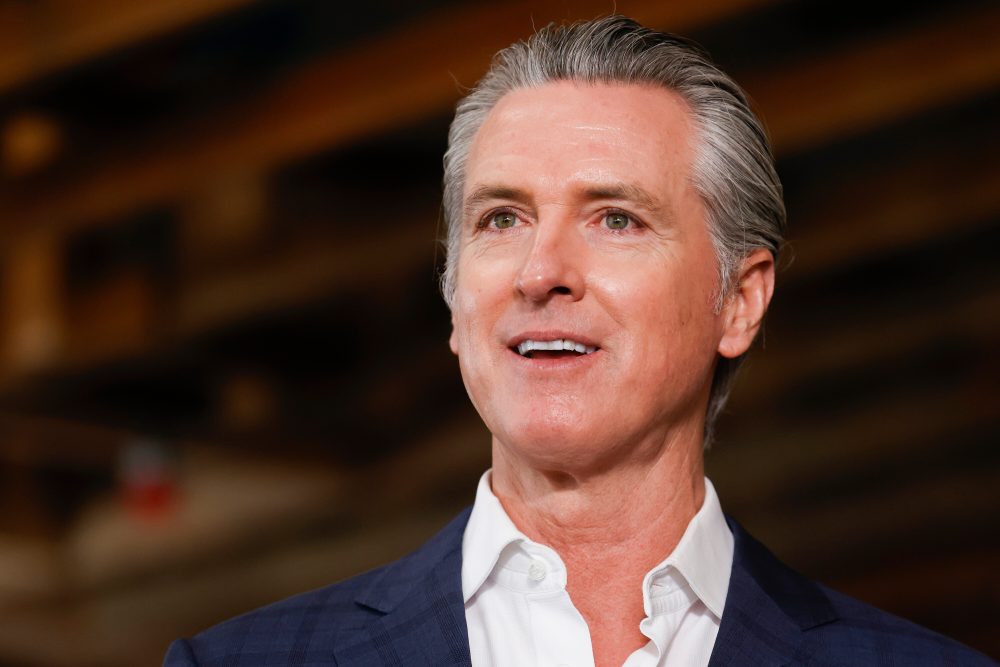
SACRAMENTO, Calif. — California’s governor presented a massive $350 billion spending blueprint Thursday that eliminates budget deficits for his remaining time in office and the following year, offering a financial plan that maintains current programs without major reductions.
The governor aims to protect initiatives that have characterized his leadership of America’s largest state by population and one of the globe’s biggest economies. With potential presidential ambitions for 2028, he’s marketing the budget as financially sound because it shields California’s liberal programs while strengthening the state’s emergency reserves, responding to those who claim the state overspends. Legislative budget analysts report state expenditures have increased by over $100 billion since 2020.
“We’re cutting deficits. But we’re not cutting corners,” the governor stated.
Term limits prevent the governor from seeking reelection, and he will step down in January.
Income sources, primarily from strong stock market performance and the artificial intelligence sector, exceeded January estimates by $16.5 billion, his office reported. This windfall will help California eliminate the $2.9 billion shortfall predicted in January, ensure no budget gap next year, and reduce the subsequent year’s deficit by half, according to his administration.
This represents a positive shift for the state where income hasn’t matched expenditures. California confronted massive budget deficits for multiple consecutive years, requiring difficult reductions last year including reversing a commitment to offer free healthcare to undocumented low-income immigrants. Independent budget experts forecast the state will face shortfalls exceeding $20 billion annually in coming years.
Nevertheless, Democrats are preparing for potential federal healthcare funding reductions and the effects of rising costs for gasoline and energy due to the conflict in Iran. State officials have repeatedly emphasized California cannot replace all federal funding.
During his presentation, the governor criticized President Donald Trump and his agenda. Trump “doesn’t particularly give a damn about the financial situation of the average American,” the governor declared.
The May budget presentation will formally begin the final phase of discussions between the governor and legislative Democrats, who must approve a spending package by June’s end.
State legislators this session have introduced multiple proposals to raise corporate taxes to address budget challenges, but the governor has mostly rejected these ideas, contending such measures might drive away businesses and wealthy residents. He has instead suggested reducing fees for new small enterprises and restricting certain tax credits beginning in 2027. He opposes a ballot measure for a one-time billionaire tax likely to appear before voters in November.
California operates a progressive tax structure dependent on wealthy individuals, collecting roughly half its revenue from just 1% of residents. During economic growth, affluent taxpayers contribute more and revenues can surge rapidly. During downturns, they pay less and revenues can plummet equally fast.
The state might also benefit from anticipated initial public offerings by major AI companies, expected to be history’s largest IPOs. However, legislative budget specialists cautioned last year about a possible AI market bubble that could damage state finances.
Thursday’s proposal also features a $300 million initiative to offset lost government health subsidies, a $5 billion education program for instructor training, and $100 million to assist Los Angeles-area property owners in rebuilding following last year’s catastrophic wildfires.
SACRAMENTO, Calif. — Democratic candidate Xavier Becerra is relying on his extensive government background spanning more than three decades to propel him toward California’s highest office, though his extensive political history has simultaneously provided ammunition for opponents to challenge his effectiveness as the campaign enters its final stretch.
Becerra’s career encompasses over 35 years across state and federal positions, including senior positions in the U.S. House, serving as California’s attorney general, and working as former President Joe Biden’s health secretary.
“The governor’s office is not a place with training wheels,” he’s said repeatedly.
While this messaging initially failed to connect with voters during his campaign’s first year, Becerra now appears to be gaining ground with balloting in progress before the June 2 primary, particularly following a significant campaign shift after Democrat Eric Swalwell’s departure from the race. Since then, Becerra has secured backing from powerful labor organizations and Latino state officials, while his previously weak fundraising efforts have strengthened considerably. His status as the primary focus of debate attacks suggests his Democratic opponents view him as the candidate gaining traction.
Political observers note that Democrats appear drawn to Becerra as what they consider a reliable option.
“He has this breadth of experience that none of the other candidates have,” said Matt Barreto, faculty director of the University of California, Los Angeles, Voting Rights Project, which Becerra partnered with in a recent lawsuit. “What that means is that he has the ability to portray himself to the voters as having been through the fight.”
However, certain Biden administration veterans have raised concerns about Becerra’s performance as health and human services secretary. His opponents have highlighted the federal charges against Becerra’s former chief of staff, who admitted guilt for stealing Becerra’s campaign money. While Becerra faces no accusations himself, Democrat Katie Porter recently labeled him “too much of a risk.”
Becerra has rejected such attacks as political mudslinging.
“We’re going to talk about the truth and we’re going to move forward,” he told reporters this week.
Becerra references his time as California’s attorney general during President Donald Trump’s first administration to position himself as a seasoned advocate against an overwhelming federal government. He played a central role in the state’s emergence as what became known as the resistance, initiating over 120 legal challenges covering topics from immigration to environmental policy.
Multiple attendees at a recent Becerra event in Sacramento cited his experience across different government levels as their reason for supporting him.
Becerra “knows how to navigate through the complexities of running a government,” said Ruben Hoyos, who voted for Becerra despite being more aligned with billionaire Tom Steyer’s progressive platform.
Similar to his competitors, he has positioned affordability as a cornerstone of his agenda. Becerra has pledged to announce a state of emergency addressing high living costs and housing shortages. He claims this would enable him to halt home insurance rate increases as Californians face difficulties obtaining or affording coverage due to the state’s intensifying wildfire situation.
Most insurance commissioner candidates contend a governor lacks legal authority for such action since the insurance sector falls under an elected commissioner’s regulation. Becerra maintains he would possess that power.
“I’d be willing to go to court to tell you that I could call that freeze,” Becerra said in a recent debate.
During his congressional tenure, he contributed to passing the Affordable Care Act and protected it from Republican challenges as California’s attorney general. He’s also recognized for advocating abortion rights and has received backing from Planned Parenthood Affiliates of California.
However, after previously supporting the elimination of private health insurance for a government-operated system, he seems to have shifted his stance. When pressed by competitors for a definitive position, he stated his focus remains on expanding coverage.
“Californians don’t care what you call it, so long as they have affordable health care,” he said.
Becerra’s period as federal health secretary has faced scrutiny.
Steyer has consistently attacked Becerra regarding his management of the surge of unaccompanied migrant children arriving at the U.S.-Mexico border in 2021, primarily escaping violence, poverty, or natural disaster impacts in Central America.
These children underwent processing in temporary facilities before transfer to emergency shelters operated by the Department of Health and Human Services, with some facilities receiving criticism from child welfare advocates for substandard conditions. They were subsequently placed with family members, relatives, or sponsors.
A New York Times investigation in 2023 revealed the health department’s failure to properly screen sponsors, with many children subsequently working in exploitative positions. The investigation also found Becerra advocated for faster processing of children through the system and that the agency lost contact with tens of thousands of minors after they departed federal custody. Steyer has claimed the federal government “lost” children under Becerra’s supervision. Traditionally, the federal government has not monitored unaccompanied children following their release to adult care.
Becerra has characterized the criticism as “Trump talking points.” Several California immigrant rights organizations and Biden administration members have supported Becerra’s record.
Throughout the COVID-19 pandemic, Becerra remained largely behind the scenes, with figures like Dr. Anthony Fauci serving as administration representatives.
Xochitl Hinojosa, a former spokesperson in Biden’s Department of Justice, stated on CNN earlier this month that she lacked confidence in Becerra’s leadership capabilities.
“He was not effective in government,” she said.
The competition to succeed term-limited Gov. Gavin Newsom has remained volatile, with leading state Democrats encouraging lower-performing candidates to withdraw from the contest. This initially included Becerra.
Following Swalwell’s scandal, Becerra’s campaign has emphasized his reserved personality to attract voters seeking a controversy-free alternative.
Becerra adopted TikTok early with emphasis on Spanish-speaking voters. When he and other minority candidates were excluded from a scheduled debate due to poor polling and fundraising, Latino creator Jay Gonzalez invited them to address his audience. Becerra accepted the invitation. Gonzalez has subsequently joined the campaign staff. Additional creators are urging their followers to support Becerra and attending his events. Some of Becerra’s social media content refers to him as “Tío Xavier,” which translates to “Uncle Xavier” in Spanish, presenting him as a trustworthy, familiar figure.
Latinos — California’s largest ethnic group — typically show low participation in California primaries. However, efforts to energize this portion of the electorate could prove beneficial, according to Kim Nalder, director of the Project for an Informed Electorate at California State University, Sacramento. Becerra, if successful, would become California’s first Latino governor since the late 1800s.
“There’s some evidence that folks — if they have choices that are close like in a primary — will choose based on identity groups, sometimes,” she said.
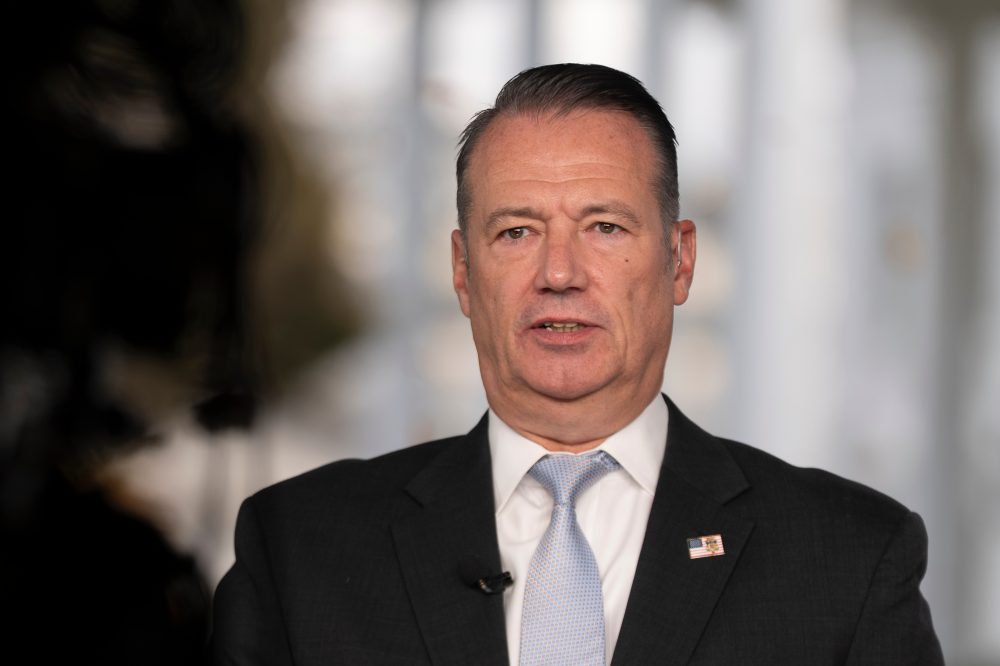
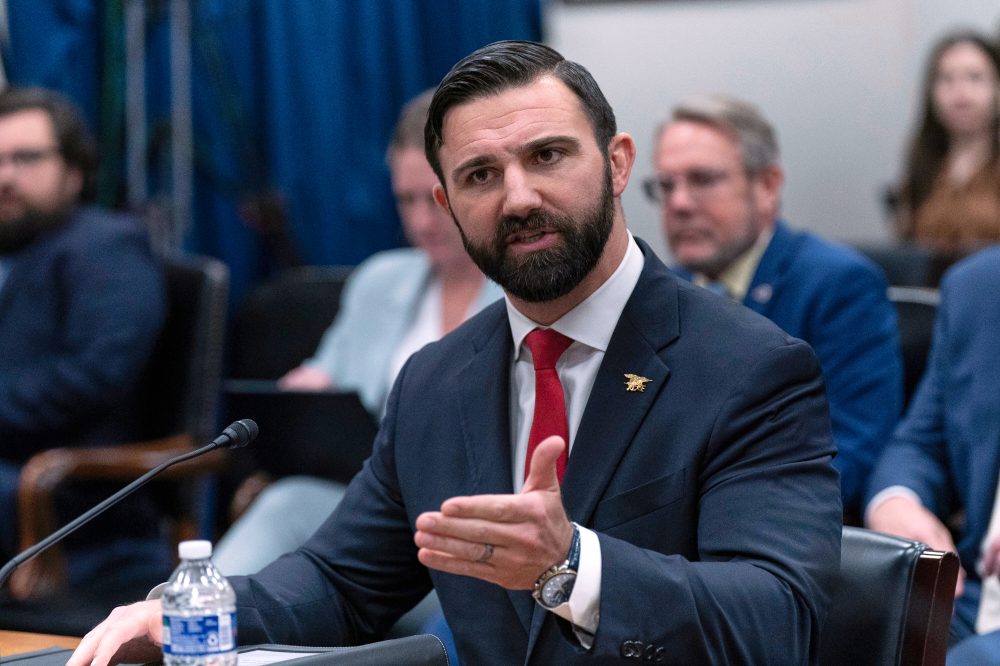
WASHINGTON — The leader of the nation’s border security agency has stepped down from his position, announcing his departure in a television interview.
Michael Banks, who serves as the U.S. Border Patrol chief, revealed his immediate departure during a Thursday conversation with Fox News.
“It’s just time,” Banks stated according to Fox News reporting. “I feel like I got the ship back on course from the least secure disastrous chaotic border to the most secure border this country has ever seen,” he explained.
Officials from the Department of Homeland Security and U.S. Customs and Border Protection have not yet provided statements regarding the resignation announcement.
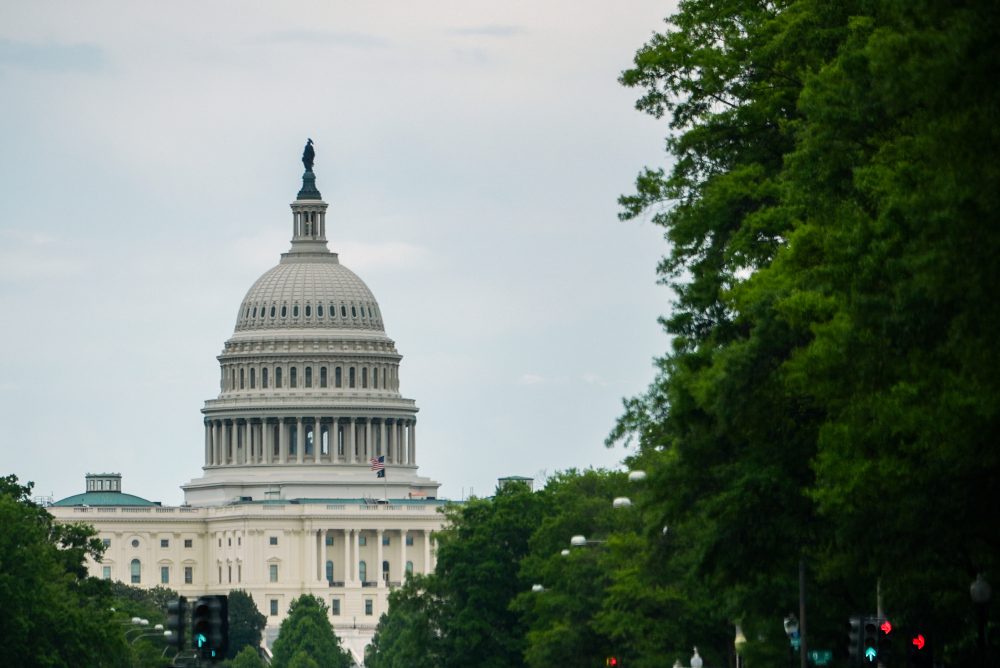
WASHINGTON — The U.S. Senate passed a resolution Thursday with unanimous support that would suspend senators’ salaries during government shutdowns, marking an effort to create financial consequences for lawmakers following a series of lengthy federal closures over the past year.
The measure received backing from both parties as federal shutdowns have grown more prolonged and common, leading to frustration among legislators who believe there should be consequences when Congress cannot fulfill its fundamental responsibility of funding the government.
According to the resolution, the secretary of the Senate would hold back senators’ salaries whenever a government shutdown impacts one or more federal agencies. The pay would be returned once government funding resumes.
“Shutting down government should not be our default solution to our refusal to work out our issues and our differences,” said Sen. John Kennedy, the bill’s sponsor, in a floor speech Wednesday.
“This is about putting our money where our mouth is,” said Kennedy, R-La.
DOVER, DE – The Delaware Department of Correction has unveiled a comprehensive new publication designed to showcase the rehabilitative services available to inmates across the state system.
Officials announced the release of the Rehabilitative Programs & Activities Directory, a printed guide created specifically for families, community members, and policymakers who want to understand the scope of reentry preparation services.
According to the department, the correctional system operates numerous rehabilitation initiatives that incorporate proven methods for substance abuse treatment, academic education, job skills training, mental health services, and counseling support.
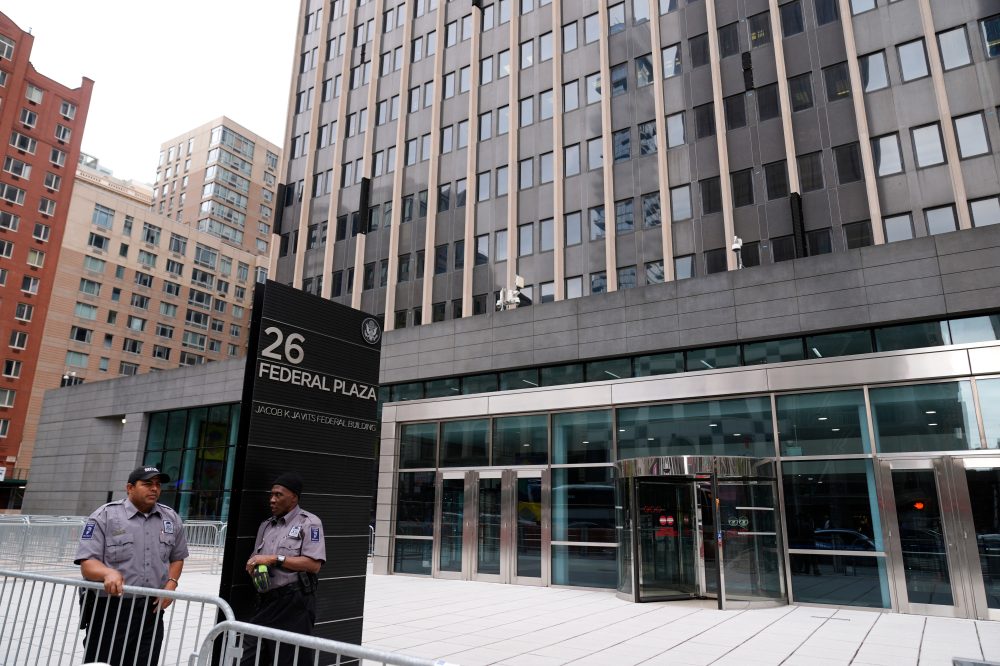
NEW YORK (AP) — A federal immigration courthouse in Lower Manhattan has become emblematic of the Trump administration’s deportation efforts in New York City, where federal agents have conducted disorderly and sometimes forceful detentions in corridors as immigrants exit their court proceedings.
The courthouse has now emerged as a central battleground in a completely different type of conflict: one of the city’s most intensely monitored congressional contests.
In the Democratic primary featuring sitting U.S. Rep. Dan Goldman against former city Comptroller Brad Lander — competing for a district so reliably Democratic that the June primary essentially determines the winner — both contenders have highlighted the Trump administration’s handling of immigrants at 26 Federal Plaza in their campaigns, though using markedly different strategies.
Goldman — who inherited wealth from the Levi Strauss denim empire and previously served as a prosecutor, acting as lead counsel during President Donald Trump’s initial impeachment — has tackled the issue with a legal-focused strategy that utilizes his congressional authority.
He filed lawsuits against the administration to force immigration detention facilities to allow congressional access, performs oversight inspections and transformed his office located across the street into what he describes as a triage center linking immigrants with advocacy organizations and legal assistance.
Following a recent inspection, Goldman attributed improvements in conditions at a detention facility within the building to his oversight efforts.
“What you see from our multipronged approach is the way that I push back, which is not performative, but it is substantive,” he told The Associated Press outside 26 Federal Plaza after touring the detention center that remains off-limits to the public.
In contrast, Lander — a progressive city government veteran who is campaigning with backing from Mayor Zohran Mamdani — has positioned himself as a demonstrator and court monitor, observing proceedings and trying to escort immigrants from the building past masked federal agents.
His activism has resulted in two arrests, with the most recent case scheduled for trial just days before the primary.
“I would characterize his oversight function as strongly worded letters,” Lander told AP regarding Goldman’s methods. “And my oversight function is: Show up with hundreds of your neighbors and bear witness and accompany people and demand access and stay until they give it to you or they arrest you.”
Lander’s initial arrest occurred last year when he locked arms with an individual that authorities were trying to apprehend in the corridor outside the courtroom. Lander was seeking the mayor’s office at that time, and the arrest energized his campaign during a period when Mamdani and former Gov. Andrew Cuomo were viewed as the leading candidates in the race.
Several months afterward, following his defeat in the mayoral primary but shortly before beginning his congressional bid, Lander faced arrest again during a major demonstration at the building and received a misdemeanor obstruction charge.
Rather than accepting a plea agreement that would have resolved the case within six months, Lander chose to proceed to trial. He argued the case would reveal information about the federal government’s immigration enforcement activities at the facility.
Goldman characterized Lander’s actions as performative.
“I don’t understand why someone would reject a dismissal of a case so that he can have a public trial, ostensibly to ask for information that I could provide him whenever he wanted because I have the answers from doing my oversight,” Goldman said.
This week, Lander visited 26 Federal Plaza again to observe hearings. However, just before entering the facility, his staff learned that federal agents were waiting outside an immigration hearing at a separate federal courtroom in a building across the street. He hurried over and eventually located the agents, who were wearing masks and standing around in the court’s waiting area.
“The challenge is trying to figure out who they’re going to arrest,” Lander said, stepping out of the hearing, where he had been seated in a back row taking notes. Eventually, the agents left the hearing room, walked down a corridor and departed the floor. Their reason for leaving remained unclear.
“Maybe we have different styles,” Lander said about his opponent after the agents left. He subsequently returned across the street and recorded a campaign video in front of 26 Federal Plaza.
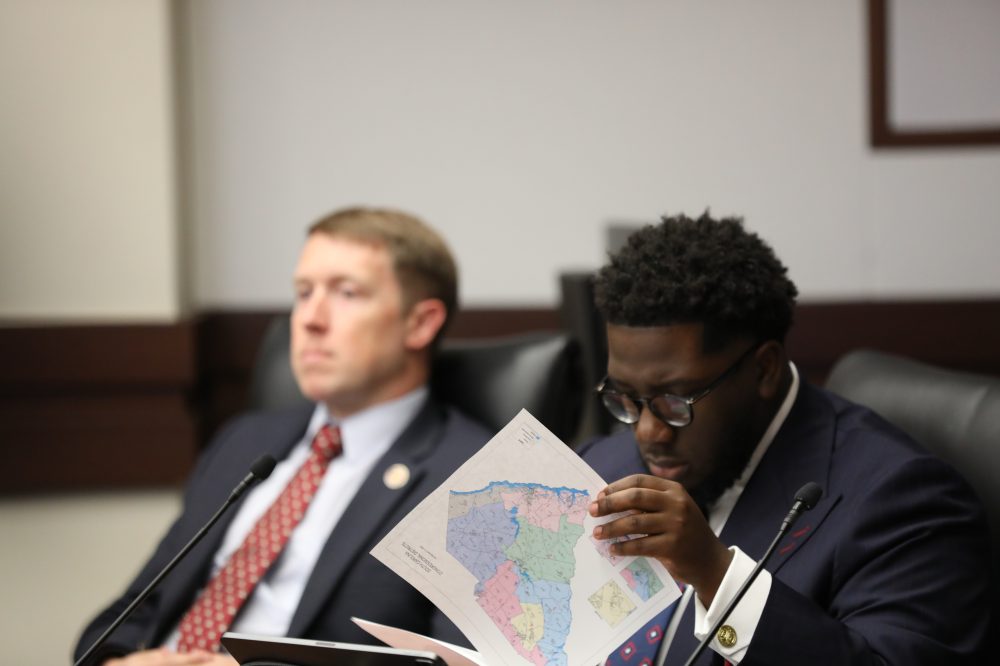
Louisiana state senators gathered Thursday to review a congressional redistricting proposal that would remove a majority-Black district, potentially giving Republicans an opportunity to secure another seat in November’s midterm elections. This comes just two weeks after the U.S. Supreme Court invalidated Louisiana’s current congressional map.
The Supreme Court decision has sparked widespread redistricting activities across Southern states as Republicans work to take advantage of a diminished federal Voting Rights Act. Unlike most voluntary redistricting efforts, Louisiana faces a mandatory requirement to redraw its U.S. House map following the court’s determination that it illegally used racial considerations to create a majority-Black district through gerrymandering.
As Louisiana debates new district boundaries, South Carolina’s governor is intensifying efforts to push lawmakers toward redistricting before the midterms. President Donald Trump has urged multiple Republican-controlled states to restructure House voting districts to benefit their party as they attempt to maintain control of the narrowly divided chamber this November.
Republican strategists believe they could secure up to 15 additional House seats across seven states that have already implemented new voting districts. Democratic leaders estimate they could gain as many as six seats from two different states due to new House district maps. However, these projected outcomes remain uncertain, with ongoing litigation in several states and voters ultimately determining election results.
The Louisiana legislation aims to resolve the Supreme Court ruling by eliminating a district that extends more than 200 miles (321 kilometers) northwest from Baton Rouge to Shreveport, forming a voting area with a Black majority. Democratic U.S. Rep. Cleo Fields currently serves the existing 6th District.
The proposed redistricting plan would reorganize that district to focus on predominantly white communities surrounding Baton Rouge and southern Louisiana.
The revised plan maintains a New Orleans-centered, majority-Black district represented by Democratic U.S. Rep. Troy Carter while incorporating part of Baton Rouge into that area.
Fields, who lives in Baton Rouge, indicated he will wait until maps are completed before deciding on reelection plans. However, he stated he would not run against Carter in a primary race.
The current House map proposal resembles one implemented in 2022 that led to five Republican victories and one Democratic win.
A federal judge invalidated the 2022 map for Voting Rights Act violations. Subsequently, in 2023, the U.S. Supreme Court mandated that Alabama establish a second congressional district with a largely Black population. Following the Alabama decision, Louisiana’s Legislature approved an updated map creating a second majority-Black district used in 2024 elections. That map faced legal challenges, resulting in an April 29 Supreme Court decision that Louisiana’s districts depended excessively on racial factors.
Republican Gov. Jeff Landry has delayed Louisiana’s U.S. House primaries from Saturday to either July 15 or a date the Legislature will determine, allowing time for new district implementation.
South Carolina House leadership expects to address legislation creating a new congressional map Friday after Republican Gov. Henry McMaster convenes a special session. The regular legislative session is set to conclude Thursday, but McMaster’s action would extend proceedings.
The House may need until next week to complete the redistricting legislation, which would also shift congressional primaries to August, according to Republican House Majority Leader Davey Hiott. Current primary elections are scheduled for June 9. Early voting starts May 26, likely establishing the redistricting completion deadline, he noted.
“The redistricting work will be long. It will be boring. It will be confrontational,” Hiott informed reporters.
Should the House approve the proposal, it moves to a more doubtful Senate, where Republican Judiciary Committee Chairman Luke Rankin stated he will “demand the process” without providing specifics. During the previous regular redistricting at the decade’s beginning, Rankin’s committee conducted month-long statewide meetings and invited public map submissions.
Currently, only one of South Carolina’s seven U.S. House seats belongs to a Democrat — longtime U.S. Rep. Jim Clyburn. Some Republicans question whether guaranteeing seven GOP districts is feasible in a state where Democratic presidential candidates have received over 40% of votes in every election this century. Additional concerns exist about conducting two statewide elections within slightly more than two months. South Carolina’s elections leader suggested it might require staff to work around the clock.
PROVIDENCE, R.I. — A federal court has halted the Trump administration’s broad request for private medical records of transgender youth from Rhode Island’s primary hospital offering gender-affirming treatment to minors.
U.S. District Judge Mary McElroy issued the Wednesday decision, marking another legal defeat for the Department of Justice after at least seven additional federal courts have moved to block or restrict the wide-ranging civil subpoenas issued to over 20 medical providers and hospitals last summer.
McElroy’s ruling reflected similar judicial concerns about the broad nature of the subpoenas, noting that while the Justice Department possesses “immense prosecutorial authority and discretion,” it can no longer be trusted to wield that power fairly and honestly.
“DOJ has proven unworthy of this trust at every point in this case,” McElroy wrote.
The Department of Justice was contacted for comment on Thursday via email.
The subpoenas required Rhode Island Hospital to surrender birth dates, Social Security numbers and home addresses of all patients who underwent transgender treatment during the previous five years. Additional demands included documentation of negative side effects in minor patients receiving gender-related treatment, evaluations used to justify prescribing puberty blockers or hormone therapy, plus patient intake paperwork and parental consent forms.
The Justice Department has consistently maintained that the requested information is necessary to probe potential fraud or improper off-label drug promotion. During recent Rhode Island court proceedings, the DOJ stated the investigation originates from the Northern District of Texas, where the chief judge had ordered Rhode Island Hospital’s compliance before McElroy’s ruling invalidated the subpoena.
Assistant U.S. Attorney Brantley Mayers informed McElroy during proceedings that the DOJ is examining possible “misbranding” of U.S. Food and Drug Administration-approved medications, including puberty blockers for youth. Though off-label prescribing remains legal, Mayers explained the DOJ suspects pharmaceutical companies may be offering “financial incentives” to Rhode Island physicians for prescribing these medications.
The subpoenas were essential for obtaining children’s and families’ identities to enable DOJ interviews.
McElroy dismissed this reasoning.
“The administration has publicly characterized gender-affirming care for minors as abuse, directed the DOJ to bring its practice to an end, and celebrated when hospitals curtailed such programs as a result of this subpoena campaign,” McElroy wrote.
The Rhode Island ruling represents the newest chapter in the battle over transgender youth medical records. This week, 11 families initiated a class-action lawsuit aimed at preventing the DOJ from accessing the documents. Filed in Maryland’s federal court, the lawsuit represents families with transgender children who received treatment from hospitals nationwide.
Additionally, a New York medical facility disclosed receiving a grand jury subpoena from federal prosecutors in Texas requesting data about children who underwent gender-affirming treatment and their medical providers.
NYU Langone became the first hospital system to publicly confirm receiving such a subpoena as part of a federal criminal probe. The institution revealed Tuesday it was among multiple facilities that received subpoenas from the Northern District of Texas on May 7, stating it was determining its response strategy.
Gender-affirming treatment encompasses various medical and mental health services supporting an individual’s gender identity, particularly when it differs from their birth-assigned sex. Services may include counseling, puberty-blocking medications, hormone therapy for physical changes, or surgical procedures to modify chest and genital areas, though surgeries are uncommon for minors.
Leading medical organizations emphasize the importance of treatment access for individuals with gender dysphoria and recognize gender as existing on a spectrum.
A minimum of 27 states have enacted legislation restricting or prohibiting such care for minors, while several others have implemented laws or policies safeguarding transgender healthcare access.
WASHINGTON (AP) — Federal prosecutors have filed a lawsuit accusing the District of Columbia Bar of politically motivated attacks on former Trump administration attorneys through its disciplinary proceedings.
Wednesday’s federal court filing directly confronts the authority of the organization responsible for regulating attorney conduct in Washington, where multiple high-profile cases involving Trump-connected lawyers are underway.
“The D.C. Bar will no longer be permitted to probe sensitive executive branch deliberations and target executive branch officials with whom they happen to politically disagree, and federal attorneys will once again be free to share their candid legal advice with their bosses and colleagues,” Associate Attorney General Stanley Woodward, a top Justice Department official, said in a statement.
The legal action was submitted in Washington’s federal courthouse. Representatives from the D.C. Bar’s Board on Professional Responsibility did not immediately respond to requests for comment.
The case primarily focuses on disciplinary proceedings involving Jeffrey Clark, a high-ranking attorney in the first Trump administration Justice Department who played a significant role in legal attempts to overturn the 2020 election results that President Donald Trump lost to Democrat Joe Biden.
Last year, a disciplinary board suggested Clark should lose his legal license, but the current lawsuit aims to halt those proceedings, describing them as “unlawful” and influenced by political considerations.
Clark, who has maintained his innocence, praised the lawsuit on X Wednesday night, stating, “This is an important step to vindicate the separation of powers.”
To support allegations of prejudice in the disciplinary system, the Justice Department claimed that bar officials showed greater leniency toward former FBI attorney Kevin Clinesmith, who admitted guilt for altering an email during the probe into connections between Russia and Trump’s 2016 campaign, compared to their treatment of Clark.
The legal filing also defends Ed Martin, a strong Trump supporter who currently holds the position of Justice Department pardon attorney. In March, the Office of Disciplinary Counsel charged Martin with professional misconduct over a threatening communication he sent to Georgetown Law School’s dean while serving as the top federal prosecutor for Washington last year.
During his tenure as interim U.S. Attorney for the District of Columbia, Martin cautioned the Georgetown dean that his office would cease hiring graduates from the private institution unless it eliminated diversity, equity and inclusion programs.
Last week, the Justice Department submitted what’s called a statement of interest supporting Martin, who had previously criticized “uneven behavior” in the disciplinary system.
President Donald Trump and key administration officials will take part in a prayer event this Sunday at the National Mall in Washington, marking what organizers call a “rededication of our country as One Nation Under God” as America celebrates its 250th birthday.
However, opponents are calling the Rededicate 250 gathering an attempt to “hijack” American history with a misleading Christian nationalist message — one they argue merges American and Christian identities while undermining the constitutional separation of church and state.
The all-day event is being coordinated by a nonprofit organization called Freedom 250. According to its website, the group operates as a public-private partnership “leading the presidential programming for America’s 250th anniversary,” which reaches its peak with the Declaration of Independence anniversary on July 4.
Democratic lawmakers in Congress have raised concerns about the organization’s structure and funding, viewing it as a Trump-controlled workaround to bypass a separate commission established by Congress ten years ago to organize semiquincentennial celebrations.
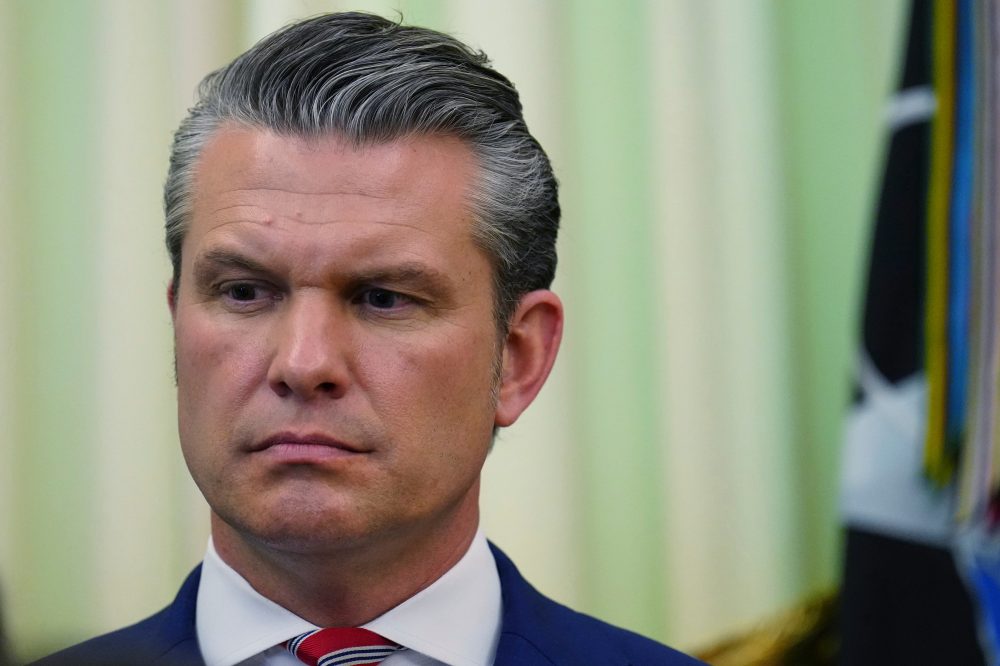
Event organizers anticipate thousands will attend Rededicate 250, featuring worship music, prayers and addresses from Cabinet members and other Republican officials, alongside religious leaders and additional speakers. Trump and several other participants will address attendees via video, while others will appear in person. Confirmed speakers include Secretary of State Marco Rubio, Secretary of Defense Pete Hegseth and House Speaker Mike Johnson of Louisiana.
“Our founders knew two simple truths,” Hegseth stated in a promotional video for the event that featured a series of Cabinet secretaries.
“Our rights don’t come from government, they come from God. And a nation is only as strong as its faith,” Hegseth continued, whose application of Christian language to justify U.S. and Israel’s conflict against Iran and in other official contexts has attracted criticism.
A second promotional video for Rededicate 250 combines various Christian and American imagery — footage of a cross placed on an American flag, a robed choir, people lifting their hands in worship — alongside a brief shot of a man praying while wearing a Jewish skullcap. Voices of well-known preachers can be heard, with one declaring, “Faith in God is the value that most shaped America.”
Religious figures participating in the Rededicate 250 program include several longtime Christian allies of Trump, such as evangelist Franklin Graham and pastors Paula White-Cain, who leads the White House Faith Office; Robert Jeffress; and Samuel Rodriguez. Also planned are Catholic Cardinal Timothy Dolan and Bishop Robert Barron and Orthodox Jewish Rabbi Meir Soloveichik, the sole faith leader on the program representing a non-Christian religion.
Performers for the program include Grammy-winning contemporary Christian artist Chris Tomlin.
Several key participants describe Rededicate 250 as a Christian event.
“I believe it’s a moment when the Body of Christ, the church, comes together and will boldly declare that America still needs God,” Georgia pastor Jentezen Franklin said in a social media video posted on X. “This is an opportunity for believers to stand together as one nation under God. … I’m honored that they’ve asked me to speak and share the Gospel.”
Johnson highlighted that the event occurs 250 years after Congress designated May 17, 1776, a “day of Humiliation, Fasting and Prayer” supporting the Revolutionary cause.
Opponents argue Rededicate 250 is designed to advance Christian nationalism — whose supporters typically maintain that the United States was established as and should remain a Christian nation.
“What should be a broadly unifying celebration has been politically hijacked and wrapped up in this MAGA narrative that tries to rewrite our history and promote the president’s agenda,” said U.S. Rep. Jared Huffman, referring to Trump’s “Make America Great Again” movement.
Huffman argued the movement ignores the diversity of America’s religious and nonreligious communities throughout its history and endangers constitutional protections against government-established religion.
The gathering “would have the founders rolling in their graves,” said Huffman, a California Democrat. He co-chairs the Congressional Freethought Caucus, which emphasizes separation of church and state.
“They have narrowly defined what it means both to be American and to be Christian, and they are wrapping that in the official sanction of the U.S. government,” Huffman stated.
He noted it’s a movement that doesn’t represent all Christians, pointing to Trump’s recent conflicts with Pope Leo XIV.
The Rededicate 250 gathering is happening alongside other White House initiatives targeting Trump’s devoted base of conservative Christians, particularly white evangelical Protestants.
Multiple participants — including Graham, White-Cain, Dolan, Barron and Soloveichik — also serve on the Religious Liberty Commission. That Trump-appointed group is developing a report on its conclusions following a year of hearings, many focused on conservative Christian and right-leaning political complaints. Its chair, Texas Lt. Gov. Dan Patrick, a Republican, consistently rejects that the Constitution establishes a separation of church and state.
Multiple Rededicate 250 participants also joined Trump in a Bible-reading marathon.
Additionally, a separate Trump administration task force recently claimed discrimination against Christians under Democratic President Joe Biden — a report that progressive groups criticized as “advocacy dressed up as investigation.”
That report claimed such bias led to substantial fines against two Christian colleges — Grand Canyon University for allegedly misleading thousands of students about program costs, a decision later overturned, and Liberty University for its management of crime statistics and sexual assault cases. Choirs from both institutions are performing at Rededicate 250.
Six in 10 U.S. adults, and eight in 10 white evangelical Christians, indicated they believed the founders initially intended America to be a Christian nation, according to a 2022 Pew Research Center report.
Historians broadly concur that the founders’ religious views differed, that the U.S. Constitution doesn’t establish an official religion and that it was substantially influenced by Enlightenment philosophers.
The Freedom From Religion Foundation, which promotes strict separation of church and state, plans to organize a demonstration elsewhere in Washington on the day of the rally.
“This is the government putting on a Christian nationalist event,” said Annie Laurie Gaylor, the foundation’s co-president. “Even if it is accepting private money for it, it’s still putting it on. It’s outrageous.”
Brian Kaylor, a Baptist pastor and president and editor-in-chief of Word&Way, a progressive site covering faith and politics, noted that while the Continental Congress did call for a day of prayer, the founders created the Constitution to prevent the establishment of religion. Two early presidents, Thomas Jefferson and James Madison, believed such official events were damaging to religion, he wrote.
The gathering “simply doesn’t represent what type of nation the founders later decided to create,” Kaylor wrote.
A prominent expert who studies the intersection of faith and politics reports that backing abortion rights has become such a fundamental Democratic Party requirement that Americans with pro-life beliefs can barely participate in the party or seek elected office as Democrats. Dr. Ryan Burge, recognized as a top authority on religious and political trends nationwide, released findings showing this represents a major transformation from half a century earlier, when Americans opposing abortion were distributed roughly equally between Democratic and Republican parties.
A former mayor from a Los Angeles-area community has agreed to enter a guilty plea on felony charges for operating as an unauthorized foreign agent representing China’s interests.
Eileen Wang, who previously served as mayor of the City of Arcadia, will plead guilty to one felony count related to her illegal work as a foreign representative for China without proper registration.
The criminal case highlights ongoing concerns about foreign influence operations targeting local officials in the United States. Wang’s guilty plea comes as federal authorities continue investigating Chinese government efforts to cultivate relationships with American political figures at various levels of government.
WASHINGTON, May 14 – The Trump administration will present arguments Thursday before a federal appeals court seeking to restore executive orders that target four prominent U.S. law firms, in a case that examines the boundaries of presidential authority after lower court judges decisively struck down the directives as illegal.
The proceeding at the Washington, D.C.-based U.S. Court of Appeals for the District of Columbia Circuit scheduled for 9:30 a.m. Eastern will feature a three-judge panel consisting of two Democratic-appointed and one Republican-appointed jurists, a makeup that may indicate challenging prospects for the government’s position.
The law firms in question — Perkins Coie, Jenner & Block, WilmerHale and Susman Godfrey — each secured comprehensive wins in lower federal court proceedings, where four judges appointed by both Democratic and Republican presidents ruled separately last year that the executive orders breached free-speech protections and additional constitutional safeguards.
The presidential directives referenced the firms’ previous legal representation, diversity practices and political connections. These orders formed part of a wider initiative spearheaded by the president following the beginning of his second term that focused on targeting those he views as adversaries.
The directives aimed to prevent attorneys from these four firms from entering federal facilities and to cancel government contracts maintained by their clients. The firms have rejected any allegations of misconduct.
The administration pursued an appeal following the firms’ success in obtaining permanent injunctions against the measures. Former Republican-appointed U.S. Solicitor General Paul Clement will present arguments on behalf of the law firms, going up against Justice Department attorney Abhishek Kambli.
In court documents, the Justice Department informed the D.C. Circuit that judges struck down the executive orders “without considering their plainly constitutional aspects and applications.”
The Justice Department stated the litigation concerns “not about the sanctity of the American law firm” but instead “about lower courts encroaching on the constitutional power of the president” regarding national security and other areas.
The four firms along with numerous legal organizations including the American Bar Association have pressed the D.C. Circuit to deny the administration’s appeals.
In legal filings, Jenner & Block stated, “Lawyers cannot be effective advocates for their clients if they face sweeping sanctions for their protected speech and associations.”
Nine additional firms, including Paul Weiss and Skadden Arps, reached settlements with the administration to prevent similar directives against them.
The same appeals court panel will also hear later that day the administration’s challenge to a decision that prevented it from removing prominent Washington attorney Mark Zaid’s special government security clearance.
The D.C. Circuit’s final decisions in both matters may be challenged before the U.S. Supreme Court.
Administration officials are working urgently to address the economic and political consequences of the ongoing Iran conflict, according to three sources familiar with internal White House conversations, as prospects for a swift end to hostilities continue to diminish.
U.S. President Donald Trump recently endorsed pausing the federal gas tax, a measure that would reduce motor fuel costs by 18 cents per gallon from current national averages exceeding $4.50. Previously considered unnecessary by some White House staff, this proposal is now gaining momentum as officials seek ways to demonstrate action against escalating expenses, the sources revealed while requesting anonymity due to the sensitive nature of internal discussions.
Among White House officials, agreement has formed that with fuel costs rising 50% since hostilities began, Trump requires “a visible consumer relief move now,” according to one source.
The $4-per-gallon threshold has historically prompted public anger and economic concern. This pattern has continued since the conflict commenced, with consumer confidence recently reaching record lows and U.S. consumer inflation jumping to 3.8% in April, marking the highest level in nearly three years.
Over 60% of Americans report their household finances have suffered from elevated gas prices, a May Reuters/Ipsos survey found, placing Trump’s economic approval at just 30%, dropping several points since the conflict’s start.
Trump now confronts increasing pressure from fellow Republicans concerned that war-related economic hardship could trigger voter anger and potentially cost the party House control and possibly Senate seats in November’s midterm elections.
Administration officials have been examining market information to assess whether national average prices might reach $5 per gallon, two sources familiar with these discussions revealed. Seven states have already crossed that threshold, according to AAA statistics.
“They feel like that’s their largest vulnerability right now: that specific cost, gas, not overall economic conditions,” a White House political adviser explained. “The toughest thing, too, is that we made gas prices the Achilles’ heel for (former President Joe) Biden and now it’s our own.”
White House spokeswoman Taylor Rogers stated that Trump and his energy team had anticipated the conflict’s disruptions to global energy markets and developed a mitigation plan.
“The ability to supply both the United States and our allies with reliable, affordable, and secure energy has long been a key strategic objective of President Trump, and his successful efforts to unleash American oil and gas has achieved this objective,” Rogers stated.
The administration’s worries have intensified as U.S. oil and fuel exports have reached record levels, driven by Asian and European buyers seeking alternative supplies. This has reduced U.S. stockpiles during a period when they typically increase, prompting warnings from Wall Street analysts about potential shortages that could drive gasoline, diesel and jet fuel prices even higher this summer.
Energy costs have surged since Iran blocked access to the Strait of Hormuz, a shipping route that typically handles one-fifth of global oil supplies. Businesses from airlines to McDonald’s are experiencing impacts, with the fast-food company’s CEO noting last week that lower-income customers were reducing spending.
U.S. airlines saw fuel costs jump 56% from February to March, Transportation Department figures show, pressuring carriers already working with narrow profit margins, including Spirit Airlines, the struggling budget airline that ceased operations in early May.
Trump has characterized the price increases as a “small price to pay” for efforts to remove Iran’s government and stop Tehran from developing nuclear weapons.
When asked Tuesday if Americans’ financial struggles were influencing his desire to reach an agreement, Trump responded: “Not even a little bit.”
“The only thing that matters when I’m talking about Iran — they can’t have a nuclear weapon,” Trump informed reporters. “I don’t think about Americans’ financial situation. I don’t think about anybody. I think about one thing — we cannot let Iran have a nuclear weapon. That’s all.”
The gas tax suspension proposal was viewed as a backup option as recently as late April, one source familiar with White House conversations said, but gained support over the past week as Iran ceasefire efforts stalled and officials determined they needed a policy change Americans would notice.
Trump’s proposed suspension would need congressional authorization. Some Republican legislators have shown support for the concept, though party leadership has remained uncommitted.
In April, the administration excluded certain Russian oil from sanctions and waived shipping rules to enable additional fuel transportation. On Monday, the Energy Department announced it would release another 53.3 million barrels from the national security stockpile to calm market concerns.
Only 25% of Americans consider the Iran conflict worth the costs, with 53% believing it has not been worthwhile and others uncertain, a Reuters/Ipsos poll from April 24-27 found. Twenty percent of Republicans said the conflict has not been worth it.
Amy Koch, a Republican strategist who counsels state and federal candidates, said the administration has limited time to conclude the conflict and reduce fuel price pressures before Memorial Day, which marks the beginning of summer driving season.
“I think people are willing to endure some short-term financial pain if it means we deal with Iran,” Koch said, “but the clock is ticking for the White House.”
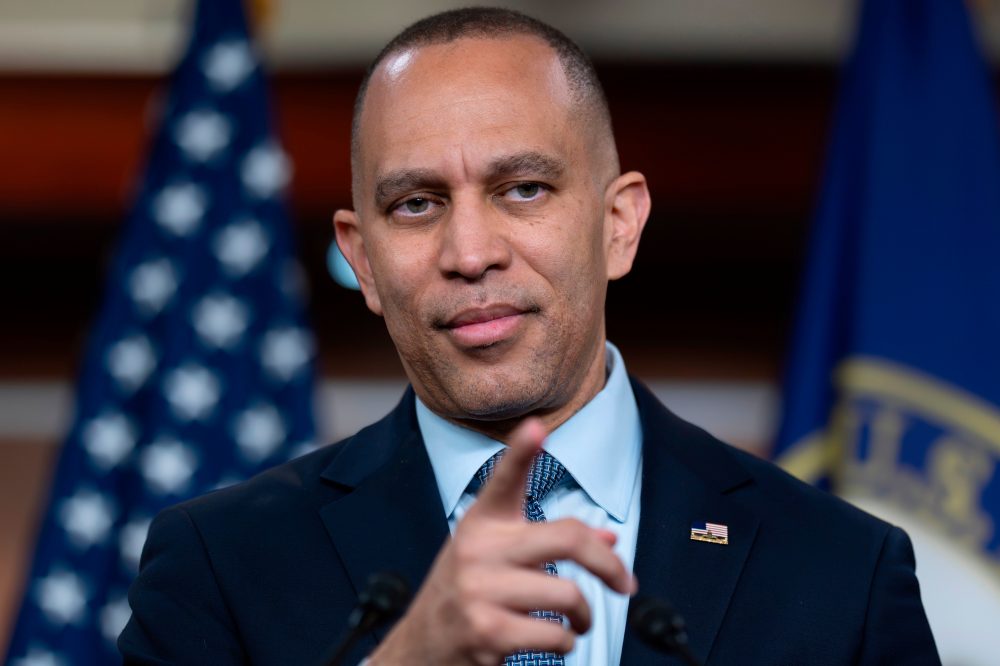
WASHINGTON — The battle for House control has become significantly more challenging for Democratic leader Hakeem Jeffries following a series of court decisions that have erased his party’s redistricting victories and potentially weakened Black political representation across the South.
Jeffries had previously cautioned Republicans about engaging in redistricting warfare, and when Democrats responded with a redrawn map in Virginia last month, the seat exchanges essentially balanced out.
“F— around and find out,” Jeffries declared following the electoral win.
However, within days, consecutive court decisions completely altered the landscape for House control and the speaker’s position by eliminating Democratic advantages in Virginia and potentially reducing Black representation by Democrats throughout the Deep South.
These changing dynamics have served as an alert for Democrats, who had been expected to reclaim the House this November while benefiting from President Donald Trump’s declining approval numbers, and represent a challenge for Jeffries as his party confronts an expanding field of Republican-leaning districts.
An outside organization supporting the leader has invested approximately $60 million, with a substantial portion directed toward Virginia alone, depleting Democratic resources as they face off against Trump’s Republicans.
“It sort of crystallizes the election is now a contest between one side that has the money and the maps, and the other that has the voters and the candidates,” explained Jesse Ferguson, a Democratic strategist and former deputy director of the House Democrats’ campaign arm.
Jeffries, who could become the nation’s first Black House speaker, recognized that Democrats might need to capture twice as many Republican districts — gaining six seats instead of three — to secure the majority following the redistricting battles.
However, he maintained confidence that Democrats would gain seats, similar to their 2018 performance during Trump’s initial presidency, arguing that Republicans depend on redistricting rather than policy solutions to secure victories.
Trump Republicans “don’t give a damn” about Americans’ economic hardships, Jeffries stated, echoing the president’s own language.
During a private Wednesday session with House Democrats, Jeffries framed the upcoming work in nearly existential language for the nation.
He characterized the court decisions against the Voting Rights Act and the Virginia legislation as “disgusting.” He also cautioned his colleagues that Republicans would campaign with “diabolical intensity” to regain House control, which Democrats must not only match but “we have to exceed it with righteous intensity at all times.”
“Failure is not an option,” he informed the Democrats, according to someone present who was granted anonymity to share the private comments. “We have to win, and we are going to win.”
The path to House majority control was never simple, but wasn’t anticipated to become this complex. Republicans maintain a narrow majority, among the smallest in contemporary House history, and midterm elections typically benefit the opposition party as a balance against the White House.
When Trump declared last summer that Republicans deserved five additional GOP seats from Texas, it initiated a redistricting campaign that prompted Jeffries to respond similarly.
Instead of maintaining what they describe as the moral high ground, Democrats chose to retaliate, believing they couldn’t rely entirely on national institutions — specifically the courts — to counter the GOP strategy.
Jeffries traveled to Austin to support Texas Democrats opposing their state’s redistricting proposal and stood with those legislators in Chicago after they departed to prevent statehouse Republicans from achieving a quorum. He participated in private California Democratic meetings as they launched their counteroffensive, a voter initiative that secured five additional Democratic seats. Democrats also gained a seat in Utah.
The pattern continued from there.
“We had to very quickly make a decision, set a course and take a risk,” recalled Rep. Jared Huffman, D-Calif., remembering the private discussions last summer. “There was no guarantee this was going to work out.”
The Virginia legislation became pivotal, representing Jeffries’ most significant move, essentially bringing Democrats to equal footing or potentially giving them an advantage in seat gains while securing Old Dominion more firmly for the party.
He energized approximately 1,000 church attendees in Richmond before Election Day as voters prepared to cast ballots.
House Speaker Mike Johnson on Wednesday described the Democratic Virginia strategy as a “crazy overreach” that was appropriately rejected by the state’s highest court.
“Fortunately, the plan failed spectacularly,” Johnson stated.
While Democrats anticipated the Supreme Court would weaken the Voting Rights Act, the Virginia Supreme Court’s decision to overturn last month’s election outcomes caught many off guard.
Jeffries participated in a weekend conference call with angry Virginia Democrats who expressed renewed determination to win Republican seats directly, despite their setback over map modifications.
The final count following nearly a year of redistricting conflicts continues to evolve as Republican state legislatures across the South hurry to redraw their maps after the Voting Rights Act ruling, with many preparing to eliminate districts represented by some of Congress’s most experienced Black legislators.
Rep. James Clyburn, the experienced Democratic representative from South Carolina whose own position faces risk, held the justices, not Jeffries, responsible for the Virginia outcome and similar situations.
“What the hell, he can’t control the courts,” Clyburn declared, promising to seek reelection regardless of how his district boundaries are redrawn. “Don’t put that on Jeffries. We won the vote.”
Jeffries accepted that this year’s maps are nearly finalized and shifted focus to 2028, when he said Democrats will intensify their efforts to address the GOP redistricting challenge before the next election.
“We know this unprecedented assault on Black political representation, the likes of which we have not seen since the Jim Crow era, the ghost of the Confederacy” will persist, he stated. “The challenge that is in front of us is ensuring that there is a decisive and overwhelming response in advance of 2028.”
Federal officials are taking aim at diversity, equity, and inclusion programs at companies that prioritize recruiting diverse candidates during their employment processes. This has sparked speculation about whether professional sports organizations might become targets of similar scrutiny.
The current administration’s focus on these workplace diversity initiatives has raised concerns about the potential impact on established practices across various industries, including professional athletics.
A group of Miami area residents filed a federal lawsuit Wednesday challenging President Donald Trump, Miami Dade College, and Florida state officials over the transfer of prime downtown Miami real estate for Trump’s planned presidential library complex that could include commercial hotel space.
The legal challenge claims the president, his library foundation, and state officials including Florida Gov. Ron DeSantis broke the Domestic Emoluments Clause in the U.S. Constitution, which bars states from providing financial advantages to current presidents.
The White House did not provide a response to requests for comment Wednesday evening.
Last September, DeSantis authorized the transfer of a 2.63-acre property to Trump’s library foundation. Following the transfer, the president and his son Eric Trump revealed elaborate plans for a tower to hold the library. A computer-generated video released in March shows sweeping views of the proposed building’s exterior and interior spaces, featuring a presidential aircraft displayed in the entrance area next to a golden escalator similar to the one Trump used during his 2015 campaign launch. Additional footage depicts a massive ballroom comparable to one he’s designing for the White House, a recreated Oval Office, rooftop garden areas, and a large golden Trump statue.
The president has also indicated the structure might contain commercial businesses.
“This concept could be an office, but it’s most likely going to be a hotel with a beautiful building underneath,” Trump told reporters in March.
The legal filing contends this means the property “is no longer available to serve MDC’s student community and Downtown Miami. Instead, the land will house a Trump hotel that brings riches to the President.”
The transferred property belongs to Miami Dade College and sits adjacent to the Freedom Tower, a landmark structure that stands among the upscale condominiums overlooking palm-lined Biscayne Bay. The Spanish Revival tower previously housed one of the city’s earliest newspapers before becoming a service center for hundreds of thousands of Cubans seeking refuge in the United States, according to Miami Dade College, which currently runs the location as a museum.
The property carries an estimated value of approximately $67 million based on a 2025 evaluation by the Miami-Dade County property appraiser. Additional real estate professionals, including appraisers referenced in the lawsuit, have estimated the land could command hundreds of millions of dollars more on the open market.
Legal representatives from the Constitutional Accountability Center in Washington, D.C., and the Miami law firm Gelber Schachter & Greenberg brought the case on behalf of a Miami Dade College student, two residents living near the transferred property, and a local nonprofit group that had wanted to develop an urban farm on the site.
RIO RANCHO, N.M. (AP) — Rising oil prices caused by global supply disruptions in the Strait of Hormuz have created a morally complex financial boom for New Mexico, a Democratic-leaning state that depends on fossil fuel revenues to support its progressive social programs.
As the nation’s second-largest oil producer after Texas, New Mexico uses income from petroleum taxes, royalties and lease agreements to fund college tuition assistance, universal school meals, health coverage and a newly launched free child care program.
With oil prices climbing due to the Iranian conflict, state coffers are swelling, putting Democratic leaders in an awkward position as they oppose military action while benefiting from the economic consequences.
“It’s hard for people to think about, ‘Oh great, we have this windfall,’ and children are getting killed on the other side of the world,” said Deb Haaland, the former U.S. Interior Department secretary running for governor.
Haaland represents one of two Democrats seeking to replace Gov. Michelle Lujan Grisham, who is completing her second term. The former congresswoman and state party chair previously worked to restrict oil and gas development during her tenure in President Joe Biden’s Cabinet.
She proposes channeling money from the current energy surge into expanding New Mexico’s child tax credit and enhancing the refundable working families tax credit, measures that would primarily help lower-income residents.
“We have obligations to try to have a better world overall,” said Haaland, a tribal member of Laguna Pueblo who could become the first female Native American governor in the U.S. “I think we can do that.”
Her Democratic primary opponent, Albuquerque-based District Attorney Sam Bregman, proposes addressing inflation through one-time $500 payments to residents earning under $200,000 annually. He also supports eliminating personal income taxes for residents 65 and older.
“It is the resources of the people that’s generating that revenue,” he said. “We ought to give it back to the people.”
Each $1 change in oil’s average annual price translates to approximately $59 million in state revenue fluctuation.
This means New Mexico anticipates roughly $850 million in additional annual government revenue for the budget year concluding in June, based solely on wartime price increases — representing 12% of annual general fund expenditures, according to the state Legislature’s budget and accountability office.
New Mexico ships much of its heavier crude from the Permian Basin to Texas distribution centers and Gulf Coast refineries. Prices may stay elevated with no clear end to the conflict despite a tentative ceasefire.
In New Mexico, petroleum revenue increases automatically feed into various trust funds created to slowly wean the state off fossil fuel dependence, helping generate investment returns that support Medicaid, early childhood programs, infrastructure development and mental health services expansion.
This approach has eased concerns among many Democrats about oil income dependency, particularly in a state with persistent poverty and the nation’s highest Medicaid participation rate.
“For New Mexico and New Mexicans and especially the progressive left — which sort of controls the state — it’s always something they really don’t want to admit or talk about or get angry about,” said Lonna Atkeson, a political science professor who has analyzed voting behavior in New Mexico and directs the LeRoy Collins Institute at Florida State University. “Like, ‘We should not be funding our stuff with that money.’ I’ve heard those arguments.”
This year’s gubernatorial winner will oversee a state investment council managing approximately $68 billion in state reserves, including funds that help cover K-12 public education expenses.
New Mexico isn’t the only state benefiting financially from the war. In Alaska, officials project an extra $1.05 billion for the current and upcoming fiscal years.
“It really is this small group of energy-reliant states like North Dakota, Alaska, New Mexico and Wyoming that are going be affected most directly,” said Justin Theal, who researches state fiscal trends as a senior officer for The Pew Charitable Trusts. He described the situation as “a double-edged sword.”
“It raises costs for households and businesses which can potentially dampen consumer spending and reduce sales taxes that almost every state relies on as well,” Theal said.
Three Republican gubernatorial candidates are pushing for more aggressive tax cuts while oil revenues remain high.
“Republicans are using the ‘e-word’ — eliminate income taxes,” said Albuquerque-based pollster Brian Sanderoff, president of Research and Polling Inc. A Republican last won election to statewide office in 2016.
Simultaneously, they’re challenging the financial viability of universal childcare.
The initiative faces legal challenge in a lawsuit from cannabis entrepreneur and Republican gubernatorial candidate Duke Rodriguez. He previously served as human service secretary under former Gov. Gary Johnson, a crusader for limited government who unsuccessfully ran for president as a Libertarian.
The lawsuit claims the childcare program was launched in November by Lujan Grisham without proper legislative approval — though supporting legislation was enacted this year. A court has given the administration 30 days to respond.
Discussing the state’s petroleum income, Rodriguez says, “We don’t have a resource problem, what we have is a real results problem. We just spend and spend and spend with no accountability.”
Republican businessman Doug Turner views wartime oil prices as a chance to restructure the state tax system and supports income requirements for childcare benefits. He lost the 2010 Republican primary to then-district attorney Susana Martinez, who went on to serve two terms as governor.
Gregg Hull, a former three-term mayor of Rio Rancho on the outskirts of Albuquerque, wants New Mexico to join states without personal income taxes like Texas and Wyoming. Personal income taxes generate about $2.2 billion annually, covering roughly one-fifth of general fund responsibilities.
Hull said he wants to expand the oil economy by directing budget surpluses toward infrastructure projects in the state’s primary oil-production region.
“This morning, when I was looking at a price of a barrel of oil, I said, ‘Well, that’s not great for consumers, but it’s awesome for New Mexico,’” Hull said.
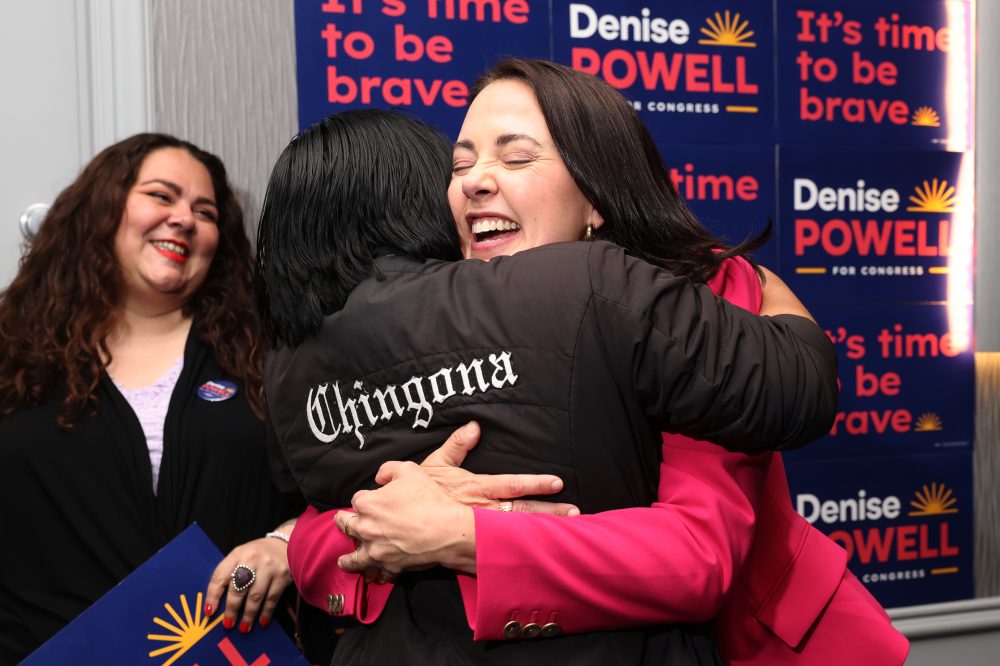
Political organizer Denise Powell has secured a victory against State Sen. John Cavanaugh in the Democratic primary for Nebraska’s second congressional district, a race that drew significant attention from political observers.
Powell’s win positions her as the Democratic candidate for the congressional seat in what has been characterized as a closely monitored political contest in the district.
Political activist Denise Powell has secured the Democratic nomination for Nebraska’s 2nd Congressional District following a competitive primary election that concluded Wednesday. The race centered around the district’s unique electoral significance in presidential contests.
The district, located in the Omaha area, represents a major Democratic target this election cycle, particularly with Republican U.S. Rep. Don Bacon stepping down from his position. The area draws national attention during presidential campaigns because Nebraska stands as one of only two states that divides its electoral votes. Since 2008, the 2nd District has supported Democratic presidential candidates on three occasions, creating what’s known as a “blue dot” within a predominantly Republican state.
Powell emerged victorious over state Sen. John Cavanaugh and multiple other Democratic candidates in a tight contest that remained undecided until Wednesday. Her general election opponent will be Brinker Harding, an Omaha City Council member who received President Donald Trump’s endorsement and faced no primary opposition.
Following her victory, Powell released a statement saying, “This country and Nebraska are worth fighting for — and I’m ready to spend the next six months working for every vote and sharing my vision for Nebraska so we can finally have a representative in Congress who will serve us. It’s time to be brave.”
Within Democratic circles, some voiced concerns that a Cavanaugh victory could have threatened the district’s “blue dot” designation, as his departure from the state legislature might have enabled Republicans to modify Nebraska’s electoral vote distribution system.
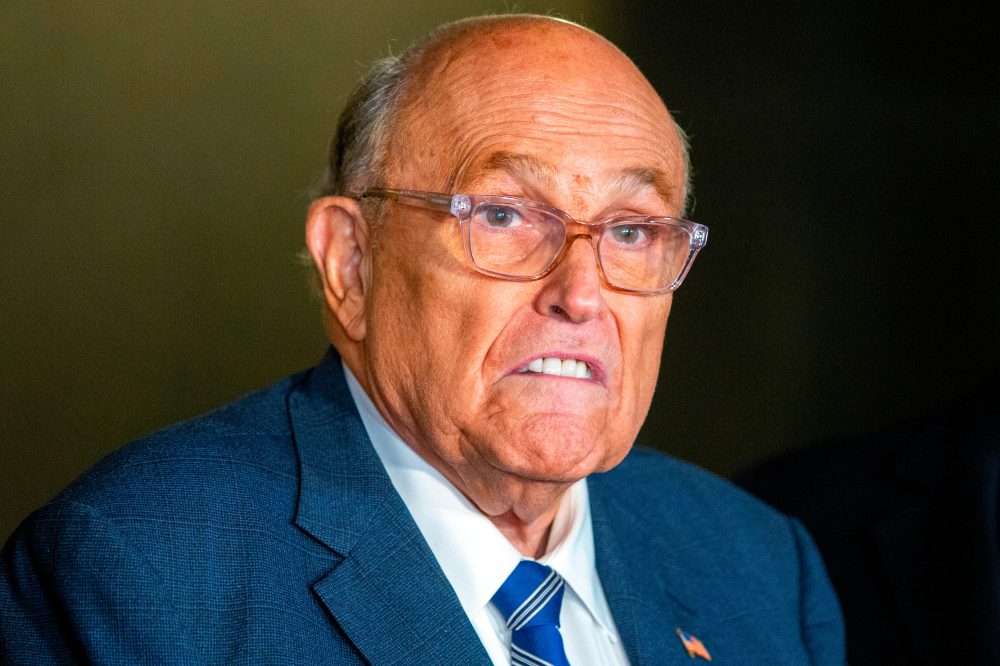
The 81-year-old former New York City mayor made his first appearance back on his conservative talk show Wednesday night following a serious bout with viral pneumonia that landed him in the hospital earlier this month.
Opening “The Rudy Giuliani Show,” the host told viewers he was recovering but acknowledged he wasn’t completely back to full health yet. His illness in early May was severe enough to require critical care and ventilator support at a Palm Beach, Florida medical facility.
News of his hospitalization prompted widespread support and positive messages from prominent political figures from both sides of the aisle.
“I have to thank everyone who sent me prayers and good will,” he said during the broadcast. He expressed particular appreciation for his family members, the hospital staff who cared for him, and U.S. President Donald Trump, who he said reached out by phone during his illness.
“It feels good to be back,” he told his audience before taking the show’s first commercial break.
This wasn’t his first recent health scare – he was hospitalized last September following a vehicle accident in New Hampshire that left him with a broken vertebra and additional injuries.
Following his eight years leading New York City, a period marked notably by the September 11, 2001 World Trade Center attacks, the longtime Republican made an unsuccessful White House bid in 2008 and later served as Trump’s personal lawyer and advisor.
He became a prominent voice supporting the president’s claims of irregularities in the 2020 election, which Democrat Joe Biden won. Trump and his supporters were unsuccessful in dozens of court cases alleging misconduct, and multiple recounts, examinations and verification processes found no evidence of substantial irregularities or mistakes.
Two former Georgia election workers successfully sued him for defamation, receiving a $148 million court award. During efforts to collect that judgment, the former federal prosecutor was held in contempt and faced proceedings this winter regarding his asset ownership.
He eventually reached an agreement allowing him to retain his residences and personal items, including treasured World Series rings, in return for undisclosed payments and agreeing to cease making negative statements about the former election workers.
Trump announced last year that he was presenting him with the Presidential Medal of Freedom.
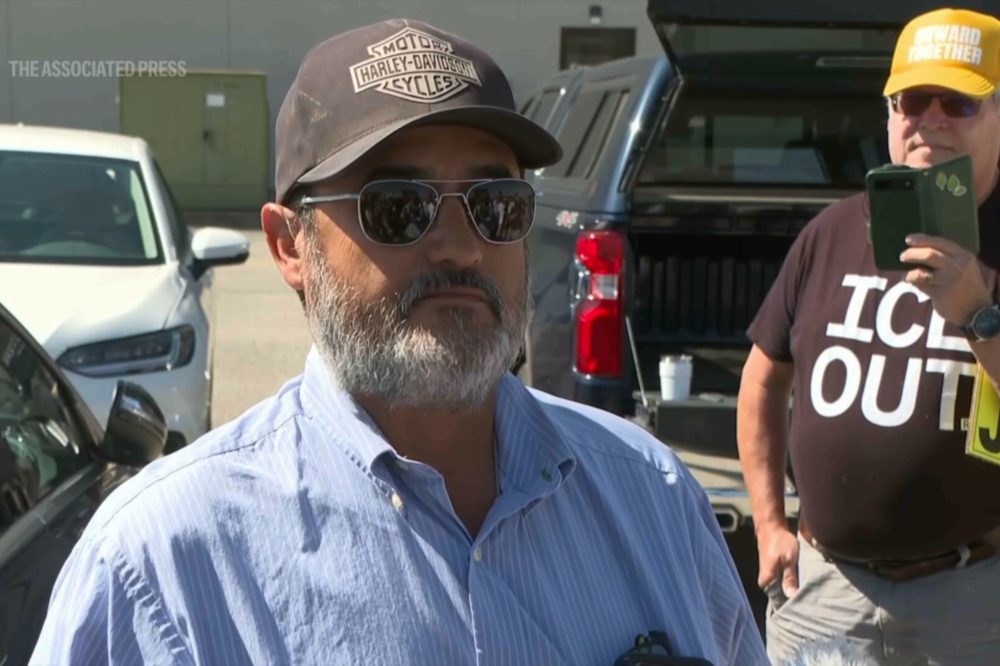
A former mayor from a small Kansas community was arrested by federal immigration officials on Wednesday following his admission last year that he participated in elections without U.S. citizenship.
Joe Ceballos, a Mexico-born legal permanent resident of the United States, was apprehended during a scheduled appointment at a U.S. Immigration and Customs Enforcement facility in Wichita, Kansas, his lawyer Jess Hoeme confirmed. The attorney stated that Ceballos is now concerned about potential deportation.
The 55-year-old stepped down from his position as Coldwater’s mayor in December as he faced state criminal charges for casting ballots as a non-citizen. During his 2025 citizenship application process, Ceballos confessed in an interview that he had participated in voting, unaware that permanent residents with green cards are not eligible, Hoeme explained.
Criminal charges were filed against Ceballos for illegal voting, but he entered a guilty plea in April to reduced misdemeanor charges through an agreement with the Kansas attorney general. His situation has captured the Trump administration’s focus and rallied local supporters, with some displaying placards that read “We Support Mayor Joe” and “ICE Out” while Ceballos entered the federal facility in Wichita.
“Let Joe go!” supporters shouted.
“Thinking what could happen — it’s just kind of crazy,” Ceballos told reporters. “Obviously nervous. I don’t know what’s going to happen. I don’t know where they’re going to take me and what I can and can’t do inside there.”
The Department of Homeland Security did not respond immediately to requests for comment via email.
Trump and fellow Republicans have been highlighting concerns about non-citizen voting since the start of the 2024 presidential campaign. Studies, including those conducted by Republican election officials, indicate such incidents are uncommon.
During this year, Trump has been urging Congressional Republicans to approve the SAVE Act, which would mandate documented citizenship verification for voter registration and participation.
The current administration has also substantially enhanced a Homeland Security program designed to verify citizenship status. At least 25 states, primarily under Republican leadership, have utilized this system to audit their voter registration databases.
Ceballos arrived in the United States from Mexico with relatives when he was 4 years old. Hoeme indicated that legal representatives will attempt to secure his release on bond through an immigration judge.
The attorney explained that Ceballos, at 18 years old, was prompted to register for voting immediately during an educational field trip to the Comanche County courthouse. In previous media interviews, Ceballos has stated that he supported Republican candidates.
He secured the mayor’s office twice in Coldwater, a community of 700 residents, and previously served as a city council member. Ceballos earned re-election in November but stepped down after state Attorney General Kris Kobach filed charges for unqualified voting and election perjury.
Kobach’s office ultimately negotiated a settlement with Ceballos. He admitted guilt to disorderly election conduct, which Hoeme characterized as a misdemeanor comparable to disturbing the peace.
“He has not been convicted of any kind of voter fraud. It should not have impacted his immigration status,” Hoeme said. “The Trump administration and ICE have doubled down on nonsense that he is a criminal.”
Ceballos has maintained strong community support in Coldwater, where a local newspaper advertisement in The Western Star urged residents to back him.
“He’s kind of got to live the American dream, to come from absolutely nothing and build up — I don’t know about wealth — but to build up a business and have a job and be a productive part of society,” longtime friend Ryan Swayze told Wichita station KAKE-TV.
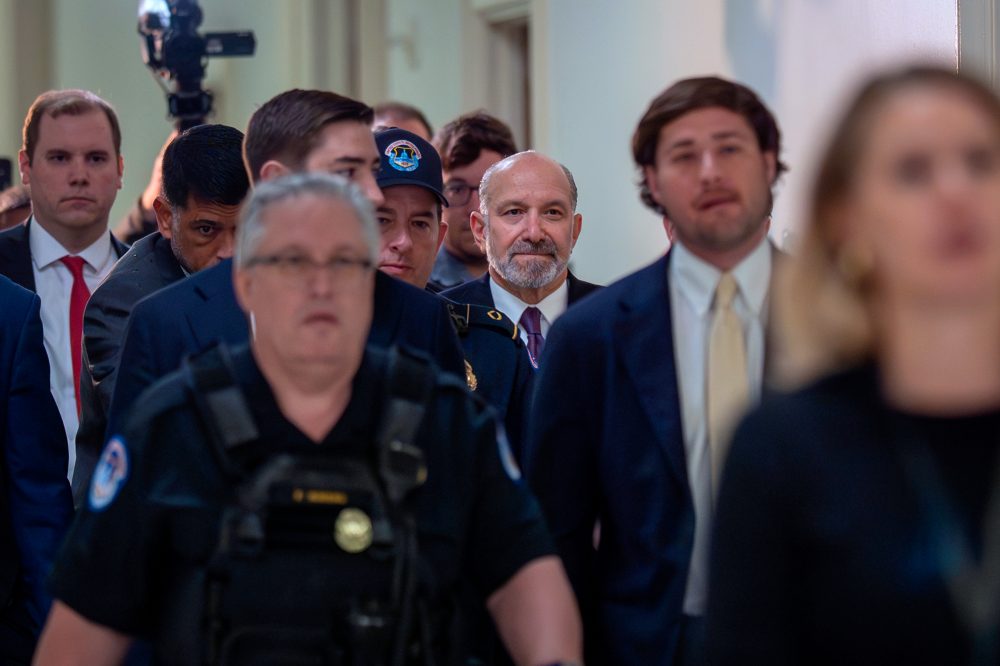
Commerce Secretary Howard Lutnick retreated from earlier statements about Jeffrey Epstein’s alleged blackmail activities during questioning by House lawmakers last week.
The House Oversight Committee released interview transcripts on Wednesday showing Lutnick walking back claims he made on a podcast last year about the convicted sex offender. Lutnick had previously stated that Epstein engaged in blackmail, but told lawmakers he was merely guessing.
“I had no personal information. I was just speculating for a podcast,” Lutnick said during his testimony, describing his subsequent encounters with Epstein as “meaningless and inconsequential.”
The interview came after Epstein case files contradicted Lutnick’s podcast statements that he was determined to avoid Epstein following a disturbing 2005 visit to the financier’s residence with his wife.
Lutnick, who lived near Epstein in New York City for years, repeatedly minimized their relationship during questioning. He told lawmakers that after Epstein displayed a massage table and made sexual comments during the 2005 house tour, he and his wife decided to stay away from him.
However, records show Lutnick had additional contact with Epstein over the years, including email exchanges and two face-to-face meetings. The former head of Cantor Fitzgerald also unknowingly invested in the same business venture as Epstein in 2013, learning of Epstein’s involvement only when case files became public recently.
Lutnick described a 2012 Caribbean vacation where Epstein’s staff invited his family to lunch on the private island. “We sat outside, had lunch. It was boring. We left,” he told the committee.
He also acknowledged a brief 2011 visit to Epstein’s residence to discuss construction scaffolding, calling that meeting “meaningless and inconsequential.”
When Democrats questioned why he met with Epstein after deciding to avoid him, Lutnick said he couldn’t recall his family’s reasoning for the island visit.
Following the interview, Democratic lawmakers criticized Lutnick’s responses and called for his resignation. Rep. Robert Garcia, the ranking Democrat on the House Oversight Committee, posted on social media: “If a Cabinet Secretary lies to the American public, they should no longer serve in that position. Mr. Lutnick should resign or be fired.”
The White House has maintained support for Lutnick, who has been part of the Republican president’s inner circle for years. The president has consistently denied awareness of Epstein’s crimes and stated he severed ties with him years ago.
Lutnick represents the highest-ranking current administration official, aside from President Donald Trump, to appear in the Epstein case files. Epstein died in a New York jail in 2019 while facing sex trafficking charges.
The committee also released transcripts from an interview with Tedd Waitt, Gateway computers cofounder who dated Epstein associate Ghislaine Maxwell in the early 2000s. Maxwell is currently serving a prison sentence for her role in helping Epstein traffic girls.
Waitt told lawmakers he was unaware of any sexual abuse by either Epstein or Maxwell during their relationship. He described meeting Epstein only briefly on a few occasions, calling those encounters “very brief and unintentional.”
Waitt said he never went to Epstein’s home, used his aircraft, or visited his private island. He characterized Epstein as “somewhat arrogant” and “off-putting.”
WASHINGTON — Congressional backers of Ukraine assistance legislation achieved a key milestone Wednesday by gathering enough signatures to circumvent Republican leadership and mandate a House floor vote in upcoming weeks.
The proposed measure aims to solidify American support for Ukraine through approval of more than $1 billion in security assistance while providing an additional $8 billion through loan arrangements. Advocates have been urging President Donald Trump to take stronger action against Russia while increasing support for Ukraine.
The effort secured 218 signatures on a discharge petition initiated by Democratic Rep. Gregory Meeks of New York, which will compel a House vote. Though the bill faces long odds of becoming law, the vote will establish lawmakers’ positions regarding Ukraine support.
The petition received backing from 215 Democrats and two Republicans — Reps. Don Bacon of Nebraska and Brian Fitzpatrick of Pennsylvania. Rep. Kevin Kiley, an Independent from California, provided the crucial final signature needed to trigger the vote. Kiley stated the legislation would help bolster Ukraine’s position to pursue lasting peace.
“We must also send a strong message that Russian support for Iran’s targeting of U.S. military assets will not be tolerated,” Kiley said in a statement explaining his support for the petition.
However, Speaker Mike Johnson expressed reservations about the vote’s timing.
“I’m talking with some of the sponsors of that right now,” Johnson said. “… The latest news out of Russia is that it looks like the war is scaling back, scaling down, coming to a conclusion. I think Vladimir Putin said that himself in the last few days, and so this would be a good time for Congress to see how that pans out. So I’m going to be talking to my colleagues about that.”
Trump indicated Tuesday he anticipates Moscow and Kyiv will soon negotiate an agreement to halt hostilities.
“The end of the war in Ukraine I really think is getting very close,” Trump said as he left the White House for a summit in Beijing. “Believe it or not, it’s getting closer.”
Putin declared in a weekend address that his invasion of Ukraine is potentially “coming to an end.”
However, on Wednesday, Russia launched at least 800 drones in an extensive daylight assault throughout Ukraine, resulting in at least six deaths and injuring dozens, including children, in one of Moscow’s most prolonged attacks during the 4-year-old conflict, President Volodymyr Zelenskyy reported.
Fitzpatrick disagreed that the conflict is approaching resolution and stated the only circumstance under which he would oppose the Meeks measure would be if Russia withdrew its military forces from Ukraine.
“There’s people dying as we speak, so no, the war is not winding down,” Fitzpatrick said.
Meeks emphasized it was time for legislators to declare their positions publicly.
“Members of Congress, some tell me that they are supportive of Ukraine. Well, we’re going to finally get a vote on the floor to make that determination,” Meeks said.
He predicted the House vote will “put pressure on the Senate and I think it should tell the president that America is looking and we want to stand by our allies and not Vladimir Putin.”
Congressional members have spent months discussing various Russia sanction proposals, but much of that discussion subsided when Trump initiated an attack on Iran in late February.
While Senate Republicans have generally backed Ukraine, they have been reluctant to proceed without Trump’s endorsement. Wednesday, Senate Majority Leader John Thune showed doubt about the Senate’s ability to advance Russia sanctions, citing “such a pileup” of other pending legislation.
Republican Sen. Lindsey Graham, who has advocated for Russia sanctions legislation in the Senate, said Wednesday, “There are parts of the House bill I like, parts of it that I don’t.”
Both Republicans and Democrats have expressed frustration that the Department of Defense has not utilized $400 million in military assistance for Ukraine that lawmakers allocated last year. During a recent hearing, Defense Secretary Pete Hegseth said the Pentagon was developing a strategy to distribute those funds.
Ukraine support has created significant friction between Congress and Trump, who promised to rapidly resolve the conflict upon assuming the presidency. Instead, he has faced challenges demonstrating progress toward a peace agreement while his administration has frequently moved to reduce support for both Ukraine and the broader European region.
Local residents in Miami have taken legal action against Florida’s decision to give away valuable state property for the Donald J. Trump Presidential Library, claiming the land transfer violates constitutional protections against presidential self-enrichment.
Florida officials gave their approval last year for transferring a waterfront parcel spanning 2.63 acres that previously served as a parking area for Miami Dade College employees.
According to the legal filing, the property carries a value exceeding $300 million and may ultimately be developed by Trump into a significant commercial project, potentially including hotel facilities. Those bringing the lawsuit want the court to declare the land transfer unconstitutional and cancel the deal entirely.
In their court filing, the plaintiffs stated: “Florida’s gift of the immensely valuable MDC Parcel for lucrative private economic development benefiting the President and his close family members is an unlawful ’emolument’ under the Domestic Emoluments Clause.”
Constitutional provisions known as “emoluments” clauses prevent presidents from leveraging their position for personal financial gain.
The legal challenge names Trump, the library foundation, Florida officials including Governor Ron DeSantis, Miami Dade College and its board as defendants. The case was brought by two Miami residents, a Miami-Dade College student and nonprofit Sistrunk Seeds.
Neither the Donald J. Trump Presidential Library Foundation nor DeSantis’ office provided immediate responses when asked for comment.
Presidential libraries are commonly built in a president’s home state to preserve official records and documents, often featuring museum components. Trump changed his legal residence from New York to Florida in 2019.
The former real estate developer has indicated that library construction would commence following his departure from office and would “most likely” feature hotel accommodations along with a Boeing 747 aircraft similar to Air Force One displayed in the entrance area.
Four citizens from Memphis have filed a federal lawsuit against U.S. and Tennessee authorities, alleging they faced harassment, detention and physical abuse while exercising their constitutional rights to watch and film law enforcement officers in their community.
The legal action, submitted Wednesday in federal court, challenges the Memphis Safe Task Force, which includes personnel from 13 federal agencies that President Donald Trump deployed to the city for crime fighting operations working with Tennessee State Troopers and the Tennessee National Guard.
Beginning in late September, hundreds of federal, state and local law enforcement officers connected to the task force have conducted traffic stops, executed warrants and hunted for fugitives in the predominantly Black city of approximately 610,000 residents. According to the lawsuit, the task force has performed more than 120,000 traffic stops.
“In the professed name of crime control, Task Force agents have stopped, menaced, and arrested Memphians engaging in routine, day-to-day activities,” the lawsuit states. “In response, Memphians encountering Task Force agents in public, including Plaintiffs, have stopped to gather information about and record Task Force activities.”
The U.S. Department of Justice issued a statement Wednesday responding to the legal challenge.
“In eight months, the Memphis Safe Task Force has made over 9,000 arrests, including 951 known gang members, and located 150 missing children, drastically increasing public safety in the Memphis community. The Department will not tolerate any action that puts our law enforcement officers at risk. We strongly disagree with the allegations in the lawsuit and remain committed to fair, impartial, and professional law enforcement practices to keep Memphians and the American people safe.”
Hunter Demster, a Memphis resident and plaintiff, says he regularly sees the task force stopping cars in his neighborhood, which has a large Hispanic population. In one interaction, he was surrounded by task force agents after he filmed a traffic stop and told the people in the car that they had a right not to speak to police.
“It is a terrifying feeling,” Demster said. “I did nothing illegal. I used my First Amendment protected rights to hold up a phone and say some ‘know your rights’ information.”
Scarlet Kim, senior staff attorney with the American Civil Liberty Union’s Speech, Privacy, and Technology Project, said the Tennessee law is written so broadly that officers have wide discretion to invoke it against observers even when the observers are not impeding their actions.
“When observers go to the scene of task force activity and they are observing, they’re gathering information,” Kim said. “They are picking up their phones and cameras and documenting what’s happening. That’s all core protected First Amendment activity. And it’s not a basis for the government to essentially react in the way that they’re reacting.”
Federal officials including Defense Secretary Pete Hegseth, former Attorney General Pam Bondi and White House Deputy Chief of Staff Stephen Miller, have visited Memphis to praise the task force. Miller in October predicted the surge in law enforcement would make the city “safer than any of you could ever possibly imagine” and that “businesses and investment are going to pour in, and Memphis will be richer than ever before.”
The task force is part of a larger effort by Trump to use National Guard troops and surge federal law enforcement in cities, particularly ones controlled by Democrats. Following troop deployments in the District of Columbia and Los Angeles, he referred to Portland, Oregon, as “war-ravaged” and threatened apocalyptic force in Chicago. Speaking last year to U.S. military leaders in Virginia, Trump proposed using cities as training grounds for the armed forces.
The lawsuit accuses task force agents of systematically retaliating against the four plaintiffs and other members of the public engaged in similar observations. It claims the threats and harassment are the “direct result of federal policy” that views observing federal agents performing their duties in public as a threat of harm to those agents. The lawsuit also claims that federal and state officials have failed to train their agents not to retaliate against citizens engaged in activities protected by the First Amendment.
The lawsuit asks the court to declare that retaliation against the plaintiffs for observing and recording law enforcement activity is unconstitutional and to prohibit the agents from further retaliation. It also targets a Tennessee law that requires observers to stand at least 25 feet (7.6 meters) away from law enforcement officers, if they are warned to do so, or face arrest. The suit asks the court to declare unconstitutional the use of the “Halo Law” against defendants who are not interfering with agents or impeding their duties.
International visitors holding World Cup tickets will no longer need to post costly bonds when entering the United States, according to a new policy from the Trump administration.
The administration has eliminated a mandate requiring travelers from qualifying World Cup nations to pay bonds reaching up to $15,000 to gain entry to the country for the tournament.
The policy shift affects ticket holders from countries whose national teams have secured spots in the upcoming World Cup competition.
The Delaware Department of Transportation has a new leader for its transit operations. Secretary Shanté Hastings has chosen Lilia Montoya to serve as the next Chief Executive Officer of the Delaware Transit Corporation, with her tenure beginning July 4, 2026.
Montoya comes to the position with extensive experience spanning more than 20 years in executive roles within public transportation. Her background includes expertise in operations management, organizational development, and strategic planning. Her career has been marked by distinguished service in the transportation sector.
Louisiana’s Republican leadership has presented a revised congressional district map following a U.S. Supreme Court ruling that found the existing boundaries violated constitutional standards while simultaneously weakening key provisions of the historic 1965 Voting Rights Act.
WASHINGTON – Vice President JD Vance expressed optimism Wednesday about ongoing diplomatic discussions with Iran aimed at ending tensions, despite President Donald Trump’s recent dismissal of Tehran’s most recent offer as inadequate.
Speaking to reporters at the White House, Vance stated his belief that headway is being made in the negotiations. “I think that we are making progress. The fundamental question is do we make enough progress that we satisfy the President’s red line?” Vance explained to the press.
The Vice President outlined the administration’s non-negotiable requirement for any potential agreement. “And the red line is very simple. He needs to feel confident that we put a number of protections in place such that Iran will never have a nuclear weapon,” Vance said.
Environmental advocates believe the anticipated shutdown of an immigration detention facility located in Florida’s Everglades within the coming month or two is strategically timed, coinciding with their legal challenge returning to a federal judge who had previously mandated its closure.
Last month, a federal appeals court ruled to temporarily maintain operations at the detention facility known as “Alligator Alcatraz,” overturning a lower court ruling that had ordered the facility to cease operations. However, the case has been returned to the original district judge who will now oversee the ongoing legal proceedings regarding the facility’s future.
“Knowing that the same district judge who previously enjoined the operation would soon reassume oversight — the defendants are now effectively waving the white flag,” said Paul Schwiep, an attorney for the environmental groups that had sued, saying the facility’s construction hadn’t undergone a required environmental review.
During questioning about the state-operated facility and its expenses on Wednesday, Florida Gov. Ron DeSantis stated he had not received any “official word” that federal authorities plan to cease sending detainees to the center.
However, suppliers and contractors working with the facility have been informed that operations could end as early as next month, according to Tuesday reports from The New York Times and CBS News Miami. The Florida Department of Emergency Management, which oversees the detention center, did not respond to email requests for comment on Wednesday. The Republican governor’s press secretary, Molly Best, directed facility-related questions to the state emergency management agency.
“We didn’t build any permanent facilities down there because we knew it was going to be temporary,” DeSantis said Wednesday at a news conference in Titusville, Florida.
The facility was established by DeSantis’ administration last July to assist with immigration enforcement efforts under the administration of President Donald Trump, who toured the detention center during the summer. Legal representation for two detainees has alleged that guards subjected detainees to severe beatings and pepper spray attacks. Additional detainees have reported finding worms in meals, non-functioning toilets, and widespread presence of mosquitoes and other insects.
“This monument to cruelty, waste and environmental and tribal lands abuse should have never been built,” U.S. Rep. Debbie Wasserman Schultz, a Democrat from Florida, said Tuesday.
Friends of the Everglades and the Center for Biological Diversity filed suit against state and federal officials shortly after the facility began operations, arguing that the remote airstrip location in the Everglades did not receive proper environmental assessment mandated by federal law before being converted into an immigration detention center. U.S. District Judge Kathleen Williams in Miami sided with the plaintiffs and ruled in August that the facility must cease operations within two months.
The appeals court halted that ruling, determining that the Florida-operated facility was not under federal jurisdiction and therefore exempt from federal environmental impact assessment requirements.
However, the appellate court specified that once Florida receives federal reimbursement for the facility, it would need to follow federal environmental regulations, Schwiep explained.
DeSantis announced Tuesday that the state anticipates receiving $608 million in federal reimbursement, which FEMA has already approved.
WASHINGTON — Senate Republicans once more prevented Democratic war powers legislation from advancing on Wednesday, though opposition to President Donald Trump’s military conflict with Iran continues expanding within GOP ranks.
Alaska’s Republican Sen. Lisa Murkowski cast her first vote opposing the war since hostilities commenced in late February. She joined two other GOP senators, Susan Collins of Maine and Rand Paul of Kentucky, who had previously voted against the military action.
The war powers measure fell short by a 49-50 margin, with Pennsylvania’s Sen. John Fetterman serving as the lone Democrat in opposition. Despite the defeat, the narrow vote count demonstrates mounting Republican concerns about the conflict’s direction, with multiple GOP senators indicating they want congressional input on the war’s trajectory.
Virginia Democratic Sen. Tim Kaine, who has led his party’s strategy of repeatedly forcing war votes, predicted before the tally: “There will be a day — and it might be soon, I believe — where this Senate will say to the president, ‘Stop this war.’”
While Senate passage remains unlikely, and House approval plus a Trump veto would certainly follow, Democrats maintain these votes create political pressure for the president to either end the conflict or seek proper congressional war authorization.
The White House continues asserting it requires no congressional approval for the military campaign and has bypassed legal mandates requiring legislative consent to maintain operations. Administration officials claim they have “terminated” Iranian hostilities by entering a ceasefire arrangement.
This stance has generated friction between the Republican-led Congress and the executive branch, as the 1973 War Powers Resolution mandates presidents obtain legislative authorization within 60 days of military engagement.
Defense Secretary Pete Hegseth informed legislators this week that renewed attacks on Iran could commence without seeking congressional approval. During Tuesday’s hearing, he told Murkowski the Trump administration possesses “all the authorities necessary.”
Murkowski expressed doubt about this position, referencing deployed military personnel and naval vessels in the region while stating: “It doesn’t appear that hostilities have ended.”
Republican leadership maintains support for the Iranian military action, contending that the Strait of Hormuz standoff blocking commercial shipping creates greater economic hardship for Iran than America.
“Iran’s economy is on life support. Its leadership is eliminated,” declared Sen. John Barrasso, the second-ranking Republican leader, during Wednesday’s floor remarks.
Barrasso also characterized Democratic war efforts as attempts to undermine Trump, arguing that pressing the issue during his China summit visit would “pull out the rug from under him.”
Nevertheless, Republicans show growing concern about elevated fuel costs, particularly with November elections approaching.
South Dakota Republican Sen. Mike Rounds said Wednesday he would prefer both government branches resolve constitutional questions through cooperation rather than congressional war votes or court challenges.
Both sides should meet and acknowledge “we have shared constitutional responsibilities,” Rounds explained.
Democrats intend to continue weekly war powers votes while seeking Trump restrictions during upcoming military authorization and funding legislation debates.
Oregon Democratic Sen. Jeff Merkley, who sponsored Wednesday’s resolution, told reporters he observes an “erosion of support, erosion of enthusiasm, an increase in skepticism” regarding the war among Republicans.
Georgia Governor Brian Kemp has enacted legislation that will eliminate party identification from local elections across the Atlanta region’s five largest counties, prompting Fulton County District Attorney Fani Willis and a fellow Democratic prosecutor to announce plans for a constitutional legal challenge.
The governor quietly signed the legislation on Tuesday, which marked the deadline for action on bills from Georgia’s 2026 legislative session.
GOP lawmakers have consistently criticized Willis due to her criminal case against Republican President Donald Trump, stemming from his efforts to reverse Democrat Joe Biden’s 2020 victory in Georgia.
Both Willis and DeKalb County District Attorney Sherry Boston declared the legislation unconstitutional under Georgia’s state constitution and committed to filing suit.
“This is a blatant attempt by Republicans to give their candidates an edge in Democratic counties by hiding their party affiliation from voters,” the two Democrats said in a statement Tuesday.
Republican State Senator John Albers from Roswell, who championed the legislation, argued during legislative debates that the measure would enhance public safety. County sheriffs will remain exempt from the nonpartisan requirement when the law takes effect in 2028.
The legislation emerges as Democratic candidates have increasingly defeated Republican incumbents throughout Atlanta’s core counties in this pivotal swing state. The new system will shift elections for most affected positions to May, coinciding with nonpartisan judicial races. This timing typically produces lower voter participation compared to November elections, with turnout primarily influenced by concurrent partisan primary contests. Candidates failing to secure majority support would face nonpartisan runoff elections in June.
The requirements will apply across Fulton County, encompassing most of Atlanta, along with the surrounding Clayton, Cobb, DeKalb and Gwinnett counties. Fulton, DeKalb and Clayton represent the state’s three strongest Democratic strongholds. Meanwhile, Cobb and Gwinnett, historically reliable Republican suburban territories, have increasingly supported Democratic candidates since 2016.
Democratic officials contend that Republicans aim to improve GOP candidates’ electoral prospects by removing party identification in Democratic-leaning areas. Opposition voices question why such policy changes target only urban Atlanta rather than applying across all 159 Georgia counties.
Willis and Boston suggested that Republicans specifically targeted these counties because voters in each have elected Black women as district attorneys.
Republican legislators have advanced numerous measures in recent years aimed at district attorneys, with Willis receiving particular focus. The district attorneys’ professional association maintains that the legislation cannot alter the partisan nature of prosecutor elections, arguing these officials serve as state judicial branch positions rather than county roles.
The association contends that modifying this structure requires a state constitutional amendment. Such changes would face Democratic opposition since proposing constitutional amendments to Georgia voters requires two-thirds approval in the General Assembly.
WASHINGTON — The U.S. Senate is preparing to vote Wednesday on President Donald Trump’s selection for Federal Reserve chairman, Kevin Warsh, who will take control of the nation’s most influential central bank during a challenging period for the global economy.
The confirmation process faced obstacles when Republican Senator Thom Tillis from North Carolina threatened to halt the nomination during a Justice Department investigation into current Fed Chair Jerome Powell. With that investigation concluded in April, the path became clear for Senate approval of Warsh.
The 56-year-old former Federal Reserve official will assume leadership during particularly turbulent times for the independent institution.
For five consecutive years, inflation has exceeded the Fed’s 2% goal and continues climbing due to surging gasoline costs. The committee responsible for setting interest rates remains split, recording the highest number of dissenting votes in over 30 years during last month’s meeting. Additionally, Powell intends to remain on the Fed’s governing board after his chairmanship concludes, despite enduring years of criticism from Trump and an unusual Justice Department probe, which could establish a rival authority within the organization.
Wednesday afternoon’s confirmation vote follows Tuesday’s approval of Warsh’s appointment to the Fed’s Board of Governors. Pennsylvania Democrat John Fetterman was the only member of his party to join Republicans in supporting the board nomination.
Trump has repeatedly challenged the Fed’s autonomy, consistently criticizing Powell for maintaining higher interest rates. The president also attempted to remove Fed governor Lisa Cook and initiated an investigation into Powell’s brief congressional testimony regarding a building renovation project.
During a Sunday Fox News appearance, Kevin Hassett, who heads the White House’s National Economic Council, expressed his belief that financial markets welcome Warsh’s potential role in reducing interest rates over time.
“Obviously, data driven. I’m not putting any pressure on Kevin Warsh,” Hassett said. “We know that he’s an extremely smart, competent person who could be very convincing when he talks to his colleagues.”
In December, Trump posted on his social media platform that he preferred a Fed chair who would lower interest rates when stock prices increased — contradicting established economic principles — and declared, “Anyone that disagrees with me will never be the Fed chairman!”
These statements have raised questions about whether Warsh will base rate decisions on economic data or attempt to satisfy Trump through rate cuts, potentially worsening inflation. During last month’s confirmation hearing, Massachusetts Democrat Elizabeth Warren criticized him as a “sock puppet” for Trump. Warsh also refused to acknowledge that Democrat Joe Biden legitimately defeated Trump in the 2020 election, despite Trump’s false claims about voter fraud.
However, Warsh rejected suggestions during the hearing that Trump had influenced him regarding interest rate policies.
“The president never once asked me to commit to any particular interest rate decision, period,” Warsh said then. “Nor would I ever agree to do so if he had. … I will be an independent actor if confirmed as chair of the Federal Reserve.”
BATON ROUGE, La. (AP) — Louisiana’s Republican senators pushed through a proposal Wednesday to dismantle one of the state’s two congressional districts where Black voters hold a majority, acting on a recent U.S. Supreme Court decision that invalidated the current House map for illegal racial gerrymandering.
The Senate committee’s decision came in the early morning hours following extensive emotional testimony from Black community members and Democratic lawmakers who opposed the redistricting plan. While Republicans could have pursued an even more drastic strategy targeting both Democratic-held seats, they chose a more restrained approach.
The Supreme Court’s latest decision has weakened federal voting rights protections for minority communities, encouraging GOP lawmakers across the South to target House districts where large minority populations have consistently elected Democratic representatives. Both Tennessee and Alabama have already moved forward with revised congressional maps that could boost Republican chances of gaining additional seats. However, a comparable initiative in South Carolina’s Senate failed to advance on Tuesday.
These efforts to dismantle minority-majority districts represent the newest chapter in a nationwide redistricting fight that has been ongoing for 10 months and has affected roughly one-third of all states. The movement intensified when former President Donald Trump encouraged Texas Republicans to redraw their House boundaries last year in hopes of capturing more seats during midterm elections. California Democrats responded with their own redistricting efforts, followed by numerous other Republican-controlled states.
GOP strategists believe their party could pick up as many as 15 House seats through new district maps across Texas, Missouri, North Carolina, Ohio, Florida, Tennessee and Alabama. Democratic analysts estimate their party could gain six seats from revised maps in California and Utah. Last week, Virginia’s Supreme Court rejected a redistricting plan that might have created four additional competitive seats for Democrats.
WASHINGTON — The Trump administration has announced that David Venturella, who previously held executive positions at a private prison company, will take over as interim director of U.S. Immigration and Customs Enforcement when the current leadership transitions out later this month.
According to a Department of Homeland Security representative speaking Tuesday evening, Venturella will replace Todd Lyons, who has guided the immigration enforcement agency during the administration’s aggressive immigration policies. ICE officials had not responded to requests for comment by Wednesday.
Congressional members noted in a public correspondence earlier this year that Venturella departed from the Geo Group in early 2023 and has since been employed at ICE, where he manages the department responsible for detention facility contracts.
During his tenure at Geo Group, Venturella held various leadership roles, including executive vice president in charge of corporate development, as documented in Securities and Exchange Commission records.
The leadership change occurs as public opinion has shifted regarding President Trump’s immigration enforcement strategies, which deployed large numbers of federal agents to cities nationwide for immigrant apprehensions. These operations heightened community tensions and sparked confrontations between demonstrators and police, culminating in the deaths of two American citizens in Minneapolis this year.
Trump campaigned on promises of widespread deportations upon returning to office, with ICE serving as a key agency in implementing this agenda. During Lyons’ tenure, the organization received substantial funding increases to expand personnel and detention facilities while increasing arrests to satisfy administration demands.
Officials confirmed Lyons’ resignation last month after he oversaw ICE during Trump’s immigration policy overhaul.
The appointment occurs as DHS Secretary Markwayne Mullin establishes himself in his Cabinet position overseeing ICE operations. Mullin has pledged to maintain a lower profile for his department and suggested a more moderate approach to immigration matters, though he remains committed to supporting the president’s deportation objectives.
President Donald Trump and Chinese President Xi Jinping are preparing to explore a new trade framework this week that could lead to reduced tariffs on approximately $30 billion worth of goods from each nation, according to sources familiar with the negotiations.
The proposed mechanism, dubbed the “Board of Trade,” was initially suggested by U.S. Trade Representative Jamieson Greer in March as a major outcome for the upcoming high-level meeting between the two world leaders in Beijing.
While details of the proposal remain limited, this approach represents a significant departure from previous trade discussions. Rather than pressuring China to overhaul its state-controlled economic structure to mirror America’s market-based system, the new strategy focuses on establishing numerical trade goals for non-strategic industries.
“It’s not really a situation where we go and get China to change the way they govern, the way they manage their economy,” Greer explained during a Fox Business Network interview last week. “That’s all baked into their system, but I think there is a world where we find out where can we optimize trade between China and the United States to achieve more balance.”
Greer compared the proposed system to an electrical “adapter” that could help bridge the gap between two fundamentally different economic models.
On Wednesday, U.S. Treasury Secretary Scott Bessent and Chinese Vice Premier He Lifeng held a three-hour preparatory meeting in Incheon, South Korea, to finalize economic proposals for the Trump-Xi discussions. However, neither official released public statements following their preliminary talks.
According to four individuals with knowledge of the administration’s goals, the framework would involve a reciprocal $30 billion trade barrier reduction arrangement to launch the new system. It remains uncertain whether specific products will be identified during the Trump-Xi summit or in follow-up negotiations.
Former USTR negotiator Wendy Cutler, who currently leads the Asia Society Policy Center in Washington, indicated that both nations “are coalescing around” a $30 to $50 billion collection of goods for reduced tariffs or other trade barriers.
“The non-sensitive basket is just such a small part now of our overall trade with China. So maybe this Board of Trade, maybe it starts with that” and expands in the future, Cutler said during a virtual Asia Society forum on Tuesday.
Trade volume between the two nations decreased by 29% in 2024, falling from $582 billion to $415 billion, while the U.S. trade deficit dropped nearly 32% to $202 billion in 2025 – its smallest level in twenty years, based on U.S. Census Bureau statistics.
Both the U.S. Trade Representative’s office and Treasury Department declined to provide additional comments about the proposed system before the Beijing summit.
China has avoided using the “Board of Trade” terminology, stating in March that both sides had “agreed to explore the establishment of working mechanisms to expand economic and trade cooperation” without providing further specifics.
The United States is particularly interested in boosting energy and agricultural exports to China, making Beijing’s retaliatory tariffs on these commodities a potential target for reduction.
Currently, China maintains a blanket 10% additional tariff on all American imports, which corresponds to the existing 10% temporary U.S. tariff on Chinese products. Beyond these measures and standard “most favored nation” rates, Beijing has imposed retaliatory duties including 10% on crude oil, 15% on liquefied natural gas, 15% on coal, and up to 55% on beef.
The United States continues to impose 7.5% tariffs on various Chinese consumer goods that were implemented in 2019 during the height of Trump’s initial trade conflict with China. These affected products include flat-screen televisions, flash memory devices, smart speakers, Bluetooth headphones, bedding, multifunction printers, and numerous types of shoes. The temporary 10% global U.S. tariff, scheduled to expire in July, is applied in addition to these existing duties.
America could also revive some of the more than 2,200 product-specific exemptions from China tariffs that were granted during Trump’s first presidency but have mostly lapsed since then.
In November 2025, Trump extended temporary tariff exemptions for one year on solar manufacturing equipment and 164 categories of industrial and medical products, ranging from printed circuit boards to electric motors and blood pressure monitoring devices. Some of these exemptions could become permanent.
The two countries are also expected to address the less-developed idea of a “Board of Investment” for handling investment matters, though Greer told the Hudson Institute last month: “I don’t think we’re at the point in our relationship with the Chinese where we want to talk about big investment programs either way.”
Congressional lawmakers and representatives from automotive, steel, and technology industries have cautioned Trump against any agreement that would permit Chinese investment in the U.S. automotive sector, contending that such arrangements would undermine American manufacturing capabilities.
Federal officials announced Wednesday they will implement a nationwide freeze on Medicare enrollments for new home healthcare and hospice providers, citing widespread fraudulent activity in these sectors.
The temporary suspension comes as part of Vice President JD Vance’s anti-fraud task force efforts to combat healthcare scams targeting Medicare, the federal health insurance program serving elderly and disabled Americans.
According to a senior administration official, the Trump administration has criticized several Democratic-led states, particularly California and Minnesota, for insufficient fraud prevention measures. However, federal oversight has also increased in Republican-led states like Georgia and Ohio over the past year.
“Widespread fraud has gone on for far too long. But under the Vice President’s task force we are finally putting a stop to the massive scale fraudsters ripping off the American people once and for all,” a spokesperson for Vance stated.
The task force plans to reveal this policy change alongside additional measures Wednesday afternoon, marking the first public disclosure of this moratorium.
Officials say the enrollment pause will allow the Centers for Medicare & Medicaid Services to conduct a comprehensive review of hospice and home health spending within Medicare and develop enhanced oversight guidelines.
A key concern driving the suspension involves how quickly fraudulent home health and hospice operations can establish themselves, according to the administration official.
Medicare data shows significant spending in these areas during 2024. The Medicare Payment Advisory Commission reports that 1.8 million Medicare recipients utilized hospice services at a total cost of $28.3 billion. Additionally, 2.7 million Medicare patients received home healthcare services costing $16 billion, according to the congressional advisory agency.
California has become a particular focus for Vance’s task force, especially after the state auditor determined in 2022 that inadequate oversight had allowed extensive fraudulent activity in hospice services.
Healthcare industry organizations have expressed mixed reactions to potential federal action. The National Partnership for Healthcare and Hospice Innovation voiced support in March for a temporary hospice enrollment freeze. Conversely, the National Alliance for Care at Home cautioned against sweeping measures that might discourage physicians and patients from pursuing necessary care.
Leading companies in these sectors include BrightSpring Health Services, Matrix Medical Network (backed by private equity), and UnitedHealth in home healthcare. VITAS Healthcare, a Chemed Corporation subsidiary, ranks among the largest hospice care providers.
Healthcare fraud costs the United States tens of billions of dollars annually, resulting in increased expenses for patients and employers, according to the National Health Care Anti-Fraud Association.
This Medicare enrollment freeze represents part of a broader Trump administration initiative targeting healthcare fraud. In February, officials suspended Medicare enrollments for durable medical equipment suppliers, including prosthetics providers.
The administration’s anti-fraud campaign began in Minnesota, where federal officials announced in February they would withhold $259 million in Medicaid funding.
Trump has frequently referenced a Minnesota scandal from 2020, where 47 individuals faced charges for allegedly stealing $250 million from a federally funded child nutrition program operated by the state. Local media reported that many defendants were Somali Americans.
This controversy led Trump to deploy thousands of federal immigration officers to Minnesota as part of a migrant enforcement operation. However, he modified this approach to be less confrontational after federal officers fatally shot two individuals protesting his policies.
When announcing the fraud task force in March, Trump claimed, without supporting evidence, that Democratic-led states experience higher rates of fraud allegations compared to Republican-led states.
Senate Democrats are preparing to challenge the Trump administration’s dismantling of consumer financial protections through a series of strategic votes designed to put Republican lawmakers in difficult positions during this election cycle.
The voting strategy, scheduled for Wednesday, targets regulatory changes and policy reversals implemented by the Consumer Financial Protection Bureau since Republicans regained control of the agency in February 2025. Acting director Russell Vought, who simultaneously serves as President Trump’s budget chief, has eliminated 67 policies and has openly stated his intention to effectively eliminate the agency entirely.
Democratic lawmakers plan to utilize the Congressional Review Act to file Joint Resolutions of Disapproval, which would reverse recently implemented federal regulations. Although these measures are unlikely to succeed, Democrats view them as an opportunity to emphasize their economic messaging ahead of elections.
The proposed resolutions, numbering approximately 20, will address policy modifications affecting debt collection practices, buy-now-pay-later services, overdraft charges, and additional consumer finance matters.
Massachusetts Senator Elizabeth Warren, the ranking Democrat on the Senate Banking Committee, is spearheading this effort. Warren originally conceived the CFPB in 2007 during her tenure as a Harvard Law School professor and remains its strongest congressional supporter.
“Today, we are going to hear from 20 senators about how the Trump administration has hurt American families by rolling back commonsense CFPB rules — and how Congress can make them right,” Warren plans to declare during Wednesday’s Senate floor proceedings.
The 1996 Congressional Review Act enables lawmakers to reverse agency regulations after their finalization. While rarely employed in its initial decades, the legislation gained prominence during Trump’s first presidency when Republican majorities overturned numerous Obama-era policies. Democrats similarly used this tool in 2021 to reverse several Trump administration rules.
These election-year votes may serve as political weapons against vulnerable Republican senators facing reelection battles, including Maine’s Susan Collins, Alaska’s Dan Sullivan, and Texas’s John Cornyn.
“I urge my Republican colleagues to listen with open ears and cast their votes on behalf of the consumers they were elected to represent,” Warren stated.
The CFPB has experienced significant operational disruption during Trump’s second term. Most bureau personnel remain under work suspension orders, and current activities primarily focus on reversing initiatives from the Biden administration and Trump’s first term. The agency’s funding is also expected to decrease following Trump’s tax and spending reduction legislation, which cut Federal Reserve transfers to the bureau.
Lawmakers established the CFPB following the 2008 financial crisis and recession, creating an independent regulatory body with extensive enforcement powers over consumer financial products and services. The bureau reported returning $17.5 billion to American consumers in 2024 while imposing $4 billion in fines and penalties on financial institutions.
Consistent polling data reveals bipartisan voter support for the CFPB and its mission. A March survey by Lake Research Partners and Chesapeake Beach Consulting showed more than 80 percent of Americans, including Republican majorities, endorsed the agency’s regulatory role over banks and financial service companies.
NEW YORK (AP) — Despite a string of electoral victories, Democratic National Committee Chairman Ken Martin finds himself under mounting pressure from within his own party, with officials expressing growing doubts about his leadership less than a year into his tenure.
The party organization is struggling with reluctant major contributors, public criticism from progressive voices over Martin’s failure to publish a promised internal analysis of past election setbacks, and behind-the-scenes conversations among Democratic strategists about potential replacement candidates. However, most insiders believe Martin’s position remains secure heading into the upcoming midterm contests.
Amanda Litman, head of the Democratic-supporting group Run For Something, revealed that senior party strategists have recently contacted her about potentially stepping into Martin’s role. While she turned down the overture, Litman expressed skepticism about the current chairman’s performance.
“I think it’s a really hard job, and also Ken is not doing it very well,” Litman shared with The Associated Press. “I honestly think he’s going to have a hard time rebuilding trust.”
She noted that frustrated Democrats face a significant obstacle: “there’s not really an alternative.”
According to two sources speaking confidentially about internal discussions, the mounting criticism has affected Martin personally, leading to increased suspicion and wariness, even within the party’s Washington headquarters where he chose not to bring in his own staff after assuming leadership.
This internal discord occurs against the backdrop of remarkable Democratic success in elections during Martin’s tenure, which has coincided with Republican Donald Trump’s return to presidential power. Over the past year, Democrats have secured victories in gubernatorial races, special legislative and congressional contests, state supreme court battles, county executive positions, and even sheriff elections.
With less than six months remaining before the 2026 midterm elections, the leadership controversy represents either an unwelcome diversion for a party seeking to challenge Republican control in Washington, or potentially a more serious obstacle that could hamper Democratic chances in November while weakening confidence in the DNC’s role in organizing the next presidential nomination contest.
Martin chose not to provide comments for this report. He has avoided media appearances recently, instead concentrating on strengthening the committee’s financial position and evaluating possible locations for the 2028 presidential convention.
During a recent Denver visit, Martin participated in a well-attended fundraising gathering followed by three private donor meetings while conducting additional fundraising calls with contributors in other cities.
Jaime Harrison, Martin’s predecessor as DNC chair, expressed frustration with party members who are publicly questioning Martin’s leadership. Harrison particularly criticized Democratic operatives from the “Pod Save America” podcast, who challenged Martin in a recent episode about his broken commitment to publish a post-2024 election review.
Even Martin’s supporters acknowledged that the podcast appearance was an uncomfortable moment for the first-term chairman.
“Am I happy with everything that goes on in the party? No. Am I happy with leadership that sometimes you get? No. But do you see me going out at this juncture trying to make that case? This is not the moment for that,” Harrison stated. “We have to be as strong as we possibly can going into November, because we have to win. Once we win, we can fight like hell.”
When asked about Martin’s job security, Harrison responded, “I don’t think so.”
Martin has committed to a comprehensive 50-state funding approach that even his backers privately admit carries significant risks.
Monthly, the DNC distributes $1 million across party organizations in all states and major U.S. territories, while providing an additional $5,000 monthly to nearly two dozen Republican-led states to strengthen party infrastructure.
These investments enjoy widespread support from local party leaders, even as the DNC faces financial difficulties.
According to the most recent federal disclosure, the national party held $22.1 million in cash with $18.4 million in outstanding debt at the end of March. In comparison, the Republican National Committee reported $116.8 million available with no debt obligations.
Despite the criticism, DNC national finance co-chair Chris Lowe explained that the financial gap reflects Martin’s deliberate strategy, outlined during his campaign for chairman and implemented since taking control.
“We made a conscious decision to spend money,” Lowe explained. “His view, and I would agree with this view, is the best way to position ourselves for the presidential (election) in ’28 is not just to amass a bunch of money, it’s to have a history of winning elections all across the country up and down the ballot. And that’s what we’ve done.”
Lowe emphasized that Martin generated more funds during his initial year than any previous chairman in comparable non-presidential years when Democrats lacked White House control. For 2026, he noted, the committee has surpassed its major donor fundraising goals each month.
California DNC member Michael Kapp, a strong Martin supporter, acknowledged he would “love to have big donors come on board” but argued that the committee’s financial balance isn’t the primary concern.
“Republicans can brag about having more money but they’re not spending it, and they’re not winning,” Kapp observed. “At the end of the day the scoreboard matters more than the spreadsheet.”
Beyond fundraising concerns, the controversy surrounding Martin’s leadership stems from his decision not to release the DNC’s internal examination of the 2024 election — referred to within the organization as the “after-action report” — despite previous commitments to publish it immediately upon becoming chairman.
Kapp, like many Martin allies, believes “it’s certainly something that should be made public,” but accepts Martin’s reasoning that releasing the analysis too close to November’s midterm elections would be inappropriate timing.
“I know there are lessons to be learned from that,” he said regarding the report. “I trust Ken. I’ve known the man for 10 years. But at this point, when we’re six, seven months away from the midterms, we need to be focused on the midterms.”
Martin has intensified his outreach to major contributors, despite their apparent hesitation to support the committee. He has acknowledged pressure regarding the analysis in some conversations and suggested modifications might be forthcoming, according to two individuals with direct knowledge of these discussions who were not authorized to discuss them publicly.
As Martin prepares for 2028, when the DNC will be responsible for establishing political infrastructure for the party’s next presidential candidate, some potential presidential contenders are approaching the internal party conflict cautiously.
Kentucky Governor Andy Beshear, anticipated to announce a presidential campaign, avoided directly addressing whether Martin should remain as DNC leader.
“Ken and I work well together. And I say that being somebody who wasn’t originally on board,” Beshear commented. “But he made an effort to reach out to me. And, listen, I want to work with whoever’s there. We need a healthy DNC. We need it to work.”
A new federal website designed to support mothers and families across the country has been launched by the Trump administration. The platform, accessible at moms.gov, provides comprehensive resources covering multiple aspects of family life and maternal support.
The online portal features an array of services and information, including directories for pregnancy resource centers, nutritional and dietary guidance, details about adoption services, and mental health resources for families. Health and Human Services Secretary Robert Kennedy Jr. emphasized the administration’s dedication to family support in announcing the initiative.
“The Trump Administration is strengthening its commitment to America’s families by equipping mothers and fathers with the resources and information they need to build healthy, prosperous lives,” Kennedy stated.
President Donald Trump has issued pardons to no fewer than 15 former government officials and their accomplices who were convicted on corruption charges during the past year, according to recent reports.
The wave of presidential clemency has raised concerns among legal experts who warn that such actions could weaken ongoing efforts to prosecute public corruption cases across the country.
Among those who received pardons was former Illinois Governor Rod Blagojevich, whose clemency was announced after Trump signed a series of executive orders in the Oval Office this past February.
The pardons have sparked debate about the impact of presidential clemency on the justice system’s ability to hold corrupt public officials accountable for their actions.
The Republican Party has achieved significant victories in the 2026 congressional redistricting battle, yet political experts warn these gains might not guarantee the GOP will retain control of the U.S. House of Representatives come November’s midterm contests.
Through the process of redrawing congressional district boundaries, Republicans stand to capture as many as twelve House seats currently occupied by Democrats. However, political analysts suggest these advantages could be neutralized by President Trump’s struggling approval numbers and the traditional pattern of midterm losses for the sitting president’s party.
The bottom line: Most political observers continue to view Democrats as having better prospects for reclaiming House control, despite Republicans holding a narrow current majority.
Jacob Rubashkin, who tracks House competitions for Inside Elections, an electoral analysis firm, explained the situation. “It is incontrovertable that Republican chances in the House have increased,” Rubashkin noted. “But none of the underlying politics has changed.”
The GOP’s map-drawing initiatives, launched by Trump in the previous year, received significant momentum recently following favorable court rulings from both the U.S. Supreme Court and Virginia’s highest court, opening new pathways for creating Republican-friendly districts.
The Republican Party secured their House majority in 2024’s elections by a mere three-seat margin in the 435-member chamber. Since then, they have successfully redrawn 14 districts across six states to benefit their candidates, while GOP state lawmakers pursue additional changes in Louisiana, Alabama, and South Carolina. Meanwhile, Democrats have secured five seats in California and gained one new Democratic district in Utah through court intervention.
While each House race represents its own battle, the various redrawn electoral maps mean Democrats would likely need to win the nationwide House popular vote by 3 to 4 percentage points to secure a chamber majority, according to Kyle Kondik from the University of Virginia’s Center for Politics. The exact margin depends on how redistricting concludes in the three Southern states.
Current polling data suggests Democrats are meeting that threshold. A recent Reuters/Ipsos survey concluded Monday revealed 41% of registered voters would support the Democratic House candidate in their district if elections occurred today, compared to 35% backing the Republican option.
This 6-point advantage on the “generic ballot” appears sufficient to overcome Republican redistricting benefits come November.
Historical precedent shows mixed results for midterm elections. During the 2018 midterms, occurring two years into Trump’s initial presidency, Democrats capitalized on widespread dissatisfaction with his performance to gain 41 House seats and secure a comfortable majority. However, in 2022’s midterms under Democratic President Joe Biden, Republicans managed only a nine-seat House pickup following the conservative Supreme Court’s decision to overturn abortion rights.
“The current Democratic lead in the generic ballot, that would probably do it — but if they have a situation like 2022, it’s more of a tossup,” Kondik observed.
Currently, Republicans face several challenges, including the controversial Iran conflict initiated by Trump and resulting increases in inflation and energy prices. Trump’s job approval stands at just 36% among Americans, while 63% disapprove, according to the latest Reuters/Ipsos polling.
Republican officials reject suggestions that Democrats hold the advantage for House control. Mike Marinella, representing the Republican national House campaign organization, stated: “House Republicans are on offense because we have the strong candidates, an historic fundraising advantage, a winning message and favorable map to defy history and grow the majority.”
Just two weeks prior, Democrats appeared confident they had successfully countered Trump’s push for Republican-controlled states to create more favorable congressional maps. Voters in California and Virginia had endorsed new Democratic-supported maps, responding to Republican-led redistricting efforts in Texas, North Carolina, and Missouri.
The situation shifted when Florida entered the redistricting battle. On April 29, Florida’s Republican-controlled legislature approved a map designed to flip four Democratic seats. That same day, a U.S. Supreme Court voting rights ruling created opportunities for states to eliminate majority-Black districts that traditionally support Democratic candidates, prompting Southern Republican lawmakers to act quickly.
Virginia’s Supreme Court delivered another blow to Democrats on May 8, rejecting a new map created by Democrats and approved by voters that would have targeted four Republican-held House seats statewide.
Virginia Democrats have submitted an emergency appeal to the U.S. Supreme Court seeking to overturn the Virginia court’s ruling. Legal challenges remain active in Florida, Tennessee, Louisiana, and other states attempting to halt Republican redistricting efforts.
House Democratic leader Hakeem Jeffries promised colleagues in a Monday letter that his party would prevail in November before launching a “massive redistricting counteroffensive” prior to the 2028 elections.
Some Democratic leaders believe the unfavorable court decisions could energize their voter base for November turnout.
Rodney Willett, a Virginia Democratic state delegate who helped secure passage of the now-invalidated electoral map through a voter referendum last month, described receiving numerous messages from upset constituents following the state Supreme Court’s decision.
“There has been huge disappointment and palpable frustration,” Willett explained before attending a Democratic county meeting. “My message this evening will be to tell people to channel that energy and elect folks we know can do a better job.”
U.S. Representative Sharice Davids, a Kansas Democrat who retained her seat despite 2022 Republican redistricting making her district more GOP-friendly, suggested that politically motivated redistricting actually helps mobilize supporters.
Davids advised fellow Democrats to tell voters that Trump and Republican allies are attempting to “rig the system to maintain political power.”
Wednesday brought significant developments across multiple fronts as President Trump landed in China for diplomatic meetings. The president’s arrival marks another key stop in his international outreach efforts.
Back in Washington, Defense Secretary nominee Pete Hegseth encountered intense scrutiny from lawmakers on Capitol Hill regarding the mounting financial burden of military operations related to Iran. Congressional members pressed Hegseth for answers about the escalating expenses tied to the ongoing conflict.
In separate news, FDA Commissioner Marty Makary announced his resignation from the federal health agency, adding to the list of recent high-profile departures from government positions.
RALEIGH, N.C. — Working at a downtown tavern, Evan Duke brightens at the prospect of keeping more of the cash gratuities he collects during busy evenings serving beverages and cocktails without federal income tax obligations.
However, the 30-year-old bartender lacks health coverage and remains concerned about escalating expenses for housing, groceries, and gasoline that impact both him and customers who contribute to the tip container at Pearl & Peril.
“It’s kind of messy right now,” Duke said.
Duke’s situation exemplifies the economic challenges facing Donald Trump’s second presidential term. While the Republican leader has attempted to increase middle-class income through tax reductions, these advantages are diminishing as costs continue climbing, particularly amid the Iranian conflict. Tuesday’s latest data revealed inflation rates maintained their upward trajectory.
This economic tension influences daily life as citizens evaluate approaching midterm contests that will decide congressional leadership for Trump’s remaining two years in office.
These financial concerns have dominated North Carolina’s political landscape and its Senate campaign. Republican candidate Michael Whatley, a former national party leader, promotes Trump’s tax reform measures. Democratic contender Roy Cooper, an ex-governor, criticizes Trump’s economic stewardship.
Duke, who registers as an independent voter, remains undecided about his choice. Similar to many Americans who base voting decisions on financial considerations, he plans to choose based on “how things are going at the time.”
“I’ve got to do more research,” he said.
The central issue revolves around what Trump termed “the one big beautiful bill,” his landmark tax legislation that reduces levies while cutting funding for social programs including Medicaid.
During Whatley’s recent appearance with Vice President JD Vance in Rocky Mount, he declared the midterm elections concerned “protecting no tax on tips, no tax on overtime, no tax on Social Security.”
Several statements contained inaccuracies. The legislation doesn’t completely eliminate federal taxes on overtime wages. However, his comments demonstrated Republican efforts to present the law as a “working families tax cut,” their preferred terminology.
“I don’t know about you, but I sure trust you to spend your money better than a federal government in D.C.,” Whatley said.
Tracy Brill, 62, a Trump supporter attending the event, expressed willingness to endure increased costs during wartime.
“The course he’s taken is spot on,” she said, adding that “I believe the other presidents didn’t do what they should have done.”
Cooper and fellow Democrats center their message on what they term the “affordability crisis.” They stress healthcare expenses and Republican opposition to extending enhanced Affordable Care Act premium assistance. They also emphasize housing and utility costs, price increases on goods affected by Trump’s tariffs, and consequences from the president’s Iran conflict on fuel, agricultural fertilizer, and food prices.
“It seems like everything that Washington is doing is driving up costs across the board,” Cooper said in Greensboro.
This represents a strategic reversal for Democrats. President Joe Biden and his party previously faced inflation criticism, which Trump exploited during his comeback effort, but now Republicans bear primary responsibility for voter frustration.
Republicans maintain stronger Senate margins compared to House representation, yet Democrats believe economic dissatisfaction provides opportunities for complete congressional control. North Carolina ranks among primary targets alongside Maine, Ohio, and Alaska. Democrats harbor hopes that Iowa and Texas might become competitive.
Democrats have historically struggled winning North Carolina Senate positions, but they see improved chances this cycle because Republican incumbent Thom Tillis is stepping down.
Cooper benefits from a moderate image and six successful statewide campaigns, including two gubernatorial victories during cycles when Trump won North Carolina. Whatley possesses extensive Republican connections as a former lobbyist and longtime party official, though voters don’t yet recognize him widely.
Phyllis Aycock, a 79-year-old antiques shop owner in Nash County, leans toward Cooper despite voting for Trump three times. She regrets her most recent presidential vote.
“It’s the whole trickle-down effect,” Aycock explained, describing economic uncertainty and inflation, including health insurance premium increases that supplement Medicare and offset Social Security adjustments and tax benefits received during Trump’s presidency.
She questioned whether Trump “even thinks about the cause-and-effect of what he does or what he doesn’t do, how it directly affects us, and when I say ‘us,’ I definitely mean the middle-class, lower-class working people, the blue collar, the ones that pay the taxes.”
“It just seems like there’s no relief for us, like it’s all for the guy who has everything already,” she said.
Aycock and her son Michael report decreased customer traffic and sales at their store, located near the law office where Cooper and his father previously worked. The elder Aycock doesn’t know Cooper personally but has supported him before and would consider doing so again.
Regarding Whatley, she perceives only Trump loyalty. She pursed her lips, then stated, “I’m worried he’s just a yes man. We’ve got enough of those.”
During Cooper’s gubernatorial tenure, he persuaded the Republican-controlled Legislature to expand Medicaid — government insurance for low-income or disabled individuals and children from poor or working families — under Barack Obama’s Affordable Care Act. Cooper discusses this program while criticizing Republican refusal to extend pandemic-era private insurance subsidies.
This position attracts supporters like Emily Miller, a 43-year-old Greensboro resident who volunteers for Democratic voter mobilization efforts.
“Medicaid and the Affordable Care Act absolutely have saved my life,” said Miller, who faces physical health challenges. As a Kentucky and later North Carolina resident, she relied on the 2010 law’s provisions between her public school teaching career and return as an education consultant.
Without full-time employment, Miller required costly medical treatment, including inpatient mental health services. She explained her part-time positions couldn’t cover private insurance expenses, let alone direct market treatment costs.
“I’m very grateful I’ve gotten back to a place where I’ve got a career again,” Miller said, with employer-provided coverage. “I’m an example of exactly what this system is supposed to do. It was a bridge. And so many people, people who are working, are struggling like that.”
Miller questions whether people will benefit from Trump’s overtime tax reduction legislation.
“I had an overtime-eligible job,” she said, “and I had bosses who would send us home before we got those extra hours.”
For Cooper to succeed, he must also motivate disengaged voters, including some Democrats.
James Outlaw, a 60-year-old rural Bertie County resident, plans to vote in November but expects no improvement regardless of results.
“It won’t get no better,” he said while completing lottery numbers at a local store. “Never does.”
Back at the downtown Raleigh bar, Duke anticipated the approaching weekend, which promises larger crowds and potentially higher tips.
He values receiving “a few thousand dollars” from tax reductions and would “at least look at” Whatley, the Republican nominee. However, he considers kitchen staff who don’t earn gratuities and won’t benefit from tip tax elimination.
Concerning his insurance absence, Duke said this won’t guarantee his Cooper vote, even while remembering the Democratic candidate as “a pretty good governor.”
“I’m healthy, and I can pay rent,” he said.
This perspective may benefit Republicans encouraging voter patience. Speaking in Rocky Mount, Vance assured attendees that Trump won’t allow economic stagnation.
“He constantly is pressing on the gas,” Vance said. “He wants us to do more.”
The departure of FDA Commissioner Marty Makary from his position has prompted commentary from his predecessor, former FDA Commissioner Scott Gottlieb, who shared his analysis of what this change could mean for the Trump administration’s healthcare policies.
Gottlieb offered his insights into how Makary’s exit from the Food and Drug Administration might influence the direction of health-related initiatives under the current administration.
The resignation represents a significant shift in leadership at the federal agency responsible for regulating food, drugs, and medical devices across the United States.
A new Congressional Budget Office assessment has revealed that President Trump’s proposed missile defense initiative, known as the ‘Golden Dome,’ could require $1.2 trillion in federal spending over the next two decades.
The staggering financial projection represents a dramatic increase from the administration’s initial estimate of $175 billion for the comprehensive missile defense system.
The budget office’s evaluation indicates the actual expenses for implementing the nationwide defense program would be nearly seven times higher than originally proposed by the White House.
The analysis comes as Congress continues to debate funding priorities and defense spending allocations in the federal budget.
Spencer Pratt, who gained notoriety as the antagonist on MTV’s reality series “The Hills” for allegedly creating drama between his girlfriend and her close friend, is now positioning himself as Los Angeles’ potential savior.
The former reality TV personality has launched a mayoral campaign for the nation’s second-largest city, vowing to eliminate what he calls chaos and poor governance plaguing Los Angeles.
What initially seemed like a publicity stunt has transformed into a serious challenge to the established political order, with Pratt gaining significant traction as early voting begins before the June 2 primary. The GOP candidate has generated substantial attention through viral social media content that criticizes current Mayor Karen Bass, Governor Gavin Newsom, and other Democratic leaders.
Pratt’s strategy centers on securing enough support to advance to a November general election matchup against Bass, the Democratic incumbent who has faced harsh criticism for her handling of last year’s catastrophic wildfire crisis.
While Republicans haven’t won the mayor’s office since 1997, Pratt managed to earn a spot alongside just two other candidates – Bass and progressive Councilwoman Nithya Raman – in last week’s televised debate.
“As crazy as this will sound, I’m the adult in the room,” Pratt declared during the forum.
The candidate and his team are pursuing a grassroots strategy that focuses on residents’ daily struggles in Los Angeles, using stark images of drug addiction and homeless camps throughout the nearly 4-million-person metropolis.
Pratt directly blames Democratic officials for the city’s problems and promises to “stop these corrupt politicians from destroying our city.” His platform includes aggressive measures against homelessness, including clearing all encampments and launching criminal probes into nonprofits that provide services to people living on the streets.
“These people do not want a bed,” he stated during the recent debate. “They want fentanyl or meth.”
The 43-year-old officially entered the race in January during a ceremony commemorating the first anniversary of the devastating Palisades Fire, which destroyed his residence along with thousands of other homes.
A recent campaign advertisement shows Pratt visiting the comfortable neighborhoods where Bass and Raman reside, then contrasting those areas with an Airstream trailer on a cleared lot where he claims to be living following his home’s destruction.
“They let my home burn down,” Pratt states in the commercial. “I know what the consequences of failed leadership are.”
Recent weeks have seen a collection of artificially-generated viral videos depicting Pratt as Los Angeles’ potential rescuer from ineffective Democrats and radical activists.
One particularly popular video shows Pratt as Batman rescuing a dystopian version of Los Angeles from Bass, who appears as the villainous Joker character.
Former Florida Governor and presidential candidate Jeb Bush praised it as “maybe the best political ad of the year” in a social media post.
Filmmaker Charles Curran has shared these videos and others across social platforms, with Pratt redistributing them through his own channels. Curran has not responded to media inquiries.
“He’s playing on the most powerful emotion, which is anger, and LA voters are angry right now,” explained Matt Klink, a Los Angeles-based Republican political consultant.
Pratt has extensive experience creating buzz and entertainment content.
He initially became famous in 2007 as Heidi Montag’s partner on “The Hills,” a popular reality program following young women navigating adulthood in Southern California. The show depicted him as causing problems between Montag and her roommate Lauren Conrad, ultimately destroying their friendship.
Pratt and Montag eventually married and have two children. Since “The Hills” concluded in 2010, both have participated in various scripted and reality television programs, with each maintaining over 1 million social media followers.
Pratt cites his 2013 political science degree from the University of Southern California as proof of his qualifications to lead such a large city.
His campaign team has declined interview requests.
Bass, who became the first Black woman to lead Los Angeles, remains a vulnerable incumbent still dealing with wildfire aftermath and broader dissatisfaction with municipal government.
She was conducting diplomatic work in Ghana when the fires began devastating her city, sparking intense criticism. Her administration also faced accusations of diluting a fire department review report, which she disputes.
Nevertheless, Bass maintains strong support from the Democratic establishment, including most of the city’s influential labor organizations. A coalition of unions is financing advertising attacks against Pratt that appear designed to boost his appeal among Republicans while helping him surpass Bass’s progressive opponents – potentially betting he would be easier to defeat in November.
Pratt’s growing prominence disrupts a race that recently appeared likely to feature Bass against a challenger from her political left rather than right.
“I feel like he’s exploiting the grief of people in the Palisades, and I think that’s reprehensible. That’s the main thing. And I think he is about his own celebrity. He’s famous now again,” Bass told Fox News recently.
Pratt has conducted an entertaining and creative campaign that has successfully converted his celebrity status into political attention – the essential currency of politics – similar to Donald Trump and Arnold Schwarzenegger’s previous efforts, according to Michael Trujillo, a Los Angeles Democratic strategist. He believes this positions Pratt well to advance past the initial voting round and face Bass in a head-to-head runoff.
However, Pratt must eventually confront a challenging reality as a Republican candidate in an overwhelmingly Democratic city.
“Not to diminish the creativity and imagination that they’re putting into their campaign, but they’re going to run into a big math problem,” Trujillo noted.
CHAMBLEE, Ga. (AP) — For most ambitious politicians, having the name recognition of Georgia Secretary of State Brad Raffensperger would be considered a blessing.
“I think most people by now know who I am,” the Republican gubernatorial candidate quipped Tuesday while campaign workers erected signs bearing his name prior to an event in the Atlanta suburb of Chamblee.
However, that widespread recognition could hurt Raffensperger in next Tuesday’s primary election since it originated from his resistance to Donald Trump’s efforts to reverse Joe Biden’s 2020 presidential win. He stood among the few Georgia officials who drew Trump’s ire by refusing his false claims, and despite securing reelection in 2022, numerous Republicans continue to regard him as disloyal.
The 70-year-old politician is now investing millions of his personal funds in an effort to redefine his public image, returning to who he was prior to that controversial period.
“I really think I need to let people know that I’m actually a conservative Christian businessman,” Raffensperger recently told members of the media. “If you don’t realize, that’s where I cut my teeth.”
Whether GOP voters will overlook Raffensperger’s perceived betrayal within a party still devoted to Trump remains uncertain. He has encountered threats throughout recent years, and campaign spokesman Ryan Mahoney reported that Raffensperger received notification of a serious threat Monday while beginning a statewide campaign tour.
According to Mahoney, a Mississippi sheriff’s department obtained a four-page document containing Raffensperger’s photograph with “boom” inscribed on his forehead. Law enforcement officials have not yet confirmed any ongoing investigation.
Security personnel conducted a sweep of Macon airport before Raffensperger’s Tuesday arrival, during which a police dog discovered a suspicious item that required evacuation procedures. The object proved harmless, and Raffensperger delivered his remarks on the airport tarmac.
Raffensperger positions himself as an option for Georgia voters who might be growing weary of a costly and contentious primary battle between Trump-backed Lt. Gov. Burt Jones and healthcare mogul Rick Jackson, both spending enormous amounts attacking one another.
A Raffensperger television commercial shows Jones and Jackson shooting firearms recklessly skyward while Raffensperger methodically aims at individual targets. Another advertisement characterizes “creepy Rick Jackson” and “big baby Burt Jones” hurling mud at each other in a farm setting.
“All they have been talking about is each other and running each other down,” Raffensperger stated Tuesday. “No one’s talking about the most important person. And that’s our fellow Georgian.”
Raffensperger’s path to the nomination appears challenging. Should he advance to a June 16 runoff, the race could transform into a battle over conservative credentials, creating an atmosphere where Raffensperger would encounter even harsher criticism regarding his Trump disloyalty.
Given his direct oversight of election operations as secretary of state, Raffensperger has become a target for numerous Republicans, including those not particularly aligned with Trump. His relationship with Jones has been especially strained, as Jones was among 16 Georgia Republicans who proclaimed themselves “duly elected and qualified” Trump electors in 2020 despite Biden’s state victory.
Georgia Republican Party delegates voted in June to prohibit Raffensperger from seeking office under their party label, citing his opposition to Trump, though the party ultimately certified his candidacy. A judge dismissed a legal challenge last month attempting to remove him from the primary ballot.
Raffensperger’s campaign calculates that approximately one-fifth of the state’s Republican voters would never support him, a group they label “never-Raffensperger.”
Sabrina Mao, a Cobb County resident attending a Jones campaign event Tuesday in Smyrna, stated, “Everybody knows there is fraud in voting.”
“I don’t think he was doing anything good,” Mao commented about Raffensperger. “He’s just a follower. I don’t think he’s a leader.”
Raffensperger represents a return to traditional Republican politics. While competing campaigns feature loud country music and barbecue events, Raffensperger’s preferred approach involves addressing Rotary Club gatherings.
He sold his concrete reinforcement business, Tendon Systems, for an undisclosed sum in 2023. Through last week, Raffensperger had provided $6 million in campaign loans and allocated at least $4.2 million for advertising. These figures are modest compared to Jackson and Jones, who are self-financing their campaigns at historic levels. Jones has contributed $17 million to his campaign, while Jackson has invested a remarkable $83 million in his gubernatorial pursuit.
Beyond Jones and Jackson, Raffensperger faces competition from Republican Attorney General Chris Carr, who targets many of the same voter demographics as Raffensperger.
Democratic primary contenders include former Atlanta Mayor Keisha Lance Bottoms, state Sen. Jason Esteves, and former state Labor Commissioner Mike Thurmond.
Geoff Duncan, a former Republican lieutenant governor who also rejected Trump’s 2020 election reversal attempts, is seeking the Democratic nomination.
While Raffensperger defends Georgia’s election procedures, he quickly shifts discussion to his preferred topics of generating well-paying employment, reducing property taxes, improving school security, and supporting Trump’s manufacturing job initiatives.
“If you can create and, build great paying jobs for people, you can change their lives,” Raffensperger remarked last month when responding to a reporter’s inquiry about Georgia’s electoral system.
He regularly presents himself as opposing Democrat Stacey Abrams, a vocal critic of Republican election management, attempting to rally Republicans who strongly dislike Abrams.
“Brad Raffensperger secures Georgia’s elections like Joe Biden secures the border — and no amount of false advertising can erase that record,” Jones campaign manager Kendyl Parker wrote to television stations Tuesday, requesting removal of Raffensperger’s attack advertisement, which also references Abrams and Biden.
Critical supporters Raffensperger requires include suburban voters who have supported conservative candidates but remain skeptical of Trump. In 2022, for instance, many voted for Republican Gov. Brian Kemp while choosing Democrat Raphael Warnock for Senate due to concerns about GOP candidate Herschel Walker.
Katherine Weber of suburban Sandy Springs described herself as “Republican, but not pro-Trump” after voting last month.
“I voted for Brad Raffensperger,” Weber said. “I feel like he is a man of integrity and not swayed by politics. He doesn’t do whatever Trump says.”
Tennessee’s Republican House Speaker has removed all Democratic lawmakers from their committee positions following their participation in protests during last week’s redistricting vote.
Speaker Cameron Sexton announced the disciplinary action Tuesday, five days after the GOP-controlled legislature passed a new congressional map that eliminates a Black-majority district centered around Memphis.
The Thursday vote in Nashville, which is expected to flip the Democratic seat to Republican control in November’s midterm elections, sparked intense demonstrations. Activists shouted from the visitor’s gallery while Black legislators linked arms in prayer at the front of the chamber as protesters used air horns and chanted against the redistricting plan.
Critics have denounced the elimination of the majority-Black district as reminiscent of Jim Crow-era racial discrimination in the South.
In his letter to House Democratic Leader Karen Camper, Sexton accused House Democrats of “instigating and encouraging” disruptions and creating “disorder on the House floor” during Thursday’s proceedings.
Sexton specifically cited lawmakers for “interlocking arms in the well of the House,” “blocking aisles on the House floor,” and using “prohibited props and noisemakers.”
Republicans control 75 of the 99 seats in Tennessee’s House, while Democrats hold 24.
Representative Justin Jones, a Black lawmaker from Nashville, shared his removal notice on social media, calling it “the same pattern of racial discrimination and authoritarian abuse we have come to expect.”
Democratic Leader Camper, who represents Memphis and is also Black, responded with a Facebook post condemning the redistricting as “one of the most troubling abuses of power this legislature has seen in recent memory.”
“When Democrats stand up, speak out, and expose what is happening in this chamber, the response from this supermajority is retaliation,” Camper wrote. “We are hurt. We are disappointed. But we are not intimidated.”
The redistricting move follows similar actions by several Southern states taking advantage of recent Supreme Court decisions that have weakened the Voting Rights Act.
President Donald Trump departed Washington Tuesday evening for a crucial state visit to Beijing, where he will sit down with Chinese President Xi Jinping during a turbulent period marked by global tensions over warfare, trade disputes, and artificial intelligence concerns.
Speaking to reporters before leaving the White House, Trump emphasized America’s military dominance, stating: “We’re the two superpowers. We’re the strongest nation on Earth in terms of military. China’s considered second.”
The Beijing summit comes as Trump faces mounting domestic pressure from declining approval ratings, largely driven by ongoing conflict involving the United States and Israel against Iran, plus escalating inflation stemming from that military engagement. The president hopes to secure victories through agreements for China to purchase additional American agricultural products and aircraft, noting he plans to discuss trade matters with Xi “more than anything else.”
Trump’s team aims to launch discussions about creating a “Board of Trade” between the two nations to resolve bilateral disagreements. Such a mechanism could help avoid another trade conflict like the one sparked last year following Trump’s tariff increases, which China responded to by restricting rare earth mineral exports before both sides agreed to a one-year ceasefire last October.
However, Trump arrives in Beijing while Iranian issues continue consuming his domestic political focus. The ongoing warfare has effectively shut down the Strait of Hormuz, trapping oil and gas vessels and driving energy costs to heights that threaten worldwide economic stability. Despite Iran’s Foreign Minister Abbas Araghchi visiting Beijing recently, Trump dismissed the need for Chinese assistance with the Iranian situation.
“We have a lot of things to discuss. I wouldn’t say Iran is one of them, to be honest with you, because we have Iran very much under control,” Trump explained to reporters Tuesday.
Taiwan’s status will likely feature prominently in discussions, as Beijing objects to American plans for weapons sales to the independently governed island that China considers part of its territory.
Trump revealed Monday he would address an approved $11 billion arms package for Taiwan during his talks with Xi. Meanwhile, Taiwan’s position as the globe’s premier semiconductor manufacturer has made it crucial for artificial intelligence development, with American imports from Taiwan now exceeding those from China this year. Trump has worked to expand domestic chip production through both Biden administration initiatives and his own negotiations.
Even before departing, Trump expressed optimism about the trip’s outcome, discussing Xi’s planned return visit to America and expressing disappointment that White House renovations wouldn’t be finished in time.
“We’re going to have a great relationship for many, many decades to come,” Trump predicted regarding U.S.-China relations. “As you know, President Xi will be coming here toward the end of the year. So that would be exciting. I only wish we had the ballroom finished.”
After speaking with the Chinese leader, Trump described the upcoming meeting as “positive” as he departed with senior staff, business executives, and family members. His itinerary includes arriving in China Wednesday evening for a ceremonial welcome before checking into his hotel, attending a state dinner Thursday, and participating in a working lunch with Xi Friday before returning home.
Despite Trump’s public confidence, Scott Kennedy, a senior adviser on Chinese business and economics at the Center for Strategic and International Studies, believes China enters these talks “from a much stronger place.”
Chinese objectives include reducing technology restrictions on semiconductor access and finding pathways to lower tariffs, among other priorities.
“But even if they don’t get much on any of those things, as long as there’s not a blow-up in the meeting and President Trump doesn’t go away and look to re-escalate, China basically comes out stronger,” Kennedy explained.
A Colorado federal judge determined Tuesday that immigration enforcement officers have disregarded his directive restricting arrests conducted without warrants.
U.S. District Senior Judge R. Brooke Jackson stated that Immigration and Customs Enforcement personnel have ignored his November directive, which prohibited arrests without warrants unless officers had reasonable grounds to believe someone was unlawfully present and posed a flight risk before a warrant could be obtained. Jackson noted that since his ruling, ICE personnel have continued making arrests without warrants while failing to conduct “individualized, pre-arrest probable cause determinations of flight risk.”
The judge additionally mandated that immigration officers authorized to conduct warrantless arrests must complete training on court directives, and required the government to provide documentation of such arrests. This decision stems from litigation filed by the American Civil Liberties Union of Colorado regarding so-called incidental arrests of individuals unintentionally swept up during immigration operations.
The ACLU alleges that U.S. Immigration and Customs Enforcement has been randomly detaining Latino individuals to fulfill enforcement quotas during President Donald Trump’s mass deportation initiatives while disregarding legal limitations on detention practices.
In his recent decision, Jackson determined ICE had insufficiently trained its deportation officers regarding his November court directive and is now mandating such education within 45 days.
He also determined ICE had “consistently failed” to meet documentation standards for warrantless arrests required under his court directive.
ICE, which has challenged Jackson’s November ruling, did not immediately provide comment regarding Tuesday’s decision.
“This is a profoundly important decision for the rule of law and the people of Colorado,” Tim Macdonald, legal director for the ACLU of Colorado, said in a statement. “The court made clear that ICE is not above the law and cannot continue to violate the law.”
During the past year, federal judges in Oregon, California and Washington, D.C., have similarly directed immigration officers in their jurisdictions to avoid conducting arrests without warrants unless flight risk exists.
Immigration officers typically obtain administrative warrants, which are documents issued by immigration agencies that authorize arrests, before searching for targeted individuals for arrest and deportation. The court cases focus on the detention of other undocumented individuals that officers encounter, including during searches for specific targets.
Such incidental arrests were prohibited during former President Joe Biden’s administration.
NYU Langone Health has disclosed that federal prosecutors in Texas issued a grand jury subpoena demanding records related to transgender youth who received medical treatment at their facilities.
The hospital system became the first to openly acknowledge receiving such a subpoena as part of an ongoing federal criminal probe. In a statement released Tuesday, NYU Langone revealed it was among multiple healthcare institutions that received the legal demand on May 7 from the Northern District of Texas. Hospital officials said they are currently evaluating their response options.
NYU Langone Health operates seven inpatient hospitals and more than 300 medical locations throughout the New York City region and Florida. According to the hospital system, federal prosecutors are demanding records of patients younger than 18 who received gender-affirming medical treatment between 2020 and 2026, along with the identities of their healthcare providers.
This development represents the most recent action in the Trump administration’s campaign to halt medical care for transgender minors. NYU Langone had previously announced this year that it would discontinue providing such treatments to transgender youth following federal funding threats.
In July, the Justice Department distributed more than 20 civil subpoenas to physicians and medical facilities offering gender care to minors, stating it was investigating “healthcare fraud, false statements and more.” Former Attorney General Pam Bondi declared the DOJ was ensuring accountability for “medical professionals and organizations that mutilated children in the service of a warped ideology.”
A federal judge in the Northern District of Texas recently ruled in favor of the Justice Department, determining that Rhode Island Hospital in Providence must comply with one of these subpoenas requesting records of gender-affirming care provided to children.
The NYU Langone subpoena was discussed multiple times Tuesday during a federal court proceeding in Providence concerning those records. A Justice Department lawyer refused to reveal the exact timing of the grand jury’s formation, stating they could only address publicly available information.
U.S. District Judge Mary McElroy subsequently directed the DOJ to provide attorneys in the Rhode Island case with the grand jury affidavit since it had become public knowledge.
Following the Justice Department’s issuance of civil subpoenas last year, court records indicate that at least seven federal courts have agreed to dismiss or restrict the broad subpoenas, which required providers to surrender birth dates, Social Security numbers and home addresses of patients who received transgender care.
While medical professionals and hospitals navigate these subpoenas, 11 families filed a class-action lawsuit this week attempting to prevent the DOJ from accessing the documents. The lawsuit, submitted in Maryland’s federal court, represents families with transgender children who have received care from hospitals nationwide.
The Justice Department stated Tuesday that it does not provide comments regarding grand jury investigations.
NYU Langone and the U.S. attorney’s office for the Northern District of Texas did not respond immediately to requests for comment Tuesday.
LGBTQ+ advocacy organizations criticized the latest federal demands for gender care records.
“We will not allow anti-trans extremists to turn our hospitals into hunting grounds,” Tyler Hack, executive director of the transgender rights group the Christopher Street Project in New York, said in a statement. “Playing political games to weaponize Americans’ private healthcare information is not just an attack on trans people — it is an attack on every single American who benefits from basic patient-provider privacy.”
NEW YORK (AP) — With gasoline prices putting a squeeze on family budgets during the ongoing conflict with Iran, President Donald Trump is advocating for a temporary halt to the federal gasoline tax.
The president lacks the authority to implement this change independently, and he hasn’t detailed the proposed duration of such a suspension. However, members of Congress from both political parties have already been advocating for pausing the federal gasoline tax, with some proposed legislation calling for a moratorium lasting until October 1.
Supporters of halting the gasoline tax contend it would deliver essential financial relief to families and businesses currently facing economic hardships, particularly affecting lower-income households who bear the greatest burden. This situation stems from disruptions to global oil supplies and other essential commodities since the U.S. and Israel entered the conflict approximately three months ago, causing energy costs and gasoline prices to surge.
However, a tax suspension is unlikely to create a substantial or immediate reduction in pump prices. Critics also caution about possible long-term ramifications. While the federal gasoline tax represents only a small portion of what Americans spend on fuel, it generates billions in revenue that federal highway and mass transit programs depend upon.
Here’s the current situation.
The federal gasoline tax currently equals approximately 18.4 cents per gallon. However, motorists wouldn’t see that complete amount removed from their fuel costs immediately following a suspension.
“You can’t suspend the tax and then expect everyone to wake up the next morning and gas is suddenly 18 cents cheaper,” stated Carl Davis, research director at the Institute on Taxation and Economic Policy, a nonprofit organization. “It doesn’t work that way.”
This occurs because the federal gasoline tax isn’t imposed directly at gas stations, but instead at the wholesale distribution level. The expectation behind a suspension is that retailers will eventually transfer the tax reduction to customers through reduced prices, though Davis emphasizes this outcome isn’t certain — pointing out that state-level experiences show minimal relief that requires time to reach consumers, if drivers benefit at all during temporary tax holidays.
Fuel suppliers might also retain portions of the savings to increase their profit margins. Considering this factor, the University of Pennsylvania’s Penn Wharton Budget Model projects that approximately 72% of a federal gas tax reduction would actually benefit consumers — equivalent to roughly 13.2 cents of the complete 18.4-cent per gallon rate.
Even with these savings, the financial benefit for typical drivers remains modest. Should the federal gas tax be suspended from June 1 through October 1, the Penn Wharton Budget Model calculates that a household refueling a 15-gallon tank weekly would save approximately $35 during those four months.
Meanwhile, current U.S. gasoline prices remain significantly elevated compared to pre-war levels — with the national average reaching about $4.50 per gallon on Monday, according to AAA, versus $2.98 in late February. As families continue experiencing financial pressure from increased expenses, Davis observes that many drivers might find it difficult “to even notice” a tax reduction if they receive it.
Trump has personally recognized that the federal tax represents a small percentage of gasoline costs. However, “it’s still money,” he informed reporters on Monday.
The U.S. gasoline tax also serves as the primary revenue source for federal highway and mass transit programs. Suspending it could eliminate billions of dollars in funding — which experts caution may create long-term problems in the future.
Based on current fuel pricing and consumption patterns, the government could forfeit $8.35 billion in revenue during a four-month suspension, the Penn Wharton Budget Model confirmed to the AP on Monday. Should the federal diesel tax (currently 24.4 cents per gallon) also be paused, that amount could approach $11.5 billion.
Congressional legislation suggests compensating for any Highway Trust Fund revenue losses with general treasury funds, but critics worry this approach could increase the federal deficit and potentially threaten the long-term viability of infrastructure projects. The federal gasoline tax has remained static since 1993, which experts argue has already weakened the Highway Trust Fund’s buying power when adjusted for inflation.
With specific details of a potential tax suspension remaining uncertain, future outcomes are difficult to forecast. However, “you could very easily imagine some kind of combination of higher national debt and lower funding for roads and bridges and other transportation projects,” Davis explained. “Eventually there will be a consequence.”
In addition to federal taxes, each state imposes its own separate gasoline taxes. These rates vary from as little as 9 cents per gallon in Alaska to nearly 71 cents in California, based on government data from early this year.
To address elevated prices during the Iran conflict, several states — including Indiana and Georgia — have recently enacted temporary suspensions of their gasoline taxes. Kentucky and Utah have decreased their rates. Additional states are considering similar measures.
However, other states may find it challenging to implement comparable actions.
Unlike the federal government, states generally must maintain balanced budgets annually. Beyond essential transportation infrastructure, some states also depend on fuel tax revenues to support education, environmental programs and other public services.
Numerous factors influence what drivers pay at gas stations. State and federal taxes, seasonal demand patterns and more expensive fuel formulations required for warmer weather all contribute. However, crude oil costs — the primary component in gasoline — represent the largest portion.
Despite worldwide government efforts to increase supply during the war, including accessing emergency oil reserves, elevated oil prices persist. Both Brent, the international benchmark, and U.S. crude are currently trading above $100 per barrel — rising from approximately $70 just months earlier.
Global attention focuses on the Strait of Hormuz, where one-fifth of the world’s oil previously flowed. However, Tehran and Washington remain deadlocked over the strategic waterway, while broader ceasefire negotiations continue to stagnate.
Industry analysts have consistently cautioned that if the conflict continues and supply chains face prolonged disruption, prices for gasoline and numerous other products could keep rising.
“This is really a foreign policy problem,” Davis noted. “There’s not a fiscal policy band-aid that can be slapped on.”
South Carolina’s Republican-controlled Senate dealt a blow to former President Donald Trump on Tuesday, rejecting an effort to redraw the state’s congressional boundaries that would have wiped out its single Democratic House district.
Several GOP senators defied Trump’s pressure and joined Democrats in blocking the redistricting plan, falling short of the required two-thirds majority needed to extend the legislative session. The final tally was 29-17, missing the mark by two votes.
The failed initiative means U.S. Representative Jim Clyburn, an influential Black Democrat who has served the district since 1993, will likely keep his seat safe for November’s midterm contest. However, Republican Governor Henry McMaster retains the option to convene a special legislative session to revisit the redistricting question. GOP lawmakers already hold control over the state’s remaining six congressional seats.
This redistricting battle reflects a broader strategy among Republican-led states throughout the South to reconfigure congressional boundaries in ways that could weaken Democratic strongholds and alter the region’s political landscape.
The push gained momentum following a U.S. Supreme Court ruling on April 29 that weakened provisions of the Voting Rights Act, providing states with greater freedom to dismantle districts with majority-Black and majority-Latino populations. Multiple GOP-controlled southern states have seized on this opportunity, with Tennessee successfully passing new maps that break up a majority-Black district, while Louisiana and Alabama are pursuing comparable measures.
The South Carolina House had previously approved legislation that would have delayed the June 9 primary elections for U.S. House races and implemented new district boundaries that would have divided Clyburn’s constituency.
Trump attempted to influence the Senate vote through a social media message posted Monday, stating he was “watching closely” and encouraging state senators to support the redistricting effort.
This pressure campaign echoed Trump’s previous intimidation tactics against Indiana Republican legislators who refused to redraw their state’s map last year. Trump had promised to endorse primary opponents against those lawmakers, and his threats proved effective when six of the seven targeted incumbents lost to Trump-backed challengers in recent primary elections, demonstrating the continued power of his political influence.
AUSTIN, Texas — Former President Barack Obama threw his weight behind Democratic U.S. Senate hopeful James Talarico during a Tuesday meeting in Austin, as party leaders work to energize what they acknowledge is an uphill battle in the traditionally red state of Texas.
The former commander-in-chief shared a meal with Talarico and Democratic gubernatorial candidate Gina Hinojosa at a local taco restaurant in Austin. The appearance was designed to provide momentum for both candidates through an endorsement from one of the Democratic Party’s most popular figures.
The visit continues Obama’s pattern of championing emerging Democratic leaders across the country, including a recent appearance alongside New York City Mayor Zohran Mamdani in the Bronx to advocate for expanded childcare access.
Obama previously praised Talarico during a podcast appearance several months ago, describing him as a “terrific, really talented young man.” Hinojosa revealed in a March social media post that the former president had personally called to offer his congratulations on her campaign efforts.
Talarico’s Senate bid has drawn nationwide interest due to his combination of progressive politics with Christian messaging. His eventual Republican opponent will be determined by a May 26 primary runoff between current Texas Attorney General Ken Paxton and sitting Senator John Cornyn.
WASHINGTON — Following a closed-door meeting with Secret Service Director Sean Callan on Tuesday, Republican senators expressed concerns about a billion-dollar White House security funding proposal, demanding more specific information about how the money would be allocated.
The comprehensive security plan includes $220 million dedicated to fortifying President Donald Trump’s newly constructed East Wing ballroom. According to documents reviewed by The Associated Press, this portion would fund bulletproof glass installation, drone detection systems, chemical threat filtration and detection equipment, along with various other national security measures.
The security funding request follows charges filed against an individual who allegedly attempted to assassinate Trump during last month’s White House Correspondents Association dinner. Additional funding allocations include $180 million for constructing a new visitor screening facility and $175 million designated for modernizing Secret Service agent training programs to address contemporary security threats.
Multiple Republican senators who attended the lunch meeting criticized the proposal’s lack of specificity. They emphasized wanting comprehensive details about expenditure plans and questioned the timing of the request. While Trump has consistently stated that private donations totaling $400 million would cover ballroom construction costs, the administration had not previously disclosed associated security expenses.
“I want more information,” stated Florida Sen. Rick Scott, who maintains close ties with the president. “I ran companies, okay? If somebody came to me and said they were going to spend a billion dollars on something, I’d get more detail.”
Senate Appropriations Committee Chairwoman Susan Collins of Maine questioned why these security enhancements weren’t included in Trump’s earlier budget submission this year. She indicated requesting “a lot more data” during the meeting.
Indiana Sen. Todd Young expressed willingness to support the initiative while noting, “they need to go back and get us more detail about how exactly they arrived at the figures.”
Republican leadership has incorporated the security funding into a partisan spending measure aimed at restoring immigration enforcement agency budgets. Internal party skepticism regarding the White House funding could potentially threaten the legislation, which GOP leaders hope to advance without Democratic support.
Additional Secret Service requests include $175 million for “enhancements for protectee security,” $150 million addressing “evolving threats and technology” such as drone countermeasures and airspace protection, and $100 million for securing high-profile “events of national significance.”
Senate Democratic Leader Chuck Schumer announced plans to challenge the security funding through the Senate parliamentarian and propose amendments forcing Republican votes on the proposal if it remains in the legislation.
“How many Americans want to see a billion dollars for a ballroom and not for the cost of child care and groceries?” Schumer questioned Tuesday.
Speaker Mike Johnson of Louisiana also participated in the Senate Republican lunch, with some House Republican members similarly expressing reservations about the billion-dollar proposal.
Facing pushback from Democrats and some Republicans, South Dakota Republican Sen. Mike Rounds suggested potentially reducing the security plan’s scope, deferring portions to future annual spending legislation.
However, Rounds indicated Republicans might ultimately approve the complete request after receiving additional details.
“I think as more of the information begins to come out, I think people are going to feel a lot more comfortable with what they are requesting,” Rounds explained.
WASHINGTON, May 12 – Officials at the federal Consumer Financial Protection Bureau are developing plans to bring employees back to their workplace following more than a year since the Trump administration closed the agency’s Washington headquarters and attempted to dismantle its staff, according to three sources familiar with the situation.
The workplace return strategy for the consumer protection agency has not been shared with employees yet, and the timeline for implementation remains undetermined, sources indicated.
Currently, the downtown headquarters building is partially being used by the Office of Management and Budget, led by Director Russell Vought who also oversees the CFPB, according to five sources knowledgeable about the building’s occupancy.
Sources were unable to confirm whether employees would return to the original CFPB headquarters location or if the directive would apply to agency personnel stationed in other locations beyond Washington.
Agency representatives did not provide immediate responses to requests for comment on Tuesday. In February, the Trump administration terminated the headquarters lease and transferred the building to the General Services Administration, as previously documented by Reuters.
Following initial calls for completely shutting down the CFPB last year, senior administration leaders now indicate they have reduced their plans to dramatically cut the agency’s staff. A judge’s temporary restraining order preventing this action continues to stand after a lower court determined the administration intended to destroy the CFPB before courts could rule on the legality of such actions.
Due to severely limited agency operations and an uncertain future, numerous CFPB workers have departed the organization, which was established after the 2008 financial crisis to safeguard Americans from exploitative consumer lending practices. Staff numbers have decreased by approximately 30% since the Trump administration began, based on legal documents.
Senior administration leaders, including President Donald Trump, have characterized the CFPB as a politically motivated obstacle to business freedom, while Democratic lawmakers and agency supporters have called elimination efforts a corporate favor that harms consumers.
WASHINGTON, May 12 – Federal legislation designed to force social media platforms to better protect children from online dangers moved closer to reality Tuesday after a powerful Republican senator announced his backing for the measure.
Senator Ted Cruz declared his support for the Kids Online Safety Act during a Washington event, marking a crucial step forward for the proposed law. The legislation would mandate that social media companies “exercise reasonable care” when creating features that could harm young users, targeting issues such as eating disorders, depression, and the sexual harassment of minors.
Cruz’s endorsement carries significant weight since he leads the Senate Commerce Committee, which typically reviews and approves such legislation before it reaches a full Senate vote. While the senator has previously supported similar measures, he had not yet scheduled a formal committee vote on this particular bill during the current congressional session.
Speaking at a gathering outside the U.S. Capitol alongside parents who lost children to online-related harms, Cruz made a firm commitment about the bill’s future. “We are going to pass it out of the Commerce Committee, we’re going to pass it in the Senate,” he stated.
Representatives from Cruz’s office did not immediately respond to requests for additional comment on the announcement.
DOVER — Delaware Governor Matt Meyer revealed two significant legislative proposals Monday aimed at reducing healthcare expenses and bolstering patient safeguards throughout the state, marking a key component of his administration’s comprehensive strategy to create a more affordable, transparent, and responsible healthcare framework.
Speaking alongside legislative leadership and state officials in Dover, Governor Meyer detailed his administration’s blueprint for transforming Delaware’s healthcare landscape to better serve residents facing rising medical costs.
The legislative package represents a cornerstone initiative in the governor’s broader mission to address healthcare affordability challenges that have impacted families and individuals across Delaware.
The Southern Poverty Law Center confronts a major challenge from federal authorities, arriving during a period when both former and current employees describe the civil rights organization as especially vulnerable to outside pressure.
Acting Attorney General Todd Blanche, speaking alongside FBI Director Kash Patel during a recent press conference, revealed charges against the Montgomery-based organization. Federal prosecutors claim the group illegally transferred more than $3 million to white supremacist and extremist organizations.
The timing of these federal charges creates additional strain for an organization that has historically weathered violent attacks and intimidation campaigns. The SPLC, known for tracking hate groups and pursuing civil rights litigation, now finds itself defending against serious allegations from the Justice Department.
Internal sources suggest the organization faces institutional challenges that may complicate its ability to respond effectively to the current federal investigation. The charges represent a dramatic shift in the relationship between the civil rights group and federal law enforcement agencies.
NEW YORK — A federal appeals court has granted President Donald Trump temporary relief from paying an $83 million defamation judgment to columnist E. Jean Carroll, according to Tuesday’s court filing.
The 2nd U.S. Circuit Court of Appeals approved a request from Trump’s legal team to postpone the payment to Carroll until the Supreme Court can either review the case or decline to hear an appeal. However, the court mandated that Trump secure a $7.4 million bond to account for potential additional interest charges, as Carroll’s legal team had requested.
Last month, the appeals court denied Trump’s petition for the full 2nd Circuit to conduct a rare en banc hearing regarding an appeal of a three-judge panel’s confirmation of the January 2024 jury verdict.
Following that denial, Trump’s attorney Justin D. Smith petitioned the 2nd Circuit to halt enforcement of its ruling that upheld the monetary award, preventing Trump from being compelled to pay before the Supreme Court could weigh in on a potential appeal.
Smith argued last week that there exists a “fair prospect” the Supreme Court would rule favorably for Trump, who has characterized Carroll’s allegations—first revealed publicly in 2019 regarding a claimed sexual assault in a Manhattan department store dressing room during spring 1996—as a “made up scam.”
The $83 million judgment awarded to the 82-year-old Carroll resulted from a jury trial where Trump provided brief testimony and displayed notable courtroom conduct over multiple days.
When affirming the verdict, a 2nd Circuit panel noted in September that Trump persisted in his public statements against Carroll for no less than five years, with attacks becoming “more extreme and frequent as the trial approached.”
“He also continued these same attacks during the trial itself,” the appeals court stated. “In one such statement, issued two days into the trial, Trump proclaimed that he would continue to defame Carroll ‘a thousand times.’”
The jury had been directed to accept the conclusions of a previous jury that awarded Carroll $5 million in May 2023, after determining Trump sexually abused her at the department store and subsequently defamed her following her account’s publication in a 2019 book.
Trump contests the $83 million judgment on multiple legal grounds, claiming “absolute immunity” for statements made during his presidency when he denied knowing Carroll and questioned her motives, suggesting they were politically motivated or intended to publicize her memoir.
Delaware healthcare facilities will face fewer regulatory obstacles when purchasing major medical equipment under new legislation passed by state lawmakers.
House Bill 17 eliminates the mandatory requirement for healthcare providers to secure a certificate of public review before acquiring significant medical equipment. Previously, facilities had to navigate this approval process for all major equipment purchases.
While this specific requirement has been removed, medical facilities may still need approval if their equipment purchases exceed certain capital expenditure limits outlined in existing state law.
The legislation also includes minor technical updates to bring the law into compliance with Delaware’s legislative drafting standards and corrects a missing word in the relevant section of state code.
The changes are designed to streamline the equipment acquisition process for Delaware’s healthcare system while maintaining appropriate oversight for larger capital investments.
Alabama officials announced plans to conduct a special primary election covering four of the state’s seven congressional districts following a recent U.S. Supreme Court decision.
The special election became necessary after the nation’s highest court gave Alabama permission to move forward with a congressional redistricting map that had previously been halted by lower courts.
The upcoming primary will affect more than half of Alabama’s congressional representation, as voters in four districts will select candidates for the general election.
WASHINGTON — A confrontational moment erupted during a Senate budget hearing Tuesday when FBI Director Kash Patel forcefully rejected claims about his drinking habits and availability to staff members, declaring the accusations “unequivocally, categorically false.”
The heated confrontation occurred when Maryland Senator Chris Van Hollen questioned Patel about a recent Atlantic magazine report that portrayed his management of the federal law enforcement agency in negative terms. Patel responded with visible anger, stating “I will not be tarnished by baseless allegations.” The FBI director has filed a lawsuit challenging the magazine’s story, while The Atlantic maintains confidence in its journalism and plans to “vigorously defend against the meritless lawsuit.”
During the exchange, Patel interrupted Van Hollen and attempted to shift focus by referencing the senator’s own conduct, specifically mentioning “slinging margaritas” during a trip to El Salvador. This appeared to reference Van Hollen’s 2023 visit to see Kilmar Abrego Garcia during his detention there after being arrested in Maryland.
The contentious interaction took place during the Senate committee’s yearly budget review session, which included Patel and other top law enforcement officials.
Senator Lindsey Graham is demanding a thorough examination of Pakistan’s diplomatic role following allegations that the country secretly provided safe harbor for Iranian military aircraft during recent tensions.
The South Carolina Republican’s concerns stem from a CBS News investigation published Monday revealing that Pakistan allegedly permitted Iran to relocate several aircraft to Pakistani military installations to shield them from potential American strikes.
“If this reporting is accurate, it would require a complete reevaluation of the role Pakistan is playing as mediator between Iran, the United States and other parties,” Graham wrote on X. “Given some of the prior statements by Pakistani defense officials towards Israel, I would not be shocked if this were true.”
The senator’s reference appears linked to inflammatory comments made in April by Pakistan’s Defense Minister, Khawaja Muhammad Asif, who characterized Israel as “a curse for humanity” and a “cancerous state.”
Graham expressed further skepticism in a follow-up social media post, stating: “I don’t trust Pakistan as far as I can throw them. If they actually do have Iranian aircraft parked in Pakistan bases to protect Iranian military assets, that tells me we should be looking maybe for somebody else to mediate. No wonder this damn thing is going nowhere.”
The CBS investigation detailed how Iran moved several aircraft to Pakistan Air Force Base Nur Khan, located near Rawalpindi, in the days following President Trump’s announcement of a ceasefire with Iran in early April.
Intelligence sources told CBS that among the relocated aircraft was an RC-130 reconnaissance plane, a specialized intelligence-gathering variant of the Lockheed C-130 Hercules used by Iran’s air force.
The report also indicated that Iran relocated civilian aircraft to Afghanistan, though it remains uncertain whether military planes were also moved there.
Pakistani officials have firmly disputed these accusations. A high-ranking Pakistani official challenged the claims to CBS News, explaining: “Nur Khan base is right in the heart of [the] city, a large fleet of aircrafts parked there can’t be hidden from [the] public eye.”
Pakistan’s Foreign Ministry issued a formal denial Tuesday, rejecting assertions that it provided sanctuary for Iranian military aircraft.
The ministry clarified that “a number of aircraft from Iran and the United States arrived in Pakistan to facilitate the movement of diplomatic personnel, security teams, and administrative staff associated with the talks process.”
“Some aircraft and support personnel remained temporarily in Pakistan in anticipation of subsequent rounds of engagement,” the ministry’s statement continued.
WASHINGTON — A space-based missile defense initiative championed by President Donald Trump carries a price tag of $1.2 trillion, according to a fresh Congressional Budget Office analysis, dwarfing the $175 billion figure the president cited last year.
The nonpartisan budget office released its report Tuesday, characterizing the assessment as reflecting “one illustrative approach rather than an estimate of a specific Administration proposal.”
Trump authorized the advanced defense system through executive action during his opening week back in the White House. At that time, he projected the program would be “fully operational before the end of my term,” which concludes in January 2029.
In his executive directive, Trump stated: “Over the past 40 years, rather than lessening, the threat from next-generation strategic weapons has become more intense and complex with the development by peer and near-peer adversaries of next-generation delivery systems.”
The missile defense concept draws inspiration from Israel’s layered protective systems, commonly known as the “Iron Dome,” which has proven crucial in shielding the nation from rocket and missile attacks launched by Iran and associated militant organizations during the ongoing conflict where the U.S. serves as an ally.
The American version of this protective shield would incorporate both terrestrial and orbital technologies designed to identify, target and neutralize incoming missiles throughout all critical phases of a potential assault.
Lawmakers have already authorized approximately $24 billion for this defense project as part of a comprehensive Republican tax and spending package that became law last summer.
When Trump announced the Golden Dome initiative in May, he pegged its cost at $175 billion. However, the CBO previously calculated that solely the space-stationed elements could reach $542 billion over two decades.
WASHINGTON — Dr. Marty Makary has stepped down from his position as Commissioner of the Food and Drug Administration following a tumultuous year-plus tenure that sparked criticism from multiple industry groups and political allies of President Donald Trump.
According to a White House official speaking on condition of anonymity ahead of Tuesday’s expected announcement, Makary’s departure comes after slightly more than 12 months overseeing the nation’s primary health regulatory body.
Kyle Diamantas, currently serving as the FDA’s food division leader, will assume the role of acting commissioner. Diamantas, who works as an attorney, maintains personal connections to Donald Trump Jr.
Makary, a surgeon and medical researcher, gained Republican attention during the pandemic through his vocal opposition to COVID-19 public health policies, frequently sharing his views on Fox News programming.
However, his leadership of the FDA proved challenging as he encountered difficulties navigating the agency’s complex bureaucratic structure and lost staff confidence following widespread job cuts, administrative shake-ups, and multiple incidents where scientific standards seemed subordinated to political considerations, particularly those championed by Health Secretary Robert F. Kennedy Jr.
Leading the FDA requires balancing scientific integrity with political realities while overseeing regulations affecting billions of dollars in consumer products and pharmaceutical treatments.
Makary confronted the distinctive challenge of satisfying Trump administration demands to reduce regulatory barriers while simultaneously addressing Kennedy’s push for heightened scrutiny of vaccine safety, pharmaceutical products, and food additives.
Nearly all senior career staff members at the FDA either resigned, retired, or faced removal during Trump’s second administration’s first year, resulting in continuous media leaks and reports highlighting staff demoralization, organizational chaos, and widespread workplace frustration.
Dr. Vinay Prasad, Makary’s chosen deputy, was removed from his position twice within 12 months after conflicts with specialty pharmaceutical companies and rare disease patient advocacy organizations. Despite ongoing pressure campaigns demanding his dismissal, Makary initially seemed likely to survive the controversies.
Recent months brought additional criticism from interest groups the White House considers essential for Republican electoral success in November.
Conservative anti-abortion organizations accused Makary of deliberately delaying an internal assessment of mifepristone, the abortion medication that has remained available for 25 years while continuing to face opposition from conservative activists.
E-cigarette industry leaders informed Trump that Makary was preventing approval of their products, particularly new flavored vaping devices considered vital for industry sustainability.
The agency dramatically reversed its vaping stance last week, approving the first fruit-flavored e-cigarette products and releasing guidelines that relaxed marketing restrictions for major manufacturers. However, these changes proved insufficient to preserve Makary’s position.
Trump must nominate a permanent FDA commissioner, who will then require Senate confirmation through a majority vote.
Drawing on his Fox News background, Makary actively promoted his achievements through cable television appearances, podcast interviews, and online editorial content.
Makary launched more than six initiatives designed to accelerate or simplify FDA pharmaceutical reviews, including eliminating specific study requirements, integrating artificial intelligence into drug evaluations, and providing fast-track reviews for medications supporting “national interests.”
However, pharmaceutical companies value FDA decision consistency and predictability even more than rapid approvals. Internal conflicts and organizational turmoil overshadowed Makary’s drug review improvements, creating complications for drug manufacturers, investors, and patients.
Several specialty pharmaceutical companies developing treatments for rare or difficult-to-treat conditions reported receiving rejection notices or requests for additional studies for medications previously approved by FDA staff. Prasad, who resigned for the second time from his vaccine and biotechnology leadership role in April, primarily supervised these drugs.
Prasad frequently overturned vaccine staff decisions to limit eligibility for new COVID vaccinations. In February, Prasad initially declined to review Moderna’s mRNA influenza vaccine. The FDA reversed course after Moderna threatened formal appeals and requested White House intervention.
Many of Makary and Prasad’s most contentious vaccine proposals never materialized, despite creating confusion and concern within the FDA and broader health community.
In a November internal document, Prasad claimed without providing supporting evidence that the FDA had connected COVID vaccines to 10 pediatric deaths. Prasad used this assertion to justify a comprehensive restructuring of the agency’s vaccine approval and update procedures.
Twelve former FDA commissioners issued a harsh criticism of the proposal, cautioning it would “undermine the public interest” and devastate vaccine development. The FDA has not released its death analysis or vaccine overhaul plan.
Within the FDA’s drug center, the agency’s largest department, Makary oversaw constant leadership turnover with six different directors serving during a single year.
Dr. George Tidmarsh, Makary’s original choice for the position, was compelled to resign following accusations that he exploited his FDA role to pursue personal grievances against a former business associate.
Dr. Rick Pazdur, a veteran FDA cancer specialist who replaced Tidmarsh, announced his retirement after only three weeks following disagreements with Makary regarding various drug review matters.
Makary’s departure leaves many developing initiatives in limbo.
Most programs Makary established have not completed the federal rulemaking process necessary to incorporate them into U.S. regulations and could be easily reversed by future leadership.
Congressional Democrats have challenged the legality of several initiatives, including a program providing expedited reviews for innovative pharmaceutical products.
CHARLESTON, W.Va. — West Virginia voters encountered stricter identification requirements during Tuesday’s primary election as a new law mandating photo ID at polling stations took effect for the first time.
The updated legislation strengthened previous voter identification rules by eliminating non-photo forms of ID, though certain exemptions remain in place. Election officials reported minimal complications with the new requirements.
“The whole point of the law is just making sure you are who you say you are,” Secretary of State Kris Warner said Monday.
Tuesday’s primary featured nominations for U.S. Senate, U.S. House, and state legislative positions, along with elections for two state Supreme Court justice seats.
Warner noted that during the early voting period ending Saturday, his office received no reports of voters attempting to cast ballots without proper photo identification. He explained that the state had encouraged photo ID use in recent elections, making “it was not a big shock that it was now law.”
While traveling across the state recently, Warner learned of isolated incidents where voters returned to their cars to retrieve forgotten photo identification. One voter utilized a law exemption by completing paperwork verified by a poll worker who had known them for six months or longer. Additional exceptions exist for first-time voters.
The majority of states currently mandate or request identification for in-person voting.
Supporters argue the West Virginia measure will reduce voter fraud, noting that photo identification is already standard for activities like air travel and alcohol purchases.
The legislation passed easily through the Republican-controlled legislature last year, with all opposition votes coming from Democrats who contended it would limit voting access. State Democratic Party Chair Mike Pushkin argued that legislative discussions produced no convincing evidence of widespread ineligible voting problems in West Virginia. Pushkin characterized the measure as “designed more for political messaging than solving actual problems.”
Warner emphasized that the law accommodates senior citizens by accepting expired driver’s licenses that were valid on their 65th birthday.
“I wanted to make sure it didn’t prevent anyone from voting,” Warner said.
Polling places no longer accept utility bills, bank statements, hunting and fishing licenses, bank or debit cards, and concealed carry permits as identification. Valid photo IDs now include driver’s licenses, U.S. passports, military identification, government employee IDs, and student identification from high schools or colleges.
Monongalia County Clerk Carye Blaney explained that her county has utilized electronic systems to scan driver’s license bar codes for voter check-in for several years.
“I think that it makes voters feel more secure, or it confirms for the voters the security of our elections when we are verifying a photo to a person,” Blaney said.
Federal Transportation Secretary Sean Duffy has come under scrutiny after it was revealed that his family’s reality television project received financial backing from companies within the transportation sector that his department regulates.
Duffy, along with his wife and their nine children, participated in filming “The Great American Road Trip,” a reality series created to honor the nation’s upcoming 250th anniversary celebration. The family has emphasized that no government funds or taxpayer dollars were used to finance the production.
However, investigation shows that a nonprofit organization with ties to transportation-related businesses provided funding for the project. This arrangement raises questions about potential conflicts of interest, given Duffy’s position overseeing the very industry that sponsored his family’s television venture.
According to Duffy’s statements, the filming process was carefully scheduled around his official duties, with production taking place during weekends and school holiday periods over approximately seven months.
The situation highlights ongoing concerns about the relationship between government officials and the industries they regulate, particularly when personal projects receive support from those same sectors.
President Donald Trump has assembled a high-powered delegation of American business leaders to accompany him on his diplomatic mission to China this week, a White House source confirmed.
The president departed Tuesday for Beijing, where he will hold discussions with Chinese President Xi Jinping covering topics ranging from Iran policy to trade relations and artificial intelligence development.
A White House insider, speaking anonymously due to lack of authorization for public statements, revealed the roster of business executives joining the presidential delegation.
Tesla and SpaceX chief executive Elon Musk will participate in the China visit. The billionaire entrepreneur previously headed Trump’s Department of Government Efficiency before departing in spring 2025, months before the temporary agency closed in November. Musk, who controls social media platform X, engaged in public disputes with Trump last summer, including unsubstantiated allegations about the president’s connections to convicted sex offender Jeffrey Epstein. The tech mogul later expressed remorse for his social media statements regarding Trump.
Currently, Musk has redirected his attention to Tesla and his other business ventures. Tesla maintains significant operations in China, where Musk has conducted business visits. He faces ongoing legal challenges from French authorities regarding X’s handling of child exploitation content, artificial manipulation, false information, and potential complicity in crimes against humanity through the platform’s AI system Grok. Additionally, Musk is engaged in litigation against OpenAI’s Sam Altman.
Apple’s Tim Cook joins the delegation as his leadership tenure nears completion. Cook revealed last month his intention to step down from his 15-year role as chief executive on September 1, transferring responsibilities to hardware engineering head John Ternus. Under Cook’s leadership, Apple’s market capitalization increased by over $3.6 trillion during the iPhone-driven growth period. Cook will transition to executive chairman following his CEO departure.
Cook’s management of Apple’s global manufacturing relationships demanded sophisticated political navigation skills, especially during Trump’s trade conflicts with China across both presidential terms. After successfully securing iPhone and other product exemptions from Trump’s initial tariff policies, Cook confronted greater obstacles during the current administration.
Despite Trump’s demands for Apple to relocate iPhone production from China to America, the administration implemented some device tariffs. Cook mitigated these costs by transferring US-bound iPhone manufacturing to India and securing additional exemptions after committing Apple to $600 billion in American investments during Trump’s second term.
Boeing’s Robert “Kelly” Ortberg, former Rockwell Collins chief executive, assumed Boeing’s leadership in 2024. His focus centers on Boeing’s rehabilitation efforts following the aerospace giant’s legal, regulatory, and manufacturing difficulties, along with significant financial consequences he inherited.
Last year, Ortberg stated his belief that US-China trade tensions would not derail Boeing’s financial recovery or prevent achieving delivery goals with Chinese carriers who had rejected the company’s aircraft. Beijing escalated import duties on American products to 125% in April 2025, responding to Trump’s decision to raise Chinese product tariffs to 145%. China’s tariff policy would more than double costs for passenger aircraft that Boeing, America’s largest exporter, sells for tens of millions each. However, Beijing poses reduced threats to Boeing compared to previous periods, as the company has gradually decreased shipments to that market.
Boeing continues negotiations with China regarding a potential major aircraft purchase agreement.
The business delegation also includes BlackRock’s Chairman and CEO Larry Fink, Blackstone’s Chairman, CEO and co-founder Stephen Schwarzman, Cargill’s Chairman and CEO Brian Sikes, Citi’s Chairman and CEO Jane Fraser, Coherent’s CEO Jim Anderson, GE Aerospace’s Chairman and CEO H. Lawrence Culp, Goldman Sachs’ Chairman and CEO David Solomon, Illumina’s CEO Jacob Thaysen, Mastercard’s CEO Michael Miebach, Meta’s President and Vice Chairman Dina Powell McCormick, Micron’s Chairman, President and CEO Sanjay Mehrotra, Qualcomm’s President and CEO Cristiano Amon, and Visa’s CEO Ryan McInerney.
WASHINGTON, May 12 – The U.S. Defense Department is actively using an artificial intelligence cybersecurity system from Anthropic to identify and repair software security weaknesses across federal government systems, while simultaneously working to end its partnership with the company, according to the Pentagon’s leading technology official on Tuesday.
The AI tool, known as Mythos, is being utilized to discover and fix vulnerabilities in government software infrastructure even as military officials move forward with plans to terminate their business relationship with Anthropic.
The Defense Department’s top technology leader revealed this information during discussions about the military’s current cybersecurity initiatives and future technology partnerships.
Young people from communities across the First State converged on Dover’s Legislative Hall this past Friday, May 1st, for an innovative educational experience that transported them back to America’s founding era.
The Students’ Mock 2nd Continental Congress brought together middle and high school participants who stepped into the shoes of colonial delegates from 1776, recreating the pivotal moments that led to American independence.
This hands-on learning opportunity was organized as part of Delaware’s official observance of the Declaration of Independence’s 250th milestone anniversary. The full-day event challenged young participants to engage with the complex debates and decisions that shaped our nation’s birth.
By assuming the identities of historical figures from the revolutionary period, students gained firsthand insight into the challenges and disagreements that marked this crucial chapter in American history.
ORVAULT, France (AP) — When darkness descended on the Louisiana immigration detention center where 85-year-old Marie-Thérèse Ross was imprisoned, quiet would settle over the facility. But then the crying would start.
“Children crying, and even babies,” recalled Ross, a French widow whose late husband served in the U.S. military. Her detention last month during the Trump administration’s immigration enforcement efforts generated worldwide attention.
Speaking with The Associated Press on Monday, Ross detailed her 16-day ordeal in federal immigration detention following her April 1 arrest in Alabama for allegedly exceeding her visa limits. She also shared the romantic tale that initially drew her to America. Ross has since been freed and has returned to France.
The detention experience transformed her perspective on politics and America, she explained.
Ross was confined in a dormitory-style space alongside 58 other women, primarily mothers. “Some of them didn’t know where their children were,” she explained. “I think it’s terrible for a woman not to know where her children are.”
Her Alabama arrest happened so rapidly she could barely comprehend the events unfolding. Five individuals identifying themselves as immigration agents pounded on her door and windows at 8 a.m., then handcuffed her and put her in a vehicle, according to Ross. She remained in her bathrobe, slippers and nightclothes.
Two days afterward, she was moved to a Basile, Louisiana facility. She was released later that month and is now recuperating with family in a Nantes suburb in western France. France’s foreign minister publicly demanded her release, stating that U.S. Immigration and Customs Enforcement tactics are “not in line” with French standards.
Ross had come to the U.S. to begin fresh with William B. Ross, a retired American serviceman she had encountered decades before when he served in France during the 1950s while she worked as a NATO secretary. They wed in April 2025.
Following his natural death in January, conflicts arose regarding his estate. An Alabama judge determined that Ross’ stepson, who works for the federal government, allegedly interfered to trigger her immigration detention.
The U.S. Department of Homeland Security stated that Ross had exceeded her 90-day visa when arrested. The AP requested comment from DHS on Tuesday, though the agency had not previously responded to inquiries.
Ross described rigid regulations, constant yelling from officers, and patronizing behavior at the Louisiana detention center.
“The prison was clean, the food was okay, but it was the way they spoke to us,” she told the AP. “The guards could not speak without yelling.”
She characterized the environment as loud. “Everybody was talking loudly so everybody could hear what they were saying, but when silence came, you could hear children crying and even babies crying,” she explained. “There’s babies in this jail.”
Even amid harsh conditions, Ross noted instances of mutual support among inmates. “During the night, if my bed cover slipped away, I felt a small hand putting it back,” she said. “I didn’t know who it was, but they pampered me because I was older than them.”
The women nicknamed her “Grandma.” She still wears a handcrafted friendship bracelet another detainee made for her.
Relatives report that Ross continues experiencing memory problems and emotional trauma from her detention. She plans to pursue medical care in France for symptoms resembling post-traumatic stress and is receiving assistance.
Ross said she frequently thinks about the women she encountered in custody, mostly from South America. Many were mothers separated from their children.
Her ordeal altered her perception of the United States and its immigration system, Ross explained. Her husband supported Trump and they regularly watched Fox News together. However, she was stunned to witness firsthand how immigrants are handled within immigration facilities.
She previously viewed the U.S. as a “country of freedom, where people are not arrested based on how they look, and where those who are detained are treated fairly and with respect.” But the women she encountered didn’t deserve imprisonment, she argued. “Their only fault was to be South American.”
While recovering in France, Ross continues thinking about them: “When I left this jail in Louisiana, I told them that if I ever had the chance to speak about them, I would do it, to help them.”
WASHINGTON – President Donald Trump announced Tuesday that Cuba has reached out to the United States for assistance and indicated that discussions between the two nations will take place, though he offered no additional specifics about the nature of the request or potential talks.
In a post on Truth Social, Trump stated: “No Republican has ever spoken to me about Cuba, which is a failed country and only heading in one direction – down! Cuba is asking for help, and we are going to talk!!! In the meantime, I’m off to China!”
Neither White House officials nor State Department representatives were available for immediate comment regarding Trump’s announcement. Cuban government representatives also could not be reached for response.
The president had previously indicated that Cuba would be “next” following U.S. military action that captured Venezuela’s leader earlier this year, given Cuba’s longstanding alliance with that nation. Since then, Trump’s administration has implemented additional financial penalties and expanded existing sanctions against the island nation. His government has also established a fuel embargo, restricted American travel and money transfers to Cuba, and worked to discourage regional partners from hiring Cuban medical professionals.
Trump made his announcement while en route to China for meetings with President Xi Jinping this week. The Chinese government has repeatedly urged Washington to lift its trade embargo and sanctions against Havana.
Defense Secretary Pete Hegseth returns to Capitol Hill Tuesday for another session of congressional scrutiny regarding the ongoing Iran conflict, with lawmakers from both parties raising questions about the war’s trajectory and authorization.
Some Republican members have joined Democrats in expressing unease about how long the conflict has continued and the absence of formal congressional approval for military action.
Meanwhile, President Donald Trump continues dealing with economic fallout from Iran’s effective blockade of the Strait of Hormuz, a critical waterway that typically handles 20% of global oil shipments. On Monday, Trump described the current ceasefire as being on “massive life support” while criticizing Iran’s most recent negotiating proposal and reiterating his position that Iran must substantially curtail its nuclear activities.
The House Appropriations defense subcommittee convened Tuesday morning to hear testimony from Trump’s senior advisers regarding the Iran situation.
This hearing represents part of ongoing congressional budget discussions. Pentagon officials are seeking $1.5 trillion for the 2027 fiscal year, marking approximately a 44% jump from current defense spending levels.
During previous Capitol Hill appearances, Hegseth has engaged in heated exchanges with Democratic lawmakers. Despite declining public support for the conflict, he has remained a firm advocate for the military campaign against Iran.
In related developments, Trump plans to undergo medical and dental examinations this month at Walter Reed National Military Medical Center on May 26, marking his fourth publicly announced medical visit since resuming the presidency. The White House characterized this as routine annual healthcare and preventive treatment.
At nearly 80 years old, Trump holds the distinction of being the oldest person ever elected to the presidency, making his health status a subject of intense public interest. The president has previously expressed regret about undergoing heart and abdominal imaging last year due to the public speculation it generated about his wellbeing.
Despite his age, Trump recently commented on feeling remarkably youthful. During an Oval Office gathering Monday, he stated: “I feel literally the same” as he did five decades ago, adding “I don’t know why. It’s not because I eat the best foods.”
On the Supreme Court front, justices Monday cleared the way for Alabama to dismantle one of its two predominantly Black congressional districts ahead of upcoming midterm elections, potentially allowing Republicans to secure an additional House seat in the tightly contested chamber.
This development stems from an April Supreme Court decision that invalidated a majority-Black House district in Louisiana, ruling it constituted unconstitutional racial gerrymandering and weakening federal Voting Rights Act protections.
Alabama authorities had referenced the Louisiana ruling in requesting the Supreme Court eliminate a judicial mandate requiring use of a court-designed House map through the 2030 census. Monday’s ruling overturned that requirement and instructed lower courts to reassess the situation considering the Louisiana precedent. This could allow Alabama to implement a 2023 Republican legislature-approved map containing just one majority-Black district.
Internationally, Trump departs Tuesday for Beijing to meet with President Xi Jinping following weeks of unsuccessful attempts to convince China to leverage its influence with Iran. The goal has been persuading Iran to accept U.S. conditions for ending the two-month conflict or at minimum reopening the Strait of Hormuz.
Trump has alternated between frustration that China, Iran’s largest oil customer, hasn’t applied more pressure on the Islamic Republic, and recognition that Xi’s administration helped calm tensions last month by encouraging Tehran to return to ceasefire negotiations when talks nearly collapsed.
However, White House officials have set modest expectations for Trump’s ability to alter China’s Iran policy during this high-stakes diplomatic visit.
The administration appears committed to preventing Iran disagreements from derailing progress on other challenging aspects of U.S.-China relations, including trade disputes and expanded Chinese cooperation in blocking fentanyl precursor chemical exports.
WASHINGTON, May 12 – Nebraska voters will choose their party nominees Tuesday for a congressional seat that could play a crucial role in determining control of the U.S. House of Representatives.
The race for Nebraska’s 2nd Congressional District, which covers the Omaha metropolitan area, has drawn significant attention as Democrats see it as one of their strongest chances to flip a Republican-held seat outside of redrawn districts.
While both Nebraska and West Virginia are conducting primary elections Tuesday, the Democratic contest in Nebraska’s 2nd district stands out as the evening’s most closely watched race.
Two leading contenders have emerged in the competitive Democratic primary: Denise Powell, who helped establish the political action committee Women Who Run Nebraska, and state Senator John Cavanaugh.
Powell is positioning herself as a centrist candidate capable of preserving Nebraska’s “blue dot” status. Despite President Donald Trump carrying the state overall by more than 20 percentage points in 2024 and winning two of three congressional districts by large margins, this particular district remains competitive.
Cavanaugh, who represents the progressive wing of the party, has criticized Powell by labeling her “Dark Money Denise.” Should Cavanaugh prevail, Nebraska’s Republican governor would name his successor in the state legislature, potentially strengthening the GOP majority and possibly enabling passage of more restrictive abortion legislation, according to some Democratic concerns.
Supporters of Cavanaugh have dismissed this argument as “MAGA Republican” misinformation, asserting that Democrats are well-positioned to gain ground in upcoming state legislative contests.
On the Republican side, Omaha city councilman Brinker Harding faces no opposition for his party’s nomination. Campaign finance records show Harding has collected $1.3 million in contributions and maintains more available funds than both Democratic candidates combined.
The district’s competitive nature was demonstrated in 2024 when Democrat Kamala Harris captured it at the presidential level by fewer than 5 percentage points. This seat represents one of only three districts Harris won that currently have Republican representation. With no incumbent seeking reelection following Bacon’s departure, Democrats view it as a prime pickup opportunity.
The stakes extend beyond this single race, as Republicans currently maintain a slim 217-212 advantage in the House of Representatives, where the chamber’s only independent member votes with the Republican caucus. Five seats remain vacant due to deaths and resignations.
To seize House control for Trump’s final two years in office, Democrats must gain a net total of three seats in November’s midterm elections. Historically, the president’s party tends to lose congressional seats during midterms, though Trump has encouraged Republican-controlled states to redraw their electoral maps to maintain congressional control.
This presidential directive has sparked a nationwide redistricting battle between the parties, with both sides working to create electoral advantages in states including Texas, California, Florida, Louisiana and Tennessee.
Southern states under Republican leadership have also revised their maps following a recent Supreme Court decision that weakened Section 2 of the Voting Rights Act. This ruling puts previously protected majority-minority districts throughout the South at risk.
Tuesday’s primary also features an unusual Senate race dynamic. Republican Senator Pete Ricketts is anticipated to secure his party’s nomination easily. His main November challenger, Dan Osborn, is campaigning as an independent candidate. Osborn’s previous Senate bid against Republican Senator Deb Fischer in 2024 resulted in a loss of less than 7 percentage points, a performance that significantly exceeded Harris’s statewide showing.
A Democratic primary will also occur, despite the state party’s decision not to officially support a candidate, believing Osborn has the strongest chance of defeating Ricketts.
William Forbes, who describes himself as an anti-abortion Trump supporter, entered the Democratic primary race in March. Democratic officials have characterized Forbes as “running to trick voters.”
Cindy Burbank also launched her campaign in March. Her campaign website describes Forbes as a “fake” Democrat whose candidacy would divide Democratic votes to benefit Ricketts’ reelection bid. While encouraging primary voters to support her, Burbank also states that Osborn “deserves a fair shot against Ricketts,” indicating she might withdraw if she wins the Democratic nomination to ensure a direct contest between Osborn and Ricketts.
A nonprofit organization has filed legal action to halt President Trump’s renovation of the Reflecting Pool, which has exceeded its original budget by significant amounts. The lawsuit targets the Trump administration’s alleged procedural violations during the project’s development.
The organization claims the administration did not adhere to required protocols when moving forward with the renovation work. The project’s costs have ballooned far beyond initial projections, prompting concerns about fiscal responsibility and proper oversight of the federal undertaking.
Maryland’s Democratic Governor Wes Moore has stated he would permit his teenage son to undergo gender transition surgery if the 14-year-old requested it. The governor, who political observers are eyeing as a possible contender for the 2028 presidential race, shared these views during a podcast appearance with host Patrick Bet-David.
Bet-David seemed surprised by Moore’s response during the interview. The governor’s position on transgender medical procedures for minors comes at a time when political experts believe the Democratic Party’s stance on transgender issues may have contributed to voter losses in the recent presidential election.
Federal Bureau of Investigation agents have started conducting interviews with CIA personnel, both current and former employees, as part of an ongoing Justice Department investigation targeting former CIA Director John Brennan, according to five sources with knowledge of the matter.
The questioning took place last week when FBI agents from the Miami field office traveled to CIA headquarters in McLean, Virginia, to conduct the interviews. Sources indicate these interviews are planned to continue over the next several weeks.
For several months, the U.S. Attorney’s Office for the Southern District of Florida has been pursuing this investigation into Brennan. Federal prosecutors are examining whether he provided false testimony to Congress in 2023 when discussing a 2017 intelligence report that analyzed Russian interference in the 2016 presidential election.
The primary findings of that intelligence assessment, which examined Russia’s cyber operations and influence campaigns designed to support Trump’s candidacy against Hillary Clinton, have since been validated by the Justice Department, a bipartisan Senate committee, and an internal CIA review.
However, President Trump, who has consistently labeled the Russia investigation a “hoax,” has encouraged prosecutors to investigate individuals he believes were responsible for initiating the probe, with Brennan among those targets.
According to a source with knowledge of the Brennan investigation, FBI agents have interviewed approximately twelve current and former CIA officers who contributed to the 2017 assessment.
The CIA personnel are being questioned about Brennan’s involvement in creating the assessment and how much influence a disputed dossier containing unverified allegations about Trump’s connections to Russia had on the report’s findings.
The document, called the Steele dossier after its creator, former British intelligence operative Christopher Steele, was financed by Trump’s political adversaries and contained scandalous rumors about supposed connections between his 2016 campaign and Moscow, allegations Trump firmly rejected.
The dossier received brief mention in the assessment, and a summary of its claims was included as an appendix to the classified version of the report. Brennan has stated that the CIA was against incorporating the dossier into the report and that the classified summary was only added as part of a compromise agreement with the FBI.
Reuters had previously reported that the FBI was anticipated to interview intelligence personnel as part of its Brennan investigation. Both the CIA and Justice Department have refused to provide comment. Brennan’s attorney also declined to comment.
In correspondence to the chief federal judge in Miami, Brennan’s legal representative revealed that prosecutors had informed his client he is considered a target of the investigation. The lawyer accused prosecutors of “judge shopping” by attempting to direct the case to a Trump-appointed judge in Fort Pierce, Florida, who had previously dismissed criminal charges against Trump.
Sources familiar with the investigation anticipate that any potential charges would ultimately need to be filed in Washington, D.C., since that is where Brennan’s congressional testimony occurred.
Republican Representative Jim Jordan of Ohio, who chairs the House Judiciary Committee, made a referral to the DOJ in October, claiming Brennan lied during his 2023 congressional testimony, partly by stating the CIA was “not involved at all” with the Steele dossier.
Attorney General Todd Blanche helped supervise the Justice Department’s Brennan investigation when the office was under Pam Bondi’s leadership. Trump dismissed Bondi in April due to growing White House dissatisfaction with the speed and results of her team’s investigations.
Last month, the Justice Department replaced the experienced Miami prosecutor who had been directing the Brennan investigation. The department then appointed Joe DiGenova, a former federal prosecutor who became a conservative legal commentator and Brennan critic, to supervise the probe and a related effort examining whether previous Trump investigations constituted a conspiracy against the president.
Prosecutors initially sent several subpoenas for witnesses in the Brennan investigation to appear before a federal grand jury in Washington, indicating a more aggressive investigative approach. In an uncommon action, those subpoenas were retracted in mid-April shortly after being issued, according to two sources familiar with the investigation.
DiGenova’s appointment has created anxiety among current and former CIA employees who fear he will target anyone in the intelligence community whom Trump believes participated in politically motivated investigations, two sources reported.
WASHINGTON (AP) — Congressional lawmakers will question Defense Secretary Pete Hegseth on Tuesday regarding the ongoing Iran conflict, with several Republicans joining Democrats in expressing doubts about the war’s duration and absence of formal congressional authorization.
House and Senate defense spending subcommittees have scheduled consecutive hearings to examine the Trump administration’s proposed 2027 military budget, which seeks an unprecedented $1.5 trillion in funding. However, lawmakers are anticipated to focus heavily on the management of a conflict that has reached an apparent deadlock, while rising gasoline prices create political challenges for GOP members ahead of midterm elections.
President Trump continues to deal with economic consequences from Iran’s effective shutdown of the Strait of Hormuz, a crucial maritime route that typically handles one-fifth of global oil transport. American military forces have responded by blocking Iranian harbors, leading to armed exchanges where U.S. personnel have defended against attacks on naval vessels and damaged Iranian oil tankers.
Speaking on Monday, Trump described the current ceasefire as being on “massive life support” and rejected Iran’s most recent diplomatic offer, reiterating his position that Tehran must substantially curtail its nuclear activities.
“I would call it the weakest right now after reading that piece of garbage they sent us,” Trump said.
The Republican commander-in-chief also announced plans to temporarily eliminate the federal gasoline tax to ease the burden of escalating fuel costs on American consumers. He has maintained that these higher expenses are justified to prevent Iranian nuclear weapons development.
Tuesday’s congressional sessions will provide a largely different group of legislators the opportunity to either challenge or support Hegseth alongside Gen. Dan Caine, chairman of the Joint Chiefs of Staff, regarding war strategy and implementation.
Among those participating is Maine’s Sen. Susan Collins, a Republican facing an uncertain reelection campaign this year. Collins sided with Democratic colleagues in a recent attempt to end the hostilities, stating her desire for a clear plan to conclude the military engagement.
Sen. Lisa Murkowski of Alaska, another GOP member serving on the Senate defense appropriations subcommittee, has opposed previous unsuccessful war powers measures while advocating for proper congressional authorization to establish clear objectives and boundaries for the conflict.
Two weeks prior, Hegseth and Caine endured extensive questioning during House and Senate Armed Services committee sessions, which largely reflected predictable partisan positions.
During those earlier appearances, Hegseth claimed the ceasefire had suspended a 60-day congressional approval timeline mandated by the 1973 War Powers Act. The United States and Israel initiated military action on February 28, with the temporary truce beginning April 8.
Democratic lawmakers challenged Hegseth’s interpretation and are likely to raise similar objections Tuesday. However, he can expect support from friendly Republican colleagues, including Senate subcommittee chairman Sen. Mitch McConnell of Kentucky and Sen. Lindsey Graham of South Carolina, who has emerged as Congress’s most vocal advocate for the Iran military operation.
Hegseth and Caine plan to present details of the proposed defense spending package while emphasizing requirements for additional unmanned aircraft, naval vessels, and missile defense capabilities that have been depleted during the ongoing conflict.
Charitable organizations nationwide are grappling with a survival crisis stemming from federal budget reductions and policy shifts under the current administration, according to a recent study. The research indicates that certain nonprofit entities may be compelled to cease operations completely.
The findings highlight the severe financial strain facing the nonprofit sector as organizations struggle to maintain their missions amid reduced government support and other administrative policy changes that have impacted their funding streams.
Two states are pioneering an innovative strategy to diminish corporate influence and anonymous “dark money” spending in elections, which has flourished since the U.S. Supreme Court’s landmark 2010 Citizens United v. Federal Election Commission decision.
Hawaii’s legislature approved legislation on Friday and forwarded it to Governor Josh Green that would restructure the legal definition of corporations to prevent them from participating in election spending. Meanwhile, volunteers in Montana are collecting petition signatures to place a comparable measure before voters this November.
Advocates argue that citizens oppose corporate and undisclosed money in electoral processes, and these initiatives address that concern. Critics contend that states cannot enact legislation to circumvent Supreme Court precedents they oppose.
Comparable bills have been proposed in at least 14 additional states beyond Hawaii, though none have advanced significantly through their respective legislatures.
The Citizens United case originated when the conservative organization sought to air television advertisements promoting its documentary critical of Hillary Clinton during her 2008 presidential campaign. The Supreme Court’s 2010 decision essentially eliminated restrictions on corporate and union electoral expenditures, provided they avoid direct campaign contributions.
This decision has aided both major political parties. According to OpenSecrets, a campaign finance monitoring organization, outside political expenditures exceeded $4 billion during the 2024 federal elections — nearly 12 times the amount spent in 2008.
A portion of these funds originated from dark money organizations that face no donor disclosure requirements. The Brennan Center for Justice calculated a record $1.9 billion in such spending during 2024, with dark money also influencing various state-level contests.
Justin Levitt, a campaign finance law expert at Loyola Law School, suggested that restricting corporate electoral spending might not substantially alter political funding patterns, emphasizing that wealthy individuals like Elon Musk contribute far larger amounts.
Tom Moore, a former Federal Elections Commission attorney now serving as a senior fellow at the Center for American Progress, believes Americans support overturning the Citizens United ruling. The Washington, D.C.-based organization advocates redefining corporations to prohibit campaign spending while preserving their lobbying rights.
The restrictions would encompass nonprofit organizations engaged in dark money activities as well.
“This is a genuinely new approach to getting Citizens United out of America’s politics that is based on absolutely foundational corporation law,” Moore stated.
Moore indicated that if even one state implements this approach, it would face judicial scrutiny.
Democratic Governor Josh Green of Hawaii has not announced his position on the legislation. He must declare any veto intentions by June 30.
“This is an instance where a small state has a chance to make big waves on the national scene,” said Democratic state Senator Karl Rhoads, who sponsored the bill. “I think we should take advantage of it.”
Hawaii Attorney General Anne Lopez’s office, led by the Democratic official, opposed the measure, citing concerns about the difficulty and expense of court defense.
In Montana, volunteers are collecting signatures to place the corporate redefinition concept — called The Montana Plan — before state voters in November.
Montana’s Supreme Court decided in April that the initiative could move forward despite Republican Attorney General Austin Knudsen’s assertion that it violates single-subject requirements for ballot measures.
“It really resonates with citizens,” said Jeff Mangan, former Montana state commissioner of political practices who leads the ballot campaign. “They probably see it because they live it.”
Bradley Smith, a Republican former Federal Election Commission member, believes Moore’s proposal will likely fail in court.
“The mistake I think supporters of this are making is thinking you can ignore the substance of a Supreme Court ruling by semantic lawyerly tricks,” Smith explained.
Smith argued that lower courts would probably reject measures designed to bypass Supreme Court decisions and would likely dismiss laws that connect general government services to recipient behavior.
Should these measures become law, Smith suggested corporations might exit states rather than limit their political activities.
Loyola’s Levitt expressed uncertainty about the effort’s success but knows who would make the final determination.
“The one thing I am absolutely sure of is if it got the signatures and is passed by the Montana public and is approved by the Montana courts, that the Supreme Court will want a crack at it,” Levitt noted. “There are a lot of steps between here and there.”
OMAHA, Neb. — Democratic voters in Nebraska will decide Tuesday which candidate gets the chance to compete for a crucial congressional seat that plays an outsized role in presidential elections.
The contest centers on Nebraska’s 2nd District around Omaha, where retiring Republican Representative Don Bacon has held office. This district draws national attention because Nebraska splits its electoral votes, unlike most states, creating what political observers call a “blue dot” in an otherwise Republican state.
Since 2008, Democratic presidential candidates have captured this district’s electoral vote three times out of five elections, making it a key battleground every four years.
Tuesday’s Democratic primary features three leading candidates: state Senator John Cavanaugh, activist Denise Powell, and district court clerk Crystal Rhoades. On the Republican side, Omaha City Council member Brinker Harding runs without opposition, having secured former President Donald Trump’s endorsement.
Cavanaugh has faced criticism from multiple directions throughout the campaign season.
Fellow Democrats worry that his congressional victory could backfire for the party. Their concern stems from the fact that Nebraska’s Republican governor would select Cavanaugh’s replacement in the state legislature, potentially giving GOP lawmakers additional power.
This strategic concern has dominated primary discussions more than traditional policy debates.
Critics within his own party focus less on Cavanaugh’s political positions and more on potential consequences of his departure from state government.
Campaign materials from opposing candidates and supporting organizations have saturated local media with warnings about what might happen if Cavanaugh advances. They argue that a Republican replacement could help pass conservative legislation on abortion restrictions and transgender issues.
Some Democrats also fear that additional Republican legislative strength could enable redistricting changes or eliminate Nebraska’s split electoral vote system. State Republicans attempted unsuccessfully in 2024 to switch Nebraska to a winner-take-all electoral system like 48 other states.
A television advertisement from the New Democrat Majority super PAC warns: “Our Blue Dot. We fought hard for it. But if John Cavanaugh goes to Congress, it could all fall down.”
EMILY’s List, which supports female candidates nationwide, has backed Powell’s campaign while describing Cavanaugh’s candidacy as “a gift to MAGA Republicans.”
Republican organizations have distributed materials suggesting Cavanaugh aligns with Trump’s positions, including manipulated images showing the two politicians together.
“Clearly, the Republicans know that I’m the strongest general election candidate,” Cavanaugh responded. “And so they’re trying to hurt me.”
Former Nebraska Democratic Party executive director Paul Landow believes the attacks indicate both parties view Cavanaugh as the most electable candidate in November.
Landow dismissed concerns about the “blue dot” as misleading, pointing out that Republicans already hold a filibuster-proof legislative majority but still struggle to pass controversial measures due to internal opposition. He also noted that Democrats could gain legislative seats in upcoming elections.
“There’s so many things that have to fall into place for this alleged danger to the ‘blue dot,’” Landow explained. “It’s just wild speculation.”
While Democratic candidates share common ground opposing Trump administration policies on immigration, healthcare, and military actions, tensions have escalated as primary day approaches.
Campaign spending data from AdImpact shows candidates and allied groups have invested over $2.6 million in television and digital advertisements since January, with most funding supporting Cavanaugh and Powell.
Cavanaugh’s campaign has spent approximately $375,000 on advertising, while Powell’s campaign invested $345,000. However, outside groups supporting Powell have significantly amplified her message.
Powell helped establish Women Who Run Nebraska, a political action committee supporting progressive female candidates, and brings ten years of Democratic activism experience. Despite never holding elected office, she believes her community connections appeal to independent and third-party voters, who comprise nearly 30% of district residents.
“My name recognition has increased dramatically,” Powell stated, adding that “people are really connecting with my message.”
Rhoades brings two decades of public service experience and a track record of managing successful local Democratic campaigns, including Omaha Mayor John Ewing’s upset victory over a longtime Republican incumbent last year. Although she has raised less money than her competitors, Rhoades has deliberately avoided television advertising in favor of direct voter contact through door-to-door campaigning.
Both Powell and Rhoades have emphasized concerns about Democratic influence declining if Cavanaugh wins the congressional nomination.
Tuesday’s primary winner will enter a challenging general election campaign. Trump carried the district in 2016, and Bacon, despite conflicts with Trump, has successfully defended the House seat through five terms.
The ballot also includes a U.S. Senate race where Republican incumbent Pete Ricketts seeks a full term after his 2023 appointment and 2024 special election victory replacing Ben Sasse.
Ricketts confronts four Republican primary opponents but anticipates facing independent candidate Dan Osborn in the general election. Osborn, an industrial mechanic and military veteran, came within seven points of defeating Republican Senator Deb Fischer in her 2024 reelection campaign. Democratic primary candidates include William Forbes and Cindy Burbank.
In the gubernatorial race, Republican Governor Jim Pillen faces five primary challengers, while former state Senator Lynne Walz competes against frequent candidate Larry Marvin for the Democratic nomination. Marvin has previously sought the U.S. Senate four times since 2012.
The Missouri Supreme Court heard arguments Tuesday regarding a legal challenge to new congressional boundaries, marking one of the earliest redistricting victories for former President Donald Trump. Meanwhile, legislators in Louisiana and South Carolina are deliberating whether to join other Republican-controlled states in redrawing U.S. House maps before November’s midterm elections.
The nationwide redistricting fight that started 10 months ago has grown more intense as Election Day approaches. A recent Supreme Court decision that weakened federal Voting Rights Act protections has given states new grounds to attempt eliminating districts with significant minority populations.
Following Texas, Missouri became the second GOP-led state to respond to Trump’s call for congressional map changes aimed at helping Republicans secure more House seats. The Missouri Supreme Court is examining whether the revised districts meet state constitutional requirements for compactness and if they can stay in effect for this year’s elections despite a petition drive demanding a public vote.
South Carolina Republican lawmakers face a strategic decision about whether redrawing their state’s only Democratic-controlled district could lead to complete Republican dominance or potentially backfire by creating more competitive races for Democrats. State senators must determine whether to consider a redistricting proposal from the House after the legislative session concludes Thursday.
Louisiana is also reviewing congressional redistricting following a Supreme Court decision that struck down a majority-Black district as illegal racial gerrymandering. The state has already delayed its May 16 congressional primaries, with the number of seats Republicans will target during redistricting still uncertain.
Alabama is also preparing to modify its congressional districts for this year’s elections after the U.S. Supreme Court Monday reversed an order requiring the state to use a map containing two predominantly Black districts.
GOP strategists believe they could secure up to 14 additional House seats through new maps already approved in Texas, Missouri, North Carolina, Ohio, Florida and Tennessee. Democrats anticipate gaining six seats from revised maps in California and Utah. The Virginia Supreme Court recently blocked a redistricting attempt that might have created four more winnable Democratic seats.
A South Carolina House committee was scheduled to consider Tuesday whether to advance a congressional redistricting proposal for full chamber debate. The House also appears ready to approve legislation potentially moving the June 9 congressional primaries to August, allowing time for new district implementation, despite some absentee and military ballots already being submitted.
Any redistricting effort must also pass the Senate, where support remains uncertain. Two-thirds of senators must agree before Thursday’s regular General Assembly session ends to permit later legislative action on redistricting.
Trump posted on social media Monday that he was monitoring the redistricting vote closely, encouraging South Carolina senators to “be bold and courageous” and postpone House primaries to enable new district creation.
Despite having a supermajority, several Republican senators doubt the proposed map guarantees GOP victory in the seat held by veteran Democratic U.S. Rep. Jim Clyburn. They worry that relocating enough Democratic voters to other districts could backfire, potentially resulting in a 5-2 or even 4-3 Republican advantage.
Some senators also question the fairness of Republicans controlling all seats in a state where Democratic presidential candidates have received at least 40% of votes in every election this century, regardless of Trump’s endorsement of the new map.
Republican State Sen. Caleb Kleinpeter, who leads Louisiana’s Senate redistricting committee, said his panel plans to vote Tuesday on a U.S. House map, with full Senate consideration expected Thursday.
The committee is reviewing multiple options, including versions that would favor Democrats in just one district or none at all. Kleinpeter indicated that a map eliminating all majority-Black districts would face significant court challenges.
Last Friday, dozens of people urged lawmakers to preserve two majority-Black districts during an exhausting nine-hour hearing featuring civil rights advocates and the only four Black congressmen elected to represent Louisiana since Reconstruction ended.
Missouri’s current U.S. House delegation includes six Republicans and two Democrats under a map the Republican-controlled legislature created following the 2020 census. With Trump’s support, Republican state leaders adopted new boundaries last September designed to improve their chances of capturing an additional seat by targeting a Kansas City district represented by longtime Democratic U.S. Rep. Emanuel Cleaver, the city’s first Black mayor.
The revised House map divides portions of Kansas City among neighboring Republican districts while extending the remainder of Cleaver’s 5th District eastward into heavily Republican rural territory. A state judge in March dismissed claims that the map violates constitutional compactness standards, determining that the new districts are more compact on average, even though the 5th District individually is not. That ruling was appealed to the state Supreme Court.
A second case also argued Tuesday before the state Supreme Court claims the new districts should have been automatically halted in December when opponents submitted over 300,000 petition signatures demanding a statewide referendum.
However, Republican Attorney General Catherine Hanaway and Republican Secretary of State Denny Hoskins argue the new districts can only be suspended if and after Hoskins confirms the petition meets constitutional standards and contains sufficient valid signatures. Hoskins has until August 4, Missouri’s primary election date, to make that determination.
A state judge in March sided with the Republican position while also ruling that plaintiffs lacked standing to sue and had filed prematurely.
WASHINGTON — The White House announced Monday evening that President Donald Trump will undergo medical and dental examinations on May 26 at Walter Reed National Military Medical Center, marking his fourth documented healthcare visit since returning to the presidency.
The scheduled appointment comes as routine annual preventive care for Trump, who will celebrate his 80th birthday next month and holds the distinction of being the oldest individual ever elected to the U.S. presidency, according to the White House statement.
Public attention surrounding the president’s wellness has intensified significantly, leading Trump to express regret about previous medical imaging procedures. He stated that last year’s heart and abdominal scans generated unwanted speculation about his physical condition.
Despite frequently criticizing former President Joe Biden over age-related health concerns, Trump has recently emphasized his vitality. During Monday’s Oval Office gathering, he remarked about his well-being. “I feel literally the same,” Trump stated, referring to how he felt five decades ago. “I don’t know why. It’s not because I eat the best foods.”
The president also made light of his fitness routine last week, joking that his daily exercise consists of “like about one minute a day, max.”
Presidential administrations maintain broad authority over medical information disclosure to the public. Following Trump’s April 2025 annual examination, his physician declared the president “fully fit” for his commander-in-chief responsibilities.
Navy Captain Sean Barbabella, Trump’s doctor, noted the president had lost 20 pounds since his 2020 medical evaluation, which had indicated he was approaching obesity levels.
Several months following the April visit, Trump required additional medical attention after experiencing what White House officials characterized as “mild swelling” in his lower extremities. The White House medical team diagnosed chronic venous insufficiency, a typical condition among elderly individuals that causes blood accumulation in leg veins.
During that period, White House press secretary Karoline Leavitt also explained visible bruising on Trump’s hands, which has occasionally been concealed with cosmetics. Leavitt attributed the marks to skin irritation from extensive handshaking and aspirin usage. Trump regularly takes aspirin as a preventive measure against heart attacks and strokes.
Trump subsequently underwent an October medical evaluation that the administration labeled a “semiannual physical,” during which he received his annual influenza vaccination and COVID-19 booster shot. He later disclosed to The Wall Street Journal that he had comprehensive heart and abdominal imaging performed in October for preventive screening purposes.
During his initial presidential term, Trump completed at least four medical examinations while in office, excluding his Walter Reed hospitalization for COVID-19 treatment in October 2020.
The upcoming dental portion of his examination follows two recent visits to a dental practice located near his Florida residence, where the president frequently spends weekends.
The May 26 medical appointment is set to occur approximately 10 days following Trump’s anticipated return from a diplomatic summit in Beijing with Chinese President Xi Jinping.
Virginia Republican Representative Jen Kiggans is facing mounting pressure to step down after endorsing comments made by a radio host who used racially offensive language when discussing House Minority Leader Hakeem Jeffries.
The controversy began during Kiggans’ appearance on “Richmond’s Morning News” when conservative radio host Rich Herrera made inflammatory remarks about Jeffries, the first Black American to lead a congressional party.
“If Hakeem Jeffries wants to be involved in Virginia politics, then I suggest he does what a bunch of New Yorkers are doing. Leave New York, move down here to Virginia. Run for office down here, you can represent us. If not, get your cotton-picking hands off of Virginia,” Herrera stated during the broadcast.
Kiggans, who serves Virginia’s 2nd Congressional District, responded by saying: “That’s right. Ditto, yes, yes to that.”
The phrase “cotton-picking” carries deeply offensive historical connotations tied to America’s slavery era, when enslaved individuals were forced to harvest cotton on plantations.
Following widespread backlash, Kiggans attempted to clarify her position through a statement posted on X, explaining her intent while distancing herself from the host’s word choice.
“The radio host should not have used that language and I do not – and did not – condone it. It was obvious to anyone listening that I was agreeing Hakeem Jeffries should stay out of Virginia,” her statement read.
As of Monday evening, Jeffries had not publicly responded to the incident.
Several prominent Democrats have called for Kiggans’ resignation, including House Minority Whip Katherine Clark and California Governor Gavin Newsom.
Clark condemned the incident on social media, stating: “Now they are using brazenly racist language to attack Black leaders.”
Newsom’s office issued a statement declaring: “Every Republican should be denouncing this racist statement.”
Virginia Democratic state Senator Aaron Rouse expressed his outrage in a formal statement, saying: “I am deeply appalled by anyone who promotes this rhetoric. We are no longer enslaved on plantations. We now hold positions of power our ancestors fought for.”
The incident occurs amid intense political battles in Virginia, where Republicans maintain narrow control of both chambers of Congress heading into this year’s midterm elections.
Virginia has become a key battleground in the ongoing redistricting disputes that began under former President Donald Trump’s administration.
On April 21, Virginia voters initially approved new Democratic-drawn congressional boundaries in a special election that could have shifted four Republican House seats to Democratic control.
However, the state Supreme Court invalidated those results on May 8, siding with Republican challengers who argued that Democratic legislators failed to follow proper procedures when creating and placing the referendum on the ballot.
Virginia Democrats responded Monday by petitioning the U.S. Supreme Court to restore the congressional map they believe will improve their prospects in November’s midterm contests.
A California mayor has stepped down from office after agreeing to plead guilty to federal charges for secretly working as a propaganda agent for the Chinese government, federal prosecutors announced Monday.
Eileen Wang, 58, who served as mayor of Arcadia, California, resigned from both her city council seat and mayoral position within hours of the charges becoming public. The city, located near Los Angeles, has a large Chinese-American population.
During a brief federal court appearance conducted with a Mandarin interpreter, Wang was released on $25,000 bond while attorneys schedule a future hearing for her formal guilty plea. The charge of acting as an unregistered foreign agent carries a potential 10-year federal prison sentence.
“Individuals in our country who covertly do the bidding of foreign governments undermine our democracy,” stated U.S. Attorney Bill Essayli when announcing the case.
Court documents reveal that Wang admitted to promoting Chinese government propaganda between late 2020 and 2022 while serving on Arcadia’s city council. She helped operate a website called the “U.S. News Center” that appeared to be a legitimate news source for the local Chinese community but actually served as a Beijing government mouthpiece.
Federal prosecutors say Wang followed instructions from Chinese officials to publish pro-China content, including articles that disputed reports of human rights violations against Uyghurs in China’s Xinjiang region. When a Chinese government official praised her work via text message, Wang responded “Thank you leader,” according to court filings.
Wang collaborated with Yaoning “Mike” Sun, 65, whom she previously described as her fiancé and campaign finance adviser. Sun received a four-year prison sentence in February after pleading guilty to similar charges in October 2025.
The case also involves John Chen, described by prosecutors as a high-ranking Chinese Communist Party intelligence official who had personal meetings with Chinese President Xi Jinping. Chen was sentenced to 20 months in prison in November 2024 for related charges.
Wang’s legal team issued a statement saying she “apologizes and is sorry for the mistakes she has made in her personal life.”
City Manager Dominic Lazzaretto clarified that the federal charges relate to “conduct that ceased after Ms. Wang was sworn into office in December 2022” and emphasized that “no city finances, staff or decision-making processes were involved.”
A nonprofit advocacy group has taken legal action against the federal government to prevent proposed changes to one of Washington D.C.’s most recognizable landmarks.
The Cultural Landscape Foundation has filed a lawsuit in federal court requesting that a judge block President Trump’s initiative to alter the Lincoln Memorial Reflecting Pool by painting it blue. The organization is seeking to halt the administration’s resurfacing project for the historic pool located on the National Mall.
The reflecting pool has served as an iconic backdrop for the Lincoln Memorial for decades, drawing millions of visitors annually to the nation’s capital. The proposed color change would mark a significant visual alteration to the landmark that has remained largely unchanged since its construction.
Details about the timeline for the proposed modifications and the specific reasoning behind the color change have not been disclosed. The lawsuit represents the latest challenge to federal plans affecting historic sites and monuments in Washington D.C.
WASHINGTON — President Donald Trump is set to travel to Beijing Tuesday for discussions with Chinese President Xi Jinping, asserting that American trade relations with China have become more profitable while downplaying ongoing disputes over critical minerals, tariffs, and cutting-edge technologies like artificial intelligence that threaten to strain ties between the globe’s two economic powerhouses.
The upcoming Beijing meeting represents what could be the initial encounter of four planned discussions this year between the leaders.
“We’re doing a lot of business with China and making a lot of money,” Trump stated recently. “We’re making a lot of money — it’s different than it used to be.”
The gathering focuses mainly on maintaining economic relationship stability, with observers anticipating only minor policy revelations. The trade ceasefire established in October will likely receive an extension, while China may reveal intentions to purchase American soybeans, beef, and Boeing aircraft. American officials have also hinted at establishing a Board of Trade to maintain ongoing economic dialogue between the nations.
According to Brett Fetterly, a managing principal at consultancy The Asia Group specializing in China, some within the Trump administration believe “the outcome that matters more than any set of deliverables is stability and space for continued engagement, both to build domestic resilience and to facilitate future deal-making.”
However, continued engagement represents merely an initial move toward managing U.S.-China competition, as reciprocal tariffs, artificial intelligence and electric vehicle development, and the Iran conflict threaten to destabilize relations.
Contrary to Trump’s profit assertions, China purchased approximately $50 billion less in American goods last year compared to 2022, based on U.S. Census Bureau statistics.
Part of this decline stems from Beijing halting soybean purchases during the previous year’s trade dispute. The Trump administration has expressed clear intentions to support American agricultural and manufacturing sectors by increasing Chinese imports from the U.S., aiming to reduce a trade deficit that reached $202 billion last year.
The United States now imports more products from Taiwan than China, a shift partly driven by the AI competition that has American companies purchasing computer chips and servers from the self-governing territory.
Dating back to Trump’s initial presidency, China also started redirecting U.S.-bound merchandise through other Asian nations, while American businesses moved supply chains for computers and electronics to Vietnam and India.
China’s portion of U.S. goods imports has dropped from 22% when Trump first took office in 2017 to only 7.5% during the first quarter of this year, according to government information analyzed by Chad Bown, a senior fellow at the Peterson Institute for International Economics and co-author of “How to Win a Trade War.”
U.S. Trade Representative Jamieson Greer stated he “highlighted” during an April 30 conversation with Chinese Vice Premier He Lifeng the importance of a “new government-to-government Board of Trade.”
Greer suggested the board could enhance trade in products without national security implications. This might include agricultural items, for example, but exclude computer chips or other sensitive technologies.
The proposal could simplify trade dispute resolution and assist American efforts to increase sales to China. It might help avoid a repetition of last year when Trump increased tariff rates on Chinese products by 145% before reaching a truce during an October meeting with Xi in South Korea.
The board would also provide the Trump administration with an alternative to substantial tariff increases, which have created logistical and legal complications. The Supreme Court determined that Trump lacked authority to unilaterally impose many of last year’s tariffs, while his subsequent temporary replacement tariffs were ruled illegal by a federal court last week.
The Trump administration indicates both the U.S. and China would require domestic approval to establish the board that could oversee tens of billions in trade. Administration officials also seek to create an investment forum for discussing financing operations in each country.
The U.S. delegation to China includes approximately 17 CEOs, featuring Tesla’s Elon Musk, Apple’s Tim Cook, and Boeing’s Kelly Ortberg, according to the White House.
In certain respects, Trump’s and Xi’s administrations have been operating at cross-purposes. Trump believes America can maintain its AI advantage, viewing the trade imbalance as the primary challenge to address. However, Xi perceives a world disrupted by climate change and the Iran conflict, developments that could benefit Chinese technologies including solar panels and electric vehicles.
“Washington and Beijing are competing at different levels and different domains, with different theories of victory,” explained Michael Sobolik, a senior fellow focusing on U.S.-China relations at the Hudson Institute, a conservative think tank. “President Trump leveraged tariffs not as a weapon against China but as leverage to secure a trade deal. Xi Jinping is angling to win a cold war with the United States.”
The U.S.-Israel conflict with Iran is also creating an energy turning point, noted Ali Wyne, a senior research and advocacy adviser on U.S.-China relations at the International Crisis Group.
The Trump administration expects the world to continue depending on oil and natural gas, while China views price increases following energy shipment disruptions in the Strait of Hormuz as supporting a green energy shift that benefits its industrial approach.
“The structural frictions between the United States and China, they are growing in number and severity,” Wyne observed.
Multiple potential tensions could easily disrupt optimistic friendship discussions, questioning whether meaningful summit progress is possible on issues including:
— China’s control over most rare earth mining and nearly all processing for these minerals essential to electronics. The Trump administration is working to develop domestic rare earth production through new partnerships and company investments, a strategy requiring several years to implement.
— The U.S. effort to restrict China’s access to the most sophisticated computer chips. These processors, created by companies like Nvidia and AMD, possess the computational capability to advance AI development.
— China’s automotive manufacturing dominance. Its global vehicle exports rose 21% last year, according to the China Association of Automobile Manufacturers. China can offer EVs at significantly lower prices than manufacturers in the U.S., Germany, Italy, Japan, and South Korea.
— Tariffs. Following the Supreme Court’s rejection of Trump’s tariffs, the administration initiated national security investigations under Trade Act of 1974 provisions to impose new tariffs based on excessive industrial capacity and efforts to prevent forced labor that could potentially survive legal challenges.
— U.S. sanctions on a Chinese oil refinery and numerous tankers and shipping companies for participating in Iranian oil transportation. Beijing responded to the earlier this month action by demanding non-compliance with U.S. penalties against Chinese enterprises. The countries are also competing over Panama Canal management.
A district court judge in Montana has stopped the state from implementing new restrictions on Election Day voter registration, finding that the limitations would unfairly impact Native American and younger voters.
The court decision blocks enforcement of legislation passed by Montana’s Republican-led Legislature last year that would have prohibited people from voting in federal elections if they registered after 12 p.m. on Election Day. This marked the second attempt by state lawmakers in five years to eliminate same-day voter registration.
District Judge Adam Larsen issued the temporary order on Friday, which will stay in place until a full trial can be held on a lawsuit brought by the Montana Federation of Public Employees and several Native American tribes, including the Blackfeet and Northern Cheyenne. The trial is scheduled for late August, well after the state’s June 2 primary elections.
Writing from the county that includes Helena, the state capital, Larsen observed that same-day registration has become “wildly popular” among Montana voters. The state has permitted Election Day registration since 2006, and when given the chance to eliminate it through a ballot measure in 2014, 57% of voters chose to keep it.
“The undisputed record demonstrates that a substantial number of Montana voters rely on Election Day registration, including during afternoon hours,” Larsen wrote. “The record further establishes that some voters will be unable to register prior to noon due to work schedules, travel constraints, polling place hours or unforseen registration issues.”
Officials from Montana Attorney General Austin Knudsen’s office said they were disappointed with the court’s decision.
“Unrestricted voter registration on Election Day puts a undue burden on Montana’s election administrators who have very important jobs ensuring our elections are secure and run smoothly,” spokesperson Chase Scheuer said in an email.
However, Judge Larsen dismissed the state’s claim that the new law would simplify election administration, pointing out that local officials would need to handle federal elections differently from state and local contests.
The judge noted that Montana requires polling locations serving at least 400 voters to operate from 7 a.m. to 8 p.m. on Election Day, while smaller polling sites don’t have to open until noon.
Larsen determined that Native American voters encounter “unique barriers” when trying to vote, such as lengthy travel distances and limited transportation options. He also found that students and other young voters struggle with registration due to “scheduling constraints” and because they relocate more often.
Amanda Curtis, who leads the Montana public employees organization, said their legal challenge protected “the fundamental right of every voice to be heard” against “overreaching politicians.”
The lawsuit also contested changes to state law regarding which forms of identification students can present at polling places to register and vote, but Larsen ruled that the plaintiffs failed to demonstrate anyone had been denied voting rights because of these requirements. Scheuer stated that these ID changes “bolster the integrity of Montana elections.”
In 2021, the Legislature passed a law that would have ended voter registration at noon the day before Election Day, but the Montana Supreme Court overturned it in 2024, calling it a violation of an “unequivocal fundamental right” guaranteed by the state Constitution. The justices noted that more than 70,000 Montana residents had used Election Day registration since it began.
Prior to lawmakers passing the most recent legislation in 2025, legislative staff issued a memo warning that the proposal might conflict with the Supreme Court’s 2024 ruling.
Kevin Warsh, President Donald Trump’s choice to head the Federal Reserve, successfully passed a critical Senate procedural vote on Monday, advancing his nomination to replace current Fed Chair Jerome Powell, whose term concludes this Friday.
Following Monday’s procedural vote, senators are anticipated to confirm Warsh for his 14-year Fed governor position as soon as Tuesday. After that confirmation, legislators will begin considering his concurrent four-year appointment as Fed chair, with that final vote potentially occurring by Wednesday.
The Republican-majority Senate is widely expected to approve Warsh’s nomination during a period when questions about the central bank’s independence have intensified.
Trump has taken extraordinary steps to influence Fed operations, including attempting to remove Fed Governor Lisa Cook in a matter now pending before the Supreme Court. He also backed a Department of Justice probe into Powell’s handling of a building renovation project, which a federal judge determined was a pretext for pressuring Powell to lower interest rates or step down.
Although the Justice Department discontinued its investigation, the lead prosecutor in Washington has indicated the possibility of reopening it. Powell has stated he will remain in his position until the matter is definitively resolved.
Powell has expressed concern “about the series of legal attacks on the Fed which threaten our ability to conduct monetary policy without considering political factors.” Warsh has remained silent regarding the Trump administration’s actions toward the Fed.
Warsh has announced plans for “regime change” at the Federal Reserve, including strengthening coordination with the Treasury Department and administration on non-monetary matters, while working toward reducing the Fed’s balance sheet.
While Trump has indicated his expectation that Warsh will reduce interest rates, Warsh has maintained that he has made no commitments to Trump regarding monetary policy decisions.
The Fed chair holds one vote among 12 on interest rate decisions and represents one voice among 19 at policy-making discussions.
During their most recent meeting last month, Fed officials voted to maintain the policy rate between 3.50% and 3.75%, with three central bankers dissenting to signal their willingness to consider a potential rate increase.
The Federal Reserve’s upcoming meeting, which would be Warsh’s first as chair if confirmed, is set for June 16-17.
WASHINGTON — Site preparation work commenced Monday for President Donald Trump’s proposed Triumphal Arch in the nation’s capital, marking another step forward for the disputed monument project.
Crews were observed conducting inspections at the planned location situated between the Lincoln Memorial and Arlington National Cemetery, using specialized tools and equipment. Sections of the area were cordoned off with fencing, while pink survey markers were placed throughout the grassy terrain.
According to a Thursday court document filed in connection with a federal lawsuit opposing the monument, the current activities involve “surveys and geotechnical testing which are being used to generate information that will assist Defendant National Park Service (NPS) in completing procedural prerequisites” required for the approval process.
Standing at 250 feet tall, the controversial arch represents one of multiple initiatives the Republican president has launched to establish a permanent legacy in Washington. The massive structure could significantly alter the city’s historic skyline, prompting fierce resistance including legal action from military veterans and a historian.
Trump’s arch design has already received preliminary endorsement from the U.S. Commission of Fine Arts, an agency staffed with Trump appointees.
The elaborate monument features four guardian lions at its foundation, topped by a Lady Liberty-inspired figure holding a torch and flanked by two eagles — all finished in gold. The inscriptions “One Nation Under God” and “Liberty and Justice for All” would appear in golden letters on opposite sides of the structure.
Neither the White House nor the Public Citizen Litigation Group, which represents the four lawsuit plaintiffs, provided immediate responses to requests for comment.
The legal challenge brought by the veterans and historian seeks to halt construction, arguing the arch would interfere with the visual corridor connecting the Lincoln Memorial to Arlington House at Arlington National Cemetery, along with other concerns.
Trump administration representatives stated in their court submission that the National Park Service has not issued final authorization for arch construction, and if such approval occurs, they would provide a minimum 14-day advance notice before beginning work.
The filing noted that plaintiffs received prior notification about the survey activities and clarified that this preliminary work does not represent “construction, or a demolition in preparation for construction, of an arch.”
The Interior Department has eliminated a regulation that elevated environmental protection to the same status as industrial development, as the Trump administration works to reduce barriers for companies seeking to drill, mine, log, and graze on federally-owned property.
The regulation, implemented in 2024 during the Biden presidency, aimed to reshape how the Interior Department’s Bureau of Land Management operates across roughly 10% of America’s territory. The policy enabled public lands to be designated for environmental restoration through the same leasing process used by petroleum companies for extraction rights.
However, Interior Secretary Doug Burgum contended the regulation could have restricted access to hundreds of thousands of acres, hampering energy and timber operations while damaging ranchers dependent on public grazing areas.
Advocates maintained that environmental protection had historically taken a backseat at the land management agency, undermining its responsibilities outlined in the 1976 Federal Lands Policy Management Act. Although the bureau had previously granted conservation leases in select instances, no formal program existed before the Biden era.
Corporate interests and their Congressional Republican supporters vigorously fought against the regulation and campaigned for its elimination. They claimed Biden’s modification violated the “multiple use” requirements for Interior Department properties by elevating the “non-use” of federal territory — referring to restoration leases — to a dominant role.
The government’s extensive land portfolio is primarily located in western regions including Alaska, California, Nevada, New Mexico, Utah and Wyoming. Following his inauguration, Trump has launched numerous initiatives designed to increase fossil fuel extraction from these publicly-owned areas. The Republican leadership has also moved to diminish certain clean energy projects, alleging they received unfair government support during Biden’s tenure.
The formal elimination of the regulation was set for publication Tuesday in the Federal Register, with supporting documents released beforehand.
This development follows Congressional Republicans’ recent cancellation of land use strategies implemented during Biden’s final weeks that limited development across extensive portions of Alaska, Montana and North Dakota.
Beyond its surface territory, the Bureau of Land Management controls publicly-owned subsurface mineral deposits — including coal for electrical generation and lithium for clean energy applications — spanning over 1 million square miles. The agency has traditionally maintained industry-supportive policies and has distributed grazing rights and oil and gas permits for more than 100 years.
WASHINGTON — In a Monday decision, the nation’s highest court opened the door for Alabama to eliminate one of its two congressional districts where Black voters make up the majority, potentially handing Republicans another House seat as both parties fight for control of the narrowly divided chamber ahead of November’s midterm elections.
The ruling comes after the Supreme Court decided in April to strike down Louisiana’s majority-Black House district, calling it an unconstitutional racial gerrymander and significantly undermining a key section of the federal Voting Rights Act.
Alabama state leaders referenced the Louisiana ruling when asking the Supreme Court to end a judicial mandate requiring the use of a court-ordered House map through the 2030 census. The justices granted that request and instructed a lower court to review the Alabama case considering the Louisiana precedent. This action may allow Alabama to implement a 2023 map created by its Republican-controlled legislature that contains just one district with a Black majority population.
Expecting this court reversal, Alabama lawmakers recently passed legislation permitting the state to cancel results from a May 19 primary in certain congressional districts and conduct a new primary using different district lines. Republican Governor Kay Ivey will determine when to schedule the special primary election, which must take place by August.
In her dissenting opinion to Monday’s brief decision, Justice Sonia Sotomayor noted that the Louisiana case only reversed one basis for the Alabama ruling. While the Voting Rights Act violation may be eliminated, Sotomayor argued that a lower court might still determine Alabama deliberately discriminated against Black voters, violating the 14th Amendment.
Alabama joins multiple states attempting to modify their congressional district maps before November’s elections in a nationwide redistricting fight that Republicans are currently winning.
Congressional districts are normally redrawn every ten years following the census to reflect population shifts. However, former President Donald Trump encouraged Texas Republicans last year to redraw districts in their favor to maintain a slim House majority in the midterms.
California Democrats responded with their own redistricting efforts, and many Republican-controlled states have followed suit. The Supreme Court’s Louisiana decision gave Republicans additional momentum for their redistricting campaigns.
Republicans believe they could secure up to 14 additional seats in November’s elections through new districts created in Texas, Missouri, North Carolina, Ohio, Florida, and Tennessee. Democrats estimate they could gain up to six extra seats from new districts in California and Utah. However, Democrats faced a significant blow when Virginia’s Supreme Court struck down a voter-approved redistricting amendment that might have delivered four more seats for their party.
WASHINGTON – The nation’s highest court gave Alabama Republicans the green light Monday to move forward with congressional district boundaries that favor their party for this November’s elections, marking another significant development following the court’s major decision on voting rights.
The Supreme Court justices overturned a federal court ruling that had prevented state GOP officials from implementing their preferred redistricting plan, which lower courts had determined discriminated against voters based on race and weakened the electoral influence of Black residents in Alabama.
Officials in the conservative Southern state are anticipated to return to their earlier proposed map, which would reduce districts where Black voters make up a majority or close to a majority from two down to just one among Alabama’s seven congressional seats.
President Trump announced Monday his selection of David Cummins to lead the Transportation Security Administration following challenging months when the agency struggled with unpaid workers and extended wait times at airports nationwide.
The nominee previously served as a senior vice president with Serco, a contracting firm that partners with government agencies at various levels. If confirmed, Cummins would inherit leadership of an agency still recovering from the historic government shutdown that concluded in recent weeks.
Throughout the shutdown, TSA workers under current acting administrator Ha Nguyen McNeill faced periods without compensation, resulting in massive absenteeism and hundreds of resignations. The staffing crisis created significant delays for air travelers and sparked political debates over responsibility for the Department of Homeland Security closure.
According to what appeared to be his LinkedIn page before it was removed, Cummins brings transportation expertise from his time at Serco and claims co-ownership of “a dozen patents in transportation systems.” The profile also highlighted his role as operations director for the 2002 Winter Olympics held in Salt Lake City.
Serco representatives have not yet responded to requests for comment regarding Cummins.
President Donald Trump announced Monday his selection of Cameron Hamilton to head the Federal Emergency Management Agency, marking an unexpected return for the ex-Navy SEAL who lost his temporary leadership position last year for supporting the agency’s continued existence.
The nomination signals a shift in the Trump administration’s approach toward FEMA, moving away from earlier discussions about eliminating the disaster response agency that has faced sharp criticism from the president. Hamilton’s selection, particularly given his previous stance against dismantling FEMA, suggests this policy reversal is gaining momentum.
Should the Senate confirm Hamilton, he would serve as Trump’s primary emergency management advisor alongside Homeland Security Secretary Markwayne Mullin, becoming FEMA’s first permanent director during Trump’s second presidency. The agency has cycled through three interim leaders, including Hamilton’s short stint from January through May 2025.
Hamilton would inherit an agency struggling under the aftermath of Kristi Noem’s controversial tenure leading the Department of Homeland Security, FEMA’s parent organization. The emergency management agency has been weakened by widespread employee departures, restrictive operational policies, and a 75-day government shutdown that concluded April 30.
With disaster season approaching rapidly, Hamilton faces the immediate challenge of preparing the agency while implementing the extensive reforms Trump expects, following recommendations from a presidential council released last Friday.
“Now is the opportunity to stabilize FEMA,” said Michael Coen, the agency’s chief of staff in the Obama and Biden administrations.
When Trump initially appointed Hamilton as interim director in January 2025, the choice sparked controversy given his lack of state or local emergency management experience and his previous public criticism of FEMA. The appointment came just days before Trump publicly considered “getting rid” of the agency entirely.
Hamilton’s conflict with DHS leadership emerged when he advocated for maintaining federal disaster assistance to states, tribes, and territories.
“Once the conversation shifted to, ‘Now we’re going to abolish,’ I immediately expressed concern,” he said last September on the “Disaster Tough” podcast with John Scardena, a former FEMA incident management team leader.
DHS officials even administered a polygraph examination to Hamilton, alleging he and other staff leaked confidential meeting information. Though he passed the test, Hamilton recognized his termination was approaching.
During a May 7 House Appropriations subcommittee hearing, Connecticut Democrat Rep. Rosa DeLauro questioned Hamilton about FEMA’s future.
“I do not believe it is in the best interest of the American people to eliminate the Federal Emergency Management Agency,” he responded. His dismissal came the following day.
Hamilton’s willingness to defend FEMA despite knowing the personal cost earned him credibility among emergency management professionals, according to Scardena, who now leads the consulting firm Doberman Emergency Management Group.
“He won myself over and I think a lot of people by what he did,” Scardena said.
However, several current FEMA staff members, speaking anonymously due to fears of workplace retaliation, expressed concerns to The Associated Press about certain decisions made during Hamilton’s leadership.
In 2024, Hamilton amplified false information on social media platform X regarding FEMA’s Hurricane Helene spending.
Under his temporary leadership, FEMA eliminated door-to-door outreach efforts to connect with disaster survivors and terminated a multi-billion-dollar resilience grant program, later reinstated by court order. The Department of Government Efficiency received access to FEMA’s internal systems containing survivors’ personal data. Staff members faced termination for processing approved reimbursements to New York City for housing undocumented immigrants through FEMA’s Shelter and Services program.
Hamilton has advocated for significant FEMA restructuring, arguing the agency should operate more efficiently, shed responsibilities he considers beyond its scope, and reduce some states’ reliance on federal assistance. A Trump-appointed advisory council recently proposed comprehensive FEMA changes requiring congressional approval.
“I think he’s going to need to rebuild trust across the agency,” said Deanne Criswell, FEMA administrator under former President Joe Biden, adding that she believes Hamilton cares about FEMA and she appreciated his outreach to emergency management directors and former officials during and after his tenure.
Hamilton may encounter Senate confirmation challenges due to his lack of emergency management agency leadership experience, typically considered essential preparation for overseeing an organization with more than 21,000 employees.
Federal statute mandates the FEMA administrator possess “a demonstrated ability in and knowledge of emergency management and homeland security” plus at least five years of “executive leadership and management experience.”
Hamilton’s background includes training as a Navy hospital corpsman followed by a decade serving as a Navy SEAL with SEAL Team Eight. He subsequently worked as a State Department emergency management specialist handling international crisis response before directing emergency medical services at DHS.
A weekend agreement between the Trump administration and National Links Trust has resolved a contentious dispute that threatened to close Washington D.C.’s three public golf courses.
The controversy began when the administration ended a five-decade lease arrangement between the National Park Service and National Links Trust at the close of 2025. The nonprofit organization had been responsible for managing and operating the District’s municipal golf facilities.
The lease termination halted ongoing improvements at Rock Creek Park Golf Course and created uncertainty about the operations of Rock Creek, Langston Golf Course, and East Potomac Golf Links.
Under the new arrangement, National Links Trust will continue managing all three facilities through fresh long-term lease agreements for Langston and Rock Creek courses. Meanwhile, President Trump and Interior Secretary Doug Burgum will directly supervise a redesign project at East Potomac.
Construction work at Rock Creek will restart, and the National Links Trust confirmed in their announcement that all three facilities “will remain open, accessible and affordable for the residents and communities that depend on them.”
The resolution follows a federal court decision that blocked the Trump administration from unilaterally closing East Potomac or beginning renovations without adequate public notification.
“We thank President Trump for reaching an agreement that keeps Washington, D.C.’s three public golf courses open, welcoming and affordable community gathering places for DC residents and all golfers. We look forward to continuing to provide our expertise in operating and managing these beloved and historic courses and to making D.C. proud,” the organization stated.
Trump’s involvement in golf operations extends well beyond his presidency, with ownership of multiple high-profile facilities including Trump National Golf Club Bedminster in New Jersey, which hosted a U.S. Women’s Open, and Trump National Doral near Miami, which recently returned to PGA Tour competition with the Cadillac Championship. LIV Golf events have been held at these venues as well as Trump National Golf Club Washington, D.C., a private facility in Northern Virginia separate from the municipal courses.
Renowned golf course designer Tom Fazio, who has previously collaborated on four Trump golf properties, will lead the East Potomac redesign project. According to Golf Digest reporting, Trump envisions the renovated course as a potential host for major championships or Ryder Cup competition.