WASHINGTON — Federal lawmakers are demanding major phone companies step up their efforts to shield Americans from fraudulent communications, as part of an expanding probe into how U.S. businesses contribute to a cybercrime wave that drained approximately $200 billion from Americans last year.
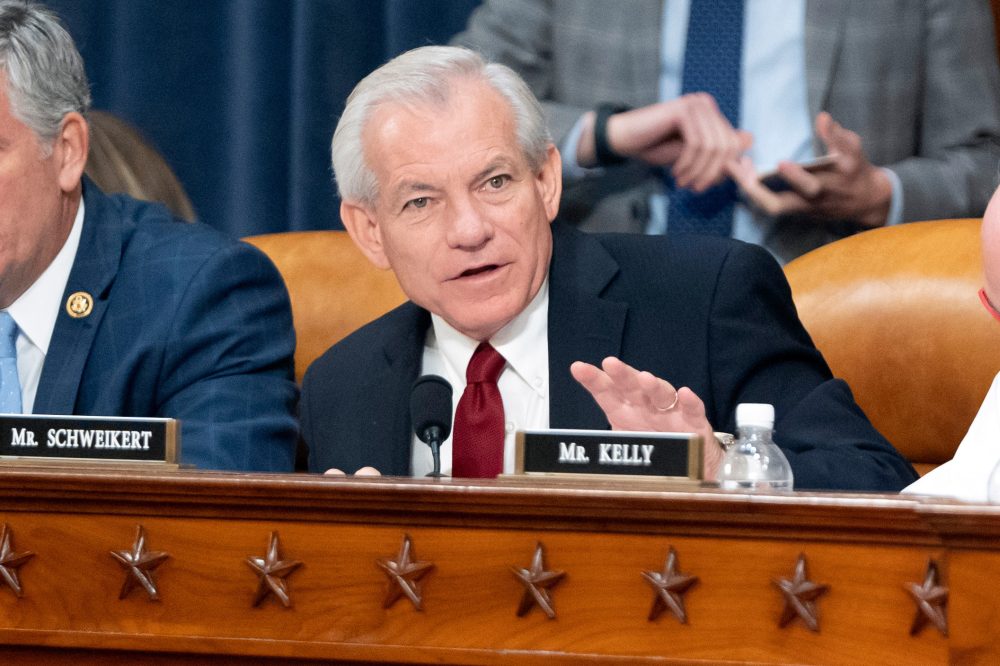
“Consumers need to be able to trust that the calls and texts they receive — from their doctor’s office or their child’s school, for example — are authentic. Scam communications, however, are increasingly difficult to distinguish from legitimate messages, and too much of the burden of detection is falling on customers,” Rep. David Schweikert, R.-Ariz., the chairman of the Joint Economic Committee, and Sen. Maggie Hassan, D.-N.H., the committee’s ranking member, wrote in a detailed request sent to AT&T, Verizon and T-Mobile on Wednesday evening.
The lawmakers are requesting details about how these companies gather information, track fraudulent activity and cybercrime, and respond to malicious operators.
This increased oversight reflects mounting alarm in the nation’s capital over the dramatic increase in scams targeting American consumers. Federal legislators have also been examining Elon Musk’s Starlink satellite service, online dating sites, artificial intelligence companies, data brokers and a range of federal agencies about their roles in and response to cyberscams.
This marks another attempt by Washington to address unwanted calls. Under the 2019 TRACED Act, Congress and the Federal Communications Commission mandated that major carriers deploy caller ID authentication technology to fight caller ID spoofing and make it easier for law enforcement to identify bad actors.
However, the issue continues, exposing Americans to sophisticated international criminal operations.
Mobile carriers prevented 55 billion spam and scam robotexts in 2024 and identify or stop 45 billion fraudulent calls annually, according to industry group CTIA. Yet unwanted communications and calls keep getting through in overwhelming volumes.
Americans were hit with over 50 billion robocalls in 2025, according to YouMail, a robocall blocking company. Spam texts jumped to more than 19 billion monthly in 2024, according to RoboKiller, another anti-spam company. Text messages and phone calls were the first and third most commonly reported ways scammers targeted victims last year, according to Federal Trade Commission data.
Josh Berc, senior vice president of policy at USTelecom, an industry association, said companies work to protect consumers by tracing back scam calls, disrupting illegal activity and supporting government investigations and law enforcement.
“Scam prevention requires a coordinated, inter-industry approach and our sector remains committed to strengthening partnerships that protect consumers,” he said in an email to The Associated Press.
Some telecom companies are seeking to turn anti-scam work from a cost center to a source of revenue, through, for example, premium call-filtering services and branded caller ID, both available for a fee.
Consumer advocates say stronger incentives are needed.
“Companies will not go far enough until they actually do feel some type of liability,” said Eden Iscil, senior public policy manager at the National Consumers League, “Some financial incentive that really pushes them to go as far as they can to protect consumers.”
With Maine’s Senate race lineup nearly finalized, Republican incumbent Sen. Susan Collins is making her case to voters by emphasizing her track record of securing federal funding for the state.
Collins faces a challenge from Democratic candidate Graham Platner in what appears to be a set general election matchup. The incumbent senator is positioning her Washington seniority as a crucial advantage for Maine residents.
The Republican senator’s campaign strategy centers on her ability to deliver federal dollars to support state priorities, arguing that her established position in the Senate provides unique benefits for constituents that a newcomer could not immediately replicate.
Campaign materials and signage have already appeared throughout the state, including in areas like Rockport, as both candidates prepare for the upcoming electoral contest.
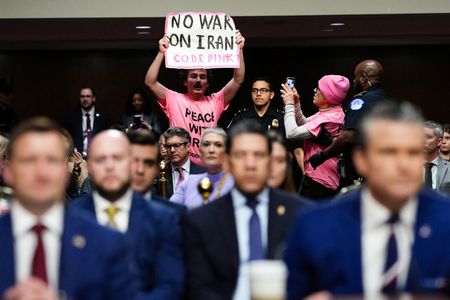
WASHINGTON (AP) — Congressional lawmakers are scheduled to vote Thursday on a measure that would force President Donald Trump to end military operations against Iran, representing a critical evaluation of legislators’ support for a conflict the president initiated more than two months ago.
This vote represents the most recent Democratic effort to limit Trump’s military actions through the 1973 War Powers Resolution. Similar legislative attempts have previously been unsuccessful.
Gradually, a small yet potentially decisive group of Republicans have joined Democrats in attempting to restrict Trump’s authority to maintain the conflict. This Tuesday, the Senate moved forward with another war powers measure regarding the Iran conflict when four Republican senators supported the proposal and three others were not present for the vote.
A concluding Senate vote on their resolution may also occur Thursday, although Republican leadership anticipates they will successfully prevent its passage when all GOP senators are in attendance.
Frustration with Iran war grows on Capitol Hill
Among lawmakers on Capitol Hill, tolerance for the conflict has diminished as the military standoff in the Strait of Hormuz interferes with international shipping routes and raises gas prices across the United States. A previous House war powers measure almost succeeded last week, ending in a tied vote with three Republicans supporting it.
While Republicans have generally backed Trump’s mission to eliminate Iran’s nuclear capabilities, some now contend that the president’s legal authority to conduct warfare without congressional authorization has run out. According to the 1973 War Powers Resolution, presidents may engage in military action for 60 days before Congress must either formally declare war or approve the use of armed forces.
The dispute over war powers
The White House contends that War Powers Resolution requirements no longer apply due to the ceasefire with Iran. Meanwhile, Trump has stated he came within an hour of ordering another military strike against Iran earlier this week, but refrained because Gulf allies indicated they were involved in negotiations to conclude the war.
Nevertheless, Trump posted on social media that military commanders should “be prepared to go forward with a full, large scale assault of Iran, on a moment’s notice, in the event that an acceptable Deal is not reached.” Trump has consistently established deadlines for Tehran and subsequently delayed action for strategic purposes.
Sen. Thom Tillis, a Republican who has previously opposed the war powers resolutions, voiced dissatisfaction with the Trump administration’s position, particularly regarding Defense Secretary Pete Hegseth.
“The current status quo, Pete Hegseth demonstrates how incompetent he is,” Tillis informed reporters, noting that he would consider supporting an authorization for military force.
Republican leadership commended Trump for what they characterized as decisive action to directly challenge Iran, a country that has remained a U.S. opponent for decades.
“I’m an American. I don’t believe in getting hit and walking away and pretending as though it didn’t happen,” stated Rep. Brian Mast, the Republican chair of the House Foreign Affairs Committee.
DOVER, DE – Delaware election officials have announced the cutoff date for voters who want to switch their party affiliation before the upcoming 2026 primary contest.
The Delaware Department of Elections (DOE) has established Friday, May 29, 2026 at 11:59 p.m. as the final opportunity for registered voters to change their party registration ahead of the September 15, 2026 Primary Election. This deadline is established under Delaware law, specifically 15 Del. C. § 2049(a).
The First State operates under a closed primary system, which requires voters to be affiliated with either the Democratic or Republican party to cast ballots in primary elections.
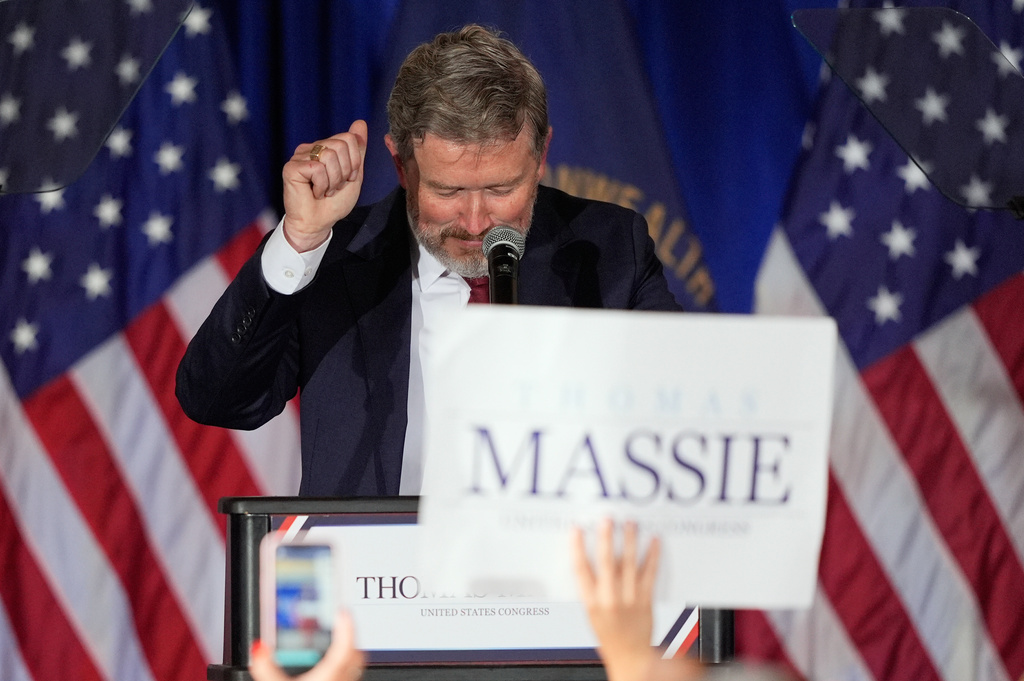
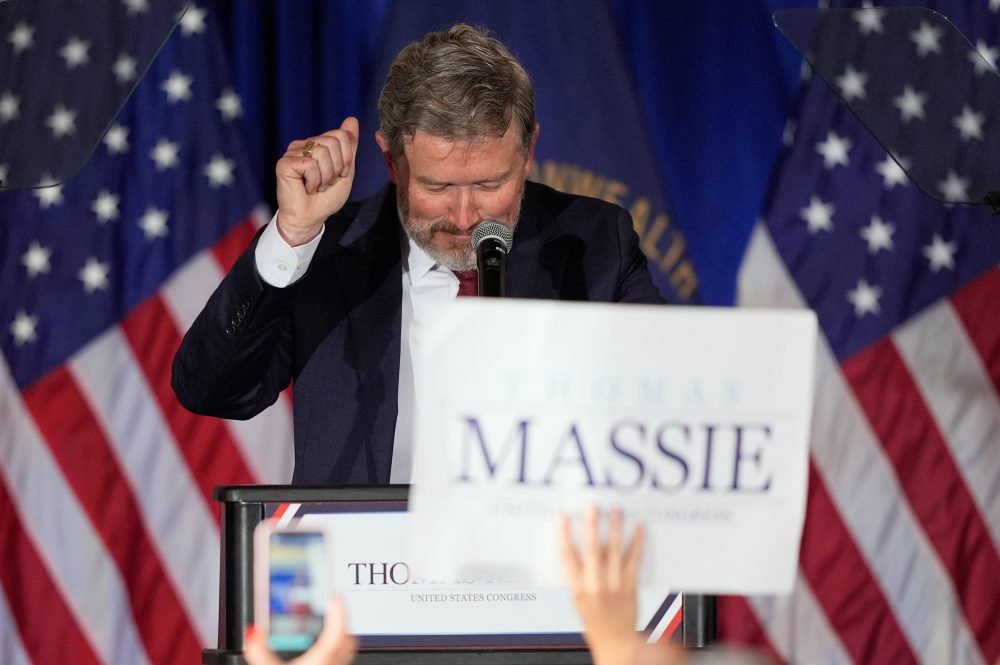
The Republican Jewish Coalition issued congratulations Tuesday to Captain Ed Gallrein following his upset win in Kentucky’s 4th congressional district Republican primary, where he toppled incumbent Rep. Thomas Massie in what the organization characterized as a closely monitored contest demonstrating voter support for President Donald Trump’s platform and pro-Israel policies.
RJC CEO Matt Brooks released a statement from Washington, DC on May 19, 2026, characterizing Gallrein’s win as “decisive” and stating that Kentucky’s Republican voters had sent “an unmistakable message.”
“The RJC congratulates Ed Gallrein on his decisive primary victory tonight,” Brooks said. “Kentucky Republicans sent an unmistakable message: there is no place in the Republican Party for those who turn their back on the MAGA agenda.”
Brooks delivered harsh criticism of Massie’s congressional voting record, alleging the incumbent frequently opposed Republican legislative priorities while aligning with progressive Democrats on crucial matters. He pointed to Massie’s votes against Working Families Tax Cuts, border security funding, Holocaust education funding, and assistance to Israel following the October 7, 2023, Hamas terrorist attack.
“Massie has been a thorn in the side of President Trump, the Republican Party, and the Jewish community writ large,” Brooks said.
The organization further alleged that Massie engaged in “trafficking in antisemitism and bottom-of-the-barrel nativism at a time when Jew-hatred is on the rise,” describing such behavior as “wildly unacceptable and outrageous from an elected member of Congress.”
Brooks praised Gallrein as “a 5th-generation Kentucky farmer, decorated Navy SEAL, and true MAGA patriot,” stating the candidate “will serve with honor and distinction.”
The Republican Jewish Coalition and the RJC Victory Fund reported investing $5 million in Gallrein’s campaign effort, labeling the race a “record-breaking Congressional primary.”
During the campaign, the group produced three television advertisements supporting Gallrein with the titles “Ed Gallrein: Hero,” “Ed Gallrein: Trump-Endorsed,” and “Gallrein & Trump or Massie who Stands with Iran.”
The Republican Jewish Coalition identifies itself as a nationwide grassroots organization representing tens of thousands of Jewish Republicans throughout the United States.
WASHINGTON — A federal arts commission is taking a second look at President Donald Trump’s proposal for a massive triumphal arch in the nation’s capital, after initially approving the concept with suggested modifications last month.
The towering 250-foot structure represents one of multiple initiatives the Republican president is advancing, including a White House ballroom, as part of his effort to create a lasting mark on Washington.
Trump has indicated that his various projects, including plans to add blue coloring to the Lincoln Memorial Reflecting Pool’s interior, are intended to enhance the city’s appearance for July 4th festivities celebrating America’s 250th anniversary.
The U.S. Commission of Fine Arts, comprised of Trump-appointed members, gave conceptual approval to the arch during their April monthly session. Commission members are scheduled to review and potentially vote on revised proposals during Thursday’s meeting.
According to plans submitted to the federal commission, the arch would reach 250 feet in height from ground level to a torch carried by a Lady Liberty-style figure crowning the structure. The statue would be accompanied by two eagles positioned on either side and protected by four lions at ground level — all finished in gold. Golden inscriptions reading “One Nation Under God” and “Liberty and Justice for All” would adorn both sides of the monument.
A public viewing platform at the top would offer panoramic views in all directions.
Commission vice chairman, architect James McCrery II, expressed preference in April for the arch design without the sculptural elements on top. Eliminating these figures would substantially lower the arch’s height by approximately 80 feet. Project opponents, including a large majority of April public commenters, argued the arch would exceed the height of all other monuments in the capital and overpower the skyline.
At its proposed 250-foot height, the arch would tower over the 99-foot Lincoln Memorial and reach nearly half the height of the 555-foot Washington Monument obelisk.
McCrery also suggested removing the base lions since that species is “not a beast natural to the North American continent.” He further opposed plans for an underground pedestrian tunnel leading to the arch, which would be constructed on a traffic circle situated between the Lincoln Memorial and Arlington National Cemetery in Virginia.
Site surveys and preliminary testing commenced last week.
A coalition of veterans and a historian have filed a federal lawsuit against the Trump administration seeking to halt construction, claiming the arch would interfere with the visual connection between the Lincoln Memorial and Arlington House at Arlington National Cemetery, among other concerns.
Trump and Interior Secretary Doug Burgum have contended that Washington remains the sole major Western capital lacking such an arch. Burgum oversees the National Park Service through his department, which controls the proposed construction site.
Trump’s Lincoln Memorial Reflecting Pool renovation has also sparked legal action from The Cultural Landscape Foundation, which claims the administration’s decision to repaint the pool’s bottom blue without conducting proper reviews violates federal historic preservation regulations.
The nonprofit organization argued in a lawsuit filed last week that the Reflecting Pool modifications represent part of Trump’s wider campaign to implement sweeping Washington renovations without appropriate oversight and alter the area’s character.
A court hearing in that case was set for Thursday afternoon in federal court in Washington.
WASHINGTON — Lawmakers in the House are scheduled to vote Thursday on a measure that would force President Donald Trump to end military operations against Iran, marking a critical assessment of congressional willingness to support a conflict the president initiated more than two months ago without legislative authorization.
This vote represents the most recent Democratic attempt to constrain Trump’s military actions through the 1973 War Powers Resolution. While earlier votes on comparable measures have been unsuccessful, Democrats believe Thursday’s vote might mark a pivotal moment.
Gradually, a small yet potentially decisive group of Republicans have joined Democrats in efforts to limit Trump’s authority to continue the military engagement. On Tuesday, the Senate moved forward with another war powers measure when four Republican senators backed the resolution and three others were not present for the vote.
A concluding vote on the Senate measure might also occur Thursday, although Republican leadership anticipates they can prevent its passage once all GOP senators attend.
Congressional tolerance for the conflict has diminished as the standoff in the Strait of Hormuz interferes with international shipping and increases fuel costs across the United States. A previous House war powers measure almost succeeded last week, failing on a tied vote despite three Republicans supporting it.
Democratic Rep. Gregory Meeks of New York, who introduced the war powers measure, has indicated he anticipates having sufficient votes this round.
“Congress has a constitutional duty. It has a duty to act, not to cheerlead, especially not to cheerlead an open-ended war of choice,” Meeks said.
The single Democrat who opposed the war powers measure last week, Rep. Jared Golden of Maine, has announced he will support the legislation this time. At the same time, leadership from both parties have been managing multiple absences that could influence the outcome either direction in the narrowly divided chamber.
Republicans have generally backed Trump’s initiatives to eliminate Iran’s nuclear capabilities, but some now contend that the president’s legal window to conduct warfare without congressional authorization has ended. According to the 1973 War Powers Resolution, presidents have 60 days to participate in military conflict before Congress must either declare war or approve the use of armed force.
“We have to follow the law,” said Rep. Brian Fitzpatrick, a Pennsylvania Republican shortly after he voted for an Iran war powers resolution for the first time last week.
The White House contends that War Powers Resolution requirements no longer apply due to the ceasefire with Iran. Simultaneously, Trump has stated he was merely an hour from ordering another strike on Iran earlier this week, but refrained because Gulf allies indicated they were participating in negotiations to conclude the war.
Nevertheless, Trump posted on social media that military leaders should “be prepared to go forward with a full, large scale assault of Iran, on a moment’s notice, in the event that an acceptable Deal is not reached.” Trump has consistently established deadlines for Tehran and subsequently retreated.
Sen. Thom Tillis, a Republican who has previously opposed the war powers resolutions, voiced dissatisfaction with the Trump administration’s position, particularly regarding Defense Secretary Pete Hegseth.
“The current status quo, Pete Hegseth demonstrates how incompetent he is,” Tillis told reporters, adding that he would be willing to vote for an authorization for use of military force.
Meanwhile, Democratic senators gathered outside the Capitol Wednesday with VoteVets, a left-leaning veterans’ advocacy group. They displayed signs on the Capitol lawn indicating that the national average gasoline price had increased to $4.53.
Sen. Tammy Duckworth, an Illinois Democrat who served in the Iraq War with the Air National Guard, contended that the Iran war has constituted a strategic mistake for Trump.
“Trump started a war, and he’s made things worse than before,” Duckworth said, pointing to Iran’s new leadership and the country’s willingness to put a chokehold on commercial shipping through the Strait of Hormuz.
Republican leaders commended Trump for taking what they described as decisive action to directly challenge Iran, a nation that has been a U.S. opponent for decades.
“I’m an American. I don’t believe in getting hit and walking away and pretending as though it didn’t happen,” said Rep. Brian Mast, the Republican chair of the House Foreign Affairs Committee.
For Congress, the increasing support to pass a war powers resolution could ultimately result in a legal confrontation over who holds final authority over military conflicts.
The legislation before the House Thursday is a concurrent resolution that lawmakers claim would become effective without Trump’s signature if it passes both congressional chambers.
However, Trump has also maintained that the 1973 law — enacted by Congress during the Vietnam War period in an effort to reclaim its authority over foreign conflicts — is unconstitutional.
The Democratic Party in Colorado has taken the unusual step of officially rebuking their own governor after he reduced the prison sentence of a former county clerk who was convicted for her role in advancing debunked claims about the 2020 election.
Party members voted to censure Gov. Jared Polis for his decision to commute the sentence of Tina Peters, who had served as a county clerk before her conviction related to a scheme aimed at promoting false allegations about election fraud.
A former reality television personality is making waves in the Los Angeles mayoral race through an unconventional social media campaign strategy.
The candidate is saturating online platforms with provocative content, artificial intelligence-generated material, and confrontational messaging as part of his effort to capture attention and appeal to highly engaged internet users. Political analysts believe this approach could signal how future digital campaigns will operate.
The strategy represents a new frontier in political campaigning, where candidates target voters who spend significant time online through attention-grabbing content and internet culture references.
A federal agency responsible for student financial aid is actively recruiting new staff members after experiencing significant workforce reductions in recent years.
The Federal Student Aid office saw its employee count cut in half during downsizing initiatives implemented under the Trump administration. The substantial staffing losses impacted the agency’s operations and ability to serve students seeking financial assistance for their education.
Despite ongoing discussions about restructuring the Education Department, the student aid division is now working to fill hundreds of vacant positions. The recruitment effort represents an attempt to rebuild the agency’s workforce and restore its operational capabilities.
The hiring initiative highlights the challenges facing federal agencies as they navigate changing priorities and staffing levels while continuing to provide essential services to the public.
COVINGTON, Ky. — More than a dozen young Republicans met recently at dEcORa, a bar with vibrant neon lighting in northern Kentucky, sharing drinks and voicing their growing discontent with the presidential administration they once enthusiastically supported.
Their initial excitement for Donald Trump has transformed into deep frustration.
“I absolutely do not regret voting for Trump in 2024,” stated Nathaniel Showalter, 34, seated near a spray-painted concrete column. “I can’t wait for him to get out of office.”
During their evening gathering beneath the bar’s dim lighting, participants expressed feeling abandoned by the Republican establishment — the same system they once cheered Trump for challenging, but now believe he’s perpetuating. This growing discontent has created a widening divide between younger and older conservatives as the party begins contemplating its post-Trump future.
The bar patrons view Trump’s conflict with Iran as a violation of his campaign commitments. They’re experiencing economic conditions that seem as unstable as before his presidency began. Additionally, they’re grieving the death of Charlie Kirk, the 31-year-old conservative activist they considered their primary advocate with White House access.
Tuesday’s primary defeat of Republican Rep. Thomas Massie — who had gained younger, anti-establishment supporters while clashing with Trump — eliminated one of their strongest congressional allies.
“There seems to be a concerted effort to keep the next generation out on the right,” explained TJ Roberts, the group’s tall leader. The 28-year-old state representative was the only suit-wearing attendee. “There’s this sense of entitlement among the establishment on the right. ‘Well, I’m better than the alternative.’ Well, sure, but a stomach flu is preferable to stomach cancer. I’d rather have neither.”
Roberts organizes monthly political discussions for the group, this time including The Associated Press, expressing concern that young people like those at dEcORa were “going to live a shorter, less prosperous life than your parents.”
“We have to make sure that young Republicans have a voice in Washington, D.C.,” he emphasized.
The energetic group, consisting entirely of men in their twenties and thirties, gathered around a table decorated with kaleidoscope artwork. They exchanged crude humor and engaged in debates, occasionally mimicking Trump or conspiracy theorist Alex Jones.
While opinions on Trump’s presidency vary — some favor his second term more than others — they were united in their anger regarding the Iranian conflict.
For many attendees, Operation Epic Fury represents more than just “a complete betrayal of his promises,” as 32-year-old Michael Gartman described it. They see it as proof that their concerns have been overshadowed by the political establishment, defense contractors, and major donors whom they believe are advancing Israel’s interests.
Logan Edge, a 30-year-old gun lobbyist wearing a Hawaiian shirt and sporting a Lincoln-style beard, imitated Trump discussing Miriam Adelson, the billionaire whom Trump once said counseled him on Israel.
“‘Oh Miriam, she’s over there, she loves Israel, maybe more than America,’” he said.
Dropping the presidential impression, he added, “You can’t piss on my shoes and tell me it’s raining.”
Sitting opposite Logan was Andrew Cooperrider, a 33-year-old host of a conservative Kentucky politics podcast, accompanied by his 14-year-old son Leo. The teenager hopes to become an underwater welder and suggested to his father that military service could provide the necessary training.
“And I said absolutely not,” the elder Cooperrider responded, “not with everything going on, my son is not getting into the military right now and go fight these wars for these psychopaths.”
“Thank you!” someone called out, as Cooperrider noted that Leo could learn the trade through civilian channels.
Edge interjected, sharing that he and his father, a Desert Storm and Iraq veteran, had visited Arlington National Cemetery.
He described using a mobile app to locate specific gravesites, his voice becoming emotional. “And me and my dad spent the day finding his friends. And it was very emotional, very tough. And you can get on the Metro and go to the next Metro stop and the first thing you see is Raytheon, Lockheed Martin and Northrop Grumman, and I said to my dad, ‘Look what you’re about to see.’”
Edge paused. “It brings tears to my eyes,” he said, pushing back his chair and looking away from the group. Roberts leaned over to check on Logan’s wellbeing.
“Why do my friends have to be over there?” asked Angel Figueroa, 27, a military veteran with friends currently stationed in the Middle East. “It would devastate me to see one of my friends getting bombed one day and what, I have to see their box now?”
While most believed a military draft was improbable, Elijah Drysdale, 27, wearing a backwards cap over his red mullet, said the mere discussion “speaks volumes to me, and it’s why we need a change in leadership.”
Despite Roberts’ concerns about the Republican establishment, he stood out as one of the few dEcORa attendees satisfied with Trump’s second term. He contended that the party “under President Donald Trump is without doubt the best Republican Party I have seen in my entire lifetime, the old order is dead.”
“It’s dying,” someone interrupted.
“No, it’s gone,” Roberts countered. “Trump shifted the culture so well that these conversations you’re hearing right now, this would be unacceptable in the Republican Party of 2014.”
Roberts noted increased willingness to challenge foreign military involvement, corporate bailouts, and aid to countries like Ukraine and Israel. The party had also taken a stronger immigration stance, which the group supported.
“I do think Trump started the (establishment’s) downfall, I think it’s only being kept alive now by him,” said the elder Cooperrider, pointing to Trump’s endorsement of U.S. Sen. Lindsey Graham and his opposition to Massie.
John Wardrop, a 24-year-old in a tucked-in short-sleeve shirt and large belt buckle, said “we could do a whole lot better.” He expressed optimism about certain administration figures, including Director of National Intelligence Tulsi Gabbard, Health Secretary Robert F. Kennedy Jr. and Vice President JD Vance.
“I’m actually in disagreement,” said Drysdale, offering sharper criticism of Trump than most attendees. “I think that he broke a lot of his promises.”
Any connection to this administration, he argued, will be “a stain on your reputation. This isn’t the party that we want, this isn’t the party that we voted for, or thought we were voting for.”
When asked if they could imagine supporting a Democrat, Henry Hecht, a 26-year-old libertarian sipping a cocktail garnished with a pirate flag, hesitantly raised his hand and shrugged.
“What’s he doing here?” Cooperrider joked angrily. “Get him out of here, somebody get the log!”
Their sense of disillusionment has been worsened by Kirk’s death. Kirk, who established the conservative youth organization Turning Point USA, appears to have no obvious successor, and Roberts said he “was kinda like a mediator, so Trump understood where young Republicans were coming from.”
The attendees cited multiple instances where they felt Republican officials had abandoned their commitments and conservative principles, including the Foreign Intelligence Surveillance Act extension and the expanding national debt.
Massie had opposed the White House on these and other matters. Trump retaliated by supporting a primary opponent, former Navy SEAL Ed Gallrein, who built his campaign around loyalty to the president.
Gallrein’s Tuesday victory demonstrated Trump’s party influence while deepening frustration with his leadership among other factions.
“We cannot really fight the left until we defeat these old, boomer Republicans,” Edge declared. “The left is organized, the left is institutionalized, they’re smart, they’re tactical, they’re not a joke, they don’t play.”
“We look at our own organization on our side and say, ‘We’re a little lost,’” said Cooperrider, suggesting younger liberals showed greater mobilization.
“Why don’t right-wingers do it?” Hecht wondered.
“My question is: why would you when, for so long, the right has been joking about their promises?” Roberts responded.
“It creates an endless cycle,” he concluded. “Eventually that cycle has to break.”
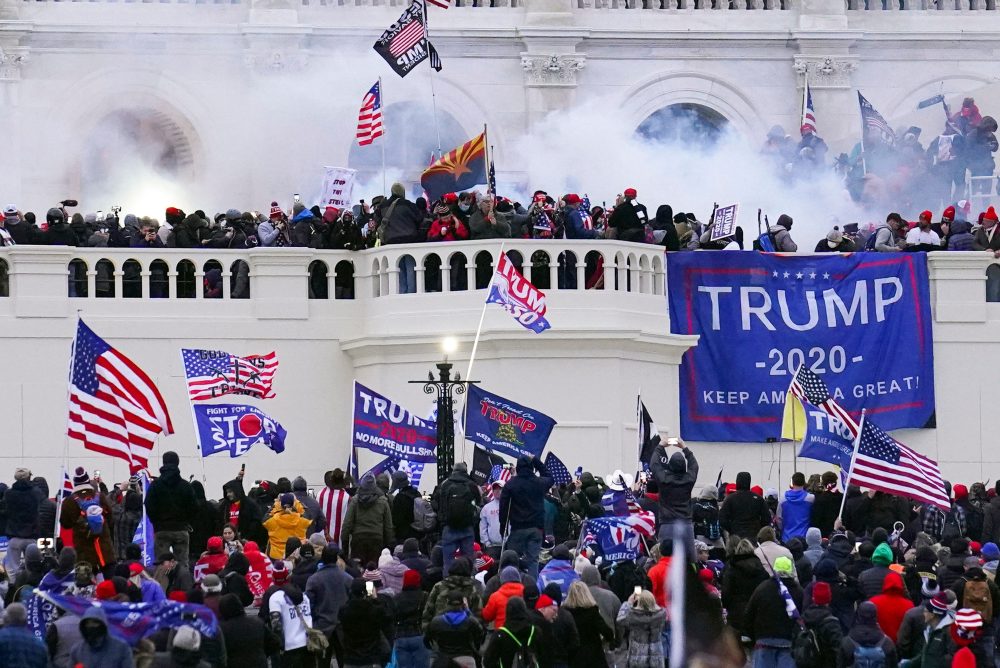
A pair of law enforcement officers who served on the front lines protecting the U.S. Capitol during the January 6th attack have filed a lawsuit seeking to prevent distributions from a recently created settlement fund.
The two officers, who were among those who defended the Capitol building during the riot, are taking legal action to stop any individuals from receiving money from the new compensation fund.
The lawsuit represents an effort by the officers to block the fund’s payout process entirely, though details about their specific objections to the settlement distributions were not immediately available.
Federal authorities have filed charges against a former prosecutor accused of improperly transmitting a sensitive report to her personal email address.
The charges center on allegations that the former federal attorney forwarded documentation related to Jack Smith’s investigation into President Trump’s retention of classified materials to her private email account.
The case raises questions about the proper handling of sensitive government documents and the protocols federal employees must follow when dealing with confidential investigative materials.
A group of ten American mayors representing cities like Chicago and Cincinnati have formed an alliance with European municipal leaders to combat authoritarianism and defend democratic institutions.
The American city leaders have become part of a coalition with European mayors focused on protecting democracy and progressive principles while opposing right-wing populist movements and authoritarian governance.
Among the participants in this international municipal partnership was Lacey Beaty, who serves as mayor of Beaverton, Oregon. She was one of the U.S. representatives at a recent gathering held in Bratislava, Slovakia.
The meeting in Slovakia also included several European officials, with Omar Al-Rawi from the Vienna City Council, Audrey Pulvar who holds the position of deputy mayor of Paris, Budapest mayor Gergely Karácsony, and Warsaw mayor Rafał Trzaskowski participating in the discussions.
This cross-continental partnership represents an effort by municipal leaders to coordinate responses to what they view as threats to democratic governance and liberal values in their respective regions.
WASHINGTON — Senate Republican leadership plans to drop a controversial $1 billion security funding proposal for the White House complex and President Trump’s ballroom following criticism from within their own ranks over timing concerns and insufficient details from the Secret Service.
Under pressure from the White House, GOP leaders attempted to include this funding in an approximately $70 billion measure aimed at restoring money to U.S. Immigration and Customs Enforcement and the Border Patrol. However, the security proposal faced strong opposition from Republican lawmakers who raised concerns about the expense and questioned how taxpayer money would be spent.
While the bill’s text remains unreleased, the Senate aims to approve it this week and forward it to the House before departing for a weeklong Memorial Day recess. Senate Majority Leader John Thune, R-S.D., admitted to “ongoing vote issues” on Wednesday as leadership worked to gauge Republican backing, along with “ongoing parliamentarian issues” as they determine what provisions will be permitted under chamber rules.
Sen. John Kennedy, R-La., stated Wednesday that without the security funding, the bill would return to “square one” because “the votes are not there.”
Sen. Thom Tillis, R-N.C., characterized the attempt to include the security package as a “bad idea” and expressed doubt about sufficient support for passage, even with reduced costs.
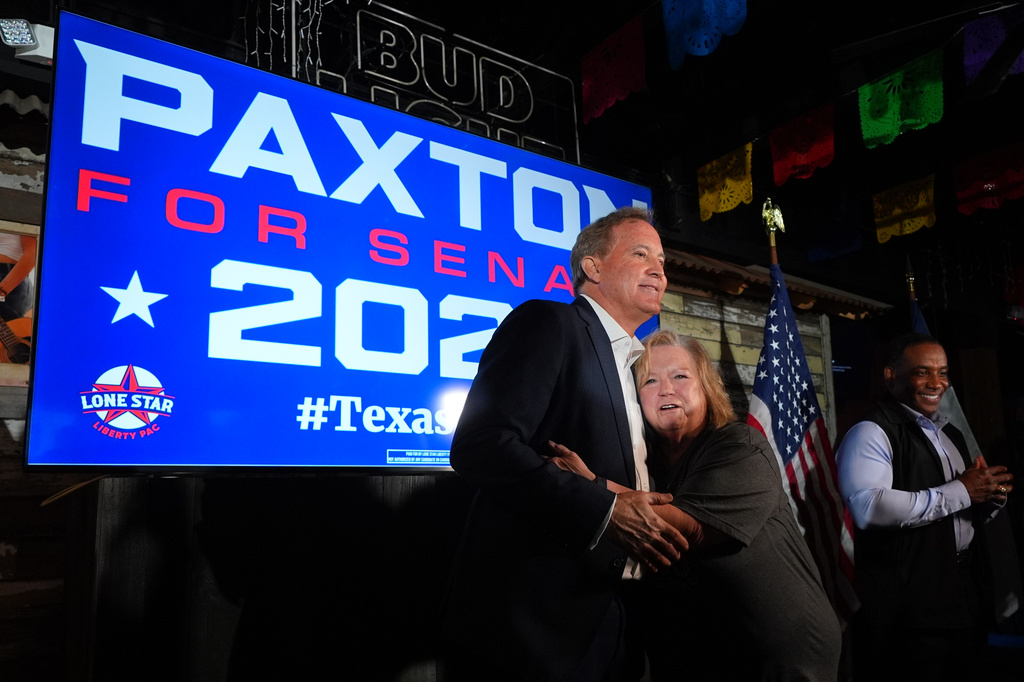
This internal conflict emerges as Democrats have criticized Republicans for attempting to finance Trump’s ballroom while voters face basic affordability challenges — and as some GOP lawmakers grow increasingly frustrated with Trump. Multiple GOP senators have opposed the administration’s $1.776 billion settlement fund intended to compensate Trump’s allies who claim persecution, and many expressed anger over the president’s Tuesday endorsement of Texas Attorney General Ken Paxton in next week’s party primary runoff against Sen. John Cornyn.
“There’s always a consequence with taking on United States senators,” Thune said Wednesday. The president “obviously has his favorites and people he wants to endorse and that’s his prerogative. But what we have to deal with up here is moving the agenda, and obviously that can become slightly more complicated.”
The “anti-weaponization” fund, stemming from a settlement that resolves Trump’s lawsuit against the Internal Revenue Service regarding his tax return leak, has surprisingly become a major complication in the legislation. Democrats indicated they would force votes to block it or impose restrictions.
Democrats have leverage because Republicans are attempting to pass the immigration enforcement bill through a complex budget process requiring numerous amendment votes. Democrats are considering multiple amendments, potentially to eliminate the new fund entirely or prohibit payments to Trump supporters who injured law enforcement officers during the Jan. 6, 2021, Capitol attack.
These amendments, among others, could succeed as increasing numbers of Republicans express doubts about the fund. Republicans are now discussing their own last-minute additions to prevent this, potentially establishing parameters for the settlement and eligible recipients, according to two individuals familiar with private discussions who requested anonymity.
Thune — who stated Tuesday that he is “not a big fan” of the settlement and doesn’t understand its purpose — said Wednesday that any new language potentially restricting the settlement remains “a work in progress.”
How any Senate Republican modifications would be received in the House remains uncertain, despite some House Republicans also criticizing the settlement.
House Speaker Mike Johnson, R-La., said Wednesday that the House will approve the bill “whatever form it takes.”
As Republicans challenged the settlement and portions of his agenda, Trump criticized the Senate in a social media post.
He urged Republicans to dismiss Senate parliamentarian Elizabeth MacDonough, who determined over the weekend that portions of the $1 billion security proposal cannot remain in the ICE and Border Patrol bill. Trump also renewed longstanding calls for the Senate to pass the SAVE Act, a Republican measure requiring all voters to prove U.S. citizenship, and to eliminate the Senate filibuster.
Republicans must “get smart and tough,” Trump said, or “you’ll all be looking for a job much sooner than you thought possible!”
While remaining loyal to Trump on most matters, Senate Republicans have rejected his repeated appeals — including during his first term — to eliminate the filibuster, which creates a 60-vote threshold in the Senate.
Overshadowing the growing GOP division is Trump’s unexpected endorsement of Paxton. This intervention has Republican senators privately angry that it could jeopardize their majority in November as they consider the incumbent, Cornyn, the stronger candidate for the November general election.
According to the Secret Service’s request, approximately $220 million would finance security enhancements related to the ballroom. The remainder would fund a new visitor screening center, training, and additional security measures.
Tillis said the bill should not have included the other security improvements “because it’s just giving everybody the ‘billion-dollar ballroom.’”
Several other House and Senate Republicans have questioned the request, and senators departed a briefing with the Secret Service director last week stating they required much more information.
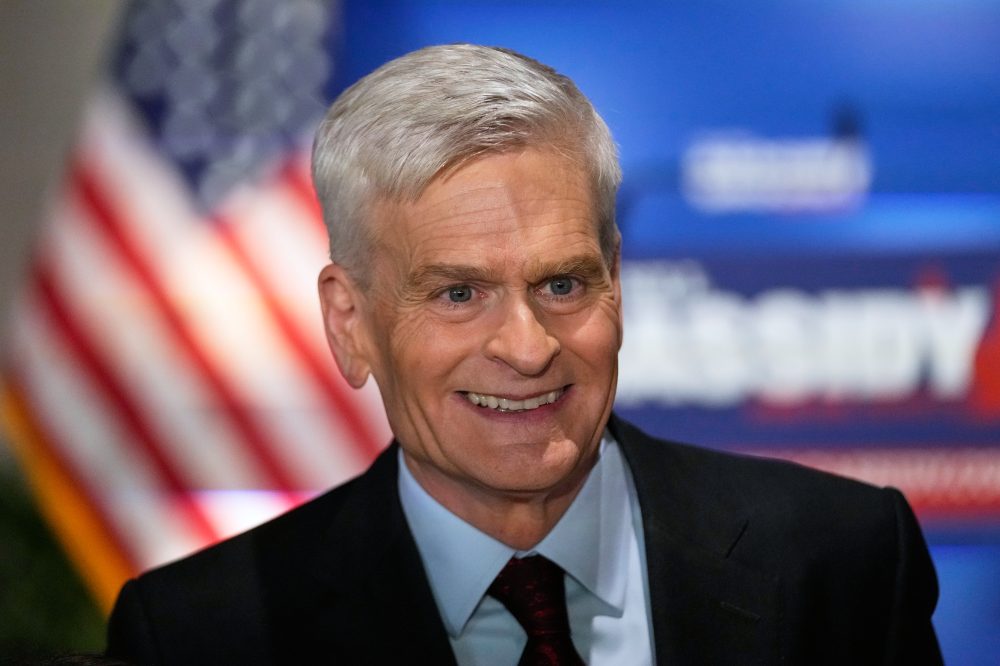
People “can’t afford groceries and gasoline and healthcare, and we’re going to do a billion dollars for a ballroom?” asked Louisiana Sen. Bill Cassidy, who lost reelection in his GOP primary on Saturday after Trump endorsed one of his opponents.
Remaining in the bill is funding for ICE and Border Patrol, which Democrats have blocked for months in protest of the Trump administration’s immigration enforcement crackdown.
Democrats demanded agency reforms, but negotiations with the White House produced minimal progress. Republicans are therefore using the complex budget maneuver called reconciliation — the same process that enabled them to pass Trump’s tax and spending cuts bill last year — to fund the agencies through Trump’s term with a simple majority and no Democratic votes.
However, passage requires parliamentarian approval and Republican unity.
“We’re working on it,” Thune said as he departed the Capitol on Wednesday evening.
ATLANTA (AP) — Donald Trump appears unwilling to move past the 2020 presidential race, particularly when it comes to Georgia.
The former president’s persistent false assertions that his loss to Democrat Joe Biden resulted from widespread fraud continue to influence elections in this key swing state. These claims are expected to factor significantly into the upcoming four-week runoff period as Republican voters select their nominees for governor, secretary of state and U.S. Senate.
The candidate field includes one of Trump’s alternate electors from his effort to reverse Biden’s Georgia victory, a Trump supporter who secured his initial congressional seat while claiming Trump actually won in 2020, and a secretary of state candidate who promotes Trump’s conspiracy theories while seeking to become the state’s chief elections officer.
For the record, Georgia’s presidential ballots were tallied three separate times, including one hand recount, with each count confirming Biden’s win.
The primary occurred during ongoing legal and political disputes about election administration in Fulton County — which includes heavily Democratic Atlanta. Trump’s challenges to Georgia’s results and his long-standing criticism of Fulton County elections intensified this year after the FBI conducted a search of the county’s election office, confiscating ballots and documents from 2020.
Initial primary results demonstrated that aligning with Trump, including his election falsehoods, remains politically advantageous within the Republican Party. Georgia candidates who resisted Trump’s 2020 efforts suffered decisive defeats. However, some conservatives express concern that mishandling this issue — or highlighting it too much — might alienate general election voters come November.
“We’re going to look stupid,” cautioned Debbie Dooley, an early tea party organizer who backed Trump from his first presidential campaign’s beginning. “What are you going to say — Trump won, and he was always the president? It serves no purpose.”
She argued Republicans should concentrate on economic issues instead, and any discussion of election processes should focus on “securing future elections, looking forward.”
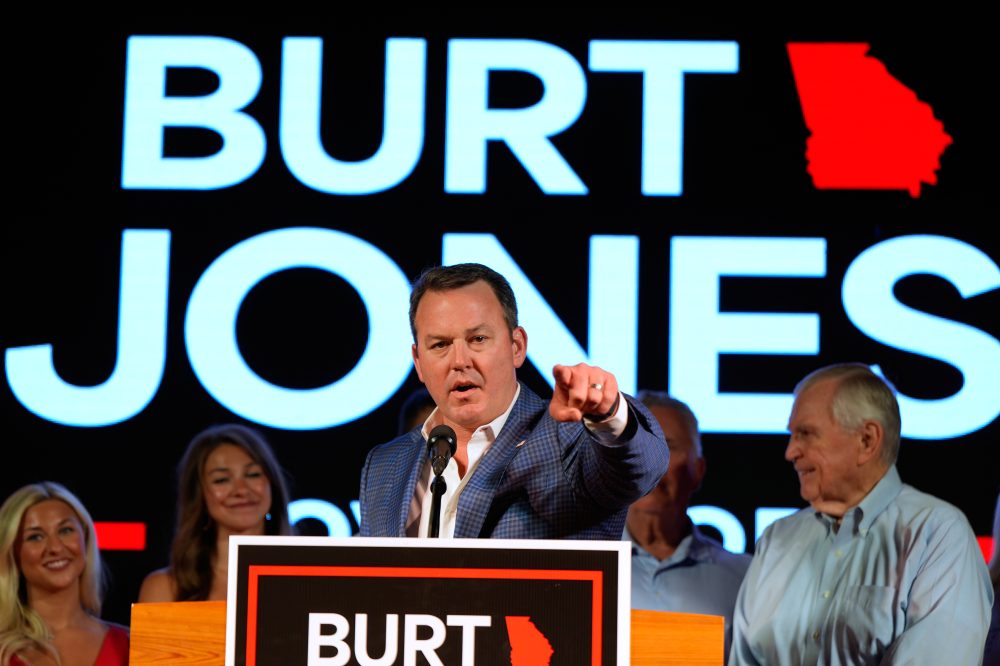
Whether Trump shares this perspective remains unclear. The former president has already backed Burt Jones, one of his 2020 alternate electors, for the governor’s race. Dooley, who supports Jones, said she expects Trump might visit Georgia to campaign — and voice his 2020 complaints once more.
“I don’t know if the president gets it or not,” she remarked.
Jones served as a state legislator in 2020 when he joined Trump’s effort to reverse Biden’s 11,779-vote Georgia margin. He leveraged that allegiance to secure the lieutenant governor position in 2022 and earn Trump’s early backing for his current advancement bid. On Tuesday, he captured approximately 40% of Republican votes.
While Trump and Jones avoid revisiting specifics, Trump has repeatedly commended Jones on his Truth Social platform for his loyalty, while Jones has championed “election integrity.”
Jones’ runoff opponent, billionaire political newcomer Rick Jackson, represents Republicans who rarely discuss the 2020 election. However, he used part of the $83 million he put into his own campaign for an advertisement targeting outgoing Secretary of State Brad Raffensperger, another GOP gubernatorial candidate who refused Trump’s request to help “find 11,800 votes” to overturn Biden’s 2020 victory.
The advertisement showed a child asking his mother about choosing the name Brad. The mother responded that her second option was “Judas” — referencing the New Testament disciple who betrayed Jesus to Roman authorities. The complete name “Brad ‘Judas’ Raffensperger” appeared on screen as the spot concluded.
Raffensperger placed a distant third in this week’s primary, earning only 15% of votes.
Rep. Mike Collins, who topped the Senate GOP primary with roughly 40% of votes, has maintained his false assertions that Biden’s victory was fraudulent, an argument he highlighted during his initial 2022 congressional campaign.
“You count the legal votes that were cast in the state of Georgia, Donald Trump won this state. Period,” he declared in one advertisement, while holding a long gun and criticizing the “federal hijacking” of the 2020 election. He ended by shooting a mock voting machine.
Collins’ runoff challenger, former college football coach and political newcomer Derek Dooley, has been more cautious. Both candidates are pledging loyalty to Trump, though the former president hasn’t endorsed anyone in the race to challenge Democratic Sen. Jon Ossoff.
Notably, Dooley’s primary political supporter is outgoing Gov. Brian Kemp, who like Raffensperger angered Trump in 2020 for certifying Biden’s electors.
Kemp sought and won reelection in 2022, advocating that Republicans should move forward rather than relitigate the 2020 election. Trump eventually reconciled with Kemp during the 2024 presidential campaign, and advisers to both indicate Kemp has discussed the Senate race with the former president.
State Rep. Tim Fleming, a former deputy secretary of state, and former state Rep. Vernon Jones, a Trump loyalist and repeat candidate, received the most votes in the secretary of state race and will compete next month.
Jones, a former Democrat, supported Trump’s “stop the steal” movement and stated during an Atlanta Press Club debate last month, “I stand with those who believe there was election fraud.”
Fleming, who served under Kemp when the governor held the secretary of state position, has cited “irregularities” in the 2020 election — a term used by Republicans who avoid fully echoing Trump while not contradicting him. Fleming said he believes the state has made significant improvements in election procedures since then and wants to concentrate on future elections.
Fleming and Jones significantly outperformed one of Raffensperger’s top assistants, Gabriel Sterling, who gained prominence in December 2020 for asking Trump to help discourage violence threats against election workers. Sterling received 12% of primary votes, finishing fourth.
Trump has consistently focused on Fulton County, claiming it was the hub of Georgia fraud in 2020. The FBI confiscated 2020 ballots and records from county election offices in January, and the county remained a target for Republican criticism through Tuesday’s vote counting.
During voting hours, two polling locations closed for four hours in an Atlanta suburb after police received reports about possible gunfire and a suspicious individual in military-style clothing. Though unrelated to the primary, a judge required the precincts to remain open until 11 p.m. to compensate for lost time, and Fulton officials said legal requirements prevented releasing any results until those locations closed.
State Sen. Greg Dolezal, a Republican lieutenant governor runoff candidate, attempted to exploit the delay, despite seeking an office with no ballot counting or election certification responsibilities.
“Here we are on Election Night, Georgians are anxiously awaiting the results, and which county hasn’t even started reporting? It’s always Fulton County,” Dolezal wrote on social media. “It’s time for Georgia to takeover the process. We will not have another 2020 this November!”
Representatives from the sports betting industry faced intense questioning from congressional lawmakers during a hearing that examined cheating controversies, advertising practices, and ongoing regulatory challenges.
The Senate subcommittee session concentrated on holding the gambling industry accountable as officials pressed executives about recent scandals that have rocked the sector.
Lawmakers also scrutinized how these companies market their services to consumers and the various regulatory disputes currently affecting the industry.
The hearing reflects growing congressional concern about oversight of the expanding online sports gambling market and its impact on consumers nationwide.
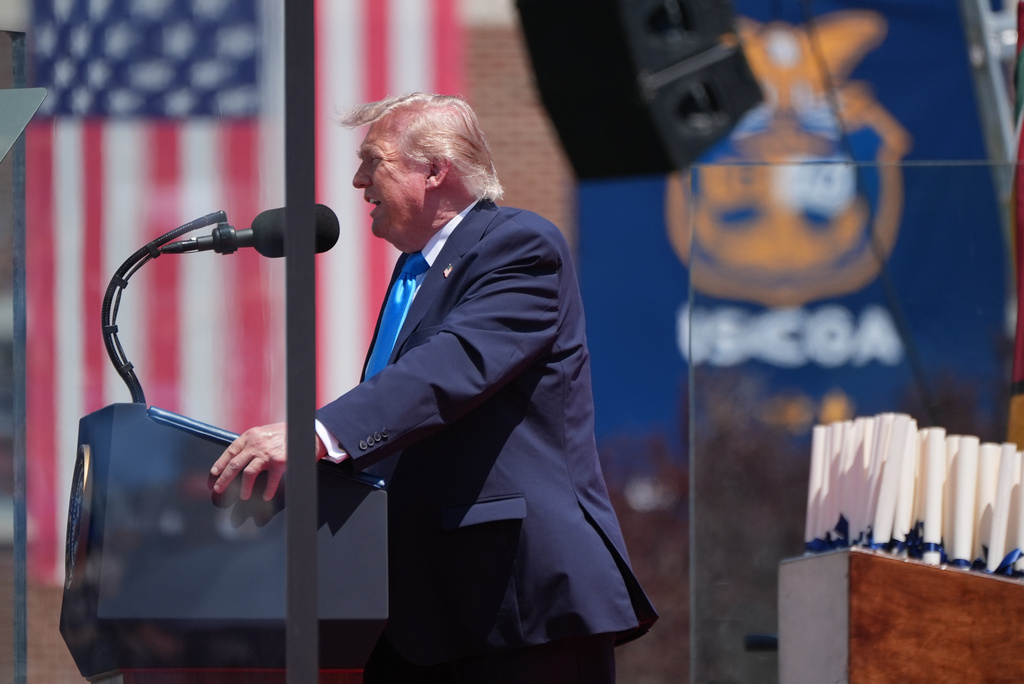
NEW LONDON, Conn. — President Donald Trump delivered a commencement address to U.S. Coast Guard Academy graduates on Wednesday, praising the new officers for demonstrating “unbelievable heroism and exceptional selflessness” while cautioning that greater challenges await them in their military service.
The speech to the class of 2026 marked the first occasion Trump has addressed military academy graduates since deploying American forces in a new conflict.
Trump characterized the graduating cadets as America’s “first defenders” and “first responders.”
“You’ve all been tested. You’ll be tested further and probably at higher levels as your career goes on,” Trump stated during his remarks.
The president briefly referenced the ongoing conflict with Iran, which has entered its 12th week, describing it as evidence of American success in “the hottest country anywhere in the world.”
“The only question is, do we go ahead and finish it up or are they going to be signing a document? Let’s see what happens,” Trump commented.
The Republican commander in chief had considered launching additional military strikes against Iran this week as diplomatic discussions appeared stalled and a tenuous ceasefire seemed unstable. However, Trump announced Monday he would allow Iran additional time due to “serious negotiations” taking place.
The president has not provided specific details and has previously stepped back from threats against Iran, claiming progress in discussions that have not been publicly confirmed.
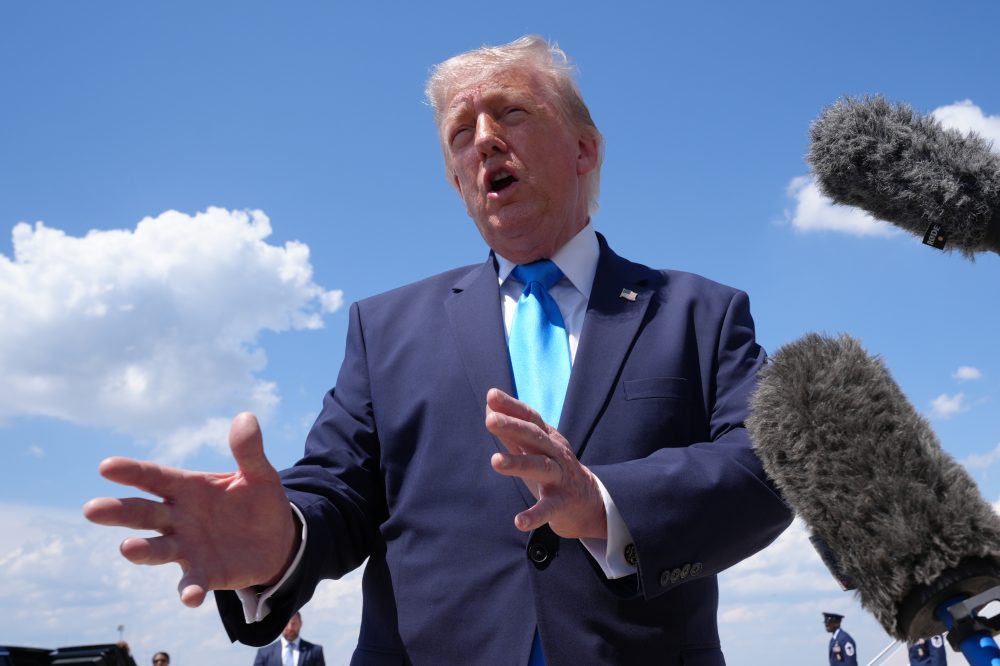
Speaking to reporters earlier Wednesday, Trump indicated he was “in no hurry” to reach an agreement ending the conflict, citing political considerations and the approaching November midterm elections.
The graduation ceremony took place during extremely hot weather conditions with minimal shade available for attendees waiting for the event to commence.
At least one individual needed medical assistance after fainting. Family members requested that elderly guests be allowed to sit under shaded tent areas. Cold water bottles were provided but quickly warmed in the heat.
Trump, who previously spoke at the academy’s 2017 graduation during his initial presidency, expressed pride in becoming the first president to deliver two commencement speeches at the institution.
“We’re going to have to try it maybe a third time, too, to keep that record intact,” Trump said Wednesday.
The president told graduates they were completing their studies during “an incredible, exciting time for our nation,” describing the current period as one of renewed national strength, morale and confidence.
While proclaiming “America is back,” the president moved away from the typically nonpartisan nature of military commencement speeches by criticizing previous administrations, claiming the nation had been “run by foolish politicians.”
Trump highlighted his trade policies and immigration enforcement efforts, stating that “under this administration, we don’t apologize for American power or wealth.”
“What we do really is we want to maximize it. We take advantage of it,” he explained. “We unleash it, and we wield it to pursue our country’s glorious destiny and our beautiful American Dream.”
According to tradition, the president and vice president address one of the military service academies annually. Vice President JD Vance is scheduled to speak at the U.S. Air Force Academy commencement on May 28.
Prior to his departure for Connecticut, Trump told reporters his message to the cadets would be, “Just enjoy your life.”
“You know, you don’t really realize how important Coast Guard is until you have a hurricane,” Trump remarked while commending the maritime service.
WASHINGTON — The president has historically shielded his financial records from public view, claiming this secrecy was required due to continuing IRS examinations of his taxes.
However, he indicated this situation might shift following a recent agreement his attorneys secured with the Justice Department that permanently ends tax-related claims against the president, his relatives and business partners.
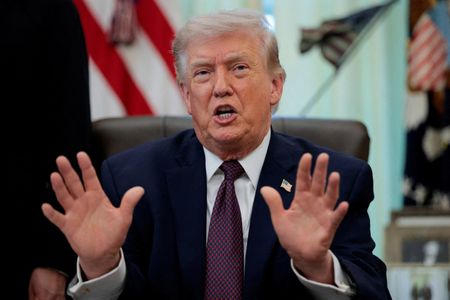
“I may even release my current returns,” the president stated to members of the press on Wednesday.
Should the president follow through on this indication, it would conclude years of questions about his financial obligations to the federal government. However, the Republican president has previously made multiple pledges over the years to make his returns public, following standard practice of other presidents, but has consistently failed to honor these commitments.
This week, the Justice Department announced the government is “forever barred and precluded” from continuing or initiating current tax reviews of the president, his sons and the organization bearing his name — elements of the settlement agreement designed to resolve the president’s $10 billion legal action against the Internal Revenue Service concerning leaked tax documents.
The Justice Department clarified the settlement applies exclusively to current audits, not potential future reviews.
The development followed the Justice Department’s announcement, as part of the legal settlement, establishing a $1.776 billion compensation fund for allies of the president who claim they faced unjust investigation and prosecution. Democratic lawmakers and oversight groups have labeled this arrangement “corrupt” and unconstitutional.
Given the settlement’s termination of ongoing financial examinations of the president, questions remain about whether he will actually make his returns public. The White House directed The Associated Press to the president’s remarks when asked about timing for potential release.
The president has repeatedly stated over multiple years that he would make his tax documents available. In May 2017, he mentioned during an interview that he “might” release his tax returns following his departure from the presidency.
Throughout his initial presidential campaign, he pledged to make his tax returns public once audit processes concluded.
In 2022, following the president’s departure from office, Congressional Democrats made public thousands of pages of his tax documents covering 2015-2020, demonstrating how he utilized tax regulations to reduce his tax burden and disclosing information about international accounts, charitable giving and the financial performance of his prominent business operations.
Party officials within the Democratic organization are working to stop Maureen Galindo, a congressional hopeful who has made multiple antisemitic statements, from securing the party’s nomination in an upcoming Texas runoff election, while also claiming that Republicans are secretly backing her candidacy.
The runoff pits Galindo against Johnny Garcia for the Democratic nomination to represent the state’s 35th Congressional District, which covers the San Antonio region. Texas Republicans redrew the district boundaries with the goal of improving their party’s odds of retaining control of the seat during this year’s midterm elections.
Democratic officials grew concerned after Galindo topped the March 3 primary results with 29% of the vote compared to Garcia’s 27%. Party leaders believe the district could stay within reach, regardless of the redistricting efforts, if Democrats perform well nationally, and they want to avoid having a nominee whose controversial statements could hurt their chances.
The runoff election occurs during a period of increased worry about antisemitism spreading throughout different political movements and debates over how to address candidates who hold extremist positions.
Among Galindo’s statements were demands to jail “American Zionists” and convert a federal immigration detention facility into a prison for this purpose.
“She’ll turn Karnes ICE Detention Center into a prison for American Zionists and former ICE officers for human trafficking,” Galindo’s campaign Instagram account said. It added: “(It will also be a castration processing center for pedophiles, which will probably be most of the Zionists).”
A political action committee known as Lead Left PAC, which describes itself as opposing President Donald Trump, has endorsed Galindo. Nevertheless, Democrats contend the organization receives Republican funding, and the New York Times published reporting suggesting possible connections.
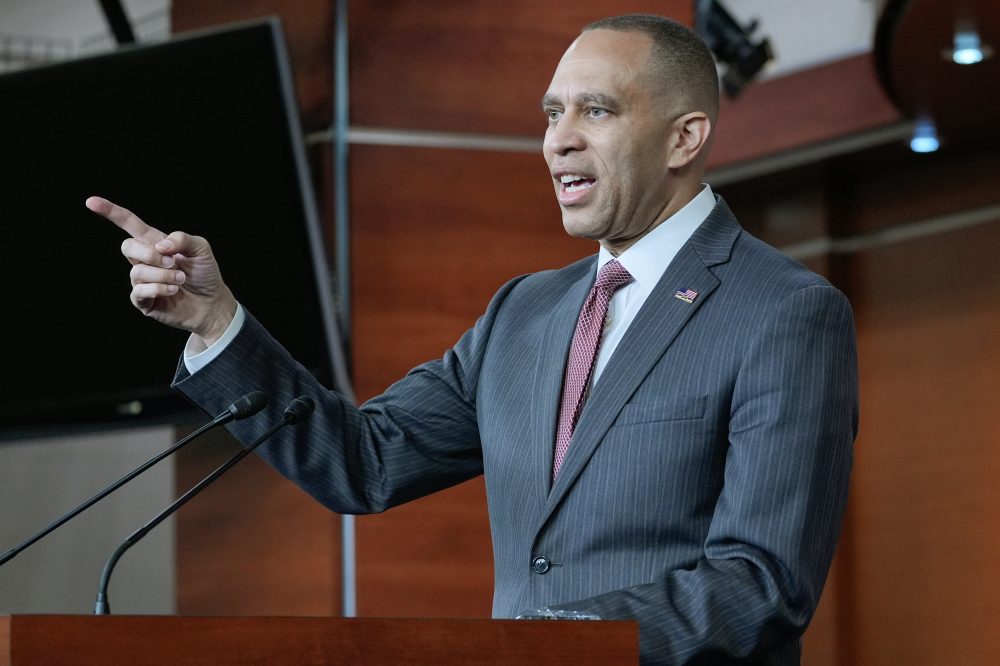
“House Republican leadership must immediately cease propping up this antisemitic candidacy,” Democratic House Leader Hakeem Jeffries and Democratic Congressional Campaign Committee chair Suzan DelBene said in a statement.
The National Republican Congressional Committee avoided addressing Democratic accusations about backing the Lead Left PAC, instead attacking the Democratic candidates for “embarrassing fundraising numbers, zero grassroots energy, and no real support from Texans.”
Through email, Galindo claimed her proposal was “NEVER for Jewish Zionists — it’s for BILLIONAIRE Zionists.” She argued that national Democratic leaders were trying to make her comments sound worse than intended.
Democratic officials have rejected Galindo’s language. Beyond the DelBene and Jeffries statement, Democratic Rep. Alexandria Ocasio-Cortez of New York called it “disgusting” and said it shouldn’t be near “our politics.”
Representatives Josh Gottheimer of New Jersey and Jared Moskowitz of Florida said in a statement Wednesday that if Galindo were to win election to Congress, they’d force votes to expel her “every single day we are here.”
Garcia said in a video posted on social media that the comments have no place in the race.
“We should be bringing people together, not spreading hate, division or dangerous rhetoric,” he said.
Lead Left PAC did not respond to requests for comment.
Capitol riot defendants and supporters of President Donald Trump are working to determine how they might benefit from a newly established $1.776 billion compensation fund designed for Americans who believe they suffered from political targeting.
The former leader of the Proud Boys, Enrique Tarrio, who received a 22-year prison sentence for seditious conspiracy related to the January 6, 2021 Capitol incident, stated he intends to submit an application to the fund. He estimates he might receive between $2 and $5 million.
“I’m not greedy,” Tarrio stated. “But my life was all fucked up because of this.”
More than 1,500 individuals connected to January 6 received presidential pardons last year from Trump. Many are now tallying expenses related to their prosecutions, incarceration periods, and lost business opportunities as they seek reimbursement for what they consider misconduct by the Justice Department during former President Joe Biden’s tenure.
An attorney named Peter Ticktin, who represents over 400 January 6 defendants, expressed doubt about whether the fund contains sufficient resources.
“People lost multi-million dollar businesses while they were locked up,” he explained. “I don’t think the DOJ is ready for us yet.”
Trump also indicated the fund might be inadequate in size. “You’re talking about peanuts,” he remarked to reporters at Joint Base Andrews. “It destroyed the lives of many, many people.”
Both Democratic lawmakers and some Republicans have raised concerns about the fund’s legal standing, along with a settlement provision that permanently prevents the IRS from conducting audits of previous tax filings by Trump, his family members, and his companies.
On Wednesday, two law enforcement officers who protected the U.S. Capitol during the January 6 events initiated legal action aimed at stopping the compensation program, characterizing it as a “taxpayer-funded slush fund” benefiting Trump supporters who participated in violent activities.
Acting Attorney General Todd Blanche informed congressional members on Tuesday that individuals who committed assaults against police officers on January 6 would remain eligible for compensation.
Tarrio believes those who attacked law enforcement officers should receive funding.
“The Justice Department overprosecuted for political gain,” he argued. “So everyone deserves to get money.”
Democratic Representatives Jamie Raskin and Richard E. Neal sent a letter on Wednesday to Treasury Secretary Scott Bessent, Blanche, and IRS CEO Frank Bisignano, who helped negotiate the settlement. They inquired about potential limits on individual payments and what information would be made available to the public.
“Never in American history has a President pursued corruption this brazenly or on such a colossal scale,” they stated in their correspondence.
Delaware’s Democratic Senator Chris Coons announced Wednesday his intention to oppose the fund through amendments to spending legislation, though he recognized the matter might require separate resolution.
Ticktin, the attorney for January 6 cases, plans to submit hundreds of applications once the Justice Department establishes the application procedures and the attorney general names the five-person panel that will oversee the fund. He mentioned suggesting this concept to Trump, his former high school classmate, in a March email, but remains uncertain whether that communication influenced the fund’s establishment.
Several January 6 defendants expressed approval that the Justice Department has adopted terminology they have consistently used — such as “lawfare,” “weaponization” and “victims” — and view the fund as compensation for years of perceived unfair treatment.
“Now liberals wanna cry about righting the wrong, too bad,” posted Jennie Carso-Heinl, who entered a guilty plea for parading, demonstrating or picketing in a Capitol building, on social media platform X. “Justice is coming.”
One Trump associate has already submitted an official request: Michael Caputo, a former administration official, requested $2.7 million in “restitution” from Blanche regarding investigations conducted by the Biden administration and special counsel Robert Mueller.
Several Democrats have suggested they might also apply, contending that Trump’s Justice Department has initiated weak political cases against them. Blanche told lawmakers Tuesday that the fund could provide compensation to politicians from both parties.
Former FBI Director James Comey, who has faced two indictments since Trump’s second term began, mentioned on CNN that he has thought about applying.
“It’s to compensate people who’ve been targeted by the Justice Department for, they say, personal, political or ideological reasons,” Comey explained. “So I’m guessing I’ll be in line.”
However, some Trump supporters believe the fund may be insufficient.
Barry Ramey, a Proud Boys affiliate who was convicted of assaulting police officers, expressed uncertainty about applying because accepting compensation might harm his legal case against the Bureau of Prisons.
“My commitment to justice is not about the money,” he stated. “I want to show they acted illegally.”
However, he indicated that securing $2 million might change his perspective.
Legal scholars say critics of President Donald Trump’s massive settlement with the Internal Revenue Service will encounter substantial barriers when attempting to contest its $1.776 billion compensation fund for those claiming government “weaponization” and its clause preventing tax audits of the president.
Democrats in Congress have criticized the Anti-Weaponization Fund as essentially a political slush fund designed to channel public money to Trump’s supporters, while oversight organizations have declared the tax protection agreement unlawful. Some Republicans have also voiced concerns, with Senate Majority Leader John Thune stating he was “not a big fan” of the arrangement.
A pair of law enforcement officers who protected the Capitol during the January 6, 2021 incident, when Trump supporters attempted to prevent Congress from confirming Democrat Joe Biden’s 2020 electoral win, have filed a lawsuit. These officers contend the fund will benefit and strengthen rioters who have intimidated them and issued death threats.
Legal analysts noted uncertainty about whether challengers can stop fund distributions or reverse Trump’s protection from past tax audits, particularly if the Republican-controlled Congress remains inactive.
The challenge is complicated because Trump withdrew his $10 billion IRS lawsuit before announcing the settlement, eliminating the court’s jurisdiction over the matter.
“There’s no longer a venue to challenge the legality of this settlement,” explained Danny Werfel, who served as IRS commissioner under the Biden administration.
The Justice Department revealed the fund Monday, following Trump’s voluntary dismissal of his lawsuit alleging IRS misconduct in leaking his tax documents during his initial presidency.
Trump additionally abandoned claims regarding government probes into his 2016 campaign’s Russian contacts and the FBI’s 2022 search of his Mar-a-Lago Florida residence for classified materials he kept after leaving office. The agreement also includes a government apology to Trump.
On Tuesday, the Justice Department quietly issued an addendum signed by acting Attorney General Todd Blanche, which “FOREVER BARRED and PRECLUDED” government prosecution or pursuit of outstanding tax matters against Trump, his relatives and his companies. Blanche previously worked as Trump’s personal attorney.
The $1.776 billion fund, seemingly referencing America’s founding year, will operate under Trump ally oversight.
The money will compensate individuals claiming harm from government “weaponization or lawfare.” Trump has alleged the Biden administration and other political adversaries inappropriately utilized law enforcement, intelligence and regulatory departments to target him and his supporters.
Funding will come from the Judgment Fund, established by Congress in 1956 for government legal claims.
Blanche informed senators Tuesday that precedent existed for the anti-weaponization fund, referencing a $680 million fund established in 2010 for Native American farmers during Democratic President Barack Obama’s term to settle prolonged litigation called the Keepseagle case.
While that settlement received federal court approval as fair and reasonable, Blanche said the IRS agreement won’t undergo judicial review. He also indicated January 6 defendants, already granted clemency by Trump, could receive payments.
Legal experts explained opponents will struggle establishing standing to sue, as proving harm may prove difficult.
The two officers who sued in Washington federal court argued they face injury because the fund would motivate January 6 defendants to continue threatening them and potentially commit violence.
“The increased risk of threats, harassment and violence our plaintiffs are suffering as a result confers standing,” stated Public Integrity Project CEO Brendan Ballou, who filed the suit.
Some specialists suggested the strongest challenge opportunity might arise later when claimants, including Trump critics, could argue they suffered harm through inadequate payouts.
Josh Gardner, an attorney who managed the Justice Department’s Keepseagle case, highlighted Hunter Biden, the former president’s son.
Hunter Biden faced tax and gun crime convictions during his father’s presidency through a case led by a Trump-appointed federal prosecutor later promoted to special counsel. President Biden pardoned his son seven weeks before Trump’s return to office.
“If Hunter Biden were to submit a claim and his claim were rejected, he would have standing to challenge not just his denial, but I think the entire structure of this settlement,” Gardner explained.
Should litigants establish standing, they could argue the IRS settlement breaks multiple laws, according to legal experts.
One concern involves whether the fund violates the Constitution’s Appropriations Clause, granting Congress spending authority, since lawmakers didn’t authorize it. Ninety-three Democratic legislators filed a legal brief raising this point after Trump dismissed his lawsuit but before the judge officially closed the case.
Another issue questions whether the fund might breach laws governing the Judgment Fund if payments go to people without pending or imminent federal claims.
“The real problem is, Congress has been remarkably loose in controlling these kinds of payments,” said Paul Figley, an emeritus law professor at American University. “It’s wrong, but not illegal.”
Questions also exist about whether Trump’s tax immunity provision violates laws protecting against political interference in taxpayer audits.
Werfel, the former IRS commissioner, noted that future administrations frequently reverse non-legislative actions from previous administrations.
Some experts said one or both congressional chambers, though not individual members, could challenge the fund. This appears unlikely currently, with Republicans controlling both the House and Senate.
“There’s a ferment of outrage that is justifiable against this deal, and that will bring off the sidelines many people who are hurt by it,” said Norm Eisen, co-founder of Democracy Defenders Action, a Democratic-leaning legal advocacy group representing the 93 lawmakers in the IRS case.
A prominent Jewish Republican organization celebrated Captain Ed Gallrein’s primary election victory on Tuesday after he defeated incumbent Rep. Thomas Massie in Kentucky’s 4th congressional district.
The Republican Jewish Coalition issued a statement from Washington, DC, on May 19, 2026, with CEO Matt Brooks calling the outcome “decisive” and stating that Kentucky Republican voters had sent a clear message.
“The RJC congratulates Ed Gallrein on his decisive primary victory tonight,” Brooks said. “Kentucky Republicans sent an unmistakable message: there is no place in the Republican Party for those who turn their back on the MAGA agenda.”
Brooks delivered harsh criticism of Massie’s congressional voting record, claiming the incumbent had consistently voted against Republican initiatives and aligned himself with progressive Democrats on important legislation. The CEO specifically pointed to Massie’s votes against Working Families Tax Cuts, border security funding, Holocaust education funding, and aid to Israel after the October 7, 2023, Hamas terrorist attack.
“Massie has been a thorn in the side of President Trump, the Republican Party, and the Jewish community writ large,” Brooks said.
The organization further accused Massie of “trafficking in antisemitism and bottom-of-the-barrel nativism at a time when Jew-hatred is on the rise,” characterizing such behavior as “wildly unacceptable and outrageous from an elected member of Congress.”
Brooks praised Gallrein as “a 5th-generation Kentucky farmer, decorated Navy SEAL, and true MAGA patriot,” predicting that the candidate “will serve with honor and distinction.”
The Republican Jewish Coalition and its affiliated RJC Victory Fund committed $5 million to back Gallrein’s campaign, characterizing the contest as a “record-breaking Congressional primary.”
During the campaign, the organization produced three television advertisements supporting Gallrein with the titles “Ed Gallrein: Hero,” “Ed Gallrein: Trump-Endorsed,” and “Gallrein & Trump or Massie who Stands with Iran.”
The Republican Jewish Coalition identifies itself as a national grassroots organization that represents tens of thousands of Jewish Republicans throughout the United States.
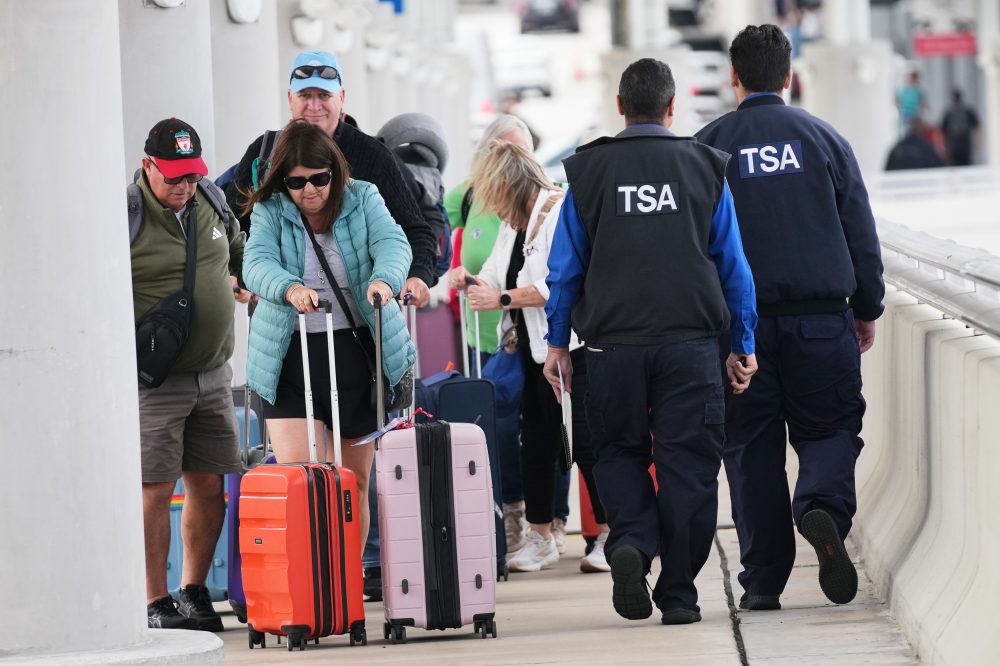
WASHINGTON — Members of a House committee voiced bipartisan concerns Wednesday about ensuring Transportation Security Administration workers receive compensation during government shutdowns and have access to modern equipment, as the Trump administration pushes to transfer airport screening duties to private companies.
The House Committee on Homeland Security conducted a hearing focused on updating the TSA nearly 25 years since its establishment following the September 11 attacks. However, discussions about advanced equipment and stable funding were dominated by concerns over TSA employee morale after workers went unpaid during three recent funding interruptions since October 1, amid administration plans to replace them at smaller airports nationwide.
“Between the 2025 and 2026 shutdowns, transportation security officers endured a total of 119 days impacted by shutdown conditions,” stated Republican Andrew Garbarino of New York, who chairs the committee. “That means TSA officers spent roughly 40% of this fiscal year reporting to work without a paycheck while continuing to carry out one of the most important security missions in the federal government.”
Multiple committee members highlighted Congress’s failure to approve pending legislation that would ensure TSA workers continue receiving pay during shutdowns. California Democrat Rep. Lou Correa suggested that if TSA employees don’t receive compensation during shutdowns, lawmakers shouldn’t either.
Correa also criticized President Donald Trump’s budget proposal, which allocates $477.3 million for private companies to assume airport screening responsibilities at approximately 250 airports while eliminating more than 4,500 TSA jobs to achieve $529.3 million in savings from compensation and benefits. The TSA recently permitted contractors in its airport staffing initiative to purchase and maintain screening equipment, a responsibility previously reserved for government agencies.
“Technology alone can’t replace the experienced people who make the security checkpoints work as they have for the past 25 years,” Correa stated. “It’s about pushing an antigovernment privatization ideology.”
Approximately 20 airports across the United States currently operate their security checkpoints through the Screening Partnership Program. Presently, airports can choose whether to participate. Trump’s budget proposal would mandate participation for smaller airports.
Hearing witnesses included Christopher Sununu, president and CEO of airline industry organization Airlines for America; Dallas Fort Worth International Airport CEO Chris McLaughlin; and American Federation of Government Employees President Everett Kelley, whose union represents TSA employees. All three testified that airports should retain the authority to decide whether to use private screening personnel.
“Ensuring SPP remains an option for airports and does not become a mandatory program is paramount to the U.S. aviation industry,” Sununu testified.
Kelley voiced strong opposition to the privatization elements in Trump’s budget.
“I’m totally against the privatization of any airport,” he declared. “You don’t contract out the CIA, do you?”
After several Democratic committee members expressed concerns that transferring airport security to private companies would increase vulnerabilities in U.S. airspace, Garbarino responded by noting that “the very conservative cities of San Francisco, Seattle and Atlanta” all utilize private screeners at their airports, adding “so yeah, maybe it’s not a Republican thing.”
Federal cybersecurity officials conducted a briefing with major artificial intelligence companies regarding a proposed executive order that would grant intelligence and other federal agencies authority to examine advanced AI systems prior to public deployment, according to a Wednesday report from the Information.
The Office of the National Cyber Director organized Tuesday’s meeting with several AI companies, including OpenAI, Anthropic and Reflection AI, the publication reported, referencing sources with knowledge of the discussions.
According to the report, U.S. President Donald Trump may sign the executive order as early as Thursday. The proposed order would create a voluntary system requiring developers of cutting-edge AI models to alert the federal government before major product launches.
Under this proposed framework, AI companies would have the option to provide their advanced models to government agencies as much as 90 days prior to making them available to the public, the report indicated.
When contacted by Reuters for comment, OpenAI, Anthropic and Reflection AI had not provided immediate responses.
The Justice Department has reached a historic agreement with Trump and his family members that shields them from future tax audits, according to reports.
The unprecedented settlement also creates a massive $1.8 billion compensation fund designed to assist victims of what the agreement describes as ‘government weaponization.’
A former government lawyer, Andrew Weissmann, provided analysis of the unusual settlement terms and their implications.
The agreement marks a significant development in ongoing legal matters involving the former president and his family members.
MONTGOMERY, Ala. — A Republican runoff election has been set for Alabama’s open U.S. Senate seat, with US Rep. Barry Moore and former Navy SEAL Jared Hudson emerging as the top two candidates on Wednesday.
Moore, who has served three terms in Congress and received President Donald Trump’s endorsement, will face Hudson, who is making his first run for political office. Moore has stated that Alabama needs a “Trump conservative” representing the state in the Senate, while Hudson has pledged to serve as “a warrior for President Trump’s ‘America First’ agenda” should he win the election.
The Senate position will become available when Sen. Tommy Tuberville steps down to pursue the governor’s office.
Both Republican and Democratic primary runoff elections are scheduled for June 16.
A former federal prosecutor from Miami is now facing criminal charges after authorities say she illegally copied a confidential report examining the investigation into President Donald Trump’s handling of classified materials, according to court documents made public Wednesday.
Carmen Lineberger, who previously served at the U.S. attorney’s office for the Southern District of Florida where she oversaw the Fort Pierce office, entered a not guilty plea during her Palm Beach court hearing on theft of government property charges. Her legal representative has not yet responded to requests for comment.
Federal prosecutors allege that Lineberger forwarded the restricted report to her personal Hotmail address, cleverly disguising it with the subject line “chocolate cake recipe.”
Officials claim she unlawfully attempted to transfer the portion of the report focusing on the classified documents case from her official government email after a Trump-appointed judge prohibited its public disclosure.
This section of the report, which details the special counsel’s conclusions regarding a criminal probe that once threatened significant legal consequences for Trump, remains hidden from public view. U.S. District Judge Aileen Cannon supported Trump’s legal team’s position that releasing the document would create unfair prejudice, especially after the special counsel dropped the case following Trump’s 2024 electoral success.
Lineberger was employed within the same court jurisdiction where the special counsel’s case against Trump was originally brought. That legal action alleged Trump unlawfully kept numerous classified documents at his Mar-a-Lago estate in Palm Beach from his previous presidency and interfered with federal attempts to retrieve them.
Senate Democrats are preparing to challenge Republican solidarity this week through strategic votes targeting President Donald Trump’s controversial $1.776 billion compensation fund for political allies, as tensions rise within the GOP ranks.
The confrontation centers around a roughly $72 billion measure aimed at restoring funding to U.S. Immigration and Customs Enforcement and the Border Patrol after Democrats previously blocked the appropriations for several months.
However, what began as straightforward legislation has become increasingly complex after Republicans inserted $1 billion in security funding for the White House campus and Trump’s proposed ballroom, while some GOP senators express mounting dissatisfaction with the president. The settlement fund has drawn Republican criticism, and many were angered by Trump’s Tuesday endorsement of Texas Attorney General Ken Paxton in next week’s party primary runoff against Sen. John Cornyn.
“It’s been a hell of a bad week for Donald Trump and his Republicans,” Senate Democratic leader Chuck Schumer of New York said on the Senate floor. “And it’s only Wednesday.”
Democrats see an opportunity to force settlement fund votes because Republicans are attempting to advance the immigration enforcement measure through a complex budget procedure requiring numerous amendment votes. Democratic lawmakers are weighing several amendments targeting the settlement fund, including proposals to eliminate it entirely or prohibit payments to Trump supporters who attacked law enforcement officers during the Jan. 6, 2021, Capitol assault.
These amendments could potentially succeed as increasing numbers of Republicans voice opposition to the fund and other elements of Trump’s policy agenda.
Senate Majority Leader John Thune, R-S.D., expressed skepticism Tuesday about the new fund, which the administration unveiled as part of a settlement resolving the president’s IRS lawsuit over leaked tax returns, saying he was “not a big fan.” Republican Sen. Bill Cassidy, who lost Saturday’s Louisiana primary to a Trump-endorsed opponent, denounced it as a “slush fund” and declared “you can’t just make up things.”
The expanding GOP division is intensified by Trump’s unexpected Paxton endorsement, an intervention that has Republican senators privately expressing anger over potential damage to their November majority prospects, as they consider the incumbent the stronger general election candidate.
“There’s always a consequence with taking on United States senators,” Thune said Wednesday. Trump “obviously has his favorites and people he wants to endorse and that’s his prerogative. But what we have to deal with up here is moving the agenda, and obviously that can become slightly more complicated.”
Facing Republican resistance to portions of his agenda, Trump responded with a social media attack on the Senate.
He demanded Republicans dismiss Senate parliamentarian Elizabeth MacDonough, who ruled that sections of the $1 billion security proposal cannot be included in the ICE and Border Patrol legislation. Trump also reiterated longstanding demands for Senate passage of the SAVE Act, a Republican measure requiring all voters to demonstrate U.S. citizenship, and elimination of the Senate filibuster.
“Republicans play a very soft game compared to the Dumocrats,” he wrote. “It is their single biggest disadvantage in politics.”
Trump warned that Democrats would abolish the filibuster “on the First Day” if they regain complete Washington control and urged Republicans to “get smart and tough” or “you’ll all be looking for a job much sooner than you thought possible!”
While Republicans have generally supported Trump on most matters, they have consistently rejected his repeated appeals — including during his first presidency — to eliminate the filibuster, which establishes a 60-vote requirement in the Senate.
Although some Republicans have expressed support for the administration’s settlement fund, several have raised concerns. Senators questioned acting Attorney General Todd Blanche about it during Tuesday’s hearing, where he characterized the fund as “unusual” but not unprecedented.
Sen. Thom Tillis, R-N.C., warned it presents a “real risk” that rioters who were charged and subsequently pardoned by Trump in the Jan. 6 attack might receive compensation through the fund, calling such an outcome “absurd.”
On Wednesday, two police officers who defended the Capitol during the 2021 attack filed a lawsuit to prevent the payouts. Blanche, who served as Trump’s personal lawyer before joining the Department of Justice in Trump’s second administration, declined to exclude the possibility that rioters who assaulted police on Jan. 6 would qualify for compensation.
Republican leadership continues revising the $1 billion security provision after the parliamentarian deemed it too complicated for the budget measure. The funding could be reduced or eliminated from the legislation.
Thune acknowledged “ongoing vote issues” as leaders assess Republican backing, and “ongoing parliamentarian issues” as they determine what Senate rules will permit in the bill.
Democrats and some Republicans have questioned whether Congress should authorize White House ballroom funding while voters face affordability concerns. According to the Secret Service proposal, approximately $220 million would fund ballroom-related security enhancements while the remainder would support a new visitor screening facility, training, and additional security measures.
Tillis argued the bill should have excluded the other security improvements “because it’s just giving everybody the ‘billion dollar ballroom,’ and it’s just a bad idea.”
He indicated insufficient Republican support exists for the complete $1 billion in funding or even the $220 million request.
“I still want private donations to pay for it, they need to explain to me why we need this,” Tillis said, pointing out that Trump had initially promised the project would be entirely privately funded.
Nine individuals deported from America touched down in Sierra Leone on Wednesday, according to officials from the West African nation, marking another instance of controversial third-country deportation agreements implemented by the Trump administration.
The group included five people from Ghana, two from Guinea, one from Senegal, and one from Nigeria, the ministry of information reported. These arrangements have sparked concerns about whether the rights of those being deported are being properly protected.
Officials stated that the newly arrived individuals “have been checked into their hosting facilities, are comfortable and receiving the necessary support.” Authorities had originally anticipated 24 people would arrive but did not explain the discrepancy.
Alma David, an immigration attorney with the U.S.-based Novo Legal Group who assists deportees, suggested the reduced number could be due to several deportations being stopped just before the aircraft departed from the United States.
Court records reviewed by The Associated Press show that a U.S. federal judge prevented one woman’s deportation to Sierra Leone after authorities failed to allow her to pursue protection under the Convention Against Torture, which is legally required.
Sierra Leone’s foreign minister, Timothy Kabba, informed local news outlets Wednesday that his government has agreed to temporarily house migrants deported by the Trump administration, explaining it only takes West African citizens and the arrangement is backed by a $1.5 million U.S. government grant.
America has established third-country deportation agreements with at least eight additional African countries, many of which are among those most affected by the Trump administration’s restrictions on trade, assistance, and immigration. The other African countries known to have signed such deals include Congo, Equatorial Guinea, South Sudan, Rwanda, Uganda, Eswatini, Ghana and Cameroon.
Multiple nations on this list have notably oppressive administrations and troubling human rights histories, including Eswatini, South Sudan and Equatorial Guinea.
According to State Department documents, some countries have received millions of dollars in exchange for these agreements. Most deal specifics remain confidential.
Legal experts and advocacy groups have questioned the nature of these arrangements with African and other countries.
A week ago, a federal judge commanded the Trump administration to return a Colombian woman to the United States from Congo after she was sent there despite that country’s refusal to accept her due to its inability to address her medical requirements.
NEW LONDON, Conn. — During a Wednesday commencement ceremony, President Donald Trump addressed graduating cadets at the U.S. Coast Guard Academy, praising their “unbelievable heroism and exceptional selflessness” while warning that greater challenges await them in their military service.
The speech to the class of 2026 marked the first occasion Trump has delivered a graduation address at a military academy while American forces are engaged in active combat operations.
Trump emphasized to the graduates that they would serve as America’s “first defenders” and “first responders.”
“You’ve all been tested. You’ll be tested further and probably at higher levels as your career goes on,” Trump said.
The president briefly referenced the ongoing conflict with Iran, now entering its 12th week, highlighting it as evidence of American success in “the hottest country anywhere in the world.”
“The only question is, do we go ahead and finish it up or are they going to be signing a document? Let’s see what happens,” Trump said.
The Republican leader had considered launching additional military action against Iran this week amid stalled diplomatic discussions and concerns about a fragile ceasefire. However, on Monday, Trump indicated he would allow Iran additional time due to “serious negotiations” taking place.
Trump has previously stepped back from threats against Iran, claiming diplomatic progress that has not been publicly confirmed.
Earlier Wednesday, he informed reporters that he was “in no hurry” to reach an agreement ending the conflict, citing political considerations and the upcoming November midterm elections.
The graduation ceremony took place under extreme heat conditions with minimal shade available for attendees waiting for the event to commence.
Medical personnel assisted at least one individual who collapsed from the heat. Family members requested that elderly guests be allowed to sit under shaded tent areas. While cold water bottles were provided, they quickly warmed in the intense temperatures.
Trump, who previously spoke at the academy’s 2017 graduation during his first presidency, expressed pride in becoming the first president to deliver two commencement speeches at the institution.
“We’re going to have to try it maybe a third time, too, to keep that record intact,” Trump said Wednesday.
The president characterized the graduates as entering service during “an incredible, exciting time for our nation,” describing it as a period of renewed national strength, morale and confidence.
While declaring “America is back,” Trump deviated from the typically nonpartisan nature of military commencement addresses by criticizing previous administrations, claiming the nation had been “run by foolish politicians.”
He advocated for his trade tariff policies and immigration enforcement measures, stating that “under this administration, we don’t apologize for American power or wealth.”
“What we do really is we want to maximize it. We take advantage of it,” he said. “We unleash it, and we wield it to pursue our country’s glorious destiny and our beautiful American Dream.”
According to tradition, the president and vice president annually speak at military service academies. Vice President JD Vance is scheduled to address graduates at the U.S. Air Force Academy on May 28.
Prior to traveling to Connecticut, Trump indicated his message to cadets would be, “Just enjoy your life.”
“You know, you don’t really realize how important Coast Guard is until you have a hurricane,” Trump said while commending the maritime service.
WASHINGTON — A pair of law enforcement officers who protected the U.S. Capitol during the January 6, 2021 attack have filed a federal lawsuit seeking to prevent anyone, including the rioters themselves, from collecting money from a newly established $1.776 billion settlement fund intended for individuals claiming to be victims of politically motivated prosecutions.
The legal action was filed Wednesday, one day after Acting Attorney General Todd Blanche testified before Congress about the fund’s establishment. Blanche, who previously served as President Donald Trump’s personal lawyer before joining the Justice Department, declined to rule out the possibility that individuals who attacked police during the January 6 riot could qualify for payments from the fund.
In their legal filing, the officers characterize the government’s “Anti-Weaponization Fund” as an unlawful slush fund that Trump intends to use to “finance the insurrectionists and paramilitary groups that commit violence in his name.” The lawsuit characterizes the fund’s establishment as “the most brazen act of presidential corruption this century” and demands its elimination.
“No statute authorizes its creation, the settlement on which it is premised is a corrupt sham, and its design violates the Constitution and federal law,” the suit says.
The fund originates from a settlement related to Trump’s $10 billion legal action against the Internal Revenue Service concerning the disclosure of his tax documents. Its purpose is to provide compensation to individuals who believe they faced unfair treatment from previous administrations’ Justice Department. A five-member panel selected by the attorney general will determine payment distributions.
The Capitol riot resulted in injuries to more than 100 law enforcement officers. Prosecutors brought charges against over 1,600 individuals for January 6-related offenses, though Trump eliminated all of these cases through comprehensive pardons last year.
The legal challenge comes from Metropolitan Police Department officer Daniel Hodges and former U.S. Capitol Police officer Harry Dunn, who is running in Maryland for a seat in Congress. Both Hodges and Dunn provided congressional testimony about their traumatic January 6 experiences. Video footage showed a rioter removing Hodges’ mask while he was trapped against a door during fighting over a tunnel entrance.
The officers argue the fund “encourages those who enacted violence in the President’s name to continue to do so.”
“Dunn and Hodges already face credible threats of death and violence on regular basis; the Fund substantially increases the danger,” the suit alleges.
During Tuesday’s congressional hearing, lawmakers questioned Blanche extensively about the fund. He characterized it as “unusual” but not unprecedented. Blanche failed to acknowledge that Trump’s Justice Department has investigated and prosecuted some of the Republican president’s political enemies, including former FBI Director James Comey and New York Attorney General Letitia James.
The lawsuit also names Blanche and Treasury Secretary Scott Bessent as defendants. Representatives from the Justice and Treasury departments did not immediately provide responses to requests for comment regarding the legal action.
Brendan Ballou, a former Justice Department prosecutor who worked on Jan. 6 cases, represents the officers as one of their attorneys.
Two law enforcement officers who protected the U.S. Capitol during the January 6, 2021 riot have taken legal action to stop President Donald Trump’s nearly $1.8 billion compensation fund for victims of political weaponization.
Harry Dunn, a former Capitol Police officer, and Daniel Hodges from the Metropolitan Police Department filed their federal court challenge in Washington on Wednesday. In their legal filing, they claim Trump has established a taxpayer-funded slush fund worth $1.776 billion designed to benefit insurrectionists and paramilitary organizations that engage in violence on his behalf.
The officers are requesting a judicial order to prevent any disbursements from the fund, describing it as the most blatant example of presidential corruption in this century.
The compensation fund emerged from Trump’s Monday settlement with the Internal Revenue Service, where he agreed to withdraw his $10 billion legal action concerning the disclosure of his tax documents from his previous presidency. The Justice Department established the fund as part of this agreement to provide compensation for those affected by political weaponization.
During congressional hearings on Tuesday, acting Attorney General Todd Blanche fielded numerous inquiries about the fund’s operations. Blanche explained that the money would be available to individuals from all political parties and would not be restricted solely to January 6 defendants. He noted that eligibility would be determined broadly based on experiences of weaponization.
Dunn, who is Black and served 15 years protecting lawmakers, has spoken publicly about enduring physical attacks and racist harassment during the Capitol assault. Trump supporters were attempting to stop Congress from confirming former President Joe Biden’s 2020 election victory. Dunn testified before a bipartisan House committee investigating the deadly incident and has discussed his struggle with post-traumatic stress disorder resulting from the attack.
Hodges gained widespread attention when video footage showed him trapped in a revolving door by a rioter using a police shield during the Capitol breach. He continues serving with Washington’s police department and has provided congressional testimony about his ordeal.
Sussex County has teamed up with the Delaware Department of Transportation (DelDOT) and the Delaware Office of State Planning Coordination (OSPC) to begin a comprehensive planning initiative for managing future development along the US Route 9 and US Route 113 corridors. This research will provide guidance for recommendations before the County’s scheduled comprehensive plan revision and assist in directing upcoming choices regarding infrastructure, land use, and development projects.
To support this initiative, Sussex County is requesting community participation through an online survey created to collect opinions on existing conditions, resident priorities, and potential developments along the US Route 9 corridor. Community feedback will directly influence proposed enhancements and strategic planning approaches for the long term.
Local residents and community members with a stake in the area are invited to learn additional details and provide their thoughts by accessing the Master Plan Study website.
A pioneering figure in American politics and LGBTQ rights advocacy has passed away. Barney Frank, the former Democratic congressman who served Massachusetts for more than three decades, died Tuesday at age 86.
Jim Segel, who served as Frank’s former campaign manager and remained a close friend, confirmed the death occurred late Tuesday.
Frank had been receiving hospice care in Ogunquit, Maine since April, battling congestive heart failure. He leaves behind his husband Jim Ready, sisters Ann Lewis and Doris Breay, and brother David Frank. Lewis is recognized as a longtime Democratic strategist.
The congressman, who once characterized himself as a “left-handed gay Jew,” became famous for his sharp tongue, confrontational approach, and dedication to underrepresented groups. While championing progressive causes, he maintained relationships with Democratic leadership that sometimes disappointed more liberal activists.
Frank’s most significant contribution to American society came through his groundbreaking work for LGBTQ equality. Following years of personal struggle with his identity, he became the first Congress member to voluntarily reveal his homosexuality in 1987. His 2012 wedding to Ready marked another historic first, as he became the initial sitting lawmaker to enter a same-sex marriage.
During his final interview in April while beginning hospice treatment, Frank expressed hope his legacy would center on promoting progressive politics through practical means rather than forcing change before voters were ready. He worried this balanced approach was losing favor as Democrats look toward reclaiming the presidency in 2028 and moving beyond current political divisions.
“I hope I made the point that the best way to accomplish the improvements in our society that we need, particularly in making it less unfair economically and socially, is by conventional political methods,” Frank said. “The main obstacle to our defeating populism and going further in the right direction is that mainstream Democrats have to make it clear that we oppose that part of the agenda of our friends on the left that is politically unacceptable. They’re right about a lot of things but you have to have some discretion.”
“You should not take the most unpopular parts of your agenda and make them litmus tests,” he added. “And that’s what my friends on the left have been doing.”
Frank’s political awakening began in 1940 when he was born in Bayonne, New Jersey. In his 2015 autobiography, he credited the lynching of Emmett Till, a 14-year-old Black teenager from Chicago killed by white men in Mississippi, with inspiring his public service calling. He participated in Mississippi’s Freedom Summer campaign in 1964, though admitted his communication style posed challenges in that environment.
“My direct organizing of Mississippi voters was limited by the fact that my accent (to this day more New Jersey than New England), my poor diction, and my rapid speech, especially when I got excited, rendered me largely incomprehensible to rural Mississippians of both races,” he wrote.
His political career launched in 1968 working for Boston Mayor Kevin White, followed by election to the Massachusetts House in 1972. Frank secured his congressional seat in 1980, bucking a difficult year for Democrats when the party suffered major House losses and Republican Ronald Reagan captured the presidency.
Frank’s practical governing philosophy emerged quickly during his congressional tenure. While joining the liberal Democratic Study Group to pressure then-Speaker Tip O’Neill to more aggressively challenge the Reagan administration, Frank often found himself supporting O’Neill’s less confrontational strategies.
His willingness to compromise ideology for practical gains appeared years later during a major tax reform debate. Initially planning to oppose the legislation due to reduced top tax rates, Frank switched positions after negotiating increased affordable housing tax credits.
“I was happy to sacrifice my ideological purity to improve legislation that was going to become law with or without me,” he wrote.
Rep. Nancy Pelosi, the California Democrat and former House speaker, praised Frank as an “idealist to the nth degree.”
“The goals, the vision, the promise of it all,” she recalled in an interview. “Nobody could ever surpass what he brought to the table in that regard.”
Frank’s early Washington years involved maintaining separate public and private identities. While participating in the city’s gay social scene and maintaining relationships privately, he avoided public acknowledgment of his sexuality. Media coverage of sexual orientation typically occurred only during scandals. When Frank invited a reporter to his office in 1987 to directly address questions about his sexuality, Frank simply responded, “yeah, so what?”
While other officials like San Francisco’s Harvey Milk had previously come out, and Congress members including Rep. Gerry Studds had been outed through scandals, Frank’s voluntary disclosure made him the nation’s most visible gay political leader throughout the 1980s and 1990s. He successfully advocated for AIDS funding and unsuccessfully pushed the Clinton administration to eliminate military service restrictions for gay personnel.
However, Frank faced significant challenges, including a 1987 House reprimand for poor judgment involving a male prostitute he employed in 1985. Rep. Newt Gingrich of Georgia, serving as Republican whip, sought the more serious censure punishment, which was overwhelmingly rejected.
Frank endured personal attacks from conservative Republicans, including House Majority Leader Dick Armey of Texas, who used a homophobic slur against Frank in 1995. Armey later claimed he misspoke and issued a House floor apology.
Despite these challenges, Frank developed a reputation as one of Congress’s most quotable members. He criticized Republican positions on abortion by saying they believed “life begins at conception and ends at birth,” targeting their opposition to social programs. After Ken Starr released his detailed report on President Bill Clinton’s relationship with Monica Lewinsky, Frank complained it contained “too much reading about heterosexual sex.”
Rep. Steny Hoyer, who entered Congress alongside Frank, remembered his colleague’s approach: “You may get a blow, but it was softened by the humor that came with it.”
Frank’s most enduring policy impact came through his leadership of the House Financial Services Committee beginning in 2007, as the U.S. economy approached collapse. He collaborated with the Republican Bush administration on rescue legislation supporting financial institutions, though this sparked ongoing populist backlash in American politics.
Following the initial crisis, Frank helped develop the most comprehensive reform legislation since the New Deal era. Partnering with then-Senate Banking Committee Chairman Chris Dodd, the resulting Dodd-Frank Act strengthened consumer protections, established new bank capital requirements, and expanded regulatory oversight capabilities.
“Barney and I shared a fantastic relationship,” Dodd said. “I had many good moments in those 36 years in Congress, but none more significant, joyful, or productive than those almost two years working with Barney on our banking bill.”
The current Republican administration has worked to eliminate many provisions from this legislation, arguing the regulations were excessively burdensome.
Frank encountered his most challenging reelection battle in 2010 during the tea party movement’s political surge. He chose not to seek reelection in 2012 but remained politically active after leaving Congress and consistently criticized the former president.
When asked about potential future presidential candidates, Frank acknowledged “unfortunately I won’t get to vote for it.”
A Tennessee man will receive $835,000 from local officials after being imprisoned for over a month due to a Facebook post concerning the assassination of conservative activist Charlie Kirk.
Larry Bushart’s situation was unusual among the many Americans who faced job losses following social media comments about Kirk’s death, as his case resulted in actual criminal charges. The 61-year-old former police officer remained incarcerated for 37 days until authorities dismissed the felony charges in October.
While imprisoned, Bushart lost his post-retirement employment and was unable to attend his wedding anniversary celebration or witness his granddaughter’s birth, according to the federal lawsuit he filed in December against Perry County, its sheriff and the investigator who secured his arrest warrant.
“I am pleased my First Amendment rights have been vindicated,” Bushart stated when announcing the settlement Wednesday. “The people’s freedom to participate in civil discourse is crucial to a healthy democracy. I am looking forward to moving on and spending time with my family.”
Authorities arrested Bushart in September when he declined to remove Facebook memes making light of Kirk’s death, which had generated significant mourning among conservatives, including Perry County residents near Bushart’s residence who organized a candlelight vigil.
The specific meme leading to his arrest stated: “This seems relevant today…” and displayed President Donald Trump with the text, “We have to get over it.” The meme indicated this quote came from Trump’s 2024 response to a school shooting at Iowa’s Perry High School.
Perry County Sheriff Nick Weems informed media outlets that while most of Bushart’s “hate memes” constituted protected speech, community members were disturbed by the school shooting reference, worrying Bushart might be targeting their local Perry County High School, despite Weems acknowledging the meme referenced an Iowa school.
“Investigators believe Bushart was fully aware of the fear his post would cause and intentionally sought to create hysteria within the community,” Weems stated to The Tennessean last year.
Officials initially set Bushart’s bail at $2 million before his release as the case gained nationwide attention.
“It’s in times of turmoil and heightened tensions that our national commitment to free speech is tested the most,” said Cary Davis, an attorney for the Foundation for Individual Rights and Expression, which helped represent Bushart. “When government officials fail that test, the Constitution exists to hold them accountable. Our hope is that Larry’s settlement sends a message to law enforcement across the country: Respect the First Amendment today, or be prepared to pay the price tomorrow.”
President Donald Trump celebrated another victory over a Republican opponent Tuesday when Rep. Thomas Massie was defeated in Kentucky’s primary election, eliminating one of his harshest critics from Capitol Hill. Massie had proven to be an especially troublesome adversary for Trump, standing against the conflict with Iran and casting votes opposing Trump’s major tax reform package from the previous year.
Here are the latest developments:
Immigration Issue Shows Signs of Recovery for Trump: AP-NORC Survey
Immigration appears to be regaining its status as a favorable topic for Trump, according to findings from a recent AP-NORC survey.
The immigration issue initially served as one of Trump’s political advantages, with approximately half of American adults expressing support for his policies, but his approval ratings on this matter declined following periods of intensive immigration enforcement actions.
Currently, slightly less than half of American adults, at 45%, express approval for his management of this policy area.
Among Republicans, immigration continues to rank among Trump’s most successful policy areas. Approximately 8 out of 10 Republicans — 83% — support his immigration policies, a figure that exceeds the percentage who express approval for his overall presidential performance.
Survey Results: Economic Concerns Among Republicans Don’t Shake Trump Support
While Republicans express greater dissatisfaction with President Trump’s economic policies compared to recent months, most continue to support him overall.
Approximately 6 out of 10 Republicans — 63% — express approval for Trump’s economic management in the latest AP-NORC survey. This represents a decline from 79% recorded in February, prior to the start of the Iran conflict.
Roughly one-third of all American adults support his economic leadership.
This decrease in economic confidence hasn’t affected his general job performance ratings — approximately 7 out of 10 Republicans continue to approve of his presidential leadership, consistent with earlier polling this year. These results demonstrate Trump’s persistent support within the Republican Party, despite growing economic concerns.
Vance and Rubio Begin 2028 Presidential Positioning Through White House Press Duties
The initial indicators of presidential campaigns typically involve discrete behind-the-scenes maneuvering from potential candidates, commonly referred to in political circles as the “shadow primary.”
However, the emerging Republican competition to follow Trump in slightly more than two years appears to be unfolding in one of the most visible venues available: the White House press briefing room.
Vice President JD Vance, widely regarded as one of the GOP’s most viable presidential prospects for 2028, approached the podium Tuesday, commanding attention for 54 minutes while responding to reporter questions.
His appearance lasted five minutes beyond the session conducted two weeks earlier by Secretary of State Marco Rubio, currently viewed as Vance’s primary potential competitor — or possible running mate — for 2028.
Both Vance and Rubio were selected as interim substitutes for White House press secretary Karoline Leavitt, who is currently on maternity leave. The opportunity to engage with reporters before television cameras provided a prominent platform to demonstrate their qualifications for the presidency.
Federal Government Drops Tax Claims Against Trump in Expanded IRS Settlement
The federal government will permanently abandon tax claims against Trump, based on a settlement document released Tuesday, representing an unusual application of executive authority that could help protect the president from additional scrutiny of his financial and legal affairs.
Under the settlement agreement designed to resolve Trump’s $10 billion legal action against the Internal Revenue Service regarding the disclosure of his tax documents, the federal government is “forever barred and precluded” from investigating or pursuing Trump, his sons, and the Trump organization’s ongoing tax reviews, according to a single-page document published on the Justice Department’s website.
The government is additionally prohibited from investigating Trump’s family members, associates, and others, based on the document, which bears the signature of acting Attorney General Todd Blanche. This document serves as a separate supplement to the original settlement announced Monday and was posted to the Justice Department website Tuesday.
The White House directed Associated Press questions to the Justice Department, while the U.S. Treasury did not respond to Associated Press inquiries.
Georgia Republicans Prepare for Runoff Elections for Senate and Governor Positions
Georgia Republicans will continue their internal competition as they move toward runoff elections to select their candidates for governor and U.S. Senate in the competitive state, after Tuesday’s primary elections failed to determine clear winners.
The Senate runoff will include former college football coach Derek Dooley and Rep. Mike Collins, while Rep. Buddy Carter was eliminated from contention. The victor will face Democratic Sen. Jon Ossoff in one of the most scrutinized races in the November midterm elections.
Lt. Gov. Burt Jones and healthcare billionaire Rick Jackson proceeded to the runoff in the Republican gubernatorial primary, continuing their intense and costly campaign rivalry. Former Atlanta Mayor Keisha Lance Bottoms secured the Democratic nomination Tuesday.
With approximately one month remaining until the June 16 runoff, Republicans will invest additional time and resources competing internally before focusing on their Democratic challengers in crucial contests.
Previous Political Opponents Set for Rematch in Alabama Governor’s Race and Senate Runoffs
Alabama will witness a rematch between two prominent gubernatorial candidates, while contenders from both major parties will advance to runoff elections next month for a vacant U.S. Senate position.
Republican U.S. Sen. Tommy Tuberville and former U.S. Sen. Doug Jones, a Democrat, comfortably secured their respective primary victories for governor Tuesday, establishing their second direct competition after Tuberville defeated Jones six years earlier.
Jones won election to the U.S. Senate in a special election in 2017, but his tenure was brief in the strongly Republican state. He hopes that voter dissatisfaction with their Republican-controlled government, particularly regarding healthcare and increasing living costs, will drive him to another uncommon Democratic success in the Deep South.
Tuberville’s decision to pursue the governor’s office sparked an intense Republican competition for a vacant Senate seat that will almost certainly remain Republican.
Trump achieved another victory Tuesday over a Republican opponent, removing Rep. Thomas Massie in Kentucky’s primary and eliminating one of his most vocal Capitol Hill critics.
Massie had proven particularly challenging for Trump. He opposed the Iran conflict and voted against Trump’s major tax reform legislation from last year. He was defeated by Trump-endorsed candidate Ed Gallrein in what became the most expensive U.S. House primary in American history.
Although Trump has achieved multiple victories during this primary season, this particular win may deliver an even stronger warning to the president’s Republican opponents. Massie was well-established in his strongly Republican Kentucky district before his conflict with Trump intensified, ending a congressional career that started in 2012.
Nevertheless, Massie will continue serving in Congress until his term concludes in January, and without facing a Republican primary in the future, he now possesses greater freedom than before to challenge Trump.
President Trump claimed another victory Tuesday in his battle against Republican opponents, defeating Rep. Thomas Massie in Kentucky’s Republican primary and eliminating one of his harshest critics from Capitol Hill. Massie had proven to be an especially troublesome adversary for Trump, advocating for the Jeffrey Epstein files to be made public, opposing the Iran conflict, and casting a vote against Trump’s major tax reform package last year.
New polling from AP-NORC reveals that while Republicans express less satisfaction with Trump’s economic management compared to several months ago, they continue to support him overall as the Iran conflict persists. Approximately 6 out of 10 Republicans endorse Trump’s economic policies, according to the survey. This represents a decline from roughly 8 out of 10 in February, prior to the war’s start.
Recent AP-NORC polling indicates that immigration could be regaining its position as a political advantage for Trump.
Immigration served as one of Trump’s political strengths initially, with approximately half of American adults expressing support for his policies, though his approval ratings on this matter declined following periods of intensive immigration enforcement.
Currently, slightly less than half of American adults, at 45%, endorse his immigration policies.
Immigration continues to rank among Trump’s most successful issues with Republicans. Roughly 8 out of 10 — 83% — support his immigration approach, which exceeds the percentage who rate his presidential performance positively.
While Republicans show decreased satisfaction with President Trump’s economic policies compared to recent months, they continue to demonstrate loyalty to him overall.
Approximately 6 out of 10 Republicans — 63% — endorse Trump’s economic management in recent AP-NORC polling. This marks a decrease from 79% in February, prior to the Iran war’s beginning.
Around one-third of all American adults support his economic approach.
This decline hasn’t affected his general job performance ratings — roughly 7 out of 10 Republicans approve of his presidential leadership, consistent with earlier in the year. These results demonstrate Trump’s persistent support within the Republican Party, despite increasing economic concerns.
The initial indicators of a presidential campaign typically involve such discreet and private maneuvering by candidates that political insiders have termed it the “shadow primary.”
However, the emerging Republican competition to replace Trump in slightly more than two years appears to be unfolding in one of the most visible venues imaginable: the White House press briefing room.
Vice President JD Vance, considered among the GOP’s most promising potential presidential contenders for 2028, approached the podium on Tuesday, commanding attention for 54 minutes while responding to reporter questions.
This exceeded by five minutes the session conducted two weeks earlier by Secretary of State Marco Rubio, currently viewed as Vance’s potential primary opponent — or running mate — in 2028.
Vance and Rubio were selected as interim substitutes for White House press secretary Karoline Leavitt, who is on maternity leave. The opportunity to field questions before television cameras provided a prominent platform to demonstrate their qualifications for commander-in-chief.
According to a settlement document released Tuesday, the U.S. government will permanently abandon tax claims against Trump, representing an unprecedented exercise of executive authority that could effectively protect the president from additional scrutiny of his financial affairs and legal behavior.
Under the settlement agreement designed to resolve Trump’s $10 billion lawsuit against the Internal Revenue Service regarding the disclosure of his tax returns, the U.S. is “forever barred and precluded” from investigating or prosecuting Trump, his sons and the Trump organization’s ongoing tax reviews, according to a single-page document published on the Justice Department’s website.
The government is additionally prohibited from investigating Trump’s family, associates and others, according to the document, signed by acting Attorney General Todd Blanche. This document serves as a separate supplement to the original settlement announced Monday, and was discreetly posted to the Justice Department website on Tuesday.
The White House directed Associated Press questions to the Justice Department, and the U.S. Treasury did not respond to Associated Press requests for comment.
Georgia Republicans will continue their internal competition as they advance toward a runoff to select their nominees for governor and U.S. Senate in the competitive state after Tuesday’s primary failed to determine clear winners.
The Senate runoff will include former college football coach Derek Dooley and Rep. Mike Collins, while Rep. Buddy Carter was eliminated from contention. The victor will face Democratic Sen. Jon Ossoff in one of the most scrutinized campaigns in the November midterm elections.
Lt. Gov. Burt Jones and healthcare billionaire Rick Jackson proceeded to the runoff in the Republican gubernatorial primary, continuing their intense and costly campaign rivalry. Former Atlanta Mayor Keisha Lance Bottoms secured the Democratic nomination on Tuesday.
With approximately one month remaining until the June 16 runoff, Republicans will invest additional time and resources competing internally before focusing on their Democratic challengers in crucial races.
Alabama will witness a repeat contest between two prominent gubernatorial candidates, while nominees from both major parties will advance to runoff elections next month for a vacant U.S. Senate position.
Republican U.S. Sen. Tommy Tuberville and former U.S. Sen. Doug Jones, a Democrat, comfortably secured their respective gubernatorial primaries on Tuesday, establishing their second direct competition after Tuberville defeated Jones six years ago.
Jones won election to the U.S. Senate in a special contest in 2017, though his tenure was brief in the strongly Republican state. He hopes voters’ dissatisfaction with their Republican-controlled government, including concerns about healthcare and increasing living costs, will drive him to another uncommon Democratic success in the Deep South.
Tuberville’s entry into the gubernatorial race sparked an intense Republican competition for a vacant Senate seat that will almost certainly remain Republican.
Trump achieved another victory Tuesday against a Republican opponent, defeating Rep. Thomas Massie in Kentucky’s primary and removing one of his most vocal Capitol Hill critics.
Massie had proven especially problematic for Trump. He advocated for releasing the Jeffrey Epstein files, opposed the Iran conflict and voted against Trump’s major tax legislation last year. He lost to Trump-endorsed challenger Ed Gallrein following the most costly U.S. House primary in history.
While Trump has achieved multiple victories this primary season, this particular win perhaps delivers an even stronger warning to the president’s Republican critics. Massie was firmly established in his solidly red Kentucky district before his conflict with Trump intensified, ending a congressional career that started in 2012.
Nevertheless, Massie will continue serving in Congress until his term concludes in January, and without a Republican primary ahead, he now possesses greater freedom than ever to challenge Trump.
NEW YORK — The Open Society Foundations announced Wednesday it will dedicate $300 million over the next five years to programs aimed at protecting democratic principles and promoting economic stability across the United States.
This commitment arrives during a period when the current administration has targeted the organization and its founder’s family, claiming they promote unrest and division. These criticisms represent part of a wider 2025 campaign by President Donald Trump and supporters to pressure nonprofit organizations and charitable donors through executive actions, funding restrictions, and investigation threats.
“We are continuing our work unabated. We will not be intimidated into silence,” said Laleh Ispahani, managing director for the U.S. at Open Society Foundations, when asked about the administration’s attacks on the Soros family.
Congressional supporters of the president have requested that the Internal Revenue Service and the Department of Justice examine nonprofit groups they claim back domestic terrorism, unauthorized immigration, or environmental initiatives they oppose. Last December, then-Attorney General Pam Bondi directed law enforcement agencies to investigate organizations supporting antifa, which Trump has classified as a domestic terrorist movement.
A Justice Department representative declined to comment when asked whether the agency was examining Open Society, stating the department does not discuss ongoing investigations.
Over the past year, Ispahani explained that OSF has awarded grants to groups defending legal principles and challenging policies designed to discourage certain Americans from engaging in civic life. The organization’s updated approach seeks to enhance economic opportunities while strengthening civil rights protections, areas she believes are typically addressed separately instead of being recognized as interconnected issues.
The foundation plans to identify state-level policies protecting at-risk communities that could serve as models for other states, Ispahani noted, while also supporting measures that create economic fairness for working families.
“You can’t address the racial wealth gap without tackling core, working class economic issues like living wages, affordable child care and housing,” she said.
Of the total $300 million pledge, OSF has already allocated $20 million for this year to support organizations defending rights and legal standards through strategic court cases, nonprofit protection efforts, and government corruption monitoring initiatives.
This democracy-focused strategy marks the first new domestic program approved under Alex Soros, one of the founder’s sons, who has led a comprehensive reorganization of the foundations that included significant staff reductions.
“Guaranteed rights and freedoms are just as critical as broad economic prosperity and are the strongest defense we have against a closed society,” Alex Soros, chair of the Open Society Foundations, said in a statement. “Our new investments will tackle these twin challenges.”
The organization’s earlier U.S. democracy initiative invested at least $220 million in creating a diverse, interfaith coalition supporting democratic values, including five-year funding commitments to community organizations led by people of color and women.
Historically, major charitable foundations rarely considered supporting democracy work within the United States as part of their mission.
While charitable organizations cannot directly back political candidates or parties, they may fund various nonpartisan activities including voter registration drives, civic education programs, journalism, policy research, and government oversight work.
During the final years of President Barack Obama’s administration and throughout Trump’s initial presidency, large foundations began directing more resources toward democracy-related activities, according to research by Kristin Anne Goss, a professor at the Sanford School of Public Policy at Duke University.
Using grant data from the nation’s largest 1,000 foundations, Goss discovered that among the biggest foundations, democracy-related giving as a share of total contributions rose substantially from 2013 to 2020. She noted these patterns indicate that some funders traditionally focused on areas like health and education began prioritizing democracy work.
David Wolcheck, lead data analyst for research at the nonprofit Candid, which monitors charitable giving, used different data sources but found foundation support for democracy activities increased threefold between 2016 and 2020, then declined by one-third the following year. He emphasized that additional research is necessary to understand these changes.
Many foundations explicitly state in their giving strategies that they aim to combat authoritarianism and advance social equity. These funds also include support for policies and organizations with varying values and different visions for America’s future, Goss observed.
However, she noted, “If you’re looking at these numbers and these trends, the vast, vast, vast majority of it is going toward a vision of society that is inclusive,” and supports the rule of law and civil liberties.
Several other major foundations have announced significant democracy-related commitments recently, though complete data on this type of giving will not be publicly available for several years.
According to Wolcheck’s research, the Ford Foundation ranks as the largest private and community foundation supporter of democracy work in the United States. Under new president Heather Gerken’s leadership, Ford Foundation stated it is “providing substantial funding to organizations across the political spectrum doing nonpartisan work to safeguard our democracy and protect the rule of law.”
The John D. and Catherine T. MacArthur Foundation committed $100 million over the past two years to protect voting and civil rights while improving democracy’s ability to serve people effectively. The Minnesota-based McKnight Foundation approved an additional $20 million from its endowment for 2026, with portions supporting efforts to increase civic engagement among people with diverse perspectives.
A separate initiative by the nonprofit Democracy Fund encourages philanthropic donors to support fair elections by funding relevant nonprofits before the end of April. This second “All by April” campaign responds to requests from nonpartisan voter registration and turnout organizations for early funding well ahead of Election Day. The campaign also recommends grants to shield nonprofits and their leadership from government intimidation and other exceptional threats.
The variety of these commitments demonstrates the dual challenge facing philanthropic donors: responding quickly to anti-democratic policies while providing sustained support for organizations working to expand political participation and improve governance.
The range of strategies may also reflect uncertainty about which approaches will effectively protect and strengthen democracy through nonpartisan funding.
“A lot of the things that they’re working on, especially around democracy, it’s really hard to measure impact,” Goss said of foundations. “Because they’re trying to intervene in things that are deep and long standing and often in the political sphere or having roots in the global economy and other huge, huge structures.”
WASHINGTON — An emerging group of Republican lawmakers is demonstrating increased independence from President Donald Trump’s legislative priorities.
Despite Trump’s continued strong support among Republican voters, this expanding faction of GOP members willing to oppose the White House could create obstacles for his policy goals ranging from Iran military operations to immigration spending, particularly given the party’s narrow congressional majorities.
Louisiana’s Sen. Bill Cassidy represents the latest addition to this group. Following his recent primary defeat to a candidate backed by Trump, Cassidy switched his position Tuesday on Iran war legislation, joining Democrats in supporting measures to limit U.S. military involvement.
“The way our Constitution is set up, Congress should hold the executive branch accountable,” he told reporters the day before.
Texas Sen. John Cornyn might follow a similar path after Trump endorsed Ken Paxton, Cornyn’s opponent in next week’s Republican runoff election.
Kentucky Rep. Thomas Massie could be considered an original member of this independent-minded group, having clashed with Trump throughout the president’s first administration. His recent primary loss to a Trump-endorsed candidate has reinforced his willingness to oppose the president.
Massie has angered Trump by opposing his major tax and spending legislation and advocating for the Jeffrey Epstein files’ release.
He suggested more opposition is coming during his remaining time in office.
“I got seven months left in Congress,” Massie said with a grin during his concession speech as the crowd erupted.
Additional Republicans in similar positions include Sen. Thom Tillis, who strongly criticized former Homeland Security Secretary Kristi Noem and has recently focused criticism on Defense Secretary Pete Hegseth. Alaska’s Sen. Lisa Murkowski joined Democrats last week in attempting to limit Trump’s Iran war powers. Maine’s Sen. Susan Collins and Kentucky’s Sen. Mitch McConnell have opposed some of Trump’s Cabinet selections. Nebraska Rep. Don Bacon has worked to restore congressional authority over tariffs.
“If the legislative branch always votes with the president, we do have a king,” Massie said in his Tuesday concession speech.
This development doesn’t represent a resurrection of the Never Trump movement that some Republicans unsuccessfully hoped would limit the president’s actions during his first term or prevent his return to office. Many party members, including occasional Trump critics, have either supported or failed to stop the president as he initiated the Iran war and oversaw aggressive immigration enforcement and federal workforce reductions.
These unrestrained Republicans don’t share a common ideology. However, they share a boldness that can only emerge in specific circumstances within Trump’s Washington.
Many, including Tillis, McConnell and Bacon, have announced retirement plans and can vote without concern for future Republican primary challenges. Others like Collins and Murkowski enjoy greater freedom because their states tend to value political independence. Some like Massie believed voters could support both Trump and someone who occasionally opposed him.
This creates a challenge for Trump. As he demands complete loyalty and removes Republican dissidents, he’s creating a growing group who, for various reasons, have no obligations to Trump.
This situation could prove problematic for Senate Majority Leader John Thune and House Speaker Mike Johnson, who already work with extremely narrow majorities. Even small shifts in Republican loyalty could significantly complicate either chamber’s ability to pass major legislation before November’s midterm elections.
Upcoming challenges may emerge this week as Thune advances funding legislation for Immigration and Customs Enforcement and Customs and Border Patrol designed to pass along party lines.
Democrats are prepared to capitalize on these divisions.
At a Tuesday Washington event hosted by the Center for American Progress, House Democratic leader Hakeem Jeffries announced plans to create divisions among Republicans using discharge petitions to bring issues directly to floor votes.
This strategy has succeeded in securing House approval on various issues from the Epstein files to temporary Haitian immigrant protections.
“When we’re disciplined and when we’re focused and when we put pressure in particular on the so-called swing seat Republicans, they have been breaking with us,” Jeffries said.
California Gov. Gavin Newsom told reporters Tuesday that Trump’s endorsement of Cornyn’s opponent demonstrates his political influence remains limited to the Republican base rather than the broader American public.
“He’s showed the only influence he has, and that’s an outsize influence within the base of the party,” the potential 2028 Democratic presidential contender told reporters in Washington. “Otherwise he’s shown little to no influence with the American people.”
This situation leaves Republicans calculating how to gather necessary votes for legislation passage.
North Dakota Sen. John Hoeven called Cassidy a “good friend” and described the loss as “tough for him.” He said Cassidy “will always vote in line with what he thinks is best” but expressed doubt he would become a less dependable Republican vote.
His Louisiana colleague, Sen. John Kennedy, said Cassidy uses power “rationally and maturely” and “will continue to do the same thing.”
Cassidy has consistently rejected suggestions that he will spend his final Washington months as a Trump troublemaker, stating he plans to do “what’s good for my country and my state.”
However, the independent approach that concluded his political career has quickly reemerged. Following Trump’s China visit, Cassidy discussed a western alliance that’s “totally falling apart” and will be unable to “push back on the threat China represents.” He appeared surprised by the administration’s creation of a nearly $1.8 trillion fund to compensate Trump allies they believe have been unfairly investigated and prosecuted.
“I just came off the campaign trail,” he said. “People are concerned about making their own ends meet, not about putting a slush fund together without a legal precedent.”
Opponents of reproductive rights have launched a court challenge against Ohio’s recently approved abortion amendment, claiming the measure’s passage violated proper constitutional procedures. The legal action contends that Ohio’s state constitution requires a constitutional convention to implement this type of amendment, rather than allowing it to pass through direct voter ratification alone.
Janet Porter from Faith To Action shared with LifeSite News that a successful outcome in Ohio’s case might encourage comparable legal challenges in additional states across the country.
Legal experts are raising concerns about the Supreme Court’s inconsistent handling of voting map disputes, noting that recent rulings have consistently favored Republican interests while applying election timing rules unevenly.
The nation’s highest court last December allowed Texas to proceed with new voting districts that help Republicans, citing concerns about a lower court blocking the maps “on the eve of an election.” However, the primary elections were still four months away and the general election was nearly a year off.
The court referenced the Purcell principle, a legal concept from two decades ago stating that courts should avoid altering voting procedures too close to elections to prevent voter confusion.
However, this month the court permitted Louisiana and Alabama to implement Republican-friendly maps that redraw their House districts, even though in-person voting was about to start and thousands of mail-in ballots had already been submitted.
The court’s seemingly contradictory use of the Purcell principle has resulted in outcomes that benefit Republicans each time, as the party works to maintain congressional control in November’s midterm elections.
These decisions have led some legal scholars to question the motivations of the conservative justices, who hold a 6-3 majority.
“I’ll just say that the Purcell principle is not really a principle anymore, at least if we think ‘principle’ means it is going to be consistently applied,” said University of Kentucky law professor Joshua Douglas.
“Cynics would say this is politics all the way down,” Douglas continued, “and there’s evidence of that given that the court seems to be letting Republican-controlled states implement new maps when previously it had stopped lower court rulings against some of those maps.”
However, not all legal experts see contradiction in the court’s actions.
University of Notre Dame law professor Derek Muller argued the recent rulings share a common theme: reinstating state legislative decisions that lower courts had blocked. While the cases may create election uncertainty due to timing, Muller said this isn’t because the court changed rules.
“It’s because the court has stepped back and allowed the legislature to act,” Muller explained.
The Purcell principle stems from a 2006 case where the Supreme Court removed a judicial block on an Arizona voter-identification law that a lower court had stopped 33 days before midterm elections.
Some legal experts argue that what started as a simple principle of judicial restraint in election cases has been manipulated by conservative justices to benefit Republicans. These experts say the court’s recent actions have created the impression that political outcomes, rather than legal principles, drive decisions.
During redistricting, legislative district boundaries nationwide are redrawn to reflect population changes from the national census every decade. State legislatures traditionally handle this process at each decade’s beginning.
In the current unusual mid-decade redistricting battle, Republicans have gained a clear advantage, strengthened by recent Supreme Court decisions.
Following urging from the former president, Republican-controlled Texas redrew its electoral map last year attempting to flip five Democratic-held House seats. Democratic-led California responded by reconfiguring its map to target five Republican-held seats. Multiple other states then joined the redistricting fight.
Democrats faced a setback when the Supreme Court last month weakened a key section of the 1965 Voting Rights Act, allowing Republican-led Southern states to eliminate Democratic-held majority-Black and majority-Latino districts before November’s elections. Black and Latino voters typically support Democratic candidates.
In its 6-3 decision with conservative justices in the majority and liberal justices dissenting, the Supreme Court eliminated one of Louisiana’s two majority-Black House districts. The ruling came on April 29, three days before early voting was scheduled to begin for Louisiana’s May 16 primary.
UCLA law professor Richard Hasen, who created the term “Purcell principle” a decade ago, said the Louisiana ruling’s timing indicates the Supreme Court isn’t particularly concerned about preventing electoral disruption under this legal concept.
“The court issued the opinion as people were voting, knowing it was going to lead to this frenzy,” Hasen observed. “If the court was actually concerned about upsetting election rules on the eve of an election, it would either have issued (it) earlier or later.”
Four Republican-led Southern states – Louisiana, Tennessee, Alabama and South Carolina – responded by quickly dismantling several House districts with large Black populations before the midterms.
The Supreme Court’s treatment of Alabama’s voting map redistricting may represent the clearest example of its uneven approach.
In January 2022, a federal court prevented Alabama from using a Republican-drawn map that the court determined illegally denied Black voters an additional House district where they would form a majority or near-majority, likely violating the Voting Rights Act.
The following month, the Supreme Court decided this disputed voting map, which benefits Republicans, must stay in place to avoid disrupting the primary election scheduled more than three months later.
Justice Brett Kavanaugh, in a concurring opinion joined by fellow conservative Justice Samuel Alito, said the election was too close to permit map changes.
“When an election is close at hand,” Kavanaugh wrote, “the rules of the road must be clear and settled.”
Four years later, the court’s conservatives appear to have disregarded those concerns. On May 11, eight days before Alabama’s scheduled primaries, they allowed the state to return to that same map, removing a judicial order that had blocked its implementation. The Supreme Court offered no explanation for its decision.
Republican Governor Kay Ivey immediately delayed the scheduled primaries for four House districts whose boundaries change under the map, effectively nullifying votes already cast in those races.
Loyola Marymount University law professor Justin Levitt said conservative justices seem to have replaced the Purcell principle’s broad requirement for judicial restraint with a new approach: “When we like what’s happening, we rule.”
“I am not quick to accuse the court of indulging purely partisan leanings, but man, oh man, they’re making it real difficult to try and figure out what they’re doing, if not that,” said Levitt, who worked as a White House adviser on democracy and voting rights under the previous Democratic administration.
Some confusion around the court’s Purcell principle decisions may result from these rulings being issued under the court’s emergency docket, or “shadow docket.” In such instances, the court responds to emergency requests, often without providing legal reasoning.
“Part of the problem with the Purcell principle is that it’s never been fully explained in a majority opinion,” Hasen noted. “There’s no hard-and-fast rule.”
Firearm advocacy organizations are expressing enthusiasm about what they view as favorable conditions under the current Trump administration’s second term in office.
Fresh regulatory changes and legal actions targeting state governments demonstrate the ways in which this administration is exercising its authority to support the objectives of pro-gun advocacy movements.
A fresh survey from The Associated Press-NORC Center for Public Affairs Research shows President Donald Trump facing declining support among Republicans regarding his economic policies, though his party continues backing him during the ongoing Iran conflict.
The poll indicates roughly 6 out of 10 Republicans now support Trump’s economic approach, marking a significant drop from approximately 8 out of 10 who backed him in February before the Iranian war started.
The survey emerges as the Iranian conflict drives up fuel costs while both nations work toward establishing a lasting ceasefire. Trump’s influence within the GOP remains robust, evidenced Tuesday when his endorsed candidate beat Rep. Thomas Massie, a Trump opponent, in a primary race. These results underscore Trump’s enduring Republican Party influence despite mounting economic concerns.
Ariel Gutierrez, a 55-year-old Republican from Wisconsin, typically makes his teenage kids cover their own fuel expenses. However, with soaring gas prices, he’s now assisting his 15-year-old who’s learning to drive.
“The whole Iran issue has just exacerbated it,” he said. “Maybe we were seeing it in groceries before, but now — with this push on gas and travel and all that — that is how people want to live the leisure part of their lives … and it is directly impacting us there now. And yes, that is, I believe from Trump’s policies, not from his predecessors.”
Beyond his core supporters, Trump faces widespread disapproval. Most Americans reject Trump’s Iran strategy and foreign policy approach. His general approval rating in the latest survey reaches 37%, rising modestly from 33% in April. Nearly every Democrat opposes his presidential performance, along with roughly 7 out of 10 independents.
Approximately one-third of American adults support Trump’s economic management. This matches an AP-NORC survey from late April but represents a slight decline from his second term’s beginning, when 40% of adults approved.
Economic policy served as Trump’s advantage during his initial presidency, yet he’s faced skepticism about his economic leadership since returning to office last year, despite repeated pledges to lower costs. His second-term economic ratings have particularly declined among Republicans. Though a majority at 63% still approve, this falls from 79% in February, weeks before the Iranian conflict commenced.
Richard Baumgartner, a 77-year-old Republican from Las Vegas, views increased expenses as an unavoidable consequence of the war he endorses.
“Unfortunately, because of the war, the economy is a little bit off kilter,” Baumgartner said. “I think it’ll fall back into place after things resolve over there. Temporary price increases — it’s unfortunate, but it’s something that has to be confronted in a situation like this where you have a very serious problem.”
Though economic pledges proved crucial to Trump’s reelection, his stricter immigration enforcement goals were equally important — and this area may be regaining strength as a political asset.
Immigration became one of Trump’s early second-term advantages, with roughly half of Americans supporting his methods, but approval dropped to 38% in January and February following months of intensive immigration enforcement that resulted in two U.S. citizens being fatally shot in Minneapolis.
Currently, slightly under half of American adults, 45%, support his immigration policies.
Brenda Theiss, an independent from Cullman, Alabama, doesn’t approve of all Trump’s actions. However, she credits him for willingly disrupting established patterns to decrease illegal immigration compared to Democratic presidents Barack Obama and Joe Biden.
“I liked Obama; I voted for Obama — but Trump was the only one that did something. All of the other presidents sat back and went, ‘Well there’s nothing we can do,’” the 73-year-old said. “He’s closing the border. He did it. Biden didn’t do it. For that, I give him one hundred.”
Recent months have seen the Trump administration seemingly adjust its immigration strategy, shifting away from aggressive, highly visible tactics toward more discreet enforcement methods.
Immigration continues as one of Trump’s stronger areas among Republicans. Roughly 8 out of 10 support his immigration policies, approximately 10 points above those who rate his overall presidential performance positively.
Trump’s management of the Iranian war remains widely unpopular.
Only about one-third of American adults support Trump’s Iran approach. Approximately two-thirds of Republicans approve, though last month’s AP-NORC survey found younger Republicans more likely than older ones to disapprove of Trump’s Iran performance.
Similarly, about one-third of Americans endorse Trump’s foreign policy approach. Despite Trump focusing on more assertive international strategies this year — including capturing the leader of Venezuela and threatening Cuba — Americans’ overall foreign policy opinions haven’t changed substantially in recent months.
Amanda Wylie, a 22-year-old who lives in Athens, Georgia, says Iran represents one of the few areas where Trump lacks her support.
“I feel like we’re wasting resources over there at this point and not for the benefit of the American people,” said Wylie, who identifies as a Republican-leaning independent. “Especially if everyone is worried about gas prices and the ultimate goal of this is to prevent Iran from having a nuclear weapon. Yes, that’s important, but at what cost?”
The AP-NORC survey of 1,117 adults was conducted May 14-18 using a sample from NORC’s probability-based AmeriSpeak Panel, designed to represent the U.S. population. The margin of sampling error for all adults is plus or minus 3.8 percentage points.
Food assistance programs nationwide are undergoing significant modifications as various states implement substantial policy changes. These adjustments are creating considerable difficulties for individuals who depend on these benefits.
The widespread implementation of these new policies is affecting recipients across multiple states, with many experiencing challenges in accessing the food assistance they rely on. Advocacy organizations are closely monitoring how these changes impact vulnerable populations.
Ty Jones Cox from the Center on Budget and Policy Priorities has been providing insight into the situation as states continue rolling out these major program adjustments. The organization is tracking the effects on families and individuals who depend on food assistance benefits.
The policy modifications represent a significant shift in how food assistance programs operate, with recipients having to navigate new requirements and procedures as states phase in the changes.
Two Republican candidates will face off in a June runoff election after neither secured enough votes to win Georgia’s U.S. Senate primary outright on Tuesday, setting up a continued battle within the party to determine who will challenge Democratic Senator Jon Ossoff this fall.
U.S. Representative Mike Collins captured 40.5% of the vote while former University of Tennessee football coach Derek Dooley received 30%, with 80% of ballots tallied, according to the Associated Press. Their advancement to the June 16 runoff knocked out a third candidate, Representative Buddy Carter, who had invested significant resources in building recognition across the state.
The Republican who ultimately wins the nomination will face a challenging race against Ossoff, a 39-year-old former media executive whose reelection bid could play a crucial role in determining whether Democrats can gain Senate control, as Republicans currently hold a 53-47 advantage.
Collins, 58, who has served two terms in the House of Representatives, has maintained his position as the leading candidate by adopting an aggressive, vocal style similar to President Donald Trump and highlighting his sponsorship of the Laken Riley Act, legislation named after a Georgia nursing student who was murdered by someone accused of being in the country without legal status.
Dooley, 57, who works as an attorney in addition to his coaching background, has campaigned as a fresh face in Washington politics and secured the backing of two-term Georgia Governor Brian Kemp. Kemp had been considered a potential front-runner for the Senate nomination but chose not to pursue the race.
Ossoff, the sole Senate Democrat seeking reelection in a state Trump won in 2024, has been leading both Collins and Dooley in polling. The Republican candidates, like others in the state, face challenges from Trump’s declining approval ratings amid concerns over increasing costs for gas and other essential goods.
While Trump secured Georgia with nearly 51% of the vote, independent political experts now classify the state as favoring Democrats. Ossoff initially won his Senate seat by defeating Trump-supported Republican incumbent David Perdue in a 2021 runoff contest.
Few members of Congress operated quite like Thomas Massie.
The independent-minded Republican who gained attention for his unconventional approach and willingness to oppose his own party’s leadership was defeated in Tuesday’s primary election following an aggressive campaign against him by President Donald Trump. Massie had built strong support in his Kentucky congressional district through multiple election cycles.
This remarkable conclusion to his legislative career demonstrates Trump’s power to pressure, criticize and ultimately remove political opponents — suggesting no elected official may be immune from such tactics. Massie’s loss follows Trump’s successful effort to remove Sen. Bill Cassidy in Louisiana recently and the president’s Tuesday backing of Texas Attorney General Ken Paxton against Sen. John Cornyn, creating concern among Senate members.
Trump had directed his harshest criticism toward Massie, an unconventional conservative who had gained significant influence among House Republicans by voting according to his principles rather than party leadership’s wishes. He now joins other Republicans who challenged the president and faced similar consequences.
Following his loss to Ed Gallrein, a former Navy SEAL chosen by Trump, Massie remained defiant.
“If the legislative branch always votes with the president, we do have a king,” Massie told cheering supporters Tuesday night. But if lawmakers follow the Constitution, he said, “we have a republic.”
During his concession remarks, Massie hinted his political involvement might continue as supporters chanted “2028!” and “President!”
“You’ve made a compelling argument,” he replied. “We’ll talk about it later.”
Trump commented on Massie’s loss: “He deserves to lose.”
Massie built his reputation from the House Republican ranks by following his own course and repeatedly demonstrating his readiness to oppose both his party and the president.
He opposed Trump’s major tax reduction legislation the previous year, concerned the multi-trillion-dollar expense would increase national debt.
He disagreed with Trump’s military actions regarding Iran and Venezuela, opposing American intervention abroad, and consistently voted against foreign assistance, including aid to Israel, which resulted in millions in opposition spending from pro-Israel organizations.
Most notably, Massie collaborated with Democratic Rep. Ro Khanna of California in a determined campaign to compel the Justice Department to release Jeffrey Epstein documents.
His efforts regarding the Epstein documents, possibly more than his repeated opposition to spending measures and other party initiatives, raised Massie’s public recognition.
Trump attacked the “lowlife” Massie as the congressman pursued this matter last year, extending political difficulties for the administration.
Initially elected in 2012 during the final phase of the Republican tea party movement before Trump’s Make America Great Again campaign emerged, Massie distinguished himself immediately.
With an engineering background, Massie created multiple patents — displayed in his office — plus a debt tracking device that shows flashing red numbers as national deficits increase. He frequently wore a small version of this debt tracker as a pin.
He wed his high school girlfriend, Rhonda, and accompanied her to the Massachusetts Institute of Technology. They raised four children while living mostly independently in a solar-powered house he built, earning recognition among self-sufficient lifestyle enthusiasts. He managed livestock, owned an early Tesla vehicle and consumed unpasteurized milk.
Motivated by fellow Kentuckian Rand Paul after supporting the senator’s campaign, the libertarian-minded Massie sought office himself.
After securing his House position, Massie chose not to participate in the emerging Freedom Caucus, as his far-right positions didn’t completely match the conservative group’s agenda.
Trump targeted Massie in 2020 during his initial presidency when the congressman challenged a $2.2 trillion coronavirus relief measure.
During that period, Massie insisted the COVID-19 legislation receive a formal vote count rather than voice approval, requiring hundreds of legislators to return to Washington. Trump labeled him a “third rate Grandstander.”
Trump continued his criticism even following Massie’s wife’s death in 2024. Massie revealed in 2025 that he had married again, after proposing to Carolyn Grace Moffa, a former Paul aide, at the Library of Congress steps. He indicated they would reside on the farm.
The president criticized Massie’s quick remarriage, posting on social media that “his wife will soon find out that she’s stuck with a LOSER!”
The NAACP has initiated a campaign urging Black athletes, former students and supporters to pull their athletic and monetary backing from state universities across the South as those states pursue redistricting efforts stemming from a recent Supreme Court ruling.
The court’s 6-3 decision in “Louisiana vs. Callais” on April 29 diminished the strength of the Voting Rights Act of 1965, declaring that election districts drawn based on racial considerations constitute an “unconstitutional gerrymander.”
Those opposing the ruling have pointed out that the safeguards established by the legislation signed by Lyndon Johnson have been crucial in ensuring Black voters maintain influence in the nation’s electoral process, helping guarantee that Black candidates have viable paths to electoral victory.
Following the court’s decision, several Southern states have started efforts to redesign their electoral maps.
The NAACP responded Tuesday by unveiling an initiative to persuade athletes and their supporters to avoid major NCAA sports programs across Alabama, Florida, Georgia, Louisiana, Mississippi, South Carolina, Tennessee and Texas.
The group specifically named these institutions: Alabama, Auburn, Georgia, Florida, Florida State, LSU, Ole Miss, Mississippi State, South Carolina, Clemson, Tennessee, Texas and Texas A&M.
“Across the South, Black athletes have helped build some of the most profitable college athletic programs in America, generating hundreds of millions of dollars in annual revenue,” the organization’s website reads. “At the same time, several southern state governments are moving to limit, reduce, weaken, or erase Black voting representation by creating new, unconstitutional voting districts.
“You can’t have one without the other. Profiting off of Black athletes while suppressing their vote is out of bounds.”
The group additionally urged athletes and donors to redirect their support toward Historically Black Colleges and Universities (HBCUs) instead of the major state institutions in those regions.
The NAACP identified these HBCUs in the targeted states: Alabama A&M, Alabama State, Florida A&M, Fort Valley State, Savannah State, Albany State, Southern, Grambling State, Jackson State, Alcorn State, Mississippi Valley State, South Carolina State, Tennessee State, Texas Southern and Prairie View A&M.
Democratic voters across Pennsylvania selected their nominees Tuesday to take on sitting Republican members of Congress in November’s elections, which will help decide control of the U.S. House of Representatives.
The following candidates emerged victorious in Tuesday’s primary contests for the most competitive congressional seats that Democrats hope to capture, based on projections from local media using early vote tallies:
• Bob Harvie, who serves as a Bucks County Board commissioner, secured the Democratic nomination in eastern Pennsylvania’s 1st congressional district and will face off against Representative Brian Fitzpatrick, a Republican incumbent.
• Bob Brooks, who previously worked as a firefighter before retiring and has experience as a former labor union leader, earned the Democratic nod in the 7th district to take on sitting Representative Ryan Mackenzie, a Republican.
• Janelle Stelson, who formerly worked as an anchor for a local news channel, claimed the Democratic nomination in the 10th district and will challenge incumbent Representative Scott Perry, a Republican.
The provided article content appears to be incomplete, containing only source attribution and URL information without the actual news story text. Based on the headline reference to primary elections in six states with Kentucky highlighted as significant for Republican Party dynamics, this appears to be a political story about recent primary election results.
Without the full article content available, specific details about candidates, vote tallies, and election outcomes cannot be accurately reported at this time.
Two candidates have emerged from the Republican primary field to compete in a runoff election for Georgia’s governor’s race, according to media reports released Tuesday.
Burt Jones and Rick Jackson will face off in the Republican runoff, with the victor earning the party’s nomination for the November general election.
The winning candidate will seek to replace Brian Kemp, a Republican who is prevented from seeking another term due to state term limit restrictions.
Georgia’s Republican gubernatorial primary will advance to a runoff election between two candidates who both back Trump, as the state continues to serve as a critical political battleground.
The state represents a key swing territory where both major political parties are working to establish their strategic direction for the upcoming fall election season, with contests for both the senate seat and the governor’s office at stake.
Voters lined up at polling locations throughout the state during the primary election process, as Georgia residents participated in selecting their party nominees for the general election.
The federal government has agreed to abandon tax claims against President Trump through an expanded settlement arrangement with the Internal Revenue Service, according to official documents.
Under the terms of the settlement agreement, the United States is permanently prohibited and banned from investigating or pursuing President Trump, his sons, and the Trump organization regarding existing tax matters, based on documentation published on the Department of Justice website.
The settlement represents a significant development in the ongoing tax disputes involving the former president and his business interests.
Ed Gallrein, with support from U.S. President Donald Trump, defeated sitting Representative Thomas Massie in Tuesday’s Republican primary for Kentucky’s 4th congressional district, according to projections from NBC News.
The primary election served as a gauge of Trump’s ability to influence Republican voters against those who have criticized him. Massie, who has served northern Kentucky areas in the House of Representatives since 2012, has been a vocal opponent of Trump throughout the president’s second term in office.
Gallrein will now become the Republican Party’s candidate for the House seat in the general election.
WASHINGTON – The nation’s major airline carriers are voicing strong opposition to a White House initiative that would force smaller airports to replace Transportation Security Administration screeners with private security personnel, according to written testimony obtained by Reuters.
Chris Sununu, who leads Airlines for America, plans to address a House committee Wednesday, emphasizing that keeping private security “remains an option for airports and does not become a mandatory program is paramount to the U.S. aviation industry.”
The proposal comes as part of President Donald Trump’s plan from last month to eliminate more than 9,400 positions and reduce funding by over $1.5 billion from the TSA, which currently employs 60,000 people and oversees security operations at airports nationwide.
Worcester County commissioners convened for a budget planning session on Tuesday, May 19, 2026, at their government facility in Snow Hill, Maryland.
The work session was held at 11:30 a.m. in the Commissioners Meeting Room at the Worcester County Government Center, located at 1 West Market Street in Snow Hill, MD 21863.
A video recording of the budget work session is available for public viewing online through the county’s video streaming platform.
COLUMBUS, Ohio — Vice President JD Vance has expanded his Medicaid fraud investigation to include Ohio, creating political challenges for Republican gubernatorial candidate Vivek Ramaswamy, who is also a close political ally.
Just one day before Ramaswamy secured victory in Ohio’s May 5 primary election, Vance announced on X that his anti-fraud task force would investigate the Buckeye State. This announcement coincided with a Daily Wire investigation that exposed widespread abuse in Ohio’s Medicaid-funded home health care system.
Shortly afterward, U.S. House Republicans established a new Task Force on Defending Constitutional Rights and Exposing Institutional Abuses, naming the Ohio fraud allegations as their initial focus.
This represents a significant shift for Vance, whose previous high-profile enforcement actions have primarily focused on Democratic-controlled states like Minnesota, California and Maine. While he has attempted to counter accusations of partisan targeting by pointing to investigations in Republican states such as Florida, Vance has specifically blamed Democrats for enabling Medicaid fraud.
On Tuesday, Ramaswamy embraced the political moment by announcing that combating Medicaid fraud would be his “absolute top priority.” His strategy to lower healthcare expenses and “crush” Medicaid waste includes renegotiating Ohio’s agreement with the Centers for Medicare and Medicaid Services to secure better fraud-prevention incentives and reduce bureaucratic red tape.
Based on a waiver that Tennessee secured during the previous Trump presidency, this new agreement could generate $3.1 billion in savings for healthcare programs, according to campaign projections.
During Ramaswamy’s press event, criticism of the state’s Department of Medicaid, which has operated under Republican Gov. Mike DeWine for seven years, was a recurring topic. This criticism came not only from Ramaswamy but also from current Republican officials who have overseen Ohio’s existing oversight mechanisms for years.
When questioned about whether the Republican establishment that has governed for over 15 years should bear responsibility for missing Medicaid fraud, Ramaswamy declined to assign blame. “I’m not playing that game, OK?”
“I think we need a fresh approach, and what my candidacy represents is, I believe, a bottom-up movement and a demand for change, positive change in the state,” he stated. “A movement beyond the status quo that takes a lot of this for granted.”
Ramaswamy’s running mate, Ohio Senate President Rob McColley, wielded significant influence over the state budget that eliminated Ohio’s Joint Medicaid Oversight Committee last year. This committee was responsible for monitoring Medicaid, a federal-state healthcare program serving more than 25% of Ohio residents. The panel was examining contracts with Gainwell, the country’s largest Medicaid claims processor, when it was dissolved.
State Rep. Jennifer Gross, a Republican who sat on the committee, said Tuesday that the panel could have supported Vance’s and Ramaswamy’s fraud-fighting objectives.
“I believe that if we had kept JMOC it always could have been something that we kept in place that could have morphed into a DOGE Ohio, an Ohio Medicaid DOGE,” she stated.
The Trump administration has positioned its anti-fraud initiatives as protection for taxpayers facing economic pressures. Multiple state-level Republicans and candidates have adopted similar approaches.
However, some of these financial pressures stem from federal government policies. New Medicaid work requirements enacted by Congress are anticipated to burden hospitals nationwide and cause millions of enrollees to lose coverage.
DeWine has responded defensively to the criticism. Under scrutiny from his own party, the former congressman, U.S. senator and state attorney general unveiled new Medicaid fraud prevention measures on May 13, including suspending new enrollments in the home health program highlighted by the Daily Wire. He defended the “nation-leading work” Ohio was already conducting in this area.
On Tuesday, his spokesman Dan Tierney defended the governor’s track record and that of the state’s $43 billion Medicaid program, which covers more than 25% of all Ohioans.
“A general sentiment that Ohio was not working to combat or prosecute Medicaid fraud prior to the publication of the Daily Wire stories is just not true,” he stated. “There may be people who were unaware of Medicaid fraud prior to that, but Mike DeWine was not one of them.”
Tierney highlighted that Ohio consistently ranks among the nation’s top states for prosecuting Medicaid fraud, achieving 2,300 indictments, 2,200 convictions and recovering $644 million since 2011. He noted that DeWine set records for Medicaid fraud convictions three times as Ohio attorney general, and his successor, Republican Dave Yost, has surpassed those records twice.
Republican Ohio Auditor Keith Faber, who is seeking the attorney general position in 2026, said Tuesday that the Medicaid fraud Ramaswamy is emphasizing was already known to state officials. He stated that his office presented multiple findings to DeWine’s former Medicaid director, Maureen Corcoran, who resigned in September after serving more than six years.
Documents obtained by The Associated Press through public records requests reveal that Corcoran was battling the oversight committee over access to fiscal experts crucial to Ohio’s budgeting process shortly before the committee was eliminated. These investigations ceased when the committee was disbanded.
“As governor, Dr. Amy Acton will prioritize rooting out Medicaid fraud, waste, and abuse while ensuring that Ohioans can access affordable, quality healthcare,” campaign spokeswoman Addie Bullock said in a statement. “Dr. Acton is fighting to lower healthcare costs, protect Medicaid and Medicare access, and end the rampant corruption in Ohio’s Statehouse that has allowed fraud, waste, and abuse for far too long.”
WASHINGTON — The Defense Department’s internal oversight office will examine whether proper targeting procedures were followed during military strikes against suspected drug-smuggling vessels in Latin American waters that have resulted in nearly 200 fatalities since September.
According to a May 11 correspondence to Defense Department leadership, the review will specifically examine adherence to the six-phase Joint Targeting Cycle protocol. This framework encompasses a military commander’s objectives, target identification, analysis, decision-making, execution and evaluation phases.
In a Tuesday statement, the Pentagon inspector general’s office indicated the review was “self-initiated” and declined to establish a completion timeline. Bloomberg first reported on the evaluation.
The examination will not address the legal aspects of these strikes, which have faced sharp criticism from Democratic legislators and military law experts. The current administration characterizes its actions as warfare against Latin American drug cartels, citing their role in fatal overdoses affecting American communities.
This campaign of destroying small vessels suspected of drug trafficking in the eastern Pacific Ocean and Caribbean Sea has continued since September, resulting in at least 193 total deaths. U.S. Southern Command reported one survivor from the most recent May 8 attack, though it remains unclear whether the Coast Guard located and rescued this individual, which could increase the casualty count.
Military officials have not presented evidence of drug cargo aboard any targeted vessels, instead consistently referencing intelligence in social media communications confirming these boats were “transiting along known narco-trafficking routes.”
The military’s initial September strike has generated particular concern among legislators and military law experts. Two individuals initially survived the attack that claimed nine lives, but while clinging to debris, their vessel was struck a second time, killing them.
The top Democrat on the House Armed Services Committee said in December that the survivors were “basically two shirtless people clinging to the bow of a capsized and inoperable boat, drifting in the water — until the missiles come and kill them.”
The White House defended the secondary strike, stating it was conducted “in self-defense” to ensure complete vessel destruction and complied with armed conflict regulations.
Worcester County commissioners have scheduled their regular meeting for Tuesday, May 19, 2026, beginning at 11:30 a.m. at the Worcester County Government Center.
The session will take place in the Commissioners Meeting Room, located at 1 West Market Street in Snow Hill, Maryland.
Public documents for the meeting are available online, including the official agenda and meeting packet materials. Additional documentation is also accessible through the county’s website.
Residents who cannot attend in person can view the proceedings through a live video stream, with the link provided on the county’s event page. The meeting materials and video access demonstrate the county’s commitment to transparency in local government operations.
WASHINGTON — Congressional Republicans are expressing growing resistance to a $1 billion security enhancement package for the White House complex and the president’s ballroom, despite backing from President Donald Trump and the U.S. Secret Service as lawmakers prepare for an anticipated vote this week.
GOP leaders are revising their approach after the Senate parliamentarian determined Saturday that the proposal failed to qualify for inclusion in legislation targeting immigration enforcement funding. Even with potential modifications to satisfy parliamentary rules, the plan’s future remains unclear as multiple Republican senators voice concerns about the security expenditures while White House-Senate relations have grown more strained recently.
“In the end it’s going to come down to what we have the votes to pass,” said Senate Majority Leader John Thune, R-S.D., said Tuesday, suggesting that the support was still an open question.
Thune indicated that discussions continue across both chambers and with the White House regarding the legislation’s structure and compliance with parliamentary requirements.
Multiple GOP senators have indicated they’re unlikely to back legislation carrying the full $1 billion White House security cost.
People “can’t afford groceries and gasoline and healthcare, and we’re going to do a billion dollars for a ballroom?” asked Louisiana Sen. Bill Cassidy, who lost reelection in the GOP primary on Saturday after Trump endorsed one of his opponents.
Cassidy described the initiative, covering Secret Service training and a White House visitor center alongside security for Trump’s ballroom, as rushed given unresolved project details. He noted the Trump administration has failed to deliver engineering studies, environmental reviews, or architectural plans to Congress.
“And by the way, the president has pledged to us that he would use private donations to pay for it,” Cassidy said.
Republican Sens. Rand Paul of Kentucky and Lisa Murkowski of Alaska have similarly indicated potential opposition to the security funding, joining others expressing reservations. Sen. Thom Tillis, R-N.C., has declared his opposition unless the proposal undergoes changes.
The security funding debate and Trump’s ballroom project emerge as Senate Republicans work to maintain their majority in upcoming midterm elections while Democrats emphasize affordability as a key campaign theme.
“Americans can barely afford to keep a roof over their own heads,” Senate Democratic Leader Chuck Schumer, D-N.Y. “They should not be forced to pay for a golden roof over Trump’s head.”
While Republicans typically align with Trump, this week has seen heightened friction between the Senate and White House, including disputes over the announcement of a $1.8 billion court settlement compensating Trump’s allies who claim they faced political targeting.
“I don’t see a purpose for that,” Thune told reporters Tuesday morning.
Later that day, Trump unexpectedly endorsed a Texas Republican primary candidate opposing incumbent Sen. John Cornyn, frustrating GOP senators who had spent months urging Trump to support Cornyn.
“Not very enthusiastic” is how Murkowski described her own mood after Trump’s endorsement and the Republicans’ weekly conference lunch.
Sen. Jim Justice, R-W.Va., said he’s supportive of the security money and thinks it is necessary to protect the president. But he conceded that the optics aren’t very good for Republicans, and that they haven’t communicated about it very well.
“We’ve got people out there who are worried about how in the world they’re going to have enough gas to get home,” Justice said.
Republicans are exploring options to reduce White House security funding or substantially narrow the proposal while seeking votes and parliamentarian approval. They’re employing a complex budget procedure called reconciliation to circumvent Democrats, who have obstructed funding for U.S. Immigration and Customs Enforcement and Border Patrol for months.
Thune emphasized that immigration enforcement funding represents the legislation’s “principal objective.”
Floor consideration will trigger an extended series of votes allowing Democrats to propose removing various bill components.
The Homeland Security and Governmental Affairs Committee approved the immigration elements of the $72 billion package Tuesday morning during a session where Democrats seeking ICE and Border Patrol reforms presented approximately five dozen amendments.
The Republican-controlled committee rejected all Democratic amendments, including requirements for federal agents to display surnames and identification numbers on uniforms and obtain judicial warrants before entering homes.
WASHINGTON — The U.S. Senate moved forward Tuesday with legislation designed to compel President Donald Trump to end military involvement in Iran, with an increasing number of Republicans breaking ranks with the president’s position.
Following Trump’s decision to launch military action against Iran in late February, Democrats have repeatedly brought forward war powers measures requiring the president to either secure congressional authorization for the conflict or pull back U.S. forces. While Republicans had previously managed to block these initiatives, Louisiana Sen. Bill Cassidy — coming off a recent primary defeat where Trump backed his challenger — changed his vote to provide key support for moving the bill forward.
The narrow 50-47 margin highlighted the small yet significant group of Republicans backing efforts to end the Iranian conflict. While the measure will proceed to a final vote, the schedule remains uncertain. Several Republican senators were absent Tuesday, and their opposition could potentially sink the legislation if they maintain their current position on the war.
The vote nevertheless revealed growing Republican concerns about a conflict currently under a tenuous ceasefire that has contributed to increased fuel costs across the country.
Republican Sens. Rand Paul of Kentucky, Susan Collins of Maine and Lisa Murkowski of Alaska had all supported comparable war powers measures before and cast similar votes Tuesday. Cassidy backed the legislation for the first time.
Following his primary defeat last week, Cassidy came back to Washington stating he took pride in his constitutional duties and would thoroughly weigh his positions on various Trump administration priorities.
President Donald Trump announced Tuesday his backing of Texas Attorney General Ken Paxton in the Republican primary runoff, energizing Paxton’s campaign to unseat incumbent Senator John Cornyn ahead of next week’s election.
Trump declared on social media that Paxton is “a true MAGA Warrior who has ALWAYS delivered for Texas and will continue to do so in the United States Senate.”
The announcement came during a Paxton rally, sparking celebration among attendees who broke into dancing to “YMCA,” a familiar tune from Trump rallies.
“I have so much respect for the president and appreciate so much his endorsement,” Paxton told supporters at the Allen, Texas gathering.
Both candidates qualified for the May 26 runoff after emerging as the leading vote-getters in the March 3 primary, where no contender secured a majority. Early voting began Monday and runs through Friday.
This endorsement represents another example of Trump’s strategy to eliminate Republicans who have opposed him from the party. His recent victories include the defeats of Republican Sen. Bill Cassidy in Louisiana and Indiana state senators who challenged him on redistricting matters.
Trump also selected and backed a challenger to Kentucky U.S. Rep. Thomas Massie in Tuesday’s primary. Massie’s efforts to release the Jeffrey Epstein files and his vocal opposition to the Iran war have frustrated Trump, whose backing of Ed Gallrein is creating Massie’s toughest reelection battle to date.
While the four-term Cornyn has supported Trump’s agenda in Washington, Paxton has positioned himself as a champion for the Make America Great Again movement. Trump’s backing puts him in conflict with his party’s establishment, which believes Cornyn offers the stronger candidacy for November’s general election. The Republican winner will face Democratic state Rep. James Talarico.
A Contentious and Costly Republican Fight
At a campaign stop in Lubbock later Tuesday, Cornyn acknowledged Trump’s endorsement “will certainly have an impact on the race” but declared “we’re not giving up the fight.”
“I know who gets to choose our senators and it’s the people of Texas,” Cornyn stated. “And there’s no substitute for that.”
Cornyn, who confirmed he had not discussed the endorsement with Trump, reinforced his campaign message that in November’s general election against Talarico, Paxton would be “a weak nominee who jeopardizes everything we care about.”
Talarico responded in a statement that “it doesn’t matter who wins this runoff. We already know who we’re running against: the billionaire megadonors and their corrupt political system.”
In his social media message, Trump called Cornyn “a good man,” but criticized that “he was not supportive of me when times were tough.” He expressed frustration that “John was very late in backing me in what turned out to be a Historic Run for the Republican Nomination.”
The contest between Cornyn and Paxton has become a harsh and costly fight over the Republican Party’s direction, pulling resources away from other competitive races nationwide.
Cornyn’s campaign and supporting super PACs have dramatically outspent Paxton on advertisements since last year, with most funding targeting attacks on Paxton. This week, Cornyn’s campaign and allied groups will have invested over $87 million in advertising, according to AdImpact, an ad-tracking company, including more than $18.5 million since the March 3 primary.
Paxton’s campaign and a single super PAC have spent significantly less than pro-Cornyn organizations, totaling $9.2 million on advertising, with approximately $4.9 million spent since the primary election on March 3.
Capitol Hill Worries
Senate Republicans emerged from a luncheon expressing disappointment over Trump’s decision and its consequences for Cornyn. GOP leaders have publicly expressed concern that Republicans will need to invest millions more in a general election with Paxton as the nominee.
“I’m sad, I’m actually sad,” said Republican Sen. Cynthia Lummis, explaining she believed Cornyn had superior chances in the general election.
“Now it’ll just cost us a fortune,” she added.
The endorsement energized attendees at Paxton’s Tuesday event. Caroline Zadeh called it an “awesome thing” and said she trusts “Trump to do the right thing.”
“We’ve had Cornyn in the office for quite a while,” she expressed regarding her frustrations with the senator, noting “a lot of controversy between him and Trump’s administration.”
On the opposing side, Bennie Newman, 84, said he cast his ballot for Cornyn on Tuesday before learning of the endorsement, which came as “a surprise” and “a disappointment.”
Newman supports Trump, but would still have chosen Cornyn because he “has almost been impeccable in terms of his reputation,” he explained. Citing some of Paxton’s controversies, he argued that the attorney general would be a less viable candidate against Talarico in November’s general election.
Trump has maintained a sometimes strained relationship with Cornyn, particularly after the senator suggested in 2023 that Trump could not secure the presidency again in 2024 and that his “time has passed him by.”
Cornyn also initially criticized Trump’s plan for a border wall between the U.S. and Mexico — a project he now endorses.
A former state attorney general and state Supreme Court judge, Cornyn first won statewide office 36 years ago. His reserved approach and judicial demeanor differ from the passionate rhetoric of Trump and his Make America Great Again movement.
Cornyn has received backing from Senate Republican leadership, including South Carolina Sen. Tim Scott, chairman of the National Republican Senatorial Committee, who cautioned that “it is a strong possibility we cannot hold Texas if John Cornyn is not our nominee.”
Some Republican leaders have expressed concern the party will need to allocate significantly more money to defend the seat with Paxton as the nominee — funds they could direct toward Senate races in more competitive states. Paxton was acquitted in a 2023 impeachment trial on corruption charges. He also reached a deal in 2024 to end a long-running securities fraud case.
WASHINGTON, May 19 – The United States Senate moved forward Tuesday with legislation designed to restrict President Donald Trump’s military authority regarding Iran, requiring congressional approval before any war operations could continue.
The resolution represents an uncommon challenge to the Republican president’s war-making powers, though the proposal still faces multiple procedural hurdles before it could take effect.
The measure would effectively halt any military conflict with Iran unless President Donald Trump secures proper authorization from Congress first.
Federal ethics documents show President Donald Trump has shattered longstanding presidential tradition by executing thousands of stock transactions in companies whose business prospects he can directly influence through his policy decisions.
Ethics filings reveal Trump’s investment portfolio conducted over 3,600 buying and selling transactions during the first three months of this year, with many investments targeting corporations whose financial performance has been shaped by his presidential actions.
The trading activity included investments worth as much as $6 million in Nvidia, a company that received Trump’s authorization last year to sell advanced computer chips to China. His investment holdings also acquired shares in multiple defense contractors affected by conflicts involving Iran, such as Lockheed Martin, General Dynamics and Northrop Grumman.
“If he were defense secretary, he would be committing a crime,” said Richard Painter, the chief White House ethics adviser in the George W. Bush administration and a big critic of congressional trading, too. “Technically he can do this, but it is fundamental breach of trust.”
While federal regulations prohibit government employees from maintaining financial holdings that their policy work could influence, presidents receive an exemption from this restriction.
A representative for the Trump family business stated that outside parties manage the president’s investment portfolio with “sole and exclusive” decision-making power.
“Neither President Trump, his family, nor The Trump Organization plays any role in selecting, directing, or approving specific investments,” spokesperson Kimberly Benza said in a statement. “They receive no advance notice of trading activity and provide no input regarding investment decisions or portfolio management.”
Ethics experts have noted that simply knowing which companies are in his portfolio creates potential problems, as this knowledge could influence presidential decisions on matters ranging from healthcare regulations to military contracts to international conflicts.
The ethics filing submitted to the federal Office of Government Ethics spans over 100 pages and indicates potentially more than $100 million in transactions over the three-month period, with trades occurring at a rate of approximately 50 per business day.
While the documentation shows more stock purchases than sales, determining exact proportions remains difficult since the reports provide value ranges rather than specific dollar amounts for each transaction.
Trump has historically maintained relatively small stock market investments compared to his overall wealth, though this pattern appears to be shifting alongside his expanding fortune, which has included significant cash increases.
Following his return to the presidency, the Trump Organization has collected tens of millions in advance payments from international developers seeking to license his name for resort projects, plus hundreds of millions from cryptocurrency transactions that remain largely anonymous, making it impossible to determine if buyers seek presidential influence.
Every recent president has eliminated their stock holdings before taking office, transferred funds to broadly diversified investments, or established “blind” trusts to prevent knowledge of their specific holdings.
George H.W. Bush and Bill Clinton both utilized blind trust arrangements. George W. Bush sold his stock holdings entirely. Barack Obama maintained investments only in broadly diversified mutual funds. Joe Biden conducted no stock trading.
Beyond Nvidia, the president’s portfolio contains investments in Apple, Boeing and Tesla. The chief executives of all four corporations joined Trump during his recent trip to China.
The investment holdings also include Intel, the semiconductor company in which the federal government acquired a 10% ownership stake last year.
The portfolio of the president, known for his preference for fast food, recently added restaurant chain stocks including Shake Shack, Papa John’s and Cheesecake Factory.
Former President Donald Trump made unfounded allegations on Monday claiming Maryland election officials, including the state’s Democratic governor, deliberately distributed hundreds of thousands of illegal mail-in ballots to benefit Democratic candidates.
Trump posted his accusations on Truth Social and reiterated them during a White House healthcare event, stating he would request the attorney general and Justice Department to launch an investigation.
These allegations followed a vendor mistake that required election officials to mail new ballots to certain voters before Maryland’s June 2026 gubernatorial primary.
Trump stated: “In Maryland, they sent out 500,000 Illegal Mail In Ballots, and they got caught! So now, they’re going to send out 500,000 more Mail In Ballots, but nobody knows what’s happening with the first 500,000 they sent. In addition, many of these ballots went to Democrats, so any Republican running in Maryland doesn’t have a chance! This was done by the Corrupt Governor of the State, Wes Moore. He allowed this to happen in order to make sure that Democrats win.”
However, these claims are inaccurate. The Maryland State Board of Elections confirmed that no unlawful mail-in ballots were distributed. Instead, certain voters received primary ballots for the incorrect political party because of a vendor mistake. Affected voters will get replacement ballots, and the original incorrect ballots sent to election offices will be invalidated. Voters have been told to discard their original ballots if they haven’t returned them yet.
Security measures including unique identifiers on ballot envelopes prevent voters from casting multiple ballots. The mistake won’t benefit either political party since Maryland holds separate Republican and Democratic primaries to select general election candidates.
“It bears repeating that no fake OR illegal mail-in ballots were distributed,” posted Jared DeMarinis, Maryland’s state administrator of elections, on X Monday evening. “The wording in President Trump’s continued posts about Maryland’s elections creates an environment of misinformation on a voting right. Mail-in voting is not a partisan issue. Mail-in voting is legal.”
DeMarinis added clarification: “Maryland elections are administered, supervised and managed by the bipartisan State Board of Elections — not the Governor.” He noted that he serves as “the chief State election official in charge of implementing and conducting the election.”
A spokesperson for the governor, Ammar Moussa, described Trump’s claims as “false and irresponsible” and advised, “Marylanders should look to the State Board of Elections for accurate information — not social media misinformation designed to undermine confidence in our elections.”
When asked for response, the White House referred The Associated Press to Trump’s Truth Social post.
According to the state Board of Elections, only voters who received ballots before May 14 were impacted. The board hasn’t disclosed the exact number of affected voters, their party registration, or the quantity of replacement ballots being distributed. Neither the board nor the vendor — Taylor Print & Visual Impressions Inc. — provided these figures when requested. DeMarinis said Friday, “With over 500,000 voters requesting mail-in ballots, we want to eliminate any doubt in its integrity or accuracy.”
The board chose to send replacement ballots to all potentially affected voters because the vendor couldn’t precisely determine which voters received correct versus incorrect ballots. These voters will get postcards notifying them of incoming new ballots, plus email and text alerts if they’ve signed up for such notifications. The replacement ballot will arrive in an envelope marked “REPLACEMENT BALLOT INSIDE” with a return envelope labeled “REPLACEMENT ENVELOPE.”
Voters receiving replacement ballots should not use their original ballot and must return the replacement in the proper envelope for their vote to count. The board anticipates completing the replacement ballot mailing process by May 29 on a rolling schedule.
Mark Lindeman, policy and strategy director at Verified Voting, a nonpartisan election technology organization, noted that “nobody can vote twice” in the coming election because “each returned mail ballot envelope is authenticated against voter records before the ballot is accepted and counted.” He added that the error likely won’t significantly impact the election.
“Given how quickly the error was discovered, it is unlikely to have even a small effect on the primary election over a month from now. Beyond that, it cannot possibly affect the general election, so Trump’s claim that ‘any Republican running in Maryland doesn’t have a chance!’ makes no sense. It fits into a pattern of baseless, unworthy attacks on U.S. elections and election officials.”
WASHINGTON – Vice President JD Vance clarified Tuesday that a planned U.S. military deployment to Poland has been postponed, emphasizing that this does not constitute a withdrawal of American forces from Europe.
Speaking to reporters during a White House briefing, Vance explained that the administration seeks to push Europe to “take more ownership” of collective defense efforts.
“We’re not talking about pulling every single American troop out of Europe. We’re talking about shifting some resources around in a way that maximizes American security. I don’t think that’s bad for Europe,” Vance stated.
The administration has been conducting a comprehensive assessment of American military presence across Europe, with expectations of reductions following demands from the president that NATO assume greater responsibility for European security. Military officials have yet to release specific details about future troop arrangements throughout the region.
“We’ve not reduced the troop levels in Poland by 4000 troops. What we did is that we delayed a troop deployment that was going to go to Poland, that’s not a reduction, that’s just a standard delay in rotation that sometimes happens in these situations,” Vance explained.
News of the altered deployment plans for the 4,000 service members has sparked strong opposition from congressional members who worry about potential abandonment of American allies.
Georgetown, Del., May 19, 2026: Sussex County officials are blending traditional priorities with innovative approaches in their financial blueprint for the upcoming fiscal year.
On Tuesday, May 19, 2026, county leadership presented a proposed $300 million spending plan for Fiscal Year 2027, designed to support various local programs including public safety, wastewater system expansion, and ongoing open space conservation efforts. The proposal introduces groundbreaking initiatives for county government, featuring the establishment of a building permit fee for independent public school districts and a coordinated billing system with ambulance purchase cost-sharing for local fire and emergency medical service organizations—significant developments as southern Delaware experiences growth and increasing service demands.
Although the total budget represents an increase of approximately $15 million, or 5.2 percent, compared to the current year—driven primarily by capital expenditures for public wastewater enhancements—the general fund segment covering daily operations is growing by only $4 million, or 3.6 percent. The county’s property tax rate of 2.14 cents per $100 of assessed value, established last year after the court-mandated reassessment project, will stay the same.
“This budget is forward looking to a future that presents new challenges for County government, but it continues the past traditions of limited government, disciplined spending, and delivering critical local public services for the best value possible,” said County Administrator Todd F. Lawson, who presented to County Council the proposed budget for the fiscal year that begins July 1. “Times and demands may change, but the need for sound financial planning remains.”
Key components of the proposed FY2027 budget include:
$74.6 million allocated for wastewater infrastructure, encompassing treatment plant expansions, new service territories, enhanced capacity, and additional improvements to county utility networks;
$7.6 million designated for local fire and ambulance organizations to support operational expenses, including EMT wages, plus an extra $1.6 million for a coordinated ambulance billing and vehicle purchase cost-sharing program to assist basic life support (BLS) operations;
$7.4 million earmarked to purchase open space and agricultural land for future preservation;
As much as $7 million, based on construction activity, in new revenue generated by a proposed $5 per $1,000 construction value fee on most building permits, with proceeds allocated to local school districts for capacity-related infrastructure projects;
Enhanced funding, rising from $5.8 million to $6.1 million, for the county’s agreement with the State of Delaware for additional state police troopers assigned to Sussex County;
$3.4 million for new paramedic facilities in the Dewey Beach, Lincoln, and Milton regions;
$1.25 million for affordable housing programs, including rehabilitation assistance for low-income families and homebuying settlement support;
$1 million for municipalities that provide local law enforcement services;
Several fee adjustments are recommended, including annual increases of $36 for sewer service and $90 for unmetered water on public utility systems, along with new and modified charges for the Geographic Information, Engineering, and Planning & Zoning departments.
County government funding comes from multiple sources, including property taxes, realty transfer taxes, building permits, and various service fees.
Council President Doug Hudson praised the budget team, including Mr. Lawson and Finance Director Gina A. Jennings, for developing the balanced plan. “Our constituents benefit thanks to the hard work of these folks, who keep the taxpayers top of mind every budget year,” President Hudson said.
County Council will hold a public hearing on the proposal during its 10 a.m. meeting Tuesday, June 16, 2026, in council chambers at the County Administrative Offices building, 2 The Circle, in Georgetown. The public can comment on that date, or submit comments through the web at [email protected]. By law, Council must adopt a budget by June 30.
To view a copy of the proposed Fiscal Year 2027 budget, as well as the accompanying budget presentation, visit www.sussexcountyde.gov/county-budget.
DOVER — Governor Matt Meyer announced today that the Delaware State Senate has approved all five members of the Delaware Public Service Commission (PSC), officially creating new leadership during a critical period for utility oversight and energy policy in the state.
Governor Meyer has also appointed Commissioner Harold Gray to lead the Commission as Chair.
The confirmations come at what officials describe as a pivotal time for utility regulation and energy policy decisions in Delaware.
WASHINGTON – Amid the loud noise of heavy machinery and construction work, President Donald Trump took a group of reporters on Tuesday to view the ongoing construction of his planned White House ballroom, built where the former East Wing once stood, as he worked to defend a project facing obstacles in Congress.
The administration is seeking $1 billion in taxpayer funding for security enhancements across the White House grounds, which includes the ballroom project. However, the Senate parliamentarian determined this proposal couldn’t be part of legislation funding immigrant enforcement agencies over three years, while multiple Republican lawmakers have expressed concerns about the cost during an election year when citizens are dealing with elevated prices for gas, food and other necessities driven higher by the Iran war and oil supply disruptions.
Acting as a salesman for his project, Trump unexpectedly brought White House reporters to an observation platform above the construction area on a windy, warm morning while hard-hatted workers in bright yellow safety vests worked below.
Display easels showing architectural drawings of the ballroom structure were arranged nearby, with at least one blown over by wind gusts. “Give that to me, I’ll hold it,” Trump said to a staff member.
“There will never be another building like this built, that I can tell you,” Trump said to the assembled media.
He emphasized the structure’s security features, particularly its “dead flat” roof constructed from “very strong steel” and described it as “drone-proof” because “if a drone hits it, it bounces off, it won’t have any impact — but it’s also meant as a drone port, so it protects all of Washington, the roof of the building.”
He explained that military personnel will “stay on it” to monitor the city.
Trump noted there’s no air conditioning or similar equipment on the rooftop for security purposes, saying all ductwork and similar systems were concealed inside the building’s walls, which will function as a “shield” for a military hospital, research areas, offices for the first lady and her team, and a complete kitchen — along with a ballroom capable of holding 1,000 guests.
He described how the ballroom structure extends six stories below ground and is truly “complex” because “everything is intertwined.”
“The roof goes with the ground floor, the ground floor goes with the roof. The roof also goes down into the basement,” the president explained. “This is one well-knit building. One thing doesn’t work without the other.”
He reiterated that the $400 million ballroom expense will be funded by donors, including himself, and that construction is proceeding “in strict coordination” with military officials and the U.S. Secret Service.
“This is not going to be paid for by the taxpayer,” Trump stated. “This is a gift to the United States of America.”
However, it appears to be a gift many don’t want, as surveys indicate most Americans are against the ballroom, which is currently involved in federal court battles. A Washington Post/ABC News/Ipsos poll from April revealed that most Americans, 56%, disapprove of Trump’s choice to demolish the East Wing for the ballroom, with just 28% supporting it.
The National Trust for Historic Preservation filed a lawsuit to stop construction until Congress gives approval for the building plans.
Trump claimed he will have “very little” opportunity to use the ballroom himself. He recently stated it will be completed in September 2028, just under six months before his presidency concludes.
“This is really for other presidents,” he commented.
Trump avoided answering whether he would contribute more of his personal funds if Congress denies the $1 billion funding request.
White House spokesperson Davis Ingle stated Trump’s construction tour wasn’t a response to congressional challenges. “President Trump is the most transparent president of all time and was excited to showcase to the press and American people the amazing gift he is giving to the White House and generations of future presidents to come,” Ingle commented.
Trump also discussed other beautification efforts he’s pursuing throughout the city, including reactivating inactive park fountains. He said he’s spending significantly less to restore the Lincoln Memorial Reflecting Pool compared to his Democratic predecessors.
“I’m doing a job on the Reflecting Lake for a fraction of what they paid,” Trump said. He’s having the surface painted blue and aims to reopen it by July 4. Another nonprofit organization, The Cultural Landscape Foundation, has filed suit to stop this project as well.
Delaware Governor Matt Meyer has directed that flags at all state facilities be lowered to half-staff following the death of former Wilmington Mayor Mike Purzycki, who died Tuesday.
The governor’s flag order serves as recognition of Purzycki’s dedication to public service throughout his career in Delaware government. Meyer issued the directive to honor the former mayor’s contributions to the state.
Flags at state-owned buildings and properties will remain at half-staff in tribute to Purzycki’s legacy of service.
WASHINGTON — Federal authorities have reached an agreement to permanently abandon tax claims related to President Donald Trump as part of a settlement resolving his $10 billion legal action against the Internal Revenue Service concerning the disclosure of his tax documents.
A settlement document posted on the Department of Justice website Tuesday indicates the federal government is “forever barred and precluded” from reviewing or pursuing Trump, his sons, and the Trump organization regarding current tax matters.
On Monday, the Trump administration revealed the establishment of an approximately $1.8 billion compensation fund for supporters of the Republican president who feel they have been unfairly investigated and charged. Democrats and government oversight groups have criticized this arrangement as “corrupt” and violating constitutional principles.
The “Anti-Weaponization Fund,” totaling $1.776 billion, will enable individuals who believe they were singled out for criminal charges due to political motivations, including actions by the Biden administration Justice Department, to request compensation. Acting Attorney General Todd Blanche described this as “a lawful process for victims of lawfare and weaponization to be heard and seek redress.”
A separate settlement document released on the DOJ website Monday shows Trump will receive an official government apology but “will not receive any monetary payment or damages of any kind” from the resolution.
WASHINGTON — Two dozen Democratic-led states and the District of Columbia filed a federal lawsuit Tuesday targeting new restrictions on federal student loan borrowing, claiming the limitations will damage healthcare education and training programs.
The legal challenge argues that the Trump administration’s borrowing caps will create particular hardships for students in critical medical fields, potentially worsening healthcare shortages in communities nationwide.
“This rule will shut talented people out of critical professions and leave communities with fewer healthcare providers they desperately need,” New York Attorney General Letitia James stated in writing. “We cannot afford fewer nurses, fewer providers, or fewer opportunities for working people to enter these essential fields.”
Federal education officials pushed back against the criticism, maintaining that the new borrowing limits are already encouraging higher education institutions to reduce their tuition costs.
“Clearly, these Democratic governors and attorneys general are more concerned about institutions’ bottom-line rather than American students and families’ ability to access affordable postsecondary education,” Under Secretary of Education Nicholas Kent responded in a written statement.
The controversial restrictions stem from the One Big Beautiful Bill Act that Congress approved in 2025, establishing maximum borrowing amounts of $100,000 for graduate-level programs and $200,000 for professional degree programs.
Under previous regulations, graduate students could borrow federal funds up to their program’s total cost. The new borrowing restrictions will begin in July.
Federal education officials classify professional degrees as including pharmacy, dentistry, veterinary medicine, chiropractic, law, medicine, optometry, osteopathic medicine, podiatry and theology programs.
However, numerous other healthcare disciplines including nursing, physical therapy, dental hygiene, social work and occupational therapy were left out of this classification. Additional licensed fields such as accounting and education also received no special designation.
The policy modifications have generated significant opposition from healthcare education advocates, who warn that underserved communities will bear the greatest impact from reduced medical provider training.
“This rule will be felt in real communities, for example, in rural areas where nurse practitioners, midwives, and nurse anesthesiologists are often the only providers of core care services,” American Nurses Association president Jennifer Mensick Kennedy stated when the final regulations were approved last month.
Primary elections taking place Tuesday across five states – Kentucky, Alabama, Idaho, Oregon and Pennsylvania – will serve as another measure of President Donald Trump’s continuing influence among Republican voters.
In Kentucky, U.S. Rep. Tom Massie faces what he describes as his toughest reelection challenge since first winning office in 2012. Speaking to The Associated Press, Massie called this primary “by far the most challenging reelection I’ve ever faced,” despite representing a district Trump carried by 35 points in the previous election.
Massie drew Trump’s ire for several positions: voting against the president’s major tax package due to national debt concerns, advocating for Jeffrey Epstein file releases, and opposing the decision to engage in military action with Iran. Massie maintains these stances align with Trump’s original America First campaign pledges.
Voters have consistently returned Massie to office since 2012, appreciating his independent streak and spirited approach. They previously ignored Trump’s 2020 social media call to remove Massie from the Republican Party, when Trump labeled him a “third rate Grandstander.”
Kentucky’s Democratic Senate primary features recognizable candidates: former state lawmaker Charles Booker and former Marine pilot Amy McGrath. McGrath previously defeated Booker and other contenders in the 2020 Democratic primary to challenge McConnell. No Democrat has claimed a Kentucky U.S. Senate seat since 1992.
In Pennsylvania, the governor faces no primary opposition and has invested resources supporting Democratic candidates for U.S. House and state legislative races. Shapiro is positioned to surpass his previous campaign spending records and has contributed over $900,000 this election cycle to state Democratic Party coffers.
This election year provides Shapiro an opportunity to demonstrate political influence in a key swing state, potentially positioning himself for a 2028 presidential bid.
U.S. Sen. Chris Coons, D-Delaware, accused Trump of pursuing a “campaign of retribution” against political opponents. Speaking to reporters at the U.S. Capitol Tuesday, Coons pointed to Secretary of Defense Pete Hegseth’s campaigning against Rep. Massie ahead of Kentucky’s primary as the latest example.
“That continues to prevent Republicans from having the courage to speak out on matters of principle, which I think is putting all of us at risk,” Coons stated.
Voters in one state are deciding on a 6-cent-per-gallon gasoline tax increase approved by the Democratic-controlled Legislature last fall. The timing coincides with rising fuel costs attributed to the conflict with Iran.
Democrats supported the tax and additional fees to fund road improvements and address transportation budget shortfalls. Republicans successfully organized a referendum campaign to place the tax increases before voters, arguing they worsen cost-of-living pressures.
While Democrats attribute rising gas prices primarily to Trump’s military engagement with Iran, they acknowledge the challenging timing of the ballot measure, which complicates national Democratic messaging on affordability during midterm campaigns.
Republican lawmakers in South Carolina’s House chamber dismissed Democratic opposition Tuesday while advancing toward a crucial vote on congressional redistricting that could help the GOP secure another seat in November’s midterm elections.
The redistricting proposal, backed by President Donald Trump, would reconfigure the state’s sole Democratic-controlled U.S. House district to benefit Republicans as part of a wider national strategy to preserve the party’s narrow House majority in the midterms.
To allow time for implementing the proposed new map, the South Carolina measure would pull U.S. House contests from the state’s June 9 primaries and establish a special August primary to choose nominees for the state’s seven congressional seats. Already submitted absentee and military overseas ballots for congressional races would be discarded.
Throughout Tuesday’s proceedings, Democrats raised repeated objections while Republicans consistently voted down their proposed changes.
“What you all are doing is wrong,” Democratic state Rep. JA Moore declared, continuing: “You can justify it, rationalize it, but it’s wrong.”
Several other Southern states are pursuing similar tactics as they rush to redraw U.S. House boundaries following a recent U.S. Supreme Court ruling that eliminated a majority-Black district in Louisiana for being an unlawful racial gerrymander and substantially reduced Voting Rights Act safeguards for minority districts.
Louisiana’s congressional primaries, originally set for last Saturday, were delayed until later this summer by Republican Gov. Jeff Landry to provide time for creating new districts.
Alabama conducted primary voting Tuesday, but the state intends to invalidate results in four of its seven U.S. House districts and conduct special primaries August 11 for those districts using different boundaries. The redrawn districts could assist Republicans in gaining another seat come November.
Overall, Republicans believe they could capture up to 15 additional seats through revised U.S. House districts across seven states, while Democrats anticipate gaining as many as six seats from new House districts in two states. However, this count may shift as court battles continue in multiple states. Voters will ultimately determine if these predictions prove accurate.
The consequences could reach beyond government and politics.
The NAACP announced Tuesday it was urging Black athletes and fans to boycott athletic programs at public universities in states that “have moved to limit, weaken or erase Black voting representation.” The initiative specifically targets Alabama, Florida, Georgia, Louisiana, Mississippi, South Carolina and Texas — although new voting districts haven’t been implemented in all these locations yet.
In South Carolina, Democratic state House members spent hours Monday debating the proposed modifications. This prompted the Republican-majority chamber to alter Tuesday’s rules by restricting members to just one amendment and imposing time constraints on speeches.
Democratic state Rep. Beth Bernstein urged lawmakers to support a voter education initiative, noting that elections would appear dramatically different in 2026. She worried that some voters might avoid the polls altogether. However, her amendment was defeated.
“When confusion becomes a barrier, a barrier becomes silence, and silence becomes a vote that was never cast,” Bernstein stated.
Democratic Rep. Lonnie Hosey suggested prohibiting the drawing of districts solely to benefit one party. But Republicans quickly defeated his amendment as well.
“I love you and I believe you love me. But sometimes that doesn’t show,” said Hosey, who has served in the House for 27 years.
Republican legislators are working against approaching deadlines. Early voting is scheduled to begin May 26 for the June 9 primaries.
WASHINGTON — Federal appeals court judges displayed clear disagreement Tuesday during oral arguments in a high-stakes legal battle between the Pentagon and artificial intelligence firm Anthropic, which alleges Defense Secretary Pete Hegseth improperly designated the company as a national security threat after it questioned ethical AI use in military operations.
The three-judge panel from the U.S. Court of Appeals for the District of Columbia Circuit gave no timeline for their decision, though their questioning and comments suggested possible leanings in the complex case.
Judge Karen LeCraft Henderson expressed skepticism about the Pentagon’s rationale for classifying Anthropic as a supply-chain security threat.
“To me, this is just a spectacular overreach by the (Defense) Department,” Henderson stated. The judge was appointed by Republican President George H. W. Bush.
Meanwhile, Judge Neomi Rao, appointed by Republican President Donald Trump, challenged what authority the court should have to override Hegseth’s decision-making. The conflict between the Pentagon and Anthropic revolves around artificial intelligence applications in autonomous weapons systems and potential domestic surveillance.
“I take the secretary to be making more general points than the ones that you’ve identified,” Rao addressed Anthropic lawyer Kelly Dunbar. “It’s about risk, and they say, ‘Well, based on what we know, we can’t trust that the (AI) model may not have something embedded within it that is going to create a problem for military capabilities.”
The San Francisco-headquartered Anthropic initiated legal proceedings in both Washington, D.C., and San Francisco following the Pentagon’s supply-chain risk classification and Trump’s directive ordering federal agencies to cease using the company’s technology. Anthropic contends the Pentagon is conducting illegal retaliation by applying a designation typically reserved for foreign adversaries who might compromise national security infrastructure.
While Anthropic maintains neither lawsuit aims to compel government contracts with the firm, the company argues Hegseth’s supply-chain designation has caused permanent damage to its reputation.
The D.C. circuit previously denied Anthropic’s motion for preliminary relief that would have suspended the Pentagon’s actions during the appeals process.
In a related proceeding, a federal judge in San Francisco sided with Anthropic last month, prohibiting the Pentagon from maintaining its supply-chain risk label on the company.
In pre-hearing documents filed for Tuesday’s Washington session, Anthropic argued it lacks capability to alter its Claude AI system after deployment within classified Pentagon military networks.
However, Justice Department lawyer Sharon Swingle countered to the D.C. Circuit panel that Anthropic maintains clear capacity to disrupt the Pentagon’s use of the company’s AI technology “for critical military operations.”
“It’s undisputed that the failure of the model in active military operations could have catastrophic national-security consequences and put service members’ lives at risk,” she argued.
Dunbar characterized Hegseth’s supply-chain risk designation as having “defied congressionally mandated procedures, exceeded statutory limits and violated the Constitution.”
“For the first time ever, the secretary turned a powerful national security authority against an American company, and he did so to gain leverage in a contract dispute,” Dunbar contended.
Judge Gregory Katsas, also a Trump appointee, participated in Tuesday’s oral arguments.
Former President Donald Trump announced his backing of Texas Attorney General Ken Paxton on Tuesday in the Republican Senate primary, giving significant momentum to Paxton’s campaign against sitting Senator John Cornyn ahead of their May 26 runoff contest.
Trump declared on social media that “Ken is a true MAGA Warrior who has ALWAYS delivered for Texas, and will continue to do so in the United States Senate.”
The endorsement announcement came during a Paxton rally, prompting celebration from attendees who broke into dancing to “YMCA,” a song frequently played at Trump events.
“I have so much respect for the president and appreciate so much his endorsement,” Paxton told supporters at the Allen, Texas gathering.
The two candidates secured their spots in the runoff after emerging as the leading vote-getters in the March 3 primary, where neither achieved a majority. Rep. Wesley Hunt came in third place and was eliminated from further competition.
While the four-term Cornyn has supported Trump’s legislative priorities in Congress, Paxton has positioned himself as a more aggressive champion of the Make America Great Again agenda. Trump’s decision to support Paxton creates tension with Republican Party leaders, who believe Cornyn offers better prospects in the November general election against Democratic nominee Texas State Rep. James Talarico.
Responding to Trump’s endorsement, Talarico released a statement saying “it doesn’t matter who wins this runoff. We already know who we’re running against: the billionaire mega-donors and their corrupt political system.”
Cornyn’s campaign team had not issued a response by press time. However, on Monday, the senator expressed his belief that Trump would remain neutral in the race.
“I think the president doesn’t want to disappoint some of his own political base, and some of the Paxton people have been talking to him and encouraged him to support him, I think that was a bridge too far for the president so he’s just opted to stay out of the race,” Cornyn stated.
The senator also contended that Paxton represents a weakness in a general election contest, where Democrats aim to capture the seat, arguing that “Ken Paxton would hand it to them on a silver platter.”
In his social media endorsement, Trump described Cornyn as “a good man” but criticized him for not being “supportive of me when times were tough.” Trump also expressed frustration that “John was very late in backing me in what turned out to be a Historic Run for the Republican Nomination.”
The contest between Cornyn and Paxton has developed into an intense and costly fight over the Republican Party’s direction, drawing resources away from other competitive contests nationwide.
Trump had previously disappointed some Republicans by withholding his endorsement earlier in the campaign. During a March 1 visit to Corpus Christi, he told reporters he had “pretty much” made his choice but refused to reveal his preference.
Following the primary results, Trump pledged to make an endorsement and indicated he expected the candidate without his support to withdraw from the race. Paxton had declared his intention to continue campaigning regardless.
The relationship between Trump and Cornyn has experienced periods of strain, particularly after the senator suggested in 2023 that Trump lacked the ability to win the presidency again in 2024 and that his “time has passed him by.”
Cornyn also initially opposed Trump’s proposal for a border wall with Mexico, though he now endorses the project.
With a background as former state attorney general and state Supreme Court judge, Cornyn first won statewide office 36 years ago. His measured approach and judicial demeanor differ markedly from the aggressive messaging style associated with Trump and his Make America Great Again movement.
Senate Republican leadership has rallied behind Cornyn, including South Carolina Sen. Tim Scott, who leads the National Republican Senatorial Committee and cautioned that “it is a strong possibility we cannot hold Texas if John Cornyn is not our nominee.”
Republican strategists have expressed concern that defending the seat with Paxton as the nominee would require significantly more financial resources that could otherwise support Senate campaigns in more competitive states. Paxton faced impeachment proceedings on corruption allegations in 2023 but was cleared of all charges. He also resolved a lengthy securities fraud case through a settlement agreement in 2024.
Trump had previously highlighted the competitive dynamic during a February 27 appearance in Corpus Christi, acknowledging “a little bit of a race” while noting both candidates’ presence.
“We have a great attorney general, Ken Paxton. Where’s Ken? Hi, Ken,” Trump remarked, before adding, “And we have a great senator, John Cornyn. Hi, John.”
“It’s going to be an interesting one, right? They’re both great people,” he concluded.
Trump also acknowledged Hunt after recognizing other Texas officials in attendance, saying “Another friend of mine who is doing very well, Wesley Hunt. Wesley Hunt, what a good job.”
A family from Iran who has called the United States home for ten years is fighting for their freedom after being placed in immigration detention due to their connection to a key player in the 1979 U.S. Embassy hostage situation in Tehran.
The detained man, Eissa Hashemi, is the son of Masoumeh Ebtekar, who gained notoriety as “Sister Mary” during the embassy crisis. Wearing traditional Islamic dress, she served as a spokesperson who criticized America and labeled the hostages as “spies” deserving prosecution. In April, U.S. Secretary of State Marco Rubio announced the cancellation of the family’s green cards due to their connection to Ebtekar, leading the Department of Homeland Security to initiate deportation proceedings against Hashemi, his spouse Maryam Tahmasebi, and their child.
The family has been confined in Texas immigration detention centers since their April arrest in Los Angeles. However, a federal court has issued a temporary order preventing their removal from the country while they contest the lawfulness of their imprisonment.
“There’s no specific allegations related to these three individuals other than their familial relationship,” said Curtis Morrison, the family’s lawyer.
The current administration is utilizing a seldom-used section of immigration legislation that permits the Secretary of State to pursue immigrant removal for foreign policy considerations. State Department spokesperson Tommy Pigott explained that individuals with strong connections to high-ranking Iranian officials involved in anti-American activities should not be permitted to reside in the country.
“Allowing such individuals to remain in the United States could be exploited by the Iranian government for propaganda or political messaging and would undercut U.S. efforts to deter malign activities by signaling that regime-affiliated networks can continue to access U.S. privileges without consequence,” Pigott said in a statement. He didn’t provide any examples or evidence related to the family.
Members of the Iranian community living abroad have consistently advocated for removing children of Iranian government figures from America, arguing their presence insults those who escaped the country and creates national security concerns. Multiple individuals reported attempting for years to persuade the government to address these situations before the current administration acted.
During the embassy occupation, Ebtekar enumerated American “crimes” against Iran. Dressed in black robes and head covering resembling religious attire — which led American media to dub her “Sister Mary” — she insisted the U.S. surrender the overthrown shah, Mohammad Reza Pahlavi. In subsequent years, she aligned with politicians working to reform Iran’s religious government from within and eventually became the Islamic Republic’s first woman to serve in a Cabinet position.
Speaking to The Associated Press from detention, Tahmasebi expressed that her family never anticipated arrest despite facing a harassment campaign from hostile critics unfamiliar with their actual circumstances. She described the family as middle-class with “absolutely no ties to money or power.”
“Our assumption was as long as we abided by all rules and laws we would be safe,” she said. “The only thing we have wanted is for our son to have a normal life.”
Multiple legal scholars have indicated they suspect constitutional issues with the statute. A comparable situation involving a Columbia University activist who criticized the Gaza conflict is proceeding through federal courts.
More than two months ago, U.S. and Israeli forces attacked Iran, killing the country’s supreme leader. There has been a ceasefire between the countries, but the U.S. last week rejected Tehran’s latest proposal to end the war.
The married couple departed Iran over ten years ago to pursue advanced education in America, later receiving green cards through a government lottery system. They resided in a secured apartment community northwest of central Los Angeles and collaborated on psychology research publications. Tahmasebi instructed psychology and statistics at a community college, while Hashemi taught at a private university.
Tahmasebi refused to discuss Iran. She pursued education to achieve independence, and now both she and her husband hope to resume teaching while their son returns to high school.
“There is not an ounce of violence or any type of menace in either of us,” she said.
Stephanie Knox recalled meeting Tahmasebi during graduate school. When Tahmasebi failed to appear for a coffee meeting after enduring months of harassment, their tight-knit friend group became concerned, Knox explained.
Tahmasebi and her son had been taken into custody. Knox reported they are housed at a facility with barely edible food and glaring lights around the clock.
“It feels like a witch hunt,” Knox said. “Since when are we holding people accountable for their parents’ politics?”
Jake Hart developed a friendship with the family after Tahmasebi took part in a theatrical production he worked on three years prior. Hart described Hashemi as kind and cheerful, even during calls from detention, and called Tahmasebi one of the most intelligent people he knows. He stated neither participates in political movements, but activists had appeared at Hashemi’s workplace demanding his termination and at their residence.
“I think it’s pretty hard to deny this is Japanese internment camps and World War II-level thinking,” he said.
Court documents indicate the government must respond to the family’s legal challenges by this week.
The Department of Homeland Security stated the family was apprehended because officials believe they represent a danger to national security and U.S. foreign policy. The agency declined to answer questions about the specific nature of the threat.
Immigration law specialists noted the administration is employing a legal provision to challenge constitutional rights of legal immigrants that courts have not thoroughly examined. This law, also used in the arrest of student activist Mahmoud Khalil, permits immigrant deportation if the Secretary of State reasonably believes their presence “would have potentially serious adverse foreign policy consequences for the United States.”
Heidi Altman, vice president of policy at the National Immigration Law Center, stated the administration is weaponizing immigration statutes to suppress free expression and penalize perceived political adversaries.
“They look at immigration laws and war powers as part of their toolbox to inflict fear and punishment,” Altman said.
Hashemi represents one of multiple relatives of Iranian officials the U.S. has recently attempted to deport. The State Department also announced this year it was canceling green cards for the niece and grand-niece of deceased Revolutionary Guard Gen. Qassem Soleimani, who died in a U.S. airstrike in Baghdad in early 2020.
Kiyanoush Razaghi, a Maryland immigration attorney from Iran, supports such deportations. He operates an Instagram account highlighting people residing in the U.S. who he claims have family connections to Iran’s government. He expressed frustration that individuals could live in America while their relatives operated a government that punished Iranians who opposed the country’s strict moral regulations.
“I said, ‘I’m done with this hypocrisy. I’m going to expose these people,’” said Razaghi.
Razaghi reported that three years of providing information to Congress produced no results until January, when a Department of Homeland Security representative called seeking additional details. He refused to name that individual.
Masih Alinejad, a prominent activist and journalist in New York, said she started working nine years ago to draw attention to Hashemi through social media and news coverage.
“I am thankful for this administration for finally taking a decisive action,” Alinejad said.
WASHINGTON – During his first appearance before Congress since taking over the Justice Department, acting Attorney General Todd Blanche declined to promise that President Donald Trump’s newly established “weaponization” compensation fund would exclude individuals who attacked law enforcement officers, including those involved in the January 6, 2021, Capitol uprising.
Speaking to Democratic senators on Tuesday, Blanche also refused to guarantee that none of the approximately $1.8 billion settlement would go to Trump campaign contributors.
The Justice Department established the massive compensation fund on Monday as part of resolving a lawsuit Trump had brought against the federal government regarding alleged improper handling of his tax documents. The fund aims to provide financial relief to individuals claiming they suffered from political “weaponization or lawfare” by federal authorities.
Trump associates will oversee the distribution of these payments to those alleging government targeting.
When questioned by lawmakers, Blanche rejected claims that Trump “set up” the settlement arrangement. He emphasized that a five-member commission, with four members he will personally select, would operate without interference. Blanche compared the initiative to a comparable fund managed under former President Barack Obama’s Justice Department, noting that the earlier version received federal court approval.
“The president did not direct me to do anything,” Blanche stated, explaining later that funding could benefit individuals from any political affiliation and extends beyond January 6 cases. He described the eligibility criteria broadly as covering those who experienced “weaponization.”
Senator Patty Murray, a Democrat from Washington state, strongly criticized the arrangement, stating: “What we’re talking about is nothing short of the sitting president of the United States looting from the Treasury for his own gain. Do you seriously think this arrangement is appropriate?”
Under Trump’s administration, the Justice Department has pursued legal action against his political opponents while dismissing cases involving his supporters, leading to a reduction of 8,500 personnel from the nation’s primary law enforcement agency.
The hearing, lasting more than two hours, became heated as Democrats and Blanche clashed over both the compensation fund and the department’s approach to the Jeffrey Epstein case. The session highlighted nearly universal Republican support for Blanche and the president’s policies.
Republican legislators largely praised Blanche for what they characterized as correcting ineffective and retaliatory enforcement practices from the previous administration, crediting him with improving public safety.
However, Senator Susan Collins, a Republican from Maine, questioned Blanche about the distribution process and recipient selection criteria.
Blanche explained that the commission would function independently while providing quarterly updates to the attorney general, with details shared with Congress. He indicated that any individual could submit an application for consideration.
Collins noted that the funding would come from a judgment fund typically used for other government legal settlements.
Regarding the Epstein investigation, Blanche faced additional scrutiny but committed to not recommending a presidential pardon for Ghislaine Maxwell, a former associate of Epstein.
Senate Republicans took a key step Tuesday in advancing legislation that would provide $72 billion in new funding for President Donald Trump’s immigration enforcement and deportation efforts.
The Senate Homeland Security and Government Affairs Committee’s vote moved the partisan measure forward, though disagreements persist over a controversial $1 billion allocation for security improvements to Trump’s White House ballroom project currently being built, along with other Secret Service operations.
Committee Republicans blocked at least eight proposals from Democrats that would have prevented federal dollars from going toward ballroom expenses, with Democrats seeking to redirect those funds toward combating child sex exploitation and extending health insurance purchase subsidies.
Behind-the-scenes negotiations continued as lawmakers worked to secure approval from the Senate parliamentarian for the ballroom spending after it faced obstacles on Saturday.
The discussions included designating at least $220 million specifically for the ballroom’s physical construction. Trump had initially promised this project, which Democrats have labeled a “vanity project,” would be funded entirely through private contributions.
GOP leaders in both chambers aim to pass the comprehensive $72 billion package and get it to Trump’s desk for his signature before the week ends.
In committee proceedings that offered a glimpse of Republican strategy for full Senate consideration, GOP members voted down all 57 amendments proposed by Democrats.
The bulk of the $72 billion would go to Immigration and Customs Enforcement and Border Patrol operations over the next three years, despite Democrats pointing to $103 million in unspent funds from a comprehensive 2025 Republican law that those agencies have yet to use.
Most Democrats are opposing the additional funding without new restrictions on immigration enforcement activities, citing concerns about preventing harm to peaceful demonstrators and unauthorized home searches without proper judicial approval.
Minnesota has made history by becoming the first state in the nation to criminalize prediction market operations through new legislation.
The groundbreaking law establishes felony penalties for companies such as Kalshi and Polymarket that attempt to operate these controversial betting platforms within state boundaries.
This represents the most comprehensive legislative response to the rapidly growing prediction market industry, going beyond the legal challenges that numerous other states have pursued.
The new statute specifically targets the massively popular services that have drawn scrutiny from regulators across the country, making Minnesota’s approach the most aggressive crackdown to date.
A coalition of five states is taking legal action against federal regulations that restrict student loan availability for graduate students in healthcare programs.
New York, Arizona, North Carolina, Kentucky and Nevada are leading the legal challenge against rules that place limitations on federal student loans for advanced degree programs in nursing, physical therapy and additional healthcare disciplines.
The lawsuit targets federal policies that could reduce access to financial aid for students pursuing graduate-level education in essential medical fields.
The legal action comes as healthcare programs face increased scrutiny over student loan policies affecting future medical professionals.
A major civil rights organization has launched a new initiative targeting college athletics programs across the South in response to what it describes as efforts to diminish Black voting power.
The nation’s oldest civil rights advocacy group announced its “Out of Bounds” initiative on Tuesday, encouraging Black student-athletes, their families, former students and supporters to “withhold athletic and financial support” from major state universities located in areas that “have moved to limit, weaken or erase Black voting representation.”
Should Black student-athletes join this movement, it would significantly impact team rosters for dominant football and basketball programs throughout the Southeastern Conference and Atlantic Coast Conference.
The civil rights organization joins other groups responding to widespread redistricting efforts following a Supreme Court decision that reduced an important section of the Voting Right Act of 1965.
This initiative emerges as civil rights advocates have organized throughout the South to challenge redistricting proposals from Republican state legislatures that remove majority-Black congressional districts following the Supreme Court’s decision. Advocates have sought various methods to discourage GOP-controlled states from implementing these redistricting maps, including organizing large-scale demonstrations and economic boycotts.
“Across the South, Black athletes have helped build some of the most profitable college athletic programs in America,” stated the organization’s President Derrick Johnson. Johnson emphasized that these programs “generate hundreds of millions of dollars in annual revenue, national television value, alumni donations, merchandising sales, ticket sales, and brand equity — much of it powered by Black football and basketball talent.”
The campaign specifically targets Alabama, Florida, Georgia, Louisiana, Mississippi, Texas and South Carolina as states for boycott action, contending that athletic programs at these states’ primary universities depend heavily on Black athletic talent and should defend Black political interests.
“Black athletes should not be asked to generate wealth, prestige, and power for state institutions while those same states strip political power from Black communities,” Johnson stated.
Black congressional representatives are also pressuring athletic conferences to take action against Republican-controlled states that might redistrict longtime Black congressional members.
The Congressional Black Caucus sent correspondence on Monday to commissioners of the SEC and ACC athletic conferences, along with the organization’s President Charlie Baker, stating that its members will reject the SCORE Act, legislation to standardize athletes’ contracting rights nationwide, unless conference leadership opposes GOP-led redistricting initiatives in states with major conference participants.
“The Congressional Black Caucus believes institutions that profit from Black talent and Black communities have a responsibility to stand with those communities when their fundamental rights are under attack,” the organization stated Monday. “Silence in the face of injustice is not neutrality — it is complicity.”
Immigration enforcement agents are now prohibited from making arrests at three Manhattan courthouse locations where immigration hearings take place, except in extraordinary situations, following a federal judge’s ruling.
U.S. District Judge P. Kevin Castel issued the decision Monday, putting an immediate stop to enforcement actions that started during the Trump administration. These operations allowed agents to arrest individuals who were complying with court orders to appear before immigration judges.
The arrests created emotional and chaotic situations in courthouse corridors, with detainees sometimes separated from distraught family members.
In his written ruling, Castel acknowledged that while the government has “a strong governmental interest in enforcing immigration laws,” there is also significant value in allowing people to attend removal hearings and seek asylum protection before a judge “without fear of arrest.”
The judge clarified that federal agents retain authority to apprehend individuals at other locations away from immigration courthouses and can still make courthouse arrests when serious public safety threats exist.
Castel indicated that federal guidelines established five years ago may continue, but suggested a court proceeding before him would likely determine that eliminating those protections after President Donald Trump assumed office was “arbitrary and capricious.”
The judge also referenced government attorneys’ recent change in stance, stating they discovered that 2025 courthouse arrest policies implemented by the Trump administration actually did not cover immigration courts.
Castel, who had previously refused to prohibit the practice last year, explained that the government lawyers’ new position made it essential to “correct a clear error and prevent a manifest injustice.”
The New York Civil Liberties Union, the American Civil Liberties Union, Make the Road NY and other organizations filed the legal challenge.
Amy Belsher, director of the NYCLU’s Immigrants’ Rights Litigation, celebrated the outcome.
“This is an enormous win for noncitizen New Yorkers seeking to safely attend their immigration court proceedings,” she stated.
The Department of Homeland Security responded with a statement saying: “It is common sense to take illegal aliens into custody following the completion of their removal proceedings. Nothing prohibits arresting a lawbreaker where you find them. We are confident we will ultimately be vindicated in this case.”
A representative for Justice Department attorneys refused to provide comment.
The judge’s ruling applies specifically to immigration courts located at 26 Federal Plaza, 201 Varick Street and 290 Broadway in Manhattan, and does not extend nationwide. The FBI’s New York headquarters also operates from 26 Federal Plaza, a large facility situated across from two federal courthouses near City Hall.
The advocacy groups initially filed their lawsuit in August on behalf of immigrant advocacy organizations African Communities Together and The Door.
“In the face of this administration’s ongoing targeting of our young members, this decision brings us hope,” said Beth Baltimore, deputy director of The Door’s Legal Services Center.
“Our staff continues to work tirelessly to support Door members who were terrified to go to their required court appearances. We stand with our members to fight for those impacted by courthouse arrests, including those who remain detained, and other cruel policies,” Baltimore said in a release.
The Worcester County Planning Commission has announced a work session scheduled for Thursday, June 11, 2026, beginning at 1:00 pm.
The session will be held in the Meeting Room located on the first floor of the Worcester County Government Center at 1 West Market Street in Snow Hill, Maryland 21863.
An agenda for the work session is available through the county’s website. Those interested in attending can find additional information by visiting the county’s events calendar.
Todd Blanche, the acting head of the Justice Department, will make his debut appearance before lawmakers on Capitol Hill for congressional questioning since assuming leadership of the federal law enforcement agency. The department is under heavy examination regarding its proposal to establish a $1.776 billion compensation program for supporters of President Donald Trump who claim they were politically persecuted.
Additionally, Trump announced he has postponed a planned military operation against Iran scheduled for Tuesday, citing ongoing “serious negotiations” aimed at resolving the conflict. The president revealed he had intended to launch “a very major attack” but delayed it — “for a little while, hopefully, maybe forever.” He explained that Gulf allies requested a two to three-day postponement because they believe a settlement with Iran is within reach.
The following developments are unfolding:
Trump has consistently demonstrated his ability to guide Republican primary voters, despite declining support among the general voting population.
In Kentucky, he has endorsed newcomer Ed Gallrein against Massie, who has served since 2012. Massie is attempting to persuade Republicans that they can back both him and Trump simultaneously, a strategy that has failed in other contests nationwide.
In Georgia’s gubernatorial contest, Trump supports Lt. Gov. Burt Jones in an unexpectedly contentious fight for the Republican nomination. Jones, who hails from an affluent Georgia family, has contributed $19 million to his own campaign. However, billionaire Rick Jackson, a healthcare mogul, has invested over $83 million of his personal wealth into the race. Trump’s endorsement influence has seldom faced such dramatically unequal financial competition.
This year’s indicators suggest otherwise, and Trump has persuaded his supporters to eliminate his opponents repeatedly. The president’s ability to exact political revenge faces its next examination on Tuesday, when Kentucky Rep. Thomas Massie confronts a Trump-endorsed primary opponent.
Massie has irritated the president by advocating for Jeffrey Epstein file disclosure, opposing the Iran conflict, and rejecting Trump’s landmark tax reform measure last year.
Georgia will soon provide another example of the different routes available to Republicans who challenge Trump.
Secretary of State Brad Raffensperger and former Lt. Gov. Geoff Duncan were among the rare Republicans who criticized Trump’s efforts to reverse his 2020 defeat. Both are now seeking the governor’s office — Raffensperger as a Republican and Duncan as a Democrat — and both are attempting to persuade voters to overlook their previous statements.
President Trump seems to have reached an impasse with Iran, as his aggressive rhetoric, warnings, and military actions have failed to shift Tehran from its established stance.
Trump and his senior advisors have maintained that the U.S. has already prevailed in the conflict and that Iran is prepared to negotiate following increased American threats during a fragile ceasefire.
However, Trump announced Monday that he would suspend plans for an immediate resumption of strikes at Gulf Arab nations’ request because “serious negotiations are now taking place, and that, in their opinion, as Great Leaders and Allies, a Deal will be made, which will be very acceptable to the United States of America, as well as all Countries in the Middle East, and beyond.”
Importantly, Iran maintains control over the Strait of Hormuz, the critical shipping route for worldwide oil transport, while the U.S. military has implemented its own embargo on Iranian harbors.
Russian President Vladimir Putin is journeying to China for meetings with Chinese leader Xi Jinping fewer than seven days after President Trump concluded his own Beijing visit.
Putin is set to be in China Tuesday and Wednesday for a trip that will likely receive close attention as Beijing attempts to preserve steady relations with the United States while also maintaining robust connections with Russia.
The Kremlin has indicated Putin and Xi intend to address economic partnership between the nations, plus “key international and regional issues.” The visit corresponds with the 25th anniversary of the Sino-Russian Treaty of Friendship established in 2001.
China serves as a crucial trade ally for Russia, particularly following Moscow’s comprehensive Ukraine invasion in 2022. Beijing has declared neutrality in the dispute while continuing commercial relationships with the Kremlin despite economic and financial penalties from the U.S. and Europe.
Trump stated he is postponing a military operation against Iran scheduled for Tuesday because “serious negotiations” are in progress to conclude the conflict.
“There seems to be a very good chance that they can work something out. If we can do that without bombing the hell out of them, I’d be very happy,” Trump said at the White House on Monday evening, after first making the announcement in a social media post.
Trump revealed he had arranged “a very major attack” but postponed it — “for a little while, hopefully, maybe forever.” He explained that Gulf allies requested a two to three-day delay because they believe they are near an agreement with Iran.
Trump has been warning for weeks that the ceasefire established in mid-April could collapse if Iran failed to reach an agreement, with changing conditions for achieving such a deal. Over the weekend he cautioned, “For Iran, the Clock is Ticking, and they better get moving, FAST, or there won’t be anything left of them.”
Trump supporters who believe they have been improperly investigated and charged may soon access a nearly $1.8 billion reimbursement program, the Justice Department revealed Monday.
Acting Attorney General Todd Blanche stated that the “Anti-Weaponization Fund” will provide “a lawful process for victims of lawfare and weaponization to be heard and seek redress.” Blanche’s announcement omitted any reference to how investigations and prosecutions of Trump’s political adversaries during his administration have subjected the Justice Department to identical accusations of politicized law enforcement that he claims to oppose.
The program was revealed as part of an agreement to settle Trump’s $10 billion legal action against the Internal Revenue Service regarding the disclosure of his tax documents.
The program aligns with Trump’s ongoing assertions that the Justice Department under the Biden administration was weaponized against him, despite then-President Joe Biden himself facing examination during that period.
Trump informed White House reporters Monday the program is intended for “reimbursing people who were horribly treated.”
Republican voters in northern Kentucky will select between U.S. Rep. Thomas Massie and opponent Ed Gallrein in Tuesday’s House primary, another examination of President Donald Trump’s influence within his party after he personally chose Gallrein to challenge the incumbent.
The primary contest intensified dramatically in its final phase. Massie assembled a group of other Republicans, including Rep. Lauren Boebert, trying to demonstrate to voters they could support both him and Trump. Trump intensified his social media criticism of Massie, labeling him “an obstructionist and a fool,” while Gallrein appeared alongside Defense Secretary Pete Hegseth on Monday.
Trump has strengthened his control over the Republican Party during his second term, successfully removing those who stray from his platform, but Massie remains one of the final and most vocal resisters. A Massie loss on Tuesday would represent one of the strongest displays of Trump’s sway over Republican voters.
The contest has become the costliest U.S. House primary in history.
Acting Attorney General Todd Blanche will testify on Capitol Hill Tuesday for his initial congressional appearance since assuming leadership of the DOJ while the law enforcement organization faces heavy examination over its proposal to establish a $1.776 billion program to compensate allies of the Republican president who claim political targeting.
Blanche’s testimony before a Senate appropriations subcommittee follows Monday’s revelation about establishing the “Anti-Weaponization Fund,” which opponents condemned as an unlawful power abuse intended to enrich Trump supporters with public funds.
During the weeks since taking charge of the Justice Department, Blanche has acted decisively to implement the president’s objectives.
Tuesday’s hearing is designed to examine the Trump administration’s budget proposal for the Justice Department but will likely explore other controversies that have heightened concerns about undermining the law enforcement agency’s traditional independence from the White House.
Former President Donald Trump is backing a challenger against Representative Thomas Massie in Tuesday’s Kentucky Republican primary, intensifying his campaign to remove critics from within the party.
The primary battle — which has become the costliest U.S. House primary race in American history — will once more examine Trump’s influence over Republicans following his successful efforts to oust another major critic, Senator Bill Cassidy of Louisiana, and secure wins against opposing incumbents in Indiana.
Should Massie be defeated, it would strengthen Trump’s control over his core base within the party before November’s midterm elections and signal to other Republicans the political price of opposing him.
Massie drew Trump’s anger by spearheading efforts to make public documents related to deceased sex offender Jeffrey Epstein, along with his opposition to the Iran war.
In a Sunday message on Truth Social, Trump labeled Massie “the worst and most unreliable Republican Congressman in the history of our Country,” encouraging Kentuckians to “vote the bum out.”
The race between libertarian-minded Massie and Trump-endorsed Ed Gallrein, a former Navy SEAL, has generated over $30 million in advertising expenditures, based on data from tracking company AdImpact.
Additional primaries are taking place Tuesday throughout Alabama, Georgia, Idaho, Kentucky, Oregon, and Pennsylvania, helping determine the landscape for November’s elections, when Democrats seek to gain House control and possibly the Senate despite Republican advantages from national redistricting efforts.
However, the battle for Massie’s seat — covering Louisville’s suburban areas, Kentucky’s portion of the Cincinnati metropolitan region, and eastern rural counties bordering Appalachia — is emerging as Tuesday’s featured competition.
Stephen Voss, a political science professor at the University of Kentucky, described the race as “a battle between ideological purity and party unity” in a conservative area where Trump enjoys massive support but Massie’s anti-establishment libertarian philosophy also has strong roots.
“A Massie victory will be seen as a sign that it’s okay for Republicans to go up against Donald Trump if they do so with a clear vision,” Voss said. A Massie loss would “strike fear in the hearts of other Republicans who want to keep their jobs as elected officials.”
Supporting the president’s revenge efforts, Cassidy was defeated in Louisiana’s primary on Saturday after being targeted for his 2021 vote to convict Trump on impeachment charges. He becomes the first sitting U.S. senator to lose renomination since 2012.
Cassidy’s loss came after the president’s successful campaign for payback against Indiana Republican state senators who opposed his redistricting efforts, with at least five incumbents defeated in May 5 primaries by Trump-endorsed candidates.
Massie’s votes opposing U.S. aid to Israel have triggered an influx of funding from pro-Israel organizations into the contest, with the Republican Jewish Coalition and the American Israel Public Affairs Committee investing heavily to defeat him. Additional millions have flowed from a Trump-affiliated super PAC supported by pro-Israel contributors including hedge fund manager Paul Singer and casino magnate Miriam Adelson.
By comparison, Massie reports his average contribution is below $94, coming from approximately 33,000 donors across the nation.
Total expenditures have hit $32 million, exceeding the $25 million spent in a 2024 effort to defeat Democratic Representative Jamaal Bowman in New York, according to AdImpact.
Public surveys indicate the Massie-Gallrein contest remains tight. A May 11 to 12 Quantus Insights poll of 908 voters showed 48.3% supporting Gallrein and 43.1% for Massie, while a separate Big Data Poll survey of 518 registered Republicans released Friday placed Massie ahead by 1 percentage point.
Both surveys show a clear generational split, with younger voters under 45 strongly supporting Massie and Gallrein winning among older voters, particularly those over 65.
Gallrein has portrayed himself as a dependable team member who would consistently support Trump. In recent days, Massie has emphasized that he still votes with Trump approximately 90% of the time, even as his independent positions highlight the danger of alienating Kentucky voters devoted to a president who easily carried the state in 2024 with 64.5% of the vote.
“This really is a Trump versus Massie race. It has come down to a pick-a-side moment,” said Shane Noem, chairman of the Republican Party in Kenton County, which is located in the district.
Tuesday’s other races could also provide insights into the Republican Party’s future direction heading into November.
In Georgia, Republicans will select a candidate to challenge Democratic Senator Jon Ossoff in November while choosing from a large primary field for the replacement of term-limited Governor Brian Kemp. In that contest, Trump-endorsed Lieutenant Governor Burt Jones is among the top candidates seeking to face a Democratic field headed by former Atlanta Mayor Keisha Lance Bottoms.
In Kentucky, Republicans will vote for their candidate to succeed longtime Senate leader Mitch McConnell, with U.S. Representative Andy Barr, who received Trump’s endorsement, and Attorney General Daniel Cameron as the leading candidates.
Acting Attorney General Todd Blanche is set to testify before Congress Tuesday in his first appearance since assuming leadership of the Justice Department, as lawmakers prepare to grill him about a controversial $1.776 billion compensation fund for supporters of President Donald Trump who claim they faced political persecution.
Trump also announced Monday that he is postponing a planned military operation against Iran scheduled for Tuesday, citing ongoing diplomatic efforts to resolve the conflict. “There seems to be a very good chance that they can work something out. If we can do that without bombing the hell out of them, I’d be very happy,” Trump stated at the White House Monday evening, after initially revealing the decision on social media.
The president explained he had prepared “a very major attack” but decided to delay it “for a little while, hopefully, maybe forever.” He noted that Gulf region allies requested a two to three day postponement because they believe a diplomatic agreement with Iran is within reach.
Meanwhile, Russian President Vladimir Putin is heading to China for meetings with Chinese leader Xi Jinping, coming just days after President Trump concluded his own visit to Beijing. Putin’s Tuesday and Wednesday visit will be monitored closely as Beijing attempts to balance its relationship with the United States while maintaining strong connections with Russia.
The Kremlin announced that Putin and Xi will focus on economic partnerships between their nations, along with “key international and regional issues.” This diplomatic meeting marks the 25th anniversary of the Sino-Russian Treaty of Friendship established in 2001.
China serves as a crucial trade ally for Russia, particularly following Moscow’s comprehensive invasion of Ukraine in 2022. Beijing maintains it remains neutral in the Ukrainian conflict while continuing commercial relationships with the Kremlin despite economic and financial penalties imposed by the U.S. and Europe.
Regarding the Iran situation, Trump has been issuing warnings for weeks that the ceasefire established in mid-April could collapse if Iran fails to negotiate an agreement, with changing conditions for reaching such a deal. During the weekend, he cautioned, “For Iran, the Clock is Ticking, and they better get moving, FAST, or there won’t be anything left of them.”
The Justice Department revealed Monday that Trump supporters who feel they have been unjustly investigated and charged may soon access a nearly $1.8 billion compensation program. Acting Attorney General Todd Blanche described the “Anti-Weaponization Fund” as providing “a lawful process for victims of lawfare and weaponization to be heard and seek redress.” Blanche’s announcement did not address how investigations and prosecutions of Trump’s political adversaries under his leadership have subjected the Justice Department to similar accusations of politicized law enforcement that he claims to oppose.
The compensation program emerged from a settlement of Trump’s $10 billion legal action against the Internal Revenue Service concerning the disclosure of his tax documents. The initiative aligns with Trump’s persistent allegations that the Justice Department under the Biden administration was weaponized against him, despite then-President Joe Biden himself facing scrutiny during that period.
Trump informed White House reporters Monday that the fund is intended for “reimbursing people who were horribly treated.”
In Kentucky politics, Republican voters in the northern region will decide Tuesday between U.S. Rep. Thomas Massie and challenger Ed Gallrein in a House primary that serves as another measure of President Donald Trump’s influence within his party after he personally selected Gallrein to challenge the sitting congressman.
The primary contest intensified dramatically in recent days. Massie assembled support from fellow Republicans, including Rep. Lauren Boebert, attempting to demonstrate to voters they could back both him and Trump. Trump escalated his social media criticism of Massie, labeling him “an obstructionist and a fool,” while Gallrein appeared alongside Defense Secretary Pete Hegseth on Monday.
Trump has consolidated control over the Republican Party during his second term, successfully removing those who oppose his agenda, but Massie remains among the final and most vocal critics. A Massie loss Tuesday would represent one of the strongest displays of Trump’s sway over Republican voters to date. This contest has become the costliest U.S. House primary in American history.
Blanche’s congressional appearance Tuesday before a Senate appropriations subcommittee follows Monday’s revelation about establishing the “Anti-Weaponization Fund,” which opponents have condemned as an unlawful power abuse intended to enrich Trump allies with public funds.
Since taking charge of the Justice Department, Blanche has acted decisively to implement the president’s agenda. Tuesday’s hearing is scheduled to examine the Trump administration’s budget proposal for the Justice Department but will likely explore additional controversies that have heightened concerns about undermining the law enforcement agency’s historical independence from the White House.
ATLANTA (AP) — Tuesday’s primary election in Georgia promises to be a major political showdown as Republican candidates compete for the chance to face Democratic U.S. Senator Jon Ossoff while engaging in an expensive battle for their party’s gubernatorial nomination.
For the Senate contest, Representatives Mike Collins and Buddy Carter are highlighting their conservative voting records in Congress, while former college football coach Derek Dooley presents himself as someone outside the political establishment.
The race for governor has been dramatically altered by healthcare billionaire Rick Jackson, whose campaign spending has exceeded that of any previous primary candidate in the state’s history by more than double. His opponents include fellow Republicans Lieutenant Governor Burt Jones, who received President Donald Trump’s endorsement; Brad Raffensperger, the secretary of state; and Chris Carr, the state attorney general.
Democratic primary voters are also deciding who should spearhead their party’s attempt to capture the governor’s mansion for the first time since 1998. Their options include Keisha Lance Bottoms, the former Atlanta mayor; Geoff Duncan, a Republican-turned-Democrat who previously served as lieutenant governor; Jason Esteves, a former state senator; and Mike Thurmond, a former state labor commissioner.
Tuesday’s contests may not produce final winners if no candidates receive majority support. In such cases, the top two vote-getters would compete in a June 16 runoff.
Ossoff encounters no Democratic opposition as he seeks another term while establishing himself as a fierce Trump opponent. As the sole Democratic senator seeking reelection in a state Trump carried in 2024, his race has drawn national attention as Democrats work to regain Senate control.
The incumbent has collected nearly $60 million during this election cycle, far outpacing his potential Republican challengers. He has criticized the president and his family members regarding their private business activities. Ossoff describes political corruption as an issue affecting both parties and has promoted legislation prohibiting congressional members from trading individual stocks.
The Republican primary has become a measure of loyalty to the president. Collins, representing a district east of Atlanta, and Carter, representing a Savannah-centered district, emphasize their conservative congressional voting records. Dooley, son of the late University of Georgia coach Vince Dooley, claims he would support Trump’s policies without being influenced by Washington insider politics.
Carter has criticized Collins regarding an ongoing House ethics probe investigating whether the congressman misused taxpayer money by compensating the girlfriend of a senior aide for work she supposedly never completed. Collins maintains his innocence.
“If taxpayers can’t trust you to properly steward their money, how can they trust you to be a U.S. senator?” Carter asked Collins in a primary debate.
“Buddy,” Collins shot back, “I can tell through the voice that you know how the polling is going out there.”
Collins, who maintains strong connections with grassroots conservatives who supported Trump, focuses on his immigration work. He authored a 2025 law requiring immigrant detention when charged with specific crimes. Republicans view this issue as damaging to Ossoff because he first opposed the legislation before endorsing it following Trump’s 2024 election victory.
Advertising spending in the Republican gubernatorial primary has exceeded $113 million, with Jackson’s campaign accounting for more than $61 million of that total. In contrast, Democratic gubernatorial candidates have spent approximately $3 million on advertising.
Jones contends that his conservative legislative record as a state senator and lieutenant governor, paired with Trump’s backing, should make him the obvious Republican choice. Jackson is wagering that his outsider appeal will attract antiestablishment conservatives.
Both Jackson and Jones face opposition from other Republicans including Raffensperger and Carr, who hope voters tired of the attacks between Jackson and Jones will seek alternative candidates.
Among Democrats, Bottoms aims to secure her party’s nomination outright and prevent a runoff. She has received former President Joe Biden’s endorsement after working in his administration and is minimizing criticism of her single term leading Atlanta. As the only Black woman among Democratic candidates, she holds a potentially significant advantage in a state where Black women form the party’s foundation.
Three other leading Democrats hope to advance to a runoff. Duncan, as a former Republican, argues he can most effectively appeal to swing voters to help Democrats succeed. Thurmond campaigns on his extensive state government experience while Esteves claims he can create the “multiracial, multigenerational coalition” needed to win Georgia’s young and diverse voter base.
Four of Georgia’s 14 U.S. House seats are vacant, with Carter and Collins pursuing Senate bids, Republican Representative Barry Loudermilk retiring, and Democrat David Scott’s position becoming available after his April death.
Scott’s passing disrupted the race in the majority-Black 13th District covering Atlanta’s southern and eastern suburbs, which had previously focused on criticizing him as too elderly and frequently absent. Democratic candidates include state Representative Jasmine Clark, who has raised the most funds, and Gwinnett County school board Chair Everton Blair.
In the 11th District northwest of Atlanta, Loudermilk announced his retirement and backed staffer Rob Adkerson, who faces challenges from neurologist John Cowan and Public Service Commissioner Tricia Pridemore.
In the 10th District east of Atlanta, state Representative Houston Gaines leads Republican candidates seeking to replace Collins. Jim Kingston, son of longtime Representative Jack Kingston, is the leading Republican contender for Carter’s seat in coastal Georgia’s 1st District.
In northeast Georgia’s 9th District, three-term Republican incumbent Andrew Clyde is working to defeat primary challengers former Gainesville Mayor Sam Couvillon and Hall County Commissioner Gregg Poole.
Tuesday also features general elections for Georgia judicial positions. While technically nonpartisan, eight of nine state Supreme Court justices received appointments from Republican governors. Democrats support former state Senator Jen Jordan challenging Justice Sarah Hawkins Warren and Miracle Rankin challenging Justice Charlie Bethel.
They anticipate strong Democratic participation could result in the first incumbent justice defeat since 1922. A third justice, Ben Land, runs unopposed for a six-year term.
The state Judicial Qualifications Commission, which examines judicial misconduct allegations, announced in Sunday statements that Jordan and Rankin violated judicial conduct rules by publicly supporting each other and making statements favoring abortion rights restoration.
The commission indicated it reached these preliminary conclusions after receiving and reviewing complaints about each candidate.
State Democratic Party Chair Charlie Bailey characterized the commission’s statements as “a cynical attempt by a mere bureaucratic arm of the Georgia Republican establishment to hide the truth about this race from Georgia voters.”
WASHINGTON — The nation’s top law enforcement official will face congressional questioning Tuesday regarding a controversial $1.776 billion compensation program for supporters of the Republican president who claim they were politically persecuted.
Acting Attorney General Todd Blanche will deliver his first testimony to lawmakers since taking charge of the Justice Department, appearing before a Senate appropriations subcommittee as the agency draws criticism for establishing what officials call the “Anti-Weaponization Fund.”
Opposition lawmakers have condemned the fund as an unlawful misuse of authority intended to funnel taxpayer money to the president’s supporters. The fund’s creation was revealed Monday, sparking immediate backlash.
Since taking leadership of the Justice Department, Blanche has rapidly implemented the president’s agenda — pursuing legal action against the president’s political opponents, restricting information leaks to news organizations, and creating the compensation program for individuals who claim mistreatment by the previous administration’s Justice Department.
While Tuesday’s hearing was scheduled to review the administration’s Justice Department budget proposal, lawmakers are expected to probe broader controversies that have raised alarms about the department’s traditional independence from presidential influence.
Congressional members plan to challenge Blanche about the fund, which is designed to settle the president’s legal dispute with the Internal Revenue Service regarding leaked tax documents. Close to 100 House Democrats have filed a legal document asking a judge to prevent what they call an unprecedented settlement that would unfairly benefit the president’s associates and encourage baseless claims of political targeting.
“Let’s call this what it is: a billion-dollar slush fund for Trump to reward felons, insurrectionists, and cronies, paid for by YOUR taxpayer dollars,” Democratic Sen. Chris Coons, a member of the subcommittee from Delaware, wrote on X. “It’s bad enough that this DOJ believes it works for Donald Trump. Now, it’s giving him its budget to use as his piggy bank.”
Defending the program Monday, Blanche said the fund will enable individuals who believe they faced politically motivated prosecution to request compensation through what he called “a lawful process for victims of lawfare and weaponization to be heard and seek redress.”
“The machinery of government should never be weaponized against any American, and it is this Department’s intention to make right the wrongs that were previously done while ensuring this never happens again,” Blanche said in a statement.
The compensation program represents another example of the administration’s commitment to supporting allies who faced investigation and, in some instances, criminal charges before the president returned to power. On his first day in office, the president pardoned or reduced sentences for supporters who participated in the U.S. Capitol riot on Jan. 6, 2021. His Justice Department has since authorized payments to supporters involved in the Trump-Russia investigation and pursued cases against some of his political adversaries.
Privacy advocates and civil rights groups are expressing alarm over potential policy shifts regarding government surveillance technology under the current administration.
Concerns center around possible changes to existing restrictions on commercial spyware companies, particularly those that develop sophisticated surveillance tools capable of remotely infiltrating mobile devices.
Critics fear the administration may be influenced to remove limitations previously placed on NSO Group, an Israeli firm that produces Pegasus spyware. Security researchers indicate this powerful surveillance software can transform smartphones into covert recording equipment while also gaining access to stored data.
Those opposed to commercial spyware technology, which enables remote phone infiltration, are troubled that the administration appears to be weakening policies that previously discouraged the commercial surveillance industry.
Beneficiaries of the Obama-era DACA program are growing older while confronting an uncertain future as the Trump administration works to reduce the initiative’s protections and benefits.
Marena Guzman, who is pursuing her Ph.D. in molecular biosciences, has recently returned to live with her parents while she works to renew her DACA status due to worries that her protection might expire.
The aging of DACA beneficiaries highlights the ongoing challenges faced by those who have spent years living with temporary immigration status, many of whom are now well into their careers and adult lives while still lacking permanent legal protections.
A pair of Black voters from Georgia who cast their ballots for President Trump during the 2024 election cycle now hold sharply contrasting assessments of the nation’s current trajectory under his administration.
The two men represent divergent perspectives within Trump’s voter base regarding his presidential performance, according to NPR’s Tamara Keith in the inaugural segment of a series called Swing Shift.
Their opposing evaluations of the country’s direction demonstrate the range of opinions that exist among those who supported Trump at the ballot box, even as they share the common experience of voting for him in the most recent presidential race.
President Trump has withdrawn his legal challenge against the Internal Revenue Service regarding the disclosure of his tax documents, simultaneously establishing a $1.8 billion compensation fund for those impacted by what he characterizes as government weaponization under prior administrations.
The president’s decision to drop the lawsuit against the federal tax agency clears the path for a potential settlement arrangement related to the tax return disclosure controversy.
The Department of Justice has established a new fund described as an ‘anti-weaponization’ initiative following an agreement that led President Trump to withdraw his legal action against the Internal Revenue Service.
According to NPR’s reporting, host Leila Fadel discussed the development with Harry Sandick, who previously served as a federal prosecutor. The conversation focused on the creation of this fund and its connection to the president’s decision to abandon his IRS-related litigation.
The settlement arrangement appears to have resolved the legal dispute between the president and the tax agency, though specific details about the fund’s purpose and scope were not immediately available.
Will Republicans who challenge former President Donald Trump have any political future?
Evidence throughout this election cycle points to no, as Trump has successfully rallied his supporters to defeat opponents repeatedly. Tuesday’s primaries will provide another measure of the former president’s ability to seek revenge, with Kentucky Rep. Thomas Massie confronting a Trump-endorsed primary opponent.
Massie has irritated the former president by advocating for Jeffrey Epstein file releases, opposing Iranian conflict, and rejecting Trump’s major tax bill from last year.
Voters in Alabama, Georgia, Idaho, Kentucky, Oregon and Pennsylvania will head to the polls Tuesday in several key contests.
Trump has consistently demonstrated that GOP primary voters will support his choices, despite his declining appeal among general election voters.
In Kentucky, he’s backing newcomer Ed Gallrein against Massie, who has served since 2012. Massie is attempting to persuade Republicans they can back both him and Trump simultaneously, a strategy that has failed in other contests nationwide.
Last Saturday, Louisiana Republican Sen. Bill Cassidy couldn’t even reach a runoff, failing to rebuild his Trump relationship five years after supporting conviction in the second impeachment. Earlier this month, Trump successfully removed five of seven Indiana Republicans he opposed for rejecting his redistricting proposal.
Trump is exercising his sway in additional Tuesday races.
For Georgia governor, Trump supports Lt. Gov. Burt Jones in a surprisingly contentious Republican primary fight. Jones, from a wealthy Georgia family, has contributed $19 million to his campaign. However, billionaire Rick Jackson, a healthcare mogul, has invested over $83 million of his personal wealth. Trump’s endorsement strength has seldom faced such dramatically unequal funding.
Trump remained neutral in Georgia’s Senate contest, leaving multiple candidates competing to challenge Democratic Sen. Jon Ossoff, who faces no primary opposition. In Alabama, Trump backed Rep. Barry Moore for Senate to succeed Tommy Tuberville, who is seeking the governor’s office.
Pennsylvania Gov. Josh Shapiro’s potential White House ambitions are well-known.
Tuesday will test the Democrat’s political influence in Pennsylvania, where he’s promoting House candidates he believes offer the party’s strongest opportunity to capture Republican seats this fall.
Shapiro’s endorsed slate features Paige Cognetti, Scranton’s mayor; Bob Brooks, state firefighters’ union president; and Janelle Stelson, a former TV news anchor who came close to winning two years earlier.
Despite his popularity, Shapiro’s backing hasn’t deterred Democratic opponents, who are campaigning to beat the governor’s choices — possibly demonstrating he’s not as powerful as desired with 2028’s presidential race approaching.
Georgia will showcase contrasting approaches for Republicans who challenged Trump.
Secretary of State Brad Raffensperger and former Lt. Gov. Geoff Duncan were among few Republicans criticizing Trump’s efforts to reverse his 2020 defeat.
Both are now gubernatorial candidates — Raffensperger as a Republican and Duncan as a Democrat — attempting to persuade voters to overlook their previous statements.
Raffensperger is investing millions personally to reintroduce himself to Republicans by highlighting his extensive conservative political background before opposing Trump.
Duncan is working to gain Democratic trust after abandoning his previous stances against abortion rights, gun control and Georgia’s Medicaid expansion.
Primaries will advance to June 16 runoffs if no candidate achieves 50% Tuesday.
Alabama may experience widespread confusion Tuesday as votes in four of seven congressional districts might not count.
Republican Gov. Kay Ivey just last week delayed those primaries until Aug. 11, encouraged by the recent Supreme Court ruling that weakened the Voting Rights Act. Republicans throughout Alabama, Louisiana and Tennessee are now rushing to redraw congressional maps to remove some majority-Black House districts for maximum political benefit.
Thousands of civil rights advocates protested the changes across Alabama over the weekend, but redistricting continues.
Ballots cast Tuesday for Alabama’s 1st, 2nd, 6th and 7th congressional district primaries will be invalidated, according to the secretary of state, while officials reinstate previous Republican-drawn district lines.
The situation is understandably confusing. Alabama voters will still select Tuesday nominees as scheduled for the 3rd, 4th and 5th congressional districts, plus U.S. Senate and complete state and local ballots.
The late Rep. David Scott, D-Ga., became the fourth Democrat to pass away in office this term, increasing left-wing concerns about the party’s elderly leadership. Scott, 80 at his death, was pursuing a 13th term.
Scott’s name remains on the ballot with five other Democratic primary candidates, but his votes won’t be tallied. Whether someone wins Tuesday or the contest proceeds to a June 16 runoff, the Democratic candidate will almost certainly capture the general election in this heavily Democratic district.
A July 28 special election will determine who completes Scott’s remaining term, with an Aug. 25 runoff if no candidate receives a majority.
PORTLAND, Ore. — Oregon residents are confronting a recurring political pattern in Tuesday’s primary election — well-funded Democratic office holders attempting to fend off lesser-known opponents while Republicans work to select candidates capable of mounting competitive campaigns in November within this predominantly blue state.
The most significant Election Day attention will focus not on individual candidate contests but on a ballot question seeking to overturn legislation approved last autumn by the Democratic-majority Legislature that increased the state’s gasoline tax and raised multiple fees.
The bill represented Democrats’ solution to address Oregon’s transportation funding needs as officials forecast declining gas tax collections due to the growing use of fuel-efficient, electric and hybrid automobiles. Gasoline tax revenue serves as the primary funding mechanism for road repairs and highway improvements.
The ballot question, designated as Measure 120, appears before voters while gasoline costs are surging across the nation due to the conflict in Iran. The state’s Democratic governor, Tina Kotek, along with fellow party legislators have conceded the ballot measure faces an uphill battle for approval. A yes vote indicates voter support for the gas tax hike while a no vote signals rejection.
“It’s going to lose, so we might as well get on to the work of finding alternatives,” said Democratic state Rep. Paul Evans, predicting voters will oppose the gas tax increase. “It has been a frustrating year.”
Republicans launched petition drives to reverse the tax and fee hikes shortly after Kotek approved the legislation. They quickly collected more than triple the required signatures to qualify the measure for the ballot.
With the referendum occurring during a period of escalating gas prices, Republicans are attempting to counter national Democrats’ messaging about affordability and reducing living costs during this year’s midterm elections.
“Oregonians are paying more today and not getting more in return,” said Republican state Sen. Bruce Starr, who helped spearhead the referendum effort. “So are they going to, at the polls, vote to increase the price of gas another six cents? I doubt it.”
The Democrats’ transportation funding legislation increased the state gas tax from 40 cents per gallon to 46 cents per gallon while also raising a payroll tax for transit projects and vehicle registration and title fees. At a Portland gas station recently, some voters expressed understanding for the need to generate revenue for road maintenance while others indicated a tax increase was simply too burdensome.
“At a time when everything is more costly … nobody wants to pay more for anything,” said Josh Hansen, 39.
Kotek and fellow Democrats have connected rising gas prices to President Donald Trump’s decision to engage in war with Iran, though the party has not mounted organized efforts to support the gas tax increase on the ballot. Should the tax and fee increases succeed, they would become effective 30 days following voter approval.
Trump, meanwhile, recently announced plans to suspend the federal gas tax of 18 cents per gallon, which would require Congressional approval.
Kotek is competing in the Democratic primary for governor while seeking reelection. Although she faces nine primary challengers, they have reported minimal or no fundraising and lack elected office experience.
Republicans have a packed primary field of 14 candidates competing to challenge her in November. The group includes state Sen. Christine Drazan, who was defeated by Kotek in the 2022 general election, and state Rep. Ed Diehl, who helped spearhead the gas tax referendum effort.
The primary also features Chris Dudley, a former NBA player whose career included time with the Portland Trail Blazers and who narrowly lost a previous gubernatorial campaign in 2010, and David Medina, a conservative influencer who was among those charged following the Jan. 6, 2021, attack on the U.S. Capitol and pardoned by President Donald Trump last year. Medina faced charges that included obstruction of an official proceeding, a felony, and several misdemeanors that included destruction of government property and disorderly and disruptive conduct.
Thus far, Drazan and Dudley have reported the highest fundraising totals. Dudley notably secured a $1 million contribution from Phil Knight, the billionaire co-founder of Nike, which is based in Oregon.
The eventual Republican nominee confronts a challenging route to the governor’s office. Democrats appear motivated nationwide this year, and Oregon hasn’t chosen a Republican governor in more than 40 years.
Voters are also selecting nominees in primaries for U.S. Senate and the state’s six U.S. House seats, five of which are currently held by Democrats.
Oregon’s 5th Congressional District, viewed as its most competitive, was captured by Republicans for the first time in decades in 2022 but reclaimed by Democrats in 2024. The district extends from southern Portland across the Cascade Range to Bend.
The incumbent, Democratic Rep. Janelle Bynum, maintains more than $2 million in campaign funds and is facing a primary challenger who has not reported any fundraising.
Two candidates, a county commissioner and a political consultant, are competing in the district’s Republican primary.
The remaining U.S. House seats are viewed as largely secure for current incumbents.
While the U.S. Senate seat occupied by Democrat Jeff Merkley is also considered safe for him, seven Republicans are competing in the primary to challenge him in the fall.
MONTGOMERY, Ala. — Alabama voters will head to the polls Tuesday to select nominees for U.S. Senate in a crowded Republican primary where candidates have emphasized their allegiance to President Donald Trump as they compete to replace Tommy Tuberville, who has decided to seek the governor’s office instead.
The departure of Tuberville from the Senate race has sparked an intense Republican competition for a seat expected to remain in GOP hands. Among seven Republican contenders, U.S. Rep. Barry Moore and Alabama Attorney General Steve Marshall have emerged as the most recognizable names.
President Trump has thrown his support behind Moore, a three-term House member who serves on the conservative Freedom Caucus. Trump declared on social media that Moore is “one of my all time favorites” and “a totally reliable MAGA Warrior!”
Marshall is highlighting his tenure as attorney general, particularly his collaboration with other Republican-controlled states in legal challenges against former President Joe Biden’s policies while supporting Trump’s agenda.
The remaining Republican hopefuls include former Navy SEAL Jared Hudson, business owner Rodney Walker, cardiac surgeon Dr. Dale Shelton Deas Jr., former U.S. Navy submarine commander Seth Burton and Morgan Murphy, who withdrew from the contest but will still appear on ballots due to printing deadlines.
With so many candidates competing, there’s a strong possibility no one will secure a majority, which would trigger a runoff election on June 16.
Four Democrats are competing for their party’s nomination: business owner Dakarai Larriett, business owner Kyle Sweetser, lawyer Everett Wess and chemist Mark S. Wheeler II. Whoever wins the Democratic primary will face significant challenges in heavily Republican Alabama.
Republican Sen. Katie Britt, the state’s other senator, is not seeking reelection this cycle.
While Alabama voters will participate in congressional primaries Tuesday, a redistricting dispute has created widespread confusion.
Voters will cast ballots in all seven congressional districts on Tuesday, but state officials plan to invalidate the outcomes in four districts as they implement a revised congressional map.
Alabama Gov. Kay Ivey has set special primary elections for Aug. 11 in the 1st, 2nd, 6th and 7th Congressional Districts. This adjustment follows the state receiving approval to adopt an alternative congressional map that could boost Republican chances of gaining a House seat in November.
Alabama Secretary of State Wes Allen explained that Tuesday’s votes will be counted in the four affected congressional districts but will be “void for the purposes of determining the party nominees.” He noted that the Aug. 11 primary will select those nominees through winner-take-all contests without runoffs.
The most significant alteration affects the 2nd Congressional District currently held by Democratic Rep. Shomari Figures. The redrawn district extends from Mobile through Montgomery to the Georgia state line.
The new district boundaries remain under legal challenge. The NAACP Legal Defense Find and allied organizations are fighting to prevent implementation of the revised map. Should they succeed, Tuesday’s primary results will stand for determining party nominees.
If the legal challenge fails and the new map takes effect, the Aug. 11 special primary will determine which candidates advance to November’s general election.
Shayla Mitchell, an organizer with the Alabama Election Protection Coalition, noted the circumstances have created voter bewilderment.
“People assumed that our election was cancelled, which is not true,” Mitchell said.
November’s gubernatorial contest could produce a rematch between Tuberville and former U.S. Sen. Doug Jones, who became Alabama’s most recent Democratic statewide winner in a 2017 special election.
Tuberville unseated Jones in 2020, benefiting from Trump’s endorsement and name recognition from his football coaching career.
With Tuberville choosing not to pursue a second Senate term, the two politicians could face off again in the governor’s race if both secure their respective party nominations.
The attorney general’s contest has developed into an expensive and heated battle.
Former Alabama Supreme Court Justice Jay Mitchell, Blount County District Attorney Pamela Casey and Katherine Robertson, chief counsel for Attorney General Steve Marshall, are competing for the Republican nomination. Robertson and Mitchell have engaged in sharp exchanges and mutual accusations.
An outside organization funded advertising attacking Mitchell for authoring the primary court decision that temporarily forced in vitro fertilization clinics statewide to close operations. The ruling determined that frozen embryos could be classified as “unborn children” and allowed couples to pursue wrongful death lawsuits after their embryos were destroyed in a hospital incident. The 2024 ruling referenced an 1872 Alabama statute.
Mitchell has stated his support for IVF procedures and accused the advertisement of misrepresenting the case details.
The Republican primary victor will compete against Jeff McLaughlin, a former state legislator running without opposition in the Democratic primary.
WASHINGTON — Federal officials will welcome up to 17,500 white South African refugees to the United States through September, citing concerns about discrimination and persecution faced by the Afrikaner community in their homeland.
The decision represents a substantial increase from the initial plan to accept 7,500 refugees, primarily Afrikaners, during the same timeframe. Officials explained that “unforeseen developments in South Africa created an emergency refugee situation.”
South African leadership has rejected these characterizations as unfounded. However, President Donald Trump has maintained that the white Afrikaner population faces systematic discrimination and violence, especially targeting agricultural communities. This dispute has led to suspended aid to South Africa, heated discussions between leaders, and a boycott of last year’s Group of 20 summit in Johannesburg.
The State Department informed Congress Monday about accepting Afrikaners — white South Africans primarily descended from Dutch colonists — as refugees through the fiscal year ending in September. The administration’s decision was detailed in an emergency notice to lawmakers Monday evening, which The Associated Press obtained. CNN initially broke the story about the revised refugee numbers.
Federal law requires the administration to notify Congress about annual refugee admission levels and seek consultation. Government representatives will meet with lawmakers later this week for required discussions, according to a congressional source who requested anonymity regarding the private session.
Officials pointed to hostile rhetoric from South African government “across multiple ministries and political parties” that “has sought to undermine the U.S. resettlement program and attacked Afrikaners.” They referenced recent statements from President Cyril Ramaphosa and other South African leaders, plus a December raid by South African authorities on a U.S. refugee processing facility, which officials condemned as “unacceptable.”
“This escalating hostility heightens the risks to Afrikaners in South Africa, who are already subject to far-reaching government-sponsored race-based discrimination,” the State Department stated in its notice.
Resettling the additional 10,000 refugees will cost approximately $100 million, according to State Department estimates.
The matter sparked a heated Oval Office meeting between Trump and Ramaphosa last year, where Trump showed a video of a far-left politician singing a chant with lyrics “kill the farmer.” Trump has repeatedly claimed South Africa fails to address systematic killings of white farmers.
South African specialists say no evidence exists of whites being racially targeted, though farmers of all backgrounds face violence in the high-crime nation. During their May 2025 meeting, Ramaphosa stated “we are completely opposed to” the behavior Trump referenced and emphasized “that is not government policy” and “our government policy is completely, completely against what he was saying.”
The administration’s broader refugee approach differs dramatically from previous presidents, substantially reducing admission numbers. The original 7,500 figure disclosed last year marked the lowest refugee admissions since the program started in 1980.
NEW YORK (AP) — Television host Rachel Maddow is turning her attention to the Justice Department for her latest literary project, following previous bestselling works about military affairs, energy sectors, and democratic institutions.
Publisher Crown, part of Penguin Random House, revealed Monday that ‘Department of Fate’ will hit shelves November 10, seven days following this year’s midterm elections, promising to deliver ‘both a diagnosis and a prescription for the American institution.’
‘As goes DOJ, so goes the republic,’ the liberal author, podcaster and MS Now host said in a statement issued through Crown. ‘What DOJ chooses to pursue — and what it lets go — can determine the boundaries of our political rights, our economy, and the fundamental question of whether the protections written into our Constitution are just words, or real life.’
Crown indicates that Maddow will examine ‘triumphs and misdeeds’ spanning the agency’s 150-year existence, covering everything from ‘the riotous chaos of the Red Scare’ following World War I to ‘cabinet scandals that make Watergate look like Mr. Rogers’ Neighborhood’ and the disruption of numerous established practices during the second administration of President Donald Trump.