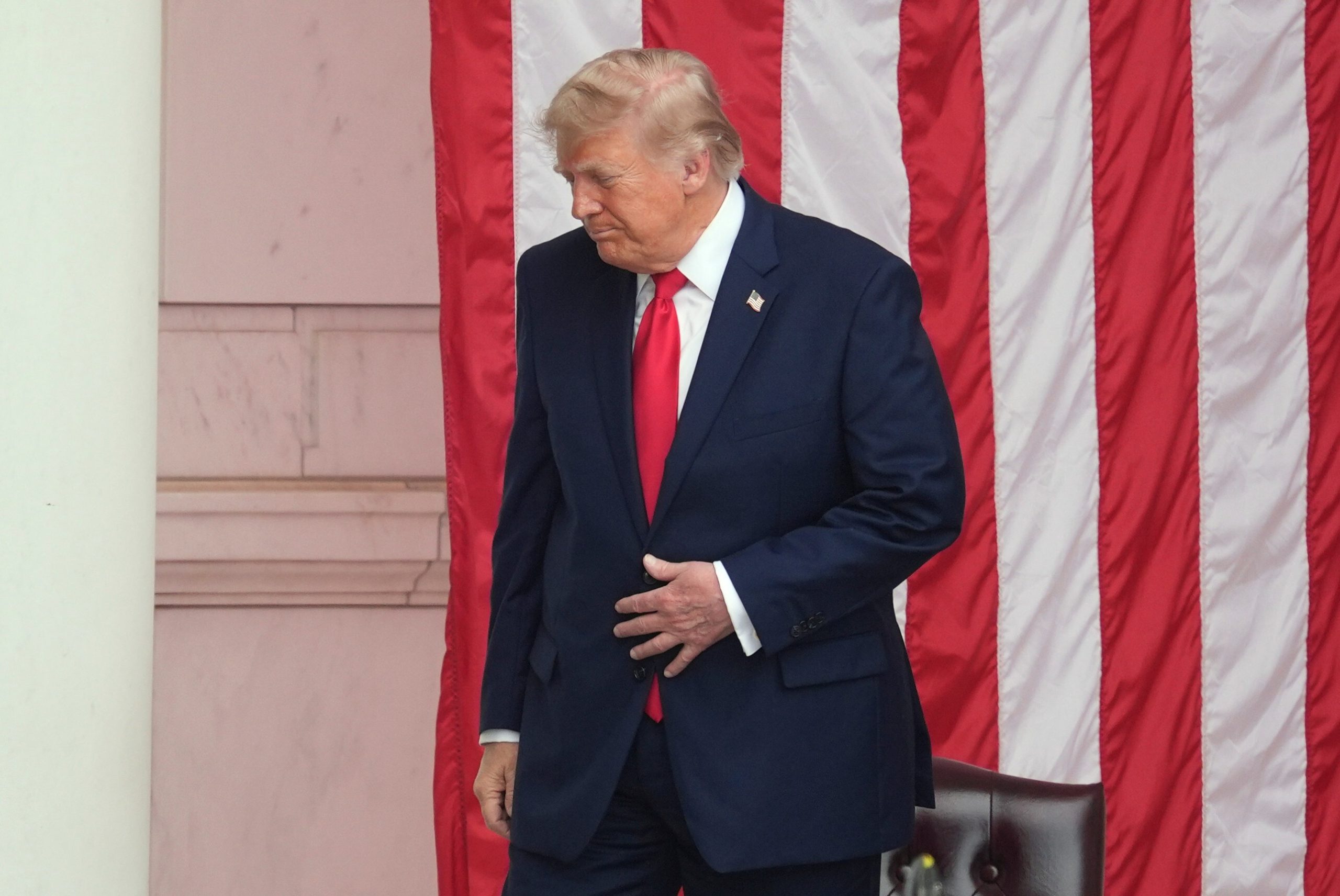
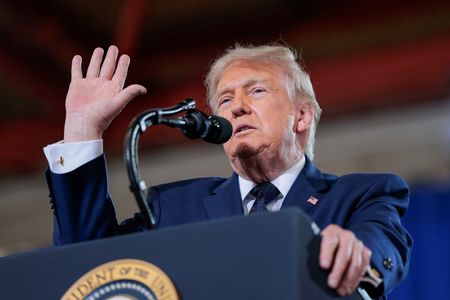
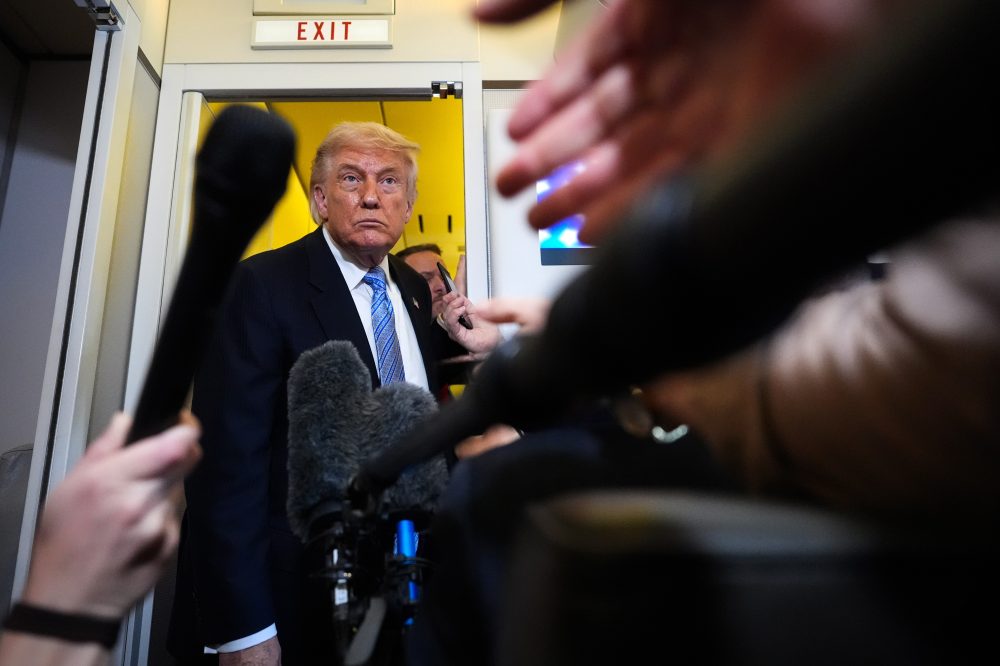
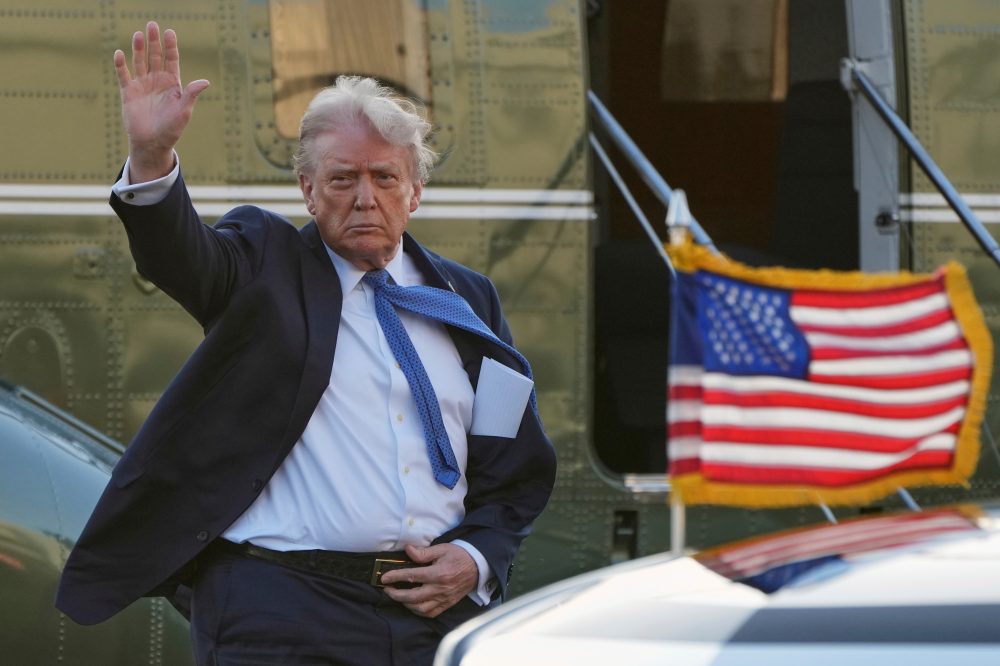
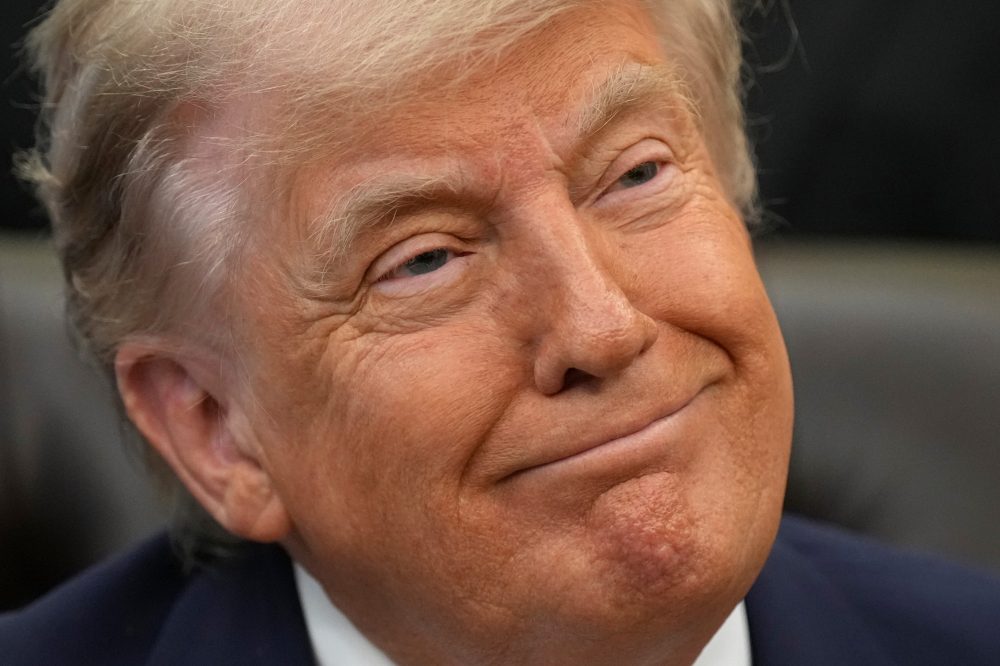
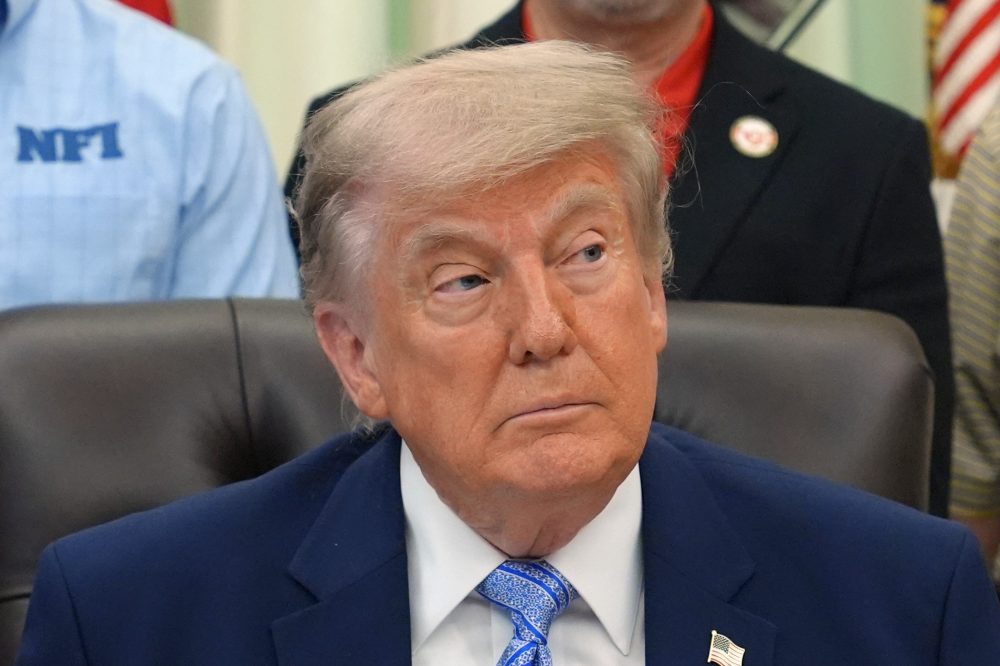
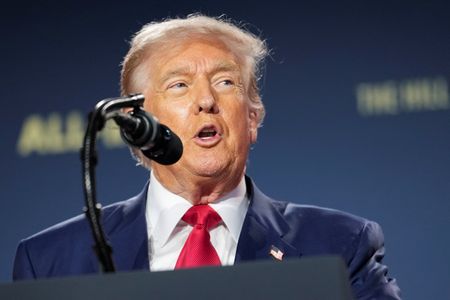
The White House has announced that the president will undergo what officials describe as a standard yearly physical examination, coming seven months after his previous visit to Walter Reed medical facility.
Administration officials are highlighting the president’s “excellent health” as ongoing discussions continue regarding the medical realities facing the oldest person ever to be inaugurated as president.
The upcoming medical evaluation is being characterized by the White House as part of routine annual health monitoring procedures.
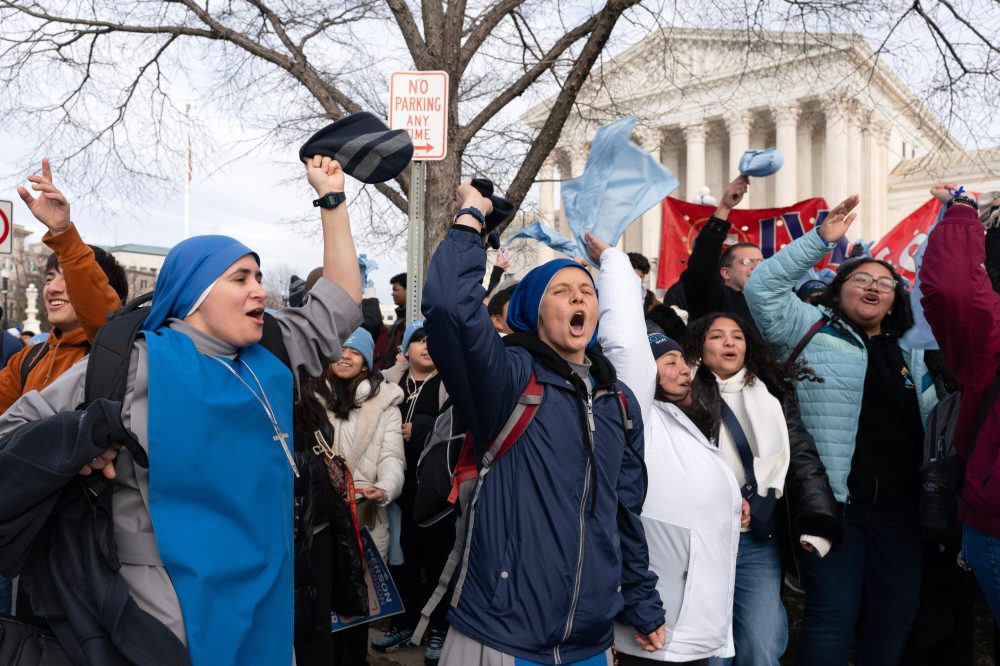
Advocacy groups supporting LGBT rights have withdrawn their court challenge against Idaho legislation governing bathroom access in public educational facilities. The legal action sought to strike down the law that prohibits males from entering female restrooms within the state’s public school system. The legislation extends beyond bathrooms to include protections for locker rooms, shower facilities, and overnight student accommodations across all grade levels from kindergarten through high school. Multiple states across the nation are enacting comparable restrictions, with many also implementing prohibitions on males participating in female athletic competitions at both public school and university levels.
President Donald Trump announced Monday that future negotiations with Iran must be tied to expanding membership in the Abraham Accords, the diplomatic framework for normalizing relationships with Israel that his first administration established.
Through a social media message, Trump indicated that discussions are moving forward positively but emphasized that any final deal depends on broader participation in the peace agreements initially created in 2020.
The president identified Saudi Arabia and Qatar as nations that should join right away, with Pakistan, Turkey, Egypt and Jordan following suit. The original signatories, Bahrain and the United Arab Emirates, became founding members in 2020.
Trump stated that “after all the work done by the United States to try and pull this very complex puzzle together, it should be mandatory that all of these Countries, at a minimum, simultaneously, sign onto the Abraham Accords.”
The president revealed he discussed the Abraham Accords strategy with other leaders during weekend negotiations on Saturday.
While Trump indicated he might allow “one or two” nations to opt out, he expects most to participate willingly. Egypt and Jordan maintain existing diplomatic recognition of Israel through established peace agreements.
The timeline and structure for completing any Iranian agreement remains uncertain, as does how Abraham Accords participation would influence such negotiations. Trump hinted that Iran itself might eventually become a signatory if discussions succeed.
The accords represent a collection of diplomatic, economic and security partnerships developed through American mediation during Trump’s initial presidency, starting with Israel, the United Arab Emirates and Bahrain, then expanding to include Sudan, Morocco, and most recently, Kazakhstan.
The agreements were designed to foster regional cooperation across the Middle East and North Africa, with the administration positioning them as stepping stones toward comprehensive Israeli diplomatic relations.
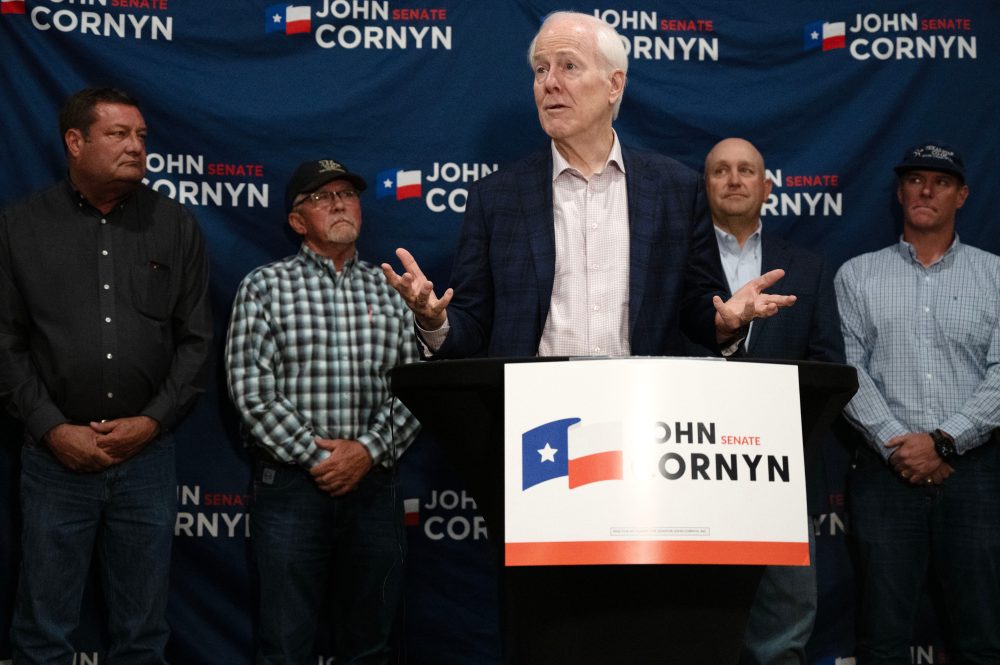
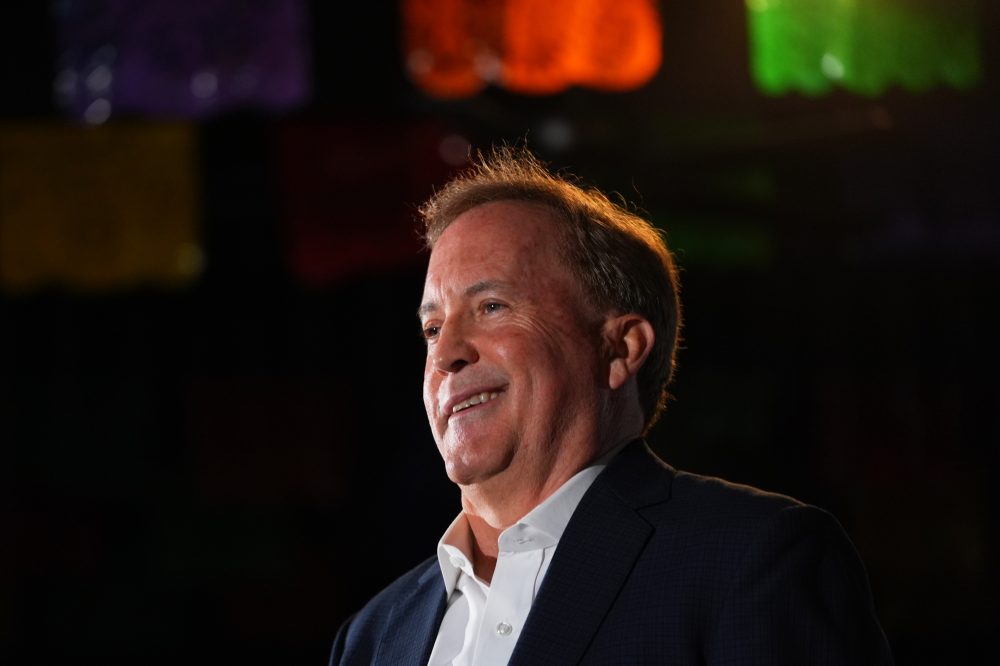
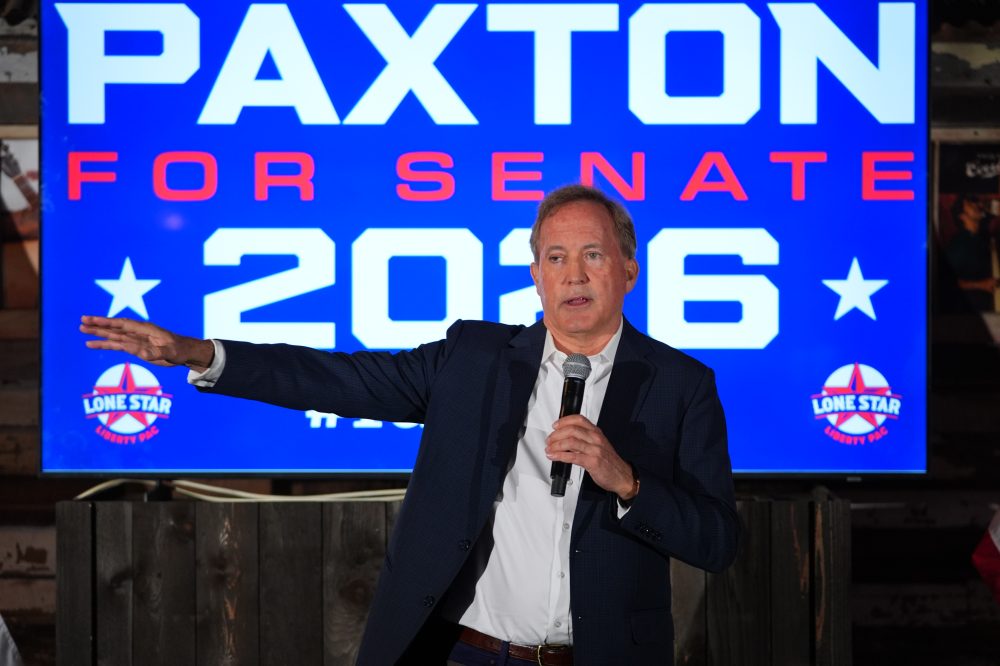
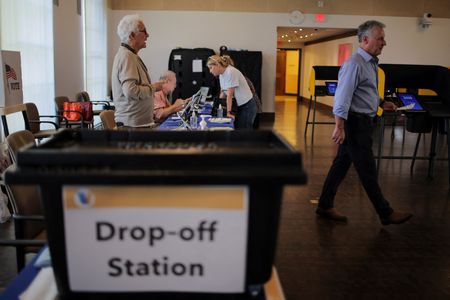
Texas Republican voters will cast ballots Tuesday in a high-stakes Senate primary runoff that has drawn national attention as the latest test of former President Trump’s influence within the GOP.
The runoff features U.S. Sen. John Cornyn, who led the initial March 3 primary, facing off against state Attorney General Ken Paxton, who finished second but secured Trump’s backing on May 19.
Beyond the Senate race, voters will also decide primary runoffs in over a dozen congressional districts, along with state races for lieutenant governor, attorney general and other offices.
Cornyn, seeking his fifth term, was forced into Tuesday’s one-on-one contest after two GOP rivals prevented him from securing a majority in the initial primary. The matchup gives Trump another chance to remove incumbents he considers insufficiently supportive of his leadership and policies.
The outcome will determine who faces Democratic state Rep. James Talarico in November’s general election, as Democrats express growing confidence about their prospects in the traditionally red state while working to regain Senate control.
Trump’s endorsement of Paxton noted that Cornyn “was not supportive of me when times were tough,” though the former president’s statement was less harsh than his recent criticisms of Republican incumbents in other states. Cornyn had been critical of Trump before the president’s 2024 campaign launch.
Geographic voting patterns from the March primary suggest Trump’s strongest counties could prove decisive. While many counties where Trump won 80% or more of the 2024 vote are rural with small populations, they collectively represented about one-fifth of GOP primary voters. Paxton outperformed Cornyn 45% to 40% in these areas, while Cornyn did better statewide elsewhere.
In counties where Trump received 50% to 80% support, Cornyn earned roughly 42% of votes, narrowly beating Paxton by one percentage point. Republican primary voters in the 12 counties carried by Democrat Kamala Harris in 2024 favored Cornyn 44% to 40%. These Harris counties accounted for 25% of total primary votes, exceeding the share from Trump’s strongest areas.
Historical data shows only two Texas U.S. senators have lost primaries in the past century.
Congressional redistricting in 2025, conducted at Trump’s encouragement to help Republicans maintain House control, created several notable primary runoffs. Democratic U.S. Reps. Christian Menefee and Al Green will compete in the redrawn 18th Congressional District, while Democratic U.S. Rep. Julie Johnson faces former Democratic U.S. Rep. Colin Allred in the new 33rd Congressional District.
Polling locations close at 7 p.m. local time across the state. Most polls operate on Central time and close at 8 p.m. ET, while western Texas polls on Mountain time close at 9 p.m. ET.
The Associated Press will report vote totals and call winners in Republican primary runoffs for U.S. Senate, U.S. House, railroad commissioner, Court of Criminal Appeals, and state legislative seats, plus Democratic primary runoffs for U.S. House, lieutenant governor, attorney general, state Board of Education and state House races.
Voting rules allow residents who skipped the March 3 primary to participate in either party’s runoff. Those who voted in a party primary may only vote in that same party’s runoff, while non-partisan primary voters can choose either party’s runoff.
Texas had nearly 19 million registered voters as of the March primary, when approximately 2.2 million Republican and 2.3 million Democratic ballots were cast.
The 2022 Republican primary for Texas Attorney General drew about 1.9 million voters initially, dropping to roughly 932,000 for the runoff. Early voting comprised about 63% of March’s Republican primary total.
As of Thursday, approximately 621,000 Republican and 262,000 Democratic primary ballots had already been submitted for Tuesday’s election.
Counties typically release complete or nearly complete early and absentee voting results in their first update before reporting Election Day totals.
March’s Senate primary results began at 8 p.m. ET when most polls closed, reaching 75% counted by 11:39 p.m. ET and continuing until about 5:58 a.m. ET with roughly 98% tabulated.
The Associated Press declares winners only when no possible scenario allows trailing candidates to overcome their deficit. For uncalled races, the AP continues covering developments like candidate concessions while clearly noting no winner has been declared.
Texas mandates automatic recounts solely for tie votes. Losing candidates may request and fund recounts when margins fall below 10% of the winner’s total. The AP may call races subject to potential recounts if leads appear too large for recounts or legal challenges to alter outcomes.
Tuesday’s results will leave 161 days until the 2026 midterm elections.
Federal prosecutors have once more petitioned a court to remove a legal barrier blocking President Donald Trump’s ballroom construction project, citing Saturday’s White House shooting as evidence of pressing security needs.
In court documents submitted Sunday spanning five pages, the Justice Department argued the weekend incident demonstrates the urgent requirement for “top level, state of the art security at the White House, including the ballroom,” describing the project as essential for national security purposes. The filing also requests dismissal of the entire legal challenge to the construction.
This marks the second time the DOJ has sought to have a federal judge dismiss the ballroom lawsuit, previously making a similar request following a thwarted attack during the White House Correspondents’ Association dinner in April.
The legal challenge originates from the National Trust for Historic Preservation, a congressionally chartered nonprofit organization. The group indicated it would continue pursuing its lawsuit despite the Justice Department’s April request to abandon the case following that month’s security incident.
According to the Secret Service, the individual who opened fire at a White House checkpoint Saturday was struck by officers and later died at a hospital Saturday evening.
PLANO, Texas (AP) — Texas voters won’t catch much of the Republican U.S. Senate hopefuls in person on Monday. However, avoiding television and other screens is another story entirely.
Neither Sen. John Cornyn nor state Attorney General Ken Paxton had any public campaign appearances on their calendars for the closing day of their extended battle lasting more than a year for the GOP nomination. Their competition for Tuesday’s runoff election persists as it has for months — fierce and relentless — through advertisements exceeding $109 million, with the majority coming from Cornyn’s campaign.
Cornyn has planned to host his yearly, non-campaign gathering in San Antonio honoring high school students who will attend the country’s service academies. The incumbent senator pursuing a fifth term conducted his final public campaign appearance in Corpus Christi on Friday, before Tuesday’s election.
Paxton concluded his campaign with events Thursday in the Austin region and San Antonio, choosing to allow his campaign and a super PAC to promote his central campaign theme: President Donald Trump’s endorsement of him on May 19.
Trump’s backing and simultaneous rejection of Cornyn, who has maintained a strained public connection with the president, occurred during the second day of early voting, which concluded Friday.
While both candidates remained out of public view during the weekend, Trump renewed his backing for Paxton on Sunday, while criticizing Cornyn as inadequately faithful to him.
Paxton, Trump wrote on social media, “was also very loyal to your favorite President, ME,” while describing Cornyn as “VERY disloyal to me.” This marked Trump’s harshest criticism of Cornyn, who had questioned his 2024 political comeback prospects, and mirrored the president’s criticism of Louisiana Sen. Bill Cassidy before his defeat in the May 15 GOP Senate primary.
After Trump’s demand for payback, Republican voters in Indiana and Kentucky have similarly selected GOP primary opponents over sitting Republican officials who have opposed the president or his policies.
For an election anticipated to attract only a small portion of Texas’ 18.7 million registered voters, both candidates’ campaigns and allied organizations continued flooding all Texans with advertisements, though Cornyn’s supporters spent more than Paxton’s.
“It’s just a slug fest, with the campaigns and third-party groups slugging it out,” said Wayne Hamilton, a former executive director of the Texas Republican Party.
Cornyn’s campaign combined with allied super PACs have significantly outspent pro-Paxton organizations throughout the past year, by nearly nine-to-one. However, this disparity has narrowed as the runoff has drawn closer. During the campaign’s final week, combined pro-Cornyn advertising expenditures were less than double Paxton’s group spending.
Cornyn’s network maintained advertisements targeting Paxton regarding ethical and personal issues that have followed him with minimal impact during the campaign. Cornyn’s campaign also revived an advertisement highlighting his record of supporting Trump’s legislative priorities in the Senate.
Paxton’s campaign and supporting organizations shifted midweek to exclusively running advertisements featuring Trump’s endorsement, although Paxton’s main super PAC, Lone Star Liberty Fund, started broadcasting one during the weekend designed to question state Rep. James Talarico, the Texas Democratic Senate nominee.
DALLAS (AP) — Following six years in the U.S. House and two failed Senate bids, Colin Allred says he regularly encounters voters who believe politicians are simply seeking personal financial gain in Washington.
“‘What about the stock trading in Congress? What about people getting rich in Congress?’” Allred reports hearing from constituents frequently. “And I have to say to them, you’re absolutely right about that, too. We need to be better.”
Allred is competing against Rep. Julie Johnson in Tuesday’s Democratic runoff for a Dallas-area House seat, joining numerous candidates attempting to tap into public frustration regarding congressional stock trading. Allred has criticized Johnson for transactions involving firms such as Palantir, a data analytics company connected to President Donald Trump’s administration.
Johnson explained that a financial manager handled her transactions and accused Allred of being “only out for himself.” She referenced financial disclosures showing Allred’s wealth nearly doubled while serving in Congress, though Allred maintained his assets were placed in a blind trust and the increase stemmed from his wife’s earnings as a law firm partner.
“To be clear, the sum total I made on that trade was only $90,” Johnson stated regarding her Palantir stock. “My opponent is trying to make it seem like it was hundreds or thousands.”
This contentious race reflects wider Democratic Party disagreements about money’s influence in politics. Previously championed mainly by progressive activists and reform advocates, claims that political opponents are corrupt or controlled by special interests have become standard in Democratic primaries. This increased scrutiny of lawmakers’ personal finances comes as the party seeks to strengthen its anti-corruption messaging against Trump and develop a reform agenda should Democrats gain control in the midterms.
Trump ran on pledges to “drain the swamp,” exploiting Americans’ distrust of Washington’s political establishment. With his family now benefiting financially during his return to the White House, Democrats are working to reclaim advantage on an issue that could resonate with voters.
“The difficulty is that right now, no party has the mantle on anti-corruption,” explained Daniel Lobo-Lewis, a Washington political consultant. “Many voters outside of the beltway see both parties as corrupt, because they see all politicians as bought by the donors or by their own self-interest.”
Lobo-Lewis and Nico Agosto established the Political Integrity Project last year to monitor stock trading and corporate donations by Congress members.
The group requests candidates sign an “integrity pledge” promising to avoid stock trading or corporate donations while serving in Congress and commit not to become lobbyists after leaving office. Approximately 90 challengers and seven current lawmakers have signed the pledge, all Democrats.
“If we want to, in any way, start rebuilding trust in our political institutions, it starts with no-brainer changes like this that have an approval rating above and beyond any other issue you could imagine,” Lobo-Lewis stated.
Congress has not yet passed a stock trading prohibition for members, although insider trading remains illegal for legislators as it is for everyone else. Multiple proposals exist on Capitol Hill but none have advanced.
A bipartisan measure to prohibit congressional stock trading failed to progress this year despite Trump’s endorsement during his State of the Union address. Democrats continue disagreeing over alleged loopholes in their competing proposals.
A competitive Democratic-leaning Utah congressional race has included attacks on candidates’ personal wealth. State Sen. Nate Blouin criticized his primary opponent, former Rep. Ben McAdams, for owning equity in a Utah data center company, and attacked other candidates for previous investments and employment.
McAdams said the equity worth several thousand dollars represented payment for previous contract work his government consulting firm completed while he was a private citizen. His campaign defended the data center project by noting it would use no water and operate on clean energy.
A McAdams spokesperson also alleged Blouin “is currently hiding his corporate donations” by removing them from campaign disclosure reports, which McAdams’ campaign claims “is not only deceitful, it breaks campaign finance law.”
In an interview, Blouin denied breaking the law and explained he removed the donations because he returned the money to each donor.
“It was actually quite uncomfortable to return some of those,” Blouin said, because some firms included local businesses and clean energy companies. “But there is a perception that campaign contributions from lobbyists and companies influence votes, and I think there is some truth to that.”
In a New York City congressional district encompassing both Wall Street and the Democratic Socialists of America’s headquarters, the city’s former comptroller, Brad Lander, has accused Rep. Dan Goldman of attempting to purchase another term by using personal wealth to match campaign contributions. Goldman, an heir to the Levi Strauss family fortune, says he placed all assets in a blind trust after taking office in 2023.
A Goldman spokesperson said Lander is “running a deceitful campaign based on absurd lies that Dan is beholden to special interests” and that Goldman has raised more campaign funds than Lander “without taking a dime of corporate PAC money.” Goldman has invested personal money in the race, the spokesperson said, “to ensure that the NY-10 voters can be sure that he is beholden only to them and his principles.”
Lander said Goldman’s spending is “not illegal, but it is certainly anti-democratic when a quarter-billionaire like Dan Goldman not only dumps millions of his own inherited wealth into his elections but also solicits money from the same forces who are rigging the economy and worsening the affordability crisis.”
Even lawmakers who support congressional stock trading bans are facing criticism.
Democratic Rep. Brad Sherman of California confronts multiple primary challengers who have criticized the congressman for owning stocks while serving in Congress. Sherman does not trade individual stocks and supports a trading ban.
“I only own three individual stocks which I inherited from my mother when she passed away, which were originally acquired by my grandmother,” Sherman explained. “I have never sold them because I made a promise to my constituents that I would not buy and sell individual stocks.”
One of Sherman’s primary challengers is Jake Levine, a former climate adviser to President Joe Biden, who signed the Political Integrity Project pledge. However, Sherman said Levine “refuses to disclose key elements of his $18 million stock portfolio, and actively bought and sold stocks while serving on the National Security Council.” Levine has stated he cannot disclose the portfolio because his family manages it and he has no oversight.
In the campaign to replace former House Speaker Nancy Pelosi, California State Sen. Scott Wiener has criticized his progressive opponent, Saikat Chakrabarti, regarding his personal wealth. Chakrabarti is a former software engineer who earned millions as an early Stripe employee. He later became Rep. Alexandria Ocasio-Cortez’s first chief of staff.
Wiener said Chakrabarti “has enormous investments” and “is trying to buy this seat” while “spreading bogus conspiracy theories” with his wealth. He criticized Chakrabarti for not revealing the past decade of stock trades.
“If you’re making a ban on stock trades a central part of your campaign — as Saikat is doing, running around saying that everyone under the sun is corrupt — how about you tell the voters about your own stock trading history,” Wiener said.
Chakrabarti responded that his wealth as a private citizen is irrelevant to his potential service in office and that he would place all assets in a blind trust if elected. He criticized Wiener for receiving support from super PACs funded by AI firm Anthropic and other major corporations.
“This is all part of a larger problem, which is just the whole idea of corruption in our politics,” Chakrabarti said. “If you’re in Congress, you sit on committees that oversee a lot of these industries, and it’s unethical to be using that insider information, that knowledge to make stock trades. But that doesn’t apply to a private citizen.”
WASHINGTON – President Donald Trump no longer has former Federal Reserve Chair Jerome Powell to blame for economic woes like rising mortgage rates and sluggish growth.
With Kevin Warsh now serving as the nation’s top central banker – cementing Trump’s control over key economic policy positions – the political calculus has changed completely. Unlike Powell, whom Trump claimed was forced upon him by advisers including former Treasury Secretary Stephen Mnuchin during his first term, Warsh represents Trump’s personal choice, making the president accountable for the outcomes.
Trump underscored this partnership during Warsh’s White House swearing-in ceremony Friday, attended by cabinet members, Supreme Court justices and senior advisers in a celebratory setting. The president told Warsh to “do your own thing and do a great job.”
“Kevin understands that when the economy is booming that is a good thing…we want it to boom…We don’t want to see it stifled,” Trump said.
MIDTERM ELECTIONS AT RISK
Despite winning reelection on promises to reduce costs and tackle “affordability” challenges for American families, Trump’s economic approval ratings have plummeted.
Consumer sentiment data released approximately 90 minutes before Warsh’s ceremony revealed widespread pessimism nationwide. Economic confidence among independents – crucial voters in the approaching midterm congressional races – and even Republicans dropped to the lowest point of Trump’s second presidency.
Thirty-year mortgage rates have climbed back above 6.5%, reaching a nine-month peak and continuing to burden a struggling housing sector. Overall prices have kept rising during Trump’s tenure, contradicting campaign promises of immediate reductions from “day one” of his presidency. Since March 2025, the inflation measure the Fed monitors for its 2% goal has jumped from 2.3% annually to 3.5%.
Average gasoline prices reached $4.55 per gallon Friday, compared to under $3 before Trump initiated strikes against Iran in late February.
How Warsh’s early performance as Fed chief might influence Trump’s Republican Party’s midterm chances remains uncertain and potentially problematic.
Rising inflation historically hurts incumbent parties when voters worry about finances, yet fighting it typically requires unpopular interest rate increases that Trump would certainly oppose.
Additionally, the Fed operates as a decentralized institution where new chairs must gradually establish authority while facing global scrutiny for signs of Trump’s interference.
“Powell was a really great scapegoat for Trump for issues that had nothing to do with Powell,” said Richard Stern, who studies economic policy at the conservative Advancing American Freedom think tank. Now “it’s going to be Trump’s economy…The big thing everybody was concerned with, the price increases, the affordability problem, all of that isn’t going to go away for years, many years, probably…And that’s independent of anything Trump is going to do or could do, and it’s independent of anything Warsh is going to do.”
Warsh, 56, brings experience as both a lawyer and financier who previously served as a Fed governor from 2006 to 2011. Since leaving, he has worked to position himself for a return as chair. His professional influences include legendary monetarist economist Milton Friedman and former Secretary of State George Shultz, while his partnership with Wall Street heavyweight Stanley Druckenmiller brought substantial wealth beyond his wife’s interest in the Estee Lauder cosmetics empire.
However, his personal and political connections to Trump ultimately secured his appointment, with the president expressing regret over choosing Powell instead of Warsh in 2017.
MANAGING A COMPLEX INSTITUTION
Powell has decided to remain as a Fed governor despite Trump’s previous attempts to undermine the Fed’s independence in setting monetary policy, creating another unusual element of Warsh’s early tenure leading the world’s most influential central bank.
While some Fed chairs have wielded significant power, including former leaders like Paul Volcker and Alan Greenspan, the U.S. central bank intentionally operates as an unwieldy system featuring a seven-member Board of Governors in Washington and 12 regional Fed bank presidents who all participate in policy discussions.
Recent years have seen chairs move toward building consensus. Warsh has indicated he prefers aggressive debate with more disagreement and readiness to potentially catch financial markets off-guard with policy changes, moving away from the forward guidance recently used to prepare the public.
Whether international investors welcome this approach remains questionable, but recent Fed meetings suggest his colleagues are prepared for the “family fight” Warsh said during confirmation hearings he enjoys.
April’s Fed meeting produced the most dissenting votes in over three decades, with meeting minutes showing most of Warsh’s new colleagues believe interest rates may need to increase – contrary to Trump’s recent expectations and what Warsh had previously argued for.
This divided group includes PhD economists with different technical expertise than Warsh, senior investment professionals with comparable market experience, and their former leader Powell. Among the six remaining governors, three were chosen by former President Joe Biden, including one, Lisa Cook, whom Trump is attempting to remove.
As they consider future policy directions, investors appear convinced that interest rates must rise given persistent inflation. Yields on long-term bonds that determine consumer borrowing costs are already climbing.
Delaware’s governor has directed that flags be displayed at half-staff across all state properties this Memorial Day to pay tribute to fallen military service members.
Governor Matt Meyer issued the order requiring flags at state buildings and facilities to be lowered beginning at sunrise on Monday, May 25, 2026, and kept at half-staff until noon. The directive follows the U.S. Flag Code guidelines for Memorial Day observance.
The flag order serves as a tribute to all military personnel who made the ultimate sacrifice while serving the United States.
A fatal shooting at a San Diego Islamic Center has intensified national discussions about political violence, bias crimes, and extremism in America – a country already rattled by antisemitic incidents, threats against government officials, the murder of conservative activist Charlie Kirk, and multiple attempts to harm President Donald Trump.
The San Diego incident on May 18, 2026, claimed three lives at the mosque, including security guard Amin Abdullah, who officials and community leaders say prevented a larger tragedy by confronting the assailants and activating security measures that protected children inside the building. The two assailants, reported as 17-year-old Cain Clark and 18-year-old Caleb Vazquez, subsequently died from what appeared to be self-inflicted gunshot wounds. Law enforcement officials are investigating the incident as a bias crime while examining evidence of internet-based radicalization and white supremacist beliefs.
This incident occurred less than twelve months after a string of attacks that have intensified worries about whether ideological and political violence is becoming more common, more visible, or simply harder to control in an age of fractured media landscapes, internet extremism, and eroding faith in institutions.
In May 2025, two Israeli Embassy personnel, Yaron Lischinsky and Sarah Milgrim, were fatally shot outside the Capital Jewish Museum in Washington, DC. The following month in Boulder, Colorado, an individual attacked participants in a demonstration calling for the release of Israeli hostages held in Gaza, wounding multiple people in what federal investigators classified as a targeted terrorist act and potential bias crime.
These incidents were followed in September 2025 by the murder of Charlie Kirk, founder of Turning Point USA and one of America’s most prominent conservative activists. Kirk was fatally shot while delivering remarks at Utah Valley University, in what Utah Gov. Spencer Cox described as a political assassination. Prosecutors subsequently filed aggravated murder charges against Tyler Robinson, stating that sentencing could be enhanced because Kirk was allegedly targeted for his political views.
American institutions faced additional pressure in April 2026, when Cole Tomas Allen was federally indicted on charges including attempted assassination of President Trump following an armed incident at the White House Correspondents’ Dinner in Washington. This episode came after the July 13, 2024, assassination attempt in Butler, Pennsylvania, where Trump sustained injuries, one rally participant died, and several others were wounded.
The accumulation of these incidents doesn’t indicate they stem from one organized movement. The motivations, ideological foundations, and operational methods vary. Some attacks have targeted Jewish individuals or Israelis. Others have focused on Muslims. Still others have involved politicians, public personalities, or government institutions. However, the repeated occurrence of violence across ideological and community boundaries has generated a broader sense of national insecurity.
John King, a technology strategist and former US government communications engineer who worked on mission-critical command-and-control communications systems supporting senior national leadership, explained that today’s climate results from multiple intersecting pressures, including diminishing institutional confidence, fragmented media environments, economic and cultural concerns, and the rapid pace at which digital platforms distribute information.
“What makes the current period unique is the interaction between technology and politics,” King told The Media Line. “Artificial intelligence, deepfakes, automated influence campaigns, and algorithmically amplified misinformation can accelerate polarization by making it more difficult for citizens to distinguish fact from manipulation. While political disagreement has always been part of American democracy, the velocity and scale of modern information systems can intensify tensions and shorten the time available for reflection and verification,” he explained.
These recent incidents also coincide with elevated levels of documented hostility toward religious minorities. Both Jewish and Muslim communities have reported increasing fear, threats, and attacks since the Gaza conflict began, while civil rights organizations have cautioned that bias crimes and hate incidents are increasingly connected to international conflicts, domestic political discourse, and online radicalization. These statistics also have methodological limitations: advocacy organizations track reported incidents and complaints, while official hate-crime statistics rely on law-enforcement reporting, which remains incomplete and voluntary.
Joe Young, director of the Patterson School of Diplomacy at the University of Kentucky, believes the recent violence is concerning but should be viewed within historical perspective.
“These violent events are disturbing,” Young told The Media Line. “And I think connected to larger polarization processes in the country. With that said, the amount of violence we are witnessing is not as bad as the 1960s and 1860s. So not historically large numbers of events,” he noted.
This historical context is significant. America has experienced periods of far more sustained political violence, including the Civil War period, Reconstruction, the assassinations and racial violence of the 1960s, and previous waves of extremist activity. However, the current era is distinctive in how domestic anger is channeled through digital platforms, partisan identities, and global conflicts that are quickly incorporated into American public discourse.
King explained that antisemitic attacks, anti-Muslim violence, and politically motivated violence often stem from different ideologies and grievances, but can still function within a shared environment of polarization, distrust, and radicalization. He identified social media platforms as a crucial component of that environment because they can expose individuals to grievance-focused content that reinforces existing beliefs and separates them from alternative viewpoints.
“Whether the underlying ideology is political, religious, ethnic, or conspiratorial, the mechanisms of radicalization often follow similar patterns: the creation of in-group and out-group identities, the amplification of perceived threats, and the gradual dehumanization of others,” King stated.
Young made a comparable observation in more straightforward terms, explaining that perpetrators of political violence often identify an enemy responsible for their grievances.
“Most perpetrators of political violence identify some other for why their current situation is bad,” Young said. “For some people in the US, it could be Jews. For some, Muslims. Or maybe even ICE or members of the current administration. Unfortunately, there are lots of people in the country that someone blames for the challenges we face,” he added.
The Gaza conflict has become one of the most obvious examples of how international events can impact domestic tensions. The killing of the two Israeli Embassy staff members in Washington and the Boulder attack against a group supporting hostages demonstrated how Middle Eastern events can translate into violence against civilians or community members in America who have no direct connection to the conflict. Meanwhile, the San Diego mosque attack highlighted that Muslims are also victims of radicalized violence, particularly from far-right or white supremacist networks.
“Events in the Middle East can also have a direct impact on domestic tensions within the United States,” King said. “Conflicts involving Israel, Gaza, Iran, or other regional actors frequently generate strong emotional reactions that can spill into local communities far removed from the conflict itself. Unfortunately, this can increase hostility toward Jewish, Muslim, Arab, or other communities who have no connection to acts of violence overseas,” he explained.
King warned that the greater risk is that different forms of extremism can start to reinforce each other, with each incident deepening fear and mistrust and creating a cycle where one act of violence is used to justify another. For democratic societies, he said, the challenge is maintaining the distinction between legitimate political or religious disagreement and intimidation or violence.
Young also connected the Gaza conflict to radicalization, while distinguishing between different ideological sources of violence.
“The war in Gaza has certainly radicalized some on the left,” Young said. “We have seen attacks in the US and abroad on civilians unconnected to the war. It’s not clear why this mosque in particular was targeted in San Diego. But it seems the teens were flirting with far-right/Nazi propaganda,” he added.
The San Diego incident has attracted particular attention because of the alleged role of online environments. According to reporting based on law enforcement sources, the attackers connected online, left writings expressing hatred toward multiple groups, and referenced white supremacist and neo-Nazi concepts. The case fits a broader pattern where young attackers absorb ideological material, tactical inspiration, and performative models of violence from digital subcultures.
Young said the internet has made it simpler for isolated individuals to find each other, but he cautioned against characterizing online radicalization as a completely new phenomenon.
“In the San Diego case, these teens met online and planned their violence online,” Young said. “With that said, we saw similar violent events in the US before these online spaces existed. I think what’s different is that it is easier to find like-minded individuals. But as I said, it still happened before these online spaces, the internet, and social media,” he added.
King characterized the same issue as a matter of speed and scale, rather than direct causation. He said digital platforms accelerate the distribution of emotionally charged content and can immerse users in simplified narratives of heroes, villains, victims, and enemies. Most people exposed to such material never become violent, he said, but vulnerable individuals may be repeatedly exposed to extreme messaging, conspiracy theories, dehumanizing language, or calls for retaliation.
“The danger is not that technology directly causes violence, but that it can accelerate radicalization, reinforce grievances, and lower the barriers between online hostility and real-world action,” King said.
The attacks on Trump and the murder of Kirk have added another dimension to the debate because they directly target political leadership and political expression. For many Americans, Kirk’s assassination represented a breakdown in the boundary between political hostility and physical violence. But Young argued that assassination attempts against presidents and public figures, however disturbing, are not without precedent in American history.
“I don’t think these are particularly unique or different from the past,” Young said. “These types of assassinations are horrible, but almost every modern us president has been a target, and some have been killed. Four US presidents have been killed in office, and Reagan, Trump, and Teddy Roosevelt were shot and injured but survived,” he added.
This perspective doesn’t minimize the danger, but it complicates the narrative that America is entering a completely unprecedented era. What appears different is not only the violence itself, but the surrounding ecosystem: the immediate circulation of images, conspiracies, and accusations; the use of attacks to mobilize supporters; and the speed with which one incident becomes absorbed into broader partisan narratives.
The institutional challenge is therefore dual. Authorities must prevent attacks by lone actors or small cells that may radicalize quickly and leave few traditional warning signs. At the same time, political leaders, media platforms, schools, religious institutions, and civil society organizations must address the conditions that make violence appear legitimate to a small minority.
King said American institutions have become more aware of threats linked to political violence, hate crimes, and domestic extremism, and that attacks are sometimes disrupted before they occur. But he also warned that traditional security models were largely designed to identify organized groups and coordinated plots, while modern radicalization can develop quickly, often online, and involve individuals with little or no connection to formal extremist organizations.
“The challenge going forward is developing approaches that address not only physical security threats but also the social and technological conditions that can contribute to extremism,” King said. “The long-term objective is not merely to stop individual attacks, but to strengthen societal resilience before violence becomes an option for vulnerable individuals,” he added.
The question of political responsibility is more divisive. Both experts argued that rhetoric from leaders matters, though Young placed particular responsibility on the current president.
“Elites could certainly tone down the rhetoric,” Young said. “Political opponents aren’t enemies. We are all Americans. We all want what’s best for the country, but offer different ways to get there. Unfortunately, our current president is the one who could be the most effective at lowering the political temperature but has not shown a willingness or ability to do so,” he added.
King, without focusing on one political figure, said public language can either contain or intensify a volatile environment.
“Political restraint from public figures is also urgent,” King said. “Leaders cannot control every unstable individual, but they can either lower the temperature or inflame it. Language that dehumanizes opponents, religious communities, immigrants, or political adversaries creates a permissive environment for intimidation and violence. Responsible leadership requires making clear that disagreement is legitimate, but violence and collective blame are not,” he added.
The policy responses are difficult because they touch some of the most polarized areas of American life: guns, speech, policing, online surveillance, hate-crime enforcement, and civil liberties.
King argued that immediate security measures are necessary, but insufficient without longer-term social repair.
“Realistic solutions need to operate on several levels at the same time,” King said. “There is no single policy lever that will solve political violence, antisemitism, anti-Muslim hatred, or extremist radicalization,” he added.
In the near term, King said stronger security for vulnerable religious and community institutions is essential, including better threat reporting channels, closer coordination with law enforcement and practical security support for synagogues, mosques, schools and public venues. But he also emphasized that such measures must remain within constitutional limits and respect free speech and civil liberties.
He pointed to education and community engagement as longer-term tools to rebuild trust before the next crisis.
“Once violence happens, everyone becomes reactive,” King said. “The harder but more effective work is creating relationships in advance so that communities can respond together rather than retreat into fear and suspicion,” he added.
King also identified gun policy as one of the most politically difficult issues in any discussion of violence prevention, given the reality of widespread firearm access and deep constitutional, cultural and partisan divisions in America. Measures such as stronger background checks, red-flag laws and restrictions on access for individuals who present credible threats may be practical from a prevention standpoint, he said, but remain politically difficult.
America is not witnessing political violence on the scale of its most violent historical periods. But the current wave has exposed a dangerous convergence: heavily armed individuals, online radicalization, global conflicts imported into domestic identity politics, and public rhetoric that often treats opponents not as rivals but as existential threats.
The San Diego mosque shooting, the antisemitic attacks connected to the Israel-Gaza war, the assassination of Kirk and the attempted attacks on Trump do not form one single story. They are different events with different victims, ideologies and perpetrators. But together, they point to the same national vulnerability: a society struggling to maintain democratic disagreement without allowing grievance, identity and political fear to become a pathway to violence.
WASHINGTON — President Donald Trump’s developing agreement to conclude the Iran conflict is facing sharp pushback from Republican colleagues who support tougher measures against Tehran’s leadership and worry about missing a chance to weaken a long-standing Middle Eastern adversary.
The agreement that the Republican president described as “largely negotiated” has prompted various legislators, former administration officials, and conservative policy experts to publicly question whether the currently understood terms would make the entire conflict meaningless.
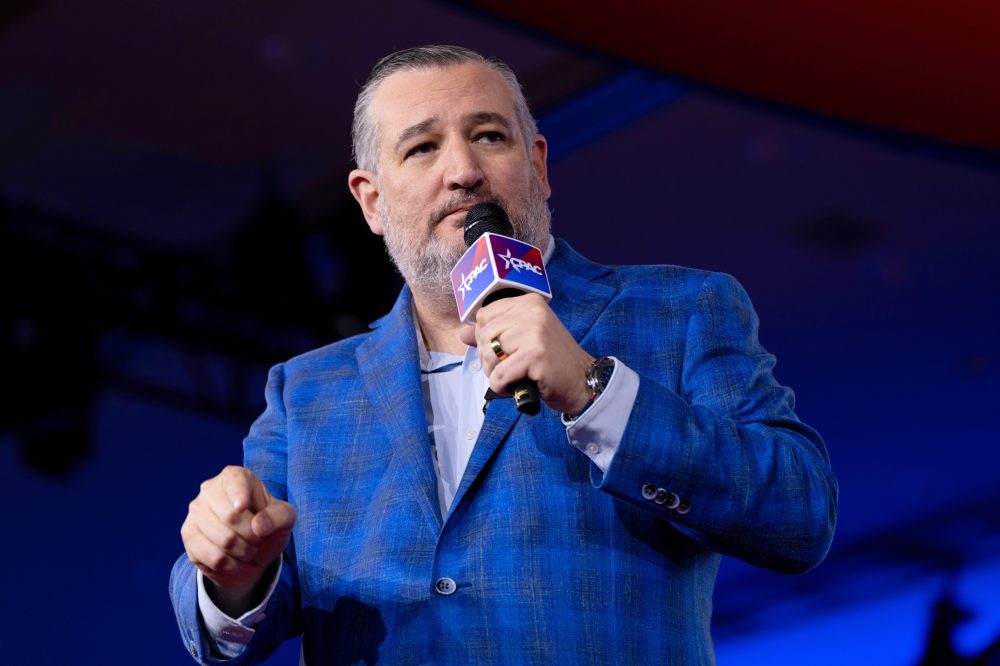
Sen. Ted Cruz, R-Texas, characterized the president’s choice to attack Iran as the “most consequential” decision of his second term and urged against easing pressure now.
“If the result of all that is to be an Iranian regime — still run by Islamists who chant ‘death to America’ — now receiving billions of dollars, being able to enrich uranium & develop nuclear weapons, and having effective control over the Strait of Hormuz, then that outcome would be a disastrous mistake,” Cruz posted Saturday on the social media platform X. His comments came after Trump’s briefing following conversations with Israeli leadership and other regional U.S. partners.
Sen. Lindsey Graham, R-S.C., who maintains close ties with Trump, criticized any agreement that would leave Iran viewed as a regional powerhouse while maintaining its capacity to target Gulf oil facilities.
Sen. Roger Wicker, chairman of the Senate Armed Services Committee, challenged the wisdom of a suggested 60-day ceasefire, calling it a “disaster.”
“Everything accomplished by Operation Epic Fury would be for naught!” stated Wicker, R-Miss.
Trump, who frequently emphasizes his deal-making skills and dislikes appearing disadvantaged in negotiations, rejected criticism of an agreement he said was not “even fully negotiated yet.”
“So don’t listen to the losers, who are critical about something they know nothing about,” he posted on his social media platform.
Trump described the agreement he and his team are developing as “THE EXACT OPPOSITE” of a nuclear deal Iran signed during the Democratic Obama administration. Trump withdrew from that arrangement and has been working to establish a replacement.
“Both sides must take their time and get it right. There can be no mistakes!” Trump stated.
He noted that a U.S. military blockade of Iranian ports would continue “in full force and effect until an agreement is reached, certified, and signed.”
Trump also received backing from some Capitol Hill members.
GOP Sen. Rand Paul of Kentucky, frequently at odds with the president, supported the White House’s strategy.
“War virtually always ends with negotiations,” Paul posted on X. “Critics of President Trump’s peace negotiations should give President Trump the space to find an American First solution.”
According to the framework, the conflict would conclude with Iran reopening the strait and surrendering its highly enriched uranium reserves, with specific details and schedules to be determined during a subsequent 60-day period, regional officials informed The Associated Press on Sunday.
Polling indicates the conflict, which started when the United States and Israel launched attacks on Iran on Feb. 28, lacks public support and has cost U.S. taxpayers a minimum of $29 billion as of this month. Thirteen military personnel have died during the operation.
Trump originally predicted the conflict would end within four to six weeks, but the standoff persists. Iran’s blockade of the strait, which handles approximately 20% of worldwide energy shipments, has disrupted the global economy and driven up gasoline and commodity prices.
Mike Pompeo, one of Trump’s first-term secretaries of state, claimed on Saturday that the developing agreement appeared similar to the Obama-era deal from which Trump withdrew.
“Not remotely America First,” Pompeo posted on X, triggering a profanity-filled response from Steven Cheung, the White House director of communications.
John Bolton, a national security adviser during the first term who has become a presidential critic, suggested the emerging plan details appeared to benefit the Iranian government.
“If news reports about the impending Iran deal are correct, the ayatollahs will have won a significant victory,” Bolton wrote Sunday on X. “They will be back on the road to nuclear weapons, supporting global terrorism and repressing their own people.”
Secretary of State Marco Rubio responded on Sunday during a diplomatic visit to India, telling reporters at a press briefing that no president has taken a firmer stance against Iran than Trump.
“His commitment to that principle that they’ll never have a nuclear weapon shouldn’t be questioned by anybody,” Rubio stated. “And the idea that somehow this president, given everything he’s already proven he’s willing to do, is going to somehow agree to a deal that ultimately winds up putting Iran in a stronger position when it comes to nuclear ambitions is absurd. That’s just not going to happen.”
Republican Rep. Thomas Massie of Kentucky, a Trump opponent who had supported legislation to limit the president’s war powers against Iran, told NBC’s “Meet the Press” on Sunday that while the terms remain unclear, “if Lindsey Graham and Ted Cuz are crashing out last night, I’d say it’s probably a pretty good deal.”
Massie will depart Congress in January after angering Trump and losing his GOP primary last week to a Trump-endorsed opponent.
Congressional members appeared on Sunday television programs with starkly contrasting opinions about a potential agreement to resolve the Iran conflict, with party affiliation largely determining their positions on the deal reportedly being negotiated by President Donald Trump.
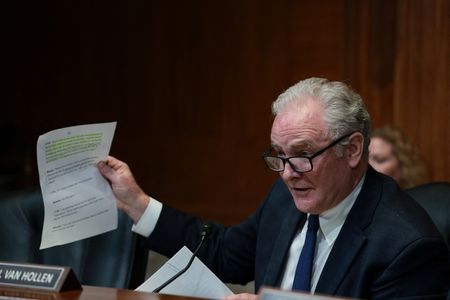
Maryland Democratic Senator Chris Van Hollen, who serves on the Senate Foreign Relations Committee, criticized the reported framework as resembling nothing more than “the pre-war status quo” with Iran. Speaking on “Fox News Sunday,” Van Hollen stated: “I think this was a blunder. When you’re digging a hole, you should stop digging, and that sounds like maybe what we’re doing finally.”
New York Republican Representative Mike Lawler, a member of the House Foreign Affairs Committee, offered praise for Trump’s negotiation strategy with Iran. During his appearance on CBS’s “Face the Nation,” Lawler commented: “I think on the whole what the administration has been able to do for the first time in 47 years is force the remnants of this regime into a negotiation, a real negotiation.”
New Jersey Democratic Senator Cory Booker delivered harsh criticism of Trump’s handling of the negotiations during CNN’s “State of the Union” program. Booker argued Trump was being “played as a fool” in negotiations, saying: “He’s got us in a situation that’s worse than it was before, a more extreme regime. (The) Strait of Hormuz now is a leveraging point for them. This weak nation has put America in a stalemate.”
Tennessee Republican Senator Bill Hagerty expressed confidence that any agreement would include “strict” conditions preventing Iran from developing nuclear weapons. On Fox News’s “Sunday Briefing,” Hagerty said: “I think they’ll be very enforceable. And remember … President Trump has used military force to basically annihilate the economic, technological, and military capacity of the Iranian regime. They’re in a fundamentally different place.”
North Carolina Republican Senator Thom Tillis, known for frequently criticizing Trump, questioned the administration’s apparent policy change on CNN’s “State of the Union.” Tillis noted: “We were told about 11 weeks ago, by (U.S. Defense Secretary Pete) Hegseth and the Department of Defense, that they had obliterated Iran’s defenses and it was just a matter of time before we had the nuclear material. Now we’re talking about a posture where we may accept the nuclear material remaining in Iran. How does that make sense at all?”
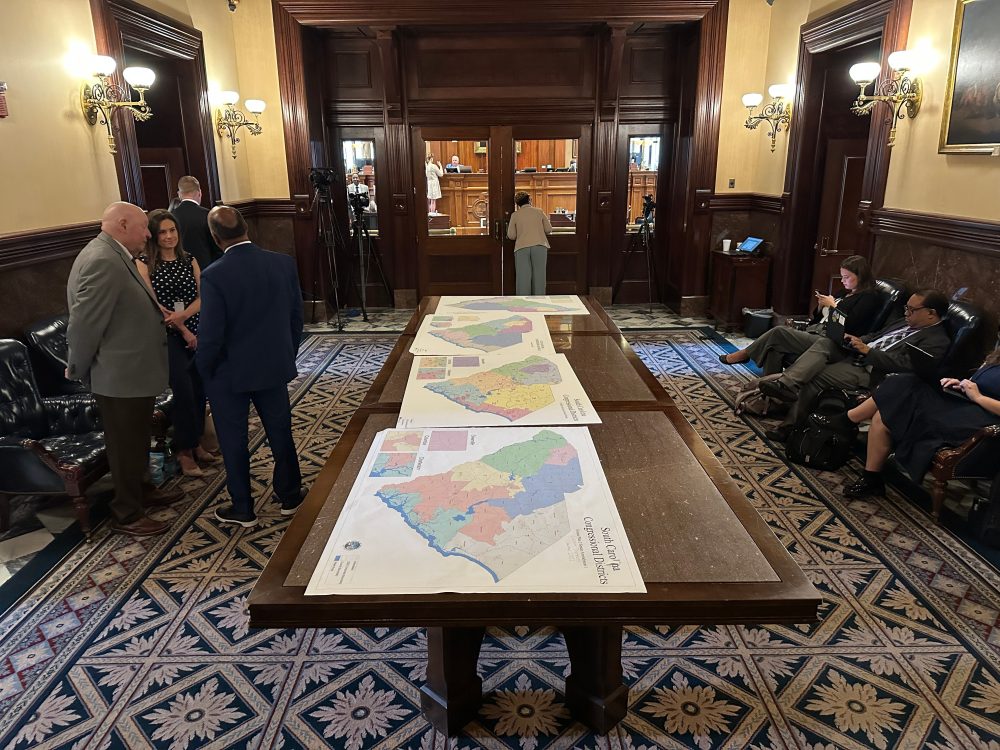
Democratic Party leaders are expected to trail Republicans by multiple seats in 2026 as both parties compete to redraw congressional district boundaries nationwide. While Democrats could close this gap by 2028, they must navigate complex legal obstacles that Republican officials don’t encounter.
The challenge stems from Democrats needing to work around restrictions — many they previously supported — that limit their ability to respond in kind to Republican redistricting efforts.
In states like Colorado, New Jersey, New York and Washington, independent redistricting commissions create district maps designed to avoid favoring either political party. Democratic officials would need voter approval to dismantle these widely supported commissions and replace their neutral maps with heavily partisan ones, matching Republican actions following President Donald Trump’s call last year for extensive redistricting in GOP-controlled states to help maintain his party’s House control.
Any procedural mistakes by Democrats could lead courts to overturn new maps. This occurred recently in Virginia when the state Supreme Court struck down voter-approved maps that would have created four additional competitive seats for Democrats. The court determined the Democratic-controlled legislature failed to follow proper procedures when placing the measure before voters.
“It’s going to be expensive, it’s going to be unpopular, and it’s going to be a challenge for them to do what they want,” said Adam Kincaid, executive director of the National Republican Redistricting Trust.
Despite recent redistricting setbacks, Democrats remain positioned to capture House control this year. The most significant blow came when the conservative U.S. Supreme Court majority weakened a crucial Voting Rights Act provision, enabling Republicans to quickly eliminate at least three majority-Black House districts in the South currently held by Democrats.
Political strategists from both parties anticipate Democratic victories in November consistent with historical patterns when the incumbent president’s party faces voter dissatisfaction during midterm elections. During Trump’s initial midterm in 2018, Democrats secured 40 additional House seats.
However, achieving a House majority in 2028 appears significantly more challenging for Democrats.
Presidential election cycles typically produce closer results than midterm contests. Following the recent Supreme Court ruling, Republicans could easily eliminate five or more majority-minority Democratic districts next year in states where maps were already finalized for 2026. They could potentially gain four additional seats through redistricting in Indiana, where some state legislators who resisted last year were defeated in Republican primaries, and in Kentucky and Kansas, where Democratic governors who blocked Republican maps will reach term limits.
The mapping pressure intensifies for Democrats seeking to improve their 2028 House prospects, as the party also aims to reclaim the Senate and White House that year. Only with unified control could they attempt to pass federal legislation banning partisan gerrymandering that might eliminate what could become a lasting Republican advantage.
Following the 2030 census, House seats will shift to states experiencing rapid population growth, primarily those under Republican control. These states could gain up to 10 seats, largely from Democratic strongholds like California and New York.
“Looking at the next census makes me all the more stressed to ban partisan gerrymandering at the federal level,” said John Bisogano, executive director of the National Democratic Redistricting Committee.
Republicans encounter some legal challenges in the redistricting battle.
In Florida, their redrawn congressional map depends on the conservative-majority state Supreme Court overturning the state’s constitutional prohibition on partisan gerrymandering.
However, Democrats face significantly more barriers and must execute multiple complicated political strategies.
Only Illinois and Oregon offer Democrats opportunities to create additional competitive seats without major impediments.
Across Colorado, New York and New Jersey, Democrats could achieve nearly double-digit House seat gains, but only by successfully navigating constitutional changes.
In Maryland, Democrats who declined to redraw their map this year are working to place a constitutional amendment on November’s ballot that would authorize eliminating the state’s only Republican House seat in 2028.
Democrats point out that their voters have supported abandoning the reform approach they once preferred, allowing their party to match redistricting efforts by Trump and fellow Republicans. The biggest victory occurred in California, where a ballot measure adopting a new map to gain up to five seats passed decisively last year. Virginia’s map passed more narrowly, but Democrats there remain committed to implementing the 10-1 map in 2028.
In Washington state, Democrats’ only opportunity to revise the constitution and redraw maps requires winning a two-thirds legislative majority in November, a difficult task. Because Democrats expect strong November performance, they’re also hoping to capture state legislative seats that would give them mapping control in states like Minnesota, Pennsylvania and Wisconsin.
Wisconsin Democratic Party Chair Devin Remiker has proposed new maps allowing Democrats to win up to six seats in a state where Republicans currently hold six of eight House districts. Such aggressive action is necessary, he argued, given Republican activities elsewhere.
“If we’ve learned anything, we’ve learned that when you know a knife fight is coming — bring a bazooka,” he said.
In other states, Democrats express confidence in voter support.
“People in New York are pretty fired up given what they’ve seen around the country,” said U.S. Rep. Joe Morelle, a New York Democrat who maintains close ties with the top House Democrat, Hakeem Jeffries, also from New York.
However, New York voters cannot join the redistricting battle until next year because the state constitution requires amendment through statewide voting to permit it. This can only occur after the Democratic-controlled Legislature votes twice across two years to place the question on the ballot.
Similarly, Colorado Democrats previously supported creating an independent commission to redraw district lines in their state. While many have reconsidered, they cannot act until voters remove the commission’s map this fall and authorize Democratic redistricting for 2028.
Their proposed initiative faces a state Supreme Court challenge. Even with ballot approval, it could encounter a competing Republican measure to redraw the map favoring conservative candidates.
“Republicans are stealing votes of Americans all across the country, and Colorado voters will say: ‘Hey, you can’t do that,’” said Curtis Hubbard, a spokesman for Democrats promoting Colorado redistricting.
Colorado represents the most prominent example of Democrats’ redistricting position reversal.
Republicans gained control of numerous state legislatures in the 2010 midterm election and used that power to redraw maps nationwide, providing them a U.S. House advantage. Democrats responded by supporting nonpartisan redistricting, a movement that peaked in 2018 when Colorado Democrats backed a measure establishing such a commission in their state.
Currently, both candidates seeking the party’s gubernatorial nomination support overriding the commission. Former Democratic President Barack Obama, who made redistricting reform a central platform element, has also changed his position, advocating for aggressive nationwide map redrawing.
Nicholas Stephanopolous, a Harvard law professor, said Democrats clearly view Trump’s redistricting push as an existential threat.
“I think they’re going to move heaven and earth to respond,” he said.
Speaking from the White House ballroom construction area, the president asked Americans dealing with high gas prices to remain patient while defending a project that opponents describe as self-serving.
“This is peanuts,” he stated on Tuesday, apparently referring to the economic harm caused by the Iran war. “I appreciate everybody putting up with it for a little while. It won’t be much longer.”
The remarks highlighted worries within his Republican Party that the wealthy president’s emphasis on the ballroom seems out of touch while Americans face challenges filling their gas tanks before November’s midterm elections.
A Reuters analysis of the president’s public statements reveals he has referenced the ballroom – through speeches, social media, or reporter interactions – no fewer than 40 times this year, with nine mentions in this month alone. In contrast, he brought it up 35 times throughout all of 2025.
He frequently begins promoting the ballroom unexpectedly, whether speaking with reporters aboard Air Force One, addressing Oval Office visitors, or posting on his Truth Social platform.
A White House official dismissed Democratic claims that the ballroom represents a self-serving project.
“This is about legacy, not vanity,” the official stated. “The president is deeply passionate about this and wants to get it done.”
While difficult to measure his economic discussions precisely, as fuel costs have climbed, he has consistently minimized the war’s economic consequences, urging patience while showing little recognition of Americans’ financial difficulties.
“I don’t think about Americans’ financial situation,” he remarked earlier this month in an impromptu comment about the war’s economic effects that Democrats quickly highlighted. “The only thing that matters when I’m talking about Iran, they can’t have a nuclear weapon.”
SOME REPUBLICAN LAWMAKERS SAY BALLROOM IS A DISTRACTION
The Reuters analysis indicates that the ballroom, Washington Reflecting Pool reconstruction, and plans for a 250-foot Independence Arch in the capital occupy the thoughts of a president whose second term has focused heavily on legacy-building initiatives.
Even during crises and diplomatic meetings, the president has maintained the ballroom’s prominence. Hours after an apparent assassination attempt at a Washington hotel, he used the event to advocate for constructing one. Following his important meeting with Chinese President Xi Jinping, he posted on Truth Social that the visit strengthened his argument.
“China has a Ballroom, and so should the U.S.A.!” he wrote next to a photograph of himself and Xi outside Beijing’s massive Great Hall of the People.
In Republican-led focus groups, though, voters are voicing worries about the ballroom and the arch, a senior Republican campaign operative informed Reuters, asking for anonymity to discuss the topic.
“For voters, the message that is coming from the White House is Trump is focused on vanity projects and foreign policy, and those are things that voters don’t care about,” the operative stated.
Republican Senator Cynthia Lummis of Wyoming said during an interview that the attention directed toward the White House ballroom is “absolutely” consuming more time than appropriate.
“It would sure be nice if the public understood that the ballroom itself was private money,” Lummis commented.
The president claims he has collected $400 million from wealthy contributors and his personal funds for the ballroom. The Secret Service, though, has sought $1 billion in taxpayer funding for security improvements to the ballroom and White House complex, a proposal that lawmakers, including Republicans, have rejected.
Worried Republican legislators and senior White House staff have spent months encouraging the president to concentrate more on the economy as voters prepare for November, when Republicans anticipate a challenging battle to maintain Congressional control.
“Trump continues to talk about things that no one cares about,” stated a Republican strategist working to help Republicans keep Congressional control. The strategist requested anonymity to discuss the issue openly.
The president’s response to economic concerns involves repeatedly claiming victory over inflation, despite official statistics indicating otherwise. He has redirected economic uncertainty questions by highlighting stock market gains and billions in foreign investment.
A January White House prediction that the president would take weekly trips promoting Republican candidates and addressing economic issues has not materialized.
Following initial frequent weekly travel early this year promoting his economic achievements, he has mostly remained at the White House or his Florida weekend residence since beginning the Iran war on February 28. He has taken only a few domestic trips since then.
CHINA TRIP, ASSASSINATION ATTEMPT
As the president confronts multiple political and policy challenges – including Iran conflict, increasing fuel prices, and declining approval ratings – he has increasingly visited construction sites connected to his initiatives, using them to highlight progress and regain agenda control.
On Tuesday, he guided reporters through the ballroom construction area and enthusiastically outlined some planned security elements. A week prior, he traveled in his armored vehicle to examine Washington’s Reflecting Pool renovations – which he has discussed seven times this month alone.
Democrats attempting to challenge Republican Congressional dominance in November say the president’s legacy project focus provides optimism.
“I can’t imagine that at a time when people are trying to figure out how to pay for their groceries that are exorbitantly high thanks to Trump’s tariffs that they’re (Republicans) focused on a ballroom,” Democratic Senator Raphael Warnock of Georgia told Reuters.
“Tone deaf is an understatement.”
With polling showing most Americans opposing the ballroom, the message seems to have reached Republicans. The $1 billion proposal was removed last week – temporarily at least – from a Senate spending bill in a significant defeat for the president.
WASHINGTON — Federal agents opened fire on an individual in the vicinity of the White House on Saturday, with an innocent bystander also wounded during the incident, according to a law enforcement source.
Both victims remain hospitalized in critical condition, the official confirmed while requesting anonymity since they lacked authorization to publicly discuss the ongoing investigation.
News reporters stationed at the White House during Saturday’s incident described hearing multiple rounds of gunfire and received instructions to take cover within the press briefing area.
The Secret Service acknowledged on X that they were “aware of reports of shots fired near 17th Street and Pennsylvania Avenue NW” — located one block from the White House — and were “working to corroborate the information with personnel on the ground.” The agency promised additional details would follow.
FBI Director Kash Patel posted on social media that law enforcement was responding to gunfire reports and stated he would “update the public as we’re able.”
President Donald Trump remained inside the White House during the shooting.
ABC News senior White House correspondent Selina Wang captured dramatic footage on X of the moment she heard what “sounded like dozens of gunshots” and took cover. Wang had been recording a routine social media video about Trump’s earlier Saturday comments regarding a potential Iran deal when the gunfire erupted. Her video shows her speaking briefly before her expression changes and she ducks down in the media tent positioned along the White House driveway where broadcasters conduct their reports. Wang’s footage had been shared thousands of times and viewed over 3 million times by Saturday evening.
The Metropolitan Police Department posted on X that the Secret Service was handling the scene and advised people to stay away from the area. This location is close to where a gunman attacked two West Virginia National Guard members last November.
U.S. Army Specialist Sarah Beckstrom, 20, succumbed to her injuries from that attack. Andrew Wolfe, then 24, sustained critical wounds. Rahmanullah Lakanwal faces charges in connection with that incident.
Saturday’s shooting occurred nearly a month following what authorities described as an assassination attempt against the president on April 25 during his attendance at the annual White House Correspondents’ Association Dinner at a Washington hotel. Cole Tomas Allen, of Torrance, California, recently pleaded not guilty to charges alleging he attempted to kill Trump and remains in federal detention.
After that incident, Secret Service agents shot a suspect who allegedly fired at officers near the Washington Monument, also in proximity to the White House. Michael Marx, 45, of Midland, Texas, was charged in a complaint filed in U.S. District Court related to the May 4 shooting. A teenage bystander sustained injuries during that encounter.
WASHINGTON — Federal authorities are investigating reports of gunfire that occurred close to the White House grounds on Saturday.
Media personnel present at the location on Saturday heard multiple gunshots and received instructions to take cover in the press briefing room. Secret Service agents prevented them from exiting the area.
No injuries were reported immediately, and details about what led to the incident remain unclear.
The Secret Service posted on X that they were “aware of reports of shots fired near 17th Street and Pennsylvania Avenue NW” — located one block away from the White House — and were “working to corroborate the information with personnel on the ground.”
FBI Director Kash Patel posted on social media that law enforcement was responding to the gunfire and stated he would “update the public as we’re able.”
President Donald Trump was at the White House when the shooting occurred.
The Metropolitan Police Department had not responded to information requests immediately.
This Saturday incident follows approximately one month after what authorities described as an assassination attempt against the president on April 25 during his attendance at the annual White House Correspondents’ Association Dinner at a Washington hotel. Cole Tomas Allen, from Torrance, California, entered a not guilty plea recently to charges alleging he tried to kill Trump and is being held in federal detention.
After that incident, Secret Service agents shot a individual they claimed had opened fire on officers close to the Washington Monument, which is also in the White House vicinity. Michael Marx, 45, from Midland, Texas, faces charges in a complaint submitted to U.S. District Court regarding the May 4 shooting incident. A teenage bystander sustained injuries during that event.
President Donald Trump announced Saturday that a peace agreement between the United States, Iran, and multiple Middle Eastern nations is mostly complete, though prominent Republican senators are expressing serious reservations about the potential deal.
Through a Truth Social message, President Trump revealed he held discussions from the Oval Office with officials from Saudi Arabia, the United Arab Emirates, Qatar, Pakistan, Turkey, Egypt, Jordan, and Bahrain about “all things related to a Memorandum of Understanding pertaining to PEACE.”
“An Agreement has been largely negotiated, subject to finalization between the United States of America, the Islamic Republic of Iran, and the various other Countries, as listed,” President Trump posted. He mentioned having a separate discussion with Netanyahu that “went very well.”
“Final aspects and details of the Deal are currently being discussed, and will be announced shortly,” he stated, noting that “the Strait of Hormuz will be opened.”
Mississippi Sen. Roger Wicker and South Carolina Sen. Lindsey Graham both voiced skepticism about the potential arrangement. “This combination of Iran being perceived as having the ability to terrorize the Strait in perpetuity and the ability the inflict massive damage to Gulf oil infrastructure is a major shift of the balance of power in the region and over time will be a nightmare for Israel,” Graham posted on X Saturday.
Wicker, the chairman of the Senate Armed Services Committee, indicated these negotiations could define President Trump’s presidential legacy and called on him to “finish what we started.”
In an earlier Saturday interview with Axios reporter Barak Ravid, President Trump estimated there was a “solid 50/50” probability that America would either restart military action against Iran or achieve what he characterized as a beneficial deal.
“I think one of two things will happen: either I hit them harder than they have ever been hit, or we are going to sign a deal that is good,” he stated.
The president emphasized that any final agreement must tackle uranium enrichment and Iran’s existing stockpile of enriched uranium, though Axios indicated these nuclear concerns would likely not be immediately addressed in the current memorandum under consideration.
Israeli broadcaster N12 disclosed that Netanyahu called together his security cabinet due to worries that the proposed agreement could harm Israel’s interests.
According to reports, the arrangement would require Iran to reopen the Strait of Hormuz in return for economic incentives, while future discussions would address Tehran’s nuclear activities and uranium reserves. Iran’s ballistic missile capabilities were reportedly excluded from these negotiations.
Aviation sector representatives are voicing serious concerns following Homeland Security Secretary Markwayne Mullin’s confirmation that he’s weighing the removal of federal border protection personnel from airport facilities in jurisdictions with sanctuary policies — a decision that could threaten international flight operations.
According to the U.S. Travel Association, Mullin verified his consideration of pulling CPB staff during discussions where industry representatives raised objections to various Trump administration proposals that might restrict travel operations. Both U.S. Travel and major airline companies swiftly criticized the concept, with Transportation Secretary Sean Duffy also expressing skepticism about the approach.
“U.S. Travel believes such a move would have devastating consequences for the travel industry and communities that depend on international visitation,” the organization stated Friday.
The Atlantic initially disclosed information about the meeting.
During Congressional testimony earlier this week, Duffy acknowledged his unfamiliarity with Mullin’s statements, expressing interest in understanding the full context and potentially questioning Mullin directly about his intentions. However, Duffy characterized politically-motivated travel restrictions as problematic policy, noting that political control eventually shifts and “you will all switch spots at one point — hopefully not too soon Mr. Chairman,” Duffy remarked.
“We have people from around the world and around the country that need to be able to fly into all different kinds of places. We shouldn’t shut down air travel in a state that doesn’t agree with our politics,” Duffy stated.
The level of administrative backing for this proposal remains uncertain, although President Donald Trump has previously threatened financial penalties for sanctuary jurisdictions.
While sanctuary policies lack precise definition, the terminology typically refers to restricted collaboration with Immigration and Customs Enforcement. Federal courts have previously rejected funding withdrawal attempts from such jurisdictions.
During Trump’s initial presidency in 2017, judicial rulings blocked his attempts to reduce funding to these municipalities.
The specific cities and airports Mullin might target remain unclear, though the Justice Department released a catalog last year identifying three dozen states, municipalities and counties classified as sanctuary jurisdictions.
The Airlines for America organization immediately warned that the proposal would damage economic activity and create travel chaos.
“Reducing CBP staffing at major airports would have a devastating effect on the airline and tourism industries, causing a significant operational disruption to carriers, travelers and the flow of international cargo.”
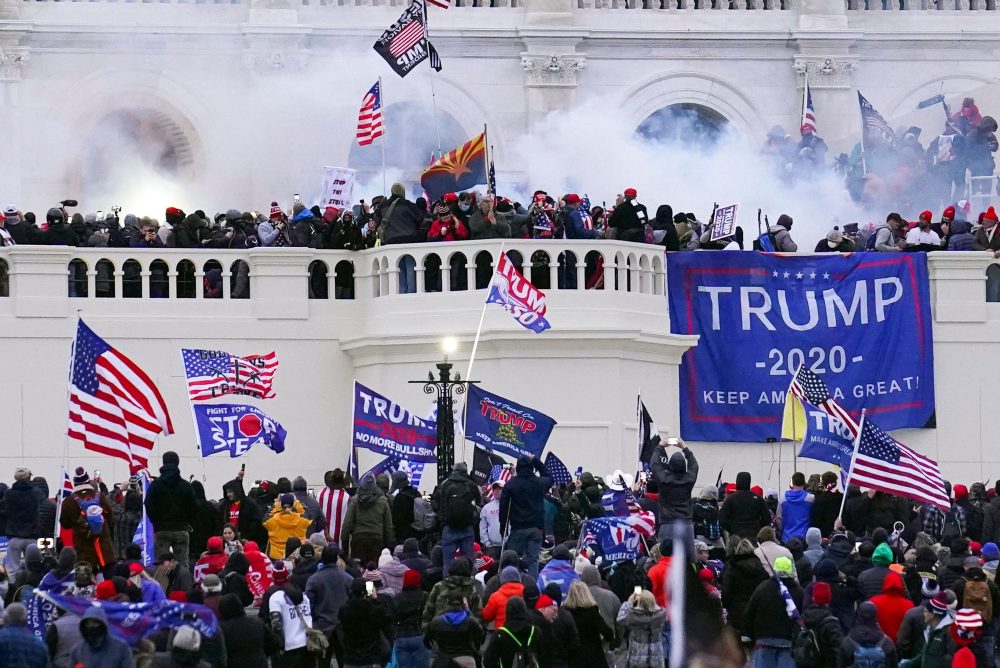
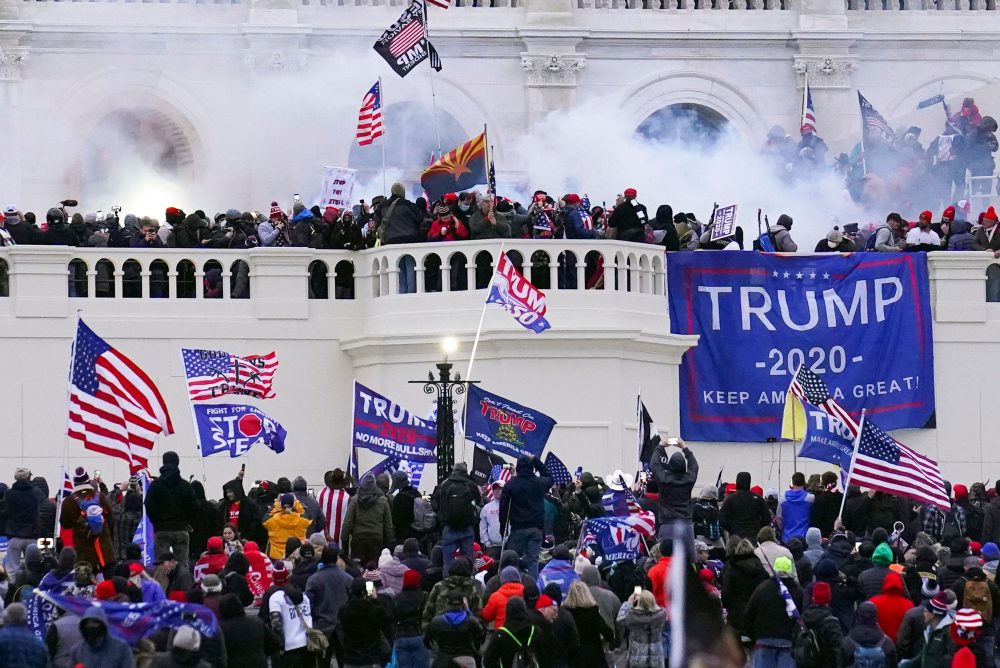
WASHINGTON (AP) — Federal officials confirm they have pulled news releases concerning criminal prosecutions tied to the January 6, 2021, Capitol riot from the Department of Justice website, labeling the prosecution information as “partisan propaganda.”
The removal of documents detailing criminal charges, guilty verdicts and prison sentences represents another move by the Trump administration to fundamentally alter the narrative surrounding the Capitol attack, when hundreds of Republican President Donald Trump’s supporters breached the building to stop Congress from certifying his 2020 electoral defeat to Democrat Joe Biden.
During his first day returning to office in January 2025, Trump issued pardons, reduced prison terms or promised to drop charges for all of the more than 1,500 individuals facing criminal charges from the Capitol incident, including defendants found guilty of assaulting law enforcement with improvised weapons like flagpoles, a hockey stick and crutch.
This Monday, the Justice Department revealed plans for a $1.776 billion compensation fund designed to pay Trump supporters who believe they faced unfair investigation and prosecution. Acting Attorney General Todd Blanche has not dismissed the possibility that violent rioters with convictions could receive compensation, sparking anger from both parties in Congress.
Following a reporter’s Friday observation on social media platform X that the Justice Department was “quietly” taking down website news releases connected to the January 6th incident, including information about a Texas man who admitted guilt to assault charges and separately faced state charges for soliciting a minor, the department replied through its “rapid response” account that nothing was being done “quietly.”
“We are proud to reverse the DOJ’s weaponization under the Biden administration. We will do everything in our power to make whole those who were persecuted for political purposes,” the post said. “This includes stripping DOJ’s website of partisan propaganda.”
The deleted releases included those covering seditious conspiracy prosecutions of Proud Boys and Oath Keepers members, both far-right extremist organizations. Last month, the Justice Department filed an unopposed request with a federal appeals court to overturn those seditious conspiracy guilty verdicts, which the court approved Thursday. On Friday, the department moved to throw out the cases against these group members.
WASHINGTON (AP) — A congressman returned to his Southern California district last Fourth of July to hear troubling accounts from his community as federal immigration enforcement operations moved through neighborhoods, with one resident telling him they had begun carrying their passport to prove their legal right to remain in the United States.
Rep. Mark Takano, whose American-born parents were both detained as toddlers along with their families during the forced removal of Japanese Americans in World War II, found himself drawing connections between that dark period in American history and current events.
“I do feel like there’s a similarity of circumstance of my own 2-year-old father and my 1-year-old mother being labeled as enemy aliens and they’re considered a danger to national security,” he told The Associated Press in an interview.
“They’re put into these incarceration camps,” he said. “Similar arguments have been made by this administration — that immigrants pose a grave danger to our country and it’s for the security of our country that we’re doing this.”
President Donald Trump’s campaign promise of the largest mass deportation operation in U.S. history is at an inflection point. Americans are seeing what it looks like to round up, detain and deport thousands of people, particularly in the aftermath of the deaths this year of Renee Good and Alex Pretti, U.S. citizens protesting the actions in Minneapolis.
The White House changed the leadership at the Department of Homeland Security as it reframes its approach. New Secretary Markwayne Mullin promised to keep the department off the front pages.
But Trump is also under mounting pressure from conservative groups not to let up on the goal of deporting 1 million people a year. The president’s Republican allies in Congress are fueling the immigration and deportation actions with billions of dollars in special funds.
Takano, the ranking Democrat on the House Veterans’ Affairs Committee, has drawn from his own family history — and the country’s eventual redress to Japanese Americans who were detained — to challenge Trump’s approach.
“We look back on that era of history as a shameful one, as a time when our political leaders failed the Constitution, failed the American people,” he said.
A former high school history teacher before being elected to Congress in 2012, Takano grew up in Southern California and came to understand the family stories.
His grandfather Isao Takano arrived in the U.S. from Hiroshima and married Kazue Takahashi, a U.S.-born citizen. Together they settled in Bellevue, Washington, and launched a business growing tomatoes, strawberries and chrysanthemums for the marketplace in Seattle.
When the U.S. entered the war after the Japanese attack on Pearl Harbor, they were among some 120,000 people of Japanese ancestry, immigrants and those born in the U.S., forcibly relocated.
His father, William, was 2 years old when his family was sent in 1942 to the incarceration camp at Tule Lake in California. His mother, Nancy Tsugiye Sakamoto, born in California to American-born parents, was a year old when she was relocated to the detention facility in Heart Mountain, Wyoming.
Then, as now, he said, people are being swept up in the anti-immigrant detentions.
“Will Americans generations from now visit Alligator Alcatraz and think to themselves, How could our government do this?” Takano said during a House floor speech, referring to the Trump-era immigration detention facility in Florida.
“These future generations of Americans will look to us, the Congress, to see what we did to try to stop it.”
Takano remembers his father taking him to see the land the family once owned. He learned about his great uncles who served in the Army’s 442nd Regimental Combat Team of Japanese American soldiers; one was killed in action in Italy. He recalls his own father later collected donations for the national redress campaign.
In 1988 Congress passed the Civil Liberties Act, which sought to apologize for the “grave injustice” that had been done and provide $20,000 to each person detained. Republican President Ronald Reagan signed it into law.
Takano’s parents were among those who received a letter of apology from the federal government, he said, and a payment.
Talks are underway among some in Congress, he said, for a similar redress to the people who have had their car windows smashed in, their homes raided and livelihoods upended as part of Trump’s immigration enforcement operations.
“Remarkably the country did come to realize the mistake,” he said. “I believe we’re living through one of those eras of mistakes and I believe we can come out of this moment stronger.”
HARRISBURG, Pa. — State Representative Chris Rabb faced steep odds in his bid for the Democratic congressional nomination in Philadelphia, with the political establishment firmly aligned against him.
The mayor and Philadelphia’s Democratic Party organization had thrown their support behind a different candidate in this week’s primary contest. Pennsylvania’s congressional delegation also backed another contender. One of Rabb’s opponents had millions in financial backing, while another benefited from extensive voter mobilization efforts led by powerful local construction trade unions.
Despite these challenges, Rabb secured victory by a commanding 15-point margin over his nearest rival in Tuesday’s contest. The state lawmaker appears headed to Congress since no Republican candidate filed for the GOP nomination.
A coalition of progressive organizations powered Rabb’s campaign, with his strategy focusing partly on criticizing his own party for prioritizing wealthy contributors over ordinary voters. He attributed his success to a grassroots coalition inspired by New York City Mayor Zohran Mamdani, concerned about Republican President Donald Trump, and seeking more responsive governance.
“That was at the heart of why I was running and that is what I built my campaign around and that, I believe, is a chord we struck in this electorate that showed up and came out like gangbusters,” Rabb said in an interview with The Associated Press.
Progressive activists view Rabb’s triumph as among their most significant victories this year and another indication that Democratic voters perceive party leadership as ineffective against Trump. Progressive candidates are also seeking House positions in New York, California and Michigan, either challenging sitting Democratic lawmakers or targeting vulnerable Republicans.
The 55-year-old Rabb describes himself as a Democratic socialist and “proud troublemaker” who consistently championed progressive legislation during his five terms in the state House. His supporters believe voters delivered a clear message this week.
“They want someone who knows what they stand for and is ready to fight, whether it’s fighting Donald Trump now or fighting an economy and political system rigged for billionaires in years ahead,” said Adam Green, a co-founder of the Progressive Change Campaign Committee.
The success of progressive candidates in midterm contests has raised concerns among moderate Democrats that far-left nominees might alienate centrist voters and waste a politically favorable opportunity to defeat Republicans, regain congressional control, and obstruct Trump’s agenda during his final two years in office.
Mike Mikus, a Pittsburgh-based Democratic strategist, said progressives could pose challenges for the Democratic Party in the future, but not during this election cycle.
“Regardless of who we nominate, gas prices are still too high, grocery prices are too high and people generally think the economy is not in a good place,” Mikus said. “And voters will vote for change.”
The Working Families Party served as perhaps Rabb’s most significant backer, an organization that argues both Democratic and Republican establishments have compromised with powerful interests. The group has supported several congressional members, with Analilia Mejía becoming their latest success after winning a New Jersey special election on April 16.
Rabb remains uncertain about what awaits him in Washington. “Will we have a razor-thin majority? Will we be in a razor-thin minority?”
He views Congress as an institution where most members avoid bold action due to financial influences in politics. During his victory address, Rabb displayed the passion that progressive supporters say resonated with voters.
“I have been critiqued along this campaign for being too radical, too bold,” Rabb told the crowd. “They ain’t seen nothing yet.”
Rabb’s policy positions on many campaign topics did not differ substantially from his opponents’, including supporting Trump’s impeachment, eliminating U.S. Immigration and Customs Enforcement, implementing a data center moratorium, and advocating for “Medicare for All.”
He distinguished himself by emphasizing support for government-operated grocery stores to eliminate “food deserts” and comprehensive minimum wage legislation that would end lower tipped wages and include independent contractors like gig workers.
Most significantly, Rabb mounted fierce criticism of establishment politics, including within his own party.
He argued that people are frustrated with insider politicians and big-money politics, leading to poor voter participation even with Trump in office and strong opposition to “MAGA extremism and corporate greed,” referencing Trump’s “Make America Great Again” movement.
“We can learn lessons from this victory because, if establishment politics was as effective and productive as people would have us think, then I would have been blown out of the water,” Rabb said.
State senator and former state party chair Sharif Street placed second on Tuesday. U.S. Sen. Cory Booker of New Jersey and Philadelphia Mayor Cherelle Parker supported his campaign, while building trades unions contributed over $600,000.
Dr. Ala Stanford finished third, receiving endorsement from retiring incumbent Dwight Evans and $3.5 million in expenditures from 314 Action, a left-leaning political action committee focused on electing scientists to Congress.
The state’s leading Democrat, Gov. Josh Shapiro, remained neutral in the race but called to congratulate Rabb following the election.
Allied progressive organizations provided at least $1.8 million in spending support for Rabb, according to federal campaign records. U.S. Rep. Alexandria Ocasio-Cortez, D-N.Y., campaigned for him four days before the primary.
Supporters celebrated his victory over the city party’s “machine.”
“The fact that Chris was able to win in machine territory is significant and should send a shock wave to the Democratic establishment that base voters are upset and want transformational change,” said Joseph Geevarghese, executive director of Our Revolution, which was founded by U.S. Sen. Bernie Sanders, I-Vt.
While progressive organizations are gaining influence in Philadelphia, some Democrats noted that Rabb won just 45% of votes, suggesting a unified establishment candidate might have succeeded. Others pointed to low turnout, with fewer than one-third of registered Democrats participating.
“Momentum, the vibes, how people feel about a candidate are going to make a difference,” said Mustafa Rashed, a Democratic political consultant in Philadelphia.
Rabb revealed he nearly abandoned the race and considered withdrawing after discovering his campaign treasurer had stolen funds.
The sense of betrayal, combined with being financially outmatched by rivals, made him question whether his candidacy could survive.
“There was a lot of internal talk about what is the path forward for me,” Rabb said. “I had to dig down and just reaffirm that I’m walking in my purpose and this is exactly what I’m supposed to be doing, irrespective of the adversities.”
The United States housing market is grappling with a pair of significant challenges – insufficient inventory of available properties and unaffordable pricing on existing homes. Federal lawmakers believe their newest proposed legislation could provide relief for both issues.
WASHINGTON, May 23 – Following the Trump administration’s intensified pressure on Communist-controlled Cuba, which came after military forces removed Venezuelan President Nicolas Maduro in January, analysts are examining why the Cuban situation may unfold differently despite Caracas having been a major ally of the island nation’s government.
LEADERSHIP SUCCESSION QUESTIONS
When U.S. forces captured Maduro during a swift operation on January 3, then-Vice President Delcy Rodriguez assumed control and has remained as acting president. However, Cuba presents a different scenario with no clear deputy to Cuban President Miguel Diaz-Canel or former President Raúl Castro, the 94-year-old ex-leader whom the U.S. indicted this week as part of efforts to intensify pressure on Havana.
Orlando Pérez, a specialist in U.S.-Latin America relations at the University of North Texas in Dallas, explained the challenge: “The security apparatus in Cuba has dismantled, systematically dismantled, every alternative or potentially alternative power source.”
While Venezuela has a prominent opposition figure in Nobel laureate María Corina Machado, who won 2024 elections but was prevented from assuming power and hopes to return for free elections this year, Cuba lacks a comparable leader.
Though Raúl Rodriguez Castro, the former president’s grandson, recently met with CIA Director John Ratcliffe during an unusual visit by a U.S. intelligence chief to Havana – sparking speculation about potential cooperation with Washington – the younger Castro holds no official government role and isn’t anticipated to turn against his family. He participated in a Friday rally in Havana protesting his grandfather’s indictment.
ANALYZING ADVANTAGES AND DANGERS
Cuba has remained a U.S. adversary since Fidel Castro’s 1959 revolution. Trump enjoys strong backing from hardline Cuban-Americans in Florida who have long advocated for U.S.-supported regime change, and the Republican president has expressed clear desires for transformation in their native country.
Historically viewed as a threatening Soviet ally just 90 miles from Florida, and more recently as a potential base for Chinese influence in the Western Hemisphere, Cuba’s position has shifted as Russia’s focus moved elsewhere after the Soviet bloc’s collapse, while economic difficulties have reduced its capacity to challenge the U.S.
Analysts warn that Cuban instability could trigger a migration emergency, as citizens already facing widespread power outages due to the U.S. blockade might choose to escape the island during conflict or disorder.
Cuba’s armed forces demonstrate greater ideological commitment and unity than Venezuela’s military and would likely mount stronger resistance. While dozens of Cuban agents died in Venezuela during January while protecting Maduro, survivors gained valuable intelligence about U.S. operational methods.
Cuba is also considered more sophisticated in surveillance and intelligence capabilities, particularly after years of collaboration with Russia and China.
POTENTIAL U.S. GAINS FROM CUBA
Venezuela possesses significant natural resources, with U.S. corporations already positioning themselves to extract oil from the South American nation, which has experienced increased exports.
Cuba offers no comparable resources. Its government-controlled tourism sector lagged behind other Caribbean locations in cost and service quality even before this year’s sharp decline, worsened by shortages connected to Trump’s “maximum pressure” strategy, the U.S. blockade, and tariff threats against nations supplying it with fuel.
U.S. Secretary of State Marco Rubio, a vocal Cuba critic who also serves as national security adviser, is viewed as the driving force behind the Trump administration’s Cuban strategy.
A Florida-born son of Cuban immigrants who has previously sought the presidency and is expected to run again, Rubio could benefit politically from major Cuban changes, but failure carries significant risks as the U.S. confronts massive budget shortfalls while conducting a costly Iran campaign estimated at billions daily.
LEGAL COMPLICATIONS
The 1996 Helms-Burton Act restricts Washington’s ability to alter Cuban relations, connecting embargo removal to specific political changes including establishing a democratically elected government.
Trump modified U.S.-Venezuela business relationships by ousting Maduro while maintaining the existing government structure without announcing plans for free elections.
Regarding Cuba, he cannot legally proceed without dramatic cooperation from Cuban officials, who have refused to collaborate thus far.
Cuba’s situation proves more complex due to its economy’s lack of private enterprise, dominated instead by Gaesa, a military conglomerate under U.S. sanctions controlling the island’s premier hotels, main port, leading commercial bank, and extensive networks of supermarkets, gas stations, and remittance operations.
Washington justified the Venezuela intervention by citing Maduro’s government involvement in “narcoterrorism.” Cuban officials haven’t faced similar accusations, with their government claiming cooperation with the U.S. in anti-drug efforts.
WASHINGTON, May 23 – A major rift has emerged between President Donald Trump and Congressional Republicans over his proposed $1.776 billion compensation fund for individuals he describes as victims of government “weaponization,” creating a heated standoff just months ahead of the midterm elections.
The Senate put a halt to deliberations on Thursday regarding a $72 billion immigration enforcement spending package after numerous GOP senators insisted the controversial fund should either be eliminated entirely or face strict oversight requirements.
Democratic lawmakers have similarly vowed to target the fund through the immigration legislation.
The previous day, Senate Majority Leader John Thune prevented $1 billion in federal money from going toward an elaborate White House ballroom that Trump has started constructing, stating he lacked sufficient Republican support.
Trump responded forcefully on Friday.
“I am helping others, who were so badly abused by an evil, corrupt, and weaponized Biden Administration, receive, at long last, JUSTICE!” the president wrote on his social media platform.
This power struggle between Trump and members of his own party, fueled by recent primary wins of Trump-backed candidates defeating incumbent legislators, may escalate when Congress reconvenes next month and could impact November’s midterm races.
“The American people are going to reject this out of hand,” Republican Senator Thom Tillis of North Carolina said of the anti-weaponization fund, whose beneficiaries could include those convicted in connection with the attack on the Capitol on January 6, 2021.
Though many GOP senators remained unusually quiet after Thursday’s spending bill discussion, Tillis and others made clear how politically damaging the president’s requests had become.
“(The fund) could potentially compensate someone who assaulted a police officer, admitted their guilt, got convicted, got pardoned and now we’re going to pay them for that? That’s absurd,” Tillis, who is not running for reelection, said in a Thursday interview with Spectrum News.
CONGRESSIONAL MANEUVERING OVER COMPENSATION FUND
Republican Representative Brian Fitzpatrick of Pennsylvania, facing a competitive reelection race this fall, joined forces with Democratic Representative Tom Suozzi of New York on a bill to block any payments from the fund.
Retiring Representative Don Bacon of Nebraska described both the ballroom and anti-weaponization funds within the immigration spending package as “poison pills” for House Republicans in difficult reelection contests.
Given Republicans’ narrow control in both congressional chambers, just a small number of dissenting lawmakers could sink Trump’s proposals.
However, there’s widespread doubt that congressional Republicans, who have remained faithful to the president on issues ranging from trade policy to budget cuts to military action, are prepared to break away.
“We’ve heard this talk for 10 years now of rebellion and cracks in the coalition. It has never happened,” said Doug Heye, a longtime Republican strategist.
He noted Republicans are “constantly capitulating” on Trump’s priorities, suggesting any uprising would be “light years” away.
Several Trump supporters in Congress, including Republican Representatives Abraham Hamadeh of Arizona and John Rose of Tennessee, have rallied to his defense.
“Not a single congressional Republican was elected to oppose President Trump,” Hamadeh posted on X, adding: “Yet an insurgency is already brewing” in the Senate. “STOP slamming the brakes on the America First agenda.”
Peter Ticktin, an attorney representing more than 400 January 6 defendants, expressed confidence his clients will receive compensation despite congressional resistance.
“They’re fools if they think this is going to work,” Ticktin said of Senate Republicans who oppose the fund. “It’s still going to go through, and those opposing the fund will suffer in future elections.”
DEMOCRATS PLAN TO FORCE CHALLENGING VOTES
Democratic lawmakers, though holding minority status in both chambers, are capitalizing on what they view as the president’s politically insensitive proposals.
They’ve highlighted the contrast between struggling American consumers dealing with inflation and Trump’s expensive ballroom project and potential large government payments to January 6 participants or other associates.
“Is it possible on May 21, 2026, Republicans finally found an ethical bridge too far?” Senator Dick Durbin, the second-highest-ranking member of the Democrats’ Senate leadership, said at a Thursday press conference.
Senate Democratic Leader Chuck Schumer on Thursday described Republicans as experiencing a “meltdown” over the ballroom and what Democrats label a Trump “slush fund.”
One option for congressional Republicans when they return from break on June 1 involves finding a compromise position.
An anonymous source with knowledge of the negotiations mentioned discussions about potential fund restrictions, including standards for commission oversight members or mandating judicial review.
At minimum, Democrats will likely attempt to force opponents into politically challenging votes on spending bill amendments.
Democratic Senator Chris Coons of Delaware told reporters this week he had prepared 13 such amendments. One would prevent payments to January 6 participants who attacked Capitol law enforcement, while others would ban taxpayer funding for payments and require public disclosure of all payments if the fund survives, according to a spokesperson for the senator.
Foreign nationals currently living in the United States who seek permanent residency will now be required to return to their home countries to complete the green card application process, according to a Friday announcement from the Trump administration.
The policy represents an unexpected reversal of established immigration procedures that have been in place for years.
Under the new requirements, individuals seeking permanent resident status can no longer complete their applications while remaining in the United States, marking a significant departure from previous practices.
GOP-led states are accelerating efforts to redraw congressional boundaries in their favor before November’s midterm elections, following a recent Supreme Court ruling that reduced minority voting protections under federal law.
Within just a few weeks, revised U.S. House boundaries have already become law in Tennessee and Alabama, while similar measures have passed through at least one legislative chamber in Louisiana and South Carolina. However, legal and legislative obstacles still exist before these new maps can take effect for November voting.
Congressional boundaries are normally redrawn following each decade’s census. However, President Donald Trump has encouraged Republican-controlled states to pursue redistricting now as they work to maintain the GOP’s slim House majority amid challenging political conditions. Historically, a sitting president’s party tends to lose congressional seats during midterm elections, and Trump’s approval numbers remain underwater.
The aggressive redistricting strategy could yield significant gains for Republicans. Since Trump initially pushed Texas to revise its voting boundaries last year, GOP strategists believe they could secure up to 15 additional seats through new House districts across seven states. Democratic efforts have been more limited, targeting approximately six seats through new boundaries in two states.
Here’s an overview of the latest redistricting developments:
Republican Gov. Henry McMaster convened a special legislative session to address congressional redistricting. The GOP-controlled House approved a proposal early Wednesday designed to boost the party’s prospects of capturing the state’s sole Democratic-held seat.
Senate members are scheduled to convene Saturday — marking their third consecutive day of meetings — to review the redistricting proposal. However, approval remains uncertain.
Democratic lawmakers oppose the plan, while some Republicans also express concerns. Several GOP senators worry that their strategy to target the district represented by Democratic U.S. Rep. Jim Clyburn might backfire by distributing too many Democratic voters into Republican-held areas, potentially making those seats vulnerable.
South Carolina’s primary elections are scheduled for June 9. The proposed legislation would establish a new congressional primary date in August.
The Supreme Court invalidated Louisiana’s congressional map, which featured two majority-Black districts held by Democrats, ruling it constituted illegal racial gerrymandering. The state House is expected to consider a revised map next week that would substantially alter one of those districts while improving Republican chances of winning it.
While Republicans controlling the state Legislature agree on the general framework of the new map, the House and Senate have different approaches for dividing certain areas, including decisions about which parishes remain intact versus those that get divided.
A House committee modified a map that the Senate had previously approved. Should the chambers pass different versions, a joint legislative committee could attempt to broker a compromise before the session concludes June 1.
Republican Gov. Jeff Landry delayed Louisiana’s May 16 congressional primary until later in the summer to provide time for redistricting completion.
A federal court considered arguments Friday regarding a request to prevent Alabama from implementing congressional districts that could help Republicans secure an additional seat in the midterm elections. This represents the most recent development in an ongoing legal battle.
Republican state legislators approved a map in 2023 featuring one majority-Black district. The court had previously blocked that map and mandated a replacement that resulted in Democrats winning two seats where Black residents form a majority or near-majority.
However, the U.S. Supreme Court recently reversed that directive and instructed the lower court to reconsider the case based on the Louisiana ruling.
Legal representatives from the NAACP Legal Defense Fund and the ACLU, advocating for Black voters, want a three-judge panel to block the state from implementing the 2023 map. They argue a preliminary injunction is justified because the Louisiana decision shouldn’t impact a separate determination that Alabama’s map intentionally discriminated against Black voters.
Alabama conducted its primary elections on May 19. However, new congressional primaries are set for August for districts that differ under the 2023 map.
A state court panel considered arguments Thursday in another NAACP legal challenge aimed at overturning Tennessee’s new congressional map, which divides a Memphis-area, majority-Black district represented by a Democrat. The revised map could enhance Republican opportunities to claim all nine of the state’s seats.
The legal challenge argues that the General Assembly incorporated elements in the redistricting legislation that weren’t specifically authorized or required under a proclamation by Republican Gov. Bill Lee establishing the special session agenda. These include a provision eliminating a state law that bars mid-decade redistricting.
If lawmakers exceeded their constitutional authority, the lawsuit maintains that the new map cannot be implemented.
State senator David Brock Smith secured victory in Oregon’s Republican U.S. Senate primary on Friday, marking the final major race decided from the state’s May 19 primary election.
Smith prevailed over six other Republican candidates and will now challenge Democratic Sen. Jeff Merkley, the incumbent, in the November general election.
“This campaign is about putting Oregon first. Fighting for affordable living, safer communities, good-paying jobs, responsible government, and protecting the values that make our beloved state strong,” Smith declared in a statement. “This election is bigger than politics. It’s about restoring hope, opportunity, and accountability for every Oregonian.”
Merkley, who first took office in 2008, is considered to hold a relatively secure position given that Oregon voters haven’t chosen a Republican for U.S. Senate since 2002. His campaign team had not provided a response by Friday evening regarding Smith’s primary victory.
This outcome follows other major primary decisions announced on election night, including a gas tax ballot question and the Republican gubernatorial primary that established a November showdown for the state’s highest office.
Voters decisively defeated a ballot measure proposing to increase the state gas tax by 6 cents to 46 cents per gallon. The Democratic-controlled Legislature had approved this controversial gas tax hike along with additional fees last year to fund road repairs and address transportation budget shortfalls. Republicans subsequently organized a referendum drive to place the issue before voters for final determination.
Republican leaders celebrated the gas tax measure’s defeat after voters soundly rejected it. Democratic officials largely stayed quiet and didn’t mount organized support efforts as the Iran war drove gas prices higher. Several party members had predicted voter rejection of the measure leading up to the primary.
For governor, Republican state Sen. Christine Drazan won her party’s nomination from a crowded field of 14 contenders. She defeated rivals including another GOP legislator who had championed the gas tax referendum effort and a former NBA player.
Drazan’s win creates a repeat matchup with Democratic Gov. Tina Kotek, who secured her party’s nomination while seeking another term. In 2022, Drazan fell short against Kotek by more than 3 percentage points in a three-candidate race that featured an independent contender.
Kotek won her initial gubernatorial term that year following legislative service that included a record tenure as Oregon’s House speaker. She has clashed with the Trump administration, which attempted unsuccessfully to send National Guard troops to Portland last fall, citing protection of federal facilities and staff after demonstrations at the city’s U.S. Immigration and Customs Enforcement building.
Kotek has also committed to addressing homelessness, mental health challenges, and educational concerns. However, despite approving funding and initiatives targeting these problems, the state continues experiencing increased homelessness and declining student achievement scores that remain below pre-pandemic benchmarks.
Drazan will probably focus on these challenges while confronting difficult odds: Oregon voters haven’t chosen a Republican governor in more than four decades.
In Oregon’s single competitive U.S. House race, Democratic incumbent Rep. Janelle Bynum secured her primary victory. County commissioner Patti Adair claimed the Republican nomination in that district and will attempt to reclaim the seat for the GOP. Republicans had flipped this seat in 2022 for the first time in many years before Bynum won it back for Democrats.
The primary immigration courthouse in San Francisco has permanently shut its doors, leaving no asylum seekers awaiting decisions and no attorneys presenting cases in what was once a bustling legal venue.
When President Donald Trump began his current term, the facility employed 21 immigration judges. By its closure on May 1, only two remained after the others were terminated, chose retirement, or stepped down during the White House’s systematic removal of federal immigration judges.
This shutdown represents another example of the widespread disruption affecting immigration courts nationwide as the current administration seeks methods to process its enormous backlog of 3.8 million asylum cases while maximizing deportations.
Rejection rates for asylum requests have increased dramatically following the dismissal of nearly 100 judges deemed too lenient, with hundreds of military attorneys approved to take their places. Immigrants have faced arrest upon arriving at courthouses or government facilities for scheduled hearings.
While this national transformation continues, San Francisco becomes the first major metropolitan area to lose its primary immigration court, creating disorder and breakdown in an area historically welcoming to those seeking asylum. The two remaining judges will operate from a different federal facility in the city but will function as part of an immigration court located across the bay.
According to court personnel, this welcoming reputation may have contributed to its closure.
“It was a vibrant legal scene and so I think if you were looking to target a court you would have to look at what San Francisco stands for,” said Jeremiah Johnson, an immigration judge in the city until he was fired in November. He is now executive vice president of the National Association of Immigration Judges.
The majority of the court’s 117,000 immigration cases have been relocated to a facility in Concord, approximately 30 miles away, which opened two years ago to assist with San Francisco’s case backlog. However, disruption has also affected that location. A courthouse that began 2025 with 11 judges now operates with five following multiple terminations. It already handled 60,000 cases before absorbing the San Francisco transfers.
San Francisco’s immigration court, which ranked third nationally in asylum case volume, was historically regarded as among the most favorable to asylum seekers. Between 2019 and 2024, nearly 75% of applicants obtained some form of protection, compared to 43% nationally, based on information gathered by the Transactional Records Access Clearinghouse, a nonprofit data research center based at Syracuse University.
This success rate stemmed partly from San Francisco’s extensive network of immigrant advocacy groups and pro bono or affordable legal services, resulting in one of the nation’s highest rates of legal representation for immigrants.
The Executive Office of Immigration Review, the Department of Justice division overseeing immigration courts, announced in March its intention to close the San Francisco courthouse in 2027 as a cost-reduction strategy and transfer cases to Concord. However, the closure occurred ahead of schedule after almost all San Francisco judges departed or were dismissed. The Executive Office offered no comprehensive explanation for the changes, stating only that it chose not to renew the court’s lease and does not discuss personnel issues.
Security measures at the Concord courthouse are extensive, possibly due to the new case influx. Armed security personnel question each visitor about weapons or explosives and observe as everyone powers down their mobile devices. Even coffee is prohibited inside. Only water is permitted, and only in clear containers.
Judah Lakin, an immigration attorney based in Oakland who also teaches at UC Berkeley School of Law, said the closure of the San Francisco court has made cases more time consuming since it’s harder for his clients, who often travel from hours away, to reach Concord on public transportation.
One recent 10-minute hearing in Concord took him more than two hours of travel, he said.
Beyond logistical challenges, Lakin explained that the turmoil in immigration courts under the Trump administration has created a tense courtroom environment. Mass terminations have resulted in last-minute hearing cancellations, cases have been rescheduled with minimal notice, and clients often remain in extended legal uncertainty, making them susceptible to deportation.
One of his clients, he said, was provisionally granted asylum by a judge, who was then fired before signing the decision. The case was transferred to a second judge, who was also fired. Now on their third judge, his client is still waiting.
“The ground is constantly shifting underneath your feet, whether it’s judges being fired and hearings getting canceled, whether it’s your clients getting arrested, whether it’s getting denials on things that used to be standard and routine,” Lakin said.
“I think that’s on purpose. That’s by design. It’s part of the strategy,” he added.
San Francisco’s immigration court was among the nation’s first to employ judges with non-prosecutorial backgrounds, with many having prior experience assisting immigrants at nonprofits or representing them in legal proceedings.
Witnessing the court’s closure is “heartbreaking,” said Dana Leigh Marks, a former San Francisco immigration judge who retired in 2021 after 35 years on the bench and who was among the first judges in the nation to be hired from private practice.
She views the Trump administration’s decision to close the largest immigration court in Northern California as part of an effort to undermine due process and eventually dismantle the path to asylum.
“It’s all a part of big ways and little ways that the Trump administration is trying to get non-citizens out of the country,” she said.
Johnson, the dismissed San Francisco judge, received his appointment during the first Trump administration. He believes he became a target because he approved asylum in 89% of his cases.
“You don’t fire judges if you disagree with the way they’re handling a case, that’s not how courts work. If you disagree, you appeal that decision,” he said.
Johnson, who is the executive vice president of the National Association of Immigration Judges, defended his judicial record, pointing out that over eight years, only about 10 of his cases were appealed by the Department of Homeland Security, and very few were sent back for further hearings by the Board of Immigration Appeals.
Unlike federal courts, where there are strict rules of procedure and judges have lifetime tenure, the Justice Department runs immigration courts, and the attorney general can fire the judges with fewer constraints.
There were 754 immigration judges across the country at the start of Trump’s second term. Now, there are about 600, including some temporary judges, according to data collected by the judges’ union. Widespread courthouse arrests of immigrants have caused hundreds of people not to even show up for hearings, leading to deportation orders in absentia.
Nidaa Pervaiz came to the Concord court on a recent day to represent a client from Nepal. She prefers the new courthouse in some ways, since it’s closer to her home.
But, she said, she and her clients are already feeling the impact of the changes. Fewer judges leads to fewer hearings. That means more delays for her clients, whose paperwork can expire even before they can appear before a judge.
“Their whole lives are at stake, and they are coming to make a plea for their future” she said.
NEW YORK (AP) — A Manhattan federal judge dismissed author Michael Wolff’s legal case against first lady Melania Trump on Friday, describing his “twisted” effort to stop her potential $1 billion lawsuit over his comments linking her to Jeffrey Epstein as contrary to how “federal courts operate.”
Federal Judge Mary Kay Vyskocil criticized both parties for engaging in an “unacceptable degree of strategic maneuvering” and declared she “refuses to supervise a poorly presented quarrel.”
Vyskocil, a President Donald Trump appointee, acknowledged that Wolff and the first lady “face a legitimate legal conflict,” but emphasized “their dispute must follow standard legal processes like any other case.”
The author initiated legal proceedings against Melania Trump in October following correspondence from her attorney, Alejandro Brito, warning that she would have “no choice” but to pursue litigation unless he withdrew comments that allegedly inflicted “severe damage to her reputation and finances.”
Initially filed in New York state court, Brito successfully moved the case to federal jurisdiction. In her 45-page ruling, Vyskocil determined that although federal court maintains authority over the matter, she chose not to exercise it and “dismisses this case to be litigated like any other.”
Attempts to reach representatives for the first lady’s office, Brito, and Wolff’s legal counsel were unsuccessful.
During an April White House appearance, Melania Trump publicly rejected any connection to Epstein, the wealthy financier and registered sex offender who died by suicide in jail during August 2019 while facing sex trafficking allegations.
Speaking from prepared text, the first lady announced she and her legal team were challenging “false and groundless accusations” suggesting connections to Epstein.
“The lies linking me with the disgraceful Jeffrey Epstein need to end today,” Melania Trump said. “The individuals lying about me are devoid of ethical standards, humility and respect. I do not object to their ignorance, but rather I reject their mean-spirited attempts to defame my reputation.”
Wolff’s legal filing claimed the Trumps “routinely threaten critics” with expensive litigation “to suppress opposition speech, intimidate detractors broadly, and secure unwarranted financial settlements and North Korean style confessions and apologies.”
He alleged these intimidation tactics were “intended to establish nationwide fear preventing citizens from freely exercising First Amendment protections.”
The author has written twelve books, including four bestselling works focused on the president.
According to his lawsuit, Melania Trump’s legal threats concerned remarks he made to The Daily Beast and in three online videos. Wolff argued some statements were partial quotes removed from proper context.
Additional comments, his legal team argued, constituted protected expression. The characterization of the Trumps’ relationship as a “sham marriage, trophy marriage” represented a “reasonable and warranted” opinion, according to the filing.
The lawsuit emphasized that Wolff never alleged Melania Trump participated in Epstein’s criminal activities.
Following Brito’s correspondence in July 2025, The Daily Beast withdrew an article headlined “Melania Trump ‘Very Involved’ in Epstein Scandal: Author,” which featured Wolff’s interview.
Wolff’s lawsuit clarified his remarks addressed the first lady’s “participation” in managing the situation “privately” within the White House — not suggesting involvement in Epstein’s offenses.
Other statements Wolff defended as accurate included claims about Melania Trump encountering Donald Trump within Epstein’s social network, and allegations that Donald Trump pursued relationships with associates’ spouses and initially became intimate with Melania Trump aboard Epstein’s aircraft.
WASHINGTON — Foreign nationals currently in the United States seeking permanent residency will be required to return to their home countries to complete their green card applications, according to a Friday announcement from the Trump administration that caught immigration advocates and attorneys off guard.
The policy reverses more than 50 years of established practice that allowed foreign nationals with legal status to pursue and finalize their permanent residence applications while remaining in the United States. This included spouses of American citizens, work and student visa holders, refugees, and asylum seekers.
U.S. Citizenship and Immigration Services stated that temporary foreign nationals wanting to become lawful permanent residents must go back to their home countries to submit applications, unless “extraordinary circumstances” exist. USCIS officers will determine if applicants qualify for such exceptions.
“Nonimmigrants, like students, temporary workers, or people on tourist visas, come to the U.S. for a short time and for a specific purpose. Our system is designed for them to leave when their visit is over. Their visit should not function as the first step in the Green Card process,” the agency stated.
The move represents another effort by the Trump administration to make legal immigration more challenging for foreigners currently in America and those seeking to enter.
“The goal of this policy is very explicit. Senior officials in this administration have said over and over that they want fewer people to get permanent residency because permanent residency is a path to citizenship and they want to block that path for as many people as possible,” said Doug Rand, a former senior advisor at USCIS during the Biden administration, who added that about 600,000 people already in the U.S. apply each year for a green card.
The agency has not specified when the policy takes effect, whether applicants must stay abroad throughout the entire process, or how it affects pending green card applications.
USCIS told the Associated Press via email that individuals providing an “economic benefit” or serving the “national interest” might be permitted to remain in the U.S., while others would need to apply from overseas.
This policy addition follows other administration measures restricting entry from numerous countries. Some nations face complete travel prohibitions, while others experience visa processing delays. Legal experts warn that requiring people from restricted countries to return home for green card applications could permanently prevent their return.
“If families are told that the non-citizen family member must return to his or her country of origin to process their immigrant visa, but immigrant visas are not being processed there, it’s a Catch-22. These policies will effectively create an indefinite separation of families,” wrote World Relief, a humanitarian and refugee resettlement organization.
USCIS characterized the modification as restoring “the original intent of the law” and eliminating a “loophole.”
However, immigration attorneys and advocacy organizations objected, arguing that status adjustment within the U.S. has been standard procedure for many groups, and numerous individuals cannot safely return home or lack embassy access for applications. The U.S. Embassy in Afghanistan, for instance, has remained closed since the American withdrawal in August 2021.
“USCIS is trying to upend decades of processing of adjustment of status,” said Shev Dalal-Dheini, senior director of government relations at the American Immigration Lawyers Association. “This all applies very broadly to anyone seeking a green card”.
Those affected could include spouses of American citizens, immigrants with humanitarian protections seeking green cards, work visa holders including physicians and other professionals, plus student and religious visa recipients, the attorney explained.
Dalal-Dheini noted that visa appointment wait times at certain U.S. consulates overseas can exceed one year.
Immigration lawyers spent Friday afternoon analyzing the policy memorandum and announcement, attempting to understand its scope of application.
Organizations providing legal and support services to immigrants reported receiving calls from worried clients about how the new guidelines would affect them.
“It’s really hard to tell how this is going to be applied,” said Jessie De Haven, senior staff attorney with the California Immigration Project a non profit that provides legal services to low income immigrants. “I do think it might have a chilling effect on people applying.”
The immigration case of Kilmar Abrego Garcia has become a lightning rod in discussions surrounding President Donald Trump’s border enforcement strategies since he first made headlines in March 2025 following his removal to El Salvador, which occurred despite a judicial order that should have stopped it.
Garcia’s complex legal battle has energized advocates on both sides of the immigration policy discussion. His situation involves two separate legal proceedings: a civil lawsuit in Maryland challenging the Department of Homeland Security’s efforts to send him to various African nations, and a criminal matter in Tennessee where federal prosecutors had accused him of human trafficking.
The Tennessee criminal case was recently thrown out by a judge who determined the Justice Department engaged in “vindictive prosecution.”
The following chronology outlines major developments in Garcia’s case:
Garcia departed El Salvador for the United States as a minor.
Law enforcement apprehended Garcia near a Maryland hardware store, alleging gang connections before transferring him to U.S. Immigration and Customs Enforcement custody.
An immigration judge in Maryland determined Garcia could not be sent back to El Salvador due to gang threats against his relatives. He received employment authorization and was placed under federal monitoring.
ICE officers detained Garcia in Baltimore as he drove home with his young son, age 5.
Garcia was wrongfully removed to El Salvador and imprisoned in a facility known for harsh conditions.
The nation’s highest court directed the Trump administration to facilitate Garcia’s return to the United States.
Upon his return, Garcia faced human trafficking charges stemming from a 2022 traffic incident in Tennessee.
Federal immigration officials announced intentions to send him to multiple African nations, but a Maryland federal judge issued a restraining order preventing this action.
Garcia was released from the Tennessee detention facility where he had been held since June to rejoin his family in Maryland while awaiting court proceedings. ICE immediately issued a notice of their plan to deport him to Uganda following his release.
Garcia appeared at a Baltimore immigration facility and was taken into federal custody.
A Maryland federal judge ordered Garcia’s immediate release from ICE detention.
The same Maryland federal judge prohibited ICE from detaining Garcia again.
A Tennessee federal judge dismissed all human trafficking charges against Garcia, citing evidence that prosecutors engaged in “vindictive prosecution.”
Democratic National Committee leadership is struggling to move forward following yesterday’s problematic release of their 2024 election analysis, while party chairman Ken Martin confronts growing demands for his resignation from fellow Democrats.
Martin, who leads the national committee, is receiving pressure from lawmakers and party operatives who believe he poorly handled a document meant to serve as a thorough review of the party’s shortcomings and potential blueprint moving forward. The chairman held the report back for several months, creating speculation about what it contained, before finally making it public this week while simultaneously declaring it too defective to provide value.
“There doesn’t seem to be a plan to turn things around and the clock is ticking. November is literally around the corner,” Rep. Marc Veasey, D-Texas, told Semafor. “I believe it’s time for him to move on.”
“He should resign,” Rep. Seth Moulton, D-Mass., said to Axios.
And in a radio interview, Rep. Mark Pocan, D-Wisc., said he agreed with a caller saying Martin should be replaced.
Despite the criticism, Martin retains backing from numerous state party officials who have received consistent financial support from the national organization since his appointment. During a Thursday discussion with committee staff members, Martin expressed regret for his management of the analysis and stated his commitment to remaining in his leadership role.
“This was a major mistake. I own it, and now it’s time for us to move forward at the DNC, and I hope that you’ll move forward with me,” Martin said, according to a person with knowledge of the call who was not authorized to disclose a private conversation.
Martin, who was relatively unknown as a Minnesota political operative before ascending to lead the national party’s official political apparatus last year, has previously drawn criticism for poor fundraising performance and his inability to build confidence among the party’s diverse membership.
However, there was no sign that a serious alternative was emerging. The Associated Press contacted a half dozen Democratic presidential prospects to gauge their support for Martin and all of them declined to weigh in.
The internal party conflict creates a significant distraction for Democrats who appear to be gaining political traction in their effort to challenge President Donald Trump’s control over Washington. The party aims to recapture control of both the U.S. House and U.S. Senate during November’s midterm contests, with Republicans potentially at risk due to Trump’s poor approval numbers, public dissatisfaction regarding the conflict in Iran, and ongoing economic concerns.
Martin’s supporters nationwide criticized Democrats who are contributing to the election-year turmoil, characterizing them as disgruntled consultants and backers of Martin’s former competitors for committee leadership.
Kansas Democratic Party Chair Jeanna RePass described calls for the first-term chair to step down as “ridiculous and dangerous.”
“It is dangerous for Democrats to be playing politics with our leadership when these elections are five and a half months away,” she said. “The American people are counting on us.”
Janet Kleeb of Nebraska, who leads her state party and the DNC’s association of state committees, said the fighting “is nuts.”
“I haven’t had a single chair come to me saying I think Ken needs to resign,” she said. “Ken was elected by the DNC members to do a four-year term, and he has not violated any of our rules or bylaws where there would be a two-thirds vote, right? Because that’s what it would take to remove the chair.”
Kleeb added, “These reports are such distraction.”
The much-anticipated post-election analysis concluded that Kamala Harris “wrote off rural America” during the 2024 presidential campaign and failed to attack Trump with sufficient “negative firepower,” among other key findings.
Martin distributed the 192-page document only after experiencing significant internal pressure from party operatives. He had initially promised to make the analysis public before assuming committee leadership last year, but chose to withhold it due to concerns it would disrupt Democrats’ concentration on the November midterm elections.
“I didn’t want to create a distraction,” Martin wrote on Substack. “Ironically, in doing so, I ended up creating an even bigger distraction. And for that, I sincerely apologize.”
While the analysis criticizes Democrats’ emphasis on “identity politics,” it avoids addressing some of the most contentious aspects of the 2024 campaign. The document fails to examine former President Joe Biden’s decision to seek reelection, the hurried process of selecting Harris as his replacement after he withdrew, or the party’s bitter disagreement over the war in Gaza.
A former Columbia University graduate student and pro-Palestinian activist plans to petition the U.S. Supreme Court following a federal appeals court decision that brings the government closer to removing him from the country, according to his legal representatives.
The 3rd U.S. Circuit Court of Appeals in Philadelphia rejected a request for a full court review by a narrow 6-5 margin on Friday. Earlier this year in January, a three-judge panel from the same circuit determined that a New Jersey federal judge lacked authority when he sided with Mahmoud Khalil and ordered his release from immigration custody last year.
Legal representatives from the American Civil Liberties Union, who are part of Khalil’s defense team, announced they will seek an emergency order from the 3rd Circuit to halt enforcement of the ruling and prevent Khalil’s detention or removal while pursuing Supreme Court review.
The high court petition is anticipated within the coming months, potentially by late summer.
“Today’s decision is not the final word, and we still strongly believe in our arguments going forward,” stated ACLU senior counsel Brett Max Kaufman.
The January appeals court ruling determined that Khalil’s legal challenge to his detention and subsequent federal court decisions were filed too early, as federal law mandates such disputes must first proceed through the immigration court system under the Justice Department rather than the judicial branch.
The ruling did not address the central constitutional question in Khalil’s situation: whether the Trump administration’s attempt to remove him based on his campus activism and criticism of Israel violates constitutional protections.
Judge Cheryl Ann Krause, who supported the court’s review of the decision, criticized the majority in her dissent, writing that the court was “abdicating our duty to meaningfully review Khalil’s constitutional claims.” She argued the Judicial Branch cannot serve as a proper check on other government branches “if we write ourselves out of relevance and leave the Executive Branch to check itself.”
The 31-year-old Khalil has simultaneously appealed to the 5th U.S. Circuit Court of Appeals in Louisiana, where he was held in custody, challenging the Board of Immigration Appeals’ decision to uphold his removal order.
Khalil’s legal team contends the immigration judge failed to properly evaluate relevant evidence and incorrectly upheld allegations that he provided false information on his permanent resident application. His attorneys maintain this charge was filed as retaliation for his protest activities.
The immigration court suggested Khalil could be sent to Algeria, where he holds citizenship through a distant family connection, or Syria, his birthplace in a refugee camp to Palestinian parents. His legal team warns he would face life-threatening dangers if returned to either location.
As a prominent voice in Columbia’s pro-Palestinian movement, Khalil was taken into custody in March 2025 and subsequently held for three months at a Louisiana immigration facility, causing him to miss his child’s birth.
Government officials have alleged Khalil led activities “aligned to Hamas,” though they have not provided supporting evidence and have not filed criminal charges. They also claim he omitted required information from his green card application.
Khalil has rejected these accusations as “baseless and ridiculous,” describing his arrest and detention as a “direct consequence of exercising my right to free speech as I advocated for a free Palestine and an end to the genocide in Gaza.”
The government based the arrest on a rarely invoked law permitting removal of non-citizens whose beliefs are considered threatening to U.S. foreign policy objectives. In June 2025, Judge Michael Farbiarz determined this justification would likely be found unconstitutional and ordered Khalil’s release.
The Trump administration challenged that decision, maintaining that deportation matters should be decided by immigration judges rather than federal courts. The 3rd Circuit sided with the administration in a 2-1 ruling.
Judge Emil Bove, who previously investigated student protesters as a senior Justice Department official, did not take part in the 3rd Circuit’s vote on whether to review the case. He subsequently denied a motion from Khalil’s lawyers requesting his recusal, declaring the request moot.
Federal tax authorities are contemplating whether to mandate that taxpayers reveal their citizenship status on upcoming tax documents, three sources with knowledge of the discussions told Reuters on Friday.
Officials at the Internal Revenue Service are reviewing two different versions of the standard Form 1040 that individuals use to report income and request tax benefits, according to the sources who requested anonymity due to concerns about workplace consequences.
One version features routine modifications reflecting updated tax regulations. The alternative includes these same changes plus an additional checkbox stating: “Check this box if you are a non-U.S. citizen or have dual citizenship.”
Treasury Department spokespeople, who oversee the IRS, refused to provide comment on Friday regarding the potential changes.
All immigrants, including those without legal documentation, must file annual tax returns using identical IRS paperwork as citizens. Filing taxes has historically served as an important pathway for undocumented individuals seeking to achieve legal immigration status.
Throughout 2025, the Treasury Department and Department of Homeland Security worked to establish data-sharing agreements, providing confidential taxpayer information to immigration authorities supporting the administration’s removal operations.
A federal court judge issued an order in November preventing the IRS from releasing such information, though the federal government has challenged this decision on appeal. In February, the IRS acknowledged to the court that it had mistakenly provided DHS with confidential data belonging to over 42,000 taxpayers.
WASHINGTON, May 22 – Two senior House Democrats sent a letter Friday demanding Secretary of State Marco Rubio provide answers about whether his top aide assisted in fast-tracking a visa that enabled a fugitive former Polish Cabinet official to escape to America from Hungary, dodging Poland’s extradition efforts.
“These events and decisions constitute a massive abuse of power and disregard for the legal immigration processes of the United States,” Representatives Gregory Meeks and James Raskin stated in their letter to Rubio, which Reuters obtained.
Both lawmakers hold ranking Democratic positions on the House foreign relations and judiciary panels.
The visa approval amounts to “an unprecedented level of interference in the domestic politics and judicial systems of two longstanding U.S. treaty allies,” the representatives stated, referencing Poland and Hungary, which are both NATO partners.
The Democrats’ correspondence referenced a Monday Reuters investigation revealing that Deputy Secretary of State Christopher Landau instructed high-ranking State Department personnel to process and fast-track a U.S. visa for former Polish Justice Minister Zbigniew Ziobro.
Polish authorities seek Ziobro on 26 criminal counts primarily connected to his purported mishandling of funds from a crime victims program. Ziobro maintains his innocence, claiming he faces a politically driven prosecution by Poland’s current pro-European Union governing alliance.
Neither the State Department nor White House provided immediate responses to comment requests.
Polish Prime Minister Donald Tusk’s administration states it plans to prosecute Ziobro and that legal officials have drafted an extradition petition to the United States.
Ziobro escaped to Hungary in January and obtained refuge under former Prime Minister Viktor Orban. Warsaw anticipated that Orban’s electoral loss to pro-EU challenger Peter Magyar in April would result in Ziobro’s return to Poland. Magyar had pledged to extradite him immediately upon taking office.
However, Landau instructed senior personnel within the State Department’s Consular Affairs Bureau in Washington to direct the U.S. embassy in Budapest to provide Ziobro with a visa, according to three sources, with one indicating it was a journalist visa.
Ziobro obtained his visa before Magyar’s May 9 inauguration and, per Polish prosecutors, journeyed to Italy before reaching the U.S. using a refugee document since his Polish passport had been canceled.
In their correspondence, Meeks and Raskin highlighted that Ziobro could face up to 25 years imprisonment if found guilty on his charges, which include accusations he utilized crime victims compensation money to purchase surveillance software for targeting political opponents.
The legislators warned that approving Ziobro’s visa risked “invite a significant diplomatic crisis” with Poland. They insisted the Trump administration honor any extradition demands from Warsaw.
They requested Rubio provide written responses to questions regarding the matter and conduct an in-person briefing for their committees by June 21.
Their inquiries included whether U.S. President Donald Trump or his staff participated in authorizing Ziobro’s visa and the legal basis for its approval.
The duo also requested all documentation and correspondence involving Landau, the Bureau of Consular Affairs, the U.S. embassies in Warsaw and Budapest, and any materials concerning potential involvement by Tom Rose, the U.S. ambassador to Poland.
WASHINGTON — A group of President Donald Trump’s opponents filed a federal lawsuit Friday seeking to halt distributions from a newly established $1.776 billion Anti-Weaponization Fund designed to compensate Trump supporters who claim they were targeted by government persecution.
The legal challenge intensifies growing opposition to the Trump administration’s establishment of the settlement fund, which emerged from the Republican president’s legal dispute with the Internal Revenue Service concerning the disclosure of his tax documents.
Lawyers representing the challengers from Democracy Forward, a legal advocacy organization, are requesting judicial intervention to stop the fund’s operation and block the Trump administration from making any payments through the program.
The group bringing the lawsuit includes a dismissed prosecutor and a college professor who was cleared of charges related to allegedly attacking federal agents during a demonstration.
Additionally, two law enforcement officers who participated in defending the U.S. Capitol during the January 6, 2021 assault filed their own legal action this week aimed at preventing Capitol riot participants from accessing settlement payments.
When questioned during Tuesday’s congressional testimony, Acting Attorney General Todd Blanche declined to exclude the possibility that individuals who attacked police officers on January 6 might qualify for compensation from the settlement fund.
Federal immigration officials have no active agreements or connections with surveillance software company Paragon Solutions, according to the Department of Homeland Security.
The agency clarified that Immigration and Customs Enforcement maintains no existing contracts or business relationships with the spyware manufacturer.
Despite this denial, ongoing concerns remain about whether ICE utilizes commercial surveillance technology in its operations.
WASHINGTON — Lawmakers from both political parties are confronting the Department of Defense over stalled distribution of $600 million in military assistance for Ukraine and eastern European partners, sending correspondence to Defense Secretary Pete Hegseth on Friday demanding immediate release of the funds.
Tensions have escalated between Capitol Hill and the current administration in recent weeks as members of Congress seek answers about the status of $400 million designated for Ukraine and an additional $200 million earmarked for defense initiatives in Estonia, Latvia and Lithuania. Congress approved this funding during the previous year. Even members of the president’s own party have expressed dissatisfaction as President Donald Trump’s administration distances itself from Ukraine and European partnerships.
“Ukraine has persistently and bravely repelled a four-year Russian onslaught, but its military needs and deserves continued American support,” said Democratic Sen. Dick Durbin and Republican Sen. Chuck Grassley in the joint letter.
Republican Sens. Kevin Cramer and Thom Tillis and Democratic Sens. Michael Bennet and Catherine Cortez Masto also signed onto the letter.
More than three weeks ago during congressional testimony, Hegseth informed legislators that the Ukraine assistance had been “released” and promised a distribution plan would be forwarded to lawmakers shortly. However, the senators indicate the Pentagon has not delivered on its commitment to provide that plan by the May 15 deadline.
“Any further delays — particularly as the Department reportedly plans troubling U.S. troops withdrawals from the region — risks our ability to adequately deter Russia,” the senators said.
This correspondence represents another indication of Senate Republican dissatisfaction with the current administration following a week where the president backed a primary opponent against Texas Sen. John Cornyn, creating widespread anger.
Through social media exchanges with the president on Friday, Tillis criticized Trump’s advisors for policies he claims are damaging the party politically, including, “Firing our very best generals and not holding Putin accountable for his systematic kidnapping, rape, torture, and murder of Ukrainian civilians.”
Multiple party members have also questioned Hegseth’s decision to dismiss Army Chief of Staff Gen. Randy George last month. George had advocated for restructuring Army combat tactics to include drone technology and had collaborated with Ukrainian forces to gain battlefield insights.
In the House, a proposal backed by opposition party members to implement comprehensive Russian sanctions and provide $1 billion in military support to Ukraine has gained traction. Although this aid package faces slim chances of becoming law, it’s contributing to renewed congressional momentum for backing Ukraine’s defense efforts.
The $400 million in security assistance for Ukraine represents a modest amount compared to the multi-billion dollar packages that Congress initially authorized in the months and years following Russia’s invasion, but for lawmakers, this provision has become symbolic of their ongoing commitment.
NASHVILLE, Tenn. — A federal court has dismissed human smuggling charges against Kilmar Abrego Garcia on Friday, after his wrongful deportation became a flashpoint in immigration policy debates during President Donald Trump’s administration.
Garcia’s removal to El Salvador last year created significant problems for Trump administration officials when courts ordered his return to the United States. Garcia argued that both when the criminal charges were filed and inflammatory public comments made by senior Trump officials proved the case against him was retaliatory.
From Nashville, U.S. District Judge Waverly Crenshaw approved Garcia’s request to dismiss the case due to “selective or vindictive prosecution.”
The decision represented a significant criticism of a Justice Department that faced repeated allegations under President Donald Trump of pursuing defendants for political reasons. The Trump administration highlighted the charges against Garcia during a news conference last year where then-Attorney General Pam Bondi stated, “This is what American justice looks like.”
“Kilmar Abrego Garcia is a victim of a politicized, vindictive White House and its lawyers at what used to be an independent Justice Department,” Garcia’s defense team said following Friday’s decision. “We are so pleased that he is a free man.”
The Justice Department promised to challenge the ruling, describing the judge’s decision as “wrong and dangerous.”
Crenshaw noted that without Garcia’s “successful lawsuit challenging his removal to El Salvador, the government would not have brought this prosecution,” while rejecting government claims of “new evidence” against him.
While Crenshaw didn’t conclude the government demonstrated “actual vindictiveness,” a difficult standard typically requiring evidence such as prosecutors admitting charges were filed for revenge, the judge determined sufficient evidence existed for “presumptive vindictiveness.” This included when the indictment was filed, public statements by then-U.S. Deputy Attorney General Todd Blanche, and continued oversight by other senior Justice Department officials that thoroughly compromised the case against Garcia.
Crenshaw found the government’s explanations unconvincing.
Garcia faced charges of human smuggling and conspiracy to commit human smuggling, with federal prosecutors alleging he received payment to transport individuals who were illegally present in the United States.
The accusations originated from a 2022 Tennessee traffic stop for speeding. Body camera video from a Tennessee Highway Patrol officer captured a peaceful interaction with Garcia. Nine passengers were in the vehicle, and officers privately discussed potential smuggling concerns. Ultimately, Garcia was permitted to leave with just a warning.
In Friday’s decision, Crenshaw emphasized that when the charges were filed was key to presuming vindictiveness. Homeland Security knew about the traffic incident for two years and had concluded the case against Garcia when they deported him. After the U.S. Supreme Court determined he should return to the U.S., they revived the case. Though the government needed to counter the vindictiveness presumption, prosecutors failed to call the person who reopened the case to testify about their reasoning, providing only “secondhand testimony” instead.
Garcia’s deportation violated a 2019 immigration court ruling that protected him from removal to his native country, after the judge determined he faced threats there from a gang targeting his family. Garcia is a Salvadoran national with an American spouse and child who resided in Maryland for years despite entering the U.S. illegally as a minor. The 2019 ruling permitted him to live and work in the U.S. under Immigration and Customs Enforcement monitoring, though he didn’t receive permanent residency.
Current Trump administration officials have stated Garcia cannot stay in the U.S. They have pledged to remove him to a third nation, most recently Liberia.
Delaware’s legislature has approved new legislation that significantly strengthens the state’s stalking laws by expanding definitions and imposing harsher criminal penalties on offenders.
The legislation broadens what constitutes a “course of conduct” under Delaware’s stalking statutes, giving prosecutors more tools to address threatening behavior patterns. At the same time, the law includes safeguards requiring courts to exclude evidence if they determine the alleged conduct falls under constitutionally protected activities.
Under the new penalties, certain stalking violations will now carry much stiffer consequences. Offenses previously classified as class F felonies will be elevated to class D felonies, while other violations will jump from class G to class E felony status.
The measure also includes technical language updates to bring the stalking statutes in line with current Delaware Legislative Drafting Manual standards.
Delaware lawmakers are considering legislation that would rebrand a state government division focused on workplace culture and employee relations.
House Bill 254 would modify state code to rename the Division of Diversity, Equity, and Inclusion, giving it a new title: the Division of People and Culture.
According to the bill’s language, the name change represents a shift toward a more expansive strategy for building an inclusive work environment. The proposed new title emphasizes the division’s role in shaping employee experiences and workplace culture across state agencies.
The legislation describes the rebranding as positioning the division to play a central role in both cultural transformation and organizational effectiveness within Delaware’s Department of Human Resources.
Delaware public schools will soon be required to include crisis hotline information on student identification cards under new legislation targeting grades 7 through 12.
The measure mandates that schools print specific contact information on student ID cards, including the Teen Dating Violence Hotline at 1-866-331-9474 or text “loveis” to 22522, and the Stop Bullying Now Hotline at 1-800-273-8255 (TALK). Previously, including this information was at the discretion of individual schools.
The legislation also eliminates previous application deadlines from earlier versions of the law that covered both middle and high school ID cards as well as college student identification cards. Lawmakers removed these dates to prevent confusion about whether the requirements were only temporary measures for specific academic years.
Under the updated law, the hotline requirements will become mandatory starting July 1, 2026. The bill also includes technical language adjustments to align with current legislative drafting standards.
WASHINGTON — The nation’s intelligence chief announced her departure on Friday, with Tulsi Gabbard stepping down from her position as director of national intelligence to care for her husband who is fighting cancer. Her exit marks the fourth Cabinet departure since President Donald Trump began his second term.
Through a resignation letter shared on social media, Gabbard informed Trump of her intention to leave her post on June 30. She explained that her spouse had received a recent diagnosis of an uncommon bone cancer type and “faces major challenges in the coming weeks and months.”
“At this time, I must step away from public service to be by his side and fully support him through this battle,” she stated in the letter, which Fox News initially reported.
Trump acknowledged her departure through his own social media announcement, stating “Tulsi has done an incredible job, and we will miss her.” He named her principal deputy, Aaron Lukas, as the interim intelligence director.
Lukas previously worked as an intelligence assistant to the acting director of national intelligence, Ric Grenell, during Trump’s first presidency in 2020. The former policy researcher at the Cato Institute, a libertarian think tank, also held the position of deputy senior director for Europe and Russia at the National Security Council during Trump’s initial administration’s final year.
Speculation had emerged about potential tensions between Gabbard and Trump following the president’s choice to attack Iran, creating divisions within his administration. Joe Kent, who heads the National Counterterrorism Center, stepped down in March, stating he “cannot in good conscience” support the war.
The former Democratic representative from Hawaii and military veteran established her political reputation through her opposition to international military conflicts. This stance created complications when the United States partnered with Israel to launch strikes against Iran on Feb. 28.
Her cautious remarks during a March congressional hearing stood out for their deliberate avoidance of endorsing Trump’s Iran strike decision. She consistently avoided answering questions about whether the White House received warnings regarding potential consequences from the conflict, including Iran’s effective blockade of the Strait of Hormuz.
In written statements to the Senate Intelligence Committee, Gabbard reported that Iran had made no attempts to reconstruct its nuclear capabilities following U.S. attacks that “obliterated” its nuclear program the previous year. This assessment conflicted with Trump’s repeated claims that military action was essential to prevent an immediate threat from the Islamic Republic.
These differences led to uncomfortable moments with legislators who sought Gabbard’s assessment of Iran’s danger level in her role as the country’s chief intelligence officer. She consistently maintained that the strike decision belonged to Trump, not her.
“It is not the intelligence community’s responsibility to determine what is and is not an imminent threat,” she stated.
Her resignation comes after Trump removed Homeland Security Secretary Kristi Noem in late March amid growing criticism of her department leadership, particularly regarding immigration enforcement and disaster response management.
Attorney General Pam Bondi became the second Cabinet member to depart, responding to increasing frustration over the Justice Department’s management of Jeffrey Epstein-related documents. Labor Secretary Lori Chavez-DeRemer resigned in April following various misconduct investigations.
Despite her military background, Gabbard lacked intelligence experience, making her selection to lead the Office of the Director of National Intelligence unexpected. This office supervises the country’s 18 intelligence organizations. She pursued the presidency in 2020 with a progressive agenda centered on opposing U.S. participation in foreign military operations.
Drawing on her military service, she contended that American wars in the Middle East had created regional instability, reduced U.S. security, and resulted in thousands of American casualties. Gabbard eventually withdrew from the presidential race and supported the eventual victor, President Joe Biden.
She departed the Democratic Party two years later to become an independent, criticizing her former party as controlled by an “elitist cabal of warmongers” and “woke” ideologues. She subsequently supported several prominent Republicans and joined Fox News as a contributor.
Her endorsement went to Trump, who similarly criticized previous U.S. Middle Eastern wars and promised to prevent unnecessary conflicts and overseas nation-building efforts.
However, disagreements with the president emerged shortly after he started his second term and selected Gabbard to head ODNI, an agency established following the Sept. 11, 2001, attacks to enhance intelligence agency coordination.
Soon after assuming her role, Gabbard told lawmakers that no intelligence indicated Iran’s pursuit of nuclear weapons development. Following Trump’s June attacks on Iranian nuclear facilities, he declared Gabbard incorrect and dismissed her assessments.
She seemed to regain Trump’s favor when she took a prominent role in his efforts to challenge his 2020 election defeat to Biden, whom Gabbard had previously endorsed. She participated in an FBI search of election offices in Fulton County, Georgia, despite her agency’s focus on foreign espionage rather than state elections.
This week, she testified during an annual threats hearing that last year’s Iranian nuclear site strikes had “obliterated” their nuclear program without subsequent rebuilding efforts.
Her statement appeared to contradict Trump’s ongoing claims about Iran’s immediate threat level, leading to uncomfortable exchanges with legislators seeking her professional opinion on Iran’s danger as the nation’s top intelligence official. She maintained that strike decisions belonged to Trump.
“It is not the intelligence community’s responsibility to determine what is and is not an imminent threat,” she reiterated during this week’s hearings.
Gabbard promised to end what she characterized as intelligence politicization by government insiders. However, she quickly utilized her position to advance Trump’s partisan arguments, including his claims of winning the 2020 election.
She also worked to undermine previous investigations into Trump’s Russian connections.
During her tenure, Gabbard supervised significant intelligence workforce reductions and established a new task force to consider major intelligence service modifications.
An intelligence sector whistleblower filed a complaint earlier this year alleging that Gabbard withheld intelligence for political purposes, prompting Democratic calls for her resignation.
The 44-year-old was born in American Samoa, grew up in Hawaii, and spent part of her childhood in the Philippines. She won election to Hawaii’s House of Representatives at age 21 but had to leave after one term when her National Guard unit deployed to Iraq.
As the House’s first Hindu member, Gabbard took her oath with her hand on the Bhagavad Gita, the Hindu devotional text. She also became the first American Samoan elected to Congress.
Throughout her four House terms, she gained recognition for challenging her party’s leadership. Her early backing of Sen. Bernie Sanders’ 2016 Democratic presidential primary campaign elevated her profile in national progressive politics.
The nation’s top intelligence official has announced her departure from the Trump administration, stepping down from her role as Director of National Intelligence due to her husband’s battle with cancer.
Tulsi Gabbard’s resignation marks another high-profile exit from the current Cabinet, joining what has become a pattern of departures from key administration positions.
The decision comes as Gabbard prioritizes her family during this challenging health crisis, choosing to leave her national security role to focus on personal matters.
Her exit continues a trend of Cabinet-level officials departing the Trump administration, though this departure appears to be driven by personal rather than political circumstances.
President Donald Trump announced Friday that he will skip his eldest son’s wedding this weekend, citing urgent government responsibilities that require him to remain in Washington.
The president revealed his decision in a Truth Social post, explaining that he cannot attend Donald Trump Jr.’s marriage to Palm Beach socialite Bettina Anderson due to official duties.
“While I very much wanted to be with my son, Don Jr., and the newest member of the Trump Family, his soon to be wife, Bettina, circumstances pertaining to Government, and my love for the United States of America, do not allow me to do so,” Trump wrote in his social media announcement.
“I feel it is important for me to remain in Washington, D.C., at the White House during this important period of time,” the post continued.
According to CNN reports from Thursday, the ceremony is scheduled to occur this weekend on a small island in the Bahamas, with sources familiar with the arrangements providing the details. A spokesperson for Donald Trump Jr. did not immediately respond to a request for comment.
During remarks to reporters Thursday, Trump indicated that his son wanted him present for the celebration, describing it as a “small private affair.”
Trump mentioned Thursday that he would attempt to attend the wedding but acknowledged the difficult timing.
“I have a thing called Iran and other things,” Trump said on Thursday.
The administration is currently participating in Pakistan-mediated diplomatic discussions aimed at reaching an agreement to conclude the conflict with Iran that the U.S. and Israel initiated on February 28, which has disrupted the worldwide economy.
This marks Donald Trump Jr.’s third engagement. His previous marriage to Vanessa, a former model and actress, lasted 12 years and produced five children before she initiated divorce proceedings in 2018. He subsequently became engaged to Kimberly Guilfoyle, a television personality, until their separation in 2024.
Delaware lawmakers are considering legislation that would force electric utilities to modernize their procedures for connecting solar panels and other renewable energy systems to the power grid.
The proposed bill would mandate that electric companies update their connection standards to match the Interstate Renewable Energy Council’s Model Interconnection Procedures for net-metering customers. Under the legislation, utilities would have 12 months from when the national guidelines are published to bring their rules into compliance.
The measure specifically targets net-metering, a system that allows property owners with solar panels to sell excess electricity back to the grid. Currently, electric suppliers maintain their own interconnection requirements, which can vary between companies.
If passed, the legislation would standardize how renewable energy systems connect to Delaware’s electrical grid by requiring all utilities to follow the same nationally-recognized procedures.
Delaware lawmakers have enacted sweeping revisions to the municipal charter governing the Village of Arden, implementing changes that expand the community’s boundaries and update its administrative processes.
The legislation, which serves as a replacement for Senate Bill No. 220, incorporates two new areas into the village limits: the Sherwood Forest Addition and the Mill Race Addition. The measure also reinforces the state legislature’s authority to establish municipal boundaries.
Several governance modifications are included in the updated charter. Town Assembly regular meetings will now take place at the Gild Hall or another appropriate public location, whether in-person or virtual within the village. The legislation also streamlines procedures for calling special meetings and establishes new protocols for creating, modifying, and eliminating local ordinances.
Under the revised charter, referendums can be initiated through a majority decision at Town Assembly gatherings. The Board of Assessors will gain a non-voting alternate position, while election procedures for this board will be moved to ordinance rather than charter level. Additionally, the board must now evaluate community living standards alongside the traditional assessment of rental values for leased properties.
Budget-related changes transfer election procedures for the Budget Committee to ordinance status and establish a contingency plan: if voters reject a proposed budget, the previous year’s budget remains in effect until a replacement receives approval.
The updated charter modifies penalty structures and appeal processes for Charter and ordinance violations handled by Justices of the Peace. It also streamlines law enforcement provisions and requires a second village official to witness all municipal contracts alongside the Town Assembly Chair’s signature.
The legislation eliminates charter sections addressing fire safety, zoning, and housing regulations, as New Castle County already manages these areas. Throughout the document, gender-specific terminology has been replaced with gender-neutral language, and various minor linguistic updates have been incorporated.
Delaware lawmakers are updating the name of a key legislative committee to better match what it actually does day-to-day.
House Bill 287 would rename the Joint Legislative Oversight and Sunset Committee to simply the Joint Legislative Oversight Committee, dropping the word “sunset” from its title.
The committee’s naming history shows how its role has evolved over more than four decades. Originally established in 1980 as the Joint Sunset Committee, lawmakers added “Legislative Oversight” to the name in 2016 because the “sunsetting” function was creating public confusion about the committee’s broader responsibilities.
The numbers tell the story of why the name change makes sense. During the past seven years, the committee has examined 40 different government entities but chose to eliminate only six of them. Before 2016, the committee had reviewed numerous organizations but “sunsetted” just two.
In January 2026, committee members voted to modify their name once again to more accurately represent their primary work. Delaware’s approach now mirrors that of similar oversight committees in other states, which have moved away from emphasizing the “sunsetting” process in favor of conducting performance reviews and general oversight.
The legislation makes clear that the committee retains full power to eliminate government entities when reviews show that step would serve the public interest best. The name change does not reduce the committee’s authority or alter its fundamental mission.
The bill also includes a minor technical fix to a chapter title in Delaware’s legal code.
Delaware lawmakers have enacted new legislation that will require the state’s developmental disability services division to produce yearly transparency reports about their programs and services.
The measure, known as HB 288, emerged from a comprehensive examination by the Joint Legislative Oversight and Sunset Committee of adult day programs and employment services offered through the Division of Developmental Disabilities Services.
Under the new requirements, the division must compile annual documentation of their services to enhance public transparency and identify areas where service delivery falls short of community needs.
The legislation mandates that the division include specific data points in their yearly reports. They must provide information about the number of people served, incoming applications, demographic breakdowns of client populations, and details about the size and variety of service providers in the system.
The law also gives the division authority to show how their programs and access methods evolve over time. Additionally, officials will have the flexibility to report on service requests they cannot fulfill, explain the reasons behind service gaps, and identify other challenges within the service delivery system.
Beyond the reporting requirements, the legislation includes technical modifications to bring existing statutes in line with current Delaware Legislative Drafting Manual standards.
Delaware is overhauling its alcohol regulations through legislation that modernizes provisions dating back to the 1930s and introduces new licensing opportunities for businesses and events.
The comprehensive bill updates the state’s Liquor Control Act with technical corrections and creates two new permit categories: special event licenses for festivals and outdoor gatherings, and bottle club licenses for creative arts businesses such as painting studios, pottery workshops, and candle-making establishments.
Under the new special event licensing system, the Delaware Alcoholic Beverage Control Commissioner can approve permits for festivals, arts and crafts fairs, and similar outdoor events. Property owners or tenants can obtain these licenses to serve and sell alcoholic beverages on their premises during approved events. Each applicant is limited to one special event license, and venues must have controlled entry and exit points plus adequate food service whenever alcohol is available.
Event organizers must submit applications at least 30 days before their planned gathering, and local government approval is required. Violations can result in license suspension, denial of future permits, or fines up to $10,000.
The bottle club license addresses creative arts businesses where customers already bring their own wine or other alcoholic beverages. This new permit formally allows patrons to bring alcohol onto business premises for personal consumption during activities like painting classes or pottery workshops, provided food is available.
The legislation makes numerous administrative updates, including changing terminology from “retailer” to “package store” throughout the code and modernizing reporting requirements. The state alcohol office will now post licensing information on its website rather than submitting annual reports to state officials.
Other changes streamline the hearing process for license applications. The office will only be required to hold public hearings when at least five people who filed protests pre-register to testify. This change aims to reduce costs and delays when protesters don’t follow through with testimony.
The bill removes production caps for distilleries and updates notification procedures, allowing protests to be filed by email. It also eliminates an outdated provision that allowed family members to request prohibition of alcohol sales to specific individuals.
New requirements mandate proper labeling of batched cocktails and infused beverages so customers understand ingredients. The legislation also adds beer garden license holders to the list of businesses paying fees for the state’s responsible alcohol server training program.
Implementation of the special event and bottle club licenses will be delayed up to six months to allow the alcohol control office time to develop regulations. The bill requires a three-fifths majority vote in both legislative chambers due to its creation of new license fees.
Delaware has updated its driver education certification requirements to accommodate changes in how high schools structure their academic schedules.
The new legislation addresses challenges created as many schools have transitioned away from the traditional seven-period school day to implement various block scheduling formats. Under the updated law, the Department of Education will be required to develop regulations that establish how equivalent credit gets calculated for classes taught using block scheduling or when courses run for less than a full academic year.
The legislation also expands the range of academic courses students can use to meet credit requirements by including world language classes among the approved options.
Additionally, the new law includes technical updates to bring existing statutes in line with current standards outlined in the Delaware Legislative Drafting Manual.
Officials in Rehoboth Beach are looking for residents to apply for an open position on the city’s Planning Commission. The available seat comes with a term that runs through September 18, 2026. Whoever gets selected will have the opportunity to be considered for reappointment to a full three-year term in mid-September.
The Planning Commission consists of nine members who are chosen by the Mayor & Commissioners, with each serving three-year terms. This commission handles requests for land subdivision, offers recommendations to city leadership on zoning and rezoning matters, reviews land use issues referred by the Mayor and Commissioners, and works on developing and updating the city’s Comprehensive Development Plan. The commission operates under Delaware Code, Chapter 7, Title 22, and focuses on ensuring compliance with City Code Chapter 236 dealing with land subdivision and Chapter 270 covering zoning regulations.
Commission meetings take place on the fourth Friday of every month at 1:30pm in City Hall, though meeting times may vary as needed.
To be eligible for appointment, applicants must meet one of these criteria: be a Rehoboth Beach resident, own property in the city, be registered to vote in Rehoboth Beach, or be eligible to register as a voter within city limits.
Those interested can submit applications through the city’s website at https://cityofrehoboth.civicweb.net/Portal/MeetingTypeList.aspx. Anyone with questions can reach out to City Secretary Ann Womack by email at [email protected] or by calling (302) 227-6181.
A delegation of eight female senators from both political parties is embarking on a diplomatic journey to Arctic territories to strengthen relationships with American allies in the strategically crucial northern region.
The entire delegation, including senators, staff members, and military liaison personnel, consists exclusively of women who will conduct official visits with government leaders across four Arctic territories, observe military operational challenges in extreme conditions, and travel to a Norwegian island chain so isolated that polar bear protection escorts will be required.
“I want them to experience, first of all, the awesomeness of the Arctic,” said Republican Sen. Lisa Murkowski of Alaska, who is leading the trip alongside Democratic Sen. Jeanne Shaheen, the top Democrat on the Senate Foreign Relations Committee.
This diplomatic mission emerged from both senators’ efforts to strengthen ties with American partners in North America and northern Europe during a period when President Donald Trump has adopted an aggressive, unilateral approach in the area. This week alone, the Pentagon announced a suspension of U.S. involvement in a joint continental defense board with Canada that has operated since World War II.
Both Murkowski and Shaheen believe this represents a misguided strategy for an Arctic region gaining increasing strategic importance and facing distinctive challenges.
“We will reassure our allies that we recognize and appreciate the importance of our allies and partners in the Arctic as in so many other areas,” Shaheen told The Associated Press, adding that she expected the group to discuss “what more we can do as members of Congress to support those relationships.”
The delegation maintains equal representation from both parties, with Republican Sens. Cindy Hyde Smith, Katie Britt and Cynthia Lummis joining Democratic Sens. Maggie Hassan, Kirsten Gillibrand and Catherine Cortez Masto. Beginning Friday, they will travel to Arctic or sub-Arctic areas in Canada, Greenland (an autonomous Danish territory), Svalbard (a Norwegian archipelago among Earth’s northernmost inhabited locations), and Iceland.
Both Murkowski and Shaheen hope the delegation gains enhanced understanding and appreciation for Arctic communities experiencing climate change effects, along with the distinctive obstacles of military operations in these conditions.
“It’s to understand what it means to go into a remote, isolated community that has no access by road,” Murkowski said, adding that the group would see how military sites need airplane hangars because aircraft cannot be kept outside overnight in the Arctic cold.
NATO has recently worked to encourage High North cooperation through multiple joint military training exercises, particularly as nations including China and Russia expand their presence in the region.
As climate change reduces Arctic ice thickness, it may potentially open a northwest trade passage while rekindling competition with Russia, China and other nations for access to regional mineral deposits. The area also houses numerous undersea cable installations with strategic significance.
The delegation will also meet with Indigenous populations who have inhabited the region for centuries and possess deep environmental knowledge. Murkowski expressed hope that the senators return from the journey “excited and intrigued and hopefully inspired.”
Following Trump’s earlier threats regarding Greenland acquisition, Shaheen and Murkowski collaborated on legislation preventing U.S. attacks against NATO member nations. They are among legislators working to incorporate language in this year’s defense bill that would block the Trump administration from abandoning military commitments to NATO partners.
“I also want to know if there are policy directives that we should be thinking about. And it will be great to have a strong bipartisan group there to discuss what we might want to do when we get back,” Shaheen said.
For several destinations on their itinerary, substantial female representation represents standard practice. Iceland’s parliament consists of approximately 46% women, ranking among the world’s leading countries for female political participation.
Shaheen noted that research indicates “when women are the negotiating table, that agreements that are made have a much better chance of lasting for a longer period of time.”
She emphasized that data demonstrates female government representation creates more stable societies and increases community investment.
“There are very real reasons why we need to make sure that women are at the table,” she added.
WASHINGTON (AP) — Acting Attorney General Todd Blanche’s approval of a nearly $1.8 billion compensation fund for President Donald Trump’s supporters who claim they faced political persecution may have satisfied his boss, but it has sparked fierce opposition from Republican legislators whose support he needs for permanent confirmation.
While Blanche denies he’s campaigning for the attorney general position, a series of high-profile actions the Justice Department has implemented during his temporary leadership since last month, including bringing charges against former FBI Director James Comey, clearly demonstrate his effort to impress the president who selected him.
The compensation fund has positioned Blanche in the middle of intense Republican criticism just as he works to demonstrate he’s the ideal candidate for the role during Trump’s remaining term. The situation has intensified worries from Democrats and other critics that he hasn’t abandoned his role as the president’s private lawyer.
“So the nation’s top law enforcement official is asking for a slush fund to pay people who assault cops? Utterly stupid, morally wrong — Take your pick,” Republican Sen. Mitch McConnell of Kentucky, the former majority leader, said in a statement.
Previously a federal prosecutor in New York, Blanche gained national attention through his leading position on Trump’s legal defense team, including representing the Republican during his hush money trial in New York. This experience gave him what he describes as direct insight into what he claims was the weaponization of the criminal justice system targeting Trump.
He joined the Justice Department as deputy attorney general, the second-highest position, before being promoted last month following Trump’s dismissal of Pam Bondi.
He now faces the familiar challenge confronting Trump-appointed attorneys general: balancing expectations from staff to maintain institutional standards while meeting the president’s demands for personal loyalty.
Trump’s initial attorney general, Jeff Sessions, was pushed out following the 2018 midterms after angering the president by recusing himself from an investigation examining connections between Russia and the 2016 presidential campaign. William Barr, another attorney general, stepped down after their relationship deteriorated when Barr declined to support Trump’s unfounded allegations of widespread election fraud. Bondi was dismissed after failing to successfully prosecute Trump’s political adversaries.
Two weeks into his role as acting attorney general, Blanche named Joseph diGenova, an 81-year-old former Justice Department prosecutor from the Reagan era, to a special role within the department. DiGenova will supervise a Florida-based probe examining whether former law enforcement and intelligence officials conspired during the past decade to undermine Trump.
“At some point, at the right time, that will be made public and the American people will see exactly what happened to this administration and President Trump over the past decade,” Blanche told Fox News.
Previous government examinations of the FBI’s Trump-Russia investigation, which forms the core of the current conspiracy probe, have not resulted in criminal charges against senior officials or uncovered evidence of criminal behavior by them. Whether the ongoing investigation has uncovered any new information remains unclear.
The Justice Department also secured an indictment last month against Comey, a Trump critic whose prosecution the president has long demanded, charging him with threatening Trump through a social media image of seashells arranged in the pattern “86 47” — a case legal experts believe will present significant challenges for prosecutors. Comey has indicated he expects the Justice Department may pursue additional charges.
In additional actions, Blanche announced charges against the Southern Poverty Law Center, a nonprofit that has drawn conservative criticism, alleging it misled donors about its operations, and has publicly supported a Justice Department campaign against media leaks, including issuing subpoenas to journalists.
Perhaps the most bold display of allegiance to Trump occurred this week when the Justice Department revealed the establishment of a $1.776 billion fund to compensate individuals who believe they’ve faced unjust investigation and prosecution, along with guaranteeing immunity from tax audits for Trump and his oldest sons.
Following mounting Republican opposition, Blanche conducted a heated meeting with GOP legislators Thursday. Soon after, Senate Republicans suddenly departed Washington without voting on approximately $70 billion legislation to fund immigration enforcement agencies.
Blanche, who supported the fund during a congressional hearing this week, has stated that anyone believing they’ve faced persecution can seek compensation regardless of political party. However, the fund is widely viewed as benefiting Trump associates who were investigated during the Biden presidency.
“It’s pretty clear that he’s not the attorney general for the United States as much as he’s the attorney general for President Trump,” said Stephen Saltzburg, a George Washington University law professor and senior Justice Department official in the 1980s. He said Blanche would get an A+ if report cards were issued for fealty to Trump.
David Laufman a former chief of staff to the deputy attorney general in President George W. Bush’s administration, said that rather than protecting the Justice Department’s independence, Blanche has been a “willing and ardent accomplice for carrying out any partisan or corrupt scheme the White House may devise.”
Blanche’s allies reject claims he’s attempting to gain Trump’s favor to obtain the permanent position.
“What he is doing is he is seeking justice based on facts and the law,” said Jay Town, who served as a U.S. attorney in Alabama during the first Trump administration. “And I don’t think that will ever change about him, whether he is the attorney general going forward or doesn’t spend another day in the administration. He is an honorable man and anybody that knows him knows that to be true.”
Blanche also denies he’s maneuvering to retain his position or experiencing pressure to appease Trump.
He has informed reporters he would be honored to receive a nomination but, “if he chooses to nominate somebody else and asks me to go do something else, I will say, ‘Thank you very much. I love you, sir.’ I don’t have any goals or aspirations beyond that.”
Recently, he’s served as the fund’s primary spokesperson and most prominent advocate, a position that matches his ease with public attention. He frequently conducts multiple press conferences weekly and provides interviews to various news organizations, contrasting with Bondi, who primarily appeared on Fox News.
His supporters argue his background as a federal prosecutor has made him a more skilled department communicator than Bondi, though his public statements have sometimes generated controversy, including his refusal to exclude the possibility that violent Jan. 6 participants could receive compensation.
While Blanche will select the five commissioners responsible for processing applications, his exact involvement in the fund’s operation remains uncertain. He informed CNN the fund was created through discussions with Trump’s private attorneys, not through him.
For some Democrats, that distinction holds little meaning.
“Mr. Attorney General, you are acting today like the president’s personal attorney,” Sen. Chris Van Hollen, a Maryland Democrat, told Blanche during a confrontational exchange in a Senate hearing, “and that’s the whole problem.”
President Donald Trump declared Friday that additional late-night television hosts will lose their positions following his celebration of CBS ending Stephen Colbert’s program.
The president has consistently pushed the Federal Communications Commission to revoke broadcasting licenses from networks, demanded Walt Disney terminate ABC’s Jimmy Kimmel, and called for Comcast’s NBC to dismiss Seth Meyers.
“Stephen Colbert’s firing from CBS was the ‘Beginning of the End’ for untalented, nasty, highly overpaid, not funny, and very poorly rated Late Night Television Hosts,” Trump posted on Truth Social. “Others, of even less talent, to soon follow. May they all Rest in Peace!”
Colbert led the highest-rated Late Show for 11 seasons before CBS announced its cancellation last year, attributing the decision to financial considerations. Late-night programming, a staple of American television since the 1950s, has experienced declining audiences and advertising revenue for several years.
NBC, CBS and ABC remained silent on the matter Friday.
CBS revealed in July it would terminate Colbert’s program shortly after the network’s parent company settled Trump’s $16 million lawsuit regarding edited footage from a “60 Minutes” interview with then-Vice President Kamala Harris. Following that settlement, the FCC greenlit Paramount’s $8 billion acquisition by Skydance.
The cancellation of the leading late-night program generated significant backlash from Democrats and critics who observed that Paramount was pursuing merger approval during the show’s termination. Multiple critics argued the decision aimed to appease the administration and represented an attempt to suppress political comedy in defiance of First Amendment speech protections.
Democratic FCC Commissioner Anna Gomez stated Wednesday that Trump has openly attempted to remove programming he opposes from television.
“This administration cannot tolerate any critics, whether it’s late-night comedies, whether it’s ‘The View’,” Gomez remarked. “They are using every regulatory lever in their arsenal to go after content.”
The FCC is examining whether ABC’s “The View” breached equal time regulations during an interview with Democratic Senate candidate James Talarico of Texas. CBS prevented Colbert from broadcasting a Talarico interview in February, referencing an FCC directive from January.
“Donald Trump’s administration wants to silence anyone who says anything bad about Trump on TV, because all Trump does is watch TV,” Colbert commented at that time.
Trump referenced a Kimmel joke last month as justification for the host’s termination, which Disney refused. The following day, FCC Chairman Brendan Carr initiated an uncommon early license examination of Disney’s eight ABC television stations. Disney faces a May 28 deadline for license renewal submissions.
In September 2025, Carr pushed broadcasters to remove Kimmel from programming. ABC temporarily halted Kimmel’s show following his remarks about the assassination of conservative activist Charlie Kirk. Carr’s actions received widespread condemnation from various political perspectives.
Carr rejected claims that government pressure forced Colbert’s departure. “He’s just not as popular or as funny as he once was, if he ever was,” Carr informed Reuters in March.
After Trump demanded NBC fire Meyers in November, Carr shared the statement on X.
Former President Donald Trump is making a campaign stop Friday in New York’s Hudson Valley region, appearing alongside Representative Mike Lawler, one of the most at-risk House Republicans heading into November’s elections. The visit represents an unusual opportunity to gauge Trump’s influence with suburban voters who are increasingly worried about economic pressures.
The joint appearance by Trump and Representative Mike Lawler occurs as political analysts focus attention on suburban congressional seats, areas anticipated to see fierce competition between the two major parties in the upcoming elections.
Trump’s job approval ratings have declined following the start of the U.S.-Israeli conflict with Iran that began in February. Increasing fuel costs and wider concerns about inflation are raising the political pressure in the House of Representatives, where Republicans maintain a slim majority.
Trump is also encountering unexpected resistance from within his own party regarding his efforts to fund a White House ballroom project and a separate initiative to create a political compensation fund connected to a legal settlement with the IRS concerning the disclosure of his tax documents.
The former president is set to address attendees at Rockland Community College during an event focusing on economic matters and tax policy, specifically highlighting last year’s expansion of a federal deduction for state and local taxes, commonly called SALT, which resonates strongly with suburban New York voters. The state levies relatively high income taxes on its residents.
Trump will “highlight his strong record of making life more affordable for working families,” said White House spokesperson Liz Huston. She noted that Trump intends to contrast his approach with Congressional Democrats, who opposed the tax legislation that provided tax relief on tips and Social Security.
Riya Vashi, a spokesperson for the Democratic Congressional Campaign Committee, criticized the scheduled appearance, calling it a poor decision by Lawler.
“Nothing says ‘I don’t care about my district’ quite like Mike Lawler bringing Donald Trump to NY-17 to tout a disastrous economy that’s crushing working families,” Vashi said.
Lawler, among the few Republicans representing a district that Democrat Kamala Harris carried in the 2024 presidential race, has shown more open support for Trump compared to other Republicans in competitive districts.
New York’s 17th Congressional District, spanning portions of the lower Hudson Valley, is anticipated to rank among the country’s most hotly contested House battles and may prove crucial in determining which party controls Congress.
Trump has shown his ongoing political influence within the Republican Party in recent weeks, as multiple candidates he supported have successfully defeated sitting lawmakers who had lost his backing, demonstrating his continued sway over primary elections and party unity as the 2026 election cycle approaches.
President Donald Trump is bringing his campaign messaging about economic policy to a closely contested congressional district in New York, despite widespread voter disapproval of his economic leadership. The scheduled appearance will highlight the tax legislation Trump enacted last year, which increased the federal deduction for state and local taxes by four times – a significant benefit for high-tax states such as New York.
At the same time, European officials are expressing bewilderment over Trump’s Thursday announcement to deploy an additional 5,000 troops to Poland, coming after weeks of contradictory statements from Trump and his administration about decreasing rather than expanding the American military presence. Additionally, Republicans are finding it difficult to secure sufficient votes to continue backing Trump’s military conflict with Iran.
The Trump administration has given approval for a limited $108 million weapons sale to Ukraine designed to help the nation maintain and support its medium-range air defense missile capabilities.
The State Department revealed the sale of ground-to-air Hawk missile parts, replacement components and logistical assistance late Thursday. The administration has significantly decreased military aid to Ukraine during the past 18 months while attempting to broker an agreement with Russia to conclude the conflict.
According to the department’s statement, the sale “will improve Ukraine’s capability to meet current and future threats by further equipping it to conduct self-defense and regional security missions with a more robust integrated air defense capability.”
Republicans faced difficulties Thursday in securing enough votes to reject legislation that would force President Donald Trump to end the war with Iran, pushing back scheduled votes on the issue until June.
The House had planned to vote on a war powers measure introduced by Democrats that would limit Trump’s military operations. However, when it became apparent that Republicans lacked sufficient support to block the legislation, GOP leadership chose not to proceed with the vote. This represents another indication of declining congressional support for a war that Trump initiated over two months ago without legislative authorization.
Senate Republicans are also working to guarantee they possess the necessary votes to reject a separate war powers measure that moved to a final vote earlier this week, when four Republican senators backed the resolution and three others were not present for the vote.
The moves by congressional leadership demonstrated that Republicans are having trouble maintaining political support for Trump’s management of the war.
NATO partners and defense officials showed confusion regarding Trump’s choice to deploy 5,000 U.S. military personnel to Poland.
“It is confusing indeed, and not always easy to navigate,” Swedish Foreign Minister Maria Malmer Stenergard stated to reporters during a meeting she was hosting with her NATO colleagues, including U.S. Secretary of State Marco Rubio.
American defense officials were equally puzzled. “We just spent the better part of two weeks reacting to the first announcement. We don’t know what this means either,” commented one of two officials who requested anonymity to discuss classified military issues.
NATO partners have been caught off guard, despite American promises to coordinate troop movements. “We’re going to stay well-synchronized with our allies moving forward,” NATO’s senior military officer, U.S. Lt. Gen. Alex Grynkewich, stated on Wednesday.
Trump announced Thursday that the U.S. would deploy an additional 5,000 military personnel to Poland, creating confusion after weeks of inconsistent statements from Trump and his administration regarding decreasing rather than expanding the American military presence in Europe.
The Trump administration had indicated it was reducing European troop levels by approximately 5,000 personnel, and U.S. officials verified that about 4,000 service members would no longer be sent to Poland. Trump’s social media declaration creates additional uncertainty for European partners who have been surprised by the modifications, as the administration has criticized NATO members for not taking on adequate responsibility for their own defense and not providing enough support for the Iran war.
Trump and the Pentagon have stated in recent weeks that they were withdrawing at least 5,000 troops from Germany after Chancellor Friedrich Merz claimed the U.S. was being “humiliated” by Iranian leadership and criticized what he described as insufficient strategy in the war.
Trump is traveling to a competitive congressional district in New York on Friday to promote his campaign messaging about the economy, despite widespread voter disapproval of his economic management.
Trump will visit the Hudson Valley region to campaign alongside Republican Rep. Mike Lawler, who faces reelection in what will be among the most closely monitored House contests this November. The event will emphasize the tax legislation Trump enacted last year, specifically the four-fold increase in the deduction for state and local taxes, which holds particular importance in a high-tax state like New York.
The White House has been seeking additional opportunities to showcase Trump’s economic achievements as his approval ratings on economic issues have declined. Approximately one-third of American adults support Trump’s handling of the economy, according to a recent AP-NORC poll, representing a decrease from 40% at the beginning of Trump’s second term.
A veterans advocacy organization has taken legal action against the Trump administration’s decision to roll back abortion access for veterans and their families who receive healthcare through the U.S. Department of Veterans Affairs.
The federal court case, submitted Thursday, challenges the regulation that took effect on Dec. 31, arguing it eliminates limited reproductive healthcare access that was “crucial for the health, autonomy, and equality of veterans and their family members.”
Legal representatives for Minority Veterans of America are asking the U.S. Court of Appeals for the Federal Circuit to overturn the regulation. The attorneys argue the VA implemented the policy change without providing medical evidence or proper justification, which they claim violates the Administrative Procedures Act governing federal regulations.
The VA had not included abortion services in its healthcare coverage until 2022. The Biden administration implemented the coverage several months after the U.S. Supreme Court struck down Roe v. Wade and various state abortion restrictions went into effect.
The reproductive healthcare access offered by the VA under the Biden administration had narrow parameters, covering only situations where a pregnant woman’s life or health faced danger, or in instances involving rape or incest.
The policy under Biden enabled the VA to offer abortion services even in states with abortion prohibitions. It also aligned the VA’s healthcare coverage with other federal medical programs — such as Medicaid and TriCare for active service members and their families — which provided restricted abortion access.
The VA revealed its plan to reverse these policies last August, several months following President Donald Trump’s return to office.
The VA stated it would continue offering abortions when a pregnant woman’s life faces immediate danger. Such exceptions remain permissible under state laws, even in areas with abortion bans.
Nevertheless, the VA has eliminated exceptions for abortions in rape and incest cases or to safeguard a pregnant woman’s health. Abortion counseling services have also been discontinued.
A VA representative refused to provide comment, explaining the agency generally avoids discussing ongoing legal matters.
Minority Veterans of America reports representing over 3,600 members nationwide.
“Our community includes veterans with complex medical histories, those who have experienced pregnancy complications, and survivors of sexual violence and trauma, all of whom need access to abortion care and counseling to protect their health,” Lindsay Church, the group’s executive director, said in a statement.
When releasing its final regulation in December, the VA explained it was returning to the agency’s historical stance that abortions were not “needed” under federal law and that “this determination did not prohibit providing life-saving care to pregnant veterans.”
The court filing mentions one of Minority Veteran of America’s members is a military veteran who recently discovered her pregnancy in early May. She experiences chronic pain that has worsened due to the pregnancy, putting her health “at substantial risk,” according to the lawsuit, which protected the woman’s identity for privacy reasons.
The legal document states the VA will not permit the unnamed veteran to obtain an abortion “even if her health is at risk, unless a provider determines an abortion is necessary to save her life.”
WASHINGTON — A historic moment of defiance unfolded in the Senate this week as Republican lawmakers reached their breaking point with President Donald Trump’s escalating demands.
Frustrated GOP senators took an unprecedented step when faced with Trump’s latest request — a $1.776 billion compensation fund for January 6 rioters and others he considers wrongfully prosecuted. Rather than comply, they shut down proceedings and departed the Capitol.
This unusual display of resistance from Congress represents a significant shift for the Republican majority, which has typically chosen accommodation over confrontation when dealing with their party’s president.
The standoff derailed the GOP’s primary legislative goal: approving approximately $70 billion in funding for Trump’s immigration enforcement and deportation initiatives through 2029. Voting has been delayed until Congress reconvenes next month, missing Trump’s June 1 target date.
When questioned at an Oval Office event about whether he was losing Senate control, Trump responded with uncertainty.
“I really don’t know,” the president said.
The confrontation follows a challenging week where Trump’s endorsed candidates swept midterm primaries, defeating Republican incumbents including Sen. Bill Cassidy in Louisiana and Rep. Thomas Massie in Kentucky. He also backed a challenger against Sen. John Cornyn in Texas, wielding his Make America Great Again movement against lawmakers who maintain independent positions.
House Republicans also showed signs of rebellion. For the first time this year, enough GOP members indicated support for a Democratic war powers resolution aimed at stopping Trump’s military actions in Iran. House Speaker Mike Johnson delayed the vote to avoid a direct challenge to the president.
These developments expose new vulnerabilities for Trump and the Republican Party. While his chosen candidates are winning primaries, many lack experience for general elections this fall. Trump’s approval ratings have declined, and he’s using political influence in ways that could alienate potential supporters and complicate GOP electoral prospects.
Trump’s surprise announcement of the nearly $1.8 billion “anti-weaponization” fund caught senators off guard, particularly those already frustrated by his request for $1 billion to secure a new White House ballroom.
The proposal’s structure — Trump negotiating a settlement in his own lawsuit against the Internal Revenue Service to create the compensation fund — proved too controversial for Senate approval.
“Under what circumstances would it ever makes sense to provide restitution for people who were either pled guilty or were found guilty in a court of law?” questioned Sen. Thom Tillis, R-N.C.
Tillis criticized the White House proposal as “stupid on stilts” and a “payout for punks.”
Former majority leader Sen. Mitch McConnell of Kentucky, who typically keeps his opinions private, issued a public statement following the events.
“So the nation’s top law enforcement official is asking for a slush fund to pay people who assault cops? Utterly stupid, morally wrong — Take your pick,” McConnell said.
Political dynamics are shifting as Trump’s pressure tactics lead lawmakers to question the benefits of appeasing him, especially those planning to leave office.
“I think it’s hard to divorce anything that happens here from what’s happening in the political atmosphere around us,” said Senate Majority Leader John Thune, R-S.D.
Acting Attorney General Todd Blanche spent hours in private meetings with senators discussing the compensation fund but failed to reach an agreement.
Following those discussions, Thune suggested the administration’s team gained “an appreciation for the depth of feeling on the issue.”
While Trump-endorsed candidates defeated Republican incumbents this week, demonstrating his influence over party voters, some Congress members interpreted these losses differently.
“You don’t want to have a totally loyal party that’s in the minority. And that’s maybe where we’re headed,” said Republican Rep. Don Bacon of Nebraska, who is retiring at his term’s end.
The tensions began Saturday when Cassidy, who voted to convict Trump during his post-January 6 impeachment trial, lost his Louisiana primary to a Trump-backed opponent. Upon returning to Washington, Cassidy became more vocal in his Trump criticism and opposition.
“Congress should hold the executive branch accountable,” Cassidy stated Monday. The following day, he joined Democrats in voting to limit the Iran conflict.
Trump’s endorsement of Ken Paxton over Cornyn in Texas struck many Republicans as both personal and politically dangerous. Trump explained that Cornyn “was not supportive of me when times were tough.”
“There’s a lot of folks in our conference that are disappointed because we appreciate working with John Cornyn,” said Sen. Mike Rounds, R-S.D.
Other senators worried the divisive Texas primary could endanger a seat Republicans must retain.
“He made the wrong pick,” Tillis said. “It’s going to be a lot more expensive to hold that seat.”
House Republicans also demonstrated growing dissatisfaction.
Rep. Brian Fitzpatrick, R-Pa., partnered with Democratic Rep. Tom Suozzi to introduce legislation preventing taxpayer funding for Trump’s proposed “anti-weaponization” compensation program.
Fitzpatrick drew Trump’s criticism after the president publicly complained that the congressman “likes voting against Trump” and warned, “You know what happens with that?”
However, Fitzpatrick maintained that internal party opposition stems from policy disagreements rather than political concerns.
“People have the right to free speech in this country,” Fitzpatrick said. “But what we do here is all about policy.”
Fitzpatrick and Republican Michigan Rep. Tom Barrett were anticipated to support Democrats on the war powers resolution targeting Trump’s Iran military campaign.
GOP leadership withdrew the measure when it became apparent Republicans lacked sufficient votes for defeat.
Bacon, who served 30 years of active Air Force duty, believes much Republican resistance to the war could be addressed through improved congressional consultation.
“You sit down with somebody, and work with them instead of threatening, bully and yelling,” said Bacon. “It don’t work.”
DRIPPING SPRINGS, Texas (AP) — With Donald Trump’s endorsement now in hand, Texas Attorney General Ken Paxton is expressing confidence as his Republican primary runoff against Sen. John Cornyn approaches its final stretch.
“I don’t know if y’all noticed this, but Donald Trump endorsed me,” Paxton declared to an enthusiastic crowd at a small gathering in a community near Austin, drawing cheers and applause from supporters.
The Tuesday contest has captured nationwide interest and attracted substantial financial investment. The race represents another opportunity for Trump to push out an incumbent politician who has frustrated him — Cornyn in this instance — while promoting a candidate who better reflects the president’s priorities. This strategy has proven effective for Trump in recent cycles. Just this week, Republican Rep. Thomas Massie was defeated in his Kentucky primary by Ed Gallrein, Trump’s chosen candidate. Similar victories have occurred in Louisiana and Indiana.
Demonstrating his optimism about Tuesday’s outcome, Paxton has begun targeting the Democratic candidate, state Rep. James Talarico. His Thursday event opened with criticism of Talarico, signaling confidence in advancing to the general election.
During his remarks, Paxton outlined his political background and emphasized his central campaign message: his extensive record of filing lawsuits in defense of conservative principles throughout his tenure. This track record resonates strongly with supporters of the Make America Great Again movement, according to those in attendance.
“He’s a fighter, he’s a person of action, he’s proven that as attorney general,” said Jeffrey Sonnier, 72, who attended the rally and reflected sentiments expressed by many supporters present.
Regarding Cornyn, Sonnier observed, “he’s inactive for five years and digs out to become a supposed active Republican MAGA person every six years.”
Following Trump’s Tuesday endorsement, Paxton’s campaign announced it would cease running attack advertisements against Cornyn. Instead, both his campaign and a supporting super PAC have launched new commercials highlighting Trump’s support.
Meanwhile, Cornyn’s campaign and allied groups maintain a three-to-one spending advantage over pro-Paxton organizations. They have resumed broadcasting an advertisement from last year that emphasizes Cornyn’s alignment with Trump’s agenda and includes footage of Trump speaking favorably about Cornyn.
“He’s called me a friend, and that’s no surprise because I’ve supported him and his policies, you may have seen a commercial or two to that effect, 99.3% of the time,” said Cornyn in a video posted to X from a recent event.
Cornyn has consistently attempted to redirect the campaign conversation away from presidential loyalty toward questions of personal integrity.
His campaign has emphasized messaging about Paxton’s controversial history, including allegations of an extramarital affair and impeachment proceedings for corruption, though Paxton was ultimately cleared of those charges.
Should Paxton secure the nomination, these issues will become central in a general election matchup against Talarico, where voters will be less “willing to overlook all the corruption, the self-dealing and the scandals,” Cornyn contended at a recent campaign stop. “Ken Paxton would hand it to (Democrats) on a silver platter.”
Attendees at Paxton’s Thursday rally dismissed these concerns.
“He’s had his flaws, but so have we; we all make mistakes,” said Daniel Vega, 18, adding, “He’s repented, let’s move on.”
According to advertising tracking firm AdImpact, Cornyn’s campaign and supporting groups will have invested approximately $90 million in advertisements through this week, including over $20 million since the March 3 primary election.
In comparison, Paxton’s campaign and its single super PAC have spent roughly $10.5 million on advertising, with about $6.1 million invested since the March 3 primary.
The advertising blitz has saturated the airwaves for voters.
“The commercials are leading me against Paxton, that he might be a little crooked,” said Gail Licea, 74, a retired registered nurse, who attended a Cornyn event before Trump’s endorsement. However, she added, “I’ve been led to believe that sometimes John Cornyn doesn’t back President Donald Trump, and that concerns me.”
Given the intensity of the advertising campaign, the impact of the recent strategic shift by various groups on Tuesday’s results remains uncertain, according to Wayne Hamilton, former executive director of the Texas Republican Party.
“There is so much noise out there right now,” said Hamilton, who advises Gov. Greg Abbott and has no affiliation with either Senate candidate. “I don’t know how any one message is going to break through.”
A federal arts commission has granted final approval to plans for a large arch structure in the nation’s capital, moving forward with the project despite facing public opposition.
The Commission of Fine Arts approved the design for the massive arch planned for Washington, D.C., even though the proposal is still missing certain visual elements, according to reports.
The approval represents the final step in the commission’s review process for the controversial project, which has drawn criticism from community members during the planning stages.
A new federal website designed to support mothers and families has been launched by the current administration. The site, moms.gov, provides an array of resources aimed at helping parents navigate various aspects of family life.
The platform features information on where to find pregnancy centers, nutritional and dietary guidance, details about adoption services, and mental health resources. Health and Human Services Secretary Robert Kennedy Jr. stated, “The Trump Administration is strengthening its commitment to America’s families by equipping mothers and fathers with the resources and information they need to build healthy, prosperous lives.”
The Fresno Board of Supervisors has voted to restrict public library participation in Pride Month activities following a narrow 3-2 decision. Under the new policy, county libraries will be prohibited from celebrating Gay Pride Month in June and cannot take part in annual Gay Pride parades.
The decision comes after thousands of parents raised objections about what they characterize as the library system advancing LGBT content to young children. Those supporting the restrictions maintain that publicly funded libraries should stay neutral on politically charged and social topics rather than taking sides on controversial issues.
A White House official in the Trump administration attempted to eliminate voting machines utilized across more than half of American states by exploring whether federal agencies could classify their parts as threats to national security, according to two individuals with firsthand knowledge of the situation.
Kurt Olsen, a White House adviser and attorney whom Trump assigned to substantiate widely discredited theories about election manipulation, spearheaded the initiative to target machines manufactured by Dominion Voting Systems. The proposal developed as Olsen and colleagues brainstormed methods for federal authorities to assume control of elections from state governments, an approach Trump has publicly discussed.
According to sources, Olsen advocated for a nationwide system requiring hand-counted paper ballots, which Trump has frequently demanded but election security specialists warn could be less precise and more vulnerable than existing machine systems with verifiable paper records used by nearly all municipalities and states.
The machine exclusion plan, being reported for the first time, advanced sufficiently that Commerce Department officials began examining possible justifications for implementation in September, three additional sources revealed. However, the initiative ultimately failed because Olsen and collaborating administration staff members could not supply evidence supporting such action, two sources indicated.
This incident represents part of an extensive Trump administration effort to infringe upon state and local governments’ constitutional authority to conduct elections – a power granted to prevent executive branch power seizures. Olsen is collaborating with the nation’s leading intelligence and law enforcement organizations to pursue vote manipulation allegations.
A previous investigation found that administration officials and investigators across at least eight states have requested confidential documents, demanded voting equipment access, and reopened voter fraud cases that courts and bipartisan examinations have dismissed. Trump and Republican supporters are also advancing unprecedented strategies to redraw electoral districts ahead of schedule to gain advantages in November’s midterm congressional races.
The two sources stated that Olsen, whom Democratic senators are attempting to remove from his position, intended to invalidate machines before the midterm elections.
Paul McNamara, a senior aide to Trump’s intelligence chief Tulsi Gabbard, and Brian Sikma, a special assistant working on Trump’s Domestic Policy Council, participated in the discussions, one source with direct knowledge reported. Olsen has maintained close cooperation with Gabbard’s Office of the Director of National Intelligence.
During early summer, McNamara requested Commerce Department officials to evaluate potentially designating chips and software as national security risks, the two sources said.
McNamara led an intelligence office task force that collaborated with administration officials to examine voting machine vulnerabilities. The sources reported McNamara discussed the matter with senior Commerce Department officials under Secretary Howard Lutnick.
Whether Lutnick participated in or knew about these conversations could not be determined.
A Commerce Department representative stated Lutnick never met with McNamara or discussed election integrity matters and did not “engage in the topic at all.” The spokesperson refused to comment on potential involvement by Lutnick’s office or other officials.
Olsen, McNamara and Sikma did not respond to interview requests.
Democrats and election integrity specialists express concern that, with Republicans anticipated to experience midterm losses, the administration seeks to suppress voting and establish groundwork for challenging defeats with additional unfounded fraud claims.
The U.S. Election Assistance Commission reported last year that over 98% of American election jurisdictions already generate paper records for every vote. These votes are primarily cast on machines producing paper records or hand-marked but electronically counted ballots. Election security experts widely endorse the current technology and paper ballot combination, which creates voter-verified trails for post-election reviews.
Hand-marked, hand-counted ballot supporters argue they eliminate hacking risks. However, they present different dangers, explained Alex Halderman, a University of Michigan computer science professor, including counting errors and ballot box tampering.
“Changing to hand counting would be chaotic,” he said, “and it might facilitate cheating.”
White House spokesman Davis Ingle described the story’s reporting as selectively leaked and labeled it misinformation.
Olivia Coleman, a spokesperson for Gabbard’s agency, claimed the story contained “inaccuracies and false descriptions” of the agency’s election security work, without providing specifics.
U.S. supply chain regulations grant the commerce secretary authority to limit transactions with technology companies from designated “foreign adversary” nations, including China, Russia, and specifically Venezuela’s former President Nicolas Maduro’s government, whom the U.S. military removed from power in January.
Olsen’s efforts to discover foreign hacking evidence primarily focused on the disproven theory that Venezuelan-controlled code infected machines to steal the 2020 election from Trump, the two sources said.
Numerous investigations and legal proceedings since 2020 have produced no evidence of machine hacking. In 2023, Fox News paid the company $787 million in a defamation settlement over false election rigging allegations.
At least 27 states utilized the machines in 2024, comparable to 2020 numbers. Denver-based Dominion was acquired last October by Liberty Vote USA of Colorado.
Trump continues repeating these allegations, most recently on May 12 when he reposted a six-year-old clip featuring a far-right One America News network host making the false claim that millions of votes were deleted.
In May 2025, Olsen helped direct a federal operation that confiscated machines Puerto Rico used in its 2024 gubernatorial election. Analysis by cyber contractor Mojave Research Inc. later that summer discovered some known vulnerabilities but no Venezuelan-origin code or hacking evidence.
Around the time of McNamara’s Commerce Department discussions, Olsen’s team disassembled some Puerto Rico machines, expecting to find components manufactured by foreign adversary countries, the two sources said.
The team discovered one chip packaged in China by U.S. company Intel. Such chips typically pose no U.S. national security threat. Other chips were packaged in Japan, South Korea and Malaysia, the sources said. Olsen’s teardown report described the chips as ‘East Asian,’ which sources believe was intended to hide the failure to identify security risks.
A September White House meeting to discuss the machines included National Security Council cyber experts, two sources said. The group, including Olsen’s team, discussed whether the equipment contained traces of Venezuelan code, one source said.
Following the meeting, a Commerce Department political appointee asked the department’s office assessing foreign national security risks to technology supply chains to consider options addressing potential voting machine risks, according to three additional sources.
The office examined the matter but took no action, two sources said.
NEW YORK — During a 2016 presidential debate when Hillary Clinton criticized Donald Trump for paying almost no federal taxes, his response was simple.
“That makes me smart,” Trump declared.
Following that reasoning, Trump appears even more clever today.
The Internal Revenue Service announced Tuesday it would abandon all ongoing investigations into Trump regarding potential tax compliance issues to resolve a legal dispute the president filed over leaked tax documents. This settlement potentially covers a lengthy audit examining tax strategies Trump allegedly employed that could have resulted in roughly $100 million in penalties if violations were discovered.
Trump has consistently maintained his innocence and criticized the IRS investigation as having political motives, though he hasn’t offered evidence to support this claim.
Since IRS audit information remains confidential, determining the validity of either party’s position is impossible. However, tax professionals describe the resolution of the president’s case against the federal tax agency as highly irregular.
Trump filed suit against the IRS, creating an extraordinary situation where he challenged an agency under executive branch oversight — an uncommon action that may be without precedent, according to experts. The agency then made another unusual decision by granting him protection from future investigations.
The settlement resolving Trump’s $10 billion legal action concerning the 2018 disclosure of his tax documents to The New York Times includes language stating the U.S. government is “forever barred and precluded” from investigating or pursuing Trump, his sons, and the Trump Organization regarding current tax filings, based on a single-page document made public Tuesday. This provision was quietly incorporated into an initial agreement creating a $1.8 billion compensation fund for individuals Trump believes faced improper government scrutiny.
Tax professionals express amazement at the comprehensive protection this immunity provides the president and suggest it may damage public trust in tax system equity.
“This is an unprecedented remedy,” stated former IRS Commissioner Daniel Werfel, emphasizing that Trump should receive identical treatment as other Americans. “People expect the same tax rules and enforcement framework to apply to everybody.”
The IRS investigation focused on potential double-counting of tax reductions by Trump, based on a 2024 investigation by The New York Times and ProPublica — particularly whether he applied identical losses from his Chicago tower development to reduce taxes multiple times in subsequent filings, which violates tax regulations.
The investigation indicated Trump might owe over $100 million, including financial penalties, if the audit concluded against him.
The Justice Department has now decided to “wipe his slate clean,” according to tax specialist Brandon DeBot, who characterized this as an “extraordinary action” given its implications for the nation.
“The president and his affiliates might not pay the taxes they should,” DeBot explained, serving as policy director at New York University’s Tax Law Center. “This is giving the president and his affiliates completely different set of rules than everyday taxpayers.”
The protection proves particularly valuable for Trump. His business empire encompasses hundreds of individual entities, creating complex tax documentation. He’s also known for aggressive tax reduction strategies that some professionals view suspiciously — and in at least one instance was later deemed improper.
Following the financial collapse of his Atlantic City gambling establishments amid substantial debt during the mid-1990s, Trump reported approximately $1 billion in losses to reduce his tax obligations, despite creditors having canceled hundreds of millions in outstanding debt. Trump maintained the debt wasn’t technically canceled since he had traded ownership stakes in the failed casino operations for debt relief — a tax strategy Congress subsequently prohibited as an abusive loophole.
Using this method along with additional tax shelters and write-offs, Trump paid only $750 in federal taxes during 2016 and 2017, and nothing in 2020, according to a congressional review following his initial presidency.
While suggesting he might now make his tax returns public, Trump has previously declined, claiming ongoing IRS audits prevent disclosure — though no legal requirement prohibits such release. Previous presidents have voluntarily shared this information for decades, and all have undergone tax audits as standard IRS procedure.
This audit requirement started in the late 1970s during post-Watergate reforms targeting presidential misconduct after Richard Nixon was discovered claiming questionable deductions — including donating his personal documents — resulting in significant underpayments. During one presidential year, he paid merely hundreds of dollars.
When questioned about his tax strategies, Nixon famously responded, “I am not a crook.” He subsequently accepted the IRS conclusions and paid hundreds of thousands in additional taxes.
Trump’s IRS agreement addresses only current audits, not future reviews, meaning the president and his family remain subject to potential scrutiny for any alleged violations in upcoming tax filings.
Portions of the settlement face legal challenges.
Law enforcement officers who protected the U.S. Capitol from Trump’s supporters on January 6, 2021, are contesting the compensation fund. They’ve filed suit to prevent anyone — including the rioters — from receiving payments.
Legal experts anticipate the tax immunity will also face court challenges.
“This is the president trying to play every role in the system, acting as plaintiff, defendant, and his own judge and jury to extract extraordinary windfalls,” New York University’s DeBot observed, noting that providing extensive immunity “stretches beyond what DOJ actually has authority to do.”
According to a Friday report from Axios, the Trump administration is relocating immigration attorneys on a temporary basis to the Justice Department to accelerate initiatives aimed at removing citizenship from naturalized Americans.
Reuters has not been able to independently confirm this development.
PHOENIX (AP) — Sandra Ramirez felt immediate regret as she watched news coverage of immigration enforcement raids targeting migrants throughout the past year, realizing her decision to vote for Donald Trump in 2024 had been wrong.
“There are a lot of people who are being harassed for the color of their skin, and that’s not right,” said Ramirez, who broke from her Democrat-voting family to cast a ballot for Trump.
“I’ll never go Republican again,” she said.
Trump successfully attracted Latino voters such as Ramirez in the 2024 election cycle, securing backing that contributed to his return to the White House for a second presidency.
With Republicans preparing for upcoming midterm elections this fall and planning for the 2028 presidential race, political observers are closely watching whether the party can maintain this crucial voter base or if the current administration’s extensive immigration enforcement efforts and an economy struggling with elevated costs will push Latino voters back to the Democratic Party.
Warning signs are emerging, as new data from the Pew Research Center indicates Trump’s standing among this voting bloc is declining rapidly.
While Latino voters have traditionally favored the Democratic Party, they moved notably toward Trump during the 2024 campaign. Though a majority continued backing Democrat Kamala Harris for president, Trump achieved substantial progress: 43% of Latino voters nationwide chose him, up from 35% in the 2020 presidential race, a shift partly linked to economic worries.
Trump began his second presidency with commitments to intensify immigration enforcement, a pledge that has resulted in detention operations targeting Latino migrants in residential areas, job sites, and educational facilities, among other locations. Data from an AP-NORC poll reveals that over half of Latino adults know someone affected by the Trump administration’s intensive immigration policies.
More than a year into Trump’s second presidency, surveys indicate substantial erosion in his support among Latinos who backed him in 2024, though a majority continues to approve of his performance.
A Pew Research Center survey from April found that presidential approval among non-Latino voters decreased from 95% to 79% between February of last year and April of 2026. However, among Latino voters who supported Trump, the decline was sharper: 66% endorsed his job performance in April versus 93% at his second term’s start.
This nationwide decline could be decisive in competitive elections within swing counties such as Maricopa, the country’s largest battleground county, which includes Phoenix and surrounding areas. One-third of Maricopa County’s population is Latino, with 25% of them being immigrants, data from the Latino Data Hub at the University of California, Los Angeles shows.
Arizona, which experienced a modest rise in Latino backing for Trump in 2024, has remained central to immigration policy debates for years. Maricopa County Sheriff Joe Arpaio led prominent enforcement actions in Latino communities, and later, the state experienced significant migrant arrivals during the Biden presidency.
During a pleasant afternoon in south Phoenix’s primarily Latino community, a vendor at a local street festival offered shirts featuring designs like “Lowriders Sunday” while car enthusiasts cleaned their Chevrolets. The adjacent Catholic church’s parking area was packed with worshippers attending Spanish-language Sunday services.
Albert Rodriguez, a Phoenix tattoo artist, said he previously backed Trump. However, his perspective changed after witnessing how the administration conducted enforcement activities in Chicago, Minneapolis and Los Angeles.
He said the president promised to go after immigrants who were criminals, but instead Immigration and Customs Enforcement agents have been “hitting the paleta man,” referring to ordinary people trying to make a living from selling frozen treats.
“Big time, I regret it,” Rodriguez said of his 2024 vote for Trump.
Phoenix resident Ronnie Martinez, an Army veteran, backs Trump’s effort to stem crossings at the southern border.
“The border is only a hop, skip and a jump to our south. And I don’t want illegal alien criminals coming from Guatemala, Venezuela, Central America,” he said.
He didn’t like some of the images he’d seen of ICE arresting people in front of their children. But he was also sympathetic to ICE officers, who he said were doing the best they could in difficult situations, and he blamed Democratic officials who weren’t cooperating with immigration enforcement. He also cited economic initiatives as a reason for his continued support for the president, including the removal of taxes on tips and overtime.
Guadalupe Alaffa, another Phoenix resident, blamed President Joe Biden’s policies for prompting Trump’s immigration crackdown.
“He left that damn border wide open,” said Alaffa.
The expanding political power of Latino voters represents one of multiple elements that have weakened the GOP’s long-standing control in Arizona, positioning the state as central to both congressional and presidential contests. Both Arizona senators are currently Democrats, as are the state’s top three executive officials.
Recapturing some Latino voters who switched to Trump will be essential for the reelection campaigns of Gov. Katie Hobbs, Secretary of State Adrian Fontes and Attorney General Kris Mayes, all Democrats initially elected in 2022.
Maricopa County Democrats have gained from more than ten years of political outreach among Latinos organizing against strict immigration enforcement policies. The Republican-controlled Legislature in 2010 passed a state law known as SB1070, which required police to check the immigration status of anyone they suspected of being in the country illegally.
During the same period, Sheriff Arpaio was establishing a national reputation among conservatives through immigration operations in predominantly Latino communities.
Some activists view the current nationwide immigration enforcement as a continuation of what Latinos in Arizona experienced under Arpaio.
“We were the lab where they implemented a lot of this with Sheriff Joe and now it’s all over the United States,” said Salvador Reza, a longtime activist in Phoenix who advocates for the rights of day laborers.
For more than twenty years, Arpaio won repeated elections while his department faced allegations of racially profiling Latino drivers and conducting sweeps in Latino neighborhoods and day labor areas. Deputies often stopped residents for traffic violations and turned noncitizens over to ICE, according to rights groups.
In 2013, a federal judge ruled his office had illegally profiled and detained Latinos, and a 2011 Justice Department report found widespread discrimination. After losing reelection in 2016, Arpaio was convicted of criminal contempt for defying court orders. He was later pardoned by Trump.
The GOP faces the possibility of losing some Latino voters that Trump attracted, said former Republican Gov. Jan Brewer, who signed the controversial 2010 bill. She pointed to economic issues as a potential factor in declining support.
“With the inflation and the cost of living and the gasoline and the wars, I don’t know if they can afford to be a Trump Republican,” Brewer said.
Earl Wilcox, a longtime activist and restaurant owner in Phoenix, said between affordability issues and immigration enforcement, he believes Latino support for Trump is waning. Wilcox’s restaurant hosted Biden in 2024 when he launched an initiative meant to rally Latino support for the Democratic ticket.
“I don’t think the Republican Party will have the support it did the second time around,” Wilcox said, “and I think it started with the raids.”
House Republicans on Thursday postponed a planned vote on legislation that would force President Donald Trump to end military involvement in Iran, as party leaders struggled to gather sufficient support to block the measure.
The GOP leadership faced difficulties securing enough votes to dismiss the resolution, which would require the president to withdraw from the conflict with Iran. As a result, the planned vote has been pushed back until June.
The delay highlights the challenges Republicans are encountering as they work to maintain unity on foreign policy issues while the administration continues its military engagement in the region.
CORONA, Calif. — While California isn’t considered friendly territory for Trump supporters, a bitter Republican primary battle is unfolding in a district southeast of Los Angeles where two sitting House members are attacking each other’s dedication to the former president.
Rep. Ken Calvert, who holds the distinction of being the longest-serving Republican in California’s House delegation, has launched advertisements labeling his opponent Rep. Young Kim as a “traitor” to President Donald Trump and calling her “a liberal and a liar.” His campaign spots feature old footage of Kim making critical comments about Trump.
Kim, who previously emphasized her independence from Trump’s administration, now calls herself a “Trump Republican” and has released commercials claiming Calvert has been “sabotaging President Trump’s agenda” while only “serving himself.” She has accused him of working in “lockstep with Nancy Pelosi,” the former Democratic House speaker who remains unpopular among Republican voters.
The harsh rhetoric between these two House members, who were once cordial colleagues, highlights the high stakes of a race neither wanted to face. The June 2 primary marks the first election since Gov. Gavin Newsom successfully pushed for new congressional boundaries as part of a nationwide redistricting effort aimed at securing Democrats five additional House seats in California.
This Republican-against-Republican battle in one of the remaining conservative strongholds in left-leaning California demonstrates how electoral maps have been transformed nationwide.
The matchup has drawn national attention: Calvert and Kim represent the only Republican House incumbents competing against each other in the 2026 primaries. Texas features a similar situation with Democratic Reps. Al Green and Christine Menefee also forced to compete due to redistricting.
The campaign reveals how many Republicans continue to rally around the president despite his declining approval ratings amid the war in Iran and rising consumer costs.
Democrats across the nation have found encouragement in recent election outcomes leading up to the midterms, which historically benefit the party not controlling the presidency. Trump has demonstrated his ongoing influence within the party by helping defeat several incumbents who challenged the White House. Republicans currently maintain a narrow 217-212 House majority, with one independent and five empty seats.
During a recent weekend gathering organized by conservative activists in Calvert’s home city of Corona, retired Trump supporter Mike Rutland expressed uncertainty about his choice amid the flood of attack ads from both campaigns. Absentee voting has already begun.
“I want my state back,” Rutland expressed, frustrated with years of Democratic leadership. Regarding the primary, he stated “we don’t want any RINOs,” referring to the disparaging term meaning “Republicans in name only.”
The nationwide struggle for House control continues as more states work to redraw district lines for political gain following a recent Supreme Court decision that limited the federal Voting Rights Act and gave states more freedom to eliminate districts with significant minority populations. In California, the revised House map has disrupted Republican ranks when a single district’s outcome could decide overall control.
Veteran GOP Rep. Darrell Issa announced his retirement in March rather than face competition in a redrawn district favoring Democrats. Former Republican Rep. Kevin Kiley switched to independent status when confronted with a difficult reelection campaign in a Democratic-leaning area. GOP Rep. David Valadao is pursuing reelection in his Central Valley district where Democratic voter registration was increased in an attempt to defeat him.
For both Calvert and Kim, this election in a district spanning inland Riverside and Orange counties might serve as preparation for a head-to-head rematch in November. California’s election system allows the top two primary vote-getters to proceed to the general election regardless of party affiliation. While five Democrats and one independent appear on the ballot, the district’s nearly 9-point Republican voter registration advantage suggests only the two Republicans may advance.
In a state where Republicans haven’t captured a statewide office in twenty years, this GOP-favoring district represents a remnant from the past. Orange County once ranked among America’s most reliably Republican regions, earning the nickname Reagan country due to its connection with former Republican President Ronald Reagan.
GOP strategist Jon Fleischman, who previously served as executive director of the California Republican Party, observed that both candidates are “giving President Trump a very big bear hug.” However, if both proceed to November, an important consideration will be “Where do all the Democrats and nonconservative voters end up?”
“I think it’s going to be ugly,” Fleischman predicted.
As a preview of potential future attacks, voters have received mail from Kim’s campaign claiming Calvert supported legislation to “force taxpayers to fund sex change operations for children,” which Calvert’s team dismisses as false. Meanwhile, his campaign highlights Kim’s backing of a resolution to censure Trump for his involvement in encouraging the Jan. 6, 2021, Capitol riot, branding her a “Trump betrayer.”
“I’m not personalizing it. I’m just pointing out somebody’s record,” Calvert explained regarding her support for the resolution during an interview at the barbecue event.
Calvert, who first won election in 1992, has represented territory comprising more than half of the redrawn district and serves on the influential Appropriations Committee.
Kim was born in South Korea, raised in Guam, and moved to California for her college education. She established herself as a small-business owner before winning election to the state Assembly and later Congress.
During her 2018 House campaign, she highlighted her independence from Trump’s White House on matters like trade policy. “I’m a different kind of candidate,” she told The Associated Press then.
Kim now pledges on her website to “stand with President Trump.”
“The great American comeback depends on it,” she stated.
WASHINGTON (AP) — President Donald Trump plans to visit a closely contested congressional district in New York on Friday to promote his economic agenda, despite declining public approval of his economic performance.
The president will make an appearance in the Hudson Valley region alongside Republican Rep. Mike Lawler, who faces reelection in what analysts expect to be among the most competitive House contests this November. The event will center on promoting tax legislation Trump enacted last year, specifically highlighting the expansion of state and local tax deductions from $10,000 to $40,000, a significant benefit for residents of high-tax states like New York.
White House officials have been seeking additional opportunities to showcase Trump’s economic record as his approval numbers on economic issues have declined. Recent polling by AP-NORC shows approximately one-third of American adults support Trump’s economic management, a decrease from the 40% approval rating he held at the beginning of his second term. Despite campaign promises to reduce costs, gasoline prices have increased this year due to conflict in Iran.
Lawler represents one of only three House districts held by Republicans that voted for Democratic presidential candidate Kamala Harris in 2024. While the other two representatives — Nebraska Rep. Don Bacon, who is retiring, and Pennsylvania Rep. Brian Fitzpatrick, who has criticized Trump policies — have distanced themselves, Lawler has chosen to align with the controversial president to maintain support among Republican base voters.
“Look, the people who hate the president — and that’s their sole basis for their vote — are likely never voting for me,” Lawler told The Associated Press during an interview at the White House congressional picnic this week. He characterized Trump’s visit as an opportunity to motivate his supporters.
“Moreover, I have a record in my district that is one I’m very proud of, and a record that appeals to a broad middle,” Lawler stated, sporting a red baseball cap with “Mr. SALT” printed on it, referencing the state and local tax deduction he advocated for in the legislation. “I am confident that I will be reelected on my own merits and my own record.”
The president’s speech at Rockland Community College in Suffern, New York, will “highlight his strong record of making life more affordable for working families,” according to White House spokesperson Liz Huston. She noted that Trump intends to contrast his approach with Congressional Democrats who opposed the tax legislation.
Trump initially implemented a SALT cap in 2017 through his Tax Cuts and Jobs Act. Last year’s legislation increased the SALT deduction to $40,000 from $10,000 following difficult negotiations with Republicans, including Lawler, whose constituents face substantial local tax burdens. The new law also increased average tax refunds for New York residents to over $3,800, based on White House data.
“My constituents were seeing anywhere from $5,000 to $20,000 refund checks, which is pretty massive,” Lawler explained, mentioning his plan to present Trump with one of his “Mr. SALT” caps.
Trump officially backed Lawler’s reelection campaign last year, though the endorsement came while the congressman was considering a gubernatorial run in New York. Political observers interpreted the endorsement as an effort to encourage Lawler to seek reelection rather than create an open, competitive House seat.
Five Democratic candidates are competing for their party’s nomination to challenge Lawler in the general election. The Democratic primary is scheduled for June 23.
“Nothing says ‘I don’t understand my district’ quite like Mike Lawler bringing Donald Trump to NY-17 to tout a disastrous economy that’s crushing working families at every turn,” commented Riya Vashi, a spokesperson for the Democratic Congressional Campaign Committee.
National Republican Congressional Committee chairman Richard Hudson disagreed with that assessment, maintaining that Trump’s Friday visit will “absolutely” benefit Lawler’s campaign.
“His poll numbers are pretty good in Lawler’s district,” Hudson, a North Carolina congressman, stated. The NRCC has conducted polling in competitive districts, and Hudson reported that the “president’s numbers are good. Democratic numbers are tanking.”
Lawler clarified that the event is an official White House function rather than a campaign rally, noting that over 5,000 people registered to attend within the first 12 hours registration was available.
Congressional lawmakers are once again pushing to eliminate the biannual ritual of changing clocks, with a House committee advancing legislation Thursday that would make daylight saving time permanent across the nation.
The House Energy and Commerce Committee approved the Sunshine Protection Act by an overwhelming 48-1 margin. The legislation would likely be incorporated into a broader five-year transportation package.
Advocates for ending the clock changes point to research showing the time shifts disrupt sleep patterns, lead to increased workplace accidents, and contribute to more vehicle collisions. They argue that extended evening daylight during winter months would also stimulate economic growth.
President Donald Trump endorsed the committee’s action on social media, stating it’s “time that people can stop worrying about the ‘Clock,’ not to mention all of the work and money that is spent on this ridiculous, twice yearly production.”
The legislation now moves to the full House for consideration before heading to the Senate, where it encounters resistance from some lawmakers including Republican Tom Cotton and others.
Cotton has argued the change would create unreasonably late winter sunrises and force students to walk to school in darkness across much of the nation. The proposed law includes provisions allowing individual states to withdraw from the system.
Representative Vern Buchanan, who has championed this initiative annually since 2018, has reintroduced the proposal once more. The concept enjoys strong support in the lawmaker’s home state of Florida, where it would extend evening recreational time for golf and outdoor sports.
The Senate previously passed similar legislation unanimously in March 2022, but the House never brought that version to a vote.
Representative Frank Pallone, a New Jersey Democrat, expressed support for permanent daylight saving time as “better for safety and will boost New Jersey’s tourism industry. Let’s stop changing the clocks twice a year.”
The current daylight saving system, which moves clocks forward one hour during summer months, has been standard practice across nearly the entire United States since the 1960s.
The nation previously experimented with year-round daylight saving during World War Two and again in 1974 as an energy conservation measure. However, the 1974 implementation proved highly unpopular with the public and was reversed within the same year.
Florida state officials have agreed to pay nearly $500,000 to a wildlife researcher who lost her job after posting critical comments about conservative activist Charlie Kirk on social media following his assassination.
Brittney Brown, who worked as a biologist, was terminated by the state’s Fish and Wildlife Conservation Commission last September after sharing a meme on her personal Instagram that suggested Kirk was indifferent to school shootings. She pursued legal action demanding her position back, explaining that finding alternative employment proved difficult since the state commission regulates her field of expertise in avian conservation.
On Thursday, Brown finalized a settlement worth $485,000 with commission leadership, which includes back wages, compensation for damages, and legal fees. As part of the agreement, she has committed to not pursuing future positions with the agency.
The Fish and Wildlife Conservation Commission has not yet provided a response to requests for comment.
Brown joined numerous employees across public and private organizations who faced termination following remarks about Kirk’s shooting death at a university in Utah. Multiple legal challenges regarding these dismissals remain active in courts.
Prior to his assassination, Kirk and his organization, Turning Point USA, mobilized conservative young voters and contributed to President Donald Trump securing a second presidential term.
Following the September 10 shooting incident, Kirk’s followers searched social media platforms for content they interpreted as celebrating his death. Public figures including Laura Loomer vowed to damage the professional lives of those who made jokes about the killing, while the conservative social media presence Libs of TikTok revealed personal information and employment details of many who posted to its millions of followers.
After Libs of TikTok featured Brown’s post, her employment was terminated the following day, her legal filing states. Brown noted that someone informed Libs of TikTok about her dismissal approximately 10 minutes after it occurred and before any public announcement.
In an unusual case in Tennessee, authorities detained a former police officer for 37 days over a Facebook comment making light of Kirk’s assassination. Tennessee state officials agreed this Wednesday to pay $835,000 to resolve a lawsuit brought by Larry Bushart. During his incarceration, Bushart lost his post-retirement position and was unable to attend his granddaughter’s birth before prosecutors ultimately dismissed the felony charges, according to his legal complaint.
Prior to her dismissal, Brown had served with Florida’s Fish and Wildlife Conservation Commission for approximately seven years, conducting research on coastal and marine birds in the panhandle region, court records show.
Carrie McNamara, representing the ACLU of Florida, described Brown’s settlement as “a hard-won vindication” that demonstrates to Florida authorities they cannot retaliate against speech they find objectionable.
“The First Amendment does not disappear when someone accepts a government job,” McNamara said.
Melissa Tucker, who supervised Brown as Habitat and Species Conservation Director, had asserted that Brown’s social media activity prompted hundreds of formal complaints and created substantial workplace disruption. Legal proceedings later showed the agency actually received approximately 50 complaints.
Last week, U.S. District Judge Mark Walker issued sanctions against Tucker for overstating the complaint volume and failing to correct the misrepresentation.
President Donald Trump announced Thursday that the United States will deploy an additional 5,000 military personnel to Poland, creating widespread uncertainty after weeks of contradictory statements from his administration regarding plans to decrease rather than expand American military presence across Europe.
The announcement on social media has generated additional confusion for European allies who have already been caught off guard by shifting policies, as the administration has criticized NATO nations for not contributing enough to their own defense and for insufficient support during the Iran conflict.
“Based on the successful Election of the now President of Poland, Karol Nawrocki, who I was proud to Endorse, and our relationship with him, I am pleased to announce that the United States will be sending an additional 5,000 Troops to Poland,” Trump posted on Truth Social.
In recent weeks, both Trump and Pentagon officials had announced plans to withdraw at least 5,000 personnel from Germany following criticism from Chancellor Friedrich Merz, who stated the U.S. was being “humiliated” by Iranian leadership and condemned what he described as strategic failures in the conflict.
Earlier this month, Trump informed reporters that the U.S. would be “cutting a lot further than 5,000.”
Last week, approximately 4,000 soldiers from the Army’s 2nd Armored Brigade Combat Team, 1st Cavalry Division had their Poland deployment canceled. The Associated Press confirmed this cancellation was part of efforts to implement Trump’s directive to reduce European troop levels. A separate deployment to Germany involving long-range missile specialists was also suspended.
Lawmakers from both major political parties have condemned these reductions, arguing they send problematic messages to both allies and Russian President Vladimir Putin amid the ongoing four-year conflict in Ukraine.
Republican Representative Don Bacon of Nebraska testified during a congressional hearing that Polish officials told him they were “blindsided.” He described the decision as “reprehensible” and called it “an embarrassment to our country what we just did to Poland.”
Chief Pentagon spokesman Sean Parnell stated Tuesday that this represented “a temporary delay” for U.S. forces heading to Poland, which he described as a “model U.S. ally.” He explained this resulted from reducing assigned brigade combat teams in Europe from four to three, noting the Pentagon must still determine final troop positioning.
Questions remain about whether the brigade will eventually deploy to Poland, if extra troops beyond the rotational deployment might be added, or if troop reductions will occur in different European locations. Pentagon officials directed inquiries to the White House, which has not yet provided clarification.
Defense Secretary Pete Hegseth and Defense Undersecretary Elbridge Colby both conducted discussions with Polish officials this week. Polish Prime Minister Donald Tusk expressed satisfaction Wednesday with “Washington’s declaration that Poland will be treated as it deserves.”
On Tuesday, U.S. General Alexus Grynkewich, who commands both American and NATO forces in Europe, told Brussels reporters that “it will be 5,000 troops coming out of Europe.”
Trump’s statement coincided with Secretary of State Marco Rubio’s travel to Sweden for meetings with NATO counterparts, who have been questioning the administration’s European troop reduction policies.
“There seems to be no process to deliberating policies like troop withdrawals and deployments at the top,” said Ian Kelly, a former career diplomat who served as U.S. ambassador to Georgia during both the Obama and first Trump administrations and currently teaches international relations at Northwestern University in Illinois.
Kelly suggested Rubio faces challenges explaining Trump’s policy reversals to Europeans seeking stability and predictability, regardless of potential disagreements.
“These are not well thought out decisions,” Kelly observed. “These are impulsive decisions based on Trump’s whims or what his advisors think are Trump’s whims.”
WASHINGTON — A previously popular proposal to establish a Smithsonian American Women’s History Museum on the National Mall fell apart Thursday when Republicans modified the legislation to exclude transgender individuals from museum displays.
The House voted down the measure 204-216, creating uncertainty about future efforts to move forward. The altered legislation also prohibited showcasing a “diversity” of perspectives and granted President Donald Trump final authority over the museum’s placement.
“It was a simple bill. You kind of ruined it with your trans obsession and your culture wars,” Rep. Teresa Leger Fernandez, a Democrat from New Mexico and chair of the Democratic Women’s Caucus, said earlier in the week.
However, Republicans contended that Democrats were overreacting to the modifications and now blocking progress on the long-desired women’s museum in the nation’s capital.
Republican Rep. Nicole Malliotakis of New York, the bill’s chief sponsor, called it “a disgrace” that Democrats would obstruct the bill’s approval.
“Perhaps the party that is opposing a women’s history museum on the National Mall because they want to have transgender exhibits — maybe they are the ones who are trans obsessed,” Malliotakis said.
In the end, several Republicans joined Democrats in opposing the measure. The floor came to a halt as GOP leadership scrambled to find support within their own party.
Among Republican opponents, some conservatives objected to having any museum dedicated specifically to women.
“We say we need to unite this country, but then we isolate every group,” said Rep. Tim Burchett, R-Tenn., who was among several from the conservative Freedom Caucus who voted against it.
These developments endanger the lengthy campaign to establish a women-focused museum in Washington. Earlier authorization for the museum passed during Trump’s first presidency in 2020, and this recent legislation would have secured its National Mall location. Trump has shown interest in transforming the capital’s cultural landmarks, from the Kennedy Center to the Lincoln Memorial Reflecting Pool.
Early this year, the bill had attracted approximately 230 co-sponsors, demonstrating unusual bipartisan cooperation in the divided House, where Republicans maintain a narrow majority. However, due to the bill’s revisions, the Democratic Women’s Caucus rejected the final version, and Democratic leadership urged opposition.
“A museum about women, fought for and supported by women, should not be controlled by one man,” the leaders of the women’s caucus said in a statement. “Republicans traded the representation of women for Trump’s gain and ego. It’s as embarrassing as it is disappointing.”
House Speaker Mike Johnson argued the modifications shouldn’t be contentious, but his attempt to advance the bill with only Republican support despite Democratic objections was unsuccessful.
“Why are they backing out? Simply because the bill reinforces an objective truth that a museum for women, get ready, should showcase only women,” said Johnson, R-La.
On Thursday, Rep. Kat Cammack, R-Fla., said she brought her young daughter, Augusta, to the chamber to witness history in the making.
“Biological women deserve to have their stories told,” Cammack said, holding her child during her speech.
But Rep. Joe Morelle of New York, the top Democrat on the House Administration Committee, said the Republicans abandoned the bipartisan bill for one preferred by Trump’s White House.
Originally presented as progress toward securing the museum’s location, the legislation underwent several revisions during a committee vote last month.
One modification established a mission statement declaring, “The Museum shall be dedicated to preserving, researching, and presenting the history, achievements, and lived experiences of biological women in the United States.”
It also includes a restriction stating, “The Museum may not identify, present, describe, or otherwise depict any biological male as a female.”
Another revision specified the museum’s location on the mall — near 14th Street Southwest and Jefferson Drive, “except that the President may designate an alternative site for the Museum within 180 days of the date of the enactment of this subsection.”
Democrats argued this provision grants Trump power to determine the museum’s final location. “And we do not agree with that,” said Leger Fernandez.
Republicans maintained the provision serves as a backup plan if issues arise with the proposed site to keep the museum project moving forward.
A final change this week eliminated the word “diversity,” instead directing the museum’s organizing council to ensure a “range” of political viewpoints and experiences.
“I just think it’s ridiculous that we are arguing over this,” said Malliotakis.
She suggested it troubles Democrats that Trump will be the one to break ground on the museum, “but that’s the reality.”
House Republican leadership made a surprising decision Thursday to postpone a planned vote on legislation that would require President Donald Trump to get congressional approval before continuing military operations against Iran.
The voting session was supposed to happen Thursday afternoon before lawmakers departed Washington for the Memorial Day break. However, leadership pushed the vote back to early June following the recess.
Earlier this year, the House had rejected three similar war powers measures in tight votes, with Republicans showing nearly unanimous opposition. This demonstrated strong party support for both the Iran military actions and the president.
However, the voting margins had grown tighter over time – the most recent resolution was defeated in a tie vote – as weeks have elapsed since the United States and Israel launched strikes against Iran on February 28. Thursday’s proposal appeared positioned to succeed, given anticipated Republican defections and several member absences.
“We had the votes without question, and they knew it,” Representative Gregory Meeks, the top Democrat on the House Foreign Affairs Committee, told reporters after the vote was canceled.
Democrats and some Republicans have urged Trump to seek congressional authorization for military force, pointing to constitutional provisions that give Congress, rather than the president, the power to declare war. They have raised concerns that Trump may have committed the nation to an extended conflict without articulating a clear strategic plan.
Most Republicans and the White House maintain that Trump’s military actions are lawful and fall within his commander-in-chief authority to protect the United States through limited operations against immediate threats.
Republicans maintain slim control in both chambers of Congress.
Earlier this week, the Senate moved forward with a comparable war powers resolution in an unusual challenge to Trump. The procedural vote to advance the measure passed 50 to 47, with four Republicans joining nearly all Senate Democrats in support. Three Republicans were absent for that vote.
President Donald Trump will conduct a swearing-in ceremony for Kevin Warsh as the new Federal Reserve chairman this Friday at the White House, according to an announcement from the Trump administration on Thursday.
The confirmation of Warsh occurred on May 13 through a vote that largely followed party lines. Warsh will be replacing Jerome H. Powell in the top position at the nation’s central bank, although Powell will continue serving as a board member through 2028.
At 56 years old, Warsh will hold the chairman position for four years and serve as a Fed governor for 14 years. Trump chose Warsh as a counterforce to additional interest rate increases. Warsh has consistently advocated for reducing rates while also cutting back the Fed’s balance sheet.
Warsh assumes leadership while other board members are considering raising rates to combat inflation linked to Trump’s military conflict in Iran. According to meeting minutes released on Wednesday, most Fed policymakers during their April 28-29 gathering believed “some policy firming would likely become appropriate” should inflation continue to exceed the central bank’s 2% goal.
A public dispute between California’s governor and a major petroleum corporation has escalated, with the Democratic governor’s administration telling motorists to steer clear of Chevron gas stations during the Memorial Day holiday weekend.
The governor’s office took to social media Thursday with advice for consumers, stating: “Pro tip: unbranded gas comes from the same refineries, storage tanks, and pipelines, and it meets the same state standards to keep your engine running clean. Big Oil is already making billions off Trump’s Iran War; don’t let them rip you off even more by overpaying for the brand name.”
The administration referenced research conducted by a division of the state’s energy commission, which regulates the petroleum industry, showing Chevron’s prices exceeded unbranded options by 60 to 80 cents per gallon on average.
This public criticism comes after Chevron began displaying notices at California filling stations that point to state environmental policies as the cause of elevated fuel costs. Gas prices in California reached $6.14 per gallon Thursday, exceeding the national average by approximately $1.58, data from the American Automobile Association shows. California imposes roughly 70 cents in taxes per gallon, the nation’s highest rate according to state energy officials.
The company’s posted messages declare: “California politicians are choosing foreign oil and fuels over local jobs and lower costs.” The notices include a QR code linking to a Chevron website encouraging people to “speak up for affordable, reliable energy.”
While the exact timing of when these signs appeared remains unclear, company representative Ross Allen explained they’re part of an educational initiative Chevron began three years ago to highlight how California policies affect pricing.
“We’ve been very vocal about the importance of customer education in California so that our drivers and our consumers understand where their tax dollars are going,” Allen stated.
Allen noted that California hosts hundreds of Chevron stations, with most operating independently and establishing their own pricing structures.
The Memorial Day period traditionally marks one of the year’s heaviest travel weekends.
Fuel costs have risen across the country since the Iran conflict started, creating a worldwide energy shortage. Crude oil prices, gasoline’s primary component, have increased during the war because the Strait of Hormuz, a narrow waterway in the Persian Gulf that typically handles one-fifth of global crude oil shipments, has been effectively blocked. Oil vessels remain stuck there, unable to complete deliveries.
The governor, who frequently highlights California’s role as a worldwide environmental leader, has enacted legislation in recent years targeting oil company earnings and attempting to lower gasoline costs.
In 2023, he approved legislation empowering the state’s energy commission to fine oil companies for excessive profits, announcing the state had “finally beat big oil.” However, regulators decided last year to delay plans for penalizing companies until 2030, focusing instead on alternative consumer protection measures.
This delay occurred after two oil refineries representing about 18% of the state’s refining capacity announced closure plans, sparking renewed discussion about how the state’s aggressive environmental policies affect prices.
The governor signed additional legislation in 2024 granting the commission power to mandate that refineries maintain specific fuel reserves. This aims to prevent sudden price spikes when refineries shut down for routine maintenance, though this regulation has also encountered delays.
WASHINGTON – The head of the Department of Homeland Security has renewed warnings that federal authorities may halt international passenger and cargo processing at major airports located in cities that refuse to cooperate with federal immigration enforcement policies, according to sources familiar with the matter.
Secretary Markwayne Mullin, who first issued this warning publicly in April amid budget negotiations, reiterated the threat during private discussions with travel industry leaders last week. Sources indicate that airports in Denver, Philadelphia, Chicago, Los Angeles, New York City, Newark, Seattle and San Francisco could face suspension of international operations if their cities continue resisting the Trump administration’s strict immigration policies.
The warning comes as federal officials clash with so-called “sanctuary cities” that have declined to assist with the current administration’s immigration crackdown efforts. The Atlantic previously reported on Mullin’s remarks to travel executives.
Two federal judges delivered significant setbacks Thursday to the Justice Department’s nationwide campaign to obtain comprehensive voter registration records from states across the country.
In Wisconsin, U.S. District Judge James Pederson determined that voter registration databases don’t qualify as records subject to requests under the Civil Rights Act of 1960, contradicting arguments made by the current administration. Meanwhile in Maine, Chief U.S. District Judge Lance Walker characterized the federal government’s legal argument as “half-hearted” before approving the state’s request to throw out the case.
These decisions continue a pattern of courtroom losses for the current administration’s efforts to obtain state voter information. Beyond Maine and Wisconsin, similar federal demands have been struck down by judges in Arizona, California, Massachusetts, Michigan, Oregon and Rhode Island. In Georgia, a judge threw out a Justice Department case because it was filed in an incorrect jurisdiction, forcing federal attorneys to restart their legal action in a different location.
The Justice Department has initiated legal action against no fewer than 30 states plus the District of Columbia in pursuit of comprehensive voter databases. These records contain sensitive personal details including birth dates, home addresses, driver’s license numbers and partial Social Security numbers.
“This represents a massive victory for voter privacy and a rejection of federal overreach,” stated Bianca Shaw, who serves as state director of Common Cause Wisconsin.
“The decision ensures voters are protected from an unauthorized national database that would have been a goldmine for hackers and a tool for intimidation,” she said in a statement. “Our elections remain safe, secure, and in the hands of Wisconsinites where they belong.”
Maine Secretary of State Shenna Bellows, a Democrat and opponent who is running for governor, said the ruling affirms that states and not the federal government are in charge of elections and voting. The current administration has sought the voter data since last year in Maine and elsewhere.
“Let me be clear — the current administration and the DOJ may continue to try to interfere with free and fair elections run by the states. We will not let them,” Bellows said in a statement.
Justice Department representatives did not provide immediate responses to requests for comment regarding the court decisions or potential appeals.
In Wisconsin, Common Cause, the Wisconsin Alliance for Retired Americans, Forward Latino and three individual voters joined the case to oppose the federal government’s efforts to access state voter databases.
Doug Poland, who directs litigation for Law Forward, a Wisconsin-based liberal law firm, described the current administration’s actions as “thinly-masked efforts to manipulate and subvert future elections.”
“The court recognized this as an illegal attempt to gather and weaponize data on Americans, dressed up in the language of voting rights enforcement,” he said.
Judge Walker, who received his appointment from the current president, determined in Maine that election oversight remains a state responsibility.
“Under our Constitution, states are the primary regulators and administrators of elections for federal office, unless Congress passes legislation that preempts that framework,” Walker wrote.
Pederson, the Wisconsin judge, received his appointment from former President Barack Obama.
Federal prosecutors in Chicago have dismissed all remaining criminal charges against four individuals who were arrested during protests at an immigration detention facility in Illinois last year.
Chicago U.S. Attorney Andrew Boutros informed a federal judge on Wednesday that his office was dropping charges against Kat Abughazaleh, a former journalist who recently lost a Democratic primary race for a U.S. House seat, Andre Martin, Michael Rabbitt and Brian Straw. The charges were dismissed with prejudice, meaning they cannot be brought again, according to a spokesperson for the prosecutor’s office.
The four defendants were facing misdemeanor charges for impeding a federal officer after prosecutors previously dropped a felony conspiracy charge against them last month. A trial was set to begin Tuesday, May 26, for the incident at the Broadview facility, which had become a focal point during President Donald Trump’s immigration enforcement campaign.
The defendants were part of what became known as the “Broadview Six,” which included two other individuals — Catherine Sharp and Joselyn Walsh — whose cases were already dismissed by prosecutors earlier this year.
“I am relieved to be exonerated today, but I want to state clearly that fighting these unjust federal charges over the past seven months was never just about me or my co-defendants in this case,” Straw, a shareholder at U.S. law firm Greenberg Traurig and a member of the Village Board for Chicago suburb Oak Park, said in a statement.
Terence Campbell and Valerie Davenport, attorneys for Martin, said in a statement that their client and his codefendants have been “living under the threat of going to prison simply for exercising their First Amendment rights as decent, honorable citizens and seeking to protect their fellow human beings.”
A spokesperson for the Chicago U.S. Attorney’s Office declined to comment further. Boutros said last month that his office was “constantly evaluating the facts and law in our Operation Midway Blitz cases, as well as new information when it is brought to our attention.”
According to prosecutors, Abughazaleh and the others surrounded a government vehicle operated by a federal agent during a September 26 protest, blocking its entry into the Broadview facility. They allegedly struck and pushed the vehicle, carved the word “pig” into its surface, and damaged a rear windshield wiper.
The Trump administration’s enforcement effort, known as Operation Midway Blitz, resulted in thousands of arrests as federal immigration officers confronted protesters from September through December. Officers shot two people, including one fatally, and made threats to shoot others, according to body-camera video.
Officers regularly used tear gas, pepper balls and rubber bullets against protesters gathered outside the Broadview immigration detention center during almost daily demonstrations and throughout various Chicago neighborhoods. An independent commission established by Illinois Governor JB Pritzker last month suggested that local prosecutors should investigate federal agents for potential misconduct.
This month, Illinois State Police announced they were investigating the death of Silverio Villegas Gonzalez, who was killed by an Immigration and Customs Enforcement agent in suburban Chicago.
In another collapsed case, the Chicago U.S. Attorney’s Office dropped charges on November 20 against Marimar Martinez, who was shot five times by a Border Patrol agent after she allegedly attempted to strike agents with her vehicle. Martinez, a U.S. citizen and Montessori school teacher in Oak Park, was indicted on October 5 on charges of impeding a federal officer with a deadly weapon.
In January, a Chicago jury found Juan Espinoza Martinez not guilty of charges that the Justice Department had brought against him for allegedly planning an attack on a high-profile Border Patrol official.
FORT COLLINS, Colo. (AP) — Members of Colorado’s Democratic Party delivered a stinging rebuke to their own governor, formally censuring Gov. Jared Polis after he shortened the prison term of Tina Peters, a former election official who promoted conspiracy theories supporting President Donald Trump’s unfounded allegations of widespread fraud in the 2020 election.
Wednesday’s censure vote passed by an overwhelming margin, with approximately 90% of the state party’s roughly 700 Central Committee members supporting the measure. The action bars Polis, who is serving his final year due to term limits, from serving as a distinguished guest, keynote speaker, or official party representative at Democratic events.
Peters, age 70, previously worked as a county clerk before receiving a nine-year prison sentence following her 2024 conviction for orchestrating a plan to duplicate her county’s election computer system.
Following Polis’s decision to commute her sentence on Friday, Peters is now scheduled for release on June 1.
Trump has publicly supported Peters’ situation. The Colorado Democratic Party released a statement calling the sentence reduction a “dangerous and disappointing” precedent during a time when democratic institutions and voting rights face threats across the country.
“It sends a message to future bad actors that election tampering has consequences, unless you’re friends with the president,” the statement said.
Roughly 700 party members, including sitting and former elected officials, signed a petition demanding the party condemn Polis. The censure vote occurred during a scheduled virtual meeting of the party’s Central Committee.
A Colorado appeals court upheld Peters’ conviction in April while ordering a new sentencing hearing, determining the original judge improperly penalized her for making public statements about election fraud.
When commuting the sentence, Polis wrote to Peters acknowledging she merited incarceration but had received an “extremely unusual and lengthy” punishment for someone with no prior convictions and no violent offenses.
Following the censure vote, he stood by his decision.
“The governor made this decision based on the facts of the case and what he believed was the right thing to do. Sometimes the right thing isn’t the popular thing with everybody. Democracy is strongest when disagreement is met with debate and dialogue, not censorship,” Polis spokesperson Eric Maruyama said in an emailed statement Thursday.
Peters expressed gratitude to Polis and offered an apology for her actions in a statement released after her sentence was commuted.
Peters secretly brought in an outside computer specialist, who was connected to MyPillow CEO Mike Lindell, to duplicate her county’s Dominion Voting Systems election server during a scheduled system update in 2021. She later appeared with Lindell at a “cybersymposium” that claimed it would present evidence of election manipulation, and images from the upgrade process, including security passwords, were published online.
WASHINGTON — The Democratic National Committee finally published its delayed analysis of the 2024 election on Thursday, but the document arrived with prominent red warnings on every page questioning its credibility.
“This document reflects the views of the author, not the DNC,” stated the disclaimer. “The DNC was not provided with the underlying sourcing, interviews, or supporting data for many of the assertions contained herein and therefore cannot independently verify the claims presented.”
The unusual warning accompanies a document that has generated significant internal controversy. DNC chair Ken Martin initially pledged to make the analysis public, then reversed course, stating he wanted to avoid distracting from midterm elections.
Following months of internal debate, Martin made the report available Thursday, explaining the delay by characterizing the work as poorly executed.
The 192-page analysis contains several notable gaps, steering clear of some of the campaign’s most significant challenges.
The document fails to examine President Joe Biden’s choice to seek reelection at age 81, despite widespread questions about his age. Biden withdrew following a poor debate showing, with Harris quickly selected as his replacement.
While Harris emerged as the apparent successor after serving as Biden’s vice president, the analysis doesn’t tackle concerns that the nomination process moved too quickly or lacked proper deliberation.
Significantly, the Middle East conflict receives no attention — the words “Gaza” and “Israel” are absent from the entire text. Democratic divisions over the war diminished support for Harris among voters frustrated with the Biden administration’s backing of Israel.
The analysis determined that the Biden White House failed to “position or prepare the vice president” for mounting an effective campaign.
Only after Biden announced his July exit did campaign pollsters rush to gather fresh data on three crucial areas — “one on the Vice President’s biography and record, one on her vision and plan, and another on attacks and responses.”
Researchers also found Harris lacked responses to a critical vulnerability: The Trump campaign’s anti-transgender messaging. The analysis emphasized that pollsters believed the Democratic candidate was “boxed” in by Republicans’ “very effective” commercial featuring Harris’ past support for taxpayer-funded gender-affirming surgeries for prison inmates.
“Kamala is for they/them, President Trump is for you,” the advertisement stated.
The report concluded: “If the Vice President would not change her position — and she did not — then there was nothing which would have worked as a response.”
Harris’ campaign has faced extensive post-election criticism. Some Democrats believe she devoted excessive time to courting Republicans like Liz Cheney, while others argue she failed to develop compelling economic messaging.
The analysis offers different reasoning, arguing insufficient effort went toward portraying Trump as unfit for office.
“There was a decision in the 2024 Democratic leadership not to engage in negative advertising at the scale required,” the document states. “The Trump campaign and supportive Super PACs went full throttle against Vice President Harris, but there was not sufficient or similar negative firepower directed at Trump by Democrats.”
Later, the analysis states, “Democrats made a mistake by assuming voters were already aware of Trump’s various weaknesses.
“The idea Trump’s negatives were ‘baked in’ is a major failure of analysis and reality,” the report says.
DNC officials appeared to reject these findings, inserting comments such as “no evidence provided; contradicts claims elsewhere in report” and “no sourcing or evidence provided.”
The document faulted Harris’ appeals to important voter groups while making several critical references to “identity politics.” The analysis expresses particular alarm about Latino voters.
“Democrats can no longer assume Latino voters, especially younger Latino men, are a reliable part of their base,” the report says. “The party needs a complete rethink of its Latino outreach strategy, moving beyond traditional approaches like Spanish-language ads and late-cycle surrogates.”
The analysis cites successful Democratic statewide campaigns in Arizona, Nevada and North Carolina, demonstrating that “economic messaging, and addressing cost-of-living concerns resonate more than identity politics.”
The document also noted Democratic struggles with male voters.
“Male voters require direct engagement. The gender gap can be narrowed,” the report says. “Deploy male messengers, address economic concerns, and don’t assume identity politics will hold male voters of color.”
Harris also lacked solutions for the party’s rural voter problem.
“Harris wrote off rural America, assuming urban/suburban margins would compensate. The math doesn’t work,” the report says. “You can’t lose rural areas by overwhelming margins and make it up elsewhere when rural voters are a significant share of the electorate. If Democrats are to reclaim leadership in the Heartland or the South, candidates must perform well in rural turf. Show up, listen, and then do it again.”
The State Department announced Thursday that its decision to take Francesca Albanese, a United Nations expert on Palestinian territories, off its sanctions list represents a temporary action rather than a shift in policy.
Albanese was placed under U.S. sanctions in July 2025 due to what officials described as her attempts to encourage the International Criminal Court to pursue action against American and Israeli officials, businesses, and executives.
A federal judge issued a temporary block on these sanctions earlier this month, determining that the Trump administration likely infringed upon her constitutional right to free speech by implementing the penalties following her public criticism of Israel’s military operations in Gaza, where Israel is a U.S. ally.
“The Government has appealed the court’s order,” the State Department said in a statement.
“In the event the D.C. Circuit stays or overturns that order, the Government intends to restore Ms. Albanese’s name to the SDN List,” the department added, referring to the Specially Designated Nationals list.
Delaware’s Attorney General Kathy Jennings issued a public statement condemning the current administration’s choice to allocate taxpayer funds as compensation for individuals who participated in the January 6th, 2021 Capitol attack.
In her statement, Jennings criticized what she described as the seizure of billions in public money to benefit those involved in the Capitol incident. “The President’s theft of nearly 2 billion taxpayer dollars to reward January 6th insurrectionists is yet another intolerable act of blatant corruption. It is […]” Jennings stated.
The Attorney General’s remarks came in response to the Trump Administration’s announcement regarding the financial payments to participants in the events of January 6th, 2021.
WASHINGTON — The possibility of U.S. military action against Cuba emerged as a serious consideration Thursday, as President Donald Trump suggested he might be the first commander-in-chief to follow through on decades of contemplated intervention against the island nation. The escalating rhetoric followed Wednesday’s announcement of criminal charges filed against Cuba’s former leader, Raúl Castro.
Speaking to reporters during an environmental gathering at the Oval Office, Trump indicated that while past administrations have weighed Cuban intervention for generations, he appears ready to act. “Other presidents have looked at this for 50, 60 years, doing something,” Trump stated when questioned about Cuba policy. “And, it looks like I’ll be the one that does it. So, I would be happy to do it.”
Secretary of State Marco Rubio, speaking to media in Miami before departing for a NATO conference in Sweden followed by an India visit, characterized Cuba as a persistent national security concern due to its relationships with American adversaries. While acknowledging the administration’s preference for peaceful resolution, Rubio expressed pessimism about diplomatic success.
The Secretary of State, whose parents immigrated from Cuba and who has maintained a consistently tough stance against the island’s socialist government, emphasized Trump’s commitment to peaceful negotiations while questioning their feasibility. “Trump’s preference is always a negotiated agreement that’s peaceful. That’s always our preference. That remains our preference with Cuba,” Rubio explained.
However, he added candidly: “I’m just being honest with you, you know, the likelihood of that happening, given who we’re dealing with right now, is not high.”
Recent diplomatic efforts involving senior Trump administration officials — including Rubio, CIA chief John Ratcliffe and other top national security personnel — have produced disappointing results in meetings with Cuban representatives. These unsuccessful talks have prompted additional sanctions against Cuba’s government within the past week.
Rubio criticized Cuba’s historical strategy of delay, stating: “Over the years, Cuba has gotten used to ‘buying time and waiting us out.’ They’re not going to be able to wait us out or buy time. We’re very serious, we’re very focused.”
When pressed about potential military force to alter Cuba’s political structure, Rubio reiterated the preference for diplomatic solutions while noting that “the president always has the option to do whatever it takes to support and protect the national interest.” He rejected characterizations of potential action as “nation-building,” instead framing it as addressing national security risks.
The heightened tensions follow Wednesday’s unsealing of an indictment against Castro, accusing him of authorizing the 1996 destruction of civilian aircraft operated by Miami-based Cuban exiles. The charges, secretly filed by a grand jury in April, include murder and aircraft destruction.
Cuban President Miguel Díaz-Canel denounced the indictment as political theater designed to “justify the folly of a military aggression against Cuba.”
Many observers draw parallels to the Trump administration’s approach toward then-Venezuelan President Nicolás Maduro, who was captured in a military operation in early January. Maduro remains imprisoned in the United States facing federal drug trafficking charges, to which he has entered a not guilty plea.
The timing of military movements has not gone unnoticed, as the USS Nimitz aircraft carrier and its accompanying vessels arrived in Caribbean waters on the same day Castro’s charges were announced. U.S. Southern Command described the deployment as part of ongoing maritime training exercises with Latin American partners that began in March.
Rubio declined to elaborate on potential methods for executing the indictment against Castro, who will turn 95 next month.
Military action threats have intensified since Trump removed Maduro from power and implemented an energy embargo that severely restricted fuel deliveries to Cuba. These measures have resulted in widespread power outages, food scarcity, and economic devastation throughout the island.
Trump has intensified regime change discussions regarding Cuba after promising a “friendly takeover” contingent on the leadership opening Cuba’s economy to American business interests and severing ties with U.S. adversaries.
On Thursday, Rubio outlined Cuba’s national security threat to America, citing the island’s security and intelligence partnerships with China and Russia, plus its cordial relationships with other U.S. opponents in Latin America.
China expressed opposition to American sanctions and pressure against Cuba through Foreign Ministry spokesperson Guo Jiakun on Thursday. “China firmly supports Cuba in safeguarding its national sovereignty and national dignity and opposes external interference,” Guo stated.
The U.S. Department of Health and Human Services revealed Thursday it is dramatically expanding artificial intelligence technology to monitor how states and other federal health funding recipients conduct audits of their programs. Officials say the initiative aims to reduce fraud risks and protect taxpayer dollars.
According to Gustav Chiarello, the assistant secretary for financial resources overseeing the program, the department will deploy ChatGPT and similar AI platforms to continuously review audit reports submitted by all 50 states.
“It’s classic big government: Everyone files an audit and it lands with a thud and no one does anything about it,” Chiarello explained during an interview. “Here, with AI, we’re able to dig into it.”
This expansion follows the department’s previous adoption of generative AI technology for examining state Medicaid programs, streamlining administrative processes, and text editing. While AI can effectively identify patterns and issues within extensive documentation, skeptics warn federal agencies should proceed carefully due to AI’s tendency toward errors and potential bias.
The current administration and the anti-fraud task force led by Vice President JD Vance have recently emphasized crackdowns on fraudulent activity within Medicaid and Medicare programs, along with student loan applications and other sectors. Federal Trade Commission Chairman Andrew Ferguson recently discussed on Fox News how these efforts incorporate AI technology to identify potential fraud cases.
Annual audit submissions are mandatory for states, local governments, nonprofits, and higher education institutions receiving at least $1 million in federal funding yearly. Chiarello explained the new program will apply AI analysis to audits from HHS-funded initiatives, encompassing state Medicaid programs and federal grant recipients in research, addiction treatment services, and additional areas.
Organizations failing to submit required reports or address identified issues could lose their federal funding.
Opposition voices have criticized the administration’s anti-fraud campaigns, pointing out that most targets have been Democratic states and suggesting a pattern of accusations preceding thorough fact-gathering. The administration previously admitted to The Associated Press that it had made a significant data error used to support a New York Medicaid fraud investigation.
When questioned about protections against AI errors, Chiarello emphasized that officials would be reviewing existing public reports rather than discovering new information. He stated the technology’s purpose is to help grantees become more responsible stewards of federal money.
Rob Weissman, co-president of consumer advocacy organization Public Citizen, expressed doubt about the administration’s genuine commitment to fraud prevention and questioned whether AI tools would be applied fairly and without partisan bias.
“The AI is kind of beside the point when you assess what their actual objectives are, rather than what they pretend they are,” he commented.
HHS confirmed it has notified governors and treasurers across all 50 states about the new program through official letters. The Wall Street Journal first reported on this initiative.
Chiarello mentioned ongoing discussions with colleagues at other federal departments, hoping they will adopt similar approaches.
“It would be fairly easy for the other agencies to use our technology and jump on it,” he noted.
The White House is pressing Congress to approve railroad safety legislation that has been stalled for months, following a devastating 2023 train derailment in Ohio that resulted in a fire and the release of more than a million gallons of dangerous chemicals and pollutants.
The proposed legislation has backing from President Donald Trump and numerous Democrats, but its future remains uncertain due to strong resistance from railroad companies and many Republican lawmakers.
On Thursday, the U.S. House Transportation and Infrastructure Committee was reviewing a five-year, $580 billion highway funding package while considering whether to include rail safety provisions that would strengthen safety protocols for trains transporting hazardous cargo and impose stricter regulations on railcar wheel bearings.
Representative Troy Nehls, a Texas Republican, argued the legislation is essential because the derailment “exposed serious weaknesses in the freight rail industry safety practices, particularly when it comes to transporting hazardous materials.”
However, Representative Sam Graves, the Republican committee chair, warned the proposal would increase rail shipping expenses by billions of dollars over a decade. “It’s going to ripple across the entire supply chain,” Graves stated.
The 2023 accident occurred when a railcar wheel bearing overheated and failed catastrophically. Norfolk Southern reached a $310 million settlement with the Justice Department in 2024, which included commitments to install additional equipment for early detection of overheated wheel bearings to prevent future derailments.
National Transportation Safety Board chair Jennifer Homendy noted that numerous safety recommendations issued after the 2023 East Palestine, Ohio derailment have not been implemented more than three years later.
“People living in the community of East Palestine and all Americans deserve no less than a comprehensive approach that addresses critical rail safety issues,” Homendy stated.
The proposed legislation would mandate improved safety protocols for hazardous material transport, require wayside defect detection systems, establish minimum two-person train crews, and increase penalties for violations.
The Association of American Railroads, representing major railway companies, opposed the measure, claiming it has “increasingly become a vehicle for longstanding labor and operational mandates that would raise costs throughout the supply chain while doing little to measurably improve safety outcomes.”
Under mounting internal pressure, the Democratic National Committee made public on Thursday a critical analysis of Kamala Harris’ presidential defeat to Donald Trump that party leaders had previously kept under wraps — while simultaneously rejecting its conclusions.
The analysis determined that Democrats lost territory to Trump’s Republican Party due to inadequate financial support for state organizations and a “persistent inability or unwillingness to listen to all voters.”
The study highlighted Democratic struggles with male voters, those without college degrees, infrequent voters, and rural communities. The document’s release comes just months ahead of November’s congressional midterm races.
DNC Chairman Ken Martin declared in an accompanying statement that the report “does not meet my standards, and it won’t meet your standards,” though he explained the publication was necessary to rebuild party confidence.
The 192-page analysis carries disclaimers on every page indicating it “reflects the views of the author, not the DNC,” with additional notes throughout pointing out factual errors and unsupported assertions.
Democratic consultant Paul Rivera authored the study, which was finished in late 2024. Some party members expressed frustration that the document had been kept confidential. Rivera was unavailable for immediate response.
Despite Trump’s waning approval ratings potentially benefiting Democrats in November’s congressional contests, the party continues seeking a cohesive platform for the 2028 presidential race.
Recent polling by The New York Times and Siena College revealed widespread dissatisfaction among Democratic supporters across all demographics, even as the party maintains what appears to be a significant edge over Republicans approaching the election.
Martin had originally committed to publishing the review but reversed course in December, stating he preferred Democrats focus forward rather than assign blame for 2024’s outcome. This decision prompted questions about his leadership from party supporters.
Martin explained he delayed the report’s release following Democratic wins in Virginia and New Jersey last November to prevent distraction, but admitted this choice created greater controversy. “For that, I sincerely apologize,” he stated.
Historical precedent exists for both major parties conducting such post-defeat analyses to identify lessons, typically involving interviews with party officials, activists, and financial supporters while examining expenditures and communication strategies.
The study acknowledges 2024’s narrow margins might lead Democrats to believe only small adjustments are necessary.
However, this thinking represents denial, according to the analysis, which argues the party “has vacillated between stagnation and retrogression” following Barack Obama’s overwhelming 2008 presidential victory.
The review also criticized Democrat Joe Biden’s administration for inadequately preparing Harris for success during her vice presidency, weakening her position when Biden suddenly ended his reelection campaign in July 2024.
The Democratic Party’s effort to understand their 2024 election losses has hit a roadblock after party leadership discovered significant problems with their commissioned review.
Party chairman Ken Martin announced Thursday that the analysis they had requested turned out to be both incomplete and unverifiable, prompting the Democratic National Committee to take the unusual step of releasing an annotated version of the flawed document.
The party had initially sought the review as a way to examine what led to their electoral defeats in 2024, but the investigation itself has now become a source of additional concerns for Democratic leadership.
Martin’s decision to make public an annotated version of the problematic report suggests the party is attempting to address transparency questions while acknowledging the review’s limitations.
WASHINGTON — Federal officials developed new regulations over nearly 12 months designed to prevent foreign enemies from purchasing commercial location information collected from mobile devices near the government’s most critical facilities.
But the final regulations contain significant omissions, according to a Thursday alert from three congressional Democrats. Notable facilities missing from the 736 protected locations include the White House, Congress, and CIA headquarters.
“The sale of Americans’ location data by data brokers poses a serious threat to U.S. national security, particularly when data about U.S. government employees is sold to foreign governments,” the lawmakers wrote in a letter to Trump administration officials. “Such data can reveal sensitive information that can be exploited for espionage purposes.”
The correspondence, bearing signatures from Sens. Ron Wyden of Oregon and Martin Heinrich of New Mexico, along with Rep. Sara Jacobs of California, called on the Trump administration to fix these omissions and establish a comprehensive “protection zone” covering the entire Washington, D.C. area instead of selecting specific buildings. The lawmakers also pushed for expanding the roster of restricted countries prohibited from obtaining Americans’ data.
Justice Department representatives declined to provide comment. Officials from the Director of National Intelligence’s office did not return requests for comment.
Commercial data brokers have historically sold this type of information to assist businesses with targeted marketing, consumer behavior analysis, and investment research. Government agencies have increasingly relied on these information sources for law enforcement and intelligence gathering. Foreign intelligence services can utilize such data to track movement patterns and activities of U.S. government workers.
This type of commercially accessible information has previously been employed to locate sensitive U.S. installations. Fitness tracking applications have also created security issues during military missions or at classified locations, including a recent incident when a French aircraft carrier operating in the Mediterranean allegedly revealed its position after a crew member recorded a jogging route on the vessel’s deck.
The regulations, effective April 2025, aim to restrict data sales to China, Russia, Iran, North Korea, Cuba and Venezuela. They generally prohibit selling location information from more than 1,000 American devices to these nations. However, recognizing that foreign governments could potentially bypass these limitations by purchasing smaller datasets, the rules specifically designated certain government-linked sites where even single-device data sales are prohibited.
The regulation identified these locations only through GPS coordinates. Staff members working for Wyden, with assistance from the Congressional Research Service, examined the GPS coordinates to determine which U.S. government facilities were covered and which were overlooked, according to a representative for the senator.
WASHINGTON — President Donald Trump abruptly canceled a planned signing ceremony Thursday for an executive order addressing artificial intelligence, citing fears the directive might damage America’s competitive position in AI development.
The president announced he was delaying the signing after reviewing the order’s language, making the decision just hours before the scheduled Oval Office ceremony.
“We’re leading China, we’re leading everybody, and I don’t want to do anything that’s going to get in the way of that lead,” Trump told reporters during a separate Oval Office gathering.
The effort to establish government oversight of advanced AI systems stems from mounting concerns among banking institutions and other sectors about AI’s expanding capability to identify cybersecurity weaknesses in global software systems.
In April, Treasury Secretary Scott Bessent and outgoing Federal Reserve Chair Jerome Powell organized an emergency session with Wall Street chief executives, alerting them to cybersecurity threats from Anthropic’s AI model, Claude Mythos.
The hastily arranged meeting at Treasury Department headquarters aimed to make banks aware of potential risks from these AI models, Bessent explained during CNBC’s “Invest in America Forum” in Washington that April. “This new Anthropic model is very powerful,” he stated. “Some banks are doing a better job in cybersecurity than others, and we want to have the ability to convene them and talk about what is best practices and where they should be heading.”
The concerns prompted some Republican president allies to suggest improved methods for providing these AI tools to reliable cybersecurity professionals.
However, any strategy resembling government review of commercial AI models would represent a major departure from Trump’s campaign promises to eliminate AI safety regulations established by Democratic President Joe Biden during his second White House term.
The current administration will postpone enforcement of two environmental regulations from the previous presidency that control refrigerants, EPA Administrator Lee Zeldin announced Thursday as part of efforts to reverse environmental policies.
The postponement will impact grocery stores, semiconductor companies and other businesses that rely on hydrofluorocarbons (HFCs), powerful greenhouse gases found in cooling and air conditioning equipment. These compliance mandates originated from a 2023 EPA regulation designed to cut emissions of these super-pollutants.
President Donald Trump’s administration has reversed almost all regulations that targeted greenhouse gas emission reductions.
The EPA also plans to suggest eliminating additional HFC restrictions through a different regulation that impacts companies transporting refrigerated products, according to Zeldin.
According to Zeldin, relaxing these regulations would cut consumer expenses, with projected savings exceeding $2.4 billion.
“Americans were right to be frustrated with the Biden-era refrigerant rules,” Zeldin said in a statement. “They didn’t protect human health or the environment and instead piled on costly, unattainable restrictions beyond what the law requires.”
The cooling and air conditioning sector had generally backed earlier regulatory measures, and several industry groups stated the postponement would ultimately increase expenses for manufacturers, food retailers and consumers since they would need more refrigerants.
The Air-Conditioning, Heating and Refrigeration Institute condemned grocery chains that advocated for this reversal, claiming it would increase prices by limiting the availability of current refrigerants.
“This was never a rule forcing stores to replace existing equipment. It was a rule for new equipment. The EPA has no analysis showing that delaying these dates will lower costs for consumers,” said Steven Yurek, president of AHRI.
Last week, the EPA also suggested reducing wastewater restrictions for coal-powered plants, stating the modifications would decrease electricity expenses.
The Justice Department announced Thursday that it has sworn in its largest group of immigration judges ever, as the current administration continues reshaping the nation’s immigration court system.
Officials confirmed that 82 new immigration judges took their oath of office Wednesday in Washington, D.C., including 77 permanent positions and five temporary appointments. This brings the total number of immigration judges to approximately 700, following the dismissal of more than 100 judges by the current administration.
“Today, we are onboarding the largest immigration judge class in agency history,” Acting U.S. Attorney General Todd Blanche said in a statement. “This could only happen thanks to President Trump’s decisive leadership and commitment to securing our borders.”
These immigration judges operate under the Justice Department’s Executive Office for Immigration Review rather than as part of the federal court system, alongside the Board of Immigration Appeals that reviews their rulings.
Following President Donald Trump’s return to office in January 2025 with his strict immigration policies, his administration has dismissed at least 115 immigration judges while a comparable number have accepted buyouts, stepped down, or retired from a pool of roughly 700 judges, according to the National Association of Immigration Judges.
The administration has simultaneously worked to fill these positions, frequently selecting candidates with experience in criminal prosecution or immigration enforcement. Many of the 77 newly appointed permanent judges, who will work in approximately half the states, have similar enforcement experience.
According to the Justice Department, its immigration review office has appointed 153 permanent immigration judges during the 2026 fiscal year that started October 1, marking the highest annual total on record.
The five temporary judges come from military backgrounds and can serve for up to six months. The Pentagon announced in September that military and civilian attorneys working for the U.S. Defense Department under the leadership of U.S. Defense Secretary Pete Hegseth would take on temporary immigration judge roles.
The Justice Department identifies clearing the immigration court backlog as a top priority. Officials report that pending cases in immigration courts have dropped from approximately 4 million to less than 3.53 million since Trump assumed office.
The White House has delayed a scheduled Thursday event where President Donald Trump was expected to sign an executive order focused on artificial intelligence and cybersecurity, according to two sources with knowledge of the situation.
The postponement was initially reported by Axios, which referenced an internal memo.
The executive order in question would establish a voluntary system allowing artificial intelligence companies to collaborate with federal officials regarding the public launch of specific AI models, two sources informed Reuters on Wednesday.
Democratic National Committee Chair Ken Martin has published a comprehensive analysis of his party’s 2024 election results after facing mounting criticism from within party ranks for initially keeping the document under wraps.
The extensive 192-page analysis, completed in December by Democratic consultant Paul Rivera, advocates for “a renewed focus on the voters of Middle America and the South, who have come to believe they are not included in the Democratic vision of a stronger and more dynamic America for everyone.”
According to the document, “Millions of Americans are suffering from poor access to healthcare, manufacturing and job losses, and a failing infrastructure, yet continue to be persuaded to vote against their best interests because they do not see themselves reflected in the America of the Democratic Party.”
The analysis identifies several concerning trends, including diminished support and resources for state-level Democratic organizations, changing voter registration patterns, and “a persistent inability or unwillingness to listen to all voters.”
Martin’s decision to release the report comes amid growing doubts about his leadership effectiveness among party leaders, with concerns mounting about the organization’s operational strength just one year into his leadership role.
In a written statement published alongside the report, Martin offered an explanation for his previous reluctance to make the analysis public.
“When I received the report late last year, it wasn’t ready for primetime. Not even close. And because no source material was provided, fixing it would have meant starting over, from the beginning — every conversation, every interview, every data set,” Martin explained.
“In December, I announced we would shelve this report, and I meant what I said at the time — that I didn’t think dwelling on 2024 or looking backwards so late in the game helped us to win elections. And at the end of the day, winning elections is my job,” he added. “In short, I didn’t want to create a distraction. Ironically, in doing so, I ended up creating an even bigger distraction. And for that, I sincerely apologize.”
Party strategists have responded with skepticism to Martin’s explanation.
“Why not say this in 2024, or bring in more people to finish it, instead of turning this into the dumbest media cycle for 7-8 months?” Democratic strategist Steve Schale posted on social media platforms.
DETROIT (AP) — Mike Duggan, who previously served as Detroit’s mayor, announced Thursday he is halting his bid for Michigan governor, pointing to an increasingly hostile political environment driven by President Donald Trump’s conflict with Iran and rising fuel costs.
The veteran Democrat was seeking the governor’s mansion as an independent candidate to succeed Democratic Gov. Gretchen Whitmer, who cannot seek reelection due to term restrictions. Speaking with The Associated Press, he explained that victory would be extremely difficult as Democrats who might have backed him are now rallying against developments in Washington.
“Democrat anger against Trump and Republicans is extremely high,” Duggan said. “In 60 days there’s been a huge change in the attitudes of this country. People are feeling the pain at the pump and are angry about it.”
No independent candidate has ever held Michigan’s governorship, and third-party contenders historically struggle in races for the state’s highest office. For Duggan, who avoided partisan battles by choosing an independent path, the challenges were becoming insurmountable.
“As long as I knew there was a path for victory, I was going to fight,” he said. “I don’t see a likely path to win.”
Following the Iran conflict’s start in late February, petroleum costs have surged over 50%. Thursday’s data from AAA Michigan showed regular gasoline averaging $4.74 per gallon statewide, exceeding the $4.56 national figure. Michigan’s average was $3.13 one year prior, while the national average stood at $3.18.
Trump has consistently stated that fuel prices will decrease when the conflict concludes, though he hasn’t specified a timeline.
Across the nation, Trump’s economic approval ratings have declined somewhat since the Iran war commenced, based on AP-NORC survey data. Recent May polling revealed that even Republicans express less satisfaction with Trump’s economic leadership compared to several months ago, despite generally maintaining their support. Roughly 6 in 10 Republicans currently approve of his economic handling, down from approximately 8 in 10 before hostilities began.
Duggan believed his campaign was behind Democratic Secretary of State Jocelyn Benson and Republican U.S. Rep. John James in the gubernatorial contest. Genesee County Sheriff Chris Swanson is also seeking the Democratic nomination, while millionaire businessman Perry Johnson pursues the Republican ticket.
Michigan will conduct its primary voting on Aug. 4, followed by the general election on Nov. 3.
In December 2024, Duggan revealed his gubernatorial ambitions, surprising observers when he simultaneously announced his independent candidacy rather than remaining with the Democratic Party.
During that December AP interview, Duggan said he wanted to provide Michigan voters with additional options.
“It’s clear to me that there are a lot of people in this country who are tired of both parties and tired of the system,” Duggan said then. “You have a (state) legislature that’s almost evenly divided that makes the stakes of each issue become magnified. It has gotten harder and harder to address things as the partisan climate has gotten more toxic.”
His independent decision came as Michigan joined several swing states that supported Trump’s November 2024 return to the White House for a second term.
“I’ve done everything I know how to do for almost a year and a half,” Duggan said Thursday. “You could feel the mood of this state wanting the toxic partisanship to end. They wanted the parties to work together.”
Duggan led Detroit for twelve years as mayor. His initial election came in November 2013 during the city’s difficult and unprecedented bankruptcy while operating under a state-appointed emergency manager. The former county prosecutor and medical center executive became Detroit’s first white mayor since Coleman A. Young won election in the early 1970s as the city’s first Black mayor.
Many credit Duggan with guiding Detroit’s transformation after emerging from bankruptcy in December 2014 into a more prosperous and dynamic city.
Detroit’s population, approximately 80% Black, reelected Duggan on two occasions. He declared in November 2024 that he wouldn’t pursue a fourth mayoral term, departing the office in January.
Throughout the campaign, Duggan faced criticism from his former Democratic allies, who worried his candidacy would siphon votes from the Democratic nominee despite his nearly four decades as a Democrat in a predominantly Democratic city.
“I was running to change politics, not to be a spoiler,” he said Thursday.
After Duggan’s gubernatorial announcement, Republican and former Michigan Lt. Gov. Brian Calley commented on X that Duggan possessed the qualities of a “credible, independent candidate with the ability to raise money.”
“But there are huge advantages of having a political party behind you,” Calley wrote. “And being a target of the left and the right will be intense.”
Delaware election officials are reminding voters about an important upcoming deadline for the state’s September primary election.
The Delaware Department of Elections announced that voters who wish to change their party registration must do so by Friday, May 29, 2026 at 11:59 p.m. This deadline applies to those wanting to participate in the September 15, 2026 Primary Election.
The deadline is established under Delaware law, specifically 15 Del. C. § 2049(a). Delaware operates as a Closed Primary State, which means voters can only cast ballots in primary elections if they are registered with either the Democratic or Republican party.
WASHINGTON — Federal officials are preparing to roll back regulations governing refrigerants used in grocery store cooling systems and air conditioning equipment, with administration leaders claiming the move will help reduce food costs for consumers.
EPA Administrator Lee Zeldin described the previous administration’s regulations as burdensome restrictions that dictated which types of refrigerants American businesses and consumers could utilize.
The updated policy will “allow businesses to choose the refrigeration systems that work best for them, saving them billions of dollars. This will be felt directly by American families in lower grocery prices,” Zeldin stated ahead of a White House ceremony Thursday where President Donald Trump plans to unveil these modifications. Representatives from Kroger, Piggly Wiggly and additional grocery retailers are anticipated to attend the announcement.
As public anxiety over living expenses intensified before crucial November elections, the Republican administration is working to tackle affordability challenges. However, it remains uncertain how significantly or rapidly these refrigerant regulation changes might reduce food prices.
U.S. inflation climbed to 3.8% on an annual basis in April, driven by price increases linked to the Iran conflict and President Donald Trump’s extensive tariff policies. Inflation is currently exceeding wage growth as the ongoing war has maintained elevated oil and gas costs.
This regulatory shift marks a departure from Trump’s first presidential term, when he enacted legislation designed to cut harmful, climate-warming emissions from refrigeration and air conditioning systems. That bipartisan initiative united environmental advocates and major corporate interests in unusual agreement on the divisive climate change topic, earning widespread political support.
The 2020 legislation represented broad cross-party agreement on rapidly eliminating domestic hydrofluorocarbon usage, or HFCs, which are thousands of times more powerful than carbon dioxide as greenhouse gases and are viewed as significant contributors to global warming.
This EPA decision underscores the current Trump administration’s commitment to dismantling regulations viewed as environmentally focused. The initiative is part of extensive environmental policy changes that Zeldin has described as placing a “dagger through the heart of climate change religion.”
Environmental groups have condemned the administration’s proposals, arguing that a rule announced last year would worsen climate pollution while disrupting the industry’s multi-year shift toward alternative coolants to replace HFCs.
WASHINGTON — Federal lawmakers are demanding major phone companies step up their efforts to shield Americans from fraudulent communications, as part of an expanding probe into how U.S. businesses contribute to a cybercrime wave that drained approximately $200 billion from Americans last year.
“Consumers need to be able to trust that the calls and texts they receive — from their doctor’s office or their child’s school, for example — are authentic. Scam communications, however, are increasingly difficult to distinguish from legitimate messages, and too much of the burden of detection is falling on customers,” Rep. David Schweikert, R.-Ariz., the chairman of the Joint Economic Committee, and Sen. Maggie Hassan, D.-N.H., the committee’s ranking member, wrote in a detailed request sent to AT&T, Verizon and T-Mobile on Wednesday evening.
The lawmakers are requesting details about how these companies gather information, track fraudulent activity and cybercrime, and respond to malicious operators.
This increased oversight reflects mounting alarm in the nation’s capital over the dramatic increase in scams targeting American consumers. Federal legislators have also been examining Elon Musk’s Starlink satellite service, online dating sites, artificial intelligence companies, data brokers and a range of federal agencies about their roles in and response to cyberscams.
This marks another attempt by Washington to address unwanted calls. Under the 2019 TRACED Act, Congress and the Federal Communications Commission mandated that major carriers deploy caller ID authentication technology to fight caller ID spoofing and make it easier for law enforcement to identify bad actors.
However, the issue continues, exposing Americans to sophisticated international criminal operations.
Mobile carriers prevented 55 billion spam and scam robotexts in 2024 and identify or stop 45 billion fraudulent calls annually, according to industry group CTIA. Yet unwanted communications and calls keep getting through in overwhelming volumes.
Americans were hit with over 50 billion robocalls in 2025, according to YouMail, a robocall blocking company. Spam texts jumped to more than 19 billion monthly in 2024, according to RoboKiller, another anti-spam company. Text messages and phone calls were the first and third most commonly reported ways scammers targeted victims last year, according to Federal Trade Commission data.
Josh Berc, senior vice president of policy at USTelecom, an industry association, said companies work to protect consumers by tracing back scam calls, disrupting illegal activity and supporting government investigations and law enforcement.
“Scam prevention requires a coordinated, inter-industry approach and our sector remains committed to strengthening partnerships that protect consumers,” he said in an email to The Associated Press.
Some telecom companies are seeking to turn anti-scam work from a cost center to a source of revenue, through, for example, premium call-filtering services and branded caller ID, both available for a fee.
Consumer advocates say stronger incentives are needed.
“Companies will not go far enough until they actually do feel some type of liability,” said Eden Iscil, senior public policy manager at the National Consumers League, “Some financial incentive that really pushes them to go as far as they can to protect consumers.”
With Maine’s Senate race lineup nearly finalized, Republican incumbent Sen. Susan Collins is making her case to voters by emphasizing her track record of securing federal funding for the state.
Collins faces a challenge from Democratic candidate Graham Platner in what appears to be a set general election matchup. The incumbent senator is positioning her Washington seniority as a crucial advantage for Maine residents.
The Republican senator’s campaign strategy centers on her ability to deliver federal dollars to support state priorities, arguing that her established position in the Senate provides unique benefits for constituents that a newcomer could not immediately replicate.
Campaign materials and signage have already appeared throughout the state, including in areas like Rockport, as both candidates prepare for the upcoming electoral contest.