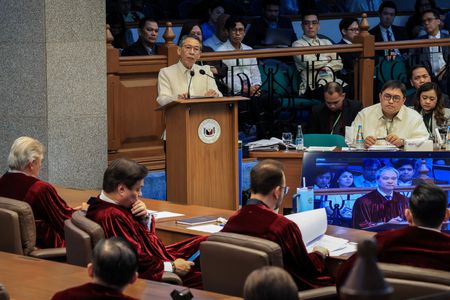
MANILA — The Philippine Senate issued orders Monday requiring banks and the Anti-Money Laundering Council to turn over financial records tied to Vice President Sara Duterte, her husband, and a number of related entities — a significant step forward for prosecutors building their case against her.
The Senate, which is functioning as an impeachment court in the proceedings, placed limits on how the documents can be used. Senators specified that the records are intended solely to establish a baseline for evaluating Duterte’s assets, financial transactions, and business interests during her current term in office — not to introduce any new charges against her.
The House of Representatives voted to impeach Duterte on May 11, citing allegations of unexplained income, bribery, and corruption. She also faces accusations of making threats against President Ferdinand Marcos Jr., the first lady, and a former House speaker.
Duterte and Marcos, both heirs to two of the Philippines’ most influential political dynasties, ran together on a joint ticket and won by a wide margin in 2022. However, their political partnership eventually fell apart, with Duterte publicly criticizing Marcos for what she called poor leadership and incompetence.
Senator Francis Escudero, who is presiding over the impeachment trial, explained the court’s decision in a statement: “After examining the records sought, the Court finds that the requested documents meet the requirements set forth.”
The court also approved a subpoena covering tax records, though it stopped short of ordering their immediate release. The ruling noted that any disclosure of those documents must first satisfy tax confidentiality regulations.
Duterte’s political future hangs in the balance. A conviction would require at least 16 of the Senate’s 24 members to vote against her — and if that threshold is met, it could effectively end her reported plans to seek the presidency in 2028. Duterte has maintained her innocence throughout the proceedings, calling the entire process politically driven.
A man died in the northern Italian city of Bologna after officers pinned him to the ground while attempting to place him under arrest, an incident caught on camera that has ignited street protests and launched a criminal investigation.
The victim, Abderrahim Fakir, was a Moroccan-born entrepreneur who operated a small removals and cleaning business. He died on Sunday after police were called to the scene to address reports of a man behaving aggressively and damaging a vehicle, according to Italian media.
Video of the incident, recorded by a nearby resident and widely circulated on social media, drew hundreds of protesters into the streets and prompted reactions from politicians across Italy’s political spectrum. Opposition figures called for accountability, while members of the ruling coalition defended the officers involved.
According to the local newspaper Il Resto del Carlino, protesters chanted anti-police slogans and knelt with raised fists — a gesture tied to the Black Lives Matter movement that gained prominence in the United States following the 2020 death of George Floyd in Minneapolis.
The footage shows Fakir lying face down on the ground as two officers hold him in place. In the video, he can be heard repeatedly crying out for help and struggling to breathe before his movements gradually cease.
Bologna prosecutors and Italy’s Interior Ministry had not responded to requests for comment as of the time of reporting. Bologna police stated they would hand over body camera footage from the responding officers to investigators.
Media reports indicate that officers called for emergency medical assistance after arriving in the northeastern neighborhood of Pilastro shortly after noon, when temperatures had climbed above 35 degrees Celsius, or 95 degrees Fahrenheit. Reports say police attempted to calm Fakir before deploying pepper spray and restraining him on the ground while trying to handcuff him, after he responded aggressively.
Fakir’s sister, Khadija, spoke to reporters as hundreds of people gathered in Pilastro on Sunday. “They killed my brother in cold blood, I want justice,” she said.
A second demonstration was scheduled for central Bologna on Monday, with support from centre-left Mayor Matteo Lepore, the Cgil trade union, and several left-leaning organizations.
The right-wing League party, a member of Prime Minister Giorgia Meloni’s governing coalition, called for a thorough investigation but maintained that the officers were “doing their duty” when they responded “at the request of exasperated citizens.”
Ryanair CEO Michael O’Leary revealed Monday that preliminary findings from an investigation into a disturbing in-flight incident appear to point toward foreign object damage as the likely cause.
The incident involved a passenger who was partially pulled through a broken window aboard a Boeing 737. According to O’Leary, the damage appears to have originated with the engine during takeoff at Thessaloniki.
“Initial indication would suggest it looks like a foreign object damage to the engine on takeoff at Thessaloniki, but we don’t have, we can’t say that definitively,” O’Leary told analysts during a presentation of Ryanair’s financial results for the April-June quarter.
O’Leary noted that investigators are still working through the details and that a formal draft report on the incident is expected to be released in approximately 28 days, with a more comprehensive report to follow after that.
Wall Street has its eyes locked on the semiconductor industry this earnings season, as chipmakers are projected to deliver massive profit increases — while their stock prices swing wildly from day to day.
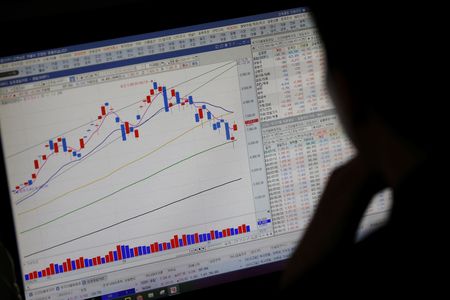
The PHLX Semiconductor index has climbed 65% so far this year, far outpacing the S&P 500’s 9% gain. But the 30-stock index has hit a rough patch in July, falling 18% for the month after moving at least 3 percentage points up or down on half of July’s 12 trading days. By the end of last Friday, the index had also dropped more than 20% from its all-time closing high set in late June.
Despite the turbulence, the earnings outlook for the sector remains strong. Profits for S&P 500 semiconductor and semiconductor equipment companies are forecast to jump 133% compared to the same period last year. According to Tajinder Dhillon, head of earnings research at LSEG, that group alone is expected to account for roughly 44% of total S&P 500 earnings growth for the second quarter. Overall S&P 500 earnings are projected to have risen 26% year-over-year, based on LSEG data through Friday.
Among U.S. chipmakers reporting this week, Intel and Texas Instruments are set to release their results. Nvidia won’t report until late August.
But recent earnings reports suggest investor sentiment may already be shifting. Shares of Taiwan Semiconductor Manufacturing — the world’s largest contract chipmaker — actually declined last Thursday, even after the company announced a 77% surge in second-quarter net profit that beat market expectations. Earlier in July, shares of Samsung Electronics dropped sharply despite the company reporting a 19-fold increase in second-quarter operating profit.
Rick Meckler, a partner at Cherry Lane Investments, a family investment office in New Vernon, New Jersey, expressed surprise at the scale of the daily price swings. “The daily moves for companies this big are just shocking,” he said. “Would the earnings picture change that? Certainly a disappointing outlook could.”
Market analysts point partly to the growing influence of retail investors and leveraged exchange-traded funds as a driver of the volatility. Leveraged ETFs magnify market swings by increasing demand for shares when prices rise and accelerating selling when prices fall. “One thing that’s driven a lot of these stocks has been option activity by retail investors. That’s a big factor in just how volatile the stock moves have become,” Meckler added.
South Korea’s financial regulator took action Thursday, announcing measures aimed at reducing market swings caused by single-stock leveraged ETFs tied to chipmakers Samsung Electronics and SK Hynix. Those ETFs were launched in South Korea in late May.
Investment firm BTIG noted in a recent report that while the semiconductor sector’s performance has been remarkable, so has its instability, with some warning signs that “rhyme with the March 2000 peak.”
Jake Dollarhide, chief executive officer of Longbow Asset Management in Tulsa, said rising AI spending has fueled the chip frenzy, but concerns are growing that enthusiasm for the sector has gotten ahead of reality. “This chip demand for AI is not a forever scenario,” Dollarhide said, warning that during earnings season, “anybody who disappoints is going to get clobbered.”
Chipmakers have historically been seen as cyclical businesses — companies whose fortunes rise and fall with the broader global economy. The AI boom has only deepened that connection.
Daniel Morgan, a portfolio manager at Synovus Trust in Atlanta, offered a more optimistic take, noting that demand for chips is spreading beyond data centers into industrial electronics, wireless communications, and the automotive sector. “You’re seeing a broadening out,” he said. However, he pointed out one area of continued weakness: chips used in mobile handsets, with Qualcomm among those companies facing headwinds in that space.
When the United States and Israel launched military operations against Iran at the end of February, energy analysts warned that oil prices could skyrocket to $150 — or possibly even $200 — per barrel. The concern was that roughly one-fifth of the world’s oil supply, which travels through the critical Strait of Hormuz, could be cut off from global markets.
Those worst-case scenarios never materialized. Brent crude futures topped out at approximately $126 a barrel — staying well under the all-time record of $147 set in 2008. From the start of the conflict on February 28 through June 11, when U.S. President Donald Trump halted strikes against Iran, the average price was just $101 per barrel. By early July, prices had briefly fallen back to pre-war levels near $70.
Here are five reasons oil prices have remained relatively contained — at least for now.
1. China Pulled Back Sharply
The most unexpected development came from China, the planet’s top oil-importing nation. By June, Chinese crude imports had dropped to their lowest point in nearly ten years. The country reduced fuel exports, saw its citizens shift toward electric taxis rather than personal vehicles, and its petrochemical industry also cut back on volumes.
2. American Oil Production Hit a Record
The United States, the world’s leading oil producer, ramped up output significantly, reaching a record 13.93 million barrels per day by April. Washington also tapped into its Strategic Petroleum Reserve as part of a historic 400-million-barrel release that was coordinated through the International Energy Agency in March, helping to soften the blow of supply disruptions.
3. Trump’s Statements Kept Traders Off Balance
President Donald Trump repeatedly caught oil market speculators off guard by making public statements about potential peace deals and the possible reopening of the Strait of Hormuz. This uncertainty made many traders reluctant to place large bets on rising prices, fearing sudden reversals.
“Everybody is bullish now, but nobody is long,” said Ilia Bouchouev of the Oxford Institute for Energy Studies.
After funds reduced their bullish positions in Brent futures to the smallest level of the year in early July, they made their biggest single-week increase in six months during the week ending July 14, according to data from the ICE exchange. Even so, that position — valued at roughly $14.8 billion based on Monday’s prices — remains more than 50% below the six-year peak reached in late March.
Ole Hansen, head of commodity strategy at Saxo Bank, noted that markets are experiencing what he called “headline fatigue,” meaning fresh announcements are having a diminishing effect on prices.
4. Oil Flows Through Hormuz Partially Recovered
Saudi Arabia, the Gulf region’s largest oil exporter, significantly boosted shipments through its Red Sea port at Yanbu, helping to make up for barrels that could no longer move through the Strait of Hormuz. Hormuz shipments briefly resumed in June, easing supply worries, but declined again in July as fighting picked back up.
5. Physical Oil Supply Remains Plentiful
Traders report that there is currently no shortage of physical oil available for immediate delivery, which has limited how much prices have reacted to the latest flare-ups in the conflict. In Europe, crude oil price differentials — such as those for North Sea Forties crude, which help establish the global Brent benchmark — have actually fallen to a discount after hitting a record premium back in April.
“There is a lot of prompt crude around for now,” said veteran trader Adi Imsirovic. “It may not last!”
Motorists traveling southbound on Crest Road should be aware of a lane restriction currently in place due to construction activity.
The right lane is closed along the southbound stretch of Crest Road between Lakewood Drive and Marsh Road. The closure is expected to remain in effect until 5 PM.
Drivers are encouraged to use caution when passing through the area and to consider alternate routes if possible to avoid delays.
Salem Church Road is currently closed to traffic in both directions between Pulaski Highway (US 40) and Cornell Drive as construction work continues in the area.
The road closure is expected to last through July 30th, 2026, according to transportation officials. Motorists traveling through the area are advised to allow extra time and seek alternate routes to avoid delays.
MANILA — The Philippine military is accusing Chinese coast guard personnel of aggressively hitting one of its navy sailors in the head with a wooden baton during a confrontation in the South China Sea. The country’s defense ministry described the Monday incident as part of what it called a “clear pattern of provocative and hostile behaviour” by China.
According to a statement from the Armed Forces of the Philippines, one Filipino sailor was hurt and a navy rubber boat was damaged during the encounter at Second Thomas Shoal, which the Philippines refers to as Ayungin.
The armed forces said a Chinese Coast Guard rigid hull inflatable boat carrying eight personnel came in close to the Philippines’ grounded warship at the shoal and began taking photos and videos. When two Philippine navy vessels moved in to push the Chinese boat away, the situation turned violent.
The Chinese personnel “reacted violently and aggressively by striking Philippine navy personnel with a wooden baton,” the Philippine armed forces said. The military also released a 25-second video clip of the confrontation, in which one of the eight Chinese personnel can be seen hitting a crew member aboard a nearby rubber boat.
The Philippine military issued a direct call to action: “We call on the People’s Liberation Army and the China Coast Guard, including their maritime militia, to put a stop to their illegal, coercive, aggressive and deceptive actions within the West Philippine Sea and adhere to the 2016 Arbitral Award that affirms the Philippines’ lawful maritime rights under international law.”
The incident comes as Southeast Asian ministers are gathered in Manila this week for high-level diplomatic meetings, with Chinese Foreign Minister Wang Yi also present. Tensions in the South China Sea are expected to be a topic of discussion.
The Philippine foreign ministry condemned the attack on its navy personnel as an “act of violence” that is “unacceptable” and said it warrants a diplomatic response.
Second Thomas Shoal sits within the Philippines’ 200-nautical mile exclusive economic zone and is approximately 1,300 kilometers — about 808 miles — from the Chinese mainland. China refers to the location as the Renai Reef.
This is not the first time tensions at the site have turned physical. A June 2024 incident also became violent, resulting in a Filipino sailor losing a finger. That confrontation eventually led to a provisional agreement with China allowing resupply missions to reach the grounded Philippine vessel. The Philippines has long accused China of interfering with those resupply operations.
China has consistently denied acting aggressively during South China Sea encounters and has accused the Philippines of unlawfully entering what it considers its own waters. Neither the Chinese embassy in Manila nor China’s defense ministry responded to requests for comment following Monday’s incident.
HONG KONG (AP) — A newly released Chinese artificial intelligence model known as Kimi K3 has stopped accepting new subscribers after a massive wave of interest pushed the system to its limits within just days of becoming publicly available.
The situation underscores the growing challenges Chinese AI developers face in scaling up to meet surging demand, both domestically and internationally, as competition between the United States and China in the technology sector continues to intensify.
Chinese AI models built on open-source frameworks and offered at lower costs — including DeepSeek’s latest V4 — have been rapidly gaining worldwide attention. Earlier in 2025, DeepSeek sent shockwaves through global markets and helped establish China as a genuine competitor to the U.S. in the frontier AI space, where Chinese models are largely open source.
“Kimi K3 has received far more love than we expected,” wrote Moonshot AI, the Beijing-based company behind the model, in a post on X late Sunday. “Over the past 48 hours, demand has pushed close to the limits of our current capacity.”
Moonshot AI said it is focusing on serving existing subscribers while temporarily putting new sign-ups on hold. “We’re adding capacity as fast as we can and will reopen new subscription spots in batches,” the company added. A similar message was shared on Chinese social media platforms.
Kimi K3 made its public debut late last week, positioning itself as a direct challenge to more advanced AI systems developed by companies like Anthropic, OpenAI, and others. With 2.8 trillion parameters — a standard measure of an AI model’s power and capability — it is considered the largest open-source AI model in the world.
“New model releases generally trigger massive interest, which can strain existing compute infrastructure,” said Lian Jye Su, a chief analyst at the technology research and advisory group Omdia. “This does show Moonshot AI does not have sufficient compute chips to serve the current surge in demand.”
Su added that Moonshot AI likely did not fully anticipate just how popular K3 would become. The model is described as “very demanding” when it comes to computing requirements, making it both difficult and costly to allocate the necessary resources.
After its release, Kimi K3 climbed to the top of the rankings on Arena, an AI model evaluation platform, based on front-end coding capability — a widely used measure of AI performance among major advanced models.
The launch has also weighed on shares of major American technology companies, with investors worried that more affordable Chinese AI models could erode the pricing power and market demand of U.S. AI firms. This comes even as U.S.-led export restrictions have already blocked China from accessing some of the world’s most advanced technologies, including cutting-edge computer chips.
K3 is among several recent Chinese AI releases drawing strong reactions globally. Over the weekend, Chinese tech giant Alibaba previewed its latest Qwen3.8 Max model, which it described as having 2.4 trillion parameters, calling it one of the world’s most powerful models and ranking it second only to Anthropic’s Fable 5. Last month, Chinese startup Zhipu, also known as Z.ai, launched its GLM-5.2 model, which quickly gained widespread adoption around the world.
Jury selection got underway Monday in the murder trial of a Massachusetts mother accused of strangling her three young children while receiving psychiatric treatment following childbirth.
Lindsay Clancy has entered a not guilty plea in connection with the deaths of her children — Cora, age 5; Dawson, age 3; and Callan, who was just 8 months old at the time of their deaths on January 24, 2023.
Clancy, who is now 36 years old, jumped from a window after the children were killed and suffered paralysis as a result of the fall. She is currently being held at a state hospital.
The case is expected to put a spotlight on the rare and complex condition known as postpartum psychosis, which affects a very small number of women who experience delusions and sometimes hallucinations following childbirth. Both Clancy’s legal team and her husband maintain that she was not in control of her actions.
The prosecution, however, argues that the killings were intentional and carefully premeditated — not the actions of someone who had lost their grip on reality.
On the day of the incident, Clancy — a former labor and delivery nurse at Massachusetts General Hospital — sent her husband, Patrick Clancy, out of the home by asking him to pick up takeout food and stop by a pharmacy. She then used exercise bands to strangle the three children inside the family’s residence in Duxbury, a community roughly 30 miles, or about 48 kilometers, south of Boston.
A panel of 18 jurors, which includes six alternates, is expected to be seated over the course of several days. The full trial is anticipated to run for several weeks.
Clancy’s attorney, Kevin Reddington, does not contest the fact that she killed the children, but intends to pursue an insanity defense on her behalf.
“This whole case is an extreme tragedy,” Reddington said.
Earlier this year, both Lindsay and Patrick Clancy filed separate lawsuits alleging that her medical providers failed to properly identify, treat, and monitor her for what the suits describe as a “severe postpartum psychiatric condition.”
Lindsay Clancy’s lawsuit described a pattern of worsening symptoms — including depression, difficulty sleeping, and recurring voices urging her to harm herself and her children. She had been admitted to a psychiatric hospital just weeks before the killings took place.
The lawsuit stated: “Lindsay Clancy did everything a mother in her situation could do. She recognized something was wrong with her. She sought medical treatment. She went to emergency rooms. She called crisis hotlines. She admitted herself to hospitals. She took the medication prescribed to her. She communicated her worsening symptoms to her providers. She told them the medications were making her worse.”
According to her account, on the day of the killings she heard voices telling her, “This is your last chance. Kill the children so you can kill yourself.”
Patrick Clancy is listed as a potential witness by both the defense and the prosecution. In public statements, he has expressed forgiveness toward his wife.
In a GoFundMe post written just days after the tragedy, Patrick Clancy described the “shock and pain” as “excruciating and relentless,” while asking the public to remember his wife as the person she was before that day.
“The real Lindsay was generously loving and caring toward everyone — me, our kids, family, friends, and her patients. The very fibers of her soul are loving. All I wish for her now is that she can somehow find peace,” he wrote.
Alibaba’s online shopping platform AliExpress has been hit with a record-breaking €550 million fine — equivalent to approximately $629 million — by European Union regulators for failing to prevent illegal, unsafe, and counterfeit products from being sold through its marketplace.
The European Commission announced the penalty on Monday, marking the third fine ever issued under the EU’s Digital Services Act, a sweeping law that requires major online platforms to take stronger action against illegal and harmful content.
Regulators first formally charged AliExpress back in June of last year, accusing the company of failing to meet a core requirement of the Digital Services Act: properly assessing and reducing the risk of illegal products spreading across its platform.
AliExpress has until October 20 to put forward corrective measures. If the European Commission determines in December that those measures fall short of DSA standards, the company could face yet another round of financial penalties.
EU tech chief Henna Virkkunen addressed reporters on the matter, saying, “This is very dangerous for consumers, unfair for companies which are complying with all our rules.”
Virkkunen also highlighted the sheer scale of AliExpress’s European presence, noting the platform had 193 million users across Europe last year. By comparison, Shein had 156 million users and Temu had 130 million. Temu has previously been fined under the Digital Services Act, while Shein is currently under investigation. “One in five Europeans say they shop once a month from Shein, Temu and AliExpress,” Virkkunen added.
Alibaba had not responded to requests for comment at the time of publication.
According to the Commission, AliExpress failed to adequately determine whether it had sufficient staff to review potential risks and overestimated how well its own systems were working to detect and remove prohibited items. Regulators also criticized the platform’s recommendation and advertising tools for making the spread of illegal products worse, and took issue with the company relying on a single measurement to gauge the effectiveness of its content moderation efforts.
Because AliExpress was not catching illegal products effectively, items ranging from counterfeit goods to unsafe children’s toys and potentially dangerous cosmetics were left available on the platform for weeks at a time, the Commission said.
Regulators also found fault with the company’s penalty system for rule-breaking sellers, saying it was ineffective and allowed penalized vendors to keep selling prohibited items. Additionally, the Commission said AliExpress’s so-called “brand authorisation” program — designed to prevent counterfeit sales — was understaffed, poorly run, and easily bypassed by sellers peddling fake merchandise.
Despite the size of the fine, regulators noted that the relative newness of the Digital Services Act was taken into account as a mitigating factor, meaning the penalty could have been even steeper.
The €550 million fine dwarfs previous DSA penalties. Elon Musk’s social media platform X was fined €120 million in December of last year, and Temu was ordered to pay €200 million in May of this year — both for Digital Services Act violations.
It’s worth noting that AliExpress previously avoided a fine last June — which could have reached as high as 6% of its total global annual revenue — after agreeing to take steps to address the spread of potentially illegal and adult content on its platform.
Just five years ago, PayPal was one of Wall Street’s most celebrated companies and a dominant force in digital payments. Today, the picture looks very different — its stock has cratered, Apple Pay has overtaken it in the U.S. market, and the company is now fending off a takeover bid it doesn’t want.
Earlier this week, PayPal received a $53 billion offer to be taken private, put forward by up-and-coming competitor Stripe and private equity firm Advent International. While PayPal’s board is actively discussing the proposal, sources familiar with the situation say the board believes the offer price of $60.50 per share falls short of what the company is worth.
The situation is a striking reversal for a company that helped build the foundation of modern e-commerce and popularized email-based payments, launching the careers of tech figures including Elon Musk and Peter Thiel along the way. The firm was established in 1998 in San Jose, California, purchased by eBay in 2002, and then spun off into its own independent company in 2015. Its growth continued to impress investors, pushing its market value as high as $360 billion in 2021.
Since that peak, however, the company’s momentum has stalled. Growth has slowed, competition has sharpened, and multiple efforts to breathe new life into the business have largely failed to deliver results.
Industry observers are now debating the true value of PayPal’s vast payments network — which includes more than 400 million consumer accounts and a widely used merchant checkout system — and whether the company would fetch more money as a whole or by selling off individual pieces, like the popular Venmo payment app.
PayPal chose not to comment for this report.
Back in February, when the company announced a new chief executive, it acknowledged that it needed to rethink its standing against rivals and within the broader payments industry. “While some progress has been made in a number of areas over the last two years, the pace of change and execution was not in line with the Board’s expectations,” the company said in a public statement.
Enrique Lores, who stepped into the CEO role in March, has not said whether PayPal would entertain a sale.
Analysts point to missed opportunities as a key reason for PayPal’s struggles. While larger players like Apple, Google, and Samsung, along with newer rivals such as Stripe and Affirm, kept rolling out fresh payment options, PayPal was slow to move into digital banking, explore new commerce tools, or adapt to the shift toward mobile payments.
“Why bother becoming a digital bank if you can just be the world’s biggest checkout button?” said Dan Dolev, a senior analyst at Mizuho. “I think it was too easy to drink the honey straight from the checkout jar.”
One source familiar with the company’s internal discussions said both investors and industry insiders have grown increasingly frustrated with PayPal’s performance. The company predates the iPhone, yet last year Apple Pay’s U.S. market share surpassed PayPal’s by 10 percentage points, according to research firm PYMNTS Intelligence.
PayPal has also fallen behind competitors in embracing artificial intelligence and what’s known as agentic commerce — a model in which AI systems negotiate and complete purchases on behalf of users.
Owen Lau, an analyst at financial services firm Clear Street in New York, said PayPal focused too heavily on grabbing market share by cutting prices, without charging enough to generate solid returns. Clear Street launched coverage of PayPal this week with a hold rating and a price target of $61 per share, compared to a Friday stock price of $57.09.
Lau noted that growth has slowed across major parts of the business, including Venmo, while newer offerings like buy now, pay later haven’t delivered as expected. PayPal’s user base has leveled off, he said, meaning the company now needs to focus on squeezing more profit from the customers it already has rather than chasing new ones.
“They just want to win market share,” he said. “They’re not charging appropriately, and they’re losing momentum in other parts of the business.”
PayPal has cycled through three CEOs in the past four years. The company launched its second major turnaround effort this past March, following the departure of longtime leader Dan Schulman in 2023.
Adding to the internal turbulence, a technology executive familiar with the matter said a proposed deal last year with OpenAI — which would have embedded PayPal’s digital wallet and payment processing into ChatGPT — sparked a conflict between the board and the executive team then led by CEO Alex Chriss, who had succeeded Schulman. Chriss later left the company after the board asked to put the deal on hold. Lores was subsequently appointed.
Despite the board’s reservations, sources say it is unlikely to support a deal at the $53 billion price point. Some board-level conversations have focused on whether the offer even justifies opening formal negotiations. The board is also weighing whether the company could ultimately be worth more if it successfully executes its latest turnaround strategy.
Wall Street analysts believe the bidders have room to increase their offer and are expected to do so. Stripe and Advent have reportedly assembled $17 billion in equity and secured $50 billion in bank financing, giving them the financial capacity to sweeten the deal.
How PayPal performs when it releases its quarterly earnings this month could influence the bidders’ next move. A disappointing report would likely increase pressure on PayPal to negotiate, while a strong showing might encourage a higher offer.
Competing bids from other buyers appear unlikely, however. Analysts at Morgan Stanley said this week that the Stripe and Advent proposal represents the most credible route to unlocking value for PayPal, a company they described as facing fierce competition and a customer base that has stopped growing.
One of Mexico’s most notorious drug traffickers is expected to spend the rest of his life behind bars after a federal court in Brooklyn is set to hand down a life sentence Monday morning to Ismael “El Mayo” Zambada, the longtime co-leader of the powerful Sinaloa Cartel.
Zambada, 76, stands alongside Joaquin “El Chapo” Guzman as one of the highest-profile Mexican drug lords ever sentenced in an American courtroom. Guzman received his life sentence back in 2019.
As part of a plea agreement reached in August 2025, Zambada admitted guilt on charges of racketeering conspiracy and running a continuing criminal enterprise. The Justice Department agreed not to pursue the death penalty, though the charges themselves carried a mandatory life sentence. Over the course of his criminal career, Zambada admitted to overseeing the shipment of millions of kilograms of cocaine into the United States.
U.S. District Judge Brian Cogan is scheduled to formally impose the sentence at a 10:30 a.m. hearing — 2:30 p.m. Greenwich Mean Time — at Brooklyn’s federal courthouse.
Zambada was taken into custody in July 2024 when a plane carrying him and Joaquin Guzman Lopez — a son of El Chapo — touched down at a small airstrip in New Mexico. Guzman Lopez has since entered a guilty plea on drug trafficking charges of his own.
Zambada’s attorney, Frank Perez, noted in a July 6 court filing that his client fully understood he would be sentenced to life when he chose to accept responsibility. Perez also asked Judge Cogan to recommend to federal prison officials that Zambada be housed in a facility capable of providing appropriate medical care, given his age.
Federal prosecutors from the Brooklyn U.S. Attorney’s office pushed back, arguing that the prisons suggested by Perez may not be able to adequately manage the security risks Zambada presents — including the concern that he could potentially continue directing cartel operations even from inside a prison cell.
“Those security concerns will continue for the foreseeable future because individuals loyal to the defendant continue to control the Cartel,” prosecutors stated in a July 13 court filing.
El Chapo Guzman is currently serving his life sentence at a maximum-security federal prison in Colorado.
U.S. stock index futures moved slightly higher Monday morning, offering a modest recovery after last week’s steep decline driven largely by a selloff in semiconductor stocks. Investors are now shifting their focus to a busy stretch of corporate earnings reports that could determine whether Wall Street’s artificial intelligence-fueled rally has staying power.
The second quarter earnings season accelerates this week, with several high-profile companies set to release their financial results, including Alphabet, Tesla, Intel, and IBM.
Alphabet, counted among the so-called “Magnificent Seven” group of megacap technology stocks, is considered a major player in AI infrastructure, pouring billions of dollars into data centers and related buildout projects.
That wave of AI-related capital investment has been a significant force behind this year’s stock market gains, boosting semiconductor companies and other businesses seen as beneficiaries of the technology expansion — helping push major U.S. indexes to record highs along the way.
Results from Intel and Texas Instruments will draw particular scrutiny after chip stocks surged earlier this year only to reverse sharply in recent weeks. The Philadelphia SE Semiconductor Index finished Friday more than 20% below its late-June peak, a level that officially marks a bear market decline.
Kathleen Brooks, research director at XTB, offered a cautious outlook: “If earnings reports in the coming weeks suggest that we remain in the spend phase of the AI buildout, investors are likely to get more impatient, and the sell-off could drag on over the summer months.”
As of 5:18 a.m. Eastern Time, Dow E-minis were up 106 points, or 0.2%, while S&P 500 E-minis gained 16.5 points, or 0.22%. Nasdaq 100 E-minis climbed 111.75 points, or 0.39%.
All three major U.S. indexes posted significant losses last week, weighed down by the dramatic pullback in semiconductor shares. Those losses came despite relatively positive inflation data that reduced some fears about a potential Federal Reserve interest rate increase later this month, and even as major U.S. banks reported encouraging earnings to kick off the season.
According to CME’s FedWatch tool, markets are currently pricing in roughly a 12% probability of a quarter-point rate hike at the Fed’s July meeting, with about a 53% chance of another increase in September.
Adding to investor anxiety, the ongoing conflict involving U.S. and Israeli forces against Iran continued to escalate. U.S. forces conducted strikes for a ninth straight day Monday, raising alarm over the potential disruption of shipping through the Strait of Hormuz.
The renewed hostilities have stoked fears that energy prices could climb back toward the elevated levels seen when the conflict began nearly five months ago, potentially reigniting inflation concerns. Brent crude oil rose above $90 per barrel earlier Monday — its highest point since early June.
Brooks added: “The escalations have also eroded the assumption that the crisis in the Middle East is over and energy prices would normalize.”
Fashion retailer Primark announced Monday that it is dropping prices by as much as 29% on hundreds of its top-selling clothing items for women, men, and children across all 19 of its markets.
The price cuts cover a wide range of popular products. Among the examples provided: a women’s supersoft boyfriend pyjama set now priced at £13 (about $17.51), down from £17; a women’s single breasted coat reduced to £22 from £26; and a men’s brushed check overshirt now going for £20, down from £25.
The move appears aimed at boosting sales performance as Primark gears up for its upcoming split from parent company Associated British Foods. Earlier this month, Primark reported a 2.2% drop in like-for-like sales during its third quarter ending June 20, with the company pointing to what it described as “a challenging consumer environment.”
In response to the sales decline, Primark said it is ramping up investment in efforts designed to drive sales growth going forward.
Associated British Foods confirmed back in April that it plans to spin Primark off from its food-related businesses no later than the end of 2027.
Good Monday morning, Delmarva! We’re kicking off the week with a beautiful summer day. Expect plenty of sunshine with a comfortable high near 85°F. A light east wind of 5 to 10 mph will keep things feeling pleasant throughout the afternoon — perfect for spending some time outdoors!
Enjoy the nice weather while you can, because changes are on the way. Tonight, clouds will begin to increase, and we could see showers and thunderstorms move in later in the evening. Overnight lows will settle around 71°F.
Heading into Tuesday, plan for a stormy day. Showers and thunderstorms are expected to continue through the day, with a warm high near 88°F. The combination of heat and humidity will fuel those storms, so some could be on the stronger side. Tuesday night stays unsettled as well, with additional showers and thunderstorms likely and lows around 73°F.
Make sure you have your umbrella ready for tomorrow! Stay weather-aware, Delmarva, and have a wonderful Monday!
Morocco is preparing to significantly expand its hospitality sector, with plans to add 60,000 hotel beds before the country takes on a co-hosting role for the 2030 FIFA World Cup, according to the nation’s tourism minister.
The North African nation has gained renewed global attention following a strong showing in the most recent World Cup, building on its historic run four years ago in Qatar, when it became the first African and Arab nation ever to advance to the semi-finals.
Government officials are looking to turn that spotlight into real, lasting benefits for Morocco’s tourism economy — a sector that supports hundreds of thousands of jobs and accounts for roughly 7% of the country’s gross domestic product.
“We see the 2030 FIFA World Cup as an accelerator, not an end in itself,” Tourism Minister Fatim-Zahra Ammor told Reuters.
To prepare for the tournament, Morocco’s government is pouring more than 190 billion dirhams — approximately $20 billion — into upgrading and building rail lines, roads, airports, stadiums, and other urban infrastructure. Morocco is one of three primary co-hosts for the event, alongside Portugal and Spain, though how many matches each country will host has not yet been determined.
Morocco has already made notable strides in its hospitality industry, adding 45,000 hotel beds over the past four years. That brings the country’s current total to just over 300,000 beds, according to official figures.
Last year, the country welcomed close to 20 million visitors, ranking it as the most-visited destination on the African continent. Officials are now aiming to draw 26 million tourists annually by 2030.
Morocco’s central bank projects that tourism revenue will climb to a record 161 billion dirhams by 2027, up from 138 billion dirhams in 2025.
Expanded air service from European cities has also helped fuel the sector’s growth. Ammor said the next stage of development will focus on drawing more visitors from China, the United States, and the Middle East by improving air connectivity to those markets.
Morocco is also working to spread tourism beyond its well-known destinations like Marrakech and Agadir. Part of that effort involves positioning the capital city of Rabat — home to centuries-old monuments, museums, and sports venues — as a destination for cultural gatherings, sporting events, and business travel.
“We need to make investments that create lasting value for Moroccan tourism,” Ammor said.
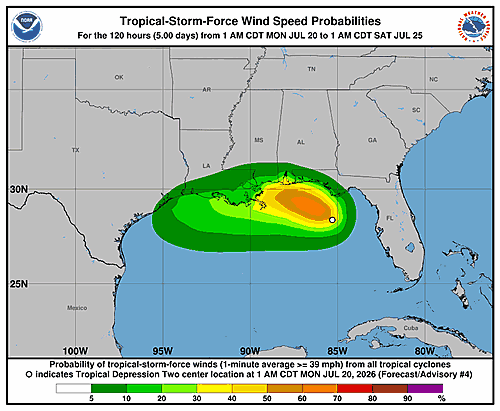
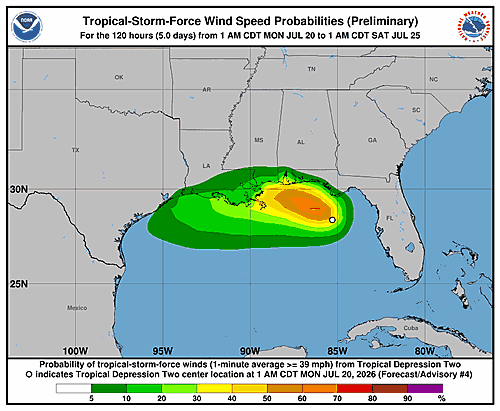
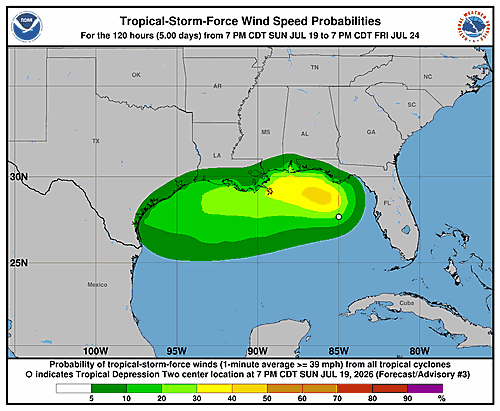
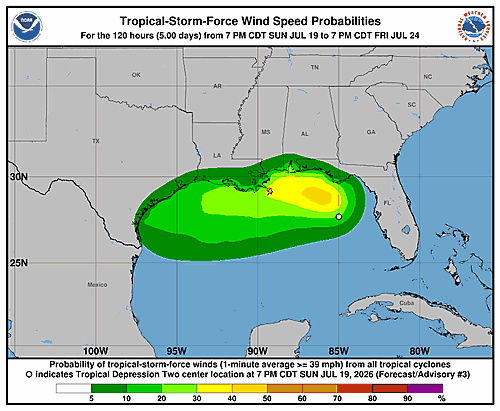
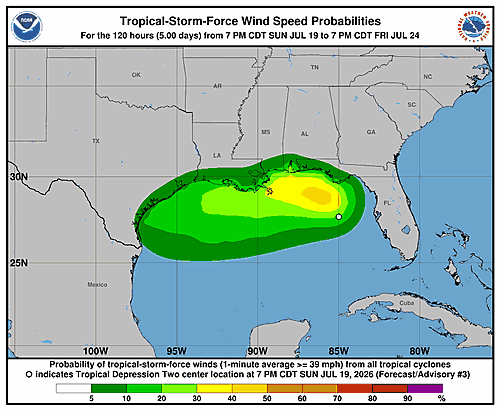
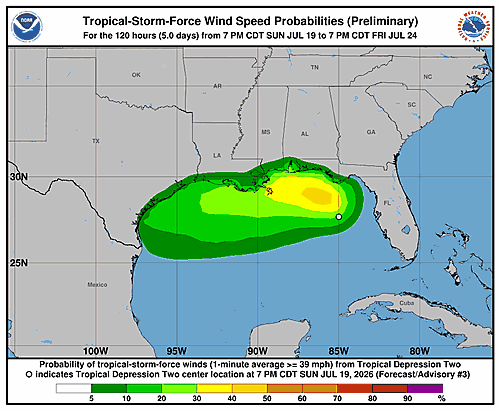
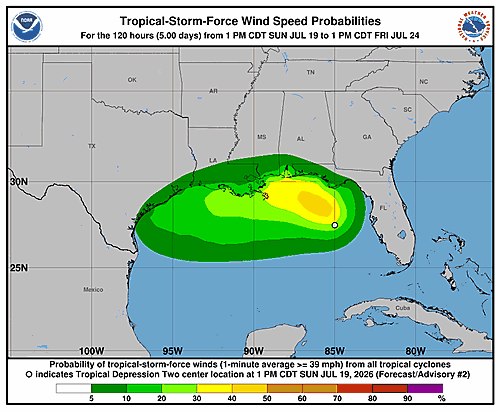
The National Hurricane Center has issued updated wind speed probability graphics for Tropical Depression Two, with the most recent data reflecting conditions as of Monday, July 20, 2026 at 9:22 AM GMT.
The graphics depict the probability of 34-knot wind speeds associated with the storm system over a 120-hour forecast period. These visuals are used to help forecasters and the public understand the potential reach of tropical storm-force winds.
Residents and boaters in areas that could be affected by this developing system are encouraged to stay informed through official National Hurricane Center updates as the storm continues to be monitored.
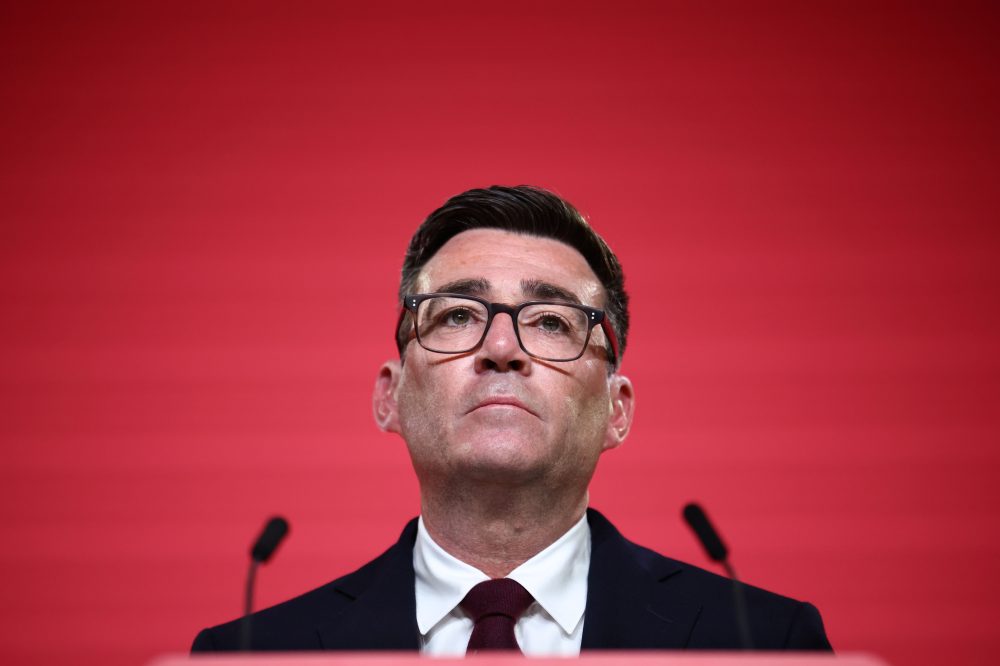
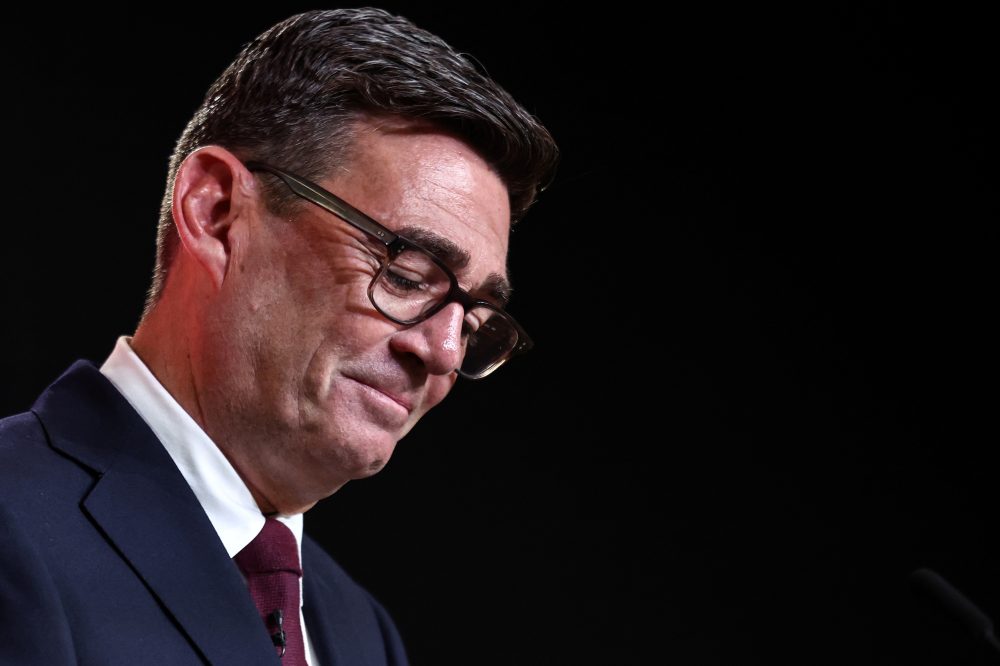
LONDON (AP) — Andy Burnham spent years working his way up before reaching the top — and now that he’s there, the clock is already ticking.
A decade ago, Burnham walked away from a 20-year career climbing the Labour Party ranks in London to head north and take on the role of Greater Manchester’s mayor. Just one month ago, he secured a return to Parliament by winning a high-stakes special election. This Monday, he will be sworn in as Britain’s 59th prime minister.
The abrupt collapse of Prime Minister Keir Starmer’s government after only two years in power has thrust the 56-year-old Burnham into the country’s top job — largely untested on the national stage and unfamiliar to much of the British public outside Manchester. He steps through the door of No. 10 Downing Street carrying enormous expectations and serious doubts about whether he can meet them.
“A whole range of people across the Labour movement and in the country have projected onto Andy Burnham their hopes and their fantasies about how the country should be run and what Labour should stand for and what Andy Burnham stands for,” said Joshi Herrmann, founder of Manchester news site The Mill. “He has got lots of people’s hopes up.”
Though Burnham made his reputation in Manchester, he was actually born in Liverpool and grew up in a commuter village situated between those two rival cities in northwest England.
His father worked as a British Telecom engineer and his mother as a receptionist. He was raised in a tight-knit Catholic family. Burnham has described himself as “not particularly religious,” but says Catholic teachings and the center-left Labour Party shaped his values and commitment to social justice.
In a recent interview with the Times, Burnham expressed sadness that his father, who has Alzheimer’s, is unaware of his son’s historic achievement. “The way I look at it, it’s his achievement as well,” Burnham said. “A whole family achievement, although he doesn’t know it.”
Burnham and his brothers were the first in their family to attend university — and not just any university. He studied at Cambridge, one of England’s oldest and most esteemed institutions.
“He needed a lot of persuading to apply because he felt that as a working-class boy, going off to Cambridge wasn’t for him,” said Stephen Harrington, Burnham’s former English teacher at St. Aelred’s Catholic High School, in comments to the BBC. “He didn’t believe in himself. But he did it, and the rest is history.”
Burnham has spoken openly about feeling like an outsider at Cambridge, where many classmates had attended elite private schools in the wealthier south of England. Nevertheless, he earned a degree in English and met his future wife, Dutch fellow student Marie-France van Heel, now a marketing executive. The two wed in 2000 and together have a son and two daughters.
After finishing his studies, Burnham worked as a journalist for trade publications before shifting to roles as a researcher and adviser to Labour politicians.
He was elected to Parliament in 2001 representing the Manchester-area constituency of Leigh, and steadily rose through government ranks under Labour Prime Ministers Tony Blair and Gordon Brown. Between 2007 and 2010, he served in Brown’s Cabinet, holding the positions of chief secretary to the Treasury, culture secretary, and health secretary.
A pivotal moment in his career came in 2009, when he was heckled while attending a memorial for the 1989 Hillsborough Stadium disaster, in which 97 Liverpool soccer fans were crushed to death. Families of the victims had spent years fighting to correct a false police narrative that blamed unruly fans for the tragedy.
Burnham became a fierce advocate for those families, helping push for a new inquest, a formal apology, and legislation requiring public officials to be truthful about disasters regardless of any reputational damage to themselves or their institutions.
After Labour lost power in 2010, Burnham ran for the party’s leadership twice — in 2010 and again in 2015 — falling short both times. In 2017, with Labour at a low point nationally, he left Parliament to pursue the mayoralty of Greater Manchester.
The mayoral role suited him well. He demonstrated a talent for coalition-building, an eye for opportunity, and a strong practical streak. His governing philosophy became known as “Manchesterism” — a business-friendly form of socialism focused on channeling both public and private investment into areas like transportation, housing, and infrastructure.
Manchester, once a manufacturing hub widely credited as the birthplace of the Industrial Revolution, had suffered greatly as British industry declined. Under Burnham’s leadership, the city experienced a revival, with new high-rise buildings rising on former industrial sites. He was also praised for bringing a fragmented public transit system under unified public control and improving its performance.
He traded in suits and ties for jeans and dark T-shirts, talked openly about his love for bands like Oasis, The Smiths, and New Order, and spent free time playing soccer or competing in DJ battles spinning 1990s music.
During the COVID-19 pandemic, he publicly clashed with Conservative Prime Minister Boris Johnson over what Burnham called a “London-centric” approach to managing the crisis — one he argued was unfairly punishing cities in the north. That confrontation earned him the nickname “King of the North,” a reference to the television series “Game of Thrones” that spoke to both his regional advocacy and his broader political ambitions.
Burnham has described his time away from national government as “unfinished business,” and his opportunity came when Starmer was pressured to resign by Labour colleagues worried about the party’s declining popularity.
To return to Parliament, Burnham needed a seat. A sitting Labour lawmaker stepped down, triggering a special election in the Manchester-area constituency of Makerfield. Burnham handily defeated the candidate from the anti-immigration party Reform UK, reinforcing his image as an election winner.
When the contest to replace Starmer as Labour leader was held, Burnham was the sole candidate.
He now promises to deliver “a new politics based on unity and hope” and “an economy that works for everybody,” regardless of where they live. A central element of his agenda is expanding the powers of regional leaders, and he has announced plans to establish a satellite prime ministerial office — a “No. 10 North” — in Manchester.
Herrmann noted that Burnham possesses real strengths, particularly his ability to craft a compelling narrative and a level of empathy that sets him apart from many politicians. He added that Burnham holds “a set of principles about trying to make the country fairer, trying to bring people out of poverty, that he really does believe in.”
Critics, however, argue that Burnham’s policy positions are short on specifics — particularly around how he intends to fund his various commitments. He will also confront many of the same stubborn challenges that derailed Starmer, including a sluggish economy, strained public services, and a cost-of-living crisis. His lack of experience in foreign affairs — from the ongoing war in Ukraine to managing relations with U.S. President Donald Trump — is also seen as a vulnerability.
Still, Sacha Lord, a Manchester music entrepreneur who served as Burnham’s nighttime economy adviser, says the new prime minister has a tougher edge than many people realize. “He’s not scared of locking horns with people,” Lord said. “Everybody thinks Andy’s this nice, cheeky-chappy guy. But trust me, when he wants something … he tends to get it.”
Ukraine sent more than 400 drones toward the Russian capital overnight, Moscow’s mayor announced Monday, in one of the most significant drone offensives against the city since the war began.
The massive strike came just hours after Russian forces pounded Kyiv and several other Ukrainian cities with ballistic missiles — the latest exchange in an ongoing cycle of retaliatory attacks that makes any prospect of a peace agreement seem increasingly remote, given that Russia’s full-scale invasion has now stretched past four years.
Ukrainian President Volodymyr Zelenskyy said Monday he planned to hold “key talks” as he works to manage a growing political crisis at home. The turmoil was triggered by a recent reshuffling of his government, which revealed a sharp divide between veteran military commanders and a younger generation of innovators over the best strategy for fighting the war.
At the center of the controversy is Zelenskyy’s decision to remove 35-year-old Mykhailo Fedorov from his role as defense minister while retaining 60-year-old Soviet-trained Gen. Oleksandr Syrskyi as the head of Ukraine’s armed forces. Zelenskyy now faces the challenge of convincing Ukrainians that those choices will not weaken the country’s war effort.
The decision sparked days of street demonstrations, with protesters voicing support for Fedorov and opposition to Syrskyi.
Moscow Mayor Sergei Sobyanin reported that the drone barrage began late Sunday and continued into the early hours of Monday morning. He said the majority of the drones were shot down well before reaching the city, with 85 intercepted in the immediate vicinity of Moscow.
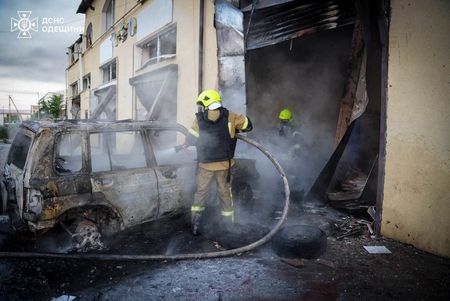
Andrei Vorobyov, the governor of the Moscow region, said 10 people sustained injuries in the attack. He also reported damage to several residential buildings and civilian infrastructure.
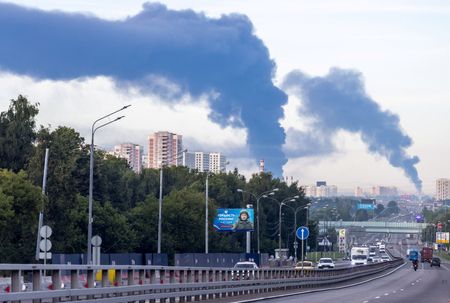
According to Yevgeniya Khrustaleva, who heads the Domodedovo district of the Moscow region, the assault ignited a fire at the Yuzhnye Vrata industrial park, located roughly 30 kilometers — about 18 miles — south of Moscow.
The Astra news outlet reported that a fire broke out at an oil storage facility in Podolsk, approximately 20 kilometers, or 12 miles, south of Moscow, though Russian officials have not confirmed that report.
Ukraine’s drone capabilities have advanced rapidly throughout the conflict, creating a significant challenge for Russia, whose vast territory is difficult to fully defend. Ukrainian forces have made a point of targeting Russian oil infrastructure in particular, causing fuel supply disruptions and putting pressure on Russian President Vladimir Putin.
For context, Russia’s Defense Ministry reported in May that its air defense systems shot down 1,054 Ukrainian drones within a single 24-hour period.
While Ukraine continues to appeal to its international allies for advanced air defense systems capable of stopping ballistic missiles — which are far more difficult to intercept than drones or cruise missiles — Russian forces have been exploiting gaps in Ukraine’s defensive capabilities.
Russia has sharply increased its use of ballistic missiles in recent weeks. A Sunday bombardment using those weapons killed at least six people and wounded dozens more, according to Ukrainian officials.
The Institute for the Study of War, a Washington-based think tank, noted late Sunday that “Russian forces have launched more ballistic missiles against Ukraine thus far in July than Russia reportedly produces each month.”
The organization added that “Russia appears to be dipping into its stockpiles to continue increasing the number of ballistic missiles it launches against Ukraine, as these missiles have a higher success rate than drones and cruise missiles.”
Russia’s Defense Ministry said Monday that overnight strikes targeted fuel storage tanks at the southern Ukrainian port city of Odesa.
Ukraine’s air force reported that Russia launched two missiles and 94 long-range drones at Ukrainian territory overnight. Of those, 81 drones were either jammed or shot down, while nine drones and one missile struck nine separate locations, causing damage.
Young children need time outside to develop healthy bodies and minds — but when temperatures climb, that outdoor time requires extra caution from parents and caregivers.
Summer heat can leave parents wondering: How long is too long outside? How can I tell if my child is overheating? What should I avoid doing?
Those questions are becoming more urgent as human-caused climate change produces longer, more intense heat waves across the country. A large portion of the United States endured a heat dome just last week.
Dr. Katherine Williamson, a pediatrician with Rady Children’s Health in Orange, California, said the growing frequency of extreme heat has made it a child safety issue on par with other well-known dangers. “We talk about drowning and choking with toddlers, and now we’re starting to add in heat,” she said. “It’s become something that’s more commonplace as a potential injury.”
So why are children at greater risk? Compared to adults, kids sweat less and have a faster metabolism, causing their bodies to heat up more quickly. In extreme conditions, their higher ratio of body surface area to mass means they absorb heat at a greater rate. Children also tend to spend more time outdoors than adults.
Parents should watch closely for warning signs on hot days. A baby who isn’t producing tears or isn’t going through wet diapers regularly may be dehydrated. Doctors recommend feeding infants smaller amounts more often to keep fluid levels up.
Tiredness and red, flushed skin are signals that a child needs to cool down, even if they aren’t necessarily sick. Williamson added that unusual fussiness can also be a sign a child is too warm.
To protect children in the heat, experts recommend avoiding the outdoors during peak afternoon temperatures, dressing kids in loose, light-colored clothing, applying sunscreen, and ensuring they stay well-hydrated. Water-heavy snacks like watermelon and strawberries are a smart choice on hot days.
Dr. Debra Langlois, a pediatrician at the University of Michigan Health C.S. Mott Children’s Hospital, offered a simple rule of thumb: “If you’re hot, your baby sure is going to be hot.”
Langlois recommends limiting how long infants and toddlers spend outside in hot weather, but she stops short of telling parents to stay indoors entirely.
It might seem logical to cover a stroller with a blanket to block sunlight — but experts warn against it. Even thin coverings stop air from circulating and can trap heat inside the stroller, raising the temperature around the child. A canopy or shade cover is a much safer option. Williamson also urges parents to check metal parts on strollers and equipment, which can heat up and cause burns.
One of the most serious heat dangers for young children is being left in a vehicle. Even with windows cracked or the car parked in shade, interior temperatures can spike rapidly. According to the National Highway Traffic Safety Administration, 31 children died from heat stroke inside vehicles in 2025.
The agency suggests that caregivers leave a purse or another personal belonging in the back seat, write themselves a reminder note, or place a stuffed animal on the front seat as a visual cue to check for a child before walking away from the car.
If you’re returning to a parked car with a baby on a hot day, check that the car seat’s metal hardware hasn’t become dangerously hot. Using a sunshade and pre-cooling the car with air conditioning before placing a child inside can help. Experts say opening the windows for 10 to 20 seconds while running the AC is the most effective way to quickly lower a hot car’s temperature.
American drivers are once again facing a $4-per-gallon average at the pump, as military exchanges between the United States and Iran continue to push energy costs higher.
The motor club federation AAA reported Monday that the national average for a gallon of regular gasoline has returned to $4. That marks a significant jump compared to the same time last year, when the average stood at $3.14 per gallon.
Keep in mind that $4 is a national average — some states have already been paying well above that figure for some time, while others are still seeing lower prices. The differences between states come down to several factors, including how close drivers are to fuel supplies and how much each state taxes gasoline.
The affordability crunch isn’t limited to the United States. People around the world are also grappling with elevated fuel costs as a result of the ongoing conflict.
Gas prices first crossed the $4-a-gallon threshold on average at the end of March. They slipped below that mark in mid-June and kept falling as crude oil prices eased following a temporary agreement between the U.S. and Iran. Even during that period of declining prices, President Donald Trump voiced frustration that gas prices were not dropping as fast as oil prices were.
With U.S. midterm elections on the horizon, the cost of living — including fuel and grocery prices — is expected to be a central concern for voters. Higher oil and gas prices tend to ripple through the broader economy, pushing up the cost of everyday goods.
Oil markets have been climbing again in recent days as tensions between the U.S. and Iran intensify. On Monday, Brent crude — the international benchmark — rose 3.2% to $90.95 per barrel, while U.S. benchmark crude gained 2.8%, reaching $84.04 per barrel.
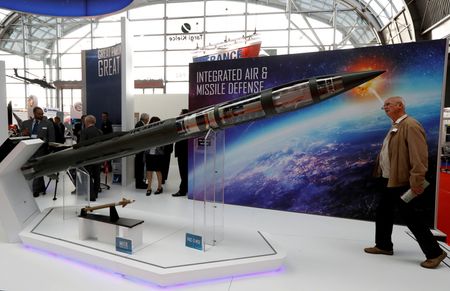
European missile maker MBDA is rolling out a new defensive weapon aimed at stopping swarms of low-cost drones and munitions — a challenge that modern wars in Ukraine and the Middle East have made increasingly urgent.
The weapon, called the Counter Mass Interceptor, was set to make its public debut at the Farnborough Airshow in England on Monday. It is designed to give European militaries and NATO allies a homegrown option for defending against waves of cheap, mass-produced weapons.
An MBDA representative explained the gap in current European capabilities, telling Reuters: “Today in Europe, there is no sovereign system capable of addressing saturation.”
“That means that if we want to address this threat, we are forced to rely on non-European systems, whether American, Israeli or others,” the representative added.
Currently, the United States relies on systems like the precision-guided APKWS — the Advanced Precision Kill Weapon System — which is produced by BAE Systems along with U.S. companies Northrop Grumman and General Dynamics.
The economic challenge of modern drone warfare is significant. Shooting down an inexpensive drone often requires a missile that costs far more than the drone itself, straining both defense budgets and ammunition supplies.
Russia’s widespread deployment of Shahed drones against Ukraine, along with Iran’s use of the same drones in its conflict with the U.S., has underscored the urgent need for affordable, scalable countermeasures.
The first version of the interceptor is designed to take down smaller drones. MBDA plans to follow it with a second, longer-range interceptor capable of targeting not only drones but also rockets, gliding bombs, and subsonic missiles — and able to function in any weather conditions.
MBDA said its British teams are currently leading development of the program, though a future version is expected to be led by the company’s French division.
According to MBDA, an initial version of the interceptor could be available as early as 2028. The company said production could be handled either by industrial partners or directly through MBDA itself, using existing facilities and repurposed assembly lines.
“We are moving closer to an automotive-industry model. The goal is to be able to manufacture at scale,” the MBDA representative said.
SHANGHAI — While China is pushing for widespread adoption of artificial intelligence across major industries, one medical technology company is choosing to pump the brakes on how quickly it deploys AI tools.
United Imaging Intelligence, an AI-focused subsidiary of Chinese medical technology giant Shanghai United Imaging Healthcare, is taking a deliberate and measured approach to rolling out artificial intelligence within its operations, according to the company’s top executive.
The announcement came on the sidelines of the World Artificial Intelligence Conference, where Chinese President Xi Jinping used the event to position China as a leader in a new global AI landscape and champion open-source technology.
Some Chinese companies have started tracking how much their employees use AI tools, treating that usage as a measure of how well the company is adapting to a new era of work.
But Zhou Xiang, co-CEO of United Imaging Intelligence, said his company is pushing back against that kind of pressure. He noted that software engineers and architects within the company have cautioned him about potential downsides, saying the technology is not yet mature enough for aggressive adoption.
“Some companies said … if you don’t use this much token, you must not be transforming into the new age. We are not that extreme,” Zhou said.
He also explained why the healthcare industry in particular warrants a more careful approach: “In healthcare, in medicine, the first mover advantage is not as drastic as other fields.”
The United Imaging group operates in the same competitive space as GE HealthCare, Siemens Healthineers, and Philips, all of which produce medical imaging and scanning equipment.
Jose Simao traveled from Angola to Portugal in 2022 to work as a bricklayer, joining a broader wave of immigrants who had become a vital lifeline for the country’s severely understaffed construction industry. Now, his future in the country is uncertain.
“I did everything the authorities asked of me, and I’m here legally. But the government changed the rules. I’m afraid they’ll send me back,” Simao told Reuters.
Portugal’s increasingly strict immigration policies — driven in part by the government’s effort to blunt the rise of a growing far-right movement — are cutting off the labor supply that construction companies depend on, even as those same companies race to address one of the worst housing crises in Europe.
The country’s centre-right coalition government says it wants to put a stop to what it calls “uncontrolled inflows” of migrants while ensuring that those already living in Portugal have adequate living conditions. But construction executives and industry organizations say the new measures have deepened an already serious worker shortage, threatening efforts to build affordable housing and putting at risk a sector that accounts for nearly 8% of the national economy.
“The government has restricted immigration too much and too quickly given the country’s needs,” said Oscar Afonso, an economics professor at the University of Porto. “It was a political choice, but immigrants are essential to the economy.”
The roots of Portugal’s immigration boom stretch back to 2017, when the previous centre-left government allowed foreign workers to enter without work visas and later apply for residency after a year of employment with documented social security contributions. Between 2021 and 2025, the number of foreign residents more than doubled, reaching a record 1.6 million — about 14% of the total population.
These workers filled a critical gap in construction, a sector that had seen many of its Portuguese employees leave for higher-paying jobs in wealthier European Union countries. Today, foreign workers account for roughly 30% of the construction workforce.
But the surge in immigrant numbers also fueled the anti-immigrant Chega party, whose rising popularity traditional Portuguese political parties have found difficult to counter. In 2024, Portugal followed the lead of many other European nations and tightened its immigration rules after a shift toward a centre-right government, with one cabinet minister declaring at the time that “the time for an irresponsible policy is over.”
A study by the Bank of Portugal found that the new restrictions had already cut net immigration roughly in half, down to about 6,200 people per month in 2025 compared to the year before. Experts expect the numbers to fall further.
For the construction industry, the timing is especially difficult. Portugal faces a severe housing shortage, with new rental lease costs nearly doubling since 2017. The country’s central bank estimates a deficit of 300,000 homes across the nation — equivalent to the entire housing stock of the capital, Lisbon.
Portugal has committed to building 150,000 affordable homes by 2030 through a €9 billion ($10.3 billion) program backed by the European Union. But even with a 34% jump in construction jobs between 2020 and 2025, the industry is still short on workers.
Portugal’s largest construction association, AICCOPN, estimates the sector needs at least 80,000 more workers just to keep existing projects moving. Albano Ribeiro, head of the Construction Workers’ Union, warned the shortfall could grow to 120,000 jobs as major projects get underway — including Lisbon’s planned new airport, which alone is expected to require 10,000 workers.
The government introduced a fast-track visa program last year to help companies hire workers from abroad. However, firms are required to offer employment contracts and arrange adequate housing for incoming workers before they arrive. So far, only 5,000 construction visas have been issued under the program.
“The sector needs workers to build homes … yet builders must now secure housing for incoming immigrants,” said Joao Sousa, chief executive of JPS, one of Portugal’s largest developers. “If there are no homes for those already here, how can we provide housing for people coming to Portugal?”
About 90% of JPS’s workforce of roughly 700 to 800 people are foreign nationals. Smaller companies, builders and union officials say, have even less ability to arrange dormitory-style housing near often remote job sites.
The stricter rules are also threatening the status of many workers already living and working in Portugal, like Simao. Although he has an employment contract, his two-year residence permit is set to expire in August. Under the updated regulations, he must now present a formal rental contract to renew it.
Simao rents a room in Lisbon for €380 a month through an informal arrangement, but his landlord is unwilling to provide official payment receipts — leaving his renewal in jeopardy.
“I came here to improve my life and hoped to one day bring my mother to Portugal,” he said.
Meanwhile, other European countries facing similar labor shortages — including Spain and Italy — are moving in the opposite direction, working to regularize undocumented migrants or expand work visa programs.
JPS’s Sousa said he supports expanding training programs and raising wages to draw more Portuguese workers into the industry, but acknowledged that foreign labor remains essential. “Many projects could be delayed or cancelled unless the government adopts exceptional measures, as other countries have, to attract and retain migrants,” he said.
AMSTERDAM — The explosive global demand for artificial intelligence has lifted Dutch company ASML to the highest position on Europe’s stock market, and now a question once considered unrealistic is gaining traction: could this firm become the first in European history to reach a $1 trillion valuation?
ASML holds a unique position in the technology world — it is the sole manufacturer of extreme ultraviolet, or EUV, lithography machines, which are essential for producing the most advanced computer chips. Analysts have compared the company’s role to that of a pickaxe seller during a gold rush, supplying the critical tools that power the AI revolution.
Following a strong second-quarter earnings report, analysts at Barclays, Susquehanna, and Bernstein have each set 12-month price targets above $2,600 per share. That would represent roughly a 49% increase from current levels and would put ASML’s market cap at approximately $1 trillion.
Carolyn Bell, lead portfolio manager for Stonehage Fleming’s Global Best Ideas — where ASML makes up about 8% of the portfolio — expressed confidence in the company’s prospects. “I think it has a really good chance of being the first company in Europe to hit the trillion mark,” she said. “I just don’t know when.”
ASML has already surpassed other major European corporations, including Roche, LVMH, Novo Nordisk, AstraZeneca, and SAP, in market value.
John Lamb of Capital Group, whose funds hold roughly 5% of ASML’s shares — worth approximately $35 billion — pointed to the company’s competitive advantages. “The fundamentals for the industry as a whole appear stronger than ever and ASML occupies a critical space,” he said, praising the firm’s “unique assets and wide moats.”
ASML shares currently trade at 38 times projected 2027 earnings, according to LSEG data — a significant premium over its top customer, which manufactures AI chips used by major technology and AI firms.
However, investors and analysts caution that reaching the trillion-dollar mark is far from guaranteed. Trent Masters of Alphinity Investment Management, which holds about 3% of its portfolio in ASML, warned that any slowdown in spending by major technology companies on data centers “will flow through to ASML’s earnings.” He also flagged supply chain management and geopolitical risks as concerns, though he said he remains “on balance very positive” about the company’s future.
One significant geopolitical concern involves proposed U.S. legislation known as the MATCH Act, which could restrict ASML’s ability to sell and service its equipment in China — a market the company expects to account for 20% of its sales in 2026.
Still, some analysts see reasons for optimism even if AI spending cools. Kinngai Chan of Summit Insights Group noted that memory chip manufacturers such as SK Hynix, Samsung, and Micron are transitioning from older equipment to ASML’s newer and more expensive EUV tools, creating what he described as a profitable “upgrade cycle” for the company.
ING analyst Marc Hesselink said ASML “can surely be” Europe’s first trillion-dollar firm. Additional growth potential includes a new chip manufacturing facility planned in Texas by Elon Musk, called the Terafab plant, which would serve SpaceX and Tesla and could become a new source of revenue for ASML.
Antoine Hucher of Aviva Investors offered a measured view, saying that if ASML executes its strategy effectively and AI demand holds steady, continued growth is likely — but not certain. “ASML could well become the first European company to reach a $1 trillion market cap,” he said. “However, the volatility we have seen with AI stocks in the last few weeks suggests the journey to this achievement won’t be a straight line.”
Drivers across the country are feeling the pinch at the gas pump again, with the national average price for gasoline climbing back above $4 per gallon on Monday as renewed hostilities between the U.S. and Iran have disrupted oil movement through the Strait of Hormuz — a vital corridor for the world’s oil supply.
According to data from the American Automobile Association, the average retail price for a gallon of gasoline hit $4.0030 on Monday. That represents a rise of more than 30% since the U.S. and Israel launched attacks on Iran at the end of February.
The $4-per-gallon threshold, a level widely considered a point of serious financial strain for American families, was last seen in late March after Iran shut down traffic through the Strait of Hormuz. Prices had dropped back below that mark in June following the signing of a memorandum of understanding between the U.S. and Iran to end the conflict.
Prior to the war with Iran, roughly 20% of the world’s oil supply passed through the strait each day.
The surge in fuel costs has turned into a political headache for U.S. President Donald Trump and the Republican Party, which is preparing to defend narrow majorities in both chambers of Congress during November’s midterm elections.
Gasoline prices moved higher alongside crude oil, which jumped approximately 16% this week after the ceasefire agreement between Washington and Tehran fell apart in early July. Retail fuel prices and crude oil tend to track each other closely, since crude is the primary ingredient — and cost — in producing gasoline.
Energy prices have received additional upward pressure from the loss of Russian refining capacity, as Ukraine has stepped up strikes on Russian energy infrastructure.
Tight fuel supplies in the United States are also contributing to the price increases. Government figures show domestic fuel stockpiles sat at 210.5 million barrels last week, roughly 1.5 million barrels below the five-year average.
A tropical depression churning in the Gulf of Mexico is expected to gain enough strength to become a tropical storm before the day is out, according to the latest advisory from forecasters.
As of 4:00 AM CDT Monday, July 20, the center of Tropical Depression Two was positioned near coordinates 28.5 degrees north latitude and 85.4 degrees west longitude. The storm was tracking toward the northwest at just 3 miles per hour.
The system’s minimum central pressure was recorded at 1006 millibars, with maximum sustained winds clocking in at approximately 35 miles per hour — just below the 39 mph threshold needed for tropical storm classification.
In anticipation of the storm’s strengthening, a Tropical Storm Watch has been extended westward to the Mississippi and Alabama border, signaling that tropical storm conditions could become possible in that region.
Residents along the Gulf Coast should continue to monitor the latest updates from the National Hurricane Center as this system develops throughout the day.
The National Hurricane Center in Miami is monitoring Tropical Depression Two as it slowly churns through the Gulf of Mexico, with forecasters expecting the system to gradually intensify before moving inland along the Gulf Coast.
As of 9:00 a.m. UTC on Monday, July 20, 2026, the storm’s center was pinpointed near latitude 28.5 degrees North and longitude 85.4 degrees West. The position is considered accurate within 30 nautical miles. The depression was moving toward the northwest at just 3 knots, or roughly 3.5 miles per hour.
At the time of the advisory, the storm’s maximum sustained winds stood at 30 knots — about 35 miles per hour — with gusts reaching up to 35 knots. The minimum central pressure was recorded at 1,007 millibars.
According to the forecast from the National Hurricane Center, the system is expected to strengthen as it continues its slow northwest drift. By Monday evening, forecasters project winds could reach 35 knots with gusts up to 45 knots. By Tuesday morning, the storm may intensify further to 40 knots sustained, with gusts near 50 knots.
The system is forecast to maintain winds around 45 knots — near tropical storm strength — through Wednesday, July 22, as it approaches the Gulf Coast. By early Thursday morning, July 23, the center is expected to move inland with sustained winds still around 40 knots.
Looking further out, the extended outlook places the storm along or near the coast on July 24 with winds of 35 knots, then pushing further inland by July 25 with winds dropping to 30 knots. Forecasters caution that track errors on day four average around 125 nautical miles, and around 175 nautical miles on day five, so the exact landfall location remains uncertain.
Ships within 300 nautical miles of the storm’s center have been asked to submit reports every three hours to help meteorologists track the system. The next full advisory was scheduled for 3:00 p.m. UTC Monday. This advisory was issued by Forecaster Papin.
A tropical depression churning in the Gulf of Mexico is showing limited organization on satellite imagery Monday morning, with only scattered pockets of deep thunderstorm activity surrounding its circulation center. However, an Air Force Reserve reconnaissance aircraft flying through the system found that pressure continues to slowly drop, with a peak flight-level wind reading of 38 knots at 925 millibars — data that prompted forecasters to nudge the storm’s maximum winds up slightly to 30 knots in the latest advisory.
Tracking data shows the depression drifting slowly toward the northwest at about 3 knots. The system is currently caught between two mid-level high-pressure ridges — one positioned over the Rocky Mountains to its northwest and another near the Bahamas to its southeast. Forecasters expect the Rocky Mountain ridge to take over as the primary steering influence as a large weather trough moves into the northeastern United States later this week. That shift is expected to push the storm on a more west-northwest and then westward path, bringing it near or along the Gulf Coast and approaching the mouth of the Mississippi River within 72 hours. This week’s forecast track has shifted slightly northward compared to previous guidance, and the National Hurricane Center adjusted its projected path accordingly, blending two forecast models — the TVCN consensus tool and the Google DeepMind guidance system.
Forecasters say the storm’s wide, disorganized structure and dry air at mid-levels are keeping thunderstorm activity in check, resulting in only gradual strengthening. The depression is expected to reach tropical storm status later today and continue to slowly gain strength while wind shear stays low to moderate. After about 36 hours, increasing northeasterly wind shear is expected to put a stop to further intensification. With the northward track shift, land interaction becomes a more significant factor beyond 60 hours, and the latest National Hurricane Center forecast now shows the system gradually weakening after that point. Notably, the latest Google DeepMind ensemble forecast only extends the storm’s track to 72 hours, suggesting most of its computer model runs expect the system to fall apart beyond that timeframe. The intensity forecast has been lowered slightly after 72 hours compared to the previous cycle, though additional adjustments may be necessary if more guidance points to the storm moving further inland.
Key Messages from the National Hurricane Center:
Tropical storm conditions could affect parts of the Florida Panhandle and the Alabama coast beginning tonight into Tuesday. A Tropical Storm Watch is currently in effect for those areas.
Residents in Mississippi, Louisiana, and Texas should keep a close eye on this storm’s progress, as additional watches may be issued for parts of those states within the next day or two.
Flash flooding will be a threat through Friday along the Gulf Coast and nearby inland areas, stretching from western Florida all the way to the Middle Texas Coast — including southern portions of Alabama, Mississippi, and Louisiana.
This forecast was issued by Forecaster Papin at the National Hurricane Center.
The National Hurricane Center in Miami issued its fourth wind speed probability advisory for Tropical Depression Two at 9:00 a.m. Coordinated Universal Time on Monday, July 20, 2026.
At the time of the advisory, the center of the storm was positioned near latitude 28.5 degrees North and longitude 85.4 degrees West, with maximum sustained winds of approximately 30 knots — equal to about 35 miles per hour or 55 kilometers per hour.
The advisory outlines the likelihood of sustained wind speeds reaching three thresholds — 39 mph, 58 mph, and 74 mph — at specific locations along the Gulf Coast over the coming five days.
Among the areas with the highest cumulative probabilities of experiencing tropical storm-force winds of at least 39 mph are locations near the central Gulf, with some grid points showing cumulative probabilities exceeding 60 percent. The Florida Panhandle communities of Apalachicola and Panama City carry cumulative probabilities in the range of 13 to 18 percent over the five-day period.
Further west, locations in Louisiana — including New Orleans, Baton Rouge, Houma, Morgan City, and Cameron — show increasing probabilities as the forecast period extends into Wednesday and Thursday. Cameron, Louisiana carries one of the higher cumulative probabilities among named locations at 16 percent by the end of the five-day window.
Texas coastal communities including Galveston, Port Arthur, High Island, and Matagorda also appear in the probability tables, with Galveston showing a cumulative probability of 10 percent for tropical storm-force winds by the end of the forecast period.
Probabilities for stronger winds of 58 mph or greater remain limited, with only a handful of open-water grid points showing any meaningful chance of those thresholds being reached.
This advisory was prepared by forecaster Papin at the National Hurricane Center.
The National Hurricane Center has released wind speed probability graphics for Tropical Depression Two, an Atlantic storm system currently being tracked by forecasters.
The graphics, which display the probability of 34-knot wind speeds over a 120-hour period, were last updated on Monday, July 20, 2026, at approximately 8:52 a.m. GMT.
Residents along the East Coast, including the Delmarva Peninsula, are encouraged to monitor updates from the National Hurricane Center as the storm system develops.
Northbound travelers on Interstate 95 near Exit 4 should expect delays due to an active lane closure overnight.
According to traffic officials, the two left lanes on I-95 northbound at Exit 4 are currently shut down. The closure is scheduled to remain in place until 3:00 AM.
Drivers in the area are encouraged to use caution, consider alternate routes if possible, and expect slower traffic conditions near the affected stretch of highway.
The Trump administration is moving forward with new restrictions on visas for international students, and the changes could reshape what the upcoming fall semester looks like at colleges and universities across the country.
The new rules, put in place by the administration, are drawing attention from higher education institutions that rely on international enrollment. Details of exactly how the restrictions will be enforced and who will be affected are still coming into focus.
With the fall semester approaching, students currently studying in the United States on international visas — as well as those planning to arrive — may need to navigate a new and more complicated set of requirements.
The full scope of the policy changes and their effects on students, schools, and academic programs is still being assessed.
More than 10,000 homes on Native American reservations in the Southwest still don’t have running water — a startling reality despite the fact that many of those tribes hold substantial legal rights to water.
A newly passed federal law has been put forward as a potential solution to finally deliver clean, running water to those households. However, progress is being complicated by an ongoing dispute among states over access to the Colorado River.
As those state-level tensions continue to simmer, thousands of tribal families remain without a basic necessity that most Americans take for granted.
A Sunni Muslim cleric has been shot and killed by unidentified gunmen in a southeastern Iranian border town, according to reports from Iran’s state media citing local officials.
The victim, Molavi Mohammad Anvar Rigi, served as a Sunni Friday prayer leader in Mirjaveh, a town located near Iran’s southeastern border. The attack took place on Monday.
The incident occurred in Sistan-Baluchistan province, which is considered one of Iran’s poorest regions and is home to a significant Sunni Baluch population. The area has a long history of unrest, with Islamist and ethnic militant groups clashing with security forces and targeting individuals seen as aligned with the central government in Tehran.
Authorities confirmed that an investigation is underway and appealed to local residents to remain calm. Officials stated that the attack appeared to be designed to destabilize security in the region and inflame sectarian tensions within the province.
A Chinese artificial intelligence startup called Moonshot AI has put the brakes on new subscriptions after the debut of its latest model, Kimi K3, generated more user interest than its systems could handle — a development that coincides with the company’s efforts to raise new capital and potentially go public.
According to two sources familiar with the situation, Moonshot is restructuring its offshore corporate setup in preparation for a possible initial public offering on the Hong Kong stock exchange. The company has brought in financial advisers, including Goldman Sachs and China International Capital Corp, to help map out the IPO, though the timing has not been finalized, according to one of those sources and a third person with knowledge of the plans. All sources spoke anonymously because the details are confidential.
Goldman Sachs and Moonshot both declined to comment on the matter. China International Capital Corp did not respond to a request for comment.
Moonshot was founded in 2023 by Yang Zhilin, an AI researcher who studied for his doctorate at Carnegie Mellon University in Pittsburgh. The company has become one of the most closely followed AI startups in China.
In May, the company raised more than $2 billion from investors including Meituan, China Mobile, and CPE, according to a fundraising document reviewed by Reuters. That brought Moonshot’s total fundraising history to more than $5.5 billion. The company has since been seeking up to an additional $2 billion in new investment, with its valuation climbing to $30 billion as of June.
The surging appetite for powerful AI models is drawing significant investor attention to China’s top AI companies, but it is also driving up the need for expensive computing infrastructure.
Moonshot’s rivals, including DeepSeek, have also been seeking outside investment to expand their computing capabilities as Chinese AI companies race to close the gap with their American counterparts. U.S. export restrictions on advanced Nvidia chips have made access to computing power a major obstacle for these firms.
On Sunday, Moonshot announced that since Kimi K3’s release, the model has attracted enormous user interest, creating what the company described as “unprecedented compute challenges.” User requests over the previous 48 hours had far exceeded projections and were pushing the limits of existing server clusters, the company said.
In response, Moonshot said it would immediately pause new consumer subscriptions and redirect available computing resources to existing paid users, who would not be impacted by the crunch. The company also announced plans to divide future membership options into two tiers, including one dedicated specifically to coding tasks, in an effort to better align computing supply with the types of work users are doing.
The capacity strain follows a strong debut for Kimi K3, which Moonshot unveiled on Friday. The company described it as a 2.8 trillion-parameter model — which it says makes it the largest open-weight AI system in the world. Open-weight models allow users to download and customize the underlying technology, though analysts note that few users would realistically host a model of Kimi K3’s scale on their own due to the hardware costs involved.
“Kimi K3 has received far more love than we expected, and our GPUs are feeling it,” Moonshot wrote on X, noting that new subscription slots would be reopened gradually as additional capacity comes online.
The model’s size and its focus on coding and agent-style tasks make it particularly resource-intensive to operate at scale, since those types of workflows typically require the model to run repeatedly and demand heavy processing capacity.
Moonshot said Kimi K3 performs competitively with leading American models on certain technical benchmarks, a claim that has also been supported by independent evaluations.
The launch is part of a broader wave of activity among Chinese AI developers. Companies such as Z.ai and MiniMax have also recently introduced more capable models at lower costs, calling into question the assumption that China’s AI sector trails U.S. developers by months. Separately, Alibaba — which is an investor in Moonshot — announced Sunday that its own 2.4-trillion-parameter model, Qwen3.8-Max-Preview, had gone live on its AI platforms ahead of a planned open-weight release.
FRANKFURT — A survey released Monday by the European Central Bank offers some encouraging signs that inflation pressures in the euro zone may be easing, with businesses expecting slower growth in both selling prices and wages over the next year.
Inflation in the euro zone is currently hovering near 3%, driven largely by high energy costs — well above the ECB’s target of 2%. Central bank officials have been concerned that sustained price increases at this level could push inflation expectations higher and spark excessive wage demands, creating a difficult-to-reverse cycle of rising prices.
The ECB’s Survey on the Access to Finance of Enterprises found that, on average, companies are projecting more restrained growth across several key economic measures. As the ECB put it: “On average, firms expected selling prices, non-labour input costs and wage expectations to rise more moderately over the next 12 months.”
More than 5,000 businesses took part in the survey. Those firms now anticipate selling prices will climb 3.2% over the next year, a drop from the 3.5% projection recorded three months ago. Non-labour input costs — which include energy expenses — are expected to rise 5.2%, compared to the previous estimate of 5.8%.
Wage growth expectations also pulled back, falling to 2.5% from 2.8% in the prior quarter. The survey results are considered an important data point ahead of the ECB’s rate-setting meeting scheduled for Thursday.
Despite the more optimistic outlook on prices and wages, firms’ broader inflation expectations remained largely stable. Projections for one and three years out held steady at 3.0%, while the five-year outlook edged up slightly to 3.1% from 3.0% three months ago.
The ECB is widely anticipated to hold interest rates steady at this week’s meeting. However, persistently high oil prices are fueling speculation that the central bank could raise its 2.25% deposit rate again when officials reconvene in September.
LONDON (AP) — Andy Burnham, the former mayor of Greater Manchester who now leads the Labour Party, is completing the final steps Monday to become Britain’s seventh prime minister in a single decade, taking over from Keir Starmer.
Burnham made his return to Parliament in June after winning a high-stakes special election, and he was officially sworn in as a member on July 12 — just hours after the widely unpopular Starmer announced he was stepping down following only two years as prime minister.
As part of the transition, Starmer will travel the roughly one mile from Downing Street to Buckingham Palace to formally inform King Charles III of his resignation.
Shortly after, the 56-year-old Burnham will make the same journey to the palace, where King Charles will ask him to form a government. That moment — traditionally referred to as “kissing hands” — is when Burnham will officially assume the role of prime minister.
Starmer came to power just two years ago when he led Labour to a sweeping election victory. However, his time in office quickly soured. A string of policy reversals and political missteps caused public support to collapse, and after devastating local election results in May, the Labour Party pushed him out.
Britain’s system of parliamentary democracy allows the party in power to swap out its leader mid-term, with the new leader automatically becoming prime minister — no general election required.
The next scheduled national election is not required until 2029, five years after the last one held in 2024, though Burnham has the option to call one earlier if he chooses.
Before the day wraps up, Burnham will likely come face to face with one of Downing Street’s most enduring residents — Larry the cat. The gray and white tabby has called the prime minister’s official home since 2011 and has outlasted six of Burnham’s predecessors.
Originally a stray taken in to deal with a rodent problem, Larry now holds court on Downing Street, frequently making appearances just as foreign dignitaries arrive. He was already spotted Monday morning, drawing attention in front of the iconic black door of No. 10.
Photographer Justin Ng, who has chronicled Larry more than almost anyone, put it simply: “Larry is the most stable thing in British politics.”
Ng added: “(He’s) like the night watchman of Downing Street. He’s looking out, looking out for people. People are reassured (by) his presence that things will carry on.”
Larry now has an official profile on the government’s website and boasts more than 900,000 followers on X. NATO Secretary-General Mark Rutte recently stopped by to greet him, and leaders across the board have been eager to be photographed at his side.
There is one potential wrinkle, however — Burnham also has a dog named Axel, who will now need to make peace with the famous feline.
The day’s events at Downing Street will begin with Starmer delivering a brief farewell address before heading to Buckingham Palace to submit his resignation to the king. Burnham will then be summoned to the palace, and upon his return, he will speak to the nation for the first time as prime minister, standing before the famous black door of 10 Downing Street.
Labour is hoping Burnham’s arrival marks the end of a turbulent era of rapid leadership changes. He will be the seventh prime minister the United Kingdom has had since 2016.
Russian military strikes have taken the lives of 28 people in Ukraine’s southern Odesa region since the start of July, the area’s regional governor announced on Monday.
Regional Governor Oleh Kiper described the ongoing assault during an appearance on Ukrainian television, painting a picture of relentless attacks on the region. “If you take since the beginning of July, the Odesa region was under constant daily shelling. There were days when 13-15 air raid alerts had been announced in the region,” Kiper said.
Honeywell Aerospace announced Monday that Indian airline IndiGo has chosen its avionics and power systems for a fleet of 810 Airbus A320neo-family aircraft, while Mexican carrier Aeromexico is set to deploy the aerospace giant’s runway safety technology on more than 100 Boeing jets.
According to separate announcements from Honeywell, the IndiGo agreement covers auxiliary power units, weather radar, traffic collision avoidance systems, flight management systems, and ongoing aftermarket support.
Honeywell Aerospace has been a supplier to IndiGo’s fleet since 2015. The airline currently flies more than 400 aircraft in its operation.
Meanwhile, Aeromexico plans to implement Honeywell’s Surface Alerts technology — known as SURF-A — across its Boeing 737 NG and 737 MAX fleets to enhance runway safety.
SURF-A works by giving pilots real-time audio and visual warnings when their aircraft is on a collision course with another plane on a runway. The system uses GPS data, Automatic Dependent Surveillance-Broadcast equipment, and software analytics to detect potential traffic hazards.
Honeywell expects the U.S. Federal Aviation Administration to begin certifying SURF-A on several Boeing aircraft models in the fourth quarter of 2026, with the certification process continuing into 2027.
Honeywell Aerospace declined to share the dollar value of either deal.
Rescue workers in southwestern China turned to explosives Monday in a desperate attempt to reach 34 people who have been missing for three days following a devastating landslide triggered by heavy rainfall in a region known for its scenic landscapes.
The landslide struck Friday in Penghui county, roughly 270 kilometers — about 168 miles — from the sprawling urban center of Chongqing. Eight people lost their lives in the disaster. China ranks among the world’s most landslide-prone nations.
Video footage broadcast by state television network CCTV showed rescue teams shattering a massive boulder during Monday’s blasting operation. The broadcaster reported that the operation had moved into a “deep rescue phase,” though no further immediate details were provided.
The rescue effort comes after President Xi Jinping called for scientifically guided search and rescue operations for those still unaccounted for, along with a rapid investigation into what caused the landslide.
More than 1,100 residents were evacuated from the county, which is home to approximately 500,000 people. Many of the area’s communities are built along steep hillsides overlooking the Wujian river. Images and video from the scene showed a section of the collapsed mountainside tumbling into the river, blocking the main street of the narrow hillside township.
Officials have deployed teams to assess hidden geological hazards and track the possibility of secondary disasters, according to the official news agency Xinhua.
With heavy to torrential rain in the forecast through Monday across several provinces, authorities are urging stronger protective measures in high-risk areas already made vulnerable by saturated groundwater and ongoing construction activity. CCTV reported Monday that eight small and medium-sized rivers across Yunnan, Guangxi, Guangdong, Anhui, and Shanghai are currently running above flood warning levels.
Experts point to a combination of intense summer rainfall, rapid urban development and construction, and frequent seismic activity as major contributors to China’s disaster risk. Mountains, hills, and plateaus account for roughly two-thirds of China’s total land area.
Over the past decade, at least five major landslides have claimed approximately 294 lives across the country. The deadliest of those incidents occurred in December 2015, when a massive mound of construction debris collapsed at an industrial park in the southern technology hub of Shenzhen, killing more than 70 people.
BUCHAREST — Water levels along the Danube River in Romania plunged to their lowest point in nearly three decades over the weekend, triggering irrigation restrictions for farmers and disrupting both shipping traffic and tourism along the river’s banks.
The drop is part of a broader crisis affecting waterways throughout Europe, where prolonged heatwaves and drought conditions have taken a heavy toll this year. According to the Reuters Climate Monitor, average peak temperatures across Western Europe on Monday were forecast at 26.2 degrees Celsius — about 2.7 degrees higher than the typical high for that date.
Romania’s state water-management agency reported that flow at the country’s entry point along Europe’s second-longest river measured just 1,700 cubic meters per second on Sunday. That figure is dramatically below the normal July range of 4,700 cubic meters per second — the lowest reading since 1996.
Video footage captured long stretches of exposed riverbank sand near the border with Bulgaria. Several ferry services have been suspended, and grain barges have been left sitting idle along the river.
The situation is particularly significant because Romania ranks among the European Union’s largest grain sellers and is a major exporter of agricultural products. Authorities have already restricted farmers in southeastern Romania from drawing water for crop irrigation.
Officials have also been carefully managing water reservoir levels to ensure the minimum flow needed to cool the two reactors operated by state nuclear power producer Nuclearelectrica.
The water-management agency said river levels are expected to rise gradually starting Monday, as heavy rainfall was forecast across several counties in the region.
Russian officials announced Monday that Ukraine struck Moscow and the surrounding region with a wave of more than 400 drones overnight, leaving two people injured and igniting fires at several civilian sites.
Andrei Vorobyov, the governor of the Moscow region, posted on the Telegram messaging app that air defense forces and electronic warfare systems successfully pushed back the drone assault. He noted the most significant damage occurred in Podolsk, Domodedovo, and the Odintsovo district, where two people were hurt and multiple civilian infrastructure sites were set on fire or damaged.
Moscow Mayor Sergei Sobyanin reported that more than 400 “enemy drones” were launched toward the Moscow region during a window stretching from 8:30 p.m. (1730 GMT) to 5:00 a.m. (0200 GMT). The vast majority were intercepted by air defense systems at long range, with 85 drones shot down as they approached the Russian capital.
Wildberries, identified as Russia’s largest online retailer, announced Monday that its logistics center in the Podolsk district had been evacuated out of caution, though it later returned to normal operations.
The attack came just days after a series of Ukrainian drone strikes on Saturday killed seven warehouse employees at a Wildberries facility and injured dozens of others. A separate strike that same day triggered a fire at an oil depot located in the broader Moscow region.
Russia’s Defense Ministry stated that air defense systems destroyed 381 Ukrainian drones overnight across various Russian regions as well as over the Black Sea and the Sea of Azov.
Congo’s Ministry of Health reports that at least 930 people have lost their lives in the country’s ongoing Ebola crisis.
According to figures released early Monday, the deaths occurred among 2,344 confirmed cases recorded as of Saturday. In just a single 24-hour period, 37 new deaths were logged — one of the highest one-day totals since the outbreak began.
The outbreak was officially declared in eastern Congo on May 15 and has since become the fastest-spreading Ebola outbreak in recorded history. The strain driving the crisis is the Bundibugyo virus, a less common form of the Ebola disease for which no approved vaccine or treatment currently exists.
The rising death toll is being worsened by serious security concerns that have hampered response efforts in Ituri province, the hardest-hit region. Authorities reported Saturday that at least 12 attacks have been carried out against health facilities and response teams since the outbreak was declared in mid-May.
Adding to the challenge, many health workers have walked off the job to protest not being paid. At least 36 health workers who contracted the virus have died.
The health ministry says 724 patients are currently being held in isolation facilities and hospitals, and officials say they are stepping up efforts in the affected health zones.
KYIV, Ukraine (AP) — There’s a grim joke that circulates among the people of Kyiv’s historic Lukianivka neighborhood: Russian attacks come so often that residents joke they should be handed military service papers, as if they were stationed on the front lines of the war.
When real estate agent Dmytro Zhekov tries to attract renters to one of the Ukrainian capital’s most frequently struck areas, he doesn’t sugarcoat the situation. His social media listings tout the neighborhood’s genuine advantages — lower rents, proximity to the city center, a convenient metro line and historic sites — but he leads with a warning.
“From the beginning I tell them, ‘This is a place in the danger zone. It gets hit regularly. If you are all right with that, then we can see it,’” he said.
At the heart of the danger is a Soviet-era weapons factory whose roof has been blackened by repeated bombardments, making it one of Russia’s most consistent targets in Kyiv. Just across the street, the Lukianivka metro station — which lends the neighborhood its name — has been struck at least eight times. During air raid warnings, that same station becomes a refuge for local residents. Craters have become a fixture of the surrounding streets.
For people living here, the question is no longer whether another strike will come, but when. Life in Lukianivka means reopening a shop next to the scorched remains of a market, cutting hair in buildings scarred by shrapnel, moving theater productions into basements and choosing to rebuild instead of flee.
Between attacks, residents sweep broken glass from the pavement, cover shattered windows with boards and press on. After another Russian missile barrage struck on Sunday, that familiar routine started all over again.
“After every attack, I walk down the main street, and it feels like watching a wound widen,” said resident Vladyslav Darmohrai.
Lukianivka’s central road, Dehtiarivska Street, traces a portion of the ancient Via Regia — the medieval trade route that once guided merchants into Kyiv over the course of centuries.
In later years, the neighborhood developed into a working-class area of factories, markets and the Lukianivka prison, whose notable inmates have included former Prime Minister Yulia Tymoshenko. She spent two and a half years behind bars after striking a gas agreement with Russia — a case widely seen as political payback by her rival, then-President Viktor Yanukovych.
The neighborhood has been shaped by successive chapters of history, from Soviet industrialization to Ukrainian independence and now relentless Russian bombardment. Today it also houses many residents who were displaced from other parts of the country by the war.
Ukraine’s first McDonald’s, which opened in Lukianivka in 1997, became an early emblem of the post-independence era. Today, diners eat beneath a plastic sign permanently warped by the heat generated from nearby Russian strikes.
“It’s part of our history now,” said historian Kyrylo Stepanets.
The neighborhood’s position as a historic crossroads gave birth to the Lukianivka market, which had served the community since the late 19th century — until a Russian strike on May 24 reduced it to ruins.
What remains is a charred labyrinth of stalls, frozen in the moment of destruction. Blackened loaves of bread still rest on the shelves of what was once a bakery.
For many locals, the market endures in memories of childhood — of being led by parents and grandparents through its bustling aisles to pick up fruit, flowers and everyday goods.
Alyona Lukianets, 32, spent 11 years growing her produce business there. When she returned after the strike, her stall was ash. Weeks later, she came back to work anyway.
Her new stall — cobbled together from wooden pallets and tarps outside the market’s burned-out shell — looks nothing like what she lost. Each morning, she still arranges her baskets of berries and fresh vegetables with the same attention to detail. The bitter smell of the destroyed market sometimes still drifts through the air behind her.
“I don’t know what it will take for us to leave this place,” Lukianets said. “We are unmovable.”
Julia Sosnovska had dreamed of having a dog ever since she moved into her Lukianivka apartment in 2022. Her landlords had refused for years. But after a devastating Russian strike in May, they finally agreed, and a brown dog named Perry became part of her life.
Displaced after Russia seized control of the southern city of Mariupol, Sosnovska chose Lukianivka for its low rents, even knowing her apartment looked out over the Artem weapons factory.
Rents in the neighborhood begin at under $200 per month for a studio. One-bedroom units start around $270, and two-bedroom apartments can be found for roughly $310.
The Artem plant was originally founded in the late 19th century as an industrial machinery facility. It eventually became one of the Soviet Union’s premier arms manufacturers before transitioning into a key part of Ukraine’s defense industry after independence. Production ramped up after Russian-backed forces began seizing territory in eastern Ukraine in 2014.
Since Russia’s full-scale invasion, the factory has become one of Moscow’s primary targets in the capital. Russia contends the plant is still manufacturing weapons. Ukraine has neither confirmed nor denied that claim, with wartime restrictions preventing officials from commenting on military production.
Residents sometimes wonder whether it would be safer to move production elsewhere — but few believe that would help much, since Russian missiles have struck every district across Kyiv.
Instead, people have adapted to cleaning up after strikes. Some property owners even keep extra windowpanes on hand, according to Zhekov, the real estate agent.
When the latest barrage hit on Sunday, Sosnovska was jolted awake by a blinding flash outside her bedroom window, followed immediately by the sound of shattering glass. Her first thought was to find Perry, who had fled her bed in a panic. She grabbed the trembling dog along with her documents and laptop and joined neighbors sheltering in the building’s underground parking garage as more explosions rang out.
By morning, her apartment windows had been blown out and her car had been damaged. She counted herself lucky. “Glass is the least you can lose in these attacks,” she said.
Still, she is staying in Lukianivka. “Where else would I go? You never know which place will be next,” she said.
Vitalii Zhdaniuk opened a barber school in Lukianivka because he loved the area. The building is riddled with shrapnel marks, and a chunk of brick thrown from a nearby auto repair shop during a Russian strike last year is still lodged in the wall.
“No matter how many missiles fly here,” he said, “I’ll stay.”
Just behind the Lukianivka metro station sits the Mala Opera, a theater that has long been a cornerstone of Kyiv’s cultural scene. The threat of missile strikes has forced performances underground, leaving the main auditorium dark and empty.
It is in that basement space where Director Mykhailo Miskun is staging his newest production.
“When the war began, we set ourselves one task: to perform comedies,” Miskun said. “We want to lift the spirits of the people who come to us.”
His latest play centers on romance, relationships and squabbling neighbors — topics chosen deliberately to give audiences a brief mental escape from the war.
The company has adjusted to the ongoing threat by holding rehearsals online and gathering in smaller venues. After a recent Russian strike, the troupe briefly debated whether to leave. They chose to stay “despite everything,” Miskun said.
Outside, audience members line up to descend into the basement as the evening’s show prepares to begin.
“We live. We create. We give birth,” Miskun said. “Just like any part of Ukraine, Lukianivka is also being restored and continues to live.”
Torrential monsoon rains unleashed devastating floods and landslides across northern and northeastern India over the weekend, leaving at least 25 people dead, officials confirmed Monday. Forecasters are warning that the dangerous weather is far from over.
In Indian-administered Kashmir, at least 15 people lost their lives in separate rain-related disasters across the Poonch, Rajouri, and Doda districts, according to a senior police official. A number of additional residents are still unaccounted for.
The northeastern state of Nagaland was also hard hit, where relentless rainfall set off multiple landslides that killed nine people. Rescue teams have so far recovered four bodies, a senior district official told Reuters.
In the neighboring state of Assam, floodwaters claimed one life on Sunday. State disaster management officials reported that more than 57,000 residents spread across seven districts have been impacted by the severe rainfall.
India’s national weather office issued a warning on social media platform X, stating: “Active monsoon conditions are likely to persist over northwest, east and northeast India during the next 6–7 days.”
The deadly weather has also extended into Nepal, a neighboring Himalayan nation. Since the monsoon season began in mid-June, 27 people have been killed, one person remains missing, and 69 others have been injured due to floods, landslides, heavy rain, and lightning strikes, according to the National Disaster Risk Reduction and Management Authority.
Several major roads in Nepal have been blocked by landslide debris, including the highway connecting the capital city of Kathmandu to the southern plains, police said Monday.
Nepal’s weather department called for light to moderate rainfall across most of the country Monday, with heavier rain expected at isolated spots in the Koshi, Bagmati, Gandaki, and Lumbini provinces.
SEOUL — Lee Seung-ho watched nearly 300 million won — roughly $202,515 — in stock market wealth disappear in just four weeks this past May. He had built that fortune using a 500% margin loan, and despite losing it all, he says he plans to borrow again the moment he has enough money to get back in.
The 24-year-old Seoul university student had originally saved 20 million won during his mandatory military service. By tapping what he described as a “tiny circle button” on his trading app, he unlocked five-times leverage and briefly turned that savings into a 15-fold gain.
Then the market reversed course.
Wild swings in South Korean stocks set off a chain reaction of forced sell-offs by his brokerage, wiping out every won of profit. In a matter of weeks, his account dropped below what he had originally put in. The pressure was overwhelming. “I literally could not breathe,” he said.
Even so, Lee hasn’t given up on borrowing. “But I’m sticking to margin loans,” he said from his studio apartment — barely bigger than a parking space — sitting near an empty bottle of Hibiki whisky and an unboxed electric fan his brokerage sent him as a gift after he reached VIP client status.
Lee’s story illustrates the broader dangers embedded in South Korea’s heavily leveraged retail investing culture — a trend that has financial regulators scrambling to contain what they view as an increasingly reckless trading environment.
The Kospi stock index, which had recently become the world’s top-performing index after more than doubling in just six months, has since experienced dramatic drops, falling more than 10% on several occasions within just a few weeks.
For many young South Koreans, the appeal of high-leverage investing goes beyond simple greed. With Seoul apartment prices averaging about 14 times the typical annual salary, younger generations feel shut out of conventional paths to building wealth. High-leverage trading apps have become, for many, the only tool they feel can level the playing field.
“Since stocks are volatile assets, that volatility, if it moves upward, allows for rapid wealth creation,” Lee explained. “If I add five times leverage, I can build wealth five times faster than others,” he added, when asked why he would take on more debt despite the pain he had already experienced.
His long-term goal is to purchase an apartment in Seoul — ideally before settling down with “a son and a daughter, one day.”
The scale of the borrowing is staggering. According to the Korea Financial Investment Association, margin loan balances in the domestic stock market hit 38.63 trillion won on June 24 — the highest level ever recorded. By July 15, that figure had eased slightly to 34.37 trillion won.
Broader data from the Bank of Korea, which captures additional forms of investor borrowing, showed total investor debt surpassed 60 trillion won at the end of May. That milestone coincided with South Korea’s $4.1 trillion stock market becoming both the hottest and most volatile in the world.
On Thursday, authorities took action to cool the speculative frenzy, announcing a ban on new listings of leveraged exchange-traded funds tied to individual stocks. The move came just two months after regulators had originally approved those same financial products.
Inki Cho, a senior financial market strategist at online trading platform Exness, placed the blame squarely on regulators. “The FSS Governor has already admitted these products were approved too hastily, so this is a correction of a known policy error,” Cho said, referring to the Financial Supervisory Service. “For retail investors holding these products, the risk is asymmetric: the leverage accelerates losses on the downside far faster than it builds wealth on the upside in a volatile tape like this.”
Lee says he understands those risks but remains convinced that leverage is his best path forward. “I’ve often compared this to poker: if you go all-in every single time, you are bound to lose,” he said. “But if you have the discipline to only deploy that capital when the mathematical odds are heavily in your favour, it is actually quite difficult to get repeatedly wiped out in a single shot.”
For another month, China has kept its shipments of critical rare earth materials to Japan at virtually nothing, with new customs figures showing the diplomatic standoff between the two nations continues to take a serious economic toll.
According to Chinese customs data made public on Monday, China sent zero gallium, dysprosium, terbium, or yttrium to Japan in June. These controlled materials have been severely restricted for several months running.
Japan operates the largest rare earth magnet industry in the world outside of China, but the country depends heavily on Chinese sources for key raw material inputs — a vulnerability now being felt across multiple industries.
The trouble began after Japanese Prime Minister Sanae Takaichi made remarks about Taiwan in November that triggered a diplomatic falling-out with Beijing. In the months that followed, China moved to tighten its grip on exports of these materials.
Beijing rolled out export controls on categories of heavy rare earths and the magnets made from them in April 2025. It then formally tightened restrictions targeting Japan in January, and tightened them again two more times the following month, with major Japanese conglomerates directly in the crosshairs.
Japanese businesses have been sounding the alarm, warning that the lack of access to these critical minerals is beginning to drag on the broader Japanese economy.
China’s ability to control these supply chains has given Beijing one of its most powerful tools in international diplomacy. The issue has even come up in recent negotiations involving U.S. President Donald Trump.
Gallium — a metal essential to chip and magnet manufacturing — had briefly returned to Japan in May with a large shipment, but exports fell back to zero in June. Meanwhile, yttrium, a rare earth used to shield turbine blades in aircraft engines and power plants from intense heat, also saw no shipments to Japan last month.
The U.S., which was also a major recipient of Chinese yttrium before the restrictions took hold, received none of the material for the second consecutive month.
Despite the targeted cutoffs, China’s overall rare earth magnet exports remained robust in June. The country shipped approximately 5,649 metric tons of magnets during the month, up from 4,730 tons in May.
Cyprus observed the 52nd anniversary of Turkey’s military invasion on Monday, as both the Greek Cypriot and Turkish Cypriot communities braced for a renewed United Nations effort to end years of stalled peace negotiations.
In the southern, Greek Cypriot-controlled portion of the island, air raid sirens rang out Monday morning to mark the exact hour Turkish forces arrived in 1974 — a military operation that came just days after a brief coup backed by Greece.
Meanwhile, military ceremonies were held in the Turkish Cypriot north, a self-declared state that only Turkey officially recognizes.
U.N. Secretary-General Antonio Guterres is scheduled to visit the island from July 27 to 29 in a bid to breathe new life into a peace process that has seen no meaningful negotiations in years.
Cyprus President Nikos Christodoulides expressed cautious optimism ahead of the visit. “We hope the conditions will be created for the resumption of negotiations,” he said.
Progress toward peace has long been blocked by a fundamental disagreement over what a resolution should look like. Greek Cypriots want the island reunified as a federation, while Turkey and the Turkish Cypriot leadership are pushing for recognition of two separate sovereign states.
The unresolved conflict continues to strain relations between NATO allies Greece and Turkey, and it also stands as a significant barrier to Turkey’s long-standing goal of joining the European Union — an organization Cyprus has belonged to since 2004.
The roots of the crisis stretch back to years of intercommunal tension and violence that followed Cyprus gaining independence from Britain. Turkey refers to its 1974 military action as a “peace operation” carried out to safeguard the Turkish Cypriot population.
NEW DELHI — Indian social activist Sonam Wangchuk is approaching 60 years old, yet he has emerged as the defining figure of a Gen Z movement calling for the ouster of Prime Minister Narendra Modi’s education minister, following widespread exam paper leaks. His cause gained even more visibility after authorities forcibly transported him to a hospital following three weeks of refusing food.
Wangchuk is widely believed to have inspired the central character in a major Bollywood film. He built his reputation campaigning on behalf of his home region of Ladakh, a Himalayan area that borders China. However, his hunger strike in protest of exam leaks that impacted millions of students across India has earned him a brand-new audience among young people, helping transform the issue into a broader generational movement that is putting pressure on Modi’s administration.
Even before Delhi police moved him to a hospital over the weekend — following his hunger strike in solidarity with supporters of the youth Cockroach Janta Party — people were already drawing comparisons between Wangchuk and India’s revered independence leader Mahatma Gandhi. Messages of support, both video and text, have poured in from across the country, including from Bollywood celebrities.
Speaking this month from Delhi’s Jantar Mantar protest site, Wangchuk addressed those comparisons directly: “It pains me when some say you’re the Gandhi of the 21st century, the modern Gandhi, you’re the real hero.”
He continued: “I am no Gandhi, no hero. I’m just an ordinary citizen who has not shied away from his responsibilities. Don’t look for a hero in others. Be the hero of your own life and fulfill your responsibilities.”
Affectionately referred to as “Sonam Sir” — the name Sonam translates to “merit” or “virtue” in some cultures — Wangchuk is one of the most prominent voices in Ladakh. CJP founder Abhijeet Dipke is among those who use that endearing title. Wangchuk has spent his career championing education reform and water conservation in the high-altitude desert landscape of Ladakh. In 2018, he received the Ramon Magsaysay Award, a prestigious honor often referred to as Asia’s Nobel Prize, in recognition of that work.
Born in 1966 in the small, isolated village of Ulaytokpo in Ladakh, Wangchuk was just 19 years old and studying engineering at the government-run National Institute of Technology in Kashmir when he launched a tutoring program in foundational subjects like English and mathematics that helped hundreds of students. He later founded the Students’ Educational and Cultural Movement of Ladakh.
As the effects of climate change began threatening water availability in the region, Wangchuk developed artificial glaciers he called “ice stupas” — cone-shaped ice formations that accumulate water during winter months and gradually melt in summer to provide irrigation, according to his Magsaysay Award citation.
In recent years, he has grown into a prominent voice for environmental protection and greater self-governance for Ladakh, which is currently a federally administered territory. He spent nearly six months behind bars in 2025 following deadly protests that called for Ladakh to be granted statehood. Wangchuk has denied any role in inciting the violence.
Indian media reported that his father, Sonam Wangyal, once served as a minister in the former state of Jammu and Kashmir, and that former Prime Minister Indira Gandhi played a role in ending one of his hunger strikes related to demands for affirmative action for people from Ladakh.
Wangchuk is married to Gitanjali J. Angmo, who also works in the field of education. He has previously stated that he is willing to die for the causes he believes in, including his demand that Education Minister Dharmendra Pradhan step down. Pradhan has not responded to multiple requests for comment from Reuters.
Wangchuk had previously stated his fast could stretch to six weeks — unless his body gave out first. “But hopefully we don’t have to go that far,” he said. “A sensitive government in a democracy listens to the pain of its people, and I hope they will take action.”
In the days before Delhi police intervened and moved him to the hospital, Wangchuk told Reuters: “Our demand for a resignation will bring some accountability to the system. At least, this will help restore trust in democracy.”
The National Hurricane Center has issued updated wind speed probability information for Tropical Depression Two, the second named Atlantic tropical system of the 2026 hurricane season.
The latest graphic, updated on Monday, July 20, 2026, at approximately 3:22 a.m. GMT, illustrates the probability of 34-knot wind speeds associated with the storm over a 120-hour forecast period.
Forecasters are continuing to track the system, and residents in potentially impacted areas are encouraged to stay informed through the latest official advisories as conditions may change.
Defense giant Lockheed Martin unveiled a new, more affordable Patriot interceptor missile on Monday, responding to growing global demand for air defense systems and increasing competition from lower-cost weapons makers.
The new missile, called the PAC-3 Adapted Capability Effector — or ACE — would be priced at less than half the cost of Lockheed’s existing PAC-3 MSE interceptors. According to U.S. Army budget documents, the current MSE missiles cost approximately $4 million each.
Lockheed said it expects to begin initial production within 36 months and plans to work with both American and European industry partners to develop and build the weapon.
The announcement was made at Britain’s Farnborough Airshow, where Tim Cahill, president of Lockheed Martin Missiles and Fire Control, released a statement saying, “American and allied warfighters need a solution that is battle-tested and budget-smart.”
The choice of venue highlights efforts by U.S. defense companies to capitalize on a European military buildup driven by Russia’s ongoing war in Ukraine — even as European governments work to reduce their reliance on American suppliers and grow their own defense industries.
The Patriot air defense system has become one of the most in-demand weapons in the world since Russia launched its full-scale invasion of Ukraine in 2022. Ukrainian President Volodymyr Zelenskiy has repeatedly called for more Patriot launchers and interceptors, crediting the batteries with protecting Ukrainian cities from Russian ballistic missile strikes as Moscow continues to intensify its air campaign.
Demand for advanced air defense systems has also been pushed higher by missile exchanges involving Iran, the United States, and Israel, along with broader instability in the Gulf region. Those factors have strained supplies and exposed production bottlenecks across the Western defense industry.
Lockheed’s move to offer a cheaper interceptor also reflects pressure from Silicon Valley-backed startups that are promising to deliver weapons faster, in larger quantities, and at a fraction of what traditional defense systems cost.
India has reached a significant milestone in public health after the country’s drug regulator granted approval to QDENGA, a dengue vaccine developed by Japanese pharmaceutical giant Takeda Pharmaceutical — making it the first dengue vaccine ever to receive the green light in India.
The news was announced on Monday by Takeda’s Indian subsidiary, marking a historic step in efforts to combat dengue, a potentially serious illness spread by mosquitoes that affects millions across the country each year.
Italian cable manufacturer Prysmian announced Monday that it has reached a long-term supply agreement with Molex, an electronics firm owned by Koch Industries, valued at up to €5.5 billion — roughly $6.4 billion — marking a major step in the company’s expansion into the data center market.
The agreement spans up to 10 years and comes with an upfront payment of €550 million. It covers the supply of optical cables used within data center facilities, according to a company statement.
The Molex deal is one component of a broader collection of agreements and commercial initiatives Prysmian is pursuing with hyperscalers and data center infrastructure providers. Together, these efforts could produce more than €10 billion in additional cumulative revenue by 2035 compared to 2025 levels, and are projected to deliver up to €1.1 billion in annual revenue starting in 2031.
To keep pace with surging demand driven by artificial intelligence infrastructure and data center expansion, Prysmian plans to more than double its fiber production capacity in the United States. The company has committed €1.25 billion in investment through 2031 to grow its optical cable and fiber manufacturing operations across both the U.S. and Europe.
The expansion is expected to create more than 1,000 jobs worldwide, with approximately 600 of those positions based in the United States.
Chief Executive Massimo Battaini called the combined investment and agreements a “transformative moment” for Prysmian’s Digital Solutions division.
MOSCOW — Russian President Vladimir Putin sat down with North Korean Foreign Minister Choe Son Hui at the Kremlin on Sunday, offering his thanks for North Korea’s role in what Moscow refers to as its special military operation, according to a statement from the Kremlin.
The meeting comes after North Korean troops played a significant part in helping Russia repel a large-scale Ukrainian military push into Russia’s western Kursk region in 2024.
Under a mutual defense agreement between the two countries, North Korea contributed approximately 14,000 soldiers to fight alongside Russian forces in Kursk.
Ukrainian troops had crossed the border into Kursk in August 2024, managing to hold onto considerable portions of territory for several months before being driven back.
During Sunday’s meeting, Choe conveyed that North Korean leader Kim Jong Un had recently reaffirmed his country’s dedication to the full development of its relationship with the Russian Federation, the Kremlin reported.
Tropical Depression Two remained on the move early Monday morning, slowly drifting in a north-northwestward direction across the Gulf of Mexico.
According to the latest advisory issued at 1:00 AM CDT on Monday, July 20, the center of the depression was positioned near latitude 28.4 north and longitude 85.3 west. The system was moving at a sluggish pace of just 3 miles per hour.
Forecasters measured the storm’s minimum central pressure at 1007 millibars, with maximum sustained winds clocking in at approximately 30 miles per hour — keeping the system at tropical depression strength.
Residents in coastal areas near the Gulf should continue to monitor updates from weather officials as the storm’s track and intensity could change in the coming hours.
The National Hurricane Center has released updated wind speed probability graphics for Tropical Depression Two, tracking the system’s potential impact on areas within its projected path.
The graphics, which display the probability of 34-knot wind speeds over a 120-hour period, were last updated on Monday, July 20, 2026, at 3:22 a.m. GMT.
Residents are encouraged to continue monitoring official National Hurricane Center forecasts as the system develops and forecasters gain a clearer picture of its track and intensity.
ESINELE, Nigeria — A Nigerian farmer spent nearly two months barely sleeping, haunted by the thought that he might never see his three young sons again. Al-Qaida-linked fighters had swept through his community and taken the boys — along with dozens of other children — in a mass abduction that shocked a part of Nigeria that had never before experienced such an attack.
His youngest son was only 5 years old at the time.
“The day they told us they had been rescued was the happiest day of my life,” said the farmer, Aliyu Saheed, speaking to The Associated Press as the children arrived back in their community on a Friday to celebrations filled with food, prayers, pastors, and Islamic clerics.
His three sons were among dozens of students taken from classrooms in the Oriire area of southwestern Oyo state on May 15. They were eventually freed on July 10.
The attackers seized children as young as 3 years old — an assault that has put much of Nigeria on alert about a threat steadily pushing southward through Africa’s most populated country over the past year. Armed groups, including jihadist factions, are expanding beyond the conflict-worn northern regions into areas that had largely been spared, driven by competition over territory and natural resources.
The armed men descended on the farming community and removed 39 children from three different schools, then marched them — along with their teachers — into a large nearby forest reserve. One teacher died during the abduction itself. According to local media reports, two more teachers were killed while in captivity.
That forest reserve is connected to the neighboring state of Kwara to the north, which borders Nigeria’s northern region — an area with a long and painful history of mass student kidnappings carried out by armed groups seeking ransom. Analysts note that children and schools are frequently chosen as targets because they generate more public attention and command higher ransom payments.
Nigerian President Bola Tinubu identified the attackers as Ansaru militants — a splinter group of the Boko Haram organization that claims to act in defense of Islam and has grown more active in recent years. Authorities reported that the rescue was a joint effort involving the military, the national intelligence agency, and police. Eight kidnappers were taken into custody, while others were killed during the operation.
The incident cast a spotlight on Nigeria’s poorly monitored forest reserves, which armed groups have been using as corridors and hideouts.
“The thing to learn is that the forested areas of the country must be much better surveilled because that is where those armed groups operate and keep their victims,” said Joachim MacEbong, a senior analyst at global risk consultancy firm Control Risks.
In conversations with the AP, both children and their parents described the brutal conditions they endured. Captors left the children outdoors without any shelter, exposed to both harsh sun and heavy rain.
Saheed’s oldest son, 9-year-old Shuaib, said he and his brothers coped by thinking about home and their mother’s food. They were given only boiled rice with palm oil to eat.
“I could not say anything for fear of getting beaten,” Shuaib said. “They flogged us with a cane all over the body, and they hit me in the back with the butt of their gun.”
Alamu Folawe, the head of one of the schools, told reporters that the militants actually beat the youngest children the hardest, and stuffed cloth into their mouths to keep their cries from being heard.
Families reported that some children came home with physical scars, and many are still working through the psychological damage.
Eight-year-old Kehinde Kaosarat, daughter of Aduke Balogun, was among the last children to be released from the hospital. Since returning home that Friday, she has not left her mother’s side.
While being held, the girl said she was unable to eat or sleep because “I kept imagining the worst things.”
Two siblings, Jacob and Mary, told their parents after being freed that they did not want to go back to school, according to their father, Gabriel Sunday. That reaction is not unusual following kidnappings in a country that already ranks among the highest in the world for the number of children not attending school.
“Sending them back to the school does not sound meaningful to me right now,” said Saheed, father of the three boys.
President Tinubu, who won election in 2023 on pledges to fix Nigeria’s security problems, has faced mounting criticism. The United States military has been providing support to Nigerian forces, though that assistance is largely limited to logistics and intelligence work concentrated in the more volatile northern regions.
While Tinubu claimed that the Ansaru militants’ informant network was broken up during the rescue operation, analysts caution that the root causes of instability — including corruption and weak governance — have not been addressed. Nigeria’s security forces, already stretched thin, are largely absent from remote communities.
James Barnett, a research fellow at the U.S.-based Hudson Institute who focuses on African security issues, said Ansaru has spent years quietly building networks in Nigeria’s southwestern region.
Experts warn that an attack perceived as successful could encourage further strikes.
The celebration welcoming the children home brought together both Christians and Muslims from the community for dancing and a shared meal of thanksgiving.
“We have all come here to thank God for protecting the children and their teachers and helping the military men who rescued them,” said Tajudeen Abioye, the village chief.
Many residents had fled the area after the kidnapping but have begun returning. Security forces remain deployed in the area, yet locals — particularly farmers whose fields border the forest reserve — are still living with fear.
“The rescue of the Oriire abductees is wonderful news and should inspire some confidence in Nigeria’s ability to better manage these threats. But it is not the end of insecurity in the southwest or Nigeria as a whole,” Barnett said.
DONNAS, Italy — A shimmering green insect originally from Japan has become an increasingly serious threat to farmers across northern Italy, descending in swarms on orchards and vineyards and chewing distinctive lattice-like holes through leaves that weaken crops and cut into harvests.
Known scientifically as Popillia japonica, the Japanese beetle has been a well-established nuisance in the United States for over a hundred years. However, it is a much more recent arrival to Europe, first turning up near Milan’s Malpensa airport back in 2014. Since then, it has spread through the northeastern Italian regions of Lombardy, Piedmont, and Valle d’Aosta — including the terraced vineyards above the town of Donnas, where it was spotted for the first time last year.
Luciano Zoppo Ronzero, a winemaker who grows Nebbiolo grapes on those historic terraced slopes, described watching the infestation creep closer. “We’re seeing the popillia steadily advance from terrace to terrace across our historic vineyards,” he said. “We’re now about the 10th terrace and can already see the popillia attacks. This means they’re consuming and gradually moving up the mountain.”
The beetle has no natural predators in Europe and will feed on more than 300 different types of plants and trees. That voracious appetite has earned it a spot on the European Union’s list of priority pests, requiring active efforts to control and eliminate outbreaks wherever they occur.
Daniela Lupi, an entomologist at the University of Milan, explained that the beetle is now firmly established in Italy, Switzerland, and Germany — where the focus has shifted to managing its spread — while populations in France and Spain remain low enough that eradication may still be possible.
Adult beetles travel in large groups as they feed and are also known to hitch rides on trains, vehicles, and aircraft. After a summer of feeding, they mate and lay eggs, with the larvae then burrowing into the ground to feed on grass roots before emerging as adults to restart the cycle.
Italy’s Coldiretti agricultural lobby has warned that the pest poses a serious danger as it moves through the Po River Valley, the country’s primary agricultural region. Measuring the damage has proven difficult, however, because the beetle typically eats away the soft tissue of leaves rather than killing plants outright — weakening them and lowering their output without always causing visible destruction.
“In some areas, the beetle has destroyed the harvest,” said Lorenzo Bazzana, the head of economic affairs at Coldiretti. The beetle’s larvae also damage lawns, golf courses, and athletic fields by feeding on grass roots underground.
For Zoppo Ronzero, the concern goes beyond this season’s crop. His vineyards are carved into steep mountainsides and supported by centuries-old drystone walls. When the beetles strip the leaves from grapevines, the grape clusters are left exposed to direct sunlight while the plant’s ability to convert sunlight into energy is severely compromised.
“What scares me is the fact that in the end the grapes don’t ripen. If the grapes don’t ripen, it means we’re not bringing home a splendid harvest, as we had hoped, but something unusable,” he said.
According to Bazzana, the most promising approach to controlling the beetle is targeting the larvae before they mature. The pest was recently found near Verona’s Valerio Catullo airport, and researchers are now testing the release of a microscopic parasite in the surrounding area to attack the grubs in the soil.
Pheromone traps are also being deployed widely, while wine producers in Donnas have turned to pesticide treatments — though those come with limitations, as their effectiveness fades quickly and applying them on steep, terraced terrain is labor-intensive.
Lupi cautioned that inaction would allow the problem to grow. “If we don’t counter it, the population will continue to rise and so there will be strong damage to the fruit plants, to the grasses, to the ornamental plants,” she said. “There are no problems for the human population, because they are not so dangerous, but the production is really, really lowered.”
SEOUL, South Korea — Russian President Vladimir Putin sat down with North Korea’s foreign minister at the Kremlin on Sunday, using the occasion to express appreciation for Pyongyang’s backing of his military campaign in Ukraine, according to reports from Russian state media.
North Korean Foreign Minister Choe Son Hui made the trip to Moscow without a clear diplomatic trigger — no major multilateral event or national anniversary appeared to prompt the visit. That unusual timing has led some observers to wonder whether she may be laying the groundwork for a potential trip to Russia by North Korean leader Kim Jong Un. North Korean state media confirmed Choe left for Russia on Saturday at the invitation of Russian Foreign Minister Sergey Lavrov, but offered no explanation for the purpose of her journey.
South Korea’s Unification Ministry, the government body responsible for North Korea-related affairs, said Monday that Seoul is keeping a close eye on the meetings. A ministry spokesperson, Yoon Min Ho, stopped short of saying whether Moscow and Pyongyang were discussing another leader-to-leader summit.
Russia’s Tass news agency reported that during the Kremlin meeting, Putin praised the state of relations between the two countries and once again expressed his “gratitude to the North Korean leadership and people” for their support of Russia’s military operations against Ukraine. For her part, Choe conveyed to Putin that Kim remains dedicated to the “comprehensive development” of ties with Russia, according to Tass.
Kim has previously traveled to Russia’s Far East for summits with Putin, meeting in both 2019 and 2023. During a June 2024 summit held in Pyongyang, Putin extended a fresh invitation for Kim to visit Russia, and the two leaders signed a strategic partnership agreement committing each side to mutual assistance in the event of an attack.
In recent years, Kim has made Russia the centerpiece of his foreign policy agenda. He has dispatched thousands of soldiers and large quantities of weapons to bolster Putin’s war effort in Ukraine — moves that some analysts believe are being rewarded with economic assistance and technology transfers that could be strengthening North Korea’s own military capabilities.
Kim has also been working to deepen his country’s relationship with China. He hosted Chinese President Xi Jinping for a June summit in Pyongyang, aligning himself with the concept of a “new Cold War” and positioning North Korea as part of a broader coalition opposing Washington.
Choe’s Moscow visit followed a flurry of diplomatic activity between North Korea and China. This month, North Korean Cabinet premier Pak Thae Song — Kim’s leading economic official — traveled to Beijing to meet with Xi, while Wang Huning, a senior member of the Chinese Communist Party’s powerful Politburo Standing Committee, made a visit to Kim in Pyongyang.
Kim cut off all substantive dialogue with both the United States and South Korea following the breakdown of his nuclear negotiations with U.S. President Donald Trump in 2019. He has since used Russia’s war in Ukraine as cover to speed up development of his nuclear weapons and missile programs, while insisting that Washington drop its demand for North Korean denuclearization before any talks can resume.
Asian stock markets were largely up on Monday, but South Korea’s Kospi index took a significant hit, dropping 4.9% to 6,490.97 as investors continued to dump shares tied to artificial intelligence technology.
Japan’s financial markets were shut down Monday due to a national holiday, and U.S. futures showed no clear direction.
Oil prices surged more than 2%, with Brent crude climbing above $90 a barrel as hostilities between the U.S. and Iran showed no signs of cooling. Early Monday, the U.S. reported another round of strikes — the ninth consecutive night of attacks. Iran has been retaliating against U.S. allies throughout the Middle East in response to American military action.
Brent crude, the international benchmark, jumped 2.6% to reach $90.40 per barrel, while U.S. benchmark crude rose 2.2% to $83.58 per barrel.
ING commodities strategists Warren Patterson and Ewa Manthey addressed the situation in a Monday commentary, writing: “The U.S. and Iran continue to exchange strikes, which are proving to be deadly for both sides. If this escalation goes unchecked, we could return to an environment of wide-scale attacks across the Persian Gulf.”
The analysts also pointed out that tanker traffic through the Strait of Hormuz — a critical chokepoint for global oil shipments — has nearly come to a standstill, adding further strain to global oil supplies.
The Kospi, which had ridden the global AI wave to significant gains, saw two of its most prized stocks suffer losses. Samsung Electronics dropped 4.4%, and memory chip manufacturer SK Hynix fell 3.3%.
Taiwan’s Taiex, another index with heavy exposure to AI-related companies, barely moved, slipping less than 0.1%. Its flagship chipmaker, Taiwan Semiconductor Manufacturing Co. — known as TSMC — actually gained 2%, recovering some ground after plunging 7.3% on Friday following the company’s announcement that it plans to invest an additional $100 billion to grow its U.S. chipmaking operations.
Hong Kong’s Hang Seng index climbed 2.1% to 25,105.78, and the Shanghai Composite advanced 1.2% to 3,808.39. Australia’s S&P/ASX 200 edged up 0.2% to 8,815.30, while India’s Sensex dipped 0.9%.
The broader sell-off in AI-related and chipmaking stocks that began Friday dragged global markets lower. Massive pledges of AI spending have sparked fears that the sector may be overvalued, prompting many investors to cash out and lock in profits from recent gains.
Markets were also unsettled by the debut of another powerful Chinese AI model from Beijing-based Moonshot AI. The release of its Kimi K3 open-source model caused a reaction similar to what happened when China’s so-called “DeepSeek moment” sent shockwaves through global markets in early 2025. Analysts see it as further evidence that lower-cost but highly capable Chinese AI systems are becoming serious competition for products like Anthropic’s Claude and OpenAI’s GPT.
On Wall Street, the S&P 500 closed the week down 1% at 7,457.69. The Dow Jones Industrial Average slid 0.8% to 52,146.42, and the tech-focused Nasdaq composite dropped 1.4% to 25,520.24.
Chipmakers bore the brunt of the losses, with Nvidia falling 2.2% and both Broadcom and Advanced Micro Devices — known as AMD — each declining 1%.
SpaceX, the rocket company owned by Elon Musk, saw its stock fall 5.4%, dropping below its initial public offering price of $135 per share and hitting its lowest level since the company began trading on the Nasdaq last month.
In currency markets, the U.S. dollar slipped to 162.37 Japanese yen from 162.43 yen. The euro rose slightly to $1.1446 from $1.1438.
HAYWARD, Wis. — A small Wisconsin town was the site of some record-breaking athletic achievement this weekend, as three new women’s world records were shattered at the annual Lumberjack World Championships — a competition filled with roaring chain saws, flying wood chips, log-rolling on open water, and enthusiastic cries of “Yo-Ho!”
This year’s three-day event in Hayward drew 66 men and 40 women, wrapping up Saturday. Athletes came from 16 different states and nine countries to compete.
Competitors take their equipment very seriously. Custom-built chain saws, meticulously sharpened axes, and single buck saws are all part of the trade — with sharpening alone on some saws costing more than $400.
Karolina Urbanová of the Czech Republic made history twice in one competition. She claimed first place in the Women’s Underhand Chop, slicing through 11 inches (27.9 centimeters) of white pine in just 21.28 seconds. She then topped the podium again in the Women’s Standing Chop, cutting through 9 inches (22.8 centimeters) of white pine in 19.38 seconds — both performances setting new world records.
Meredith Ingbretson, who is from Hayward itself, also made the record books. She sprinted across the water and back over eight red cedar logs in 13.78 seconds to set a world record in the Women’s Boom Run.
Women have been part of the championships since its very first year in 1960, though their role has grown considerably over time. Organizers noted that female competitors originally only participated in log-rolling, but now take part in more than 20 different timber sports events.
“When I started chopping I was chopping with the men,” said Nancy Zalewski, who has competed for 27 years and has coached others, including fellow competitor Kate Witkowski.
The roots of lumberjack competition stretch back to the 1890s, according to the organization behind the event. The championship takes place at the Lumberjack Bowl along the shores of Lake Hayward — a site that once served as a holding pond for log drives along the Namekagon River.
The lumberjack spirit is everywhere at the event. Kids show up in flannel shirts, suspenders, and lumberjack-themed socks, while vendors hand out inflatable axes and toy chain saws. Beyond the competition area, attendees can enjoy wood-carving demonstrations, log-rolling practice sessions for children, live music, food trucks, and a variety of axe-themed activities.
“The culture of it I think is really wonderful,” Witkowski said. “I don’t know any other sports where the athletes support each other like we do here because it’s such a niche sport and because the gear is so hard to come by that we’re all just trying to get better.”
A new pickleball comedy, a ‘Big Bang Theory’ spinoff, fresh music from Charli xcx, and a new Nintendo adventure game are among the entertainment options arriving on streaming platforms this week, as selected by Associated Press entertainment journalists.
— Apple TV is launching a new comedy called ‘The Dink,’ centered on pickleball. Jake Johnson plays a tennis pro who ‘almost beat Andy Roddick’ and reluctantly picks up the trendy paddle sport while sidelined by an injury. The film, which begins streaming July 24, also features Ben Stiller, Mary Steenburgen, Ed Harris, and Patton Oswalt.
— Netflix’s new comedy ’72 Hours,’ also arriving July 24, puts Kevin Hart in the middle of a bachelor party after he’s accidentally added to a group chat with a bunch of twentysomethings. The younger partygoers are portrayed by ‘SNL’ cast members Marcello Hernández, Kam Patterson, and Ben Marshall, with Mason Gooding playing the groom.
— The Criterion Channel begins streaming ‘Blue Heron’ on July 21. AP Film Writer Jake Coyle praised the film, writing that ‘Sophy Romvari’s exquisite and soulful directorial debut melds documentary and fiction, past and present. It’s based on her own childhood, when her Hungarian parents moved their family of six to Vancouver Island in British Columbia … It’s an aching, probing memory piece.’ The film made the AP’s list of best movies of the year so far.
— Another AP best-of pick, ‘Nirvanna the Band the Show the Movie,’ takes a very different approach. The quirky, low-budget indie follows two slacker friends — Matt Johnson and Jay McCarrol — as they dream up outlandish plans to score a gig at a Toronto music venue called the Rivoli. Packed with ‘Back to the Future’ references, the film begins streaming on Hulu on July 24. AP Film Writer Lindsey Bahr noted that no background knowledge is required to enjoy it.
— Charli xcx is shifting gears on her new album ‘Music, Fashion, Film,’ out Friday. After the cultural moment of ‘BRAT’ summer, she’s now exploring what she calls ‘Rock Music’ — her own take on the genre, featuring distorted guitars and processed vocals with a mix of sincerity and edge. One standout track is the dreamy, melancholy ‘SS26.’ The album’s only featured guest is Canadian filmmaker and horror icon David Cronenberg, who appears on the closing track ‘No One Lasts Forever.’
— Grammy-winning South African artist Tyla first broke through globally with her 2023 hit ‘Water,’ a blend of R&B, pop, and amapiano — a genre rooted in the Zulu word for ‘the pianos,’ combining Kwaito house music and jazz with log drum rhythms. On Friday, she releases her second album, ‘A(asterisks)POP,’ which includes a dancehall collaboration with Zara Larsson called ‘She Did It Again’ and the amapiano-pop track ‘Chanel,’ among others. AP Music Writer Maria Sherman covered both music releases.
— ‘Stuart Fails to Save the Universe,’ a new spinoff of ‘The Big Bang Theory,’ premieres July 28 on HBO Max. Kevin Sussman reprises his role as Stuart, the socially awkward comic book store owner, who accidentally causes chaos when he bungles a physics project originally created by Sheldon and Leonard. Returning cast members Lauren Lapkus, Brian Posehn, and John Ross Bowie also reprise their roles from the original series.
— Netflix’s romantic drama ‘Ransom Canyon’ returns for a second season on July 28. Minka Kelly and Josh Duhamel are back as Quinn O’Grady and Staten Kirkland, a couple who finally got together in Season 1 after years of will-they-won’t-they tension. This season, Kelly’s character wrestles with whether small-town life truly fulfills her, while Duhamel’s character fights to establish his place on the family ranch. AP Writer Alicia Rancilio covered both television picks.
— On the gaming front, Nintendo’s ‘Splatoon Raiders’ takes the ink-based multiplayer franchise in a new direction. Rather than arena-style combat, players go on a treasure hunt across a remote island chain — but the islands are crawling with dangerous creatures called Salmonids. Collecting treasure allows players to upgrade their equipment to take on the threats. The game supports solo play or cooperative play with up to three others. ‘Splatoon Raiders’ launches June 23 on the Switch 2. That pick comes from Lou Kesten.
RAMALLAH, West Bank (AP) — Imagine pulling up to a gas station, reaching for your wallet, and being told the attendant won’t accept your cash — not because there’s a problem with your money, but because the station’s bank has literally run out of room to store it.
That scenario is playing out across the Israeli-occupied West Bank, where Palestinian banks have accumulated far more Israeli shekels than they can handle. Rather than a shortage of money, the territory is facing the opposite problem: a massive cash surplus that is grinding commerce to a halt.
At the center of the crisis is a standoff between the Bank of Israel and the Palestinian Monetary Authority, which regulates Palestinian financial institutions. Israel places a ceiling on how much physical currency it will accept back from the West Bank’s banking system. Palestinian officials argue that limit hasn’t kept up with economic growth and is being used as a tool to keep the territory in a perpetual state of financial distress.
Mohammad Manasra, the deputy governor of the Palestinian Monetary Authority, told the Associated Press that the situation has left financial institutions without the ability to function normally. “The banks have been shackled” in their ability to deal with the crisis, he said. “What is being practiced in the West Bank is economic warfare.”
In a typical economy, a central bank accepts physical currency from commercial banks and credits them electronically, allowing those banks to process payments, make loans, and handle customer transfers. But the West Bank operates under a different set of rules. Palestinians have no authority over monetary policy governing the shekel, and the territory has depended on Israeli financial systems for decades under agreements reached in the 1990s.
More shekels flow into the West Bank than can flow out. Workers employed by Israeli businesses and settlements are paid in cash. Palestinian citizens of Israel frequently cross into the West Bank to buy goods like cigarettes and fuel, bringing even more currency with them. That money piles up inside Palestinian banks, where it sits idle — earning no interest and unable to be converted into loans, investments, or electronic payments.
Israel’s current cap allows the West Bank banking system to return 18 billion shekels — roughly $5.9 billion — per year to the Bank of Israel. But banks are now taking in an estimated 30 billion shekels annually, according to Moayad Afaneh, an economist who has advised the Palestinian Authority.
Israeli officials have previously cited concerns about money laundering, tax evasion, and terrorism as reasons for limiting how much cash they accept back. The Bank of Israel said in a statement that it follows the current government’s policy on shekel transfers, and noted that fewer Palestinians have worked in Israel since the Gaza war began, which has reduced the flow of cash into the West Bank.
The office of Israeli Finance Minister Bezalel Smotrich did not respond to requests for comment, but in September 2025, Smotrich threatened to use “all of the tools” at his disposal to block the formation of a Palestinian state, including what he described as “economic strangulation.”
Since Hamas-led militants launched their attack in October 2023, triggering the war in Gaza, Israel has enacted a series of measures that have weakened the West Bank economy. Most work permits for Palestinians employed in Israel were revoked, eliminating a key income source. Tax and customs revenues collected on behalf of the Palestinian Authority have been withheld, leaving the Authority unable to fully pay public sector workers — including teachers and hospital employees — for more than a year.
As vault space runs short, banks are paying to store and insure cash they cannot move. They have begun turning away deposits from businesses and households, which are then left scrambling to safely store their own money. Fears of looting during Israeli military raids — which have become more frequent — have pushed more Palestinians to deposit cash in banks to protect it from potential confiscation, worsening the bottleneck, Afaneh said.
Manasra said the cash overflow is “directly affecting the government’s ability and the private sector’s capacity to continue providing services to major industrial sectors and the Palestinian people.” He pointed out that most of the West Bank’s fuel and electricity comes from Israel or Israeli utilities, and when banks are overloaded with physical cash, they lack the electronic funds needed to process those essential payments.
A 2022 International Monetary Fund study found that excess cash had cut Palestinian banks’ profits by roughly 20%. Afaneh said that figure is likely considerably higher today.
Inside the Ramallah offices of the Al-Huda Group — a company that runs filling stations, convenience stores, grocery outlets, home improvement shops, car washes, and other businesses — clerks feed banknotes through counting machines that stack the bills into neat bundles. The company takes in tens of millions of shekels each month.
Hussni Jaber, the executive manager of Al-Huda Group, said the inability to deposit that cash has made routine business operations more complicated and costly. Some businesses have resorted to taking out loans or purchasing foreign currencies just to make electronic payments to suppliers, all while spending more to securely store their excess cash on-site.
When suppliers go unpaid, some gas stations are forced to stop pumping fuel altogether. The Palestinian Authority referenced the issue when gas stations temporarily closed on a recent Saturday. Last month, gas station owners — including the 22 locations operated by Al-Huda — staged a coordinated 30-minute strike across the West Bank to draw attention to the crisis. So far, it has produced little response.
Jaber warned that if the problem isn’t resolved, West Bank businesses will eventually lose the ability to import fuel, food, and medical supplies from Israel and other countries. “All sectors will collapse if the cash problem is not resolved,” he said.
LONDON (AP) — Andy Burnham’s moment has arrived. After spending weeks as the anticipated next leader of the United Kingdom, Burnham is set to be sworn in as prime minister on Monday, taking over from outgoing leader Keir Starmer in what is expected to be an orderly and well-practiced transfer of power.
Burnham will become the seventh person to hold the office of UK prime minister since 2016, having replaced Starmer as the head of the center-left Labour Party on Friday.
A spokesperson confirmed that in his first address as prime minister, Burnham plans to acknowledge that he is “acutely aware” of how many leadership changes the nation has experienced over the past decade, and will commit to bringing stability back to British politics.
Starmer made similar promises when he assumed office two years ago. Last month, he announced his resignation following a series of missteps and poor judgment calls that had damaged his standing within the party and among the broader public.
Burnham ran unopposed in the Labour leadership race, earning nominations from 379 of the party’s 403 members of Parliament in the House of Commons.
Monday’s transition will follow a familiar script. Starmer will travel the roughly one mile from Downing Street to Buckingham Palace to formally notify King Charles III of his resignation. Shortly afterward, Burnham will make the same journey, where the king will invite him to form a government — a ceremony historically referred to as “kissing hands,” though no actual hand-kissing takes place.
The tradition traces its roots to an era when the monarch held supreme authority and personally selected the prime minister. Today, the king holds no political power, but the monarchy still officially extends the invitation to the leader of whichever party commands a majority in the House of Commons.
Under Britain’s parliamentary system, a governing party can swap out its leader — and therefore the prime minister — without triggering a nationwide election. The next general election is not required until 2029, though Burnham has the option to call one earlier if he chooses.
After his palace visit, Burnham will head to Downing Street, where tradition calls for new prime ministers to deliver a brief speech outside the official residence.
The former mayor of Greater Manchester has promised to make politics “less toxic,” raise living standards across the nation, and “bring back the hope we have all been missing.”
“I will work to build a new politics,” he said upon being named Labour leader on Friday. “The country is crying out for it.”
Both supporters and critics are expected to quickly press Burnham for specifics on how he intends to deliver on those promises.
“Fundamentally, it only will work if you can generate significant economic growth, because it’s the lack of growth that’s really holding the country back,” said Joshi Herrmann, who has covered Burnham’s career as the founder of Manchester news site The Mill.
Much of the early attention will focus on who Burnham selects for his Cabinet. He is widely expected to shake up Starmer’s top team, particularly in the key roles of Treasury chief, foreign secretary, and home secretary. As of Friday, Burnham said he had not yet finalized those decisions.
In his first speech as Labour leader, Burnham credited Starmer’s record, saying he would “build on the foundation laid” by his predecessor.
Starmer had taken over Labour leadership in 2020 following the party’s worst-ever election defeat, and went on to lead it to a sweeping victory four years later. However, the challenges of governing proved difficult to manage.
At his final Prime Minister’s Questions session in Parliament on Wednesday, Starmer defended his government’s track record on the world stage — highlighting support for Ukraine — as well as domestic accomplishments including stronger worker protections, reduced child poverty, legislation aimed at preventing official cover-ups following tragedies, and increased defense spending.
“I am proud to leave this country in a better shape than I found it,” he said.
NEW DELHI (AP) — Thousands of demonstrators supporting India’s youth-driven Cockroach movement assembled Monday in an attempt to march on Parliament, calling for the education minister to step down — even as police refused to authorize the protest.
A heavy police presence surrounded the barricaded gathering area at Jantar Mantar in central New Delhi, setting the stage for a potential standoff just a short distance from Parliament as protesters pushed forward with their plans.
The crowd was a mix of students, working professionals, and families — some with small children in tow. Many came prepared for a lengthy day, carrying backpacks stocked with food and water, while others waved Indian flags. Officers used loudspeakers to urge the crowd to leave, but demonstrators responded with chants directed at the education minister and Prime Minister Narendra Modi.
The Cockroach Janta Party was born in May after the country’s Supreme Court chief justice, during an unrelated court proceeding, compared certain unemployed young people to “cockroaches.” Rather than taking offense, supporters reclaimed the term, building a satirical movement that has since attracted millions of followers across social media platforms.
The movement picked up steam following a series of leaks involving high-stakes entrance exams for medical school admissions and government employment, which fueled widespread public outrage. It gained even more attention after activist Sonam Wangchuk, who had been on a hunger strike, was taken to a hospital by police on Saturday.
Self-described “cockroaches” have maintained a presence at Jantar Mantar for the past month, with members of various student organizations joining Wangchuk’s hunger strike. Large crowds have also rallied at universities and in cities across the country. Their demands include the resignation of Education Minister Dharmendra Pradhan, an overhaul of the exam system, and financial compensation for families of students who died by suicide following the exam leaks.
Prior to the march, Wangchuk stated he would only end his nearly three-week hunger strike under two conditions: if the government formally acknowledged responsibility for failures in the education and exam systems, or if protesters were permitted to reach Parliament and legislators committed to raising the issues in both legislative chambers.
Delhi Police maintained that the march lacked proper authorization and that security restrictions around Parliament were necessary to preserve public order during the monsoon legislative session, which opened Monday.
The protests have emerged as one of the more significant public challenges to Prime Minister Modi’s Hindu nationalist government during its current third term, drawing backing from opposition political figures, human rights advocates, and some Bollywood celebrities. Many demonstrators argue that opportunities to voice dissent have narrowed under Modi’s administration, which has faced criticism for cracking down on public demonstrations through arrests of activists and, in certain cases, forceful police responses.
Top officials in Modi’s government have pushed back firmly against the movement. Education Minister Pradhan has gone so far as to accuse the protesters of working against the country’s interests, while other cabinet members have acknowledged student grievances but ruled out any formal dialogue with movement leaders.
Jyoti Rajput, a yoga teacher who joined the protests, explained her reasons for showing up: “This rotten system refuses to take action.”
“It cannot see the pain of students, and that’s why so many people have joined this movement,” she added.
Student loan defaults across the United States have skyrocketed to record levels, leaving millions of borrowers unable to keep up with their bills.
Roughly 9.5 million people — one out of every five federal student loan borrowers — are now considered in default, meaning they have fallen more than nine months behind on payments. The spike followed the end of a long pause on payments that had been put in place to help Americans weather the financial hardships of the COVID-19 pandemic.
Falling behind by just a few months can damage a borrower’s credit score, but defaulting opens the door to far more severe consequences — including having wages or Social Security benefits garnished. So far, the Trump administration has not moved forward with those types of forced collection measures.
Advocates working with borrowers say despair is growing.
“Folks are struggling to make ends meet and cover all the rising costs of everything else. The growing student loan bills are making things worse and folks are falling behind,” said Aissa Canchola Bañez, policy director for the advocacy group Protect Borrowers.
An Associated Press analysis of student loan default data reveals the scope of the crisis.
The U.S. Education Department had allowed borrowers to pause their federal student loan payments during the economic chaos of the pandemic. Though payments were technically set to resume in 2023, the Biden administration offered a one-year buffer period that wrapped up in the fall of 2024.
During that time, loans could not enter default, and federal assistance programs along with debt forgiveness efforts helped pull millions of borrowers out of default status.
Beginning in June 2025 — nine months after the buffer period ended — borrowers started defaulting again for the first time since the pandemic began. Since that point, the number of people in default jumped from 5.3 million to approximately 9.5 million, according to figures from the Office of Federal Student Aid. Of the $1.7 trillion in federally backed student loans across the country, $233.3 billion is now in default.
More defaults may still be coming. The Trump administration has done away with the most generous income-based repayment option, known as Saving on a Valuable Education, or SAVE, as part of a broader overhaul of the federal student loan system. Borrowers who had been enrolled in SAVE will now face higher monthly payments.
Starting this month, new borrowers are limited to choosing between one standard repayment plan and a single income-driven option, rather than the several plans that were previously available. The Education Department has characterized the changes as a way to simplify what it called a “fragmented and confusing” system.
The AP analysis also found that many of the states with the highest rates of defaulted borrowers are concentrated in the South. Mississippi leads the nation with a default rate of 28.3%, followed by Louisiana, Alabama, West Virginia, Oklahoma, Georgia, South Carolina, and Texas. Alaska, Arizona, Ohio, Indiana, Michigan, New Mexico, and Nevada round out the 15 states with the highest default rates. Of those states, New Mexico was the only one that Republican President Donald Trump did not carry in the 2024 election.
“These are folks who live in states that President Trump won in the previous election,” Bañez said. “And why I bring that up is, you know, there’s a lot of misconceptions and tropes about who student loan borrowers are, and who are the ones who are falling behind.”
She described many of those struggling as “working-class folks who just cannot keep up with these bills on top of everything else.”
The territory of Puerto Rico posted an even higher default rate of 30.9%, surpassing all 50 states.
Borrowers who attended for-profit colleges are having a particularly difficult time repaying their loans. According to data released this year by the Office of Federal Student Aid, 33% of those borrowers were 90 days or more behind on payments — more than double the rate seen among borrowers who attended public schools. Among schools in the top quarter for nonpayment rates, 76% were for-profit institutions.
The Federal Student Aid office has stated that a high nonpayment rate signals a “serious risk” of eventually developing a high default rate.
One association representing private trade schools and career colleges is so alarmed by the trend that it has formed a task force to contact students about the importance of staying current on loan payments.
Jason Altmire, who leads the group Career Education Colleges and Universities, said some of the problem can be traced to the pandemic. He also noted that some borrowers are confused following the Biden administration’s unsuccessful loan forgiveness effort. He said the association plans to address the issue at its upcoming summer convention.
“We take it seriously,” he said. “It’s a real problem.”
Family members and civil rights leaders will gather Monday at a church in Ocean Springs, Mississippi, to pay their respects to Nolan Xavier Wells, an 18-year-old who was found dead after joining friends on a July 4 boat trip to a Gulf Coast island.
The Rev. Al Sharpton will lead the funeral service, and civil rights attorney Ben Crump — who is also representing the family — will deliver a call to justice. Wells’ mother, Christine Wonsley, said the family wants the occasion to be a celebration of her son’s life rather than a somber farewell. She described him as a “bright light” and a “sensitive soul.”
“He would not want us to be sitting around crying and eating, and so what we’re gonna do is kind of have a party to celebrate him,” she said last week.
The circumstances surrounding Wells’ death have drawn widespread national attention, sparking conversations about racial tension and distrust of law enforcement in the Deep South.
Wells, who was Black, had traveled by boat with a group of high school friends — all of whom were white — to Horn Island, a popular Fourth of July destination. According to officials, he did not return with the group to the mainland that evening. His body was discovered two days later in the waters off the island’s coast.
Jackson County Sheriff John Ledbetter has stated that Wells’ friends are cooperating with the ongoing investigation. Early interviews indicated that Wells had chosen to remain on the island and that his friends believed he would find another way back to the mainland.
However, the unanswered questions surrounding his disappearance have sparked widespread online speculation and prompted his parents to question why their son was left behind. Attorney Ben Crump has said a separate witness reported that Wells had planned to leave the island on the boat with his friends — a claim that directly contradicts the sheriff’s account. Crump also alleged that messages appeared to have been deleted from Wells’ phone, which was recovered in the possession of his friends along with his keys.
Crump, who is conducting his own parallel investigation, said he plans to examine the phone alongside the local prosecutor. That prosecutor agreed last week to bring the findings of the investigation before a grand jury once it wraps up, according to Crump.
“Our lived experiences tell us that we must question everything, everybody’s role, law enforcement’s role,” Crump said. “That is the lived experience as Black people in America.”
Wells, who would have turned 19 next month, played wide receiver for the football team at Southwest Mississippi Community College in Summit, Mississippi, and had dreams of one day competing at a high-level Division I program.
“He was very sociable with everyone, didn’t meet a stranger,” his coach, Les George, told WAPT-TV. “He would pop up at my office and come sit on the couch just to hang out and talk.”
The case has attracted support from prominent figures in the Black community. Actor and producer Tyler Perry is helping cover the cost of Wells’ funeral. Former NFL quarterback Colin Kaepernick is contributing to the cost of an independent autopsy, and filmmaker Spike Lee attended a press conference last week to show support for the Wells family.
Members of the Congressional Black Caucus issued a joint statement last week calling for an independent and transparent investigation into Wells’ death, saying “too many questions remain unanswered.” They also expressed hope that the national outpouring of support would bring some comfort to the family in the difficult days ahead.
Ashley Dreahn’s life after college took a very different path than she had imagined.
She started her career as a teacher, then returned to school and borrowed additional money hoping to land a better-paying position in the chemical processing field. That opportunity never came. Then Hurricane Harvey hit, she lost her job, and her car broke down. By 2022, her financial situation had become so dire that she filed for bankruptcy.
Dreahn eventually found employment at a Texas prison and was slowly putting her life back together — setting aside money for weight-loss surgery — when a credit-monitoring service delivered a shocking message this spring. The student loans she believed had been wiped out in bankruptcy had actually grown to $94,298 with accumulated interest, and she was now required to make payments. She was officially in default.
“I absolutely broke down,” said Dreahn, 40.
Nationwide, the number of borrowers carrying defaulted student loans climbed by more than 4.2 million between April 2025 and March 2026, according to an Associated Press analysis. The spike includes large numbers of borrowers who fell behind in 2024, when loan payments resumed after being frozen during the pandemic.
Hundreds of thousands of additional borrowers are several months behind on their payments, and another wave of defaults may be coming. Millions of people are facing steeper monthly bills as the government phases out its most affordable income-driven repayment option — the SAVE plan — as part of changes the Education Department says are meant to simplify a complicated system.
Borrowers are considered in default once they have missed nine months of payments. The fallout can be severe, damaging credit scores and triggering debt collection efforts.
“I am seeing despair and outrage and despondency and just a very wide mix of pretty extreme emotions, the likes of which I have not seen before,” said Alan Collinge, the founder of Student Loan Justice and the author of “The Student Loan Scam.”
The federal government has the authority to garnish wages and Social Security payments from people in default, though the Trump administration stepped back from plans to begin collections in January. A Moody’s Analytics report released this spring warned that garnishments are likely to begin within the next year, calling it “an additional headwind in an increasingly fragile economy.”
Dreahn was the first in her family to attend college, enrolling at Texas Woman’s University in 2004. She worked multiple jobs — babysitting, at a call center, and at an automotive shop — but still needed to borrow heavily to stay enrolled.
“There was one point where they were like, ‘If you don’t come up with the money, we’re dropping you from your classes,’” said Dreahn, who graduated with a history degree focused on education and social studies. “And it was, ‘OK, what do I need to sign?’”
She said no one ever clearly explained what taking on student loan debt would really mean down the road.
“You just kind of trust these advisers and trust these financial aid people that this is what you’re supposed to do,” Dreahn said.
While working as a teacher, she took out more loans to earn two associate degrees from a public community college in Texas. She received a job offer at a chemical refinery, but it was pulled back because she exceeded the weight limit for the company’s safety gear.
When she filed for bankruptcy in 2022, she hoped it would wipe the slate clean. Checking her credit report afterward, each student loan entry showed a message reading: “Nice! You’ve paid off 100% of this loan.” That message can appear when loans are consolidated or transferred to new servicers — even when a balance still exists.
In reality, student loans are almost never eliminated through bankruptcy. Borrowers must demonstrate what is known as “undue hardship,” a difficult and rarely met standard, according to advocates.
Dreahn had no idea.
“I was so relieved, like, ‘OK, now I can start life over,’” she said. “‘I can save some money.’”
She began working last year as a supervisor at a prison in Huntsville, about 70 miles north of Houston, and was living in an RV park to cut costs when the default notice arrived.
“I just feel like, where is that light at the end of the tunnel now that I thought I had?” Dreahn said.
As a pandemic relief measure, the federal government allowed borrowers to pause student loan payments until 2023. The Biden administration then extended a one-year grace period, which ended in fall 2024 — after which loans could enter default following nine months of missed payments.
A flood of defaults followed. Today, roughly 9.5 million borrowers — more than one in five — are in default, including those whose loans were already overdue before the pandemic, according to the AP analysis. The previous record was 8 million borrowers in default, set in December 2019.
Federal data also shows that 870,000 borrowers have loans between 181 and 270 days past due, putting them on the edge of default. Additionally, 33% of borrowers who attended for-profit schools were at least 90 days late on payments — more than double the rate seen among borrowers who attended public schools.
Most private colleges offering traditional degrees operate as nonprofits, while for-profit schools typically focus on career-oriented programs and frequently serve students of color. Career Education Colleges and Universities, an association representing private trade schools, has formed a task force to contact students about the importance of keeping up with loan payments, according to Jason Altmire, the group’s president and CEO.
“We take it seriously,” he said.
Some borrowers, overwhelmed by their debt and the constant changes to the federal loan system, have simply stopped paying.
Barbara Howaniec, a 63-year-old psychiatric nurse practitioner from Auburn, Maine, has already defaulted. She borrowed roughly $62,000 to earn a master’s degree from New York University, graduating in 2001. After two decades of payments, she still owes around $67,000 due to accumulated interest. She had temporarily deferred her loans while raising young children, not realizing interest would keep building during that time.
Howaniec had counted on having her loan forgiven after 25 years under an income-based repayment plan. Instead, she received a letter informing her that the repayment schedule had changed and she now owed 355 more payments — meaning she would be 91 years old by the time she finished paying.
She made repeated calls seeking help, but said the guidance she received changed depending on who answered the phone. Last year, while also paying for her own children’s college education, she stopped making payments on her own loans.
“I had already paid what I had borrowed. I’m like, no, I’m not going to pay anymore,” Howaniec said. As a self-employed person, she said she does not fear wage garnishment.
Shannon Khan, a 46-year-old mental health worker from Webster, Texas, has not made a student loan payment in two months while she explores her options.
She had been enrolled in the SAVE plan and owed nothing monthly, but was moved last fall to a different income-driven repayment plan with a required payment of $847 per month. She believed she was close to having her remaining balance forgiven, but recently learned her payment would jump to $1,683 a month — an amount her loan servicer said she would need to pay for nearly a decade.
She has spent hours on the phone trying to get clear answers.
“It’s just a bunch of chaos and confusion,” Khan said.
For Dreahn, the confusion began when she was still a student. As an adult, the system remained murky. Her loans were transferred between multiple servicers, and they were deferred when she went back to school.
“It’s a huge, huge mess,” Dreahn said. “It’s almost like it just gets sold off and you’re just lost in the system somewhere until you figure out that, ‘Oh, they want $700 this month. What?’”
Now in default, she hopes she may eventually qualify for Public Service Loan Forgiveness, a program that requires 10 years of payments while working for a nonprofit or government employer.
“I’m trying to figure out: One, how I’m going to make it work. And two, what do I give up?” Dreahn said. “How do I manage buying groceries as well as making sure the bills are covered and this payment never gets missed?”
She finds herself thinking about the chemical plant job that slipped away.
“That was a six-figure career that I lost due to my weight,” she said, her voice breaking. “The money that I’m trying to save now that was going to be for surgery is going to be paid to student loans instead.”
MIAMI (AP) — Brothers Andrew and Tristan Tate, well-known social media personalities, were scheduled to stand before a federal magistrate in Miami on Monday following their arrest on rape and sex trafficking charges brought by the United Kingdom.
The two men were taken into custody on Saturday and remain in federal detention. In the weeks ahead, a U.S. district judge will determine whether the legal requirements for extradition to the UK have been satisfied.
Attorney Joseph McBride, who represents the brothers, sharply condemned the newest charges, calling them “filth and slander.” Speaking on Sunday, McBride expressed confidence that the extradition request would ultimately be turned down.
British prosecutors announced that the latest charges involve four additional alleged victims. The evidence behind those charges was provided by Bedfordshire Police in southeastern England. The allegations cover incidents said to have taken place between 2010 and 2017 and include rape, assault, trafficking, and offenses connected to “indecent images of a child and extreme pornography.”
These new charges come on top of existing allegations the brothers already face in the UK — including rape, bodily harm, human trafficking, and controlling prostitution for gain — stemming from incidents involving three other alleged victims between 2012 and 2015.
The Tate brothers hold dual U.S. and British citizenship and relocated to Romania in 2016. They were arrested there in 2022, accused of involvement in schemes to lure women for sexual exploitation. They denied those claims, and the Romanian case has stalled due to legal and procedural complications. Last year, they were permitted to leave Romania and traveled to Florida.
The brothers have consistently denied any wrongdoing throughout the years-long legal saga that has stretched across the United States, the United Kingdom, and Romania. Their online brand, built around themes of wealth, male dominance, and misogyny, has made them among the most controversial figures on the internet.
NEW YORK — One of the most powerful drug lords in modern history is set to spend the rest of his life behind bars. Ismael “El Mayo” Zambada, co-founder of the notorious Sinaloa cartel, is scheduled to be sentenced Monday in a Brooklyn federal court, where a life prison term is all but guaranteed following his guilty plea to drug trafficking charges last year.
The sentencing represents the conclusion of a years-long effort by U.S. authorities to bring Zambada — long considered one of the most elusive figures in the global drug trade — into American custody. He was taken into custody in 2024 after he claimed he was kidnapped in Mexico and transported by plane to Texas.
Prosecutors described Zambada as a ruthless operator who ordered torture and plotted killings as he and fellow co-founder Joaquín “El Chapo” Guzmán built the Sinaloa cartel into the largest drug trafficking organization on the planet, pumping massive quantities of cocaine, fentanyl, methamphetamine and other narcotics into the United States.
While Guzmán was known for his flashy persona, Zambada was regarded as the cartel’s behind-the-scenes strategist and deal broker, more deeply embedded in the organization’s daily operations. Guzmán was convicted in 2019 and is currently serving a life sentence at the federal Supermax facility in Florence, Colorado.
Zambada entered his guilty plea in August 2025 after prosecutors agreed not to pursue the death penalty. Speaking through a Spanish interpreter, he offered an apology “to everyone who has suffered or been affected by my actions.”
Now 76 years old, Zambada has requested placement in a federal prison hospital, citing significant health concerns. His defense attorney, Frank Perez, noted in a sentencing memo that Zambada “contends with a complex of age-related health issues” and “will need ongoing access to medical care.”
Federal prosecutors, however, urged Judge Brian M. Cogan to weigh “the serious ongoing security risks” that Zambada presents, warning that certain facilities “may not be appropriate for the security concerns posed.” While judges can recommend where a prisoner serves time, the ultimate decision rests with the federal Bureau of Prisons.
In their sentencing memo, prosecutors called Zambada “one of the most — if not the most — prolific and powerful narcotraffickers in the world,” adding that “it would be difficult to overstate the magnitude” of his crimes and the widespread “corruption, violence, and other harm he spread throughout Mexico, the United States, and the world.”
In addition to a life sentence, Zambada faces $15 billion in financial penalties — a figure prosecutors say reflects the cartel’s earnings under his direction.
He pleaded guilty to running a continuing criminal enterprise and racketeering conspiracy, admitting responsibility for 85 underlying offenses. From 1980 until last year, he acknowledged that he and the cartel were responsible for moving at least 1.5 million kilograms of cocaine, “most of which went to the United States.”
Zambada also admitted to the cartel’s sprawling infrastructure, including operatives who cultivated ties with Colombian cocaine producers, arranged shipments into Mexico by sea and air, and coordinated smuggling across the U.S.-Mexico border. He said the cartel brought in hundreds of millions of dollars annually and acknowledged that his subordinates paid large bribes to Mexican officials “so they could operate freely.”
Prosecutors said that in the months before his arrest, Zambada ordered the killing of his own nephew, Eliseo Imperial Castro — also known as “Cheyo Antrax” — after discovering that Castro had been collecting debts in Zambada’s name and keeping the money for himself.
In 2023, at least three people were killed in retaliatory violence that Zambada directed after a large supply of fentanyl pills, methamphetamine and cocaine was stolen from the cartel, according to prosecutors.
Zambada’s attorney says his client was beaten, bound, abducted and forced onto a private aircraft by one of Guzmán’s sons, Joaquín Guzmán López. The arrests of both men set off deadly conflict within Sinaloa, with Zambada’s supporters clashing violently against backers of Guzmán’s sons, a faction known as the Chapitos, or “little Chapos.”
Defense attorney Perez argued that Zambada’s decision to plead guilty — rather than go to trial as Guzmán did — should be taken into account. Guzmán’s trial was an 11-week proceeding that required shutting down the Brooklyn Bridge to transport him between court and jail.
“Mr. Zambada’s unequivocal acceptance of responsibility has been a defining feature of his conduct since his involuntary arrival in the United States,” Perez wrote.
Perez also argued that placing Zambada in the same Supermax facility as Guzmán would ignore the significance of his client’s cooperation. “For Mr. Zambada to end up not only with the same life sentence as Mr. Guzman, but also in the same draconian Supermax prison, would fail to account in any way for the fact that he took the right path in resolving the charges against him,” Perez wrote.
DUBAI, United Arab Emirates — Early Monday morning, the United States carried out a fresh wave of airstrikes against Iran, hours after military officials announced the death of another American service member. Iran fired back, launching an attack against Bahrain — the headquarters of the U.S. Navy’s 5th Fleet.
The latest round of strikes marks the ninth straight night of U.S. military action, and the escalating exchange between Washington and Tehran is pushing the two nations ever closer to full-scale war. A temporary agreement reached last month to end the fighting has fallen apart, and shipping through the Strait of Hormuz has nearly ground to a halt. Both countries have struck civilian infrastructure that millions of people depend on. Meanwhile, benchmark Brent crude oil climbed past $90 per barrel Monday, adding to an already severe global energy crisis driven by the ongoing conflict.
According to the U.S. military, the American service member died in Iraq on Saturday during what officials described as a “controlled detonation” of an Iranian drone that had been shot down.
President Donald Trump addressed the strikes, saying, “We hit them very hard again tonight. And we did that in honor of the” soldiers who lost their lives.
The U.S. military’s Central Command confirmed the new strikes and said they focused on “Iranian military command centers, air defense and coastal surveillance sites, maritime capabilities, missile and drone launch sites and communications networks.” Iran did not immediately report any casualties or damage, though Iranian state media said residents in southern and northwestern parts of the country heard explosions.
As the strikes got underway, a vessel caught fire in the Strait of Hormuz near the Omani coastline early Monday, according to the British military. The cause of the blaze was not immediately clear. Oman’s waters have been a path the U.S. military has urged ships to use to avoid Iranian-controlled areas. Iran’s paramilitary Revolutionary Guard later said it was targeting tankers in the strait.
Iran has continued to strike back against U.S.-allied nations across the Middle East. Trump has threatened to go after Iran’s power stations and bridges in an effort to pressure Tehran into releasing its grip on the Strait of Hormuz, which once carried about one-fifth of the world’s traded oil before the war broke out. Recent strikes suggest the military is now following through on that threat.
Over the past week, the U.S. has reinstated a naval blockade on Iranian ports to cut off its crude oil exports. As of Saturday, the military said it had redirected six ships and disabled one vessel since the blockade resumed.
More than 30 days have now passed in the 60-day window established by the earlier deal — time set aside to work out a permanent end to the war and address other matters, including Iran’s nuclear program.
Secretary of State Marco Rubio told reporters Monday that the United States remains willing to negotiate with Iran, but stressed that any talks “have to be real.”
“We’re going to continue to respond. If the door opens to diplomacy — if the guys that want to do something productive for Iran win and take control of that system, or take control of the negotiations — that’ll be a very positive development,” Rubio said. “That’s not where we are tonight, unfortunately.”
Iranian officials reported Sunday that at least 50 people have been killed and 517 others wounded in the most recent rounds of U.S. strikes. Since the conflict began on February 28, a total of 17 U.S. service members have died.
The Farnborough Airshow opened its doors Monday in England, with major aircraft manufacturers Boeing and Airbus looking to close deals while defense companies compete for contracts fueled by surging military budgets tied to wars in Ukraine and the Middle East.
Planemakers are anticipated to unveil a series of agreements throughout the week, though industry insiders say the final tally of aircraft orders will likely fall far short of some analyst projections of 800 or more planes. Ongoing supply chain problems that continue to restrict production are being blamed for the shortfall.
Defense firms are showing up in full force as governments around the world increase military spending and look to draw lessons from ongoing conflicts that have underscored the value of drones, missile defense systems, and artificial intelligence on the battlefield.
The airshow’s opening day also coincides with the first day in office for Prime Minister-in-waiting Andy Burnham, who may make an appearance at the July 20–24 event.
Organizers say defense companies will account for half of a record 1,600 exhibitors at the show. That marks a significant shift from the event’s commercial aviation origins, which date back to 1948 when it was launched as a showcase for British aerospace technology.
The growing defense presence reflects how conflicts stretching from Ukraine to the Middle East have reshaped spending priorities and accelerated demand for new military technologies, including unmanned fighter jets, kamikaze drones, and autonomous AI-driven software.
On the eve of the airshow, the head of Boeing’s commercial airplane division said the company’s attention is on ramping up and improving its aircraft production — “not order announcement.”
Sources told Reuters that Airbus and Boeing are together expected to land just over 300 aircraft orders combined, unless late-stage negotiations result in additional deals being finalized.
Among the anticipated announcements is an order for roughly 100 narrowbody planes from each manufacturer by Irish leasing firm SMBC Aviation Capital, according to sources. Bloomberg News was first to report on the potential deal. None of the companies involved offered any comment.
Other carriers reportedly in discussions about orders include Riyadh Air and Philippine Airlines.
Meanwhile, there were no immediate signs of progress in ongoing talks between Turkish Airlines and engine manufacturers over long-term maintenance agreements — a deal the airline has tied to a planned purchase of 150 Boeing 737 MAX jets.
President Donald Trump announced Sunday that the Qatar-donated aircraft currently serving as Air Force One will soon undergo extensive upgrades, responding to growing concerns about the plane’s security capabilities.
Trump began using the jumbo jet on July 1 after accepting it as a gift last year. A rushed renovation effort was launched to prepare the Boeing 747 for presidential use. However, on July 8, Trump unexpectedly switched to an older Air Force One during a flight from Turkey to the United Kingdom, citing what he called a move “for old time’s sake” amid heightened tensions with Iran. He later returned to the newer aircraft for the trip back to the United States.
On Sunday, while heading home after attending the FIFA World Cup final in New Jersey, Trump was questioned about whether the refitted jet lacked missile-defense systems.
“It has a lot of capability,” Trump said of the aircraft. “But as I understand it, in about a month or so, they’re gonna send it to have it be maxed out…It’ll take about a month.”
The Air Force did not provide an immediate response when asked for comment.
The aircraft features red, white, dark blue, and gold exterior colors personally selected by Trump. The renovation work was carried out by defense contractor L3Harris Technologies.
The Qatar jet is intended to serve as a stopgap while Boeing continues to fall behind on delivering next-generation presidential aircraft. Boeing is under a $3.9 billion fixed-price contract, signed in 2018, to build two purpose-built 747-8 planes. That project is now four years behind schedule and over budget, with delivery now expected around mid-2028.
Security experts raised concerns that the rapid pace of the Qatar jet’s renovation may have left it less secure than the familiar baby blue Air Force One it temporarily replaced. Critics have also raised questions about the cost and the appropriateness of accepting such a gift from a foreign government.
Earlier this month, journalists from the New York Times who had reported on the new plane’s security features were subpoenaed. The Times has since gone to court seeking to block those orders requiring its reporters to appear before a grand jury in Manhattan federal court.
The Kansas City Royals have placed right-handed pitcher Stephen Kolek on the 15-day injured list after he suffered a right flexor strain during a rehab outing on Saturday.
Kolek had been pitching for Triple-A Omaha in an effort to get back up to speed and rejoin the big league club as early as this week. He had been away from the team on the family medical emergency list for an extended stretch.
The plan called for Kolek to throw four innings or up to 65 pitches, but he was pulled after just 2 2/3 innings and 51 pitches — 30 of which were strikes — against the Lehigh Valley IronPigs. He left the game in the third inning alongside the Omaha Storm Chasers’ trainer.
During his time on the mound, Kolek surrendered two runs on six hits, hit one batter, walked no one, and struck out three.
Kansas City manager Matt Quatraro spoke about Kolek’s condition on Sunday. “He said he didn’t feel great playing catch, but then as he got on the mound, he felt better,” Quatraro said. “The first couple of innings were pretty good. In the third inning, he felt more aggressive discomfort. They thought it was best to get him out of there.”
Kolek, who is 29 years old, is set to undergo imaging on Monday to determine the extent of the injury.
His most recent major league appearance came on July 2, when he gave up three runs on four hits across two innings in a 5-2 home loss to the Tampa Bay Rays.
According to MLB.com, Kolek has been away from the team since before the birth of his daughter, Faye, who arrived seven weeks premature on June 25. He has been at the hospital with his wife, Jessica, and their newborn, stepping away only for that July 2 start. The Royals placed him on the family emergency medical list three times and the paternity list twice, as well as the restricted list on July 11, per MLB.com.
With his daughter showing improvement, Kolek had been preparing to return to the Royals, including Saturday’s rehab start. Major League Baseball granted the Royals special permission to allow Kolek a rehab assignment — something that is not standard practice for players on the restricted list.
On the season, Kolek is 4-3 with a 4.50 ERA, one shutout, 12 walks, and 34 strikeouts across 54 innings over 10 starts.
For his career, he holds a 12-10 record with a 4.13 ERA, 55 walks, and 150 strikeouts in 213 1/3 innings over 71 appearances, including 29 starts, split between the San Diego Padres (2024-25) and the Royals (2025-present). The Padres sent Kolek and right-hander Ryan Bergert to Kansas City in exchange for catcher Freddy Fermin on July 31, 2025.
Atlanta Dream forward Angel Reese was forced to leave Sunday’s 93-91 home victory over the Chicago Sky after suffering a left leg injury just 15 seconds into the fourth quarter, and she did not return to action.
The injury occurred as Reese drove toward the basket for a layup. As she released the ball, she appeared to roll her left ankle and collapsed to the floor. Courtney Vandersloot was initially whistled for a foul on the play, but a replay review showed no contact was made, and the call was reversed. Reese had also been wearing a sleeve on her left knee during the game.
Reese managed to get back on her feet but went back down to the floor before eventually making her way to the bench. She was ruled out for the remainder of the contest, and the team offered no update on her condition going forward.
Head coach Karl Smesko spoke with reporters after the game and described the difficult moments during the timeout when his team’s attention turned to Reese.
“It’s hard because we’re in the timeout. It seemed like a really long timeout, and there wasn’t a lot being said because we were all just looking at Angel,” Smesko said. “And when I was looking at her, it seemed like she was in a lot of pain, and she wanted to go out there and keep playing because she’s competitive and she wants to win the game. … I just didn’t feel comfortable with it because she looked like she was in a lot of pain.”
Reese, who earned All-Star honors in each of her first two seasons with Chicago, came into Sunday’s matchup averaging a career-high 15.7 points per game along with a league-best 11.8 rebounds per contest.
She was traded from Chicago to Atlanta this past offseason, along with a second-round draft pick, in exchange for two first-round selections.
Before leaving the game, Reese had contributed eight points and five rebounds in 20 minutes of play.
Women’s professional tennis players will now be required to pass a one-time genetic screening test before they can compete on the tour, the Women’s Tennis Association announced following a policy update on Sunday.
The test screens for the SRY gene, which is used to help determine biological sex. Players can complete the screening through either a cheek swab or a blood test. The updated policy officially takes effect on Tuesday.
Under the previous WTA policy, transgender women were allowed to compete if they identified as female and maintained a reduced testosterone level for at least two years prior to playing in tournaments.
At this time, there are no known transgender women competing at any level of professional tennis.
A WTA spokesperson explained the new policy to Reuters: “Eligibility to participate in WTA tournaments will be confirmed through a required, one-time screening process for the SRY gene.”
The spokesperson added that actual player screenings won’t begin until 2026 and will be carried out “following all appropriate confidentiality and data privacy safeguards and concurrent with a comprehensive player engagement program.”
“The WTA recognizes that this is a sensitive and complex issue and is committed to treating all players with dignity and implementing the policy in a respectful and thoughtful way,” the spokesperson said.
The debate over transgender athletes in women’s sports has long been present in tennis. Transgender player Renee Richards competed on the women’s professional tour from 1977 to 1981 and later coached tennis legend and gay rights advocate Martina Navratilova.
Navratilova, who has won 18 Grand Slam singles titles, has been a vocal opponent of allowing transgender athletes to compete in women’s sports. Current world number one Aryna Sabalenka echoed similar sentiments last year, saying she believed it would be unfair for women to compete against transgender players.
On the other side of the debate, Billie Jean King — a 12-time Grand Slam singles champion best known for winning the original “battle of the sexes” match in 1973 — has argued that barring transgender athletes from competition is a form of discrimination.
The WTA is not alone in adopting this type of policy. Several other sports governing bodies, including World Athletics and World Boxing, have introduced comparable gene-based eligibility tests in recent years.
This past March, the International Olympic Committee also announced that only biological female athletes whose gender has been confirmed through a one-time test would be eligible to compete in female category events at the Olympic Games.
Advocacy groups supporting transgender athletes contend that such policies amount to discrimination, while critics of transgender inclusion argue that undergoing male puberty provides physical advantages that transitioning does not eliminate.
Taiwan’s coast guard is sounding the alarm after detecting a sharp jump in Chinese government vessel activity around the island last month, with officials warning the pattern could signal preparations to cut off Taiwan’s vital Pacific supply lines.
According to Taiwan Coast Guard data, authorities spotted 55 Chinese government vessels — including coast guard ships and research boats — operating around Taiwan in June. That’s up from 30 sightings in May and represents an 83% increase month over month. Compared to June of last year, when 25 sightings were recorded, the figure has risen by 120%. Those numbers do not include sightings near Taiwan-controlled islands located close to the Chinese coast.
The data highlights the growing role China’s coast guard is playing in Beijing’s ongoing pressure campaign against Taiwan — a campaign that has drawn concern from Western nations including the United States, Britain, France, and Germany.
While China’s military conducts operations near Taiwan on an almost daily basis, Beijing has increasingly deployed its coast guard to reinforce territorial claims. Taiwan officials refer to this tactic as “lawfare” — using legal-seeming actions to establish a basis for Chinese authority around the island.
A senior Taiwan Coast Guard official, speaking on the condition of anonymity at a recent briefing, said the activity points to a serious wartime concern: that China could be practicing how to sever Taiwan’s Pacific connections to its allies.
“If the situation escalates to a blockade — or what would already amount to a quasi-war — we have plans to work with the navy to jointly protect Taiwan’s lifeline sea routes,” the official said.
The official added: “We have anticipated this scenario not only through tabletop exercises but also through live drills.”
China’s defense ministry and its Taiwan Affairs Office did not respond to requests for comment.
Beijing does not recognize Taiwan as a sovereign nation and considers the democratic island part of China. Taiwan rejects that position, asserting that Beijing has no right to claim authority over the island or its surrounding waters, and that only the Taiwanese people have the right to determine their own future.
Officials also revealed that some of China’s coast guard ships were originally naval destroyers that have since been repainted and repurposed for coast guard operations. A senior coast guard official said this makes them a more serious threat to Taiwan’s own fleet due to their larger size, greater range, and military-grade equipment.
Chinese coast guard vessels have also begun operating in pairs just outside Taiwan’s economic waters in the Pacific — a vast area that is stretching Taiwan’s comparatively small coast guard thin.
“This places a major strain on the capacity of Taiwan’s coast guard vessels,” the official said.
A second senior official described the Chinese activity as “expansion” and an attempt to alter the existing balance of power in the region. That official also noted that Chinese coast guard ships have been broadcasting messages to commercial vessels, asking them for information about port arrivals and departures — putting pressure on merchant shipping even though no ships have changed course in response.
Taiwan has responded by broadcasting its own messages to those ships, instructing them to continue normal navigation and disregard Chinese interference.
“It knows it has no jurisdiction now, so it is trying to create something out of nothing,” the second official said, also speaking anonymously.
A. Shrinikheathan is doing something his family has never done before — skipping the United States for his graduate education and heading to Germany instead.
The 22-year-old engineering graduate from Chennai is currently studying German and preparing for a language proficiency exam as he applies to master’s degree programs there. He’s drawn by Germany’s comparatively low tuition costs and its deep ties to the engineering industry.
His choice is part of a broader pattern. A growing number of young Indians are reconsidering the traditional path to American universities, with a new India-EU trade deal offering clearer routes to study and work in Europe — while U.S. immigration policies have become more restrictive. That’s the picture painted by roughly a dozen students and education consultants interviewed for this story.
“The world is becoming more multi-polar. Earlier, the U.S. was all that everyone was talking about,” Shrinikheathan said, adding that he was glad to have options beyond the “wildly more expensive” United States and Canada.
If the trend holds, it could fundamentally change where Indian students go to study, with Europe stepping up as a serious competitor to North America — and the EU actively seeking young talent to fill labor gaps created by an aging population.
According to education consultancy KC Overseas, tuition fees at European universities typically run 50% to 80% lower than those in the United States, with living expenses also considerably cheaper.
“The European Union has become a leading destination for Indian students,” an EU official said in a statement. “Indian students bring entrepreneurial spirit, cultural richness, and research excellence.”
The official continued: “(Indian students enrich) European campuses while deepening EU-India ties in innovation, trade, and diplomacy … this trend will continue to grow, benefiting Europe’s talent pool and India’s globally competitive workforce.”
India’s total number of students studying abroad dropped to around 626,000 in 2025, down sharply from more than 908,000 in 2023, according to government data. Students have grown wary of stricter visa requirements and higher costs in the U.S., Australia, and the United Kingdom. Last week, Washington moved to shorten the length of visas for international students as part of a sweeping immigration crackdown that began after Donald Trump took office in January 2025.
Interest in Europe has picked up since the India-EU trade agreement reached in January, which aims to simplify the process for Indian students and skilled workers to move to Europe through streamlined visa pathways, clearer post-graduation work options, and better recognition of Indian academic credentials.
“The EU-India mobility framework is part of a broader set of initiatives aiming to make the EU a global magnet for attracting and retaining talent, including for Indian students and talent,” the EU official said.
“For the first time, a major economic bloc is saying, ‘We want Indian talent at scale,’” said Arnav Kumar, co-founder of study-abroad platform Leap.
India and the EU plan to work together over five years on social security agreements with member nations, starting with a tech-focused office to support Indian students and professionals navigating the system.
“Indian students have been growing in Europe without any overarching framework. Now, we have structured pathways from education to employment,” Kumar said, predicting a 60% to 70% increase in student and worker movement over the next three to five years.
Education consultants say students are increasingly aligning their destination choice with their career ambitions and personal preferences — picking Germany for engineering, the Netherlands for work-life balance, Portugal for affordable postgraduate research, and France for management studies.
The possibility of traveling and working freely across EU member countries, along with a growing number of English-language graduate programs, is also pulling Indian students toward Europe.
Education consultancy Europe Study Centre has seen inquiries rise 25% to 30% since the trade deal was announced. Director Sivaraman Pandian described Europe as the “red-hot destination” for families put off by climbing costs and tougher visa requirements elsewhere.
More than 121,000 Indians currently study within the EU — roughly half the number enrolled in the United States — but the bloc has been steadily gaining ground as a preferred destination alongside the U.S., Canada, and Australia, government data showed.
Still, significant hurdles remain. Pandian cautioned students against unrealistic expectations: “If somebody says you will get a job in this country, don’t blindly believe it. Just because you studied in that country, it does not entitle you to get a job. You study, and you develop a skill-set; your doors are open.”
Students also pointed to language barriers, housing shortages in major cities like Amsterdam, stiff competition in the job market, and the need for specialized skills as ongoing concerns. Some also noted worries about the rise of far-right political movements and shifting attitudes toward foreigners in parts of Europe.
Early enrollment data, however, suggests real momentum. Indian student enrollment in the Netherlands climbed to roughly 3,700 in the 2025-26 academic year, up from 2,630 in 2018-19, making Indians the third-largest non-EU student group, according to Statistics Netherlands.
Eindhoven University of Technology reported approximately 2,140 pre-enrollments from India for the upcoming academic year, compared to about 1,390 the year before. Leiden University saw its Indian intake in standard master’s programs jump to 120 this year from 70 in 2021. Italy’s Padua University said partner agencies in India are reporting rising interest in European programs, including from regions that have traditionally sent students to the United States.
Whether the surge in inquiries translates into lasting enrollment growth will depend largely on how effectively the new agreement is put into practice.
Chennai-based engineer T Suthir, who is looking into colleges in the Czech Republic and Italy, said the change in attitude is already noticeable. “Earlier, before the deal was finalised, my family was saying Europe is not good,” he said. “Now, they are saying it’s good.”
President Donald Trump is demanding a review of a scientific reference guide published by the Federal Judicial Center — the research arm of the U.S. federal court system — specifically regarding how it handles climate change information.
In a Sunday post on Truth Social, Trump claimed the manual contains “discredited” information that has resulted in “huge losses” for the country.
“Our Nation’s Federal Judges deserve Facts and Science, not Political Fraud and False Science on Climate,” Trump wrote. “With this TRUTH, I hereby order Federal Suspension and Debarment Officials to review this conduct.”
It remains unclear exactly what “conduct” Trump is directing officials to investigate. The White House did not respond to requests for comment.
The Federal Judicial Center’s Reference Manual on Scientific Evidence is a tool federal judges use when evaluating cases that involve scientific testimony and evidence. The fourth edition of the manual was released in December and included a newly added chapter focused on climate science.
That climate chapter was written by Jessica Wentz and Radley Horton of Columbia Law School. Its stated purpose was to help judges assess the credibility and relevance of expert testimony and evidence related to climate science.
However, earlier this year, the federal judiciary pulled that chapter from the fourth edition after Republican state attorneys general argued the section was unfairly slanted against fossil fuel companies.
The manual was jointly developed by the Federal Judicial Center and the National Academies of Sciences, Engineering, and Medicine.
Max Kepler came through with a clutch RBI in the 10th inning Sunday, capping an eight-run comeback as the Arizona Diamondbacks defeated the St. Louis Cardinals 8-7 in Phoenix.
With one out in the 10th, Kepler plated automatic runner Jorge Barrosa against Luis Gastelum (1-1) to complete Arizona’s remarkable rally. Juan Morrillo (3-4) earned the win after throwing 1 1/3 scoreless innings of relief.
The Diamondbacks found themselves down 7-0 heading into the bottom of the sixth inning, then began chipping away with three runs in that frame. Geraldo Perdomo added a two-run inside-the-park home run in the seventh, and Nolan Arenado knotted the score with a two-run blast in the eighth to force extras.
For St. Louis, Blaze Jordan finished 3-for-5 with three RBIs. The Cardinals had jumped out to their big lead by scoring five runs against Eduardo Rodriguez in the third inning.
Brewers 3, Marlins 1
William Contreras launched a three-run walk-off home run with one out in the ninth inning, lifting Milwaukee to a victory over visiting Miami and completing a three-game series sweep.
The Brewers managed just two hits through eight innings before rallying against Marlins closer Pete Fairbanks (3-4). Jackson Chourio singled to lead off the ninth, and Brice Turang drew a walk. Following a strikeout, Contreras crushed a 1-2 cutter 411 feet to center field for his 10th homer of the season. Robert Gasser gave up one run on three hits over five innings, and Grant Anderson (3-3) tossed a scoreless ninth to earn the win.
Miami’s Eury Perez was dominant but had nothing to show for it, surrendering just one hit across six innings while striking out nine, walking three and hitting one batter in a 93-pitch outing. Esteury Ruiz hit the Marlins’ only run on a third-inning homer off Gasser.
Padres 19, Royals 2
Jackson Merrill, Ty France and Fernando Tatis Jr. combined for five home runs and 13 RBIs as San Diego avoided a series sweep by routing host Kansas City.
Merrill went 4-for-6 with two homers and four RBIs, while Tatis added a homer, four RBIs and three runs scored. Both of France’s hits left the yard — a grand slam in the eighth inning and a solo shot in the ninth — accounting for five RBIs.
With the game well out of hand, Royals position player Tyler Tolbert took the mound in the ninth and surrendered six runs, including two home runs. Jac Caglianone homered and doubled for Kansas City, which had won four consecutive home games entering Sunday.
White Sox 3, Blue Jays 0
Sean Burke held Toronto to two hits and a walk while striking out five over 6 2/3 innings as visiting Chicago shut out the Blue Jays.
Colson Montgomery went 2-for-4 and belted a solo home run for the White Sox in the deciding game of the three-game series. Grant Taylor allowed an infield single by Ernie Clement and a bunt single by Nathan Lukes to open the ninth but escaped the jam on a lineout and a double-play grounder to secure his fifth save of the season. Lukes finished with two of Toronto’s four hits.
Braves 8, Rangers 5
Austin Riley and Drake Baldwin each went deep twice as Atlanta topped visiting Texas.
Riley finished 3-for-4, connecting for his 11th and 12th home runs of the year while driving in four and scoring twice. Baldwin had a career-best 5-for-5 day, hitting his 17th and 18th homers with two RBIs and a stolen base. Atlanta starter Grant Holmes (6-4) worked five innings, allowing three runs on seven hits. The Braves totaled 14 hits, with Matt Olson, Michael Harris II and Brewer Hicklen each contributing two.
Texas starter Nathan Eovaldi (9-8) lasted just four innings, giving up four runs on six hits — three of them home runs. Wyatt Langford went 3-for-5 with two RBIs and two runs, including a homer, while Nicky Lopez also had three hits for the Rangers.
Red Sox 6, Rays 1
Sonny Gray delivered six innings of one-run pitching and Willson Contreras added a two-run home run as Boston completed a four-game sweep of visiting Tampa Bay.
The victory pushed the Red Sox’s winning streak to 13 consecutive games. Gray (12-1) scattered five hits for his ninth straight quality start and has now allowed one run or fewer in five straight outings. Tampa Bay went 0-for-15 with runners in scoring position. Chandler Simpson (2-for-4) was the only Rays batter with multiple hits. Shane McClanahan (8-6) surrendered six runs — four earned — on five hits over five innings.
Mets 6, Phillies 1
Nolan McLean fanned 10 over six scoreless innings as New York beat host Philadelphia in the deciding game of their weekend series.
Francisco Lindor went 3-for-3 with a walk twice, a long home run and three RBIs. That was more than enough backing for McLean (7-6), who yielded just two hits and two walks while lowering his ERA to 0.75 across his last four starts. Philadelphia starter Alan Rangel (0-3) lasted four innings, giving up five runs, seven hits and three walks. Alec Bohm’s home run accounted for the Phillies’ lone run.
Dodgers 8, Yankees 2 (Game 1)
Yoshinobu Yamamoto threw a complete-game four-hitter as Los Angeles scored three times off Cam Schlittler before pulling away late in the opener of a day-night doubleheader against host New York.
Yamamoto (10-6) allowed two runs in what was his first career regular-season complete game, following back-to-back complete games last postseason. He struck out seven without issuing a walk, throwing first-pitch strikes to 21 of 30 batters. A five-run eighth inning against the Yankees’ bullpen sealed the outcome. Trent Grisham homered and Anthony Volpe had an RBI single for New York, which has gone 18-21 since losing Aaron Judge to a fractured right rib. Schlittler (9-6) allowed three runs on six hits over 4 1/3 innings, striking out eight but needing 98 pitches to record 13 outs.
Pirates 7, Guardians 1
Billy Cook had three hits and drove in his first two runs of the season as visiting Pittsburgh topped Cleveland.
Rookie Esmerlyn Valdez provided a cushion with a two-run homer in the ninth inning. Pirates ace Paul Skenes (9-8) won his third straight start, with the reigning National League Cy Young Award winner allowing one run on seven hits with eight strikeouts across seven innings. Jared Triolo, Jake Mangum and Nick Gonzales each contributed two of Pittsburgh’s 11 hits. Cleveland’s Steven Kwan had two hits, including an RBI bunt single in the third inning. Guardians starter Joey Cantillo (8-5) was charged with four runs on seven hits in five-plus innings.
Orioles 5, Astros 2
Brandon Young pitched seven strong innings, Leody Taveras delivered a clutch two-run, two-out single and visiting Baltimore completed a three-game sweep of Houston.
The Orioles stretched their season-best winning streak to seven games and have now won 10 of their last 13. Young (8-2) recorded his eighth quality start, allowing one run on five hits and a walk while striking out seven. Houston’s Hunter Brown (1-1) struggled in his sixth start since returning from a two-plus-month stint on the injured list, giving up four runs on three hits and a career-high six walks over 4 2/3 innings. Brown has walked 15 batters over his last three outings.
Cubs 10, Twins 1
Nico Hoerner went 2-for-5 with a triple and four RBIs as Chicago rolled past visiting Minnesota.
Alex Bregman hit a two-run homer for the Cubs, who claimed the rubber match of the three-game series. Michael Busch went 3-for-5 with an RBI and two runs, and Pedro Ramirez added a 2-for-4 performance with an RBI. Left-hander Shota Imanaga (6-8) held the Twins to six hits over seven scoreless innings. Minnesota’s Zebby Matthews (4-7) surrendered 10 runs — eight earned — on nine hits in just over three innings. Royce Lewis went 1-for-3 with a double, the Twins’ only extra-base hit.
Angels 3, Tigers 2
Rookie Ryan Johnson allowed one run on two hits over five innings and Oswald Peraza went 2-for-4 with an RBI as Los Angeles salvaged the final game of a three-game series against Detroit in Anaheim, Calif.
Nolan Schanuel had three hits and Vaughn Grissom chipped in two hits, including a double, helping the Angels snap a four-game skid. Johnson (2-4) walked three and struck out five before Ryan Zeferjahn closed it out for the save. Kevin McGonigle and Riley Greene each homered for the Tigers, who suffered just their fourth loss in their last 15 games.
Nationals 5, Athletics 2
Foster Griffin tossed seven innings of one-run ball and home runs by CJ Abrams and Dylan Crews powered Washington past the host Athletics in West Sacramento, Calif.
Griffin (11-2) struck out just two but generated 12 groundball outs, two of which resulted in double plays, helping him limit the damage from the eight hits he allowed. Curtis Mead and Harry Ford drove in the other runs for Washington. Shea Langeliers went 2-for-4 with a double for the A’s, while Alika Williams hit two doubles batting ninth. Tyler Soderstrom and Jacob Wilson each had an RBI for Oakland, which out-hit Washington 11-7 but still lost. Jacob Lopez (4-4) allowed two runs in 4 1/3 innings.
Reds 9, Rockies 6
Tyler Stephenson belted two home runs, Sal Stewart and Nathaniel Lowe each hit three-run shots and Cincinnati held off Hunter Goodman’s three-homer day to beat Colorado in Denver.
Hunter Greene (2-1) allowed three runs on four hits with no walks and seven strikeouts over six innings to help the Reds take the rubber match of the series. Stephenson hit a two-run homer in the first, a solo shot in the fifth and a double in the seventh. Goodman homered three times in a game for the second time this season and drove in five runs for Colorado, which has lost four of its last five. Willi Castro added a solo homer in the ninth. Cincinnati scored five runs on four hits in the opening inning off Rockies starter Ryan Feltner (3-4).
Mariners 6, Giants 3
Pinch hitter Luke Raley hit a go-ahead home run and Cole Young followed with a two-run shot as Seattle returned to the .500 mark with a win over visiting San Francisco in the rubber match of their interleague series.
Logan Gilbert (8-6) delivered six quality innings for the Mariners, giving up three runs on four hits while striking out 10. Eduard Bazardo, Gabe Speier and Andres Munoz combined for three scoreless innings of one-hit relief with six more strikeouts. Josh Naylor and Weston Wilson added RBI singles for Seattle. Bryce Eldridge got San Francisco on the board with a solo homer in the first inning, and Luis Arraez — who struck out twice for the first time this season — gave the Giants a 3-2 lead with an RBI double in the sixth. Giants starter Robbie Ray lasted four-plus innings, allowing three runs — one earned — on seven hits. Adrian Houser (2-7) surrendered the final three runs.
President Donald Trump said Sunday that he confronted Canadian Prime Minister Mark Carney directly about the ongoing Ontario wildfire crisis, telling him that Canada needs to do more to bring the blazes under control.
Just one day after threatening to impose new tariffs on Canadian goods as punishment for the wildfire smoke drifting into the United States, Trump said he had a face-to-face conversation with Carney at the FIFA World Cup final in New Jersey, which both leaders attended.
“I have a good relationship with Mark Carney, but we’ve got to stop the fires up there,” Trump told reporters after returning from the game.
The president also suggested Canada could face financial consequences, adding: “Maybe they should pay us some damages or something, or we should do some tariffs.”
Hundreds of fires burning across Ontario have sent thick, choking smoke across a wide stretch of the country — from the Midwest through the Northeast and into the Mid-Atlantic region. The smoke began spreading Thursday, triggering days of public health warnings urging residents to stay inside as much as possible.
Carney’s office did not respond to a request for comment on Trump’s statements.
On Saturday, Carney posted on X that Canada has more than 5,300 firefighting personnel deployed and is using advanced data tools and thermal imaging technology to help detect and combat the fires in real time.
Canadian government data shows approximately 5.9 million acres — about 2.4 million hectares — have already burned during this wildfire season. Climate scientists note that increasing global temperatures are making wildfires more frequent and more intense around the world.
The National Hurricane Center has issued updated wind speed probability graphics for Tropical Depression Two, with the most recent data reflecting conditions as of Monday, July 20, 2026, at 3:22 a.m. GMT.
The graphic released by forecasters displays the probability of 34-knot wind speeds associated with the storm over a 120-hour forecast period. These visuals are used to help residents and emergency managers understand where tropical-force winds may be felt as the system develops.
Anyone in or near potentially affected coastal regions is encouraged to keep a close eye on updates from the National Hurricane Center as the storm continues to be monitored.
MANILA, Philippines — The leading diplomats of Southeast Asia are convening in the Philippine capital this Tuesday, joined by counterparts from Western and Asian nations including the United States, China, Russia, and the European Union, with the conflict involving Iran topping the list of urgent concerns.
The gathering is the annual ministerial meeting of the Association of Southeast Asian Nations, known as ASEAN. The Philippines, which holds the chairmanship of the 11-nation bloc this year, is hosting the three-day sessions in Manila.
Among those attending are U.S. Secretary of State Marco Rubio, Chinese Foreign Minister Wang Yi, and Russian Foreign Minister Sergey Lavrov. Ukraine’s top diplomat, Andrii Sybiha, has been invited to a Friday ceremony marking a 1976 nonaggression treaty tied to ASEAN, though he will not be part of the main ASEAN sessions that Rubio and Lavrov are attending. Neither Rubio nor Lavrov has announced any plans to hold meetings with each other or with Sybiha while in Manila.
Before the broader multilateral discussions begin, ASEAN foreign ministers are scheduled to meet among themselves Tuesday. A central topic will be the hostilities between the United States and Iran, which have spread to other parts of the Middle East and raised fears of an all-out war resuming. Two Southeast Asian diplomats told the Associated Press that the ministers plan to release a joint statement expressing serious concern and calling on both parties to return to the negotiating table.
The conflict has once again put shipping through the Strait of Hormuz at risk — a critical waterway through which roughly 20% of the world’s oil supplies moved before the war broke out.
Southeast Asia, a region home to more than 680 million people, depends significantly on oil and gas from the Middle East and has been hard hit by supply disruptions and price spikes tied to the Iran conflict. Philippine President Ferdinand Marcos Jr. declared a national energy emergency in March to safeguard the availability of fuel, food, and other essential goods and to crack down on hoarding and price gouging.
There are also growing concerns that Washington’s military focus on the Iran conflict has drawn attention away from Asia-Pacific issues — particularly China’s assertive moves in the contested South China Sea and toward Taiwan, areas where the Trump administration has pledged to push back. Rubio’s participation in the ASEAN meetings is intended to reaffirm the United States’ commitment to the region.
State Department spokesperson Thomas Pigott said in Washington: “The secretary’s visit advances a clear U.S. priority: a free and open Indo-Pacific that delivers safety, security and prosperity for the region and for the American people.”
On the sidelines of the ASEAN meetings, Rubio is expected to participate in a session of the Quad — a grouping made up of the United States, India, Japan, and Australia that was first formed in 2007. The Quad is widely seen as a key piece of the American strategy to counter China’s influence, and Beijing has repeatedly criticized it as an effort to contain its rise.
Beyond conflicts outside the region, ASEAN foreign ministers are also under mounting pressure to take stronger action on crises within Southeast Asia itself — particularly Myanmar’s ongoing civil war and the territorial disputes simmering in the South China Sea.
Myanmar’s military seized power from the democratically elected government of Aung San Suu Kyi in 2021. Since then, according to the Assistance Association for Political Prisoners, a rights-monitoring organization, more than 8,100 people have died in the fighting and nearly 22,500 remain detained.
A five-point peace plan that ASEAN leaders put forward in 2021 has not succeeded in halting the bloodshed, largely because Myanmar’s military-backed government has refused to comply. As a result, the bloc has barred Myanmar’s leaders and foreign minister from its high-level meetings, including this week’s sessions in Manila.
In an effort to move past the deadlock, ASEAN foreign ministers led by Philippine Foreign Secretary Theresa Lazaro met Myanmar’s top diplomat for the first time in five years earlier this month in Bangkok. At that meeting, they renewed calls for a reduction in violence and pushed for dialogue among all factions involved in the conflict. The following day, Lazaro — in her role as ASEAN’s special envoy — and Thai Foreign Minister Sihasak Phuangketkeow held consultations with high-level representatives of ethnic armed groups from Myanmar in the Thai resort city of Pattaya.
The decision to meet with Myanmar’s foreign minister, Tin Maung Swe, drew sharp criticism from human rights organizations, who argued it effectively undermined the bloc’s ban on engaging with the country’s senior officials and gave the military government a diplomatic win without requiring any concessions in return.
Lazaro pushed back on that characterization, saying: “It was not and should not be mischaracterized as an abandonment of the five-point consensus. The path to peace can only be obtained through resolute diplomacy with all parties to the conflict.”
The ASEAN foreign ministers are also set to meet with Chinese Foreign Minister Wang Yi in Manila to assess progress on negotiations over a proposed “code of conduct” for the South China Sea — an agreement designed to keep long-standing territorial disputes from escalating into open conflict.
The disputes involve China, Taiwan, and the ASEAN member states of Brunei, Malaysia, the Philippines, and Vietnam. In recent years, tensions between Chinese and Philippine coast guard and naval forces in the contested waters have grown particularly sharp.
Former Maine state legislator Troy Jackson has moved into a commanding position to become the Democratic Party’s U.S. Senate candidate after multiple opponents withdrew from the race on Sunday.
The rapid reshaping of the field unfolded over a weekend when Democratic committees throughout Maine were busy selecting delegates for a nominating convention scheduled for July 25. That convention will determine who faces Republican U.S. Sen. Susan Collins in the November election.
Over Saturday and Sunday, the Jackson campaign announced it had locked up hundreds of delegate commitments heading into the convention, including a sweep of delegates from Cumberland County, the state’s most populated county.
That show of strength prompted a wave of withdrawals from the race.
Maine’s Secretary of State, Shenna Bellows, pulled out Sunday morning, stating that Democrats did not have “a day to waste in unifying” around the effort to defeat Collins.
Nirav Shah, who previously led Maine’s Center for Disease Control and Prevention, exited the race and threw his support behind Jackson on Sunday evening. Shortly after, Dan Kleban, co-founder of Maine Beer Company, and Jordan Wood also dropped out and endorsed Jackson.
With his most significant challengers now out of the picture, Jackson appears extremely difficult to beat at next weekend’s convention.
The Democratic scramble began after Graham Platner — who had won the party’s primary — withdrew from the race this month. Platner had energized portions of the progressive base, but his campaign fell apart following complaints from several women about his conduct, including a former girlfriend who alleged sexual assault. Platner denied that allegation.
Our Revolution, a progressive group originally founded by Vermont Sen. Bernie Sanders that had previously supported Platner, has now shifted its backing to Jackson.
Jackson, 58, worked as a logger before entering politics. He won election to the state legislature in 2002 and eventually rose to become president of Maine’s state senate, a position he held until leaving office in 2024 due to term limits.
Earlier this year, Jackson ran unsuccessfully for the Democratic gubernatorial nomination — a bid that had received the endorsement of Platner.
Dallas Wings guard Paige Bueckers gave fans a scare Sunday night when she was knocked to the floor during her team’s 90-82 victory over the Los Angeles Sparks in Arlington, Texas, departing the game with 3:33 left on the clock and never coming back.
The incident unfolded when Sparks forward Nneka Ogwumike was dribbling upcourt, got fouled, and lost her footing. Ogwumike stumbled into Bueckers’ legs, sending the second-year player falling straight backward onto the floor.
When Bueckers landed, the back of her head appeared to make contact with the hardwood, and the 24-year-old immediately reached up to grab her head in response.
After spending a brief moment lying face down on the court, Bueckers managed to walk off on her own, though Wings staff members stayed close on either side of her as she continued holding her head and walked with a slight limp.
Before leaving the floor, Bueckers embraced Ogwumike after both players got to their feet. The two share something in common off the court as well — both were named to the WNBA All-Star Game set for July 25 in Chicago.
Prior to her exit, Bueckers had put together a strong performance, leading all scorers with 25 points on 10-of-18 shooting, including 2 of 4 attempts from beyond the arc, while adding five assists and four rebounds across 32 minutes. Ogwumike paced the Sparks, who fell to 10-15, with 17 points and 10 rebounds.
Team officials offered no update on Bueckers’ condition after the final buzzer. The reigning WNBA Rookie of the Year, who was the No. 1 overall draft pick out of Connecticut, had been averaging 20.7 points and 6.3 assists per game while shooting 38.1% from three-point range heading into Sunday’s contest.
With the win, Dallas improved to 17-8, good for fourth place in the WNBA standings and just a half-game back of the Las Vegas Aces for the third spot.
Severe weather forced the postponement of the Borchetta Bourbon Music City Grand Prix to Monday at 3 p.m. ET, after back-to-back storms made it impossible to hold the race Sunday evening at Nashville Superspeedway in Lebanon, Tennessee.
The event, which marks the 12th race of the IndyCar season, had originally been scheduled to begin at 5:30 p.m. Sunday.
Complications began even before the first raindrop fell. The IndyCar Series’ official X account announced that the race start was being held until the conclusion of the FIFA World Cup final. Fox, which carries both the IndyCar Series and the World Cup, was broadcasting the Spain-Argentina championship match, which went to extra time and extended past 5:30 p.m. ET. Spain ultimately won the match 1-0.
Once the soccer final ended, a storm moved through the Nashville area, leaving the track wet. Race organizers attempted to dry the surface, and since Nashville Superspeedway is equipped with floodlights, there remained a possibility of getting the race in Sunday night.
That hope was short-lived. A second, more intense storm swept through the area and drenched the track all over again. A Fox host on the broadcast captured the moment, saying, “The dry track has been utterly sodden in a sudden and almighty deluge.”
When cars finally line up for Monday’s race, Andretti Global driver Kyle Kirkwood will be starting from the pole position.
NEW DELHI — Hundreds of demonstrators backing India’s youth-driven “Cockroach” movement descended on the nation’s capital Monday, pushing forward with a march toward parliament even after police refused to grant permission for the demonstration.
The movement, which has been building for months, is being viewed as the most significant public challenge to Prime Minister Narendra Modi since he began his third term in office. It has attracted millions of followers on social media and has been gaining momentum on the ground as well.
The protest gained fresh energy after activist Sonam Wangchuk was forcibly transported to a hospital by police on Saturday. Thousands of supporters streamed into the protest site at Jantar Mantar in central New Delhi throughout the night, arriving in time for the march on the same day parliament opened its monsoon session.
Heavy barricades lined the protest area, with scores of police officers and paramilitary personnel stationed nearby — setting up a potential standoff just a few kilometers from parliament if demonstrators attempted to push forward.
Crowds chanted “Quit, quit” — calling on both Education Minister Dharmendra Pradhan and Prime Minister Modi to step down.
The Cockroach Janta Party, known as CJP, was born out of public outrage after national medical school entrance exam papers were leaked in May. The breach impacted more than two million students who were forced to retake the test.
“All these leaders in power are illiterate and I am here to protest because we do not want question papers to leak,” said Adi Nathan, a 21-year-old student from Meerut, a city roughly 100 kilometers from the capital. “This should come to an end.”
Mohammed Tabrez, 22, said he traveled from Amroha in Uttar Pradesh state — approximately 165 kilometers away — to take part. He is preparing for competitive exams that determine entry into professional programs and government jobs.
“We want this corruption to end,” he said. “We want all the frauds in paper leaks, in competitive examinations to end and this is the reason I have come here.”
The CJP initially built its following almost entirely online, gaining 22 million Instagram followers within days before expanding its reach and winning support from some opposition political parties.
CJP founder Abhijeet Dipke and his supporters launched a sit-in last month calling for Education Minister Pradhan’s resignation. Wangchuk joined them on June 28, beginning an indefinite hunger strike at the site.
In a handwritten note shared from his hospital bed on his X account Monday, Wangchuk outlined conditions under which he would end his fast. He said he would stop if the government acknowledged accountability for recent failures in the education system and for exam paper leaks, or if CJP protesters were permitted to reach parliament and lawmakers pledged to address the issues in the chambers.
He added that he would also end the fast if lawmakers and party leaders visited him in the hospital and offered the same assurances, noting that his health prevents him from joining the march himself.
Analysts say the CJP’s rise reflects deep frustration among young Indians over persistent problems including high youth unemployment and recurring exam paper leaks. Government data shows that while overall unemployment for those aged 15 and above stood at 3.1% in 2025, the rate for those between 15 and 29 was considerably higher at 9.9% — climbing to 13.6% in urban areas, compared to 8.3% in rural regions.
The Los Angeles Lakers announced Sunday that they have signed forward Ziaire Williams, bringing the five-year NBA veteran into the fold on a new deal.
The team did not disclose contract details, but several media outlets reported Monday that the agreement is a one-year contract worth $3 million.
The 6-foot-9 Williams will be teaming up again with Bronny James, a former classmate and teammate at Sierra Canyon high school in California. Williams, originally from Lancaster, California, was a McDonald’s All-American and a consensus five-star recruit coming out of the 2020 class.
Selected 10th overall in the 2021 NBA Draft by the Memphis Grizzlies out of Stanford University, Williams has averaged 8.7 points per game throughout his professional career. He spent three seasons in Memphis before moving to Brooklyn, where he put together his best statistical season last year, averaging a career-high 10.2 points per game for the Nets.
During his first year in Brooklyn, Williams set personal bests across multiple categories, including games played and starts (63 and 45, respectively), total points (632), field goals made (214), three-pointers made (103), rebounds (287), assists (84), and blocked shots (28).
The 24-year-old also showed efficiency at the free throw line, converting 85% of his attempts — hitting 119 of 140 — in the 2025-26 season. For his career, he has made 82.4% of his free throw attempts.
Battery electric vehicles in Germany got more affordable over the past five years — even though average prices tell a different story, according to new data released July 20.
Research from the International Council on Clean Transportation and Fraunhofer ISI shows that when comparing electric vehicles with similar characteristics, prices fell by roughly 18% between 2020 and 2025 after accounting for inflation. By contrast, prices for comparable internal combustion engine vehicles actually edged up about 2% over the same period.
So why did average electric vehicle prices appear to go up? The answer lies in what automakers chose to sell. The median list price for a battery electric vehicle jumped 42% — rising to around €53,000 — while the median price for combustion engine vehicles increased a more modest 15%. Manufacturers shifted their offerings toward larger, higher-end electric models, which pushed the overall average higher.
The electric vehicle market also expanded dramatically during this period. The number of available battery electric models more than quadrupled, reaching 159 different options. Meanwhile, the number of combustion engine models on the market shrank to 194.
Battery technology costs dropped sharply on a global scale — falling between 35% and 37% after inflation — but that reduction had only a limited effect on what consumers actually paid for vehicles.
One notable improvement came in driving range. The average electric range grew by about one-third over the five-year span, suggesting that manufacturers reinvested the savings from cheaper batteries into improving the vehicles themselves rather than simply lowering sticker prices.
A tropical depression churning in the Gulf of Mexico is gradually making its way toward the Florida Panhandle, and forecasters say tropical storm conditions could arrive in that region by late Monday.
According to the National Hurricane Center, as of 10:00 PM CDT on Sunday, July 19, the center of Tropical Depression Two was positioned near latitude 28.0 North, longitude 85.1 West. The storm was moving north-northwestward at just 3 miles per hour — a very slow pace.
The system’s minimum central pressure was recorded at 1008 millibars, with maximum sustained winds of approximately 30 miles per hour. While not yet a tropical storm, forecasters are watching the system closely as it edges toward the Gulf Coast.
Residents in the Florida Panhandle area are advised to keep a close eye on updates from the National Hurricane Center as the storm continues its slow northward crawl.
The National Hurricane Center in Miami is closely monitoring Tropical Depression Two, issuing its third forecast discussion late Sunday night as the storm slowly churns in the Gulf of Mexico.
As of 10:00 PM CDT Sunday, July 19, 2026, the depression is generating a small cluster of deep thunderstorm activity near and just north of its center, with additional rain bands developing mainly in its eastern half. Satellite data and nearby surface weather observations have shown wind speeds no greater than about 20 knots, so forecasters are holding the storm’s initial intensity at 25 knots, or about 30 miles per hour — a figure also supported by a recent scatterometer pass.
The storm is drifting slowly toward the north-northwest, caught between a high-pressure ridge over the western Atlantic and another over the south-central United States. Most weather models indicate this sluggish movement will continue into early this week, with a gradual shift toward the west-northwest. Outer rain bands from the system could begin bringing tropical storm conditions to parts of the Florida Panhandle as early as late Monday, where a Tropical Storm Watch is already in effect.
By late Tuesday, forecasters expect the storm to turn more westward and pick up forward speed as the ridge over the United States expands eastward. This would push the system along or just off the northwestern Gulf Coast through the middle and latter part of the week.
In terms of strength, only gradual intensification is anticipated. The storm’s broad structure, pockets of dry air at mid-levels, and northeasterly wind shear are limiting its ability to organize — even though it is moving over very warm water. The system is still projected to reach tropical storm status on Monday while positioned offshore of the Florida Panhandle. However, an increase in wind shear expected by Tuesday, combined with some land interaction, could stall any further strengthening.
Forecaster Blake acknowledged significant uncertainty in the intensity outlook, noting that weather models are producing a wide range of outcomes — from near dissipation according to some European and HAFS model guidance, to near hurricane strength in the latest HWRF and HMON model runs. The NHC forecast falls between those extremes, though the forecaster stated plainly: “I don’t have much confidence in this prediction given the above factors.”
Key messages from the National Hurricane Center include:
1. Tropical storm conditions could reach parts of the Florida Panhandle beginning late Monday, where a Tropical Storm Watch is in effect.
2. Residents in Alabama, Mississippi, Louisiana, and Texas should follow the storm’s progress, as watches may be issued for some of those areas within the next day or two.
3. Flash flooding will be possible through Thursday along the eastern and central Gulf Coast, from western Florida through southern portions of Alabama, Mississippi, and Louisiana.
The National Hurricane Center in Miami issued its third wind speed probability advisory for Tropical Depression Two at 3:00 a.m. Coordinated Universal Time on Monday, July 20, 2026.
At the time of the advisory, the center of Tropical Depression Two was positioned near latitude 28.0 North and longitude 85.1 West. The storm’s maximum sustained winds were recorded at approximately 25 knots — equivalent to 30 miles per hour or 45 kilometers per hour.
The advisory outlines the probability of sustained wind speeds reaching specific thresholds at various locations over the next five days. Those thresholds are 34 knots (39 mph), 50 knots (58 mph), and 64 knots (74 mph).
Among the locations with the highest cumulative five-day probabilities for tropical-storm-force winds of at least 34 knots are several Gulf Coast communities. A grid point near 29.0 North, 87.0 West carries a cumulative 47 percent chance of reaching 34-knot winds. Cameron, Louisiana shows a 20 percent cumulative chance, while Galveston, Texas carries a 19 percent cumulative probability. Buras, Louisiana stands at 14 percent, and Matagorda, Texas is listed at 15 percent.
For higher-end winds of 50 knots or more, probabilities remain low but are not zero. The grid point near 29.0 North, 87.0 West carries a 9 percent cumulative chance of reaching 50-knot winds. Galveston, Texas has a 4 percent cumulative probability at that threshold.
Hurricane-force winds of 64 knots or greater carry very small but noted probabilities at a few locations, including the grid point near 29.0 North, 87.0 West and Cameron, Louisiana, each at a 2 percent and 1 percent cumulative chance respectively.
Apalachicola, Florida carries a 17 percent cumulative five-day chance of tropical-storm-force winds. Panama City, Florida is listed at 20 percent, while Pensacola, Florida shows a 6 percent cumulative probability.
Further west along the Gulf Coast, New Orleans, Louisiana has a 7 percent cumulative chance, Houma, Louisiana sits at 11 percent, and Baton Rouge, Louisiana is listed at 4 percent. Lake Charles, Louisiana carries a 5 percent cumulative probability, and Port Arthur, Texas is at 6 percent.
The advisory was prepared by forecaster Blake. Probabilities listed as “X” indicate a chance of less than 1 percent.
The National Hurricane Center has issued updated wind speed probability graphics for Tropical Depression Two, providing forecasters and the public with the latest information on the storm’s potential reach.
The graphics depict the probability of 34-knot wind speeds affecting different regions over a 120-hour forecast window. This type of information helps coastal communities and emergency managers assess potential storm impacts in advance.
According to the National Hurricane Center, the wind speed probability data was last updated on Monday, July 20, 2026, at approximately 2:50 a.m. GMT. Residents in potentially affected areas are encouraged to monitor the latest updates from the National Hurricane Center as the storm system continues to develop.
The National Hurricane Center in Miami issued its third forecast advisory for Tropical Depression Two at 3:00 a.m. UTC on Monday, July 20, 2026, tracking the slow-moving storm over the Gulf of Mexico.
As of the advisory, the center of the depression was located near latitude 28.0 North, longitude 85.1 West. Forecasters say the position is accurate within about 30 nautical miles. The storm is drifting toward the north-northwest — roughly 335 degrees — at just 3 knots, making it an extremely slow-moving system.
Current maximum sustained winds stand at 25 knots, with gusts reaching up to 35 knots. The storm’s minimum central pressure is estimated at 1008 millibars.
Looking ahead, forecasters expect the depression to gradually strengthen. By Tuesday morning, July 21, winds could reach 35 knots with gusts up to 45 knots — potentially pushing the system to tropical storm status. By Wednesday, July 22, maximum winds are projected to climb to 45 knots with gusts near 55 knots.
The extended outlook through July 25 shows the storm tracking westward and eventually moving inland, with winds expected to drop back to around 30 knots as it pushes onshore.
Forecasters caution that track errors on day four average around 125 nautical miles and roughly 175 nautical miles on day five, with intensity estimates carrying an average error of about 15 knots per day. Mariners within 300 miles of the storm’s center are being asked to submit reports every three hours.
The next advisory was scheduled for 9:00 a.m. UTC Monday. The forecast was issued by Forecaster Blake.
U.S. forces carried out strikes against Iran for the ninth day in a row on Monday, as the confirmed death toll among American military personnel climbed to three in the renewed fighting and anxiety grew over the safety of shipping through the Strait of Hormuz.
U.S. Central Command released a statement announcing “a new wave of strikes” designed to “degrade” Iran’s capacity to threaten commercial ships passing through the strait’s critical shipping lanes. The statement offered no additional specifics.
Iran’s semi-official Tasnim news agency, citing its own reporters on the ground, reported that U.S. missiles struck multiple Iranian cities in the early morning hours Monday. According to Tasnim, explosions were reported in Tabriz, Chabahar, Konarak, Bandar Mahshahr, and Bandar Imam Khomeini.
On Sunday, the U.S. military disclosed that a service member had been killed the previous day in northern Iraq — where the U.S. maintains military bases — during a controlled detonation of unexploded ordnance found on a downed Iranian attack drone. Central Command described the incident as occurring during a routine disposal operation.
Earlier in the weekend, the military reported that two service members had died in Jordan, with a third listed as missing in action. By Sunday, Central Command announced that “unidentified remains” had been recovered at the site of Friday’s attack, adding that “an examination process to verify the remains is ongoing.”
With the latest deaths included, the total number of U.S. military personnel killed since the war began stands at 17, with more than 420 additional troops wounded.
Iran’s Islamic Revolutionary Guard Corps announced its own surprise offensive, striking what it described as “the enemy’s special operations headquarters in Syria’s Al-Tanf area.” Iranian state television also reported that Iran conducted drone attacks against U.S. military assets and equipment at Kuwait’s Al-Adiri camp and Ali Al Salem Air Base early Sunday — locations Iran had targeted previously during the past week of fighting.
Kuwait’s government reported that a desalination plant had been attacked for the second consecutive day, sparking a fire and prompting officials to condemn what they called a direct strike on essential civilian infrastructure.
The Royal Navy’s United Kingdom Maritime Operations Centre reported late Sunday that it had received word of a vessel on fire near the Omani coast, though it had not confirmed the cause.
Oil markets reacted sharply, with Brent crude futures jumping 3% on Monday and climbing above $90 per barrel — the highest price recorded since June 11.
Trump, speaking to reporters after returning from the World Cup final, addressed the overnight strikes: “We hit them very hard again tonight, and we did it in honor of” the U.S. service members who had been killed since Friday.
The U.S. Embassy in Bahrain issued a warning to Americans in the country, stating it had received information indicating Iran may be planning to target unspecified locations in central Manama, the nation’s capital, and urged U.S. citizens there to stay alert.
The broader conflict began on February 28, when the U.S. and Israel launched attacks against Iran aimed at disabling Tehran’s nuclear and missile programs and weakening its regional allies. Since then, thousands of people have been killed — the majority in Iran and Lebanon — and significant disruptions to global energy supplies have fueled fears of widespread inflation.
Hostilities have intensified in recent days as a temporary ceasefire agreement reached one month ago has collapsed and the battle for control of the Strait of Hormuz has deepened, raising the prospect of a return to full-scale warfare.
A traffic crash has resulted in the closure of Hills Market Road between Sugar Stick Road and Black Swamp Road, according to transportation officials.
Drivers traveling through the affected stretch of roadway are advised to find alternate routes until the road is reopened. The closure remains in effect as crews work to address the situation.
No further details regarding the crash have been made available at this time. Motorists should use caution in the surrounding area and allow for extra travel time.
The National Hurricane Center has issued updated wind speed probability graphics for Tropical Depression Two, designated as the second Atlantic tropical system of the 2026 season.
The imagery, which tracks the likelihood of 34-knot or higher wind speeds, was last updated on Sunday, July 19, 2026, at approximately 9:22 p.m. GMT.
The graphics cover a 120-hour forecast window and are intended to help residents and emergency managers assess potential storm impacts. Forecasters urge those in potentially affected areas to continue monitoring official National Hurricane Center advisories for the latest information as the system develops.
The Saskatchewan Roughriders are mourning the sudden loss of team captain Jayden Dalke, who died in a car accident Saturday evening. The Canadian Football League team confirmed the tragic news in a statement released Sunday.
Dalke, who was 30 years old and originally from Leduc, Alberta, had been drafted by Saskatchewan in the sixth round of the 2022 CFL Draft. He went on to be part of the team’s 2025 Grey Cup championship victory.
The organization expressed deep grief over his passing, describing him as a driven and inspiring presence. “A relentless warrior on the field, Jayden’s determination, toughness and work ethic inspired his teammates, who cared deeply for him and are heartbroken by his passing,” the Roughriders said in a statement. “Our hearts go out to the entire Dalke family, who traveled the country to watch Jayden live his dream.”
Over the course of his CFL career, Dalke appeared in 68 regular-season games, recording 69 tackles, 31 special-teams tackles, three forced fumbles, one interception, and one sack.
CFL Commissioner Stewart Johnston also released a statement honoring Dalke, calling him a “passionate competitor who played with incredible heart.” Johnston added, “The CFL has lost a teammate, a Canadian brother and a friend.”