
SEOUL — Lee Seung-ho watched nearly 300 million won — roughly $202,515 — in stock market wealth disappear in just four weeks this past May. He had built that fortune using a 500% margin loan, and despite losing it all, he says he plans to borrow again the moment he has enough money to get back in.
The 24-year-old Seoul university student had originally saved 20 million won during his mandatory military service. By tapping what he described as a “tiny circle button” on his trading app, he unlocked five-times leverage and briefly turned that savings into a 15-fold gain.
Then the market reversed course.
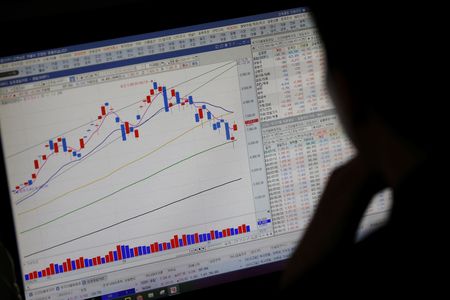
Wild swings in South Korean stocks set off a chain reaction of forced sell-offs by his brokerage, wiping out every won of profit. In a matter of weeks, his account dropped below what he had originally put in. The pressure was overwhelming. “I literally could not breathe,” he said.
Even so, Lee hasn’t given up on borrowing. “But I’m sticking to margin loans,” he said from his studio apartment — barely bigger than a parking space — sitting near an empty bottle of Hibiki whisky and an unboxed electric fan his brokerage sent him as a gift after he reached VIP client status.
Lee’s story illustrates the broader dangers embedded in South Korea’s heavily leveraged retail investing culture — a trend that has financial regulators scrambling to contain what they view as an increasingly reckless trading environment.
The Kospi stock index, which had recently become the world’s top-performing index after more than doubling in just six months, has since experienced dramatic drops, falling more than 10% on several occasions within just a few weeks.
For many young South Koreans, the appeal of high-leverage investing goes beyond simple greed. With Seoul apartment prices averaging about 14 times the typical annual salary, younger generations feel shut out of conventional paths to building wealth. High-leverage trading apps have become, for many, the only tool they feel can level the playing field.
“Since stocks are volatile assets, that volatility, if it moves upward, allows for rapid wealth creation,” Lee explained. “If I add five times leverage, I can build wealth five times faster than others,” he added, when asked why he would take on more debt despite the pain he had already experienced.
His long-term goal is to purchase an apartment in Seoul — ideally before settling down with “a son and a daughter, one day.”
The scale of the borrowing is staggering. According to the Korea Financial Investment Association, margin loan balances in the domestic stock market hit 38.63 trillion won on June 24 — the highest level ever recorded. By July 15, that figure had eased slightly to 34.37 trillion won.
Broader data from the Bank of Korea, which captures additional forms of investor borrowing, showed total investor debt surpassed 60 trillion won at the end of May. That milestone coincided with South Korea’s $4.1 trillion stock market becoming both the hottest and most volatile in the world.
On Thursday, authorities took action to cool the speculative frenzy, announcing a ban on new listings of leveraged exchange-traded funds tied to individual stocks. The move came just two months after regulators had originally approved those same financial products.
Inki Cho, a senior financial market strategist at online trading platform Exness, placed the blame squarely on regulators. “The FSS Governor has already admitted these products were approved too hastily, so this is a correction of a known policy error,” Cho said, referring to the Financial Supervisory Service. “For retail investors holding these products, the risk is asymmetric: the leverage accelerates losses on the downside far faster than it builds wealth on the upside in a volatile tape like this.”
Lee says he understands those risks but remains convinced that leverage is his best path forward. “I’ve often compared this to poker: if you go all-in every single time, you are bound to lose,” he said. “But if you have the discipline to only deploy that capital when the mathematical odds are heavily in your favour, it is actually quite difficult to get repeatedly wiped out in a single shot.”