
Just five years ago, PayPal was one of Wall Street’s most celebrated companies and a dominant force in digital payments. Today, the picture looks very different — its stock has cratered, Apple Pay has overtaken it in the U.S. market, and the company is now fending off a takeover bid it doesn’t want.
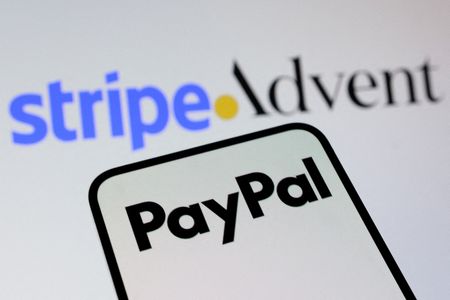
Earlier this week, PayPal received a $53 billion offer to be taken private, put forward by up-and-coming competitor Stripe and private equity firm Advent International. While PayPal’s board is actively discussing the proposal, sources familiar with the situation say the board believes the offer price of $60.50 per share falls short of what the company is worth.
The situation is a striking reversal for a company that helped build the foundation of modern e-commerce and popularized email-based payments, launching the careers of tech figures including Elon Musk and Peter Thiel along the way. The firm was established in 1998 in San Jose, California, purchased by eBay in 2002, and then spun off into its own independent company in 2015. Its growth continued to impress investors, pushing its market value as high as $360 billion in 2021.
Since that peak, however, the company’s momentum has stalled. Growth has slowed, competition has sharpened, and multiple efforts to breathe new life into the business have largely failed to deliver results.
Industry observers are now debating the true value of PayPal’s vast payments network — which includes more than 400 million consumer accounts and a widely used merchant checkout system — and whether the company would fetch more money as a whole or by selling off individual pieces, like the popular Venmo payment app.
PayPal chose not to comment for this report.
Back in February, when the company announced a new chief executive, it acknowledged that it needed to rethink its standing against rivals and within the broader payments industry. “While some progress has been made in a number of areas over the last two years, the pace of change and execution was not in line with the Board’s expectations,” the company said in a public statement.
Enrique Lores, who stepped into the CEO role in March, has not said whether PayPal would entertain a sale.
Analysts point to missed opportunities as a key reason for PayPal’s struggles. While larger players like Apple, Google, and Samsung, along with newer rivals such as Stripe and Affirm, kept rolling out fresh payment options, PayPal was slow to move into digital banking, explore new commerce tools, or adapt to the shift toward mobile payments.
“Why bother becoming a digital bank if you can just be the world’s biggest checkout button?” said Dan Dolev, a senior analyst at Mizuho. “I think it was too easy to drink the honey straight from the checkout jar.”
One source familiar with the company’s internal discussions said both investors and industry insiders have grown increasingly frustrated with PayPal’s performance. The company predates the iPhone, yet last year Apple Pay’s U.S. market share surpassed PayPal’s by 10 percentage points, according to research firm PYMNTS Intelligence.
PayPal has also fallen behind competitors in embracing artificial intelligence and what’s known as agentic commerce — a model in which AI systems negotiate and complete purchases on behalf of users.
Owen Lau, an analyst at financial services firm Clear Street in New York, said PayPal focused too heavily on grabbing market share by cutting prices, without charging enough to generate solid returns. Clear Street launched coverage of PayPal this week with a hold rating and a price target of $61 per share, compared to a Friday stock price of $57.09.
Lau noted that growth has slowed across major parts of the business, including Venmo, while newer offerings like buy now, pay later haven’t delivered as expected. PayPal’s user base has leveled off, he said, meaning the company now needs to focus on squeezing more profit from the customers it already has rather than chasing new ones.
“They just want to win market share,” he said. “They’re not charging appropriately, and they’re losing momentum in other parts of the business.”
PayPal has cycled through three CEOs in the past four years. The company launched its second major turnaround effort this past March, following the departure of longtime leader Dan Schulman in 2023.
Adding to the internal turbulence, a technology executive familiar with the matter said a proposed deal last year with OpenAI — which would have embedded PayPal’s digital wallet and payment processing into ChatGPT — sparked a conflict between the board and the executive team then led by CEO Alex Chriss, who had succeeded Schulman. Chriss later left the company after the board asked to put the deal on hold. Lores was subsequently appointed.
Despite the board’s reservations, sources say it is unlikely to support a deal at the $53 billion price point. Some board-level conversations have focused on whether the offer even justifies opening formal negotiations. The board is also weighing whether the company could ultimately be worth more if it successfully executes its latest turnaround strategy.
Wall Street analysts believe the bidders have room to increase their offer and are expected to do so. Stripe and Advent have reportedly assembled $17 billion in equity and secured $50 billion in bank financing, giving them the financial capacity to sweeten the deal.
How PayPal performs when it releases its quarterly earnings this month could influence the bidders’ next move. A disappointing report would likely increase pressure on PayPal to negotiate, while a strong showing might encourage a higher offer.
Competing bids from other buyers appear unlikely, however. Analysts at Morgan Stanley said this week that the Stripe and Advent proposal represents the most credible route to unlocking value for PayPal, a company they described as facing fierce competition and a customer base that has stopped growing.