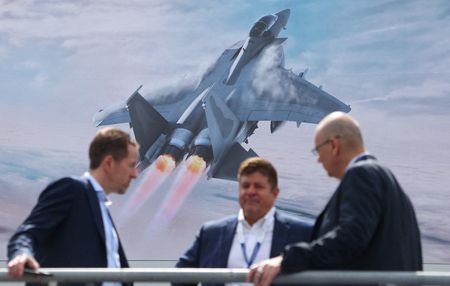

The Farnborough Airshow opened its doors Monday in England, with major aircraft manufacturers Boeing and Airbus looking to close deals while defense companies compete for contracts fueled by surging military budgets tied to wars in Ukraine and the Middle East.
Planemakers are anticipated to unveil a series of agreements throughout the week, though industry insiders say the final tally of aircraft orders will likely fall far short of some analyst projections of 800 or more planes. Ongoing supply chain problems that continue to restrict production are being blamed for the shortfall.
Defense firms are showing up in full force as governments around the world increase military spending and look to draw lessons from ongoing conflicts that have underscored the value of drones, missile defense systems, and artificial intelligence on the battlefield.
The airshow’s opening day also coincides with the first day in office for Prime Minister-in-waiting Andy Burnham, who may make an appearance at the July 20–24 event.
Organizers say defense companies will account for half of a record 1,600 exhibitors at the show. That marks a significant shift from the event’s commercial aviation origins, which date back to 1948 when it was launched as a showcase for British aerospace technology.
The growing defense presence reflects how conflicts stretching from Ukraine to the Middle East have reshaped spending priorities and accelerated demand for new military technologies, including unmanned fighter jets, kamikaze drones, and autonomous AI-driven software.
On the eve of the airshow, the head of Boeing’s commercial airplane division said the company’s attention is on ramping up and improving its aircraft production — “not order announcement.”
Sources told Reuters that Airbus and Boeing are together expected to land just over 300 aircraft orders combined, unless late-stage negotiations result in additional deals being finalized.
Among the anticipated announcements is an order for roughly 100 narrowbody planes from each manufacturer by Irish leasing firm SMBC Aviation Capital, according to sources. Bloomberg News was first to report on the potential deal. None of the companies involved offered any comment.
Other carriers reportedly in discussions about orders include Riyadh Air and Philippine Airlines.
Meanwhile, there were no immediate signs of progress in ongoing talks between Turkish Airlines and engine manufacturers over long-term maintenance agreements — a deal the airline has tied to a planned purchase of 150 Boeing 737 MAX jets.