
U.S. forces carried out strikes against Iran for the ninth day in a row on Monday, as the confirmed death toll among American military personnel climbed to three in the renewed fighting and anxiety grew over the safety of shipping through the Strait of Hormuz.
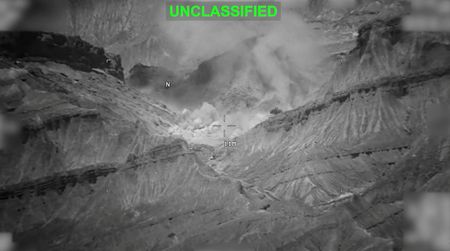
U.S. Central Command released a statement announcing “a new wave of strikes” designed to “degrade” Iran’s capacity to threaten commercial ships passing through the strait’s critical shipping lanes. The statement offered no additional specifics.
Iran’s semi-official Tasnim news agency, citing its own reporters on the ground, reported that U.S. missiles struck multiple Iranian cities in the early morning hours Monday. According to Tasnim, explosions were reported in Tabriz, Chabahar, Konarak, Bandar Mahshahr, and Bandar Imam Khomeini.
On Sunday, the U.S. military disclosed that a service member had been killed the previous day in northern Iraq — where the U.S. maintains military bases — during a controlled detonation of unexploded ordnance found on a downed Iranian attack drone. Central Command described the incident as occurring during a routine disposal operation.
Earlier in the weekend, the military reported that two service members had died in Jordan, with a third listed as missing in action. By Sunday, Central Command announced that “unidentified remains” had been recovered at the site of Friday’s attack, adding that “an examination process to verify the remains is ongoing.”
With the latest deaths included, the total number of U.S. military personnel killed since the war began stands at 17, with more than 420 additional troops wounded.
Iran’s Islamic Revolutionary Guard Corps announced its own surprise offensive, striking what it described as “the enemy’s special operations headquarters in Syria’s Al-Tanf area.” Iranian state television also reported that Iran conducted drone attacks against U.S. military assets and equipment at Kuwait’s Al-Adiri camp and Ali Al Salem Air Base early Sunday — locations Iran had targeted previously during the past week of fighting.
Kuwait’s government reported that a desalination plant had been attacked for the second consecutive day, sparking a fire and prompting officials to condemn what they called a direct strike on essential civilian infrastructure.
The Royal Navy’s United Kingdom Maritime Operations Centre reported late Sunday that it had received word of a vessel on fire near the Omani coast, though it had not confirmed the cause.
Oil markets reacted sharply, with Brent crude futures jumping 3% on Monday and climbing above $90 per barrel — the highest price recorded since June 11.
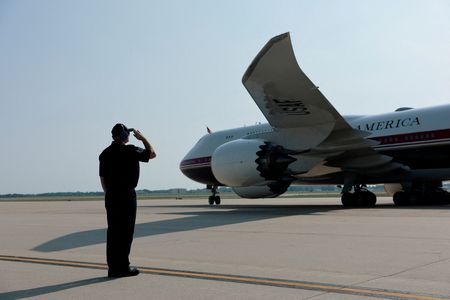
Trump, speaking to reporters after returning from the World Cup final, addressed the overnight strikes: “We hit them very hard again tonight, and we did it in honor of” the U.S. service members who had been killed since Friday.
The U.S. Embassy in Bahrain issued a warning to Americans in the country, stating it had received information indicating Iran may be planning to target unspecified locations in central Manama, the nation’s capital, and urged U.S. citizens there to stay alert.
The broader conflict began on February 28, when the U.S. and Israel launched attacks against Iran aimed at disabling Tehran’s nuclear and missile programs and weakening its regional allies. Since then, thousands of people have been killed — the majority in Iran and Lebanon — and significant disruptions to global energy supplies have fueled fears of widespread inflation.
Hostilities have intensified in recent days as a temporary ceasefire agreement reached one month ago has collapsed and the battle for control of the Strait of Hormuz has deepened, raising the prospect of a return to full-scale warfare.