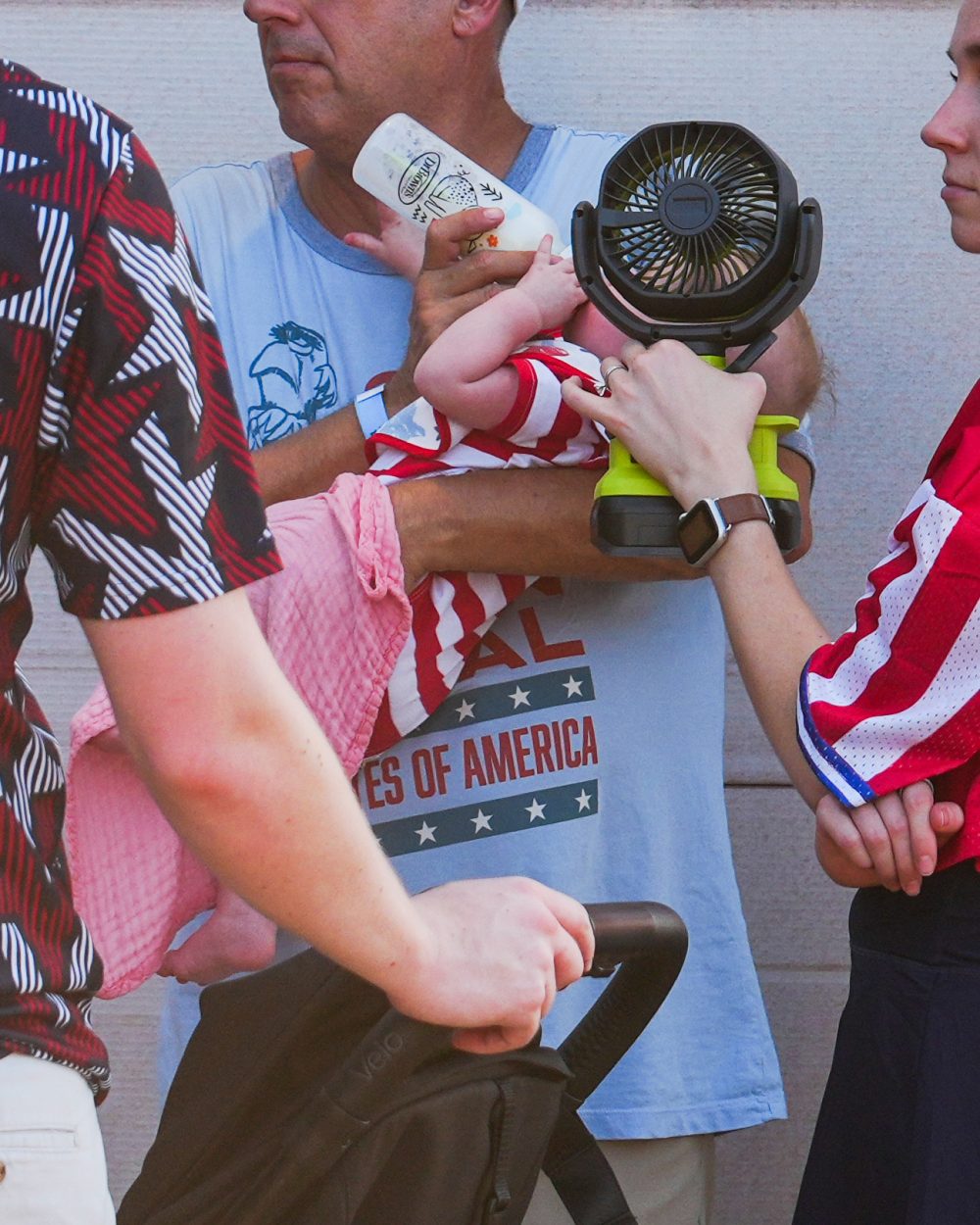

Young children need time outside to develop healthy bodies and minds — but when temperatures climb, that outdoor time requires extra caution from parents and caregivers.
Summer heat can leave parents wondering: How long is too long outside? How can I tell if my child is overheating? What should I avoid doing?
Those questions are becoming more urgent as human-caused climate change produces longer, more intense heat waves across the country. A large portion of the United States endured a heat dome just last week.
Dr. Katherine Williamson, a pediatrician with Rady Children’s Health in Orange, California, said the growing frequency of extreme heat has made it a child safety issue on par with other well-known dangers. “We talk about drowning and choking with toddlers, and now we’re starting to add in heat,” she said. “It’s become something that’s more commonplace as a potential injury.”
So why are children at greater risk? Compared to adults, kids sweat less and have a faster metabolism, causing their bodies to heat up more quickly. In extreme conditions, their higher ratio of body surface area to mass means they absorb heat at a greater rate. Children also tend to spend more time outdoors than adults.
Parents should watch closely for warning signs on hot days. A baby who isn’t producing tears or isn’t going through wet diapers regularly may be dehydrated. Doctors recommend feeding infants smaller amounts more often to keep fluid levels up.
Tiredness and red, flushed skin are signals that a child needs to cool down, even if they aren’t necessarily sick. Williamson added that unusual fussiness can also be a sign a child is too warm.
To protect children in the heat, experts recommend avoiding the outdoors during peak afternoon temperatures, dressing kids in loose, light-colored clothing, applying sunscreen, and ensuring they stay well-hydrated. Water-heavy snacks like watermelon and strawberries are a smart choice on hot days.
Dr. Debra Langlois, a pediatrician at the University of Michigan Health C.S. Mott Children’s Hospital, offered a simple rule of thumb: “If you’re hot, your baby sure is going to be hot.”
Langlois recommends limiting how long infants and toddlers spend outside in hot weather, but she stops short of telling parents to stay indoors entirely.
It might seem logical to cover a stroller with a blanket to block sunlight — but experts warn against it. Even thin coverings stop air from circulating and can trap heat inside the stroller, raising the temperature around the child. A canopy or shade cover is a much safer option. Williamson also urges parents to check metal parts on strollers and equipment, which can heat up and cause burns.
One of the most serious heat dangers for young children is being left in a vehicle. Even with windows cracked or the car parked in shade, interior temperatures can spike rapidly. According to the National Highway Traffic Safety Administration, 31 children died from heat stroke inside vehicles in 2025.
The agency suggests that caregivers leave a purse or another personal belonging in the back seat, write themselves a reminder note, or place a stuffed animal on the front seat as a visual cue to check for a child before walking away from the car.
If you’re returning to a parked car with a baby on a hot day, check that the car seat’s metal hardware hasn’t become dangerously hot. Using a sunshade and pre-cooling the car with air conditioning before placing a child inside can help. Experts say opening the windows for 10 to 20 seconds while running the AC is the most effective way to quickly lower a hot car’s temperature.