
BUCHAREST — Water levels along the Danube River in Romania plunged to their lowest point in nearly three decades over the weekend, triggering irrigation restrictions for farmers and disrupting both shipping traffic and tourism along the river’s banks.
The drop is part of a broader crisis affecting waterways throughout Europe, where prolonged heatwaves and drought conditions have taken a heavy toll this year. According to the Reuters Climate Monitor, average peak temperatures across Western Europe on Monday were forecast at 26.2 degrees Celsius — about 2.7 degrees higher than the typical high for that date.
Romania’s state water-management agency reported that flow at the country’s entry point along Europe’s second-longest river measured just 1,700 cubic meters per second on Sunday. That figure is dramatically below the normal July range of 4,700 cubic meters per second — the lowest reading since 1996.
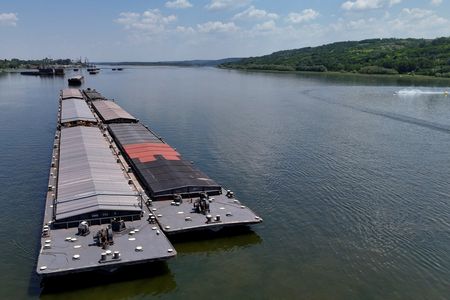
Video footage captured long stretches of exposed riverbank sand near the border with Bulgaria. Several ferry services have been suspended, and grain barges have been left sitting idle along the river.
The situation is particularly significant because Romania ranks among the European Union’s largest grain sellers and is a major exporter of agricultural products. Authorities have already restricted farmers in southeastern Romania from drawing water for crop irrigation.
Officials have also been carefully managing water reservoir levels to ensure the minimum flow needed to cool the two reactors operated by state nuclear power producer Nuclearelectrica.
The water-management agency said river levels are expected to rise gradually starting Monday, as heavy rainfall was forecast across several counties in the region.