
Student loan defaults across the United States have skyrocketed to record levels, leaving millions of borrowers unable to keep up with their bills.
Roughly 9.5 million people — one out of every five federal student loan borrowers — are now considered in default, meaning they have fallen more than nine months behind on payments. The spike followed the end of a long pause on payments that had been put in place to help Americans weather the financial hardships of the COVID-19 pandemic.
Falling behind by just a few months can damage a borrower’s credit score, but defaulting opens the door to far more severe consequences — including having wages or Social Security benefits garnished. So far, the Trump administration has not moved forward with those types of forced collection measures.
Advocates working with borrowers say despair is growing.
“Folks are struggling to make ends meet and cover all the rising costs of everything else. The growing student loan bills are making things worse and folks are falling behind,” said Aissa Canchola Bañez, policy director for the advocacy group Protect Borrowers.
An Associated Press analysis of student loan default data reveals the scope of the crisis.
The U.S. Education Department had allowed borrowers to pause their federal student loan payments during the economic chaos of the pandemic. Though payments were technically set to resume in 2023, the Biden administration offered a one-year buffer period that wrapped up in the fall of 2024.
During that time, loans could not enter default, and federal assistance programs along with debt forgiveness efforts helped pull millions of borrowers out of default status.
Beginning in June 2025 — nine months after the buffer period ended — borrowers started defaulting again for the first time since the pandemic began. Since that point, the number of people in default jumped from 5.3 million to approximately 9.5 million, according to figures from the Office of Federal Student Aid. Of the $1.7 trillion in federally backed student loans across the country, $233.3 billion is now in default.
More defaults may still be coming. The Trump administration has done away with the most generous income-based repayment option, known as Saving on a Valuable Education, or SAVE, as part of a broader overhaul of the federal student loan system. Borrowers who had been enrolled in SAVE will now face higher monthly payments.
Starting this month, new borrowers are limited to choosing between one standard repayment plan and a single income-driven option, rather than the several plans that were previously available. The Education Department has characterized the changes as a way to simplify what it called a “fragmented and confusing” system.
The AP analysis also found that many of the states with the highest rates of defaulted borrowers are concentrated in the South. Mississippi leads the nation with a default rate of 28.3%, followed by Louisiana, Alabama, West Virginia, Oklahoma, Georgia, South Carolina, and Texas. Alaska, Arizona, Ohio, Indiana, Michigan, New Mexico, and Nevada round out the 15 states with the highest default rates. Of those states, New Mexico was the only one that Republican President Donald Trump did not carry in the 2024 election.
“These are folks who live in states that President Trump won in the previous election,” Bañez said. “And why I bring that up is, you know, there’s a lot of misconceptions and tropes about who student loan borrowers are, and who are the ones who are falling behind.”
She described many of those struggling as “working-class folks who just cannot keep up with these bills on top of everything else.”
The territory of Puerto Rico posted an even higher default rate of 30.9%, surpassing all 50 states.
Borrowers who attended for-profit colleges are having a particularly difficult time repaying their loans. According to data released this year by the Office of Federal Student Aid, 33% of those borrowers were 90 days or more behind on payments — more than double the rate seen among borrowers who attended public schools. Among schools in the top quarter for nonpayment rates, 76% were for-profit institutions.
The Federal Student Aid office has stated that a high nonpayment rate signals a “serious risk” of eventually developing a high default rate.
One association representing private trade schools and career colleges is so alarmed by the trend that it has formed a task force to contact students about the importance of staying current on loan payments.
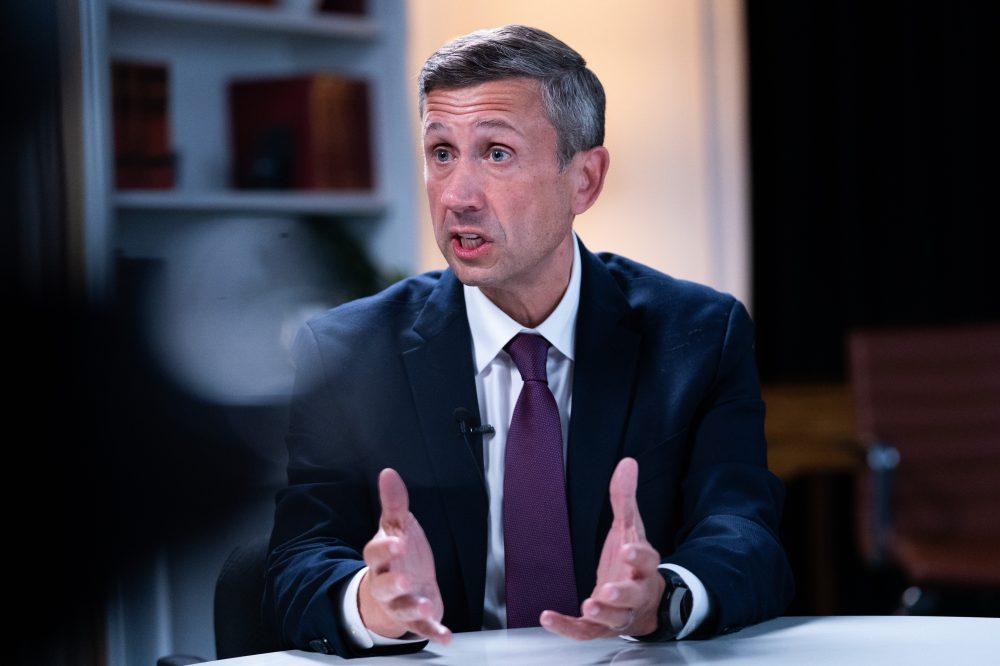
Jason Altmire, who leads the group Career Education Colleges and Universities, said some of the problem can be traced to the pandemic. He also noted that some borrowers are confused following the Biden administration’s unsuccessful loan forgiveness effort. He said the association plans to address the issue at its upcoming summer convention.
“We take it seriously,” he said. “It’s a real problem.”