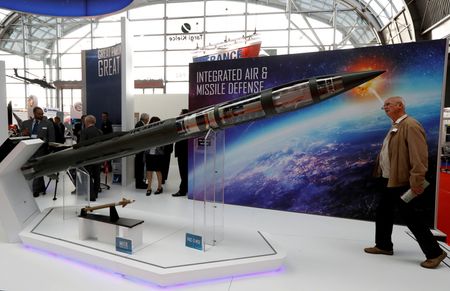

Defense giant Lockheed Martin unveiled a new, more affordable Patriot interceptor missile on Monday, responding to growing global demand for air defense systems and increasing competition from lower-cost weapons makers.
The new missile, called the PAC-3 Adapted Capability Effector — or ACE — would be priced at less than half the cost of Lockheed’s existing PAC-3 MSE interceptors. According to U.S. Army budget documents, the current MSE missiles cost approximately $4 million each.
Lockheed said it expects to begin initial production within 36 months and plans to work with both American and European industry partners to develop and build the weapon.
The announcement was made at Britain’s Farnborough Airshow, where Tim Cahill, president of Lockheed Martin Missiles and Fire Control, released a statement saying, “American and allied warfighters need a solution that is battle-tested and budget-smart.”
The choice of venue highlights efforts by U.S. defense companies to capitalize on a European military buildup driven by Russia’s ongoing war in Ukraine — even as European governments work to reduce their reliance on American suppliers and grow their own defense industries.
The Patriot air defense system has become one of the most in-demand weapons in the world since Russia launched its full-scale invasion of Ukraine in 2022. Ukrainian President Volodymyr Zelenskiy has repeatedly called for more Patriot launchers and interceptors, crediting the batteries with protecting Ukrainian cities from Russian ballistic missile strikes as Moscow continues to intensify its air campaign.
Demand for advanced air defense systems has also been pushed higher by missile exchanges involving Iran, the United States, and Israel, along with broader instability in the Gulf region. Those factors have strained supplies and exposed production bottlenecks across the Western defense industry.
Lockheed’s move to offer a cheaper interceptor also reflects pressure from Silicon Valley-backed startups that are promising to deliver weapons faster, in larger quantities, and at a fraction of what traditional defense systems cost.