SAN FRANCISCO — A deadly boating accident unfolded Tuesday afternoon in the waters off San Francisco, leaving one person dead and two others unaccounted for after a pontoon boat capsized near Alcatraz Island, authorities reported.
San Francisco Fire Chief Dean Crispen said emergency crews arrived to find a three-story pontoon vessel that had been carrying 19 people largely submerged beneath the surface. “It was a vessel that was capsized and mostly under the water,” Crispen said.
The incident was initially called in as a boat fire, but Crispen noted that turned out not to be the case. “But we now don’t have any evidence of that,” he said. Injuries among those rescued were linked to the impact of falling into the water, with no burn injuries reported.
The individual who later died had been pulled from the water along with the 16 survivors. All 16 rescued were transported to Gashouse Cove Marina, a small boat harbor in San Francisco.
Fire Lt. Mariano Elias described the vessel as a “ponton pleasure boat” located roughly 600 yards — about 550 meters — from Alcatraz Island. The emergency call came in just after 3:30 p.m., he said.
Chief Crispen indicated the boat was believed to have set out from near the St. Francis Yacht Club in San Francisco. As the search for the two missing persons continued, crews deployed divers, helicopters, and 11 vessels to comb the area. “Right now we are in full rescue mode,” Crispen said.
Video from a local Fox television station captured Fire Department boats working to pull survivors from the water near the mostly submerged wreckage, with debris floating in the surrounding area. Live footage from the scene also showed a man and a woman, both wrapped in blankets, seated near an ambulance.
In addition to the San Francisco Fire Department, the Coast Guard and Oakland police also assisted in the rescue effort, Lt. Elias said.
ATLANTA — England’s players say they are tuning out the outside chatter and focusing on the task at hand as the team prepares to face Argentina in a World Cup semi-final on Wednesday.
Defender Ezri Konsa addressed reporters Tuesday, pushing back on the narrative that friction within the squad could be a distraction. His teammate Marc Guehi echoed that sentiment, saying the group has never been more unified.
The attention on England’s internal dynamics picked up after their narrow victory over Norway, which sent them to the semi-finals. Manager Thomas Tuchel expressed frustration with the team’s performance, while Jude Bellingham — who scored both goals in the 2-1 extra-time win — publicly questioned whether the coach truly understood what it felt like to play in those conditions against high-level opponents.
Despite the headlines, Konsa said the squad isn’t rattled. “I think for us, outside noise is always going to happen,” he said. “But you have to be able to block it out. We’ve been in the game a long time now and we know what comes with it. We have a great group, we’re all together, there’s been no issues.”
Guehi had warm words for Tuchel, crediting the German manager with fostering a strong sense of belief throughout the squad. “He’s brought a lot in terms of his energy on and off the field,” Guehi said. “I think he’s created a squad where there’s a big togetherness and real belief in what we’re doing at the moment, and everyone’s behind him.”
“There’s never been more of a time where we were together, to be honest,” Guehi added. “After that game, I think it just brought everyone together.”
In a separate press conference held in the same Atlanta Stadium, Tuchel was informed of his players’ glowing remarks about the team’s cohesion. He embraced the message wholeheartedly.
“I have just reinforced the belief that deep down football is still about being together and it’s a team effort,” Tuchel said. “It’s not only us, I think the whole World Cup showed all superstars committed to the team idea, committed to the team spirit, committed to the idea to play for their country.”
“It’s just outstanding mentality, mostly behind closed doors,” he continued. “The team is absolutely ready to give everything every single time, and they simply don’t give in. This is the key attribute of our team, which makes me very proud.”
Should England defeat defending champion Argentina, they would advance to face Spain in the final — a rematch of the Euro 2024 championship, which Spain won. Spain secured their spot in the final with a 2-0 victory over France on Tuesday, while England was in the air traveling to Atlanta from their base in Kansas.
When Guehi was asked whether he caught the Spain-France match, he kept it simple. “No, I didn’t watch it,” he said. “I was sleeping on the plane.”
A man has been arrested in Utah after allegedly stabbing a Muslim man multiple times inside a shopping mall and telling investigators he specifically targeted the victim because of his faith, according to court records released Tuesday.
The attack occurred Monday at the Valley Fair Mall in West Valley City, Utah. Officers found the male victim suffering from what police described in an affidavit as “multiple stab wounds all over his body” with severe bleeding.
Before police arrived, bystanders at the scene stepped in and physically restrained the attacker, pinning him to the ground until officers could respond.
The suspect, identified as Peter Michael Larsen, 48, was booked into the Salt Lake County jail on charges of attempted murder and prohibited dangerous weapon conduct, according to jail records. Court documents indicate Larsen told authorities he “intends to kill Muslims” and was described as posing “a substantial danger to the public if released based on his violent actions … ideologies and pre-planned mass casualty events.”
According to the police booking affidavit, the suspect stated “he had targeted the victim with intent to kill him because of his religion (Muslim).”
The Salt Lake Tribune reported, citing Imam Shuaib Din — who leads the Utah Islamic Center and had been in contact with the victim’s family — that the suspect first approached the Muslim man and asked for his name and religion before claiming he wanted a bottle of water. As the victim turned around to retrieve the water, the attacker began stabbing him, Din said.
The victim, who worked at a kiosk inside the mall, was transported to a hospital and remained in critical condition. A friend launched a GoFundMe fundraising page on his behalf, stating the man had been stabbed 15 times and required multiple surgeries.
Larsen was also taken to a hospital for injuries he sustained when bystanders subdued him, before being transferred to the Salt Lake County jail.
U.S. rights advocates have pointed to a steady increase in Islamophobia over the past two decades, tracing it back to the September 11, 2001 terrorist attacks and citing more recent factors including anti-immigration policies, white supremacy movements, and tensions stemming from Israel’s war in Gaza.
Recent deadly incidents include a 2023 stabbing of a 6-year-old Muslim child in Illinois — the attacker was sentenced to 53 years in prison and later died in custody — and a 2026 shooting at a San Diego mosque that left five people dead, including two teenage suspects.
The U.S. Coast Guard launched an emergency search-and-rescue operation Tuesday in San Francisco Bay after a boat carrying 19 people caught fire near Alcatraz Island.
Video footage from local television stations showed the vessel nearly fully submerged, with only the top of the cabin still visible above the waterline. KGO television reported that at least one person was killed and one other person remained unaccounted for.
According to KGO, citing San Francisco fire officials, 17 of the 19 people on board were pulled from the water. KTVU television, also citing the San Francisco Fire Department, reported that at least one person required cardiopulmonary resuscitation.
The Coast Guard confirmed the rescue effort was still active and that a triage area had been set up on shore. “Search and rescue efforts are ongoing, and a triage area has been established ashore,” the agency posted on X, noting that multiple other agencies were assisting. “We will provide updates as more information becomes available.”
The San Francisco Fire Department did not immediately respond when contacted for additional details.
Spanish tennis star Paula Badosa made a strong statement at the UniCredit Iasi Open in Romania on Tuesday, knocking out fourth-seeded Ukrainian Anhelina Kalinina with a commanding 6-3, 6-1 victory to advance to the second round.
Kalinina had a difficult outing, racking up eight double faults and managing to hold her serve on just two occasions throughout the entire match. Romanian hometown hope Elena-Gabriela Ruse also fell short, as Spain’s Kaitlin Quevedo eliminated the sixth seed by the same 6-3, 6-1 scoreline. Quevedo was particularly strong under pressure, saving 12 of the 14 break points she faced while breaking Ruse’s serve six times.
Ukraine’s third-seeded Oleksandra Oliynykova had to work harder for her win, needing two tiebreakers to get past Turkish lucky loser Ipek Oz 7-6 (1), 7-6 (5). Hungary’s fifth seed Panna Udvardy also advanced, outlasting Spain’s Leyre Romero Gormaz in three sets, 6-3, 4-6, 6-3. France’s eighth-seeded Elsa Jacquemot and ninth-seeded Yulia Putintseva of Kazakhstan both moved through in straight sets as well.
Additional first-round winners included Slovenia’s Tamara Zidansek, Armenia’s Elina Avanesyan, Egypt’s Mayar Sherif, Russia’s Alevtina Ibragimova and Elena Pridankina, and Poland’s Katarzyna Kawa.
At the Athens Open in Greece, top-seeded Clara Tauson of Denmark overcame an early deficit to defeat Japanese qualifier Nao Hibino 7-5, 6-4. Tauson dropped a break early in the first set but fought back, ultimately converting four break points in the match while holding Hibino to just two.
Second-seeded Ann Li had a much smoother day, rolling past Maria Timofeeva of Uzbekistan 6-2, 6-1 in just 79 minutes. Third-seeded Czech player Barbora Krejcikova also wrapped up her match in 79 minutes, defeating Bulgaria’s Viktoriya Tomova 6-3, 6-3. Seventh-seeded Czech Tereza Valentova cruised to a 6-1, 6-2 win over Belgium’s Sofia Costoulas.
Italian lucky loser Miriana Tona celebrated her first-ever WTA main-draw victory after a marathon three-hour, eight-minute battle against Greek wild card Sapfo Sakellaridi, winning 7-6 (2), 5-7, 6-2. France’s Carole Monnet, Russia’s Alina Korneeva, and Belarus’ Aliaksandra Sasnovich also claimed victories in Athens.
In what is expected to be his last appearance on clay in his home country, Swiss tennis icon Stan Wawrinka lost a three-set battle to Portugal’s Jaime Faria on Tuesday in the opening round of the EFG Swiss Open Gstaad. Faria came away with a 6-7 (8), 6-4, 6-4 victory in a match that lasted just under two hours and 40 minutes.
Wawrinka, who is 41 years old and has announced plans to step away from professional tennis at the end of this season, served up 16 aces during the contest but was unable to convert any of his six break-point opportunities. Tournament organizers marked the occasion by presenting the three-time Grand Slam champion with a pair of new skis as a farewell tribute.
Elsewhere at the Gstaad event, Greek veteran Stefanos Tsitsipas defeated Peru’s Ignacio Buse, the No. 5 seed, by a score of 6-4, 6-4, winning 37 of 48 service points in the process. No. 6 seed Juan Manuel Cerundolo came back from a set down to beat Czech Republic’s Zdenek Kolar 4-6, 6-3, 6-4. Frenchman Quentin Halys, Germany’s Yannick Hanfmann, Kazakhstan’s Aleksandr Shevchenko, and Swiss wild card Jerome Kym also moved on to the next round.
At the Nordea Open in Bastad, Sweden, No. 8 seed Sebastian Baez dropped the opening set before recovering to defeat Swedish hopeful Max Dahlin 4-6, 6-4, 6-1. The other seeded competitors all came through their matches, including No. 5 seed Nuno Borges of Portugal over French wild card Moise Kouame 6-4, 6-2; No. 6 seed Botic van de Zandschulp of the Netherlands over Japanese qualifier Taro Daniel 7-6 (0), 6-4; and No. 7 seed Thiago Agustin Tirante of Argentina over Austria’s Sebastian Ofner 6-3, 6-4. Additional winners included Germany’s Daniel Altmaier, Georgia’s Nikoloz Basilashvili, Bulgarian wild card Grigor Dimitrov, Argentina’s Lautaro Midon, Paraguay’s Adolfo Daniel Vallejo, and Italians Andrea Pellegrino and Stefano Travaglia.
At the Plava Laguna Croatia Open Umag in Croatia, France’s Titouan Droguet put together a dominant finish, winning 11 of the last 12 games to defeat No. 5 seed Alexander Blockx of Belgium 3-6, 6-2, 6-0. Argentina’s No. 7 seed Camilo Ugo Carabelli avoided a similar collapse, rallying from a break down in the second set to outlast German qualifier Marko Topo 6-7 (2), 7-6 (3), 6-3. Spain’s Pablo Carreno Busta and Daniel Merida, Argentina’s Roman Andres Burruchaga and Federico Agustin Gomez, Slovakia’s Alex Molcan, and Bolivia’s Juan Carlos Prado Angelo also advanced.
Drivers heading through the intersection of Walther Road and US Route 40 should be prepared for intermittent lane closures as construction work continues in the area.
The lane restrictions are expected to remain in place until 6AM, according to traffic officials. Motorists are encouraged to use caution when passing through the work zone and to allow extra travel time.
No additional details about the nature of the construction project were immediately available. Drivers may want to consider alternate routes to avoid potential delays in the area.
Motorists traveling along Valley Road should be prepared for intermittent lane closures currently in effect between Lancaster Pike (Delaware Route 41) and Evenson Road.
The lane restrictions are the result of construction work being conducted in the area. Drivers are advised to use caution and allow for extra travel time if their route takes them through this stretch of road.
The closures are expected to remain in place until 6 a.m. No further details about the nature of the construction were provided.
Powerful rainstorms slammed South Texas on Tuesday, flooding highways and leaving motorists stranded as weather forecasters cautioned that additional rounds of severe weather could trigger dangerous flooding in already waterlogged counties along the Mexican border.
Some rural parts of Texas received up to 12 inches of rain, sparking dozens of high-water rescues throughout the region. Officials were forced to close sections of a heavily traveled highway near Uvalde — located roughly 80 miles west of San Antonio — for several hours. A flood watch was also extended to Kerr County, the same area where devastating flooding along the Guadalupe River claimed more than 100 lives last year.
As of Tuesday, no fatalities or injuries had been reported.
The National Weather Service cautioned that overnight storms could drop an additional foot or more of rain in certain locations through Wednesday, raising the risk of catastrophic flash flooding west of San Antonio. Texas Gov. Greg Abbott declared a disaster in dozens of counties in response to the threat.
“Intense rain rates and compounding effects from multiple rounds of storms will result in a dangerous flash flooding threat through Thursday,” the National Weather Service stated.
Rescue teams were captured on video navigating flooded streets by boat, and footage showed at least one vehicle being carried away by rapidly moving floodwaters. According to Maggie Berger, a spokesperson for the Texas Parks and Wildlife Department, five people were pulled to safety by the Texas Game Warden Search and Rescue Team, while a local game warden rescued four additional individuals.
In Uvalde, local officials reported at least two dozen water rescues had taken place. A local event center was opened to provide shelter for residents displaced by the flooding.
After more than two decades, the United States military is set to leave Iraq by September 30, according to both American and Iraqi officials who spoke publicly on the matter Tuesday.
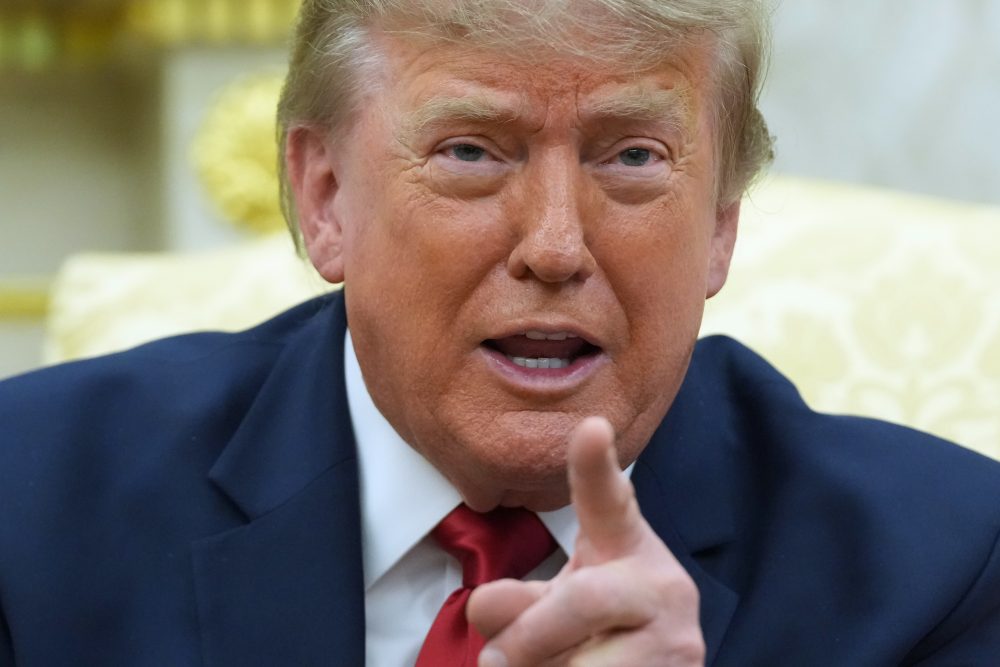
President Donald Trump stood beside Iraqi Prime Minister Ali al-Zaidi at the White House to deliver the news, saying the military presence is no longer considered necessary. Trump pointed to Iraq’s expanding ties with oil companies as part of a broader relationship between the two nations.
“The relationship is a whole big relationship where we don’t need the military,” Trump said. “We’re there to help them. We’re there to protect them if need be. But we don’t think that’s going to be necessary.”
Speaking through an interpreter, Prime Minister al-Zaidi offered a clear summary of the arrangement: “U.S. forces will be out of Iraq” by Sept. 30, “while U.S. companies will be inside Iraq.”
The Pentagon followed up with a statement confirming it was reaffirming a 2024 agreement — reached during the Biden administration — to formally end its combat mission against Islamic State fighters in Iraq. A significant number of U.S. troops covered under that deal have already left the country.
Over time, the U.S. has been transferring responsibility for fighting the Islamic State from American and coalition forces to Iraqi military units that were trained with American assistance. U.S. forces have gradually reduced their presence, pulling back from various locations and consolidating what remained.
The American military first entered Iraq in March 2003 with a massive air assault campaign known as “shock and awe,” which caused widespread destruction and opened the path for ground forces to advance on Baghdad. That invasion was launched on the premise that Iraqi leader Saddam Hussein had concealed weapons of mass destruction — a claim that was ultimately proven false, as no such weapons were ever found.
At the height of counterinsurgency efforts in 2007, more than 170,000 U.S. troops were stationed in Iraq. The Obama administration negotiated a reduction in forces, and by December 2011, the last combat troops had departed, leaving only a small number of personnel to support a security assistance office and protect the embassy.
The situation changed again in 2014 when the Islamic State rapidly seized large portions of Iraq and Syria. The Iraqi government invited U.S. and allied forces back to help rebuild and retrain its military and police units, which had collapsed under the pressure of the militant group’s advance.
Once the Islamic State lost control of the territory it had claimed, coalition military operations officially wrapped up in 2021. The U.S. kept roughly 2,500 troops in Iraq for training purposes and joint counter-IS operations. Most have since departed following the 2024 agreement, with only a small group of military advisers and support personnel still on the ground.
Childhood vaccination rates around the world ticked upward in 2025, yet a staggering number of children are still vulnerable to diseases that vaccines could prevent, as wars, budget cuts, and spreading outbreaks chip away at global immunization efforts.
New estimates released Wednesday by the World Health Organization and UNICEF show that 90% of infants worldwide — roughly 116 million babies — received at least one dose of the vaccine protecting against diphtheria, tetanus, and whooping cough, commonly referred to as DTP. Meanwhile, 85% of infants completed the full three-dose series.
Despite the progress, officials struck a cautious tone. “The gains that we are celebrating now at this moment are quite fragile,” said UNICEF’s global immunization chief, Ephrem Lemango, adding that they “can be eroded very easily.”
The number of children who have received no vaccines at all dropped from 14.2 million in 2024 to 13.5 million in 2025. However, that figure remains nearly 4 million above the benchmark needed to stay on course toward halving the 2019 total by the year 2030.
Lemango noted that more than half of the world’s unvaccinated children reside in countries torn apart by conflict — including Syria, Yemen, Sudan, and Palestine — even though those nations account for only about one-third of births worldwide.
The WHO cautioned that sweeping global funding cuts that began in early 2025 have not yet been reflected in the current data, but officials say they are deeply worried about what the numbers will look like in 2026.
“We are seeing real cracks in the system now for immunization, and we are previewing big risks that are yet to come,” said the WHO’s director of the Department of Immunization, Vaccines and Biologicals, Kate O’Brien.
O’Brien added that the WHO is already witnessing the consequences of those cracks through a rise in outbreaks of measles, diphtheria, and cholera around the globe.
An international team of approximately 80 scientists and crew members departed Britain this week aboard the polar research ship RSS David Attenborough, bound for Greenland on a mission to determine whether the island’s rapidly melting glaciers pose a threat to a critical Atlantic Ocean current system — and by extension, Europe’s climate.
The voyage, lasting between five and six weeks, comes just after Britain and Western Europe experienced their hottest June months ever recorded, a stretch of extreme heat that strained power grids, forced school closures, and contributed to excess deaths across the region.
Kelly Hogan, a marine geophysicist at the British Antarctic Survey, which is leading the expedition, reflected on the urgency of the mission. “The heat waves in the UK and in Europe the last few months have really driven home that it’s difficult for us to adapt to even quite small changes in our climate,” she told Reuters during an interview on board the ship.
The expedition is part of a £20 million initiative known as GIANT — which stands for Greenland Ice sheet to AtlaNtic Tipping points. The project aims to better understand how glaciers break apart and flow into the ocean, and what consequences that process carries for the broader environment.
Researchers are particularly worried that an influx of freshwater from melting glaciers could interfere with a rotating ocean current system that plays a key role in keeping Europe’s climate stable. Disruption to that system could trigger more severe weather events and contribute to rising sea levels.
Ship Captain Matt Neill, who first traveled to Antarctica as a cadet with the British Antarctic Survey back in 2011, said he has personally witnessed the accelerating pace of climate change. “Lots of the glaciers are all receding very very quickly, and much more than you would think… So it’s even more important than ever during these very dynamic times that we are out there and gathering the data and improving the models,” he said.
While the vessel is officially named after the celebrated naturalist David Attenborough, many in Britain know it by a different name — “Boaty McBoatface,” the winning suggestion from a public naming poll held in 2016. That name was ultimately given to a sophisticated submersible aboard the ship, which will dive 1,500 meters beneath the glacier mélange — a dense mixture of sea ice and snow that forms where the glacier meets the ocean — to map its shape and study how it affects glacier behavior.
“It’s going to be collecting a lot of data that’s never really been collected before,” said Sam Smith, an operations engineer at the National Oceanography Centre.
Information gathered throughout the mission will be channeled into the development of next-generation climate models and an early-warning system designed to detect the risk of glacier collapse before it occurs.
Newly released records from a Bank of Japan policy meeting have revealed the deep divisions that erupted inside the central bank when its then-chief pushed through a landmark decision to introduce negative interest rates back in 2016.
The full account of the January 2016 deliberations, made public Wednesday, shows that former BOJ governor Haruhiko Kuroda’s proposal to charge a 0.1% fee on a portion of financial institutions’ deposits held at the central bank was met with fierce pushback from within his own board. The measure narrowly passed with a 5-4 vote.
Kuroda had moved to cut a key benchmark rate below zero after an aggressive asset-buying campaign failed to stoke inflation. The goal was to stimulate economic growth and push back against a rising yen that was squeezing Japan’s export-driven economy.
The announcement rattled global markets — stocks surged, the yen dropped sharply, and government bonds rallied — as Japan followed the path already taken by the European Central Bank.
But inside the BOJ boardroom, the reaction was far more hostile. Board member Takehiro Sato raised alarms that the move could drag Japan into a race-to-the-bottom currency devaluation contest with Europe. “It’s wise to avoid falling into such a futile game,” Sato said, also warning about the damage negative rates could do to Japan’s banking sector.
Another board member, Koji Ishida, who had a background in commercial banking, argued that pushing already-low rates even further into negative territory would do little to encourage more lending or business investment.
The minutes made clear that most board members had been left out of the loop while Kuroda and his staff quietly developed the plan. Board member Sayuri Shirai did not hold back in her assessment. “It appears to be half-baked and prepared in a hurry,” she said, adding that economic conditions at the time did not justify such an extreme measure.
Board member Takahide Kiuchi said he was “extremely doubtful” that the policy could be responsibly implemented without a thorough examination of its potential economic consequences. “Markets would be very surprised and could move quite a bit temporarily. But that’s not the purpose of what we do,” Kiuchi said. “The purpose of our policy is to improve medium- and long-term economic and price conditions.”
The announcement came as an even greater shock to financial markets because Kuroda had told Japan’s parliament just days earlier that negative rates were not being considered as an option.
The BOJ ultimately brought the negative rate era to a close in 2024, dismantling that and other elements of Kuroda’s unconventional stimulus program. Current BOJ chief Kazuo Ueda has since raised interest rates on multiple occasions.
Ueda has faced his own challenges in building consensus among board members. Uncertainty stemming from an energy price shock tied to the Middle East conflict has complicated the bank’s economic outlook and its path forward on rate hikes. In April, two board members pushed for a rate increase when the BOJ chose to hold steady. Then in June, when the bank did raise rates to 1%, one member dissented in the other direction, preferring to keep rates lower.
Under BOJ practice, a condensed version of meeting minutes is released within weeks of each policy session, while the complete record of discussions is not made available until roughly a decade later.
AI cloud computing company CoreWeave is considering the use of financial derivatives to shield itself from a possible future decline in memory and storage chip prices, according to a source with knowledge of the situation.
The unconventional strategy highlights just how closely cloud computing companies have become tied to the unpredictable chip market. To secure a steady supply of chips during a period of surging demand — driven largely by a massive wave of AI infrastructure investment — cloud operators including CoreWeave have entered into long-term contracts with memory and storage chip manufacturers such as Micron and SanDisk.
Many of those agreements guarantee chipmakers a minimum price for dynamic random access memory, known as DRAM, as well as storage chips.
While that setup offers protection for the chip suppliers, it creates a risk for cloud companies like CoreWeave. If chip prices fall in the future, CoreWeave could find itself locked into contracts that require it to pay significantly more than the current market rate.
Because of that risk, CoreWeave executives have been discussing ways to hedge against a drop in memory chip stocks that could follow a decline in prices, the source said.
Those conversations are still in the early stages, and the company has not yet taken any action, the source added. Options being considered include put options — financial contracts that give the holder the right, but not the requirement, to sell an asset at a set price at a future date — along with potentially other types of financial instruments.
Memory and flash storage chip prices have climbed sharply in recent months. The memory chip industry has historically gone through boom-and-bust cycles, and prices often fall once new manufacturing capacity comes online.
Major memory chip producers SK Hynix and Micron have both signaled they expect new manufacturing facilities to be fully operational by early 2028.
Hedging against price swings is not a new concept in business. Industries like energy and airlines have long used similar strategies to limit the impact of oil price volatility. However, U.S. airlines have at times suffered losses from such hedging efforts. Many businesses also use derivatives to protect against fluctuations in currency exchange rates.
Britain took a firm diplomatic step on Tuesday, calling in Iran’s most senior representative in London to answer for what the UK government described as Iran’s role in orchestrating proxy groups to conduct attacks across Europe in recent months.
The diplomat summoned was Charge d’Affaires Ali Nasimfar, who was brought before the British Foreign Ministry over allegations that the Islamic Revolutionary Guard Corps Quds Force directed a group to carry out a series of attacks throughout Europe between March and May.
The British Foreign Ministry identified the proxy group as the Islamic Movement of the Companions of the Right. In a formal statement, the ministry described the conduct as “completely unacceptable,” adding: “Despite repeated warnings, Iran’s intelligence services have not ceased in their hostile activity. Instead, Iran has sought to intensify its malign behaviour.”
The Iranian embassy in London was not available to respond to requests for comment outside of regular business hours. Iran, which is in a state of conflict with the United States and Israel, has previously rejected claims that it uses proxy groups.
Just a day earlier, on Monday, Britain had formally designated the IRGC and an affiliated group as security threats under newly established powers designed to stop foreign governments from using proxy organizations for activities like surveillance and sabotage.
Iran’s government responded on Tuesday, condemning the British decision. Tehran argued that the IRGC is a legitimate part of Iran’s official armed forces and charged that Britain was breaking international law by targeting a state institution.
The Quds Force serves as the international operations arm of the IRGC. The United States has previously designated the IRGC as a terrorist organization.
HAVANA — Cuba’s national power grid collapsed again on Tuesday, plunging the entire country into darkness for the third time in just two weeks, according to government officials. The repeated failures come as a U.S. oil embargo continues to strain the island’s already fragile energy infrastructure.
The fuel shortage gripping Cuba has been worsening since January, when U.S. President Donald Trump threatened tariffs against any nation that supplies oil to the island. That move deepened an already severe economic and financial crisis. Public transit has largely ground to a halt, and officials have been forced to cancel tens of thousands of scheduled surgeries.
Cuba currently produces only 40% of the fuel it requires to function, and no clear solution for restoring fuel imports appears to be on the horizon.
The state-run Electric Union said the blackout was triggered around midday by a malfunction in a generating unit located in the eastern province of Holguín, which caused what it described as “a sudden frequency change” that brought down the entire National Electric System, known as the SEN.
Both the Ministry of Energy and Mines and the Electric Union said “protocols for its restoration have been activated,” with so-called “micro-islands” of power being established and gradually linked together to restore electricity to critical locations, including hospitals and food processing facilities.
By afternoon, some neighborhoods in the capital city of Havana had their power restored, which The Associated Press confirmed on the ground. Authorities noted that roughly 4% of the city had received electricity by that point. The provinces of Guantánamo and Cienfuegos reported beginning to restore power to their hospitals, while Matanzas confirmed electricity had returned to its historic city center.
The previous week saw two separate nationwide blackouts — one on Monday and another on Friday — that left more than 9 million Cubans without electricity. Those incidents followed two additional blackouts in March, along with several regional outages across the country.
The cascading power failures are taking a heavy toll on everyday life. Beyond the energy embargo itself, the outages have contributed to transportation breakdowns, shortened work hours, and flight cancellations, while also creating serious public health concerns. Basic needs such as cooking meals, accessing clean water, and using internet or phone service have all been disrupted.
For many Havana residents, the latest blackout came as no surprise. “These blackouts are normal in Cuba now. If something else happened, it would be strange,” said Roberto Liana, 69, a retail store clerk.
Others are finding ways to cope with the new reality. Sayli Aguilera, 25, a mother of two, described how her family is getting by: “We’re improvising and doing what we can.”
Across the country, many households have turned to solar backup solutions — including panels and portable battery systems — to keep the lights on. Electric motorcycles and tricycles powered by solar energy have also become the primary way many Cubans get around.
WASHINGTON (AP) — President Donald Trump is preparing to address the nation in a primetime speech this Thursday, and he says elections will be a central topic. The announcement has raised concerns that he may once again revisit long-disproven theories about his 2020 loss to Democrat Joe Biden — all while pressing fellow Republicans to tighten federal voting rules before the upcoming midterm elections.
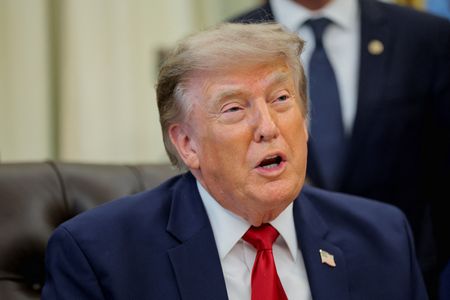
Trump has kept the specifics of the 9 p.m. Thursday address close to the vest, even as he faces the collapse of a potential deal to end the war with Iran and deals with fallout from recent deadly shootings involving Immigration and Customs Enforcement officers. When reporters asked him Tuesday for a preview, Trump gave little away but teased that he has “really big news.”
“It doesn’t get bigger, because without free and fair elections, you don’t have a country,” Trump said from the Oval Office. He declined to elaborate, saying he wanted to “save it” for the speech itself, though he did hint the address would cover a range of subjects.
“We’ll be discussing other things, too,” Trump added. “It’s going to be a very big announcement.”
Trump has previously used the prestige of a primetime presidential address — a format usually reserved for major national milestones — for politically charged messages. One such speech in December blamed Democrats for difficult economic conditions. Thursday’s address, however, appears set to go further, using the national platform to amplify disputed election claims in front of a massive audience ahead of midterms that could significantly limit Trump’s power for the rest of his term.
On Monday, Trump revived unfounded allegations of voter fraud in the Los Angeles mayoral primary. During an interview with conservative outlet Newsmax, Trump claimed Republican Spencer Pratt lost his primary bid due to fraud, pointing partly to California’s slow vote-counting process.
Federal prosecutors announced last month that they were launching fraud investigations in the state after Trump drew public attention to those allegations.
Trump’s fixation on voting fraud goes back at least to 2016, when he declined to commit to accepting the outcome of the election against Democrat Hillary Clinton. After his victory, he formed a voting integrity commission intended to back his claim that widespread fraud had cost him the popular vote — but that commission dissolved without finding any supporting evidence.
Following his 2020 defeat to Biden, Trump again cried foul, zeroing in on Biden’s slim margin of victory in Georgia. Trump personally called the state’s secretary of state and pressured him to “find 11,780 votes” — precisely the number needed to flip Georgia’s result. Trump and more than a dozen allies were subsequently indicted in the state, though those charges were later dropped.
Numerous audits and reviews — many conducted by Republicans, including Trump’s own attorney general at the time — concluded that no significant fraud took place in the 2020 election.
Even before his 2024 victory, Trump had been laying the groundwork to allege cheating if he lost again. Once back in office, he filled his administration with officials who support his false claims about 2020 election fraud.
Repeatedly insisting he has won the White House “three times,” Trump has made voting regulations a signature issue of his second term. He has called for legislation requiring voter ID and drastically curtailing mail-in voting. With midterm races approaching that will determine control of Capitol Hill, Trump has been stoking new doubts about election integrity in a bid to protect his political standing in Washington.
Earlier this year, FBI agents raided elections offices in Fulton County, Georgia, seizing materials related to the 2020 election. Tulsi Gabbard, who was serving at the time as Trump’s director of national intelligence, traveled to Atlanta to oversee the search warrant’s execution.
Maryland Gov. Wes Moore, who was in Georgia campaigning for Democratic Sen. Jon Ossoff and gubernatorial candidate Keisha Lance Bottoms, reacted with a smile Tuesday when asked about Trump potentially relitigating the 2020 election during a national address.
He described the strategy as one “for losers.”
“I think people are exhausted by having conversations about elections that happened six years ago, that we have the answer to,” Moore said. “He continues to bring this up because he cannot get out of his mind that he actually could have lost.”
Trump has also set his sights well beyond Georgia, targeting states that allow mail-in voting broadly. He said he personally called a U.S. attorney in California and demanded scrutiny of last month’s governor’s primary as ballots were still being counted.
Last week, Trump removed the remaining members of the federal Election Assistance Commission, a bipartisan body that had pushed back on his efforts to require proof of U.S. citizenship from voters before they could register.
NEW YORK — The Writers Guild of America has entered the fight against Paramount’s proposed $81 billion takeover of Warner Bros. Discovery, filing a federal lawsuit Tuesday that aims to stop the deal from going through. The union argues the merger would cause “specific harm” to film and television writers throughout the country.
The federal complaint, filed jointly by the Writers Guild of America West and Writers Guild of America East, states that a Paramount-Warner merger “threatens the economic and creative health of the American entertainment industry.”
According to the union, combining the two entertainment giants would reduce the number of competing studios and hand the newly enlarged company both the motivation and the power to cut writer pay and reduce the number of projects available for employment.
“This proposed combined entity would be the largest employer of writers, with tremendous power to suppress our wages, eliminate opportunities for emerging writers, cut jobs across the industry, and produce less programming,” said WGAE President Tom Fontana in a written statement.
A merger between Warner and Paramount would bring together two of Hollywood’s last five remaining legacy studios. It would place Warner’s HBO Max, its vast content libraries — including titles like “Harry Potter” — and CNN under the same ownership as Paramount-controlled CBS, films such as “Top Gun,” and the Paramount+ streaming platform.
The WGA’s legal filing claims the deal would violate antitrust law by shrinking competition across three specific areas of the writing industry: episodic television and streaming series writing, TV writing contracts overall, and screenwriting for major theatrical releases.
Skydance-owned Paramount pushed back, insisting that a combined Warner-Paramount operation would actually “expand opportunities for writers, not shrink them.” The company also repeated commitments to release a minimum of 30 films annually with a 45-day exclusive theatrical window, continue working with independent production companies, and keep “two distinct film studios” operating.
“A stronger Hollywood only means something if it’s stronger for the writers who power it,” Paramount said in a statement.
The WGA’s lawsuit comes just one day after a coalition of 12 states, led by California Attorney General Rob Bonta, filed their own legal challenge against the merger. That lawsuit alleges the deal would “extinguish competition” in Hollywood, leaving moviegoers and cable TV customers nationwide with fewer options.
The group of states had asked Warner and Paramount to hold off on finalizing the merger until a court could “fully evaluate” their concerns. After the companies quickly declined, the coalition filed an emergency motion late Monday night in federal court requesting a temporary restraining order and preliminary injunction to immediately halt the transaction.
Paramount responded Monday by calling the states’ allegations “wrong on both the facts and the law” and pledging to “vigorously defend” its acquisition of Warner.
The mounting wave of legal challenges could complicate Paramount’s timeline for completing the purchase. Regulatory reviews are still underway in the European Union and the United Kingdom, which has signaled it may step in. However, Paramount has already secured approvals from several countries, including the United States under the Trump administration, as well as China, Canada, and Australia.
Both companies had been hoping to wrap up the deal during the third quarter of this year. In their Monday night emergency filing, the states suggested the companies could attempt to finalize the transaction as soon as July 22. When accounting for debt, the total value of Paramount’s proposed purchase of Warner reaches nearly $111 billion based on outstanding shares.
TIPTONVILLE, Tenn. — A Lake County grand jury has returned 50 indictments in 19 separate cases of violence at a Tennessee correctional facility, District Attorney Danny H. Goodman Jr. announced Tuesday.
The indictments stem from violent incidents at Northwest Correctional Complex and involve a mix of former staff members and inmates. Among the most serious charges are murder counts connected to five separate inmate deaths that occurred in 2025 and 2026. Goodman said he is holding off on releasing the names of those indicted until all individuals have been arrested or formally notified.
According to the district attorney, eight people face first-degree murder charges in connection with the death of an inmate on August 12, 2025. Two former employees were also indicted on charges of aggravated assault, assault, official misconduct, official oppression, and violating their oath of office.
Six additional people were indicted for the first-degree murder of an inmate who died on October 8, 2025. Other charges in the batch of indictments include especially aggravated rape, especially aggravated kidnapping, attempted first-degree murder, assaults on correctional staff, and drug possession.
Goodman issued a statement underscoring the urgency of the prosecutions: “Violence within the Department of Corrections has increased significantly in the past few years and we will continue to prosecute these cases to make the penal system as safe as possible for not only the correctional officers but the inmates who are serving a sentence.”
The Tennessee Department of Correction did not respond to requests for comment regarding the indictments or the staff and inmates involved.
Northwest Correctional Complex has a capacity of 1,776 male inmates and is also equipped to house juvenile offenders who have been tried and convicted as adults. A 2023 audit of Tennessee’s prison system revealed that the facility was struggling with severe staffing shortages, reporting a 61% vacancy rate for correctional officer positions during that fiscal year.
The death of Sen. Lindsey Graham has given new urgency to a Russia sanctions bill he spent more than a year fighting to pass, with fellow lawmakers now rallying behind the measure as a tribute to his work and the progress he made in securing White House backing.
Supporters of Ukraine unveiled a revised version of the legislation Tuesday, designed to cut off a key source of revenue Russia uses to finance its ongoing war against Ukraine. The bill would impose heavy tariffs on goods from countries that continue purchasing Russian oil, natural gas, and other exports.
The original bill faced criticism from some lawmakers who felt it was too sweeping and could hurt the economies of close U.S. allies who have also supported Ukraine. The White House also sought assurances that the president would have enough flexibility to waive sanctions when doing so served the national interest. The updated version of the bill was crafted to address both of those concerns.
Under the revised legislation, steep tariffs would apply more narrowly — targeting only the world’s top five purchasers of Russian oil or natural gas. Sponsors said China and India lead that list. The maximum tariff rate was also significantly reduced, dropping from a blanket 500% down to up to 100%. Countries that import less than 15% of their natural gas from Russia and are actively working to reduce those imports would be eligible for exceptions.
The bill also includes direct sanctions against Russian President Vladimir Putin, senior Russian political and military figures, and Russian financial institutions and energy projects. It would additionally expand U.S. sanctions to go after older, reflagged oil tankers that Russia has been using to get around existing American sanctions on its oil and energy revenue.
Graham and his fellow sponsors released a statement last Friday announcing that major progress had been achieved in negotiations with the Trump administration. Graham passed away late Saturday, before the updated bill could be publicly introduced. He had just returned from a trip to Ukraine and had spoken with President Donald Trump by phone about the sanctions measure shortly before his death.
Sen. Richard Blumenthal, D-Conn., who was a partner with Graham on the legislation, said he would support naming the bill in Graham’s honor. “It’s part of his legacy,” Blumenthal said.
Senate Democratic leader Chuck Schumer called on Senate Majority Leader John Thune Monday to bring the bill to the floor right away “in honor of Lindsey,” saying “it will pass overwhelmingly and help our allies in Ukraine.”
Thune expressed optimism, saying he was “hopeful we can make that happen.” Speaking on CNN, Thune added, “It would certainly be an incredible legacy for him if, in fact, we can find a path forward. It’ll take Democrats and Republicans here in the Senate to do that.”
More than two dozen senators have already signed on in support of the bill, and aides said that number was continuing to grow. The House passed a significantly different version of the bill last month, which included more than $1 billion in security and reconstruction assistance for Ukraine, along with another $8 billion made available through loans for Ukraine’s defense.
Blumenthal recalled speaking with Graham last week about the headway he had made in White House talks. “He was absolutely ecstatic. You know, I’ve never heard him quite as exuberant,” Blumenthal said.
During his visit to Ukraine last week, Graham told reporters that broad, powerful new economic sanctions against Russia were finally within reach, and said he planned to return to Washington to work with bipartisan leaders to move the proposal forward.
Colleagues said no one had done more to push the sanctions bill ahead than Graham. Sen. Katie Britt, R-Ala., said Graham was overjoyed when Trump gave the green light to proceed. “He did a lot of big things, but this one he believed would have the largest impact, would make the biggest difference,” Britt said.
Senators noted that the war has taken a severe human and economic toll on both countries, but said Ukraine currently has momentum. Sen. Jeanne Shaheen, D-N.H., stressed the importance of cutting off Russia’s funding. “Unfortunately, if the Kremlin is able to fund its war machine through the sale of oil and gas, it’s going to be able to keep going, and that’s what this bill is going to do,” she said. “It’s going to stop those purchases. It’s going to make clear those purchases come with real costs.”
The exact timing of a Senate vote remains uncertain, but Blumenthal said Thune has indicated he is prepared to move “when we have the votes.” Blumenthal added, “And I think we have the votes.”
Business confidence among Japanese manufacturers held firm in July, driven by robust demand for semiconductors and components tied to artificial intelligence, even as service sector companies grew more pessimistic due to rising costs, according to the latest Reuters Tankan survey.
The monthly poll, which serves as an early indicator of the Bank of Japan’s official quarterly Tankan business survey, showed the manufacturers’ sentiment index remaining steady at plus-13 in July — unchanged from the previous month.
Factory sector respondents pointed to a rebound in the semiconductor market, including stronger demand for memory-related products, along with a rapid surge in orders for components used in chip manufacturing and AI server systems. Orders for electronic components were also climbing across the board.
“Order volumes and values are at levels we’ve never seen before, and we’re concerned about production capacity,” said a manager at a precision machinery manufacturer.
The survey was conducted between July 1 and July 10 and gathered responses from 218 of the 511 companies contacted. The sentiment indexes are calculated by taking the share of optimistic respondents and subtracting the share of pessimistic ones, so a positive number reflects an overall upbeat outlook.
In contrast, non-manufacturers saw their sentiment index slide to plus-25 from plus-32, pulled down by cost pressures and ongoing uncertainty surrounding the U.S.-Israeli war with Iran.
“Although signs of a resolution to the Middle East issue are beginning to emerge, the situation has not yet recovered,” said a manager working in the service sector.
Earlier this month, the Bank of Japan’s official Tankan survey revealed that the overall business mood had climbed to an eight-year high, with corporate expectations for inflation reaching record levels.
Still, the central bank struck a cautious tone on inflation last week, warning that the Iran conflict would likely push more companies to raise their prices later in the year.
While the United States and Iran reached a preliminary agreement to end hostilities in June, the ceasefire remained fragile, with both sides continuing to exchange missile strikes. Japan’s wholesale inflation jumped to a three-year peak of 6.3% in May, signaling that businesses were already passing along higher costs stemming from the energy shock.
Looking ahead, manufacturers anticipate their sentiment will hold relatively stable, with the index projected to tick up slightly to plus-14 by October. The non-manufacturers’ index is also expected to remain at plus-25 as business leaders continue to weigh the effects of geopolitical risks and supply chain disruptions.
ARLINGTON, Texas — Spanish midfielder Rodri delivered what many are calling a midfield masterclass against France on Tuesday evening, recapturing the elite-level form that earned him the 2024 Ballon d’Or and steering Spain into the World Cup final with a commanding 2-0 victory.
The performance was especially significant given what Rodri has been through. Twenty-two months ago, he tore his cruciate ligament during a Premier League match between Manchester City and Arsenal, a collision involving Thomas Partey that sidelined the 30-year-old for an extended stretch. Tuesday’s semifinal proved to be the ideal stage for him to remind the world just how good he can be.
“Step by step, one step further,” Rodri said following the final whistle. “The team is elated. It’s the second time we’ve reached a final, and we need to stay calm and get some rest.”
Throughout the tournament, there had been growing signs that Rodri was gradually returning to the standard that made him so vital to Manchester City’s dominance of both English and European football — including their historic treble-winning 2022-23 campaign. But it was against France that he truly looked like himself again, echoing the form that fueled a remarkable unbeaten streak of 74 consecutive matches for Pep Guardiola’s side, stretching from February 2023 to May 2024.
Rodri served as the centerpiece of a disciplined Spain performance that completely neutralized a French attack that many had expected to dazzle. Forming a tight defensive triangle alongside Aymeric Laporte and Pau Cubarsi, Rodri consistently denied Kylian Mbappe, Ousmane Dembele, and Michael Olise the room they needed to threaten Spanish goalkeeper Unai Simon.
In fact, Simon was never called upon to make a single save — a testament to how effectively Rodri and his defensive partners shut down France’s offensive threats before they could develop. Time and again, Rodri stepped in to strip the ball from Dembele or funnel Mbappe into dead ends with nowhere to go.
France’s frustration was evident early. Coach Didier Deschamps pulled the struggling Adrien Rabiot from the match at halftime in an attempt to shift the midfield battle in his team’s favor, but the change failed to produce the desired result.
Meanwhile, Rodri’s passing kept France pinned back, as he consistently moved the ball wide to fullbacks Marc Cucurella and Pedro Porro. He covered more than 12.5 kilometers over the course of the match — a testament to his relentless work rate.
“Given the characteristics of both teams, you knew one was more explosive and the other more possession-oriented,” Rodri reflected after the match. “The support from the full-backs — from the whole team — has been sensational.”
Spain now advances to the World Cup final, their first appearance on that stage since they lifted the trophy back in 2010.
New York Jets quarterback Geno Smith will face no criminal charges stemming from a June battery accusation, according to the Davie, Florida police department, which announced Tuesday that the investigation has been closed.
The incident began on June 21, when a woman dialed 911 claiming she had been assaulted by Smith at his residence. The woman identified herself as Smith’s ex-girlfriend and later posted footage of the encounter on social media, though the video contained no evidence of an assault having taken place.
No arrests or detentions were made at the scene. The woman was, however, removed from Smith’s property.
According to the official report, investigators were hampered by a lack of witnesses and surveillance footage to support the allegations. Compounding the problem, neither Smith nor the woman followed up with police as requested, leaving the responding officer with no way to identify who was responsible for the physical confrontation.
A supplemental case report obtained by ESPN stated: “No further investigative steps can be reasonably taken with the information presently available. Any future investigative action is contingent on additional information or evidence being brought forward.”
The original incident report noted two scratches on the right side of Smith’s face and a knot on the back of his head. The woman was documented as having a small cut on her right hand and a bruise on her left arm.
The woman had posted a video on Instagram alleging that Smith beat her and was neglecting his 6-year-old son. The child’s mother — a separate individual — later posted her own Instagram video in defense of Smith.
Smith has made no public statement about the matter, and the Jets organization has also remained silent. However, the NFL retains the authority to discipline the 35-year-old quarterback if it concludes he violated the league’s personal conduct policy.
“We are aware of the matter, and the club has been in contact with the league,” an NFL spokesman said in a statement.
Smith previously played for the Jets from 2013 to 2016 and rejoined the team in March via a trade with the Las Vegas Raiders.
Drivers across the country may soon be paying $4 or more every time they fill up their tanks, as a fresh round of hostilities between the United States and Iran has sent energy prices climbing again by choking off oil traffic through the Strait of Hormuz — one of the world’s most important oil shipping corridors.
As of Tuesday, the national average for a gallon of regular gasoline sat at $3.84, according to fuel tracking service GasBuddy — nearly 10 cents higher than just one week ago. Compared to the same time last year, prices are up more than 22%.
For President Donald Trump and his Republican Party, the spike arrives at a difficult moment. The GOP is preparing to defend narrow margins in both chambers of Congress during November’s midterm elections, and high fuel costs have become a politically sensitive issue.
The $4-a-gallon threshold — widely seen as a breaking point for household budgets — was last crossed in late March, when Iran shut down traffic through the Strait of Hormuz. Prices dipped back below that mark in June after Washington and Tehran reached a memorandum of understanding to bring the conflict to a close. But that agreement fell apart last week, and the U.S. has since reinstated a naval blockade on Iran, sending fuel and crude oil prices back up.
Shipping data released Monday showed that the number of tankers passing through the Strait of Hormuz dropped to its lowest point in two months over the past day. Before the conflict with Iran began, roughly 20% of the world’s oil supply moved through that narrow passage.
Fuel prices have also been pushed higher by damage to Russian refining operations, as Ukraine has stepped up targeted strikes against energy infrastructure there.
GasBuddy analyst Patrick De Haan issued a stark warning in a blog post Monday: “I now expect the national average price of gasoline to reach $4 per gallon in the next 7-10 days, if not sooner, while the U.S. average diesel price is likely to again reach $5 per gallon by the end of this week, potentially as soon as Friday.” De Haan also noted that some states could see prices cross the $4 mark even earlier.
Beyond the pain at the pump, economists are warning that higher fuel costs could reignite broader inflation concerns. June’s inflation data had offered some relief, with energy prices pulling back and helping cool overall price pressures. But that progress could be short-lived.
“While June’s inflation data reflected easing price pressures largely due to lower energy costs, a sustained increase in gasoline prices throughout July could quickly alter that narrative,” said Simon-Peter Massabni, head of business development at XS.com.
Massabni added that the effects reach far beyond what consumers pay at the pump: “The impact extends beyond fuel itself. Higher gasoline prices feed into transportation costs, freight rates, and broader logistics expenses, which eventually pass through to the prices of goods and services across the economy.”
Mark Zandi, chief economist at Moody’s Analytics, warned in an email that if the conflict escalates further and the Strait of Hormuz remains largely closed for several more weeks, already historically low global oil stockpiles will continue to shrink. He said that scenario could trigger sharp spikes in oil, gasoline, and other energy prices — and potentially lead to physical fuel shortages around the world.
ARLINGTON, Texas — France entered the World Cup semi-finals as one of the tournament’s most hyped sides, but any illusions about their dominance were shattered Tuesday evening when Spain handed them a decisive 2-0 defeat, ending their World Cup run in stunning fashion.
The performance drew uncomfortable comparisons to France’s opening hour in the 2022 World Cup final against Argentina, when they were equally flat and ineffective. On that occasion, they mounted a dramatic comeback, pushed the match to a penalty shootout, and left with their heads held high after contributing to one of the most memorable finals in tournament history.
Tuesday offered no such redemption. Spain put on a clinic, and France could do little but watch helplessly as the match slipped away from them.
“The players are devastated, but we have to be clear-headed: technically, we were second best. That is on us,” said France coach Didier Deschamps following the final whistle.
Those who had picked France as favorites appeared to have badly misjudged the balance of power — and so, it seemed, had the French players themselves.
“We knew their main strength was their ability to play at a false tempo (slow the game down). At times, we should have done the same. It was more difficult than we expected,” said France second-half substitute Rayan Cherki.
Spain’s confidence was on full display even before kickoff. Lamine Yamal, with the boldness only a teenager could muster, had declared that it was France who should be feeling the pressure — and his team backed up every word of it on the pitch.
OLISE AT THE CENTER OF FRANCE’S STRUGGLES
If one player came to symbolize France’s collapse, it was Michael Olise. Entering the tournament with considerable buzz and even mentions in the Ballon d’Or conversation, Olise was touted as a creative force capable of unlocking any defense. Instead, he looked completely out of his depth on the Dallas Stadium pitch.
Unable to find space or inspiration, Olise gave the ball away 20 times and failed to complete a single dribble. He was thoroughly dominated by Rodri, who ran the midfield with commanding authority and precision.
Still, Olise was far from alone in his struggles. Ousmane Dembele offered almost nothing going forward, and neither Bradley Barcola nor his replacement Desire Doue could generate any meaningful threat. France’s much-praised attacking unit looked strangely toothless from start to finish.
Kylian Mbappe, expected to be the match-winner, never produced the moment of brilliance France needed. In a telling sign of the afternoon’s mood, the biggest crowd reaction came not from any French attack, but when David and Victoria Beckham appeared on the stadium’s giant screen.
DEFENSIVE BREAKDOWNS PROVE COSTLY
France’s troubles weren’t limited to attack. Their midfield was overwhelmed early, with Adrien Rabiot picking up a yellow card in the opening stages that forced him to rein in his physicality. Meanwhile, Aurelien Tchouameni, returning from a hamstring injury that had kept him out of the previous two matches, lacked the sharpness and fitness needed to match Spain’s pace in the middle of the park.
With the midfield overrun, France’s defense was left exposed. Two costly errors were punished — first when Mikel Oyarzabal converted a penalty in the 22nd minute, and again just before the hour mark when Pedro Porro added a second goal to seal Spain’s place in the final.
When the final whistle sounded, the scene on the pitch told the whole story. Mbappe stood alone, motionless. Some of his teammates dropped to their knees, while others buried their faces in their hands. All the pre-match talk of team unity and togetherness suddenly felt hollow and distant.
The Centers for Medicare & Medicaid Services announced on Tuesday a proposal to significantly reshape the way Medicare compensates doctors and other healthcare providers, framing the changes as part of the Trump administration’s effort to prioritize primary and preventive care over treating patients after they are already sick.
The proposed updates would affect Medicare’s Physician Fee Schedule, the system used to determine how much doctors and clinicians are paid for services delivered to Medicare beneficiaries.
According to CMS, the goal is to make those payment amounts more precise by better reflecting the actual time, resources, and complexity that go into providing care. The agency also said it wants to make the process of calculating physician payment rates more transparent and improve oversight of billing practices in situations where submitted claims may not accurately represent the services that were actually provided.
A central theme of the proposal is moving Medicare away from a model that rewards the sheer volume of services delivered and toward one that focuses on producing better health outcomes for patients.
CMS Administrator Dr. Mehmet Oz commented on the scope of the changes, stating: “We’re proposing some of the most significant Medicare reforms in recent years to strengthen primary care, expand accountable care, and modernize physician payment.”
The agency said the proposed payment restructuring is specifically designed to bolster primary care services, preventive care, and improved care coordination for people enrolled in Medicare.
Among the notable changes, CMS said it plans to phase out traditional Merit-based Incentive Payment System, known as MIPS, reporting by 2029, steering clinicians instead toward reporting pathways that are more tailored to specific medical specialties. New reporting options would also be introduced for physicians who treat patients with diabetes, high blood pressure, or those receiving hospital care.
The proposal would also halt approximately $2.38 billion in bonus payments that currently go to clinicians who are not participating in advanced value-based care programs.
The proposal is now open for public comment, and CMS will consider that feedback before issuing a final rule.
MINNEAPOLIS (AP) — The Minnesota Timberwolves paid a hefty price to bring LaMelo Ball to the Twin Cities.
The franchise gave up two reliable power forwards and a collection of draft picks — a sacrifice the organization felt was justified as it continues pushing toward the ultimate goal of an NBA championship.
“I think he’ll elevate us,” said president of basketball operations Tim Connelly, “and our environment will be conducive to his continued growth as well.”
Minnesota was eager to add a true point guard to the roster and take some of the ballhandling and playmaking pressure off superstar Anthony Edwards. To do so, the Wolves had to part with significant pieces.
The deal involved four teams — Minnesota, Brooklyn, Charlotte, and Chicago. The Wolves landed Ball along with guard Josh Green. In return, they shipped out fan favorite Naz Reid and a substantial draft package to the Hornets, including an unprotected 2033 first-round pick, first-round swap rights in 2028, 2029, and 2030, along with second-round picks in 2029, 2032, and 2033.
Second-leading scorer Julius Randle headed to the Nets, who also exchanged the 28th overall pick in last month’s draft for the 33rd selection, which became guard Isaiah Evans. That portion of the trade also freed up enough salary cap room for Minnesota to re-sign guard Ayo Dosunmu.
Edwards was the first overall pick in the 2020 NBA Draft. Ball was taken third. Green went 18th to Dallas, and McDaniels was selected 28th — meaning the Wolves now have four first-round picks from that draft class on their roster.
“Well, we have none for the next 10 years,” Connelly joked at Tuesday’s introductory press conference for Ball and Green at Target Center. “It’s all about quality, not quantity, right?”
All four of those 2020 draftees are 25 or younger, giving the organization confidence in its ability to remain competitive for years to come. Connelly described the situation as having multiple “bites at the apple” while Edwards remains on the team.
“I’ve known Ant for a minute, so we’ve been talking,” Ball said. “Everybody’s excited, and we’re ready to get to work.”
Ball appeared in just 43% of games over a three-year stretch from 2022 to 2025 due to injuries, but bounced back with a strong 2025-26 campaign that helped push Charlotte into the play-in tournament. He has shown a tendency for undisciplined moments at times, but at 24 years old and 6-foot-7, he’ll now be surrounded by a far stronger supporting cast than he ever had with the Hornets.
“You’ve got to have a big backcourt. We learned that through the playoffs this year,” head coach Chris Finch said.
Beyond Ball’s on-court skills, the Wolves are counting on his carefree attitude to shift the team’s culture. Last season ended in a second-round exit to San Antonio, and one of the issues was a collective moodiness — players taking too long to move past bad games or rough stretches.
“This is supposed to be fun,” Connelly said. “He enjoys life. He enjoys playing. You don’t want to make this anything but where it’s a joyous atmosphere.”
The roster holes left by Randle and Reid’s departures could potentially be filled by a high-profile free agent who has reportedly listed Minnesota among his preferred destinations. The city’s tourism arm, Meet Minneapolis, even put up digital billboards in Los Angeles as a playful recruiting pitch aimed at LeBron James.
Even if the NBA’s all-time leading scorer doesn’t ultimately choose Minnesota for his 24th season, the Wolves take pride in the league-wide belief that their current roster — featuring Edwards, Ball, McDaniels, and veteran defensive anchor Rudy Gobert — could offer James one of the best on-court fits available.
“This is a place where you’re going to have a lot of fun and win a lot of games. We’re trying to change the narrative of how this organization is viewed. We’re kind of proud of who we are, and certainly, wherever LeBron ends up, he’s going to make that place much, much better,” Connelly said. “I like who we are and we’re pretty proud of who we are. Hopefully that’s appealing, not just to LeBron, but to any free agent.”
Starting Wednesday, the thousands of people who make daily trips between southern Spain and the British territory of Gibraltar no longer have to pass through a physical border checkpoint. The removal of the border fence became official at the stroke of midnight, marking a significant shift in how the two neighboring territories interact.
The change is the result of a landmark treaty between the European Union and the United Kingdom — one that took years of difficult negotiations to finalize following Britain’s exit from the EU in 2020. The EU, the U.K., and Gibraltar’s government all signed the agreement on Tuesday.
Gibraltar is a small British Overseas Territory of roughly 38,000 residents, sitting at the very southern edge of the Iberian Peninsula. Its location — just a few miles from Morocco, where the Atlantic Ocean meets the Mediterranean Sea — gives it considerable strategic importance.
When the U.K. left the EU four years ago, Gibraltar’s relationship with the bloc was left in limbo. Negotiations over how to keep people and goods flowing freely across the border moved slowly for years before an agreement was finally reached in 2025.
U.K. Foreign Office Minister Stephen Doughty said Tuesday that the deal locks in Gibraltar’s long-term economic future and protects the territory’s interests.
EU trade representative Maroš Šefčovič also welcomed the outcome, saying the years of effort were worth it. “It has taken four years of patient, complex negotiation, but the outcome speaks for itself,” Šefčovič said. “It is a very special feeling to see a fence come down.”
Without this agreement, Gibraltar could have been forced into a hard land border with full passport checks — a serious economic threat for a territory that relies heavily on roughly 15,000 Spanish workers who cross into Gibraltar each day. Those workers make up nearly half of the territory’s entire workforce. Casual visitors crossing in both directions would also have been impacted.
Gibraltar’s Chief Minister Fabian Picardo highlighted the everyday benefits of the deal in an interview. “People who are visiting family in Spain, or whose Spanish family is visiting them in Gibraltar. Children who are going to football matches and extracurricular activities, either in Spain or in Gibraltar. They will be able to do that without having to worry about frontier queues,” Picardo said.
Under the terms of the treaty, Gibraltar is effectively brought into the EU’s Schengen free travel zone. Border checks at Gibraltar’s airport and port will be handled jointly by both U.K. and Spanish officials — an arrangement similar to the dual-checkpoint system used at Eurostar stations in London and Paris.
It’s worth noting that in the 2016 Brexit referendum, an overwhelming 96% of Gibraltar’s voters chose to remain in the EU — a result that made the territory’s post-Brexit limbo especially frustrating for residents.
Visitors arriving from countries outside the Schengen area will still need to go through the EU’s Entry-Exit System, known as EES, which launched across Europe in April. The system replaced traditional passport stamps with biometric data, including photographs and digital fingerprints.
With the fence now gone, Gibraltar has installed live facial recognition cameras at entry points and across the territory. Chief Minister Picardo said more surveillance cameras have been added throughout Gibraltar, and that the territory has also boosted its police presence and increased resources for customs and Coast Guard agencies.
“The fortress has become a digital fortress now,” Picardo said.
Spain has claimed sovereignty over Gibraltar since Britain took control of it in 1713. Relations between the two countries over the territory have gone through many phases over the centuries. While the new treaty removes the border fence and eases movement, it does not settle the long-standing dispute over who should ultimately control Gibraltar.
PHOENIX (AP) — Pat Oliphant, one of the most influential political cartoonists in American history, passed away Monday at the age of 90.
According to his son, Grant Oliphant, the artist died at his residence in Santa Fe, New Mexico, due to age-related health issues.
Beyond his iconic cartoons, Oliphant was also a sculptor, lithographer, and oil painter. He was widely regarded as the most syndicated editorial cartoonist in the United States, with his daily work appearing in more than 500 publications across the country and around the globe during the 1980s.
For more than 50 years, Oliphant used his pen to take aim at the powerful — from President Lyndon B. Johnson all the way through Donald Trump — with precise and unrelenting strokes. He drew Jimmy Carter with exaggerated teeth and lips, referencing the former president’s farming roots, and portrayed Ronald Reagan with a cork in his ear, reflecting Oliphant’s belief that Reagan was indifferent to the struggles of ordinary Americans.
Those who knew him said his rare talent lay in blending sharp political observation with a razor-edged sense of humor. Bill Banowsky, director of the documentary A Savage Art: The Life & Cartoons of Pat Oliphant, described his legacy this way: “He redefined what it meant to be a political cartoonist and to be fearless of his work. His work has a fierce pursuit of bringing injustice to life. And he was very effective.”
Oliphant was never shy about tackling subjects that the mainstream considered off-limits. He took on the Catholic Church’s pedophilia scandals in 2002 and Israel’s military campaign against Hamas in Gaza in 2008. However, his ethnic caricatures also drew criticism from groups including the Asian American Journalists Association and the American-Arab Anti-Discrimination Committee, who accused him of promoting harmful stereotypes and racism.
Oliphant was born in Adelaide, Australia, in 1935. He got his start at a local newspaper working at the copy desk, where watching a cartoonist in action sparked his passion for the art form. His first staff cartoonist position came at The Advertiser in his hometown.
His son Grant recalled his father’s ambition: “He decided cartooning could merge his interests in art and commentary. He wanted to be the best in the world.”
Roughly a decade after relocating to the United States, Oliphant joined The Denver Post in 1964 and earned a Pulitzer Prize for editorial cartooning in 1967 — an award he reportedly held in low regard. He later worked at The Washington Stars and settled in Santa Fe in 2002.
Around the age of 80, Oliphant began losing his vision due to glaucoma, which eventually forced him to step away from professional cartooning, according to Grant. Even so, he continued painting at his Santa Fe home.
Hampton Sides, a Santa Fe-based writer and close friend, remembered Oliphant fondly: “He loved the creative ferment of Santa Fe. We had constant parties at his house far into the night with a wide range of thinkers, musicians and writers. He enjoyed the constant interplay of ideas.”
Reflecting on the current political climate, Grant said he believes society has lost its ability to embrace humor, open debate, and opposing viewpoints. “My father challenged the idea of the political establishment being sublimely serious as it is,” Grant said. “We really need that in today’s America.”
Health officials in New York City reported Tuesday that a Legionnaires’ disease outbreak in one Manhattan neighborhood has grown to 60 total cases, though the pace of new infections appears to be dropping. Despite the number of hospitalizations, no fatalities have been recorded.
City Health Commissioner Dr. Alister Martin said 49 people have needed hospital care since the outbreak began, but 34 of those patients have since returned home. According to city data, only two new cases were confirmed from samples collected Thursday through Saturday — a sharp drop from peaks earlier in the outbreak when as many as 11 new cases per day were being diagnosed.
“All of these things together paint an encouraging sign,” Martin said during a virtual news briefing.
The announcement came one day after City Council Speaker Julie Menin, a Democrat who lives on the Upper East Side, publicly criticized the Health Department, saying it wasn’t doing enough or sharing enough information with the public. A request for comment was sent to Menin’s office Tuesday.
Legionnaires’ disease is a serious lung infection — a type of pneumonia — triggered by Legionella bacteria. The bacteria thrive in warm water environments and can spread through building cooling systems, hot tubs, and showerheads. People typically become infected by breathing in tiny water droplets carrying the bacteria; the disease cannot pass from one person to another.
While the illness can be treated, it proves fatal in roughly 10% of cases, according to the U.S. Centers for Disease Control and Prevention. A separate outbreak last year in New York’s Harlem neighborhood killed seven people and sickened more than 100. Investigators traced that outbreak to cooling towers at a city-operated hospital and the location of the city’s public health laboratory.
The current Upper East Side outbreak was first flagged on July 2, when two cases were detected in close proximity. The investigation has since expanded to cover three ZIP codes that are largely residential.
City officials said Tuesday that all 183 cooling towers in the affected area have now been inspected. Of those, 76 initially tested positive — though those early tests cannot distinguish between living and dead bacteria.
A partial list released last week showed that buildings with initial positive results included the Guggenheim Museum, apartment buildings along Park and Fifth Avenues, and private schools, among others. The full list has not yet been made public.
Martin said the Guggenheim and 56 other buildings have already completed the required cleanup process, which involves draining and disinfecting their cooling towers. The remaining 19 buildings that tested positive are expected to finish their cleanups by Thursday.
Martin also noted a change in protocol this year: the city no longer waits for results from a second round of testing — which checks specifically for live bacteria and can take about two weeks — before ordering buildings to begin the cleanup process.
BOSTON — When the plane touched down at Boston Logan International Airport, the welcome was fit for a head of state: a bagpiper dressed in full traditional Scottish attire playing inside the terminal. Diplomats, the governor, and the city’s mayor were all on hand to receive the special guest.
That guest? An orange traffic cone.
The arrival of what’s being called the “Boston Cone” on Tuesday marked a new chapter in the city’s unexpected bond with Scotland’s Tartan Army. During last month’s World Cup, Scottish fans made a habit of placing traffic cones on top of statues around Boston, turning the simple orange cone into one of the tournament’s most memorable symbols.
“I have to admit, this is probably — yes, it is — my first official welcoming ceremony for a traffic cone,” Massachusetts Gov. Maura Healey said inside Terminal E, pausing to sign her name on the cone. “But it’s a pretty special one, isn’t it? Because this cone tells the story of what happened this summer. What happened in Boston, what happened in Massachusetts.”
She also got a laugh from the crowd with a playful nod to the Scottish fans’ legendary thirst. “And special thanks to the Scots for drinking all the beer,” she said. “I do promise you, when you return … we will never again run out of beer in Massachusetts.”
That was a real issue during the World Cup visit. Boston bars were caught off guard by the Tartan Army’s enthusiasm, with some establishments running dry and scrambling to arrange emergency beer deliveries. The Scottish fans essentially turned parts of downtown Boston into a home away from home — filling the streets with bagpipe music, songs, and chants. Bright orange cones appeared on top of some of the city’s most iconic statues, including Samuel Adams outside Faneuil Hall, Red Auerbach outside TD Garden, former Mayor Kevin White near Quincy Market, and even the beloved Make Way for Ducklings sculptures in the Public Garden.
Boston Mayor Michelle Wu recalled Tuesday how the city had “unofficially become New Scotland” during the visit. “There are still some traffic cones atop our most important statues,” she joked.
The special commemorative cone — decorated with artwork celebrating both Boston and Scotland and bearing the slogan “No Boston, No Party” — will spend the next week making stops at landmarks across Massachusetts. The tour is aimed at raising money for mental health charities, after which the cone will make its journey back to Scotland.
The tradition of placing orange cones on statues actually has deep roots in Glasgow, where it began as a late-night prank in the 1980s and eventually grew into an unofficial symbol of Scottish humor and irreverence. The most famous example is the Duke of Wellington statue in the city center, where the cone has become so beloved that public pushback has repeatedly stopped officials from removing it.
One of the cone’s Scottish escorts, Danny Campbell, stood beside it dressed in a kilt and offered a philosophical take on the whole phenomenon. “It’s an in-joke that’s gone too far, actually,” he said with a laugh. “But no, it isn’t a joke. This is a metaphor for life.”
Campbell explained that people can get so caught up in the routines of daily life — “going to our jobs and cooking sausages and all the sort of serious stuff that adults have to do” — that they lose sight of what truly matters.
“That’s what our countrymen represented when they came here,” he said of the Scottish fans’ time in Boston. “They left stomachs and cheeks sore from laughing, they cleaned up after themselves, they spread joy and these people came together with humor and they built relationships with each other.”
“This is not just a silly cone,” Campbell added. “It means love. It means love, and that is the whole point.”
The U.S. House of Representatives took a major step Tuesday toward ending the tradition of changing clocks twice a year, passing legislation that would make daylight saving time permanent across the country.
The bill cleared the House by a vote of 308-117. Supporters, including the White House, say keeping clocks set ahead year-round would give Americans more usable daylight during the hours when they are most active. However, the bill still needs to pass the Senate before it can be sent to the president for his signature — and it remains uncertain whether that will happen.
Daylight saving time refers to the period between spring and fall when most Americans set their clocks one hour ahead of standard time. Under the proposed legislation, individual states would have the option to opt out, but only if their state legislatures act before the bill takes effect.
Rep. Gus Bilirakis, a Republican from Florida, championed the measure, saying Americans are fed up with the disruption of adjusting clocks twice a year. He argued the change would give families more evening daylight to enjoy outdoor activities and help local businesses thrive. “In my home state of Florida where tourism is a cornerstone of our economy, having more predictable daylight hours is a practical improvement that benefits workers, businesses and visitors alike,” Bilirakis said.
Opponents of the bill raised concerns about what permanent daylight saving time would mean for winter mornings. They warned that during the coldest months, the sun would not rise until well after most people have already left for school or work. “Millions of Americans will wake up during the winter months in complete darkness with the sun not rising until long after people get up and travel to school or work or have to go about their days,” said Rep. Mary Gay Scanlon, a Democrat from Pennsylvania.
Rep. Jim McGovern, a Democrat from Massachusetts, said he backed the bill but questioned whether Congress was focusing on the right priorities. “For folks getting crushed by rent, groceries, utility bills and healthcare costs, is this really the best the majority can do?” McGovern said. “Is this really the most pressing issue before the American people at this moment?”
A 2025 poll conducted by The Associated Press-NORC Center for Public Affairs Research found that when asked to pick one system for the entire country, 56% of American adults would choose to keep daylight saving time permanently, favoring more evening light. About four in ten respondents said they would prefer standard time, which offers more light in the morning hours.
Before the House vote, the White House voiced its support for the legislation — referred to as the “Sunshine Protection Act” — calling it a widely popular and practical reform. Presidential advisers indicated they would recommend the president sign the bill if it reaches his desk.
Congress has debated the pros and cons of daylight saving time for decades, dating back to when it was first introduced as a wartime measure in 1942. The Senate passed a similar bill four years ago to make daylight saving time permanent, but that effort stalled in the House.
Twenty-six Meta employees have taken the social media giant to court, alleging the company relied on artificial intelligence tools to choose which workers would lose their jobs — and that the process unfairly targeted people who had taken medical, parental, or family leave.
The workers are part of the approximately 8,000 employees — roughly 10% of Meta’s total workforce — that the company announced would be laid off in May. Their lawsuit, filed late Monday in federal court in Oakland, California, claims Meta used a range of internal AI systems to determine who would be cut. Those tools reportedly included keystroke and activity monitoring, AI usage dashboards, and algorithm-based performance rankings.
According to the lawsuit, many of those performance scores “by design, cannot be accumulated by an employee who is on protected medical or family leave, or whose output is reduced by a disability.” The filing also alleges that Meta “did not pause the system for the individualized, leave- and accommodation-neutral review that the law requires,” meaning workers on protected leave were unfairly penalized in the rankings.
All 26 plaintiffs, who are identified anonymously in the lawsuit, had taken protected leave and either requested or received a disability accommodation. Although they have been notified of their upcoming terminations, all 26 are still employed by Meta, with separations scheduled to begin July 22.
Many of those suing took pregnancy or parental leave, which naturally reduced their measurable work output during that time. Others took medical leave. One plaintiff reportedly had a serious health condition and disability that was approved by Meta’s own provider, but the lawsuit says a manager warned that taking leave would likely result in the employee being selected for layoffs — effectively discouraging the worker from using leave they were entitled to. Meta also allegedly failed to offer that employee any disability accommodation.
Meta pushed back on the allegations, saying in a statement that the claims “lack merit and are not based on facts. Workforce management and organizational decisions were and are made by people, not AI.”
Of the 26 plaintiffs, about half took leave for caregiving or pregnancy-related reasons. Eight are women who took maternity or pregnancy-related leave, four are men who took parental leave, and one is a woman who took leave to care for a family member and later took bereavement leave.
The lawsuit contends that Meta’s actions violated multiple state and federal laws, including the Family and Medical Leave Act, the Americans with Disabilities Act, the Pregnancy Discrimination Act, and the Pregnant Workers Fairness Act.
The case also invokes “disparate impact liability” — a civil rights legal concept that holds that even neutral-seeming workplace policies can be considered discriminatory if they disproportionately harm a protected group of workers and aren’t required for the job. This doctrine is codified in Title VII of the 1964 Civil Rights Act.
The Trump administration has directed federal agencies to pull back from enforcing disparate impact claims, arguing the concept undermines “meritocracy” and wrongly assumes workplace imbalances are the result of discrimination. As a result, the Equal Employment Opportunity Commission has dropped some discrimination cases on behalf of workers.
Despite that shift, the Meta lawsuit highlights that companies can still face disparate impact litigation even in the current political climate. Workers retain the right to bring such lawsuits independently if the EEOC declines to pursue their complaints, and a number of state laws continue to prohibit disparate impact discrimination.
Attorneys for the plaintiffs argued that Meta’s algorithm-based selection process “by systematically recording such absences as reduced performance, falls more heavily on women than on men” — citing the fact that women disproportionately take pregnancy and caregiving leave. They also pointed to a landmark 1971 Supreme Court ruling that established the disparate impact doctrine.
The lawyers said the lawsuit has a single immediate goal: keeping the workers employed while the case moves to arbitration. They warned that once the terminations are finalized, “the harms are irreversible,” including the loss of employer-sponsored health coverage during pregnancy or medical treatment, the forfeiture of unvested equity, the elimination of time-sensitive leave rights, and potential immigration consequences.
A 28-year-old man lost his life Tuesday morning in St. Augustine, Florida after running from federal immigration agents and being struck by a tractor trailer, according to authorities.
The man was one of four people riding in a vehicle that pulled into the parking lot of a gas station and convenience store before 7 a.m. Agents from U.S. Immigration and Customs Enforcement and Homeland Security Investigations approached the vehicle and made contact with the occupants.
All four individuals then took off running on foot. One of them bolted across a heavily traveled road and was hit by an oncoming semi-truck. Florida Highway Patrol Sgt. Dylan Bryan, in a written statement, said the truck driver pulled over and made an effort to help the man after the collision.
The deadly incident is the third fatality in approximately one week connected to encounters involving ICE agents. The two previous deaths occurred in separate shooting incidents in Texas and Maine.
Neither ICE nor the Department of Homeland Security responded to requests for comment from The Associated Press.
Moscow Mayor Sergei Sobyanin announced that 340 Ukrainian drones were directed toward the area around the Russian capital over the course of a single day, with the vast majority taken down by anti-aircraft defenses well before reaching Moscow.
Writing on the messaging platform Telegram, Sobyanin stated, “Most of them were neutralised by air defence forces on the outer approaches.” He added, “More than 50 enemy drones were destroyed on their way to Moscow.”
Ukrainian drone incursions toward the Russian capital have become a frequent occurrence, and Sobyanin has made a habit of publicly reporting the tallies of intercepted aircraft.
Ukraine has been ramping up strikes against Russian infrastructure, with a heavy focus on the country’s oil industry. On Tuesday, Ukraine’s military confirmed it had launched drone attacks against the Salavat petrochemical complex located in the Urals region and the Afipsky refinery in southern Russia. These repeated strikes on oil-related facilities have led to fuel shortages across Russia.
On the other side of the conflict, Russian forces have intensified their own aerial assaults against Kyiv in recent weeks. Early Tuesday morning, Russia unleashed a combined wave of drones and ballistic missiles on the Ukrainian capital — marking the fifth such assault on Kyiv within the current month alone.
Ukrainian President Volodymyr Zelenskiy said the attack caused damage to 16 locations throughout the city, among them a school and a business. City officials also reported that multiple fires broke out across Kyiv as a result of the strikes.
WASHINGTON — In a decisive vote Tuesday, the U.S. House of Representatives passed legislation that would make daylight saving time permanent across the country, putting an end to the biannual tradition of changing clocks that has been in place across most of the United States since the 1960s.
The bill passed by a wide margin of 308-117 and now moves to the U.S. Senate for consideration. President Donald Trump is a strong supporter of the legislation. If it becomes law, clocks would no longer be turned back to standard time each November. Individual states would retain the ability to opt out of year-round daylight saving time.
The day before the House vote, lawmakers shot down a competing proposal that would have instead made standard time permanent.
The measure, known as the Sunshine Protection Act, cleared the House Energy and Commerce Committee in May by a 48-1 vote. The Senate had actually passed a similar version of the bill unanimously back in March 2022, but the House never brought it to a floor vote due to opposition at the time. Hawaii and Arizona, which do not currently observe daylight saving time, would be among states with the option to opt out under the new proposal.
Those in favor of the change argue that switching clocks twice a year leads to disrupted sleep, increased workplace injuries, and a higher number of traffic accidents. Proponents also contend that having more daylight in the evenings during winter months would boost economic activity.
Daylight saving time — the practice of moving clocks forward one hour during the warmer months — has been observed in nearly all of the United States since the 1960s. President Trump has been a vocal and persistent advocate for ending the clock-switching practice.
However, the bill still faces resistance in the Senate. U.S. Senator Tom Cotton, a Republican from Arkansas, has been among the opponents, arguing that permanent daylight saving time would lead to unreasonably late winter sunrises and leave children heading to school in the dark across large parts of the country.
The United States previously used year-round daylight saving time during World War Two and brought it back in 1974 as an energy-saving measure. That effort proved widely unpopular, and Congress reversed course and repealed it within the same year.
Two Republican senators are revealing that former Special Counsel Jack Smith’s investigative team obtained and reviewed text messages belonging to 44 members of Congress — both Republicans and Democrats — as part of his probe into President Donald Trump’s efforts to reverse the outcome of the 2020 presidential election.
The text messages were gathered through subpoenas directed at the National Archives and Records Administration. Those subpoenas targeted communications sent from government-issued phones used by Trump and several of his top advisers and officials during a period stretching from October 2020 through the end of his first term in January 2021.
According to Republican Senators Chuck Grassley — who chairs the Senate Judiciary Committee — and Ron Johnson — who leads a Senate investigative panel — the records Smith’s team obtained included texts that 40 Republican lawmakers and four Democratic lawmakers had exchanged with Trump administration officials.
Among the officials whose communications were swept up in the investigation were Trump’s former chief of staff Mark Meadows and then-Vice President Mike Pence. Pence notably refused Trump’s pressure to block Congress from certifying the 2020 election results.
The revelations highlight just how broadly Smith’s team cast its net while investigating both Trump’s attempts to reverse his loss to Democrat Joe Biden and alleged mishandling of classified documents at Trump’s Mar-a-Lago resort during the Biden administration. Both of those cases were dismissed after Trump secured victory in the 2024 election.
Grassley made the records public the day before Todd Blanche — who served as Trump’s defense attorney in both of Smith’s cases — was scheduled to appear before the Senate Judiciary Committee for a hearing on his nomination to serve as attorney general.
Trump administration Justice Department officials have been sharing a range of documents with Grassley as the president’s allies push the argument that Smith’s investigations were politically motivated and captured sensitive information that had no bearing on the cases.
“Jack Smith has answering to do, and I intend to have him before the Senate Judiciary Committee in the coming months to hold him accountable,” Grassley said in a written statement.
A spokesperson for Smith did not respond to a request for comment on the disclosures. Smith has previously argued — both in court documents and in public testimony — that his investigations followed Justice Department guidelines and were free from political influence.
Grassley also alleged that one of Smith’s prosecutors may have violated internal Justice Department protocol by reviewing the congressional records before a separate screening team could evaluate them for potential legal privileges. That filter team was established to flag materials covered by attorney-client privilege, not to protect communications involving members of Congress.
This is not the first disclosure of its kind from Grassley. He previously revealed that Smith had obtained call logs from certain Republican senators around the time of the January 6, 2021, attack on the U.S. Capitol. Reuters has also reported that FBI Director Kash Patel and White House chief of staff Susie Wiles had their phone records subpoenaed as part of the classified documents investigation.
Subpoenaing phone records is a routine step in federal criminal investigations. Smith previously told a House committee that obtaining lawmakers’ phone records was necessary to fully investigate Trump’s campaign to block certification of his 2020 election defeat.
The Atlanta Police Department is stepping up its security presence ahead of Wednesday’s highly anticipated World Cup semifinal between England and Argentina — a matchup charged with decades of fierce rivalry on and off the pitch.
This will be the seventh and final World Cup match held at Atlanta Stadium, and officials say they are leaving nothing to chance. While this year’s tournament has avoided the kind of violent disorder that marred several competitions in the 1980s and 1990s, law enforcement is taking a proactive approach.
“The Atlanta Police Department has enhanced its citywide public safety and security posture,” the department said in an official statement. “Additional personnel and resources are already deployed and will continue to be strategically assigned … to help ensure a safe and enjoyable experience for everyone.”
The APD added that these measures reflect ongoing evaluations of what is needed to keep World Cup events in Atlanta secure. “Adjustments are a routine part of managing an event of this magnitude and are intended to ensure a safe and enjoyable FIFA World Cup experience,” the statement read.
Argentina’s security minister, Alejandra Monteoliva, revealed on Tuesday that enhanced security protocols were discussed at a meeting held in the United States on Monday. She confirmed that, for the first time during this tournament, fans from each country will be directed into the stadium through separate entrances.
“There will be 1,600 officers … We want the celebration to be peaceful,” Monteoliva told a local radio station in Argentina.
Because of how FIFA structures ticket sales for the World Cup, separating fans inside the stadium — a standard practice in domestic league matches in both England and Argentina — would be virtually impossible for Wednesday’s game.
The APD noted that it coordinates closely with the Federal Bureau of Investigation and other public safety partners when planning for events of this scale, though the department does not “discuss specific operational risk assessments or the details of planning.”
The rivalry between Argentina and England stretches back through five previous World Cup encounters, many of which have included controversial moments. That tension was further inflamed following the 1982 military conflict between the two countries over the Falkland Islands and South Georgia in the South Atlantic — a war that claimed 907 lives.
Monteoliva stated that Argentine fans will be barred from bringing into the stadium any flags or banners asserting sovereignty over the islands, which Argentina refers to as the Islas Malvinas. “The entry of elements that have any type of provocative message, whether of political or racial content, is prohibited. They will not be able to enter flags or posters with that content,” she said.
The reputation of England’s fan base has transformed considerably since the hooligan-driven chaos that accompanied the 1982 and 1998 World Cups. The Football Supporters’ Association, which offers support and services to England fans traveling abroad, praised the conduct of supporters at this tournament.
“The way England fans have conducted themselves across North America has done our country proud,” the organization said in a statement released before the semifinal. “We’ve continued to show that the outdated stereotypes don’t define us … let’s make sure we continue to look after one another, represent England with pride, and give everyone another reminder of why we have the best fans in the world.”
LONDON — The British government has announced plans to impose a default nighttime ban on social media use for teenagers aged 16 and 17, adding another layer to its already-proposed outright ban on social media for anyone under 16.
Under the new rules, those users would automatically be locked out of social media apps from midnight until 6 a.m. Teens could choose to change that default setting if they wish. Additionally, features designed to keep users glued to their screens — such as videos that automatically queue up and play one after another — would also be turned off by default.
Officials say the goal is to avoid a sudden, unprotected leap into unrestricted social media access the moment a young person turns 16, while also shielding teenagers from the well-documented downsides of late-night screen time.
Technology minister Liz Kendall spoke to the importance of the move, saying, “These measures will be crucial in helping young people get the sleep they need, focus on school and college, and spend more quality time with family and friends.”
The announcement reflects a growing wave of concern among parents and government officials worldwide about the impact social media is having on the mental and physical health of children and teens.
Supporting the decision, a study released Tuesday found that placing restrictions on social media use led to better sleep, improved concentration, and greater overall wellbeing among young people. Researchers found that an overnight curfew was the easiest type of restriction for families to stick with and delivered the most reliable sleep improvements.
The government said the first round of regulations will be presented to parliament before the end of this year, with enforcement expected to begin in spring 2027. Officials pledged what they called “robust implementation and enforcement” of the new rules.
Still, questions remain about how effective such measures can be in practice. A team that advised Australia — which became the first country to ban social media for children — found that online platforms were struggling with even the basic first step of verifying users’ ages, making the ban largely ineffective.
Meanwhile, both Google and TikTok have each reached separate settlements in the past month over a U.S. lawsuit filed by a minor who alleged that social media platforms caused harm to his mental health.
Georgetown, Del. — Sussex County is putting the brakes on public hearings for major subdivision applications after a newly signed state law threw the local land use approval process into uncertainty.
County officials announced Tuesday, July 14, 2026, that two cluster subdivision applications originally set to go before the Planning & Zoning Commission on Wednesday, July 15, may now qualify for automatic approval under the new law — meaning public hearings would no longer be required. The shift comes after the Delaware General Assembly passed Senate Bill 23, which Gov. Matt Meyer signed into law earlier this week. The legislation changes how development projects are reviewed, stripping away public hearings and testimony requirements in certain cases to speed up housing construction across the state.
Council President Douglas B. Hudson expressed strong concern over what the new law means for local government. “This year’s General Assembly session has brought about serious, fundamental concerns about the nature of government and local authority here in Delaware,” Hudson said. “With the implementation of SB23, the State has ripped away the public hearing process for certain types of residential applications, including major subdivisions, not just affordable housing developments. There are numerous questions about how we, and all local governments, are to proceed when it comes to the land use development process.”
Hudson said pausing the hearings is the responsible move while county staff and legal advisors work out a path forward. “With that in mind, we believe the prudent thing to do is to pause public hearings for major subdivision applications, so that County staff and our legal team can develop a new process that is in compliance with State law,” he said.
The County Council is expected to take up the issue, along with any ordinances that may be needed, at a future meeting.
A Heat Advisory is in effect for much of the Delmarva Peninsula as dangerously hot and humid conditions are expected to grip the region Wednesday.
The National Weather Service has issued the advisory from 10 a.m. to 8 p.m. Wednesday, July 15, covering Kent, Inland Sussex, and Delaware Beaches counties in Delaware, as well as Caroline County on Maryland’s Eastern Shore. Portions of southern New Jersey, including Atlantic, Cape May, Cumberland, and Salem counties, are also included.
Heat index values — what the temperature actually feels like on your skin — could soar as high as 109 degrees. Health officials warn that these conditions can quickly lead to heat exhaustion or life-threatening heat stroke.
Residents are urged to drink plenty of fluids, stay indoors in air conditioning, and avoid prolonged sun exposure. If you must be outside, wear lightweight, loose-fitting clothing and try to limit strenuous activity to the early morning or evening hours.
Please check on elderly relatives, neighbors, and those without air conditioning.
If someone shows signs of heat stroke, move them to a cool, shaded location immediately and call 9-1-1. Heat stroke is a medical emergency.
The advisory remains in effect until 8 p.m. Wednesday evening.
DOVER — A Delaware State University baseball player is heading to professional baseball after being selected in this year’s MLB Draft.
Redshirt sophomore right-handed pitcher Michael Lane was chosen by the Detroit Tigers with the 486th overall pick in the 16th round of the 2026 MLB Draft. The selection was made on Sunday, July 12.
Saudi Arabia and its coalition partners carried out overnight airstrikes on the northwestern Yemeni province of Saada after Houthi forces launched a series of ballistic missiles and drones at a Saudi international airport and two air bases.
Sources on the ground in Yemen confirmed the strikes hit Saada, which serves as the primary base of power for Houthi leader Abdul-Malik al-Houthi. The Qatari publication Al-Araby Al-Jadeed also reported on the airstrikes targeting the province, calling it “the stronghold of the Houthi leader.”
The fresh round of fighting was triggered after Yemen’s internationally recognized government — backed by Saudi Arabia — struck the runway at Sanaa International Airport in an effort to stop an Iranian aircraft carrying a Houthi delegation from landing.
In response, Houthi military spokesperson Yahya Saree announced that the period of de-escalation had come to an end. Houthi forces then unleashed a volley of ballistic missiles and drones aimed at Abha International Airport in southwestern Saudi Arabia, as well as King Khalid Air Base and Prince Sultan Air Base.
The Saudi-led military coalition reported that Saudi air defense systems successfully intercepted the missiles and drones over the kingdom’s southern region. No significant casualties were reported on the Saudi side.
The renewed hostilities represent a major turning point after years of dramatically reduced conflict between the Saudi-led coalition and the Houthi movement.
Back in April 2022, the United Nations brokered a two-month ceasefire between the coalition — which backs Yemen’s internationally recognized government — and the Houthi rebels. That agreement stopped cross-border attacks, allowed commercial flights to resume from Houthi-controlled Sanaa, and eased restrictions on fuel shipments through the Red Sea port of Hodeidah.
Although the formal truce expired in October 2022, both parties largely held to an unofficial period of reduced hostilities for four years — until the violence that erupted again on Tuesday.
Los Angeles Dodgers superstar Shohei Ohtani is expected to be in the lineup this weekend when his team travels to New York to face the Yankees, even after undergoing a procedure to drain fluid from his left knee.
Dodgers manager Dave Roberts addressed the situation Tuesday, explaining that Ohtani had the fluid drained to ease irritation in the knee following Sunday’s game. Roberts added that the four-time MVP spent a few days away from the team during the All-Star break and did not receive an injection as part of the treatment.
The two-time World Series champion Dodgers open the second half of the season on Friday with the first game of a three-game set at Yankee Stadium.
“He’s going to be in the lineup,” Roberts said, speaking ahead of his duties managing the National League squad in the All-Star Game.
Ohtani, who skipped Tuesday’s All-Star Game, has had a standout season both at the plate and on the mound. He is hitting .293 with 22 home runs and 58 RBIs, while also posting an 8-2 record with a 1.79 ERA and 95 strikeouts across 85 2/3 innings in 14 starts as a pitcher.
Ohtani’s last pitching appearance came on July 3, and it remains uncertain whether he will pitch during the Yankees series.
A sharp divide has emerged within Israel’s defense establishment over whether former soldier Elor Azaria should be granted an early clearing of his criminal record. Defense Minister Israel Katz came out in favor of the request on Tuesday, while IDF Chief of Staff Lt. Gen. Eyal Zamir took the opposing view, arguing that Azaria has never shown remorse for his actions.
Azaria was convicted by a military court for fatally shooting Abdel-Fattah al-Sharif, a Palestinian who had stabbed an Israeli soldier. The shooting took place approximately 11 minutes after al-Sharif had already been wounded and restrained. Azaria ultimately served nine months of an 18-month prison sentence. Under current terms, his criminal record would not be automatically cleared until 2032, and his request aims to speed up that process.
The President’s Residence issued a statement saying that President Herzog “will consider the request responsibly and with due seriousness.”
After the application was reviewed by the defense establishment and passed along to the president, Zamir submitted his formal opinion opposing it. The document stated that “the position of the Head of the Personnel Directorate and the chief of staff is that the request should not be granted,” adding that clemency is reserved for “exceptional and compelling circumstances.”
Zamir based his recommendation on a legal opinion from the deputy military advocate general, who is tasked with reviewing such applications. Among the key reasons cited was that Azaria “has refrained from expressing remorse and taking responsibility for his actions” nearly ten years after his military court conviction. The chief of staff further noted that no new circumstances had emerged to justify overturning prior presidential decisions, and that no significant personal factors supported granting the request.
Katz argued the opposite, saying it is “unreasonable” for a soldier with a strong combat record to “continue to pay such a heavy price” a decade after being convicted for something that happened while on active duty. He warned that rejecting the request “sends a negative message” to soldiers serving in high-risk combat roles, and called on President Herzog to allow Azaria “to rehabilitate himself and begin a new life.”
Israel’s airport officials issued a stark warning Tuesday that tens of thousands of departing passengers could have their flights canceled starting as early as August, due to 33 American military refueling aircraft occupying critical parking spaces at Ben-Gurion Airport during one of the busiest travel periods of the year.
Plans to move the U.S. refueling planes out of Ben-Gurion Airport have stalled as tensions between the United States and Iran continue to escalate. Four more American refueling aircraft landed at the airport overnight Tuesday, compounding the problem. An additional 18 planes that had been scheduled to leave in mid-July are still on the ground.
The Israel Airports Authority Director General Sharon Kedmi sent a formal letter Tuesday morning to the transportation minister and other government officials, warning that the growing shortage of aircraft parking spaces threatens to severely disrupt the airport’s operations at the height of summer travel.
The timing could not be worse. Roughly 90,000 travelers are expected to move through Ben-Gurion Airport this coming Thursday alone, and daily passenger traffic is projected to exceed that same figure throughout August.
While an agreement between the United States and Israel did allow American aircraft to land and park at Ben-Gurion Airport, the sheer number of planes now on the ground has raised serious concerns about whether enough space remains for commercial airlines to operate normally.
Airport authorities made clear that if no solution is reached in the coming days, airlines may be forced to reduce flights or cancel bookings, potentially impacting tens of thousands of travelers during the peak summer season.
In a separate but related development, Israel’s internal security service, the Shin Bet, has extended a ban on Israeli airlines flying to the United Arab Emirates. That prohibition is now set to remain in place through the end of October 2026, citing the broader regional security situation.
The Trump administration has formally notified Congress that U.S. military operations against Iran are underway, as American forces launched a third consecutive night of strikes on Iranian targets. Separately, Iranian cruise missiles hit two tankers in the Strait of Hormuz, killing one crew member and injuring eight others.
The congressional notification has reignited debate over the administration’s responsibilities under the War Powers Act. President Donald Trump had previously informed Congress of military action on March 2. Under that law, U.S. forces may remain engaged for 60 days following a presidential notification, with the possibility of a 30-day extension — but continued operations beyond that window require congressional approval. It is not yet clear whether the White House views the latest strikes as the start of an entirely new operation, which could potentially reset the 60-day clock.
Prior to the overnight operation, Trump declared, “We will hit Iran hard tonight. Sometimes I disagree with Netanyahu, and I make sure he knows.” He also stated, “The memorandum of understanding was a test; they did not honor it.” Explosions were reported in Bandar Abbas and on Kish Island, according to Reuters.
U.S. Central Command later confirmed that the five-hour operation used precision munitions to strike coastal defense systems, missile sites, unmanned aerial vehicles, and maritime capabilities at locations including Bushehr, Chabahar, Jask, Konarak, Abu Musa, and Bandar Abbas. The military said the mission was designed to diminish Iran’s capacity to threaten commercial shipping. Officials also noted that more than 50,000 U.S. troops remain stationed throughout the Middle East.
The United Arab Emirates Defense Ministry reported that an Indian national was killed and eight crew members were wounded — four of them seriously — when Iranian cruise missiles struck two tankers in the southern Strait of Hormuz within Omani territorial waters. The ministry confirmed that fires on both ships had been put out and stated it “reserves its full right to respond to the escalation.” Reuters also cited the United Kingdom Maritime Trade Operations as reporting that a separate tanker northeast of Qalhat, Oman, was struck by an unidentified object, though no casualties were reported in that incident.
Iran’s Islamic Revolutionary Guards Corps claimed the tankers had disregarded warnings, disabled their navigation systems, and attempted to pass through what it described as a “mined route.” The IRGC cautioned that cooperation with what it called the “aggressive enemy” in the Strait of Hormuz could delay the reopening of the waterway and potentially trigger a worldwide energy crisis.
Iranian forces also claimed to have attacked targets in Bahrain and Jordan, while both countries reported successfully intercepting hostile aerial threats and missiles. Following the night’s events, President Trump said, “We are attacking their capabilities related to the Strait of Hormuz and eliminating their offensive capacity,” and added, “I think there’s a possibility for a deal.”
Subaru of America has announced a recall affecting more than 541,000 of its SUVs due to an error on a vehicle label, according to a notice posted this week by the National Highway Traffic Safety Administration.
The vehicles in question were manufactured with a certification label that incorrectly lists the gross axle weight rating, known as GAWR. That figure represents the maximum load each axle of a vehicle is designed to handle safely.
The NHTSA cautions that an incorrect GAWR label “may lead to an overloaded vehicle,” which in turn could raise the chances of a crash occurring.
Subaru says it has no reports of any U.S. crashes or injuries tied to this labeling error. The good news for owners is that no mechanical work is required. Instead, Subaru plans to send affected owners a “corrective certification label” in the mail to place directly over the incorrect one. Owners who prefer can also visit a dealership to have the new label applied at no cost.
The recall applies to certain 2026 Crosstrek Hybrid, 2025-2026 Forester and Forester Hybrid, and 2019-2026 Ascent vehicles.
Owners are expected to begin receiving notification letters in late August. Additional correspondence will follow “once the remedy is available,” according to NHTSA documents. In the meantime, drivers can check whether their vehicle is part of the recall by visiting the NHTSA website or using Subaru’s own recall lookup tool.
Subaru of America is a New Jersey-based subsidiary of the larger Japanese automaker.
Construction activity is causing intermittent lane closures on South State Street between Banning Road and Locust Grove Road, according to traffic officials.
The lane restrictions are expected to remain in place until 3:00 PM. Drivers in the area should anticipate potential delays and consider alternate routes if possible.
Motorists are urged to slow down and use caution when traveling through the construction zone.
A Heat Advisory is in effect for much of the Delmarva Peninsula and surrounding areas Wednesday, as dangerously high heat index values are expected to reach up to 106 degrees.
The National Weather Service in Mount Holly has issued the advisory running from 10 a.m. to 8 p.m. Wednesday, July 15. The affected areas on Delmarva include Kent, Sussex, and Delaware Beach counties in Delaware, as well as Caroline County on Maryland’s Eastern Shore. Parts of southern New Jersey — including Atlantic, Cape May, Cumberland, and Salem counties — are also under the advisory.
Meteorologists warn that the dangerous combination of hot temperatures and high humidity could lead to serious heat-related illnesses, including heat exhaustion and heat stroke.
Residents are urged to take the following precautions during the hottest parts of the day:
• Drink plenty of water and stay hydrated
• Stay indoors in an air-conditioned space when possible
• Avoid prolonged exposure to direct sunlight
• Check on elderly relatives, neighbors, and those without air conditioning
Health officials stress that children and the elderly are especially vulnerable during extreme heat events. Never leave children or pets unattended in vehicles.
Stay with TV Delmarva for the latest forecast updates throughout the day.
Travelers using Oakwood Road between Bybrook Road and Thomas Road should be prepared for temporary lane restrictions as construction work continues in the area.
According to traffic officials, the lane closure is intermittent, meaning traffic may flow normally at times but could be restricted depending on construction activity throughout the day.
The closure is expected to remain in effect until 5 PM. Drivers are encouraged to allow extra travel time or consider using an alternate route to avoid potential delays.
Spain put on a brilliant display Tuesday night, knocking out France 2-0 in the World Cup semifinal to advance to the championship game.
The victory sends Spain to the World Cup final for the first time since 2010 — the same year the team captured its one and only World Cup championship.
For France, the loss was a bitter disappointment. The French squad had been hoping to reach the final for the third tournament in a row, but Spain’s dominant performance shut that dream down.
The National Weather Service office in Mount Holly, New Jersey has put a Heat Advisory into effect, beginning Monday, July 14th at 4:54 PM Eastern Time and lasting through Tuesday, July 15th at 8:00 PM Eastern Time.
Residents are urged to take the necessary steps to stay safe during periods of elevated heat and humidity. Health officials generally recommend drinking plenty of water, staying in air-conditioned spaces when possible, and avoiding strenuous outdoor activity during the hottest parts of the day.
Those most at risk during heat events include the elderly, young children, and individuals with certain medical conditions. Neighbors are encouraged to check on one another, particularly those who may not have access to air conditioning.
Stay with TV Delmarva for any updates to this advisory as conditions develop.
An Extreme Heat Warning has been issued by the National Weather Service out of Mount Holly, New Jersey, beginning Monday, July 14 at 4:54 PM Eastern Time and continuing through Tuesday, July 15 at 8:00 PM Eastern Time.
Extreme Heat Warnings are issued when dangerously high temperatures and heat index values are expected to pose a significant risk to public health. Residents should take steps to stay cool, stay hydrated, and check on vulnerable neighbors, elderly family members, and young children during the warning period.
If you do not have access to air conditioning, local cooling centers may be available in your area. Avoid strenuous outdoor activity during the hottest parts of the day, and never leave people or pets unattended in parked vehicles.
Stay with TV Delmarva for the latest updates on this Extreme Heat Warning and any changes to the forecast.
Delaware State Police are looking into a deadly crash that happened late Monday night on Whiteleysburg Road in Harrington.
Around 10:45 p.m. on July 13, 2026, a Chevrolet Silverado was headed westbound near the 1500 block of Whiteleysburg Road when, according to a preliminary investigation, a pedestrian was found lying in the road. The driver of the Silverado was unable to stop in time and struck the man.
The pedestrian, identified as a 62-year-old man from Harrington, Delaware, was rushed to a nearby hospital, where he was later pronounced dead. Authorities are withholding his name until his next of kin can be reached.
The 17-year-old driver from Milton, Delaware, walked away from the crash without injury.
Whiteleysburg Road remained closed for roughly three hours as troopers investigated and cleared the scene.
The Delaware State Police Troop 3 Collision Reconstruction Unit is continuing its investigation. Anyone with information is urged to reach out to Sergeant M. Long at (302) 698-8518. Tips can also be submitted through a private Facebook message to the Delaware State Police or by contacting Delaware Crime Stoppers at 1-800-847-3333.
Anyone who has been affected by a violent crime or the sudden loss of a loved one can reach the Delaware State Police Victim Services Unit and the Delaware Victim Center around the clock by calling 1-800-VICTIM-1 (1-800-842-8461). You may also contact the Victim Services Unit by email at [email protected].
Investigations are now underway in Southern Maine following a deadly shooting involving an Immigration and Customs Enforcement agent.
The incident, which occurred one day prior, has raised serious questions after the agency acknowledged that agents were actually attempting to locate a different person at the time of the shooting.
In response to the fatal encounter, community members have taken to the streets, organizing protests and holding vigils to mourn the victim and demand answers.
President Trump walked back his plan Tuesday to impose a 20% charge on cargo vessels traveling through the Strait of Hormuz, saying he now prefers Gulf leaders directing billions of dollars in investment into the United States instead.
The president said he changed his position after hearing from “kings and emirs” and other regional leaders who reached out with an alternative to the proposed transit fee.
“They said we’d love to do it a different way. We’d love to invest in the United States with billions and billions of dollars,” President Trump told reporters during an Oval Office appearance Tuesday.
Trump went on to say that the investment approach was more appealing than charging ships to pass through the strait, explaining, “I don’t think anybody should be able to charge a fee for the Strait.”
The position aligns with what U.S. officials have maintained throughout the ongoing conflict — that vessels should have free passage through the Strait of Hormuz. That stance puts Washington at odds with Iran, which has proposed collecting charges from ships using the critical waterway.
Iran has framed its proposed payments as “service fees” rather than tolls, saying the money would go toward maritime security, environmental protection, and vessel management.
It remains uncertain whether the investments mentioned by the Gulf leaders who contacted Trump would be entirely new financial commitments or simply a repackaging of deals that were already announced following the president’s Middle East visit last year.
Trump’s statements on Tuesday came against the backdrop of a third night of military exchanges between the United States and Iran. The renewed hostilities followed a breakdown in talks over a memorandum of understanding aimed at ending a conflict that began in late February.
A former leader of U.S. Customs and Border Protection is raising questions about the way federal immigration enforcement is being carried out under the current administration.
Gil Kerlikowske, who served as commissioner of U.S. Customs and Border Protection during the Obama administration, spoke with NPR’s Scott Detrow about a series of fatal shootings involving federal immigration agents.
The conversation comes as the Trump administration has intensified its immigration crackdown, drawing increased attention to the tactics being used by federal agents in the field.
Delaware State Police are investigating a deadly motorcycle crash that took place late Sunday night in Wilmington.
The incident happened around 11:00 p.m. on July 12, 2026, near the intersection of eastbound Main Street and northbound Limestone Road. At the time, a Honda Passport was stopped at a red light in the outside turn lane on eastbound Main Street, waiting to turn left onto northbound Limestone Road. A Mazda CX-5 was stopped directly behind the Honda.
Meanwhile, a Kawasaki Ninja was heading southbound on Limestone Road toward the right turn lanes connecting to westbound Main Street. For reasons that investigators have not yet determined, the Kawasaki failed to complete the turn and went straight instead, hitting the curb of a traffic island. The rider was thrown from the motorcycle and slid underneath the stopped Honda. His helmet was found on the hood of the Mazda behind it.
The motorcyclist, a 25-year-old man from Newark, Delaware, was rushed to a nearby hospital with injuries described as life-threatening. He passed away the following day, July 13, 2026. His identity is being withheld while authorities notify his next of kin.
The two other drivers involved — a 38-year-old woman from Wilmington behind the wheel of the Honda, and a 29-year-old man from Hummelstown, Pennsylvania driving the Mazda — were uninjured.
The road was shut down for roughly three and a half hours as investigators processed and cleared the crash scene.
The Delaware State Police Collision Reconstruction Unit is actively working to determine what caused the crash. Anyone who witnessed the collision or has video footage is urged to contact Master Corporal R. Kunicki at (302) 365-8417. Tips can also be submitted by sending a private message to the Delaware State Police on Facebook or by reaching out to Delaware Crime Stoppers at (800) 847-3333.
Anyone impacted by this tragedy who needs support can contact the Delaware State Police Victim Services Unit and the Delaware Victim Center, which operates a 24-hour toll-free hotline at 1-800-VICTIM-1 (1-800-842-8461). The Victim Services Unit can also be reached by email at [email protected].
MADISON, Wis. — A bipartisan elections panel in Wisconsin has concluded that billionaire Elon Musk likely violated state law when he distributed $1 million checks to voters ahead of the 2025 Wisconsin Supreme Court election.
The Wisconsin Elections Commission voted 5-1 during a closed session last Thursday to forward two confidential complaints to the Brown County district attorney’s office. Under Wisconsin law, prosecutors have 40 days to report back to the commission on whether they will pursue criminal charges related to election bribery.
Musk, the founder of SpaceX and CEO of Tesla, poured significant resources into the effort to shift majority control of Wisconsin’s highest court. He and the groups he backed spent at least $20 million supporting Republican-backed candidate Brad Schimel — who ultimately lost by 10 percentage points to Democratic-backed candidate Susan Crawford.
Total spending in the race surpassed $100 million, making it the most expensive judicial election in American history. About a month after Schimel’s defeat, Musk announced he planned to significantly scale back his involvement in political campaigns going forward.
The complaints were filed by voters in Milwaukee and Green Bay. Green Bay, located in Brown County, was the site of a rally where Musk personally handed out checks to voters just days before the election.
Commission spokesperson Emilee Miklas confirmed the 5-1 vote, which included members from both parties on the six-person panel — three Democrats and three Republicans.
Brown County District Attorney David Lasee, a Republican, had not responded to a request for comment as of Tuesday.
According to the motion approved by the commission, members found probable cause that Musk broke Wisconsin law through a social media post in which he offered $1 million to people who had voted in the Supreme Court election, stating it was done “in order to induce them to vote in that election.”
Representatives for Musk did not respond to requests for comment on the matter.
In total, three Wisconsin voters received checks from Musk, including two who were handed them in person at the Green Bay event. Two weeks before election day, Musk’s political action committee, America PAC, also offered $100 to voters who either signed a petition opposing “activist judges” or referred others to sign it.
Crawford’s victory preserved liberal control of the Wisconsin Supreme Court. That majority has since grown to 5-2 following Democratic-backed candidate Chris Taylor’s win this year.
Musk’s involvement in the 2025 race has already triggered a separate lawsuit from the Wisconsin Democracy Campaign, a government watchdog group. That suit, filed in Brown County, seeks to permanently bar Musk from offering cash to voters in Wisconsin again. It also alleges that Musk and two organizations he funds violated bribery and unauthorized lottery laws and engaged in an unlawful conspiracy and public nuisance.
Wisconsin’s Democratic attorney general had previously attempted to block Musk from handing over checks to two voters, but state courts rejected that effort.
In legal filings from 2025, Musk’s attorneys argued the cash giveaways were an exercise of free speech rights, and that any restrictions would run afoul of both the Wisconsin and U.S. constitutions. They contended the payments were “intended to generate a grassroots movement in opposition to activist judges, not to expressly advocate for or against any candidate.”
This is not the first time Musk’s political action committee employed this approach. Before the 2024 presidential election, America PAC offered $1 million per day to voters in Wisconsin and six other battleground states who signed a petition in support of the First and Second Amendments. A Pennsylvania judge ultimately allowed that program to continue through Election Day after ruling that prosecutors had not demonstrated it constituted an illegal lottery.
WASHINGTON — Senate Democrats put the brakes on a $1 trillion annual defense spending bill Tuesday, refusing to let the bipartisan measure move forward as a protest against President Donald Trump’s military campaign in Iran.
Senate Democratic Leader Chuck Schumer led the opposition, joined by other key Democrats who said they could not back the bill — formally known as the National Defense Authorization Act — while the conflict in Iran stretches into its fifth month with no clear path to an end. The final tally was 50-46, falling short of the votes needed to advance, mostly along party lines.
“The NDAA cannot become a permission slip for that recklessness that we see occurring in Iran,” Schumer, of New York, said before the vote took place.
“Donald Trump does not get to drag the American people deeper into a war he cannot explain and does not know how to end — and then demand that Congress look the other way,” he added.
Tuesday’s Senate vote came one day after the White House formally told Congress it had resumed bombing strikes against Iran, effectively dismantling a fragile ceasefire in the U.S.-Israel led conflict. The renewed fighting has contributed to economic turbulence, including volatile gas prices, as midterm elections approach.
Congress has made more than ten attempts to place limits on the administration’s war-making authority through various war powers resolutions, but none of those efforts have succeeded. The majority of Republicans in both chambers have continued to stand behind Trump.
Senate Majority Leader John Thune defended the defense package, calling it a strong bill and urging his fellow senators to give the military the resources it needs.
“We have an obligation here in Congress to ensure that they have everything they need for whatever the mission may be,” Thune said.
After the bill failed to advance, Thune changed his vote through a procedural move that will allow him to bring the legislation back up for another vote at a later date.
For decades, Congress has reliably passed the annual defense authorization bill, which sets the policy direction for the Defense Department and authorizes the funding needed for military systems, supplies, and operations. This year, the 66th annual version of the bill is facing a two-pronged challenge.
Lawmakers are not only angry about Trump’s military actions in Iran, but many are also pushing back against the White House’s request to dramatically boost Pentagon spending to $1.5 trillion — a steep jump from roughly $900 billion last year. The proposed increase is tied to the administration’s 2027 budget request, which seeks a major generational overhaul of the Defense Department — now referred to by the administration as the Department of War under Secretary Pete Hegseth.
Hegseth was set to meet with House Republicans Tuesday evening as Congress also weighs providing additional military funding through a separate budget reconciliation process that Republicans could pass without Democratic support. The White House has asked for $350 billion through that process, though House GOP leaders have suggested the actual figure will likely be far smaller — closer to the $87 billion in supplemental Iran funding the White House requested last month.
Republican deficit hawks remain skeptical of the larger spending figures, even as many in the party support the war effort. The proposed new defense dollars would come on top of an additional $150 billion Republicans already approved for the Pentagon last year as part of Trump’s major tax legislation — money that some lawmakers say has not yet been fully spent or accounted for.
Meanwhile, some senators are pushing to restrict Hegseth’s access to travel funds unless he provides reports they have requested — including information about a deadly strike on a school in Iran at the start of the conflict.
Democrats are pushing for even stronger restrictions, in line with a war powers resolution that would force a halt to all military operations.
Sen. Tammy Duckworth, D-Ill., a military veteran who flew helicopter combat missions in Iraq, said she would not support the bill unless it included her amendment to end the war.
“Simply throwing more money at an out-of-control military operation is not strategy. It’s a recipe for a forever war,” Duckworth said.
MEXICO CITY — The Mexican government announced Tuesday that it has formally asked U.S. state attorneys general to launch criminal investigations into the deaths of migrants who died while held by Immigration and Customs Enforcement or during agency operations.
The request comes in the wake of the death of Mexican immigrant Lorenzo Salgado Araujo, who was fatally shot by an ICE agent while driving his construction crew to a job site in Houston. Since the start of U.S. President Donald Trump’s second term, 17 Mexican migrants have died during immigration enforcement — 14 while in ICE custody and three during agency operations.
Mexico’s Foreign Ministry confirmed the request was made official on Tuesday, noting that a similar appeal will also be directed to the U.S. Department of Justice. However, the United States is under no legal obligation to act on either request.
In a separate move, the Mexican government has begun sending letters to U.S. detention facilities where Mexican migrants have died. The letters demand that those centers “immediately cease the actions or omissions that resulted in these deaths, such as preventing access to prompt and expedited medical care, as well as the application of policies incompatible with medical and penitentiary standards.”
The first facility to receive such a letter was the Adelanto detention center in California, where four Mexican migrants have died.
According to Mexico’s Foreign Ministry, the letters represent an initial step toward “the eventual filing of civil lawsuits” against the private companies operating those detention centers, aimed at halting what the government describes as human rights violations.
Last week, Mexican Foreign Minister Roberto Velasco had announced his country’s intention to go directly to U.S. authorities seeking criminal investigations in cases involving Mexicans killed in ICE custody or during enforcement operations.
Salgado Araujo had no criminal record and had lived in the United States for 35 years before he was shot last Tuesday. His death triggered protests in Houston and prompted calls from Democrats and his family for an independent investigation. The Department of Homeland Security, which oversees ICE, said the 52-year-old had struck an ICE vehicle with his own, and that an agent fired in self-defense.
Foreign Minister Velasco also wrote to Volker Türk, the United Nations high commissioner for human rights, asking that U.S. authorities collect information about the migrant deaths in ICE custody and evaluate whether those events are consistent with international human rights obligations. Velasco further asked Türk to seek the opinion of the U.N. Human Rights Council — an intergovernmental body that promotes human rights globally — and request recommendations on the cases.
The escalating response reflects Mexican President Claudia Sheinbaum’s growing pushback against the Trump administration’s immigration enforcement policies. Earlier this year, Sheinbaum directed Mexico’s diplomatic missions throughout the U.S. to regularly check on ICE detainees, and her government had previously filed a complaint with Türk.
Maine Democrats are moving quickly to tie Republican Sen. Susan Collins to a deadly shooting carried out by federal immigration agents in their state, hoping the controversy will redirect attention away from an unrelated scandal that has rattled their party ahead of a high-stakes U.S. Senate race.
On Monday, a federal Immigration and Customs Enforcement agent fatally shot a motorist just outside Maine’s largest city — marking the second time in a single week that ICE has used deadly force on U.S. soil, and at least the ninth death since President Donald Trump launched his immigration crackdown. It was the first such incident in Maine, a Democratic-led state with a sizable immigrant population that Trump had already singled out earlier this year following two high-profile ICE shootings in Minnesota.
Officials confirmed that the agents involved in the Maine shooting were not wearing body cameras, and the victim — a 26-year-old Colombian national — was not the subject of their investigation.
The killing triggered an immediate and forceful response from Democrats, who are still struggling to regroup after sexual assault allegations forced their party’s Senate nominee, Graham Platner, to withdraw from the race late last week. Platner denied the allegation, though many of his former supporters described it as credible.
Party officials are set to choose a replacement candidate at a July 25 convention, giving whoever is selected only a matter of months to mount a campaign against a long-serving incumbent in a race widely considered pivotal to Democrats’ chances of retaking the Senate.
In the immediate wake of the shooting, several Democrats eyeing the Senate seat converged on the scene and on Collins’ office to make their voices heard.
Senate hopeful Nirav Shah, a Democrat and former director of the Maine Center for Disease Control and Prevention, drew a direct connection between the shooting and Collins’ position as chair of the powerful Senate Appropriations Committee, which oversees ICE’s budget.
BIDDEFORD, Maine — Within moments of an immigration officer pulling the trigger in a small coastal city in southern Maine, a pattern that has become all too recognizable began to repeat itself: a man had been shot and killed inside a moving vehicle during an immigration enforcement operation.
The Department of Homeland Security later stated that the officer discharged his weapon after the man being pursued attempted to escape, posing a threat to “public safety.”
This scenario has played out repeatedly since the Trump administration launched its immigration crackdown, with federal officers confronting drivers and then claiming they fired their weapons because the vehicles posed a threat. That justification comes despite decades of warnings from law enforcement experts that firing into moving cars is itself dangerous and should almost always be avoided.
The Embassy of Colombia identified the man killed Monday in Biddeford — located roughly 15 miles southwest of Portland — as Johan Sebastián Durán Guerrero, a 26-year-old Colombian national. Some of his friends, neighbors, and an advocacy group have spelled his first name “Joan.”
He is the ninth person to die during immigration enforcement operations since the Trump administration’s mass deportation effort began. At least four of those deaths involved individuals inside vehicles, including one last week in Houston. The trend has become so alarming that U.S. Sen. Susan Collins said Tuesday she urged DHS Secretary Markwayne Mullin “to cease all non-urgent vehicle stops.”
A source with knowledge of the situation told the Associated Press on Tuesday that administration officials have instructed immigration officers to suspend most vehicle stops. Some law enforcement experts argue that Immigration and Customs Enforcement should never have been conducting traffic stops in the first place.
“They’re saying that all these cases are justified because the officers were in danger,” said John Sandweg, who served as acting director of ICE during the Obama administration. “But then why the hell are we putting the officer in danger by asking them to execute traffic stops?”
Sandweg, who estimates approximately 18 traffic-stop shootings have occurred during the immigration crackdown, pointed out that arrests can be made in many other settings, including homes and workplaces.
“It becomes a much more risky and dangerous situation once you start to pursue someone,” said John Gihon, an immigration attorney who worked at ICE from 2008 to 2014. “That’s going to escalate.”
Gihon said that during his time at ICE, he regularly trained deportation officers on vehicle stop policies. He explained that officers were told they have the option of whether to pull someone over during an arrest attempt — but if that person refuses to exit the vehicle and drives away, the guidance was to stand down and find another opportunity to make the arrest.
“If they refuse, you are not pulling them out of the vehicle, you are not putting yourself in front of their car,” he said. “This policy is for everyone’s safety.”
Yet deadly vehicle stops have continued to occur under the current administration.
Among those killed was Ruben Ray Martinez, a 23-year-old U.S. citizen shot during a late-night traffic stop in South Texas in March 2025, and Renee Good, a mother of three shot and killed in January as she drove through a residential neighborhood in Minneapolis amid growing protests against the crackdown.
Just last week, Lorenzo Salgado Araujo, a Mexican construction worker, was shot and killed as he drove his crew to a job site in Houston, a city where he had lived and worked for decades.
In each case, officials maintained that federal officers fired because they believed their lives or the lives of others were in danger from the vehicles.
“Many of you have been told this law enforcement officer wasn’t hit by a car, wasn’t being harassed, and murdered an innocent woman,” Vice President JD Vance wrote on X following Good’s death. “The reality is that his life was endangered and he fired in self defense.”
That shooting was recorded on multiple bystander videos that contradicted the administration’s account and sparked widespread outrage and protests over the use of deadly force.
Details surrounding the other shootings remain largely unknown. Officers involved in both the Salgado Araujo and Durán Guerrero killings were not wearing body cameras — even though DHS announced months ago that it planned to equip all officers with cameras.
Geoffrey P. Alpert, a policing expert at the University of South Carolina, said that without video footage, investigators are forced to depend on witness accounts.
“There’s certainly a pattern, a practice, a trend that is disturbing,” Alpert said. He added that law enforcement agencies decades ago began prohibiting officers from shooting at moving vehicles because an injured or killed driver can lose control, turning the car into “an unguided missile” that threatens anyone nearby.
“Every bullet needs to be understood: why was it fired. Every time an officer pulls the trigger, we need to know why,” Alpert said. “We talked about that last time, and we’ll talk about that the next time.”
Questions are already mounting about the official version of events surrounding the fatal shooting of 52-year-old Salgado Araujo in Houston. DHS said in a statement that he ignored commands, attempted to evade arrest, and then tried to ram his vehicle into an officer, who fired in self-defense.
Rep. Sylvia Garcia said she visited the detention facility where the men who had been riding with Salgado Araujo are being held and spoke separately with two of them, raising “many alarming questions” about the administration’s account.
“Here’s the deal. I visited with them separately, and their stories were consistent, and paint a totally, totally conflicting version of the events,” Garcia said. The men told her that ICE officers were never positioned in front of the vehicle — instead, they were on the passenger side and fired through the open passenger window. The window was down because the vehicle’s air conditioning was not working.
The full circumstances of the Maine shooting also remain unclear. DHS said officers were in Biddeford conducting surveillance on an address associated with a person under a final order of removal, and then attempted to stop a vehicle driven by someone leaving that address.
Maine U.S. Sen. Angus King said DHS Secretary Mullin told him the officer fired after the man attempted to use his vehicle as a weapon against officers.
However, nearly 12 hours after Durán Guerrero’s death, that account changed: DHS released a statement saying the “vehicle attempted to flee the scene and, fearing for public safety, an officer discharged his weapon.”
When questioned about the conflicting statements, Sen. King told CNN that an investigation would determine the truth.
Maine’s Office of the Attorney General announced it would investigate the shooting in coordination with federal authorities, pledged transparency, and asked any witnesses to come forward.
On Tuesday, hundreds of demonstrators gathered near an ICE facility in Scarborough, Maine, holding a large banner that read “No more ICE killings” along with signs saying “stop the murder” and “end this terror.”
“We need to never see this happen in the streets of Biddeford, Maine, and in this country,” said Democratic state Sen. Mattie Daughtry during the protest. “Never forget the human toll of what has happened here in Maine, in Minnesota, in Texas.”
Growing up in the age of artificial intelligence is a unique experience that no previous generation has faced. To better understand what that’s like, NPR reached out to seven teenagers from around the country and asked them to share their thoughts.
The question was simple but profound: What is it like to grow up and learn when AI is all around you?
The responses from these seven young people offer a glimpse into how today’s teenagers are processing the rise of AI — in their schools, in their daily lives, and in their futures.
While the full details of each teen’s perspective were gathered by NPR as part of this national conversation, the exercise highlights just how central artificial intelligence has become to the experience of being a young person in America today.
Maryland’s Department of Natural Resources is handing out $11.2 million in grant money through the Whole Watershed Fund, aiming to speed up environmental restoration efforts in five important watersheds throughout the state. Now in its second year under the Whole Watershed Act, the five-year program is backing 30 projects in Antietam Creek, Baltimore Harbor, Newport Bay, the Severn River, and the Upper Choptank River — including three agricultural zones and two areas that cross state lines.
Each of the five watersheds will receive $2 million for project work along with an additional $250,000 set aside for monitoring efforts. The funded projects are designed to clean up waterways, restore natural habitats, and bring communities across Maryland into the process.
Maryland DNR Secretary Josh Kurtz described the program’s broader impact, saying: “The Whole Watershed Program extends beyond implementation, creating new partnerships, connecting with other funding sources, and facilitating program opportunities. This collaborative and science-based framework ensures that restoration work delivers tangible benefits to both the environment and the Marylanders who depend on it.”
The program represents a five-year financial and technical commitment toward meeting statewide clean water goals. In its first year, the program completed its initial project — a pair of bioretention cells in Annapolis that filter stormwater before it flows into the Severn River. The program also helped stabilize 1,600 feet of badly eroding streambank in the Antietam River watershed, reconnecting floodplains, creating new wildlife habitat, and opening up new opportunities for community use.
Building on that progress, the fiscal year 2027 round of awards supports 30 new projects chosen through a joint process involving watershed sponsors and the state management team. The initiatives cover a broad range of activities, from protecting land and creating wetlands to introducing new farming practices and improving public access to waterways. Key highlights for this funding cycle include:
— Protecting more than 250 acres along the main channel of Antietam Creek to safeguard critical waterways; — Launching an environmental workforce development program in Baltimore aimed at creating local jobs; — Installing residential stormwater controls and upgrading septic systems in Ridgely; — Restoring 114 acres of marshland near Ocean City to boost coastal resilience; and — Completing 1,150 linear feet of stream restoration in Eastport to manage significant drainage.
The program marks a shift in Maryland’s approach to environmental restoration — moving away from isolated, model-driven projects toward a place-based strategy that offers ongoing financial and technical support. More than 75 partners are involved statewide, including local governments, universities, and nonprofit groups. Project sponsors are contributing more than $11 million in matching funds, bringing the total investment to roughly $22 million.
Samantha Rose, Restoration Director of South Baltimore Gateway Partnership, spoke to the program’s community value: “We are incredibly grateful for Whole Watershed’s partnership in advancing the vision of Reimagine Middle Branch through the Middle Branch Resiliency Initiative. Their investment allows us to support innovative, community-led programs like the Environmental Justice Journalism Initiative’s Reel Rewards and Grow Home’s Restoration Academy, while continuing to build the next generation of restoration projects that strengthen shoreline resilience, improve water quality and habitat, expand public access, and create lasting economic opportunities for South Baltimore residents.”
As the program moves into year two, the state management team plans to keep working closely with project sponsors on monitoring strategies, financial planning, community outreach, and identifying additional sources of support.
Jessica McIntosh, the Newport Bay Partnership Coordinator with Maryland Coastal Bays Foundation, expressed enthusiasm for the holistic approach: “The community is excited for the investment Maryland is making to uplift the whole watershed, from improving stormwater management in the head waters, down to salt marsh restoration in the bay itself. We look forward to the powerful changes this holistic approach will create in Maryland’s Coastal Bays.”
The Horn of Africa is rapidly becoming an extension of Middle Eastern geopolitical strategy, as governments on opposite shores of the Red Sea expand their footprint through military deals, port investments, energy projects, and diplomatic alliances.
Egypt recently signed a maritime cooperation agreement with Somalia, while Turkey has built a sweeping military, economic, and institutional presence there — all while maintaining close ties with Ethiopia. Saudi Arabia is growing its defense and maritime relationship with Mogadishu, and the United Arab Emirates has poured significant money into port development, most notably at Berbera in Somaliland.
Israel’s decision to formally recognize Somaliland has added a new diplomatic layer with potential security consequences, given Somaliland’s position along the Gulf of Aden. Sudan, meanwhile, stands as the starkest example of how foreign competition can deepen a country’s internal crisis.
Dr. Aly Tarek Metwally, a political affairs and regional security analyst, described the region’s growing importance to The Media Line: “The Horn of Africa has emerged as one of the most strategically significant regions in contemporary international politics. Positioned at the intersection of Africa, the Middle East and the Indian Ocean, the region has become a focal point where maritime security, international trade, geopolitical competition and regional diplomacy increasingly converge.”
Shiri Fein-Grossman, CEO of the Israel-Africa Relations Institute and former head of regional affairs at Israel’s National Security Council, echoed that view. “The Horn of Africa has become one of the principal intersections between African, Middle Eastern and global geopolitics,” she told The Media Line. “Turkey, the UAE, Saudi Arabia, Egypt, Qatar, Iran and Israel all have growing interests in the region, alongside China, the United States, the European Union and others.”
Those interests span maritime security, trade, energy, infrastructure, food security, and diplomacy.
A Shared Strategic Arena
Any vessel traveling between the Indian Ocean and the Mediterranean must pass through the Bab-el-Mandeb Strait before continuing toward the Suez Canal. That route is critical to world commerce but has grown increasingly vulnerable to conflict, piracy, and attacks launched from Yemen.
Middle Eastern nations have long had ties to the Horn, but the scale of involvement and the degree to which events in the Middle East now influence alignments on the African side of the Red Sea have grown significantly.
“Developments in the Horn of Africa can no longer be viewed in isolation from the wider strategic environment of the Red Sea and the Middle East,” Metwally said. “They form part of an interconnected regional security landscape in which stability, economic prosperity and international navigation are mutually dependent.”
Israel Recognizes Somaliland
On December 26, 2025, Israel became the first — and so far only — United Nations member state to formally recognize Somaliland as an independent and sovereign nation. Somalia condemned the move as an assault on its sovereignty. Egypt, Turkey, Djibouti, and the African Union all reaffirmed their backing for Somalia’s territorial integrity.
Somaliland has operated as a self-governing territory since 1991, with its own institutions, security forces, and political system, though Somalia continues to claim it as part of its own territory.
For Israel, geography is a driving factor. Somaliland’s coastline faces Yemen across the Gulf of Aden and sits near the Bab-el-Mandeb Strait — placing the relationship at the center of Israeli concerns about Red Sea shipping and the Houthi threat.
“Israel’s recognition of Somaliland should be understood as the convergence of diplomatic, security and economic considerations,” Fein-Grossman said. She highlighted Somaliland’s relative stability, functioning governmental institutions, and interest in long-term international partnerships. “At the same time, its location on the Gulf of Aden, opposite Yemen and adjacent to the Bab-el-Mandeb, gives it exceptional strategic importance,” she added.
Somaliland’s defense minister confirmed in June that Israel was helping train some police and military personnel, while denying that the two sides were negotiating an Israeli military base. Somaliland has also promoted potential cooperation with Israel in agriculture, water, renewable energy, healthcare, and technology.
Egypt takes a firmly different stance, grounding its position in the defense of internationally recognized borders. “Central to Egypt’s regional policy is its unwavering commitment to the principles of territorial integrity and respect for the sovereignty of states,” Metwally said, calling those principles core pillars of both the UN Charter and the Constitutive Act of the African Union.
Fein-Grossman said Israel should manage its disagreements with regional actors through ongoing dialogue with Cairo, Riyadh, and Abu Dhabi rather than expecting a unified regional response.
The UAE’s Port Investment at Berbera
Alongside Israel’s diplomatic moves, the UAE has long maintained a commercial presence in Somaliland centered on Berbera. Dubai-based DP World, an Emirati multinational logistics firm, has pledged up to $442 million in a phased plan to develop Berbera Port, an adjacent economic zone, and a transport corridor linking Somaliland’s coast with Ethiopia and the broader Horn of Africa.
That investment secures the UAE a long-term commercial foothold near one of the world’s busiest shipping lanes and bolsters Somaliland’s economic standing despite its limited international recognition.
For landlocked Ethiopia, Berbera offers a potential alternative to its heavy reliance on Djibouti for maritime trade. For Somaliland, the port brings revenue, employment, and a platform to attract further outside investment.
“Berbera has the potential to become one of the Horn of Africa’s most important logistics and commercial gateways, serving not only Somaliland but also landlocked Ethiopia and the wider region,” Fein-Grossman said.
While Emirati investment and Israeli recognition are not necessarily coordinated, the UAE’s commercial activity has strengthened Somaliland’s position and increased Berbera’s relevance to Israeli calculations about Red Sea security. Notably, the UAE has not formally recognized Somaliland as a state.
Egypt and Somalia Strengthen Ties
Somalia’s cabinet approved a maritime cooperation agreement with Egypt on July 9, covering transport, ports, and the development of Somali maritime infrastructure. The deal follows a broader expansion of bilateral relations that includes defense cooperation and Egypt’s proposed participation in African Union peace-support operations in Somalia.
Cairo views the Red Sea and the Bab-el-Mandeb as a strategic extension of the Suez Canal. Egypt’s policy is also shaped by its long-running dispute with Ethiopia over the Grand Ethiopian Renaissance Dam and its opposition to any moves that could undermine Somalia’s territorial integrity.
“For Egypt, engagement in the Horn of Africa is not driven by aspirations for regional influence but by an enduring commitment to safeguarding regional stability,” Metwally said, noting that Cairo has long viewed the Horn and the Red Sea as a natural extension of its strategic environment.
The agreement, he said, goes beyond technical port cooperation — it forms part of a broader strategic partnership aimed at strengthening Somali institutions, maritime security, and economic development.
The Egyptian-Somali relationship is also viewed in the context of Ethiopia’s January 2024 memorandum with Somaliland, which sparked a sharp dispute with Mogadishu. Turkey later brokered a reconciliation through the Ankara Declaration, with both governments reaffirming respect for sovereignty and agreeing to explore arrangements that could give Ethiopia sea access under Somali sovereign authority.
Turkey Balances Somalia and Ethiopia
Turkey has developed one of the most extensive Middle Eastern presences in the Horn of Africa. Its engagement with Somalia started with humanitarian aid and grew to encompass defense, infrastructure, education, healthcare, aviation, trade, and energy. Turkey runs a major military training facility in Mogadishu and signed a defense and economic cooperation agreement with Somalia in 2024 that includes maritime security assistance.
At the same time, Ankara has maintained significant political and economic ties with Ethiopia — a balancing act that positioned it to mediate after the Somaliland agreement fractured relations between Mogadishu and Addis Ababa.
“Turkey is one of the most significant external actors in the Horn of Africa, but its engagement should be understood within the context of a much broader, decades-long Africa strategy,” Fein-Grossman said.
Through the Turkish Cooperation and Coordination Agency, the Maarif Foundation, Turkish Airlines, the Presidency of Religious Affairs, business associations, and a growing diplomatic network, Ankara has built relationships that reach well beyond military or government-to-government contacts.
Saudi Arabia Deepens Its Somali Partnership
Saudi Arabia has also ramped up its engagement with Somalia. The two countries signed a military cooperation agreement in Riyadh on February 9, 2026, followed later that month by a separate agreement on maritime transport and port development.
Saudi interests are rooted in Somalia’s position directly across from the Arabian Peninsula, the need to protect Red Sea shipping lanes, and concerns about instability spreading from Yemen and the broader Horn. Riyadh has backed Somalia’s territorial integrity, putting it closer to Egypt and Turkey than to Israel on the Somaliland question.
Fein-Grossman cautioned against framing Saudi or Egyptian engagement as a reaction to Israel, noting that both nations have operated in the Red Sea and the Horn for decades based on their own geographic, trade, food security, and regional political interests.
Sudan: A Warning to the Region
Sudan offers the most damaging example of what happens when Middle Eastern rivalries become entangled in a domestic war. Egypt and Saudi Arabia are widely seen as aligned with the Sudanese Armed Forces. The UAE has repeatedly been accused by United Nations experts and American lawmakers of backing the rival Rapid Support Forces — accusations Abu Dhabi denies.
Those divisions have fed into a broader Saudi-Emirati rivalry that extends across Yemen, Somalia, and the Red Sea, even as both Gulf governments continue participating in diplomatic efforts to end Sudan’s conflict.
“The experience of Sudan offers an important lesson for the wider region,” Metwally said. “Local conflicts can become considerably more complex when regional rivalries overlap with domestic political crises.”
African Governments Are Active Players
Framing the Horn of Africa purely as a battleground for foreign powers risks portraying Somalia, Somaliland, Ethiopia, and Sudan as passive bystanders. In reality, each is actively pursuing its own interests. Somalia is broadening its economic and security partnerships while defending its territorial claims. Ethiopia is working to reduce its dependence on Djibouti. Somaliland is leveraging Berbera, its institutions, and its geographic position to attract recognition and investment.
“African governments are not passive participants in this process,” Fein-Grossman said. “They actively shape the strategic environment, diversify their partnerships and choose the relationships that best advance their national interests.”
She also cautioned that debates about ports, bases, and strategic rivalry often lose sight of the people most affected. “The people of Somaliland, like people across Africa, seek peace, opportunity, education, healthcare, investment and the ability to build a better future for the next generation,” she said.
Metwally similarly argued that international partnerships can genuinely support development and stronger institutions only when they respect local ownership and sovereign decision-making.
The moves by Egypt, Israel, Turkey, Saudi Arabia, and the UAE across the Horn of Africa are not isolated events. Together they reflect a broad strategic realignment stretching from the Suez Canal and the Arabian Peninsula through the Bab-el-Mandeb, the Gulf of Aden, and into the Indian Ocean. Whether that realignment leads to cooperative security or deepening rivalry will depend as much on African governments’ ability to retain control over their own futures as on the ambitions of the outside powers involved.
A former top federal immigration official is offering his assessment of the Trump administration’s ongoing immigration crackdown, following a series of fatal incidents involving federal agents.
Gil Kerlikowske, who served as commissioner of U.S. Customs and Border Protection during the Obama administration, spoke with NPR’s Scott Detrow about the recent string of deadly shootings carried out by federal immigration agents.
The interview comes as the administration’s aggressive immigration enforcement efforts continue to draw national attention, with questions mounting over the use of lethal force by agents in the field.
The United States military announced Tuesday that it is conducting a new round of strikes against Iran.
According to a social media post from the U.S. Central Command, the strikes got underway Tuesday afternoon Eastern Time.
The military action follows Iran’s announcement that it had closed the Strait of Hormuz, prompting the U.S. to prepare for a reinstatement of a blockade on Iranian shipping.
U.S. Central Command stated that the blockade is set to go into effect at 4:00 p.m. Eastern Time, or 8:00 p.m. GMT.
The National Weather Service office located in Mount Holly, New Jersey has issued an Air Quality Alert, according to an official advisory released on July 14 at 3:45 PM Eastern Time.
Residents in the affected area are encouraged to be mindful of outdoor activities during the alert period, particularly those who may be sensitive to air quality conditions, such as children, the elderly, and individuals with respiratory conditions like asthma.
When air quality alerts are in effect, health officials generally recommend limiting prolonged outdoor exertion and staying indoors when possible. Those who must be outside should take appropriate precautions.
Residents should monitor updates from the National Weather Service and local health authorities for the latest information on air quality conditions and when the alert is expected to expire.
Israel’s parliament, the Knesset, gave final approval Monday evening to the Basic Law: Torah Study, formally enshrining Torah study as a core state value. Supporters of the law hope it will strengthen the legal footing for future legislation seeking to exempt ultra-Orthodox yeshiva students from mandatory military service.
The bill cleared the Knesset by a vote of 63 to 52. It was introduced by Degel HaTorah Chairman MK Moshe Gafni and declares that “Torah study is a fundamental value in the heritage of the Jewish people and in the State of Israel.”
Prime Minister Benjamin Netanyahu did not participate in the vote. Two members of his own Likud party — Yuli Edelstein and Dan Illouz — broke with the coalition and voted alongside the opposition against the measure.
Backers of the law, including coalition and ultra-Orthodox parties, believe that grounding Torah study in a Basic Law could help shield a future military exemption for yeshiva students from legal challenges at the High Court of Justice based on equal treatment concerns.
Ultra-Orthodox lawmakers had pushed to make the bill a priority. It became the first piece of legislation to receive final passage under a coalition agreement that had previously been reported by Ynet.
Before the vote reached the floor, the Knesset’s legal advisers required modifications to the bill’s language. An earlier version would have placed Torah study within a constitutional balancing framework alongside other values — a provision that was ultimately stripped out. The final version simply recognizes Torah study as a fundamental value.
In a related but separate controversy over military conscription, IDF Chief of Staff Lt. Gen. Eyal Zamir sent a letter Monday to Prime Minister Netanyahu, Defense Minister Israel Katz, and Foreign Affairs and Defense Committee chairman Boaz Bismuth. His letter addressed proposed legislation that would suspend the arrest of individuals who evade the draft.
Zamir objected specifically to a provision that would place the burden on the IDF to determine which individuals qualify as yeshiva students eligible to have enforcement actions paused. He argued that halting arrests, investigations, and criminal proceedings would effectively eliminate any consequences for failing to report for military duty.
“It provides an incentive not to report for military service, since it would grant immunity from prosecution and criminal proceedings,” Zamir wrote. “The proposal is therefore clearly and unequivocally inconsistent with the IDF’s needs.”
Ahead of the vote on the Basic Law, opposition party leaders issued a joint appeal urging coalition members to vote against the legislation.
The National Weather Service office located in Mount Holly, New Jersey has issued an Air Quality Alert, according to an official government weather notification.
The alert was issued on July 14 and signals that air quality conditions in the affected region may pose health concerns for some residents, particularly those with respiratory conditions or other sensitivities.
Residents are encouraged to limit prolonged outdoor activity, especially strenuous exercise, until the alert has been lifted. Those with asthma, heart disease, or other respiratory conditions should take extra precautions and consider staying indoors.
For the latest information on the duration and specific areas covered by this alert, residents should monitor updates from the National Weather Service.
The National Weather Service office located in Mount Holly, New Jersey has issued an Air Quality Alert for the local region.
Details regarding the specific pollutants, affected counties, and the duration of the alert were not included in the available information. Residents are encouraged to check with local authorities or the NWS for the full scope of the advisory.
During air quality alerts, health officials typically recommend that sensitive groups — including the elderly, children, and those with respiratory or heart conditions — reduce prolonged outdoor exertion. Even healthy individuals may want to consider limiting strenuous outdoor activities until the alert is lifted.
Stay with TV Delmarva for updates as more information becomes available.
DUBAI, United Arab Emirates (AP) — President Donald Trump has decided not to impose fees on ships passing through the Strait of Hormuz, announcing Tuesday that Gulf nations would instead direct investments into the United States. The decision came as a new round of American airstrikes on Iran and Iranian attacks on ships and regional allies tore apart a fragile interim peace agreement.
That temporary deal had been designed to reopen a critical global energy corridor and buy diplomats time to negotiate a lasting end to the conflict. Instead, the region has been pulled back into open warfare, global markets are feeling the strain, and commercial airlines have received fresh safety warnings.
The U.S. launched another round of airstrikes ahead of a planned restoration of its blockade on Iranian ports, according to a U.S. official who spoke with The Associated Press under the condition of anonymity due to the sensitivity of the military operation.
Before the war began, one-fifth of all the world’s traded crude oil and natural gas moved through the Strait of Hormuz — a passage that had always been open to vessels without any tolls. When the U.S. and Israel launched attacks on Iran on February 28, they effectively shut down the waterway by striking and threatening ships, a move that became their most powerful strategic lever. The closure sent prices for oil, fertilizer, and other goods sharply higher.
Iran has since targeted vessels traveling through the strait along a route managed by the U.S. military that falls outside Tehran’s control, triggering a cycle of retaliatory strikes. The U.S. has warned it is prepared to reopen the passage by force if needed.
New strikes and counterstrikes rock the region
The U.S. military’s Central Command announced strikes on multiple locations inside Iran, hitting what it described as “coastal defense systems, missile and drone sites and maritime capabilities.” Iran confirmed the strikes occurred but offered no immediate information on casualties or damage.
“These strikes will continue imposing a heavy cost on Iranian forces and degrade their ability to attack innocent civilians and commercial shipping in the Strait of Hormuz,” the U.S. military stated.
Iran then launched retaliatory attacks against Bahrain, Kuwait, and Jordan, as well as three oil tankers that had been traveling through the strait.
Two of the tankers — both linked to the United Arab Emirates — caught fire during the attacks. The International Maritime Organization reported that the assault on the tankers Mombasa and Al Bahiyah resulted in two mariners killed and 14 others injured. The UAE issued a threat of retaliation.
Dutch shipping company Stolt Tankers confirmed that one of its vessels was also attacked. The Stolt Magnesium, targeted off the coast of Oman, suffered an engine room fire, though the company reported all crew members were unharmed.
Iran’s paramilitary Revolutionary Guard claimed the Mombasa and Al Bahiyah “ignored repeated warnings.” Iran has been targeting ships that use a route through the strait that passes near Oman outside its territorial waters.
Shortly after the U.S. announced it had concluded its latest round of strikes, the Iranian city of Bushehr on the Persian Gulf was hit in at least four locations, according to Iran’s state-run IRNA news agency. The attacks renewed speculation that Gulf Arab nations may be striking back against Iran without making their involvement public.
Interim peace deal on the brink of collapse
Recent exchanges of fire had already put the temporary peace agreement under serious strain. The deal is now nearly halfway through its 60-day window — the period during which negotiators were supposed to reach a permanent agreement that would also address Iran’s nuclear program and other outstanding disputes.
Washington had lifted a blockade it first imposed in mid-April as part of the interim arrangement. The U.S. military announced it would reinstate that blockade at midnight Wednesday, Dubai time.
Trump’s original plan to charge transit fees would have represented a significant break from long-held American policy and contradicted U.S. pledges — including a recent commitment made by Secretary of State Marco Rubio during a trip to the region — that the strait would remain freely accessible to all ships.
Under the terms of the interim deal, Iran had agreed that passage through the strait would be free of charge for 60 days, but the agreement left unresolved what would happen once that period ended. Iran maintains it holds the right to regulate traffic through the strait and potentially impose fees. The U.S. has rejected that position.
The price of Brent crude oil, the global benchmark, briefly climbed above $87 per barrel early Tuesday — still well short of the nearly $120 per barrel reached during the peak of the conflict. After Trump announced he was abandoning the toll plan, prices fell back to around $78 per barrel.
Diplomats working to prevent return to all-out war
Regional mediators are still pushing to bring the United States and Iran back to the negotiating table, two regional officials said. Both officials requested anonymity given the sensitivity of the ongoing diplomatic efforts, and said a Pakistan-led mediation effort was operating around the clock to revive the ceasefire.
Separately, delegations from Lebanon and Israel held talks in Rome on Tuesday, with U.S.-mediated negotiations set to continue Wednesday. Shortly after the U.S. and Israel launched the war on February 28, the Lebanese militant group Hezbollah entered the conflict in support of its ally Iran and began striking Israel. Israel responded with a ground invasion into Lebanon.
Last month, Lebanon and Israel announced a framework agreement outlining a plan for Israeli forces to withdraw from southern Lebanon in exchange for Hezbollah disarming. Progress on implementing that agreement has stalled.
Even before the latest escalation around the strait, the conflict between Israel and Hezbollah in Lebanon had repeatedly threatened to unravel the interim peace deal. A truce is currently in place in Lebanon, but whether it can survive a return to full-scale fighting between the U.S. and Iran remains an open question.
A Heat Advisory has been issued by the National Weather Service office in Mount Holly, New Jersey, beginning Monday, July 14 and lasting through Tuesday, July 15 at 8:00 PM Eastern Daylight Time.
During a Heat Advisory, conditions are expected to be hot and potentially dangerous, particularly for vulnerable populations including the elderly, young children, and those with certain medical conditions. Residents are urged to drink plenty of water, avoid strenuous outdoor activity during the hottest parts of the day, and seek air-conditioned spaces when possible.
If you do not have access to air conditioning at home, consider visiting a public cooling center such as a library or community center. Never leave children or pets unattended in parked vehicles, even briefly, as temperatures inside a vehicle can rise to life-threatening levels within minutes.
Check on elderly neighbors, friends, and family members during this advisory period to make sure they are staying cool and safe.
The Pittsburgh Penguins made it official Tuesday, inking veteran forward Nick Robertson to a two-year deal worth $6.5 million.
Robertson arrived in Pittsburgh on July 1 after the team acquired him from Toronto in exchange for a 2028 fourth-round draft pick. The signing comes after Robertson turned in the best offensive season of his career, recording 16 goals and 16 assists across 78 games with the Maple Leafs last year.
Originally selected by Toronto in the second round of the 2019 NHL Draft, Robertson spent parts of six seasons with the Maple Leafs, tallying 48 goals and 40 assists over 234 regular-season appearances.
The California native also has postseason experience, having suited up for 13 Stanley Cup playoff games and contributing two goals and one assist during that time.
Travelers on Oakwood Road are facing intermittent lane restrictions this afternoon as construction crews work in the area.
According to traffic officials, the lane closure is in effect between Bybrook Road and Thomas Road and is expected to remain in place until 5 PM.
Drivers in the area should allow extra travel time and remain alert for construction workers and equipment near the roadway. An alternate route is recommended if possible.
When Bijan Robinson entered the NFL in 2023 as the first running back selected in the top 10 of the draft in five years, expectations were already sky-high. He has since lived up to every bit of that hype.
After making an immediate impression with the Atlanta Falcons, Robinson elevated his game even further last season, finishing as the league leader in yards from scrimmage and earning All-Pro honors at his position. Now, he has another accolade to add to his resume — the Associated Press has named him the best running back in the NFL.
A group of eight AP pro football writers ranked the top five running backs heading into the 2026 season. First-place votes carried 10 points, while second through fifth-place votes were worth 5, 3, 2, and 1 points, respectively.
Robinson dominated the balloting, collecting three first-place votes and one second-place vote. Notably, he was the only player to appear on all eight ballots, finishing with 41 total points. San Francisco’s Christian McCaffrey came in second with 33 points after receiving two first-place votes, while Baltimore’s Derrick Henry also earned two first-place votes and landed in third place with 30 points.
The remaining first-place vote belonged to Saquon Barkley, who finished fourth overall. Detroit’s Jahmyr Gibbs rounded out the top five. Indianapolis’ Jonathan Taylor and Buffalo’s James Cook also appeared in the voting.
Robinson, who was the eighth overall pick in 2023, is widely regarded as one of the premier dual-threat backs in the game. Last season he rushed for 1,478 yards — good for fourth in the NFL — while also hauling in 820 receiving yards. That combination made him just the second player in NFL history to post at least 1,400 rushing yards and 800 receiving yards in the same season, joining Steven Jackson, who accomplished the feat back in 2006. Robinson finished the year with an NFL-best 2,298 yards from scrimmage and 11 touchdowns.
McCaffrey, meanwhile, has carved out a reputation as the most dangerous pass-catching back in the league and remains a centerpiece of San Francisco’s passing attack. While his rushing numbers dipped somewhat last season — 1,202 yards at just 3.9 yards per carry — he more than compensated with 102 receptions for 924 yards. That performance nearly made him the first player ever to record two seasons with at least 1,000 yards both rushing and receiving. He also generated an NFL-high 119 first downs, matching the most by any player in the past 15 seasons.
Henry, now in his 30s, continues to defy expectations of a decline. He has surpassed 1,500 rushing yards in each of the last two seasons since turning 30, giving him five such seasons in his career — tying Barry Sanders for the most in NFL history. Last season Henry ranked second in the league with 1,595 rushing yards and now sits 10th on the all-time rushing list with 13,018 career yards. He also set a record with his seventh career 200-yard game and has tied the record with four seasons of at least 15 rushing touchdowns.
Barkley, who set the all-time record with 2,504 combined regular season and playoff rushing yards in 2024, took a step back last season as Philadelphia’s offense was less productive. He still managed 1,140 rushing yards and nine total touchdowns, which was enough to earn him votes in this poll.
Gibbs has been a touchdown machine since joining the league alongside Robinson in 2023, when he was selected four picks later at 12th overall. His 49 career touchdowns before turning 24 years old are the most in NFL history, surpassing the previous mark of 47 held by Detroit Lions legend Barry Sanders. Last season, Gibbs rushed for 1,223 yards, added 616 receiving yards, and scored 18 total touchdowns.
A Tyrannosaurus rex fossil known as “Gus” has shattered auction records, fetching $50.1 million at a sale held Tuesday in New York — making it the priciest dinosaur fossil ever sold at auction.
The auction house Sotheby’s announced the sale, noting that the 67-million-year-old specimen surpasses the previous dinosaur auction record of nearly $45 million, which was set in 2024 when a nearly complete stegosaurus sold through the same auction house. Before that, the record had been held by a T. rex nicknamed “Stan,” which went for close to $32 million back in 2020.
“Gus is not only an exceptional find, but a specimen that’s been excavated, documented, prepared, and cared for with real excellence,” said Cassandra Hatton, Sotheby’s vice chair, following the sale. “The market responds when great specimens are taken care of in the right way.”
The fossil is displayed in an upright pose with its tail stretched out and its right foot lifted slightly off the ground. As an adult specimen, “Gus” stands roughly 12½ feet tall — about 3.8 meters — and stretches 38 feet, or 11.5 meters, in length.
Sotheby’s describes the fossil as approximately 63% complete. Among its notable features is an “exceptionally preserved” skull with a wide-open jaw full of powerful teeth, two well-preserved feet, and several rarely found bones, including a furcula — commonly known as a wishbone.
The fossil was unearthed in 2021 on a ranch in South Dakota. It was named “Gus” in tribute to the property owner, Gary Licking, who passed away during the approximately five-year process of excavating, restoring, and mounting the specimen.
Seven prospective buyers competed for the fossil, with the mystery winner prevailing after a 10-minute bidding battle, according to Sotheby’s.
At one point during the live and online auction, auctioneer Phyllis Kao urged the bidders to go bigger: “Try a bigger bite. It’s a T. rex, after all.”
Requests for more information about the winning bidder and their intentions for the fossil went unanswered. Ahead of the sale, experts had estimated “Gus” would bring in somewhere between $20 million and $30 million.
Prior to the auction, the Society of Vertebrate Paleontology — an organization representing scientists, scholars, and students — called for fossils of this significance to be placed in museums or research institutions where they can remain accessible to the public and to future researchers.
“The discovery of an important fossil is only the beginning of its scientific story,” said Kristina Curry Rogers, the society’s vice president, in a prepared statement. “Many of the most significant advances in paleontology have come years or even decades after a fossil was collected, as new analytical methods and technologies allowed scientists to ask entirely new questions of specimens already housed in museum collections.”
The previous record-holder, the stegosaurus known as “Apex,” is currently on extended loan to the American Museum of Natural History in Manhattan. “Sue” the T. rex — the first dinosaur ever auctioned, sold by Sotheby’s in 1997 — is now a featured exhibit at the Field Museum in Chicago. “Stan,” meanwhile, is on display at the Natural History Museum Abu Dhabi, posed in a dramatic scene alongside another fossilized T. rex over the remains of a triceratops.
The Tyrannosaurus rex, whose name roughly translates to “King of the Tyrant Lizards,” dominated the top of the food chain during the late Cretaceous period. With its powerful jaws and notably short arms, it has become the most iconic and recognizable of all dinosaurs, appearing in everything from children’s television like Barney the purple T. rex to the long-running “Jurassic Park” film franchise.
According to Sotheby’s, these massive creatures once roamed what is now western North America, during an era characterized by warm climates, elevated sea levels, and fertile coastal floodplains — conditions that supported the large plant-eating dinosaurs, such as the triceratops, that T. rexes preyed upon.
TEL AVIV, Israel — Israel’s parliament has passed a pair of laws that essentially put a stop to the drafting of ultra-Orthodox Jewish men into the nation’s armed forces. The move is widely viewed as a last-minute attempt by Prime Minister Benjamin Netanyahu’s governing coalition to secure support from religious political parties before elections this fall.
During a lengthy legislative session spanning Monday and Tuesday, lawmakers voted to both suspend the arrests of ultra-Orthodox men who avoid the draft and to formally recognize Jewish religious study as a “foundational value” of the Israeli state.
Both measures represent major concessions by Netanyahu’s Likud party to ultra-Orthodox politicians who have long pushed to officially codify their community’s existing, informal exemption from military service — a service that is mandatory for most Jewish men and women in Israel.
The Israeli military is already dealing with a shortage of troops, and public frustration has been growing over the decades-old arrangement that has allowed ultra-Orthodox men to sidestep service. According to a parliamentary committee, roughly 13,000 ultra-Orthodox men turn 18 — the conscription age — each year, yet fewer than 10% actually join the military.
The legislation arrives after nearly three years of conflict spanning Gaza, Lebanon, and Iran, and just before the Knesset heads into its summer recess. Parliament is set to reconvene only days before the next national elections on October 27, a vote that will also serve as a public judgment on Netanyahu’s leadership during wartime.
Netanyahu, who has held office longer than any other prime minister in Israel’s history, is actively working to court ultra-Orthodox voters — also known as Haredim — in the upcoming election cycle.
Shlomit Ravitsky Tur-Paz, who leads the religious and state program at the Israel Democracy Institute think tank, offered this assessment: “Netanyahu is trying to ensure that Haredim are going to negotiate only with him after the next elections.”
Ravitsky Tur-Paz also noted that Netanyahu is facing significant pushback — not only from opposition figures but from within his own party and even from the military’s top commander.
Military chief Eyal Zamir sent a letter to Netanyahu and Defense Minister Israel Katz in which he condemned the bills, saying they were “clearly and unequivocally inconsistent” with the military’s needs, according to local media reports. “It is inconceivable that the military system under my command, which demands unprecedented sacrifice from its personnel, would be party to granting mass exemptions from prosecution,” Zamir wrote.
The roots of the ultra-Orthodox exemption stretch back to Israel’s founding in 1948, when a small group of students were allowed to pursue Jewish scholarship in an effort to rebuild a tradition nearly wiped out during the Holocaust.
Israel’s Supreme Court has since ruled those exemptions to be illegal. Legal experts say the new law formalizing Torah study — Judaism’s central religious text — gives the government a legal foundation to push back against the court’s rulings.
Opposition leader Yair Lapid was blunt in his condemnation, calling the law “an utter desecration of God’s name” that amounts to “spitting in the face” of Israeli soldiers.
Ultra-Orthodox lawmaker Moshe Gafni, who sponsored the legislation, took a very different view, calling its passage a historic moment. “For thousands of years, Torah study was the force that preserved the Jewish people throughout their diaspora and all generations,” he said, adding that the law “will be a compass for the values of the state.”
SAN JUAN, Puerto Rico — Caribbean leaders sat down with high-ranking members of the Church of England on Tuesday as momentum builds behind the push for slavery reparations, with activists also demanding independence for British, French, Dutch, and U.S. territories across the region.
The reparations commission representing Caricom, a Caribbean trade organization, was also scheduled to meet with British lawmakers during a four-day official visit to the United Kingdom — the second such trip since November. The group says it is now developing a formal framework to begin negotiations, arguing that the time for action on reparatory justice has long passed.
“We in the Caribbean remain the most colonized part of the world, and this has to stop,” said Hilary Beckles, who chairs Caricom’s reparations commission and serves as vice chancellor of the University of the West Indies.
The London meetings follow growing frustration among Caribbean leaders after a U.K. lawmaker recently suggested that Britain’s former colonies should repay it for past investments. The commission pointed out that the Caribbean includes at least 20 territories with ongoing ties to Britain, France, the Netherlands, and the United States.
Beckles also weighed in on the role of the British monarchy, saying, “I am quite sure the people of the Caribbean … will be looking to see whether their king … is going to advance this conversation about sovereignty, decolonization and reparatory justice for these crimes that have been committed.”
Barbados’ ambassador to Caricom, David Comissiong, reinforced that message, emphasizing that the first step in any reparations process must be the restoration of national sovereignty and self-determination.
Comissiong described the session with three senior Church of England clergy as a “productive meeting,” calling the church a “possible ally” in the effort. He also acknowledged King Charles III for expressing “personal sorrow at the suffering of so many” and recognizing “slavery’s enduring impact” in recent years.
At the same time, Comissiong and fellow commission members criticized the United Kingdom for abstaining from a United Nations resolution passed in March that called for reparations and labeled the trafficking of enslaved Africans “the gravest crime against humanity.” All 27 European Union member nations also abstained, while Argentina, Israel, and the United States voted against the measure.
Comissiong acknowledged that some European governments have offered apologies, built memorials and museums, and worked to preserve slavery-related sites along Africa’s west coast.
“These are some preliminary gestures that we appreciate,” he said. “But those gestures are not negotiations. … The damage that was done and that still exists today was so consequential, so deeply rooted, that it goes way beyond, way beyond gestures of memorialization.”
Historians estimate that approximately 12 million Africans were forcibly removed by European nations between the 16th and 19th centuries. Those who survived the brutal voyage across the Atlantic were enslaved on Caribbean plantations and elsewhere under horrific conditions.
Commission members addressed reporters in London ahead of their meeting with parliamentarians. One key question raised was whether the commission would establish clear guidelines on who would be eligible to receive reparations — a question that remains unresolved for the Caribbean region.
Ron Daniels, who leads the National African-American Reparations Commission, noted that discussions in the United States have focused on land, economic development, and rebuilding or expanding communications and healthcare infrastructure. “Reparations is proceeding quite effectively in the United States as a blueprint,” Daniels said.
Among the items Caricom leaders are seeking: a formal apology, improvements in education and public health, development initiatives for Indigenous communities, opportunities for repatriation and resettlement, debt cancellation, and monetary compensation, among other demands.
In early September, Jamaica’s government is expected to submit a formal petition asking King Charles III to refer legal questions surrounding slavery reparations to the Privy Council, which serves as the island’s highest court of appeal.
DES MOINES, Iowa — A senior Senate Democrat has accused Health Secretary Robert F. Kennedy Jr. of breaking federal law after he reportedly made phone calls encouraging third-party candidates to withdraw from two Iowa congressional races.
Senator Ron Wyden, an Oregon Democrat and the ranking member of the Senate Finance Committee, submitted a formal complaint to the U.S. Office of the Special Counsel on Monday. He is asking investigators to determine whether calls Kennedy made in June violated the Hatch Act — a law dating back to 1939 that places restrictions on political activities by federal government employees. Wyden argued that Kennedy misused his official position to interfere in elections where the Trump administration wants Republican candidates to prevail.
“Kennedy has spent sixteen months using his official position to undermine the health and well-being of his fellow Americans, and now he is using his official position to undermine the integrity of democratic elections too,” Wyden said in a written statement.
The allegations come at a time when Kennedy has been traveling to competitive congressional districts across the country as a prominent surrogate for the administration, promoting its efforts to encourage healthier eating habits and physical activity. But the complaint focuses on a separate role Kennedy allegedly took on — contacting Libertarian candidates and pushing them to exit races where they might draw votes away from Republican contenders. Control of Congress hangs in the balance during this midterm election cycle, where every seat could influence federal policy for the next two years.
Spokespeople for Kennedy and the U.S. Department of Health and Human Services did not respond when asked for comment.
According to the complaint, Kennedy spoke with Marco Battaglia, a Libertarian running in Iowa’s 3rd congressional district, on June 8, and with Rick Stewart, a Libertarian running in Iowa’s 2nd congressional district, on June 11. Both districts are among the most competitive in the nation. In recent election cycles, Libertarian candidates in Iowa have pulled in roughly 2 to 3 percent of the vote. Republicans challenged the ballot paperwork of both Battaglia and Stewart. Battaglia was removed from the general election ballot, while Stewart remains on it. Both cases are currently being contested in district court.
“They don’t want our people in there. They feel we are spoilers,” said Stephanie Berlin, chair of the Libertarian Party of Iowa. “This is just another example of the major two parties trying to strangle us out of ballot access.”
Berlin was present when Kennedy spoke with Stewart and was the person who recorded that conversation. She said she viewed Kennedy’s words as an implied quid pro quo, even though she acknowledged he “skirted the line.”
A recording of the call, shared with The Associated Press, shows Kennedy did not make any direct request or specific offer to Stewart. Kennedy told Stewart he could serve as his “liaison with the White House” and suggested Stewart could, as Kennedy himself had done, “make an agreement that puts me in a position where I can make a real difference in people’s lives.”
“I can’t go into specifics because, you know, there’s legal prohibitions about that,” Kennedy said in the recording. “If it’s something that you want to work on together … if there’s other ways that you think you might be effective, you know, like I said, I will be your advocate.”
The Washington Post had previously reported on the recorded conversation between Kennedy and Stewart.
Stewart told the AP that it was obvious Kennedy wanted him to step aside, though he added that he believes Kennedy “did his best to stay on the correct side of the law.”
“That’s how all politics works,” Stewart said. “Everybody does their best to avoid breaking the rules, but they also do their best to go around the rules.”
Wyden took a stronger stance, contending that Kennedy’s suggestion of federal employment for Stewart constituted an illegal exchange and that Kennedy must be held responsible for his actions.
Battaglia also told the AP last month that Kennedy called him to encourage him to withdraw from the race, though he said he did not have a recording of that conversation.
Donald Sherman, president of the nonpartisan government watchdog group Citizens for Responsibility and Ethics in Washington, said the recording contains multiple instances of Kennedy referencing his official role and responsibilities as health secretary. Sherman described the situation as a “clear violation” of the Hatch Act that warrants investigation by the Office of the Special Counsel.
In the call with Stewart, Kennedy also said: “I don’t want to be fighting subpoenas for the next two years instead of improving America’s health. So for me, there’s an immediate, pragmatic reason for this phone call.”
Sherman noted that Kennedy could have made a political call without violating the Hatch Act — but only if he had used a personal phone, called from a personal location, and avoided any reference to the government or his government role.
“Invoking the White House specifically, referring to his official duties and his official role as HHS secretary, is where he blurs the line between whether he’s calling as a government employee or as a private citizen,” Sherman said. “That’s where the problem comes in.”
Hatch Act complaints against senior government officials are not uncommon. During the first Trump administration, the Office of the Special Counsel issued 15 warning letters to senior officials for potential violations. Former White House press secretary Karine Jean-Pierre was also found to have violated the law during the Biden administration for referencing “MAGA Republicans” at official briefings. However, actual penalties for Hatch Act violations are rare, and the Office of the Special Counsel did not recommend any punishment for Jean-Pierre.
Trump has moved during his second term to exert greater authority over independent agencies, including the Office of the Special Counsel — a dynamic that could affect whether the office takes action on Wyden’s complaint. Trump fired the head of the office early in his second term, and the Supreme Court recently ruled that the president can remove members of independent agency boards without cause.
Craig Holman, a lobbyist for the watchdog group Public Citizen who has filed his own Hatch Act complaints against Trump administration officials, said he does not expect the office to act in this case, even though he views Kennedy’s conduct as a violation.
“RFK using his official position, citing his official position, in his phone call and his connection to the White House and his ability to get the White House to provide favors – all of that would constitute a direct violation of the Hatch Act,” Holman said.
Holman added that the Office of the Special Counsel has the authority to recommend Kennedy’s removal from his position, but said, “I am not expecting that.”
The phrase ‘weaponized vehicle’ has become a go-to term for federal officials during the Trump administration’s ongoing immigration enforcement push, appearing regularly at press conferences and in official statements.
Federal authorities first used that language earlier this week when briefing state officials on the actions of a driver from Maine who was fatally shot by immigration officers. Department of Homeland Security officials later adjusted their public description, saying agents fired into the vehicle because they were ‘fearing for public safety.’
It marked the second time within a single week that federal immigration officers shot and killed someone who was seated behind the wheel of a car, with authorities initially claiming the driver had tried to ram into immigration agents.
While labeling a car a weapon is frequently cited as grounds for using deadly force against a driver, legal experts point out that the actual legal definition is anything but clear.
Courts at both the state and federal level have recognized that a vehicle can qualify as a weapon when it is deliberately used to cause harm. However, most of those legal decisions have centered on whether more serious charges — such as aggravated assault with a deadly weapon — can be brought after someone has already been injured or killed by a vehicle.
Many state statutes dealing with vehicle-related assault are structured to add weight to charges like manslaughter when someone was breaking traffic laws or driving recklessly. Court rulings have generally focused on negligence, road rage, drunk driving, and in rare cases, deliberate attacks where a driver intentionally drove into a group of people.
Far fewer cases have tackled the question that law enforcement officers actually face in the field: at what point does a moving vehicle become a dangerous weapon, and does that justify opening fire?
Many law enforcement agencies place significant weight on the risk of unintended harm when training officers on when it is appropriate to shoot at a moving vehicle.
Department policies frequently advise officers to get out of a vehicle’s path rather than fire at it, given the danger that stray bullets or a driverless, out-of-control vehicle could pose to innocent bystanders.
Standard policies typically hold that a fleeing suspect alone does not provide sufficient justification for deadly force. Some agencies require evidence of an additional threat — such as someone in the vehicle brandishing a firearm — before deadly force is considered warranted.
Exceptions do exist in many use-of-force guidelines for scenarios that have become tragically familiar — someone deliberately driving into a crowded public area to cause mass casualties. But experts warn that those exceptions have been invoked in situations where the level of threat did not actually rise to that standard.
Experts say that when evaluating whether deadly force was appropriate, officers and juries alike should weigh multiple factors: how fast the vehicle was traveling, whether large numbers of people were present nearby, and what prompted the police encounter in the first place. As one example, a driver fleeing the scene of an armed bank robbery may represent a significantly greater danger than someone who sped away from a routine traffic stop.
An Extreme Heat Warning has been issued by the National Weather Service out of Mount Holly, New Jersey, signaling a dangerous stretch of hot weather for the area.
The warning went into effect on Monday, July 14 at 3:06 PM Eastern Time and is set to expire on Tuesday, July 15 at 8:00 PM Eastern Time.
Extreme Heat Warnings are issued when conditions are expected to be life-threatening. Residents should take steps to stay cool, stay hydrated, and check on vulnerable neighbors, the elderly, and young children during the duration of this warning.
If you do not have air conditioning at home, local cooling centers may be available in your area. Avoid strenuous outdoor activity during the hottest parts of the day, and never leave people or pets in parked vehicles.
The Boston Fleet have locked up their reigning Rookie of the Year, signing defender Haley Winn to a one-year contract extension that will keep her with the team through the 2028-29 season.
The club made the announcement on Tuesday — a date that happened to fall on Winn’s 23rd birthday.
Winn had an impressive campaign in 2025-26, finishing as a finalist for PWHL Defender of the Year after posting 19 points — five goals and 14 assists — across 30 games. Selected second overall in the 2025 draft, she led the entire league in average ice time at 26 minutes and 45 seconds per game.
Beyond her club success, Winn also played a key role on the international stage. She contributed a goal and three assists in seven games as the United States claimed a gold medal at the 2026 Milan Cortina Winter Olympics.
A broad coalition of public health groups, pediatricians, and parents took the U.S. Food and Drug Administration to court Tuesday, challenging a recently issued policy that permits certain manufacturers to sell vaping products and nicotine without the government authorization required by law.
The federal lawsuit was filed in U.S. District Court in Maryland and takes direct aim at FDA guidance released in May. That guidance stated the agency would not make enforcement a priority against specific unauthorized e-cigarettes and nicotine pouch products, as long as the companies involved have marketing applications currently under review.
Among those bringing the lawsuit are the Campaign for Tobacco-Free Kids, the American Academy of Pediatrics, the American Cancer Society Cancer Action Network, the American Heart Association, the American Lung Association, Truth Initiative, and Parents Against Vaping. A pediatrician and a parent — whose children developed nicotine addictions after using flavored e-cigarettes — are also named as plaintiffs.
The groups argue the FDA’s new stance illegally allows products to stay on store shelves without the marketing authorization that the Tobacco Control Act requires. They also contend that the policy could open the door for thousands of unauthorized products — including flavored e-cigarettes and nicotine pouches that are especially appealing to young people — to be sold with no clear end date.
Additionally, the plaintiffs allege the FDA failed to follow required public notice and comment procedures under the Administrative Procedure Act and did not adequately explain the reasoning behind the policy change.
The lawsuit also challenges the FDA’s stated intention to publish a list of products it does not plan to pursue for enforcement violations, with plaintiffs arguing such a list would essentially help facilitate the sale of products that were never legally approved.
The case will be heard in the same Maryland court that overturned a prior FDA policy back in 2017 — a policy that had similarly allowed numerous e-cigarettes to remain available to consumers without proper authorization.
The FDA had not responded to a request for comment at the time this report was filed.
ABUJA — Nigeria is preparing to assume a larger role in managing humanitarian efforts within its own borders, moving away from a framework that has long been driven by international donors and United Nations agencies, officials announced Tuesday.
The announcement came during a joint transition workshop held in the capital city of Abuja, where representatives from the Nigerian government and the United Nations opened discussions on handing over greater authority for planning, coordination, and funding of humanitarian operations to Nigerian national institutions.
Nigeria’s humanitarian minister Bernard Doro described the change not as a retreat of international involvement, but rather a shift toward a government-led coordination model that would still receive technical support from the U.N. and other partner organizations.
U.N. Resident and Humanitarian Coordinator Mohamed Fall echoed that sentiment, saying the goal is not to reduce aid, but to build a new approach that draws more heavily on government and private-sector resources to power humanitarian response efforts.
The transition comes as donor funding faces mounting strain worldwide. Nigeria is seeking to strengthen its capacity to handle a range of crises, including armed conflict, displacement of people, food insecurity, flooding, climate-related disasters, and public health emergencies.
The United Nations has reported that close to 35 million Nigerians face the threat of hunger this year, a situation worsened by the collapse of global aid budgets.
Minister Doro said his ministry intends to work alongside federal and state governments, aid organizations, and affected communities to coordinate preparedness, response, and recovery efforts across the country.
He added that Nigeria aims to take the lead in developing its own humanitarian plan for 2027, with technical guidance from OCHA and the broader U.N. system.
Inter Miami have added a promising young defender to their roster, announcing Tuesday the loan signing of 18-year-old Ecuadorian Fricio Caicedo from Costa Rica’s FC Moravia FCM.
The loan agreement runs through the 2027 season and includes an option for Inter Miami to purchase the player outright. Caicedo is also eligible to fill a U22 Initiative roster spot with the defending MLS Cup champions.
Inter Miami sporting director Alberto Marrero expressed enthusiasm about the addition. “Fricio is a young player with tremendous potential and a bright future,” Marrero said. “We’re very pleased to welcome him to the project. We believe this is the ideal environment for him to continue developing, grow as a player, and gradually showcase his full potential. He stands out for his physicality, his strength in the air, and his pace when competing for loose balls.”
The 6-foot-4 center-back made no secret of one of his biggest motivations for joining the club. “My goals are to play, earn minutes, become a starter and win many trophies,” Caicedo said. “I came to Miami because my dream was to play alongside (Lionel) Messi, who is without a doubt the best player in the world. I’m here to make history and show what I can do.”
Messi is an eight-time Ballon d’Or winner and one of the most celebrated players in soccer history.
Inter Miami are currently on a FIFA World Cup break and are scheduled to return to action on July 22, when the Chicago Fire come to town.
ARLINGTON, Va. — The National Grain and Feed Association (NGFA) is expressing strong support for the House Transportation and Infrastructure Committee after it voted to advance the Water Resources Development Act (WRDA), a bipartisan measure focused on maintaining and upgrading the country’s inland waterways infrastructure.
The NGFA recognized Committee Chairman Sam Graves (R-Mo.), Ranking Member Rick Larsen (D-Wash.), and other committee members for working across party lines to push the bill forward.
“A reliable and efficient inland waterways system is essential to the competitiveness of U.S. agriculture and our ability to move grain and other agricultural products safely and efficiently to domestic and international markets,” said NGFA President and CEO Mike Seyfert. “Congress’s longstanding commitment to passing a bipartisan WRDA bill every two years provides critical certainty for planning and investing in the infrastructure that supports farmers, agribusinesses and rural communities.”
The grain and feed industry depends on a connected transportation network — including roads, railroads, and waterways — to get agricultural goods where they need to go. Every year, roughly 650 million tons of U.S. grain travel from farms to storage by truck, 160 million tons move by rail, and 80 million tons are carried by barge. Keeping all three systems running smoothly is considered key to a stable agricultural supply chain and to keeping American farmers competitive at home and abroad.
The NGFA says it strongly backs ongoing investment in the nation’s inland waterways, which offer a cost-effective way to transport hundreds of millions of tons of farm commodities annually. The group argues that upgrading locks and dams, tackling long-delayed maintenance, and improving navigation reliability are all necessary to keep U.S. agriculture competitive globally. The NGFA also noted its appreciation that the bill does not challenge the role of the Columbia River System and Lower Snake River dams, which it says are critical to U.S. agricultural exports.
“NGFA urges the full House to act swiftly on WRDA and looks forward to working with Congress to ensure final bipartisan legislation is enacted this year,” Seyfert added.
A diarrhea-causing parasite known as cyclospora is spreading at an alarming rate across the country, with 2026 shaping up to be the worst year on record for reported infections in the United States.
Data from individual states shows infection totals have already surpassed the previous national record of roughly 4,700 cases set in 2019, with more than 30 states reporting illnesses this year. While the condition is rarely life-threatening and can typically be treated with antibiotics, health officials are working to track down the source.
So far, no definitive cause has been identified nationwide. However, officials in Michigan — where more than 3,300 infections have been reported — say their early findings point toward lettuce or salad greens as a possible source of the outbreak.
After completing more than 1,000 patient interviews, Michigan health department chief medical executive Natasha Bagdasarian said that “early information has shown lettuce as a common product that regularly comes up during the investigation.”
Based on that pattern, and given that produce has been linked to cyclospora outbreaks in the past, Michigan officials are urging shoppers to purchase whole heads of lettuce, remove and throw away the outer leaves, and thoroughly wash what remains. They are also recommending that people steer clear of bagged lettuce and ready-made salad kits.
On Tuesday, Taco Bell released a statement announcing it had “voluntarily and temporarily removed limited ingredients at select restaurants as a precautionary measure,” adding that the chain would “continue to closely monitor the situation and follow the guidance of public health authorities.”
Cyclospora is a tiny, round parasite that the U.S. Centers for Disease Control and Prevention describes as commonly causing watery diarrhea “with frequent and sometimes explosive bowel movements.” Cases tend to cluster in the late spring and summer months.
The parasite thrives in warm conditions, targets the intestines, and is spread through feces. Past infections have been traced to fruits and vegetables that came into contact with irrigation water contaminated by fecal matter.
The illness, known medically as cyclosporiasis, is less frequently seen than foodborne diseases caused by germs like salmonella and E. coli. For many years, few outbreaks were reported in the U.S., and a large number of cases were never connected to a specific food source. That began to change about a decade ago, with a significant jump in cases occurring in 2018 and 2019.
Public health experts believe cyclospora has long been underreported, partly because many standard food poisoning tests are not designed to detect it. The upward trend in cases is being attributed to both climate change and improved detection methods.
While the CDC maintains official national tallies, those figures typically trail the real-time numbers published by local and state health departments. On Tuesday, the CDC issued a formal health alert stating that since May 1, the agency has confirmed 1,645 domestic cases and is reviewing more than 5,100 additional reports to determine whether those infections were acquired within the United States. Reports have come in from 34 states.
The federal alert did not break down case counts by state, but other figures have emerged from individual jurisdictions. Michigan has reported more than 3,300 cases, officials in northwest Ohio have tallied more than 1,100, New York City has counted more than 400, and Illinois has reported more than 200.
Authorities do not believe all of these cases share a single common source. In Illinois, for instance, more than half of those infected reported traveling internationally, suggesting at least some may have contracted the parasite abroad.
Michigan officials, however, believe a significant portion of their state’s cases are likely connected to a domestic outbreak tied to a shared source.
CAIRO — A ceasefire that brought Yemen’s devastating civil war to a halt in 2022 is now under serious strain, with fresh fighting between Houthi rebels and Saudi Arabia raising fears that one of the world’s poorest nations could be dragged back into full-scale conflict.
Yemen’s civil war, which began in 2014, eventually became a proxy struggle between Iran-backed Houthi forces and a Saudi-led coalition backing the country’s internationally recognized government. While a broader conflict involving Iran that erupted on February 28 has reignited regional rivalries across the Middle East, the Houthi-Saudi truce had largely held — until this past Monday.
On that day, the Houthis announced they had fired missiles and drones at Saudi Arabia’s Abha International Airport. The rebel group said the attack was retaliation for Saudi airstrikes that hit Sanaa International Airport earlier the same day. No deaths or injuries were reported, but the exchange marked the most serious direct confrontation between the two sides in years.
The flashpoint was an Iranian aircraft carrying a Houthi delegation to Tehran for a meeting with Iran’s Supreme Leader, Ayatollah Ali Khamenei. The Houthis accused Saudi Arabia of attempting to block the plane from reaching Yemen when it tried to return. The aircraft was forced to divert and ultimately landed safely at a different airport.
Saudi Arabian officials did not respond when asked to comment on the airstrikes.
Rashad al-Alimi, who heads Yemen’s internationally recognized government, said his administration had rejected Iran’s request to allow the Houthi delegation to return. He accused the rebel group of trying to receive the Iranian flight outside of what he called “the legal and sovereign frameworks governing civil aviation.”
On Tuesday, Houthi military spokesman Brig. Gen. Yahya Saree announced via Telegram that the group had shot down a Saudi reconnaissance drone over Al Bayda province in central Yemen at dawn. He made clear the Houthis are ready to respond to any violation of Yemeni airspace.
Ahmed Nagi, a senior Yemen analyst at the International Crisis Group, said Monday’s exchange of fire was about far more than a single flight. He explained that the Saudi-led coalition imposed an air and sea blockade on Yemen back in 2015 to pressure the Houthis. By attempting to allow a direct international flight to land without coalition approval, the Houthis were trying to establish their own authority over Yemen’s airspace and challenge what they call a blockade of Sanaa’s airport.
“The Houthis were testing a new red line. If they succeeded, they could become more emboldened, raise their demands, and seek to cross additional red lines,” Nagi said.
Farea al-Muslimi, a research fellow at the Chatham House think tank in London, noted that Saudi Arabia has largely stayed on the sidelines during the broader U.S.-Israeli conflict with Iran. However, he said the kingdom is far less likely to remain passive when it sees its influence in Yemen — which shares a southern border with Saudi Arabia — being challenged.
Whether Monday’s confrontation will spiral into further fighting or prove to be an isolated incident remains unclear.
Abdel-Bari Taher, a political analyst based in Yemen, warned that the country’s weak security situation and battered economy make it a prime setting for renewed conflict and outside interference.
“The region now is in a state of an all-out confrontation,” he said. “Yemen provides a conflict-prone environment because it’s divided with militias fighting each other and lacks full control over its maritime and airspace.”
The risks extend beyond Yemen’s borders. The Iran-backed Houthis have launched repeated missile strikes against Israel throughout the ongoing regional conflict and have a well-documented history of attacking commercial ships in the Red Sea, creating major disruptions to international trade.
Taher also warned that Iran may attempt to use its Houthi allies as leverage in negotiations with the United States. With an interim ceasefire between the U.S. and Iran described as being on life support — and both sides competing for control of the Strait of Hormuz — the danger of a return to all-out war continues to grow.
Nevada’s governor found himself pulled over by a Las Vegas police officer on May 15 after allegedly failing to stop at a red light before making a right turn — but he drove away without a ticket after quickly telling the officer who he was.
Body camera footage obtained by the Associated Press shows the officer approaching the passenger side of a light-gray Ford pickup truck and greeting the driver with, “hello, how are you doing, sir?” As the officer began explaining the reason for the stop, the governor cut in with a simple introduction: “I’m Joe Lombardo.”
Gov. Joe Lombardo was behind the wheel, with his wife Donna Lombardo seated beside him in the passenger seat. The officer responded, “I’m aware,” then finished describing the alleged violation — that he hadn’t seen Lombardo come to a complete stop at the red light before turning right.
“Come on, man,” Lombardo replied.
The officer then told him, “You’re good to go, sir. Appreciate ya. Have a good day,” and walked away. The entire exchange took up roughly 15 seconds of a one minute and ten second video.
The Las Vegas Metropolitan Police Department — the same agency Lombardo led as sheriff for eight years before becoming governor — confirmed he was not issued a citation, though officials did not offer a specific reason. Law enforcement representatives noted it is standard practice to let drivers go with a warning for minor violations.
Lombardo’s campaign said the governor and his wife were on their way to the airport at the time of the stop. In a statement released Tuesday, the campaign said: “Governor Lombardo spoke with the officer, fully complied with all instructions, and was promptly on his way. He remains grateful for the professionalism of the officer involved and for the service of law enforcement officers across Nevada.”
Steve Grammas, president of the Las Vegas Police Protective Association, downplayed the significance of the stop. He said officers frequently pull drivers over, explain the situation, and send them on their way without a ticket.
“It really is a big nothing in my opinion,” Grammas said.
Grammas, whose union had endorsed the Republican governor, rejected the idea that Lombardo received any preferential treatment. He explained that while officers typically ask for a driver’s license to confirm identity, that step wasn’t necessary here since the officer already recognized the governor. He also noted that given Lombardo’s background, there was little reason to run a records check.
“Being that it is the governor, the former sheriff, odds are he doesn’t have warrants, does not have a suspended driver’s license, and so there’s no need to run that person,” Grammas said.
Grammas also pointed out that the governor didn’t announce his title — he simply gave his name.
Edward Obayashi, a deputy sheriff and policy adviser who teaches an ethics and policing course in California, said neither the governor nor the officer did anything wrong.
“We let motorists off with a warning all the time,” Obayashi said.
Obayashi added that the officer likely already knew who he had pulled over after running the license plate, and that the governor introducing himself was simply a common courtesy.
NEW YORK — A New York man found guilty of murdering his ex-girlfriend while she pushed their baby in a stroller has been handed a sentence of 25 years to life behind bars, according to prosecutors.
A jury convicted Isaac Argro in May for the 2022 killing of Azsia Johnson. According to prosecutors, Argro shot Johnson on a Manhattan street near a playground after convincing her to meet him so he could hand over belongings for their 3-month-old daughter.
Manhattan District Attorney Alvin Bragg issued a statement saying, “Azsia Johnson was a loving parent who left an abusive relationship and began to rebuild her life. Her dreams of moving forward were brought to a horrific end” by Argro.
A message left for Argro’s attorney seeking comment had not been returned. Argro is 26 years old.
Prosecutors stated that Argro had subjected Johnson, who was 20 years old, to both physical and emotional abuse throughout their relationship. After she left him, the D.A.’s office noted in a statement earlier this spring that Johnson was “determined to give co-parenting a try.”
Johnson agreed to meet Argro on June 29, 2022, to pick up the supposed baby items, and she informed a family member via text message about the planned meeting, prosecutors said. Argro reportedly waited for her on the street and shot her point-blank in the temple. Their infant daughter was not harmed.
Argro was taken into custody two days after the shooting.
Then-Mayor Eric Adams, along with other city officials, attended a vigil held in Johnson’s honor the day following the shooting. Supporters continue to place her photo at the location of the shooting each year on the anniversary of her death.
WASHINGTON (AP) — Darline Graham, sister of the late South Carolina Senator Lindsey Graham, was officially sworn into the U.S. Senate on Tuesday afternoon — just three days after her brother passed away suddenly.
South Carolina Gov. Henry McMaster appointed Darline Graham on Monday to serve out the remaining months of her brother’s current term. A special election is scheduled for next month to choose a new Republican nominee for the general election, as Lindsey Graham had been seeking a fifth Senate term at the time of his death.
Darline Graham, who will be South Carolina’s first female senator, has never held elected office. Her career background includes work as an optician and positions at several state agencies, among them the South Carolina Commission for the Blind and the Department of Employment and Workforce. Though she is married to Larry Nordone, she will serve in the Senate under her legal name, Darline Graham.
Speaking Monday, she reflected on her bond with her older brother, who raised her after the deaths of their parents. “And now, I will be there for him,” she said.
Lindsey Graham, 71, died unexpectedly on Saturday in Washington. A preliminary medical examiner’s report indicated he suffered an aortic dissection — a tear in the aorta. He had been one of President Donald Trump’s closest allies in the Senate, serving as chairman of the Senate Budget Committee and set to become the top Republican on the Senate Judiciary Committee in the next Congress.
Senate Majority Leader John Thune, R-S.D., remarked before Tuesday’s swearing-in that he believes Darline Graham “will carry on Lindsey’s tireless service to South Carolina.”
Lindsey Graham, who never married and had no children, shared an especially close relationship with his sister. He became her legal guardian when he was 22 and she was 13, following their parents’ deaths. She was a regular presence at his campaign events, appeared in speeches and ads on his behalf, and was by his side when he filed reelection paperwork earlier this year, accompanied by her children and grandchildren.
At the announcement of her appointment, Darline Graham addressed her late brother directly: “To Lindsey, I miss you more than I can even put into words. But I’m going to do this. I got it.”
Gov. McMaster recalled that the two had spoken “in the wee hours of Sunday morning” following Graham’s death, when he asked her to step into the role. “I had wondered what you would say, and I was humbled by your quickness to see the duty that you had to serve,” McMaster said. He also noted that President Donald Trump “thought it was a great idea” when informed of the selection, and Trump had publicly announced his support for her appointment earlier Monday.
Under South Carolina law, a one-week filing period for the special primary election begins on the second Tuesday following a candidate’s death — in this case, July 21. The special primary itself would then be held on August 11, with any needed runoff two weeks later on August 25. The eventual nominee would then have just over two months to campaign ahead of the November 3 general election.
Several Republicans are reportedly considering entering the race, including Lt. Gov. Pamela Evette and Republican Representatives Russell Fry, Nancy Mace, and Ralph Norman.
A federal judge has dismissed a proposed class action lawsuit accusing Apple of doing too little to stop child sexual abuse material from spreading through its iCloud data storage service, ruling that a federal law broadly protects the company from such claims.
U.S. District Judge Noël Wise, based in San Jose, California, sided with Apple in a ruling issued late Monday. The judge agreed that Apple is shielded from liability under Section 230 of the Communications Decency Act, a federal law passed in 1996 that protects online platforms from being held responsible for content posted by their users.
The plaintiffs, who used the pseudonyms Amy and Jessica, filed the lawsuit in 2024 on behalf of a proposed class of 2,680 individuals with similar allegations. They claimed that images documenting their sexual abuse as children continued to be stored and shared on Apple’s iCloud platform years later. The lawsuit sought compensatory damages estimated at up to $32.8 billion, as well as a court order requiring Apple to make changes to iCloud.
Judge Wise determined that the lawsuit was essentially asking Apple to be held accountable for not removing or blocking content that its users had created — a type of claim that falls squarely within Section 230’s protections. She also noted that no federal law currently requires Apple to proactively use existing or new technology to detect and report child sexual abuse material on its cloud platform.
“Lawmakers can fix this problem that is contributing to the exploitation of children,” Wise wrote. “This Court cannot.”
The case was dismissed with prejudice, which means it cannot be brought again in its current form.
James Marsh, an attorney representing Amy and Jessica, said the plaintiffs are weighing an appeal and looking into whether other legal avenues may be available. Though they disagree with the judge’s interpretation of the law, Marsh said they share her broader concern about the issue.
“We agree with her conclusion that Congress should do more to protect children online and address the skyrocketing harms from online exploitation,” Marsh said.
Apple did not immediately provide a comment in response to a request from reporters.
The lawsuit alleged that Apple was aware of the child sexual abuse material problem on iCloud but chose not to deploy widely available technology to identify and report it. According to court filings, Apple announced in 2021 that it planned to roll out a program called NeuralHash to detect such material — but by 2022, the company reversed course and said it would not move forward with the tool. Around that same time, Apple introduced end-to-end encryption for iCloud data, which the lawsuit said made it nearly impossible for law enforcement or Apple itself to detect child sexual abuse material stored there.
Apple has maintained that it has worked diligently to combat the spread of child sexual abuse material on its devices, and said in court filings that it chose alternative methods to NeuralHash in order to better protect user security and privacy.
Judge Wise had previously dismissed an earlier version of the complaint but allowed the plaintiffs an opportunity to revise and refile it. This latest dismissal with prejudice ends that process.
Apple is also facing a separate but similar lawsuit brought by West Virginia’s attorney general. That case has been described as the first of its kind filed by a government agency targeting the distribution of child sexual abuse material on Apple’s data storage platform.