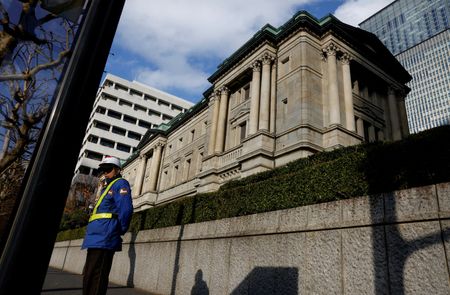

Newly released records from a Bank of Japan policy meeting have revealed the deep divisions that erupted inside the central bank when its then-chief pushed through a landmark decision to introduce negative interest rates back in 2016.
The full account of the January 2016 deliberations, made public Wednesday, shows that former BOJ governor Haruhiko Kuroda’s proposal to charge a 0.1% fee on a portion of financial institutions’ deposits held at the central bank was met with fierce pushback from within his own board. The measure narrowly passed with a 5-4 vote.
Kuroda had moved to cut a key benchmark rate below zero after an aggressive asset-buying campaign failed to stoke inflation. The goal was to stimulate economic growth and push back against a rising yen that was squeezing Japan’s export-driven economy.
The announcement rattled global markets — stocks surged, the yen dropped sharply, and government bonds rallied — as Japan followed the path already taken by the European Central Bank.
But inside the BOJ boardroom, the reaction was far more hostile. Board member Takehiro Sato raised alarms that the move could drag Japan into a race-to-the-bottom currency devaluation contest with Europe. “It’s wise to avoid falling into such a futile game,” Sato said, also warning about the damage negative rates could do to Japan’s banking sector.
Another board member, Koji Ishida, who had a background in commercial banking, argued that pushing already-low rates even further into negative territory would do little to encourage more lending or business investment.
The minutes made clear that most board members had been left out of the loop while Kuroda and his staff quietly developed the plan. Board member Sayuri Shirai did not hold back in her assessment. “It appears to be half-baked and prepared in a hurry,” she said, adding that economic conditions at the time did not justify such an extreme measure.
Board member Takahide Kiuchi said he was “extremely doubtful” that the policy could be responsibly implemented without a thorough examination of its potential economic consequences. “Markets would be very surprised and could move quite a bit temporarily. But that’s not the purpose of what we do,” Kiuchi said. “The purpose of our policy is to improve medium- and long-term economic and price conditions.”
The announcement came as an even greater shock to financial markets because Kuroda had told Japan’s parliament just days earlier that negative rates were not being considered as an option.
The BOJ ultimately brought the negative rate era to a close in 2024, dismantling that and other elements of Kuroda’s unconventional stimulus program. Current BOJ chief Kazuo Ueda has since raised interest rates on multiple occasions.
Ueda has faced his own challenges in building consensus among board members. Uncertainty stemming from an energy price shock tied to the Middle East conflict has complicated the bank’s economic outlook and its path forward on rate hikes. In April, two board members pushed for a rate increase when the BOJ chose to hold steady. Then in June, when the bank did raise rates to 1%, one member dissented in the other direction, preferring to keep rates lower.
Under BOJ practice, a condensed version of meeting minutes is released within weeks of each policy session, while the complete record of discussions is not made available until roughly a decade later.