The National Weather Service office located in Mount Holly, New Jersey has issued an Air Quality Alert, according to an official notice released on July 15 at 3:45 PM Eastern Time.
Residents in the affected area are encouraged to be mindful of outdoor activity during this period, particularly those who may be more vulnerable to poor air quality, such as children, the elderly, and individuals with respiratory conditions like asthma.
During an Air Quality Alert, health officials generally recommend limiting prolonged outdoor exertion and staying indoors when possible. Those who must be outside should consider taking extra precautions.
Stay tuned to TV Delmarva and your local National Weather Service forecasts for the latest updates on air quality conditions in your area.
Airbus and Boeing have each chartered one of the largest cargo planes on the planet in recent weeks to rush aircraft components to their production facilities — a clear sign that the aerospace industry is still wrestling with supply chain headaches.
The aircraft being used is the Antonov An-124, a massive four-engine transport plane. According to three industry insiders and two regulatory filings, the jet has been used to airlift parts for Airbus’s A350 wide-body jetliner and the Boeing 767 airframe, which is built as a freighter or military refueling tanker. A similar flight carrying components for the Boeing 777 freighter took place earlier this year.
When asked about the arrangement, a Boeing spokesperson said the company uses “a variety of transportation methods to maintain stability in our production,” but did not specifically address the use of the An-124.
An Airbus spokesperson acknowledged that “we sometimes use the Antonov,” but stopped short of confirming whether any of those flights involved the A350 — its flagship wide-body jet that has already faced delivery setbacks.
The decision to move parts by air rather than by sea or truck is significant. Aerospace manufacturers typically rely on dedicated ocean freight, trucking routes, and converted cargo aircraft to move large components between facilities. Switching transportation methods adds expense and is generally a sign that stockpiles of spare parts have dwindled.
While analysts say aerospace supply chains have broadly improved since the COVID-19 pandemic — with overall aircraft deliveries climbing this year — concerns remain about the health of the aerostructures sector and other components such as cabin seats.
Two industry sources said Airbus’s choice to fly A350 parts was tied to problems at a former Spirit AeroSystems plant in Kinston, North Carolina. Airbus took over that facility last December as part of a joint restructuring of the supplier alongside Boeing. One source noted that when the takeover occurred, parts were being shipped by sea with a buffer stock of four sets on hand. That cushion has since evaporated, forcing the switch to air freight to prevent further delays.
Reuters reported in May that Airbus had already warned some airline customers about new A350 delivery delays later this decade, partly due to difficulties obtaining fuselage sections from the Kinston plant.
“Regarding Kinston, we are making progress towards separation from the previous owner and integration into the Airbus landscape. However it remains a complex multi-year journey to complete,” the Airbus spokesperson said.
Airbus also told analysts during a pre-results briefing on Wednesday that its financial assumptions regarding the cost of absorbing the former Spirit facilities had not changed for 2026.
On the Boeing side, U.S. regulatory filings show the company chartered the same Antonov aircraft in late June to transport two upper fuselage sections from a Daher Aerospace factory in Florida. Those parts would normally travel by road to Boeing’s plant in Everett, near Seattle.
In a June 22 letter to the U.S. Department of Transportation — reviewed by Reuters — Boeing described the parts as “urgently required for the production of the 767,” and warned that “those delays would impose a significant economic cost if not avoided.” Boeing submitted a follow-up letter on July 1 supporting another exemption for the Antonov to carry a similar Daher-made component.
Daher declined to comment on operational matters.
The 767 is no longer manufactured as a passenger aircraft but continues to serve as the basis for U.S. military aerial refueling tankers and is in the final phase of production as a commercial cargo plane.
It has been quite a run for Jaxon Smith-Njigba. After capturing the AP Offensive Player of the Year award, winning the Super Bowl, and signing the largest contract ever handed to a wide receiver in NFL history, the Seattle pass-catcher has now been ranked the league’s best at his position in a preseason poll conducted by The Associated Press.
Eight AP pro football writers participated in the survey, each ranking their top five wide receivers heading into the 2026 season. Smith-Njigba came out on top, collecting four first-place votes along with three third-place votes and one fourth-place vote. The scoring system awarded 10 points for a first-place vote, followed by 5, 3, 2, and 1 point for second through fifth place, respectively.
Ja’Marr Chase picked up two first-place votes in the balloting, while Justin Jefferson and Puka Nacua each earned one first-place vote.
The 24-year-old Smith-Njigba put together a record-breaking campaign last season, setting Seattle franchise marks with 1,793 receiving yards and 119 receptions. His performance earned him unanimous All-Pro recognition and included nine games with at least 100 yards receiving. He was also a central piece of the Seahawks capturing their second Super Bowl title in team history. His reward off the field was a four-year contract extension worth $168.6 million, averaging $42.15 million per year with more than $120 million guaranteed.
Chase, who was a unanimous All-Pro pick in 2024 and shared the top spot in last year’s version of this survey with Jefferson, finished second in this year’s voting. He tallied 125 catches, 1,412 receiving yards, and eight touchdowns last season after claiming the receiving triple crown the year before. Chase received two first-place votes, three second-place votes, two thirds, and was left off one ballot entirely.
Nacua earned the third spot after being named a unanimous All-Pro selection, leading the entire NFL with 129 receptions for 1,715 yards and 10 touchdowns. Over his three years in the league, he has averaged 104 catches, 1,397 receiving yards, and six touchdowns per season, giving his quarterback a reliable top target and his team one of the most potent passing attacks in the game. Nacua appeared on seven of the eight ballots and received one first-place vote along with three second-place votes.
Jefferson had a quieter season by his standards, finishing with 84 catches for 1,048 yards and two touchdowns while working with three different quarterbacks for the Vikings. Still, the two-time All-Pro — who has averaged 97 catches, 1,413 yards, and seven touchdowns across six NFL seasons — earned one first-place vote, two second-place votes, and appeared on seven ballots.
Rounding out the top five was St. Brown, who hauled in 117 passes for 1,401 yards and 11 touchdowns for the Lions last season. A second-team All-Pro after back-to-back first-team selections, St. Brown has now strung together four consecutive seasons with more than 100 receptions and over 1,100 receiving yards. He appeared on seven of the eight ballots.
The latest figures from the federal government show a slight uptick in broiler poultry production across the United States, according to a new hatchery report.
Broiler-type eggs set nationally increased by 2 percent compared to the prior reporting period, while the number of broiler-type chicks placed rose by 1 percent.
The data, compiled and released by federal agricultural officials, tracks hatchery activity as a key indicator of near-term poultry supply trends across the country.
A newly released federal report on catfish production reveals a modest but notable dip in the industry’s output across the country.
According to the report, the total water surface acreage dedicated to raising catfish has fallen by three percent compared to previous figures. At the same time, the inventory of food-size catfish — those raised and ready for the consumer market — has also edged slightly downward.
The data was compiled and released by the U.S. Department of Agriculture’s National Agricultural Statistics Service as part of its ongoing tracking of American aquaculture production.
NEW YORK (AP) — The excitement building in your chest. The hunt for the right card. And that chalky, sugar-dusted stick of gum. For countless baseball card enthusiasts across multiple generations, nothing compared to scraping together a few coins and racing to the corner store to grab a wax pack.
Some fans couldn’t wait — they’d tear the slightly sticky paper wrapper apart and flip through all the cards at once. That frenzied approach gave rise to the still-popular term “ripping wax,” used even now to describe opening card packs, despite the fact that actual wax wrappers haven’t been used in roughly 35 years. Others preferred to savor the moment, sliding out one card at a time, maybe peeking at just a corner, or flipping the pack upside down for suspense. No matter your method, it felt like the only right way to do it.
“There is something inherently magic about peeling away the paper of the wax pack. There’s something visceral about it, taking the pack to your face and smelling it,” says Brian Pirrip, owner of collectible business M1NT. “It’s something about the mix of all these scents — the wax, the gum, the cardboard — that transports you back to a different time.”
Trading and collecting baseball cards has been woven into the sport’s culture since the 1860s. But the wax pack as we know it made its debut in 1951, introduced by Topps as the go-to way to deliver cards to eager young fans.
Cracking open a fresh pack was always a rush. Would you pull a future Hall-of-Famer like Brooks Robinson, or a lesser-known player like Sixto Lezcano? It didn’t matter much — Pirrip describes the feeling either way as “an innocent joy.” After opening, the real fun began: scaling cards, flipping them, wheeling and dealing to turn a pack of 15 into 20. Those cards went everywhere you did.
Driven by history, stats, and legend, baseball card collecting caught fire during the nostalgia wave of the 1980s and grew into a massive industry. The market eventually became flooded with cards, pushing prices down — but that same abundance of beloved players has sparked a renewed enthusiasm for hunting down and opening old wax packs.
Modern foil packs offer their own thrills, with collectors chasing autographed cards, refractors, and other premium inserts. But for many, nothing beats the feel of tearing into a wax pack and biting down on that thin pink rectangle of gum.
Pirrip has carried his passion for the hobby across 47 states, watching face after face light up the moment a favorite card appears.
At a recent evening event held at Citi Field, home of the New York Mets, Pirrip brought out a box of 1987 Topps cards and invited guests to rip some wax. Cards featuring Nolan Ryan, Don Mattingly, Roger Clemens, and Kirby Puckett drew audible gasps from the crowd. But even players whose names hadn’t been spoken in years brought smiles to people’s faces.
“It instantly transports people to a happier time,” Pirrip says. “You can’t get that with anything else.”
This story is part of “American Objects,” a recurring series marking the 250th anniversary of the United States.
PESHAWAR, Pakistan — A pair of militant attacks rocked northwest Pakistan on Wednesday, with officials reporting at least three police officers killed and 20 more wounded in what appears to be the latest surge of violence in the country’s troubled border region with Afghanistan.
The first strike took place in the Upper Dir district of Khyber Pakhtunkhwa province, where armed militants opened fire on a security convoy. Local police official Ibrahim Khan said three officers were killed and 15 others were hurt in the ambush. He added that security forces fought back and the gun battle was still underway at the time of his report. Khan did not immediately provide information on militant casualties.
Just hours after that attack, a suicide bomber drove an explosives-packed vehicle into a police station in the city of Bannu, also located in Khyber Pakhtunkhwa province. At least five more police officers were wounded in that blast, which caused significant damage to part of the station. No deaths were immediately reported from the Bannu attack.
No group has stepped forward to claim responsibility for either attack. However, suspicion is expected to focus on the Pakistani Taliban, a militant organization formally known as Tehrik-e-Taliban Pakistan, or TTP.
While the TTP is a separate organization from Afghanistan’s ruling Taliban movement, the two groups maintain close ties. Pakistani authorities have long accused the TTP of using bases inside Afghanistan to carry out attacks, a claim that both the TTP and the Taliban-led government in Kabul have denied.
WASHINGTON (AP) — Defense Secretary Pete Hegseth unveiled a new program on Wednesday that would screen military service members for “testosterone deficiency,” saying the initiative is needed to help troops perform at their “absolute best.”
Under the new policy, troops aged 30 and older will undergo testosterone testing each year as part of their routine medical screenings. Service members younger than 30 will have the option to participate voluntarily. In a social media video announcing the program, Hegseth appeared to be referring specifically to male troops being tested for hormone irregularities, though he did not explicitly say so.
The announcement arrives as other officials within the Trump administration have been pushing for men to have greater access to testosterone replacement therapies. However, the messaging from Hegseth and others mixes established science about the hormone with broader claims that are not as well supported.
When reporters asked what specific medical conditions the new policy was intended to address, the Pentagon pointed back to Hegseth’s video remarks, in which he spoke about keeping troops “strong, resilient and capable” and said that modern battlefield demands require “maximum psychological and mental readiness.” The Pentagon declined to identify particular conditions or diseases the screening program is targeting.
In his video, Hegseth emphasized that any testosterone replacement therapy offered as a result of the screenings would be entirely voluntary. He also stated that the initiative is “not about artificial enhancement.”
The Pentagon did not respond to questions about what medical research or academic studies were used to support the policy. Officials also did not address whether female service members could be screened for declining estrogen levels as they enter perimenopause.
This new initiative comes against a backdrop of controversy involving testosterone use in elite military units. In recent years, special operations forces — and Navy SEALs in particular — have faced scrutiny over the use of testosterone and similar performance-enhancing substances.
The 2022 death of a SEAL recruit during training led investigators to discover substances in his possession, including testosterone, and exposed a far more widespread problem with drug use within that elite program than had previously been known. One year after that death, the Navy announced it would launch its own drug-testing program to screen for “any hormonal substance, chemically or pharmacologically related to testosterone, that promotes muscle growth.”
Hegseth’s move also coincides with broader efforts by Health Secretary Robert F. Kennedy Jr. and other administration officials to make testosterone therapies more accessible. Last month, the Food and Drug Administration proposed relaxing prescribing restrictions on testosterone gels, pills, patches, and injections.
Currently, FDA labeling limits those medications to men diagnosed with hypogonadism, a medical condition that causes severely low testosterone levels. However, many influencers and supporters of Kennedy’s “Make America Healthy Again” movement promote testosterone as a tool for looking younger, building muscle, and staying mentally sharp — uses that most mainstream medical experts do not endorse.
That said, recent studies have provided some support for testosterone’s benefits in treating certain conditions, and have helped ease longstanding concerns about its safety — particularly regarding the heart. Last year, the FDA removed a boxed warning from testosterone drugs that had cautioned about possible risks of heart attack and stroke.
A series of studies conducted by the National Institutes of Health on older men found that testosterone therapy improved erectile dysfunction, libido, and other sexual health measures, and had a modest effect on mood. However, researchers found little or no improvement in areas such as fatigue, memory, or overall sense of well-being. Other studies have pointed to potential gains in muscle development, strength, and bone density.
Despite these findings, current medical guidelines generally advise against routine, broad-based testosterone screening. Doctors are typically recommended to discuss testosterone therapy only with men who are experiencing troubling symptoms and who have documented low hormone levels confirmed by two separate blood tests.
Accurately measuring testosterone also presents practical challenges, since hormone levels naturally shift throughout the day. Medical professionals typically recommend testing in the morning after fasting for the most reliable results.
KANSAS CITY, Mo. — Four University of Delaware men’s basketball players have earned spots on the 2025-26 National Association of Basketball Coaches (NABC) Honors Court, the organization revealed Wednesday.
The NABC made the announcement recognizing the Blue Hens student-athletes for their accomplishments both on the court and in the classroom.
PARIS — The global minimum tax on large multinational corporations helped governments collect more revenue without triggering job cuts or a pullback in investment, according to a new report released Tuesday by the Organisation for Economic Co-operation and Development.
The tax was created to put a stop to decades of countries undercutting each other on corporate tax rates. It works by allowing governments to collect additional taxes when a multinational’s profits are taxed at less than 15% in another country, making it less attractive for companies to route their earnings through low-tax jurisdictions.
So far, more than 60 countries and territories have put the rules into effect, with additional nations preparing to follow suit.
The Paris-based organization estimated that the tax generated between €79 billion and €109 billion — roughly $90 billion to $124 billion — in new government revenue during its first year of operation. That figure represents between 2.4% and 3.4% of total corporate income tax collected worldwide.
The study looked at how businesses adjusted their behavior after the tax took effect in 2024. It applies to multinational companies with annual revenues exceeding €750 million, requiring those firms to face an effective tax rate of at least 15% no matter where they operate.
To measure the tax’s impact, researchers compared companies just above and just below the revenue cutoff. The results showed that businesses subject to the rules paid higher effective tax rates, while there was little sign of any meaningful effect on hiring or capital investment.
Notably, this study was grounded in real-world company data following the tax’s rollout — a departure from earlier OECD analyses that relied on economic modeling.
The revenue figures, while substantial, fall short of the organization’s earlier forecast that the reform could eventually add $155 billion to $192 billion annually to global corporate tax collections. However, officials noted that the current study only covers the first year of implementation.
Because the study focuses solely on 2024, it does not account for a later agreement reached through the Trump administration. That deal exempted U.S.-based multinationals from certain core provisions of the regime through a separate arrangement that gives recognition to the United States’ own existing minimum tax rules.
The U.S. Department of Justice announced Wednesday that federal law bars it from turning over unredacted files about Jeffrey Epstein that New Mexico officials have been seeking, deepening a growing conflict between the nation’s top law enforcement agency and state investigators.
The dispute intensified after New Mexico Attorney General Raul Torrez publicly released a letter Tuesday, charging that the DOJ was intentionally blocking the state’s criminal investigation of Epstein by withholding the requested documents.
“Federal law, court orders, and privacy protections for victims and witnesses do not allow us to release millions of unredacted documents,” a DOJ spokesperson said in a statement. “We will continue to follow federal law and the court orders that are in place.”
New Mexico, under Democratic leadership, reopened its investigation in February into what allegedly took place at Epstein’s former ranch located south of the state capital, Santa Fe. Epstein is accused of abusing women and girls at that location over a span of nearly three decades.
Torrez said that after his office formally requested the unredacted files back in February, the U.S. Attorney’s Office for New Mexico responded on July 10 — delivering only 31 pages of material. According to Torrez, those documents consisted of already-public records, heavily redacted content that was essentially useless, or simply photocopies of local newspaper stories.
“It is a reflection of a deliberate choice not to cooperate,” Torrez wrote in Tuesday’s letter. His office had not responded to a request for comment by Wednesday.
Separately, the New Mexico state legislature has launched its own parallel investigation. Last month, lawmakers issued subpoenas to U.S. attorneys’ offices in three states and the U.S. Virgin Islands, seeking answers about whether — and why — those offices declined to prosecute Epstein.
The legislature’s so-called “Truth Commission” is expected to release a preliminary report before the end of this month. Meanwhile, Attorney General Torrez has not yet announced any findings from his office’s probe.
Victims and advocacy groups have continued to push the DOJ to release the full, unredacted Epstein files, an issue that has put pressure on President Donald Trump, who has publicly stated that the country should move on from the matter.
A deteriorating Ebola crisis in the Democratic Republic of Congo is throwing major roadblocks in front of a U.S.-backed initiative to gain greater access to the country’s critical mineral deposits, according to three people with knowledge of the situation who spoke to Reuters.
The outbreak has made travel to and from Congo increasingly complicated, with quarantine rules and health worries pushing officials and investors to put off planned trips. A diplomat and two consultants advising on U.S. investments confirmed the delays.
Congo holds the distinction of being the world’s leading producer of cobalt and its second-largest supplier of copper. The country also has substantial deposits of germanium, lithium, and tantalum — all considered vital materials for the global shift to clean energy — making it a hotly contested prize in international competition.
Both the United States and China have independently pursued minerals agreements with the Congolese capital of Kinshasa in recent years, each seeking to lock in access to the country’s abundant resources.
The Ebola outbreak was officially declared in mid-May. Since then, government figures show it has sickened 2,011 people and claimed 754 lives.
On July 11, the U.S. Embassy in Kinshasa issued a stark warning, telling American citizens not to travel to Congo “for any reason” due to the Ebola situation. The embassy also cautioned that anyone exposed to the virus could be required to undergo up to 21 days of quarantine at their own cost.
A spokesperson for the U.S. State Department told Reuters that Washington “has no higher priority than the safety and security of Americans.”
In a written response, the State Department said the U.S. is simultaneously working to bring the outbreak under control while continuing to pursue its minerals partnership with Congo. Officials pointed to progress along the Lobito Corridor and Kinshasa’s stated commitment to welcoming U.S. investment.
A diplomatic source confirmed that the outbreak is causing delays in the minerals partnership, saying deal-related discussions have been pushed back, though the source declined to provide specifics.
That same source noted that a Washington meeting originally scheduled for last month — intended to gauge U.S. companies’ interest in Congolese mining projects — was postponed. Some discussions have continued in other locations, including London.
The sources asked not to be identified, as they were not authorized to speak publicly about the matter.
The Congolese government had not responded to requests for comment at the time of publication.
According to one consultant, some investors and officials have relocated meetings to Paris and Brussels. A planned July review of Congolese projects was also cancelled after key U.S.-based partners were unable to make the trip.
Three U.S. officials say the recent rounds of American airstrikes against Iran are serving a dual purpose: pushing to reopen the Strait of Hormuz while simultaneously weakening Iranian military capabilities that would need to be neutralized before any larger-scale operations could be carried out.
The officials, speaking under the condition of anonymity to discuss sensitive military matters, said the strikes are effectively expanding the military options available to President Donald Trump. Trump notified Congress last weekend of a formal resumption of hostilities with Iran, while continuing to keep the world uncertain about his next move.
Now entering its fifth month, the conflict with Iran has continued after a memorandum of understanding — intended to halt the fighting and lay the groundwork for a peace deal — fell apart. Despite suffering significant military losses since the U.S. and Israeli campaign began on February 28, Iran still holds considerable drone and missile capabilities and has continued attacking commercial tankers and neighboring Gulf states.
The U.S. military has confirmed its recent strikes have focused on Iranian air defense networks, coastal radar installations, missile and drone launch sites, small watercraft, and other naval assets.
One official described the ongoing strikes as “shaping operations” — a military term for actions that weaken an enemy’s defenses ahead of more intensive future operations.
“This is helping set the stage, if needed,” the official said.
The Pentagon did not respond to a request for comment.
Earlier reporting from March revealed that U.S. military planners had been developing options to deploy American troops to Iran’s coastline to help secure the Strait. At that time, officials also said the Trump administration had discussed sending ground forces to Kharg Island — the hub through which 90% of Iran’s oil exports flow. That option carries significant risk, as Iran could bombard the island with missiles and drones launched from the mainland.
On Tuesday, Trump said he had directed his military not to strike Iran’s oil infrastructure during previous operations near Kharg Island, but he left the door open to eventually seizing the island itself.
“If we degrade them far enough and deep enough back, I would do that,” Trump told Fox News.
Trump has also floated the possibility of striking a fortified underground facility linked to Iran’s nuclear program, known as Pickaxe Mountain, located near one of Tehran’s primary nuclear sites.
Mark Cancian, a retired U.S. Marine officer with the Center for Strategic and International Studies, said Trump’s willingness to openly discuss potential military moves like taking Kharg Island cuts both ways. While it may apply pressure on Iran and support diplomatic efforts, it also tips off adversaries.
It’s “bad for the military, because we’re saying where we might be going,” Cancian said.
Critics of the conflict — including some members of Congress — argue that while U.S. forces have achieved tactical wins by dismantling large portions of Iran’s conventional military and defense industrial capacity, the campaign has not produced meaningful strategic concessions from Tehran. Iran has responded by exerting an unprecedented grip on the Strait of Hormuz, a waterway critical to roughly one-fifth of the world’s oil supply. Even with its conventional navy largely destroyed, Iran has continued attacking commercial ships using drones and rockets.
That reality has sparked internal debate within the Trump administration over the best path forward. A fourth official said Defense Secretary Pete Hegseth has been pushing for a more aggressive military posture against Iran.
Imran Bayoumi, a former Pentagon official now affiliated with the Atlantic Council, suggested Trump’s sweeping public statements about Iran in recent days are likely aimed at keeping Tehran off balance during negotiations rather than signaling imminent action.
“I would separate the noise from the actions,” Bayoumi said. “I would expect the discussions between him and his national security team are looking a bit different than what he’s posting online.”
Drivers heading through the Bunker Hill Road area should be aware of intermittent lane closures currently in effect due to construction activity.
The closures are affecting Route 15 (Bunker Hill Road) at the overpass above Route 301. According to traffic officials, the lane restrictions are expected to continue until 2:00 PM.
Motorists are encouraged to use caution when traveling through the construction zone and to allow additional time for their commute if passing through the affected area.
The National Weather Service office in Mount Holly, New Jersey has put a Heat Advisory into effect for the area, warning residents of dangerous heat conditions on Tuesday, July 15.
The advisory went into effect at 2:59 PM EDT and is set to expire at 8:00 PM EDT the same evening.
During a Heat Advisory, health officials generally recommend that residents stay hydrated, limit time outdoors during the hottest parts of the day, and check on elderly neighbors and family members who may be more vulnerable to heat-related illness.
A prominent journalist says the president not only accepted comparisons to some of history’s most notorious dictators — he welcomed them.
Jonathan Swan, a reporter for The New York Times, says the president was fixated on cementing his legacy as a “great man of history” during his second term in office. Swan made the remarks in connection with a new book he co-authored with fellow journalist Maggie Haberman.
The book, titled Regime Change, explores the president’s mindset and ambitions during his return to the White House. According to Swan, the president relished being compared to figures like Adolf Hitler and Joseph Stalin rather than being put off by such characterizations.
Swan and Haberman are both well-known for their extensive reporting on the president and his administration.
A Heat Advisory is in effect until 8:00 this evening for much of the Delmarva Peninsula and surrounding areas, as dangerously high heat index values of up to 107 degrees are expected across the region.
The National Weather Service out of Mount Holly has issued the advisory for Kent, Delaware Beaches, and Inland Sussex Counties in Delaware, as well as Caroline County on Maryland’s Eastern Shore. Portions of southern New Jersey — including Atlantic, Cape May, Cumberland, and Salem Counties — are also covered under the alert.
Health officials warn that the combination of hot temperatures and high humidity can quickly lead to heat exhaustion or heat stroke. Residents are urged to drink plenty of fluids, stay indoors in air-conditioned spaces, and avoid direct sun exposure. If you must be outside, wear lightweight, loose-fitting clothing and try to limit strenuous activities to the early morning or evening hours.
Please check on elderly relatives, neighbors, and those without access to air conditioning.
For outdoor workers, OSHA recommends frequent rest breaks in shaded or air-conditioned areas. Remember — heat stroke is a medical emergency. If someone shows symptoms, move them to a cool location immediately and call 9-1-1.
The advisory expires at 8:00 PM tonight. Stay with TV Delmarva for the latest updates on this and any developing weather.
The National Weather Service office in Mount Holly, New Jersey has issued an Extreme Heat Warning, in effect from 2:59 PM EDT through 8:00 PM EDT on Tuesday, July 15.
Forecasters are urging residents to take the heat seriously during this period. Extreme heat warnings are issued when dangerously high temperatures pose a significant risk to public health and safety.
Officials typically recommend staying indoors in air-conditioned spaces, drinking plenty of water, and checking on elderly neighbors and family members during extreme heat events. Pets should also be kept cool and given access to fresh water.
Residents should avoid strenuous outdoor activity during the warning period and be alert for signs of heat exhaustion or heat stroke, which can develop quickly in extreme conditions.
Motorists traveling southbound on Route 1 should be aware of a shoulder closure currently in effect near the Middletown area.
The closure is located roughly half a mile north of Exit 136, which serves the Middletown Odessa Road, and is the result of ongoing construction work in the area.
Drivers are advised to use caution as they pass through the affected stretch of roadway. The shoulder restriction is scheduled to be lifted by 5 p.m.
No additional lane closures have been reported at this time, but motorists should remain alert and allow extra travel time if passing through the area.
Delaware State Police have released the name of the man who lost his life in a deadly motorcycle crash that happened late Sunday night in Wilmington. The victim has been identified as Jose Vergara Guadarrama, 25 years old, from Newark, Delaware.
The Delaware State Police Collision Reconstruction Unit is actively working to piece together what led to the crash. Investigators are urging anyone who saw the collision, or who may have captured it on video, to reach out to Master Corporal R. Kunicki at (302) 365-8417. Tips can also be submitted through a private Facebook message to the Delaware State Police or by contacting Delaware Crime Stoppers at (800) 847-3333.
Anyone who has been affected by this tragedy and needs support can reach out to the Delaware State Police Victim Services Unit and the Delaware Victim Center. Help is available around the clock through a toll-free hotline at 1-800-VICTIM-1 (1-800-842-8461). The Victim Services Unit can also be contacted by email at [email protected].
YouTube has taken legal steps to challenge a groundbreaking jury verdict in Los Angeles, filing an appeal that contests the jury’s finding that the company built its platform in a way that deliberately hooked young users with no regard for their health or safety.
Attorneys representing YouTube submitted a notice of appeal Monday in Los Angeles County Superior Court. The filing came less than a week after Meta, a co-defendant in the case, submitted its own appeal. Both companies are expected to lay out their full legal arguments in future court documents.
The lawsuit centered on a 20-year-old woman — identified in court only by her initials, KGM, and her first name, Kaley — who said she became addicted to social media during her childhood and that the addiction made her mental health problems worse. The jury concluded that negligence by both Google-owned YouTube and Meta played a substantial role in the harm she suffered.
The jury awarded Kaley $3 million in damages and recommended an additional $3 million in punitive damages. Her lead attorney, Mark Lanier, issued a statement following Meta’s appeal, expressing confidence that the appellate court would “continue the careful application of the law to this case, affirming the verdict of the trial court.”
A Google spokesperson, José Castañeda, said last week that YouTube had been planning to appeal and described the filings as “standard motions for this case to move forward.”
Both Meta and Google had previously asked the trial judge to order a new trial. Judge Carolyn B. Kuhl rejected those requests in early June.
During the five-week trial, YouTube’s legal team argued that the platform — which focuses on video sharing and streaming — should not even be classified as a social media platform. Attorneys for both companies also repeatedly raised questions about whether the claims against them conflicted with legal protections that shield tech companies from responsibility for content posted by their users. Those protections come from Section 230 of the Communications Decency Act, passed in 1996. Lawyers for Kaley countered by focusing on platform design features, such as autoplay functions, which they argued encourage prolonged and unintentional use.
Kaley’s case was considered a first of its kind, and the outcome could shape the direction of thousands of similar lawsuits targeting social media companies over alleged deliberate harm to users. TikTok and Snap Inc., the parent company of Snapchat, were originally named as defendants in the case as well, but both reached undisclosed settlement agreements before the trial got underway.
LUSAKA, Zambia — The Zambian government announced Wednesday that Guy Scott, the politician who made history by briefly serving as Africa’s first white head of state in over two decades, has died at the age of 82.
Scott held the position of vice president of Zambia and stepped into the role of acting president for a period of three months in 2014, following the in-office death of President Michael Sata.
His time as acting president marked a historic milestone — he became the first white head of state on the African continent since South Africa’s F.W. de Klerk, who was the final leader under the apartheid system. De Klerk left office after South Africa held its first all-race elections in 1994, which brought Nelson Mandela to power.
According to a government statement, Scott passed away at his farm located in the capital city of Lusaka. Zambian President Hakainde Hichilema has authorized a state funeral for Scott, though an official date has not yet been announced.
Scott, who was of Scottish and English descent, first won a seat in Zambia’s Parliament in 1991. He went on to serve as minister of agriculture, food and fisheries before being appointed vice president in 2011.
Those roles made him the first white person to serve as both vice president and, later, president of Zambia since the country gained its independence from British colonial rule in 1964.
WASHINGTON — The U.S. Mint is now producing a commemorative $1 coin featuring the face of President Donald Trump, part of the nation’s celebration of America’s 250th birthday, the Treasury Department announced Wednesday.
The coin is scheduled to be released this fall. Its final design received approval earlier this year from the U.S. Commission of Fine Arts, a body whose members were appointed by Trump. However, the version unveiled Wednesday differs from that approved design in several ways — most notably, the coin is not made of gold but instead carries a gold-colored finish.
Treasury Secretary Scott Bessent described the coin’s purpose in a post on X, writing that it is meant “to honor the enduring legacy of liberty and a lasting symbol of patriotism.” He added that “featuring President Trump, it celebrates the strength of American values, and the promise of a nation dedicated to preserving freedom for all.”
Trump, a Republican, has shown a consistent interest in attaching his name and image to the historical record, having previously renamed the U.S. Institute of Peace, the Kennedy Center performing arts venue, and a new class of battleships, among other efforts. The decision to place his likeness on the coin has drawn criticism, particularly because federal law generally bars the depiction of a living president on U.S. currency — though the treasury secretary does hold authority to approve the minting and issuance of certain coins under specific circumstances.
The front of the coin shows Trump dressed in a suit and tie, wearing a serious expression. The word “LIBERTY” curves along the top of the coin, while the dates 1776-2026 appear along the bottom arc. The phrase “IN GOD WE TRUST” is printed in the center.
On the back of the coin is the classic bald eagle image from the Great Seal of the United States. “UNITED STATES OF AMERICA” runs along the top, and the Latin phrase “E PLURIBUS UNUM” — meaning “Out of many, one” — appears on the shield displayed on the eagle’s chest.
The final product also differs from the originally approved design in that Trump is no longer shown leaning forward with his fists resting on what appeared to be a desk. The Treasury Department did not offer an explanation Wednesday for why the finished coin departed from the earlier approved version.
This announcement follows a separate decision revealed in March, when the Treasury Department said it would begin placing Trump’s signature on all newly printed U.S. paper currency. Traditionally, paper currency carries only the signatures of the treasury secretary and the treasurer — not the sitting president.
WASHINGTON — Federal Reserve Chair Kevin Warsh spent his second day of congressional testimony Wednesday largely avoiding direct answers to senators’ questions on topics ranging from artificial intelligence’s role in inflation to whether he has spoken with President Donald Trump since taking the job.
Warsh has signaled since assuming the role seven weeks ago that he intends to offer less forward guidance on interest rate decisions than previous Fed chairs. But that approach has left many economic observers frustrated, as he has also steered clear of explaining in broader terms how the central bank might respond to shifts in the economy.
When asked about the potential impact of large-scale AI infrastructure investment on prices, Warsh offered a nuanced but noncommittal response. “I don’t view a one-time change in prices as necessarily being inflationary, because I think there’s a supply response,” he said. “Will it increase measured prices over the course of the next 12 months? I suspect it will be. Whether that’s inflationary or not, that’s up to the Federal Reserve, and we’re going to have something to say about that.”
Warsh also played down encouraging inflation figures released Tuesday and Wednesday. A government report out Wednesday showed that wholesale prices rose more slowly in June. That followed Tuesday’s news that consumer prices actually dropped from May to June — the first such monthly decline in six years. On an annual basis, inflation eased to 3.5% last month, down from 4.2% in May.
Cooler inflation generally eases pressure on the Fed to raise its benchmark interest rate, which is used to slow down borrowing and consumer spending. Despite the positive trend, Warsh struck a cautious tone. “Any central banker would be happy to have data going in the right direction,” he acknowledged, but added that “these are all imperfect measures of the state of underlying inflation.” He said he is relying on a task force he established to evaluate the data sources the Fed currently uses.
On the question of political independence, Warsh repeated his pledge to act free from outside pressure — including from Trump, who has frequently called for lower interest rates. However, when Sen. Chris Van Hollen, a Democrat from Maryland, asked whether Warsh had been in contact with Trump since his appointment, the Fed chair declined to give a direct answer.
“I don’t want to be in the business of sharing discussions that the president and I have,” Warsh said. He went on to add, “I will tell you what I’ve said to the president repeatedly and said to the Treasury secretary: they chose an independent guy to do the job and that’s exactly what I plan on doing.”
The hearing unfolded against a backdrop of concern over the Fed’s independence. Trump had repeatedly criticized Warsh’s predecessor, Jerome Powell, for not cutting rates aggressively enough. Trump’s administration also launched an inquiry into brief Senate testimony Powell gave regarding a Fed building renovation — a move that sparked widespread alarm about potential political interference with the central bank.
Westbound travelers on Johnson Road (Road 447) in Sussex County are facing a lane restriction due to ongoing construction work in the area.
A flagging operation and right lane closure are currently active along the stretch of Johnson Road between East Trap Pond Road (Road 62) and East Elliots Dam Road (Road 467A).
Drivers heading in that direction should use caution, follow the directions of flaggers on site, and expect possible delays until the work is completed.
An artificial intelligence startup called Thinking Machines made waves Wednesday with the unveiling of a new AI model that could offer users a rare Western-built alternative to the open-source AI tools currently dominated by Chinese technology companies.
The new model, called Inkling, falls into the category of open-weight AI — meaning anyone can download it, run it on their own systems, and modify it to fit their needs. This sets it apart from proprietary models that keep their underlying code locked away from users.
Inkling marks the first general-purpose AI model to come from Thinking Machines, a San Francisco company founded last year by Mira Murati, who previously served as chief technology officer at OpenAI.
The company had previously launched a product called Tinker back in October, which is designed to help users customize AI models. Inkling is now accessible through Tinker as well as other platforms used by developers.
In terms of raw size, Inkling is a heavyweight — boasting 975 billion parameters. Parameters are the internal variables that shape how an AI system understands and responds to information, and this figure places Inkling among the largest models of its type.
The release comes at a time when Western open-source AI development has fallen behind China’s. That gap widened after Meta shifted away from its open approach following the underwhelming reception of its Llama 4 model last year, leaving a void in the market.
With fewer Western open-source options available, many businesses have turned to Chinese-developed models as cost-effective alternatives to expensive closed-source products. Hedge fund Bridgewater Associates, for instance, used Thinking Machines’ Tinker platform to build a customized version of Qwen — a model created by China’s Alibaba — which the firm said outperformed leading proprietary models while costing less.
To demonstrate Inkling’s capabilities, Thinking Machines released a set of benchmarks comparing its performance against closed models from Anthropic, Google, and OpenAI, along with top open-source models, most of which come from Chinese AI labs.
While those competing models still hold an overall performance advantage, Inkling showed strong results — particularly when it came to agent-related tasks — which could attract attention from businesses and developers looking for alternatives.
The Los Angeles Galaxy bolstered their roster Wednesday by signing Finnish forward Robert Taylor as a free agent.
The 31-year-old will remain under contract with the club through the 2026 season, with an option that could keep him in Los Angeles through December 2027.
Taylor was let go by Austin FC last month after recording two assists across two appearances this season. He now joins a Galaxy squad currently sitting in ninth place in the Western Conference, a team that has scored 22 goals in 15 matches — a rate that ranks 20th among all 30 MLS clubs.
Galaxy general manager Will Kuntz expressed enthusiasm about the addition. “We are excited to welcome Robert to the Galaxy family,” Kuntz said. “He brings versatility and a wealth of experience in MLS and will be a great addition to our locker room.”
Over his MLS career, Taylor compiled 18 goals and 18 assists in 116 appearances for Inter Miami between 2022 and 2025, then added one goal and one assist in 24 games with Austin during the 2025-26 campaign. During his time with Inter Miami, he was part of the squad that captured the Leagues Cup in 2023 and the Supporters’ Shield in 2024.
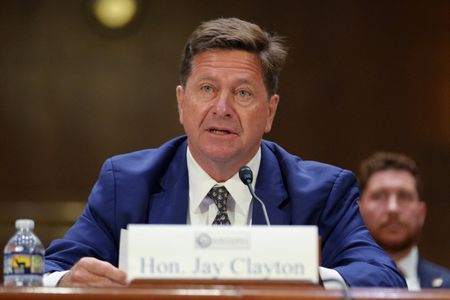
WASHINGTON — President Trump’s nominee to serve as the country’s top intelligence official, Jay Clayton, refused Wednesday to plainly acknowledge that Trump lost the 2020 presidential election to Democrat Joe Biden, even as Democratic senators pushed him repeatedly on the question during his Senate confirmation hearing.
Democratic Senator Mark Kelly of Arizona challenged Clayton directly, pointing out that Trump was not present at the hearing. “Trump isn’t in the room today,” Kelly told Clayton. “If you can’t disagree with him when he’s not in the room, are you going to be able to disagree with him when you’re sitting across from him?”
Clayton’s only concession was that Biden had been “certified” as president, while insisting, “I am not an election denier.”
When Kelly pressed him further — asking whether the winner of an election is the person certified by Congress who received the most electoral votes — Clayton responded: “I think that’s your characterization. I’m really, I’m not going to continue.”
The exchange escalated into shouting at points during the Senate Intelligence Committee hearing, where Clayton is being considered to serve as director of national intelligence, the president’s chief intelligence adviser and overseer of the 18-agency U.S. intelligence community.
The hearing comes as the Trump administration, fueled by the president’s claims that U.S. elections are “rigged” and his ongoing refusal to accept his 2020 loss, has been pushing for greater federal control over elections. Legal experts have warned such efforts would strip power from states in a way that conflicts with the U.S. Constitution.
On Thursday night, Trump is scheduled to deliver a national address focused on newly declassified intelligence related to U.S. elections and what the White House describes as vulnerabilities in voting machines.
Senators also grilled Clayton about subpoenas he issued Friday in his current role as the U.S. Attorney for Manhattan. Those subpoenas ordered journalists from the New York Times to testify before a federal grand jury following the newspaper’s reporting on security concerns related to Trump’s new Qatari-donated Air Force One.
The Times characterized the move as “an extraordinary escalation” in the administration’s efforts to pressure journalists — a description echoed by several senators. The Justice Department, however, maintained the subpoenas were aimed at officials leaking sensitive information, not at the journalists themselves.
Clayton defended the subpoenas, saying they were “in connection with an ongoing national security investigation” and were issued through a “consultative process” involving career prosecutors in his office. “I’m absolutely committed to and respect our First Amendment and the role of the press,” he said, while declining to go into further detail about the case.
Senator Mark Warner of Virginia, the committee’s top Democrat, urged Clayton to avoid what Warner described as “repeated attempts” to politicize intelligence — a pattern he attributed to Clayton’s predecessors in the acting DNI role.
Warner also raised concerns about how the current acting DNI, Bill Pulte — who has held the position for only three weeks and lacks national security and intelligence experience — would handle the declassification of sensitive election-related intelligence for Thursday’s presidential address. “I just don’t understand how Mr. Pulte … can end up figuring out what is appropriate or not appropriate (to declassify) since he’s been in the job for only three weeks,” Warner said.
Pulte, a close Trump ally who also serves as Federal Housing Finance Agency director, took over the acting DNI role after Tulsi Gabbard departed the position in June. Since taking over, Pulte has announced multiple rounds of staff cuts, as some Republicans have called for the Office of the Director of National Intelligence to be eliminated entirely.
Clayton pushed back on that idea, saying there is a need for a “focal point for coordination across the other 17 intelligence agencies,” though he acknowledged the office should “probably pull back” from operational involvement and functions already handled by other agencies.
Clayton said he was not involved in preparations for Trump’s Thursday night speech.
While Clayton does not have deep traditional intelligence agency experience, he pointed to national security work during his time leading the Securities and Exchange Commission and his current role as Manhattan U.S. Attorney, where he has been overseeing the prosecution of deposed Venezuelan President Nicolas Maduro.
Wednesday’s hearing was Clayton’s second before the intelligence panel. Trump last month abruptly ordered the postponement of his first hearing in an effort to pressure Congress into passing a package of election restrictions known as the SAVE America Act. That legislation remains stalled, lacking enough Senate votes to advance. Voting rights organizations argue the measure would strip voting access from millions of Americans who lack ready access to passports and birth certificates.
Senator Tom Cotton of Arkansas, the committee’s Republican chairman, said he plans to hold a vote on Clayton’s nomination early next week and then send it to the full Senate for consideration.
Elon Musk’s artificial intelligence company xAI has taken legal action against a South Carolina man who was arrested earlier this year on charges related to the sexual exploitation of minors, accusing him of using the company’s AI chatbot Grok to produce child sexual abuse material.
The lawsuit was filed in federal court in Texas on Tuesday. xAI claims that Terry Harwood broke the company’s terms of service. Legal experts note this is among the first cases in which an AI company has gone to court against one of its own users over the alleged generation of explicit content using AI technology.
Harwood was arrested in February, but contact information for him was not immediately available. Representatives for xAI had not responded to requests for comment as of Wednesday.
The lawsuit comes as xAI and its Grok system have faced mounting criticism worldwide over concerns that the platform has been used to produce non-consensual sexualized deepfakes — realistic-looking fake videos or images created using artificial intelligence.
In court documents, xAI stated that the company “enforces its rules against violators through account suspensions, account terminations, and by reporting suspected child sexual abuse material to the National Center for Missing & Exploited Children.”
The filing added: “Indeed, Plaintiff has suspended 52,222 accounts and made 73,604 reports to NCMEC in 2026, resulting in (at least) 244 arrests.”
According to the complaint, Harwood uploaded non-sexual photos of both adults and minors into Grok and attempted to use the system to turn those images into sexually explicit deepfakes. The lawsuit also alleges he created non-consensual sexual imagery involving adults.
xAI is seeking an unspecified amount of financial damages and is asking the court to permanently bar Harwood from accessing or using Grok in the future.
The company described the alleged conduct in stark terms, stating in the lawsuit: “Defendant’s actions were a calculated scheme to weaponize Plaintiff’s tool for criminal ends, exposing real victims to profound and lasting harm, while exposing Plaintiff to significant legal risk and reputational damage.”
New Castle County Division of Police detectives have charged a Philadelphia man in connection with a series of vehicle thefts and attempted thefts that targeted the Newark area beginning in November 2025.
Officers launched the investigation after reports of multiple incidents in the area, including the attempted theft of a Dodge Charger SRT and the successful theft of a Honda Accord.
As the investigation continued, two Dodge Challenger R/T Scat Pack vehicles were also connected to the case.
England vs. Argentina: A Legendary Rivalry Returns in World Cup Semifinals
Two of international soccer’s fiercest rivals — England and Argentina — are set to face off in the World Cup semifinals in Atlanta. The winner will advance to face Spain in the championship match on Sunday in East Rutherford, New Jersey. The rivalry between the two nations stretches back to 1962, but tensions truly boiled over during England’s 1-0 quarterfinal victory four years later. Argentina captain Antonio Rattin, whose passing was announced on Saturday, was ejected from that heated contest. England went on to claim its one and only World Cup title. Other memorable moments in the rivalry include Diego Maradona’s notorious “Hand of God” goal in 1986 and David Beckham’s red card in 1998.
Messi Chasing Golden Boot Glory Against England
Lionel Messi enters the World Cup semifinal against England with a chance to pull ahead of Kylian Mbappé in the race for the tournament’s top scorer award, known as the golden boot. Both players are currently tied with eight goals. Messi also holds the all-time World Cup scoring record with 21 goals, making him the primary threat England must neutralize in Atlanta. At 39 years old, this could be Messi’s final World Cup appearance. A victory would also allow him to surpass Argentine legend Diego Maradona by claiming a second World Cup title, following Argentina’s triumph in Qatar in 2022. Argentina is additionally seeking to become the first nation to win back-to-back World Cup championships since Brazil did so in 1958 and 1962.
Yzerman Steps Down as Red Wings General Manager
Steve Yzerman has unexpectedly resigned as general manager of the Detroit Red Wings, transitioning into an advisory role to CEO Chris Ilitch. The move comes just weeks after reports surfaced that team captain Dylan Larkin had requested a trade. The Red Wings announced that a search for new leadership of hockey operations is already in progress. Yzerman played his entire 22-year Hall of Fame career in Detroit from 1983 to 2006, leading the team to three Stanley Cup championships. He later served as a successful general manager in Tampa Bay before returning to Detroit in 2019.
ACC Overhauls Tiebreaker Rules After Controversial Championship Berth
The Atlantic Coast Conference is changing how it determines which teams qualify for its football championship game, following last season’s disputed outcome that allowed a five-loss Duke squad to edge out then-No. 10-ranked Miami for a spot in the title game. That decision put the Hurricanes in jeopardy of missing the College Football Playoff. Under the new format, when head-to-head results cannot break a tie, the team with the strongest overall resume will earn the conference championship berth and the league’s automatic College Football Playoff bid. ACC Commissioner Jim Phillips said the determination will be based on a SportSource Analytics metric already used by the CFP.
Fleetwood a Fan Favorite at British Open on His Home Turf
Few outcomes at this week’s British Open at Royal Birkdale in Southport, England, would generate more excitement than a victory by Tommy Fleetwood. The golfer, known for his long hair and warm personality, grew up just a short distance from the course in this golf-rich corner of northwest England and is considered a local hero. As a child, Birkdale was largely off-limits to Fleetwood — he only got to play it on rare occasions when he quietly joined his father during evening dog walks. His early golf days were spent at a modest municipal club just down the road in Southport.
At the British Open, the Ground Game Is the Big Story
The debate over how far golf balls travel has persisted for years, but at the British Open, the conversation centers less on distance through the air and more on how far the ball rolls along the ground. The 154th Open Championship tees off Thursday on the dry, sun-baked links of Royal Birkdale, with hot and sunny weather expected to make the course play even faster. Defending champion Scottie Scheffler is among the players who say the firm conditions demand creative decision-making on every shot. Scheffler also took a notable swipe at some of the recent changes made to the game.
France Falls to Spain in World Cup Semifinal Despite High Expectations
Despite entering the match with what appeared to be enough offensive talent to break down Spain’s defense, France was shut out in a 2-0 semifinal defeat at the home stadium of the NFL’s Dallas Cowboys in Arlington, Texas, on Tuesday. France coach Didier Deschamps, who had previously announced this would be his last World Cup, has won the tournament both as a player and a coach. He acknowledged being part of many joyful moments in the sport, but said this game “was not such a moment.” France will now face the loser of the England-Argentina semifinal in the third-place match on Saturday in Miami Gardens, Florida.
Wimbledon Women’s Final Draws Record ESPN Viewership
The thrilling Wimbledon women’s final between Linda Noskova and Karolina Muchova drew the largest audience ever for a women’s championship match at the grass-court Grand Slam on ESPN. The all-Czech showdown on Saturday averaged 1.9 million viewers — a 48% jump from last year’s final, in which Iga Swiatek defeated Amanda Anisimova 6-0, 6-0 in just 57 minutes. Noskova squandered five match points and a 5-2 second-set lead before ultimately winning 6-2, 5-7, 6-3. Meanwhile in Italy, the men’s final featuring Jannik Sinner — the country’s most popular athlete — drew an average of 4.2 million viewers as he captured his fifth Grand Slam title.
Waerenskjold Wins Fastest-Ever Tour de France Stage
Norwegian cyclist Soeren Waerenskjold claimed victory in Stage 11 of the Tour de France, edging out Olav Kooij, Jasper Philipsen, and a pack of other riders in a sprint finish on the relatively short and flat 161.3-kilometer (100.2-mile) route from Vichy to Nevers in central France. It marks the 26-year-old’s first career stage win, coming just one day after he crashed during the hilly stage to Le Lioran. Overall leader Tadej Pogačar, who had extended his advantage to more than three and a half minutes with his third stage win of the race the day prior, finished safely in the pack alongside top rival Jonas Vingegaard to protect his lead.
Young Venezuelan Baseball Prospect Trains On Despite Earthquake Devastation
Last month’s earthquakes in Venezuela left a trail of destruction, claiming thousands of lives and displacing roughly 18,000 people in the hardest-hit state of La Guaira. With many baseball fields converted into makeshift camps for the displaced, an abandoned baseball stadium has become a gathering place where young players continue to train, grieve, and find comfort in the sport. Venezuela has historically produced many Major League Baseball stars, and coaches remain hopeful that some of these young athletes still have a path to professional careers despite the enormous hardship they have endured.
Delaware has enacted updates to its Underground Utility Damage Prevention and Safety Act, a law originally established in the mid-1990s, with the goal of making underground utility work safer and better coordinated across the state.
Under the revised law, companies and individuals who own, operate, or control underground or submerged pipes, cables, or structures used to deliver services such as electricity, communications, gas, oil, water, or sewage are now required to respond to location inquiries from excavators within three business days. Those responses must be communicated through the Owner/Operator/Excavator Information Exchange System, an interactive platform designed to facilitate that communication.
Architects, engineers, and others who prepare drawings for construction or demolition projects — referred to in the law as “designers” — are now required to meet with utility owners or operators who want more details about a project’s scope. They must also make reasonable efforts to draw up construction plans in ways that reduce the risk of damaging or disrupting underground utilities in the work area.
Anyone planning to dig or demolish — classified as “excavators” under the law — must first contact the Owner/Operator/Excavator Information Exchange System to determine the location and type of nearby underground facilities. Work cannot begin until the excavator receives a positive response code of “clear,” “no conflict,” or “marked” from every relevant utility owner or operator.
If an emergency arises during excavation, the excavator must immediately alert the occupants of the affected property. If the excavation damages a facility and causes a flammable, toxic, or corrosive gas or liquid to escape — or creates any other threat to life, health, or property — the excavator must immediately call 911 and notify the facility owner or operator. For complex projects, excavators are also required to meet with facility owners, operators, or their representatives before breaking ground.
The Utilities Service Protection Center of Delmarva, Inc. is designated as the approved notification center under the law. It is responsible for receiving and recording information about the locations of underground facilities statewide, logging notices of planned excavation and demolition work from designers and excavators, and alerting utility owners and operators accordingly.
The law establishes a tiered system of civil penalties for violations. Utility owners or operators who fail to meet their legal obligations can face fines of up to $1 million if a violation results in a death, up to $500,000 if a structure is damaged, and up to $100,000 for all other violations. For violations that do not involve a death or structural damage, the Public Service Commission of Delaware may allow violators to complete training offered by the approved notification center instead of paying a fine.
Importantly, civil penalties do not bar individuals or parties from pursuing separate civil lawsuits for personal injury or property damage. Any penalty money collected will be directed toward public awareness campaigns, training and education programs, improvements to the notification center, or reducing costs for notification center members.
The legislation also includes technical corrections to bring existing state law in line with the Delaware Legislative Drafting Manual’s standards.
Delaware State Police have released the name of the man killed in a fatal pedestrian crash that took place Monday night in Harrington. Authorities have identified the victim as 62-year-old Jimmy Burgess, a resident of Harrington, Delaware.
The crash, which occurred on Whiteleysburg Road, remains under active investigation by the Delaware State Police Troop 3 Collision Reconstruction Unit. Anyone with information about the incident is urged to reach out to Sergeant M. Long directly at (302) 698-8518. Tips can also be submitted through a private Facebook message to the Delaware State Police or by calling Delaware Crime Stoppers at 1-800-847-3333.
Those who have been affected by a crime or have lost someone to a sudden death can reach out to the Delaware State Police Victim Services Unit and the Delaware Victim Center. Support and resources are available around the clock through a toll-free hotline at 1-800-VICTIM-1 (1-800-842-8461). The Victim Services Unit can also be contacted by email at [email protected].
New Castle County drivers are being put on notice about an upcoming road closure that will affect travel in the area for several weeks.
The Delaware Department of Transportation (DelDOT) is announcing that Upper Pike Creek Road will be closed between Old Coach Road and New Linden Hill Road beginning Monday, July 20th. The closure will be in effect during the hours of 8 a.m. to 5 p.m. each day and is expected to continue for several weeks.
Construction crews will be on site to mill, patch, and pave the roadway during that time. Motorists are encouraged to plan ahead and allow extra time or find alternate routes while the work is underway.
Military exchanges between the United States and Iran stretched into a fourth consecutive night as President Donald Trump reinstated a naval blockade targeting Iranian ports and issued stark warnings that Iran’s civilian infrastructure could be next if the country refuses to negotiate.
The naval blockade, which restricts ships from traveling to and from Iranian ports, was first set in motion on Tuesday after President Trump announced the measure on Truth Social. The day before, Trump had declared that the United States would serve as the “guardian” of the Strait of Hormuz.
U.S. Central Command, known as CENTCOM, confirmed it had resumed offensive strikes against Iran ahead of reimposing the blockade. In a statement shared on X, CENTCOM announced: “At 3 p.m. ET today, US Central Command forces began launching an additional round of strikes against Iran to continue degrading Iranian capabilities used to attack commercial shipping in the Strait of Hormuz.” The command added that forces were also preparing “to resume the naval blockade against Iranian ports and coastal areas.”
Iran’s Islamic Revolutionary Guards Corps (IRGC) fired back with strikes of its own throughout the region. Video footage reviewed by CNN and verified through geolocation appeared to capture an Iranian drone hitting a warehouse that was already ablaze in an industrial zone near Mina Abdullah in Kuwait.
Early Wednesday local time, the IRGC claimed responsibility for striking what it described as a U.S. Army logistics and support center in Mina Abdullah, saying the facility was “set on fire and destroyed.” However, it remained unclear whether the burning structure shown in the footage had any connection to the U.S. military.
Kuwait’s fire service confirmed late Tuesday local time that crews had put out a fire “caused by a hostile Iranian aerial aggression,” according to the official Kuwait News Agency, though the report did not specify the fire’s exact location.
Iran’s military also asserted that it struck U.S. military assets at Al-Azraq Air Base in Jordan. Iran’s state news agency IRNA reported that Iranian attack drones targeted an area where F-18 fighter jets were stationed, along with an accommodation building and a large equipment hangar allegedly belonging to the U.S. Army. Notably, F-18 jets are typically deployed on aircraft carriers rather than at land bases in the Middle East, and U.S. media organizations were unable to independently confirm the claim.
On the diplomatic front, Iranian Deputy Foreign Minister Kazem Gharibabadi declared Tuesday that Tehran feels it has “no obligations” under a 14-point agreement reached with the United States the previous month. He argued that the heart of what he called the Islamabad memorandum of understanding was about ending the conflict entirely. “The core of the Islamabad memorandum of understanding concerned ending the war — an immediate and permanent cessation of the war and, in effect, of military operations against the Islamic Republic of Iran — as well as on all other fronts, including Lebanon,” he said.
In an interview with Fox News, President Trump made clear that the military campaign would only grow more intense if Iran does not return to the negotiating table. “We’re going to hit them very hard tomorrow night. We’re going to hit them very hard the night after, and then next week it gets really bad for them, because next week comes the power plants. Next week comes the bridges. We’re going to knock out all their power plants. We’re going to knock out all their bridges unless they get to the table and negotiate,” Trump said.
ARLINGTON, Texas — A French squad built around the talents of Kylian Mbappé entered the World Cup semifinals with high expectations and the offensive weapons to challenge Spain’s tough defense. What followed was a sobering 2-0 defeat played at the home stadium of the NFL’s Dallas Cowboys on Tuesday — a result that is widely expected to be the final World Cup chapter for head coach Didier Deschamps.
Deschamps has publicly stated this tournament would be his last as France’s manager. His résumé includes a World Cup title as a player in 1998 and another as a coach in Russia eight years ago, along with a runner-up finish in 2022 in Qatar, where Argentina claimed the trophy in a penalty shootout.
Speaking through a translator after Tuesday’s loss, Deschamps reflected on the bitter result while stopping short of discussing what comes next for him. “I’ve been lucky as a player to enjoy happy moments,” he said. “Today is not such a moment. But I think we must accept it without forgetting everything that we’ve experienced so far. But today’s feeling is that I am not happy.”
The fallout from the defeat stretched far beyond Texas. Reports emerged of multiple confrontations breaking out in Paris, with clashes between police and young people also occurring in Lyon.
Back home, French sports media expressed deep disappointment. L’Équipe, the country’s top sports publication, wrote that Deschamps’ players had been outclassed in every area of the game, “unable to live up to their dreams and to the hope they had inspired.” The outlet noted that France had gone through its first six World Cup matches without ever falling behind — a streak that made Tuesday’s collapse all the more jarring.
The players themselves didn’t push back on that assessment, though Mbappé was quick to stand behind his coach. The France captain also pledged full effort in the third-place match against the loser of the Argentina-England semifinal, set for Saturday in Miami Gardens, Florida.
“Nothing changed about what Didier means to us as a French people. As a manager, as a player, he wrote an amazing story,” Mbappé said, noting that Deschamps gave him a brief embrace on the sideline when the final whistle blew. “There’s one game left for him, so we’re going to try to play the best game for him because he deserves it, and also the fans deserve to have a win and finish third in this World Cup.”
The creative spark that France had hoped to get from Mbappé, Ousmane Dembele, and Michael Olise never materialized. Spain recorded their sixth clean sheet in seven World Cup games this tournament.
Mbappé’s clearest scoring opportunity came in the 67th minute when his shot deflected off Spain defender Marc Cucurella and sailed just wide — though Spain already led by two goals at that point. The 27-year-old had come into the match tied with Argentina’s Lionel Messi for the tournament’s top scorer with eight goals each.
Frustration got the better of Mbappé late in the match. He received a yellow card in the 86th minute after rushing toward Spain goalkeeper Unai Simón as the keeper was reaching down for the ball. The collision sent Simón to the turf.
Midfielder Rayan Cherki offered a forward-looking take on the defeat, speaking through a translator. “In so many ways, France was missing everything today,” he said. “We’ll be back in four years, and we won’t make the same mistakes.”
OMAHA, Neb. — Legendary investor Warren Buffett made clear Wednesday that his choice to steer his charitable giving away from the Gates Foundation has more to do with his faith in his three children than with Bill Gates’ connection to convicted sex offender Jeffrey Epstein.
Speaking to CNBC, Buffett described Gates’ association with Epstein as “distasteful,” but the 95-year-old said Gates’ misstep wasn’t all that different from errors he himself had made over the years when it came to picking the wrong people — whether in business or in personal relationships.
“No one bats a thousand in the business of choosing people,” Buffett told CNBC.
Buffett said he had spent considerable time since January 1st reviewing what took place between Gates and Epstein, including Gates’ sworn congressional testimony and the cross-examination that followed. He also noted that Gates eventually cut ties with Epstein entirely.
According to Buffett, Gates was not caught off guard by the announcement Buffett made Tuesday — that he plans to eventually donate all remaining shares of his $140 billion Berkshire Hathaway stake to foundations tied to his family and his three children, Howard, Susie, and Peter. Gates had actually flown to Omaha a few weeks prior and spent several hours meeting with Buffett. The two had largely been out of contact since new details about Gates’ relationship with Epstein began emerging as federal investigators released files from the Epstein case.
Gates has maintained that he only met with Epstein because he believed the meetings could help him raise money for charitable work, and that he had no knowledge of Epstein’s ongoing criminal behavior.
Epstein, who faced accusations of sexually abusing dozens of underage girls, was found dead inside a Manhattan federal detention facility in August 2019. New York City’s medical examiner later ruled his death a suicide.
Buffett had previously stated in 2024 that he intended to stop directing donations to the Gates Foundation after his passing and allow his children to determine how the remainder of his wealth would be distributed.
In the same CNBC interview, Buffett also disclosed that he recently suffered a broken leg and had surgery to address it, though he said his recovery is going well.
The Gates Foundation did not respond immediately following Buffett’s Wednesday interview, but the day before, the organization had expressed gratitude to Buffett for contributing more than $47 billion since 2006. The Gates Foundation itself is set to shut down in 2045, after distributing the remainder of Gates’ own fortune.
Buffett said he now wants his wealth distributed even faster than he had previously indicated — specifically, by the close of 2034. Achieving that timeline would require him to dramatically ramp up his annual giving to more than $17 billion per year.
At present, he is donating roughly $6 billion annually to the Susan Thompson Buffett Foundation and the foundations operated by each of his children: the Sherwood Foundation, the Howard G. Buffett Foundation, and the Novo Foundation. The bulk of that giving flows to the foundation named after his late wife, which could soon rank among the largest philanthropic organizations in the world. Buffett also traditionally makes additional contributions to his family foundations each Thanksgiving.
After his death, Buffett has said a new foundation will be established to handle the distribution of his remaining shares, with the requirement that all three of his children must reach unanimous agreement on where those funds go. He wants his children to be able to make those decisions while they are still alive — and his oldest daughter will be nearly 81 years old in eight years.
The faster pace of giving also has implications for Berkshire Hathaway. By distributing his fortune over the next eight years rather than over the decade following his death, Buffett’s family will not serve as the company’s dominant shareholder for as long as his designated successor, Greg Abel, had anticipated.
Even so, Buffett expressed strong confidence in Abel’s ability to lead the conglomerate, saying that belief “becomes more evident by the day.”
Buffett did point out, however, that Berkshire’s significant investment in Google’s parent company — which has grown substantially in value over the past year — was a decision he made himself, not Abel, though Abel did sign off on it. Just last month, Berkshire agreed to put an additional $10 billion into Alphabet, following a previous move that tripled the company’s stake.
A boat packed with approximately 60 migrants — among them women and children — capsized off the eastern Libyan coast on Tuesday, leaving at least 50 people dead or unaccounted for, according to authorities.
Eastern Libya’s Coast Guard reported that the vessel went down near Bardaa Island, not far from the coastal city of Tobruk. Ten survivors were able to swim to the island on their own. A search operation for additional survivors or victims remains ongoing, the Coast Guard said.
This disaster is the most recent in a troubling series of tragedies along Libya’s coastline. Just last month, another shipwreck in eastern Libya resulted in 51 migrants dead or missing.
Libya has become one of the primary launching points for migrants attempting to cross the Mediterranean Sea in hopes of reaching Europe and building a better life. The country descended into turmoil following a NATO-backed revolt in 2011 that overthrew and killed longtime ruler Moammar Gadhafi, and it has since become a key transit hub for people fleeing violence and poverty across Africa and the Middle East.
Human smugglers routinely load migrants onto small, poorly equipped boats for the dangerous sea crossing, and thousands have lost their lives making the attempt.
According to the International Organization for Migration, more than 800 migrants were reported dead or missing along the central Mediterranean route between January 1 and May 16 of this year. In all of last year, that number exceeded 1,300.
PHILADELPHIA — The Trump Administration has made good on its promise to replace and reinstall informational panels about slavery at the historic site of President George Washington’s Philadelphia residence.
The new panels went up Wednesday morning in the same area where the Declaration of Independence was adopted on July 4, 1776. Critics contend the replacement displays water down the history of slavery compared to the exhibits that had been in place since 2010.
Philadelphia Mayor Cherelle L. Parker strongly condemned the move. “Overnight, under the cover of darkness, the federal government removed panels at the President’s House that told a thorough history of Philadelphia,” Parker said Wednesday. “It was allowed to do this by the decision of the federal court, but that it did so at night shows it understands this action is shameful, that it violates community trust.”
The original displays, installed in 2010, documented the lives of nine enslaved people who lived in the home alongside George and Martha Washington during the 1790s, when Philadelphia briefly served as the nation’s capital.
Those panels were targeted for revision after President Donald Trump signed an executive order in 2025 directing federally owned or controlled historic sites to avoid presenting information that would “disparage Americans past or living” and to instead highlight the “greatness of the achievements and progress of the American people.”
The legal battle over the panels has been ongoing. A lower court ordered the federal government in February to take down the new panels after they had already been put up earlier this year. However, a three-judge panel of the U.S. 3rd Circuit Court of Appeals overturned that ruling on July 3, clearing the way for the installation to move forward.
According to a government website showing images of the updated panels, the new displays will still contain information about the enslaved individuals who lived in the home. They will also cover the abolitionist movement, how slavery was addressed in the Constitution, the end of slavery in Pennsylvania, how Washington and his successor John Adams viewed and handled slavery, and information about the 20th century Civil Rights movement.
However, several elements from the original panels are absent from the new ones, including a map of slave trade routes and a timeline of slavery. The replacement panels also drop pointed headings like “The Dirty Business of Slavery.”
The city of Philadelphia had taken the federal government to court over the removal of content from the earlier panels, arguing that federal officials are required to consult with the city before making changes to the President’s House Site. Justice Department attorneys countered that the administration has sole authority over what stories are told at National Park Service properties.
Mayor Parker announced the city plans to pursue a rehearing on what she called “serious legal issues” raised by the appeals court’s decision.
The Associated Press reached out to the National Park Service for comment on Wednesday but had not received a response.
The head of the Federal Communications Commission announced Wednesday that the agency plans to vote on doing away with an 85-year-old regulation that prevents broadcasters from owning stations that collectively reach more than 39% of all television households across the United States.
FCC Chair Brendan Carr confirmed the upcoming vote, saying the agency intends to replace the longstanding ownership ceiling with a new approach that would evaluate proposed deals individually. “Our new proposal would allow the FCC to approve deals that exceed the 39 percent cap, but only if doing so would promote the public interest,” Carr wrote in an essay released Wednesday.
Currently, stations with weaker over-the-air broadcast signals can be counted only partially when calculating how much of the country a company’s holdings cover.
Opponents of the move argue that lifting the cap is not within the FCC’s authority and that such a decision belongs to Congress. They also warn the change could result in a handful of large companies gaining an outsized grip on the nation’s local television landscape.
Back in March, the FCC gave its blessing to the $3.54 billion purchase of local television station owner Tegna by Nexstar, even as Democratic-led states pushed back against the deal. If the acquisition survives legal challenges, it would extend Nexstar’s reach to cover 80% of U.S. TV households. The FCC acknowledged it was waiving the 39% rule to approve that transaction. A federal judge has since put the deal on hold while a court challenge plays out.
President Donald Trump voiced support for the Nexstar-Tegna deal in February. Trump has also repeatedly called on Carr to pull the broadcast licenses of NBC stations owned by Comcast and ABC stations, and Carr launched an early license review of the eight ABC stations owned by Disney. Free speech advocates have accused Carr of trampling on the First Amendment rights of broadcasters.
FCC Commissioner Anna Gomez, a Democrat, pushed back strongly against the proposed change, stating that the ownership cap “reflects Congress’ judgment that excessive concentration threatens competition, localism, and viewpoint diversity. It is not a suggestion. It is the law.”
The National Association of Broadcasters, however, welcomed Carr’s announcement, saying the move “reflects the understanding that decades-old ownership restrictions that apply only to broadcasters – and none of our competitors – are out of step with today’s media marketplace.”
Wall Street analysts scrambled to update their forecasts for Citigroup on Wednesday after the bank’s leadership caught investors off guard by projecting higher spending in the months ahead.
The surprise came even as Citigroup posted impressive second-quarter results, with net income climbing 45% above analyst expectations. Despite that strong performance, shares plunged 5.3% on Tuesday.
A Bank of America analyst pointed to a combination of inflated expectations and unclear messaging during the earnings call as the root of the problem. “The culprit was a combination of high expectations and muddled messaging on the second half outlook during the earnings call,” analyst Ebrahim Poonawala wrote in a Wednesday client report. He noted that Citigroup shares had actually been up 2% before the call took place.
The bank posted a return on tangible common equity of 13.1% for the first half of the year, yet chose to maintain its full-year guidance of 10% to 11% — a decision that raised eyebrows among analysts. Oppenheimer analyst Chris Kotowski captured the confusion in his Wednesday report, titled “The Problem with Giving Guidance,” writing: “This inspired half a dozen questions on the order of, ‘You’re saying the second half of 2026 will be dreadful?’”
During the earnings call, CEO Jane Fraser and CFO Gonzalo Luchetti explained that the bank had decided to move up some of the $5 billion in additional investments it had previously identified as necessary to grow market share. The bank also said it expects to spend more than the $800 million it originally projected for employee layoffs.
When asked about the investments, Fraser characterized them as offensive moves rather than catch-up efforts.
Wells Fargo analyst Mike Mayo echoed that framing, saying: “This is not restructuring, but offensive moves to better gain share and compete in a more competitive environment, such as in credit cards.” Mayo said he still expects the bank to surpass its 11% profitability target in 2026.
Kotowski noted that the higher expense outlook limited how much he could raise his estimates. Poonawala called the situation a “tactical blip” that did not affect his target price or buy rating, though he did revise his efficiency ratio estimate upward to 60.3% from 59.6%. Bank of America also adjusted its earnings-per-share estimate for 2026, bumping it to $11.09 from $10.79.
Jefferies analyst David Chiaverini trimmed his earnings-per-share estimates for 2026 and 2027, moving them to $10.65 and $12.60 respectively, down from $10.95 and $12.75. He also kept a buy rating on the stock.
KBW analyst Chris McGratty took a more optimistic view, suggesting that the expense news was being used as a reason to lock in gains on the stock. KBW raised its full-year earnings-per-share estimate by 1%, from $11.00 to $11.15 — a more modest increase than the second-quarter beat might have otherwise justified.
Citigroup did not respond to requests for comment on the analyst reports.
WASHINGTON — Federal Reserve Governor Lisa Cook declared Wednesday that she stands ready to take action if inflation fails to show signs of cooling in the near future, though she is willing to allow a little more time to see how things develop.
In remarks prepared for delivery to the Exchequer Club of Washington, D.C., Cook pointed to several factors fueling ongoing price pressures, including a surge in investment tied to artificial intelligence, tariff-driven cost increases, and the U.S. conflict with Iran.
“I see it as prudent to give a bit more time to observe how inflation unfolds from here. Going forward, though, I believe the risks continue to be strongly weighted toward higher inflation,” Cook said.
She made clear her commitment to bringing inflation under control would not waver. “If we do not see signs of disinflation soon, I am prepared to act,” Cook said. “I am fully committed to reaching our inflation target, and this commitment is unwavering.”
Cook drew a contrast between the current economic environment and where things stood roughly a year ago. At that time, concerns were split between a softening job market and slowing inflation. Now, she said, the balance has shifted.
“I see a notable shift in the balance of risks relative to a year or so ago, with inflation risks now outweighing employment risks,” Cook said. Inflation currently sits well above the Fed’s 2% target, while the labor market appears relatively stable.
Cook is not alone in her thinking. Fed Governor Christopher Waller also said this week that the central bank may need to step in unless there is consistent evidence of inflation slowing in the months ahead. Investors are already anticipating a possible rate hike as soon as this fall.
The picture became somewhat less clear this week after the federal government released two inflation reports that were largely viewed as benign.
Meanwhile, Fed Chairman Kevin Warsh has stayed quiet on his personal views regarding interest rates, even as a growing number of his colleagues appear to be leaning toward tighter monetary policy.
The Federal Reserve is set to hold its next policy meeting on July 28 and 29.
PORTLAND, Maine — A Maine television station has reversed its original decision and will now allow eight Democratic candidates to take the stage in Thursday’s U.S. Senate debate, after campaigns objected to rules that would have excluded half the field.
Candidate Dan Kleban, co-founder of Maine Beer Company, announced the change on social media late Tuesday. “News Center Maine reached out to my team to let us know that all announced candidates will now be invited to participate in Thursday’s debate,” he wrote. “I have accepted the invitation and am looking forward to having an exchange of ideas with the other candidates.”
The expanded invitation is a win for Troy Jackson, the former Maine Senate president who had publicly demanded that News Center Maine open the debate to every declared candidate. Jackson’s campaign said the station had originally set a threshold requiring candidates to have earned at least 20% of the vote in last month’s primary races.
Nine Democrats are competing to replace Graham Platner as the party’s nominee to challenge Republican Senator Susan Collins this November. Only four candidates cleared that original 20% bar: Jackson, Secretary of State Shenna Bellows, former Maine Center for Disease Control and Prevention Director Nirav Shah, and ex-congressional aide Jordan Wood.
Collins is the only Republican Senate incumbent running for reelection in a state that Democratic presidential candidate Kamala Harris carried in 2024. With Republicans holding a 53-47 Senate majority, flipping Maine is seen as a key part of Democrats’ strategy to reclaim control of the chamber.
Social worker Paige Loud and former longtime political aide David Costello both fell below the 20% threshold in their respective primary races. Meanwhile, Kleban, former state Representative Elizabeth Dickerson, and Ashley Webb — a transgender and intersex woman — were not on the ballot at all last month.
News Center Maine announced it would include all candidates who had filed to run by the close of business Tuesday, a cutoff that will leave Webb off the stage.
Kleban had previously argued against the original criteria, saying, “The fact that some candidates in this race weren’t running for completely different offices last month shouldn’t prevent us from taking the debate stage.”
Loud’s campaign initially told reporters that any candidate who had filed their paperwork deserved an invitation. She later credited “conversations with the station and pressure” from the various campaigns with broadening participation.
Scramble Follows Platner’s Exit
As Platner was weighing whether to suspend his campaign last week, potential replacement candidates called for an open and fair selection process. His campaign collapsed after sexual assault allegations emerged — allegations he denies — prompting the Maine Democratic Party to begin the process of choosing a new nominee.
The party has announced that a nominating convention will be held July 25 in Bangor.
“I’m ready to take the stage Thursday and make my case to Mainers,” Jackson said in a statement Tuesday. “Every other candidate who has registered for the party’s nominating process should have the same opportunity to make their case to delegates and voters.”
Candidates have until 5 p.m. Wednesday to file their intent to seek the nomination and must gather 500 signatures by Monday, with at least 50 coming from each of eight counties. At the convention, delegates will vote in multiple rounds until one candidate secures a majority. The top five vote-getters will advance to a second round, with the lowest-finishing candidate eliminated in each subsequent round.
The United States announced Wednesday that Americans returning from the Democratic Republic of Congo will be required to spend 21 days in a third country before they can re-enter the United States, a move the government is linking to concerns over the ongoing Ebola outbreak in the region.
The new restrictions were posted by the Centers for Disease Control and Prevention in a website update dated July 14. The rules also extend to certain travelers coming from Uganda and South Sudan. Travelers from those countries not covered by the new restrictions will continue to be screened at airports, a practice that has been in place for several months.
The CDC noted that exceptions could be considered on an individual basis for humanitarian or law-enforcement purposes.
Reuters broke news of the policy on Tuesday, reporting that the Trump administration had moved to prevent Americans in Congo from boarding commercial flights headed to the United States.
Dr. Daniel Jernigan, a former senior CDC official who oversaw the agency’s response to the 2014-2015 Ebola outbreak in West Africa, weighed in on Tuesday, saying the use of a so-called “do-not-board” policy to keep U.S. citizens out of the country when their risk of Ebola infection is minimal has no historical precedent.
“This change in policy risks shifting medical and public-health responsibility to third countries, it may encourage travelers to conceal itineraries or exposures, and it will make recruitment of American outbreak responders more difficult,” he said.
The CDC and other federal agencies had already put in place an order earlier this spring barring non-citizens — including those with extended legal status — from traveling directly to the U.S. from any of the three countries. Those individuals were also required to complete a 21-day stay in another country first.
Prior to this new policy, American citizens had been permitted to arrive at select U.S. airports, where they were evaluated by officials based on their travel history, body temperature, and any symptoms they might be experiencing.
The Ebola outbreak in Congo has produced more than 1,900 confirmed cases and more than 700 deaths, based on official figures, with all cases connected to the Bundibugyo strain of the virus.
The CDC has confirmed that no cases tied to this outbreak have been identified in the United States, and the overall risk to the American public and to travelers remains low.
The University of Delaware football team has put the finishing touches on its 2028 schedule, with the announcement that Western Michigan and Morgan State will join the Blue Hens’ lineup that year.
Head coach Ryan Carty made the announcement Wednesday from Newark, Delaware, confirming the two additions round out the team’s schedule for the 2028 season.
A newly introduced Delaware bill would strengthen protections for utility customers across the state, targeting practices that lawmakers say have contributed to repeated rate increases.
The legislation, which amends Title 26 of the Delaware Code governing the Public Service Commission, builds on consumer protections established in Senate Bill 60 earlier in 2025.
Among its key provisions, the bill would require greater transparency in how public utilities communicate rates to customers. It would also mandate regular management audits of certain utilities and require accounting reviews each time a utility files for a rate increase.
The bill would limit how much money utilities can collect through temporary “interim rates” before the Commission has officially ruled on a rate increase request. It would also bar utilities from passing certain expenses on to ratepayers and require the Commission to explain its reasoning when it accepts settlement agreements.
A significant portion of the bill is aimed directly at Delmarva Power, which lawmakers say has been spending on infrastructure at a level well above what the Commission’s own reliability standards require. According to the bill, Delmarva Power’s capital spending is driven in part by its parent company’s goal of growing earnings by expanding its rate base — the total value of its capital assets — which in turn leads to frequent requests for rate increases.
The legislation specifically targets what are called “non-mandatory projects” — work that, by definition, is not required to keep the electrical system reliable. The bill would cap how much of those non-mandatory costs Delmarva Power can recover from customers, tying that limit to the size of the company’s rate base.
Supporters of the bill stress that these limits would not affect Delmarva Power’s ability to restore electricity after storms or continue its tree-trimming and vegetation management programs.
A proposed piece of legislation in Delaware would open the door for a new kind of state-regulated financial institution — one built exclusively to serve a single family’s wealth management needs.
The bill, which amends Title 5 and Title 12 of the Delaware Code, would establish a formal charter for what it calls a “family trust company.” Unlike traditional commercial trust companies that serve the general public, this new structure would be limited to managing assets for one family, along with any trusts, entities, and charitable organizations connected to that family.
Delaware’s existing reputation for strong trust laws and financial services infrastructure serves as the foundation for this proposal. Lawmakers say the new charter is intended to give families a dedicated, state-supervised option for managing their financial legacy.
Under the bill, the State Bank Commissioner would be directed to create separate regulations, application procedures, and oversight practices specifically for family trust companies. Because these institutions carry a different risk profile than public-facing commercial trust companies, regulators would tailor their supervision accordingly.
A key focus of that oversight would be helping the leadership of family trust companies understand and fulfill their fiduciary responsibilities — meaning their legal duty to act in the best interest of the family members they serve. The Office of the State Bank Commissioner would also assist with record-keeping, auditing, reporting, and risk management.
The bill outlines minimum capital and surplus requirements, sets a permissible range for licensing fees, and establishes the criteria an applicant must meet to receive a certificate of authority to operate as a family trust company. Certain insurance coverages would also be required, and the legislation encourages — though does not mandate — independent audits.
Importantly, the bill specifies that in cases where Delaware law is meant to govern how a trust is administered, the actual management of that trust must take place within the state.
Because the legislation touches on Delaware’s general corporation law, it requires more than a simple majority to pass. Under the Delaware Constitution, a two-thirds vote from members elected to each chamber of the General Assembly is needed for approval.
Delaware’s General Assembly is weighing a major piece of legislation designed to address what lawmakers describe as a significant and growing shortage of affordable housing across the state. The measure, Senate Substitute No. 2 for Senate Bill 23, would amend multiple sections of the Delaware Code to boost the overall supply of housing and improve affordability for residents at all income levels.
The bill acknowledges that while Delaware has seen rapid development in recent years, that growth has not kept pace with the demand for affordable homes. An earlier effort — Senate Joint Resolution No. 8 from the first session of the 153rd General Assembly — created a pilot program to encourage local zoning reforms, and some jurisdictions took part. However, lawmakers say the problem is too widespread to be solved by scattered local efforts alone.
This latest version of the bill is the second Senate substitute for Senate Bill 23 and includes a number of changes from both the original bill and the first substitute. Here is a breakdown of what is new in Senate Substitute No. 2:
Under the updated measure, if a county fails to rezone its land in line with its comprehensive plan within 12 months, a property owner’s rezoning application must be approved — provided the requested zoning is consistent with the plan. A county can only deny the application if it puts its reasons in writing, showing the request conflicts with the plan or fails to meet procedural requirements. If neither condition applies, the application must be approved within 120 days, extended from the previous 90-day window, unless the applicant agrees in writing to a longer timeline.
The bill also revises requirements around affordable housing plans that local governments must create. The original Senate Bill 23 required at least four mandatory elements in those plans. The first substitute bumped that to five by making one optional element mandatory — specifically, requiring jurisdictions with more than 10,000 residents to identify at least one zoning area where emergency shelters, group homes, recovery homes, or similar supportive housing would be allowed without special permits. Senate Substitute No. 2 walks that back, making the element optional again and removing the 10,000-population threshold, so all jurisdictions — regardless of size — can choose to include it.
The new version also shifts the Delaware State Housing Authority’s role from one of approval to one of collaboration. Rather than requiring the Authority’s director to sign off on all affordable housing plans, local governments would instead work alongside the Authority to develop their plans.
To avoid duplicating work already underway, the bill gives local jurisdictions credit for affordable housing steps they have already taken. Any elements of affordable housing plans adopted on or after July 15, 2024, would count toward meeting the bill’s requirements.
Jurisdictions that are close to finishing their comprehensive plans also get some relief. If a local government is set to adopt its next comprehensive plan before February 1, 2027, it would be exempt from certain provisions of the Affordable Housing Act until its next five-year comprehensive plan review.
A new section in the bill addresses what is known as “by-right” residential development — meaning projects that are already permitted under existing zoning rules. Under the new language, those applications would go through an administrative review process focused solely on whether the project meets objective standards. A planning commission or similar body could still be involved, but only to check compliance with those standards, not to exercise broader discretion.
The bill also slightly adjusts the Governor’s role in reviewing comprehensive plans. Earlier versions said the Governor’s review would focus in part on consistency with state development policies. The new language instead requires plans to “demonstrate consideration” of those policies — a change intended to give local governments more flexibility rather than requiring them to simply mirror state priorities.
New definitions for “homeownership unit,” “rental unit,” and “by-right” are added to Title 29 of the Delaware Code under this substitute.
The bill clarifies that mixed-use developments referenced in affordable housing plans must have a majority residential component. It also expands the menu of options local jurisdictions can choose from when meeting their affordable housing obligations, adding an eleventh option that allows a jurisdiction to propose its own strategy — one not already on the list — as long as the Delaware State Housing Authority approves it as meeting the goals of the law.
The timeframe for counties to make a completeness determination on rezoning applications submitted under the bill’s enforcement provisions is extended from 10 days to 21 days.
Several changes that were already in the first substitute also carry over to this version. Both substitutes dropped a provision that would have given county comprehensive plans the full force of law, keeping in place the current rule that only the land use map portion carries legal weight. Both also cut the time counties have to rezone land to match their comprehensive plans from 18 months to 12 months, and extended the window for local governments to revise comprehensive plans returned by the Governor from 20 days to 45 days.
Reporting requirements have also been streamlined in both substitutes compared to the original bill, though reporting remains mandatory. The Delaware State Housing Authority and the Office of State Planning Coordination are still required to publish reported information on the Housing Authority’s website each year so the public can track how local governments are meeting their obligations.
Because the bill would indirectly affect the charters of one or more incorporated municipalities through its amendments to Title 22 of the Delaware Code, it requires approval by a two-thirds majority of the legislature under Article IX, Section 1 of the Delaware Constitution.
A newly introduced substitute bill in the Delaware legislature is seeking to overhaul the way the state handles land use permitting, with supporters saying the current system puts Delaware at a serious disadvantage compared to neighboring states.
The legislation, formally called the Reforming Opportunities and Accelerated Development for Delaware Act — or the ROAD-DE Act — serves as a substitute for House Bill No. 450. It builds upon Governor Meyer’s Executive Order No. 18, which established the Permitting Accelerator initiative to reform policies and procedures that have built up over decades and are slowing down job creation, housing development, and critical infrastructure projects across the state.
A study conducted in 2019 found that Delaware’s permitting process was considerably longer and more difficult to navigate than those of neighboring states. Then in 2025, as the state began moving to digitize its permitting systems, officials conducted more than 52 hours of interviews with 57 stakeholders spanning state agencies, local governments, developers, and technical experts. Those conversations revealed that the delays are not simply the result of individual performance problems — they run deeper, stemming from structural misalignment, processes that happen one step at a time rather than simultaneously, distorted incentives, and limited capacity across agencies.
Currently, Delaware’s permitting timeline can stretch beyond 24 months. By comparison, nearby competitors like Maryland and Pennsylvania are able to approve permits considerably faster, making them more appealing destinations for businesses and affordable housing projects.
The findings from both the 2019 and 2025 studies led to recommendations calling for a streamlined permitting process with better accountability and fewer redundancies — particularly within the Delaware Department of Transportation, known as DelDOT.
Among the bill’s key provisions, DelDOT would be required to base the threshold for requiring a traffic impact study on peak-hour trips rather than vehicle trips per day. The minimum threshold would be set at 500 peak-hour trips for residential developments, and 500 peak-hour trips — not counting pass-by trips — for all other types of development. Counties and municipalities would be required to follow the same standard.
The bill also includes certain residential density requirements for counties and municipalities, and would require DelDOT to deploy and maintain automated technology systems for monitoring and managing transportation infrastructure and traffic operations. Engineering studies conducted by DelDOT could utilize tools such as automated data collection, remote sensing, digital imaging, and algorithmic traffic pattern analysis.
Additionally, the legislation would require DelDOT to establish and collect transportation impact fees statewide, using the money raised to fund off-site improvements that bring existing transportation infrastructure up to current state standards. The funds collected in a given county must be spent in that county — unless the county or its municipalities fail to adopt the required traffic impact study and residential density standards outlined in the bill.
This substitute version differs from the original House Bill No. 450 in several ways. It modifies the residential density requirements, adds a requirement for DelDOT to consult with local municipal governments on how impact fee revenue is spent, raises a surcharge on the transportation impact fee from 1% to 2%, and adds the Brownfield Development Program as one of the programs eligible to receive money from that surcharge.
Because the bill indirectly amends municipal charters through a general law, it requires more than a simple majority to pass — specifically, a two-thirds vote of all elected members in each chamber of the General Assembly, as required under the Delaware Constitution.
MEXICO CITY — Chipotle Mexican Grill is crossing the border in a big way, announcing plans to open its very first restaurant in Mexico. The location will be in Nuevo Leon, a northern Mexican state that shares a border with the United States.
The news came Tuesday from Alsea, the local company that will serve as Chipotle’s development and expansion partner in the country. Alsea is no stranger to big-name restaurant brands — its portfolio already includes Domino’s Pizza, Starbucks, and Burger King across Europe and Latin America, with more than 4,830 locations under its management.
The first Chipotle in Mexico is scheduled to swing open its doors on Thursday in Nuevo Leon.
In a formal statement, Alsea described the milestone this way: “The opening of this first restaurant represents the beginning of Chipotle’s growth strategy in Mexico.”
The company also pointed to strong business potential in the country, saying Mexico’s market has “high potential for the development of innovative proposals within the quick-service restaurant segment.”
Chipotle currently runs more than 4,100 restaurants around the world, offering customers a menu built around burritos, bowls, tacos, and salads.
Alsea operates across a wide footprint that includes Mexico, Spain, Argentina, Colombia, Chile, Paraguay, France, Portugal, Belgium, the Netherlands, Luxembourg, and Uruguay.
KANSAS CITY, Mo. — Salisbury University’s men’s basketball program has earned a prestigious national academic honor, with the National Association of Basketball Coaches (NABC) selecting the Sea Gulls as a recipient of its Team Academic Excellence Award.
In addition to the team honor, three Salisbury players — Aidan Camper, Brendan Davis, and Jordan Oates — were individually recognized with placement on the NABC Honors Court. The association made the announcement on Thursday afternoon.
BEIRUT — Following two days of U.S.-facilitated negotiations in Rome, Lebanon and Israel have made progress toward establishing so-called “pilot zones” in southern Lebanon, where Israeli troops would pull back and transfer control to the Lebanese military, the U.S. State Department announced Wednesday.
The State Department described the discussions as “productive,” saying both parties “agreed on the structure and guidelines for the pilot zone process, to be finalized and implemented in the coming days.” Neither Lebanon nor Israel issued an immediate response to the announcement.
The two countries had previously announced a “framework agreement” on June 26 outlining a plan for Israeli forces to withdraw from large portions of southern Lebanon that they currently occupy. In return, the Iran-backed militant group Hezbollah would be required to disarm.
Under that deal, the process was supposed to kick off with two pilot zones where the Israeli military would hand over control to the Lebanese army, which would then clear those areas of any Hezbollah presence. However, progress on the ground had stalled before this week’s Rome meetings.
Lebanese President Joseph Aoun, who is scheduled to travel to Washington on July 21, said ahead of the Rome talks that his country’s delegation had been instructed “to demand the immediate withdrawal of Israeli forces from the two pilot zones before any further discussions.”
Wednesday’s State Department statement did not identify the specific locations of the pilot zones. Lebanese and Israeli officials had previously indicated they would include the towns of Froun, Ghandouriyeh, and Zawtar.
The chosen zones have sparked some debate within Lebanon. Critics pointed out that Israeli troops were not even present in most of the selected areas to begin with, raising questions about how a meaningful withdrawal could occur. The Lebanese army had pushed for larger pilot zones that covered more territory actually occupied by Israeli forces.
The current conflict between Israel and Hezbollah began when Hezbollah launched missiles across the border on March 2, two days after the U.S. and Israel carried out strikes against Iran. Hezbollah and Iran had sought to tie any end to the Lebanon conflict to the outcome of broader U.S.-Iran diplomatic talks, while the Lebanese government worked to keep those tracks separate and negotiate a ceasefire directly with Israel.
The June 26 agreement also lays the groundwork for a potential peace deal between Lebanon and Israel — two countries that technically remain at war nearly 80 years after Israel’s founding.
Looking ahead, the State Department said that once the pilot zones are implemented, “We will move to expanded technical talks … with the aim of reaching a comprehensive agreement between Israel and Lebanon.”
Despite the diplomatic movement, Hezbollah has strongly opposed the direct Lebanon-Israel negotiations, saying it will not honor the agreement and has no intention of disarming. Israeli officials, for their part, have publicly stated plans for a prolonged military presence in southern Lebanon.
CAPE TOWN, South Africa — Amazon announced Wednesday that it plans to bring its satellite internet service, called Amazon Leo, to South Africa in 2027 — apparently getting ahead of Elon Musk’s competing Starlink service in the country where Musk was born.
The company, founded by Jeff Bezos, said it will team up with South African internet provider Herotel to offer the service to the nation’s 62 million residents. Amazon described it as the company’s first satellite internet partnership on the African continent. No details about the financial terms of the deal were released at the time of the announcement.
The news comes after Musk, widely recognized as the world’s wealthiest person, publicly blasted the South African government over its regulations. Musk has claimed that rules requiring foreign communications companies to give a minority ownership stake in their local operations to Black or other non-white investors have blocked Starlink from entering the market — and he has accused the government of racial discrimination against him because he is white.
Those affirmative action policies were designed to create economic opportunities for people who were shut out under South Africa’s former apartheid system, which enforced white minority rule.
South Africa’s government has expressed support for the Amazon agreement. Communications Minister Solly Malatsi appeared alongside Amazon and Herotel representatives to formally announce the deal.
Amazon first launched its low-orbit internet satellites last year and currently has more than 390 of them in operation. By comparison, Starlink — which launched its first operational satellites back in 2019 — now has more than 10,000 satellites circling the globe. While Starlink has expanded into roughly two dozen African nations, Musk has declined to comply with South Africa’s ownership requirements, keeping the service out of that country.
Amazon also said Wednesday that the South Africa deal marks the beginning of a broader push across the African continent. As part of that effort, the company plans to work with Vanu Inc., a Lexington, Massachusetts-based firm that specializes in providing mobile internet access in developing nations.
Africa represents a significant potential market for satellite internet services. The continent is home to more than 1.5 billion people, many of whom live in rural or remote areas where traditional fixed internet connections are not available.
SALZBURG, Austria — Visitors to the Austrian birthplace of Wolfgang Amadeus Mozart are getting a unique treat as the city marks 270 years since the legendary composer came into the world. Scattered across some of Salzburg’s most iconic spots are 300 tiny gold statues of Mozart — each standing barely 50 centimeters, or just under 20 inches tall.
The Mozarteum Foundation unveiled the miniature figures on Wednesday. They were created by German concept artist Ottmar Hörl, who said his goal was not to build another grand monument, but rather to show a more personal side of the musical genius.
“I didn’t want to do a monument of Mozart. There are already enough of these. But I wanted to show his human side, that he was a normal human being despite his genius,” Hörl told the Associated Press.
To bring that human element to life, Hörl chose to show Mozart alongside his favorite dog, Pimperl. Historical accounts show that Mozart and his family were known for taking walks with their dogs through the Mirabell Garden, located near where they lived.
Mozart was born on January 27, 1756, in Salzburg, where the Mozarteum Foundation today hosts concerts, operates Mozart museums, and supports ongoing research about the composer.
The golden figures are spread across the Mirabell Garden, Mozart’s former living quarters, and several pavilions around the city. While 400 total statues were produced, only 300 are currently on display. The remaining 100 are being held in reserve — and for good reason.
“Two already got stolen within the last few hours,” said Linus Klumpner of the Mozarteum Foundation. Despite the thefts, the statues are intended to draw in a wider audience and spark curiosity about Mozart’s music.
“You come here, maybe you see the small golden heads shimmering in the sun on the horizon. And people become curious,” Klumpner said. “And then a process begins which is very much in our interest. That is to bring new people in contact with Mozart.”
For Hörl, having artwork stolen from public spaces is nothing new. During a previous installation in Bayreuth, Germany, an entire display of Richard Wagner statues was taken within just 10 days.
“That’s just the nature of public space. That means when you work as an artist in a public space you mustn’t complain about what is happening there,” Hörl said. “It ranges from destruction to theft. That’s just how it is.”
The Mozart statues will remain on display through August 30. For those who want one without resorting to theft, each statue is available for purchase at 100 euros — about $114 — while supplies last.
Hörl has a long history of large-scale public art installations. In 2010, he placed 10,000 plastic owls throughout Athens, Greece. He also created oversized plastic replicas of Albrecht Dürer’s famous hare for a “Homage to Dürer” exhibit at the Daegu art museum in South Korea. In 2009, German prosecutors decided not to pursue charges against Hörl over a series of golden garden gnomes depicted doing the Hitler salute — a gesture Hörl said was meant as satire against Nazi ideology, under a law that bans the use of symbols forbidden by the German constitution.
HONG KONG (AP) — Law enforcement officers in Hong Kong descended on two independent bookstores Wednesday, detaining five individuals suspected of selling publications considered seditious, according to local media reports.
Video footage and photographs captured by several news organizations showed officers in police-marked vests removing boxes from the building that houses Have A Nice Stay, a bookshop established by former journalists. One bookseller was visibly escorted away by authorities.
Just a short distance away, a comparable scene unfolded at Greenfield Book Store, where officers were also seen removing boxes from the premises, as documented by online news outlet The Collective.
Police later confirmed they had conducted raids at two locations in the Mong Kok district, though they did not name the stores. Authorities said two men and three women were taken into custody on suspicion of violating the 2024 national security law.
Wednesday’s action represents the third wave of arrests connected to independent bookstores this year, following earlier operations in March and June — moves widely interpreted as efforts to suppress dissent in the prominent Asian financial center.
According to a police statement, investigators determined that the five suspects were believed to have displayed and sold seditious materials on-site. The content of those publications allegedly included material intended to stir up hostility toward Hong Kong’s government, courts, and law enforcement, authorities said.
Police indicated that customs officials had first flagged the case after discovering allegedly seditious books within a shipment of goods arriving in Hong Kong from abroad, though no specific titles were named.
Both stores were closed during their normal business hours on Wednesday. Attempts to reach Greenfield and a co-founder of Have A Nice Stay by phone went unanswered.
Have A Nice Stay had previously announced plans to close permanently on August 30, citing financial hardship and what it described as an unclear boundary of acceptable content in a social media post.
Hong Kong was historically recognized for its robust freedom of the press and open expression. The city even attracted residents from mainland China who crossed the border to purchase politically sensitive books unavailable at home.
Lam Wing-kee, who operated Causeway Bay Books until his death earlier this month, drew global attention in 2016 when he revealed he had been detained by Chinese authorities after traveling from Hong Kong to the city of Shenzhen. Four other individuals connected to the same bookstore had vanished in late 2015.
Lam’s disclosures alarmed many in the former British territory, where Beijing had pledged to preserve Western-style civil liberties for 50 years following Hong Kong’s handover to China in 1997.
Since the political upheaval triggered by anti-government demonstrations in 2019, independent booksellers have faced an increasingly difficult operating environment.
Officials maintain that national security legislation is essential to maintaining stability in the city. Hong Kong’s Secretary for Security Chris Tang has stated that the government has no plans to publish a formal list of banned books, calling such a measure impractical.
In March, police arrested the owner and employees of the independent Book Punch store, reportedly on suspicion of selling seditious publications — including the biography of former pro-democracy media figure Jimmy Lai, who received a 20-year prison sentence in his own national security case.
In June, two additional booksellers were arrested on suspicion of selling seditious publications and receiving money from foreign political groups.
All individuals arrested in those previous incidents were subsequently released on bail.
Chile’s government-owned copper mining giant Codelco does not expect significant growth in its production output anytime soon, according to the company’s chairman, Bernardo Fontaine, who spoke before a congressional committee on Wednesday.
When asked whether Codelco was on pace to reach its goal of producing 1.7 million metric tons of copper annually by 2030, Fontaine indicated the numbers likely won’t climb much from where they stand today. “It is very possible that it sits at a production rate quite similar to the one it has today,” he said.
The mining company has been working to bounce back after a difficult stretch in 2022 and 2023, when output dropped to its lowest point in roughly twenty years. Codelco’s own mines produced 1.33 million tons last year.
Fontaine acknowledged that major structural projects — efforts intended to address declining ore quality — have run into unforeseen setbacks, including delays and higher-than-anticipated costs.
One potential bright spot, he suggested, could be the El Abra copper mine. Codelco holds a 49% ownership stake in that operation, with the majority share belonging to Freeport McMoRan. A $7.5 billion expansion project at El Abra has already been planned by the U.S.-based mining company.
“It has a very significant investment project, so it must be evaluated very carefully. Perhaps that is the best project where we could invest whatever resources we are able to get,” Fontaine said.
Meanwhile, Chile’s national copper agency, Cochilco, is expected to publish a preliminary audit of Codelco’s production data in September. The review follows questions about whether the company improperly counted approximately 20,000 metric tons of copper in a 2025 production report.
NEW YORK — Kathy Ruemmler, a senior counsel at Goldman Sachs, appeared before a House committee on Wednesday to address questions surrounding convicted sex offender Jeffrey Epstein and her past interactions with him.
In her opening statement, Ruemmler was direct about what she observed — and what she did not. “First, I did not see any evidence of ongoing criminal conduct or misconduct of any kind by Epstein during the time I dealt with him,” she told the committee.
She went on to make clear what her response would have been had she been aware of any wrongdoing. “Second, if I had seen or heard any evidence suggesting that he was abusing women or girls, I would have immediately reported him to law enforcement,” Ruemmler stated.
The House committee has been examining Epstein’s connections to prominent individuals and institutions as part of its broader investigation into the disgraced financier.
ATLANTA — Law enforcement officials in Atlanta are taking extra precautions ahead of the World Cup semifinal showdown between Argentina and England, a contest that carries significant security concerns due to the deep-rooted hostility between the two nations.
The Atlanta Police Department announced it would deploy heightened security measures for the match, describing them as proactive steps born out of ongoing security evaluations. The downtown Atlanta stadium that will host the game typically serves as home to NFL and Major League Soccer events.
While there have been scattered reports of minor disturbances in the days leading up to the game, the scene outside the stadium Wednesday morning was largely calm. Fans could be seen gathering at nearby cafes and bars or passing the time playing cards as they waited for the match.
Earlier in this World Cup tournament, a deadly crowd crush occurred in Mexico as fans were celebrating, but overall this tournament has seen far less of the violent unrest that marred soccer matches during the 1980s and 1990s.
Even so, officials are not leaving anything to chance. For the first time during this tournament, supporters from opposing sides will be directed through separate entrances at the stadium — a first for this competition.
The fierce rivalry between Argentina and England stretches back many decades, fueled by both controversial moments in soccer and broader historical conflicts. The tension grew especially intense following the 1982 military conflict between the two countries over the Falkland Islands/Malvinas and South Georgia in the South Atlantic, a war that claimed 907 lives.
Argentina’s security minister announced that Argentine supporters would be prohibited from bringing any flags into the stadium that assert sovereignty claims over the disputed islands.
FIFA regulations prohibit political expressions inside stadiums. However, earlier in the tournament in Los Angeles, Iranian Americans carrying flags in protest of the Tehran government were allowed entry and the match proceeded without incident.
President Trump has issued a direct threat to strike a heavily fortified underground facility in Iran known as Pickaxe Mountain — a site tied to the country’s nuclear program that sits close to one of Tehran’s most significant nuclear complexes.
“We’re going to take out Pickaxe Mountain. Tell the Iranians to be ready,” Trump said during a July 13 appearance on the Hugh Hewitt Show.
The warning comes as tensions between Washington and Tehran continue to rise, with exchanges of fire in the Gulf region complicating any path toward ending the conflict.
Where exactly is this site?
Pickaxe Mountain sits roughly 220 kilometers — about 140 miles — south of Tehran, and just 2 kilometers from the Natanz nuclear complex. The peak reaches approximately 1,600 meters above sea level.
Natanz, which housed two uranium enrichment plants, was struck during the war launched by the United States and Israel on February 28, and again during last year’s 12-day conflict. The U.N. nuclear watchdog confirmed the above-ground enrichment plant at Natanz was destroyed, while the underground one is believed to have been at least seriously damaged.
According to the Institute for Science and International Security — a U.S.-based think-tank focused on preventing the spread of nuclear weapons — the tunnel facility being built under Pickaxe Mountain was not targeted in either of those military actions.
How did the site come to be?
Construction at Pickaxe Mountain began in 2020, the Institute for Science and International Security says, following what Iranian officials described at the time as a sabotage-caused explosion at the Natanz facility. Iran said the attack caused enough damage to potentially slow the development of advanced uranium enrichment centrifuges.
Iran’s then-nuclear chief, Ali Akbar Salehi, announced in September of that year that Iran had begun building “a more modern, larger and more comprehensive hall in all dimensions in the heart of the mountain near Natanz” for the production of advanced centrifuges.
The head of the U.N. nuclear watchdog, Rafael Grossi, noted in a March interview with PBS Frontline that Iran had previously made public its plans for nuclear activity at Pickaxe Mountain. “This was part of their quite systematic intention to put their most sensitive facilities underground,” he said.
What has been built there?
Analysis of satellite imagery by the Institute for Science and International Security shows the site has two pairs of entrances, believed to lead to a single facility estimated to be at least 100 meters beneath the mountain’s surface.
Security measures include a large perimeter and heavily reinforced tunnel entrances. The eastern tunnel entrances have been partially filled in since the recent wars to block vehicle access, though they have not been completely sealed, the institute noted in a July 14 report.
Sam Lair, a fellow at the Foreign Policy Research Institute who also examined recent satellite images, told Reuters that the reinforcement of those tunnel entrances would make it more difficult to strike the facility using penetrating weapons like bunker-buster bombs.
Is the facility active, and what could it be used for?
Trump, in his July 13 comments, said the U.S. is keeping a close eye on the location. “We see no activity there. They’re not doing well with their nuclear situation. Every time we hear about it, we blow it up. So they don’t like talking about it. But we’ll probably give Pickaxe a shot relatively soon,” he said.
The Institute for Science and International Security assessed that the facility is not yet operational but that construction is ongoing. The institute also noted uncertainty about whether Iran still intends to install a large-scale centrifuge assembly operation there, given the damage done to Iran’s centrifuge manufacturing capabilities.
“Nonetheless, if Iran starts to rebuild its centrifuge manufacturing capability, it could plan to install a smaller centrifuge assembly facility in Pickaxe Mountain able to serve a nuclear weapons program,” the institute said.
How could it be attacked?
Experts believe the facility is buried too deeply to be destroyed by even the most powerful bunker-buster bombs currently in the U.S. military’s inventory.
The Institute for Science and International Security suggested the site “would be more suitable for ground forces to attack or sabotage,” while also noting that aerial strikes using deep-penetrating weapons might be able to exploit certain vulnerabilities.
Lair offered this assessment: “We can infer that there are ongoing activities at Pickaxe Mountain the Iranians wish to continue but are still concerned enough about a potential attack that they are taking steps to bolster their defenses.”
The White House is considering extending waivers that permit foreign-flagged vessels to transport goods between American ports, with two sources familiar with the matter saying renewed conflict with Iran is fueling concerns about energy costs and potential supply chain disruptions.
Under the plan being discussed, the Trump administration is looking at extending these waivers with geographic limitations — meaning foreign ships would only be allowed to operate on certain routes between U.S. ports. The approach is seen as a way to keep a tool officials say has eased supply pressures, while also responding to complaints from maritime industry groups and Republican allies.
Earlier this week, the White House held meetings with officials from the Energy, Transportation, and Interior departments to review available options. Sources say a decision could come before the end of July, though the existing waiver is not set to expire until August 16.
A White House official confirmed that no final call has been made on whether to issue a third extension of the waiver. “President Trump’s decisive action to waive the Jones Act has helped prevent supply chain shortages across the country. The Administration is regularly monitoring how the waiver is being used,” the official stated.
President Trump’s one-time personal attorney is now facing intense scrutiny from lawmakers on Capitol Hill. Acting Attorney General Todd Blanche appeared before the Senate Judiciary Committee Tuesday as senators questioned him over his nomination to permanently lead the Department of Justice.
Trump tapped Blanche — who previously represented him in legal proceedings — for the attorney general post, and the confirmation hearing marks a critical step in determining whether he will secure the role on a lasting basis.
LONDON (AP) — London police announced Wednesday that a man has been taken into custody after allegedly threatening to shoot Nigel Farage, the leader of the Reform UK political party, in a social media post made back in May.
According to the Metropolitan Police, the man was arrested Tuesday on suspicion of sending threatening messages to a member of Parliament. The Telegraph newspaper reported that the alleged threat read: “I am going to shoot you in the head if you win.”
The arrest comes as concerns about the safety of politicians in the United Kingdom continue to mount, particularly following the July 8 killing of Ann Widdecombe, a former member of Parliament and fellow Reform UK member, at her rural home in southwest England.
Widdecombe was widely known in British political circles for her outspoken socially conservative positions, including her opposition to abortion and the expansion of LGBTQ+ rights. Her death has rattled the British political establishment, and the Reform UK party has since called for stronger protections for its members.
The investigation into Widdecombe’s death was taken over by counterterrorism police after new evidence came to light. Devon and Cornwall Police have faced criticism for initially stating that the killing did not appear to be terror-related and showed no signs of political motivation.
The man arrested in connection with the Farage threat was held overnight before being released on bail, police said.
Separately, Farage recently stepped down from his seat in Parliament amid an investigation into a 5 million pound — roughly $6.7 million — gift he received from a cryptocurrency billionaire that was not publicly disclosed. Farage has said the funds were intended to cover his personal security costs.
Despite resigning, Farage is now seeking re-election to that same parliamentary seat in an upcoming vote, saying he wants to demonstrate that he still holds the confidence of his constituents. Critics, however, have called the move a calculated attempt to sidestep the ongoing parliamentary investigation.
WASHINGTON — House Republicans on Wednesday rolled out a sweeping $95 billion budget resolution aimed at boosting military funding, supporting struggling farmers, and overhauling voter registration laws — building on the major tax and spending legislation President Donald Trump signed into law last year.
The 47-page document, known as a budget resolution, is considered an uphill effort intended to funnel more money to the Pentagon following the Iran war and advance Trump’s push to change how Americans register to vote. An earlier, broader version of the proposal was scaled back after conservatives raised concerns about its cost and its potential impact on the national deficit. Notably, the resolution does not include any provisions to offset the new spending it would authorize.
Under the resolution, the Armed Services Committee would be directed to write legislation adding no more than $60 billion to the deficit; the Select Committee on Intelligence would be allocated $13 billion; the Agriculture Committee, $12 billion; and the House Administration Committee, $10 billion. That last allocation would be used to push through an election law change requiring people to show proof of citizenship when registering to vote.
For the resolution to move forward and trigger the bill-writing process, both the House and Senate must approve identical versions of it. The timeline could stretch well into the fall, with much of the work expected to happen after Congress returns from its August recess — right in the middle of election season. Republicans would need to go it alone, as Democrats are widely expected to oppose the final product and could force difficult procedural votes along the way.
Despite the challenges, House Speaker Mike Johnson expressed confidence in the plan moving forward.
“Congressional Democrats continue OBSTRUCTING our attempts to secure our elections and fund our men and women in uniform,” Johnson said in a written statement. “Not any longer.”
Johnson praised Budget Committee Chairman Jodey Arrington and the rest of the panel for acting quickly to advance the resolution, which would become Republicans’ third use of the reconciliation process this Congress. The committee is set to take up the resolution Thursday, with a full House vote expected next week before members head home to their districts for a five-week recess.
Trump has repeatedly pushed Republicans to pass the SAVE Act, an elections overhaul bill that has already cleared the House but lacks the 60 votes needed to advance in the Senate. Republicans are now attempting to move key parts of that legislation through the reconciliation process, which allows bills to pass both chambers with only a simple majority.
The package also responds to a request Trump made to Congress last month to replenish Pentagon resources spent during the Iran war. Trump originally asked for $67 billion for that purpose.
Farm aid included in the resolution addresses the financial strain many agricultural producers are facing due to rising fuel and fertilizer costs, as well as retaliatory tariffs. For lawmakers representing large rural areas, securing that relief has become a key priority heading into an election year.
Search teams continued scouring San Francisco Bay on Wednesday for three people still unaccounted for after a boat went down in the cold, current-driven waters near Alcatraz Island during what authorities described as a memorial service.
Rescue crews pulled one person from the bay, but that individual later died. Sixteen others were brought to safety after the vessel got into trouble Tuesday afternoon. A dog that was also on board did not survive.
A captain from a nearby boat who rushed to the scene said the water was choppy with rough waves at the time. Video footage captured Tuesday showed multiple rescue vessels deployed around the stricken boat, which had nearly sunk beneath the surface with debris floating around it.
When rescuers arrived, the boat’s motor was still running and leaking fuel into the water, according to San Francisco Fire Chief Dean Crispen.
“Our understanding was there was some kind of memorial service that they were engaging in,” Crispen told reporters at a news conference. “They were hit by a wave or took on water, and the boat capsized.”
A department spokesperson, Lt. Mariano Elias, described the vessel as a 50-foot multilevel cabin cruiser.
“Fire department boats are still searching now,” Elias said in a written statement to The Associated Press Wednesday morning.
By Tuesday evening, the search had expanded into the open ocean on the western side of the Golden Gate Bridge, with divers, helicopters, and watercraft all participating in the effort.
According to the Pacific Open Water Swim Company, the average water temperature in the bay during July is around 59 degrees Fahrenheit — cold, but not immediately life-threatening on its own.
All 16 survivors were transported to the Gashouse Cove Marina in San Francisco. A yellow tarp was seen covering a body on one of the docks.
Alcatraz Island, once known as a federal prison considered impossible to escape due to its treacherous surrounding waters, now serves as a popular tourist destination. It sits roughly a mile off San Francisco’s shoreline in an area frequently buffeted by wind and popular with sailboats and recreational vessels.
Elias said the boat was approximately 600 yards from Alcatraz when the emergency call came in just after 3:30 p.m. Tuesday. The vessel was believed to have launched from near the St. Francis Yacht Club in San Francisco. A club representative who answered the phone said the organization had no information about the incident.
The leadership struggles at the nation’s top public health agency reached another crossroads Wednesday, when a U.S. Senate committee took up the nomination of Dr. Erica Schwartz to head the Centers for Disease Control and Prevention.
Schwartz, 54, is being considered to lead the Atlanta-based CDC, the federal agency responsible for shielding Americans from preventable health dangers.
Much of her professional career was spent in the military, including a leadership role with the U.S. Coast Guard, where she managed a network of 41 clinics and 150 sick bays and helped shape vaccination policies for service members. She later served as deputy surgeon general, where she helped guide uniformed medical professionals working at the CDC and other federal health agencies serving the broader public.
The CDC was once regarded as a gold standard in global public health, but the agency has been in disarray since President Trump returned to the White House last year. More than 3,000 employees — representing over a quarter of the agency’s total workforce — have departed through layoffs and resignations. A string of mostly temporary directors has cycled through the top job, with many political appointees filling key roles despite limited backgrounds in medicine or public health.
“There’s still really good people who work there (at the CDC). They are doing their best to navigate choppy waters,” said Dr. David Margolius, who leads Cleveland’s health department and serves as a leader in a national coalition of big-city health departments. He added that the CDC no longer appears to be the authoritative, communicative force it once was during disease outbreaks and other public health crises.
“Basically everybody’s got to kind of choose their own adventure, as opposed to being led by a national public health department,” Margolius said.
The CDC falls under the oversight of Health Secretary Robert F. Kennedy Jr., who was a prominent figure in the anti-vaccine movement before being chosen to lead the CDC and other federal health agencies. Kennedy had pledged not to alter the country’s vaccination schedule, but shortly after taking office he announced plans to examine the childhood vaccine schedule and later attempted significant changes to vaccine recommendations for children. A federal judge earlier this year put some of those efforts on hold.
The administration’s original choice to run the CDC was former Florida congressman Dr. David Weldon, but his Senate confirmation hearing in March 2025 was called off about an hour before it was set to start. Weldon said he was told at the time that there weren’t enough senators willing to vote in his favor.
The White House then turned to Susan Monarez, who had been serving as acting CDC director. Monarez was confirmed by the Senate but was removed from the position in under a month. Administration officials said she was not in step with their agenda.
Several senior CDC scientific leaders resigned in response, saying Monarez’s removal had crushed their hopes that a confirmed director could protect the agency’s scientific work from political interference.
Following her departure, the acting director role has been handed from one Washington-based official at the Department of Health and Human Services to another. Most recently, National Institutes of Health Director Jay Bhattacharya has been overseeing the CDC.
Trump nominated Schwartz in April, describing her as “incredibly talented.” At a congressional hearing that same month, Kennedy said he supported the pick but declined to commit to backing whatever vaccine guidance Schwartz might eventually put forward.
Last month, Schwartz submitted financial disclosure letters to the government. She indicated that if confirmed, she would leave her current position at UnitedHealth Group, where she earns roughly $850,000 in salary and bonuses, and would cash out her stock options. She also said she would step down from the board of directors of Butterfly Network Inc., a Massachusetts-based maker of ultrasound devices; from the board of Atlanta-based Aveanna Healthcare, a home medical care company; and from the board of the Florida-based Searching for Solutions Institute.
Wednesday’s hearing also included consideration of Sean Kaufman’s nomination to serve as Assistant Secretary for Preparedness and Response, a position that oversees the country’s readiness for and response to public health emergencies and disasters.
Last year, the Trump administration announced plans to fold those responsibilities into the CDC, but that major restructuring of the Department of Health and Human Services has not taken place.
The assistant secretary’s office plays a role in decisions about funding for next-generation vaccines targeting pandemic flu and other infectious disease threats. In LinkedIn posts, Kaufman has made statements welcomed by vaccine skeptics, including arguing against hepatitis B vaccinations for newborns and noting that he served as an expert witness on behalf of people who declined the COVID-19 vaccine.
Standard Nuclear has sharply scaled back its planned initial public offering on the U.S. stock market, cutting the size of the deal by more than half — a move that reflects the cautious mood among investors this year.
The Oak Ridge, Tennessee-based company, which focuses on processing enriched uranium feedstock into advanced nuclear fuel for reactors including small modular reactors and microreactors, now plans to sell 10 million shares at $15 each. That’s a significant pullback from its original plan to offer 18.25 million shares priced between $18 and $21 apiece.
At the revised price of $15 per share, Standard Nuclear would be valued at approximately $2.4 billion — well below the $3.55 billion valuation it had previously targeted.
While the U.S. IPO market has generally bounced back in 2025, analysts note that investors remain selective, particularly when it comes to companies with higher risk profiles or less proven business models. Standard Nuclear is not alone in trimming its ambitions — ambulance company GMR and small modular reactor developer Deep Fission have also reduced the size of their IPOs in recent months.
IPOX CEO Josef Schuster pointed to the broader environment as a key factor. “The poor performance of recent IPOs, including SpaceX, is negatively affecting the demand for U.S. IPOs, in particular for high-risk, loss-making deals such as Standard Nuclear,” he said.
The company’s financials reflect its early-stage status. In the three months ending March 31, Standard Nuclear reported a net loss of $7.7 million on revenue of $593,802. That compares to a net loss of $8.3 million and revenue of $377,926 during the same period a year earlier. The company earns most of its revenue through fuel development agreements and research and development projects.
Schuster also noted that weakness within the nuclear sector itself is adding to the pricing difficulties. “Sector-specific weakness is contributing to the more challenging pricing environment,” he said, pointing to NuScale Power and Oklo, both of which have seen their stock values fall more than 35% so far this year.
Standard Nuclear was expected to finalize its IPO pricing on Wednesday, with its shares set to begin trading on the New York Stock Exchange on Thursday.
LUSAKA — The Zambian government announced Wednesday that former Vice President Guy Scott has died at 82 years old, marking the passing of a man who made history as Africa’s first white head of state in roughly 20 years.
According to a government statement, Scott passed away at his farm located in the Leopards Hill area of Lusaka after battling an illness.
Scott had served as vice president under President Michael “King Cobra” Sata between 2011 and 2014. Following Sata’s death in October 2014, Scott stepped into the role of acting president, a position he held until January 2015. That brief period in power made him the first white leader of an African nation since South Africa’s F.W. de Klerk departed office in 1994.
Born in Zambia to Scottish parents and educated at Cambridge as an economist, Scott was prevented by the country’s constitution from seeking the presidency outright — a rule that disqualified him because neither of his parents was born in Zambia.
President Hakainde Hichilema has granted Scott a state funeral, the government confirmed in its statement.
The New Jersey Devils have locked up veteran forward Anthony Mantha, inking the 31-year-old to a two-year contract totaling $9.5 million, the team announced Wednesday.
Under the deal, Mantha will take home $5.4 million during the 2026-27 season, followed by $4.1 million in 2027-28.
The big winger arrives in New Jersey fresh off a career milestone — his first 30-goal season. Playing for Pittsburgh in 2025-26, he put together an impressive campaign with 33 goals and 31 assists for 64 total points across 81 games.
Standing 6-foot-5 and weighing 240 pounds, Mantha brings considerable size and experience to the Devils’ roster. Over 588 career games with five different NHL teams, he has accumulated 367 points — 179 goals and 188 assists. In the playoffs, however, he has found the scoresheet less often, recording just seven assists and no goals in 20 postseason appearances.
Originally from Quebec, Mantha was selected by the Detroit Red Wings in the first round of the 2013 NHL Draft, going 20th overall.
Lebanon and Israel wrapped up a two-day round of U.S.-brokered negotiations in Rome on Wednesday, with an American official reporting meaningful progress toward a plan that could trigger Israeli troop withdrawals from portions of southern Lebanon within days.
The two nations, long at odds with one another, held ambassador-level meetings at the U.S. embassy in Rome on Tuesday and Wednesday. It marked the sixth time the two sides have met face-to-face since a new war broke out on March 2 between Israel and Lebanese armed group Hezbollah — a conflict sparked by the broader regional fighting.
The foundation for these talks is a framework deal brokered by the United States on June 26. Under that agreement, Lebanon and Israel committed to a “pilot zone” approach that would involve the disarmament of militant groups — widely understood to mean Hezbollah — along with the deployment of Lebanese military forces to the south and a gradual pullback of Israeli troops currently occupying Lebanese territory.
A U.S. official, in written remarks shared with reporters, called the two days of discussions “productive and positive.”
“We agreed on the structure and guidelines for the pilot zone process, to be finalized and implemented in the coming days,” the official stated.
The official added that negotiations would now shift to a technical phase focused on putting the framework into action and ultimately reaching a “comprehensive agreement between Israel and Lebanon.”
Neither Lebanon nor Israel immediately offered their own assessments of how the talks went.
Israel’s military currently holds what it refers to as a “buffer zone” extending roughly 10 kilometers — about 6 miles — into Lebanese territory along the full stretch of the Israeli border. Israeli officials have argued the zone is essential to shield northern Israeli communities from Hezbollah attacks.
Lebanon has demanded that Israel begin pulling its forces out immediately, while Israel has maintained that its troops will stay in southern Lebanon for as long as Hezbollah remains armed.
The face-to-face negotiations have pressed forward despite sporadic deadly Israeli strikes and strong pushback from Hezbollah, which refuses to disarm. Hezbollah has said only pressure from its ally Iran can bring the war to an end and force Israel to withdraw.
DETROIT — In a stunning midsummer shakeup, Steve Yzerman has resigned as general manager of the Detroit Red Wings, ending a seven-year tenure that produced no playoff appearances for the storied franchise.
Yzerman’s departure, announced Wednesday, transitions him into an advisory position reporting to CEO Chris Ilitch. The move comes just weeks after it was revealed that team captain and top center Dylan Larkin had requested a trade. Detroit’s ongoing playoff drought — now the longest active streak in the NHL — is also the lengthiest in the franchise’s own history.
The Red Wings said a search for a new head of hockey operations is already in motion, and that Yzerman will remain responsible for day-to-day operations until a replacement is named.
CEO Chris Ilitch addressed the change in a written statement: “Clearly, we are not where we and our fans expect to be as an organization. Steve’s lifetime of contributions to the Red Wings has meant more to this franchise than words can truly express, and I have the highest level of respect for his continued commitment to our organization.”
Yzerman is one of the most celebrated figures in Red Wings history, having played his entire 22-year Hall of Fame career in Detroit and leading the team to three Stanley Cup championships as captain. He later proved his front-office abilities with the Tampa Bay Lightning, where he built the core of a squad that went on to win back-to-back championships. He returned to Detroit as GM in 2019, but the on-ice success he brought elsewhere never followed him home.
In his own statement, Yzerman reflected on his deep ties to the organization: “This organization has given me incredible opportunities, from my time as a player to the privilege of returning as general manager. My commitment to the Red Wings and this community will never waver, and I look forward to supporting the organization in whatever role is needed to achieve our collective goals.”
PHILADELPHIA — Tampa Bay Rays third baseman Junior Caminero breathed a big sigh of relief after a frightening moment at the All-Star Game left him wondering if his season might be in jeopardy.
Caminero was plunked on the outside of his left hand by a 98 mph sinker thrown by St. Louis Cardinals closer Riley O’Brien in the top of the third inning Tuesday night, with the American League leading the National League 3-0. The pitch, which failed to break as intended, caught the slugger squarely on the hand.
“You are thinking the worst and honestly thought something may have been broken,” Caminero said through a translator. “But thank you to God, it’s fine and just a little bit sore. But we’re all good.”
The 23-year-old, who ranks fourth in the major leagues with 28 home runs this season, stayed on the ground briefly before getting up and heading straight to the clubhouse. X-rays came back negative.
“Sinker on hands that didn’t hit my bat at all,” Caminero said. “So look, it was a scary moment. But you know right now, we feel really good.”
O’Brien, who has racked up 24 saves this season for St. Louis, made a point to visit Caminero in the American League clubhouse to check on him after the incident.
“I told Ryan I really appreciate the gesture,” Caminero said. “He came into the clubhouse, and he took a few seconds to apologize, but I told him it was part of the game. He was really worried, but I told him look, these things happen. We are here to have fun, and we are here to enjoy the night.”
Caminero was replaced in the game by Miguel Vargas of the Chicago White Sox, who went on to hit a solo home run in the eighth inning — the game’s first extra-base hit.
The All-Star appearance came just a day after Caminero belted 17 home runs at Citizens Bank Park during the Home Run Derby. Last season, he slugged 45 home runs with 110 RBIs, and this year he has helped push the Rays to the top of the American League East standings.
Batting fourth in Tuesday’s lineup, Caminero became the first Ray to start an All-Star Game in back-to-back seasons. He grounded out in his first plate appearance against Phillies ace and NL starter Cristopher Sánchez.
Caminero reached last season’s Home Run Derby final before falling in a tight battle to Seattle slugger Cal Raleigh. This year, he made history by becoming the youngest player since at least 1900 to homer in six consecutive games.
Tampa Bay is scheduled to return to action Friday with a doubleheader against Boston.
BUDAPEST, Hungary — Hungary’s former foreign minister has given up his seat in parliament and joined Chinese electric vehicle manufacturer BYD in an executive capacity, he revealed in a social media post on Wednesday.
Péter Szijjártó, who spent nearly 12 years as Hungary’s top diplomat under former Prime Minister Viktor Orbán, shared on Facebook that he had been extended “a highly prestigious offer” from the world’s leading electric carmaker “to fill an international position.”
“BYD is one of the greatest success stories in the automotive industry over the past 20 years,” Szijjártó wrote. “Starting today, I will continue to work as the executive responsible for the group’s external relations and the development of new business lines.”
Szijjártó lost his ministerial post after Orbán and his far-right Fidesz party suffered a decisive defeat in April’s elections, falling to the pro-European Tisza party and its leader, Prime Minister Péter Magyar.
Following that loss, Szijjártó had been largely absent from parliamentary votes and had rarely made public appearances or posted on social media. He had held a seat in parliament since 2002.
Back in 2023, Szijjártó — while still serving as foreign affairs and trade minister — announced that BYD would build its first European factory in Hungary. The move allowed the Chinese conglomerate to avoid European Union import tariffs on Chinese electric vehicles, which were put in place to shield Europe’s domestic auto industry.
Szijjártó played a key role in the negotiations that brought the plant to Hungary, noting at the time that the deal came together after 224 rounds of talks between BYD and the Hungarian government. He described the project as “one of the largest investments in Hungarian economic history” and confirmed that the government would offer financial incentives to support construction of the facility.
During his time in office, Szijjártó and Orbán pushed back against EU tariffs on Chinese goods and actively courted investment from Beijing, resulting in the establishment of several Chinese electric vehicle battery plants throughout Hungary. The Orbán government and China also partnered on a rail corridor linking Hungary and Serbia as part of Beijing’s “Belt and Road” global trade initiative.
Szijjártó also maintained unusually close ties with Russia throughout his tenure, even after Russia launched its full-scale invasion of Ukraine on Feb. 23, 2022. Unlike nearly all of his EU counterparts, he made repeated trips to Moscow to negotiate agreements on Russian oil and gas purchases and to meet with Russian Foreign Minister Sergey Lavrov, whom he publicly referred to as his “friend.”
In 2021, Russian President Vladimir Putin awarded Szijjártó the Russian Order of Friendship, one of the highest honors Russia can bestow on a foreign national.
Szijjártó became embroiled in controversy during Hungary’s 2026 election campaign after The Washington Post reported that he regularly phoned Lavrov from inside high-level EU meetings, providing “live reports on what’s been discussed.” Szijjártó disputed the report but acknowledged that he did speak with Lavrov before and after EU foreign minister meetings to discuss agendas and outcomes.
In March, the Orbán government filed espionage charges against a well-known Hungarian investigative journalist in connection with work the reporter had done while looking into Szijjártó’s communications with Lavrov. Those charges were later dropped after Hungary’s new government assumed office.
VILNIUS, Lithuania — Lithuania’s president announced Wednesday that intelligence reports point to Russia potentially planning attacks on critical infrastructure across the Baltic states and Poland.
President Gitanas Nauseda said officials are closely tracking the threat of strikes that could knock out energy and transportation systems, including facilities tied to Lithuania’s connections with the European electricity grid.
“I cannot deny that we have such information and that it concerns limited kinetic operations likely targeting critical infrastructure,” Nauseda told Lithuania’s BNS news agency.
Nauseda noted that the intelligence does not pinpoint a specific location or timeframe for any potential attack, and said the provocations could come through conventional military means or other methods.
Russia pushed back against the claims, calling them a manufactured excuse to justify NATO expanding its military presence in the Baltic region.
Latvian President Edgars Rinkevics issued a similar alert Wednesday, cautioning that as Ukraine becomes more effective at pressuring Russia on the battlefield, Moscow may retaliate by testing NATO’s eastern flank.
“Even without a total Ukrainian victory, Russia may indirectly test Article 5 and response mechanisms at the Alliance and European Union levels,” Rinkevics said, referencing NATO’s collective defense commitment.
“The next few months, or even the next 12 months, will be crucial for Baltic security,” he added.
Lithuania, Latvia, Estonia, and Poland — all situated along NATO’s eastern edge — have ramped up security around key energy and transportation infrastructure in recent months in response to the growing Russian threat.
These nations say they have been targets of Russian hybrid attacks for years, a threat that has grown sharper since Russia launched its full-scale invasion of Ukraine in 2022.
In Moscow, Kremlin spokesman Dmitry Peskov brushed aside Lithuania’s intelligence warning about alleged Russian plans to strike infrastructure in the Baltics and elsewhere in Europe.
“It’s a fresh batch of bugaboos intended to continue the brainwashing and prepare the population for further militarization,” Peskov told reporters.
“To do this, they need to create an enemy image on the other side, our side in this case,” he continued. “And use it as a pretext to continue moving NATO military infrastructure in all its forms into the Baltic states.”
Nauseda’s statements align with warnings that Polish officials have been raising in recent weeks, following several media reports suggesting Russia could carry out a limited military or hybrid provocation against Poland in the near future.
In late June, leading Polish news outlet onet.pl reported that U.S. intelligence had alerted its Polish counterparts to the possibility of a Russian attack. The outlet, citing its own sources, said potential scenarios included strikes on critical infrastructure, incursions by Russian troops near border areas, and drone operations.
Prime Minister Donald Tusk said on July 3 that these warnings deserve to be taken seriously, noting he had been raising similar concerns for weeks.
“Poland is preparing very intensively for various scenarios,” Tusk said. “I don’t want to scare anyone, but the coming months, also because of the changing nature of the war in Ukraine, could be critical.”
Tusk added that anxiety is especially high in the Baltic states.
“We are not afraid; we are preparing for various scenarios, but we cannot take this lightly,” he said. “We are conscious of the dangers also because of information coming from our allies.”
Foreign Minister Radosław Sikorski delivered a pointed message directed at Russian leader Vladimir Putin: “We know what you are planning. Don’t do it.”
Lithuania’s chief of defense, General Raimundas Vaiksnoras, recently confirmed that the military has sent additional forces to help guard strategic infrastructure amid concerns about possible Russian provocations.
Vaiksnoras told reporters that Russia’s recent hostile rhetoric aimed at the Baltic states and Poland appears to serve a larger strategic goal, warning that Moscow has long worked to undermine public confidence in state institutions, the military, and government.
Poland had already stepped up protection of key infrastructure following a November attack on rail infrastructure that was attributed to Russia.
On Monday, the European Union announced that Russia’s FSB Center 16 carried out cyber espionage and sabotage operations targeting defense industries and critical infrastructure across Europe, including a December cyberattack on a Polish combined heat and power plant that supplies heat to nearly 500,000 customers.
A recent report from the International Institute of Strategic Studies think tank concluded that Russia likely used shadow ships to launch drones over Europe, repeatedly disrupting civilian aviation between 2024 and 2026.
The Baltic region is also dealing with additional pressure from stray Ukrainian drones that have crossed into Baltic countries as Ukraine has intensified strikes on Baltic Sea ports used for Russian energy exports.
In mid-May, Latvian Prime Minister Evika Silina stepped down over her government’s response to multiple incidents involving suspected Ukrainian drones entering Latvian airspace.
In late May, for the first time in a NATO and European Union capital, residents of Vilnius, Lithuania were photographed taking shelter in underground parking garages as authorities issued warnings about unidentified drone activity in the area.
WASHINGTON — Acting Attorney General Todd Blanche sat before the Senate Judiciary Committee Wednesday, facing pointed questions about his time running the Justice Department in what amounts to a critical test of President Donald Trump’s ability to hold Republican support for his nominee.
Ahead of the hearing, Blanche released prepared remarks signaling he would tell lawmakers that he and his team are working to “restore trust” in the Justice Department — a direct response to Democratic accusations that he has turned the nation’s top law enforcement agency into a political weapon by targeting Trump’s perceived enemies.
Blanche, who previously worked as Trump’s personal attorney, has led the department on a temporary basis since April. During that stretch, he has pushed forward investigations into Trump’s political opponents, served as the public face of a controversial fund designed to compensate the president’s allies, and drawn sharp criticism from press freedom advocates over his aggressive crackdown on news media leaks.
In his opening statement, Blanche highlighted the Trump administration’s record on reducing violent crime, cutting off the flow of illegal drugs, going after dangerous cartels, and prosecuting those who have defrauded American taxpayers. The Justice Department under Trump has made immigration enforcement a top priority and launched a new division specifically focused on fraud in government-funded programs.
Sen. Ashley Moody pushed back against Democratic portrayals of Blanche as someone loyal only to Trump, pointing out that he began his career at the Justice Department as a paralegal. Moody also highlighted his years working with the Southern District of New York, saying, “He prosecuted drug traffickers and violent criminals,” and noted several awards and commendations he earned during that time.
The stakes could not be higher for Blanche. He needs every Republican on the Senate Judiciary Committee to vote in his favor for his nomination to move forward. However, two of those Republicans — Sen. Thom Tillis and Sen. John Cornyn — have not yet committed to backing him.
Tillis has been a vocal critic of a $1.776 billion fund the Trump administration established to compensate individuals who believe they were unjustly targeted by the criminal justice system — a fund that was later withdrawn. Both Tillis and Cornyn are expected to press Blanche on a separate piece of the settlement that shielded Trump and members of his family from tax audits.
The committee’s top Democrat, Sen. Dick Durbin, opened his remarks by blasting the Justice Department’s conduct under Blanche, including the creation of the nearly $1.8 billion compensation fund for presidential allies, the removal of department employees considered insufficiently loyal to Trump, and the way millions of investigative files tied to the Jeffrey Epstein sex trafficking case have been handled.
Durbin accused Blanche of continuing to act as Trump’s personal lawyer rather than as an independent attorney general. “In less than 18 months at the Department of Justice, you’ve shown you’re still President Trump’s personal attorney,” Durbin said.
Blanche took over the department in April after Pam Bondi was dismissed following difficulties in building successful cases against Trump’s political adversaries. He is now seeking Senate confirmation to remain in the role for the remainder of Trump’s term.
WASHINGTON (AP) — A newly released report from Human Rights Watch and the American Civil Liberties Union reveals that dozens of people held at a large Immigration and Customs Enforcement detention facility in Texas say they were physically assaulted by guards or witnessed fellow detainees being beaten.
The 84-page document, released jointly on Wednesday, focuses on Camp East Montana, located at the U.S. Army’s Fort Bliss in El Paso. According to the report, men and women held there described being denied needed medical treatment, forced to live in unsanitary conditions, given meals that were inedible, and cut off from contact with attorneys and family members.
Out of 71 detainees who were reached over a five-month period, 64 — roughly 90% — reported either being personally attacked by staff or witnessing physical abuse of others.
“ICE’s Camp East Montana is a human rights disaster,” said Angélica César, a fellow at Human Rights Watch and the ACLU who served as a lead researcher on the report. “The U.S. government should shut it down, conduct independent investigations into all abuses and deaths in custody, and put an end to mass deportations and mandatory immigration detention.”
The Department of Homeland Security, which oversees ICE, had not responded to a request for comment at the time of publication.
These latest accounts are consistent with earlier reporting by The Associated Press and other outlets. At least three detainees have died at the facility since it opened in August. One of those deaths involved a 55-year-old Cuban migrant who was handcuffed, held down by guards, and stopped breathing earlier this year. A local medical examiner later ruled that death a homicide.
A federal report issued last month by the Government Accountability Office found that evidence in that case was “missing or destroyed.” The same report concluded that mismanagement by the Department of Homeland Security had created dangerous conditions contributing to detainee deaths and suffering, while millions in taxpayer dollars were wasted and funneled to contractors.
In March, ICE removed Acquisition Logistics, LLC — a Virginia-based company that had been awarded a contract worth up to $1.3 billion to build and operate the camp. The firm had no prior experience running an ICE detention facility, had never previously won a federal contract exceeding $16 million, and did not have a functioning website at the time.
That contractor change followed an internal ICE review that identified 49 deficiencies — defined as violations of detention standards or policies — in areas such as use of force, security, and medical care.
However, interviews conducted by Human Rights Watch and the ACLU as recently as last month suggest that serious problems have continued even after the contractor was replaced.
Detainees described bathrooms covered in feces, flooded living areas, and no access to soap or basic hygiene products. Many reported being confined indoors for weeks with little to no access to outdoor recreation, sunlight, or fresh air.
Detainees also reported receiving spoiled food and erratic meal schedules, with gaps between meals stretching as long as 12 hours.
According to the report, guards reportedly beat detainees in response to hunger strikes, requests for medical attention, and complaints about living conditions. Several individuals said guards also engaged in collective punishment — striking multiple people after accusing just one detainee of breaking a rule.
Researchers also found that staff pressured detainees into giving up their immigration claims and accepting removal to third countries when they could not be returned to their home nations. Those who refused deportation said they were threatened with violence, criminal charges, and indefinite detention.
In some instances, the report concluded, the conditions at the facility could rise to the level of enforced disappearances — a potential violation of international human rights law.
Human Rights Watch and the ACLU are calling on the Trump administration to shut down Camp East Montana and allow independent investigations into deaths in custody, excessive use of force, medical neglect, and enforced disappearances.
“The abuses documented at Fort Bliss are the predictable outcome of the Trump administration’s mass deportation agenda, its brutal expansion of immigration detention, and the erosion of federal oversight mechanisms,” César said. “People at Camp East Montana are human beings who deserve to be treated with dignity and protected from harm.”
Drivers heading along Bunker Hill Road, also known as Route 15, over Route 301 should be prepared for intermittent lane closures as construction work continues in the area.
According to DelDOT, the lane restrictions are expected to remain in place until 2:00 PM. Travelers in the area are encouraged to use caution and budget additional time for their commute.
No detour information was provided, but motorists may want to consider alternate routes to avoid potential delays.
KYIV — Ukrainian President Volodymyr Zelenskiy announced Wednesday that he is backing the chief executive of the country’s state-owned energy company to take over as prime minister, while leaving unanswered questions about the future of the nation’s defence minister.
Zelenskiy moved to remove Prime Minister Yulia Svyrydenko from her position this week, just one year after she took office. Parliament formally accepted her resignation on Tuesday and is set to vote on a replacement as soon as Thursday. The president has offered little explanation for the decision beyond saying he wants to bring fresh faces into leadership roles.
Addressing reporters in Kyiv, Zelenskiy named Sergii Koretskyi — the CEO of state energy giant Naftogaz — as his top choice to lead the government. The president cited Ukraine’s urgent need to get ready for the coming winter months as the primary reason for selecting someone with an energy background.
“The priorities are clear — preparing for winter,” Zelenskiy stated. “Therefore, following all the consultations, Sergii Koretskyi is surely the most prepared candidate for the post of prime minister of Ukraine.”
Because Zelenskiy’s political party holds a majority in parliament, lawmakers are widely expected to approve his preferred pick. Under Ukrainian law, when a prime minister steps down, the entire cabinet must also resign, meaning a broad reshuffling of government positions is anticipated.
Much of the speculation has centered on whether Defence Minister Mykhailo Fedorov will keep his job in the incoming cabinet. The 35-year-old, known as an advocate for technological innovation, came from outside the traditional defence establishment and has only been in the role for six months. His tenure has coincided with a period in which Ukraine has gained momentum on the battlefield, pressing an aggressive campaign of long-range drone strikes against Russia.
When asked directly whether Fedorov would remain as defence minister, Zelenskiy declined to give a straight answer. He said he planned to meet with Fedorov and military commanders later Wednesday, ahead of a scheduled meeting with members of his ruling party in parliament.
WASHINGTON — The International Monetary Fund’s newly appointed strategy director is calling on governments around the world to protect their economic credibility and keep inflation in check as global uncertainty continues to mount.
Christian Mumssen, the fund’s new director of strategy, spoke Wednesday at an event hosted by the Atlantic Council, pointing to a wave of major economic disruptions that have hit in rapid succession — including the coronavirus pandemic, surging costs of living, trade conflicts, and ongoing wars in Ukraine and the Middle East.
“Technologically, artificial intelligence and digital finance are advancing at a speed few of us anticipated. And geopolitically, the post-war global order is giving way to a more fragmented, multipolar world,” Mumssen said.
He acknowledged that the global economy has shown surprising strength in the face of these pressures, but cautioned that the scale of ongoing changes creates an unusually high level of unpredictability.
“The global economy has proved remarkably resilient in the face of these forces. But the sheer scale of what is under way creates an exceptionally high degree of uncertainty — and we should expect the unexpected,” he said.
Mumssen stressed that governments need to stay focused on healthy public finances, managing debt, controlling inflation, and supporting employment and economic growth. He noted that price stability is particularly at risk due to frequent disruptions in global supply chains.
He also emphasized the importance of building resilience against supply shocks and geopolitical tensions, and urged nations to better manage the uncertainty that comes with today’s rapidly shifting landscape.
Mumssen called attention to the fast pace of technological change, specifically noting that the rise of artificial intelligence must be managed in a way that benefits all people, not just a select few.
He pointed out that what makes the current moment especially challenging is that multiple large-scale transformations are all happening simultaneously.
Mumssen encouraged nations to partner with the IMF in finding solutions, but expressed concern about the direction of global cooperation.
“The problem is: just when massive structural challenges and a new technological revolution would call for greater international cooperation, the global governance system is fragmenting,” he said.
WASHINGTON — House Republicans took a major step Wednesday, releasing a $95 billion spending framework that would channel the bulk of that money — $73 billion over ten years — into defense and intelligence programs.
The 47-page document, put forward by the House Budget Committee and scheduled for a committee vote on Thursday, would also set aside $10 billion over a decade to encourage states to adopt parts of President Trump’s partisan SAVE America Act, which includes voter identification provisions. An additional $12 billion would go toward agriculture programs over that same period.
Republican House leaders are pushing to bring the full budget resolution to a vote as early as next week. Their strategy involves moving the spending plan through a budget reconciliation process — a legislative tool that is designed to bypass Democratic opposition in the Senate. However, it remains uncertain whether the budget resolution or the broader spending bill that would follow can ultimately pass the Senate.
MOSCOW — Russia issued a stark warning Wednesday that any multinational military force deployed to Ukraine by Western allies in the wake of a peace agreement would be viewed as a direct threat — and treated as a legitimate target on the battlefield.
The warning followed a meeting in Paris this week among members of the pro-Ukraine “coalition of the willing,” who reaffirmed their commitment to sending troops to Ukraine once a ceasefire is in place. The stated goal of such a deployment would be to provide reassurance to Ukraine and help the country rebuild its military capabilities.
The allied nations also announced that military exercises would be conducted in the coming months to demonstrate the readiness of the planned force, officially referred to as the Multinational Force for Ukraine, or MNF-U.
Russian Foreign Ministry spokeswoman Maria Zakharova addressed the matter directly during a briefing with reporters. “In this context, we would like to reiterate that the deployment of any military contingents from countries of the so-called ‘coalition of the willing’ to Ukraine is unacceptable to our country,” she stated.
Zakharova went further, adding: “I repeat: this would amount, de facto, to foreign intervention and an escalation of threats to Russia’s security. We would regard such units as legitimate military targets.”
A left lane closure is currently in effect for southbound traffic on Kenton Road between College Road and Forest Avenue, also known as Delaware Route 8.
The lane restriction is the result of ongoing construction activity in the area and is expected to remain in place until 5:00 PM.
Drivers traveling southbound through that stretch should allow extra travel time or consider using an alternate route to avoid potential delays.
A computer expert who recently appeared in a Boston courtroom on federal hacking charges previously held a senior-level job at the well-known Moscow-based antivirus company Kaspersky Lab, according to a person with knowledge of the matter and records obtained by Reuters.
Denis Obrezko entered a not guilty plea last week to computer crime charges. Leaked salary records and a former coworker confirm he worked as a senior specialist at Kaspersky from 2017 to 2019. Federal prosecutors say that in the five years before joining Kaspersky, Obrezko worked for Russia’s domestic intelligence agency, the FSB.
While the hacking activity he’s accused of allegedly occurred after he departed Kaspersky, his connection to the company is expected to renew scrutiny of the antivirus firm’s relationship with the Russian government. Once a major player in the U.S. cybersecurity market, Kaspersky has been effectively pushed out of America after concerns arose about its alleged links to the Kremlin.
In an official statement, Kaspersky acknowledged his employment: “An employee with the name specified worked at the company between 2017-2019, and we have no information on the individual’s current status. The offenses charged cannot be related to the individual’s role or responsibilities during the employment at Kaspersky.”
Obrezko’s attorney, Max Nemtsev, said via email that he was unable to comment on his client’s work history. The FSB was unreachable for comment, and the Russian Embassy in Washington has not answered repeated inquiries about the case. Russia routinely denies any involvement in hacking operations.
Reuters was unable to pin down exactly what Obrezko did during his time at Kaspersky. A profile on the Russian social media platform VKontakte, linked to one of his email addresses, lists him as a graduate of Moscow’s Bauman University — a technical institution that a group of European journalists identified last year as a significant training hub for Russian government hackers. Both the VKontakte profile and leaked resume data indicate his area of study was information security. Bauman University did not respond to a request for comment.
Court documents filed by U.S. prosecutors allege that Obrezko was part of a newly uncovered hacking operation referred to as “Void Blizzard” or “Laundry Bear.” This group is accused of stealing large volumes of emails and other communications from government agencies in NATO-aligned European countries, as well as at least 11 U.S. companies, allegedly at the direction of the Russian government starting in 2023.
A federal indictment filed last week ties Void Blizzard to a Russian cybersecurity firm called Yutek-NN, where Obrezko served as deputy director beginning in 2024. The indictment made no reference to his earlier employment at Kaspersky — a connection being reported publicly for the first time here.
Yutek describes itself on its website as a wide-ranging IT company that employs “cutting-edge technology, innovative concepts, and creative design.” Russian corporate filings show the Nizhny Novgorod-based firm holds an FSB license to develop, sell, or obtain “special technical means for the covert acquisition of information.” Yutek did not respond to multiple requests for comment.
Stefan Soesanto, a lecturer at the Lucerne University of Applied Sciences and Arts in Switzerland, called the Obrezko prosecution “a vindication for all those that are already highly critical of Kaspersky.”
Kaspersky has long maintained that it operates independently of the Kremlin. Nevertheless, the U.S. Commerce Department banned the company’s software in 2024 on national security grounds, and European officials have also cautioned against its use.
Soesanto noted that the boundary between the private cybersecurity world and government intelligence agencies tends to be blurry, and that a back-and-forth flow of personnel between the two sectors isn’t exclusive to Russia or Kaspersky. “It’s really similar to how the U.S. works. It’s just that the Russians don’t really indict American former spies,” he said.
Delaware’s Office of Highway Safety (OHS) has released the results of a DUI checkpoint conducted last week in Sussex County, highlighting the state’s continued push to keep impaired drivers off the road.
The checkpoint took place on Friday, July 10, 2026, with the OHS working alongside Delaware State Police and local law enforcement agencies from across the state. A total of 983 vehicles passed through the checkpoint during the operation.
The effort is part of a broader, ongoing campaign by state officials to reduce impaired driving on Delaware roads.
Travelers heading through the Chaddwyck Boulevard corridor should be aware of intermittent lane restrictions currently in place between Heddington Road and East Saxony Drive.
The temporary lane closure is tied to active construction work in that stretch of roadway. Conditions may change as work progresses, so drivers should remain alert and expect possible delays.
Motorists are encouraged to use caution when passing through the construction zone and to consider alternate routes if possible to avoid any slowdowns.
New vehicle prices are hovering near all-time highs, and monthly car payments are eating up more and more of household budgets. If you’re in the market for a vehicle, you’ll want to make every dollar count — and according to the automotive experts at Edmunds, there are five key strategies that can help you do exactly that.
First, consider broadening your search beyond brand-new models. While new cars come with the latest features and full warranty coverage, they also come with a much steeper price tag. Lightly used vehicles — especially those just a few years old — can offer many of the same features while skipping the sharpest drop in depreciation. Edmunds transaction data from June 2026 shows the average price of a 3-year-old used vehicle was $32,553, compared to $48,899 for a new one.
Second, don’t limit yourself to dealerships close to home. Shoppers who are willing to travel a bit farther often find a wider selection and more competitive prices. Costs can vary significantly from one county to the next, depending on local supply and demand.
Third, shop around for your financing before you ever set foot in a dealership. Unless you qualify for a promotional rate from the automaker’s own finance company, a credit union may be able to offer you a better interest rate than the lenders a dealership typically works with. Get pre-approved through your bank, a credit union, or an online lender, then compare that offer to whatever the dealer presents. According to the Consumer Financial Protection Bureau, comparison shopping for loans can save buyers thousands of dollars over the life of a loan.
Fourth, find out what your current vehicle is really worth before trading it in. Get multiple offers — from online appraisal tools and used vehicle retailers — so you have a solid baseline for negotiations. You might also consider selling the vehicle yourself. A private sale takes more time and effort, but it typically brings in more money than a dealer trade-in. If you go that route, gather your maintenance records, clean the vehicle thoroughly, and take care of any minor cosmetic issues that could lower its perceived value.
Fifth, don’t get distracted by the monthly payment. It’s easy to focus on lowering what you pay each month, but stretching out the loan term to do so means you’ll pay more in interest over time. Look at the full picture — down payment, trade-in value, interest rate, loan length, and total cost. A slightly higher monthly payment on a shorter loan can end up saving you a significant amount of money in the long run.
One more issue to watch out for is negative equity — when you owe more on your vehicle than it’s currently worth. According to Edmunds data, 30.9% of trade-ins toward a new vehicle purchase in the first part of 2026 involved negative equity. Rolling that debt into a new loan makes it harder to build equity in your next vehicle. Edmunds recommends waiting until you can put down 10% to 15% and, if you’re underwater on your current loan, holding onto the vehicle longer and paying down the balance before trading it in.
Finally, before signing anything, ask for a complete breakdown of all fees. If something on the paperwork is unfamiliar, ask about it. Hidden or unexpected charges can add up quickly and significantly affect the true cost of your purchase.
Salisbury, MD — The City of Salisbury’s Department of Waterworks Utilities Division has announced a temporary road closure on Martin Street as crews prepare to carry out a sewer lateral repair on Wednesday, July 15, 2026.
The work will take place in the 400 block of Martin Street, requiring the road to be shut down to through traffic between Brown Street and Baker Street. The closure begins at 7 a.m. and is expected to wrap up by approximately 3:30 p.m., barring any weather delays or unexpected complications.
Drivers and residents in the area are asked to seek out alternate routes and exercise extra caution while traveling near the work zone. Both utility locators and Central Alarm have been informed of the scheduled repairs ahead of time.
The City of Salisbury is asking for the public’s patience while crews carry out the necessary infrastructure work. Anyone with questions can reach the Department of Waterworks Utilities Division directly at 410-548-3103.
Goldey-Beacom College’s men’s soccer team has announced its schedule for the upcoming 2026 season, as the program sets its sights on returning to the top of the Central Atlantic Collegiate Conference.
The Lightning are looking to build on recent progress and push toward reclaiming a premier position in the CACC, a goal they will pursue against what is expected to be another demanding lineup of opponents.
Maryland state officials have announced plans to chemically treat a designated stretch of the Potomac River near Harpers Ferry, West Virginia in an effort to bring black fly populations under control.
The Maryland Department of Agriculture, working in coordination with the Department of Natural Resources, is scheduled to carry out the treatment on Thursday, July 16, 2026. The operation is expected to run from 9:00 a.m. to 11:00 a.m.
The targeted treatment is aimed at reducing the number of black flies in the area around the Harpers Ferry section of the river.
Wholesale inflation in the United States fell from May to June, largely thanks to a steep drop in energy costs — but escalating conflict with Iran is raising questions about what comes next.
The Labor Department announced Wednesday that its producer price index, which tracks inflation at the wholesale level before it hits consumers, declined 0.3% from May to June. That marks the steepest monthly drop since April 2025 and reverses a 0.6% increase seen the prior month. Looking at the bigger picture, wholesale prices were still 5.5% higher than they were a year ago in June, though that’s a slowdown from the 6% annual increase recorded in May.
Gasoline prices fell sharply — down 12% in June — though they remain nearly 43% higher compared to June 2025, a surge tied to the ongoing war with Iran. Food prices also saw a dip during the month.
When stripping out the more unpredictable food and energy categories, so-called core wholesale prices rose 4.7% compared to a year ago and climbed 0.2% from May.
The wholesale inflation figures came in below what economists had anticipated.
This producer price report followed Tuesday’s release of consumer price data, also from the Labor Department, which showed that consumer prices dropped 0.4% from May to June — the largest single-month decline in four years. On an annual basis, consumer prices were up 3.5% in June, easing from a 4.2% increase in May. The softer-than-expected inflation readings have taken some pressure off the Federal Reserve when it comes to raising interest rates, though inflation is still running above the Fed’s 2% goal.
In his first appearance before Congress since taking over as Fed chair on May 22, Kevin Warsh told lawmakers Tuesday that the central bank has “no tolerance for persistently elevated inflation.”
Energy prices have been climbing since President Donald Trump announced Monday a new blockade in the Strait of Hormuz — a critical waterway through which roughly one-fifth of the world’s oil and natural gas supply travels. With many Americans already struggling under the weight of high living costs, the situation is seen as potentially damaging to Trump’s Republican Party heading into November’s midterm elections.
Wholesale price data can serve as an early signal for where consumer inflation may be heading. Economists pay close attention to it because certain components — particularly healthcare and financial services — feed directly into the Federal Reserve’s preferred inflation measure, known as the personal consumption expenditures, or PCE, index.
NAIROBI, Kenya — Kenya’s High Court has rejected a petition from the Rastafari community that sought to make the use of cannabis legal for religious purposes.
Justice Bahati Mwamuye ruled on Wednesday that the country’s laws banning the growing and use of marijuana do not infringe upon Rastafarians’ right to practice their religion freely. He noted that granting the community a legal exemption would require a solid constitutional and legal foundation — something the petitioners failed to provide.
Despite dismissing the case, Mwamuye called on Kenya to engage in a broader national conversation about its drug policies.
“This is not just a question for the Rastafari community but one that cuts across society,” he stated.
Under Kenya’s Narcotic Drugs and Psychotropic Substances (Control) Act, the cultivation, possession, and use of marijuana is prohibited. Rastafarians had brought the petition arguing that cannabis plays a central role in their religious observances and that the law should not apply to them.
Those caught smoking marijuana in Kenya can face fines of up to $2,000, up to 10 years in prison, or both. Penalties for drug trafficking are even more severe, carrying higher fines and lengthier prison sentences.
Attorney Shadrack Wambui, who represented the petitioners, announced that his clients intend to challenge the ruling before the Court of Appeal.
After the verdict was handed down, members of the Rastafari community gathered at Nairobi’s Freedom Corner, where they drummed, chanted, and smoked marijuana in protest of the decision.
Wanjiru Gakiu, a 60-year-old woman who has followed Rastafarianism for 34 years, expressed her frustration with the outcome, calling Kenya’s drug laws “satanic.”
“I’m sure if we were seeking to legalize something satanic, we would have been allowed. But when it comes to religion, the country is deaf and doesn’t want us to enjoy our religious rights,” she told reporters.
Not everyone was disappointed by the ruling. Nairobi resident Jedidah Ng’ang’a said she welcomed the court’s decision. “I am very happy about it (the judgment) because, as a Christian, I wouldn’t advocate for use of marijuana in our country,” she said.
WASHINGTON — Acting Attorney General Todd Blanche took his seat before the Senate Judiciary Committee on Wednesday, telling lawmakers that he and his team are actively “restoring trust” in the Justice Department — a direct response to Democratic criticism that he has turned the nation’s top law enforcement agency into a weapon against those viewed as political enemies of President Donald Trump.
Blanche, who previously served as Trump’s personal attorney, has been running the Justice Department on a temporary basis since April. Wednesday’s hearing gives senators the chance to scrutinize his record and decide whether he should be confirmed to lead the department for the remainder of Trump’s term.
The hearing comes at a turbulent time for the Justice Department, which has seen sweeping firings and resignations that critics say have gutted its workforce and undermined its independence.
In prepared remarks released ahead of the hearing, Senator Dick Durbin of Illinois — the committee’s leading Democrat — planned to challenge Blanche directly on his loyalties. “You take an oath to the Constitution, not to the President,” Durbin planned to say. “But you have treated DOJ like President Trump’s personal law firm.” Durbin also noted that the Trump administration’s Justice Department has been found in violation of dozens of court orders.
Blanche pushed back in his own prepared statement, framing his leadership as a necessary correction after years of what he described as politically motivated investigations targeting Trump during the Biden administration.
“In recent years, Americans watched the Justice Department turned against many of you and a former president, and it damaged the public’s faith in justice,” Blanche planned to tell the committee. “We are fixing that.”
For Blanche’s nomination to move forward, he must secure the vote of every Republican on the Judiciary Committee, as Democrats are expected to vote against him unanimously.
Two Republicans in particular are drawing close attention. Senator John Cornyn of Texas, who lost his primary election in May, has said he will withhold judgment on Blanche until after the hearing concludes. Senator Thom Tillis of North Carolina, who has chosen not to run for reelection, has been openly critical of a $1.776 billion fund the Trump administration established — and later pulled back — intended to compensate individuals who were wrongfully prosecuted by the criminal justice system.
The committee’s makeup shifted following the death of South Carolina Republican Senator Lindsey Graham, who had been a member of the panel. The committee now stands at 11 Republicans and 10 Democrats. A single Republican defection would be enough to derail Blanche’s confirmation.
UVALDE, Texas — Persistent, slow-moving storms are continuing to dump heavy rain across a large portion of South Texas on Wednesday, one day after severe downpours washed out roads and farmland and triggered dozens of high-water rescue operations.
Flash flood warnings remain in effect for multiple areas, with the dangerous rainfall expected to continue through Thursday evening. According to the National Weather Service, certain locations could receive between 10 and 20 inches — or 25 to 50 centimeters — of rain by the time the storm system finally clears.
As of now, no fatalities or injuries have been reported in connection with the flooding.
On Wednesday morning, flash flood warnings were issued for several counties near the Mexican border, including portions of Kerr County. That region was devastated last year when catastrophic flooding along the Guadalupe River claimed the lives of more than 100 people. Kerr County officials confirmed they have been in communication with summer camps and retreat centers in areas at risk of river flooding.
Uvalde County has recorded the highest rainfall amounts so far, with some spots receiving up to 16 inches — about 40 centimeters — according to the weather service.
National Weather Service meteorologist Monte Oaks explained the nature of the storm system. “This is called a typical mid-summer tropical weather pattern that happens in Texas,” Oaks said. “About once every five years, we’ll get socked in with a daily recurrence of heavy rain chances that’s generally produced by a stagnant kind of a pattern with a low-pressure center that’s just not moving very fast.”
Oaks added that tropical moisture — primarily drawn from the Gulf of Mexico, with some contribution from the Pacific Ocean — is feeding the ongoing rainfall. He identified the areas west of San Antonio and north of Route 90 as the zones of highest concern for dangerous flooding on Wednesday.
Texas Gov. Greg Abbott has issued disaster declarations covering dozens of counties across the affected region.
Video footage released by authorities on Tuesday showed rescue crews navigating flooded streets by boat and captured a vehicle being swept away in rapidly moving floodwaters. According to Texas Parks and Wildlife spokeswoman Maggie Berger, five people were pulled to safety by the Texas Game Warden Search and Rescue Team, while a local game warden rescued four additional individuals.
The city of Uvalde has been identified by the weather service as the hardest-hit community. Local officials reported at least two dozen water rescues in the city, and an event center has been opened to provide shelter for residents displaced by the floodwaters. In nearby Sabinal, officials are also making arrangements to open a shelter.
President Trump is calling on Immigration and Customs Enforcement to keep using traffic stops as an enforcement tool, appearing to directly contradict a recently announced policy that suspended the practice following two fatal incidents within a single week.
“To remove criminals from the country, ‘we CANNOT give up one of ICE’s most important and effective Crime Fighting tools, THE TRAFFIC STOP!’” the president wrote in a social media post.
The situation escalated further on Tuesday in Florida, where a third man died during an encounter with immigration officers in roughly a week’s time. The 28-year-old was fatally struck by a tractor-trailer while fleeing from immigration and other federal officers, according to authorities.
In Congress, a Senate committee convened Wednesday for a confirmation hearing where the late South Carolina Republican senator’s seat at the rostrum was marked with a vase of white roses in his memory. The senator had been set to chair the panel in the upcoming Congress before dying over the weekend from a tear in his aorta. On Tuesday, his sister, Darline Graham, was sworn in to complete the remaining months of his term, which runs through January. South Carolina Republicans are organizing a special primary election to select a new nominee for this fall’s midterm elections.
Acting Attorney General Todd Blanche is expected to face tough questions from both parties Wednesday as he seeks Senate confirmation to remain in the role through the end of Trump’s term. Blanche, who previously served as Trump’s personal attorney, has been leading the Justice Department on an interim basis since April, when Pam Bondi was dismissed after failing to successfully prosecute Trump’s political opponents.
During his time heading the department, Blanche has sped up investigations targeting Trump’s adversaries, served as the public spokesperson for a widely criticized fund intended to reward the president’s allies, and drawn concern from press freedom advocates due to an aggressive crackdown on news media leaks.
Separately, Jay Clayton — Trump’s nominee to lead the nation’s intelligence agencies — is scheduled to appear before the Senate Intelligence Committee on Wednesday. The hearing comes weeks after Trump unexpectedly postponed his nomination. Clayton, who serves as U.S. attorney for the Southern District of New York and previously chaired the Securities and Exchange Commission, has drawn broad support from both Republicans and some Democrats who are uneasy about Trump’s interim intelligence appointee, Bill Pulte.
Pulte, who has held the position since June 19, is a former housing official with no known background in intelligence work and reportedly used his previous government role to go after individuals seen as enemies of the president.
Senate Intelligence Committee Chairman Tom Cotton, a Republican, expressed public frustration last month when Trump delayed Clayton’s nomination via social media, allowing Pulte to take office instead. Cotton later rescheduled the hearing three weeks after the initial postponement, reportedly with the White House’s blessing.
Drivers traveling eastbound on Crest Road should be aware of an active lane restriction currently affecting the route between Lakewood Drive and Marsh Road.
According to transportation officials, a right lane closure is in place due to ongoing construction work in the area. The restriction is expected to remain active until 5 PM.
Motorists are advised to use caution when passing through the construction zone and to allow extra travel time if the route is part of their commute.
Hybrid-electric aircraft startup Electra announced Wednesday that it has entered into a production agreement with France’s Safran Helicopter Engines to supply turbogenerators for its flagship aircraft.
The deal covers an initial order of 250 TG600 turbogenerators to power the EL9, Electra’s nine-passenger Ultra Short aircraft. The company says production can scale up as demand grows, with the EL9’s first flight anticipated sometime in late 2027 or early 2028.
The announcement comes at a time when companies in the advanced air mobility sector are moving to lock down suppliers for key aircraft components and pursue regulatory certification before launching commercial operations.
Electra, which counts Lockheed Martin Ventures and Honeywell among its backers, was selected earlier this year as part of a Trump administration pilot program alongside Archer and Joby, with the goal of accelerating the rollout of air taxis across the United States.
Wednesday’s agreement expands a relationship between Electra and Safran that was first established in 2023 and is intended to support both the development and certification process for the EL9, which is targeted to begin commercial service in 2030.
Jean-François Sauer, Executive Vice President of Programs at Safran Helicopter Engines, offered perspective on why hybrid technology is essential right now. “Fully electrical will be so limited in range over the next years that it will be for air taxiing, probably for very very short distances,” he told Reuters.
Electra CEO Marc Allen described the turbogenerator agreement as a significant milestone for the company. He noted that Electra currently has 2,200 aircraft in its order backlog, with 63 operating customers waiting on deliveries.
A turbogenerator combines a gas turbine with one or more electric generators, along with systems that regulate electrical power and voltage.
Allen also said the program would open doors for Electra to fly its aircraft in various new urban airspaces, collecting data that could prove useful to the Department of Transportation and the FAA in shaping future aviation policy.
Motorists traveling northbound on Edgemoor Road should plan for a lane restriction currently in place due to construction activity.
The right lane on Edgemoor Road northbound is closed between Governor Printz Boulevard and Philadelphia Pike. The closure is expected to lift by 5:00 PM.
Drivers in the area are encouraged to allow extra travel time or consider alternate routes until the lane reopens.
Brazil is preparing for the United States to slap a 25% tariff on thousands of its exported goods, after months of intensive negotiations between the two countries failed to produce an agreement, according to three people with knowledge of the situation.
The announcement from the Trump administration, anticipated this Wednesday, could impact more than 4,000 products shipped from Brazil to the United States — everything from sugar to pig iron — representing approximately $15 billion in yearly trade, according to figures from Brazil’s top industry lobbying group, the National Confederation of Industry.
“There were dozens of meetings, six or seven in the last month alone,” said one Brazilian official, who spoke anonymously because they were not cleared to comment publicly. “But they want the impossible.”
Brazilian officials said U.S. negotiators demanded exclusive, reduced tariff rates on certain American exports — concessions that Brazilian law does not permit the government to make unilaterally for a single trading partner.
Brazil would become the first country targeted under the Trump administration’s updated tariff approach, which leans on Section 301 of U.S. trade law — a provision that allows the government to investigate alleged unfair trade practices by other nations. This strategy rose to prominence after the U.S. Supreme Court struck down the administration’s broader global tariff policy back in February.
The U.S. Trade Representative has opened nearly 80 trade investigations, and Brazil appears set to be the first country to face consequences under this new wave of tariffs, which could eventually be extended to dozens of other nations.
The probe into Brazil, which was launched last July, pointed to several alleged unfair practices — among them, illegal deforestation and Brazil’s digital payment system known as Pix, which Washington contends puts American credit card companies at a disadvantage.
Brazil has strongly pushed back against all of those claims. In a formal letter to U.S. Trade Representative Jamieson Greer, Brazil’s Foreign Affairs Minister Mauro Vieira argued that the U.S. has not substantiated its allegations and called the investigation “arbitrary” and a form of “widespread economic pressure imposed by the U.S.”
The National Confederation of Industry noted that the tariffs would hit products for which Brazil is a major supplier to the American market, including pig iron, wood moldings, cane sugar, ethanol, and tobacco. The group’s president, Ricardo Alban, said in a statement that the tariff hike “harms companies in both countries.”
Several categories of Brazilian goods are expected to be exempt from the new Section 301 tariffs, including beef, coffee, rare earths, and aircraft parts, which collectively account for the bulk of Brazil’s exports to the U.S. Those same products had previously been shielded from an earlier round of 40% tariffs the Trump administration imposed on Brazilian goods — tariffs that were politically tied to the arrest of former Brazilian President Jair Bolsonaro, a Trump ally who is currently under house arrest after being convicted of attempting to undermine democracy following his loss in the 2022 election.
Relations between the Trump administration and Brazilian President Luiz Inacio Lula da Silva — one of Latin America’s most prominent left-leaning leaders — have improved since that earlier period of tension.
The new tariffs are set to arrive less than three months before Brazil’s presidential election, in which Lula is expected to face off against Senator Flavio Bolsonaro, son of the former president.
Brazilian government sources say the country may respond with retaliatory measures once the U.S. tariffs are officially in place, depending on how severe the economic impact turns out to be.
Brazil is also caught up in a separate Section 301 investigation by the U.S. Trade Representative focused on forced labor connections within the supply chains of dozens of countries. That probe is expected to wrap up on July 24 and could result in an additional 12.5% tariff, bringing the total tariff burden on Brazilian products to 37.5%.
The escalating tension threatens to further damage a trade relationship that has already been weakening. Data from the American-Brazilian Chamber of Commerce show that the U.S. share of Brazil’s total trade dropped to 9.7% in the first half of this year, down from 12.1% during the same period in 2025 — the lowest level recorded since tracking began in 1997.
Brazilian officials say the tariffs haven’t broken the country’s economy, but they have pushed Brazilian companies to look for new partners — particularly in China.
“They are shooting themselves in the foot,” one official said of the Trump administration. “They’re pushing Brazil and other countries further and further toward Asia.”
SAO PAULO — Prosecutors in Rio de Janeiro have brought charges against 22 individuals accused of operating a complex money-laundering scheme designed to serve Brazilian criminal organizations, authorities announced Wednesday. Simultaneously, law enforcement carried out search operations across both Rio de Janeiro and Sao Paulo states.
The Organized Crime Special Action Group, known as GAECO, revealed that the alleged network moved millions of reais through recently formed shell companies. Investigators say the operation relied on tactics such as structured deposits and the use of recruited accountants to conceal where the illegal money was coming from.
Brazilian media outlets, including CNN Brasil and the news portal G1, reported that the group was believed to have laundered funds on behalf of three separate criminal gangs.
When reporters asked about those reports, the Public Prosecutor’s Office indicated that the investigation remains under seal as authorities continue working to identify additional suspects.
Among those charged, prosecutors noted, are Lebanese nationals.