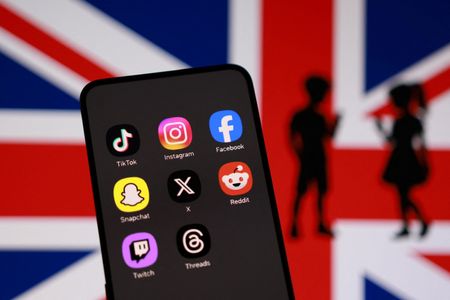

LONDON — The British government has announced plans to impose a default nighttime ban on social media use for teenagers aged 16 and 17, adding another layer to its already-proposed outright ban on social media for anyone under 16.
Under the new rules, those users would automatically be locked out of social media apps from midnight until 6 a.m. Teens could choose to change that default setting if they wish. Additionally, features designed to keep users glued to their screens — such as videos that automatically queue up and play one after another — would also be turned off by default.
Officials say the goal is to avoid a sudden, unprotected leap into unrestricted social media access the moment a young person turns 16, while also shielding teenagers from the well-documented downsides of late-night screen time.
Technology minister Liz Kendall spoke to the importance of the move, saying, “These measures will be crucial in helping young people get the sleep they need, focus on school and college, and spend more quality time with family and friends.”
The announcement reflects a growing wave of concern among parents and government officials worldwide about the impact social media is having on the mental and physical health of children and teens.
Supporting the decision, a study released Tuesday found that placing restrictions on social media use led to better sleep, improved concentration, and greater overall wellbeing among young people. Researchers found that an overnight curfew was the easiest type of restriction for families to stick with and delivered the most reliable sleep improvements.
The government said the first round of regulations will be presented to parliament before the end of this year, with enforcement expected to begin in spring 2027. Officials pledged what they called “robust implementation and enforcement” of the new rules.
Still, questions remain about how effective such measures can be in practice. A team that advised Australia — which became the first country to ban social media for children — found that online platforms were struggling with even the basic first step of verifying users’ ages, making the ban largely ineffective.
Meanwhile, both Google and TikTok have each reached separate settlements in the past month over a U.S. lawsuit filed by a minor who alleged that social media platforms caused harm to his mental health.