
BOSTON — When the plane touched down at Boston Logan International Airport, the welcome was fit for a head of state: a bagpiper dressed in full traditional Scottish attire playing inside the terminal. Diplomats, the governor, and the city’s mayor were all on hand to receive the special guest.
That guest? An orange traffic cone.
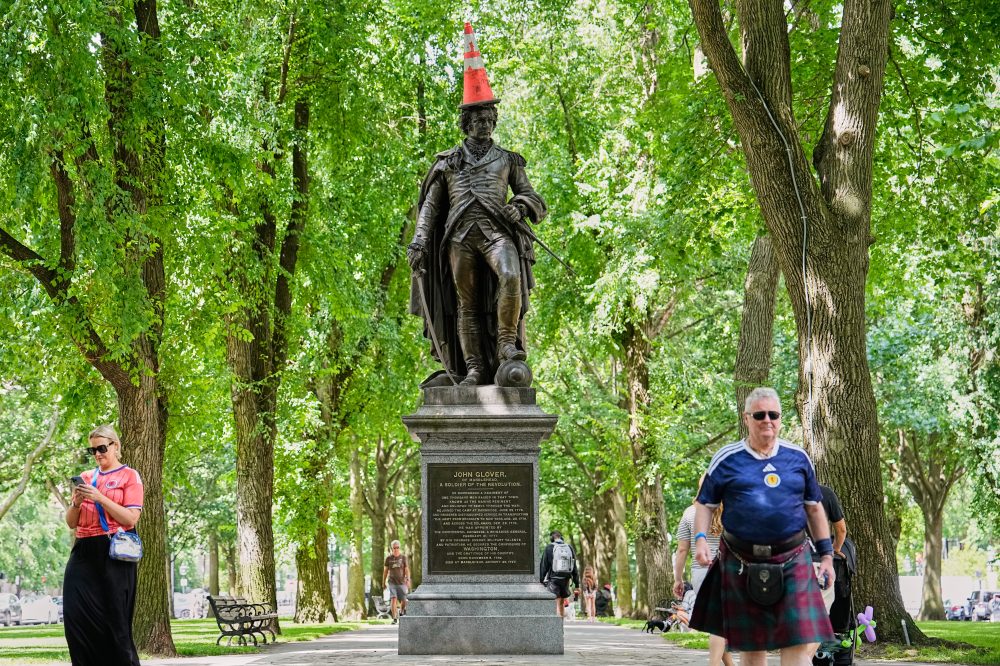
The arrival of what’s being called the “Boston Cone” on Tuesday marked a new chapter in the city’s unexpected bond with Scotland’s Tartan Army. During last month’s World Cup, Scottish fans made a habit of placing traffic cones on top of statues around Boston, turning the simple orange cone into one of the tournament’s most memorable symbols.
“I have to admit, this is probably — yes, it is — my first official welcoming ceremony for a traffic cone,” Massachusetts Gov. Maura Healey said inside Terminal E, pausing to sign her name on the cone. “But it’s a pretty special one, isn’t it? Because this cone tells the story of what happened this summer. What happened in Boston, what happened in Massachusetts.”
She also got a laugh from the crowd with a playful nod to the Scottish fans’ legendary thirst. “And special thanks to the Scots for drinking all the beer,” she said. “I do promise you, when you return … we will never again run out of beer in Massachusetts.”
That was a real issue during the World Cup visit. Boston bars were caught off guard by the Tartan Army’s enthusiasm, with some establishments running dry and scrambling to arrange emergency beer deliveries. The Scottish fans essentially turned parts of downtown Boston into a home away from home — filling the streets with bagpipe music, songs, and chants. Bright orange cones appeared on top of some of the city’s most iconic statues, including Samuel Adams outside Faneuil Hall, Red Auerbach outside TD Garden, former Mayor Kevin White near Quincy Market, and even the beloved Make Way for Ducklings sculptures in the Public Garden.
Boston Mayor Michelle Wu recalled Tuesday how the city had “unofficially become New Scotland” during the visit. “There are still some traffic cones atop our most important statues,” she joked.
The special commemorative cone — decorated with artwork celebrating both Boston and Scotland and bearing the slogan “No Boston, No Party” — will spend the next week making stops at landmarks across Massachusetts. The tour is aimed at raising money for mental health charities, after which the cone will make its journey back to Scotland.
The tradition of placing orange cones on statues actually has deep roots in Glasgow, where it began as a late-night prank in the 1980s and eventually grew into an unofficial symbol of Scottish humor and irreverence. The most famous example is the Duke of Wellington statue in the city center, where the cone has become so beloved that public pushback has repeatedly stopped officials from removing it.
One of the cone’s Scottish escorts, Danny Campbell, stood beside it dressed in a kilt and offered a philosophical take on the whole phenomenon. “It’s an in-joke that’s gone too far, actually,” he said with a laugh. “But no, it isn’t a joke. This is a metaphor for life.”
Campbell explained that people can get so caught up in the routines of daily life — “going to our jobs and cooking sausages and all the sort of serious stuff that adults have to do” — that they lose sight of what truly matters.
“That’s what our countrymen represented when they came here,” he said of the Scottish fans’ time in Boston. “They left stomachs and cheeks sore from laughing, they cleaned up after themselves, they spread joy and these people came together with humor and they built relationships with each other.”
“This is not just a silly cone,” Campbell added. “It means love. It means love, and that is the whole point.”