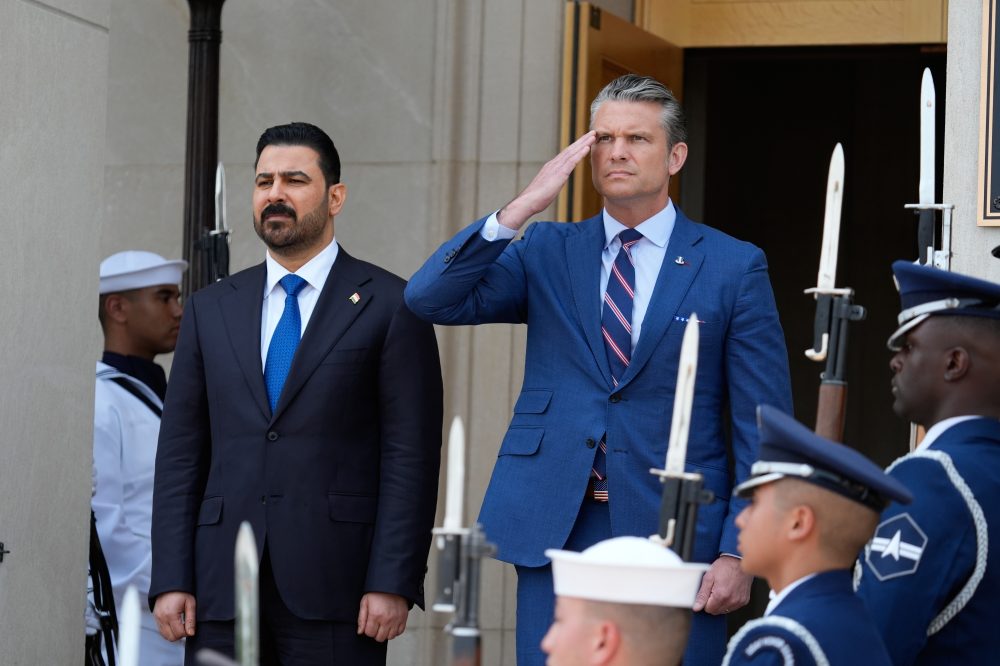

After more than two decades, the United States military is set to leave Iraq by September 30, according to both American and Iraqi officials who spoke publicly on the matter Tuesday.
President Donald Trump stood beside Iraqi Prime Minister Ali al-Zaidi at the White House to deliver the news, saying the military presence is no longer considered necessary. Trump pointed to Iraq’s expanding ties with oil companies as part of a broader relationship between the two nations.
“The relationship is a whole big relationship where we don’t need the military,” Trump said. “We’re there to help them. We’re there to protect them if need be. But we don’t think that’s going to be necessary.”
Speaking through an interpreter, Prime Minister al-Zaidi offered a clear summary of the arrangement: “U.S. forces will be out of Iraq” by Sept. 30, “while U.S. companies will be inside Iraq.”
The Pentagon followed up with a statement confirming it was reaffirming a 2024 agreement — reached during the Biden administration — to formally end its combat mission against Islamic State fighters in Iraq. A significant number of U.S. troops covered under that deal have already left the country.
Over time, the U.S. has been transferring responsibility for fighting the Islamic State from American and coalition forces to Iraqi military units that were trained with American assistance. U.S. forces have gradually reduced their presence, pulling back from various locations and consolidating what remained.
The American military first entered Iraq in March 2003 with a massive air assault campaign known as “shock and awe,” which caused widespread destruction and opened the path for ground forces to advance on Baghdad. That invasion was launched on the premise that Iraqi leader Saddam Hussein had concealed weapons of mass destruction — a claim that was ultimately proven false, as no such weapons were ever found.
At the height of counterinsurgency efforts in 2007, more than 170,000 U.S. troops were stationed in Iraq. The Obama administration negotiated a reduction in forces, and by December 2011, the last combat troops had departed, leaving only a small number of personnel to support a security assistance office and protect the embassy.
The situation changed again in 2014 when the Islamic State rapidly seized large portions of Iraq and Syria. The Iraqi government invited U.S. and allied forces back to help rebuild and retrain its military and police units, which had collapsed under the pressure of the militant group’s advance.
Once the Islamic State lost control of the territory it had claimed, coalition military operations officially wrapped up in 2021. The U.S. kept roughly 2,500 troops in Iraq for training purposes and joint counter-IS operations. Most have since departed following the 2024 agreement, with only a small group of military advisers and support personnel still on the ground.