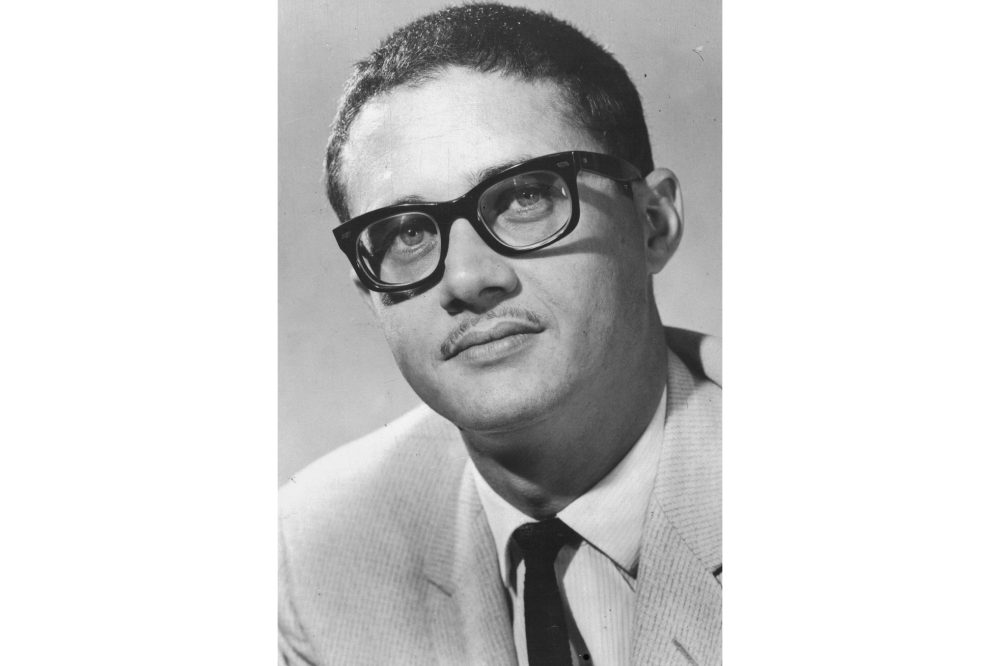

PHOENIX (AP) — Pat Oliphant, one of the most influential political cartoonists in American history, passed away Monday at the age of 90.
According to his son, Grant Oliphant, the artist died at his residence in Santa Fe, New Mexico, due to age-related health issues.
Beyond his iconic cartoons, Oliphant was also a sculptor, lithographer, and oil painter. He was widely regarded as the most syndicated editorial cartoonist in the United States, with his daily work appearing in more than 500 publications across the country and around the globe during the 1980s.
For more than 50 years, Oliphant used his pen to take aim at the powerful — from President Lyndon B. Johnson all the way through Donald Trump — with precise and unrelenting strokes. He drew Jimmy Carter with exaggerated teeth and lips, referencing the former president’s farming roots, and portrayed Ronald Reagan with a cork in his ear, reflecting Oliphant’s belief that Reagan was indifferent to the struggles of ordinary Americans.
Those who knew him said his rare talent lay in blending sharp political observation with a razor-edged sense of humor. Bill Banowsky, director of the documentary A Savage Art: The Life & Cartoons of Pat Oliphant, described his legacy this way: “He redefined what it meant to be a political cartoonist and to be fearless of his work. His work has a fierce pursuit of bringing injustice to life. And he was very effective.”
Oliphant was never shy about tackling subjects that the mainstream considered off-limits. He took on the Catholic Church’s pedophilia scandals in 2002 and Israel’s military campaign against Hamas in Gaza in 2008. However, his ethnic caricatures also drew criticism from groups including the Asian American Journalists Association and the American-Arab Anti-Discrimination Committee, who accused him of promoting harmful stereotypes and racism.
Oliphant was born in Adelaide, Australia, in 1935. He got his start at a local newspaper working at the copy desk, where watching a cartoonist in action sparked his passion for the art form. His first staff cartoonist position came at The Advertiser in his hometown.
His son Grant recalled his father’s ambition: “He decided cartooning could merge his interests in art and commentary. He wanted to be the best in the world.”
Roughly a decade after relocating to the United States, Oliphant joined The Denver Post in 1964 and earned a Pulitzer Prize for editorial cartooning in 1967 — an award he reportedly held in low regard. He later worked at The Washington Stars and settled in Santa Fe in 2002.
Around the age of 80, Oliphant began losing his vision due to glaucoma, which eventually forced him to step away from professional cartooning, according to Grant. Even so, he continued painting at his Santa Fe home.
Hampton Sides, a Santa Fe-based writer and close friend, remembered Oliphant fondly: “He loved the creative ferment of Santa Fe. We had constant parties at his house far into the night with a wide range of thinkers, musicians and writers. He enjoyed the constant interplay of ideas.”
Reflecting on the current political climate, Grant said he believes society has lost its ability to embrace humor, open debate, and opposing viewpoints. “My father challenged the idea of the political establishment being sublimely serious as it is,” Grant said. “We really need that in today’s America.”