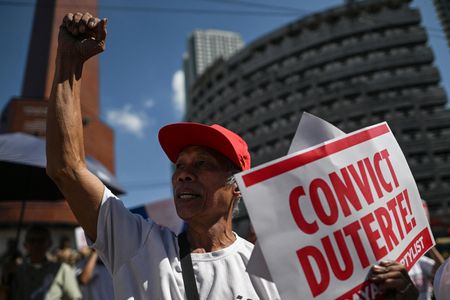
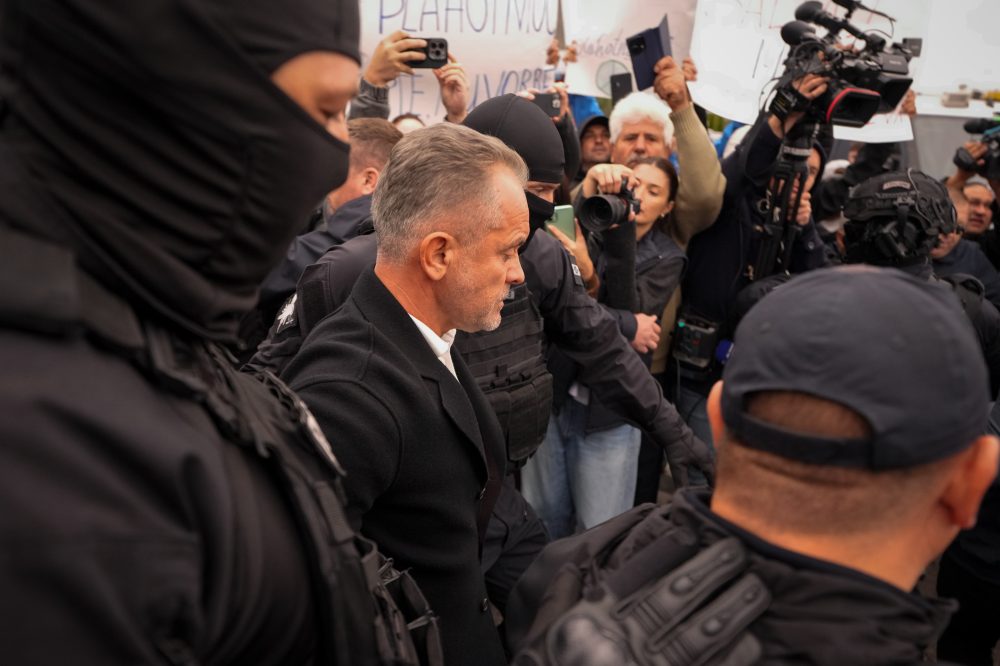
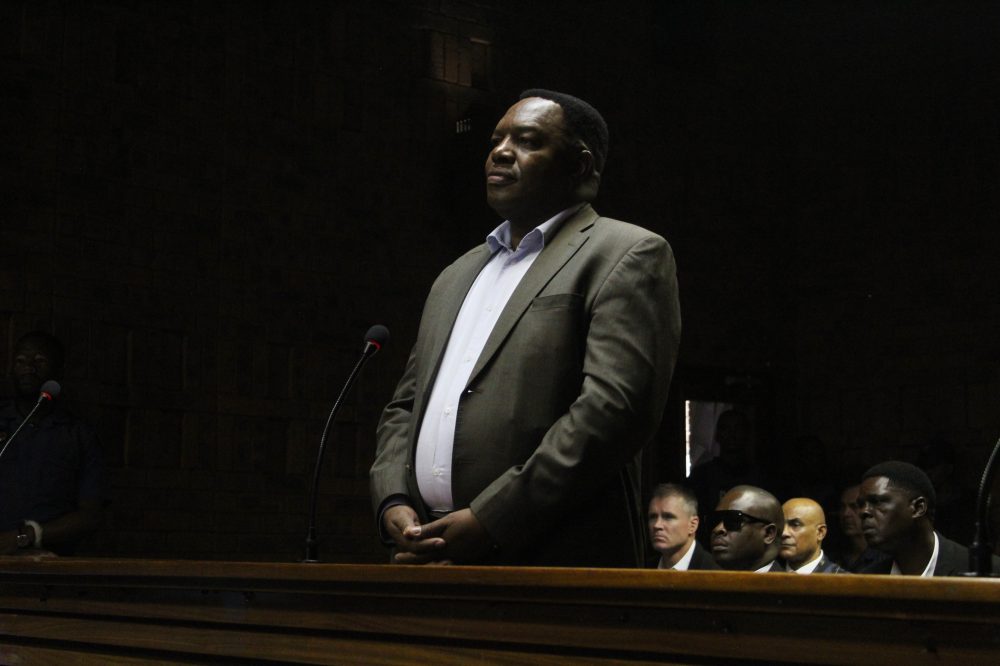
AMSTERDAM – The International Criminal Court announced Thursday that former Philippines President Rodrigo Duterte will face trial on three murder charges classified as crimes against humanity.
Court officials determined there are “substantial grounds” to believe the 81-year-old former leader orchestrated the deaths of 76 individuals and attempted murders of two others during his controversial anti-narcotics campaign. Prosecutors allege this broader initiative resulted in thousands of civilian deaths across the Philippines.
“The available evidentiary material shows the existence of a common plan between Mr Duterte and his co-perpetrators to kill alleged criminals in the Philippines, including those perceived or alleged to be associated with drug use, sale or production, through violent crimes including murder,” court officials stated.
According to prosecutors, Duterte established, financed, and equipped killing squads specifically to hunt down and eliminate suspected drug dealers and users throughout his presidency from 2016 to 2022.
The former president has consistently maintained that he only authorized police to use lethal force when defending themselves and has repeatedly justified his anti-drug operations.
On Wednesday, appeals court judges rejected an attempt to dismiss Duterte’s case and confirmed the court maintains authority over these proceedings.
Based on previous International Criminal Court cases, trials typically begin within one year after charges are officially confirmed.
The United States will facilitate a second round of diplomatic discussions between Lebanese and Israeli representatives this Thursday, as Lebanon pushes to extend the current ceasefire agreement with Israel and Hezbollah before it expires this Sunday.
The diplomatic meeting follows a deadly escalation on Wednesday when Israeli military operations resulted in the deaths of at least five individuals, including Lebanese journalist Amal Khalil, according to senior Lebanese military sources and her news organization, Al-Akhbar newspaper.
Wednesday represented the most lethal day since the US-brokered truce took effect on April 16, despite the agreement leading to a notable decrease in overall hostilities. However, military actions have persisted in southern Lebanon, where Israeli forces have established what they describe as a protective buffer zone.
The Iran-supported Hezbollah organization maintains it possesses “the right to resist” what it considers occupying military forces.
The current conflict between Hezbollah and Israel resumed on March 2, when the militant group launched attacks in solidarity with Tehran amid the broader regional conflict. This Lebanese ceasefire developed independently from Washington’s broader diplomatic efforts to address tensions with Iran, although Iranian officials had advocated for Lebanon’s inclusion in any comprehensive peace agreement.
In response to Israeli military strikes, Hezbollah announced it conducted four separate operations in southern Lebanon on Wednesday.
Lebanese government statistics indicate that nearly 2,500 people have lost their lives in Lebanon since Israel launched its military response following Hezbollah’s March 2 assault.
Israeli forces currently control a southern Lebanese territory stretching 5 to 10 kilometers (3 to 6 miles) into the country, which Israeli officials say is necessary to protect northern Israel from Hezbollah rocket attacks. The militant group has launched hundreds of rockets throughout the conflict.
Despite strong opposition from Hezbollah, which was founded by Iran’s Revolutionary Guards in 1982, the Lebanese government has established direct diplomatic communication with Israel.
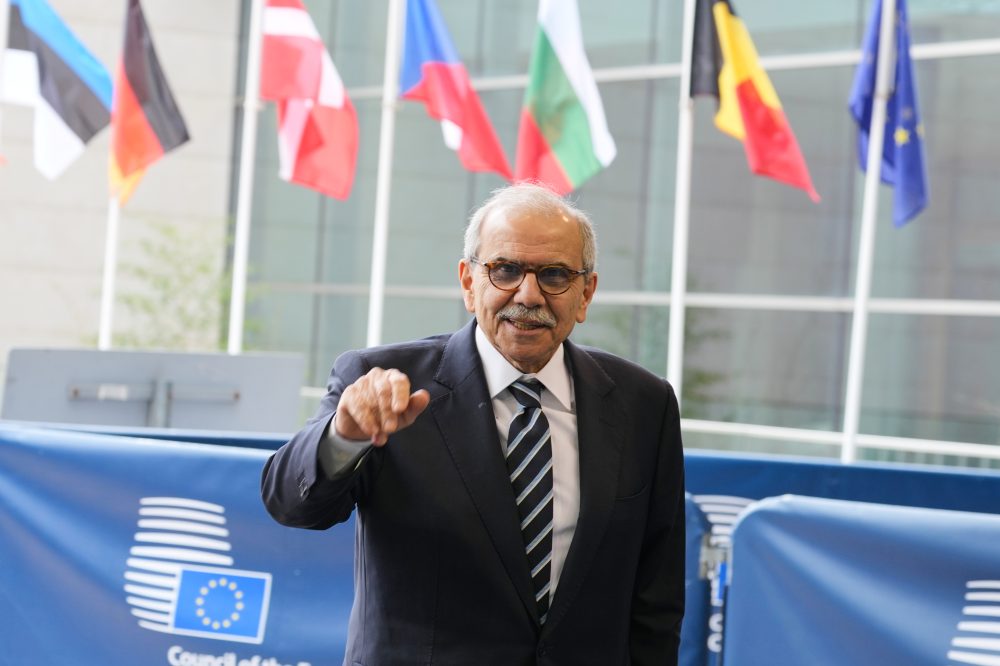
Lebanese President Joseph Aoun announced that Lebanon’s representative for Thursday’s Washington negotiations, US Ambassador Nada Moawad, will advocate for extending the ceasefire and stopping Israeli demolition activities in southern Lebanese villages.
A Lebanese government source indicated that Beirut views a ceasefire extension as essential before advancing to higher-level negotiations, where Lebanon would demand Israeli military withdrawal, the release of Lebanese prisoners held in Israel, and formal border demarcation.
Israeli negotiation goals include dismantling Hezbollah and establishing conditions for a lasting peace agreement. Israeli officials have attempted to find common ground with the Lebanese government regarding Hezbollah, which Beirut has been working to disarm through peaceful means over the past year.
US Secretary of State Marco Rubio will participate in Thursday’s meeting, while Israel will send its Washington ambassador, Yechiel Leiter.
Rubio previously facilitated the initial meeting between Leiter and Moawad on April 14, marking the most significant diplomatic contact between Lebanon and Israel in decades.
The United States has rejected any connection between its Lebanon mediation efforts and separate diplomatic initiatives regarding the Iran conflict.
Hezbollah claims the Lebanese ceasefire resulted from Iranian influence rather than American diplomatic intervention.
President Aoun has outlined objectives including ending Israeli military operations against Lebanon and securing the withdrawal of Israeli forces.
A Malaysian company’s announcement about upcoming condom price increases has created a social media frenzy in China, with discussions about the topic reaching more than 60 million viewers by Thursday.
The buzz started when Goh Miah Kiat, head of Malaysian condom manufacturer Karex Bhd, announced plans to increase prices between 20% and 30%. He warned costs could climb even higher if supply chain problems related to the Iran conflict continue.
Chinese users flocked to Weibo, the country’s version of X, to discuss how global conflicts are now affecting intimate aspects of daily life. The hashtag about rising condom costs quickly went viral.
Despite the price increases, many social media users said the higher costs wouldn’t stop them from purchasing contraceptives to prevent unwanted pregnancies. Some encouraged others to buy in bulk before prices rise.
“A few dozen yuan for a condom is a hundred times more cost-effective than raising a child at a million yuan,” said one user.
“From now on, not only will we have to be frugal, but we’ll also have to stock up on condoms in advance,” said another.
The timing of these discussions is notable as Chinese officials are implementing various policies to encourage higher birth rates in response to the country’s aging population and declining fertility rates. Birth rates reached historic lows last year.
Karex manufactures more than 5 billion condoms each year and supplies major brands including Durex and Trojan.
Higher condom costs would compound existing increases in family planning expenses for Chinese consumers. Earlier this year, the government ended a 30-year tax exemption on birth control products and medications. Contraceptives now face a 13% value-added tax, the standard rate for most consumer items.
Several condom manufacturers that sell products in China, including Reckitt, LifeStyles, Ansell, and Renfu, have not yet responded to requests for comment about potential price changes.
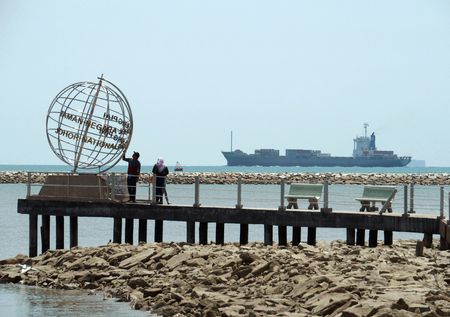
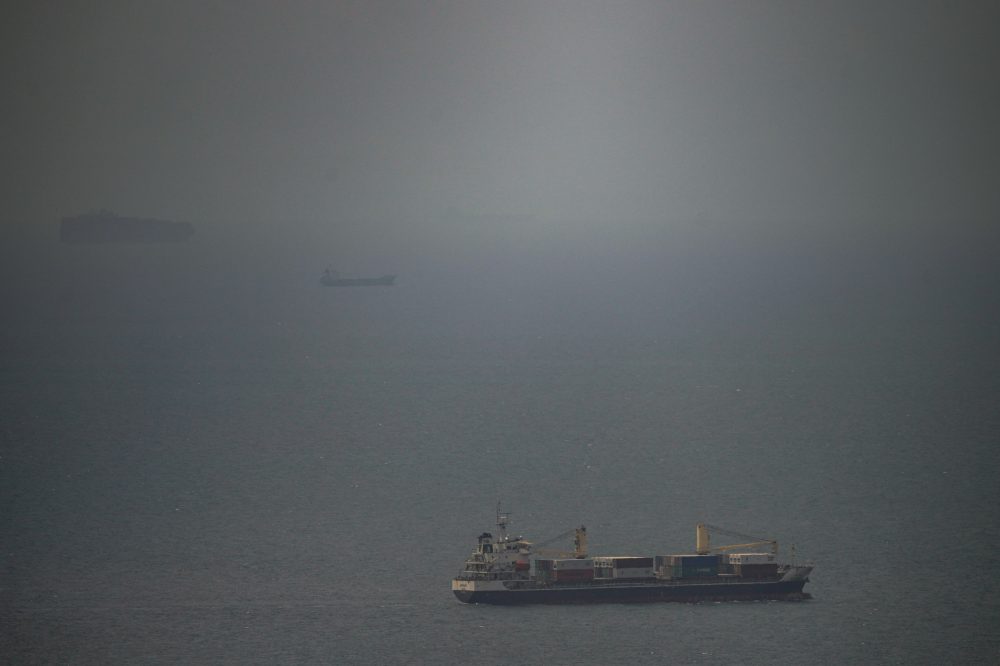
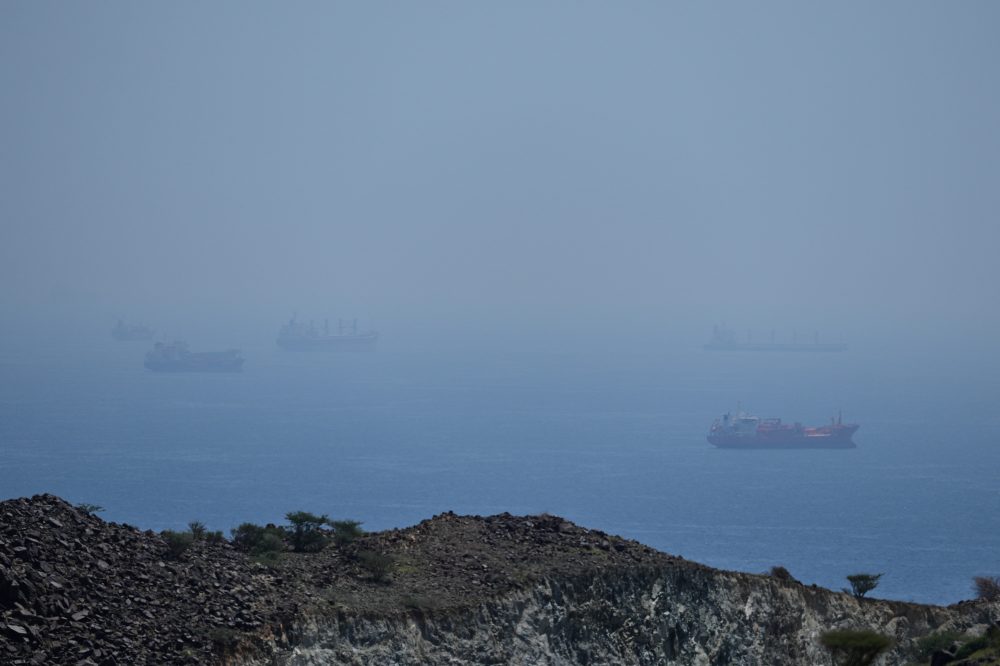
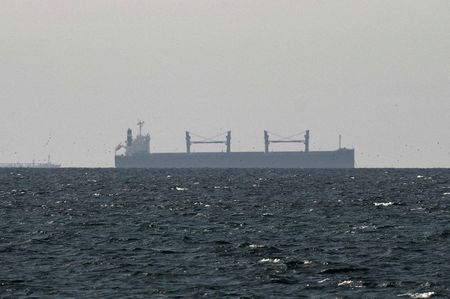
BANGKOK – Recent disruptions to shipping through the Strait of Hormuz have drawn renewed attention to security vulnerabilities at another critical maritime passage – the Strait of Malacca, which handles more international trade traffic than any other waterway globally.
The Strait of Malacca stretches 550 miles between Indonesia, Thailand, Malaysia and Singapore, serving as the most direct shipping route connecting East Asia with Europe and the Middle East.
According to the Center for Strategic and International Studies, this vital corridor handles nearly 22% of all global maritime commerce. Energy shipments from Middle Eastern nations to China, Japan and South Korea represent a significant portion of this traffic.
The U.S. Energy Information Administration identifies Malacca as the world’s most important “oil transit chokepoint,” surpassing even Hormuz in volume. During the first six months of 2025, approximately 23.2 million barrels of oil traveled through Malacca daily, representing 29% of all seaborne oil transport. By comparison, Hormuz handled about 20.9 million barrels per day.
Maritime traffic through the strait has increased substantially, with over 102,500 vessels – primarily commercial ships – making the passage in 2025, compared to roughly 94,300 in 2024, according to Malaysia’s Marine Department statistics. While most tankers use this route, some extremely large ships must navigate around Indonesia due to depth limitations, adding significant time and cost to their journeys.
The waterway presents several challenges for safe navigation. At the Phillips Channel near Singapore, the strait narrows to just 1.7 miles across, creating a natural bottleneck that increases risks of accidents, vessel groundings, and potential oil spills.
Shallow areas with depths of only 82-90 feet restrict the largest ships, though even massive crude carriers exceeding 350 meters in length and 60 meters in width regularly make the transit.
Criminal activity has long plagued the region, with piracy and attacks on commercial vessels remaining persistent threats. The ReCAAP Information Sharing Centre, a regional anti-piracy organization, reported at least 104 criminal incidents last year, though attacks decreased during the first quarter of this year.
China has particular strategic interest in keeping the strait secure, as roughly 75% of Chinese seaborne crude oil imports from the Middle East and Africa pass through these waters, according to tanker tracking firm Vortexa.
Current tensions involving Iran have heightened existing concerns about potential disruptions to chokepoints like Malacca, especially if conflicts emerge in the South China Sea or Taiwan Strait regions, where another 21% of global maritime trade occurs, CSIS data shows.
Malaysian officials have also identified the strait as an increasingly popular location for illegal ship-to-ship oil transfers designed to hide the origin of petroleum products.
Indonesian Finance Minister Purbaya Yudhi Sadewa recently sparked discussion by suggesting countries might consider charging tolls for passage through the strait, though he acknowledged such arrangements are not feasible under current agreements.
Singapore Foreign Affairs Minister Vivian Balakrishnan addressed these concerns in comments to CNBC, emphasizing that nations bordering the strait share common interests in maintaining open access and have committed to avoiding toll collection.
“Singapore had assured the United States and China that the right of passage was guaranteed for all and it would not participate in any efforts to block the strait or impose tolls,” Balakrishnan stated.
Malaysian Foreign Minister Mohamad Hasan reinforced this position during a Wednesday forum, explaining that “no unilateral decisions can be made about the strait and that Malaysia is on the same page with Singapore, Indonesia and Thailand, and they conduct joint patrols to ensure the waterway remains open.”
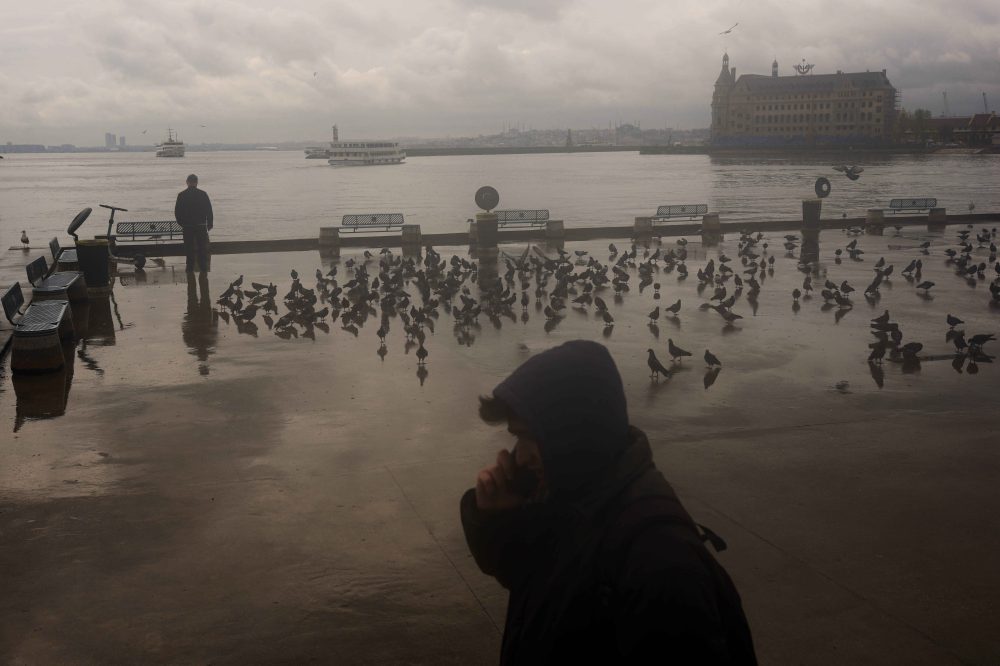
ISTANBUL (AP) — Turkey’s parliament approved new legislation Wednesday evening that would ban children under 15 from using social media platforms, according to reports from state-controlled media outlets.
The measure represents part of a worldwide movement aimed at shielding young people from harmful online content and activities.
The legislative action follows by one week a tragic incident in Kahramanmaras, located in southern Turkey, where a 14-year-old student fatally shot nine classmates and one teacher at a middle school before dying himself. Authorities are examining the shooter’s internet usage as they work to determine what motivated the deadly attack.
According to the state-operated Anadolu news agency, the new law would mandate that social media companies implement systems to verify users’ ages, offer tools for parental oversight, and establish procedures for quick responses to content flagged as dangerous.
Turkish President Recep Tayyip Erdogan now has a two-week window to sign the legislation before it becomes official law. Following the Kahramanmaras tragedy, he emphasized the importance of reducing online dangers that threaten children’s wellbeing and personal information.
“We are living in a period where some digital sharing applications are corrupting our children’s minds and social media platforms have, to put it bluntly, become cesspools,” he said in a televised address Monday.
Turkey’s primary opposition group, the Republican People’s Party or CHP, has voiced opposition to the proposal, arguing that young people should be safeguarded “not with bans but with rights-based policies.”
The new regulations would require digital services including YouTube, TikTok, Facebook, Instagram and similar platforms to prevent minors under 15 from creating accounts while implementing parental supervision features to monitor children’s online activity.
Companies that operate online gaming platforms must also designate representatives within Turkey to guarantee compliance with the updated rules. Violations could result in reduced internet speeds and monetary penalties from Turkey’s telecommunications regulatory body.
Turkey’s leadership has previously limited access to online platforms as they’ve increasingly become venues for political opposition. Internet communications faced widespread restrictions during protests last year supporting Istanbul’s imprisoned opposition mayor, Ekrem Imamoglu.
Australia became the first nation to implement social media age restrictions for those under 16 in December, leading platforms to deactivate approximately 4.7 million accounts belonging to minors.
Indonesia started enforcing similar regulations last month, prohibiting children younger than 16 from accessing digital services that might expose them to explicit content, online harassment, fraudulent schemes and addictive behaviors.
Additional nations including Spain, France and the United Kingdom are either implementing or evaluating similar restrictions on children’s social media access due to increasing concerns about the negative effects of unmoderated online content on young users.
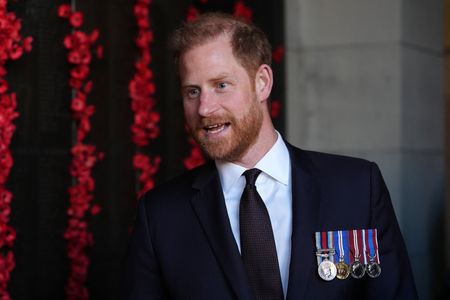
The Duke of Sussex made a surprise journey to Ukraine’s capital on Thursday, arriving unannounced to demonstrate solidarity with the nation as it continues its conflict with Russia into a fifth year.
Upon reaching a railway station in Kyiv early Thursday morning, Prince Harry expressed his pleasure at returning, stating: “It’s good to be back in Ukraine.”
During his two-day visit, the Duke will participate in a security conference in Kyiv. His presence comes at a time when global focus has shifted toward conflicts in the Middle East.
Prince Harry described Ukraine as “a country bravely and successfully defending Europe’s eastern flank,” emphasizing that “it matters that we don’t lose sight of the significance of that.”
The visit will also include stops at the HALO Trust, a de-mining organization that received support from his mother Princess Diana, according to Britain’s ITV. Additionally, he plans to meet with Ukrainian veterans who have participated in his Invictus Games Foundation, an organization dedicated to helping injured service members heal through athletic competition.
This marks the Duke’s third visit to Ukraine, having made two previous trips to the country in the prior year.
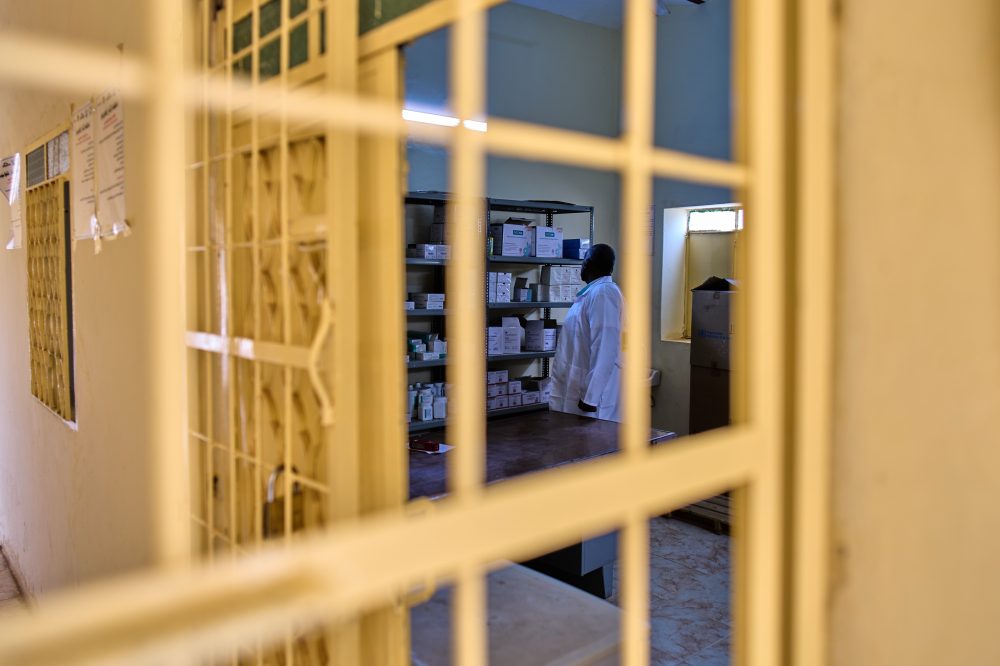
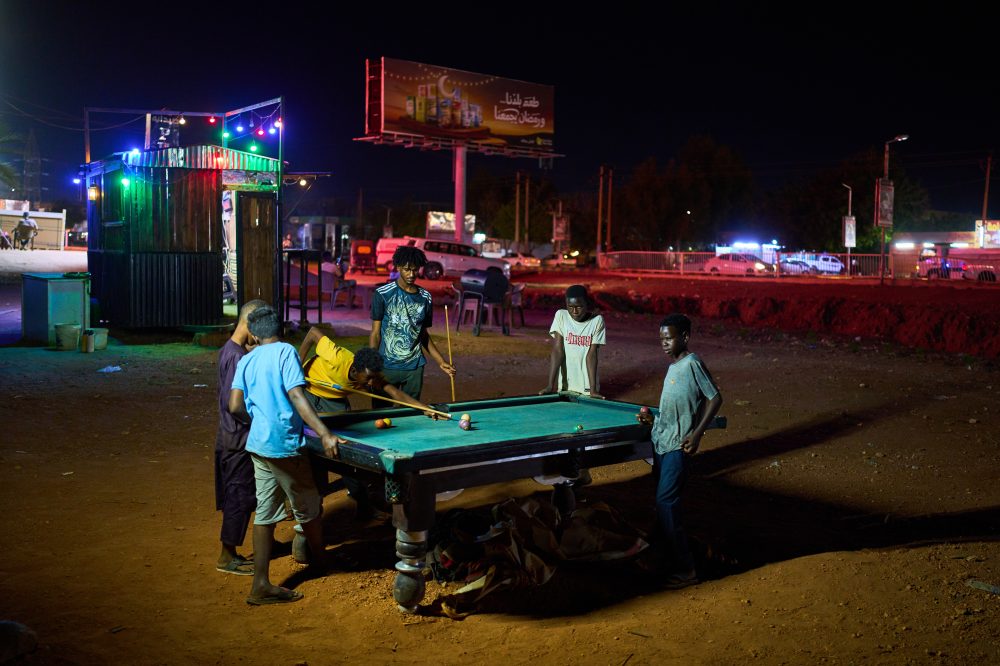
QOZ NAFISA, Sudan — Abbas Awad has always faced difficulties obtaining medications in his village near Sudan’s capital city. However, the conflict in Iran has created additional obstacles, driving up costs and leaving local pharmacies without adequate inventory.
The current Middle Eastern conflict is creating widespread consequences, particularly affecting nations already dealing with their own internal wars.
Following three years of civil conflict in Sudan, a public health facility in Qoz Nafisa village within Khartoum state is working to serve thousands of residents, including 61-year-old Awad.
Awad explained that he has been rationing his glaucoma medication, concerned about finding replacement supplies or being able to pay for them. Financial constraints were already a concern due to the domestic conflict, he noted.
“Now we have the problem of the war in the Middle East. It’s just made things worse,” he said.
Humanitarian organizations report that the Iranian conflict has blocked critical shipping pathways, disrupting their capacity to deliver food and medical supplies to millions of people worldwide who need assistance. The tension between the United States and Iran has effectively closed the Strait of Hormuz, while other shipping lanes from key locations like Dubai have also been affected.
Shipping expenses have increased dramatically due to higher fuel costs and insurance premiums, further hampering supply delivery efforts. The United Nations reports cost increases of up to 20% for shipments, accompanied by delays as cargo is redirected through alternative routes.
The International Rescue Committee, which assists the medical facility where Awad receives some of his treatments, reported that approximately $130,000 worth of pharmaceutical products destined for Sudan remained stuck in Dubai for several weeks and is only recently reaching its destination.
According to the IRC, medical supplies including antibiotics, pain medications, and stethoscopes that were scheduled for air transport from the United Arab Emirates to Port Sudan were instead sent overland to nearby Oman before being flown to their final destination.
President Donald Trump extended the temporary ceasefire with Iran this week, though humanitarian groups remain concerned that conditions will not improve significantly.
“There’s still a real lag in the system. Shipments remain blocked or delayed, and that’s deeply worrying,” said Madiha Raza, associate director for global public affairs and communications for IRC.
Sudan has been widely recognized as experiencing the world’s most severe humanitarian emergency, and Raza emphasized that any postponement in delivering food, medicine, and fuel creates catastrophic impacts.
The approximately 5,000 residents who depend on the IRC-supported public health clinic in Qoz Nafisa must now seek care at other facilities and pay out-of-pocket expenses they frequently cannot afford.
When AP reporters visited on Wednesday, clinic personnel reported struggling to meet patient needs since the Iranian conflict began in late February.
Dr. Amira Sidig, the facility’s medical director, stated that the most recent IRC shipment arrived in December. Expected deliveries in February and April have not materialized.
While Sudan’s health ministry attempts to address the shortage, it only provides half of what is required, Sidig explained.
“It’s never enough because they also have a shortage, and we’re again out of stock quickly,” she said.
Sidig noted that for multiple days this month, the clinic lacked malaria treatments for the 50% of patients who arrive with the disease.
Ahmed Ibrahim, a clinic employee, described growing patient frustration.
“When people come to the window, they say, ‘Why are you here and there is no medicine?’”
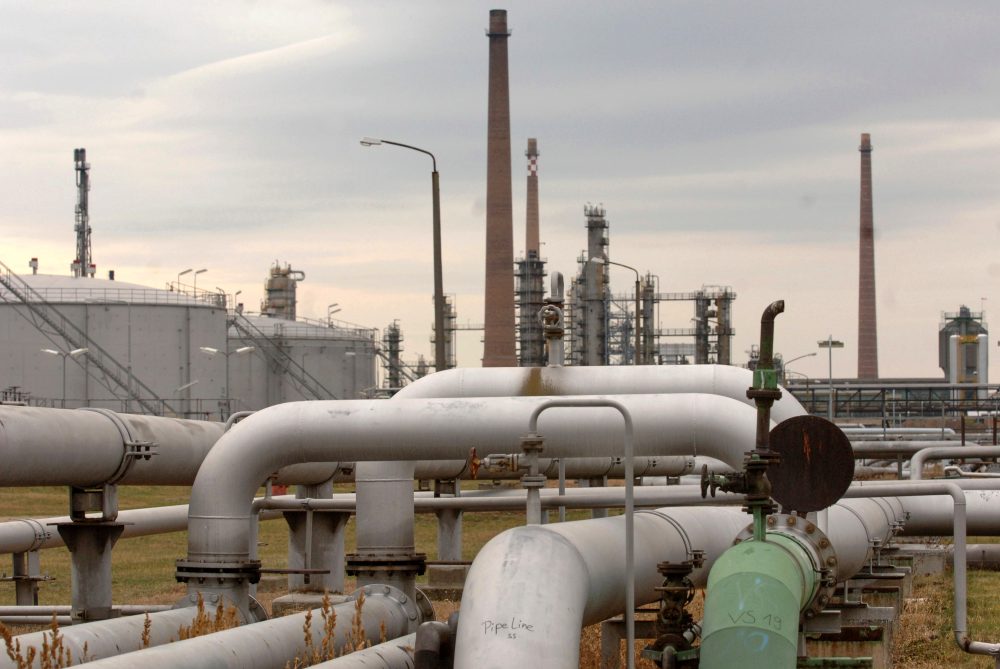
BRATISLAVA, Slovakia — Petroleum shipments from Russia to Slovakia have restarted through the Druzhba pipeline system that passes through Ukrainian territory, according to Slovak Economy Minister Denisa Saková on Thursday.
A growing diplomatic dispute has emerged between Ukraine and two European Union members, Hungary and Slovakia, after Russian petroleum deliveries to both nations stopped in January.
Both Hungary and Slovakia continue to rely on Russian energy sources, setting them apart from most other European Union countries.
The two nations have blamed Ukraine for not fixing a damaged section of the pipeline infrastructure. In response, Hungary has prevented approval of a substantial EU financial package for war-torn Ukraine, while Slovakia refused to support additional sanctions against Russia until energy deliveries were restored.
After a three-month interruption, petroleum shipments began moving again at 2 a.m. on Thursday.
MILAN (AP) — Milan’s fashion scene takes center stage as “The Devil Wears Prada 2” makes its Italian debut Thursday, with the luxury brand featured prominently in the title while the entire fashion industry and Milan itself share the spotlight.
While the movie references Prada without focusing specifically on the legendary fashion house that has become a symbol of Milan, both Meryl Streep and Anna Wintour honor the connection by wearing Prada designs on a recent Vogue cover that celebrates the film about a ruthless fashion magazine editor.
However, when filming took place in Milan last September during the city’s fashion week, it was a Dolce & Gabbana runway presentation, rather than a Prada show, that served as the setting for scenes with Streep and Stanley Tucci.
“When you think of Prada, when you think of the Prada brand, you also think of Milan. This is obviously good for the fashion system,” said Tommaso Sacchi, Milan’s counselor for culture. “It’s a film that is good for the city.”
The excitement has translated into a special pop-up installation at Milan’s premier department store, drawing both movie fans and fashion enthusiasts who are eager to snap photos at a recreation of fictional editor Miranda Priestly’s office and pose with a mock-up cover of the imaginary Runway magazine.
Distinguished guests attending Thursday’s Italian premiere, which precedes next week’s worldwide launch, will enjoy cocktails in the exhibition space.
Rinascente CEO Mariella Elia noted that the overwhelming response to the installation — marked by enormous sculptures of the famous red high heels positioned outside the store — demonstrates people’s “desire for lightness.”
“It’s not just about buying, it’s really about reviving what fashion represents … a desire to have a stylish flair once again, a desire for joy, too — perhaps in contrast with the current economic and international moment that humanity is experiencing,” Elia said.
During a recent visit, the exhibition space buzzed with visitors examining exclusive T-shirts featuring memorable quotes from the original film, including “Is there some reason my coffee isn’t here?”
Professor Valentina Cattivelli explained she wasn’t attempting to emulate Priestly’s persona while posing at the replica desk, which featured an inbox containing additional lines from the first movie, including Priestly’s curt “That’s all.”
“No, I’m not so cruel in my daily life, but I appreciate her professional style and also her fashion and the taste for fashion. But not her sarcasm or cruelty, no,” Cattivelli said.
The Prada empire began just steps away in the elegant Vittorio Emanuele II Gallery, established by Miuccia Prada’s grandfather. Today, the historic shopping corridor features two Prada flagship locations.
Under Miuccia Prada’s leadership, the company evolved into a fashion powerhouse, transforming what critics called “ugly chic” into coveted designs and accessories that brought intellectual depth to runway fashion — a central theme in the original film, which revealed the substance beneath fashion industry superficiality.
“There is a close relationship between the ‘Devil Wears Prada’ franchise and Prada, because by evoking Prada from the very title, it evokes a fashion that makes you dream, a fashion that makes you feel elegant, a fashion that makes you feel good, a fashion that gives you an allure,” said Annarita Briganti, a fashion journalist who wrote a book about Prada for Rizzoli’s Made in Italy editions.
COPENHAGEN, Denmark — A head-on collision between two passenger trains Thursday morning triggered a large-scale emergency response in Denmark, with authorities describing the incident as a significant accident.
The crash happened at approximately 6:30 a.m. close to Hillerød, roughly 25 miles north of Denmark’s capital city.
North Zealand police confirmed that all passengers have been removed from both trains. Law enforcement officials declined to reveal how many people were hurt or describe the severity of their injuries.
Images captured at the crash site reveal severe damage to the front sections of both trains, although neither derailed and both remained standing on the railway tracks.
Trine Egetved, who serves as mayor of nearby Gribskov, wrote on Facebook that helicopter transport was used to rush some victims to medical facilities.
The mayor noted that the accident happened on a regional railway line frequently traveled by Gribskov community members, workers, and students heading to school.
Additional information about the incident has not been released.
BANGKOK (AP) — Beijing’s emerging position as an unofficial peace broker in the current Middle East conflict is capturing global attention as China works to establish itself as a responsible international leader while U.S. diplomatic relationships face increasing pressure.
Chinese involvement in worldwide diplomacy has expanded significantly in recent years through active diplomatic initiatives. Previously hesitant to engage in distant conflicts, Beijing has now become a significant force attempting to resolve disputes spanning from Southeast Asia to Europe.
Regarding the Iranian conflict, China operates without official mediator status, yet all involved parties — including both Washington and Tehran — acknowledge Beijing’s significant contribution to conflict de-escalation efforts.
Analysts note that China’s diplomatic approaches across various conflicts share common characteristics with varying degrees of success in affecting negotiations, though these efforts occur during a favorable period as President Trump’s policies have created friction with traditional diplomatic partners.
In the Iranian situation, specialists highlight that Beijing’s strong economic and political connections with Tehran provide unique influence capabilities, particularly as the conflict disrupts global energy markets, especially affecting Asian regions.
Trump has expressed his belief that China helped persuade Iran to negotiate the fragile ceasefire that he has now extended.
Sources within diplomatic circles informed The Associated Press that Beijing, being Iran’s largest purchaser of sanctioned oil, utilized this economic leverage to encourage Iranian participation in historic direct negotiations held in Pakistan this month.
Beijing has not confirmed that account, likely because it does not want to be seen as part of a U.S.-led security framework, said Yaqi Li, a researcher at the S. Rajaratnam School of International Studies at Nanyang Technological University in Singapore.
Nevertheless, some viewed this as a pivotal moment for Beijing, which has condemned both U.S. and Israeli military actions against Iran.
Following the conflict’s initiation with U.S.-Israeli strikes on Feb. 28, Chinese Foreign Minister Wang Yi conducted discussions with officials from Israel, Saudi Arabia, Bahrain and the United Arab Emirates. By mid-April, he had engaged in 30 telephone conversations with various stakeholders regarding the conflict, based on Ministry of Foreign Affairs records.
Wang additionally welcomed his Pakistani counterpart, representing the primary mediating nation in current negotiations, to present a five-point plan demanding cessation of violence and Strait of Hormuz reopening.
Chinese President Xi Jinping has recently become unusually vocal, cautioning last week against “the world’s retrogression to the law of the jungle.” This week, he called for the Strait of Hormuz to reopen.
George Chen, a partner at The Asia Group consultancy, said China’s role in the Iran situation is irreplaceable. As Tehran’s biggest oil buyer, its advice carries weight. China is also one of the few countries that has showed sympathy for Iran’s situation at the United Nations, he said.
Additionally, Iran’s ballistic missile capabilities were developed using Chinese technology, and China provides dual-purpose industrial equipment suitable for missile manufacturing, according to U.S. government sources.
While China lacks the immediate influence of Pakistan or major Arab Gulf nations in active mediation efforts, it maintains a distinctive position as a crucial economic ally to many regional players.
Tuvia Gering, a nonresident fellow at the Atlantic Council’s Global China Hub, said China is uniquely positioned to offer economic incentives that matter to Tehran, especially after the war ends, as Beijing can promise investment in reconstruction and commercial relief in ways few others can.
“It could be one of the few actors capable of giving Tehran both political cover and material incentives to accept constraints and stick to them,” he said.
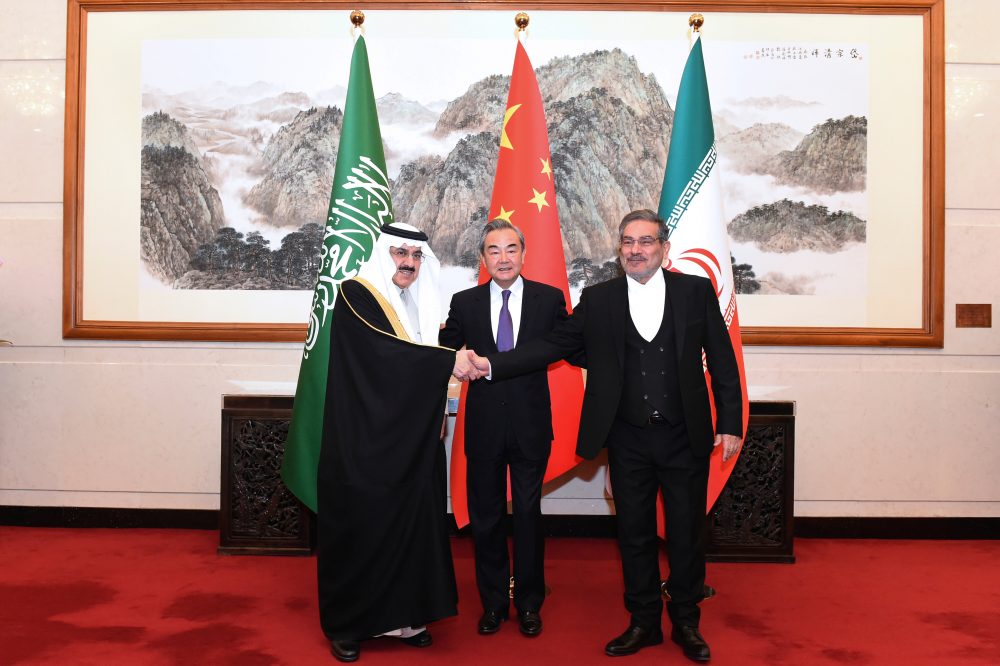
Among China’s most significant diplomatic achievements occurred in 2023, when it helped facilitate Saudi Arabia and Iran’s return to official diplomatic relations.
This development was widely recognized as a major geopolitical advancement that minimized risks of direct and proxy warfare, said Muhammad Zulfikar Rakhmat, a researcher at the Center of Economic and Law Studies in Indonesia.
However, China selects its involvement opportunities carefully, he noted, pointing out that Saudi Arabia and Iran already possessed motivations for diplomatic re-engagement. “Its mediation tends to be opportunistic and low-risk, often occurring when conditions are already conducive to agreement,” he said.
Beijing also participated actively in the recent Thailand-Cambodia dispute, organizing multiple bilateral meetings and participating in initial ceasefire discussions alongside the U.S. in Malaysia. When hostilities resumed in December, both China and the U.S. helped facilitate another ceasefire agreement.
Beijing has also presented peace proposals for Ukraine’s conflict, hosting Ukraine’s foreign minister despite maintaining what it describes as a “no-limits” relationship with Russia.
China’s diplomatic initiatives typically follow established patterns, according to experts, with Beijing consistently emphasizing respect for U.N. charter principles and national sovereignty.
Concerning the Iranian conflict, Xi last week called for “upholding the principles of peaceful coexistence, upholding national sovereignty, upholding the rule of international law, and coordinating development and security.”
“A lot of the points are remarkably consistent,” said Hoo Tiang Boon, a professor of Chinese foreign policy at Nanyang Technological University.
In distant conflicts, Beijing faces minimal risks while potentially gaining substantial benefits as the international community grapples with the Trump administration’s negotiation methods, according to Thitinan Pongsudhirak, a professor of international relations at Thailand’s Chulalongkorn University.
“What the U.S. is doing is deeply damaging, and everyone suffers from it … and China is displaying global leadership and exerting its global role by speaking to the rules-based international system,” he said. “It’s an inescapable contrast.”
Thursday marks the beginning of another diplomatic session between Israeli and Lebanese representatives in Washington, as efforts to extend a fragile ceasefire continue. At the same time, discussions between Iran and the United States appear increasingly unlikely after Tehran criticized American negotiators for operating without “good faith.”
On Wednesday, Iranian forces attacked three vessels navigating the Strait of Hormuz, successfully capturing two of them. This aggressive action represents an escalation in Tehran’s campaign against maritime traffic in the crucial shipping corridor, occurring just one day after President Donald Trump prolonged a ceasefire agreement while keeping the American blockade of Iranian ports in place.
The ongoing confrontation between Washington and Tehran has virtually halted all export activity through the strait, which typically handles one-fifth of global oil shipments during peaceful periods. No resolution appears imminent for this critical situation.
Although Pakistan had offered to facilitate additional negotiations, the White House canceled Vice President JD Vance’s scheduled visit to Islamabad after Iran rejected attempts to resume diplomatic conversations.
In Lebanon’s southern region, Israeli military operations resulted in at least six fatalities and multiple injuries across three separate incidents, according to regional officials. Israeli authorities disputed responsibility for one attack and have not yet responded regarding the remaining strikes.
These military actions occurred as diplomatic representatives from both Israel and Lebanon prepared for renewed discussions in Washington aimed at prolonging the delicate 10-day ceasefire that commenced last week.
In a related development, Iran announced Thursday that it had executed another individual connected to the Iranian opposition organization Mujahedeen-e-Khalq.
Iranian judicial news service Mizan named the executed man as Soltanali Shirzadi Fakhr.
Officials alleged his collaboration with Israel’s Mossad intelligence agency, though they provided no supporting evidence. Authorities also withheld details about when or where his arrest occurred.
Throughout the current conflict, Iran has claimed connections between many executed individuals and Israeli intelligence. Human rights advocates maintain that Iran consistently conducts capital punishment proceedings in secret, relies on forced confessions, and prevents defendants from adequately contesting evidence presented against them.
This execution increases the total number of MEK organization members put to death since hostilities began to nine.
COPENHAGEN, Denmark – A head-on collision between two passenger trains in Denmark left multiple people wounded on Thursday, according to emergency officials.
The crash occurred in the vicinity of Hillerod, located north of the Danish capital of Copenhagen.
A representative from the Greater Copenhagen fire department confirmed the nature of the accident, stating “It is two local trains that have collided head-on.”
The fire department spokesperson provided additional details about the aftermath, saying “There are injuries among the passengers. Everyone is out of the trains, so no one is trapped… Large resources have been dispatched to the scene.”
Emergency crews mobilized significant personnel and equipment to respond to the incident, though the exact number of casualties has not been disclosed.
BRUSSELS — European Union officials are accelerating preparations for crisis response scenarios as concerns mount that President Donald Trump’s administration may be shifting security priorities away from traditional NATO commitments and European defense.
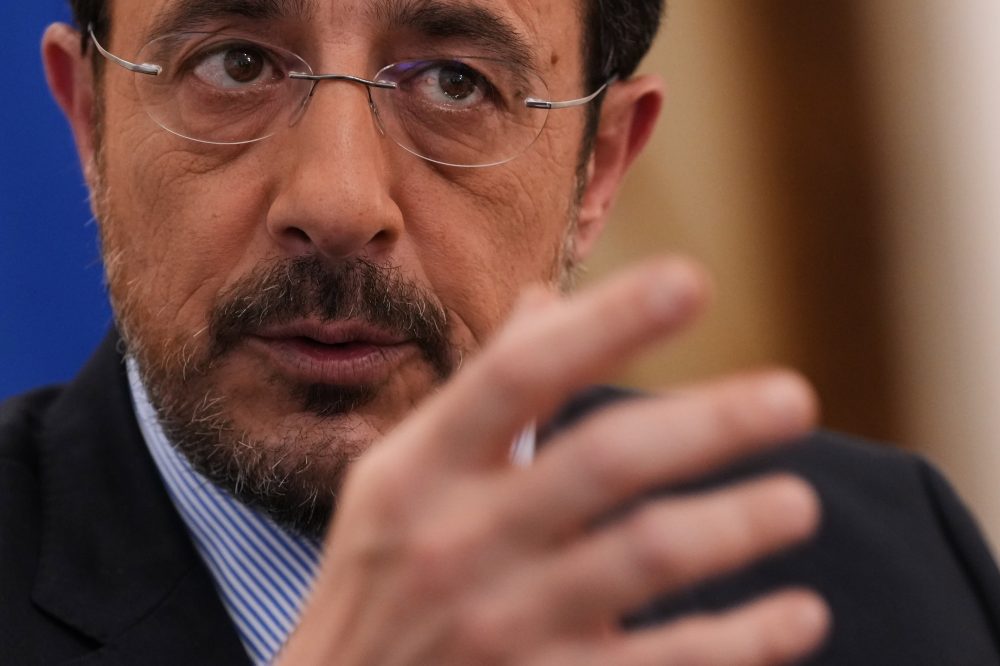
Beginning with a summit in Cyprus on Thursday, EU leadership will develop “an operational plan” to maximize the effectiveness of the bloc’s military, security, trade and other resources during emergency situations, according to Cypriot President Nikos Christodoulides in comments to The Associated Press.
Scheduled for mid-May, EU diplomatic representatives will participate in simulated “table-top exercises” designed to evaluate how Article 42.7 of EU treaties might be implemented to deliver mutual aid to any member nation facing attack or invasion from countries such as Russia.
A few weeks following those simulations, EU defense ministers will conduct comparable preparedness tests. These exercises focus on political decision-making processes and do not include actual deployment of military forces, government agencies or field operations.
NATO’s Article 5 security provision establishes that an assault against any member nation constitutes an attack on all members, requiring coordinated response typically involving military action.
This provision has been invoked only once in NATO history — supporting the United States after the September 11 attacks, which resulted in NATO’s unsuccessful 18-year military mission in Afghanistan.
The EU’s Article 42.7, written specifically to complement rather than conflict with Article 5, has likewise been activated just once. France requested assistance following the 2015 Paris terrorist attacks that killed more than 130 people and injured over 400 others.
According to EU treaty language, Article 42.7 mandates that when a member nation “is the victim of armed aggression on its territory,” fellow members must provide “aid and assistance by all the means in their power.”
The provision requires such assistance to comply with United Nations charter principles and avoid conflicts with NATO obligations, while accommodating the neutral status of countries like Austria and Ireland.
When France activated the article, EU nations demonstrated solidarity and offered various forms of support. France asked partners to increase counter-terrorism efforts internationally, allowing French military resources to focus on domestic security operations.
While comparable exercises testing Article 42.7 implementation have occurred periodically over the past ten years, increasing uncertainty about U.S. NATO dedication and Ukraine’s potential EU membership has added new urgency to these preparations.
European discussions about independent defense capabilities intensified after Trump’s threats to annex Greenland, a semi-autonomous territory within Denmark, which is a NATO member.
Multiple European nations deployed small numbers of troops to the Arctic territory near Canada as a symbolic gesture of support for Denmark. Trump initially threatened tariffs against participating countries but later withdrew those threats.
Trump’s decision to engage in military action against Iran alongside Israel appeared to validate European planning concerns. Iran’s retaliatory strike in March targeted a British military installation on Cyprus, the Mediterranean island currently holding the EU’s rotating presidency.
Unlike NATO’s exclusively security-focused mission, the EU possesses a broader range of response tools including military capabilities, economic sanctions, border controls, and trade or visa policy adjustments.
How extensively these and other measures might be deployed during crisis situations will be evaluated in upcoming weeks as conflicts continue in the Middle East, drawing U.S. attention, and in Ukraine.
“We don’t know what is going to happen if a member state triggers this article,” Christodoulides told the AP. “There are a number of issues.”
KOLKATA, India — Electoral proceedings kicked off Thursday in West Bengal, one of India’s most politically significant states, following a contentious nationwide review of voter registrations that eliminated millions of eligible voters and sparked widespread concerns about systematic disenfranchisement.
The electoral contest carries substantial national significance as Prime Minister Narendra Modi’s Bharatiya Janata Party attempts to expand its influence in a region historically controlled by opposition forces. A successful defense by West Bengal Chief Minister Mamata Banerjee would strengthen her standing as a prominent opposition leader against Modi’s administration.
Additional polling rounds are planned for the following week, with simultaneous elections occurring Thursday in Tamil Nadu’s southern region.
These elections represent part of a broader series of state-level contests examining the BJP’s capacity to penetrate traditional opposition territories. Final results from these elections, along with earlier contests in Kerala, Assam, and the federally governed Puducherry region, are anticipated on May 4.
The electoral process follows an extensive overhaul of voter databases conducted by India’s Election Commission, designed to eliminate duplicate entries, deceased individuals, and ineligible participants. Administrative officials report approximately 9 million deletions — representing roughly 12% of registered voters — with 6.3 million categorized as deceased or absent and 2.7 million designated as “doubtful” pending further review.
Numerous affected individuals report having participated in prior elections with legitimate documentation, yet were eliminated without adequate justification.
Sheikh Najrul Islam, a 53-year-old paramilitary official assigned to election oversight duties in West Bengal, explained his previous voting participation in 2021 and possession of valid credentials, despite his removal from current voter rolls.
“The Election Commission has deputed me to ensure free and fair polls. Yet, it does not consider me a citizen of this country,” he said.
Similarly, Taibunessa Begum, a 62-year-old former educational administrator, expressed dismay upon discovering her deletion despite maintaining a passport, pension documentation, and previous voter registration.
“It felt like being told I don’t exist,” she said.
Opposition politicians claim the removals disproportionately target Muslim populations and other marginalized groups.
India’s Election Commission has rejected these accusations, maintaining the process removed deceased, duplicate, and fraudulent voter registrations.
Modi’s political organization characterized the review as standard administrative procedure implemented across multiple states, suggesting any disproportionate effects in West Bengal reflect undocumented immigration issues. They emphasize that Hindu voters also experienced removals.
Critics connect the deletions to broader political rhetoric from Modi and BJP leadership, who have repeatedly indicated the voter roll revisions targeted individuals who entered illegally from neighboring Bangladesh. Opposition figures argue such statements have intensified concerns among minority populations, especially Muslims, that the registration review serves to exclude their participation.
Derek O’Brien, representing the opposition Trinamool Congress, characterized the process as “invisible rigging.”
“The motive is to disenfranchise voters,” he said.
Political experts caution the deletions may generate concerns about extended ramifications.
“Losing one’s place in the electoral roll can be deeply unsettling. It is not only about voting rights; it is about dignity, recognition, and the assurance that one counts as a citizen,” political analyst Iman Kalyan Lahiri said.
For numerous affected individuals, the concerns remain more pressing.
“This is not just about politics,” said Begum. “It is about identity, about whether we belong to this country.”
Iranian judicial authorities have carried out the death sentence of a man found guilty of maintaining ties to an exiled opposition organization and Israeli intelligence services, according to reports from the country’s judiciary news source Mizan on Thursday.
The executed individual was named as Soltanali Shirzadi Fakhr, who authorities said maintained long-standing membership in the Mujahideen-e-Khalq (MEK) opposition group and was convicted of collaborating with Israel’s intelligence apparatus.
According to Mizan’s report, Iran’s Supreme Court confirmed the death penalty verdict, and the execution was conducted following the completion of all required legal processes.
CARACAS, Venezuela — Colombian President Gustavo Petro traveled to Venezuela Friday for crucial discussions with the nation’s acting president, Delcy Rodríguez, focusing on border security and trade relations. This marks their inaugural meeting, occurring several months following the U.S. military’s seizure of former Venezuelan President Nicolás Maduro and his spouse from their residence in January.
Colombia is pushing to purchase Venezuelan natural gas and recently requested relief from U.S. sanctions to invest in Venezuela’s electrical infrastructure and gas projects, potentially including the restoration of a gas pipeline connecting the two South American nations.
Petro’s government has also struck deals with Venezuela’s state oil company PDVSA to replace pipeline infrastructure on Colombia’s side of the border.
The two leaders are anticipated to address illegal armed organizations and narcotics smuggling activities along their common frontier.
“The United States has an interest in Colombia becoming the buyer of Venezuelan gas,” said Ronal Rodríguez Durán, a researcher at the Venezuela Observatory at the Universidad del Rosario.
“Colombia, by virtue of its geographical nature, would become the client that could quickly bring revenue into Venezuela under U.S. supervision,” he added.
This subject was discussed during the approximately two-hour session between Petro and U.S. President Donald Trump at the White House in February. Both characterized the discussions as cordial — a stark contrast from earlier tensions when Trump blamed Petro for flooding the U.S. with cocaine and threatened military intervention.
Petro stated they explored ways to revitalize Venezuela’s economy through Colombian support, along with America’s role, which the Colombian president said should “lift sanctions” on Venezuela.
The Trump administration seeks to restore Venezuela’s economy by attracting foreign investment to its abundant natural resources, especially oil, after years of deterioration under Maduro’s rule that devastated the country and forced at least 7.7 million people to flee.
Before Friday’s gathering, Petro revealed that his team, including senior military and police commanders, would address border security matters with Rodríguez.
Attention centers on the Catatumbo region, where competing armed factions battle for territorial dominance, and Petro emphasized the need for “close collaboration on intelligence,” cautioning that without it, “bombs land in the wrong places … and end up killing civilians.”
Colombian-Venezuelan relations have remained strained for years. Petro refused to acknowledge Maduro as Venezuela’s rightful leader after the disputed July 2024 elections that sparked protests and widespread government crackdowns. Nevertheless, he preserved diplomatic connections with Caracas.
Colombia’s administration stated that Friday’s Petro-Rodríguez meeting seeks to “contribute to a resolution of Venezuela’s political crisis.”
Yet the path to achieving this remains uncertain.
University researcher Rodríguez Durán noted that Petro’s influence in potential mediation efforts is constrained since his presidency concludes in August. Future Venezuelan relations will probably depend on Colombia’s next leader.
Petro and Rodríguez had planned to meet last month at their shared border, but both governments suddenly postponed the gathering, citing “force majeure” without providing details, stating only that it would occur later.
Prior to that cancelled meeting, multiple Venezuelan civil society groups sent an open letter to Petro, requesting Colombia’s help in “promotion of democratic principles and human rights,” including freeing “all political prisoners” and stopping “persecution.”
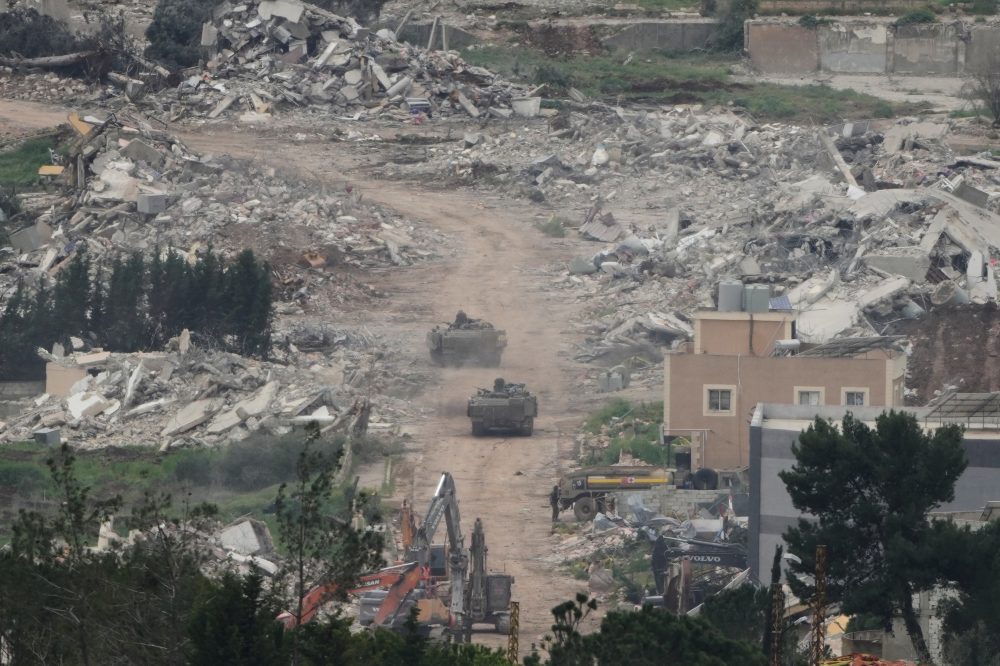
BEIRUT (AP) — Israeli military forces have been systematically destroying residential buildings in southern Lebanese territories they’ve controlled since establishing a ceasefire with Hezbollah last week, claiming these structures served as militant strongholds for the Iran-supported organization.
However, the scale of destruction has grown so extensive that local residents, government officials from Lebanon, and United Nations peacekeeping forces are expressing mounting concern that thousands of displaced civilians may find no homes to return to should the delicate peace agreement survive.
Associated Press reporters observing from an elevated position above Beit Lif — located approximately 4 kilometers (2.5 miles) north of the Israeli-Lebanese border — witnessed the near-complete destruction of the village that previously housed several thousand inhabitants.
“They were demolishing it gradually until they reached the main square and now, as you can see, there are no more houses,” said Hassan Sweidan, a resident of a neighboring village.
Lebanese government representatives intend to address the extensive demolition activities on Thursday during ceasefire discussions with Israeli officials in Washington — marking the first direct diplomatic engagement between the nations in several decades.
Due to safety risks and restricted access, neither UN peacekeeping personnel nor Lebanese authorities have managed to complete comprehensive assessments of the communities experiencing demolitions. However, witnesses have reported the systematic destruction of complete residential areas across multiple villages.
On March 2, two days after the U.S. and Israel launched the war with Iran, Hezbollah entered the fray by firing missiles into northern Israel. The group had been under pressure by the Lebanese government to disarm following its previous war with Israel in 2024, but refused to do so.
Israel retaliated with a massive aerial bombardment and ground offensive into Lebanon, forcing hundreds of thousands of residents to evacuate the country’s southern regions. The conflict resulted in approximately 2,300 Lebanese casualties, including numerous women and children.
A 10-day ceasefire that commenced Friday largely ended the hostilities. However, both parties have conducted strikes since the truce began. Hezbollah has defended its attacks partly by citing the Israeli military’s destruction of residential properties.
Israeli leadership has announced intentions to maintain control over portions of southern Lebanon, with military officials publishing maps showing a “forward defense line” extending several miles into Lebanese territory and covering numerous villages whose inhabitants remain barred from returning.
Following the ceasefire announcement, Israeli Defense Minister Israel Katz stated this region had been “cleared of terrorists and weapons and is empty of citizens, and will continue to be cleared of terrorists’ infrastructure, including the destruction of houses in Lebanese villages that border (Israel) and have become terrorists outposts in every sense.”
When the ceasefire took effect, Sweidan traveled back to inspect his residence in the southern Lebanese community of Yater. His home remains undamaged.
Since Sweidan’s community provides a view of adjacent Beit Lif, he has witnessed Israeli military activities in that area. Although the village sustained damage from Israeli airstrikes during combat, most of Beit Lif remained standing when the ceasefire began, according to his account.
However, on the following day, Israeli troops arrived with bulldozers, jackhammers and tanks.
“We would come each day to see how much of the village was demolished,” he said.
Tilak Pokharel, a spokesperson for the U.S. peacekeeping force in southern Lebanon known as UNIFIL, confirmed that peacekeepers “have observed demolitions taking place in several areas” since the truce.
The Israeli military released a statement declaring that the demolition operations target Hezbollah, not Lebanon or its civilians, and that it “operates in accordance with international law and does not destroy civilian property unless required by imperative military necessity.”
Extensive damage already existed in border regions following the previous Israel-Hezbollah conflict in 2024. While some property owners managed to fund repairs, no large-scale rebuilding occurred.
Destruction also occurred during the most recent conflict. Images captured on April 12 by AP from the Israeli northern towns of Menara and Misgav Am show excavators and bulldozers demolishing Lebanese homes across the border.
Lebanon’s government-operated National News Agency reported Wednesday that Israeli bulldozers were destroying neighborhoods, roads and infrastructure in Khiam, a combat zone during the Israel-Hezbollah fighting, “in a scene that suggests an attempt to completely erase the town’s identity.”
The agency also documented “systematic bombing operations” Wednesday targeting residential areas in Bint Jbeil — another conflict hotspot — and in the communities of Beit Lif, Shamaa, Tair Harfa and Hanine.
Hezbollah announced Tuesday it had conducted drone and rocket strikes, the first since the ceasefire, responding to Israeli “attacks on civilians and the destruction of their homes and villages in southern Lebanon.”
While Lebanese authorities work to preserve the ceasefire, President Joseph Aoun declared in a statement that “halting Israel’s demolition operations in southern villages and towns” would be an issue Lebanese ambassadors in the United States will discuss with their Israeli counterparts during Thursday’s ceasefire negotiations.
The discussions were anticipated to address a possible extension of the 10-day truce and developing a structure for future negotiations aimed at achieving lasting peace between the two nations.
Military officials in South Korea have issued a formal apology following revelations that a costly 2021 aircraft accident resulted from pilots taking photographs and recording videos while flying fighter jets.
During a Thursday press conference, an air force representative expressed regret over the December 2021 incident, stating: “We sincerely apologise to the public for the concern caused by the accident that occurred in 2021.” Officials confirmed that one aviator involved in the crash has been removed from flight status, faced serious disciplinary measures, and subsequently departed the armed forces.
The military’s statement came one day after South Korea’s Board of Audit and Inspection published findings that blamed unauthorized aerial photography for the collision between two F-15K fighter aircraft during a training mission near Daegu.
According to investigators, the wingman aviator was attempting to capture commemorative footage on his last flight with the squadron. Without authorization, he performed steep climbs and banking movements to create better camera angles while his colleague recorded from the lead aircraft.
When the two jets came dangerously close together, both flight crews tried to avoid impact, but the trailing aircraft’s tail section hit the leading plane’s wing. The collision resulted in approximately 880 million won in repairs, equivalent to about $600,000, though fortunately no personnel were hurt.
While auditors determined the wingman bore primary responsibility for the accident, they also faulted the air force for insufficient oversight of in-flight recording activities during that period. The pilot has been ordered to reimburse roughly ten percent of the damage costs.
Military leadership indicated they are implementing stricter aviation safety protocols to ensure similar incidents don’t occur in the future.
The South Korean government has committed to treating American technology companies fairly following complaints from U.S. congressional members about alleged discriminatory practices against firms including e-commerce giant Coupang.
In a statement released Thursday, Seoul’s Foreign Ministry announced that the country is putting measures in place to prevent U.S. digital companies from facing unfair treatment or unnecessary obstacles to conducting business.
The ministry referenced a bilateral fact sheet from November that was part of a trade agreement between the United States and South Korea, which included these protections for American companies.
This diplomatic response follows a letter sent earlier this week by American legislators to South Korean Ambassador Kang Kyung-wha, calling for an immediate halt to what they described as discriminatory regulatory measures targeting U.S. businesses.
Republican Study Committee member Michael Baumgartner led the congressional effort, with lawmakers stating that the “systematic targeting of American companies such as Apple, Google, Meta, and Coupang is particularly concerning.”
The legislators accused South Korea of using a minor data security incident in November 2025 as justification to launch coordinated government action against Coupang, including potential license revocation and pressure on pension funds to sell their stakes in the company’s parent organization.
“We are committed to ensuring that your government ceases its persecution of Coupang and other American companies operating in South Korea,” the congressional letter stated.
Seoul’s Foreign Ministry defended its actions, explaining that the investigation into Coupang’s data security breach follows standard domestic legal procedures that apply equally regardless of a company’s nationality.
The U.S.-listed company Coupang Inc., which operates Coupang Korea, has faced significant criticism from South Korean officials and the public after a data breach compromised information belonging to more than 30 million customers.
On Wednesday, the ministry emphasized that matters related to Coupang should remain separate from ongoing security discussions with Washington, which include South Korea’s plans to develop nuclear-powered submarine capabilities.
President Rodrigo Paz of Bolivia announced Wednesday the selection of Marcelo Blanco to head the nation’s energy and hydrocarbons ministry, marking a significant cabinet change fewer than six months after the current administration began.
Blanco brings experience from his previous role overseeing electricity and renewable energy initiatives as vice minister.
The ministerial replacement of Mauricio Medinaceli occurs during a challenging period for Bolivia, which is experiencing severe fuel shortages and a shortage of U.S. currency. The nation’s foreign currency reserves continue to decline due to reduced energy production and falling export revenues.
When Paz assumed the presidency in November, he ended nearly twenty years of leftist governance. His administration has pledged to welcome private sector investment in certain economic areas and shut down unprofitable government-owned enterprises as part of efforts to address the country’s worsening financial situation.
A high-ranking Taiwanese official has traveled to a disputed island in the South China Sea to oversee military training exercises, marking the first such ministerial visit in seven years to the contested territory.
Ocean Affairs Council Minister Kuan Bi-ling made the journey to Itu Aba Island, known locally as Taiping Island, on Tuesday to observe coast guard training operations focused on emergency response scenarios, according to a Wednesday announcement from Taiwan’s coast guard.
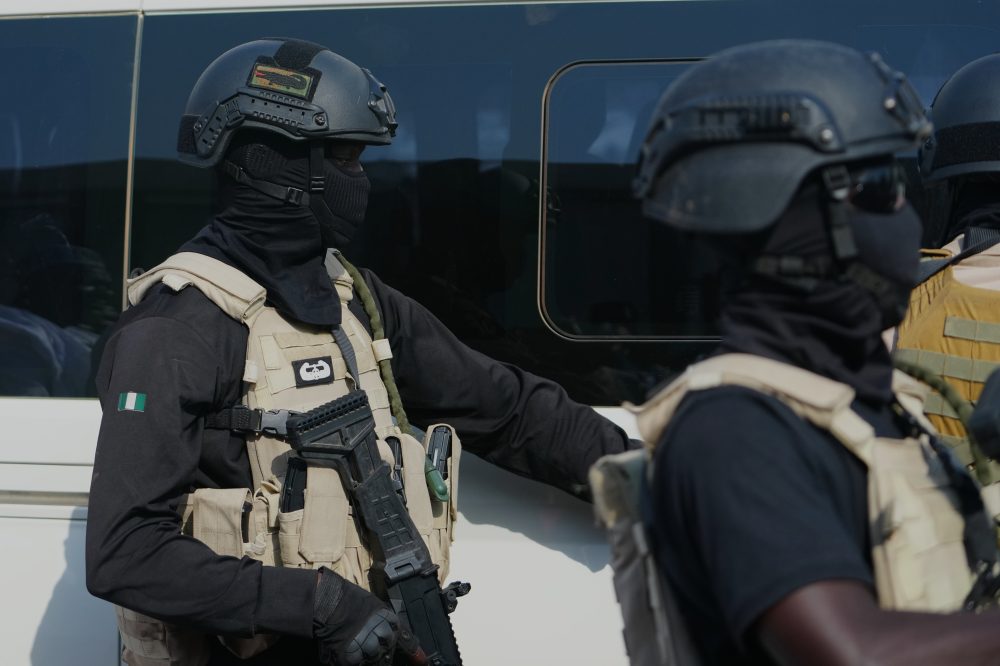
The exercises simulated various crisis situations including search and rescue missions, medical evacuations, and environmental cleanup efforts. A key component involved heavily armed special forces conducting practice raids on uncooperative vessels in the area.
During one training scenario, black-clad coast guard personnel carrying weapons boarded a cargo ship that had allegedly ignored radio communications. Video released by authorities showed the tactical team entering the vessel’s command center.
“You have entered the waters under the jurisdiction of our country. Please cooperate with the investigation,” one team member told a crew member during the exercise.
The coast guard explained the simulated operation by stating: “In order to safeguard the nation’s rights and national security, the cargo vessel was escorted back to Taiping Island for further investigation.”
Itu Aba represents one of Taiwan’s most remote territorial holdings in the hotly contested Spratly Islands chain. Multiple nations including China, Vietnam, and the Philippines also lay claim to this particular island.
The territory features infrastructure capable of supporting military operations, including an airstrip suitable for supply flights from mainland Taiwan. A new dock facility completed in 2023 can accommodate patrol vessels weighing up to 4,000 tons.
Despite these capabilities, the island maintains relatively modest defenses compared to nearby Chinese-controlled territories. Beijing’s forces typically avoid direct confrontation with Taiwanese personnel stationed there.
China has dramatically expanded its presence throughout the South China Sea by constructing artificial islands and installing major military installations on various reefs and outcrops under its control. These developments have raised concerns in Washington and throughout the region.
Beijing maintains that it has full authority to develop and protect what it considers sovereign Chinese territory.
Taiwan also maintains control over the Pratas Islands located in the northern section of the South China Sea. Chinese military aircraft and naval vessels frequently operate in these waters as part of Beijing’s efforts to assert territorial claims over Taiwan, which Taipei’s government firmly rejects.
The South China Sea serves as a crucial international shipping corridor handling billions of dollars in global commerce annually. The region also provides important fishing grounds and potentially significant energy resources.
North Korea and Russia are moving forward with plans to complete a new road bridge connecting both nations across the Tumen River, according to reports from North Korean state media KCNA released Thursday.
The bridge construction project, which started approximately one year ago, represents what KCNA called “an important business” designed to enhance cooperation between the countries in areas including tourism, commerce, and cross-border travel.
The 850-meter span, equivalent to 2,789 feet, will link directly to Russia’s highway network. This infrastructure project received approval during President Vladimir Putin’s 2024 diplomatic visit to North Korea.
A ceremonial event took place Tuesday to commemorate the physical connection of the bridge structure, according to reporting by the Moscow Times.
The new crossing is being constructed adjacent to the existing “Friendship Bridge,” a railway span that has operated since 1959 following the end of the Korean War.
While KCNA announced that an official opening celebration will occur in the near future, no specific date was provided. However, Russia’s embassy in Pyongyang indicated through Telegram that the bridge completion is scheduled for June 19.
Oleg Kozhemyako, who serves as governor of Russia’s Far East Primorsky region, shared via Telegram that the bridge will enhance commercial activity and strengthen cultural and tourism connections. He noted the structure will reduce the travel distance between Vladivostok and the border city of Rason to 320 kilometers, with daily capacity for up to 300 vehicles.
This development coincides with multiple Russian diplomatic delegations visiting North Korea during the current week.
Russian Interior Minister Vladimir Kolokoltsev conducted a meeting Wednesday with Jo Yong Won, who chairs the Standing Committee of North Korea’s Supreme People’s Assembly. KCNA characterized the discussion as occurring in a “favorable atmosphere.”
Additionally, Russian Health Minister Mikhail Murashko traveled Tuesday to the North Korean coastal city of Wonsan for a ceremony marking the construction of a medical facility that represents the “friendship” between both nations, according to KCNA.
The two countries established a “comprehensive strategic partnership treaty” in 2024 during Putin’s trip to Pyongyang.
This agreement contains mutual defense clauses, and North Korea has deployed thousands of military personnel to support Russian forces in the Kursk region of western Russia following a significant Ukrainian military operation in that area.
Meanwhile, China has also pursued stronger cross-border infrastructure and renewed diplomatic ties with North Korea, with passenger rail service between those countries resuming last month after a six-year suspension.
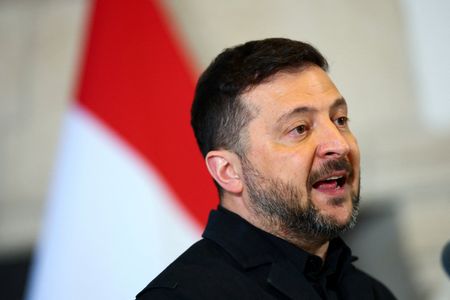
Ukrainian President Volodymyr Zelenskyy warned Wednesday that his country’s access to critical U.S. missile defense systems could become more difficult if Middle East conflicts involving Iran drag on for an extended time.
During a CNN interview, Zelenskyy explained that Ukraine has only received small quantities of these defensive weapons due to constraints in American manufacturing capabilities. However, he noted that supply deliveries and intelligence sharing have remained steady so far.
The Ukrainian leader described how his nation obtains U.S. military equipment through the PURL program, which allows NATO member countries to fund weapons purchases for Kyiv.
“Through this programme, we can include and buy anti-ballistic missiles for Patriot systems and some other weapons which is very important for us. We don’t have this…with our European neighbours,” Zelenskyy told CNN in English.
“And of course, (given) the big challenge in the Middle East war and Iran, all these packages are at risk.”
Regarding the limited quantities received from Washington, Zelenskyy said the United States had supplied “only a small number. We had not too much. We understand why, because the production in the United States is not so big.
“And if the war will continue or a ceasefire is delayed…(this) will be not good. And maybe we will have more risks with anti-ballistics.”
Zelenskyy also mentioned that Ukraine continues sharing its four years of experience fighting Iranian-designed drones used by Russian forces with Middle Eastern nations. His country has established agreements with Saudi Arabia, Qatar and the United Arab Emirates.
“We will continue to work with other countries,” he said. “We will be ready to deliver first our expertise…and the second point is training missions.”
Crude oil markets retreated Thursday despite ongoing tensions between the United States and Iran that have disrupted a vital shipping corridor for global energy supplies.
Brent crude dropped 15 cents to $101.76 per barrel, while West Texas Intermediate declined 14 cents to $92.82. The decrease followed Wednesday’s significant rally that pushed Brent above $100 for the first time in over two weeks.
Both oil benchmarks had surged more than $3 Wednesday after U.S. inventory data showed unexpectedly large decreases in gasoline and distillate stockpiles, combined with continued diplomatic deadlock between Washington and Tehran.
President Trump extended a temporary ceasefire following intervention by Pakistani mediators, though both countries continue limiting vessel traffic through the Strait of Hormuz. This narrow waterway previously handled approximately 20% of worldwide oil and liquefied natural gas shipments before hostilities erupted in late February with American and Israeli strikes against Iran.
Iranian forces captured two vessels in the Strait Wednesday, further tightening control over the strategic passage. The U.S. Navy maintains a maritime blockade of Iranian commerce, while Iranian parliament speaker and chief negotiator Mohammad Baqer Qalibaf stated that comprehensive peace talks require lifting the naval restrictions.
American military forces have stopped at least three Iranian oil tankers in Asian waters, redirecting them from positions near India, Malaysia and Sri Lanka, according to shipping and security sources Wednesday.
Trump’s Tuesday ceasefire extension marked another instance of stepping back from threats to target Iranian infrastructure including power facilities and bridges. White House press secretary Karoline Leavitt confirmed no timeline has been established for the extended truce.
Meanwhile, American petroleum exports reached unprecedented levels, climbing 137,000 barrels daily to a record 12.88 million barrels per day as Asian and European nations secured alternative supplies amid Iran-related disruptions.
The Energy Information Administration reported Wednesday that U.S. crude inventories increased while refined product stockpiles decreased. Crude supplies grew by 1.9 million barrels, exceeding analyst predictions of a 1.2 million barrel decline.
Gasoline inventories fell 4.6 million barrels compared to forecasted drops of 1.5 million barrels. Distillate stocks decreased 3.4 million barrels versus expected declines of 2.5 million barrels.
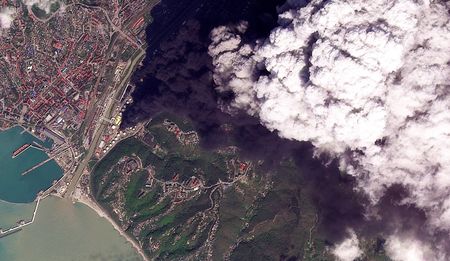
Russian emergency crews entered their third consecutive day Wednesday fighting a massive fire at an oil refinery along the Black Sea coast, sparked by a Ukrainian drone strike last week that has severely compromised air quality in the surrounding area.
The Tuapse refinery, which primarily exports its petroleum products, completely shut down operations Tuesday following the April 16 drone assault, according to two industry sources.
Regional emergency officials from Russia’s southern Krasnodar territory reported Wednesday that extensive firefighting efforts continue at the facility’s maritime terminal. “In Tuapse, firefighting operations are going on for the third day at a large fire at the sea terminal after a drone attack by the Kyiv regime,” the headquarters stated.
Emergency response teams have deployed 276 firefighters along with 77 specialized vehicles to combat the ongoing blaze.
The fire’s toxic emissions, combined with recent precipitation, have produced what officials describe as a “black coating” covering areas surrounding the terminal facility.
Environmental monitoring has detected dangerous chemical concentrations in the atmosphere, including benzene, xylene and particulate matter at levels two to three times above acceptable safety thresholds. Authorities have advised local residents to stay inside their homes, seal windows and doors, and regularly clean indoor surfaces.
“The situation will normalise as soon as the fire is extinguished,” officials stated.
Ukrainian forces have intensified their targeting of Russian energy facilities as the United States, previously involved in mediating peace negotiations to end the conflict, has redirected attention toward the situation in Iran.
Russian authorities report that strikes on both April 16 and April 20 against Tuapse caused significant damage to port transportation systems and ignited petroleum storage facilities.
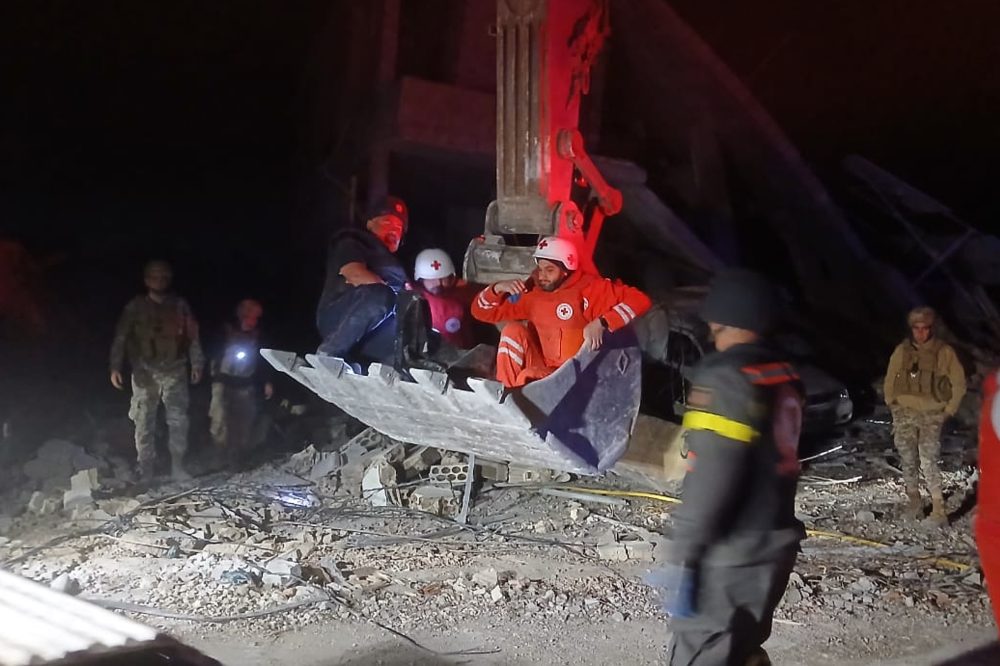
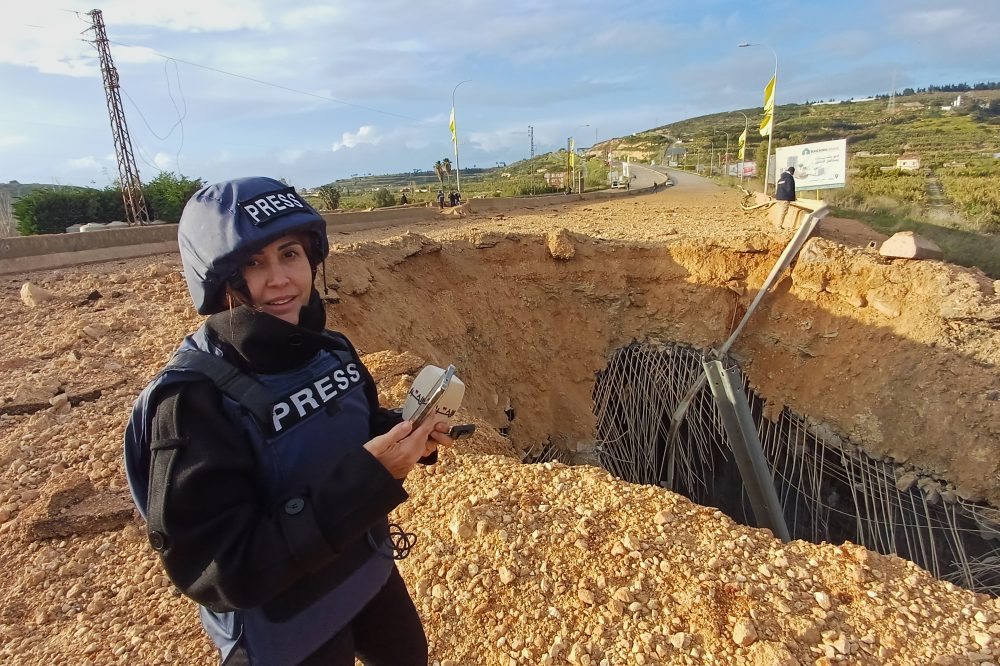
A Lebanese reporter died Wednesday when Israeli forces targeted a residence in southern Lebanon where she had sought refuge while covering the ongoing Israel-Hezbollah conflict, according to rescue officials who said her remains weren’t recovered from the debris until hours after the attack.
Amal Khalil, a correspondent for the Al-Akhbar daily newspaper, was fatally wounded in the southern community of al-Tiri, the publication reported.
Khalil had been documenting the Lebanon conflict between Israeli forces and Hezbollah militants that reignited in early March alongside the broader U.S.-Israeli military action in Iran. She sought safety in the al-Tiri residence after an initial Israeli bombardment struck close to the vehicle she was using with a fellow reporter.
According to Lebanon’s health ministry, the initial attack claimed two lives. Israeli forces then launched a second strike against the al-Tiri house where Khalil and colleague Zeinab Faraj had taken refuge.
Rescue personnel initially managed to reach Faraj, who sustained severe injuries, and recover the two victims from the first bombing. However, Israeli troops opened fire on the rescue workers, forcing them to abandon efforts to reach Khalil, ministry officials stated.
Khalil remained trapped beneath the wreckage for several hours before Lebanese military units, civil defense teams and the Lebanese Red Cross could access the location. Her remains were finally extracted just before midnight, at least six hours following the strike.
Israeli military officials claimed that people in the community had breached ceasefire agreements, putting their soldiers at risk. Israel rejected accusations that it deliberately targets media personnel or blocked rescue operations from entering the zone. Military leaders said they were investigating the incident.
“Killing of journalists is a crime and a flagrant violation of international and humanitarian law,” stated Lebanon’s Information Minister Paul Morcos.
Khalil’s death occurred as Israeli and Lebanese representatives prepare for a second round of direct negotiations in Washington aimed at extending the ceasefire that began last Friday.
A native of southern Lebanon, Khalil had reported from the region for al-Akhbar since 2006. Her recent coverage focused on Israeli destruction of Lebanese residences in communities now occupied by Israeli military forces within Lebanon.
Her death raises to nine the total number of media workers killed in Lebanon this year. Israeli attacks have resulted in at least 2,300 deaths and displaced over one million people since the current Israel-Hezbollah war began March 2.
Earlier Wednesday, Reporters Without Borders demanded international intervention to pressure Israeli forces to permit Khalil’s rescue. The Committee to Protect Journalists expressed “outrage” over what appeared to be deliberate targeting of the two reporters and warned that blocking rescue efforts “may amount to a war crime.”
Lebanese President Joseph Aoun requested that the Lebanese Red Cross work with military forces and U.N. peacekeepers “to carry out the rescue operation” as rapidly as possible.
In late March, three journalists covering the conflict died in an Israeli attack on southern Lebanon. Hezbollah’s al-Manar TV reported that veteran correspondent Ali Shoeib was among the victims. Israeli military officials said they had deliberately targeted Shoeib, claiming he served as a Hezbollah intelligence agent, though they offered no proof.
The same strike also killed reporter Fatima Ftouni of Beirut-based Al-Mayadeen TV and her brother Mohammed Ftouni, who worked as a video journalist.
Several days before that incident, an Israeli strike on a central Beirut apartment killed Mohammed Sherri, who directed political programming at Hezbollah’s Al-Manar TV, along with his spouse.
MAIDUGURI, Borno (AP) — Eleven people lost their lives and two others sustained critical injuries when extremist fighters launched a deadly assault on a remote Nigerian village during overnight hours, according to local authorities who spoke Wednesday. The violence represents another chapter in the ongoing security challenges facing Africa’s most populated nation.
Tuesday night’s deadly raid occurred in Pubagu, a settlement located in an isolated region near Sambisa forest within Borno state, which serves as the center of Nigeria’s prolonged battle against extremist insurgency. Community members conducted burial ceremonies for the deceased on Wednesday and blamed the assault on the radical Boko Haram organization.
Local council chairman Mwada Saidu Uba spoke with The Associated Press, explaining that the community had historically been spared from such violence.
“Pubagu is one of the locations in our council area that had never suffered such an attack until yesterday,” he said after the funerals. The two injured were receiving treatment at a nearby hospital, he added.
Ward official Usman Rumirgo reported that the attackers torched multiple residences before departing the location.
Remote farming communities frequently face assaults from extremist organizations and criminal gangs that exploit Nigeria’s expansive countryside and weaknesses in security coverage.
The most notable extremist organizations operating within Nigeria include Boko Haram along with its splinter group that maintains ties to the Islamic State and operates under the name Islamic State West Africa Province, or ISWAP. Additional threats come from the Islamic State-connected Lakurawa organization, plus various criminal networks focused on kidnapping operations and unauthorized mining activities.
As Israel commemorates its 78th Independence Day, new demographic data reveals the nation’s population has reached 10.244 million people, the Central Bureau of Statistics announced Sunday.
Since its founding in 1948 with roughly 806,000 residents, the country has witnessed remarkable growth, expanding by more than 12.5 times its original size. Immigration has played a major role in this expansion, with over 3.5 million newcomers settling in Israel throughout its history. Nearly half of these immigrants—approximately 1.68 million people representing 47.8%—have arrived since 1990.
The statistics show that Israel now houses roughly 45% of the global Jewish population, with about 81% of the country’s Jewish residents being born within its borders.
This past year brought significant demographic shifts, including approximately 177,000 newborns and around 21,000 new immigrants. During the same period, about 48,000 deaths were recorded, while an estimated 45,000 Israelis remained living overseas.
The annual population increase totaled roughly 146,000 people, marking a 1.4% growth rate. This expansion encompasses about 110,000 new Israeli citizens plus 36,000 foreign residents.
Breaking down the current population by demographics: Jewish residents and others categorized as non-Jewish, non-Arab citizens comprise 7.790 million people, representing 76% of the total. Arab citizens number 2.157 million, making up 21.1% of the population, while 296,000 residents classified as foreigners account for 2.9%.
Compared to many Western nations, Israel maintains a relatively youthful population structure. Residents between ages 0 and 14 represent approximately 27% of the population, while those 65 and older make up 13% of all residents.
An incident involving an Israeli soldier vandalizing a Christian cross in a Lebanese border village has sparked widespread anger and prompted swift military punishment.
The soldier was photographed damaging the religious symbol in Debel, a Christian-majority village in southern Lebanon’s Bint Jbeil district. The image circulated widely on social media, intensifying tensions in a region already struggling with the aftermath of recent conflict between Israel and Hezbollah.
Israeli military officials acted quickly to address the controversy. Two soldiers received 30-day military detention sentences – one for destroying the crucifix and another for taking the photograph. Six additional soldiers present during the incident were brought in for questioning for failing to intervene.
Prime Minister Benjamin Netanyahu expressed shock at the soldier’s actions and promised strict disciplinary action. Foreign Minister Gideon Sa’ar issued an apology to Christians offended by the incident, while military leaders stated the behavior went against fundamental army principles.
The Assembly of Catholic Ordinaries of the Holy Land strongly denounced the act, describing it as “a grave affront to the Christian faith.” Their statement continued: “It further reveals a disturbing failure in moral and human formation, wherein even the most elementary reverence for the sacred and for the dignity of others has been gravely compromised.”
Israeli authorities coordinated with local residents to replace the damaged cross, and reports indicated a new statue was installed shortly after the incident.
Bishop Dennis Nthumbi of the Israel Allies Foundation condemned the destruction while urging restraint in response. “What we are witnessing in that image can only be described as desecration—the violation of something held sacred. Such acts, even when carried out by an individual, strike deeply at the heart of faith and reverence,” he stated.
However, he cautioned against using the incident to damage interfaith relations. “At the same time, we must speak with clarity and restraint. There is a growing wave of propaganda that seeks to frame the Jewish people as hostile to Christians. Incidents like this—though isolated and not reflective of a people or a covenant—can unfortunately be used to reinforce those false narratives,” he explained.
“Let it be stated without ambiguity: the Jewish and the Christian people are not enemies; we are spiritually connected, rooted in a shared heritage and revelation. We must not allow singular actions to fracture what God Himself has woven together,” he added.
Former Israeli government spokesman Eylon Levy called for harsh consequences, telling reporters the incident represented “atrocious behavior” and declaring “This is not who we are.”
“This abominable act is not only a moral outrage; it was also seized by bad faith actors to intensify a campaign to divide Christians, and by extension America and the West, from Israel,” he said.
“This soldier has caused incalculable damage and must be punished with the harshest possible penalty, not only for an act of vandalism but for bringing the whole State of Israel into disrepute,” he continued.
Local residents in Debel say the cross incident represents just one element of their ongoing hardships. Eli, a youth activist from the village, described the broader challenges facing his community.
“Speaking as someone from Debel, what people here are going through is not just about one incident or one moment it’s a continuation of a very difficult situation that has been unfolding for a while,” he explained.
“From the ground, the village has been living under very heavy pressure,” he said, describing Debel as “a small civilian community of Christian families” facing severe restrictions on daily activities.
“The road linking Debel to Rmeish—which is the main access route for food, medicine, and basic needs has become extremely dangerous. Two Christian civilians have been killed on this road, which has deepened fear,” he noted.
The activist reported extensive property damage throughout the area. “At the same time, the outskirts of the village have seen repeated destruction. Infrastructure being damaged, land being bulldozed, and homes being hit or destroyed,” he said.
“More than 20 houses are said to be completely destroyed, and many others heavily damaged. These are civilian homes—places where families lived for generations, and their loss is felt very directly inside the community,” he added.
“When the incident of the statue of Jesus happened, it didn’t come in isolation. For people here, it was added onto an already existing feeling of pressure and vulnerability,” he explained.
“The reaction locally was not one single emotion, but more a quiet mix of sadness, exhaustion, and concern about how far things are escalating in daily life,” he said.
The United Nations peacekeeping force in Lebanon helped coordinate the cross replacement. “UNIFIL’s Italian contingent, through Father Claudio, expressed sorrow over the destruction of a crucifix in DEBEL and confirmed coordination with UNIFIL leadership to restore it, with a new cross statue expected within 48 hours,” Eli reported.
The controversy highlights how individual actions during wartime can have far-reaching diplomatic and religious consequences. While Israeli officials moved quickly to condemn the incident and punish those involved, the image has already become part of the complex narrative surrounding the fragile ceasefire between Israel and Hezbollah.
Damascus celebrated a significant milestone yesterday as Al-Fayhaa Sports Hall reopened its doors following extensive renovations, with Syrian President Ahmed al-Sharaa joining thousands of fans for the arena’s first major event in years. The ceremony represented a symbolic step toward normalcy for a nation emerging from 14 years of devastating conflict.
The reopening festivities included cultural performances showcasing Syrian heritage and concluded with a friendly basketball game between Syria and Lebanon’s national teams. Enthusiastic crowds packed the stands that had remained empty throughout the prolonged war years, creating an atmosphere of celebration and hope.
High-ranking officials joined al-Sharaa for the occasion, including Foreign Minister Asaad Al-Shaibani, Interior Minister Anas Khattab, Sports Minister Mohammad Alhamid, and Syrian Basketball Federation President Rami Issa. Lebanese basketball dignitaries also attended, notably Federation President Akram Halabi and Hekmeh Club President Ragheb Haddad.
The comprehensive renovation project carried a price tag of approximately $3 million as part of the Ministry of Sports and Youth’s broader investment strategy. Upgrades encompassed new court flooring, enhanced lighting and climate control systems, refurbished seating areas, and state-of-the-art digital technology including modern screens and audio equipment. Premium hospitality areas were also added to accommodate future local and international competitions.
President al-Sharaa displayed obvious enthusiasm while watching the basketball match, revealing his personal connection to the sport during pre-game comments. He explained that while basketball has always interested him, the years of military conflict and national turmoil prevented him from following it closely. The current period, he noted, presents an opportunity to revitalize sports interest not merely for entertainment, but as a vital component of societal reconstruction and regional engagement.
Speaking before the match began, al-Sharaa committed to continuing infrastructure improvements across the country’s sports facilities. He emphasized that the Ministry of Sports and Youth, working alongside local federations, is implementing a comprehensive strategy to revive the athletic sector while highlighting sports’ potential for attracting investment and boosting economic recovery.
The strong official attendance and robust public participation served as important indicators of the event’s significance within Syria’s sports community. Spectators and athletic observers shared varied perspectives on Al-Fayhaa Hall’s return to operation, with many praising the renovation efforts while others voiced optimism for broader sector development. Numerous attendees recognized the event’s implications extending beyond athletics into wider social and economic spheres.
Syrian photojournalist Omar Albam shared his observations with The Media Line: “I am very happy to see the stands of this hall filled with fans. It is an extraordinary event in a country emerging from a long war that lasted 14 years.”
Albam observed that Syrians demonstrate nearly equal passion for basketball as they do for soccer, particularly during matches against Lebanese opponents. “Although they defeated the Syrian national team 110-74, the joy that filled the stands was very great,” Albam noted.
Spectator Sawsan Al-Shami expressed satisfaction with the event, particularly appreciating the hall’s world-class renovations that now compete with international venues. She told The Media Line that Syrians had grown unaccustomed to such gatherings since the previous Assad government concentrated exclusively on warfare rather than public amenities.
Ahmad Al-Sayyid, a young attendee from Idlib, conveyed pride in his nation’s progress, telling The Media Line that the substantial crowd demonstrates Syrians’ eagerness to embrace a renewed life filled with activity and productivity.
The celebration also sparked broader conversations about Syria’s athletic landscape during recent years, particularly under Bashar Assad’s rule, when sports infrastructure suffered severe damage from conflict and many facilities faced destruction or abandonment.
Human rights organizations and media investigations have documented instances where sports venues were repurposed for non-athletic uses, including conversion into detention facilities, generating widespread condemnation and raising serious concerns about public space management.
Al-Fayhaa Hall’s restoration represents part of a larger reconstruction effort aimed at restoring normal life patterns. Government agencies are prioritizing the reactivation of service and sports sectors as recovery indicators, with athletics serving as a symbolically significant tool for rebuilding community connections and strengthening stability perceptions.
Basketball originated in 1891 through James Naismith, a Canadian physical education instructor working in Massachusetts. He created the game as indoor winter exercise for students, utilizing a ball and peach baskets as scoring targets.
Syrian basketball history traces back to the early 1900s, initially appearing in educational institutions like Damascus’s Laïque School before expanding to other schools including the Italian School and Scientific College, establishing the sport’s foundation within the country.
During the 1920s, the game developed more structured organization through competitions between local and Lebanese teams, elevating technical standards and strengthening its presence. The 1930s and 1940s witnessed significant basketball expansion as sports clubs like Barada Club adopted it, achieving remarkable victories including wins against French military teams, demonstrating local development progress.
The sport spread throughout secondary schools during this era, becoming part of organized athletics with inter-team tournaments before expanding beyond educational settings into public venues, spawning new clubs including Al-Ahli, Al-Ghouta, and Al-Fityan. The Syrian Basketball Federation’s 1948 establishment ushered in official organization featuring unified tournaments and oversight. Syria began international competition participation, including a 1949 Cairo tournament, marking its global debut.
Foreign coach recruitment in the late 1950s introduced modern training methodologies, reflected in improved Syrian team technical performance, cementing basketball’s status among the nation’s premier team sports.
The Syrian Basketball League launched in 1956 alongside the Basketball Federation’s creation. Al-Shabiba (now Al-Jalaa) captured the inaugural 1956-57 season championship and maintained dominance until the 1978-79 season, when Al-Ahli Aleppo ended Al-Shabiba’s reign and secured its first title in 1979-80. Al-Jalaa holds the Syrian Basketball League record with 29 championships, followed by Al-Ahli Aleppo’s 18 titles—both Aleppo-based—and Damascus’s Al-Wahda with 11.
The Syrian Arab Basketball Federation serves as basketball’s governing authority in Syria, directly overseeing national teams like the Syrian national basketball squad and domestic clubs competing in the Syrian Basketball League. It joined both the Asian Basketball Federation and International Basketball Federation in 1948, establishing it among the region’s oldest basketball organizations.
Al-Fayhaa Hall’s inauguration marks a positive advancement for Syrian athletics, demonstrating commitment toward rebuilding war-damaged infrastructure. Simultaneously, it underscores broader sector challenges while raising questions about Syrian sports’ future, balancing recovery initiatives with necessary reform measures.
Diplomatic efforts to ease tensions between Israel and Lebanon will take center stage Thursday as Washington hosts crucial negotiations, even as military confrontations persist between the neighboring nations, according to US government sources.
The scheduled diplomatic meeting comes despite ongoing hostilities, with Hezbollah launching multiple rocket attacks Tuesday targeting Israeli forces positioned in southern Lebanon and sending a drone toward Israeli territory, Israeli military officials reported. The militant group took credit for these operations, stating they were retaliation for what Hezbollah characterized as Israeli breaches of existing ceasefire agreements.
Israeli forces responded with airstrikes targeting areas near al-Jbour in Lebanon’s western Beqaa Valley region. Lebanese news outlets confirmed that the Israeli military action resulted in one fatality and left two individuals wounded.
The American negotiating team will be headed by Secretary of State Marco Rubio, joined by senior adviser Mike Needham and US Ambassador to Lebanon Michel Issa. US Ambassador to Israel Mike Huckabee will participate in the discussions as well, with State Department officials describing his involvement as part of standard “routine consultations.”
Israeli representation will come through Ambassador Yechiel Leiter, while Lebanon’s diplomatic mission will be guided by Ambassador Nada Hamadeh, continuing the pattern of senior-level participation from earlier diplomatic efforts.
These Washington negotiations are moving forward despite the ongoing military confrontations between both nations, underscoring the significant obstacles facing diplomatic initiatives aimed at bringing stability to the volatile Israel-Lebanon border region.
LIMA, Peru — Two cabinet members in Peru submitted their resignations Wednesday after the nation’s temporary president decided to postpone a massive $3.5 billion military aircraft purchase from the United States until after June’s presidential election.
Interim President José María Balcázar announced last week that he would leave the decision about acquiring 24 F-16 fighter jets from Lockheed Martin to whoever wins the upcoming presidential runoff, citing concerns about his authority as a temporary leader.
“For us to commit such a large sum of money to the incoming government would be a poor practice for a transitional government,” Balcázar said at the time.
The delay prompted a sharp response from U.S. Ambassador Bernie Navarro, who warned on social media that he would take unspecified action if Peru “negotiates in bad faith” or undermines American interests.
Defense Minister Carlos Díaz and Foreign Minister Hugo de Zela both left their positions Wednesday over the dispute. According to documents obtained by The Associated Press, Díaz wrote in his resignation that delaying the aircraft purchase “could compromise” Peru’s national interests.
During a press conference, both departing ministers revealed they had attempted without success to convince Balcázar to proceed with the agreement. Díaz disclosed that defense officials went ahead and signed the contract Monday despite the president’s objections, following the terms outlined in the deal.
In a radio interview, de Zela criticized Balcázar for providing misleading information to the public regarding the contract details. Díaz explained that many specifics about the agreement cannot be shared due to their classified status.
The aircraft deal was initially announced in 2024 under former President Dina Boluarte’s administration, with plans to finance the purchase through domestic borrowing — $2 billion in 2025 and $1.5 billion in 2026. Besides Lockheed Martin, Sweden’s Saab and France’s Dassault Aviation also submitted proposals for the contract.
Peru’s legislature selected Balcázar as the country’s eighth president in ten years this past February, replacing another temporary leader who was removed over corruption charges after serving just four months.
The South American nation will hold its presidential runoff election on June 7, though vote counting continues as officials process ballots from distant regions and Peruvian diplomatic posts overseas following the initial voting round on April 12.
AUJA, West Bank — Hundreds of Israelis marked their nation’s Independence Day Wednesday by swimming and enjoying outdoor festivities at a natural spring located in the occupied West Bank territory. The daylong celebration in Auja featured families picnicking and recreational activities, all under the watchful eye of Israeli military personnel.
The festive atmosphere stood in stark contrast to the ongoing conflict and recent displacement of Palestinian residents throughout the Jordan Valley region. The spring site has been transformed into recreational facilities primarily utilized by Israeli visitors, highlighting broader disputes over water resources in the West Bank. While Palestinian communities face severe water shortages, Israeli settlements maintain significantly better access to water supplies.
During the celebration, attendees gathered beneath a memorial flag displaying the image of a 21-year-old Israeli who was killed during a Hamas attack in June 2023. The commemoration comes as 2024 has witnessed continued settler attacks against Palestinian populations, including the forced removal of 600 residents from a neighboring community this past January.
Fresh uncertainty gripped the Strait of Hormuz Wednesday as Iranian forces launched strikes against three vessels near the vital shipping channel, intensifying a global energy emergency that began when tankers transporting one-fifth of the world’s petroleum were prevented from navigating the passage.
The latest incidents occurred merely 24 hours following President Donald Trump’s announcement that he would prolong the two-week truce with Iran. Tehran justified the assault on three departing vessels, capturing two of them, describing the action as payback for America’s maritime blockade of Iranian harbors and Washington’s attack and seizure of an Iranian vessel that failed to respond when contacted by blockade enforcement ships.
Maritime assaults had decreased beginning in mid-March when Iran established effective dominance over the waterway. The simple threat of attack proved sufficient to discourage vessels from attempting passage, though some ships utilized an Iranian-sanctioned route along the coastline. Iran required information about cargo, ownership and personnel and, in certain instances, levied a $1 per barrel fee on petroleum and related products — equivalent to $2 million for large tankers.
Here’s an examination of what is confirmed and uncertain regarding the strait’s current situation:
Iran’s semi-official media outlets announced that the paramilitary Revolutionary Guard struck a third vessel Wednesday within the strait. Nour News, Fars and Mehr all documented the Guard’s attack on a ship named the Euphoria. They reported the vessel had become “stranded” along Iran’s shoreline, providing no additional details. Iranian state television separately confirmed that the Guard captured the other two attacked ships.
This event followed two maritime attacks Saturday that broke a calm period that started in mid-March.
The captured vessels were the Liberia-flagged Epaminondas and Panama-flagged MSC Francesca, both cargo ships. The conditions under which these ships attempted strait passage remained unclear. MSC shipping company failed to respond to email inquiries about the vessel.
These attacks follow an abrupt change in Iran’s position over the weekend, after the Iranian foreign minister declared Friday that the strait remained open, only to face contradiction the following day from the Revolutionary Guard. Six cruise vessels trapped in the Persian Gulf since late February capitalized on the brief opportunity and navigated through the strait. However, maritime traffic has since ceased.
The renewed attacks partially reflect “genuine confusion … about when passage is permitted,” according to Torbjorn Soltvedt, principal Middle East analyst at risk intelligence firm Verisk Maplecroft.
Contradictory messages came from Trump regarding complete reopening and from Iran’s foreign minister about limited reopening. Then circumstances “shifted very quickly” Saturday when the Guard declared the strait closed.
Furthermore, Soltvedt noted, Iran benefits from maintaining elevated insurance costs through intermittent attacks. “Their main leverage in negotiations with the U.S. is being able to restrict shipping through the Strait of Hormuz, and insurance is a big part of that.”
Several vessels have successfully navigated Iran’s approval process, while others have depended on diplomatic appeals from their home nations. Nevertheless, hundreds of ships and thousands of crew members remain stranded.
The U.S. Navy intercepted and captured a large tanker carrying Iranian petroleum south of the Bay of Bengal in the Indian Ocean, approximately 2,000 miles from the strait. This action highlighted America’s capability to seize vessels violating the blockade long after departing the strait’s vicinity.
The U.S. military, enforcing the blockade in the Gulf of Oman and Arabian Sea, distant from Iranian drones and speedboats, reports turning back 20 Iran-connected vessels.
Nevertheless, shipping intelligence firms indicate that numerous ships carrying Iranian oil have bypassed the blockade. Lloyd’s List Intelligence reports “a steady flow of shadow fleet traffic” has moved in and out of the gulf, including 11 tankers with Iranian cargo that departed the gulf outside the strait since April 13.
“The dilemma for the U.S. is: The tighter the blockade, the greater the pain is in the global oil market, so there are conflicting priorities there, and it seems there is a policy of not intercepting every single shipment of Iranian oil,” Soltvedt explained.
Moreover, nearly all that petroleum flows to China, requiring the U.S. to manage that relationship carefully, with Trump scheduled to visit from May 14 to 15.
Captain Tim Hawkins, U.S. Central Command spokesman, confirmed Wednesday that the military blockade targets all Iranian ships entering or departing Iranian ports. However, he stated humanitarian shipments, including food, medical supplies and other civilian essentials, receive approval following inspection.
Hawkins disputed external reports of ships evading the U.S. network and referenced comments by U.S. Central Command chief Admiral Brad Cooper, who stated Friday that “no ship has evaded U.S. forces.”
Ship operators and insurers will require more than a basic peace agreement announcement to risk strait passage as they did before the conflict.
Even following the war’s conclusion, analytical and data company Rystad Energy predicts it will require six to eight weeks simply to reorganize the global tanker network. Ship operators and insurers would need two to five weeks to become comfortable with new operating conditions and resume standard operations.
Ship operators desire “something that’s a bit more concrete than what we have now,” Soltvedt stated. “What is needed is something more comprehensive” than an informal ceasefire with both sides remaining far apart on crucial issues including Iran’s nuclear and ballistic missile programs.
“Even then, shipping companies will have the long-term threat hanging over them” considering Iran’s missile and drone capabilities, he added. “They can play this card again in the future.”
Moscow announced Wednesday that Russian President Vladimir Putin would only consider meeting with Ukrainian President Volodymyr Zelenskyy if the discussion centers on completing final peace agreements to end the ongoing conflict.
Kremlin spokesperson Dmitry Peskov told Russian state television that the purpose of any potential meeting must be clearly defined and productive.
“The main thing is the goal of this meeting. Why should they meet? Putin has said he is ready for a meeting in Moscow at any moment,” Peskov stated during the Wednesday interview, according to TASS news agency.
The Russian official emphasized that meaningful dialogue requires clear objectives. “The main thing is that there should be a reason to meet, and the main thing is that the meeting should be productive. And it can only be for the purpose of finalising agreements,” Peskov explained.
The comments suggest Russia’s leadership remains open to diplomatic discussions, but only under specific conditions focused on reaching a final resolution to the conflict.
A former opposition politician and wealthy businessman from Moldova received a 19-year prison sentence Wednesday for his involvement in a massive banking scandal that drained $1 billion from the Eastern European nation’s financial institutions over ten years ago.
Vladimir Plahotniuc, age 60, was found guilty by the Buiucani District Court in Moldova’s capital city of Chisinau on multiple criminal charges including operating a criminal enterprise, financial fraud, and laundering money.
The case centers on the theft of $1 billion from three Moldovan banking institutions in 2014. This enormous sum represented roughly one-eighth of Moldova’s entire yearly economic output at that time, throwing the impoverished nation into severe crisis. According to prosecutors, Plahotniuc personally obtained $39 million plus 3.5 million euros from the stolen money through businesses operated by fellow Moldovan oligarch Ilan Shor.
Case prosecutor Alexandru Cernei informed media representatives that prosecutors had requested the maximum 25-year sentence and that the government plans to pursue $60 million in financial damages.
Plahotniuc was absent from Wednesday’s court proceedings and has consistently maintained his innocence, claiming the charges are driven by political motives.
Defense attorney Lucian Rogac denounced the court’s ruling as “unlawful” and announced plans to file an appeal.
“We didn’t expect a different ruling, given that the entire process was marred by serious violations,” he said.
The convicted oligarch escaped to the United States in June 2019 following his unsuccessful attempt to establish a government coalition with his Democratic Party. Greek authorities arrested him in July of last year, and he was sent back to Moldova in September, where he remained in custody awaiting trial.
“For years, Plahotniuc evaded justice while controlling the system itself,” Iulian Groza, executive director of the Institute for European Policies and Reforms think tank, wrote on Facebook.
“That a reformed court, with integrity-vetted judges, has now convicted him of running a criminal organization, fraud, and money laundering is a milestone — and proof that judicial reform works,” Groza said. “The next test is the appeal.”
The United States designated Plahotniuc as persona non grata in 2020, marking him as an unwelcome individual, and his location remained unknown for several years.
U.S. State Department officials placed the influential businessman and former politician on their sanctions roster in 2022 due to alleged corrupt activities. These accusations included manipulating the nation’s law enforcement agencies to pursue political opponents and business competitors, as well as interfering with Moldova’s electoral processes.
British authorities also sanctioned him in 2022, prohibiting his entry into the country and freezing his financial assets throughout the United Kingdom and its territories.
Moldova sits between war-affected Ukraine and Romania, which belongs to both the European Union and NATO. The nation gained independence from the Soviet Union in 1991 and has recently aligned itself with Western nations, creating tension between Russian and European influences in the region.
Iran’s President Masoud Pezeshkian pointed to American failures to honor agreements and the blocking of Iranian shipping facilities as primary barriers preventing sincere diplomatic discussions, according to statements made Wednesday.
Pezeshkian criticized what he called inconsistent American policies, stating: “[The] world sees your endless hypocritical rhetoric and contradiction between claims and actions.” His remarks followed President Donald Trump’s announcement of extending a ceasefire by one day.
The Iranian leader’s comments highlight ongoing tensions between the two nations as diplomatic efforts continue to face significant challenges.
SAO PAULO (AP) — Daily gym sessions and workout videos are taking center stage over traditional campaign appearances and media interviews.
At 80 years old, Brazilian President Luiz Inácio Lula da Silva is making physical fitness a cornerstone of his reelection campaign, with exercise routines that some observers say generate more enthusiasm than his political platform.
Although Brazilian voters remain split on whether Lula should pursue an unprecedented fourth non-consecutive presidential term, most agree his dedication to daily treadmill sessions sets a positive example.
“He is a bit too old to campaign again. We’d better have someone else running. But his workouts are indeed a good example for people like me,” said Marcela Peres, 63, as she exercised in a hotel gym in Brasilia on Wednesday.
Lula’s emphasis on demonstrating physical vigor has prompted his primary opponent, Sen. Flávio Bolsonaro, son of former President Jair Bolsonaro, to showcase his own athletic abilities.
With some voters worried that Lula could follow the same trajectory as former U.S. President Joe Biden, who stepped away from the 2024 presidential race due to age and health concerns, the Brazilian leader is using fitness displays to convince supporters to back him once more.
“One of these idiots said it was not me, that it was a clone,” Lula said in March, days after his wife, Rosângela da Silva, posted a video of his workout routine. “Go to the gym. Get ready. Drink less and work to see what happens. I want to live 120 years.”
During his initial two presidential terms, Lula regularly participated in soccer games, continued exercising throughout his 580-day imprisonment, and promoted physical activity when he campaigned in 2022 to defeat then-incumbent Bolsonaro, a former military officer with health issues.
Should Lula succeed in October’s election, he would surpass his own milestone as Brazil’s oldest elected president.
His primary challenger is nearly half his age.
The 45-year-old Bolsonaro recently ridiculed Lula by likening him to an aging Chevrolet Opala that is “all backward” and “drinks a lot (of fuel).”
Lula, who has been on virtually every presidential ballot since Brazil’s military dictatorship ended in 1985, dismissed the criticism by calling himself a “turbo car” instead.
“He is doing this to steer away from the Joe Biden effect,” said Carlos Melo, a political science professor at Insper university in Sao Paulo. “Flávio Bolsonaro is trying to say he is actually the young one. This is a game of image.”
The younger Bolsonaro is also demonstrating his physical condition by posting videos of himself jogging to meetings and performing dance moves on stage.
This aspect of his public persona only emerged in December, when his father designated him as the presidential candidate while incarcerated in the capital, Brasilia, where he was serving a 27-year sentence for orchestrating a coup attempt before being transferred to house arrest.
Political consultant Felipe Soutello, who has managed multiple Brazilian political campaigns, explained that modern electoral bids require candidates to appear dynamic and energetic, regardless of their age.
“The opposition will use a certain ageism, a little prejudice against older generations, as a tool to hurt the president’s performance,” Soutello said.
However, he pointed out that Brazil is experiencing a demographic transformation, with voters over 60 comprising one-quarter of the electorate. “They have more political weight than the young people,” he said.
According to research firm Nexus, citing data from Brazil’s supreme electoral court, the number of eligible Brazilian voters above 60 increased from 20.8 million in 2010 to 36.2 million in March of this year.
Musician Antonio Moreira, 50, enjoys beach workouts in Rio de Janeiro, displaying his physique, tan, and tattoos. He represents a small but crucial demographic that could determine the election outcome: voters who remain undecided between Lula and Bolsonaro.
In the previous election, Lula prevailed with only 50.9% of votes, marking the closest margin in Brazilian electoral history.
“Nobody wants to vote for a president that is stumbling,” Moreira said, adding that Lula’s workouts also encourage older people to stay active.
Regarding Bolsonaro’s dance performances, Moreira noted that “a little dance can define an entire political career” in Brazil. But that’s not enough.
“It is okay to do it as they do to seek for votes, but to reach a different kind of voter there needs to be more real proposals, right?”
MEXICO CITY — Mexico’s President Claudia Sheinbaum announced Wednesday she may impose sanctions on Chihuahua state officials for permitting CIA operatives to join a drug laboratory destruction mission without getting approval from Mexico’s central government.
The president’s remarks followed several days of conflicting statements from various officials regarding the weekend deaths of two American agents in a vehicle accident. The agents were traveling back from dismantling an illegal drug manufacturing facility in northern Mexico when the fatal crash occurred. A U.S. official and two sources with knowledge of intelligence operations confirmed Tuesday that the CIA was involved in the mission.
“There cannot be agents from any U.S. government institution operating in the Mexican field,” the president stated during her morning news briefing. She noted that such activities are not part of the current security protocols or the formal understanding between the two nations.
The fatal accident also claimed the lives of two Mexican law enforcement officers. Mexican officials reported the crash happened as their convoy returned from destroying criminal organizations’ drug production sites. Conflicting public statements from American and Mexican authorities have highlighted increased U.S. participation in regional security missions, according to experts.
During Wednesday’s briefing, Sheinbaum confirmed that Mexico’s military took part in the raid, explaining this falls within their authority to assist individual states. She stressed, however, that federal officials had no knowledge of American agents being present during the operation.
The president dismissed suggestions that this incident represents a new approach by the Trump administration, which has pressed Mexico to intensify its anti-cartel efforts.
Sheinbaum revealed she has written to the U.S. ambassador in Mexico demanding complete details about the incident. She also plans to meet with Chihuahua Governor Maru Campos. “It is very important that something like this not be allowed to go unaddressed,” she said.
President Donald Trump has frequently suggested direct action against Mexican drug cartels, an approach Sheinbaum has called “unnecessary.”
Six former Nigerian security officials entered not guilty pleas in an Abuja federal court Wednesday after being accused of conspiring to violently remove President Bola Tinubu from power last year.
The defendants face 13 criminal counts including treason, terrorism, and financing terrorist activities. Among those charged is a retired army major-general, while a seventh defendant – a former state governor – has not been apprehended.
Federal Judge Joyce Abdulmalik postponed proceedings until April 27 following the defendants’ denial of all charges during their court appearance.
Nigeria’s Attorney-General and Justice Minister Lateef Fagbemi requested expedited proceedings due to the serious nature of the allegations. Judge Abdulmalik approved the request immediately after the defendants entered their pleas.
When defense attorneys attempted to request bail orally, the judge rejected their approach and directed them to submit written bail motions. She commanded that all defendants remain in Department of State Services custody while awaiting trial.
This case represents the most significant treason charges brought forward since President Tinubu assumed power in 2023, highlighting efforts to strengthen domestic security amid economic challenges, increased Islamic extremist attacks in northern regions, and rising political tensions.
Last October, President Tinubu unexpectedly overhauled the entire military leadership structure in what an administration official characterized as an initiative to strengthen national security.
ABUJA, Nigeria — A half-dozen individuals suspected of scheming to topple Nigeria’s government faced a judge Wednesday as prosecutors brought forward serious accusations of treason and acts of terrorism.
Each of the six defendants entered not guilty pleas when confronted with the 13 criminal charges that were formally presented Tuesday. The group has remained under detention by Nigeria’s intelligence services for several months.
Among those facing charges are a former major general who had retired from military service and a current police inspector still on active duty. Authorities are also pursuing a seventh individual, ex-Governor Timipre Sylva of Bayelsa state, who faces accusations of helping to hide the conspiracy but has not been captured.
Following the entry of their pleas, the judge postponed proceedings until April 27, when the court will consider whether to grant bail to the defendants.
According to the formal accusations filed by prosecutors, the suspects “conspired with one another to levy war against the state to overawe the president of the Federal Republic.”
Nigerian officials initially revealed they had prevented an attempted government takeover in January, announcing at that time that multiple military personnel would face prosecution.
Had the conspiracy succeeded, it would have ended nearly 30 years of elected government in the continent’s most populated nation, which established democratic rule in 1999.
TOKYO — Authorities in Japan have taken a 64-year-old South Korean citizen into custody on Wednesday after he allegedly disrupted a spring ceremony at Tokyo’s contentious Yasukuni Shrine by displaying protest banners with political statements.
The controversial shrine serves as a memorial for Japan’s 2.5 million military personnel who died in conflicts, including those convicted as war criminals. Nations that suffered under Japanese military actions prior to and throughout World War II, particularly China and South Korea, view official visits to this site as evidence that Japan lacks genuine regret for its wartime conduct.
According to authorities, the detained individual displayed banners containing messages that called on “war criminals” to cease their worship at Yasukuni, while also asserting territorial rights over islands that remain disputed between Japan and South Korea.
Reports from Kyodo News indicate the protester positioned himself near the shrine’s primary entrance and blocked vehicles transporting imperial messengers. These representatives were scheduled to present ceremonial offerings from the emperor, as noted on the shrine’s official website.
The incident occurred one day after Prime Minister Sanae Takaichi, who previously made regular visits to pray at the shrine, chose instead to send a religious ornament for the second consecutive time since becoming Japan’s leader. This decision drew sharp criticism from both Chinese and South Korean officials.
Additionally, on Wednesday, more than 100 conservative legislators, including a Cabinet member, conducted prayers at the shrine.
LONDON — Anti-smoking advocates are celebrating a major victory after British lawmakers approved groundbreaking legislation designed to create the world’s first smoke-free generation.
The newly passed Tobacco and Vapes Bill prohibits anyone born after December 31, 2008 from purchasing cigarettes at any point in their lives. This means today’s teenagers will face a lifelong ban on tobacco purchases as the minimum buying age increases annually.
“The end of smoking, and the devastating harm it causes, is no longer uncertain — it’s inevitable,” declared Hazel Cheeseman, chief executive of Action on Smoking and Health, following Tuesday’s legislative approval that caps decades of advocacy efforts.
The measure awaits King Charles III’s formal approval, which is considered a procedural formality. Once enacted, the law will also grant authorities expanded powers to control tobacco, vaping and nicotine products, including restrictions on flavoring and packaging.
While current regulations already prohibit tobacco and vape sales to minors under 18, this legislation extends that prohibition throughout the lifetime of today’s youth population.
This positions Britain among nations with the world’s most aggressive anti-smoking policies. New Zealand enacted similar legislation in 2022, though a later administration reversed those measures.
Government statistics show smoking rates in Britain have dropped by two-thirds since the 1970s, yet approximately 6.4 million residents — roughly 13% of the population — continue using tobacco products.
Health officials report that smoking contributes to approximately 80,000 annual deaths nationwide and remains the leading preventable factor in mortality, disability and health complications.
“Children in the U.K. will be part of the first smoke-free generation, protected from a lifetime of addiction and harm,” stated Health Secretary Wes Streeting.
MADRID – A prosecutor in Spain has formally requested that a judge dismiss corruption charges against Begoña Gomez, the wife of Prime Minister Pedro Sanchez, according to court documents released Wednesday.
The legal action represents the most significant judicial threat confronting the Socialist leader and his family members. Sanchez’s brother David is scheduled to face trial next month on separate allegations of influence peddling.
Gomez has consistently maintained her innocence throughout the proceedings.
The prime minister briefly contemplated stepping down in April 2024 when investigating judge Juan Carlos Peinado launched the inquiry into his wife’s activities. Sanchez has publicly stood by his family members, characterizing the legal challenges as politically motivated attacks orchestrated by far-right opposition groups.
Judge Peinado now faces the decision of whether to honor the prosecutor’s dismissal request or proceed with a jury trial in another court. Should the case move forward, the prosecutor indicated they would argue for Gomez’s acquittal during trial proceedings.
The accusations against Gomez originate from far-right political party Vox and multiple conservative advocacy organizations, including Hazte Oir. Court filings submitted this week and reviewed by Reuters show these groups are pursuing a maximum prison term of 24 years for the prime minister’s wife.
The probe focuses on allegations that Gomez leveraged her status as the prime minister’s spouse to obtain corporate sponsors for a university master’s degree program under her direction, potentially circumventing required public procurement procedures.
The formal charges against Gomez and her assistant at the prime minister’s official residence include influence peddling, private sector corruption, misappropriation of funds, and improper use of public resources.
In his most recent court ruling, Judge Peinado, who is approaching retirement, characterized Gomez’s alleged actions as behavior more appropriate for an “absolute monarchy” rather than a contemporary constitutional democracy.
Moscow announced Wednesday it will halt the flow of Kazakh crude oil through the Druzhba pipeline to Germany starting May 1, according to Deputy Prime Minister Alexander Novak, creating supply challenges for a critical refinery that serves the Berlin region.
The decision will significantly impact the PCK Schwedt refinery located near Berlin, which depends on Kazakhstan for 17% of its oil supplies and provides most of the German capital’s fuel needs. This development compounds Germany’s energy supply challenges as ongoing conflicts in Iran continue to disrupt oil flows from the Persian Gulf region.
When questioned about the reasoning behind the move, Novak cited “technical possibilities” but declined to provide additional details.
Data shows Kazakhstan shipped 2.146 million metric tons of oil to Germany through Russia’s Druzhba pipeline in the previous year, equivalent to approximately 43,000 barrels daily – representing a 44% increase from 2024. First quarter 2026 shipments totaled 730,000 tons.
Industry insiders had previously informed Reuters on Tuesday that Russia planned to terminate Kazakhstan’s oil exports via the Druzhba pipeline effective May 1.
The oil deliveries to Germany have utilized the pipeline’s northern branch, which operates independently from the southern section serving Hungary and Slovakia. The southern branch is preparing to restart operations following repairs necessitated by a Russian drone attack in January.
Germany assumed control of the Schwedt facility through a trusteeship arrangement after effectively confiscating the majority stake held by Russian energy giant Rosneft. This action followed Russia’s 2022 invasion of Ukraine, which severed the longstanding energy partnership between Moscow and Berlin.
“Starting from May 1, volumes of Kazakh oil previously supplied via the Druzhba pipeline to Germany will be redirected to other available logistics routes,” Novak stated to reporters Wednesday.
When asked if this action would result in supply losses for Germany, Novak responded: “The Germans have given up on Russian oil, so they are doing fine.”
Germany’s economy ministry confirmed that Rosneft Germany was evaluating the situation and would adjust to changing circumstances, noting the Russian company understands its obligations to the region.
“At the same time, existing options will be utilised to ensure security of supply in Germany,” the ministry stated, emphasizing that the decision does not threaten the nation’s petroleum product supply security.
German Economy Minister Katherina Reiche discussed possible alternatives, mentioning deliveries through ports in Gdansk or Rostock that could reach the refinery through pipeline connections, though she declined to speculate about potential Berlin shortages.
The Federal Network Agency, Germany’s energy oversight body serving as trustee for Rosneft Germany’s operations, acknowledged potential regional price impacts while confirming close coordination with the company.
Rosneft Germany did not respond to requests for comment.
Despite losing operational control through the German trusteeship, Rosneft maintains its position as the primary legal owner of the Schwedt refinery with a 54.17% stake, while Shell and Eni hold 37.5% and 8.33% respectively.
PARIS (AP) — Writer Kamel Daoud, who holds both French and Algerian citizenship, revealed Wednesday that Algeria has handed him a three-year prison term for his novel “Houris,” which earned France’s highest literary honor.
The author, currently residing in France, shared the news on X that the court decision came down Tuesday. He also disclosed receiving a fine of 5 million Algerian dinars, equivalent to approximately $38,000.
“Houris” (translated as “Virgins”) examines those who suffered during Algeria’s “black decade,” a period when tens of thousands lost their lives as government forces battled Islamic militants. The violence began in 1991 when Islamist parties secured victory in the initial round of parliamentary elections, leading the military-supported government to halt the second voting round.
The novel received the Goncourt Prize, France’s most coveted literary recognition, in 2024.
According to Daoud, his conviction stems from Algeria’s Charter for Peace and National Reconciliation, legislation passed through referendum in 2005 that provided broad amnesty to both Islamic fighters and government security personnel.
“The text punishes any public mention of the civil war,” Daoud stated. “Ten years of war, nearly 200,000 dead according to estimates, thousands of terrorists granted amnesty … and only one guilty party: a writer.”
Beyond the court proceedings in Oran, Algeria, Daoud faces two international arrest warrants that Algeria issued in May 2025 and potential loss of his Algerian citizenship.
Fellow French-Algerian author Boualem Sansal has encountered comparable difficulties.
Sansal — whose writings have challenged Islam, colonialism and current Algerian leadership — received conviction for undermining national unity and insulting government institutions, earning a five-year prison term under Algeria’s terrorism legislation.
Following intervention by Germany’s president, he obtained humanitarian clemency in Algeria and returned to France last year after completing one year behind bars.
PRAGUE (AP) — Thousands of Czech high school and university students took to the streets of Prague Wednesday, demonstrating against proposed government changes to public broadcasting funding structures.
Demonstrators shouted “We won’t let you take the media” as they marched through the capital city. Additional demonstrations took place in other locations throughout the Czech Republic.
The proposed legislation, developed by the coalition government under populist Prime Minister Andrej Babiš, would eliminate the current fee system paid by individuals, households and companies to support public broadcasting services.
Under the proposed structure, public broadcasting would become entirely reliant on government budget allocations. Opposition voices argue this arrangement would undermine editorial independence.
The proposed changes would substantially cut current funding levels for public media outlets. The legislation requires both government and Parliamentary approval before implementation.
Union representatives for media workers announced their readiness to strike should lawmakers move forward with the proposed changes, which could become law as early as next year.
The Vienna-based International Press Institute expressed concern that the proposed changes aim to “weaken the broadcasters’ financial and editorial independence and compromise their ability to fulfill their public service remit.”
LONDON — A shortlist dominated by American writers has been revealed for the 2026 Women’s Prize for Fiction, with U.S. authors claiming four of six finalist positions for the prestigious literary award worth 30,000 pounds ($40,000).
The finalist announcement came Wednesday from a judging committee headed by Julia Gillard, who served as Australia’s Prime Minister from 2010 to 2013. The competition welcomes female authors writing in English from around the globe.
Notable American entries include established author Lily King’s university-based love story “Heart the Lover” and Susan Choi’s complex family narrative “Flashlight,” which earned recognition as a Booker Prize finalist last year.
First-time novelists represent a significant portion of the list, including Virginia Evans’ epistolary work “The Correspondent,” featuring an elderly female lead character. This novel gained momentum gradually following its 2025 publication. Also making the cut is Addie E. Citchens’ “Dominion,” which examines themes of authority and male dominance within a Mississippi-based African American congregation.
Two British debut authors complete the roster: Marcia Hutchinson with “The Mercy Step,” chronicling a young woman’s maturation in England’s northern region, and Rozie Kelly’s exploration of romance and loss in “Kingfisher.”
According to Gillard, these selections share compelling narratives and fascinating protagonists while examining “power — where it lies, where it doesn’t lie. How you find the ability to chart your own life course, what it means to potentially have others that are pushing you in different directions as you try and chart that life course.”
The prevalence of first-time published authors doesn’t indicate inexperience. Hutchinson brings decades of legal practice to her writing in her sixties, while Evans completed seven unpublished manuscripts before achieving worldwide recognition with “The Correspondent.”
“I think the way the publishing industry is working now, there are quite a number of authors coming to the fore for whom being a fiction author is well and truly a second act in a life that has brought other careers,” Gillard explained.
“I’m delighted to see that,” Gillard shared with The Associated Press, though she doesn’t plan to follow suit immediately. Unlike other former political leaders such as Bill Clinton and Scotland’s Nicola Sturgeon who have penned political fiction, Gillard isn’t currently developing a novel.
“Never say never, but I’m not sure about that,” stated Gillard, whose published works include memoirs and books examining women in leadership roles. “But I’m a fiction lover, a fiction reader, and it’s been just fantastic to have this experience” serving on the Women’s Prize judging committee.
The five-member panel will now deliberate to select the ultimate winner. The literary honor, established in 1996, has previously recognized authors including Zadie Smith, Tayari Jones and Barbara Kingsolver. A companion award for nonfiction launched in 2024.
Both prize recipients will be revealed during a June 11 ceremony in London.
MEXICO CITY — Xaneri Merino’s journey with traditional weaving began in defiance of cultural expectations that would shape her life’s mission.
Born in San Pedro Jicayán, an Indigenous village in southern Mexico, Merino was assigned male at birth in a community where weaving traditions are typically reserved for women. Despite cultural restrictions, her grandmother secretly taught her the ancient art of backstrap loom weaving when she was just 13 years old.
“She began sharing her knowledge with me in secret,” Merino recalled about learning to weave hidden away in her grandmother’s adobe dwelling. “She taught me how to make the thread from scratch, to feel the textures and respect nature.”
Merino’s heritage combines Mixtec ancestry from her mother’s side, where creation stories connect divine origins to sacred terrain, and Zapotec roots from her father’s lineage, where spiritual practices intertwine with daily life experiences.
Her grandmother emphasized environmental stewardship as fundamental to their weaving tradition. Community weavers craft their thread-tension tools from tamarind tree branches and find methods to replenish what they harvest from nature.
“To care for nature is part of our worldview,” Merino explained. “Because it provides us with what we need to walk this world.”
Today, Merino embraces both her transgender identity and her cultural heritage as a “muxe” — a Zapotec term describing Indigenous individuals assigned male at birth who assume feminine roles, sometimes considered a third gender category.
She now earns her living conducting weaving workshops and teaching others how the backstrap loom serves both as artistic expression and resistance against oppression.
“Everyone is capable of learning how to weave, and it’s not just about creating a piece,” she told participants during a recent Mexico City workshop designed for LGBTQ+ individuals. “It’s also about weaving our own stories, as we can come to know ourselves through the loom.”
Merino’s weaving journey included a painful period of punishment and separation from her craft. At age 15, community members discovered her weaving on their way to a religious celebration.
The next morning, village loudspeakers summoned all men to address what they deemed an urgent concern: a boy who had dared to weave.
Community elders formed a circle while Merino stood in the center alongside her mother and grandmother, facing questioning about her actions.
According to Merino’s recollection, one man confronted her grandmother: “Why would you allow him to weave, if it’s not something boys are supposed to do? Do you realize what kind of example you’re setting for other children?”
Her grandmother responded straightforwardly, explaining she was simply teaching creativity and helping preserve cultural traditions through textile arts.
The community assigned Merino church-sweeping duties as punishment. Although she occasionally continued weaving secretly, the experience deeply affected her relationship with the craft, leading her to largely abandon her loom.
“I developed a deep resentment toward textiles and the customs around them,” Merino reflected. “Having the ability to create and not being allowed to use it was like having eyes and having them taken away — I could no longer see.”
Healing began when Merino relocated to Mexico City for university studies. Her communications major included coursework in cultural management, textile analysis, and postcolonial perspectives on Indigenous resistance movements.
“That made me see how I could use my reality for a greater good,” she said. “My loom became a means to healing.”
Workshop participants often discover personal connections through the weaving process. One returning student explained to her classmates that looms reflect the weaver’s emotional state, transferring both positive feelings and stress into the threads.
“I love Xan’s way of teaching because she is very human and patient,” student Emilia Freire, also a transgender woman, told The Associated Press. “She made me realize that once I had my weaving set up and began to work, everything I carried with me through the week would come out.”
First-time participant Kristhian Cravioto appreciated finding a welcoming environment for LGBTQ+ craft enthusiasts and celebrated Merino’s challenge to gender-based weaving restrictions.
“This is very important for us dissidents,” said Cravioto, who works as a designer with interest in Mexico’s Indigenous crafts. “To know that no matter whether you are a man or a woman, what you do matters.”
Traditional backstrap looms consist of cords, threads, and wooden components assembled into transportable frames. Weavers typically sit on the ground, securing one loom end to a tree or post while fastening the other around their waist. Body movements create rhythmic tension control that guides the weaving process.
Each textile piece requires substantial time investment. Merino typically spends approximately one month working eight hours daily to complete a short “huipil,” the traditional tunic worn by Indigenous Mexican women.
While many relocated weavers adapt to urban materials, Merino returns to her hometown for authentic supplies, including purple dye extracted from coastal sea snails — a resource becoming scarcer as the species population decreases.
Though homesickness persists, Merino finds encouragement in younger LGBTQ+ community members who have embraced weaving in San Pedro Jicayán following her example.
“At least five trans women and two men are weaving,” she noted. “We have gained visibility through the loom and that’s what this fight has been about.”
PHNOM PENH, Cambodia (AP) — Top diplomatic and military officials from Cambodia and China convened Wednesday for their inaugural ‘2+2’ Strategic Dialogue Mechanism, marking a significant step in strengthening political and security cooperation between the two nations.
The high-level discussions brought together Chinese Foreign Minister Wang Yi and Defense Minister Dong Jun with their Cambodian counterparts, Foreign Minister Prak Sokhonn and Defense Minister Tea Seiha, in Cambodia’s capital.
This diplomatic initiative stems from a proposal made by Chinese President Xi Jinping during his official state visit to Cambodia in April of last year, designed to enhance relations and expand the comprehensive strategic partnership between both countries. As part of China’s broader efforts to expand its influence across Southeast Asia, Beijing previously launched a similar ministerial-level ‘2+2’ dialogue format with Indonesia in 2023.
According to Tuesday’s announcement from China’s Foreign Ministry, Wang Yi’s regional tour will continue with visits to Thailand and Myanmar after concluding his Cambodia meetings.
During their stay in Cambodia, the Chinese ministers are scheduled for individual meetings with Senate President Hun Sen and Prime Minister Hun Manet. Following the joint strategic dialogue, Wang Yi will engage in detailed discussions with Prak Sokhonn on Thursday, focusing on implementing current cooperation agreements and contributing to regional peace, security and stability.
Cambodian officials have not yet released specific details about any of the scheduled meetings.
China maintains its position as Cambodia’s primary investor and aid provider, with Cambodia serving as Beijing’s most reliable political ally in Southeast Asia. Trade between the nations totaled $19.73 billion in the previous year, with the balance heavily favoring China.
This strengthening relationship has raised concerns among analysts and U.S. officials regarding a Chinese-funded upgrade to Cambodia’s Ream Naval Base, with suspicions that Beijing may use the facility as a strategic military installation. The base, situated on the Gulf of Thailand, completed major construction last year including a new pier capable of handling larger vessels, a dry dock for ship maintenance, and additional infrastructure.
U.S. officials have publicly voiced concerns that China has been secretly granted exclusive access rights to the naval facility, though Cambodian leaders have consistently rejected these claims. During the base expansion’s opening ceremony in April last year, Prime Minister Hun Manet specifically refuted these allegations, stating that the expansion wasn’t concealed from other nations.
In a notable development three months ago, the USS Cincinnati became the first American Navy vessel to dock at the renovated facility since the Chinese-funded improvements were finished, bringing approximately 100 crew members to the base.
Leaders from Vietnam and South Korea have forged stronger ties in nuclear energy and advanced technology during a high-level meeting in Hanoi this week, as both nations work to reinforce supply chains during uncertain global trade conditions.
Vietnamese top leader To Lam and South Korean President Lee Jae Myung witnessed the signing of 12 non-binding agreements covering energy, technology, and security partnerships during their Wednesday gathering – marking their second diplomatic encounter since August. Among the key areas of collaboration is exploring opportunities for nuclear power plant construction and financing.
The Southeast Asian nation is actively searching for a development partner to build a nuclear facility with 2 to 3.2 gigawatts of capacity by 2035, following Japan’s departure from the project due to concerns about the compressed timeline.
As one of Southeast Asia’s most rapidly expanding economies, Vietnam has occasionally faced challenges meeting rising electricity demands as its manufacturing sector grows. South Korea stands as Vietnam’s top foreign investor, with numerous Korean corporations operating significant production facilities throughout the country.
Following their discussions, the leaders outlined plans for enhanced economic integration. “We agreed to support Vietnamese businesses in joining South Korea’s production, supply and distribution chains, contributing to the development of an independent and self-reliant economy,” Lam stated after the meeting.
Lee, who arrived in Vietnam with an extensive business delegation after visiting India, emphasized their shared commitment to stability. “We agreed to work more closely together to strengthen energy security and stabilize supply chains,” the South Korean president remarked.
Vietnam faces mounting pressure from Washington to decrease its reliance on Chinese electronic components, as the U.S. administration has intensified oversight of potential Chinese goods being channeled through Vietnam to circumvent American tariffs. The majority of Vietnam’s exports are destined for U.S. markets.
Both nations reconfirmed their commitment to expanding bilateral trade volume to $150 billion by 2030, up from last year’s total of $89.5 billion, according to Vietnamese government data.
As a leading exporter of mobile phones and electronic devices, Vietnam is actively pursuing a transition toward more advanced technological capabilities.
Samsung, Vietnam’s largest foreign corporate investor with over $20 billion invested primarily in electronics manufacturing facilities, has engaged in ongoing discussions with Vietnamese officials regarding a potential semiconductor backend facility. Sources familiar with these negotiations indicate recent progress in the talks.
Major multinational companies including Intel and Amkor operate substantial backend chip manufacturing plants in Vietnam, concentrating on labor-intensive semiconductor assembly, testing, and packaging operations.
PRAGUE, April 22 – Labor organizations representing workers at Czech Television and Czech Radio announced Wednesday they are preparing for potential strike action in response to proposed government changes to how the state broadcasters receive funding, including elimination of viewer and listener fees.
The current ruling coalition intends to start eliminating the licensing fee system this year and transition both broadcasters to complete state budget financing beginning next year. These modifications would result in decreased overall funding for the public media outlets.
Prime Minister Andrej Babis and his populist ANO party made eliminating licensing fees a campaign promise during last year’s elections. The user fees had been raised last year for the first time in almost twenty years to a total of 205 crowns ($9.90) monthly.
The labor unions announced a strike alert Wednesday, which serves as a preliminary action before initiating an actual work stoppage.
Zuzana Bancanska, Deputy Chairwoman of the Independent Unions at Czech Television, addressed hundreds of employees gathered outside the broadcasting facility, warning that the proposed changes would result in widespread job cuts.
“Both media will be unable to perform their public service, which can lead to their demise,” she stated, urging citizens to support media independence.
OFFICIALS DENY INTERFERENCE CLAIMS
Government representatives, who have not provided immediate response, dismiss claims that they intend to interfere with news coverage, maintaining that state financing is standard practice across Europe.
Opposition voices have compared the proposed reforms to measures taken to establish political oversight in Slovakia and Hungary, the latter under departing Prime Minister Viktor Orban, who serves as Babis’ close European partner in their Patriots for Europe alliance.
Leadership from Czech Television and Czech Radio released a joint statement Monday expressing concerns that the proposed modifications lack adequate independence protections, are poorly structured, and create opportunities for legal ambiguity, outside influence, and reduced editorial freedom.
Babis has previously expressed dissatisfaction with coverage of his political activities and business dealings by both public and private media organizations.
Media monitoring organization Reporters Without Borders characterized the proposals as disorganized, stating they were “pulling the rug out” from beneath the broadcasting companies.
Moscow announced Tuesday that its military forces in Africa successfully rescued two hostages who had been held captive by terrorists in West Africa since July 2024.
According to Russia’s Defense Ministry, the Africa Corps liberated Russian national Oleg Gret and Ukrainian national Yuri Yurov during a military operation conducted in Mali. Both men had been working for a Russian geological exploration firm when they were kidnapped in Niger by Jamaat Nusrat al-Islam wal-Muslimin (JNIM), a terrorist organization linked to al-Qaeda.
“As a result of a special operation conducted by the Africa Corps in the Republic of Mali, employees of a Russian geological exploration company captured in July 2024 in Niger by the terrorist group Jamaat Nusrat al-Islam wal-Muslimin were freed,” the ministry announced in an official statement.
The two captives had previously been featured in propaganda videos distributed through media channels associated with JNIM, an armed militant organization that maintains control over extensive territories throughout the Sahel region of Africa.
This kidnapping incident represented a significant challenge for Russia’s expanding influence in West Africa, where Moscow has successfully replaced Western allies in recent years. Russia has taken advantage of increasing anti-French sentiment in the region, as France was the former colonial authority, while also capitalizing on rising security concerns from militant attacks.
The Africa Corps, which now handles Russia’s military activities across the African continent, has taken over operations previously managed by the Wagner Group mercenary organization, which was under state control.
Defense officials stated that both rescued individuals will be flown to Moscow aboard Russian military aircraft to receive medical care and undergo rehabilitation following their ordeal.
BRUSSELS, April 22 – A massive European Union financial assistance package worth $105 billion for Ukraine may finally move forward after months of delays caused by Hungarian opposition under former Prime Minister Viktor Orban. The loan program gained new momentum following Orban’s electoral defeat earlier this month and the restoration of Russian oil shipments to Hungary through Ukrainian territory.
EU leadership approved the joint borrowing initiative last December to provide financial support for Ukraine’s defense efforts against Russia through 2027, with a unique structure that would ultimately make Moscow responsible for repayment through frozen Russian assets.
The lending mechanism will operate through interest-free loans distributed during 2026 and 2027, funded by EU borrowing in capital markets and supported by available budget capacity – the gap between maximum possible member contributions and current spending obligations.
Three nations with governments considered more aligned with Moscow – Hungary, Slovakia, and the Czech Republic – negotiated exemptions from participating in the collective borrowing arrangement.
Ukraine will not be required to repay the funds from its own treasury. Instead, repayment is structured to occur only when Russia provides war reparations following the conflict’s conclusion.
Approximately 210 billion euros in frozen Russian central bank assets held within EU jurisdiction could serve as the repayment source. This approach was specifically designed to utilize Russian funds for Ukrainian assistance without directly seizing the money, avoiding what officials considered legally problematic confiscation.
The 90 billion euro package is intended to address two-thirds of Ukraine’s projected 135 billion euro requirements over the next two years. The funding will be distributed as 45 billion euros in both 2026 and 2027.
Annual allocations will designate 28 billion euros for military expenditures and 17 billion for general governmental budget requirements.
Brussels anticipates that other supportive developed nations will contribute the remaining funding gap, with commitments already secured for 2026.
The joint EU borrowing concept initially appeared unachievable due to unanimity requirements and Orban’s resistance. Hungary, Slovakia, and the Czech Republic eventually agreed to allow the program after EU leaders guaranteed no financial impact on their countries.
Hungary subsequently blocked the loans when Russian oil deliveries through the Druzhba pipeline crossing Ukrainian territory ceased. Kyiv attributed the pipeline shutdown to damage from Russian military strikes.
Approval prospects improved significantly after Orban’s April 12 electoral loss, with incoming Prime Minister Peter Magyar indicating he would not oppose the disbursements. Additionally, Ukrainian crews have repaired the Druzhba pipeline, with oil flows expected to resume shortly.
Shipping industry leaders predict that Asian maritime companies will likely resume passage through the strategically vital Strait of Hormuz ahead of their Western counterparts, citing differences in risk tolerance and sanctions compliance approaches.
Speaking at the FT Commodities Global Summit on Wednesday in Lausanne, executives explained that Asian operators appear more willing to navigate the dangerous waters and accept Iranian toll requirements, unlike Western firms bound by strict sanctions protocols.
The situation has created an unprecedented maritime crisis, with hundreds of tankers and cargo vessels trapped within the Middle East Gulf since February’s end, unable to transit the crucial waterway. This blockade has generated what experts describe as the most significant energy supply disruption in global history.
Recent escape attempts have met with violent responses from Iranian forces. While some vessels managed to exit the Gulf last Saturday, Iran swiftly halted further departures by opening fire and ordering ships to return. Wednesday saw at least three container ships struck by gunfire while attempting passage.
Larry Johnson, Mercuria’s global head of freight, outlined the complex dynamics at play. “For companies that are happy not to comply with OFAC sanctions, the safety part is still there. But, if that has been resolved by government to government communication, can the Indian navy send a convoy through, can a Chinese convoy go through? Yeah, probably so,” Johnson explained, referring to the U.S. Treasury’s Office of Foreign Assets Control.
Johnson noted that successful transits have primarily involved government-operated vessels benefiting from diplomatic channels with Iran or military escort protection – advantages unavailable to commercial trading companies.
Peter Weernink, CEO of SwissMarine, echoed these observations while identifying specific nations likely to resume transit operations. “Certain parts of the world will be able to pass through and the odds are that in the next few weeks you’re going to see more of that, and we won’t be able to,” Weernink stated, specifically mentioning Indian, Iraqi and Chinese vessels.
Iran has intensified its control over the waterway by implementing a toll system administered alongside the Islamic Revolutionary Guard Corps, an organization currently under international sanctions.
Andrew Jamieson, co-head of Gunvor’s shipping division Clearlake, warned that elevated costs and persistent safety threats will continue affecting Hormuz traffic patterns. He anticipates rising Advanced War Risk Premiums and potential crew shortages as maritime workers demand higher compensation or refuse dangerous assignments altogether.
“If your crew doesn’t want to go, they don’t need to go if they feel unsafe,” Jamieson emphasized.
Despite the current crisis, Roger Horton, Chief Commercial Officer at Clarkson, expressed confidence in the shipping industry’s ability to respond rapidly once Hormuz reopens. However, he acknowledged that many vessels have already departed the Middle East region to pursue more profitable Atlantic Basin opportunities amid elevated freight rates.
Maritime vessels encountered hostile fire in the strategically vital Strait of Hormuz waterway, occurring within hours of collapsed diplomatic efforts between Washington and Tehran in Pakistan aimed at resolving ongoing military tensions.
The maritime incidents unfolded as President Trump announced the indefinite postponement of a previously established two-week truce between the United States and Iran, with Iranian officials remaining silent on the extended ceasefire decision as of early Tuesday morning.
Pakistani Prime Minister Shehbaz Sharif expressed gratitude to President Trump for prolonging the cessation of hostilities and delaying the conclusion of the temporary peace agreement, though the failed diplomatic meeting has raised questions about prospects for a lasting resolution to the conflict.
OTTAWA – Canadian Prime Minister Mark Carney is positioning himself for crucial trade negotiations with the United States following his party’s decisive victory in last week’s special elections, which secured him a parliamentary majority.
The Canadian leader now confronts a critical July 1 deadline where Canada, the U.S., and Mexico must decide whether to maintain their current trade arrangement, renegotiate terms, or implement yearly reviews leading up to the agreement’s 2036 expiration date. Under mounting pressure from Washington for trade concessions, Carney plans to pursue a restructured agreement this year targeting tariffs on Canadian steel, aluminum, and automotive products.
Prior to the Liberal Party’s electoral sweep, Carney argued that securing a parliamentary majority was essential for effectively managing Trump’s trade policies. Political experts and former government officials now say the Prime Minister must fulfill his campaign promises to revitalize Canada’s economy and successfully navigate negotiations with the Trump administration.
“Dealing with Trump and negotiating a trade deal with the U.S. is what Canadians hired Mark Carney to do,” stated Dan Arnold, who previously served as a senior aide in former Prime Minister Justin Trudeau’s administration. “He now has to rise to the moment and show us the fruits of these deals he’s been signing.”
Recent polling conducted by Nanos Research revealed that Canadians prioritize economic issues and inflation concerns, with the nation’s relationship with the United States ranking as their second-highest worry.
While Trump has repeatedly made provocative statements about making Canada the 51st U.S. state, Carney has committed to expanding Canadian exports to alternative markets by 100% over the next ten years. His government has finalized over 20 economic and security partnerships in the past year, including agreements with China, and is currently working toward a deal with India. Despite these efforts, nearly 70% of Canada’s exports still flow to the United States.
During a Sunday video address, Carney characterized Canada’s heavy dependence on U.S. trade as “weaknesses that we must correct.” He encouraged Canadians to draw inspiration from historical leaders like Chief Tecumseh, who organized Indigenous communities around the Great Lakes to oppose American territorial expansion during the War of 1812.
“I will never sugarcoat our challenges,” Carney declared, noting that the United States has dramatically shifted its trade policies and imposed tariff levels not witnessed since the Great Depression era.
While U.S. trade officials conducted meetings in Mexico City this week, formal discussions between Washington and Ottawa regarding the North American trade pact renewal have yet to commence.
Fen Hampson, an international affairs professor at Carleton University in Ottawa, believes the time has come for decisive action. “It’s time for the prime minister to take the gloves off and start negotiating in the trenches,” he said. Hampson suggested that Carney’s majority government provides the political flexibility to make potentially unpopular compromises, such as opening Canada’s protected dairy sector to U.S. competition or persuading provincial governments to increase American alcohol imports.
“If he had a minority, the prime minister might not be able to absorb these concessions,” Hampson explained. “But he has the political capital to do it and he can also use his influence to address provincial premiers who have been obstacles.”
Dominic LeBlanc, the minister overseeing U.S. trade relations, informed a parliamentary committee that Canada aims to secure both sector-specific tariff agreements and a comprehensive North American trade deal. Representatives from Carney’s office and LeBlanc’s department did not respond to requests for comment, though the government has previously stated that Canada’s dairy supply management system remains non-negotiable. The White House also declined to comment.
Diamond Isinger, who handled Canada-U.S. relations during the Trudeau government, believes Carney’s majority provides stability through the uncertainty surrounding November’s U.S. midterm elections, with no Canadian federal election anticipated until 2029.
“The prime minister now has time to get to a better CUSMA deal without the fear of a snap election,” she said, referencing the Canadian name for the trade agreement.
Conservative opposition leader Pierre Poilievre, who lags behind Carney by more than 20 points in leadership preference polls, criticized the Prime Minister on Tuesday, claiming he “refuses to stand up against these wrong-headed American tariffs.” Poilievre noted that formal bilateral discussions have not occurred in five months.
Asa McKercher, who teaches public policy at St. Francis Xavier University in Nova Scotia, argues that Carney must concentrate on domestic priorities, including the pending decision on Canada’s next fighter jet fleet and infrastructure investment projects announced last year.
“He’s done the world circuit and made some great speeches, but now he has to actually focus on being a domestic politician,” McKercher observed.
Drew Fagan, a visiting professor at Yale University, emphasized the need to address rising living costs. Government statistics show that among Group of Seven developed nations, Canada maintains the second-highest unemployment rate and leads in food price inflation.
“This is a country that’s fundamentally getting poorer for many people,” Fagan noted. “Given what’s happened in the world in the last 18 months, Carney is not being blamed for the price of cheese and juice. Canadians have put up with a lot but at some point, they will hold somebody accountable.”
KYIV, Ukraine — Ukrainian officials are actively working to arrange direct negotiations between President Volodymyr Zelenskyy and Russian President Vladimir Putin, hoping such a meeting could revitalize dormant peace discussions led by the United States, according to the country’s foreign minister.
At the same time, a Ukrainian drone strike far inside Russian territory hit an apartment building, resulting in the deaths of a woman and child, Russian authorities reported Wednesday.
Ukraine has approached Turkey for assistance in organizing high-level discussions and has contacted other nations about potentially hosting such talks, Foreign Minister Andrii Sybiha revealed. He noted that Ukraine would accept any location except Russia and Belarus.
“We are … advocating for a (summit) meeting now to bring new momentum to diplomacy,” Sybiha told reporters on Tuesday. His remarks were embargoed until Wednesday.
Diplomatic efforts mediated by the United States over the past year between Russian and Ukrainian representatives have achieved minimal progress on critical matters, including the status of four Ukrainian territories that Moscow seeks to control but has not fully captured. With Washington now focused heavily on the Iran conflict, these negotiations have been suspended.
While Zelenskyy has agreed to an unconditional ceasefire as requested by U.S. President Donald Trump, Putin has rejected this proposal. Experts believe Putin assumes time favors Russia, expecting Western military aid and financial backing to diminish while Ukraine’s ability to resist eventually weakens.
The brutal conflict continues along an approximately 1,250-kilometer (800-mile) battle line stretching across eastern and southern Ukraine. Western intelligence sources and military analysts estimate Russia is experiencing tens of thousands of combat losses monthly, creating conditions reminiscent of World War I’s devastating battles.
Independent confirmation of military casualties and determining which side holds advantages remains impossible.
Ukraine has built up its own weapons manufacturing capabilities, increasingly creating long-distance drones and missiles that can reach targets deep within Russia. Ukrainian forces have focused attacks on Russian oil facilities and factories supporting Moscow’s military operations.
In Syzran, located in Russia’s Samara region approximately 800 kilometers (500 miles) east of Ukraine’s border, a drone attack caused part of an apartment building to collapse, regional officials reported.
Rescue workers recovered the bodies of a woman and child from the debris while 12 additional people sustained injuries, local authorities confirmed.
Photographs from the location revealed a section of a four-story structure reduced to a enormous pile of wreckage, with emergency responders working on top of the rubble.
Russian news outlets noted that a Rosneft oil refinery — a common target of Ukrainian drone operations — sits on the same street as the damaged residential building.
Ukraine’s aerial attacks against Russia surged nearly fourfold last year, increasing from 6,200 strikes in 2024 to over 23,000 in 2025, according to Sergei Shoigu, secretary of Russia’s Security Council, who made the statement last month.
BRUSSELS — Representatives from European Union member nations convened Wednesday in Brussels, with many expressing cautious hope that a crucial $106 billion aid package for Ukraine could receive approval following months of political gridlock.
The diplomatic gathering focused on whether Hungary would withdraw its opposition to the massive 90-billion-euro financial assistance program, which Ukraine urgently requires to sustain its defense efforts and stabilize its war-torn economy over the coming two years.
Hungarian officials have maintained their position that Russian oil deliveries through Ukrainian territory must restart before they would support releasing the funds. Both Hungary and Slovakia depend heavily on Russian petroleum imports to satisfy their domestic energy requirements.
Both nations have blamed Ukraine for not fixing a compromised pipeline system that transports the oil. Ukraine and the majority of its European allies have opposed Russian oil imports, arguing these purchases provide financial support for President Vladimir Putin’s military campaign, which has now entered its fifth year.
Ukrainian President Volodymyr Zelenskyy announced Tuesday through social media that his country had finished repairing the Druzhba pipeline system. “The pipeline can resume operation,” Zelenskyy stated, noting the infrastructure “was damaged by a Russian strike.”
However, Hungarian Prime Minister Viktor Orbán has indicated he would only support the Ukrainian loans after oil transportation resumes, leaving diplomats waiting for confirmation from Budapest that the blockade will end. Orbán, known for repeatedly obstructing EU assistance to Ukraine, suffered a decisive electoral defeat on April 12 and will step down next month, with pro-European opposition leader Péter Magyar set to take his place.
Cyprus, which currently leads the EU’s rotating presidency, plans to initiate a formal written process to approve the remaining components of the loan arrangement. This procedure would require Hungary or any other dissenting country to provide written justification for their opposition.
These formal processes typically remain open for at least 24 hours, though the exact timeline Cyprus will establish remains unclear. Final authorization could potentially occur Thursday during an EU leaders’ summit scheduled in Cyprus.
Considering numerous previous disappointments in recent months, EU foreign policy chief Kaja Kallas hesitated to predict the outcome when questioned by journalists Tuesday. “We expect an agreement in 24 hours, so I don’t want to jinx it,” she remarked.
The 27-member European Union initially planned to secure the loan using frozen Russian assets held in Europe as backing. Belgium, however, prevented this approach since most of the frozen assets are located within its borders.
Last December, the Czech Republic, Hungary and Slovakia committed to allowing their EU partners to secure the funding through international markets, provided the three nations wouldn’t be required to participate directly in the arrangement.
Orbán subsequently frustrated the remaining 24 countries by abandoning this agreement due to the pipeline disagreement and amid intensifying campaign activities before his landslide electoral loss.
During a Tuesday evening speech, Zelenskyy argued that “there can be no grounds for blocking” the financial assistance any longer. “The EU asked Ukraine to repair the Druzhba oil pipeline, which had been destroyed by Russia. We have repaired it.”
Foreign Minister Andrii Sybiha informed reporters that Ukraine had fulfilled its obligations. “We have completed everything — there is a date (set), and the infrastructure has been repaired.”
Since February, the EU has also attempted to advance additional sanctions against Russia, which Hungary and Slovakia have continued to block. These measures may require more time to approve than the loan package.
Slovak Foreign Minister Juraj Blanár stated Tuesday that his nation would only agree once “Russian oil arrives in Slovakia through the Druzhba pipeline. I can state that we do not have such information yet.”
Economy Minister Denisa Saková indicated Slovakia anticipates oil deliveries to restart early Thursday.
According to Saková, information from Ukrtransnaft, the company managing the pipeline within Ukrainian territory, confirmed that oil began flowing through the Druzhba system again Wednesday.
Recovery teams have located the remains of one crew member from a cargo vessel that capsized during a powerful typhoon near the Northern Mariana Islands, while five others remain unaccounted for.
Military divers from the U.S. Air Force employed underwater drone technology to explore the interior of the capsized ship and successfully retrieved the body on Tuesday, according to a statement from the U.S. Coast Guard.
Japanese Coast Guard diving teams also conducted searches of the vessel but did not locate any additional crew members, Coast Guard officials reported.
“Coast Guard aircrews continue to search for the five missing crewmen and an orange 12-person life raft in the vicinity of the Commonwealth of the Northern Mariana Islands,” the news release said.
The maritime emergency began when the Mariana’s crew contacted the U.S. Coast Guard on April 15, reporting that their 145-foot U.S.-flagged cargo ship had lost its starboard engine amid Super Typhoon Sinlaku and required immediate help. Communication with the vessel was lost the following day.
“Our hearts are with the families of the Mariana crew members and the communities impacted by this tragic incident,” Cmdr. Preston Hieb, search and rescue mission coordinator, Coast Guard Oceania District, said in a statement. “We continue to search in close coordination with our partners, using all available resources to support the ongoing response.”
Severe weather conditions initially hampered rescue operations, but search teams eventually located the capsized vessel on Saturday approximately 40 miles northeast of Pagan, an island within the Northern Marianas U.S. territory.
Coast Guard officials announced Monday that rescue boats and diving teams had been dispatched to attempt underwater drone searches of the overturned ship. Search crews also discovered debris, including a partially flooded inflatable life raft, roughly 110 miles away from the vessel’s location.
Super Typhoon Sinlaku devastated the Northern Mariana Islands with destructive winds and severe flooding.
American military forces have begun using Ukrainian-developed anti-drone technology at a critical air base in Saudi Arabia following a series of Iranian attacks, according to five sources familiar with the situation.
The Sky Map command system, created by Ukrainian company Sky Fortress, has been installed at Prince Sultan Air Base in recent weeks. Ukrainian military trainers have arrived to instruct U.S. personnel on operating the platform, which Ukraine’s forces use extensively to identify approaching drone threats and coordinate defensive responses.
This marks a significant development as Ukraine’s experience fighting Russia for four years has advanced their drone warfare capabilities. The Sky Map system specializes in detecting Iranian-made Shahed drones and directing interceptor drones to neutralize them.
Timothy Walton, a senior fellow at the Hudson Institute, noted persistent weaknesses in American air defense systems. “There’s been longstanding gaps in U.S. air missile defense coverage around the world,” Walton stated. “This has been well understood. However, it hasn’t been addressed.”
The deployment contradicts President Trump’s earlier dismissal of Ukrainian assistance. In March, Trump told Fox News, “We don’t need their help in drone defense,” after Ukrainian President Volodymyr Zelenskyy offered support against Iranian drone attacks.
Neither the Pentagon nor Central Command, which oversees Prince Sultan Air Base, provided comments. Sky Fortress and Zelenskyy’s office also declined to respond.
The Pentagon’s anti-drone division recently allocated $350 million to strengthen defenses under Operation Epic Fury. Adam Scher, spokesman for Joint Interagency Task Force 401, emphasized that multiple technologies including sensors, cameras and interceptors are being deployed.
“There is no ‘silver bullet’ tool that will stop every drone threat,” Scher explained.
Sky Fortress launched in 2022 when Ukrainian engineers connected to the military installed over 10,000 acoustic sensors nationwide to detect Russian drone attacks. The company received backing from Brave1, Ukraine’s military innovation division, to create Sky Map as a software platform coordinating anti-drone operations.
Prince Sultan Air Base, located approximately 400 miles from Iran, has also tested other new counter-drone systems. Merops interceptor drones, developed by Project Eagle with backing from former Google CEO Eric Schmidt, have been deployed at the facility. However, testing hasn’t gone smoothly – earlier this month, a Merops interceptor malfunctioned during trials and crashed into a bathroom facility on base.
The air base has endured multiple waves of Iranian drone and missile attacks since the conflict began. A valuable E-3 AWACS radar aircraft was destroyed on March 27, while several KC-135 refueling tankers sustained damage in separate strikes. One attack destroyed a tent reportedly housing radar equipment supporting the base’s THAAD missile defense system.
The base previously relied on Northrop Grumman’s Forward Area Air Defense (FAAD) system, first deployed in the 1990s, to track incoming threats ranging from mortars to drones. For close-range drone attacks, the facility primarily used RTX-manufactured Coyote interceptors – winged drones that can either carry warheads or use microwave technology to disable enemy drone electronics.
A Northrop Grumman representative said FAAD “is consistently dependable in theater today and we are confident in the competitive advantage FAAD provides to the warfighter.”
RTX spokesman Chris Johnson noted the Coyote system has “proven highly effective, defeating hundreds of aerial threats during combat operations.”
A South Korean court has handed down a seven-year prison sentence to a former Samsung Electronics researcher who was convicted of stealing valuable semiconductor technology and providing it to a Chinese competitor.
On Wednesday, the Seoul Central District Court ruled that the 56-year-old defendant violated South Korea’s Industrial Technology Protection Act. The court determined that the stolen information represented core national technology and that the defendant had actively participated in a conspiracy to transfer the sensitive data.
The convicted researcher was part of a group of 10 individuals charged last year with stealing memory chip production secrets and delivering them to Chinese manufacturer ChangXin Memory Technologies (CXMT). South Korean authorities stated this technology theft assisted China in advancing its high-bandwidth memory capabilities, which are essential components for artificial intelligence systems.
Neither Samsung Electronics nor CXMT provided statements when contacted for comment regarding the sentencing.
According to reports from Yonhap News Agency, the defendant transferred Samsung’s DRAM manufacturing process technology to CXMT after joining the Chinese company alongside another former Samsung executive. The prosecution alleged he collected approximately 2.9 billion won, equivalent to $1.96 million, from CXMT over a six-year period in exchange for the stolen technology.
Representatives from the Seoul Central District Prosecutors’ Office were unavailable for immediate comment when contacted.
CXMT, a major Chinese semiconductor manufacturer, announced plans last year to conduct an initial public offering worth 29.5 billion yuan ($4.33 billion) by selling 10.6 billion shares on the Shanghai stock exchange. The company indicated it would use the funding to enhance its production facilities and technological capabilities.
Three commercial container vessels came under attack by gunfire while traveling through the Strait of Hormuz on Wednesday, according to maritime security officials and the United Kingdom Maritime Trade Operations.
The incidents occurred as Iran has implemented shipping restrictions in the strategic waterway, initially responding to U.S.-Israeli military actions against the country, followed by additional measures due to American port blockades targeting Iran.
The first attack involved a container ship flying the Liberian flag, which suffered bridge damage after coming under fire from both gunfire and rocket-propelled grenades in waters northeast of Oman.
According to UKMTO reports, the ship’s captain stated that an Iranian Revolutionary Guard Corps gunboat approached the vessel before opening fire. Maritime security officials confirmed three individuals were aboard the attacking gunboat. Despite the damage, all crew members remained safe with no fires or environmental damage reported.
The captain of the Greek-operated container ship noted that no radio communication occurred before the attack, and the vessel had previously received clearance to pass through the Strait of Hormuz.
A second incident involved a Panama-flagged container ship that came under fire approximately eight nautical miles west of Iran, UKMTO officials later reported. This vessel escaped damage and its crew remained unharmed.
Maritime security sources confirmed a third attack on another Liberian-flagged container ship in the same area, about eight nautical miles west of Iran, as it traveled outbound through the strait. While this vessel also avoided damage, it stopped in the water following the incident. The crew aboard this ship also remained safe.
Prior to the conflict that began on February 28, this critical shipping route typically carried approximately one-fifth of global oil and liquefied natural gas supplies.
KYIV, April 22 – Ukrainian officials have reached out to Turkey with a request to facilitate a diplomatic meeting between President Volodymyr Zelenskyy and Russian President Vladimir Putin, according to the country’s foreign minister, as efforts continue to restart stalled peace negotiations.
“We asked the Turks about it, we asked some other capitals,” Foreign Minister Andrii Sybiha told reporters Tuesday in remarks released Wednesday.
Sybiha explained that Ukrainian leadership would be open to meeting Putin in any location except Belarus or Russia – a summit that Zelenskyy has been pursuing in hopes of accelerating an end to the conflict that has stretched beyond four years.
Belarus remains off limits as a potential venue due to its close relationship with Russia and its role in allowing Moscow to use its territory as a launching point for the 2022 full-scale invasion of Ukraine.
The foreign minister did not reveal Turkey’s response to the diplomatic overture.
“We addressed the Turks specifically,” Sybiha stated. “But if another capital, besides Moscow and Belarus, organises such a meeting, we will go.”
Russian leadership has previously indicated willingness to host Zelenskyy in Moscow, but the Ukrainian president has firmly rejected traveling to the Russian capital.
In related diplomatic developments, Sybiha confirmed he has already begun correspondence with Anita Orban, who is set to become Hungary’s foreign minister when the newly elected government assumes power following this month’s election victory.
BEIJING – Chinese government officials issued sharp criticism Wednesday following the Japanese prime minister’s ceremonial offerings at the Yasukuni war memorial and visits by other Japanese government figures to the controversial site.
During a routine press conference, a representative from China’s foreign ministry described Japan’s actions regarding the shrine as behavior that “grossly trample on human conscience.” The spokesperson added that Beijing feels “very indignant at these heinous acts and strongly condemns them.”
The Yasukuni memorial site pays tribute to Japan’s military dead, including servicemen and government officials who were found guilty of war crimes by international courts. Many of Japan’s neighboring Asian countries consider the shrine a representation of Japan’s aggressive military history during wartime.
LONDON — British inflation accelerated in March as fuel costs surged following energy supply disruptions linked to the Iran conflict, according to government data released Wednesday.
The Office for National Statistics reported that annual consumer price inflation jumped to 3.3%, up from the previous month’s 3% rate. This increase matched what financial experts had predicted.
Economic analysts noted that this uptick has eliminated any possibility that the Bank of England might reduce interest rates in the near term. Before the conflict began on February 28, financial markets had anticipated the central bank might lower its benchmark rate from the current 3.75%, as inflation was expected to move closer to the target of 2% during spring months.
The primary driver of the inflation surge was motor fuel costs, which shot up 8.7% in a single month — marking the steepest rise since June 2022, which occurred shortly after Russia’s invasion of Ukraine. Aviation fares and grocery prices, both tied to the energy cost increases, also contributed to the overall price growth.
BEIRUT – Veterans who survived Lebanon’s devastating 1975-1990 civil war are raising alarms about troubling similarities between current tensions and the conditions that sparked decades of internal conflict.
The ongoing hostilities between Israel and the Iranian-backed militant group Hezbollah have intensified divisions within Lebanese society, with some observers warning the nation’s fragile political system may be approaching a breaking point.
Recent fighting that began March 2nd has displaced more than 1.2 million Lebanese residents and killed nearly 2,300 people during five weeks of Israeli airstrikes. A temporary ceasefire announced last week has provided some relief but has also highlighted sharp disagreements over potential peace talks with Israel.
Ziad Saab, now 68, recently examined a handwritten note from 1981 describing Israeli bombardments of southern Lebanese villages – the same communities targeted in recent attacks.
“This letter could be written today,” said Saab, who previously fought with Lebanon’s Communist Party and currently leads Fighters for Peace, a group established by former combatants.
Saab cautioned his fellow Lebanese against turning on one another, noting that the underlying conflicts from the civil war period were never properly resolved.
“Don’t repeat our experience. Because you’ll be surprised where it will take you,” Saab warned during an interview at his Beirut residence. “We ripped the country apart.”
The former fighter said April 8th’s intense Israeli bombardments, which killed over 300 people, “basically brought back the scenes of the whole civil war in seconds.”
Lebanon’s original civil war erupted in April 1975 when religious and economic tensions exploded into violence between Christian militias and Palestinian fighters, eventually drawing in other communities and foreign powers. Approximately one million people fled their homes during that conflict.
Hezbollah emerged in 1982 during the height of the civil war and remained the only faction to keep its weapons when hostilities ended. Following Israel’s 2000 withdrawal, the group expanded its military capabilities and political influence.
After a 2024 conflict significantly weakened Hezbollah, a new U.S.-supported Lebanese government committed to disarming the organization. Lebanese military forces have begun gradually seizing weapons, attempting to avoid direct confrontation.
When Hezbollah launched attacks into Israel on March 2nd to support Iran, many Lebanese citizens blamed the group for dragging their country into another war. Some have also criticized the broader Shiite community that provides Hezbollah’s popular support base.
Meanwhile, Shiite Muslims who have endured the heaviest casualties in conflicts with Israel view Hezbollah as their primary protection and have criticized government officials for failing to defend them. Several displaced Shiites described Lebanon’s leadership as “traitors” in recent interviews.
Patrick Baz, a Lebanese photographer who documented much of the civil war, pointed to concerning divisions among young people that could potentially lead to renewed internal conflict. He cited recent scenes of armed Christian men firing weapons into the air during a funeral for a Christian politician killed in an Israeli strike.
“I’m sure if you go to universities today and you tell them to carry guns and go and fire at your political opponents or someone you don’t like, they will do it,” Baz observed.
The recently announced temporary ceasefire has created additional complications. While providing welcome relief from bombardments, the agreement fails to address critical issues including Israeli troop withdrawal from Lebanon or explicit requirements for Hezbollah’s disarmament.
One diplomat working on Lebanese issues described the ceasefire text as a “detailed recipe for internal confrontation.”
Rafic Bazerji, who served as a senior figure in a Lebanese Christian militia during the civil war, argued that agreements lacking “a good foundation” are destined to restart tensions. He pointed to the Taif Agreement that ended the civil war but was never fully implemented.
Bazerji, who now operates a mountain guesthouse and heads the Latin League representing Latin Christians, has taught his adult sons to shoot and believes a new generation could potentially take up arms.
“As much as we were, in our days, fanatics and we were excited to fight, I’m seeing today a new generation that is scary. We’re kids compared to them,” he told reporters.
While Lebanese citizens fear repeating the 1975-1990 war that killed approximately 150,000 people, Bazerji warned that deep divisions over Hezbollah, Israel and other critical issues could still escalate into violence.
“In the end, if we can avoid it, we avoid it. But if the razor reaches our throats, we’re also not going to take it lying down,” Bazerji concluded.
Overnight drone strikes by Russian forces targeted Ukraine’s crucial Odesa port on the Black Sea, according to Deputy Prime Minister Oleksiy Kuleba’s Wednesday announcement.
The assault damaged multiple critical facilities including shipping berths, storage warehouses, railway systems, and port operator buildings, Kuleba reported via Telegram.
A cargo vessel’s hold was struck during the bombardment, sparking a blaze according to Ukraine’s seaports authority.
Initial reports indicate no casualties occurred at the port facility, and operations continue despite the damage, the authority confirmed through Telegram.
Moscow has consistently targeted Ukraine’s maritime shipping lanes throughout the conflict, which began over four years ago, focusing attacks on ports essential to international commerce and the nation’s wartime economic stability.
In a separate incident, Kuleba reported that Russian drones killed an assistant train operator at a railway sorting facility near Zaporizhzhia-Live station in southern Zaporizhzhia region. The primary train operator was taken to a hospital for treatment.
Ukraine’s air defense command reported that Russian forces deployed 215 unmanned aircraft against the country beginning at 6 p.m. local time Tuesday, with Ukrainian forces successfully intercepting or disabling 189 of the attacking drones.
Chinese government officials have announced a comprehensive initiative designed to transform urban areas into environments more supportive of young people and families, according to a new policy document released Wednesday.
The comprehensive strategy, developed collaboratively by 15 government departments, focuses on creating “youth-development-oriented cities” through improvements in employment opportunities, housing options, healthcare access, family support programs, and municipal services.
This announcement follows Beijing’s March declaration to establish a “childbirth friendly society” during the 2026-2030 period.
Government officials are working to address China’s declining population trends following recent statistics showing births decreased to 7.92 million in 2025, marking a historic low in birth rates. The nation’s overall population decreased by 3.39 million people last year, representing the fourth straight year of population decline.
The new policy framework encompasses several key initiatives: enhanced matchmaking and social programs, expanded childcare financial assistance, increased availability of nursing facilities for mothers and babies in public spaces, improved maternal and pediatric healthcare, strengthened childcare programs during school breaks and after hours, and improved educational access for children whose families have relocated for work.
“By 2030, the concept of youth-development-oriented cities will be widely established,” officials stated in the policy document, further noting that China expects to establish a “relatively mature and complete system for youth development” by 2035.
Chinese authorities previously released urban development guidelines last year focused on creating more livable metropolitan areas by 2035.
This policy shift represents a change from the rapid urban expansion that previously fueled growth in the world’s second-largest economy, as government leaders now prioritize improving living standards and sustainable development over rapid expansion.
Ukrainian officials report that Russian military forces have continuously directed missiles and drones along flight paths dangerously close to the abandoned Chornobyl nuclear facility during their ongoing attacks, creating potential for a catastrophic nuclear incident.
Ukraine’s Prosecutor General Ruslan Kravchenko shared these details about previously undisclosed Russian military operations near Ukrainian atomic facilities in written statements to Reuters, coinciding with Ukraine’s preparation for Sunday’s 40th commemoration of the devastating 1986 Chornobyl catastrophe.
Beyond the shuttered Chornobyl facility, Ukraine operates four active nuclear power stations, including Europe’s most massive nuclear complex located in the southern Zaporizhzhia area, which Russian troops have controlled since the early days of Moscow’s comprehensive invasion of Ukraine in 2022.
According to Kravchenko, both the Chornobyl location and the two-reactor Khmelnytskyi nuclear facility in western Ukraine have been positioned along the trajectory paths of Russian hypersonic Kinzhal missiles throughout the invasion period.
Ukrainian authorities have tracked thirty-five Kinzhal missiles at different distances within approximately 20 kilometers (12 miles) of either the Chornobyl complex or the Khmelnytskyi facility, Kravchenko reported. Among these incidents, 18 missiles traveled within roughly 20 kilometers of both nuclear sites during single flights, he noted.
“Such launches cannot be explained by any military considerations. It is evident that the flights over the nuclear facilities are carried out solely for the purpose of intimidation and terror,” Kravchenko stated.
Russia’s defense ministry did not provide responses to requests for commentary regarding this report.
The International Atomic Energy Agency monitoring organization indicated it regularly documents military operations occurring near nuclear power facilities and strikes against electrical infrastructure critical to atomic safety protocols.
“IAEA Director General (Rafael) Grossi has repeatedly expressed deep concern about the risks and dangers of these military activities for nuclear safety and security,” the agency commented.
“The DG has also repeatedly called for maximum restraint near nuclear facilities to avoid the danger of a nuclear accident,” the statement continued.
The Kinzhal represents an air-launched hypersonic weapon system capable of delivering a 500-kilogram warhead and has been promoted by Russian President Vladimir Putin. Operating at speeds of 6,500 kilometers per hour, the missile can traverse 5 kilometers within seconds.
Kravchenko described three distinct incidents where Kinzhal missiles crashed to earth during their flights and came to rest within approximately 10 kilometers of the Khmelnytskyi nuclear power station.
The reasons for these missile failures remain unclear, though Kravchenko noted the debris showed no signs suggesting they had been shot down by defensive systems.
The 1986 Chornobyl explosion dispersed radioactive material throughout Europe and forced Soviet leadership to deploy massive numbers of workers and equipment to address the disaster’s consequences. The facility’s final operational reactor ceased operations in 2000.
Russian forces seized control of the Chornobyl plant for over a month during the initial phase of their invasion while attempting to advance toward the capital city of Kyiv, before eventually retreating.
Beginning in July 2024, when Russia intensified drone strikes against Ukraine, Kravchenko said radar systems have identified no fewer than 92 Russian drones flying within a five-kilometer range of Chornobyl’s radiation containment structure.
This protective barrier was constructed to prevent radioactive leakage from Reactor Number 4, which detonated on April 26, 1986, triggering a massive blaze.
The true count of drone overflights, Kravchenko explained, was almost certainly far greater than 92, since radar signatures can represent multiple drones and some aircraft avoid detection entirely.
“Deliberate flights of (drones) with a powerful warhead over a nuclear facility are at least extremely irresponsible and indicate a complete disregard … for the safety of civilians not only in Ukraine, but throughout Europe,” he declared.
In February of the previous year, an object Ukrainian officials identified as a Russian long-range attack drone impacted the Chornobyl site, penetrating the radiation containment barrier.
The Kremlin rejected Russian responsibility at that time, claiming its military does not attack nuclear infrastructure and suggesting Ukraine had likely conducted the strike itself as a “provocation.”
The European Bank for Reconstruction and Development has calculated repair costs at a minimum of 500 million euros ($588 million) and warned that without such repairs, “irreversible corrosion” of the structure will commence within four years.
An investigation by Ukrainian state prosecutors concluded the Russian attack was most likely intentional, Kravchenko said.
This determination was based on the sharp angle investigators found the drone used when striking the containment barrier. During their final approach, explosive-laden attack drones typically plunge toward targets while accelerating until collision.
Kravchenko suggested Russian military forces were probably utilizing Chornobyl as a drone attack corridor to circumvent heavily defended areas of Ukrainian air defense systems.
Ukraine, operating with restricted air defense capabilities across territory twice the size of Italy, positions these systems near populated centers and vital infrastructure to maximize effectiveness against Russian assaults.
The Chornobyl complex, positioned less than 10 kilometers from the Belarus border and roughly 100 kilometers from Kyiv, sits within an exclusion zone of contaminated wilderness.
Questions continue to surround potential diplomatic discussions between the United States and Iran following President Donald Trump’s decision to prolong a ceasefire at Pakistan’s urging while he waits for a “unified proposal” from Iranian leadership.
Tehran has yet to issue any response to Trump’s ceasefire extension announcement, with both nations indicating they stand ready to return to hostilities should negotiations fail to produce an agreement.
In a Tuesday evening social media statement, Trump declared that “Iran doesn’t want the Strait of Hormuz closed, they want it open” to facilitate crude oil sales, this coming after his earlier statements that U.S. forces would continue blocking Iranian ports.
Separately, Israel and the Iranian-supported militant organization Hezbollah in Lebanon engaged in limited combat Tuesday, even as anticipated discussions in Washington were scheduled for this week following a 10-day ceasefire that began last Friday.
Combat operations since the conflict began have resulted in the deaths of no fewer than 3,375 individuals in Iran and over 2,290 in Lebanon. The casualties also include 23 fatalities in Israel, more than a dozen deaths across Gulf Arab nations, 15 Israeli military personnel in Lebanon, and 13 American service members across the region.
Iranian Revolutionary Guard forces fired upon a commercial container vessel in the Strait of Hormuz on Wednesday morning, causing damage to the ship and heightening tensions as anticipated ceasefire negotiations in Pakistan failed to occur.
According to the British military’s United Kingdom Maritime Trade Operations center, the incident occurred at approximately 7:55 a.m. within the strait, with a container ship as the target.
The UKMTO reported that Guard personnel aboard a gunboat launched their attack without any prior communication with the targeted vessel.
Officials confirmed no injuries resulted from the incident and no environmental damage occurred.
Iranian semi-official news outlets Fars and Tasnim, which maintain close ties to the Revolutionary Guard, both covered the attack using UKMTO information as their source.
Fars characterized Iran’s actions as “lawfully enforcing” its authority over the Strait of Hormuz, the critical waterway at the Persian Gulf’s entrance through which approximately 20% of global crude oil and natural gas once flowed.
The strait has traditionally been recognized as international waters for commercial shipping, despite falling within the territorial boundaries of both Iran and Oman.
This latest incident follows recent U.S. military actions, including the seizure of an Iranian container ship after opening fire over the weekend and the boarding of an oil tanker linked to Iran’s petroleum trade in the Indian Ocean.
DUBAI, United Arab Emirates — Iranian Revolutionary Guard forces launched an unprovoked attack on a commercial container vessel Wednesday morning in the strategically important Strait of Hormuz, escalating maritime tensions as diplomatic efforts to reduce regional conflicts have stalled.
According to the United Kingdom Maritime Trade Operations center, operated by British military officials, the assault occurred at approximately 7:55 a.m. local time when Revolutionary Guard naval forces targeted the commercial shipping vessel.
Maritime authorities reported that the Iranian gunboat launched its attack without any prior communication or warning to the container ship’s crew.
Officials confirmed that while the vessel sustained damage from the assault, no crew members were injured and the incident did not result in any environmental contamination.
Tehran has not yet issued any official statement regarding the maritime attack.
This latest incident follows recent U.S. military actions over the weekend, when American forces intercepted and seized an Iranian container ship after engaging it with gunfire, and separately boarded an oil tanker linked to Iran’s petroleum export operations in the Indian Ocean.
BEIJING – A Chinese naval squadron returned home Wednesday after completing military training exercises in the Western Pacific, traveling through contested waters between two Japanese islands.
The naval formation, designated as Vessel Formation 133 and including a newly commissioned destroyer, navigated through the waterway separating Japan’s Yonaguni and Iriomote islands on its journey back to China. The People’s Liberation Army’s Eastern Theater Command confirmed the fleet had finished conducting far-seas operational training.
The Eastern Theater Command, which oversees military operations in East China, the East China Sea, and Taiwan Strait regions, reported that the naval group had successfully completed its Pacific Ocean training mission.
This marks the second time in recent days that Chinese warships have used the same narrow passage. The PLA fleet initially traveled through the Yonaguni-Iriomote Waterway on Sunday to access the Pacific for their training operations.
The naval movements follow heightened regional tensions after a Japanese destroyer transited through the Taiwan Strait on Friday. Chinese officials had characterized Japan’s naval passage as a “deliberate provocation.”
MOSCOW – A residential building in the Russian city of Syzran suffered a partial collapse following what local officials described as a Ukrainian drone strike, leaving 11 people injured, authorities reported Wednesday.
The incident occurred in Syzran, a city situated along the Volga River approximately 621 miles from Ukraine’s border. The area houses a major oil refinery facility.
Samara region Governor Vyacheslav Fedorishchev announced through a Telegram post that rescue teams have successfully extracted four individuals from the rubble, including one child. He confirmed that search and rescue efforts remain ongoing.
According to RIA Novosti news agency, which cited local emergency response teams, the total number of wounded stands at 11, with two children among the injured.
In recent months, Ukrainian forces have escalated their targeting of Russian energy facilities, particularly as diplomatic peace negotiations facilitated by the United States have stalled while Washington redirects attention to conflicts involving Iran.
Meanwhile, in Russia’s Kursk region, which shares a border with Ukraine, regional governor reported that a drone crashed in a residential yard, prompting the evacuation of 36 residents. No injuries were reported in that incident.
The current U.S.-Israeli conflict with Iran has created the most severe daily oil supply disruption in recorded history, according to new analysis of International Energy Agency and U.S. Department of Energy data.
Energy officials announced Tuesday that this crisis represents the most devastating energy emergency the world has encountered, particularly when combined with ongoing European natural gas shortages stemming from Russia’s 2022 Ukraine invasion.
The magnitude of today’s supply disruptions has prompted energy experts to draw parallels with previous major energy crises, including the 1973 Arab oil embargo, Iran’s 1979 revolution, and the 1991 Gulf War, while highlighting how dramatically global energy markets have evolved.
UNPRECEDENTED MULTI-SECTOR IMPACT
What sets this crisis apart from previous energy emergencies is its simultaneous impact across multiple energy sectors. The conflict has disrupted crude oil, natural gas, refined petroleum products, and fertilizer supplies all at once, revealing new weak points in the global energy system developed over decades of increasing demand and international trade expansion.
Previous energy crises from the 1970s inflicted long-term economic harm, destabilized governments, and left lasting memories for citizens in developed countries like the United States, where fuel shortages and long gas station lines persisted for months.
The International Energy Agency was created following the Arab oil embargo to provide energy supply guidance and security advice to developed nations. The organization also oversees member countries’ emergency oil reserves and has responded to the current situation by releasing an unprecedented 400 million barrels from strategic reserves to help stabilize prices and replace lost Middle Eastern production.
COMPARING DISRUPTION MAGNITUDE
Current supply losses have reached more than 12 million barrels daily, representing 11.5% of worldwide oil consumption, which averages approximately 104.3 million barrels per day this year, the IEA reported.
These daily losses exceed the combined peak disruptions of 4.5 million barrels per day during the 1973-74 Arab embargo and 5.6 million barrels per day during Iran’s 1978-79 revolution. The current crisis also surpasses estimated peak losses of 4.3 million barrels per day during the 1991 Gulf War.
The Iran conflict has additionally shut down roughly one-fifth of Qatar’s liquefied natural gas production capacity. Global gas consumption today far exceeds levels during the oil crises of the 1970s-1990s. During the Arab embargo and Iranian Revolution, the LNG industry was just beginning, with Qatar not starting LNG exports until 1996.
Today’s disruption extends beyond crude oil and natural gas into refined fuel markets. The conflict has interrupted millions of barrels per day of fuel production and exports from Gulf region refineries, creating shortages of jet fuel and diesel. Massive refineries constructed in the Gulf over recent decades have become essential to global fuel distribution, supplying jet fuel to Africa, Europe, and Asia.
DURATION AND CUMULATIVE IMPACT ANALYSIS
Reuters analysis shows the current conflict has lasted 52 days and eliminated an estimated 624 million barrels from global markets, based on 12 million barrels per day losses over that timeframe.
Supply disruptions are anticipated to continue for months even if peace agreements are reached soon, with gas supply issues potentially lasting years, significantly increasing the total cumulative impact.
While Iran’s 1978-79 revolution caused smaller daily losses at 5.6 million barrels per day, it resulted in larger cumulative losses over time. According to U.S. Department of Energy data, the revolution caused Iran’s crude production to drop by an average of 3.9 million barrels per day from 1978 to 1981, totaling approximately 4.27 billion barrels over three years, though Gulf neighbors compensated for much of this loss.
In the current crisis, countries with spare production capacity like Saudi Arabia and the United Arab Emirates cannot compensate because they have also been affected by the Strait of Hormuz shipping halt.
Oil industry expert Ian Seymour estimates Iran produced an average of 3.1 million barrels per day during 1979 compared to 6 million barrels per day in late 1978, resulting in over 1 billion barrels lost in 1979 alone.
The 1973-1974 Arab oil embargo took three months to reach maximum production cuts of 4.5 million barrels per day. The embargo lasted from October 1973 to March 1974, causing approximately 530 million to 650 million barrels of lost production, making its cumulative impact comparable to the current U.S.-Israeli conflict with Iran.
REGIONAL SHORTAGE PATTERNS
The current crisis has initially manifested as supply shortages in Asia and Africa. The United States, the world’s largest oil consumer, experienced more severe impacts during the Arab oil embargo, which forced drivers to endure lengthy gasoline lines and sparked comprehensive energy policy reforms and new approaches to energy security.
The 1991 Gulf War disrupted oil production for four months and resulted in cumulative losses of at least 516 million barrels, making its total impact smaller than both the current crisis and the Arab oil embargo.
Russia’s 2022 Ukraine invasion triggered a global energy crisis as European nations worked to reduce Russian oil and gas dependence. Russian oil production fell 9% in April 2022, roughly 1 million barrels per day, much smaller than current disruptions. Russian output later stabilized as Moscow redirected exports to counter Western sanctions, though Ukrainian drone attacks continue causing production cuts in 2026.
ISTANBUL (AP) — While working behind the counter of an Istanbul bakery selling borek, a traditional layered pastry, Sadri Haghshenas cannot stop thinking about her daughter back in Tehran.
Despite concerns about an unstable ceasefire that could break down at any moment, the family had no choice but to send their daughter back to Iran when they encountered problems extending her visa.
Thousands of Iranian citizens have relied on temporary residence permits for years to find work opportunities and achieve greater security in Turkey, their neighboring country. However, this arrangement remains unstable, and the ongoing conflict has made their situation even more precarious.
“I swear, I cry every day,” Haghshenas said, raising her hands from behind the counter of the pastry shop. “There is no life in my country, there is no life here, what shall I do?”
Five years ago, Haghshenas and her spouse relocated to Turkey with their teenage daughters, surviving on tourist permits that require renewal every six months to two years.
Financial constraints prevented them from hiring legal representation this year, as her husband became unemployed due to medical issues. Consequently, they failed to meet the application deadline for their 20-year-old daughter Asal’s visa renewal, even though she was completing her final year of secondary education.
Earlier this month, authorities detained Asal at a security checkpoint, and she spent one night in an immigration detention center. Rather than risk formal deportation procedures that might prevent future entry to Turkey, her mother arranged for a friend to escort her back to Tehran. The family hopes Asal can return using an educational visa.
Due to Iran’s extended internet shutdown lasting several months, Haghshenas has been unable to communicate with her daughter since her departure.
Turkey has not experienced a major refugee crisis, as most Iranians have remained within their home country seeking safety. Many individuals who have crossed the border were traveling through Turkey to reach other nations where they hold citizenship or legal residence.
Turkish Statistical Institute data shows nearly 100,000 Iranians resided in Turkey in 2025. According to United Nations refugee agency figures, approximately 89,000 have entered Turkey since the conflict began, while about 72,000 have left.
While some Iranians have utilized short-term visa-free periods to wait out the war, limited options exist for those seeking extended stays.
Sedat Albayrak from the Istanbul Bar Association’s Refugee and Migrant Rights Center explained that obtaining international protection status presents challenges, leading the system to push Iranians toward short-term permit applications instead.
“There are people who have lived on them for over 10 years,” he said.
Nadr Rahim arrived in Turkey eleven years ago to provide better educational opportunities for his children. Now, the war threatens to force his return home.
Due to restrictions on obtaining business permits or legal employment authorization in Turkey, he depended on income from his motorcycle dealership in Iran. However, sales have completely stopped since the war began, and international sanctions combined with internet disruptions make money transfers extremely challenging.
His family’s finances will only sustain them in Turkey for a few additional months. Having grown up in Turkey, his children struggle with Farsi reading and speaking skills. While he worries about their adjustment to life in Iran, he acknowledged that “if the war continues, we will have no choice but to return.”
Currently, he passes most days browsing his phone for updates from his parents in Tehran or discussing the conflict over water pipes with fellow Iranians.
An Iranian woman, age 42, arrived in Turkey eight months ago hoping to earn income for her family’s support. She and her daughter enrolled as university students to obtain study permits. She attends morning classes to maintain legal status before hurrying to service employment, sometimes working until 3 a.m.
At a women’s boarding facility, they share living space with six other people, she explained, requesting anonymity due to security concerns should she return to Iran.
“I truly love Iran. If necessary, I would even go and defend it in war,” she says. However, she sees no opportunities there, while in Turkey, she barely survives and can only send minimal financial support to her parents.
“I have a bad life in Turkey, and my parents have a bad life in Iran,” she said. “I came to Turkey with so much hope, to support my parents and build a future. But now I feel hopeless.”
A 33-year-old independent architect from Tehran traveled to Turkey during Iran’s harsh suppression of widespread demonstrations in January. She initially planned to return once conditions improved, but then the United States and Israel entered into conflict with Iran at February’s end.
“I started to believe that it’s a very bad situation, worse than I expected,” she said, speaking on condition of anonymity for fear of persecution if she returns to Iran.
The internet blackout has prevented her from working with her regular Iranian clients. With her 90-day visa-free period ending soon, she cannot afford to apply for extended permission to remain in Turkey.
Instead, she has chosen to travel to Malaysia, where she will receive free housing in exchange for constructing shelters during a month-long visa-free visit.
KYIV, Ukraine — When nuclear disaster struck the Chernobyl power plant on April 26, 1986, Associated Press photographer Efrem Lukatsky was living in Kyiv, just two hours away from the catastrophe. Over the past four decades, he has documented the exclusion zone dozens of times, capturing the haunting legacy of a disaster that continues to impact Ukraine today.
The catastrophe didn’t begin with official announcements — it started with workplace rumors.
Soviet authorities made no immediate public statement about the nuclear accident in 1986. Information spread only through hushed conversations between coworkers.
Lukatsky was working as a specialized underwater welder in his late twenties, traveling to offshore platforms and secret military installations throughout the Soviet Union for a Kyiv research institute.
Public discussion of the Chernobyl incident remained forbidden, though anxiety was mounting. Many people, including Lukatsky, experienced strange symptoms — a metallic flavor in their mouths and throat irritation that no one could explain.
Two days passed before officials made their first minimal acknowledgment — confirming only that an incident had taken place. Citizens whispered about emergency responders being airlifted to Moscow medical facilities.
Government operations proceeded as if nothing had occurred.
Citizens secretly listened to foreign radio broadcasts each evening — an activity still considered dangerous during that era — seeking information their government refused to share. These reports revealed that radioactive contamination had drifted beyond Soviet territory. International specialists recommended sealing windows, using protective masks, and administering iodine to children. Lukatsky heeded this guidance, daily placing iodine drops on sugar cubes to shield his thyroid from radiation absorption.
Living with his family in Kyiv, a neighbor alerted Lukatsky about radioactive particles in the air. He later witnessed her police officer husband removing his uniform in their building’s hallway and sealing the clothing in bags before entering their home.
A nuclear scientist friend contacted Lukatsky, strongly advising him to permanently relocate from Kyiv. Some residents evacuated their children to distant areas. Lukatsky chose to remain because his parents lived there and it was his hometown.
Using an old military radiation detector, Lukatsky tested everything around him — his living space, clothing, and neighborhood streets. The measurements were disturbing. Playground readings soared well beyond safe levels. His home showed even higher contamination. He used adhesive tape to remove radioactive particles from his garments.
Despite the nuclear emergency, Kyiv’s traditional May Day celebration proceeded as scheduled five days after the explosion. Thousands participated in the parade, including many children. Lukatsky marched past a statue honoring Soviet founder Vladimir Lenin while carrying a banner celebrating the government.
The city subsequently hosted a bicycle competition with spectators gathering along the route as though conditions were normal. While officials insisted everything was safe, residents already suspected otherwise.
Following the accident, endless convoys of buses transported thousands of displaced residents from Pripyat, the community where nuclear plant employees resided, into Kyiv.
Lukatsky remembers their expressions — worried yet composed. Authorities told them their departure would last only several days. They abandoned their residences, possessions, and animals who perished waiting for owners who never came back.
Soviet leader Mikhail Gorbachev finally spoke to the nation three weeks following the catastrophe, offering no justification for the communication delay or complete disclosure of events.
In fall 1986, Lukatsky made his initial journey to what became Chernobyl’s exclusion zone — a 2,600-square-kilometer area — first as part of his scientific institute’s team, then later photographing for the Soviet publication Ogonyok.
Empty residential buildings stood alongside educational facilities, recreational centers, and commercial establishments that appeared recently vacated.
Most memorable were the emergency workers sent to manage the crisis. Firefighters had pulled water hoses through debris, attempting to extinguish flames that water couldn’t stop. Tens of thousands of cleanup workers, called liquidators, arrived to extract contaminated earth and encase the damaged reactor in concrete. Military personnel removed radioactive wreckage from the plant’s rooftop, facing potentially fatal exposure within minutes.
Coal miners played a crucial role. To prevent radioactive material from contaminating groundwater, they excavated tunnels underneath the facility through darkness and extreme heat, frequently working in minimal clothing.
Protective equipment — suits, boots, and masks — felt insufficient. Before departing, workers underwent inspection and decontamination procedures, as though this could reverse any radiation exposure. After each visit, Lukatsky sealed his clothing in containers and disposed of footwear and outerwear.
Authorities maintained strict information control. Photographers were required to surrender their film following each assignment.
However, reality was already emerging. Kyiv residents began speaking more freely. Initial protests started small and cautious but expanded into larger demonstrations demanding transparency — gatherings that eventually became the foundation of Ukraine’s independence movement.
This marked the beginning of Lukatsky’s journalism career. His photographs appeared in an amateur exhibition and were published internationally. He feared possible arrest.
By that time, the Soviet system was experiencing significant pressure.
After the USSR’s dissolution in 1991 and Ukraine’s independence, Lukatsky returned to the exclusion zone repeatedly, often accompanying scientists, law enforcement, and firefighters. The Associated Press hired him in 1989.
Another enduring memory involved people waiting for medical screenings. He photographed elderly and young residents standing patiently for examinations to detect illness signs.
Thirty plant employees and firefighters died immediately from severe radiation poisoning. Subsequently, thousands more died from radiation-related diseases. Six media professionals who documented the initial response all later died from illness.
Pripyat became suspended in time. At the medical facility where initial victims received treatment, radiation remained at dangerous levels.
Nearby sat an enormous equipment cemetery: Emergency vehicles, buses, trucks, military transports, and helicopters used during cleanup were abandoned due to extreme contamination. Photographers worked rapidly to limit exposure while documenting these machines.
Within the power facility, thick dust particles floated in the air, visible in the light. Workers moved swiftly but cautiously to the control center, where a routine test on Reactor No. 4 went catastrophically wrong at 1:23 a.m. on April 26, 1986, causing two explosions. Many control panel buttons were missing — removed as mementos.
As teams ventured deeper into the plant, radiation measurements increased, forcing them to retreat. Some boundaries cannot be crossed.
Over time, the original reactor covering deteriorated, creating openings where radiation escaped. In 2019, engineers installed a massive arch-shaped containment structure designed to last for generations. The situation appeared finally stabilized.
Russia’s 2022 invasion of Ukraine brought troops into the exclusion zone as they advanced toward Kyiv. Soldiers created defensive positions in contaminated ground, disturbing long-buried materials. Three years later, a Russian drone attack damaged the protective structure. While no radiation escaped, the incident demonstrated that dangers persist.
In the absence of human habitation, the contaminated exclusion zone has experienced unexpected environmental recovery. Forests have expanded. Animal populations have grown. Rare species now inhabit areas once synonymous with catastrophe.
While Pripyat remains frozen in time, it’s no longer completely deserted as wildlife moves through the abandoned city.
After four decades, perhaps the clearest lesson is this: Lives were devastated, and truth was concealed for years. Yet when left undisturbed, nature persists — even at Chernobyl.
NICOSIA, Cyprus — The leader of Cyprus is urging European Union officials to develop a concrete action plan for responding when member nations face military threats, following a recent drone attack on his island nation.
During an exclusive interview with The Associated Press on Tuesday, President Nikos Christodoulides emphasized the need for EU leadership to define specific procedures under Article 42.7 of the union’s founding documents, which requires all 27 member countries to provide mutual aid during emergencies.
The provision mandates that when any nation faces armed aggression within its borders, fellow members must offer “aid and assistance by all the means in their power.” However, this clause has never been activated, leaving no established guidelines for how EU countries should coordinate their response to assistance requests.
“We have Article 42.7 and we don’t know what is going to happen if a member state triggers this article,” Christodoulides explained before hosting an EU-Middle East summit focused on regional conflicts and their consequences. “So we’re going to have a discussion and prepare, let’s say, an operational plan of what is going to happen in case a member state triggers this article, and there are a number of issues.”
The topic holds special significance for Christodoulides after he requested help from EU partners last month when a Shahed drone attacked a British military facility on Cyprus’s southern shore. According to Cypriot authorities, the unmanned aircraft originated from Lebanon, located just 207 kilometers (129 miles) from Cyprus’s southern coastline. In response, Greece, France, Spain, The Netherlands and Portugal deployed naval vessels equipped with anti-drone technology to protect the island.
Christodoulides noted that since numerous EU members also belong to NATO, any emergency response framework must address potential conflicts between EU obligations and commitments to the military alliance.
NATO’s security provision, Article 5, declares that an assault on any member constitutes an attack on the entire alliance, mandating coordinated retaliation.
“So what is going to happen in this situation if a member state is both NATO member state and an EU member state? What is going happen?” Christodoulides questioned.
Additional considerations for Article 42.7 implementation include determining whether responses should involve collective action similar to NATO’s approach or focus on neighboring countries assisting the threatened nation. Officials must also establish which resources would be deployed based on different types of emergencies.
Christodoulides expressed satisfaction that other EU leaders now “understand the importance” of strengthening the bloc’s relationships with Middle Eastern nations through programs like the Mediterranean Pact, which funds various projects covering healthcare, education and energy initiatives in the region.
Developing stronger EU connections with Middle Eastern countries represents a central goal of Cyprus’s EU presidency, which Christodoulides described as a “very good opportunity … to give substance” to this mission. The upcoming informal EU summit will include leaders from Egypt, Lebanon, Syria and Jordan, creating chances “not just to exchange ideas but to see in action how we elevate our cooperation in a strategic level.”
“We can represent the interest of the countries of the Greater Middle East to Brussels, but at the same time, and this is very, very important, the countries in the region, they trust Cyprus to represent them in the European Union,” he stated.
Christodoulides actively supports the India-Middle East-Europe Economic Corridor (IMEC), an ambitious infrastructure project designed to create trade, energy and digital connections between the continent and the world’s most populous democracy while promoting regional peace and stability.
Under Cyprus’s EU leadership, officials have established a “Friends of IMEC” coalition to advance the initiative, though Christodoulides acknowledged it currently lacks sufficient concrete projects. One example is the Great Seas Interconnector, an electrical cable system linking power networks in Greece, Cyprus and eventually Israel, which has experienced significant construction delays.
“We can work together with the Americans, with the U.S. Government, with President Trump in order to give substance because it will be a win-win situation for both the European Union and the United States” through additional specific projects, Christodoulides said.
Recent Middle Eastern conflicts have highlighted the EU’s urgent need to diversify its energy supply sources. Christodoulides revealed ongoing discussions with EU executives about utilizing Cyprus’s offshore natural gas reserves to help the bloc secure alternative energy supplies and distribution routes.
He indicated that Commission President Ursula von der Leyen will announce “very specific proposals” on Friday addressing energy expenses and strategies for achieving greater energy independence.
The Cypriot leader acknowledged that while the EU has improved its decision-making speed, the organization has failed to fulfill promises of adding new members over the past two years, eroding confidence among candidate nations.
“So we have a strong geopolitical tool that we are losing mainly because of our mistakes. The situation today is much better. We are deciding in a much faster, let’s say, pace,” Christodoulides observed. “And enlargement is one of the geopolitical tools that, as a European Union, we need pretty soon to have specific decisions.”
Mexican officials announced enhanced security measures at popular tourist destinations following a deadly shooting at the historic Teotihuacan pyramids that left one Canadian visitor dead and twelve others wounded.
The attack occurred Monday when a single shooter opened fire from atop one of the ancient pyramids at the UNESCO World Heritage site, located approximately one hour from Mexico City. The archaeological complex ranks among Mexico’s most popular tourist destinations.
The incident prompted immediate questions from journalists to Mexican President Claudia Sheinbaum regarding safety preparations for the upcoming FIFA World Cup, which Mexico will co-host with the United States and Canada this summer.
Teotihuacan was designated as a major destination for World Cup visitors. Local officials had recently advanced plans to restore a nighttime light display on the pyramids specifically for tournament guests, reviving a show that was halted during the COVID-19 pandemic.
The violence occurs as Sheinbaum’s administration works to present Mexico as secure ahead of the soccer tournament, particularly following cartel-related violence that erupted in February in Guadalajara, another World Cup host city.
“Events like this only further magnify the negative images that Mexico has on security issues, undermining the narrative that President Sheinbaum is trying to build that Mexico is a safe country,” said Mexican security analyst David Saucedo.
During a Tuesday briefing, Sheinbaum admitted the archaeological site lacked adequate security screening to prevent such an attack, describing the shooting as “an isolated incident” unprecedented at such a public location.
Mass shootings in public areas remain uncommon in Mexico compared to the United States, where firearms are more readily available through legal channels, despite ongoing cartel violence in strategic and rural regions.
The president indicated the attacker seemed influenced by “outside influences,” specifically referencing the 1999 Columbine massacre in Colorado.
“Our obligation as a government is to take the appropriate measures to ensure that a situation like this does not happen again. But clearly, we all know — Mexicans know — that this is something that had not previously taken place,” Sheinbaum said Tuesday morning.
Security Secretary Omar García Harfuch, who leads the government’s anti-cartel efforts, announced Tuesday that security forces received orders to “immediately strengthen security” at archaeological sites and major tourist locations nationwide.
The enhanced measures include expanded National Guard presence, increased security screenings at critical locations, and improved surveillance systems designed to “identify and prevent any threats” against citizens and visitors.
Mexican authorities hope these announcements will address persistent violence concerns ahead of the tournament.
Sheinbaum’s government has highlighted security achievements during her tenure, with homicide rates dropping significantly since she assumed office to decade-low levels, according to government data. Officials have also eliminated several high-ranking cartel leaders and noted decreased fentanyl seizures at the U.S.-Mexico border.
However, recent challenges include the February violence outbreak in Guadalajara following the assassination of Mexico’s most influential cartel leader. The bloodshed generated widespread concern domestically and internationally. Sheinbaum pledged “no risk” for tournament attendees, while FIFA president Gianni Infantino expressed “full confidence” in Mexico as a host nation. Sheinbaum subsequently met with FIFA officials to review World Cup security arrangements.
Mexico’s government has committed to comprehensive security preparations, including deploying 100,000 security personnel nationwide, with concentrations in the three host cities: Mexico City, Guadalajara, and Monterrey. Plans involve more than 2,000 military vehicles, numerous aircraft and drones, and security perimeters around stadiums and airports in key locations.
“As you can see, we are very prepared for the World Cup,” Sheinbaum said in early March.
Despite the unusual nature of Monday’s pyramid shooting, the violent incident has renewed questions about the government’s ability to prevent violence during the soccer competition, increasing pressure on officials.
FIFA declined to comment on the pyramid shooting when contacted, as the organization typically avoids addressing security matters and incidents occurring away from tournament facilities.
Saucedo warned that concentrating security resources in host cities and tourist areas like Teotihuacan could reduce protection in other violence-plagued regions requiring police and military attention.
“Events like the one that took place yesterday in Teotihuacan clearly show that public safety agencies are overwhelmed,” he said.
TOKYO — Japanese officials announced Wednesday that the nation experienced a trade deficit of 1.7 trillion yen ($10.7 billion) during the fiscal year concluding in March, continuing a pattern of deficits for the fifth consecutive year.
The Finance Ministry’s data showed exports increased by 4% compared to the prior year, while imports grew modestly by 0.5%.
Higher tariffs implemented by former U.S. President Donald Trump on Japanese imports and products from other nations have dealt a significant setback to international automotive manufacturers and other industrial companies. Japanese exports to America declined by 6.6% during the previous fiscal year, with automobile shipments plummeting by 16%.
Despite these challenges, Japan experienced a 26% increase in its trade surplus during March compared to the same period last year, suggesting the export industry is beginning to recover from previous disruptions. March saw exports surge by nearly 11.7% while imports climbed almost 10.9%.
Major Japanese automotive companies, including Toyota Motor Corp., have relocated significant portions of their manufacturing operations to countries where their vehicles are ultimately sold, helping them avoid the negative effects of such policy changes. Nevertheless, several automakers continue to ship substantial numbers of vehicles from Japan to the United States.
Since Japan relies on imports for virtually all of its oil and natural gas supplies, the ongoing conflict with Iran has created concerns about potential disruptions to Middle Eastern oil deliveries. Beyond energy implications, oil shortages could impact the production of naphtha-based products essential for medical equipment and various plastic materials.
Japanese officials have sought to reassure citizens by highlighting the country’s 254-day emergency oil reserve stockpile, which was created following the oil crisis of the 1970s. Authorities are currently releasing portions of these reserves to maintain stable supply levels.
Japan is also exploring alternative supply routes beyond the Strait of Hormuz, which serves as the primary shipping corridor for much of Asia’s oil and gas imports. This crucial waterway has been effectively blocked due to the current conflict.
SYDNEY – Technology suppliers are pushing back against claims that Australia’s historic social media ban for teenagers is failing due to technological limitations, arguing instead that major platforms are simply not properly utilizing existing age verification tools.
The Age Verification Providers Association (AVPA) released findings suggesting that enforcement challenges with Australia’s under-16 social media prohibition stem from poor implementation by platforms rather than inadequate technology capabilities.
“The issue is not capability, it is application,” stated Iain Corby, executive director of AVPA.
The trade group emphasized that early implementation problems highlight the need for stricter expectations and better enforcement, not that age verification systems are fundamentally flawed.
Australia’s eSafety Commissioner is currently examining potential violations by major platforms including Meta’s Facebook and Instagram, Google’s YouTube, TikTok, and Snap regarding the world’s first national ban of this type, which took effect in December.
Companies found in violation could face penalties reaching A$49.5 million (approximately $35 million) per breach. Government officials indicate they are collecting evidence for potential Federal Court proceedings if platforms don’t improve their compliance efforts.
According to the association’s analysis, initial deployment demonstrated that age verification systems can function effectively on a large scale, but social media companies are failing to implement them properly or at crucial moments like account registration.
Representatives from TikTok and Snap refused to provide comments, while Meta and Google did not respond to requests for statements.
These conclusions challenge social media platforms’ claims about insufficient age verification technology, suggesting that continued access by underage users results from how companies choose to deploy available tools rather than technical limitations.
Government data indicates millions of suspected underage accounts have been deleted since the legislation became active.
Nevertheless, the eSafety regulator has identified ongoing problems including inadequate age verification during account creation, allowing multiple verification attempts until users succeed, and continued dependence on user-reported ages.
The AVPA’s analysis concluded that independent testing and early real-world implementation indicated these deficiencies primarily resulted from platform practices rather than technological failures.
The organization identified major effectiveness concerns including excessive dependence on internal age-estimation algorithms that attempt to determine user age through online behavior patterns, and insufficient re-verification of established accounts.
Before implementing the ban, Australia conducted comprehensive testing of AVPA member companies’ verification systems.
A newly released United Nations investigation reveals that a Libyan militia organization assisted in moving ex-Colombian soldiers across borders to join Sudan’s brutal civil war, according to findings published just days after the conflict’s three-year mark.
The Subul al-Salam Battalion from Libya coordinated the movement of fighters, including former Colombian military personnel, along with weapons and fuel shipments to aid the Rapid Support Forces in their battle against Sudan’s government army, intensifying the already catastrophic war.
This battalion operates under the command of influential General Khalifa Hifter’s self-declared Libyan National Army, which controls eastern and southern regions of war-torn Libya. Based primarily in Kufra, a southern border town adjacent to Sudan, Chad, and Egypt, the group manages key infrastructure including an airport that served as a conduit for arms and fighters supporting the RSF, UN investigators determined.
The UN Panel of Experts on Libya published their findings on Sunday, covering the period from October 2024 through February 2026.
Sudan’s conflict erupted on April 15, 2023, when tensions between the nation’s military leadership and the RSF escalated into violent confrontations throughout Khartoum and across the vast nation.
UN investigators documented various advantages the RSF gained through Libyan connections, including access to a staging area located approximately 75 kilometers southwest of Kufra.
The paramilitary organization also utilized Kufra’s airbase and additional facilities that functioned as transfer hubs for Colombian combatants and locations where imported vehicles underwent modifications, according to the expert panel.
The UN team reported that the battalion actively supported RSF military actions in June 2025 by “deploying units on the ground, providing fighters and escorting them across Libyan territory and facilitating access to fuel and spare vehicle parts.”
This assistance enabled the RSF to push forward in the Uwaynat region, a triangular border zone shared by Sudan, Egypt, and Libya, though it simultaneously “weakened border security in southern Libya,” investigators noted.
RSF representatives did not respond immediately to requests for comment. The Subul al-Salam Battalion could not be reached for statement.
In June, the RSF announced control over the triangle area following the Sudanese military’s declaration that it had withdrawn from the region as part of “its defensive arrangements to repel aggression.” Sudan’s army has blamed Hifter’s forces for supporting the RSF assault on the territory, allegations the Libyan commander has rejected.
International human rights organizations have documented that both Hifter’s military units and the RSF have received backing from the United Arab Emirates, though the UAE has consistently rejected these claims.
Recently, Sudan’s military has attempted to interrupt the RSF supply chain originating from Libya. Government forces conducted air attacks in November targeting vehicle convoys and foreign fighters within Libya who were en route to support the paramilitary group, the report stated.
The United States has implemented sanctions against Colombian companies and individuals due to alleged connections to sending former Colombian officers to fight with the RSF in Sudan, contributing to famine conditions and creating the globe’s most severe humanitarian emergency.
The conflict has resulted in at least 59,000 deaths, according to the Armed Conflict Location & Event Data Project, a US-based organization that monitors warfare and acknowledges its casualty count likely underestimates the true toll due to reporting challenges.
CAPE TOWN, South Africa — When Canadian Seth Scott first suggested the wild adventure to his English friend Ollie Jenks, the response was immediate.
“It was so ridiculous I couldn’t say no,” Jenks recalled.
Scott’s outrageous plan involved driving a vintage British Reliant Robin three-wheeler from London all the way to southern Africa — covering 14,000 miles across 22 nations to establish a world record for the longest journey ever completed in a three-wheeled automobile.
The Reliant Robin holds legendary status among British car enthusiasts as a modest three-wheeled vehicle that, according to Jenks, was originally built for simple grocery runs in 1970s Britain. Production ceased in the early 2000s, but these quirky cars remain beloved in British pop culture, particularly after featuring as the Trotter family’s dependable yet weathered yellow vehicle in the hit comedy series “Only Fools and Horses.”
However, you’d be hard-pressed to find a vehicle less equipped for traversing thousands of miles through African rainforests, mountain passes, and desert terrain. That impossible challenge is exactly what attracted Jenks to the outlandish scheme.
The duo purchased Sheila, a silver three-wheeler among the final Reliant Robins ever manufactured, exclusively for this expedition. In October, Jenks and Scott departed with a fuel container and basic supplies secured to Sheila’s compact roof, plus considerable faith that they would somehow reach Cape Town, South Africa, at the continent’s southern edge.
“No power steering, no air con, and it doesn’t do well up hills or down them. It is the most unsuitable car for probably any journey,” Jenks offered in a brutally honest evaluation of Sheila’s capabilities. “We made friends with the designer of this car, and he’s scared to take it any more than 20 miles.”
Despite all warnings, Jenks and Scott embarked on their extraordinary four-and-a-half-month odyssey, which required between $40,000 and $50,000 in funding, according to Jenks. Support came through sponsors and crowdfunding, while they chronicled their travels on Instagram, attracting nearly 100,000 followers with the tagline: “14,000 miles, 3 wheels, 0 common sense.”
Their timing coincided with an attempted coup in Benin. They navigated through northern Nigeria while U.S. forces conducted airstrikes against Islamic State positions. Military personnel provided escort protection for approximately 300 miles through a Cameroon region experiencing separatist conflicts.
“Imagine this car in a military convoy,” Jenks reflected.
Numerous close calls with traffic hazards occurred, including a terrifying moment when an overtaking bus nearly crushed Sheila against a cliff wall in Congo.
Living up to the Reliant’s reputation for mechanical issues, countless breakdowns plagued their journey on Africa’s challenging roadways.
Within the first two weeks, Sheila required new wheel springs. Ghana brought gearbox failure, leaving them stuck in fourth gear. Cameroon presented clutch and distributor troubles, followed by the ultimate disaster: complete engine failure.
Throughout every mechanical crisis, the generosity of local people and the determination of Jenks and Scott sustained their progress. A helpful stranger arranged gearbox shipment to Ghana. Reliant enthusiasts back in the U.K. located and sent replacement engine parts to Cameroon.
Following one breakdown, locals helped load Sheila onto a livestock transport truck for garage delivery. Mechanics throughout the continent bolted, hammered, and welded Sheila back together, often expressing bewilderment at the entire endeavor.
Yet the adventure also delivered spectacular moments that Jenks and Scott had hoped would justify their efforts.
Sheila traveled through breathtaking mountain landscapes and expansive desert regions — territories no Reliant Robin had likely explored before. She participated in safari experiences, keeping pace with running giraffes, observing endangered rhinoceros, and posing beside a massive elephant.
More than 120 days after departure, she limped into Cape Town last month running on an engine that had begun severe overheating in Namibia’s desert and remained questionable for roughly 1,000 miles.
“This is a great underdog story,” commented Graeme Hurst, a South African automotive enthusiast who tracked their Instagram journey and came to meet Sheila. “I see the farcical kind of comical nature of it … but also the sheer admiration. I mean, they have utter tenacity.”
In South Africa, Sheila received temporary exhibition space in a luxury automobile showroom, becoming the main attraction among gleaming Porsches and Mercedes while displaying her cracked side window, fuel-stained windshield, warped wheel rims, and numerous dents and scratches.
She will now receive proper rest and the comprehensive maintenance she has earned, Jenks explained. Eventually, she’ll travel to Kenya, board a ship bound for Turkey, then complete one final journey back to the U.K. for permanent display at the London Transport Museum.
Jenks described feeling victorious upon reaching Cape Town, but mostly relieved to have survived and finally escape the cramped two-seat cabin.
“It was like driving a motorized coffin,” he concluded.
New images from Sudan illustrate how civilians are adapting their everyday routines as the ongoing conflict between government military forces and paramilitary groups reaches its fourth year.
The photographs, selected by Associated Press editors, document the resilience of ordinary Sudanese people as they navigate life during prolonged warfare between the nation’s armed forces and militia groups.
President Donald Trump announced Wednesday that he will indefinitely prolong the current ceasefire with Iran to provide more time for peace negotiations, though Iranian and Israeli acceptance of this extension remains uncertain.
In a social media post, Trump revealed that the United States had accepted a request from Pakistani mediators “to hold our Attack on the Country of Iran until such time as their leaders and representatives can come up with a unified proposal … and discussions are concluded, one way or the other.”
Pakistani officials have been facilitating peace negotiations in Islamabad aimed at ending the two-month conflict that has resulted in thousands of deaths and destabilized the world economy.
However, while announcing what seemed to be a one-sided ceasefire extension, Trump also indicated he would maintain the U.S. Navy’s maritime blockade of Iranian trade routes, which Iran considers an act of aggression.
Iranian officials had not responded to Trump’s statement by early Wednesday, though initial reactions from Tehran appeared skeptical of the announcement.
The Tasnim News Agency, which has ties to the Islamic Revolutionary Guards Corps, reported that Iran had not requested any ceasefire extension and reiterated threats to forcibly break the American blockade. An advisor to Iran’s chief negotiator, parliament speaker Mohammad Baqer Qalibaf, dismissed Trump’s announcement as potentially meaningless and possibly deceptive.
Trump’s wartime statements have fluctuated dramatically. Just two weeks prior, he made an expletive-laden threat against Iran, warning that a “whole civilization will die tonight,” while at other moments he has seemed eager to halt the violence and economic instability.
With this latest announcement, Trump once again stepped back from his threats to target Iran’s power infrastructure and transportation networks. UN Secretary General António Guterres and other international leaders have criticized such threats, pointing out that international humanitarian law prohibits attacks on civilian targets and infrastructure.
The conflict began February 28 when the United States and Israel launched airstrikes against Iran. The fighting rapidly expanded to include Gulf nations hosting American military installations and Lebanon after the Iran-backed militant organization Hezbollah entered the war.
Israeli Prime Minister Benjamin Netanyahu has spent decades working to remove Iran’s current government, but Trump has provided inconsistent and sometimes conflicting explanations for America’s participation in the war and his vision for its conclusion, creating uncertainty in international markets.
The regional conflict has claimed more than 3,000 civilian lives and displaced hundreds of thousands, primarily in Iran and Lebanon. The war has effectively shut down the Strait of Hormuz, a crucial passage for global energy transport between Iran and Oman, causing oil prices to spike and raising concerns about a potential worldwide economic downturn.
Iran has repeatedly used its control over ship traffic in the strait as leverage against American and Israeli military actions.
In his statement, Trump said he was prepared to extend the ceasefire because “the Government of Iran is seriously fractured, not unexpectedly so,” referring to U.S.-Israeli targeted killings of Iranian leaders during the war’s early weeks, including former Supreme Leader Ayatollah Ali Khamenei, who has been replaced by his son.
Hours before his announcement, Trump had told CNBC that he was reluctant to continue the temporary truce and that American forces were “raring to go.”
These remarks came as the tentatively planned peace discussions in Islamabad appeared close to collapse. U.S. Vice President JD Vance, whose attendance Iran had requested, was scheduled to return to Pakistan on Tuesday.
Prior to Trump’s latest statement, a senior Iranian official told Reuters that Iran’s negotiators were prepared to participate in additional talks if the United States abandoned its strategy of pressure and intimidation, and rejected negotiations designed to force surrender.
Iran has denounced the U.S. Navy’s interception and seizure of two Iranian commercial vessels as part of its blockade, including the second ship taken on Tuesday. Iran’s foreign ministry accused America of “piracy at sea and state terrorism.” The United States, supported by several other nations, has criticized Iran for restricting navigation freedom in the Strait of Hormuz.
Initial peace talks held 10 days ago failed to produce any agreements, with much attention focused on Iran’s reserves of highly enriched uranium.
Trump seeks to remove the uranium from Iran to prevent the country from further enriching it to weapons-grade levels. Iran maintains that its nuclear program serves only peaceful civilian purposes and asserts its sovereign right to continue such activities as a signatory to the nuclear non-proliferation treaty.
BEIJING – Chinese officials on Wednesday publicly commended nations that refused to grant airspace access to Taiwan’s presidential aircraft, stating that adherence to Beijing’s one-China policy represents standard international protocol.
During a routine press briefing in the Chinese capital, a representative from China’s Taiwan Affairs Office thanked countries for their stance and actions in supporting the one-China principle.
Taiwan President Lai Ching-te announced Tuesday that he was scrapping his scheduled visit to Eswatini this week. His administration blamed Beijing for lobbying the Seychelles, Mauritius, and Madagascar to withdraw previously granted overflight clearances for his presidential plane.
The diplomatic incident highlights ongoing tensions between Beijing and Taipei over Taiwan’s international standing and China’s efforts to limit the island’s diplomatic activities abroad.
GLASGOW, Scotland — Britain’s top cybersecurity official is set to deliver a stark warning that hostile foreign governments, particularly Russia, Iran and China, are behind the most dangerous digital attacks targeting the United Kingdom.
Richard Horne, who leads the National Cyber Security Centre within Britain’s intelligence agency GCHQ, plans to tell audiences Wednesday that the nation faces “the most seismic geopolitical shift in modern history.” According to advance excerpts of his remarks, Horne will urge British companies to strengthen their defenses against potential large-scale cyberattacks should the UK become embroiled in international conflicts.
Across Scandinavia and Eastern Europe, government officials have recently issued similar warnings. Sweden, Poland, Denmark and Norway have all reported that Russian-linked hackers have attempted to breach critical systems including electrical grids and water infrastructure.
The NCSC director will reveal his agency currently responds to approximately four “nationally significant” digital security breaches each week. While criminal activities like ransomware remain the most frequent issues, state-sponsored attacks pose the gravest danger, according to his prepared remarks.
This assessment echoes concerns raised in December by Blaise Metreweli, who heads Britain’s MI6 foreign intelligence service. Metreweli characterized the current global situation as more perilous than any period in recent decades, describing Britain as existing “in a space between peace and war.”
“Let’s be clear, cyberspace is part of that contest,” Horne will state during his address at the CyberUK conference in Glasgow.
Regarding specific threats, Horne will describe China’s intelligence and military cyber capabilities as demonstrating an “eye-watering level of sophistication.” He’ll also assert that Iran is “almost certainly using cyber activity to support the repression of British individuals on our streets who are seen as a threat to the regime.”
As for Russia, Horne plans to highlight how Moscow has adapted digital warfare methods developed during its Ukraine campaign, “moving them beyond the battlefield” through “sustained Russian hybrid activity” aimed at the UK and broader Europe. He’ll emphasize that businesses must study how cyber operations function in wartime scenarios to strengthen their own protective measures.
In potential conflict situations, Horne will warn, the UK could face massive cyberattacks where companies cannot simply pay ransoms to restore their data and systems. This reality, he’ll argue, makes it essential for every organization to fully grasp their vulnerability and enhance their digital defenses immediately.
Recent incidents support these concerns. Swedish officials announced Friday that a pro-Russian organization connected to Moscow’s intelligence apparatus orchestrated a cyberattack on a heating facility last year.
Carl-Oskar Bohlin, Sweden’s civil defense minister, drew parallels to December attacks in Poland, where coordinated digital strikes targeted heating and power facilities serving nearly half a million customers, plus renewable energy installations. Polish investigators later determined the hackers had “direct links to Russian services.” Norway reported a similar April 2025 incident affecting dam water controls, while Denmark disclosed a December 2024 attack on water utilities that temporarily cut service to residential areas.
These four cyberattacks represent just a fraction of over 155 documented disruption incidents — encompassing arson, sabotage and espionage — that Western intelligence agencies have connected to Russia or its allies since Moscow’s February 2022 invasion of Ukraine, according to Associated Press tracking.
Additional Russian-linked activities identified by European authorities include interference with German aviation traffic control systems, attempts to compromise Signal and WhatsApp accounts of government officials and journalists, and efforts by Russian military intelligence hackers to exploit router vulnerabilities for stealing sensitive user information.
JERUSALEM (AP) — During his captivity in Hamas tunnels beneath Gaza, Hersh Goldberg-Polin frequently shared a quote from Holocaust survivor Viktor Frankl with fellow hostages: “Those who have a ‘why’ to live, can bear with almost any ‘how.’”
Family and friends held onto hope that Hersh would return with an inspiring message, much like Frankl did. Instead, after spending nearly 11 months as a hostage, he was executed alongside five other captives in August 2024, likely as Israeli military forces approached their underground location.
Now his mother, Rachel Goldberg-Polin, has taken on the mission to find that purpose. She released a memoir on Tuesday following her highly visible efforts to secure her son’s freedom.
The book, titled “When We See You Again,” offers no clear storyline, uplifting conclusion, or blame toward Hamas terrorists or Israeli officials many hold responsible for her son’s death. Instead, it provides an unflinching look at profound loss.
Goldberg-Polin remains uncertain whether her work represents “an exceptionally painful love story, or a love-filled pain story.”
“I’m still trying to figure out with clarity what is my why, but it’s clear to me that my why is not done,” Goldberg-Polin said, a photo of a smiling Hersh behind her. “I just really wanted to tell the truth. It’s very ugly.”
Hersh was one of 251 individuals taken hostage during Hamas’s October 7, 2023, assault. A grenade explosion severed his hand before militants forced him into Gaza’s underground tunnel network.
The resulting conflict claimed more than 70,000 Palestinian lives and devastated much of Gaza before an October ceasefire agreement secured the release of surviving hostages. Hersh and five others had already been murdered more than a year prior.
Rachel became a tireless advocate for her son’s freedom, participating in numerous media appearances, meeting with former President Joe Biden, and speaking at the Democratic National Convention. She also joined widespread demonstrations in Israel criticizing government officials for failing to negotiate a faster resolution.
Her son became one of the most recognizable hostages. His name and image continue appearing on posters and graffiti throughout the country, frequently accompanied by Frankl’s quote.
In her memoir, Rachel deliberately avoids idealizing Hersh. She mentions his childhood habit of picking scabs and his poor dishwashing skills.
“Hersh has become a symbol to many,” Goldberg-Polin writes in the book. “I don’t know what to do with that. But it’s OK. If people need Hersh to be something, he will be that. That is the essence of service, being what is needed.”
Rachel grew up in Chicago before relocating to Israel with her husband and three children when six-year-old Hersh was the eldest. She recalls memories from the “before time”: how young Hersh impressed people with his extensive knowledge of U.S. presidents and his devotion to Jerusalem’s local soccer team and their partner club in Bremen, Germany.
The memoir briefly addresses his abduction and captivity details, which have received extensive media coverage. She documents their frantic information search during the chaotic days following the attack, their extended battle for his release, and receiving news of Hersh’s death along with five others after 328 days.
The book primarily represents “very raw, peeled, oozing, throbbing pain,” Goldberg-Polin explained. She describes “hundreds of sodden days dripping with anguish.”
“The book really started just as a way of taking this tremendous weight of suffering that was causing my soul to buckle,” she said during a Jerusalem interview.
Her writing emerged spontaneously without a planned outcome, driven by the question “How do I survive the next 15 minutes?” she explained.
The memoir partly stemmed from her frustration when people inquired about her wellbeing. “I think, ‘Well, do you not see this dagger sticking out of my chest at my heart? How can you possibly be asking me that?’” she said. “But I realized they don’t see it. And it’s not because they’re mean or insensitive. They simply don’t see it.”
“Someone who’s born blind doesn’t know what blue is, and it’s very difficult to describe blue to someone who’s blind. But I’m desperate for people to see my blue, and I’m yearning for people to feel my pain,” she said.
Others wanted to share their own experiences with death and loss, even during her son’s shiva, the traditional Jewish mourning period following burial. She found this experience both overwhelming and enlightening, exposing the “surplus of suffering” that exists globally.
“They’re not trying to comfort me, they’re saying: ‘Let me stand next to you and we’ll be in this together,’” she said.
Throughout the hostage release campaign, Rachel’s motto was “Hope is mandatory,” even when optimism seemed impossible. Now, people everywhere ask her and her husband to share some of their worn and weathered hope.
She offers no simple solutions, as she explains to Hersh in a letter to her deceased son near the book’s conclusion.
“I will carry your why,” she writes. “I’ll do it, I’ll carry your why around the world.”
ISLAMABAD (AP) — American and Iranian officials are preparing for critical peace negotiations in Pakistan’s capital as their delicate two-week ceasefire approaches its Wednesday expiration date, according to two regional officials who spoke Tuesday.
While neither Washington nor Tehran has publicly announced the meeting schedule, Iranian state media has denied that any official representatives have arrived in Islamabad.
Pakistani mediators have received word that lead negotiators – U.S. Vice President JD Vance and Iranian Parliament Speaker Mohammad Bagher Qalibaf – are expected to touch down in Islamabad early Wednesday to guide their respective teams through the discussions, the officials informed The Associated Press.
The sources requested anonymity as they lacked permission to speak with media.
The temporary halt to hostilities that took effect April 8 was scheduled to conclude Wednesday.
Each side continues to maintain firm public positions, with President Donald Trump cautioning that “lots of bombs” will “start going off” without an agreement before the ceasefire ends, while Iran’s lead negotiator declared that Tehran possesses “new cards on the battlefield” that remain unrevealed.
An extension of the ceasefire appears probable should negotiations restart. White House representatives have confirmed Vance will head the U.S. team, though Iran has not disclosed its delegation leader, with Iranian state broadcasting airing a statement Tuesday claiming “no delegation from Iran has visited Islamabad … so far.”
Iranian state media has historically been influenced by hardline factions within the country’s religious government, and Tuesday’s broadcast message likely demonstrates ongoing internal discussions within Iran’s leadership regarding how to address the weekend seizure of an Iranian cargo vessel by U.S. naval forces.
American military personnel boarded a sanctioned oil tanker involved in smuggling Iranian petroleum across Asia, according to Defense Department announcements.
The Pentagon shared on social media that U.S. forces “conducted a right-of-visit maritime interdiction” and boarded the M/T Tifani “without incident.” Vessel tracking information placed the Tifani in Indian Ocean waters between Sri Lanka and Indonesia.
The military statement emphasized that “international waters are not a refuge for sanctioned vessels.”
Washington has established a naval blockade around Iranian harbors to force Tehran to release its control over the Strait of Hormuz, a vital maritime corridor that carries 20% of global natural gas and petroleum during normal conditions.
Iran’s tight control of the waterway has driven energy costs higher, with Brent crude, the global benchmark, trading near $95 per barrel Tuesday – representing a 30% increase since February 28, when Israel and America launched joint military strikes against Iran that initiated the conflict.
Prior to the war’s outbreak, the Strait of Hormuz operated with full access for international maritime traffic, and Trump has insisted that ships must once again pass through the channel without obstruction.
European Union transport officials convened in Brussels Tuesday to address consumer protection measures after the International Energy Agency chief warned that Europe maintains “maybe six weeks” of remaining aviation fuel reserves.
Iran announced over the weekend that it had received fresh proposals from Washington, while also indicating significant differences persist between the parties. Disagreements that derailed previous negotiation rounds centered on Iran’s nuclear enrichment activities, its regional allied groups, and the strait’s status.
Qalibaf accused America Tuesday of seeking Iran’s capitulation and stated that conversely, Iran has been organizing “to reveal new cards on the battlefield.”
“We do not accept negotiations under the shadow of threats,” he posted on X.
Despite the public verbal sparring between both nations, Pakistani authorities have expressed optimism that Iran will dispatch a delegation late Tuesday to enable talks to proceed.
Pakistani Foreign Minister Ishaq Dar spoke Tuesday with Egyptian counterpart Badr Abdelatty regarding current regional developments as part of diplomatic preparations, Pakistan’s Foreign Ministry announced.
Dar additionally met with China’s ambassador, as Beijing serves as a major Iranian trade partner, while China’s Foreign Ministry described the conflict as reaching a “critical stage of transition between war and peace.”
“At such a moment, it is all the more necessary for all parties to show the utmost sincerity, remain committed to a political solution, maintain the momentum of the ceasefire and negotiations,” ministry spokesperson Guo Jiakun stated.
Pakistani officials have strengthened security throughout the capital, deploying thousands of personnel and increasing patrol activity along airport access roads.
The protective measures appear more extensive than those implemented during initial talks held in Islamabad April 11-12, indicating potential high-level participation should negotiations progress, according to Syed Mohammad Ali, an Islamabad-based security expert.
“Pakistan appears to be preparing for the possibility of visits by top U.S. and Iranian leaders if the talks advance to a stage where an agreement could be signed,” he informed The Associated Press.
Separately, groundbreaking diplomatic discussions between Israel and Lebanon are scheduled to continue Thursday in Washington, according to Israeli, Lebanese and American officials who requested anonymity to discuss private negotiations.
Israeli and Lebanese ambassadors conducted their first direct diplomatic meeting in decades last week. Israel states the discussions aim to disarm Hezbollah and achieve a peace accord with Lebanon.
Lebanon implemented a 10-day ceasefire beginning Friday, where combat between Israel and Iranian-supported Hezbollah fighters erupted two days following the joint U.S.-Israeli strikes on Iran that sparked the war. Lebanese fighting has resulted in over 2,290 deaths.
Since the conflict began, Iranian authorities report at least 3,375 fatalities in Iran. Additionally, 23 individuals have perished in Israel and more than twelve in Gulf Arab nations. Fifteen Israeli military personnel in Lebanon and 13 American service members across the region have lost their lives.
ŠIAULIAI AIR BASE, Lithuania — Alliance warplanes responded Monday to intercept Russian strategic bombers and escort fighters conducting operations over Baltic waters, demonstrating coordinated air defense capabilities along NATO’s eastern border while global attention remains focused on Middle Eastern conflicts.
French Rafale fighters launched from a Lithuanian airfield where they’re deployed for NATO’s long-standing air surveillance mission. The missile-equipped aircraft joined warplanes from Sweden, Finland, Poland, Denmark and Romania in monitoring and shadowing the Russian formation, according to the French military unit.
Russia’s aerial mission featured two supersonic Tu-22M3 bombers accompanied by approximately 10 fighter aircraft — a mix of SU-30s and SU-35s — that alternated escort duties for the larger strategic aircraft, military officials reported.
Moscow’s Defense Ministry characterized the bomber mission as a planned operation conducted over international Baltic waters. The flight lasted more than four hours, the ministry announced Monday via Telegram.
“During portions of the flight path, the strategic bombers received escort from foreign military aircraft,” the ministry stated. “Long-range aviation crews routinely perform missions over international waters in the Arctic, North Atlantic, Pacific Ocean, and Baltic and Black Sea regions. All Russian Aerospace Forces operations follow strict adherence to international aviation regulations.”
The ministry didn’t respond to follow-up inquiries Tuesday. Russian strategic bomber flights over Baltic waters are frequently reported, including a January incident that also prompted NATO intercepts, plus at least four similar missions in the previous year.
NATO’s Allied Air Command also didn’t provide immediate comment Tuesday.
The military alliance regularly launches interceptor aircraft when Russian warplanes approach or transit near NATO-controlled airspace. Alliance officials note that Russian aircraft often operate without active transponders, fail to communicate with aviation controllers, or don’t submit proper flight documentation. NATO fighters are deployed to visually identify these aircraft.
Most Russian flights monitored through NATO’s Baltic air patrol program — established when Lithuania, Latvia and Estonia became alliance members in 2004 — involve travel to and from Russia’s Kaliningrad territory. Prior to Ukraine’s conflict, NATO was conducting approximately 300 annual intercepts of Russian aircraft, primarily over northern European waters.
An Associated Press reporter observed Monday’s French response from Lithuania’s extensive Šiauliai Air Base. The facility serves as NATO’s hub for fighter patrols securing alliance airspace along the eastern frontier.
Two French Rafale crews — each consisting of a pilot and navigator — were observed rushing in vehicles from their command center to aircraft hangars. The airmen were already in flight gear from standby duty, enabling rapid deployment within minutes of receiving scramble orders.
Both crews quickly entered their cockpits and remained on alert with engines running until receiving takeoff authorization. The aircraft then moved from their hangars and launched into clear skies.
Monday’s mission represents the most recent Russian aerial activity over Baltic waters.
Lithuania’s defense officials reported NATO fighters were activated four times between April 13-19 to respond to Russian aircraft violating standard flight protocols, including disabling transponders and operating without filed flight plans.
Across Israel, from the capital city of Jerusalem to Tel Aviv and the historic site of Latrun, citizens came together to honor those who made the ultimate sacrifice during the nation’s annual Memorial Day observance. Military personnel, family members, and ordinary citizens participated in the solemn tradition of laying flowers and placing flags at gravesites.
The day of remembrance included quiet moments of reflection as Israelis made their way to military burial grounds and commemorative locations throughout the country. The ceremonies honored not only fallen service members but also all individuals who lost their lives in the nation’s various conflicts, with particular attention paid to those who perished during the Hamas-led assault on southern Israel that occurred on October 7, 2023.
The observance represents one of the most significant days in the Israeli calendar, bringing together people from all walks of life to remember those who gave their lives for their country.
LUXEMBOURG (AP) — European Union foreign ministers convened in Luxembourg this week to tackle several pressing international challenges, including the continuing conflict in Ukraine, Russian hybrid warfare, and economic instability caused by warfare in Iran that has sent global energy prices soaring.
However, the most contentious issue dividing the 27-member European Union centers on how to handle relations with Israel and whether to increase pressure on Prime Minister Benjamin Netanyahu amid deteriorating security conditions in Gaza, the occupied West Bank, and Lebanon.
Three EU nations — Spain, Slovenia, and Ireland — have called for completely suspending the Association Agreement signed with Israel in 2000, which governs trade relations and cooperation. This proposal lacks the unanimous backing required from all member states.
Spanish Foreign Minister José Albares suggested that a limited suspension focusing solely on trade elements might garner sufficient political backing among EU countries.
“The European Union has to say today very clearly to Israel that a change is needed,” he said.
European officials have determined that Israel may have breached the agreement through its military operations in Gaza.
Irish Foreign Minister Helen McEntee pointed to Israeli settlement expansion in the West Bank, Israel’s recent implementation of capital punishment for certain Palestinians, and continued combat in Lebanon as reasons why EU members should intensify pressure on Israel.
“We need to act. We need to make sure that our fundamental values are protected. And we need to make sure that any agreement that we have with any other country that country is fulfilling and upholding their obligations,” McEntee said.
Swedish Foreign Minister Maria Malmer Stenergard announced that France and Sweden have introduced a proposal to restrict trade with Israeli settlements located in the West Bank.
Lebanese Prime Minister Nawaf Salam addressed the Luxembourg gathering, discussing the delicate ceasefire between Lebanon and Israel, the disarmament of Hezbollah militants, and Lebanon’s need for European support during this difficult period.
“Lebanon today needs its European partners more than ever,” Salam posted on X on Tuesday.
The Luxembourg session followed a Palestinian peace conference held in Brussels the previous day, where 60 countries sent delegates to meet with Palestinian Prime Minister Mohamed Mustafa and Bulgarian diplomat Nikolay Mladenov, who leads the Board of Peace established by U.S. President Donald Trump.
A significant shift in EU dynamics may be emerging as one of the bloc’s most vocal opponents prepares to leave office.
Hungary’s departing Prime Minister Viktor Orbán consistently blocked EU initiatives on various matters, from supporting Ukraine against Russian aggression to imposing sanctions on Israelis linked to violent extremism.
EU foreign policy chief Kaja Kallas indicated that Orbán’s electoral defeat by pro-European opposition candidate Péter Magyar could speed up decision-making processes.
“A lot of issues … have been blocked” by Hungary, she said. “We are reopening the discussions and hope that we get a positive result.”
Regarding Iran, European diplomats advocated for diplomatic solutions as a ceasefire between Tehran and Washington was scheduled to end Tuesday.
Kallas urged extending the ceasefire “until there is a diplomatic solution.”
“The ceasefire is very fragile, but diplomacy should have a chance,” she said.
Germany’s foreign minister encouraged Iran to dispatch negotiators to Islamabad for discussions with U.S. Vice President JD Vance.
“Iran should now take this outstretched hand in the interest of its own people,” Johann Wadephul said.
The Iranian conflict has severely disrupted global oil and gas markets, creating particular concerns for the EU as a major energy consumer.
While foreign ministers met in Luxembourg, EU transportation officials held virtual discussions on protecting consumers from rising fuel costs after the International Energy Agency chief warned that Europe has “maybe six weeks” of jet fuel reserves remaining.
Since hostilities began between Israel, the United States, and Iran, the violence has claimed at least 3,375 lives in Iran and over 2,290 in Lebanon. The conflict has also resulted in 23 deaths in Israel and more than a dozen fatalities in Gulf Arab nations. Military casualties include 15 Israeli soldiers in Lebanon and 13 U.S. service members across the region.
Tensions between Hungary and Slovakia have flared anew following Hungary’s recent election, as newly victorious leader Peter Magyar challenged Slovak Prime Minister Robert Fico over laws affecting ethnic Hungarian communities during their inaugural phone conversation on April 21.
The controversy revolves around post-war legislation that imposed collective punishment on ethnic Germans and Hungarians in former Czechoslovakia, stripping them of property and citizenship for alleged wartime collaboration.
These historical measures, known as the “Benes Decrees” after former Czechoslovak President Edvard Benes, regularly strain diplomatic ties between the two European Union member states. Ethnic Hungarians comprise approximately 9% of Slovakia’s 5.5 million residents.
Fico’s leftist-nationalist administration strengthened enforcement of these decrees last year, establishing criminal penalties for anyone who challenges their validity.
While Hungary’s departing leader Viktor Orban, who maintained close ties with Fico, avoided confronting this issue, Magyar made it a central campaign theme leading to his overwhelming electoral triumph on April 12.
During Tuesday’s conversation, Magyar maintained his campaign stance and delivered an ultimatum to the Slovak leader.
“I told him clearly that we would be able to negotiate on any policy issue if we received a guarantee that Slovakia would repeal the legislation that threatens Hungarians living in Slovakia with imprisonment,” Magyar told Fico.
“And if it was stipulated that in the future the lands of our Hungarian compatriots in Slovakia would not be confiscated on the basis of the Benes Decrees based on collective guilt.”
Fico responded by emphasizing that bilateral relations had remained stable for years and expressed his preference to concentrate on energy collaboration instead.
Both nations maintain their dependence on Russian energy supplies and have united in their disagreement with Ukraine regarding a damaged Soviet-era oil pipeline.
“It clearly emerged from the discussion that Peter Magyar’s priority in Slovak-Hungarian relations are, and will be, the Benes Decrees, where we have fundamentally differing positions,” Fico stated.
The Slovak prime minister, who had supported Orban in Hungary’s recent election, indicated he would arrange to meet Magyar during upcoming EU summit meetings in Brussels before considering any bilateral diplomatic visits.
Magyar is anticipated to establish his new Hungarian administration by mid-May.
With just days remaining before a crucial Wednesday evening deadline, diplomatic efforts to extend the current ceasefire between the United States and Iran face significant challenges as negotiators struggle to resolve fundamental disagreements.
Two primary issues continue to block progress in the talks: the future status of the strategically important Strait of Hormuz waterway and ongoing concerns about Iran’s nuclear enrichment activities.
The Strait of Hormuz serves as a vital shipping corridor for global oil transportation, making its control a matter of international economic concern. Meanwhile, Iran’s nuclear program remains a central point of contention as world powers seek to prevent further uranium enrichment that could lead to weapons development.
Security measures have been heightened in the region as diplomatic teams work against the clock to find common ground before the current truce arrangement expires. Pakistani security forces have increased their presence at checkpoints amid reports of potential high-level meetings between American and Iranian officials.
The outcome of these negotiations could have far-reaching implications for regional stability and global energy markets, as both sides attempt to bridge their differences before time runs out.
French President Emmanuel Macron met with Lebanon’s Prime Minister Nawaf Salam in Paris on Tuesday to reinforce France’s dedication to maintaining the fragile ceasefire in Lebanon and backing the nation’s territorial sovereignty, according to statements from Macron’s administration.
The high-stakes diplomatic gathering occurs as Pakistan works to facilitate new discussions between the United States and Iran, with the current ceasefire agreement scheduled to end Wednesday. Additional meetings between Lebanese and Israeli representatives are planned for Washington later this week.
During their talks at the Elysee presidential palace, Macron and Salam “will also address humanitarian support for displaced populations and the continuation of the economic and financial reforms essential to strengthening Lebanon’s sovereignty, its reconstruction and the restoration of its prosperity,” according to Macron’s office.
The Paris meeting follows a deadly weekend attack on United Nations peacekeeping forces stationed in southern Lebanon. Small arms fire on Saturday resulted in the death of one French peacekeeper and left three others injured, with two suffering serious wounds.
While both Macron and the UNIFIL peacekeeping mission have accused Hezbollah of responsibility for the attack, the Lebanese militant organization has rejected any involvement in the incident.
The French president has demanded that Lebanese officials “shed full light on the incident” and “identify and prosecute those responsible without delay.” Macron’s administration emphasized that UNIFIL personnel “must under no circumstances be targeted.”
Prior to the Paris meeting, Salam attended a gathering of European Union foreign ministers in Luxembourg, where officials discussed the evolving Middle East crisis.
The current conflict escalated on March 2, two days following the launch of military operations by the U.S. and Israel against Iran. Hezbollah joined the conflict by launching missiles across the Lebanese border, prompting Israel to respond with extensive bombing campaigns and ground operations.
Lebanese President Joseph Aoun proposed direct negotiations with Israel—marking the first such offer in decades—in return for an end to hostilities. Israel initially rejected this proposal.
The situation shifted following announcements of a truce between Iran and the United States, facilitated through Pakistani mediation efforts.
Last week marked the first direct diplomatic discussions between Lebanon and Israel in decades, taking place in Washington after more than a month of warfare between Israeli forces and the Iran-supported Hezbollah militia. Iran has maintained that any ceasefire agreement must include Lebanon and has threatened to keep the Strait of Hormuz closed otherwise.
The United States announced a ceasefire agreement between Israel and Hezbollah on Thursday, presenting the deal as an outcome of the Israel-Lebanon diplomatic talks.
Hezbollah, which opposed Lebanon’s direct negotiations with Israel and was excluded from those discussions, claimed the ceasefire resulted from Iranian influence rather than the bilateral Israel-Lebanon meetings.
Myanmar’s military-backed President Min Aung Hlaing has extended an invitation to the nation’s armed opposition forces for renewed peace negotiations, according to state-controlled media reports released Tuesday. This represents the first diplomatic overture of this kind since Hlaing assumed the presidency earlier this month.
The invitation for dialogue was presented as a component of Hlaing’s newly announced 100-day agenda, which he unveiled during a cabinet session Monday in Myanmar’s capital city of Naypyitaw. The program emphasizes achieving peace, maintaining stability, and promoting national development, according to the government newspaper Myanma Alinn.
Hlaing officially became president on April 10 following an electoral process that opposition voices have condemned as fraudulent and manipulated to preserve military control. This occurred five years after the armed forces removed Aung San Suu Kyi’s democratically elected administration from power. Prior to his presidency, Hlaing served as the military commander who orchestrated the coup and subsequently led the unelected military regime.
The military’s power grab has escalated ongoing armed opposition throughout Myanmar, with democracy advocates forming alliances with ethnic militant organizations that have fought for increased self-governance for many years. This has resulted in a nationwide civil conflict that continues to impact large portions of the country. Since 2022, the military administration has conducted multiple face-to-face negotiations with ethnic minority leadership in attempts to fracture anti-government coalitions, though these efforts have yielded minimal success.
State media reported that Hlaing announced Monday his intention to invite ethnic militant groups to participate in fresh negotiations before July 31st.
Nevertheless, Nay Phone Latt, representing the National Unity Government—the primary organization coordinating resistance against military governance—stated Tuesday that his group and associated People’s Defense Force battalions would persist in their armed struggle alongside other opposition elements until achieving their objectives.
“We all already understood that the military’s fake invitations are aimed at prolonging people’s subjugation under military rule,” Nay Phone Latt said.
The country contains 21 recognized ethnic militant organizations with histories of armed conflict, with 10 of these groups having signed comprehensive ceasefire accords called Nationwide Ceasefire Agreements in 2015 and 2018 under earlier administrations. Nevertheless, four groups that previously agreed to these terms abandoned the arrangements and returned to combat following the 2021 military seizure of power.
“Both NCA signatories and non-signatories are invited to participate in the peace process,” Min Aung Hlaing was quoted as saying. He additionally extended invitations to guerrilla fighter units known collectively as the People’s Defense Force—established to combat military rule and restore democratic governance—encouraging them to join the process and operate within legal parameters during the 100-day timeframe.
The comprehensive program also encompasses social, economic, and infrastructure initiatives beyond the peace negotiations.
Myanmar has experienced repeated cycles of temporary ceasefires creating brief periods of reduced violence over multiple decades, yet none have produced lasting political solutions that would provide ethnic communities the level of self-determination they demand in border territories where they hold majority populations.
This latest diplomatic effort follows the military’s recent tactical advantages in the countrywide struggle during mid-2025, achieved through China-mediated truces with significant rebel organizations and increased troop strength resulting from mandatory military service implementation in early 2024.
Government forces have reclaimed territory from ethnic militias, including the Three Brotherhood Alliance, which had conducted major offensive operations with pro-democracy fighters in northeastern regions bordering China and in Myanmar’s western areas.
The Ta’ang National Liberation Army, an alliance member, issued congratulations to Hlaing regarding his presidency and expressed anticipation for peace discussions in a statement released last Wednesday.
TAIPEI, Taiwan (AP) — Taiwan’s leader has scrapped his scheduled African trip this week following the withdrawal of overflight permissions by three nations, which his administration attributes to Chinese interference, officials announced Tuesday.
The presidential office released a statement saying, “According to our understanding, the cancellation of flight permits by Seychelles, Mauritius, and Madagascar without prior warning was actually due to strong pressure from the Chinese authorities, including economic coercion.”
The visit by President Lai Ching-te to Eswatini, which represents Taiwan’s final diplomatic partner on the African continent, had been scheduled for April 22 through 26.
Beijing regards the independently governed island of Taiwan as a rogue territory that must be brought under its control, using military action if required, and prevents nations with which it maintains diplomatic relationships from establishing official connections with Taiwan’s government.
In recent years, China has escalated efforts to strip Taiwan of its remaining international partnerships.
Taiwan now maintains official diplomatic relationships with just 12 nations worldwide, predominantly smaller states located in Latin America, the Caribbean region, and Pacific islands.
The head of South Africa’s national police force made his initial court appearance Tuesday in connection with a major corruption investigation that has already led to charges against a dozen high-ranking officers.
Police Commissioner Fannie Masemola, who continues to serve in his leadership role, is facing four charges for allegedly breaking the Public Finance Management Act regarding a questionable 360 million-rand ($21 million) contract meant to deliver health and wellness services to law enforcement personnel.
During Tuesday’s hearing in Pretoria, Masemola was formally presented with the charges after receiving a court summons earlier this month. He has not yet entered a plea and could be sentenced to up to five years behind bars or face monetary penalties if convicted.
Authorities claim the contract was improperly granted and that certain police officials accepted kickbacks from the companies that won the bidding process.
Court officials did not reveal complete details about Masemola’s specific charges as investigations continue, though the allegations center on his role as the financial overseer of the police department.
The police service has terminated the disputed contract.
President Cyril Ramaphosa established a special commission last year to examine extensive corruption claims within law enforcement, with this contract serving as a key focus of that inquiry.
Parliament has simultaneously launched its own investigation into these allegations.
On Tuesday, prosecutors announced they plan to combine Masemola’s case with proceedings against 16 other defendants, including the dozen police officers.
The charged officers include a major-general and multiple brigadiers — representing some of the highest positions within South African law enforcement — and all have been granted bail.
The corruption charges also involve a business owner allegedly connected to criminal organizations whose company sits at the center of the multimillion-dollar police contract controversy.
The businessman, Vusi “Cat” Matlala, has been among several individuals who have provided testimony about suspected connections between senior police leadership and crime figures.
Matlala is currently detained at a high-security facility facing attempted murder and additional charges in a separate legal matter.
When speaking with media following his court appearance, Masemola dismissed suggestions that he should resign, stating that such decisions rest with the president and emphasizing he continues performing his regular responsibilities.
The president’s office has acknowledged the charges against Masemola and indicated it will handle the situation “in accordance with the law.”
The legal proceedings have been rescheduled for May 13.
ABUJA, Nigeria — Six individuals are facing terrorism and treason charges in Nigeria after authorities uncovered an alleged conspiracy to remove President Bola Tinubu from power, according to court documents obtained by The Associated Press on Tuesday.
Among those now in custody are a retired major general and an active police inspector. Meanwhile, former Bayelsa state Governor Timpre Sylva remains a fugitive, accused of assisting in covering up the conspiracy.
Court documents containing 13 separate charges state that the defendants “conspired with one another to levy war against the state to overawe the president of the Federal Republic.”
Nigerian officials initially revealed they had prevented a coup attempt in January, announcing that multiple military personnel would face prosecution. These individuals were among 16 military officers detained in 2025 for what defense officials called “acts of indiscipline and breaches of service regulations,” sparking speculation about a possible coup that the government first dismissed.
While Africa’s largest country by population witnessed five military takeovers during the 1900s, it has remained free of coups since establishing democratic governance in 1999.
This conspiracy emerges amid rising military interventions and coup attempts across West and Central Africa, including recent incidents in Benin and Guinea-Bissau in late 2023. According to analysts, these military seizures of power typically stem from contested elections, constitutional crises, security challenges, and widespread dissatisfaction among young people.