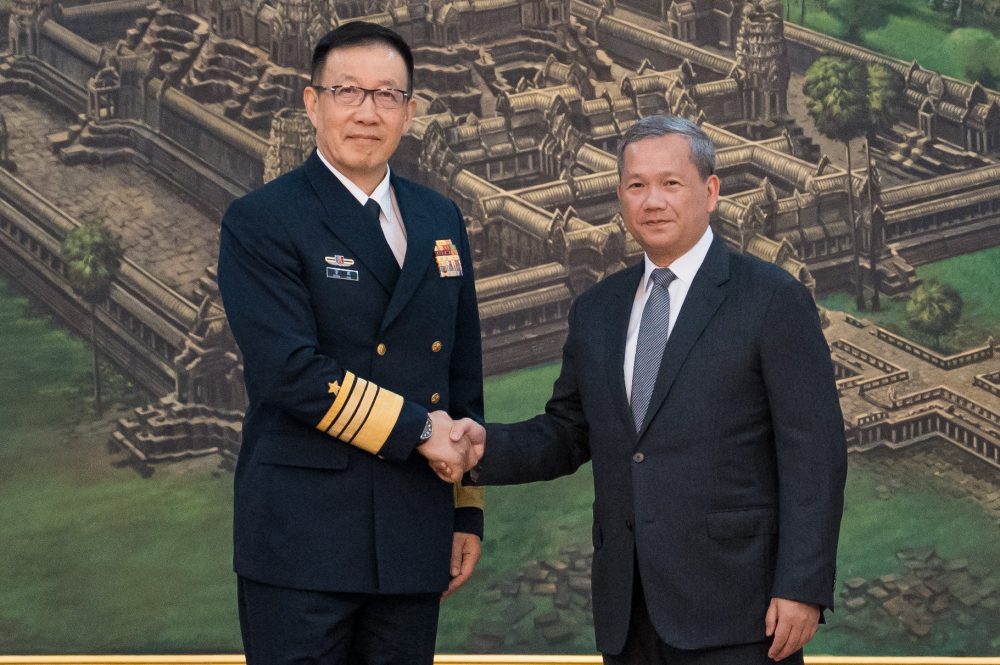

PHNOM PENH, Cambodia (AP) — Top diplomatic and military officials from Cambodia and China convened Wednesday for their inaugural ‘2+2’ Strategic Dialogue Mechanism, marking a significant step in strengthening political and security cooperation between the two nations.
The high-level discussions brought together Chinese Foreign Minister Wang Yi and Defense Minister Dong Jun with their Cambodian counterparts, Foreign Minister Prak Sokhonn and Defense Minister Tea Seiha, in Cambodia’s capital.
This diplomatic initiative stems from a proposal made by Chinese President Xi Jinping during his official state visit to Cambodia in April of last year, designed to enhance relations and expand the comprehensive strategic partnership between both countries. As part of China’s broader efforts to expand its influence across Southeast Asia, Beijing previously launched a similar ministerial-level ‘2+2’ dialogue format with Indonesia in 2023.
According to Tuesday’s announcement from China’s Foreign Ministry, Wang Yi’s regional tour will continue with visits to Thailand and Myanmar after concluding his Cambodia meetings.
During their stay in Cambodia, the Chinese ministers are scheduled for individual meetings with Senate President Hun Sen and Prime Minister Hun Manet. Following the joint strategic dialogue, Wang Yi will engage in detailed discussions with Prak Sokhonn on Thursday, focusing on implementing current cooperation agreements and contributing to regional peace, security and stability.
Cambodian officials have not yet released specific details about any of the scheduled meetings.
China maintains its position as Cambodia’s primary investor and aid provider, with Cambodia serving as Beijing’s most reliable political ally in Southeast Asia. Trade between the nations totaled $19.73 billion in the previous year, with the balance heavily favoring China.
This strengthening relationship has raised concerns among analysts and U.S. officials regarding a Chinese-funded upgrade to Cambodia’s Ream Naval Base, with suspicions that Beijing may use the facility as a strategic military installation. The base, situated on the Gulf of Thailand, completed major construction last year including a new pier capable of handling larger vessels, a dry dock for ship maintenance, and additional infrastructure.
U.S. officials have publicly voiced concerns that China has been secretly granted exclusive access rights to the naval facility, though Cambodian leaders have consistently rejected these claims. During the base expansion’s opening ceremony in April last year, Prime Minister Hun Manet specifically refuted these allegations, stating that the expansion wasn’t concealed from other nations.
In a notable development three months ago, the USS Cincinnati became the first American Navy vessel to dock at the renovated facility since the Chinese-funded improvements were finished, bringing approximately 100 crew members to the base.