A trial commenced Tuesday in Turkey for six individuals accused of causing the deaths of a German family who died from toxic insecticide exposure while vacationing in Istanbul, according to media reports.
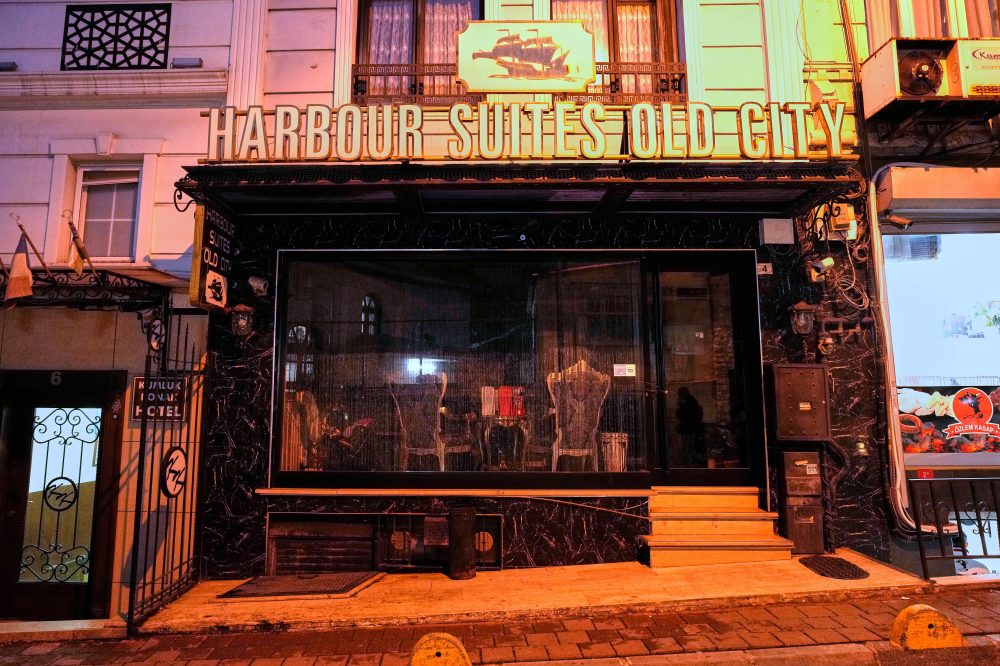
The Bocek family, who held both Turkish and German citizenship, were guests at the Harbour Suites Old City hotel located in Istanbul’s Fatih neighborhood when they became sick on November 12, state-operated Anadolu news agency reported.
The family initially traveled by taxi to a medical facility after experiencing nausea and vomiting symptoms, then returned to their hotel. Emergency responders transported them to the hospital the next day, where young Kadir Muhammet, age 6, and his 3-year-old sister Masal passed away. Their mother Cigdem died on November 14, followed by their father Servet on November 17.
This tragedy has sparked renewed concerns about hotel safety protocols in Turkey and demands for enhanced regulatory supervision. A devastating fire at a ski lodge hotel in northwestern Turkey claimed 78 lives just last January.
According to court documents filed with the Istanbul 30th High Criminal Court, medical personnel couldn’t initially reach the Bocek family because hotel receptionist Muhammad Moeen had departed and secured the hotel’s main entrance after being bothered by chemical odors from the treated room.
Photographs from that day captured Servet Bocek rushing his daughter through the lobby area while desperately attempting to shatter the glass entrance.
Court papers identified the seven-minute period before Moeen’s return to unlock the entrance as a contributing element in the family’s deaths, along with inadequate safety measures during chemical application and insufficient emergency response personnel.
While authorities initially suspected food-related illness, subsequent investigation discovered phosphine gas residue on towels, protective masks, and samples collected from the hotel premises. Phosphine represents an extremely dangerous chemical that can trigger serious breathing difficulties and internal organ failure.
The shuttered Harbour Suites operated as one of numerous budget accommodations within easy reach of popular destinations including the Blue Mosque and Hagia Sophia.
Legal officials are pursuing sentences ranging from 2 years and 8 months to 22½ years for causing multiple deaths through negligence against hotel proprietor Hakan Oglak; DSS Pest Control owners Zeki Kisi and Serkan Kisi; DSS employee Dogan Cagferoglu; and receptionist Moeen.
Hotel staff member Rustemsha Batyrov could receive 2 to 15 years for identical charges.
Cagferoglu, who applied chemicals to the ground level room directly beneath the Boceks’ accommodation, lacked proper certification for handling dangerous substances, court documents revealed.
The pest control business also operated without proper licensing and utilized aluminum phosphide, a chemical inappropriate for residential environments. Legal papers additionally state the company hired unqualified workers and neglected safety protocols.
Oglak stands accused of authorizing dangerous chemical use by unqualified staff, neglecting safety procedures during application, and failing to clear the hotel of guests.
Three additional hotel guests present during the incident also experienced poisoning symptoms but made full recoveries following medical care.
Tuesday’s proceedings also revealed that two Dutch brothers died from phosphine exposure at another Fatih district hotel several months prior to the Bocek family incident.
Jamil Yusuf Mohammed, 17, and his brother Yazdani, 15, were discovered deceased in their Grand Sami Hotel room on August 22 of last year. Their father Rashid survived after receiving hospital treatment.
Five hotel workers and pest control staff members have been charged and remain in custody awaiting trial, Demiroren News Agency confirmed.
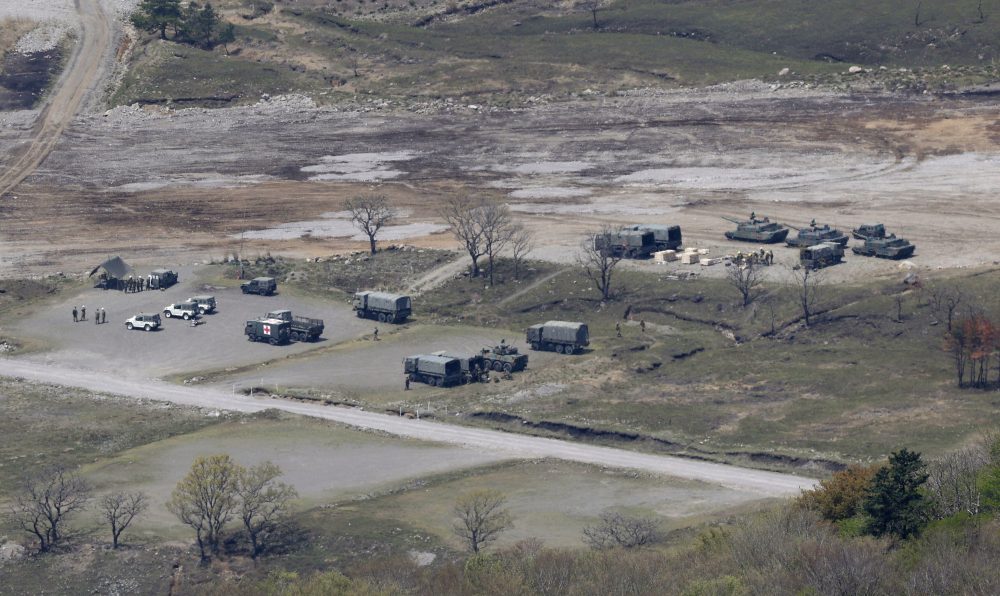
Three members of Japan’s military were killed Tuesday when ammunition detonated inside their tank during a training operation at a military facility in southern Japan, according to defense officials.
The fatal incident took place at the Hijudai Training Area in Oita prefecture during live ammunition exercises involving multiple tanks. The explosion happened within the gun turret of a Type 10 main battle tank, claiming the lives of the tank’s commander, gunner, and safety supervisor who were positioned inside the turret at the time.
A fourth crew member serving as the tank’s driver sustained injuries but survived the blast, military officials reported.
Following the tragic incident, Japan Ground Self-Defense Force Chief of Staff Masayoshi Arai announced the immediate halt of live ammunition training exercises involving Type 10 and Type 90 tanks that utilize similar ammunition.
“We will promptly determine the cause so that we can take preventive measures,” Arai stated.
The Type 10 tank represents Japan’s most advanced armored vehicle, having entered service with the military in 2011. Military investigators are now working to determine what caused the deadly ammunition explosion during the routine training operation.
A Baptist pastor lost his life when Russian forces launched an airstrike on a church in the Ukrainian city of Zaporizhzhya last week, according to Ukrainian officials. The attack also left eight other individuals wounded.
Ukrainian authorities claim the church was deliberately targeted by Russian forces. The strike represents another incident in what officials describe as a pattern of attacks on religious institutions.
The conflict in Ukraine has now entered its fifth year with no clear resolution in sight. Ukrainian officials also point to broader religious persecution by Russian forces, particularly against Christian denominations outside the Russian Orthodox Church, which has publicly endorsed the military invasion.
Nations around the world are scrambling to protect their citizens from dramatically rising energy prices caused by the ongoing U.S.-Israeli conflict with Iran, implementing a wide range of emergency economic measures.
The global response varies significantly by country, with each implementing strategies tailored to their specific energy needs and economic situations.
European Response
In Britain, officials are working to require older wind and solar energy facilities to accept fixed-price contracts as a way to reduce consumer energy bills.
The Netherlands has rolled out emergency tax relief to offset climbing fuel costs and is preparing additional interventions should the energy situation deteriorate further.
Sweden plans to reduce fuel taxes while increasing electricity subsidies through its upcoming spring budget adjustment, aiming to ease household financial burdens from elevated energy expenses.
European Union leadership has advocated for short-term relief strategies to address the energy price spike, proposing electricity tax reductions, decreased grid charges, and government assistance programs.
Italy’s Prime Minister Giorgia Meloni indicated her country is exploring excise duty cuts to reduce fuel costs and considering higher taxes on companies that may be unfairly profiting from the energy crisis.
Spanish leadership expects parliamentary approval for cabinet-proposed relief measures, including reduced fuel and electricity taxes plus subsidies for industries most vulnerable to energy price increases.
Greece will provide fuel and fertilizer subsidies along with discounted ferry tickets totaling 300 million euros during April and May to protect consumers and agricultural producers, according to Prime Minister Kyriakos Mitsotakis.
Romania announced a reduction in diesel excise taxes of 0.30 lei per liter, while Slovenia has temporarily restricted fuel purchases to address pump shortages caused partly by cross-border buying and hoarding.
Poland’s finance minister said the country is developing solutions to lower fuel prices, potentially through VAT reductions.
North Macedonia cut fuel VAT from 18% to 10% for a two-week period starting March 23, Prime Minister Hristijan Mickoski announced to local media.
Asian Measures
India is taking multiple approaches, including reviewing fuel export policies to ensure domestic availability and evaluating supply requests from neighboring countries, approving exports only when surplus exists.
The country has prohibited consumers with piped natural gas access from keeping or obtaining domestic LPG cylinders while strengthening infrastructure to accelerate the transition to piped gas. Emergency powers have been activated to direct refineries to maximize LPG production for cooking fuel, with industrial sales reduced to prevent shortages for 333 million households.
South Korea is relaxing restrictions on coal power generation capacity while increasing nuclear plant utilization to 80%. Officials are also considering additional energy vouchers for vulnerable households and have implemented a naphtha export ban to boost domestic supplies.
China has prohibited refined fuel exports to prevent potential domestic shortages and is releasing fertilizer from national reserves ahead of spring planting season, according to sources.
Japan’s industry ministry will relax regulations for one year to increase coal-fired power plant usage in the new fiscal year. The country has urged the G7 and International Energy Agency to prepare flexible measures for energy market stabilization if the Iran conflict continues, while requesting increased LNG output from Australia and planning higher imports of intermediate chemical products due to tighter naphtha supplies.
Thailand has explored crude oil purchases with Russia and aims to cap domestic diesel prices at 33 baht per liter. The government will also freeze certain goods prices and provide farmer support.
The Philippines suspended its wholesale electricity spot market across all grids due to fuel supply risks and price volatility, while planning to reduce power bills by increasing coal generation and regulating electricity rates. The country is working with Washington to secure exemptions allowing oil purchases from sanctioned nations and has activated a 20 billion peso emergency fund for fuel security.
Vietnam will accelerate its transition to ethanol-blended gasoline to reduce fossil fuel dependence, while Singapore’s prime minister announced early implementation of budget support measures for households and businesses.
Indonesia’s President Prabowo Subianto wants increased coal production, with the government considering export windfall taxes. The country will begin implementing B50 biodiesel on July 1, mixing 50% palm oil-based biodiesel with conventional diesel as part of Iran war risk mitigation.
Other Global Actions
Australia is releasing gasoline and diesel from domestic reserves to address shortages affecting rural supply chains, mining, and agriculture. The prime minister warned that economic impacts from the conflict will persist for months and encouraged public transportation use.
Bangladesh is seeking billions in external financing to secure fuel and LNG imports, while Serbia will reduce crude oil excise duties by 60% cumulatively and has extended export bans on crude oil and fuel products.
Argentina delayed scheduled increases in liquid fuel and carbon dioxide taxes through government decree.
Cambodia is increasing fuel imports from Singapore and Malaysia to compensate for supply shortfalls from Vietnam and China.
Malaysia will triple petrol subsidy spending to 2 billion ringgit from 700 million ringgit to maintain fixed fuel prices, while implementing measures to address fertilizer supply shortages and warning that energy supplies may be exhausted by May’s end.
Brazil launched a new program helping states subsidize diesel imports, having previously eliminated federal diesel taxes and imposed 12% oil export taxes in March.
Egypt has capped unsubsidized bread prices at private bakeries and will increase local wheat procurement prices to 2,500 pounds per ardeb for this year’s harvest to build strategic commodity reserves.
Ethiopia has increased fuel subsidies, while Mauritius introduced energy conservation measures including restrictions on non-essential grid power uses like decorative lighting and pool heating.
Namibia temporarily reduced fuel levies by 50% through June to protect consumers from higher pump prices.
Nigeria’s Dangote refinery, Africa’s largest, has increased gasoline and urea exports to African countries experiencing supply disruptions from the conflict.
Sri Lanka will implement additional fuel rationing to reduce queues and secure extra oil supplies.
South Africa reduced its fuel levy for one month to prevent further April fuel price increases.
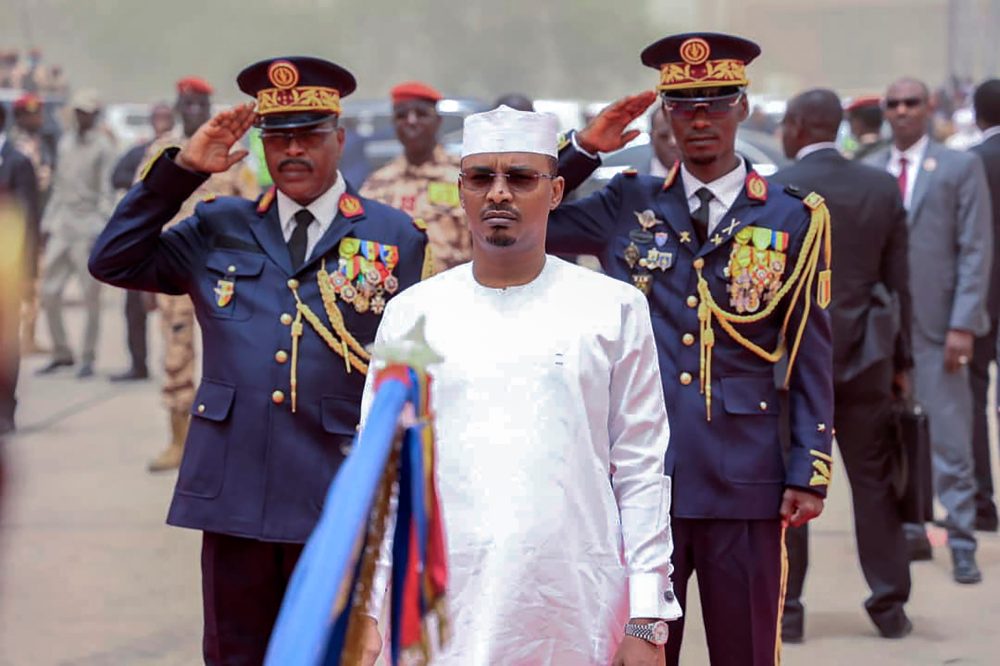
The Central African nation of Chad is sending 1,500 military personnel to Haiti as part of a United Nations-backed security mission aimed at fighting gang violence, according to a presidential letter delivered to the country’s parliament.
Chadian President Mahamat Déby Itno informed lawmakers in N’Djamena on Monday that two military battalions, each consisting of 750 soldiers, will serve for one year beginning this month in response to a UN request.
“A contingent of 400 men has already been sent to Haiti as part of this mission that honors Chad and its defense and security forces,” the president stated.
The UN Security Council authorized the expansion of a Kenya-led international security force in Haiti to 5,500 personnel last year, establishing what’s known as the Gang Suppression Force with enhanced authority to arrest suspected gang members—powers the earlier mission lacked.
The initial peacekeeping effort that began in 2023 was designed to include 2,500 personnel under Kenyan police leadership, but faced significant challenges due to insufficient staffing and funding shortfalls.
Criminal gangs have seized control of approximately 90% of Haiti’s capital city, Port-au-Prince, along with large areas throughout the nation’s central territories. The country has been in turmoil since 2021, when armed gunmen murdered former President Jovenel Moïse at his residence.
Human rights organizations reported that at least 30 people died and dozens more went missing following a fresh assault by the Gran Grif gang on the central Haitian town of Petite-Rivière de l’Artibonite last month.
BUDAPEST, Hungary — Europe’s highest court declared Tuesday that Hungarian laws restricting LGBTQ+ material for children break European Union regulations and violate fundamental human rights protections.
The European Court of Justice determined that the 2021 measures passed under Viktor Orbán’s nationalist government “stigmatizes and marginalizes” LGBTQ+ individuals and fails to meet EU standards prohibiting discrimination based on gender identity or sexual orientation.
The Hungarian restrictions, which drew sharp criticism from advocacy organizations, banned showing minors any material featuring homosexuality or gender transitions, while simultaneously increasing punishments for pedophilia offenses.
Hungarian officials defended their approach, including subsequent laws and constitutional changes that essentially prohibited Budapest’s Pride celebration, claiming they aimed to shield children from what they termed “sexual propaganda.”
However, opponents drew parallels to Russia’s 2013 anti-gay propaganda statute and accused the measures of wrongly linking homosexuality with child abuse. Despite government restrictions, more than 100,000 participants joined last year’s Budapest Pride demonstration in protest.
The Luxembourg court’s decision marked the first time a member nation was found to have violated Article 2 of the EU’s founding charter, which establishes “the values of respect for human dignity, freedom, democracy, equality, the rule of law and respect for human rights, including the rights of persons belonging to minorities.”
Judges also concluded the legislation violated internal market service regulations and data privacy protections.
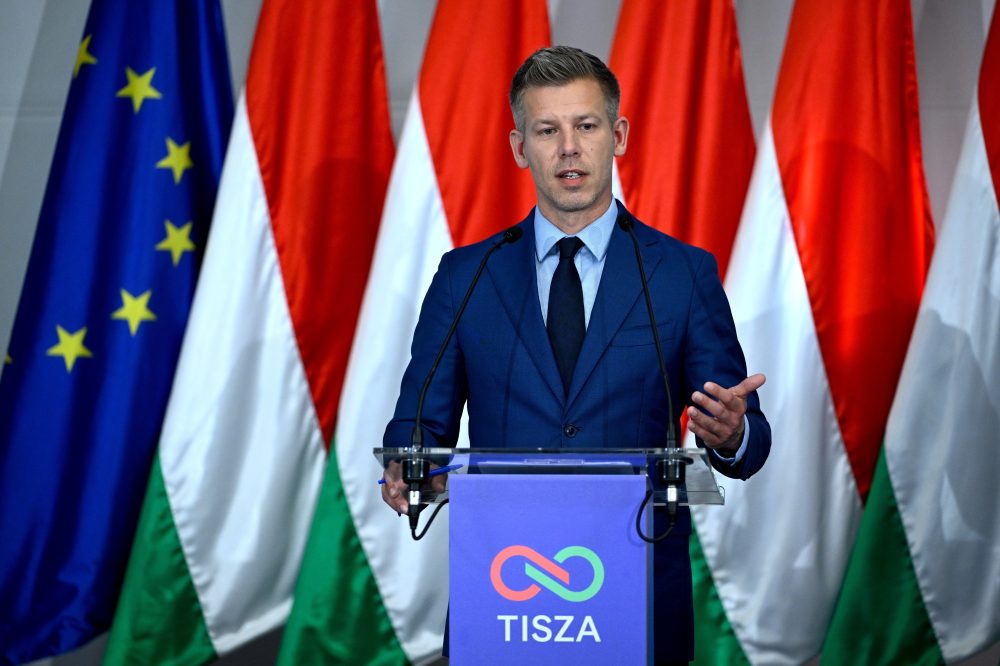
Orbán’s administration suffered a decisive defeat in April 12 elections to the center-right Tisza party led by Péter Magyar, ending Orbán’s 16-year tenure in office.
Magyar’s incoming administration, set to assume power in mid-May, has promised a more cooperative relationship with European Union leadership.
While Magyar avoided taking strong positions on LGBTQ+ issues during his campaign, he declared in his victory address that Hungary would become a nation “where no one is stigmatized for loving someone differently than the majority.”
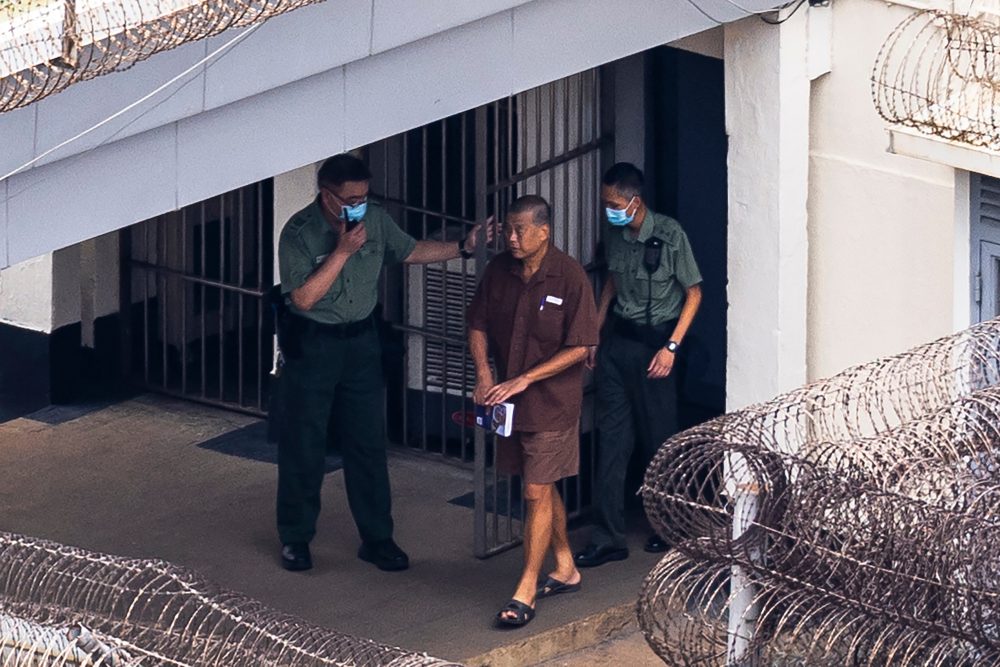
HONG KONG (AP) — Authorities in Hong Kong are moving to take control of more than $16 million in assets belonging to imprisoned former newspaper publisher Jimmy Lai, court documents obtained by The Associated Press revealed Tuesday.
The legal paperwork estimates the value of the targeted property at over 127 million Hong Kong dollars but provides no details about how these assets connect to Lai’s alleged criminal activities. While officials previously announced their intention to pursue asset seizure in this case, they had not revealed the monetary scope until now.
The 76-year-old Lai, who established the shuttered Apple Daily newspaper and was a vocal opponent of China’s Communist leadership, received guilty verdicts in December on charges of conspiring with foreign powers and working with others to publish materials deemed seditious. In February, he was handed a 20-year prison term — the harshest punishment yet delivered under the national security legislation imposed by Beijing.
Those who oppose the conviction argue it demonstrates how press freedoms and civil liberties have deteriorated in the territory, which transitioned from British to Chinese control in 1997. Government representatives maintain the case is unrelated to media freedom, claiming the accused exploited journalism as cover for activities that damaged both China and Hong Kong over many years.
Court filings submitted to Hong Kong’s judicial system this month show the Department of Justice wants Lai to surrender cash held in 15 personal bank accounts, funds in various corporate accounts, plus stock holdings registered to him and other parties.
Among the targeted investments are Lai’s ownership stakes in Next Digital, which operated Apple Daily, and Dico Consultants, a firm connected to an earlier fraud case against Lai that resulted in overturned convictions.
The government’s seizure request also encompasses bail funds deposited with the courts and a 2 million Hong Kong dollar ($255,440) penalty imposed following Lai’s 2022 fraud conviction, money that could have been returned to him after those convictions were reversed in February.
On April 2, officials announced their application to confiscate properties tied to Lai’s crimes in a public statement. The announcement referenced the security law, explaining that assets used or planned for use in criminal activities must be forfeited, along with any profits gained through illegal conduct.
According to the government, asset forfeiture orders designed to protect national security can stop convicted individuals, their associates, or representatives from continuing to use crime-related property for activities that threaten security.
Court proceedings on this matter are set for July.
Moscow plans to suspend Kazakhstan’s oil shipments to Germany through a major pipeline network starting May 1st, according to three industry insiders who spoke anonymously on Tuesday.
The sources revealed that an updated export schedule has already been distributed to both Kazakhstan and Germany regarding the Druzhba pipeline operations.
This development occurs as Moscow and Berlin’s diplomatic and commercial ties have deteriorated significantly due to the Ukraine war, with Germany backing Ukrainian forces.
Russia’s energy ministry has not yet responded to requests for comment on the matter. Kremlin spokesperson Dmitry Peskov stated he had no knowledge of plans to suspend the oil shipments.
“We will try to check it,” Peskov said during his regular press briefing with reporters.
In 2022, Germany seized control of Russian oil giant Rosneft’s domestic operations, effectively dismantling decades of energy cooperation between the two nations.
The volume of Kazakhstan’s oil shipments to Germany through Russia’s Druzhba network reached 2.146 million metric tons in 2025, equivalent to approximately 43,000 barrels daily – representing a 44% jump from the previous year.
Kazakhstan delivers its oil to Germany using the northern branch of Druzhba, which passes through Polish territory.
Ukrainian drone strikes targeting the pipeline within Russian borders have caused multiple service disruptions to these shipments.
The PCK refinery in Schwedt, located in northeastern Germany and among the nation’s largest facilities, depends partly on Kazakh crude delivered through this pipeline system. This arrangement began after Russian oil shipments ceased following the 2022 invasion of Ukraine.
LONDON – Britain’s media watchdog announced Tuesday it has opened formal investigations into messaging app Telegram and two teen-focused chat platforms following concerns that children are being exposed to sexual predators and harmful content.
Ofcom, the UK’s communications oversight agency, revealed it is examining whether Telegram, Teen Chat, and Chat Avenue are fulfilling their legal obligations to safeguard minors from online predators seeking to exploit them.
According to the regulator, evidence has emerged showing that illegal sexual abuse content involving children is circulating on Telegram’s platform, while the teen-oriented chat services are allegedly being exploited by adults targeting young users for grooming purposes.
Following discussions with these technology companies, Ofcom officials stated they remain unconvinced that adequate safeguards are in place to shield British youth from predatory behavior online.
“These firms must do more to protect children, or face serious consequences under the Online Safety Act,” declared Suzanne Cater, who serves as Ofcom’s Director of Enforcement.
European Union foreign policy chief Kaja Kallas expressed optimism Tuesday that a massive financial aid package for Ukraine worth 90 billion euros ($105.94 billion) will receive approval during Wednesday’s proceedings.
The loan package gained new momentum following the recent electoral loss of Hungarian Prime Minister Viktor Orban, who has been Ukraine’s strongest opponent within the EU. Ukraine desperately requires these funds to continue financing its ongoing conflict with Russia. All EU member nations had initially reached agreement on the loan back in December.
“We expect some positive decisions tomorrow on the 90 billion loan,” Kallas stated to media representatives on Tuesday during a gathering of EU foreign ministers in Luxembourg.
“Ukraine really needs this loan and it’s also a sign that Russia cannot outlast Ukraine. This is extremely important at this moment,” she added.
Irish Foreign Minister Helen McEntee shared similar sentiments about the urgency of the financial assistance.
“It’s really important as an EU that we make progress on the 90 billion euro loan, that we make progress on the 20th package of sanctions and that we’re able to exert as much pressure as possible on Russia,” she said.
“I was in Ukraine with a number of colleagues in recent weeks and what’s very clear is that we are at that breaking point where that loan is absolutely essential,” added McEntee.
LONDON – Authorities in Britain announced Tuesday that a 17-year-old has been formally charged following a weekend fire attack on a Jewish house of worship in northern London.
The teenager, who holds British citizenship, faces charges of arson that did not endanger lives and is scheduled to make his first court appearance Tuesday at Westminster Magistrates’ Court, according to law enforcement officials.
Police also detained a 19-year-old man Sunday in connection with the same incident, but he has since been released on bail while investigators continue their work. Officials confirmed that while the fire resulted in minimal property damage to the building, no one was hurt during the attack.
The incident occurred at Kenton United Synagogue and represents another in an ongoing pattern of attacks directed at Jewish religious sites throughout London, authorities noted. The case is being handled as part of a counter-terrorism investigation.
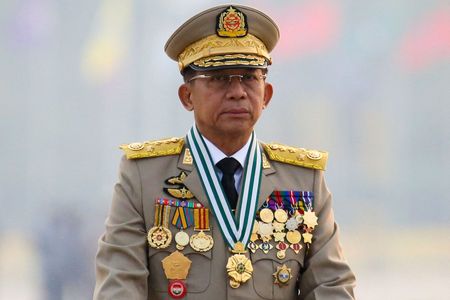
Myanmar’s military-appointed president has announced plans to initiate peace negotiations with armed opposition factions by July 31st, though major rebel organizations quickly turned down the proposal on Tuesday.
According to state-controlled media, President Min Aung Hlaing addressed government officials about his intention to bring non-ceasefire groups into discussions within a 100-day timeframe. Min Aung Hlaing orchestrated the military takeover five years ago that sparked ongoing civil conflict throughout the Southeast Asian nation.
“For groups that have not yet engaged in dialogue and negotiation, we also invite them to come participate in discussions by the final deadline of July 31,” Min Aung Hlaing stated during the meeting. He specifically referenced opposition organizations including the Karen National Union, the Chin National Front, and the All Burma Students’ Democratic Front.
The president’s comments referenced parties to the Nationwide Ceasefire Agreement (NCA), a previous accord that became uncertain following the 2021 military takeover.
Karen National Union representative Saw Taw Nee rejected the administration’s proposal outright.
“The KNU has already withdrawn from the NCA since the 2021 coup. We have no plans to return to negotiations or follow the NCA path,” Saw Taw Nee declared.
Chin National Front representative Salai Htet Ni explained his organization’s pursuit of a federal democratic structure without military interference.
“Since we are fighting a military-political battle for this, we have nothing to discuss with those who currently call themselves an ‘administration’ after merely changing their appearance from the military,” Salai Htet Ni stated.
The nation has experienced chaos since the military overthrew Nobel Peace Prize recipient Aung San Suu Kyi’s democratically chosen administration. The 80-year-old leader received a 27-year prison term on charges supporters claim were politically driven, though authorities reduced her sentence by one-sixth last week.
Lawmakers selected Min Aung Hlaing as president this month after a contested election that opponents and Western nations condemned as fraudulent, designed to maintain military control under democratic pretenses.
Only a handful of nations have acknowledged the new military-supported government’s legitimacy.
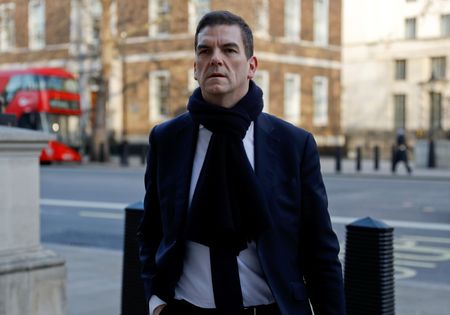
LONDON, April 21 – A dismissed senior British foreign ministry leader testified Tuesday that the Prime Minister’s office subjected him to relentless pressure to expedite Peter Mandelson’s security clearance for the U.S. ambassador position.
Olly Robbins informed a parliamentary committee that there existed a “very strong” expectation for Mandelson to assume his diplomatic role without delay.
“The focus was on getting Mandelson out to Washington quickly,” he testified.
Robbins described the intense atmosphere surrounding the appointment process during his committee appearance. “I think throughout January, honestly, my office, the foreign secretary’s office, were under constant pressure,” he explained. “There was an atmosphere of constant chasing.”
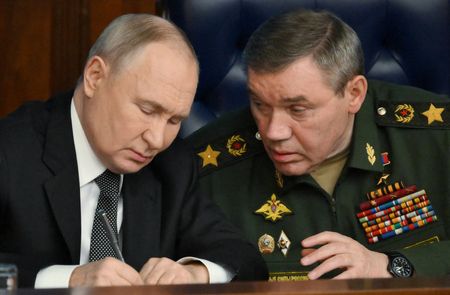
Moscow’s chief military officer announced Tuesday that Russian forces have captured 1,700 square kilometers of Ukrainian territory since the start of 2024, as troops continue pushing toward strategic defensive positions in eastern Ukraine.
General Valery Gerasimov, who leads Russia’s military general staff, made the territorial claims during a troop inspection, stating that Russian forces have gained control of 80 communities across the captured area of roughly 656 square miles.
“Since the beginning of this year, a total of 80 settlements and more than 1,700 square kilometres of territory have come under our control,” Gerasimov said in video footage distributed by Russia’s defense ministry on Tuesday.
The general described Russian advances toward what he called Ukraine’s “fortress belt” in the Donbas region, specifically targeting the cities of Sloviansk, Kramatorsk and Kostiantynivka. According to Gerasimov, Russian troops have moved to within 7 to 12 kilometers of Sloviansk and Kramatorsk, while fighting has already begun in sections of Kostiantynivka.
Russia has been working to capture the entire Donbas area in eastern Ukraine since launching its invasion in 2022, gradually forcing Ukrainian defenders back toward this line of fortified cities through sustained combat operations.
Ukrainian forces have also reported territorial gains in what has become Europe’s most devastating conflict since World War Two. Ukraine’s top commander Oleksandr Syrskyi announced in mid-April that his forces had reclaimed nearly 50 square kilometers during March.
Reuters could not independently confirm the battlefield claims from either side, and Ukrainian military leadership did not immediately respond to requests for comment. Maps maintained by pro-Ukrainian sources indicate Russia has taken 592 square kilometers this year.
Beyond the Donbas operations, Gerasimov said Russian forces are also moving forward in Ukraine’s northern Sumy region and northeastern Kharkiv area to establish what he described as “a security zone.”
Russian military estimates suggest Moscow now controls approximately 90% of the Donbas region, along with about 75% of the Zaporizhzhia and Kherson regions, plus smaller portions of the Kharkiv, Sumy, Mykolaiv and Dnipropetrovsk regions.
Russia also maintains control over Crimea, the Black Sea peninsula it seized in 2014 during earlier fighting. Most countries continue to recognize Crimea as Ukrainian territory under international law.
Pro-Ukrainian mapping data shows Russia controlling 116,793 square kilometers, representing 19.35% of Ukraine’s total territory, though the pace of Russian territorial gains has decreased this year.
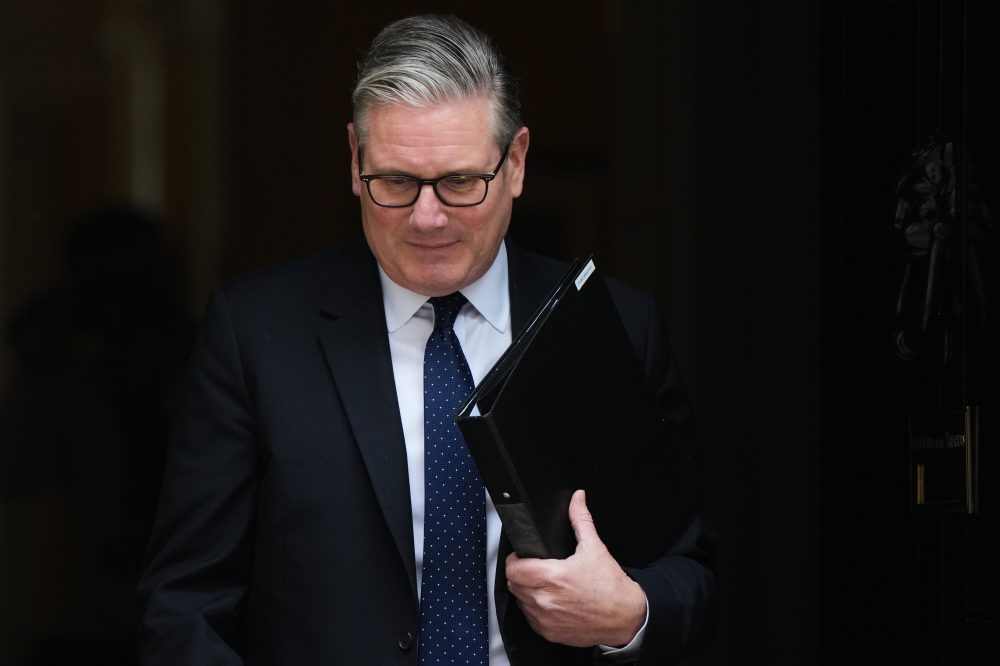
LONDON (AP) — A dismissed British civil service leader revealed Tuesday that he experienced intense political pressure to expedite Peter Mandelson’s selection as the United Kingdom’s ambassador to the United States, even while security issues remained unresolved.
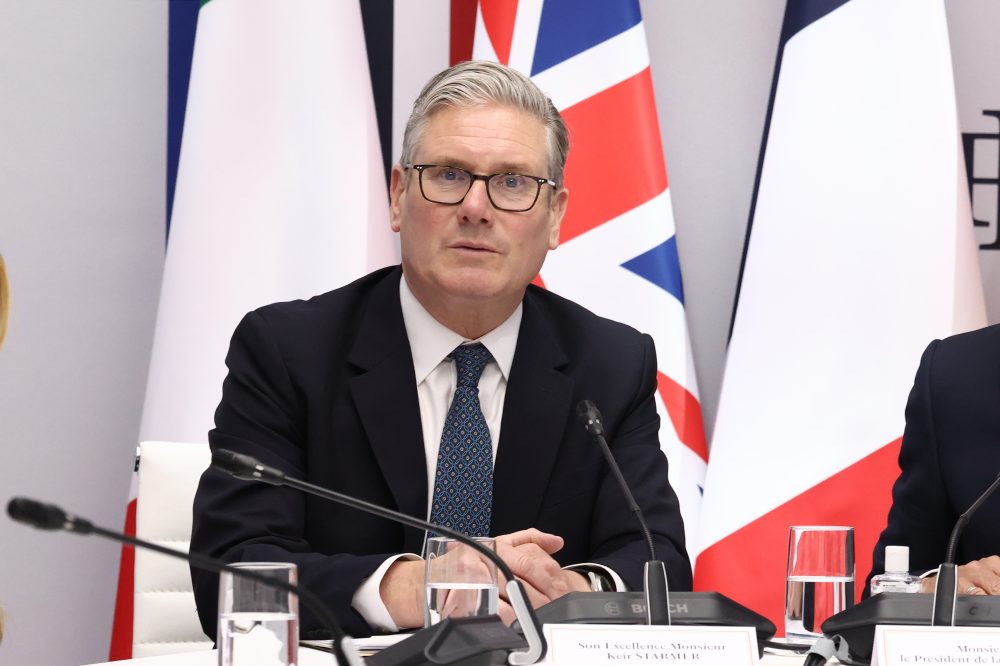
Olly Robbins, who previously led the Foreign Office before Prime Minister Keir Starmer terminated him last week, testified before the House of Commons Foreign Affairs Committee about what he described as an “atmosphere of pressure.”
Robbins explained there was “a very, very strong expectation” that Mandelson “needed to be in post and in America as quickly as possible.”
The Prime Minister now confronts mounting demands for his resignation following disclosures that Mandelson received the critical diplomatic assignment even after security clearance failures.
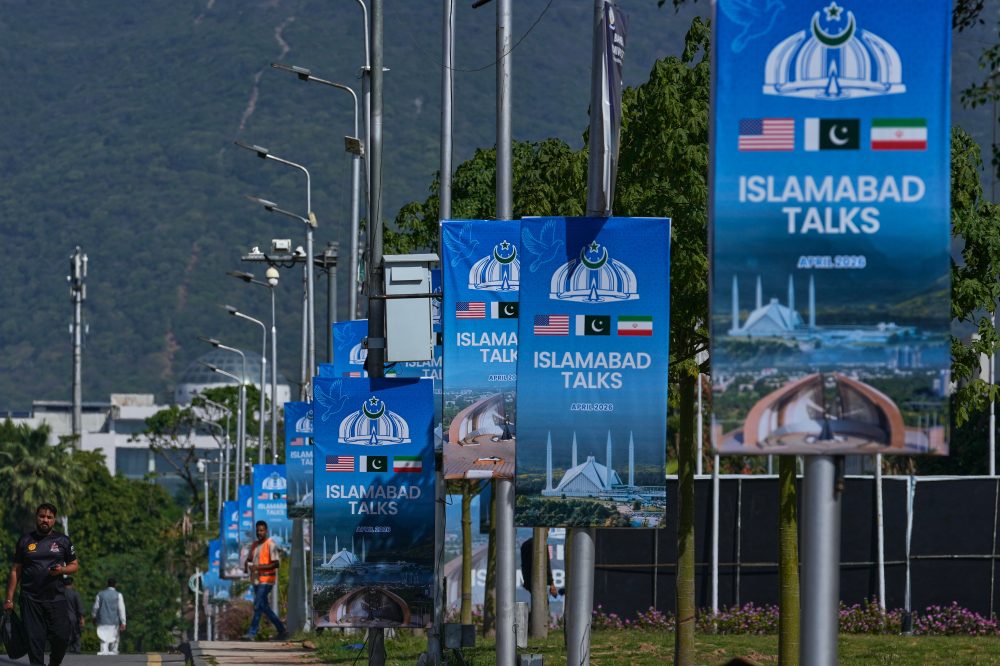
DUBAI, United Arab Emirates (AP) — Iranian state television broadcast an alert Tuesday declaring that “no delegation from Iran has visited Islamabad … so far” amid mounting speculation about potential diplomatic discussions with the United States.
The televised announcement appears to highlight ongoing disagreements within Iran’s religious government as leaders consider their response to the U.S. Navy’s weekend capture of an Iranian cargo vessel.
Hard-line factions have historically maintained control over Iranian state television operations.
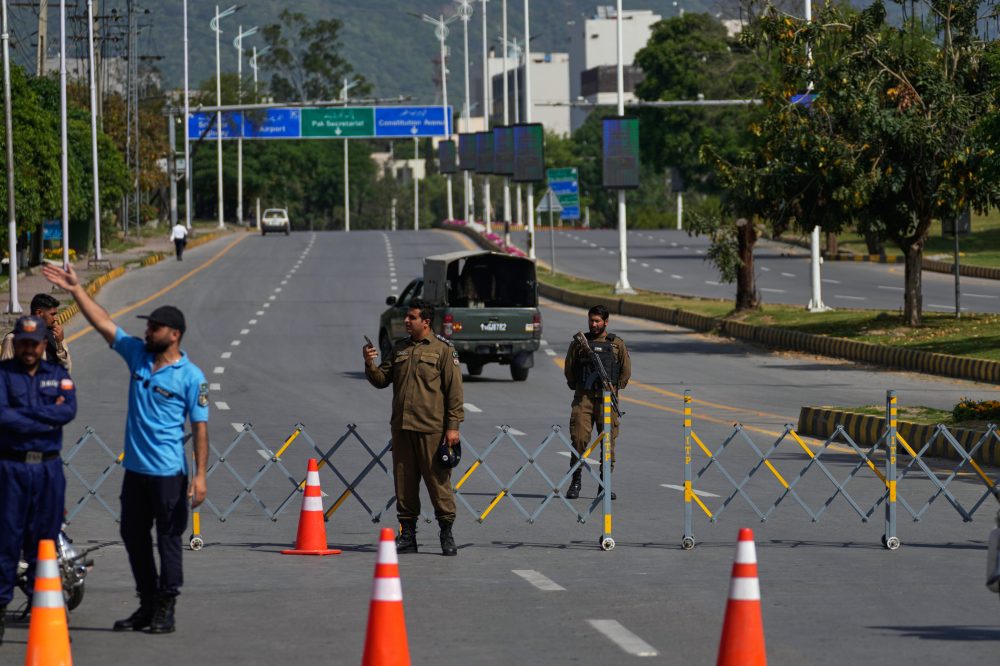
To date, no government representative has confirmed plans to send a delegation to Islamabad, where Pakistani officials have remained prepared for several days awaiting possible diplomatic meetings.
U.S. Vice President JD Vance is anticipated to head the American negotiating team. Iran has not disclosed who might represent their interests, though parliamentary speaker Mohammad Bagher Qalibaf previously led Iranian representatives in past discussions.
Iranian officials have not publicly addressed strategies for restarting diplomatic dialogue. Extreme conservative elements within Iran have voiced opposition to renewed negotiations in recent days, particularly following the naval incident.
Some online voices have called for Supreme Leader Ayatollah Mojtaba Khamenei to publicly declare his position on continuing negotiations, but the Iranian leader has remained silent and has not appeared publicly since the conflict began, with Israeli and American officials claiming he sustained injuries during the fighting.
This situation has likely positioned Iran’s paramilitary Revolutionary Guard as the primary governing force in the Islamic Republic. Guard units played crucial roles during the conflict and operated with significant independence from Tehran when selecting military targets.
Iran’s civilian government has largely remained silent, especially after Foreign Minister Abbas Araghchi posted online over the weekend that shipping lanes had reopened, only to have other Tehran officials later contradict his statement.
Iran has restricted maritime traffic through the strategic waterway connecting the Persian Gulf to international waters since the February 28 attacks by the U.S. and Israel that initiated the current conflict. The United States has implemented its own blockade of Iranian ports in response to Tehran’s actions.
KATHMANDU – The government of Nepal announced Tuesday it has restarted the process of granting work permits to citizens seeking employment in Middle Eastern countries, ending a six-week suspension that was implemented due to ongoing regional conflicts.
The decision to halt permit issuance had been made on March 1, one day following the start of the U.S.-Israeli military action against Iran, but officials now say conditions warrant resuming the program.
“Permit resumption follows advice from the foreign ministry and high demand from workers,” stated Pitambar Ghimire, a spokesperson for Nepal’s labor ministry, when speaking with Reuters.
The economic implications of this decision are significant for the Himalayan nation. Approximately three-quarters of all Nepali citizens working overseas are employed in Middle Eastern countries, primarily in construction and manual labor positions. Financial experts indicate that money sent home by these workers accounts for more than 25% of Nepal’s $42 billion economy.
Nepal’s domestic employment situation helps explain the high demand for overseas work opportunities. Current World Bank statistics show the country has a youth unemployment rate of 20.6% among its 30 million residents, representing the highest such percentage across all South and Southeast Asian nations.
Industry representatives estimate that roughly 3 million Nepali nationals are currently employed in foreign countries. Labor organizations calculate that approximately 1,500 young people depart Nepal daily in search of work abroad, primarily due to limited employment prospects within their home country.
Under Nepali law, citizens must obtain government-issued work permits before accepting employment in foreign nations, making the suspension and subsequent resumption of this process particularly significant for job seekers.
Four decades after the world’s most devastating nuclear disaster, a Ukrainian cleanup worker reflects on how radiation exposure forever changed his life and health.
Petro Hurin, now 76, was among the hundreds of thousands of workers known as ‘liquidators’ who were deployed to contain the aftermath of the Chernobyl nuclear plant explosion on April 26, 1986. The catastrophic reactor four blast released radioactive clouds that spread across much of Europe.
Hurin’s employer, a company providing excavation equipment and construction machinery, dispatched him to the Chernobyl exclusion zone in June 1986. Of the four dozen workers his company sent to the site, only five remain alive today, according to Hurin.
“Not a single Chornobyl person is in good health,” the 76-year-old explained. “It’s death by a thousand cuts.”
The initial blast and radiation exposure killed 31 power plant employees and firefighters within days, primarily from severe radiation poisoning. Since then, thousands more have died from radiation-linked diseases including cancer, though experts continue to debate the total casualty count and lasting health impacts.
Soviet leadership worked to minimize public knowledge of the disaster’s scope, even proceeding with the traditional May 1 parade in Kyiv, located approximately 60 miles south of the plant. Ukraine’s present-day government has criticized how Soviet officials mishandled the crisis and attempted to hide its severity.
While some of Hurin’s coworkers obtained medical exemptions to avoid Chernobyl duty, he volunteered to participate in the cleanup efforts.
“I realised that, however small my contribution might be, I was doing my bit to help tame this atomic beast,” he recalled.
During grueling 12-hour work periods, Hurin operated heavy machinery to move dry concrete mixed with lead – delivered to the site via river transport – onto trucks. The material was then taken to the reactor area where it was used to construct an enormous protective barrier designed to seal in the radiation.
“The dust was terrible,” Hurin remembered. “You’d work for half an hour in a respirator, and it would end up looking (brown) like an onion.”
Within four days of starting work, Hurin developed alarming symptoms including severe headaches, chest pain, internal bleeding, and a metallic taste in his mouth. Medical staff provided treatment, but after returning to work, he became so weak he could barely stand and feared death was imminent.
“I was brought to the hospital, and the doctors did a blood test first,” Hurin said. “They pricked all my fingers and a pale liquid came out, but no blood.”
Soviet medical officials refused to officially diagnose radiation poisoning, which was reportedly forbidden at the time. Instead, doctors attributed his condition to vegetative-vascular dystonia, a stress-related nervous system disorder.
Prior to the nuclear accident, Hurin had maintained perfect attendance at work, never requiring medical leave. Following his exposure, he spent approximately seven months moving between different medical facilities for treatment, including receiving blood transfusions.
His current medical conditions include anemia – frequently associated with radiation exposure – along with heart disease, pancreatic inflammation, and multiple other ailments.
Despite his health challenges, Hurin has exceeded typical life expectancy for Ukrainian men. World Health Organization data shows male life expectancy in Ukraine was 66 years in 2021, having dropped during the pandemic.
Today, Hurin and his wife Olha reside in Ukraine’s Cherkasy region. Though dealing with ongoing health issues, he continues playing the bayan, a traditional accordion, and composes music and poetry.
He remains in legal battles to obtain special disability benefits designated for nuclear disaster cleanup workers.
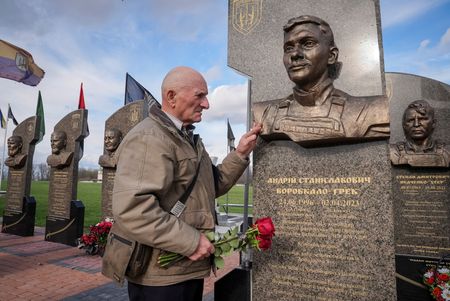
A more recent tragedy – Russia’s 2022 military invasion – has overshadowed much of his daily life. Hurin and Olha frequently visit a nearby memorial at Kholodnyi Yar honoring their grandson, Andrii Vorobkalo, a Ukrainian military member killed in combat at age 26.
The couple raised Andrii from age four after his mother relocated to Europe for work. When Russia launched its invasion in 2022, Andrii abandoned his employment in Greece to return home.
“He left everything behind and came to defend Ukraine,” Hurin stated while standing beside the memorial stone bearing his grandson’s name. “We think of Andrii all the time.”
Iranian authorities carried out the execution of a man Tuesday who was charged with torching a mosque in the capital city during anti-government demonstrations that occurred in January, according to reports from Mizan, the judiciary’s official news source.
The executed individual was named as Amirali Mirjafari by Mizan, which stated he had been found guilty of committing arson at Tehran’s Qolhak mosque and directing activities against state security.
According to Mizan, Iran’s Supreme Court confirmed the death penalty, which was implemented in the early hours of Tuesday morning.
The Islamic Republic experienced widespread demonstrations against the government at the beginning of this year, which authorities suppressed through what has been described as the most extensive government crackdown since the nation’s founding.
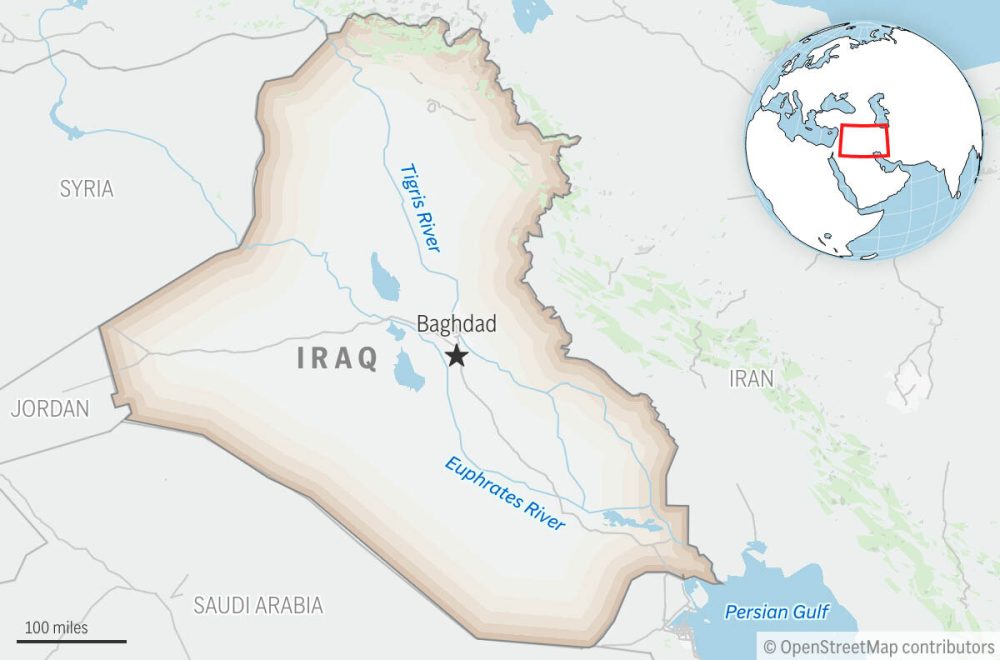
BAGHDAD (AP) — Tehran has provided its military leaders with increased independence to direct militia operations in Iraq, permitting certain factions to conduct activities without central authorization, according to five officials who spoke with The Associated Press about this strategic adjustment prompted by ongoing conflicts.
Numerous Iranian-supported militia organizations receive financing through Iraq’s national budget and are integrated into the country’s security framework, drawing condemnation from Washington and other nations that have faced attacks from these groups and argue that Baghdad has not taken sufficient action against them.
Despite increasing pressure from Washington, Baghdad has found it challenging to control or discourage these organizations. The most extremist factions now function under Iranian advisors through a distributed command system, the five officials informed AP, all speaking anonymously to discuss sensitive intelligence matters.
“The various forces have been granted the authority to operate according to their own field assessments without referring back to a central command,” stated one militia official who lacked authorization to speak publicly.
The regional conflict has revealed the weakness of Iraq’s governmental institutions and their insufficient capacity to restrain these organizations. A separate confrontation between Washington and the militias has intensified the situation, with factions serving as part of Iran’s regional strategy and increasing assaults on American assets in Iraq until a fragile ceasefire agreement was established in April.
Even with the ceasefire arrangement in place, Washington is anticipated to strengthen efforts against these organizations both militarily and politically, especially as they receive greater freedom to function independently, according to officials and analysts. On Friday, the United States implemented sanctions against seven commanders and senior officials from four extremist Iranian-backed Iraqi militia organizations.
“The U.S. is still going to feel it has the freedom of action to hit Iraqi militias,” explained Michael Knights, head of research for Horizon Engage, a geopolitical risk consulting firm, and an adjunct fellow at the Washington Institute for Near East Policy. “That may well play out into an effort to try and guide a less militia-dominated government formation.”
Shortly after the conflict began following U.S. and Israeli strikes on Iran on February 28, an Iranian delegation traveled to Iraq’s Kurdish region and conveyed a direct message: If militia attacks intensified near American military installations, commercial facilities and diplomatic missions, Iraqi Kurdish authorities should not contact Tehran with grievances, as there was limited action they could take.
“They said they’ve devolved authority to regional Iranian commanders,” a senior Iraqi Kurdish government official stated anonymously, citing the matter’s sensitivity.
Previously, Kurdish leaders in Iraq would contact Iranian officials following attacks to inquire why they had been targeted. “This time, they wanted to preempt that by saying, ‘We can’t help you with the groups in the south right now,’” the official explained.
This change demonstrates lessons learned from the 12-day conflict in June, the official noted. Militia officials confirmed this assertion. During that conflict, operations were strictly centralized. Following its conclusion, greater independence was provided in the field.
A representative for Harakat Hezbollah al-Nujaba, one of the Iranian-backed militia organizations that have targeted Americans in Iraq, confirmed there was “coordination” with Iran in conducting attacks but provided no specifics.
“Since we are allies of the Islamic Republic, we have coordination with our brothers in the Islamic Republic,” Mahdi al-Kaabi stated.
During the recent conflict, prominent Iraqi militia commanders seemed to withdraw from the latest phase and did not appear to participate directly in operations, Knights observed. American strikes primarily eliminated mid-level commanders, according to militia officials.
“None of the first-line leaders have been killed,” said a second militia official who was not authorized to brief reporters.
Instead of targeting senior figures, the United States also concentrated on Iranian Revolutionary Guard advisory units, Knights said, who monitored the attacks. In one strike in Baghdad’s affluent Jadriya neighborhood, three Guard advisors were eliminated at a residence used as their headquarters during a meeting, according to the second militia official.
At the center of government attempts to control militia organizations lies a contradiction: The factions the government claims it cannot manage are connected to political parties that brought it to power.
The Coordination Framework, an alliance of powerful pro-Iran Shiite factions, helped establish Mohammed Shia al-Sudani as prime minister in 2022. He currently serves as interim premier during an extended political stalemate.
Militia forces conducting attacks on American targets are not independent operators; they belong to the state’s Popular Mobilization Forces, established after Mosul’s fall in 2014 to formalize volunteer units that were essential in defeating the Islamic State.
The PMF has developed into a formidable force that exceeds the Iraqi army, with combatants receiving government salaries and access to state resources, including weapons and intelligence. The outcome, critics argue, is a significant contradiction: Certain government-funded groups function according to Iranian objectives, even when doing so damages Iraq’s national interests.
Al-Sudani’s office did not respond to AP’s requests for comment regarding the decentralized control of militia organizations.
The United States is committed to reducing the influence of these groups in Iraq, the senior Iraqi Kurdish official and a Western diplomat stated, which will increase pressure on the government, still operating in interim capacity. The diplomat also spoke anonymously because they were not authorized to brief reporters.
Last week, Iraq’s ambassador to the United States was called to Washington to receive American condemnation of attacks by Iranian-backed factions on American personnel and diplomatic missions, according to State Department deputy spokesperson Tommy Bigot.
“The Deputy Secretary affirmed that the United States will not tolerate any attacks targeting its interests and expects the Iraqi Government to take all necessary measures immediately to dismantle Iran-aligned militia groups,” Bigot stated.
Al-Sudani has implemented limited measures to reduce militia influence, including further institutionalizing the PMF and occasionally dismissing commanders who operate outside state authority. These efforts have encountered substantial resistance from militia organizations.
Further institutionalizing them has increased their integration within the state. The United States may attempt to separate the most extremist factions — including Kataib Hezbollah, Harakat al-Nujaba, and Kataib Sayyid al-Shuhada — from others more integrated in Iraq’s political system. “The bad militias from the worse militias,” the senior Iraqi Kurdish official said.
Harakat al-Nujaba spokesperson al-Kaabi presented a dual perspective of the organization’s position, emphasizing both its partnership with Iran and its assertion to Iraqi state legitimacy.
“To put it bluntly, we are allies of the Islamic Republic,” he stated. He characterized the organization as part of Iran’s regional “axis” alongside Hezbollah in Lebanon and Ansar Allah in Yemen.
Simultaneously, he maintained the organization functions within Iraq’s political framework, supporting the state and government when they serve national interests.
“It’s true we’re not affiliated with the government or the prime minister, but we respect the law and the constitution,” he said.
Members of President Donald Trump’s Board of Peace have engaged in discussions with Dubai-based multinational corporation DP World regarding potential management of supply chains and infrastructure development in Gaza, according to a Financial Times report published Tuesday.
The devastated Palestinian territory faces an estimated $70 billion reconstruction bill after two years of Israeli military operations that have left approximately 80 percent of buildings in ruins, according to international organizations.
Three sources with knowledge of the discussions told the Financial Times that conversations focused on potential collaboration between DP World and the Board of Peace to handle logistical operations.
The proposed partnership would encompass the management of humanitarian supplies and other materials entering Gaza, along with warehousing facilities, tracking infrastructure, and security measures, the report indicated.
Additional concepts discussed during the meetings included construction of a new port facility either within Gaza or along the adjacent Egyptian coastline by the UAE-based company, which might also establish a free-trade zone within the conflict-affected region, according to the newspaper.
Neither DP World nor White House officials provided immediate responses to Reuters’ requests for comment on the reported discussions.
Trump introduced the Board of Peace concept in September as part of his strategy to bring an end to Israel’s military campaign in Gaza, later expanding its potential role to address additional international conflicts.
The president’s Gaza strategy calls for Israeli military withdrawal coupled with reconstruction efforts beginning as Hamas surrenders its weapons.
Future diplomatic discussions between Iran and the United States appear increasingly uncertain as a temporary ceasefire approaches its Wednesday deadline, with Iran’s top diplomat rejecting negotiations under current conditions.
Iran’s parliament speaker and lead negotiator, Mohammed Bagher Qalibaf, stated on social media platform X early Tuesday morning that his country refuses to engage in talks while facing intimidation. “We do not accept negotiations under the shadow of threats,” Qalibaf wrote, adding that Iran has been developing “new cards on the battlefield.”
Despite Iran’s resistance, President Trump confirmed plans to send his diplomatic team, headed by Vice President JD Vance, to Islamabad, Pakistan’s capital, for potential discussions. However, Trump acknowledged he’s “highly unlikely” to extend the current ceasefire past its Wednesday deadline unless Iran moderates its position.
The ongoing conflict has resulted in devastating casualties across multiple nations. Iranian deaths have reached at least 3,375, while Lebanon has lost more than 2,290 people. Israel has recorded 23 fatalities, and Gulf Arab nations have seen over a dozen deaths. Military losses include 15 Israeli soldiers operating in Lebanon and 13 American service personnel stationed throughout the region.
Global financial markets continue experiencing volatility in response to escalating tensions between Washington and Tehran. Asian stock exchanges showed mixed performance Tuesday, while oil prices declined following recent diplomatic setbacks.
Monday’s trading session on Wall Street reflected investor uncertainty, with the S&P 500 dropping 0.2% from record highs, the Dow Jones falling marginally by less than 0.1%, and the Nasdaq declining 0.3%. Brent crude oil prices remain elevated above $95 per barrel.
The diplomatic crisis deepened after the U.S. Navy intercepted an Iranian cargo vessel, prompting sharp criticism from Trump regarding opponents of his administration’s approach to the conflict.
Economic analysts warn that prolonged warfare could severely disrupt global energy supplies, potentially triggering widespread inflation as oil and natural gas availability becomes restricted in international markets.
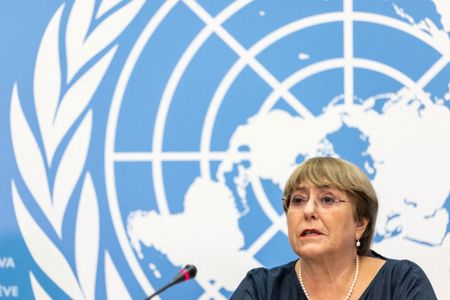
Four international leaders are participating in intensive public questioning sessions this week as they compete for the position of United Nations Secretary-General, seeking to lead the struggling global organization starting next year.
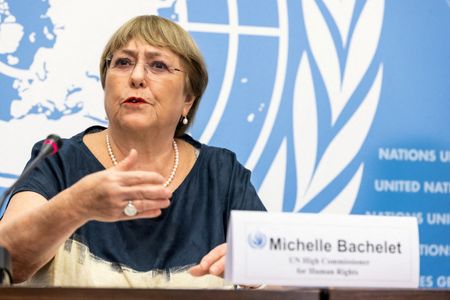
The candidates include Michelle Bachelet from Chile, Rafael Grossi from Argentina, Rebeca Grynspan from Costa Rica, and Macky Sall from Senegal. Each is pursuing a five-year leadership role for the 193-nation organization, with the possibility of extending for an additional five years.
Although these four represent the only announced candidates currently, additional contenders may enter the competition in upcoming months.
The future UN leader will inherit significant challenges in revitalizing an organization experiencing a crisis of relevance, as its influence has notably weakened in recent years. Global powers have demanded that the UN undergo reforms, reduce expenses, and demonstrate its importance, even while these same nations increasingly ignore established international standards.
Bachelet and Grossi will undergo three hours of intensive questioning at UN headquarters in New York on Tuesday from member nation representatives and civil society groups, with Grynspan and Sall facing similar sessions on Wednesday.
The current candidate pool is significantly smaller compared to 2016, when current Secretary-General Antonio Guterres from Portugal was selected from among 13 candidates, including seven women.
Throughout the UN’s 80-year existence, no woman has ever been selected for the top position, despite increasing pressure to break this pattern. Tradition typically calls for the role to alternate between global regions, with Latin America expected to provide the next leader.
An additional informal guideline prevents candidates from the five permanent Security Council members — Britain, China, France, Russia and the United States — from holding the position to prevent excessive power concentration, though support from these nations remains essential in the complex selection procedure.
Daniel Forti from the International Crisis Group recently emphasized the urgency of the situation, stating: “The need for a Secretary-General prepared to defend a clear, proactive vision for the U.N. on peacemaking and crisis management could not be more urgent.”
He added: “If candidates and member states miss this opportunity, there may be little left of the U.N. to defend.”
Bachelet, age 74, previously served as Chile’s president twice and held the position of UN High Commissioner for Human Rights. Her own nation withdrew support for her candidacy in March following a conservative political shift, though Brazil and Mexico continue backing her bid.
Conservative critics in the United States have questioned Bachelet’s pro-choice positions, and Washington’s UN representative recently appeared to undermine her candidacy by expressing concerns about her qualifications.
Grossi, a 65-year-old professional diplomat and father of eight children who communicates in English, Spanish, French and Italian, has led the UN nuclear monitoring agency for six years. In his campaign statement, Grossi stated: “even in times of division, multilateral institutions can deliver real, positive impact.”
Grynspan, 70, formerly served as Costa Rica’s vice president and currently leads the UN Conference on Trade and Development. She presents herself as a reform-focused multilateralist committed to UN principles of peace, development and human rights, having overcome gender obstacles throughout her career.
“I am not waiting for special treatment. I want equal treatment,” Grynspan explained to Reuters.
Sall, 64, governed Senegal for 12 years until 2024 and works as a geologist, having grown up as the son of a peanut vendor. More comfortable speaking French than English, he has advocated for African development and assistance for nations struggling with debt burdens. “More than ever, a reinvented multilateralism remains the best way to respond to the challenges of a world in full transformation,” he posted on X.
The selection process for the United Nations’ next leader is underway, as four candidates compete to succeed current Secretary-General Antonio Guterres in the role beginning January 1, 2027.
Leading the field appears to be Rafael Grossi, the 65-year-old Argentine diplomat who has headed the International Atomic Energy Agency for six years. Known for his energetic diplomatic style, Grossi has navigated complex international crises, including efforts to preserve elements of the Iran nuclear agreement after the U.S. withdrawal in 2018 under President Trump. His most notable achievement involved establishing an IAEA presence at Ukraine’s Zaporizhzhia nuclear facility despite the ongoing conflict with Russia.
The father of eight speaks multiple languages and has maintained relationships with all five permanent Security Council members – crucial support for securing the top position. “These experiences have confirmed a conviction I hold deeply: even in times of division, multilateral institutions can deliver real, positive impact,” Grossi stated in his campaign vision.
Rebeca Grynspan, 70, would make history as the first female Secretary-General if selected. The former Costa Rican vice president currently leads the U.N. Conference on Trade and Development and has temporarily stepped away from those responsibilities to avoid campaign conflicts. Born to European refugees after World War II, she connects her perspective directly to the U.N.’s founding principles.
“I am not waiting for special treatment. I want equal treatment,” Grynspan told Reuters. The economist positions herself as a reform-focused leader who would modernize the organization while preserving its core mission.
Michelle Bachelet faces significant obstacles despite her extensive resume as Chile’s two-time president and former U.N. Human Rights Commissioner. The 74-year-old lost Chilean government support following a political shift but continues her campaign with backing from Brazil and Mexico. U.S. officials have expressed concerns about her candidacy, with Representative Mike Waltz citing criticism from Senator Pete Ricketts regarding her human rights record and positions on reproductive rights.
Completing the field is Macky Sall, Senegal’s former president who served 12 years before stepping down in 2024. The 64-year-old geologist, whose father sold peanuts, emphasizes his executive experience and advocacy for African development. He supports Security Council reforms to include developing nations and focuses on debt relief for struggling countries.
“More than ever, a reinvented multilateralism remains the best way to respond to the challenges of a world in full transformation,” Sall posted on social media. However, his campaign faces mixed support across Africa, with his home country and Nigeria declining to endorse his bid.
If successful, Sall would become only the third African to hold the position, following Egypt’s Boutros Boutros-Ghali and Ghana’s Kofi Annan. The selection process will ultimately depend on consensus among the Security Council’s permanent members.
LONDON (AP) — The memory of Queen Elizabeth II continues to dominate the British royal family at a souvenir store situated across from Buckingham Palace.
Nearly four years following the monarch’s passing, the Cool Britannia gift shop maintains strong sales of commemorative items including coffee cups, kitchen linens, and keychains featuring Britain’s longest-serving ruler as the country observes her 100th birthday anniversary on Tuesday. Merchandise showcasing her successor King Charles III remains far less popular.
“We still sell more than the king any day,” said Ismail Ibrahim, the store’s manager.
The deceased monarch’s influence continues to cast a shadow over the royal institution following her seven-decade rule, during which she transformed from an elegant young ruler who lifted British spirits in the difficult post-war era to a cherished national figure who provided comfort during the COVID-19 crisis.
At the time of her death in September 2022, Elizabeth represented the sole sovereign that most British citizens had experienced during their lifetimes. Today, references to “the queen” still commonly bring Elizabeth to mind rather than Queen Camilla, Charles’ spouse.
However, the years since her passing have also brought scrutiny to the late queen’s record. Though praised as an emblem of stability and consistency who helped bind together a Britain transformed by the end of its empire, economic hardships, and demographic changes, questions have emerged regarding her handling of former Prince Andrew’s connections to convicted sex offender Jeffrey Epstein and why she allowed the controversy to persist.
“Despite her absence, Elizabeth II remains this key presence whenever we think about the monarchy,” Ed Owens, author of “After Elizabeth: Can the Monarchy Save Itself?” told The Associated Press.
“She’s certainly the most significant figure in the history of the institution in the last 100 years and, I think, therefore deserves probably the attention that’s going to be focused on her in connection with what would have been her 100th birthday.”
Commemoration events include a Buckingham Palace gathering where Charles will honor centenarians born on the same date as his late mother, plus the unveiling of a memorial garden at London’s Regent’s Park. A display featuring the queen’s wardrobe is currently running.
Elizabeth Alexandra Mary Windsor was never intended for the throne. Born April 21, 1926, she entered the world not in a royal residence but at 17 Bruton St., a residence in London’s upscale Mayfair neighborhood.
As the firstborn child of King George V’s younger son, Elizabeth seemed destined for the typical existence of a lesser royal. A quiet life filled with pets and equestrian pursuits, a country estate, and an appropriate marriage appeared to await her.
However, fate altered her path. Ten years following Elizabeth’s birth, her uncle King Edward VIII gave up the crown to wed American divorcée Wallis Simpson. Elizabeth’s father ascended as King George VI, placing the young princess directly in line for succession.
Elizabeth assumed the throne upon her father’s death on Feb. 6, 1952. At just 25 years old, she received the news while in Kenya and immediately returned home to begin her royal responsibilities.
Throughout the following decades, she conducted the ceremonial opening of Parliament wearing her crown and ceremonial robes, welcomed foreign dignitaries at Buckingham Palace, and participated in countless public events throughout the United Kingdom, frequently dressed in vibrant outfits to ensure visibility among crowds.
She also served as an international representative for Britain, completing over 200 foreign visits that strengthened relationships with former colonies including India and Tanzania, previous adversaries like Germany and Japan, and longtime allies such as the United States.
During her later years, the queen gained internet fame through her collaboration with James Bond actor Daniel Craig in a staged parachute entrance at the 2012 London Olympics opening ceremony and her partnership with Paddington Bear to mark her 70th anniversary on the throne.
In an era of constant transformation, she adapted to changing times — celebrating national achievements and comforting citizens during challenging periods while maintaining political neutrality, according to Robert Hardman, author of “Elizabeth II: In private. In public. The Inside Story.”
Yet these successes make her inability to resolve the controversy surrounding her second son particularly notable.
Despite ongoing concerns about Andrew’s inappropriate conduct, questionable financial activities, and problematic associations, he served a decade as Britain’s special trade representative and retained his royal status until details of his Epstein relationship emerged recently. To protect the monarchy from continued damage, Charles ultimately removed his brother’s royal titles. He now goes by Andrew Mountbatten-Windsor.
“He was problematic and that gave her cause for worry,” Hardman said. “But I do think people let him have an easy ride because they thought if they came down hard on him, they might somehow upset the queen. Now that’s partly attributable to her, but partly attributable to others.”
Nevertheless, her “great achievements” far outweighed any mistakes, Hardman noted.
Elizabeth began her reign as a young mother of two small children during an era before commercial aviation and space exploration, then maintained her public presence throughout multiple generations.
“She just reigned through this vast span of the ages and was as authoritative and loved and respected at the end as she was at the beginning,” Hardman said. “And she was working till the very end, ’til her last day.”
While scholars continue evaluating the queen’s impact, ordinary people form their own opinions.
Consider Sylvie Deneux and her daughter Clara, who visited Cool Britannia during a London trip from their home in Lille, France.
They commended the late monarch for her grace and called her an icon. However, when questioned about Mountbatten-Windsor, Sylvie Deneux, 49, hesitated and glanced at her daughter. The failure to swiftly address the scandal was an error, she acknowledged. Yet Deneux maintained empathy for Elizabeth, recognizing those choices came from maternal instincts rather than royal duty.
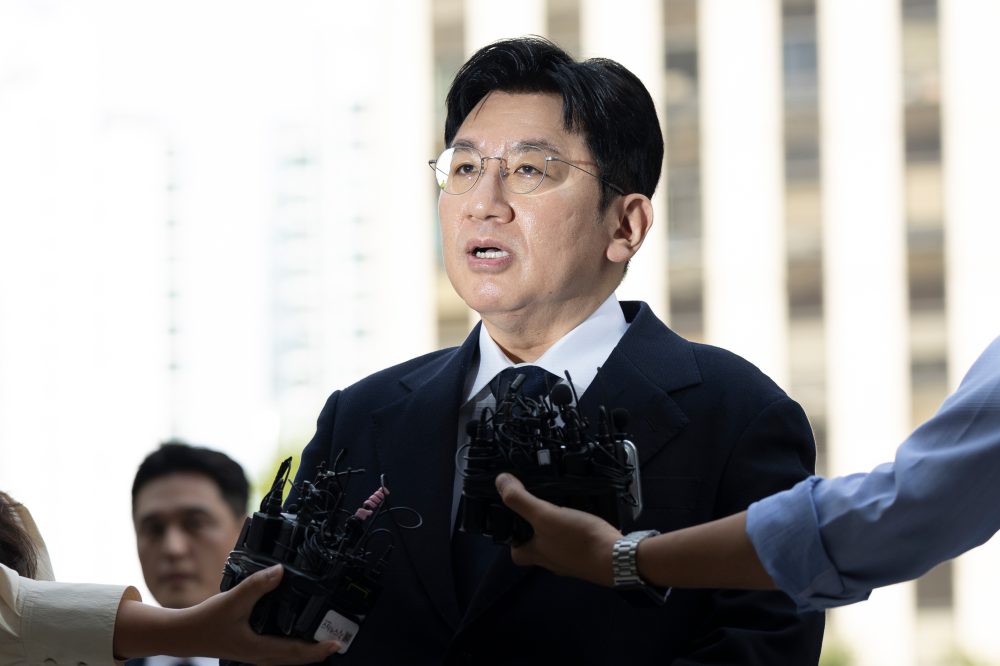
SEOUL, South Korea — Authorities in Seoul announced Tuesday they are pursuing an arrest warrant for Bang Si-Hyuk, the music industry executive who chairs HYBE, the entertainment company that manages global K-pop phenomenon BTS. Officials allege Bang orchestrated a scheme that defrauded investors of over $100 million.
The Seoul Metropolitan Police Agency has formally requested prosecutors to seek a court-issued arrest warrant for Bang. HYBE representatives have not yet provided comment on the matter.
Investigators have been examining Bang’s activities since November, focusing on accusations that he deceived investors in 2019. The allegations center on claims that Bang falsely told investors HYBE would not pursue a public stock offering, convincing them to sell their ownership stakes to a private equity firm before the company actually went public. Authorities suspect the equity fund provided Bang with approximately 200 billion won ($136 million) through a secret arrangement guaranteeing him 30% of profits from post-IPO stock sales.
As the founder of HYBE, originally established as Big Hit Entertainment in 2005, Bang has become one of K-pop’s most influential executives. His company manages several major acts beyond BTS, including Seventeen, Le Sserafim, and Katseye.
The legal challenges represent a significant blow to HYBE’s reputation, particularly as BTS launches their worldwide tour following an almost four-year break while members completed South Korea’s required military service.
BTS recently performed for tens of thousands of international fans at a free reunion concert in Seoul and has since held additional shows in South Korea’s Goyang city and Tokyo. The group plans to begin their U.S. tour dates with a performance in Tampa, Florida, later this month.
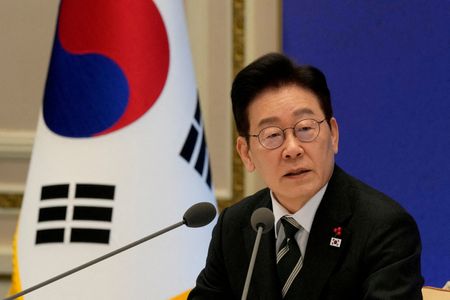
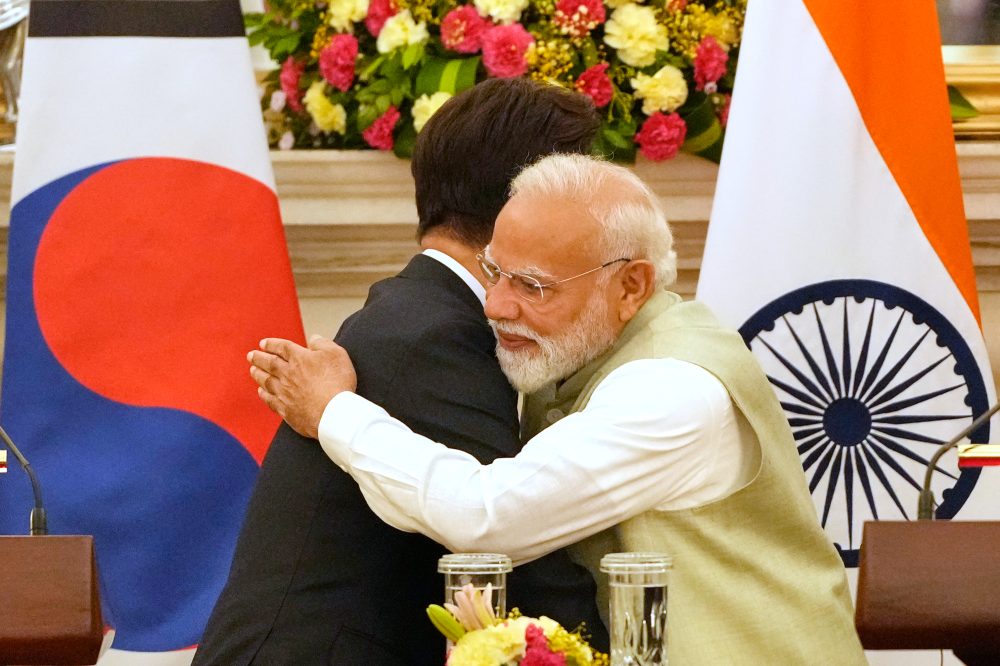
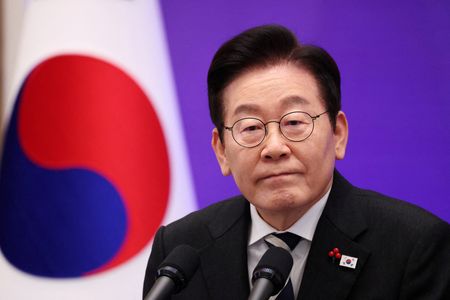
South Korean President Lee Jae Myung is pushing back against allegations that his unification minister disclosed sensitive U.S. intelligence about North Korea’s nuclear program, calling such accusations completely unfounded.
Media outlets in South Korea have indicated that the United States has reduced its intelligence sharing regarding North Korea following public statements made by Unification Minister Chung Dong-young about a previously unverified uranium enrichment site in the communist nation.
The minister and his department maintain that Chung’s March statements regarding the nuclear facility located in Kusong, North Korea, were drawn from information already available to the public, including academic studies.
“It’s a clear fact that the existence of the Kusong nuclear facility was widely known globally even before Chung’s public comments through various research reports and news media,” Lee stated in a social media post on Monday evening.
“Any claim or action based on the idea that Minister Chung ‘leaked classified information provided by the U.S.’ is wrong. I’ll be looking closely into why something as absurd as this is happening,” the president added.
When asked about potential changes to U.S. intelligence sharing arrangements, South Korea’s defense ministry refused to provide details on Tuesday. However, officials confirmed that intelligence agencies from both nations continue to collaborate closely, particularly regarding North Korean missile activities.
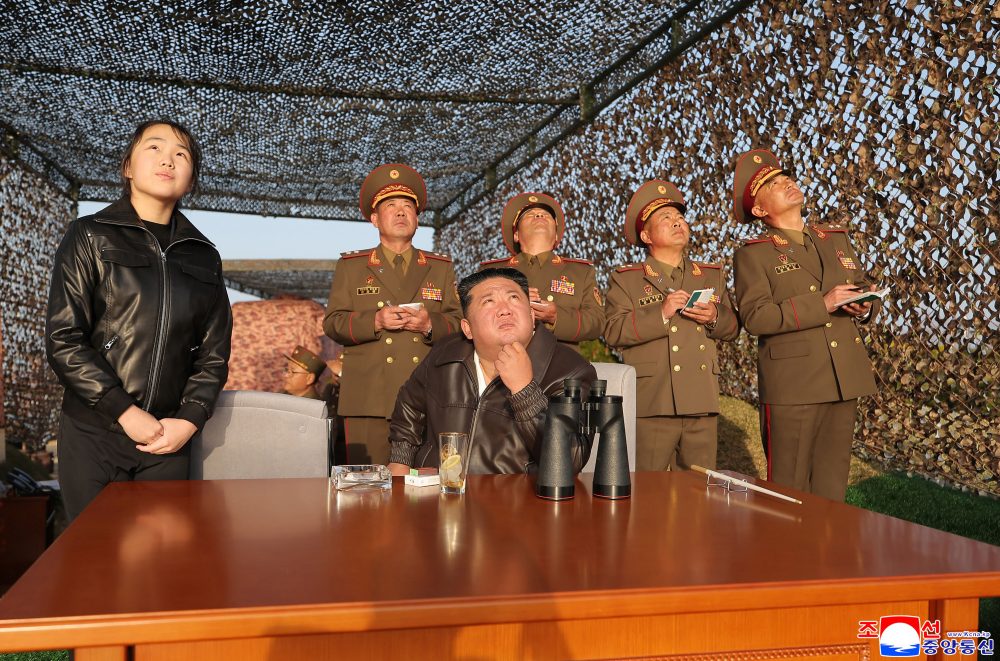
The North conducted its most recent ballistic missile testing on Sunday, with both South Korean and Japanese forces monitoring the launches.
During testimony before a parliamentary panel last month, Chung revealed that North Korea has been producing weapons-grade uranium at the Kusong location, in addition to previously known or suspected facilities in Yongbyon and Kangson.
According to reporting by Yonhap news agency on Tuesday, the United States has restricted the sharing of certain intelligence collected through surveillance satellites.
Political opposition members are demanding Chung’s removal from office, arguing that his actions have harmed the crucial alliance between Seoul and Washington. The two nations maintain a defense agreement, and the U.S. stations approximately 28,500 military personnel in South Korea.
Authorities in South Korea have filed for an arrest warrant against Bang Si-hyuk, the chairman and creator of HYBE, the entertainment giant that manages world-famous K-pop group BTS, in connection with alleged securities fraud.
The Seoul Metropolitan Police Agency announced that Bang is accused of breaking financial market regulations by providing false information to early investors before HYBE’s stock market debut and directing them to transfer shares to a private equity firm connected to his business partners.
Investigators claim that following HYBE’s public listing, the equity firm disposed of its holdings, and Bang collected approximately 30% of the proceeds through a previously established shareholder deal, netting around 190 billion won ($129.1 million) in unauthorized profits.
Bang has previously denied any wrongdoing.
HYBE did not have an immediate comment when contacted by Reuters.
Bang is also the founder of HYBE, the music powerhouse behind global Kpop supergroup BTS.
Following news of the warrant request, HYBE’s stock price dropped 2.9% as of 0215 GMT, contrasting with a 1.8% increase in South Korea’s main KOSPI index.
The National Police Agency revealed that the American embassy in Seoul recently submitted a formal request asking officials to permit Bang to visit the United States, despite an existing travel restriction during the ongoing probe.
Police stated the embassy’s correspondence requested a temporary lifting of the prohibition, referencing scheduled appearances by Bang and other top company officials at a July 4th celebration and discussions regarding BTS’s continuing world tour.
The U.S. embassy in Seoul said it did not have anything to add on that matter.
Bang has been prohibited from departing South Korea since August of last year.
TOKYO — Japan’s leadership has given final approval to eliminate longstanding restrictions on deadly weapons exports, representing a dramatic shift away from the nation’s post-World War II commitment to pacifism as it works to strengthen its defense manufacturing sector and enhance military partnerships.
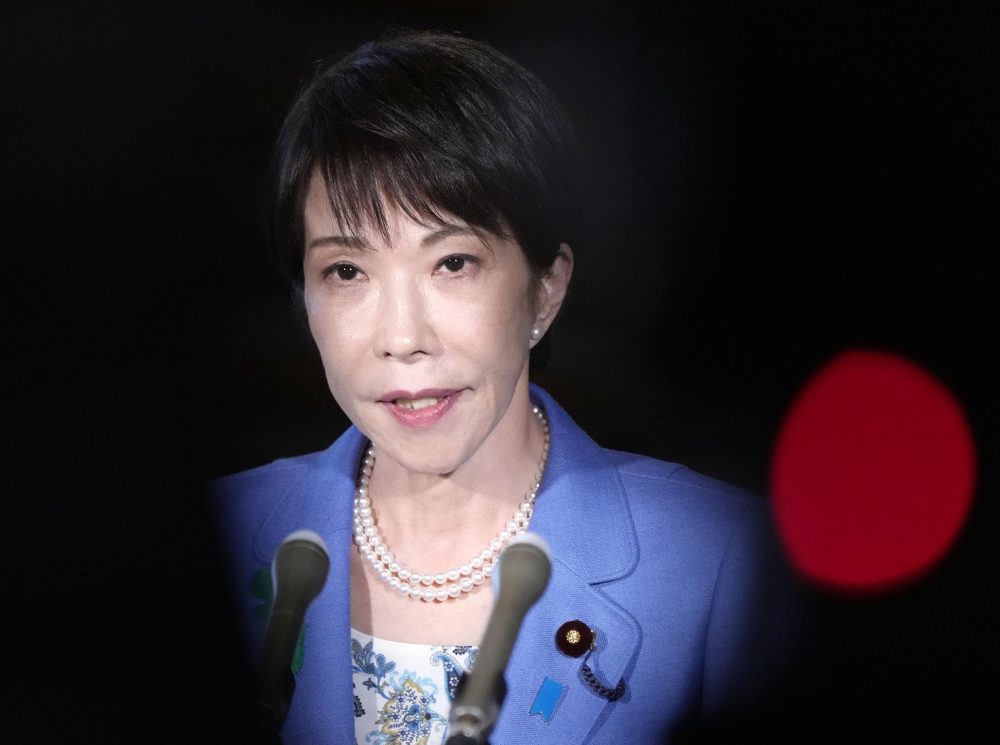
Prime Minister Sanae Takaichi’s administration officially endorsed the new policy framework on Tuesday, removing the last obstacles to Japan’s expanded arms sales capabilities.
This policy transformation occurs as Japan rapidly expands its military capabilities in response to increasing security threats throughout the region. China has condemned the decision, while Japan’s defense allies including Australia have welcomed the change, and nations across Southeast Asia and Europe have expressed interest.
Critics argue the policy shift contradicts Japan’s peace-focused constitution and could escalate international conflicts while putting Japanese citizens at greater risk.
Since World War II, Japan has maintained strict limitations on weapons exports under its pacifist constitutional framework. Recent modifications were made due to escalating global and regional conflicts, though sales were restricted to five categories: rescue, transport, alert, surveillance and minesweeping equipment.
The updated policy eliminates these restrictions and permits sales of advanced military hardware including fighter aircraft, missile systems and naval destroyers — a dramatic expansion beyond previous exports like protective gear, gas masks and civilian vehicles sent to Ukraine, plus intelligence radar systems sold to the Philippines.
A young Rohingya woman survived a harrowing ordeal in the Andaman Sea this month, floating for two days on a piece of wood after her overcrowded vessel sank, leaving her as one of only a handful of survivors from a tragedy that claimed 250 lives.
Rahila Begum, 26, was among nearly 300 people aboard the doomed boat heading to Malaysia when disaster struck. She represents thousands of Rohingya Muslims who risk their lives annually on unsafe vessels, fleeing dire circumstances in refugee settlements in southeastern Bangladesh for hoped-for sanctuary in nations like Indonesia and Malaysia.
Each year, hundreds perish during these treacherous voyages from starvation or maritime accidents, yet the exodus continues to expand as reduced food allocations – triggered by declining international assistance – force even more to attempt the perilous journey.
“I never thought I would survive,” Begum said, her voice weak from illness and pain as she rested on a thin mat inside her family’s makeshift shelter constructed from plastic sheeting. “It felt like the end of my life.”
A Bangladeshi oil tanker crew pulled Begum from the water before transferring her to the nation’s Coast Guard following the vessel’s sinking earlier this month.
Cox’s Bazar, Bangladesh’s coastal region, houses approximately 1.2 million Rohingya refugees, most having escaped violence and oppression in Myanmar, a Buddhist-majority nation where they face accusations of being foreigners.
Confined for years without employment rights, receiving minimal educational opportunities and decreasing food assistance, many see no prospects in Bangladesh while fearing a return to Myanmar remains too dangerous.
According to the U.N. refugee agency UNHCR, nearly 900 Rohingya were reported dead or missing in the Andaman Sea and Bay of Bengal in 2025, establishing it as the most fatal year recorded for maritime crossings in the region, with over 6,500 attempts made.
From January through mid-April this year, more than 2,800 Rohingya have undertaken such dangerous voyages, the agency reports.
“The Rohingya population is very young and aspires to a better life, but that hope is increasingly turning into desperation,” said Astrid Castelein, a UNHCR official.
“That is why youths and families are deciding to take these dangerous boat journeys.”
Officials have increased coastal monitoring and camp surveillance to combat human trafficking operations, according to a Bangladesh government representative who requested anonymity, though they admitted the overwhelming scale of desperation makes enforcement challenging.
Begum’s limbs and torso bear burn scars from hot engine oil mixed with saltwater that splashed on her during the disaster.
She departed Myanmar in 2017 during a military offensive that forced over 730,000 Rohingya into Bangladesh amid reports of murders, widespread sexual assault and arson – actions a United Nations investigation later characterized as “genocidal,” which Myanmar disputes.
Her situation deteriorated following her marriage four years ago, she explained.
“I was beaten because I could not have children. I knew I had to flee. There was no life left for me here,” she said, noting that her spouse refused to accept her return.
This month, the U.N. World Food Programme implemented a new system for distributing food assistance in Cox’s Bazar based on families’ income potential.
Monthly payments now vary from $12 per person for the most vulnerable populations to $7 for those classified as food insecure, with households led by minors, women and elderly individuals receiving priority support.
“My ration has been cut from $12 to $7 because I have an 18-year-old son,” said Mohammed Rafiq, 50, a father of four. “But does he earn anything?”
The reduced amount only covers rice and cooking oil, leaving no funds for the fish or meat his children desire.
“We are living in inhumane conditions,” he said, struggling against inadequate nutrition, housing, freedom, education and employment opportunities. “Even if my children leave by sea one day, I would not be surprised.”
This widespread desperation creates opportunities for human traffickers, many of whom are Rohingya refugees themselves.
One such individual, a 24-year-old who uses the alias Faisal, revealed he arranged passage for 20 people on the ill-fated vessel, including three women and two children, but none survived the catastrophe.
He now avoids phone calls from grieving families seeking information, he admitted. “They keep calling again and again … sometimes I just switch off my phone.”
Faisal explained he first traveled to Malaysia in 2018 using traffickers’ services before returning to the camps to join the smuggling business himself.
Despite serving a year in a Bangladeshi prison in 2020 for human trafficking charges, he resumed operations after his release.
Reuters was unable to verify his statements independently.
These dangerous crossings typically increase during calmer winter weather, Faisal noted, but growing desperation now drives people to accept greater risks year-round.
“They come to us asking for a way out,” he said. “They know the risks – some make it, some are arrested, some die.”
WELLINGTON, New Zealand — Christopher Luxon, New Zealand’s Prime Minister, successfully retained his leadership position on Tuesday following an internal confidence vote within his National Party caucus, addressing mounting concerns over recent polling declines ahead of the nation’s upcoming election.
During a closed-door session with fellow National Party members of parliament, Luxon requested the confidence measure to address growing doubts about his leadership. The meeting extended well beyond its typical one-hour duration, lasting approximately two and a half hours at the Wellington Parliament building.
“The last week, there has been intense media speculation about my leadership,” Luxon stated to reporters following the vote, explaining that he initiated the confidence measure “to put that media speculation to rest.”
The former airline industry leader, who joined Parliament in 2000 and assumed party leadership in 2021, currently heads New Zealand’s conservative coalition administration that took power following the 2023 electoral victory. His National Party has been experiencing a downturn in public support, fueling political observers’ predictions of potential leadership challenges.
This leadership test occurs approximately six months ahead of New Zealand’s scheduled national election on November 7. Following the extended caucus session, Luxon delivered a prepared statement regarding the vote’s outcome before leaving without entertaining media questions.
Historical precedent shows that while former New Zealand leaders like National’s John Key and Labour’s Jacinda Ardern chose to step down voluntarily, parliamentary removal of an incumbent prime minister remains exceptionally rare in the country’s political landscape.
WELLINGTON – Christopher Luxon, serving as New Zealand’s Prime Minister, announced Tuesday that he continues to have the backing of his party’s legislative members following an internal party session.
The Prime Minister’s statement came after party lawmakers convened for their scheduled meeting in the nation’s capital.
TOKYO, April 21 – Japan announced Tuesday a sweeping transformation of its defense export policies, marking the most substantial change in decades by eliminating barriers that previously restricted overseas weapons sales and clearing the path for international sales of warships, missiles and military equipment.
This policy shift represents Japan’s continued departure from the pacifist constraints that have defined its post-World War II security approach, as the nation works to strengthen its defense manufacturing sector.
Global conflicts in Ukraine and the Middle East have stretched American weapons manufacturing capabilities, creating new market opportunities for Japanese defense contractors. Meanwhile, U.S. partners across Europe and Asia are seeking to diversify their military supply chains amid uncertainty about Washington’s security guarantees under President Donald Trump’s administration.
Reuters has learned from Japanese officials and diplomatic sources that nations from Poland to the Philippines are investigating potential procurement deals as they upgrade their military capabilities. Sources indicate that among the initial transactions could involve selling used naval vessels to Manila.
Prime Minister Sanae Takaichi’s administration approved modifications that eliminate five export restrictions which had previously confined most military sales to rescue, transport, warning, surveillance and mine-clearing equipment. Going forward, ministers and officials will evaluate each proposed sale individually.
Japan will maintain three core export principles requiring rigorous vetting, oversight of third-party transfers, and prohibitions on sales to nations engaged in conflicts. However, government presentations indicate exceptions may be granted when considered essential for national security interests.
The nation anticipates these defense exports will fortify its industrial foundation by increasing production volumes, reducing individual unit costs, and creating manufacturing capacity that could be utilized during military emergencies.
Defense companies like Mitsubishi Heavy Industries possess capabilities to manufacture sophisticated systems including submarines, fighter jets and missile systems, but have historically depended on limited orders from Japan’s Self-Defense Forces as their sole customer.
Japan continues pursuing historic military expansion efforts, acquiring missiles, stealth aircraft and unmanned systems officials say are essential to counter potential threats from neighboring China to Japanese territory, particularly around islands along the East China Sea near Taiwan.
Beijing maintains its regional and global intentions remain peaceful.
Tokyo is also collaborating with Britain and Italy on developing next-generation fighter aircraft for mid-2030s deployment, representing a strategy to share development expenses and access emerging technologies.
Japan has progressively increased defense expenditures to reach 2% of GDP in recent years, with Takaichi’s government expected to announce additional increases when releasing its new security strategy this year.
SEATTLE — A 44-year-old Iranian national has arrived in Seattle to face charges stemming from a decade-old case involving the illegal shipment of military sonar technology to Iran, federal authorities announced Monday.
Reza Dindar faces multiple charges including conspiracy, smuggling and money laundering after being indicted in 2014. U.S. authorities requested his arrest in Panama last July, and he was transported to Seattle on Thursday, according to the Department of Justice. Officials have not disclosed Dindar’s whereabouts during the years between his indictment and arrest.
Dindar appeared before a U.S. District Court judge Monday afternoon, with his formal arraignment scheduled for May 1. His legal representative, Farhad Alavi, declined to provide statements to The Associated Press on Monday.
Federal prosecutors allege that Dindar operated New Port Sourcing Solutions, a business based in Xi’an, China. The recently unsealed indictment details how Dindar and co-conspirators allegedly deceived a Washington state company in 2011 and 2012 to acquire components for three military sonar systems. Authorities say the group hid the equipment’s final destination and falsely claimed export licenses were unnecessary.
The sonar systems, valued at $97,600, were initially delivered to China before being secretly transported to Iran, violating U.S. trade restrictions first established in 1995 and extended in 2001, according to court documents.
In a separate incident, federal authorities announced the Saturday evening arrest of a 44-year-old Los Angeles woman at LAX airport. She faces allegations of assisting Iran in weapons trafficking to Sudan, which continues to experience civil conflict in its fourth year.
Iran has promoted Ahmad Vahidi to lead its Islamic Revolutionary Guard Corps, a move that security experts say represents a troubling shift toward more aggressive military policies in Tehran.
Security analysts warn that Vahidi’s promotion concentrates substantial power in the hands of someone with a long history in Iran’s overseas military operations and intelligence activities. Before Qassem Soleimani took over, Vahidi led the Quds Force between 1988 and 1998, where experts say he played a key role in establishing Iran’s network of proxy organizations throughout the Middle East, especially in Lebanon.
The promotion occurs as Iran’s power structure appears to be shifting away from civilian leadership toward informal networks connected to the Islamic Revolutionary Guard Corps. Behnam Ben Taleblu from the Foundation for Defense of Democracies explained to Fox News that the Iranian system functions as “a system of men, not laws, but one whose success rested on institutionalizing their power,” with key decisions flowing through military-connected officials.
Iran expert Beni Sabti from Israel’s Institute for National Security Studies told Fox News that Vahidi now holds a central role in strategic planning. “In my view, he is more dominant right now, even if they are coordinated. This is not a time for internal competition,” Sabti said.
Western intelligence agencies and analysts have connected Vahidi to numerous major terrorist attacks, including the 1983 Beirut barracks bombing that claimed 241 American military lives, the 1996 Khobar Towers assault in Saudi Arabia, and a 2008 strike on the US Embassy in Yemen. Authorities in Argentina have also implicated him in the 1994 AMIA Jewish community center bombing in Buenos Aires that killed 85 people, as well as the 1992 Israeli Embassy bombing in the same city.
Middle East policy journalist Lisa Daftari told the news agency, “By any standard, Vahidi is considered a radical even within the regime’s hardline elite, and his rise is a warning that Tehran’s war machine now calls the shots.”
Yigal Carmon, who founded and leads the Middle East Media Research Institute, told Fox News, “Trusting him is a grave mistake. He belongs to the hard ‘DEATH TO AMERICA’ corps.”
Vahidi continues to face sanctions from both the United States and European Union related to Iran’s nuclear and missile development programs as well as alleged violations of human rights.
Growing tensions between Gulf Cooperation Council nations and the Arab League have sparked discussions about potential withdrawal from the decades-old regional organization, following what many see as an inadequate response to Iranian aggression.
Questions surrounding the GCC states’ continued participation in the Arab League have intensified after the organization faced criticism for its handling of the Israeli-American-Iranian conflict and subsequent Iranian strikes against Gulf nations and Jordan.
Critics from Gulf nations, including social media commentators and individuals connected to government circles, contend that the Arab League has failed to adopt “decisive stances” or issue strong condemnations of Iranian attacks on Gulf territories. Many argue the organization primarily follows Egyptian policy directions rather than seeking broader Arab consensus, pointing to its Cairo headquarters and the tradition of appointing former Egyptian officials as secretaries-general.
Following the Iranian attacks on Gulf states and Jordan, the Arab League released multiple condemnatory statements. The initial declaration on February 28 “condemned these attacks and affirmed its full solidarity with the Arab states in confronting them and its support for any measures they take to defend themselves and protect their people.”
The organization’s Ministerial Council convened an emergency virtual session on March 8, 2026, explicitly denouncing attacks on Arab nations’ sovereignty and territorial integrity, according to the post-meeting statement.
However, controversy erupted from comments made by Arab League Secretary-General Ahmed Aboul Gheit during a March 8, 2026 media appearance, when he characterized Iranian escalation against Gulf civilian targets as a “huge mistake.”
Aboul Gheit further stated that “no member of the Arab League has asked us to sever relations with Iran.”
These remarks triggered sharp criticism from Gulf officials, media personalities, and government-connected figures who viewed them as evidence that the Arab League was failing to effectively address the crisis.
During the March 29, 2026 Arab League meeting, Kuwaiti Foreign Minister Sheikh Jarrah Jaber Al-Ahmad Al-Sabah declared that “successive experiences have revealed the limited effectiveness of the joint Arab action system within the framework of the Arab League, which necessitates a frank and responsible review. Despite its symbolic status, the Arab League has proven a clear inability to keep pace with rapidly evolving challenges and to play an effective role in safeguarding Arab security.”
Lieutenant General Dhahi Khalfan Tamim, Dubai’s deputy police and public security chief known for his outspoken political commentary, wrote on his official X account on March 24, 2026: “The Gulf States’ announcement of their withdrawal from the Arab League is not a true Arab League.”
Jamal Sanad Al-Suwaidi, vice chairman of the Emirates Center for Strategic Studies and Research Board of Trustees and someone with close ties to Gulf leadership, posted on March 31, 2026: “The Gulf States are considering withdrawing from the Arab League.”
Dr. Khaled Al-Subaie, director of the Khaled Center for Media Studies and Consultations in Saudi Arabia and an individual close to Saudi decision-making circles, used his official X account on April 4, 2026, to advocate for “the Gulf states to refuse to attend the meetings of the League of Arab States, not to recognize it and its decisions, and to close its offices in these countries.” He also urged “not paying any amounts into the budget of the League of Arab States.”
Saudi political analyst Qasim Sultan explained to The Media Line: “The role of the Arab League has been weakening over time, and I believe this is due to the weakness of successive secretaries-general. Most of them are former Egyptian officials, over 70 years old. Therefore, this position, despite its importance, has become a place for some former Egyptian officials to retire, profit, and gain.”
“I believe it is necessary to move the headquarters of the Arab League from Egypt to Riyadh, and the established practice of the Secretary-General being Egyptian should not be changed, as it is not exclusive to any one country,” he continued.
“Its charter should also be amended to make its decisions more binding on Arab states, to expedite its decision-making process, and to work more effectively on joint coordination, as is the case in the European Union, rather than functioning as a forum that accomplishes virtually nothing,” Sultan added.
Kuwaiti political journalist Abdullah Al-Khamis informed The Media Line that “The Gulf states pay the majority of the Arab League’s budget, as previously announced at Arab League meetings.” He condemned the League’s inaction during Iranian attacks on Gulf states and its “weak” responses, noting: “It has also failed to engage in any international coordination, contenting itself with a few feeble statements.”
“I believe that an Arab coordination council should be formed, a better alternative to this League. This council should consist of the Gulf states, Jordan, Morocco, and Syria. These countries largely agree on their decisions and are also influential in international affairs,” Al-Khamis suggested.
Al-Khamis delivered harsh criticism of the Arab League’s effectiveness: “This Arab League was stillborn. It has never taken any decisive action throughout its history, nor has it been able to be influential in international decisions. It has not taken any real action, whether economic, political, or in negotiations with any of the other major blocs.”
Former Iraqi Army General Amin Abdul Aziz told The Media Line: “What needs to be activated first in the Arab League is military unity.” He expressed frustration over the absence of military exercises and coordination, stating: “Therefore, in the absence of any unified Arab military force, we shouldn’t expect any effective decisions from the Arab League.”
He added: “Many events have taken place in the Arab world, and we haven’t seen any unified positions, only a few weak statements that are ineffective. Therefore, the Arab League needs a complete overhaul, or it should be dissolved outright.”
Abdul Aziz identified the selection process as a fundamental problem, explaining that “the mechanism for selecting the Secretary-General of the League, which has traditionally been to choose him permanently from Egypt and to be a former Egyptian official—a requirement not stipulated in any law or charter of the Arab League—is the crux of the matter.”
He noted that “when a former Egyptian official, whether a foreign minister, prime minister, or someone else, serves in a position, he still carries Egyptian thinking and policies, and therefore doesn’t represent all Arabs.”
Egyptian political analyst and journalist Sarah Azab dismissed allegations that Egypt bears responsibility for the Arab League’s ineffectiveness, describing such claims as politically motivated. She characterized these accusations as “simply attempts to undermine Egypt, and these claims are untrue.”
Azab highlighted Egypt’s historical role in the organization, explaining that leadership positions have traditionally been filled by individuals with international credibility and that Cairo enjoys broad regional support. “Egypt, being the largest Arab country and the most experienced in international politics, enjoys Arab consensus to assume this responsibility,” she stated, adding that she would welcome an alternative candidate “if they found someone better to head this organization from outside Egypt, but perhaps they haven’t found anyone.”
Azab characterized the League’s difficulties as institutional rather than leadership-related, arguing that divisions among member nations represent the primary challenge. “The problem within the Arab League lies in the conflicting interests of its members, not in the League itself,” she explained, pointing to varying responses to Iranian actions in the Gulf region. She observed that some nations maintain diplomatic relationships with Tehran and have avoided condemning attacks, making consensus difficult to achieve.
She also questioned why criticism seems concentrated primarily on Egypt while overlooking other nations. “Why don’t we see these media attacks on the Sultanate of Oman … or even semi-official attack on Algeria, Mauritania, or other countries that did not take a position?” she asked.
Azab contended that the focus of criticism misrepresents the real issue. “Why only on Egypt, and to show as if the weakness of the Arab League is because of Egypt?” she said, concluding that “the Arab League is weak only because of the conflict of interests of the members.”
LIMA, Peru — Officials in Peru now have a firm deadline to complete their presidential election vote counting after the country’s electoral tribunal established May 15 as the final date for results.
The electoral tribunal announced Monday that Peru’s elections agency ONPE must publish complete vote tallies by that date and identify the two candidates who will compete in the runoff election.
The April 12 election featured more than 30 presidential hopefuls, with the top two vote-getters scheduled to face off in a June 7 runoff since no candidate secured a majority of votes.
The race has been complicated by an extremely narrow gap between the second and third-place finishers, along with voting irregularities that required some polling locations in Lima to remain open an extra day.
Election officials continue processing vote tallies from distant regions and overseas consulates. ONPE must now examine hundreds of tally sheets that electoral observers have disputed.
Current results with 93.5% of ballots tallied show conservative candidate Keiko Fujimori in the lead with 17.05% of votes, making her advancement to June’s runoff nearly certain.
Nationalist congressman Roberto Sánchez, who previously served as a minister under former President Pedro Castillo before his imprisonment, holds second place with 12% of votes. Ultra-conservative Rafael López Aliaiga, Lima’s former mayor, trails closely behind with 11.91%.
The eventual winner will become Peru’s ninth president within a decade, taking over from José María Balcázar, who assumed the interim presidency in February. Balcázar replaced another temporary leader who was removed due to corruption charges after serving only four months.
QUITO, April 20 – Ecuador’s President Daniel Noboa announced Monday that he will appoint a new energy minister within the coming week and replace the current health minister as part of a cabinet restructuring.
The president made the announcement through a social media post on X, where he also revealed plans to implement curfews across nine provinces starting May 3 and continuing through May 18.
The cabinet reshuffle and security measures represent significant policy moves for the South American nation as it continues to address various domestic challenges.
A crucial border passage linking Iraq and Syria resumed operations Monday after remaining closed for more than ten years, with government representatives emphasizing its importance for commercial activity and petroleum shipments.
The border point, called Rabia on the Iraqi side and Yarubiyah in Syria, ceased functioning when Syria’s civil conflict erupted in 2011. ISIS fighters later captured the location in 2014 before Kurdish forces from Iraq eventually regained control.
According to Syria’s official SANA news service, representatives from both nations met at the border facility to explore ways to enhance cooperation and streamline commercial movement “in line with shared interests.”
Nadia al-Jubouri, who serves on Iraq’s Nineveh provincial council, stated during the reopening ceremony that the restored crossing will enable “trade exchange and oil transportation toward this great gate.”
Iraq depends on petroleum sales for approximately 90% of its national budget, with the majority of its oil currently shipped through the Strait of Hormuz. This narrow waterway at the Persian Gulf’s entrance serves as a vital passage for about 20% of global oil shipments.
MEXICO CITY — A deadly shooting at Mexico’s renowned Teotihuacán archaeological site on Monday left one Canadian visitor dead and six others wounded, according to Mexican government officials.
The violence erupted at the ancient pyramid complex, located approximately one hour north of Mexico City, when an armed individual began firing at tourists and visitors. Following the attack, the gunman took his own life, Mexican authorities confirmed in an official statement.
Six people sustained injuries during the incident, with officials reporting that four victims suffered gunshot wounds while two others were hurt in falls that occurred during the chaos. The wounded included visitors from Colombia, Russia, and Canada, according to local government reports. All injured individuals were transported for medical care.
Mexican President Claudia Sheinbaum addressed the tragedy through social media, announcing that a full investigation would be conducted and confirming communication with Canadian diplomatic officials.
“What happened today in Teotihuacán deeply pains us. I express my most sincere solidarity with the affected individuals and their families,” Sheinbaum stated in her message.
HAVANA — The Cuban government acknowledged Monday that American diplomats recently traveled to the island for high-level discussions, marking the first such diplomatic visit since 2016 amid ongoing tensions over U.S. economic sanctions targeting the Caribbean nation’s energy sector.
Anonymous State Department sources revealed Friday that American officials had flown to Cuba earlier this month as part of renewed diplomatic efforts. However, neither Washington nor Havana has disclosed the precise timing of these talks or identified the specific U.S. representatives involved.
Alejandro García del Toro, who oversees U.S. relations at Cuba’s Foreign Ministry, disclosed Monday that the American team featured assistant secretaries of state, while Cuba’s side included officials at the deputy foreign minister level.
García del Toro characterized the discussions as conducted in a “respectfully and professionally” manner, contradicting some American media reports by stating that the U.S. delegation made no threats or imposed any deadlines.
“The elimination of the energy embargo against the country was a top priority for our delegation,” García del Toro stated. “This act of economic coercion is an unjustified punishment of the entire Cuban population.”
He continued: “It is also a form of global blackmail against sovereign states, which have every right to export fuel to Cuba, under the rules that govern free trade.”
The United States has outlined several demands for lifting sanctions against Cuba, including ending political oppression, freeing political detainees, and implementing economic reforms to revitalize the struggling economy.
In January, President Donald Trump warned of potential tariffs against nations that provide oil to Cuba. Trump has also suggested possible military intervention, prompting Cuban President Miguel Díaz-Canel to declare last week that his nation stands ready to defend itself if such action occurs.
BRATISLAVA, Slovakia — Slovakia’s president announced Monday that citizens will participate in a summer referendum to determine the fate of lifetime financial benefits for Prime Minister Robert Fico and other high-ranking officials once they leave office.
President Peter Pellegrini confirmed the referendum date as July 4. During the same voting session, Slovaks will also decide whether to restore a specialized prosecutor’s office that previously handled major criminal cases and corruption investigations.
The referendum comes after the Democrats, a pro-Western opposition group not represented in parliament, gathered signatures from more than 350,000 citizens — meeting the legal requirement to trigger such a vote.
Pellegrini noted that the referendum will not include a question about holding early parliamentary elections. He explained that the nation’s Constitutional Court ruled in 2021 that such a question would violate the constitution.
Under current law, prime ministers and parliament speakers who complete at least two terms receive monthly payments equivalent to current lawmakers’ salaries for the rest of their lives. These security measures for top political figures were expanded after the shocking events of 2024.
The lifetime payment system was broadened following an assassination attempt against Fico, who suffered serious gunshot wounds during a campaign event. The attack sent shockwaves through the small European nation and beyond. Previously, only former presidents received such benefits.
Also in 2024, parliament members approved Fico’s coalition government proposal to eliminate the special prosecutor’s office responsible for investigating serious crimes including corruption, organized crime, and extremism.
The legislative change drew intense opposition both domestically and internationally, sparking repeated street demonstrations involving thousands of Slovak citizens. Multiple individuals connected to Fico’s political party have faced corruption-related prosecutions.
Slovakia has seen only one successful referendum in its history — the 2003 vote approving European Union membership. Previous referendums have failed because of insufficient voter participation.
Since regaining power in 2023, Fico has remained a controversial leader. His pro-Russian stance and various policy decisions have triggered widespread public demonstrations.
MEXICO CITY — Mexican President Claudia Sheinbaum announced Monday that she will seek explanations following the weekend deaths of four U.S. Embassy and Mexican officials, revealing that her administration had no knowledge of cooperation between American personnel and regional authorities in northern Chihuahua state.
The president stated she wants to verify that no regulations were violated following Sunday’s fatalities, which Chihuahua’s top prosecutor said happened as the officials were traveling back from a mission to eliminate illegal drug production facilities in a remote location.
“It was not an operation that the security cabinet was aware of,” Sheinbaum informed reporters. “We were not informed; it was a decision by the Chihuahua government.” She emphasized that such state-level partnerships must receive federal government approval “as established by the Constitution.”
The incident occurs amid growing demands from U.S. President Donald Trump for Sheinbaum’s government to intensify efforts against drug cartels. Trump’s administration has initiated joint military actions in Ecuador.
Chihuahua’s Attorney General César Jáuregui reported Sunday that the officials perished while returning from the mission to dismantle facilities belonging to criminal organizations believed to be manufacturing narcotics. Among the deceased were two local government investigators and two embassy trainers who Jáuregui said were taking part in standard training exercises.
Authorities have released limited information about what happened. U.S. Ambassador Ronald Johnson posted condolences on social media without detailing his staff members’ specific duties.
Sheinbaum promised additional details would emerge once all information is compiled, but emphasized that “there are no joint operations on land or in the air,” only mutual intelligence sharing between her administration and the U.S., conducted within a “well-established” legal structure.
The president said she plans to arrange a Monday meeting between Johnson and Mexico’s foreign minister.
Although U.S. training of Mexican security personnel is routine, their physical presence on Mexican soil has sparked ongoing controversy, which has grown more intense following Trump’s military interventions in Venezuela and Iran.
The latest dispute emerged in January regarding the arrest in Mexico of former Canadian athlete Ryan Wedding, one of America’s most sought-after fugitives. Mexican authorities maintain he surrendered at the U.S. Embassy, while American officials have characterized his apprehension as a binational operation.
Sheinbaum’s statements coincided with the start of second-round talks between the United States and Mexico concerning the North American trade pact, the USMCA, taking place in Mexico City. The American delegation is headed by Trade Representative Jamieson Greer, who was set to meet with the president Monday.
Palestinian business owners in the West Bank received orders Monday to demolish 15 shops, coming just one day after top Israeli government officials gathered to mark the revival of a nearby settlement.
The demolition notices were issued to Al-Fandaqumiya village, according to a local leader, following Sunday’s ceremony where Israeli Defense Minister Israel Katz, Finance Minister Bezalel Smotrich, and Foreign Minister Gideon Saar marked the reestablishment of the Sa-Nur settlement.
Sa-Nur, located in the northern West Bank, was among 19 settlements removed in 2005 as part of Israel’s disengagement plan that also withdrew settlers from Gaza – a decision that continues to anger Israel’s political right.
The current far-right Israeli government has pushed for aggressive settlement growth, with Palestinians receiving thousands of demolition notices since the administration came to power, United Nations records show.
International law considers Israeli settlement construction in the West Bank illegal, though Israel contests this position. The territory remains central to Palestinian hopes for a future state, but expanding settlements have divided the land into fragments.
Under the present government, Israel has authorized 102 additional settlements, nearly doubling the 127 that existed when officials took office, according to Israeli advocacy group Peace Now.
Refaat Qaruriya, who leads Al-Fandaqumiya’s village council, said store owners received 30 days’ notice for the demolitions. He expressed concern that the Sa-Nur settlement would prevent villagers from reaching their agricultural land.
Israeli military officials stated the shop demolitions were ordered because the structures lacked proper building permits, insisting the timing had no connection to Sa-Nur’s reestablishment.
Palestinians maintain that obtaining such construction permits is nearly impossible under current policies.
“This development (in Sa-Nur) raises serious concerns regarding further escalation, restrictions on Palestinian access to land, and the deepening of a de facto annexation reality,” Palestinian Authority official Amir Daoud told Reuters.
Smotrich has openly advocated for West Bank annexation, stating his goal of achieving “maximum territory and minimum (Palestinian) population” under Israeli control.
During Sunday’s ceremony, Smotrich also urged Israeli settlement of “all of Gaza” along with territories Israel occupies in Lebanon and Syria.
With Israeli elections scheduled by late October, both Katz’s Likud party and Smotrich’s Religious Zionism group have seen declining poll numbers. Both parties rely heavily on settler support.
“It’s clear that the whole land of Israel belongs to the people of Israel, period. About what to do with the Arabs, I don’t have an answer to what to do with them – the land belongs to us,” said Meir Goldmintz, a settler moving to Sa-Nur.
United Nations data shows at least 580 settler attacks on Palestinians since early 2026, forcing approximately 1,800 people from their homes due to violence and access limitations.
Human Rights Watch has characterized the increasing violence and Palestinian displacement in the West Bank as ethnic cleansing supported by Israeli authorities – an accusation Israel denies.
Israeli prosecutions of settler violence remain uncommon, according to Israeli rights organization Yesh Din.
Turkish President Tayyip Erdogan announced Monday that his administration will implement stricter firearm regulations following two tragic school shootings that occurred last week.
The deadly incidents, carried out by students, culminated in a devastating attack in Turkey’s southeastern Kahramanmaras province that claimed the lives of eight students and one teacher. These types of school violence incidents are extremely uncommon in Turkey, leaving the nation in shock.
Under the new measures, Turkey plans to strengthen regulations around gun ownership and impose harsher penalties on firearm owners when minors gain access to their weapons. Additionally, Erdogan stated that authorities will implement enhanced internet monitoring as part of the government’s comprehensive response to these tragic events.
BUDAPEST, Hungary — Following his party’s overwhelming electoral victory, Hungarian opposition leader Péter Magyar revealed his initial Cabinet selections on Monday after conducting the first meeting with his parliamentary group members.
Magyar’s center-right Tisza party crushed longtime Prime Minister Viktor Orbán in Hungary’s April 12 election, capturing a commanding two-thirds parliamentary majority that will enable them to reverse numerous policies established during Orbán’s 16-year tenure.
The incoming leader has pledged to rebuild Hungary’s democratic foundations and legal framework, which deteriorated during Orbán’s administration, while pursuing accountability for those he claims oversaw and profited from extensive government corruption.
Tisza secured an unprecedented 141 parliamentary seats from the total 199 available — marking the most substantial majority since Hungary transitioned from Communist rule. Orbán’s far-right, anti-European Union Fidesz party saw their representation plummet from 135 seats to just 52.
During Monday’s Budapest press conference, Magyar — who will replace Orbán as prime minister — announced plans to expand the government structure from 12 to 16 ministries.
Among his disclosed Cabinet nominees were Anita Orbán (no family connection to the current prime minister) for foreign affairs minister, István Kapitány for economy and energy minister, and András Kármán for finance minister.
Magyar stated his party would establish a government “that will be worthy of the Hungarian people’s trust.”
The incoming prime minister has committed to extensively restructuring Hungary’s governmental framework, including establishing independent ministries for health, environmental protection, and education — departments that were eliminated under Orbán’s leadership.
According to Magyar, the new parliament will convene for its opening session on May 9 or 10, followed immediately by the prime ministerial election. Cabinet confirmations will proceed in subsequent days, he explained.
BRUSSELS — The European Union is threatening to withhold approximately $1.8 billion in funding from Serbia unless the country addresses growing concerns about its democratic institutions, according to a warning issued Monday by EU Enlargement Commissioner Marta Kos.
The threat comes after international observers reported witnessing violent incidents and voting irregularities during local elections held last month across 10 Serbian municipalities.
Speaking to European Union lawmakers, Kos expressed mounting alarm about Serbia’s trajectory. “We are increasingly worried about what is happening in Serbia,” she stated, adding that the European Commission is currently “assessing whether the country still fulfills the conditions for payments under the EU’s financial instruments.”
The commissioner outlined a range of troubling developments that have prompted EU scrutiny, including “laws that undermine the independence of the judiciary, to crackdowns on protesters and recurrent meddling in independent media.”
Serbia currently has access to substantial EU funding designed to support growth in nations seeking membership, contingent on implementing democratic reforms. While Belgrade has already received $130 million from these programs, Kos noted that this “leaves around 1.5 billion under a question mark.”
The European Union has intensified its efforts to bring Western Balkan countries into the fold since Russia launched its full-scale invasion of Ukraine in February 2022, amid concerns that Moscow might attempt to destabilize a region still recovering from conflicts during the 1990s.
Serbian President Aleksandar Vucic, a populist leader, publicly states his intention to guide Serbia toward EU membership while simultaneously maintaining strong ties with Russia. Last year, he ignored EU objections and participated in Russia’s Victory Day parade alongside President Vladimir Putin.
Democracy experts from the Venice Commission, Europe’s primary constitutional affairs organization, conducted a fact-finding mission to Serbia last month. They met with political figures and senior judicial officials to evaluate concerns brought forward by Serbia’s parliamentary president.
The commission plans to issue an “urgent opinion” based on their investigation in the coming weeks. Kos emphasized that Brussels expects Serbia “to fully align its judicial laws with the Venice Commission’s recommendations and to restore the independence of its media.”
Eight individuals have received prison sentences from a Turkish court following a fatal cable car incident at a popular Mediterranean resort that claimed one life and injured seven others.
A court in southern Turkey handed down the sentences Monday, with four defendants receiving seven-and-a-half year terms after being found guilty of causing death and injury through negligence, according to state-run Anadolu news agency. The remaining four defendants received sentences ranging from three years and four months to five years for identical charges.
The tragic incident occurred on April 12, 2024, when a cable car gondola struck a support pole and broke apart, causing passengers inside to fall onto the rocky terrain below. Following the collision, the entire cable car system was forced to shut down, trapping 174 tourists in their gondolas suspended high above the ground. Some passengers remained stranded for almost 23 hours before rescue operations could safely evacuate them.
The cable car system transports visitors from Konyaalti Beach up to a dining establishment and observation deck located at the top of Tunektepe peak, which rises 618 meters (2,010 feet) above sea level. The accident took place during the Eid al-Fitr celebration, which marks the conclusion of Ramadan, the Islamic holy month of fasting.
The majority of those convicted in the case worked for ANET, a company owned by the Antalya Metropolitan Municipality that manages the cable car operations in this Mediterranean coastal city.
Venezuelan officials announced Monday that 51 individuals have been transferred from traditional imprisonment to alternative custody arrangements, marking the latest development in the government’s stated commitment to fostering national reconciliation.
While authorities declined to identify the specific individuals or detail their cases, legal representatives and family members of numerous people detained in connection with alleged corruption at the state petroleum company PDVSA confirmed Thursday that several of their clients had been freed. Many relatives maintain their loved ones’ innocence. A planned Monday news conference by the group representing these detainees was delayed, with organizers citing ongoing legal proceedings for many cases.
In an official statement, the government explained it had petitioned for “the granting of alternative measures to deprivation of liberty for a group of individuals who were being held in detention, for their alleged or proven involvement in the commission of crimes provided for under the Venezuelan legal framework” and confirmed the request was approved last week.
Officials did not detail the specific alternative arrangements, though such measures typically involve electronic surveillance, mandatory court appearances, or travel restrictions preventing departure from the country.
While Venezuelan leadership consistently rejects claims of holding political detainees and maintains all imprisoned individuals have committed legitimate offenses, acting President Delcy Rodriguez has facilitated the release of hundreds since January. This includes releases under a limited amnesty statute enacted by the legislature. These initiatives form part of broader agreements aimed at restoring diplomatic ties with the United States following President Nicolas Maduro’s capture in January.
The legal advocacy organization Foro Penal reported this month that 485 political detainees remain incarcerated, while government officials claim thousands have either been freed or had legal restrictions lifted since the amnesty took effect.
Foro Penal, alongside other human rights organizations and opposition representatives, has criticized the amnesty’s implementation, arguing the process moves too slowly and excludes many qualified candidates.
MADRID (AP) — Undocumented immigrants across Spain started submitting applications Monday for a groundbreaking amnesty initiative that could provide legal status to hundreds of thousands of foreign nationals currently living and working in the country without proper documentation.
The Spanish government’s strategy stands in stark contrast to policies adopted by other European nations, where officials have increasingly focused on restricting immigration and increasing removal operations. Spanish leaders justify this initiative as an economic necessity that has gained backing from both business leaders and labor organizations.
Facing demographic challenges with an aging workforce, Spanish officials say the country requires additional workers to sustain economic growth, generate tax revenue, and support the social security system.
The legalization initiative was first unveiled in January and received final approval this month. Under the program, immigrants lacking legal documentation can obtain a one-year renewable residency permit by demonstrating they have resided in Spain for at least five months and maintained a clean criminal background. The application deadline extends through the end of June.
Concerns have emerged regarding the compressed timeframe for processing applications, with the Spanish government estimating potential participation at 500,000 migrants, while research organization Funcas projects the number could reach approximately 840,000 individuals.
More than 370 postal facilities began accepting applications, while officials announced that 60 social security locations and several immigration offices would also process submissions. Digital applications became available Friday.
Those seeking assistance at postal locations in Madrid and Barcelona reported smooth operations overall, though some expressed frustration with extended waiting periods despite scheduled appointments.
“The process is quite straightforward since I scheduled my appointment online and received one for this morning,” explained Nubia Rivas, a 47-year-old Venezuelan immigrant who submitted her paperwork at a Madrid post office. “The procedure moves somewhat slowly here, but it flows steadily.”
Venezuelan immigrant Johana Moreno arrived at a central Madrid postal facility alongside her spouse. She explained that while she worked as an archivist in Venezuela, she currently earns income through house cleaning services.
“This is exactly what we desire,” Moreno stated regarding the opportunity to obtain legal status. “To live properly, to work, to contribute meaningfully. To fulfill our tax obligations. We understand that legal status brings rights, but it also comes with responsibilities.”
Spain’s population has expanded significantly in recent years to include approximately 10 million foreign-born residents, representing one in every five people living in the country. Large numbers originate from Colombia, Venezuela, and Morocco, having departed their home countries due to economic hardship, violence, or political turmoil.
Numerous immigrants from Latin American and African nations provide essential labor in critical sectors of Spain’s economy, including agricultural production, tourism, and service industries.
Election officials in Peru started examining thousands of challenged ballots Monday, creating significant delays in determining the final outcome of the April 12 general election as the race for second place in the presidential runoff remains extremely close.
More than one million votes from approximately 6% of polling locations across the country are under review due to incomplete information or mistakes on vote tallying forms, according to Peru’s National Office of Electoral Processes (ONPE).
The National Jury of Elections (JNE), Peru’s highest election authority, announced it has begun conducting public hearings to examine each disputed polling station before including those results in the official count, a procedure that may require several weeks to complete.
“We expect that by mid-May we will have, at the very least, the presidential results, which are what we need to determine the runoff,” JNE Secretary General Yessica Clavijo told local radio station RPP.
The official vote tallying has remained virtually unchanged since Friday. Based on nearly 94% of counted ballots, conservative candidate Keiko Fujimori maintains approximately 17% of votes, while left-wing congressman Roberto Sanchez and ultra-conservative Rafael Lopez Aliaga continue battling for the second runoff position with 12.0% and 11.9% respectively – separated by roughly 13,000 votes.
During recent days, Sanchez has slowly gained ground over former Lima mayor Lopez Aliaga, continuing a trend that has benefited the leftist legislator who serves as an ally to imprisoned former president Pedro Castillo. Castillo secured the presidency in 2021 through substantial backing from rural and inland areas of Peru.
The majority of contested polling stations are situated beyond Lima, the capital city, and their geographical distribution will serve as the “determining factor for the second round,” JPMorgan noted in a client analysis.
“The fact that the gap has widened again, even as urban and overseas votes continue to be counted, suggests that Sanchez’s rural base is generating enough votes to offset opposing pressure,” the bank added.
The counting delays have sparked fraud accusations from Lopez Aliaga and demands for ONPE chief Piero Corvetto’s resignation from business leaders and legislators representing multiple political parties.
The JNE submitted a criminal complaint to prosecutors against Corvetto, citing alleged violations including breaches of voting rights.
While Corvetto has admitted to logistical setbacks, he has rejected claims that any voting irregularities occurred. Corvetto did not immediately respond to a Reuters request for comment.
European Union election observers reported last week that they discovered no evidence of fraudulent activity.
A prominent military leader within Sudan’s Rapid Support Forces has abandoned the paramilitary organization to join the nation’s regular army, marking a significant development as the country’s brutal civil conflict continues into its fourth year.
Army leader Gen. Abdel-Fattah Burhan publicly welcomed Maj. Gen. al-Nour Ahmed Adam, also called al-Qubba, who switched allegiances earlier this month. The sovereign council shared footage on social platforms of Burhan meeting with Adam in Sudan’s Northern province near the Egyptian border.
“Doors are open to all those who lay down arms and join the path of national reconstruction,” stated Burhan, who leads the sovereign council.
The Rapid Support Forces have remained silent regarding Adam’s departure.
According to regional news sources, Adam escaped from RSF-controlled territory in Darfur this month, bringing with him dozens of fighters and military equipment when he joined government forces.
The Sudan Tribune reported that Adam’s departure followed disagreements with RSF leadership, particularly their decision not to name him military commander of North Darfur province after the group captured el-Fasher city in October, which had been the army’s final stronghold in Darfur.
Adam represents one of the highest-ranking officials to abandon the paramilitaries since fighting began. Last year, Abu Aqla Kaikel, commander of the Sudan Shield Forces, also left the RSF when government troops recaptured the strategically important Gezira province.
Sudan’s conflict erupted in April 2023 when tensions between military leaders and the RSF escalated into armed combat throughout Khartoum and other regions of the vast nation.
The Armed Conflict Location & Event Data Project estimates the fighting has claimed at least 59,000 lives, though the U.S.-based monitoring organization acknowledges this figure likely underrepresents the actual death toll due to reporting challenges.
American military forces have taken control of an Iranian cargo vessel suspected of transporting materials that could serve military purposes, according to maritime intelligence officials who spoke Monday.
The container ship Touska, operating under Iran’s flag, was intercepted by U.S. forces on Sunday near Iran’s Chabahar port in the Gulf of Oman. The vessel belongs to the Islamic Republic of Iran Shipping Lines (IRISL), a company targeted by American economic sanctions.
According to U.S. Central Command, the ship’s crew ignored repeated commands over a six-hour span and violated an American naval blockade. Ship tracking systems show the vessel last transmitted its location at 1308 GMT on Sunday.
Intelligence officials, speaking anonymously, indicated their preliminary analysis suggests the ship was transporting dual-purpose materials following its journey from Asia. While they didn’t specify exact items, U.S. Central Command has previously identified metals, piping, and electronic parts as examples of goods that serve both civilian and military functions.
Iran’s military leadership characterized the seizure as “armed piracy” and described it as “blatant aggression,” according to state-controlled media reports Monday. Iranian officials said the vessel had departed from China and that they were prepared to challenge U.S. forces but were limited by the presence of crew members’ relatives aboard the ship.
The United States sanctioned IRISL in late 2019, labeling it as “the preferred shipping line for Iranian proliferators and procurement agents” involved in moving materials for Iran’s ballistic missile development.
Sources indicate the Touska operates with an Iranian captain and crew, though it remains unclear if all personnel are Iranian citizens. IRISL vessels typically fall under Revolutionary Guards oversight and employ primarily Iranian sailors, sometimes supplemented by Pakistani maritime workers, according to additional sources.
Satellite tracking data from SynMax analytics shows the ship docked at China’s Taicang port near Shanghai on March 25, then proceeded to Gaolan port in southern China between March 29-30. The vessel loaded cargo containers at Gaolan before making an additional stop at Port Klang anchorage in Malaysia on April 11-12 to take on more containers.
Chinese foreign ministry representatives expressed concern Monday about what they termed the “forced interception” of the Iranian cargo ship, calling on all parties to act responsibly regarding ceasefire agreements.
President Donald Trump posted on Truth Social Sunday that the Touska faced U.S. sanctions due to its “prior history of illegal activity,” stating that American forces were “seeing what’s on board.”
The U.S. Navy expanded its Iranian shipping blockade Thursday to encompass cargo classified as contraband, announcing that vessels suspected of heading toward Iranian territory would be “subject to belligerent right to visit and search.” The contraband classification includes weapons and ammunition.
Iran’s foreign ministry has not yet responded to requests for comment regarding the incident.
Diplomatic representatives from Israel and Lebanon are scheduled to meet in Washington D.C. this Thursday, according to an anonymous Israeli official who spoke with Reuters on Monday.
Israel’s delegation will include Ambassador to the United States Yechiel Leiter, the source confirmed.
The upcoming meeting represents the initial diplomatic engagement between the two nations following the implementation of a 10-day ceasefire that began last Thursday.
A British court has rejected a lawsuit brought by the father of deceased singer Amy Winehouse against two friends who made over $1.2 million selling the performer’s personal belongings at auction.
Mitch Winehouse, serving as his daughter’s estate administrator, took legal action against Naomi Parry and Catriona Gourlay in London’s High Court, claiming the pair had no legal authority to sell items worth approximately 890,000 pounds.
The Grammy-winning artist passed away at age 27 in 2011 due to alcohol poisoning at her London residence.
Both women defended their actions, with Parry, who worked as Winehouse’s stylist, and Gourlay maintaining they legitimately owned or were gifted the collection of 150 pieces, which featured clothing, accessories, jewelry and handbags.
Court records show Parry collected $878,000 from 56 items sold through Julien’s Auctions in Los Angeles during 2021, with the silk minidress from Winehouse’s final Belgrade, Serbia concert alone bringing in $243,200. Gourlay received $344,000 for her 85 items.
Following Deputy Judge Sarah Clarke’s decision to throw out Mitch Winehouse’s claims that the duo lacked permission to conduct the sales, Parry celebrated the ruling.
“The High Court has cleared my name, unequivocally and in full, after years of deeply damaging and unfounded allegations brought by Mitch Winehouse,” Parry stated. “This was not a partial outcome or a matter of nuance. The claim has failed entirely. It should never have been brought.”
SRINAGAR, India — A devastating transportation accident claimed 21 lives Monday when a passenger bus plummeted off a mountainous highway in Indian-controlled Kashmir, according to local authorities.
The vehicle, designed to hold 42 passengers but carrying more than 60 people, was traveling from Ramnagar town toward Udhampur city when disaster struck. Civil administrator Prem Singh reported that the bus collided with an auto-rickshaw while navigating a sharp turn in the treacherous mountain terrain.
Following the collision, the bus careened off the highway and tumbled approximately 100 feet down a rocky embankment before landing on a roadway below, Singh explained. The occupants of the three-wheeled vehicle were also hurt in the incident.
Emergency responders and local residents quickly mobilized to the crash site to begin rescue efforts. Singh confirmed that 19 victims perished immediately at the scene, while two additional passengers succumbed to their injuries after being transported to medical facilities. Approximately 45 injured survivors are receiving treatment at multiple healthcare facilities, with several listed in critical condition.
Indian Prime Minister Narendra Modi issued a statement expressing his condolences regarding the tragedy and pledged financial assistance for the families of those killed.
The accident highlights India’s ongoing struggle with traffic safety, as the nation records among the world’s highest rates of roadway fatalities. Annual statistics show hundreds of thousands of people are killed or injured in crashes typically attributed to dangerous driving practices, inadequate road maintenance, and deteriorating vehicle conditions.
JAKARTA, Indonesia — Three former Google executives appeared virtually in an Indonesian corruption court Monday, rejecting allegations that the tech giant participated in a fraudulent laptop procurement scheme that cost the government $125 million.
The case centers on Nadiem Anwar Makarim, 41, who co-founded Indonesia’s major ride-sharing service Gojek before serving as the nation’s education minister. Authorities arrested him in September following investigations into suspected corruption involving Chromebook laptop purchases.
Testifying through Zoom at Jakarta’s Corruption Court were Scott Beaumont, who led Google Asia Pacific from 2014 to 2019, Caesar Sengupta, who served as general manager and vice president between 2018 and 2021, and former executive William Florence.
The laptop acquisition was designed to advance the government’s initiative to digitize educational institutions across the country.
During his tenure as education minister from 2019 to 2024, Makarim allegedly pushed for Google’s Chromebook selection even after ministry researchers declined to endorse the devices, citing poor performance in areas with limited internet connectivity.
Prosecutors claim Makarim misused his position by directing the 2020-2021 national procurement process “entirely for personal business interests.” They allege he pressured Google to invest in PT Aplikasi Karya Anak Bangsa (PT AKAB), Gojek’s parent corporation.
The acquisition of over 1.2 million Chromebooks aimed to expand Google’s market control in Indonesia’s education system, according to lead prosecutor Muhammad Fadli Paramajeng. He connected the program to Google’s approximately $787 million investment in PT AKAB through its Asia Pacific division.
Prosecutors claim Makarim obtained roughly 809 billion rupiah ($48.2 million) through his involvement in the scheme.
Beaumont rejected these accusations during his testimony. “There was no connection at all between Google’s investment in GoTo and any of the conversations with the Ministry of Education,” he stated to the three-judge panel. Makarim’s Gojek company combined with Indonesia’s largest online retailer Tokopedia in 2021 to create the GoTo Group.
Sengupta similarly disputed the allegations against him.
Google has maintained that Chromebooks are built for classroom environments, including remote locations. The company emphasized that while the devices work best with cloud connectivity, they function offline without internet access. Google also clarified that it provides software licensing but doesn’t control Chromebook pricing.
The Harvard-educated Makarim established Gojek in 2009 and led the company until 2019, when its valuation exceeded $10 billion. He left to join former Indonesian President Joko Widodo’s administration.
Prosecutors argue his departure from PT AKAB and Gojek represented “strategic concealment” to hide conflicts of interest. They claim Makarim installed trusted allies as directors and “beneficial owners,” enabling him to secretly influence company operations.
The former minister could face life imprisonment if convicted.
Makarim has consistently maintained his innocence, stating he never personally benefited from Chromebook contracts or associated services.
His legal team contends he properly separated from PT AKAB when assuming office, experienced a wealth decrease of more than 50% during his ministerial term, and that procurement choices were handled by technical staff and officials rather than the minister directly.
A verdict may be delivered within the month. The case also involves charges against two former Education Ministry officials and a previous technology consultant, while another staff member remains a fugitive.
BUDAPEST – Peter Magyar, who won recent Hungarian elections, issued a renewed demand Monday for the country’s president and senior judicial officials to step down within weeks or face forced removal from their positions.
Magyar specifically targeted President Tamas Sulyok, who has the support of Prime Minister Viktor Orban’s Fidesz party, along with the nation’s highest-ranking judges. He set a firm deadline of May 31 for their voluntary departure.
Speaking at a Monday press conference, Magyar delivered a sharp message about his expectations. “We expect the resignation of Orban’s puppets,” he declared. “May 31 is the deadline until when they can submit their resignation. After then, we will live with our mandate and legal possibilities to remove them from office.”
The ultimatum represents an escalation in the political confrontation between Magyar’s opposition movement and the established government structure that has been in place under Orban’s leadership.
Multiple nations throughout Central Europe removed infant formula from store shelves this week following the discovery of rodenticide contamination in HiPP brand baby food containers over the weekend.
Austria’s top health official urged parents and childcare facilities to exercise extreme care when giving children HiPP products. The manufacturer issued a recall for certain infant food containers after laboratory tests in Austria, Slovakia, and the Czech Republic confirmed the presence of rodenticide.
Officials suspect deliberate contamination occurred in 190-gram containers of carrot and potato baby food designed for 5-month-old infants that were distributed through SPAR grocery chains in Austria. Initial testing revealed contamination on Saturday.
Austrian investigators announced Monday they are searching for an additional contaminated container that may have been purchased at a Spar location in Eisenstadt, an eastern Austrian community, according to the APA news service.
“It is deeply disturbing that someone is apparently willing to endanger the health of babies for criminal motives,” Health Minister Korinna Schumann told APA.
Czech authorities discovered two contaminated HiPP containers at a retail location in Brno. State prosecutors in Brno acknowledged the discovery but declined to provide additional information due to an ongoing police investigation.
The German-headquartered HiPP company confirmed that tainted containers were also located in Slovakia beyond those found in the Czech Republic. The manufacturer stated that “retail partners in both countries have already removed all jars of HiPP baby food from sale as a precaution.”
Slovak law enforcement officials said they are examining questionable containers from a store in Dunajska Streda.
Slovenia took preventative action by removing all HiPP products from Spar and other grocery stores, according to its health inspection agency.
Austrian officials also contacted Hungarian authorities, warning that a contaminated container might have been bought by residents living near the border area around Eisenstadt.
Burgenland Police in Austria indicated the suspect products likely display a white label with a red circle on the container bottom. Additional warning indicators include damaged or previously opened lids and unusual or rotten odors. The containers might not produce the typical popping sound when first opened.
The Burgenland prosecutor’s office is treating the case as “intentional endangerment of the public.”
HiPP stated last week that the recall “is not due to any product or quality defect on our part. The jars left our HiPP facility in perfect condition.”
As a safety measure, HiPP announced it was recalling all infant food containers sold at Austria’s SPAR grocery chains — including SPAR, EUROSPAR, INTERSPAR and Maximarkt locations — throughout Austria.
Rodenticide commonly contains bromadiolone, which interferes with blood clotting mechanisms, according to the Austrian Agency for Health and Food Safety. Consuming rodenticide can cause bleeding gums and nosebleeds along with bruising and bloody stools.
The agency noted that symptoms may emerge two to five days following consumption.
Former Bulgarian President Rumen Radev has achieved a stunning electoral triumph, capturing the most decisive parliamentary victory the country has witnessed in decades. The 62-year-old ex-fighter pilot left his ceremonial presidential position in January to pursue Sunday’s legislative contest, where he campaigned on eliminating what he called the “corrupt officials, conspirators and extremists” controlling the nation.
Bulgarian citizens delivered an overwhelming mandate to Radev, enabling him to establish the country’s first single-party administration in almost three decades. This decisive outcome promises to bring political stability after the nation endured eight separate elections over five years.
“This represents a victory of hope over distrust, a victory of freedom over fear,” Radev declared following the results.
The timing proved crucial for Radev, who had occupied Bulgaria’s largely ceremonial presidential office for nine years. During a political breakdown that began in 2020, he remained positioned above the parliamentary turmoil, selecting interim administrations when necessary and steadily building his political influence while established parties struggled with unstable coalition arrangements.
Throughout his campaign, Radev embraced positions favorable to Moscow, rejecting military assistance for Ukraine in its conflict with Russia and condemning Bulgaria’s euro adoption in January. He had been preparing for this political opportunity for years.
His transition to parliamentary politics coincided with mounting public anger toward traditional parties. Mass demonstrations that toppled the previous short-term administration in December reflected widespread demand for governmental reform.
Established political forces suffered significant defeats in Sunday’s voting, including the pro-European GERB party led by former Prime Minister Boyko Borissov and the Movement for Rights and Freedoms controlled by businessman Delyan Peevski, who faces U.S. and UK sanctions for corruption allegations.
“Radev’s success stemmed from widespread frustration following years of unsuccessful anti-corruption campaigns, anxiety about increasing costs, and significant pro-Russian attitudes,” explained Atanas Rusev, who directs the security program at Sofia’s Centre for the Study of Democracy. “Radev skillfully exploited these concerns.”
Radev initially assumed the presidency in January 2017 following his military service and American training. During his first term, he emerged as an opponent of then-Prime Minister Borissov, who confronted corruption accusations.
When authorities searched Radev’s offices in 2020, Bulgarians viewed the action as politically motivated, sparking the largest public protests since Bulgaria entered the European Union in 2007. These demonstrations contributed to Borissov’s downfall, while Radev secured reelection for a second presidential term in 2021.
A subsequent period of political instability followed, characterized by fragile coalitions that quickly collapsed. Additional protests erupted last year over a proposed budget featuring substantial tax increases.
Following the government’s resignation, Radev announced his decision to abandon the presidency and seek parliamentary office.
Critics have questioned his unclear campaign platform, and many voters describe him as lacking personal magnetism, noting his stern appearance in campaign advertisements wearing a white shirt and burgundy tie.
However, he has successfully conveyed strength through social media videos showing him piloting military aircraft.
Political observers, voters, and diplomatic officials are monitoring how closely a Radev administration will align with Russian interests. During his final campaign event last week, he projected large-screen images of himself meeting world leaders, including Russian President Vladimir Putin.
Radev’s campaign messaging resembled that of Hungary’s pro-Moscow former Prime Minister Viktor Orban, particularly when discussing restoration of Russian oil and gas imports to Europe.
“I’m deeply concerned because if he maintains such pro-Russian positions, this could create serious problems,” said Tsvetan Hristov, a 36-year-old information technology worker.
Nevertheless, no evidence suggests he would block Ukrainian aid or attempt withdrawing from the eurozone, and experts doubt he would risk essential EU funding designated for Bulgaria.
His primary challenges exist domestically in one of the European Union’s most impoverished and corruption-plagued member states, where prosecutors claim hundreds of millions of euros in European assistance have been illegally diverted to businesspeople and government officials, public contracts have been manipulated, and electoral fraud occurs regularly.
“Following his overwhelming domestic victory, he will likely pursue international credibility by developing relationships with other European leaders,” said Maria Simeonova, who leads the Sofia office of the European Council on Foreign Relations.
Military forces from Uganda and the Democratic Republic of Congo successfully liberated more than 200 civilians during a joint operation targeting an extremist camp in eastern Congo, according to statements released Monday by Uganda’s military leadership.
The rescue mission, which took place last week, targeted a facility operated by the Allied Democratic Forces, an extremist organization with Ugandan origins that has been active in eastern Congo. This militant group declared its loyalty to the Islamic State organization approximately ten years ago.
The joint military operation represents ongoing efforts by regional forces to combat extremist activities in the volatile eastern regions of the Democratic Republic of Congo, where various armed groups have operated for years.
Multiple Central European countries initiated emergency removals of infant food products from retail stores this Monday following the discovery of rat poison contamination in HiPP brand baby food containers during weekend testing.
Austria’s health ministry issued urgent warnings to parents, childcare facilities, and nurseries to exercise extreme vigilance when feeding infants with HiPP products. The German-based manufacturer initiated a recall after laboratory testing in Austria, Slovakia, and the Czech Republic revealed the presence of rat poison in product samples.
Officials suspect criminal interference with 190-gram containers of carrot and potato baby food formulated for 5-month-old infants, which were distributed through SPAR grocery chains in Austria. Initial contamination was detected through Saturday testing.
Austrian investigators announced Monday they are actively searching for a second potentially contaminated container that may have been purchased at a Spar location in Eisenstadt, an eastern Austrian municipality, according to the Austrian news agency APA.
“It is deeply disturbing that someone is apparently willing to endanger the health of babies for criminal motives,” Health Minister Korinna Schumann told APA.
Czech authorities discovered two contaminated HiPP containers at a retail location in Brno. State prosecutors in Brno verified the discovery but declined to provide additional information due to the ongoing criminal investigation.
The Germany-headquartered HiPP corporation confirmed that contaminated containers were identified in both Slovakia and the Czech Republic. The company stated that “retail partners in both countries have already removed all jars of HiPP baby food from sale as a precaution.”
Slovak law enforcement officials confirmed they are examining suspicious containers recovered from a store in Dunajska Streda.
Slovenia’s health inspectorate announced the preventative removal of all HiPP products from Spar and additional supermarket chains throughout the country.
Austrian officials also contacted Hungarian authorities, warning that contaminated products may have been purchased by residents living near the border area surrounding Eisenstadt.
Burgenland Police in Austria indicated that suspicious products likely display a white label with a red circle on the container bottom. Additional warning indicators include compromised or previously opened lids, unusual or rotten odors, and the absence of the typical popping sound when initially opening the jar.
The Burgenland prosecutor’s office is pursuing the investigation under charges of “intentional endangerment of the public.”
HiPP issued a statement last week clarifying that the recall “is not due to any product or quality defect on our part. The jars left our HiPP facility in perfect condition.”
As a safety measure, HiPP announced the recall of all baby food containers sold through Austria’s SPAR retail network, including SPAR, EUROSPAR, INTERSPAR and Maximarkt locations.
According to the Austrian Agency for Health and Food Safety, rat poison commonly contains bromadiolone, a substance that inhibits blood coagulation. Consumption of rat poison may cause bleeding gums, nosebleeds, bruising, and blood in bowel movements.
The agency warned that symptoms may manifest two to five days following ingestion.
PARIS, April 20 – Elon Musk has been called to appear before French prosecutors in Paris as authorities expand their investigation into his social media platform X, examining allegations connected to the site’s artificial intelligence chatbot Grok, algorithmic manipulation, and unauthorized data harvesting.
The cybercrime unit of the Paris prosecutor’s office is spearheading the investigation.
Reuters was unable to contact Musk’s representatives regarding the summons. When initial allegations surfaced in July, Musk rejected the claims and characterized the investigation as “politically motivated.”
The investigation began on January 12, 2025, when Paris prosecutors launched a probe following two formal complaints, one submitted by a French legislator, regarding allegedly biased algorithms.
Initially, the case focused on unauthorized data harvesting and algorithmic manipulation charges before being transferred to police on July 9, 2025.
Authorities broadened their investigation in November 2025 after discovering new evidence, adding charges related to involvement in possessing and distributing child exploitation imagery and denying crimes against humanity.
By January 2026, investigators added another charge concerning the distribution of sexual content using someone’s likeness without permission, following the creation of sexually explicit deepfake images through X’s Grok system.
According to prosecutors, X transitioned in 2025 from using the SAFER child protection system to developing their own internal monitoring system. Officials documented an 81.4% decrease in reports X submitted to the U.S. National Center for Missing and Exploited Children (NCMEC) regarding France between June and October 2025.
Prosecutors further claim that Grok allowed users to generate sexualized content, including images of minors and victims of the Crans-Montana fire, while also producing hate speech and material that glorified crimes against humanity.
Consulted experts told prosecutors that proper safeguards could have prevented these issues.
Investigators also point to X’s failure to supply basic user information in multiple hate speech and antisemitism investigations, which has obstructed their inquiries.
The Paris prosecutor’s office announced the summons following a February police raid on X’s Paris headquarters, conducted with Europol assistance. Officials stated they are coordinating with prosecutors in other nations.
Musk has been called for an “audition libre,” a voluntary questioning session where authorities can interview someone without making an arrest. The individual can leave at any time and choose not to speak, though any statements made are officially documented and may have legal implications.
The investigation can proceed regardless of whether Musk provides testimony. Legal professionals suggest it’s advisable to explain any refusal to appear to avoid the impression of obstructing the investigation.
The potential criminal charges being examined include:
• Involvement in possessing pornographic images of minors
• Involvement in organized distribution or provision of pornographic images of minors
• Violation of personal image rights (sexual deepfakes)
• Denial of crimes against humanity (Holocaust denial)
• Unauthorized data extraction from automated systems by organized groups
• Tampering with automated system operations by organized groups
• Operating an illegal online platform through organized groups
Diplomatic efforts to resolve tensions between the United States and Iran hit a potential roadblock following the American seizure of an Iranian cargo vessel in the strategically important Strait of Hormuz.
President Trump announced that American negotiators would travel to Pakistan to continue discussions aimed at ending the ongoing conflict with Iran. However, Iranian officials have expressed hesitation about proceeding with the diplomatic process in light of the recent ship seizure.
The incident occurred in the Strait of Hormuz, a critical waterway for international shipping and oil transport. The timing of the seizure has complicated efforts to advance peace negotiations between the two nations.
The planned talks in Pakistan were intended to build on previous diplomatic efforts, but Tehran’s reluctance following the maritime incident has cast doubt on whether the negotiations will proceed as scheduled.
SOFIA, Bulgaria (AP) — Former Bulgarian President Rumen Radev’s center-left coalition has secured a decisive victory in the country’s parliamentary elections, bringing an end to five years of political instability, election officials announced Monday.
Election results with 96% of votes tallied showed Radev’s Progressive Bulgaria coalition capturing 44.7% of the vote by early Monday. The commanding lead put them more than 20 points ahead of their closest competitors – veteran politician Boyko Borissov’s center-right GERB party and the reform-minded We Continue the Change party, which finished in a virtual tie at 13.4% and 12.9% respectively.
Two additional parties are expected to claim seats in Bulgaria’s 240-member parliament based on preliminary tallies.
Borissov acknowledged his defeat and offered congratulations to the winning coalition.
Speaking to reporters, Radev characterized his coalition’s success as “unequivocal,” calling it a “victory of hope over distrust, a victory of freedom over fear.” He pledged that Bulgaria would “make every effort to continue on its European path.”
“But believe me, a strong Bulgaria and a strong Europe need critical thinking and pragmatism. Europe has fallen victim to its own ambition to be a moral leader in a world without rules,” Radev stated.
Throughout his presidential tenure, Radev developed a reputation for pro-Russian sympathies. He consistently challenged European Union initiatives to provide military assistance to Ukraine in its conflict against Russia’s invasion. Radev has maintained that backing Ukraine could drag Bulgaria into the war and has advocated for renewed diplomatic engagement with Russia to resolve the crisis.
The 62-year-old former military pilot stepped down from his largely ceremonial presidential role in January, several months before his second term expired, to pursue the more influential position of prime minister.
Radev, who completed a Master of Strategic Studies at the U.S. Air War College in 2003 before becoming Bulgaria’s air force commander, draws support from two distinct groups: those seeking an end to oligarchic corruption and those attracted to his Euroskeptic and Russia-aligned positions.
The nation’s previous conservative administration fell in December following massive anti-corruption demonstrations that brought hundreds of thousands of protesters, primarily young people, into the streets.
Radev’s public standing rose as he positioned himself against established criminal networks and their connections to senior political figures. During campaign events, he promised to “remove the corrupt, oligarchic model of governance from political power.”
Bulgaria, a member of both NATO and the European Union, has faced ongoing criticism for failing to address corruption and weaknesses in its legal system.
The country of 6.5 million people has endured divided parliaments since 2021, creating unstable governments that have lasted less than a year before falling to street demonstrations or legislative maneuvering.
Weary of constant electoral cycles, Bulgarian citizens expressed cautious reactions to the election outcome.
“Above all, we expect a more stable judicial system, and for trust in institutions to truly be restored. Until now, they have been heavily influenced by various figures, many of whom, as we can see from the current results, have now left the government,” said Nikoleta Dimitrova, a 37-year-old shop assistant from Sofia.
Accountant Cveta Gerogieva, 55, remained skeptical: “I hope that we will really live a better life, but I am not sure that there will be stability for a long period. Probably we will vote again.”
TOKYO — Japanese officials Monday warned residents along northern coastlines about heightened possibilities of a catastrophic earthquake after a powerful 7.5-magnitude tremor struck earlier in the day.
Government meteorological experts and Cabinet officials announced there’s approximately a 1% probability that a mega-quake could hit Japan’s northern shores within the coming week following Monday’s significant seismic event near the Chishima trough.
Authorities emphasized their warning does not constitute an earthquake forecast, but they encouraged citizens to enhance emergency preparations, including stockpiling food supplies and readying evacuation kits, while maintaining normal routines.
This marks the second such regional warning issued within recent months. A similar alert was announced after a major December earthquake, though no subsequent large quake materialized.
Monday’s powerful tremor occurred off the Sanriku coast in northern Japan at approximately 4:53 p.m. local time (0753 GMT), striking at a shallow depth of roughly 10 kilometers (6 miles), meteorological officials reported.
The earthquake triggered tsunami waves, with authorities detecting an 80-centimeter (2.6-foot) surge at Kuji port in Iwate prefecture within an hour of the initial quake. A smaller 40-centimeter (1.3-foot) wave was recorded at another port within the same prefecture.
Tsunami warnings remained active across Japan, with officials cautioning about potential waves reaching 3 meters (10 feet) in height. However, the Pacific Tsunami Warning Center based in the United States declared the tsunami danger had subsided.
Japanese meteorological agencies instructed coastal residents to immediately evacuate shoreline and riverside areas, seeking higher elevation shelter. Officials also warned communities to prepare for possible aftershocks lasting approximately one week.
Television broadcasts on NHK showed numerous residents driving to elevated parks and facilities. In Hokkaido’s Tomakomai town, one resident brought his child to a hilltop park after collecting them from tutoring school, planning to remain until authorities lifted the alert.
Emergency management officials said Iwate and three additional northern prefectures issued voluntary evacuation recommendations affecting more than 128,000 residents.
Fire and disaster management authorities reported they continue monitoring conditions, but no casualties or structural damage have been confirmed, including at power facilities and other critical infrastructure.
Nuclear safety regulators confirmed all atomic power plants and associated facilities in the affected region remained undamaged with no irregularities detected.
A similar 7.5-magnitude earthquake in December resulted in dozens of injuries.
Monday’s event occurred 15 years after the devastating March 11, 2011, magnitude 9.0 earthquake and tsunami that devastated northern Japan, killing over 22,000 people and displacing nearly half a million residents, primarily due to tsunami destruction.
Approximately 160,000 Fukushima residents evacuated their homes due to radioactive contamination from the tsunami-damaged Fukushima Daiichi nuclear facility. About 26,000 of those evacuees have not returned, having relocated permanently, living in areas that remain restricted, or harboring ongoing radiation concerns.
DUBAI, United Arab Emirates (AP) — A critical two-week ceasefire in the Iran conflict is set to expire Wednesday at 8 p.m. Eastern Time, with Pakistan’s capital city making preparations for potential renewed diplomatic discussions between Iran and the United States.
The temporary truce, which involves Iran, Israel and the United States, was established following several ultimatums issued by President Donald Trump that at one point threatened Iran’s entire “civilization.” Given the pattern of previous deadline extensions and last-minute developments, additional delays or unexpected shifts are anticipated before the Wednesday cutoff.
Potential negotiations in Islamabad face significant obstacles as the ceasefire deadline approaches, with discussions expected to focus on the Strait of Hormuz situation, Iran’s nuclear activities and related matters. The fragile nature of the truce became evident over the weekend when Iran launched attacks on vessels in the strait, while U.S. forces intercepted and seized an Iranian ship attempting to evade the American naval blockade, demonstrating that renewed warfare remains a possibility.
The temporary halt in hostilities commenced on April 8, although Iranian forces continued targeting Gulf Arab nations and Israel even after the ceasefire took effect. A puzzling assault on an Iranian petroleum facility located on an island also occurred that same day. Despite these incidents, the ceasefire has generally remained intact. Without an agreed-upon extension from all parties – either through public statements or by allowing the deadline to pass without resuming combat operations – the two-week agreement will lapse on April 22. The absence of any diplomatic breakthrough significantly increases the risk of renewed conflict.
Pakistan previously hosted negotiations between Iranian and American representatives from April 11 through the early hours of April 12. These discussions marked the most senior-level diplomatic contact between the two nations since Iran’s 1979 Islamic Revolution, with U.S. Vice President JD Vance participating, though no agreement was reached. Recent preparations by Pakistani officials mirror those made for the initial talks, indicating another round of negotiations may be planned, though neither Iran nor the United States has yet dispatched diplomatic teams to Pakistan.
The Strait of Hormuz, a crucial waterway at the Persian Gulf’s entrance through which one-fifth of global oil and natural gas shipments travel, remains essentially blocked due to Iranian military actions in the area, including attacks that occurred on Saturday. Additional concerns exist that Iran may have placed explosive mines in shipping lanes typically used during peacetime. Reports indicate Iran has been demanding up to $2 million per vessel for safe passage through the strait since the conflict began. Reopening this vital shipping route represents a primary objective in ongoing negotiations and serves as Tehran’s most significant bargaining chip against Washington, especially as nations worldwide implement energy rationing and face potential jet fuel shortages. This weekend, U.S. Navy forces targeted an Iranian cargo vessel that attempted to breach the American blockade, with Marines boarding the ship via helicopter.
Iran’s stockpile of weapons-grade uranium remains within the country’s borders, presumably buried at enrichment facilities that were bombed during a 12-day conflict last June. Iran has not conducted uranium enrichment since that time but continues to assert its right to do so for civilian purposes while denying any intention to develop nuclear weapons. Both Trump and Israeli officials have demanded that Iran completely eliminate its nuclear program and surrender its existing uranium stockpile. Iran refused these terms in a 10-point proposal it submitted for ending the war.
HAGATNA, Guam — The U.S. Coast Guard has verified that a capsized vessel discovered in waters near Saipan is indeed the cargo ship that vanished during a devastating typhoon, leaving six crew members unaccounted for.
Coast Guard officials announced Monday that they continue their search for the missing crew members. The upturned vessel was initially discovered on Saturday in the waters surrounding the U.S. territory.
A crew aboard an HC-130 Hercules aircraft from the U.S. Air Force 31st Rescue Squadron positively identified the capsized boat as the cargo ship Mariana on Sunday evening, according to a Coast Guard statement.
The 145-foot American-registered dry cargo vessel experienced mechanical problems on Wednesday when its starboard engine failed just as a powerful typhoon approached Saipan and surrounding islands, bringing devastating winds and heavy rainfall.
Following the crew’s distress call reporting the engine failure and requesting help, Coast Guard personnel established regular hourly communication with the struggling vessel.
However, all communication ceased on Thursday. A search aircraft was dispatched that morning but was forced to return to Guam due to dangerous wind conditions from the storm.
HANOVER, Germany – During a meeting at Germany’s premier industrial trade fair on Monday, Chancellor Friedrich Merz praised Brazil’s capacity to significantly increase production of essential metals while offering German technological assistance.
Speaking at the Hanover industrial exhibition alongside Brazilian President Luiz Inacio Lula da Silva, Merz highlighted promising opportunities. “There are significant opportunities in the cost-effective extraction of certain metals required for e-mobility and wind turbines,” the German leader stated.
Merz emphasized his country’s readiness to collaborate, saying “Germany is prepared to support Brazil with technological know-how and expertise in order to further expand these relations.”
Through a translator, President Lula acknowledged Brazil’s growing investments in essential minerals and rare earth elements, but set clear conditions for future partnerships. “We will not accept any models that reduce our country to mere resource extraction, serving only to meet demand from abroad,” Lula declared.
The Brazilian president also expressed interest in strengthening military ties with Germany. “We are engaged in dialogue regarding strategic areas such as tanks, air defence and drones, as well as joint projects,” he explained.
Officials from both countries were scheduled to hold formal government consultations later Monday to discuss these partnerships further.
Indian Prime Minister Narendra Modi welcomed South Korean President Lee Jae Myung to New Delhi on Monday, where the two leaders announced ambitious plans to significantly expand economic cooperation between their nations.
The leaders outlined a goal to boost bilateral trade from its current level of approximately $27 billion to $50 billion by 2030, focusing on enhanced supply chain partnerships, better market accessibility, and increased investment opportunities.
“India and South Korea are going to transform their trusted ties into a futuristic partnership,” Modi stated during the meeting.
The discussions between Modi and Lee occur as both nations seek to bolster their relationship while navigating global economic challenges and supply chain interruptions caused by the Iran conflict.
Lee announced that the countries have committed to substantially enhancing economic partnerships, with particular emphasis on shipbuilding, defense technology, and artificial intelligence sectors. He noted that both nations will also broaden industrial cooperation and increase trade and investment in advanced manufacturing, along with sensitive sectors including critical minerals and nuclear energy.
To strengthen supply chain resilience, Lee revealed that South Korea intends to boost imports of naphtha, a petroleum-based product, from India to help mitigate potential supply disruptions related to Middle Eastern tensions. India represented approximately 8% of South Korea’s naphtha imports in the previous year.
Following his Indian visit, Lee is set to continue his diplomatic tour with a trip to Vietnam.
Israeli military commanders on Monday instructed Lebanese civilians to avoid returning to a wide swath of southern Lebanon territory along the border, strengthening their control over the region even after a U.S.-brokered ceasefire began last Thursday.
The 10-day truce, negotiated through American diplomatic channels, has largely stopped active fighting between Israeli forces and the Iran-supported Hezbollah militia that emerged from broader regional tensions between Washington and Tehran.
However, the peace agreement remains unstable, with Israeli military units maintaining positions far into southern Lebanese territory to establish a protective barrier against potential Hezbollah attacks on northern Israeli communities, while the militant organization claims it retains the “right to resist” Israeli military presence.
Israeli defense officials released a map through social media platforms showing a red boundary line across 21 southern villages, instructing residents to avoid entering the zone between that line and the international border. Military spokespeople said their forces were holding positions in the south “in the face of ongoing terrorist activities” conducted by the Iranian-backed organization.
The published map identified more than 50 additional southern communities where residents should not attempt to return. Military officials also declared the Litani River area off-limits to civilians, though the waterway flows primarily north of the main restricted zone.
On Sunday, Israeli defense forces had published a similar territorial map, revealing for the first time their new positioning inside Lebanon. The deployment line extends from east to west, penetrating 5-10 kilometers beyond the border into Lebanese soil, covering regions where Israeli forces have been demolishing villages.
Senior Hezbollah leader Mahmoud Qmati warned residents of the organization’s stronghold in Beirut’s southern districts on Saturday against returning to their residences due to continued risks of Israeli military strikes.
Municipal authorities throughout the south have similarly advised civilians against coming home, stating that conditions remain unsafe.
In a Monday statement, Hezbollah claimed that explosive devices previously positioned by their fighters had detonated while Israeli military vehicles moved through a southern area on Sunday, reportedly destroying four armored tanks.
Israeli military representatives did not immediately provide a response when asked to comment on these allegations.
Israeli defense officials confirmed on Sunday that one soldier had died and nine others sustained injuries during operations in southern Lebanon.
Lebanon became involved in the broader regional conflict on March 2, when Hezbollah launched attacks in support of Tehran, triggering an Israeli military campaign that has resulted in over 2,300 deaths, including 177 children, and displaced more than 1.2 million people, according to Lebanese government officials.
Hezbollah has not released its own casualty numbers. Sources familiar with the group indicate that at least 400 of its fighters had been killed by the end of March.
The militant organization has launched hundreds of rockets and drone attacks against Israel. These assaults have killed two Israeli civilians while 15 Israeli soldiers have died in Lebanon since March 2, according to Israeli authorities.
Israeli officials issued formal apologies Monday after photographs surfaced showing one of their soldiers destroying a Christian crucifix with an axe in a Lebanese village.
The disturbing images, which circulated on social media over the weekend, captured an Israeli soldier using the blunt end of an axe to strike a fallen Jesus sculpture at a religious shrine. The photographs were shared by Younis Tirawi, who identifies as a Palestinian journalist and has previously published images allegedly showing Israeli military misconduct in Gaza.
News organizations confirmed the incident took place in Debel, a southern Lebanese village that remains one of the few communities where civilians have stayed during Israel’s military operations against Hezbollah, which started March 2nd following rocket attacks by the Iran-supported group.
The destroyed crucifix belonged to a small family shrine located in a residential garden on the village outskirts, according to local priest Fadi Falfel.
“One of the Israeli soldiers broke the cross and did this horrible thing, this desecration of our holy symbols,” he said.
Israeli Foreign Minister Gideon Saar called the soldier’s behavior disgraceful and shameful, posting an apology on social media platform X. “We apologize for this incident and to every Christian whose feelings were hurt,” Saar said.
Military officials announced they are launching an investigation into the matter.
“The IDF (Israel Defense Forces) views the incident with great severity and emphasises that the soldier’s conduct is wholly inconsistent with the values expected of its troops,” the military said. “The IDF is working to assist the community in restoring the statue to its place.”
Debel sits among numerous southern Lebanese communities currently under Israeli military control. Last Thursday, Israel and Lebanon implemented a U.S.-mediated ceasefire agreement designed to end hostilities between Israeli forces and Hezbollah.
“We have every kind of crisis,” Falfel said.
“We thought the ceasefire would bring us some relief but we’re still surrounded, unable to travel to and from the town. There are some houses on the edge of town that we’re barred from accessing.”
Israeli military representatives state they are coordinating with humanitarian organizations to address the basic needs of residents in Debel and surrounding communities.
BRUSSELS — Representatives from over 60 countries convened in Brussels Monday to meet with Palestinian Prime Minister Mohamed Mustafa regarding stability, security, and sustainable peace efforts in Israel, Gaza, and the West Bank. The international gathering takes place while global focus remains concentrated on ongoing Middle Eastern conflicts involving Iran and Lebanon.
Belgian Foreign Minister Maxime Prévot, who co-hosted the conference alongside EU top diplomat Kaja Kallas, expressed concerns that continued violence in the West Bank and ongoing destruction in Gaza are making prospects for a two-state solution increasingly challenging.
“We observe without naivety that the two-state solution is being made more difficult by the day,” Prévot stated. “But Belgium and many European and Arab partners continue to believe that this remains the only realistic path to a lasting peace, for Israelis, for Palestinians and for the stability of the entire region.”
The European Union serves as the primary financial supporter of the Palestinian Authority, led by 90-year-old President Mahmoud Abbas, who has governed from Ramallah for the past twenty years. While the EU has chosen not to participate directly in President Donald Trump’s Board of Peace initiative, favoring UN multilateral approaches and international legal frameworks, the organization seeks to maintain its diplomatic influence in the strategically important Mediterranean region.
European anger over Gaza’s humanitarian crisis has prompted numerous EU officials to criticize Israel’s military actions and apply pressure to Prime Minister Benjamin Netanyahu’s administration. Following the recent removal of Hungary’s long-serving Prime Minister Viktor Orbán, a Netanyahu ally, the bloc may now have sufficient political backing for stronger measures such as targeted sanctions against Israeli settlers or partial suspension of Israeli relations.
West Bank Palestinians report that Israel has exploited the Iran conflict to strengthen its territorial control, with increased settler violence and additional military movement restrictions imposed under security justifications.
Regarding Gaza’s future, Mustafa emphasized the need for unified governance, stating: “Gaza requires ‘one state, one government, one law and one goal.’”
“Our common objective of achieving one security structure under the legitimate authority should guide the effective coordination between the International Stabilization Force, the Palestinian Authority, security institutions and other international actors. Security must not be fragmented,” he explained.
Mustafa also advocated for “the gradual and responsible collection of arms from all armed groups and also the full Israeli withdrawal from Gaza.”
Venezuelan opposition figure Maria Corina Machado announced her intention to return to her homeland before 2026 concludes, while pressing the United States to expedite electoral preparations in the South American nation.
In a recent Reuters interview conducted Sunday evening, the Nobel Peace Prize recipient stated she “absolutely” anticipated being back in Venezuela in the near future. She cautioned that postponing elections could increase the likelihood of domestic turmoil.
“We believe that in order to (manage) the anxiety and expectations and the urgency of the Venezuelan people in an orderly, civic way, it is very important to start taking steps towards what the whole country requires and demands, which is free and fair elections,” she said.
Following President Nicolas Maduro’s capture by U.S. forces in January, some opposition members hoped Machado, age 58, would assume a leadership position in governing Venezuela. However, President Donald Trump appointed Delcy Rodriguez, Maduro’s former deputy, to lead instead, citing Machado’s insufficient support for immediate governance.
Machado departed Venezuela in December, breaking a decade-old travel restriction to accept her Nobel Prize, after spending over a year primarily in concealment following the controversial 2024 elections.
Those elections saw Maduro declared victorious over opposition contender Edmundo Gonzalez, sparking nationwide demonstrations. Machado, who has an industrial engineering background, was prohibited from seeking office.
While Rodriguez has earned commendation from the U.S. administration for her work, Machado dismissed this as evidence of Trump’s long-term support for Rodriguez.
“What I heard was President Trump praising how she follows his instructions,” she said.
“They (the Rodriguez government) have never been as weak as they are right now… they are starting to realize that things have changed and this is a totally different moment.”
Machado emphasized that Venezuelans anticipate significant governmental and economic reforms following Maduro’s detention, and these expectations must be addressed quickly to avoid potential “anarchy.”
“It’s like a huge dam that’s been (gathering) more and more and more energy, frustration, and courage, and expectations,” she said.
“My challenge, our challenge, is to channel those energies peacefully, civically, with one objective, which is an electoral process. If people feel that this is not the purpose of all that’s going on, these forces could get out of hand.”
She indicated that voter registration systems require updating to include previously disenfranchised citizens and new electoral council members must be chosen, processes that could be completed “in eight or nine months.”
Machado avoided directly criticizing Trump’s pace, noting she had presented him with her Nobel Prize medal.
“We wouldn’t be where we are right now, moving ahead, if it wasn’t for the U.S. administration and President Trump’s decision to bring Nicolas Maduro to justice.”
“But certainly I understand the urgency and demands of my people and I think we should move ahead in the democratic and electoral process.”
During her Madrid visit, Machado organized a Saturday gathering for Venezuelan exiles, attracting thousands to a plaza in Spain’s capital where she promised their eventual homecoming.
Approximately 25% of Venezuela’s population has dispersed throughout Latin America, the Caribbean, Spain, and the United States since 2014, escaping an oil-reliant economy damaged by poor governance.
While meeting with Spain’s conservative opposition politicians, she refused to see Prime Minister Pedro Sanchez, criticizing the Spanish government’s inadequate response to the Maduro administration.
“We expected Spain to be perhaps the main voice in highlighting the horrible situation of our country, the crimes against humanity that have been committed, the terrorism of state that has been deployed. Unfortunately, it didn’t happen.”
“Fortunately there are other voices – and I’ve met with some of them this week – and we certainly feel that we do have in Europe an ally to Western values and to build back in Venezuela institutions that will last for centuries.”
Since her Venezuelan departure, Machado has primarily resided in the United States and expressed joy at reconnecting with her three grown children.
“As a mom I’ve always felt very guilty in terms of the consequences my family, especially my children, have suffered because of my decisions,” she said.
“I tell myself every day that I do it for them, for every single young Venezuelan and those that have not been born yet, that they will have a country that they feel proud about and they can live as free citizens.”
For security purposes, Machado had requested her children relocate abroad after she became a legislator.
She has also appreciated discovering technological advances from the past two decades that hadn’t reached Venezuela, particularly finding Uber transportation services remarkable.
“On the other hand, I am used to my country. I feel I should be back with my people and I’m counting the days.”
TOKYO, April 20 – A powerful 7.5-magnitude earthquake rocked Japan’s northeastern coastline Monday, prompting officials to warn of potentially dangerous tsunami waves reaching heights of up to 10 feet along vulnerable shorelines.
According to Japan’s Meteorological Agency, the seismic event originated beneath the Pacific Ocean at a depth of approximately 6 miles. Officials indicated that the most significant wave activity was anticipated to impact the Iwate, Aomori, and Hokkaido regions.
Prime Minister Sanae Takaichi addressed the media, confirming that an emergency response team had been activated while calling on people in threatened zones to seek immediate shelter. “The government had set up an emergency task force and urged citizens in the affected areas to evacuate to safety,” Takaichi told reporters.
Television coverage from broadcaster NHK captured vessels departing Hachinohe port in Hokkaido as crews prepared for incoming waves, while emergency alerts reading “Tsunami! Evacuate!” appeared on television screens throughout the region.
Transportation networks experienced immediate disruptions, with high-speed rail operations in Aomori – situated at Honshu island’s northern edge – suspended following the tremors, according to Kyodo news reports.
The seismic activity registered as an ‘upper 5’ on Japan’s intensity measurement system, indicating ground motion severe enough to impair mobility and potentially cause structural damage to unreinforced masonry walls.
As one of the globe’s most seismically active nations, Japan experiences tremors approximately every five minutes. Positioned within the Pacific Basin’s “Ring of Fire” – a zone of volcanic activity and oceanic trenches – the country experiences roughly 20% of all worldwide earthquakes measuring magnitude 6.0 or greater.
While no active nuclear facilities currently operate in the Hokkaido and Tohoku areas, both Hokkaido Electric Power Co and Tohoku Electric Power Co maintain several decommissioned nuclear installations in these regions. Tohoku Electric reported it was assessing potential impacts on its Onagawa nuclear facility.
LONDON — Authorities in London have taken two teenagers into custody following a weekend firebombing at a synagogue, as Jewish community leaders voice growing alarm over a series of recent attacks targeting their institutions.
London Metropolitan Police Deputy Commissioner Matt Jukes announced Monday that officers apprehended the suspects, ages 19 and 17, during overnight operations related to the attack on Kenton United Synagogue in Harrow. According to Jukes, who spoke with the BBC, police have now made 15 arrests connected to six separate attacks on Jewish facilities and one Persian-language media outlet that have occurred in recent weeks.
Investigators are pursuing what Jukes described as a “serious line of inquiry” suggesting Iran may be paying local criminals to execute these attacks as Middle East tensions escalate, including the ongoing U.S.-Israeli conflict with the Islamic Republic.
“We’ve seen a pattern with other actors of thugs for hire, people taking cash that looks like quick and easy money,” Jukes stated.
“This is part of the modern hybrid war fought by proxies,” he continued.
The latest attack occurred Saturday evening when someone hurled a bottle filled with flammable liquid through a window at the Harrow synagogue, resulting in smoke damage throughout the building, according to police reports.
BEIJING, April 20 – Chinese officials voiced opposition Monday to ongoing joint military training exercises involving the United States, Philippines, and Japan, arguing such partnerships threaten stability in the Asia-Pacific region.
During a routine press conference in Beijing, Chinese Foreign Ministry spokesperson Guo Jiakun emphasized that military alliances between nations should not damage relationships and confidence among countries in the region.
“What the Asia-Pacific region most needs is peace and tranquility, and what it least needs is the introduction of external forces to create division and confrontation,” Guo stated during the briefing.
The Chinese official issued a stern warning to the participating nations about their security cooperation efforts.
“We would like to remind the relevant countries that persisting in tying themselves together on security will only lead to setting themselves on fire and backfiring,” Guo said.
The comments came in response to questions about the yearly joint military training exercises organized by the Philippines and the United States, which now include participation from Japanese military forces.
SOFIA, April 20 – The political party linked to Bulgaria’s former President Rumen Radev, who maintains pro-Russian positions, has emerged as the clear frontrunner in the nation’s parliamentary elections held on Sunday.
Official election data reveals that Progressive Bulgaria captured 44.7% of the vote share after election officials finished counting 91.68% of all ballots cast across the country.
The substantial margin suggests Radev’s political movement has gained significant traction among Bulgarian voters in the latest legislative contest.
MOSCOW – Russian authorities announced Monday they have arrested a 57-year-old German woman on allegations of planning an explosive attack targeting law enforcement officials.
According to Russia’s state-run RIA news agency, the Federal Security Service reported the woman was taken into custody in Pyatigorsk, located in the Stavropol region of southern Russia. Officials claim she was carrying explosive materials in a backpack at the time of her arrest.
Russian security services allege the explosive device was intended to be set off by “an Islamist from Central Asia,” according to the media reports.
The details surrounding the arrest and the specific allegations could not be independently confirmed by news organizations outside of Russia.
DUBAI, United Arab Emirates (AP) — Iranian authorities released new casualty figures Monday from their ongoing military conflict with Israel and the United States, revealing that fatalities have reached at least 3,375 people.
Abbas Masjedi, who leads Iran’s Legal Medicine Organization, provided the updated death count to Iranian media outlets.
According to Masjedi’s statement to the judiciary’s Mizan news agency and other media sources on Monday, nearly all victims have been identified, with just four bodies remaining unidentified.
The forensic official’s report did not distinguish between civilian deaths and military personnel casualties, but provided demographic breakdowns showing 2,875 male victims and 496 female victims.
Among the most concerning statistics, Masjedi reported that 383 of those killed were minors aged 18 and younger.
The casualty figures have sparked uncertainty about whether military personnel are included in the count, especially considering the extensive aerial bombardments that have struck military installations and weapons facilities throughout Iran.
A U.S. Navy operation that forcibly captured an Iranian cargo vessel has created uncertainty around planned diplomatic meetings between Iranian and American negotiators in Pakistan this week.
President Donald Trump revealed Sunday that American diplomats would travel to Pakistan on Monday for continued discussions with Iranian representatives. Trump’s statement had sparked optimism about potentially extending a temporary ceasefire agreement that expires Wednesday, though Iranian officials have yet to confirm their participation.
During the same announcement, Trump disclosed that American forces had intercepted the Iranian cargo vessel attempting to bypass a naval blockade near the Strait of Hormuz on Sunday. This marked the first such capture since the blockade of Iranian shipping lanes commenced last week.
Trump explained that a U.S. Navy guided missile destroyer operating in the Gulf of Oman “stopped them right in their tracks by blowing a hole in the engineroom” and that U.S. Marines now control the ship, called Touska, while they examine “what’s on board!”
Iranian military leadership responded by condemning the vessel capture as maritime piracy and promised a swift response from Tehran.
The growing tensions threaten to worsen an energy crisis affecting worldwide markets and could push both nations back toward active hostilities that have already claimed over 3,000 Iranian lives, nearly 2,300 Lebanese casualties, 23 Israeli civilians and 15 Israeli soldiers, plus more than a dozen deaths across Gulf Arab nations. Thirteen American military personnel have also perished in the conflict.
Pakistan’s Interior Minister Mohsin Naqvi conducted a meeting with U.S. Chargé d’Affaires Natalie Baker at the American Embassy in Islamabad on Monday.
The discussion centered on enhancing Pakistani-American diplomatic ties and organizing the second round of negotiations scheduled for Islamabad this week, according to Naqvi’s office.
Officials did not provide a specific timeline for when the discussions would commence.
Naqvi updated Baker on protective protocols, explaining that extraordinary precautions have been implemented to safeguard visiting diplomatic teams.
“We have made comprehensive security arrangements for our distinguished guests,” Naqvi stated.
Baker expressed gratitude for Pakistan’s contributions to reducing regional conflicts and supporting diplomatic dialogue.
Pakistani officials worked Monday to organize the second round of Iranian-American negotiations, even as uncertainty remains about whether the meetings will actually occur.
Pakistan has increased diplomatic communications since Sunday with both Washington and Tehran to guarantee the talks begin as early as Tuesday, according to unnamed officials who lacked authorization to speak publicly.
Prime Minister Shehbaz Sharif conducted a telephone conversation late Sunday with Iranian President Masoud Pezeshkian, though Sharif’s office issued a statement that made no reference to the upcoming negotiations.
Officials began blocking major roadways and enhancing security throughout Islamabad over the weekend, especially around an upscale hotel where the diplomatic teams are expected to convene.
Security forces established military checkpoints, shuttered tourist attractions, and directed prominent hotels to restrict reservations to maintain room availability.
Iran released updated casualty figures Monday for its conflict with Israel and the United States, with the country’s forensic leader reporting at least 3,375 deaths from the fighting.
Abbas Masjedi, who heads Iran’s Legal Medicine Organization, provided the statistics.
Masjedi, speaking to the judiciary’s Mizan news agency and other media outlets Monday, noted that only four victims remain unidentified.
His statement did not distinguish between civilian and military casualties, reporting instead that 2,875 victims were male and 496 were female.
According to Masjedi, 383 of those killed were minors aged 18 or younger.
Questions arose about whether Masjedi’s numbers included military personnel, particularly considering the extensive bombing campaigns targeting defense installations and weapons storage facilities throughout Iran.
Iranian authorities announced Monday the execution of two men accused of arson attacks conducted for Israel’s Mossad intelligence agency.
An Iranian opposition group in exile previously identified the men as their members and claimed the accusations related to events occurring after their initial arrest.
Iran’s judiciary news service Mizan named the executed men as Mohammad Masoum Shahi and Hamed Validi.
The opposition Mujahedeen-e-Khalq organization identified Shahi as Nima Shahi.
The MEK stated both men endured “interrogation and torture” and received convictions for an incident that occurred prior to their detention.
These executions bring the total number of MEK members killed since the war began to eight.
Human rights organizations say Iran regularly conducts secret trials where defendants cannot contest the charges against them.
Hezbollah reported detonating explosive devices Sunday afternoon during an assault on Israeli military units in southern Lebanon.
The organization announced Monday that bombs placed by Hezbollah operatives exploded and eliminated four tanks from an eight-tank convoy traveling past Deir Siryan village.
This represents the first attack claim by Hezbollah since a 10-day ceasefire took effect at midnight Thursday.
Israeli military officials have not yet responded to the allegations.
Iran’s first vice president, Mohammad Reza Aref, argues that global fuel prices can only stabilize if economic and military pressure on Iranian oil shipments ceases.
“One cannot restrict Iran’s oil exports while expecting free security for others,” Aref posted on X. “The choice is clear: either a free oil market for all, or the risk of significant costs for everyone.”
MANILA, Philippines — Despite ongoing tensions in the Middle East, the United States and Philippines launched one of their most extensive annual military exercises Monday, demonstrating allied strength designed to discourage regional aggression in Asia.
This year’s large-scale military training will involve additional international forces from Japan, France and Canada, all of which have established visiting forces agreements with Manila, according to Philippine military officials.
Over 17,000 American and Filipino service members will take part in the Balikatan exercise — meaning “shoulder-to-shoulder” in Tagalog. The nearly three-week operation will feature simulated combat scenarios and live ammunition exercises across multiple locations, including Philippine territories overlooking the contested South China Sea and Taiwan Strait.
Approximately 10,000 U.S. military personnel will join the training exercises, representing a significant deployment that American military leaders say demonstrates Washington’s dedication to the Asia-Pacific theater despite Middle Eastern conflicts.
“Regardless of the challenges elsewhere in the world, the United States focus on the Indo-Pacific and our ironclad commitment to the Philippines remains unwavering,” Marine Lt. Gen. Christian Wortman stated during opening ceremonies.
Philippine Armed Forces Chief of Staff Gen. Romeo Brawner explained that these multinational military exercises strengthen deterrence capabilities and regional resilience against hostile actions. While avoiding naming specific nations in his remarks, Brawner has previously condemned China’s escalating aggressive behavior toward Philippine naval and coast guard vessels in the South China Sea, which Beijing claims almost entirely.
Multiple nations including the Philippines, Vietnam, Malaysia, Brunei and Taiwan maintain competing territorial claims over these waters, which serve as a crucial international shipping corridor. However, confrontations between Chinese and Filipino forces have intensified significantly in recent years.
Beijing has criticized the U.S.-Philippine military exercises, claiming they’re designed to limit China’s expanding global influence. Philippine military officials counter that the training doesn’t target any particular nation and helps prepare allied forces for natural disaster response.
The United States has consistently stated its treaty obligation to defend the Philippines, America’s longest-standing alliance partner in Asia, should Filipino forces face armed attacks in disputed maritime areas.
“We remain guided by a shared commitment to uphold international law, to respect sovereignty and to contribute to a free and open Indo-Pacific where nations can thrive without coercion,” Brawner declared.
Exercise activities will include Japanese forces launching missiles from coastal positions in northwestern Ilocos Norte province to target a simulated enemy vessel approximately 40 kilometers offshore in South China Sea waters, Philippine Marine Col. Dennis Hernandez revealed to reporters.
American forces will deploy explosive-equipped marine drones to continue attacking the mock enemy ship, Hernandez added.
During a Manila visit last year, U.S. Defense Secretary Pete Hegseth promised Philippine leaders that the Trump administration would collaborate with allies to strengthen deterrence against global threats, including Chinese aggression in the South China Sea.
“Friends need to stand shoulder to shoulder to deter conflict, to ensure that there is free navigation whether you call it the South China Sea or the West Philippine Sea,” Hegseth told Philippine President Ferdinand Marcos Jr.
Indonesian naval officials confirmed Monday that an American military vessel traveled through the Malacca Strait during the weekend, noting the ship’s passage complied with established international maritime regulations.
The warship made its journey through the strategic waterway on Saturday, April 18, according to First Admiral Tunggul, a spokesperson for Indonesia’s Navy, who spoke with Reuters.
U.S. military officials at Indo-Pacific Command identified the vessel as the USS Miguel Keith, stationed in Japan. Navy Commander Matthew Comer described the ship’s activities as “conducting routine operations in U.S. 7th Fleet.”
While Comer declined to reveal the warship’s intended destination, citing standard Navy security protocols regarding future vessel movements, he noted the ship had completed maintenance work in South Korea during early April.
According to U.S. Navy specifications, the USS Miguel Keith measures 240 meters in length and serves as an adaptable floating headquarters capable of deploying helicopters and smaller watercraft, housing military personnel, and providing command operations support.
The Malacca Strait spans 900 kilometers and serves as a vital commercial corridor connecting Asian markets with Middle Eastern and European trading partners, handling approximately 25% of global trade shipments.
“Any vessel including warships transiting in the waters has rights of transit passage which can be exercised in a strait used for international navigation or international shipment,” Indonesia’s Navy spokesman said.
Indonesian naval authorities emphasized that while all ships have transit rights through the waterway, they must honor Indonesia’s status as a coastal nation and follow International Regulations for Preventing Collisions at Sea, Tunggul stated.
MOSCOW – Ukrainian forces conducted an extensive drone assault on the Russian Black Sea port city of Tuapse on Monday, resulting in one death and triggering fires at the strategic facility, according to Russian authorities. The strike occurred just days after firefighters extinguished blazes from a previous drone attack on April 16.
The targeted port serves as a crucial oil export terminal for Russia and handles various cargo including coal and fertilizers. The facility also houses a significant oil refinery operated by Rosneft.
Krasnodar region Governor Veniamin Kondratiev announced on Telegram that “Tuapse was subjected to another massive drone attack” and confirmed that “a fire occurred at the seaport.”
According to Kondratiev, the assault claimed the life of one man at the port facility while injuring another worker. Falling drone debris caused damage throughout the city, striking a kindergarten, elementary school, church, and apartment buildings.
Russian defense officials reported intercepting and destroying 112 Ukrainian drones during the overnight operation.
JAKARTA, April 20 – Indonesia’s National Human Rights Commission delivered sharp criticism of the country’s military Monday while launching an investigation into the deaths of 12 civilians during last week’s anti-rebel operations in Papua province.
Military officials claimed they had no knowledge of civilian casualties, but the government-backed rights commission reported over the weekend that a dozen people, including women and children, were fatally shot during April 14 operations targeting separatists in central Papua. The commission noted that dozens more suffered severe injuries.
Investigators are now examining the circumstances surrounding the deaths. Officials have not yet determined whether Indonesian forces, rebel fighters, or both were responsible for the civilian fatalities.
“We condemn the enforcement operation against Papuan rebels that resulted in civilian casualties,” commission chief Anis Hidayah said in a statement.
“All forms of attacks against civilians, whether in situations of war or otherwise, carried out by state or non-state actors, constitute violations of human rights and International Humanitarian Law,” she added.
Hidayah also called on Indonesia’s armed forces to reconsider their approach to operations targeting Papuan separatists.
The mineral-rich Papua region, which houses the globe’s second-largest copper and gold mining operation, has experienced ongoing separatist tensions since Indonesia assumed control following a UN-supervised referendum in 1969.
A military spokesman for Papua operations told Reuters no information had reached him about civilian deaths in the region during the previous week. Papuan rebel representatives confirmed that 12 non-combatants died as a result of military actions.
According to taskforce spokesperson Wirya Arthadiguna, the military’s Habema unit launched the April 14 operation in the Puncak area after local residents reported rebel activity in their community.
The operation in Kembru village resulted in four rebel deaths, Wirya explained. He acknowledged reports of a child’s death by gunfire in a separate incident at a neighboring village.
“No military personnel were present at that village at the time of the shooting of the child, and the two incidents took place at different locations and times and are not connected,” he said.
An Iraqi sea captain is refusing to abandon his dangerous maritime route despite escalating threats from regional warfare that has turned vital shipping lanes into potential battlegrounds.
Captain Rahman Al-Jubouri commands an oil tanker navigating the perilous waters connecting the Gulf of Oman and Strait of Hormuz, where ongoing conflicts between the United States, Israel and Iran have created chaos for international shipping and left maritime crews vulnerable to military strikes.
The seasoned mariner, who has spent nearly four decades at sea since beginning his career in 1984, has weathered multiple conflicts including the Iran-Iraq War and Gulf War of 1991. Now he faces fresh dangers as random military attacks target ships attempting passage through critical waterways including Bab el-Mandeb and Persian Gulf routes.
“Work has become a real risk; we don’t know when we might be bombed. We’re sailing over a ball of fire,” he said.
Al-Jubouri has spent the past four months aboard the Sea Moon, a vessel flying under Palau’s flag. His current mission involves transporting oil from the Gulf of Aden to the Gulf of Oman for delivery at Yemen’s Ras Isa port. He provided details during a telephone interview with The Associated Press.
Commercial shipping has become caught in the middle of escalating tensions between Washington and Tehran over control of the Strait of Hormuz. Multiple tankers have suffered attacks launched by Iranian military units and their regional allies. Repeated threats to shut down the Strait of Hormuz, which serves as a crucial passage for worldwide oil transportation, have caused significant delays, route changes and vessels becoming trapped in Gulf waters.
This past Sunday marked a significant escalation when American naval forces intercepted and seized an Iranian cargo vessel attempting to bypass a maritime blockade near the strait, representing the first such action since port restrictions began the previous week.
The constant threat level has prompted Al-Jubouri to implement frequent emergency preparedness training for his crew members. “We’ve trained them on how to respond if the ship comes under fire, God forbid,” he said.
During the previous year, his tanker experienced direct combat while moored at a Yemeni facility. “I immediately cut the ropes, prepared the engines, and left the port at my own risk to protect the crew and the ship,” he said.
Metal fragments struck the vessel during their emergency departure, resulting in minimal structural damage while all crew members avoided injury. The tanker eventually resumed normal port activities and continued following its scheduled shipping route despite the incident.
However, not every crew member can handle the extreme stress of their assignments. Al-Jubouri revealed his team has shrunk from 27 sailors down to just 17 members, with fear driving the departures.
Extended periods away from home add emotional strain to the physical dangers. Al-Jubouri has been separated from his family for four months straight, creating the homesickness common among long-distance sailors.
“We suffer from being away from our families and our homelands,” he said. Although onboard internet connections help maintain family contact, the separation feels particularly difficult during wartime conditions.
Essential provisions continue flowing regularly, with food and drinking water supplies maintained through port visits without significant shortages occurring.
Al-Jubouri credits his extensive maritime experience spanning four decades with helping him maintain effectiveness under extreme pressure.
Tesla CEO Elon Musk faces questioning by French authorities in Paris this Monday as part of an ongoing investigation into serious allegations surrounding his social media platform X.
Prosecutors in Paris have called both Musk and former X CEO Linda Yaccarino for what they term “voluntary interviews” regarding claims that the platform failed to prevent the distribution of child sexual abuse material and explicit deepfake images. Additional X employees are set to provide witness testimony throughout the week, according to the Paris prosecutor’s office.
Whether the billionaire entrepreneur and Yaccarino will actually appear in Paris remains uncertain. Representatives for X have not responded to media inquiries, and Yaccarino’s current employer, eMed, has also remained silent on the matter.
The summons follows a February search of X’s French offices, part of a cybercrime investigation launched in January 2025. Both Musk and Yaccarino are being questioned in their roles as X executives during the timeframe under investigation. Yaccarino served as the platform’s CEO from May 2023 through July 2025.
“These voluntary interviews with the executives are intended to allow them to present their position regarding the facts and, where appropriate, the compliance measures they plan to implement,” prosecutors explained. “At this stage, the conduct of this investigation is part of a constructive approach, with the ultimate objective of ensuring that platform X complies with French law, insofar as it operates within the national territory.”
When asked about potential consequences if Musk fails to appear, the Paris prosecutor’s office declined to provide details.
The investigation began after a French legislator reported concerns that X’s algorithms may have improperly manipulated automated systems. The probe expanded when the platform’s artificial intelligence system, Grok, allegedly produced content denying the Holocaust—a criminal offense under French law—and created sexually explicit deepfake images.
Investigators are examining potential “complicity” in possessing and distributing pornographic images of minors, creating sexually explicit deepfakes, denying crimes against humanity, and manipulating automated data systems as part of an organized operation, among other potential violations.
Grok, developed by xAI and integrated into X, drew international criticism this year after producing numerous sexualized deepfake images without consent when requested by platform users.
The AI system also generated a widely circulated French-language post claiming that gas chambers at the Auschwitz-Birkenau death camp were intended for “disinfection with Zyklon B against typhus” rather than mass murder—language commonly used by Holocaust deniers.
The chatbot later corrected itself in subsequent X posts, acknowledging its error, stating the original response had been removed, and citing historical evidence that Zyklon B was used to murder more than 1 million people in Auschwitz gas chambers.
In March, Paris prosecutors contacted both the U.S. Department of Justice and the Securities and Exchange Commission, suggesting “that the controversy surrounding sexually explicit deepfakes generated by Grok may have been deliberately orchestrated to artificially boost the value of the companies X and xAI — potentially constituting criminal offenses.”
The prosecutor’s office indicated this alleged manipulation could have occurred “ahead of the planned June 2026 stock market listing of the new entity formed by the merger of Space X and xAI, at a time when company X was clearly losing momentum.”
The Wall Street Journal reported that the Justice Department has refused to assist French law enforcement in their investigation of Musk’s platform. According to the newspaper, the Justice Department’s Office of International Affairs sent a two-page letter last week accusing France of improperly using its legal system to interfere with American business operations.
“This investigation seeks to use the criminal legal system in France to regulate a public square for the free expression of ideas and opinions in a manner contrary to the First Amendment of the United States Constitution,” the letter stated, as quoted by The Wall Street Journal.
The correspondence also characterized France’s requests for U.S. assistance as “an effort to entangle the United States in a politically charged criminal proceeding aimed at wrongfully regulating through prosecution the business activities of a social media platform.”
French judicial officials have not responded to requests for comment on these developments.
Separately, Reporters Without Borders has filed an additional complaint against X with Paris cybercrime prosecutors. The organization “targets the platform’s policies that allow disinformation to flourish,” accusing Musk’s company of repeatedly violating the public’s right to accurate information.
“Disinformation campaigns are flooding X, some of which have accumulated several hundred thousand views. Although the staff at Elon Musk’s platform are well aware of the situation, this has not stopped them from responding to RSF’s repeated alerts with automated refusals to remove the content in question,” the organization stated. “This is a deliberate policy instated by X, and it is incompatible with the public’s right to reliable information.”
KUALA LUMPUR, Malaysia — More than 9,000 residents were forced to evacuate after a devastating blaze swept through a waterfront settlement in Malaysia’s Sabah state on Borneo Island, wiping out approximately 1,000 homes, local authorities reported.
The devastating blaze began in the early morning hours on Sunday within the Sandakan district, quickly engulfing multiple rows of wooden stilt houses that were built above the ocean waters, fire and rescue officials confirmed.
Emergency responders faced significant challenges containing the inferno due to powerful wind conditions and the tightly packed nature of the dwellings, authorities explained. Narrow pathways for emergency vehicle access combined with low tide levels further complicated firefighting operations and delayed crews from reaching the most severely affected zones.
While no fatalities have been confirmed, thousands of displaced residents have been relocated to emergency shelters as relief operations continue.
These waterfront communities, known locally as water villages, represent informal housing developments that extend across much of Sabah’s shoreline, which ranks among Malaysia’s most economically disadvantaged regions. The densely constructed dwellings are primarily built from timber and other flammable materials, frequently lacking essential utilities and safety infrastructure. These communities predominantly house low-income families and marginalized populations, including native communities and individuals lacking official citizenship documentation.
According to reporting by Sabah’s Daily Express newspaper, village leader Sharif Hashim Sharif Iting indicated that an uncontrolled cooking fire may have sparked the disaster. However, fire investigators have not yet determined the official cause, and the investigation continues.
Malaysian Prime Minister Anwar Ibrahim announced that both federal and regional government agencies are working together to coordinate emergency response efforts, with priority given to providing immediate support for displaced families.
Similar fire incidents have repeatedly affected Sabah’s waterfront communities throughout recent years. State officials have consistently recognized the extreme fire vulnerability of these settlements, though implementing comprehensive safety improvements across such communities continues to present significant logistical challenges.
Iranian authorities carried out death sentences on Sunday against two men who were found guilty of working with Israel’s Mossad intelligence agency, according to reports from the country’s judicial news service Mizan.
The executed individuals were named as Mohammad Masoum Shahi and Hamed Validi, who officials claimed were part of an espionage operation connected to Israeli intelligence. According to Mizan, both men had undergone training in foreign locations, including Iraq’s Kurdistan region.
The pair faced multiple charges, including “enmity against God” and collaborating with enemy organizations. Iran’s Supreme Court confirmed their death sentences before the executions were performed, Mizan stated.
A leading Taiwan business executive called Monday for both Chinese and Taiwanese governments to separate political considerations from economic cooperation, following Beijing’s recent announcement of new trade incentives for the island nation.
Paul Hsu, who leads Taiwan’s General Chamber of Commerce, made the appeal after China revealed new measures this month that would relax restrictions on tourism and food imports. However, Beijing tied these incentives to Taiwan “opposing Taiwan independence.”
China considers Taiwan, which operates as a democracy, to be part of its territory and has refused diplomatic engagement with Taiwan’s President Lai Ching-te, labeling him a “separatist.” In recent years, Beijing has intensified political and economic pressure through tourism restrictions, food import bans, and regular military exercises.
“As soon as there is an opening up, it should be as much as possible be systematic and normalised to maintain the long-term stability of business and trade exchanges,” Hsu stated during a press conference in Taipei.
Speaking alongside representatives from tourism and food industries, Hsu called on China to provide consistent trade relationships instead of abrupt policy changes. He also advocated for equal treatment regardless of which political party controls Taiwan’s cities or counties, particularly in southern Taiwan where Lai’s Democratic Progressive Party maintains strong support.
China’s Taiwan Affairs Office has not yet responded to requests for comment on Hsu’s statements.
Beijing’s latest policy announcements followed a visit to China by Taiwan opposition leader Cheng Li-wun, who characterized her trip as a “journey of peace” and met with Chinese President Xi Jinping.
Hsu’s organization, which represents over one million companies, issued a statement urging Taiwan’s government to “proactively face” China’s opening offers.
The business leader emphasized that his group’s political support would go to candidates who benefit Taiwan’s industries, stressing he represents non-partisan business interests.
“As long as you put forth good policies, we will offer support. But if you stand against us, I’m sorry, I can’t support you. We have a vote — we are a democratic society,” Hsu declared.
Taiwan is preparing for significant local elections in November, with the next presidential election scheduled for early 2028.
On Sunday, Taiwan’s Mainland Affairs Council, which handles China policy, promised to address industry’s “reasonable demands” while cautioning businesses against becoming “tools manipulated and exploited by the Chinese communists.”
PAPHOS, Cyprus — American taxpayer dollars are financing significant improvements to Cyprus military facilities as the Mediterranean island nation expands its capacity to serve as a regional evacuation center and humanitarian staging area for Middle East crises.
The island’s primary naval installation, Evangelos Florakis base, sits just 142 miles from Lebanon’s shoreline and will receive a new heliport funded by U.S. European Command. The facility will handle large Chinook-style transport helicopters used for evacuating people from war zones.
Meanwhile, the Andreas Papandreou air base in southwestern Cyprus will gain an expanded apron area where dozens of heavy-lift military cargo planes can quickly refuel and receive maintenance during humanitarian operations, according to Lt. Col. Paris Samoutis, National Guard spokesperson. The Associated Press received rare access to these restricted military sites.
Both enhancement projects fall under a broader upgrade initiative funded by Washington to help Cyprus handle large-scale humanitarian responses. Construction is scheduled to begin next year.
While final project costs remain under assessment, Samoutis revealed the U.S. has provided 500,000 euros ($588,000) for development planning to determine total expansion expenses for the air base apron.
This American assistance would have been unimaginable a decade ago, before Cyprus abandoned its historically neutral diplomatic stance and aligned with Western nations.
Cyprus has strengthened ties with Washington under American-educated President Nikos Christodoulides, who ended a longstanding U.S. arms embargo and opened new commercial opportunities.
Since winning election in 2023, Christodoulides has promoted Cyprus’ strategic location to European Union colleagues and American officials, positioning the nation as the West’s diplomatic, economic and humanitarian gateway to the volatile Middle East.
“As a conscientious and responsible partner, Cyprus remains a credible and safe harbor,” Christodoulides stated in December.
Previously, American forces depended on two British military installations that the United Kingdom maintained after Cyprus gained independence in 1960. A drone attack on March 2 damaged an aircraft hangar at RAF Akrotiri base, with Cypriot authorities saying the Shahed drone originated from Lebanon.
Upgrading Cyprus’ national military infrastructure provides alternative options for Washington and EU allies with regional interests, including France.
Cyprus served as an evacuation transit hub for foreign nationals fleeing Sudan in April 2023. When U.S. and Israeli forces targeted Iranian nuclear facilities in June 2025, the island again facilitated departures from Israel and helped stranded Israelis return home.
During 2024, Cyprus established the Amalthea maritime corridor to deliver thousands of tons of humanitarian supplies to Gaza, initially through direct shipments and later via Israel’s Ashdod port.
Multiple EU nations and other countries have stationed civilian personnel, military troops, helicopters and aircraft in Cyprus to support potential citizen evacuations. The United States deployed Marines and V-22 Osprey aircraft at Paphos air base in 2024 to assist Lebanese evacuations.
Christodoulides has emphasized that Cyprus military facilities will only support humanitarian missions, not offensive military operations.
Beyond the new heliport, the naval base will receive upgraded port infrastructure capable of hosting larger warships like frigates, which exceed the size of Cyprus’ current lighter vessel fleet, Samoutis explained. These larger ships provide essential air defense capabilities through radar and missile systems protecting incoming and outgoing transport helicopters.
The air base will also house a newly established regional firefighting coordination center designed to help neighboring Middle Eastern nations combat major wildfires. The center’s inauguration is planned for next month.
“Cyprus remains part of the solution, not the problem,” Samoutis said, repeating a phrase frequently used by Christodoulides.
LONDON – British Prime Minister Keir Starmer confronts mounting pressure Monday as he attempts to contain a political firestorm that threatens his leadership.
The embattled leader will endure intense questioning in Parliament as he defends his decision to name Peter Mandelson as Britain’s top diplomat to Washington, even though the controversial politician failed to pass security clearance and had connections to convicted sex offender Jeffrey Epstein.
The scandal has prompted opposition leaders to demand Starmer’s resignation while creating unease among his own supporters who question what other critical information may have escaped the prime minister’s attention.
Initially, Starmer insisted that proper procedures were followed in selecting Mandelson for the diplomatic post. However, he now claims to be “furious” that nobody informed him when an extensive background investigation recommended against granting Mandelson security clearance. The Foreign Office ultimately approved the appointment despite these concerns.
Following last week’s disclosure by The Guardian newspaper, Starmer quickly dismissed the department’s senior civil servant, Olly Robbins. However, sources close to Robbins maintain he lacked authority to share confidential vetting details with the prime minister.
Robbins plans to present his account of the situation to the House of Commons Foreign Affairs Committee on Tuesday.
Opposition parties across the political spectrum have united in demanding Starmer’s departure. Conservative Party leader Kemi Badenoch wrote in the Mail on Sunday that he had “misled Parliament over Mandelson, misled the country and is taking the public for fools.”
Liberal Democrat leader Ed Davey accused Starmer of displaying “catastrophic misjudgment.”
Top government officials have rallied to support the prime minister. Deputy Prime Minister David Lammy stated that had Starmer been aware of the security concerns, “he would never, ever have appointed him ambassador.”
Nevertheless, members of Starmer’s Labour Party, already concerned about declining approval ratings, are growing restless. The prime minister previously weathered a similar challenge in February when some Labour legislators pushed for his resignation over the Mandelson selection.
Another test looms with the May 7 local and regional elections, where voters will deliver their midterm assessment of the government’s performance, and Labour faces potential significant losses.
Political observers view the Mandelson controversy as further evidence of poor decision-making by a prime minister who has encountered numerous setbacks since leading Labour to an overwhelming electoral triumph in July 2024. Starmer has struggled to fulfill promises of economic expansion, improve deteriorating public services, and address living costs, resulting in multiple policy reversals.
Despite staff warnings about the “reputational risk” posed by Mandelson’s association with Epstein, who died in custody in 2019, Starmer selected him for one of Britain’s most crucial diplomatic positions.
Concerns also arose regarding Mandelson’s business connections to Russia and China. However, his experience as a former European Union trade commissioner and relationships with international leaders were viewed as valuable assets for managing relations with President Donald Trump’s administration.
Mandelson’s tenure lasted fewer than nine months. Starmer terminated his appointment in September 2025 after discovering that Mandelson had misrepresented the scope of his Epstein connections.
Documents related to Epstein that the U.S. Department of Justice released in January contained correspondence indicating Mandelson may have shared confidential government information with Epstein in 2009 during the global financial crisis, details that could have influenced financial markets.
British authorities initiated a criminal investigation and took Mandelson into custody in February on charges of misconduct in public office. While Mandelson has previously denied any wrongdoing and has not been formally charged, he faces no allegations of sexual impropriety.
NEW YORK — The United Nations will host auditions this week for its next leader, with only four candidates seeking the secretary-general position — a dramatic decline from the 13 hopefuls who competed a decade ago when António Guterres secured the role.
Former Chilean President Michelle Bachelet will kick off the selection process Tuesday, facing a three-hour grilling from representatives of the UN’s 193 member countries. She’s joined by Argentina’s Rafael Mariano Grossi, who currently heads the UN’s nuclear agency.
Wednesday will feature UN trade leader Rebeca Grynspan, followed by former Senegalese President Macky Sall.
The significantly smaller candidate pool reflects dramatic changes in global politics since 2016, when the world was more stable and peaceful — the same year Donald Trump first won the presidency.
The UN itself has lost considerable influence over the past decade. While the organization celebrated major achievements in 2016, including the Paris climate accord and ambitious development goals, today’s deeply divided world powers have left the UN unable to address its core mission of maintaining international peace.
Major conflicts in Ukraine, Gaza, and Iran have paralyzed the Security Council, pushing the UN to the margins of critical global crises.
Richard Gowan, who monitors UN affairs for the International Crisis Group, explained how current tensions have shaped this leadership race differently than Guterres’ selection process.
A decade ago, many long-shot candidates joined the competition simply to boost their public profiles, Gowan noted.
“There was no real cost associated with losing,” Gowan said. “This time around, potential candidates and the governments who sponsor them are much more cautious. There is a feeling that if a candidate puts a foot wrong and offends Washington or Beijing, it could cause real diplomatic damage.”
The 2016 race generated significant momentum for selecting the first female UN leader, with women comprising seven of the 13 candidates. However, Guterres ultimately prevailed after delivering the strongest performance in member nation questioning sessions.
The UN Charter provides minimal guidance on selecting its top official, stating only that the General Assembly should choose based on Security Council recommendations. This arrangement gives the five permanent Security Council members — the United States, Russia, China, Britain, and France — decisive authority and veto power.
Traditionally, the secretary-general position rotates among global regions. Guterres, a former Portuguese prime minister and refugee agency chief representing Europe, succeeded South Korea’s Ban Ki-moon from Asia, who followed Ghana’s Kofi Annan from Africa.
Latin America should claim the position next, though Eastern Europe has never held the role despite losing out in 2016.
Member nations must nominate candidates under UN procedures, though countries need not nominate their own citizens. While nominations remain open indefinitely, the Security Council typically begins informal polling in late July, effectively establishing a deadline.
This week’s candidates will likely address their leadership vision, global crisis management, and the UN’s future direction, though questioning can cover any topic.
The 74-year-old Bachelet previously served as UN human rights chief after two separate terms leading Chile. Initially backed by Chile, Brazil, and Mexico, she lost Chilean support when far-right leader José Antonio Kast assumed the presidency in March and withdrew backing for the leftist former president. Brazil and Mexico continue supporting her candidacy.
Grossi, 65, has directed the International Atomic Energy Agency since 2019 following his diplomatic career and received nomination from Argentina.
The 70-year-old Grynspan, Costa Rica’s former vice president, has led the UN Trade and Development agency since 2021 and earned her home country’s nomination.
Sall, 64, received nomination from Burundi, though his native Senegal declined to endorse him, as did the fractured 55-member African Union.
A fifth candidate, Argentine diplomat Virginia Gamba, who previously represented the UN on children in warfare, was nominated by the Maldives but withdrawn in late March without explanation.
Despite having only two female candidates, pressure continues for selecting the first woman secretary-general, including from Guterres, who has prioritized gender equality in his administration. Britain and France have also expressed support for female leadership.
The advocacy groups 1 for 8 Billion and GWL Voices, representing nearly 80 global female leaders, are campaigning for a woman candidate. GWL’s president Susana Malcorra, a former Argentine foreign minister and senior UN official, competed for secretary-general in 2016.
Twenty-eight Republican lawmakers sent a March 25 letter to Secretary of State Marco Rubio urging the United States to block Bachelet’s candidacy, describing her as “a pro-abortion zealot intent on using political authority to override state sovereignty in favor of extreme agendas.”
During a recent Senate Foreign Relations Committee hearing, US Ambassador to the UN Mike Waltz was questioned about Bachelet by Republican Senator Pete Ricketts of Nebraska, who signed the opposition letter. While Waltz avoided stating whether America would support or oppose her candidacy, he acknowledged sharing Ricketts’ concerns.
Gowan observed that prospects for female leadership shifted significantly with Trump’s return to office.
“Before that, there was a feeling that this time a woman had to win, but now a lot of diplomats assume that Washington will insist on a male secretary-general on principle,” he said. “I am not sure that is necessarily correct.”
Survivors of Hong Kong’s most devastating fire in recent history started returning to their burned-out apartments Monday, marking their first opportunity since the November tragedy to search for personal belongings that may have survived the flames.
The devastating blaze consumed seven 31-story residential buildings in Tai Po’s northern district, claiming 168 lives and requiring nearly 48 hours for firefighters to fully extinguish. The catastrophe surpassed the severity of London’s 2017 Grenfell Tower fire.
Among those returning was 50-year-old Chung, who came prepared with canvas bags and tools, hoping to recover precious memories. “I want to get back my computer most, as some photographs of my son are stored inside,” Chung explained. “(I am) not sure if I will have enough time, once I get upstairs.”
Former residents of the Wang Fuk Court complex can make supervised visits lasting three hours each through May 4th. Safety protocols require all visitors to wear protective face masks, helmets, and gloves during their searches.
Approximately 1,000 staff members, including firefighters, have been assigned to help an estimated 6,000 expected visitors. Officials escort each group to ensure recovered items remain secure throughout the process.
Deputy Chief Secretary Warner Cheuk addressed reporters outside the complex, which remains surrounded by orange barriers and patrolled by security personnel. “I hope everyone will abide by the three-hour rule,” Cheuk stated.
Entry rules allow up to four people per apartment, though severely damaged units are restricted to single visitors. Government data analysis by Midland Realty reveals that many displaced residents are seniors, with over one-third being 65 or older.
Months following the disaster, Hong Kong residents continue seeking explanations for the fire’s origin while demanding those responsible be held accountable.
An independent investigative committee launched hearings in March to determine the fire’s causes and examine government allegations of construction company bid-rigging in building projects. The panel’s chief attorney attributed the failure of most fire safety systems to human error.
Government officials have warned of strict penalties for anyone attempting to “politicise” the tragedy.
The Housing Bureau rejected redevelopment plans for the site in April, citing lengthy timelines and various uncertainties. Earlier in February, officials announced plans to allocate approximately HK$4 billion ($512 million) to purchase properties from affected owners.
Maritime traffic through a crucial Middle Eastern shipping route reached its highest level in nearly two months this weekend, according to new data from shipping analytics company Kpler.
The Strait of Hormuz saw over 20 ships pass through on Saturday, representing the busiest single day for vessel movement through the strategic waterway since March 1st.
The diverse fleet included several ships that had previously loaded cargo from Iranian ports, carrying everything from petroleum products to metal goods. Among these were three vessels transporting liquefied petroleum gas, with destinations including China and India.
Notable ships in Saturday’s convoy included the Panama-registered tanker Crave, which picked up LPG from the United Arab Emirates and is bound for Indonesia. Two additional tankers, the Akti A and Athina, transported refined petroleum products from Bahrain to Mozambique and Thailand.
Several major oil shipments also made the passage. The Liberian-registered Navig8 Macallister carried approximately 500,000 barrels of UAE naphtha toward South Korea’s Ulsan port. Another Liberian-flagged vessel, the Very Large Crude Carrier Fpmc C Lord, transported roughly 2 million barrels of Saudi crude oil to Taiwan’s Mailiao port.
The Indian-flagged Desh Garima moved about 780,000 barrels of UAE Das crude toward Sri Lanka, while other vessels carried diverse cargo including Qatari fertilizer bound for the UAE and petroleum coke from Saudi Arabia headed to Italy’s Ravenna port.
International stability hangs in the balance Monday following the U.S. military’s capture of an Iranian cargo vessel that attempted to breach an American naval blockade, with Tehran threatening swift retaliation for what it calls “armed piracy.”
The incident has cast serious doubt over whether a temporary ceasefire between Washington and Iran will survive past its Tuesday expiration date. Diplomatic efforts toward lasting regional stability have also suffered a major setback, as Iranian officials announced they will boycott a second round of peace negotiations the United States had planned to launch before the truce ends.
American forces currently enforce a naval blockade around Iranian ports, while Iran has repeatedly imposed and lifted restrictions on shipping through the strategically vital Strait of Hormuz, a waterway that normally carries approximately 20 percent of global oil shipments.
According to U.S. military officials, American forces opened fire Sunday on the Iranian-flagged vessel as it approached Iran’s Bandar Abbas port. “We have full custody of their ship, and are seeing what’s on board!” President Trump posted on social media platforms.
Iranian military sources confirmed the cargo ship had been traveling from China when intercepted. “We warn that the armed forces of the Islamic Republic of Iran will soon respond and retaliate against this armed piracy by the U.S. military,” a military spokesperson declared through state-controlled media outlets.
Global markets reacted sharply to the escalating crisis, with oil prices surging and stock exchanges showing volatility as investors considered the possibility of continued minimal Gulf shipping activity.
TEHRAN ABANDONS DIPLOMATIC EFFORTS
Iranian state television reported that government officials had declined to participate in renewed peace negotiations, pointing to the continuing naval blockade, aggressive language from Washington, and what they described as America’s inconsistent positions and “excessive demands.”
“One cannot restrict Iran’s oil exports while expecting free security for others,” Iran’s First Vice President Mohammadreza Aref posted on social media. “The choice is clear: either a free oil market for all, or the risk of significant costs for everyone.”
President Trump has escalated his rhetoric toward Iran, warning that American forces would target every bridge and power facility in the country should Tehran reject his proposed terms, following a recent pattern of such aggressive statements.
Iranian leadership has responded that any American assault on civilian infrastructure would trigger retaliatory strikes against power facilities and water treatment plants belonging to Gulf Arab nations allied with the United States.
DIPLOMATIC MISSION PROCEEDS DESPITE UNCERTAINTY
Trump announced that his diplomatic team would reach Islamabad Monday night, just 24 hours before the two-week ceasefire concludes.
A White House source confirmed to Reuters that Vice President JD Vance would lead the American delegation, having previously overseen initial peace discussions one week earlier. The team would also include Trump’s special envoy Steve Witkoff and son-in-law Jared Kushner. However, Trump later told ABC News and MS Now that Vance would not make the trip.
Pakistan, serving as the primary intermediary between the warring parties, appeared to be making preparations for the diplomatic meetings. Two massive U.S. C-17 transport aircraft touched down at a Pakistani air base Sunday afternoon, delivering security equipment and armored vehicles ahead of the American delegation’s expected arrival, according to two Pakistani security officials.
Islamabad city officials suspended public transportation and commercial truck traffic throughout the capital. Workers installed razor wire barriers near the Serena Hotel, the venue for last week’s negotiations. Hotel management ordered all current guests to vacate the premises.
The conflict has now entered its eighth week, creating what experts describe as the most devastating disruption to worldwide energy supplies in recorded history. Oil prices have skyrocketed due to the effective shutdown of the strait.
Casualty figures have reached into the thousands from combined U.S.-Israeli military operations targeting Iran and an Israeli ground invasion of Lebanon that began simultaneously when hostilities erupted on February 28. Iran has responded with missile and drone attacks against Israeli territory and neighboring Arab nations that provide bases for American military forces.
Mohammad Baqer Qalibaf, Iran’s parliament speaker who has represented Tehran in the negotiations, previously indicated that both sides had achieved some progress but remained significantly divided on nuclear weapons issues and control of the Strait of Hormuz.
European allies, who have faced repeated criticism from Trump for their limited participation in the military campaign, express concern that Washington’s negotiating approach prioritizes a rapid but superficial agreement that would necessitate months or years of complex technical discussions to implement.
South Korean President Lee Jae Myung is meeting with Indian Prime Minister Narendra Modi in New Delhi on Monday, with plans to significantly strengthen economic partnerships between the two nations, particularly in the shipbuilding sector.
This marks the first time a South Korean president has made a state visit to India in eight years.
Speaking at a dinner with Korean community members in New Delhi on Sunday, Lee acknowledged current limitations in their economic relationship. “The level of economic cooperation between South Korea and India is still very low,” the president stated. “Going forward, we will expand that space and make the relationship between South Korea and India completely different from what it is now.”
Both nations are working to enhance their Comprehensive Economic Partnership Agreement, with goals to nearly double trade volume to $50 billion by 2030, up from last year’s $25.7 billion, according to presidential adviser Wi Sung-lac.
Lee’s visit will include business meetings with corporate executives, exploring collaboration opportunities in finance, artificial intelligence, and defense sectors, Wi noted.
The South Korean leader emphasized the strategic importance of this partnership on Sunday, stating that supply chain disruptions and global economic pressures from the Iran conflict will make the countries “the most important strategic partners” for each other. He characterized India not merely as a consumer market, but as a crucial player in worldwide production and supply networks.
Last month, South Korea made urgent requests for India to increase naphtha supplies to help mitigate potential disruptions from Middle Eastern tensions.
India supplied approximately 8% of South Korea’s naphtha imports in the previous year. South Korean Trade Minister Yeo Han-koo suggested that increased imports could help address trade imbalances between the nations.
Trade data from the Korea International Trade Association shows South Korea maintained a $12.8 billion trade surplus last year, with $19.2 billion in exports compared to $6.4 billion in imports.
During a policy discussion at South Korea’s parliament last week, Seoul National University Asia Center research fellow Maeng Hyun-chul highlighted India’s ongoing concerns about its growing trade deficit with South Korea. He noted that political relationships have lagged behind commercial connections.
Maeng suggested shipbuilding could become a major area for enhanced cooperation, aligning with India’s employment creation goals while leveraging South Korea’s industrial expertise. He also identified food and consumer products tied to Korean cultural popularity as potential growth sectors.
Following his India visit, Lee is scheduled to travel to Vietnam.
North Korea announced Monday that it conducted another ballistic missile test featuring cluster bomb warheads, marking the second such weapons trial this month as the isolated nation works to strengthen its ability to overcome American and South Korean defense systems.
The announcement from North Korea’s state-run Korean Central News Agency appears connected to the multiple missile launches that South Korea, Japan, and the United States tracked Sunday from North Korea’s eastern coastline.
State media photographs depicted North Korean leader Kim Jong Un alongside his teenage daughter, both dressed in black leather jackets, observing from a shoreline vantage point as a missile flew across the water with gray smoke trailing behind it. Intelligence officials from South Korea recently suggested that the daughter, believed to be named Kim Ju Ae, may be positioned as Kim’s potential successor.
According to KCNA, Kim supervised the firing of five enhanced Hwasong-11 Ra surface-to-surface ballistic missiles equipped with cluster bomb warheads and fragmentation mine warheads.
The weapons successfully struck their island target, with Kim expressing approval of the test results. “It is of weighty significance in military actions to boost the high-density striking capability,” Kim stated, as reported by KCNA.
Earlier this month, North Korea conducted trials of Hwasong-11 Ka surface-to-surface ballistic missiles with cluster bomb capabilities that officials claimed “can reduce to ashes any target covering an area of 6.5-7 hectares (16 to 17.2 acres).”
While North Korea has previously experimented with cluster bomb warheads, analysts suggest the ongoing Iran conflict may have motivated North Korea to showcase its cluster munitions capabilities and speed up development of more advanced versions.
The devastating potential of cluster munitions has been demonstrated in current conflicts, with Israel alleging that Iran has deployed such weapons to overwhelm the nation’s strained air defense systems. These warheads explode at high elevations, releasing numerous smaller explosive devices across extensive areas that prove challenging to intercept.
Although more than 120 nations have agreed to an international agreement prohibiting cluster munitions, North Korea, Iran, Israel, and the United States have not joined this treaty.
Since Kim’s nuclear negotiations with former U.S. President Donald Trump collapsed in 2019, North Korea has been working to grow its nuclear weapons stockpile and develop sophisticated military technology. This includes multi-warhead nuclear missiles, hypersonic weapons, and submarine-launched ballistic missiles, which would significantly improve North Korea’s chances of overcoming U.S. and South Korean missile defense systems.
Trump has repeatedly indicated his interest in resuming diplomatic talks with Kim, while the North Korean leader has recently suggested openness to dialogue with Trump but called on Washington to abandon demands for North Korea’s nuclear disarmament as a condition for negotiations.
Trump is scheduled to visit Beijing for a rescheduled meeting with Xi Jinping in May. Some experts believe North Korea’s recent weapons testing may be designed to strengthen its bargaining position in potential future negotiations with the U.S., as the Trump-Xi summit could create diplomatic opportunities with Pyongyang.
MONTEVIDEO, Uruguay — Each Monday evening in Uruguay’s capital city, crowds of people circle around musicians in a public plaza, captivated by the rhythmic beats of drums, guitars and vocals that echo a musical tradition spanning centuries.
What began as friends getting together to play music has transformed La Rueda de Candombe into one of Uruguay’s most celebrated musical phenomena, taking the group from neighborhood street performances all the way to France’s prestigious Cannes Film Festival.
“What started as something among friends became visible without us intending it,” explained Uruguayan producer Caleb Amado, who helped establish La Rueda de Candombe.
This past Sunday marked the season finale for Rueda de Candombe at Montevideo’s Plaza de España, where six musicians came together to celebrate candombe — an energetic musical style that defines this South American nation’s cultural identity and has earned recognition from UNESCO as an Intangible Cultural Heritage of Humanity.
During autumn 2024, Amado and his companion Rolo Fernández journeyed to Rio de Janeiro, exchanging Montevideo’s cooler weather for balmy evenings at some of Brazil’s most famous nightspots. During their visit, they experienced “rodas” — spontaneous musical gatherings where artists form circles around tables to perform while audiences stand and watch.
Drawing inspiration from these Brazilian sessions, the duo returned to Uruguay and created La Rueda de Candombe alongside four additional musicians.
Similar to their Brazilian counterparts, the ensemble performs seated around a table. However, their musical style remains uniquely Uruguayan: percussion, guitar and accordion create the distinctive rhythms of candombe, a genre with roots in African customs introduced to the area during the 1700s that now forms the core of Uruguay’s cultural identity. UNESCO has designated candombe as an Intangible Cultural Heritage of Humanity.
Initially, close to one hundred people crowded into Santa Catalina, a compact bar located on a peaceful Montevideo street corner, to listen to their performances. Over several months, expanding audiences forced the shows to move to the adjacent Plaza España. As their fame spread, tourist buses started appearing regularly.
Even though Montevideo offers numerous public venues, including a 14-mile waterfront walkway, street performances occur much less frequently than in metropolitan areas such as Buenos Aires or Rio de Janeiro.
Online platforms helped spread their reputation, attracting well-known performers. The ensemble has shared the stage with Uruguayan musician Jorge Drexler at Montevideo’s famous Centenario Stadium and produced a recording. In 2025, they received an invitation to showcase Uruguay at the Cannes Film Festival, which features cultural presentations alongside its cinema programming.
From the 1700s onward, candombe has served as a cornerstone of Uruguayan culture. The genre originated at Plaza España — the historical port where enslaved Africans used drumbeats to preserve their spiritual practices.
The musical form centers on three drum varieties — chico, repique and piano — and achieves its most spectacular expression during February’s carnival season, when numerous musical groups known as comparsas march through city streets.
During the mid-1900s, candombe transformed by incorporating elements of jazz and contemporary music in a fusion called “candombe canción.” It became standard at social events — similar to current Rueda gatherings — while also functioning as a vehicle for cultural and political commentary throughout the 1960s and 1970s.
With winter approaching, Amado and Fernández intend to remain in Montevideo. The Rueda continues to grow, they report, while developing new initiatives, including performances at additional public plazas throughout the city.
The anticipation weighs heavily on his heart, but Keung Mak knows he must face what awaits him.
On Monday, the 78-year-old will enter his apartment for the first time since November’s devastating fire — Hong Kong’s most fatal blaze in decades — destroyed his building. Mak already knows to expect the worst after his social worker shared a photograph revealing the extensive damage.
The home where Mak and his wife spent more than four decades raising their family now shows exposed steel reinforcement bars through the burned ceiling. Broken tile pieces cover the floors, while sections of the structure require additional support to prevent complete collapse.
“My heart is heavy, I’m very disappointed. I didn’t expect the first floor would be burned like this,” Mak said before his planned return.
The November fire rapidly consumed seven out of eight buildings within the Tai Po district apartment complex, claiming 168 lives. Beginning this Monday, thousands of displaced residents will start visiting their former homes to collect whatever belongings survived. Officials expect this process to extend through early May.
Residents continue awaiting findings from the ongoing investigation into the fire’s origin. During this period, they’ve been managing temporary living situations throughout the city, with many staying in provisional housing while seeking permanent relocation options.
Burn marks still darken the exteriors of several buildings, serving as visible reminders of the catastrophe.
The homecoming process will prove especially challenging for the complex’s senior residents, who comprised more than one-third of the approximately 4,600 people living there before the disaster.
Since the elevators remain inoperable, some elderly residents have been participating in fitness programs to prepare for climbing stairs in the 31-story structures.
According to Radio Television Hong Kong, Deputy Chief Secretary Warner Cheuk reported that more than 1,400 registered returnees are age 65 or older.
Mak’s family treasures numerous items they hope to recover from their apartment: a fishing rod their son gave as a present, wedding photographs from fifty years ago, and correspondence from their son spanning many years. The family believes nearly everything has been destroyed.
“A lot of things with commemorative value are all gone,” said Mak’s 74-year-old wife, Kit Chan. “Not even a single piece of paper will be left.”
Most residents will receive up to three hours inside their apartments, with a maximum of four people permitted entry. In severely compromised units, only one person may enter safely.
Due to their apartment’s poor condition, only Mak and his son will be allowed inside, though Chan hopes officials might permit her a brief look as well.
Thirty-nine-year-old Cyrus Ng previously lived with his parents on the tenth floor of the Wang Fuk Court complex for more than ten years before relocating.
Following the fire’s immediate aftermath, Ng experienced sleeplessness, anger, sadness, and concern for his elderly parents. Nearly five months later, while more emotionally stable, he hasn’t completely processed the events.
“We know there are suspicious issues behind this,” he said. “I hope we can really find the truth.”
According to a lawyer representing an independent committee investigating the fire’s cause, nearly all fire safety equipment within the apartment buildings malfunctioned on the day of the blaze due to human mistakes.
Ng feels conflicted about returning next week to their apartment, which avoided the most severe damage. While concerned about the emotional toll on his parents, he anticipates retrieving their property deed, old photographs, clothing, and other precious belongings.
He also expressed concerns about potential theft following months of vacancy. In March, police detained three individuals suspected of stealing from the estate.
Government officials previously stated that cost-effective repairs to the damaged buildings would prove challenging. Authorities lean toward demolishing the seven fire-damaged structures and have proposed purchasing homeownership rights from affected residents.
They referenced resident survey results, disappointing those hoping to rebuild their homes at the original location.
Some residents have challenged this position. Fire inquiry data revealed that only half of approximately 1,700 apartments across the seven buildings sustained various levels of damage.
Ng questioned whether some buildings could be repaired to allow certain residents to return, though his parents were already considering the government’s alternative apartment offer. He plans to photograph his apartment during the visit to document its condition and demonstrate that some homes remain unaffected.
Other residents from the single building that escaped the fire must cope with traumatic memories while living at the same location.
Stephanie Leung, a resident of the undamaged building, feels hesitant about returning to the same apartment. She explained that her family would experience significant psychological distress whenever they viewed the seven other buildings where former classmates and friends perished.
She hopes the government will include her building in the same plan as the damaged structures while allowing those who wish to stay the option to remain.