Category: World News

  • Iran’s Ambassador Calls for Regional Review Amid Gulf Tensions

    Iran’s Ambassador Calls for Regional Review Amid Gulf Tensions

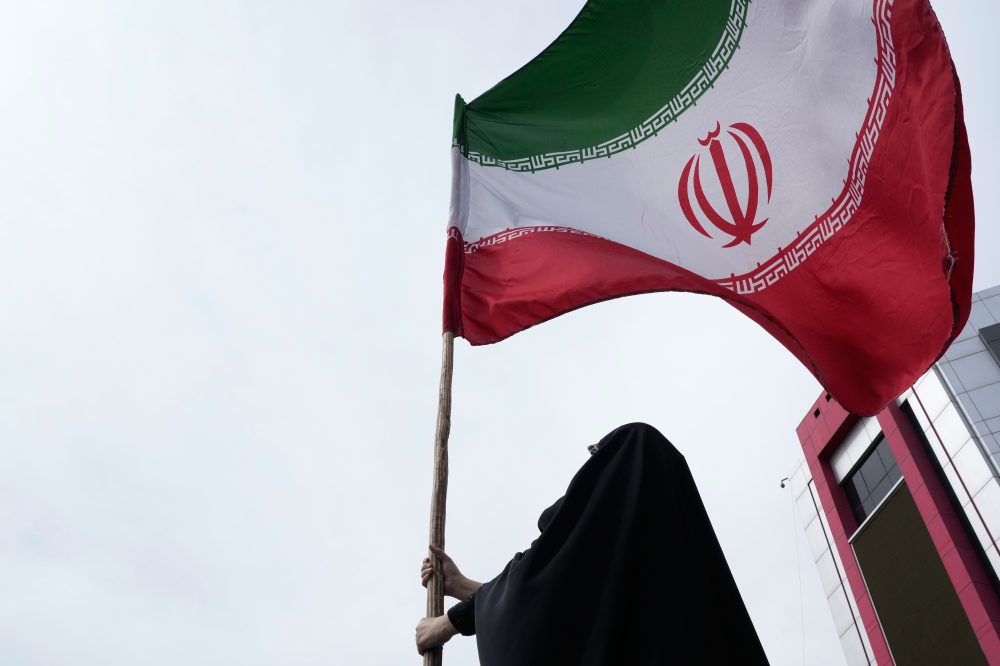
    Iran’s top diplomat in Saudi Arabia is calling for a comprehensive reassessment of Middle Eastern relationships as regional tensions continue to escalate, according to a Reuters interview published Sunday.

    Ambassador Alireza Enayati told the news agency that neighboring countries in the Gulf region must conduct a thorough examination of their diplomatic ties in response to what he described as ongoing U.S.-Israeli military actions against Iran.

    When questioned about potential damage to regional relationships, Enayati responded: “It’s a valid question, and the answer may be simple. We are neighbors and we cannot do without each other; we will need a serious review.”

    The Iranian representative criticized what he called decades of divisive policies and over-dependence on foreign powers in the region. In his written responses to questions, he advocated for stronger connections between the Gulf Cooperation Council’s six nations, plus Iraq and Iran.

    “What the region has witnessed over the past five decades is the result of an exclusionary approach [within the region] and an excessive reliance on external powers,” Enayati stated.

    Gulf Arab nations have endured more than 2,000 missile and drone strikes since hostilities began on February 28, according to the report. These attacks have targeted American diplomatic facilities and military installations, as well as vital oil infrastructure, ports, airports, hotels, and civilian buildings throughout the region.

    The United Arab Emirates, which established diplomatic relations with Israel in 2020, has experienced the most severe attacks. However, all Gulf Arab states have been affected and have publicly criticized Iran’s actions.

    Regional analysts and sources indicate growing private frustration with the United States, traditionally viewed as the area’s security protector, for involving Gulf states in a conflict they didn’t support but are suffering consequences from.

    In Saudi Arabia specifically, strikes have focused on the eastern provinces where the kingdom produces most of its oil, the Prince Sultan Airbase housing U.S. personnel east of Riyadh, and the Diplomatic Quarter in the capital’s western section, according to Saudi defense ministry reports.

    Saudi Arabia and Iran restored complete diplomatic relations in 2023, ending years of hostility during which both countries supported opposing political and military groups across the region.

    Regarding attacks on Saudi oil infrastructure, including the Ras Tanura refinery on the eastern coast and numerous drone attempts on the Shaybah oil field near the UAE border, Enayati firmly denied Iranian responsibility.

    “Iran is not the party responsible for these attacks, and if Iran had carried them out, it would have announced it,” the ambassador declared, though he didn’t identify who he believes conducted the strikes.

    Saudi Defense Ministry statements have not attributed responsibility for specific incidents. Enayati maintained that Iran only targets U.S. and Israeli assets and interests.

    The ambassador reported maintaining regular communication with Saudi officials, describing relations as “progressing naturally” in multiple areas. He praised Saudi cooperation in helping Iranian religious pilgrims leave the kingdom and providing medical assistance to others.

    Enayati confirmed Tehran has been in contact with Riyadh regarding Saudi Arabia’s public commitment not to allow its territory, waters, or airspace to be used for attacks against Iran, though he didn’t elaborate on those discussions.

    His message to Gulf nations emphasized that the current conflict “has been imposed on us and the region.”

    To end the hostilities, Enayati said the United States and Israel must stop their attacks, regional countries should remain uninvolved, and international guarantees must be established to prevent future conflicts.

    “Only then can we focus on building a prosperous region,” he concluded.

  • Israeli PM Netanyahu Shares Coffee Video to Debunk Death Rumors from Iran

    Israeli PM Netanyahu Shares Coffee Video to Debunk Death Rumors from Iran

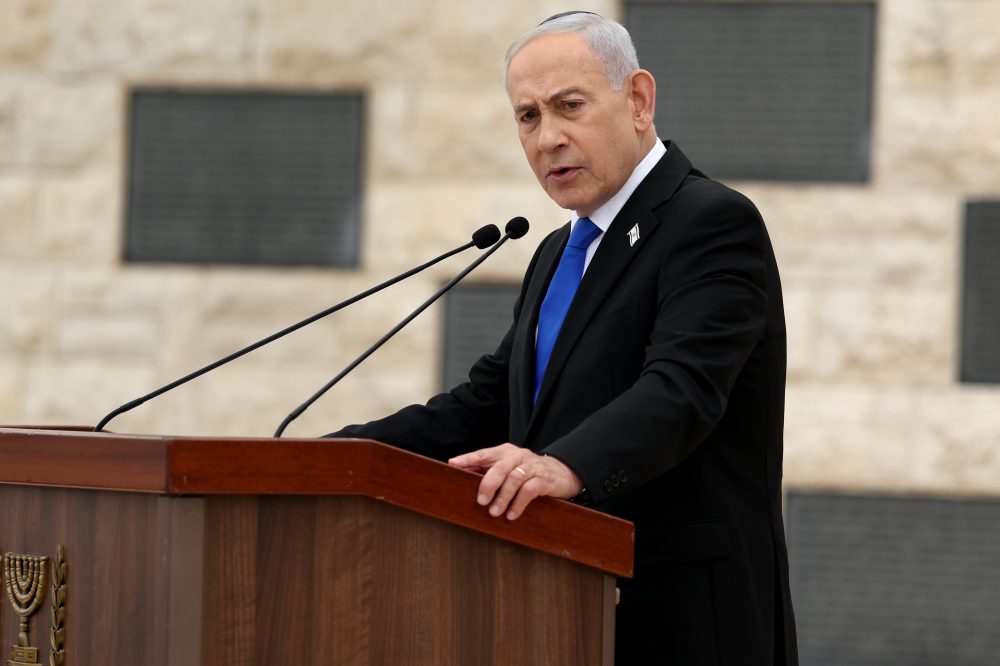
    JERUSALEM, March 15 – Israeli Prime Minister Benjamin Netanyahu filmed himself enjoying coffee at a Jerusalem area cafe on Sunday to counter false death rumors that originated from Iranian state television and circulated across Iranian social media platforms.

    The video, which Netanyahu shared on his Telegram social media account, shows him at a cafe on Jerusalem’s outskirts where his assistant brings up the circulating rumors about his supposed death.

    Using a play on words in Hebrew where “dead” can also mean being enthusiastic about something, Netanyahu made light of the false reports while reaching for his coffee cup.

    “I’m crazy about coffee. You know what? I’m crazy about my people,” Netanyahu said to his aide in the recording.

    Reuters confirmed the video’s authenticity by matching the cafe’s interior with archived images of the location. The timing was also verified through multiple posts and photographs the cafe shared on Sunday documenting Netanyahu’s visit.

    Following the joint U.S.-Israeli strikes against Iran on February 28, Netanyahu has made public appearances at Iranian missile impact sites in two communities, along with visits to a medical facility, shipping port, and military installations. However, media coverage of these visits has been limited, with video content distributed exclusively through his official office.

    The Israeli leader, who seldom grants interviews to domestic journalists or conducts press briefings, held his first media conference since the conflict began on Thursday via video connection. This mirrored the remote format he employed during Israel’s 12-day conflict with Iran last June.

    Wartime emergency protocols currently in effect throughout Israel prohibit large public gatherings and have resulted in most citizens remaining near their homes, shelters, or designated safe areas. Educational institutions remain closed across the majority of the nation.

  • World Health Organization Provides $2M Emergency Aid to Middle East Nations

    World Health Organization Provides $2M Emergency Aid to Middle East Nations

    The World Health Organization announced Sunday that it has distributed $2 million in emergency funding to three Middle Eastern nations experiencing severe health crises due to ongoing regional conflicts.

    Lebanon will receive $1 million of the emergency allocation to enhance WHO’s crisis coordination through its Public Health Emergency Operations Centre, expand trauma treatment capabilities, bolster disease monitoring systems, and acquire critical medical equipment and pharmaceuticals, according to the organization’s announcement.

    Both Iraq and Syria will each receive $500,000 to bolster emergency response coordination and mass-casualty treatment protocols, obtain vital medical supplies and medications, deliver healthcare to displaced communities, and enhance disease tracking and public outreach efforts.

    The funding comes as the region faces massive population displacement, with WHO estimates showing over 100,000 people have been forced to relocate in Iran, while as many as 700,000 individuals have been internally displaced within Lebanon due to the escalating conflict.

    “At a time when health services are already facing significant challenges, support is essential to sustain frontline health workers and maintain critical care services,” stated Hanan Balkhy, WHO Regional Director for the Eastern Mediterranean.

    The emergency funds were drawn from WHO’s Contingency Fund for Emergencies, which is designed to provide rapid financial assistance during humanitarian crises.

  • War Refugees in Lebanon Seek Shelter From Storms in Trucks, Under Trees

    War Refugees in Lebanon Seek Shelter From Storms in Trucks, Under Trees

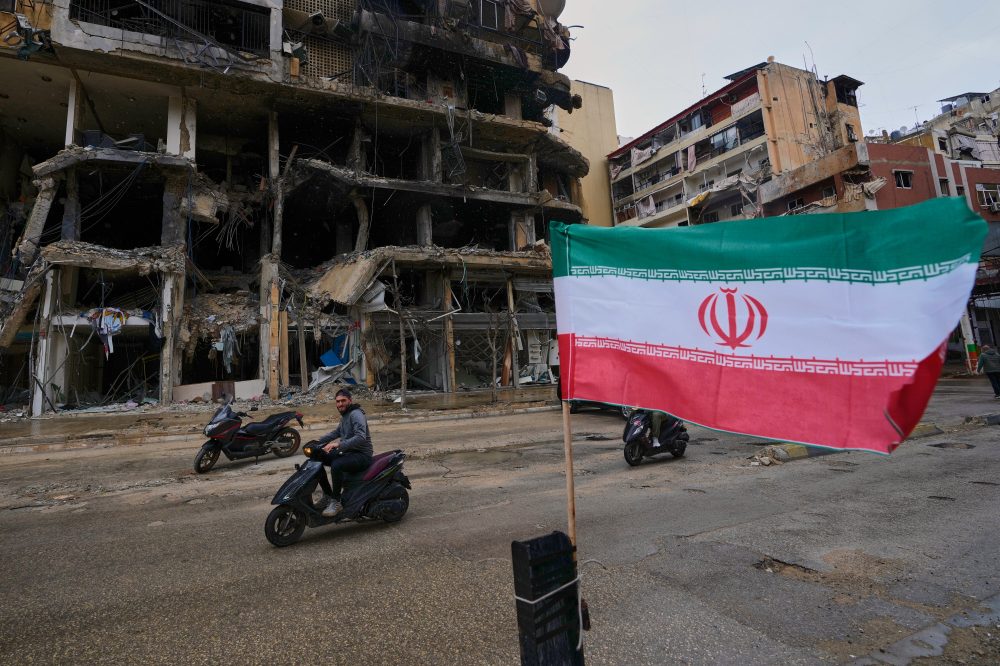
    Families displaced by warfare in Lebanon are struggling to stay dry during severe weather, with many forced to create improvised shelters after official facilities reached capacity.

    In the coastal city of Sidon, Hussain Murtada and his seven family members have taken refuge in the bed of a pickup truck, using rope to secure a plastic tarp against Sunday’s downpour. A baby could be seen among the blankets and belongings packed into their temporary home along the waterfront.

    “We are putting tarp over it because we’re soaked,” Murtada explained while adjusting the makeshift covering. The father had evacuated his family from Hanawiya, located just eight miles from Israel’s border.

    “I asked here at the schools and they are full, they’re all full,” he said. “What should I ask for? I just want a shelter for me and the children.”

    The current crisis has forced more than 800,000 Lebanese residents—roughly 15 percent of the nation’s total population—to abandon their homes. The exodus began after Hezbollah launched attacks against Israel on March 2 in solidarity with Iran, prompting Israeli military responses that have pulled Lebanon into the broader Middle Eastern conflict just over a year after the previous Israel-Hezbollah confrontation ended.

    Government officials report that only about 132,000 displaced individuals have found spaces in organized evacuation centers. The remaining hundreds of thousands have scattered across the country, staying with family members, occupying unfinished construction sites, or living outdoors.

    Mohammad Marie, who evacuated from Nabatieh in Lebanon’s south, has been camping beneath a tree along Beirut’s famous Corniche waterfront promenade. His plastic covering was torn away by wind, leaving him completely exposed to the elements.

    “It might keep raining for a week, so where will I go? I will stay here, what else can I do? I have no shelter except here, under this tree,” Marie said, his clothing thoroughly soaked. “I don’t have a tent, I don’t have anything, and my financial situation is very difficult. I have no money to rent a house.”

    International aid organizations responded Friday when the United Nations announced a $308 million emergency funding request to assist Lebanon with the humanitarian crisis.

    Lebanese health officials reported Sunday that Israeli military operations have resulted in 850 deaths and over 2,100 injuries since March 2, including 107 children and 66 women among the casualties. The ministry’s statistics do not distinguish between civilian and military deaths.

    Israeli forces have lost two soldiers during operations in southern Lebanon, while no Israeli civilian deaths have been recorded from Hezbollah rocket and drone strikes since the conflict began March 2.

  • Israel Says Michigan Synagogue Attacker’s Brother Was Hezbollah Commander

    Israel Says Michigan Synagogue Attacker’s Brother Was Hezbollah Commander

    Israeli defense forces announced Sunday that a Hezbollah commander eliminated in a recent airstrike was the sibling of the individual who carried out last week’s assault on a Detroit-area synagogue.

    According to Israeli military statements, Ibrahim Ghazali died in Lebanon alongside three additional family members of the synagogue attacker on March 5 — seven days before officials say Ayman Mohamad Ghazali rammed his vehicle into a prominent synagogue near Detroit and took his own life following gunfire from security personnel.

    Federal investigators from the FBI’s Detroit division, who are handling the synagogue incident, refused to address the Israeli military’s assertions regarding Ibrahim Ghazali.

    “Out of respect for the ongoing investigation, we will continue to refrain from commenting on its substance,” FBI spokesman Jordan Hall said in an email Sunday.

    The Associated Press could not independently confirm the allegation that Ibrahim Ghazali held militant positions.

    Israeli defense officials contend that Ibrahim Ghazali served as a Hezbollah commander responsible for overseeing weaponry for a division that launched rocket attacks against Israel.

    A Lebanese government source, speaking on condition of anonymity due to restrictions on publicly discussing airstrike details, verified Ibrahim Ghazali’s death to the AP, stating that Ghazali’s offspring, Ali and Fatima, along with his sibling Kassim, also perished when the strike targeted their residence shortly after dusk.

    Law enforcement officials indicate that Ayman Ghazali, age 41, executed the synagogue assault after discovering that four family members had been eliminated in the Israeli bombardment.

    Israel has intensified operations against the Iranian-supported militant organization Hezbollah in Lebanon as conflict with Iran has expanded hostilities throughout the Middle East region.

    Last Thursday, Ayman Ghazali remained in his vehicle outside Temple Israel, located near Detroit, for approximately two hours carrying a rifle, industrial-grade fireworks and containers of liquid suspected to be gasoline, before driving into the facility filled with numerous children, according to law enforcement.

    He began shooting his weapon through the front window, engaging in a firefight with an armed security officer. Ghazali ended his own life after becoming trapped in his vehicle when the engine ignited, stated Jennifer Runyan, the special agent overseeing the FBI’s Detroit regional office. No staff members or children within the synagogue sustained injuries, presumably due to enhanced security measures implemented in recent months.

    Federal investigators leading the probe characterized the assault on one of America’s largest Reform Jewish congregations as violence directed at the Jewish community, though they stated insufficient evidence exists currently to classify it as terrorism.

    Ghazali arrived in the United States in 2011 through an immediate family visa as a U.S. citizen’s spouse and obtained American citizenship in 2016, based on Department of Homeland Security records.

    He resided in a one-level brick residence in Dearborn Heights, a Detroit suburb located roughly 38 miles south of the targeted synagogue.

    The Michigan synagogue incident occurred on the same date as a former Army National Guard member, who previously served prison time for attempting to assist the Islamic State, opened fire in a classroom at Old Dominion University in Virginia, resulting in one death and two injuries.

  • African Countries Navigate Delicate Diplomacy Over Russian Military Recruitment

    African Countries Navigate Delicate Diplomacy Over Russian Military Recruitment

    Kenya’s top diplomat is heading to Russia this week facing domestic pressure to persuade Moscow to halt the recruitment of Kenyan nationals for military service, though Nairobi and other African governments are expected to maintain a non-confrontational stance.

    Recent investigations have exposed the extensive recruitment of African citizens into Russia’s military ranks, frequently through intermediaries promising well-paying civilian employment opportunities, sparking outrage across nations including Kenya, Ghana and South Africa.

    While families demand stronger action to secure the return of recruits, African leaders remain cautious about openly choosing sides in Russia’s conflict with Ukraine, particularly since the recruitment controversy has yet to generate significant public demonstrations or political pressure.

    “We want Kenyans stopped – they should not be enlisted at all,” Musalia Mudavadi, Kenya’s minister for foreign affairs, told Reuters ahead of his trip. “We are getting a lot of pressure from some of the affected families who are now gathering more courage to come forward and speak to the issue.”

    Nevertheless, Mudavadi emphasized his “pragmatic and realistic” approach to the matter, noting Russia’s status as a global superpower with longstanding ties to Nairobi.

    “It’s not a confrontation,” he said. “This is about speaking to issues as they are and the distress that they’re causing to the Kenyan people, and we need a joint effort to be able to resolve it.”

    The Russian defense ministry did not respond to requests for comment outside normal business hours.

    Russian Foreign Ministry spokeswoman Maria Zakharova announced March 12 that Foreign Minister Sergei Lavrov would discuss with Mudavadi the “state and prospects for the development of traditionally friendly Russian-Kenyan relations,” including economic and trade partnerships.

    Ukrainian officials estimate more than 1,700 African fighters are serving alongside Russian forces, though experts believe the actual number could be significantly higher.

    Kenya’s intelligence services report that over 1,000 Kenyan nationals have been recruited, according to an agency assessment. Mudavadi declined to provide specific numbers regarding Kenyans involved in the fighting.

    Ghana announced in February that more than 50 of its citizens had died in the Ukraine conflict after being “lured into battle.” Ghana’s foreign minister, Samuel Okudzeto Ablakwa, told Reuters the actual casualty count might be even greater.

    Russian officials have rejected allegations of illegal recruitment of African nationals for combat in Ukraine.

    Ablakwa confirmed Ghana’s commitment to maintaining diplomatic ties with Russia while taking a firm stance on citizen protection. “But let me be clear: where Ghanaian citizens are being harmed, deceived, or drawn into a war they did not understand, we will speak plainly and we will act,” he said.

    Most African nations are expected to follow South Africa’s measured approach, despite dozens of its citizens being deceived into participating in the Ukrainian conflict.

    “We’re … investigating the conditions under which people left,” Zane Dangor, director general of South Africa’s foreign affairs department, told Reuters.

    “That investigation will also determine if Wagner has been involved,” he said, referencing the Russian mercenary organization previously active in Africa before being replaced by the Kremlin-controlled Africa Corps. Dangor indicated current evidence does not suggest direct Russian state involvement.

    Inpact, a Geneva-based research organization studying Russian recruitment operations, has confirmed multiple recruitment lists it obtained, including one documenting 1,417 continental citizens.

    The organization’s February report identified Cameroon, Egypt and Ghana among the countries with the highest recruitment numbers.

    According to Inpact, African recruitment represents a strategic component of Russia’s efforts to reinforce assault waves designed to overwhelm Ukrainian defense positions.

    “We think we are just scratching the surface with these numbers,” said Lou Osborn, a member of Inpact. Osborn noted that over 40 families have contacted the organization since the report’s publication, corroborating recruitment methods.

    Ablakwa revealed his collaboration with other African nations to address this as a continental challenge.

    “This is bigger than Ghana,” he said. “If Africans are being lured into a foreign war through deception and exploitation, then Africa should respond collectively.”

    Pier Pigou, senior consultant at the International Crisis Group, expressed doubt that this issue would significantly impact Russia-Africa relations without substantial political backlash.

    “For the vast majority of people it’s a case of ‘these dudes are just trying to earn a living. And because their countries don’t provide that for them, they’re going to … take opportunities that arise,’” he said.

  • Prince William Posts Touching Mother’s Day Tribute to Late Princess Diana

    Prince William Posts Touching Mother’s Day Tribute to Late Princess Diana

    Britain’s Prince William paid tribute to his deceased mother Princess Diana with an emotional social media message as the United Kingdom observed Mother’s Day on Sunday.

    The 43-year-old prince posted a touching message on Instagram alongside a vintage photograph, writing: “Remembering my mother, today and every day. Thinking of all those who are remembering someone they love today. Happy Mother’s Day.” He concluded the post with his signature initial “W.”

    The accompanying image captures a tender moment between Diana and a young William, then just 2 years old, as they stand together in a flower-filled field at the royal family’s Highgrove estate in Gloucestershire. The photograph dates back to 1984.

    Princess Diana lost her life in a tragic automobile accident in Paris during August 1997. At the time of her death at age 36, William was 15 years old while his younger brother Prince Harry was 12.

    Other members of the royal family also commemorated Mothering Sunday, which falls on the fourth Sunday during Lent in Britain, with their own social media tributes.

    Among these was a vintage black-and-white photograph from 1953 featuring the late Queen Elizabeth II seated on a garden bench at Balmoral Castle in Scotland, accompanied by a young King Charles III and his sister Anne, the Princess Royal, when they were still children.

  • Jailed Brazilian Ex-President Bolsonaro Shows Health Improvement in ICU

    Jailed Brazilian Ex-President Bolsonaro Shows Health Improvement in ICU

    Medical officials at a Brasilia hospital reported Sunday that imprisoned former Brazilian President Jair Bolsonaro’s kidney condition has shown improvement, though the 70-year-old politician continues to receive intensive care treatment for pneumonia.

    Hospital staff have administered additional antibiotic treatments to the former leader since Saturday, medical personnel confirmed in their latest update.

    Bolsonaro, who held Brazil’s presidency from 2019 through 2022, was transported to DF Star Hospital on Friday from his detention facility, where he is currently serving a 27-year prison term for orchestrating a coup attempt in 2023.

    The former president was moved from local federal police facilities to an expanded detention cell in January. Legal representatives and family members have continuously petitioned Brazil’s Supreme Court to permit him to complete his sentence through home confinement.

    The conservative politician has required multiple hospitalizations following a stabbing incident that occurred during a campaign rally prior to the 2018 presidential race.

    Medical staff at the facility reported that Bolsonaro arrived with elevated body temperature, perspiration, and trembling symptoms, while also noting elevated inflammation indicators in his system.

    Senator Flávio Bolsonaro, the former president’s son, is anticipated to launch a presidential campaign this year challenging current President Luiz Inácio Lula da Silva.

    The courts found Jair Bolsonaro guilty on multiple charges, including orchestrating an armed criminal conspiracy and attempting to forcibly dismantle democratic governance through violence. The former president has maintained his innocence regarding all accusations.

  • Pakistan Launches Overnight Strikes on Afghan Militant Sites Amid Escalating Conflict

    Pakistan Launches Overnight Strikes on Afghan Militant Sites Amid Escalating Conflict

    ISLAMABAD, Pakistan (AP) — Pakistani forces conducted overnight military operations against militant facilities in Afghanistan’s Kandahar region on Sunday, as border hostilities between the neighboring nations continue without signs of de-escalation.

    The cross-border violence, which has featured Pakistani air operations in Afghanistan’s capital city of Kabul, represents the most lethal conflict to date between these South Asian countries. Pakistani officials have characterized the situation as an “open war,” raising alarm about regional security while Middle Eastern conflicts involving the U.S., Israel, and Iran continue to spread.

    Pakistani Information Minister Attaullah Tarar announced via social media that military forces had attacked equipment storage locations and “technical support infrastructure” during nighttime operations in Kandahar.

    Afghan administration spokesperson Zabiullah Mujahid reported that Pakistani forces struck two sites: a daytime security guard facility that was unoccupied during nighttime hours, and a drug treatment facility that sustained minor damage. While he confirmed no deaths occurred, Mujahid stated the attacks demonstrated Pakistan was “continuing to invade and fuel the fire of war.”

    Afghanistan’s Defense Ministry announced it launched a retaliatory strike against a Pakistani military installation in Pakistan’s South Waziristan region on Sunday following the Kandahar attacks. Officials claimed the operation devastated much of the facility’s command headquarters and additional structures, causing significant Pakistani military losses.

    Pakistan’s Information Ministry dismissed the assertion as “propaganda,” stating that a small unmanned aircraft was shot down and “no military installation or infrastructure was hit.”

    Afghan forces also reported conducting operations within Pakistani territory near the borders of Kunar and Nangarhar provinces, alleging they seized a Pakistani military position and killed multiple soldiers. Pakistani officials also denied these allegations.

    Pakistani authorities accuse Afghanistan’s Taliban leadership of providing sanctuary to militant organizations, especially the Pakistani Taliban, known as Tehrik-e-Taliban, which conducts attacks within Pakistan. Afghan officials reject these accusations, maintaining they prohibit their territory from being used for attacks against neighboring nations.

    The current violence began in late February when Afghanistan launched cross-border operations into Pakistan following Pakistani airstrikes within Afghanistan several days prior, which Afghanistan claimed killed only civilians. The hostilities destroyed a ceasefire negotiated by Qatar last October after earlier fighting that resulted in dozens of deaths among soldiers, civilians, and suspected militants.

    On Sunday, mortar fire from Afghanistan destroyed a residence in Bajaur, a northwestern Pakistani district, killing at least four family members and injuring two others, according to local government official Adnan Khan.

    Both nations have blamed each other for civilian targeting, with dozens of deaths reported.

    Pakistani President Asif Ali Zardari stated Saturday that Afghanistan’s government had “crossed a red line” by conducting drone attacks on Pakistani civilian areas, and hours afterward the country reportedly launched strikes against an Afghan drone storage facility.

  • Russian Ship Captain Detained in Sweden Over Suspected False Flag Documents

    Russian Ship Captain Detained in Sweden Over Suspected False Flag Documents

    STOCKHOLM — Swedish authorities detained the Russian captain of an oil tanker on Sunday after a court approved prosecutors’ request to hold him on charges related to fraudulent documentation.

    The Sea Owl 1’s commanding officer, whose identity remains undisclosed, was taken into custody Friday following a coast guard boarding operation near Trelleborg on Sweden’s southern coastline the previous day.

    Legal officials believe the captain used falsified papers, and the Ystad district court granted their petition to keep him detained, according to reports from Swedish news agency TT.

    The vessel was operating under the flag of Comoros, a small island nation located off the eastern coast of Africa. However, Swedish coast guard officials believe the ship lacks proper registration in that country’s maritime records, meaning no legitimate flag state can verify the vessel’s safety standards.

    According to coast guard reports, the tanker appears on European Union sanctions lists and had been traveling from Brazil toward Russia. While the ship previously carried oil between these nations, it appeared to be empty during Thursday’s inspection.

    This marks the second suspicious vessel intercepted by Swedish authorities within a week’s time, both suspected of operating under fraudulent flags. The cargo vessel “Caffa,” crewed primarily by Russians, faces allegations of transporting stolen grain while appearing on Ukraine’s sanctions registry. That ship’s captain has also been detained on similar document fraud charges.

    Swedish officials announced last year they would intensify insurance verification procedures for foreign vessels as part of efforts to crack down on Russia’s “shadow fleet” — a collection of older ships used to move oil, gas, and allegedly stolen Ukrainian agricultural products.

  • Duke and Duchess of Sussex Fire Back at Royal Family Author’s Latest Claims

    Duke and Duchess of Sussex Fire Back at Royal Family Author’s Latest Claims

    The Duke and Duchess of Sussex have delivered a scathing response to writer Tom Bower following the release of excerpts from his latest book about Britain’s royal family, calling his work nothing more than wild theories and dramatic storytelling.

    The couple released a harsh statement Saturday, asserting that Bower “has long crossed the line from criticism into fixation.”

    Excerpts from Bower’s new publication appeared in the Times of London Friday, where he made several explosive allegations. Among them, the writer claimed Queen Camilla reportedly told an acquaintance that Meghan had “brainwashed” Prince Harry. Bower also suggested that Prince William and Catherine viewed Meghan “as a threat rather than an ally” during rising tensions before Harry and Meghan’s departure from Britain to establish their life in America.

    “This is someone who has publicly stated, ‘the monarchy in fact depends on actually obliterating the Sussexes from our state of life,’ language that speaks for itself,” the couple’s statement declared.

    “He has made a career out of constructing ever more elaborate theories about people he does not know and has never met,” their response added. “Those interested in facts will look elsewhere; those seeking deranged conspiracy and melodrama know exactly where to find him.”

    The published excerpts also contained harsh commentary regarding the couple’s finances, their charitable endeavors, and Harry’s Invictus Games, the yearly athletic event he established for military veterans who have been wounded, injured, or fallen ill during service.

    This marks Bower’s second major publication focusing on the Sussexes, following his 2022 release “Revenge: Meghan, Harry, And the War Between the Windsors.”

  • Pakistan Launches Overnight Strikes on Taliban Sites in Afghanistan

    Pakistan Launches Overnight Strikes on Taliban Sites in Afghanistan

    Pakistani military forces launched nighttime operations against Taliban facilities and suspected militant locations in Afghanistan’s Kandahar province, according to Pakistan’s Information Minister who announced the strikes on social media Sunday.

    The overnight military action specifically focused on Taliban installations and what Pakistani officials described as locations used by terrorist organizations within Afghan territory.

    Afghan government representative Zabihullah Mujahid acknowledged that the military operations took place but reported that no individuals were killed or injured during the strikes.

    The cross-border military action represents the latest development in ongoing tensions between Pakistan and the Taliban-controlled Afghan government regarding security concerns along their shared border.

  • Pope Leo Calls for End to Iran Conflict, Condemns ‘Horrific Violence’

    Pope Leo Calls for End to Iran Conflict, Condemns ‘Horrific Violence’

    VATICAN CITY, March 15 – During his Sunday address at St. Peter’s Square, Pope Leo delivered a passionate call for an immediate halt to the Iran conflict, condemning what he described as “horrific violence” that has claimed thousands of civilian lives and displaced countless others throughout the region.

    The pontiff’s appeal came as the U.S.-Israeli military action against Iran reached its third week. Pope Leo, who holds the distinction of being the first American to hold the papal office, emphasized that military action cannot deliver the justice, stability, and peace that Middle Eastern populations desperately need.

    Speaking to gathered faithful during his traditional weekly Angelus prayer, the pope declared: “For two weeks, the peoples of the Middle East have been suffering the atrocious violence of war.”

    “In the name of Christians in the Middle East and of all women and men of good will, I appeal to those responsible for this conflict: Cease fire!” Pope Leo proclaimed.

    The Holy Father went on to acknowledge the human toll of the fighting, stating: “Thousands of innocent people have been killed, and many more have been forced to leave their homes. I renew my closeness to all those who have lost their loved ones in the attacks.”

    Pope Leo also addressed the deteriorating conditions in Lebanon, where Israeli forces are engaged with Hezbollah, the Iranian-supported militant organization. He described the Lebanese situation as a source of “great concern.”

    “I hope for paths of dialogue that can support the country’s authorities in implementing lasting solutions to the serious crisis currently underway, for the common good of all the Lebanese people,” the pope concluded.

  • Investigation Reveals Israeli Organization Behind Secret Gaza Evacuation Flights

    Investigation Reveals Israeli Organization Behind Secret Gaza Evacuation Flights

    TEL AVIV, Israel (AP) — When a aircraft carrying approximately 150 Palestinians from Gaza touched down in South Africa last November, it caught everyone off guard.

    This wasn’t an isolated incident. Beginning in May, no fewer than three aircraft loaded with Gaza inhabitants who had registered to depart the conflict-ravaged territory have arrived in Indonesia and South Africa.

    An Associated Press investigation has revealed that an Israeli organization, whose leader strongly endorsed former President Donald Trump’s plan to relocate Palestinians from Gaza, is responsible for these flights. This discovery raises additional concerns about the true intentions behind evacuating hundreds of individuals from the territory.

    At that time, South African Foreign Minister Ronald Lamola described the flights as having a “clear agenda to cleanse out the Palestinians out of Gaza and the West Bank.”

    According to contracts, passenger manifests, text communications, financial records, and conversations with over two dozen Israelis, Palestinians and others connected to the journeys, Ad Kan — an Israeli entity established by military personnel and former intelligence operatives — operated through another organization to obscure its Israeli ties while coordinating the flights.

    Multiple passengers who escaped after more than two years of catastrophic warfare that has devastated Gaza stated they were unaware of who orchestrated their departure. However, they expressed little concern about this detail, they explained, as long as they could escape.

    “There was famine, and we had no options. My children were almost killed,” explained a 37-year-old Palestinian who reached South Africa in November. Like other passengers, he requested anonymity due to fears of potential retaliation. “Death and destruction was everywhere, all day, for two years, and nobody came to the rescue.”

    Ad Kan maintained separation from the flights. The evacuations were coordinated by a firm called Al-Majd, which presents itself on its website as a humanitarian entity “supporting Palestinian lives” and delivering assistance to Muslim communities experiencing conflict.

    Nevertheless, examining Ad Kan’s background and its founder, Gilad Ach, indicates the Israeli organization may have been motivated, at least partially, by alternative objectives.

    “Ad Kan,” which translates to “enough is enough” in Hebrew, has spent years operating secretly to penetrate organizations and reveal what they claim are antisemitic or anti-Israel activities.

    Ach, an Israeli combat reservist, is a West Bank settlement advocate who strongly backed Trump’s proposal last year to relocate 2 million Palestinians from Gaza.

    Following Trump’s announcement of his proposal, Ach released a document outlining his implementation strategy for the “voluntary exit.” The report suggested Israel should complete Palestinian emigration from Gaza within six to eight months and work with the U.S. to secure receiving nations. It claimed the migration of all Palestinians was “entirely feasible,” that they desired to leave, and that clearing the territory of its Palestinian population served Israeli interests.

    Trump subsequently withdrew his plan — which faced widespread international criticism and allegations from Palestinians, rights organizations and even the U.N. secretary-general that such a proposal could constitute “ethnic cleansing” — and stated Palestinians could stay in Gaza.

    However, far-right Israeli organizations, including members of Prime Minister Benjamin Netanyahu’s governing coalition, continue advocating for Gaza’s Palestinian removal in hopes Israel could eventually resettle the region. With U.S. knowledge, Israel’s government has contacted several nations — Somaliland, South Sudan and Sudan — hoping to facilitate Gaza emigration.

    Israel established the Voluntary Emigration Bureau early last year, operated by Israel’s Defense Ministry.

    After the war commenced in 2023, Ach created an organization called The Israeli Reservists Generation of Victory. In a November 2024 conversation with Arutz Sheva, a religious nationalist news outlet supporting the West Bank settlement movement, Ach said the group’s message included the “emigration of our enemies.”
    His organization also distributed advertisements on Israeli buses showing Trump’s portrait alongside Hebrew text reading: “Victory = Voluntary migration … This bus could be full of Gazans. Listen to Trump, let them out!”

    In a conversation with right-wing publication the Jewish News Syndicate shortly after the war started, Ach said Gaza victory meant claiming part of the territory and opening borders for departures. “They lost their territory, they lost population, this is a clear victory,” he stated.

    Ach refused an interview for this report and texted AP that he was proud leading organizations supporting the rights of Gaza Palestinians wanting to relocate to safer global locations, away from Hamas. He rejected South Africa’s claim that the flights aimed to cleanse Gaza and the West Bank of Palestinians. He described them as humanitarian flights and said those who departed requested assistance, with some covering partial costs.

    He highlighted “profound hypocrisy,” with nations refusing to accept Palestinian refugees.

    “Their continued presence in Gaza, under dire conditions, serves as a tool to pressure Israel internationally and allows Hamas to maintain its rule over this suffering population,” he stated.

    Ach did not address questions about using Al-Majd to hide Israeli connections.

    Critics argue such Gaza emigration isn’t voluntary after the war rendered much of the territory uninhabitable. Rights organizations also stress people must be permitted to return, and Israel has a decades-long history of complicating Palestinian returns to Gaza.

    AP interviewed six Palestinians who departed Gaza via the flights.

    Some reported first hearing about a company transferring people from Gaza in early 2025. Some discovered advertisements online or on social media or were directed to Al-Majd’s website by friends.

    With combat ongoing and much of Gaza in ruins, some said they were uncertain of their destination. They simply wanted to escape.

    Months before the aircraft arrived in Johannesburg last November, an earlier May flight transported nearly 60 Palestinians from Israel through Hungary to Indonesia and several other destinations. A second October flight carried approximately 170 people from Israel to South Africa via Kenya, according to flight organizers, tracking data and Palestinians who used the service.

    The six Palestinians who spoke with AP said they paid up to $2,000 per person through bank and cryptocurrency transfers.

    They said the website indicated transportation to South Africa, Indonesia, or Malaysia but provided no choice option. When flights were ready, Palestinians received messages directing them to meeting locations where buses transported them from Gaza to Israel, where they were searched and permitted to bring limited belongings aboard.

    American-Israeli businessman Moti Kahana signed an August contract, shared with AP, to coordinate a flight for Ad Kan.

    Kahana, who has experience evacuating people from conflict areas including Afghanistan, Ukraine and Syria, said he was contacted to help arrange transportation for over 300 Palestinians to Indonesia from Ramon airport in southern Israel. The Ad Kan contract specified his company would provide “flight rescue service” for a minimum $750,000 payment.

    However, during planning, the destination changed to South Africa, he said, and his flight involvement ended.

    After the second South Africa-bound flight arrived in November, the government canceled its 90-day visa exemptions for Palestinian passport holders, citing “deliberate and ongoing abuse” by Israelis connected to emigration efforts.

    Kahana said Ach informed him about Ad Kan’s Al-Majd connection, describing it as operated by both Arabs and Israelis in Israel but avoiding promotion of its Israeli ties.

    “It’s the same people, the same company, different names,” Kahana explained. “They have a group of Arab-speaking people that answer the phone, and they don’t want to show Israel involvement; they have like an Arab face to it.”

    Kahana said Ach’s team provided him a spreadsheet listing flight passengers. The document — reviewed by AP — includes names of at least 13 people whose families confirmed they registered and paid through Al-Majd and flew to South Africa.

    Al-Majd’s website claims it was established in 2010 in Germany with an east Jerusalem office, without providing an address. The company doesn’t appear in online databases for registered German charities or businesses.

    It remains unclear whether Ad Kan was collaborating directly with Israel’s government, but Palestinians require Israeli permission to leave Gaza. Muayad Saidam, a Palestinian listed on the group’s website as its Gaza humanitarian project manager, told AP in a phone call to Al-Majd’s listed number that he didn’t know Ad Kan or Ach but acknowledged that Palestinian travel arrangements must be made with Israeli authorities. He refused to provide additional details.

    Israeli Prime Minister Benjamin Netanyahu’s office and COGAT, the defense agency that facilitates Palestinian departures from Gaza, declined to comment on the flights. COGAT has previously stated it permits Palestinian departures from Gaza through Israel if they possess destination country visas.

    Netanyahu’s office, COGAT and Ach also refused to answer AP’s questions about whether departed Palestinians would be permitted to return.

    Families who traveled to South Africa told AP they weren’t aware Israelis organized the flights but that ultimately, it didn’t matter.

    “I agreed to the flight, and I didn’t know the destination,” said a Palestinian who used Al-Majd to send his wife and son to South Africa.

    “All I cared about was getting my family out of Gaza and saving them.”

  • Four Family Members Killed in West Bank Shooting by Israeli Forces

    Four Family Members Killed in West Bank Shooting by Israeli Forces

    TAMMUN, West Bank (AP) — Four members of a Palestinian family, including two young children, were fatally shot by Israeli military forces in the northern West Bank, according to the Palestinian Authority’s Health Ministry.

    Palestinian officials report the Odeh family was out purchasing new clothing for Eid al-Fitr celebrations, which mark the conclusion of Ramadan, when the deadly shooting took place Saturday evening. Israeli authorities have announced they are conducting an investigation into the incident.

    According to the Palestinian Red Crescent rescue service, Ali and Waed Odeh along with two of their four children sustained fatal head wounds from gunfire. The couple’s two remaining children suffered shrapnel injuries and received medical attention from emergency responders after they were eventually allowed access to the scene. The Red Crescent has criticized Israeli forces for preventing ambulances from reaching the location promptly.

    In a joint statement released Sunday, Israeli military and police officials said their forces discharged weapons when a vehicle sped toward them in Tammun. The forces were reportedly tracking individuals suspected of involvement in “terrorist activity,” and the incident remains under official review.

    The Odeh family represents the most recent victims in the occupied West Bank, where at least eight Palestinians have been killed by Israeli settlers and military personnel since the Iran conflict began.

    Following the February 28 attacks on Iran by Israel and the United States, Israeli officials have imposed movement restrictions throughout the West Bank, periodically shutting down hundreds of checkpoints and gates along roads used by local residents, emergency vehicles, and commercial transport. These barriers have severely limited mobility and complicated emergency response efforts, the Red Crescent informed The Associated Press recently.

    Israeli human rights organization Yesh Din reported Wednesday that they have documented 109 cases of settler violence across dozens of Palestinian communities in the occupied West Bank since the war’s beginning.

    Current casualty figures remain below 2025 levels — which marked a record year for violence that started with Israel’s invasion of northern West Bank cities identified by the military as militant bases. Israeli forces continue to maintain operations in those areas.

    The United Nations Office for the Coordination of Humanitarian Affairs has documented 18 Palestinian deaths in the occupied West Bank since early 2026, with eight killed by Israeli settlers.

  • Canada, Nordic Nations Form Alliance to Reduce US Dependence

    Canada, Nordic Nations Form Alliance to Reduce US Dependence

    Six world leaders gathered in Oslo on Sunday to forge a new partnership aimed at strengthening military cooperation and reducing dependence on traditional alliances, with Canadian Prime Minister Mark Carney spearheading the initiative.

    The summit brought together the heads of government from Canada, Norway, Sweden, Denmark, Finland, and Iceland to establish enhanced collaboration on defense manufacturing and procurement strategies. This meeting represents part of Carney’s broader strategy to diversify Canada’s international relationships beyond its traditional reliance on the United States.

    Carney has been actively pursuing partnerships with nations across Asia, the Middle East, and Europe as he works to establish what he terms a coalition of ‘middle power’ countries that could reshape global trade relationships.

    Speaking to media following the six-nation summit, Carney emphasized the economic benefits of coordinated spending. “We all agree that if we individually spend that money or we spend it in an uncoordinated way, it’s not going to be value for taxpayers. It also will not protect our people as much as we should,” he explained.

    The Canadian leader clarified that this new partnership wouldn’t eliminate existing relationships with the United States. “We will still do a lot of procurement with the United States… but in all cases looking to procure much more in partnership. And it’s a much broader range of countries with whom we can partner,” Carney stated.

    The leaders also committed to maintaining their support for Ukraine through various forms of aid, including economic, civilian, military, and humanitarian assistance.

    Danish Prime Minister Mette Frederiksen offered a stark assessment of current global dynamics during the press conference. “The old world order is gone and will probably not come back,” she declared.

    “So we have to build something new and it has to be a world order that is built on the values that we represent,” Frederiksen added.

    Norwegian Prime Minister Jonas Gahr Stoere, who served as host for the gathering, highlighted the dual benefits of the enhanced cooperation, noting it would strengthen security measures while simultaneously opening doors for economic expansion.

  • Piece of Iranian Missile Damages US Consul Building in Israel

    Piece of Iranian Missile Damages US Consul Building in Israel

    Israeli news sources reported Sunday that debris from an Iranian missile impacted a building that serves as housing for the United States consul in Israel.

    The initial reports did not include additional specifics about the incident or any potential damage assessment.

  • Iran Detains Dozens Suspected of Spying for Israel Amid Ongoing Airstrikes

    Iran Detains Dozens Suspected of Spying for Israel Amid Ongoing Airstrikes

    Iranian officials have taken into custody dozens of individuals suspected of providing intelligence to Israel across multiple regions of the country, state media outlets reported Sunday, while military strikes by Israeli and American forces persist against Iranian targets.

    According to the semi-official Tasnim news agency, authorities in Iran’s northwestern region detained 20 individuals Sunday following accusations from provincial prosecutors that they transmitted location data about Iranian military and security facilities to Israeli forces.

    Additionally, officials in northeastern Iran, an area that has seen fewer airstrikes, apprehended 10 suspects on Sunday. Some of those detained are alleged to have gathered intelligence on critical locations and economic infrastructure, Tasnim reported.

    A regional division of the Revolutionary Guards’ intelligence unit stated: “As the Zionist enemy (Israel) and the U.S. are attempting to invade Iran, they simultaneously activate mercenaries and spies to carry out riots as the next step,” according to Tasnim’s reporting.

    The Student News Network also reported Sunday that authorities in Lorestan province, located in western Iran, had detained three individuals for “seeking to disturb public opinion (…) and burn mourning symbols.”

    A source familiar with Israeli military operations told Reuters this week that Israel has shifted tactics to target security checkpoints using intelligence provided by local informants, marking a new development in its campaign against Iran.

    Prior to the current military action by the U.S. and Israel against Iran, widespread demonstrations against the government occurred in January. These protests were suppressed in what became the most violent government crackdown since the Islamic Republic was established.

    Iranian leadership attributed responsibility for what they characterized as “violent riots” designed to topple the clerical government to Israel and the United States.

  • Hungarian Political Rivals Hold Massive Rallies Before Crucial April Election

    Hungarian Political Rivals Hold Massive Rallies Before Crucial April Election

    Competing political factions in Hungary organized major demonstrations on Sunday as the nation’s contentious election campaign intensified before voters head to the polls on April 12.

    Prime Minister Viktor Orban, who has held power for over a decade, confronts what analysts consider his most difficult reelection battle following three years of economic stagnation, rising living costs, and the emergence of a formidable pro-European Union opponent in Peter Magyar.

    Both Orban’s Fidesz party and Magyar’s Tisza movement organized massive demonstrations through Budapest to commemorate Hungary’s March 15 national holiday while mobilizing their base, with polling data indicating Tisza maintains a substantial lead.

    The incumbent has framed the upcoming election as a decision between conflict and stability, claiming opposition forces want to involve Hungary in the ongoing war in Ukraine that began with Russia’s invasion in February 2022. Opposition leaders have rejected these allegations.

    However, Orban’s messaging continues to connect with his base, as supporters assembled in Budapest’s streets before marching to parliament for the longtime nationalist leader’s address.

    “Hungarians, young or old should not be sent to the front lines, because this is a senseless war,” said Maria Erdelyi, who attended the rally. “This is only about money and nothing else.”

    The prime minister has consistently clashed with European Union leadership regarding Ukraine policy and numerous other matters. Going against Brussels’ position, he has preserved friendly relations with Moscow, declined to provide weapons to Ukraine, and maintains that Kyiv should not become an EU member.

    Supporter Jozsef Lados praised Orban as “Europe’s best politician,” arguing Hungary should continue with the current leader rather than taking a chance on Magyar, whom he characterized as an “adventurer.”

    Magyar has rejected Orban’s campaign messaging as ridiculous “propaganda,” though Tisza has taken a measured approach regarding Ukraine, stating opposition to expedited EU membership for Kyiv and promising a binding public vote on the matter if victorious.

  • Ukraine’s Zelenskyy Awaits US-Russia Agreement on Peace Talk Location

    Ukraine’s Zelenskyy Awaits US-Russia Agreement on Peace Talk Location

    KYIV, Ukraine — Ukraine’s President Volodymyr Zelenskyy announced Sunday that his country stands prepared for upcoming three-way peace negotiations aimed at ending Russia’s invasion that has lasted over four years, though the ball remains in the court of Washington and Moscow to determine meeting logistics.

    According to Zelenskyy, the United States offered to host discussions involving American, Ukrainian and Russian diplomatic teams, featuring US representatives Steve Witkoff and Jared Kushner, however Russia declined to participate with their own delegation.

    “We are waiting for a response from the Americans. Either they will change the country where we meet, or the Russians must confirm the U.S,” Zelenskyy stated during Saturday’s media briefing. “We are not blocking any of these initiatives. We want a trilateral meeting to take place.”

    Washington has delayed its planned talks between the warring nations due to Middle East conflicts. The Iran conflict, which began February 28 after US-Israeli military action against Iran and expanded throughout the region, has shifted global attention away from Ukraine’s struggle against Russia’s superior military forces.

    During his press conference, Zelenskyy also cautioned about a “very high” possibility that the Iran conflict could deplete air defense supplies that Ukraine relies on to defend against Russian missile attacks.

    The Ukrainian president acknowledged he doesn’t have complete information about current stockpile levels and revealed Friday discussions with French President Emmanuel Macron in Paris regarding whether SAMP/T defense systems could replace US-manufactured Patriot missiles for stopping ballistic threats. He indicated Ukraine would be “first in line” to evaluate any workable substitute.

    Zelenskyy also seemed to counter recent statements by US President Donald Trump dismissing the value of Ukrainian drone technology.

    “No, we don’t need their help on drone defense,” Trump commented during a Fox News Radio interview broadcast Friday.

    The Ukrainian leader disclosed that Washington had contacted Ukraine “several times” seeking help for an unnamed nation or support for American personnel, though he provided no additional details. He noted these requests came from multiple US military organizations to Ukraine’s Defense Ministry and other military commanders.

    “All our institutions received these requests, and we responded to them,” Zelenskyy explained.

    He revealed proposing a defense partnership agreement to Washington last year valued between $35 billion and $50 billion, which would have provided US officials access to technology from approximately 200 Ukrainian companies specializing in drones, artificial intelligence and electronic warfare, with half the production designated for partners, mainly the United States.

    The Ukrainian president said American military leadership showed significant enthusiasm for the arrangement, and Trump himself appeared open to the idea.

    “We received a message from them, and directly from the president as well, that they are interested,” Zelenskyy informed reporters. “We did not sign the document with President Trump. I do not have an answer as to why. Perhaps it will happen later, but I am not sure.”

  • Hungarian PM Faces Toughest Challenge in Decades as Rival Rallies Fill Budapest

    Hungarian PM Faces Toughest Challenge in Decades as Rival Rallies Fill Budapest

    BUDAPEST, Hungary (AP) — Hungary’s capital witnessed a dramatic political showdown Sunday as Prime Minister Viktor Orbán and his chief rival Péter Magyar organized massive competing demonstrations just four weeks before crucial national elections.

    The dueling rallies in Budapest drew hundreds of thousands of supporters for both Orbán’s nationalist Fidesz party and Magyar’s center-right Tisza movement, serving as a critical test of political strength as the campaign reaches its final stretch.

    Orbán, 62, who has governed since 2010 and seeks his fifth straight electoral win, confronts his most serious challenge in twenty years as Magyar has rapidly emerged to threaten what appeared to be an unbreakable hold on power by the pro-Russian leader.

    During the pro-government demonstration that concluded with remarks from the prime minister, supporter Anikó Menyhárt explained Orbán’s appeal while crowds assembled on a Danube River bridge. “God, homeland, family,” she stated. “Only this government is able to secure these three things for the future,” she said.

    Both political leaders had urged their followers to participate in Sunday’s events, which coincided with Hungary’s March 15 national holiday honoring the country’s 1848 uprising against Habsburg rule. Political analysts closely monitored turnout numbers as a potential indicator of performance in the April 12 elections.

    Magyar’s supporters organized their own procession through downtown Budapest later Sunday. Tisza leadership proclaimed it would become Hungary’s “biggest ever political event.”

    Economic stagnation, declining public services, and rising living costs — combined with mounting corruption accusations against the government — have contributed to increasing public dissatisfaction with Orbán’s authoritarian leadership approach.

    The longtime leader has built his campaign around warnings about threats he claims the European Union and Ukraine pose to Hungary, while Magyar, a 44-year-old attorney and former Fidesz member who departed the party in 2024, has concentrated on improving everyday life for Hungarian citizens.

    Through intensive campaigning in Hungary’s rural regions, traditionally Orbán’s political base, Magyar has promoted his plan to rebuild Hungary’s weakened democratic institutions and redirect the nation toward Western allies while distancing it from Moscow.

    In a social media video released early Sunday, Magyar declared his party “would like to give back to every Hungarian what the outgoing government has taken away: our belief in our freedom, and the feeling that our homeland truly belongs to every Hungarian.”

    Independent polls show Tisza leading Fidesz, with a February Medián survey published by HVG news site indicating Magyar’s party held a 20-point lead among committed voters.

    However, the election outcome remains uncertain as Fidesz works to mobilize its substantial rural support base and utilizes its influence over state broadcasters and extensive network of allied media organizations to spread its messaging.

    Magyar has cautioned supporters about potential disinformation efforts, responding to media reports suggesting Russian intelligence agencies may attempt to influence the election in Orbán’s favor through manipulated recordings designed to damage his credibility.

    Orbán has intensified his anti-Ukraine messaging, claiming Kyiv, the EU, and Tisza are conspiring to remove his administration and install a government more sympathetic to Ukrainian interests.

    His campaign’s core argument warns that a new government would financially ruin Hungary by supporting Ukraine against Russia’s invasion — which he has refused to do — and would sacrifice Hungarian youth in combat. The campaign has featured extensive misinformation and heavily relied on artificial intelligence-generated images and videos.

    Adding to political tensions, Hungary’s government announced this week it would release a classified national security document that Orbán claims will demonstrate Tisza received improper funding from Ukraine — an allegation Magyar has firmly rejected.

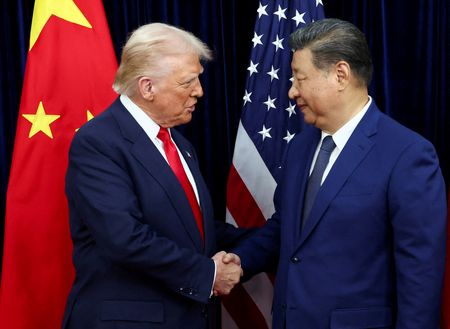
  • Trade Negotiations Begin in Paris Ahead of Planned Trump-Xi Meeting

    Trade Negotiations Begin in Paris Ahead of Planned Trump-Xi Meeting

    BEIJING (AP) — Economic negotiations between the United States and China commenced in Paris on Sunday, according to China’s state news service Xinhua.

    The discussions, headed by Treasury Secretary Scott Bessent and Chinese Vice Premier He Lifeng, are designed to lay groundwork for President Donald Trump’s planned state visit to Beijing for a meeting with Chinese President Xi Jinping in approximately two weeks. The White House announced Trump’s China trip is scheduled for March 31 through April 2, though Chinese officials have yet to provide official confirmation.

    Speaking Thursday, Bessent stated his team would continue producing outcomes that prioritize America’s agricultural sector, workforce, and business community. China’s commerce ministry announced Friday that both nations plan to address “trade and economic issues of mutual concern.”

    This upcoming China visit would mark Trump’s first presidential trip there since his 2017 visit during his initial term. The meeting comes five months following the leaders’ encounter in Busan, South Korea, where they established a one-year pause in their trade conflict that had previously escalated tariffs to triple-digit levels before both countries stepped back.

    However, commercial disputes continue creating friction. On Friday, China’s commerce ministry criticized the Trump administration’s latest trade probe targeting 16 nations, including China. This investigation follows a Supreme Court decision that overturned Trump’s broad international tariffs from last year and could lead to additional tariffs.

    The Iran conflict represents another potential discussion topic, particularly as global concerns mount regarding oil pricing and supply chains. Trump stated Saturday he expects China, France, Japan, South Korea, the United Kingdom, and other nations to deploy naval vessels to maintain the Strait of Hormuz as “open and safe.”

    Prior to Sunday’s negotiations, Gary Ng, a senior economist with French bank Natixis and research fellow at the Central European Institute of Asian Studies, described the Paris gathering as likely the most significant bilateral meeting before the Xi-Trump summit.

    The central question involves “whether China and the U.S. can agree on what is agreed and manage disagreement. Iran is a new factor, but Beijing is more concerned about the flip-flopping of U.S. policies,” he said.

    Last week, Chinese Foreign Minister Wang Yi characterized the coming period as a “big year” for China-U.S. relations. Though Wang didn’t confirm the state visit, he noted that “the agenda of high-level exchange is already on the table.”

    Bessent and He have spearheaded trade discussions between the nations since last year, conducting meetings across Geneva, London, Stockholm, Madrid, and Kuala Lumpur, Malaysia.

  • Israel Denies Plans for Lebanon Talks, Missile Shortage Reports

    Israel Denies Plans for Lebanon Talks, Missile Shortage Reports

    Israel’s Foreign Minister Gideon Saar rejected weekend media reports on Sunday, denying that his country plans immediate direct negotiations with Lebanon or has warned the United States about depleted missile defense supplies.

    Speaking from Zazir in northern Israel on March 15, Saar addressed two separate news reports that emerged over the weekend. Israel’s Haaretz newspaper had reported Saturday that direct negotiations between Israel and Lebanon were anticipated in the near future. Additionally, Semafor reported that Israeli officials had notified Washington about critically depleted ballistic missile interceptor stockpiles.

    When questioned about both media reports, Saar provided a clear response: “For the two questions, the answers is no.”

    The foreign minister’s statements contradict the weekend reporting that suggested diplomatic progress and potential military supply concerns for the Israeli government.

  • Yemen’s Houthis Stay Out of Middle East War While Other Iran Allies Join Fight

    Yemen’s Houthis Stay Out of Middle East War While Other Iran Allies Join Fight

    CAIRO (AP) — While the Middle East conflict expands and other Iran-supported groups jump into the fighting, Yemen’s Houthi militants continue watching from the sidelines, sparking questions about their strategy and when the experienced fighters might enter the war.

    Tehran has launched retaliatory strikes against American and Israeli targets using missiles and drones, hitting U.S. military installations and sites across Gulf nations, disrupting commercial shipping lanes, restricting fuel deliveries and putting regional aviation at risk.

    In his inaugural written message since taking over after his father’s death in the war’s initial strikes, Iran’s new supreme leader Ayatollah Mojtaba Khamenei indicated Thursday that Tehran might expand the conflict to additional battlegrounds — suggesting to experts that Houthi participation could be imminent.

    The Houthis have stayed out of the fighting due to concerns about targeted killings of their commanders, internal Yemeni political splits, and questions about weapons resupply, according to regional specialists.

    However, this stance could shift as Iran looks to apply greater pressure on international oil transportation routes through possible Houthi operations, given the group’s demonstrated ability to successfully strike petroleum infrastructure across the region, experts noted.

    Tehran has extended its regional reach through allied forces operating in Gaza, Syria, Lebanon, Iraq and with Yemen’s Houthis.

    Several key Iranian partners have already entered the current fighting, including Hezbollah which renewed attacks against Israel just two days after Iran was struck — only 15 months following the end of the previous Israel-Hezbollah conflict that concluded with a November 2024 ceasefire. Iraqi militias associated with the Islamic Resistance have taken responsibility for drone attacks on American facilities in Irbil.

    In contrast, the Houthis have limited their response to public demonstrations and statements criticizing the Iran conflict, a marked difference from their extensive missile and drone campaigns against Israel and Red Sea shipping following Hamas’s Oct. 7, 2023 assault on Israel that triggered the Gaza war.

    Here’s an examination of Houthi military strength and their position in the current crisis.

    Equipped with Iranian weapons, the Houthis captured much of northern Yemen including the capital Sanaa in 2014, forcing the country’s internationally recognized leadership into exile. A Saudi-led military alliance supporting Yemen’s government joined the fighting in 2015, leading to an ongoing but largely deadlocked civil war.

    Though the Houthis maintain some political and religious connections with Iran, they practice a different branch of Shiite Islam and operate independently from Iran’s supreme leader, unlike Lebanon’s Hezbollah militants and various Iran-supported Iraqi armed groups.

    Nevertheless, they remain crucial to Iran’s regional strategy and the current conflict is unlikely to diminish that role, according to Ahmed Nagi, a senior Yemen specialist at the International Crisis Group think tank.

    “From Tehran’s perspective, the Houthis have proven themselves to be a capable and effective front, able to generate real pressure,” Nagi said.

    He explained that Houthi leadership’s choice to stay away from the conflict represents a strategic decision made in full coordination with Iranian officials.

    Two Houthi representatives from the organization’s media and political departments told The Associated Press that the rebels’ ammunition reserves are depleted following their operations during the Israel-Hamas conflict. The Iran war has additionally disrupted weapons shipments, according to these sources, who requested anonymity as they lacked authorization to speak with journalists.

    However, the group maintains substantial drone stockpiles, according to another official who spoke anonymously to address the sensitive weapons topic.

    Nagi reported that the Houthis appear to be strengthening their forces through expanded recruitment, domestic weapons manufacturing, and deploying additional troops to Yemen’s Red Sea coastal areas, indicating preparation for potential escalation.

    “The decision is not about unwillingness to intervene, but about timing,” Nagi said. “Iran’s broader strategy seems to be to avoid throwing all its cards on the table at once, instead using its partners and capabilities gradually as the confrontation evolves.”

    The Houthis would likely participate if the conflict expands further, Nagi added, or if they see an existential danger to Iran, such as major losses in military strength.

    Houthi commander Abdulmalik al-Houthi has consistently stated the group stands ready to act, declaring their “hands are on the trigger,” though the specific nature of such involvement remains unclear.

    “Houthis, of course, are always ready for any war,” said Farea al-Muslimi, a research fellow at the Chatham House think tank in London. “Some weaponry moved in different areas inside Yemen recently … but it’s still not clear whether it’s for a military escalation.”

    Should the Houthis join the war, they would most likely restart attacks on Red Sea and Gulf of Aden shipping while simultaneously targeting Israel, Nagi explained. They might also participate in Iran’s strikes against Gulf nations, focusing on American military facilities and interests.

    Ship attacks during the Israel-Hamas war devastated Red Sea commerce, disrupting the flow of approximately $1 trillion in annual trade that previously passed through the waterway. The rebels additionally launched drone strikes at Israel.

    If the Houthis enter the Iran conflict, oil tankers would probably be their main targets, analysts predicted, since maritime attacks offer immediate leverage and would demonstrate escalation while affecting energy distribution networks.

    Strikes on petroleum facilities could also be considered. The Houthis have previously attacked Saudi Arabian oil infrastructure during their extended fight against the Saudi-led coalition.

    American military installations in the region could also become targets, Nagi suggested.

    Abdel-Bari Taher, a political expert and former Yemen press syndicate leader, explained that any war participation decision is influenced by Yemen’s internal conditions, including recent fatal fighting in southern Yemen, public resistance in Sanaa to joining the conflict, and increased caution among Houthi leaders following prominent assassinations.

    The two Houthi officials from the group’s media and political wings reported that the U.S. has issued warnings through Omani intermediaries against war participation. They stated that Houthi political and security commanders have been informed that their mobile phones are being monitored by American and Israeli intelligence. Due to assassination fears, Houthi leaders have been ordered to avoid public appearances, the officials revealed.

    “Despite these constraints and the complex domestic and regional dynamics, Houthi involvement in the conflict remains a possibility,” Taher said.

    Al-Muslimi, the Chatham House expert, argued that the Houthis lack sufficient military resources or internal Yemeni motivations that would compel them to enter the war, and the group appears dedicated to maintaining a U.S.-brokered ceasefire negotiated through Oman last year.

    “They hope to fight, especially with Israel, but they can’t be the ones to fire the first shot,” al-Muslimi said.

    He suggested the Houthis would probably require a domestic Yemeni justification to join the fighting — a rationale that would boost support among their local supporters.

    Al-Muslimi observed: The Houthis “are a local group that Iran uses and supports, but didn’t create.”

  • Taiwan Reports Spike in Chinese Military Activity After Weeks of Calm

    Taiwan Reports Spike in Chinese Military Activity After Weeks of Calm

    Taiwan’s defense ministry reported a dramatic increase in Chinese military activity near the island over the weekend, ending a period of relative calm that had puzzled regional security experts.

    Officials detected 26 Chinese military aircraft operating around Taiwan on Saturday, with 16 of those planes crossing into the island’s northern, central and southwestern Air Defense Identification Zone. Additionally, seven Chinese naval vessels were observed in surrounding waters.

    The weekend’s heightened activity marks a stark contrast to recent weeks, when Chinese military flights had dropped to unusually low levels, leaving defense analysts wondering about Beijing’s intentions.

    From February 27 through March 5, Taiwan recorded no Chinese military aircraft crossing the median line into its defense zone. While two planes were spotted on March 6, the following four days saw zero incursions. Small numbers of flights only resumed between Wednesday and Friday.

    The reduction in military activity occurred during China’s annual legislative session. Though such flights have historically decreased during major political events and holidays, this year’s decline was notably more pronounced than previous instances.

    Security experts believe the legislative meeting alone cannot explain the recent decrease. Some analysts point to possible efforts by Beijing to ease tensions with Washington ahead of a planned visit by U.S. President Donald Trump. The White House announced Trump would visit China from March 31 to April 2, though Beijing has yet to officially confirm the trip.

    Other observers suggest the lull may reflect changes in China’s military training programs, with forces potentially transitioning to new joint training exercises between different branches.

    Beijing has repeatedly threatened to take control of Taiwan through military force if deemed necessary. In recent years, Chinese warplanes and naval ships have conducted near-daily operations in the area surrounding the island.

    Taiwan’s military leadership has indicated it will not alter its defensive preparations despite the temporary reduction in Chinese aircraft activity.

    Defense Minister Wellington Koo previously observed that while aerial operations decreased, Chinese naval forces continued regular patrols in regional waters.

    The two governments have operated independently since 1949, when Communist forces gained control of mainland China after a civil war. Nationalist forces retreated to Taiwan, which eventually developed into a democratic society after decades under martial law.

  • Ugandan Opposition Leader Flees Country After Disputed Election

    Ugandan Opposition Leader Flees Country After Disputed Election

    KAMPALA, March 15 — Robert Kyagulanyi, the Ugandan opposition figure known by his stage name Bobi Wine, announced he has temporarily departed his homeland following two months of concealment after January’s contested presidential election that extended Yoweri Museveni’s grip on power.

    The former musician turned political activist challenged the election results, claiming fraudulent practices occurred, and had been concealing himself since escaping his residence in Uganda’s capital city of Kampala.

    Through a five-minute video statement shared on X this Saturday, Wine revealed he had departed Uganda for “critical engagements outside Uganda,” though he did not reveal his current location or specify the nature of these meetings.

    “At the right time I will come back and continue with the cause,” he stated in the message.

    The entertainment industry veteran who transitioned into politics has claimed that government security personnel hampered his campaign efforts by preventing his political gatherings and detaining his followers.

    In Saturday’s recorded statement, Wine described how security personnel had established checkpoints and launched search operations in attempts to locate him.

    Government officials and military representatives in Uganda have not yet provided responses to requests for commentary regarding Wine’s announcement.

    General Muhoozi Kainerugaba, Uganda’s military commander and Museveni’s son, has posted on social media platforms indicating the armed forces are searching for Wine, though the reasons and potential criminal charges remain unclear.

    Wine declared on Saturday that Museveni had “usurped the will of the people.” He explained that during his time abroad, he would meet with international partners before returning to advance what he described as efforts toward freedom and democratic governance.

    The 81-year-old Museveni has maintained control over Uganda since 1986 and has consistently secured electoral victories that opposition movements and human rights organizations claim have been tainted by threats and brutality, charges that government officials reject.

  • Gas Prices Expected to Keep Rising as Middle East War Disrupts Oil Supply

    Gas Prices Expected to Keep Rising as Middle East War Disrupts Oil Supply

    Gasoline prices at Delaware pumps could face additional pressure as crude oil costs are expected to climb further when markets open Monday, driven by an escalating three-week conflict involving the United States, Israel and Iran that has put critical oil infrastructure in jeopardy.

    The ongoing warfare has resulted in Iran shutting down the Strait of Hormuz, creating what experts describe as the world’s most significant supply disruption currently affecting global oil markets.

    President Donald Trump has issued warnings of additional military action targeting Iran’s Kharg Island oil export facility, prompting Tehran to promise continued retaliation against U.S. and Israeli forces.

    Both Brent and West Texas Intermediate crude oil contracts have experienced dramatic price increases, causing volatility across international financial markets. The two benchmark oils have jumped over 40% during March alone, reaching their peak values since 2022 following the U.S.-Israeli military campaign that led Iran to block shipping through the Strait of Hormuz, a critical passage for approximately 20% of worldwide oil supplies.

    The President has called upon China, France, Japan, South Korea, Britain and other nations to send naval vessels to help protect the strategic waterway.

    Saturday saw American forces target military installations on Kharg Island, which Iran quickly answered with drone strikes against a major oil terminal in the United Arab Emirates.

    “This marks an escalation in the conflict,” stated JP Morgan analysts led by Natasha Kaneva.

    “Until now, the region’s oil infrastructure has largely been spared.”

    The analysts identified several other vulnerable energy facilities in the Gulf region, including the UAE’s Fujairah terminal, along with Saudi Arabia’s Ras Tanura export facility and Abqaiq processing plants, all considered critical and highly exposed targets.

    Despite the attacks, oil loading activities at Fujairah have restarted, according to a local industry source who spoke with Reuters Sunday.

    The Fujairah facility, located outside the Strait of Hormuz, handles approximately one million barrels daily of the UAE’s primary Murban crude oil, representing roughly 1% of global demand.

    The International Energy Agency projects worldwide oil supply will drop by 8 million barrels per day in March due to shipping disruptions, while Middle Eastern producers have reduced output by at least 10 million barrels per day.

    In response to the price surge, the IEA last week approved releasing a historic 400 million barrels from member nations’ strategic reserves. Japan is scheduled to begin its oil release Monday.

    Diplomatic efforts remain stalled as the Trump administration has rejected attempts by Middle Eastern allies to initiate peace talks, according to three sources with knowledge of the situation. Iran has also dismissed any ceasefire possibilities until American and Israeli attacks cease, reducing prospects for a swift resolution to the conflict.

  • Ukraine Seeks Payment for Sharing Drone Defense Expertise with Middle East Nations

    Ukraine Seeks Payment for Sharing Drone Defense Expertise with Middle East Nations

    Ukrainian President Volodymyr Zelenskyy announced Sunday that his nation expects financial compensation and advanced technology in exchange for providing drone defense expertise to Middle Eastern countries facing Iranian attacks.

    Speaking to reporters in Kyiv on March 15, Zelenskyy revealed that Ukraine has deployed specialist teams to four regional nations to share knowledge gained from nightly battles against Russian drone strikes. Each deployment consists of several dozen experts who will evaluate current defenses and demonstrate effective countermeasures.

    Middle Eastern nations, particularly Gulf states, have been burning through costly air defense missiles to stop Iranian attack drones and are now turning to Ukraine for more efficient solutions. Ukrainian forces have developed expertise using less expensive methods, including smaller interceptor drones and electronic jamming systems to neutralize threats.

    The Ukrainian president disclosed that specialist teams have been sent to Qatar, the United Arab Emirates, and Saudi Arabia, with another group working at a U.S. military installation in Jordan. Nearly a dozen countries worldwide have requested similar assistance from Ukraine.

    Zelenskyy emphasized the limited scope of Ukraine’s involvement, stating: “This is not about being involved in operations. We are not at war with Iran. This is about protection and a thorough, complete assessment on our part of how to counter the Shaheds,” referring to Iran’s signature attack drones.

    The Ukrainian leader acknowledged that compensation terms remain under negotiation but made clear his country’s expectations. “Honestly, for us today, both the technology and the funding are important,” Zelenskyy said.

    Meanwhile, Zelenskyy expressed uncertainty about finalizing a separate drone cooperation agreement with the United States, which Ukraine has been pursuing for several months.

  • Trump Threatens Additional Iran Strikes, Calls for Allied Naval Support in Oil Crisis

    Trump Threatens Additional Iran Strikes, Calls for Allied Naval Support in Oil Crisis

    President Donald Trump has intensified his stance against Iran, issuing threats of additional military strikes against the nation’s crucial Kharg Island oil facility while calling on international partners to send naval forces to protect vital shipping routes through the Strait of Hormuz.

    During a Saturday interview with NBC News, Trump made provocative comments about the ongoing military campaign, stating “We may hit it a few more times just for fun” when discussing potential future attacks on Iran’s primary oil export terminal. The president claimed American forces had “totally demolished” significant portions of the facility.

    These statements represent a notable shift in Trump’s rhetoric, as he had previously indicated that U.S. operations would focus exclusively on military installations rather than energy infrastructure. The comments have undermined ongoing diplomatic initiatives, with administration officials reportedly rejecting mediation attempts from Middle Eastern partners, according to three sources familiar with the situation.

    The military confrontation, which began on February 28 when Trump and Israeli Prime Minister Benjamin Netanyahu launched joint operations, has entered its third week with no clear resolution in sight. Iran’s ability to block passage through the Strait of Hormuz – a waterway that handles approximately 20% of global oil shipments – has created an international emergency that threatens worldwide economic stability.

    Global energy markets have experienced unprecedented disruption as the conflict has effectively shut down this critical maritime corridor. The crisis has caused dramatic price increases and widespread concern among governments and financial institutions worldwide.

    Trump took to social media Saturday to demand international action, posting: “The Countries of the World that receive Oil through the Hormuz Strait must take care of that passage, and we will help — A LOT! The U.S. will also coordinate with those Countries so that everything goes quickly, smoothly, and well.”

    Iran’s leadership has promised strong retaliation for any attacks on its energy sector. Foreign Minister Abbas Araqchi warned that his country would respond forcefully to strikes against oil facilities.

    Iranian Revolutionary Guards announced Sunday that they had launched coordinated missile and drone attacks against Israeli targets and three American military installations in the region. Officials described these strikes as initial payback for workers killed during attacks on Iranian industrial sites. Israeli defense forces reported they were actively intercepting incoming projectiles.

    Regional tensions expanded further when Saudi Arabia’s military intercepted and destroyed ten drones targeting Riyadh and eastern provinces. However, Iran’s Revolutionary Guards denied involvement in these particular attacks, according to the Fars news agency.

    Operations at Fujairah’s major ship refueling facility in the United Arab Emirates have restarted following Saturday’s drone strike and resulting fire, industry sources confirmed.

    The escalating situation prompted Washington to issue evacuation advisories for American citizens currently in Iraq.

    Casualty reports indicate the three-week conflict has claimed over 2,000 lives, with the majority of deaths occurring in Iran, based on official government statements and state media coverage. A Saturday airstrike on a refrigeration and heating equipment factory in Isfahan killed at least 15 people, according to Fars news agency reports.

    Ukrainian President Volodymyr Zelenskyy informed CNN that Russia has been providing Iran with Shahed drone technology for use against American and Israeli forces. These unmanned aircraft have been connected to various regional attacks, though their exact origins are often unclear.

    Trump specifically called on China, France, Japan, South Korea, and Britain to deploy naval vessels to secure the Strait of Hormuz through his Truth Social platform. None of these nations immediately agreed to the request.

    Japanese ruling party policy leader Takayuki Kobayashi told NHK public television that while he wouldn’t completely dismiss the possibility, “the (legal) threshold is very high.” Japan’s post-war constitution limits military deployment to situations where national survival is at stake, requiring activation of unused 2015 security legislation.

    South Korea’s presidential administration stated it would make a decision following a “careful review” of Trump’s request.

    French officials are working to build a coalition for securing the strait once conditions stabilize, while British representatives are exploring various options with allies to protect commercial shipping, according to government sources.

    Iran’s Supreme Leader Ayatollah Mojtaba Khamenei, who assumed power after his father’s death, has declared that the Strait of Hormuz should remain closed to international traffic.

    Trump indicated that Iran appears willing to negotiate an end to hostilities but added that “the terms aren’t good enough yet,” suggesting continued military action until more favorable conditions emerge.

  • Gaza Family of Three Among Four Killed in Sunday Israeli Airstrike

    Gaza Family of Three Among Four Killed in Sunday Israeli Airstrike

    Medical authorities in Gaza confirmed Sunday that four Palestinians lost their lives in an Israeli airstrike, including a young boy and his pregnant mother.

    The bombing targeted a residence in Nuseirat, a densely populated refugee camp located in central Gaza, according to staff at the nearby Al-Aqsa Martyrs Hospital. Hospital officials reported that a family of three – a husband, wife, and their young son – perished in the attack. Medical personnel at Awda hospital in Nuseirat confirmed the fourth victim was brought to their facility.

    Israeli military officials have not yet responded to requests for comment regarding the incident.

    These casualties add to the growing death toll of Palestinians in the coastal territory following an October ceasefire agreement that aimed to end more than two years of warfare between Israeli forces and Hamas militants in Gaza.

    Although major combat operations have decreased, the truce period has witnessed nearly continuous Israeli military action. Israeli forces have conducted numerous aerial bombardments and regularly opened fire on Palestinians approaching military-controlled areas, resulting in over 650 Palestinian deaths, Gaza health authorities report.

    Israeli officials maintain their actions target ceasefire violations or sought-after militants. However, Gaza Health Ministry data indicates approximately half of those killed have been women and children.

    The recent victims join more than 72,200 Palestinians who have died in the conflict that began after Hamas-led fighters launched an assault on southern Israel on October 7, 2023. That initial attack resulted in over 1,200 Israeli deaths and the capture of more than 250 hostages.

    The health ministry, operating under Hamas leadership, keeps comprehensive casualty documentation that United Nations agencies and independent analysts consider generally credible. However, their records do not distinguish between civilian and militant casualties.

    Armed groups have conducted attacks against Israeli troops, and Israel cites these incidents and other truce violations as justification for its military responses. Four Israeli soldiers have died since the ceasefire took effect.

  • French Municipal Elections Begin Ahead of 2027 Presidential Race

    French Municipal Elections Begin Ahead of 2027 Presidential Race

    Citizens across France participated in Sunday’s opening round of municipal elections, selecting local government leaders in communities ranging from small towns to major metropolitan areas. The outcome serves as an important gauge for political organizations preparing for the 2027 presidential contest to replace Emmanuel Macron.

    While these elections center on local issues, political observers will examine the results for early signals about party strength heading into the presidential campaign. Macron will complete his final term as president in 2027, and a runoff election is scheduled for March 22.

    Several high-profile mayoral contests are drawing particular interest, especially in Paris. Current Socialist Mayor Anne Hidalgo, who won office in 2014 and secured reelection in 2020, chose not to pursue a third term after leading the capital through challenging times including the 2015 terrorist attacks and the successful 2024 Paris Olympics.

    The race in Marseille, the nation’s second-largest city, appears competitive according to polling data. Current left-leaning Mayor Benoît Payan faces a strong challenge from Franck Allisio, representing the far-right National Rally party along with his municipal slate.

    Political analysts will pay close attention to National Rally’s municipal performance as a potential indicator of Marine Le Pen’s party gaining strength before 2027. However, Le Pen herself may face obstacles to another presidential bid.

    A French court found Le Pen guilty of embezzlement charges last year and imposed a five-year ban on holding public office. Le Pen, whose father Jean-Marie Le Pen founded the far-right National Front and faced multiple convictions for antisemitism, discrimination and inciting racial violence, awaits a crucial appeals court decision.

    Le Pen’s hopes rest on a favorable appeals court ruling scheduled for July 7. An unfavorable decision could end her presidential aspirations entirely.

    Sunday’s ballots feature more than 904,000 candidates competing for municipal positions across approximately 35,000 communities throughout France. Communities where no clear winner emerges will proceed to the second voting round to determine final outcomes.

  • Congo Presidential Election Could Extend Leader’s Four-Decade Rule

    Congo Presidential Election Could Extend Leader’s Four-Decade Rule

    Citizens across the Republic of Congo headed to polling stations Sunday to choose their next president, with longtime leader Dennis Sassou N’Guesso seeking to extend his grip on power for another term.

    Approximately three million registered voters have the opportunity to participate in the election, though the atmosphere has been characterized by widespread disinterest among younger citizens who anticipate another victory for Sassou N’Guesso. Opposition groups have urged voters to stay away from the polls. Voting is scheduled to conclude at 7 p.m.

    While six other contenders are competing against Sassou N’Guesso for leadership of this oil-wealthy Central African nation – which holds some of sub-Saharan Africa’s most substantial petroleum reserves – political experts believe none pose a serious threat to the leader who has governed for four decades.

    The election campaign revealed stark disparities between Sassou N’Guesso and his rivals, as the sitting president was the sole candidate who conducted nationwide tours to seek voter support. Throughout Brazzaville, the nation’s capital, streets are lined with images of Sassou N’Guesso.

    Two prominent political parties have refused to participate in the voting process, citing concerns about electoral irregularities and unfair practices.

    Representing the Congolese Party of Labor, Sassou N’Guesso initially assumed leadership in 1979 before stepping aside in 1992 when he facilitated the nation’s inaugural multi-party democratic elections. He regained control as a military commander after a four-month armed conflict in 1997.

    Following a 2015 constitutional vote, restrictions on presidential age limits and term lengths were eliminated, clearing the path for his continued candidacy.

    The nation faces significant economic challenges, including substantial foreign debt that represents 94.5% of its gross domestic product based on World Bank data, along with rising joblessness among youth. Over half of the country’s 5.7 million residents live below the poverty line, and 47% of citizens are younger than 18.

    This election continues a pattern of elderly African leaders maintaining their positions well into advanced age. Among African presidents, Sassou N’Guesso ranks third in length of service, trailing only Paul Biya of Cameroon and Teodoro Obiang Nguema Mbasogo of Equatorial Guinea.

  • Kazakhstan Citizens Vote on Constitution Changes That Could Extend President’s Rule

    Kazakhstan Citizens Vote on Constitution Changes That Could Extend President’s Rule

    Citizens of Kazakhstan cast ballots Sunday on constitutional amendments that could consolidate President Kassym-Jomart Tokayev’s authority in the largest nation in Central Asia.

    The proposed changes would combine Kazakhstan’s bicameral parliament into a single legislative body and grant the president authority to name all government officials, while also bringing back the position of vice-president.

    Tokayev has championed this second round of constitutional modifications in four years, defending the changes as necessary for rapid decision-making in today’s fast-paced global environment. However, political observers suggest the amendments may create an avenue for extending his presidency beyond its scheduled conclusion.

    The 72-year-old leader, who previously worked as a Soviet administrator and Kazakh foreign representative with United Nations experience, faces current restrictions limiting him to a single seven-year presidency ending in 2029. Political experts suspect Tokayev may leverage the referendum to restart presidential term calculations.

    “If the transition of power doesn’t go as Tokayev would like … then he will be able to say that with the adoption of the new Constitution, we have reset presidential term limits,” analyst Temur Umarov, a fellow at the Carnegie Russia Eurasia Center, told The Associated Press. “The new constitution could provide Tokayev with a loophole for reelection to another term.”

  • Japan Taps Oil Reserves as Middle East Conflict Disrupts Global Energy Markets

    Japan Taps Oil Reserves as Middle East Conflict Disrupts Global Energy Markets

    Japan will begin drawing from its strategic petroleum reserves Monday in response to supply disruptions caused by the ongoing U.S.-Israeli conflict with Iran, marking the first time since the Ukraine crisis that Tokyo has accessed these emergency stockpiles.

    The island nation plans to release a historic 80 million barrels of crude oil – equivalent to approximately 45 days of domestic consumption – as fuel costs climb nationwide due to interrupted shipments through the critical Strait of Hormuz waterway.

    This drawdown will decrease Japan’s national petroleum reserves by 17 percent, with officials directing domestic refineries to utilize the released crude to maintain adequate fuel supplies across the country. The action is part of a broader 400-million-barrel global release coordinated through the International Energy Agency aimed at stabilizing markets amid wartime volatility.

    According to Yuriy Humber, who heads the Tokyo-based Yuri Group consulting firm, Japan’s decision reflects the severity of current supply concerns.

    “The reserves can help stabilise supplies and prices in the short term but they mainly buy time. They can’t fully offset a prolonged disruption in the Strait of Hormuz,” Humber explained.

    The Ministry of Economy, Trade and Industry indicated that an additional 12 million barrels held jointly by Saudi Arabia, the United Arab Emirates, and Kuwait within Japan could also be released beyond the announced 80 million barrels.

    Japan established its emergency oil stockpiling program in 1978 following the Arab oil embargo crisis of the mid-1970s. The G7 member nation, which depends on Middle Eastern sources for roughly 90 percent of its petroleum needs, currently maintains reserves sufficient for 254 days of consumption.

    Beginning Monday, Japan will tap private sector reserves equivalent to 15 days of usage, followed by state stockpiles representing one month’s supply starting later this month, METI officials confirmed.

    As companies prepare to access these emergency supplies, METI Minister Ryosei Akazawa noted efforts to secure alternative sources from the United States, Central Asian nations, South American producers, and Gulf states with shipping routes that avoid the Strait of Hormuz chokepoint.

    Currently, the U.S. provides approximately 4 percent of Japan’s oil imports, with purchases increasing after Tokyo largely ceased Russian energy imports following Moscow’s 2022 invasion of Ukraine – the previous occasion when Japan accessed its strategic reserves.

    U.S. Environmental Protection Agency Administrator Lee Zeldin emphasized America’s role as an alternative supplier during the current crisis.

    “When you look at the conflict in the Middle East … you’re reminded of all that crude oil that has gone from Alaska to Japan was never targeted with a successful terrorist attack,” Zeldin told Reuters.

    “This conflict … is a reminder that along the Indo-Pacific, a lot of other nations can look to the United States, where we have the resources,” he added.

  • Russian Oil Facility Catches Fire After Drone Wreckage Falls on Site

    Russian Oil Facility Catches Fire After Drone Wreckage Falls on Site

    Russian officials reported Sunday that an oil facility in the Krasnodar region caught fire when wreckage from a destroyed drone crashed onto the property.

    Initial reports indicate no one was hurt in the incident.

    The affected oil facility sits near Tikhoretsk, the same area where Ukrainian drones hit an oil pumping station last Thursday. Emergency crews put out that earlier fire by Friday.

    Officials have not confirmed whether Sunday’s incident involved the same facility that was targeted earlier in the week.

    The Tikhoretsk location serves as one of southern Russia’s most significant oil distribution centers and represents the sole supply pathway for petroleum products reaching Novorossiysk, a crucial Black Sea port.

    This incident continues a pattern of drone attacks targeting energy infrastructure and port facilities throughout the region.

  • Dangerous Black Rain Falls on Iran After Oil Facility Strikes

    Dangerous Black Rain Falls on Iran After Oil Facility Strikes

    Hazardous precipitation contaminated with toxic chemicals has fallen near Tehran after military strikes targeted Iranian petroleum facilities, creating serious public health concerns according to international health authorities.

    Citizens in Iran’s capital reported eye irritation and respiratory difficulties when the contaminated, dark-colored rainfall occurred following attacks on multiple fuel storage sites and a petroleum refinery last week.

    Dark smoke columns have been observed throughout the region during two weeks of ongoing conflict, as Iran responds to military strikes by launching drone and missile attacks against oil and gas infrastructure belonging to neighboring Persian Gulf nations.

    According to experts, rainfall can remove dangerous chemicals from the air relatively quickly, though individuals who come into contact with contaminated precipitation should take safety measures to prevent immediate and future health complications.

    This phenomenon happens when particles of soot, ash and harmful chemicals mix with atmospheric moisture before returning to the ground during rainfall. Such events typically follow fires at petroleum refineries or oil fields, and may also result from forest fires, volcanic activity and industrial contamination.

    Experts explained that tiny soot particles developed when petroleum hydrocarbons underwent incomplete combustion in Iran. Oil fires also create substances known as polycyclic aromatic hydrocarbons, or PAHs, along with harmful gases including sulfur dioxide and nitrogen oxides that produce acid rain, according to Peter Adams, who teaches civil and environmental engineering at Carnegie Mellon University.

    These microscopic soot particles, measuring roughly 40 times thinner than human hair width, can penetrate deeply into lung tissue and enter blood circulation, potentially causing respiratory and cardiac issues that may result in early death, experts warned. Contact with PAHs may elevate cancer risks.

    The World Health Organization and Iranian health and environmental agencies recommended that people remain inside and use protective masks. Officials cautioned that the precipitation contained high acid levels that could cause skin burns and respiratory damage.

    “We can definitely expect acute health effects from an event like this,” said V. Faye McNeill, a chemical engineering professor at Columbia University who specializes in atmospheric chemistry.

    Standard air quality problems can already trigger health complications and increase hospital admissions, particularly affecting seniors, young people and those with existing medical conditions, she explained. “But this is a higher level, so there likely are health problems going on right now because of it.”

    Some Iranian residents worry that the contaminated rainfall, which also includes heavy metals, might pollute water supply reservoirs and local waterways.

    Fuel storage tanks typically burn out within hours. However, oil fields can continue burning for months, similar to what occurred in Kuwait during the Gulf War 25 years ago, Adams noted.

    For fires that extinguish more rapidly, most particles and chemicals will scatter in the wind and clear from the atmosphere within approximately three to seven days, Adams explained.

    “So if we don’t create more problems, at least what’s in the atmosphere is going to go away,” even though long-term health dangers remain, Adams stated.

    “But we don’t know what’s going to happen with future strikes and whether other tanks will be struck or whether oil fields will be struck,” he continued. “I’m less concerned about longer-term or regional stuff, but it’s a real mess for the people in the immediate vicinity.”

  • Four Palestinians, Including Two Young Children, Killed in West Bank Shooting

    Four Palestinians, Including Two Young Children, Killed in West Bank Shooting

    JERUSALEM – Palestinian health officials reported Sunday that Israeli forces fatally shot four members of a Palestinian family, including two young children, as they traveled by vehicle through the occupied West Bank.

    The victims were identified as parents aged 35 and 37, along with their children, ages 5 and 7. All four suffered fatal gunshot wounds to the head in the village of Tammun, according to Palestinian health authorities. Two additional children from the same family were wounded in the incident.

    Israeli military officials stated they are investigating the reported deaths.

    Separately, Palestinian health officials confirmed that another Palestinian was fatally attacked by settlers during overnight violence.

    According to rights organizations and medical personnel, Israeli settlers in the West Bank are exploiting movement restrictions put in place during the ongoing U.S.-Israeli conflict with Iran to launch attacks against Palestinians. These groups report that military checkpoints are preventing emergency medical vehicles from quickly reaching those who have been injured.

    Palestinian health ministry data shows that settlers have been responsible for the deaths of at least five Palestinians in the West Bank since the Iran conflict started on February 28.

  • Caribbean Newspapers Close as Social Media Changes How People Get News

    Caribbean Newspapers Close as Social Media Changes How People Get News

    SAN JOSÉ, Costa Rica (AP) — Carlon Augustus, who grew up in Trinidad and Tobago, recalls his grandparents purchasing newspapers every day. The 32-year-old now relies on social media platforms to stay informed about current events.

    For Augustus, accessing information immediately drives his news consumption habits.

    “Everything is on social media now. Whatever happens today, you don’t have to wait to get the papers tomorrow,” he explained.

    Publishers cite changing reader preferences similar to Augustus’s as the main factor behind the closure of two established Caribbean publications this year: Guyana’s Stabroek News and Trinidad and Tobago’s Newsday.

    Stabroek News published its last print edition on Sunday and ceased online operations. The publication launched in November 1986, one year after its founder received permission from Guyana’s president to establish an independent news organization. Guyana would not hold its first democratic elections in nearly three decades for another six years.

    Trinidad and Tobago’s Newsday ceased both print and digital operations in January.

    “That is definitely a loss to the country, to our democracy, where particularly in this age of social media, credible professional media houses are needed more than ever,” stated Judy Raymond, who previously served as Newsday’s editor-in-chief.

    Caribbean publications, which have documented government corruption, political turmoil, devastating hurricanes and unique human interest stories, have faced difficulties maintaining readership — mirroring challenges affecting print journalism globally — and cannot compete with social media personalities and digital platforms.

    The shuttering of these publications particularly impacts the media landscape because both operated independently, providing diverse perspectives while remaining less vulnerable to pressure from advertisers or influential figures, according to Kiran Maharaj, president and cofounder of the Media Institute of the Caribbean.

    “You have now a narrowing of that,” she observed.

    Stabroek News earned recognition for reliable, unbiased reporting and established editorial standards copied throughout the Caribbean. The publication attracted renowned writers for opinion pieces, including Guyanese poets Martin Carter and Ian McDonald, and provided extensive coverage of the historic October 1992 elections that restored democratic governance.

    The newspaper also emerged as a venue for public discourse following years under authoritarian leadership.

    “Its letters page provided perhaps the most open and democratic public forum in Guyana,” attorney Christopher Ram wrote in a recent commentary published by the paper.

    “Over time that column became something of an informal national meeting place where academics, trade unionists, political figures, public servants, businesspeople and ordinary citizens debated, as equals, matters of public importance.”

    Stabroek News held the position as Guyana’s leading newspaper. Three other publications remain in the country: one operates under government control, another maintains close ties to the current administration, and the third recently surveyed website users about their willingness to pay for digital content.

    Early Ward, a 76-year-old retired beverage industry manager from Guyana, expressed sadness about Stabroek News ending publication.

    “I have been reading newspapers since the 50s and prefer to have one in my hand to hold and to move around with and read anytime,” he shared.

    Ward now depends on television and social media for news updates.

    Trinidad and Tobago’s Newsday launched in 1993, pledging to serve the most isolated areas of the dual-island nation where two established competitors continue operating: the Trinidad and Tobago Guardian and the Trinidad Express.

    The publication attracted working-class readers and quickly gained recognition as reporters broke major stories ahead of competitors and legislators cited its articles during parliamentary sessions.

    Newsday distinguished itself through coverage of Tobago, the smaller and less economically developed island, and by highlighting voices of disadvantaged residents, Raymond noted. She led the publication as editor-in-chief from 2017 to 2022.

    She described one of her most rewarding responsibilities as assisting people because “they are desperate and officialdom has not helped them and they don’t have anybody else to turn to.”

    Caribbean newspapers enjoyed strong financial support and represented social status from the 1970s through the mid-1990s, said journalist Wesley Gibbings, vice president of the Jamaica-based Media Institute of the Caribbean.

    “People would be seen walking with a physical copy of newspapers,” he remembered. “It was almost a prestigious thing to be the one with the newspaper.”

    Technology companies like Google then began capturing advertising dollars and revenue while using content from traditional news organizations, Gibbings explained.

    “The danger signs have been up for a very long time,” he pointed out. “We are in a watershed period right now, and the crashes will continue.”

    Daily News Limited, Newsday’s publisher, closed due to multiple simultaneous challenges, according to managing director Grant Taylor, who noted print advertising revenue dropped 75% during the past ten years.

    Raymond, who established Newsday’s digital operations in early 2018, suggested the publication “could have worked harder at broadening the revenue stream from online publications.”

    Looking back, she questioned whether converting Newsday to an online-only format might have sustained operations. However, citing Loop News, a regional digital news platform that closed last July, she acknowledged that digital-only publishing would not have ensured Newsday’s continuation.

    Regarding Stabroek News, ownership reported the government contributed only $7.5 million toward approximately $90 million in outstanding advertising bills from the previous year.

    However, the publication clarified that unpaid invoices and reduced government advertising were not primary causes of closure: “Readership patterns have changed dramatically, and fewer readers are willing to purchase printed editions — or even pay for electronic versions.”

    In a recent letter to Stabroek News, Lurlene Nestor lamented its closure, “especially during this period of Guyana’s history, where allegations of massive public corruption are rife, coupled with a situation where the nation’s important resources, such as gold and oil, appear to be either corruptly exploited or used as personal political bargaining chips.”

    Anand Persaud, Stabroek News’ editor-in-chief, shared similar concerns while expressing pride in the publication’s work.

    “We leave at this stage,” he stated, “because we want to make sure our independence is not on the line.”

  • Vietnam Holds Parliamentary Elections Following Communist Party Leadership Vote

    Vietnam Holds Parliamentary Elections Following Communist Party Leadership Vote

    HANOI, Vietnam (AP) — Vietnamese citizens participated in legislative elections Sunday to choose representatives for a new National Assembly, occurring two months following the Communist Party’s decision to keep To Lam in the nation’s highest political position.

    Approximately 79 million eligible citizens nationwide had the opportunity to select 500 lawmakers from a pool of 864 candidates for the National Assembly, which serves as a legislative body that typically endorses party decisions. The Communist Party screens and approves all candidates beforehand, guaranteeing the legislature stays in line with party objectives.

    Political activities remain under strict Communist Party oversight, with officials maintaining that unified leadership enables the nation to focus on long-range development objectives without political interference.

    The newly elected National Assembly will likely focus on carrying out policy initiatives established during the recent congress, emphasizing continued economic expansion and maintaining political order.

    These elections occurred after the Communist Party’s national congress in January, a significant political gathering conducted every five years to determine leadership positions and establish policy directions. During this congress, Lam secured reelection as general secretary, which represents the highest authority within the political framework.

    “We have the people’s support in this election,” Lam stated following his vote in Hanoi, characterizing the election as a national celebration where citizens select representatives to oversee development and protect the nation’s sovereignty and stability.

    The Vietnamese economy has experienced significant expansion during the previous decade, fueled by export manufacturing, international investment, and its increasing importance in worldwide supply networks. The nation has established itself as an alternative manufacturing destination as businesses seek options beyond China, drawing major electronics and clothing producers.

    Officials have established an aggressive goal of achieving 10% or greater yearly economic expansion during the upcoming five years, positioning private enterprise as central to its development approach in a significant change for the communist nation. Government planners are now adjusting the economy to advance toward more valuable industries, updated manufacturing processes, and expanded implementation of science, technology, and digital innovations.

    Vietnamese officials also confront difficulties as the country’s export-focused economy deals with uncertainty from increasing trade conflicts, including tariffs implemented by U.S. President Donald Trump.

    Participation rates in Vietnamese elections typically remain elevated, frequently surpassing 90%, with voting locations established in urban areas, countryside communities, and isolated regions to promote citizen involvement.

    “As a voter in this election, I believe I will be able to choose candidates with morals, dedication and competence to serve the country, bringing development and prosperity to our country and our people,” stated retired official Doan Thi Bich.

    The newly elected National Assembly will likely hold its initial session in April to officially confirm important government positions and start executing the policy framework established during the party congress.

  • Trump Calls on Allies for Naval Support as Iran-US Tensions Escalate

    Trump Calls on Allies for Naval Support as Iran-US Tensions Escalate

    CAIRO (AP) — President Donald Trump has called upon international partners to deploy naval vessels to protect the strategically important Strait of Hormuz, as Iran issued unprecedented evacuation orders for three ports in the United Arab Emirates amid continuing hostilities with the United States and Israel.

    This marks the first instance where Iran has directly threatened civilian infrastructure belonging to a neighboring nation during the current conflict.

    Iranian officials accused the United States of utilizing “ports, docks and hideouts” within the UAE to launch attacks against Kharg Island, which houses Iran’s primary oil export terminal, though no evidence was provided to support these claims. Tehran called for civilians to evacuate areas where it claims American forces are positioned.

    The humanitarian situation in Lebanon continues to deteriorate, with casualties exceeding 800 deaths and approximately 850,000 people forced from their homes as Israeli forces conduct extensive operations targeting Iran-supported Hezbollah fighters.

    Iranian Foreign Minister Abbas Araghchi stated that American forces struck both Kharg Island and Abu Musa Island from UAE locations in Ras Al-Khaimah and near Dubai, describing the situation as perilous. He added that Iran “will try to be careful not to attack any populated area” in those regions.

    U.S. Central Command declined to comment on Iran’s allegations. UAE presidential diplomatic advisor Anwar Gargash responded on social media, stating his nation maintains the right to self-defense while “still prioritizes reason and logic, and continues exercising restraint.”

    Throughout the conflict, Iran has launched numerous missiles and drones toward Gulf Arab nations, claiming to target American assets despite reported impacts on civilian facilities including airports and oil installations.

    Regarding maritime access, Araghchi declared the Strait of Hormuz remains closed only to “those who are attacking us and their allies.”

    With worldwide concerns mounting over petroleum costs and availability, Trump announced Saturday his expectation that China, France, Japan, South Korea, Britain and other nations would contribute warships to maintain the strait “open and safe.” The United Kingdom responded by indicating discussions with partners about various “options” for protecting maritime commerce.

    In a social media statement, Araghchi called on regional neighbors to “expel foreign aggressors” while characterizing Trump’s appeal as “begging.”

    Iran’s unified military leadership repeated Saturday its warning to target American-connected “oil, economic and energy infrastructures” throughout the region should the Islamic Republic’s petroleum facilities face attack.

    According to Iran’s semi-official Fars news agency, the Kharg Island strikes did not harm oil infrastructure, instead hitting an air defense installation, naval facility, airport control tower and an offshore petroleum company’s helicopter storage building.

    The Pentagon announced Saturday the identities of six military personnel killed when their refueling aircraft crashed Thursday during Iran-related operations.

    The fallen service members were identified as Major John A. Klinner, 33; Captain Ariana G. Savino, 31; Technical Sergeant Ashley B. Pruitt, 34; Captain Seth R. Koval, 38; Captain Curtis J. Angst, 30; and Technical Sergeant Tyler H. Simmons, 28.

    The crash occurred in western Iraq following an undisclosed incident involving two aircraft in “friendly airspace,” according to U.S. Central Command. The second aircraft landed without incident.

    A missile attack struck a helicopter landing area within the U.S. Embassy grounds in Baghdad Saturday. No group immediately took responsibility for the strike. The embassy facility, among the world’s largest American diplomatic installations, has faced repeated attacks from rockets and drones launched by Iran-affiliated militant groups.

    The State Department has again advised American citizens in Iraq to depart “now” by land transportation, as commercial aviation remains unavailable. Officials noted that Iran and Iran-aligned armed groups “may continue to target” U.S. nationals, interests and infrastructure.

  • Trump Calls for Allied Naval Support as Iran Issues UAE Port Evacuation Warning

    Trump Calls for Allied Naval Support as Iran Issues UAE Port Evacuation Warning

    President Donald Trump has called upon allied nations to deploy naval vessels to protect the strategically crucial Strait of Hormuz, as tensions escalate with Iran issuing evacuation orders for three major ports in the United Arab Emirates amid ongoing regional conflicts.

    This represents the first instance where Iran has directly threatened civilian infrastructure belonging to a neighboring nation, targeting the Middle East’s most active commercial port along with two additional UAE facilities.

    Iranian officials accused the United States of utilizing UAE “ports, docks and hideouts” to conduct military strikes against Kharg Island, which houses Iran’s primary oil export terminal, though no supporting evidence was presented with these claims.

    The conflict has also intensified Lebanon’s humanitarian emergency through Israel’s military campaign against Hezbollah, resulting in approximately 800 fatalities and forcing over 850,000 people from their homes.

    Recent developments include the Pentagon’s Saturday announcement identifying six military personnel who perished when their refueling aircraft went down Thursday during operations targeting Iran.

    The fallen service members have been named as Maj. John A. Klinner, 33; Capt. Ariana G. Savino, 31; Tech. Sgt. Ashley B. Pruitt, 34; Capt. Seth R. Koval, 38; Capt. Curtis J. Angst, 30; and Tech. Sgt. Tyler H. Simmons, 28, according to military officials.

    The fatal incident occurred in western Iraq following what U.S. Central Command described as an unspecified event involving two military aircraft in “friendly airspace,” with the second plane successfully completing its landing.

    Early Sunday morning brought reports from Israeli defense forces of another Iranian missile barrage directed at Israel, with warning sirens activating across Tel Aviv and residents reporting explosive sounds overhead.

  • China’s Spy Agency Backs First-Ever Movie to Boost National Security Awareness

    China’s Spy Agency Backs First-Ever Movie to Boost National Security Awareness

    A high-speed pursuit through towering glass buildings in Shenzhen culminated when a drone struck down a fleeing operative, creating one of the most memorable sequences in China’s latest blockbuster thriller. This dramatic scene from “Scare Out” has captivated audiences worldwide, including American viewers, but represents something unprecedented in Chinese cinema.

    The film marks a historic first as the initial movie to receive official endorsement from China’s Ministry of State Security, the nation’s powerful and traditionally secretive intelligence organization. This represents a significant departure for a country where security agencies typically maintain tight control over information sharing.

    Oscar-nominated filmmaker Zhang Yimou helmed the production, which the MSS describes as being “led and created” by the intelligence service. The agency hopes the film will enhance citizens’ ability to protect the nation from security threats. The movie debuted in Chinese theaters on February 17, coinciding with Chinese New Year celebrations.

    In promotional materials shared across social media platforms, the MSS stated the production seeks to “strengthen the people’s defense line” and “echo the needs of the times of national security education.”

    While this marks the agency’s first foray into film production, the MSS has increasingly opened its operations to public view in recent years. The organization began its social media presence approximately two years ago on WeChat, China’s dominant messaging platform, declaring that “Counterespionage requires the mobilization of the entire society.”

    The ministry now maintains an almost daily posting schedule, frequently highlighting real-world cases. Recent examples include a travel influencer who allegedly recruited a university student to photograph military installations, and a military enthusiast who purchased classified defense documents for under one dollar at a local recycling center.

    The agency has also produced comic books, brief video clips, and short films as part of its public outreach efforts.

    “Scare Out” features prominent actors Jackson Yee and Zhu Yilong in a storyline centered on hunting down a double agent within China’s intelligence apparatus who has been compromising classified information about an advanced fighter aircraft.

    “Spies are just there around you,” Zhang remarked in an MSS-produced promotional trailer.

    Security analysts suggest the MSS is working to increase visibility while encouraging citizens to report potentially suspicious behavior they observe.

    “It wants to build public and popular support to encourage people to share information,” explained Sheena Greitens, an associate professor at the University of Texas at Austin.

    “(It’s) a very sophisticated effort to mobilize Chinese citizens and make national security entertaining and fun to support,” she continued.

    Writing in the People’s Daily, the Chinese Communist Party’s primary publication and the nation’s largest newspaper, Zhang revealed: “State security officers accompanied us throughout the whole filming process to make sure the film is close to reality.”

    The director has previously earned Oscar recognition for acclaimed works including “Ju Dou,” “Raise The Red Lantern,” and “Hero.”

    Social media speculation suggests the storyline draws from an actual incident involving a researcher who allegedly transmitted information about China’s J-35 fighter aircraft to foreign entities.

    The Associated Press received no response to requests for comment from the MSS.

    Since its theatrical release, the production has screened in the United States, Canada, and Australia. Box office receipts have reached 1.1 billion yuan (approximately $160 million) within its first two weeks.

    Alice Jin, a 28-year-old e-commerce professional in Washington, attended the screening hoping she wouldn’t “fall asleep.” She found it “better than I expected,” noting: “I had no idea what it (MSS) was before.”

    Wang Lehang, a 25-year-old student, commented: “I love watching movies, so a movie on patriotism education definitely works better on me.” He added it was “better than a lecture.”

    International audiences have enjoyed espionage entertainment for generations, with the inaugural James Bond film premiering more than sixty years ago.

    The CIA, frequently depicted in Hollywood productions including the Jason Bourne series, is recognized for collaborating with entertainment industry professionals to influence how the agency appears in popular media.

    Western productions typically focus on “here’s where the trouble is coming from,” while China is simultaneously “highlighting to people internally that they don’t side with the West,” observed Liam McLoughlin, senior lecturer in politics at Edge Hill University in northwest England.

    The film’s debut coincides with CIA recruitment campaigns on social media platforms specifically targeting Chinese officials for potential intelligence cooperation with the United States.

    “Do you have information about China’s top leaders? Are you a military officer, or do you work with the military?” asks a recent recruitment video in Mandarin. “Please contact us. We want to understand the truth.”

    China’s Ministry of Foreign Affairs has condemned these recruitment efforts, pledging to implement all necessary countermeasures to prevent infiltration attempts.

  • Chinese Military Aircraft Resume Large-Scale Flights Near Taiwan After 2-Week Pause

    Chinese Military Aircraft Resume Large-Scale Flights Near Taiwan After 2-Week Pause

    Taiwan’s defense officials announced Sunday that Chinese military aircraft have resumed large-scale operations around the island following a puzzling two-week break that left analysts questioning Beijing’s strategy.

    According to Taiwan’s defense ministry, 26 Chinese military planes were spotted in the Taiwan Strait during a 24-hour monitoring period. This marks the most significant aerial activity since February 25, when Taiwanese forces tracked 30 aircraft during what Beijing described as a “joint combat readiness patrol.”

    The island nation typically observes daily Chinese military aircraft movements, including fighter jets, drones, and other warplanes circling its territory, as Beijing considers the democratically-run island part of its sovereign territory. Weather conditions usually account for any brief interruptions in these flights.

    However, from February 27 through March 7, Taiwan documented a complete halt in Chinese aircraft activity. When flights resumed on March 7, only two planes were detected in Taiwan’s southwestern airspace, followed by minimal sporadic incidents.

    Chinese officials have remained silent about the reasoning behind the temporary suspension and declined to provide comment when contacted Sunday.

    Tensions escalated over the weekend when China’s Taiwan Affairs Office issued a sharp rebuke to Taiwan President Lai Ching-te following his Saturday speech advocating for increased defense expenditures and democratic protection.

    “People like Lai Ching-te should not miscalculate; if they dare to take reckless risks, they will dig their own grave,” a spokesperson for the office declared.

    Taipei-based officials and regional experts have proposed various theories for the aircraft withdrawal, ranging from Beijing’s potential strategy adjustment before U.S. President Donald Trump’s scheduled China visit from March 31, to President Xi Jinping’s ongoing removal of high-ranking Chinese military commanders.

    Taiwan Defense Minister Wellington Koo emphasized that despite the temporary aircraft absence, Chinese naval vessels continued patrolling around the island, maintaining the overall security threat.

    Taiwan’s leadership continues to dispute Beijing’s territorial claims over the island.

  • Ukraine’s Zelenskyy: Russia Now Providing Iran with Shahed Drones for Attacks

    Ukraine’s Zelenskyy: Russia Now Providing Iran with Shahed Drones for Attacks

    Ukrainian President Volodymyr Zelenskyy has accused Russia of providing Iran with Shahed drones for attacks targeting the United States and Israel, according to a CNN interview segment broadcast Saturday.

    Speaking with CNN’s Fareed Zakaria, Zelenskyy declared it is “100% facts” that Iran has deployed Russian-manufactured Shahed drones against American military installations.

    While Shahed drones have been connected to additional strikes throughout the Middle East region, the origin of their production has not always been definitively established.

    Iran originally developed the Shahed drone technology as a cost-effective substitute for costly missile systems. These unmanned aircraft gained widespread attention during Russia’s military campaign in Ukraine, where Ukrainian officials report that Russian forces have deployed thousands of these drones since autumn 2022.

    While Iran initially supplied these drones to Russia, Moscow has since established its own Shahed production capabilities. Various military forces worldwide have now incorporated Shahed-style drone technology, including American armed forces, which have indicated these weapons are being utilized in current operations targeting Iran.

  • Israeli Emergency Medics Rush Into Missile Strike Zones While Others Seek Shelter

    Israeli Emergency Medics Rush Into Missile Strike Zones While Others Seek Shelter

    While most Israelis rushed to protective shelters during air raid warnings, emergency medical volunteers with Magen David Adom made the opposite choice – heading directly into harm’s way to rescue others.

    “People in Israel go to shelters when the sirens sound. But Magen David Adom volunteers go out of the shelters and save others,” explained Uri Shacham, who serves as chief of staff for the organization.

    This stark difference in response highlighted the crucial wartime mission of MDA, Israel’s national emergency medical and blood service organization, during the June 2025 conflict when Iranian rockets and unmanned aircraft targeted Israeli urban areas. The service was forced to execute emergency protocols it had spent years developing – deploying medical personnel into active strike zones while maintaining continuous emergency healthcare operations amid ongoing attacks.

    Operating from its central command center in Ramla to damaged residential buildings in Bat Yam, MDA’s response system depended on swift emergency dispatch procedures, extensive preparedness training, reinforced operational facilities, and a nationwide network of volunteer emergency responders.

  • Kim Jong Un Watches Rocket Test with Daughter as Tensions Rise

    Kim Jong Un Watches Rocket Test with Daughter as Tensions Rise

    North Korean dictator Kim Jong Un supervised a weapons demonstration with his teenage daughter by his side over the weekend, according to state-controlled media reports from Sunday. The missile firing exercise seems to be North Korea’s answer to current joint military exercises between the United States and South Korea, which Pyongyang considers preparation for an attack.

    State media outlet Korean Central News Agency announced that Kim witnessed a combat exercise featuring a dozen 600mm-caliber, high-precision rocket launchers along North Korea’s eastern coastline on Saturday.

    Military officials in South Korea confirmed they tracked approximately 10 ballistic missiles launched from the Pyongyang area toward eastern waters on Saturday. South Korea’s national security council condemned the missile launches as aggressive actions that break United Nations Security Council rules prohibiting North Korean ballistic missile activities.

    According to KCNA, Kim stated the exercise would subject adversaries within the 420-kilometer (260-mile) attack zone to anxiety and provide them with a clear picture of tactical nuclear weapons’ devastating capabilities. His comments appeared directed at South Korea and American forces based there.

    “Should this weapon system be deployed, enemy military facilities within range would face complete destruction,” Kim declared, as reported by KCNA.

    State media photographs depicted Kim and his daughter, identified as Kim Ju Ae and approximately 13 years old, standing beside massive olive-colored launcher vehicles while observing weapons being fired. The young girl has been present at various prominent occasions including missile demonstrations and military ceremonies since late 2022, leading analysts to believe she may be positioned as Kim’s successor.

    Military analysts note that North Korea’s oversized rocket systems create ambiguity between traditional artillery and ballistic missiles since they generate independent propulsion and receive guidance during flight. Pyongyang has claimed certain versions of these weapons can carry nuclear payloads.

    The annual U.S.-South Korean Freedom Shield exercise, conducted through computer simulation at command centers, continues until March 19. North Korea typically responds to these training operations with weapon testing and aggressive statements.

  • France’s Municipal Elections Test Far-Right Power Before Presidential Race

    France’s Municipal Elections Test Far-Right Power Before Presidential Race

    Citizens across France are casting ballots today in municipal elections that political observers view as a critical measure of far-right influence before the nation’s upcoming presidential campaign.

    The voting, which began at 8 a.m. local time and concludes at 8 p.m., will determine leadership for nearly 35,000 communities ranging from major metropolitan areas to small villages. French mayors hold the distinction of being the country’s most trusted elected representatives.

    These local contests carry significant weight since they occur just ahead of the 2027 presidential election, where polling suggests the far-right National Rally could emerge victorious.

    The National Rally, known for its anti-immigration stance and skepticism toward European Union policies, has historically faced challenges in winning municipal races. While the party has fielded candidates in hundreds of communities, it doesn’t anticipate sweeping victories but aims to demonstrate rising support through strategic wins in key locations.

    “If the people of Marseille make a brave choice … it will embolden and enlighten the French on the choice they will make next year,” stated Franck Allisio, the National Rally’s candidate in France’s second-largest city.

    Allisio finds himself in a statistical tie with current Socialist Mayor Benoit Payan in first-round polling, giving the National Rally an unprecedented opportunity to control a major French urban center.

    While municipal elections typically center on neighborhood concerns, polling data indicates security ranks as voters’ primary concern this cycle, aligning closely with the National Rally’s emphasis on law and order.

    The party is also competing seriously in Toulon, a southern city with 180,000 residents, and could potentially win in Menton, a Mediterranean coastal community where Louis Sarkozy, son of former President Nicolas Sarkozy, is running with centrist party support.

    A crucial factor will be the coalition agreements the National Rally negotiates with other parties between voting rounds. This election may mark the end of France’s long-standing tradition of isolating far-right parties, as some mainstream conservative politicians show willingness to cooperate.

    Left-wing parties performed strongly in the previous 2020 municipal elections but now face national weakness. Political watchers will closely monitor whether they can retain control of Paris and other cities they previously captured, including Nantes for the Socialists and Lyon and Strasbourg for the Green Party.

    The potential for mainstream left-wing parties to form alliances with the radical-left France Unbowed movement between voting rounds also remains a significant question.

    Communities where no candidate list receives more than 50% of votes will hold a second round on March 22. While the second round may provide clearer insights than initial voting, both phases carry high stakes given the approaching April 2027 presidential election.

    “People want to turn the page and they want to turn it with us,” said Louis Aliot, the National Rally mayor of Perpignan.

  • Australia Sends Troops to Help Communities Devastated by Flooding

    Australia Sends Troops to Help Communities Devastated by Flooding

    Australian Prime Minister Anthony Albanese announced Sunday that military personnel will be sent to assist communities devastated by severe flooding in the nation’s northern region.

    The Prime Minister confirmed that his center-left administration has authorized the deployment of Australian Defence Force members to support areas surrounding Katherine, a Northern Territory community located approximately 164 miles south of Darwin, the territory’s capital.

    “To everyone doing it tough right now, know we are with you through the response and through the recovery,” Albanese posted on social media platform X.

    Emergency Services Minister Kristy McBain confirmed during television interviews that military support will continue for as long as two weeks.

    Officials dealing with flooding caused by torrential rainfall across the Northern Territory and adjacent Queensland state announced earlier this week that they had found two bodies during their search for missing Chinese backpackers who disappeared in Queensland’s Gympie area floods.

    According to Australia’s national science agency, climate change is making severe short-duration rainfall events increasingly powerful across the continent.

  • 82-Year-Old Congo Leader Expected to Win Another Term in Sunday Election

    82-Year-Old Congo Leader Expected to Win Another Term in Sunday Election

    Citizens of Congo Republic headed to polling stations Sunday for a presidential election that political observers believe will grant 82-year-old Denis Sassou Nguesso another five-year term, continuing his grip on power that has lasted more than 40 years.

    Key opposition leaders remain behind bars, while others have fled the country. Multiple opposition political parties are refusing to participate in the election, claiming the electoral process cannot be trusted.

    Voting began at 7 a.m. local time and concluded at 6 p.m. Officials registered over 3.2 million Congolese citizens to cast ballots, though political analysts and civic organizations predict participation will drop below the nearly 68% turnout from 2021, when Sassou captured 88.4% of votes.

    The longtime leader first took control of the oil-rich Central African country in 1979 and has maintained power almost without interruption, except for a brief five-year period during the 1990s.

    Six relatively unknown candidates are challenging Sassou, but none are considered viable threats, as election oversight committees are filled with individuals supporting the ruling Congolese Labour Party.

    “The opposition is fragmented and lacks a strong, emblematic figure,” said Remadji Hoinathy of the Pretoria-based Institute for Security Studies. “There may be fatigue among voters, but that will not affect Sassou’s chances.”

    Human rights organizations report that political freedoms have decreased in recent years, pointing to activist detentions and party suspensions.

    Prime Minister Anatole Collinet Makosso has rejected claims of bias favoring Sassou, maintaining that Congo’s regulatory agencies will guarantee a fair and transparent electoral process.

    Many Congolese citizens express skepticism about potential political change.

    “It’s an election whose outcome is known in advance,” said Frédéric Nkou, an unemployed resident of Brazzaville. “I don’t expect things to improve.”

    During his campaign, Sassou emphasized maintaining current policies while promising to speed up infrastructure initiatives and broaden educational and vocational training opportunities.

    While the oil-dependent economy has found stability following years of decline, World Bank data shows that 52% of Congo’s 6.1 million residents remain in poverty.

    Election officials expect to announce preliminary results within 48 to 72 hours after polls close.

  • Top US and Chinese Economic Leaders Hold Trade Talks in Paris

    Top US and Chinese Economic Leaders Hold Trade Talks in Paris

    Senior economic representatives from the United States and China began discussions in Paris on Sunday, working to resolve trade disagreements and prepare the groundwork for President Donald Trump’s planned visit to Beijing later this month to meet with Chinese President Xi Jinping.

    The negotiations, headed by U.S. Treasury Secretary Scott Bessent and Chinese Vice Premier He Lifeng, are anticipated to address modifications to American tariffs, Chinese rare earth mineral and magnet exports to the United States, American technology export restrictions, and China’s purchases of U.S. farm products.

    The delegations are convening at the Paris offices of the Organisation for Economic Cooperation and Development, according to a source with knowledge of the arrangements. China does not belong to this organization of 38 predominantly wealthy democratic nations and identifies as a developing nation.

    U.S. Trade Representative Jamieson Greer is also participating in the discussions, which represent a continuation of diplomatic meetings held in various European locations last year designed to reduce tensions that nearly caused a complete breakdown in commerce between the world’s two biggest economies.

    Experts analyzing U.S.-China trade relations indicated that given limited preparation time and Washington’s focus on the U.S.-Israeli conflict with Iran, the likelihood of significant trade breakthroughs remains slim, whether in Paris or during the Beijing summit.

    “Both sides, I think have a minimum goal of having a meeting, which sort of keeps things together and avoids a rupture and re-escalation of tensions,” said Scott Kennedy, a China economics expert at the Center for Strategic and International Studies in Washington.

    Trump may seek substantial Chinese commitments to purchase new Boeing aircraft and increase imports of U.S. liquefied natural gas and soybeans, but achieving this might require offering concessions on U.S. export restrictions, Kennedy noted.

    Kennedy suggested the summit would likely “superficially suggests progress but that really just leaves things about where they’ve been for the last four months.”

    Trump and Xi may potentially have three additional meetings this year, including a China-hosted APEC summit in November and a U.S.-hosted G20 summit in December that could produce more concrete results.

    The ongoing U.S.-Israeli conflict with Iran will likely be discussed during the Paris meetings, particularly regarding rising oil prices and the potential closure of the Strait of Hormuz, through which China receives 45% of its oil supply. Bessent announced a 30-day sanctions waiver Thursday evening to permit the sale of Russian oil currently held in tankers at sea, aimed at increasing available supplies.

    On Saturday, Trump called on other countries to assist in protecting shipping through the Strait of Hormuz, following Washington’s bombing of military facilities on Iran’s Kharg Island oil terminal and Iran’s threats of retaliation.

    China’s government-controlled China Daily newspaper published an editorial advocating for continued U.S.-China dialogue as a “stabilizing anchor” during the uncertainty of the “ongoing crisis in the Middle East” and as the most effective approach to addressing specific disagreements on strategic materials, technology, market access and agriculture.

    “In a moment like this, the last thing the world needs is a trade war between its two largest economies,” China Daily said.

    Both nations are expected to assess their advancement in fulfilling obligations under the October 2025 trade agreement announced by Trump and Xi in Busan, South Korea. This arrangement prevented a major escalation in tensions, reduced U.S. tariffs on Chinese goods, and suspended China’s strict rare earth export controls for one year. It also halted the expansion of a U.S. blacklist preventing Chinese companies from purchasing advanced American technology such as semiconductor manufacturing equipment.

    China also committed to purchasing 12 million metric tons of U.S. soybeans during the 2025 marketing year and 25 million tons in the 2026 season, beginning with the fall harvest.

    American officials, including Bessent, have stated that China has fulfilled its obligations under the Busan agreement so far, pointing to soybean purchases that achieved initial targets.

    However, while some industries are receiving rare earth exports from China, which controls global production, U.S. aerospace and semiconductor companies are not and are experiencing worsening shortages of essential materials, including yttrium, used in heat-resistant jet engine coatings.

    “U.S. priorities will likely be about agricultural purchases by China and greater access to Chinese rare earths in the short term” at the Paris talks, said William Chou, a senior fellow at the Hudson Institute, a Washington think tank.

    Greer and Bessent also introduce a new source of tension to the Paris discussions: a new “Section 301” investigation into unfair trade practices targeting China and 15 other major trading partners regarding alleged excess industrial capacity that could result in additional tariffs within months. Greer also initiated a similar investigation into alleged forced labor practices in 60 countries, including China, that could prohibit certain imports into the United States.

    These investigations aim to restore Trump’s tariff pressure on trading partners after the U.S. Supreme Court ruled Trump’s global tariffs under emergency law as illegal. This decision effectively lowered Trump’s tariffs on Chinese products by 20 percentage points, but he immediately implemented a 10% global tariff under different trade legislation.

    China condemned the investigations on Friday and stated it reserves the right to implement countermeasures. The China Daily editorial added that the investigations were “representative of unilateral actions that complicate negotiations.”

  • Vietnam Holds Parliamentary Elections With 93% Communist Party Candidates

    Vietnam Holds Parliamentary Elections With 93% Communist Party Candidates

    More than 73 million Vietnamese citizens cast ballots Sunday in parliamentary elections where the ruling Communist Party dominated candidate selections, fielding almost 93% of those running for the 500-seat National Assembly.

    The elections, held every five years, serve as one of the limited democratic exercises in Vietnam’s strictly governed single-party system. Voters also selected local council representatives during the process.

    According to the national election council, Communist Party members comprised 864 candidates seeking national parliament seats, with independent candidates making up just 7.5% of the field – a decrease from 8.5% in the previous 2021 election. This composition ensures the party will continue its overwhelming legislative control.

    Currently, Communist Party members occupy 97% of parliament seats, having governed Vietnam without opposition for multiple decades.

    While the National Assembly lacks authority to overturn major party decisions, particularly regarding personnel appointments, legislators have occasionally modified proposed legislation.

    The new parliament’s inaugural session is set for early April, when members will formally approve state leadership positions previously selected by the party, including the president and prime minister roles.

    During January’s five-year party congress, officials confirmed To Lam as general secretary – Vietnam’s highest-ranking position – and chose 19 politburo members who form the primary decision-making council.

    Party leadership is anticipated to officially announce their state position nominees before parliament convenes, with Lam’s expected presidential appointment considered routine.

    This transition would enable the former public security chief to simultaneously hold both influential roles for a five-year term, bringing Vietnam’s governmental structure closer to neighboring China’s model, where Xi Jinping also maintains dual positions.

    Notable business executives among the candidates include party members Nguyen Thanh Tung, who leads Vietcombank – Vietnam’s largest bank by market value – and Le Hong Minh, chairman of technology company VNG that operates the nation’s leading messaging platform Zalo.

    Male candidates represent approximately 55% of those running, matching proportions from the last election cycle. Following the 2021 voting, women secured roughly 30% of available seats.

    Parliament chairman Tran Thanh Man informed local news outlets that election outcomes would be revealed March 23.

    State news agencies report that voter participation has surpassed 99% in each of the previous seven parliamentary elections.

  • President Trump Seeks International Help for Key Oil Shipping Route Amid Iran Tensions

    President Trump Seeks International Help for Key Oil Shipping Route Amid Iran Tensions

    President Donald Trump is requesting that allied countries deploy naval vessels to protect the vital Strait of Hormuz shipping lane, while Iran promises to intensify its military response following recent U.S. airstrikes on Iranian energy infrastructure.

    The strategic waterway serves as a critical route for global oil and gas transportation, and Iran’s capability to halt maritime traffic through the passage creates substantial challenges for America and its partners as they confront rising energy costs amid unprecedented disruptions to oil supplies.

    “The Countries of the World that receive Oil through the Hormuz Strait must take care of that passage, and we will help — A LOT!” Trump posted on social media Saturday. “The U.S. will also coordinate with those Countries so that everything goes quickly, smoothly, and well.”

    As hostilities enter their third week, both nations seem prepared for prolonged warfare. Three individuals with knowledge of diplomatic efforts informed Reuters that Trump’s team has rejected attempts by Middle Eastern partners to initiate peace talks to resolve the conflict.

    Iran has maintained its defiant stance, dismissing any possibility of a ceasefire while American and Israeli aerial bombardments continue.

    Iranian military forces have maintained their offensive operations. A drone assault disrupted a significant United Arab Emirates energy facility Saturday, and American officials advised U.S. nationals Saturday to depart Iraq following a missile strike on the Baghdad embassy Friday night.

    The conflict began when Israel and America launched air campaigns against Iran on February 28, resulting in over 2,000 deaths, predominantly Iranian casualties, based on official government reports and state media accounts. At least 15 people died when an airstrike struck a refrigeration and heating equipment factory in Isfahan, central Iran, according to the semi-official Fars news agency Saturday.

    Iran instructed civilians in the UAE to evacuate ports, docks and “American hideouts,” claiming U.S. forces had launched attacks on Iran from those locations. The UAE rejected allegations that Friday night’s strikes on Iran’s Kharg island originated from UAE territory.

    Designating any facility connected to America as a “legitimate target,” Iran’s Islamic Revolutionary Guard Corps demanded all U.S. businesses withdraw from the region.

    Energy market disruptions appear likely to continue. Several oil-loading activities were halted in the UAE’s Fujairah emirate, an important global ship-refueling center, following a drone attack, according to industry and trade sources Saturday.

    The emirate’s media office confirmed a drone was intercepted, though civil defense teams were still working late Saturday to extinguish fires caused by falling wreckage.

    Trump remained at his Mar-a-Lago Florida resort over the weekend, maintaining a low public presence Saturday while posting updates on his Truth Social platform.

    In one message, the Republican president expressed hope that China, France, Japan, South Korea, Britain and other nations would dispatch warships to the Strait of Hormuz. None of these countries provided immediate confirmation of such plans.

    French officials stated Friday their government continues efforts to build a coalition for securing the Strait of Hormuz once regional security conditions improve.

    A British Ministry of Defence representative said Saturday: “As we’ve said previously, we are currently discussing with our allies and partners a range of options to ensure the security of shipping in the region.”

    Iranian Supreme Leader Mojtaba Khamenei, who succeeded his deceased father, has declared the Strait of Hormuz should remain closed.

    Additionally, Iranian Foreign Minister Abbas Araqchi rejected claims from U.S. Defense Secretary Pete Hegseth suggesting Khamenei was injured and possibly disfigured. “There is no problem with the new supreme leader. He sent his message yesterday, and he will perform his duties,” Araqchi told MS Now.

    Khamenei has not made public appearances, instead releasing a Thursday statement read by a television presenter.

    Iran minimized damage reports from Kharg Island. America stated it targeted military rather than energy industry facilities on the island, located approximately 15 miles off Iran’s Gulf coastline.

    U.S. Central Command reported striking over 90 locations on Kharg, including naval mine storage areas, missile storage bunkers and additional military installations.

    Araqchi stated Iran would retaliate against any assault on its energy infrastructure. Iran’s Ministry of Defense announced Saturday that nine ballistic missiles and 33 drones were fired from Iran toward the UAE.

    Iran warned residents to evacuate areas near Dubai’s Jebel Ali port, Abu Dhabi’s Khalifa port and the UAE’s Fujairah port, stating it was targeting U.S. bank branches throughout the Gulf.

    Fujairah, positioned outside the Strait of Hormuz, serves as the export point for approximately 1 million barrels daily of the UAE’s Murban crude oil — representing roughly 1% of global demand.

  • Romanian Pet Owners Showcase Creative Costumes at Annual Animal Expo

    Romanian Pet Owners Showcase Creative Costumes at Annual Animal Expo

    Animal enthusiasts in Romania’s capital city came together to celebrate their beloved companions at the 15th edition of the country’s premier pet industry exposition. The annual event in Bucharest featured a festive costume parade where pet owners showcased their creativity by outfitting their furry friends in elaborate and vibrant attire.

    The celebration brought together animal lovers from across the region for the colorful spectacle that has become a beloved tradition in Romania’s pet community.

  • Drone Strikes on Tehran Security Posts Trigger Widespread Fear Among Iranian Forces

    Drone Strikes on Tehran Security Posts Trigger Widespread Fear Among Iranian Forces

    Fear has gripped Iranian security forces as drone strikes targeting military checkpoints throughout Tehran have escalated, according to a leaked audio recording from a Basij militia commander obtained by The Media Line.

    The recording, shared on the Telegram channel Mamlekateh, captures a commander addressing his troops through a messaging platform used by forces in one Tehran district. The commander can be heard instructing his personnel to remain calm during drone attacks and not to desert their positions.

    A Tehran resident reports that growing numbers of Basij members have stopped showing up for duty in recent days due to fears of becoming targets.

    The commander in the audio identifies the aircraft used in one checkpoint attack as a Heron TP drone, explaining it can fly continuously over Tehran for 16 hours and deploy eight cluster-operating missiles. He explains that with fewer traditional military targets available for fighter jets, drones are now being used to target military personnel in the capital.

    According to the recording, aircraft are also being utilized to locate gathering spots for military personnel, with large concentrations of mobile phones helping to reveal their positions.

    The commander instructs forces stationed in schools, mosques, and other civilian buildings to immediately turn off their phones when they hear drone sounds, evacuate their posts, and relocate to nearby positions where they can engage any “armed individuals” while avoiding potential missile strikes.

    “They are clearing the way so that by creating fear and terror they can move operational teams across the city to the intended areas,” the commander states in the recording, urging his forces to manage their anxiety and “not be scared for no reason.” He notes that Basij personnel are constantly scanning the skies in anticipation of air strikes, despite no ground-based attacks occurring.

    Recent days have seen the Israeli military release multiple videos showing strikes against Revolutionary Guards and Basij personnel at security checkpoints, with additional footage appearing on various Telegram channels. These attacks have created significant anxiety among Basij members.

    A southern Tehran resident told The Media Line that a family member who had been stationed at a neighborhood checkpoint – which locals refer to as a “trap” – shut off his phone yesterday and fled to northern Iran. When Basij officials called asking about his absence, the family claimed they had no knowledge of his whereabouts.

    These developments coincide with Friday’s Quds Day demonstration, where several high-ranking officials participated, including President Masoud Pezeshkian, who appeared to move through the crowd with minimal visible security protection.

    State television labeled Pezeshkian as “brave” in on-screen text, while his security detail maintained distance, many positioning themselves behind television cameras with weapons at the ready.

    During Chief Justice Gholam-Hossein Mohseni-Ejei’s rally appearance, an explosion occurred in the vicinity, prompting both uniformed and plainclothes security personnel to quickly escort him from the area while the event was being televised. State media also confirmed that explosive debris killed a woman near Enghelab Square in central Tehran during the Quds Day gathering.

    Combined Israeli and US operations targeting Tehran locations have significantly intensified over recent nights, with massive explosions reported throughout most areas of the Iranian capital, particularly in eastern and western districts, as well as in Karaj, continuing around the clock.

    As bombing continued and electrical power was disrupted in sections of the city, an eastern Tehran resident informed The Media Line on Friday evening that all VPN access had been blocked since morning, and satellite television channels – residents’ primary source for war updates – had been jammed, leaving people unaware for hours of US and Israeli warnings about targeted areas.

    On Thursday evening, Vice President Mohammad Reza Aref made visits to multiple checkpoints to encourage military personnel and took photographs with the forces.

    Following the announcement of Ali Khamenei’s death, the former Islamic Republic leader, civilians took to the streets in celebration, prompting Basij and IRGC forces to open fire in several incidents, resulting in multiple civilian deaths.

    In recent days, Iranian authorities have positioned military units throughout city streets in vehicles mounted with machine guns, openly threatening demonstrators and warning that any public protests will face suppression more severe than the violent crackdown in January.

    Social media users reported additional checkpoint attacks in Tehran and other cities, including Karaj, on Friday evening.

  • Kim Jong Un Supervises Rocket Launcher Test as Tensions Rise

    Kim Jong Un Supervises Rocket Launcher Test as Tensions Rise

    North Korean dictator Kim Jong Un personally supervised his military’s testing of powerful rocket launchers on Saturday, according to the country’s state-controlled media.

    The weapons test involved 600mm-caliber multiple rocket launchers that successfully struck targets on an island in the East Sea, North Korea’s official KCNA news agency reported.

    “The launched rockets battered the island target in the East Sea of Korea about 364.4 km away with the accuracy of 100 percent,” KCNA said.

    South Korean military officials confirmed that North Korea fired more than 10 ballistic missiles into the ocean on Saturday. The launch occurred while American and South Korean forces were conducting joint military exercises, and as former President Donald Trump has made new attempts to restart diplomatic talks with the North Korean regime.

    According to South Korea’s Joint Chiefs of Staff, the missiles were fired from a location near North Korea’s capital city of Pyongyang at approximately 1:20 p.m. local time. The projectiles were aimed toward waters off the nation’s eastern coastline.

  • Trump, Iran Both Refuse Peace Talks as Middle East Conflict Continues

    Trump, Iran Both Refuse Peace Talks as Middle East Conflict Continues

    Multiple Middle Eastern nations have unsuccessfully attempted to broker peace talks between the United States and Iran, with both President Donald Trump and Iranian officials refusing to engage in ceasefire discussions, according to sources who spoke with Reuters.

    The Trump administration has turned away diplomatic overtures aimed at halting the conflict that started two weeks ago following a major U.S.-Israeli aerial campaign against Iranian targets.

    A high-ranking White House official verified that the administration has dismissed attempts to initiate peace negotiations and plans to maintain its military campaign against Iran.

    “He’s not interested in that right now, and we’re going to continue with the mission unabated. Maybe there’s a day, but not right now,” the official said.

    The nation of Oman, which had previously served as a mediator before hostilities erupted, has made multiple attempts to restore dialogue between the parties, but two sources indicated the White House showed no willingness to engage in talks.

    Similarly, Egypt has made efforts to restart diplomatic channels, according to three security and diplomatic sources, though these attempts have failed to yield any progress.

    Iranian officials have indicated they will refuse any ceasefire discussions until American and Israeli bombing campaigns end and Iran’s demands are met, which include a lasting halt to all attacks and monetary reparations as components of any potential deal, two senior Iranian sources informed Reuters.

    According to one source, Iran’s leading security official Ali Larijani and Foreign Minister Abbas Araghchi tried to utilize Oman as a go-between for possible ceasefire negotiations that might have included U.S. Vice President JD Vance, but these discussions never materialized.

    The administration’s stance continues as American military actions against Iran persist, including Friday night’s strikes targeting Kharg Island, Iran’s main oil export facility.

    Iran’s newly appointed Supreme Leader Mojtaba Khamenei has pledged to maintain the closure of the Strait of Hormuz and has issued warnings of further attacks against regional nations. A senior Iranian source noted that the Revolutionary Guards believe ‘if they lose control of the Strait of Hormuz, they will lose the war.’

    The ongoing hostilities have resulted in over 2,000 deaths, with the majority occurring in Iran, and have brought shipping through the Strait of Hormuz to a standstill. This critical passage handles approximately 20 percent of global oil transportation.

  • Child Hurt as Iran Fires Missiles at Israel, Attacks Iraq Facilities

    Child Hurt as Iran Fires Missiles at Israel, Attacks Iraq Facilities

    Saturday brought a surge of violence across the Middle East as Iran unleashed six separate waves of missiles targeting Israel while coordinated attacks struck key facilities in Iraq.

    According to Israeli emergency officials, the missile barrages triggered warning sirens across the entire country. The attacks caused casualties in Eilat, a southern Israeli city, where a 12-year-old child was among those wounded.

    Magen David Adom (MDA) emergency services initially classified the young victim’s injuries as serious but later upgraded the condition to moderate. Two other individuals sustained minor wounds, while six additional people required hospital treatment for anxiety-related symptoms.

    Rescue teams documented two strike zones in Israel’s central region following the missile launches. Authorities confirmed no casualties occurred at these locations and no individuals were trapped beneath rubble.

    Officials noted that defensive missile fragments damaged one building, while debris from interceptor missiles scattered across a nearby roadway.

    Meanwhile, in northern Iraq, a drone attack forced the complete shutdown of the Lanaz oil refinery located in Irbil after the strike ignited a blaze on Saturday. Kurdistan Region Ministry of Natural Resources representatives told Reuters that refinery operations would stay suspended until firefighters control the flames and officials evaluate the full scope of damage.

    The United Arab Emirates reported that attackers targeted its diplomatic facility in Iraqi Kurdistan for the second occasion within seven days.

    “The attack resulted in injuries to two security personnel and damage to the consulate building,” the foreign affairs ministry said in a statement carried by WAM.

    The ministry said targeting diplomatic missions “constitutes a flagrant violation of international norms and laws,” adding that “such acts represent a dangerous escalation and a threat to regional security and stability.”

  • Massive Protests Rock Italy, Spain Over Middle East Wars and Court Reforms

    Massive Protests Rock Italy, Spain Over Middle East Wars and Court Reforms

    ROME — Large crowds gathered across Italy and Spain on Saturday to voice opposition to Middle East military actions and Italy’s proposed changes to its court system, creating a dual protest movement that highlights both international and domestic political tensions.

    Italy’s upcoming March 22-23 national vote on judicial system modifications has transformed into a critical political challenge for Prime Minister Giorgia Meloni’s administration, which must face voters again next year. What began as a policy discussion about legal system changes has expanded into a wider political clash between Meloni and opposition forces.

    Demonstrators in Rome’s city center carried red labor union flags alongside Palestinian and Cuban banners, shouting “Meloni government, resign” during the peaceful gathering.

    Protester Sandra Paganini expressed her concerns about international conflicts, stating: “The United States and Israel are destroying any form of coexistence dictated by international law.”

    “They are dragging us towards a world war in which they are targeting completely innocent people who have done nothing wrong, intervening and destroying nations,” Paganini added.

    Prime Minister Meloni maintains that judicial modifications are essential to address Italy’s long-standing court backlogs and rebuild citizen trust in the legal framework. Critics counter that these proposals might compromise judicial autonomy and expose judges to political pressure.

    The upcoming vote has evolved into a significant political evaluation of Meloni’s leadership, prompting her to actively participate in campaigning this week.

    During a Thursday campaign event in Milan, Meloni declared: “If justice doesn’t work, if it’s slow, if it’s inefficient, if it’s unfair, then the whole machine gets stuck and everyone pays the consequences.”

    Anti-conflict demonstrations have intensified following February 28th’s extensive U.S. and Israeli military operations against Iran, which targeted defense installations and key officials, prompting counter-attacks that have disrupted international financial markets.

    Similar rallies occurred throughout Spain on Saturday, with civic organization coalitions coordinating events in numerous cities demanding Middle East conflict resolution. Madrid saw thousands of participants chanting anti-war messages while showing support for affected civilian populations.

    Earlier this week, comparable demonstrations took place in Athens and other Greek cities.

  • Moscow Reports Intercepting 65 Ukrainian Drones in Saturday Attack

    Moscow Reports Intercepting 65 Ukrainian Drones in Saturday Attack

    Moscow’s mayor reported that Russian air defense systems intercepted 65 Ukrainian drones targeting the capital city during an extended assault on Saturday, according to officials.

    Mayor Sergei Sobyanin announced on the Telegram messaging platform that the drone interceptions occurred during an 11-hour span starting at approximately noon local time. Emergency teams were deployed to examine debris at locations where the unmanned aircraft came down.

    In the Bryansk region along Ukraine’s border, Governor Alexander Bogomaz reported via Telegram that defense forces in his area successfully intercepted 128 drones, though he did not specify the timeframe for these downings.

    Earlier this week, Ukrainian military forces claimed responsibility for striking a critical facility that manufactures missile parts located in the Bryansk region. Bogomaz confirmed that seven fatalities resulted from that earlier assault, but did not identify the specific target that was hit.

    Russia’s Defense Ministry released its latest assessment stating that air defense forces successfully intercepted 280 Ukrainian drones across multiple regions of central and western Russia during a 10-hour window that concluded at 9 p.m. Saturday.

    The ministry’s report indicated that 47 of the intercepted drones had been aimed at Moscow.

  • WHO Confirms 12 Medical Workers Killed in Lebanon Healthcare Center Attack

    WHO Confirms 12 Medical Workers Killed in Lebanon Healthcare Center Attack

    The World Health Organization confirmed Saturday that a dozen medical professionals lost their lives when a primary healthcare facility in Lebanon’s Bourj Qalaouiyeh area came under attack late Friday evening.

    WHO Director-General Tedros Adhanom Ghebreyesus announced the organization had verified the deaths of 12 doctors, nurses, and paramedics at the medical center. “The killings in the last 24 hours of 14 health workers in southern Lebanon mark a tragic development in the escalating Middle East crisis,” Ghebreyesus wrote on the social media platform X.

    The WHO chief also reported that two additional emergency medical technicians were killed earlier that day during an assault on a healthcare facility located in Al Sowana.

    The attacks occurred amid ongoing military operations between Israel and Hezbollah, the influential Lebanese militant organization. Israeli forces have conducted widespread airstrikes targeting Hezbollah positions, resulting in more than 770 casualties and forcing hundreds of thousands of residents from their homes. In response, Hezbollah has launched numerous rocket attacks into Israeli territory.

  • Switzerland Denies Some U.S. Military Flight Requests Over Iran Conflict

    Switzerland Denies Some U.S. Military Flight Requests Over Iran Conflict

    Switzerland’s government announced Saturday that it had reviewed multiple requests from American military and official aircraft seeking permission to traverse the country’s airspace, ultimately denying two while approving three others under its strict neutrality laws.

    According to a government statement, the decisions were made in accordance with Switzerland’s neutrality requirements. “The law on neutrality prohibits overflights by parties to the conflict that serve a military purpose related to the conflict. Permitted are humanitarian and medical transits, including the transport of wounded persons, as well as overflights that are unrelated to the conflict,” officials explained.

    The requests were connected to ongoing tensions and military operations involving Iran, though specific details about the nature of the flights were not disclosed by Swiss authorities.

  • Amsterdam Police Hunt Two Suspects After Explosion at Jewish School

    Amsterdam Police Hunt Two Suspects After Explosion at Jewish School

    Law enforcement officials in the Netherlands launched a manhunt Saturday for two individuals believed responsible for detonating an explosive device outside a Jewish educational facility in Amsterdam overnight.

    According to Amsterdam City Hall, the blast occurred in the Buitenveldert neighborhood and struck the exterior wall of the school, resulting in minimal structural damage to the building.

    Police investigators determined that the pair traveled to the scene using a motor scooter. Surveillance evidence shows one individual positioning an explosive device against the building’s wall before retreating to the waiting scooter, with the blast occurring as the duo fled the area.

    Amsterdam Mayor Femke Halsema expressed concern about the growing climate of antisemitism affecting the city’s Jewish population, stating they experience “fear and anger” due to increasing targeting.

    “That is unacceptable. A school must be a place where children can learn safely. Amsterdam must be a place where Jews can live safely,” she said.

    The incident prompted enhanced security measures at Jewish educational institutions and religious sites following similar attacks in the region. On Friday, explosions occurred near a synagogue in Liege, Belgium, and at a Rotterdam synagogue entrance, which sparked a small fire.

    Dutch Justice and Security Minister David van Weel addressed the escalating situation on social media platform X, writing: “Two nights in a row, a cowardly attack with an explosive at a Jewish building. First in Rotterdam, now in Amsterdam.”

    “The safety of Jewish institutions has our full attention. An investigation into the perpetrators is underway,” van Weel added.

  • Dubai Tourism Plummets as Regional Conflict Keeps Visitors Away

    Dubai Tourism Plummets as Regional Conflict Keeps Visitors Away

    DUBAI, United Arab Emirates — The bustling metropolis of Dubai is experiencing an unprecedented downturn in visitor activity during what should be its peak tourism period, as regional warfare continues to impact the travel industry.

    Ongoing conflicts involving Iran have created significant disruptions to airline operations throughout the Middle East region. Additionally, drone and missile strikes launched by Iranian forces against locations within the United Arab Emirates have severely damaged the nation’s reputation as a secure travel destination in the region.

    Popular visitor destinations throughout Dubai are experiencing dramatically reduced foot traffic, including the renowned Al Seef marketplace situated along Dubai Creek and coastal areas adjacent to high-end accommodations like the iconic Burj Al Arab hotel.

    Recent imagery captures the stark reality of Dubai’s tourism struggles, revealing deserted shopping areas, vacant restaurant patios, and largely abandoned beach areas as the hospitality industry grapples with the broader consequences of Middle Eastern tensions.

    The visual documentation was compiled by Associated Press photography staff.

  • Turkish Foreign Minister: Iran Open to Back-Channel Talks Despite Regional War

    Turkish Foreign Minister: Iran Open to Back-Channel Talks Despite Regional War

    Turkey’s top diplomat revealed Saturday that while no formal diplomatic efforts are underway between Washington and Tehran, Iran appears willing to participate in unofficial negotiations despite the ongoing Middle East conflict.

    Foreign Minister Hakan Fidan shared these insights during an exclusive interview with The Associated Press, as Turkey works to maintain neutrality amid the expanding regional warfare.

    Turkey, which maintains strong relationships with both the United States and Iran, had previously tried to broker peace between the two nations before American and Israeli forces struck Iran two weeks ago, escalating the current conflict.

    “The conditions are not very much conducive” to diplomacy now, Fidan explained. He noted that Iranian officials “feel betrayed” after being attacked for the second time while actively participating in nuclear negotiations with America, though he added, “I think they are open to any sensible back-channel diplomacy.”

    The 57-year-old Fidan previously led Turkey’s intelligence operations for over ten years before taking his current position in 2023.

    During his intelligence tenure, he significantly influenced Turkey’s Middle Eastern policies, especially regarding Syria, Iraq and Iran. He remains among President Recep Tayyip Erdogan’s most trusted advisors and is viewed as a possible successor.

    Turkey has adopted a neutral stance throughout the war, condemning both American and Israeli attacks on Iran as well as Tehran’s counter-strikes against Gulf nations hosting U.S. military installations. Fidan revealed he has been working to convince Iranian leadership to cease those retaliatory operations.

    According to Fidan, Turkey’s main goal is avoiding involvement in the conflict, even after NATO defense systems intercepted three missiles over Turkish territory that appeared to originate from Iran. Turkey belongs to NATO, and a southern Turkish air base houses NATO forces, including American personnel.

    Iranian leadership has denied targeting Turkey, though available intelligence indicates the missiles came from Iran, the Turkish foreign minister stated.

    He dismissed the possibility of military retaliation at present, noting that NATO’s defensive systems proved effective and that Ankara’s “primary objective” remains staying out of the fighting.

    “I know that we are being provoked and we will be provoked, but this is our objective,” he stated. “We want to stay out of this war.”

    Fidan, who regularly communicates with Iranian officials, said he lacks detailed information about the extent of injuries sustained by Iran’s current Supreme Leader Ayatollah Mojtaba Khamenei during an earlier strike, but confirmed “what we know is that he is alive and functioning.”

    Khamenei assumed leadership following his father Ayatollah Ali Khamenei’s death on February 28 during the war’s initial phase.

    Fidan explained that “the process of electing a new leader and the medical conditions of the new leader, it created a gap” in Iran’s power structure, adding “I think that gap has been filled by the high command of the Revolutionary Guards,” referencing the paramilitary organization that answers to the Supreme Leader.

    Prior to the outbreak of hostilities, Turkey attempted to prevent war by proposing Istanbul-hosted negotiations involving the United States, Iran and other regional powers. Iran subsequently chose Oman-mediated discussions without regional participation, focusing exclusively on nuclear issues — talks that eventually collapsed.

    Fidan noted that Iran had declined to address its missile capabilities and the proxy armed organizations it supports throughout the region, including Lebanon’s Hezbollah and various Iraqi militias — both groups now actively participating in the regional conflict.

    Turkey had suggested that “the Americans and the Iranians can discuss fully the nuclear issue and we as regional countries can come together to discuss the other two with Iran” as part of a regional trust-building effort.

    Relations between Turkey and Israel remain strained, with Erdogan emerging as one of Israel’s harshest critics regarding Gaza operations. Turkey has severed commercial relationships with Israel and regularly accuses the nation of genocide. Israel responds by claiming Turkey supports Hamas, the Palestinian organization responsible for the devastating October 7, 2023 attack in southern Israel.

    Following Israel’s strikes on Iran, some observers have suggested Turkey might become the next target. Fidan rejected this possibility while acknowledging that the Iranian conflict has motivated Turkey to accelerate domestic weapons and air defense production.

    “As long as Netanyahu is there, (Israel) will always identify somebody as an enemy,” he observed. “Because they need it to advance their own agenda. If not Turkey, they would name some other country in the region.”

    He criticized Israel’s activities elsewhere in the region, particularly in Syria, where both nations have strategic concerns.

    Turkey has strongly supported Damascus’s current administration under interim President Ahmad al-Sharaa, formerly an Islamist rebel leader.

    Israel views al-Sharaa’s government with skepticism and has seized control of southern Syrian territory since the government took power in December 2024, while conducting airstrikes against Syrian military installations and destroying much of the country’s weapons stockpile. Israel claims its Syrian presence aims to protect its borders from another October 7-style assault.

    “They are after not security, they are after more land,” Fidan argued. “So as long as they don’t give up this idea, there will always be a war in the Middle East.”

    Turkey has also pursued an active role in post-conflict Gaza planning. It has joined U.S. President Donald Trump’s Board of Peace — boycotted by numerous other nations that view it as an attempt to replace United Nations authority and criticize the absence of Palestinian representation — and has volunteered to provide troops for an international stabilization force in the devastated territory.

    Fidan described Turkey’s Board of Peace participation as important, calling it an “opportunity” to end the war, though “we are not under the illusion that the Board of Peace will address all the existing issues.”

    Fidan said Turkey has not yet received a troop contribution request for the stabilization force, which he attributed to Israeli opposition, but added, “I think the Americans are quietly trying to settle the issue with the Israelis to allow Turkey to participate.”

    However, Fidan emphasized that Turkey’s priority involves establishing a Gaza administration committee composed of 15 politically independent Palestinian administrators.

    “We expect them to go into Gaza and start their work,” he said. “This has not started yet, so we need to start from somewhere.”

  • Caribbean Nation Extends Emergency Powers Another 3 Months Amid Rising Violence

    Caribbean Nation Extends Emergency Powers Another 3 Months Amid Rising Violence

    PORT-OF-SPAIN, Trinidad — Parliamentary lawmakers in Trinidad and Tobago voted Friday night to continue emergency powers for an additional three months as the Caribbean nation grapples with escalating violence and criminal activity.

    Members of the House of Representatives approved two separate motions in a 26-12 decision, with no lawmakers abstaining from the vote. The emergency powers grant authorities expanded capabilities, including the ability to arrest individuals and conduct searches without obtaining warrants first.

    The Caribbean nation has operated under emergency conditions for approximately 10 months out of the past 14 months, highlighting the persistent security challenges facing the twin-island country.

    While emergency declarations initially last up to 15 days, lawmakers can vote to extend them when deemed necessary by the administration. The repeated use of these extraordinary powers has created negative impacts on the nation’s vital tourism sector.

    Opposition party leaders have strongly criticized the continued renewal of emergency measures, claiming the ruling government has been unsuccessful in developing effective strategies to combat the crime crisis.

    Violence statistics show the country has already witnessed more than 60 homicides during the current year.

  • US Embassy Reopens in Venezuela After 5-Year Closure

    US Embassy Reopens in Venezuela After 5-Year Closure

    CARACAS, Venezuela — For the first time in five years, the Stars and Stripes flew over the United States Embassy in Venezuela on Saturday, marking a significant diplomatic milestone between the two nations following dramatic political upheaval that saw former President Nicolás Maduro detained by U.S. military forces in January.

    The embassy’s restoration follows public endorsements from President Donald Trump for acting President Delcy Rodríguez, Maduro’s replacement, who has worked to maintain diplomatic dialogue with Washington.

    Embassy officials marked the occasion on social media, stating the flag was raised “exactly seven years after it was taken down.”

    Local Venezuelans gathered to witness the historic moment expressed optimism about renewed diplomatic ties.

    “It’s a good thing, really, what a joy,” said Caracas resident Luz Verónica López. “Other countries must come back too because that’s what we need; progress, to move forward with good relations with the rest of the world, as it should be.”

    Fellow resident Alessandro Di Benedetto observed the celebratory mood among onlookers. “I found several people here surprised and happy because today they raised the U.S. flag at the embassy,” he said. “This is positive; this is another step.”

    However, the diplomatic progress faces resistance from significant portions of Venezuelan society and political circles who oppose Trump’s military intervention that resulted in Maduro’s removal and imprisonment in New York alongside his spouse, as well as increased U.S. involvement in Venezuela’s petroleum sector.

  • Brazil’s Ex-President Bolsonaro’s Health Deteriorates in Prison Hospital

    Brazil’s Ex-President Bolsonaro’s Health Deteriorates in Prison Hospital

    Medical officials at a Brasilia hospital report that imprisoned former Brazilian President Jair Bolsonaro’s kidney problems have deteriorated since his transfer to intensive care earlier this week. The 70-year-old ex-leader is battling pneumonia, and doctors describe his condition as serious yet stable.

    Hospital staff moved Bolsonaro from his prison cell to DF Star Hospital on Friday after he developed concerning symptoms including high fever, difficulty breathing, excessive sweating, and chills. Medical tests revealed he has bronchopneumonia, which doctors believe developed from aspiration.

    The former leader, who held office from 2019 to 2022, is currently serving a 27-year sentence for orchestrating a failed coup attempt in 2023. Medical staff noted that inflammatory indicators in his blood have risen since beginning treatment.

    Bolsonaro’s family members have repeatedly petitioned Brazil’s Supreme Court to allow him to serve his sentence at home, arguing that prison medical care has been inadequate. Prison officials moved him from federal police headquarters to more spacious accommodations in January.

    This latest hospitalization continues a pattern of medical issues stemming from a 2018 stabbing incident during his presidential campaign. His son, Senator Flávio Bolsonaro, who is preparing to challenge current President Luiz Inácio Lula da Silva in upcoming elections, addressed reporters about his father’s condition.

    “Unfortunately we have to learn how to live with this. It is not the first, the second or the third time my father is hospitalized because of the problems coming from the stabbing,” Flávio Bolsonaro told journalists in Brasilia. “He is stable, he did not improve, but he is stable.”

    The former president faces additional convictions related to leading an armed criminal organization and attempting to violently overthrow democratic institutions. Bolsonaro maintains his innocence on all charges.

  • Iranian Foreign Minister Denies Health Issues with Supreme Leader

    Iranian Foreign Minister Denies Health Issues with Supreme Leader

    Iran’s Foreign Minister Abbas Araqchi has dismissed suggestions that the nation’s new Supreme Leader is facing health issues, according to a Saturday interview with MS Now.

    Araqchi’s comments came as a direct response to statements made Friday by U.S. Defense Secretary Pete Hegseth, who alleged that Mojtaba Khamenei had sustained injuries and possible disfigurement.

    The Iranian foreign minister stated during the interview that there are no concerns regarding Supreme Leader Khamenei’s condition.

  • Trump Dismisses Diplomatic Push for Iran War Ceasefire, Fighting Continues

    Trump Dismisses Diplomatic Push for Iran War Ceasefire, Fighting Continues

    The Trump administration has declined diplomatic overtures from Middle Eastern partners seeking to broker peace talks and end the ongoing conflict with Iran that began two weeks ago following a large-scale U.S.-Israeli military operation, according to three sources with knowledge of the diplomatic efforts.

    Iranian officials have similarly dismissed any possibility of a ceasefire while American and Israeli military strikes continue, two high-ranking Iranian sources revealed to Reuters. They noted that multiple nations have attempted to facilitate negotiations between the warring parties.

    The unwillingness of both Washington and Tehran to engage in dialogue indicates both nations are preparing for a prolonged military confrontation, despite mounting civilian deaths and Iran’s blockade of the Strait of Hormuz causing global oil prices to spike dramatically.

    Friday evening’s American military strikes against Iran’s Kharg Island, the nation’s primary oil export facility, demonstrated Trump’s commitment to continuing the military campaign. Iran’s new Supreme Leader Mojtaba Khamenei has pledged to maintain the Strait of Hormuz blockade and threatened to escalate attacks against regional nations.

    The conflict has resulted in over 2,000 deaths, primarily Iranian casualties, and has created an unprecedented disruption to global oil supplies as shipping through the Strait of Hormuz has ceased. This critical waterway normally handles one-fifth of worldwide oil transportation.

    DIPLOMATIC CHANNELS REMAIN CLOSED

    Oman, which previously facilitated diplomatic discussions before hostilities began, has made repeated attempts to establish communication channels, but the White House has indicated no interest, according to two sources who requested anonymity to discuss sensitive diplomatic matters.

    A senior White House official verified that Trump has rejected these diplomatic initiatives and remains focused on advancing military operations to further diminish Tehran’s defense capabilities.

    “He’s not interested in that right now, and we’re going to continue with the mission unabated. Maybe there’s a day, but not right now,” the official stated.

    During the conflict’s initial week, Trump posted on his Truth Social platform claiming Iran’s leadership and military forces were so damaged by U.S.-Israeli attacks that they sought negotiations, but declared it was “Too Late!” His track record of unexpected foreign policy reversals makes it difficult to completely dismiss the possibility he might explore diplomatic options.

    “President Trump said new potential leadership in Iran has indicated they want to talk and eventually will talk. For now, Operation Epic Fury continues unabated,” a second senior White House official commented when asked about this report.

    The Iranian sources indicated Tehran has refused mediation attempts by various countries to arrange a ceasefire until the United States and Israel halt their air campaigns and satisfy Iran’s conditions, which include a permanent cessation of U.S. and Israeli attacks plus financial compensation as part of any ceasefire agreement.

    Egypt, which participated in pre-war mediation efforts, has also attempted to reestablish communication channels, according to three security and diplomatic sources. While these initiatives appear unsuccessful, they have achieved some military restraint from neighboring countries targeted by Iran, one source reported.

    Representatives from Egypt’s foreign ministry, Oman’s government, and Iran’s government did not respond to comment requests.

    ESCALATING TENSIONS ON MULTIPLE FRONTS

    The conflict’s effects on international oil markets have substantially increased costs for the United States.

    Some U.S. officials and Trump advisers advocate for rapidly ending the war, cautioning that rising fuel prices could create significant political consequences for the president’s Republican Party as midterm elections approach.

    Other advisers encourage Trump to continue the offensive against the Islamic Republic to eliminate its missile capabilities and block its nuclear weapons development, according to Reuters reporting.

    Trump’s dismissal of diplomatic initiatives suggests the administration currently has no intentions of quickly concluding the war.

    Both the United States and Iran now appear even more reluctant to negotiate than during the war’s early days, when senior U.S. officials contacted Oman about reducing tensions, multiple sources confirmed.

    One source revealed that Iran’s top security official, Ali Larijani, and Foreign Minister Abbas Araghchi had attempted to utilize Oman as an intermediary for ceasefire negotiations that would have included U.S. Vice President JD Vance.

    However, those discussions never occurred.

    Instead, Iran’s stance has become more rigid, a third senior Iranian source indicated.

    “Whatever was communicated previously through the diplomatic channels is irrelevant now,” the source explained.

    “The Guards strongly believe that if they lose control over the Strait of Hormuz, Iran will lose the war,” the source continued, referencing the Islamic Revolutionary Guard Corps, an elite paramilitary organization that controls significant portions of the economy.

    “Therefore, the Guards will not accept any ceasefire, ceasefire talks, or diplomatic efforts, and Iran’s political leaders will not engage in such talks despite attempts by several countries.”

  • European Union Renews Russia Sanctions for Six More Months Despite Opposition

    European Union Renews Russia Sanctions for Six More Months Despite Opposition

    The European Union announced Thursday it will continue sanctions targeting supporters of Russia’s military campaign in Ukraine for another six months, despite ongoing resistance from Hungary and Slovakia.

    The decision by the Council, which represents all 27 EU member nations, keeps restrictive measures in place until September 15 against those accused of undermining Ukraine’s territorial integrity and sovereignty.

    While maintaining the bulk of sanctions, EU officials did make some adjustments to the list. Two living individuals had their sanctions lifted, including Dutch national Niels Troost, who had been sanctioned for involvement in Russian oil trading, according to diplomatic sources. Additionally, five deceased individuals were removed from the sanctions roster.

    Currently, approximately 2,600 people and organizations face these punitive measures, which include travel bans, asset freezes, and prohibitions on providing financial resources to those listed. These sanctions have grown progressively since Russia launched its military offensive against Ukraine in February 2022.

    The extension faced hurdles from Hungary and Slovakia, both countries having previously pushed for the removal of several Russian oligarchs from the sanctions framework, EU diplomatic sources revealed.

    Adding to the tension, Hungarian Prime Minister Viktor Orban called on the European Union Monday to halt sanctions targeting Russian energy, citing rising prices driven by the conflict in Iran. Both Hungary and Slovakia have also clashed with Ukraine regarding Russian oil shipments flowing through the Druzhba pipeline system.

  • Israel, Lebanon Set for First Direct Negotiations Since Iran Conflict Began

    Israel, Lebanon Set for First Direct Negotiations Since Iran Conflict Began

    JERUSALEM – According to two knowledgeable sources cited by Israeli publication Haaretz on Saturday, Israel and Lebanon are preparing for face-to-face negotiations in the upcoming days, marking their first direct diplomatic contact since the Iran conflict began and subsequently drew Lebanon into the broader regional fighting.

    The discussions are anticipated to take place either in Paris or Cyprus, with Jared Kushner, son-in-law of U.S. President Donald Trump, participating in the process. Ron Dermer, a close ally of Israeli Prime Minister Benjamin Netanyahu, is slated to head Israel’s negotiating team, according to the Haaretz report.

    The diplomatic efforts are planned to concentrate on halting the violence in Lebanon and dismantling the Lebanese militant organization Hezbollah, the newspaper indicated.

    The Lebanese armed faction began attacking Israeli targets on March 2, stating they were responding to the assassination of Iran’s supreme leader when the U.S.-Israeli military campaign against Iran commenced.

    Following these attacks, Israel initiated a comprehensive aerial bombardment campaign targeting the influential Lebanese militant group. This military action has resulted in over 770 fatalities and forced hundreds of thousands of civilians from their homes. Meanwhile, Hezbollah has launched hundreds of rocket strikes into Israeli territory across the border.

  • Rwanda Threatens Troop Pullout from Mozambique Over Funding Concerns

    Rwanda Threatens Troop Pullout from Mozambique Over Funding Concerns

    Rwandan officials announced March 14 that they may pull their military forces from Mozambique’s troubled Cabo Delgado province if international financial support continues to fall short of mission requirements.

    Since deploying at Mozambique’s invitation in 2021, Rwandan forces have successfully helped stabilize territories once controlled by Islamic extremist groups, according to government spokesperson Yolande Makolo in a social media statement.

    Reports from Bloomberg indicate the European Union’s mission funding will end in May without current plans for extension. EU representatives in Brussels have not yet responded to requests for comment on the matter.

    Makolo emphasized that continuing the deployment depends on “adequate, predictable funding” and referenced the Bloomberg coverage in her remarks.

    “Should the RDF (Rwanda Defence Force) Command assess that the work being done by Rwandan Security Forces in Cabo Delgado is not appreciated, they would be right to urge the government to end this bilateral counter-terrorism arrangement and pull out,” she stated.

    Mozambican officials were not available for immediate response to the announcement.

    European Union contributions have totaled approximately 20 million euros ($23 million) so far, which Makolo described as only a small portion of actual mission expenses. She noted Rwanda’s government has spent at least ten times that EU amount on the operation.

    The violent insurgency began in 2017 in the natural gas-rich region, forcing TotalEnergies to suspend work on its $20 billion liquefied natural gas facility. The French energy giant and Mozambican authorities reached an agreement in January to restart the project’s construction.

    Officials report significant security improvements throughout Cabo Delgado, especially near Total’s Afungi construction location where Rwandan forces maintain a presence. While considerably weakened, the Islamic insurgency remains active in the area.

  • Former Brazilian President Bolsonaro’s Condition Deteriorates in Prison Hospital

    Former Brazilian President Bolsonaro’s Condition Deteriorates in Prison Hospital

    Former Brazilian President Jair Bolsonaro’s medical condition has taken a concerning turn while he remains hospitalized in intensive care, according to doctors treating the imprisoned leader.

    Medical staff at DF Star hospital in Brasilia reported Saturday that while the 70-year-old politician’s overall condition remains steady, recent laboratory work reveals declining kidney function alongside elevated inflammation levels. Hospital officials have not provided a timeline for when Bolsonaro might be released from medical care.

    The former leader was admitted to the hospital Friday following a bronchoaspiration incident that developed into bronchopneumonia, a serious lung infection that begins in the airways before spreading deeper into lung tissue and can severely impact breathing.

    Medical teams are providing comprehensive care including antibiotic medications, intravenous fluid therapy, breathing treatments, physical therapy for movement, and preventative measures to avoid blood clots, the hospital reported.

    Bolsonaro is currently incarcerated while serving a 27-year prison term for his role in orchestrating a coup attempt following his defeat in the 2022 presidential race against current leader Luiz Inacio Lula da Silva.

    Legal representatives and family members of the former president have repeatedly petitioned the courts to allow him to serve his sentence under house arrest rather than in prison since his incarceration began last year. However, Justice Alexandre de Moraes, the judge overseeing the case, has consistently rejected these requests, with higher court panels supporting his rulings.

  • Israeli Military Warns It May Target Lebanon Ambulances Amid Hezbollah Conflict

    Israeli Military Warns It May Target Lebanon Ambulances Amid Hezbollah Conflict

    Israeli forces have issued a warning that they may target ambulances and medical facilities in Lebanon, alleging that the militant group Hezbollah is exploiting these services for military operations, though no evidence was provided to support this accusation.

    Avichai Adraee, the Israeli military’s Arabic language spokesperson, posted on X that “As part of its terrorist activities, Hezbollah is using ambulances extensively for military purposes,” demanding this practice cease immediately.

    “If this practice does not stop, Israel will act in accordance with international law against any military activity carried out by the terrorist group Hezbollah using these facilities and ambulances,” Adraee stated.

    A representative from Hezbollah rejected the allegations, stating that the organization was not utilizing ambulances or medical facilities for military operations.

    When asked to provide proof of their claims regarding Hezbollah’s alleged misuse of medical infrastructure, Israeli military officials did not respond immediately.

    According to Lebanon’s Health Ministry, no fewer than 26 healthcare workers and emergency responders have lost their lives in Israeli attacks since March 2. Israeli military leadership maintains they implement safeguards aimed at minimizing civilian casualties.

    The Iran-supported Hezbollah began attacking Israeli targets on March 2, claiming the action was revenge for Iran’s supreme leader’s death during the beginning of the U.S.-Israeli conflict with Iran.

    Following this escalation, Israel initiated a comprehensive aerial bombardment campaign targeting the influential Lebanese militant organization, resulting in over 700 deaths and forcing hundreds of thousands from their homes, while Hezbollah has launched numerous rockets into Israeli territory.

    On Friday, Israeli warplanes scattered leaflets across Beirut, warning of potential destruction comparable to the devastation inflicted on Gaza throughout Israel’s two-year conflict with Hamas militants. Large portions of Gaza have been demolished, with most residents forced to flee their homes.

    Throughout its Gaza operations, Israel conducted multiple raids and strikes against hospitals, claiming militants were operating from these locations. Hamas has rejected accusations of hiding among Gaza’s civilian population, although portions of their tunnel system have been discovered running underneath medical facilities.

    Under international law, civilian infrastructure including hospitals are designated as protected locations. While both attacking medical facilities and using them for military purposes typically violate international law, they may lose their protected designation under specific circumstances.

    Israeli forces bombed a bridge in southern Lebanon on Friday, stating Hezbollah was utilizing the structure, while Defense Minister Israel Katz warned of potential strikes against national infrastructure that Hezbollah exploits.

    Israel has increased troop deployments along its northern Lebanese border and has indicated preparations for an extended military campaign.

    A senior Israeli official informed Reuters on Friday that operations against Hezbollah would likely intensify and persist beyond any strikes against Iran.

    The official revealed that targeting civilian infrastructure remains under consideration by leadership.

    Hezbollah leader Naim Qassem announced Friday that his organization was ready for a prolonged conflict.

  • Renowned German Philosopher Jürgen Habermas Dies at Age 96

    Renowned German Philosopher Jürgen Habermas Dies at Age 96

    BERLIN — Jürgen Habermas, a towering figure in philosophy whose groundbreaking research on communication and rational thought established him as one of the most important thinkers of our time, passed away at age 96.

    The German scholar died Saturday at his home in Starnberg, a town located near Munich, according to his publishing house Suhrkamp.

    Throughout his career spanning multiple decades, Habermas regularly offered commentary on major political developments. His scholarly writings spanned multiple academic fields, offering insights into contemporary society and how people interact with one another. Among his most celebrated contributions was his comprehensive two-part work “Theory of Communicative Action.”

    The philosopher, who was just 15 when Nazi Germany collapsed, later described how witnessing the beginning of a new chapter in 1945 and confronting the horrific truth about Nazi atrocities shaped his intellectual journey into philosophy and social analysis. He remembered realizing “you saw suddenly that it was a politically criminal system in which you had lived.”

    During the turbulent student protests of the late 1960s, Habermas maintained a complex stance toward the left-wing movement in Germany and elsewhere. While he participated in discussions with activists, he also cautioned against what he termed “left-wing fascism” — a response to an inflammatory address by a student organizer that he later acknowledged was “slightly out of place.” Years afterward, he would credit the movement with spurring a “fundamental liberalization” throughout German society.

    During the 1980s, Habermas played a central role in what became known as the Historians’ Dispute, where Berlin academic Ernst Nolte and his colleagues advocated for a revised interpretation of the Third Reich and German national identity. These historians sought to draw parallels between Hitler’s regime and brutalities committed by other nations, including Stalin’s mass killings in the Soviet Union. Habermas and his allies argued that these conservative scholars were attempting to diminish the severity of Nazi atrocities through such historical comparisons.

    The philosopher endorsed the election of center-left leader Gerhard Schröder as Chancellor in 1998. He later criticized the “technocratic” governing style and apparent absence of political imagination under Schröder’s conservative replacement, Angela Merkel, lamenting in 2016 about the numbing impact on public discourse of “the foam blanket of Merkel’s policy of sending people to sleep.”

    He expressed particular frustration with the “limited interest” demonstrated by German political figures, corporate executives and journalists in “shaping a politically effective Europe.” In 2017, he commended newly inaugurated French President Emmanuel Macron for presenting comprehensive European reform proposals, noting that “the way he speaks about Europe makes a difference.”

    Born June 18, 1929, in Duesseldorf, Habermas spent his childhood in the neighboring town of Gummersbach, where his father served as director of the local chamber of commerce. At age 10, he joined the Deutsches Jungvolk, the Hitler Youth division for younger children.

    A cleft palate condition at birth required multiple surgical procedures during his youth, an experience that significantly influenced his later theoretical work on language and communication.

    Habermas described discovering the significance of verbal communication as “a layer of commonality without which we as individuals cannot exist” and remembered his difficulties in making others understand him. He also discussed the “superiority of the written word,” explaining that “the written form conceals the flaws of the oral.”

    His spouse, Ute Habermas-Wesselhoeft, passed away last year. The couple raised three children together: Tilmann, Rebekka, who died in 2023, and Judith.

  • Renowned German Philosopher Juergen Habermas Dies at 96

    Renowned German Philosopher Juergen Habermas Dies at 96

    BERLIN – Juergen Habermas, the influential German thinker whose theories on democratic dialogue helped guide his nation’s moral awakening after World War II, passed away Saturday at age 96 in Starnberg, Germany, according to his publisher Suhrkamp.

    For seven decades, the renowned philosopher’s public commentary – ranging from harsh criticism of fascist ideology in the 1950s to recent concerns about growing militarism and nationalism in Germany – influenced his country during pivotal moments in its history.

    His enduring impact and the continued relevance of his work stand out particularly as Germany grapples with declining post-war pacifism and the far-right Alternative for Germany party’s rise to become the nation’s second-largest political force in parliament.

    FORMATIVE YEARS AND EARLY INFLUENCE

    Habermas entered the world on June 18, 1929, into a middle-class family in Dusseldorf. Born with a cleft palate that required multiple surgeries during infancy and childhood, he developed a speech impediment that scholars often point to as a formative influence on his later work examining human communication.

    His upbringing occurred in a devoutly Protestant home where his economist father became a Nazi party member in 1933, though Habermas later described him as merely a “passive sympathiser.” Like most German youth of his generation, he joined the Hitler Youth organization. When he turned 15 near the war’s end, he successfully evaded military conscription by hiding from authorities seeking to draft him into the Wehrmacht.

    During his studies at the University of Bonn, Habermas met fellow student Ute Wesselhoeft, with whom he bonded over their shared love of contemporary art, film and literature. The pair wed in 1955 and remained married until her death last year. They are survived by their children Tilmann and Judith. Their daughter Rebekka, who worked as a modern historian, passed away in 2023.

    Habermas gained recognition as both a journalist and scholar during the 1950s, drawing inspiration from the Frankfurt School and Marxist philosophers including Theodor Adorno and Max Horkheimer.

    His groundbreaking academic work traced how public discourse evolved from the elite salons of 18th-century Europe into the mass media-dominated public arena of the 20th century.

    This analysis struck a chord with West Germans who were learning to engage in open political discussion following their liberation from Nazi rule, particularly as they lived under a conservative government that showed little patience for opposing viewpoints.

    According to Philipp Felsch, author of the biography “The Philosopher,” Habermas essentially became a “public educator” for post-war Germans, maintaining both optimism and skepticism about their capacity to maintain democratic institutions.

    CONFRONTING HISTORICAL RESPONSIBILITY

    In 1986, Habermas sparked a major national discussion about the Holocaust after historians such as Ernst Nolte suggested that Nazi atrocities were not exceptional and should be viewed within the broader context of European warfare and violence.

    Arguing for the singular nature of Third Reich crimes, Habermas insisted that “Vergangenheitsbewältigung” – the process of confronting and processing the past – must remain fundamental to German national identity.

    “It was extremely important that Germany took a clear position on the question of guilt,” former foreign minister Joschka Fischer explained. “I was only able to understand the full implications of [Habermas’s contribution] later on.”

    The distinctive German culture of Holocaust remembrance that emerged from this debate faces renewed challenges today, as the far-right AfD minimizes Nazi crimes and claims the Holocaust is weaponized against their movement.

    EUROPEAN VISION AND RECENT CONTROVERSIES

    When German reunification appeared likely in 1989, Habermas re-entered public discourse, though his wariness about recreating a unified German nation-state angered many of his countrymen.

    He subsequently became a passionate supporter of European integration, viewing it as protection against renewed German nationalism. Following the millennium, he worked unsuccessfully to advance the adoption of a European constitution.

    In a notable shift, Habermas gradually embraced religion as a significant and potentially positive influence in contemporary society. Having previously championed secularization, he eventually advocated for peaceful coexistence between secular and sacred elements. “Religion,” he contended, “is still indispensable in ordinary life for normalising intercourse with the extraordinary.” When asked about his personal faith, he responded: “I am, religiously-speaking, rather unmusical.”

    Habermas’s final major public statement came in 2022 when he supported then-Chancellor Olaf Scholz’s measured approach to military assistance for Ukraine.

    He subsequently advocated for diplomatic talks with Moscow, prompting Ukraine’s then-ambassador to Germany, Andrij Melnyk, to denounce him as a “disgrace for German philosophy” who would make fellow philosophers Kant and Hegel “turn over in their graves.”

    Habermas later explained his stance: while he viewed the assault on Ukraine as “a fateful violation” of Europe’s post-World War II restraint regarding “the archaic violence of war,” he worried that this confrontation with a nuclear-armed nation “did not trigger any anguished reflection, but instead immediately prompted a highly emotionalised war mentality.”

    FINAL CONCERNS

    When biographer Felsch visited Habermas at his Bavarian residence in autumn 2023, he found a “very gloomy” individual who feared his political and philosophical contributions were in jeopardy.

    Habermas voiced concerns that the Ukrainian conflict would lead Europe to “gambling away the last remnants of its geopolitical credibility” and worried about militarism’s resurgence in Germany, Felsch told public broadcaster rbb.

    “What fascinated me during the visit was this encounter with a still very lucid thinker in whom I saw the embodiment of the country I grew up in, but that no longer existed,” Felsch reflected.

  • Cuban Demonstrators Storm Party Building in Violent Protest Over Power Outages

    Cuban Demonstrators Storm Party Building in Violent Protest Over Power Outages

    Anti-government demonstrators violently stormed a Communist Party headquarters in northern Cuba during the early morning hours of Saturday, according to state media reports, marking an unusual display of public unrest sparked by deteriorating power outages and worsening U.S. economic sanctions.

    The demonstration began as a peaceful gathering Friday evening in Moron, a coastal city located approximately 250 miles east of Havana near the Cayo Coco tourist destination, but escalated into violence by Saturday morning, the state-controlled Invasor newspaper reported.

    Social media footage captured large flames and individuals hurling stones through building windows while voices could be heard calling out “liberty” in the background. Reuters could not independently verify the authenticity of the videos purportedly showing the disturbance in Moron.

    The escalating tensions come as the United States has intensified economic pressure on Cuba throughout this year following the January capture of Venezuelan President Nicolas Maduro, who serves as Cuba’s primary international ally and economic supporter.

    President Trump has eliminated Venezuelan petroleum deliveries to Cuba and issued threats of imposing tariffs on any nation that provides oil to the island nation, creating additional strain on an economy already facing severe shortages of food, fuel, electricity, and medical supplies.

    Trump has recently made multiple public statements suggesting Cuba is approaching economic collapse or seeking negotiations with the United States. Cuban officials announced Friday that discussions with Washington have commenced in an effort to ease the current crisis.

    Violent public demonstrations are extremely uncommon in Cuba. While Cuba’s 2019 constitution provides citizens with demonstration rights, specific legislation defining those rights remains stalled in the legislative process, creating legal uncertainty for street protesters.

    “What initially began peacefully, and after an exchange with local authorities, turned into acts of vandalism against the headquarters of the Municipal Party Committee,” the Invasor newspaper said.

    “A smaller group of people stoned the entrance of the building and started a fire in the street with furniture from the reception area,” it added.

    The vandalism extended to multiple other government-operated facilities in the surrounding area, including a pharmacy and a state-run market, according to the report.

    One unconfirmed social media video captured what appeared to be gunfire, with the camera showing someone on the ground. However, the state media outlet Vanguardia de Cuba refuted online claims that police had shot the individual.

    “The image circulating shows the scene of the protest, but it’s important for the public to know the truth: no one was injured by gunfire,” Vanguardia de Cuba said on X.

    “Media manipulation seeks to sow fear and confusion among our people. Let’s not fall for provocations,” it added.

    Authorities arrested five individuals, while one intoxicated participant suffered injuries from falling and received treatment at a nearby hospital.

    Throughout the past week, small groups of Havana residents have engaged in pot-banging protests against extended power outages.

    University students conducted a sit-in demonstration Monday on the University of Havana steps after officials canceled in-person classes, citing the U.S. oil embargo as the cause. Fuel shortages have severely limited public transportation, creating significant obstacles for educators and students attempting to attend classes.

    Moron previously experienced substantial protests during the July 11, 2021 anti-government demonstrations, which represented the largest civil unrest since Fidel Castro’s 1959 revolution.

  • War Forces Iranian Citizens to Make Difficult Choice: Stay or Flee

    War Forces Iranian Citizens to Make Difficult Choice: Stay or Flee

    KAPIKOY BORDER CROSSING, Turkey (AP) — When explosions struck close to her residence in Golestan, a city in eastern Iran, 32-year-old hairdresser Merve Pourkaz made the difficult decision to abandon her home.

    The young woman journeyed approximately 1,500 kilometers (932 miles) to reach a mountainous border checkpoint, hoping to find refuge in the Turkish city of Van.

    “If they let me, I will stay in Van until the war ends,” she told The Associated Press recently while waiting at the crossing. “If the war doesn’t end, maybe I’ll go back and die.”

    According to United Nations refugee agency estimates, Pourkaz represents one of 3.2 million Iranians who have been forced from their homes since fighting began between the U.S.-Israel coalition and Iran. While many are finding temporary refuge in more secure areas within Iran or in adjacent nations, some individuals are actually traveling back from overseas, determined to defend their loved ones and property.

    The number of people choosing to leave remains relatively small thus far: U.N. data shows approximately 1,300 Iranians cross into Turkey daily since hostilities commenced, with some days seeing more people return to Iran than depart. However, Iran’s neighboring countries and European nations are expressing growing alarm about a potential refugee emergency if the conflict continues, prompting preparations for various scenarios.

    While Pourkaz made her way into Turkey, 45-year-old Leila Rabetnezhadfard traveled in the opposite direction.

    Rabetnezhadfard had been in Istanbul making wedding plans with a German university professor when the conflict erupted. She delayed her marriage ceremony and departed for her hometown of Shiraz in southern Iran.

    “How can I feel safe in Istanbul when my family is living in Iran during the war?” said Rabetnezhadfard, explaining that bringing her family to Istanbul wasn’t an option because her apartment is small, her brother needs medical care, and life there is expensive.

    “I will not leave Iran until the war ends,” she said.

    United Nations officials have cautioned that ongoing hostilities will probably force additional Iranians to abandon their residences.

    Similar to the 12-day military action from the previous year, numerous Iranians are currently remaining in their homes, either lacking funds to evacuate or responding to U.S. President Donald Trump’s February 28 advisory.

    “Stay sheltered. Don’t leave your home. It’s very dangerous outside. Bombs will be dropping everywhere,” he said.

    While massive numbers of Iranians have not yet departed the nation, residents have been moving from major urban centers to the comparatively safer rural areas near the Caspian Sea north of Tehran, the capital, according to the International Organization for Migration.

    “Movement out of Iran appears limited mainly because people are prioritizing staying with their families, as well as the safety of their families and property, and due to security conditions and logistical constraints,” said Salvador Gutierrez, chief of the IOM’s mission in Iran.

    Should Iran’s essential infrastructure face destruction, this could trigger mass movements of people attempting to enter one of Iran’s neighboring nations: Pakistan, Afghanistan, Turkmenistan, Azerbaijan, Armenia, Turkey and Iraq.

    “If Tehran, a city of 10 million people, doesn’t have water, they’re going to go somewhere,” said Alex Vatanka, a fellow at the Middle East Institute in Washington.

    The country already hosts one of the globe’s largest displaced populations: approximately 2.5 million forced migrants primarily from Afghanistan and Iraq.

    Should the situation worsen, humanitarian organizations indicate the most probable destinations for displaced people would be Iran’s frontiers with Iraq and Turkey, spanning roughly 2,200 kilometers (1,367 miles) across challenging mountainous landscape inhabited by numerous Kurdish populations and difficult to monitor.

    Turkey previously maintained what officials called an open-door policy that permitted millions of Syrian displaced persons to enter during Syria’s prolonged civil conflict. However, the country has since abandoned this strategy for multiple reasons.

    Turkish officials have instead developed plans to house Iranian refugees in “buffer zones” near the frontier, or in temporary camps or housing within Turkey, according to the country’s Hurriyet newspaper quoting Turkish Interior Minister Mustafa Ciftci.

    Iranians who have escaped the fighting will probably not pursue official refugee recognition in Turkey because asylum applications could require years to resolve, if approved at all, according to Sara Karakoyun, an aid worker at the independent Human Resource Development Foundation located near the border.

    “They don’t want to wait in limbo for years for a refugee status they might not get,” she said.

    Turkey’s defense ministry announced in January that the nation had strengthened its Iranian border by constructing 380 kilometers of concrete barriers, 203 optical monitoring towers and 43 surveillance positions.

    Turkey will probably deploy military forces to patrol its frontier and strictly regulate the movement of people entering the country while requesting European Union funding to assist with refugee management, according to Riccardo Gasco, an analyst at the IstanPol Institute.

    The Syrian refugee emergency from ten years ago fundamentally changed EU-Turkey relations. Almost two-thirds of the 4.5 million Syrians escaping civil war settled in Turkey. Many subsequently traveled to Europe using small watercraft.

    Brussels and Ankara negotiated a migration agreement in 2016 where the EU provided Turkey incentives and up to 6 billion euros ($7.1 billion) in assistance for Syrian refugees within its borders to convince Ankara to prevent tens of thousands of migrants from departing for Greece.

    Humanitarian groups criticized that agreement for creating outdoor detention facilities with deplorable conditions. However, EU leadership viewed the deal as life-saving, preventing many migrants from reaching EU territory while improving refugee conditions in Turkey.

    The agreement’s renewal comes up this year, but Turkish public opinion has turned against Syrian refugees and anti-immigration right-wing political movements have gained strength across parts of Europe.

    Additionally, another displacement crisis is already developing even nearer to Europe, with combat in Lebanon between Israel and Hezbollah forcing more than 800,000 people from their homes so far.

    “We’ve got a situation (in the Middle East) that could have grave humanitarian consequences right at a time where humanitarian funding has been completely slashed,” said Ninette Kelley, chair of the World Refugee & Migration Council, pointing to the Trump administration’s gutting of USAID. “Is the world ready for another humanitarian disaster?”

  • Hamas Urges Iran to Avoid Targeting Regional Neighbors While Supporting Defense Rights

    Hamas Urges Iran to Avoid Targeting Regional Neighbors While Supporting Defense Rights

    CAIRO, March 14 – In an unprecedented public statement about Iranian policy, the Palestinian militant organization Hamas has urged Tehran to exercise restraint with neighboring nations while backing Iran’s right to defend itself against U.S.-Israeli strikes.

    This marks the first occasion Hamas has openly weighed in on Iran’s strategic decisions. The group has shown support for Iran throughout the ongoing conflict but has previously avoided making threats about potential retaliatory measures.

    “While the group affirms Iran’s right to respond to this aggression by all available means in accordance with international norms and laws, it calls upon our brothers in Iran not to target neighboring countries,” the organization stated.

    Hamas also urged regional nations and international bodies to work toward an immediate end to the current warfare.

    A ceasefire between Israel and Hamas in Gaza took effect in October, though sporadic violence has continued to erupt. Israeli military operations in Gaza initially decreased when the conflict with Iran began but have subsequently intensified.

    Lebanon’s Iran-backed Hezbollah launched attacks against Israel on March 2 in response to the assassination of Iran’s supreme leader at the conflict’s outset. Israel has since conducted extensive strikes against Lebanon and targeted the militant group.

    The Iran-aligned Houthis in Yemen, who initiated a maritime campaign against vessels they believed were connected to Israel in the Red Sea during the Gaza conflict, have also demonstrated strong support for Tehran. However, they have not yet indicated plans to restart their attacks.

  • Ugandan Opposition Leader Flees Country After Hiding From Military Search

    Ugandan Opposition Leader Flees Country After Hiding From Military Search

    KAMPALA, Uganda — Popular Ugandan opposition figure Bobi Wine announced Saturday that he has escaped the country while evading a military manhunt following January’s contested presidential race.

    The opposition leader, born Kyagulanyi Ssentamu, disappeared from public view after the January 15 election results. Official tallies showed incumbent President Yoweri Museveni secured 71.6% of votes, but Wine denounced these numbers as fraudulent.

    For several weeks, Wine’s whereabouts remained a mystery, sparking widespread worry about his wellbeing as army commander Gen. Muhoozi Kainerugaba issued repeated warnings against him on social media platform X.

    The general, who is Museveni’s son and expected successor, has implied Wine faces criminal charges without providing specifics. However, Ugandan police officials deny actively pursuing him.

    Speaking in a video message shared on X Saturday, a bearded Wine confirmed his departure from Uganda without disclosing his destination.

    “Fellow Ugandans and friends of Uganda all over the world, by the time you see this video I will have left the country for some critical engagements outside Uganda,” he said. “And at the right time I will come back and continue with the cause. I thank all of you fellow Ugandans who have concealed and protected me for all this time when the regime was looking for me.”

    Wine credited ordinary citizens for his ability to evade capture, stating security forces couldn’t locate him “because the people have protected me.”

    Government troops stormed Wine’s residence one day after the January 15 voting concluded, but the candidate had already vanished, concerned for his safety after weeks of campaigning while wearing protective gear at events heavily monitored by security personnel.

    Kainerugaba has spearheaded efforts to locate Wine, labeling him a “baboon” and “terrorist” in social media posts. The general frequently shares inflammatory content online, which he typically removes afterward.

    Among seven challengers to Museveni’s rule, Wine gained significant support from younger voters in cities, many facing unemployment or frustrated by government corruption and limited economic prospects. These supporters desire political transformation after four decades under the same leadership.

    The 81-year-old Museveni is scheduled for inauguration in May, beginning a seventh term that would extend his rule to nearly five decades.

    Museveni’s backers praise him for maintaining relative stability and peace, making Uganda a refuge for hundreds of thousands fleeing conflicts across the region. Critics, including former allies, argue his administration has become increasingly authoritarian.

  • Belarus Opposition Leader Finally Receives Award Four Years After Prison Sentence

    Belarus Opposition Leader Finally Receives Award Four Years After Prison Sentence

    BERLIN — A leading Belarus democracy activist finally collected a prestigious European award on Saturday, four years after she was imprisoned for challenging her country’s authoritarian government.

    Maria Kolesnikova received the International Charlemagne Prize during a ceremony in Aachen, Germany. The award was originally given to her in 2022, but her sister Tatsiana Khomich had to accept it on her behalf while Kolesnikova remained behind bars.

    The 43-year-old became a central figure during the massive demonstrations that swept through Belarus in 2020. She worked closely with opposition leader Sviatlana Tsikhanouskaya, who was forced to flee the country after mounting an electoral challenge against longtime dictator Alexander Lukashenko.

    Kolesnikova became instantly recognizable during the protests with her short haircut, bright smile, and signature move of forming a heart shape with her hands while leading marches. Her status as a resistance icon was cemented when government forces attempted to force her out of the country in September 2020. At the Ukrainian border, she managed to escape her captors momentarily, destroyed her passport, and deliberately returned to Belarus, where she was immediately arrested.

    The former professional flute player faced conviction in 2021 on charges that included plotting to overthrow the government, resulting in an 11-year prison term. During her incarceration, she became severely ill and required surgical treatment.

    Her freedom came in December when she was among dozens of political prisoners released as part of an agreement with the United States that resulted in the removal of harsh American sanctions on Belarus’s fertilizer industry.

    The honor Kolesnikova received takes its name from Charlemagne, the medieval Holy Roman emperor who governed much of western Europe from Aachen. Past winners of this award include French President Emmanuel Macron, former President Bill Clinton, Pope Francis, Pope John Paul II, and former German Chancellor Angela Merkel.

    The prize committee honored Kolesnikova for her “extraordinary courage” in advocating for democratic principles, fair elections, and fundamental human rights.

  • Baghdad Attack Leaves Three Iraqi Militia Members Dead

    Baghdad Attack Leaves Three Iraqi Militia Members Dead

    BAGHDAD – Security officials confirmed Saturday that three fighters from Iraq’s Popular Mobilisation Forces died during an attack on the militia group’s headquarters in Baghdad early Saturday morning.

    The casualties occurred when the Shi’ite militia organization’s compound came under fire, according to security officials who spoke about the incident.

    Authorities have not provided additional information regarding the circumstances surrounding the deadly attack.

  • American Forces Hit Over 90 Iranian Military Sites in Friday Night Attack

    American Forces Hit Over 90 Iranian Military Sites in Friday Night Attack

    American military forces carried out a major bombing campaign against Iranian military installations on Kharg Island Friday evening, according to an announcement from U.S. Central Command on Saturday.

    The operation targeted more than 90 Iranian military facilities on the strategic island location, with CENTCOM stating that “U.S. forces successfully struck more than 90 Iranian military targets on Kharg Island, while preserving the oil infrastructure.”

    According to military officials posting on social media platform X, the bombing campaign eliminated facilities used for storing naval mines, destroyed bunkers housing missile stockpiles, and took out numerous additional military installations.

    The military action followed President Donald Trump’s warning issued Friday, in which he threatened to target Iran’s critical Kharg Island oil operations if the Iranian government continued its attacks on shipping vessels traveling through the Strait of Hormuz.

  • Ukraine Capital Region Struck by Russian Missile and Drone Barrage

    Ukraine Capital Region Struck by Russian Missile and Drone Barrage

    KYIV, Ukraine — Ukrainian officials report that Russian forces conducted a coordinated aerial bombardment targeting the capital region, using both missiles and unmanned aircraft to strike multiple locations.

    The assault impacted four separate districts within the Kyiv region, causing widespread destruction to civilian infrastructure. Residential buildings, educational institutions, commercial establishments, and essential services facilities sustained damage during the offensive.

    The attack represents the latest escalation in Russia’s ongoing military campaign against Ukrainian territory, with the capital region continuing to face regular bombardments despite Ukrainian air defense efforts.

  • Pakistani Leader Condemns Taliban Drone Strikes on Civilians

    Pakistani Leader Condemns Taliban Drone Strikes on Civilians

    Pakistan’s president delivered a sharp rebuke to Afghanistan’s Taliban leadership on Saturday, declaring they had overstepped acceptable boundaries by conducting drone strikes against civilian targets within Pakistani territory.

    President Asif Ali Zardari stated that the Kabul administration has brought serious repercussions upon itself through these actions. His condemnation comes amid the most violent exchanges yet between the two neighboring nations.

    Pakistani military forces successfully intercepted the unmanned aircraft launched Friday, but debris from the destroyed drones wounded four people, including two children in Quetta and two others in different locations across the country.

    The Taliban government in Afghanistan countered by alleging that Pakistan conducted aerial bombardments in Kabul and eastern regions of Afghanistan on Friday, resulting in six civilian deaths and 15 injuries.

    Kabul subsequently claimed its air force retaliated by striking military facilities near Islamabad and in Pakistan’s northwestern territories.

    Pakistani officials rejected accusations of targeting non-combatants, insisting their military operations focus exclusively on Pakistani Taliban fighters and their support structures. Islamabad has characterized the situation as an “open war,” heightening international concerns about regional stability while conflicts involving the U.S., Israel, and Iran continue affecting the Middle East.

    Taliban government spokesperson Zabihullah Mujahid reported that Pakistani aircraft also bombed fuel storage facilities owned by private carrier Kam Air near Kandahar’s airport, infrastructure he said serves both civilian and United Nations flights.

    Pakistan maintains that Afghanistan’s Taliban rulers are providing sanctuary to Pakistani militant organizations, particularly the Pakistani Taliban, who exploit the unstable border to launch attacks on Pakistani security forces. Islamabad also accuses Kabul of partnering with India, Pakistan’s primary regional rival. Afghan authorities deny sheltering extremist groups.

    A roadside explosive device killed seven police officers in Pakistan’s northwestern Lakki Mawat district on Friday.

    Zardari condemned Kabul’s leadership, stating: “While the Afghan terrorist regime seeks negotiations with our friendly countries, it crossed a red line by attempting to target our civilians.”

    Chinese Foreign Minister Wang Yi called for diplomatic resolution of the Afghanistan-Pakistan tensions on Friday, cautioning that military action intensifies hostilities and endangers regional peace. China’s state-run Xinhua News Agency reported Saturday that Wang had discussed the crisis with Afghan Foreign Minister Amir Khan Muttaqi.

    Wang revealed that China’s special representative is traveling between both nations to encourage moderation and promote a cessation of hostilities. Muttaqi emphasized Afghanistan’s desire for regional harmony and opposition to armed conflict, maintaining that diplomatic dialogue offers the sole path forward while requesting greater Chinese involvement.

    A ceasefire mediated by Qatar temporarily eased tensions in October, but follow-up discussions in Turkey have failed to establish a permanent resolution.

  • Iranian Envoy: Some Indian Ships Granted Passage Through Strategic Strait

    Iranian Envoy: Some Indian Ships Granted Passage Through Strategic Strait

    NEW DELHI, March 14 – Tehran’s Ambassador to India, Mohammad Fathali, confirmed Saturday that Iran has granted permission for certain Indian ships to navigate through the Strait of Hormuz, marking an unusual exemption to the maritime blockade that has affected worldwide energy shipments.

    Speaking at the India Today broadcaster’s conference in New Delhi, Fathali declined to specify how many ships have received safe passage authorization.

    Following the commencement of U.S. and Israeli bombing operations against Iran, Tehran has significantly restricted vessel movement through the strategic waterway that borders its coastline. The strait serves as a crucial route for approximately 20% of the world’s petroleum and maritime liquefied natural gas transportation.

  • Prince Harry’s Representatives Fire Back at New Biography as ‘Deranged Conspiracy’

    Prince Harry’s Representatives Fire Back at New Biography as ‘Deranged Conspiracy’

    LONDON – Representatives for Prince Harry issued a scathing response Saturday to a recently published biography that alleges Queen Camilla accused Meghan Markle of having “brainwashed” her stepson, calling the work a “deranged conspiracy.”

    The Duke and Duchess of Sussex have maintained distance from Britain’s royal family ever since they withdrew from their official roles in 2020 and relocated to California, though they remain subjects of intense public fascination in the UK and internationally.

    Author Tom Bower, known for his royal family biographies, published excerpts from his latest work in the Times newspaper, claiming that conflicts between the Sussexes and other royals emerged soon after their spectacular 2018 wedding ceremony.

    The couple now maintains minimal communication with other members of the royal family, and Harry has had few encounters with his father King Charles in recent years.

    According to Bower’s account, Prince William and his wife Kate became concerned about Meghan’s influence on Harry and viewed her as a potential danger to the family.

    The author claims that Camilla, Harry’s stepmother, confided to an acquaintance: “Meghan’s brainwashed Harry.”

    The book’s excerpts also suggest that Harry felt disturbed by the downfall of his uncle Andrew Mountbatten-Windsor, who lost his royal titles and residence due to connections with deceased convicted sex offender Jeffrey Epstein, and worried his brother might similarly cast him out.

    Harry and Meghan’s spokesperson delivered an unusually forceful rebuttal, stating that Bower’s analysis has “long crossed the line from criticism into fixation.”

    “Those interested in facts will look elsewhere; those seeking deranged conspiracy and melodrama know exactly where to find him,” the spokesperson declared.

    Buckingham Palace refused to provide commentary on behalf of King Charles and Queen Camilla, while representatives for Prince William and Kate have not yet responded.

  • Venezuelan Students Break Years of Silence After Maduro’s Ouster

    Venezuelan Students Break Years of Silence After Maduro’s Ouster

    Students at Venezuela’s Central University took an unprecedented step in mid-February when their demonstration moved beyond campus boundaries and onto the streets of Caracas for the first time in years.

    Prior to the January 3 U.S. military action that led to Nicolas Maduro’s capture, Venezuelan students faced severe consequences for public activism. While university grounds provided some safety, those who demonstrated in public areas faced beatings, imprisonment, or worse treatment. International organizations including the United Nations have documented torture methods used against Venezuelan detainees, such as electric shock, suffocation, and forced sleep deprivation.

    The sight of students marching beyond campus walls while chanting “free them all” alongside family members of political prisoners represented a bold new stance.

    “I was born in 2003 and all I knew was fear…until today,” 22-year-old Paola Carrillo, a student union representative, told the assembled crowd. “We are fighting for the freedom we want.”

    Venezuelan college students became symbols of resistance during massive anti-government demonstrations ten years ago, often appearing bloodied from confrontations with authorities while carrying their national flag.

    Those earlier movements collapsed under government pressure that included student and faculty arrests, violence from pro-government motorcycle groups that resulted in hundreds of deaths, and economic hardship that forced many to leave school for work. Smaller demonstrations in 2019, 2024, and early 2025 were rapidly suppressed.

    Today’s student activists represent a fresh wave of opposition. Ten student leaders from universities across Venezuela told Reuters they feel more optimistic following Maduro’s removal and safer expressing dissent than they have in recent memory.

    These students, between ages 22 and 27, have experienced only the socialist ‘Chavismo’ system established by former President Hugo Chavez in 1999.

    “I hadn’t done anything like this before, and I think now is the moment even though it’s frightening,” said Carrillo, who is completing law school and was barely a teenager during the previous major student uprisings.

    Her mission, she explained, involves encouraging participation “to let people who feel like I do know that they have a voice, that there is someone who feels the same and is still here, trying.”

    Neither Venezuela’s communications ministry nor the attorney general’s office provided responses to inquiries about this story.

    The student movement’s objectives extend well beyond prisoner releases. They seek elimination of hate speech and terrorism laws they view as oppressive tools, legitimate democratic elections, and what they term “reinstitutionalization” – rebuilding state institutions they believe the socialist party has dismantled.

    Students also demand increased university funding and professor salary improvements, as educators currently earn only $4 monthly.

    Miguelangel Suarez, 26, who leads the Central University student federation, directly challenged Interim President Delcy Rodriguez during her January campus visit, creating a viral moment on Venezuelan social media.

    “I told the group: ‘Look, I’m going to confront Delcy Rodriguez.’ About 20 others stood up and decided, ‘We’re going with you.’ That says a lot about how the paradigm has changed since January 3,” he recalled.

    This represented an unusual unplanned interaction for the 56-year-old Rodriguez, a Central University alumna and lawyer who rarely grants interviews or accepts questions, typically appearing only at government-supporting events.

    “She told us we weren’t letting her speak. On the contrary, we were — and still are — willing to engage in dialogue,” said Suarez, who will graduate in December with a political and administrative studies degree. “As a graduate, and as someone with such important responsibilities, she should come and talk with us about the many problems facing universities.”

    While opposing the government, many students remain unaffiliated with formal opposition parties and haven’t focused on upcoming elections promised by the United States.

    Approximately 1.3 million students can vote, according to Carlos Melendez, a sociologist directing the non-governmental Observatory of Universities, potentially creating a significant voting bloc in the nation of 28 million.

    “We are seeing a group of students who not only want to study, but also to engage in the country’s political agenda,” said Melendez, who has tracked Venezuela’s higher education system since 2018. Their involvement stems “not due to party indoctrination, but rather a reaction to the government and its policies, as they seek to push for democratic restoration.”

    Students nationwide expressed appreciation for Maduro’s departure while remaining skeptical of U.S. involvement and wishing his removal had occurred through alternative methods.

    Maikel Carracedo, 27, studying law at the University of Zulia in Maracaibo, learned about the U.S. operation when a friend’s phone call awakened him saying “They’re invading Caracas!”

    “The first thing I did was make myself a cup of coffee. My first coffee in freedom,” he recalled.

    Despite celebrating the potential conclusion of the Chavista period and hopes for rebuilding, Carracedo shared other students’ concerns about the intervention method.

    “We truly hoped that change would come in a much more democratic, peaceful way,” he said. “Nobody wants their country to be bombed or attacked, but that’s what happened. Most people weren’t injured, it was surgical. And I’m genuinely glad because the dictator’s departure was quite significant.”

    Carrillo, the Caracas student leader, noted that young Venezuelans generally “would have preferred to reach this point differently.”

    “Deep down there is frustration that it couldn’t be done by us and that the situation, the circumstances, the regime, led us to this point where someone else had to do it for us,” she explained. “Furthermore, there is practically indirect administration by a third country over our country and especially over our resources.”

    President Donald Trump has consistently praised Rodriguez for stabilizing Venezuela after Maduro’s removal and for opening the country to oil and mining opportunities.

    Maduro consistently rejected claims of running a dictatorship and maintained he won his third term fairly in 2024, though opposition groups and international observers assert the opposition coalition candidate actually won.

    Some students have personal connections to prisoner releases.

    Jose Castellanos, a 22-year-old economics student at Lisandro Alvarado Central Western University in Lara state, spent nearly four months in detention after his October 2025 arrest on terrorism, hate incitement, and treason charges, all of which he denies.

    Officials accused Castellanos of displaying a banner reading ‘Freedom… it’s happening’ on a university building.

    He was detained with his brother, a communications student and journalist, and their mother. All three have since been freed.

    “Being in prison made me mature. It gave me more courage and strength to fight for the country’s freedom, for democracy,” Castellanos said during a February march in Barquisimeto. “We will continue peacefully in the streets, with the truth on our side, demanding our rights as Venezuelans.”

    At least two Central University students and two professors gained release from detention in February, according to student leader Suarez. Among them was Jesus Armas, a professor, human rights advocate, and opposition figure arrested in December 2024 on terrorism charges he denies.

    “We are basically going through a personal transition — from uncertainty and fear of speaking out to feeling freer,” said Luigi Lombardo, 26, a social sciences education student at the University of Carabobo, noting that Maduro’s capture represented “the end for us of a long and painful era.”

    “It’s the freedom to say what you feel, to express the circumstances you’re living through today or the needs facing the university, such as lack of transportation funding, increases in student grants and decent salaries for professors,” Lombardo explained. “Now there is space to express that discontent…to understand that the country is moving toward reconciliation.”

  • Greece Calls Iran Shipping Blockade ‘Alarming’ as Oil Route Remains Closed

    Greece Calls Iran Shipping Blockade ‘Alarming’ as Oil Route Remains Closed

    Greek maritime officials are sounding the alarm over Iran’s continued blockade of a critical shipping passage that handles roughly one-fifth of the world’s oil and gas transportation.

    For the fourth consecutive day Tuesday, vessel movement through the Strait of Hormuz remained at a standstill after Iranian Revolutionary Guards officials threatened to attack any ship attempting to navigate the waterway, according to Iranian media reports.

    Greece’s Maritime Minister Vassilis Kikilias expressed deep concern about the developing crisis during an interview with Reuters, emphasizing the need to protect international shipping operations and maritime workers.

    “This is alarming and worrying, and I wish that global shipping was left out of war conflicts,” Kikilias stated when discussing crew safety and protective measures.

    The minister stressed the importance of keeping commercial shipping separate from military conflicts, noting that “Global shipping has to do with global commerce, which everybody needs. And sailors, of course, are not to blame.”

    Greece maintains one of the world’s most extensive commercial shipping fleets, making the country a major player in international maritime trade.

    According to Kikilias, approximately 15 Greek-registered vessels are currently positioned in and around the Persian Gulf, with Greek crew members among those aboard. Additionally, more than 325 ships with Greek commercial ties are operating in the broader region.

    Since Saturday, Greek maritime authorities have issued advisories recommending that ships avoid the area, with crew safety remaining the government’s primary concern.

    “We’re in communication with them day and night, 24/7, I’m happy they’re okay, but I’m worried, and we are worried, of course, because the area is in danger,” the minister explained. “We cannot dismiss the possibility of bigger problems.”

    Greek authorities announced Tuesday they have developed a contingency plan to evacuate thousands of Greek citizens currently stranded in the region, though implementation remains challenging due to airspace restrictions over the affected area.

  • Thousands Trapped in Gulf Region Seek Desperate Routes Home Amid Iran War

    Thousands Trapped in Gulf Region Seek Desperate Routes Home Amid Iran War

    Massive numbers of travelers find themselves trapped throughout Gulf nations with limited escape routes as escalating Middle Eastern warfare creates a transportation crisis affecting tens of thousands.

    Qatar’s airspace shutdown has left approximately 8,000 transit passengers stranded after U.S.-Israeli military operations against Iran commenced. The United Arab Emirates has permitted only restricted flight departures beginning Monday, forcing vacationers and foreign residents to search desperately for alternative exit strategies while Iranian forces conduct regional strikes.

    The aviation hubs of Dubai and Doha serve as critical connection points for international travel between European and Asian destinations, processing thousands of daily passengers under normal circumstances.

    MARATHON TRIP TO GERMANY

    A Dubai resident named Sara, who declined to provide her surname, has arranged an exhausting 33-hour trek to Germany scheduled for Wednesday to guarantee her attendance as best-woman at her brother’s upcoming wedding ceremony.

    “I was supposed to have a flight next week, but I just really cannot risk it being delayed whatsoever,” she said.

    Sara explained that an online driver she researched thoroughly will collect her at 5 a.m. Wednesday for transportation across the border into Muscat, Oman. Her itinerary includes flying to Jeddah, Saudi Arabia for an overnight stay, followed by connections through Amsterdam before reaching Dusseldorf.

    “So it’s a very long journey, but for me, it was just important,” she said.

    President Donald Trump originally estimated the military engagement would span four to five weeks but has subsequently defended an expanded, indefinite campaign. The warfare has involved Iranian missile and drone attacks targeting not only Israeli and American military assets but also multiple U.S.-aligned regional nations.

    Iranian forces struck American diplomatic facilities in Kuwait and Saudi Arabia, prompting the State Department to urge immediate American evacuation from more than twelve regional countries.

    Multiple nations have initiated citizen evacuations, including Britain, Spain, Italy and Germany, which arranged two charter flights from Riyadh and Muscat to extract particularly at-risk individuals from roughly 30,000 people currently stranded regionwide.

    Slovenia coordinated four police-escorted buses transporting its nationals from Dubai to Muscat airport, though evacuation methods for other nationalities remain uncertain.

    Throughout the UAE, typically a thriving tourist and commercial center, many desperate travelers like Sara have turned to shuttle transportation and private vehicle services for border crossings into Oman.

    EIGHT-HOUR OMAN JOURNEY

    Oman has experienced fewer attacks than neighboring countries and maintained open airspace, with flights to non-Gulf destinations continuing largely uninterrupted despite recent cancellations to other regional airports.

    National carrier Oman Air and budget operator SalamAir have organized shuttle services from Sharjah station, located north of Dubai, providing Tuesday through Thursday transportation to Oman’s capital Muscat during approximately eight-hour trips.

    Social media platforms including Facebook groups and Reddit discussions reveal numerous inquiries from UAE expatriates seeking Muscat airport access routes.

    A travel industry representative reported receiving roughly 30 calls since Monday from individuals requesting private transportation to the Hatta border crossing, a UAE mountain community situated one hour from Dubai.

    Previously, the 150-kilometer (93-mile) route primarily served Omani visitors enjoying Dubai’s luxury attractions or outdoor enthusiasts traveling opposite directions to experience Oman’s unspoiled mountain terrain.

    The agent noted he now transports Ukrainian nationals attempting to depart the UAE, explaining that Omani taxi services and private drivers await travelers on the border’s opposite side, since UAE-registered vehicles cannot operate in Oman without full owner possession.

    SAUDI ALTERNATIVE

    Saudi Arabia provides another evacuation route for individuals stranded in neighboring territories seeking Middle Eastern departure flights.

    A British resident of the kingdom informed Reuters he was visiting Dubai when strikes commenced and successfully returned to Riyadh following an 11-hour Monday evening journey he characterized as seamless.

    “I got driven to the Saudi border (Al Ghuwaifat) from my hotel in Dubai…I had a driver lined up on the other side to take me back home in Riyadh,” the British expatriate said, adding WhatsApp groups to coordinate ride shares had been set up to arrange trips via Saudi Arabia or Oman.

    The Dubai-Riyadh transportation exceeded $1,000 total cost, representing a dramatic increase from typical economy-class one-way flight tickets between the Gulf centers averaging approximately $200.

  • Indian Sailors Trapped Near Iran as Regional Conflict Escalates

    Indian Sailors Trapped Near Iran as Regional Conflict Escalates

    Maritime workers from India find themselves in a dangerous predicament, trapped for weeks at Iranian ports while military drones and missiles target vessels in surrounding waters. Among them is 26-year-old Ambuj, a sailor who hasn’t seen his family in half a year and desperately wants to return home.

    Speaking to Reuters from his stranded vessel, Ambuj represents roughly 23,000 Indian crew members currently working on commercial and offshore ships throughout the Gulf region, an area now experiencing intense warfare involving Iran, the United States, and Israel.

    The sailor, who requested his full name be withheld for safety concerns, remains stuck at Bandar Abbas port with 15 fellow crew members, surrounded by more than 50 other vessels awaiting clearance.

    Hundreds of commercial tankers and freight ships have been queued up, hoping to navigate through the Strait of Hormuz, where Iranian military actions have resulted in three Indian sailors’ deaths and one person reported missing. The dangerous situation facing Indian maritime workers has become a significant concern in their home country, with New Delhi officials coordinating with various international authorities, including Iranian representatives, to protect their citizens.

    “We understand the extreme risks of sailing without naval protection or proper authorization,” Ambuj explained during a phone interview from his ship.

    “My employer has officially relieved us from our duties, and we’re currently awaiting secure transit options since flights departing Tehran have been suspended. Once we receive approval to sail toward the Middle East or any nearby safe harbor, we plan to dock and catch the first available flight back to India,” he added.

    The crew was originally headed to a Southeast Asian destination when panic struck in early March. Their ship’s captain received a threatening radio transmission from Iran’s Islamic Revolutionary Guard Corps, warning that attempting passage through the Strait would result in serious consequences.

    Initially, the crew remained hopeful for sailing permission, but authorization never materialized. Ambuj noted they’re now preparing mentally for the possibility of remaining stranded for additional weeks or even months.

    India ranks as the globe’s third-largest source of maritime personnel, with over 300,000 sailors employed across international shipping operations, based on official government statistics.

    Another crew member, M. Kanta, serving aboard a vessel bound for India, described witnessing military drones and fighter aircraft overhead, creating fear among his fellow sailors. The situation worsened when Iranian officials mandated the disconnection of their Starlink internet service in early March.

    “We’ve heard warning sirens. We witnessed flames on a distant vessel and received threatening radio messages,” Kanta reported.

    “Permission to restore our Starlink connection was granted after March 6, allowing us to contact our families and access reliable news updates. Every time we spot or hear approaching drones or military jets, our hearts race with fear,” he continued.

    Kanta explained that both his shipping company and government officials from India and Iran have instructed crew members to avoid sharing specific details about their vessel’s identity or current position for security purposes.

    A third sailor, who chose to remain anonymous, said his ship was transporting bitumen and crude oil to a South Asian nation. His vessel was positioned just miles from the strait when he witnessed a drone strike on another ship.

    “We’ve developed a routine of trying to identify different aircraft, jets, and drones visible from our deck. Getting proper sleep has become extremely difficult due to constant anxiety,” the unnamed crew member shared.

    Recent developments show Iran permitted two Indian-flagged liquefied petroleum gas vessels to pass through the Strait of Hormuz on Friday. Mohammad Fathali, Iran’s ambassador to India, has also provided assurances regarding safe passage for Indian commercial ships.

  • Oil Tanker Struck by Unknown Object Near Russian Port, Crew Safe

    Oil Tanker Struck by Unknown Object Near Russian Port, Crew Safe

    A Greek oil tanker sustained minor damage after being struck by an unknown object while waiting outside a Russian port early Saturday morning, according to the ship’s operator.

    The Maran Homer was positioned outside Russian territorial waters near the Caspian Pipeline Consortium Terminal at Novorossiysk when the incident occurred at around 4:35 a.m. local time. The vessel had been waiting for permission to enter the port to collect a shipment of Kazakh crude oil.

    Maran Tankers, the ship’s management company, released a statement confirming the incident. “There were no injuries and the crew is safe,” the company stated, noting that only minor material damage was observed on the ship’s deck and equipment.

    The company reported that the vessel has since departed from Novorossiysk. The nature of the object that struck the tanker remains unknown.

  • Asian Nations Vow Action as Currencies Plummet Amid Middle East Crisis

    Asian Nations Vow Action as Currencies Plummet Amid Middle East Crisis

    Two major Asian economies announced Saturday they’re prepared to take action as their national currencies continue sliding against the U.S. dollar amid escalating Middle East tensions.

    Following their yearly conference in Tokyo on Saturday, Japanese Finance Minister Satsuki Katayama and her South Korean counterpart Koo Yun-cheol issued a joint statement declaring they “expressed serious concern over the recent sharp depreciation of the Korean won and the Japanese yen.”

    Both the yen and won have weakened significantly as escalating conflict between the U.S.-Israeli coalition and Iran has pushed investors toward the dollar as a safe investment, particularly hurting nations that depend heavily on oil imports.

    “Furthermore, they reaffirmed that they will closely monitor foreign exchange markets and continue to take appropriate actions against excessive volatility and disorderly movements in exchange rates,” their joint statement declared.

    The Japanese yen hit its weakest point in 20 months on Friday and is approaching the 160-to-dollar threshold that market analysts believe could trigger Japanese intervention to strengthen their currency. Meanwhile, South Korea’s won crossed the significant 1,500-per-dollar mark this month for the first time since March 2009.

    During a news conference following their discussions, Katayama acknowledged that both nations recognized substantial instability had developed in financial markets, particularly in currency trading.

    “The Japanese government is fully prepared to respond at any time, bearing in mind the impact that currency moves may have on people’s livelihoods amid surging oil prices, and I believe both sides share that understanding,” she stated.

    While Katayama frequently indicates Japan stands ready to address yen fluctuations, some officials privately acknowledge that attempting to strengthen the yen at this time might be ineffective, since dollar demand will likely continue growing if the Middle East conflict continues.

  • UAE Oil Port Halts Operations After Drone Incident Sparks Fire

    UAE Oil Port Halts Operations After Drone Incident Sparks Fire

    Oil loading activities at a crucial United Arab Emirates port facility were halted Saturday after a blaze erupted when falling debris from an intercepted drone ignited a fire, according to industry and trading sources.

    The incident took place in Fujairah emirate, which serves as a significant fuel supply hub for the region. Officials from the emirate’s media office confirmed that while debris from the drone interception caused the fire, no casualties occurred.

    “Civil defence forces are handling the incident to contain the fire,” the media office stated.

    Government officials have not confirmed details regarding the reported halt in operations at the facility.

    Earlier reports from Bloomberg News indicated that petroleum loading activities at Fujairah port, located beyond the Strait of Hormuz, were temporarily stopped following the drone incident and resulting blaze.

    ADNOC, Abu Dhabi’s state-controlled energy company that maintains operations in the emirate, has not yet provided a response to requests for comment.

    This incident follows Tuesday’s closure of ADNOC’s Ruwais refinery after a drone attack triggered a fire at one of the complex’s facilities, according to an informed source. The recent attacks represent continued disruption to regional energy infrastructure amid ongoing tensions related to the U.S.-Israeli conflict with Iran.

  • Italy Considers Sending Defense Systems to Gulf Nations Amid Iran Strikes

    Italy Considers Sending Defense Systems to Gulf Nations Amid Iran Strikes

    Italian government officials are considering providing military defense equipment to Gulf nations that have requested assistance amid escalating Iranian airstrikes in the region, according to two unnamed sources who spoke Wednesday.

    The sources indicated that while no final determination has been reached, Italy would most likely deploy one of its SAMP/T missile defense batteries capable of stopping ballistic missiles. Officials declined to specify which nation would receive the equipment or which particular battery Rome might redeploy.

    Iranian forces have conducted retaliatory attacks targeting ports, urban areas, and petroleum infrastructure across the Gulf region following military actions by Israeli and American forces against Iran. The Gulf serves as a crucial energy production zone globally. Although Italy does not heavily depend on Gulf energy imports, the nation’s energy minister stated Wednesday that coal power plants could be restarted if the regional conflict triggers an energy shortage.

    Defense Minister Guido Crosetto revealed Monday that Rome had received multiple requests from Gulf countries seeking air defense equipment and anti-drone technology, including the SAMP/T system developed jointly by France and Italy.

    A third source mentioned that Italy might also supply anti-drone equipment that could be deployed rapidly, though technical evaluations are ongoing.

    Italy currently provides SAMP/T systems to Ukraine as part of its defense against Russian invasion forces, and the third source emphasized that no equipment would be diverted from Ukraine’s air defense capabilities to assist Gulf states.

    When questioned about potentially supplying defense equipment in response to the expanding Middle East conflict, Cabinet Undersecretary Alfredo Mantovano told a Rome gathering that the administration was “evaluating requests.”

    As the conflict spreads into the Mediterranean region, Britain, France, and Greece announced Tuesday their intention to deploy air defense units to Cyprus following drone attacks on the Royal Air Force Akrotiri facility there.

    Italy maintains U.S. military installations within its borders. Foreign Minister Antonio Tajani stated Tuesday evening that Rome has not yet received any requests to utilize these bases for operations targeting Iran, but would assess any such requests if they arrive.

  • Brazilian Bank Owner Daniel Vorcaro Arrested Again in Fraud Investigation

    Brazilian Bank Owner Daniel Vorcaro Arrested Again in Fraud Investigation

    Federal authorities in Brazil have taken Daniel Vorcaro, the businessman behind Banco Master, into custody once again as part of an expanding criminal investigation into the failed financial institution.

    Wednesday’s detention marks the second time Vorcaro has been arrested since November, when he was initially taken into custody over allegations that his bank issued fake credit securities. He had been released from that earlier arrest but was required to wear electronic monitoring equipment.

    According to Brazil’s Supreme Court, federal investigators launched coordinated raids as part of their probe into what they described as “investigating the possible crimes of threats, corruption, money laundering and invasion of computer systems carried out by a criminal organization.”

    While authorities did not specifically identify Vorcaro in their public statement, his legal representatives have not yet responded to requests for comment regarding the latest developments.

    The operation involved executing four pre-trial detention orders and 15 warrants for searches and property seizures across the states of Sao Paulo and Minas Gerais, all authorized by Brazil’s highest court. The nation’s central banking authority is providing support for the ongoing investigation.

    Court documents reveal that Paulo Sergio Neves de Souza, a former director at Brazil’s central bank, was also targeted with a search warrant and has been ordered to wear an ankle monitoring device. According to the ruling, Neves de Souza had been providing “informal consultancy” services to Vorcaro.

    Neither the central bank nor Neves de Souza or his legal team have responded to requests for comment about these latest developments.

    Banco Master, which controlled less than one percent of Brazil’s total banking assets, was shut down permanently in November following what regulators described as a critical shortage of funds, rapidly declining financial health, and significant regulatory violations.

    The bank’s closure occurred on the same date that law enforcement officials launched their initial operation that resulted in Vorcaro’s first arrest.

  • Trump: US Forces Strike Iran’s Key Oil Terminal at Kharg Island

    Trump: US Forces Strike Iran’s Key Oil Terminal at Kharg Island

    President Trump announced Friday that American forces had completely destroyed military installations on Kharg Island, Iran’s crucial oil export facility, stating the U.S. military had “totally obliterated” the targets.

    The strategic location serves as Iran’s main terminal for processing oil shipments to international markets. The military action occurred as authorities confirmed that all six crew members aboard a refueling aircraft that crashed in western Iraq had been killed.

    The President’s announcement marks a significant escalation in military operations targeting Iran’s energy infrastructure, with Kharg Island representing a critical component of the country’s oil export capabilities.

  • Beijing Courts Paraguay Politicians to Break Taiwan Alliance

    Beijing Courts Paraguay Politicians to Break Taiwan Alliance

    Paraguayan opposition legislator Leidy Galeano came back from a fully-funded journey through six Chinese metropolises with a new perspective: her nation was potentially forfeiting significant economic opportunities by maintaining its alliance with Taiwan instead of pursuing ties with Beijing.

    “Everything I saw there, I wanted for my country,” Galeano stated. She belongs to the recently established Yo Creo party, whose leadership has expressed positive views toward China.

    Her journey, along with similar excursions that sources indicate were sponsored by China’s consulate in São Paulo, featured elaborate dining experiences, accommodations at high-end hotels, and visits to the Great Wall. Paraguayan officials view these as part of a systematic campaign to pull their nation away from democratic Taiwan, which Beijing considers its territory.

    Despite having only 6.4 million residents and being landlocked, Paraguay holds significant symbolic importance as Taiwan’s final diplomatic partner in South America. Should Paraguay switch sides, it would hand Beijing a meaningful victory in its effort to diplomatically isolate Taipei. This campaign also demonstrates China’s determination to strengthen its presence in Latin America, where former President Trump also sought American dominance.

    President Santiago Peña’s administration, with over two years remaining in office, has limited motivation to alter the Taiwan relationship that has long defined its international affairs. Political experts suggest the future remains uncertain, as internal power struggles could fragment the governing Colorado Party or force partnerships with opposition factions that have historically favored Beijing recognition.

    Peña has openly confirmed his support for Taipei. “All the Latin American countries that switched from Taiwan to China and fell into the arms of the promise of the Chinese dream – every single one of them is worse off than Paraguay,” he declared in December during his podcast. The presidential office declined to provide additional comments.

    The foreign ministry issued a statement saying Paraguay’s Taiwan relationship “are founded on principles and values of freedom, democracy, human rights, and the rule of law.”

    China’s increased involvement conflicts with intensified efforts from Taipei and Washington to maintain current relationships. Paraguay established a defense agreement with the United States in January, became part of Trump’s “Board of Peace,” and attended a White House summit on critical minerals this year. Washington also removed sanctions from former President Horacio Cartes, who previously faced corruption allegations and serves as Peña’s advisor.

    Conversations with six trip participants, including three legislators and three media professionals, plus Reuters’ examination of travel documents, reveal China’s influence campaign in Paraguay has intensified over the past year. Reuters documented at least 19 Paraguayan lawmakers, five journalists, and one emerging opposition presidential candidate visiting China since late 2023, with activity accelerating significantly last year.

    China’s foreign ministry stated that “siding with Taiwan authorities holds no future,” noting that increasing numbers of Paraguayans across various sectors believe establishing Beijing diplomatic relations would benefit both nations’ “fundamental and long-term interests.” The ministry rejected claims of lobbying, describing people-to-people exchanges as mutual efforts requiring no persuasion.

    Taiwan’s foreign ministry responded that Beijing was trying to “poach” its partners and confirmed it was “actively working to maintain ties with all of Taiwan’s diplomatic partners.”

    A U.S. embassy representative in Asunción expressed hope that Paraguayans participating in Chinese-organized tours would “understand the degree of information manipulation” present in such visits.

    Beijing’s Paraguay outreach mirrors regional patterns. Panama, the Dominican Republic, El Salvador, Nicaragua, and recently Honduras all shifted recognition following persistent Chinese lobbying and promises of trade and infrastructure development.

    Opposition legislator Roya Torres described how Chinese officials during her October 2025 visit highlighted advanced healthcare services and technology, guiding her through medical facilities and high-speed rail systems while suggesting trade and investment could increase if Paraguay recognized Beijing. The healthcare demonstrations particularly impressed her.

    The comparison with Paraguay’s situation reinforced her concern that the country was “running out of time” – a message Chinese officials repeatedly emphasized – and risked falling behind in medical technology access and Chinese market opportunities by maintaining Taipei ties.

    Paraguay, traditionally among South America’s less wealthy nations, has experienced recent growth driven by beef exports, manufacturing, and construction. The country achieved investment-grade rating in 2024, though persistent corruption and educational and infrastructure investment gaps continue limiting broader economic benefits.

    Trip participants indicated invitations came from China’s São Paulo consulate, though Reuters couldn’t independently confirm the source or funding. China’s foreign ministry didn’t verify the origin in their response.

    Last October, Galeano, Torres, and fellow lawmakers stayed at Beijing’s luxury Shangri-La hotel before touring Chongqing’s massive manufacturing complex and meeting regional officials, according to itineraries Reuters reviewed.

    Interviewed lawmakers described the tours as exceptional opportunities to witness China’s technological ambitions and political confidence firsthand.

    Liberal Party Deputy Billy Vaesken, who spent 15 days in China during late 2024 alongside two Colorado Party colleagues, now supports stronger Beijing relationships.

    “We must not miss our chance,” he emphasized, citing potential Chinese infrastructure investment. Reuters contacted at least six Colorado Party members who declined discussing their China visits. Several prominent opposition participants also refused to comment on their trips.

    China’s massive Belt and Road Initiative has expanded throughout South America, recently including Peru’s Chancay mega-port, a logistics center reducing Asian shipping times and serving as Beijing’s regional gateway.

    In Paraguay, the discussion increasingly centers on economics. While the country’s primary exports are soybeans and beef, direct Chinese sales are impossible because Beijing refuses trading with Taiwan-recognizing nations. Instead, shipments travel through Argentina and Brazil, reducing profits. Meanwhile, Chinese imports flood Paraguay, reaching a record $6 billion in 2025 according to official statistics.

    Taipei has funded various projects including the parliament building and a university campus under construction. However, local research center CADEP found Paraguay’s Taiwan ties have produced only limited economic benefits. Public opinion may be changing: a recent Metro consultancy poll showed growing support for Chinese relations. Metro declined identifying who commissioned the survey.

    Taiwan embassy officials in Asunción confirmed they’re actively lobbying against China through television appearances and inviting Colorado Party lawmakers to Taiwan.

    Nevertheless, Beijing’s strategy appears effective with some officials.

    “More people in parliament are already looking toward mainland China,” said lawmaker Vaesken, who plans returning to China this year. “Before long, Taiwan will end up like Hong Kong—it will become part of China, be annexed, and Paraguayans will be left with nothing.”

  • US, Iran Clash Over Whether Sunken Warship Was Armed During Attack

    US, Iran Clash Over Whether Sunken Warship Was Armed During Attack

    NEW DELHI (AP) — A diplomatic dispute has erupted between Washington and Tehran following the submarine attack that destroyed an Iranian naval vessel in the Indian Ocean, with both nations presenting conflicting narratives about whether the ship carried weapons.

    U.S. Indo-Pacific Command dismissed Iranian assertions on Sunday that the warship IRIS Dena lacked armaments when it was torpedoed in international waters near Sri Lanka on March 4. Military officials used social media platform X to label Iran’s claims as “false.”

    Tehran has consistently maintained that the destroyed vessel posed no threat, describing it as defenseless while returning from participation in multinational naval drills.

    An unnamed Indian naval official, who spoke without authorization to discuss the matter publicly, indicated the Iranian ship wasn’t “entirely unarmed” and had participated in exercises with vessels from multiple nations.

    Defense experts note that ships attending such international events typically don’t carry full ammunition loads unless live-fire training is planned. During maritime exercises, vessels usually transport only restricted munitions designated for specific training purposes.

    Independent defense analyst Rahul Bedi, based in India, explained that while the ship might have carried limited non-combat ammunition during the naval exercises, standard procedures demand “the participating platforms to be unarmed.”

    “The precondition of participating in such a parade, or such a ceremony, is that it (the vessel) comes unarmed. That is the precondition of the Indian Navy and it’s a precondition of most navies when they hold such similar sort of fleet reviews,” Bedi said.

    Iranian Deputy Foreign Minister Saeed Khatibzadeh declared Friday that the warship, destroyed by an American torpedo, carried no weapons and criticized Washington for attacking a ceremonial vessel.

    “That vessel was by invitation of our Indian friends, attending an international exercise. It was ceremonial. It was unloaded. It was unarmed,” he told reporters in New Delhi.

    The IRIS Dena went down March 4 in Indian Ocean waters near Sri Lanka after a torpedo strike from an American submarine, according to officials from both countries. Sri Lankan naval forces saved 32 crew members and retrieved 87 bodies from the water.

    Defense Secretary Pete Hegseth called the IRIS Dena a “prize ship” and remarked it “died a quiet death.” Iranian Foreign Minister Abbas Araghchi condemned the attack as “an atrocity at sea” and emphasized the vessel had been “a guest of India’s Navy.”

    Arguments over the ship’s armament status have escalated tensions surrounding the incident, which happened as the vessel traveled home from India’s multinational naval exercises, sparking debate about whether it operated in a non-combat capacity during the attack.

    India’s defense ministry noted in post-exercise statements that “live firings as part of surface gun shoots, as well as anti-air firings, were also undertaken” by participating vessels.

    The warship’s destruction demonstrates how the U.S.-Israeli conflict with Iran is expanding beyond Middle Eastern boundaries.

    Two additional Iranian ships — the IRIS Bushehr and IRIS Lavan — remain docked at ports in Sri Lanka and India after requesting aid from both nations.

  • China’s Legislative Assembly Convenes Annual Session in Beijing

    China’s Legislative Assembly Convenes Annual Session in Beijing

    BEIJING (AP) — China’s top legislative body has commenced its yearly gathering in the country’s capital city.

    The Associated Press photography team has assembled a visual collection showcasing the proceedings of this annual governmental session.