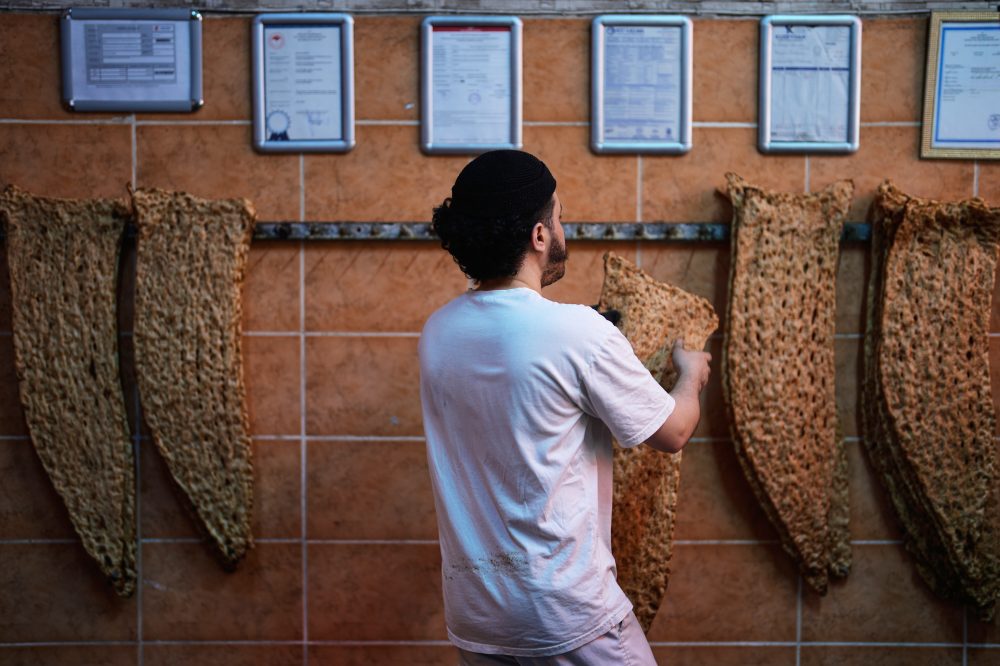

ISTANBUL (AP) — While working behind the counter of an Istanbul bakery selling borek, a traditional layered pastry, Sadri Haghshenas cannot stop thinking about her daughter back in Tehran.
Despite concerns about an unstable ceasefire that could break down at any moment, the family had no choice but to send their daughter back to Iran when they encountered problems extending her visa.
Thousands of Iranian citizens have relied on temporary residence permits for years to find work opportunities and achieve greater security in Turkey, their neighboring country. However, this arrangement remains unstable, and the ongoing conflict has made their situation even more precarious.
“I swear, I cry every day,” Haghshenas said, raising her hands from behind the counter of the pastry shop. “There is no life in my country, there is no life here, what shall I do?”
Five years ago, Haghshenas and her spouse relocated to Turkey with their teenage daughters, surviving on tourist permits that require renewal every six months to two years.
Financial constraints prevented them from hiring legal representation this year, as her husband became unemployed due to medical issues. Consequently, they failed to meet the application deadline for their 20-year-old daughter Asal’s visa renewal, even though she was completing her final year of secondary education.
Earlier this month, authorities detained Asal at a security checkpoint, and she spent one night in an immigration detention center. Rather than risk formal deportation procedures that might prevent future entry to Turkey, her mother arranged for a friend to escort her back to Tehran. The family hopes Asal can return using an educational visa.
Due to Iran’s extended internet shutdown lasting several months, Haghshenas has been unable to communicate with her daughter since her departure.
Turkey has not experienced a major refugee crisis, as most Iranians have remained within their home country seeking safety. Many individuals who have crossed the border were traveling through Turkey to reach other nations where they hold citizenship or legal residence.
Turkish Statistical Institute data shows nearly 100,000 Iranians resided in Turkey in 2025. According to United Nations refugee agency figures, approximately 89,000 have entered Turkey since the conflict began, while about 72,000 have left.
While some Iranians have utilized short-term visa-free periods to wait out the war, limited options exist for those seeking extended stays.
Sedat Albayrak from the Istanbul Bar Association’s Refugee and Migrant Rights Center explained that obtaining international protection status presents challenges, leading the system to push Iranians toward short-term permit applications instead.
“There are people who have lived on them for over 10 years,” he said.
Nadr Rahim arrived in Turkey eleven years ago to provide better educational opportunities for his children. Now, the war threatens to force his return home.
Due to restrictions on obtaining business permits or legal employment authorization in Turkey, he depended on income from his motorcycle dealership in Iran. However, sales have completely stopped since the war began, and international sanctions combined with internet disruptions make money transfers extremely challenging.
His family’s finances will only sustain them in Turkey for a few additional months. Having grown up in Turkey, his children struggle with Farsi reading and speaking skills. While he worries about their adjustment to life in Iran, he acknowledged that “if the war continues, we will have no choice but to return.”
Currently, he passes most days browsing his phone for updates from his parents in Tehran or discussing the conflict over water pipes with fellow Iranians.
An Iranian woman, age 42, arrived in Turkey eight months ago hoping to earn income for her family’s support. She and her daughter enrolled as university students to obtain study permits. She attends morning classes to maintain legal status before hurrying to service employment, sometimes working until 3 a.m.
At a women’s boarding facility, they share living space with six other people, she explained, requesting anonymity due to security concerns should she return to Iran.
“I truly love Iran. If necessary, I would even go and defend it in war,” she says. However, she sees no opportunities there, while in Turkey, she barely survives and can only send minimal financial support to her parents.
“I have a bad life in Turkey, and my parents have a bad life in Iran,” she said. “I came to Turkey with so much hope, to support my parents and build a future. But now I feel hopeless.”
A 33-year-old independent architect from Tehran traveled to Turkey during Iran’s harsh suppression of widespread demonstrations in January. She initially planned to return once conditions improved, but then the United States and Israel entered into conflict with Iran at February’s end.
“I started to believe that it’s a very bad situation, worse than I expected,” she said, speaking on condition of anonymity for fear of persecution if she returns to Iran.
The internet blackout has prevented her from working with her regular Iranian clients. With her 90-day visa-free period ending soon, she cannot afford to apply for extended permission to remain in Turkey.
Instead, she has chosen to travel to Malaysia, where she will receive free housing in exchange for constructing shelters during a month-long visa-free visit.
Her future plans remain uncertain.