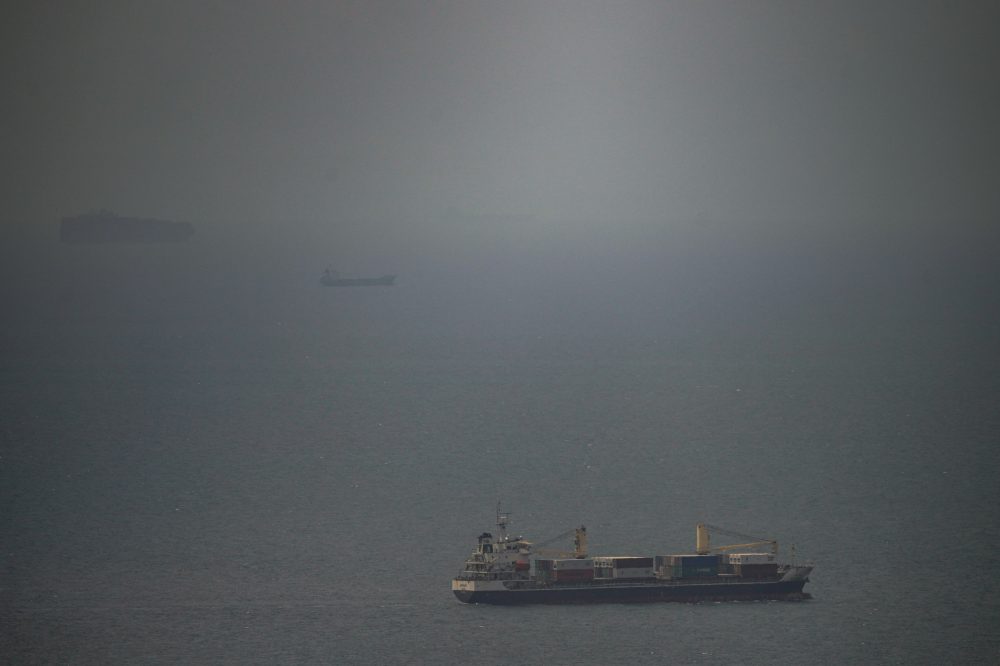

Fresh uncertainty gripped the Strait of Hormuz Wednesday as Iranian forces launched strikes against three vessels near the vital shipping channel, intensifying a global energy emergency that began when tankers transporting one-fifth of the world’s petroleum were prevented from navigating the passage.
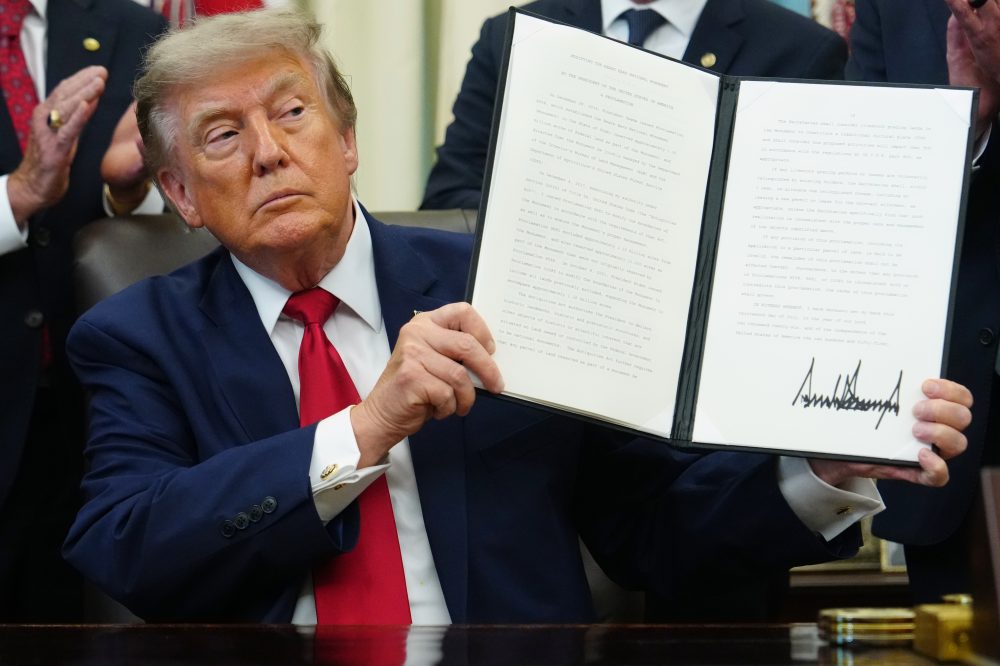
The latest incidents occurred merely 24 hours following President Donald Trump’s announcement that he would prolong the two-week truce with Iran. Tehran justified the assault on three departing vessels, capturing two of them, describing the action as payback for America’s maritime blockade of Iranian harbors and Washington’s attack and seizure of an Iranian vessel that failed to respond when contacted by blockade enforcement ships.
Maritime assaults had decreased beginning in mid-March when Iran established effective dominance over the waterway. The simple threat of attack proved sufficient to discourage vessels from attempting passage, though some ships utilized an Iranian-sanctioned route along the coastline. Iran required information about cargo, ownership and personnel and, in certain instances, levied a $1 per barrel fee on petroleum and related products — equivalent to $2 million for large tankers.
Here’s an examination of what is confirmed and uncertain regarding the strait’s current situation:
Iran’s semi-official media outlets announced that the paramilitary Revolutionary Guard struck a third vessel Wednesday within the strait. Nour News, Fars and Mehr all documented the Guard’s attack on a ship named the Euphoria. They reported the vessel had become “stranded” along Iran’s shoreline, providing no additional details. Iranian state television separately confirmed that the Guard captured the other two attacked ships.
This event followed two maritime attacks Saturday that broke a calm period that started in mid-March.
The captured vessels were the Liberia-flagged Epaminondas and Panama-flagged MSC Francesca, both cargo ships. The conditions under which these ships attempted strait passage remained unclear. MSC shipping company failed to respond to email inquiries about the vessel.
These attacks follow an abrupt change in Iran’s position over the weekend, after the Iranian foreign minister declared Friday that the strait remained open, only to face contradiction the following day from the Revolutionary Guard. Six cruise vessels trapped in the Persian Gulf since late February capitalized on the brief opportunity and navigated through the strait. However, maritime traffic has since ceased.
The renewed attacks partially reflect “genuine confusion … about when passage is permitted,” according to Torbjorn Soltvedt, principal Middle East analyst at risk intelligence firm Verisk Maplecroft.
Contradictory messages came from Trump regarding complete reopening and from Iran’s foreign minister about limited reopening. Then circumstances “shifted very quickly” Saturday when the Guard declared the strait closed.
Furthermore, Soltvedt noted, Iran benefits from maintaining elevated insurance costs through intermittent attacks. “Their main leverage in negotiations with the U.S. is being able to restrict shipping through the Strait of Hormuz, and insurance is a big part of that.”
Several vessels have successfully navigated Iran’s approval process, while others have depended on diplomatic appeals from their home nations. Nevertheless, hundreds of ships and thousands of crew members remain stranded.
The U.S. Navy intercepted and captured a large tanker carrying Iranian petroleum south of the Bay of Bengal in the Indian Ocean, approximately 2,000 miles from the strait. This action highlighted America’s capability to seize vessels violating the blockade long after departing the strait’s vicinity.
The U.S. military, enforcing the blockade in the Gulf of Oman and Arabian Sea, distant from Iranian drones and speedboats, reports turning back 20 Iran-connected vessels.
Nevertheless, shipping intelligence firms indicate that numerous ships carrying Iranian oil have bypassed the blockade. Lloyd’s List Intelligence reports “a steady flow of shadow fleet traffic” has moved in and out of the gulf, including 11 tankers with Iranian cargo that departed the gulf outside the strait since April 13.
“The dilemma for the U.S. is: The tighter the blockade, the greater the pain is in the global oil market, so there are conflicting priorities there, and it seems there is a policy of not intercepting every single shipment of Iranian oil,” Soltvedt explained.
Moreover, nearly all that petroleum flows to China, requiring the U.S. to manage that relationship carefully, with Trump scheduled to visit from May 14 to 15.
Captain Tim Hawkins, U.S. Central Command spokesman, confirmed Wednesday that the military blockade targets all Iranian ships entering or departing Iranian ports. However, he stated humanitarian shipments, including food, medical supplies and other civilian essentials, receive approval following inspection.
Hawkins disputed external reports of ships evading the U.S. network and referenced comments by U.S. Central Command chief Admiral Brad Cooper, who stated Friday that “no ship has evaded U.S. forces.”
Ship operators and insurers will require more than a basic peace agreement announcement to risk strait passage as they did before the conflict.
Even following the war’s conclusion, analytical and data company Rystad Energy predicts it will require six to eight weeks simply to reorganize the global tanker network. Ship operators and insurers would need two to five weeks to become comfortable with new operating conditions and resume standard operations.
Ship operators desire “something that’s a bit more concrete than what we have now,” Soltvedt stated. “What is needed is something more comprehensive” than an informal ceasefire with both sides remaining far apart on crucial issues including Iran’s nuclear and ballistic missile programs.
“Even then, shipping companies will have the long-term threat hanging over them” considering Iran’s missile and drone capabilities, he added. “They can play this card again in the future.”