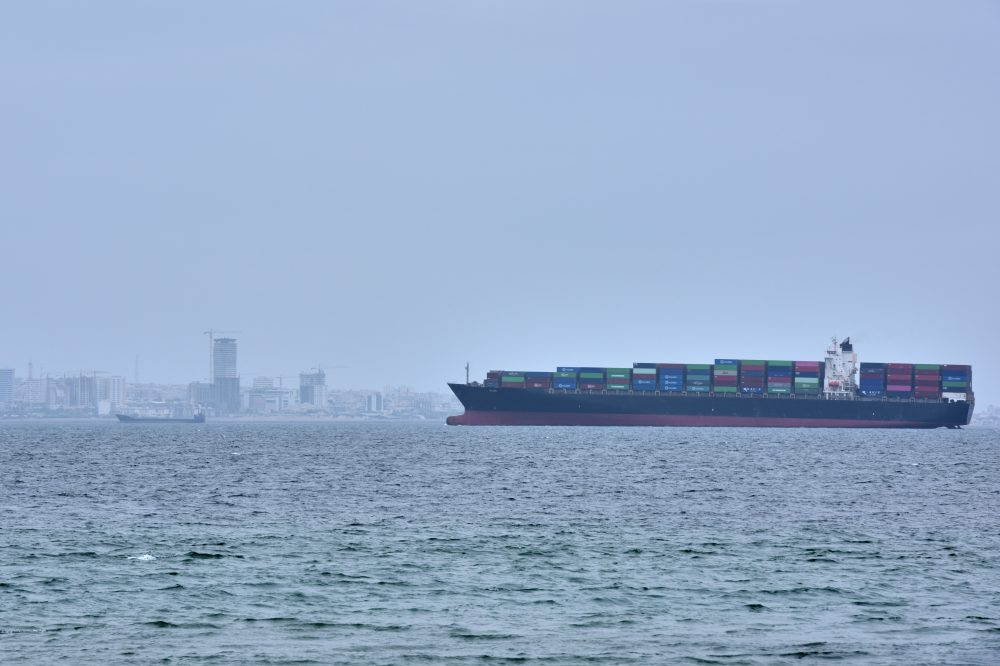
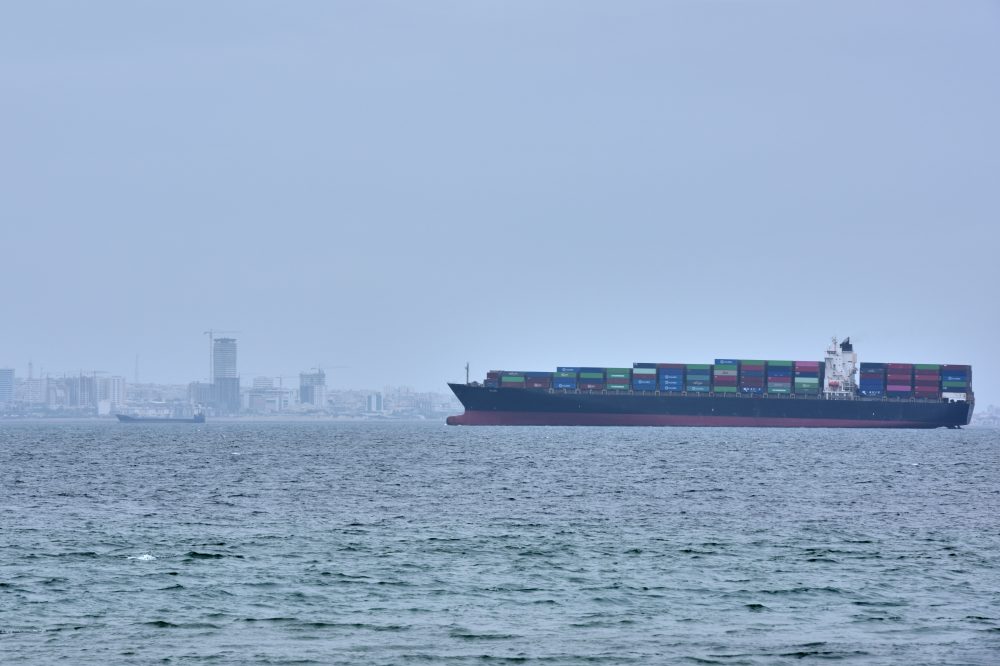
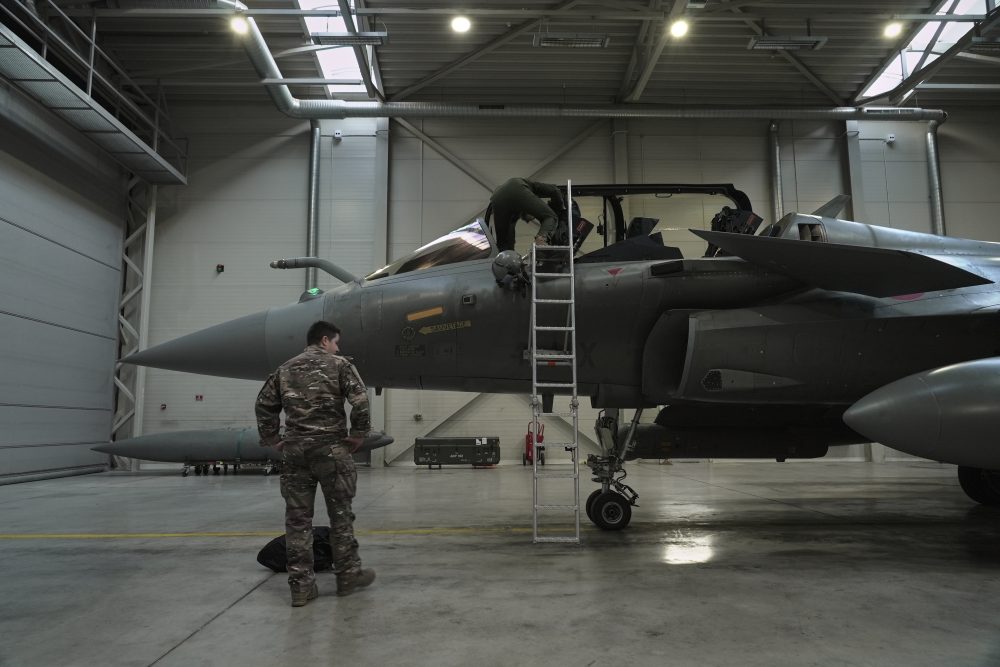
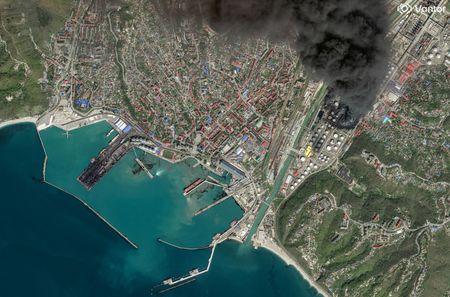
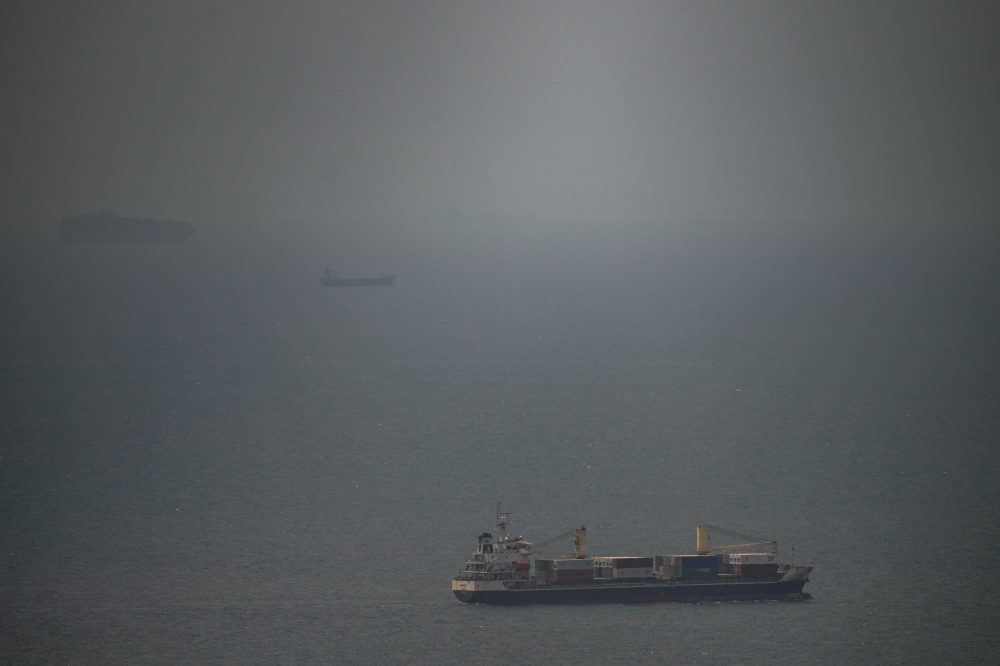
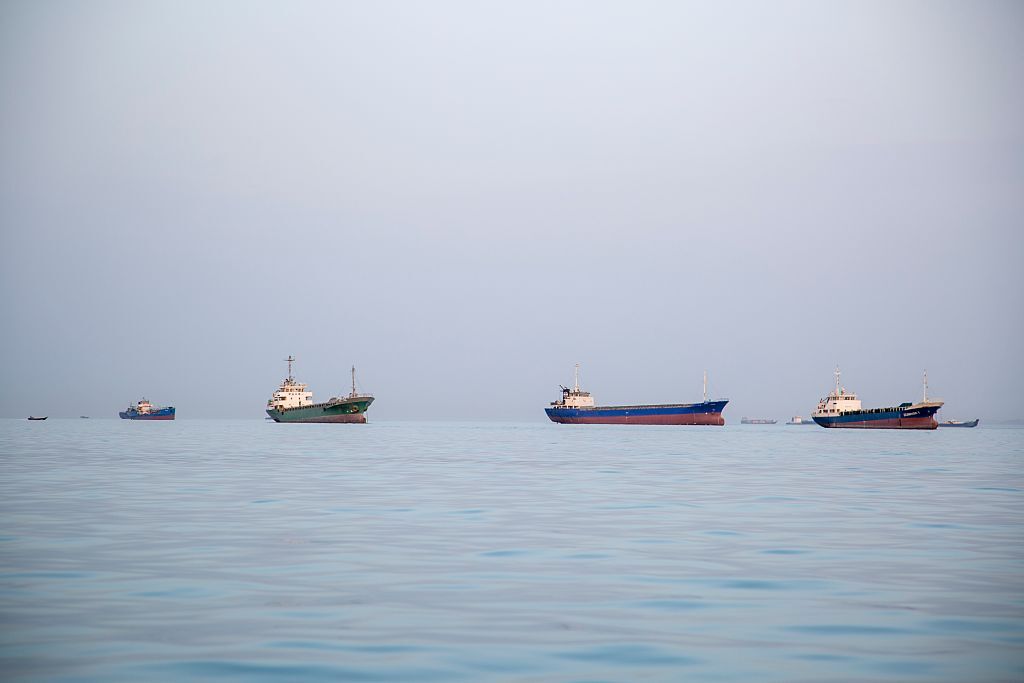
American military leaders are developing contingency plans for targeted strikes against Iranian naval forces in the strategically crucial Strait of Hormuz as diplomatic efforts continue to stagnate, according to a CNN report.
The military strategy focuses on what officials call “dynamic targeting” of Iranian capabilities throughout the Strait of Hormuz, the southern Arabian Gulf, and Gulf of Oman regions.
Intelligence sources outlined potential operations against Iran’s fleet of rapid attack craft, mine-laying ships, and other unconventional naval assets that Tehran has deployed to control shipping lanes and exert pressure on Washington.
This critical maritime corridor handles approximately 20% of the world’s oil and natural gas shipments, while tensions between the two nations escalate amid stalled diplomatic discussions.
Previous American military actions targeted locations away from the Strait itself, allowing for operations deeper within Iranian territory. These new strategic plans emphasize a concentrated strike campaign focused specifically on the crucial shipping channels.
In a related development, US forces announced Thursday they had boarded a sanctioned tanker transporting Iranian oil in the Indian Ocean. Pentagon officials described conducting a “maritime interdiction” operation on the vessel M/T Majestic X, defining the action as intercepting or examining a ship suspected of legal violations.
American forces have stopped numerous ships since establishing a naval blockade of maritime traffic entering and exiting Iranian ports on April 13.
President Donald Trump has authorized US military personnel to “shoot and kill” any vessel attempting to place mines within the Strait.
These escalating developments come after Wednesday’s incident where Iranian Revolutionary Guard patrol boats opened fire on three commercial vessels in the Strait of Hormuz, capturing two ships while inflicting damage on a third.
Nations across the Persian Gulf region are slowly restoring normal operations following extended disruptions caused by military conflict between the United States and Israel against Iran, which led to Iranian strikes on Gulf urban areas, power infrastructure, and civilian targets.
Bahrain declared the complete restoration of full-capacity government operations beginning Sunday, April 26. Since March 1, Bahraini government workers had been operating under reduced staffing at half capacity.
Educational institutions in Bahrain transitioned back to traditional classroom instruction last week following a temporary shift to remote learning platforms.
Kuwaiti officials revealed on Thursday their plans for the phased reopening of Kuwait International Airport and the restoration of aviation operations following almost two months of complete shutdown. The closure came after multiple drone and missile strikes originating from Iran and Iraq targeted Kuwait, with several projectiles hitting critical infrastructure including the main airport facility.
Qatari leadership announced the step-by-step return of international carrier operations and expanded Qatar Airways service schedules. The United Arab Emirates has implemented comparable measures.
Signs of regional recovery extend beyond transportation, with business and retail sectors across multiple GCC nations showing renewed activity as shopping districts and commercial centers welcome customers at levels approaching pre-conflict patterns, while professional gatherings, cultural events, and recreational activities steadily resume throughout the Gulf region.
A Lebanese journalist who survived an Israeli airstrike that claimed her colleague’s life has shared her harrowing account of the hours they spent waiting for rescue, speaking to The Associated Press from her hospital bed on Friday.
Zeinab Faraj, a freelance photographer and video journalist, regularly worked alongside Amal Khalil, an experienced correspondent for the Lebanese newspaper Al-Akhbar who covered southern Lebanon.
The pair were traveling behind one of Faraj’s relatives through the village of al-Tiri on Wednesday, approximately 8 kilometers from the Israeli border. They had arrived five days after a delicate ceasefire took effect between Israel and Hezbollah, intending to document conditions in the area following the truce.
While passing through the village with Khalil recording video on her phone through the car window, an Israeli strike targeted the vehicle ahead of them, Faraj explained from her recovery room at a Beirut medical facility.
Both women exited their vehicle and sought cover along the roadside while a drone circled above. Approximately one hour later, a second attack struck Khalil’s car parked nearby.
Faraj managed to force open a shop’s metal security door, and both journalists took shelter inside the building.
“Amal was crawling, she was wounded — her nose and head and shoulder and leg,” Faraj remembered, her words difficult to understand through facial swelling and bruising. She noted that Khalil also sustained burns when the targeted vehicle burst into flames.
The two were able to contact their families and news organizations. According to Faraj, Khalil maintained a positive demeanor and attempted to reassure her loved ones that both were safe.
During this time, urgent communications began between the Lebanese Red Cross, Lebanese military forces, the U.N. peacekeeping mission UNIFIL, and Israeli forces to arrange safe evacuation for the journalists.
As time passed, Faraj began losing consciousness.
“When I said I wanted to go to sleep, Amal came closer and hugged me and told me, ‘Zeinab, don’t leave me alone,’” she recalled. “I realized that Amal was not in good condition. The color of her face had changed and I realized that she had some internal bleeding, too.”
While drifting in and out of consciousness, she heard incoming ordnance. A third strike hit their shelter.
The blast ejected Faraj from the shop while Khalil remained trapped inside.
“I was in and out of consciousness, and then I thought my dad had come to get me and I began calling to him, ‘Baba, I’m here, come and help me,’” Faraj said.
Emergency responders arrived and extracted Faraj from the debris, also recovering the bodies of two people killed in the initial vehicle strike. Lebanon’s health ministry reported that Israeli forces fired upon the Red Cross ambulance attempting to reach Khalil, forcing the crew to retreat.
The Israeli military stated that individuals in the village had breached the ceasefire agreement, putting Israeli soldiers at risk, and rejected claims that it targets media personnel or blocked rescue operations. Officials said the incident remains under investigation.
Faraj had lost consciousness and remained unaware that Khalil hadn’t been evacuated with her until several hours later.
Just before midnight, after Lebanese military, civil defense, and Red Cross teams received authorization to enter the area, Khalil’s body was recovered from the wreckage.
Faraj maintains that “if they had gotten to her a bit sooner, Amal would be here today.”
The current Israel-Hezbollah conflict started on March 2, when the militant organization launched a missile barrage across the border, occurring two days after the United States and Israel began their military action against Iran. Israel countered with extensive bombing campaigns in Lebanon and ground operations.
Following the ceasefire agreement, Israeli forces have maintained control over a border zone extending approximately 10 kilometers into Lebanese territory, characterizing this area as essential for protecting northern Israeli communities from Hezbollah rocket attacks. Despite the truce, both Israel and Hezbollah have continued launching strikes.
Faraj suspects the journalists were intentionally targeted. Khalil had previously disclosed that during her reporting in southern Lebanon during the earlier 2024 Israel-Hezbollah conflict, she received threatening communications from an Israeli phone number.
The origin of these messages — whether from Israeli military sources or private individuals — remains unclear. The Israeli army has not yet responded to requests for comment on this matter.
Prior to Khalil’s death, Avichay Adraee, an Israeli military spokesman, shared on social media platform X a video from Al-Akhbar featuring Khalil rescuing a cat from destroyed building debris. He labeled the publication “terrorist media speaking on behalf of Hezbollah, the devil” due to its pro-Hezbollah editorial stance.
The Committee to Protect Journalists, an international advocacy organization, condemned the post as “incitement” in an official statement.
“Under international humanitarian law, journalists, as civilians, are protected from direct and indiscriminate attack, regardless of the positions or affiliation of their media outlets, provided they do not directly participate in hostilities,” the organization stated. “There is no evidence that Khalil or Faraj were directly participating in hostilities.”
The group has requested an international investigation into Khalil’s death.
Lebanon’s information ministry reports that nine journalists have died in Israeli strikes since March 2. The latest Israel-Hezbollah war has resulted in nearly 2,500 Lebanese deaths, including 277 women, 177 children, and 100 healthcare workers. Fifteen Israeli soldiers and three civilians have also been killed.
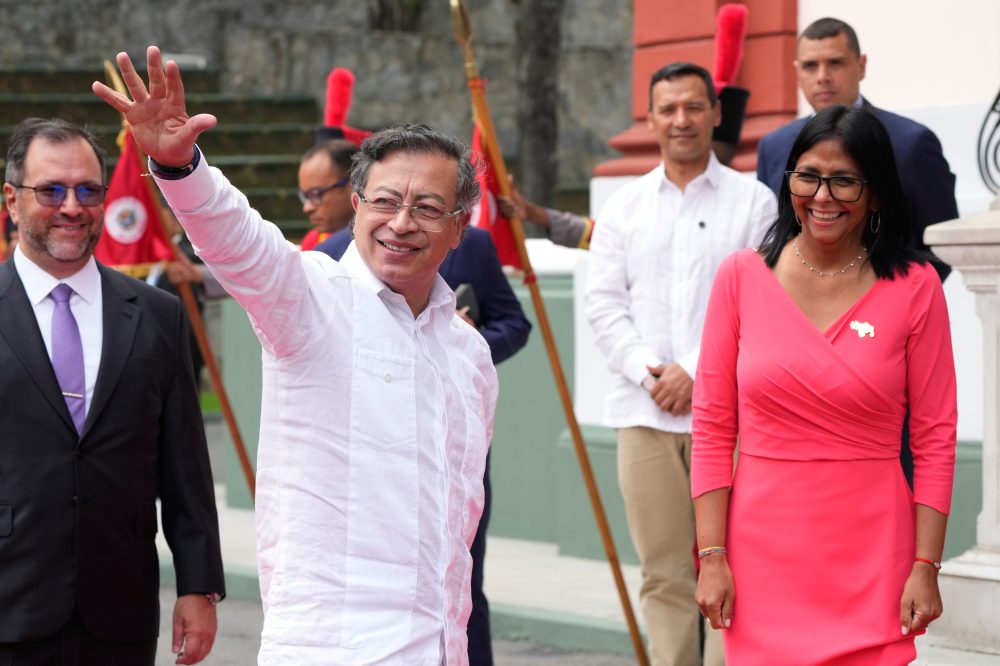
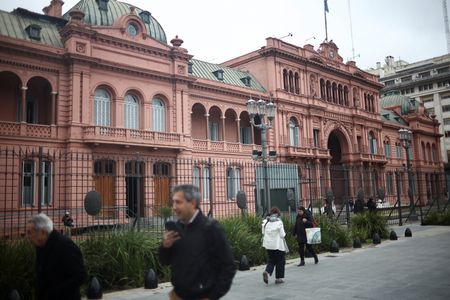
CARACAS, Venezuela — Colombian President Gustavo Petro arrived at Venezuela’s presidential palace Friday for crucial discussions with acting President Delcy Rodríguez, marking their first face-to-face meeting since the U.S. military detained former Venezuelan leader Nicolás Maduro and his spouse at their residence in January.
The diplomatic encounter at the Miraflores palace was designed to address a wide range of shared concerns between the neighboring nations, including cross-border migration issues, security cooperation, trade relationships, and industrial partnerships.
Originally scheduled for last month at the countries’ shared frontier, the high-level talks were suddenly postponed by both governments, who cited “force majeure” circumstances without providing additional details, stating only that the meeting would be rescheduled.
Prior to Friday’s discussions, Petro revealed that his team, featuring senior military and law enforcement commanders, would prioritize border security matters with Rodríguez during their talks.
Special attention was directed toward the volatile Catatumbo area, where competing armed factions battle for territorial dominance. Petro emphasized the critical need for “close collaboration on intelligence,” cautioning that without proper coordination, “bombs land in the wrong places … and end up killing civilians.”
Relations between the two South American neighbors have remained strained for years. Following Venezuela’s disputed July 2024 presidential election that sparked demonstrations and subsequent government crackdowns, Petro refused to acknowledge Maduro’s claimed victory. Despite this stance, Colombia continued maintaining diplomatic channels with Caracas.
Colombian officials stated that Friday’s Petro-Rodríguez summit was intended to “contribute to a resolution of Venezuela’s political crisis.”
The path forward, however, remains uncertain.
According to Ronal Rodríguez Durán, who studies Venezuelan affairs at Universidad del Rosario’s Venezuela Observatory, Petro’s ability to broker meaningful change appears constrained, particularly since his presidential term concludes in August. Colombia’s future relationship with Venezuela will likely depend significantly on whoever assumes Colombian leadership next.
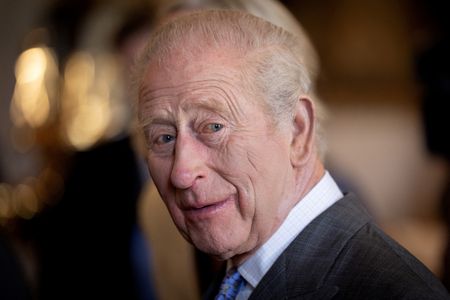
Britain’s King Charles will join New York Mayor Zohran Mamdani for a wreath-laying ceremony at the 9/11 memorial site during his upcoming state visit to the United States, according to an announcement from the mayor’s office Friday.
The ceremony will take place at the location where the September 11, 2001 terrorist attacks occurred, killing at least 2,606 people when al Qaeda militants flew hijacked planes into the World Trade Center towers. Among those who lost their lives were 67 British citizens.
According to the mayor’s press secretary Joe Calvello, the King and Mamdani will not have a private meeting during the event.
King Charles is scheduled to visit Washington D.C., New York, and Virginia between April 27 and April 30 as part of his official state visit.
The royal visit will include a historic moment when King Charles addresses a joint session of Congress, marking the first time a British monarch has done so since Queen Elizabeth II delivered remarks in 1991.
President Donald Trump is expected to hold a private meeting with King Charles and will host an official state dinner honoring the King and Queen Camilla.
The visit occurs during a period of tension between the United States and United Kingdom. Speaking to the BBC Thursday, Trump expressed optimism that King Charles could help mend the diplomatic relationship between the two nations.
“I know him well, I’ve known him for years. He’s a brave man, and he’s a great man. They would absolutely be a positive,” Trump said.
Diplomatic leaders from Russia and the United Arab Emirates are advocating for renewed negotiations aimed at bringing stability to the Middle East, according to an announcement from Moscow’s foreign affairs department on April 24.
During a phone conversation, Russian Foreign Minister Sergei Lavrov and UAE Foreign Minister Sheikh Abdullah bin Zayed discussed pathways to peace in the troubled region. According to the Russian Foreign Ministry’s official statement, both officials “expressed their shared view on the need to resume negotiations in order to promptly reach agreements on a long-term, sustainable resolution of the crisis, taking into account the legitimate interests of all countries in the region.”
The diplomatic exchange highlights international efforts to broker lasting peace arrangements that would address the concerns of all nations involved in the regional conflict.
COPENHAGEN – Denmark’s attempts to establish a new government have reached an impasse four weeks following the nation’s parliamentary elections, hampering decision-making capabilities during ongoing diplomatic tensions with President Donald Trump’s administration regarding Greenland.
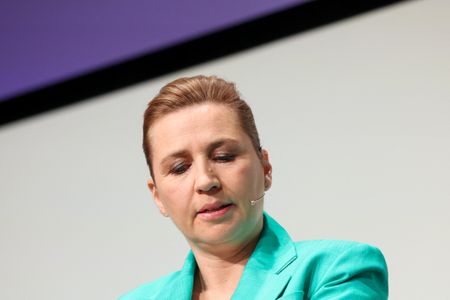
Acting Prime Minister Mette Frederiksen, who holds the royal mandate to form a coalition, has been conducting negotiations with all 12 parliamentary parties but has managed to secure backing only from progressive factions – insufficient to achieve a governing majority.
Frederiksen’s moderate coalition was defeated in the March 24 elections as citizens expressed frustration over rising living costs, though her Social Democratic Party continues to hold the largest bloc in parliament with 38 of 179 seats.
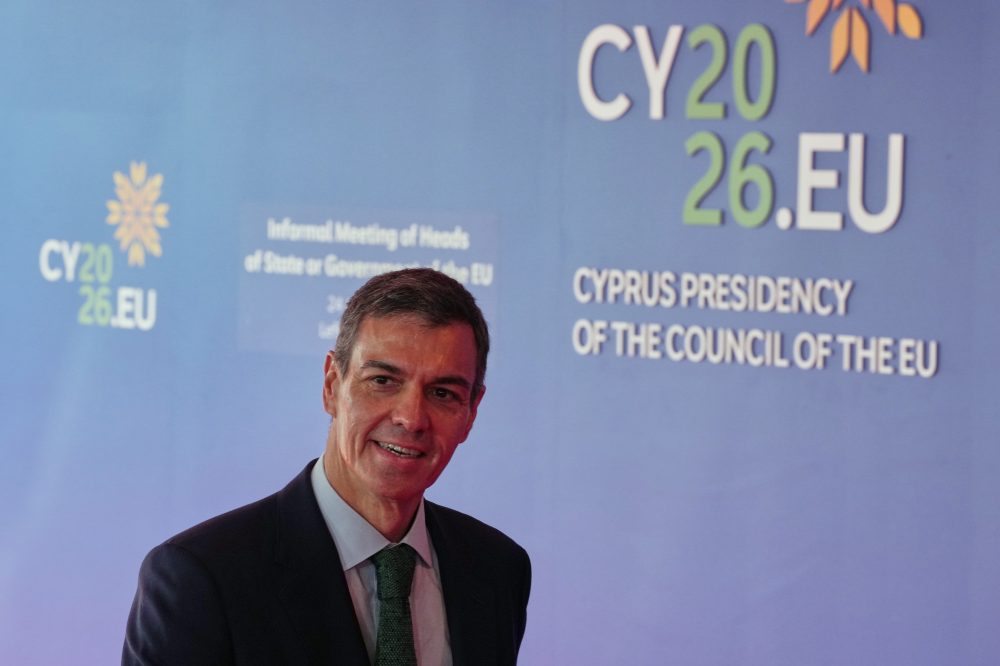
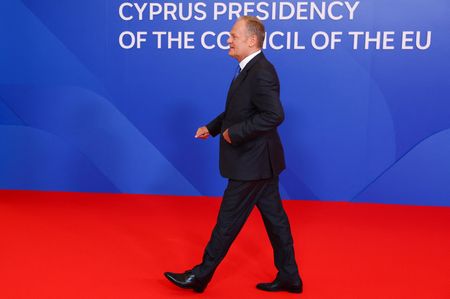
“There is no end date to the negotiations (on a new government), this must take the time that it takes,” Frederiksen stated to media on Thursday evening while attending an EU summit in Cyprus.
The centrist Moderates Party and right-wing Liberal Party, both former partners in Frederiksen’s previous coalition, have refused to support arrangements that would depend on far-left parties for majority control.
Although Frederiksen’s administration continues operating until a new cabinet is established, its authority to make significant decisions remains restricted during a period when Denmark must also navigate Trump’s demands regarding Greenland, which belongs to the Danish kingdom.
Denmark, Greenland and the United States initiated diplomatic discussions to address the dispute in January, but tensions escalated again this month when Trump described the territory he desires as a “BIG, POORLY RUN, PIECE OF ICE” on social media, prompting criticism from Greenland’s prime minister.
Regarding coalition building efforts, Moderates Party leader Lars Lokke Rasmussen informed TV2 on Thursday that an agreement remained “far away,” while Conservative Party leader Mona Juul suggested Frederiksen should step aside from leading the negotiations.
“With the results we have seen from the current royal investigator, I believe that the baton should be passed on,” Juul told TV2 on Friday, referencing Frederiksen’s official responsibility for guiding the discussions.
Although most negotiations occur privately, Frederiksen will likely need to abandon her campaign promise to impose a wealth tax on Denmark’s wealthiest residents.
“There’s not a majority for the economic policy that (Frederiksen) wanted,” explained Andreas Thyrring, a partner at Ulveman & Borsting, a public affairs consulting company.
According to Thyrring, the prime minister must either surrender major elements of her platform or transfer the government formation role to Rasmussen or Liberal Party leader Troels Lund Poulsen.
MOSCOW – Russian officials declared Friday their nation will stand with Cuba and maintain humanitarian support for the Caribbean island, while condemning what Moscow characterizes as intimidation tactics from the United States.
President Donald Trump has previously stated he anticipates having the privilege of “taking Cuba,” while simultaneously, Washington has pressed Havana to reform its economy and expand political liberties.
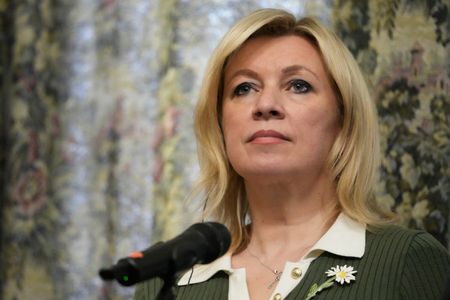
“Against the backdrop of the targeted and malicious escalation against Cuba, we reaffirm our solidarity with the Cuban government and the Cuban people,” Russian Foreign Ministry spokeswoman Maria Zakharova told reporters.
“We reject blackmail and threats in foreign policy, which also applies to Washington’s current demonstrative aggressive pressure on Havana with the aim of gross interference in Cuba’s internal affairs in order to break Cuban statehood,” Zakharova stated.
The Caribbean nation maintained strong ties with Moscow for many years, beginning with the Communist uprising in 1959 that elevated Fidel Castro to leadership and continuing through the Soviet Union’s dissolution in 1991. In recent years, Russia has backed the island through financial support and material resources.
“Russia and Cuba have a close historical relationship. We have always been on the side of Cuba in its struggle for independence, in its right to live by its own rules, develop on its own path and defend its own interests,” Zakharova explained.
“We will continue to provide humanitarian assistance to Cuba during this difficult period of artificially fueled confrontation,” she added.
A Russian vessel, the Anatoly Kolodkin tanker, delivered approximately 700,000 barrels of Russian Urals crude oil in late March to Cuba’s Matanzas Bay, defying US fuel restrictions. The Trump administration stated it permitted the shipment for “humanitarian” purposes.
WASHINGTON – President Donald Trump revealed Friday that Iran is preparing a proposal designed to address American concerns, with diplomatic discussions set to continue in Pakistan.
“They’re making an offer and we’ll have to see,” Trump stated in a phone conversation with Reuters.
The President acknowledged he remains unaware of the specific details of Iran’s upcoming proposal.
When questioned about which Iranian officials the United States is engaging with, Trump responded: “I don’t want to say that, but we’re dealing with the people that are in charge now.”
White House press secretary Karoline Leavitt announced Friday that Trump will dispatch special representatives Steve Witkoff and Jared Kushner to meet with Iranian Foreign Minister Abbas Araqchi in Islamabad. The envoys are scheduled to leave Saturday morning.
Earlier reports indicated that Iran’s Foreign Minister Abbas Araqchi was anticipated to arrive in Pakistan’s capital Friday to explore options for restarting diplomatic negotiations with the United States.
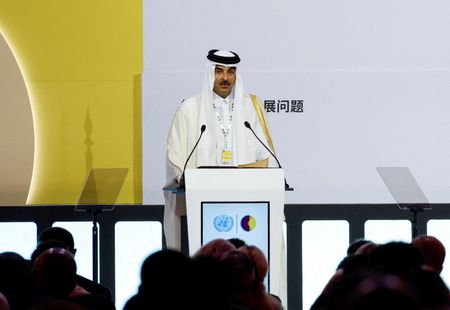
The leader of Qatar held a telephone conversation with President Donald Trump on Friday to talk about recent progress in a ceasefire deal between the United States and Iran, according to Qatar’s official news service.
Sheikh Tamim bin Hamad Al Thani, Qatar’s Emir, engaged in the discussion about developments surrounding the Washington-Tehran agreement, the state-run media outlet reported on April 24.
The Qatari ruler indicated his nation plans to maintain its collaborative efforts with international allies to back mediation initiatives spearheaded by Pakistan.
TELL, West Bank (AP) — A surge in deadly violence has claimed the lives of three Palestinian teenagers in the West Bank this week, with the most recent fatality occurring during an Israeli military operation mid-week.
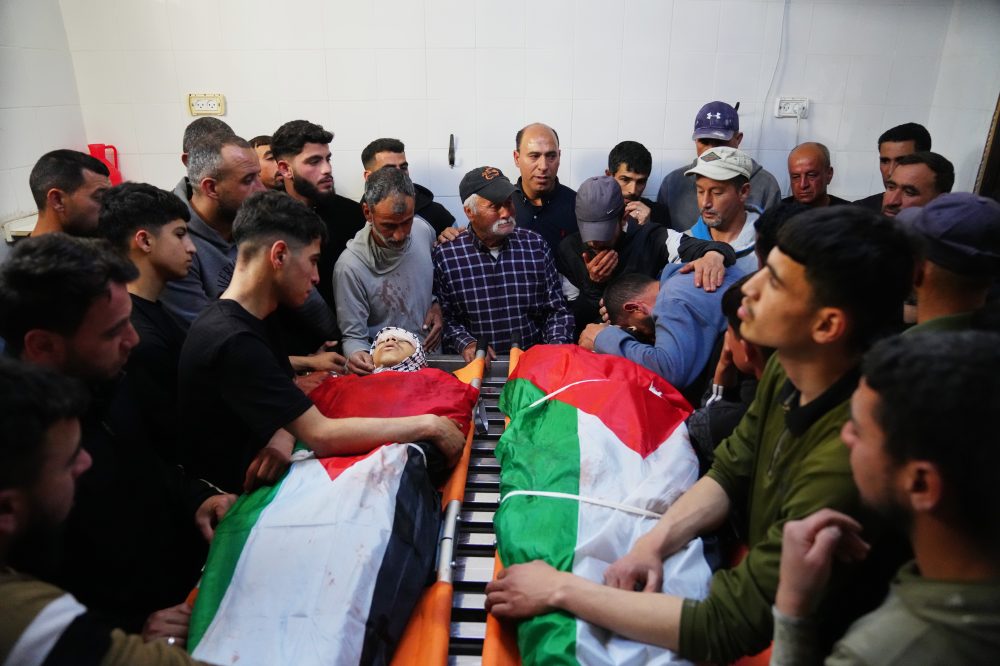
Residents of Tell, a village in the northern West Bank, held funeral services Friday for 15-year-old Youssef Shtayyeh, who health authorities confirmed was fatally shot by Israeli troops in the adjacent city of Nablus.
Mourners carried the teenager’s wrapped body through village roads while displaying Palestinian flags, as family members and community residents joined together in prayer and expressions of sorrow.
Military officials from Israel confirmed the death and stated their troops opened fire following efforts to detain a Palestinian individual who allegedly threw stones at soldiers. The military did not provide details about their presence in Nablus, the West Bank’s second-largest urban center under Palestinian Authority control.
The death of Shtayyeh marks at least the fourth Palestinian fatality at the hands of Israeli forces or settlers this week, following separate incidents in Hebron, al-Mughayyir and Deir Dibwan throughout the West Bank.
Human rights organizations, Palestinian officials and international monitors are raising urgent concerns about escalating violence, noting the increasing frequency of deaths among young Palestinian men amid widespread incidents of property destruction, arson and forced displacement of agricultural communities near Israeli settlements and outposts.
Speaking at one of this week’s funeral ceremonies, Ramallah Mayor Leila Ghannam characterized the wave of violence as evidence of widespread lawlessness in Palestinian territories. “Settlers and the army are one and the same,” she stated.
Data from the United Nations Office for the Coordination of Humanitarian Affairs indicates that no fewer than 40 Palestinians have lost their lives since January began, with a unprecedented 11 killed by settlers — exceeding the total settler-related deaths for all of 2025 by two.
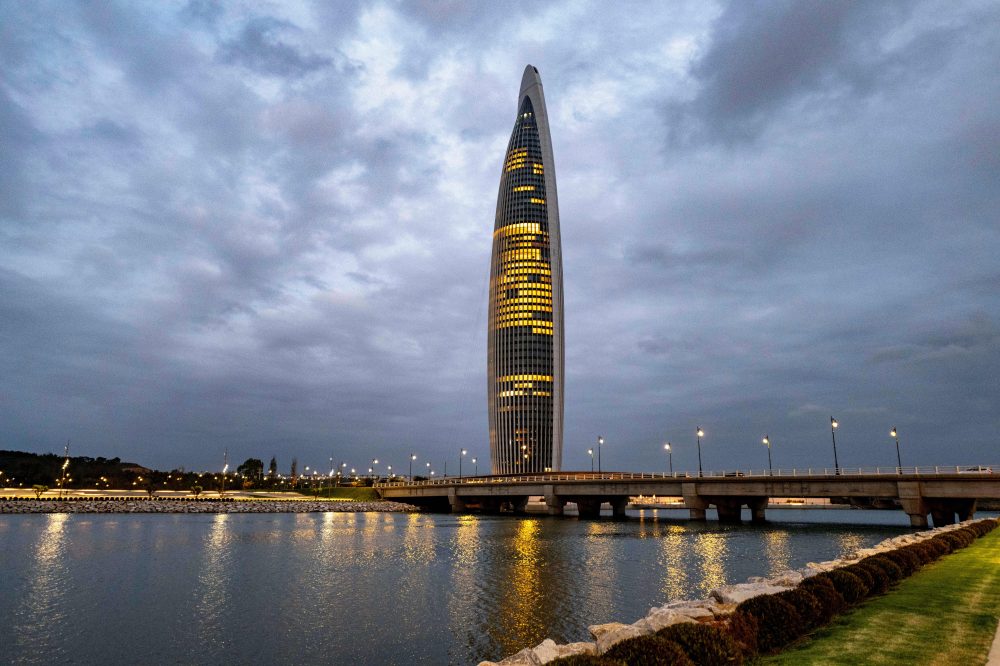
CASABLANCA, Morocco — A massive $700 million skyscraper has officially opened in Morocco’s capital region this week, representing the nation’s ambitious drive to strengthen its position on the world stage.
The 55-story Mohammed VI Tower, reaching 820 feet into the sky and designed to resemble a rocket preparing for launch, will house a high-end Waldorf Astoria hotel along with office spaces, retail establishments, dining venues, and premium residential units.
According to Leila Haddaoui, director of development company O Tower, the structure ranks among Africa’s tallest buildings and is projected to create 450 direct employment opportunities plus 3,500 additional indirect positions.
Located in Salé, which neighbors the capital city of Rabat, the construction project spanned eight years and employed more than 2,500 workers representing over a dozen nations. The building has gained such prominence that it now graces Morocco’s 200-dirham banknote, worth approximately $20.
The tower sits adjacent to the Grand Theatre of Rabat, a creation of the renowned late architect Zaha Hadid, and provides panoramic vistas of both the Atlantic coastline and the neighboring cities.
“Morocco is positioning Rabat and Salé — often overlooked by tourists — on the international stage, as part of a broader tourism push,” Haddaoui explained to reporters.
As the most visited nation in Africa, Morocco depends heavily on its tourism sector and continues seeking ways to draw more international visitors, particularly as regional tensions may drive travelers toward destinations perceived as more stable. This initiative gains additional significance as the country prepares for its role as co-host of the 2030 FIFA World Cup.
The tower’s creators view the newly inaugurated structure as an emblem of Morocco’s increasing influence throughout Africa and the Middle East, reflecting the nation’s goal to establish itself as a dominant regional force through major development initiatives designed to expand its reach.
However, some observers argue that such progress remains concentrated along Morocco’s Atlantic coastline while interior regions continue to lack adequate development. Youth-led demonstrations last year brought attention to concerns about widespread joblessness and inadequate public services.
The building, encompassing more than 102,800 square meters (approximately 1.1 million square feet), was the brainchild of 93-year-old billionaire Othmane Benjelloun, who controls Bank of Africa, a formerly government-owned Moroccan financial institution that now wields considerable influence throughout the continent.
Tower management reports that the businessman’s inspiration for the skyscraper originated from his 1969 invitation by NASA to participate in a spaceflight simulation conducted before the Apollo 12 lunar mission.
WASHINGTON — Federal officials announced Friday they are implementing financial penalties against a large Chinese petroleum processing plant and approximately 40 maritime transport companies for their involvement in moving Iranian crude oil.
The action, first disclosed by The Associated Press, fulfills the Trump administration’s promise to target foreign businesses and nations conducting trade with Iran through secondary sanctions. This effort represents part of the Republican leadership’s intensified strategy to eliminate Iran’s primary income source through oil sales.
At the same time, the United States has established a physical maritime blockade this month at the Strait of Hormuz, the vital Persian Gulf shipping route essential for worldwide energy distribution.
The timing places these penalties just weeks ahead of a scheduled meeting between President Donald Trump and Chinese leader Xi Jinping in China.
Among the entities targeted Friday is the Hengli Petrochemical complex located in Dalian port, which can process approximately 400,000 barrels of crude daily, ranking it among China’s largest independent oil processing facilities.
According to Treasury Department officials, Hengli has accepted Iranian crude deliveries starting in 2023, creating revenue streams worth hundreds of millions of dollars for Iran’s armed forces.
The watchdog organization United Against Nuclear Iran identified Hengli in February 2025 as among numerous Chinese companies purchasing Iranian petroleum.
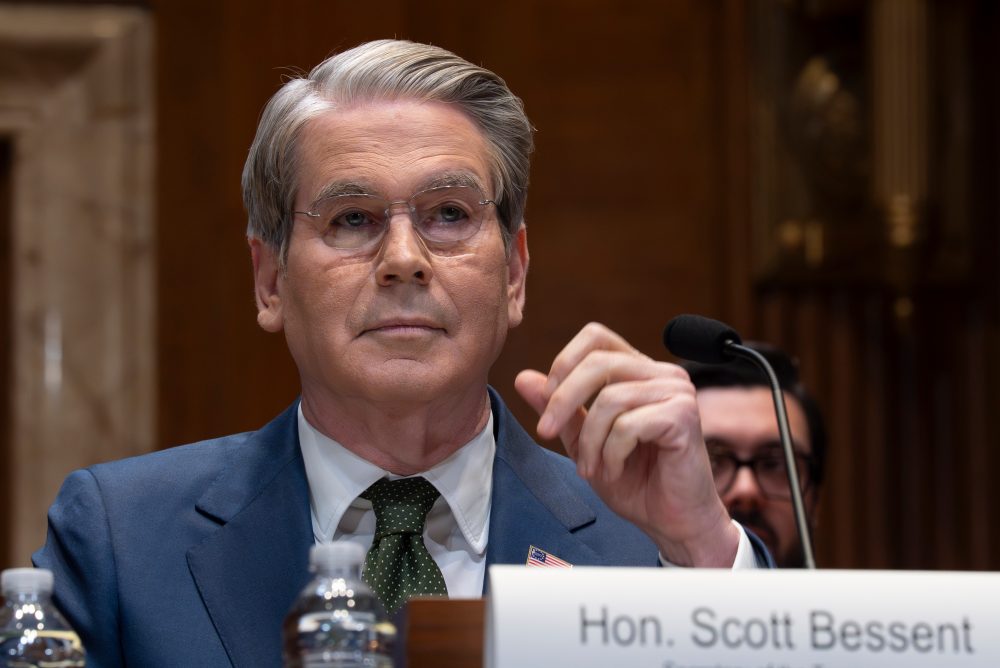
Treasury Secretary Scott Bessent stated Friday that his department “will continue to constrict the network of vessels, intermediaries and buyers Iran relies on to move its oil to global markets.”
Earlier this month, Bessent’s office delivered warnings to banking institutions across China, Hong Kong, the UAE and Oman, threatening secondary sanctions for Iranian business relationships and claiming these nations permit illicit Iranian financial activities through their banking systems.
During an April 15 White House media briefing, Bessent explained the administration has informed countries “that if you are buying Iranian oil, that if Iranian money is sitting in your banks, we are now willing to apply secondary sanctions, which is a very stern measure.”
These measures arrive amid widespread disruption in international energy markets as Persian Gulf conflicts restrict oil and natural gas shipments, driving prices sharply higher.
Treasury officials have attempted to moderate rising energy costs by issuing temporary exemptions for Russian petroleum and providing a one-time allowance for Iranian oil currently being transported.
The Associated Press sought responses from Chinese government representatives regarding the sanctions.
Following earlier U.S. penalties against another Chinese refinery for alleged Iranian oil purchases, Liu Pengyu, speaking for China’s Washington embassy, criticized the sanctions as actions that “undermine international trade order and rules, disrupt normal economic and trade exchanges, and infringe upon the legitimate rights and interests of Chinese companies and individuals.”
MILAN (AP) — Controversial artist Maurizio Cattelan, known for creating provocative pieces like a golden toilet called “America,” kicked off Milan Design Week by hosting an unconventional gathering at Milan’s iconic Duomo cathedral, where he marked participants with “White Trash” stamps on their necks and hands during an informal sharing of cherished items.
The atmosphere throughout Milan remained upbeat Monday evening as attendees traveled between cocktail receptions at some of the city’s most attractive locations before the Milan Furniture Fair officially began Tuesday, launching what’s considered the most diverse and dynamic collection of events on the international design scene.
Even with economic uncertainty and travel complications caused by conflicts in the Middle East, nearly 1,900 exhibitors representing 32 nations displayed their creations at Fiera Milano Rho, while countless additional events took place throughout the city during the widely anticipated Fuorisalone.
“This week of design is so deep — an experience for all of us. I think we are a big community around the world, and I think at the end, we are a little bit all dreamers,” said Spanish architect and designer Patricia Urquiola, one of Europe’s most celebrated luxury interior and furniture designers.
Among Urquiola’s projects was a collaboration featuring an installation at a Milan luxury hotel for German porcelain manufacturer Duravit, which included artistic totems constructed from toilets and bidets.
This year’s furniture fair introduced a new section called “Raritas” specifically for creators of limited-edition works, providing a counterbalance to the mass production that has traditionally dominated the event.
“We wanted to have antiques, high handcraft and, of course, contemporary collectibles with limited edition and unique pieces, so to have the entire wide range of design at the Salone,” curator Annalisa Rosso said.
Dutch creator Sabine Marcelis displayed a dynamic sculpture featuring air bubbles moving through a viscous liquid contained within a vertical polymer structure. Italian designer Francesco Faccin exhibited seemingly straightforward tables and chairs that looked like wooden planks but were actually bronze castings, drawing inspiration partially from Shaker design principles.
Saudi brand Zaza made its first appearance at Salone, proving that the Gulf kingdom serves not only as a market for international products but also as a source of creative innovation. The brand displayed curved sculptures crafted from colored stainless steel and a limited-edition chair befitting royalty.
“We are here to bring the Saudi story to the world,” designer and architect Abdulaziz Khalid Al Tayyash said. “We want to expand and tell a good story about how, from Saudi lifestyle and Saudi culture, we can bring something interesting to be in such a platform, like this one.”
Interior design has emerged as a significant focus for numerous luxury fashion brands including Armani and Dolce & Gabbana. Even fashion houses that haven’t entered the home goods market consider design week an essential event, complete with champagne receptions.
Gucci hosted visitors in a peaceful garden filled with wildflowers within a monastery setting. The courtyard featured tapestries chronicling the fashion house’s evolution, beginning with Guccio Gucci’s work as a London hotel employee that inspired him to create leather luggage in Florence, and following the brand’s artistic journey under designers Tom Ford, Frida Giannini, Alessandro Michele, Sabato Sarno and current creative director Demna.
Louis Vuitton presented its newest home goods and furniture line in an elegant palazzo, displaying historical pieces including travel trunks designed for traveling artists that connected to modern table arrangements, a wooden turntable stand resembling a drill bit, and an imaginative foosball table with mermaid figures and eyeball-shaped handles.
At the historic Palazzo Litta in the city center, Paris-based Lebanese designer Lina Ghotmeh constructed a bright pink wooden maze designed to encourage visitors to slow their pace, explore design publications, sit down and engage in conversation.
“As people move in this installation, you have this feeling of choreography and dance that is manifested, and you sit here and you’re just about watching people talk to each other. They become part of the setting and part of the theatricality of this place as well,” she said.
At Piazza Gae Aulenti, surrounded by Milan’s impressive skyscrapers, Andrea Olivari displayed sculptures representing the heart, stomach and brain with accompanying text: “Follow your heart, use your brain, trust your stomach.”
Italy’s design and furniture industries contribute 2.3% of the nation’s GDP and account for more than 4% of manufacturing output, establishing Italy as an innovation hub.
The combination of design week with the furniture fair has evolved into a leading global destination and essential platform for numerous small and medium enterprises to connect with purchasers and markets, according to Claudio Feltrin, president of FederlegnoArredo, Italy’s furniture industry association.
Highlighting the sector’s strategic significance, Italian Prime Minister Giorgia Meloni inaugurated the furniture fair, joined by Foreign Minister Antonio Tajani.
Italy’s furniture and design industry performed better than anticipated during U.S. tariff periods, achieving 1.4% growth last year with revenues reaching 52 billion euros ($60.8 billion), with 36% coming from international sales. However, uncertainty from Middle Eastern conflicts, which are increasing energy costs and disrupting transportation, is creating cautious projections for the current year.
International sales declined 9% to approximately 1.6 billion euros ($1.8 billion) during the year’s first two months, including a 20% decrease to the United States. Feltrin indicated the sector could rebound if conflicts conclude soon, similar to last year’s recovery from tariff impacts.
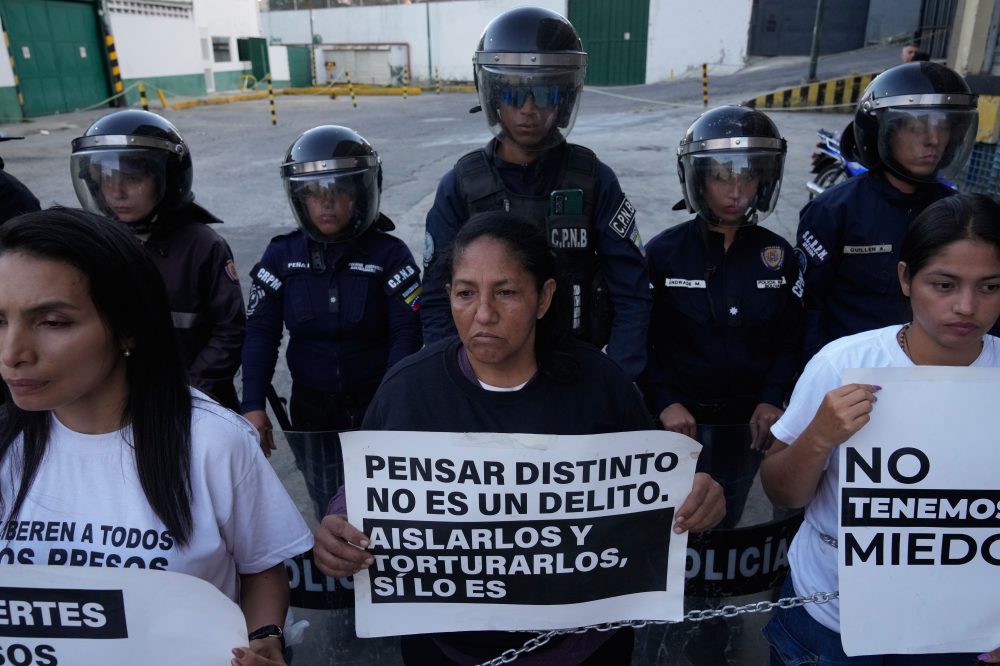
CARACAS, Venezuela — Associated Press correspondent Regina Garcia Cano spent months documenting an unprecedented demonstration by Venezuelan women who established a makeshift camp outside a detention facility in the nation’s capital, demanding freedom for their imprisoned spouses.
Garcia Cano, working alongside video journalist Juan Arraez and photographer Ariana Cubillos, followed the daily lives of approximately 30 women during their remarkable 64-day vigil outside the Caracas police facility where their husbands were being detained.
The extended demonstration pushed both the participants’ physical endurance and mental strength to their limits, while simultaneously challenging the Venezuelan authorities’ typical harsh response to public dissent. Although the temporary encampment was eventually dismantled and the women returned to their homes, their mission remains incomplete — they continue searching for ways to secure their husbands’ freedom.
The following account comes from Garcia Cano’s interview with story editor Del Quentin Wilber.
Venezuelan citizens were shocked when the Trump administration chose to support a government loyalist rather than opposition leaders to govern the South American nation following the U.S. military’s removal of former President Nicolás Maduro in January. Under acting President Delcy Rodríguez, the new administration immediately freed all American prisoners but left hundreds of Venezuelans, whom human rights organizations claim are political prisoners, behind bars.
Just five days following Maduro’s capture, officials announced plans to release a substantial number of detainees, and subsequently, Rodríguez enacted amnesty legislation that could potentially help thousands of dissidents and opposition members currently or previously imprisoned.
Following these announcements, dozens of women — primarily wives and mothers of detained individuals — assembled outside correctional facilities, detention centers, and jails, anticipating their relatives’ release. When their loved ones failed to emerge, many women refused to disperse and established permanent camps outside these same facilities to maintain pressure on Venezuelan leadership.
Such public demonstrations would have been inconceivable before January 3rd. Until that point, Venezuela’s ruling party had demonstrated zero tolerance for any form of public opposition. This was particularly evident following the 2024 presidential contest, which Maduro declared he had won despite substantial credible evidence indicating otherwise.
Following the election, authorities detained more than 2,000 individuals, many of whom had not participated in any demonstrations whatsoever. Citizens became frightened and ceased public expressions of dissent.
These women represent the first Venezuelan citizens to openly confront the ruling party since Maduro’s removal. The predominantly reserved homemakers had never engaged in political activism before. They overcame their fears, ignored advice from relatives and friends to remain silent, and accepted the risk of arrest to confront government authorities. In most cases, their courage paid off.
Video journalist Juan Arraez and I conducted interviews with numerous women demonstrating outside detention facilities. He even spent several nights sleeping at the camp where Mendoza and Rosales were staying.
We concentrated our coverage on Mendoza and Rosales because both women dedicated considerable time to camping outside the jail, abandoning their children and normal routines. Though they were complete strangers initially, they developed a close friendship through their common struggle.
Furthermore, their families exemplify two different but typical Venezuelan experiences. Rosales and her spouse both work for the government, support the ruling party, and reside in a formerly prosperous neighborhood. In contrast, Mendoza and her husband remained politically neutral and relied primarily on private sector employment.
While this story centered on protest activities, it also explored the profound bonds formed between women.
Witnessing the evolution of these women’s relationships was truly remarkable. They transformed from timid, quiet, and wary strangers into talkative, open, and mutually supportive friends. As a group, they mastered the art of protesting, learned to use amplification equipment, developed skills in legislative advocacy, and even figured out how to work within prison regulations. They provided comfort to each other during emotional moments and celebrated each other’s successes. Their conversations covered everything from fears and love to parenting challenges and personal uncertainties.
PRISTINA, Kosovo — Three ethnic Serbs received harsh prison sentences Friday from a Kosovo court for their involvement in a deadly armed confrontation last year that claimed four lives and escalated tensions throughout the unstable Balkans region.
Kosovo’s Basic Court in the capital city of Pristina handed down life imprisonment to two defendants and sentenced the third to three decades behind bars. The court found all three guilty of undermining Kosovo’s constitutional framework and promoting terrorist activities aimed at severing the ethnic Serb-majority northern region from Kosovo to merge it with Serbia.
Judge Ngadhenjim Arni stated during sentencing: “Through this well-organized plan, they attempted to separate the municipalities in the north from Kosovo and annex them to Serbia.”
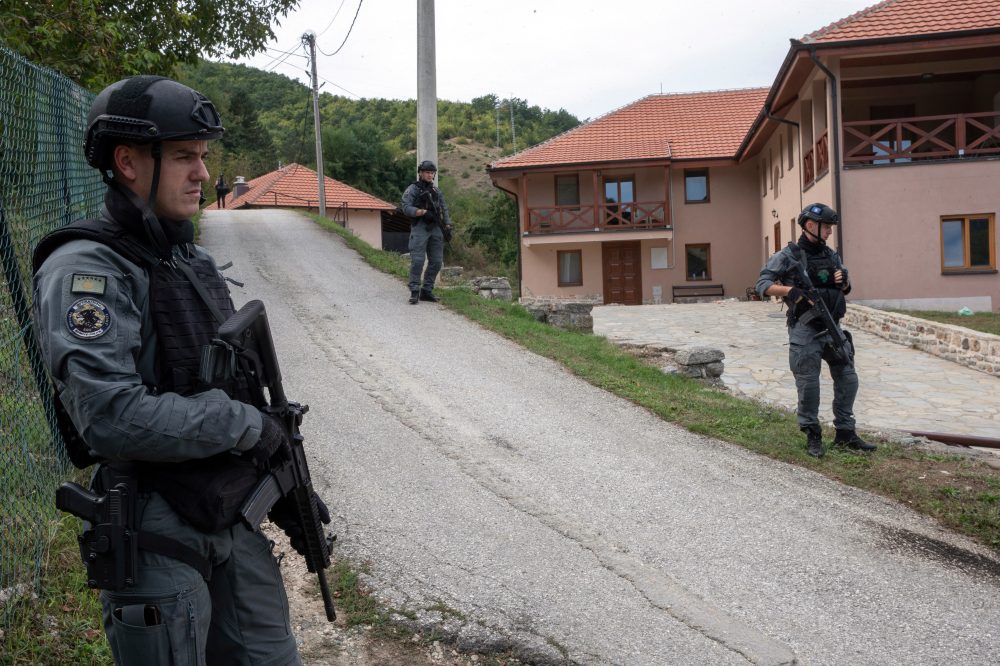
The violent incident unfolded in September 2023 when well-armed Serbian fighters erected roadblocks in northern Kosovo before engaging Kosovo police forces in an extended firefight near Banjska village. The battle resulted in the deaths of one Kosovo police officer and three of the armed fighters.
Kosovo authorities have pointed fingers at Serbia, claiming Belgrade provided weapons and backing to the militant group. Serbian officials have rejected these accusations, maintaining the fighters operated independently. Serbia continues to refuse recognition of Kosovo’s independence, which was declared in 2008.
While prosecutors initially brought charges against 45 individuals, only three defendants who remained in detention faced trial. The group’s alleged leader, Milan Radoicic, remains a fugitive. Radoicic, a prominent politician and business figure with connections to Serbia’s governing populist movement and President Aleksandar Vucic, has evaded justice.
Serbian authorities briefly held Radoicic following the shooting incident, charging him with criminal conspiracy and illegal weapons possession. However, he has not faced trial despite demands from American and European Union representatives. Both the United States and Britain have imposed sanctions on Radoicic for suspected financial crimes.
The three defendants tried in Kosovo sustained injuries during the fighting and were captured at Banjska, while their associates escaped across the border to Serbia. During court proceedings, defendant Blagoje Spasojevic declared: “I am not a terrorist.”
Spasojevic further testified: “This (incident) was my biggest mistake in life … but I did not kill anyone.”
Defense attorneys contended that prosecutors failed to establish their clients’ guilt on the charges. They announced plans to challenge Friday’s ruling, calling the sentences “too harsh.”
The current tensions stem from the devastating 1998-99 Kosovo conflict, which resulted in more than 10,000 deaths when ethnic Albanian rebels launched an uprising against Serbian control. Serbia’s violent crackdown prompted NATO military intervention to halt the bloodshed.
The United States and most European Union members have acknowledged Kosovo’s sovereignty, while Russia and China support Serbia’s territorial claims. Both Belgrade and Pristina face pressure to resolve their differences as a prerequisite for European Union membership consideration.
LIMA, Peru — Authorities in Peru conducted searches Friday at the residence of the country’s former election agency director, who stepped down from his position this week while facing scrutiny over voting problems during April’s presidential contest.
Anti-corruption investigators announced through social media that officers and legal officials searched the properties of Piero Corvetto, multiple former election workers, and a representative from Galaga, the firm contracted to deliver voting materials to polling locations throughout Lima, the nation’s capital.
In correspondence to Peruvian officials, Corvetto rejected any allegations of misconduct but explained that the voting difficulties experienced during the election led to his decision to step down to “generate more confidence” ahead of the June 7 runoff election.
Attorney Ricardo Sánchez, representing Corvetto, informed local radio that Judge Manuel Chuyo authorized the search while denying prosecutors’ request to detain his client.
The April 12 voting had to continue for an extra day when the election agency couldn’t get voting supplies to more than a dozen locations in Lima, an issue that stopped over 52,000 citizens from voting when scheduled.
The situation drew sharp criticism, particularly from ultraconservative candidate Rafael López Aliaga, who alleged without supporting proof that Peru experienced an “electoral fraud unique in the world,” calling Corvetto a “criminal” and promising to pursue him “until he dies.”
A European Union electoral observation team called on political figures to avoid inflammatory language and found no evidence suggesting fraud occurred.
Based on 95.1% of votes counted, Keiko Fujimori, the conservative daughter of former President Alberto Fujimori who was later disgraced, held the lead Friday with 17.05% of votes, while nationalist Roberto Sánchez had 12.03% and López Aliaga captured 11.90%.
Peru’s election court set a May 15 deadline to formally announce which two candidates will compete in the presidential runoff.
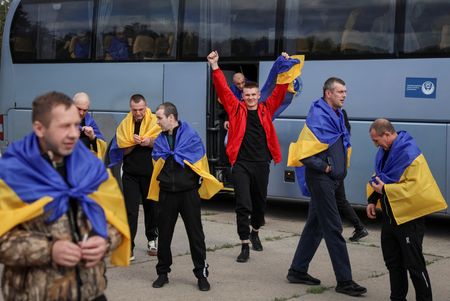
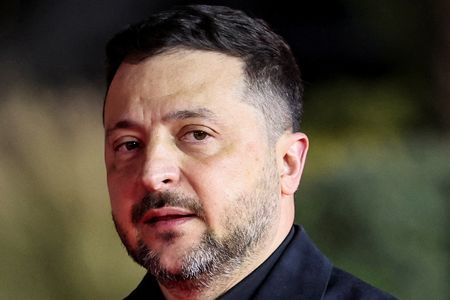
A significant prisoner exchange took place Friday between Ukraine and Russia, with each nation releasing 193 captured military personnel in a deal brokered with assistance from the United States and United Arab Emirates.
Ukrainian President Volodymyr Zelenskiy expressed satisfaction with the swap in a Telegram message, stating: “It is important that there are exchanges and that our people are returning home.”
Both Kyrylo Budanov, Zelenskiy’s chief of staff, and Russia’s defense ministry confirmed that American and UAE officials helped coordinate the prisoner transfer.
This exchange represents the latest in a series of captive swaps that have occurred throughout the four-year conflict, with both countries having traded thousands of prisoners during the war.
According to Zelenskiy, the freed Ukrainian personnel included military members, border patrol agents, and police officers. Some returnees sustained wounds during their captivity, while others had been facing criminal prosecution in Russia.
Emotional scenes unfolded as the released Ukrainians disembarked from transport vehicles, with many wrapped in Ukrainian flags and visibly moved by their return.
One returning soldier named Serhiy, who provided only his first name, described his feelings upon release: “It still hasn’t sunk in that I’m home, I was in captivity for three years … our Ukrainian sky, our trees — this is happiness.”
Law enforcement officials in Peru conducted a search of the former top election official’s residence on Friday as investigators examine claims of voting process misconduct following his resignation earlier this week due to ballot counting delays from the April 12 national election.
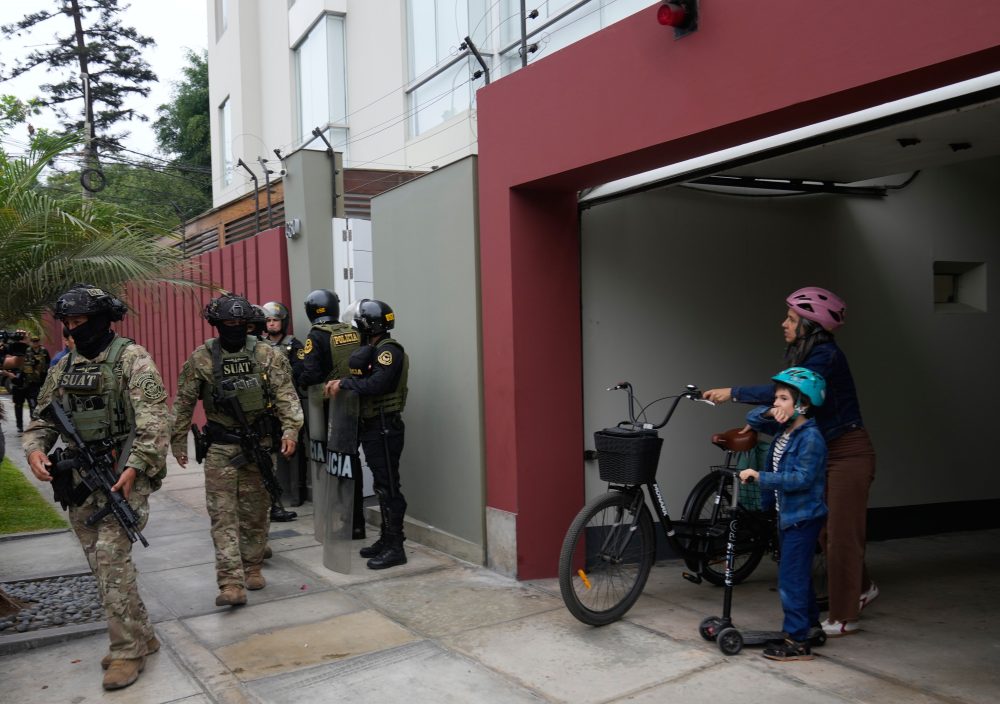
Television footage from local news outlets captured police officers entering Piero Corvetto’s home in Lima’s Miraflores neighborhood, acting under court authorization. The former director of Peru’s National Office of Electoral Processes (ONPE) was the target of the search, while authorities simultaneously examined up to 12 additional locations during the investigation.
The nation’s prosecutor’s office confirmed that anti-corruption officers worked alongside prosecutors during the operation, responding to mounting public accusations of electoral process violations.
Defense attorney Ricardo Sanchez Carranza informed Reuters that while a magistrate approved searching his client’s residence, officials rejected prosecutors’ request to place Corvetto in preliminary custody. The lawyer emphasized that Corvetto provided complete cooperation with investigators.
Lead prosecutor Raul Martinez directed the confiscation of cellular devices, computer equipment and paperwork from Corvetto’s residence, according to local broadcaster RPP’s reporting.
Corvetto stepped down from his position on Tuesday, describing his departure as “necessary and unavoidable” to help rebuild public trust in the electoral system following organizational failures that caused extended wait times at voting locations and delayed result announcements.
In his resignation statement, he rejected any allegations of misconduct and advocated for addressing outstanding concerns through an unbiased investigation.
European Union monitoring teams reported finding no indication of fraudulent activity during their observation.
The prolonged ballot counting process has sparked fraud accusations from multiple candidates across Peru. Election officials began this week examining thousands of disputed ballots containing discrepancies or mistakes on counting forms, creating additional delays in finalizing outcomes.
By Friday morning, approximately 95% of ballots had been processed according to ONPE data, showing conservative contender Keiko Fujimori in the lead with about 17% support. A close competition for second place continues between leftist legislator Roberto Sanchez and former Lima Mayor Rafael Lopez Aliaga, with Sanchez expanding his advantage over Lopez Aliaga to approximately 20,000 votes from 14,000 earlier in the week.
Peru’s National Jury of Elections announced that complete results will be released by May 15, preceding the planned presidential runoff between the leading two candidates scheduled for June 7.
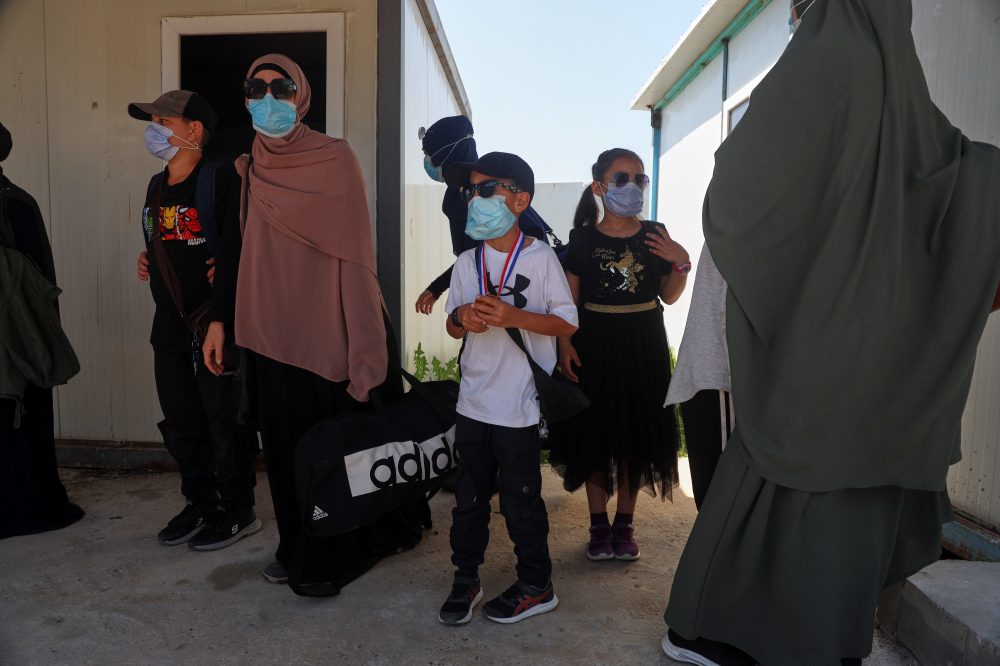
ROJ CAMP, Syria (AP) — Thirteen Australian women and children departed a Syrian detention facility on Friday in a second effort to return to their homeland, following a previous unsuccessful repatriation attempt earlier this year.
Journalists witnessed the group leaving Roj camp, a isolated detention center located close to Iraq’s border that holds relatives of individuals suspected of Islamic State connections. The families traveled by bus with a Syrian government official escort.
According to Lana Hussein, a representative from the Women’s Protection Units within the Kurdish-led Syrian Democratic Forces that oversees camp security, the families’ departure was coordinated with Syria’s central government in Damascus.
Hussein indicated the families would spend approximately 72 hours in Damascus before being “deported under security procedures.”
Neither Syrian foreign ministry officials nor Australian government representatives immediately provided comments when contacted.
An earlier effort in February to bring 34 women and children back to Australia from the same facility was halted when Syrian officials turned them back. Australian officials stated at that time they would not facilitate the families’ return, and the government subsequently issued a temporary exclusion order preventing one woman from re-entering the country.
Officials have not confirmed whether Friday’s new attempt involved coordination with Australian authorities.
While Roj camp sits in northeastern Syria under Kurdish-led Syrian Democratic Forces control, the Australians had intended to fly from Damascus.
Camp administrators previously stated that family members of the returnees, rather than Australian officials directly, had organized the planned repatriations.
Following the Islamic State’s territorial defeat in Syria during 2019, former fighters from various nations along with their spouses and children were detained in multiple camps and facilities across northeastern Syria. Despite their defeat, the organization continues operating through sleeper cells that conduct fatal attacks throughout Syria and Iraq.
The larger al-Hol camp has since been shuttered, while the U.S. military transferred thousands of suspected IS fighters previously detained in Syria to Iraq for trial proceedings.
These developments followed January clashes between government troops and the SDF, during which government forces captured significant SDF-controlled territory. The resulting turmoil led to numerous detainee escapes from al-Hol and prisoner breakouts from detention centers.
Australian authorities have previously facilitated the return of Australian women and children from Syrian detention facilities on two separate occasions, while other Australians have returned independently without government assistance.
NICOSIA, April 24 – Germany’s Chancellor Friedrich Merz proposed Friday that the European Union might consider reducing sanctions against Iran as part of a broader peace agreement, though fellow EU leaders responded with more reserved positions.
For several years, the 27-member European Union has maintained sanctions against Tehran, implementing travel restrictions and freezing assets of high-ranking officials and organizations due to human rights abuses, nuclear programs, and military assistance to Russia.
American officials have indicated that a wide-ranging agreement addressing Iran’s nuclear and missile capabilities and reopening the Strait of Hormuz could potentially bring a lasting conclusion to the U.S.-Israeli conflict with Tehran, extending beyond the existing ceasefire.
Following an EU summit held in Cyprus, Merz indicated the European bloc might consider a step-by-step reduction of Iran sanctions if a comprehensive agreement were achieved.
While European leaders have found themselves mostly on the sidelines during the ongoing Middle East crisis, some European officials view the bloc’s sanctions as a potential avenue for EU participation in diplomatic solutions.
“The easing of sanctions can be part of a process,” Merz stated to reporters following the Nicosia summit.
“No one has objected to that,” he commented regarding the summit discussions. “It is, so to speak, part of the contribution we can make to advance this process and, hopefully, lead to a permanent ceasefire.”
However, European Council President Antonio Costa, who chaired the summit, expressed a different view during a press conference after the meeting concluded: “It is too early to talk about relieving any kind of sanctions.”
European Commission President Ursula von der Leyen stated that lifting sanctions would require concrete proof of significant policy changes from Iran.
“We believe that sanctions relief should be conditional on verification of de-escalation, particularly on progress on the international effort to contain its nuclear threat, and on a change to the repression of its own people,” she said during the same press conference.
A Lebanese man experienced profound shock when he witnessed through social media an Israeli soldier destroying a religious statue that belonged to his family in their private garden located in the southern Lebanese village of Debel.
Houssam Naddaf explained that he discovered the incident online like countless others. “I saw it on the internet like everyone else,” Naddaf stated. Due to movement limitations enforced by Israeli military forces in the region, he was unable to personally visit his property to assess the destruction.
The area fell under Israeli military control during the current Israel-Hezbollah conflict, which commenced on March 2 following Iran-backed Lebanese militants launching missiles across the border two days after the United States and Israel initiated their campaign against Iran. Subsequently, Israel conducted a ground operation in southern Lebanon, maintaining their presence even after last week’s ceasefire declaration.
The footage showing the soldier wielding an axe against the fallen Jesus statue in Debel generated significant international criticism and outrage throughout Lebanon and beyond.
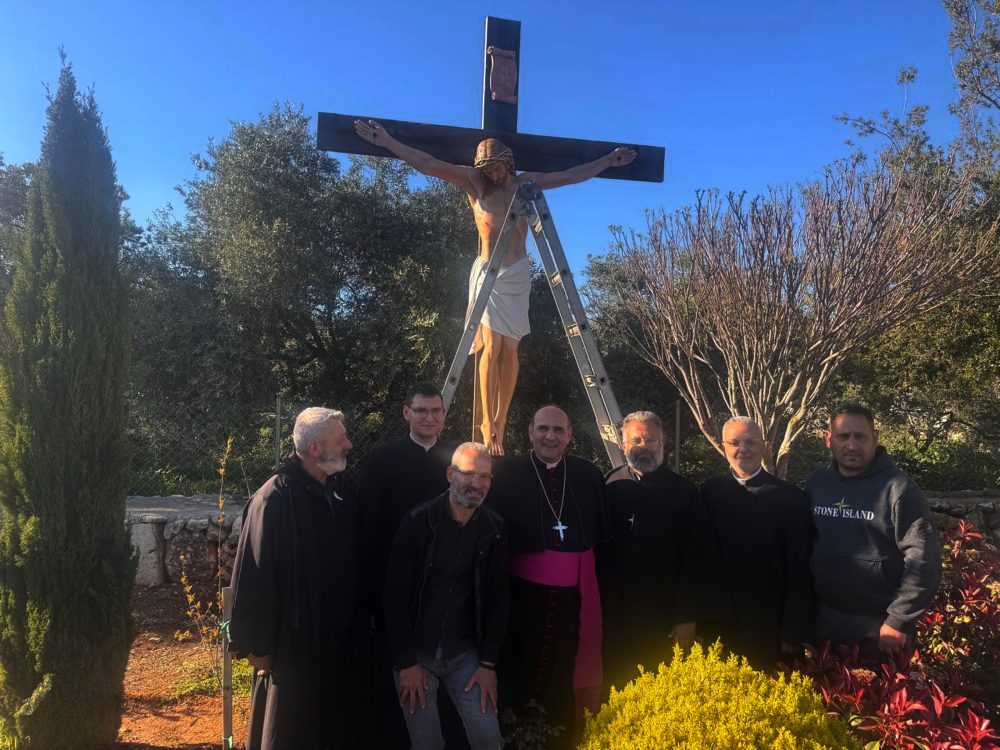
On Tuesday, Israel’s military announced they had provided a replacement sculpture. Naddaf verified that Israeli forces delivered a similar but smaller crucifix, presented their apologies, and completed the installation with local clergy present.
Nevertheless, Naddaf revealed that his family members, who were absent during that ceremony, had already been approached by United Nations peacekeeping forces regarding a crucifix donation from Italy. The family chose to accept Italy’s contribution, which matched the original statue’s dimensions, while donating the Israeli-provided replacement to a neighborhood church.
Wednesday’s installation of the Italian-donated crucifix featured a modest ceremony with local religious leaders, community members, UN peacekeepers, and Naddaf’s family in attendance.
From Italy, Prime Minister Giorgia Meloni transmitted a message describing the replacement statue as “a powerful message of peace, hope, and dialogue.”
The family had originally placed the crucifix in their garden during 2018, within shared property that Naddaf and his three brothers subdivided into four family apartments beginning in 2010.
According to Naddaf, his residence sits at Debel’s perimeter, positioned between the village and neighboring Rmeish—a location residents view as more vulnerable compared to the village center, which remains largely outside the primary conflict zone. When hostilities resumed between Hezbollah and Israel on March 2, Naddaf relocated with his wife and three children to his parents’ residence deeper within Debel.
Following last week’s ceasefire agreement with Hezbollah, Israeli forces have been demolishing neighborhoods throughout towns and villages along the Lebanese-Israeli border.
Military officials claim they exclusively target structures that served as militant outposts for the Iran-supported organization. However, destruction appears nearly comprehensive across many regions. This extensive devastation has heightened concerns among Lebanese authorities and citizens that numerous war-displaced individuals may lack homes to return to should the fragile ceasefire endure.
Even with the ceasefire in effect, Naddaf reported that Israeli forces continue preventing his family from returning to their residence.
Israeli troops maintain control over a border zone extending approximately 10 kilometers (6 miles) into Lebanese territory, characterizing this area as an essential buffer zone protecting their northern communities from Hezbollah rocket attacks. Many Lebanese civilians worry these actions could result in extended displacement.
Unlike the 2024 Israel-Hezbollah conflict when Naddaf’s family sought refuge in Beirut, they decided to stay within their village this time. “It was clear that the plan was expulsion, so we say good thing we didn’t leave this time,” he explained.
During his UN peacekeeper-escorted visit to his home for the crucifix ceremony, he discovered a “total mess,” though expressed gratitude that his house remained intact, unlike several neighboring homes that faced demolition.
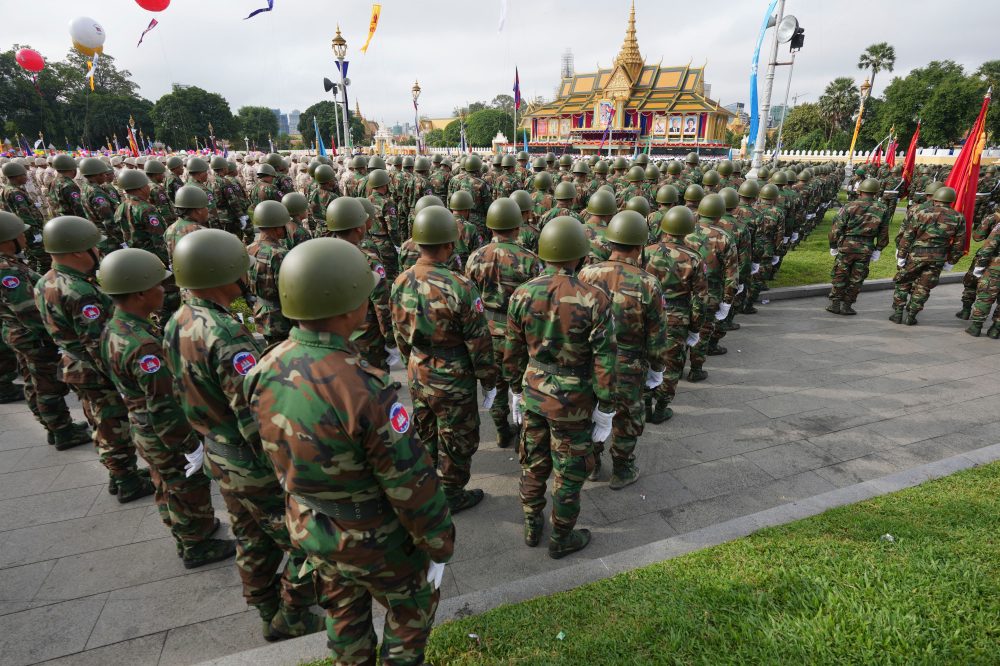
PHNOM PENH, Cambodia (AP) — Cambodia’s Cabinet has approved legislation mandating two years of military service for men between the ages of 18 and 25, following deadly border conflicts with Thailand that occurred twice last year.
Government spokesperson Pen Bona announced Friday that this new conscription legislation will replace a 2006 law that was never put into practice and no longer meets current military requirements.
The previous legislation set the maximum draft age at 30 years old. Under the new rules, women may join the armed forces voluntarily.
According to Pen Bona, the Cabinet adopted the comprehensive draft legislation, which contains eight chapters and 20 articles, during Thursday’s meeting.
Border disputes between Cambodia and Thailand erupted into violence on two separate occasions last year over competing territorial claims along their mutual boundary.
The conflicts resulted in the displacement of hundreds of thousands of residents in both nations and claimed the lives of approximately 100 Cambodian military personnel and civilians. While a December ceasefire ended active hostilities, regional tensions continue to simmer.
According to an official government statement, military service represents both a fundamental obligation and a distinguished honor that enables Cambodians to support national progress and protect their homeland.
Prime Minister Hun Manet announced in July of last year, as relations with Thailand worsened, that Cambodia would enact conscription during this year. He argued that drafted soldiers demonstrate greater effectiveness and professionalism compared to volunteer forces, and that mandatory service would address personnel shortfalls while enhancing military readiness.
The proposed legislation must receive approval from both the National Assembly and Senate before King Norodom Sihamoni can sign it into law.
European Union member nations have decided to continue advocating for worldwide carbon emissions pricing in the shipping industry during upcoming United Nations maritime discussions, potentially creating another diplomatic confrontation with the United States over environmental policy.
Last year, officials at the International Maritime Organization chose to delay the environmental initiative by twelve months following intense resistance from the Trump administration, which had threatened to implement sanctions and travel restrictions on representatives backing the measure.
Despite this setback, European nations remain determined to resurrect their climate proposal, based on the EU’s negotiating strategy for the upcoming IMO discussions, which Reuters has reviewed.
According to the strategic document, EU member states “shall oppose any attempts” to eliminate these climate initiatives from the negotiation agenda during the scheduled meeting.
The document indicates that European countries are willing to modify their original carbon pricing framework if such changes would help build broader international support. Nevertheless, several EU representatives expressed doubt that any compromise agreement on environmental measures could succeed, considering America’s steadfast resistance.
Norway’s Environment Minister Andreas Bjelland Eriksen stated that the IMO maintains an opportunity to achieve a groundbreaking agreement, but must explore “different approaches” to prevent a recurrence of last year’s unsuccessful outcome.
“Also… whether we can do some things already now and potentially postpone other parts of the regulation to a later stage, for example,” he added while speaking to journalists.
During October’s meeting, 57 nations – including China and significant maritime countries such as Liberia – voted to postpone the carbon pricing mechanism, while 49 countries pushed for immediate implementation.
Those favoring the proposal included European states, Brazil, and several small island nations facing climate change threats.
A group representing the world’s three largest ship registration countries – Liberia, Panama, and the Marshall Islands – along with oil transport companies including Saudi Arabia’s Bahri, have encouraged IMO participants to explore alternatives to the existing carbon pricing framework during next week’s sessions.
“Support for the framework in its current form has continued to erode” since the IMO meeting last year, they said in a statement.
Last year’s IMO decision created divisions within the EU, as Greece and Cyprus – both hosting substantial shipping sectors – departed from the bloc’s unified position and abstained rather than supporting the European-backed environmental proposal.
Greece, Malta, and Italy refused to approve the new EU negotiating strategy, which received approval from a reinforced majority of European Union countries, according to officials.
Brazilian law enforcement officials are conducting a criminal investigation into Caldic, an international chemical distribution company majority-controlled by American private equity giant Advent International, over allegations the firm supplied materials for an enormous methanol smuggling operation.
Authorities last year dismantled what they described as a massive $10 billion fuel fraud network operated by Brazil’s most powerful criminal organization, the First Capital Command (PCC), which illegally distributed methanol as automotive fuel through gas stations.
According to a source with direct knowledge of the investigation, Caldic served as the primary methanol supplier in the case under scrutiny.
While law enforcement has not uncovered evidence suggesting Caldic or Advent were aware their products were being misused, the source noted that the investigation by São Paulo state prosecutors highlights how even well-established American investment firms can become inadvertently connected to criminal enterprises that have infiltrated large portions of Latin America’s business sector.
This marks the first public disclosure that the Netherlands-headquartered Caldic faces investigation for potential connections to the fuel fraud network run by the PCC criminal syndicate.
Another distributor, GPC Química, is also facing examination regarding its methanol transactions, though the volumes in question are reportedly smaller than those involving Caldic, according to the source.
The PCC, which originated three decades ago within a São Paulo correctional facility, has evolved into South America’s most extensive drug trafficking organization, operating a money laundering division that has increasingly penetrated legitimate business sectors including real estate, financial technology companies, and fuel distribution.
The criminal organization has created diplomatic friction, with the United States urging Brazil’s government to designate it as a terrorist entity as part of a broader regional approach to combat transnational gangs engaged in what officials term “narcoterrorism.”
Prosecutors plan to file formal charges in the methanol investigation by June and continue assessing the scope and character of Caldic’s involvement in the operation, the source revealed, noting the company could face civil litigation while employees might encounter criminal charges.
When questioned about the criminal investigation, Caldic issued a response through its Brazilian division Quantiq, stating the company is “cooperating with investigators” and “is firmly committed to the highest standards of compliance and integrity.” The statement added that an internal review discovered no misconduct by company leadership.
GPC Química, which neither confirmed nor denied being under investigation, informed reporters it operates “strictly following the legislation and current regulations.”
Advent, consistently ranked among America’s ten largest private equity companies, stated the investigations do not directly involve the investment firm, emphasizing it “conducts all of its business with the highest integrity, and holds its portfolio companies to the same high standards.”
Brazil’s fuel oversight agency ANP announced it has initiated an ongoing “administrative proceeding” to examine Quantiq’s methanol transactions. Internal documents from that separate regulatory investigation, currently sealed, reveal it was prompted by the criminal probe and references prosecutors’ initial conclusions, including electronic communications between Quantiq staff and individuals connected to the PCC.
The regulatory body has already limited Caldic’s methanol distribution in Brazil and could potentially revoke the company’s authorization to handle the substance, according to ANP records.
Methanol, a regulated chemical in Brazil, poses dangers to vehicles and can be fatal to humans. Beginning in 2024, ANP made distributors accountable for improper use of the substance by their clients.
An ANP document from November, obtained from the regulator’s confidential investigation, indicated nearly 25% of Quantiq’s methanol transactions triggered concerns because the listed purchasers, including some connected to the PCC, were either non-operational, never received deliveries, or had no apparent need for the quantities bought.
The document accused Quantiq of failing to establish basic compliance procedures, thereby enabling “the irregular methanol trade, with potential risk to public health and to the regular supply of fuels.” These allegations have not been independently confirmed.
Responding to inquiries about the document’s findings, Quantiq stated it would not address speculation, anonymous sources, or partially disclosed information.
The São Paulo prosecutors’ office refused to discuss specifics of the ongoing sealed investigation.
Both methanol and ethanol play crucial roles in Brazil’s expanding biofuels sector. Methanol serves in small amounts for biodiesel manufacturing, while ethanol functions widely as both an additive and gasoline replacement in Brazilian vehicles.
Since methanol typically costs less than ethanol, criminal actors can blend the substances to increase profits from fuel sales, explained Carlo Faccio, director of ICL, an industry organization established to fight fuel fraud in Brazil.
During the multi-billion-dollar fuel fraud and money-laundering scheme targeted by officials in August, PCC members obtained methanol to contaminate fuel distributed to suppliers and gas stations, the government reported.
Among those served with warrants were two individuals who had been employed for more than ten years at Quantiq, the Caldic subsidiary, according to documents from the ANP investigation. These workers, who held non-executive positions, exchanged electronic messages arranging methanol deliveries with people directly tied to the PCC, the investigation source confirmed.
The company reported its internal review found “no indication of involvement by Quantiq’s representatives or management” in the alleged methanol smuggling, declining to elaborate on specific accusations. Quantiq refused to share audit documentation or identify who performed it, and the findings could not be independently verified.
During the previous year, Quantiq ranked as Brazil’s second-largest methanol importer, trailing GPC Química, based on ANP statistics.
ANP investigation records showed Quantiq distributed approximately 190 million liters of methanol between January and August of last year.
Hundreds of these shipments, which Quantiq brought through the Paranaguá port in southern Brazil, failed to reach their designated recipients, according to financial tracking information examined by ANP officials in their sealed administrative review.
Quantiq also delivered methanol shipments to companies that had ceased operations or lacked clear purposes for the chemical, ANP determined.
When customers did show legitimate uses, ANP officials discovered several purchased far more than their documented requirements.
For instance, Quantiq sold roughly 25 million liters over eight months to a purchaser that informed ANP in October it uses approximately 630,000 liters of methanol monthly, the ANP documents indicated. The destination of the excess amount could not be determined.
In November, ANP prohibited Quantiq from methanol sales while examining issues identified by last year’s criminal investigation. ANP also referenced a regulatory review into similar problems in 2023, when it advised the company to enhance its compliance procedures.
Regarding ANP’s recent conclusions, Quantiq said it maintained compliance and client verification processes, “incorporating regulatory recommendations.”
In February, the regulator permitted Quantiq to restart limited methanol sales to designated buyers under new protective measures, pending a final decision based on its continuing administrative investigation.
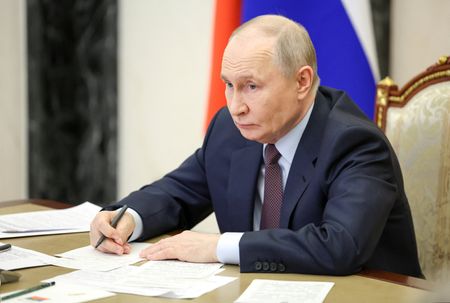
Russian President Vladimir Putin is considering attending the G20 summit scheduled for Miami in December, according to Kremlin officials who confirmed Friday that Moscow received an invitation from the United States.
The potential attendance would mark Putin’s first appearance at a G20 gathering since 2019, as he skipped previous meetings due to the coronavirus pandemic and later because of Russia’s invasion of Ukraine in 2022, which severely damaged relations between Russia and Western nations.
Kremlin spokesperson Dmitry Peskov addressed the possibility during an interview with state television, stating: “President Putin may go to Miami as a member of the G20, or he may not go, or another Russian representative may go.”
A U.S. official confirmed that Washington has extended an invitation to Russia for the annual gathering of the world’s 20 largest economies, and Moscow has accepted the invitation.
The development comes after reports emerged Thursday that President Trump planned to invite Putin, though Trump later told journalists he was unaware of any invitation or whether the Russian leader would attend.
A senior administration official clarified that formal invitations have not yet been distributed. “But Russia is a G20 member and will be invited to attend ministerial meetings and the leaders’ summit,” the official said while requesting anonymity.
Peskov emphasized that Russia will ensure appropriate representation at the summit, noting that Moscow considers the G20 forum extremely valuable given the various global crises currently unfolding.
The Kremlin previously expressed agreement with Trump’s assessment that removing Russia from the Group of Eight in 2014 was an error, though Moscow has since characterized the G7 as insignificant and “rather useless” for Russian interests.
Russian Deputy Foreign Minister Alexander Pankin confirmed through state news agencies that Russia received an invitation to participate at the highest level in the Miami G20 summit.
During Thursday’s remarks to reporters, Trump suggested that Putin felt deeply insulted by his removal from the G8. “He was very offended by that. I’d venture to say you probably wouldn’t be having these problems if you didn’t throw him out,” Trump commented. “I’m of the opinion that you talk to everybody.”
However, Trump expressed skepticism about Putin’s actual attendance. “I doubt he’d come, to be honest with you. I sort of doubt he’d come,” Trump said while discussing his efforts to resolve the Ukraine conflict.
Since beginning his second presidential term, Trump has demonstrated a more accommodating approach toward Russia and has criticized Ukraine regarding the ongoing war. The administration recently extended exemptions allowing Russian oil purchases without triggering sanctions.
Trump has faced ongoing criticism for his historically positive statements about Putin, with critics arguing he maintains a lenient stance toward Russia. Trump disputes these characterizations, claiming no previous U.S. president took a tougher approach with Moscow.
A State Department representative clarified the administration’s position Thursday, explaining: “As a member of the G20, Russia has been invited to all working-level meetings to date. President Trump has been clear that Russia is welcome to attend all G20 meetings as the United States focuses on delivering a successful and productive summit.”
Authorities in Portugal announced Friday they have confiscated a massive collection of 278 artworks from a former domestic worker who may have been attempting to sell pieces that didn’t belong to him.
The collection, which investigators say includes potential works by renowned artists Pablo Picasso and Joan Miró, was discovered in the possession of a man who previously worked as a butler for an American citizen living in Penalva do Castelo. The artwork’s original owner passed away in 2024.
Investigators have not yet verified whether the pieces are authentic, according to authorities. The former employee is currently being questioned by police in connection with suspected attempts to sell portions of the valuable collection.
Law enforcement conducted their investigation through what they dubbed “Operation Butler,” working alongside art experts from the National Museum Machado de Castro to properly handle and assess the seized items.
The remarkable collection spans multiple centuries and artistic movements, featuring works attributed to 27 different creators. Among them are pieces believed to be by German Renaissance artist Albrecht Dürer, Spanish masters Picasso and Miró, and contemporary British artist David Hockney. The haul also contains various sculptures and cultural artifacts.
Police have launched a formal investigation into the matter but have not released additional information regarding potential criminal charges at this time.
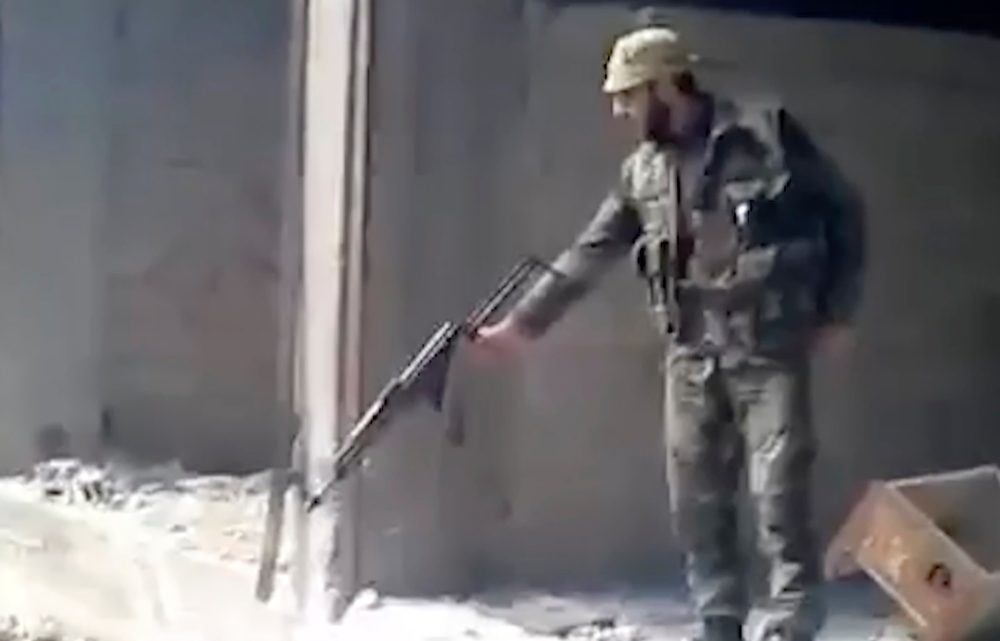
DAMASCUS, Syria (AP) — A former Syrian intelligence operative featured in a disturbing leaked video showing mass executions has been captured by authorities, officials announced Friday.
The Interior Ministry confirmed that Amjad Yousef was taken into custody in Hama province, where he had been in hiding. Officials released an image showing him wearing a striped prison jumpsuit.
The arrest follows the December 2024 overthrow of former President Bashar Assad by insurgent forces, leading to the capture of numerous security personnel accused of committing war crimes. Assad has since fled to Russia for refuge.
The devastating conflict that erupted from peaceful demonstrations in March 2011 eventually escalated into a full-scale civil war, resulting in approximately 500,000 deaths and more than one million injuries.
Yousef was identified as one of multiple Syrian security operatives featured in footage that surfaced in 2022, depicting the systematic execution of bound and blindfolded prisoners who were shot and disposed of in a pit.
The disturbing 6-minute and 43-second recording captured members of the infamous Military Intelligence Branch 227 executing approximately 40 detainees in a deserted structure in Tadamon, a Damascus suburb adjacent to the Yarmouk Palestinian refugee settlement. This area remained a battleground between government troops and rebel forces throughout much of the war.
The victims appeared with blindfolds and hands restrained behind them. The Branch 227 operatives systematically positioned each prisoner at the rim of a pit containing old tires before forcing them inside and shooting them as they fell.
During the recording, intelligence personnel deceived some prisoners by claiming they would traverse a dangerous sniper zone and instructed them to run quickly. The victims collapsed onto the remains of previous victims. As corpses accumulated in the pit, some victims continued moving, prompting additional gunfire into the mass of bodies.
The perpetrators subsequently ignited the remains, apparently attempting to destroy evidence of their crimes.
Syrian security forces announced last year that three additional individuals connected to these same killings had been apprehended.
Friday’s Interior Ministry announcement emphasized that authorities remain committed to tracking down everyone involved in the Tadamon executions to ensure they face prosecution.
The U.S. State Department imposed travel restrictions on Yousef, his spouse, and immediate family members in March 2023, barring their entry into the United States.
Ukrainian President Volodymyr Zelenskyy landed in the Saudi city of Jeddah on Friday, marking his second trip to the kingdom within a month as Ukraine works to strengthen security partnerships and showcase its military technology throughout the Middle East during ongoing regional tensions.
Upon his arrival, Zelenskyy posted on social media platform X: “Yesterday, at a meeting with European leaders, we secured financial guarantees for our resilience. Today, we are advancing our agreements with Saudi Arabia in the areas of security, energy, and infrastructure.”
The Ukrainian leader indicated his intention to hold discussions with Crown Prince Mohammed bin Salman during the visit. While Zelenskyy did not specify his destination in his own statements, Saudi state television confirmed his arrival in Jeddah.
This follows Zelenskyy’s previous trip to Saudi Arabia in late May, where Ukraine and the kingdom established a defense cooperation framework that the president characterized as creating extensive groundwork for future military contracts.
Following regional conflicts involving Iran, Ukraine has successfully negotiated agreements with multiple Middle Eastern nations by offering its technology and knowledge in intercepting Iranian long-range attack drones.
Zelenskyy has previously highlighted Ukraine’s support as producing positive outcomes across the Middle East region, and has also proposed that Kyiv could contribute its specialized knowledge to help restore safe passage through the Strait of Hormuz.
LONDON — Legislation permitting terminally ill adults in England and Wales to choose assisted death will expire Friday as the parliamentary session concludes without final passage.
While the Terminally Ill Adults (End of Life) Bill successfully passed through the elected House of Commons last June, the upper chamber House of Lords has effectively stalled the measure through extensive debate and procedural delays.
Supporters of what advocates call “assisted dying” — also known as “assisted suicide” — viewed this legislation as potentially the most significant social policy transformation in Britain since abortion became partially legal in 1967.
However, House of Lords opponents successfully delayed passage by submitting over 1,200 proposed amendments to the legislation. This represents what experts believe is the highest number of amendments ever filed for a backbencher-sponsored bill rather than government-introduced legislation. Parliamentary rules restrict backbencher bills to Friday debate sessions only, severely limiting available discussion time.
Since the current parliamentary session ends next week, the legislation will expire. Britain’s five-year parliamentary terms include multiple government-determined sessions, and bills must complete the entire legislative process within one session to become law.
Assisted dying advocates have expressed frustration that unelected House of Lords members blocked the will of elected representatives and pledge to reintroduce the measure in the upcoming parliamentary session beginning after King Charles III delivers the government’s agenda speech to both chambers on May 13.
The legislation under consideration for approximately 18 months would have permitted adults in England and Wales with terminal diagnoses of six months or less to request assisted death following approval from two physicians and an expert review panel.
House of Lords members filing amendments argued they were conducting essential legislative review to improve the bill. Critics labeled the measure dangerous and impractical, expressing concerns about potential pressure on vulnerable individuals and insufficient protections for disabled persons.
Kim Leadbeater, who introduced the legislation to the House of Commons in late 2024, has committed to entering the backbencher ballot to reintroduce the bill next session.
“I will keep pushing for a safer, more compassionate law until Parliament reaches a final decision,” she stated.
Last month, Scottish Parliament members defeated similar legislation that would have made Scotland the first UK region to permit terminally ill adults to end their lives. Scotland maintains semi-autonomous governance with authority over various policy areas including healthcare.
Physician-assisted suicide — where patients consume lethal medication prescribed by doctors — is currently legal in multiple countries including Australia, Belgium, Canada, Luxembourg, the Netherlands, New Zealand, Portugal, Spain, Switzerland and several U.S. states, with varying qualification requirements across jurisdictions.
Federal authorities have unveiled a major offensive targeting cybercrime networks operating across Southeast Asia, with U.S. Attorney Jeanine Pirro describing the effort Friday as part of a “new theater of war” the Trump administration is waging against Chinese organized crime syndicates.
The comprehensive operation, spearheaded by a newly formed Scam Center Strike Force, resulted in Treasury Department sanctions against 29 individuals and entities, including a high-profile Cambodian legislator. Federal prosecutors have also brought criminal charges against two Chinese citizens connected to similar schemes in Myanmar.
During a virtual news conference linking Washington with reporters across Asia, Pirro outlined the scope of the initiative, which includes obtaining warrants to dismantle a significant recruitment operation on Telegram and freezing hundreds of millions in criminal proceeds.
Online fraud has exploded throughout Southeast Asia in recent years, with Cambodia and Myanmar serving as major hubs for illegal enterprises that generate enormous profits by targeting victims worldwide, according to United Nations researchers and crime analysts. FBI data shows Americans alone suffered losses approaching $21 billion from cyber-enabled fraud and digital scams during 2025.
These criminal enterprises are deeply connected to human trafficking networks, exploiting foreign workers who are lured with promises of legitimate employment only to be forced into operating romance scams and cryptocurrency fraud under conditions resembling modern slavery.
The strike force brings together Pirro’s U.S. Attorney’s Office for the District of Columbia, the Justice Department’s Criminal Division, along with the FBI and Secret Service.
The operation’s highest-profile target is Kok An, a Cambodian senator and influential business figure whom Treasury officials have labeled a “scam center kingpin.”
The Treasury’s Office of Foreign Assets Control imposed sanctions on Kok An and his associates for their alleged roles in a criminal network that has reportedly stolen millions from American victims. The penalties freeze any U.S.-based assets belonging to Kok An and ban American businesses from conducting transactions with him.
Attempts by The Associated Press to reach Kok An or his representatives were unsuccessful.
“His Excellency Kok An is a Cambodian Senator and he was elected by elections, and as a senator he has parliamentary immunity,” stated Chea Thyrith, a spokesperson for Cambodia’s Senate, adding that only American officials could provide clear details about the sanctions.
This marks at least the second time the U.S. has sanctioned a Cambodian senator. In 2024, Washington took similar action against another wealthy businessman, Ly Yong Phat, who faced accusations of involvement in forced labor, human trafficking and profitable online fraud schemes.
According to Pirro, the current enforcement action began in November when FBI agents deployed to Thailand gained access to extensive evidence recovered from a deserted scam facility in Myanmar, including over 8,000 mobile phones and 1,500 computer devices.
This evidence led to wire fraud conspiracy charges against two Chinese nationals, Huang Xing Shan and Jiang Wen Jie, who allegedly managed the Myanmar compound before attempting to relocate their operations to Cambodia. Both men are currently detained by Thai authorities on immigration charges while the U.S. pursues their extradition, Pirro explained.
Cambodia’s parliament unanimously passed legislation in March specifically targeting online scam operations with penalties up to life imprisonment, following government promises to eliminate these centers by April’s end.
This past January, Cambodia extradited another suspected scam leader, Chen Zhi, founder of the Prince Holding Group business empire, to China despite U.S. efforts to secure custody after indicting him last year for allegedly orchestrating a massive fraud operation.
ISLAMABAD (AP) — Pakistani leaders held discussions Friday with Iran’s foreign minister about ceasefire arrangements in the ongoing conflict involving the United States and Israel, as Islamabad continues pushing to arrange another round of peace negotiations between Tehran and Washington.
Islamabad has been working to bring American and Iranian representatives back to the negotiating table, though anticipated discussions earlier this week failed to occur. President Donald Trump agreed to extend the ceasefire indefinitely at Pakistan’s urging this week, giving diplomats additional time to pursue talks.
Despite the ceasefire extension, the situation in the Strait of Hormuz remains volatile. This crucial shipping route handles one-fifth of global oil and natural gas transportation during normal conditions. Iranian forces continue blocking vessel traffic and launched attacks on three ships this week, while American forces maintain their blockade of Iranian harbors and have authorized military personnel to “shoot and kill” small watercraft suspected of laying mines.
The U.S. military presence in the area has expanded significantly with the arrival of the USS George H.W. Bush in the Indian Ocean this week, joining the USS Abraham Lincoln in the Arabian Sea and the USS Gerald R. Ford in the Red Sea.
This marks the first instance since 2003 that three American aircraft carriers have operated simultaneously in the region. According to U.S. Central Command, the combined naval force includes 200 aircraft and 15,000 sailors and Marines.
The conflict has caused dramatic increases in global oil costs, with Brent crude reaching over $107 per barrel in Friday’s spot trading — nearly 50% higher than February 28 levels when the U.S. and Israel initiated military action against Iran.
During Friday’s diplomatic conversation, Iranian Foreign Minister Abbas Araghchi spoke with Pakistani Foreign Minister Ishaq Dar and Pakistan’s army chief Field Marshal Asim Munir about “regional developments and issues related to the ceasefire,” according to Araghchi’s statement, though specific details were not disclosed.
Pakistan’s Foreign Ministry later confirmed that “both sides exchanged views on regional developments, the ceasefire, and ongoing diplomatic efforts being pursued by Islamabad in the context of U.S.-Iran engagement.”
The ministry added that Dar “underscored the importance of sustained dialogue and engagement to address outstanding issues, in order to advance regional peace and stability at the earliest.”
Casualty figures from the conflict show at least 3,375 deaths in Iran and more than 2,290 in Lebanon, according to official sources. Israel has reported 23 fatalities, while Gulf Arab nations have lost more than a dozen people. Military losses include 15 Israeli soldiers in Lebanon and 13 U.S. service members across the region.
PRAGUE (AP) — Czech Republic’s leading electricity provider ČEZ announced Friday it has entered into an agreement with British company Rolls-Royce SMR for preliminary development of the country’s inaugural small modular nuclear reactor.
According to ČEZ chief executive Daniel Beneš, the collaboration will focus on creating project blueprints and obtaining the regulatory documentation required for construction permits.
Beneš expressed optimism that all necessary governmental approvals will be secured by 2030. Construction of the compact nuclear facility is planned for the location where the current Temelín nuclear power station operates.
Earlier this year on April 13, Great Britain Energy – Nuclear, a governmental organization, entered into an agreement with Rolls-Royce SMR to initiate design development for Britain’s first small nuclear reactors.
According to Beneš, the Czech facility will represent the British company’s second small nuclear reactor project, following completion of their initial installation in the United Kingdom.
ČEZ maintains a 20% ownership stake in Rolls-Royce SMR, and the two companies previously established a strategic alliance aimed at developing up to 3 gigawatts of energy capacity within Czech borders.
The Czech government controls nearly 70% of ČEZ shares and is working toward complete ownership of the utility company.
Small modular reactors represent a nuclear technology designed to produce less electricity than conventional large-scale reactors. Proponents argue these compact units can be constructed more quickly and economically than traditional nuclear facilities, with flexibility to match specific regional energy demands.
RUYIGI, Burundi (AP) — Hundreds of Congolese refugees who fled violence in their homeland are now making the journey back across the border from Burundi, taking advantage of enhanced safety conditions after rebel forces pulled back from strategic locations.
The most recent group of 470 individuals crossed into eastern Congo after spending nearly four months at the Busuma refugee facility in Burundi’s Buhumuza province, where they had taken shelter following clashes near Uvira. United Nations data shows these returnees are part of a larger movement, with no fewer than 33,000 Congolese having made the trip home by March.
The M23 rebel organization, which captured extensive territory across North and South Kivu provinces along Rwanda’s border last year, subsequently pulled out of Uvira under mounting international pressure.
President Donald Trump has taken on a significant role in peace negotiations as the United States works to secure lasting ceasefire commitments from both nations, while potentially creating opportunities for American businesses to access Congo’s valuable mineral resources essential for technology ranging from aircraft to smartphones.
A Congolese Embassy representative from Burundi supervised Thursday’s homecoming ceremony, which brought joy to refugees who had endured food shortages and supply deficits at the Busuma facility.
Officials from the U.N. High Commissioner for Refugees announced the transport operation will extend for several more weeks, with a minimum of two bus groups departing weekly.
“I am happy, very joyful,” Hassan Masemo, one of those returning home, expressed, while thanking Burundian officials for “reopening the border for us.”
UNHCR statistics indicate Burundi currently provides refuge to over 200,000 Congolese displaced persons, with 66,000 residing in the Busuma location alone.
The facility opened in December 2025 to house Congolese civilians escaping the rebel offensive toward Uvira, which led Burundi to shut down the Gatumba crossing point. The border resumed operations following M23’s departure.
“This is being done only for those who are going straight to their homes, because for areas which are not yet safe for return, we are not going to organize the return,” stated Brigitte Mukanga-Eno, UNHCR’s representative in Burundi.
After local administration was reestablished in Uvira, some refugees began voluntary returns in March, which encouraged others to follow their example, she explained.
Eastern Congo’s resource-abundant region has endured generations of conflict as government military units battle more than 100 armed organizations, with M23 representing the most formidable threat.
While neither Rwanda nor M23 have openly confirmed Rwandan military participation alongside the rebels, United Nations investigators have documented proof of their engagement. Rwanda characterizes its actions as protective steps to safeguard its borders from Hutu militants linked to Rwanda’s 1994 genocide.
SEOUL, South Korea — Prosecutors in South Korea have declined a police request to arrest Bang Si-Hyuk, the billionaire music executive who chairs the company that manages global K-pop sensation BTS, citing insufficient grounds for detention in a major investor fraud investigation.
The Seoul Metropolitan Police Agency had sought an arrest warrant earlier this week for Bang, who founded and leads Hybe. However, the Seoul Southern District Prosecutors’ Office determined the police request didn’t provide adequate justification for holding the executive and directed investigators to build a stronger case.
Bang has been prohibited from traveling outside South Korea since August, though authorities don’t consider him a significant flight risk.
The 53-year-old executive faces accusations of deceiving investors in 2019 by suggesting Hybe had no immediate intentions of becoming a publicly traded company, leading investors to sell their stakes to a private equity firm just before the company launched its stock market debut.
Investigators suspect the private equity fund may have paid Bang approximately 200 billion won ($135 million) through a separate agreement that guaranteed him 30% of profits from stock sales following the public offering.
According to Hybe representatives, Bang maintains his innocence. His attorneys have condemned the police effort to arrest him, emphasizing that he has fully participated in the investigation for several months.
The legal challenges facing Bang create unwelcome publicity for Hybe as BTS embarks on a worldwide tour following a nearly four-year break while the group’s seven members completed required military service.
BTS recently performed before thousands of international fans at a free reunion concert in Seoul and has since held shows in Goyang city, South Korea, and Tokyo. The band is scheduled to begin its American tour dates with a performance in Tampa, Florida, this weekend.
NICOSIA, Cyprus (AP) — Spain’s Prime Minister Pedro Sánchez declined Friday to engage with reports suggesting the Pentagon might consider disciplinary action against NATO members who don’t back U.S. military operations in Iran.
Spain finds itself potentially targeted after blocking American military forces from utilizing Spanish territory and airspace for Iran-related operations. Spanish officials argue that actions taken by the U.S. and Israel in the Iran conflict violate international law.
Reports indicate the Pentagon may be considering Spain’s suspension from NATO, based on an unnamed U.S. official’s reference to a Defense Department email cited by Reuters.
“Well, we do not work with emails,” Sánchez stated to media during a European Union summit in Cyprus. “We work with official documents and positions taken, in this case, by the government of the United States.”
“The position of the government of Spain is clear: absolute collaboration with the allies, but always within the framework of international legality,” he added.
NATO functions through unanimous agreement among members. The alliance’s charter contains no provisions for removing or suspending any of its 32 nations, though countries can voluntarily withdraw after providing one year’s notice to other members. NATO itself plays no direct part in the Iran conflict beyond protecting member territory.
President Donald Trump has expressed frustration with what he perceives as inadequate support from certain NATO allies regarding American Iran operations and assistance with securing the Strait of Hormuz shipping lane. Trump has publicly questioned America’s continued participation in the military alliance.
EU foreign policy leader Kaja Kallas expressed confusion about U.S. complaints, noting that Britain and France are spearheading efforts to secure maritime trade in the strait post-conflict.
“When we have had contacts with the American counterparts, then actually their asks for us have been exactly what we are able to offer after the cessation of hostilities,” she explained. “Demining, escorting of ships, all of this that we have been discussing.”
However, NATO Secretary-General Mark Rutte has emphasized that America maintains “long-standing arrangements and agreements with European allies on overflight, on basing” that deserve respect, appearing to criticize countries like Spain and France.
Despite Spain’s restrictions on U.S. military activities tied to the Iran situation, American aircraft have operated through other NATO nations’ airspace and utilized U.S. installations in different member countries for conflict-related missions.
Trump has even suggested potential trade restrictions against Spain due to its base and airspace limitations. Additionally, Spain has disappointed allies by not matching their planned defense spending commitments.
Russian President Vladimir Putin has directed the country’s primary intelligence training facility to restore the name of Felix Dzerzhinsky, the controversial figure who established the Soviet Union’s brutal secret police apparatus following the 1917 revolution.
Known as “Iron Felix,” Dzerzhinsky was a Polish aristocrat who became a revolutionary and helped create the oppressive security system that would later be expanded under Josef Stalin. While Russian dissidents view him as a symbol of tyranny, current intelligence officials in Putin’s administration regard him as a heroic figure.
The fall of communist regimes brought symbolic rejections of Dzerzhinsky’s legacy. Celebrating crowds destroyed his statue in Warsaw, Poland in 1989 when the Berlin Wall came down. Two years later, as the Soviet Union collapsed, Moscow residents toppled his monument outside KGB headquarters at Lubyanka Square.
However, “Iron Felix” has now returned to the FSB training institution, following a similar restoration at the Foreign Intelligence Service nearly two years ago.
According to a Kremlin announcement released this week, Putin has mandated that the FSB Academy, formerly called the KGB Higher School, will now operate under the title “F.E. Dzerzhinsky Academy of the Federal Security Service.”
Putin, who served as a KGB lieutenant colonel before entering politics, justified the change by citing Dzerzhinsky’s “outstanding contribution to ensuring state security,” the official decree stated.
Historical records show the KGB Higher School previously carried Dzerzhinsky’s name from 1962 through 1993. Putin himself trained at the facility during 1979 and the early 1980s, according to his official biographical information.
Located in southern Moscow, the FSB academy operates departments covering foreign languages, information security, counterintelligence, operational support, applied mathematics, and specialized equipment.
**REVOLUTIONARY ENFORCER**
Many Russians interpret Dzerzhinsky’s return as evidence of increasing authoritarian control during wartime and Russia’s complete break from its post-Soviet efforts to align with Western nations.
Serving as one of Vladimir Lenin’s most devoted supporters, Dzerzhinsky helped consolidate revolutionary power through merciless Leninist methods: savage persecution of enemies and anyone merely suspected of opposition.
From 1917 until his death in 1926, Dzerzhinsky directed the secret police operations for both Lenin and Stalin, orchestrating the campaign of fear, arrests, violence and killings that became infamous as the “Red Terror.”
He created the All-Russian Extraordinary Commission, called the Cheka, which carried out widespread executions without trial during the Civil War period.
His influence remains so significant that contemporary Russian intelligence operatives still identify themselves as Chekists, referencing his security organization, and honor Dzerzhinsky as “Chekist no. 1.”
Some officials anticipate Dzerzhinsky may eventually return to the FSB’s main Lubyanka Square location.
“After the return of Dzerzhinsky to the FSB Academy, many really await the return of Felix Edmundovich (Dzerzhinsky’s) statue to its rightful place on Lubyanka,” said Igor Korotchenko, editor-in-chief of the National Defence magazine.
Chinese authorities are implementing new measures that would block major technology companies from accepting American investment dollars without first obtaining government clearance, according to a Bloomberg News report released Friday.
The news outlet cited sources with knowledge of the situation, though Reuters has not been able to independently confirm these details.
According to the report, Chinese government agencies, including the National Development and Reform Commission, have recently directed multiple private technology companies to turn down investment from United States sources during funding rounds unless they secure explicit approval beforehand.
The new guidance has reportedly reached artificial intelligence companies Moonshot AI and StepFun, Bloomberg indicated. Additionally, ByteDance, the parent company behind the popular social media platform TikTok, has been instructed that it must obtain clearance before allowing any secondary share transactions involving American investors.
The development represents another layer in the ongoing technological tensions between the world’s two largest economies, as both nations continue to scrutinize cross-border investments in sensitive technology sectors.
International development organizations have released a sobering assessment indicating that worldwide food insecurity will continue at alarming levels throughout 2026, as armed conflicts, climate-related droughts, and decreased international assistance create a perfect storm for hunger.
The latest edition of the Global Report on Food Crises, marking its tenth year of tracking worldwide hunger patterns, reveals that severe food shortages have increased twofold during the past ten years. For the first time since the report began, two regions – Gaza and Sudan – were officially classified as experiencing famine conditions in 2025.
The comprehensive study documented that 266 million individuals across 47 nations and territories experienced dangerous levels of food shortage during 2025, while 1.4 million people endured the most extreme hunger conditions in Haiti, Mali, Gaza, South Sudan, Sudan and Yemen.
The crisis has particularly impacted children, with 35.5 million young people worldwide suffering from acute malnutrition in 2025 alone. Nearly 10 million of these children faced the most severe form of nutritional deficiency.
Examining current conditions, the assessment indicates that crisis-level hunger persists, with only Haiti showing signs of potential improvement from the most catastrophic category due to modest security gains and expanded humanitarian support.
Alvaro Lario, who leads the U.N. International Fund for Agricultural Development and contributes to the annual assessment, emphasized the evolving nature of the crisis. “We are no longer seeing just temporary shocks, but persistent shocks over time,” Lario stated.
He further explained to Reuters: “The main message is that food insecurity is not an isolated issue anymore, but is putting pressure on global stability.”
The ongoing U.S.-Israeli conflict with Iran has intensified concerns about food security, according to Lario. He cautioned that extended disruptions to energy and fertilizer markets could impact global food systems and intensify hunger in nations that rely heavily on food imports and are already experiencing crises.
“Even if the conflict in the Middle East were to end right now, we know that a lot of the food price shocks and inflation will happen in the next six months,” he explained.
Beyond Middle Eastern tensions, West African nations and the Sahel region face continued challenges from violence and ongoing price increases, with Nigeria, Mali, Niger and Burkina Faso expected to experience particular difficulties.
Nigeria specifically is anticipated to witness one of the most significant rises in food insecurity during 2026, with projections showing 4.1 million additional people will face acute hunger.
In East Africa, insufficient rainfall throughout much of the Horn of Africa region is expected to intensify hardships in Somalia and Kenya, where drought conditions, security threats, elevated food costs and diminished humanitarian support are likely to create deteriorating circumstances.
The report also highlighted concerning trends in international funding, noting that humanitarian and development financing for food-related programs dropped significantly in 2025 and is expected to decline further.
Financial support for humanitarian food initiatives is estimated to have decreased by approximately 39% in the previous year compared to 2024 figures, while development aid contracted by no less than 15%.
Indonesia’s finance minister confirmed Friday that the nation has abandoned any consideration of charging fees to vessels navigating through the Malacca Strait, following international concern over earlier remarks about monetizing the crucial shipping corridor.
Finance Minister Purbaya Yudhi Sadewa reinforced a statement made Thursday by Indonesia’s foreign minister, emphasizing that the Southeast Asian nation will not implement any tariff system for the strategic waterway.
During a Friday press briefing, Purbaya stated that Indonesia remains committed to following the United Nations Convention on the Law of the Sea (UNCLOS), which establishes international guidelines for maritime passages used by global shipping.
The clarification came after Purbaya created international concern Wednesday when he publicly discussed potential methods for countries to charge vessel fees in the strait, though he had noted such arrangements would not be feasible.
The controversy emerged as Asian policymakers grapple with maritime security challenges following the effective shutdown of the Strait of Hormuz in the Middle East, raising concerns about other critical shipping passages.
The Malacca Strait spans 900 kilometers (550 miles) and borders Indonesia, Thailand, Malaysia and Singapore. The U.S. Energy Administration has designated it as the world’s largest “oil transit chokepoint,” serving as the most direct maritime route connecting East Asia with the Middle East and Europe.
According to data from Malaysia’s Marine Department, more than 102,500 vessels—primarily commercial ships—passed through the Malacca Strait in 2025, representing an increase from approximately 94,300 ships in 2024.
French President Emmanuel Macron and German Chancellor Friedrich Merz have instructed their defense departments to move ahead with a troubled European fighter jet initiative worth $116 billion, according to government officials.
The ambitious military aviation program, which includes Spain as a partner, has faced serious obstacles due to public disagreements between France’s Dassault Aviation and Airbus over who should lead the massive undertaking.
When a journalist questioned whether the FCAS program had failed, Macron responded firmly. “No, not at all,” the French leader stated during an EU summit in Cyprus, where he had met with Merz to address the issue.
“We had a good discussion this morning with the chancellor, and we gave a mandate to our defence ministries to work precisely on several areas, on a range of different issues,” Macron explained. “Not just the future combat aircraft, but various levers of cooperation between our two countries.”
A representative from the German government verified that the two leaders had discussed the matter.
“The Chancellor and the President instructed their defence ministers to continue working on various areas of cooperation and to agree on the next steps. This work will be completed in the coming weeks,” the spokesperson confirmed.
Earlier this week, defense officials from both nations presented conflicting schedules for resolving the fighter jet program’s future, with some suggesting an immediate decision while others requested additional time for negotiations.
The central conflict revolves around which country will oversee the primary fighter aircraft component of a comprehensive system designed to connect manned aircraft with armed drones through advanced digital technology.
Industry experts have anticipated that Germany and France might scale back their joint fighter development while maintaining collaboration on drone technology and the digital infrastructure that would link various military assets including aircraft, unmanned vehicles, and ground-based radar systems. However, abandoning the original plan would create political difficulties for Macron.
European Union officials will develop a comprehensive plan for the bloc’s mutual defense agreement following concerns about America’s dedication to NATO, according to announcements made during a summit in Cyprus this week.
The decision comes as President Donald Trump’s recent criticism of NATO over the Iran conflict, combined with his earlier threats to take control of Greenland from Denmark, has prompted European leaders to strengthen their own security arrangements.
Cyprus President Nikos Christodoulides announced that EU leaders reached consensus during Thursday evening’s summit to create detailed procedures for Article 42.7, the union’s mutual assistance provision.
“We agreed last night that the (European) Commission will prepare a blueprint on how we respond in case a member state triggers Article 42.7. There are a number of questions that we need to have an answer to,” Christodoulides said.
The EU’s mutual assistance agreement differs significantly from NATO’s Article 5 collective defense provision, which serves as Europe’s primary security foundation and includes detailed military planning and operational structures.
France remains the only nation to invoke the EU clause, doing so following the 2015 Paris terrorist attacks that claimed 130 lives. Member countries responded by contributing to EU and international military operations, allowing France to redeploy its forces.
Cyprus has particular interest in strengthening Article 42.7 after a drone attack targeted a British military installation on the island during last month’s Iran conflict. The nation, which currently leads the rotating EU Council presidency, does not belong to NATO.
However, several EU member states worry about appearing to distance themselves from NATO and its established Article 5 defense framework.
“For me it is an absolutely crucial thing that Article 5 is the key of our collective defence and collective security and it will remain so,” Lithuania’s President Gitanas Nauseda told reporters on Thursday.
Article 42.7 of the Treaty on the European Union states that “if a Member State is the victim of armed aggression on its territory, the other Member States shall have towards it an obligation of aid and assistance by all means in their power.”
“Let’s say France triggers Article 42.7. Which countries are going to be the first to respond to the request of the French government, what are the needs of the government or the country that triggers Article 42.7? All those will be put in a blueprint,” Christodoulides said.
EU foreign policy chief Kaja Kallas provided leaders with updates on current efforts to develop Article 42.7 procedures during the summit, according to EU sources.
“NATO remains the bedrock of collective defence,” said the official, speaking on condition of anonymity. “But the EU has tools available that are complementary to NATO – such as sanctions, financial assistance and humanitarian aid – which could come into play in an Article 42.7 situation.”
Kallas’ team is examining various scenarios including hybrid warfare, traditional military attacks, and situations where both Article 42.7 and NATO’s Article 5 might be activated simultaneously, the official added.
BEIJING – Chinese foreign ministry officials on Friday dismissed President Donald Trump’s suggestion that a recently seized Iranian cargo vessel contained materials provided by Beijing.
U.S. forces opened fire on and captured an Iranian-flagged cargo ship that attempted to bypass American enforcement of sanctions at Iranian ports. Iranian military officials confirmed the vessel had departed from China and promised to respond to what they characterized as “armed piracy by the U.S. military.”
During a Tuesday interview with CNBC, Trump suggested the intercepted ship “had some things on it, which wasn’t very nice. A gift from China perhaps, I don’t know.”
Beijing’s foreign ministry dismissed those remarks during Friday’s briefing.
“China opposes any accusations and associations that lack a factual basis,” ministry spokesperson Guo Jiakun told reporters in Beijing.
“Normal international trade relations between countries should not be subject to interference and disruption,” he added.
The cargo vessel Touska was boarded and captured by American forces on Sunday. Maritime security experts indicated Monday that the ship likely carried what U.S. officials consider dual-use materials that could potentially serve military purposes.
DUBAI, United Arab Emirates — Floating naval mines threatening oil vessels in the Persian Gulf. Iranian patrol boats spraying ships with automatic weapons fire in the Strait of Hormuz. The United States caught in the crossfire.
These scenes aren’t from today’s tense standoff between Iran and America, currently on hold due to an unstable ceasefire. Rather, they describe the “Tanker War” of the 1980s, when Iran attacked commercial shipping during its conflict with Iraq, prompting American warships to provide protection for Kuwaiti oil vessels to maintain global crude supplies.
America might consider adopting a similar approach today and take more forceful action to safeguard vessels traveling through the waterway, which handles 20% of global oil and natural gas shipments during normal times. The military provided limited ship protection in the Red Sea recently for vessels under attack, and President Donald Trump announced this week he has directed American forces to “shoot and kill” Iranian small craft.
However, implementing escort operations in the Strait of Hormuz would present significant challenges. Military capabilities have evolved dramatically since the “Tanker War.” America lacks the same focused, specific objectives it maintained during the 1980s conflict. Additionally, international shipping companies might not trust American naval protection given the U.S. is now directly involved in combat.
The American Navy has extensive experience dealing with small vessel strategies employed by Iran’s paramilitary Revolutionary Guard, which has adapted to international economic restrictions limiting access to military ships by converting smaller civilian craft for warfare.
The Guard has spent years using boats comparable in size to small fishing vessels to track American aircraft carriers transiting the strait. Rather than carrying fishing equipment, these craft typically mount Soviet-era heavy machine guns on their front sections along with small rocket systems on top.
Iran captured two commercial ships this week using these small boats. Guard footage showed their personnel on patrol craft that appeared tiny next to the enormous container vessels. Guard members fired weapons at the cargo ships before boarding them while carrying automatic rifles.
Apart from their publicity impact, these captures demonstrated that nearly two months into hostilities with America and Israel, despite an American naval blockade of Iranian shores, the Guard can utilize minimal resources to effectively close the strait and threaten the global economy.
The “Tanker War” emerged from the brutal eight-year conflict between Iraq and Iran during the 1980s.
Iraq initially struck Iranian oil facilities and tankers in the Persian Gulf. Iran eventually launched its own systematic campaign against regional shipping, including deploying mines.
Iraq would ultimately strike more than 280 ships compared to Iran’s 168, according to the U.S. Naval Institute. However, Iran’s mine deployment created widespread chaos in the area.
America, which backed Iraqi leader Saddam Hussein with intelligence, weapons and other support, initiated “Operation Earnest Will” and began protecting Kuwaiti oil tankers that were redesignated under American flags.
The mission carried significant risks. The Kuwaiti supertanker Bridgeton hit a mine while under American protection at the operation’s beginning. An Iraqi missile attack on the USS Stark resulted in 37 sailor deaths, while an Iranian mine strike injured 10 aboard the USS Samuel B. Roberts. America also mistakenly identified a passenger aircraft as a military jet and destroyed it, killing all 290 passengers and crew on Iran Air flight 655.
Despite these difficulties, the “Tanker War” operation achieved success as Navy vessels escorted approximately 70 convoys through the region.
Repeating such success today would prove extremely challenging.
America would need to ensure it could establish a protective barrier that Iran couldn’t breach — a demanding task since even a single Iranian missile, drone or boat attack would restore the anxiety currently affecting the strait.
“I think even if you compare it with the ‘Tanker War,’ I think just in terms of the way military technology has evolved, especially on that asymmetrical side, it’s much more difficult to secure a waterway now than it was then,” said Torbjorn Soltvedt, an analyst with risk intelligence company Verisk Maplecroft.
“Unless there is some sort of agreement or unless the U.S. can significantly curb Iran’s ability to launch fast boats, to launch drones, to launch short-range missiles, then this problem just remains unresolved.”
This explains why European nations, despite Trump administration pressure, have stated they won’t participate in ship escort missions until hostilities end.
The Reagan administration also maintained more limited, defined objectives in its Cold War operation, such as keeping the strait open, according to Tom Duffy, a former U.S. diplomat and naval officer.
“In contrast, the American goals (now) have been sort of a kaleidoscope of regime change to all sorts of very maximalist goals,” said Duffy, who recently published a book called “Tanker War in the Gulf.”
Recently, the American Navy provided limited protection for ships traveling through the Red Sea passage to shield them from attacks by Yemen’s Iranian-supported Houthi rebels. However, the Navy concentrated on American-flagged vessels or those transporting supplies for the U.S. government.
During those missions, the Navy encountered its most severe maritime combat since World War II. Using military force to secure safe passage through the Strait of Hormuz could result in similarly fierce fighting.
Duffy observed that it remains unclear whether the Trump administration even desires such a confrontation.
“There’s a White House statement this week in which we said that the ceasefire is not in jeopardy because they aren’t attacking U.S. and Israeli ships. That’s a fundamental shift,” he said. “That goes past centuries of U.S. practice and statements about the needs for freedom of the sea.”
JAKARTA, Indonesia (AP) — Celebration erupted across Indonesia’s capital Friday as community members, municipal employees, and environmental activists pulled massive nets filled with invasive suckermouth catfish from a city reservoir during a major crackdown on the destructive species.
Officials aim to extract a minimum of 10 tons of these unwanted fish from Jakarta’s water systems, hoping the initiative will help restore ecological balance to the Ciliwung River while drawing public focus to water quality issues.
Throughout the contaminated waterway and along concrete barriers near downtown’s towering buildings, dark silhouettes of these fish attach themselves firmly to river walls. Upon closer inspection, they look almost ancient, featuring armored frames that shine a muted brown color under the cloudy water.
These suckermouth catfish, scientifically called Pterygoplichthys and known locally as ‘sapu-sapu,’ originated outside Indonesia. Brought in years ago for home aquariums due to their algae-eating capabilities, they eventually escaped into Jakarta’s heavily contaminated rivers where they flourished. These creatures can reach lengths of 50 centimeters (nearly 20 inches) and survive 10-15 years.
Scientists have repeatedly cautioned that uncontrolled invasive species populations can upset freshwater environments, especially in crowded metropolitan regions like Jakarta.
Dian Rosleine, an environmental scientist from the Bandung Institute of Technology, explained that these fish demonstrate remarkable adaptability, thriving in polluted environments where native species cannot survive.
‘So, these fish are biological indicators that the water is in poor condition,’ she said.
The Ciliwung previously transported pristine water from West Java’s mountains into Jakarta. Currently, it winds through crowded residential areas, collecting untreated domestic sewage and factory discharge. Concrete barriers have replaced natural riverbanks. When dry seasons arrive, warmer and slower water creates ideal conditions for janitor fish while harming native species, according to Rosleine.
Jakarta officials have launched widespread removal efforts, focusing on these invasive fish throughout municipal waterways. The initiative started last week.
The removal campaign, directed by Jakarta Governor Pramono Anung, occurred simultaneously across all five administrative districts of the capital, involving hundreds of workers including firefighters, emergency personnel, and local volunteers. Teams have captured and disposed of more than seven tons of janitor fish citywide within one week.
Friday’s cleanup at a 6-meter-deep (19-foot-deep) water reservoir in East Jakarta’s Ciracas district attracted interested onlookers as municipal crews gathered approximately 320 kilograms (705 pounds) of the invasive species.
Stacks of squirming janitor fish filled red containers beside the reservoir — concrete evidence that meaningful action was finally underway.
‘The janitor fish populations have reproduced at a notable level while also feeding on native species,’ East Jakarta’s mayor, Munjirin, told reporters during Friday’s cleanup visit. ‘The impact extends beyond ecosystem destruction, contributing to structural damage to riverbank and embankment walls.’
Munjirin, who follows the Indonesian custom of using one name, stated that this coordinated effort begins a long-term strategy to manage the species, with regular surveillance and removal scheduled to prevent additional environmental harm.
Nevertheless, he promised to reassess the program’s approach after the Indonesian Ulema Council, or MUI, expressed concerns about apparent cruelty, guaranteeing that all fish will be deceased before disposal.
While supporting the cleanup, MUI’s religious ruling commission cautioned that burying living janitor fish constitutes a breach of animal welfare principles established in Islamic teachings.
Officials remain careful about future steps. Although janitor fish provide food in certain nations, worries about heavy metal pollution mean they cannot be immediately cleared for human consumption in Jakarta. Instead, authorities are investigating options including converting the fish into livestock feed or soil enhancement products.
Anung stated that the disposal process will mandate killing the fish before burial at approved locations, with sanitary protocols implemented to prevent their return to waterways or commercial markets.
The Jakarta governor observed that buried janitor fish can function as organic fertilizer and recommended following Brazil’s approach, where the fish become charcoal to create greater economic value.
However, scientists warn that removal represents just the beginning. Without enhancing sewage treatment and decreasing contamination, the river may rapidly return to previous conditions.
‘The Ciliwung River requires rehabilitation, our major challenge that must be addressed,’ Rosleine said. ‘Addressing the symptoms without tackling the root causes will not provide a lasting solution.’
TOKYO (AP) — Celebrated Japanese novelist Haruki Murakami is breaking new ground with his upcoming release, which will be his first full-length work to spotlight a female lead character as she navigates her way through an extraordinary and puzzling reality.
Set for release on July 3 in both printed and electronic editions, “The Tale of KAHO” follows the journey of Kaho, a 26-year-old who creates children’s picture books.
This upcoming release represents Murakami’s return to novel-writing after a three-year hiatus. His last work, “The City and Its Uncertain Walls,” told the story of a man’s quest through themes of romance, grief, and the blurred lines separating reality from the unconscious mind.
According to a Thursday announcement from Shinchosha Publishing Co., Kaho represents the first solitary female lead to anchor a complete novel in Murakami’s body of work.
The novel’s origins trace back to a brief story called “Kaho,” which Murakami performed during a literary event at Waseda University — where he studied — two years ago. He shared the stage with acclaimed female writer Mieko Kawakami, who is known to admire his writing. This initial story appeared in Shincho magazine’s June 2024 issue.
The protagonist Kaho possesses ordinary appearance and intellect but maintains an inquisitive nature. During a meal with a male companion, he delivers a shocking statement: “I’ve never seen one as ugly as you.” Rather than becoming angry, the puzzled and curious Kaho seeks to decode the meaning behind his words.
Following this encounter, strange occurrences begin infiltrating her daily existence.
A promotional preview from the publishing house declares: “I must find the way out of this world,” adding that “Murakami world is in full force.”
Since then, Murakami has continued the character’s story through three additional installments in Shincho magazine, with the most recent appearing in March. These pieces include “The Anteater of Musashi-sakai,” “Kaho and the Termite Queen,” and “Kaho and the Motorcycle Man, and Scarlett Johansson.”
Philip Gabriel provided the English translation of the initial story for The New Yorker magazine’s 2024 publication.
According to the publisher, Murakami has woven these four segments together and breathed fresh energy into them for this 352-page novel.
KATHMANDU, Nepal — Hundreds of mountaineers hoping to conquer Mount Everest find themselves stuck at base camp after a dangerous ice formation has blocked their path up the world’s tallest mountain, Nepalese officials announced Friday.
The unstable ice formation, known as a serac, sits between base camp and the first climbing camp and poses significant danger to anyone attempting to pass, according to Himal Gautam from Nepal’s Department of Mountaineering.
Government officials are collaborating with climbing teams and expedition leaders to evaluate the dangerous conditions while hundreds of mountaineers and their guides remain stranded, unable to continue their ascent.
The mountaineering department has granted climbing permits to 410 international adventurers seeking to reach Everest’s summit during this spring’s climbing window, which concludes at May’s end.
Specialized climbing guides known as “Icefall Doctors” typically complete the annual route preparation by mid-April, installing ropes and placing aluminum ladders across dangerous gaps in the ice.
The Sagarmatha Pollution Control Committee, responsible for deploying the route-setting team, intends to examine the ice formation from the air. “The risk of avalanche is high and they are waiting for the serac to melt down on its own to a safe level,” stated committee Chairman Lama Kazi Sherpa.
This ice formation belongs to the notorious Khumbu Icefall, a continuously moving glacier filled with deep cracks and enormous overhanging ice structures that can tower as high as ten-story buildings. Climbers regard this section as among the most challenging and dangerous parts of the entire Everest ascent.
A similar ice collapse in 2014 triggered a devastating avalanche that claimed the lives of 16 Sherpa guides who were transporting client equipment up the mountain, marking one of Mount Everest’s most tragic climbing disasters.
Next month, hundreds of international climbers along with approximately the same number of Nepalese guides and support staff plan to attempt the summit during brief periods of suitable weather conditions.
Since New Zealander Edmund Hillary and Sherpa guide Tenzing Norgay first successfully climbed the 8,849-meter (29,032-foot) peak on May 29, 1953, thousands of people have reached Everest’s summit.
The crisis between the United States and Iran reached new heights Friday following President Donald Trump’s directive to American forces to fire upon Iranian small vessels in the Strait of Hormuz, as Iranian officials rejected Trump’s assertions about internal political divisions within their country.
Iranian President Masoud Pezeshkian and Parliament Speaker Mohammad Bagher Qalibaf responded with nearly matching posts on social media, stating: “In Iran there are no ‘hardliners’ or ‘moderates’. We are all Iranians and revolutionaries.”
Following the death of Supreme Leader Ali Khamenei during the initial military action on February 28, questions remain about which Iranian officials now hold ultimate power among the nation’s civilian leadership and military commanders who currently appear to be running the country.
Trump announced Thursday night that Israel and Lebanon have agreed to a three-week extension of the ceasefire between Israeli forces and Hezbollah following discussions at the White House.
The ongoing conflict has brought oil exports through the Strait of Hormuz to a virtual halt, blocking a waterway that typically handles one-fifth of global oil trade during normal conditions, with no resolution appearing imminent.
European Union foreign policy leader Kaja Kallas warned Friday that current peace talks between Washington and Tehran could result in a less effective deal than agreements reached ten years ago.
Speaking from Cyprus, Kallas said: “If the talks are only about the nuclear (issue) and there are no nuclear experts around the table, then we will end up with an agreement that is weaker than the JCPoA was,” referencing the 2015 nuclear accord from the Obama era that Trump withdrew from in 2018.
Kallas emphasized that without addressing Iran’s “missile programs, their support to proxies, and also hybrid and cyber activities in Europe,” negotiators risk creating “a more dangerous Iran.”
Meanwhile, Turkish officials reported that a humanitarian supply convoy departed for Iran on Friday, according to Turkey’s official Anadolu news service.
Van Health Director Muhammed Tosun confirmed that six trucks left the eastern Turkish city of Van to cross at the Gurbulak border checkpoint.
“The materials include medicines and medical supplies,” Tosun explained.
“We previously sent three trucks. With today’s trucks, a total of nine trucks of aid materials will have been delivered to our Iranian colleagues to serve their citizens,” he added.
WARSAW, April 24 – Poland’s Prime Minister Donald Tusk has raised serious doubts about America’s willingness to stand by its NATO commitments should Russia launch an assault on European territory, according to statements he made to the Financial Times.
In remarks that highlight mounting concerns across Europe about President Donald Trump’s unpredictable approach to foreign policy and his criticisms of European allies, Tusk emphasized the urgent need for the European Union to transform into a “real alliance” capable of defending the continent.
During an interview published Friday in the British publication, Tusk described the uncertainty surrounding NATO’s readiness as the continent’s most pressing concern. “For the whole eastern flank, my neighbours… the question is if NATO is still an organisation ready, politically and also logistically, to react, for example against Russia if they try to attack,” he stated.
The Polish leader characterized the possibility of Russian aggression as “something really serious” and stressed the immediate nature of the threat.
“I’m talking about short-term perspectives, rather months than years… For us, it’s really important to know that everyone will treat the NATO obligations as seriously as Poland,” Tusk explained.
These comments came as Tusk participated in an unofficial European Union gathering in Cyprus, where leaders are also addressing Middle Eastern conflicts, energy policy responses, and the bloc’s upcoming long-term financial planning.
Looking toward potential changes in EU defense cooperation, Tusk mentioned the possibility of strengthening Article 42.7 of the EU treaty – the mutual defense provision – particularly following the eventual departure of Hungarian Prime Minister Viktor Orban, who maintains close ties with Russia.
“What you need if you want to have, not only on paper, a real alliance, is true tools and real power when it comes to defence instruments and mobility of militaries from country to country etc. It’s a very practical problem for today,” he remarked.
Tusk outlined his broader vision for European security, stating: “This is why my obsession now and my mission is to reintegrate Europe. It means common defence… a common effort to protect our eastern borders.”
Federal investigators in India have placed a drone technology firm under scrutiny after arresting government aviation officials and executives from a major industrial conglomerate on bribery charges this week.
The Central Bureau of Investigation took action against personnel from India’s aviation regulatory body and Reliance Industries, claiming corrupt payments were made to fast-track approval processes for importing certain unmanned aircraft.
At the center of the controversy is Asteria Aerospace, an obscure subsidiary within billionaire Mukesh Ambani’s vast Reliance business network. Reliance has stated it neither authorized nor had knowledge of any such financial arrangements, while legal representation for the aviation official has challenged his detention.
India’s unmanned aircraft sector has experienced significant expansion following Prime Minister Narendra Modi’s administration relaxing regulatory restrictions in 2021. The nation now operates approximately 39,000 authorized drones for agricultural monitoring, community mapping, and various government programs.
According to its corporate website, Asteria Aerospace markets itself as a drone technology enterprise delivering “actionable intelligence from aerial data.” The company assists clients in gathering precise information and performing artificial intelligence-driven analysis using geographic imagery collected by unmanned aircraft.
Through its fleet of more than 400 deployed drones, Asteria serves the farming, building, telecommunications, and energy industries. One example includes drone operations for Reliance BP Mobility, where the company studied road traffic patterns and calculated vehicle velocities to determine optimal locations for retail establishments.
Entrepreneurs Nihar Vartak and Neel Mehta established the business in 2011 within Bengaluru, India’s prominent technology center. Reliance purchased the company in 2019 through a $2.45 million transaction.
The acquisition aligned with Reliance’s strategy to invest in cutting-edge technologies, according to company statements. Current ownership data from March 2024 indicates that Reliance Jio Platforms, the conglomerate’s technology division, holds a 74% stake in Asteria.
Reliance Jio Platforms is also preparing for a public stock offering that analysts predict could become India’s largest initial public offering in history.
Financial records show Asteria’s income jumped dramatically from 11 million rupees ($117,000) in fiscal year 2020 to 400 million rupees ($4.24 million) by fiscal year 2024.
Current aviation regulations established in 2021 require all unmanned aircraft systems to obtain proper certification before operating within Indian airspace. Asteria claims to be the first domestic drone manufacturer achieving three distinct certifications from the country’s aviation safety authority.
The company highlighted that its domestically-produced AT-15 drone model was featured during the 77th Republic Day Parade held earlier this year.
Law enforcement officials report they initiated their investigation after receiving information suggesting a Reliance executive and government regulator had agreed upon a $16,000 payment to expedite processing of three import applications submitted by Asteria Aerospace.
SEOUL, South Korea — Legal authorities in South Korea have demanded a three-decade prison sentence for former President Yoon Suk Yeol on Friday, claiming he intentionally heightened conflict with North Korea during 2024 through authorized drone missions over Pyongyang to justify implementing martial law domestically.
The ousted conservative leader faces charges of aiding an enemy nation and misusing presidential authority, part of extensive criminal allegations stemming from his brief martial law implementation in South Korea last December.
The sentencing recommendation emerged during final proceedings at Seoul Central District Court, where special prosecutor Cho Eun-suk’s investigative team argued that Yoon and senior military officials orchestrated alleged drone incursions into North Korean territory approximately two months prior to declaring martial law while characterizing liberal opposition as North Korean sympathizers and “anti-state” elements.
Defense attorneys for Yoon, who have consistently rejected these allegations, have not yet responded to the prosecution’s sentencing proposal.
Earlier this year in February, the court imposed a life sentence on Yoon after convicting him on the more severe rebellion charges. Both Yoon’s legal team and prosecutors, who had pursued capital punishment, have appealed that decision.
Cho’s prosecution team stated Friday that Yoon attempted to manufacture a conflict scenario between the two Koreas while orchestrating an authoritarian scheme to eliminate political rivals and “consolidate and prolong his authority.” Legal officials are also pursuing a 25-year sentence for former Defense Minister Kim Yong Hyun, a close ally who assisted in organizing and deploying forces for the martial law announcement.
Pyongyang alleged that Seoul conducted three drone operations over its capital in October 2024, dropping propaganda materials. Kim initially offered an ambiguous denial, though Seoul’s Defense Ministry subsequently stated it could not verify the accuracy of these accusations. Korean Peninsula tensions escalated significantly during this period.
Yoon moved forward with his midnight martial law proclamation on December 3, 2024, broadcasting a televised statement condemning liberals on multiple fronts, particularly regarding their impeachment efforts against his administration officials and reductions to his government’s budget proposal.
The emergency order remained active for approximately six hours until sufficient legislators penetrated a barrier of heavily armed military personnel and law enforcement that Yoon had stationed at the National Assembly. Lawmakers subsequently voted to reverse the declaration, compelling his Cabinet to rescind the directive.
Legislative action suspended Yoon from his position on December 14, 2024, following impeachment by the liberal-controlled parliament, with the Constitutional Court officially removing him in April 2025. Authorities arrested him in July of that year, and he has faced multiple criminal proceedings since then.
Despite its brief duration, Yoon’s martial law order plunged the nation into significant political upheaval, disrupting governmental operations and international relations while destabilizing financial markets. The crisis subsided only after his liberal opponent Lee Jae Myung secured victory in an emergency presidential election last June.
Following his inauguration, Lee endorsed legislation establishing independent inquiries into Yoon’s martial law actions and additional criminal matters involving the former president, his spouse, and their associates.
BANGKOK — During a diplomatic meeting in Bangkok on Friday, Chinese Foreign Minister Wang Yi and Thailand’s Prime Minister Anutin Charnvirakul reached an agreement to boost their nations’ strategic alliance and broaden cooperative efforts.
According to Thai government spokesperson Rachada Dhnadirek, both leaders committed to enhancing joint efforts against international criminal activities and online fraud schemes, among other collaborative initiatives.
The spokesperson noted that Anutin expressed gratitude to China for its ongoing support of Thailand, while Wang offered congratulations to Anutin for maintaining his position following recent elections and voiced optimism about the future of Thailand-China diplomatic relations.
The meeting took place at Government House in Bangkok, where Anutin welcomed Wang with a handshake and photo opportunity before their formal discussions began.
Earlier in the day, Wang also held talks with Thailand’s Foreign Minister Sihasak Phuangketkeow, according to government officials.
Wang’s arrival in Thailand occurred Thursday, marking the start of a three-day diplomatic mission that followed his meetings with Cambodian government officials focused on strengthening political and security cooperation between their nations.
The Chinese Foreign Ministry has announced that Myanmar will be Wang’s next destination on his regional tour.
Thailand and China share significant economic ties, with China serving as Thailand’s largest trading partner. The two nations marked the 50th anniversary of their diplomatic relationship last year, and Thai King Maha Vajiralongkorn made history in November with the first visit to China by a sitting Thai monarch.
Investment from Chinese companies in Thailand has grown substantially in recent years, driven largely by firms relocating production facilities to Southeast Asia to circumvent U.S. trade tariffs.
Myanmar’s president Min Aung Hlaing announced emergency measures Friday placing 60 districts under direct military authority for 90 days, escalating government control in regions where armed conflict continues following the nation’s transition from junta rule.
The emergency declarations affect districts spanning Kachin, Kayah, Kayin, Chin, Shan and Rakhine States, along with portions of Saging, Magway and Mandalay regions. These same areas have faced military restrictions and nighttime curfews since the armed forces seized power in 2021.
State media reported the government justified the 90-day emergency period as necessary to “end armed terrorism” and restore “the rule of law” in the affected territories.
Under the new orders, Myanmar’s military commander Ye Win Oo will assume complete executive and judicial control over the designated areas, according to an announcement in the state-run Global New Light of Myanmar publication.
The emergency measures represent Min Aung Hlaing’s most significant effort to strengthen authority over battle-scarred regions since taking the presidency in early April, following controversial elections that brought a military-aligned party to power.
The Southeast Asian nation descended into widespread violence after military forces removed the democratically elected administration of Nobel Peace Prize winner Aung San Suu Kyi in 2021, triggering mass demonstrations that evolved into organized armed opposition to military rule.
After seizing control in 2021, Min Aung Hlaing’s military government declared nationwide emergency rule, repeatedly extending it until organizing December and January elections that international observers condemned as illegitimate.
MANILA – The Philippines called on Myanmar Friday to expand its prisoner releases to include more political detainees, specifically mentioning former leader Aung San Suu Kyi who was removed from power in a military coup.
As the current chair of the Association of Southeast Asian Nations (ASEAN), the Philippines issued a statement on April 24 praising Myanmar’s recent amnesty actions while pushing for additional releases to help foster nationwide political discussions.
“We reaffirm our commitment to assisting Myanmar, as an integral part of ASEAN, to achieve a peaceful and durable solution to the political crisis in the country,” the Philippines stated in the official ASEAN chair’s declaration.
The Filipino government characterized the recent prisoner amnesty as a constructive move toward creating opportunities for broader political engagement across Myanmar’s divided society.
ŠIAULIAI AIR BASE, Lithuania — French fighter pilots rushed to their aircraft with well-rehearsed precision when the NATO alert sounded, already dressed in flight gear to cut down response time.
The aviators raced in vehicles to aircraft shelters where their combat-ready Rafale fighters waited, climbed into their seats and started the engines, which roared and shrieked to life.
Just minutes after departing from Lithuania’s Šiauliai Air Base, they were flying above the Baltic Sea, first encountering a Russian Il-20 spy plane and then following high-speed Russian bombers with their fighter protection that came close to several NATO nations’ airspace.
During wartime, such encounters could rapidly escalate. However, at present, with Russia and the Western military bloc in disagreement about Ukraine but not engaged in direct combat, aviators from both nations simply observed and recorded each other — maintaining separation like cautious predators with weapons ready but unused, their armaments clearly visible yet not fired.
Part of this strategic display — occurring in airborne choreography that happens beyond public view hundreds of times annually — aims to prevent the tension between NATO and Moscow regarding Russia’s comprehensive assault on Ukraine from escalating to direct military confrontation.
Military leaders and aviators conducting NATO air defense operations along the eastern border of the 32-member alliance state their objective is deterrence rather than aggression. They consider their deployment comforting to the Baltic nations — Estonia, Latvia and Lithuania — which share borders with Russia and its partner Belarus but lack their own air forces to repel potential Russian aggression.
“It’s a game of cat and mouse, or rather cat and cat,” said Lt. Col. Alexandre, commander of a French air force wing of four Rafales that is sharing the Lithuanian base with another fighter detachment from Romania. Citing security concerns, the French military withheld the commander’s surname.
“We watch each other, scrutinize each other and try to make sure that it doesn’t go any further,” he said.
Member nations rotate responsibility for monitoring Baltic airspace continuously, twenty-four hours daily throughout the week. The French took over the facility that currently houses their temporary command center from a Spanish unit. They will transfer it to Italian successors in August. Each rotating team adds commemorative patches and insignia to a display wall documenting their service.
NATO launches interceptor aircraft to verify identity and potentially take additional measures when Russian planes operate in Baltic airspace with disabled identification equipment and without submitting flight plans or maintaining radio contact with aviation authorities.
“There are plenty of times in which, on purpose or not, they’re not really respecting the ICAO — the International Civil Aviation Organization — rules, regarding flight plans and behavior,” said Col. Mihaita Marin, commanding the Romanian detachment of six F-16s.
“So obviously we are forced to take off and just make sure that they are who they say they are and their intention is peaceful,” he said.
Spring’s arrival, bringing improved weather for aviation operations, has kept French and Romanian pilots occupied since beginning their four-month NATO assignments in early April.
Marin said interceptions “are getting close to daily” and “that will definitely increase as the weather is getting better.”
French flight crews — observed by an Associated Press reporter covering activities at the base — experienced their most active day yet on Monday.
Launched under NATO direction, French Rafales encountered and monitored two Russian Tu-22M3 bombers carrying high-speed, anti-vessel missiles beneath their fuselages that Russia has also deployed in Ukraine, converting them for ground strikes, and which can be fitted with nuclear warheads.
The strategic bombers’ flight lasting more than four hours from a base near St. Petersburg, accompanied by Su-30 and Su-35 fighters, stayed in international airspace but passed the coastlines of NATO members Finland, Estonia, Latvia, Lithuania and Poland, turning around when they neared Denmark.
The French unit reported the Russian aircraft operated without active transponders, filed flight plans or radio communication. Fighter aircraft from Sweden, Finland, Poland, Denmark and Romania also launched to maintain surveillance, according to French sources. NATO didn’t respond to requests for comment.
French commander Lt. Col. Alexandre said the reasoning behind Russian pilots’ actions that could threaten other Baltic airspace users remains unclear.
“We don’t know if it’s lack of professionalism or just a means for them to test us,” he said.
“But what is sure is that we need to go every time,” he added. “We cannot say, ‘OK, that’s usual, this time we will just let them pass.’”
Japan’s Finance Minister announced Friday that the country will establish a specialized cybersecurity team to protect its banking sector from emerging threats related to artificial intelligence technology.
Finance Minister Satsuki Katayama revealed the plan during a high-level meeting that included representatives from Japan’s Financial Services Agency, central bank, cybersecurity officials, the nation’s three largest banks, and the Japan Exchange Group.
“I told the meeting that this is a crisis that is already at hand, and similar concerns were also voiced by the financial industry,” Katayama stated to news media.
The urgency stems from revelations about Anthropic’s new Mythos AI system, which during testing reportedly discovered “thousands” of significant security weaknesses across all major computer operating systems and internet browsers. This discovery has sparked widespread alarm about existing cybersecurity protections.
Security specialists are particularly concerned because the AI technology can locate and take advantage of unknown security gaps more quickly than organizations can patch them. This speed advantage could dramatically increase cyber threats against banking institutions, which depend on complex, interconnected computer networks that often include older technology systems.
Banking regulators across Asia, Europe, and the United States have already issued advisories urging financial institutions to strengthen their security measures and emergency response plans. However, no actual security breaches connected to this AI model have been documented so far.
Minister Katayama emphasized that the financial sector’s highly connected nature and round-the-clock operations create unique vulnerabilities where problems can escalate more rapidly than in other industries.
“Because of this, a cyberattack can immediately spill over into market disruptions and undermine confidence,” she explained.
NEW DELHI – India’s government has strongly criticized President Donald Trump after he shared a radio show transcript containing derogatory comments about the country in relation to immigration policy.
The controversy stems from remarks made by conservative radio host Michael Savage during his program “The Savage Nation.” Trump posted the show’s transcript on his Truth Social platform Thursday without adding his own commentary.
In the radio segment, Savage discussed birthright citizenship, stating: “A baby here becomes an instant citizen, and then they bring the entire family in from China or India or some other hellhole on the planet.”
Savage also claimed: “That there’s almost no loyalty to this country amongst the immigrant class coming in today, which was not always the case. No, they’re not like the European Americans of today and their ancestors.”
India’s foreign ministry responded swiftly to the shared comments late Thursday evening.
“The remarks are obviously uninformed, inappropriate and in poor taste,” said Randhir Jaiswal, spokesperson for India’s foreign ministry.
“They certainly do not reflect the reality of the India-US relationship, which has long been based on mutual respect and shared interests,” Jaiswal added.
The U.S. embassy in New Delhi attempted to address the diplomatic tension, stating: “The president has said ‘India is a great country with a very good friend of mine at the top’.”
India’s primary opposition party, Congress, denounced the language as “extremely insulting and anti-India. It hurts every Indian.”
“Prime Minister Narendra Modi should take up this matter with the U.S. President and register a strong objection,” the party posted on social media platform X.
The comments come as Trump has issued directives aimed at limiting birthright citizenship in America, policies currently being contested before the U.S. Supreme Court. The president made an unprecedented appearance at a court hearing on the matter earlier this month.
According to Indian government statistics, approximately 5.5 million people of Indian heritage reside in the United States. Indian Americans and Chinese Americans represent the largest Asian-origin populations in the country.
The diplomatic relationship between Trump and Modi was notably positive during Trump’s previous presidency, though tensions emerged last year when India faced some of the steepest U.S. tariffs imposed on any nation. Many of those trade barriers have since been reduced, and both countries are currently negotiating a comprehensive trade agreement designed to prevent future tariff escalations while expanding bilateral commerce.
China’s foreign ministry has not yet provided a response to requests for comment regarding the radio host’s remarks.
South Korea’s leading national security official dismissed concerns Thursday that the country’s crucial partnership with the United States faces a crisis, though he admitted recent disagreements need delicate handling.
Speaking to reporters, Wi Sung-lac acknowledged that diplomatic security discussions with Washington have encountered obstacles due to complications involving Coupang Inc, an e-commerce company traded on US markets. However, he emphasized that partnership matters should remain separate from legal proceedings.
The South Korean government has pushed for security agreement discussions with America to continue independently from investigations into Coupang’s data breach incident. Earlier media coverage suggested Washington had threatened to suspend negotiations unless legal protections were guaranteed for Coupang’s leader, Kim Bom.
“It is true that it is affecting South Korea-U.S. security consultations,” Wi stated during his visit to Hanoi, as reported by Yonhap News Agency. He explained Seoul’s stance that legal processes should proceed while security discussions move ahead on a separate track.
While confirming that security negotiations have experienced delays, Wi stressed through Yonhap that Seoul wants discussions to restart immediately.
“The South Korea-U.S. relationship is an alliance and a very close relationship, so various issues arise,” Wi explained.
“There can be differing views, and that is why they need to be carefully coordinated.”
Wi rejected suggestions that current difficulties stem from mounting problems within the partnership, calling such interpretations excessive.
“An alliance is a very close relationship, but like a garden, it must be carefully managed,” he told JoongAng Ilbo newspaper. “We are in that kind of process now.”
Addressing another contentious issue, Wi defended Unification Minister Chung Dong-young against allegations of revealing classified American intelligence when discussing North Korea’s suspected nuclear facility at Kusong, according to Newsis news agency.
Wi explained that while Washington apparently believed shared intelligence had been compromised, Seoul maintains a different position. Though information about the Kusong site represents classified material between both nations, Chung insisted he never received briefings on such sensitive data and instead used publicly available information – a position Seoul supports.
The US embassy has not yet provided comment on these developments.
Ukrainian authorities reported Friday that a Russian drone assault during overnight hours claimed the lives of an elderly husband and wife in the port city of Odesa, while injuring more than a dozen additional residents.
Emergency response teams described how the bombardment demolished two residential buildings with two floors each and struck another similar structure where the fatalities occurred. The assault also damaged apartment units within a three-floor building, sparking a blaze, according to emergency officials.
“A married couple, both aged 75, were killed in a night-time attack,” Serhiy Lysak, the head of the local military administration, said on Telegram.
While Lysak reported that 15 individuals sustained injuries during the bombardment, emergency response officials counted 14 wounded persons.
Medical facilities provided treatment for eight of the injured victims, Lysak noted.
Images shared by Lysak displayed one structure consumed by flames and another building showing significant structural damage with a large opening torn through its exterior wall, along with rescue personnel conducting operations inside the damaged areas.
CHERNOBYL, Ukraine (AP) — They came to tackle history’s most devastating nuclear disaster.
After the catastrophic explosion and blaze at the Chernobyl nuclear facility on April 26, 1986, military personnel, emergency responders, construction specialists, mining experts and healthcare workers were called from throughout the Soviet Union. These individuals became known as “liquidators” — a grim Soviet designation for personnel tasked with resolving critical emergencies.
Across a four-year period, 600,000 individuals participated in the hazardous remediation effort. Aircraft circled overhead the exposed radioactive reactor core, releasing sand and additional substances to extinguish the flames. Personnel removed radioactive particles from structures and streets, disposed of contaminated equipment, eliminated forests and even tracked wildlife to prevent radiation dispersal.
Most possessed minimal understanding of the hazards they encountered.
A delegation of these workers residing in Ukraine’s Poltava region made a journey before the disaster’s 40th commemoration for a single-day visit to Chernobyl, spelled “Chornobyl” in their native tongue.
They discussed their unwavering commitment to service, the losses they experienced, and a disaster that continues to affect Ukraine.
Prylipko arrived nine days following the explosion and operated a firefighting vehicle for one month, completing two-hour rotations to minimize radiation contact. He was initially unaware of the dangers but experienced a severe health emergency in 1990 and remained unable to work for twelve months.
Visiting for the first time since his assignment, he found the terrain confusing, with communities eliminated and the reactor encased in protective barriers.
“Back then, the whole place was packed: machinery, helicopters, they were everywhere,” he said. “The road to Kyiv was so crowded you couldn’t pass anyone.”
During summer 1986, Anatolii Krutik was assigned with an army unit to establish barriers around contaminated regions and create “exclusion zones.” He initially traveled to communities in present-day Belarus, which also experienced significant radioactive contamination, before proceeding to Chernobyl to sanitize areas surrounding operational reactors.
During that period, he explained, fear was largely absent.
“No one really thought about it. We didn’t know what it was — this invisible enemy,” he said, adding his comrades saw it simply as their duty after being mobilized.
However, safety measures were virtually nonexistent, Krutik explained, with personnel wearing their arrival clothing and departing in identical garments, without any decontamination protocols.
Vechirko was also dispatched to Chernobyl during summer 1986 to remove contaminated soil, sanitize structures and secure the remaining operational reactors at the location. He has experienced illness throughout much of his life, which he connects to his disaster site work, including persistent vertigo, fatigue and regular discomfort. Due to his declining health, he explained, he lost contact with former colleagues.
“Being back here now, the emotions are overwhelming,” he said. “It’s incredibly sad to compare what this place was to what it is now.”
Between May and September 1986, Harbyz, a medical professional and dental specialist, provided patient care while his unit conducted decontamination operations. He also served in Belarus, which exposed him to the human toll of the catastrophe.
Returning for the first time in decades, he remembered colleagues who have died and the connections established among survivors.
“This 40th anniversary represents both a deep tragedy and a vital chance to reunite with my brothers-in-arms,” he said. “So many of our colleagues have passed away over the years, but those of us remaining hold on. Being back here for the first time in 40 years is overwhelming. I feel a deep sense of pain, and it brings tears to my eyes. It is good that we can meet like this.”
Emergency responder Mykola Chudak worked for six months starting in November 1986, operating within 10 kilometers (6 miles) of the facility.
He emphasized not his personal contributions but the initial emergency personnel who responded immediately, stating they averted a much larger disaster, frequently sacrificing their lives. His assignment was prolonged due to insufficient replacements, and years afterward he was compelled into early retirement because of disability.
For him, Chernobyl holds both individual and patriotic importance.
“Ukraine must always be grateful to the heroes of Chernobyl,” he said. “Being back here, my first feeling is one of immense gratitude for the sacrifice made by my comrades. In many ways, the independence of Ukraine was born on April 26, 1986, in Chernobyl. Without their heroism, an independent Ukraine might not even exist today.”
Lebedynets worked in the armed forces from 1986 to 1991, constructing barriers in contaminated zones. He experienced chronic headaches for the remainder of his life. During his return visit, he paused at Pripyat, the adjacent city for Chernobyl’s employees that has remained vacant since the incident.
“It’s heartbreaking to see Pripyat now,” he said. “I remember those houses when they were full of life, and now everything is overgrown and in ruins. It was such a beautiful city.”
He made connections with Ukraine’s current Russian conflict. “Today’s war is different: You see bullets flying and shells exploding,” he said. “Back then, the enemy was invisible. It tore you up from the inside and shattered your health.”
Tolumnyi explained his firefighting experience from 1987 to 1988 influenced his life and remains fundamental to who he is. He participated in decontaminating structures and machinery in Pripyat. Upon his return, he described experiencing both anguish and appreciation.
For him, Chernobyl’s importance extends beyond the immediate context.
“Those who do not remember the past have no future. I am confident in our country — we have a future because people remember the past,” he said. “The memories are flooding back, but this is our history, and you can’t simply erase it. On the other hand, I also feel a sense of gratitude that I was able to see this place again in my lifetime.”
Buriak worked in a specialized Interior Ministry division in 1988, monitoring Pripyat and surrounding areas to prevent theft. His responsibilities included protecting vacant buildings.
He explained his return journey reconnected him with the sense of responsibility he experienced, while numerous liquidators continue seeking acknowledgment.
“Returning here after 40 years is a massive adrenaline rush for me. It brings back so many memories of my youth and what life was like during those times,” he said. “It was important for me to come back to remember those years and to show my son where I fulfilled my duty to my country.”
In 1989, Taranenko worked as a security specialist, protecting facilities and vacant residences. Assignments were brief due to radiation exposure, and commands were executed without questioning. He has visited multiple times since, despite the sorrow that comes with each trip.
“Back then, that was just how it was: If you were needed, you went,” he said.
He explained he continues receiving treatment for health issues at a veterans medical facility in Poltava and maintains his physical fitness.
“We are military people — once a soldier, always a soldier. That’s how I live my life. You have to hold yourself together,” he said. “You can’t just give up.”
Hluhovstov was deployed to Ukraine and Belarus, where extensive areas required barriers due to soil radiation and abandoned structures.
With grim humor, he laughs about his numerous health conditions. “As my wife says, I have a whole bouquet of ailments,” he says.
Following weeks of hospitalization this year, he recovered and expressed hope to witness Ukraine repel the Russian attack.
“The doctors didn’t know what to do with me, but thank God I survived,” he said. “Now I just hope to live long enough to see the end of this war — long enough to see victory.”
During the week of April 17-23, 2026, significant violent incidents occurred across Latin America that captured international attention.
In El Salvador, suspected gang members underwent judicial proceedings at the nation’s high-security Terrorist Confinement Center, known as CECOT, located in Tecoluca. The facility has become central to the country’s ongoing crackdown on gang violence.
Meanwhile, tragedy struck at one of Mexico’s most famous archaeological sites when an armed individual opened fire on visitors from atop the ancient Teotihuacan pyramids. The attack resulted in the death of a Canadian tourist, while several other people sustained injuries during the incident.
These events were documented in a photo collection assembled by photographer Dolores Ochoa, who operates from Quito, Ecuador.
Zoo Atlanta is preparing to welcome giant pandas once again as China moves forward with its signature diplomatic outreach program.
Beijing revealed Friday its decision to dispatch two giant pandas to the Georgia zoo, marking another chapter in the country’s panda diplomacy initiative amid strained U.S.-China relations. The announcement comes just weeks before President Donald Trump’s scheduled visit to China in mid-May.
According to the China Wildlife Conservation Association, the male panda Ping Ping and female panda Fu Shuang will travel from the Chengdu Research Base of Giant Panda Breeding to begin a 10-year conservation partnership established through an agreement signed with the zoo last year.
While officials haven’t revealed when the pandas will depart China, the conservation association noted that American officials are actively working on facility improvements and other preparations to ensure the animals have optimal living conditions. Chinese specialists are providing technical assistance for these upgrades.
The timing coincides with Trump’s upcoming diplomatic trip to Beijing, where he plans to address various matters including trade relations with President Xi Jinping.
Zoo Atlanta expressed enthusiasm about the partnership in a Thursday statement, saying officials were thrilled to serve as caretakers for the pandas and collaborate with the Chinese association.
“We can’t wait to meet Ping Ping and Fu Shuang and to welcome our members, guests, city, and community back to the wonder and joy of giant pandas,” zoo president Raymond B. King stated.
The new arrangement follows a previous panda partnership between the zoo and China that ended in 2024. During that collaboration, pandas Lun Lun and Yang Yang produced seven cubs. Lun Lun, Yang Yang, and their two youngest babies returned to China in October 2024, joining their other offspring who already lived there.
Beijing’s giant panda lending program has historically served as an instrument of the nation’s diplomatic strategy, though conservation goals may be driving the renewed cooperation with American zoos despite current political friction.
The conservation association emphasized Friday that this new collaboration will advance joint achievements in multiple areas, from disease prevention and medical care to scientific knowledge sharing.
These beloved bears have represented U.S.-China friendship since 1972, when Beijing presented a panda pair to Washington’s National Zoo as a gift.
Both the National Zoo in Washington and San Diego Zoo welcomed pandas from China in 2024 as well.
Prosecutors in South Korea are demanding a 30-year prison sentence for former President Yoon Suk Yeol, according to Yonhap news agency reports from Friday. The charges center on accusations that he directed a drone mission over Pyongyang as part of a scheme to justify his martial law declaration in December 2024.
The Seoul Central District Court will issue its verdict at a future date yet to be announced.
This criminal case represents just one of eight legal proceedings currently facing Yoon, who was removed from office last year after his shocking martial law announcement that stunned a nation widely regarded as among Asia’s strongest democracies.
According to prosecutors, the drone mission escalated tensions between the two Koreas militarily, and when one of the aircraft went down, it created the possibility that classified military intelligence about the operation and South Korean defense capabilities could be compromised.
Through his legal team, Yoon has rejected all accusations, maintaining that he never engaged in any conduct that might have sparked armed conflict with North Korea.
The former leader faced indictment in November on multiple charges, including providing assistance to an enemy nation – a charge that can be applied even without direct collaboration if South Korea’s military security is compromised or if an opponent receives aid.
In an unprecedented legal proceeding, 486 suspected gang members are facing trial simultaneously in El Salvador, with defendants watching court hearings on large screens from inside maximum-security facilities where they remain restrained with handcuffs and leg shackles.
The historic mass trial represents the largest of its kind under President Nayib Bukele’s aggressive anti-gang campaign. Since implementing emergency powers in April 2022, Bukele has suspended constitutional protections and authorized the detention of more than 91,000 individuals, mostly suspected members of MS-13 and Barrio 18 criminal organizations.
El Salvador became the only Latin American nation to permit mass trials after Bukele’s New Ideas party enacted legislation allowing such proceedings. The current defendants are housed across five different correctional facilities, including the high-security CECOT prison that opened in 2023 as a cornerstone of the president’s zero-tolerance approach.
At CECOT, inmates wear white uniforms and have shaved heads, with some displaying tattoos associated with MS-13. Armed security personnel maintain constant surveillance of the facility.
Legal authorities have charged the alleged gang members with involvement in more than 47,000 criminal acts spanning from 2012 to 2022, encompassing extortion schemes, weapons trafficking, and murder.
However, the mass trial defendants face charges solely for gang association and will receive sentences based on membership rather than specific crimes, according to Ana Maria Mendez, Central America director for the Washington Office on Latin America. Following standard practice for El Salvador’s criminal courts, the proceedings remain closed to public observation.
“There is no way to see and verify that the information the prosecutors present is true. Secrecy is now the norm in El Salvador,” Mendez stated.
Given the volume of detained individuals and extended pre-trial periods, mass trials will likely become standard practice in El Salvador, she predicted.
Salvadoran defense attorney Roxana Cardona criticized the process, saying “Mass trials are just formalities. They violate the right to defense, which allows lawyers to sit down with their accused clients and build a defense strategy. In mass trials, that is completely lost.”
Neither a Bukele representative nor the attorney general’s office responded to requests for comment.
Bukele has justified mass trials as essential tools in combating gangs that previously controlled large portions of the nation. His hardline crime policies have earned widespread approval from Salvadorans, establishing him as one of Latin America’s most popular political leaders.
The Inter-American Commission on Human Rights issued fresh concerns Tuesday regarding rights violations during El Salvador’s emergency period and urged authorities to discontinue using emergency measures for crime fighting.
Government officials attribute the gang crackdown conducted under emergency authority to reducing last year’s homicide rate to 1.3 per 100,000 residents, down from 7.8 in 2022.
Libya’s efforts to achieve political unity continue to face significant obstacles, the United Nations’ leading representative for the North African nation told the Security Council during Wednesday’s session. Hanna Tetteh, who serves as the UN secretary-general’s special representative for Libya and leads the UN Support Mission in Libya, expressed concern that the political blueprint she introduced in August 2025 has failed to generate the momentum necessary for restoring democratic governance and establishing unified state structures.
During her address to council members, Tetteh acknowledged the lack of advancement on her proposed plan. “We are not where we would like to be in terms of progress on the roadmap,” she stated. The UN envoy criticized certain Libyan leaders for disregarding public demands and permitting “parallel structures” to develop beyond existing agreements, which she said undermines UN efforts to reunite the nation. “Allowing status quo actors to evade their responsibilities will only undermine efforts to preserve Libya’s unity and wealth and delay the path to sustained peace, stability, and development,” Tetteh explained.
The UN representative called on Security Council members to leverage their influence in pushing Libyan leadership toward finding common ground, cautioning that ongoing political stagnation only serves to deepen the current division rather than resolve it. Tetteh’s comprehensive strategy includes three key components: establishing an electoral system for both presidential and parliamentary elections, creating a unified administration, and facilitating extensive dialogue that includes Libyans from all regions of the country.
The North African nation has experienced division for several years, with competing institutions operating in eastern and western regions. A scheduled national election in December 2021 fell apart due to disagreements over candidate eligibility and voting procedures. Since the breakdown of the UN-supported transition process that was designed to unite the country following the 2020 ceasefire agreement, Libya has operated under rival governments.
One encouraging development occurred recently when Libya’s competing legislative assemblies gave approval to the nation’s first consolidated state budget in over ten years, representing what many view as progress toward financial unity. However, Tetteh emphasized that while this budget approval is positive, it doesn’t address the fundamental issue of democratic representation, and Libya’s political impasse remains far from resolved.
Two Israeli Air Force mechanics who serviced F-15 fighter aircraft are facing espionage charges for allegedly working with Iranian intelligence during the ongoing conflict, according to a KAN news report.
The suspects, named as Asaf Shitrit and Sagi Haik, will face severe criminal charges including assisting enemy forces during wartime. Prosecutors are considering upgrading one defendant’s charges to treason. Court documents are expected to be filed at the Central District Court in Lod.
Haik, a 19-year-old from Ness Ziona, was taken into custody last month following an investigation that revealed months of communication with an Iranian operative. Investigators found that he “agreed to undergo training in one of the Arab countries and was even asked to recruit additional individuals to carry out tasks under their direction.” Despite his family receiving direct threats from the same operative, authorities say he maintained the contact.
According to investigators, Haik drew Shitrit, a 21-year-old from Beit Oved, into at least one operation for the foreign operative, resulting in his arrest as well.
The charges allege that both men were assigned to gather information about former IDF Chief of Staff Herzi Halevi and National Security Minister Itamar Ben Gvir. They are also accused of transmitting classified materials including aircraft engine blueprints and photographs revealing a flight instructor’s identity.
Eight other military personnel are under investigation for allegedly having knowledge of the activities without reporting them. The base commander conducted a security briefing for all staff following the incident and confirmed he was questioned by Israel’s Security Agency, Shin Bet.
Police and Shin Bet officials stated the defendants “acted on behalf of Iranian intelligence agents, and one of them even intended to travel for training in one of the Arab countries.”
An individual hurled red liquid at Iran’s exiled Crown Prince Reza Pahlavi following a press conference in Berlin, Germany, in what authorities believe was a protest related to U.S. and Israeli military actions involving Iran.
The liquid, believed to be tomato juice, splattered across Pahlavi’s jacket and neck area before security personnel rushed the 65-year-old into a waiting car. German police apprehended an unidentified individual in connection with the attack.
The incident happened moments after Pahlavi concluded his media briefing at Germany’s federal press conference facility, where he had delivered sharp criticism of what he called “appeasement” policies and appealed to European nations to support efforts to topple Iran’s government. During his remarks, he characterized the global situation as a decision between “a dying regime that endangers us all and a free Iran.”
The crown prince’s comments occurred amid ongoing diplomatic deadlock between Washington and Tehran. Earlier this week, President Trump announced an extension of the ceasefire agreement between the United States and Iran.
During Thursday’s Berlin briefing, Pahlavi warned against negotiating with Iran’s leadership. “If you think you can make peace with this regime, you are sorely mistaken,” he declared. “There will never be stability, even if a watered-down version of this system survives.”
The crown prince argued that Iran’s government contains no authentic reform-minded leaders, characterizing current officials as “different faces of a regime.” He referenced alleged executions of political dissidents and questioned whether the “free world will do something or watch the slaughter in silence?”
Pahlavi further stated that “the regime has never been as fragile as it is now,” comparing it to “a wounded beast.”
Political observers have identified Pahlavi as a possible successor leader should Iran’s current government fall from power.
Meanwhile, ongoing disputes continue in the Strait of Hormuz, the vital shipping channel that handles approximately 20% of global oil and gas transport. Washington has demanded Iran cease interfering with the waterway, while Tehran has requested an end to American naval operations in the region.
Syria’s new leadership has launched operations against Hezbollah-connected groups, charging them with orchestrating planned attacks both within Syria and beyond its borders – a dramatic departure from the partnership that sustained Bashar Assad throughout the civil war.
The charges, detailed in multiple security announcements, represent far more than routine security matters. They highlight fundamental questions about Damascus’s evolving relationship with the organization that served as Assad’s crucial partner until the regime’s December 8, 2024 collapse and Assad’s escape to Moscow.
Syria’s current leadership, which took power after Assad’s downfall, reports that recent operations in Damascus and surrounding areas resulted in multiple arrests and the confiscation of weapons and explosives. Officials claim they prevented schemes involving rocket attacks, drone operations, and planned killings.
Government sources indicate some detained groups received overseas training and maintained connections to larger organizational networks, pointing to foreign backing or coordination. However, these assertions cannot be independently confirmed due to continued media access limitations throughout Syria.
Security forces announced on February 1, 2026, the capture of a group allegedly responsible for attacks near Damascus’s Mezzeh Airport. Subsequently, on April 11, authorities detained five individuals after reportedly stopping an attempt to place explosives near a religious location in the capital. Intelligence suggested these suspects underwent foreign training for assassination operations. Between April 18-19, the Interior Ministry revealed dismantling another five-member cell with reported Hezbollah ties, accused of planning cross-border rocket strikes to destabilize conditions.
Officials have disclosed at least three primary cells within a three-month period. Government statements indicate their planned operations spanned domestic assassinations and bombing plots to international rocket attacks. Syrian authorities characterize this as evidence of coordinated activities extending from local operations to wider regional objectives.
These developments carry particular significance due to both the nature of accusations and the targeted organization’s identity. Hezbollah played a central role supporting Syria’s previous government during wartime, engaging in critical battles that helped tip the power balance toward Assad’s administration. This background of extensive military partnership makes current allegations – viewed in complete context – potentially indicative of fundamental changes in relationships established over the previous decade.
Hezbollah has completely rejected the accusations, calling them false without offering additional details. This concise rejection follows the organization’s typical pattern for such situations, as it generally avoids public media confrontations, particularly when field intelligence remains uncertain. Nevertheless, the lack of detailed responses creates space for conjecture, considering the delicate nature of its Damascus relationship.
Syrian political analyst Mustafa al-Naimi explained to The Media Line that current events cannot be interpreted simply as security operations, but rather as “an indicator of a sovereignty struggle within the Syrian state itself.” He stated that “the past years witnessed the emergence of something resembling multiple centers of power within Syria, where forces such as Hezbollah operated within semi-independent security and military networks.”
Al-Naimi continued that “if the current authorities are moving against these networks, this means they are attempting to restore the legitimate monopoly over sovereignty—a profound structural shift, not merely a transient political tension,” observing that “any confrontation in this context will not be only with Hezbollah, but with the entire model of influence that took root during the war.”
Regionally, these events prove difficult to separate from the broader network of relationships involving players like Iran and Israel. Iran, regarded as the primary backer of both Damascus and Hezbollah, considers the group’s Syrian presence part of its regional approach. Israel, conversely, views that presence as a direct danger and has escalated strikes against associated targets on Syrian soil in recent years. In this context, Syrian accusations might be interpreted as elements of broader repositioning, whether in bilateral ties or within more intricate regional dynamics.
Syrian researcher Shifa Sultan told The Media Line that “the issue goes beyond a dysfunction in the bilateral relationship between Damascus and Hezbollah, extending into the core of Iran’s axis itself.” She observed that “Hezbollah has not been merely a local actor, but part of an interconnected regional structure. Therefore, any friction between it and Syrian authorities may reflect a redistribution of roles within this axis, or even differences in priorities between Tehran and its allies.”
Lebanese political analyst Omar Salloum provides analysis emphasizing internal factors. He observes that “any new or reconfigured authority in Syria will face the dilemma of redefining its relationship with the forces that contributed to prolonging the previous government.” He added that “Hezbollah, having been an ally of the former Syrian regime, is now perceived more like an adversary, as millions of Syrians believe it was deeply involved in bloodshed and contributed to the fall of cities in favor of Assad’s regime at the expense of the opposition that now controls the country. Therefore, Syria is moving toward eliminating any Hezbollah ambitions within its territory.”
However, the complete situation remains unclear. The absence of independent confirmation, competing accounts, and challenges accessing reliable field data all complicate efforts to reach definitive conclusions about current events’ nature. Nonetheless, Damascus directing such charges at Hezbollah represents a significant development itself and, if its complete scope is validated, may signal the start of a new era in Syrian relations – and possibly in broader regional equilibrium as well.
Present developments seem to extend beyond temporary security campaigns, addressing deeper issues about Syria’s governmental structure in its new phase, sovereignty boundaries, and relationships with non-state entities that held decisive influence during war years. While some assessments emphasize internal aspects related to authority reconstruction, others highlight connections between this process and wider regional considerations, especially within Iran’s influence network. In this context, the break between Damascus under current leadership and Hezbollah may indicate early signs of the approaching period’s characteristics – not only within Syria, but throughout the entire region.
Disturbing new accounts from Iranian women reveal a dramatic escalation in sexual violence within the country’s detention facilities, according to exclusive interviews conducted by The Media Line.
The reports indicate that sexual assault cases against imprisoned women, especially younger detainees, have surged dramatically in facilities operated by Iran’s Islamic government.
A young female detainee shared her harrowing experience, describing how she endured sexual assault during questioning sessions where large officers used police batons to commit abuse.
The escalating violence comes as Iran’s government has ramped up its crackdown on dissent. Meanwhile, authorities have stepped up execution rates, putting at least 15 opposition members to death publicly, though human rights organizations believe the actual count could be much higher when accounting for secret executions.
Kamelia, a recently freed protest participant from an Iranian city, recounted her traumatic ordeal to The Media Line. She described being violently taken from her residence during a nighttime operation by armed, masked individuals while her partner watched helplessly. Despite her objections, she faced sexual harassment while her partner suffered severe beatings for trying to intervene.
During her imprisonment, Kamelia spent two weeks confined in a cramped 20-square-meter cell alongside eight other women. Among her cellmates was a 16-year-old who had been shot in the face with pellet rounds by security personnel and arrested while injured. The teenager’s wounds received only basic bandaging with no attempt to extract the embedded pellets.
Following the initial detention period, Kamelia was moved to isolation where she faced her first interrogation by a male and female questioner who hurled verbal abuse, labeling her a prostitute and spy despite facing no formal accusations beyond protest participation. The interrogators demanded false admissions of connections to opposition movements and organizing demonstrations.
When Kamelia refused to cooperate, she says multiple large officers who appeared unstable attacked her in the interrogation chamber. They ripped her clothing, sexually assaulted her with a baton, violently groped her body, beat her severely, and threatened group sexual assault.
Her family’s pressure eventually secured her release through substantial bail payments. When she asked her attorney to pursue sexual assault charges, she was warned that filing such complaints might result in harsher sentencing. She now receives psychiatric treatment and strong antidepressant medications for severe psychological trauma.
In another shocking case, Ahmad Khodaei, a protester, recently attempted suicide after posting on Instagram that security personnel told him they had sexually violated his deceased wife’s body. His wife, Saleheh Akbari, worked as an operating room technician and was killed during protests in Ardabil. Khodaei said agents sent him messages claiming they had desecrated her corpse in the morgue and provided photographic evidence. He described this psychological torture as worse than the physical abuse he endured in custody, which resulted in broken ribs and kidney injuries.
According to witness accounts, security forces raided the couple’s home to arrest Khodaei after both had publicly offered medical help to wounded protesters. When Saleheh Akbari tried to protect her husband, she was fatally shot in the chest in front of her husband and child.
After his release, Khodaei became severely distressed upon receiving the disturbing messages and images, prompting his farewell post calling for justice. Government officials subsequently denied both his wife’s killing and his suicide attempt, claiming he was a fugitive and accusing him of spreading false information.
However, regional human rights advocates confirm that Saleheh Akbari was indeed killed by security forces in her home and that her husband was detained and later freed on bail.
In recent weeks, Iran’s Islamic government has accelerated executions of political opponents, with at least 15 people put to death publicly. Human rights organizations warn the true figure, including clandestine executions or deaths from denied medical treatment, may be substantially higher. Those executed include Mojahedin-e Khalq members and participants from the January uprising.
Nobel Peace Prize winner Narges Mohammadi faces serious life-threatening conditions among those at risk. After suffering a heart attack in Zanjan prison, she has been denied medication and treatment. On Tuesday, she marked her 54th birthday behind bars without outside contact, having already spent a decade of her life in various Islamic Republic prisons.
Following an attack by pro-monarchist supporters in Mashhad while she was speaking at a ceremony honoring the suspicious death of lawyer Khosro Alikordi, Mohammadi endured brutal assault by government security agents who arrested her along with several prominent female activists, including Sepideh Qolian, after beating them. Eyewitnesses report that individuals posing as Reza Pahlavi supporters and throwing stones at Mohammadi were actually cooperating with security agents to suppress and arrest ceremony attendees.
Nasim, a Tehran student activist, told The Media Line that while both monarchist and Islamic Republic supporters favor war, civilian repression has intensified since the conflict began.
Educational institutions, factories, commercial centers, and bazaars—which served as primary protest hubs in recent months—have been forced to close. Islamic Revolutionary Guard Corps and Basij forces, carrying heavy weaponry, have been extensively deployed throughout city streets alongside various security units and police. The regime has also brought armed supporters into streets to prevent protesters from gathering in public areas.
Additionally, opposition arrests have increased dramatically, with dozens detained daily nationwide on various pretexts, including espionage or connections to Persian-language media overseas. Some are coerced into making fabricated confessions broadcast on state media to intimidate the public.
According to Nasim, if the January protests and strikes had continued their natural progression without external interference, the regime would not have found justification for the mass killings on January 8 and 9. Over time, sustained protests would have not only deepened and expanded but also caused many regime supporters to question their continued allegiance.
More than 100 days after what activists characterize as an unprecedented crackdown—where thousands were reportedly killed in just two days, with total casualties estimated as high as 33,000—the full extent of the violence continues emerging. Nineteen-year-old Noush Afarin Mohitian described in a video how she and her mother were shot after returning from a birthday celebration by security forces, leaving her wounded while her mother died from a gunshot to the heart. Shortly after posting the video, which gained significant social media attention, she apparently removed it from her page due to threats and pressure.
During the uprising, tens of thousands also suffered injuries. The Media Line previously revealed in an exclusive investigation that some wounded individuals were removed from hospitals by military and security forces while still alive, placed into body bags, and left to die.
Repression has also targeted minority groups, including religious communities. In recent weeks, many Baha’is have been arrested, including Shakila Ghasemi, who has been detained for over 11 weeks without legal representation.
Shaqayeq Ghasemi, her sister, told The Media Line: “My sister has insisted that she did not participate in the protests, and it remains unclear what charges have been brought against her.” She explains that her twin sister has been held in solitary confinement since arrest and was recently moved to the prison medical facility, but the family lacks precise information about her condition. During this period, they have been permitted only one visit, during which their mother realized that Shakila’s physical and psychological state was extremely serious.
Baha’is are considered an illegal minority in the Islamic Republic. They cannot attend universities, hold government positions, and face other limitations, despite being Iran’s largest religious minority. Many religious minorities departed Iran after the Islamic Republic’s establishment and emigrated abroad, including numerous Iranian Jews—once numbering around 100,000—who relocated to Israel or the United Kingdom.
Meanwhile, intensive drone and missile strikes on the Kurdistan Region and against Kurdish parties persist, resulting in several peshmerga casualties in recent days. Rada Fatehi, a human rights advocate, told The Media Line that several Kurdish political prisoners face execution risk.
She also reported that many political prisoners in both official and secret facilities nationwide have been denied regular meals, drinking water, medical treatment, prison store access, in-person visits, and basic items like soap and shampoo, or access to these necessities has been severely disrupted, endangering the lives of prisoners with chronic and serious medical conditions. Human rights advocates report that three Kurdish prisoners have received death sentences from a Mahabad court.
Azadeh Pourzand, Head of the State–Society Relations Unit at the Center for Middle East and Global Order, told The Media Line that Iran’s human rights situation has deteriorated further since the war began: “Rather than a sudden shift, what we’re seeing is a continuation of an already deteriorating trajectory. Even before the war, there were serious abuses—including the January 2026 massacre, a high number of executions, and widespread arrests.”
She continued, “What the war has done is intensify this pattern: it has strengthened the state’s propaganda apparatus, enabled further securitized charges and prosecutions, and taken place alongside internet shutdowns—altogether creating and sustaining an atmosphere of profound fear.”
Certain groups face particularly high execution risk, Pourzand explained: “Ethnic minorities—particularly Kurds and Baloch—have long accounted for a disproportionate share of executions in Iran, including on security and drug-related charges. Protesters have also faced execution in the past, but in the current war context, they appear increasingly vulnerable, with detainees from before the escalation now being systematically given death sentences and, in some cases, executed.”
The Human Rights Organization of Iran declared that opponent repression has intensified significantly following the war, with at least 3,646 people arrested and imprisoned in cities across Iran since the conflict began. However, the actual detainee number may be far higher, as internet shutdowns and severely restricted phone communication between inside and outside world greatly limit access to reliable information.
On Tuesday, US President Donald Trump, in a post also republished by the White House, called on Islamic Republic authorities to release eight women reportedly facing execution risk. One is Bita Hemmati, who allegedly received a death sentence on “enmity against God” (Moharebeh) charges alongside her husband and two other protesters.
Some human rights advocates report that other female protesters, including 18-year-old Melika Azizi, who was arrested after being beaten during January 8 protests in Rasht, also face potential death sentences on “enmity against God” charges for burning the Islamic Republic flag.
The judiciary immediately denied issuing death sentences for these eight women following President Trump’s request, claiming some had been released. However, sources familiar with political prisoner cases told The Media Line that the death sentence for Bita Hemmati—whose case includes charges of attacking regime agents alongside her husband and two others—is accurate.
On Tuesday, the Islamic regime executed Amirali Mirjafari on charges of setting fire to Qolhak Mosque in north Tehran during the January uprising. Reports indicate that summary courts—reportedly acting on orders from Gholam-Hossein Mohseni-Eje’i, judiciary head—have issued dozens, possibly hundreds, of death sentences against protesters and regime opponents in recent weeks. Above all, growing concern exists for those whose death sentences have received final approval.
Currently, among female prisoners, three leftist detainees—labor activist Sharifeh Mohammadi, along with Pakhshan Azizi and Varisheh Moradi, who face accusations of links to Kurdish opposition parties and whose death sentences have been confirmed—are at risk of execution by the Islamic Republic.
Emergency responders have successfully contained a massive blaze at a Russian oil facility along the Black Sea coast following a Ukrainian drone strike, regional authorities announced Thursday.
The fire at the Tuapse oil terminal had been raging for four consecutive days after Ukrainian forces targeted the facility on April 16. Industry insiders revealed earlier this week that the refinery, which primarily exports its petroleum products, suspended all operations due to the attack.
Regional emergency officials in Krasnodar posted on social media that crews had successfully controlled the flames at the coastal facility. “At the Tuapse sea terminal, the fire was brought under control and open flames were extinguished,” the emergency command stated. “Work to completely extinguish the fire is continuing.”
A substantial emergency response remained active at the location, with 276 firefighting personnel and 77 emergency vehicles still working the scene, according to official reports.
Environmental concerns emerged Wednesday when authorities detected dangerous levels of toxic chemicals in the air. Fire byproducts combined with recent rainfall created elevated concentrations of benzene, xylene and particulate matter, prompting officials to advise local residents to stay inside and seal their windows. No updated air quality information was released Thursday.
The attack represents part of Ukraine’s expanded campaign targeting Russian energy facilities, occurring as U.S. attention has reportedly shifted toward conflicts involving Iran rather than mediating the Russia-Ukraine war.
Russian authorities reported that strikes on both April 16 and April 20 caused significant damage to Tuapse’s port transportation systems and ignited petroleum storage areas.
Separately, sources confirmed Thursday that another drone attack sparked a fire at a Transneft pumping facility in the Nizhny Novgorod region, which supplies crude oil to Russia’s primary Baltic Sea export terminal at Primorsk.
UNITED NATIONS — Cuba’s top diplomat at the United Nations declared Thursday that his nation refuses to bow to American pressure regarding the release of political detainees, while warning that Cuban leadership is readying itself for potential U.S. military intervention threatened by President Donald Trump.
Speaking with The Associated Press, Cuban UN Ambassador Ernesto Soberón Guzmán emphasized that matters involving imprisoned dissidents “are not on the negotiating table.” The freedom of political detainees had emerged as a central American requirement during recent diplomatic discussions held in Cuba — the first such meetings between the two nations in ten years.
“We have our legal system, like here in the U.S., they have their legal system,” he stated. “So we have to respect both of our internal affairs.”
A U.S. diplomatic team conducted confidential discussions in Havana beginning April 10, attempting to pressure Cuba into implementing significant economic and governmental reforms or face ongoing economic sanctions and possible American military escalation. While neither nation has revealed the participants’ identities, Guzmán disclosed the American side included undersecretary of state-level officials, while Cuba sent deputy foreign minister-level representatives.
Relations between Washington and Havana have deteriorated significantly in recent months, particularly due to American energy sanctions that have worsened Cuba’s existing economic difficulties and other challenges facing the Caribbean island.
Trump has warned of imposing tariffs on nations that provide petroleum to Cuba and suggested America might have “the honor of taking Cuba” after potential military actions in Venezuela and Iran. The State Department has not yet responded to requests for comment regarding Guzmán’s statements.
The energy restrictions, combined with the island’s critical water and electricity shortages, have intensified poverty and food insecurity throughout Cuba as extended power outages continue.
In late March, a Russian vessel delivered 730,000 barrels of fuel — Cuba’s first such shipment in three months. According to Guzmán, this delivery satisfied only a small portion of the country’s operational energy requirements.
Additional American concerns raised during this month’s meetings focused on foreign nations’ influence over the island, according to previous AP reporting. U.S. officials also presented proposals for compensating hundreds of thousands of legal claims filed by Cuban Americans whose properties, enterprises, and land were confiscated following Fidel Castro’s rise to power in 1959.
Guzmán acknowledged that such compensation discussions occurred during the meetings and that Havana shows willingness to consider them. However, he emphasized this could only proceed alongside corresponding economic relief from the longstanding U.S. trade embargo against Cuba.
“There is not only this claim but also the claim from our side because the embargo has an economic impact,” he explained. “This is a highway with two directions.”
When questioned about Cuban officials’ confidence in diplomatic solutions given American threats, Guzmán expressed cautious optimism about establishing a “new approach” to bilateral relations, while noting that the Trump administration’s recent foreign policy actions have heightened their vigilance.
“We have been seeing what is happening all around the world, in our region, in the Middle East, so we are not a naive person,” he said. “We are preparing for all the scenarios. And I insist, our first option — what we really want — is a successful dialogue with the U.S. government.”
However, he added that should American military aggression occur, “we are ready to fight back.”
JOHANNESBURG — Nearly 10 months have passed since former Zambian President Edgar Lungu died in a South African medical facility, yet his remains continue to be the center of an extraordinary legal dispute that has prevented his burial.
The deceased leader’s relatives have insisted on laying him to rest in South Africa due to the intense animosity between Lungu and Zambia’s current President Hakainde Hichilema. Meanwhile, Zambian officials have pursued legal action to gain control of the body and bring it home for an official state ceremony.
The ongoing saga took another dramatic turn this Wednesday when Zambian authorities announced they had secured possession of Lungu’s remains with help from South African officials, only to have a judge immediately order the body returned to the funeral facility where the family had been keeping it.
The 68-year-old former president passed away on June 5 of the previous year from an undetermined medical condition while receiving treatment in South Africa. His relatives immediately made arrangements to conduct burial services there, declining to transport his body back to Zambia for any ceremony that would include Hichilema’s participation.
According to a family representative, this decision honored Lungu’s final request that Hichilema should not come “anywhere near his body” during burial proceedings. In response, the Zambian administration filed legal proceedings to obtain custody, claiming that conducting a state funeral served the country’s best interests.
Officials in Zambia have already designated and prepared a burial site for Lungu at a national cemetery where other former presidents rest. That grave site continues to sit vacant.
The relationship between Lungu and his successor Hichilema had been marked by deep hostility throughout their years as political opponents in the southern African country.
In 2016, Lungu emerged victorious over Hichilema in the presidential race. The following year, Hichilema spent four months behind bars on treason accusations after he allegedly refused to move aside for the presidential convoy on a public road. Human rights organizations criticized the arrest, and authorities eventually dropped the charges and freed him.
Following Hichilema’s rise to power in 2021, Lungu maintained that law enforcement officers were targeting him with harassment and had essentially confined him to his residence. His relatives stated that officials temporarily blocked him from traveling abroad to receive medical care. The Hichilema administration rejected these accusations.
Reports indicate that Lungu managed to reach South Africa by quietly making his way to an airport and purchasing his airline ticket on the spot.
The Zambian government’s legal effort to claim Lungu’s remains disrupted funeral arrangements that his family had scheduled in South Africa last June. The court filing forced family members, who had already dressed in mourning clothes for the service, to abandon the ceremony and rush to a courthouse for an emergency hearing.
A South African judge eventually sided with the Zambian government’s position and ordered the body’s return to Zambia. The court established May 12 as the deadline for transferring custody.
Late Wednesday, Zambian officials declared they had successfully taken possession of Lungu’s body, moving it from a private mortuary in Pretoria, South Africa’s capital, to a different location while preparing for transport back to Zambia.
However, a court quickly mandated that the government immediately return the remains to the family, finding officials in contempt for attempting to remove Lungu’s body ahead of the court-established timeline.
Additional legal proceedings may now emerge after the judge ordered both Zambian officials and the South African authorities who assisted in moving the body to explain why they should not face contempt charges.
WASHINGTON – The State Department announced Wednesday that American officials will monitor next month’s parliamentary election in The Bahamas following a formal request from the Caribbean nation’s opposition leadership.
The decision to send U.S. Embassy personnel comes after Bahamian opposition leader Michael Pintard reached out to U.S. Ambassador Herschel Walker, asking for international oversight of the May 12 vote due to concerns about electoral integrity.
“The United States regularly supports open, transparent, and competitive democratic electoral processes by deploying embassy election observers accredited by the host government’s election officials,” a State Department spokesperson said in a statement. “U.S. Embassy Nassau plans on doing so in The Bahamas.”
Prime Minister Philip Davis called the early election this month, moving up the vote from its originally scheduled October date. Pintard, who hopes to unseat Davis, cited worries about the electoral system in his letter to the American ambassador.
The opposition leader specifically highlighted issues with “the accuracy and maintenance of the country’s voters’ register,” warning these problems “may undermine public confidence if not addressed through transparent and independent scrutiny.”
Harrison Thompson, who oversees elections in The Bahamas, defended the current system in a Monday statement. He explained that the Parliamentary Registration Department conducts legal reviews of voter rolls to make necessary corrections and remove invalid entries as required by law and evidence.
“Where a party identifies a concern, that concern is reviewed. Where a correction is required, that correction is made. This has always been the practice,” Thompson stated.
The Organization of American States also announced Monday it would dispatch observer teams to The Bahamas, continuing its tradition of monitoring elections in the region from previous years.
The U.S. monitoring effort follows years of election-related controversies, including former President Donald Trump’s ongoing false claims about fraud in the 2020 presidential race and other recent elections.
LONDON – British Prime Minister Keir Starmer expressed mounting alarm Thursday regarding foreign nations employing proxy groups to execute attacks within the United Kingdom, vowing to introduce new laws in response to recent incidents.
The capital has experienced multiple attacks in recent weeks – primarily involving arson – targeting locations with Jewish connections. Counter-terrorism investigators are examining several of these cases, though law enforcement officials state they are not presently classified as terrorist acts.
UK officials have increasingly identified hostile foreign government activity as a factor behind recent events, cautioning that international governments may attempt to work through criminal organizations or intermediaries to avoid direct responsibility.
“I’m increasingly concerned that a number of countries are using proxies for attacks in this country,” Starmer stated during his visit with Jewish community members at Kenton United Synagogue, which suffered an arson attack this past Sunday.
The blaze resulted in minimal smoke damage to one interior room with no reported injuries. On Tuesday, a 17-year-old British youth entered a guilty plea to arson charges that did not endanger lives in relation to the incident.
“We have to deal with malign state actors,” the Prime Minister declared, emphasizing that addressing this threat would require new government legislation.
“I want this country to be a place where everybody feels safe and secure. This is not just a battle for the Jewish community,” Starmer emphasized. “It is our battle. The Britain that I want is a Britain where people can practice their religion, their faith, in safety and security.”
JOHANNESBURG — President Cyril Ramaphosa has placed South Africa’s national police commissioner on suspension following criminal charges tied to alleged corruption involving a multimillion-dollar government contract.
Commissioner Fannie Masemola made his initial court appearance Tuesday and is scheduled to return for proceedings along with 12 other high-ranking police officials facing accusations of fraud, corruption, and money laundering. The charges stem from allegations that a contract was improperly given to a domestic company. Masemola’s specific charges relate to his role as the financial oversight officer for the police department.
During a Thursday news conference, President Ramaphosa announced that Puleng Dimpane, who oversees financial management within the police service, would serve as interim police commissioner during Masemola’s legal proceedings.
“I have agreed with General Masemola that he be deemed to be on precautionary suspension pending the conclusion of the case,” Ramaphosa said.
The suspension comes after extensive corruption accusations within South Africa’s law enforcement and judicial systems were exposed through an investigative commission that Ramaphosa established in the previous year.
Masemola is charged with four violations of the Public Finance Management Act, legislation that governs how the government awards contracts, in connection with a 360 million-rand ($21 million) agreement for providing health and wellness services to police personnel. Authorities allege that certain officers accepted kickbacks from the companies that won the bidding process.
KYIV, Ukraine (AP) — Ukraine has obtained a massive financial boost from the European Union with the approval of a 90 billion-euro ($106 billion) loan package designed to support the nation’s ongoing defense efforts.
The substantial funding was officially authorized on Thursday, following President Volodymyr Zelenskyy’s announcement that repairs to the Ukrainian portion of the Druzhba pipeline were complete and oil deliveries to Slovakia and Hungary would restart — requirements tied to releasing the money.
The loan approval faced months of delays due to internal disagreements within the 27-member European Union, particularly opposition from former Hungarian Prime Minister Viktor Orbán, considered Moscow’s strongest supporter within the bloc. Orbán’s electoral defeat earlier this month removed a major barrier to finalizing the agreement.
The timing of this financial assistance proves crucial for Ukraine’s survival. International Monetary Fund projections indicate Ukraine confronts a funding shortfall of approximately 136 billion euros ($158 billion) through the next two years.
This EU assistance is projected to address roughly two-thirds of Ukraine’s financial requirements for 2026 and 2027. Government officials cautioned that without this support, Kyiv risked depleting resources needed for essential government operations and military activities by spring. Initial funding disbursements are anticipated within the coming months.
Ukraine will receive access to 45 billion euros ($53 billion) for the current year’s remaining period, plus an additional 45 billion euros ($53 billion) throughout 2027.
The loan structure allocates approximately one-third of the money toward supporting Ukraine’s governmental budget, while remaining funds will finance defense needs, including military equipment purchases and expanding domestic weapons manufacturing capabilities.
European Union leadership initially agreed to this loan in December 2025, but progress stalled for months due to disagreements concerning the Ukraine-controlled segment of the Druzhba oil pipeline.
Last December, the Czech Republic, Hungary and Slovakia consented to allow their EU partners to secure the funds through international borrowing, provided the three nations weren’t required to participate directly.
The pipeline system, which transports Russian oil to Slovakia and Hungary, ceased operations in late January following Ukrainian officials’ reports of damage from Russian military strikes. Hungarian and Slovakian leadership claimed Ukraine intentionally disrupted supplies, escalating the matter into a significant political conflict within the EU.
The loan received final approval after Hungary and Slovakia confirmed Ukraine had restored pipeline operations this week. Zelenskyy announced completion of necessary repairs, eliminating the last barrier to authorization.
Thursday’s final procedural step involved unanimous approval of modifications to the EU’s long-term budget framework to accommodate future expenditures. This requirement explained why Hungary and Slovakia’s cooperation was essential.
European Union leadership has established that Ukraine will only begin loan repayment after Russia provides war reparations.
Instead of utilizing Russia’s frozen central bank assets as loan collateral, member nations chose a more conservative strategy. European leaders decided they would secure borrowing to provide Ukraine with the necessary funds.
Worries about possible Russian retaliation and legal complications prompted them to maintain the asset freeze until Moscow concludes its military campaign and compensates Ukraine for war damages.
Mexican President Claudia Sheinbaum announced Thursday her selection of economist Roberto Lazzeri to serve as Mexico’s new ambassador to the United States, marking a significant diplomatic change during crucial trade negotiations between the North American partners.
The nomination, which requires confirmation by Mexico’s Senate, would see Lazzeri take over from current Ambassador Esteban Moctezuma, who has served in the role since 2021 under former President Andres Manuel Lopez Obrador.
Speaking at her daily morning briefing, Sheinbaum praised Lazzeri’s qualifications, noting that “He worked for a long time in the finance ministry” and “He has a very good relationship with the whole Mexican government and also with U.S. counterparts.”
Lazzeri currently leads two major Mexican development institutions, Nafin and Bancomext, and has extensive experience managing the federal government’s public debt obligations. His selection comes at a critical time as discussions intensify around reviewing the trade agreement between the United States, Mexico, and Canada.
The timing is particularly significant given Mexico’s heavy economic dependence on its northern neighbor, with approximately 80% of Mexican exports heading to U.S. markets. Mexican officials are working to secure relief from the comprehensive tariffs that President Donald Trump implemented last year, while also seeking greater predictability in trade relations to restore investor confidence that has been shaken by the unpredictable nature of recent trade policies.
Economy Minister Marcelo Ebrard acknowledged Wednesday that tariffs affecting Mexico’s automotive, steel, and aluminum industries will likely continue even if the trilateral trade agreement is successfully renewed.
President Javier Milei’s administration in Argentina has suspended journalist access to the presidential palace Casa Rosada on Thursday, claiming concerns about “illegal espionage” activities.
Government spokesperson Javier Lanari announced the decision on X, explaining that fingerprint access systems for reporters had been disabled as a “preventative measure” following a military complaint.
“The sole purpose is to ensure national security,” Lanari stated.
The action came one day after Milei posted photographs of two reporters from local TV station TN on social media, calling them “DISGUSTING TRASH.”
“I would love to see those filthy scum who carry journalist credentials, (95%) come out to defend what these two criminals did,” Milei wrote, apparently referring to footage the television network broadcast showing Cabinet Chief Manuel Adorni walking through Casa Rosada corridors.
A Reuters correspondent who regularly covers stories from the presidential palace confirmed being denied entry Thursday morning.
Since assuming office in December 2023, Milei has maintained an antagonistic relationship with news media, frequently engaging in public disputes with reporters through social media posts and during interviews. Press freedom organizations have expressed alarm about the deteriorating relationship between his administration and journalists.
When residents of South Africa’s most populated province turn on their taps or step into the shower, six out of every ten drops likely originated in the mountainous kingdom of Lesotho, their tiny landlocked neighbor.
A massive new bridge that opened this week will strengthen this vital water partnership, allowing one of the world’s poorest nations to almost double its water sales to South Africa’s major industrial center. The increased revenue will provide crucial income for Lesotho, where half of all residents struggle below the poverty threshold.
Stretching 825 meters long and towering 90 meters above the landscape, the Senqu Bridge represents a key component of the Lesotho Highlands Water Project. This infrastructure will boost annual water transfers from the current 780 million cubic meters to more than 1,270 billion cubic meters.
The bridge spans across the future reservoir of the still-under-construction Polihali Dam, guaranteeing uninterrupted transportation once water levels reach their planned height.
This transboundary water initiative ranks among the world’s largest such projects and represents South Africa’s biggest international investment ever. Beyond water transfers, the project enhances Lesotho’s hydroelectric capacity, strengthening energy independence and decreasing dependence on imported power.
Project expenses currently exceed 53 billion rands ($3.2 billion), featuring more than 120 kilometers of underground tunnels that direct water from Lesotho’s highland areas into South African waterways. Initial construction started in 1990 following a 1986 agreement between both nations, with the current second phase scheduled for completion between 2028 and 2029.
The 2.4 billion-rand ($144-million) bridge stands as the largest among three bridges supporting water infrastructure in the country’s northeastern region. Engineers celebrate it as a remarkable achievement, constructed at an elevation exceeding 2,500 meters above sea level.
“South Africa is a water-scarce country and the waters of Lesotho’s highlands are vital to our country’s development. We remain forever grateful to the great Basotho nation for making water resources available to us,” South Africa President Cyril Ramaphosa said during the launch of the bridge.
Bridge construction generated approximately 1,200 employment opportunities, primarily benefiting Lesotho citizens. Government officials declared an economic emergency last year as joblessness reached roughly 30%.
“The royalties and infrastructure that flow from this project are not incidental benefits. They are central to our development finance strategy,” said Lesotho Prime Minister Sam Matekane.
Outstanding construction work includes a 38-kilometer tunnel linking the Polihali and Katse water reserves.
“The project must deepen impact on the people, strengthen accountability in delivery and ensure that its benefits are not abstract but are felt in the daily lives of the people affected,” Matekane said.
Lesotho’s financial struggles have intensified due to U.S. trade penalties reaching 50% on the nation’s primary textile and mining exports. The country has also experienced significant reductions in American foreign assistance that previously supported most healthcare programs.
A government-appointed investigation in Tanzania has disclosed that no fewer than 518 individuals lost their lives during violent clashes surrounding the country’s October elections, marking the first time officials have publicly acknowledged the extent of the deadly turmoil.
The investigative panel, however, attributed responsibility for the bloodshed to demonstrators themselves, sparking outrage among opposition leaders who denounced the findings as prejudiced.
United Nations human rights officials had previously estimated that hundreds perished in violence stemming from the barring of prominent opposition candidates from both presidential and parliamentary races. Opposition party leaders have claimed the death toll reached into the thousands.
Tanzanian officials had previously refused to discuss casualty numbers, stating they were waiting for the commission’s findings. President Samia Suluhu Hassan established the panel in November. Government representatives have consistently denied human rights organizations’ accusations that security personnel employed disproportionate force.
During a formal presentation of the findings to Hassan, commission leader Mohamed Chande Othman indicated the death count might actually be higher due to challenges in victim identification. Rather than evaluating law enforcement’s conduct, he suggested establishing a criminal investigation panel to examine particular incidents.
Chande stated the commission possessed “indisputable evidence” that the violence was orchestrated and financed by “trained people” without identifying these individuals.
“Organisers used various techniques, including using people without deep understanding and desperate youth, while encouraging simultaneous acts of violence across different locations,” he said.
Hassan, who was proclaimed the presidential victor with almost 98% of votes, has characterized the demonstrations as an effort to topple her administration and claimed they received international funding, though she has not presented supporting evidence.
The commission’s findings were not released to the public immediately, and their eventual publication remains uncertain. During the presentation ceremony, Hassan declared the report was “the property of the president.”
Tanzania’s primary opposition organization, CHADEMA, dismissed the commission’s investigation, stating in a Thursday announcement that a government facing accusations of conducting violent abuses cannot examine its own actions.
Chande confirmed receiving claims that individuals were shot inside residences and businesses, including near a restaurant in Mwanza, a northern city.
Reuters investigations revealed that police forces killed more than a dozen unarmed young men at the restaurant, located far from any known demonstrations. People who witnessed other events in Mwanza and two additional cities also informed Reuters they observed officers firing at individuals who were not participating in protests.
Government officials stated at the time they took force-related concerns seriously but noted that many accusations were founded on unconfirmed and misrepresented information.
Rising energy prices stemming from the Iran conflict are severely limiting the reach of international humanitarian organizations, forcing them to assist fewer people during a time of increasing global need, according to the head of a major aid group.
Jan Egeland, who leads the Norwegian Refugee Council and previously served as the UN’s chief humanitarian official from 2003 to 2006, explained Thursday how escalating fuel costs are impacting operations worldwide for his organization, which ranks among the world’s top non-governmental groups focused on helping displaced populations.
Speaking to international media from the NRC’s Oslo headquarters, Egeland detailed the financial strain his organization faces. “We have 1,500 vehicles in our operations; they run on diesel. In some countries, it’s twice the cost now to run those,” he explained.
The energy crisis extends beyond transportation costs, affecting all aspects of humanitarian work. “The generators needed in the places we haven’t solarized yet are much more expensive, so running a school or a hospital (is more expensive),” Egeland noted.
Food procurement has also become significantly costlier, he said: “The food that we have to purchase on the market — local markets, regional markets — has become much more expensive per family in need. And our staff find it very hard to live on the salary that we can give them compared to before.”
These mounting expenses mean the NRC will reach fewer people this year despite “exploding” humanitarian needs, particularly as donor nations have shifted funding toward defense spending, Egeland warned. “Through this year, fewer people will get assistance because of the cost increase,” he stated.
The NRC has maintained operations in Palestinian territories since 2009, including throughout the recent Gaza conflict. However, the organization faces new challenges after losing its Israeli registration, despite a February ruling by Israel’s Supreme Court that temporarily prevented the government from closing Gaza operations of multiple aid groups.
While the NRC retains local personnel in Gaza, it cannot deploy international staff to support them. “We have already had to relocate our headquarters to Amman,” Egeland said. “We do remote leadership management from Amman.”
Egeland offered mixed assessment of recent diplomatic developments, calling President Trump’s 20-point Gaza plan “wonderful” because “it stopped the massacres and the full-scale war.”
However, he expressed concerns about current conditions: “But we are now frozen in some halfway house where Israel is still militarily there. They’re still destroying homes. Hamas is not disarmed and the aid groups are denied access. This is no peace. This is no implementation. The Trump peace plan is in grave danger.”
Israeli officials maintain they are not restricting supplies to Gaza’s more than 2 million residents. Nevertheless, Palestinian authorities and international relief organizations report that aid deliveries remain inadequate, despite January ceasefire agreements that promised increased humanitarian access.
The European Union announced Thursday it is withdrawing 2 million euros ($2.4 million) in financial support from the Venice Biennale after Russia decided to participate in the renowned contemporary art exhibition for the first time since launching its invasion of Ukraine in 2022.
European Commission spokesperson Thomas Regnier confirmed Thursday that officials have notified the Biennale foundation about the funding withdrawal. The art organization now has 30 days to justify its choice to welcome Russia back to the 61st edition of the show, which opens May 9.
“We are strongly condemning the fact that the Fondazione di Biennale has allowed for the Russian Pavilion to open again,” Regnier stated.
Russian artists pulled out of the 2022 exhibition following their country’s attack on Ukraine, and Russia did not mount a display in 2024, instead allowing Bolivia to use its permanent pavilion space. The last time Russia took part in the International Art Exhibition was 2019.
In defending its position, the Biennale foundation issued a statement explaining that it “does not have the authority to prevent a country from participating. Any country recognized by the Italian Republic may request to participate.”
The organization noted that because Russia owns its pavilion, constructed in 1914 within the historic Giardini grounds, it only needed to notify organizers of its intention to take part.
“La Biennale di Venezia rejects any form of exclusion or censorship of culture and art. The Biennale, like the city of Venice, continues to be a place of dialogue, openness and artistic freedom, encouraging connections between peoples and cultures, with the constant hope for an end to conflicts and suffering,” the foundation stated.
The Venice Biennale stands as the globe’s most established and significant contemporary art showcase, featuring a central exhibition alongside individual country pavilions that participating nations curate independently. This year’s event will include presentations from 99 countries, with 29 housed in the Giardini and others distributed throughout the Arsenale and various city locations.
The Biennale has previously resisted calls to ban other nations, including Iran and Israel, from taking part in the exhibition.
LJUBLJANA, Slovenia (AP) — The national television network in Slovenia announced Thursday that it will not broadcast this year’s Eurovision Song Contest following the country’s decision to withdraw from the competition because of Israel’s inclusion.
The annual musical competition featuring 35 nations is set to take place May 12-16 in Vienna.
Slovenia has joined several other European nations — Iceland, Ireland, the Netherlands and Spain — in refusing to participate due to organizers allowing Israel to compete.
“We will not be broadcasting the Eurovision Song Contest,” stated Ksenija Horvat, director of RTV Slovenia, in comments to The Associated Press. “We will be airing the film series ‘Voices of Palestine,’ featuring Palestinian documentaries and feature films.”
Competition organizers made the decision in December to permit Israel’s participation, which led to the withdrawal of Slovenia and the other protesting nations. Slovenia has been outspoken in its criticism of Israel regarding its military actions during the Israel-Hamas conflict in Gaza.
While the Eurovision competition aims to prioritize popular music over political issues, it has frequently become entangled in global conflicts. Russia faced expulsion from the 2022 contest following its comprehensive military assault on Ukraine.
The ongoing Israel-Hamas conflict in Gaza has also created turmoil for the event, sparking demonstrations outside competition venues and forcing organizers to implement stricter rules against displays of political symbols.
DAR ES SALAAM, Tanzania (AP) — A government commission investigating deadly unrest following Tanzania’s 2023 elections revealed Thursday that no fewer than 518 people lost their lives during the violent aftermath, which occurred while authorities had blocked internet access across the nation.
The violent clashes left thousands wounded, including more than 800 individuals who sustained gunshot injuries.
Commission leader Mohamed Chande Othman indicated the actual death toll could be significantly higher, noting that some families chose to bury deceased relatives without bringing them to official morgues first.
The deadly violence erupted on October 29 when young protesters filled the streets, claiming the government was suppressing opposition voices. The unrest followed the imprisonment of the main opposition party’s leader on treason charges and the disqualification of another major opposition party’s presidential nominee.
Authorities cut off internet service nationwide for several days during the crisis. President Samia Suluhu Hassan later issued an apology to international diplomats for the shutdown and pledged it would not be repeated.
Hassan had been campaigning for her first full term after completing the presidency of John Magufuli, who died while in office. She secured victory with 97% of votes cast, though international election monitors questioned whether the process met standards for free and fair elections.
Othman called for additional investigation into firearm usage, noting that witnesses reported family members being shot while inside their homes.
Following the violence, 245 individuals remain missing, while 39 families reported seeing their relatives’ bodies in morgues before those remains subsequently vanished.
The commission dismissed claims by human rights organizations about the existence of mass burial sites.
Investigators determined the demonstrations were not peaceful gatherings but rather “acts of violence” because organizers failed to provide required 48-hour advance notice to police and because the protests occurred on election day, preventing some citizens from voting.
According to Othman, the protests appeared to be organized and coordinated by individuals who had received recruitment and training, with violence breaking out simultaneously across multiple locations in an apparent attempt to overwhelm law enforcement response.
KYIV, Ukraine — American military aid continues flowing to Ukraine while Ukrainian forces persist in long-distance attacks against Russian energy facilities and manufacturing sites, Ukrainian President Volodymyr Zelenskyy announced Thursday.
“Of course, we are hitting what is painful for Russia, and it is very painful,” Zelenskyy told reporters through voice messages. The Ukrainian leader claimed these attacks have inflicted damage worth tens of billions of dollars on Russia.
Independent confirmation of Zelenskyy’s statements wasn’t available, though Russian authorities have acknowledged strikes on infrastructure located over 1,000 kilometers (600 miles) within Russian territory.
As Russia continues its comprehensive invasion that started February 24, 2022, Ukraine employs locally-produced drone and missile systems to target Russian locations. Ukrainian defense forces also utilize American-supplied Patriot defense systems to intercept Russian missile strikes on Ukrainian soil.
“We see that the Russians do not want to stop — they are hitting our energy sector and our people. We will respond,” Zelenskyy stated.
Prince Harry arrived in Kyiv Thursday for his third Ukrainian visit within twelve months, offering fresh support for Ukraine’s battle against Russia’s larger military force.
The Duke of Sussex praised Ukrainians for showing “strength not just in bravery and capability, but in unity, in trust,” during remarks at a Kyiv security conference.
Ukraine “continues to hold together, and hold together you must,” he told attendees.
Harry disembarked from a train at Kyiv’s central station following an overnight trip from Poland, currently the sole travel route to Ukraine’s capital city.
Whether Harry would meet with Zelenskyy remained uncertain, as the Ukrainian president was scheduled to participate in a European Union leaders’ summit in Cyprus Thursday evening.
Before Harry’s arrival, a Russian drone assault on Dnipro, a central Ukrainian city, killed three people and injured ten others, regional military administrator Oleksandr Hanzha reported.
The attack damaged a 13-story residential building and an administrative structure, Hanzha posted on Telegram.
Russian air defenses intercepted 154 Ukrainian drones across Russian territories, the occupied Crimea Peninsula, and the Sea of Azov and Black Sea regions, Russia’s Defense Ministry announced.
In Russia’s Krasnodar region along the Black Sea, 276 firefighters battled a massive fire for the third consecutive day at Tuapse port, sparked by a Ukrainian drone strike earlier this week.
Toxic substances from the blaze mixed with rainfall, coating multiple Tuapse districts with black residue, emergency officials reported. Chemical concentrations in the air exceeded safe limits, prompting authorities to recommend residents remain indoors.
Russia’s Samara region faced attacks for the second straight night. In Novokuybyshevsk, approximately 1,000 kilometers (600 miles) east of Ukraine’s border, a drone strike on an industrial target killed one person, Governor Vyacheslav Fedorishchev confirmed.
Drone fragments also struck a residential building roof in Samara city, injuring several people and hospitalizing one individual, Fedorishchev added.
Unverified media accounts suggested a Rosneft-owned petrochemical facility in Novokuybyshevsk was targeted.
Ukrainian forces also attacked Russian oil infrastructure in Samara and struck a pipeline in Nizhegorodskaya region that carries oil from Western Siberia to Tatarstan, according to Andriy Kovalenko, head of Ukraine’s Center for Countering Disinformation.
Ukrainian Security Service units targeted the Gorky oil pumping station in Russia’s Nizhny Novgorod region east of Moscow, a senior agency official revealed.
The overnight drone operation damaged three oil storage tanks and ignited a substantial fire, said the official, who requested anonymity due to lack of public authorization.
“The operation of main pipelines is disrupted, the efficiency of processing at refineries decreases, and transportation costs increase. As a result, this directly affects the revenues of the Russian budget, which are used to finance the war against Ukraine,” the official explained.
HAVANA (AP) — These days, Eduvirgen Zamora keeps her hands concealed due to embarrassment.
Her fingernails are bitten down to the quick, with only her thumbs sporting inch-long extensions decorated with elaborate silver patterns.
As Cuba’s economic crisis continues, the 56-year-old cafeteria employee couldn’t afford fresh nail extensions and chose to invest in eyelash treatments instead – a more affordable option she hoped would redirect attention to her face.
Critical shortages of electricity, water, and financial resources, combined with U.S. energy sanctions, have worsened poverty and hunger throughout the nation while persistent blackouts continue. Even wealthier residents are now abandoning long-standing and cherished habits as they adjust to increasingly harsh circumstances.
“The Cuban woman likes to look beautiful — to do her hair, do her nails, do her feet — and wear perfume,” Zamora said. “I don’t look how I would like to look.”
Melina Colás understands that struggle.
The Havana-based nail technician recently got long braided hair for her birthday celebration but soon discovered the style was challenging to maintain due to persistent water shortages.
She previously kept her hair long and straightened but has chosen to cut it short and embrace its natural texture, despite believing it doesn’t complement what she described as her petite frame and round facial features.
“Before, you could do whatever you wanted,” she said of hairstyles when water was readily available. “Not now.”
Colás has also modified her salon procedures.
She has developed greater patience, understanding that clients arrive late due to limited public transit options.
She now uses a water-vinegar mixture in spray bottles to address water shortages – a solution she says also helps soften customers’ cuticles and prevents increasing fungal infections as intervals between manicure visits extend for many clients.
“Some cases are critical,” Colás said.
She also expressed concern about how the island’s financial crisis and reduced household budgets have caused customer numbers to decline, a pattern that 50-year-old hairstylist Betty Ramírez Aldana has also observed.
“It really came as a shock to me, because I’ve lost a lot of clients,” he said on a recent afternoon at a makeshift hair salon with bubblegum pink walls. “Normally by now I’d have five, six, eight clients. Look at the hour. And no one has showed up.”
His salon recently went three weeks without running water, since electrical power operates many pump stations across the island and severe outages are routine. He can no longer offer certain hair straightening services, so he provides clients with alternatives including flattering haircuts.
“A lot of them have opted to embrace their natural curly hair,” he said.
Growing numbers of women have also been compelled to let their hair color grow out due to gasoline shortages, inadequate public transportation, and shrinking household budgets, Ramírez explained.
Those with sufficient funds request house calls, where the original client is typically joined “by her aunt and the upstairs neighbor. I don’t serve one, I serve two or three,” he said.
Beyond appearance concerns, Cubans are also struggling with compromised basic hygiene: some report washing their hair only twice monthly, and clothing remains unwashed for extended periods.
Antonia Isalgués Barrién, 60, who operates boats for a government company traveling from eastern Havana to the city center, explained she air-dries her work clothes daily after boat shifts because she lacks water for washing.
“It’s very hot here in Cuba; you sweat a lot,” she said, recalling how she used to wash clothes nearly daily. “I’ve never been forced to hang clothes in the fresh air… and then put them on again.”
Isalgués noted increased passenger numbers as more gas stations close and only limited public buses continue operating.
Cuba endured three months without fuel deliveries until a Russian tanker arrived in late March carrying 730,000 barrels of oil. This supply is projected to last merely nine or 10 days.
Iván de los Ángeles Arias, a 44-year-old boat operator, frequently takes the five-minute ferry ride across Havana Bay, reserving his personal vehicle solely for emergencies.
“That’s the reality we’re forced to live,” he said. “You deal with it as best you can.”
U.S. diplomatic officials traveled to Cuba earlier this month for meetings with senior government representatives for the first time since 2016 while tensions between both nations remain elevated.
Cuban leadership identified removing the U.S. energy embargo as their delegation’s primary objective, characterizing it as an “act of economic coercion” and “unjustified punishment.”
In late January, shortly after U.S. intervention in Venezuela stopped crucial oil deliveries to Cuba, President Donald Trump threatened tariffs against any nation selling or supplying oil to Cuba, which domestically produces only 40% of its energy requirements.
The United States has demanded an end to political oppression, release of political detainees, and economic liberalization of the island’s failing economy as conditions for lifting Cuban sanctions.
Arias, the boat operator, expressed doubt that diplomatic discussions would improve his situation.
“I have no hope,” he said. “That means nothing if living conditions remain the same.”
ROME – Italian naval officials have announced their readiness to contribute up to four warships to an international coalition working to restore safe passage through the strategically vital Strait of Hormuz.
The announcement comes after European officials gathered in Paris last week to coordinate a multinational response aimed at protecting commercial shipping through the critical waterway, which has been mostly inaccessible during the current U.S.-Israel conflict with Iran.
The Strait of Hormuz serves as a crucial shipping lane for approximately 20% of global oil and liquefied natural gas supplies. More than a dozen nations, including Italy, have committed to participating in the mission to restore secure transit once circumstances permit.
Navy Chief of Staff Giuseppe Berutti Bergotto outlined Italy’s planned contribution during a Wednesday evening interview with state broadcaster RAI. “The contingency plan drawn up by the Chief of the Defence Staff envisages a group consisting of two minesweepers, an escort vessel and a logistics vessel,” Berutti Bergotto explained.
The Italian naval commander emphasized the collaborative nature of the operation. “Obviously we are not acting alone. We are part of an international coalition, and other nations will also send minesweepers,” he stated, noting that Britain, France, Belgium and the Netherlands possess mine-clearing capabilities.
According to Berutti Bergotto, the Italian fleet would depart from La Spezia, a northwestern port, requiring approximately four weeks to reach the operational area. Italy maintains eight minesweepers in its current naval fleet.
Defense Minister Guido Crosetto indicated last week that the administration plans to obtain parliamentary authorization before confirming Italy’s involvement in the Hormuz operation.
KAMPALA, Uganda — Ugandan lawmakers are reviewing controversial legislation designed to prevent outside interference that has sparked fierce opposition from multiple sectors of society concerned about its sweeping scope and potential impact on civil liberties.
The proposed “Protection of Sovereignty” legislation could receive parliamentary approval within days, despite strong objections from financial institutions, business groups, opposition politicians, and nonprofit organizations that rely on international funding.
Opposition voices argue the measure is actually designed to suppress political rivals and advocacy organizations that typically receive international grants to support governance and human rights initiatives, representing what they view as escalating authoritarian control.
Political analyst Charles Onyango-Obbo described the proposed law’s provisions as having “unprecedented” scope and impact. “They redefine who is foreign,” he stated. “They extend control from politics into everyday economic and social life.”
Under the proposed legislation’s broad interpretation, a “foreigner” encompasses not only non-citizens but also “a Ugandan citizen residing outside Uganda,” along with various other individuals and entities not based within the East African nation. This classification would affect students, entrepreneurs, migrant workers, diplomatic personnel, and other expatriates.
Should the measure pass unchanged, Ugandans living overseas would need to register as foreign representatives to prevent banking transaction delays, with financial institutions facing penalties for non-compliance.
Government supporters defend the proposal as necessary for maintaining national unity and protecting against external actors seeking to meddle in Uganda’s domestic matters. Critics contend the law would directly or indirectly impact virtually every Ugandan citizen whether at home or abroad.
“It does not protect sovereignty,” declared Isaac Ssemakadde, president of the Uganda Law Society. “It destroys the sovereignty — the people’s right to self-determination — that belongs to Ugandans.”
The proposed law would prohibit foreign representatives from receiving grants or financial assistance from external sources exceeding 400 million Ugandan shillings — approximately $110,000 currently — during any 12-month period without interior ministry authorization.
The Uganda Bankers’ Association expressed concerns to the attorney general’s office about potential consequences for banking operations, including the introduction of additional regulatory bodies beyond the central bank, damage to foreign investment, and creation of uncertainty for commercial lenders.
Since most commercial banks have international shareholders and engage in offshore borrowing, “compliance and reputational risk rise overnight” when standard banking activities trigger foreign agent classifications, the association noted.
Civil society leaders have strongly criticized the legislation, which emerges months after President Yoweri Museveni secured his seventh electoral victory. Museveni has consistently accused his primary challenger, Bobi Wine, of being an unpatriotic foreign operative. The 81-year-old authoritarian leader has maintained power since 1986.
“If you want to regulate and close civil society, go in the NGO Act and put that,” Sarah Bireete, director of the Center for Constitutional Governance, told journalists. “If you want to deregister civil society in Uganda, go to the constitution, amend it and say there will be no civil society in Uganda. But to hide behind protection of sovereignty, that you want to control civil society, why don’t you go to the law managing civil society and amend it?”
Wine, who went underground following January’s election and is currently in temporary U.S. exile, rejects the accusations and maintains that Museveni should face consequences for abuses during his lengthy tenure. Wine, who enjoys substantial support among urban youth, officially received 24.7% of votes in results he dismissed as fraudulent.
Brazil’s Vice President Geraldo Alckmin, who played a central role in negotiating the historic trade agreement between the Mercosur bloc and European Union, believes the pact provides much-needed stability during uncertain global times.
Speaking from the presidential palace in Brasilia on Wednesday, Alckmin told reporters including The Associated Press that the agreement sends an important signal about international cooperation.
“In a moment that the world much needed it, at a time of protectionism, a tough world, this gives a message that it is possible to open markets,” Alckmin stated. “It is the biggest deal between trade blocs in the world. A market of $22 trillion and 720 million people.”
The groundbreaking pact, which concludes 25 years of negotiations, is scheduled to take provisional effect on May 1, 2025. However, the path to implementation has faced significant hurdles from European agricultural interests and environmental activists who strongly opposed the December agreement.
Additional complications arose when European Union legislators referred the deal to the bloc’s court system. In response, EU leadership decided to move forward with provisional implementation, bypassing the European Parliament. Should the European Court of Justice ultimately reject the agreement, it would be suspended.
Alckmin emphasized that failing to complete negotiations with Europe would have left Mercosur countries at a disadvantage while competitors secured their own international agreements.
“It is a win-win. The societies of the Mercosur countries win, and so the 27 countries of the EU,” Alckmin explained, projecting that Brazilian exports to European markets could increase by approximately 13% annually.
The cross-Atlantic agreement received formal signatures on January 17. European Commission President Ursula von der Leyen has consistently praised Brazilian President Luiz Inácio Lula da Silva’s government for pushing the deal forward despite European resistance. Brazil represents the dominant economic force within Mercosur, with an estimated gross domestic product exceeding $2.3 trillion for 2025.
According to Alckmin, Brazil is also pursuing potential trade agreements with the United Arab Emirates and Canada.
The current partnership between Alckmin and Lula represents a dramatic political transformation. Twenty years ago, the two politicians stood on opposing sides of most policy debates, including the original EU-Mercosur negotiations. While Alckmin, then serving as governor of São Paulo state, supported European partnerships, Lula opposed such arrangements.
Their political alliance formed in 2022 when both leaders united to defeat then-President Jair Bolsonaro, whom they viewed as threatening Brazilian democracy. Both politicians moved toward centrist positions, and Lula appointed Alckmin as trade and industry minister, making him a primary government negotiator.
Although Lula’s 2022 electoral victory for a third non-consecutive presidency didn’t guarantee the Mercosur-EU deal’s success, discussions gained renewed urgency after President Donald Trump returned to office and implemented tariffs affecting multiple nations, including Brazil.
French President Emmanuel Macron, among the agreement’s critics, has insisted on protective measures to prevent major economic disruption within the EU, stricter regulations for Mercosur nations including pesticide limitations, and enhanced inspection procedures for imports entering European ports.
Alckmin dismissed claims from some EU agricultural groups that Mercosur countries show less commitment to environmental protection.
“If there’s one country that is a role model of environmental preservation, that is Brazil … Brazil reduced deforestation in 50%,” Alckmin declared.
“So no one is too scared in either side, if there’s an import boom any of the two (blocs) can ask for safeguards,” he continued.
Complete implementation of the trade deal may require up to 12 years, which Alckmin considers essential for allowing Mercosur businesses to enhance productivity and improve quality across thousands of products. He identified the fruit, beef, and sugar sectors as likely early beneficiaries, with additional industries gaining advantages over time.
“It is better to do it gradually than not do it at all,” Alckmin concluded. “This was a very well-built deal.”
American naval forces intercepted an oil tanker connected to Iranian smuggling operations on Thursday, escalating tensions with Tehran just one day after Iran’s Revolutionary Guards commandeered two commercial vessels in the strategically vital Strait of Hormuz.
Pentagon officials released video showing U.S. personnel aboard the oil vessel Majestic X following its capture in the Indian Ocean waters.
“We will continue global maritime enforcement to disrupt illicit networks and interdict vessels providing material support to Iran, wherever they operate,” Pentagon officials stated.
Maritime tracking information indicated the Majestic X was positioned in Indian Ocean waters between Sri Lanka and Indonesia, approximately where American forces previously captured the oil tanker Tifani. The vessel had been heading toward Zhoushan, China.
Iranian officials have not yet commented on the vessel’s seizure.
Thursday’s action occurred one day after Iranian forces attacked three commercial ships in the strait, taking control of two vessels in an escalation of Tehran’s campaign against maritime traffic in the critical waterway that handles 20% of global oil shipments during peaceful periods.
The Majestic X operates under a Guyanese flag. The vessel was previously called Phonix and faced U.S. Treasury Department sanctions in 2024 for transporting Iranian crude oil in violation of American sanctions against the Islamic Republic.
On Tuesday, President Donald Trump extended a ceasefire agreement while keeping an American naval blockade of Iranian ports in place.
The ongoing confrontation between Washington and Tehran has essentially halted nearly all shipping through the strait with no resolution in sight.
The crisis has already caused fuel costs to surge well beyond the immediate region and increased prices for food and numerous other goods. Brent crude oil, the global benchmark, climbed above $100 per barrel, representing a 35% jump from pre-conflict levels, though financial markets continue to show resilience.
European Union energy commissioner Dan Jørgensen cautioned Wednesday about prolonged consequences for consumers and businesses, comparing the situation to other significant energy disruptions of the past fifty years. He reported the crisis is costing Europe approximately 500 million euros ($600 million) daily.
WASHINGTON – President Donald Trump has deployed naval blockades as his go-to strategy for pressuring governments in Venezuela, Cuba, and most recently Iran, but military experts warn that the Middle Eastern standoff presents far more complex challenges than those faced in the Caribbean region.
Iran differs significantly from Cuba and Venezuela because it has shut down a vital energy shipping corridor, which means prolonged conflict will increasingly damage the worldwide economy. The Islamic Republic also represents a more formidable military opponent than America’s hemispheric adversaries and demands continuous military deployment thousands of miles from U.S. coastlines.
Tehran’s control over the Strait of Hormuz provides substantial bargaining power during the current fragile ceasefire, as escalating economic consequences – particularly rising gasoline costs during an election year – might compel Trump’s Republican government to abandon its maritime blockade of Iranian ports and waters, according to defense analysts.
“It’s really a question now of which country, the U.S. or Iran, has a greater pain tolerance,” said Max Boot, a military historian and senior fellow for national security studies at the Council on Foreign Relations.
Whether Trump’s pressure strategy – deploying America’s dominant naval forces to halt Iran’s sanctioned petroleum and commodity exports – will prove successful remains uncertain. Several analysts believe Trump’s Venezuelan victory resulted more from the U.S. military operation that removed leader Nicolás Maduro than from American vessels intercepting prohibited oil tankers to establish U.S. dominance over the South American nation.
Meanwhile, America’s oil sanctions against Cuba have triggered the island’s worst economic catastrophe in decades. Despite recent rare diplomatic meetings between U.S. and Cuban representatives on the island, the financial pressure has not achieved the Trump administration’s declared objective of regime change.
“I do think that the success of the Maduro mission in Venezuela has probably emboldened the president,” said Todd Huntley, director of Georgetown University’s National Security Law Program.
However, this doesn’t mean the Venezuelan and Iranian situations are comparable across geographic, military, or political dimensions. “There are some major differences,” said Huntley, a retired Navy captain and judge advocate general.
Although the Iranian blockade has inflicted serious economic damage, including preventing cargo ships from bringing in various materials, the nation has managed to export some of its prohibited oil, according to vessel monitoring organizations.
Tehran has refused Trump’s demands to reopen the Strait of Hormuz, through which 20% of global oil typically passes, and has resumed attacking vessels this week. Disrupted shipments through the waterway have caused fuel prices to surge well beyond the region and increased costs for food and numerous other goods, creating electoral complications for Trump before November’s midterm elections.
“Blockades are usually just one tool of a mechanism used in a conflict,” said Salvatore Mercogliano, a maritime history professor at Campbell University in North Carolina. “They can be important. But it’s only one element. And I don’t think it’s going to be enough to convince the Iranians.”
Adm. Brad Cooper, head of U.S. Central Command, claimed last week that “no ship has evaded U.S. forces.” The command overseeing the Middle East said it has directed 31 ships to turn around or return to port as of Wednesday.
Maritime industry organizations remain doubtful. Lloyd’s List Intelligence reported “a steady flow of shadow fleet traffic” has passed in and out of the Gulf, including 11 tankers with Iranian cargo that have left the Gulf of Oman outside the strait since April 13.
The maritime intelligence firm Windward said this week that Iranian traffic continues to flow “via deception.”
Iranian vessels employ multiple methods to circumvent the blockade, including falsifying their location monitoring systems or sailing through Pakistani territorial waters, Mercogliano explained. He emphasized that the enormous amount of maritime traffic requiring military inspection presents a formidable challenge.
The most recent U.S. blockade comparable to the current Iranian operation occurred during the Kennedy presidency in the early 1960s, when America established a blockade against Cuba, Huntley noted.
“And it wasn’t even called a blockade,” he said. “We called it quarantine.”
Certain historical naval blockades have proven effective, such as Britain’s blockade against Germany during World War I. “But they tend to be very long-term impacts, whereas Trump is looking for short-term, quick results,” according to Boot, the military historian.
He suggested Trump likely viewed the blockade targeting Venezuelan sanctioned oil tankers as instrumental in achieving regime change in that country. However, Boot argued it resulted more from the U.S. removing Maduro and subsequent cooperation from his vice president and current acting president, Delcy Rodríguez.
“There is no Delcy Rodríguez in Cuba or Iran,” Boot said. “I think his success in Venezuela led him astray, thinking that this was a template that could be replicated elsewhere. He sees it as a huge success at little cost. And, in fact, it turns out to be a unique set of circumstances.”
Iranian forces have directed two captured container vessels carrying roughly 40 sailors toward the port of Bandar Abbas, according to sources reporting Thursday, following Tehran’s promise to strike back after American military units seized an Iranian ship earlier this week.
The Islamic Revolutionary Guard Corps captured both vessels Wednesday near the Strait of Hormuz – one operated by MSC, the globe’s largest container shipping company, while the second was chartered by the same firm, three sources confirmed.
“Some 20 Iranians armed to the teeth stormed the ship. Sailors are under Iranians’ control, their movements on the ship are limited, but the Iranians are treating them well,” a family member of one crew member told Reuters.
Montenegro’s maritime affairs minister Filip Radulovic provided an update on his nation’s sailors, telling state broadcaster RTCG: “The ship is anchored nine nautical miles from the Iranian coast. Negotiations between MSC and Iran are ongoing, our sailors are fine.”
Four crew members aboard the MSC Francesca, including the vessel’s captain, hold Montenegrin citizenship, Radulovic confirmed. Croatia’s foreign ministry verified that two Croatian nationals are also among the crew.
Complete crew information for the Panama-registered ship remains unavailable, though large container vessels typically operate with at least 20 personnel minimum. MSC has refused to provide statements.
The Liberian-flagged Epaminondas carries 21 crew members from Ukraine and the Philippines, Greek coast guard officials reported. The vessel had been traveling to India when captured.
While both crews were described as safe, government officials from their respective nations indicated they are gathering information about the sailors’ conditions and working toward securing their freedom.
No details have emerged regarding any cargo the vessels may have been transporting.
Both ships disabled their tracking transponder equipment, but maritime security experts said shipping data indicated their location near Bandar Abbas.
The Iranian vessel seizures followed the April 19 incident when U.S. military forces opened fire on and captured the Iran-flagged cargo ship Touska.
“The armed forces of the Islamic Republic of Iran will soon respond and retaliate against this armed piracy by the U.S. military,” an Iranian military spokesperson declared in response.
Iran’s foreign ministry has demanded immediate release of the Touska vessel, along with its crew and their families. Information about the ship’s personnel has not been disclosed.
Global oil markets have surged on concerns about potential disruption to the strait, a waterway that typically carries 20% of worldwide daily oil and liquefied natural gas shipments.
Benchmark Brent crude oil futures climbed 2% to $104 per barrel Thursday, compared to $72 before the conflict started February 28.
U.S. Central Command announced Wednesday that since beginning its blockade preventing ships from entering or leaving Iranian ports, American forces had ordered 31 vessels to reverse course or return to port.
Palestinian health officials reported that Israeli military operations resulted in four deaths across Gaza on Thursday, according to medical personnel in the region.
Medical sources confirmed that one fatality occurred during a military strike in Khan Younis, located in Gaza’s southern region, with additional individuals sustaining injuries. Israeli military officials stated their forces had engaged militants who were moving weapons and presented a danger to Israeli troops.
Health authorities reported three additional deaths, including an emergency responder, during a separate military action in Maghazi, a refugee settlement within the Deir al Balah region of central Gaza. Israeli military representatives have not provided statements regarding this particular incident.
Military operations in Gaza have continued regularly since a ceasefire agreement facilitated by the United States took effect in October. Israeli and Hamas officials have each claimed the opposing side has broken ceasefire terms.
No enforcement structure exists for monitoring the ceasefire agreement. Since the truce began, casualty figures show four Israeli military personnel and over 780 Palestinians have died in Gaza.
At Al Shifa Hospital in Gaza City, the area’s primary medical center, family members joined other mourners in funeral preparations for five individuals, including three minors, who died Wednesday when an Israeli strike hit a northern Gaza community.
“There is no ceasefire, no truce, nothing at all,” said Mohammed Baalousha, a relative of one of the victims. “There is no safety in any area.”
Israeli military officials have not issued statements about Wednesday’s strike.
The South American nation of Paraguay welcomed its first group of deported migrants from the United States on Thursday, marking the beginning of a new immigration cooperation deal between the two countries.
Paraguayan officials confirmed that 16 individuals from various third countries arrived in the capital city of Asunción as part of the deportation arrangement. According to a government statement, these migrants were the only ones who “meet the legal requirements for entry and temporary stay in the country” out of an originally planned group of 25 people.
The deportations represent the initial implementation of the migration cooperation agreement that Paraguay and the United States recently established. Officials did not specify which countries the deported migrants originally came from or provide details about the circumstances of their deportation from U.S. territory.
Diplomatic negotiations between the United States and Iran have encountered fresh obstacles following Iran’s recent seizure of maritime vessels in the critical Strait of Hormuz waterway.
The incident has created additional complications for ongoing peace discussions between the two nations, casting uncertainty over the timeline for resolution.
During a Wednesday interview with Fox News, President Trump addressed the situation regarding the current ceasefire arrangements. “No time pressure” exists on the ceasefire, Trump stated, announcing that he has decided to extend it for an indefinite period.
The Strait of Hormuz represents one of the world’s most vital shipping lanes, making any disruption to maritime traffic in the region a matter of international concern.
The ship seizures mark the latest development in the complex relationship between Washington and Tehran, as both sides navigate sensitive diplomatic terrain while working toward potential agreements.
THE HAGUE, Netherlands — International Criminal Court judges gave the green light Thursday for crimes against humanity charges to proceed against former Philippine President Rodrigo Duterte over his lethal anti-narcotics operations during his tenure in office.
Three judges reached a unanimous decision that substantial evidence exists to support allegations that the former leader orchestrated numerous killings, beginning during his time as mayor of Davao in southern Philippines and continuing throughout his presidency from 2016 to 2022.
The 81-year-old Duterte was taken into custody in the Philippines last year and maintains his innocence regarding all accusations.
The judges’ comprehensive 50-page ruling determined that evidence demonstrates Duterte “developed, disseminated and implemented” a strategy “to ‘neutralize’ alleged criminals.”
Court prosecutors allege that law enforcement officers and assassination teams executed numerous killings on Duterte’s orders beginning in 2011, driven by financial incentives or fear of becoming victims themselves.
“For some, killing reached the level of a perverse form of competition,” deputy prosecutor Mame Mandiaye Niang told the court in pretrial hearings in February.
Death toll estimates from Duterte’s presidential administration range widely, from over 6,000 according to national police records to as many as 30,000 as claimed by human rights organizations.
In a Wednesday statement, prosecutors described the ruling as “a significant milestone” in their pursuit of accountability.
Duterte’s primary defense attorney Nick Kaufman expressed disappointment to The Associated Press, arguing the decision “is based on the uncorroborated statements of vicious self-confessed murderers acting as cooperating witnesses.”
No trial date has been scheduled yet.
Duterte has chosen not to attend any court proceedings, having waived his right to appear. Last month, judges determined he was mentally competent to stand trial after delaying an earlier session due to health concerns.
In the Philippines, relatives of those killed during the harsh anti-drug operations celebrated the court’s decision, viewing it as progress toward justice and closure for a devastating period in their lives.
“This is for all the victims, who were not even given the chance to be recognized as victims because their stories were twisted in police reports, investigations and findings,” said Randy delos Santos, whose nephew, Kian delos Santos, was gunned down in an alley in August 2017 by three police officers.
“Unlike Kian, most other victims were nameless, voiceless and were just numbers and statistics whose horrific stories were never heard. Now the ICC will give their stories a chance to be told,” delos Santos told The Associated Press.
Human rights organizations also welcomed the court’s action.
“Duterte’s trial will send a powerful message that no one responsible for grave crimes is above the law, whether in the Philippines or elsewhere, and that justice will eventually catch up with them,” Maria Elena Vignoli, senior international justice counsel at Human Rights Watch, said.
ICC prosecutors announced in 2018 their intention to launch a preliminary examination of the violent drug enforcement operations. Human rights advocates believe Duterte’s subsequent announcement that the Philippines would withdraw from the court was an attempt to escape accountability.
On Tuesday, appeals court judges denied a motion from Duterte’s legal team to dismiss the case based on claims the court lacked authority due to the Philippine withdrawal.
In October, judges removed the court’s chief prosecutor Karim Khan from the case due to a “reasonable appearance of bias” since he had previously represented victims of Duterte’s alleged crimes before joining the ICC. Khan had already stepped aside pending an independent probe into sexual misconduct allegations.
BERLIN — An attack with red liquid targeted Iran’s exiled Crown Prince Reza Pahlavi on Thursday as he exited a government building in the German capital.
The incident took place after Pahlavi concluded a media briefing where he had spoken against a ceasefire agreement between America and Iran. The attack happened outside Germany’s federal press conference facility.
Following the incident, Pahlavi acknowledged his supporters with a wave before entering a vehicle that departed the scene. Authorities immediately apprehended the suspected attacker.
The 65-year-old prince is the offspring of Iran’s deposed monarch, whose rule sparked such widespread opposition that massive street demonstrations in 1979 forced his removal from power. Despite this history, Pahlavi seeks to establish himself as a potential leader for Iran’s future, although his domestic support remains uncertain after nearly five decades in exile.
During his Berlin visit, Pahlavi received no invitations to meet with German officials. On Thursday, he contended that the ceasefire deal wrongly assumes Iran’s government will modify its conduct and “you’re going to deal with people who all of a sudden have become pragmatists.”
“I don’t see that happening,” he said. “I’m not saying that diplomacy should not be given a chance, but I think diplomacy has been given enough chance.”
The prince actively seeks a return to leadership should Iran’s current Shiite religious government collapse and has endorsed U.S.-Israeli military actions across the Middle East.
During his Berlin appearance, Pahlavi urged European nations to increase their assistance to Iranians advocating for democratic reform. He stated that Iranian officials executed 19 political prisoners over the previous two weeks while sentencing an additional 20 individuals to death.
“Will the free world do something, or watch the slaughter in silence?” Pahlavi said.
British and French officials announced Thursday a major new partnership worth hundreds of millions of dollars designed to stem the flow of migrants attempting dangerous crossings of the English Channel in small watercraft.
The three-year agreement was formally signed by UK Home Secretary Shabana Mahmood and French Interior Minister Laurent Nunez during a joint regional visit.
Britain will contribute 500 million pounds ($675 million) to enhance security measures along France’s northern coastline, with an additional 160 million pounds ($216 million) available based on the effectiveness of new anti-crossing strategies. The Home Office stated that if these new approaches prove unsuccessful, the extra funding will be discontinued after 12 months.
According to the French Interior Ministry, the partnership will significantly expand law enforcement presence in the area, increasing officer deployment from the current 907 to 1,392 during the 2026-2029 timeframe. France will also fund the establishment of a specialized police unit focused specifically on combating unauthorized migration.
The initiative will introduce advanced technology to target what officials call ‘taxi boats’ – small motorized vessels, typically inflatable, that smugglers use to transport migrants. These craft differ from boats migrants carry themselves, as they usually depart empty from hidden coastal locations and collect passengers at predetermined beach rendezvous points.
Enhanced monitoring through drone aircraft, helicopter surveillance, and electronic tracking systems will also be implemented to better intercept crossing attempts.
UK Prime Minister Keir Starmer stated that bilateral cooperation had ‘already stopped tens of thousands of crossings’ and that ‘this historic agreement means we can go further — ramping up intelligence, surveillance and boots on the ground to protect Britain’s borders.’
The French interior ministry reports that UK arrivals have dropped by more than half this year compared to the same timeframe in 2025. Law enforcement operations resulted in 480 smuggler arrests during the previous year.
Much of the new resources will be deployed beginning in early summer, when crossing attempts typically surge due to improved weather conditions.
The agreement comes after a recent tragedy where two men and two women lost their lives while attempting to board an inflatable vessel off northern France’s coast. British authorities arrested a Sudanese man Friday in connection with that incident on charges of endangering life.
This new partnership expands upon the Sandhurst Treaty, originally established in 2018 and most recently renewed in 2023.
Social media platforms are influencing a growing number of Americans to pack up and move to Southeast Asian nations, with many citing financial benefits and improved quality of life.
U.S. citizens who have relocated to countries like Vietnam and Thailand report experiencing significantly reduced stress levels and enhanced purchasing power compared to their previous lives in America.
The trend appears to be gaining momentum through viral content on TikTok, where influencers showcase appealing aspects of expat life in the region. However, these polished social media presentations may not capture the complete reality of international relocation.
Expatriates living in Vietnam and Thailand describe their new circumstances as offering greater affordability and a more relaxed lifestyle than what they experienced back home in the United States.
While the glamorous portrayals circulating on social media platforms attract attention, the full picture of moving abroad involves complexities that aren’t always highlighted in these popular videos.
Chinese customs officials announced Tuesday they have immediately suspended all poultry imports from Chile following the detection of avian influenza in the South American nation.
The import suspension takes effect right away and encompasses all chicken, turkey and other poultry products shipped from Chile, according to a statement from China’s customs authority. Officials said the measure is necessary to safeguard China’s domestic livestock sector and maintain biosecurity standards. Customs agents have been instructed to confiscate and destroy any Chilean poultry products that arrive at border crossings.
This marks the second time in recent years that China has halted Chilean poultry imports due to bird flu concerns. Trade between the two nations had only recently restarted in late 2024 following an 18-month ban that was also triggered by avian influenza. Prior to that suspension, Chile ranked as China’s third-biggest poultry supplier, shipping approximately 29,000 tons in 2022 – representing 15% of Chile’s total poultry export volume.
The new restrictions come as Chinese authorities have strengthened disease prevention measures at their borders. In late March, officials reported an outbreak of foot-and-mouth disease affecting 219 head of cattle in China’s northwestern provinces.