
BANGKOK (AP) — Beijing’s emerging position as an unofficial peace broker in the current Middle East conflict is capturing global attention as China works to establish itself as a responsible international leader while U.S. diplomatic relationships face increasing pressure.
Chinese involvement in worldwide diplomacy has expanded significantly in recent years through active diplomatic initiatives. Previously hesitant to engage in distant conflicts, Beijing has now become a significant force attempting to resolve disputes spanning from Southeast Asia to Europe.
Regarding the Iranian conflict, China operates without official mediator status, yet all involved parties — including both Washington and Tehran — acknowledge Beijing’s significant contribution to conflict de-escalation efforts.
Analysts note that China’s diplomatic approaches across various conflicts share common characteristics with varying degrees of success in affecting negotiations, though these efforts occur during a favorable period as President Trump’s policies have created friction with traditional diplomatic partners.
In the Iranian situation, specialists highlight that Beijing’s strong economic and political connections with Tehran provide unique influence capabilities, particularly as the conflict disrupts global energy markets, especially affecting Asian regions.
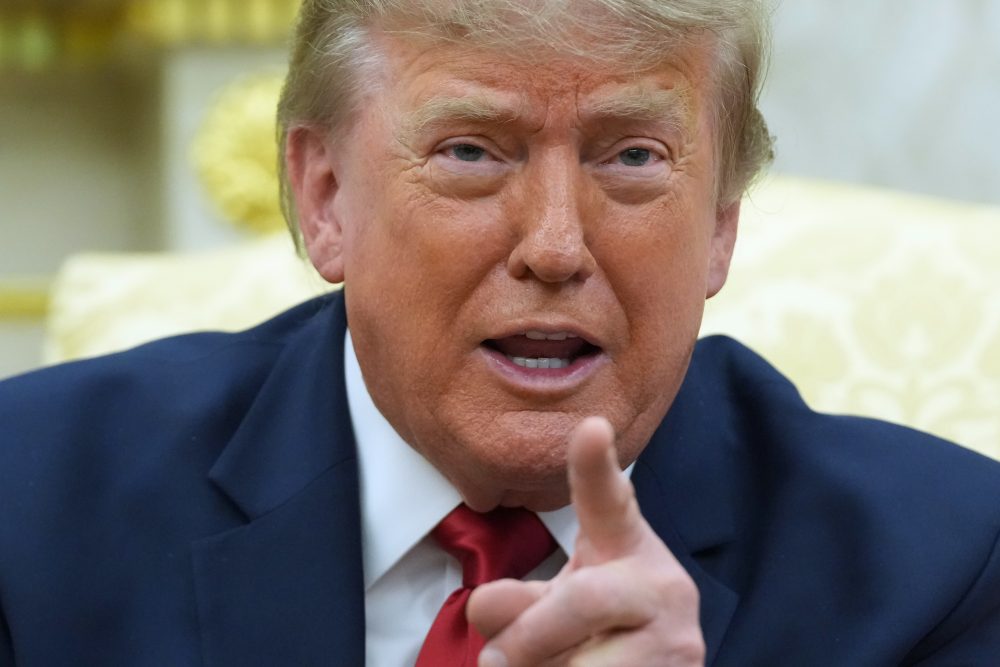
Trump has expressed his belief that China helped persuade Iran to negotiate the fragile ceasefire that he has now extended.
Sources within diplomatic circles informed The Associated Press that Beijing, being Iran’s largest purchaser of sanctioned oil, utilized this economic leverage to encourage Iranian participation in historic direct negotiations held in Pakistan this month.
Beijing has not confirmed that account, likely because it does not want to be seen as part of a U.S.-led security framework, said Yaqi Li, a researcher at the S. Rajaratnam School of International Studies at Nanyang Technological University in Singapore.
Nevertheless, some viewed this as a pivotal moment for Beijing, which has condemned both U.S. and Israeli military actions against Iran.
Following the conflict’s initiation with U.S.-Israeli strikes on Feb. 28, Chinese Foreign Minister Wang Yi conducted discussions with officials from Israel, Saudi Arabia, Bahrain and the United Arab Emirates. By mid-April, he had engaged in 30 telephone conversations with various stakeholders regarding the conflict, based on Ministry of Foreign Affairs records.
Wang additionally welcomed his Pakistani counterpart, representing the primary mediating nation in current negotiations, to present a five-point plan demanding cessation of violence and Strait of Hormuz reopening.
Chinese President Xi Jinping has recently become unusually vocal, cautioning last week against “the world’s retrogression to the law of the jungle.” This week, he called for the Strait of Hormuz to reopen.
George Chen, a partner at The Asia Group consultancy, said China’s role in the Iran situation is irreplaceable. As Tehran’s biggest oil buyer, its advice carries weight. China is also one of the few countries that has showed sympathy for Iran’s situation at the United Nations, he said.
Additionally, Iran’s ballistic missile capabilities were developed using Chinese technology, and China provides dual-purpose industrial equipment suitable for missile manufacturing, according to U.S. government sources.
While China lacks the immediate influence of Pakistan or major Arab Gulf nations in active mediation efforts, it maintains a distinctive position as a crucial economic ally to many regional players.
Tuvia Gering, a nonresident fellow at the Atlantic Council’s Global China Hub, said China is uniquely positioned to offer economic incentives that matter to Tehran, especially after the war ends, as Beijing can promise investment in reconstruction and commercial relief in ways few others can.
“It could be one of the few actors capable of giving Tehran both political cover and material incentives to accept constraints and stick to them,” he said.
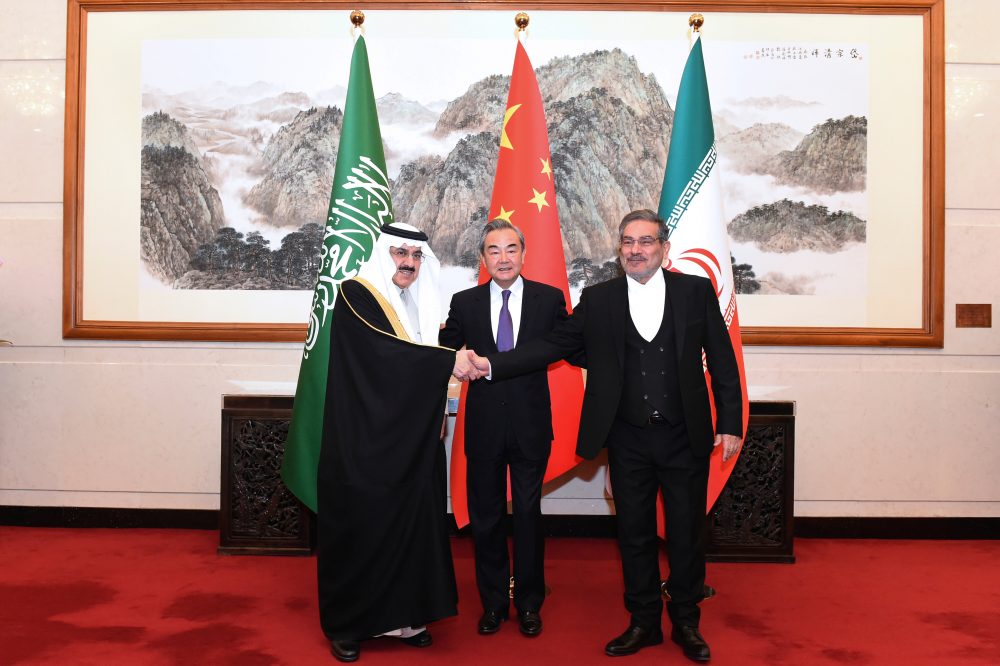
Among China’s most significant diplomatic achievements occurred in 2023, when it helped facilitate Saudi Arabia and Iran’s return to official diplomatic relations.
This development was widely recognized as a major geopolitical advancement that minimized risks of direct and proxy warfare, said Muhammad Zulfikar Rakhmat, a researcher at the Center of Economic and Law Studies in Indonesia.
However, China selects its involvement opportunities carefully, he noted, pointing out that Saudi Arabia and Iran already possessed motivations for diplomatic re-engagement. “Its mediation tends to be opportunistic and low-risk, often occurring when conditions are already conducive to agreement,” he said.
Beijing also participated actively in the recent Thailand-Cambodia dispute, organizing multiple bilateral meetings and participating in initial ceasefire discussions alongside the U.S. in Malaysia. When hostilities resumed in December, both China and the U.S. helped facilitate another ceasefire agreement.
Beijing has also presented peace proposals for Ukraine’s conflict, hosting Ukraine’s foreign minister despite maintaining what it describes as a “no-limits” relationship with Russia.
China’s diplomatic initiatives typically follow established patterns, according to experts, with Beijing consistently emphasizing respect for U.N. charter principles and national sovereignty.
Concerning the Iranian conflict, Xi last week called for “upholding the principles of peaceful coexistence, upholding national sovereignty, upholding the rule of international law, and coordinating development and security.”
“A lot of the points are remarkably consistent,” said Hoo Tiang Boon, a professor of Chinese foreign policy at Nanyang Technological University.
In distant conflicts, Beijing faces minimal risks while potentially gaining substantial benefits as the international community grapples with the Trump administration’s negotiation methods, according to Thitinan Pongsudhirak, a professor of international relations at Thailand’s Chulalongkorn University.
“What the U.S. is doing is deeply damaging, and everyone suffers from it … and China is displaying global leadership and exerting its global role by speaking to the rules-based international system,” he said. “It’s an inescapable contrast.”