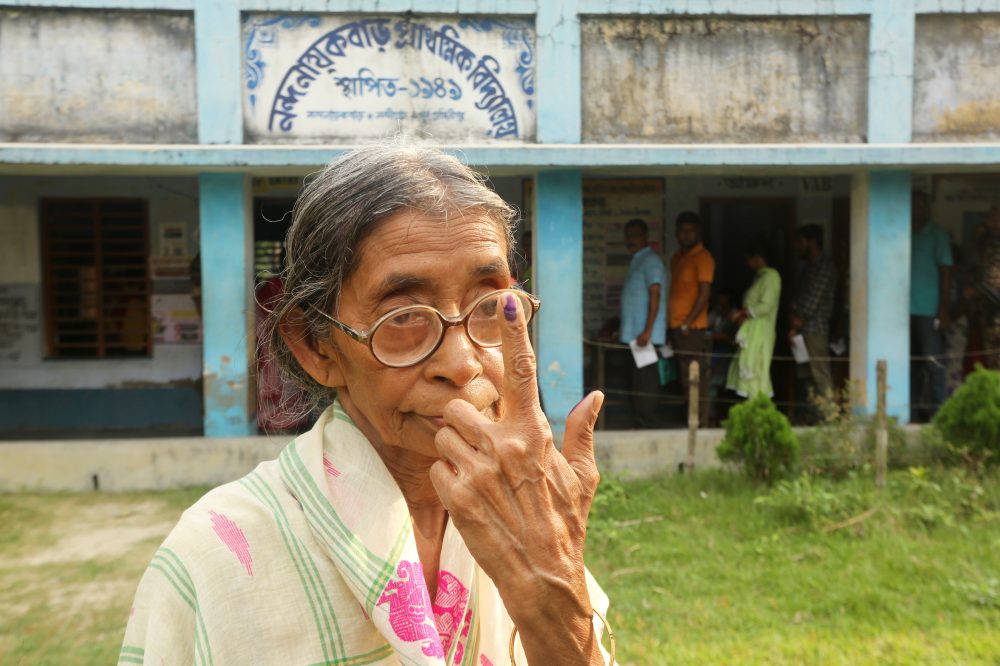

KOLKATA, India — Electoral proceedings kicked off Thursday in West Bengal, one of India’s most politically significant states, following a contentious nationwide review of voter registrations that eliminated millions of eligible voters and sparked widespread concerns about systematic disenfranchisement.
The electoral contest carries substantial national significance as Prime Minister Narendra Modi’s Bharatiya Janata Party attempts to expand its influence in a region historically controlled by opposition forces. A successful defense by West Bengal Chief Minister Mamata Banerjee would strengthen her standing as a prominent opposition leader against Modi’s administration.
Additional polling rounds are planned for the following week, with simultaneous elections occurring Thursday in Tamil Nadu’s southern region.
These elections represent part of a broader series of state-level contests examining the BJP’s capacity to penetrate traditional opposition territories. Final results from these elections, along with earlier contests in Kerala, Assam, and the federally governed Puducherry region, are anticipated on May 4.
The electoral process follows an extensive overhaul of voter databases conducted by India’s Election Commission, designed to eliminate duplicate entries, deceased individuals, and ineligible participants. Administrative officials report approximately 9 million deletions — representing roughly 12% of registered voters — with 6.3 million categorized as deceased or absent and 2.7 million designated as “doubtful” pending further review.
Numerous affected individuals report having participated in prior elections with legitimate documentation, yet were eliminated without adequate justification.
Sheikh Najrul Islam, a 53-year-old paramilitary official assigned to election oversight duties in West Bengal, explained his previous voting participation in 2021 and possession of valid credentials, despite his removal from current voter rolls.
“The Election Commission has deputed me to ensure free and fair polls. Yet, it does not consider me a citizen of this country,” he said.
Similarly, Taibunessa Begum, a 62-year-old former educational administrator, expressed dismay upon discovering her deletion despite maintaining a passport, pension documentation, and previous voter registration.
“It felt like being told I don’t exist,” she said.
Opposition politicians claim the removals disproportionately target Muslim populations and other marginalized groups.
India’s Election Commission has rejected these accusations, maintaining the process removed deceased, duplicate, and fraudulent voter registrations.
Modi’s political organization characterized the review as standard administrative procedure implemented across multiple states, suggesting any disproportionate effects in West Bengal reflect undocumented immigration issues. They emphasize that Hindu voters also experienced removals.
Critics connect the deletions to broader political rhetoric from Modi and BJP leadership, who have repeatedly indicated the voter roll revisions targeted individuals who entered illegally from neighboring Bangladesh. Opposition figures argue such statements have intensified concerns among minority populations, especially Muslims, that the registration review serves to exclude their participation.
Derek O’Brien, representing the opposition Trinamool Congress, characterized the process as “invisible rigging.”
“The motive is to disenfranchise voters,” he said.
Political experts caution the deletions may generate concerns about extended ramifications.
“Losing one’s place in the electoral roll can be deeply unsettling. It is not only about voting rights; it is about dignity, recognition, and the assurance that one counts as a citizen,” political analyst Iman Kalyan Lahiri said.
For numerous affected individuals, the concerns remain more pressing.
“This is not just about politics,” said Begum. “It is about identity, about whether we belong to this country.”