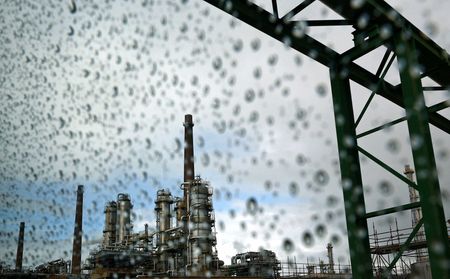

Moscow announced Wednesday it will halt the flow of Kazakh crude oil through the Druzhba pipeline to Germany starting May 1, according to Deputy Prime Minister Alexander Novak, creating supply challenges for a critical refinery that serves the Berlin region.
The decision will significantly impact the PCK Schwedt refinery located near Berlin, which depends on Kazakhstan for 17% of its oil supplies and provides most of the German capital’s fuel needs. This development compounds Germany’s energy supply challenges as ongoing conflicts in Iran continue to disrupt oil flows from the Persian Gulf region.
When questioned about the reasoning behind the move, Novak cited “technical possibilities” but declined to provide additional details.
Data shows Kazakhstan shipped 2.146 million metric tons of oil to Germany through Russia’s Druzhba pipeline in the previous year, equivalent to approximately 43,000 barrels daily – representing a 44% increase from 2024. First quarter 2026 shipments totaled 730,000 tons.
Industry insiders had previously informed Reuters on Tuesday that Russia planned to terminate Kazakhstan’s oil exports via the Druzhba pipeline effective May 1.
The oil deliveries to Germany have utilized the pipeline’s northern branch, which operates independently from the southern section serving Hungary and Slovakia. The southern branch is preparing to restart operations following repairs necessitated by a Russian drone attack in January.
Germany assumed control of the Schwedt facility through a trusteeship arrangement after effectively confiscating the majority stake held by Russian energy giant Rosneft. This action followed Russia’s 2022 invasion of Ukraine, which severed the longstanding energy partnership between Moscow and Berlin.
“Starting from May 1, volumes of Kazakh oil previously supplied via the Druzhba pipeline to Germany will be redirected to other available logistics routes,” Novak stated to reporters Wednesday.
When asked if this action would result in supply losses for Germany, Novak responded: “The Germans have given up on Russian oil, so they are doing fine.”
Germany’s economy ministry confirmed that Rosneft Germany was evaluating the situation and would adjust to changing circumstances, noting the Russian company understands its obligations to the region.
“At the same time, existing options will be utilised to ensure security of supply in Germany,” the ministry stated, emphasizing that the decision does not threaten the nation’s petroleum product supply security.
German Economy Minister Katherina Reiche discussed possible alternatives, mentioning deliveries through ports in Gdansk or Rostock that could reach the refinery through pipeline connections, though she declined to speculate about potential Berlin shortages.
The Federal Network Agency, Germany’s energy oversight body serving as trustee for Rosneft Germany’s operations, acknowledged potential regional price impacts while confirming close coordination with the company.
Rosneft Germany did not respond to requests for comment.
Despite losing operational control through the German trusteeship, Rosneft maintains its position as the primary legal owner of the Schwedt refinery with a 54.17% stake, while Shell and Eni hold 37.5% and 8.33% respectively.