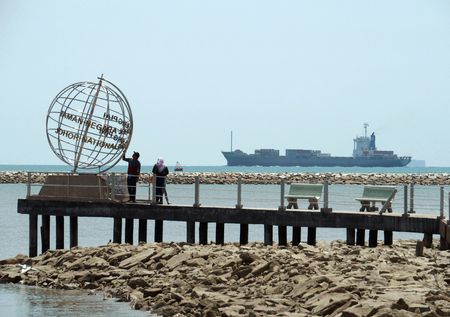

BANGKOK – Recent disruptions to shipping through the Strait of Hormuz have drawn renewed attention to security vulnerabilities at another critical maritime passage – the Strait of Malacca, which handles more international trade traffic than any other waterway globally.
The Strait of Malacca stretches 550 miles between Indonesia, Thailand, Malaysia and Singapore, serving as the most direct shipping route connecting East Asia with Europe and the Middle East.
According to the Center for Strategic and International Studies, this vital corridor handles nearly 22% of all global maritime commerce. Energy shipments from Middle Eastern nations to China, Japan and South Korea represent a significant portion of this traffic.
The U.S. Energy Information Administration identifies Malacca as the world’s most important “oil transit chokepoint,” surpassing even Hormuz in volume. During the first six months of 2025, approximately 23.2 million barrels of oil traveled through Malacca daily, representing 29% of all seaborne oil transport. By comparison, Hormuz handled about 20.9 million barrels per day.
Maritime traffic through the strait has increased substantially, with over 102,500 vessels – primarily commercial ships – making the passage in 2025, compared to roughly 94,300 in 2024, according to Malaysia’s Marine Department statistics. While most tankers use this route, some extremely large ships must navigate around Indonesia due to depth limitations, adding significant time and cost to their journeys.
The waterway presents several challenges for safe navigation. At the Phillips Channel near Singapore, the strait narrows to just 1.7 miles across, creating a natural bottleneck that increases risks of accidents, vessel groundings, and potential oil spills.
Shallow areas with depths of only 82-90 feet restrict the largest ships, though even massive crude carriers exceeding 350 meters in length and 60 meters in width regularly make the transit.
Criminal activity has long plagued the region, with piracy and attacks on commercial vessels remaining persistent threats. The ReCAAP Information Sharing Centre, a regional anti-piracy organization, reported at least 104 criminal incidents last year, though attacks decreased during the first quarter of this year.
China has particular strategic interest in keeping the strait secure, as roughly 75% of Chinese seaborne crude oil imports from the Middle East and Africa pass through these waters, according to tanker tracking firm Vortexa.
Current tensions involving Iran have heightened existing concerns about potential disruptions to chokepoints like Malacca, especially if conflicts emerge in the South China Sea or Taiwan Strait regions, where another 21% of global maritime trade occurs, CSIS data shows.
Malaysian officials have also identified the strait as an increasingly popular location for illegal ship-to-ship oil transfers designed to hide the origin of petroleum products.
Indonesian Finance Minister Purbaya Yudhi Sadewa recently sparked discussion by suggesting countries might consider charging tolls for passage through the strait, though he acknowledged such arrangements are not feasible under current agreements.
Singapore Foreign Affairs Minister Vivian Balakrishnan addressed these concerns in comments to CNBC, emphasizing that nations bordering the strait share common interests in maintaining open access and have committed to avoiding toll collection.
“Singapore had assured the United States and China that the right of passage was guaranteed for all and it would not participate in any efforts to block the strait or impose tolls,” Balakrishnan stated.
Malaysian Foreign Minister Mohamad Hasan reinforced this position during a Wednesday forum, explaining that “no unilateral decisions can be made about the strait and that Malaysia is on the same page with Singapore, Indonesia and Thailand, and they conduct joint patrols to ensure the waterway remains open.”