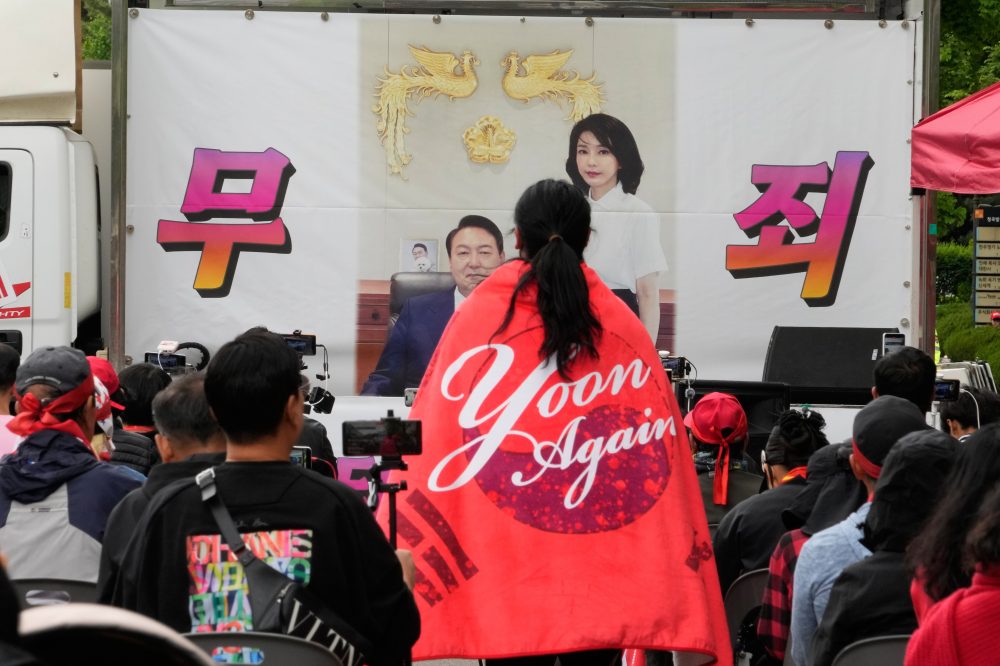

SEOUL, South Korea — A South Korean appeals court has extended the prison term for Kim Keon Hee, spouse of impeached President Yoon Suk Yeol, increasing her sentence from 20 months to four years on corruption-related charges. This development comes roughly two months following her husband’s life sentence for rebellion.
Kim, the former first lady, initially received a 20-month prison sentence in January from a district court after being found guilty of accepting luxury items, including a diamond necklace from Graff and a Chanel handbag, from the Unification Church in exchange for pledges of political influence. At that time, she was cleared of charges related to stock manipulation that allegedly occurred before her tenure as first lady.
Following appeals from both sides, the Seoul High Court on Tuesday extended her imprisonment to four years after finding her guilty of accepting an additional Chanel bag from the religious organization and the stock manipulation allegations.
The presidential pair experienced a steep decline after Yoon’s December 2024 martial law declaration triggered his impeachment and ultimate removal from the presidency. Yoon now confronts multiple criminal proceedings stemming from his martial law actions and additional controversies. Authorities have stated that Kim played no role in her husband’s martial law implementation.
The Seoul High Court emphasized that as a first lady, being in the closest position to a president, Kim represents the nation alongside her spouse and wields considerable influence over him. The court determined that Kim disappointed public trust expectations and instead leveraged her prominent position to obtain gifts from the Unification Church.
Kim and the independent prosecutor have seven days to file an appeal with the Supreme Court, South Korea’s highest judicial authority. Independent prosecutor Min Joong-ki’s team had previously sought a 15-year sentence, while Kim’s legal representatives have contended that Min’s probe was politically motivated.
Kim has remained in custody since August when the Seoul district court granted an arrest warrant, citing concerns she might tamper with evidence. During Yoon’s presidency, Kim became entangled in multiple controversies that damaged her husband’s public approval and gave his political opponents continuous ammunition.
On December 3, 2024, Yoon, representing the conservative faction, suddenly imposed martial law and deployed military and law enforcement to the National Assembly, claiming his goal was to eliminate “anti-state forces” and “shameless North Korea sympathizers.” He has justified his actions as a last-resort effort to gain public backing in his conflict with the liberal opposition Democratic Party, which blocked his legislative priorities.
In February, the Seoul Central District Court convicted Yoon of rebellion for illegally deploying military and police forces in an attempt to take control of the Assembly, detain political adversaries, and establish unlimited authority for an undetermined duration.