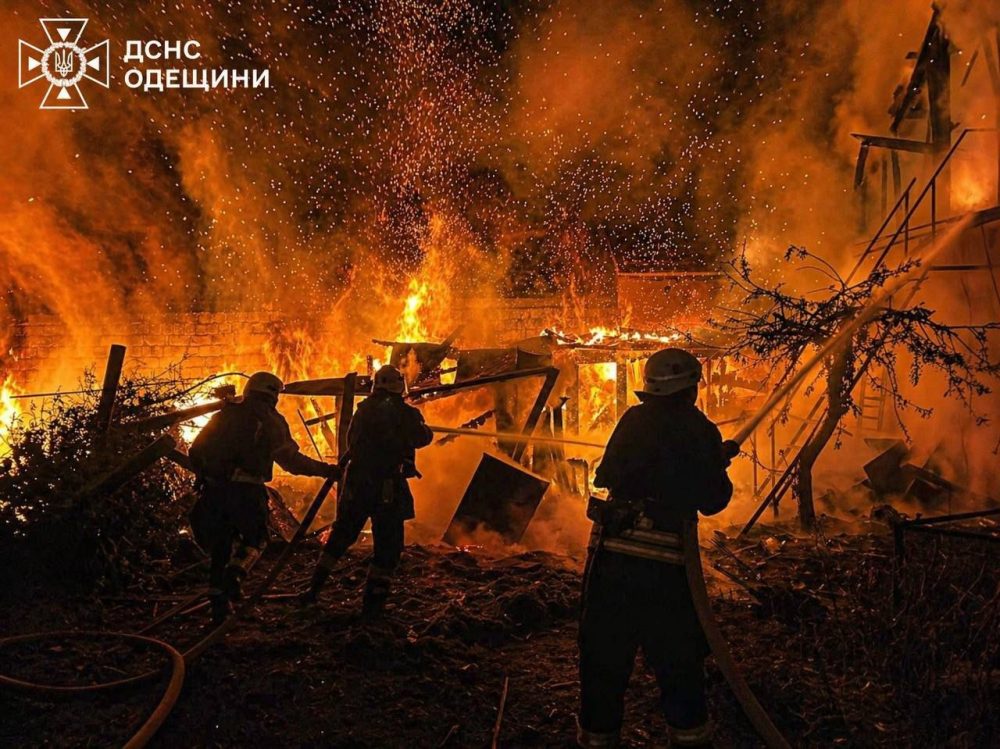

A Russian oil facility caught fire Wednesday after Ukrainian forces launched what officials described as their latest extended-range drone strike deep into enemy territory.
Ukraine’s Security Service (SBU) confirmed it targeted an oil pumping station in Russia’s Perm region, nestled in the Ural Mountains over 900 miles from Ukraine’s border. The strike represents part of Ukraine’s broader strategy to cripple Russia’s energy infrastructure.
While Russian media confirmed the incident, Perm Governor Dmitry Makhonin would only acknowledge that a drone struck an unidentified industrial site, causing a blaze.
Russian authorities have remained tight-lipped about Ukraine’s claims of conducting increasingly sophisticated long-distance attacks using domestically manufactured drones with improved precision capabilities.
Drone warfare has emerged as a crucial element in the conflict as Russia’s larger military continues its invasion that began more than four years ago. Ukraine has responded by accelerating development of both offensive and defensive drone systems.
Ukrainian President Volodymyr Zelenskyy shared footage on Telegram Wednesday showing thick black smoke billowing skyward from a rural area near populated zones. While not confirming the video showed the Perm strike, Zelenskyy announced Ukraine was extending its long-distance attack capabilities, calling it a new phase aimed at cutting Russia’s oil revenues that fund its war effort.
Independent verification of the footage was not possible.
The SBU alleged that multiple oil storage tanks were burning at the targeted facility, which it identified as belonging to Transneft, Russia’s pipeline operator, and described as a critical component of the nation’s oil transport network. These assertions could not be independently confirmed.
Zelenskyy praised the SBU for the accuracy of its operations.
“The straight-line distance is more than 1,500 kilometers. We will continue to increase these ranges,” he stated.
This attack followed Tuesday’s Ukrainian strike on the Tuapse oil refinery and terminal along the Black Sea, marking the third such assault in under two weeks. That operation forced local evacuations and prompted Russian President Vladimir Putin to warn of potential “serious environmental consequences.” Tuapse authorities reported containing the fire by Wednesday.
According to the Washington-based Institute for the Study of War, Ukraine has intensified its long-range campaign against Russian oil infrastructure to prevent Moscow from benefiting financially from a U.S. sanctions waiver during global supply constraints linked to conflicts involving Iran.
Kiev is taking advantage of Russia’s vast territory and its defensive weaknesses, the think tank noted.
“Ukrainian forces will likely continue to exploit the large attack surface of Russia’s deep rear and overstretched Russian air defenses to launch more frequent and larger strikes against Russian oil infrastructure and military assets, supported by increased Ukrainian domestic drone production,” the institute reported Tuesday evening.
Russia’s Defense Ministry announced Wednesday that its air defense systems intercepted 98 Ukrainian drones overnight across Russian territories and Crimea, which Russia unlawfully seized in 2014.
Following years of heavy dependence on international military aid, Ukraine now appears ready to share its advanced drone technology with other nations.
Zelenskyy revealed that Ukraine is generating surplus production of up to 50% for certain weapon categories.
Military partnerships with Ukraine’s supporting allies “is already underway” involving nations across the Middle East, Gulf region, Europe and Caucasus, he announced on Telegram Tuesday night.
These agreements encompass drone and missile production and delivery, plus software and technological transfers, Zelenskyy explained.
Ukraine has also submitted a cooperation proposal to the United States covering drones, defense systems and various weapons for air, land and sea applications, he added.
Meanwhile, Russia has maintained its own long-distance strikes targeting Ukrainian civilian areas, causing damage to residential buildings and infrastructure, regional officials reported.
The northeastern Kharkiv region saw eight people wounded during overnight attacks, according to regional prosecutors.
In the northeastern Sumy region, authorities reported a 60-year-old woman died from carbon monoxide poisoning resulting from an attack.
Russian forces also hit Izmail in the southern Odesa region, damaging city infrastructure and a district hospital building, local administrators said.
Ukraine’s air force reported successfully intercepting 154 of 171 drones Russia launched during overnight operations.