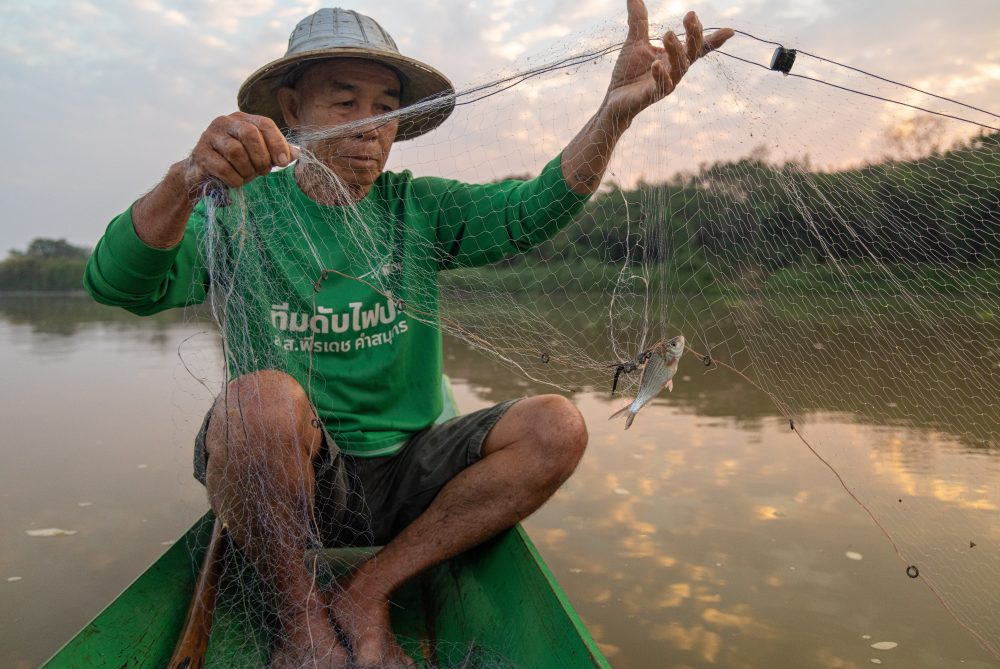

CHIANG SAEN, THAILAND — Seventy-five-year-old fisherman Sukjai Yana pulled in just one small fish from his nets as he worked the waters where the Mekong and Kok rivers meet in northern Thailand. From his long-tail boat, he cast his nets again, hoping for a better catch in waters that once teemed with fish.
Contaminated water flowing from rare earth mining operations in Myanmar and Laos is now reaching Thailand’s river systems, putting at risk the livelihoods of millions who depend on these waterways for fishing and farming.
The heavy metal pollution poses a serious threat to Southeast Asia’s economically vital agricultural exports, which generate billions of dollars annually and serve as a foundation for the region’s growing economies.
“The Mekong and Kok Rivers are both a source of food and income, which gives life to the people,” said Sayan Khamnueng of the Living Rivers Association. “The river contaminants are the biggest transboundary issue we’ve ever faced.”
So far, Thailand has only responded to the escalating crisis by tracking heavy metal concentrations and informing local residents about potential health dangers. This limited approach has sparked worry in downstream nations Cambodia and Vietnam.
“If the contamination continues … the new generation (will) have to move to the city because they cannot continue their farmer’s life,” said Sangrawee Suweerakarn of the Romphothi Foundation, an advocacy group for the Shan ethnic group.